Another rainy start to the day and the fast ferry to Gozo was still not running. We thought this might be the case so had made alternative plans to catch the bus to Mdina.
Mdina used to be the capital of Malta until Valletta was built and it is an impressive walled city. It is an old medieval city built on Arab and Roman foundations. Mdina is now known as the ‘Silent City’
As we got off the bus we could see Domvs Romana which is a museum that houses the remains of an opulent Roman town house.
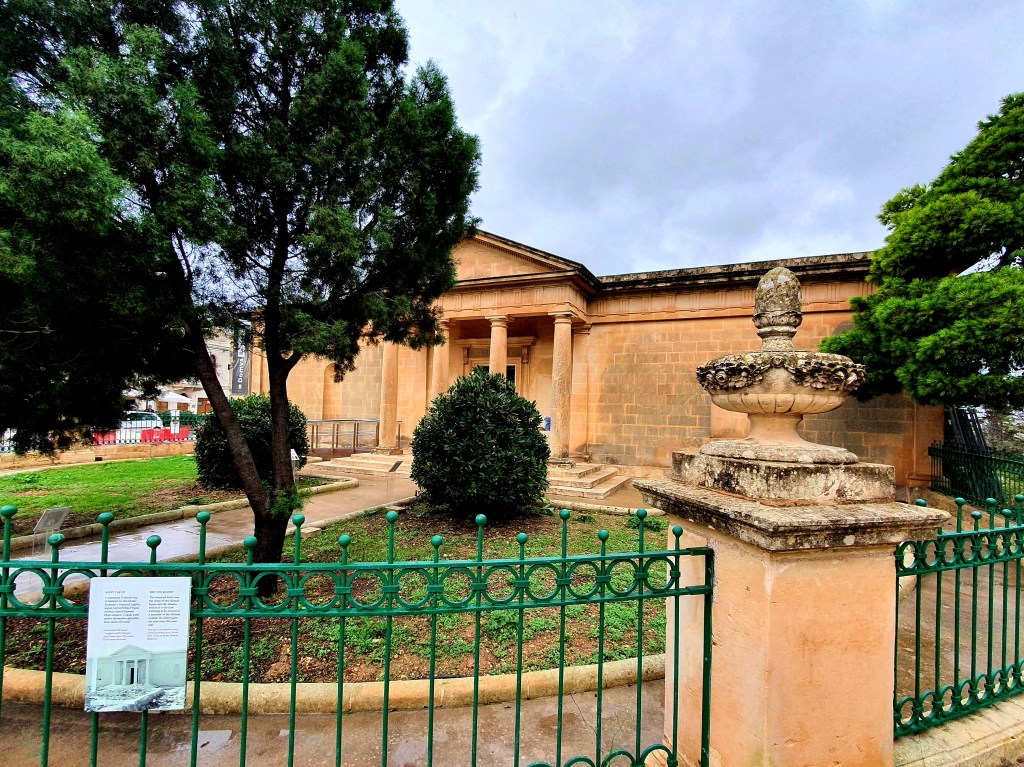
The remains of this Roman house were discovered in 1881 and is believed to have been built at the beginning of the 1st century BC. The most impressive part was the mosaic in the central courtyard.
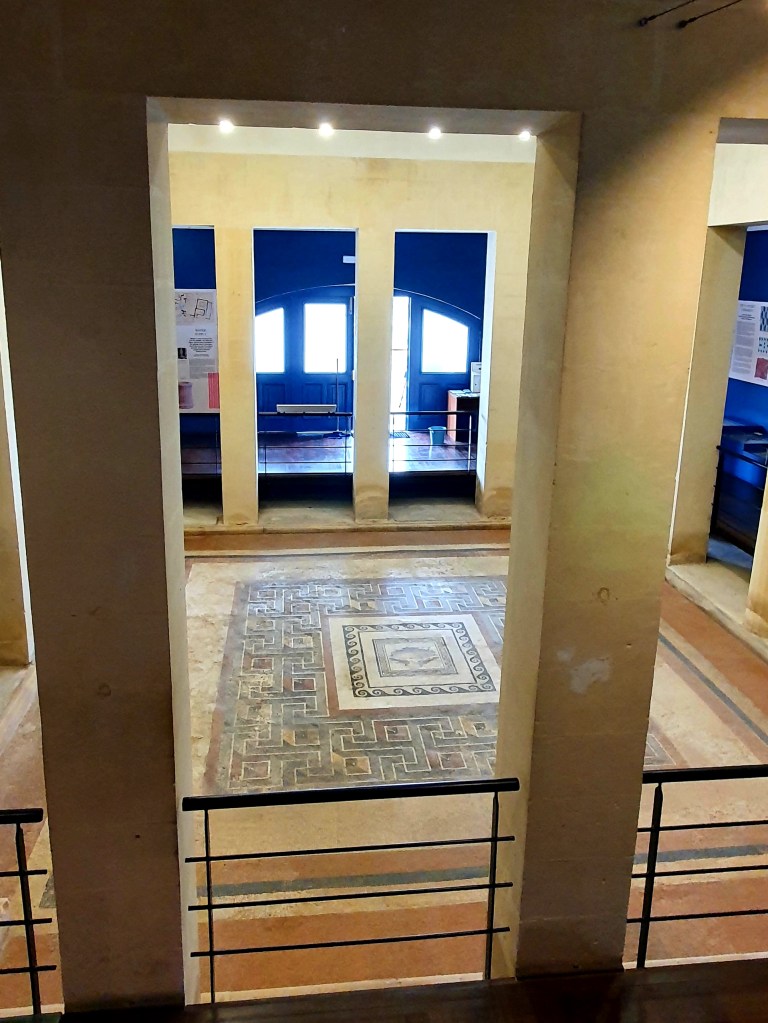
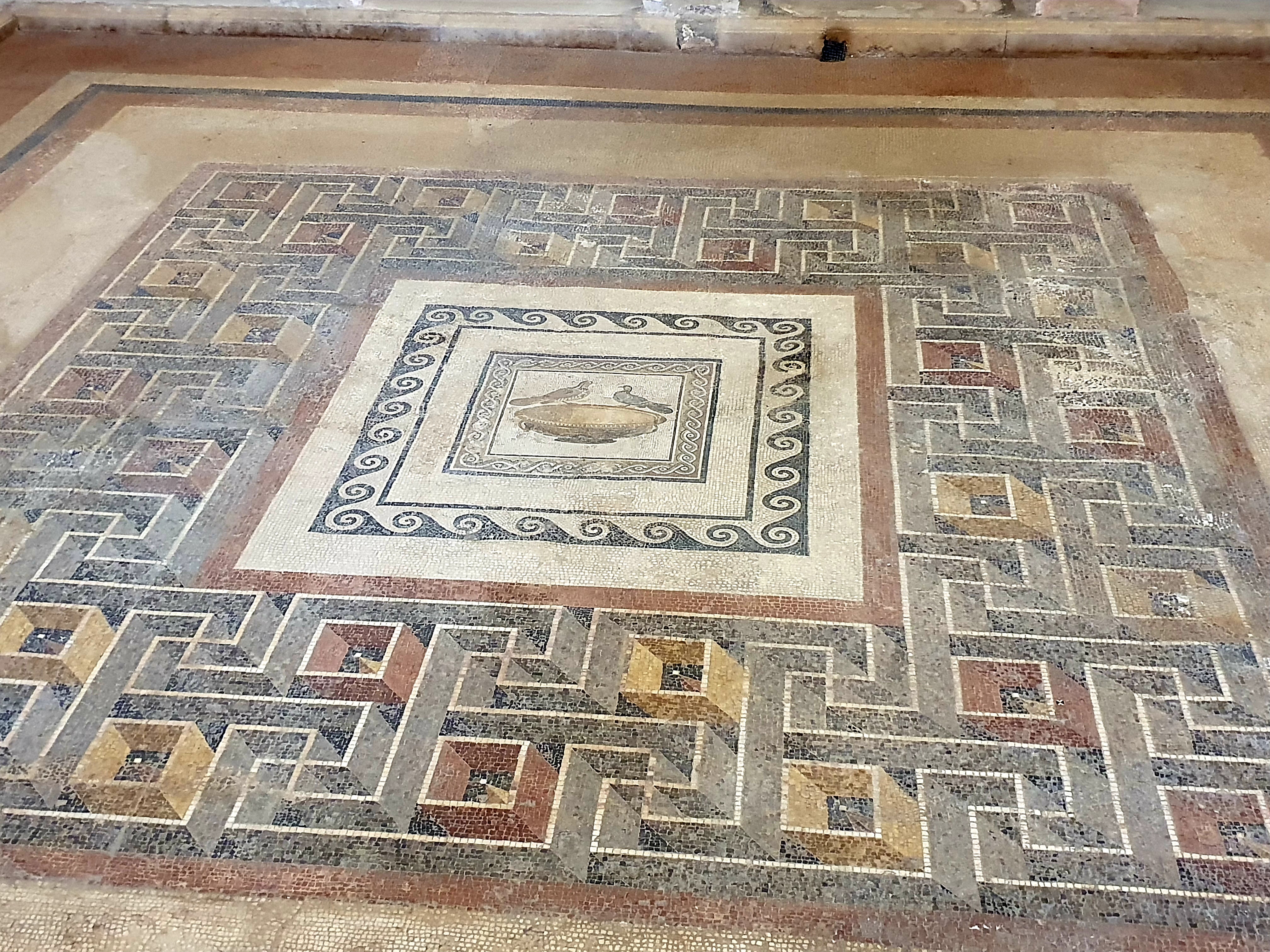
The central part of the mosaic has a motif of ‘the drinking doves of Sosos’ which is a design copied from a painting by Sosos and used in a lot of rich and noble Roman houses.
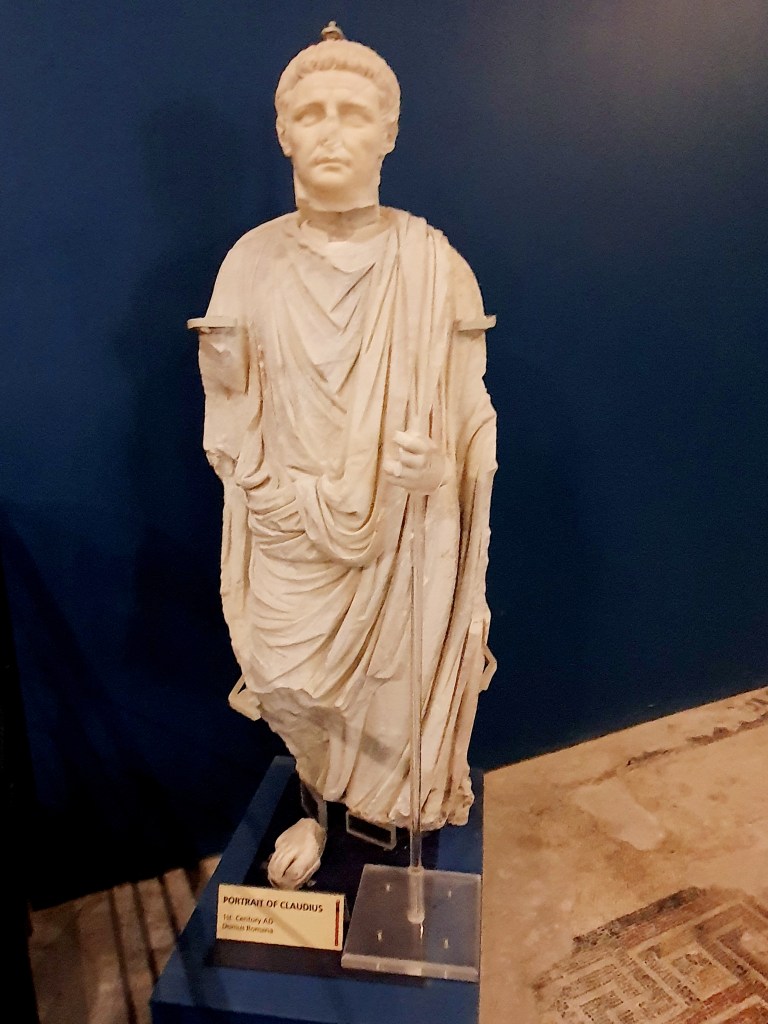
There was also a statue of Claudius but he was missing his nose.
From here we walked to the main gate of Mdina. The current main gate was built in the 1720s and replaced an older medieval entrance which was walled up and can still be seen to the right of the main gateway.
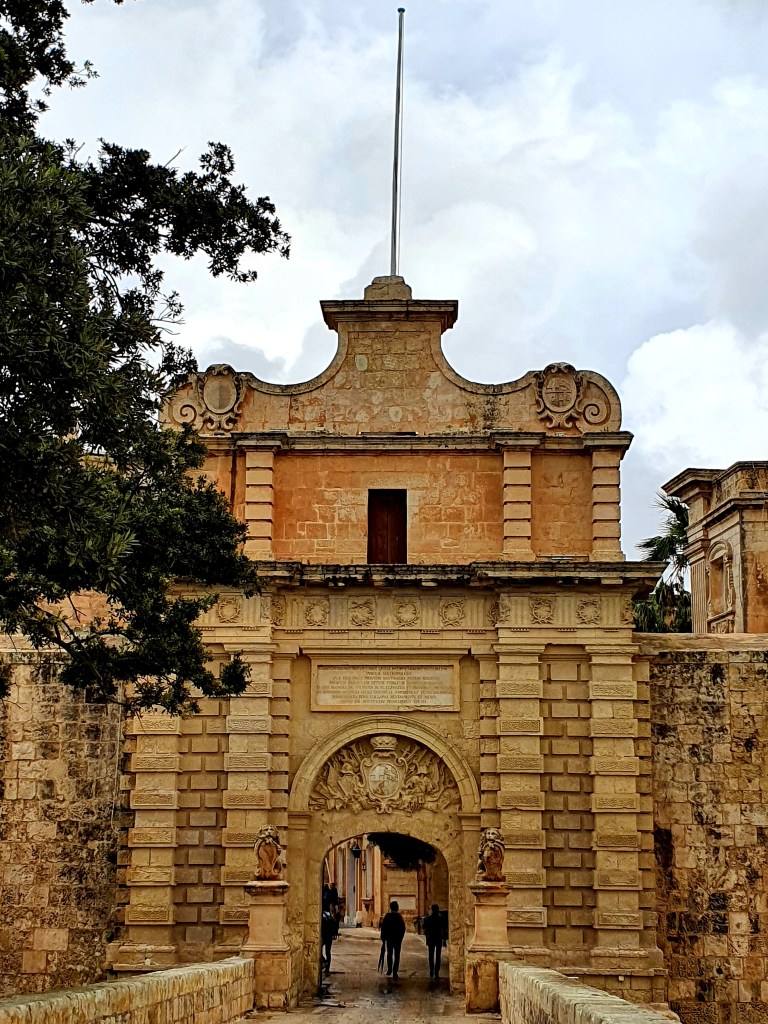
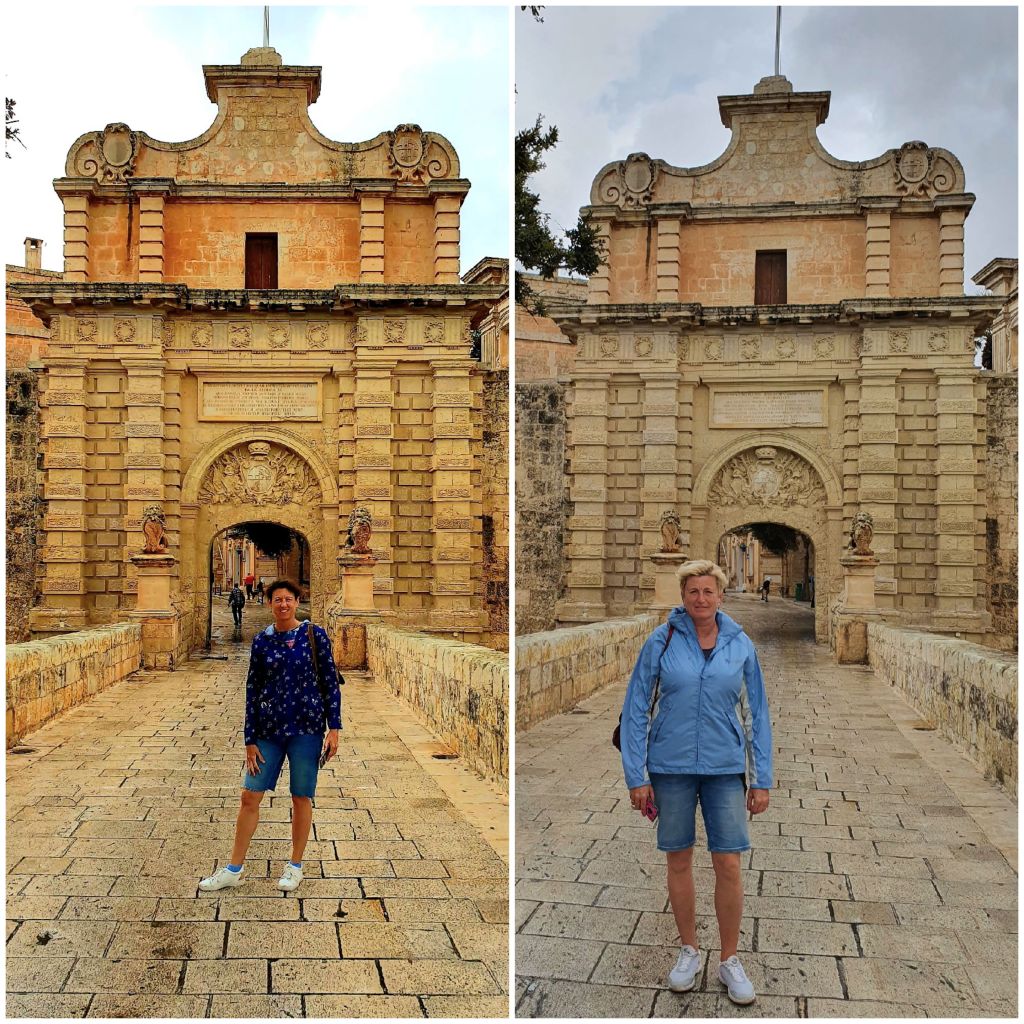
The gate is actually impressive from the inside too. The three figures over the arch are St Publius (Malta’s first bishop), St Paul (Malta’s patron saint) and St Agatha (patron of Mdina).
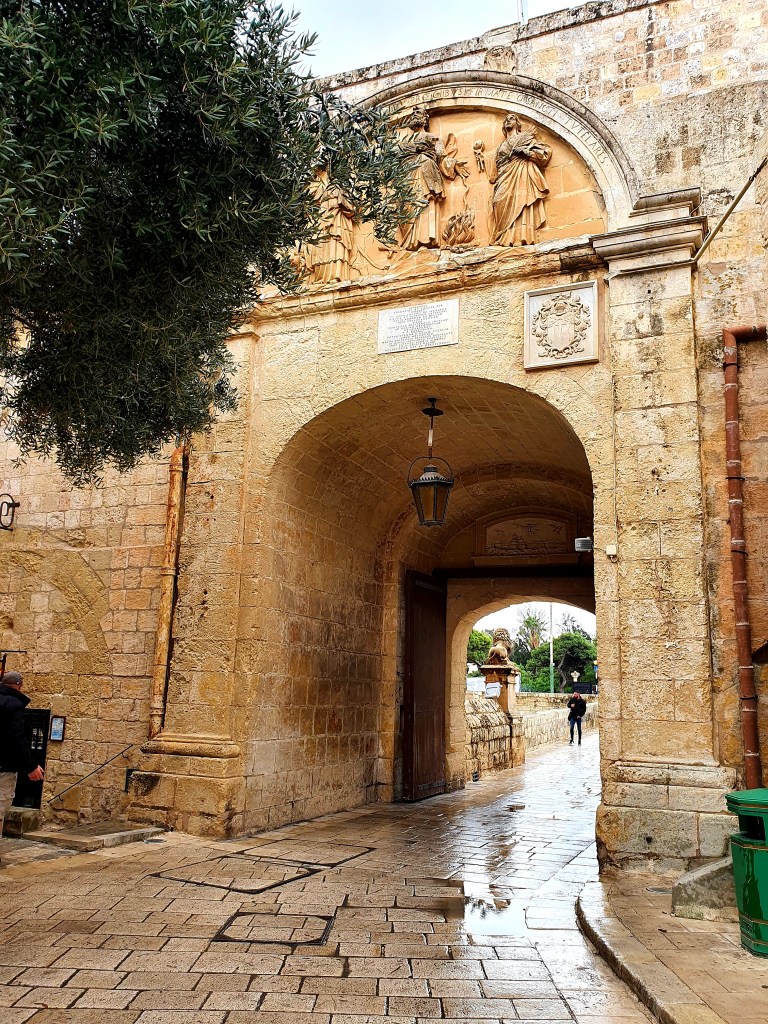
Just by the gate is Palazzo Vilhena, a Baroque palace. This was used as a hospital at the beginning of the 20th century and is now the Natural history museum.

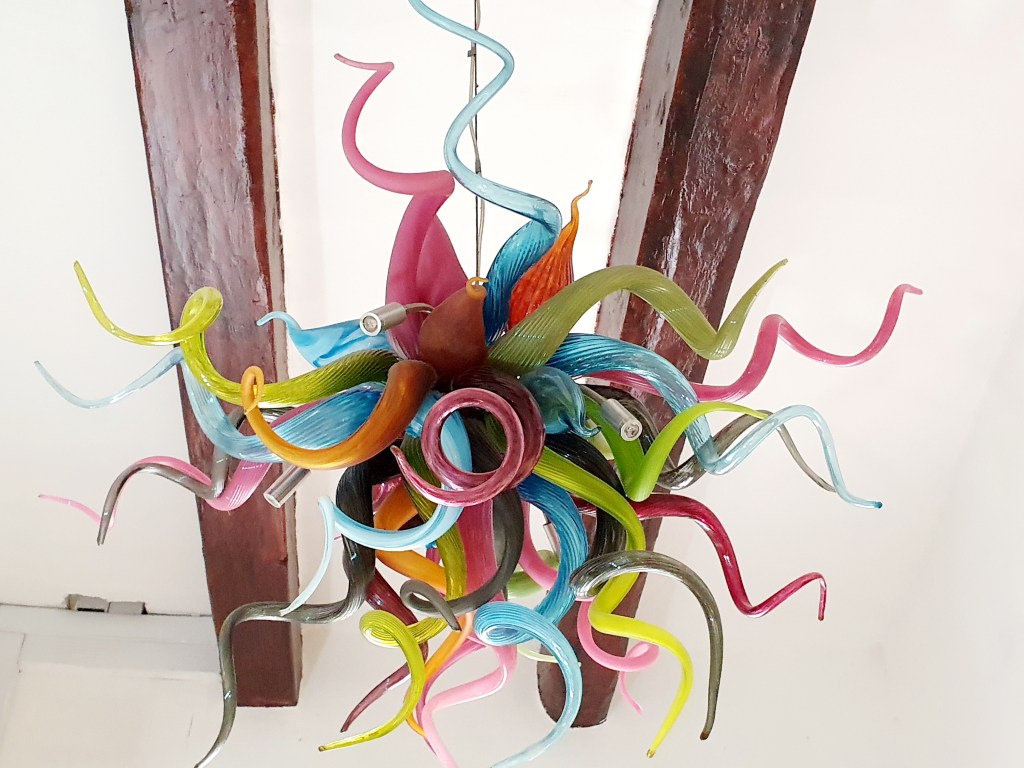
We popped into a little souvenir shop and next door was a lovely glassware shop.
We walked down some of the medieval streets past the church of St Agatha. This church was built in 1694 after an earthquake destroyed the original medieval church. Just by this church was the Monastry and Church of St Peter which was a Benedictine monastry for cloistered nuns.
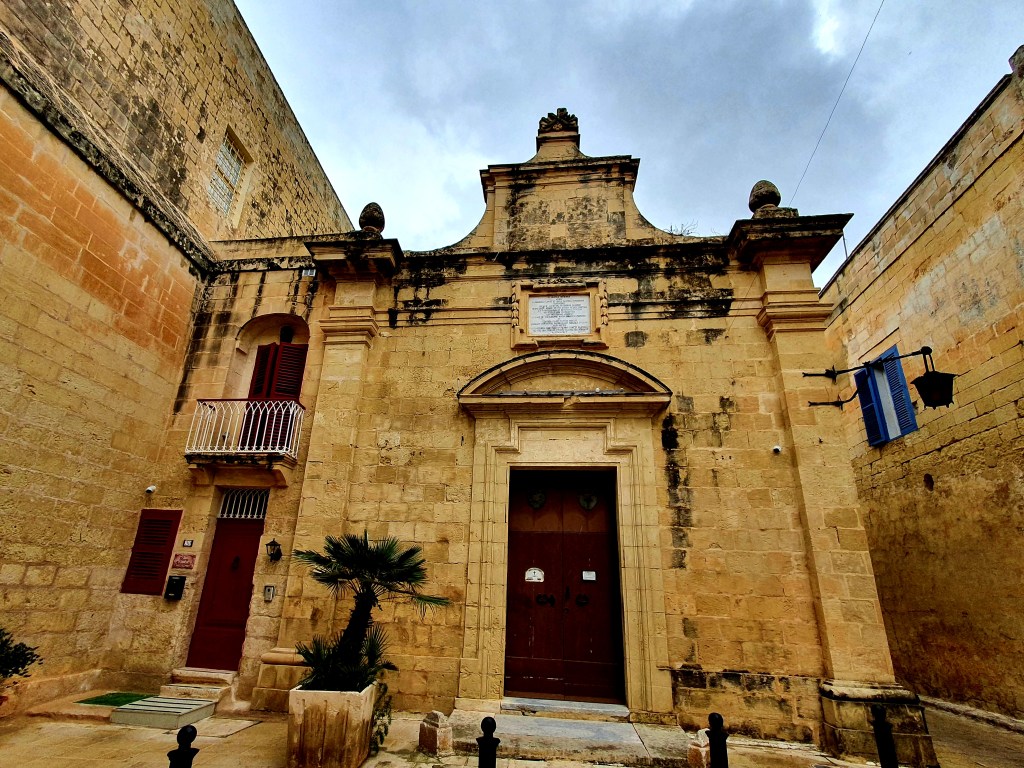
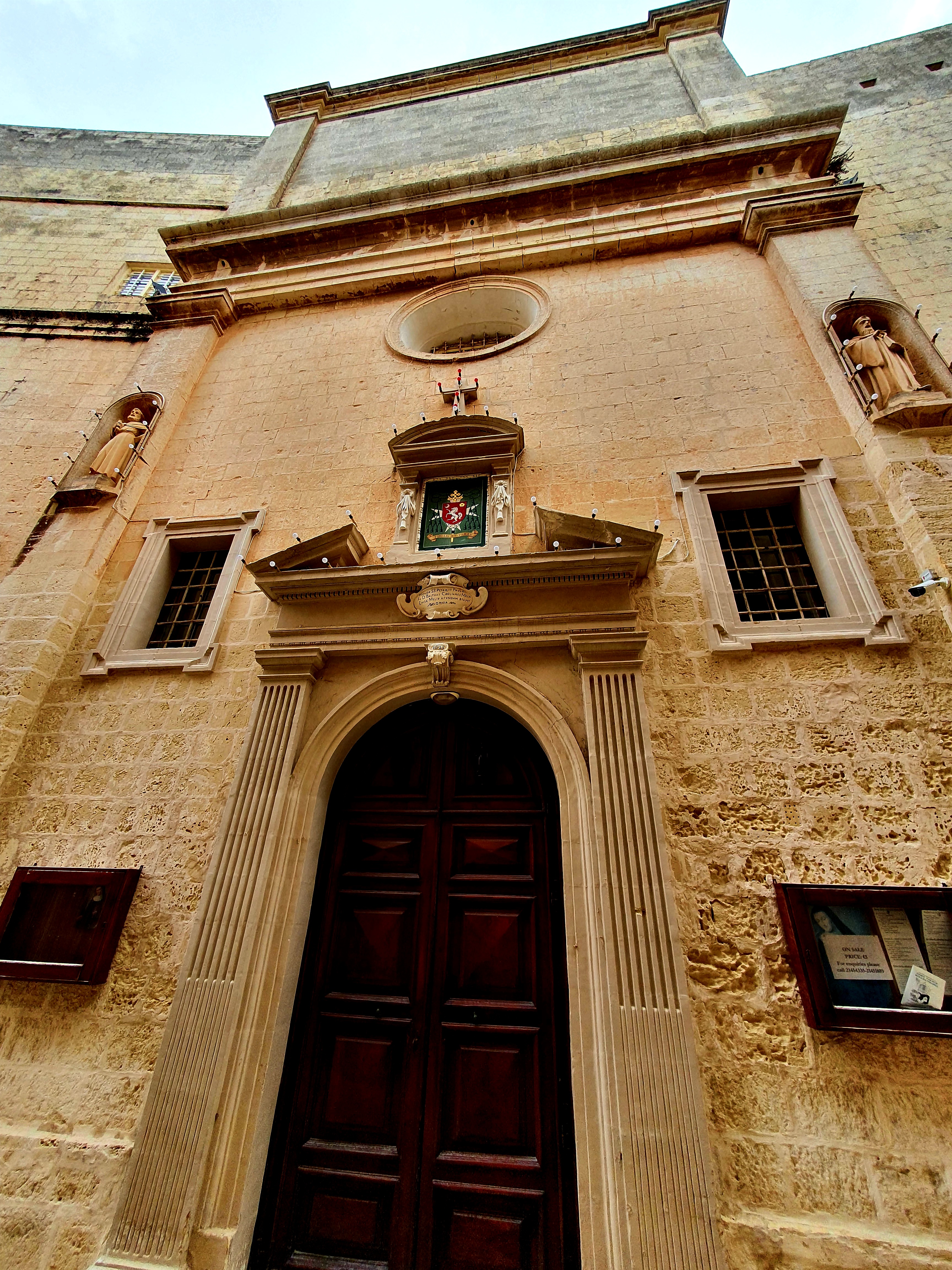
And then we came to St Paul’s Cathedral. Its believed that a church had existed on this site since the 12th century and according to tradition it stands on the site where Roman governor Publius met St. Paul following his shipwreck on Malta.
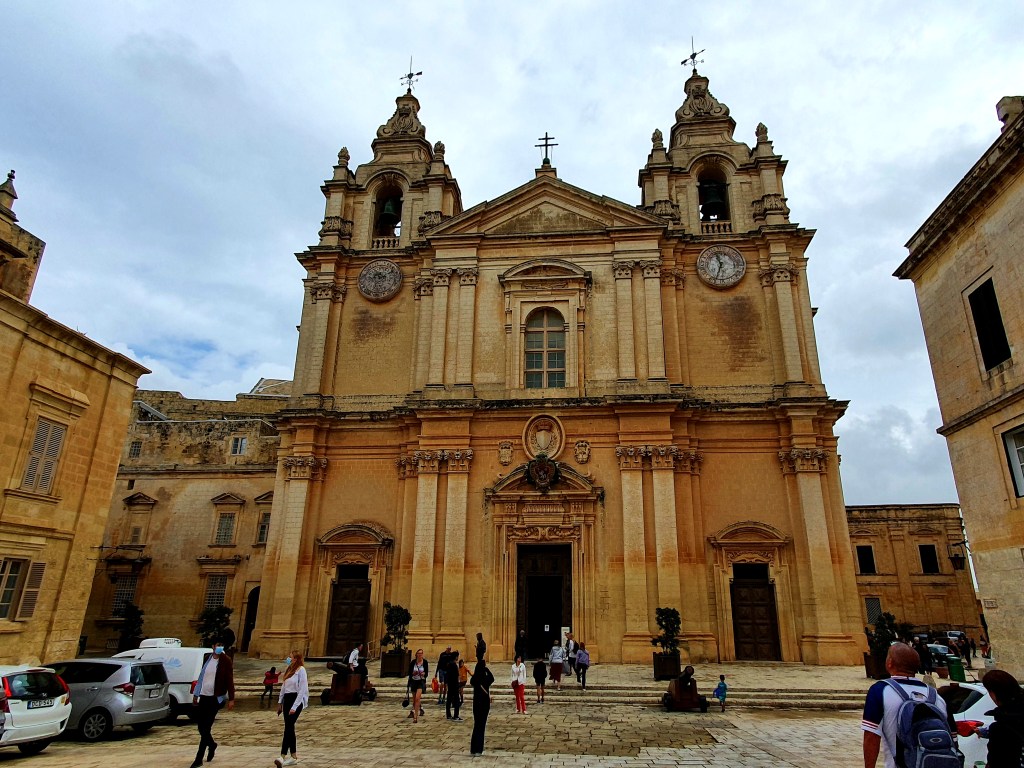
We didn’t go inside as when we looked at the pictures of the cathedral online it looked very much like all the other cathedrals we had seen.
We walked past the Archbishops Palace which was where the Bishop of Mdina used to live.
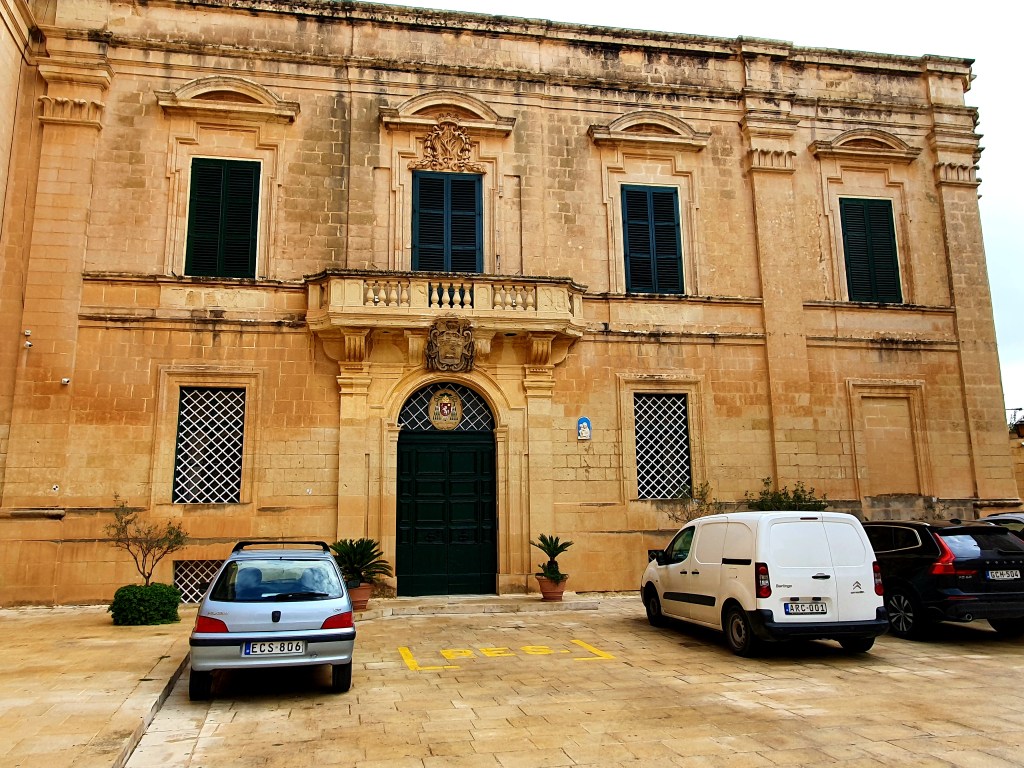
And then on to the Seminary. This is a beautiful french baroque building where two atlas figures hold up the balcony and there is a statue of St Paul over the balcony doorway.
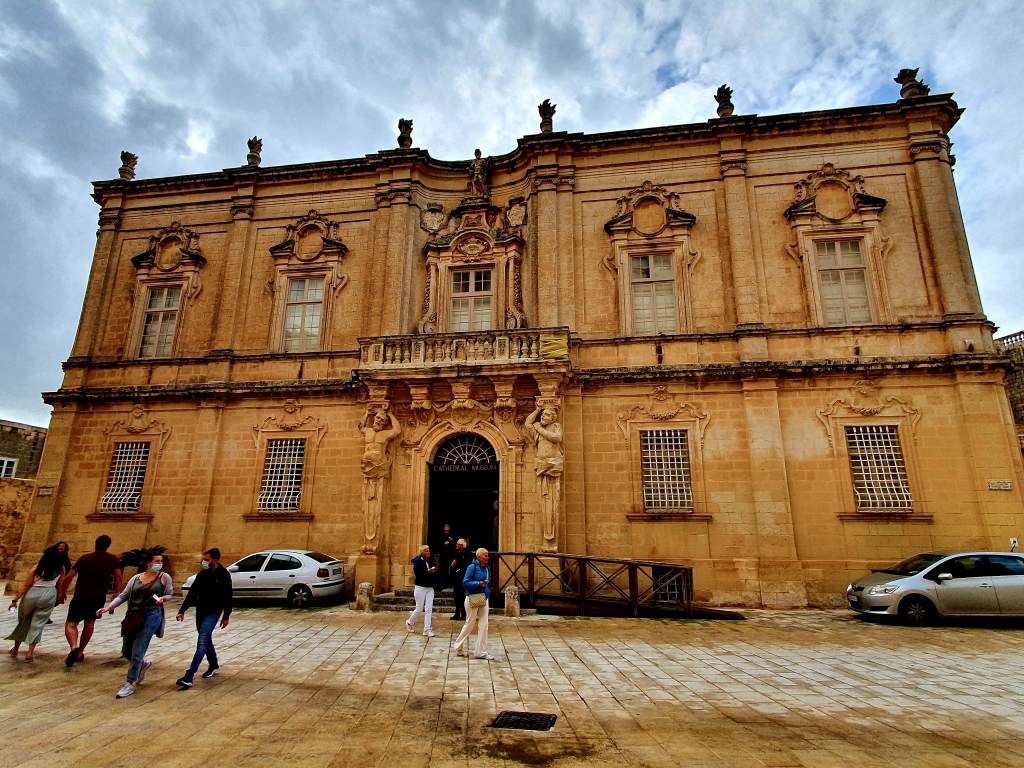
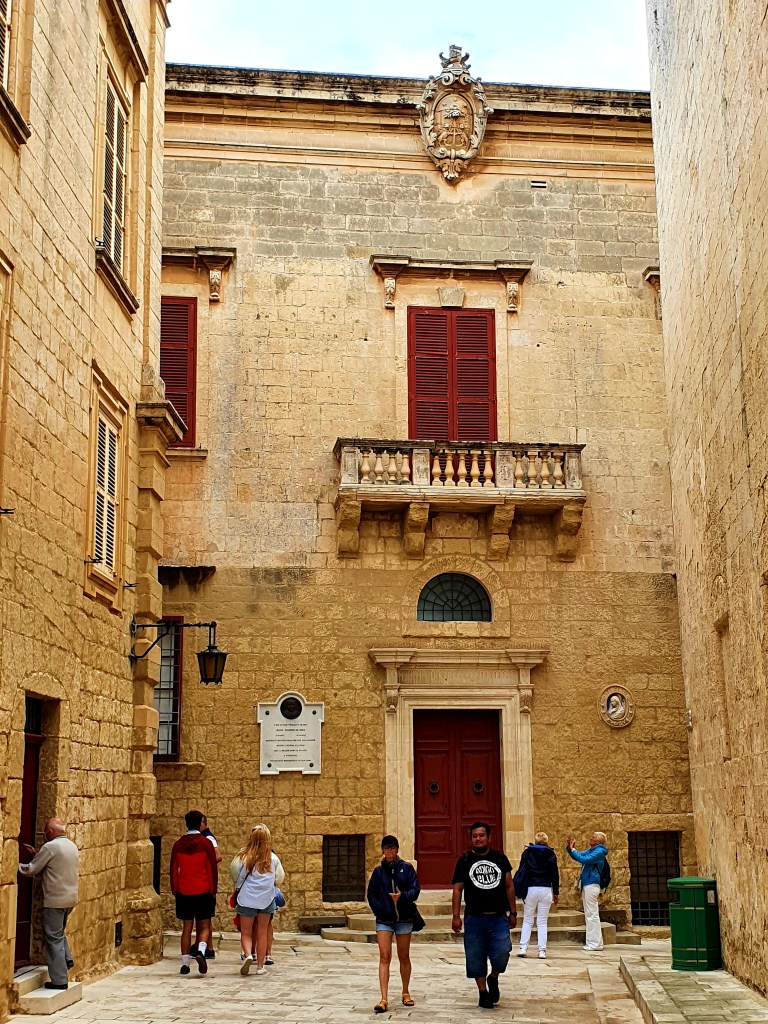
From here we passed Palazzo Falca, which was built following the 1693 earthquake. Originally the building was donated to the Jesuits to open a school in Mdina and later became a boarding school for girls.
After all of this walking around we decided to have a refreshment break at Fontanella tea gardens.
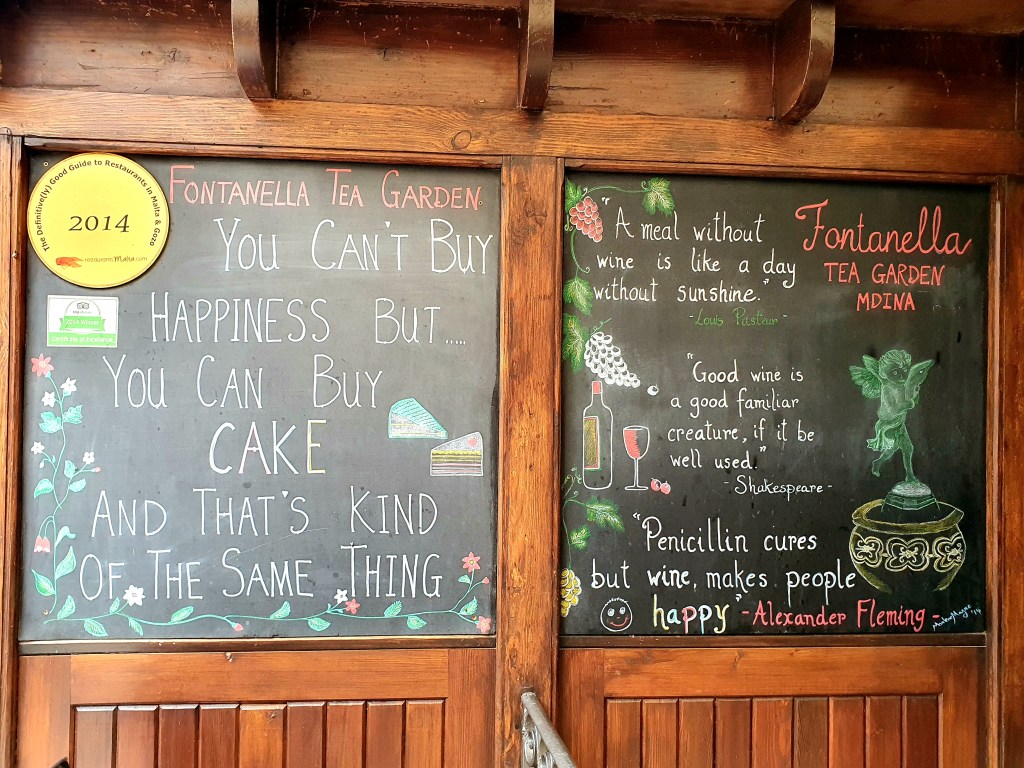
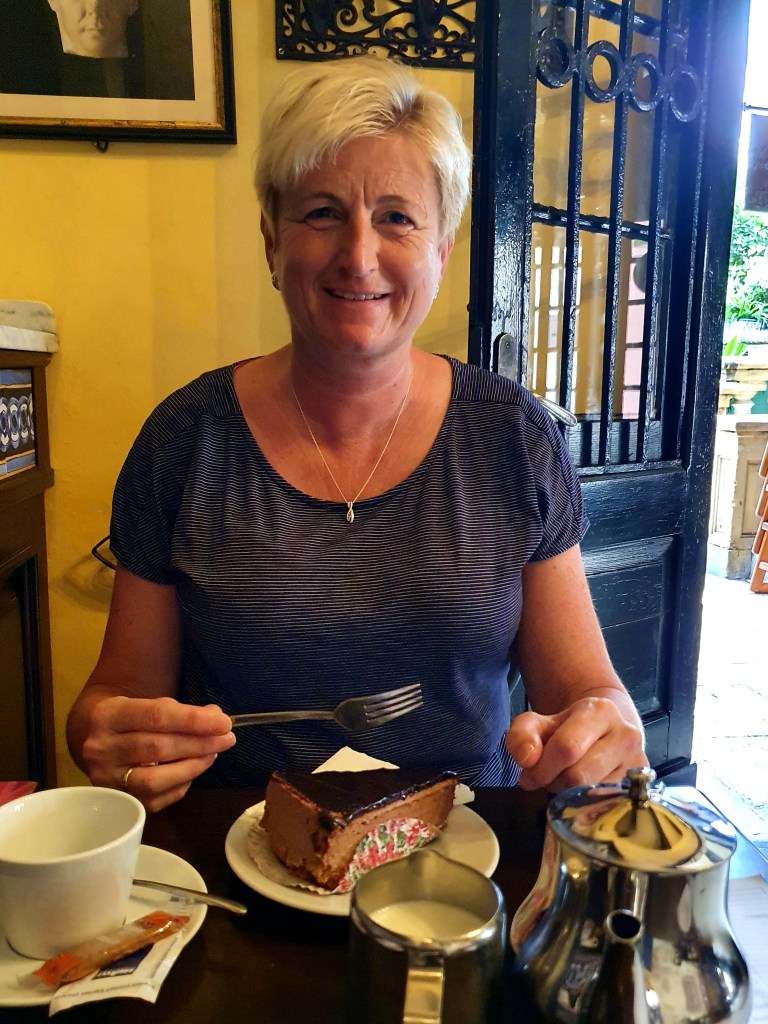
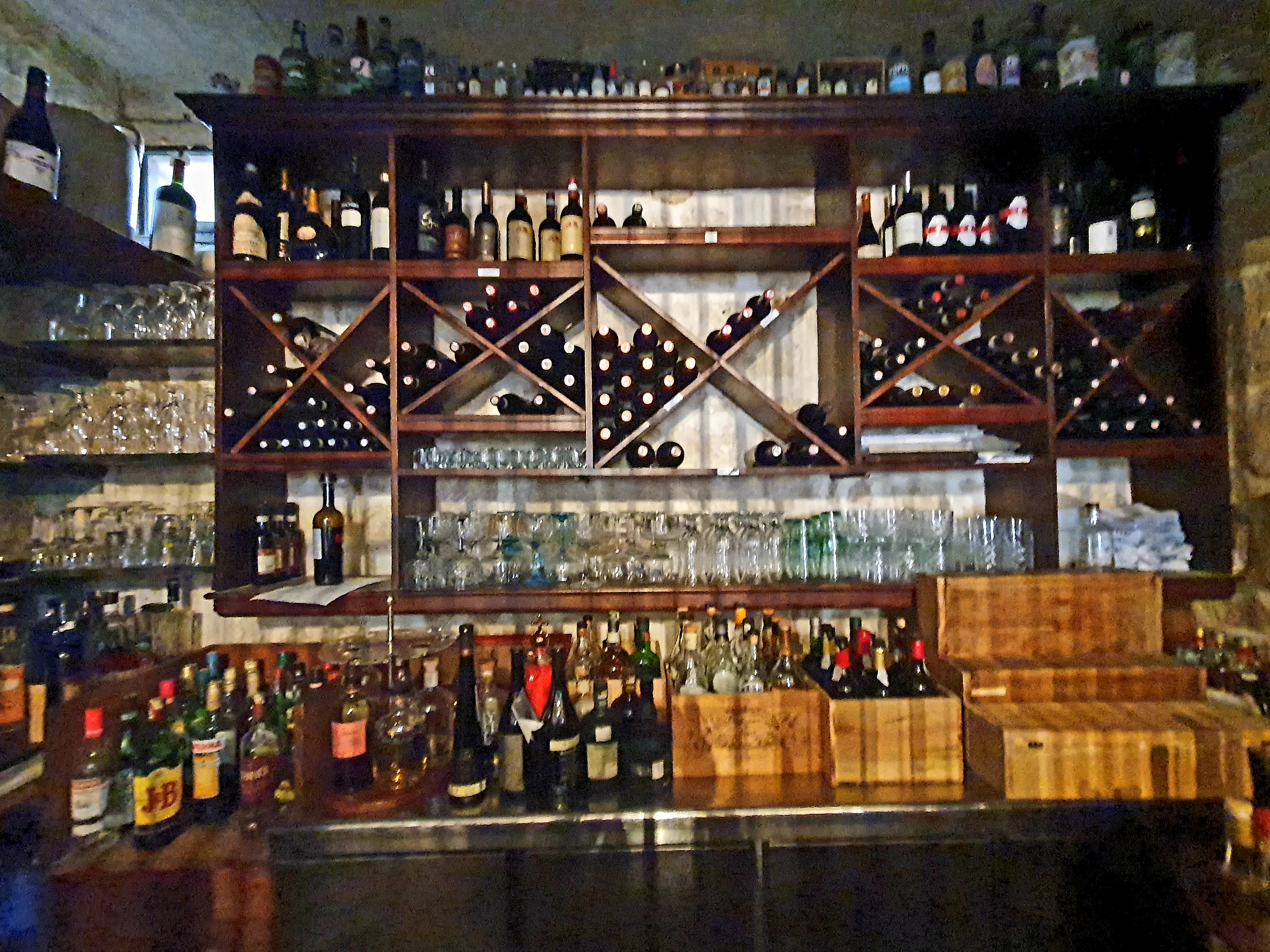
The cakes here are famous across Mdina and they were delicious. As the weather wasn’t so good we decided to sit inside and actually didn’t have to wait too long to be seated.
The views from the upper terrace were quite impressive.
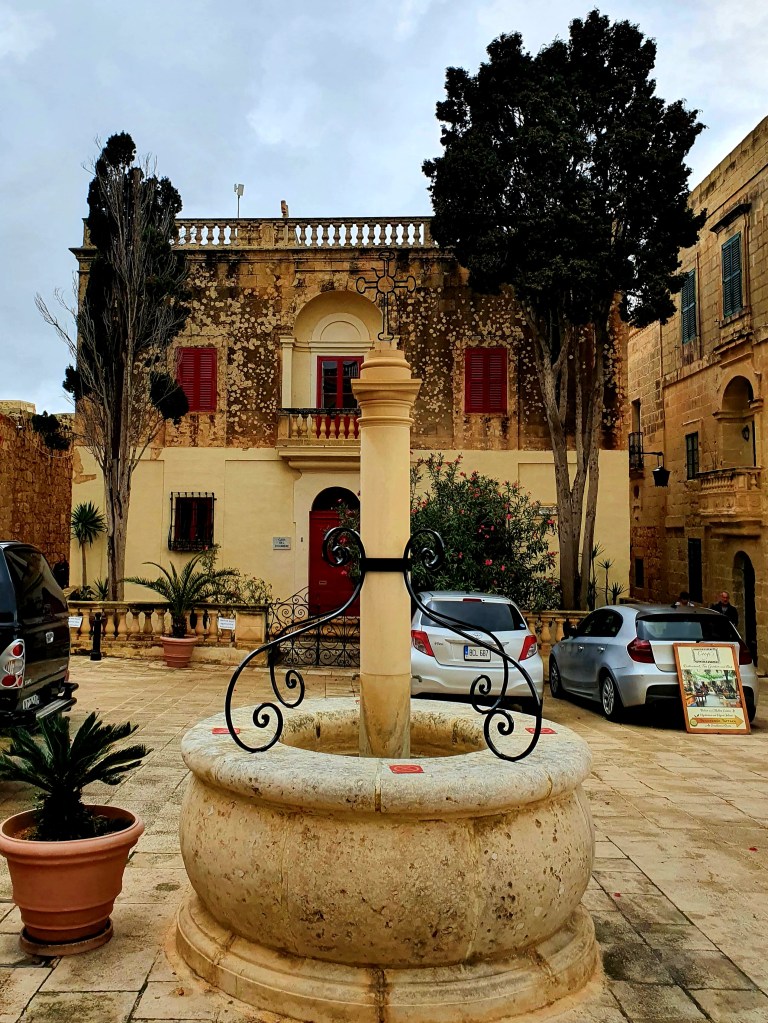
We walked on to Palazzo Falson which was built as a residential townhouse for Maltese nobility.
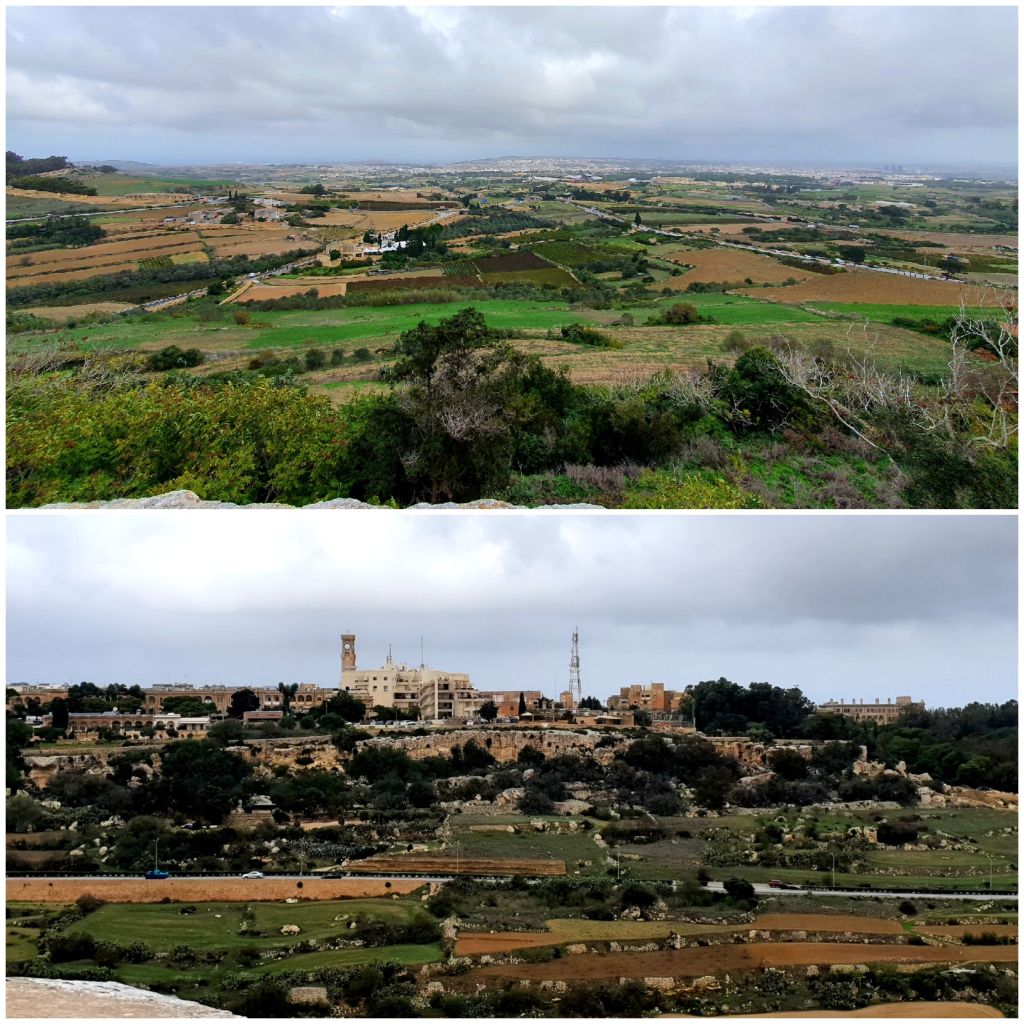
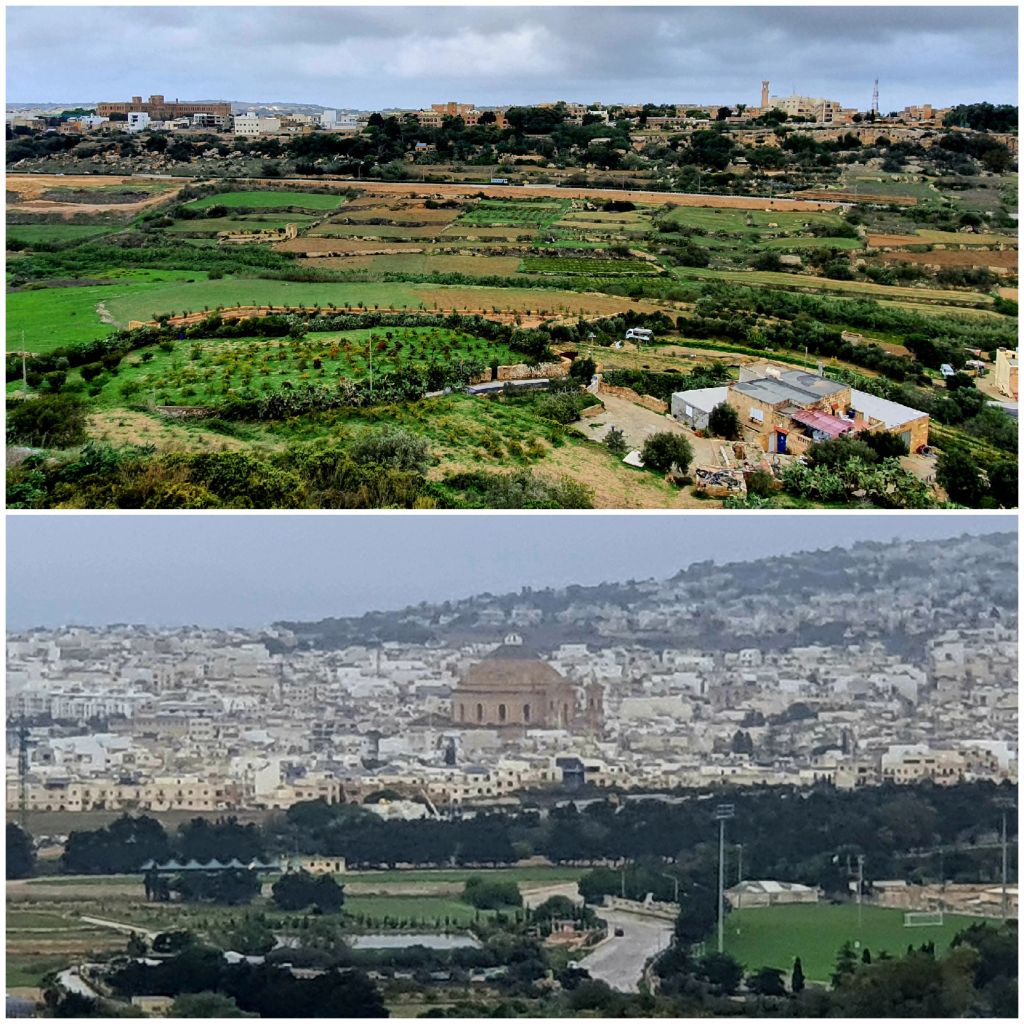
From the city walls you could get some great views over Malta, including the dome of Mosta.
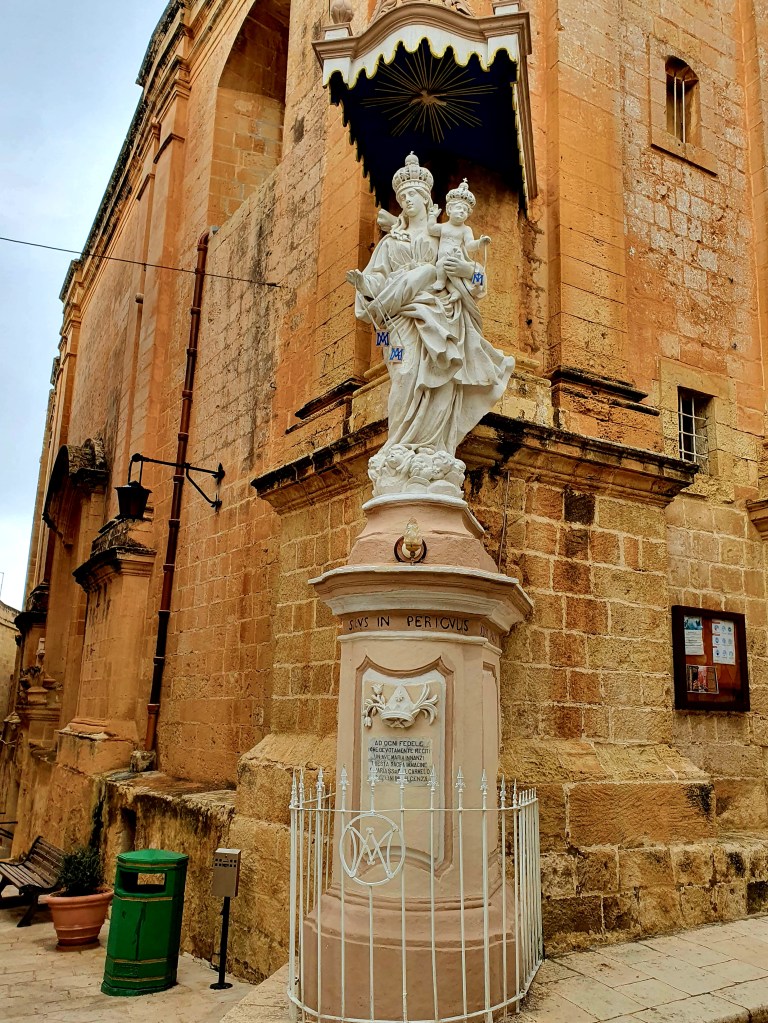
There are a lot of churches in Mdina and we walked past a few more. One was the church of the annunciation of our lady. This church and the surrounding area was given to the Carmelites in the 1650s. During the French occupation the church was ransacked by the French where valuables were stolen to fund Napoleon’s wars. However, it is said that on one particular occasion, as the French were on their way to steal the church’s damask, some rebels locked the church doors and a boy went up to the spire to sound the alarm. Consequently, this event gave birth to the resistance against the French.
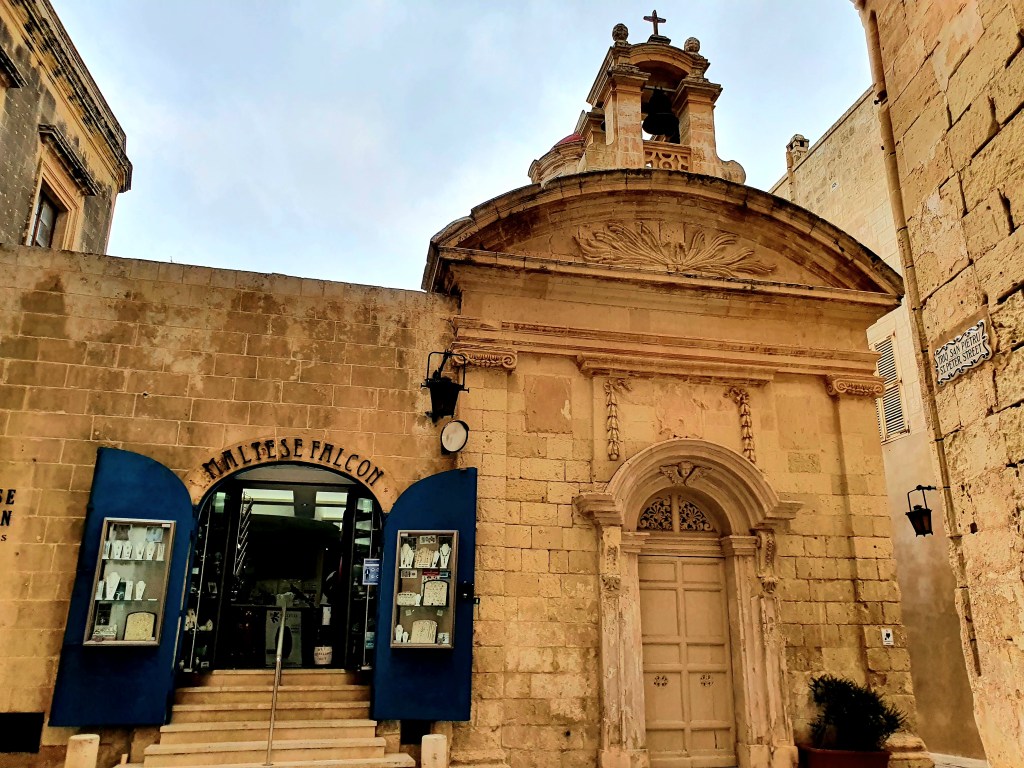
Another church we passed was the church of St Roque which is a small Roman Catholic church.
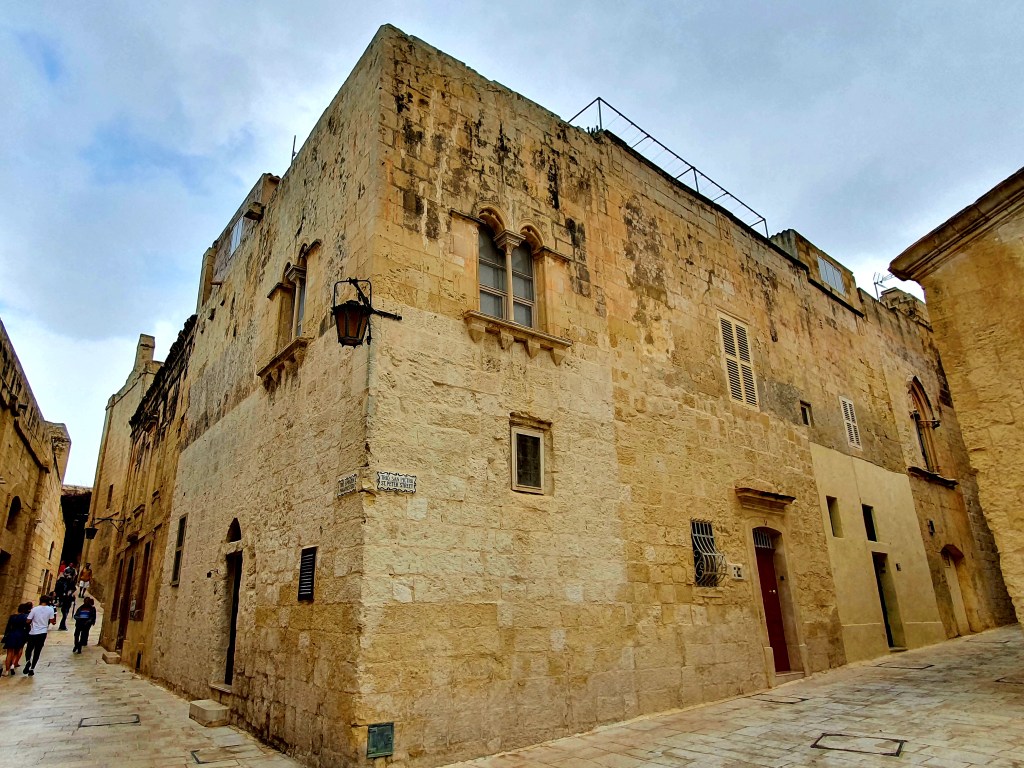
Close by is Plazzo Santa Sofia which is a large medieval town house and is reported to be the oldest house in Mdina with a date of 1233.
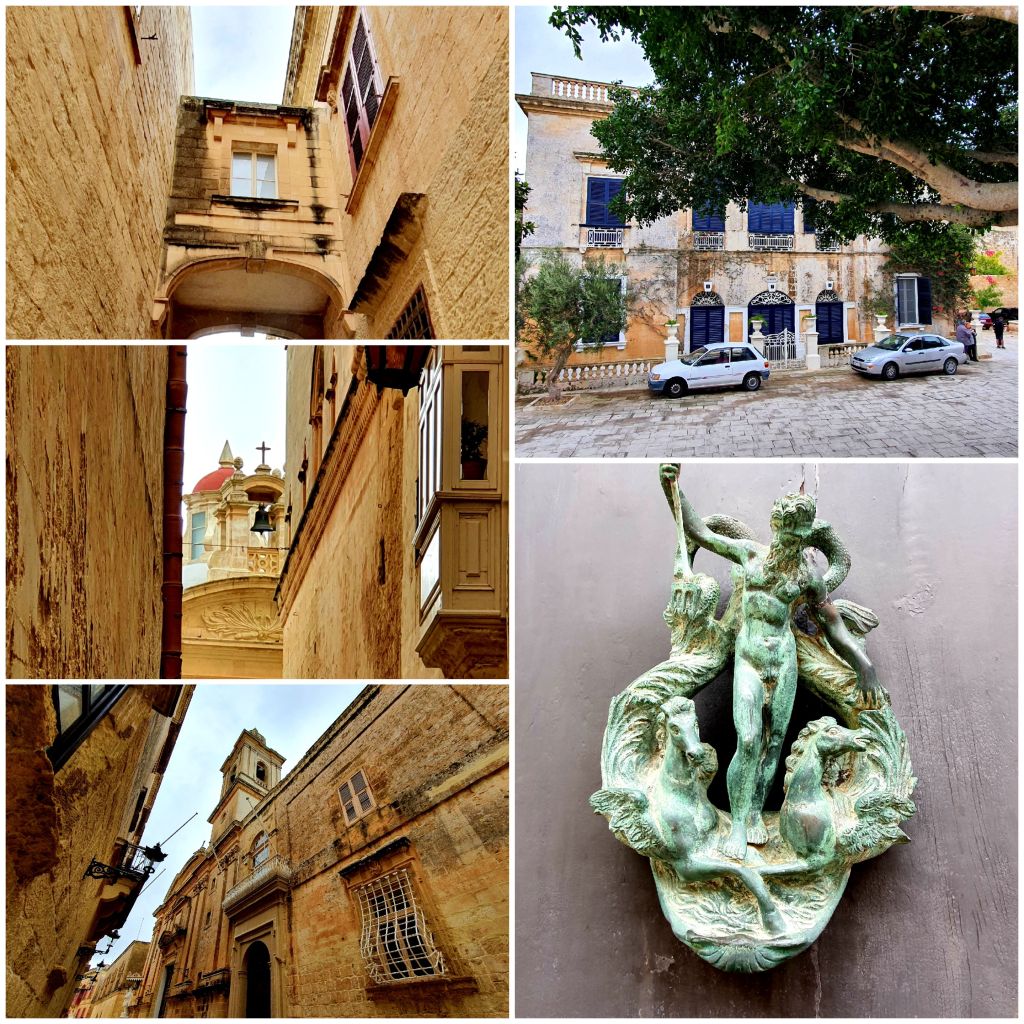
Mdina is a very pretty city, with lots of medieval streets and buildings. It was really nice wondering around the streets.
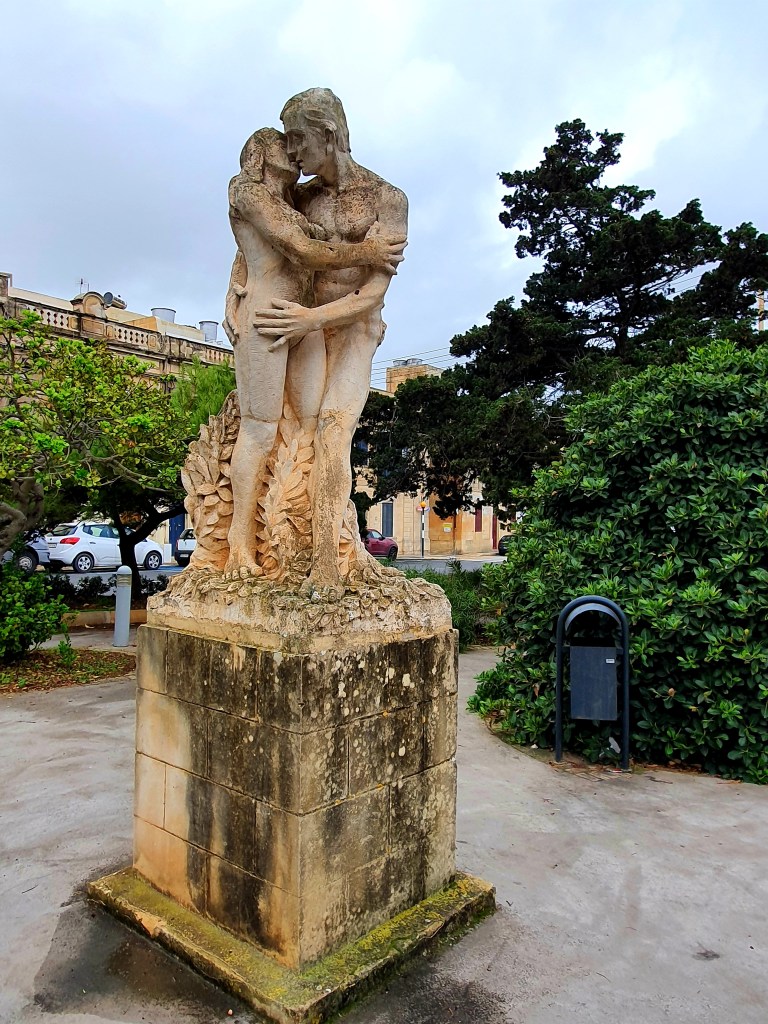
On the way out of Mdina we walked through Howard Gardens.
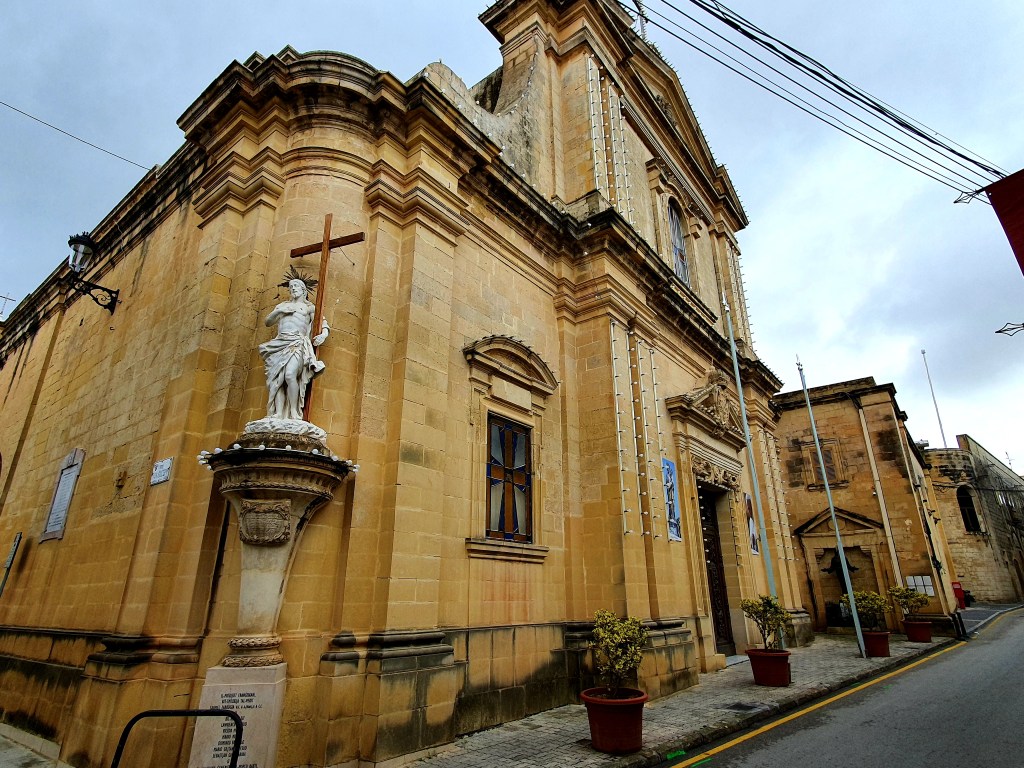
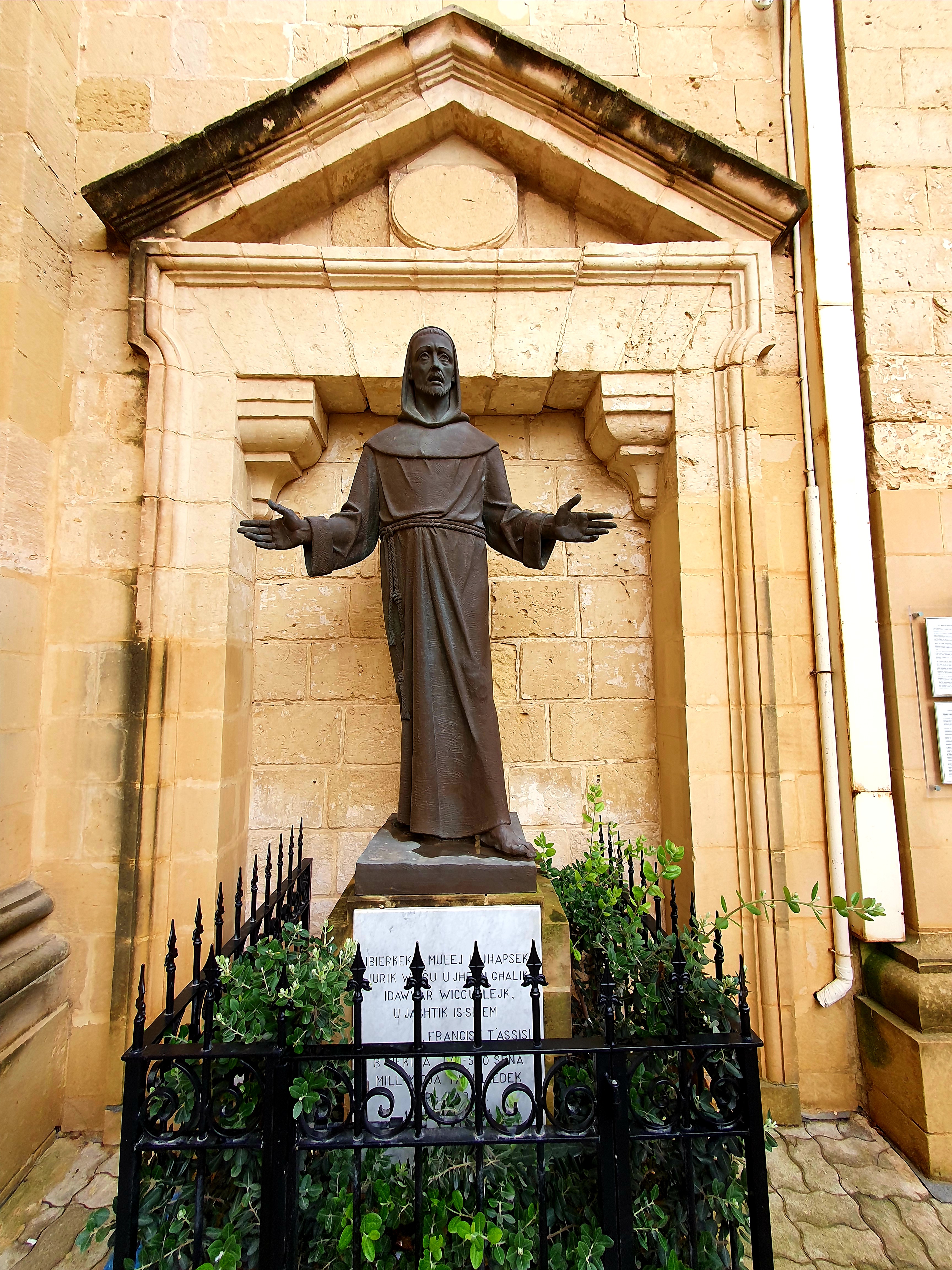
On the way from Mdina to Rabat we passed yet another church, Ta Giezu church, otherwise known as the church of the nativity of our lady. This church was the first Franciscan friary in Malta and was built in the 1500s.
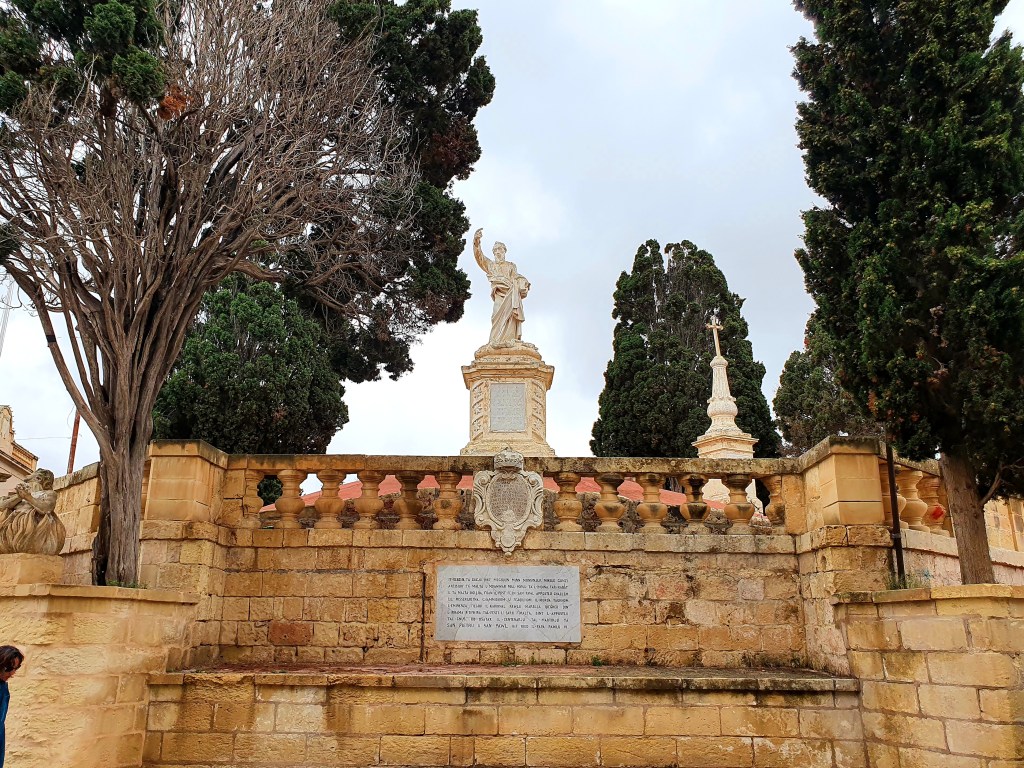
From here we walked past St Paul’s column. It is believed that St Paul stayed in Rabat for 3 months after he was shipwrecked in 60AD.
Next stop was the Basilica of St Paul. This is another stunning Roman Catholic church and has been visited by two popes in recent years- John Paul II in 1990 and Benedict XVI in 2010.
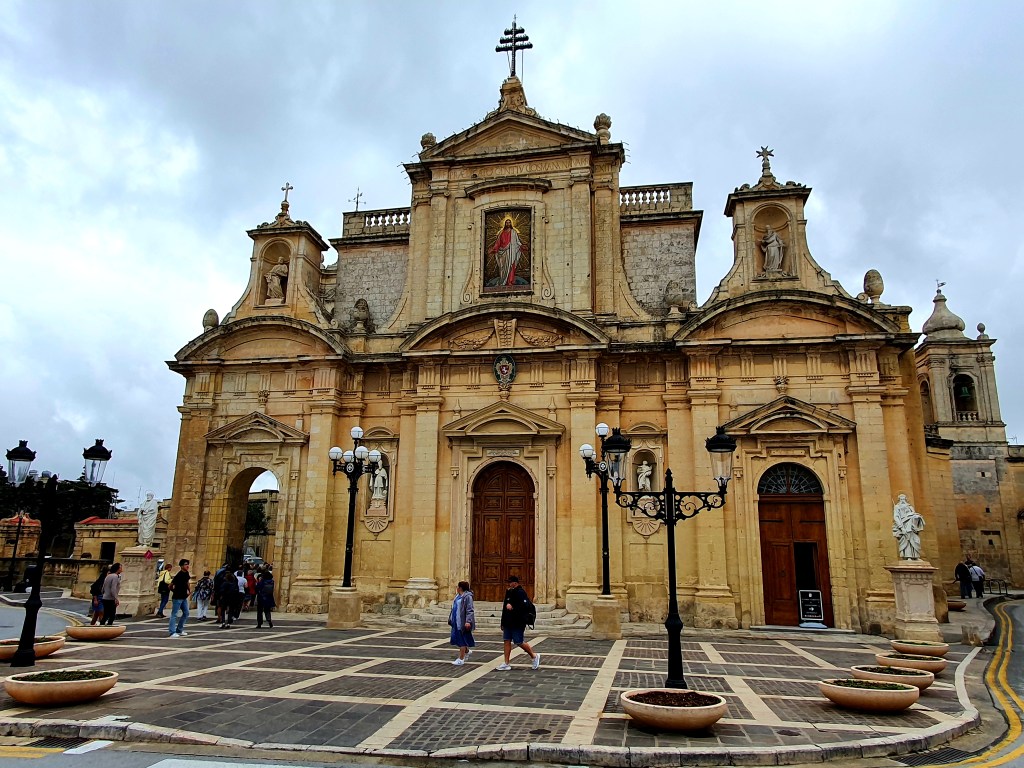
A visit to the catacombs in Rabat is a must so that was our next stop. The first set of catacombs we visited were the St Paul’s catacombs. These are some of the most prominent features of Malta’s early Christianity archaeology.
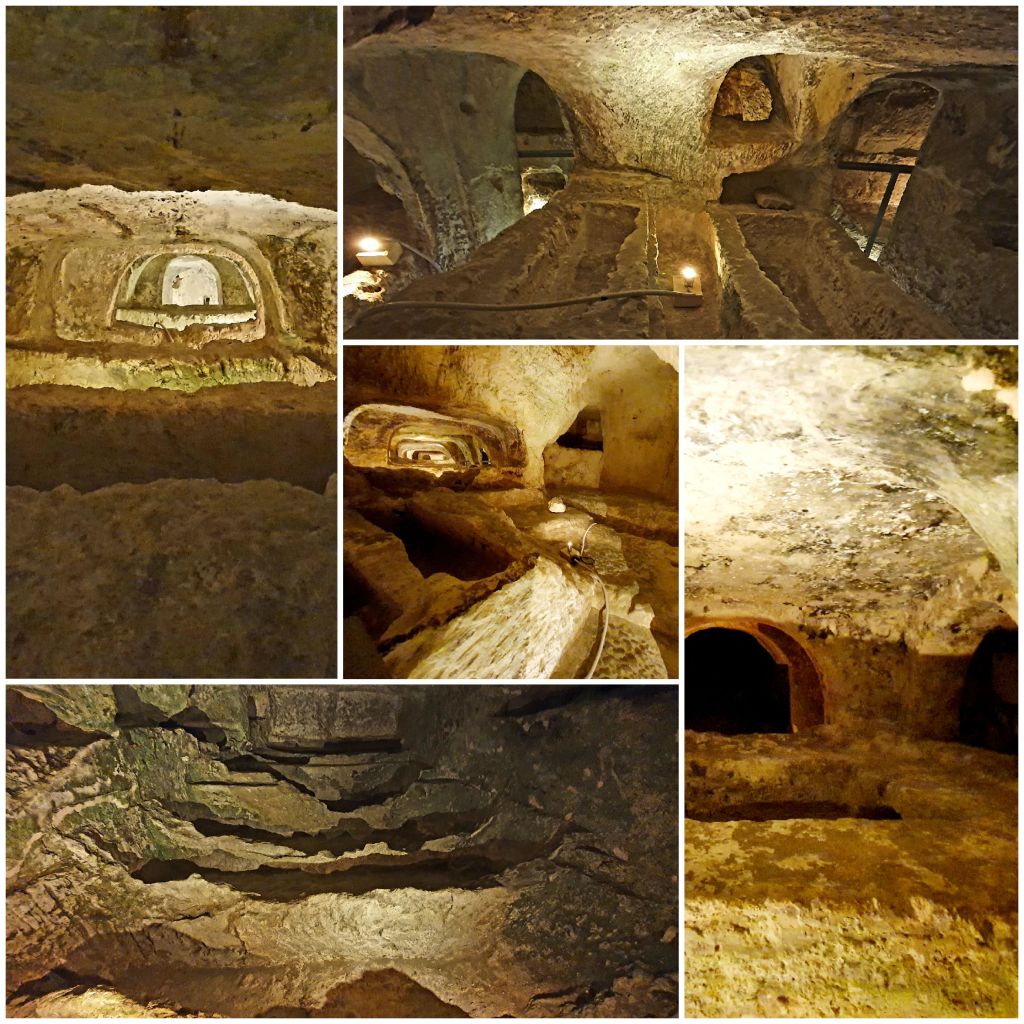
St. Paul’s catacombs are part of a large cemetery once located outside the walls of the ancient Roman city of Melite. The cemetery probably originated in the Phoenician-Punic period. As in Roman tradition, Phoenician and Punic burials were located outside city walls as the dead were never buried within the city walls. Its believed that the catacombs were, at one time,connected to St Paul’s Grotto.
The early tombs consisted of a deep rectangular shaft with one or two chambers dug from its sides. The chambers grew larger and more regular in shape over time. It is probable that this enlargement joined neighboring tombs and led to the creation of small catacombs, which became the norm by the fourth century AD. The catacombs were in use until the seventh, possibly eighth century. Some of the catacombs were used again during the re-Christianisation of Malta in the 13th century. There are over 30 hypogea in the complex which covers an area of over 2000 metres squared.
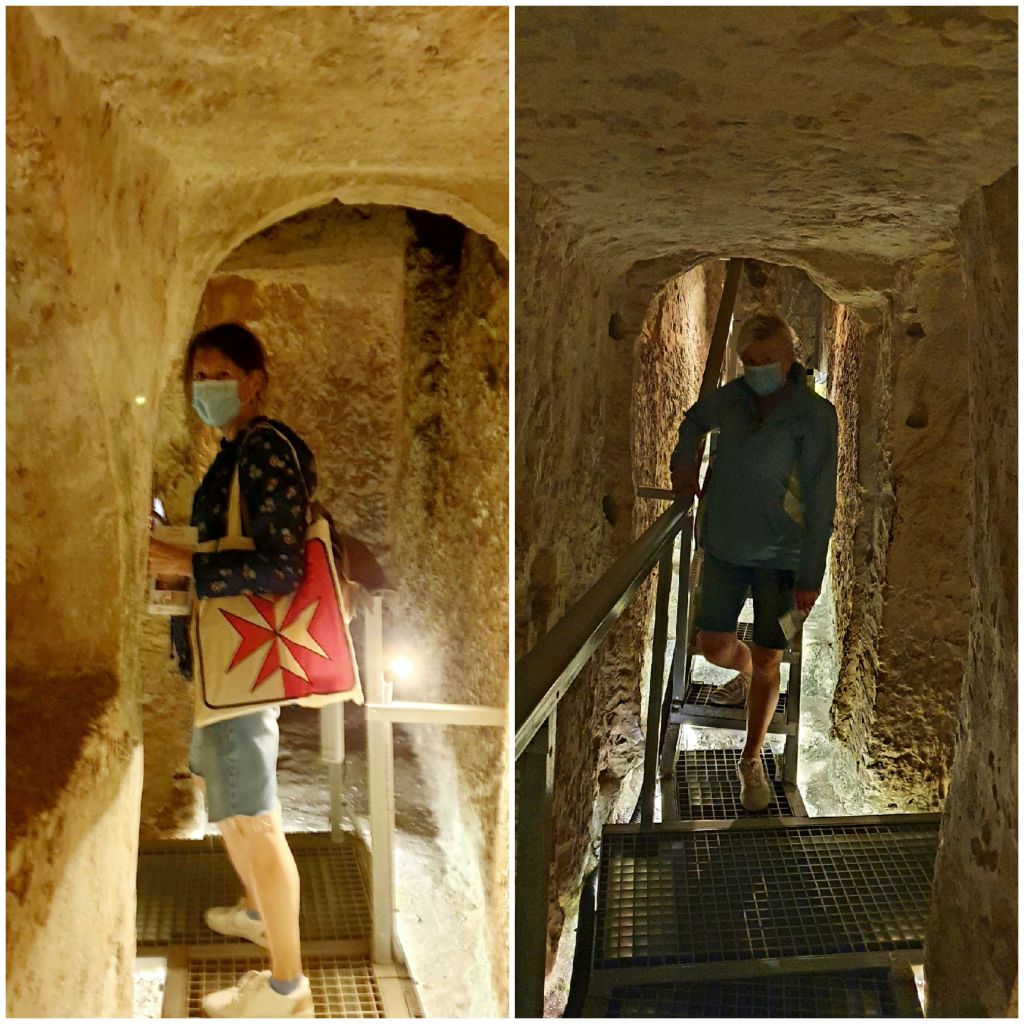
The catacombs encompass examples of all the different burial types in Maltese history and show that Christians, Jews and Pagans were all buried here side by side.
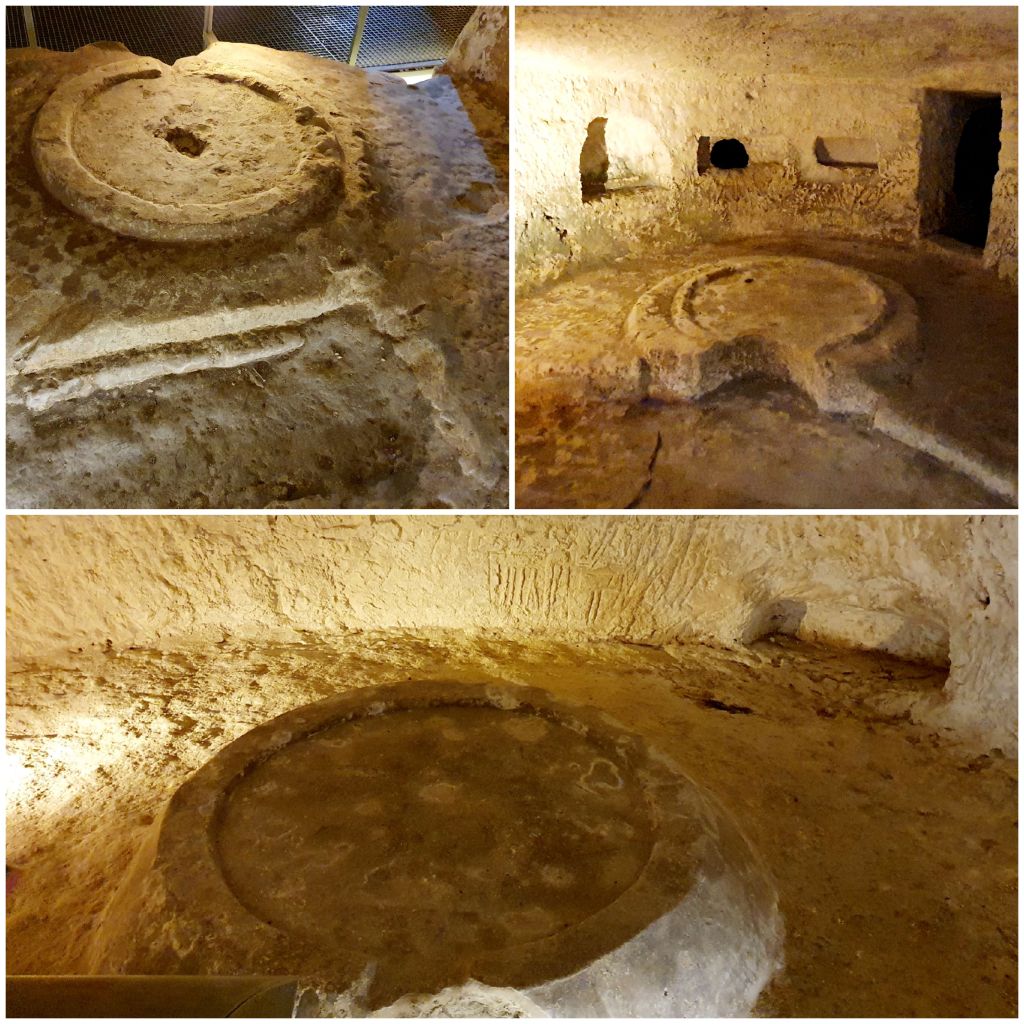
The catacombs did all look pretty similar after a while. Many of them had round tables carved out of the rocks which were most likely used to host commemorative meals
Some of the catacombs that were used for Jewish burials had a menorah carved into the rock above the entrance.
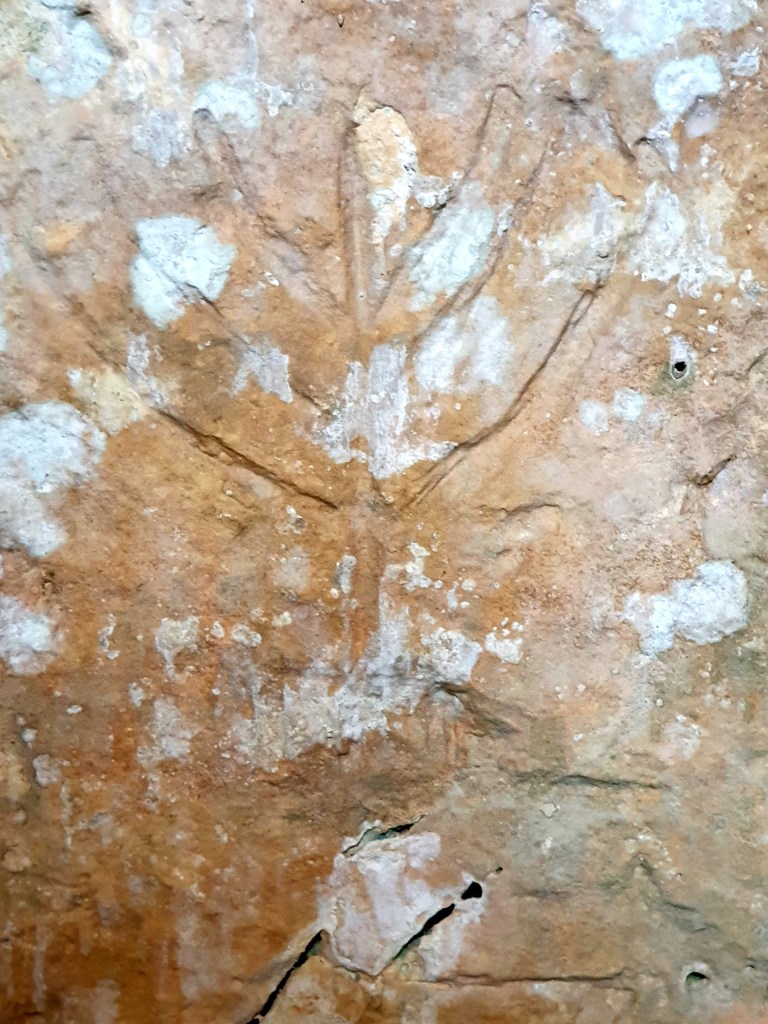
And a few of them had other decorative carvings or red paintings.

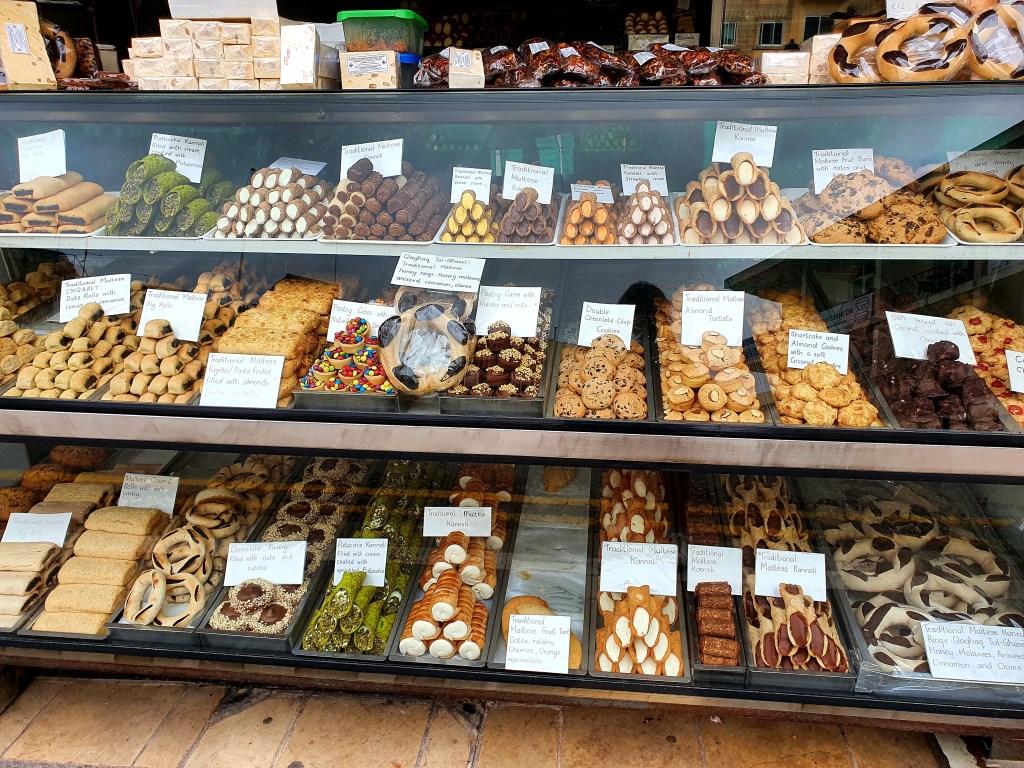
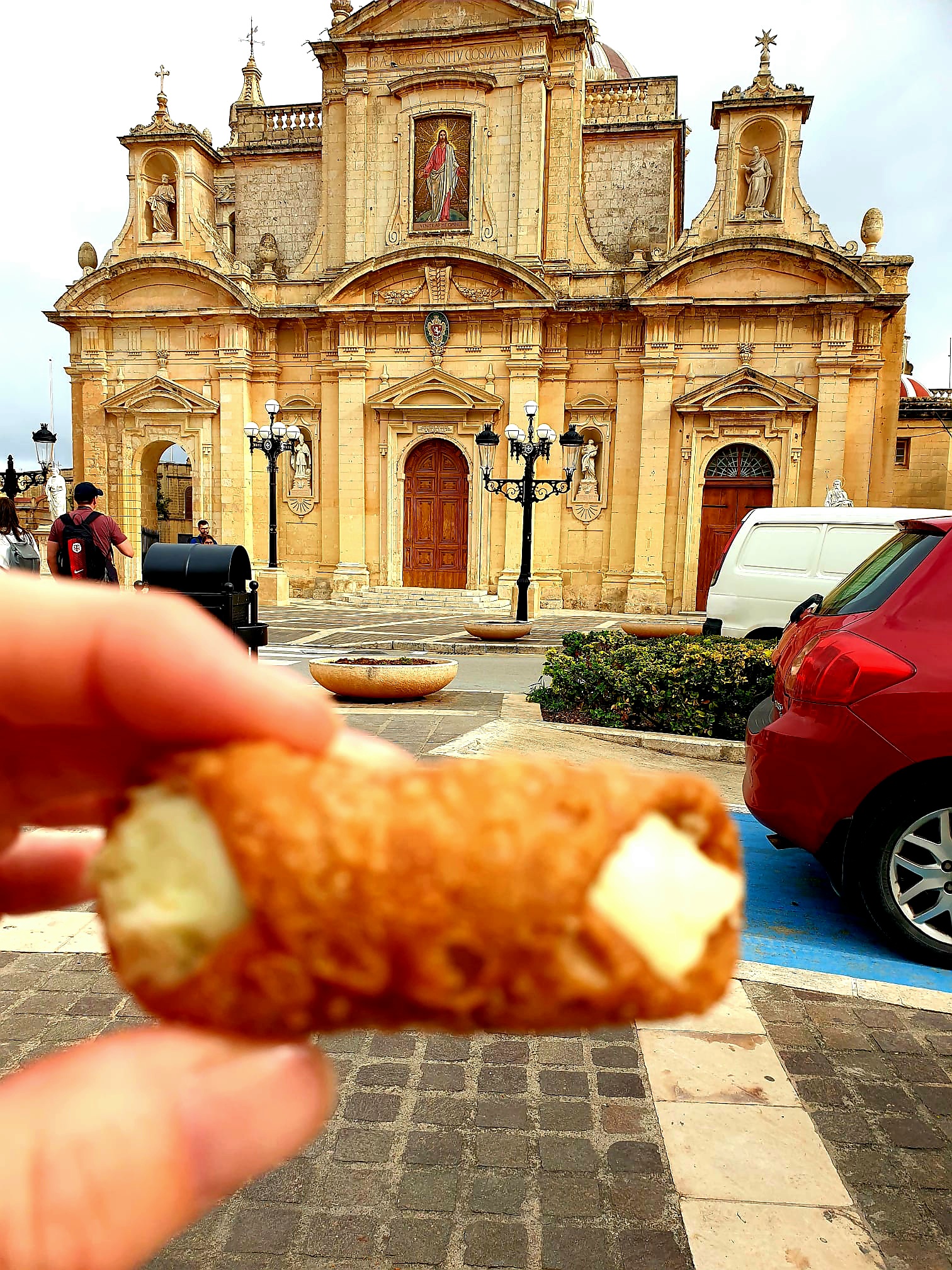
After our stroll around the catacombs we walked back into the centre and decided to treat ourselves to some Kannoli. These are pastries that are stuffed with a variety of different flavoured fillings. They were really nice.
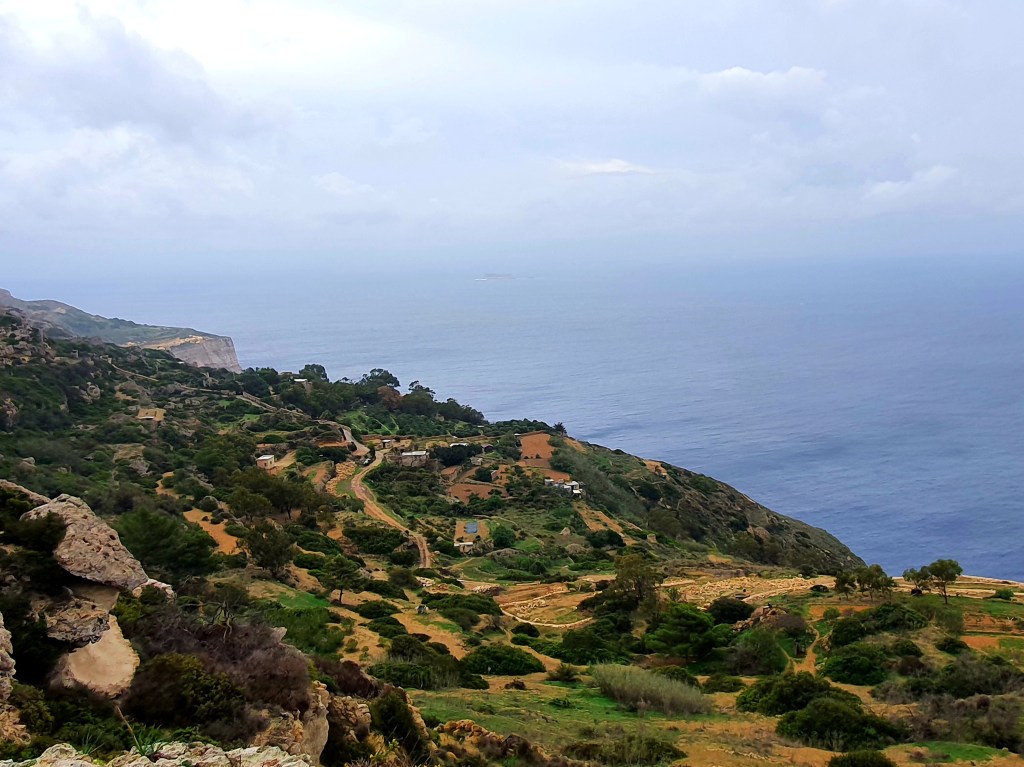
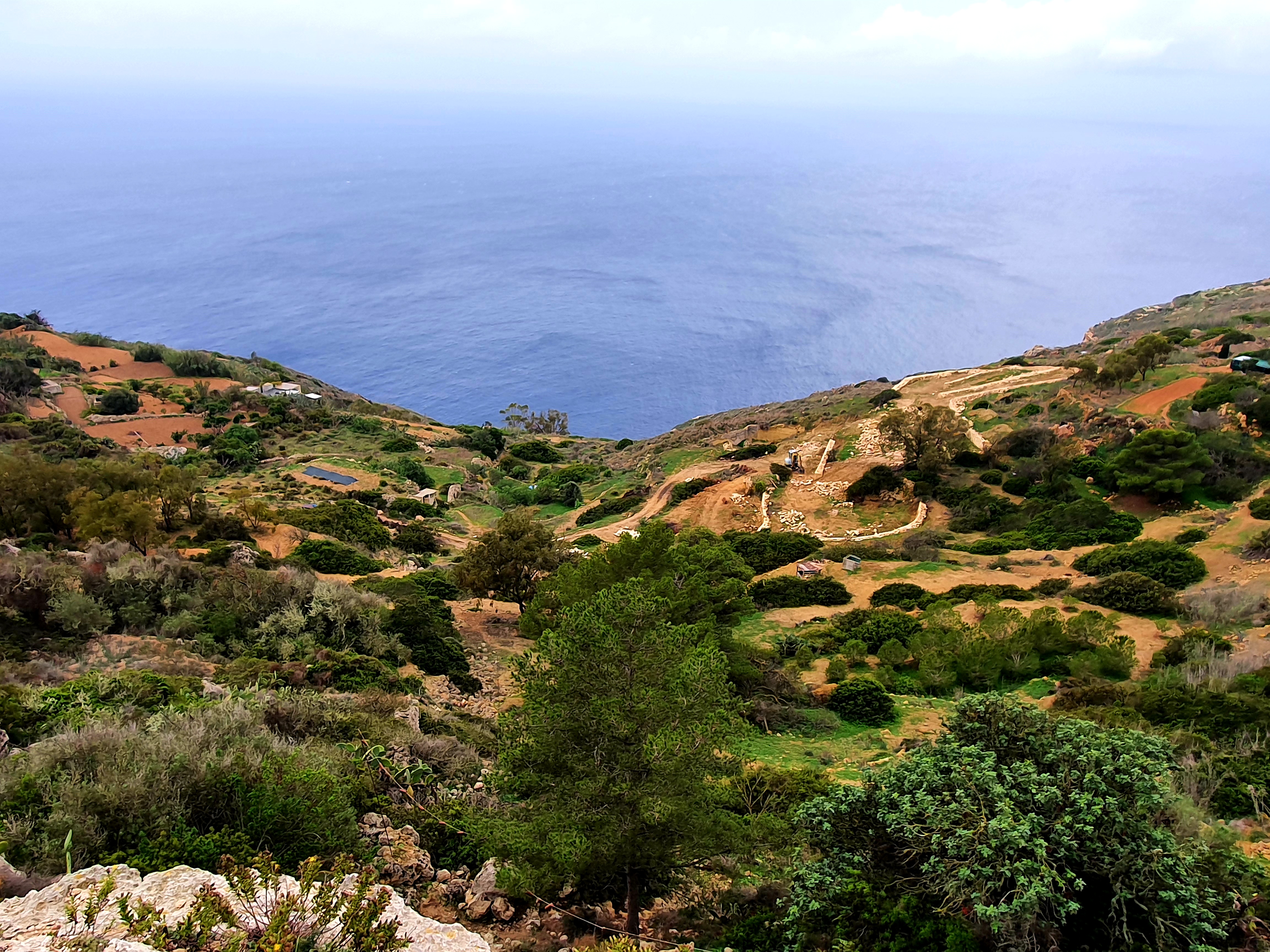
We realised we were not too far from the Dingli cliffs in Rabat so we decided to catch a bus to the cliffs as they were supposed to have lovely views. Unfortunately, by the time we got there it was really windy and was raining a little bit. The views were pretty spectacular though.
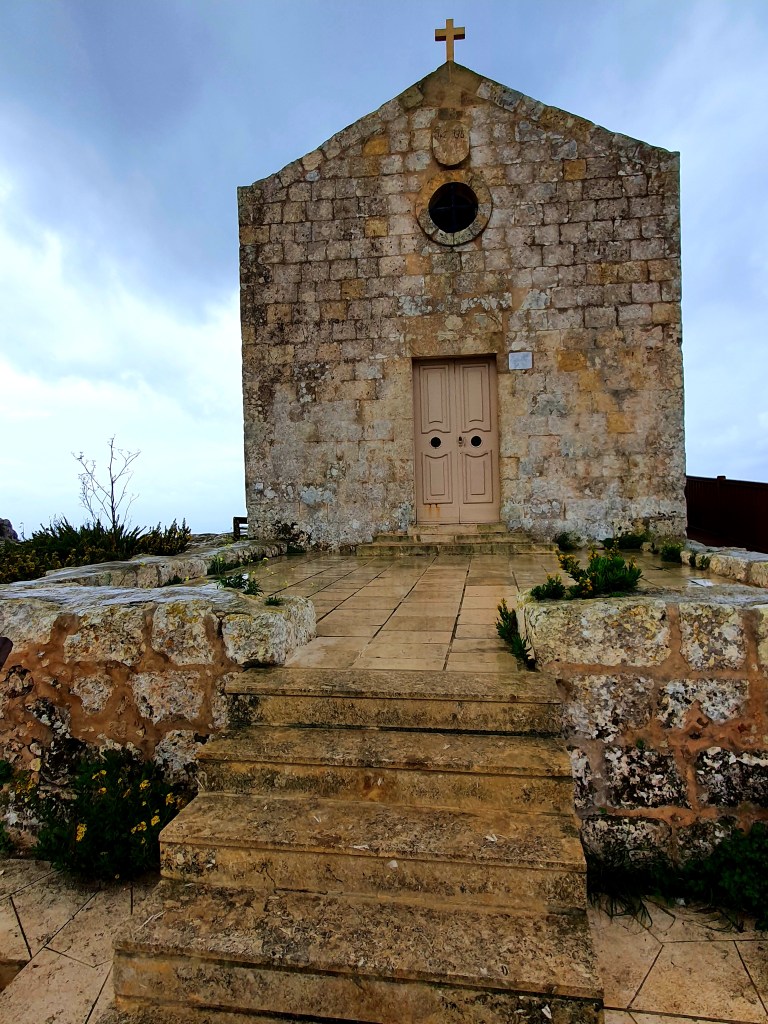
We walked past a small church and took a bit of shelter from the wind behind it. The church was built in the 15th century and is a simple countryside church. The marble inscription on the wall is in Italian and warns people that they cannot seek ecclesiastical protection within the church if they have broken the law.
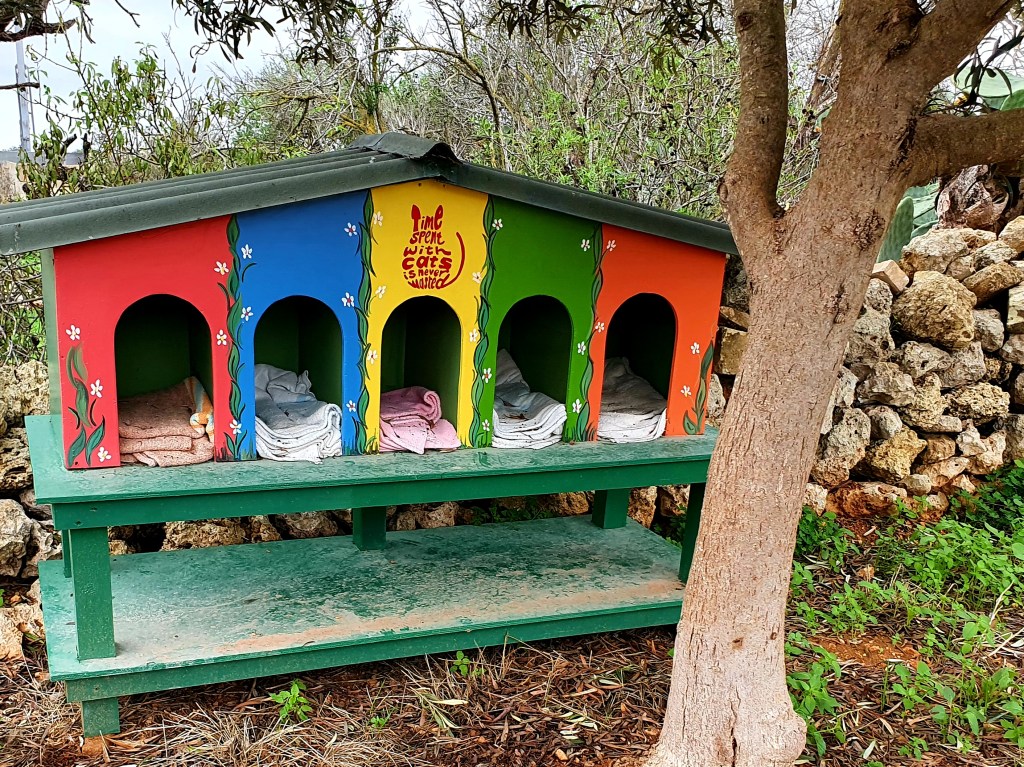
As we walked down the country roads we saw more evidence of how much the Maltese look after their stray cats, building them little shelters and homes.
We had heard about a place called Clapham Junction near the cliffs so decided we would try to find it. We went off the beaten track a bit and stumbled across Ghar il-Kbir, a cave in the middle of nowhere.
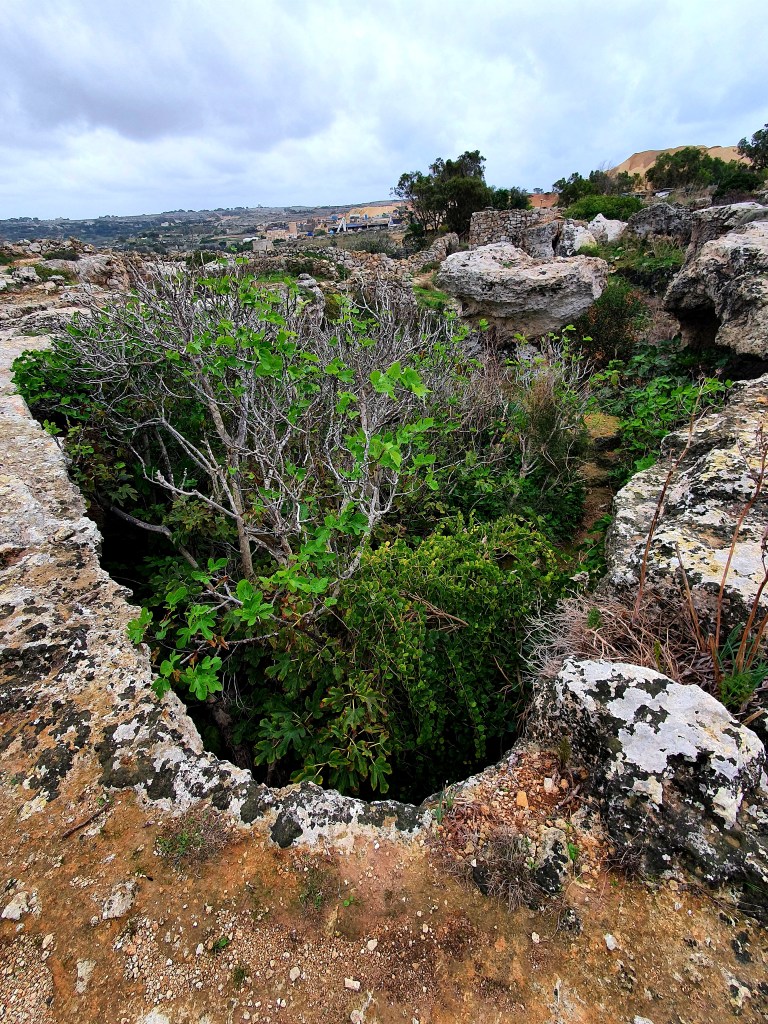
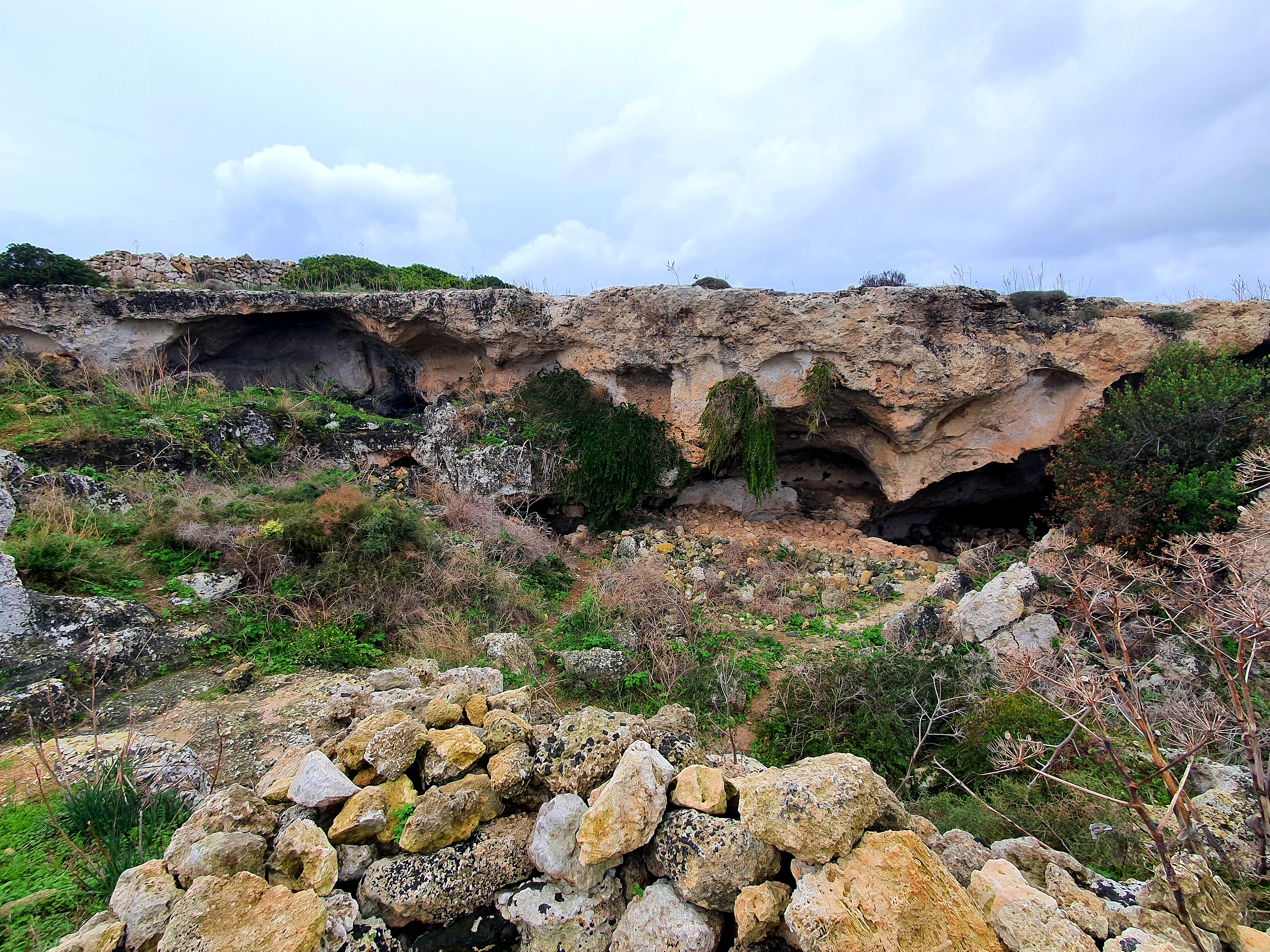

There were some people singing in the caves so we didn’t disturb them but we did explore a little bit before continuing on our journey to Clapham Junction.
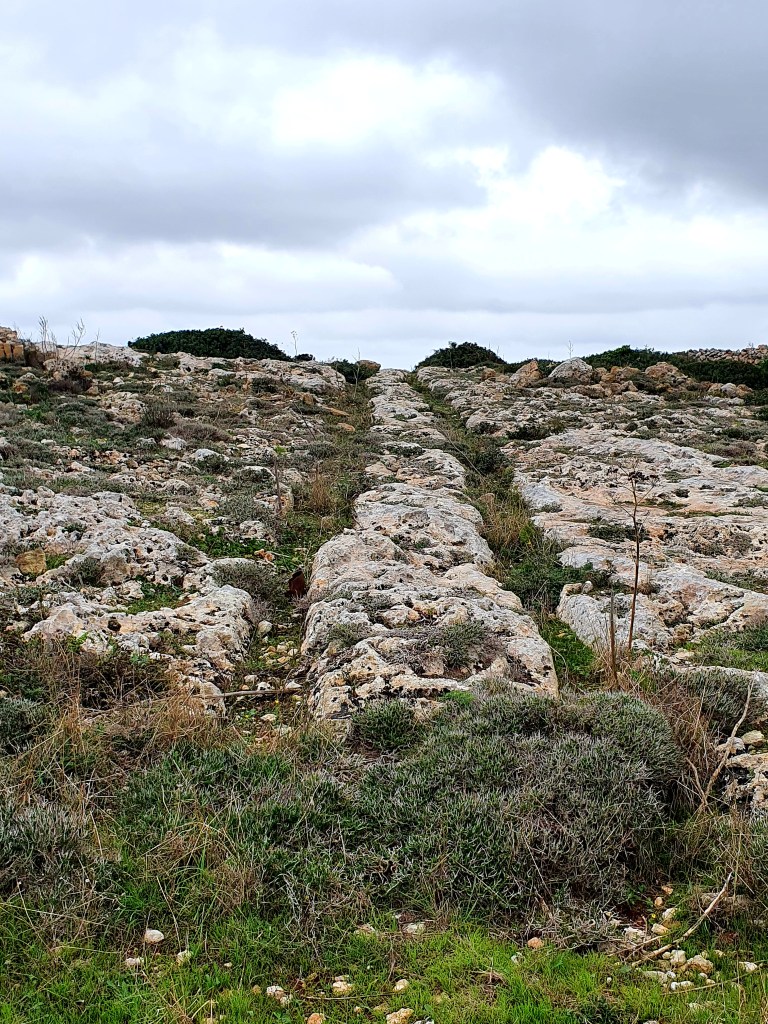
Clapham Junction is basically a network of tracks or cart ruts. The age and purpose of the ruts is not known. They appear to be some sort of ancient roadways and they are quite big when you get up close to them. It is thought they were caused by wooden-wheeled carts eroding soft limestone.
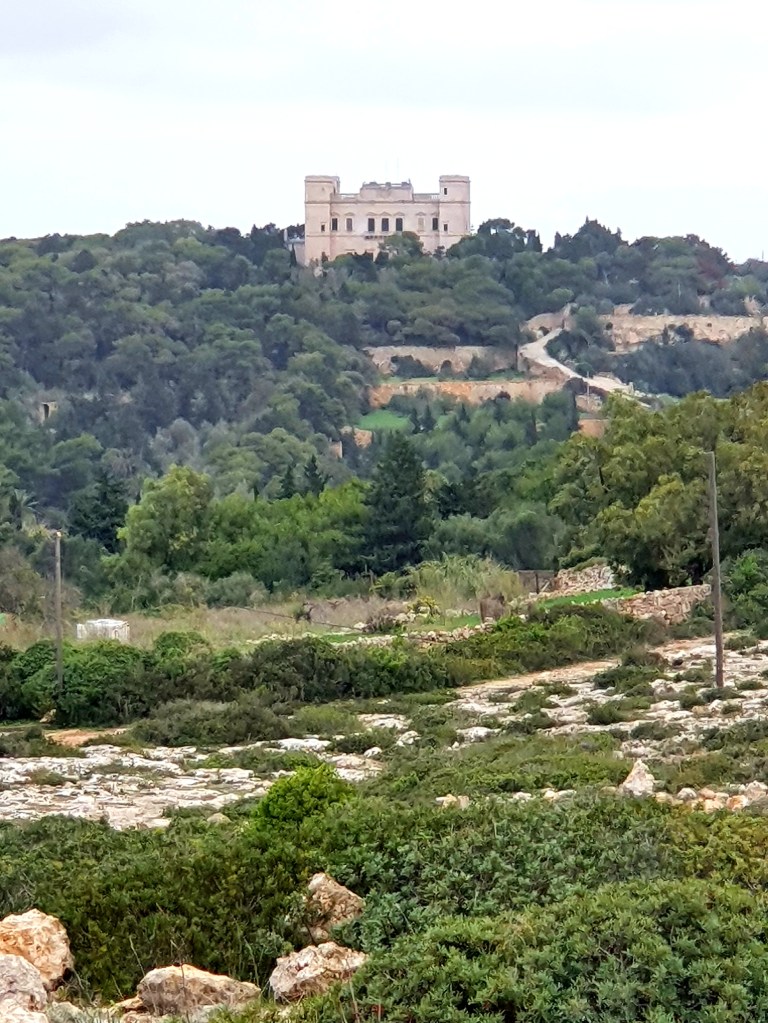
In the distance we could see Verdala Palace which is the official summer residence of the President of Malta. Originally it was a hunting lodge and was so used as a military prison for French soldiers as well as a silk factory. This Palace is supposedly haunted by the “Blue Lady”. She was supposed to marry someone who she did not like and the only way to escape her fiancee’ was suicide, so she jumped off the balcany in her bedroom. Her ghost is reportedly seen roaming the palace, wearing the same blue dress she wore when she died; her wedding dress.
When we got home we had to quickly get ready to go out as we had booked a table at ‘The Harbour’, a Michelin star restaurant just over the road from our apartment.
The meal was delicious and amazingly presented. When we first arrived we were offered a cocktail.
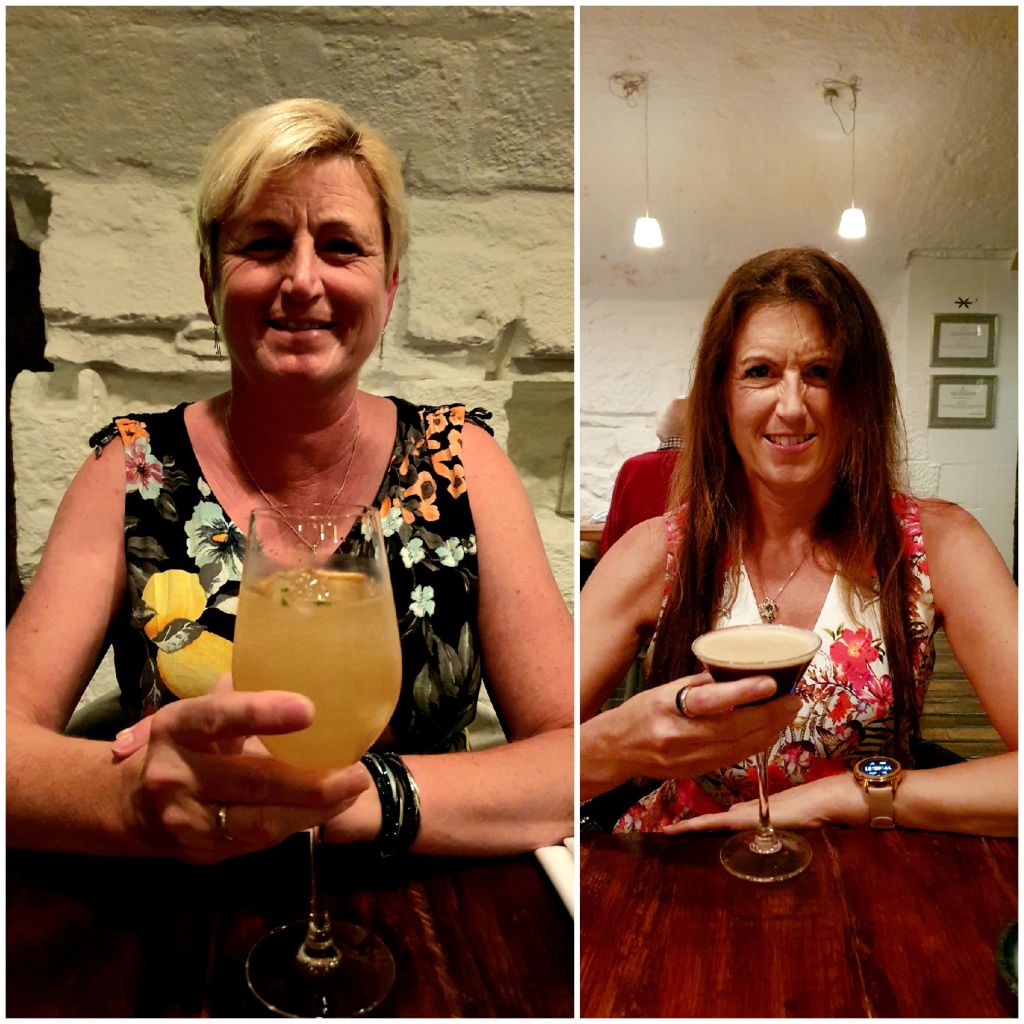
The food really was amazing, it tasted so good and even though the amounts seemed small it did fill us up. Unfortunately the service wasn’t quite as good and we had to ask twice to see the wine menu before somebody came to offer us wine.
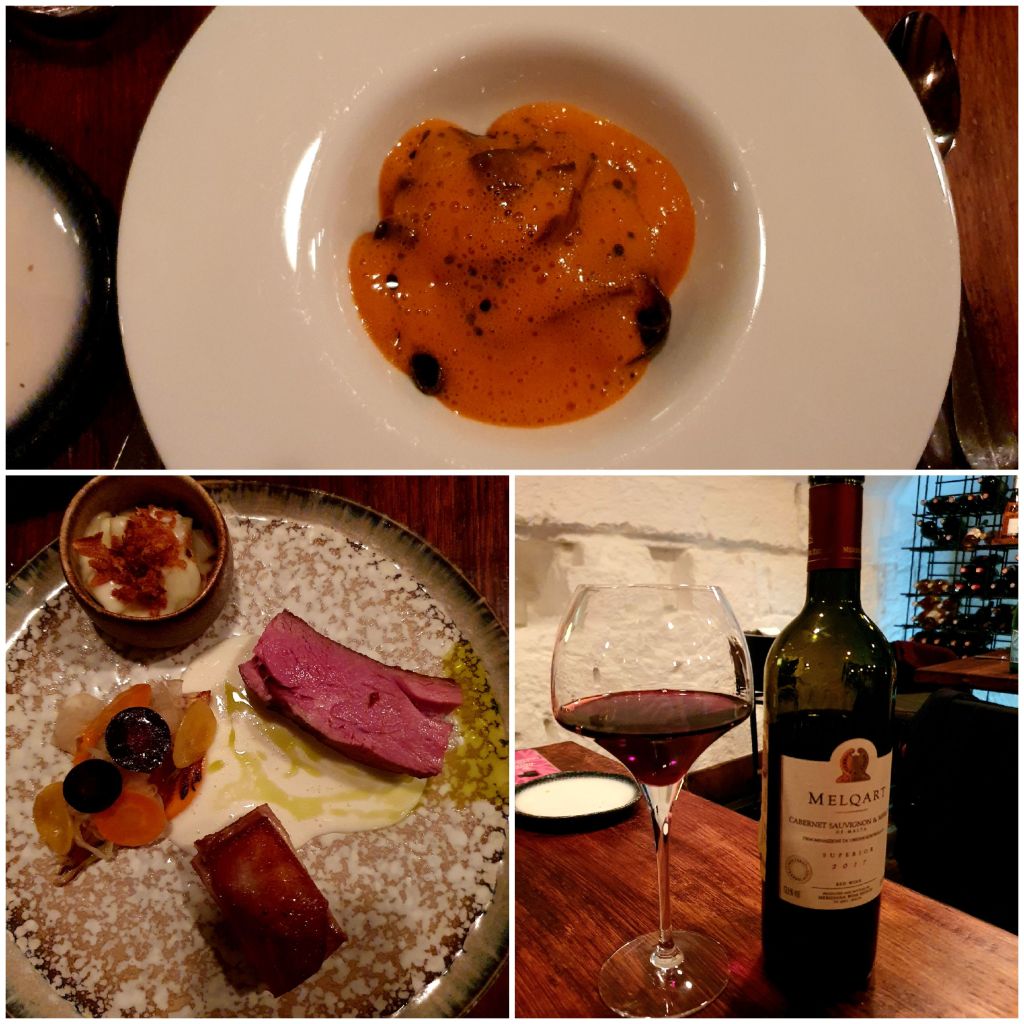

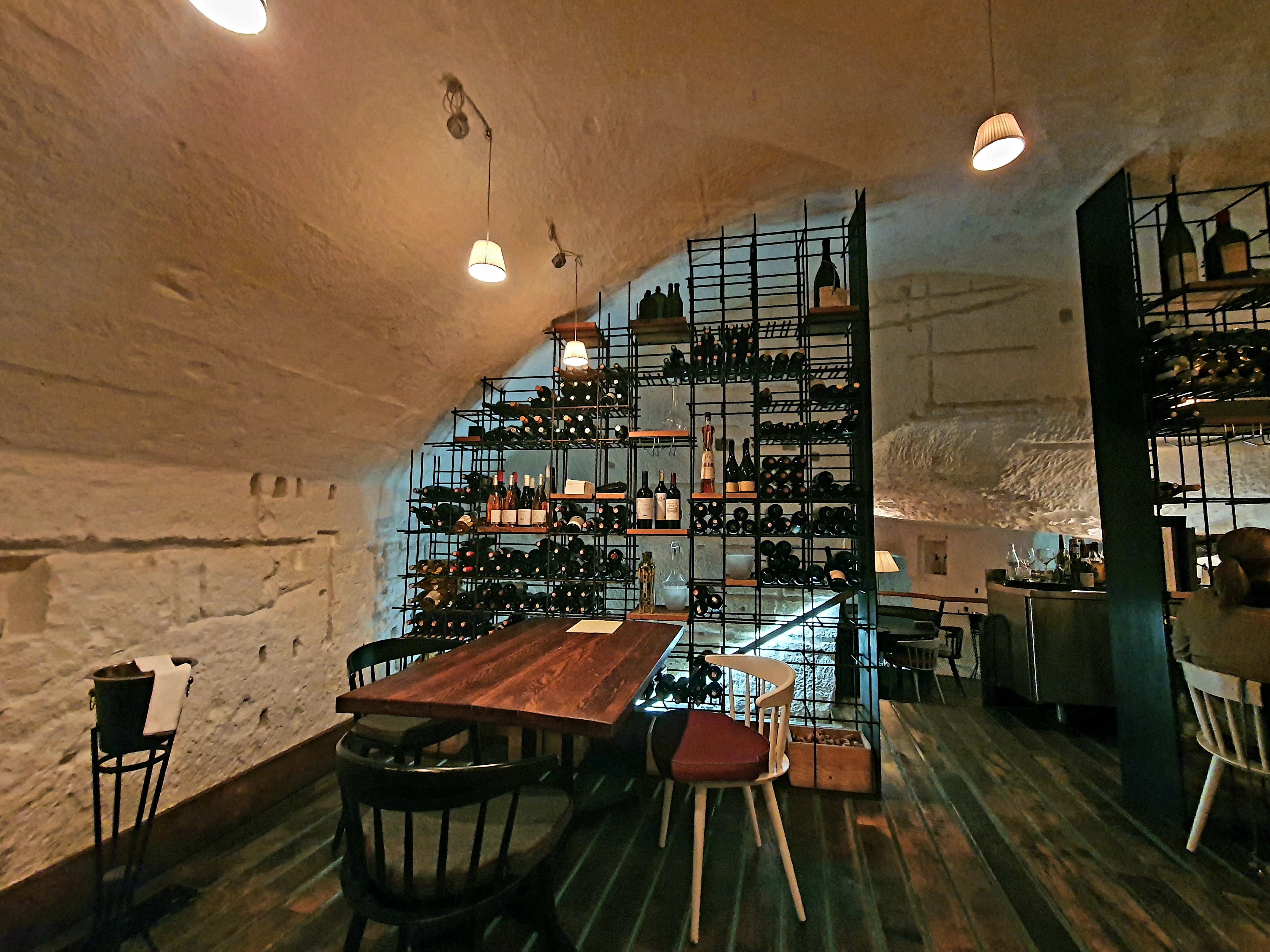
The restaurant itself was really nice. Normally we would have sat outside, but because of the bad weather we sat inside.
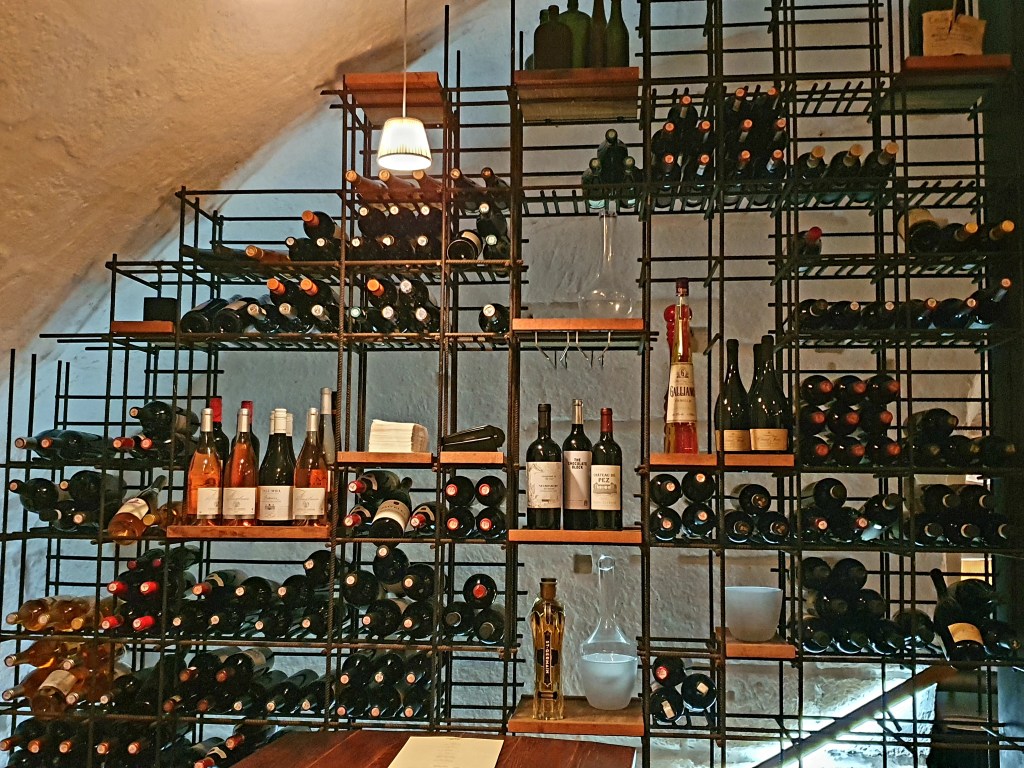
At the end of the meal we were offered a shot on the house so I had some limoncello which was very tasty.
It was a really lovely evening with great food and great company!

