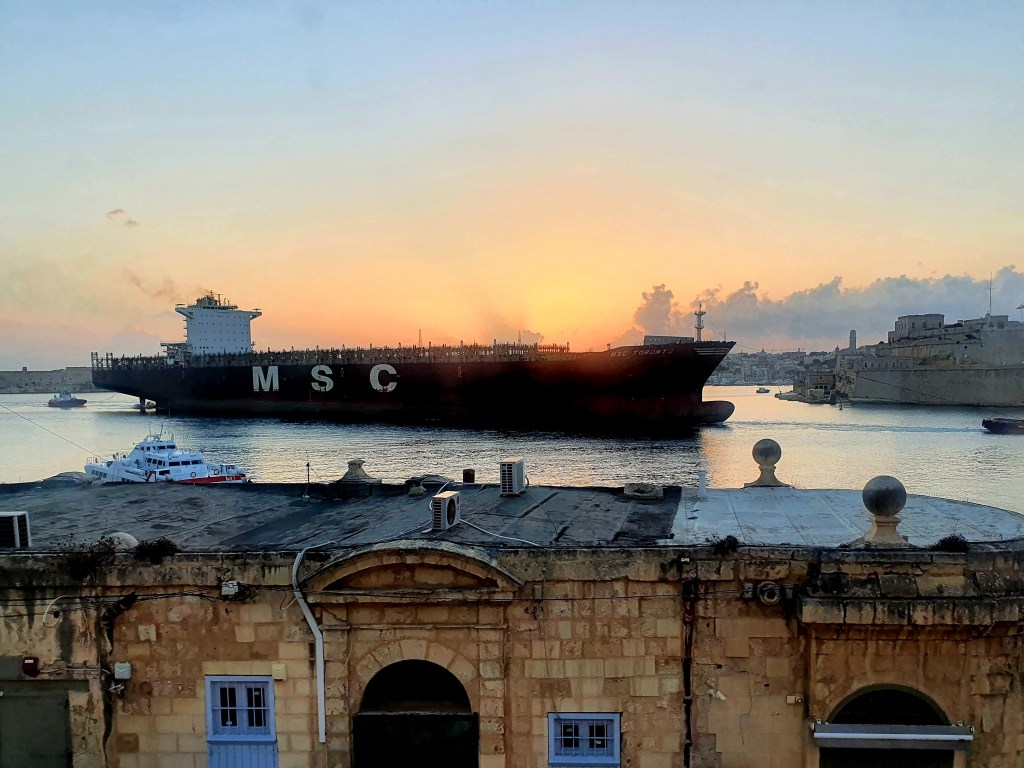
It was another early start as I had booked tickets to go to the Hypogeum prior to the holiday. They only let 80 people in every day so its quite hard to get a spot and when I booked, the only slots available were the early morning ones. Just as were having a coffee and tea a huge tanker went past, through the Grand Harbour outside our window.
As we walked up to Valletta bus terminal we passed through Victoria Gate. This gate was built by the British in 1885 and named after Queen Victoria. This gate is the only surviving gate within the walls of Valletta as all of the other fortified gates have been demolished. The two arches have the coat of arms from Malta and Valletta and the British coat of arms is at the top.

We had to be at the Hypogeum for 9am and luckily it was only around 20 minutes by bus. At the bus terminal in Valletta we bought a 7 day bus pass which we certainly got good value from throught the holiday.
We arrived in Paola a little bit early so had a quick look at the parish church – Basillica of Christ the King. Unfortunately we didn’t have time to go inside and explore.

At 9am a few of us were gathered outside a very unassuming building down a small side street, it didn’t look like it housed anything spectacular. You were not allowed to take any photos inside the Hypogeum (I’ve borrowed some from the internet) but it was pretty amazing. To think that it had been built over 5000 years ago.
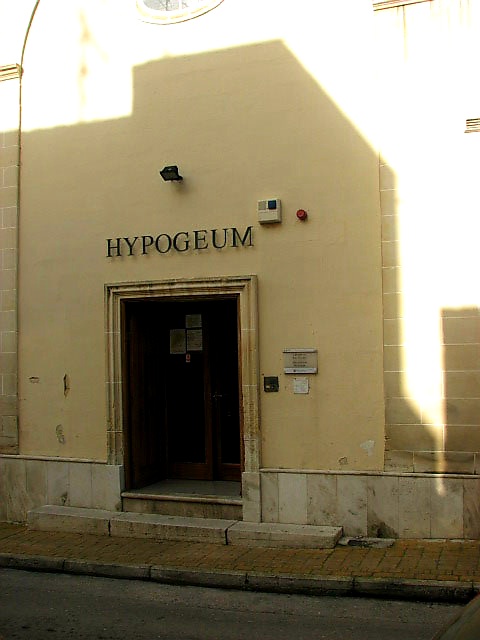
The Hypogeum has three levels and lots of halls, chambers and passages carved out of the living limestone. It covers an area of around 500 square metres.
The upper level dates back to 3600 BC and was mainly a large open space with burial chambers off to the side. It was the first level that was constructed and was originally made by enlarging a natural cave. The entrance triathlon can be found on this level.

More burial chambers with examples of stone carving and decoration can be found in the middle level. One of the most impressive chambers on this level is called the Holy of Holies. The rock has been carved to give the impression of built masonry. No bones were found in this area and it appears to be positioned so that the light from the winter solstice would have illuminated it from the original opening above.
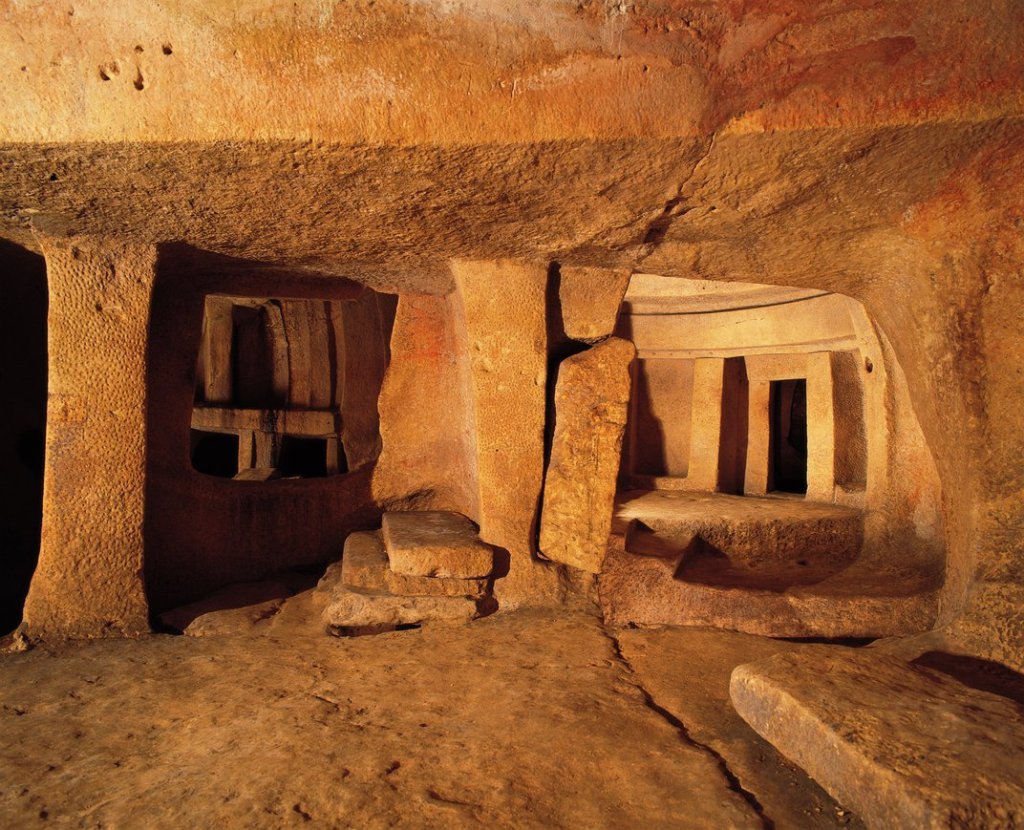
Also in the middle level is the Oracle room. There is a little niche at the far end of the chamber and if you make a deep sound into it, the sound resonates all over the chamber. The ceiling of the chamber is decorated with ochre swirls which would have looked amazing in fire light.

The lower level, which is 10.6m below street level, is reached via uneven steps. The steps lead to chambers which were probably used for storage.
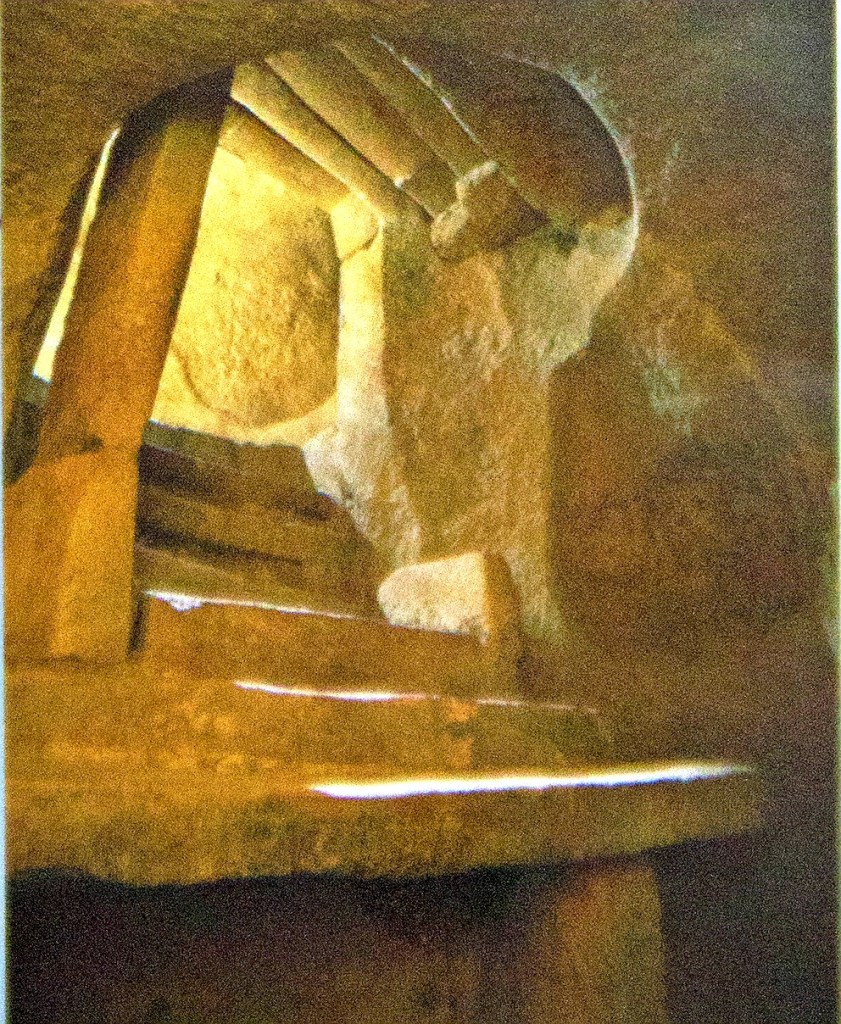
The Hypogeum was accidentally discovered in 1902 by a stone mason who was laying the foundations for a number of houses on the site. He was building the cisterns for the houses when he dug through a roof of a chamber.
Remains of around 7000 individuals and artifacts were discovered at the site. It is thought that the upper level was built for burials and as the cave filled up new chambers were cut deeper into the rocks.
The microclimate of the Hypogeum is strictly controlled and only 10 people can visit at any one time. This necropolis was definitely worth a visit, travelling back in time and it was amazing to see.
After the Hypogeum we decided to go and visit the Tarxien Temples as this was only a 10 minute walk away. These temples are the most complex of the temples found in Malta.
The eastern side of the temple has mainly been destroyed and only the lower part of the walls have survived.

There are three other structures and many of them have a central area with a number of apses coming off this central area. Little is known about what took place within the buildings but it is thought they were an important communal centre for social, religious, political and economic activities.
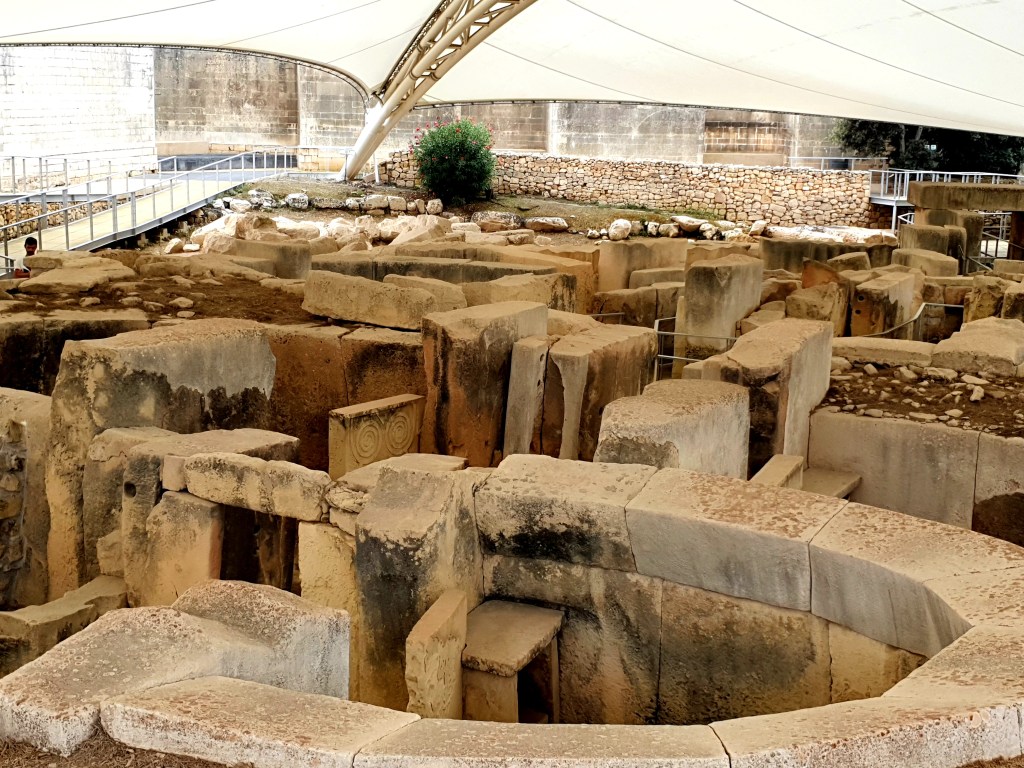
One of the stones had a bull carved onto it and a number of animal bones were found in the temples which indicates that animals probably played an important role in the rituals that took place here.
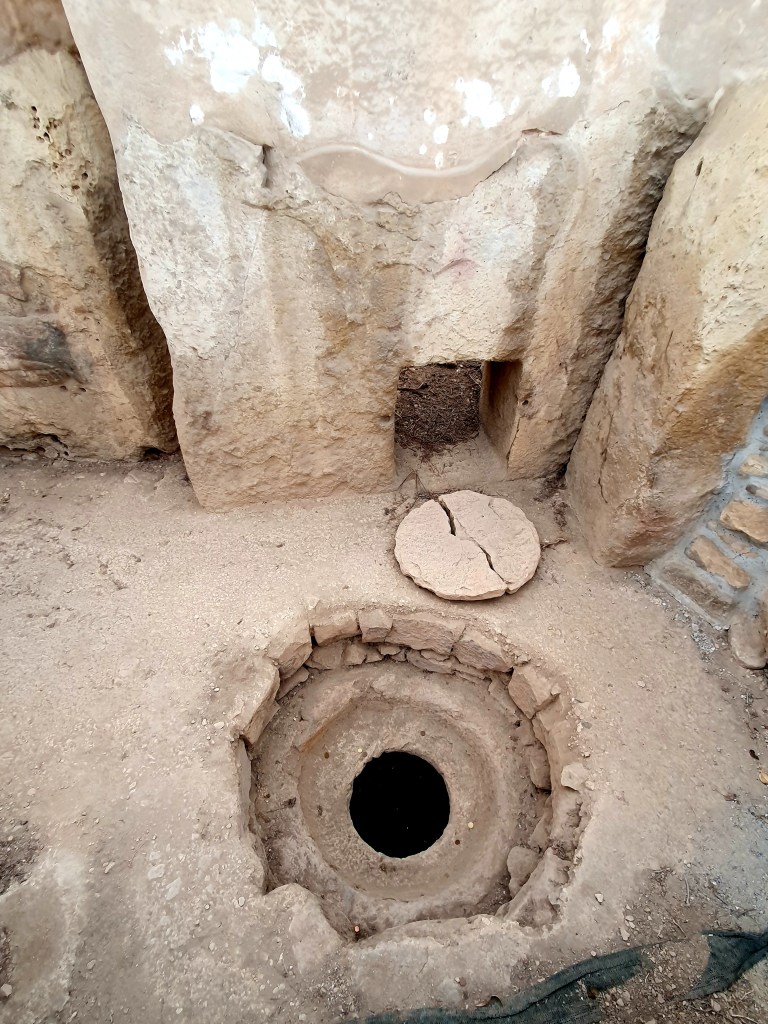
Many of the alters and rocks had spirals or other decorations carved into them. Most of the artifacts found here are now displayed in various museums.
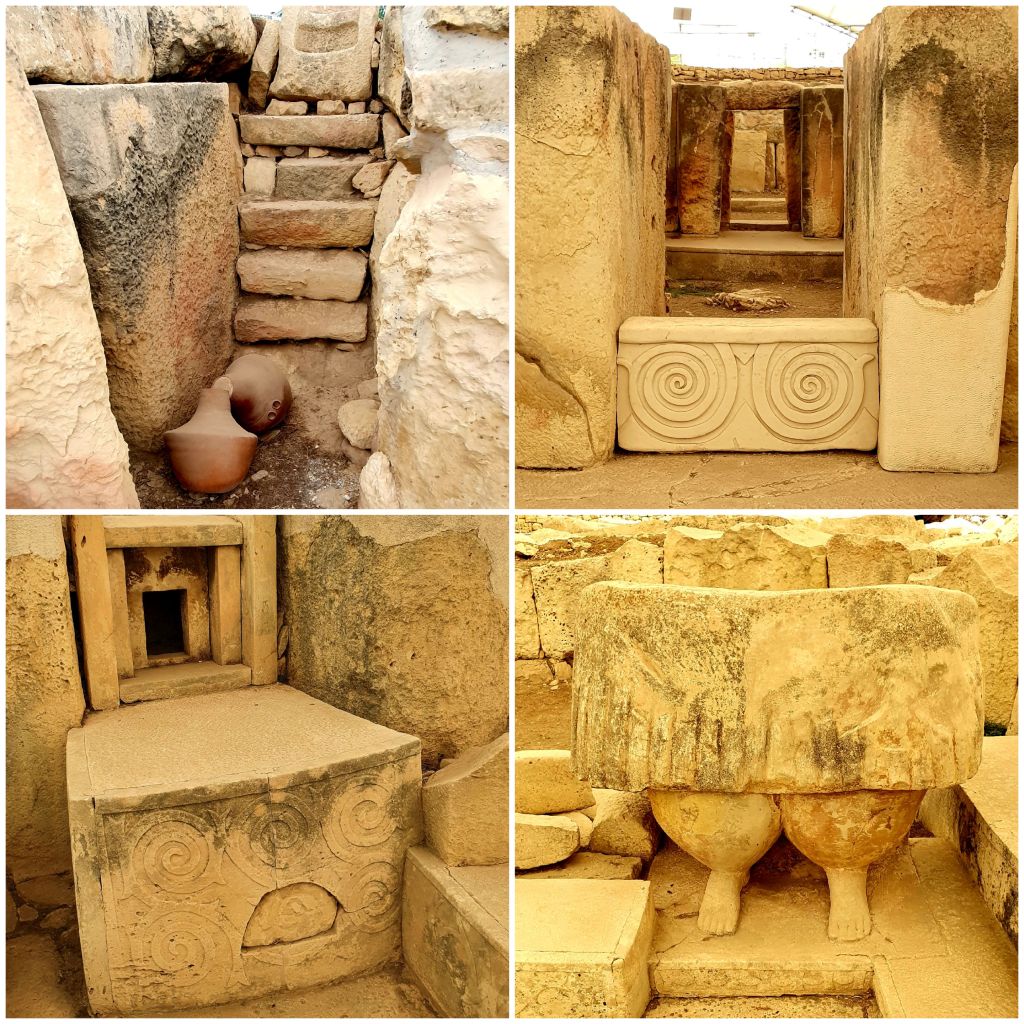
It is thought that in the Bronze Age the temple was used as a crematorium as in some areas the walls of the temple have been blackened.
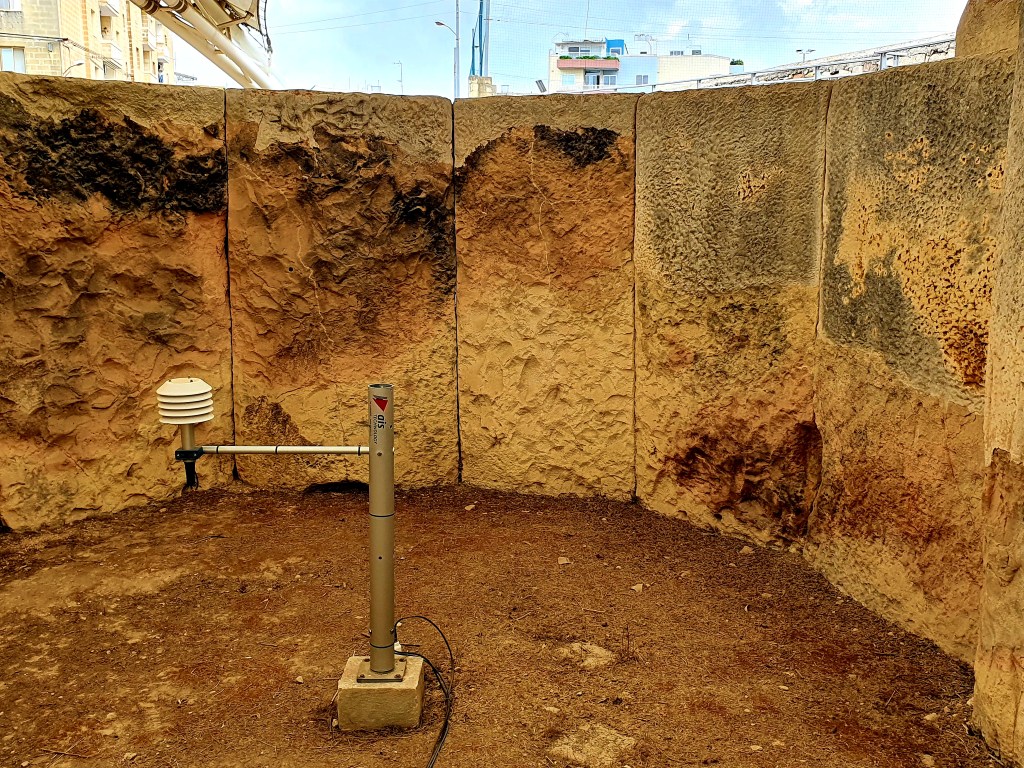
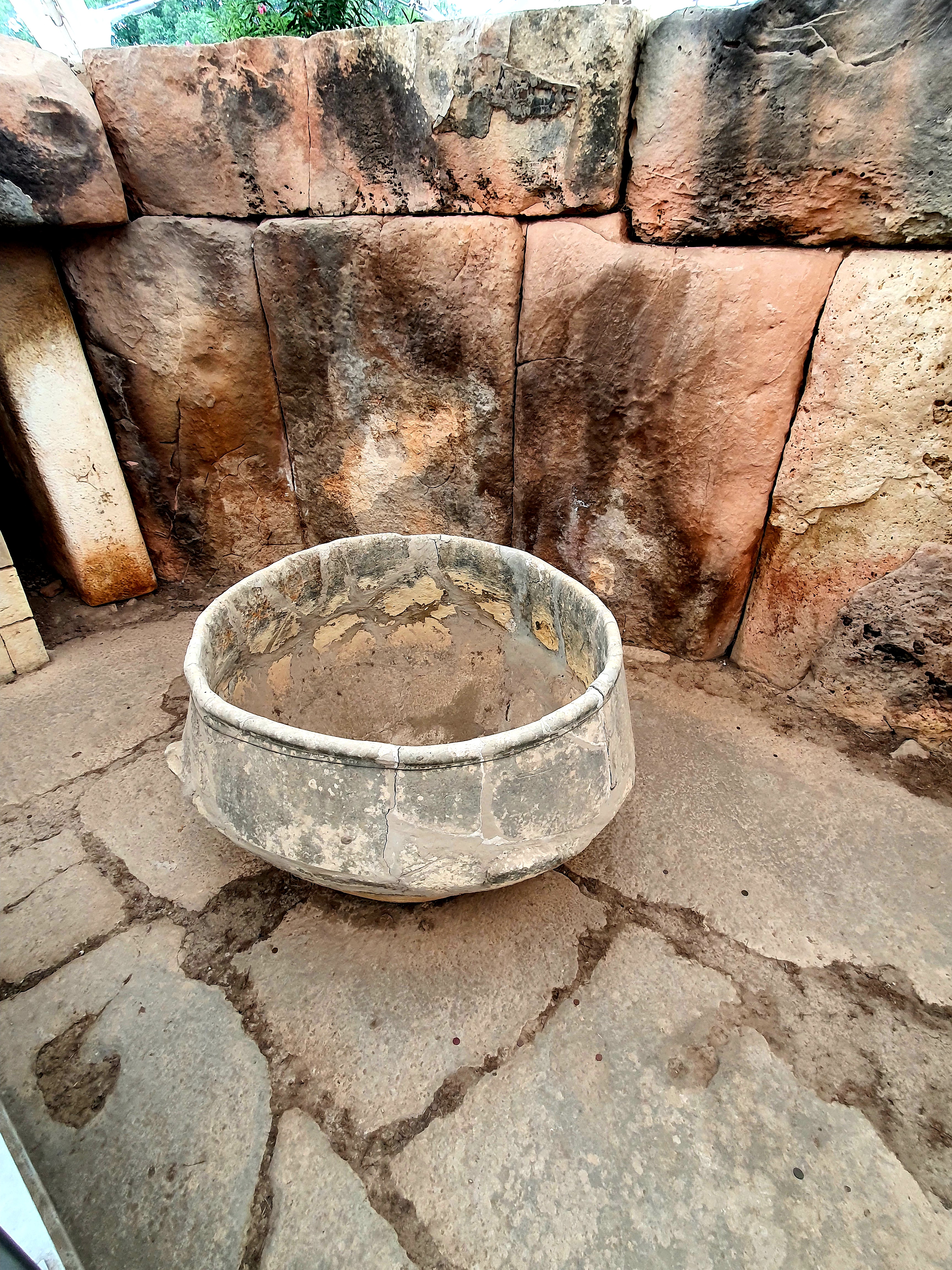
It was a really interesting site to walk around and hear all about the history from so many thousands of years ago. When we were walking around the temples we got bitten quite a lot by some sort of gnat or mosquito and both of us came away with a number of itchy bites.

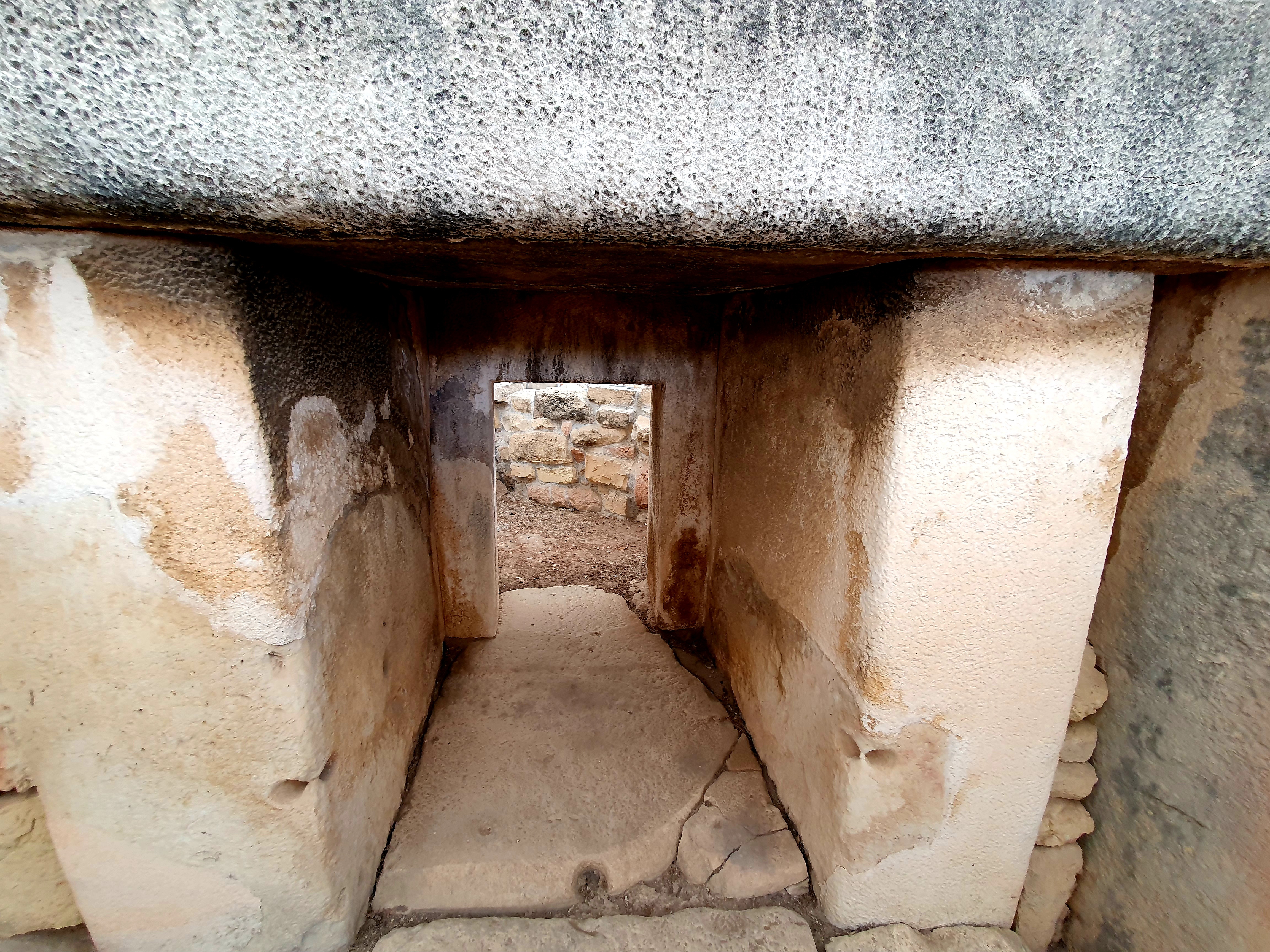
After the temples we decided to walk to Birgu, one of the 3 cities, the other two being Cospicua and Senglea. It was around a 45 minute walk, but the weather was sunny so it was really nice. As we got towards the 3 cities we passed through the old city walls.
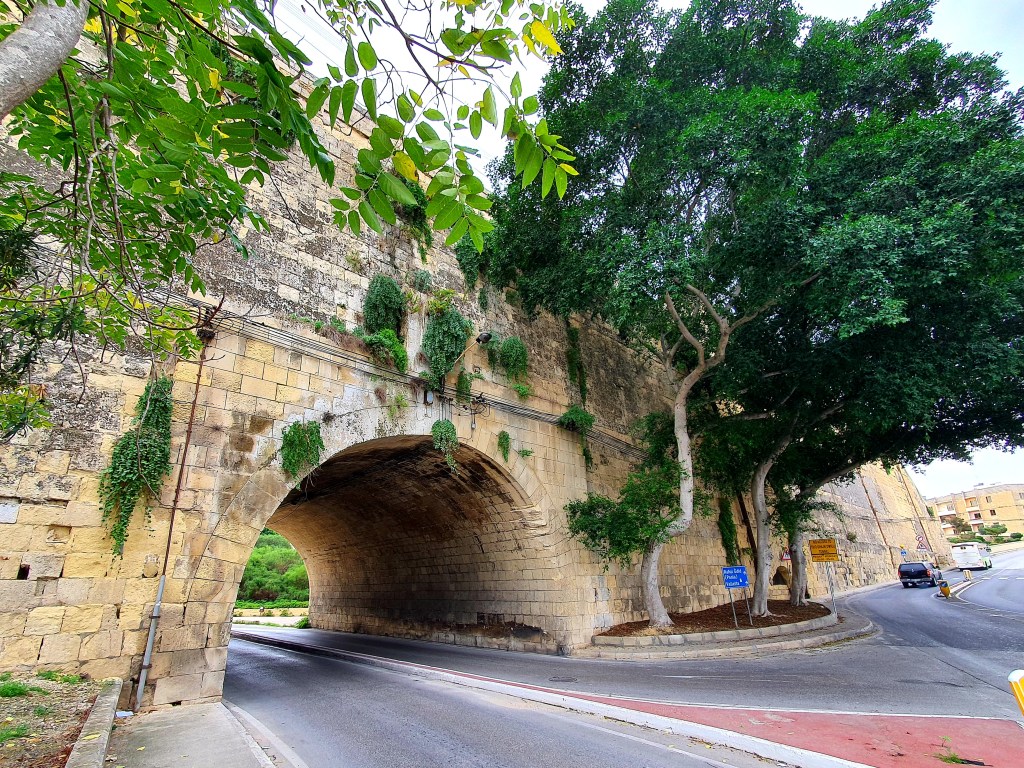
We also passed by the church and monastery of St Margaret. This church was built for the carmalite sisters and was built on old medieval chapel. It was initially a home for destitute girls.
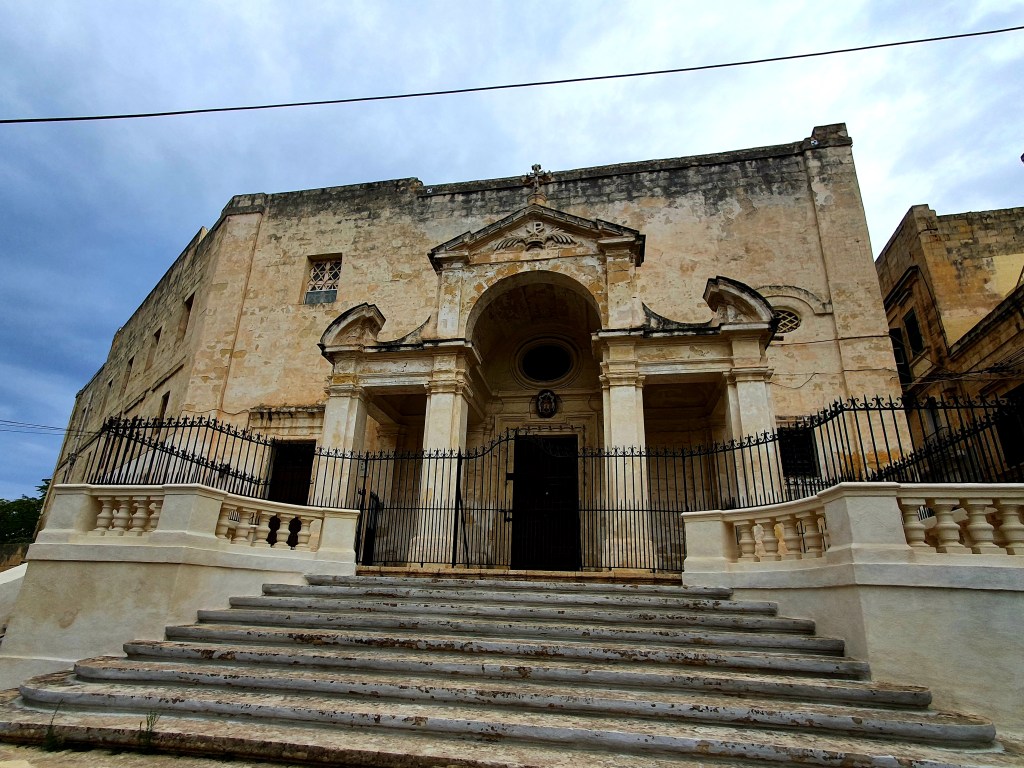
Birgu was the Knight’s first base in Malta. The old entrance into the city has been replaced by a very impressive main gate.

Just inside the city gate is a statue of St Dominic.
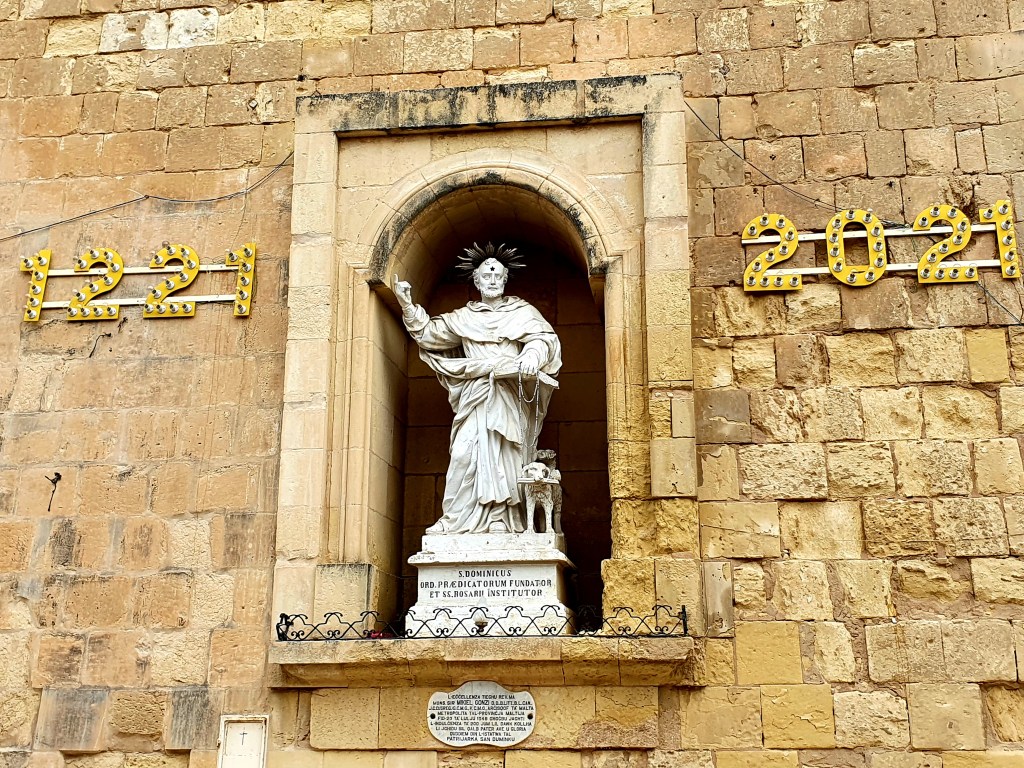
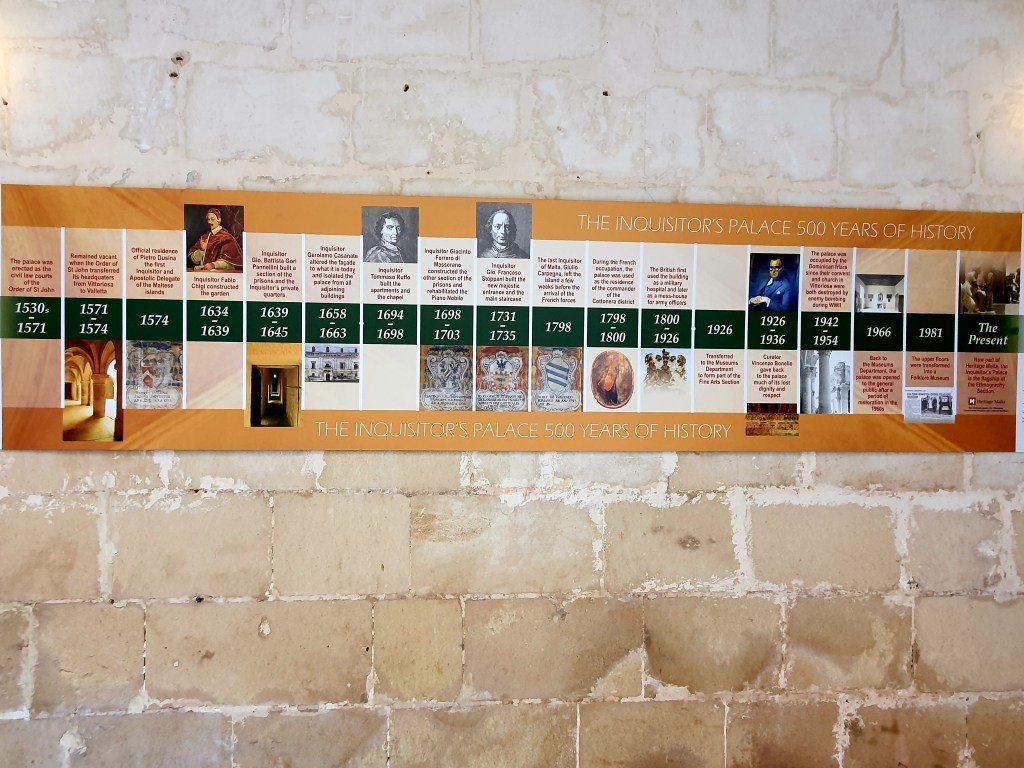
We walked down the main street to the Inquisitors Palace. This is one of the very few surviving palaces of its kind and is also known as the Sacred Palace. It has a long and varied history starting from the 1530s.
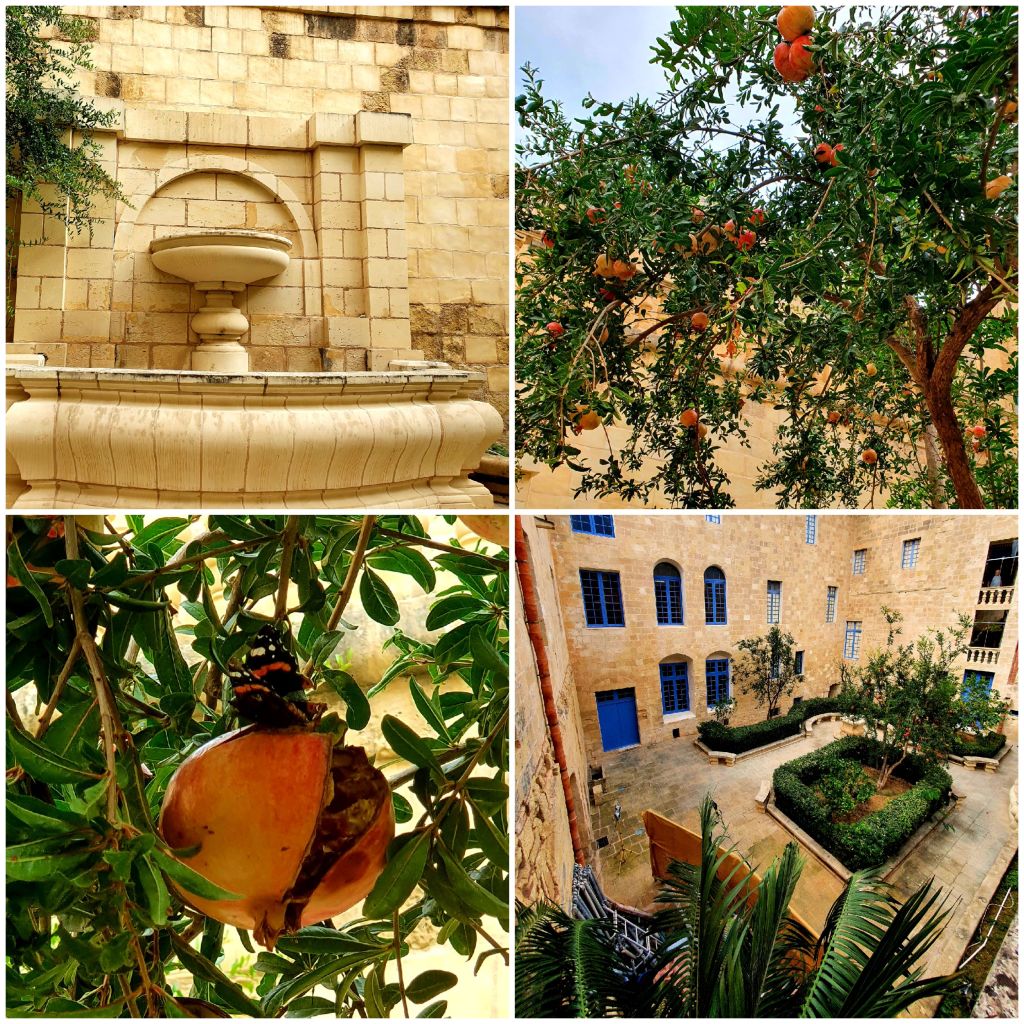
On entering the building you find yourself in a beautiful courtyard. There was a pomegranate tree in the courtyard. I tried to get some fruit off it but all the low hanging fruit was rotten and I couldn’t reach the higher branches.
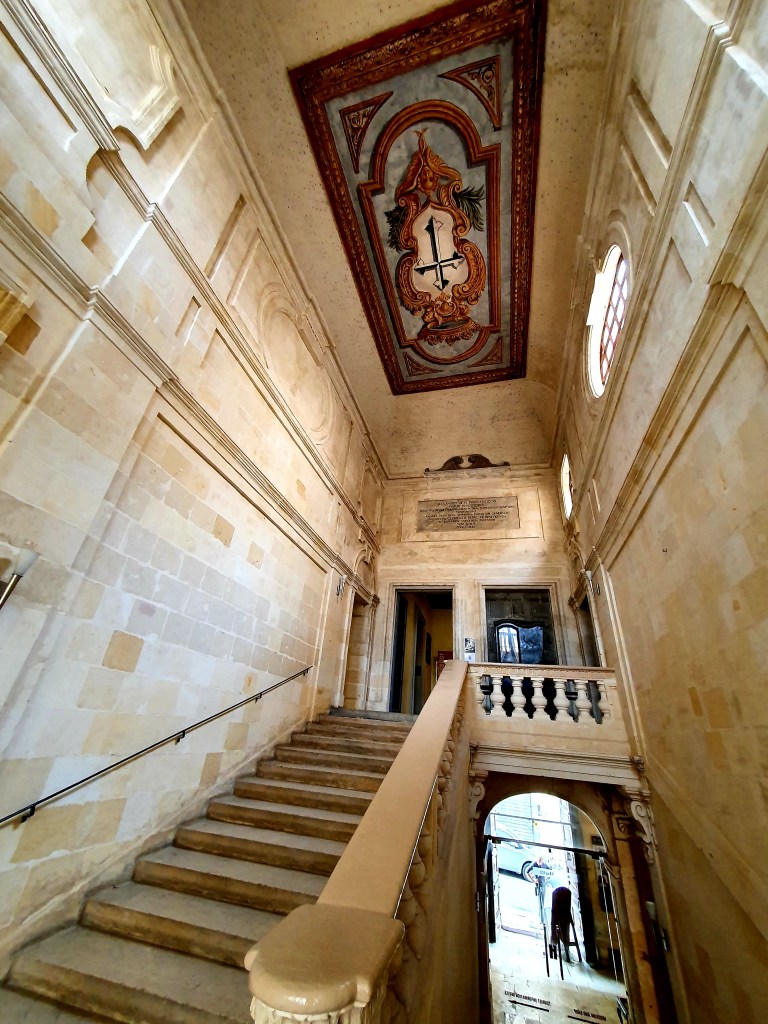
The main staircase is really impressive. It was purposely constructed to present a powerful image of the inquisitors and the place where they lived.
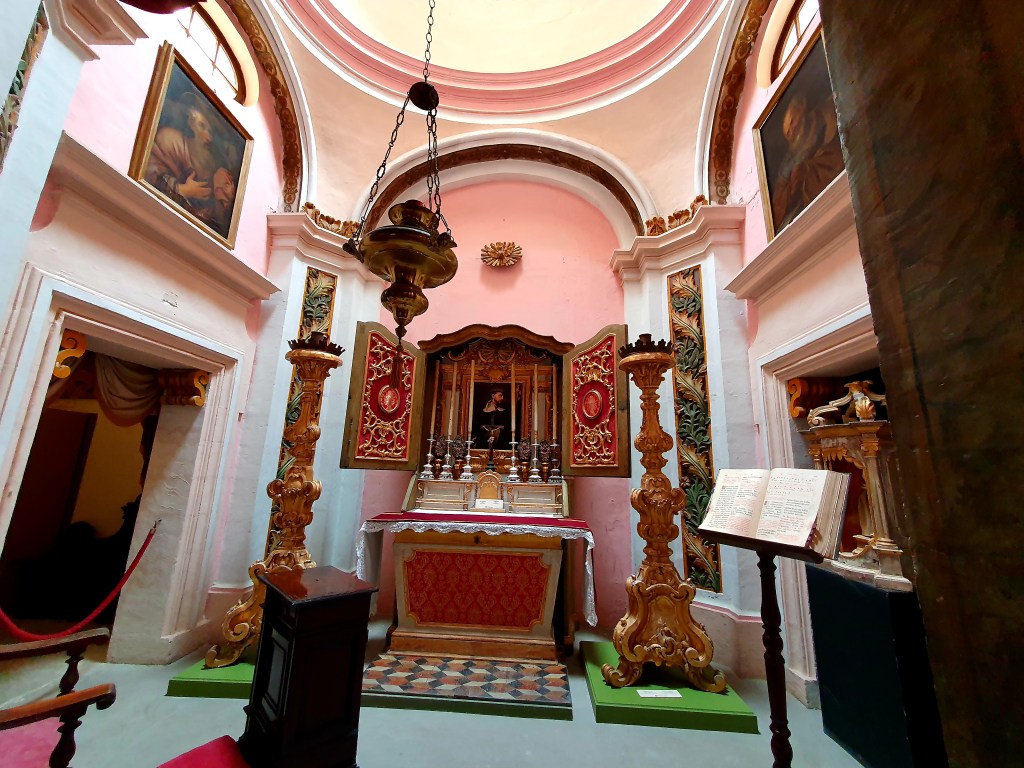
The inquisitor also had his own private chapel.
But the most interesting part of the building was obviously the area where prisoners were kept and where the inquisitions were carried out.
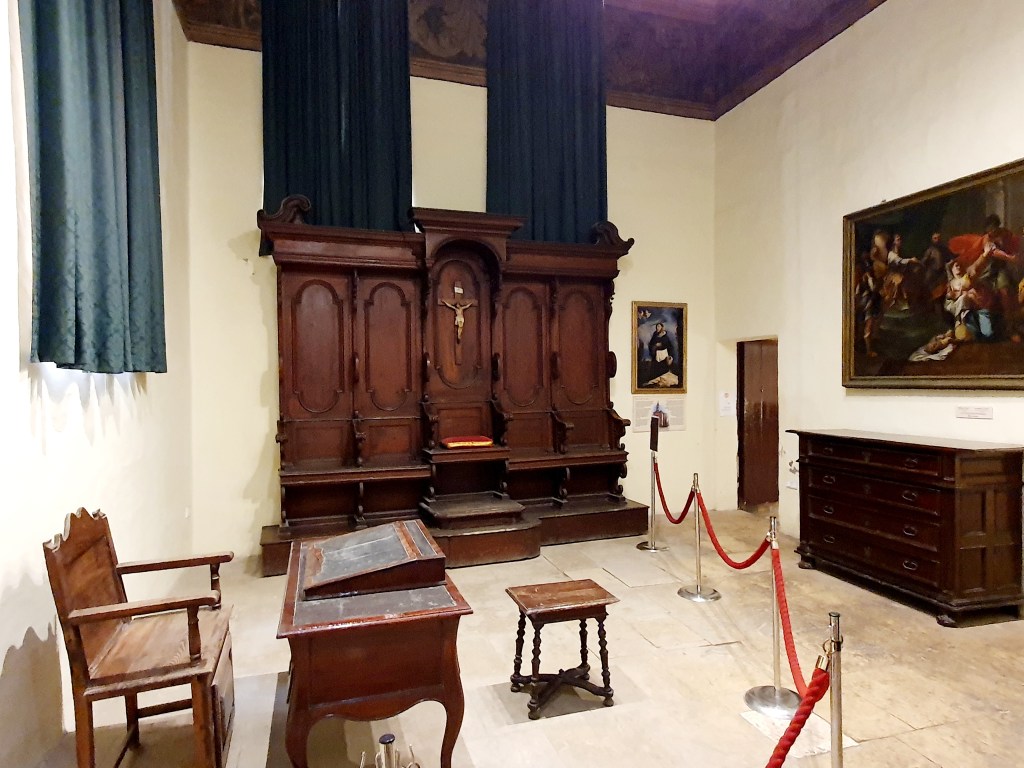
The tribunal area was where prisoners or witnesses were bought for trial and where sentences were given.
The prison itself was divided into communal cells, mainly for those awaiting trial, and penitentiary cells for those who had been sentenced to imprisonment. Prison sentences were normally quite short, months and not years, and quite often prisoners escaped.
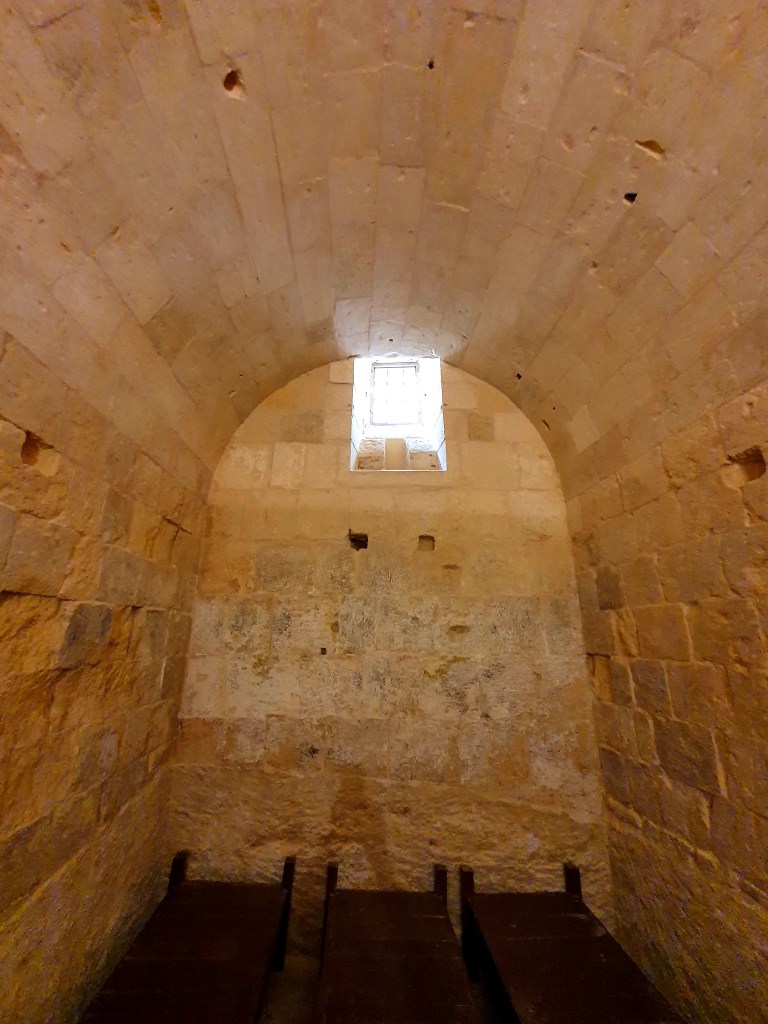
There was also a communal toilet for the prisoners which was basically a massive hole in the ground. It can be seen at the left of the photo below. I can’t imagine how bad that must have smelt.

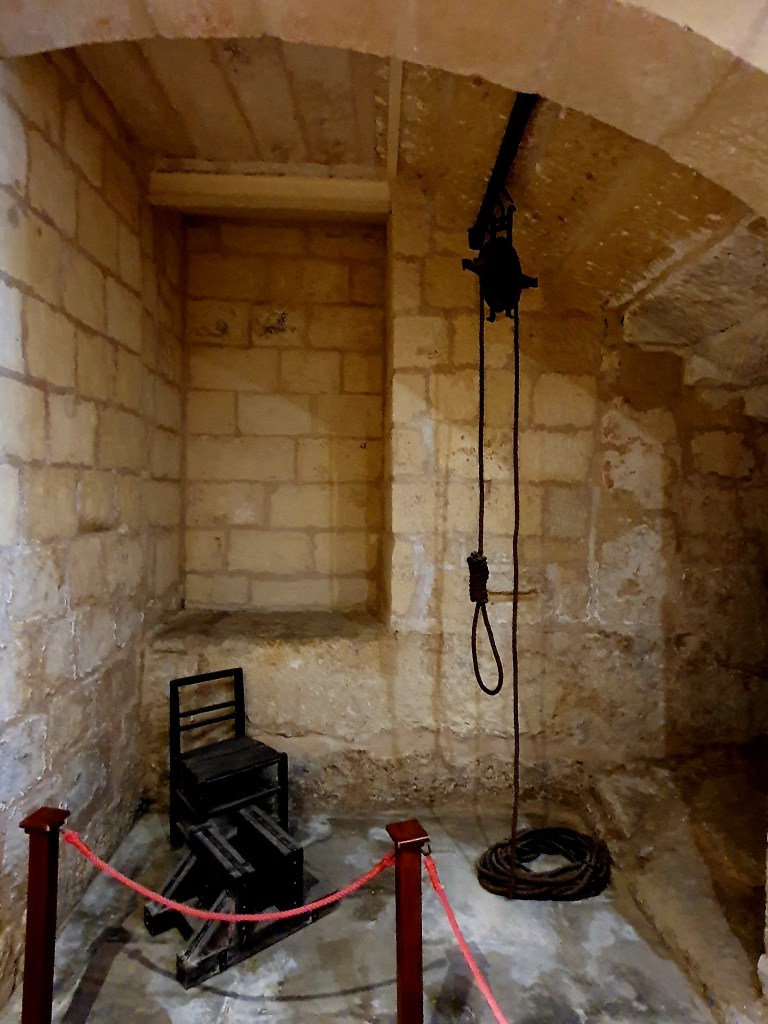
In terms of torture, there were three main types of torture carried out. The most common one used was that the person would have their hands tied behind their back and then pulled up and let down a number of times. Another method was to squeeze a person’s foot between two blocks of wood, or to stretch the body using weights.
Crimes that could lead to punishment included blasphemy, apostasy to Islam, bigamy, solicitation during confession and magical beliefs. Most sentences were of a spiritual nature and included fasting and prayer. Physical punishments included public flogging or rowing on the galleys.
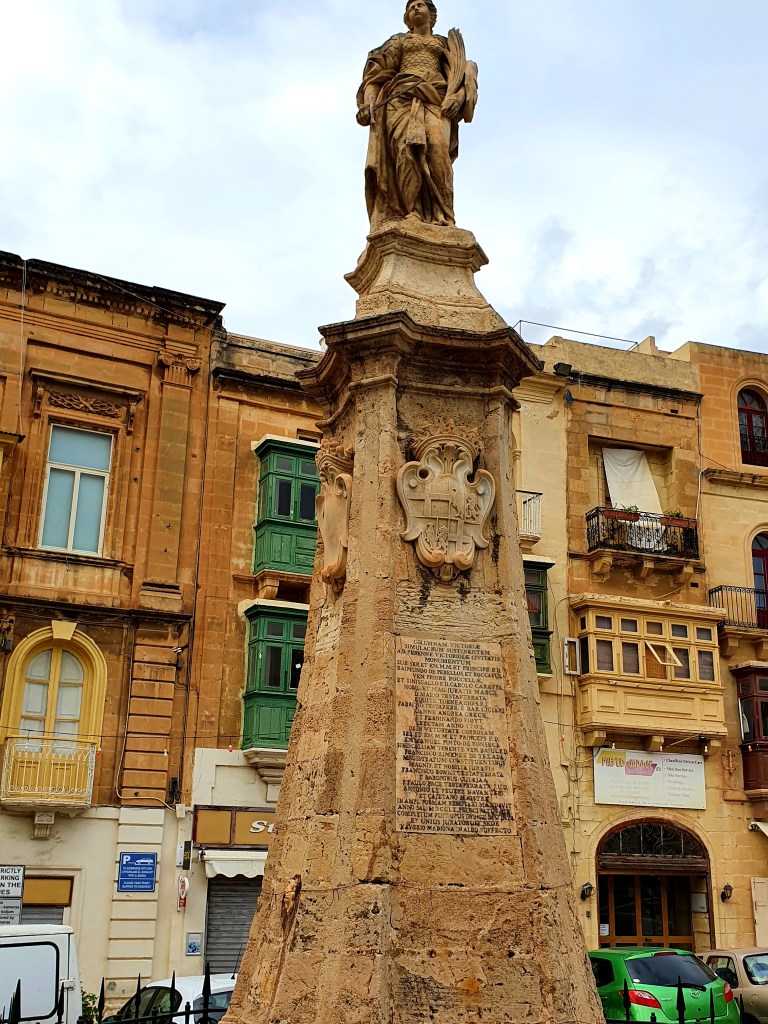
From the Inquisitors Palace we walked down to the waterfront past the Victory Monument in Vittoriosa square. This statue commemorates the Great Seige of 1565.
We also passed St Lawrence Church and the Freedom Memorial. This memorial represents when the British left Malta on 31 March 1979, even though they had gained independence in 1964. The mound the memorial sits on is made from stone that comes from the Dingli Cliffs and shows a British sailor saying farewell to a Maltese worker with a handshake. There is also another Maltese worker and a bugler.

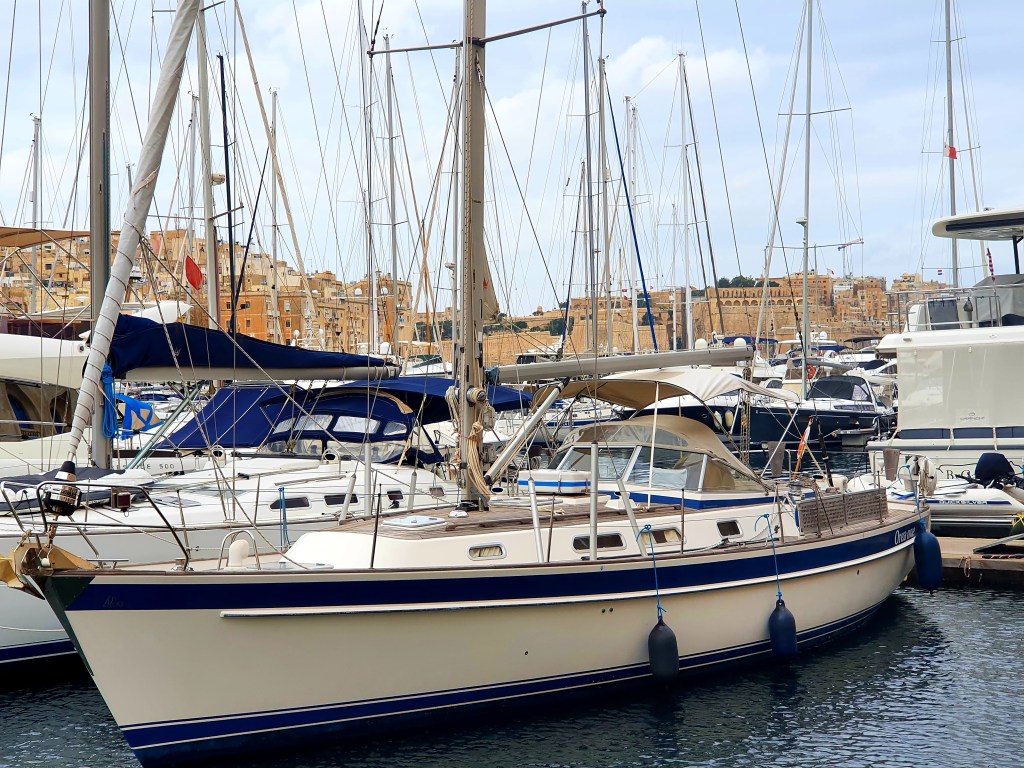
The waterfront at Birgu is really nice, it reminded me a bit of the South of France.
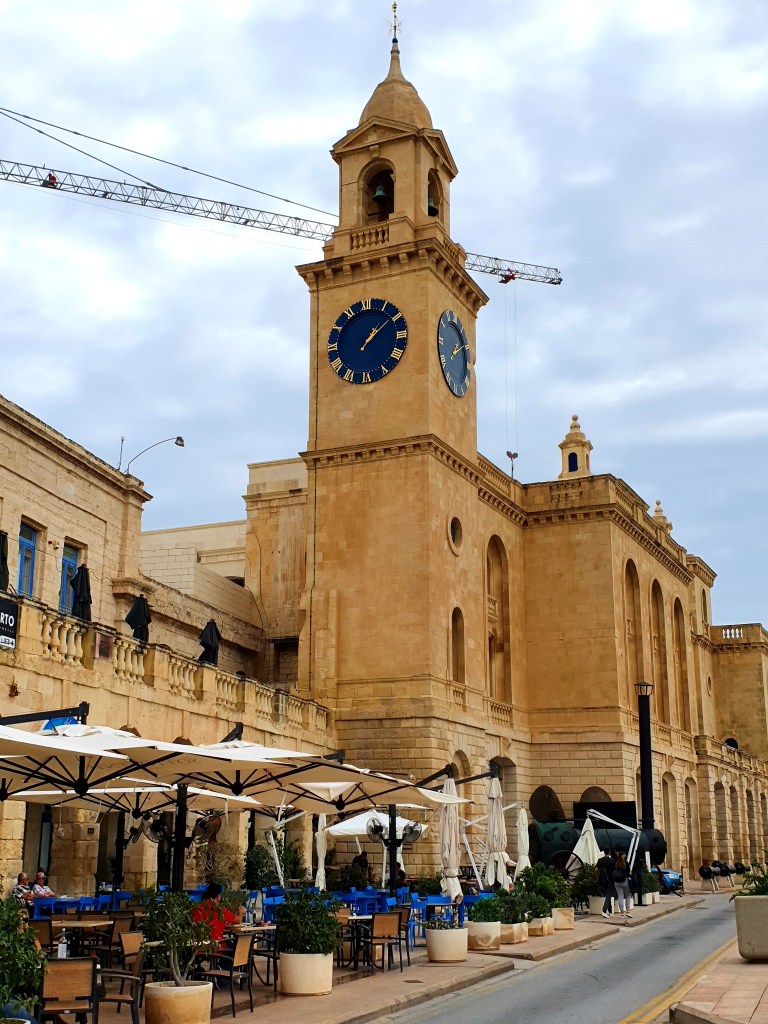
We walked past the Maratime Museum which is housed in the former Royal Navy Bakery and is an impressive building. Apparently its facade was inspired by Windsor Castle.
By now were pretty hungry so we stopped off at one of the waterside cafes to have some pizza and wine. The pizzas were huge so we ended up taking the remains with us in a doggy bag.

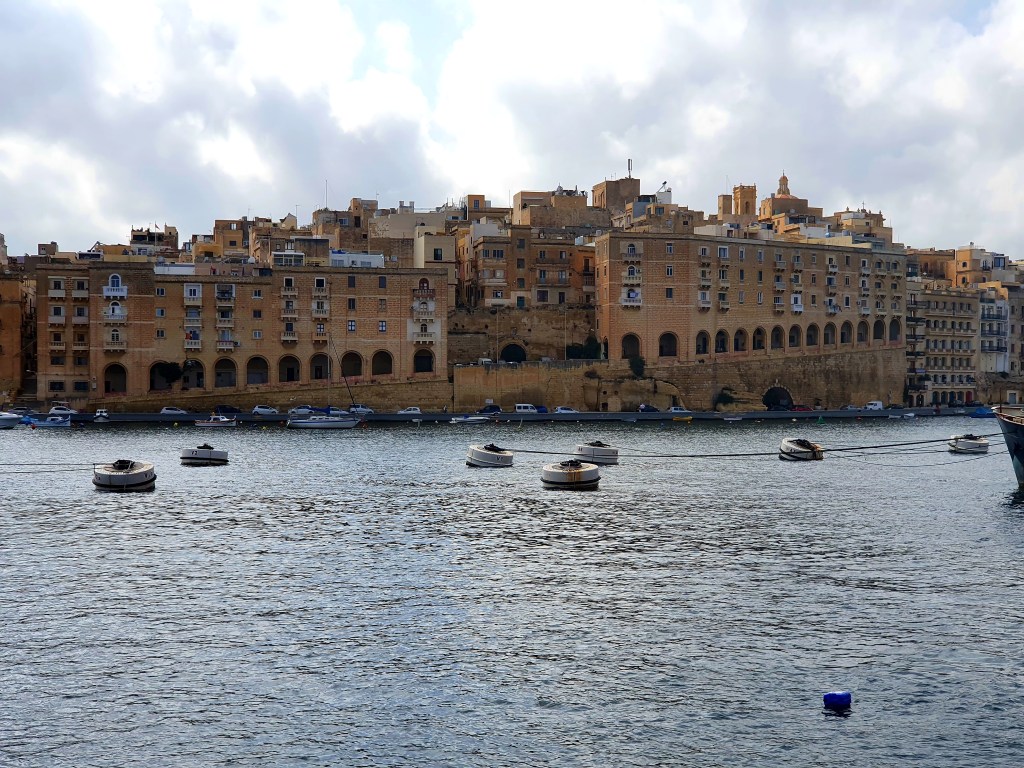
We had a lovely view across to Senglea, you could just about see the top of the basillica dedicated to Our Lady of Victories. The church was destroyed by an air raid during the second world war but was rebuilt in 1956.
After lunch we walked down to Fort St Angelo which is at the peninsula of the city. The only resident knight on the island lives in this fort and only the upper area of the fort is open to the public.

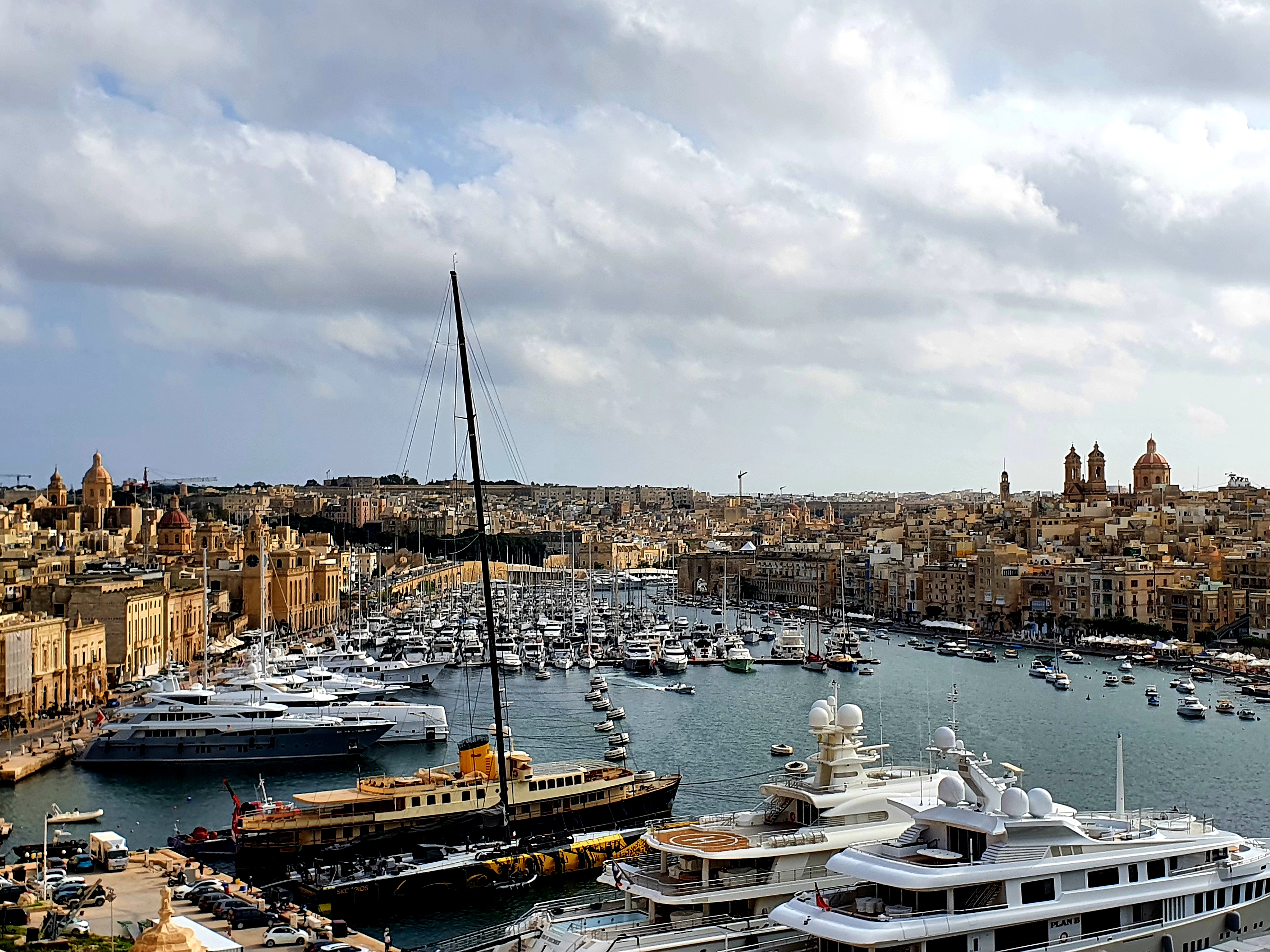
The vocation of the fort is to guard the Grand Harbour and it has done this successfully over many years and many sieges. It has been used by the French army as their headquarters, followed by the British Army and the British Navy. It has undergone restoration works over the past years and since 2018 it has been open to the public. You get some great views from the upper part of the fort.

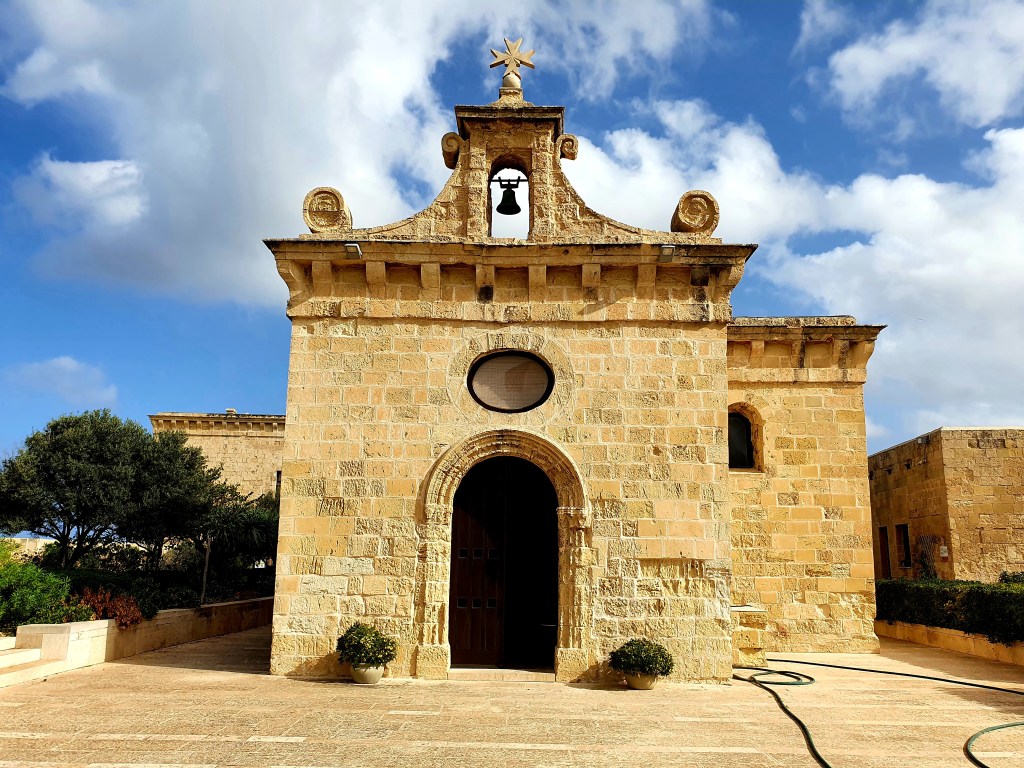
On the upper part of the fort we found the chapel of St Anne, a small chapel that has also been previously used as a store room for arms and ammunition and a school. The chapel also has a crypt and some Grandmasters used to be buried there.
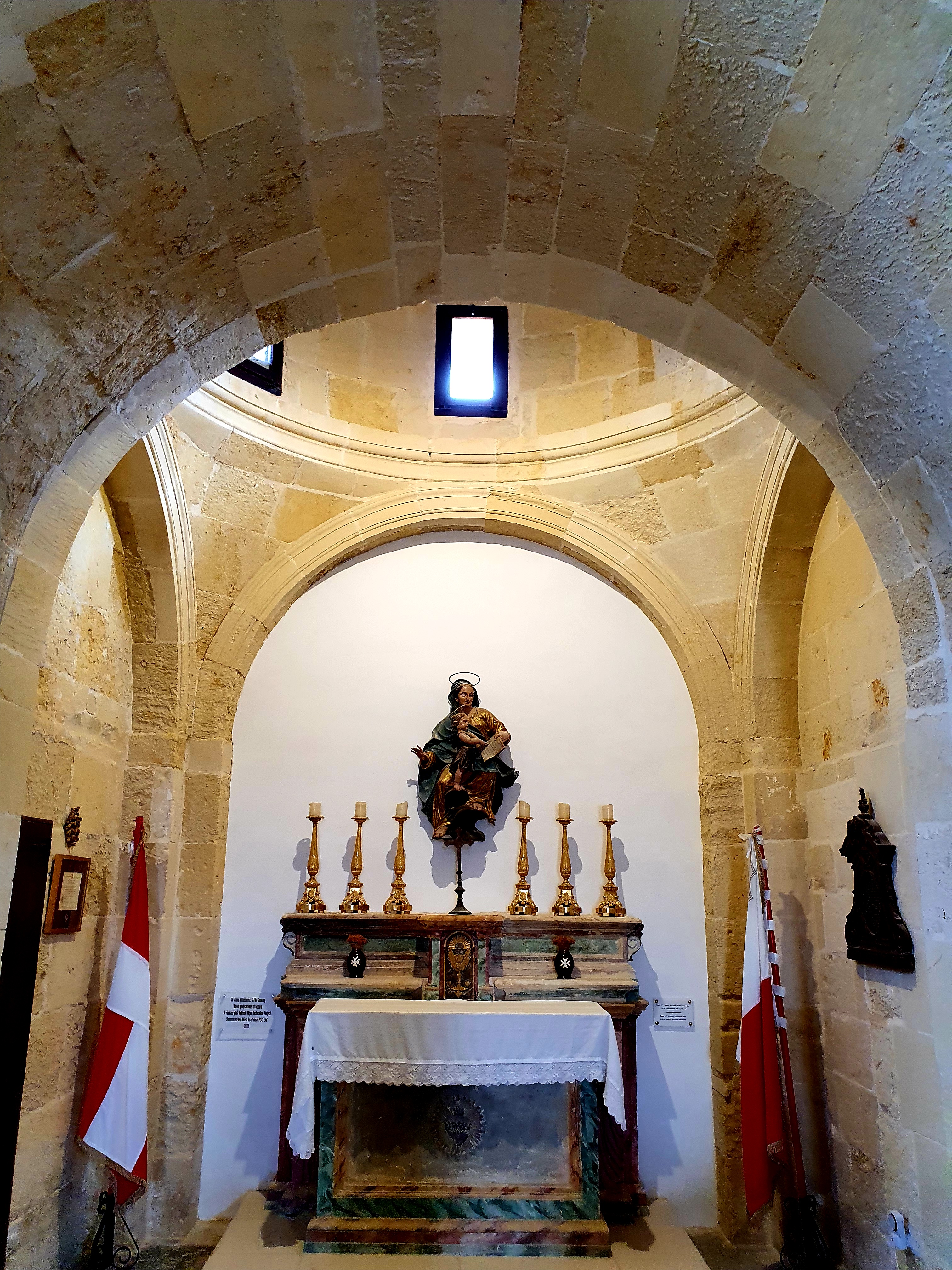
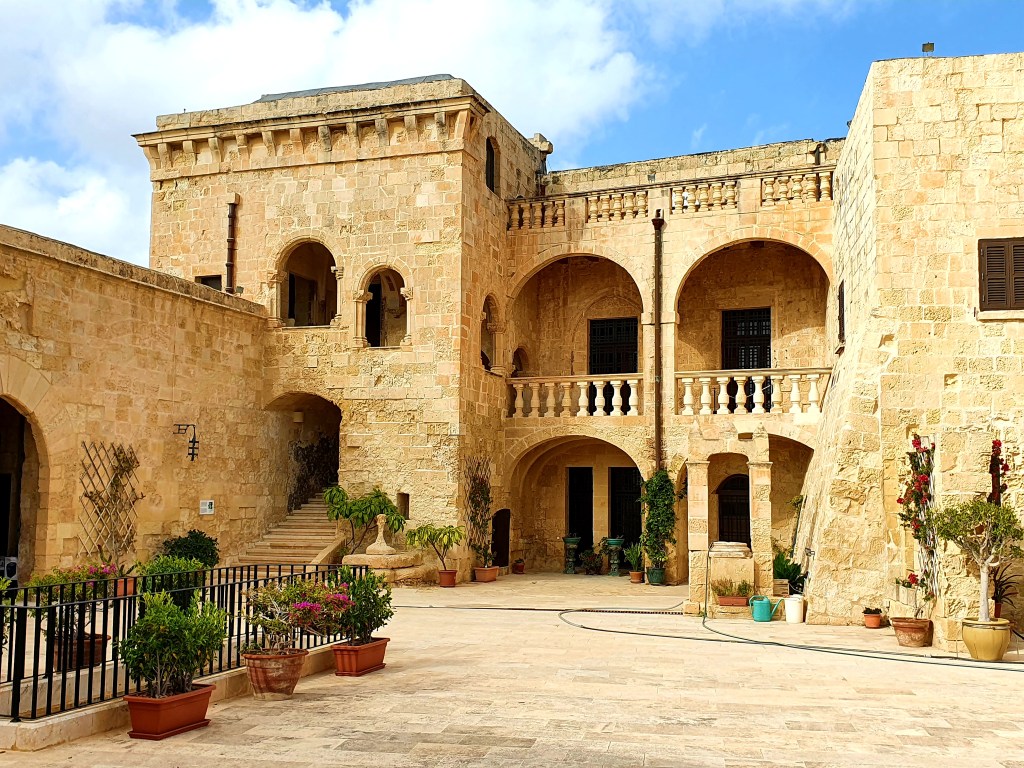
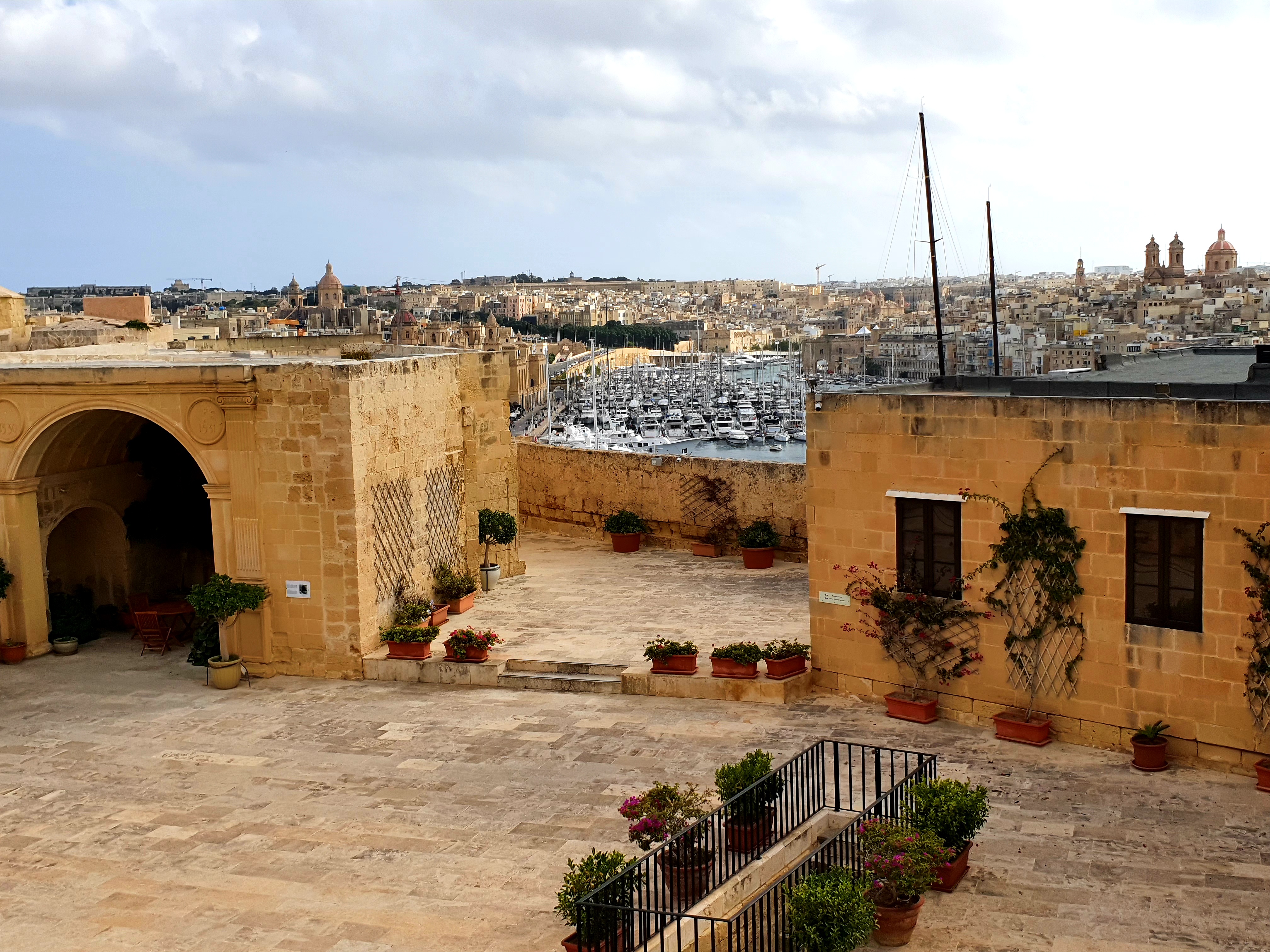
Some more views of, and from the fort.
After looking round the fort we headed back to the church of St Lawrence. We tried getting in via the front door but unfortunately it was shut. However, just as we were walking around the side, someone opened the side door and we went inside.
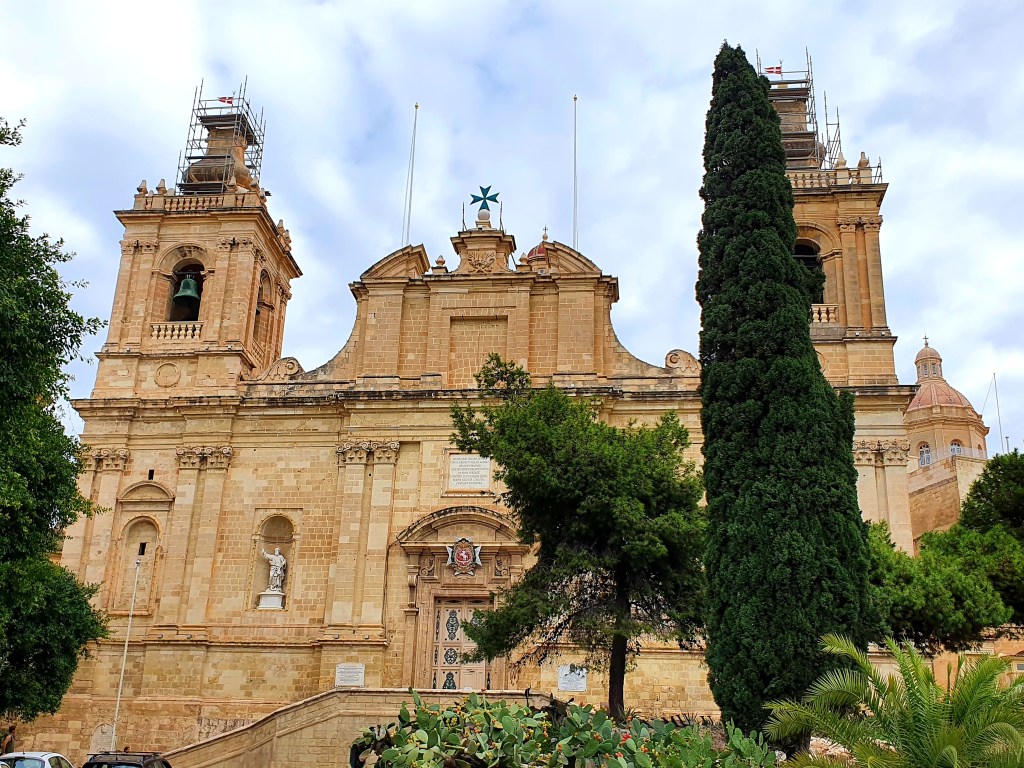
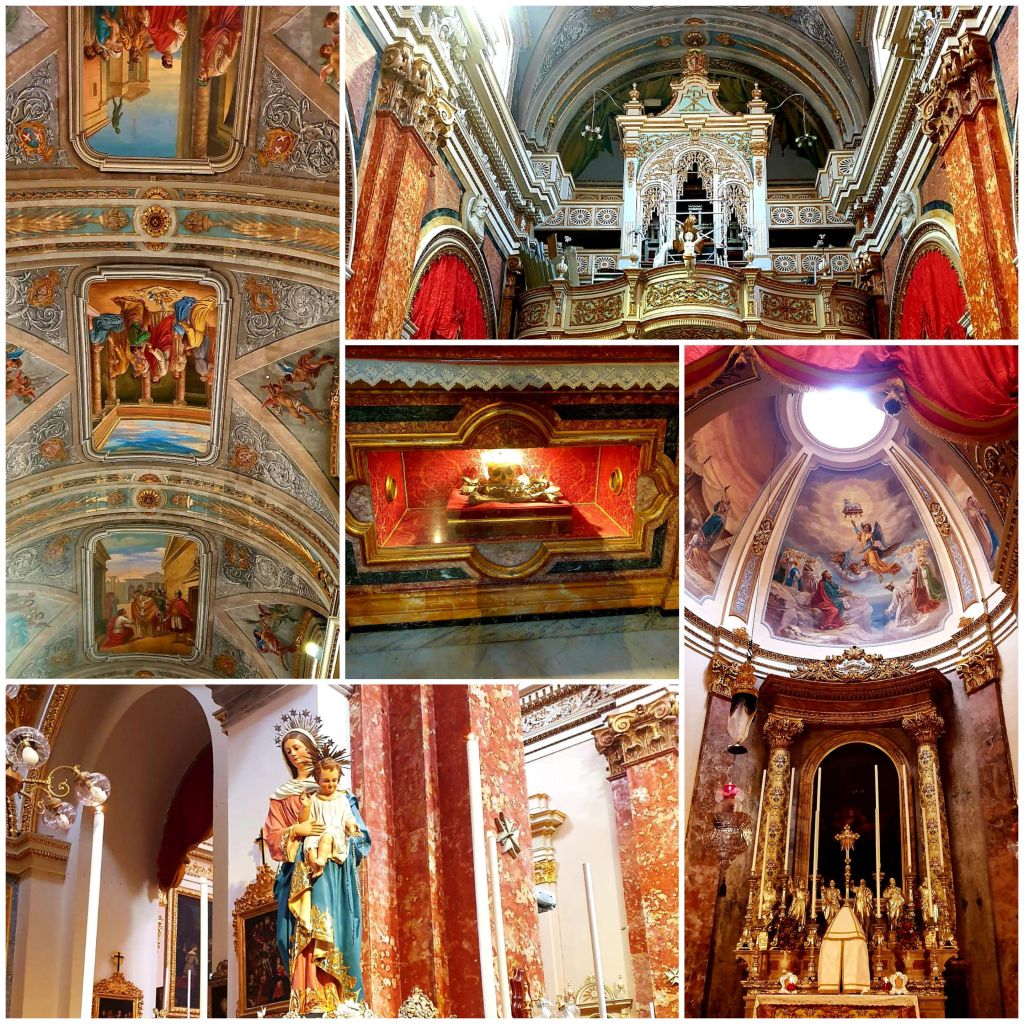
This church was used as the first conventual church of the Order of St John in Malta. This was because when the Order first settled in Malta all of the langues were based in Birgu. Like many of the churches in Malta, the inside is baroque in style and looks amazing.

We then headed into the older, medieval part of Birgu, known as the collachio, where all the auberges of the knights were first established. Unfortunately both of our phone batteries had died by then so we couldn’t take any photos. But here is a picture of the Auberge de Angleterre, the only English auberge in Malta as when the knights moved from Birgu to Valletta the Reformation put an end to the English role in the order.

For dinner we had leftover pizza and then headed out to the Bridge bar, literally a minute away from our apartment, as they were having a live jazz night. Unfortunately all the steps and tables were full so we sat upstairs at the italian cafe where we could still hear all the music.


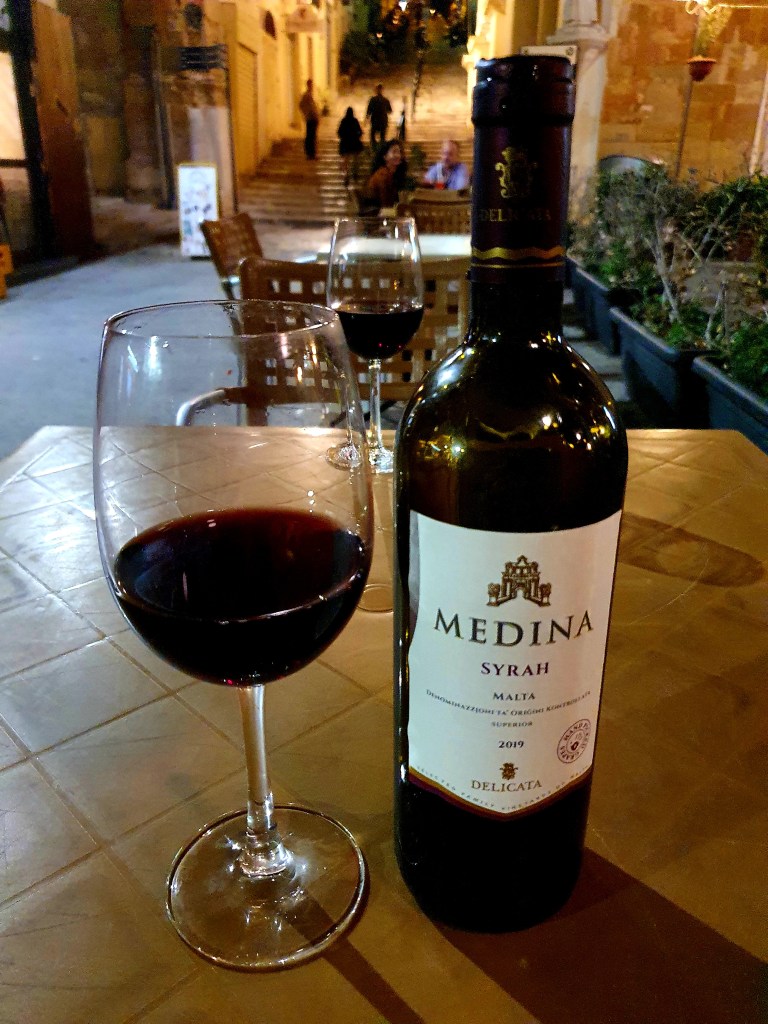
It was a very windy evening but we had ordered a bottle of wine so we stayed out until we finished it.
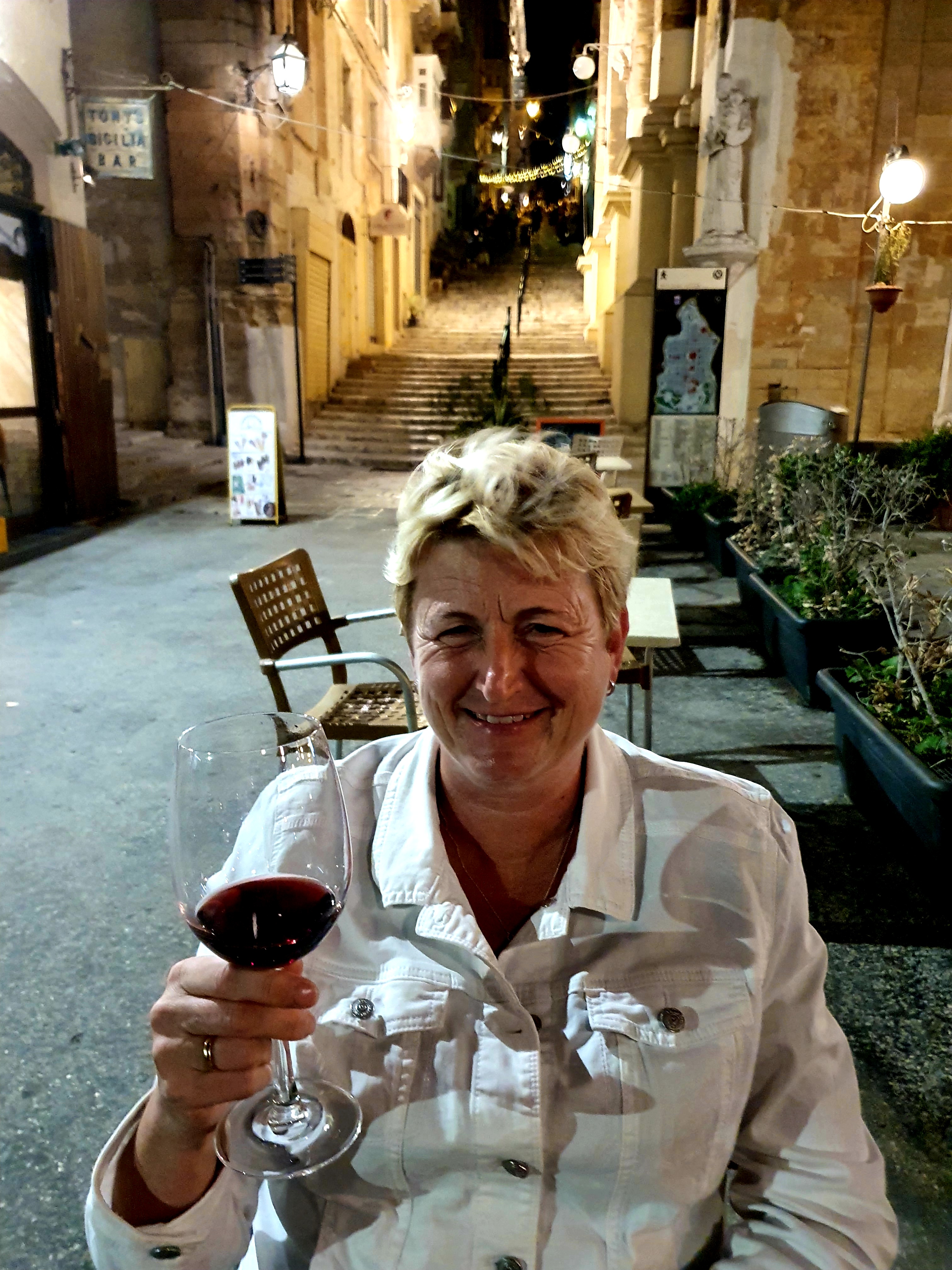

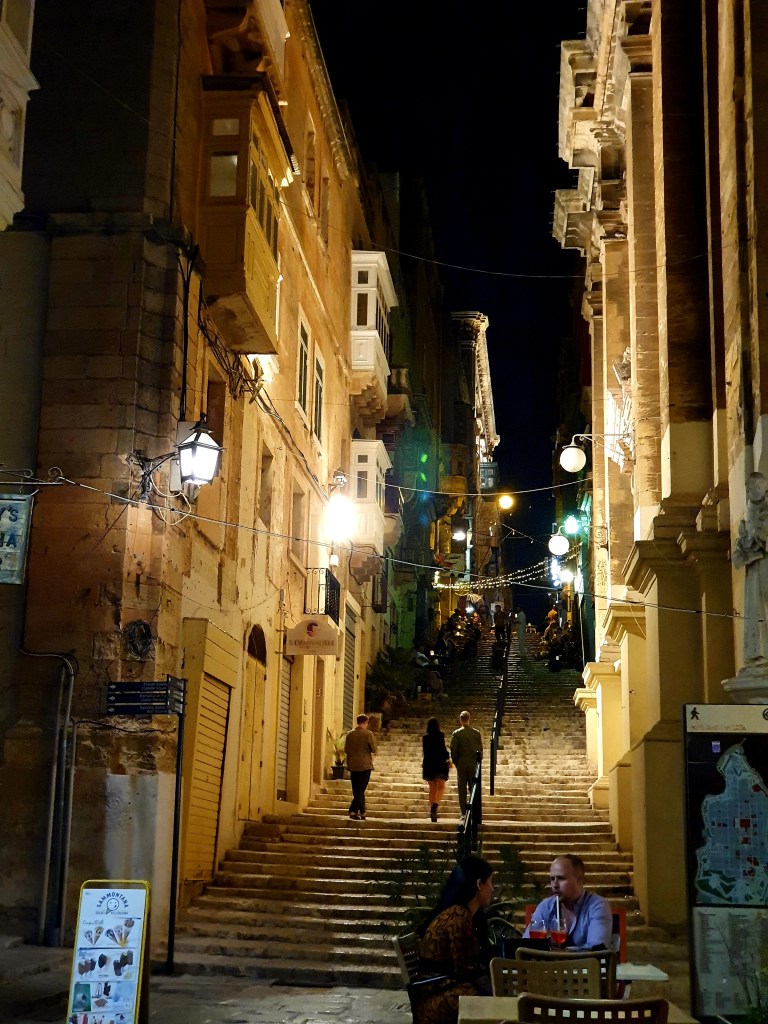
A lot of the steps in Malta are very shallow. We learnt that this was done on purpose to help the knights who were walking up and down them in full armour.
 Fun, Fitness and Fabulousness in your Fifties
A beautiful island, we are currently looking forward to a new visit soon. It will actually be my 5th, but there is still a lot to explore. Thank you for some new inspiration. It might be too late to arrange a visit to the Hypogeum, but it will be nice to escape the darkness of the Swedish winter. 🙂
LikeLiked by 1 person
The Hypogeum is definitely worth a visit. I’ve got a few more days of the blog to go so you might find something else in there too. H xx
LikeLiked by 1 person
What a wonderful day of exploring! It was great to to read about your trip to the Tarxien Temples – we never visited that (but did visit the Ggantija Temples in Gozo and Hagar Qim & Mnajdra close to Wied-iz-Zurrieq).
And we’ve spent a lot of time at that waterfront at Birgu, as we were staying in an apartment just across the harbour in Senglea.
Thanks for showing me around!
LikeLike