After arriving fairly late at the hostel yesterday I decided to book the hostel arranged tour to lake guatavita and the salt cathedral.
The driver picked me up at around 8am – his name was Israel and he was from Venezuela so we got talking about all the problems there (in English). He had been shot three times when he was protesting against the government and had the scars to prove it. It makes you realise how different some people’s lives are.
We picked up a few more people – two girls from Israel (Noah and Michela) and a couple from Brazil (Walter and Roberta) – and headed off to the lake.
The lake itself was amazing as was the history around it. When the Spanish invaded they thought it was el dorado – a place of gold as they found some gold in it. This was the gold the indigenous people had thrown in to stop the Spanish getting hold of it So after draining over 60m of the lake they realised it wasn’t a gold mine and the lake has been protected since 2001 and open to the public since 2005. Nobody knows how deep it is though.

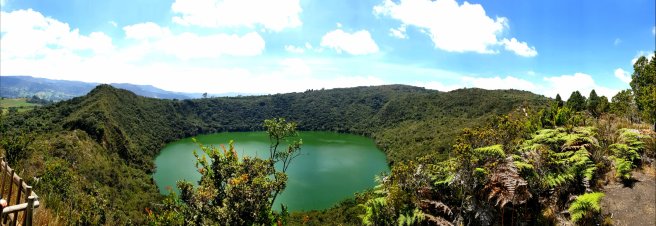
The colour of the lake is due to the algae in it. The highest point we climbed to was around 3000m.
We stopped for lunch in Zipaquira and I ate capybara (like a large rodent). It was very tasty.
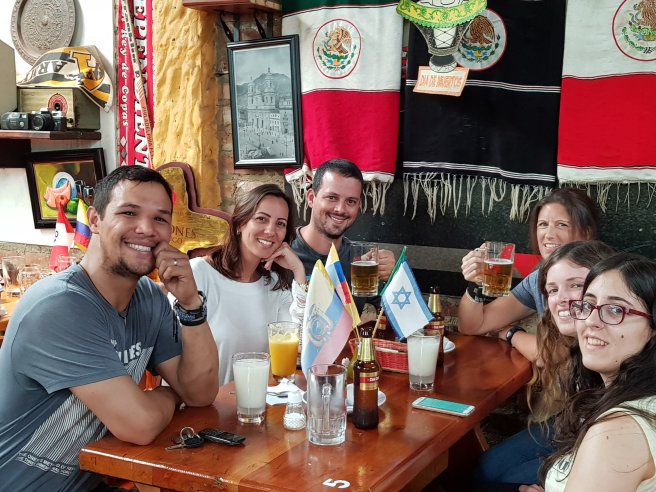
Feeling very full we set off for the salt cathedral which was absolutely amazing. The cathedral is obviously in a salt mine and the miners made it themselves without any payment- certain parts of the mine are still being mined for salt.
As you follow the route you follow the stations of the cross.
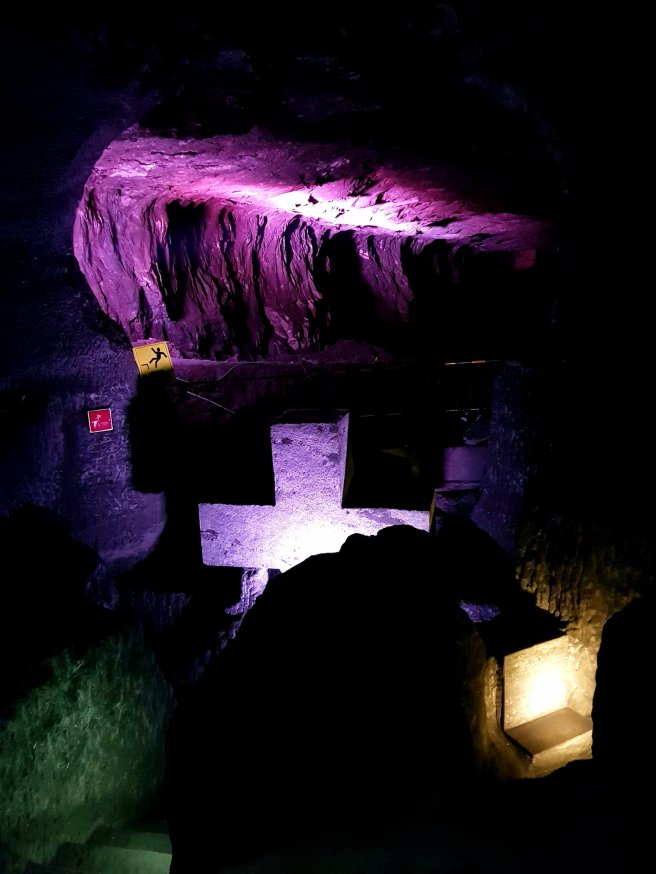
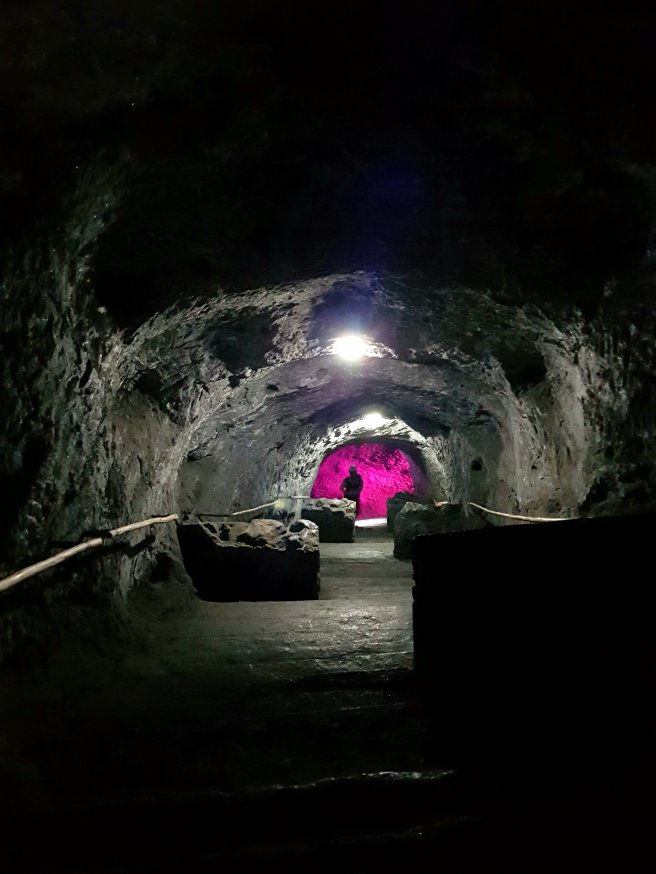
At the deepest point of the cathedral we were 180m underground. This chandelier is also made out of salt.
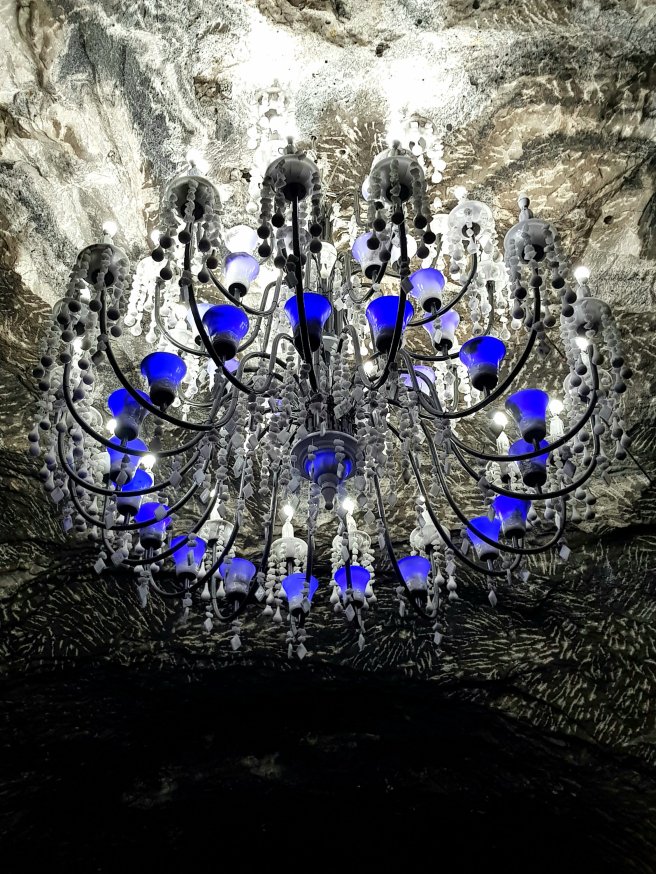
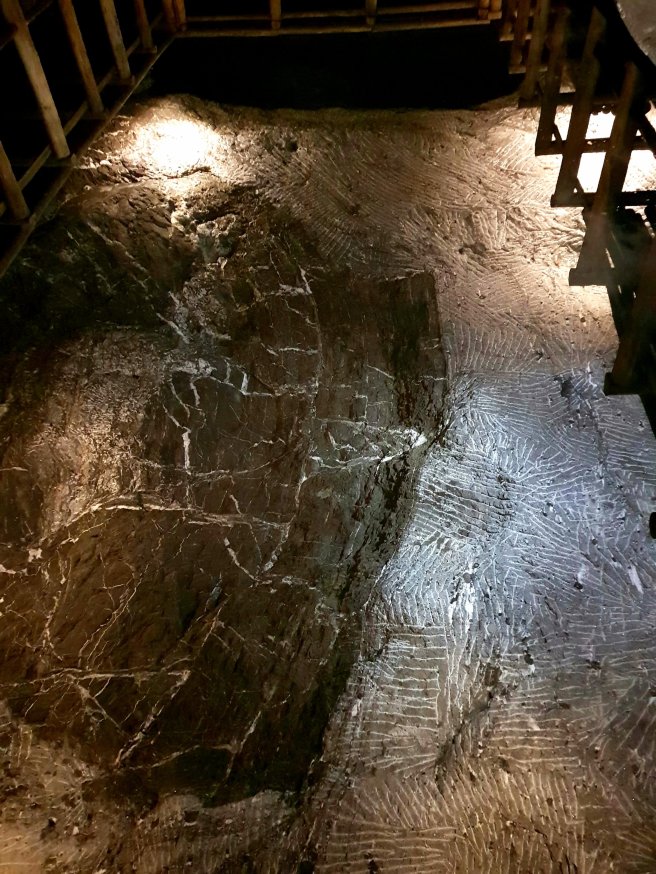
As well as salt the mine does contain minerals but these are not mined – in particular there is quite a lot of fools gold (iron) which when it decomposes forms sulpher so in some areas you can smell this.
Although all the mine is salt the majority of it is black as the salt mixes with the coal.
This cathedral has the largest underground cross- although it looks like it is a cross that is hanging down the cross is actually carved into the wall – it’s a bit of an optical illusion, enhanced by the lighting.
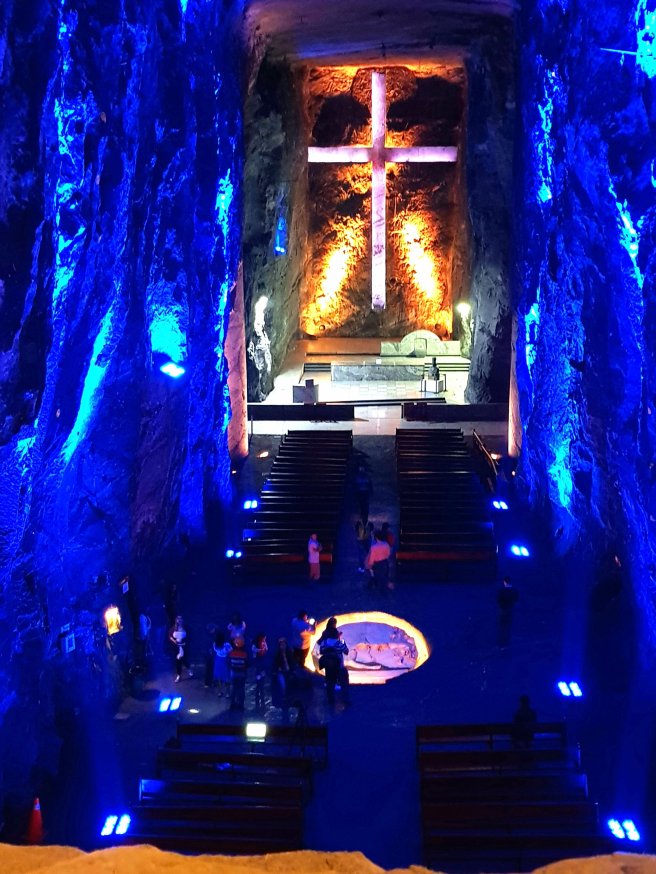
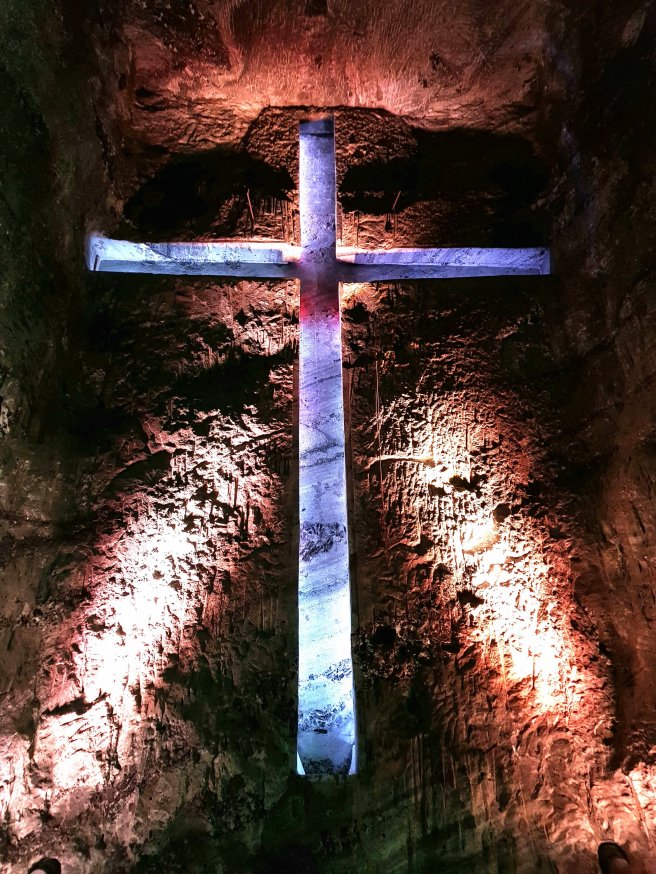
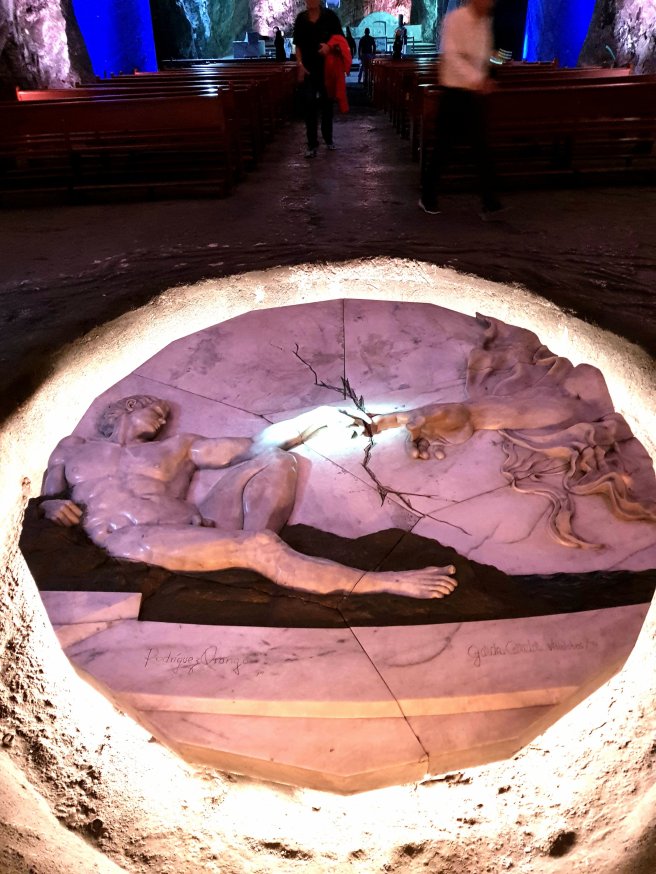
The cathedral also hosts the largest sculpture made out of salt.
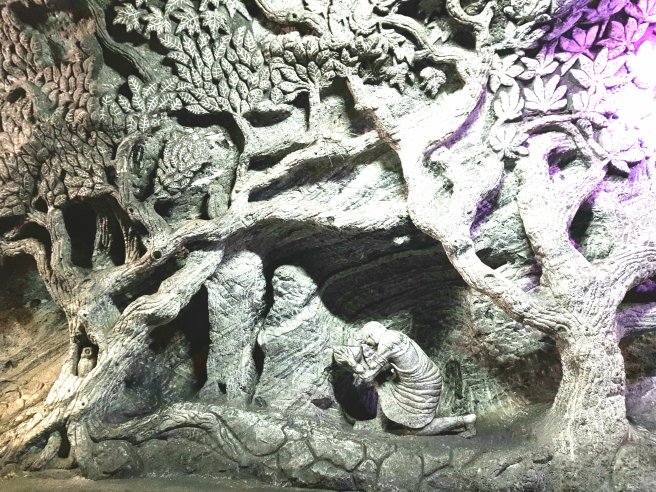
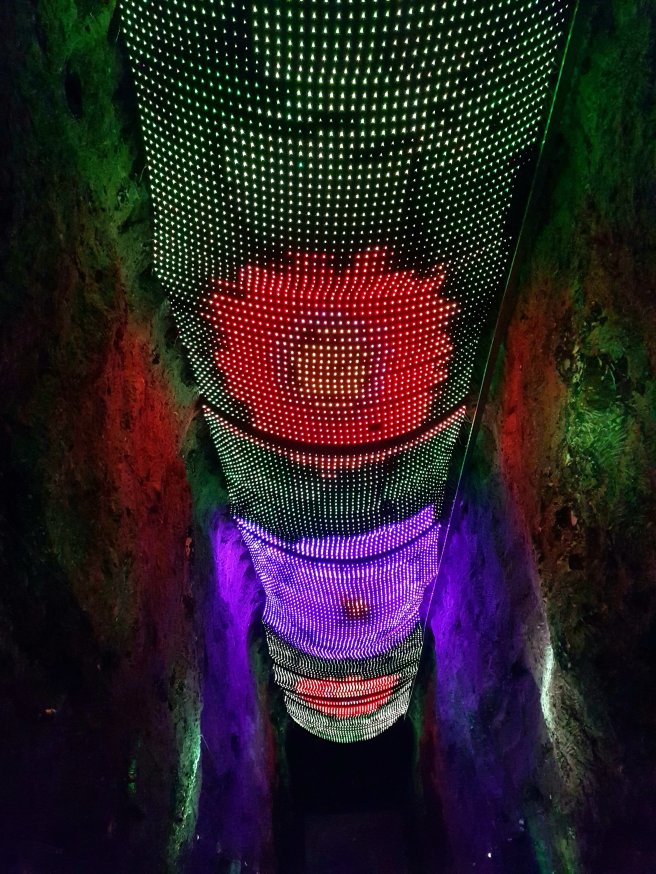
After the tour we watched a light show in another part of the underground cathedral which was amazing.
I was really impressed with the cathedral – just the sheer size of it and the fact that it had all been made by miners by hand.
When we returned back to the hotel I had a cuba Libra and got chatting to Hugo – a French guy living in Spain. He’s also spent 3 years living in Bolivia so I picked up lots of tips from him about where to go.
 Fun, Fitness and Fabulousness in your Fifties
Stay safe and have an amazing time doody xxxxx I log in every day to see what you are up to
LikeLike
Thanks Charlotte and so far I haven’t felt unsafe at all. H xx
LikeLike