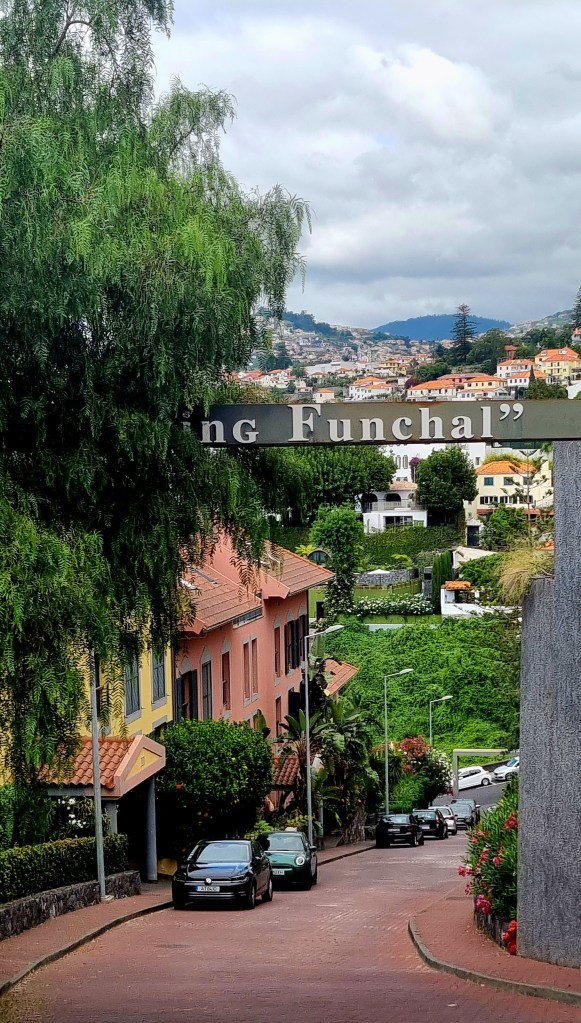
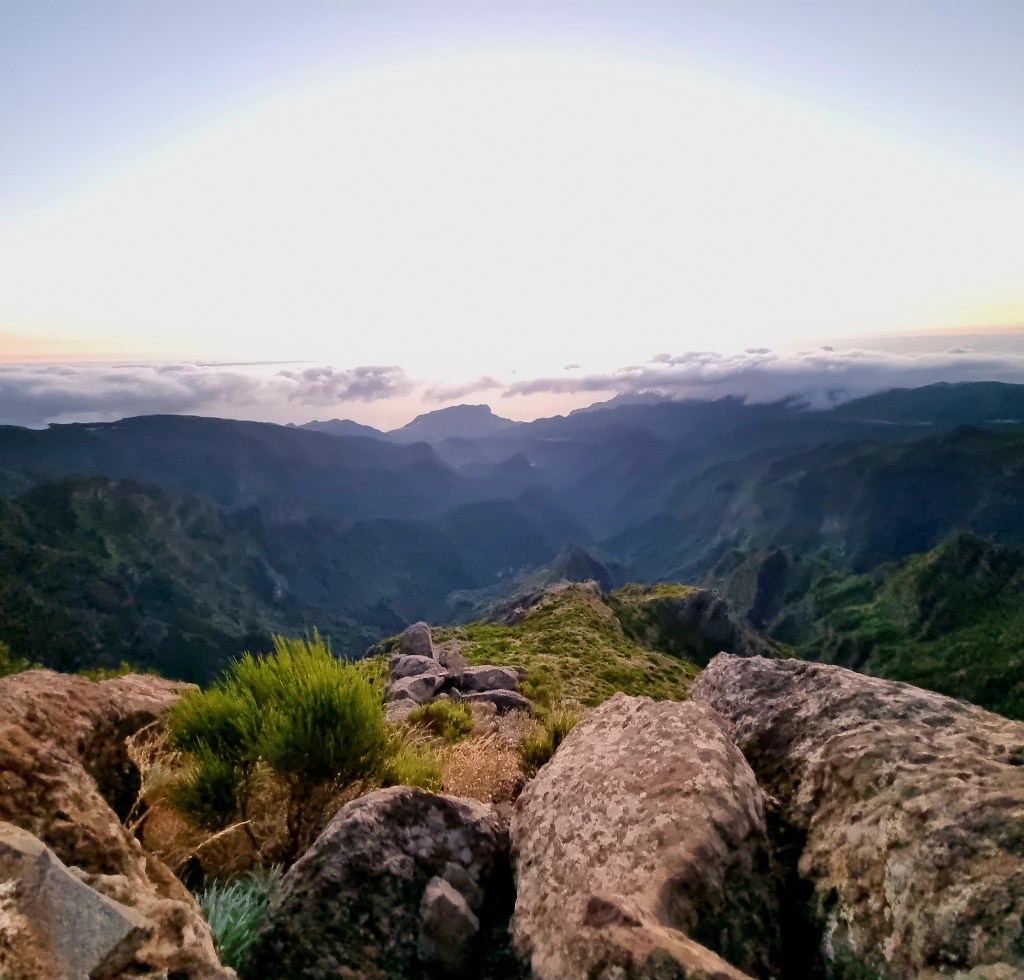
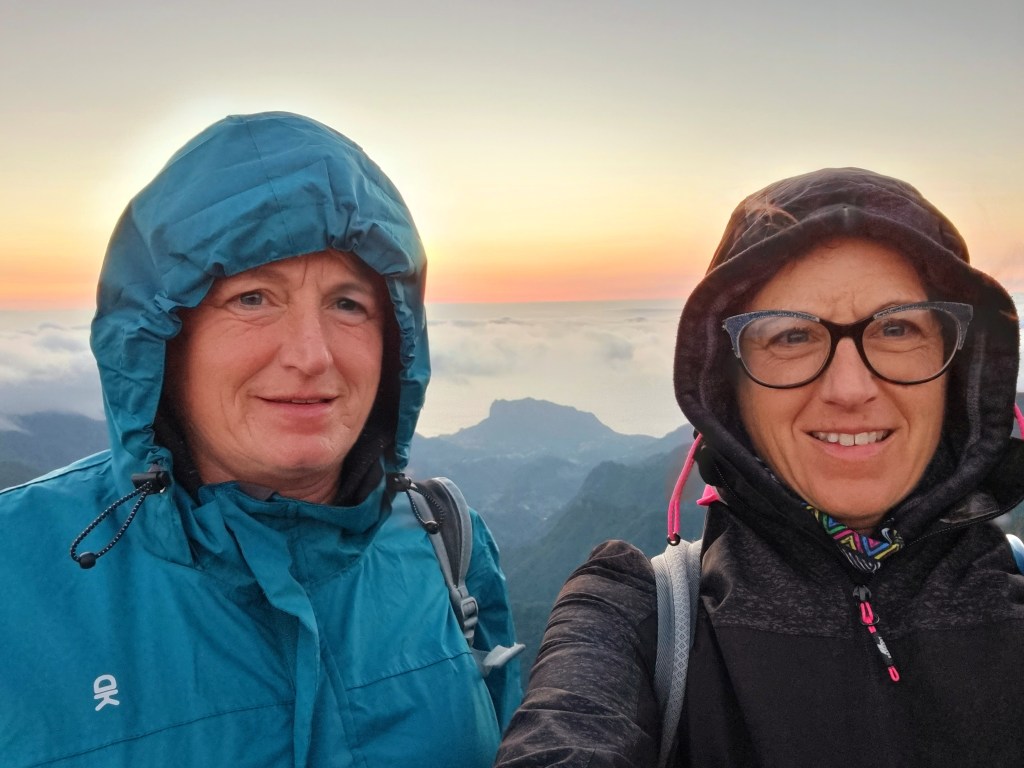
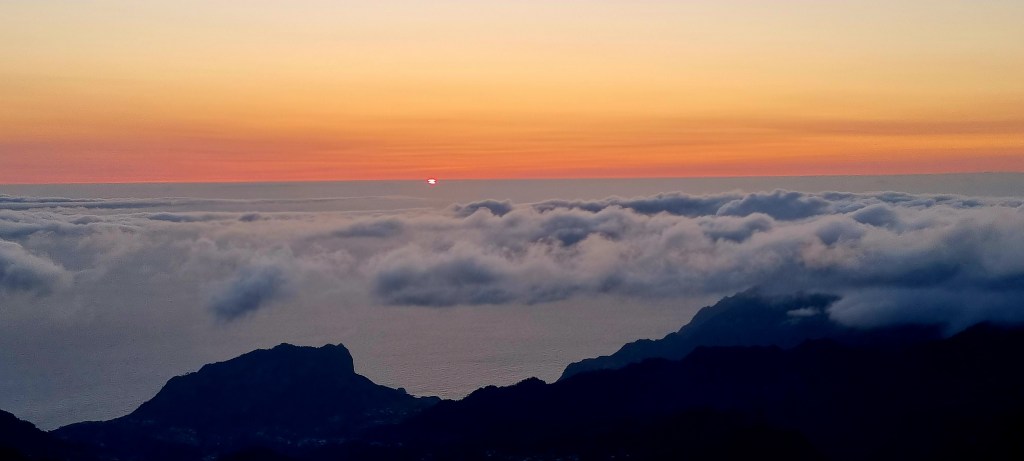
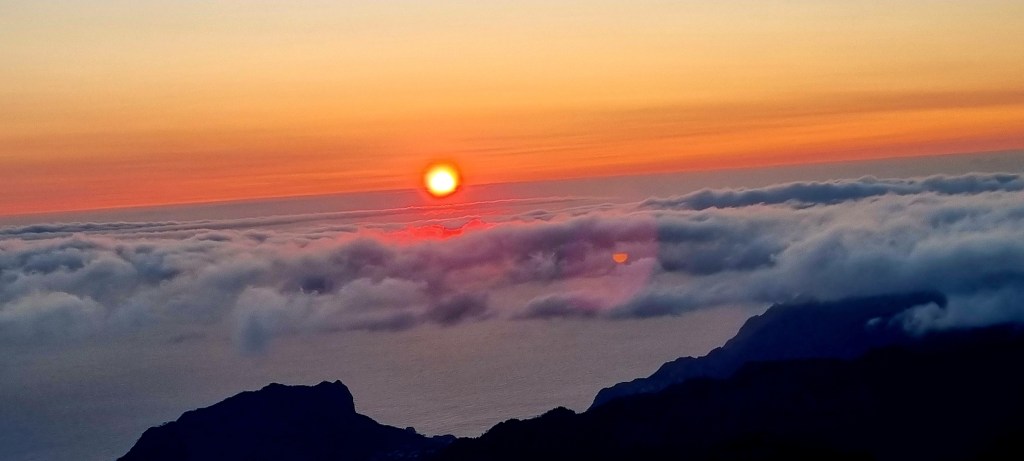
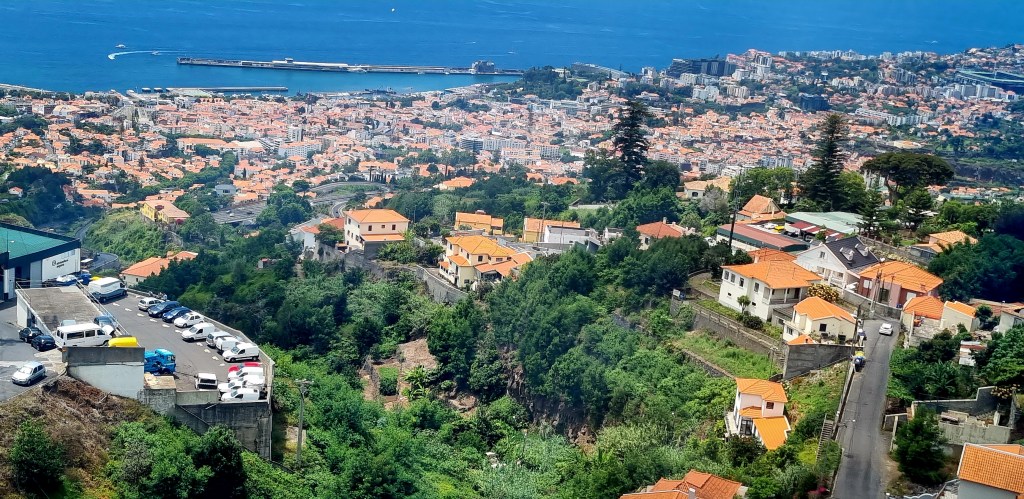
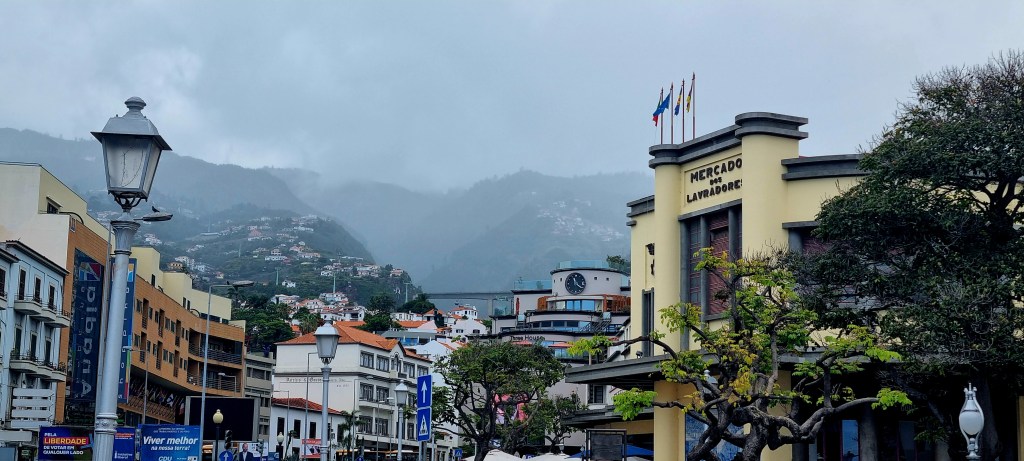
We no longer had a car, so we decided to catch the bus to the Valley of the Nun’s. We walked down the hills into Funchal.
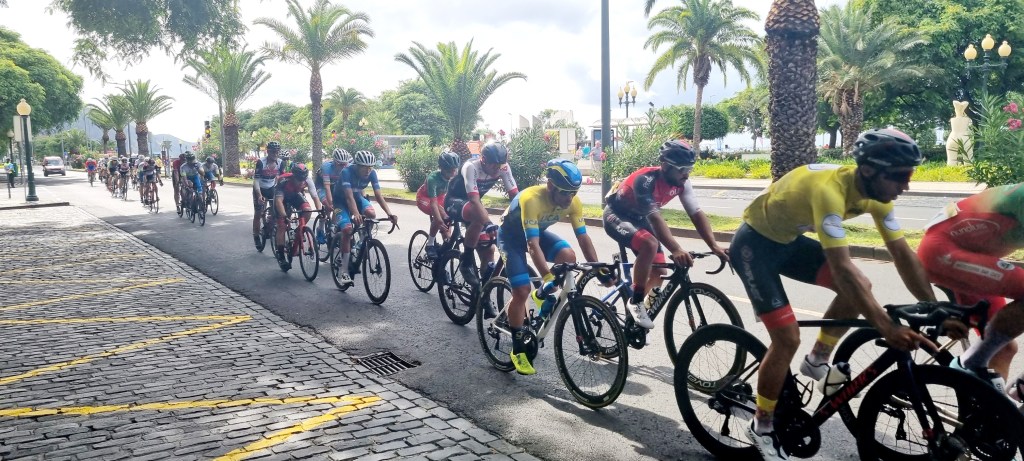
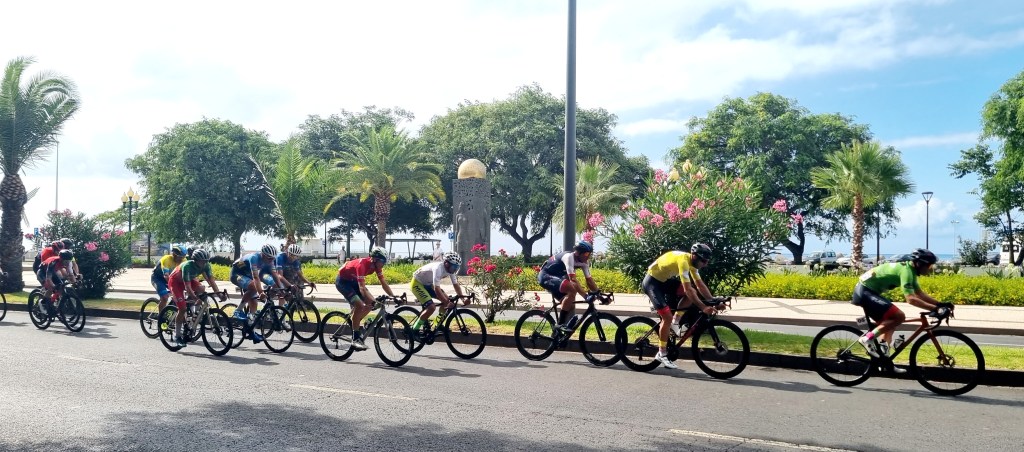
We had planned to get the bus from the waterfront area, but there was a cycling race going on, and the road was closed to traffic. So we decided to watch the cyclists for a little while.
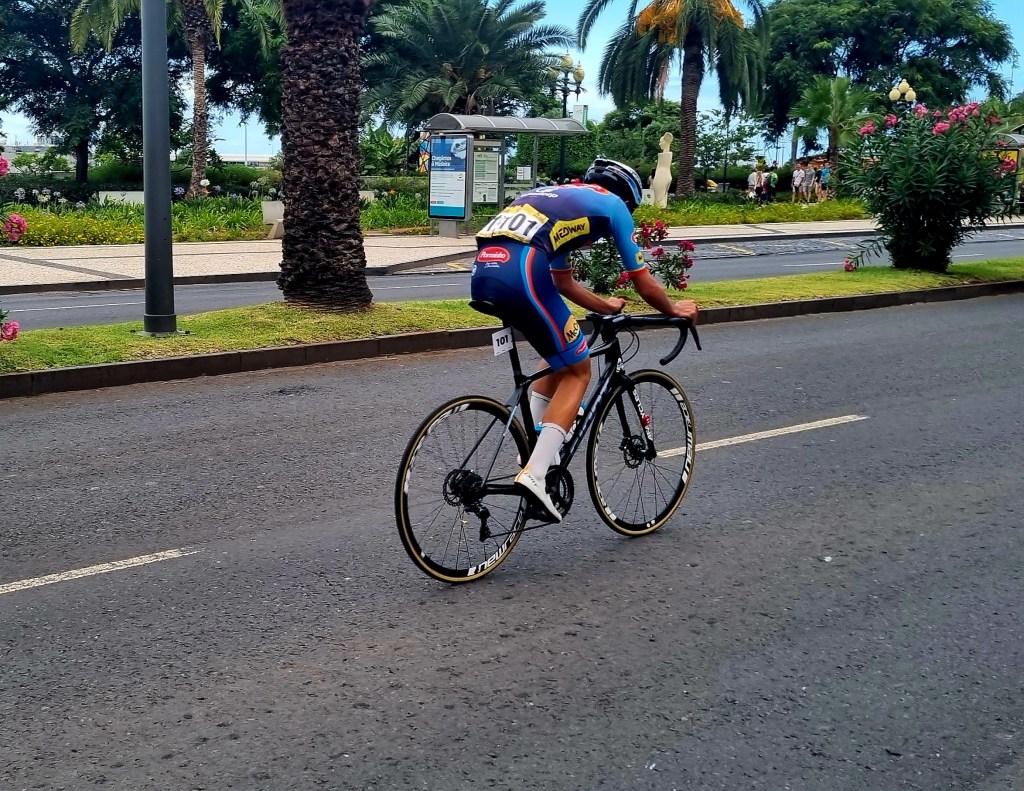
The guy below was the clear winner, he was way ahead of anyone else.
We realised that the race wasn’t finishing anytime soon. We used Google translate to read the printed notice on the bus stop, which told us the amended route and where to get the bus from.
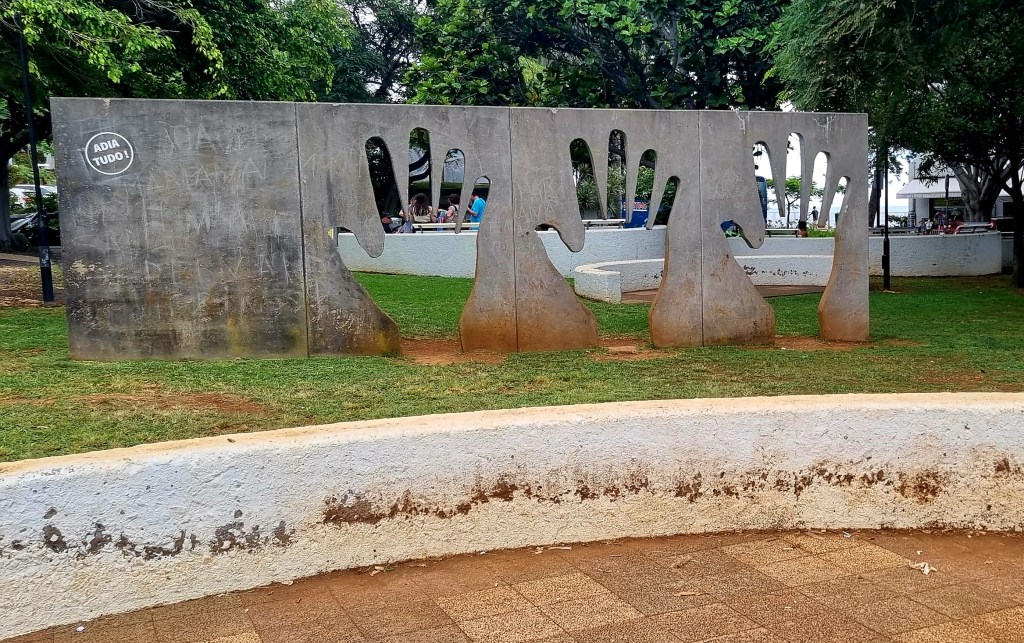
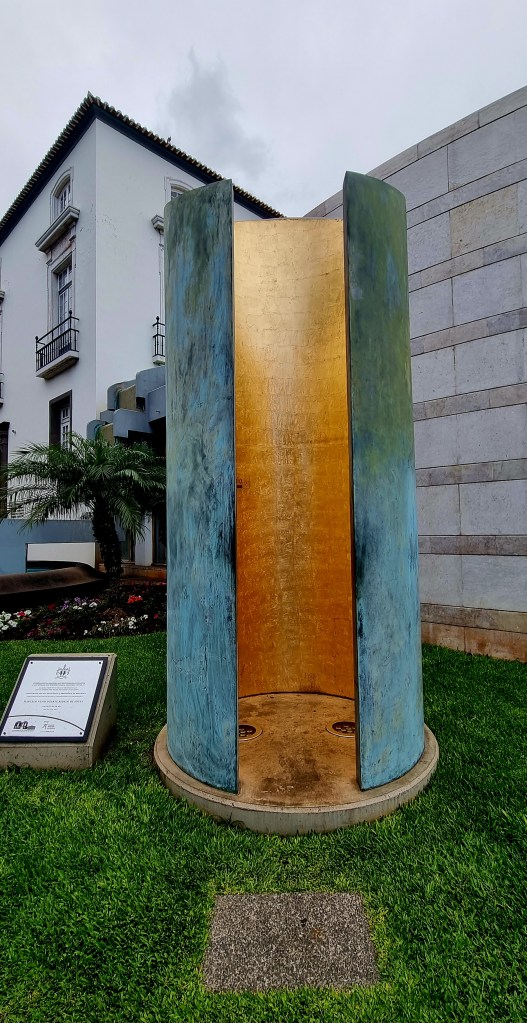
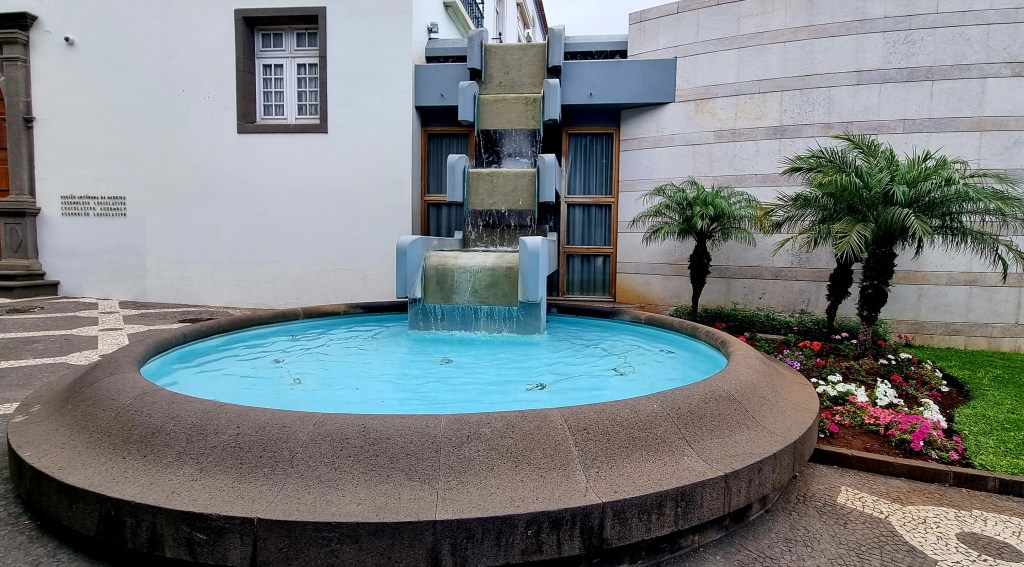
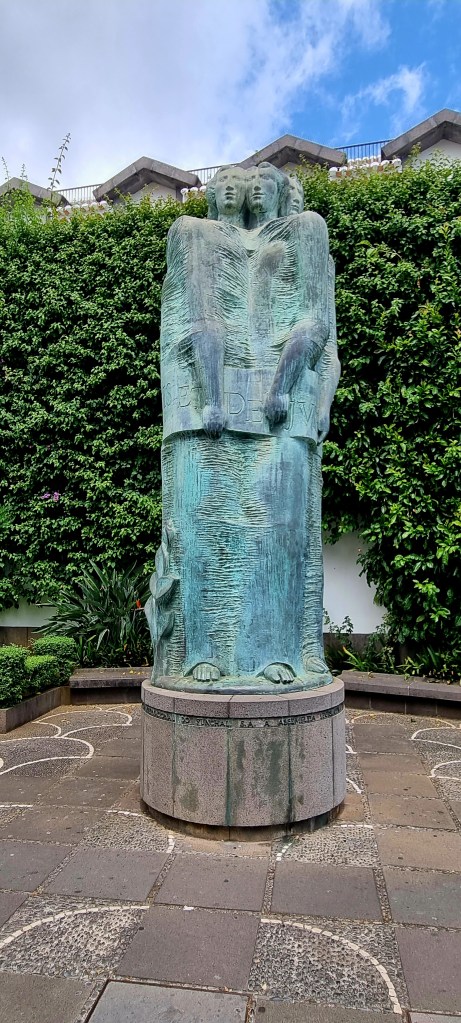
On the way, we walked past the memorial to all healthcare professionals and others who faced the covid-19 pandemic.
We got on the bus by the old market, the weather was looking a bit grey.
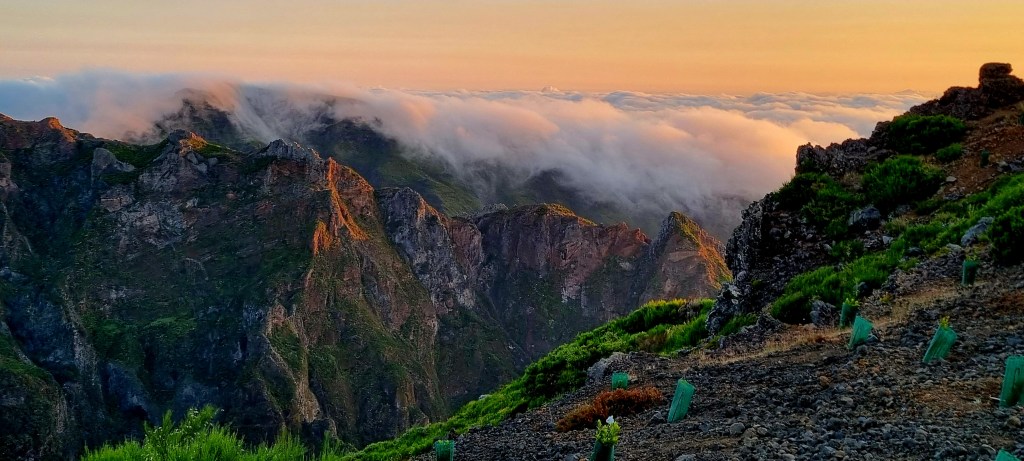
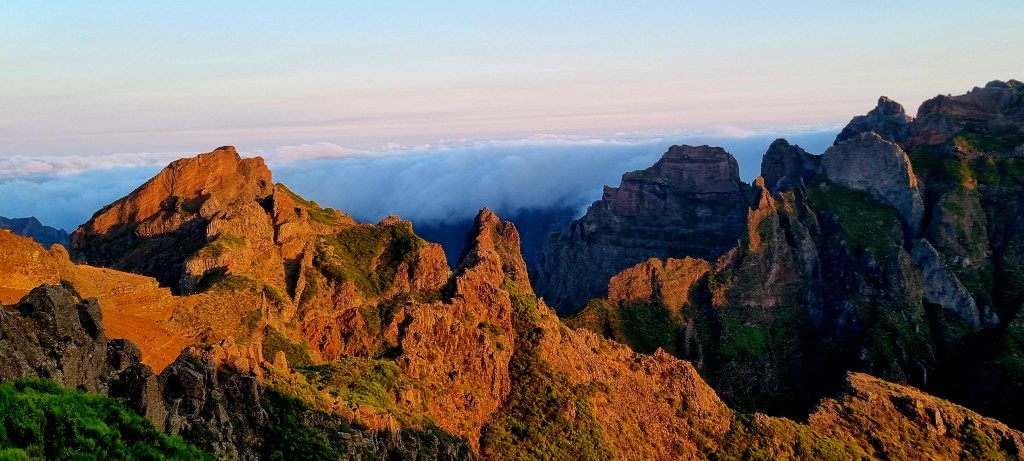
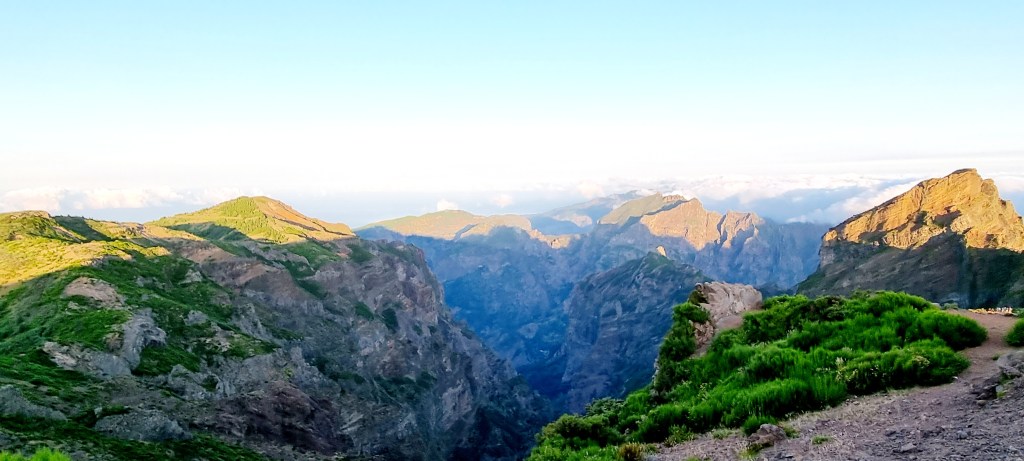
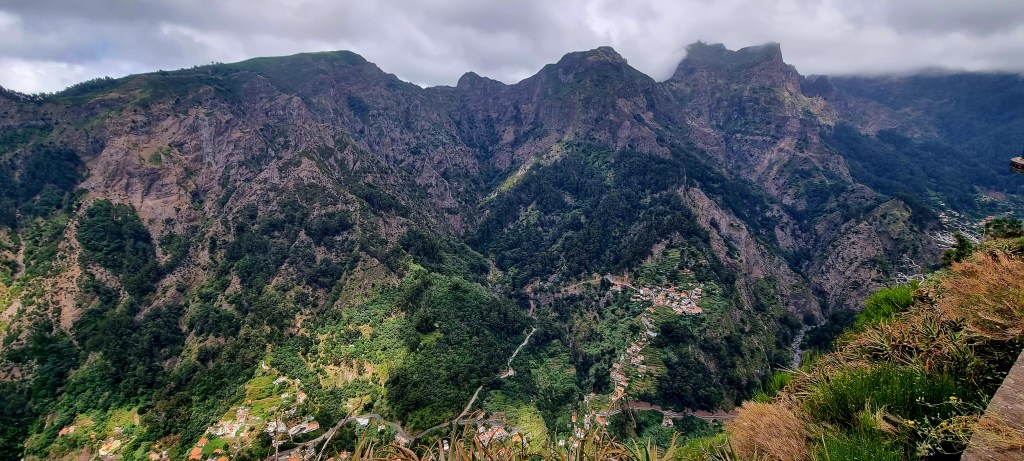
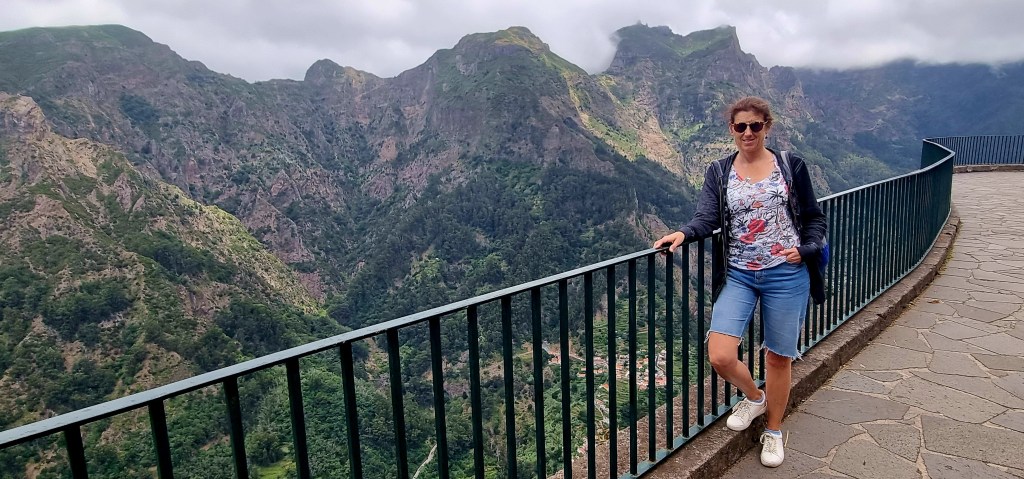
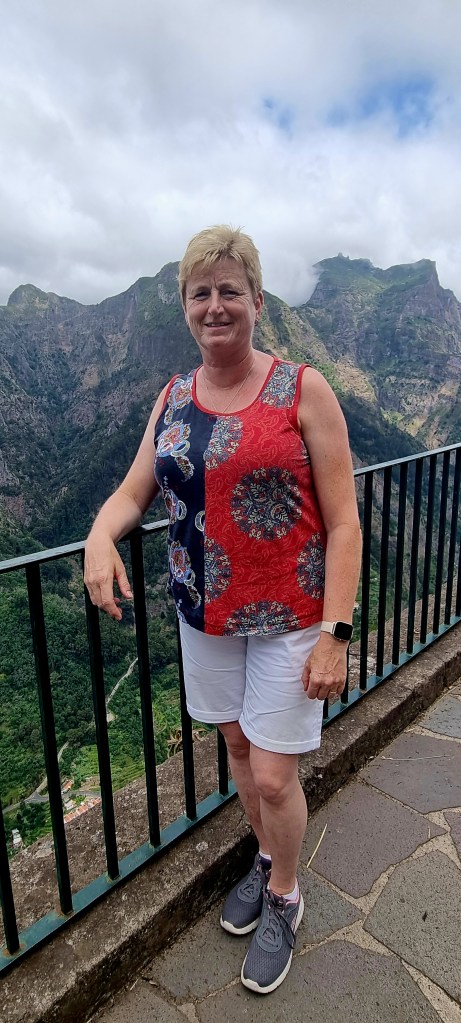
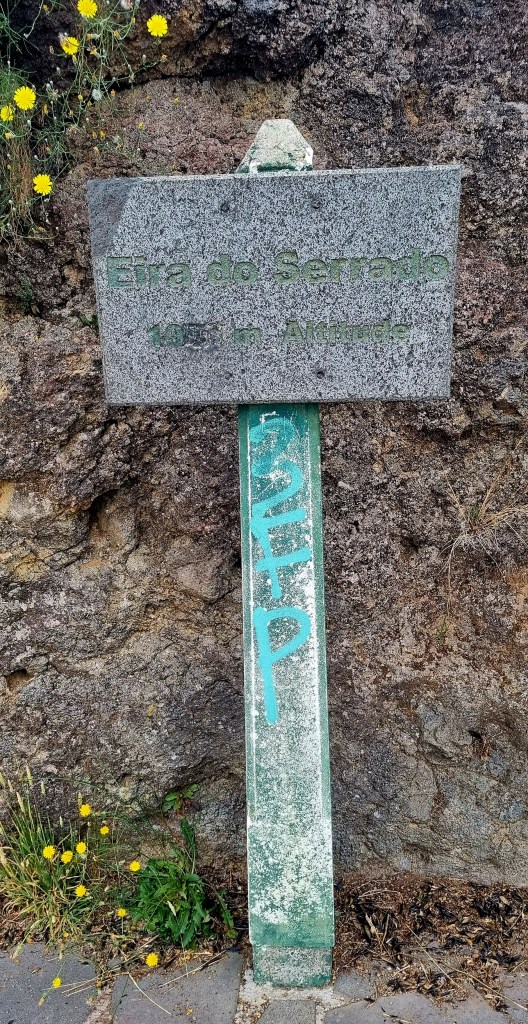
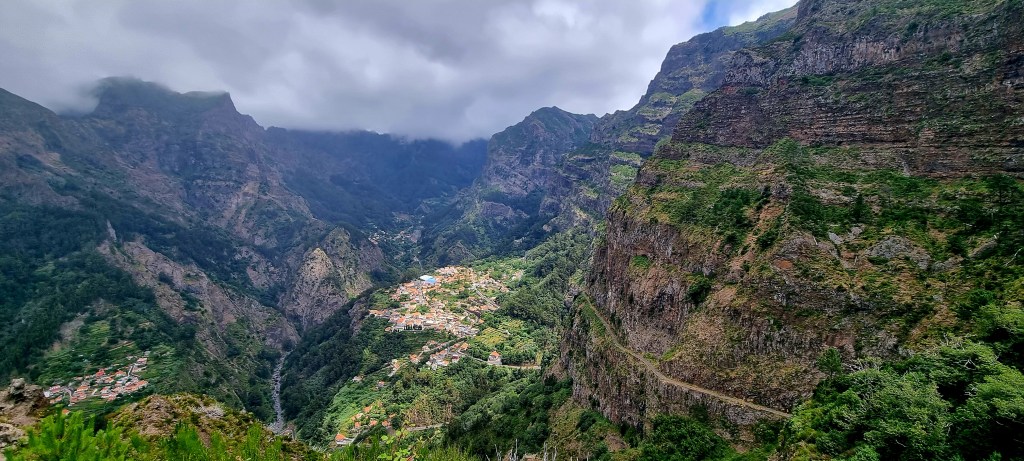
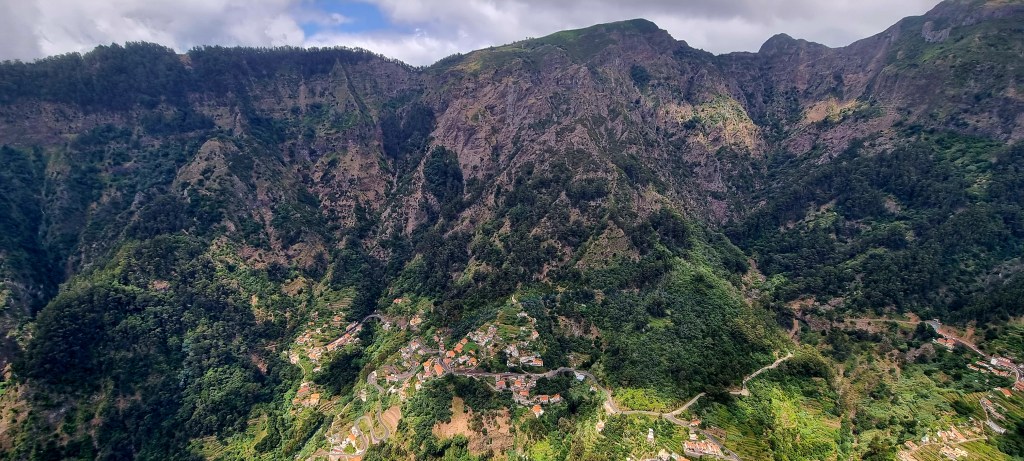
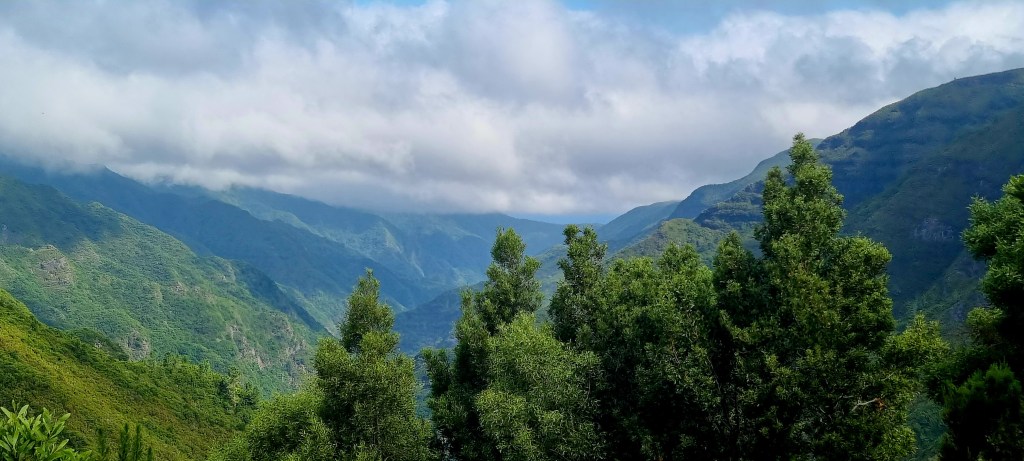
The bus took us up several windy roads to the viewpoint above the valley. From the carpark, we walked up to the viewpoint, Eira do Serrado, where you could see a serrated ridge with 3 peaks: Pico do Cavalo, Pico do Serradinho and, the highest peak of Pico Grande.
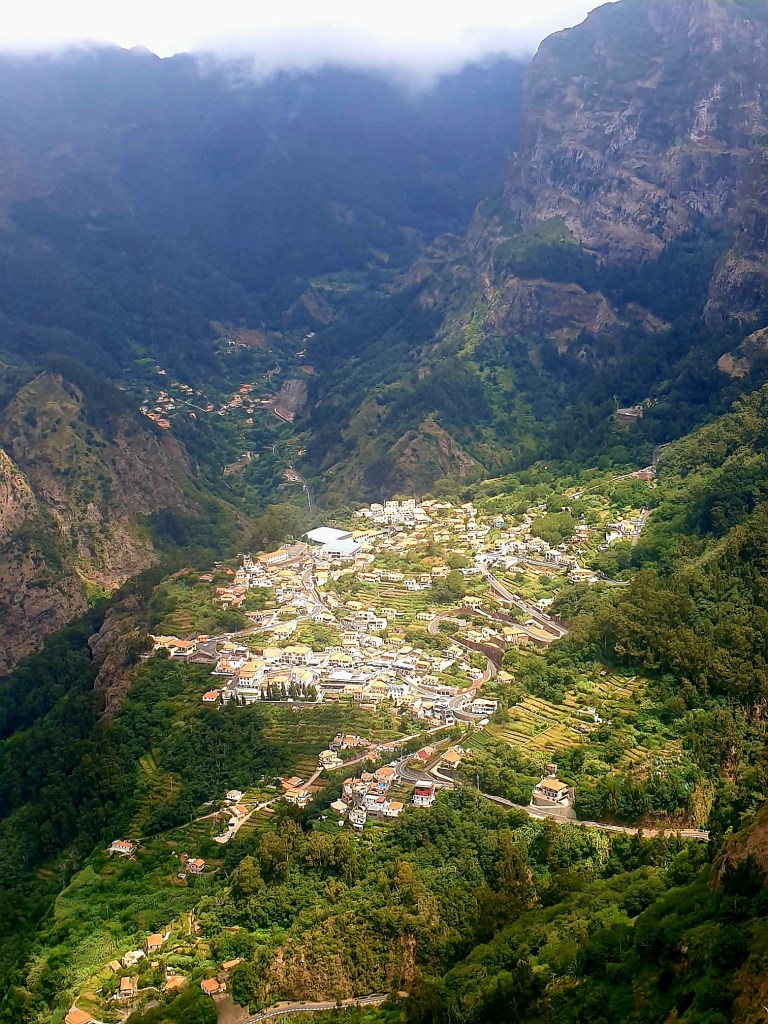
Originally, it was thought that the valley, Curral das Freiras (translates as sisters’ farm) was a collapsed volcano, but the circular form is actually a result of millions of years of river and rain erosion.
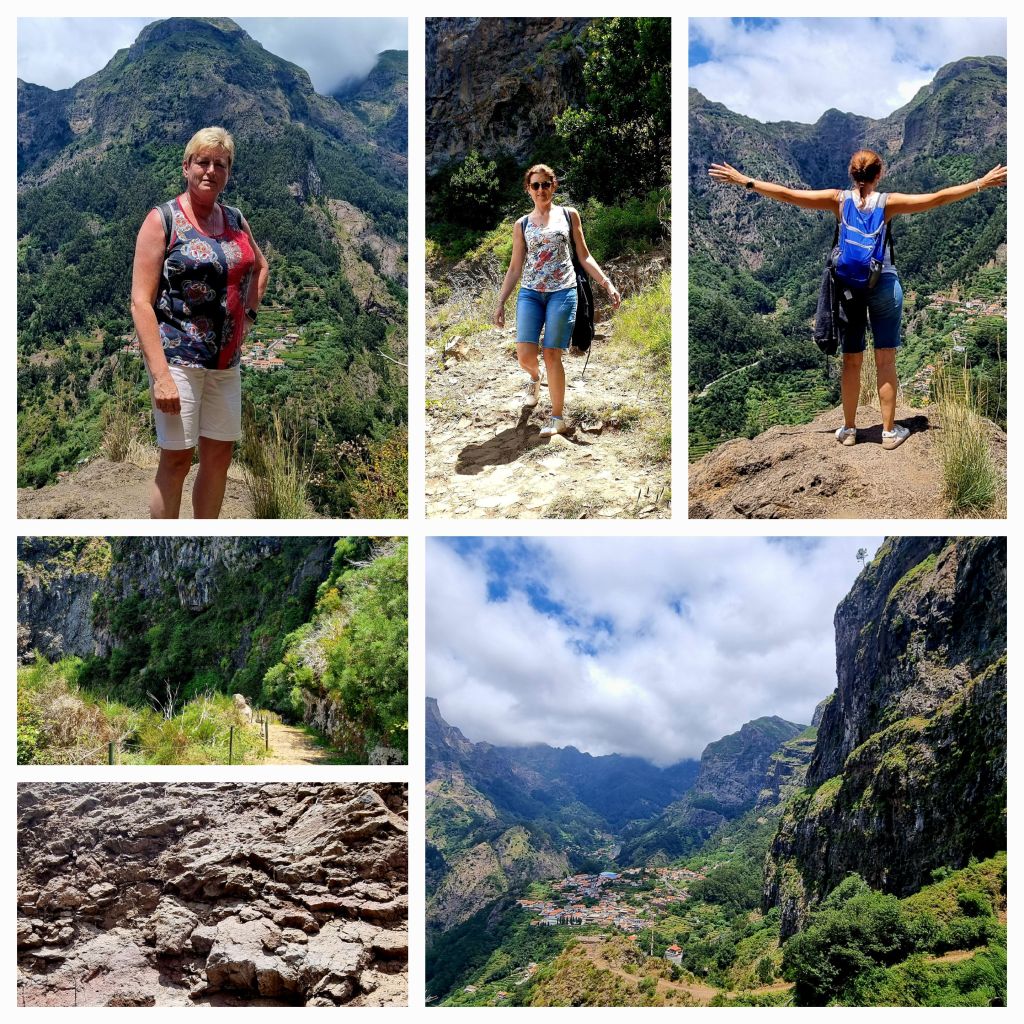
As the next bus wasn’t due to arrive for a couple of hours, we decided to take the cobbled and stony and sandy footpath down to the village. This path allegedly has 52 bends.
It was actually really hot walking down, even though the weather forecast had suggested otherwise. The woods on the way down were a mixture of chestnut woods and natural laurel forest.
The hidden valley was used by the nuns of Santa Clara Convent whenever pirates attacked the island. They used to go to the valley with the treasures from the church during the attacks, particularly in 1566. At the time, there were no roads, just a footpath.
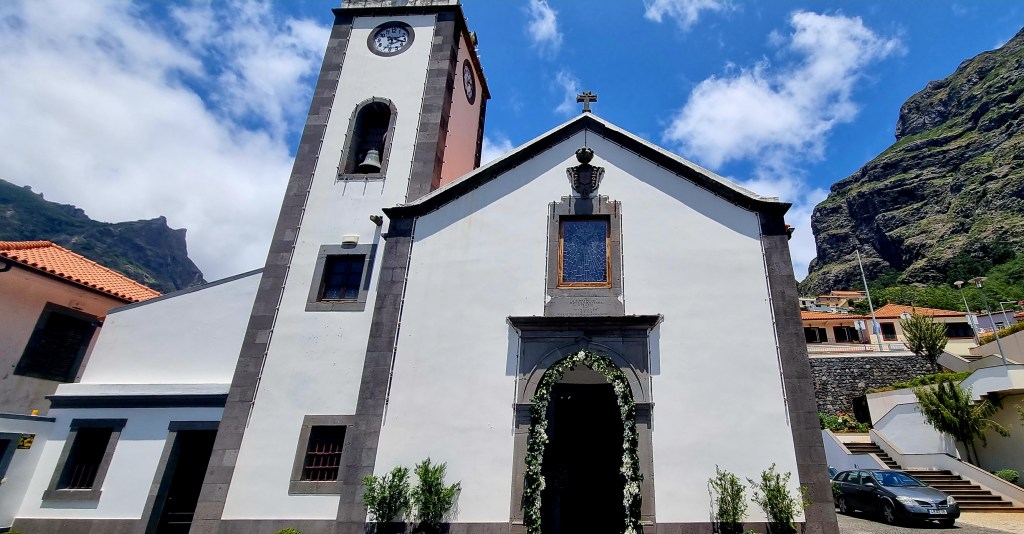
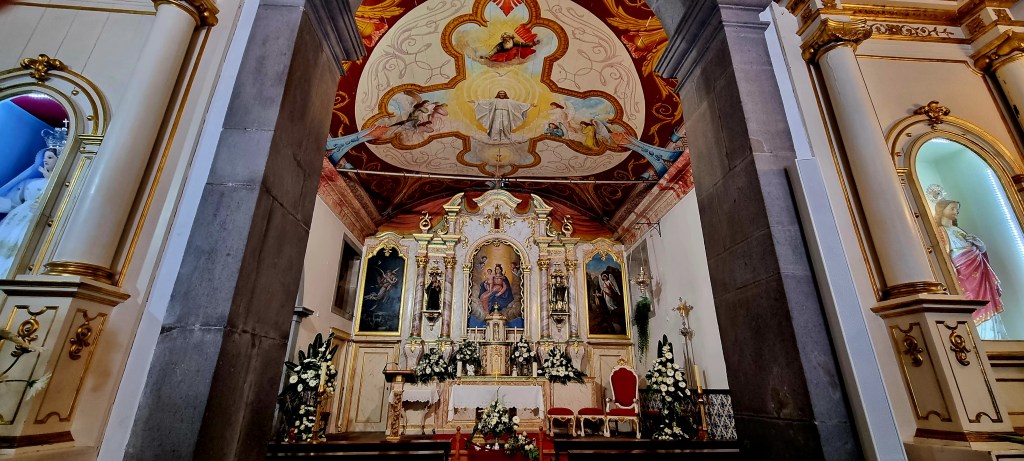
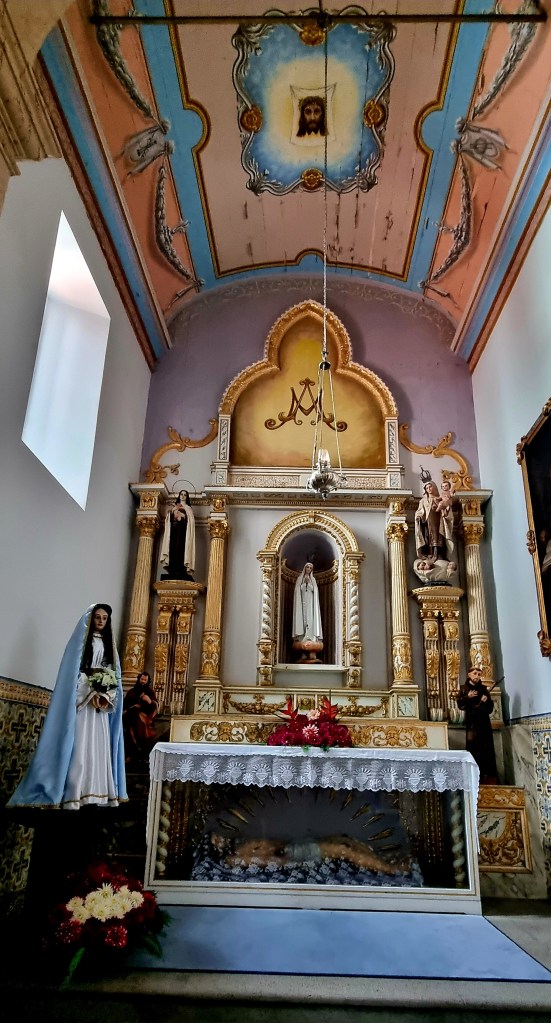
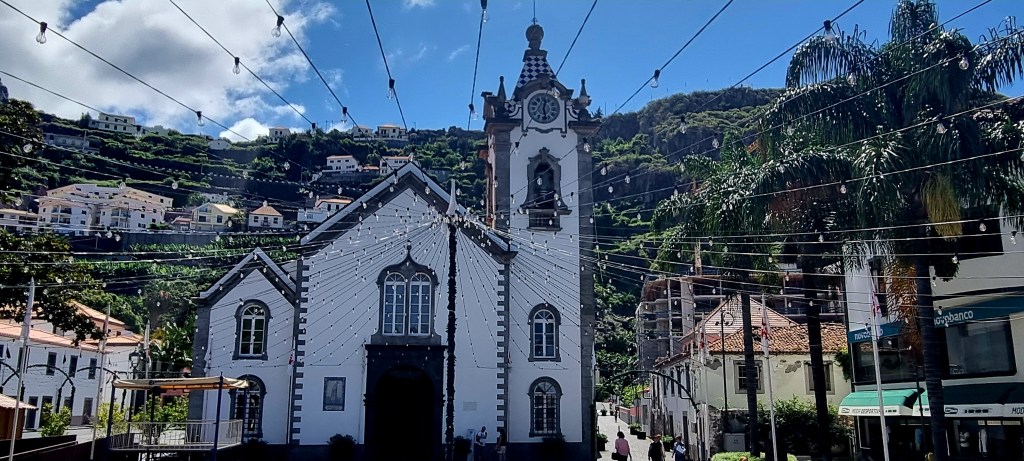
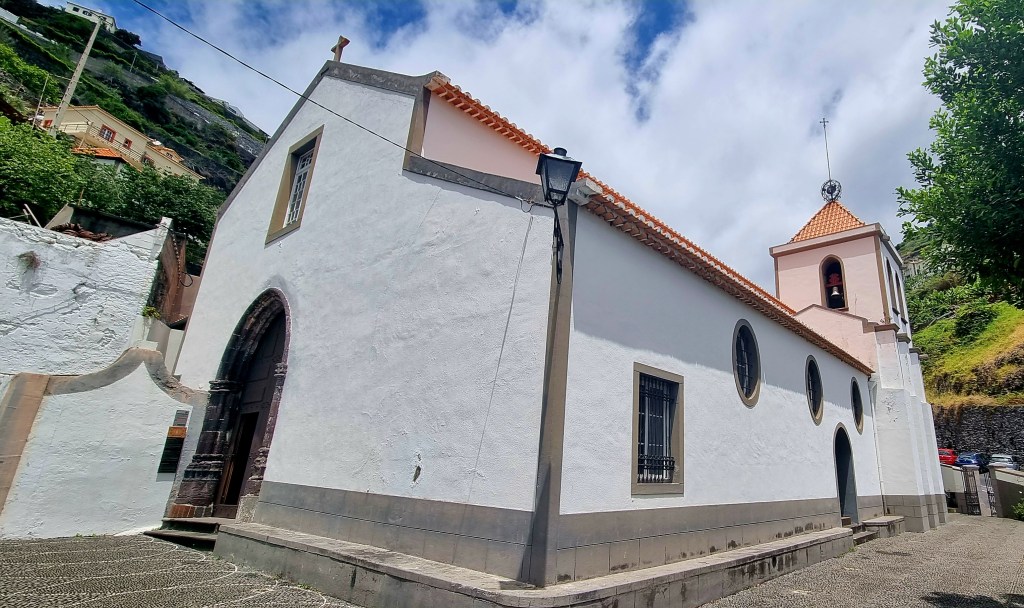
Once we got to the village, we went to visit the church, Igreja Matriz, which dates from the early 19th century.
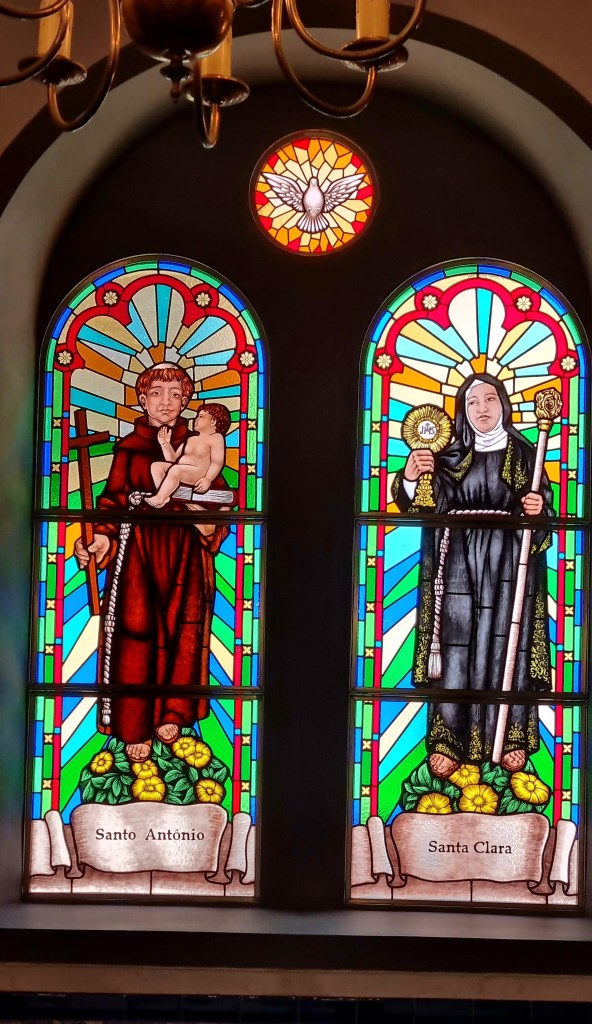
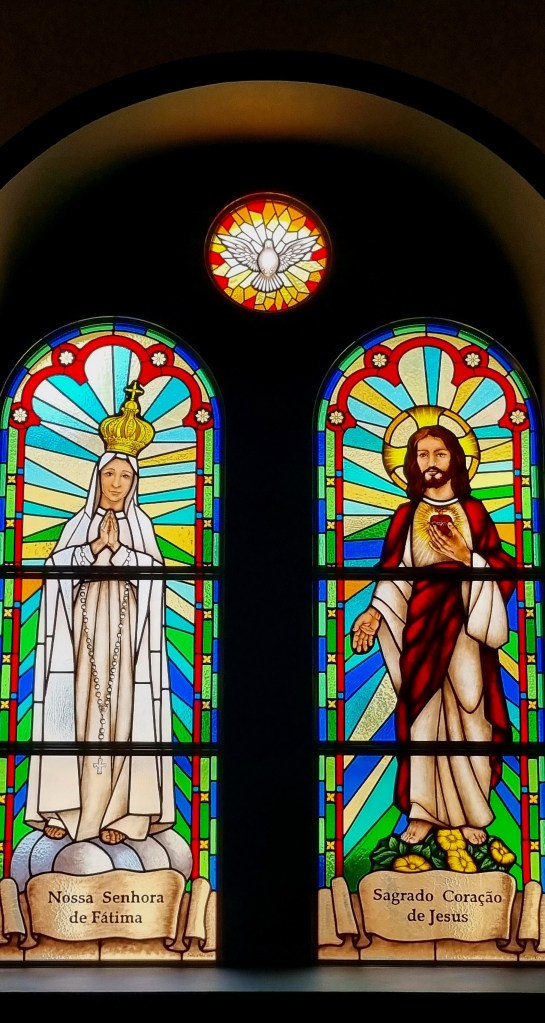
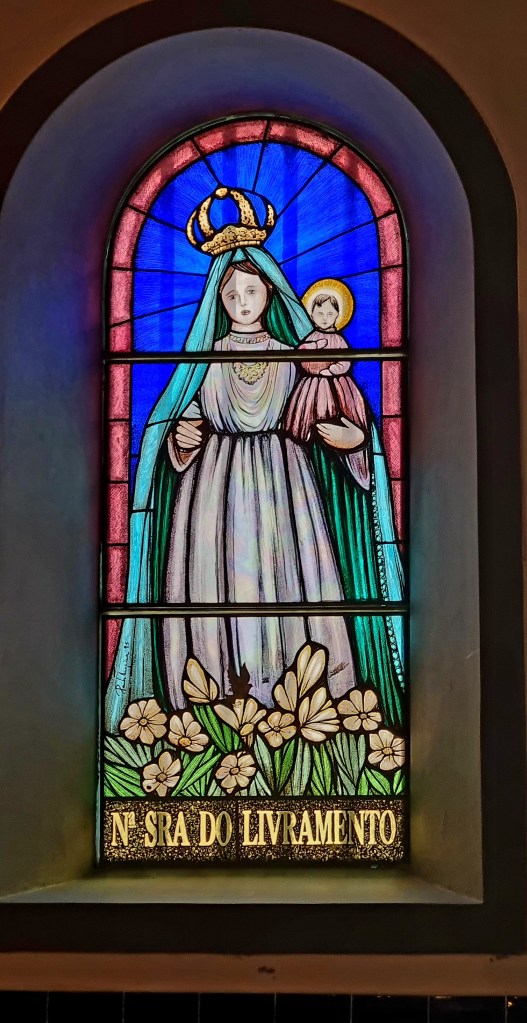
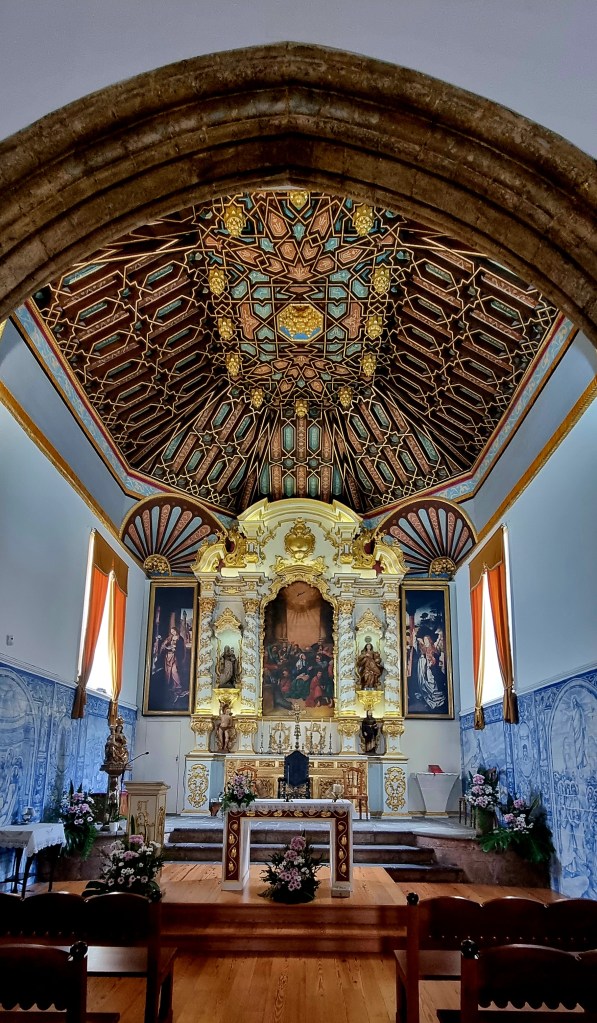
The stained glass windows inside the church were beautiful.
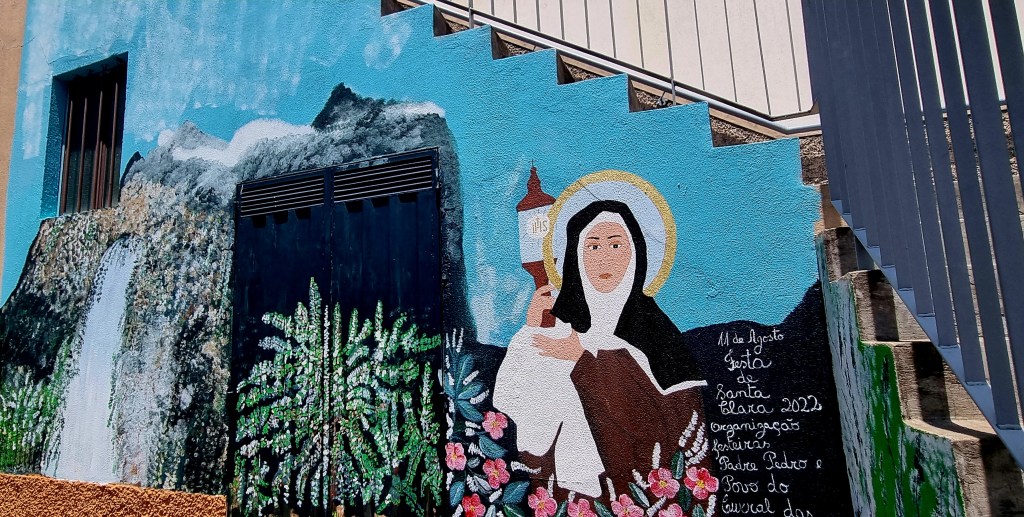
There was also some nice street art outside the church.
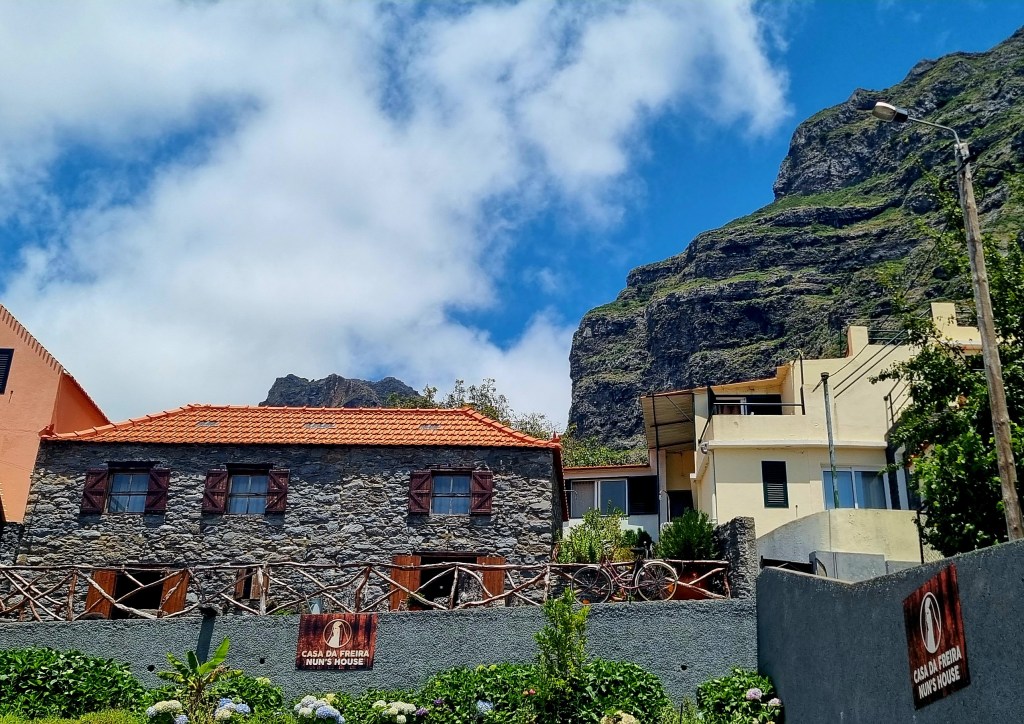
We walked past one of the remaining nuns’ houses.
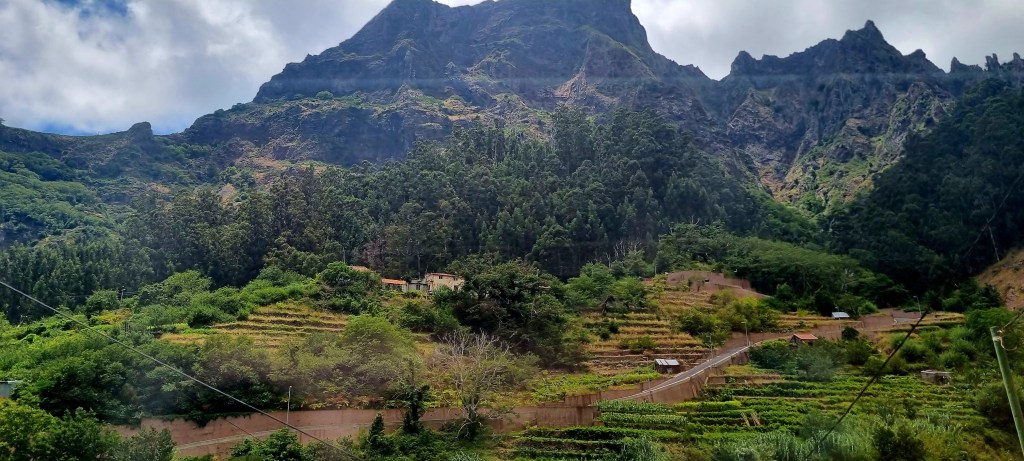
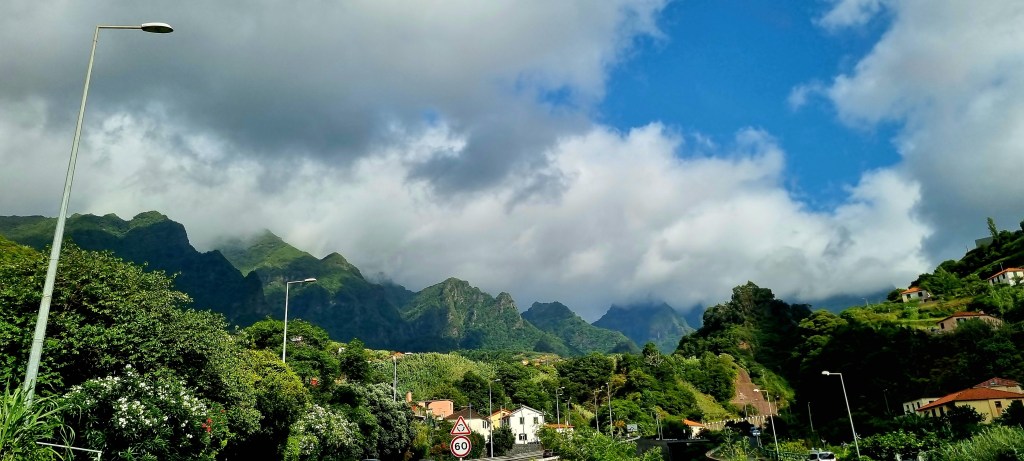
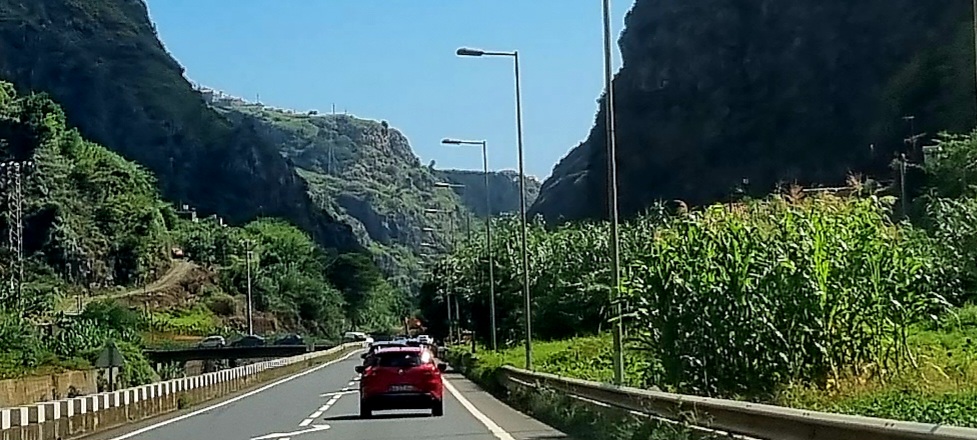
We got the bus, and it went a slightly different route home. The views, as always, were amazing.
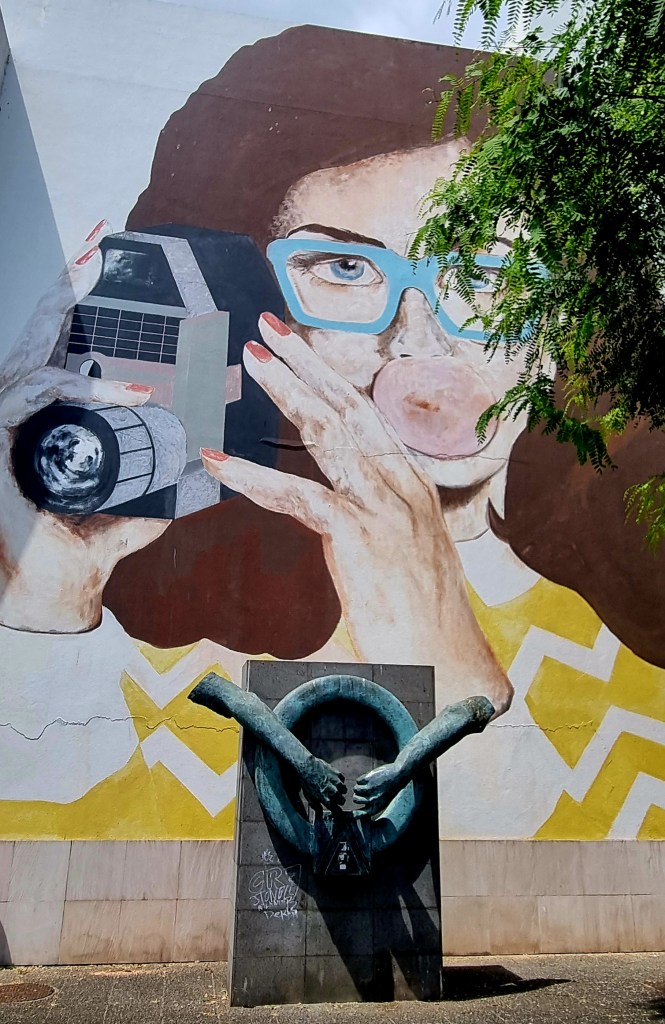
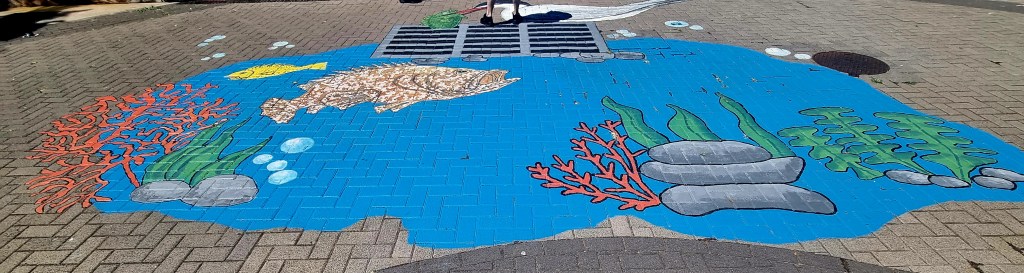
When we got off the bus in Funchal, we walked past some more interesting artwork.
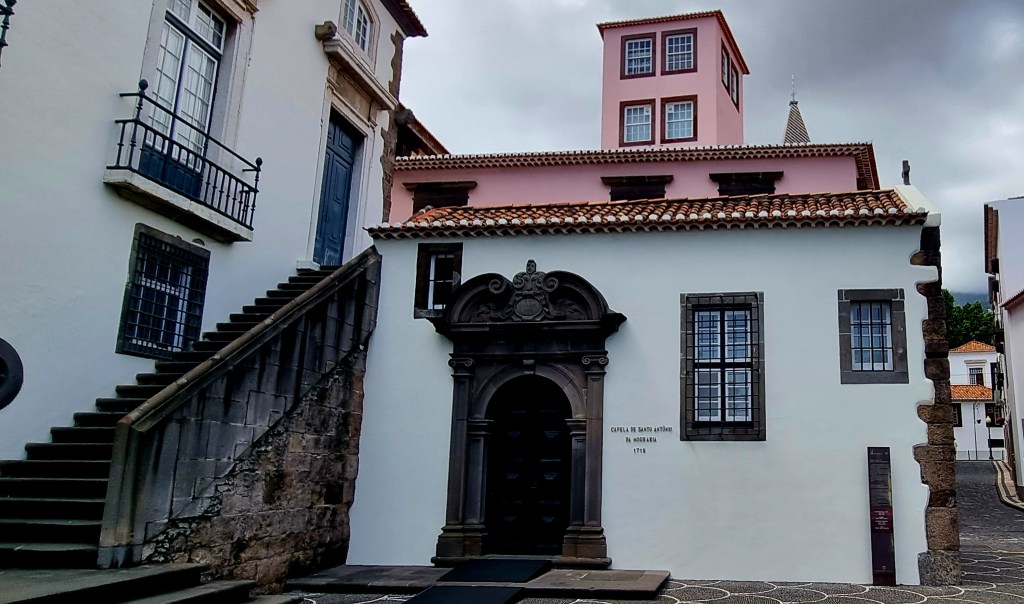
We also visited the Chapel of Santo Antonio da Mouraria. This used to be situated inside the former walls of custom house in Funchal and was ordered to be built in 1715 by the chief judge at the time, who is buried inside.
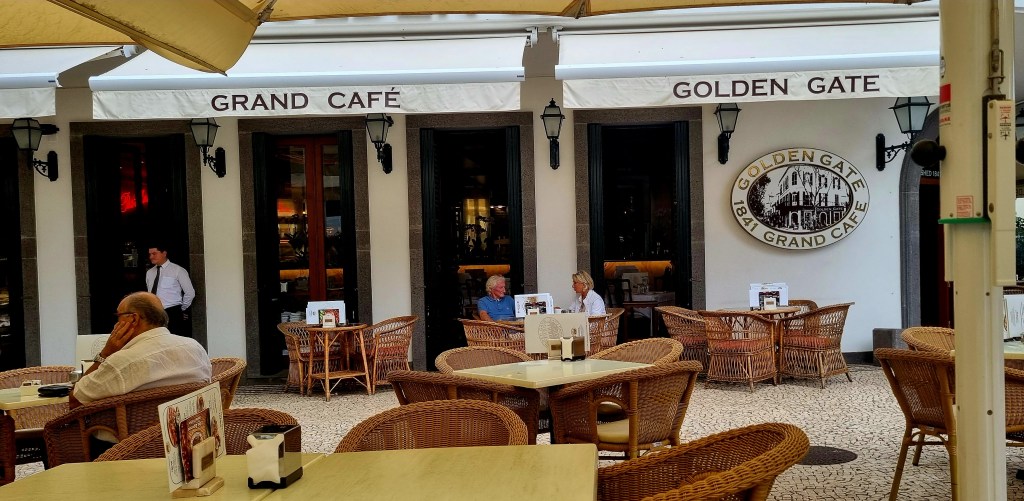
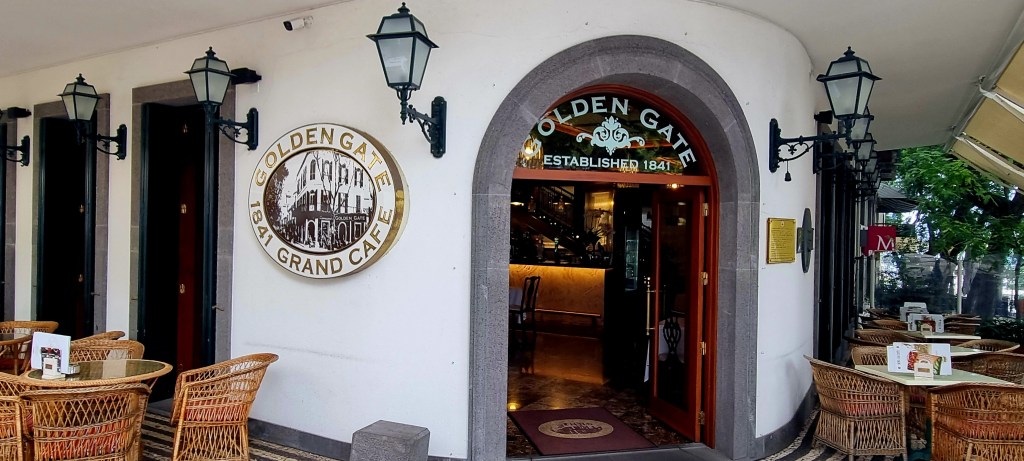
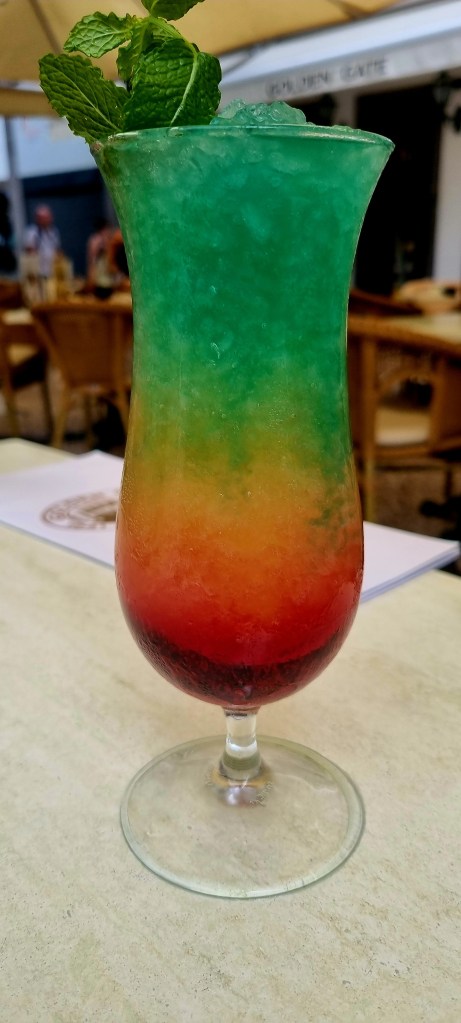
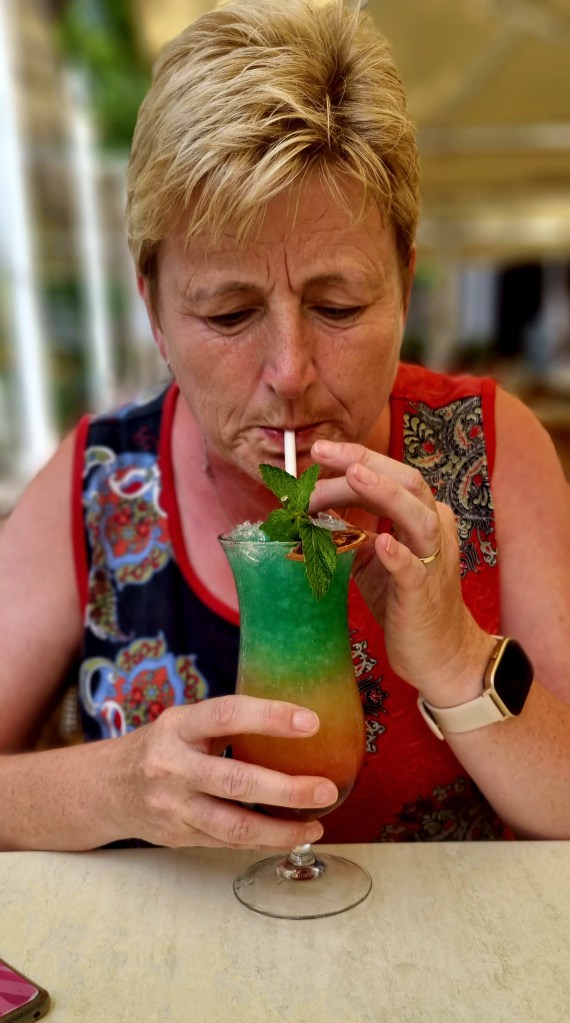
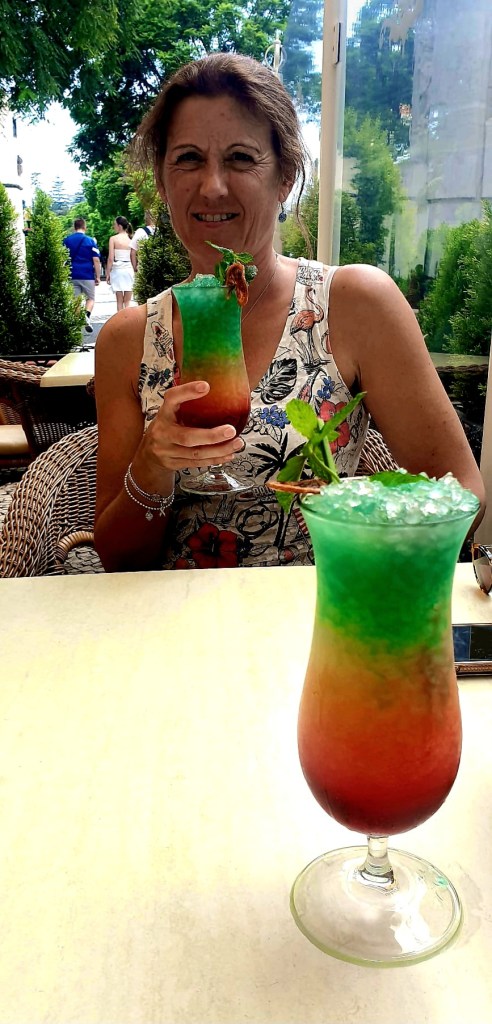
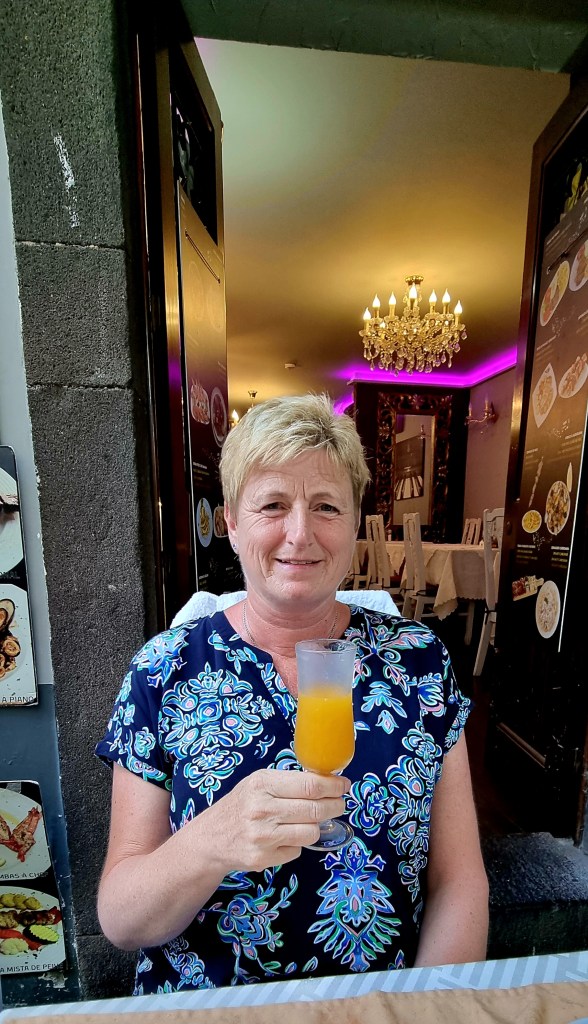
From here, we walked into the city centre and decided it was time for a cocktail, so we stopped at the Golden Gate Grand Cafe. The first drink we tried was a Bob Marley – it was a little bit too sweet.
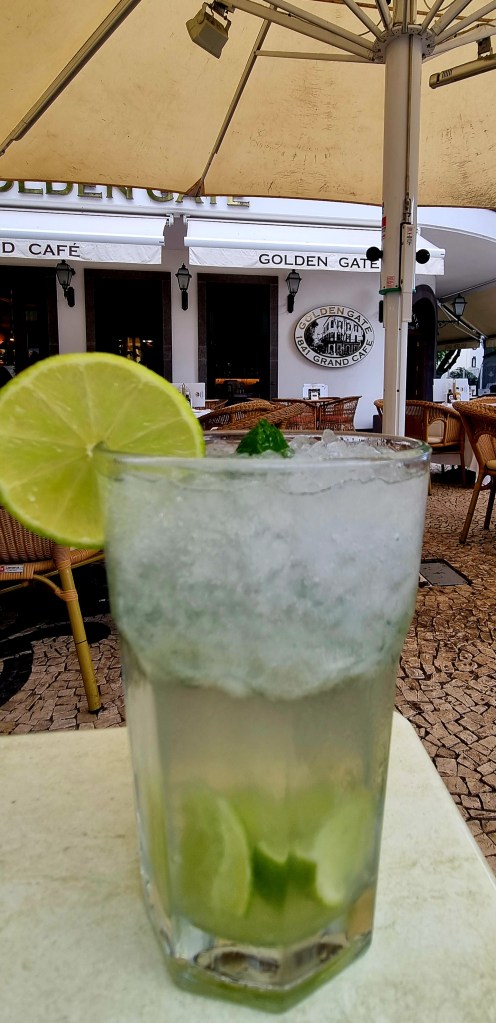
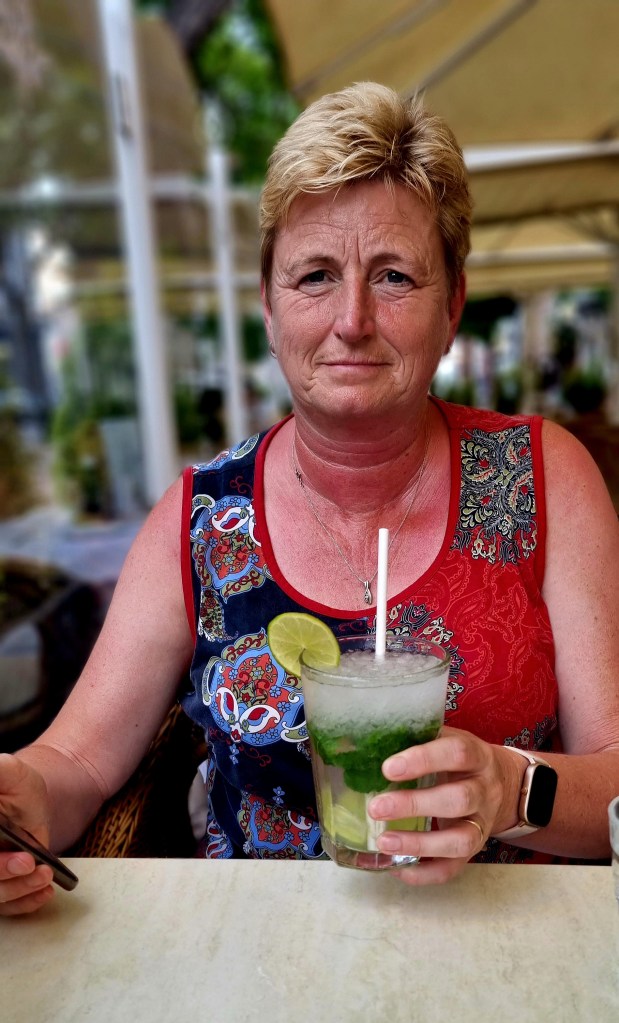
Next, we had a cocktail we knew we both liked, a mojito.
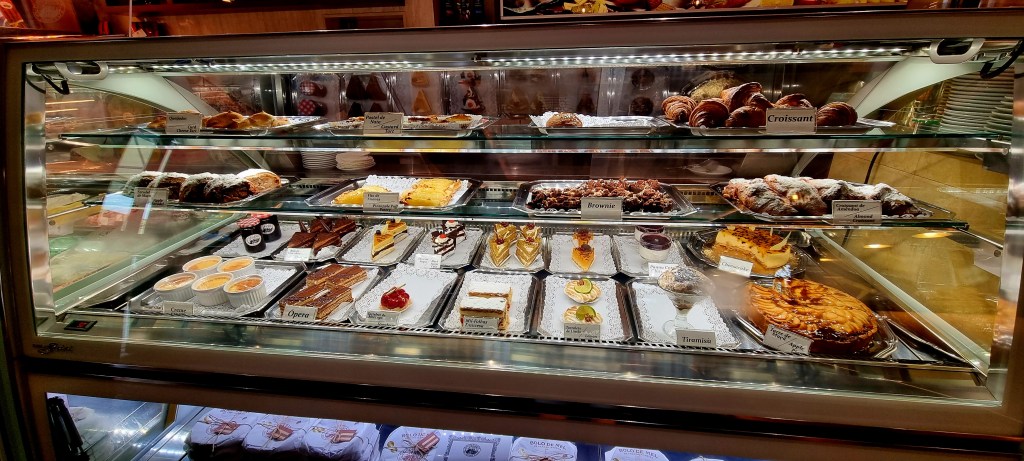
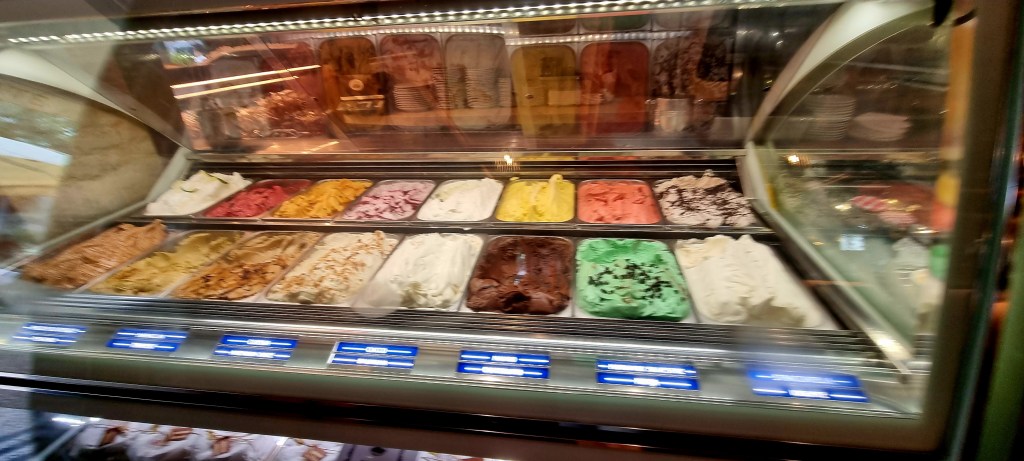
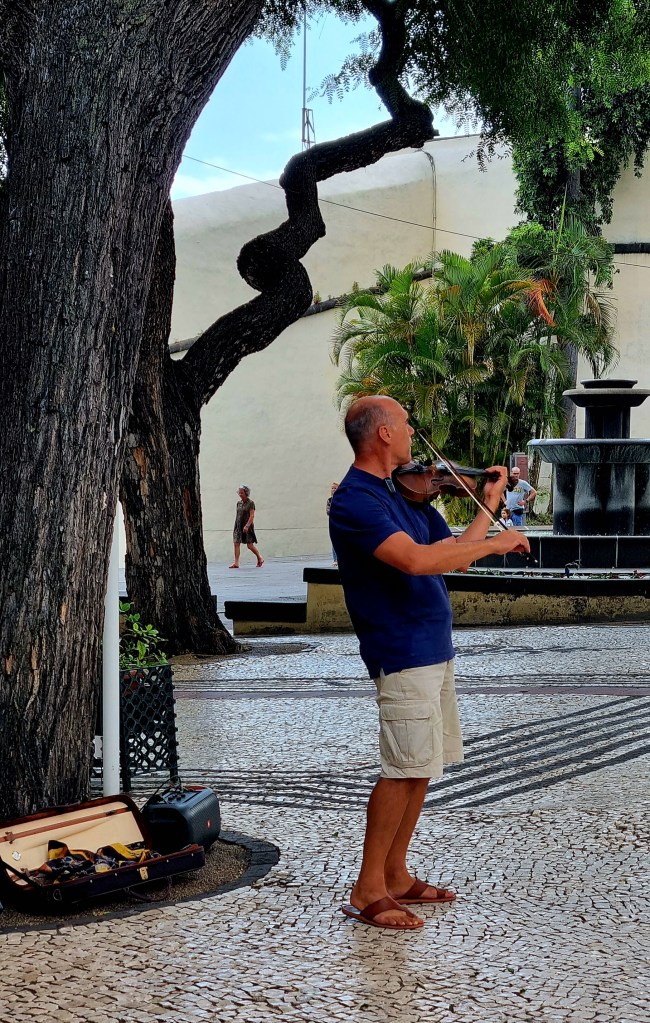
The cafe had some delicious looking pastries and ice cream, and we were serenaded by a man playing his violin.
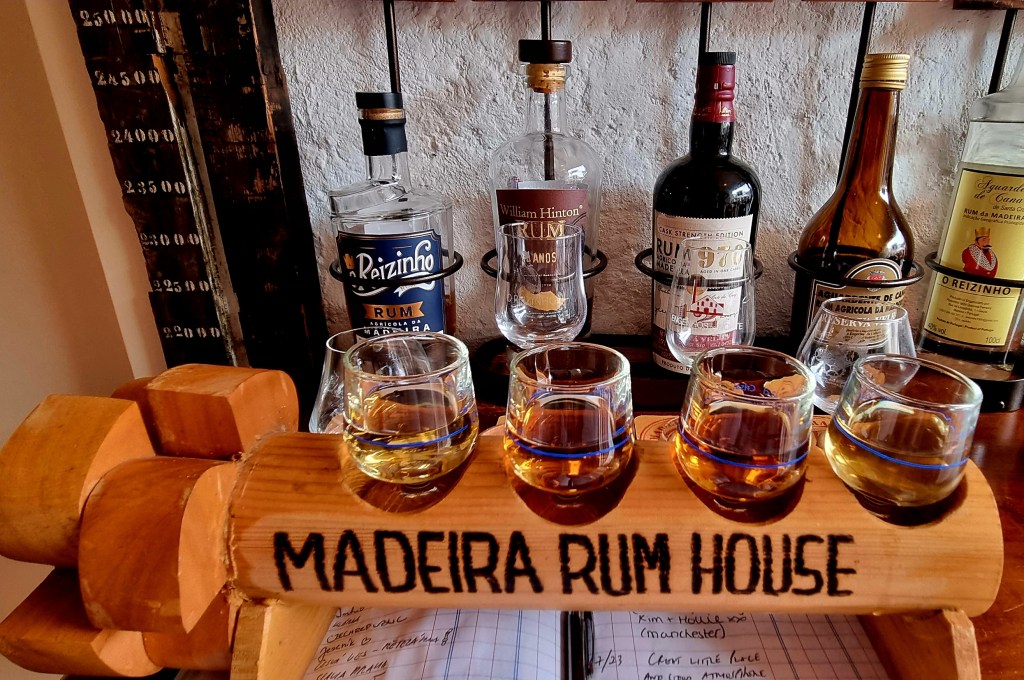
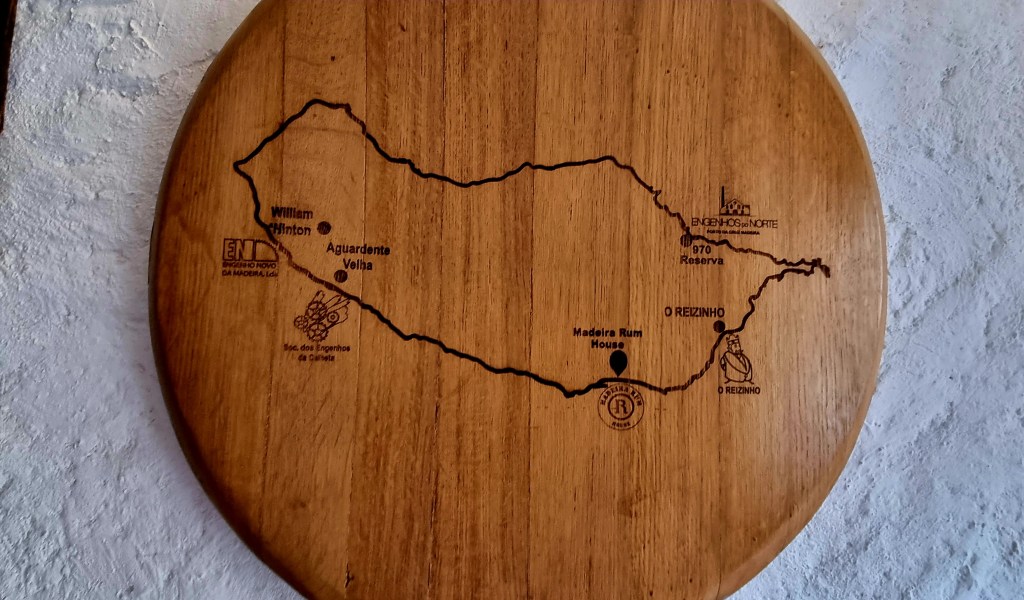
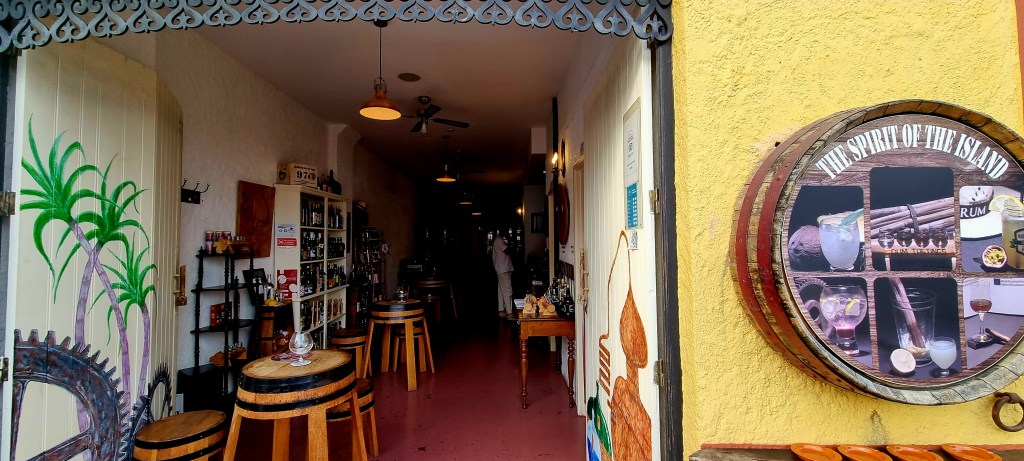
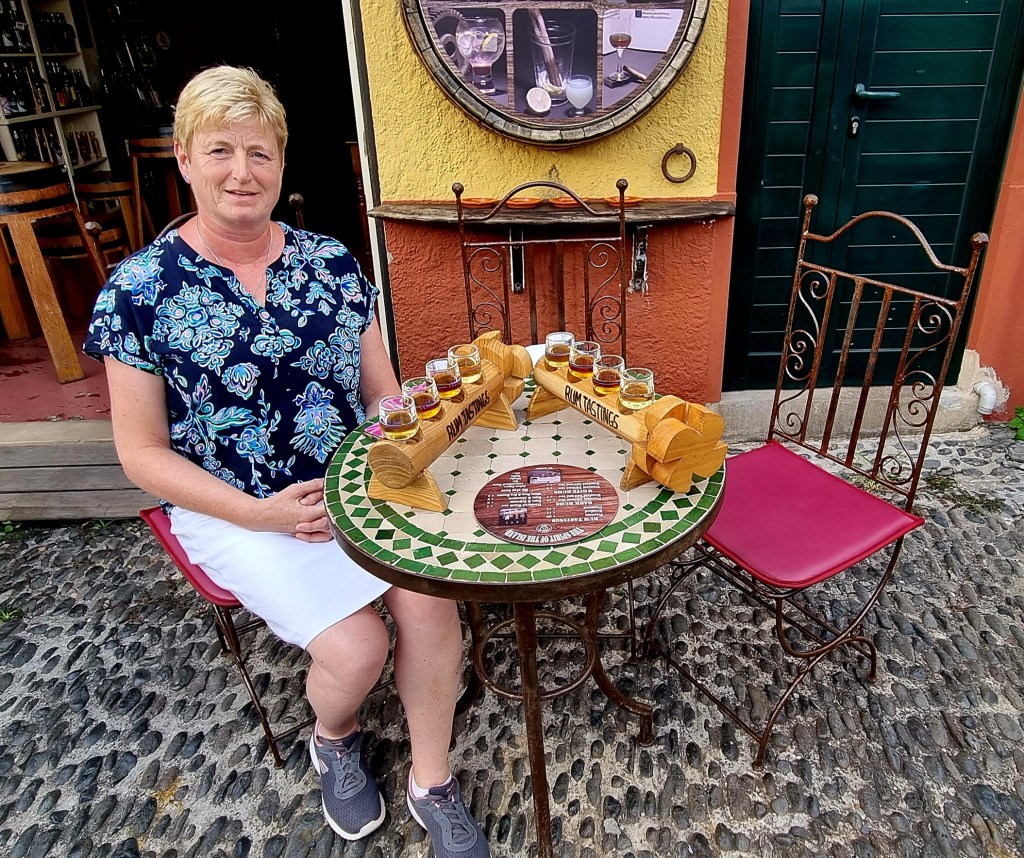
After going back to the hotel and freshening up, we caught the bus back into Funchal. We had booked to do some rum tasting in the Zona Velha.
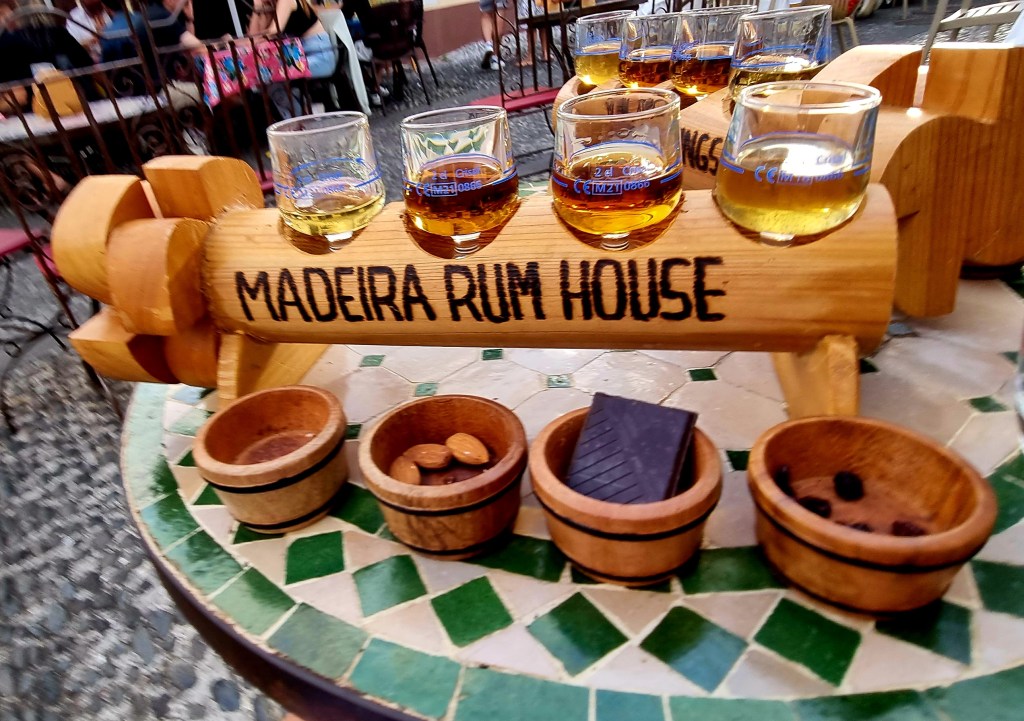
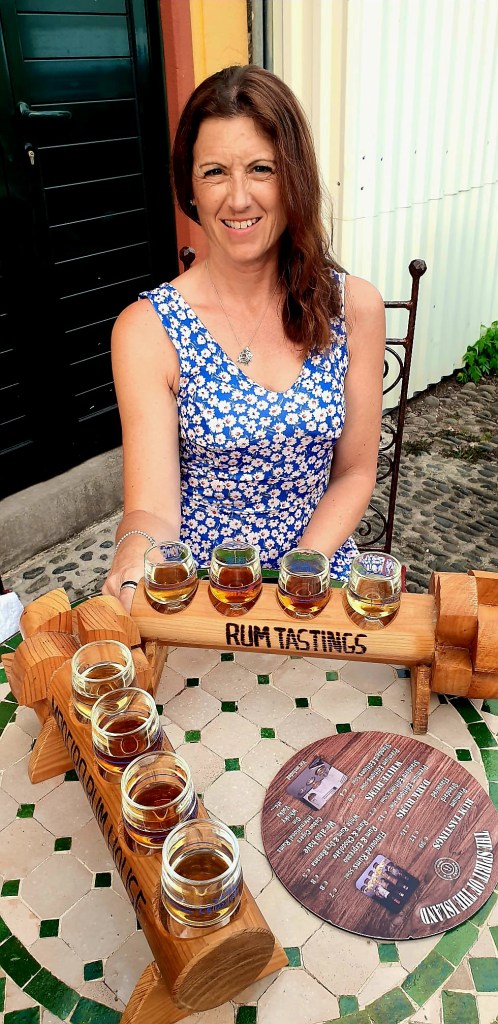
We both had the premium tasting, which included different aged rums and some snacks to go with them. Our favourite was one of the 12 year old rums.
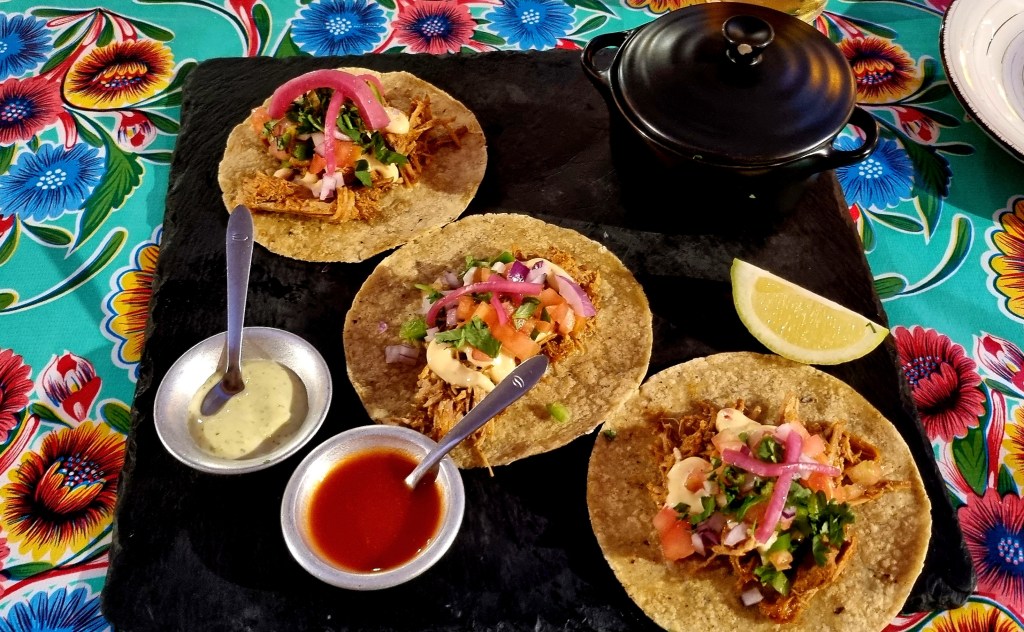
We hadn’t booked anywhere we went for dinner, so we literally walked scross the road to a Mexican restaurant. I had some mixed tacos, which were delicious.
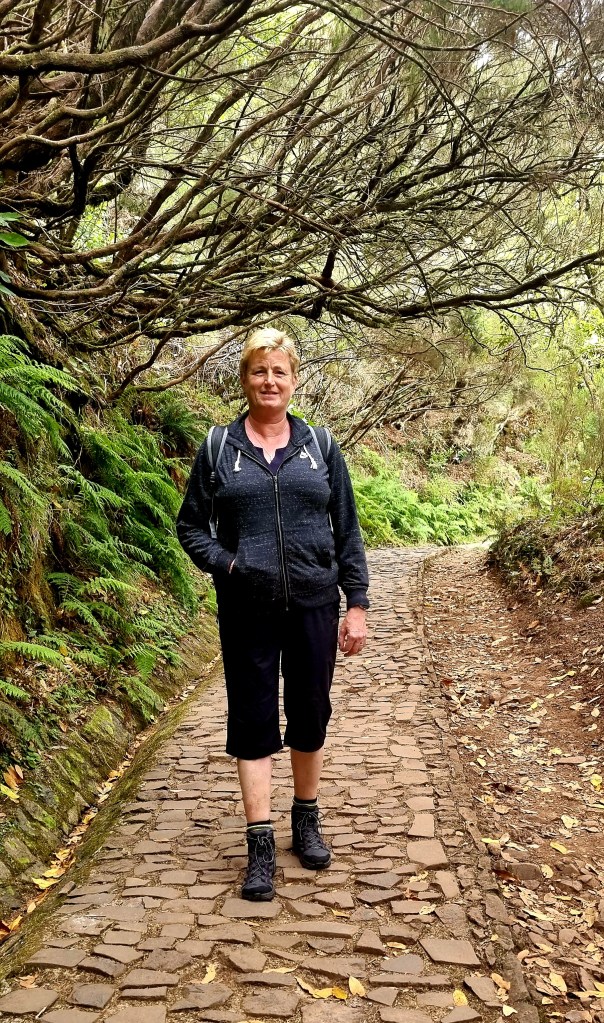
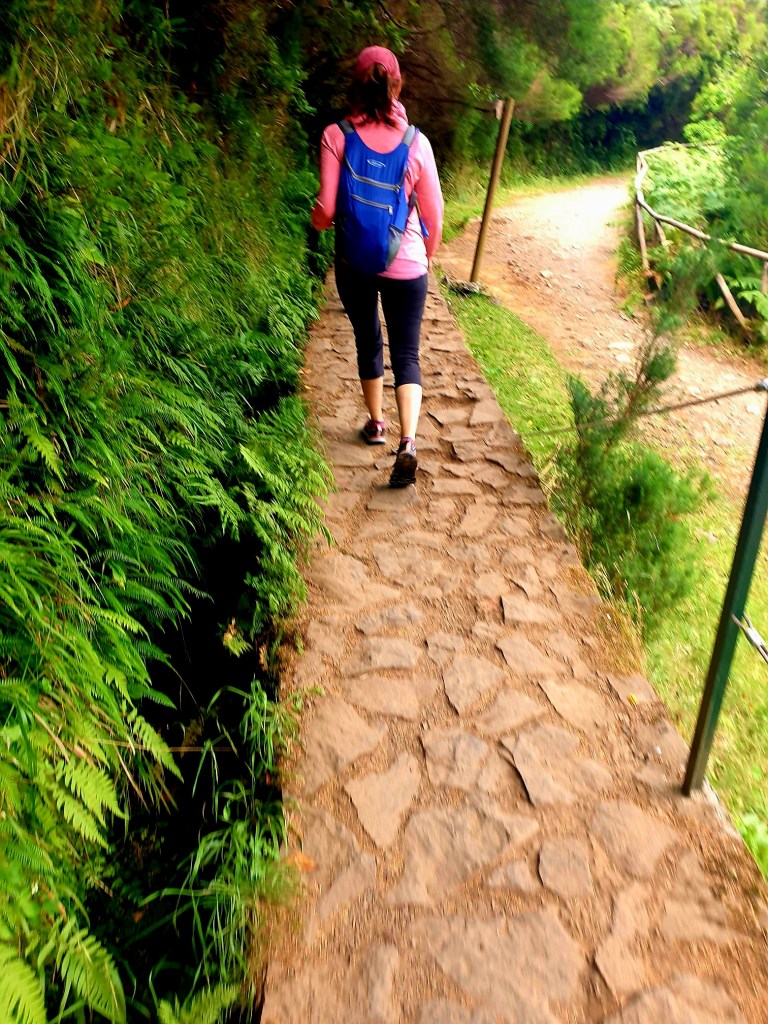
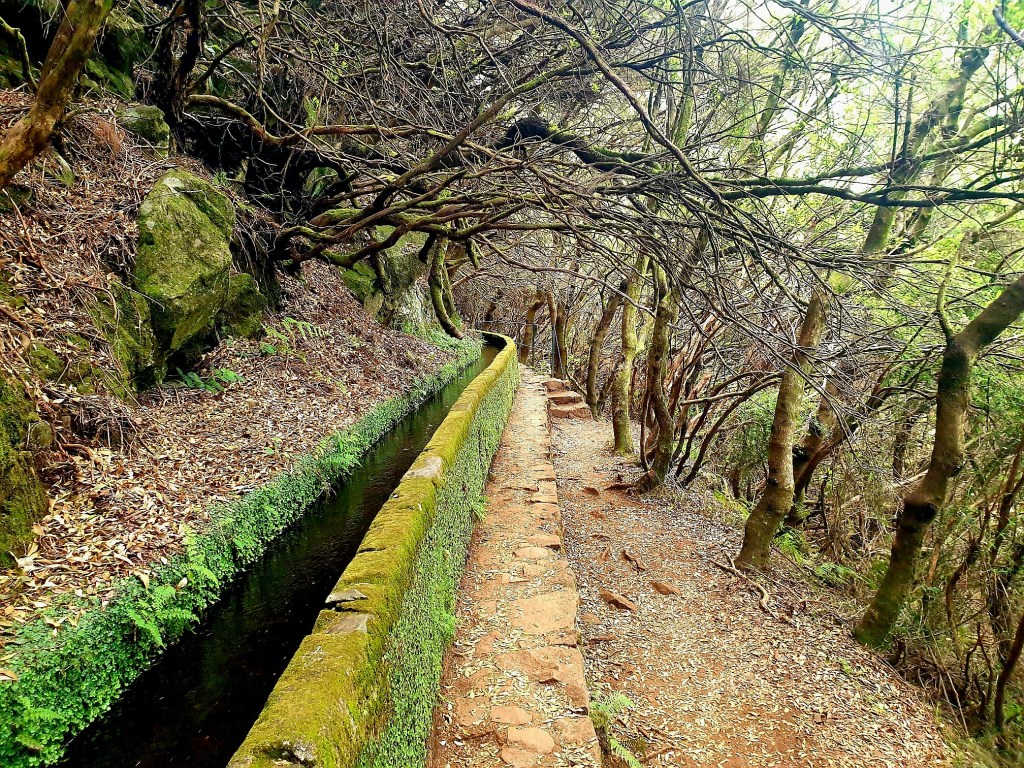
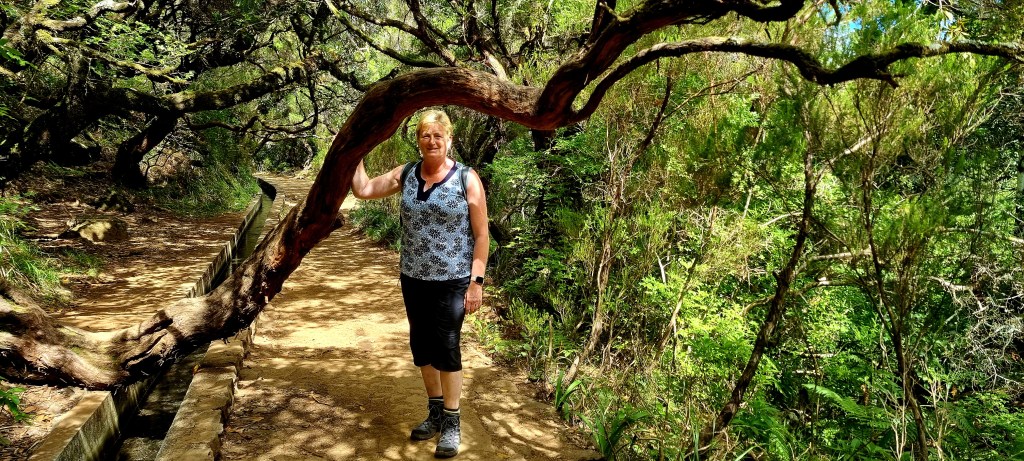
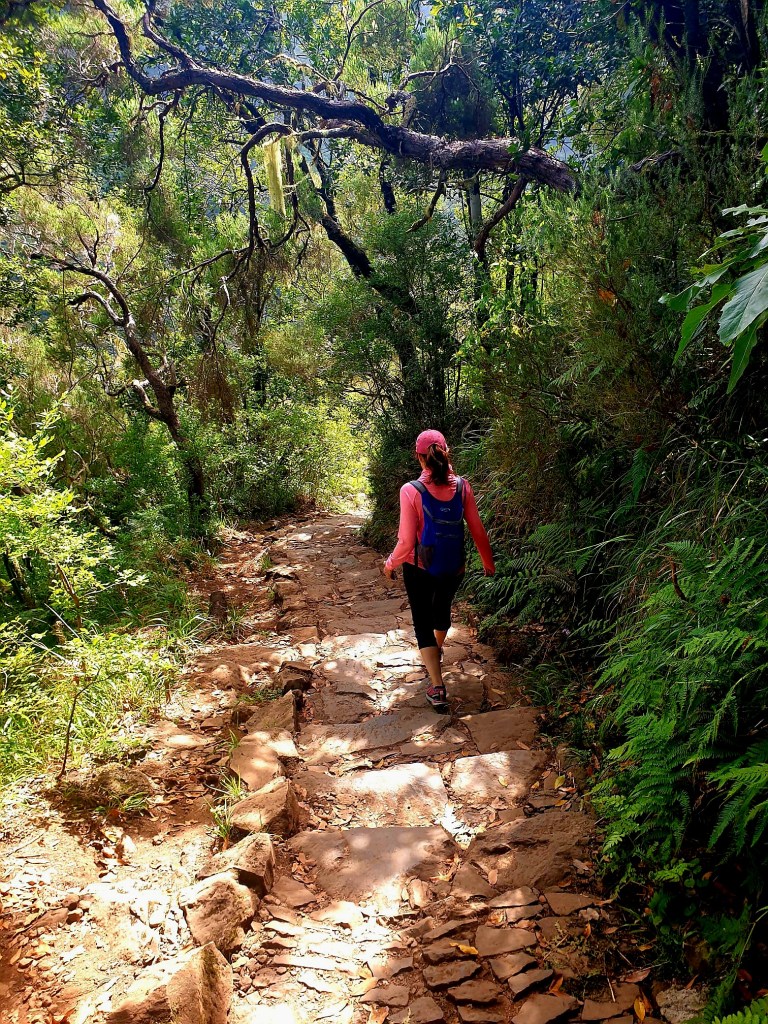
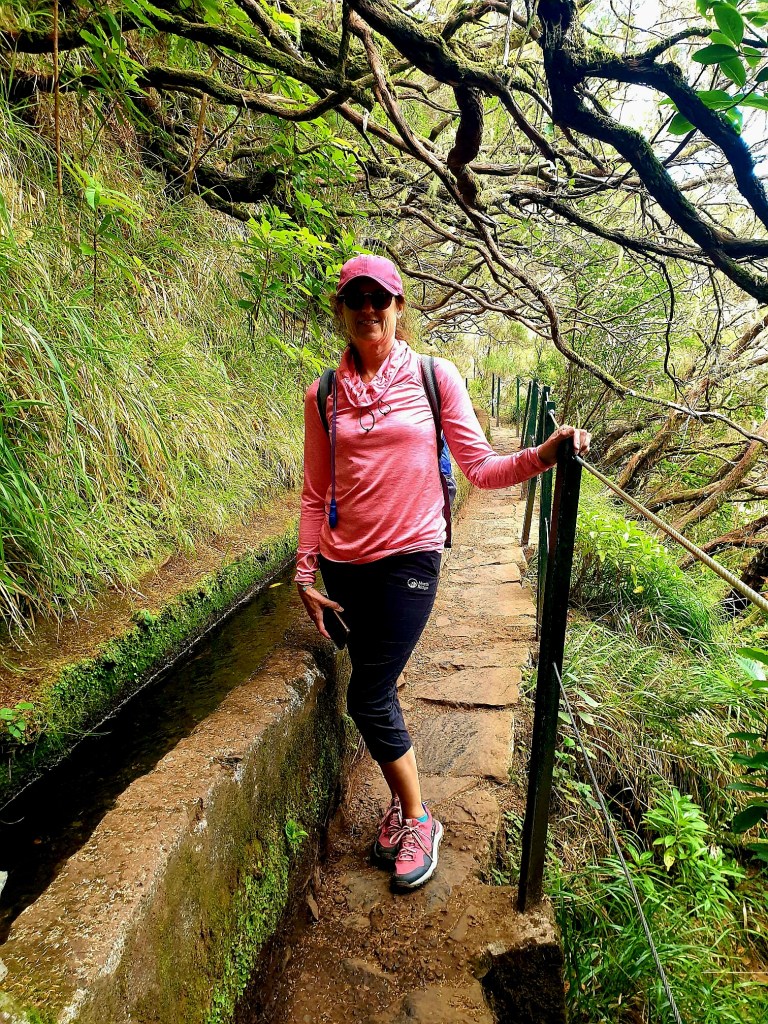
Today, we decided to do a Levada walk. One of the best and most popular ones we could find was the 25 Fountains trail starting at Rabacal.
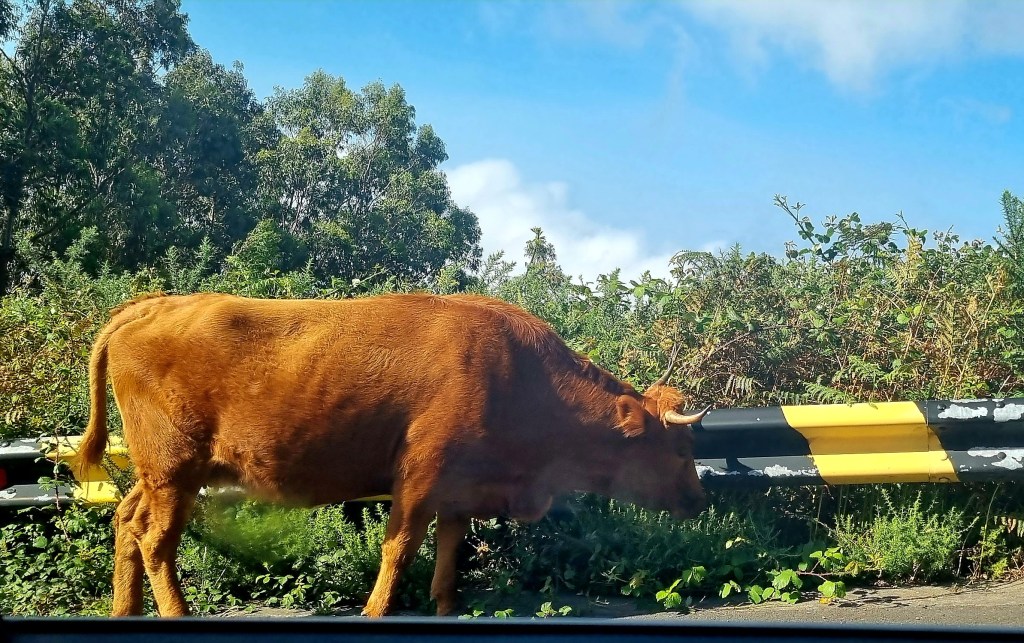
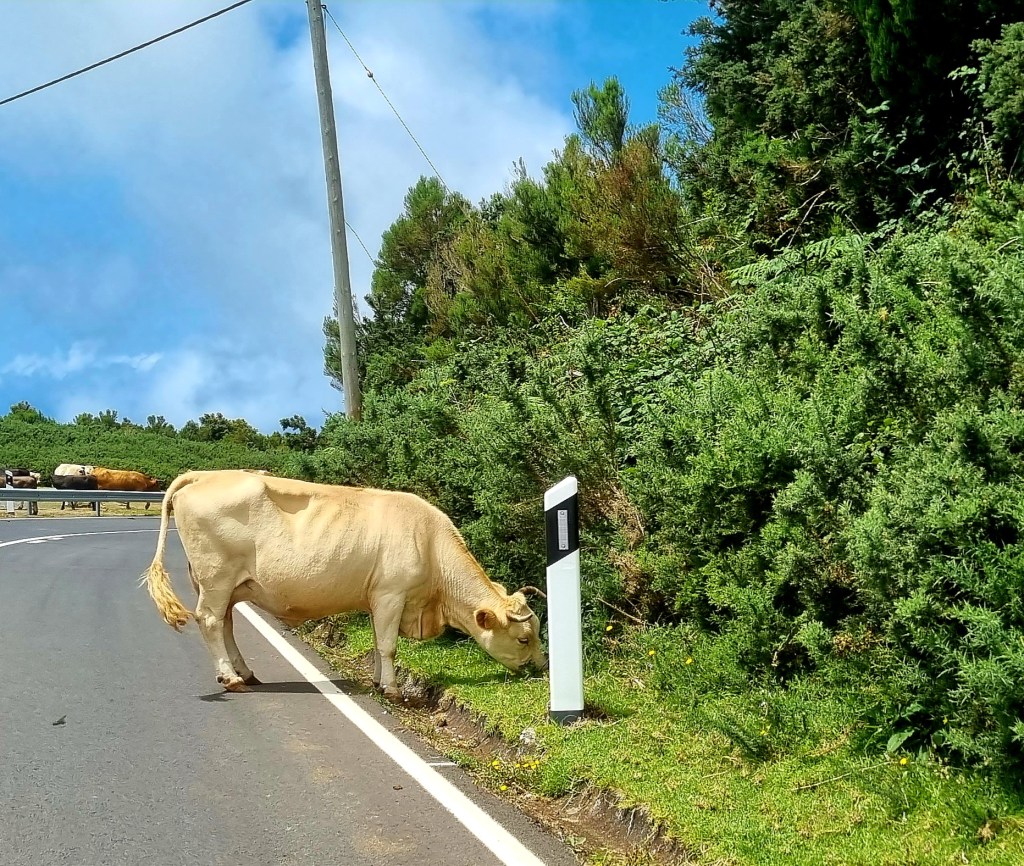
So after breakfast, we drove over to the car park close to where the walk begins. There were a few cows just wandering on the roads as we drove along.
When we parked up, it was quite cold and windy, so I put all my layers on!
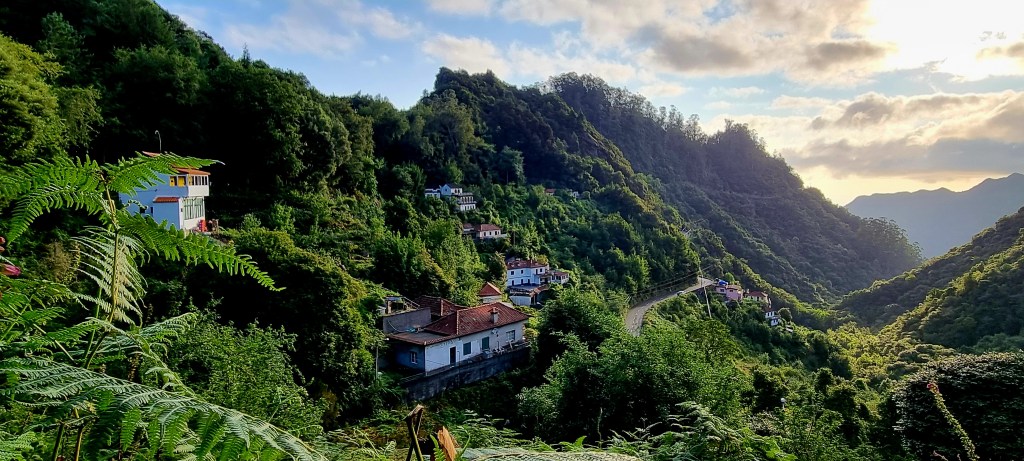
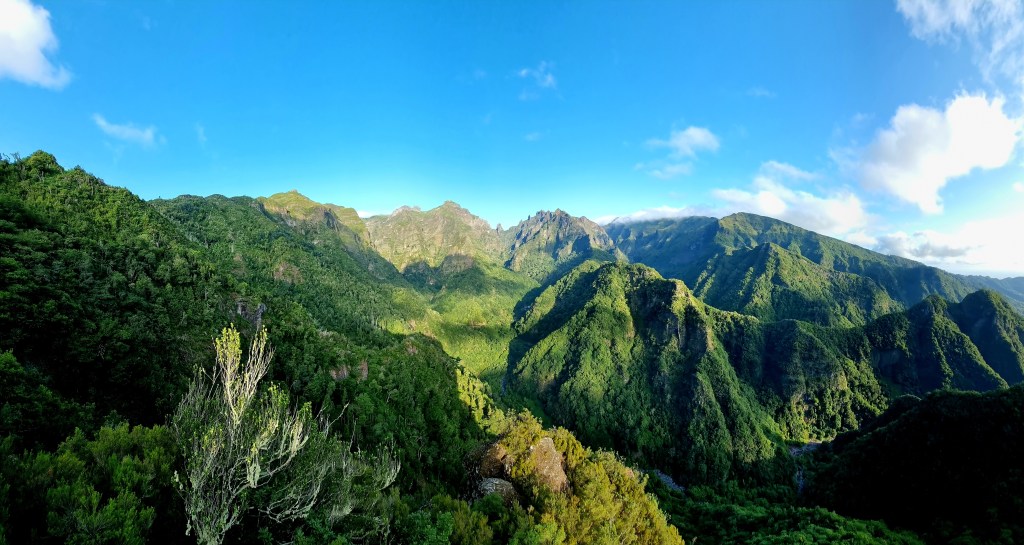
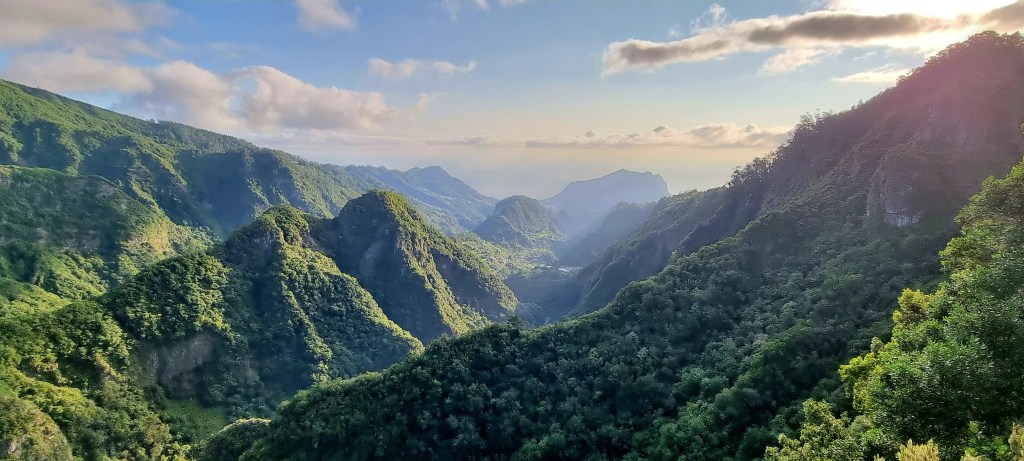
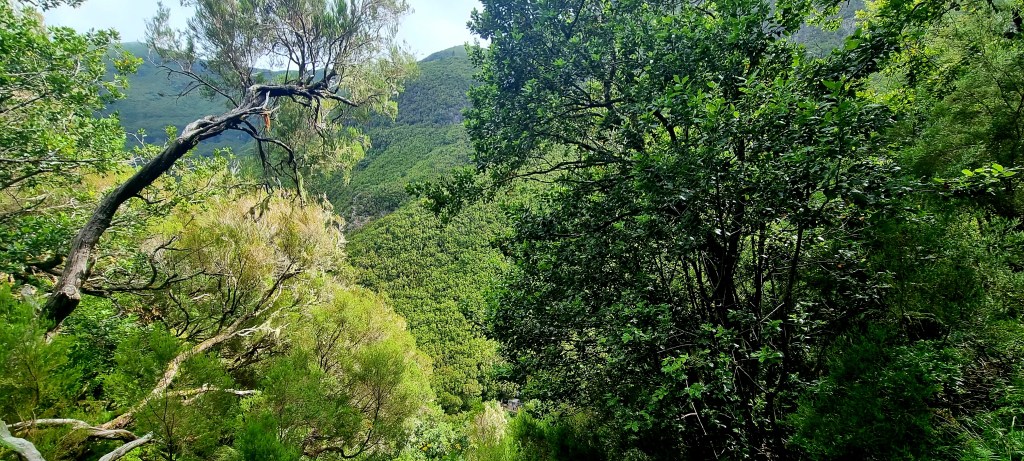
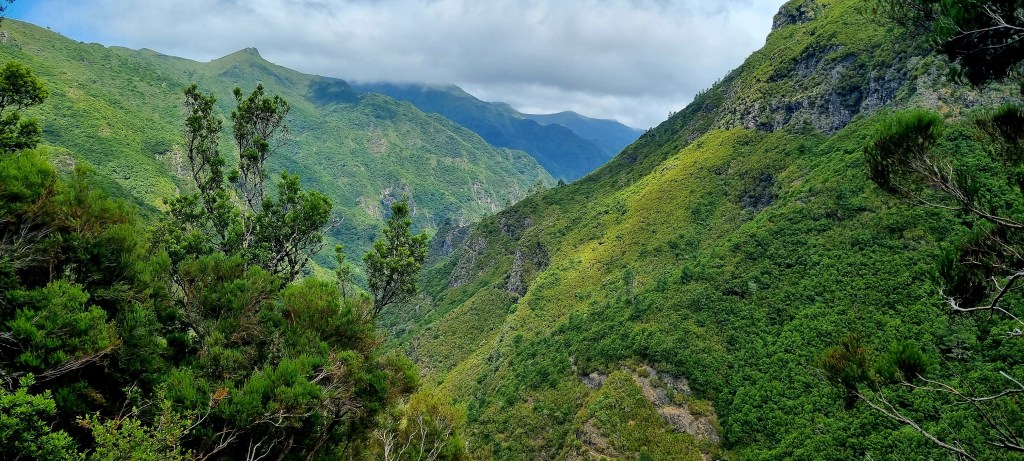
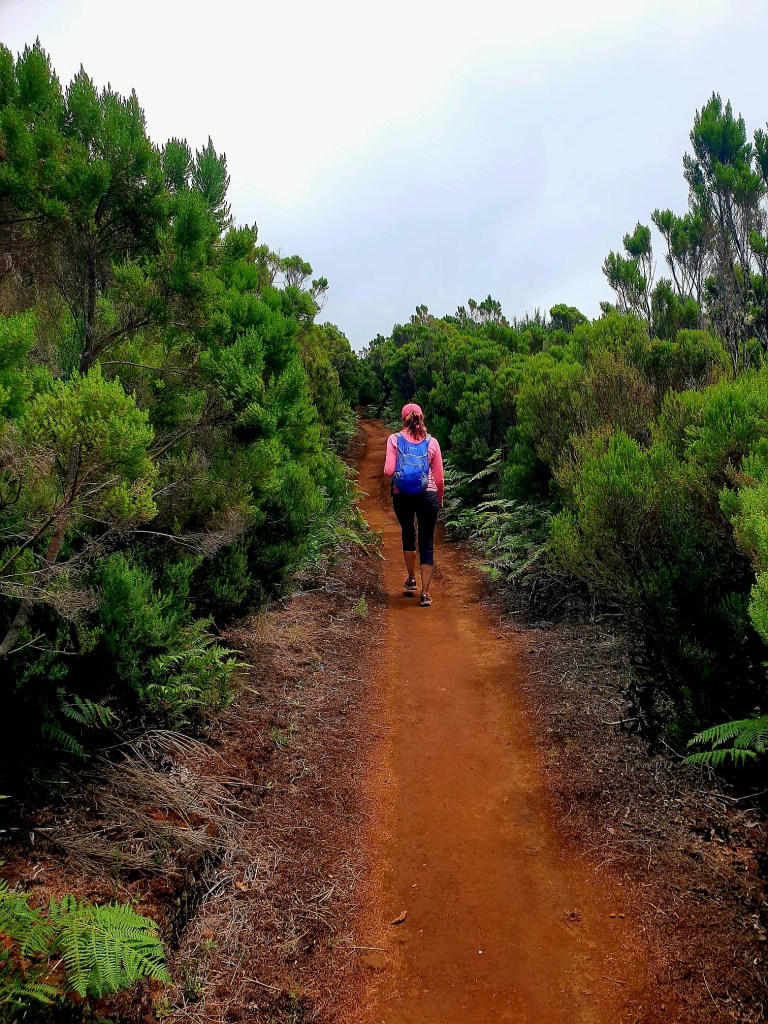
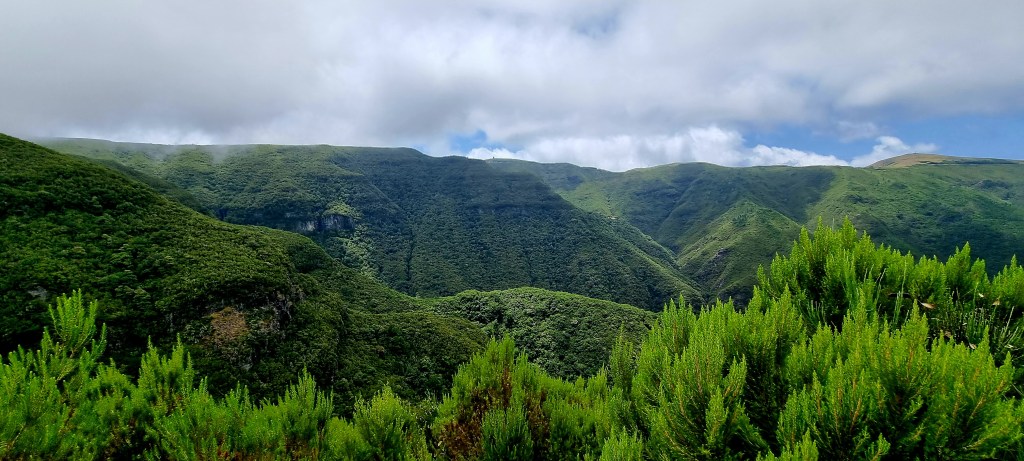
The trail was well signposted, and we had to walk around 2km from the car park to the start of the trail. But the views were already pretty good.
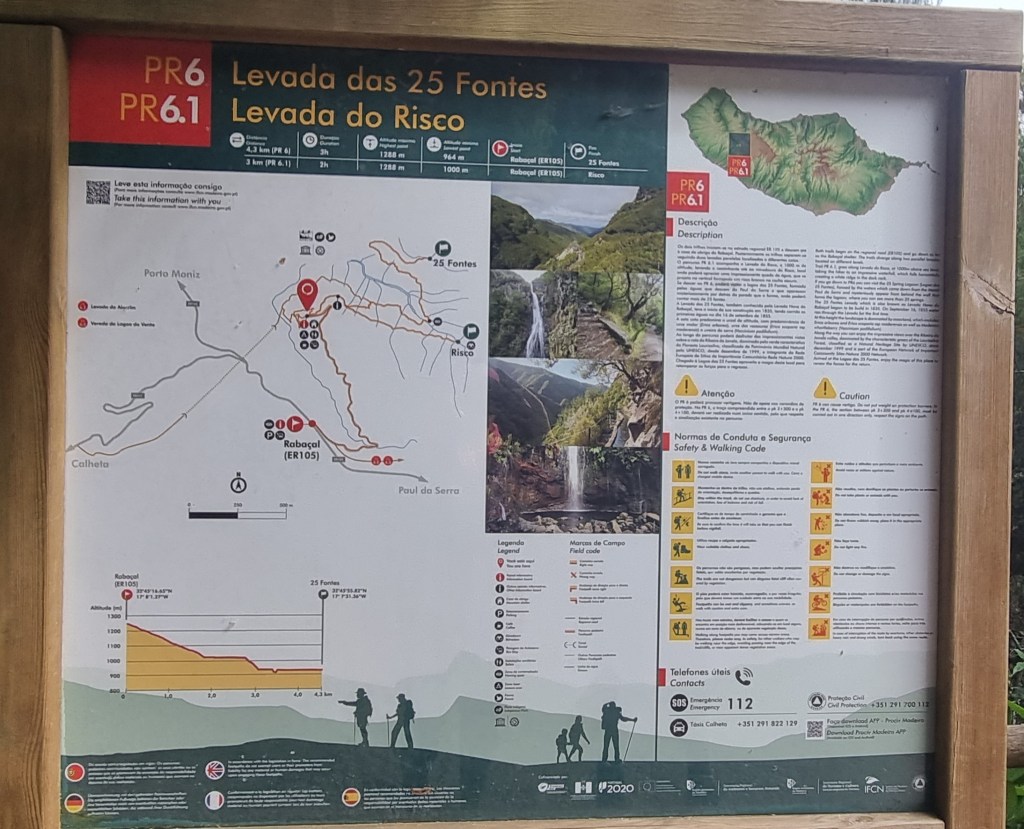
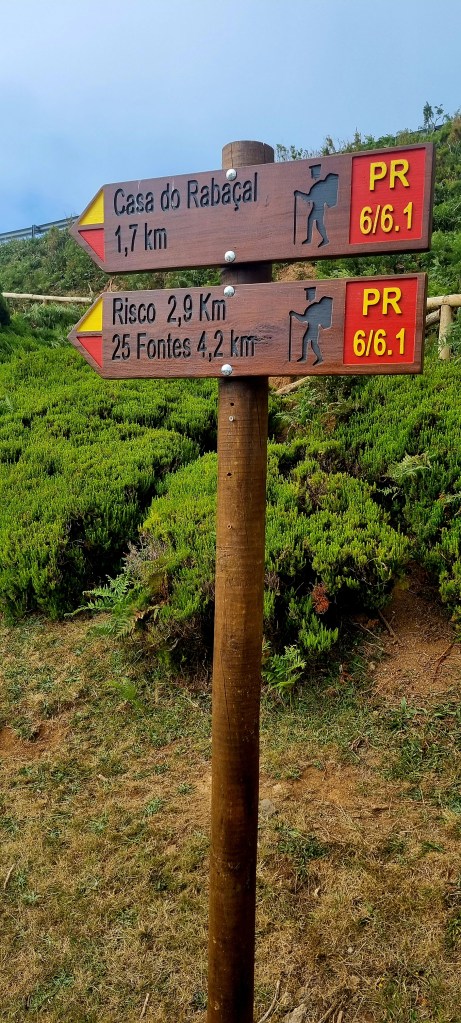
Once we got to the start, there was a board showing the trails and signs telling us which direction to go in.
We decided to go and see the waterfall at Risco and then do the 25 waterfall trail.
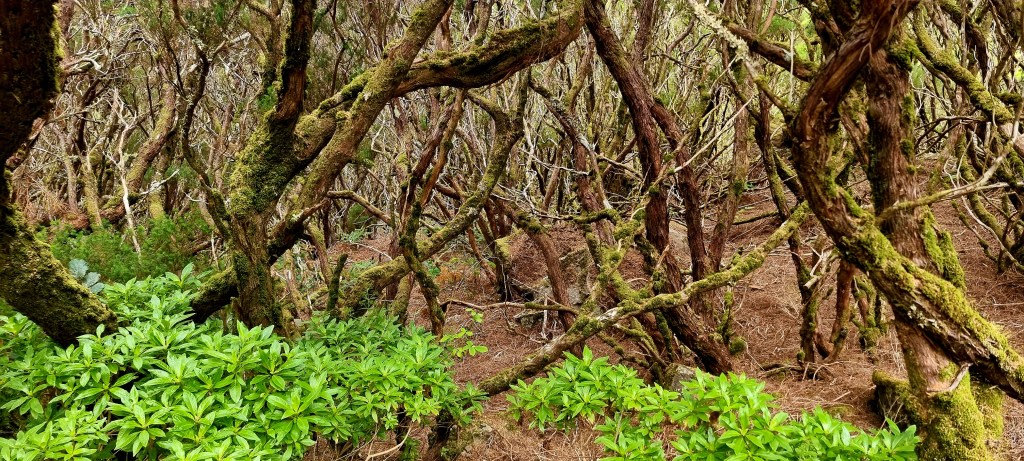
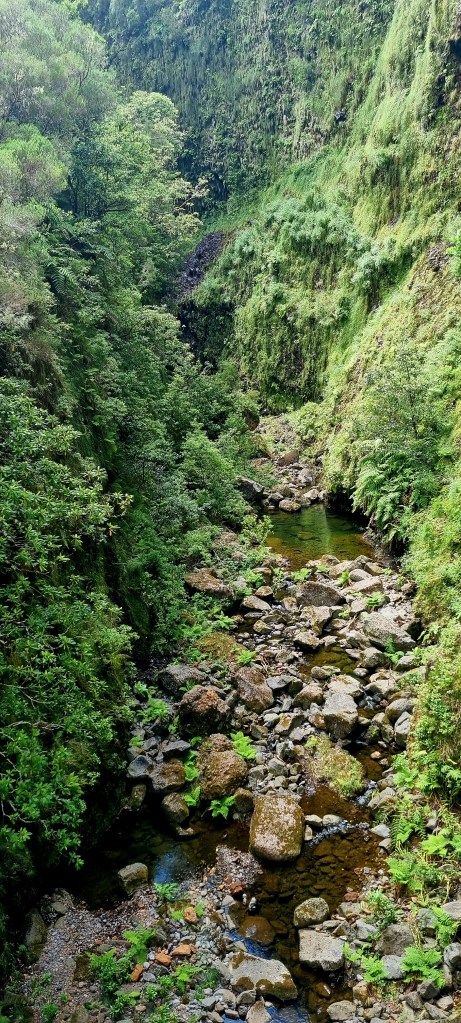
The area we were walking in was all laurel forest. These forests survived the ice age and can now only be found on Madeira, the Canaries, the Azores, and in tropical West Africa. They are known in Portuguese as laurissilva.
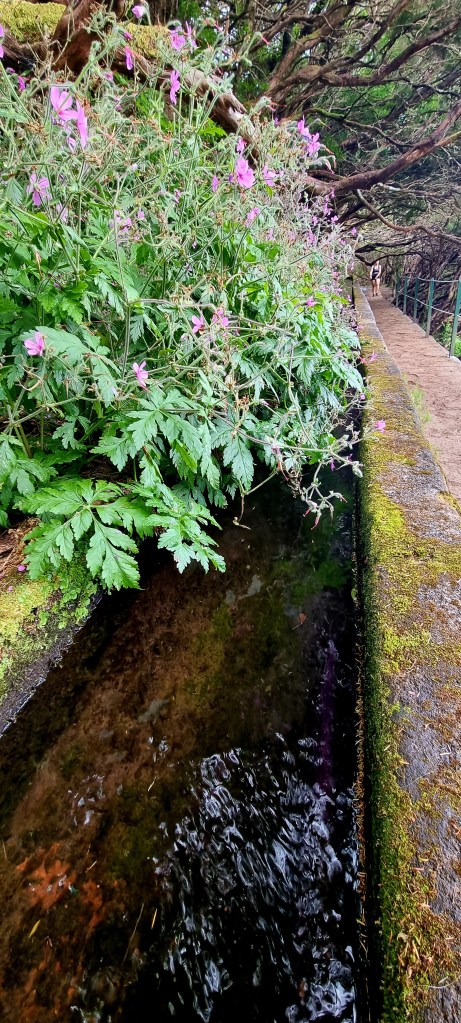
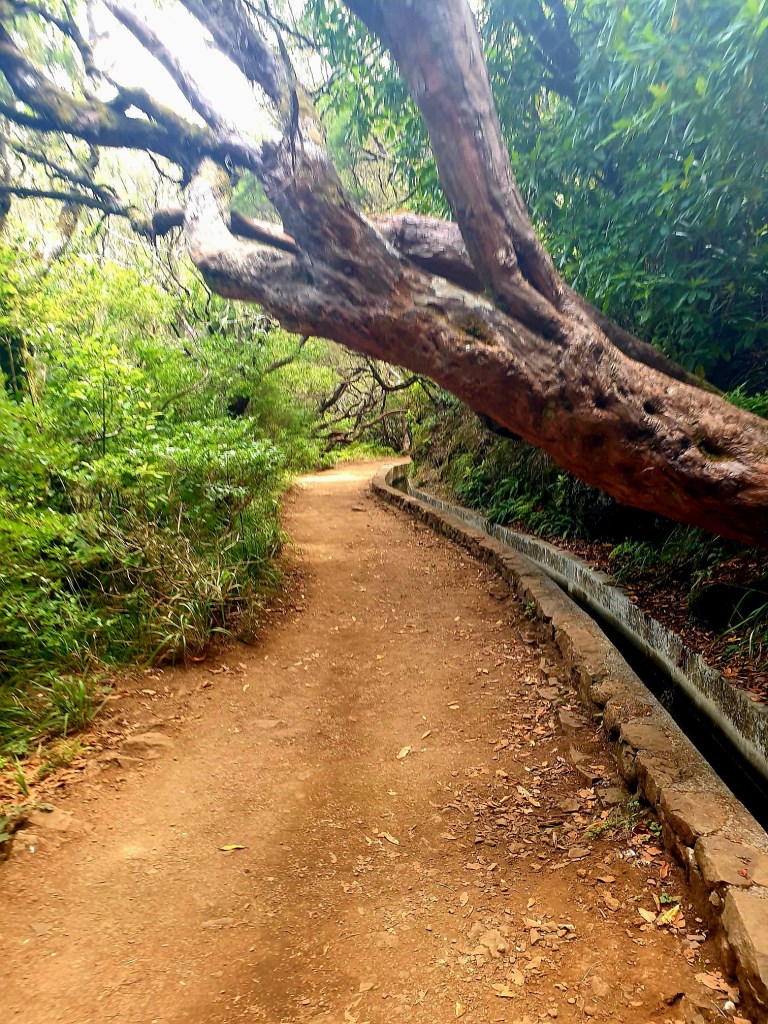
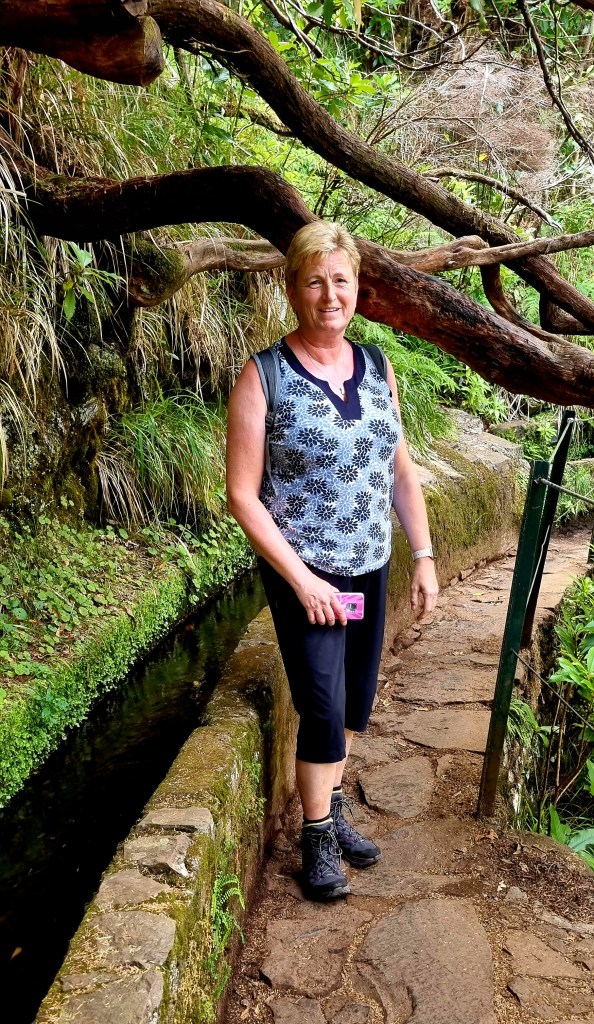
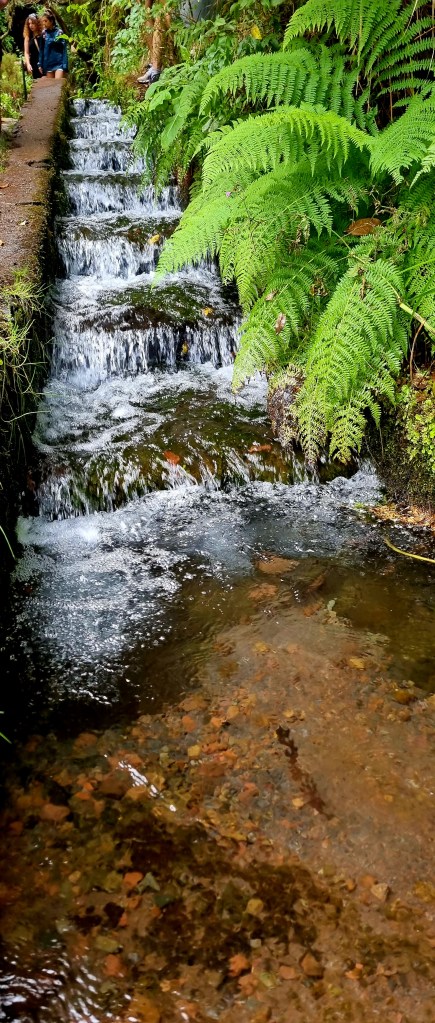
The Levadas are a system of canals or aqueducts, many km in length, built through the mountains and along the faces of steep rocks, to carry water from its origin to where it is needed.
From the 15th to the 16th century, the levadas were built in the coastal areas, extending to the agricultural zone, which was around 300m above sea level. They were not very long and were mainly built in volcanic tuffs or with wooden boards.
From the 16th to the 18th century, with the increase in agriculture, the network of levadas grew and extended to 600m above sea level. They started to be built in basaltic stone masonry. The workers building the levadas faced many dangers, including falling off rocks and being hit by falling rocks. Where it wasn’t possible to pass, the workers were placed in baskets tied to trees or rocks. Quite a few of them died.
In the 19th century, the state started to fund the building of the levadas. Until then, they were built at the expense of the owners of the springs or those who wanted the land irrigated. In some cases, several people came together to form an association to build them.
During the 20th century, as the tunnel network began to be built, this helped water to move from the north to the south. The levada network started to extend to 1000m above sea level.
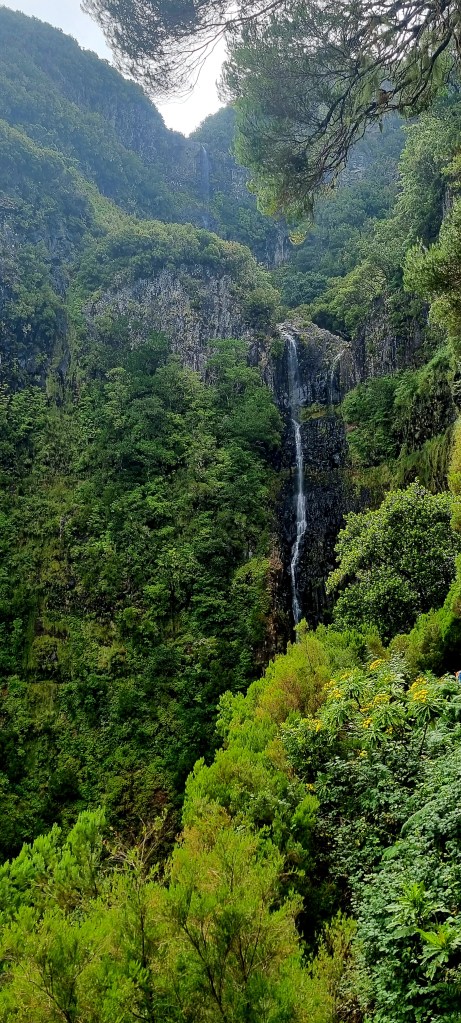
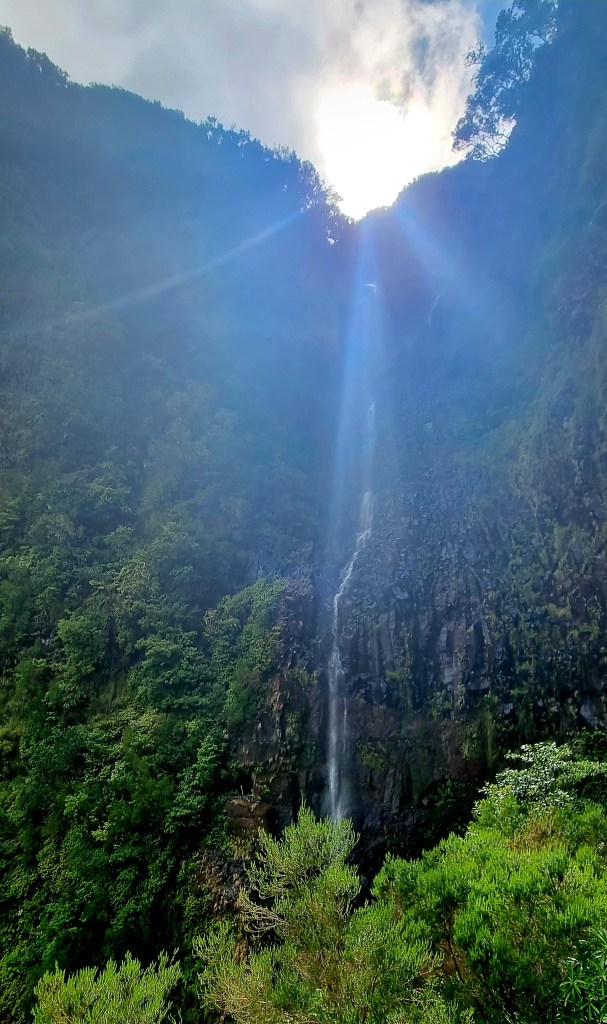
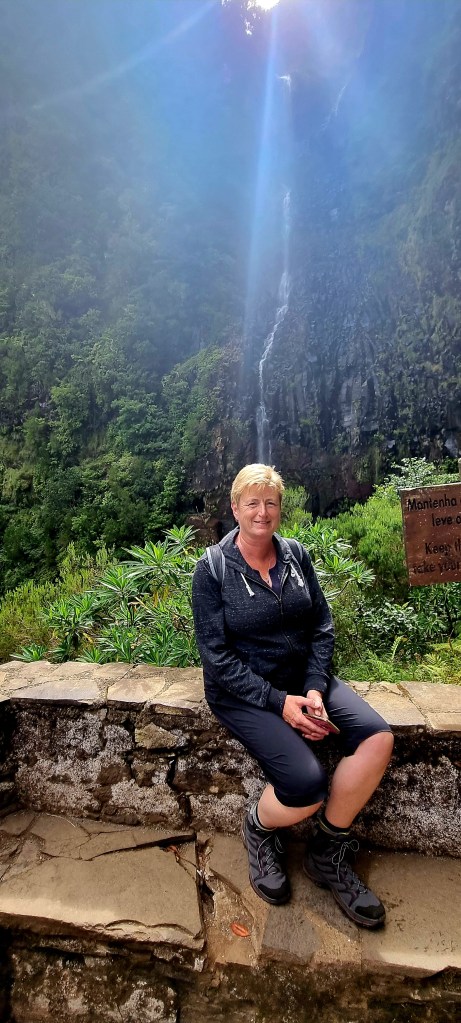
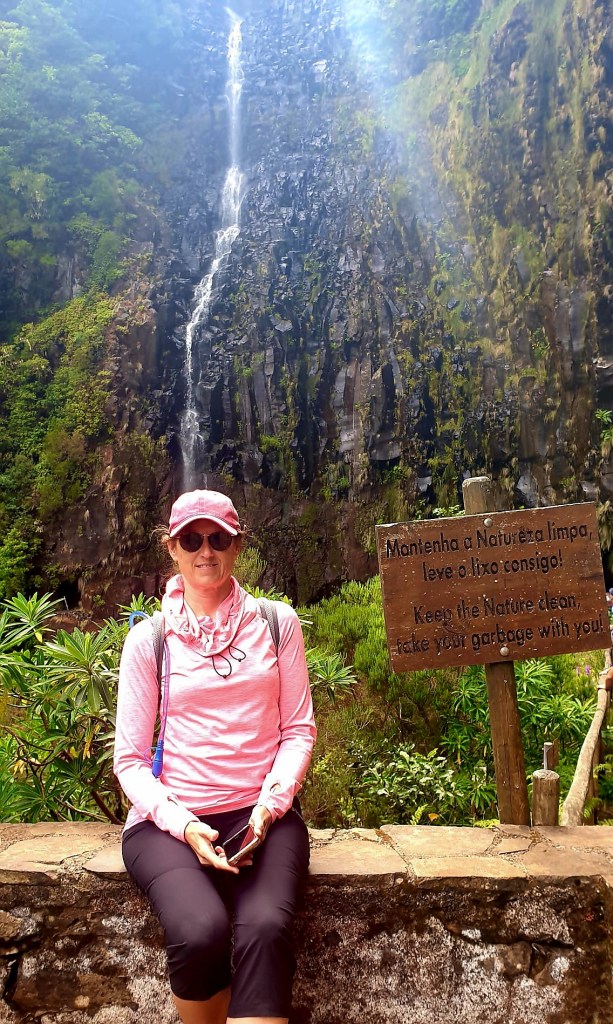
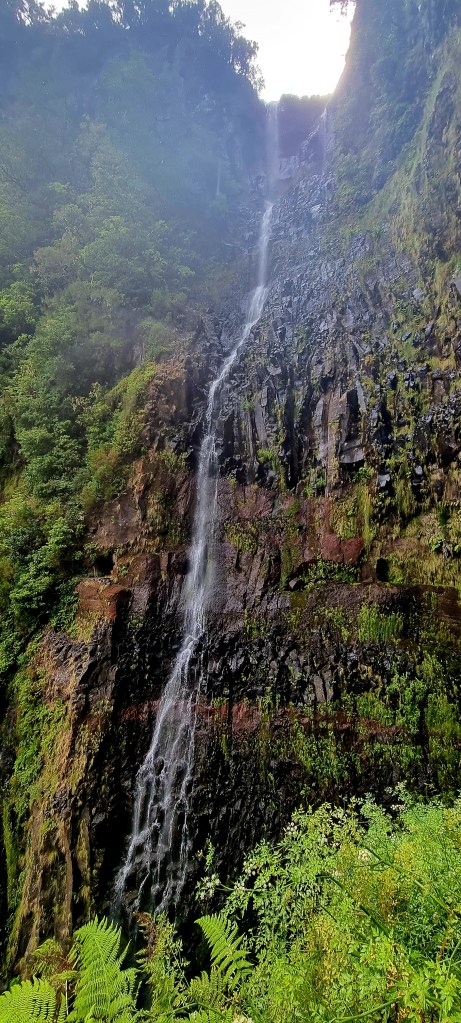
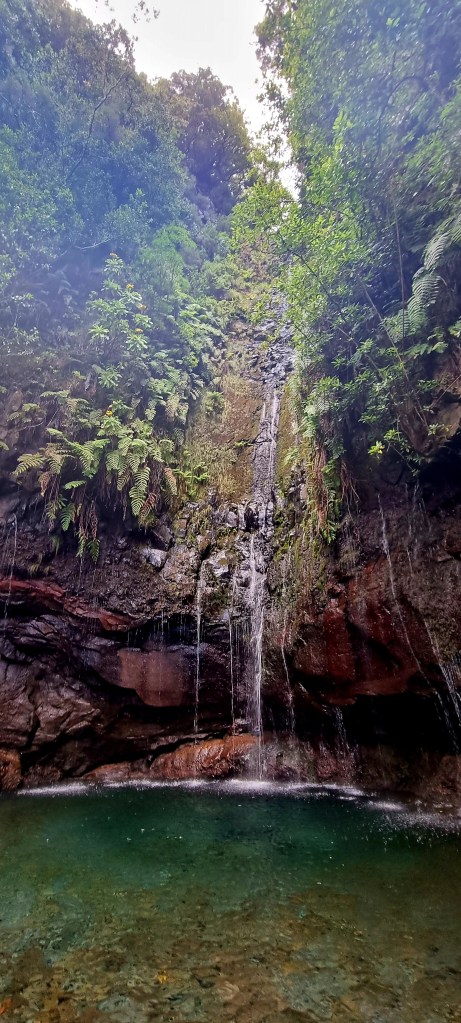
After a little while of walking, we came to the Risco waterfall. The waterfall is 100m high and is made up of different water streams coming down the rocks.
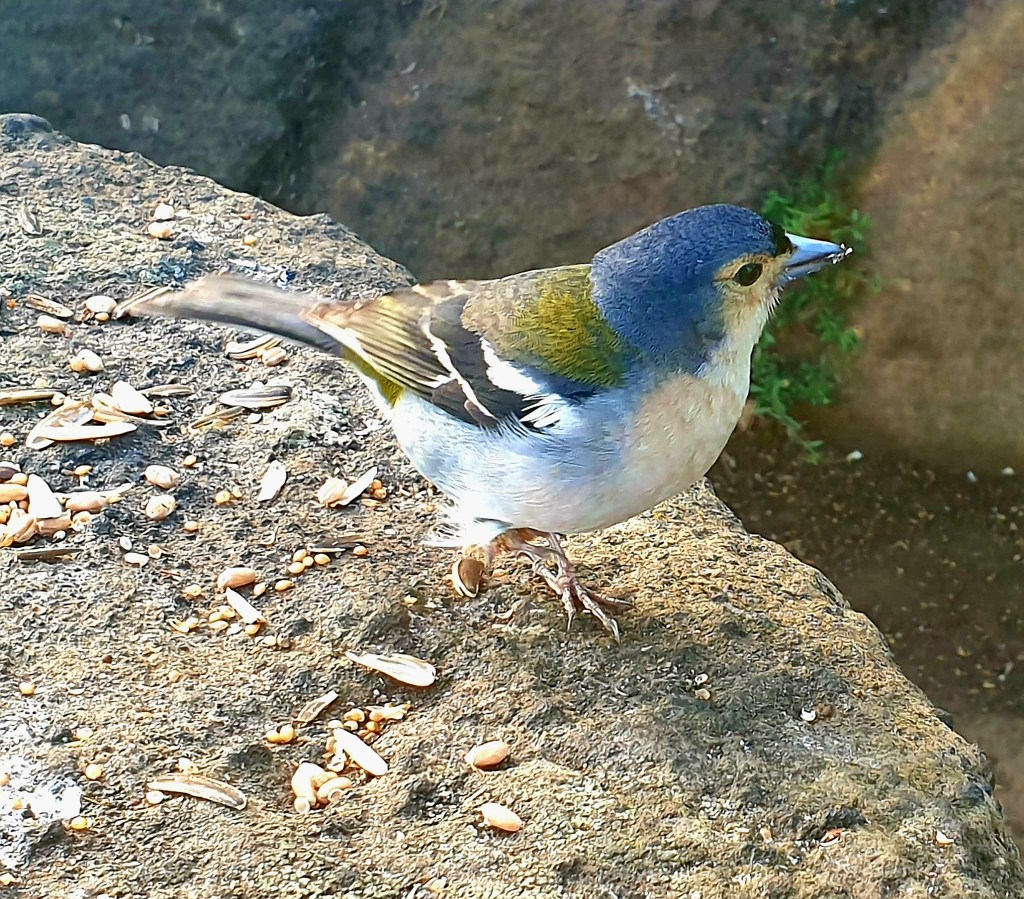
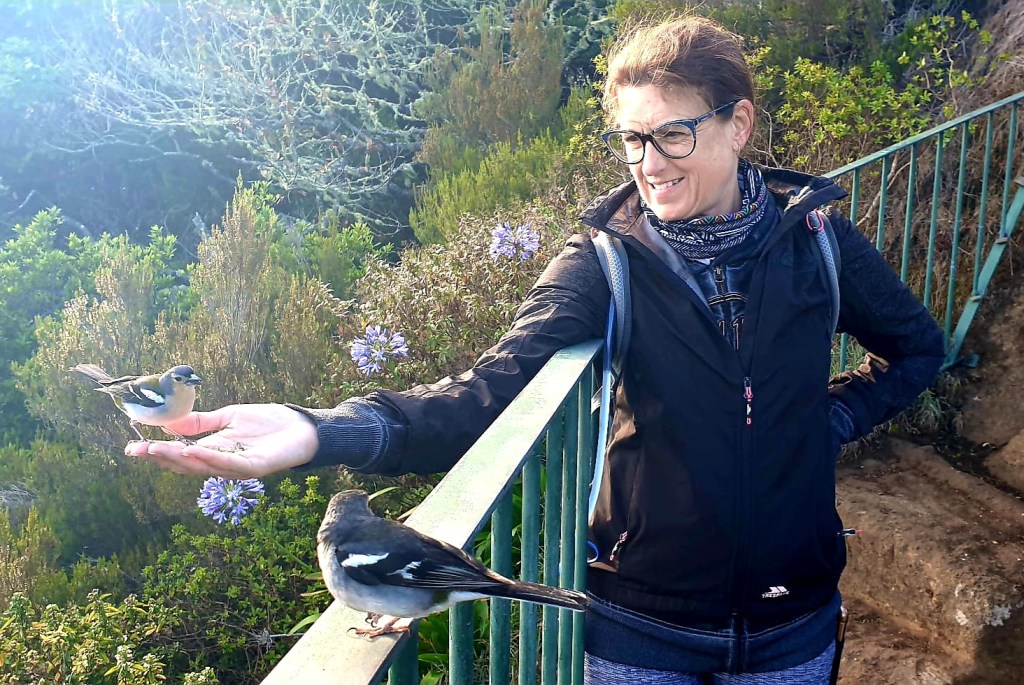
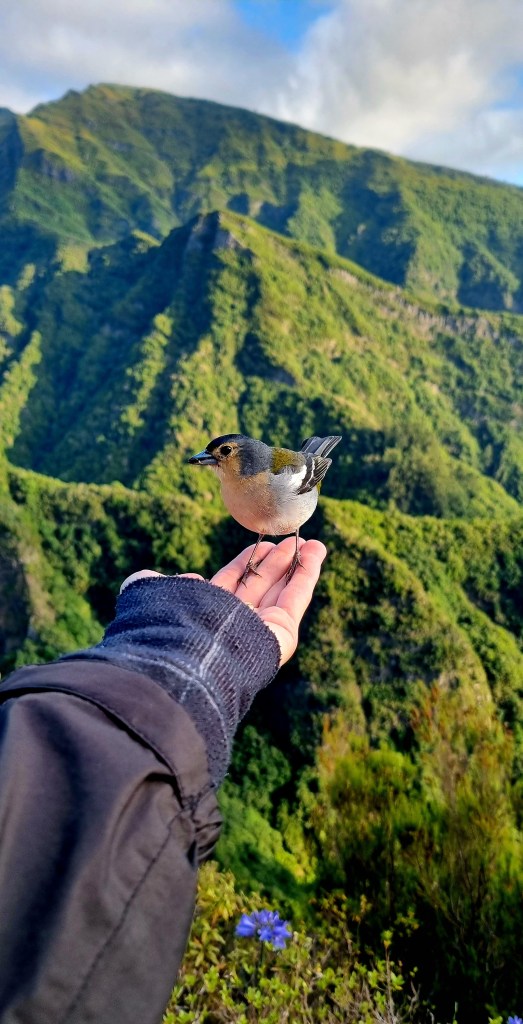
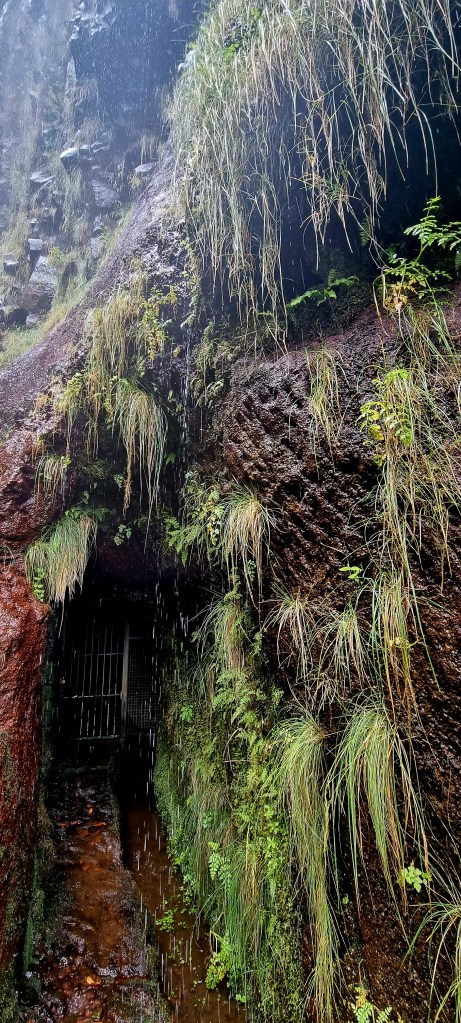
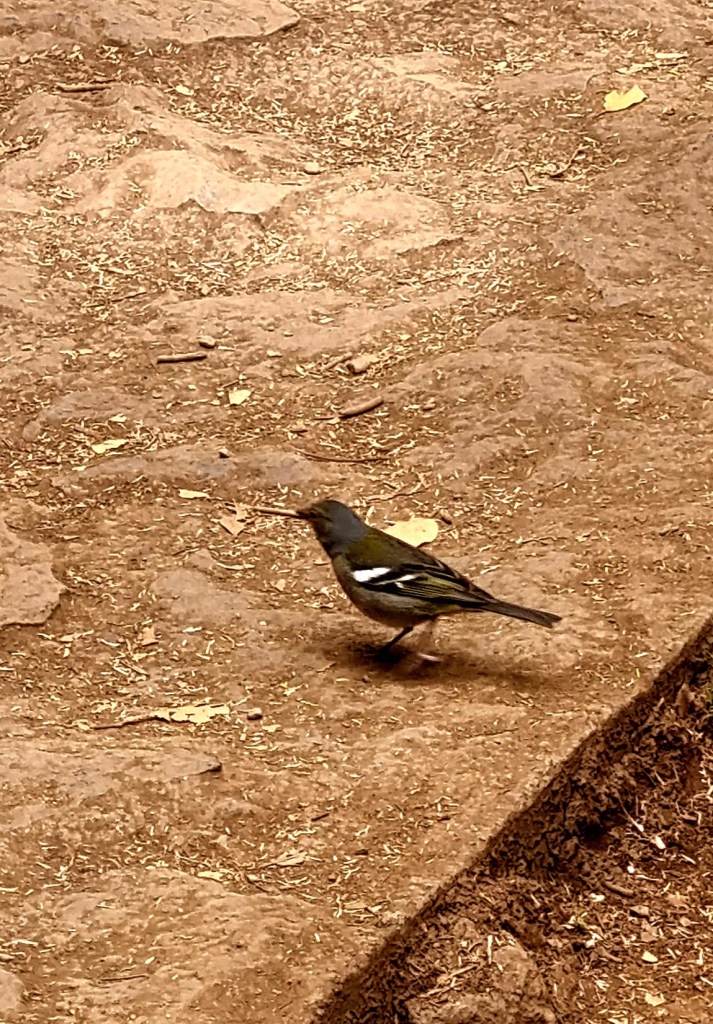
The waterfall was pretty stunning, so we spent a bit of time here admiring the view. All around the trail, by the waterfall, the water was running or dripping down the rocks. We also saw some local birds, I think they were chaffinches.
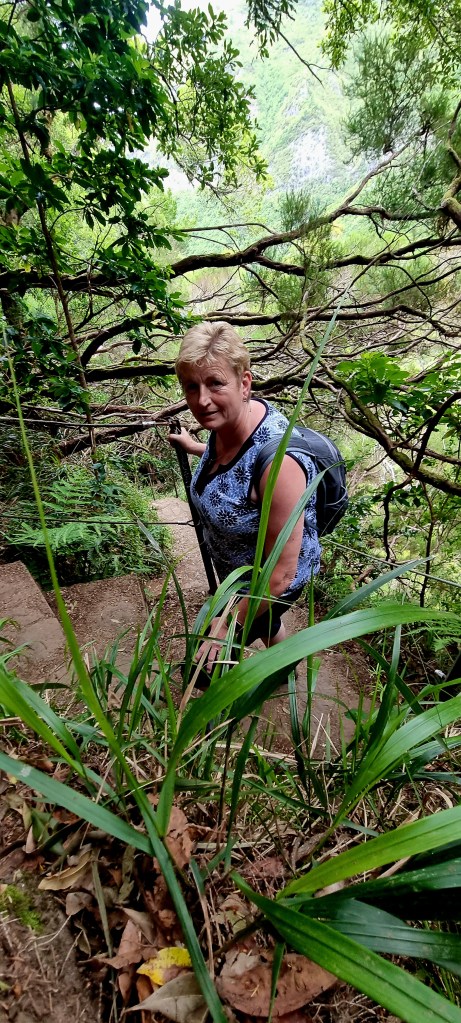
Once we headed back from the waterfall, we took the path to the 25 waterfalls. This path goes through some thick forest, and some of the path ledges are very narrow, making it difficult to pass people coming in the other direction.
I managed to bump my head a couple of times on the low hanging branches as I was looking at the route on my phone.
The network of levadas in Madeira consists of approximately 3100km of channels, of which around 80km are in tunnels. The levadas feed on the water from the springs, the flow of streams, and from the water captured in the gullies in the rocks. The levadas have to have a minimum slope of 1/10000m to ensure the water flows.
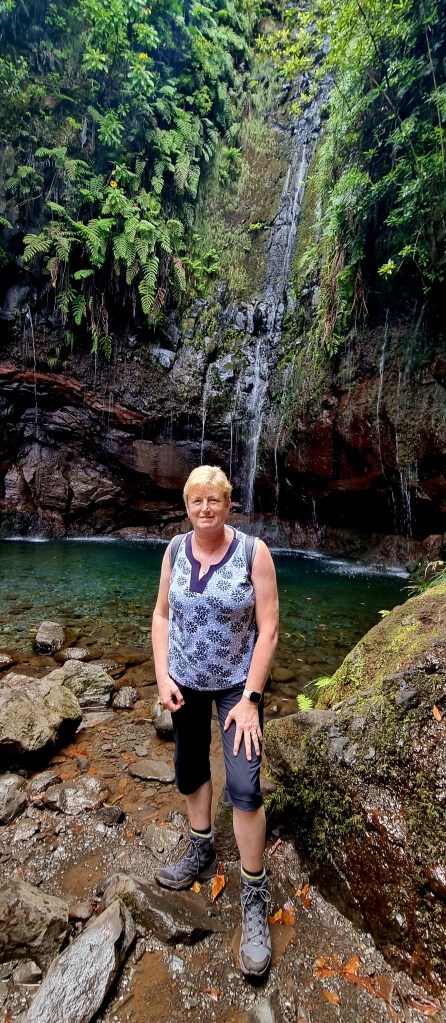
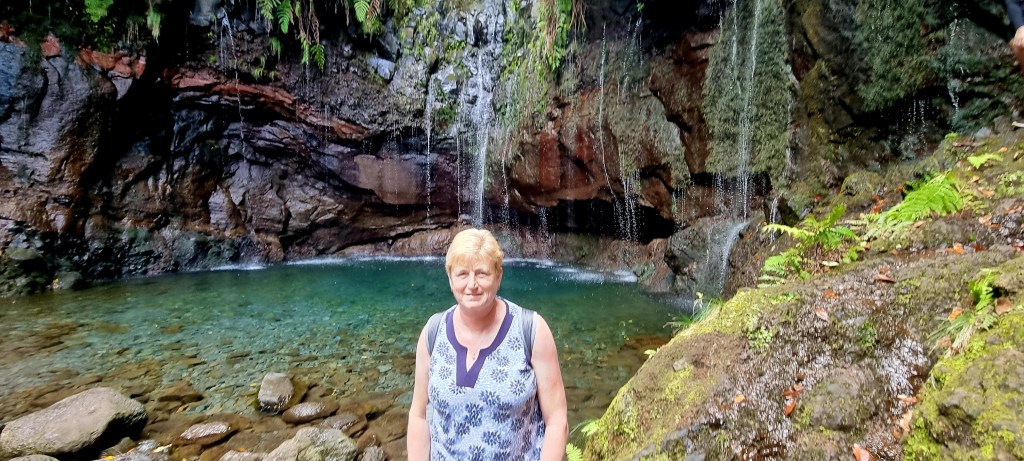
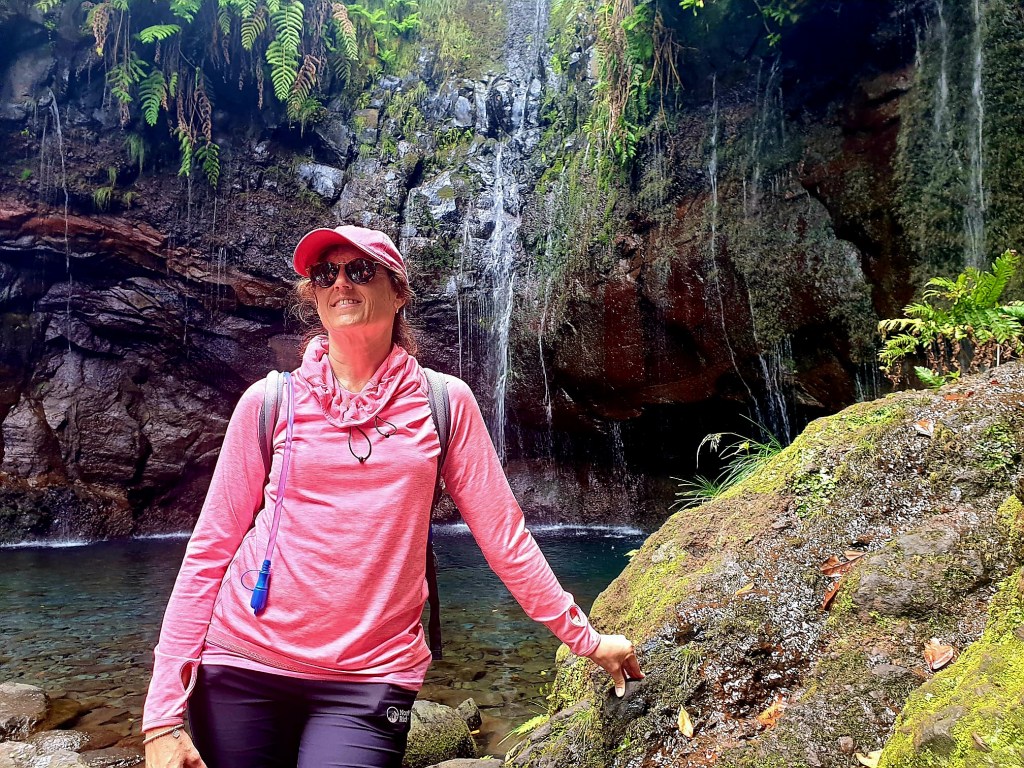
After a while, we reached the 25 fountains! This weeping wall of waterfalls is something special.
It was quite busy in the area, and a couple of ladies decided to go for a quick dip.
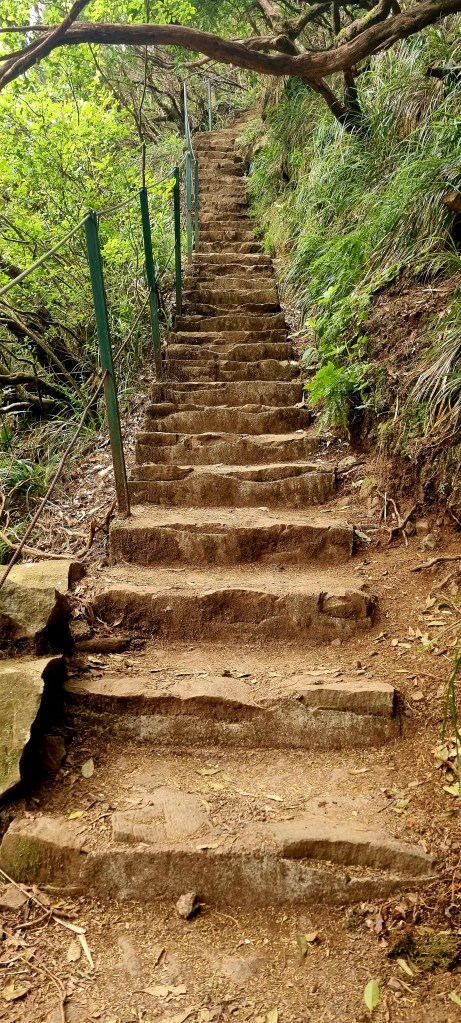
We headed back to try and do a circular route, but one of the paths we wanted to go down was cordoned off. After looking on maps.me, we decided on another route. Unfortunately, we didn’t realise how steep it would be. It was just walking up steps for around 30 minutes!
Eventually, we got to the top. The path that was supposed to go off to the left didn’t actually exist, and after walking for a while at the top of the mountain, we realised it would take us around 3 hours to get back to the car park. The views from the top were good.
Looking at the map again, we could see that if we went back onto the road, we could walk along the road to the car park, taking about 90 minutes.
We walked for around 20 minutes on the road. If we heard a car go past, we stuck out our thumbs, and after 4 or 5 passed us, one actually stopped. It was a fairly young German couple, and they dropped us back to our car, we were very grateful.
We passed some more cows on the road as we headed to Porto Moinz, the most northwesterly point of the island.
Porto Moinz is a lovely coastal town and is named after one of the first settlers on Madeira: Francisco Moniz O Velho. He was an aristocrat from the Algarve region.
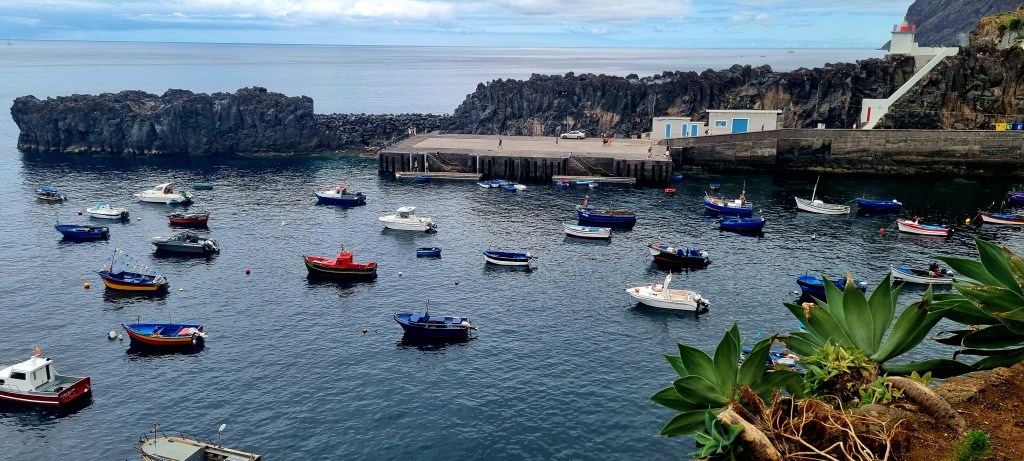
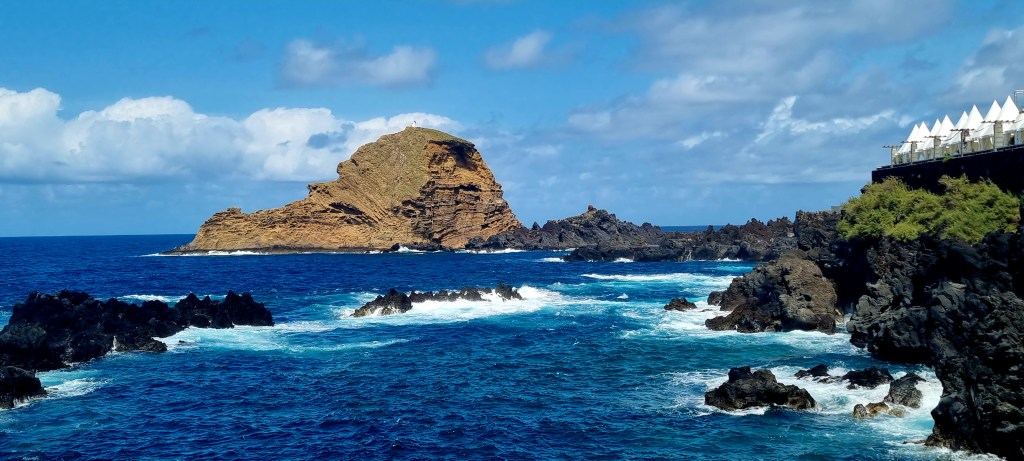
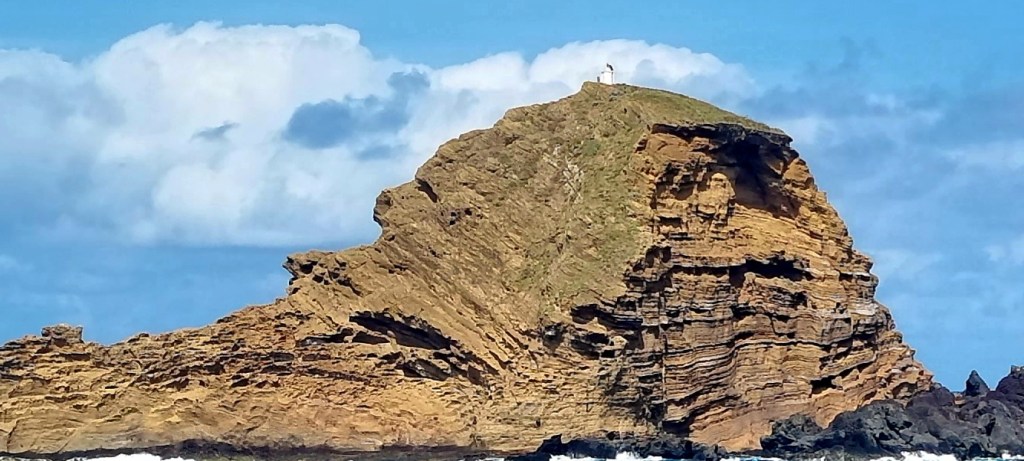
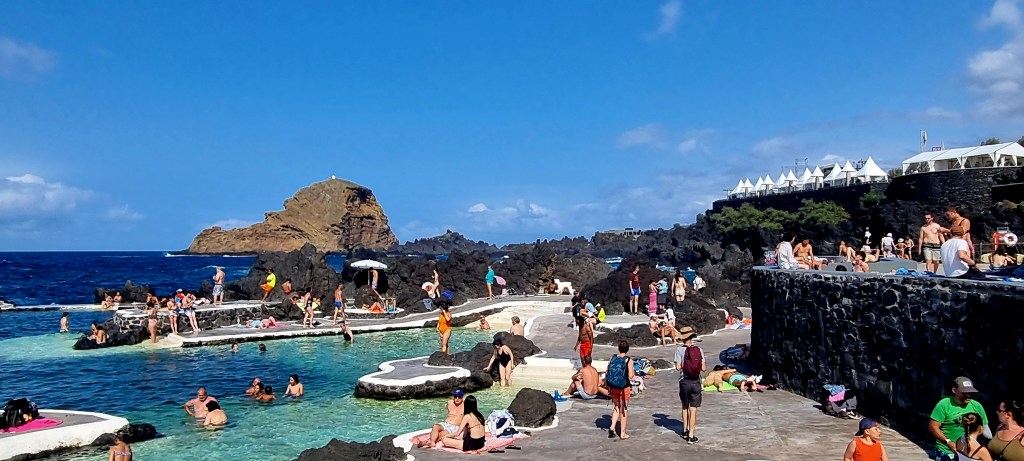
There is a small island right by Porto Moinz with a lighthouse at the top, 62m above sea level. The island is a lava dome that has partially fallen into the sea because of erosion.
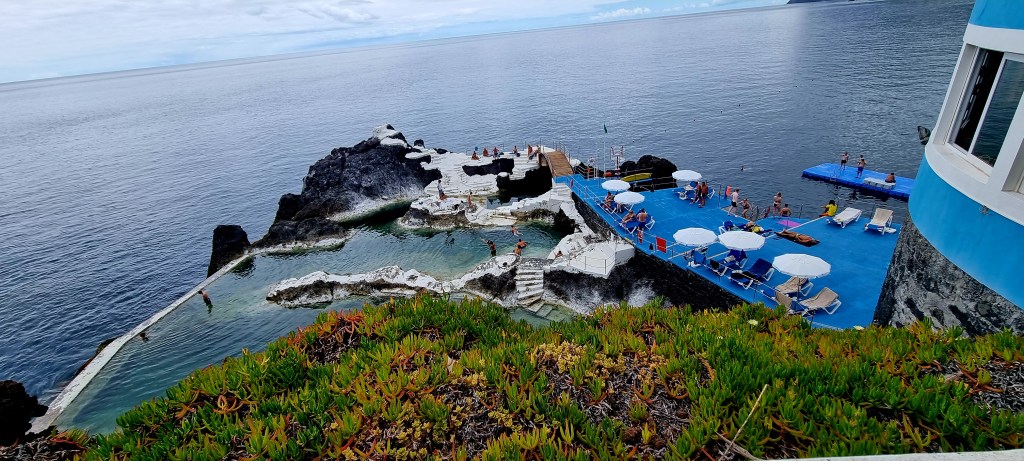
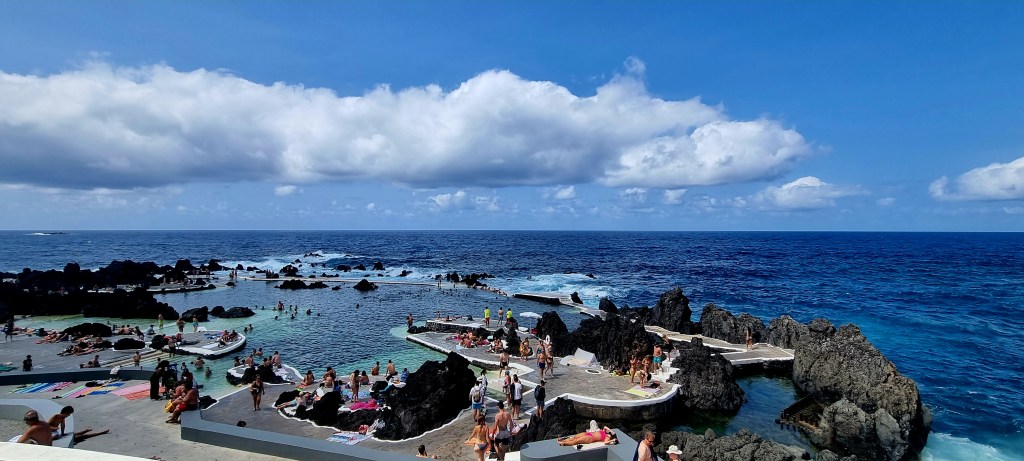
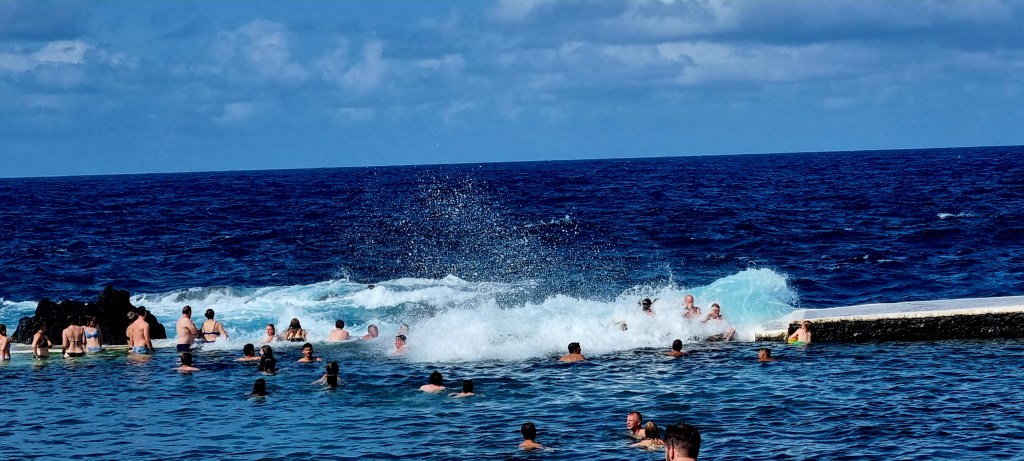
Porto Moinz is best known for its natural pools formed from the volcanic rocks. We paid them a visit and had a little swim, as well as getting battered by the giant waves as they broke against the rocks.
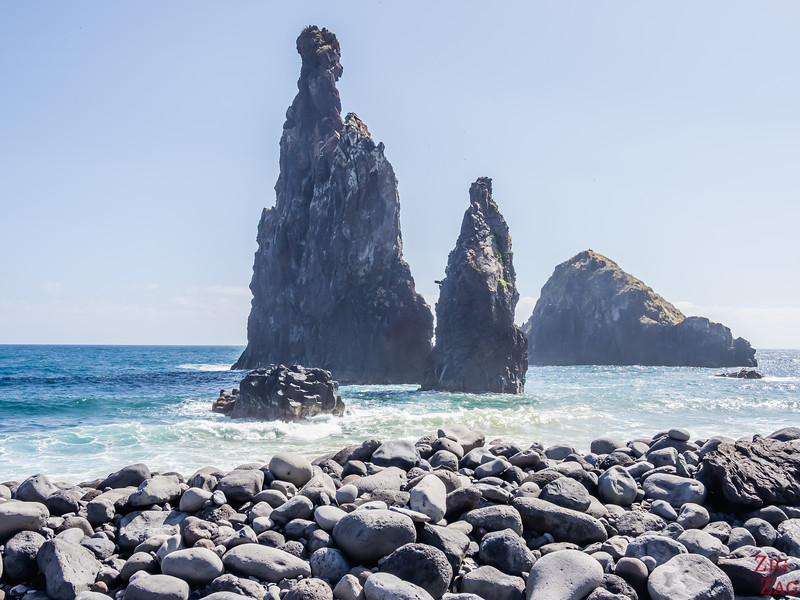
On the drive out of Porto Moinz, we passed Ribeira Janela beach and an interesting ‘window’ rock formation (not my photo).
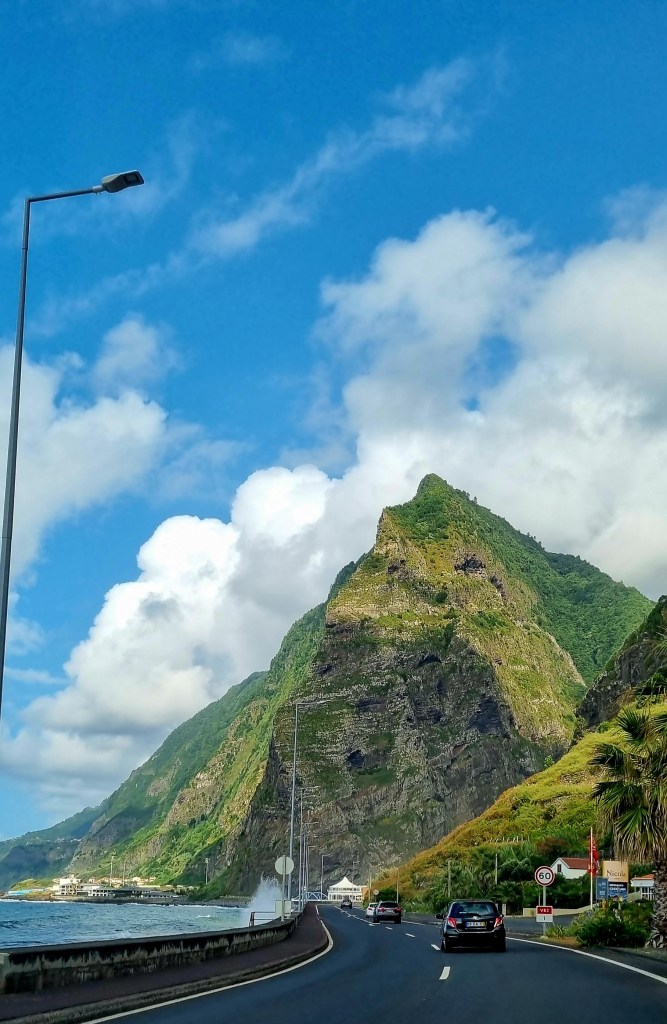
The views from the road were amazing.
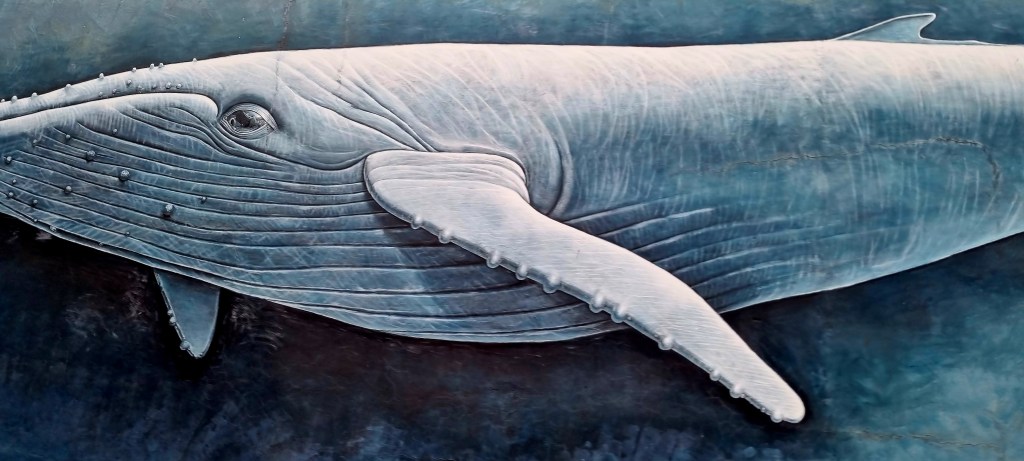
After arriving back at the hotel, we let the car company know the car was ready to pick up before we headed out to Funchal by bus. I managed to get a picture of the whale painting on the wall of the office that we always pass on the bus.
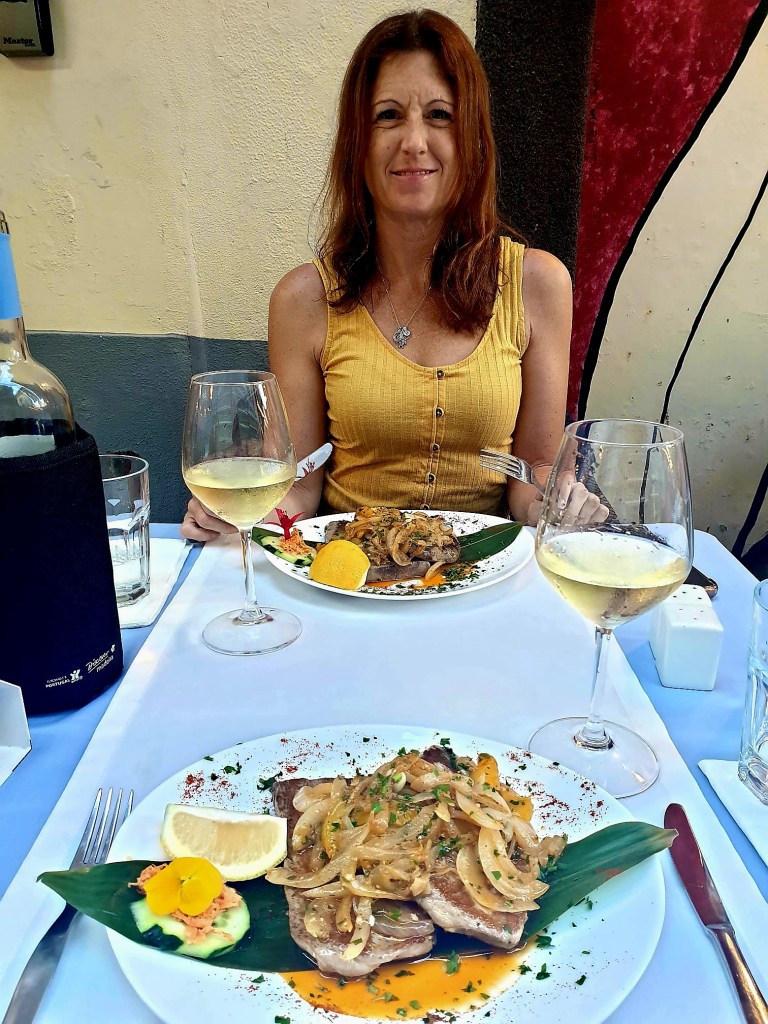
We had dinner at the Piano Bar on Santa Maria Street. We had sardines with Poncha and wine.
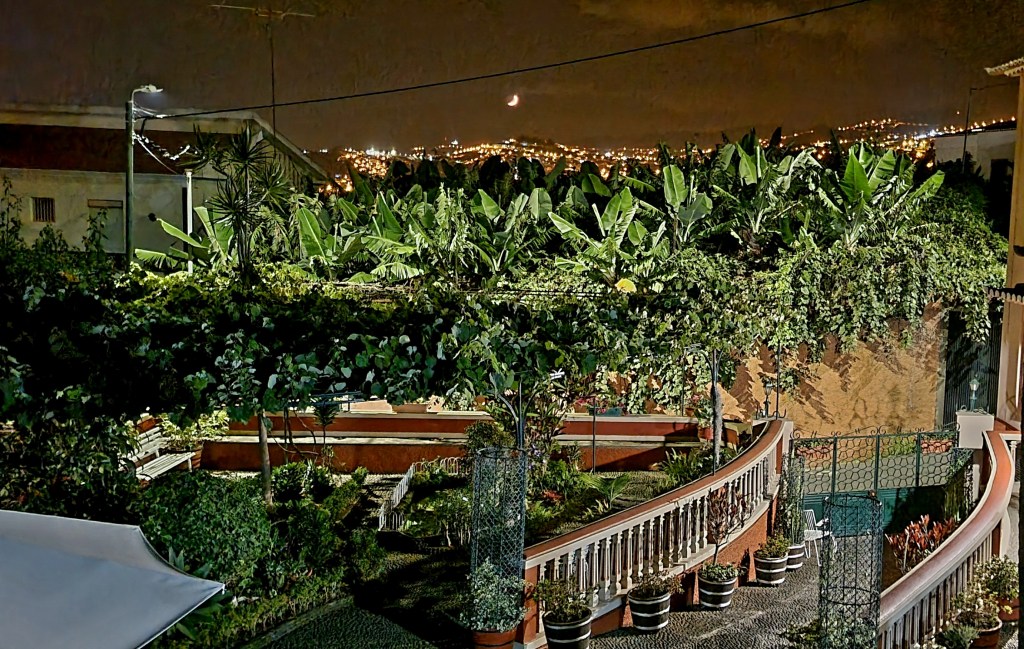
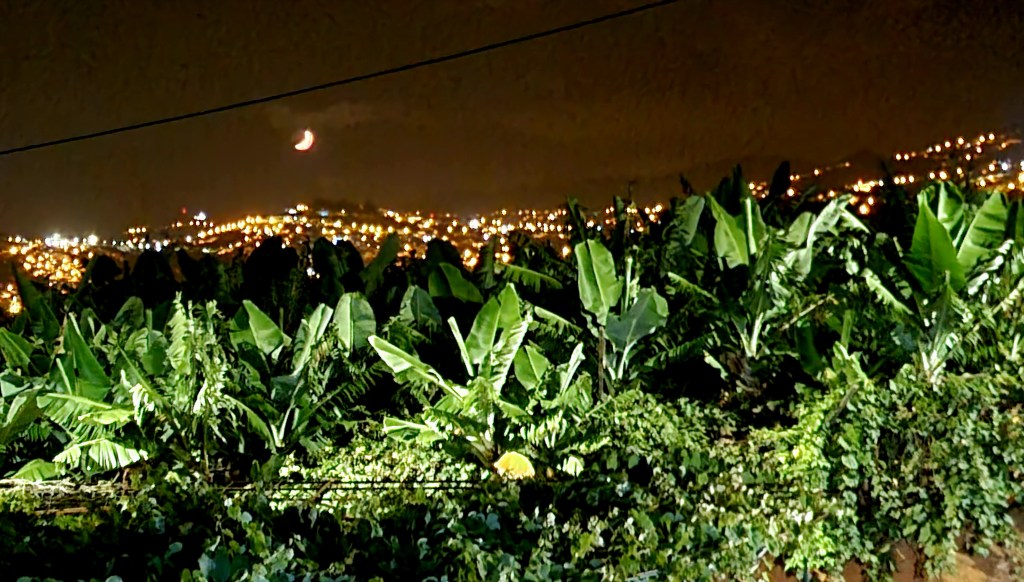
When we got home, we had a little glass of Madeira wine as we admired the moon.
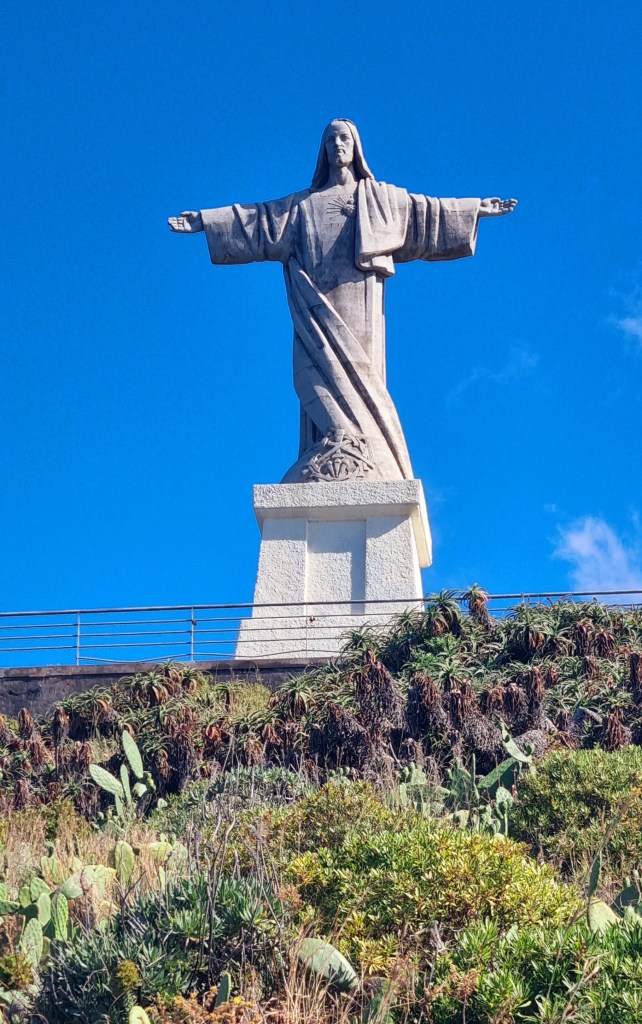
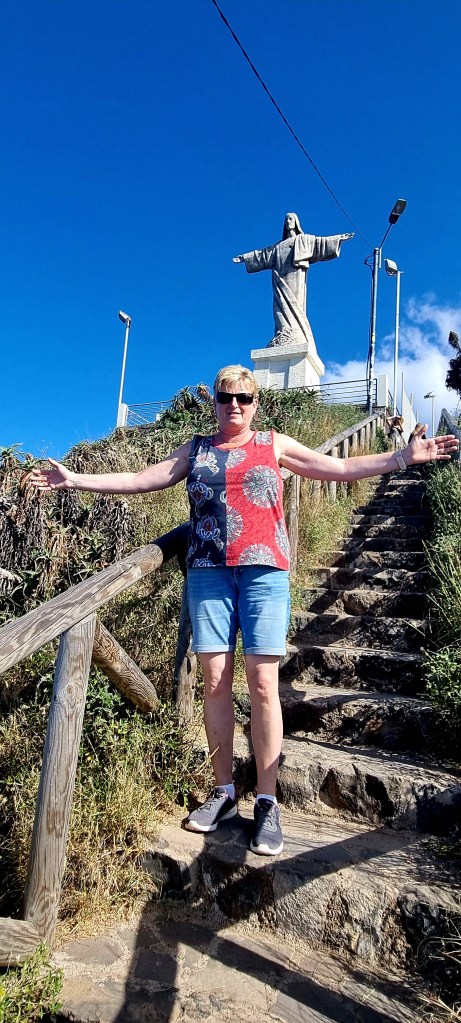
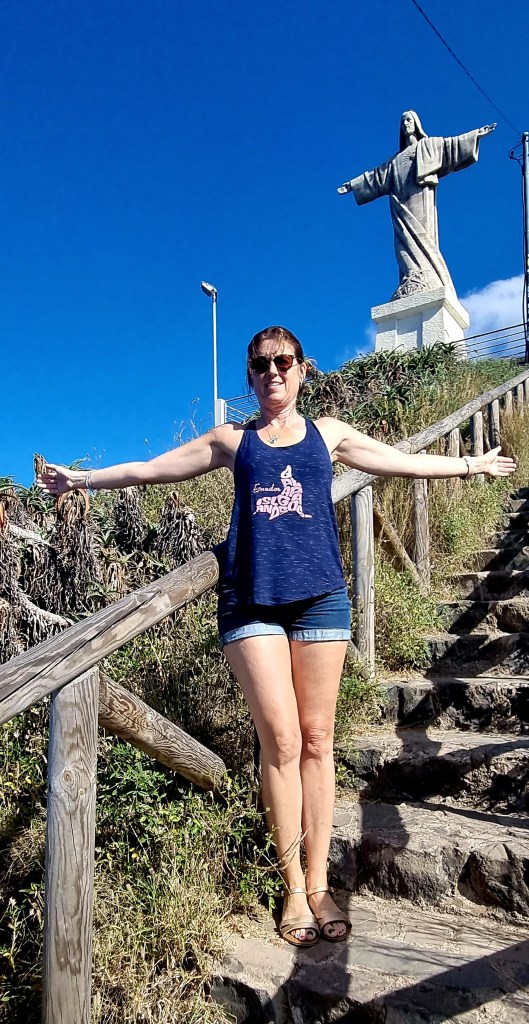
Today, we started off by visiting Christ the Reedemer. This was the first of this type of statute to be erected in the world. It is smaller than the one in Rio. The statue was built in 1927, four years before the one in Brazil. It is built on this point to commemorate the area, as this is the place where non catholic Christians were thrown from the cliffs as only Catholics were allowed to be buried on the island until 1770. It is 15m tall (including the pedestal).
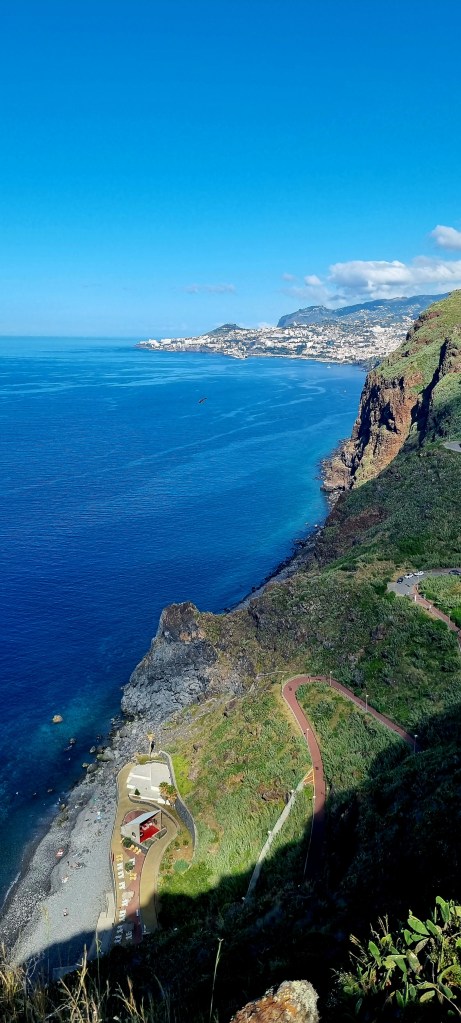
The views from here were impressive, too.
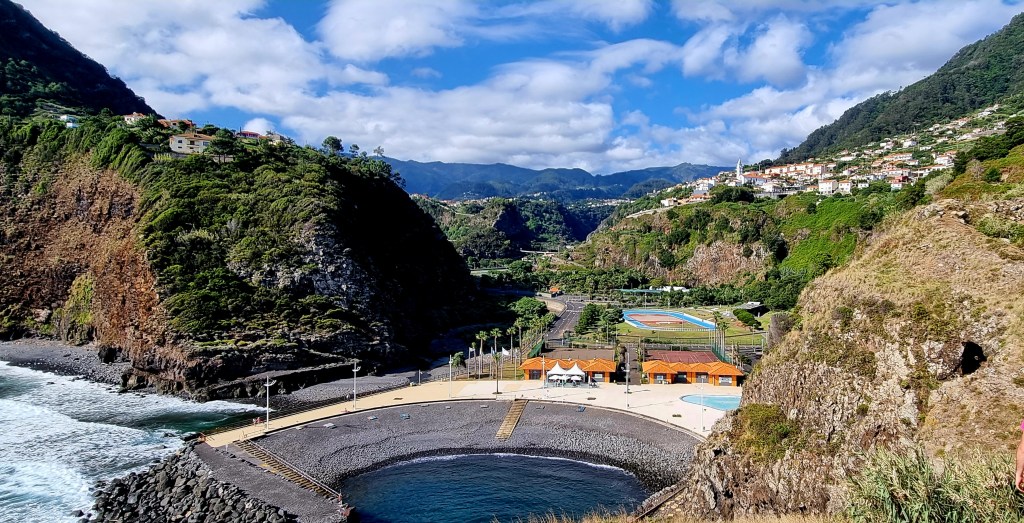
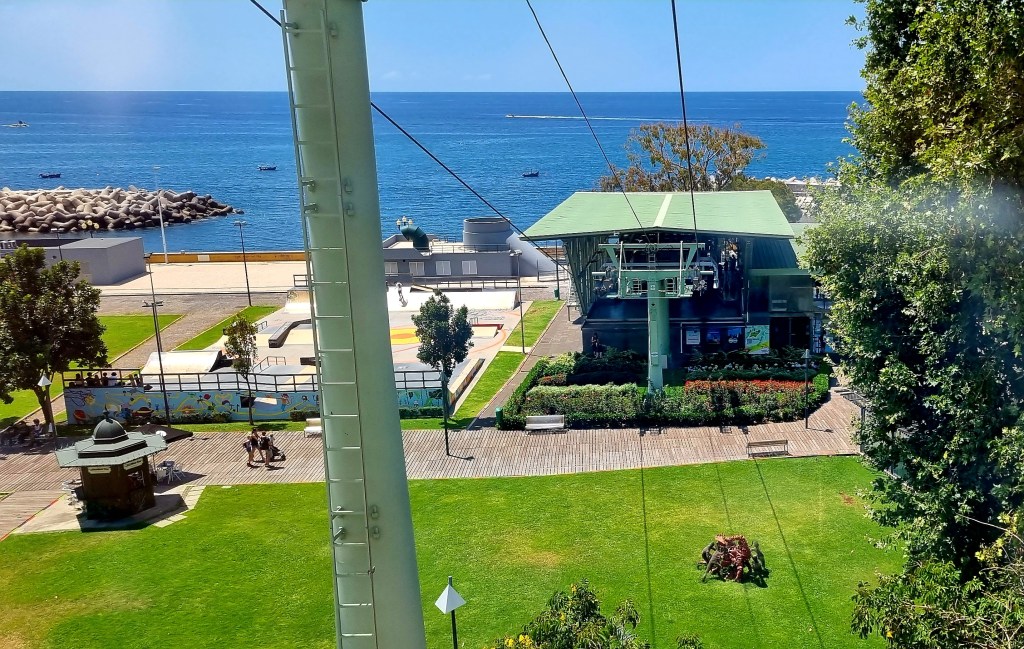
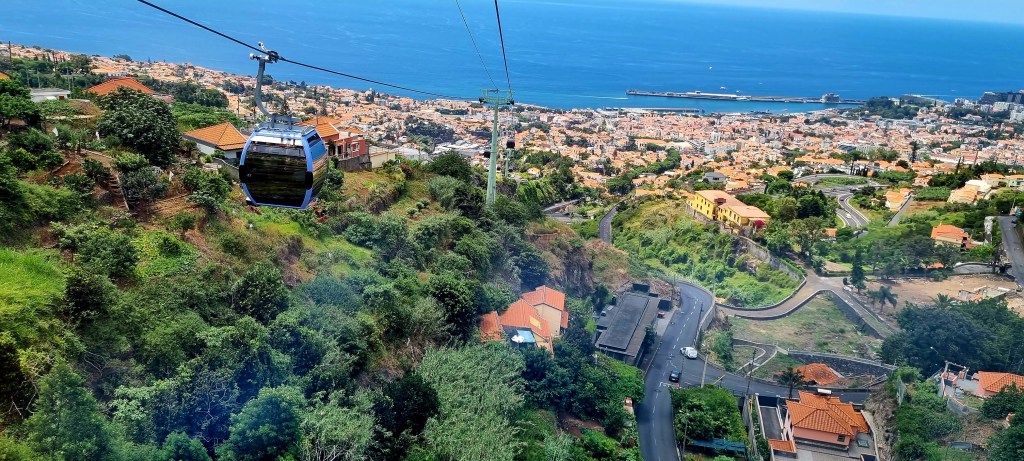
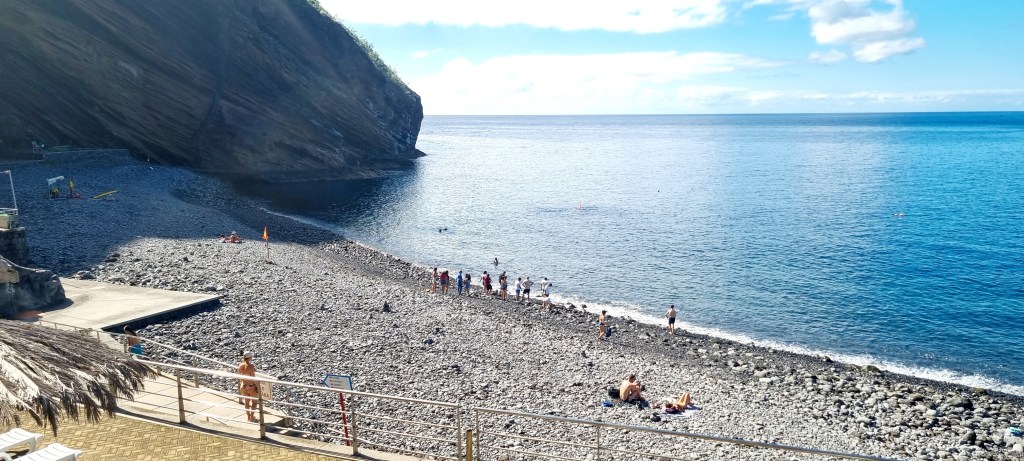
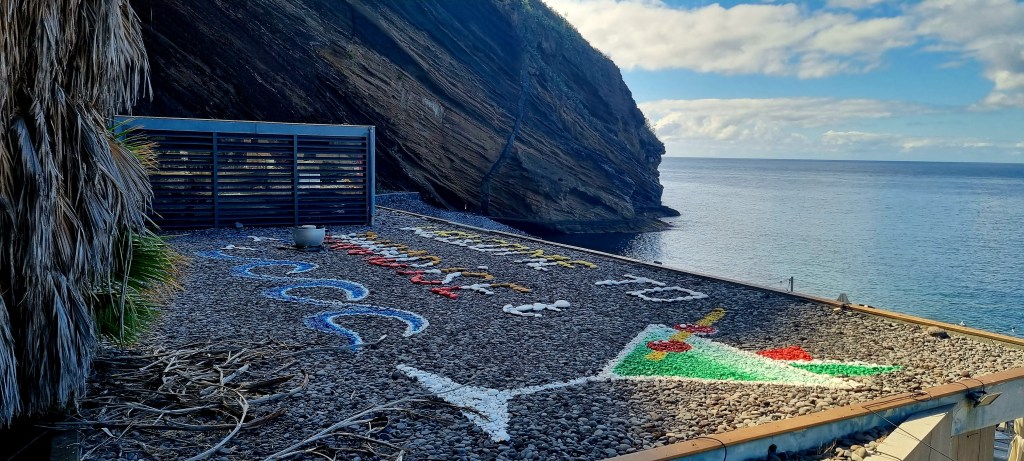
At the bottom of the cliff where the statue was is Garajua beach. This beach marks the start of the marine reserve, which extends for around 6 miles. The name Garajua comes from the Portuguese name for the terns, which still fly around in this area. We decided to take the cable car down to the beach.
Legislation was passed in 1986 to create the marine reserve and to stop desertification of the seabed and to enable repopulation in terms of marine fauna. It is the only exclusive marine reserve in Portugal.
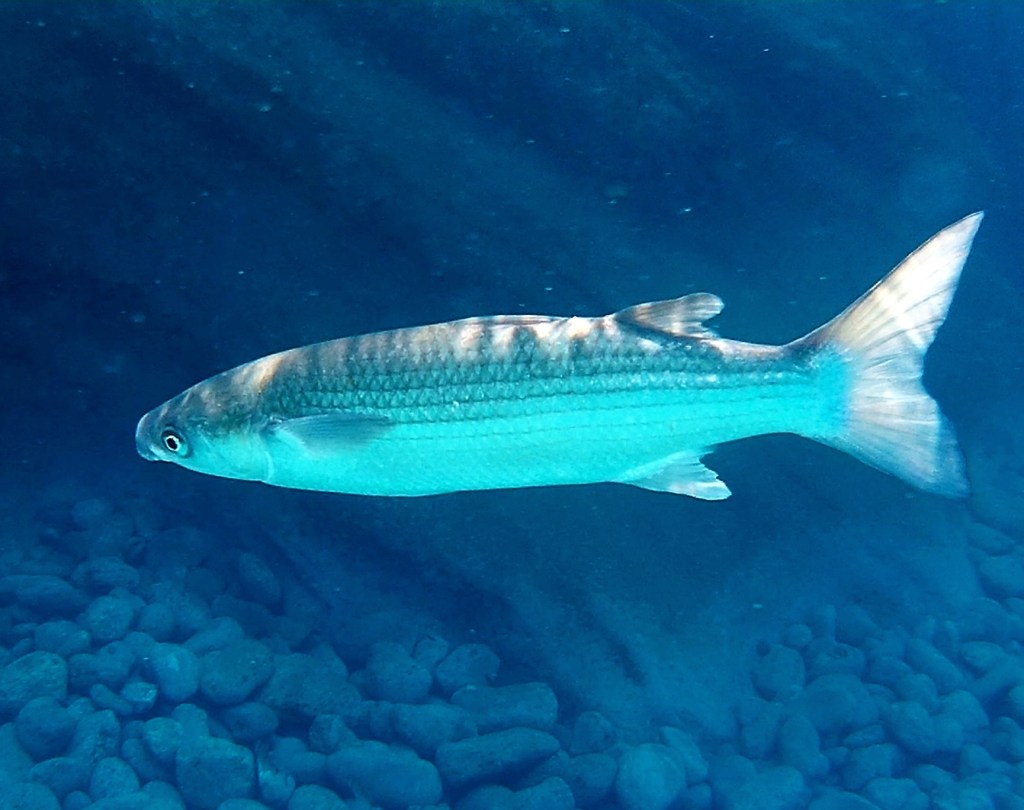
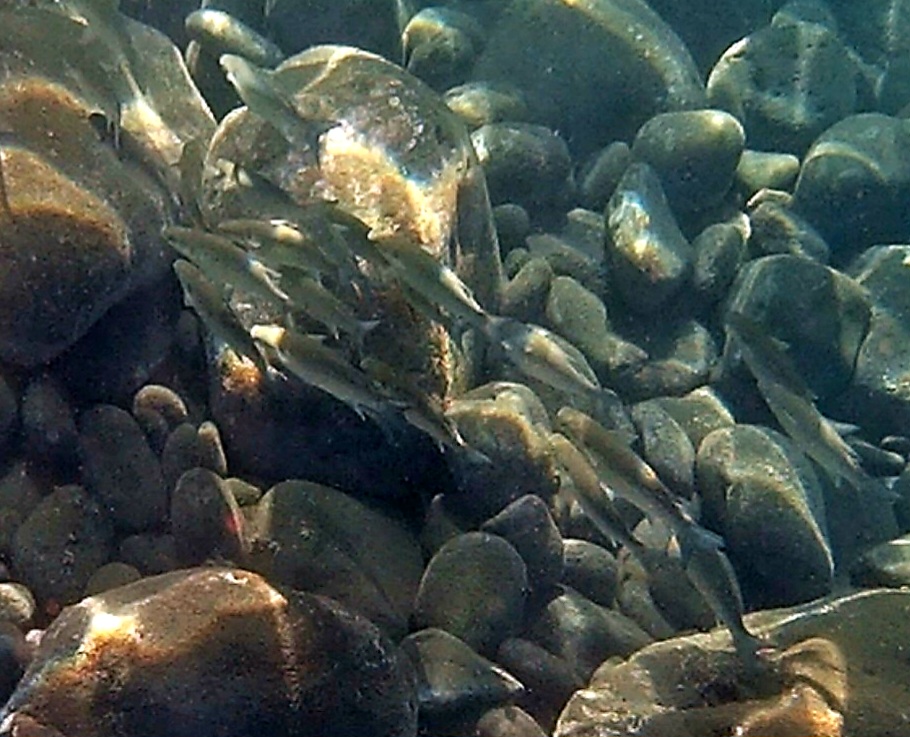
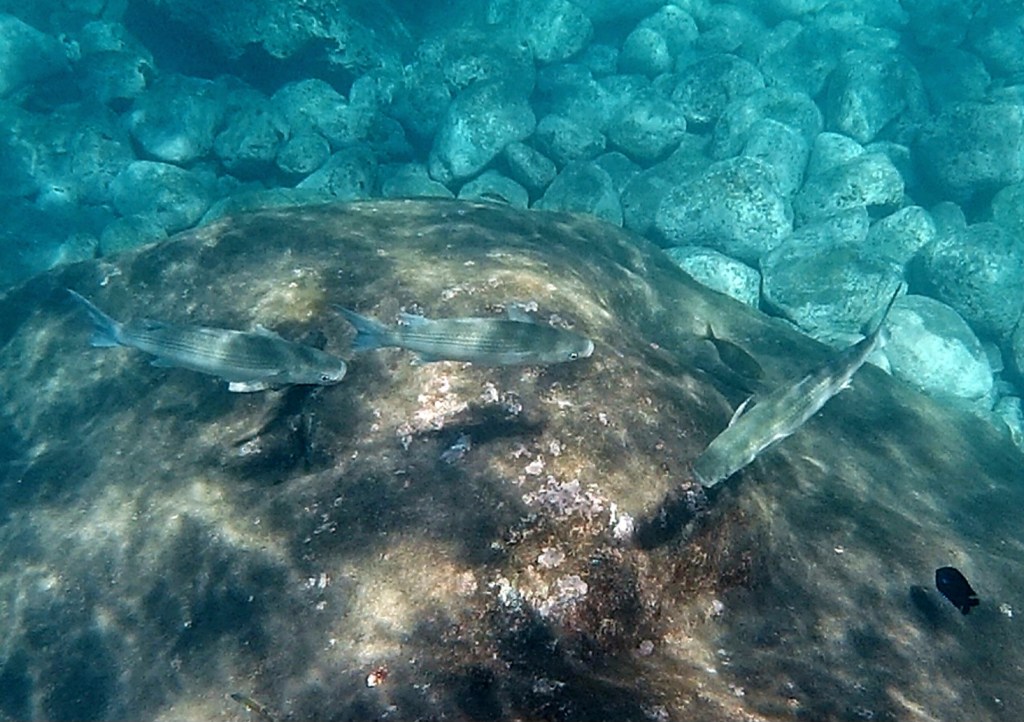
The water was a little bit chilly, but there was lots of marine life, so we did quite a bit of snorkelling.
The main fish we saw in the water was the Grouper. These are naturally curious fish, and they swim quite close to you.
Luckily, Nicola bought her underwater camera with her as my GoPro has stopped working.
We saw lots of different fish, including colourful parrot fish, Atlantic blue tang and many others.
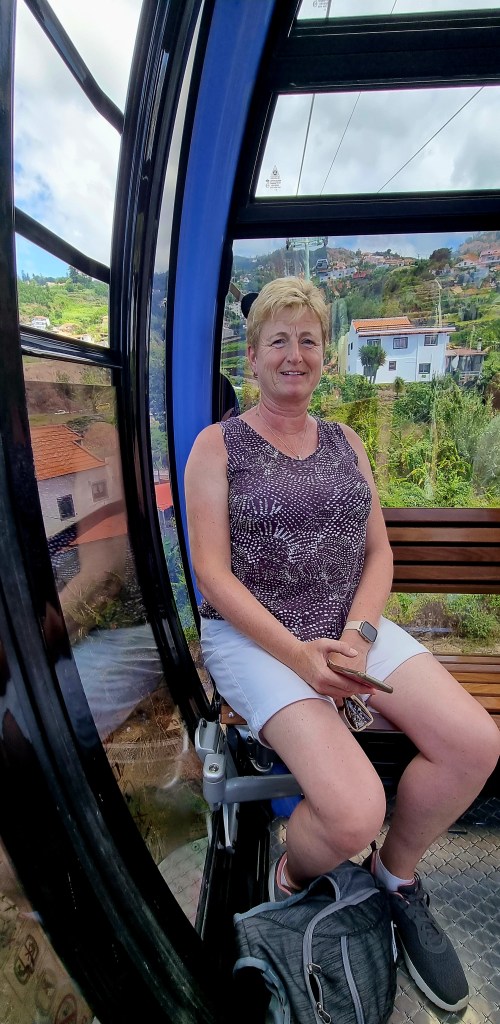
We could only stay in the car park for 3 hours, so after a couple of swims we took the cable car back up to our car.
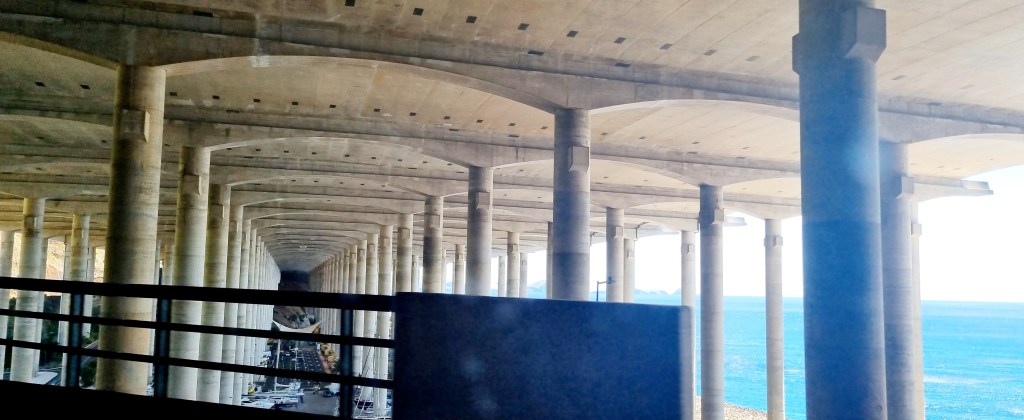
From here, we headed to Ponta de Sáo Lourenco, the eastern tip of the island. As we drove along, we drove under the runway extension.
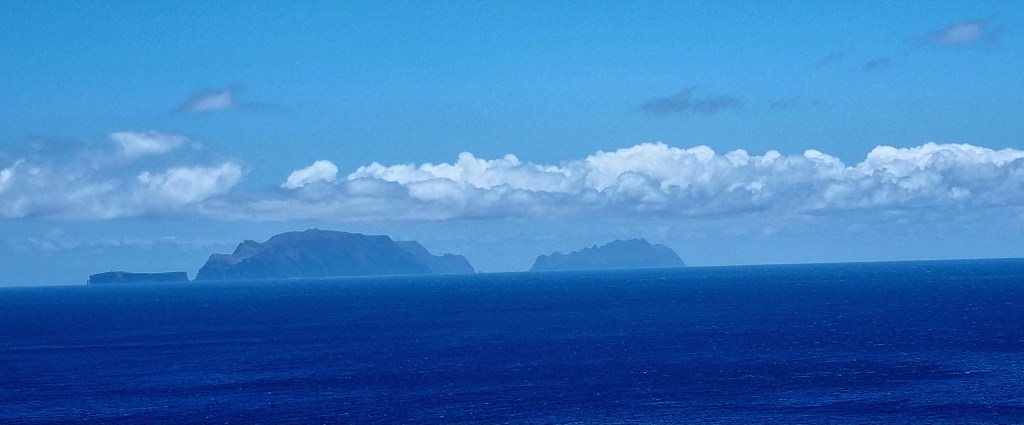
Porta de Sáo Lourenco is a partial nature reserve and is named after Zarco, the explorer’s ship. The peninsula is linked underwater to the nearby uninhabited islands (Desertas Island).
At the start of the trail, you are supposed to pay online, but neither of us could get this to work, so the guy just let us through.
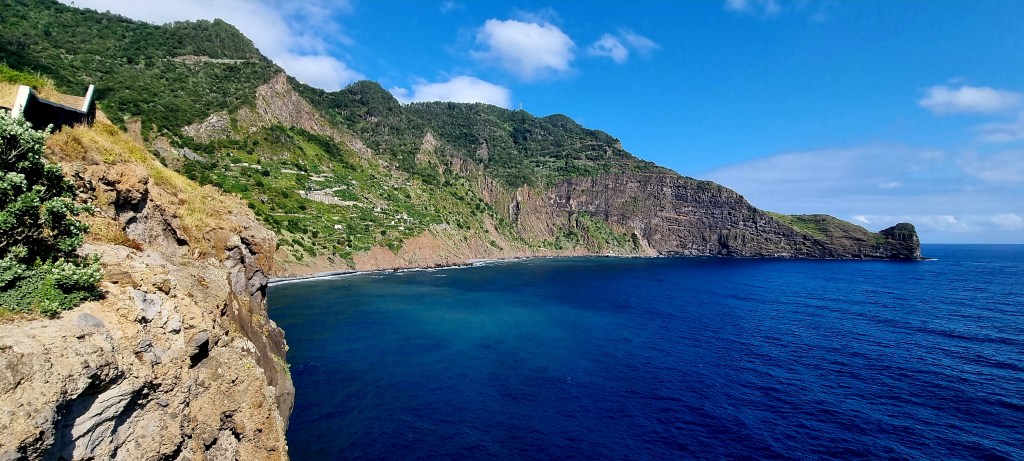
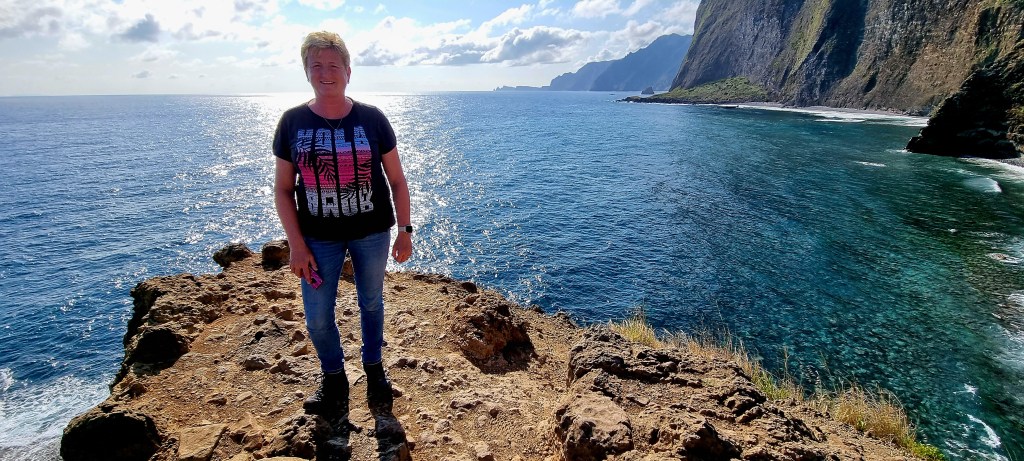
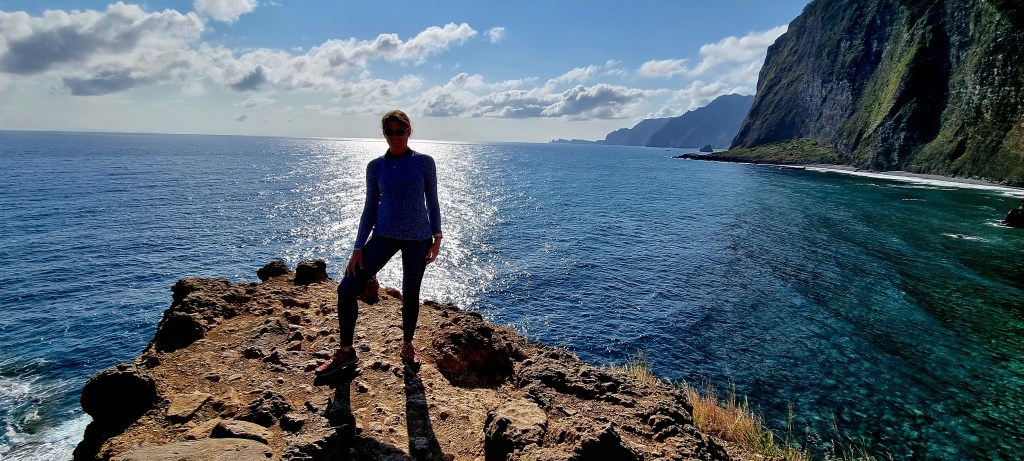
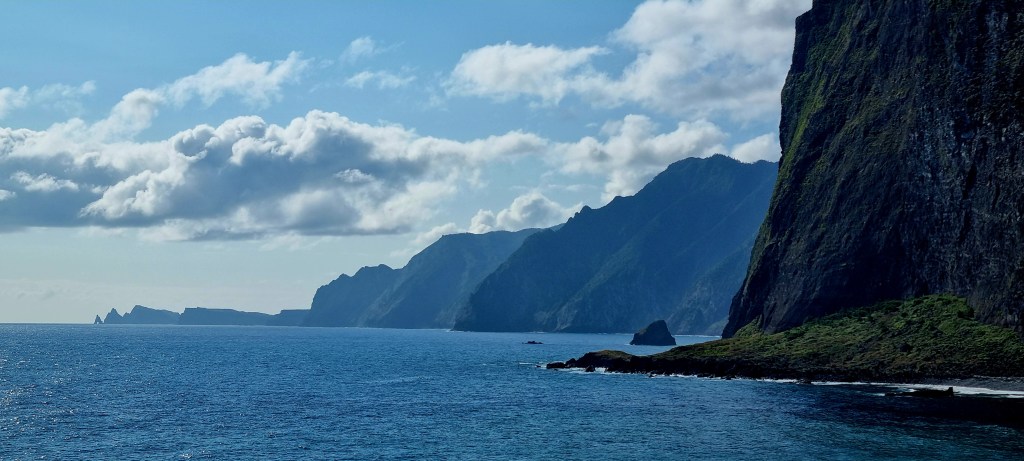
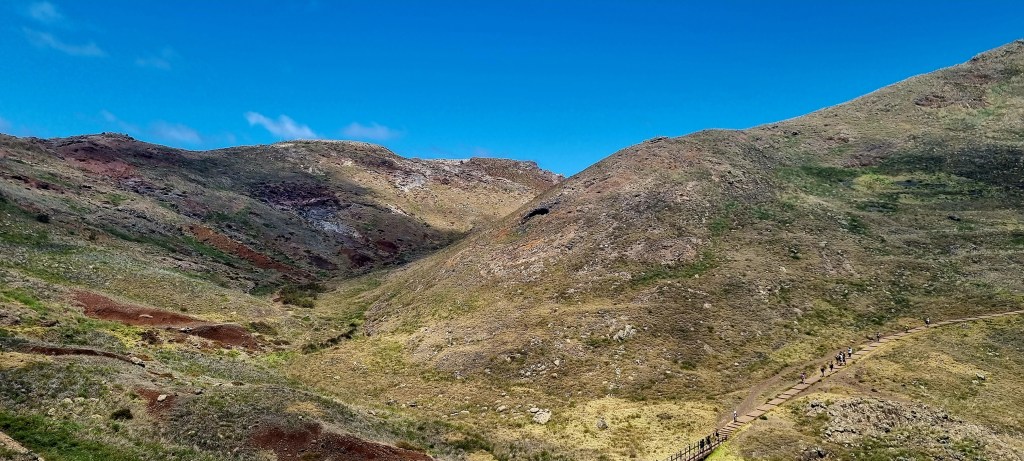
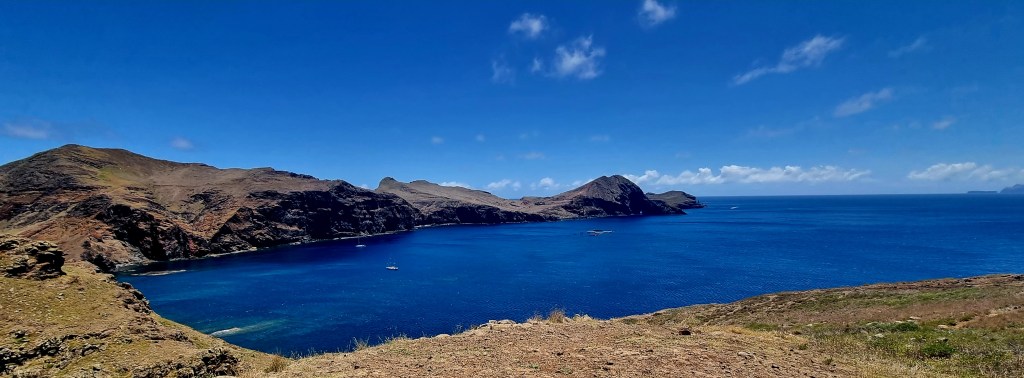
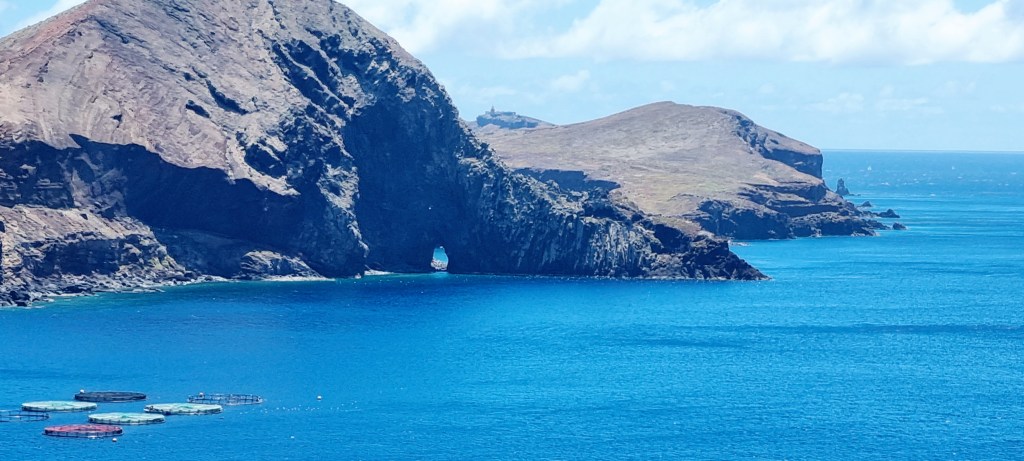
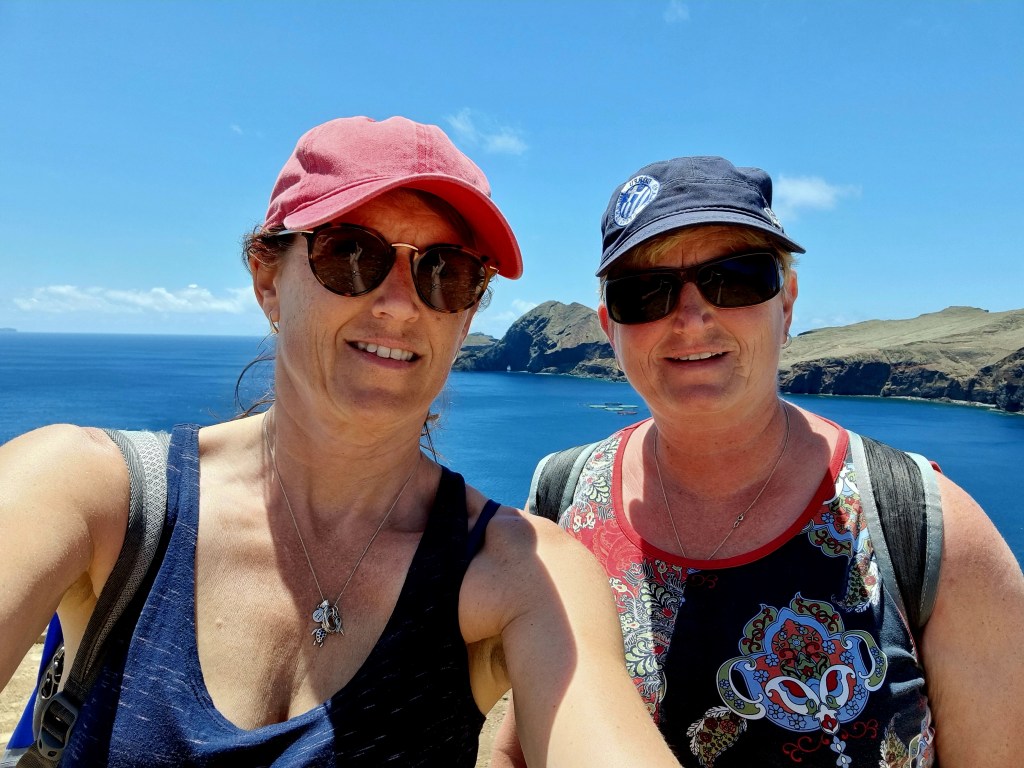
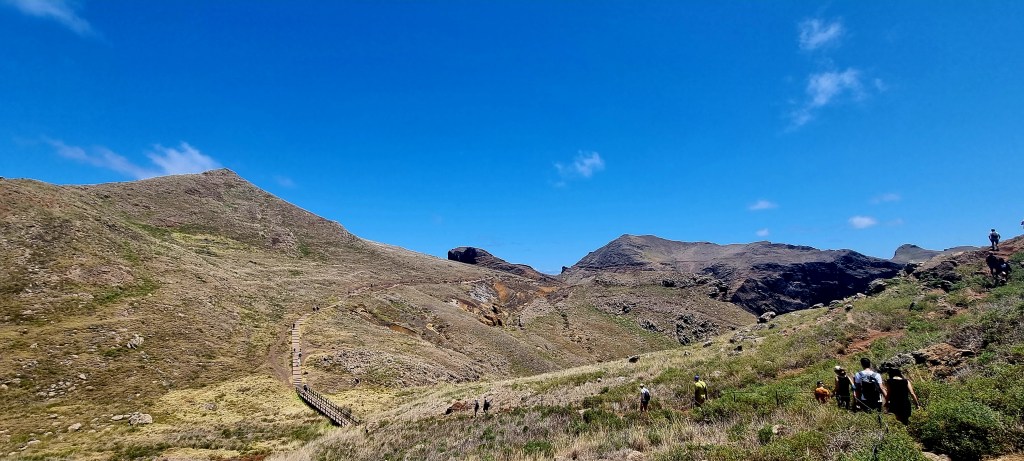
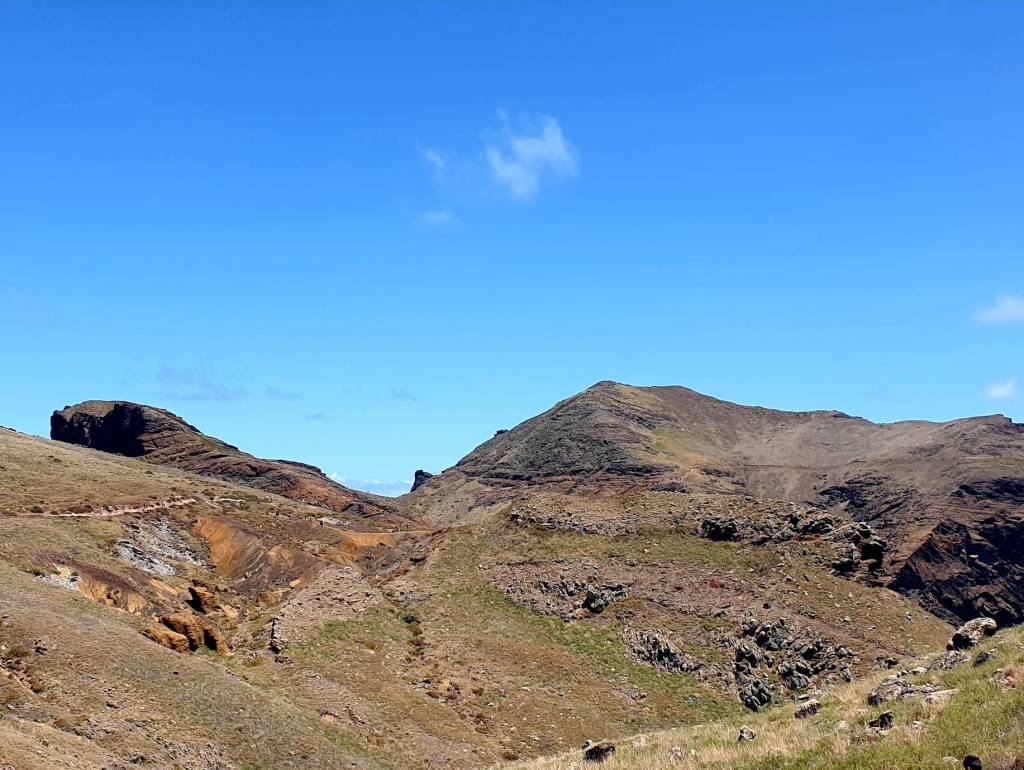
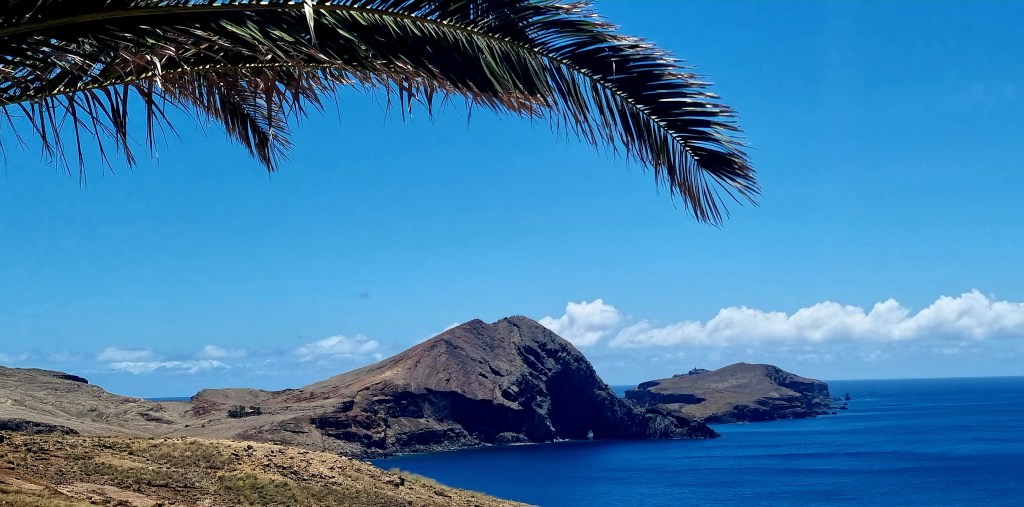
We didn’t do the whole of the trail, but we walked for a bit, and the views were amazing. The area is made up long, eroded volcanic cliffs and ravines.
After wandering around for a while and admiring the stunning views, we headed back to the car. Before we left, we took some more photos.
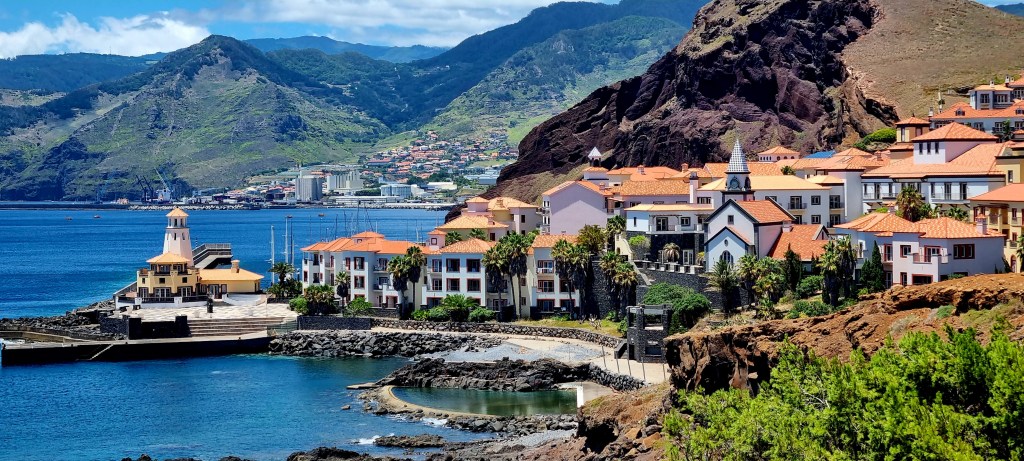
Our next stop was Santana, but on the way, we passed some lovely towns nestled on the coast.
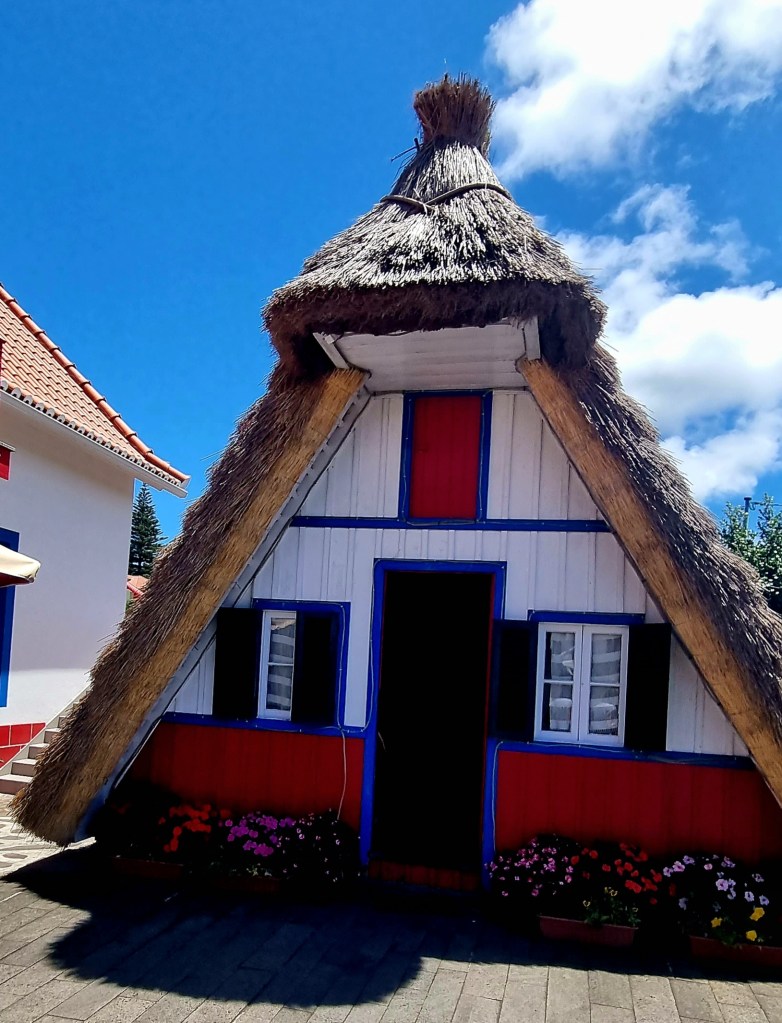
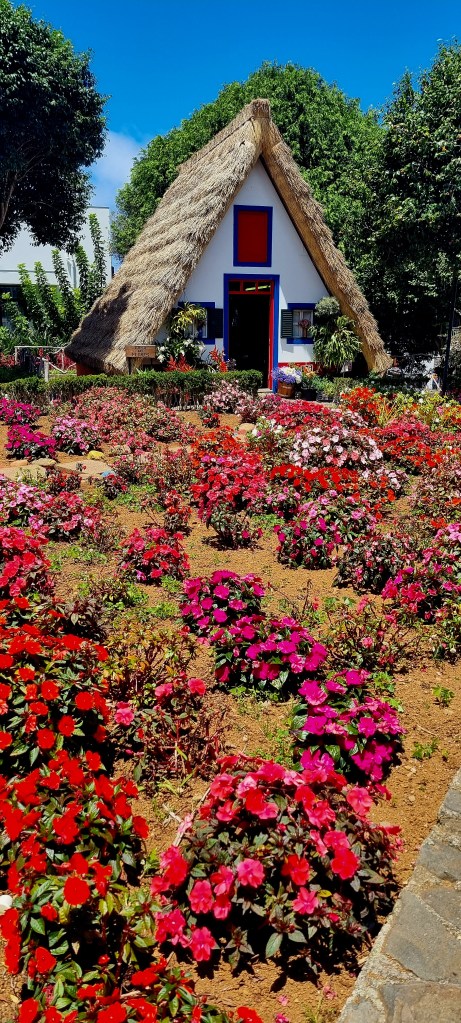
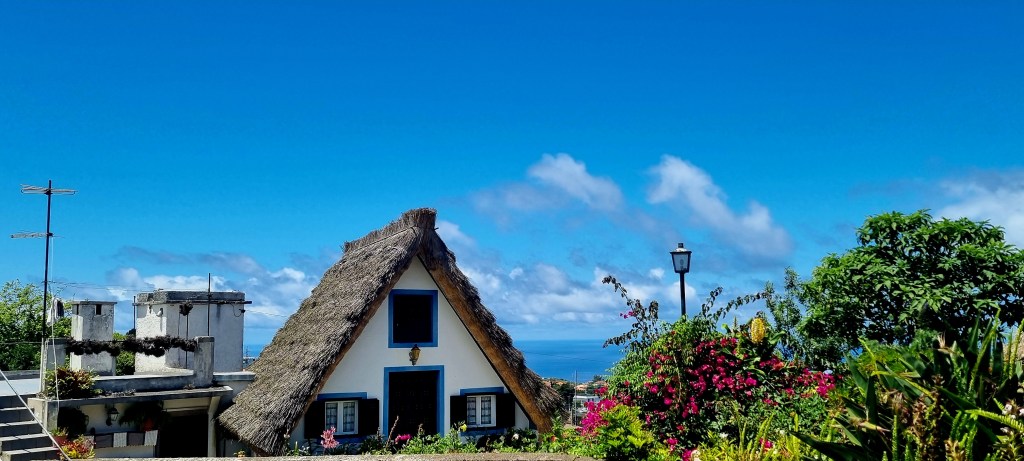
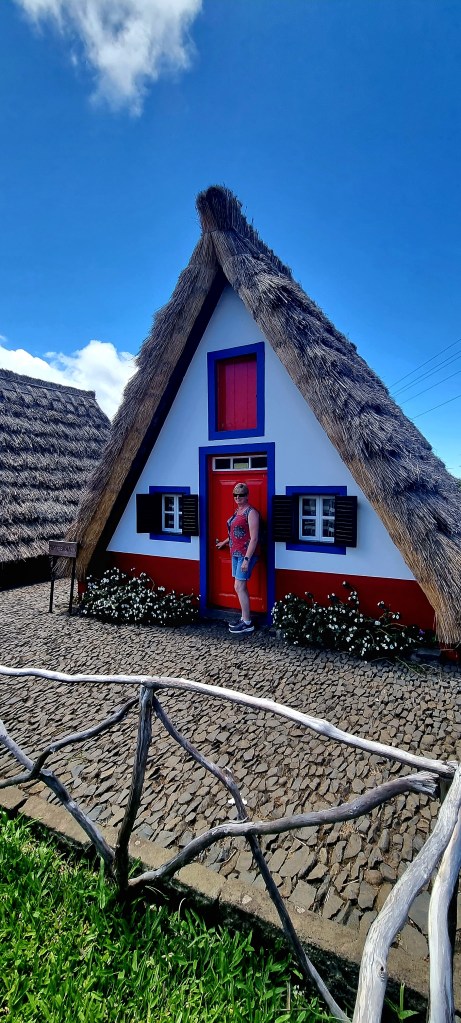
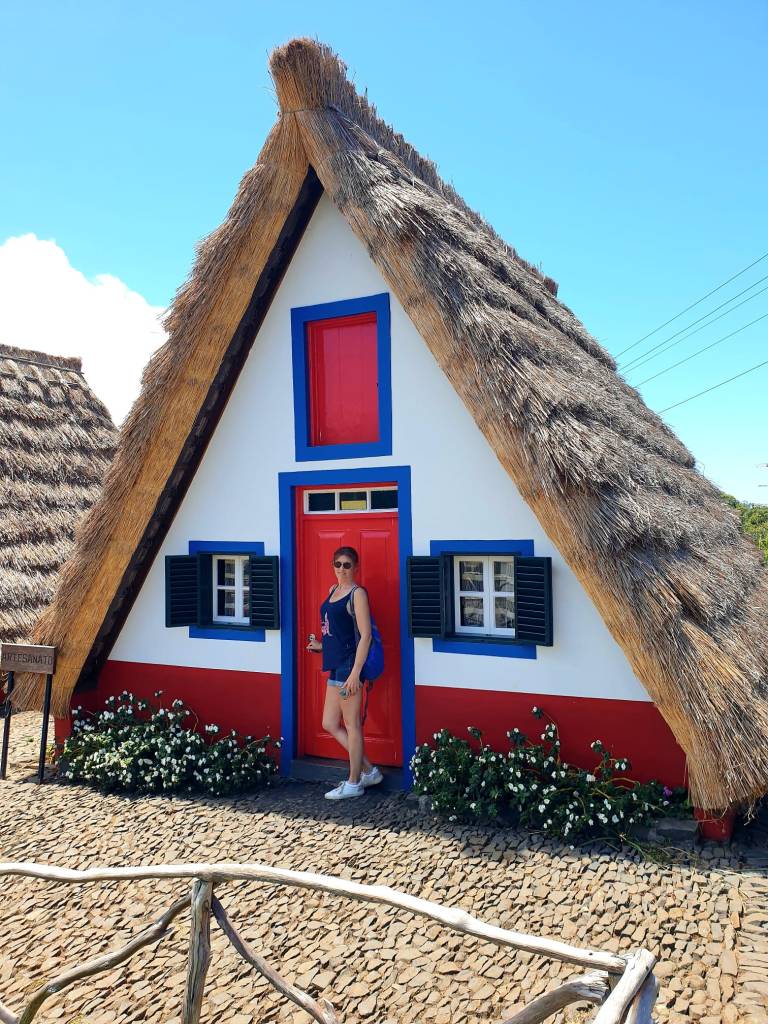
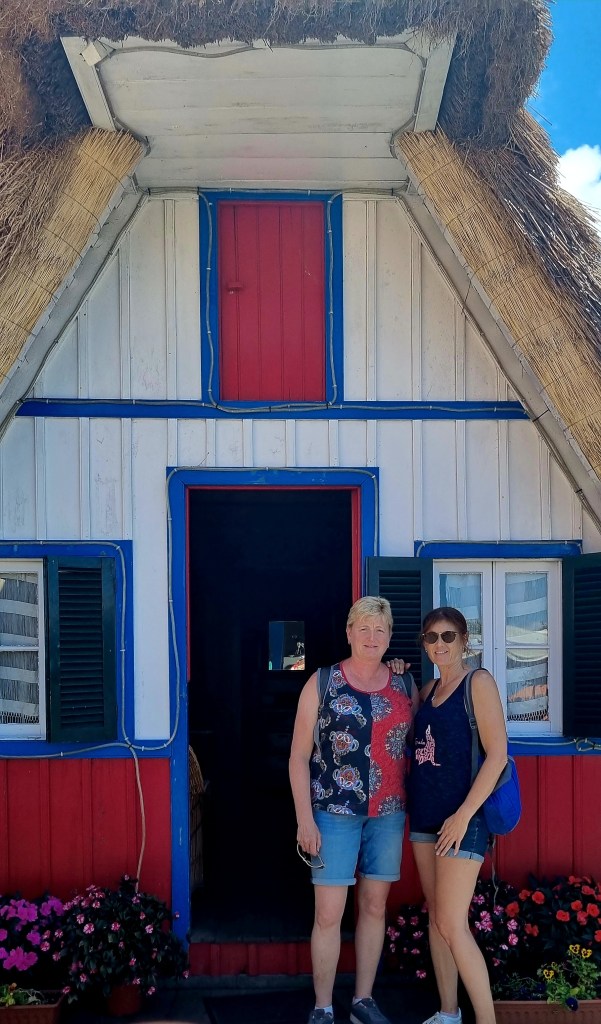
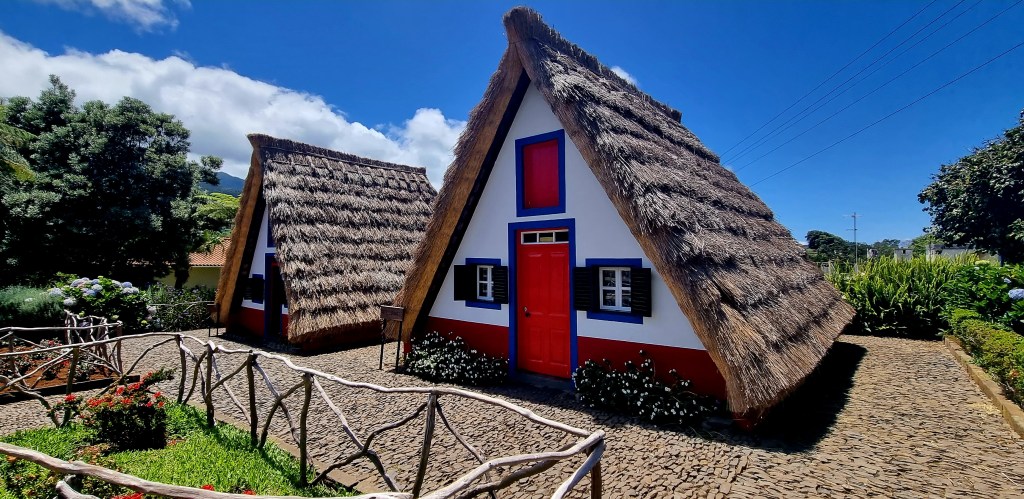
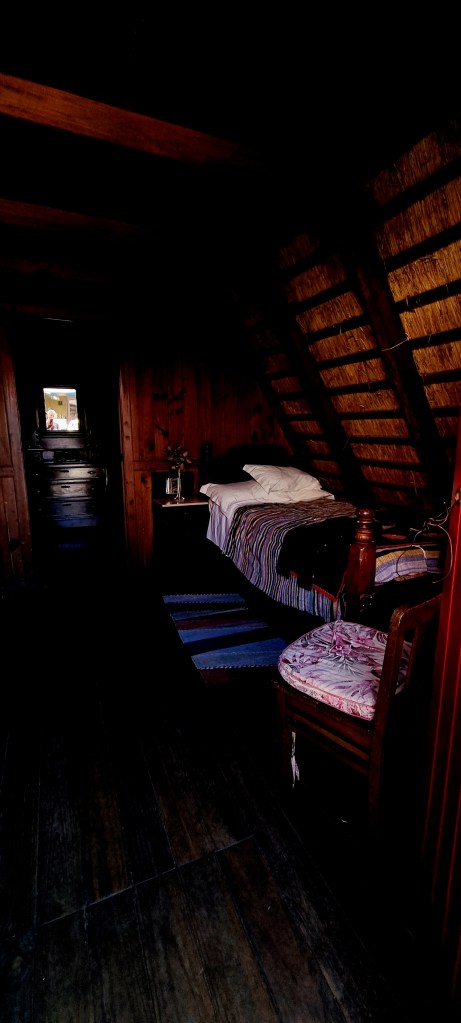
Santana is a shortening for Santa Ana (St Anne), and the area is well known for the traditional timber and thatch houses known as palheiros. These houses are constructed with sloping triangular rooftops and protected with straw. These were mainly rural homes, used by local farmers, during the settlement of the island, with white-painted walls, red doors, and windows with blue trim. Most of the surviving buildings are tourist attractions and are well maintained.
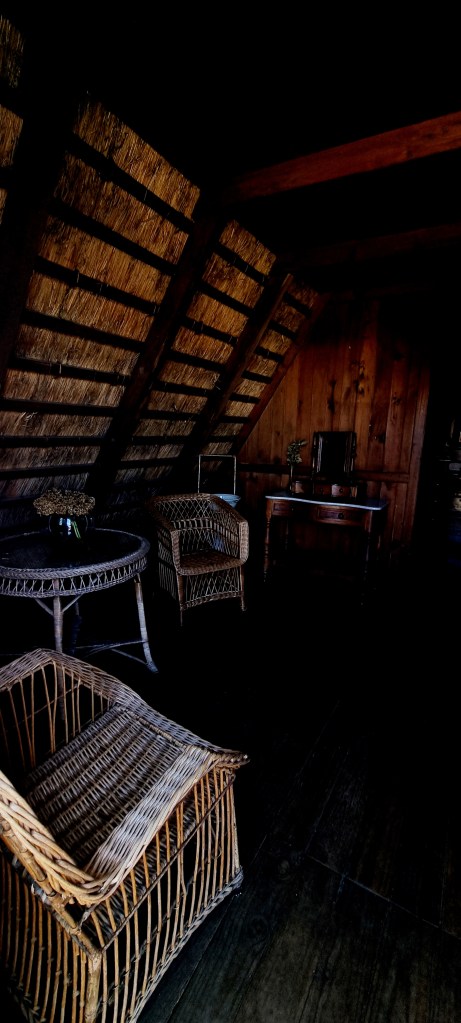
The houses were very compact inside, and they didn’t really have a bathroom or kitchen.
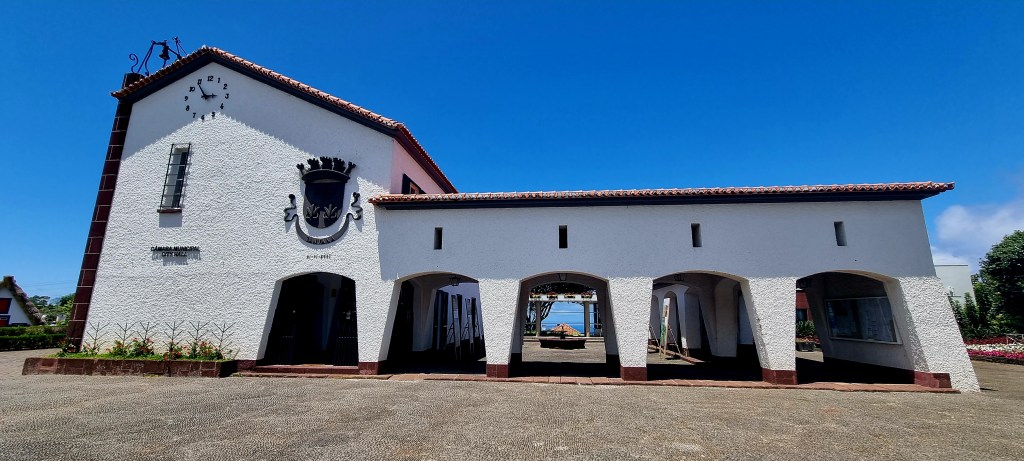
Settlement took place in Santana around 1550, with the main settlers coming from the North of Portugal. Santana parish ended up being created by the royal decree of 4 June 1552. In 1835, it was converted from a town to a village, and on 1 January 2001, it was granted city status. This can be seen on the date on the City Hall.
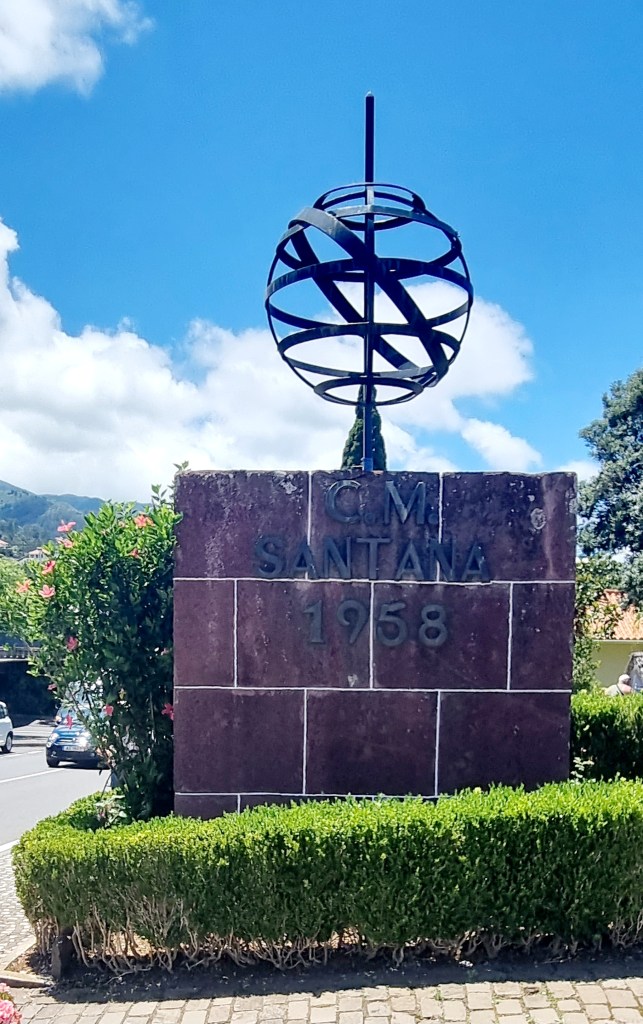
There is also a memorial to commemorate the building of the Santana council offices in 1958.
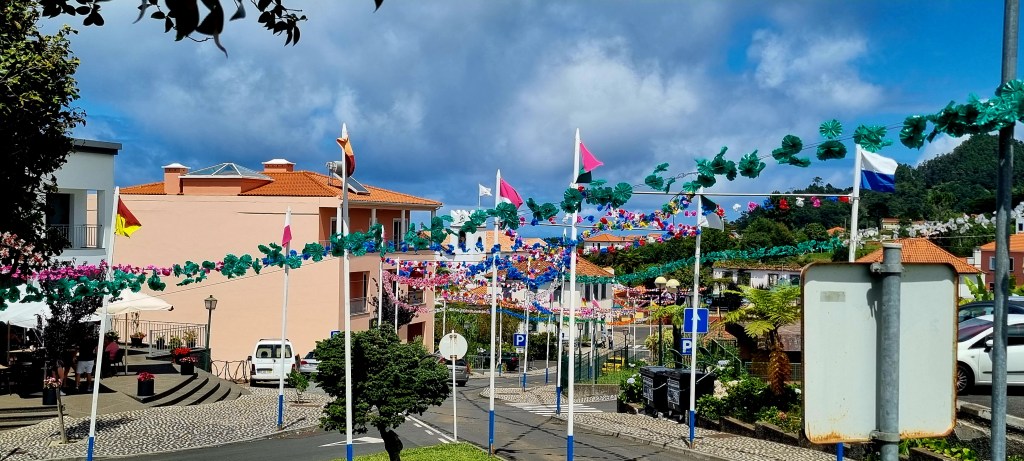
Santana is a very pretty city and definitely worth a visit.
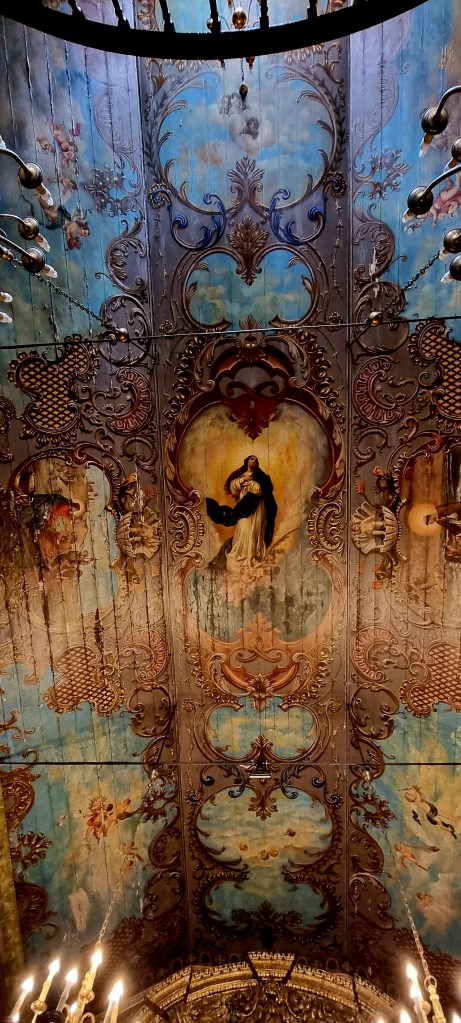
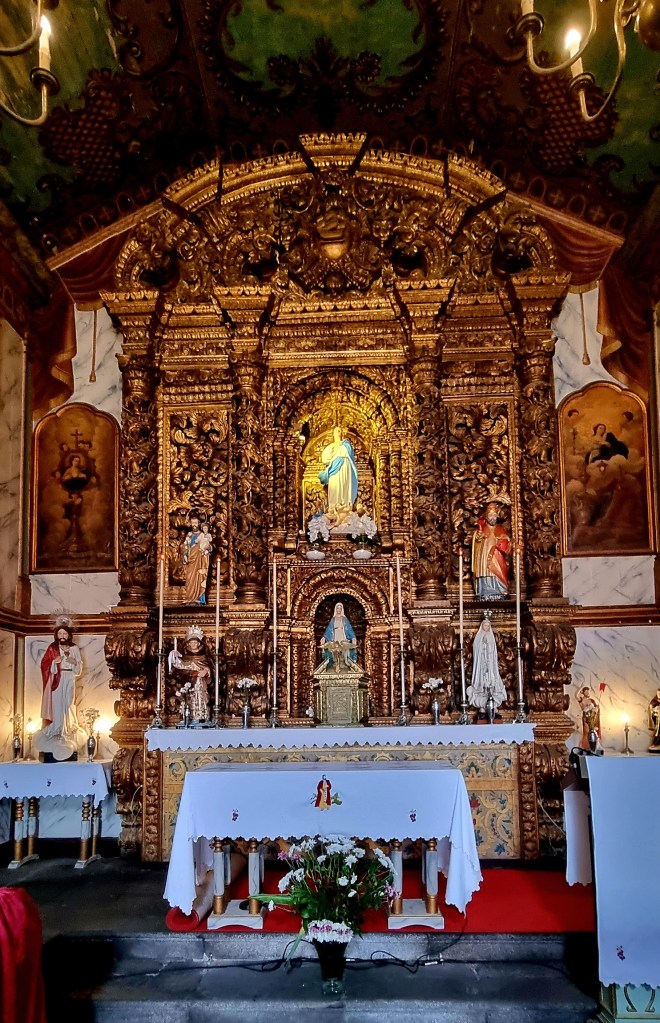
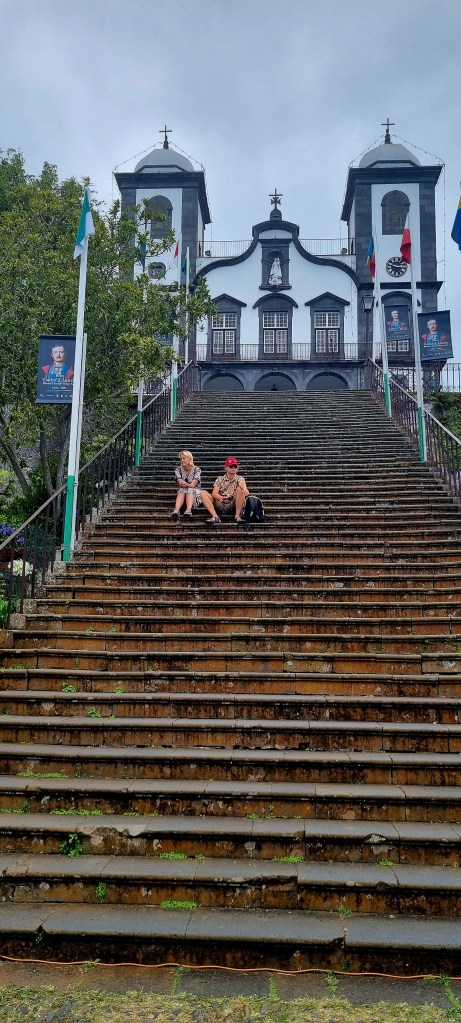
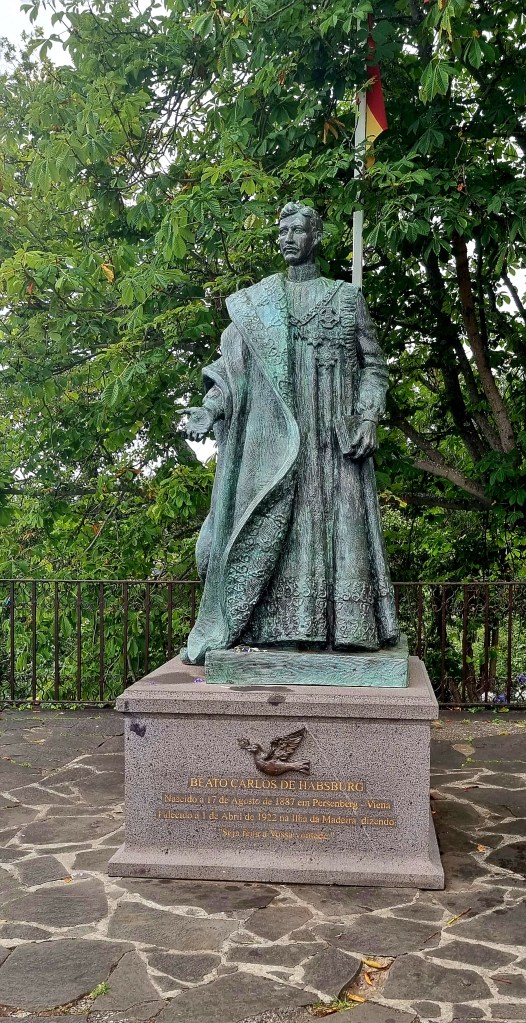
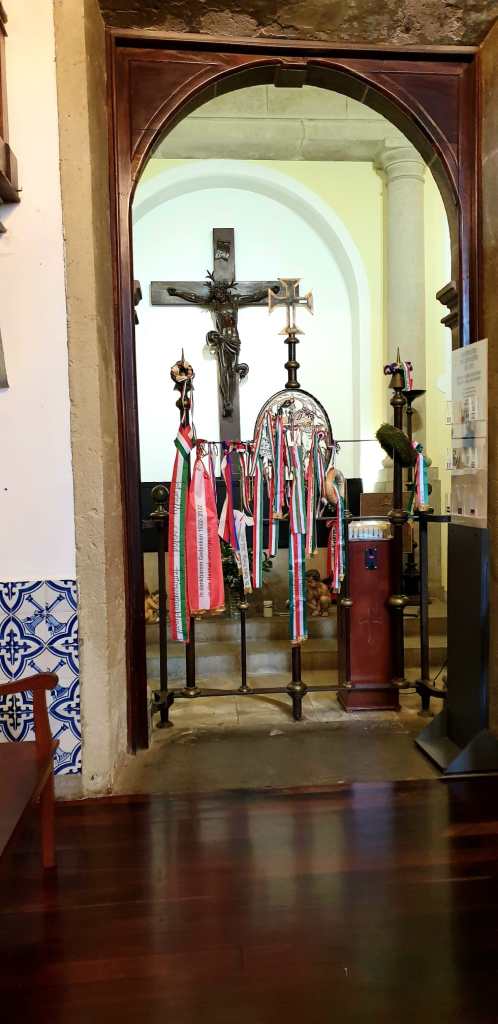
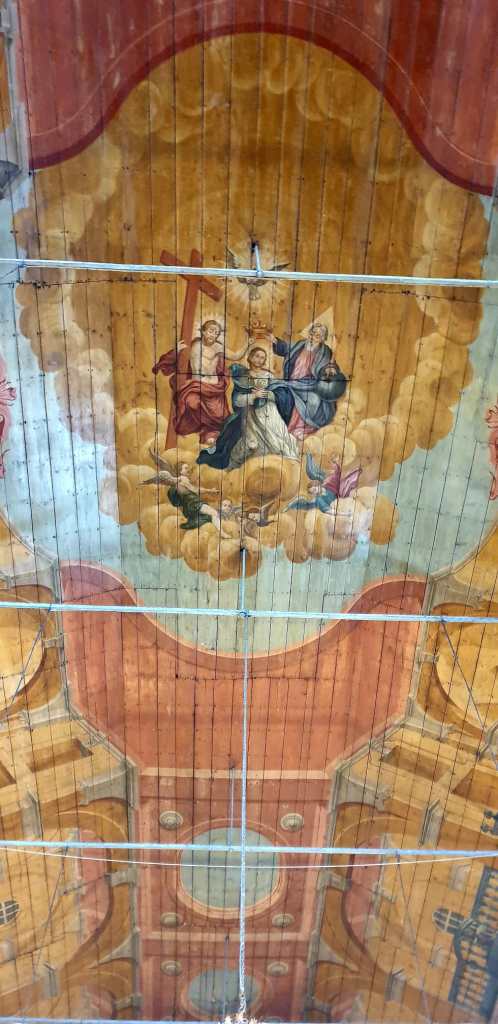
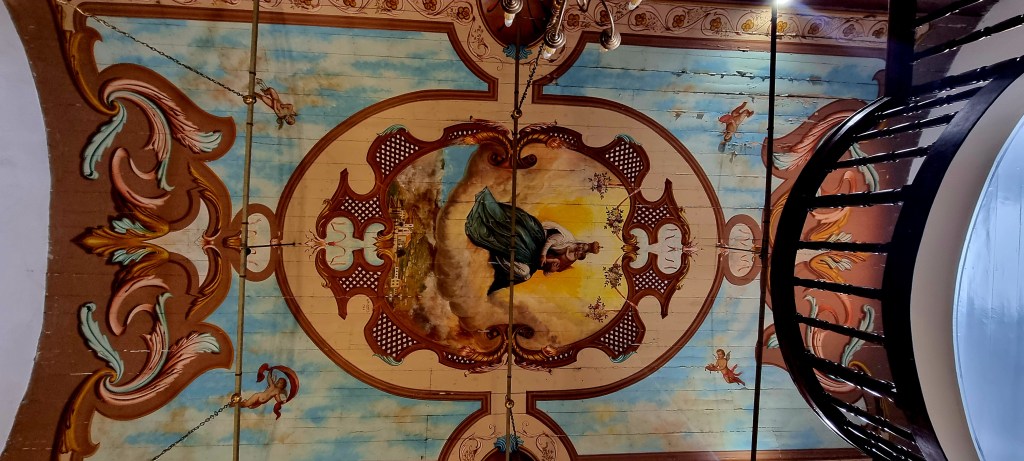
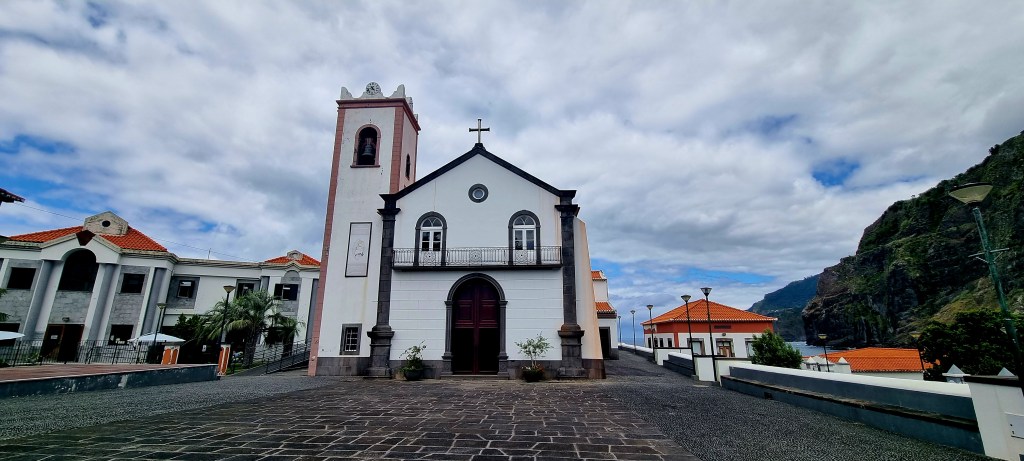
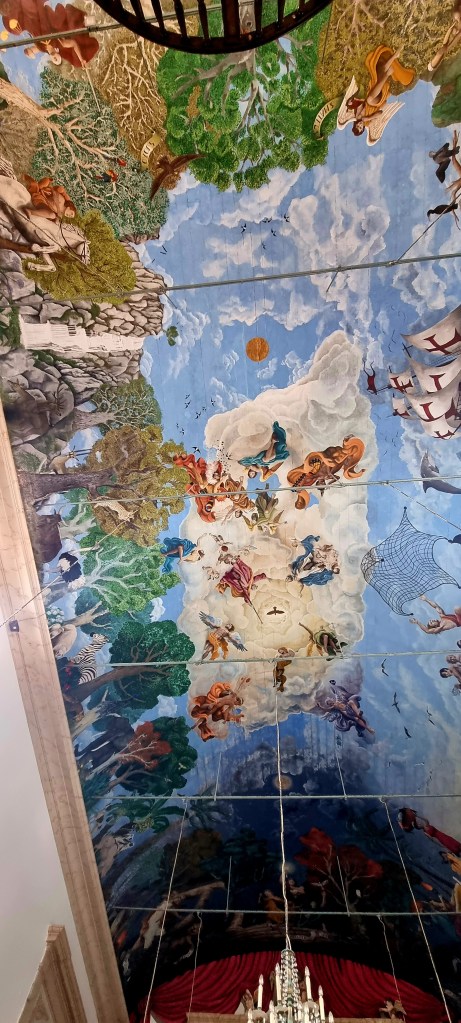
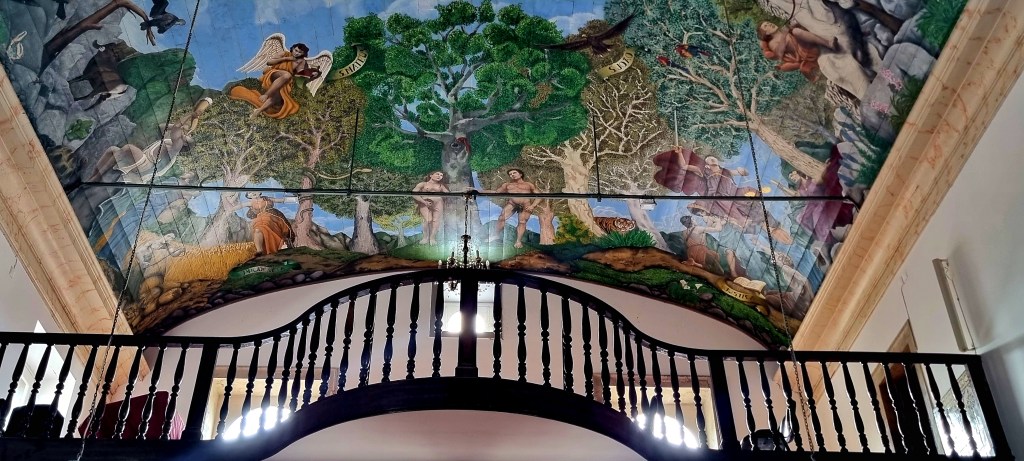
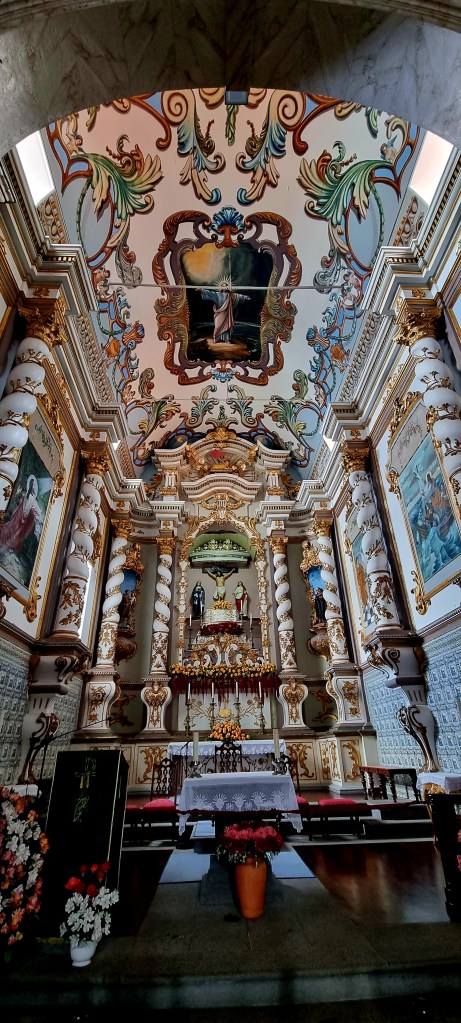
Our final stop of the day was Ponta Delgada to see the Church of the Good Lord (Bom Jesus). Legend has it that a fisherman was fishing in the sea and found a crucifix. Along with other fishermen, the man took the crucifix back to the village, but it mysteriously disappeared. Later, the fishermen found it in a cane field close to the sea. After this, the men of this village built a chapel for the Good Lord Jesus next to this cane field, which later became the present church. The church interior is in the Baroque style with a beautiful painted ceiling.
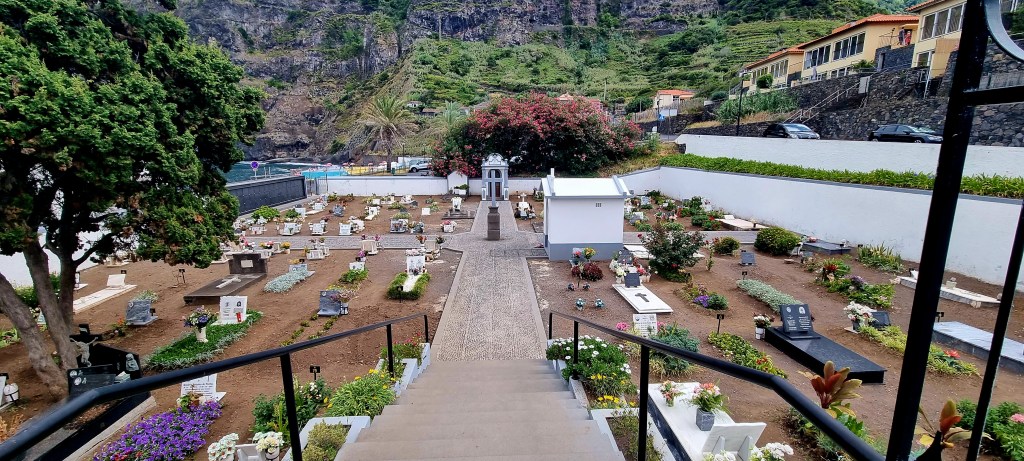
There was also a cemetery next to the church.
From here, it was about an hour’s drive back to where we were staying. Again, the views on the way home were really nice.
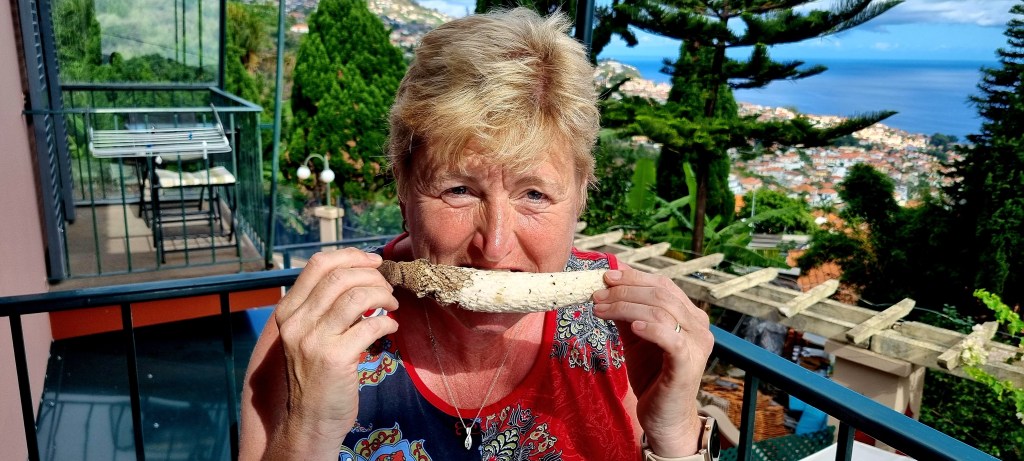
When we got home we decided to eat our ‘delicious fruit’. Unfortunately, we had left it too long, and it had dried out and wasn’t that tasty anymore.
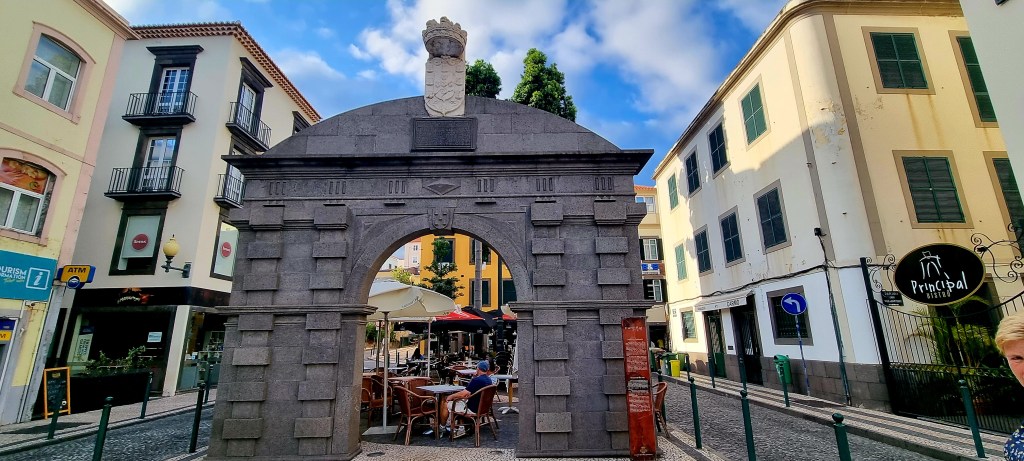
In the evening we got the bus into town and went to the Espaco restaurant. On the way, we walked past the ‘old gate’. This is a reconstruction of the city’s old wall gate. It was built in 1689 but demolished in 1911 when the city was reconstructed to allow traffic through. It was reconstructed in 2004 and contains some of the original elements, such as the crown, the royal arms, and the inscribed stone.
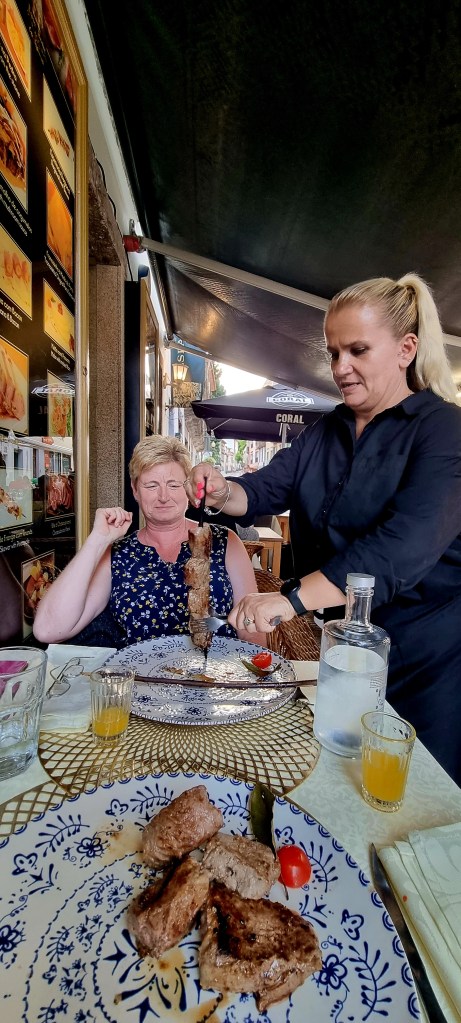
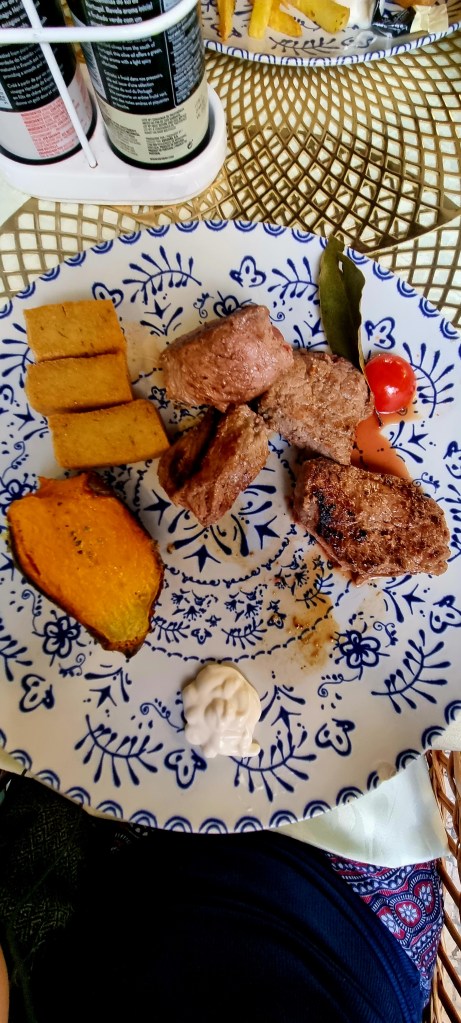
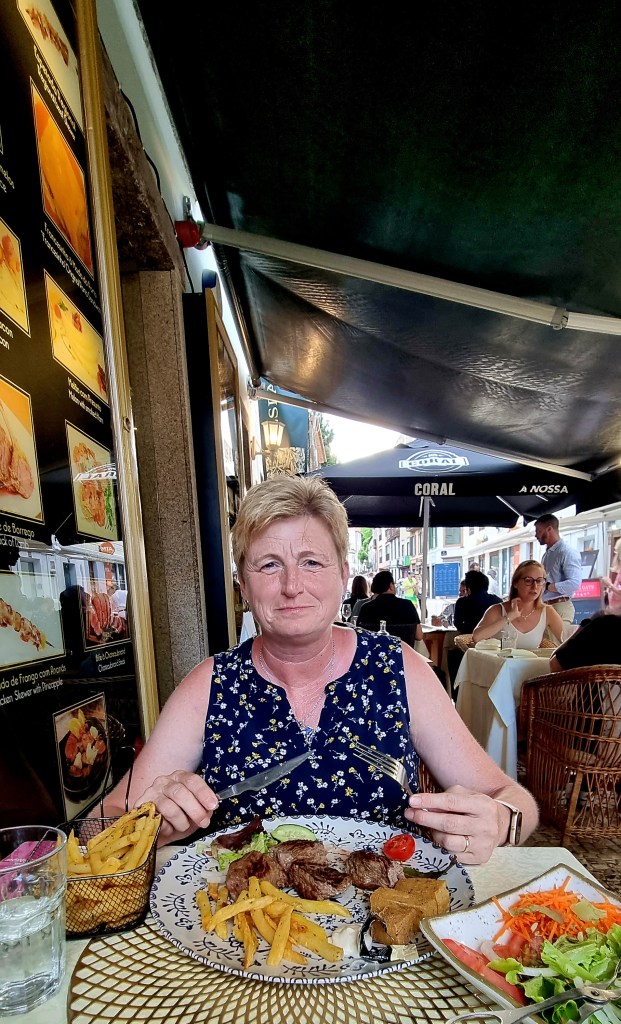
At the restaurant we had a very delicious Maderian meal of beef skewers.
This was washed down with Ginja – a cherry liqueur, as well as a very strong Poncha and wine!
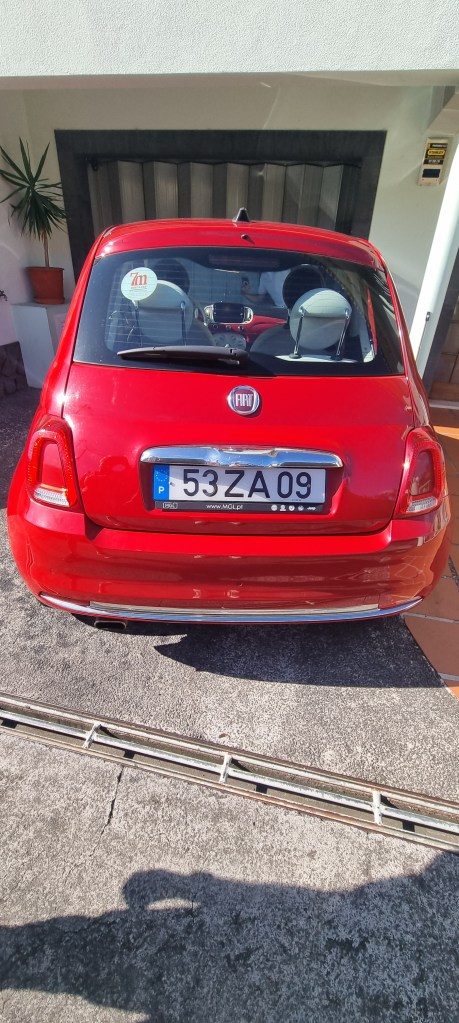
After another delicious breakfast we waited for our car to arrive. We had booked through 7m rentacar. They were supposed to deliver the car at 9am and after several unanswered calls, the car eventually turned up around 10:30am. I would definitely not recommend this company!
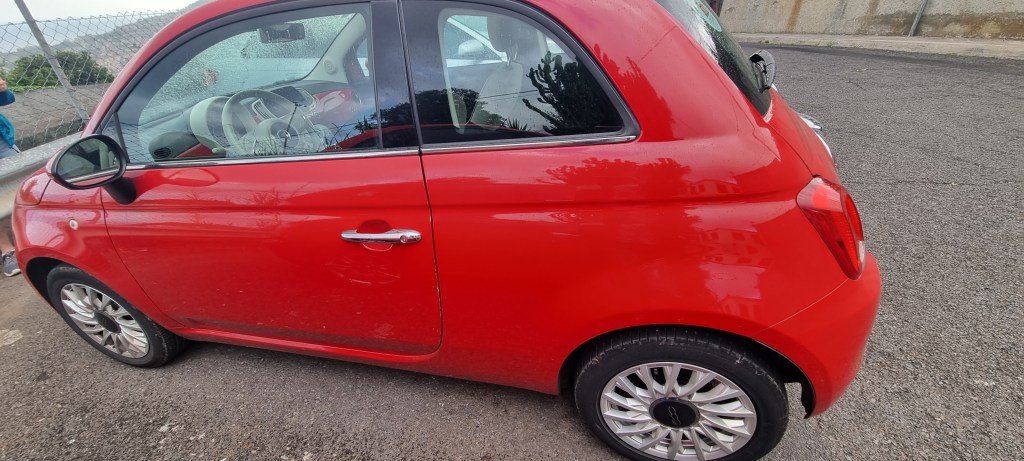
We had ordered a Fiat 500, which was very cute, but we soon realised it was not great for getting up the very steep hills in Madeira!
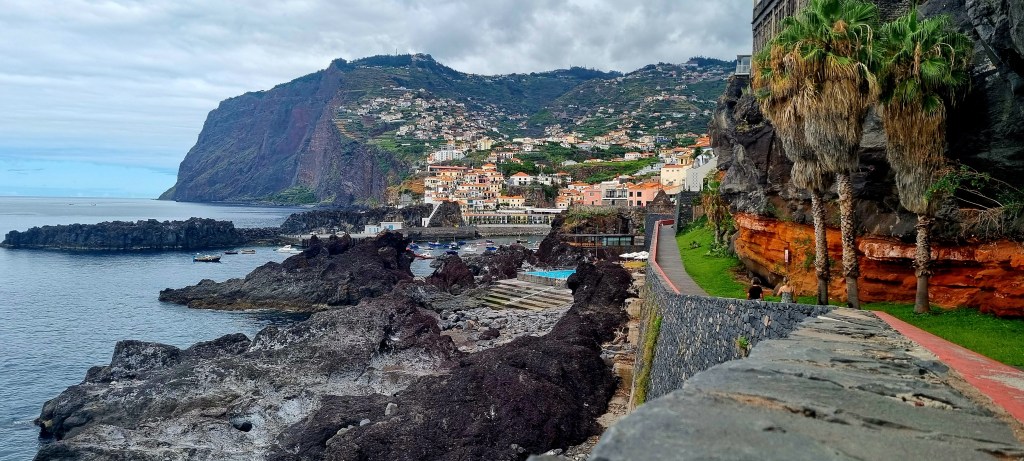
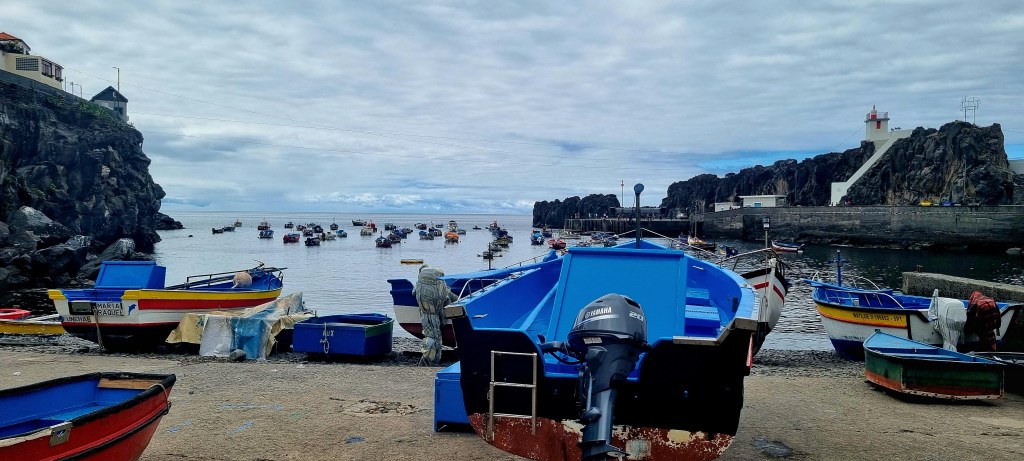
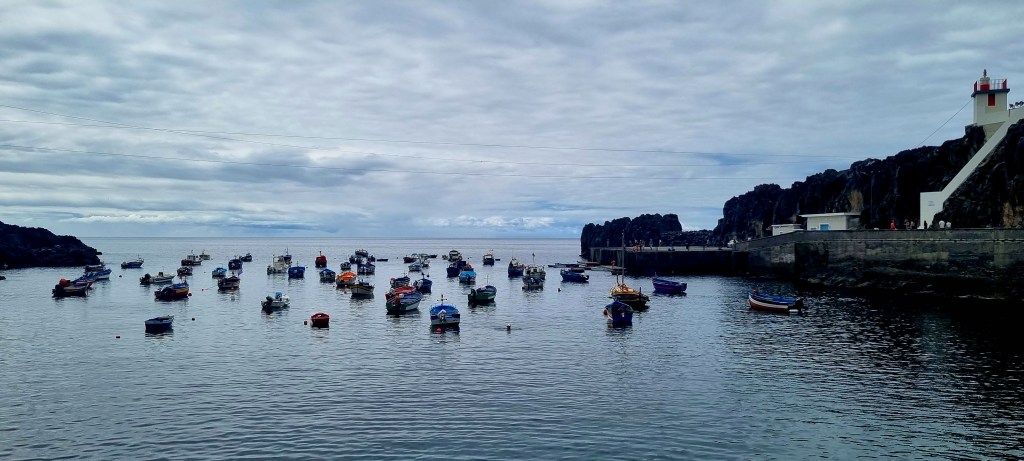
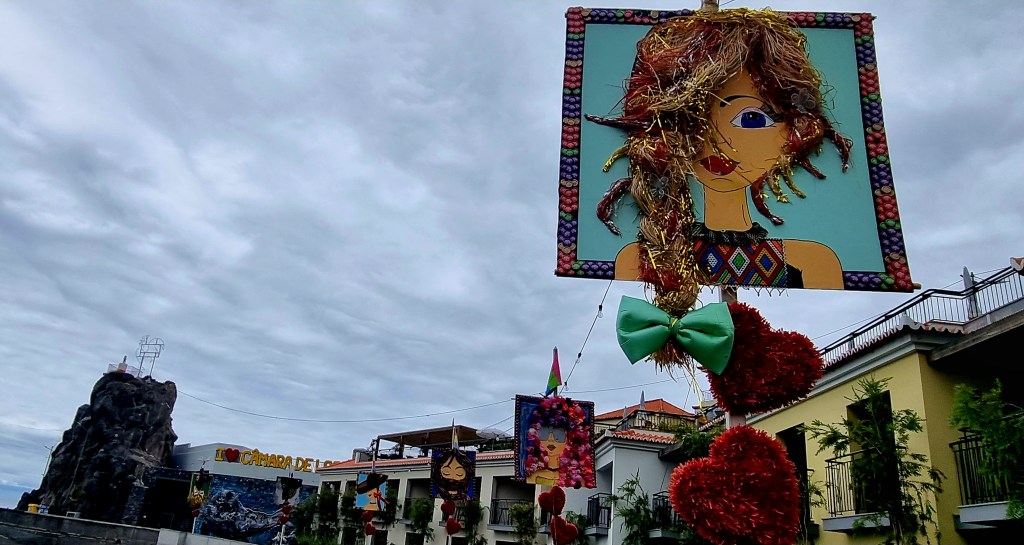
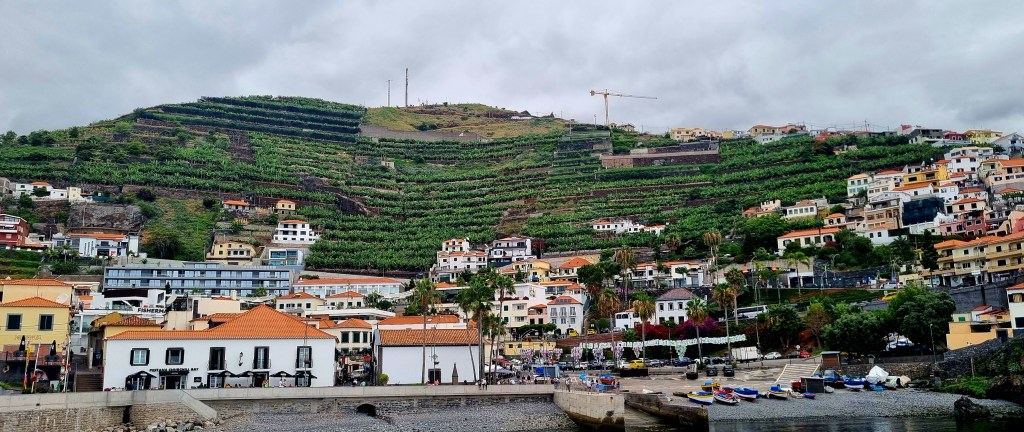
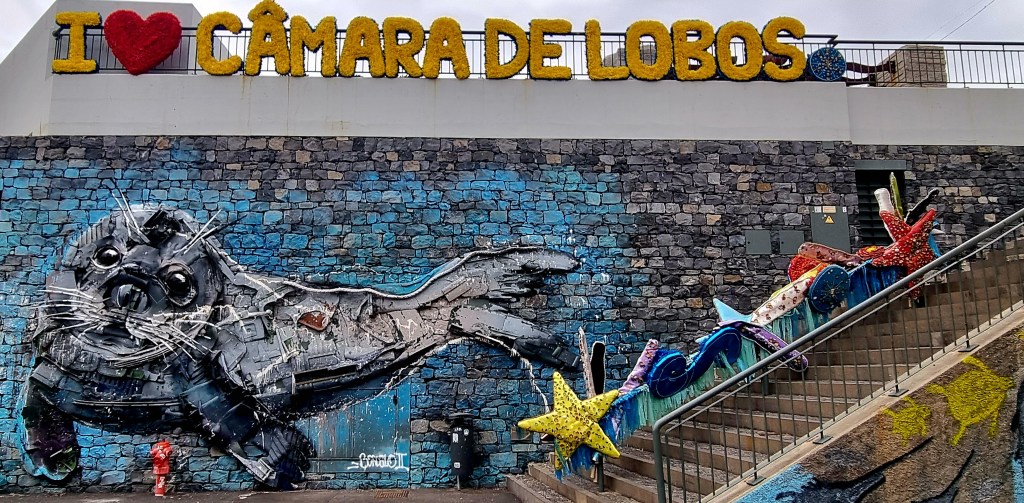
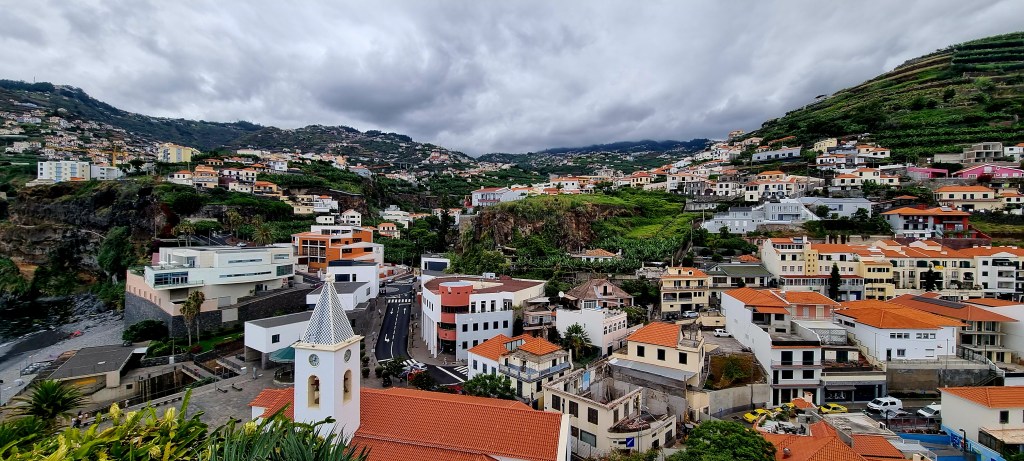
Once we had packed the car with everything we might need, we drove off. Our plan had been to stop at Cámara de Lobos, but due to my navigation skills, we missed the turning, so we carried on to Cabo Giráo.
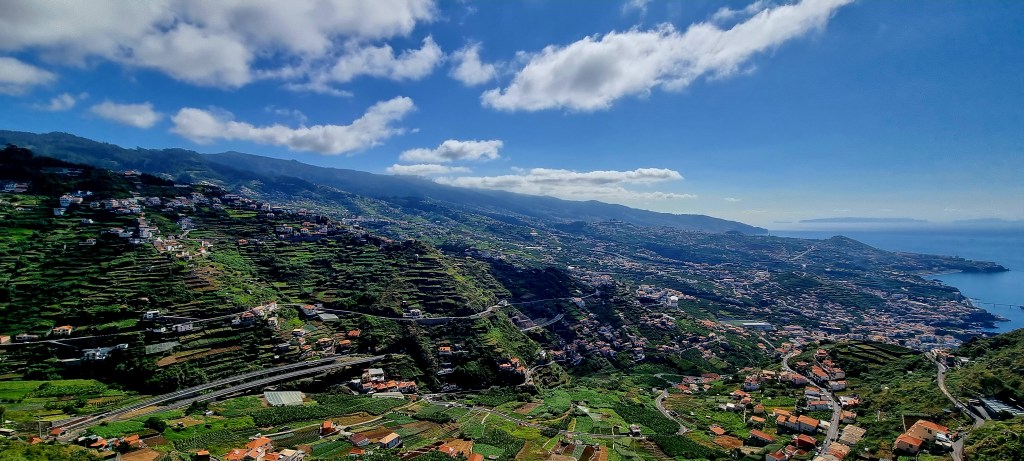
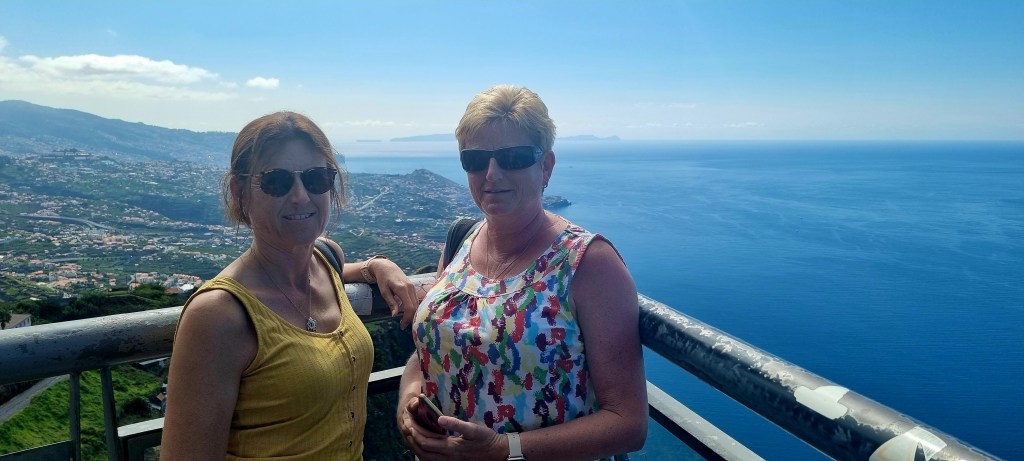
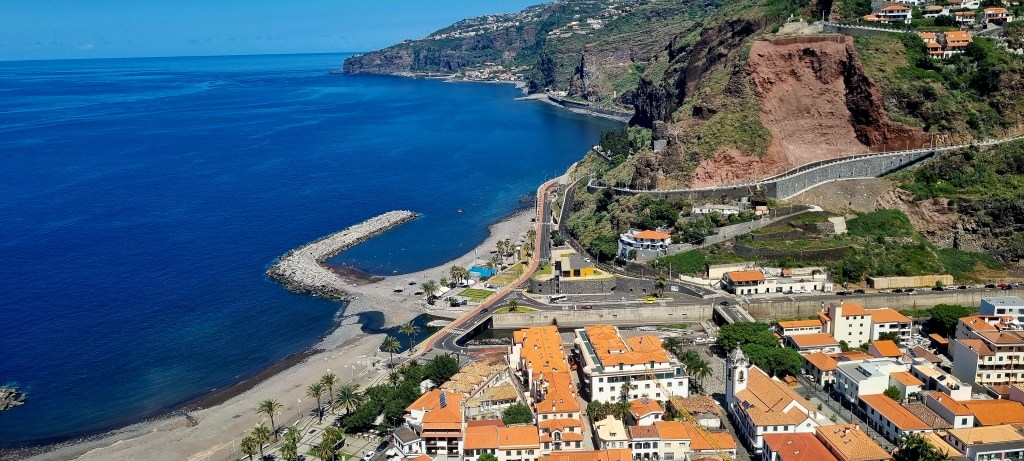
On the way, we stopped at a viewing point.
We parked the car a little distance away from the cliff and walked up.
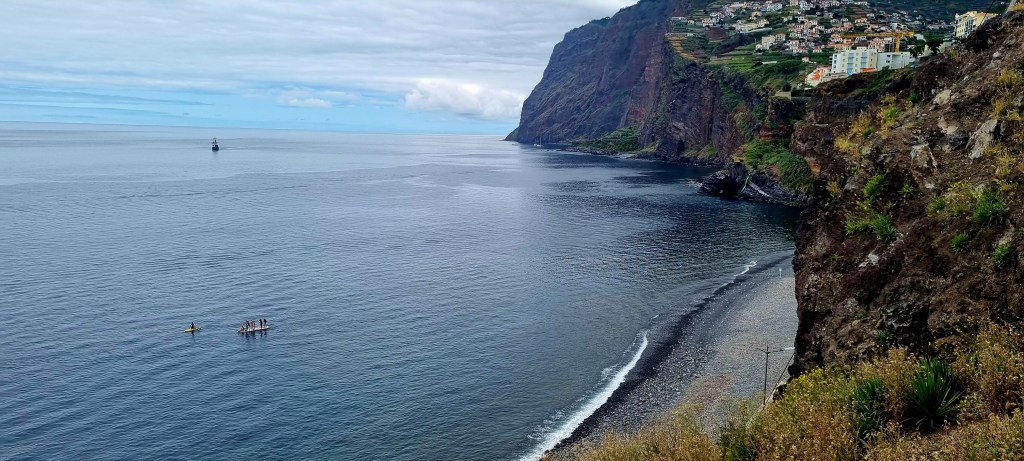
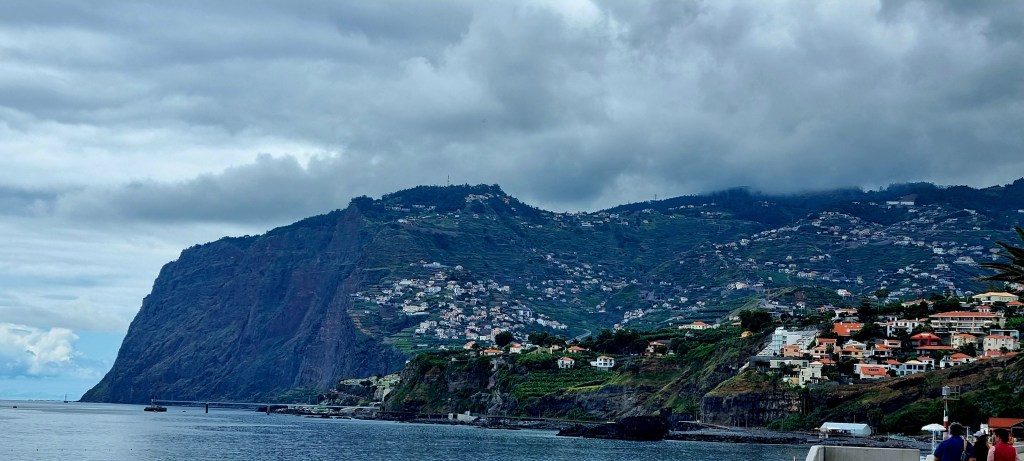
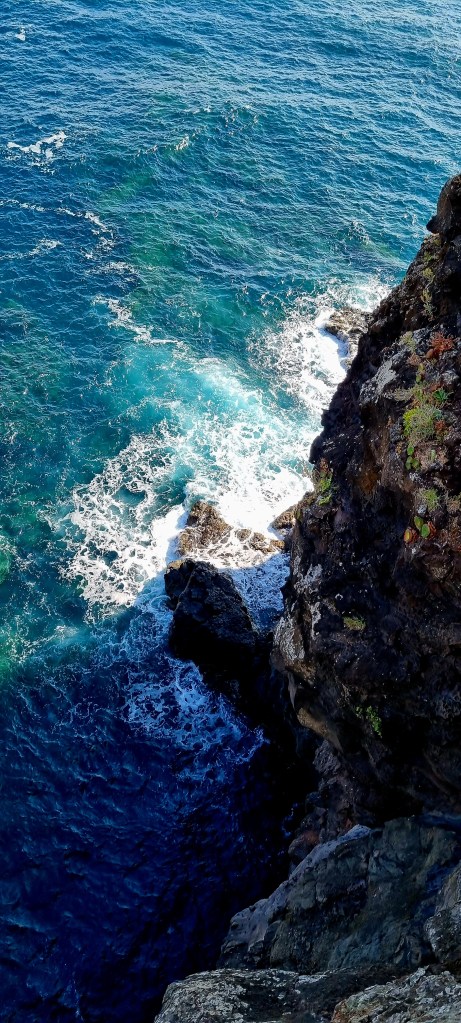
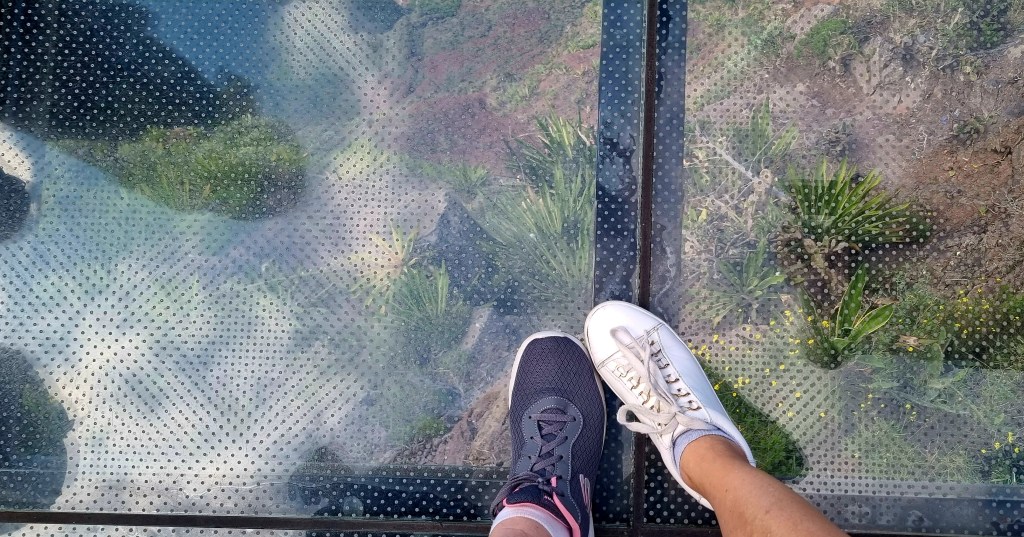
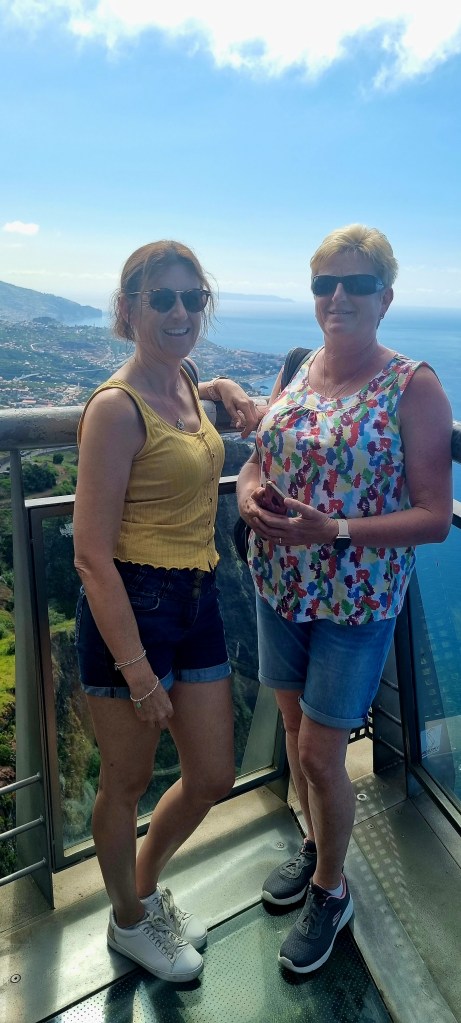
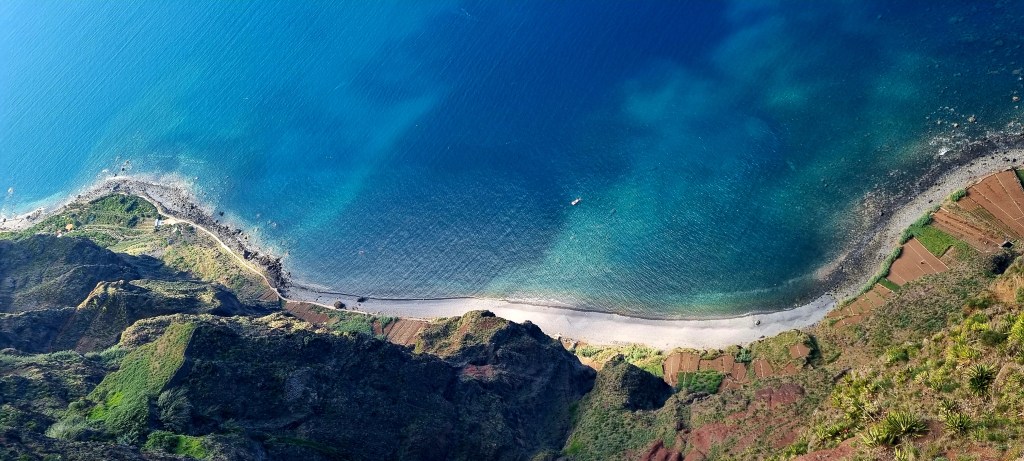
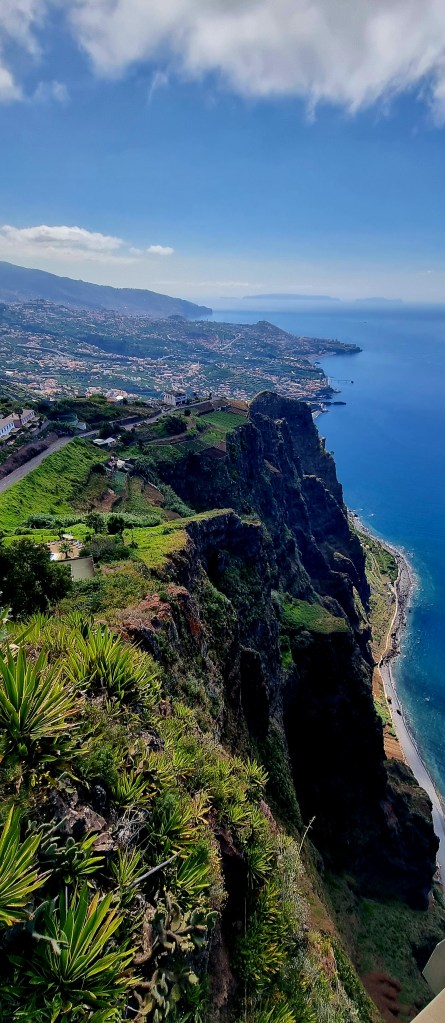
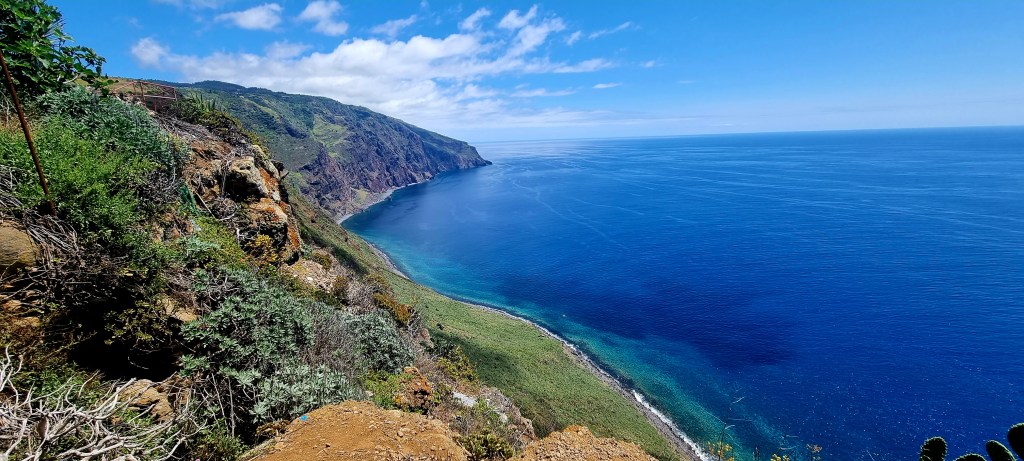
Cabo Giráo is the highest sea cliff in Madeira at 580m tall and allegedly, the second highest in the world. It has a glass viewing platform that goes out from the cliff edge so you can look directly down the cliff.
From the viewing point, you can look down onto a rock platform created when the cliff face fell into the sea many years ago. The farmers cultivate crops here in very neat terraces.
Our next stop was Ribeira Brava, which translates to ‘wild stream’. This is one of the oldest towns in Madeira and was well established as a centre for sugar production by the 1440s.
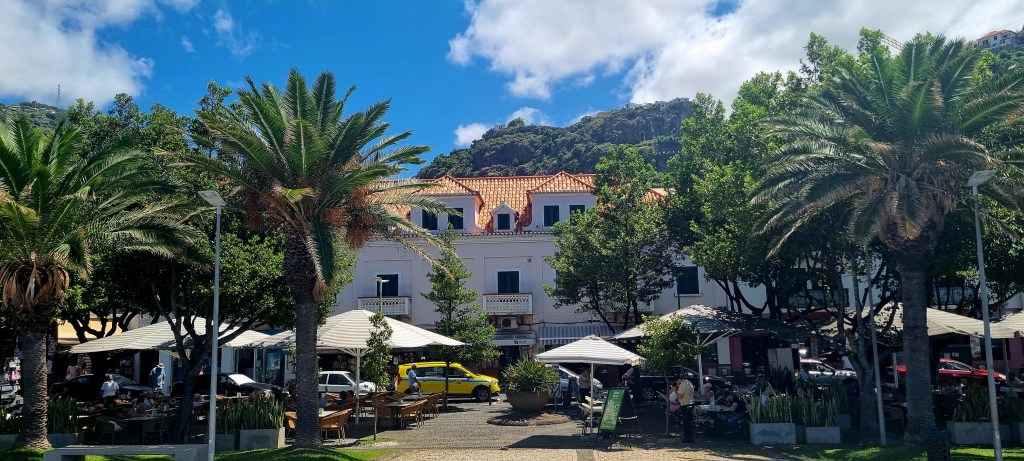
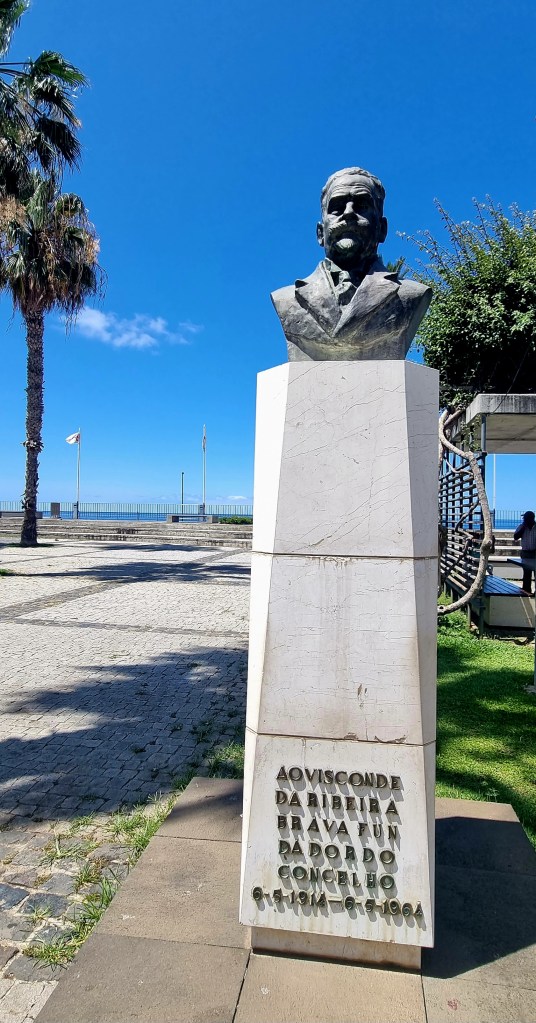
We found a car park, they are very cheap in Madeira, and walked into the town. We came across Sáo Bento church.
The story is that many years ago, the river was threatening to overflow and break its banks. The parish priest, along with his parishioners, carried the statue of St Benedict to a place called Bagaceira. Here, the priest threw the staff from the statue into the river where it had started to overflow, and the waters quietened down. The staff was later found washed up in the churchyard.
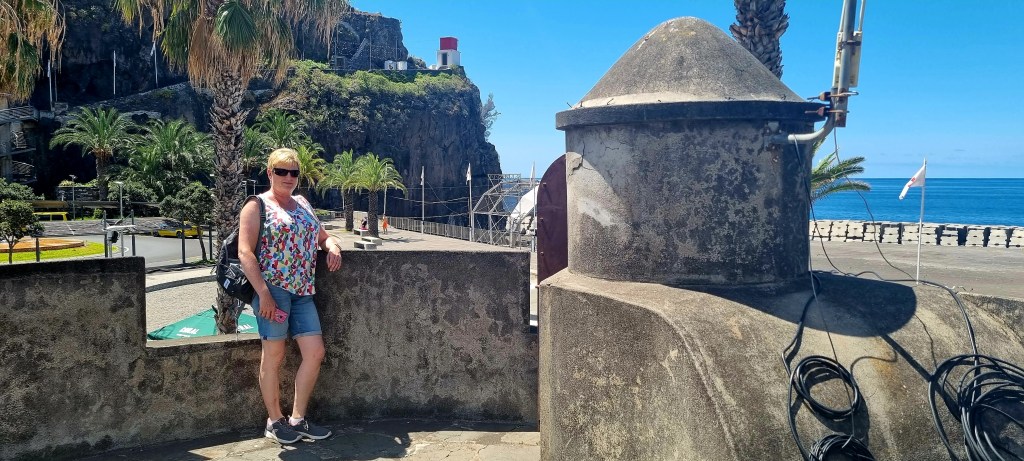
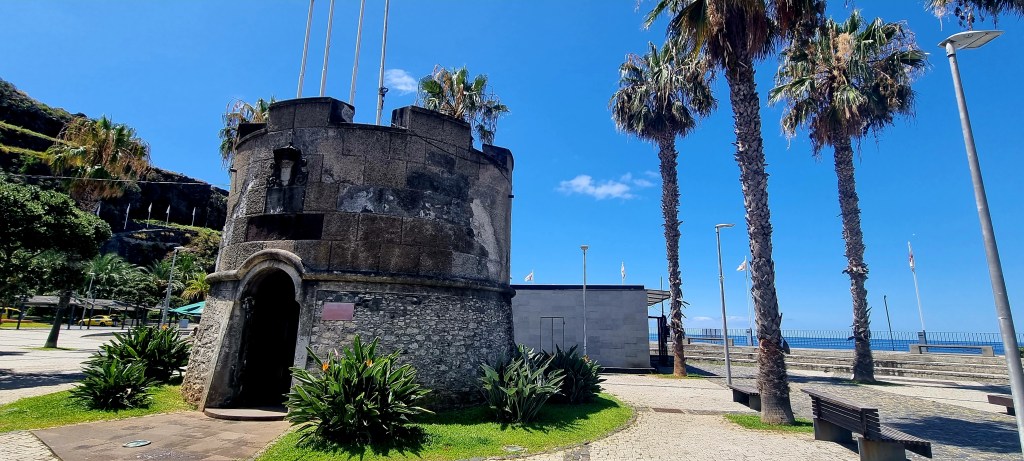
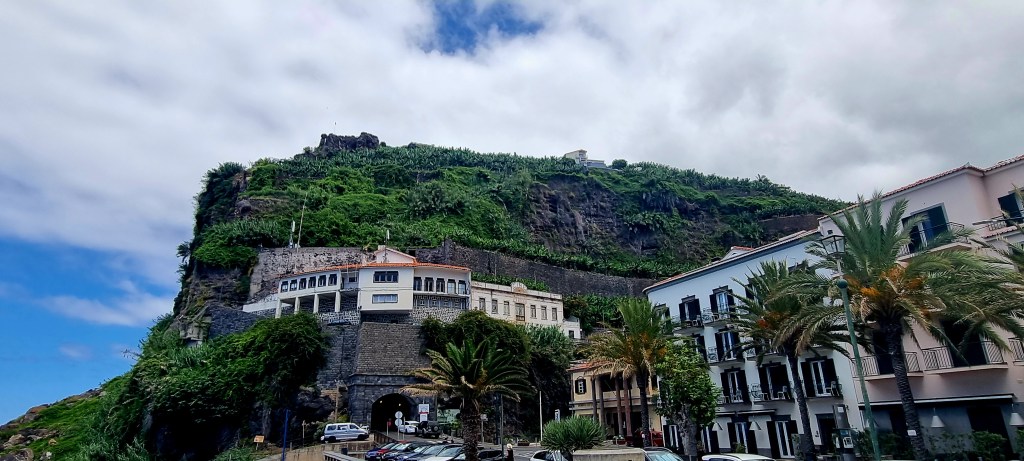
We wondered down to the seafront where there was an old Fort that is now used as a tourist office. The fort was built in 1780 by the Governor of Madeira to protect the coast from pirate attacks. This Fort of St Benedict was largely destroyed in the floods of 1803 but has since been restored.
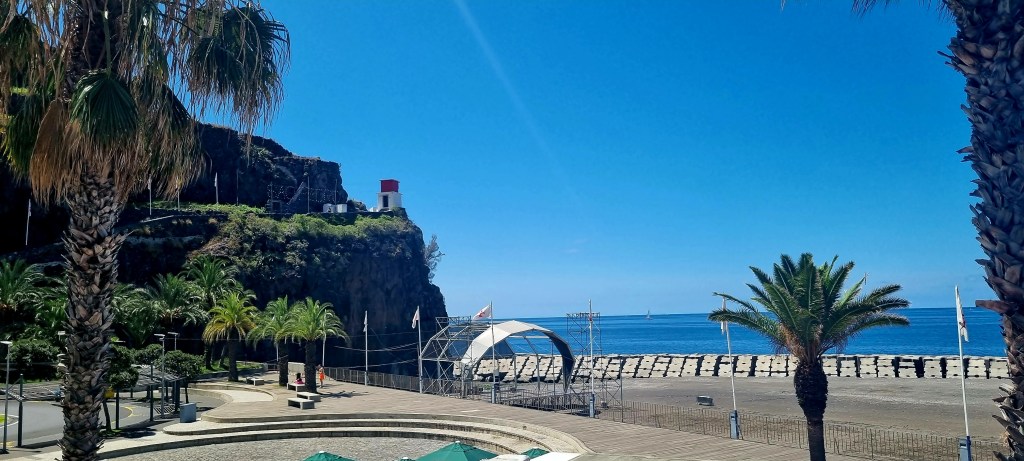
On a cliff above the sea, there is a lighthouse, which is 34m above sea level.
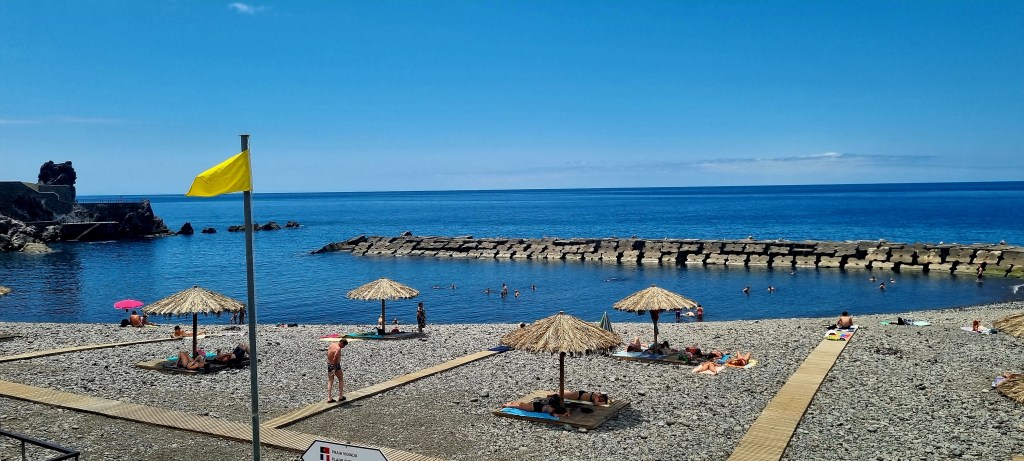
We had a walk around the town and the seafront. They had a small bathing area here, but we didn’t fancy a swim at this point.
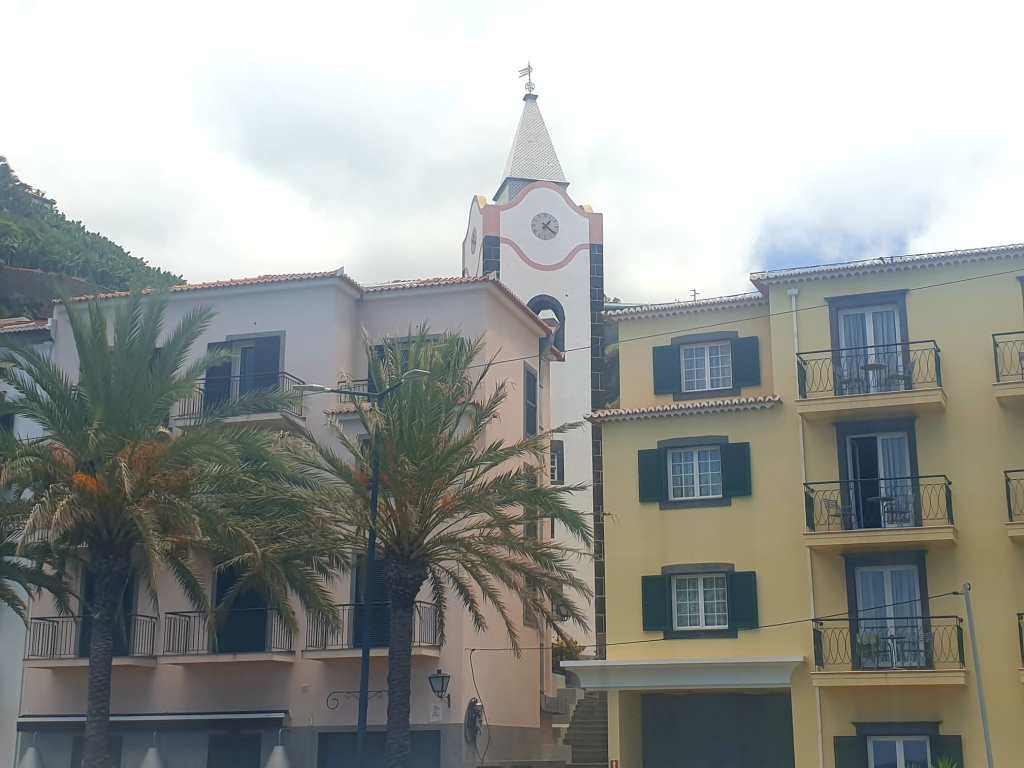
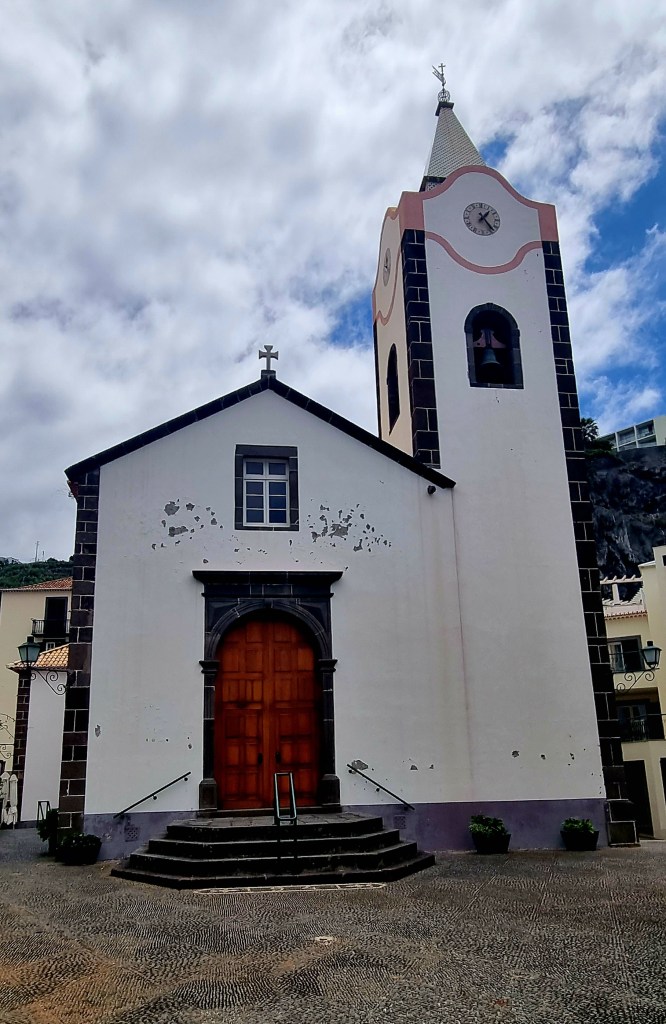
As we walked back to the car, we came across another church.
Unfortunately, Nicola slipped on the steps by the side of the church and slightly twisted her ankle. We were both pretty worried as this could mean I would have to drive!! I’m used to an automatic car and driving on the right! Luckily, though, Nicola’s foot was ok for driving, although it did hurt sometimes when we were walking.
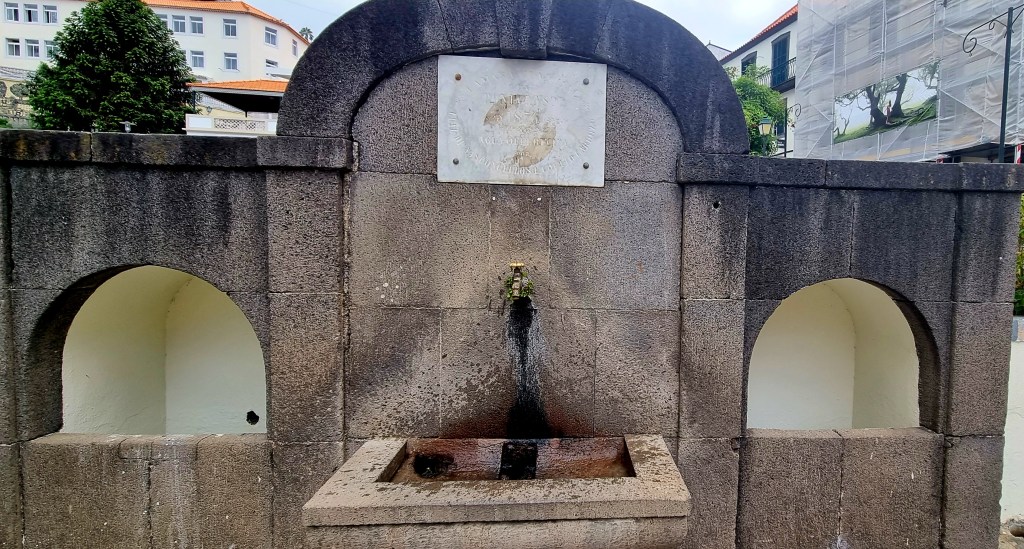
We filled our water bottles up right by the church. Throughout Madeira, they have water taps in all the towns.
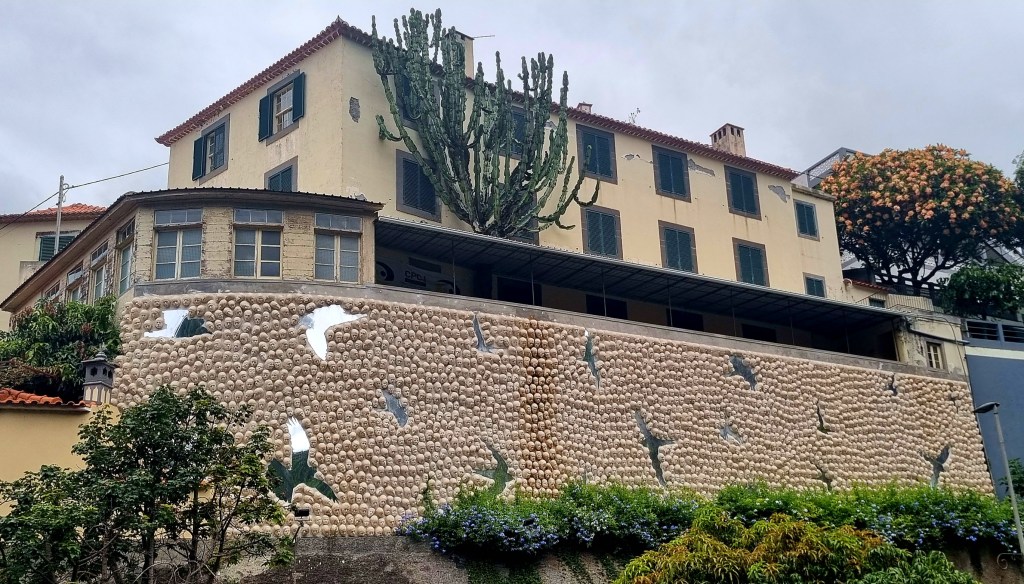
As we got back to the car, we noticed that the building over the road was very different – it was made up of lots of heads.
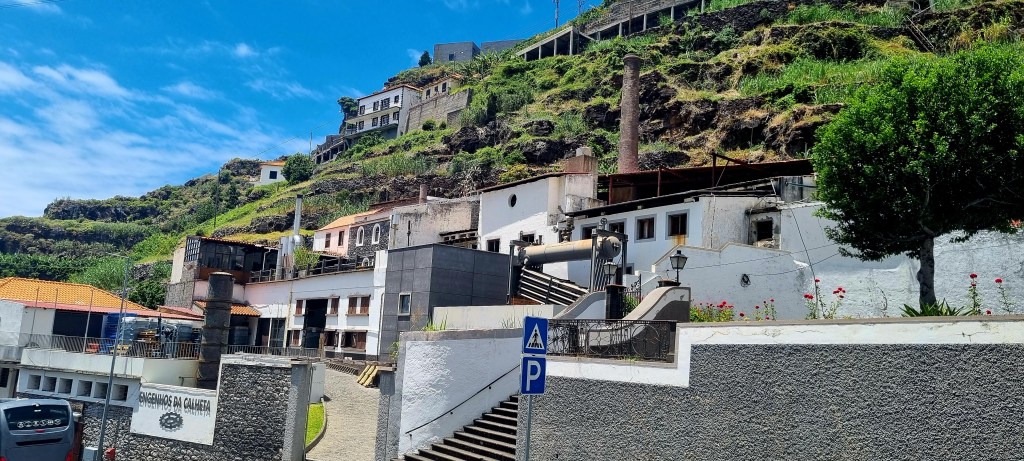
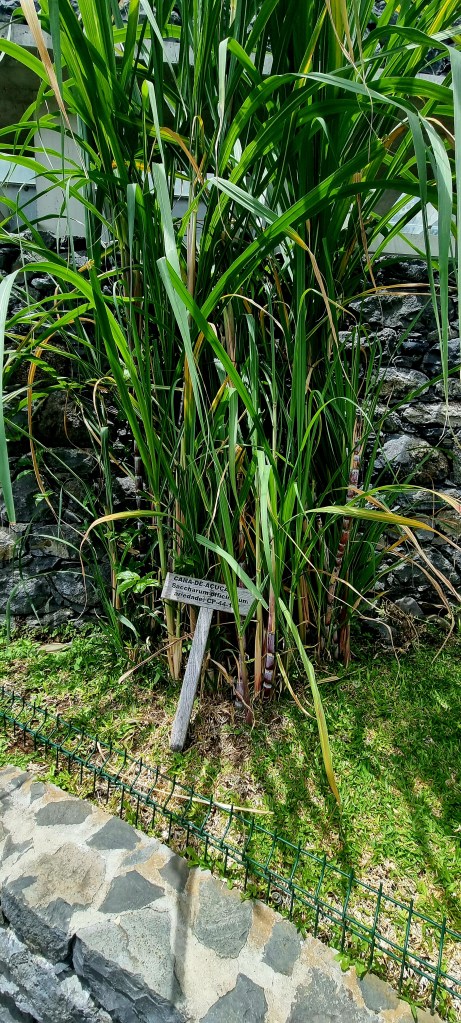
We drove on a bit further up the coast to Calheta. The main reason for coming here was to visit Engenho da Calheta, one of Madeira’s two surviving sugar Mills.
After some difficulty, parallel parking the car on a very steep hill, we walked across to the sugar mill. It was free to have a wander round inside.
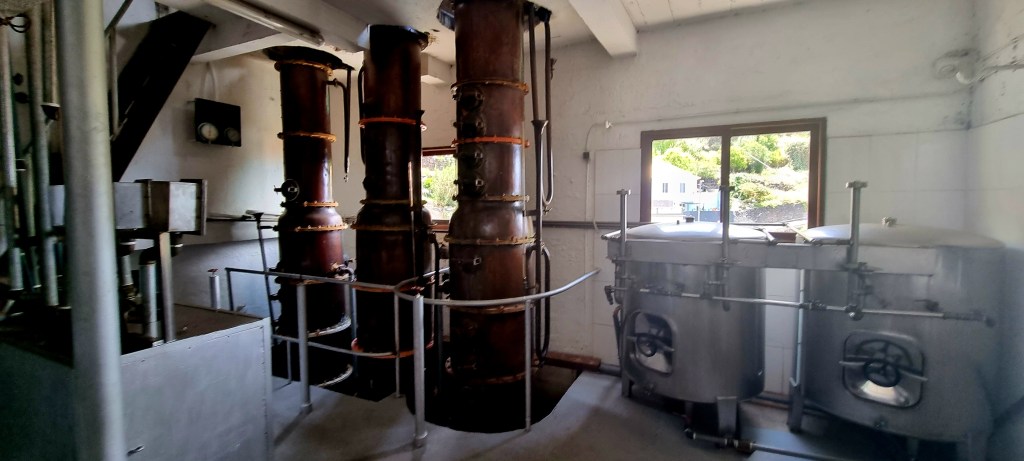
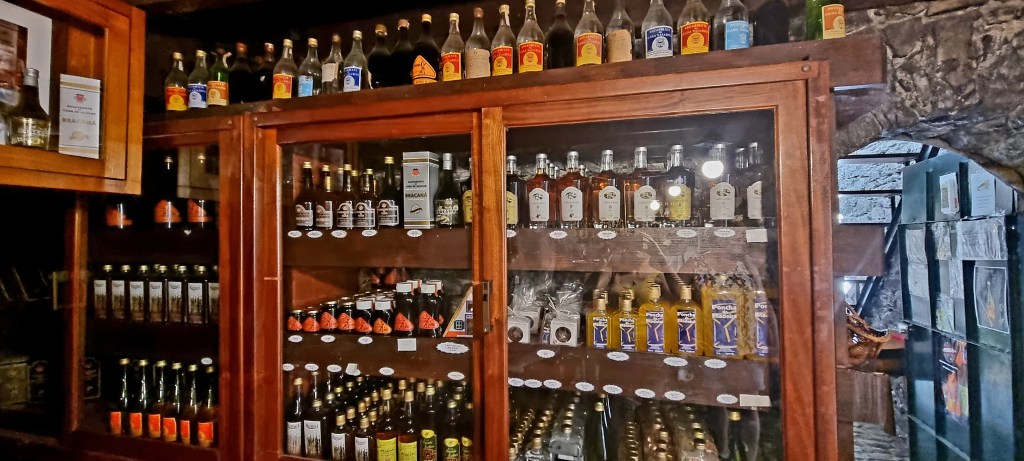
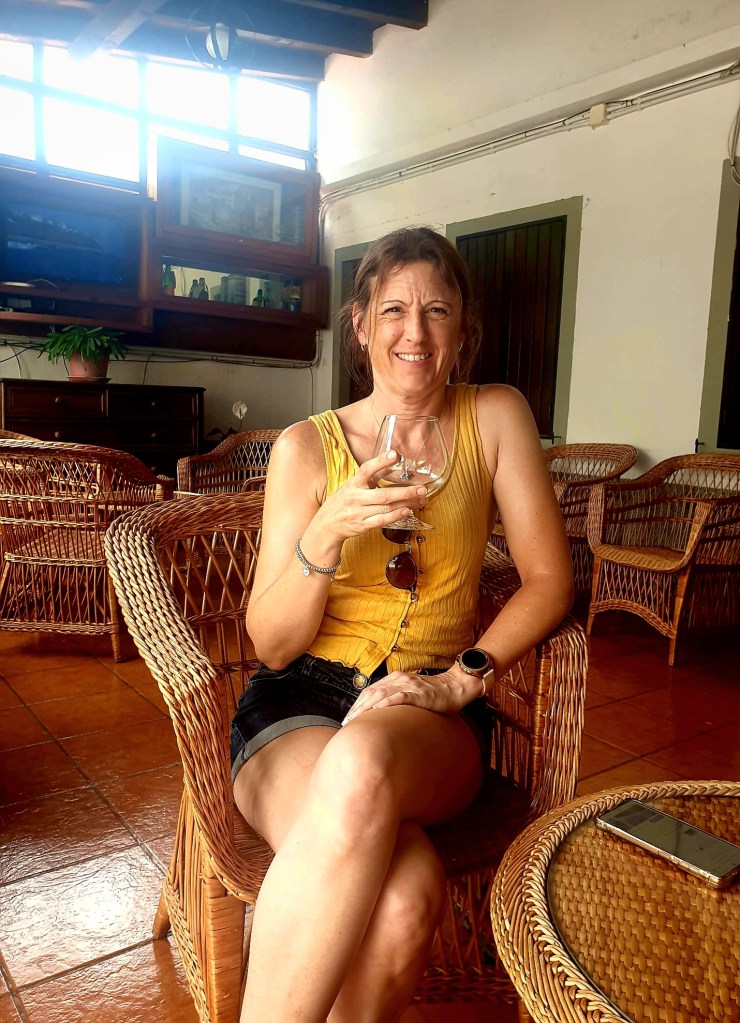
This sugar mill manufactures aguardente (rum) using distilled sugar cane, as well as producing honey. So, as we were there, I decided to try an 8 year old rum. It was really nice and smooth – and also very expensive.
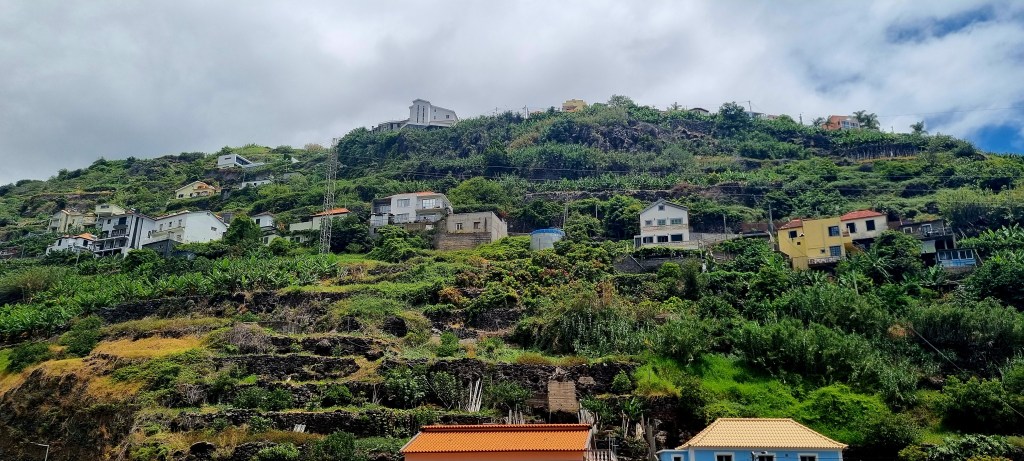
The views looking out from the sugar mill were also impressive, like much of Madeira.
Next door to the sugar mill was the parish church of Calheta, Espirito Santo. This church is a scaled down version of Funchal Cathedral. It, too, has a very decorated knotwork ceiling above the alter.
It also contains a beautiful carving of the last supper.
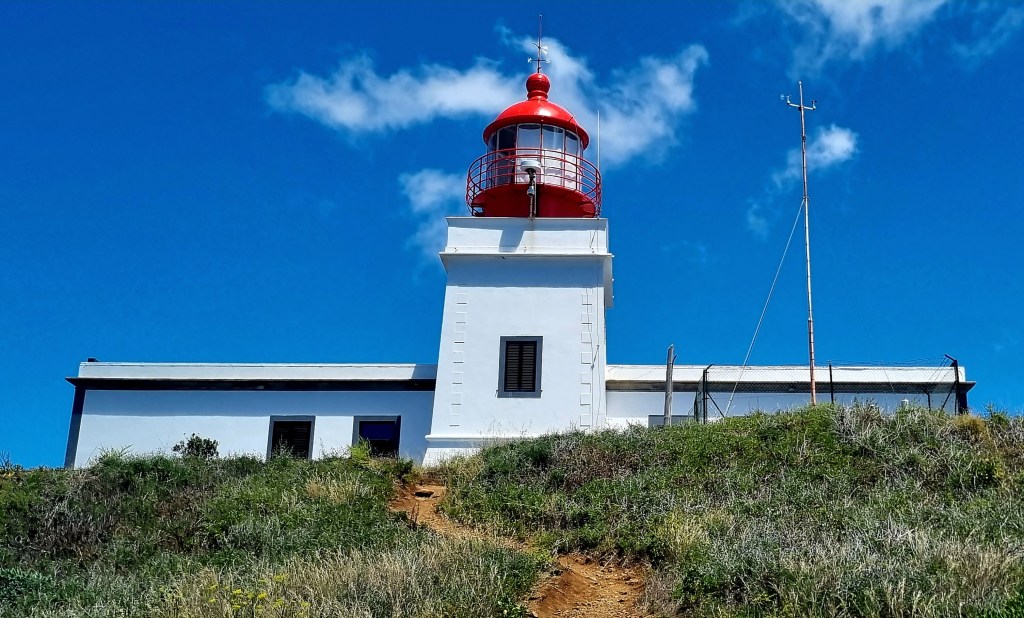
Our next stop was Ponta do Prago, which is Madeira’s westernmost point. From here, there is 500km of water before you hit land again – the Americas.
The lighthouse dates from the early 20th century and is on the cliff, 290m above sea level.
We did have a quick look inside the lighthouse, but it wasn’t particularly interesting.
The name Ponta do Pargo comes from early explorers who fished in the western waters and caught a fish species of porgy, which is similar to sea bream.
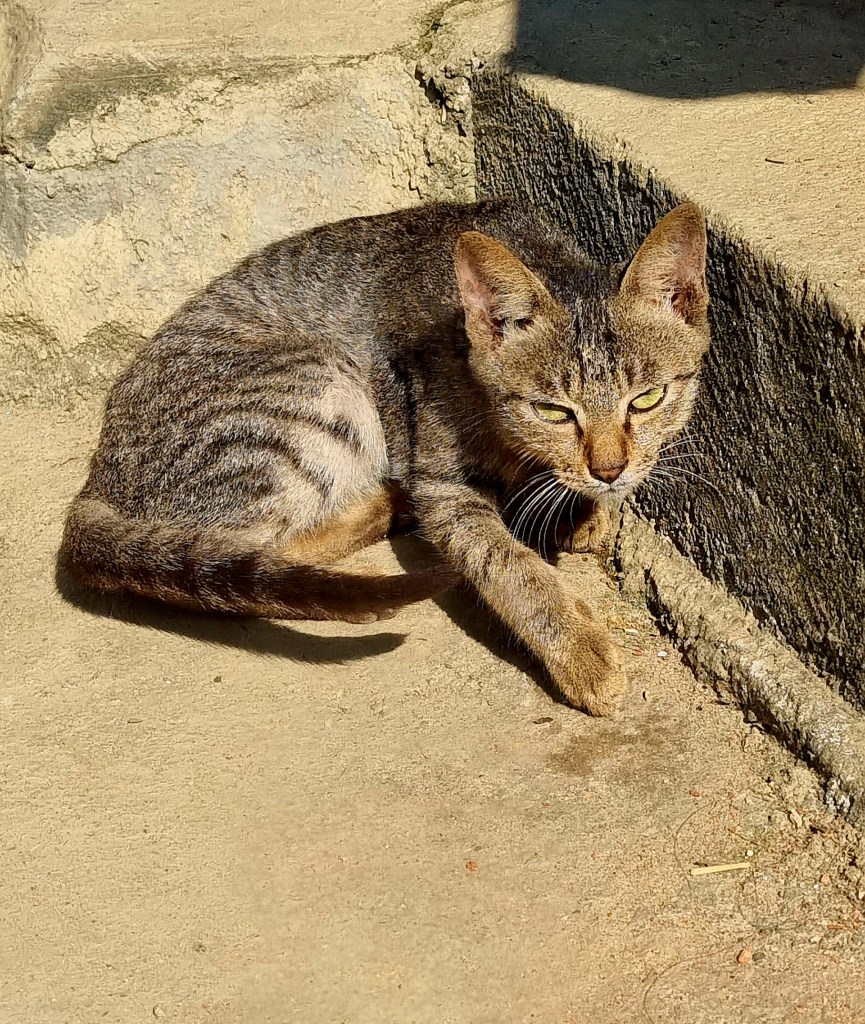
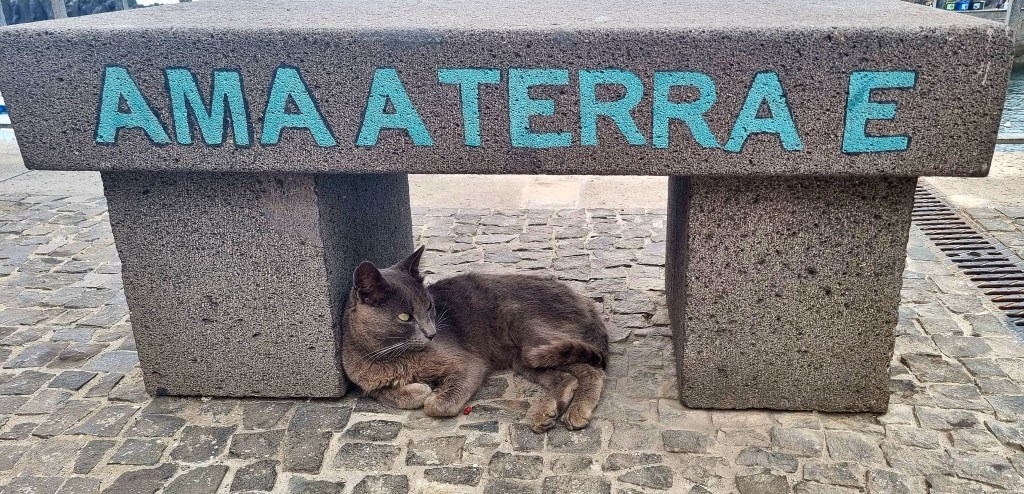
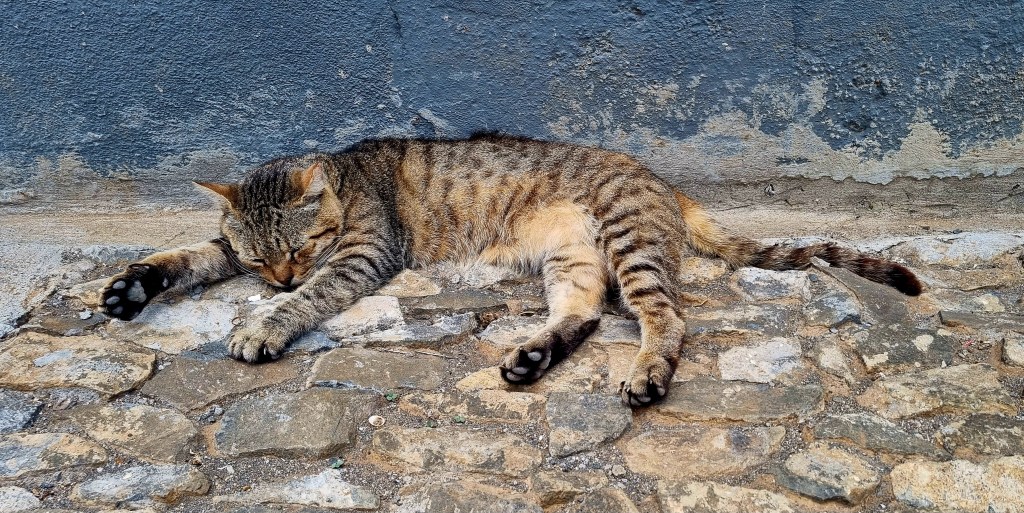
A cat was chilling just by the lighthouse.
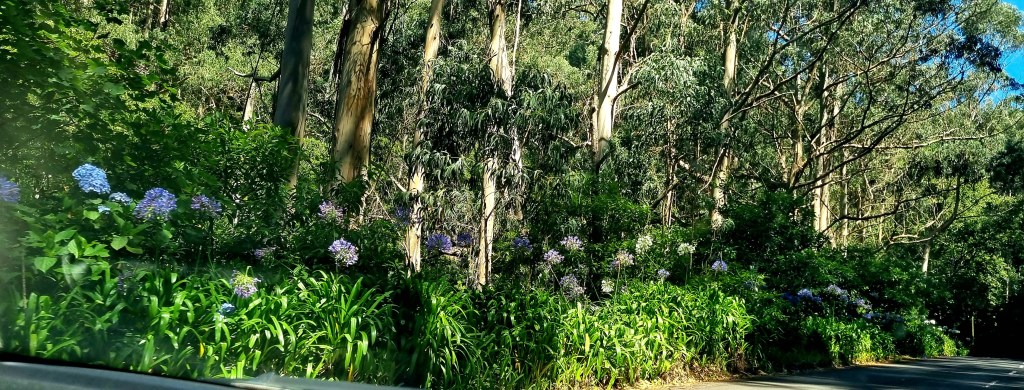
The roads in Madeira are really steep and windy – I was glad I wasn’t driving. They were also quite pretty, with lots of flowers and woodland, including eucalyptus trees, by the sides of the road.
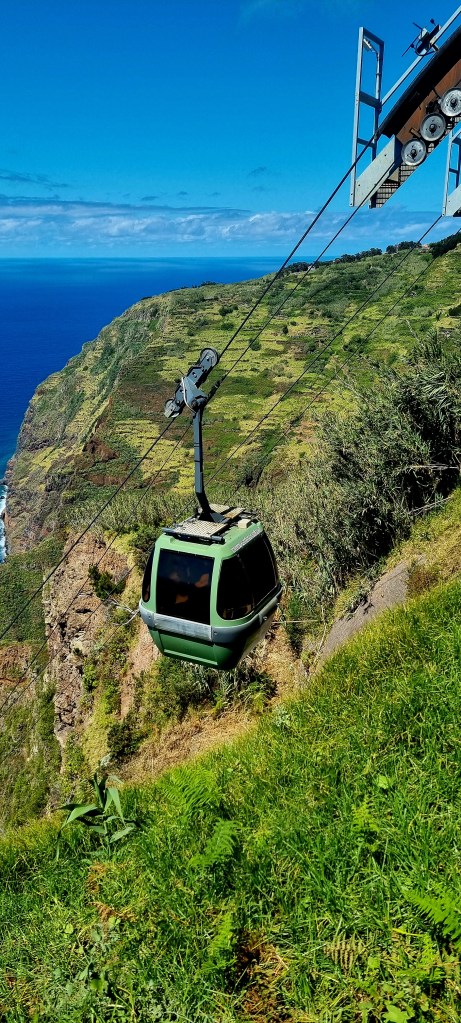
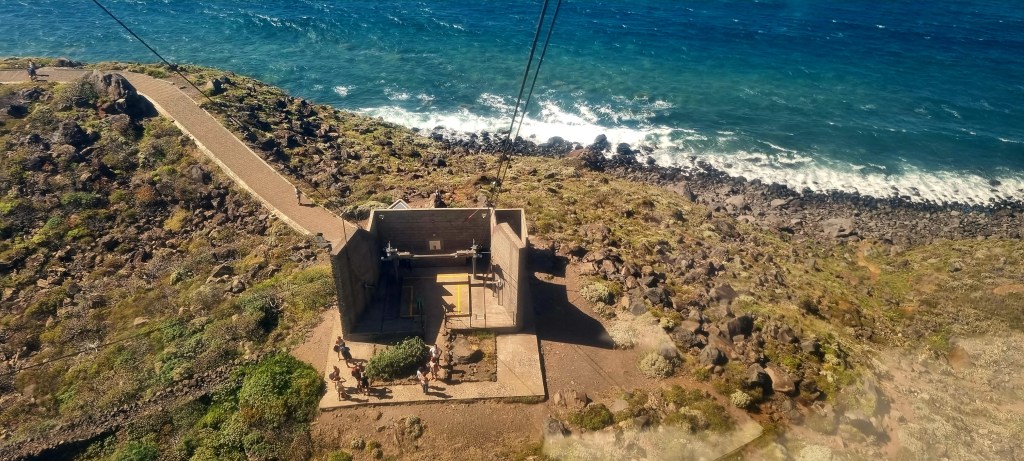
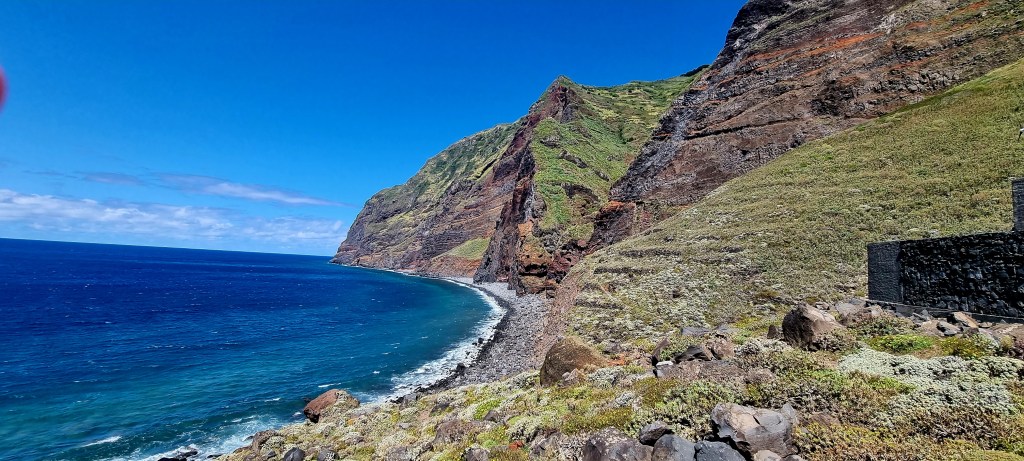
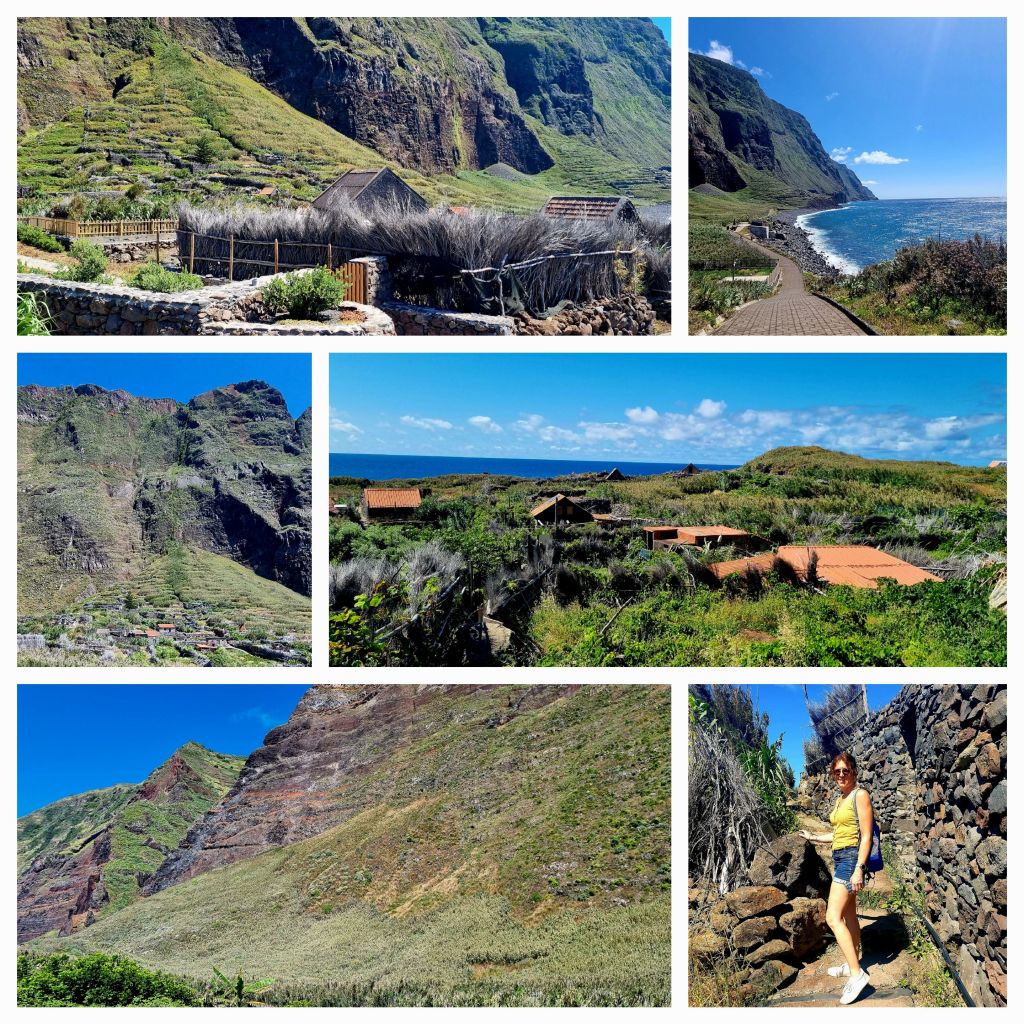
Our final stop of the day was Achadas da Cruz. We wanted to come here to go in the cable car and also to explore the farm huts in the area. The cable car glides over the edge of a 450m cliff, down to a rocky beach below. This is one of the steepest cable cars in Europe. It runs on a 98% slope, with a travel time of around 5 minutes on a 600m long wire.
Local farmers have little houses down here, and they work the land. I am not sure if people live here permanently as you are allowed to walk around the tiny ‘village’.
The high agricultural productivity of this area was one of the main reasons for the creation of the cable car, which helps farmers reach the fields and transport their harvests.
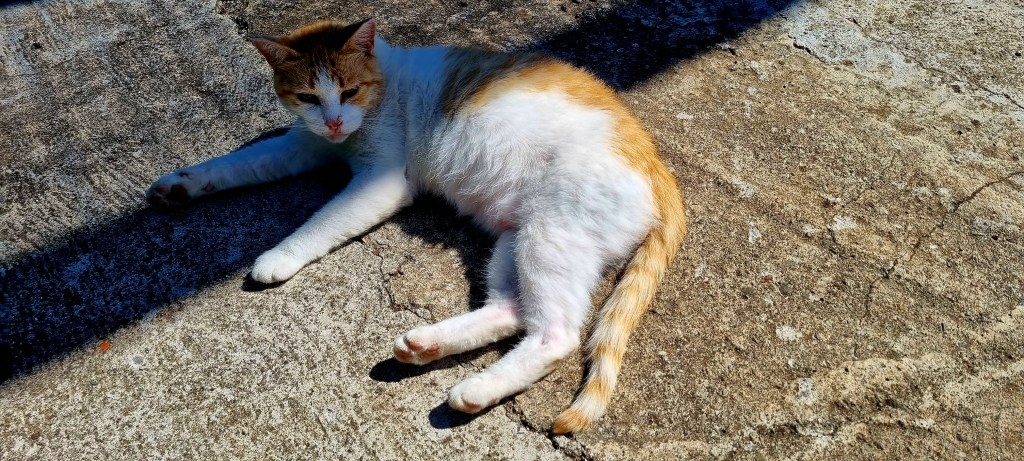
At the top, when we got back out of the cable car, I found another furry friend.
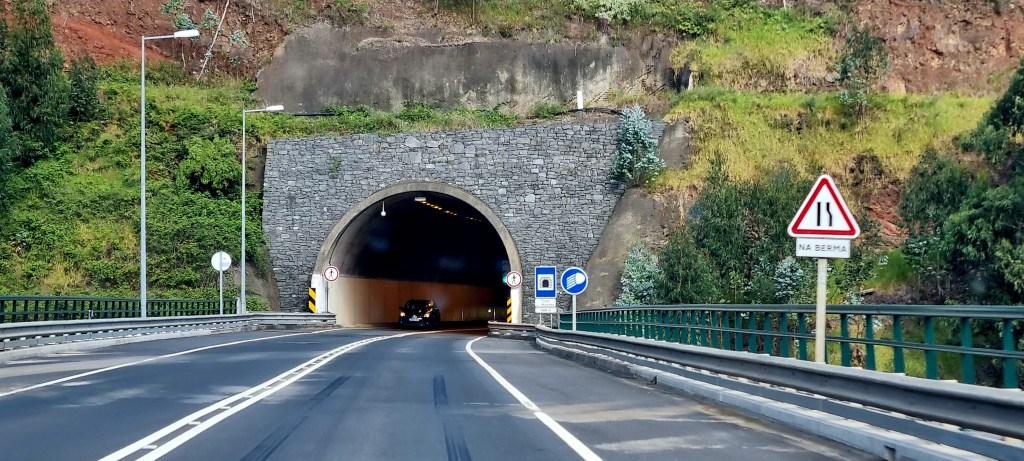
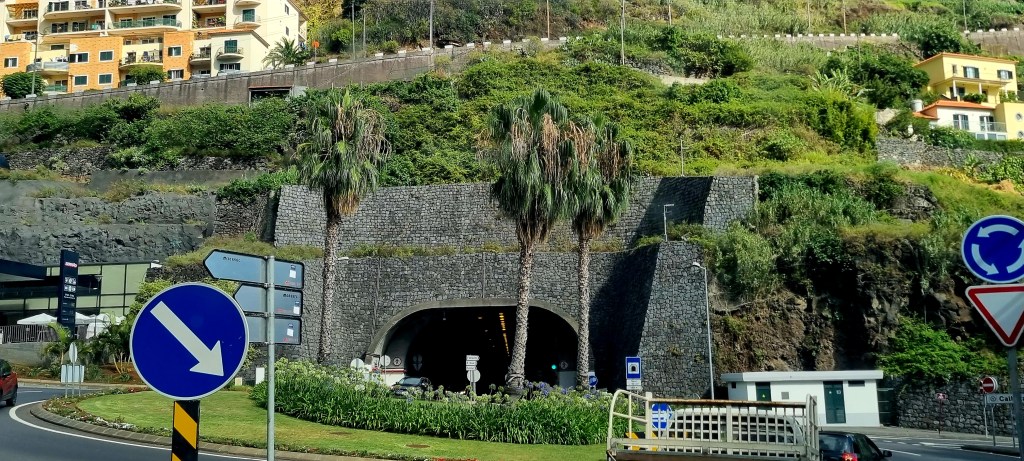
From here, it was time to head home, around an hour’s drive. Madeira has an interesting road network with over 150 tunnels cut into the rock, taking you through the mountains. The tunnels are around 45km in length in total, and the longest one is 3km long.
After arriving home and a quick freshen up, we got the number 19 bus to Santa Maria Street. We picked a fish restaurant for dinner, and the food was delicious.
Santa Maria is a great street for dinner as there is a lot going on and a lively atmosphere.
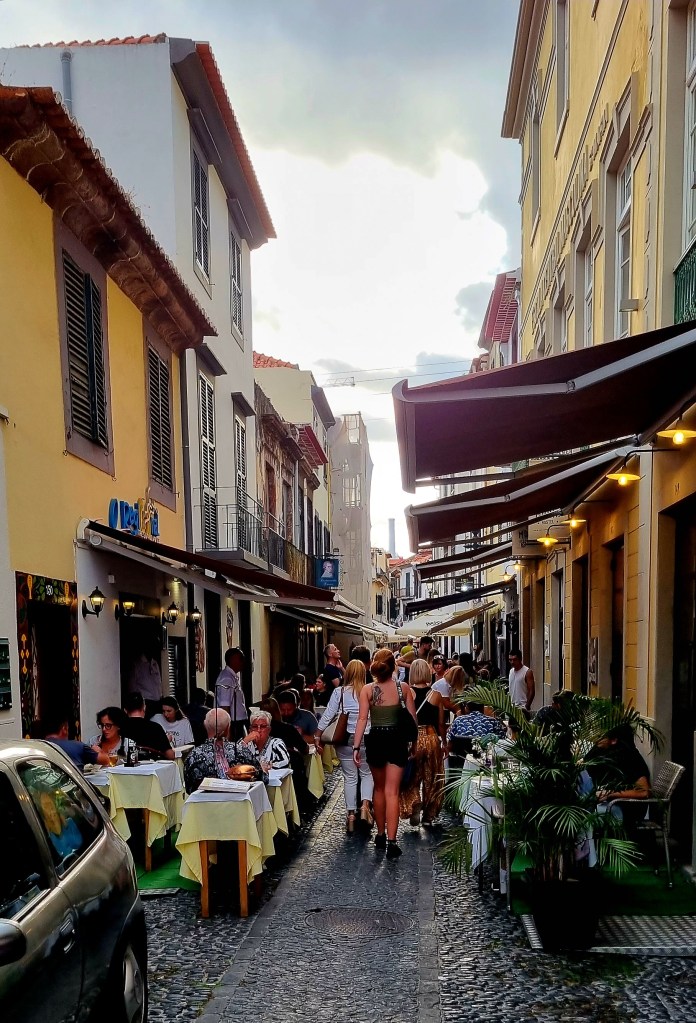
After our wine tasting, we decided to explore the ‘old town’ or Zona Velha, as it’s known.
We started at the Mercado dos Lavradores. This art deco hall was originally designed in 1937, and its colours blend in with the traditional Maderian architecture.
We were amazed at the number of different types of passion fruit, and we tried a few different ones, including lemon and pineapple. And we bought some too!
We also tried and bought something known as delicious fruit, which tastes like a mixture of banana, pineapple and anona. It’s really tasty when ripe but can be toxic when it’s still green.
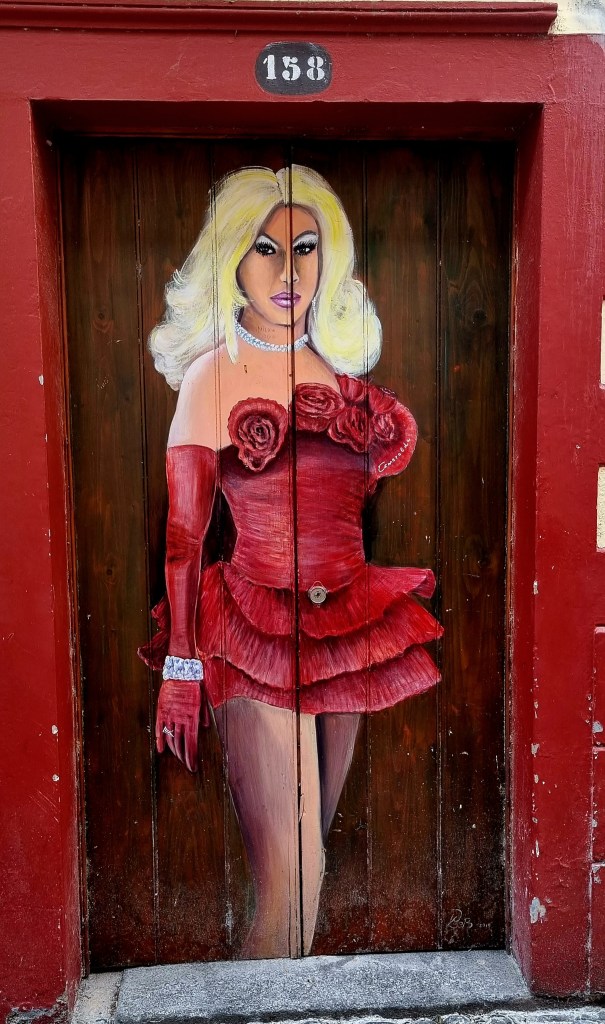
The street of Santa Maria is full of amazing street art where local artists have painted on most of the doors.
At the end of the street is the Chapel of Corpo Santo. This was built at the end of the 15th century and marked the original end of the old village. The Chapel is dedicated to Corpo Santo (Saint Pedro Gonclaves Telmo), the patron Saint of fishermen and sailors.
We walked past another church, Igreja de Santiago Menor. We wanted to go inside but it was shut. The church was originally built in 1530 but was destroyed by the earthquake in 1748 and then rebuilt in 1750.
At the end of the Zona Velha is the Fort of Saó Tiago. This was built in the early 17th century and was built to defend the port from pirate attacks.
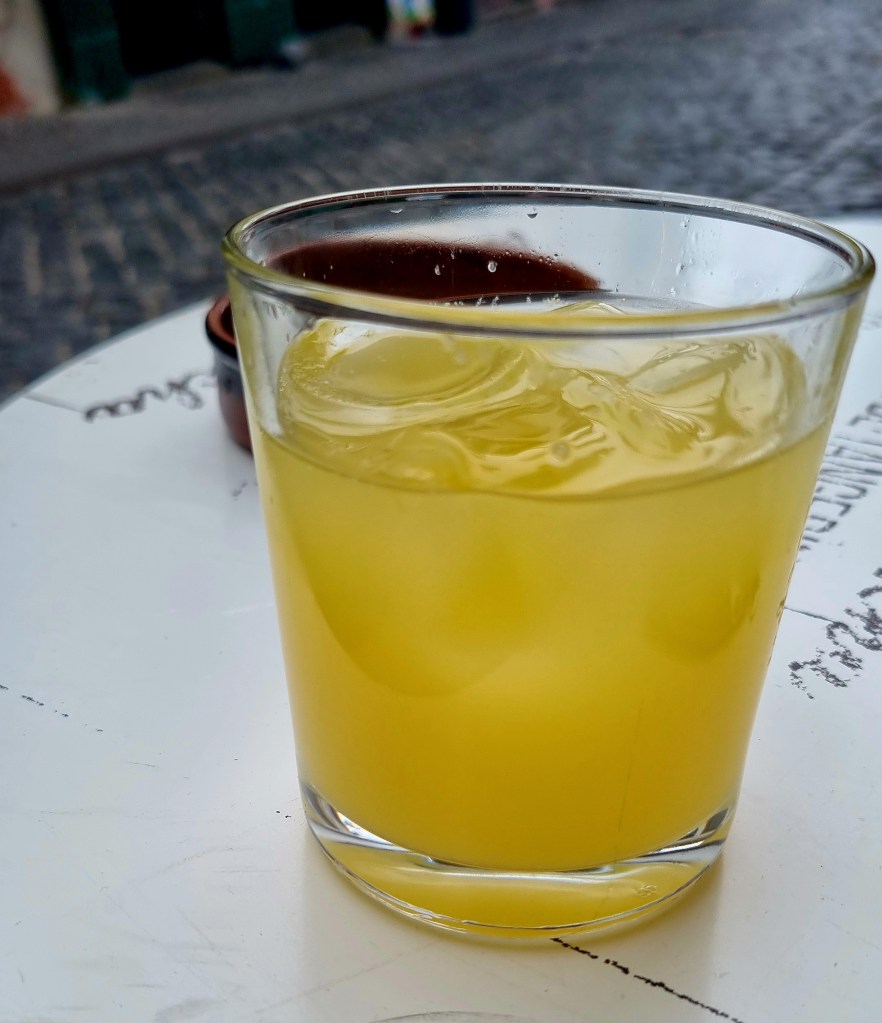
We stopped here for a toasted tuna sandwich, which was very dry, and a poncha. The poncha is a traditional Maderian drink made from rum, honey or sugar and lemon or orange juice, very tasty.
On our walk back to the city centre, we could see the white chimney, which is part of the Savoy Residence I Insular Project. This chimney is apparently an iconic element of Funchal.
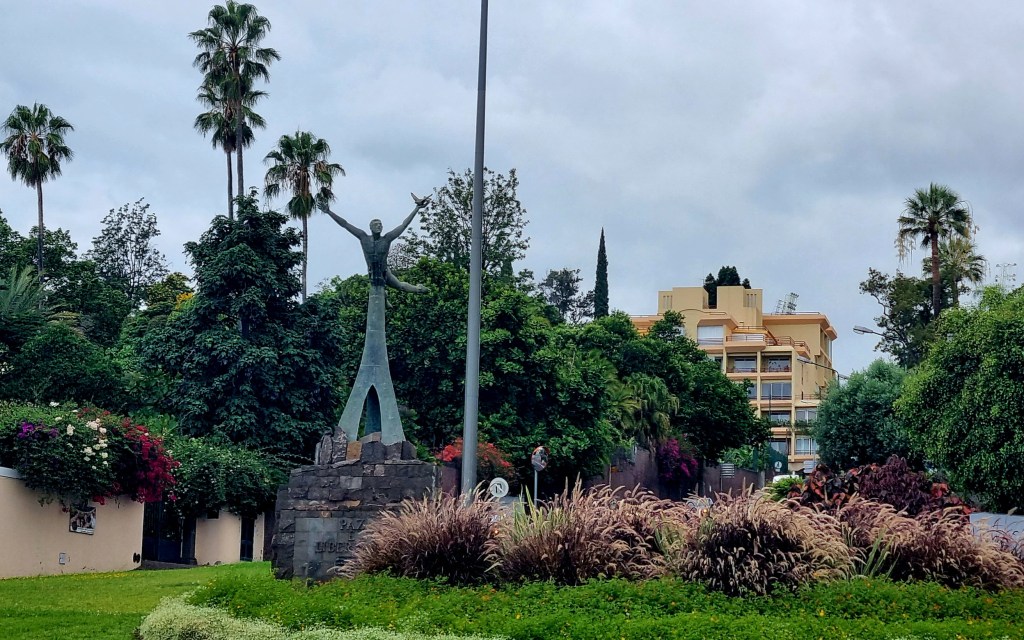
Along the waterfront are a number of different sculptures.
Obviously, we had to pose by the Madeira sign.
And then it was a walk down to see Christian Ronaldo!
We continued walking down the street to the casino. This is an amazing building built in the round and designed by Oscar Niemeyer.
Just round the corner from the casino is the statue of Sissi. This is a life-size bronze statue of the Austrian Empress Elizabeth of Bavaria, known as Sissi, who spent part of her life in Madeira. On 24 December 1893, precisely on her 56 birthday, the empress arrived at Funchal, Madeira, aboard the steamer Greif. British Navy ships in the bay of Funchal greeted her with an imperial salute and would continue doing so every morning for the full duration of her stay. After Sissi lost her son, it was believed he committed suicide, she decided to travel as much as possible. She was considered a free spirit who defied conventional court protocol.
After this, we went back to the city garden, where the friary which was once a hospital, is now government offices.
In the garden, we saw one of the infamous dragon trees. The sap from these trees is used as a dye, commonly known as dragon’s blood.
We also saw a ‘Sausage Tree’. The fruit from this tree is poisonous when raw but can be eaten if cooked. Apparently, it tastes quite earthy, like a potato. The tree can grow 6-12m tall, and the fruit can grow 30-60cm long and can weigh about 7kg.
There were some very strange birds in and around the park, kind of a mixture between a duck and a turkey. The babies were very cute, though.
In the garden is a statue of St Francis.
On the way home, we stopped off at Blandys Wine Lodge. The lodge is set in the surviving parts of a 17th-century Franciscan friary. Most of the friary was demolished when Portugal passed a law banning religious orders in 1834. The Blandy family has owned the premises since 1840, since which it has been used to make Madeira wine.
Madeira wine is fortified by adding brandy at the final stage of the fermentation process. It is also heated as it ages in the casks in a hothouse.
After all this walking, we headed home and decided to go somewhere local for dinner – Cantino do Pestico. There were some nice views on the way.
The restaurant was like a small cafe and had some interesting objects inside.
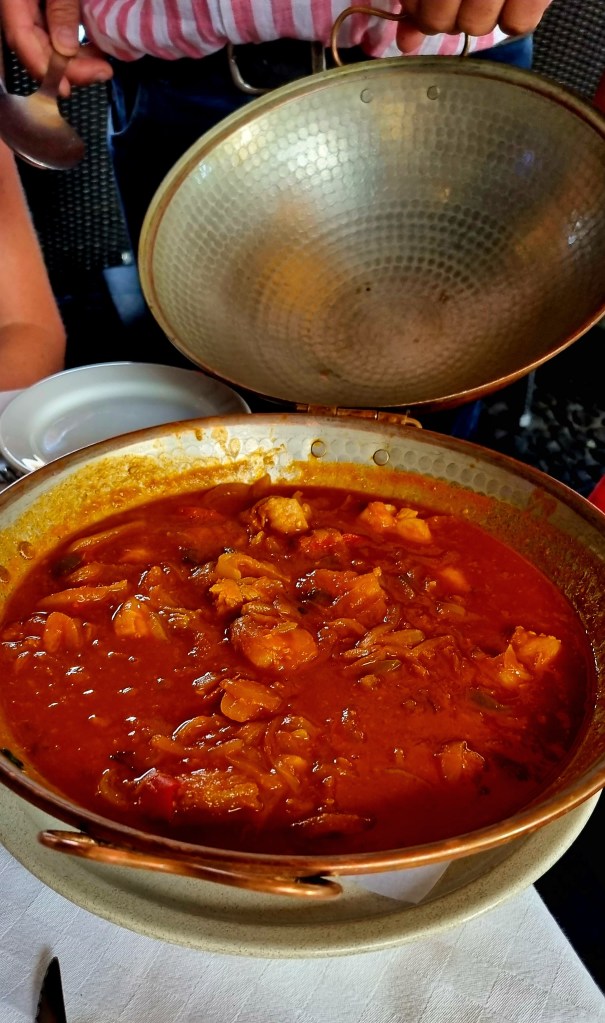
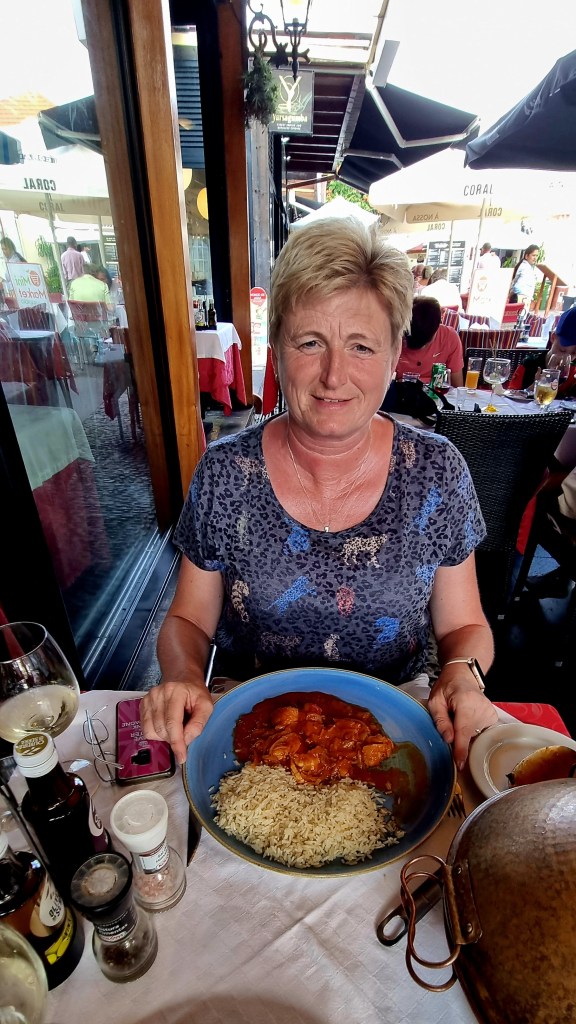
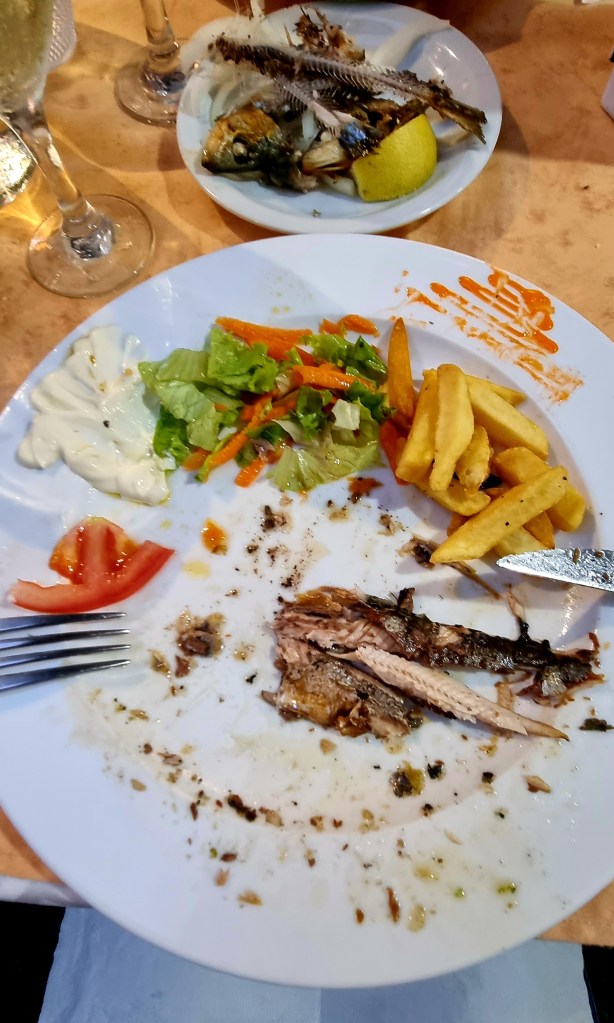
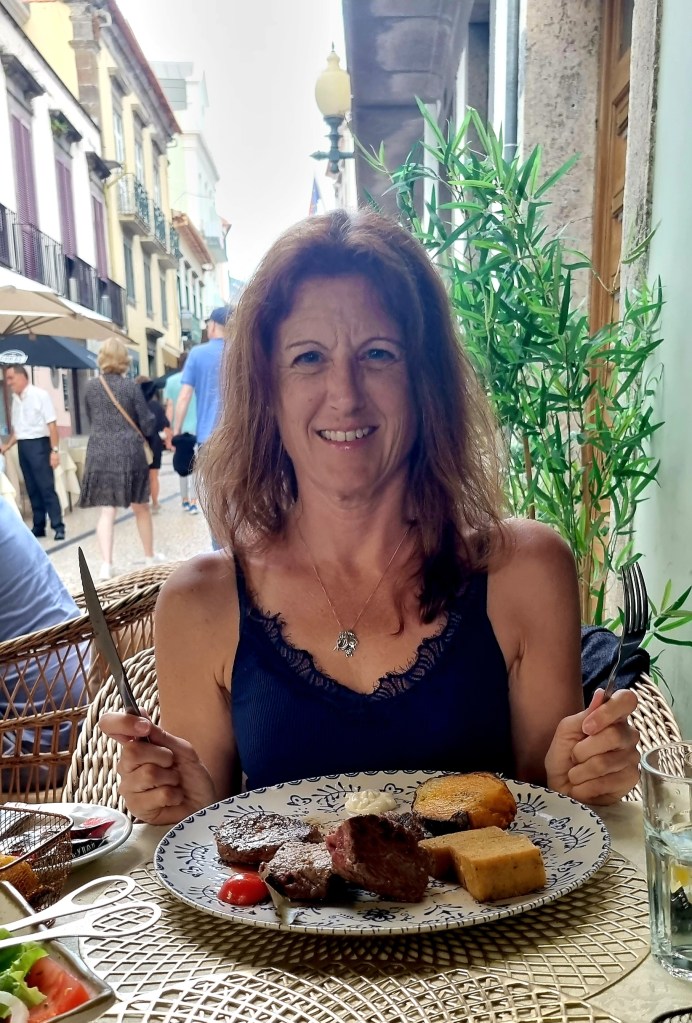
I decided to go for the scabbard fish again, although this time it was deep fried. Nicola had beef in gravy with chips.
We washed it all down with the local beer, which was really nice.
As we walked home, the sun was starting to set.
We finished the evening off with a glass of the Madeira wine we bought.
We both slept really well last night and woke up refreshed and ready for a day of history and exploration.
The day started well with a delicious breakfast at our hotel, sitting outside in the sunshine.
We had booked a walking tour around the city, so after breakfast, we walked down into Funchal.
It was the same long, steep hill as yesterday, about 20 minutes of just walking down. As we made our way to the meeting point, we passed the Ritz. This is one of the oldest grand cafes in Funchal.
We passed an old Marina building that did have a story behind it, but I can’t remember what it was.
We met up with our guide, Hugo, and another couple, from Singapore, who joined us on the city tour.
Hugo told us how when the first people from Portugal came to Madeira, it was just dense forest, hence the name Madeira, which means wood.
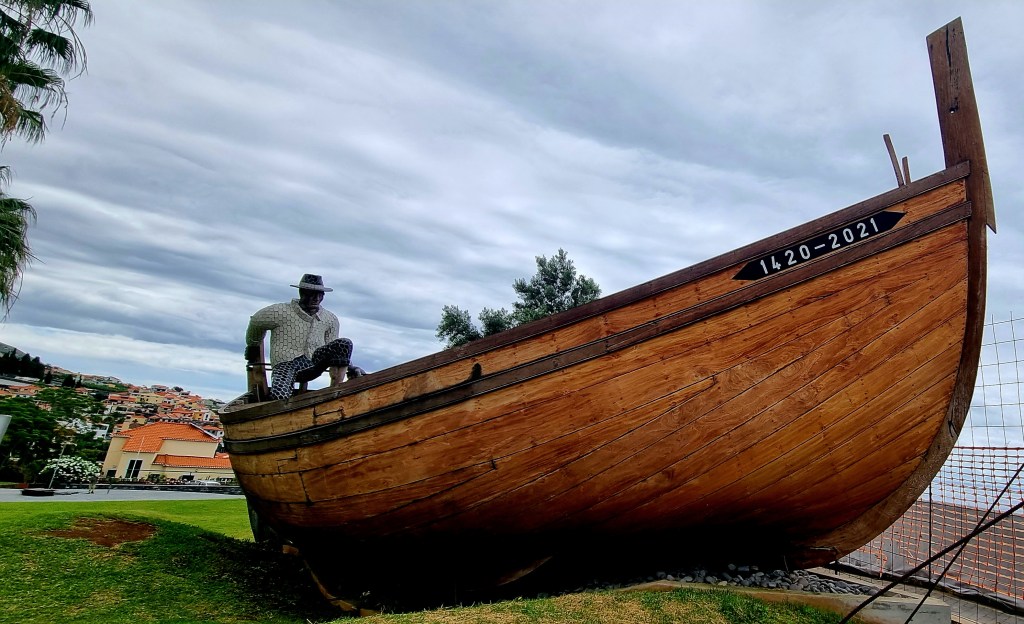
The first people came to the island in 1419, but the official date of settlement is 1420, when 100 people came to live on the island. For around 7 years there were fires as the settlers burnt the forest and got rid of the trees.
The island of Porto Santo was discovered a year before Madeira, and the name means Blessed Harbour. The reason is that this island saved the Portugese who were stranded in a storm.
Many of the pavements in Madeira have patterns and shapes. One of the ones below is of a discovery boat, which were the ships used to transport goods.
Madeira became autonomous in 1974. It currently has around 250,000 inhabitants. The north and south of the island are very different, and it took a while for the settlers to make their way to the north.
Madeira used to have a lot more sugar cane plantations and they had the first sugar cane plantations in the Atlantic in the mid-15th century. They imported the sugar, white gold, to the Netherlands and Portugal. Madeira was Europe’s biggest sugar producer for 150 years. To meet the demands, more enslaved people were bought to work in the cane fields from the Canary Islands and West Africa. Slavery remained in Madeira until around 1773.
Madeira also made commercial links with India.
Close to our meeting point was the first Chapel to be built in Madeira, originally made from wood. The red stone is quite soft and is from the island. The Chapel has a Templar cross on it. The templar order was abolished by the pope, but it became a Christian order instead. It was very influential in Madeira and ruled the island until the first king was crowned. It also ruled and owned all of the other islands nearby. The order also went to Africa to try and convert the African people to their faith.
We passed by a Monument of the first King’s son, who was also the Head of the Order of Christ.
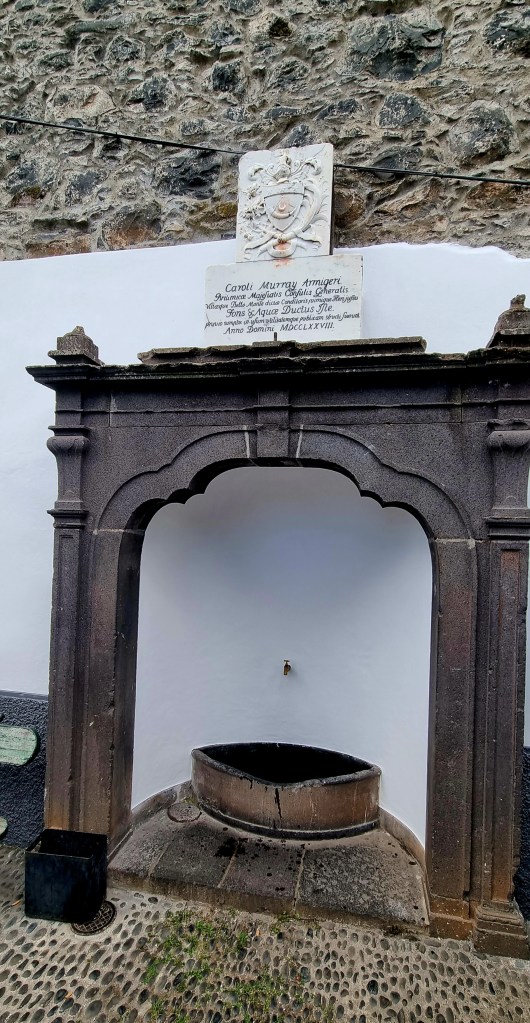
We passed by a fountain that has the world inside it.
Our next stop was a 16th-century preserved noble house, which is a mixture of gothic and renaissance architecture.
We passed by a German Lutherian church, which was also built in the 16th century and was quite pretty.
Whilst many of the streets had some lovely buildings, there were also quite a few that were derelict. The cost of purchasing and repairing these houses is too expensive, so they are left to rot.
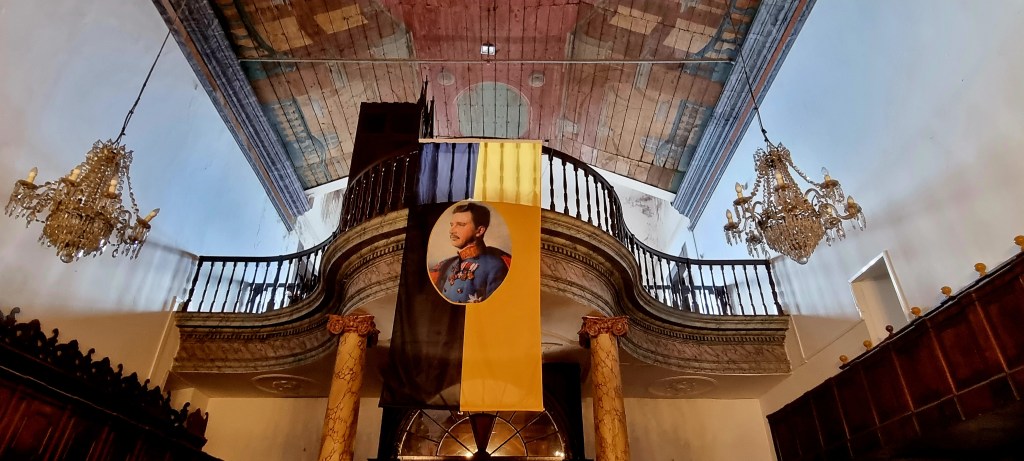
We walked past the Jewish synagogue. This was built as many Jews came to Madeira from Gibraltar.
We then had a steep climb up Rua do Quebra Costas, which literally means “the street that breaks your back”. It was a pretty steep hill.
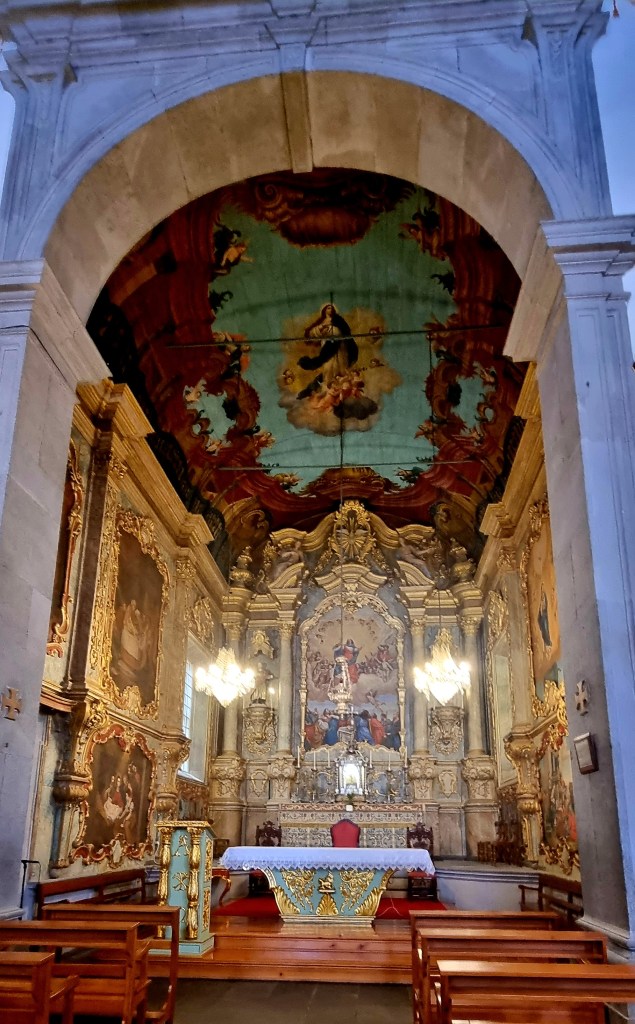
We then visited an English Anglican church called the Holy Trinity, which was guarded by a cat. The church was built in 1822, and its construction was funded by public appeal, contributions came from George II, Nelson and the Duke of Wellington.
Inside the church there was a beautiful dome, with the ‘all-seeing’ eye of God, or alternatively a link to the Free Masons.
England has had an Alliance with Portugal since 1373, the Wundsor Treaty. To celebrate 600 years of the Alliance a statue of Queen of Portugal/ Princes of England was placed in the church grounds.
British merchants dominated the wine trade after King Charles II married the Portuguese princess Catherine of Braganza in 1662. Britain also sent armed forces to defend Madeira in 1801 to prevent Napoleon from capturing it.
From the city you could look up to Fortaleza do Pico. This is owned and partly used by the Portuguese military, which is why the flag of Portugal flies between the flags for Madeira and Europe. At the end of the 16th century, Portugal was ruled by Spain, and it was the Spanish who originally built the fort.
Many of the houses in Madeira have watch towers. Residents used the towers to look out for pirate boats. Over time, the towers became a sign of wealth, as was having a large fir tree by your house.
Zarco’s son, the first founding father of Madeira, founded Santa Clara Covent in 1476. His house was built close by.
In 1566, when the French attacked, the nuns from the convent escaped to what is known as ‘Nun’s Valley’ with all the treasure from the church. It was after this attack, when Spain ruled Portugal, that many of the forts and City walls were built.
Santa Clara Covent is surrounded by high walls to shield the nuns from prying eyes.
The next place we visited was Sáo Pedro Church. This was the main church in Madeira until the Cathedral was built.
The street leading away from the church translates to ‘Street of black women’. During the time of slavery and paid servants, many black women used this street to get to and from the market.
Rua da Carreira is the longest street in Funchal and was originally used for horse racing.
We walked down to the outdoor municipal theatre where they have a lot of live music and shows. This theatre was built in the 19th century.
Close to here are the gardens of Sáo Francisco. St Francis, the patron Saint of the environment, oversees this city centre garden, which is built on the site of a Franciscan friary.
In the garden is a statue of Simon Bolivar. He helped liberate a lot of South America from Spain.
The next statue was of Zarco, the founding father of Madeira. Prince Henry, third son of King John I of Portugal, sent Zarco to the islands. He planted the Portuguese flag on Porto Santo in 1419 and on Madeira in 1420. His real name was Joáo Goncalves but he was nicknamed Zarco, “squinter”, after he lost an eye in battle in 1415.
His statue has farmers, scientists, religious leaders and noblemen around it.
Close to this statue is the ‘corner of the word’. This is named as such because all the people coming in from the boats used to turn this corner to conduct their business in town and then go back the same way. The Golden Gate Cafe is now on this corner.
We passed by the bank of Portugal. This is one of the most outstanding buildings in Funchal.
The next stop was the cathedral. The tower on the cathedral is the same height as the length of the church. The coat of arms over the doorway of the cathedral is from King Manuel I of Portugal, who helped to fund its construction. The cathedral was begun in 1493 and was finally completed in 1517.
The ceiling inside the cathedral is stunning and made from cedarwood from Madeira. It is 1500m² and is the largest ceiling of its kind in Portugal. The patterns of knots and lozenges, with projections similar to stalactites, is based on the geometric art of medieval Islam.
The inside of the cathedral was stunning. The altarpiece was made in 16th century and includes 12 scenes from the lives of Christ and his mother Mary.
The cathedral was often invaded by pirates. The churchgoers used to hide any valuables in the tombs of people who had been recently buried.
The almost final stop was another church, Igreja do Colégio, a large Jesuit Church. The Jesuits were a large brotherhood of missionary priests who owned huge wine estates on Madeira. They used some of their wealth on the church. They built a hall alongside the church, which is now part of the University of Madeira. The church started to be built in 1629 and was completed in the first half of the 18th century.
The church was modelled on a Jesuit Church in Rome, and it has two pulpits facing each other, which were built as such to encourage debate. This church was a major part of the Inquisition.
To the left of the church is the town hall. Opposite is now a museum, but it used to be the residence of the bishop. The bishop was responsible for bringing the inquisition to Madeira. Funchal was the biggest diosce in the world for 22 years as the bishop was also the bishop of Goa, Brazil and South Africa.
The monument in the middle of the square is the coat of arms of Madeira, depicting sugar cane and grapes, which represent the most important economic aspects of the city – wine and sugar.
And to finish off the walking tour, we went to try some Madeira wine at D’Oliveiras. The dry wine was cheaper than the sweet version. We both agreed that the medium dry was the best option, so we bought a bottle to drink during the rest of our holiday.
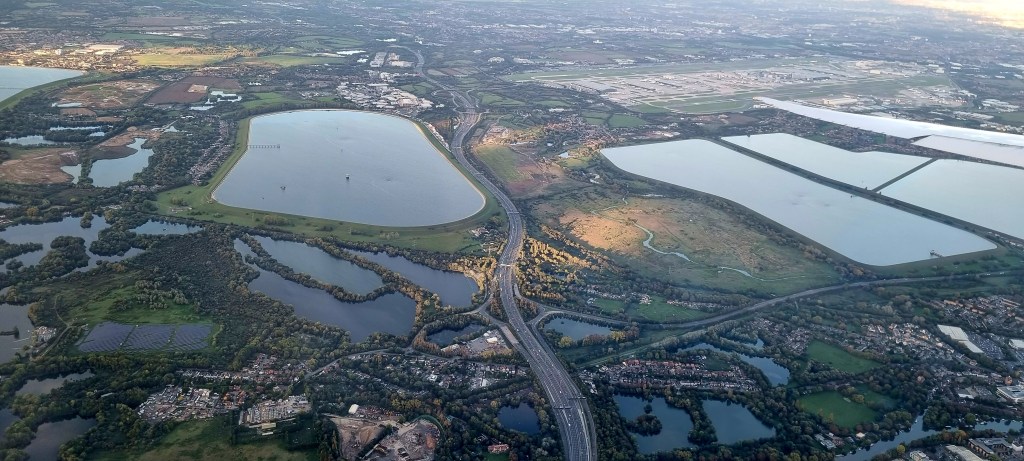
It was an early start, I was at Gatwick Airport by 6am. I parked the car at a local hotel and they drove me to the terminal.
At the airport, I wandered around the shops, and our flight was delayed by about 30 minutes. The flight was completely full, and I was sitting between a Portuguese man and an English man. Towards the end of the flight, we got chatting, and the Portuguese guy, Santos, is originally from Madeira and was coming home to visit his family. The English guy and his wife have bought a house in Madeira and stay there for a few months every year. So I managed to get a few tips from them both.
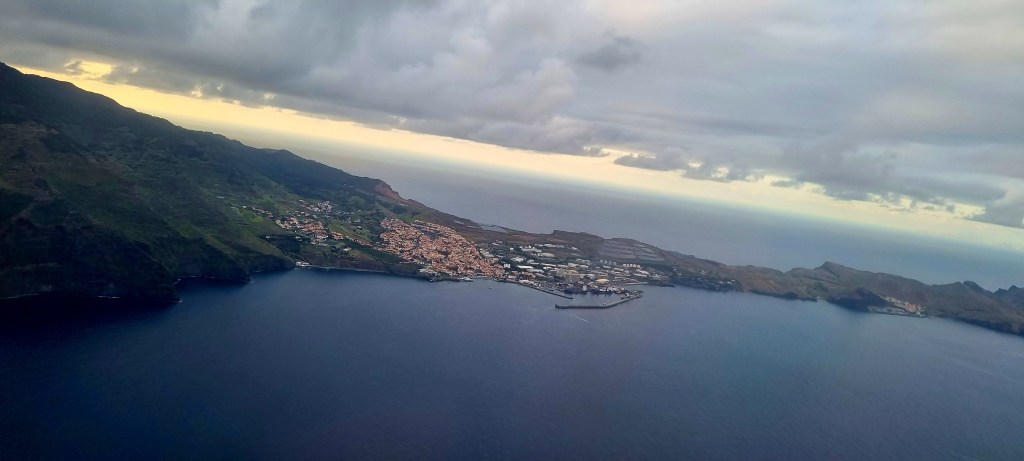
I got a photo of Porto Santo, an island just off Madeira, as we came in to land.
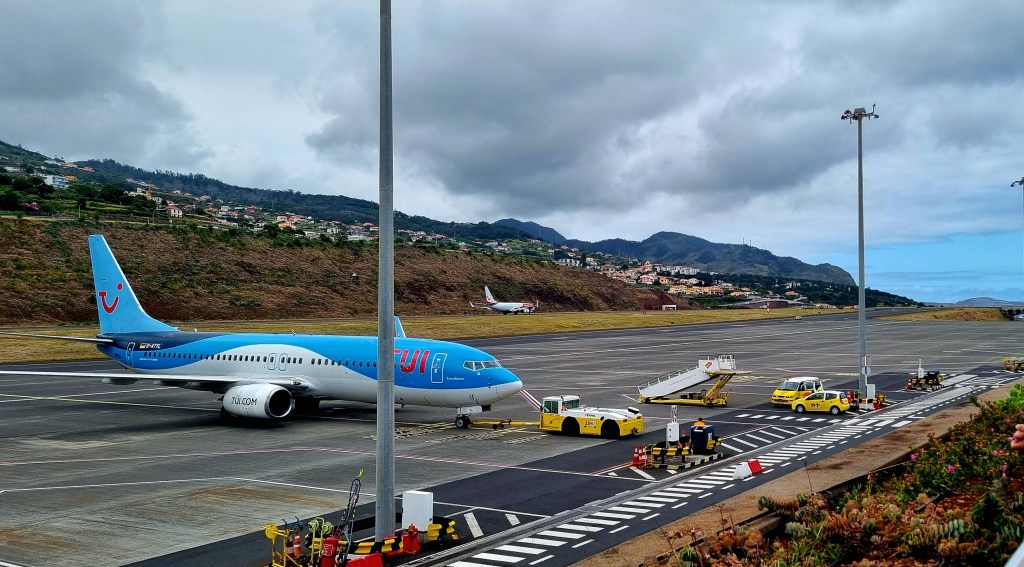
Nicola managed to get a photo of Madeira which shows the very short landing strip!
I was one of the first off the plane, and as I only had hand luggage, I went through customs really quickly. The airport itself was pretty quiet.
At Funchal airport, I was met by a prearranged driver, although he was a bit late, so I had to message the accommodation to chase him.
The hotel we are staying in is around a 25-minute drive from the airport, and even in that short drive, you could see how hilly Madeira is.
We are staying at Caso do Caseiro, it’s a really lovely hotel with just 8 rooms. It’s about midway up a very steep, long hill and has a pool and gardens. The owner is really nice and welcoming, too.
Some views from the room we are staying in.
After I had unpacked and eaten something, I decided to walk up the hill to the nearest supermarket, around 10 minutes away – these hills are steep!
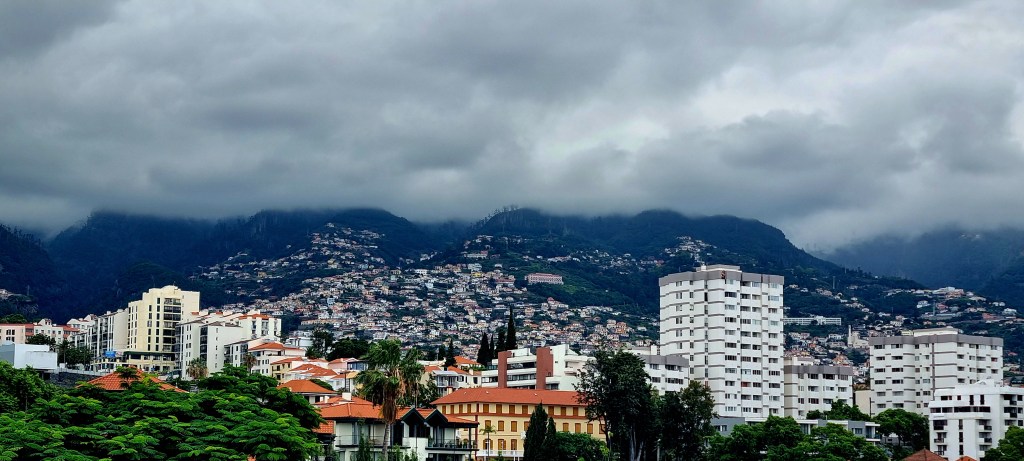
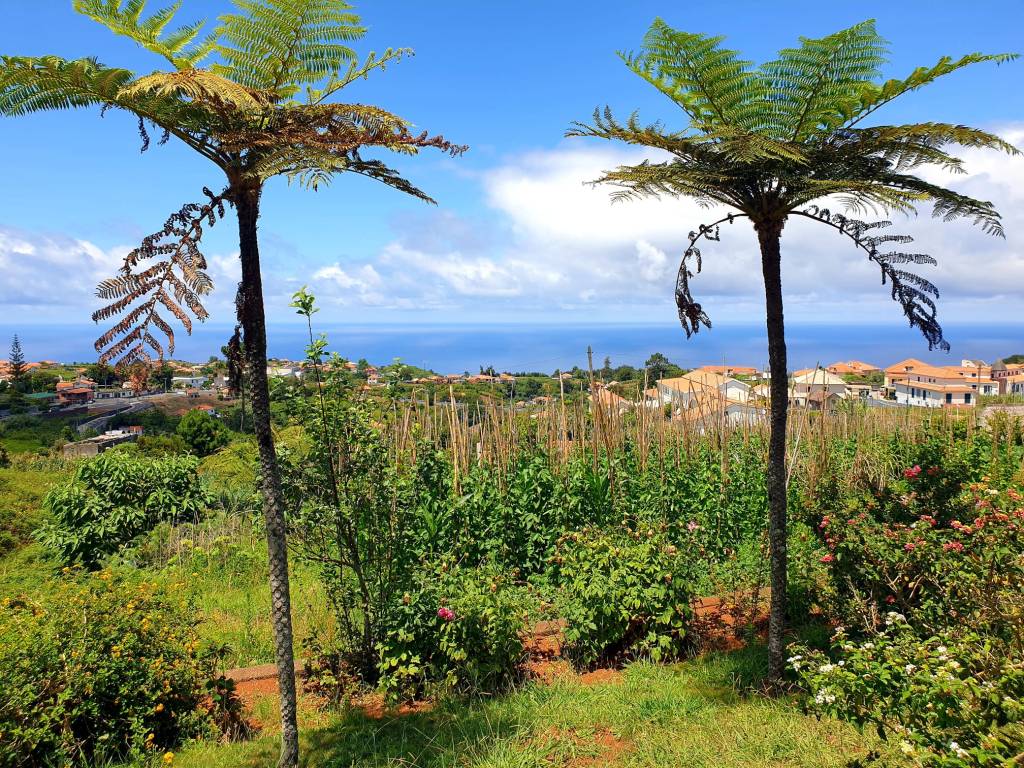
I took some photos of the views, looking down into Funchal and up to the top of the hill.
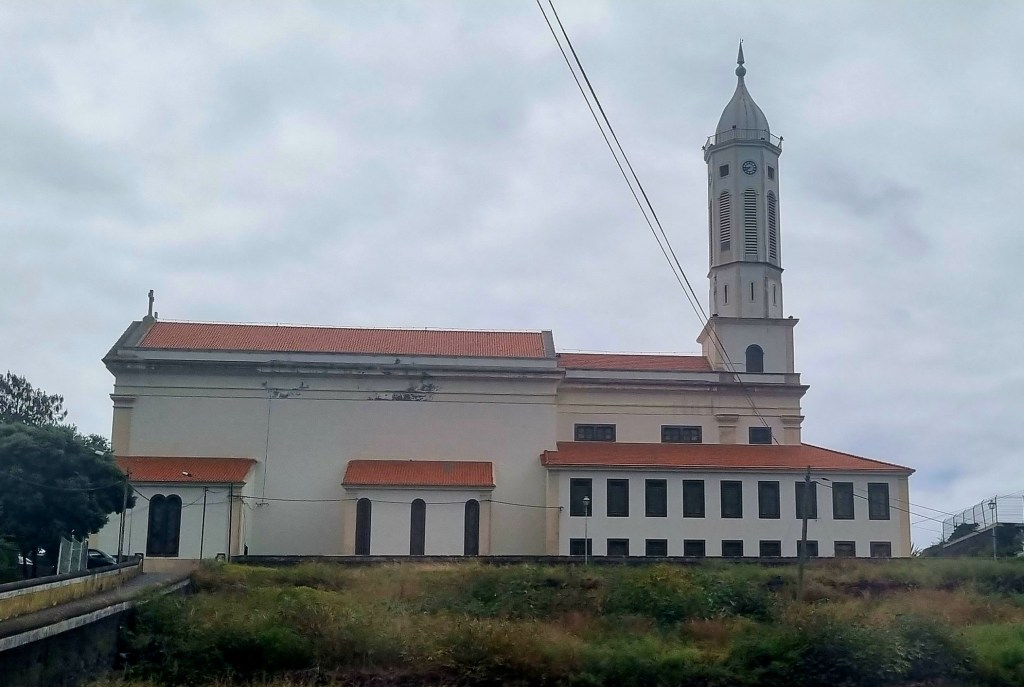
I passed the church of Livramento (deliverance). It’s quite ugly but has a very tall tower.
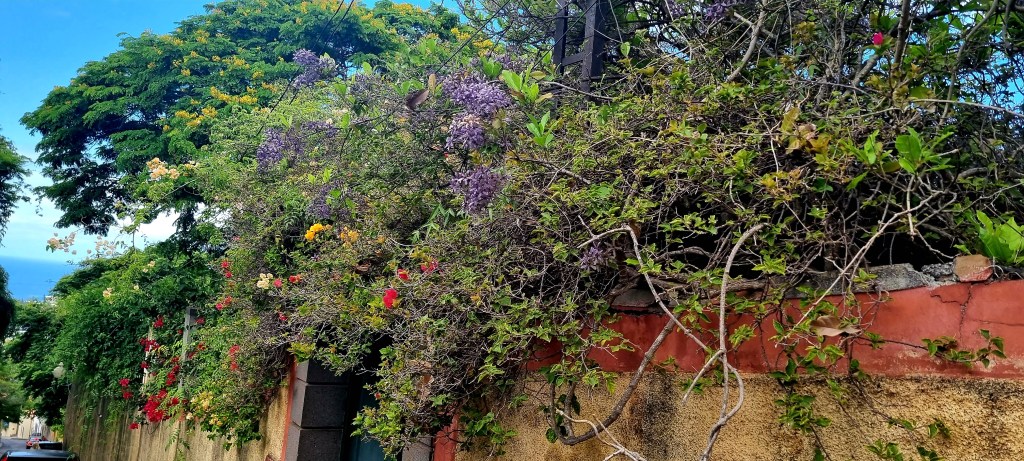
There were some really pretty flowers on the walk there, too.
Nicola arrived about 3 hours after me, so once she gad arrived and unpacked we sat on our little balcony and caught up over a bottle of wine.
We then decided to walk down to Funchal – it’s around a 30-minute walk and pretty much all downhill. We walked past lots of pretty trees, which we later found out were called tooth trees. When they break, the branches release a white latex that can irritate the skin and mucous membranes.
As we came into Funchal, we walked past HMBorges, one of the famous madeira wineries.
As we walked into the city centre, we passed the courts of justice.
We carried on to Municipal Square, which is paved with dark and light Batistini tiles in a wave pattern.
We wandered around for a bit before deciding on somewhere to eat. There was a lot of choice, but we decided on a place because the waitress was very friendly. We had the local garlic bread (Bolo) to start and scabbard fish and bananas as the main.
As it was a very long steep hill back home, we decided to get the bus back. There was a nice piece of street art just opposite the bus stop.
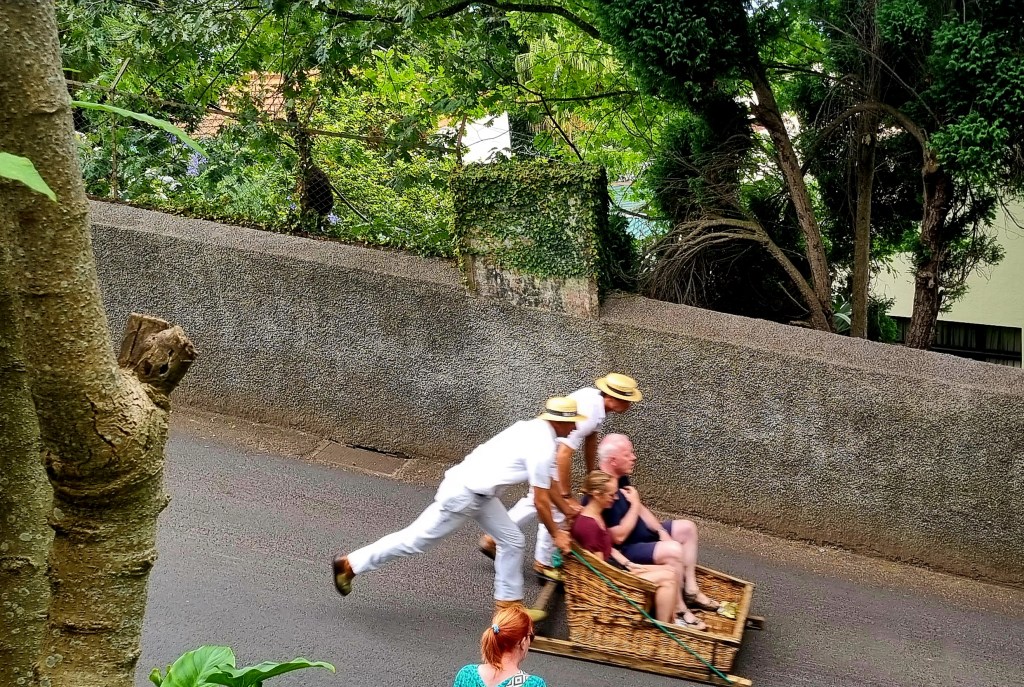
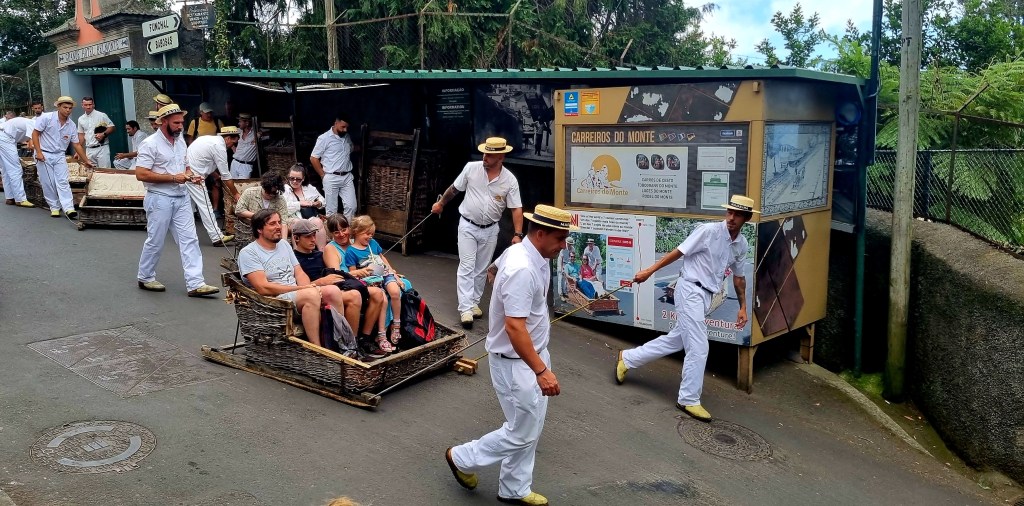
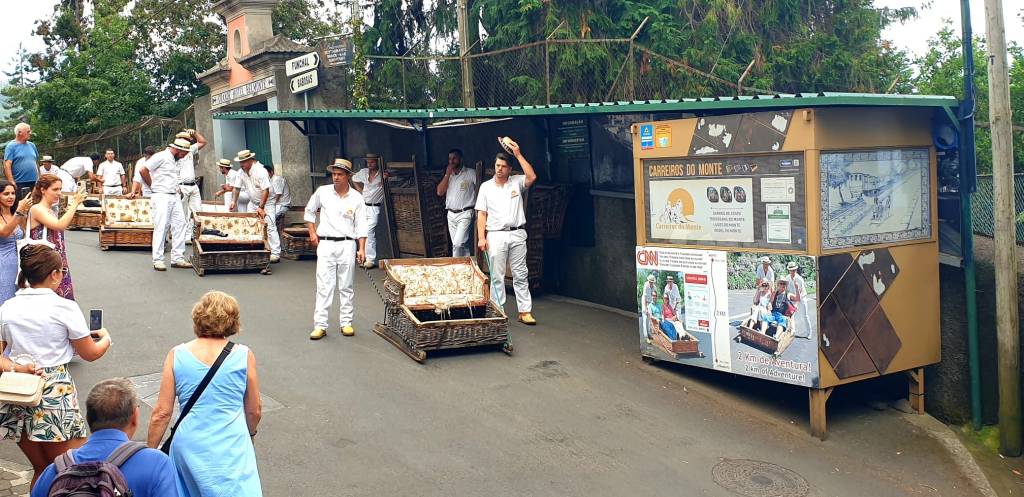
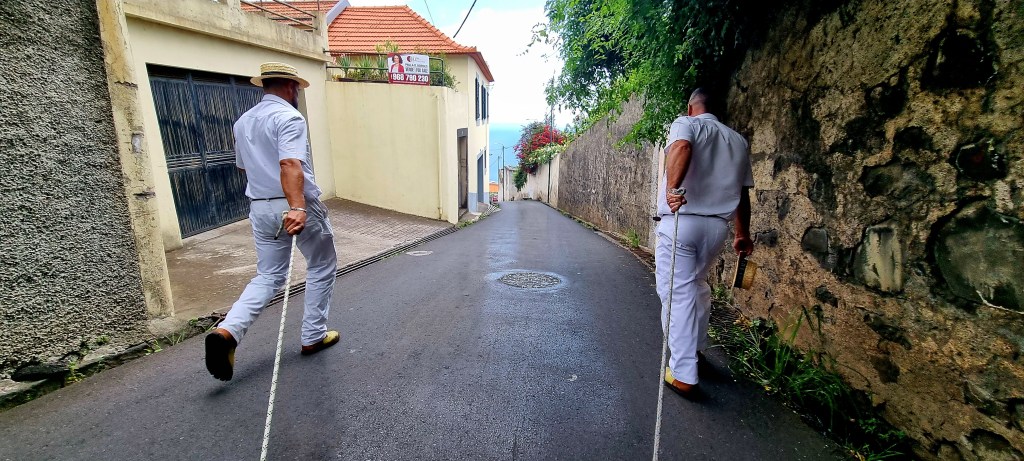
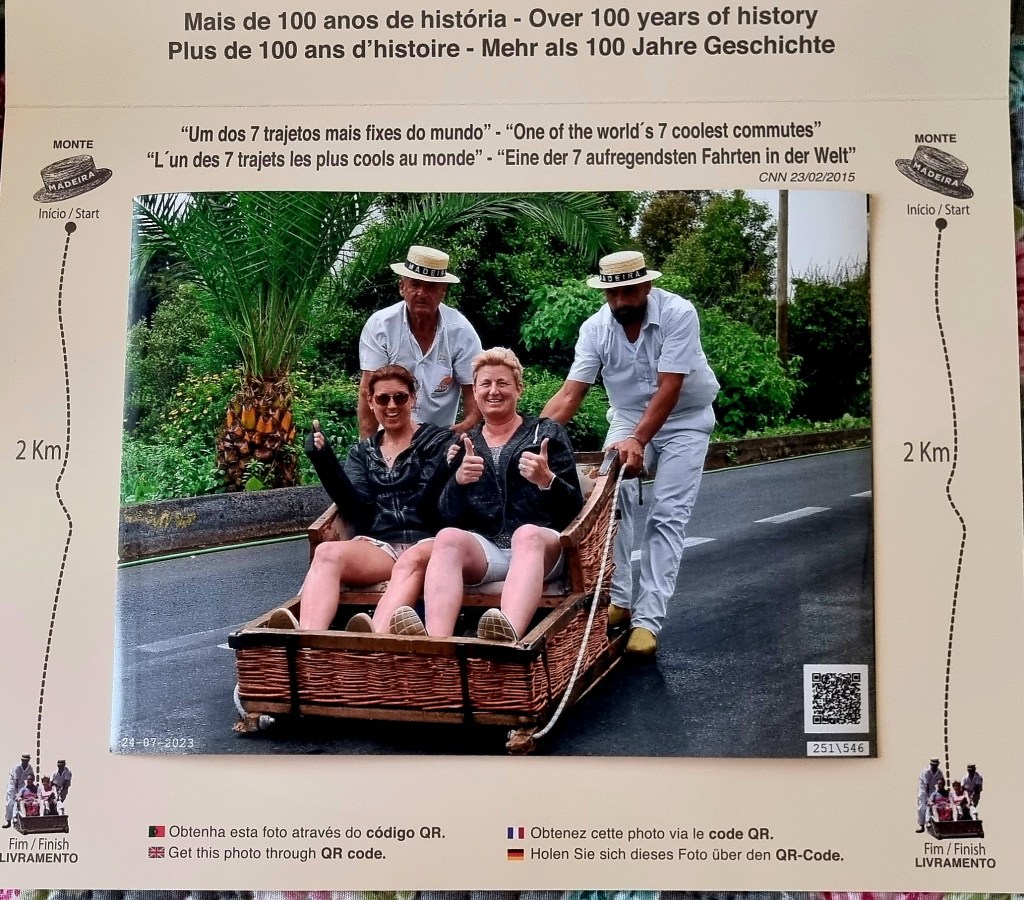
The bus stop we got off at meant we had to walk down the hill where the toboggans go – you could see the road was very shiny!
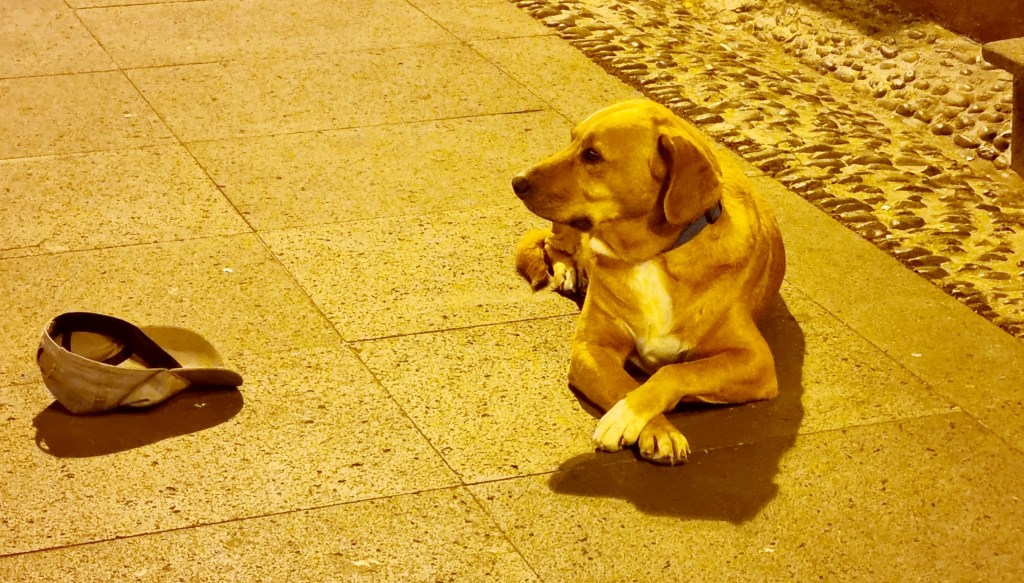
On the way back to the hotel, we were greeted by a very chilled dog.
We were both fairly tired, so we were in bed around 11pm.
This morning, we were visited by the green monkeys. They were literally in the tree by the balcony.
The little sparrow came to visit too.
After a coffee, I went to the swimming pool to make the last of the sunshine.
When I got back, everyone else was up and we were all packing.
The apartment we stayed in was beautiful and it was sad to leave.
We left our suitcases in the office before heading off for one final lunch at the Fishpot.
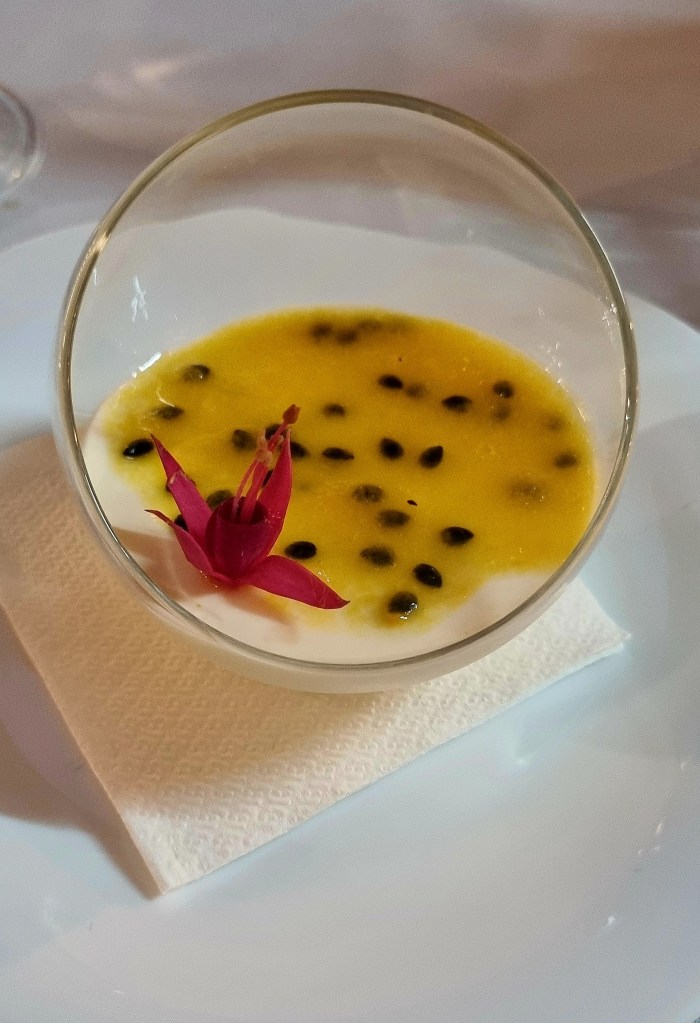
I had red snapper and tropical creme brulee, both were delicious.
Unfortunately, it was then time to head to the airport. My suitcase was overweight, so I had to do some repacking before I could check in. At the airport I bought some more rum.
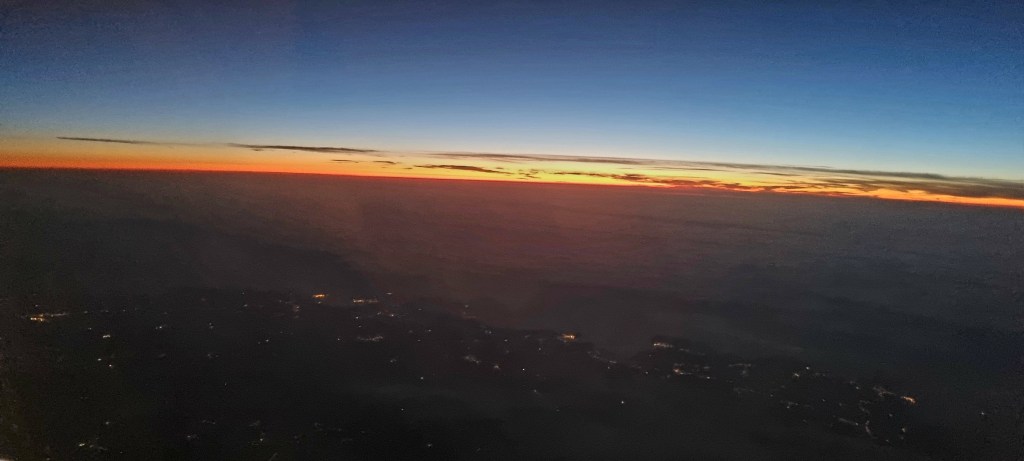
The flight was delayed by around 30 minutes, and we left just as the sun was setting.
I took some photos of the sun as we took off.
We ate, slept and watched a movie on the flight. I probably only really slept for an hour.
As we arrived back into London, the sun was rising.
We were up fairly early as we had a taxi booked for 10:30am to take us to St Nicholas Abbey. It was only a short 10 minute drive away.
The taxi driver dropped us at the entrance and we went for a short walk. The first thing we saw were the massive mahogany trees. They are over 250 years old.
We had a train ride booked, so we perused the gift shop whilst we waited for the train.
The train is an old steam locomotive.
The train was called Winston, and a lovely lady provided a commentary as we rode through the 400-acre plantation.
At the start of the train ride we passed a huge lake. This lake supplies the water for the plantation.
We passed some very tall palm trees. Apparently, these very tall trees signal that there is a plantation nearby.
We passed the original entrance to the train track, where the cane was bought from the fields to be transported by the train.
We also saw a quarry, which was where the stone used to build the house came from.
The track was quite steep in places. In the old days, if the train couldn’t get up the track, all those in third class had to get out and push it. They were generally rewarded with rum for doing so.
At the end of the track, we came to Cherry Tree Hill, and the views from here were stunning.
The path up to the hill used to be lined with cherry trees, but they have been replaced with mahogany trees now, which were planted in the 18th century. Cherry Tree Hill is an ancient natural paasagewau connecting the east and west coasts of the island.
The locomotive was uncoupled from the train and turned on an old turning point before going to the other end of the train to be reattached. At this point we all got a chance to blow the whistle.
The St Nicholas Abbey Heritage railway was only completed in 2018 and is 1.5km long.
From Cherry Tree Hill, we headed back down the track to the station. At one point, the driver had to get off and manually change the point, so the train went down the right path of track.
Winston was originally built for light industrial shunting on the internal rail network in Antwerp, Belgium. It was relocated to Barbados in 2020.
People used to literally ‘catch the train’ in Barbados. They would wait at the side of the track and jump onto the train.
At the station we saw the little station cat.
Some guests departed here, but we stayed on the train, which took us down to the Great House.
The Great House is one of three remaining Jacobean mansions in the Western Hemisphere. It was built in 1658 and is one of the oldest surviving plantations. The plantation itself is over 400 acres.
The house has 7 bedrooms, four on the first floor and 3 on the second floor. Two of the bedrooms have fireplaces, but they have never been lit.
The first room we came to was the drawing room. Here, they have an amazing french chandelier from the 1800s,made out of shells and coral.
They also have taxidermy of some birds. Some of these birds are now believed to be extinct.
In the study we saw the ‘Gentleman’s Chair’. In 1936, this was considered the ultimate in relaxation as it has adjustable tables, book holder, reading lamp, backrest and footrest. It can also be wheeledfrim one room to another. This particular chair was made in England in the 1830s.
Looking through the window, you could see the herb garden, which is set out in a traditional English pattern. It contains an assortment of peppers used to make the plantations own pepper jelly.
The internal bathrooms were added in 1939. Prior to that, you had to use the outhouses that were fitted with a four seat privy, each seat having a different sized hole.
Electricity came in 1920, and the wiring is still visible as it is on the outside rather than inset into the walks.
In the courtyard, there is a Sandbox Tree, which is over 400 years old. This is an evergreen that is indigenous to the Caribbean, and it has tiny thorns all over its bark – it has the nickname of ‘monkey no-climb’.
In the courtyard there were also guinea fowl and other birds. Animals were generally kept behind the house so that any bad smells were blown away from, and not towards, the house.
On the short walk down to the distillery, we passed a Soursop tree. The fruit of the tree is said to taste like a combination of strawberry and apple with sour citrus notes and has a banana like texture.
Our next stop was the distillery, which has been specially designed to enable the handcrafted of rum on a small scale.
The big pot is called ‘Annabelle’ and is a traditional pot still as well as a rectifying column.
The rum comes out of the distillery at 92% (184 proof), which is then diluted to 60% or 40% for ageing in barrels. They use old Bourbon oak barrels from Kentucky for ageing the rum. These barrels are only used once for Bourbon before being shipped to the Abbey. The darker the rum, the longer it has been left in the barrel, and the smoother it is. The white rum, which is only used for mixing, is not barrelled at all.
We then moved on to the syrup plant, which basically converts raw cane juice into a very sweet syrup, which is around 70% sugar. The large steel tank holds 1,900 litres of syrup which enables rum to be produced throughout the year.
The distillery makes around 40-45 barrels of rum a year. The rum is not blended, and each barrel will produce around 300 bottles of rum, depending on how long it has been aged for.
At the start of the process is the steam mill, which crushes around 350 tonnes of came between January to June (the annual crop season time).
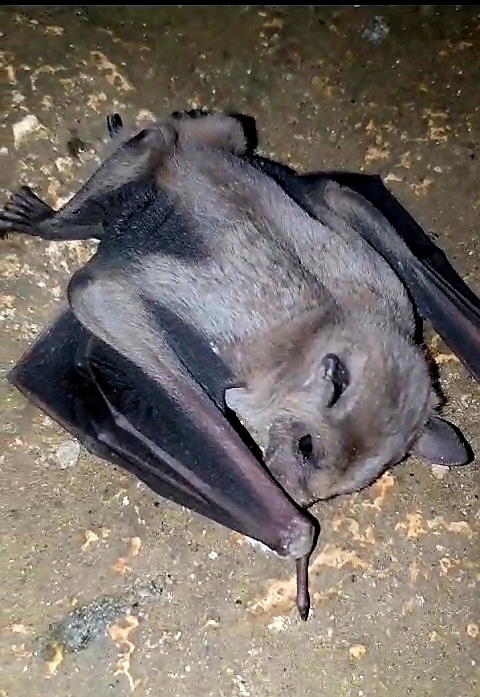
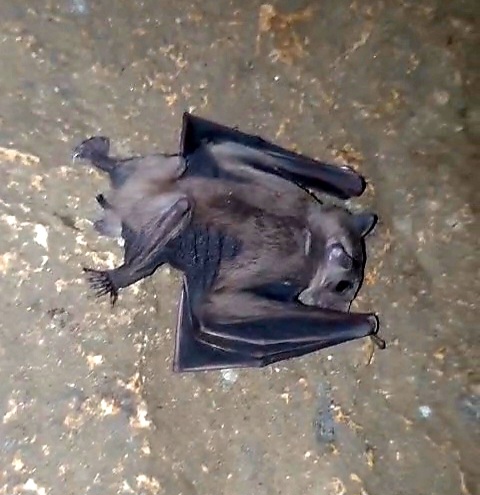
There were a few bats flying around in the roof of the steam mill and syrup plant.
The original steam mill was installed in 1890 and increased production by 10-15% over the original windmill. But the plantation stopped production in 1947 due to lack of viability. In 2006, the plantation started grinding cane again and producing rum. It is the only rum on the island made from cane syrup, and the sugar cane has to be cut by hand rather than by machine. All of the sugar cane on the plantation is used for the production of rum as it is no longer viable to produce sugar itself.
The history of the ownership of the Abbey is also interesting, with lots of cousins marrying each other etc. When slavery was abolished, the owners gave the firmer slaves a piece of land, which is how small villages have grown.
On the way to taste some rum, we passed the cotton plants and also some macaws.
And them it was time to taste some rum. Simon Worral, the son of the current owner, talked us through the rum and liquers, he was a funny guy. We tasted a 5 year old rum,an amaretto liquer, and a coffee liquer. I ended up buying the coffee liquer.
After a quick detour to the cafe to grab some lunch, we headed home by taxi.
We ate our lunch on the balcony before heading to the pool for some sunbathing.
We had some pre-drinks on the balcony before getting a taxi into Speightstown.
On the way out, we saw the huge toad again.
The sun was starting to set as we came into Speightstown, so we asked the taxi driver to stop so we could take some photos.
We had booked a table at Local and Co as it had been recommended to us. It didn’t disappoint. The location was perfect and the food was delicious.
I had an amazing rum sour, and catch of the day with breadfruit chips.
I also made a new feline friend.
We headed to Little Bristol Bar after dinner and had a few dances to the band that were playing.
Our plan was to continue the night at Just Chilling, but it was dead when we got there. So we decided to get a taxi home and we stopped off at Sip and Lick on the way.
We chattec to some of the locals and had a few dances before heading home
One of the local gentleman escorted us back to the apartment.
I was up early again, so I made some pancakes for everyone. After we had all had breakfast, we headed down to Pier One. It was another beautiful morning.
There were actually quite a few people at the pier, but we managed to find four sunbeds together.
After a bit of sunbathing, I got into the water and did some snorkelling.
We decided it was time for a cocktail or two before lunch.
And obviously, some posey photos, too.
It was soon time for lunch. I had a delicious steak sandwich with blue cheese.
After lunch we did some more swimming and sunbathing and Karen and Mags each got some birthday cake.
Late afternoon, we headed home, although none of us really wanted to go.
As we left, the sun was starting to go down, so of course, we took some photos.
We also took some pictures with the locals who we had been chatting to over the last couple of weeks.
After a quick shower, we headed back out to our favourite place for dinner – Joan’s. We sat and chatted with the local guys.
We had quite a few rum and cokes, and we had a few dances too. It was sad saying goodbye as we knew we wouldn’t be seeing everyone again.