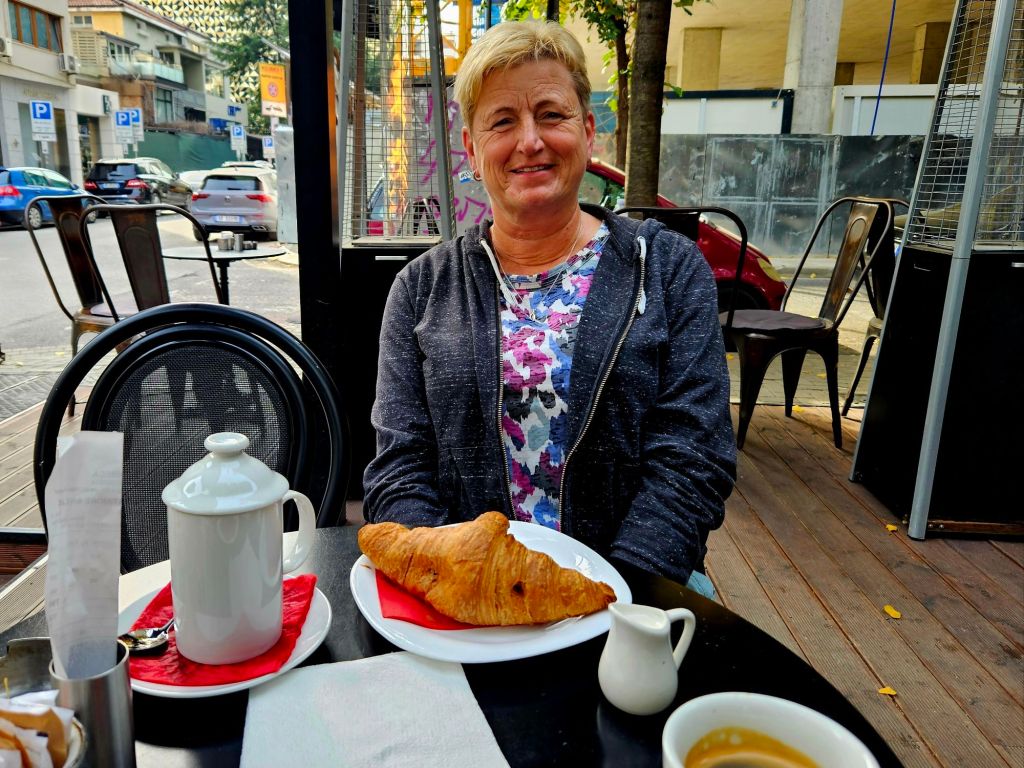
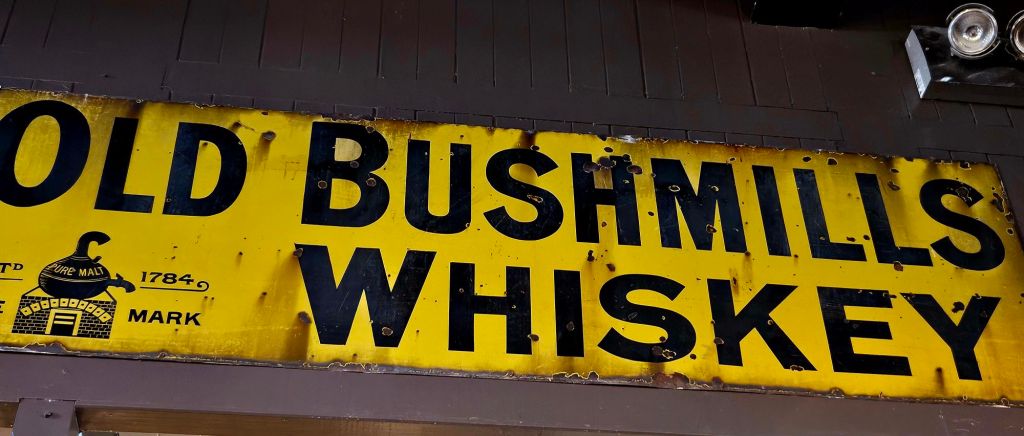
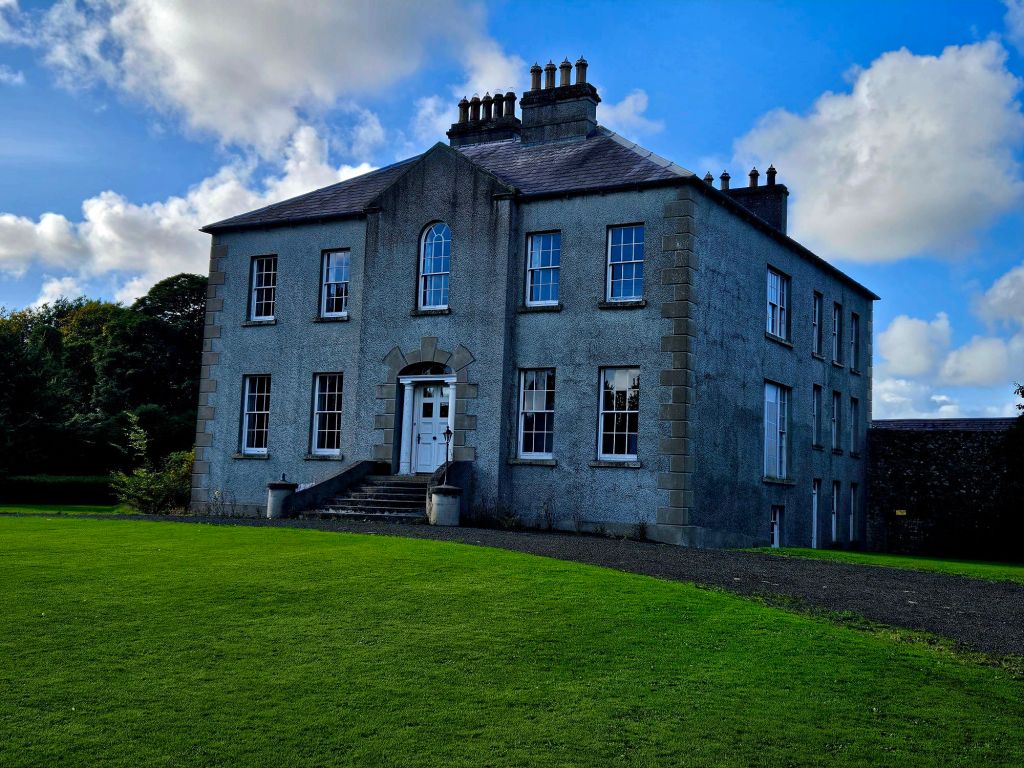
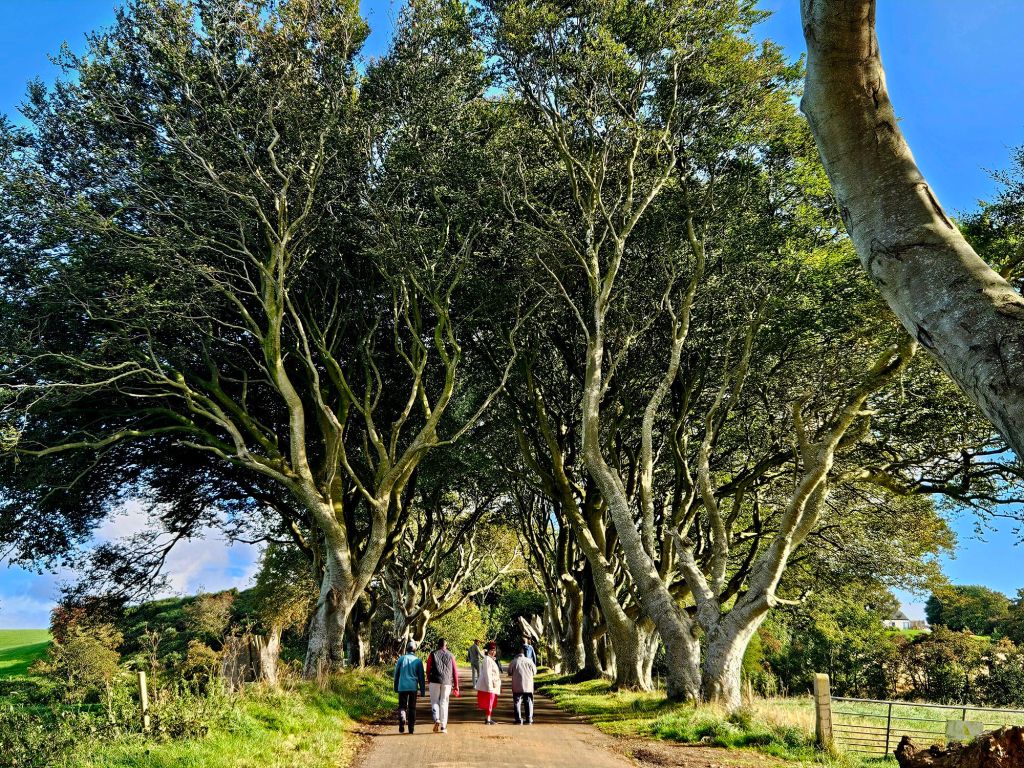
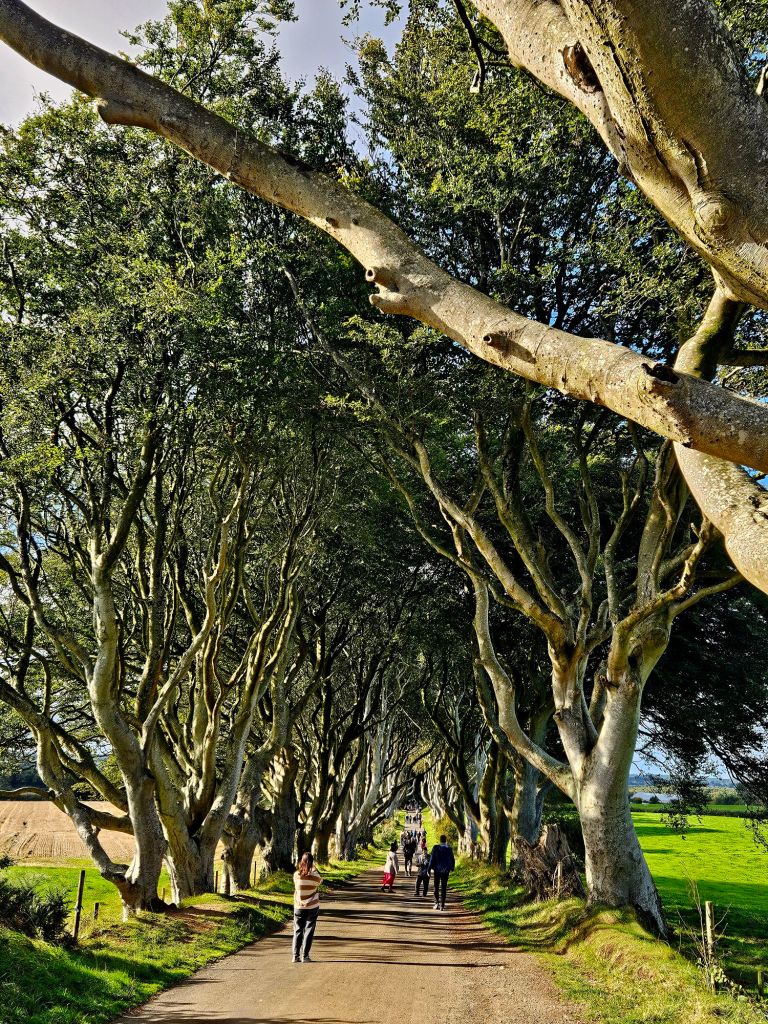
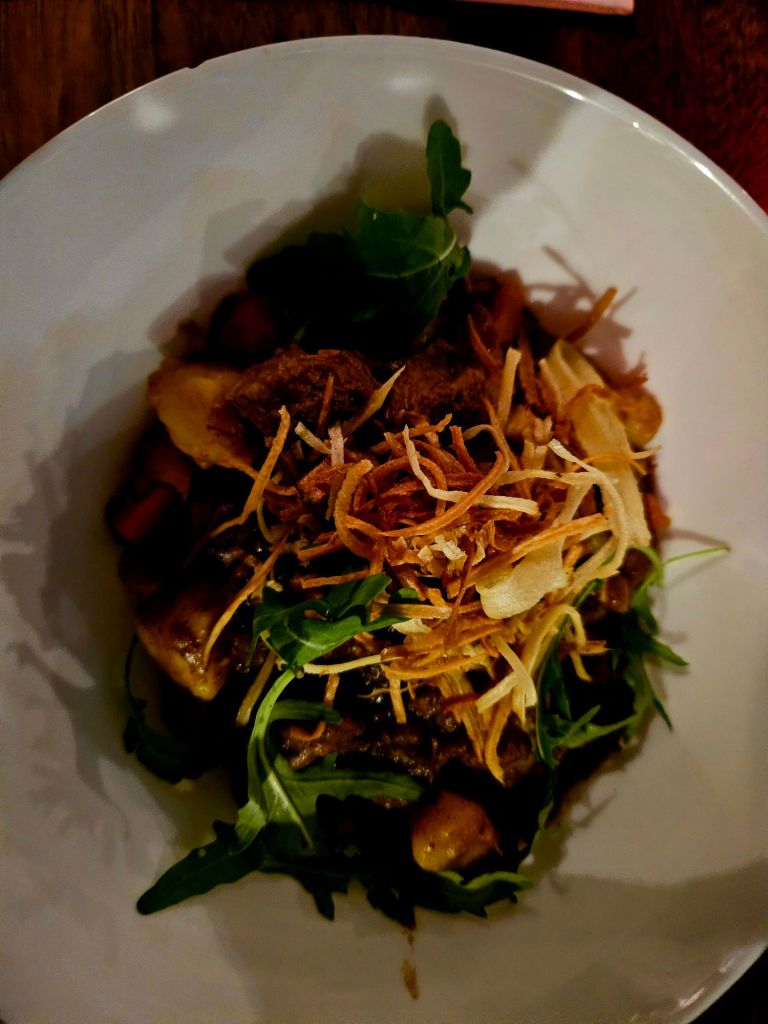
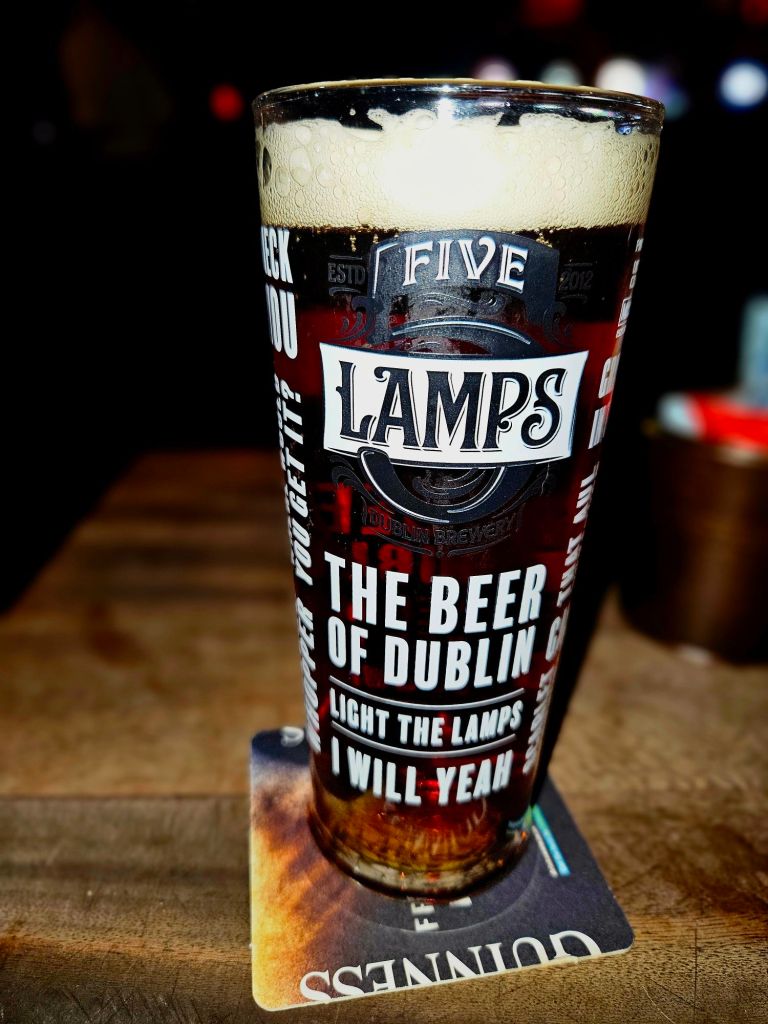
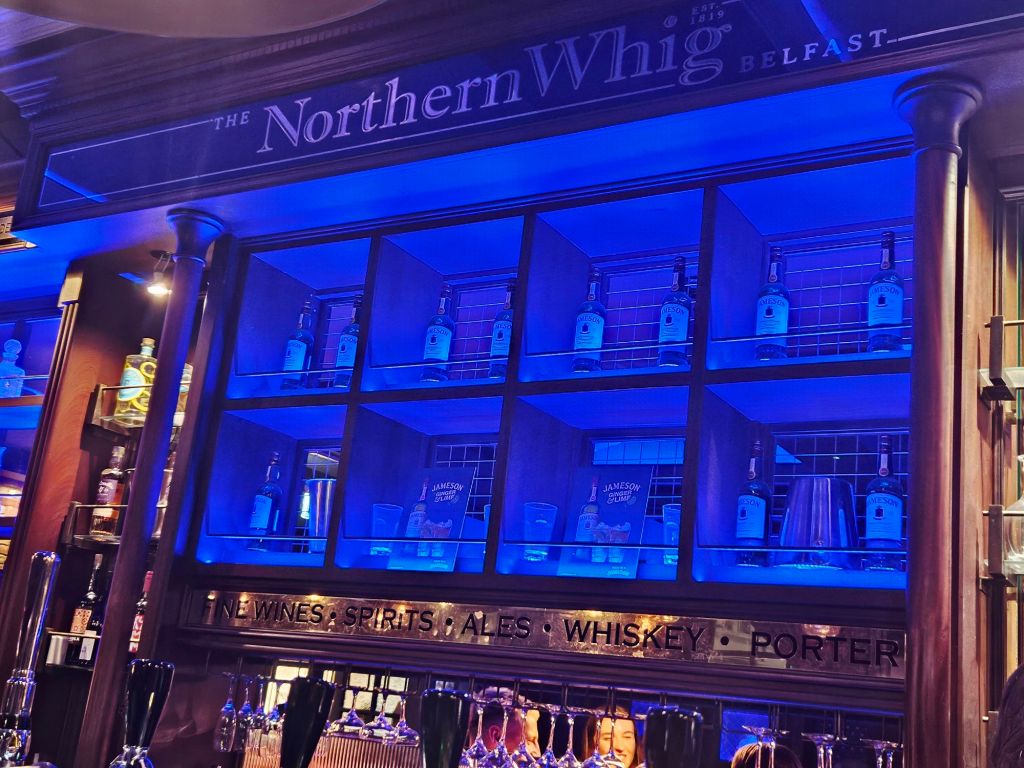
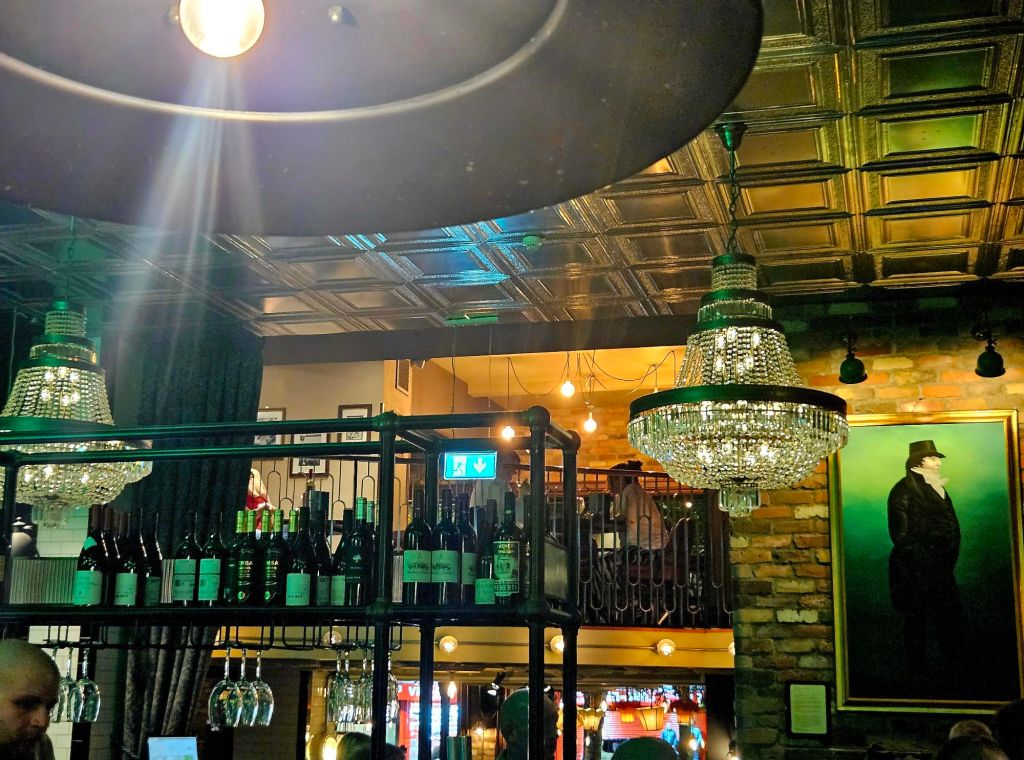
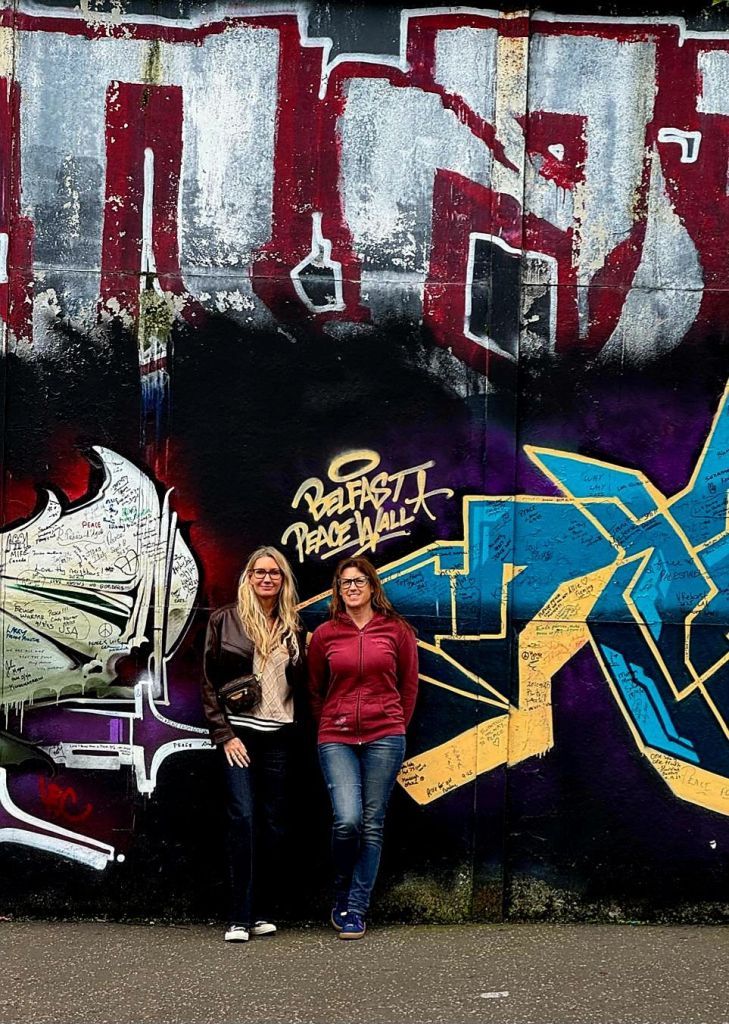
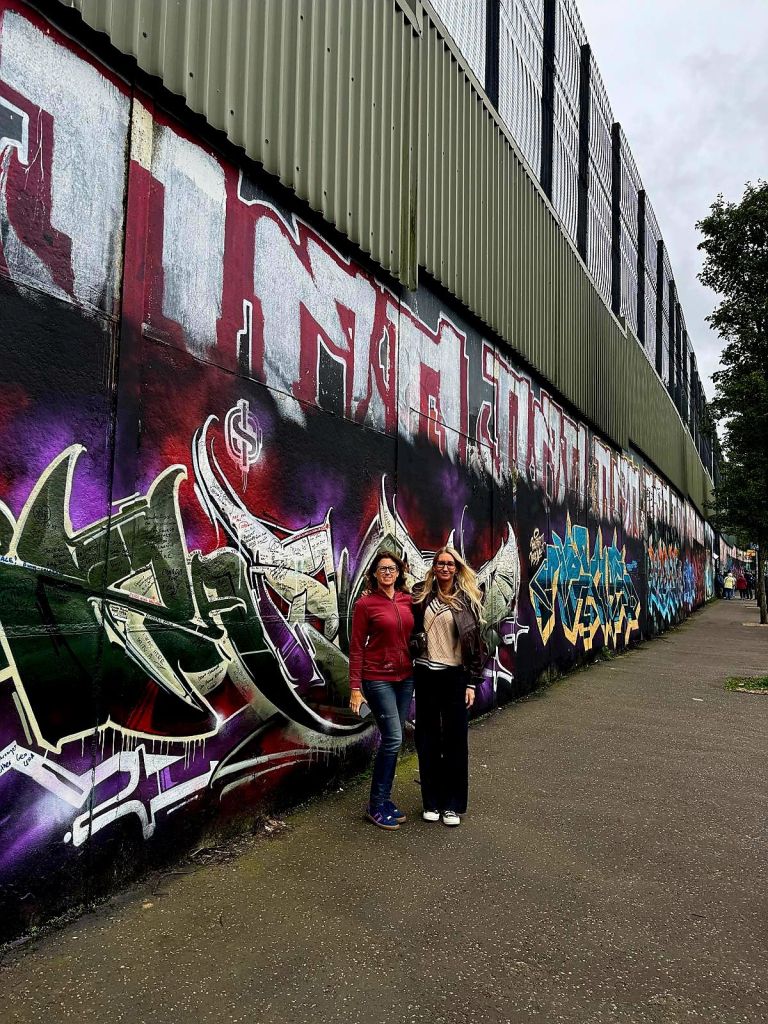
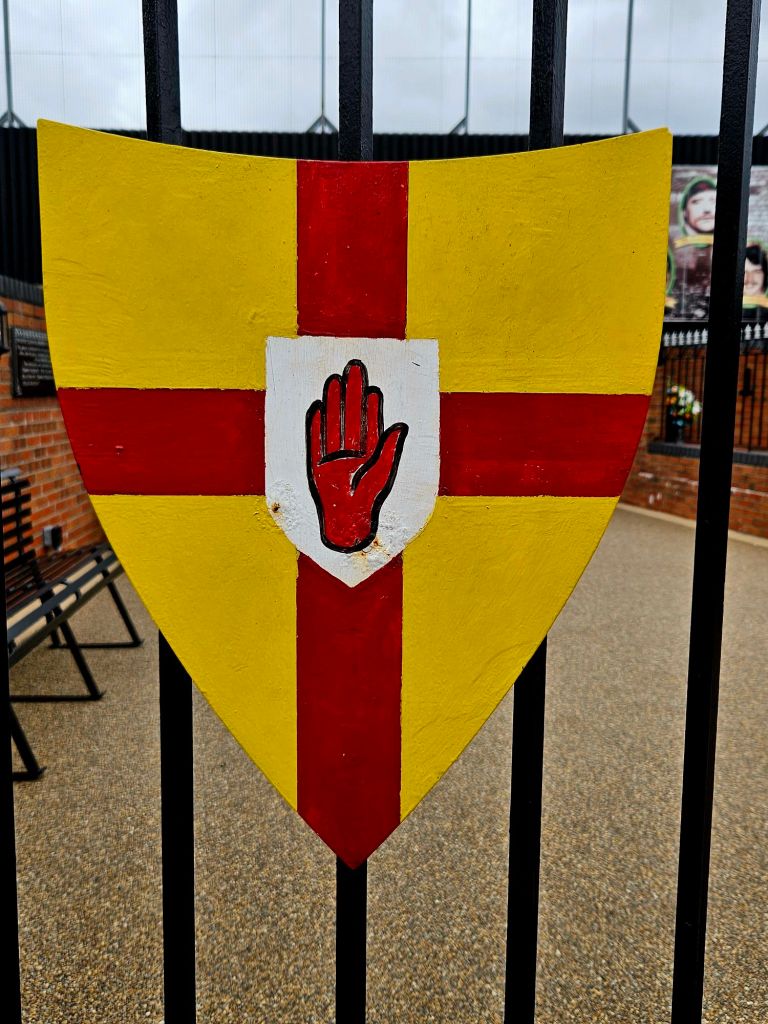
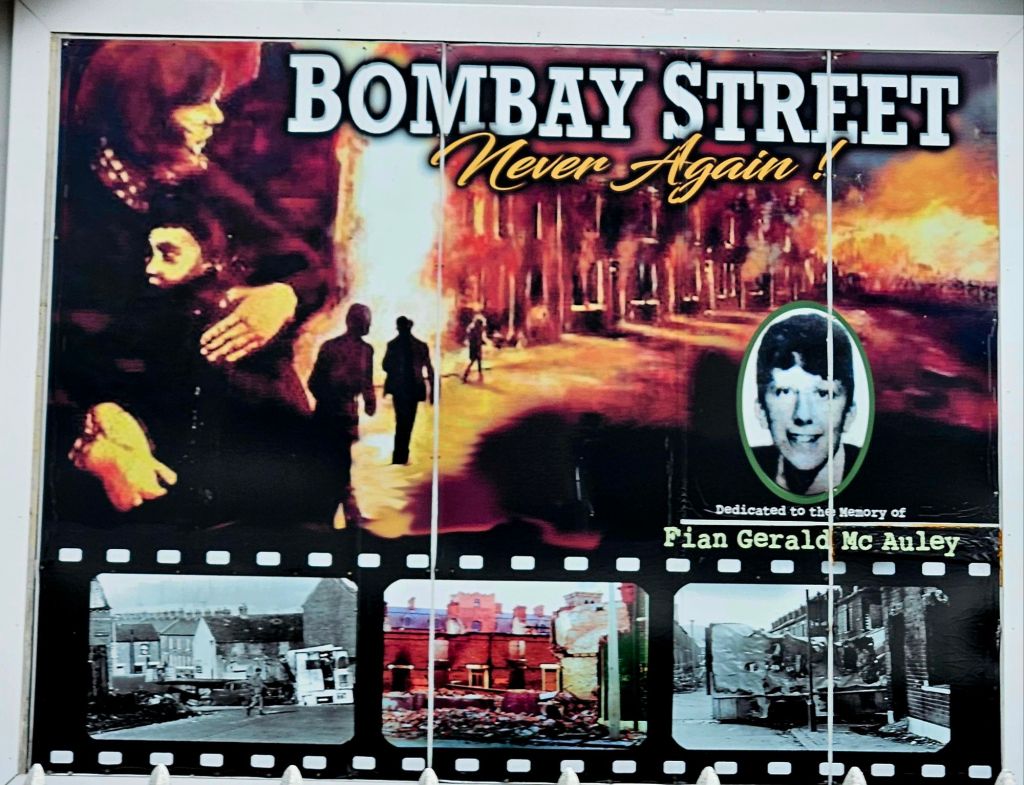
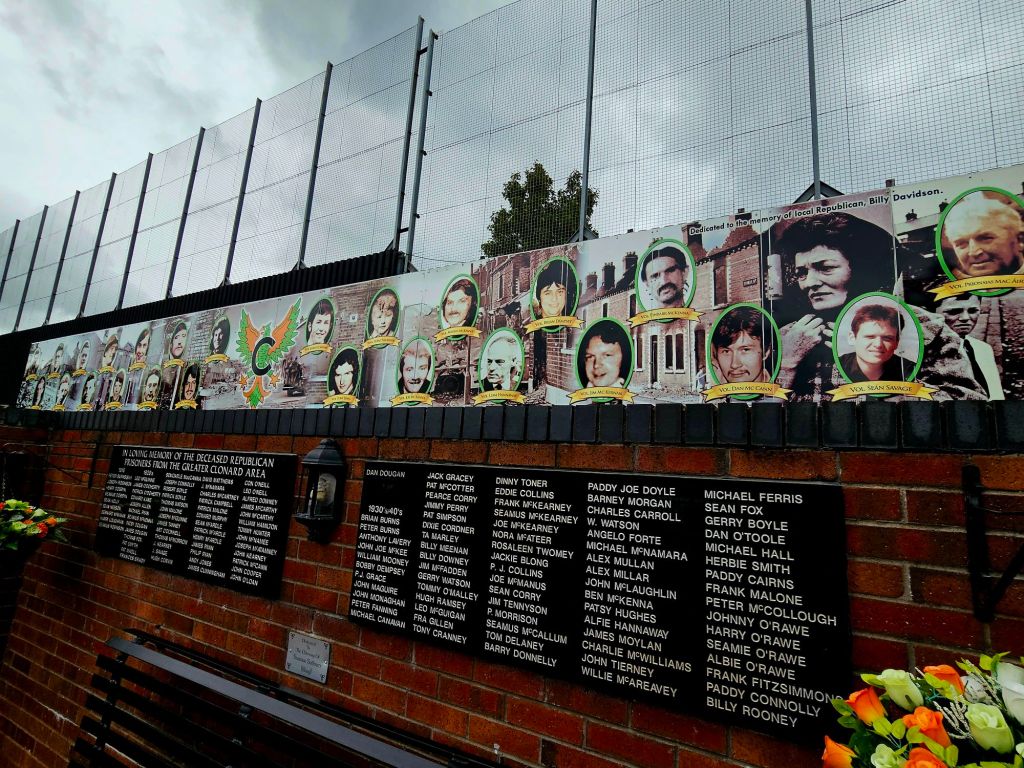
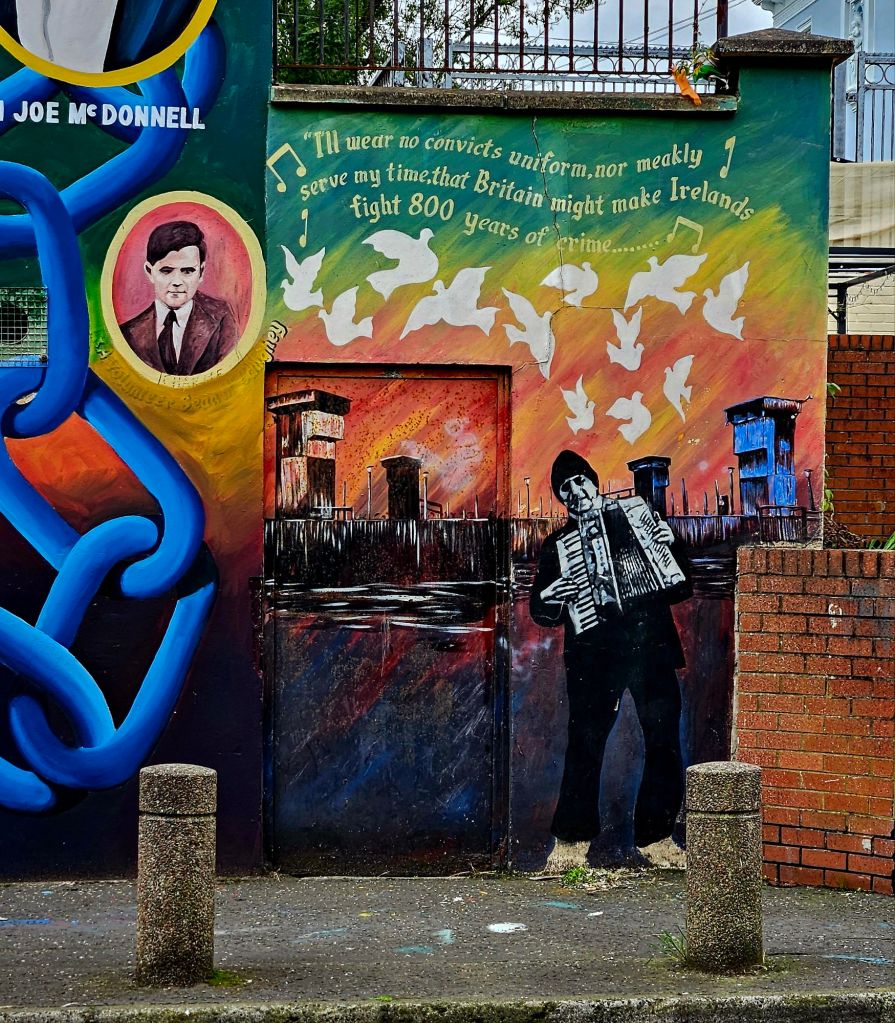
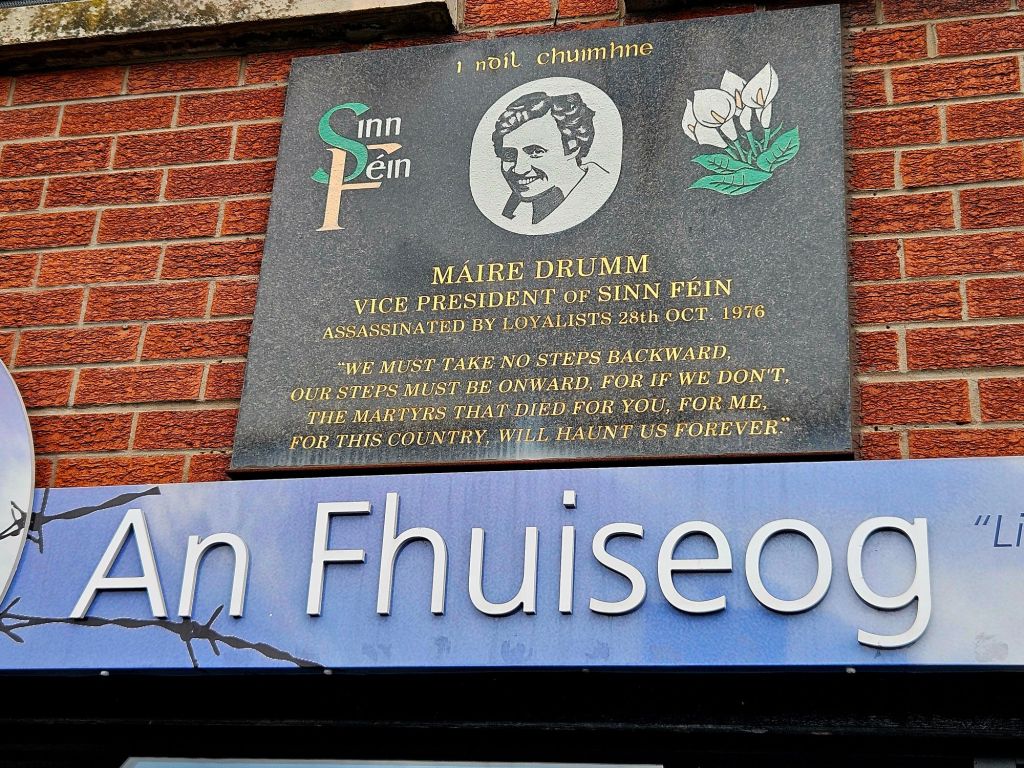
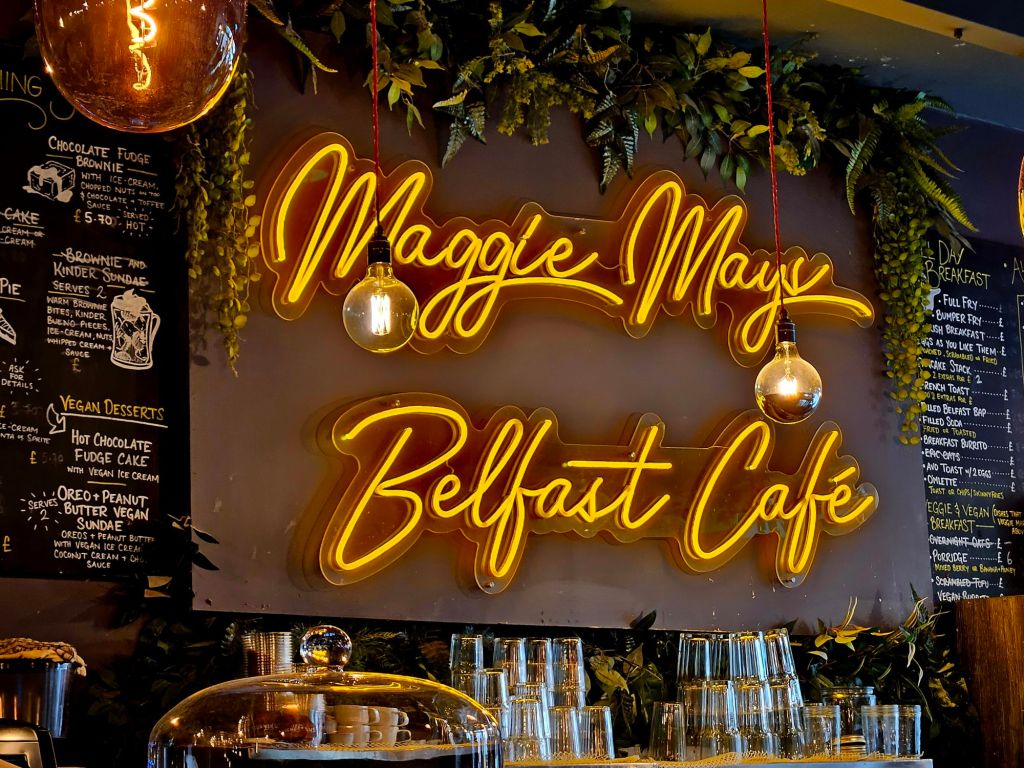
We didn’t get up too early, so it was about 10am when we left the hotel. Our hotel didn’t serve breakfast, so we went to a little cafe round the corner called Maggie Mays. This is a family fun cafe and has been a fixture in Belfast for 30 years.
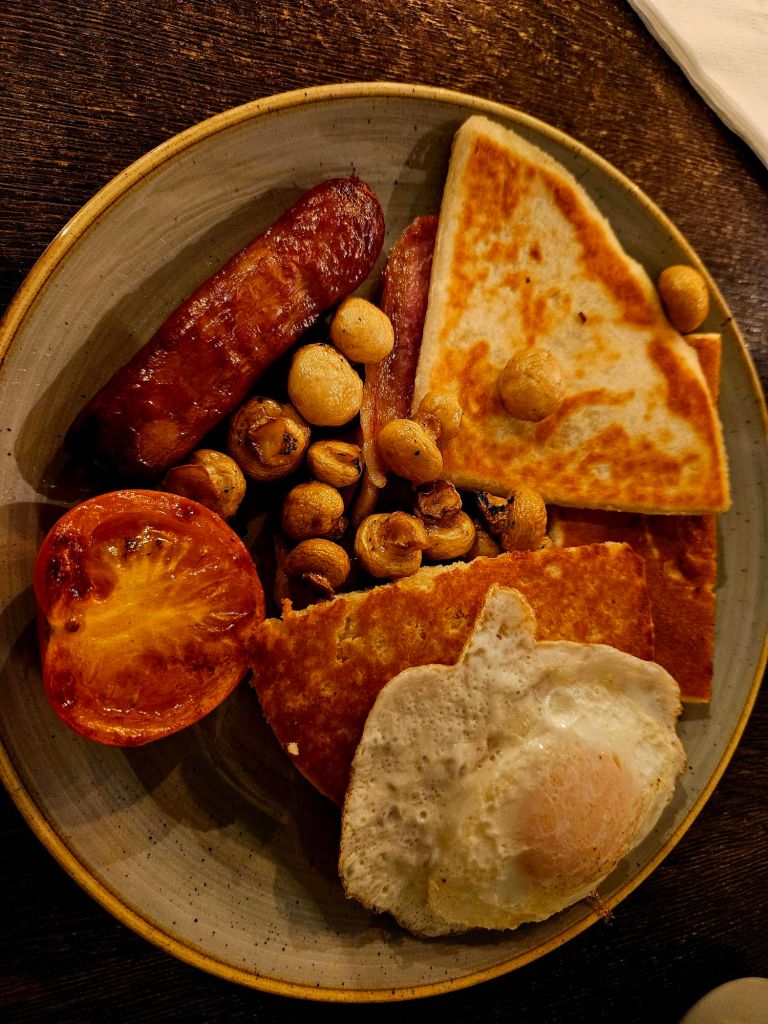
My head was a little bit fuzzy from the night before, and I was craving carbs, so I had an Irish breakfast with soda bread, potato bread and pancakes. It was just what I needed.
After breakfast, we made our way to St George’s market. The market house seen today originates from 1890 but there has been a market on this site every friday from 1604. There used to be many such markets along May Street, but this is the only one left. It is the oldest covered market in Ireland and is made from brick, iron and stone. During WWII, the market was used as a mortuary for around 250 people
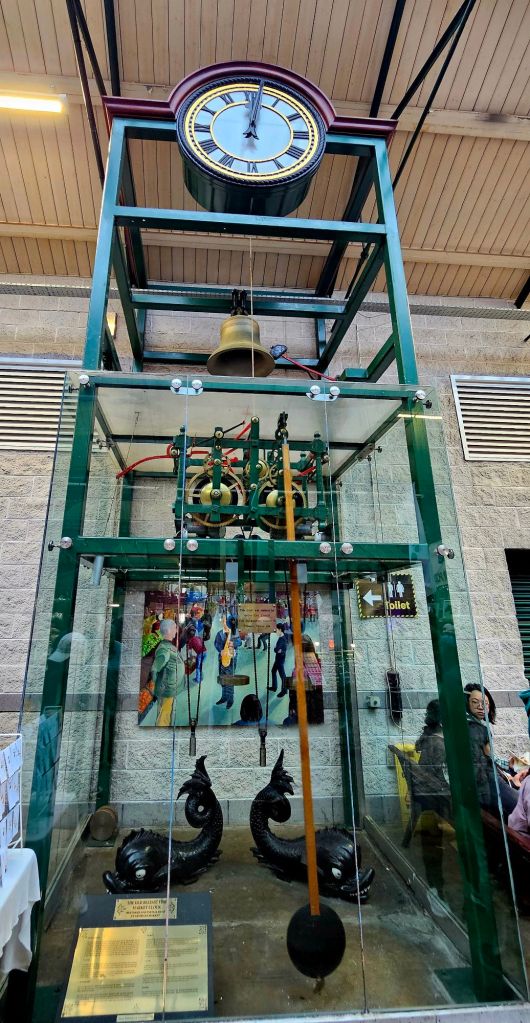
The market only opens on Fridays and at the weekend and has a complete mixture of stalls selling crafts, meat, fish, other foods and plants, as well as live music. Within the market is the Old Belfast Fish Market Clock. This clock was originally built in 1821 and had been lost for years. It was discovered in the basement of City Hall in the 1980s and restored using an unused bell from the Smithfield market nearby. There’s a special mechanism in the clock that ensures the regular strikes won’t interrupt concerts and events.
We wandered around for a little while – it’s a huge market with over 200 stalls.
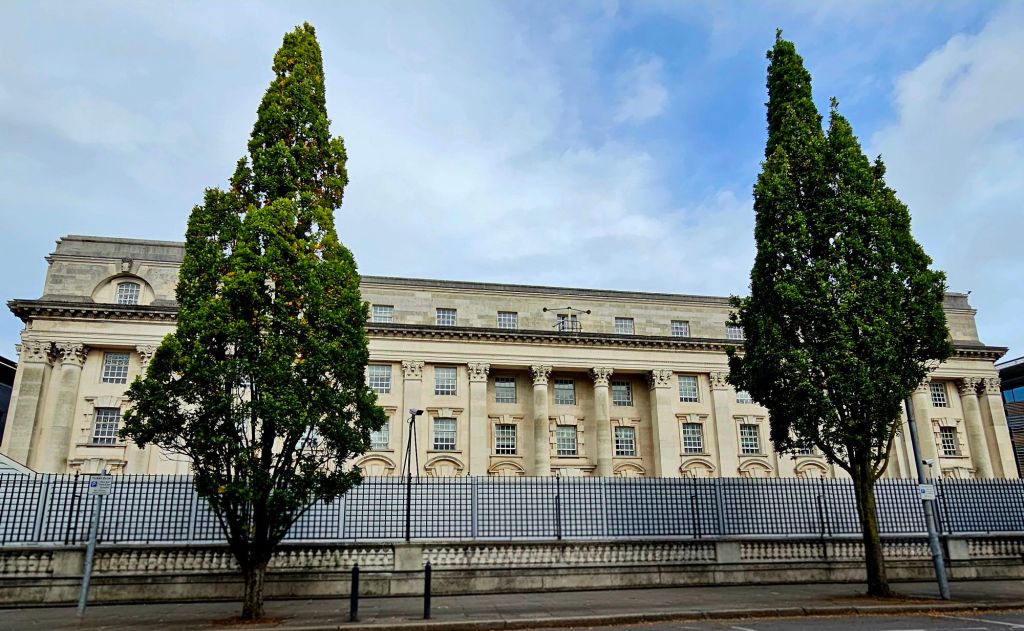
Opposite the market area are two imposing buildings. One is the old town hall of Belfast, which was restored as Belfasts County Courts but is now vacant. The hall was built in 1870 to house the council and its meetings, but a new City Hall was built when Belfast was declared a city by Queen Victoria. In 1912, it became the headquarters of the Ulster Unionist Council, and it was where the Ulster Covenant was signed in protest against Home Rule. After WWII, it went back to being a courthouse until 2020.
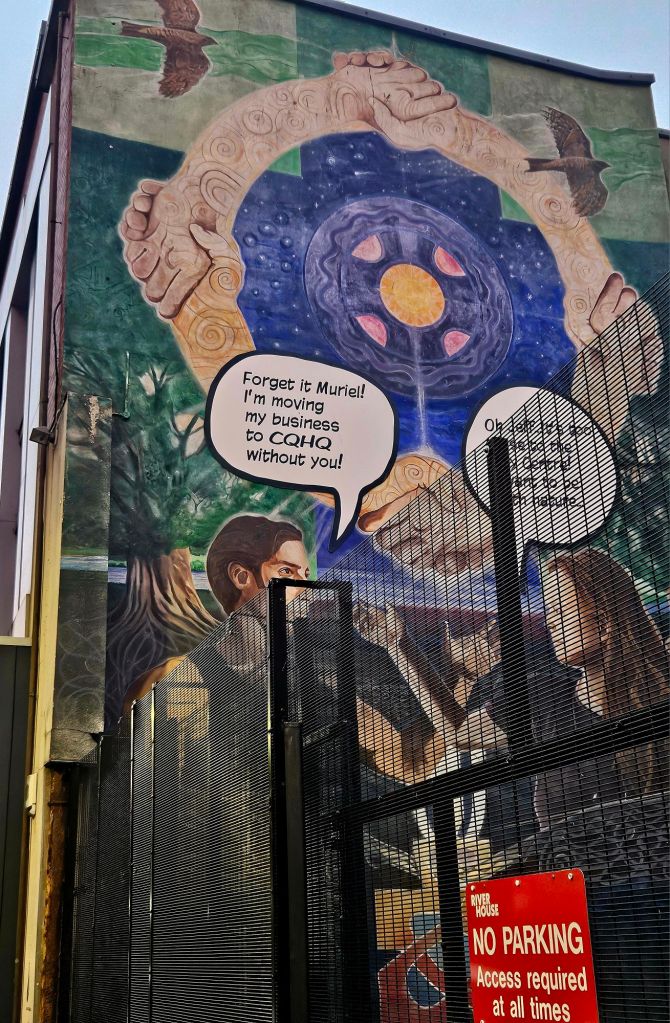
The other building is the Royal Courts of Justice. Until 2920, the most senior courts in Ireland were in Dublin. This building was built between 1928 and 1933. It was heavily targeted during the Troubles and suffered from bomb damage in 1989 and 1997.
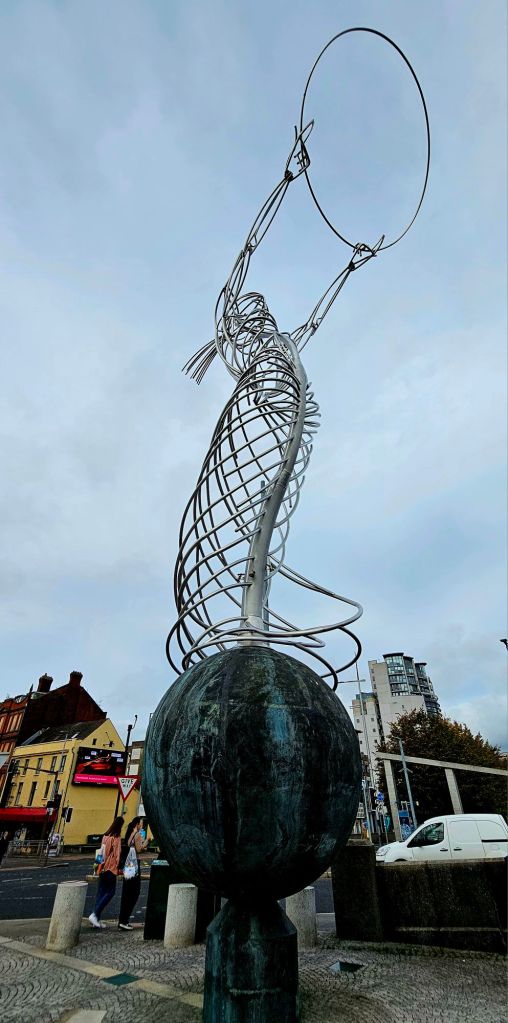
We weren’t far from the docks, so we decided to take a wander down there. On the way, we passed the Statue in Thanksgiving Square. This statue represents hope and aspiration, peace and reconciliation. Her position on the globe represents a unified approach to all life on earth.
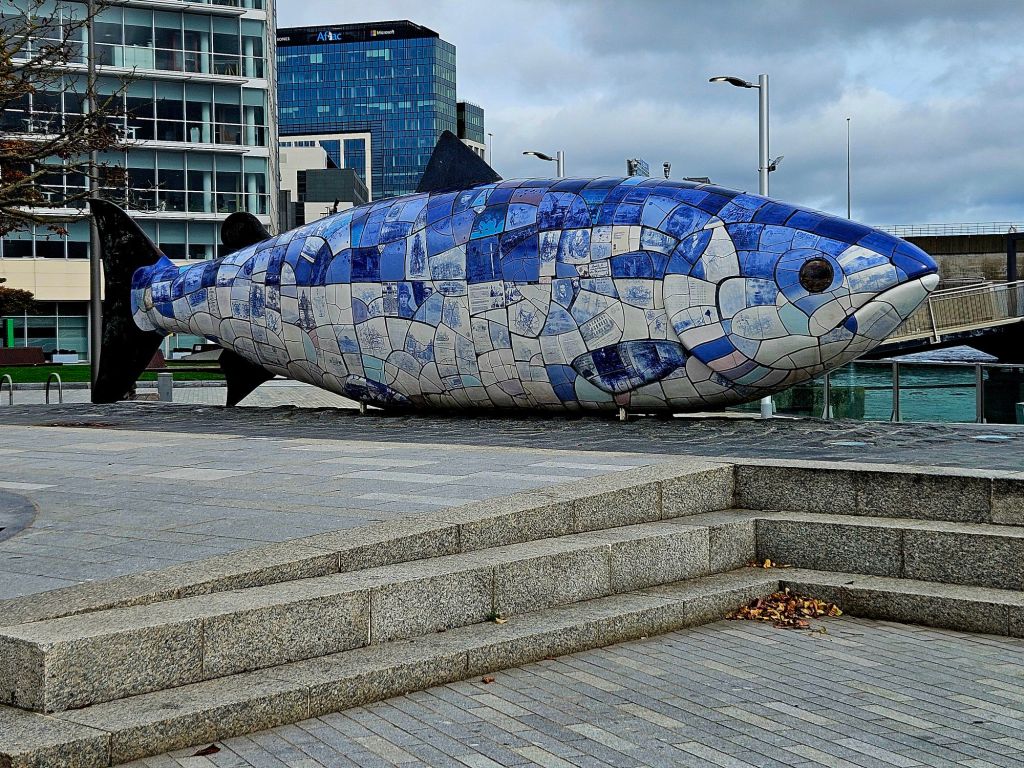
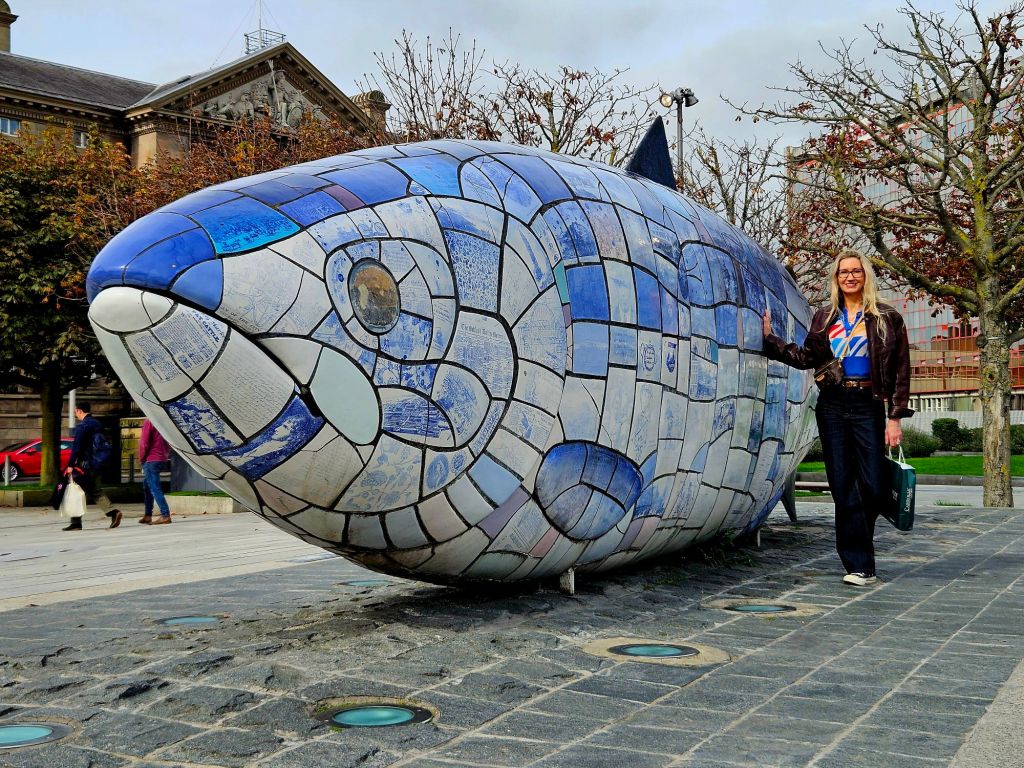
The next sculpture we came upon was the Big Fish, also known as the Salmon of Knowledge. The sculpture is 10m long and was created in 1999. The tiles feature texts, images and newspaper clippings reflecting moments in Belfast’s history. The ‘Salmon of Knowledge’ comes from an Irish legend about Finn MacCumhaill, a mythical warrior who gained all the world’s wisdom by tasting a magical salmon.
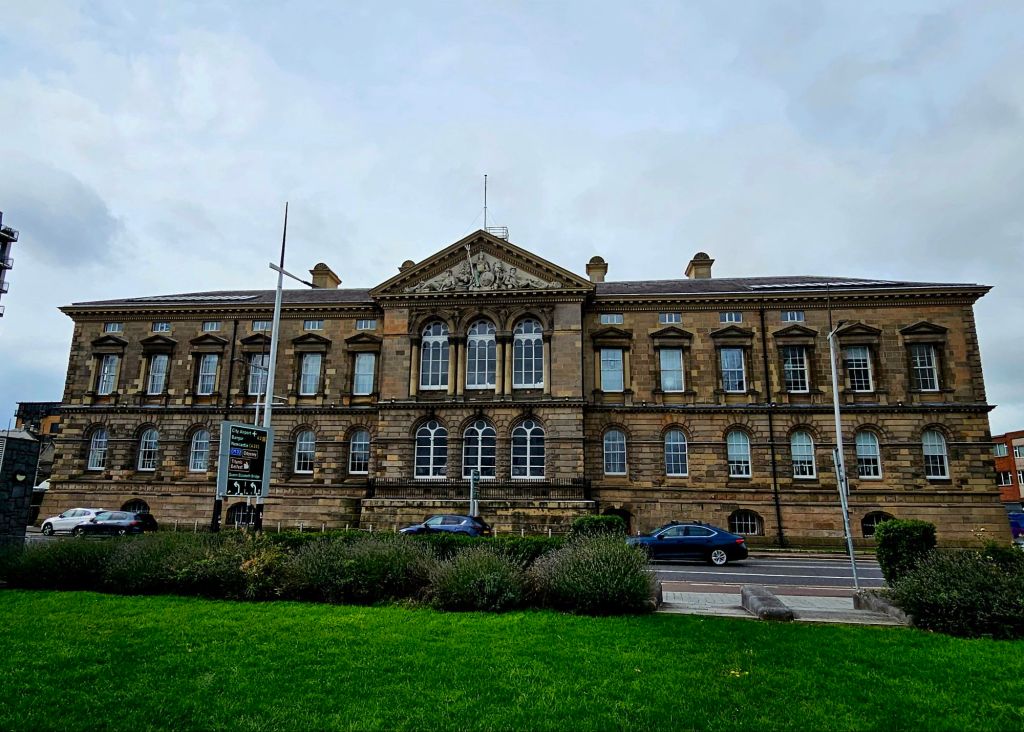
Opposite where we were is Customs House. This was designed in 1847, and the building was completed 19 years later in 1857. It has been used by various governmental departments over the years.
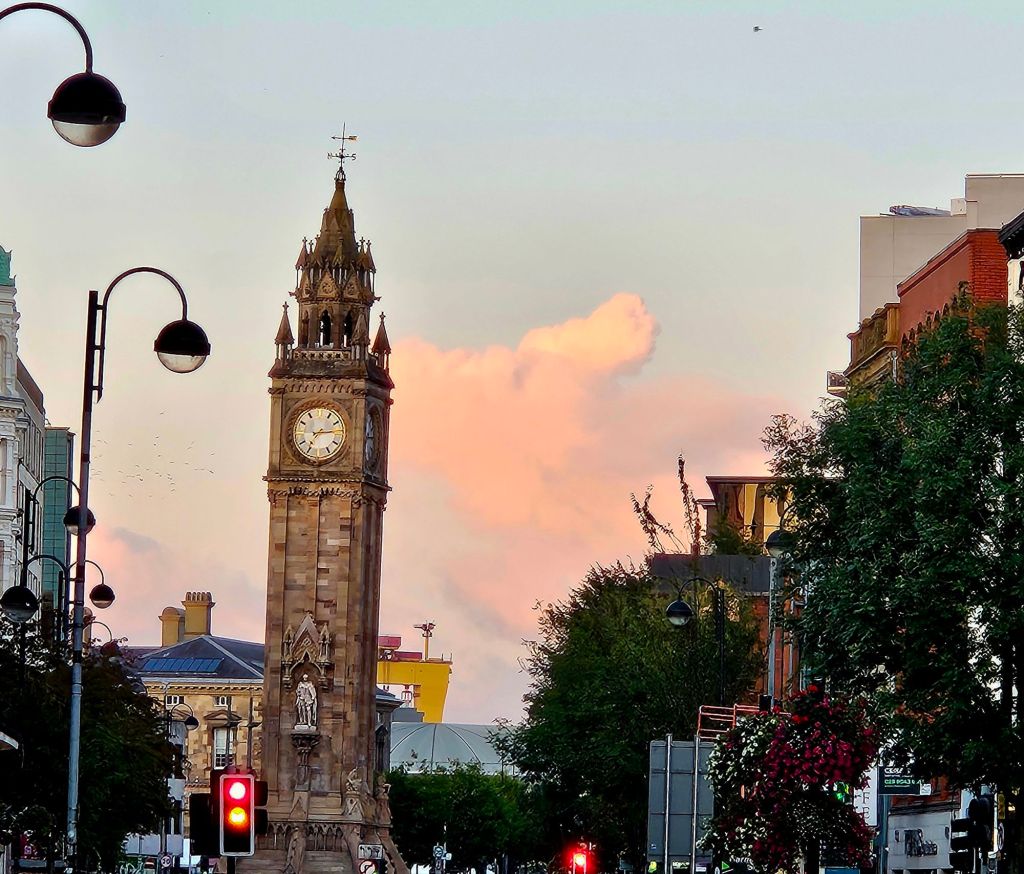
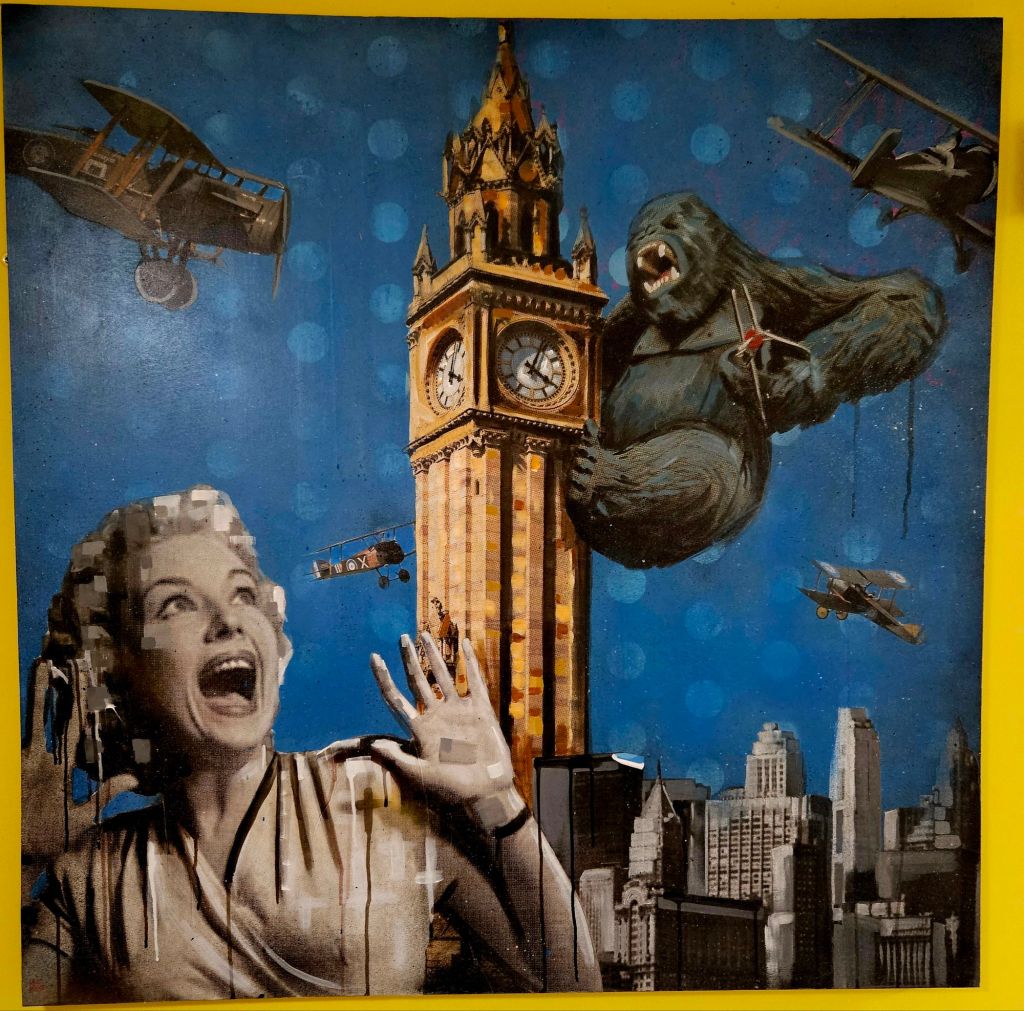
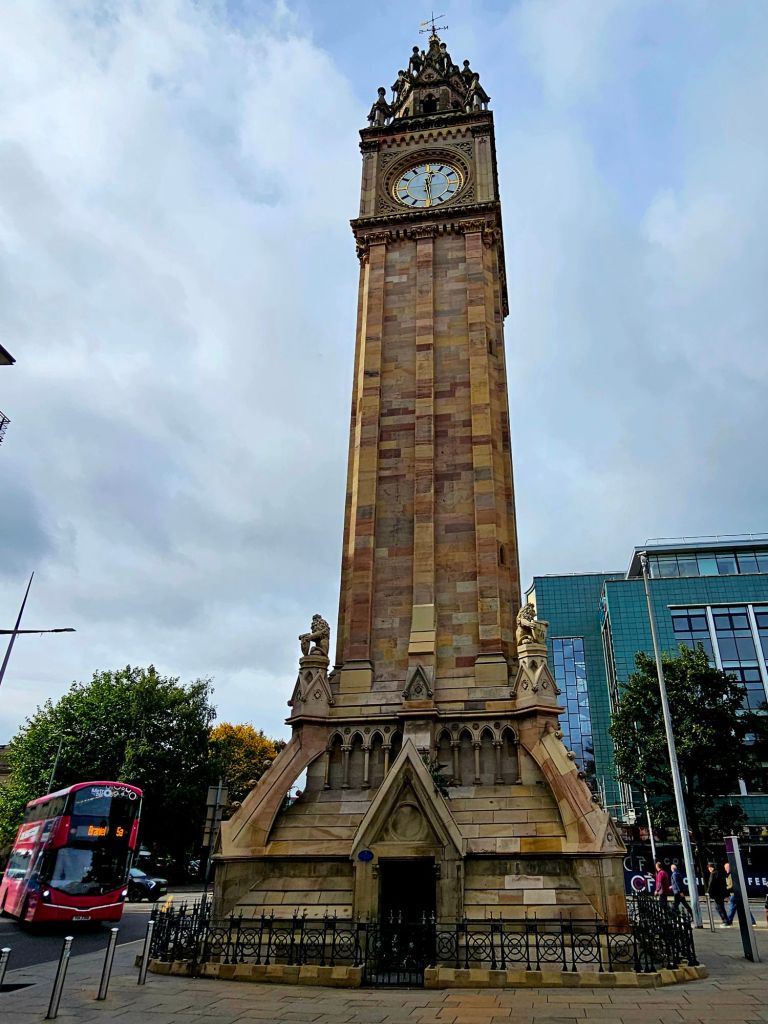
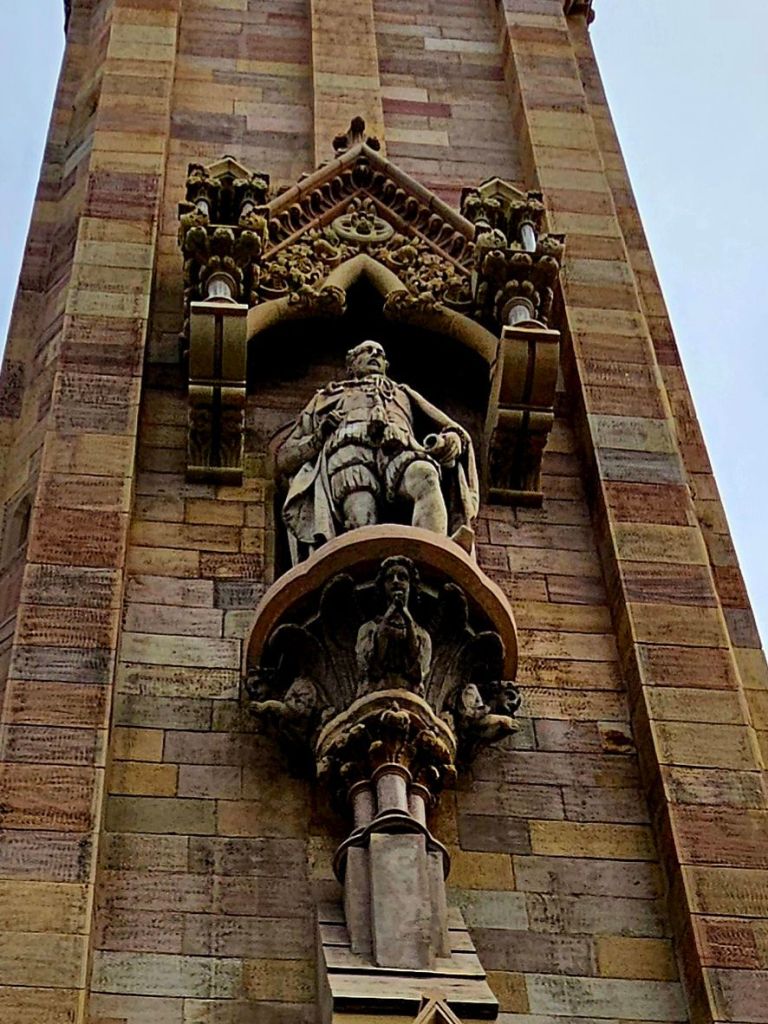
On the way back into the city, we passed the Albert Memorial Clock. The clock was built in 1869 as a memorial to Queen Victoria’s late husband, who passed away in 1861. The cost of the clock was funded by public subscription and the Lord Mayor at the time donating his salary for 2 years. The design was the result of a competition and unfortunately, the designer, William Barrer, died of TB before the memorial was completed. It stands 35m high and is constructed mainly of sandstone. It is built on wooden piles on reclaimed marshy land, and over the years, subsidence has caused a lean of 1.25m from vertical. The clock tower houses a 2 tonne bell. In the 1950s there was a caretaker of Belfast Council’s public clocks, Tom Carragher. In February 1977, the clock suddenly stopped ticking, Tom had passed away an hour before.
We stopped off at Trait Cafe for a quick caffeine boost before heading back to our hotel.
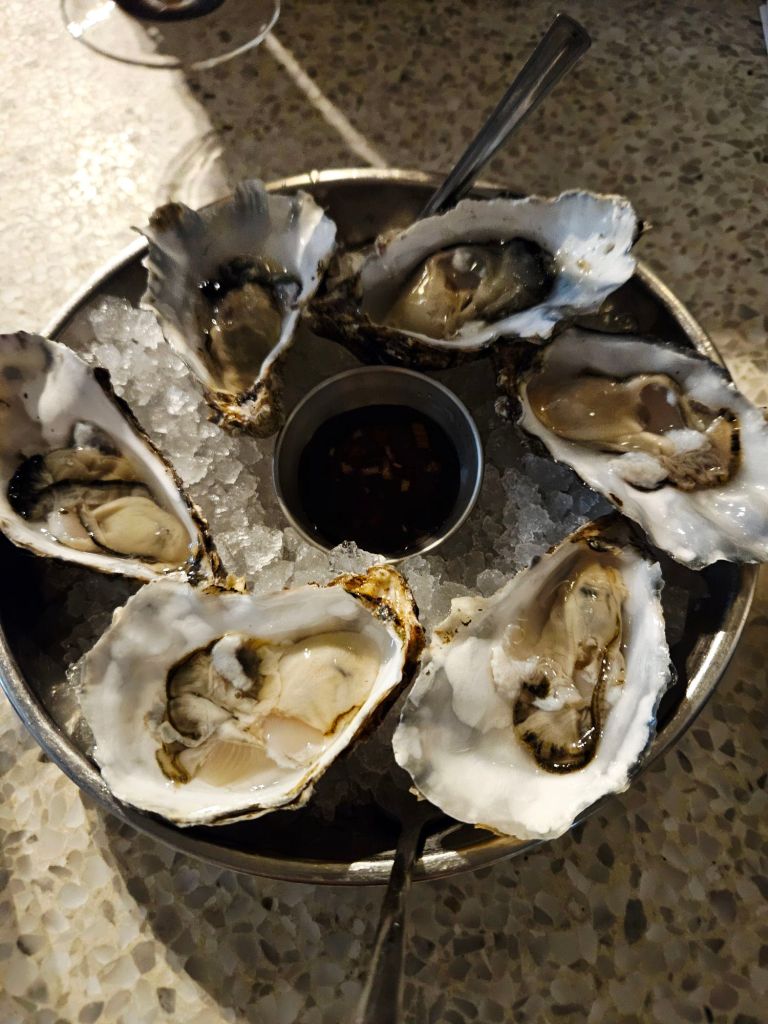
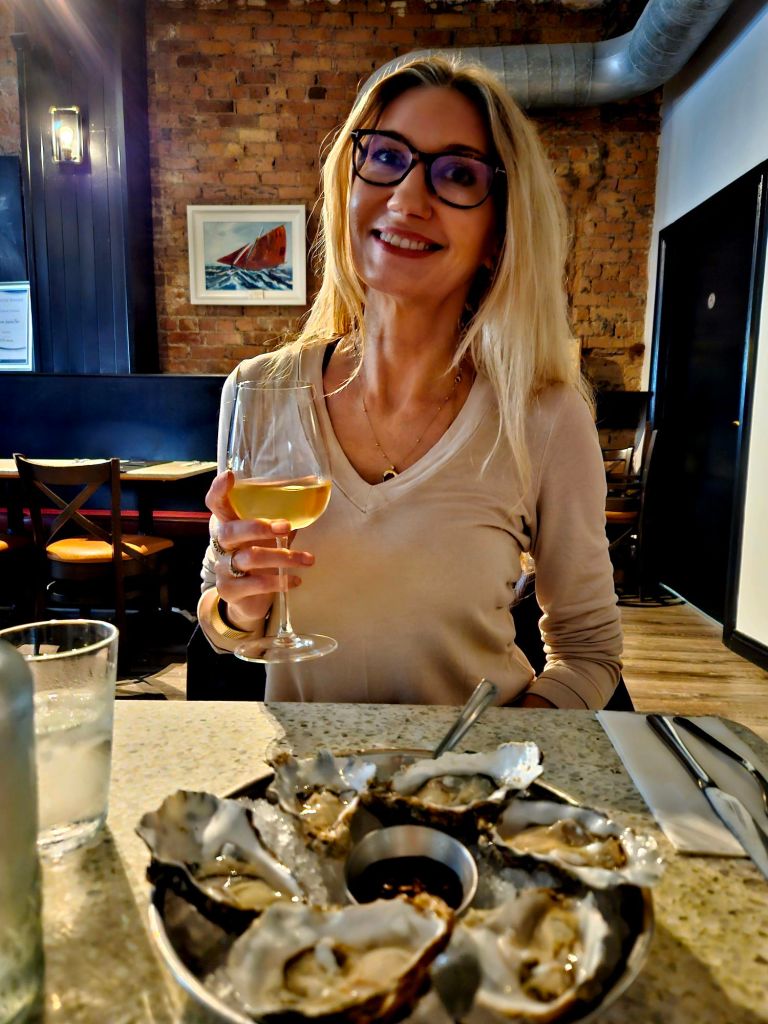
Faye arrived around 1:30pm. After a very quick unpack, we went to a restaurant right next door to our hotel, Mourne Seafood Bar. It’s one of the best places in Belfast for seafood and fish. I’d only just had brunch, so I wasn’t very hungry, but I did try one of the oysters Faye ordered, and it was delicious.
We also shared a bottle of wine between us.
We then decided to take a little wander, which took us past the City Hall.
We also passed the current building housing the Ulster Bank, whose parent company is the Royal Bank of Scotland Group. The original Ulster Bank was housed in the building, which is now the Merchant Hotel. In 2002, three Ulster Bank employees were arrested on charges of theft and money laundering. The three were responsible for the destruction of old banknotes at the bank’s former Waring Street cash centre. Between November 2001 and February 2002, they were accused of stealing approximately £900,000 of used banknotes designated for disposal. The money was then placed in various bank and building society accounts. On 23 January 2004, the men were jailed for two and a half years for the theft of £770,000.
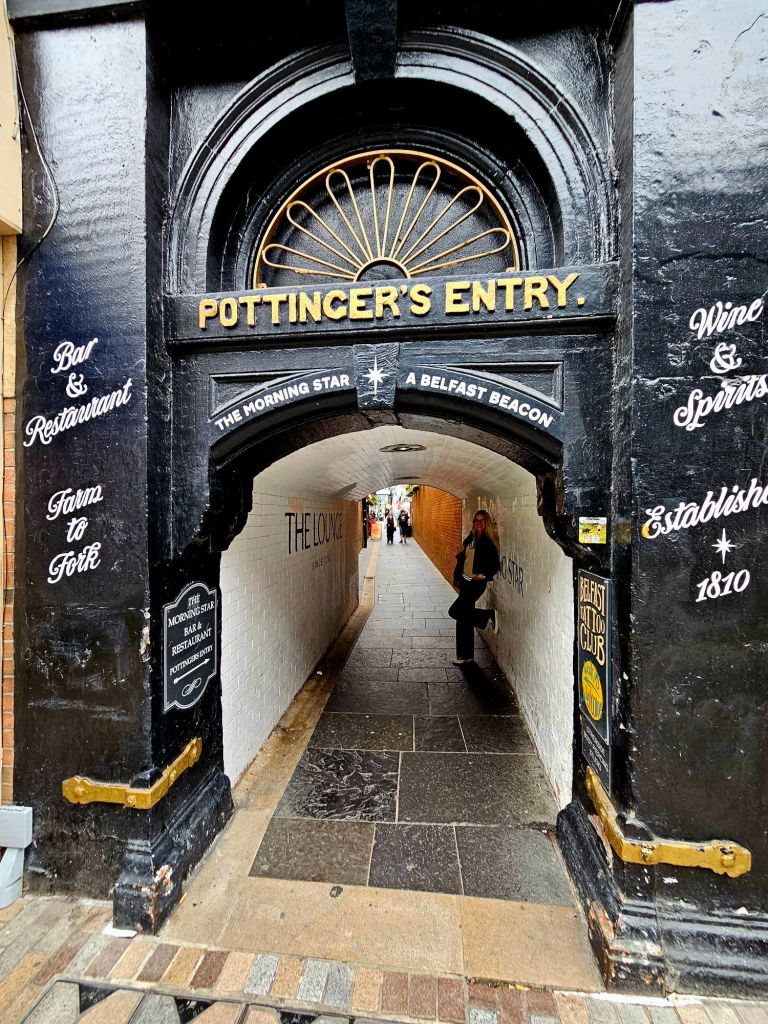
We walked down Ann Street, popping into several shops on the way. We stopped for a quick photo of Pottinger’s Entry. This is one of the many narrow alleyways that form the nucleus of the city. The entries used to be the location of the towns bustling business area and the residence of many merchants. In 1689, Thomas Pottinger became the first Presbyterian sovereign (mayor), and this entry was named after him.
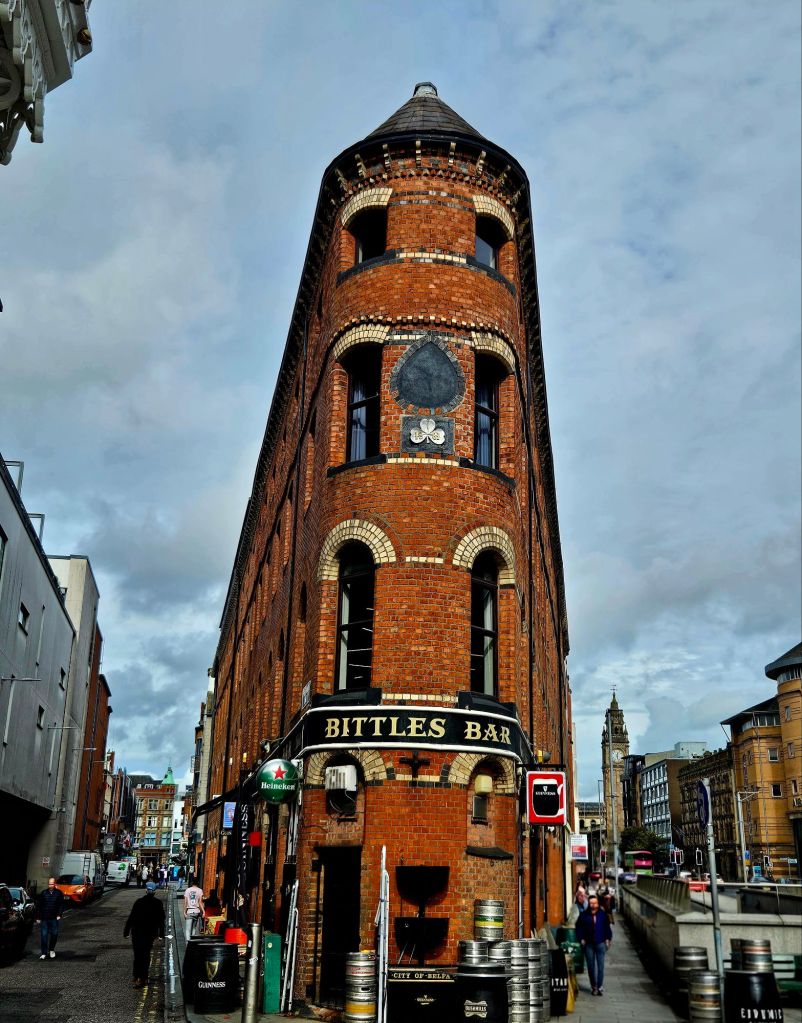
We eventually ended up at Bittles Bar.
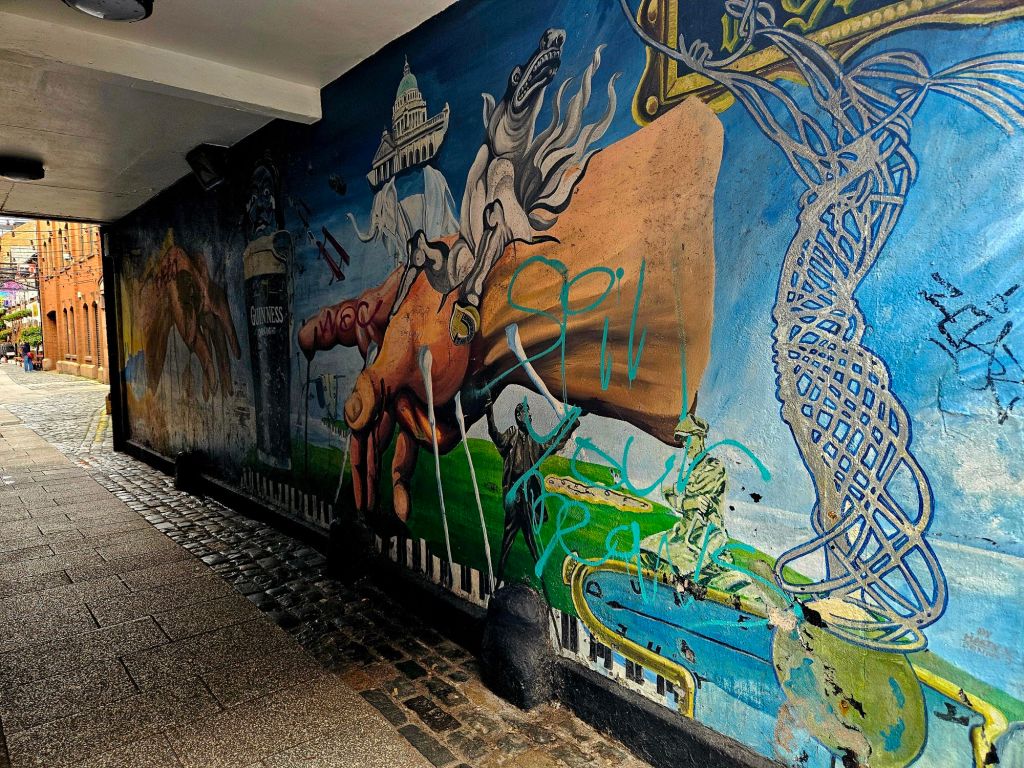
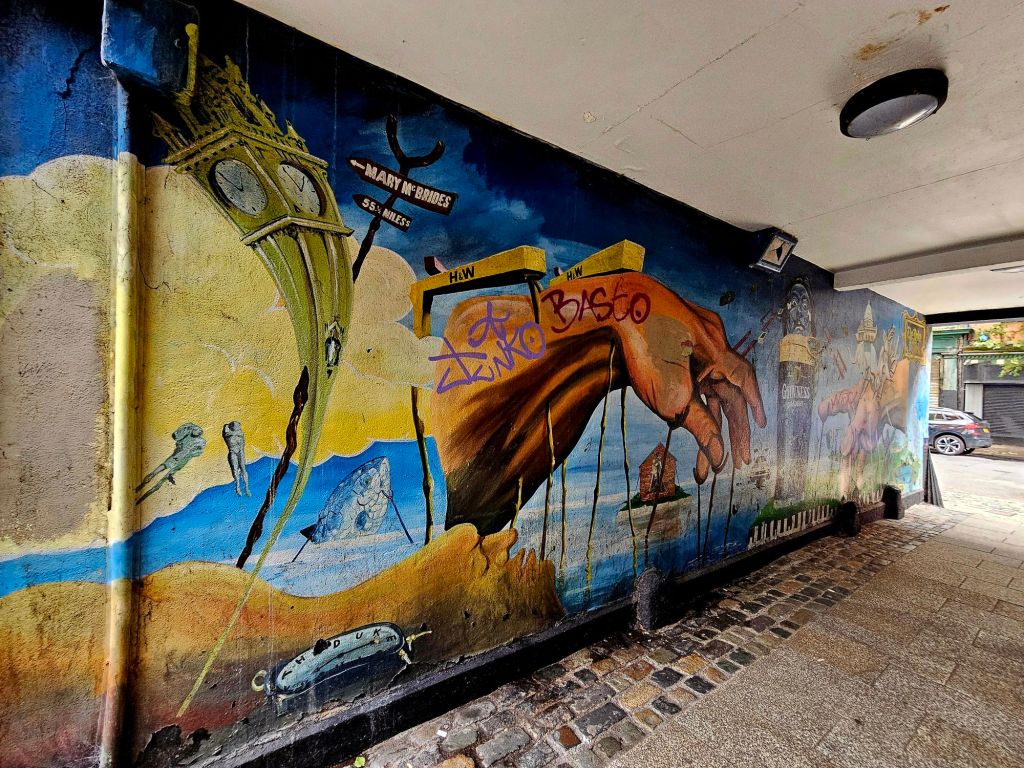
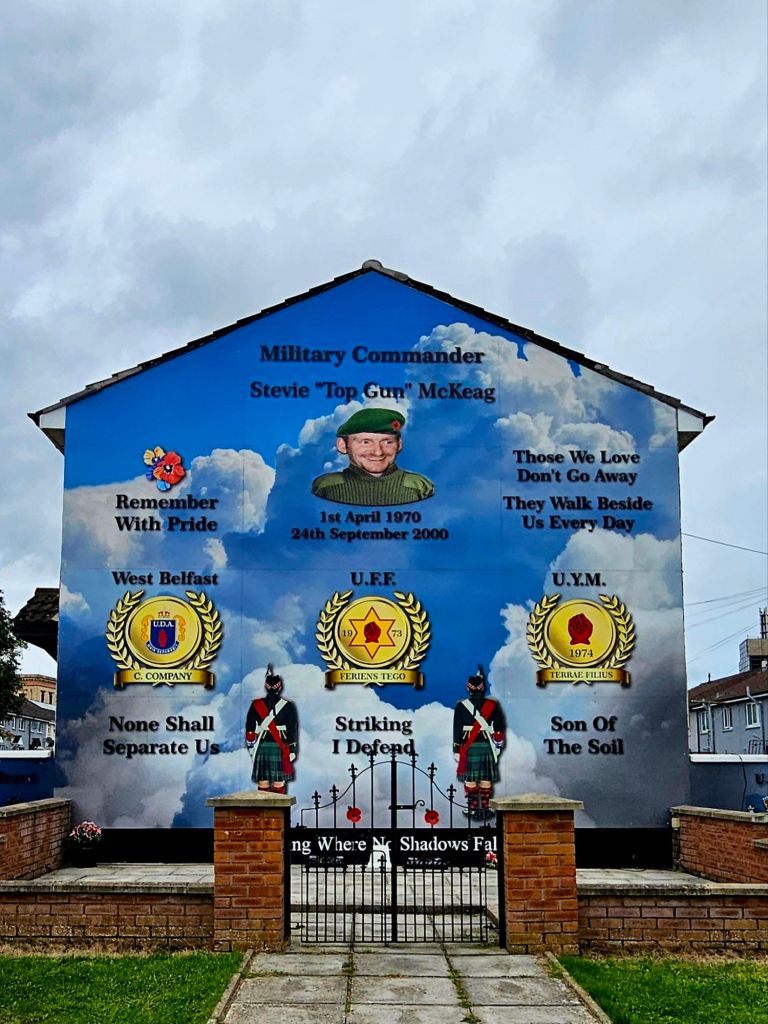
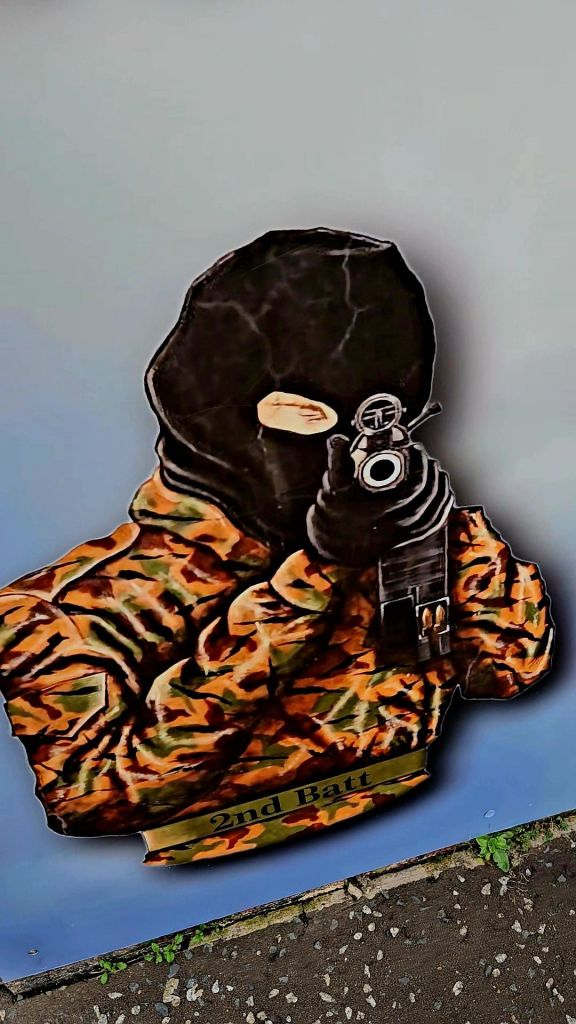
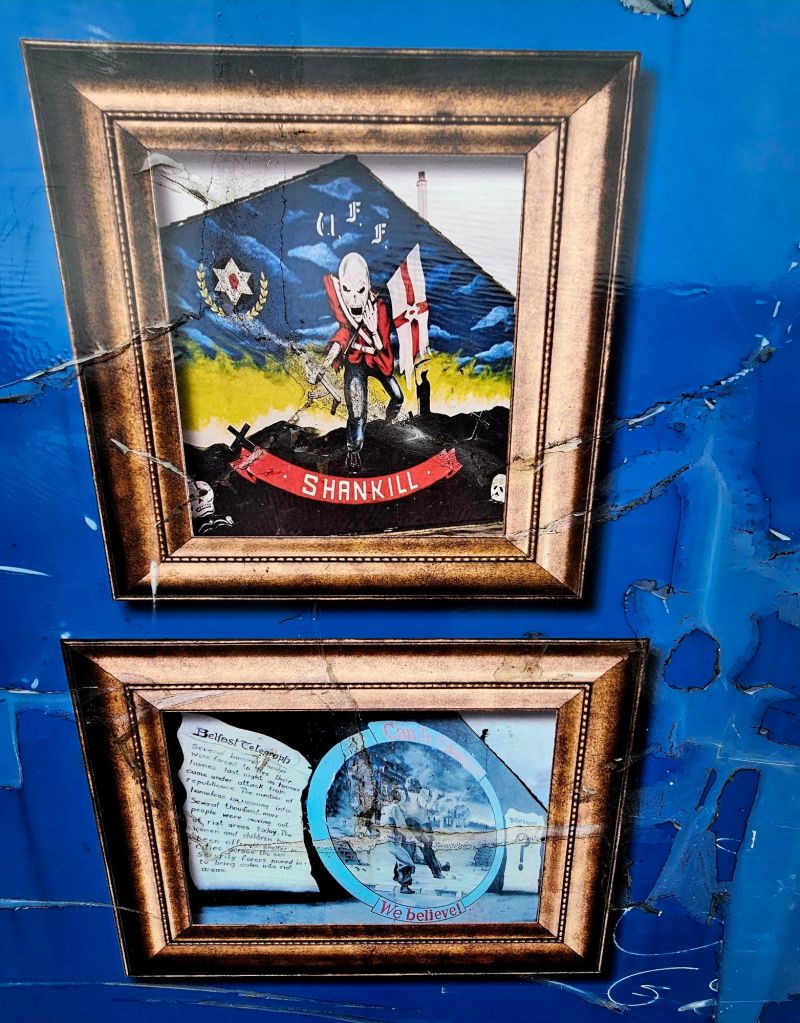
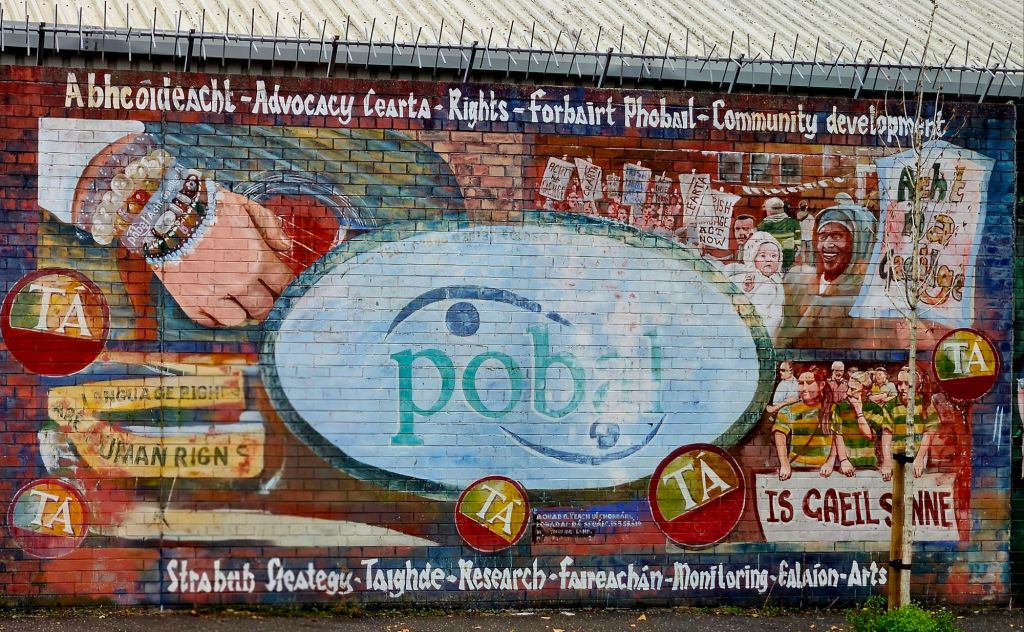
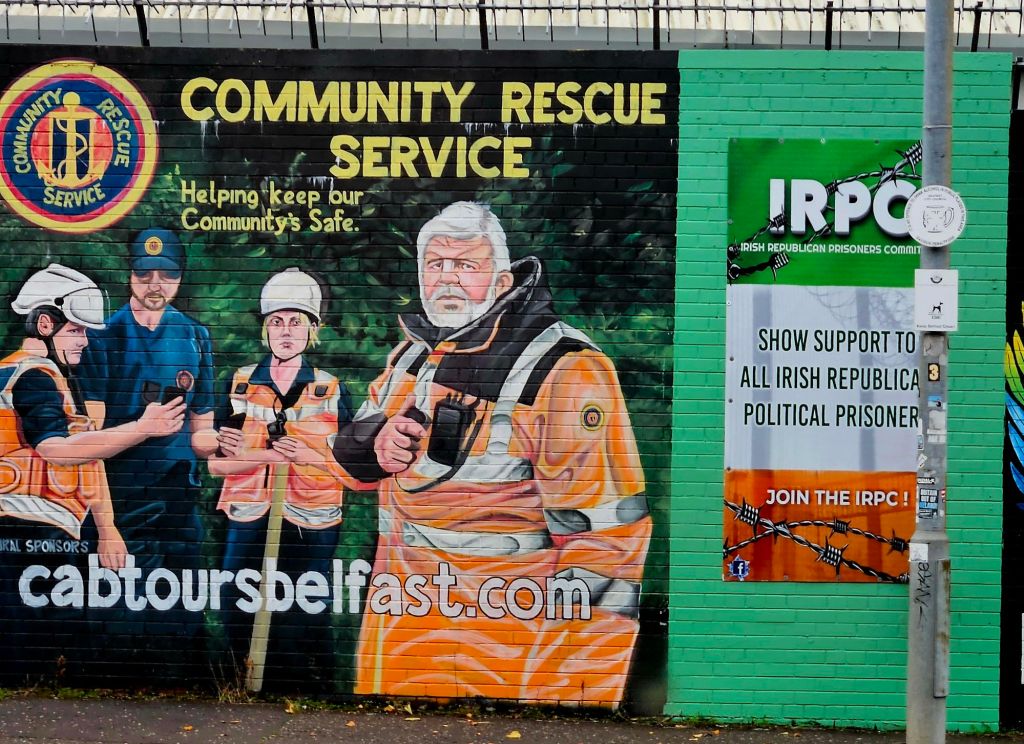
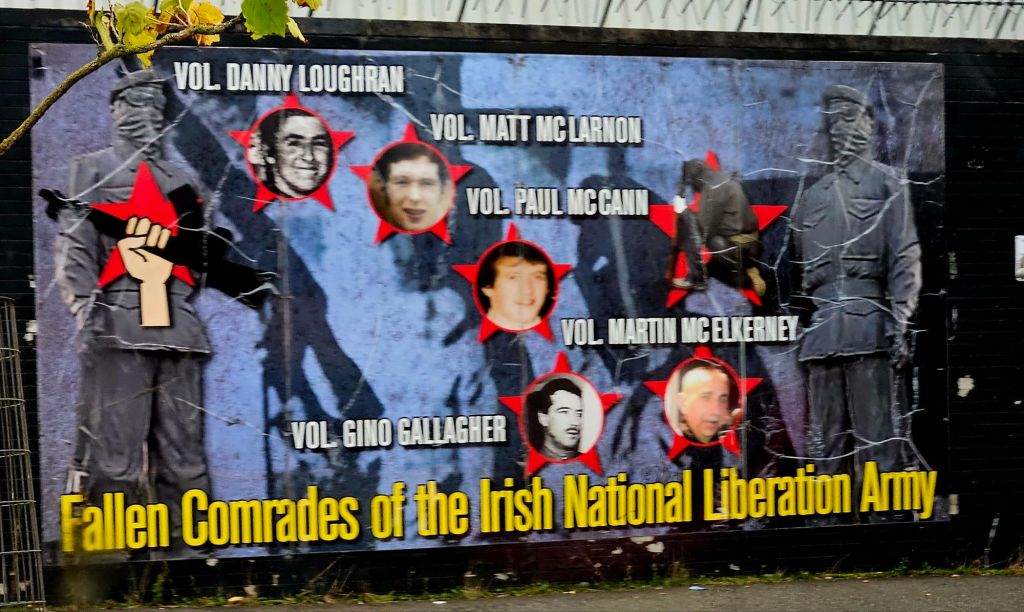
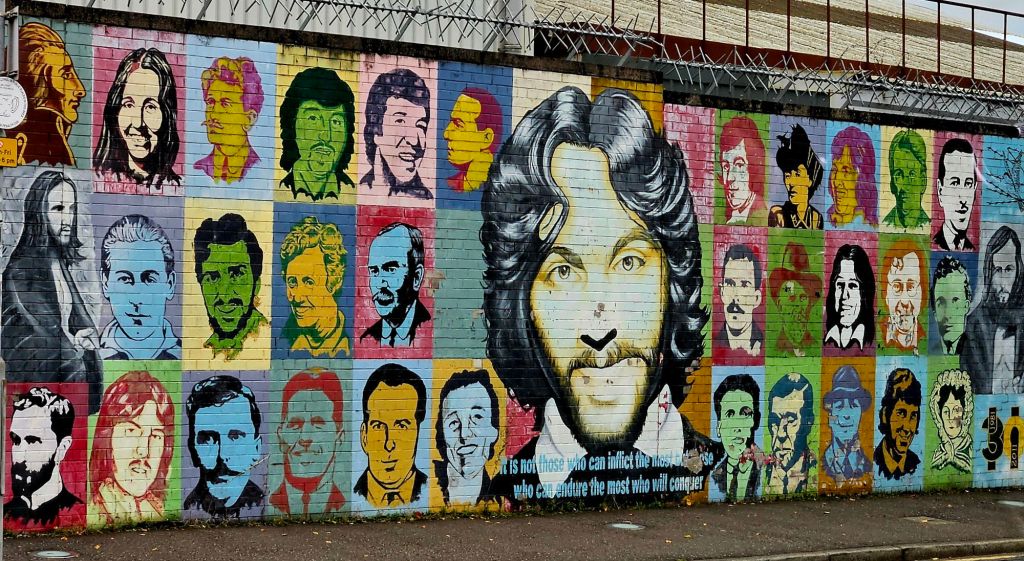
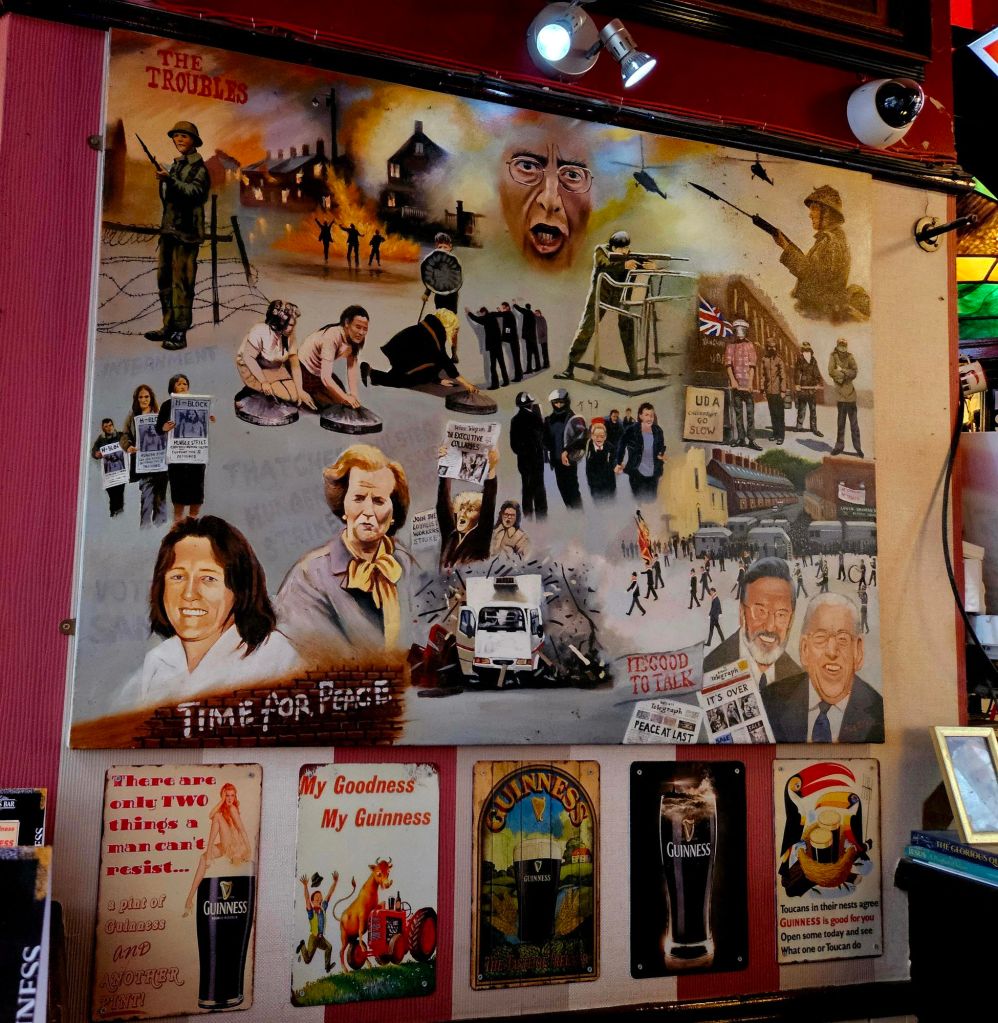
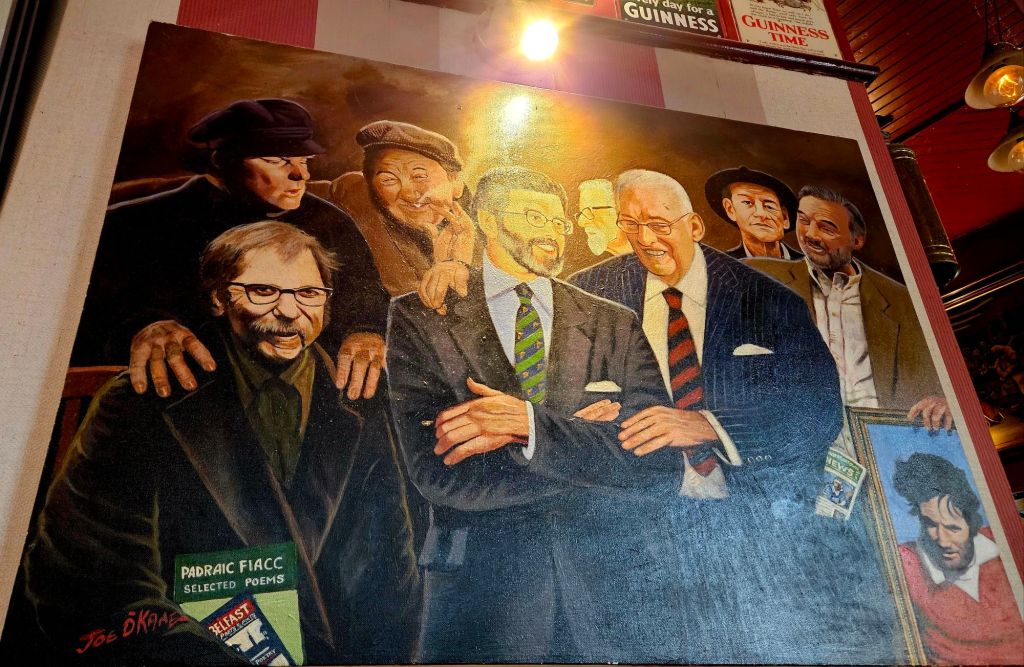
This bar is in a building known as the Flat Iron building and was originally built in 1868. The bar has long been a gathering place for writers, artists, and intellectuals, contributing to its reputation as a cultural hub. It was originally called the Shakespeare, reflecting its theatrical clientele. It has some interesting political artwork on the walls.
From here, we walked back to the hotel to get showered and ready for our night out.
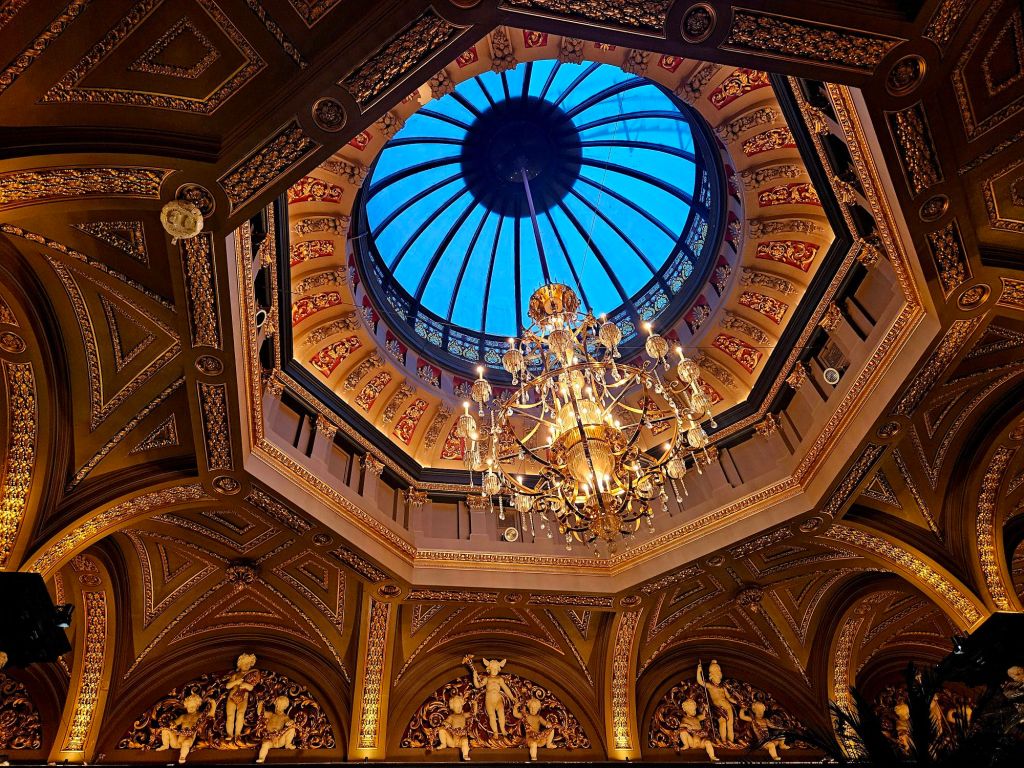
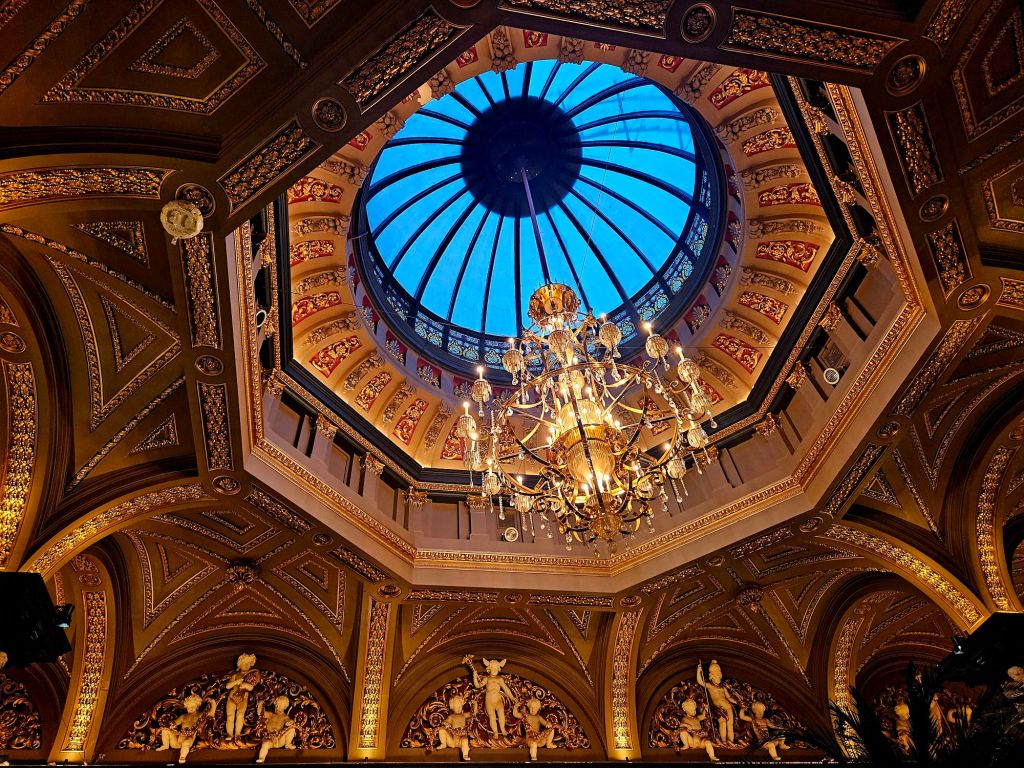
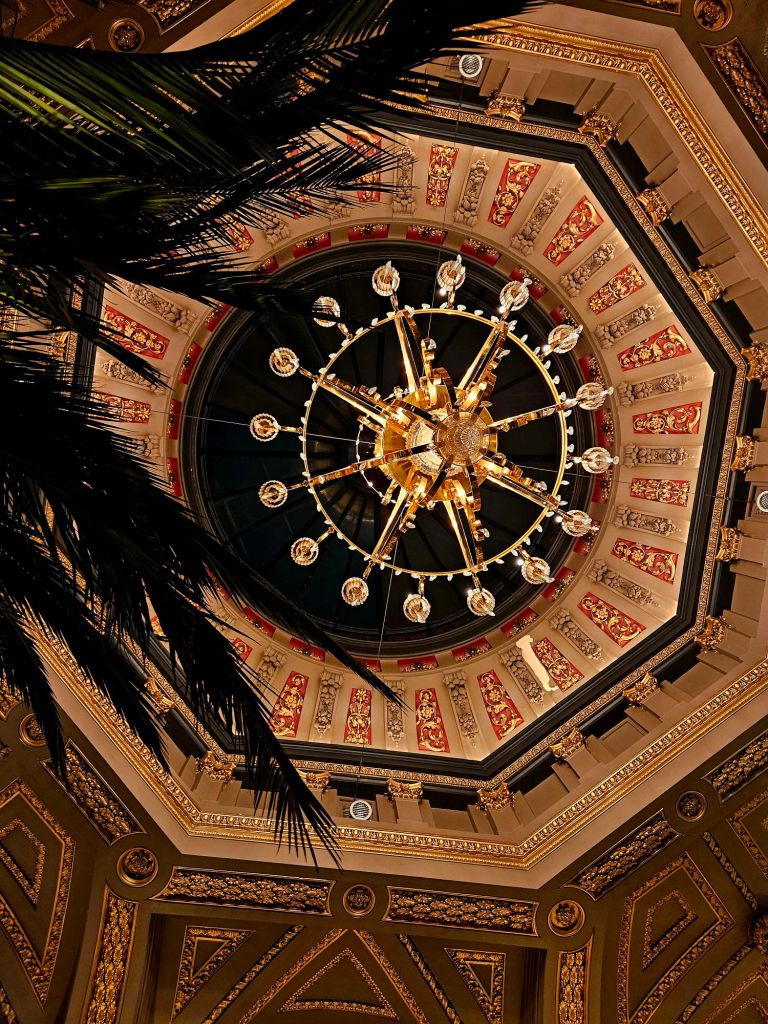
We had booked a reservation in the Great Room at the Merchant Hotel. The Great Room houses Ireland’s largest chandelier.
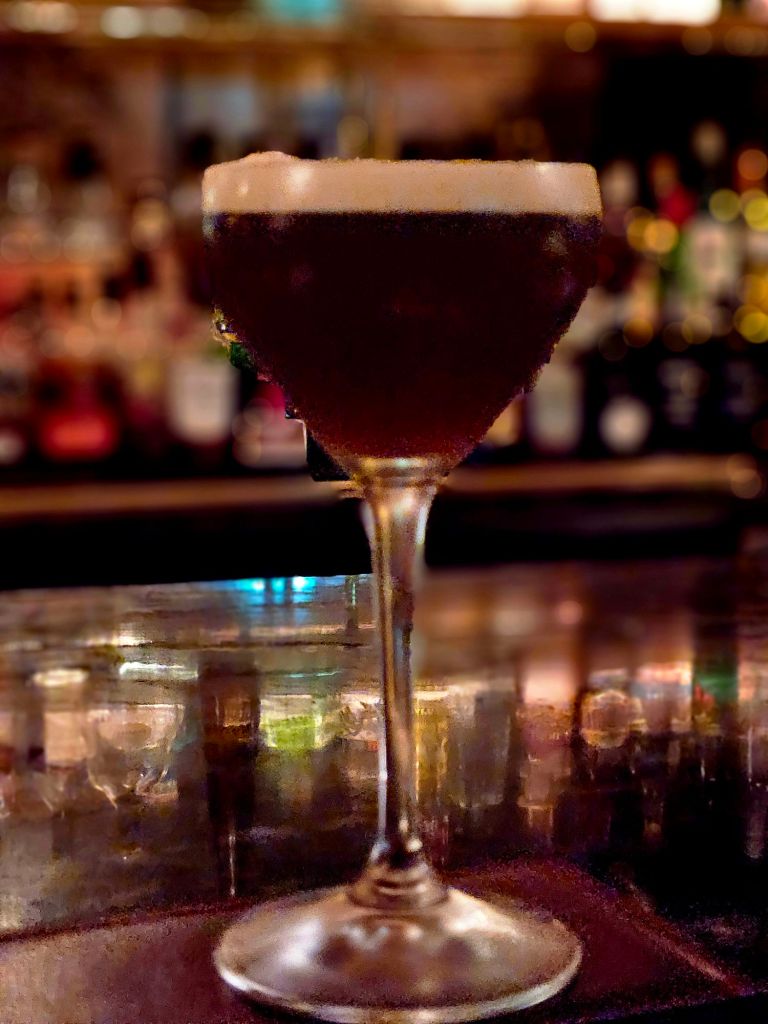
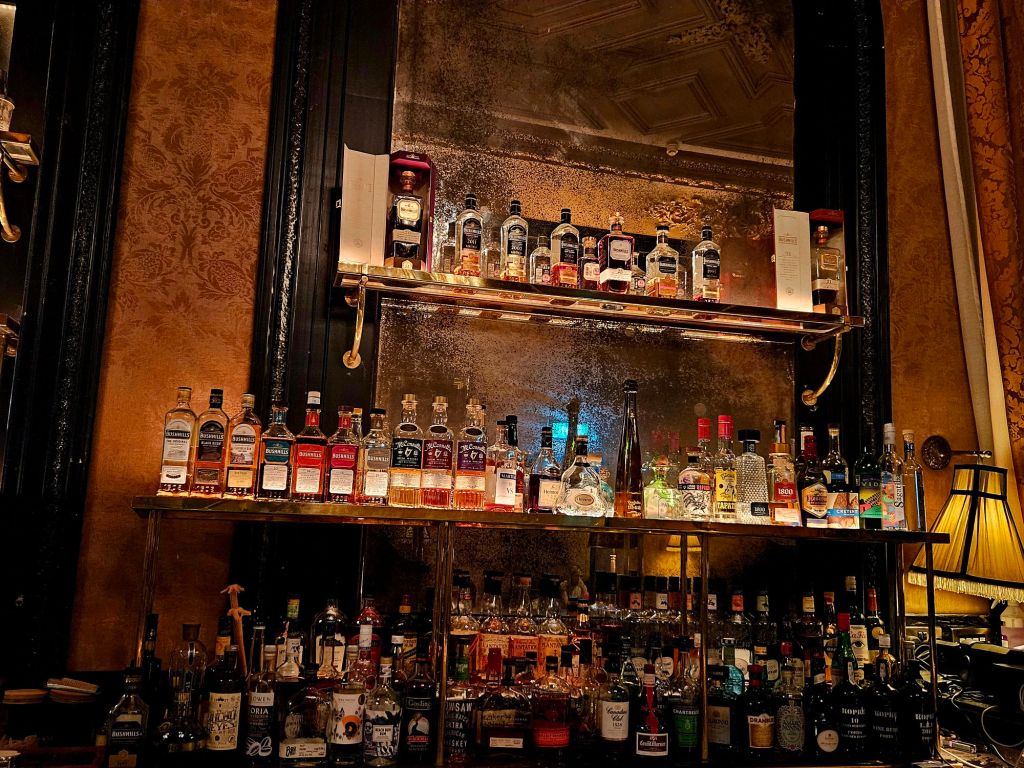
We arrived a little bit early, so we each had a cocktail at the bar.
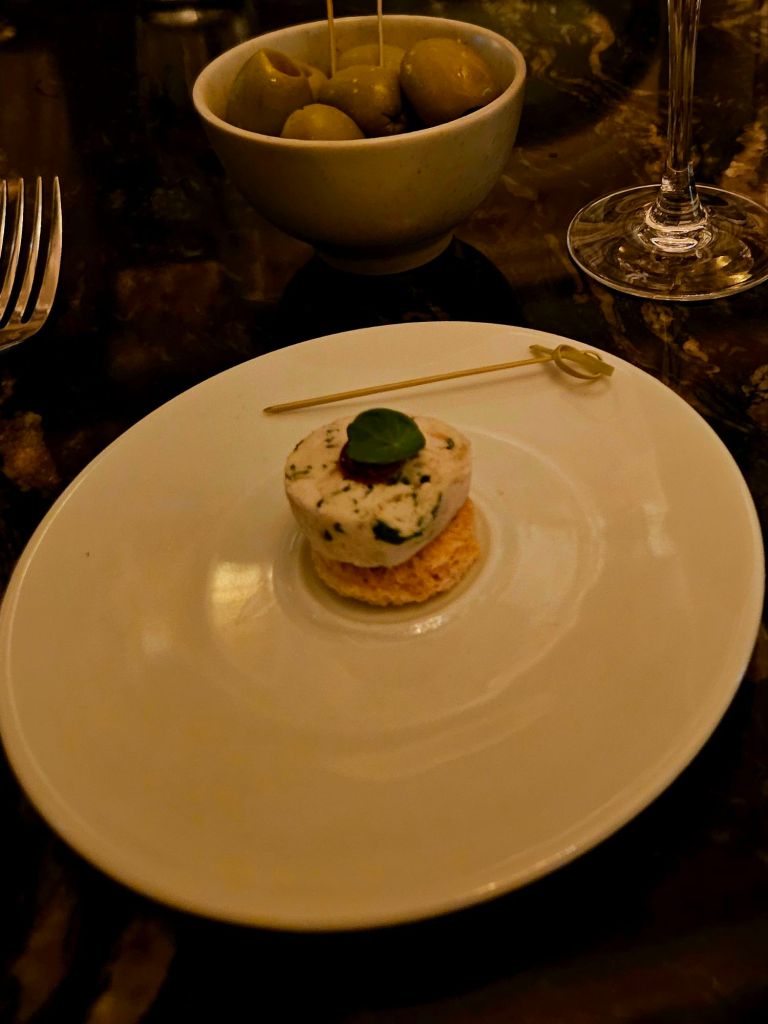
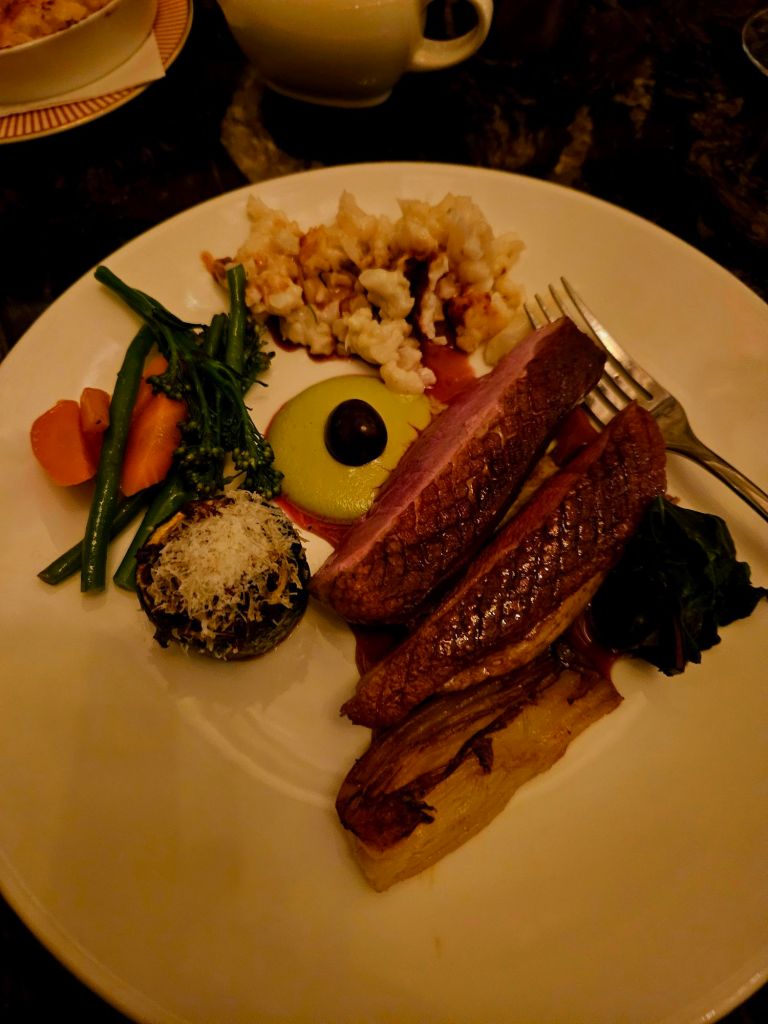
The setting was very opulent, and the food was amazing. We both had duck for main.
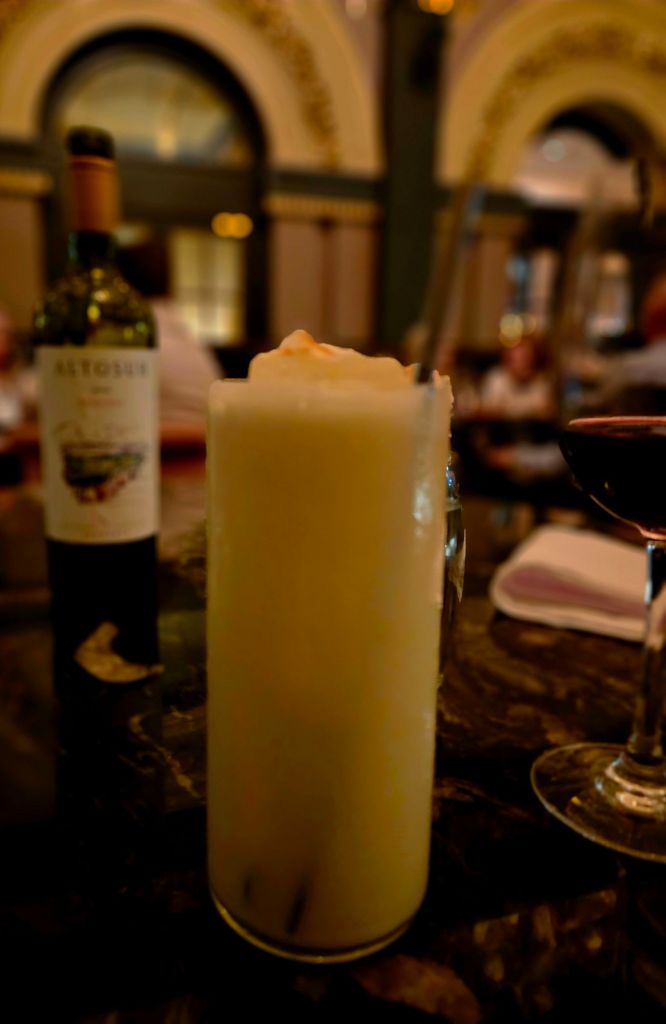
And for dessert, we both had a pina colada.
After a fantastic dinner, we came across The National, and they had a 90s night going on. So we went inside and had a drink and dance. Initially, we didn’t realise just how big the place was, but we did some exploring and discovered it covered quote appears huge area.
Around 1:30 in the morning, we headed home and had a lovely cup of Redbush tea before heading to bed.
I woke up around 8 am, and after a quick shower, I left the hotel to do some more exploring. Initially, Faye was supposed to travel with me yesterday, but her little dog needed some care, so she decided to fly out a day later and was due to arrive early afternoon. As Faye is not the biggest fan of churches, I planned to get a few ticked off the list.
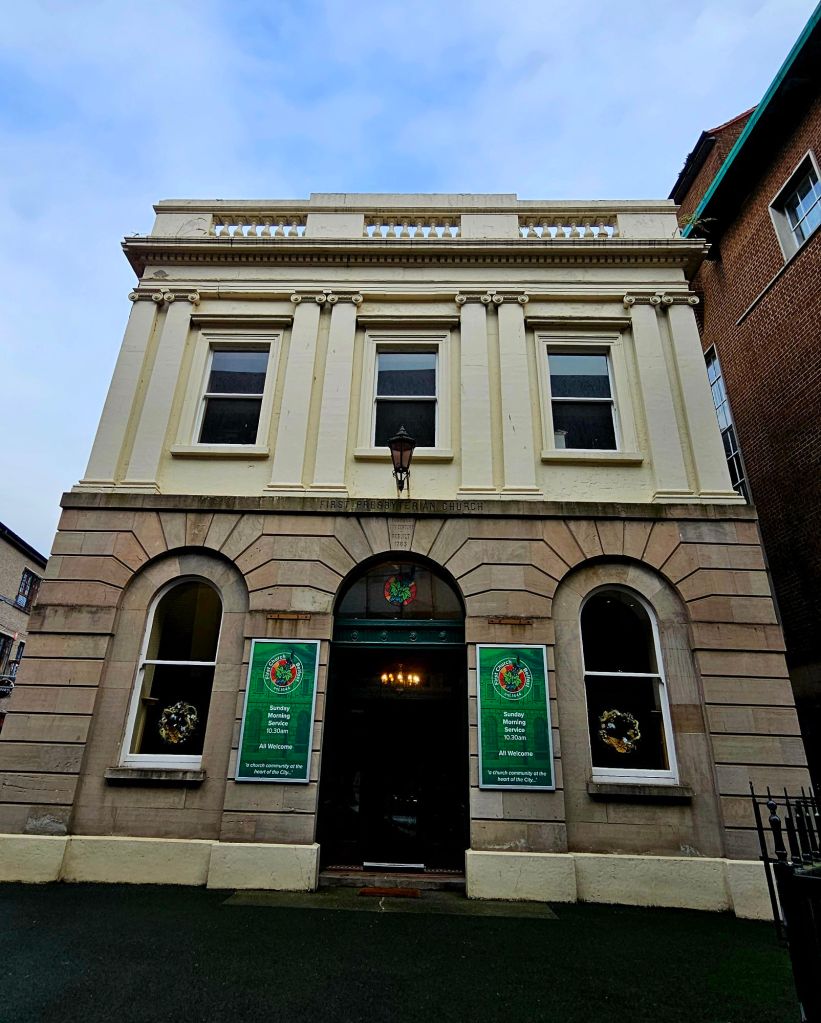
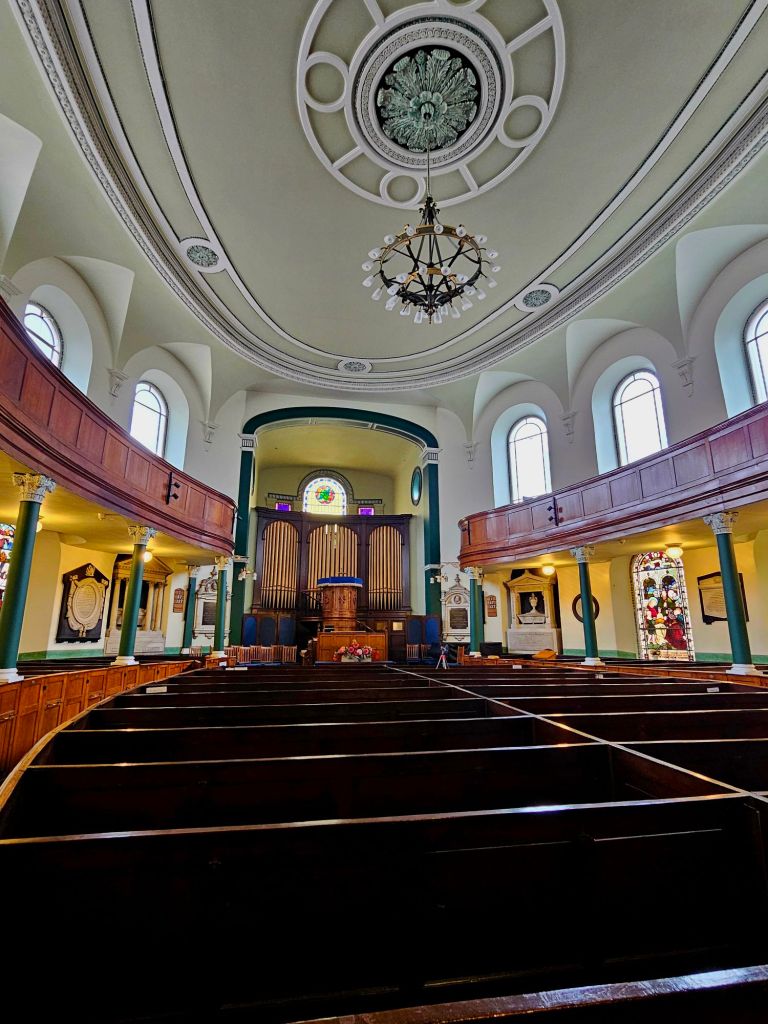
My first stop was at the First Presbyterian Church in Belfast. Its congregation was established in 1644 and the current building opened in 1783. It is the oldest surviving place of worship in Belfast. It is a non- subscribing church, which means it does not subscribe to the Westminster confession of faith. The church survived four bombings in the 1970s. It looks a little bit like a boat on the inside.
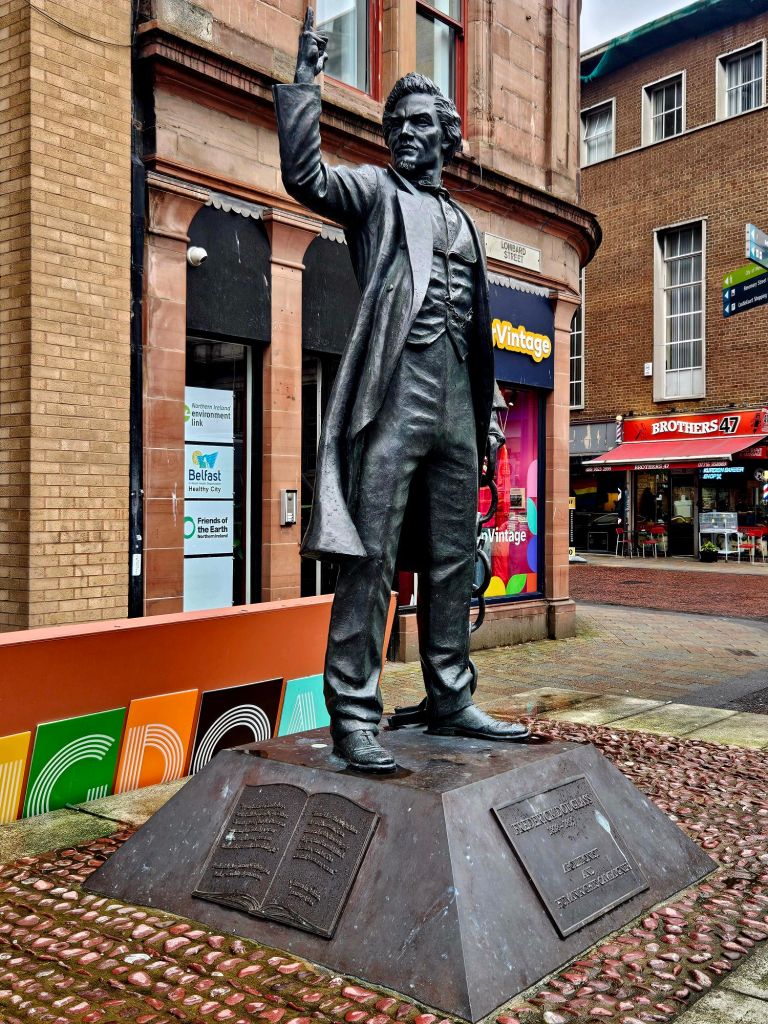
Not far from this church is a statue of Frederick Douglas. It is on the site where Frederick often addressed crowds when he came to Belfast. Frederick was an escaped slave and was the most important leader of the movement for African-American civil rights in the 19th century. He was warmly welcomed in Belfast by the antislavery societies, and he gave over 50 speeches in Ireland, recognising the shared struggles against oppression under British rule.
I then made my way to Donegall Street where St Anne’s Cathedral is. I was a little bit early as the cathedral was still shut.
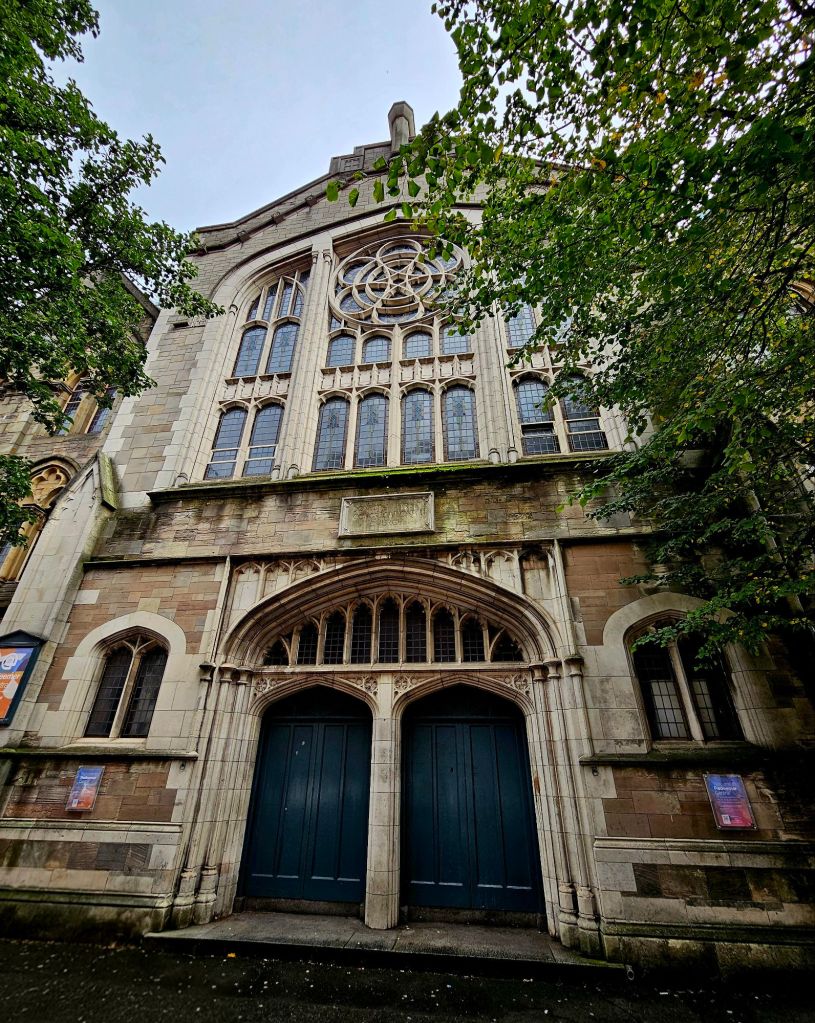
I continued walking down the street and passed the Reedemer Church – the Congregational Church. A congregational church is one where the congregation makes the decisions. There is no central authority or hierarchy, but there is a unity in belief that the bible is the word of God. The initial church was founded back in 1804, but the current building dates from 1934. The church was damaged during the Belfast Blitz and a rose window installed during repairs.
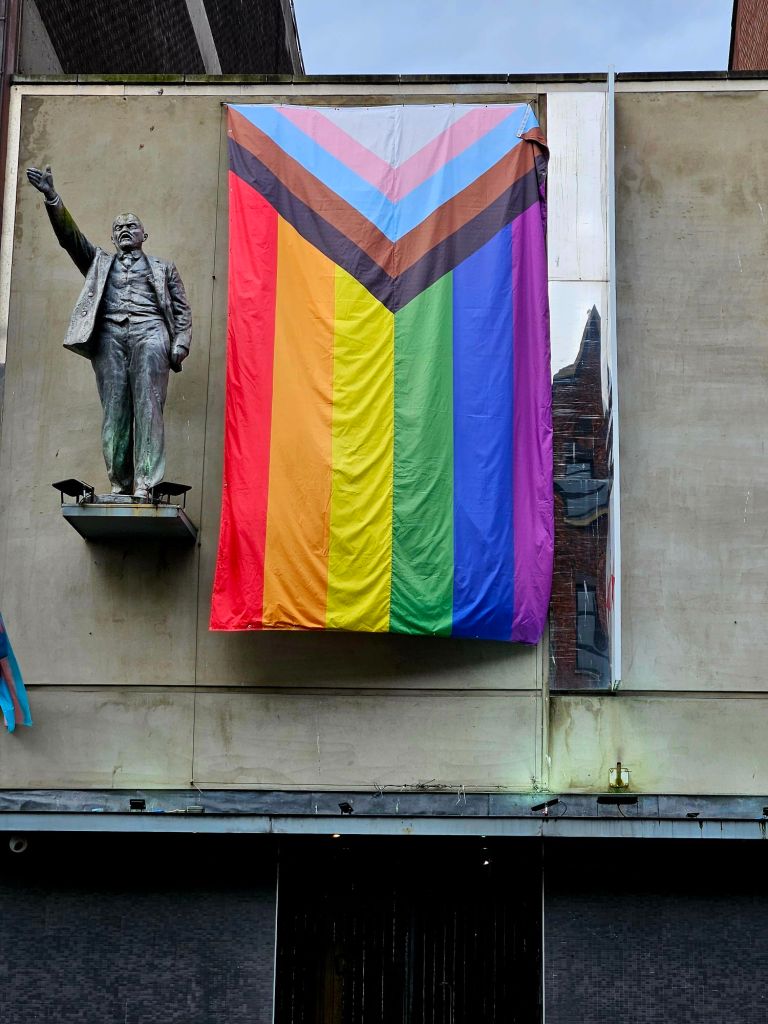
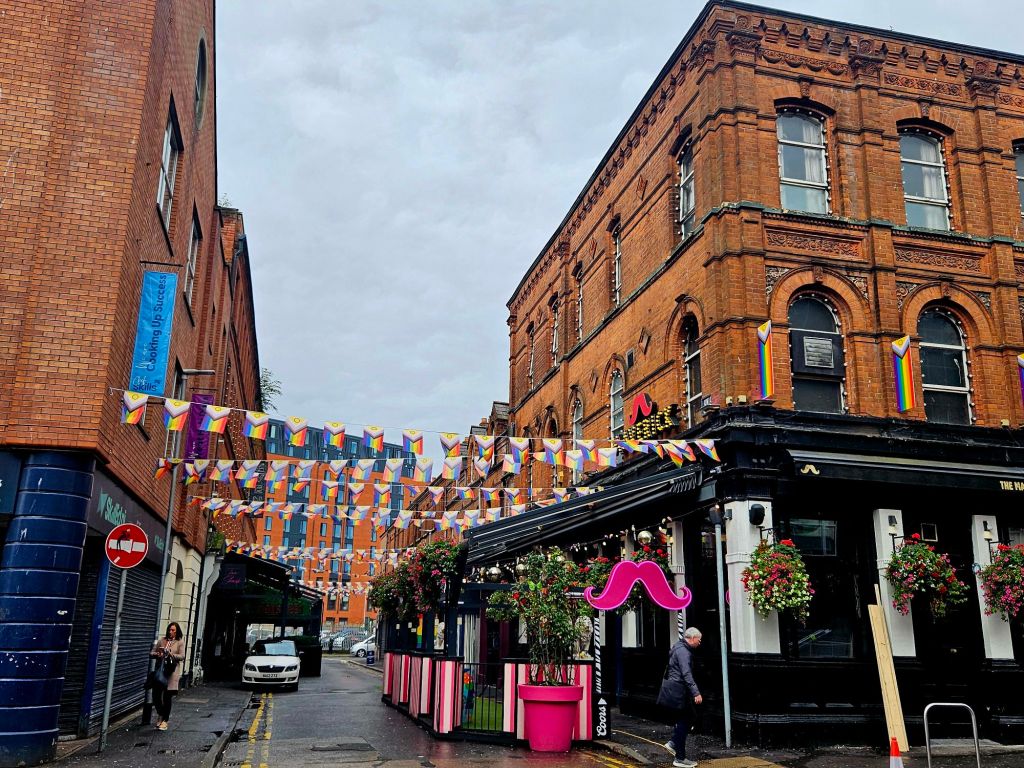
On the other side of the street, I passed the designated Gay area. The statue is of Vladimir Lenin, located above the entrance of the Kremlin, one of the gay nightclubs in the area.
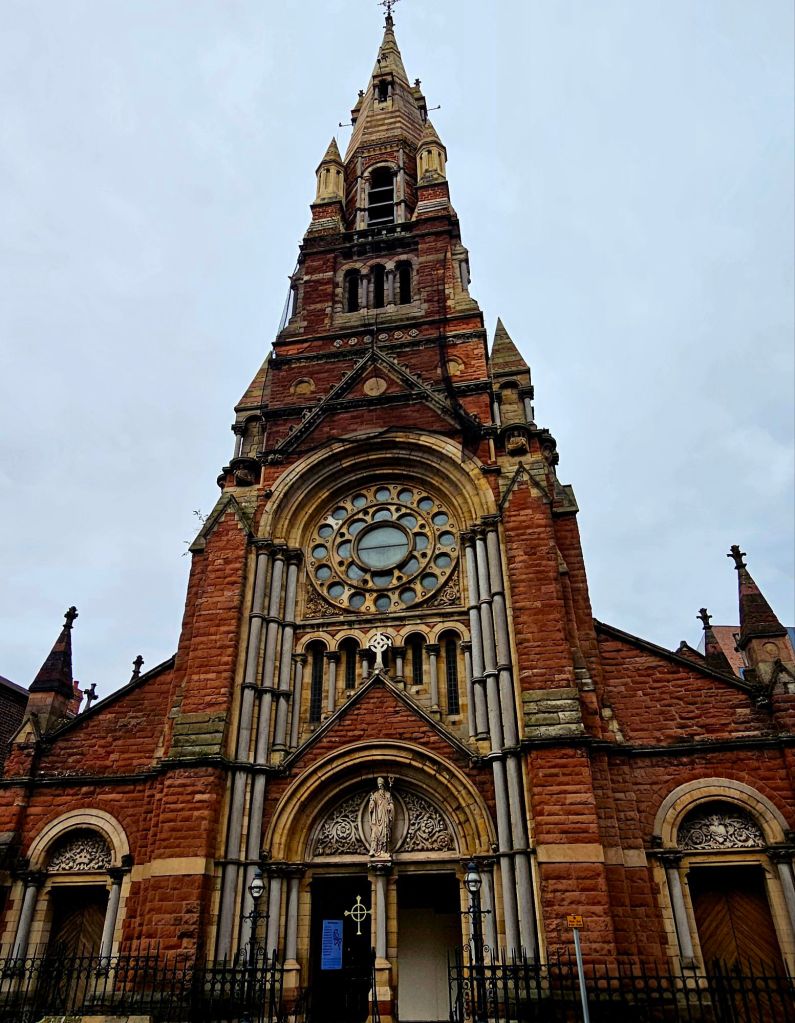
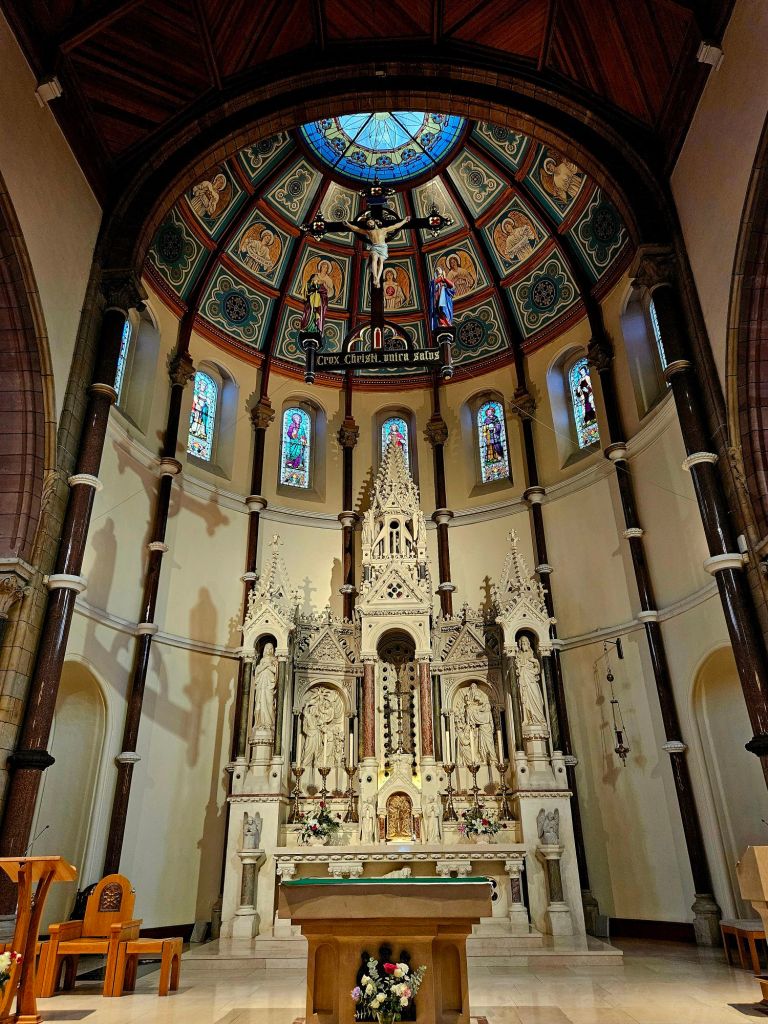
A bit further along was St Patrick’s Church – the Catholic church – which has a beautiful red sandstone exterior. The first church was built here in 1815, but the current church was built between 1874 and 1877. The new church was built around the old one, which was then demolished. There is a 2.1m tall statue of St Patrick above the entrance and a 2 ton bronze bell in the tower. The inside has a gothic feel to it.
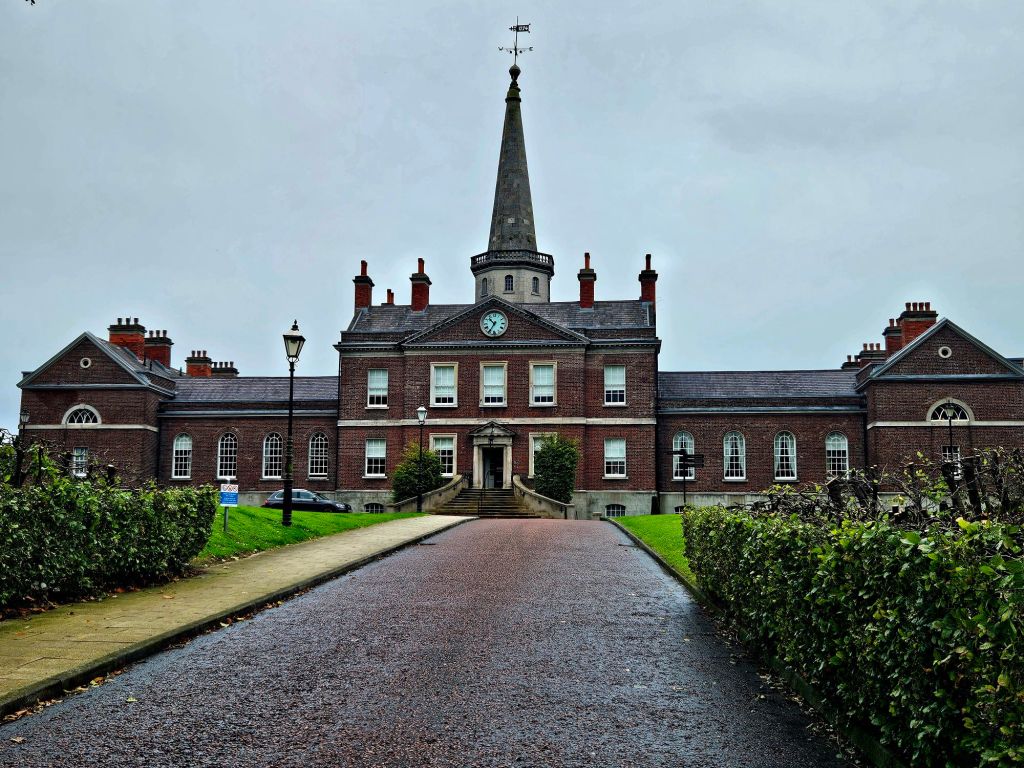
Towards the end of Donegall Road is Clifton House. It opened in 1774 and was the original poor house until the 1880s. It then became a hospital and nursing home. Until the mid 1700s, there was no formal system of legislative or public funding to support the poor in Ireland. A combination of harvest failure, seed shortages, and bad weather led to severe famine in Ulster in 1741, and around 300,000 people died, similar to the Great Famine a century later. Today, the house still provides some residential and sheltered housing for older people.
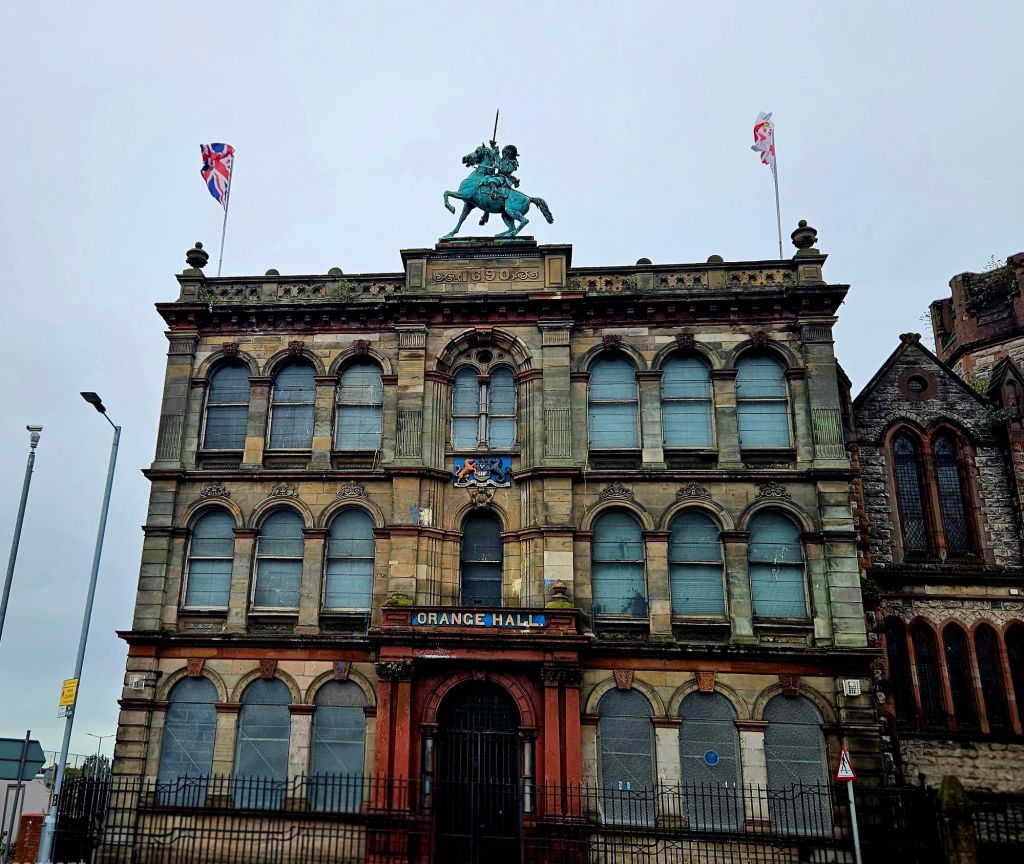
Almost opposite Clifton house is the Orange Hall, which opened in January 1885. This hall was built as a result of the growing prominence of the Orange Order in late-Victorian Belfast, which saw a surge in membership in response to Home Rule anxieties. It is the largest purpose built Orange hall in the world and now houses a museum with artefacts related to the Orange Order.
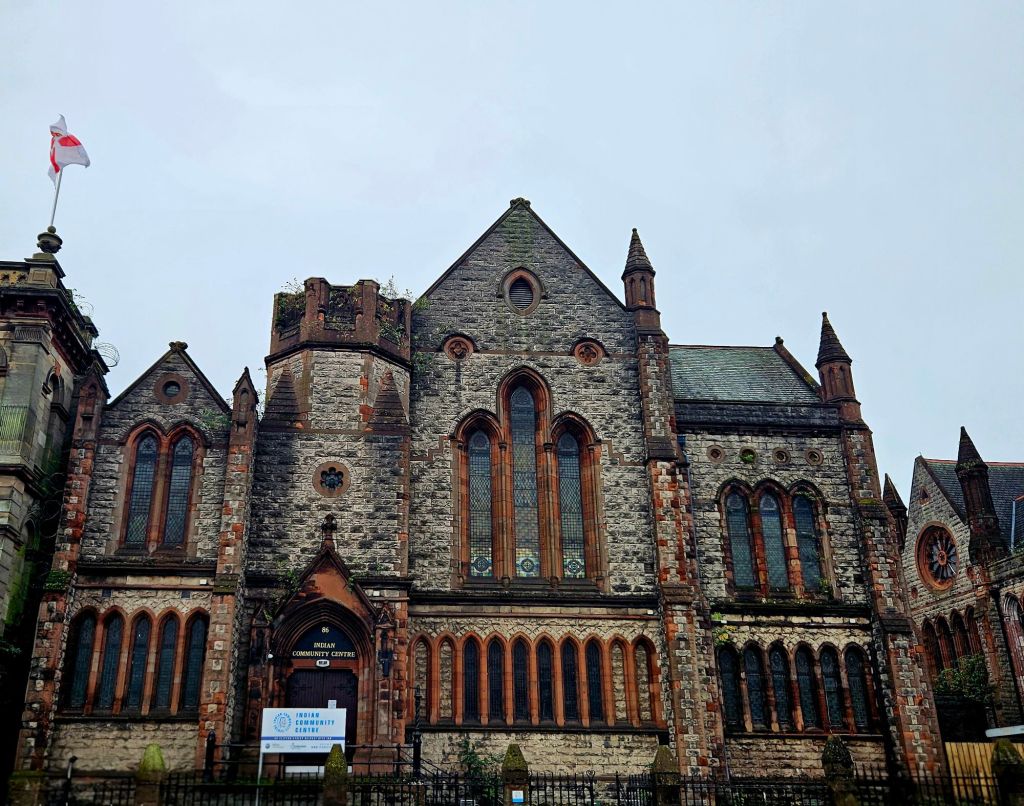
Right next to the Orange Hall is the Indian Community Centre, which houses a Hindu Temple. It was originally built in 1889 and was the former Sunday school of Carlisle Memorial Church.
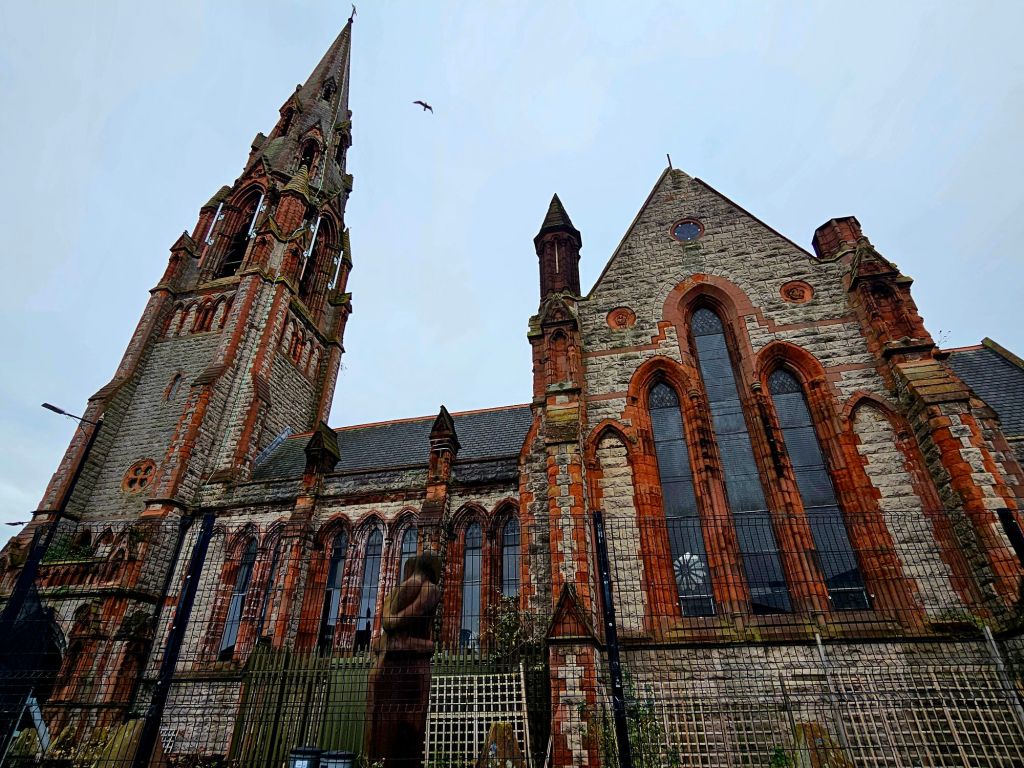
And on the other side of this is the Carlisle Memorial Methodist Church. The church was completed in 1875 and was home to one of the largest Methodist congregations in Belfast. It stopped being used as a place of worship in 1982 as a consequence of the declining congregation and its location at a major interface between Catholic and Protestant populations. It doesn’t look like it is currently being used for anything.
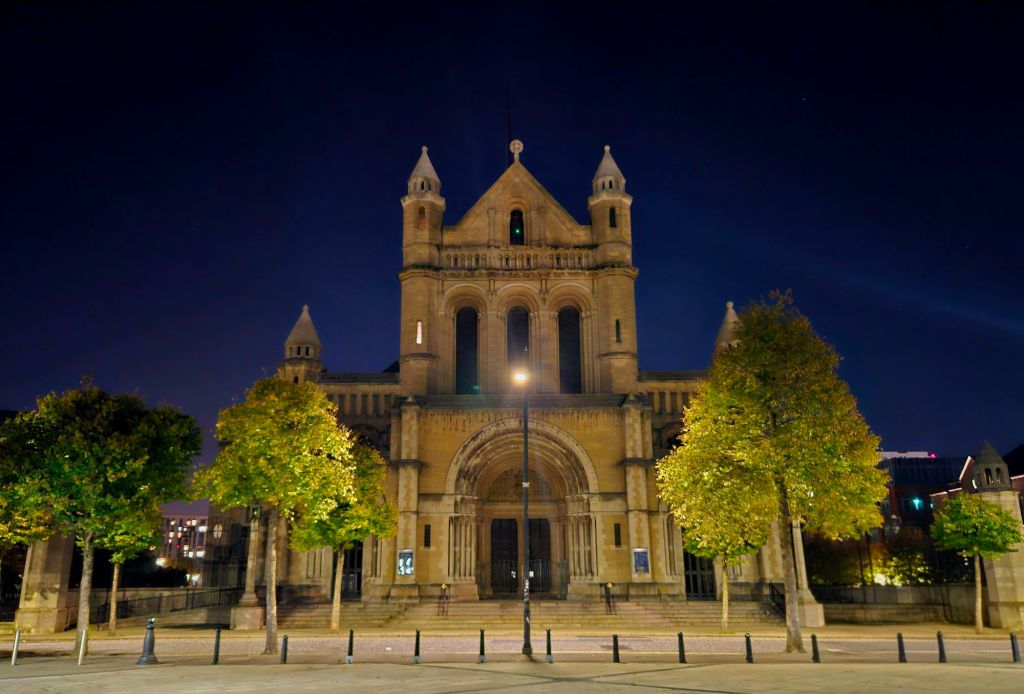
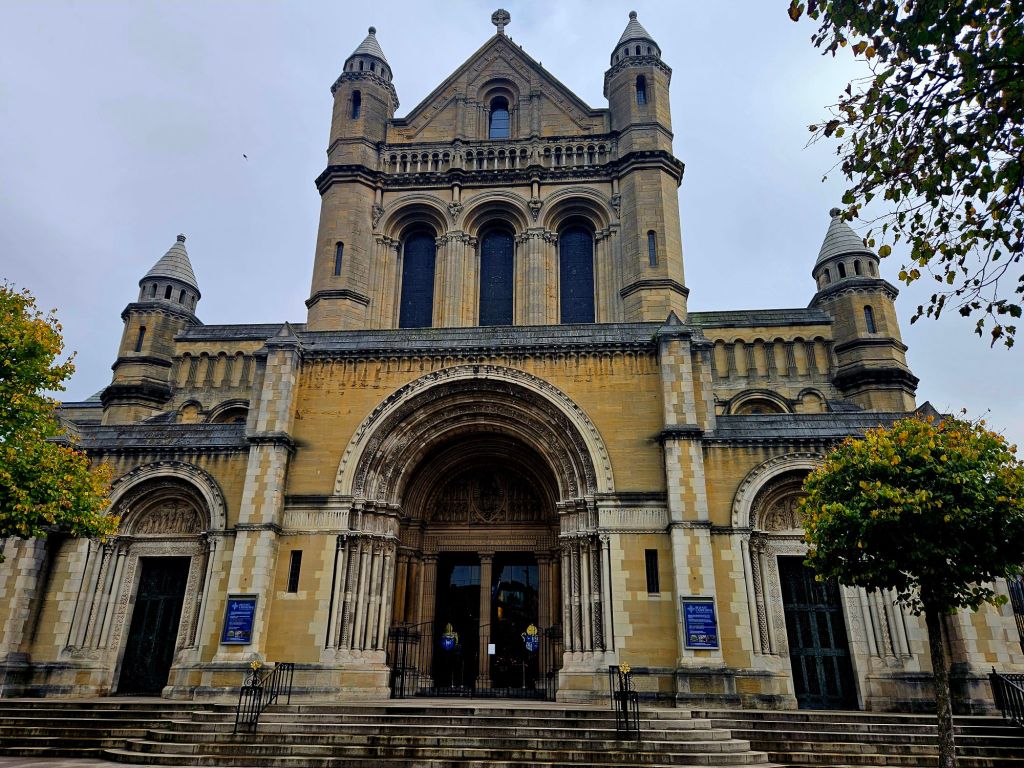
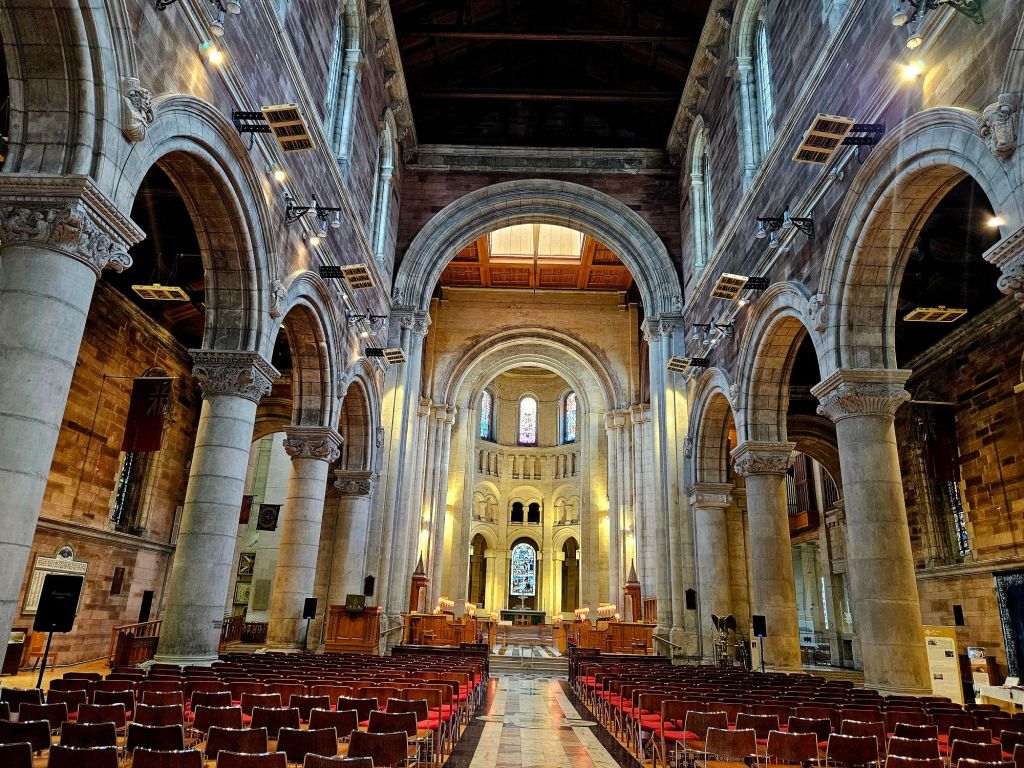
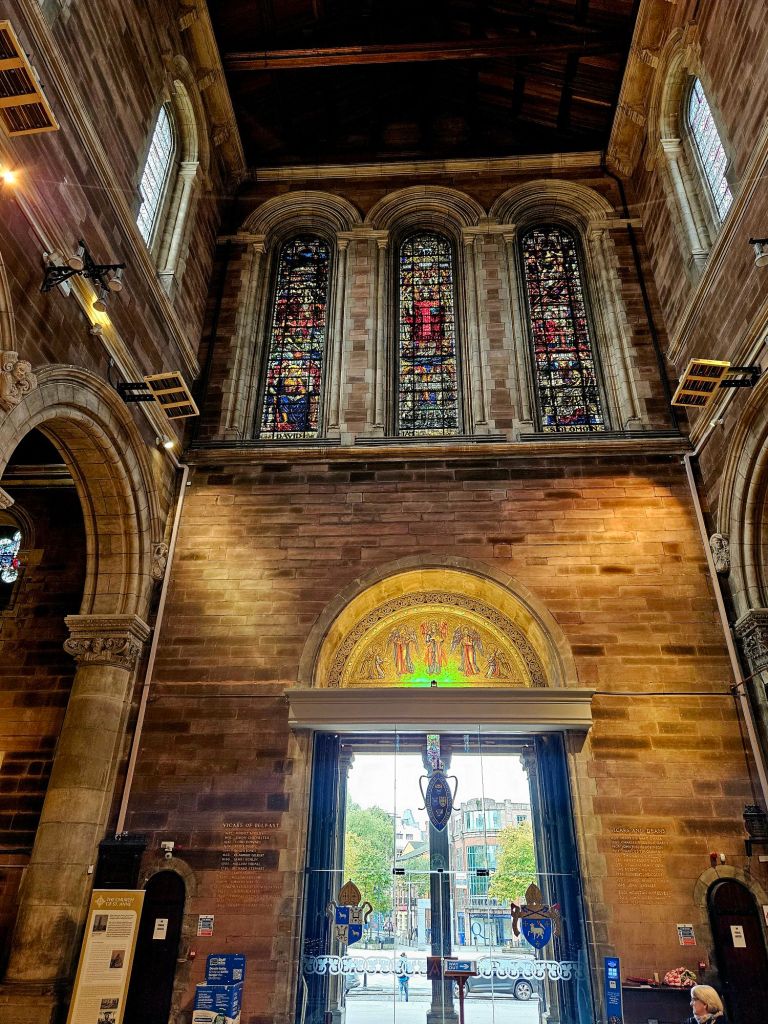
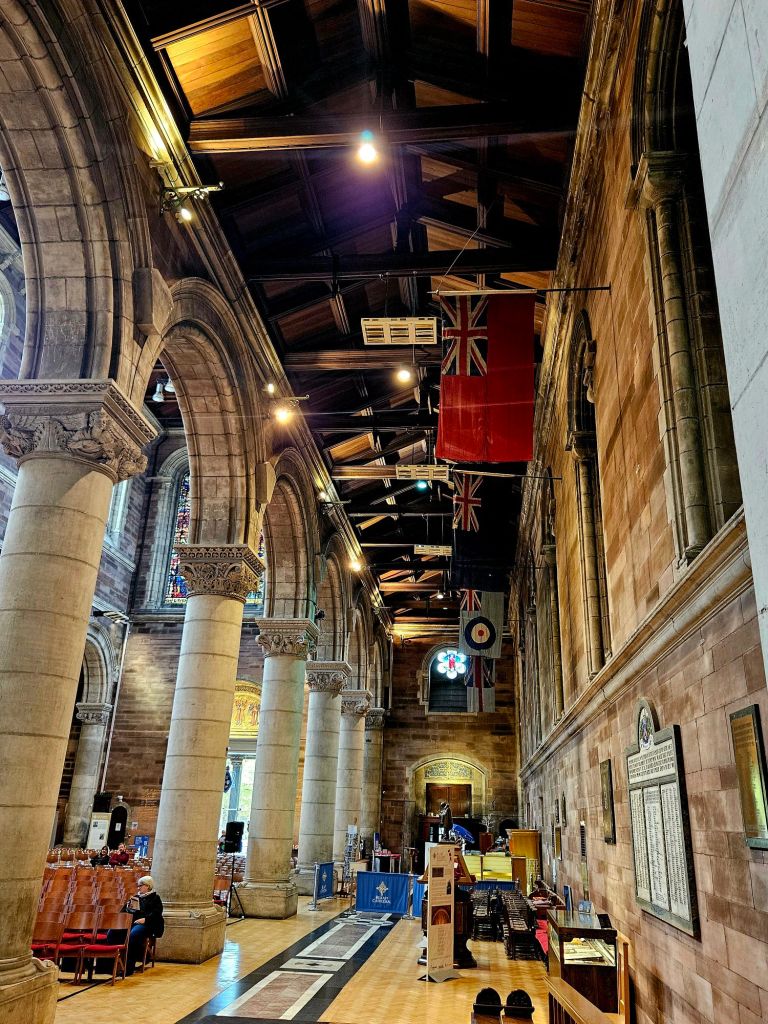
And then I made my way back to St Anne’s Cathedral, which was now open. Construction began in 1898, and it involved 8 architects over a period of 80 years. After Queen Victoria declared Belfast a city in 1888, it was felt a more prestigious place of worship was needed. The current cathedral was built around the old church of St Anne’s before it was demolished. This previous church was a gift to the town of Belfast by its landlord, Lord Donegall, whose wife also happened to be called Anne. Services continued to be held in the old church until 1903. Athough it is mainly built from Portland Stone, it includes a stone from each county in Ireland. This is the Church of Ireland Cathedral, and the Celtic Cross on the outside is the largest one in Ireland.
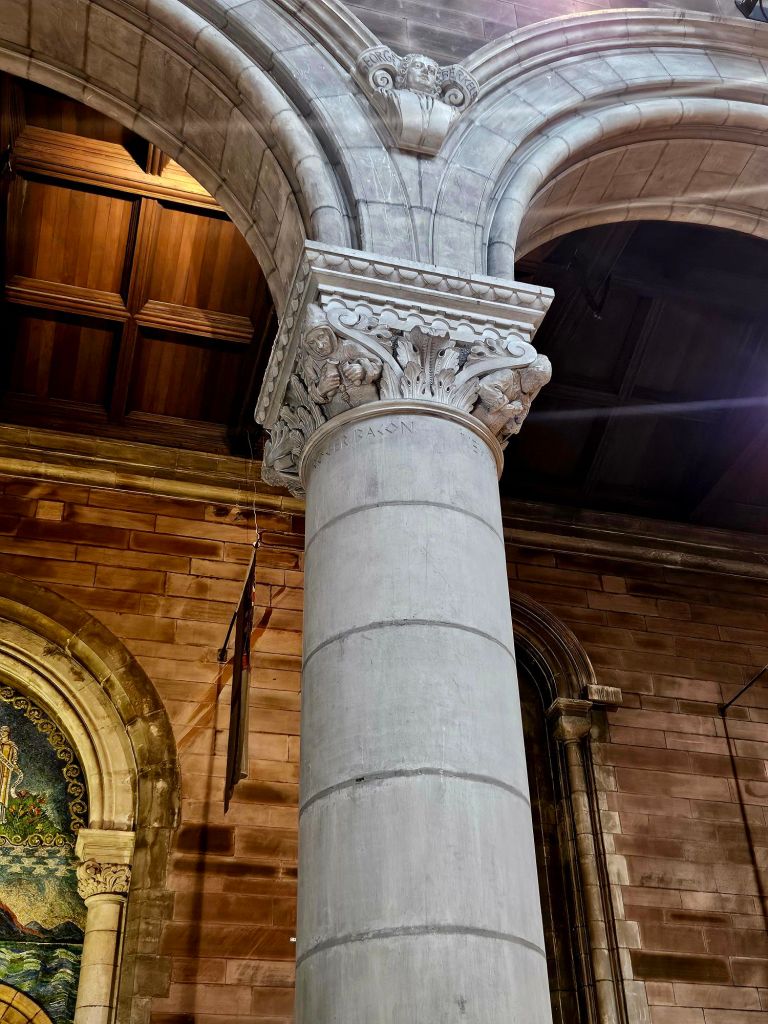
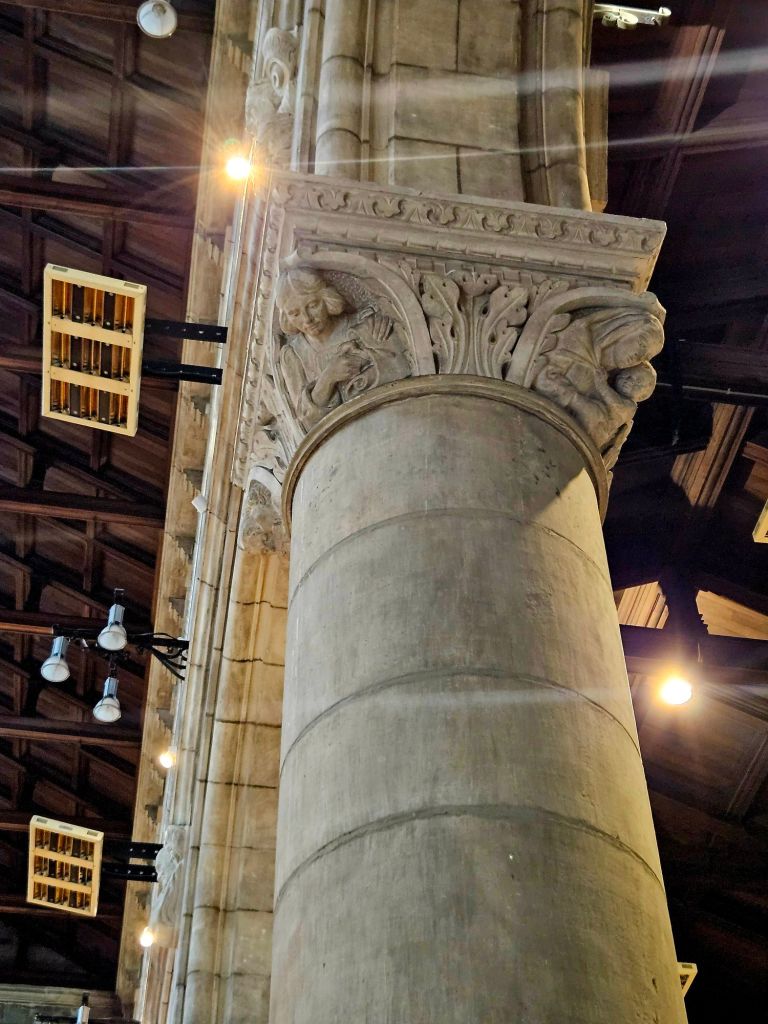
I decided to pay the £5 entrance fee to take a look around the inside. The nave of the cathedral is made up of 10 pillars, each with a different theme.
The first pillar on the right side is the pillar of science, and the one on the left is the pillar of womanhood.
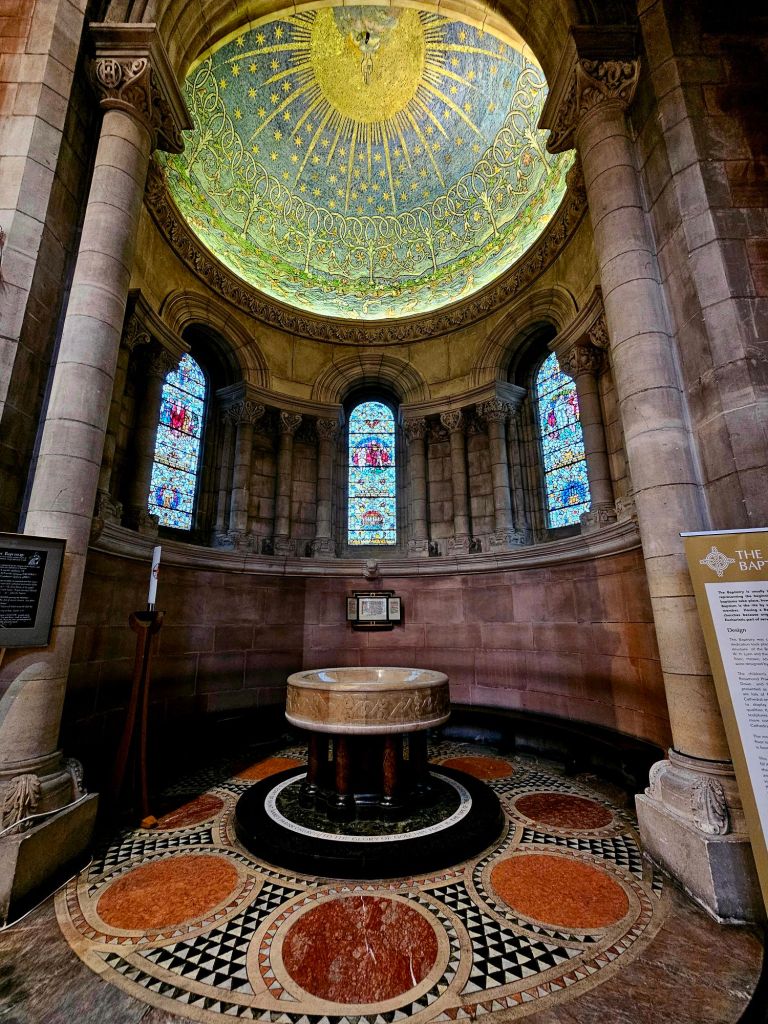
The baptistery ceiling is made from 150,000 pieces of glass, representing the basic elements of creation; earth, air, fire and water, and each one was placed by hand. It was completed in 1924. The font takes 12 buckets of water to fill it, so it is rarely used. Instead, a Baptisimal bowl or wooden font in one of the chapels is used.
I then came across Carson’s tomb. He is the only person to be buried inside the cathedral. Lord Carson was an Irish Unionist politician, barrister and judge, and was the Attorney General and Solicitor General for England, Wales and Ireland as well as the First Lord of the Admiralty for the Royal Navy. He became a minister without portfolio as part of the British War Cabinet in 1917 and was a life peer in the House of Lords. He is widely regarded as one of the founding figures of Northern Ireland. On his death, he had a British state funeral, one of the only non-monarchs to receive such an honour.
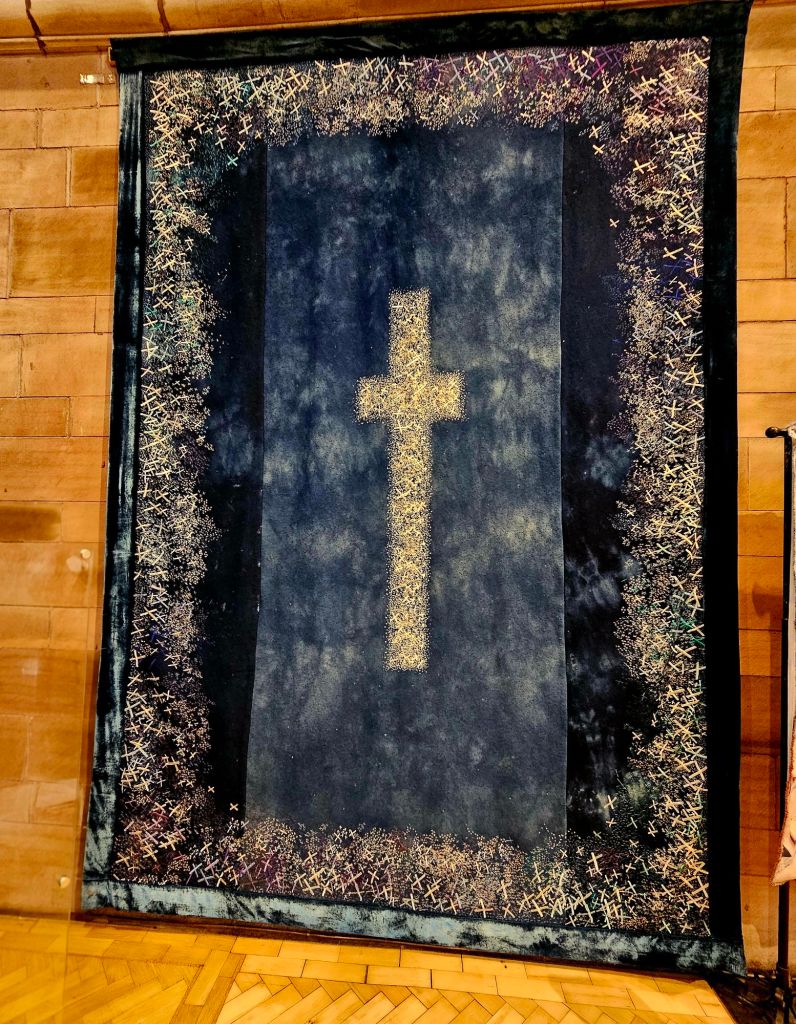
The Titanic Pall was commissioned to mark the 2012 centenary of the sinking of the Titanic. A pall is a cloth that is placed over a casket or coffin at a funeral. There are 1517 hand embroidered gold crosses, stars of David and crescents, which represent each of the people who died.
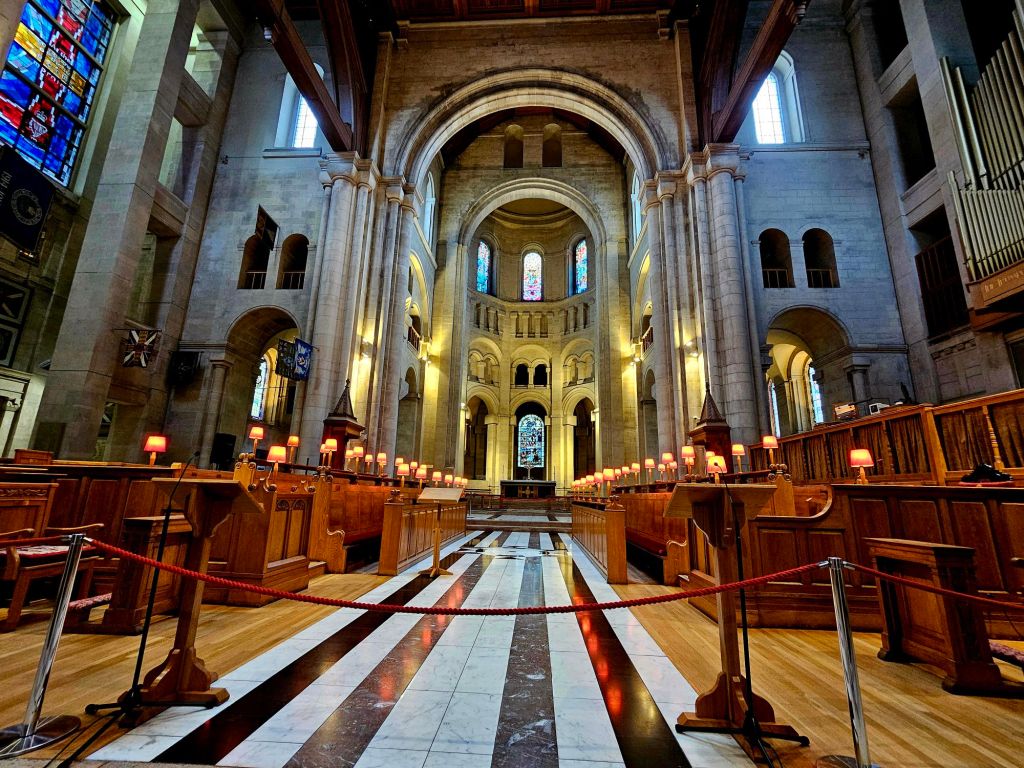
The choir at St Anne’s has two Bishop’s thrones, which is very unusual. But this is due to the fact that the Cathedral actually covers two dioceses.
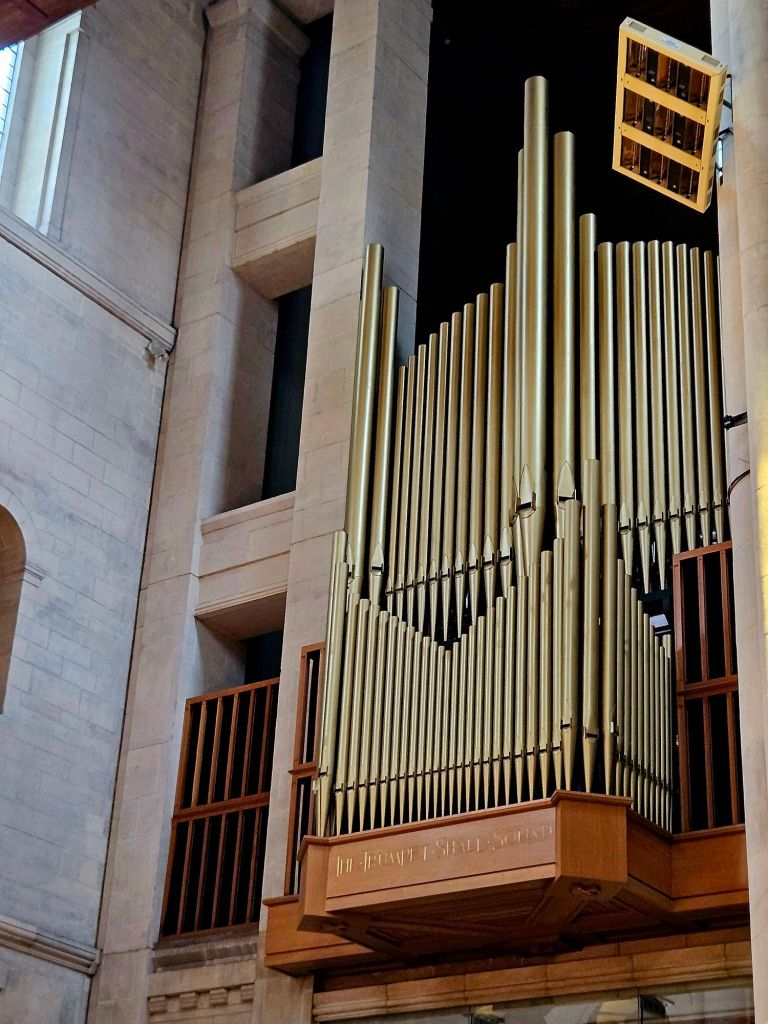
To the right of the choir is the pipe organ, which is the second largest such organ in Northern Ireland.
Originally, a bell tower was planned for the cathedral, but the ground the cathedral was built in could not support the weight. Below quite a bit of Belfast city centre are deposits of wet clay known locally as ‘sleech’. Because it has never been subjected to pressure, it has not consolidated and gives very little support to the building.
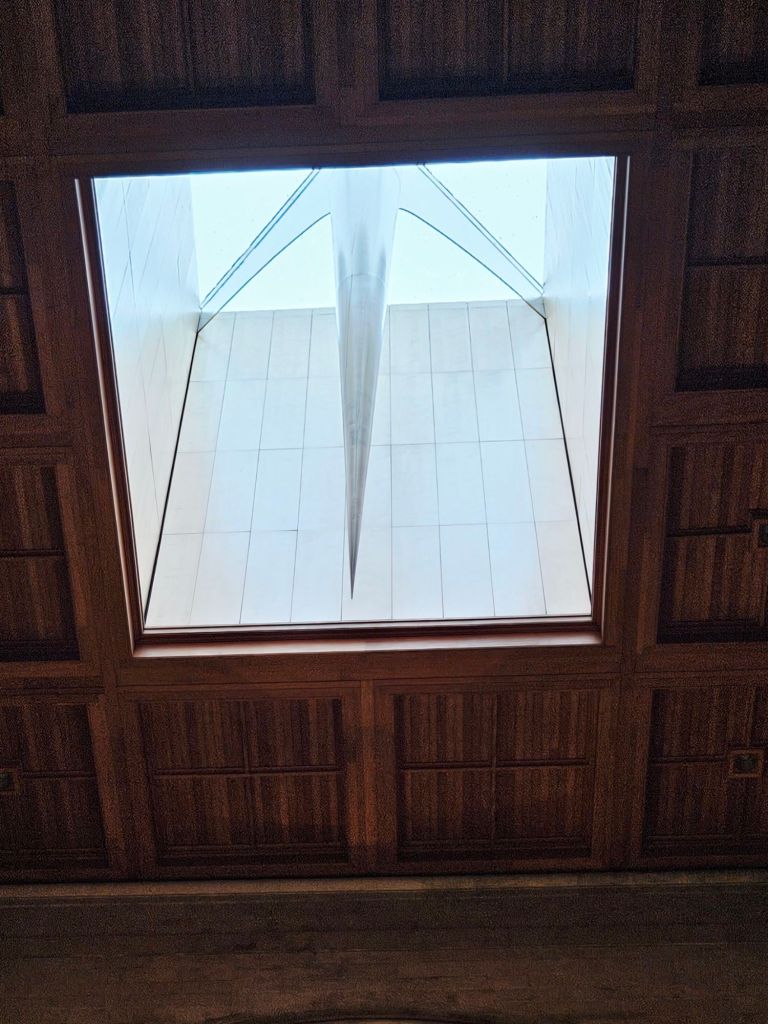
So a competition was opened for a design for a spire. The Spire of Hope is very lightweight in design. The stainless steel spire is 53m in height and extends 10m into the cathedral.
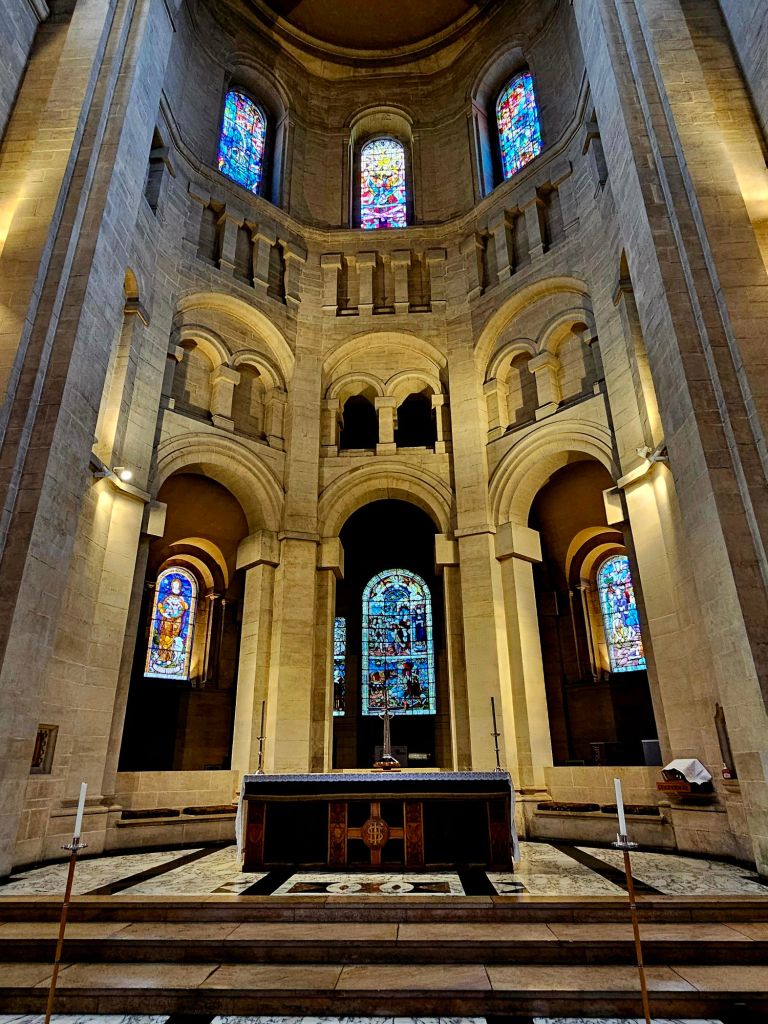
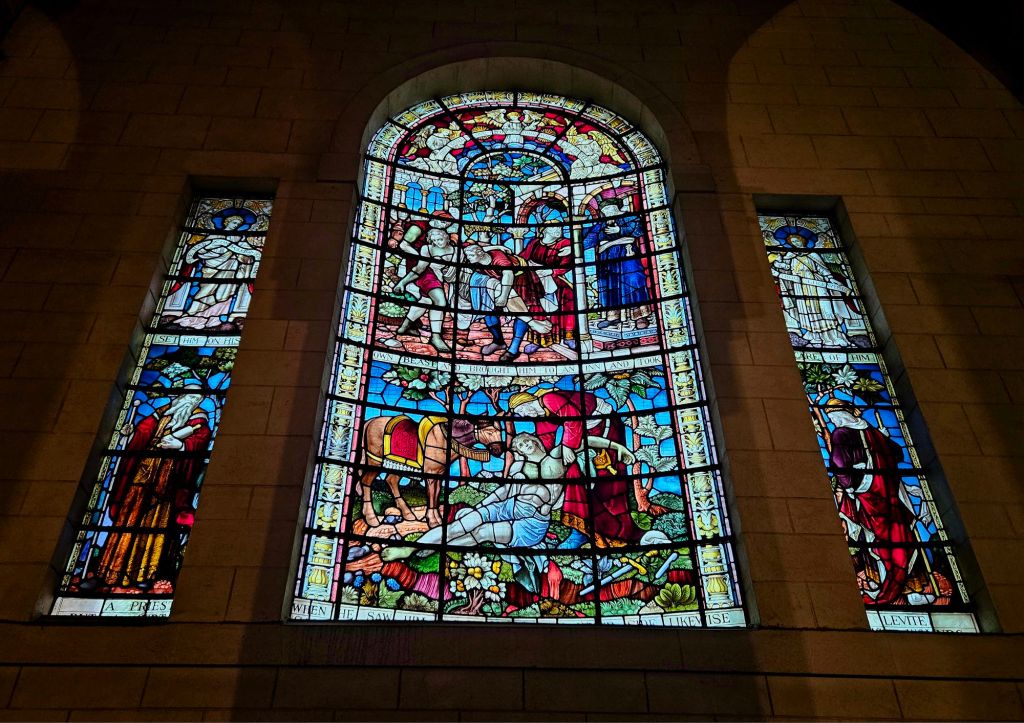
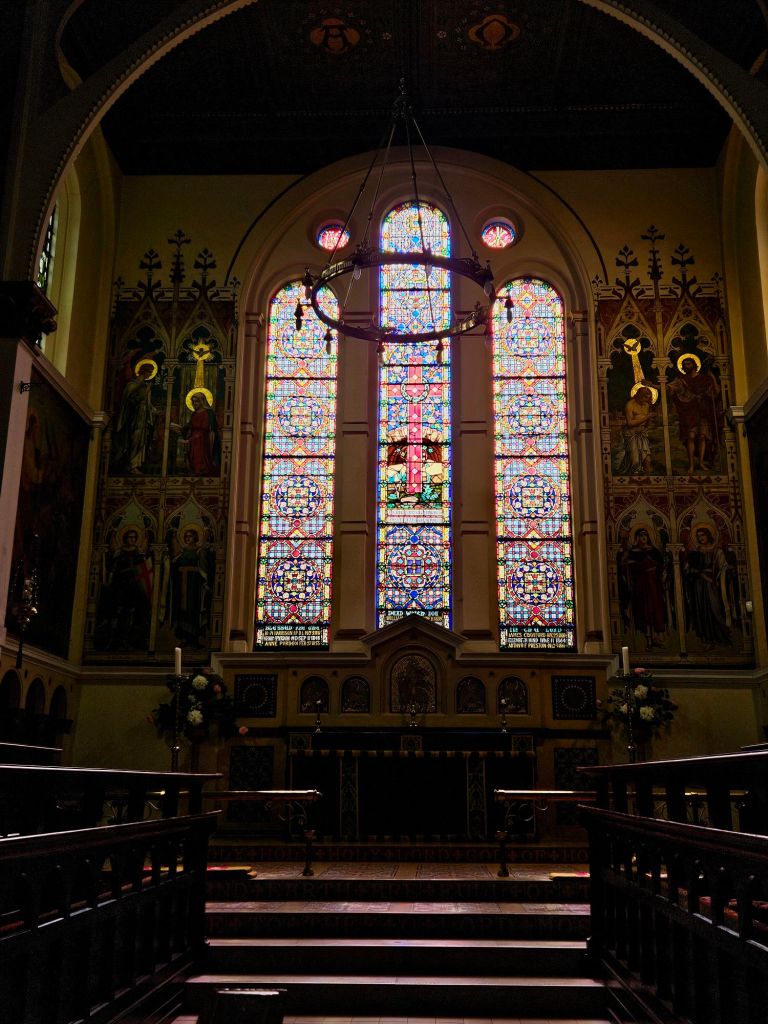
The three windows above the altar at the top, in the Sanctuary represent creation, the Trinity and the Eucharist. The ‘Good Samaritan’ windows at the bottom in the middle comes from the original St Anne’s church.
The cathedral has a Chapel of Unity, which embraces the theme of ecumenism – being similar but different. The stained glass windows contain the emblems for the scout association, girl guides and the girls brigade.
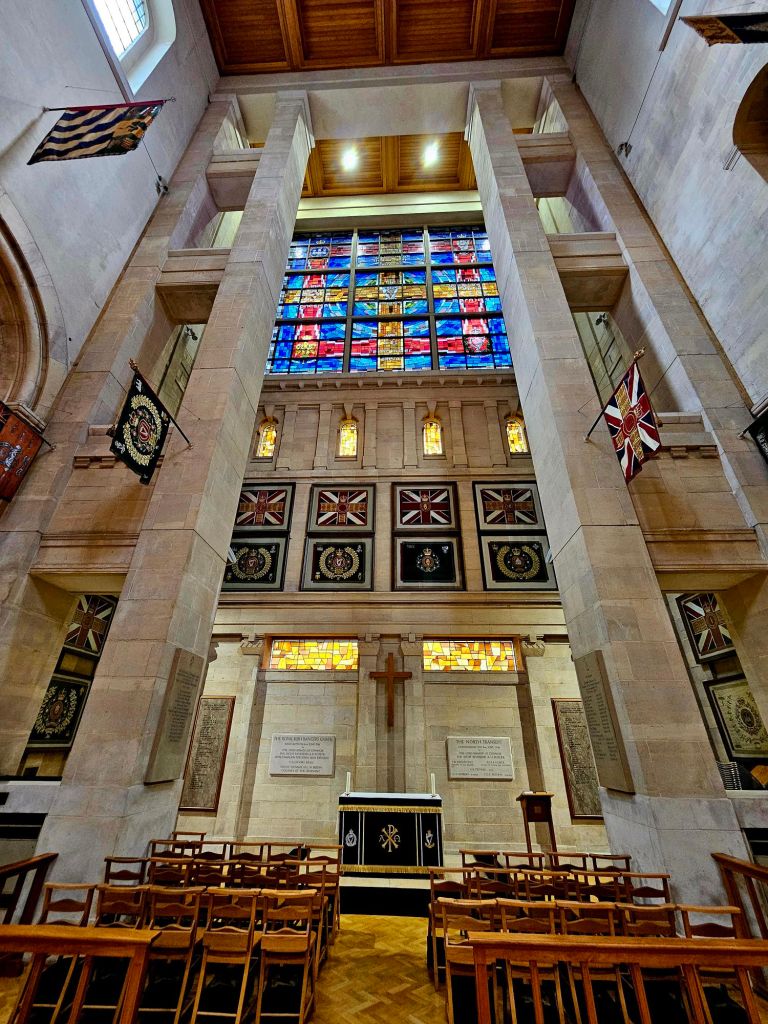
It also has a Regimental Chapel, and this is the spiritual home of the Royal Irish Regiment. The stained glass window in this chapel is the largest in the cathedral.
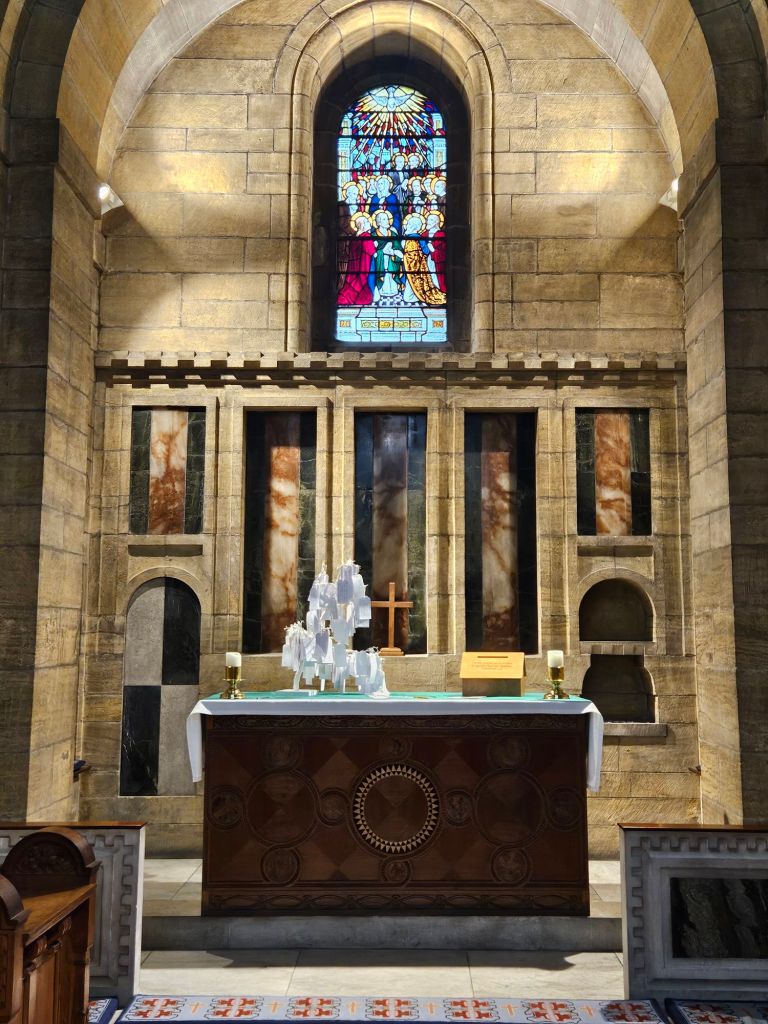
Towards the exit is the Chapel of the Holy Spirit. The altar in this chapel is a replica of an early Christian altar often found in the Roman catacombs where the first christians worshipped to avoid persecution. Above the entrance to the chapel is a painting of St. Patrick introducing Christianity to Ireland.
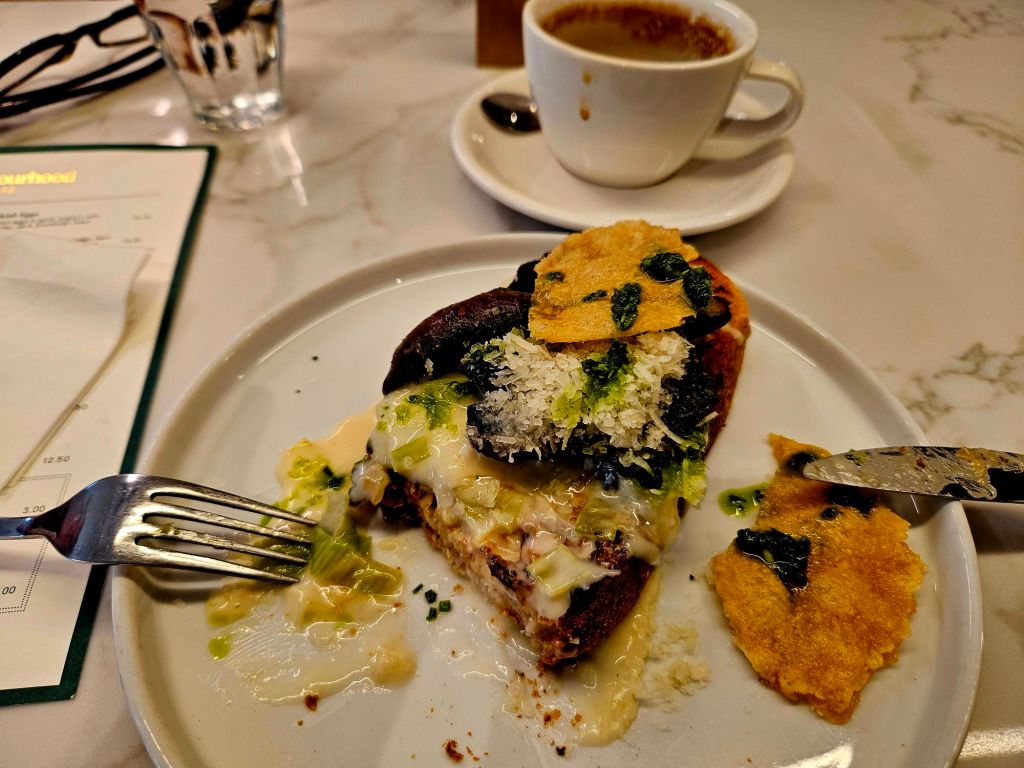
I was now quite hungry, so I stopped off at the Neighbourhood Cafe for brunch – delicious roasted mushrooms on toasted sourdough with a leek and cheese sauce.
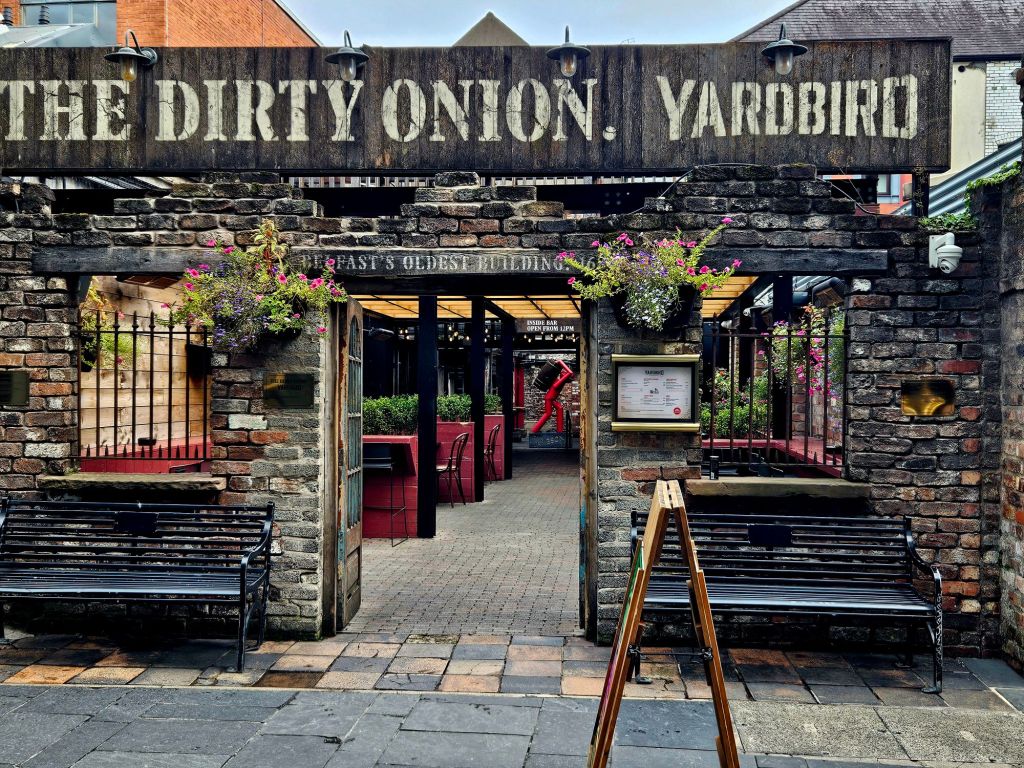
Feeling refreshed, I found the oldest building in Belfast, which is now the Dirty Onion Pub. It was first built in 1608 and was originally used by fish merchants. It then became a greengrocers before becoming a warehouse and traded everything from fish and tea to tinned soup, linen, whiskey and much more.
Continuing walking, I came across Exchange Place, which looked like it would be a good place to go in the evening.
A bit further up on Waring Street is a 3 storey cubic building on the site of an original 17th century pot-house, it’s history is reflected in the use of stone, wood, glass and cobblestones to construct the new building. It was the original site of William Waring’s home, a tanner after whom the street was named.
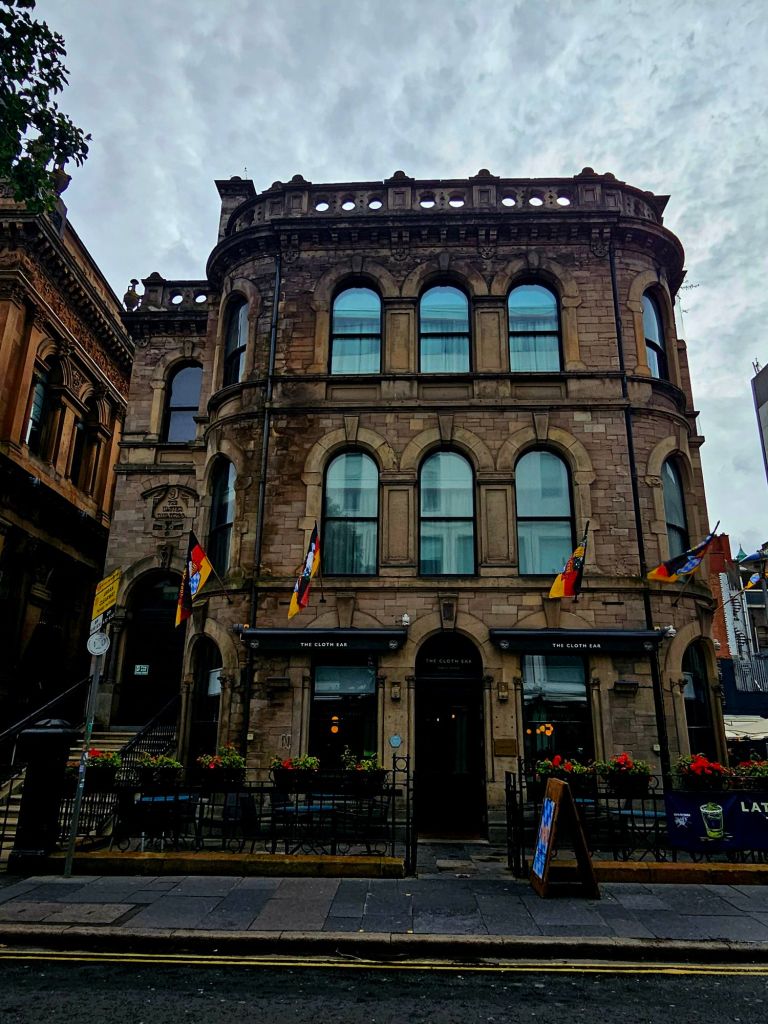
Opposite this is the Cloth Ear, now a restaurant,which was built in 1869 and is one of the Ulster Buildings.
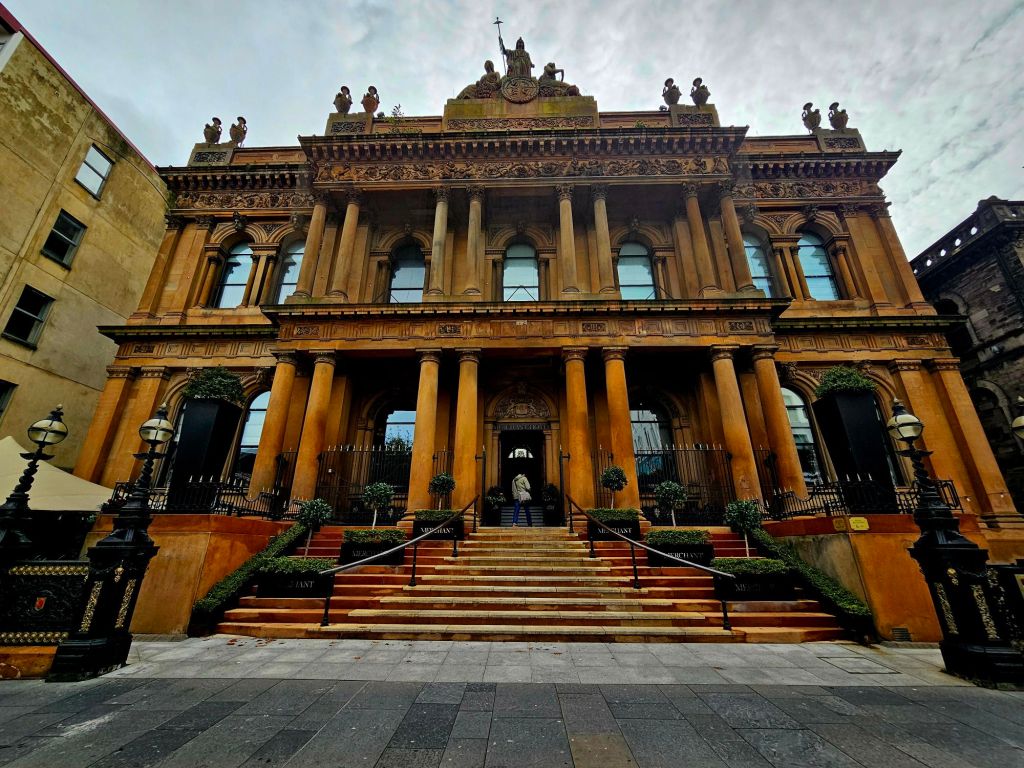
And right next to this is the Merchant Hotel, the 1860s former Ulster Bank. It is a Grade A listed building and is now a luxury hotel and restaurant. We had booked the restaurant for later that evening.
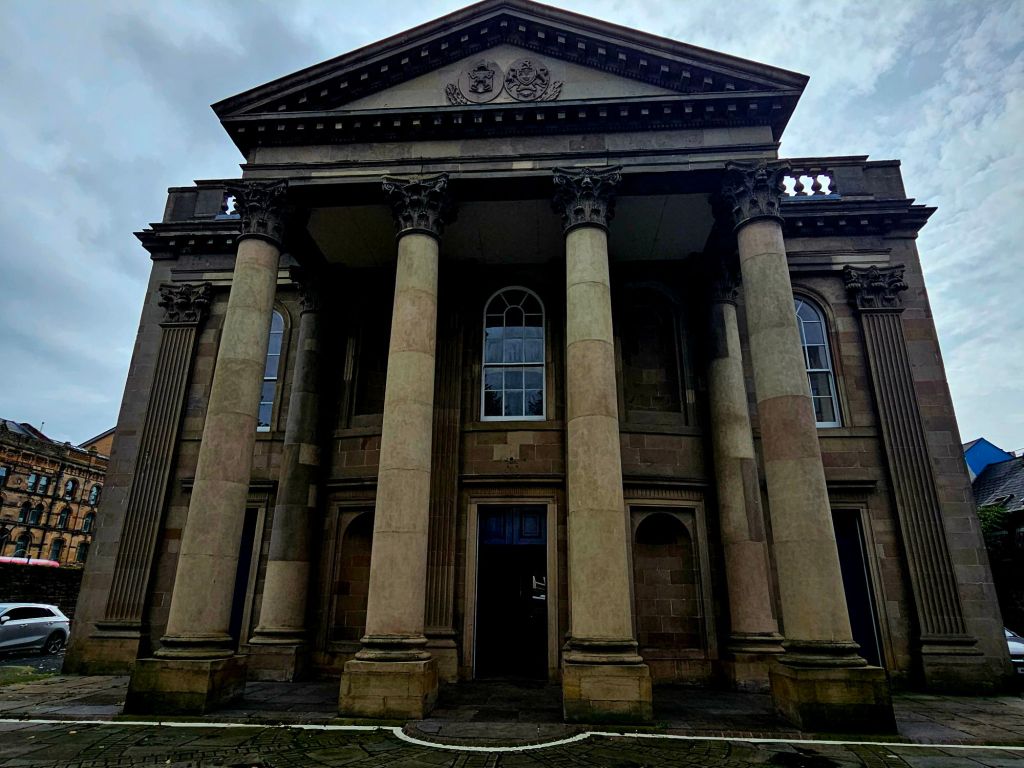
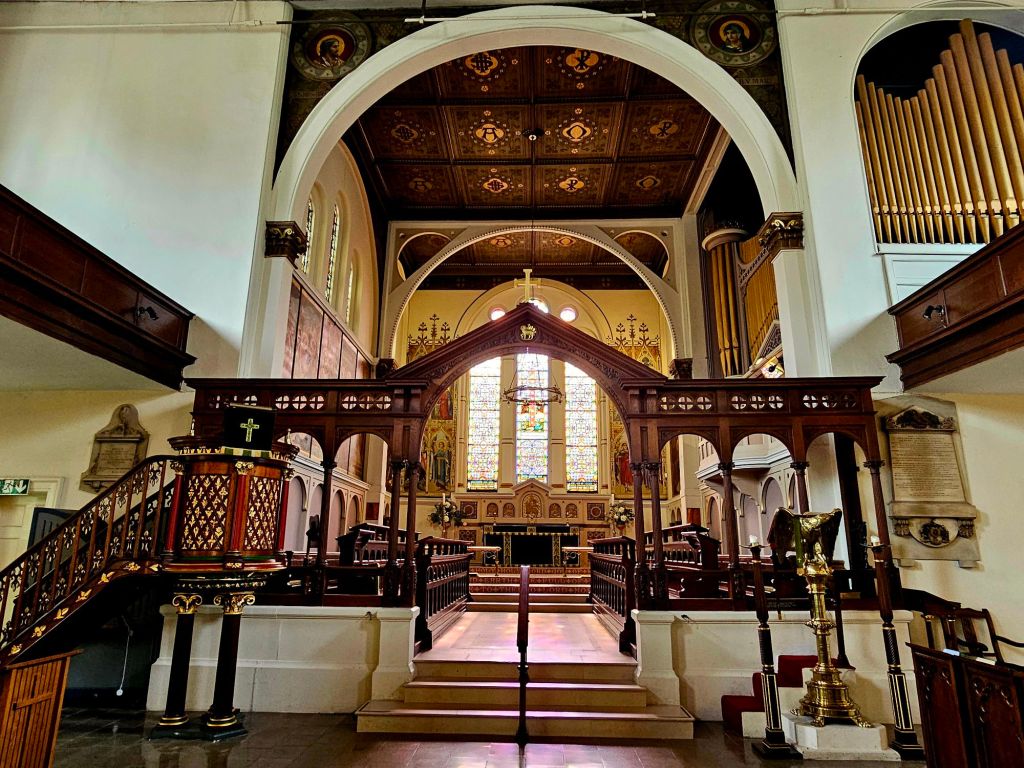
My next stop was the Parish Church of St George. Opening in 1816, it is the oldest Church of Ireland in Belfast. The church stands on what had been a fording place where the River Lagan and River Farset met. The earliest mention of a place of worship existing on this site is in the papal taxation rolls of 1306. The Chapel of the Ford was a chapel of ease of the main parish church at Shankill, and was constructed here for those waiting to cross the mud flats which covered most of the area that has since become central Belfast. It was seriously damaged on a number of occasions by IRA bombs.
Just up from here is the Jaffe Fountain Memorial in honour of Belfasts only Jewish Mayor. It is a gilded, cast iron drinking fountain (now dry) and was first erected in 1874 by Sir Otto Jaffe in memory of his father, the German-born merchant Daniel Joseph Jaffe. Daniel Jaffe came to Belfast to open a linen warehouse but settled there in 1850. He is seen as the founder of Belfast’s Jewish community and built the city’s first synagogue in 1871.
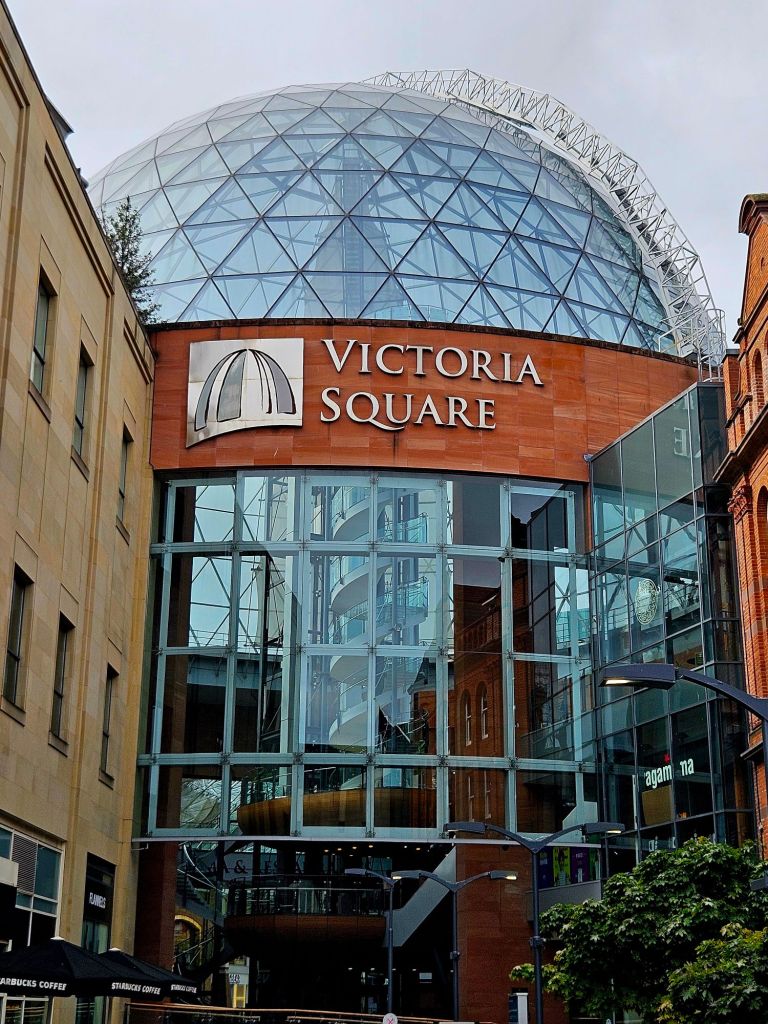
Right opposite this memorial is the biggest shopping centre in Belfast, Victoria Square. It has a 360⁰ glass dome above it.
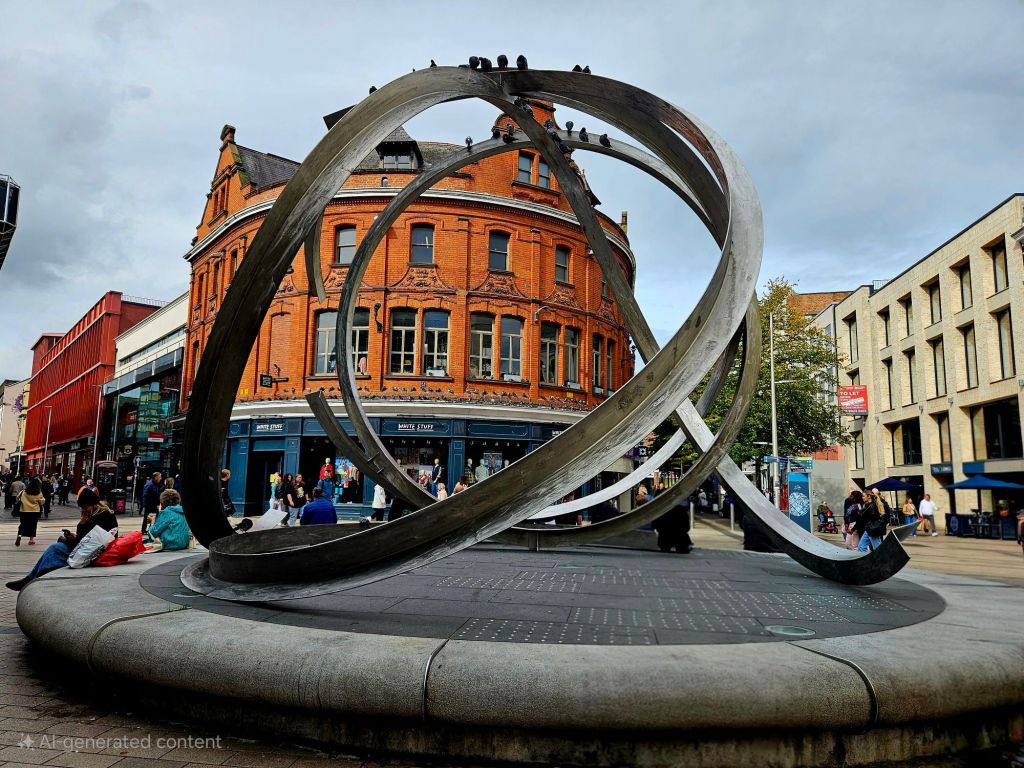
A short distance away is the Spirit of Belfast sculpture, unveiled in 2009. It is reflective of Belfast’s linen and shipbuilding industries. Locally, it is referred to as the ‘Onion Rings’.
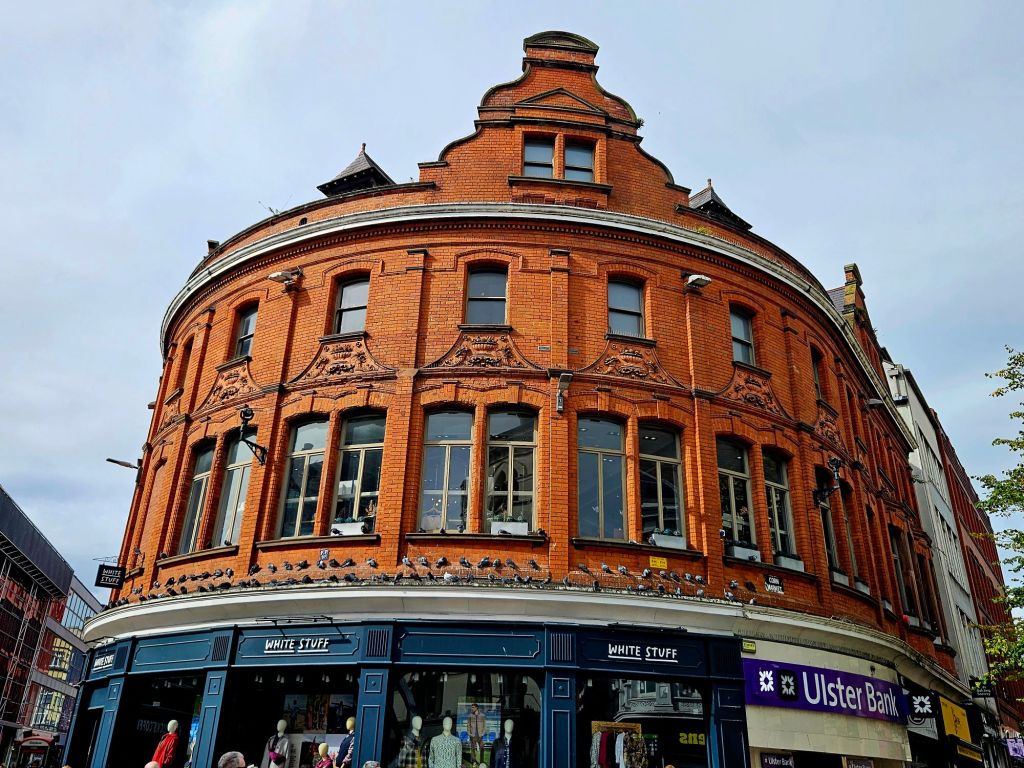
The building behind used to house a grand restaurant and cafe and was originally built in 1889. It now houses a variety of shops.
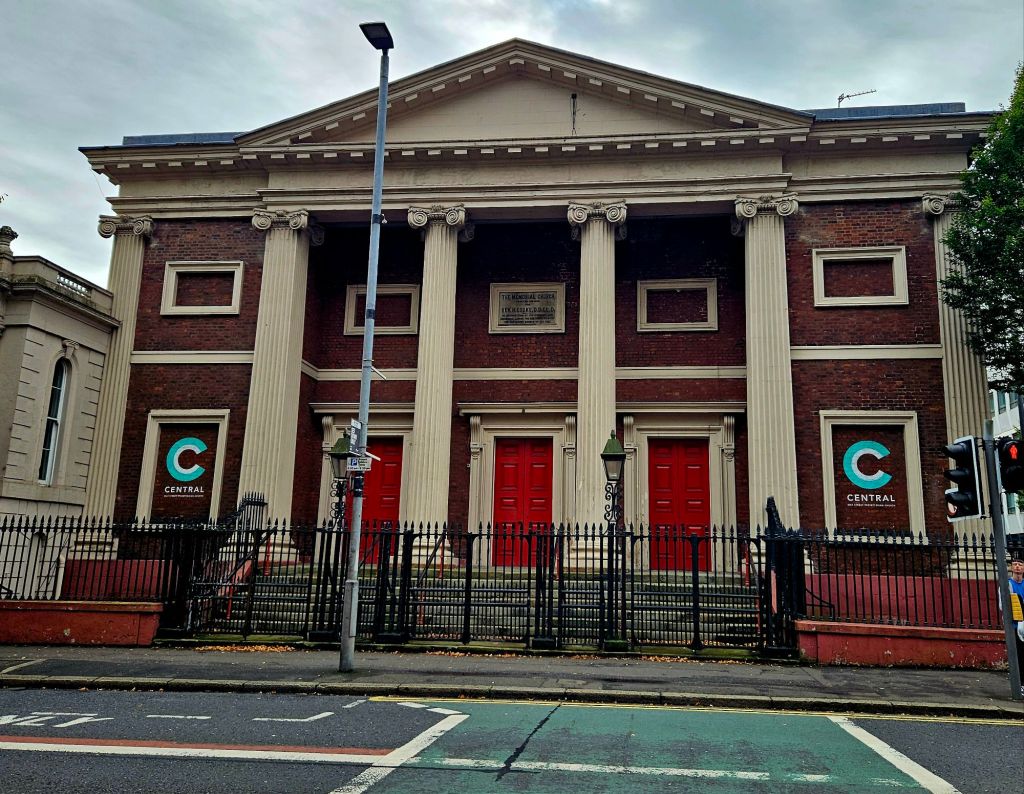
I had a couple more churches to see before Faye’s arrival. The first was May Street Church, a Georgian church which opened in 1829. The first minister of this church was Henry Cooke, the famous reformer of the Presbyterian Curch in Ireland. The basement of the church was originally used as a cemetery and had vaults in it containing interments. It was later converted into school rooms.
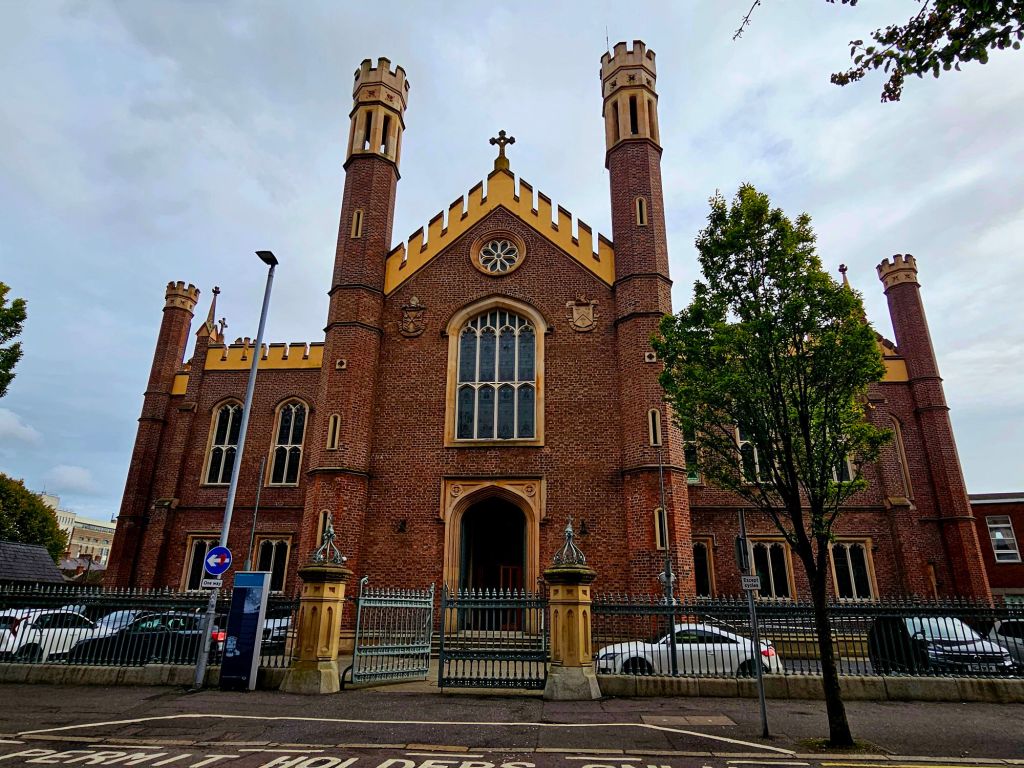
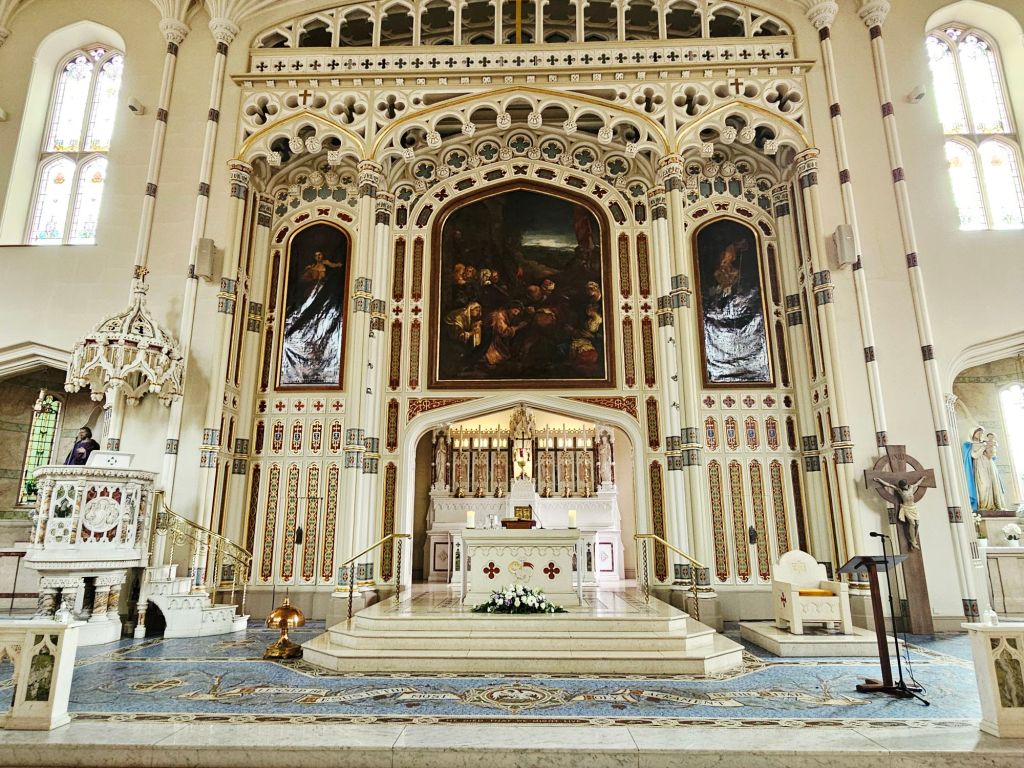
Just down from here is St Malachys Church. The foundation stone was laid on 3 November 1841 on the feast of St Malachy and it opened in 1844.
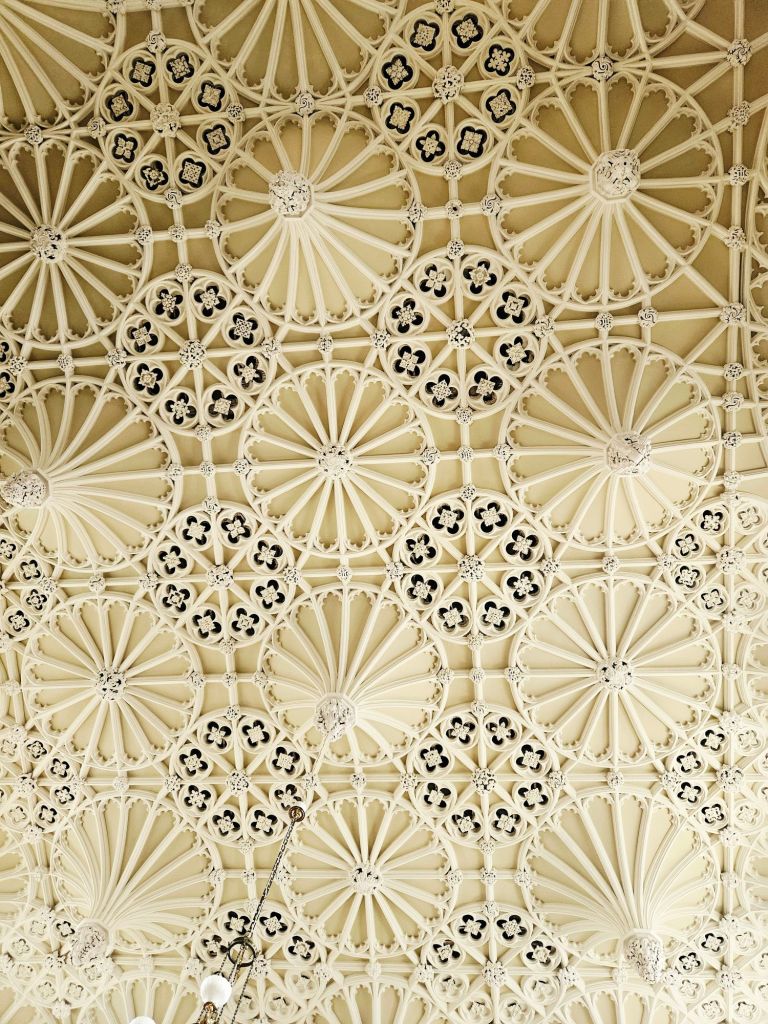
The inside of the church is stunning. It has a fan-vaulted ceiling, which looks a bit like a wedding cake turned inside out. It is seen as the city’s Roman Catholic Cathedral.
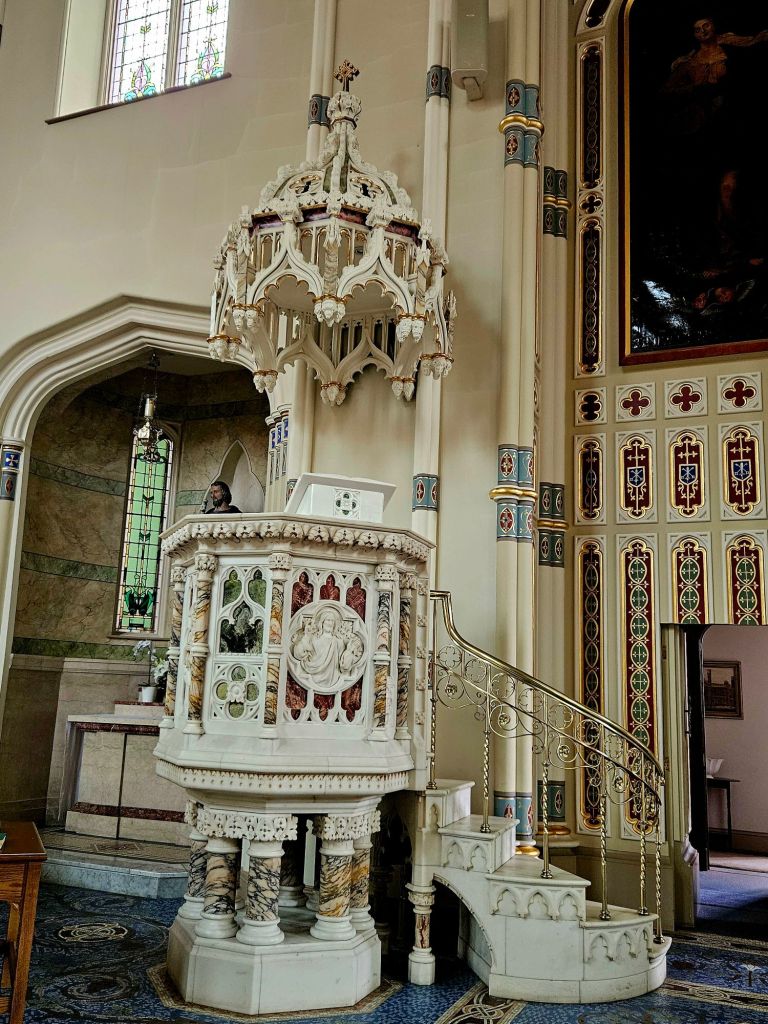
The original high altar, pulpit and altar rails were made of Irish oak but were replaced with marble when the church was renovated in 1926. At the foot of the altar is a pelican, a Christian symbol of sacrifice.
The original bell of the church cracked in 1845, soon after it opened. It was replaced in 1868 and is the largest bell in Belfast. The bell was silenced for a while, and then later, it was coated in felt to muffle it slightly. The legend is that it was too loud, and its peal sent shock waves which interfered with the distilling of whiskey in the Dunville Distillery, located near the church but now long gone.
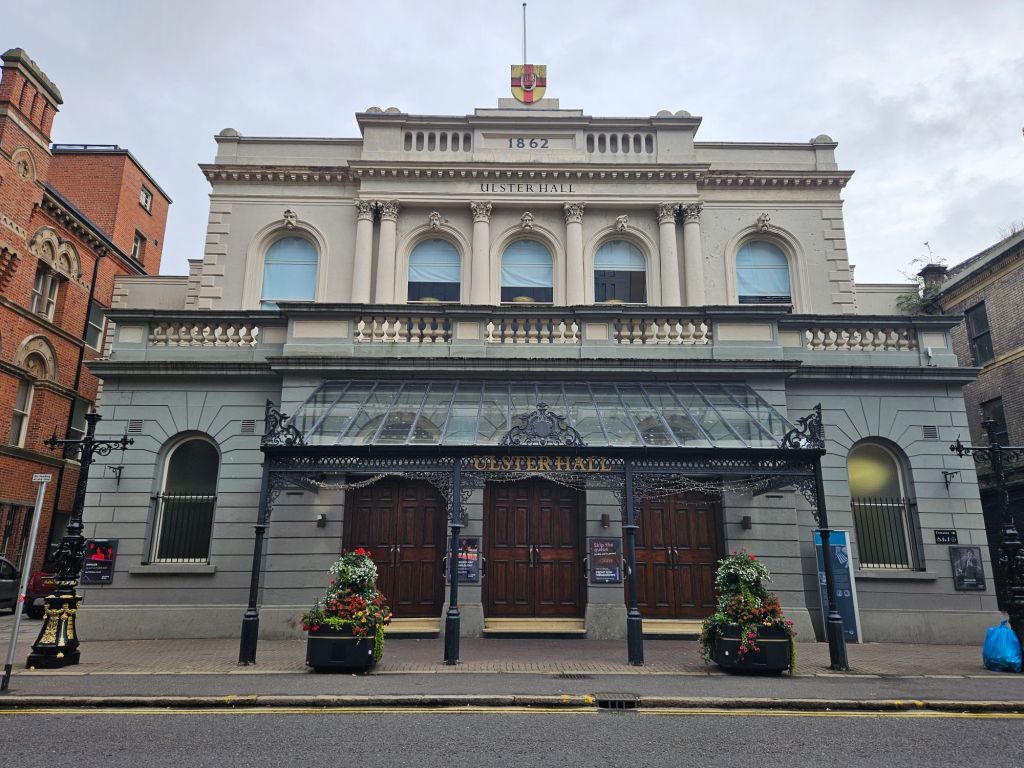
On the way back to the hotel, I passed Ulster Hall, which is a theatre. It was built in 1862 as a multipurpose venue for the city. During WWII, it was used as a dance hall to entertain American troops based in Ireland. From the late 19th century, it became the traditional venue for high-profile unionist rallies.
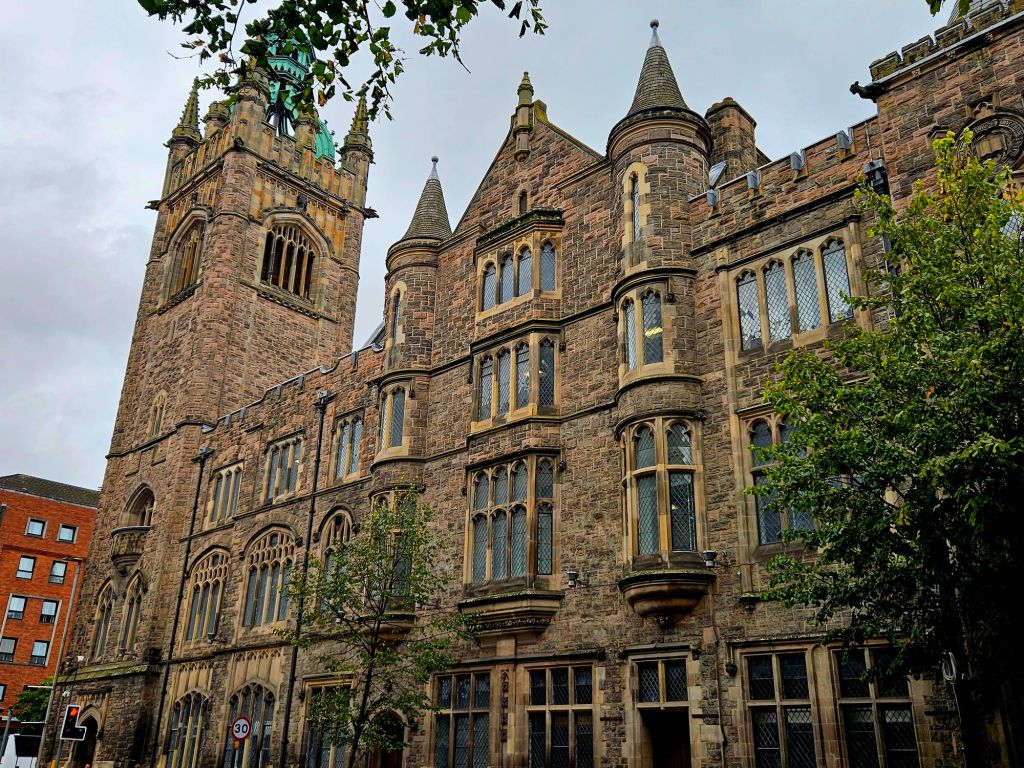
I also walked past the Presbyterian Assembly Building again – it’s a very grand building.
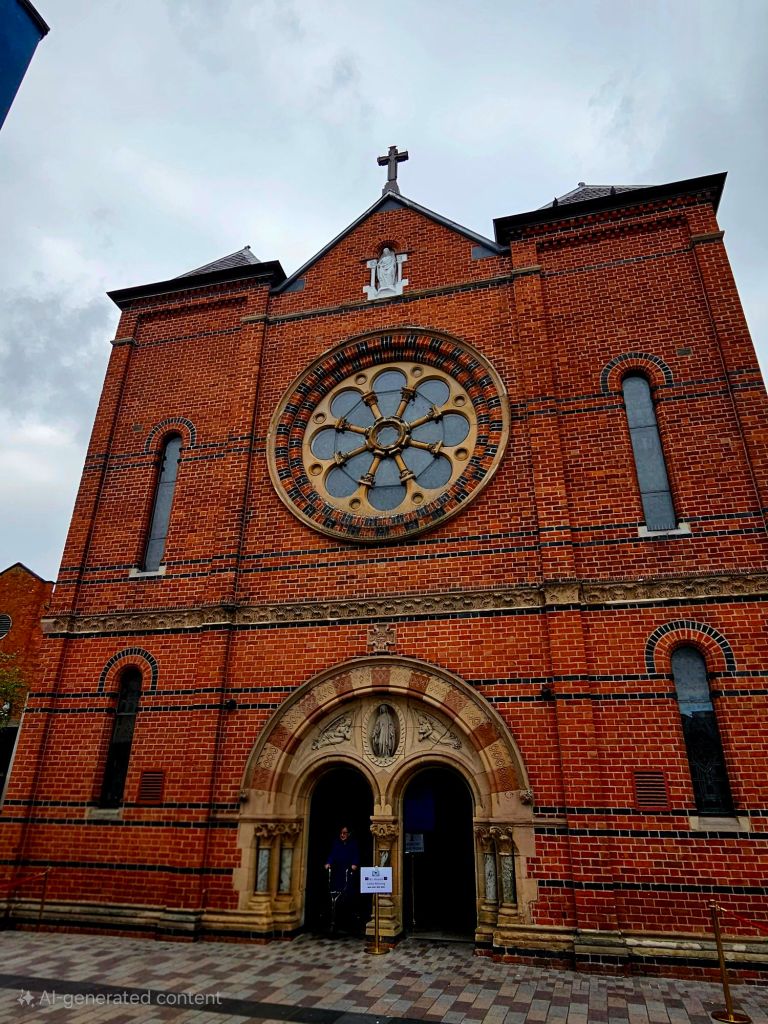
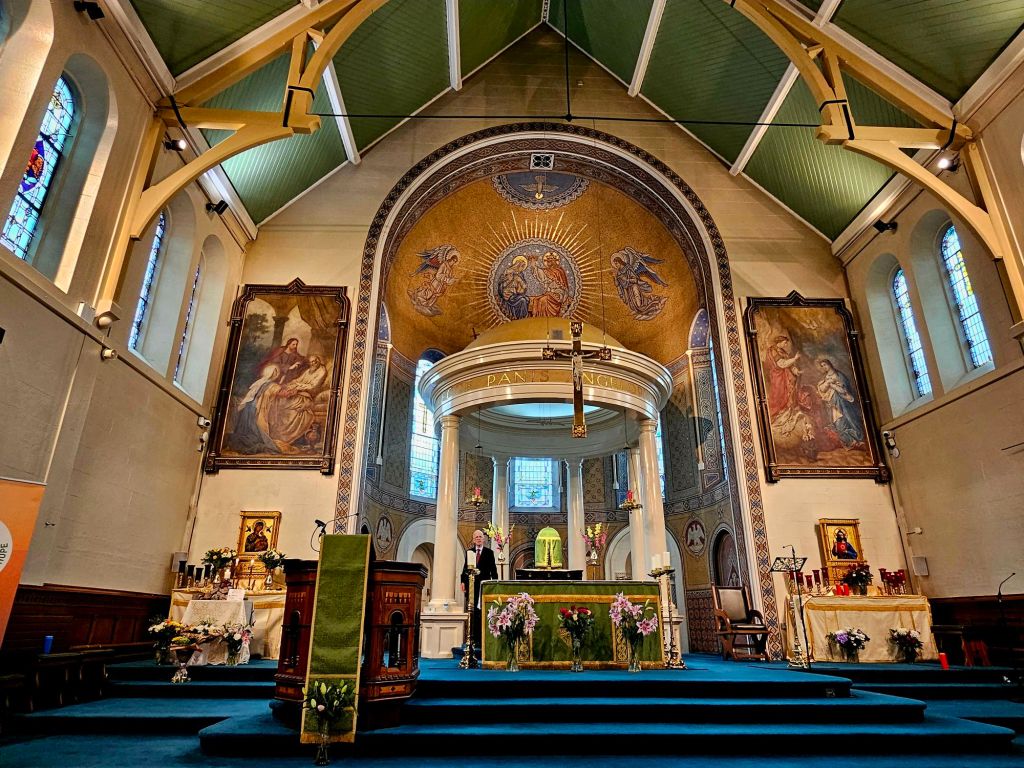
On the street next to our hotel is St Mary’s Church. It opened in 1748 and was the first Catholic church in Belfast. Protestants contributed significantly to the cost of the building. The original building has been extended to accommodate an increasing size of congregation. The church holds two masses a day from Sunday – Monday, and three a day on Friday and Saturday. The 6pm Mass on both Friday and Saturday is celebrated in the Irish language.
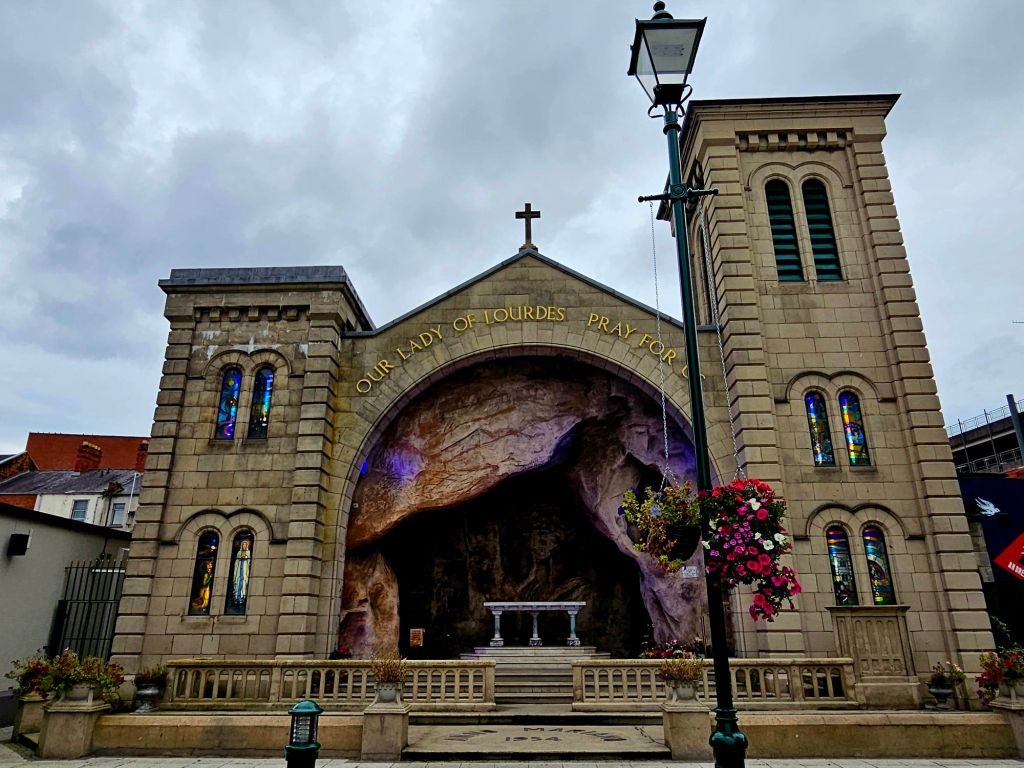
In 1954, a Grotto to Our Lady of Lourdes was built in the gardens surrounding the church.
And then it was time to go back to the hotel and meet up with Faye.
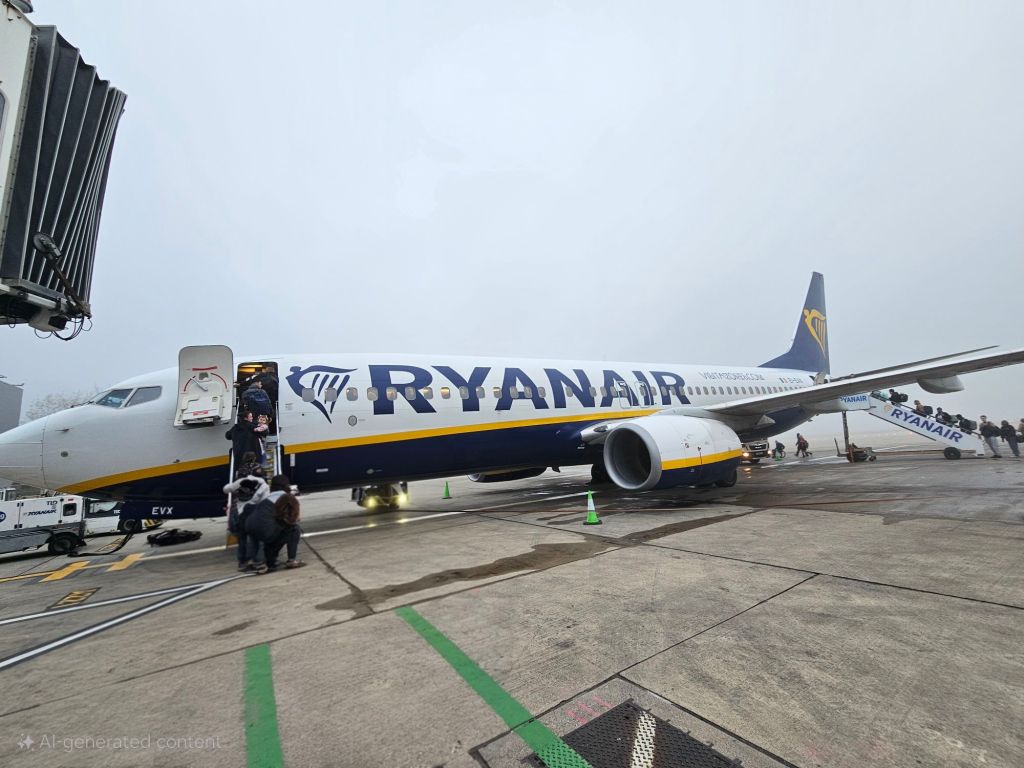
I was in London for work, so I just got the Elizabeth line to Heathrow airport, grabbed some brunch, and got on the plane.
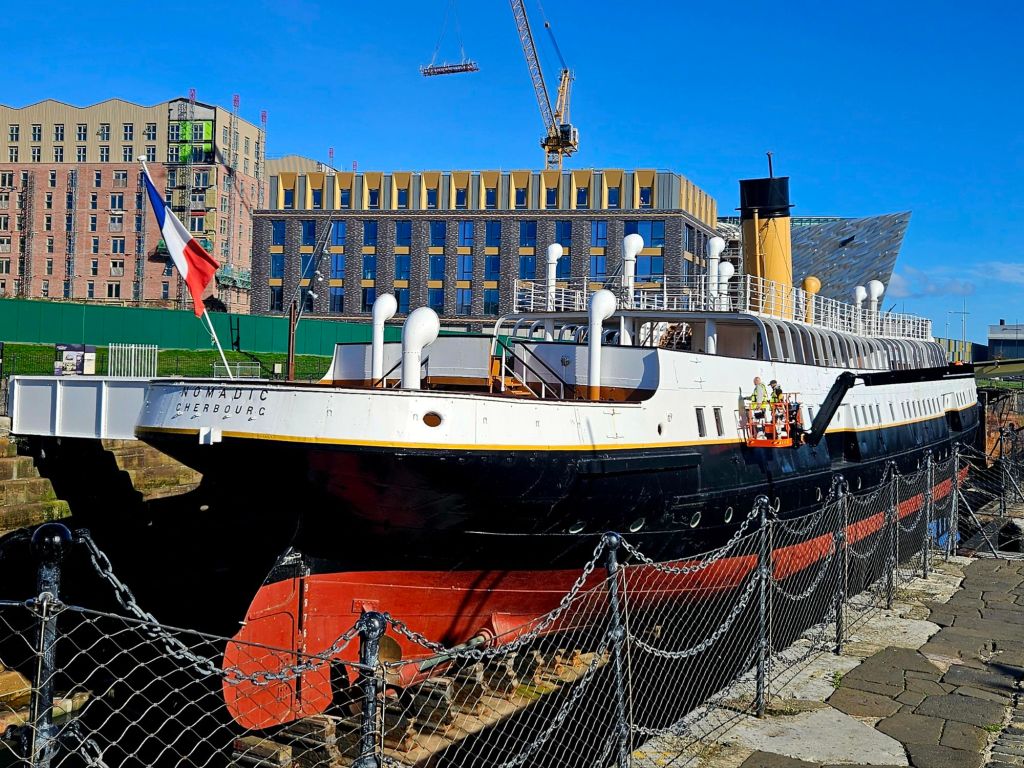
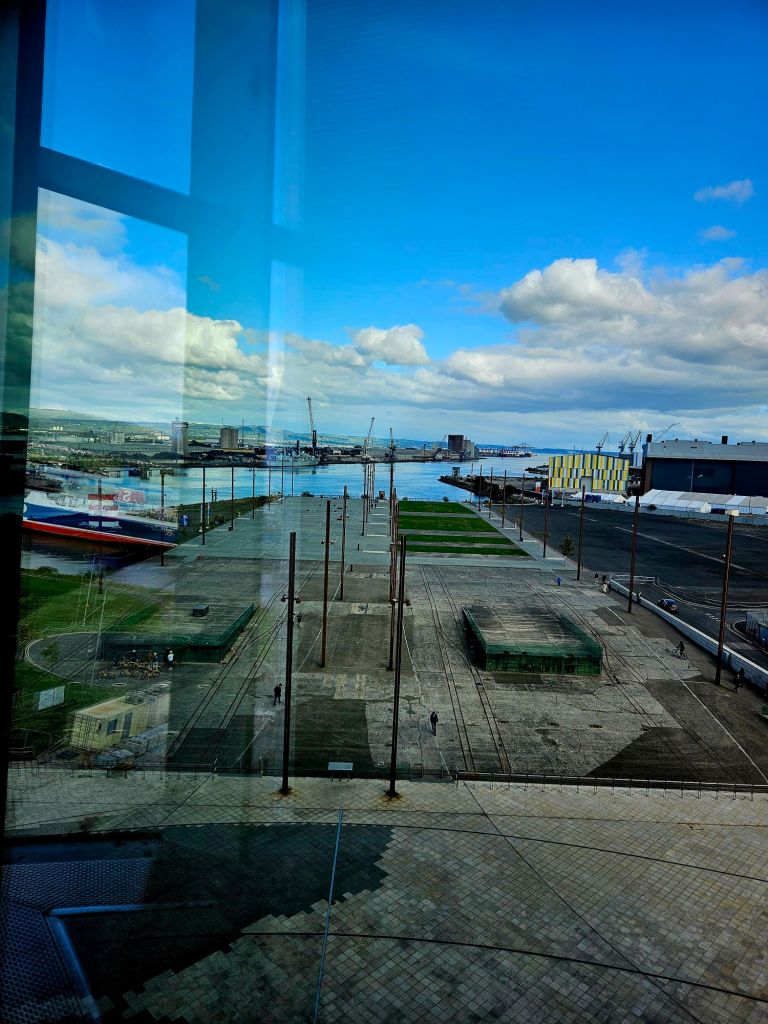
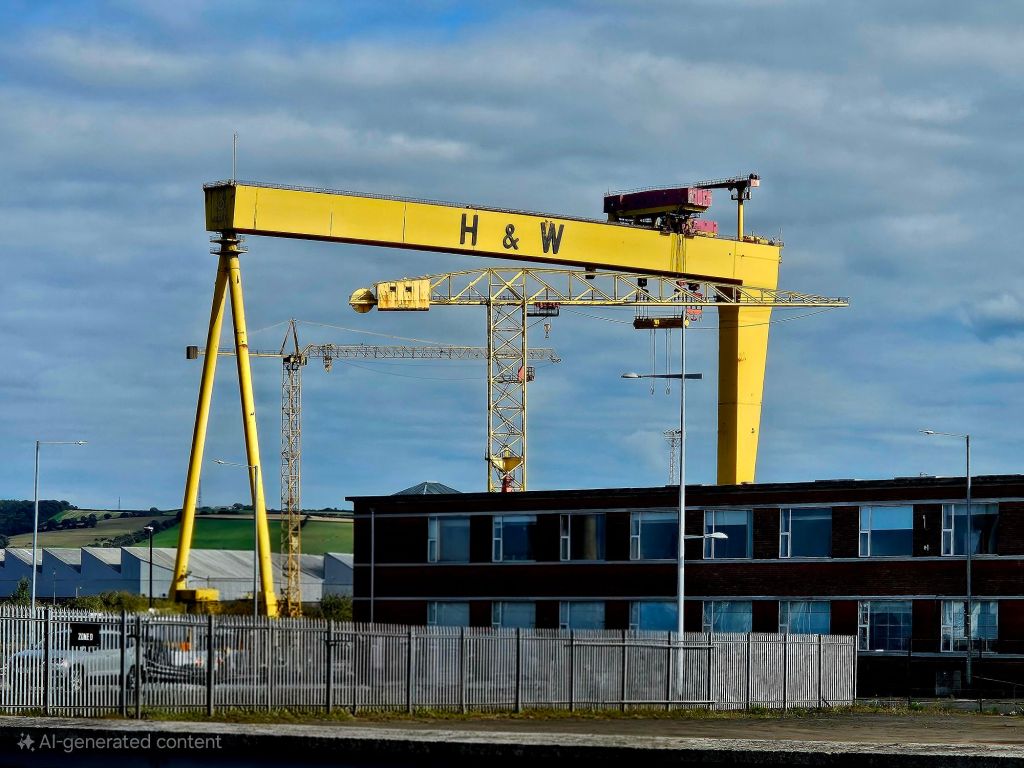
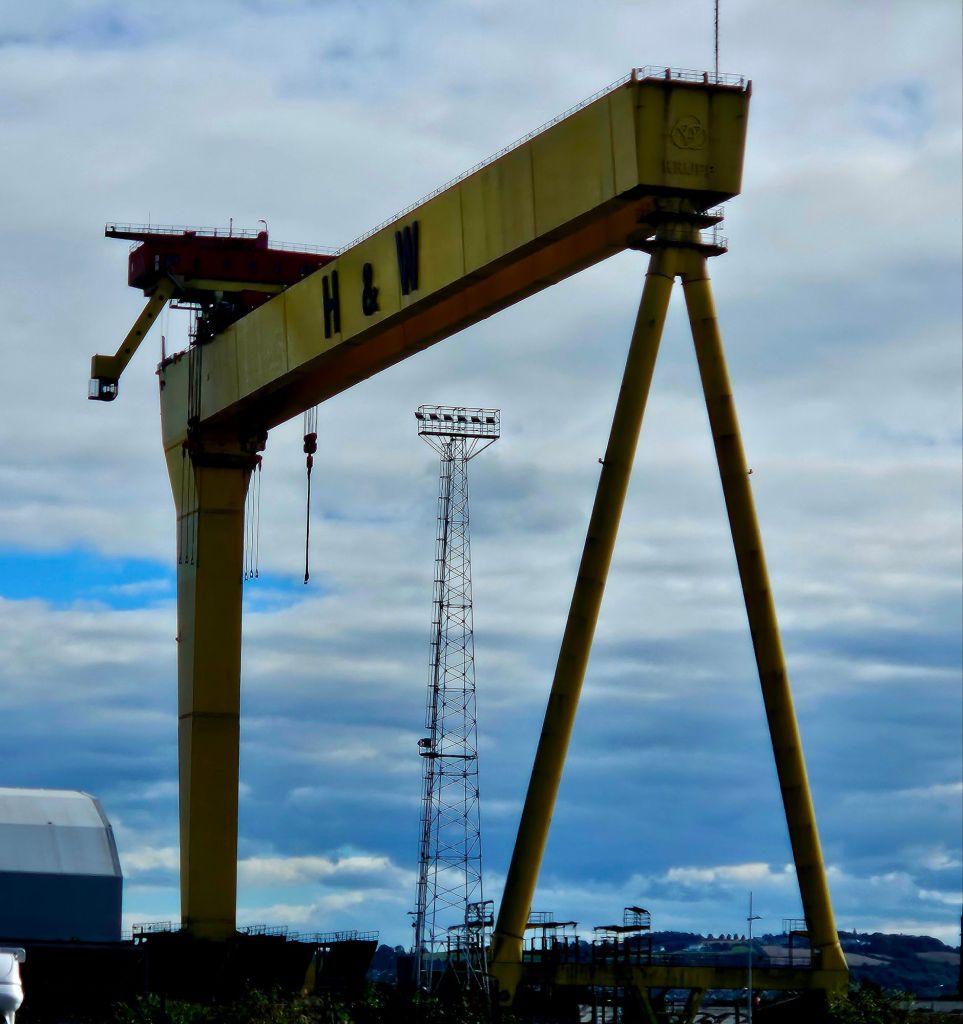
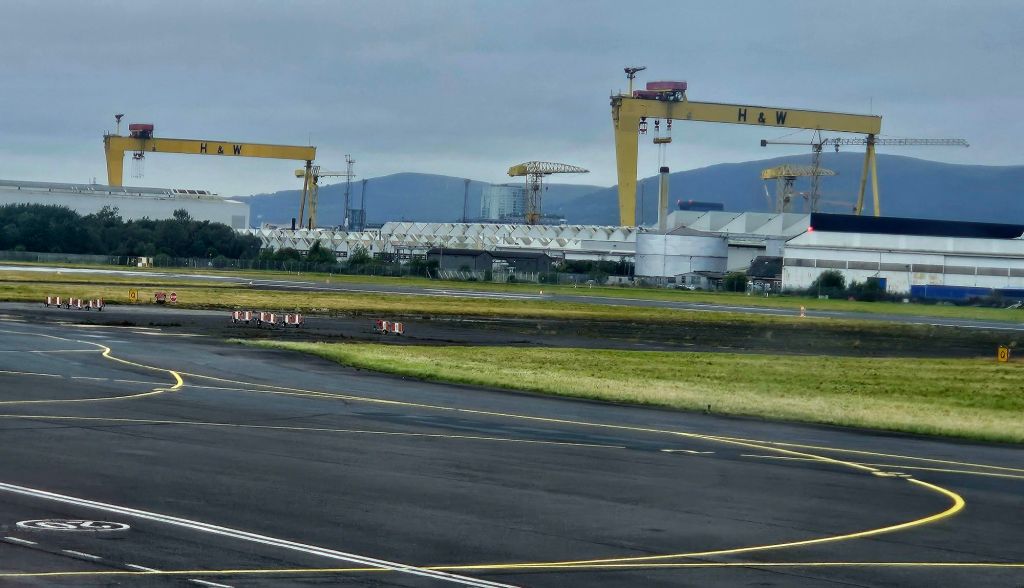
The first thing you see on arrival at Belfast City Airport (George Best Airport) are the Samson and Goliath cranes in the Harland and Wolff shipyard.
It was very straightforward getting out of the airport, and then I waited a short while at the taxi rank for a taxi. The journey to where we were staying was only around 20 minutes, and I had a lovely, chatty taxi driver who gave me lots of advice on what to see and where to go.
The accommodation was in a great location, but it wasn’t the nicest place I have stayed in.
After a very quick unpacking of my suitcase I decided to go exploring.
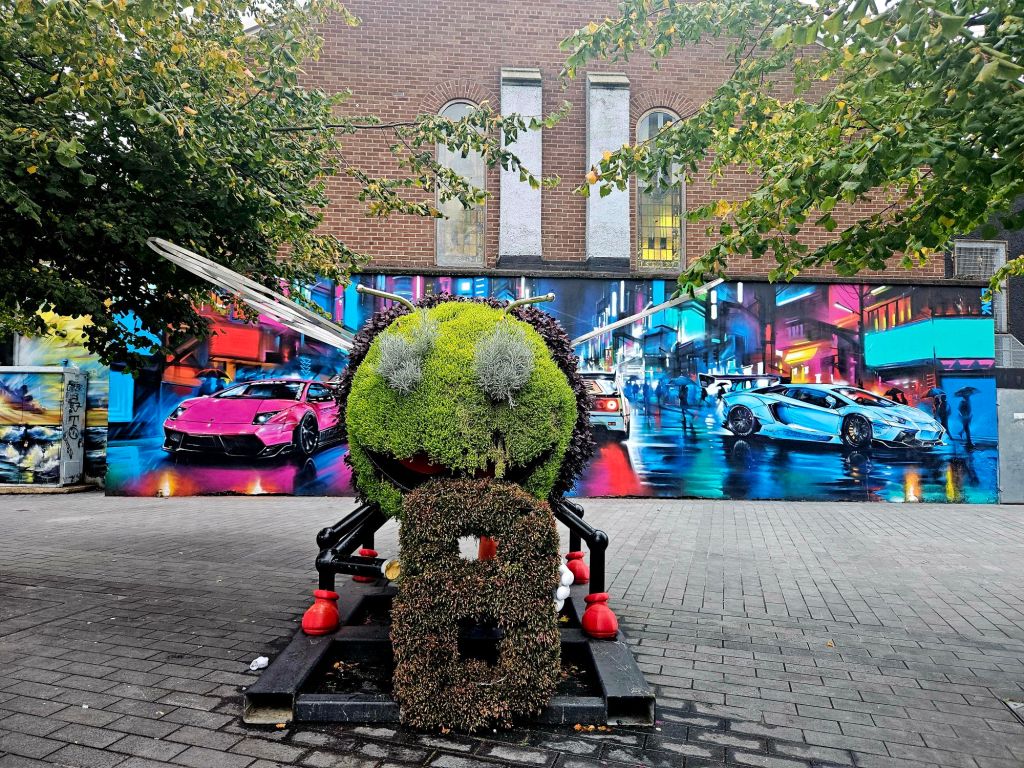
Right outside the hotel was a bee installation. The bees were installed in July 2024 as part of an urban greening initiative. These sculptures, funded by Belfast City Council, are a symbol of the city’s commitment to creating a more vibrant and sustainable environment.
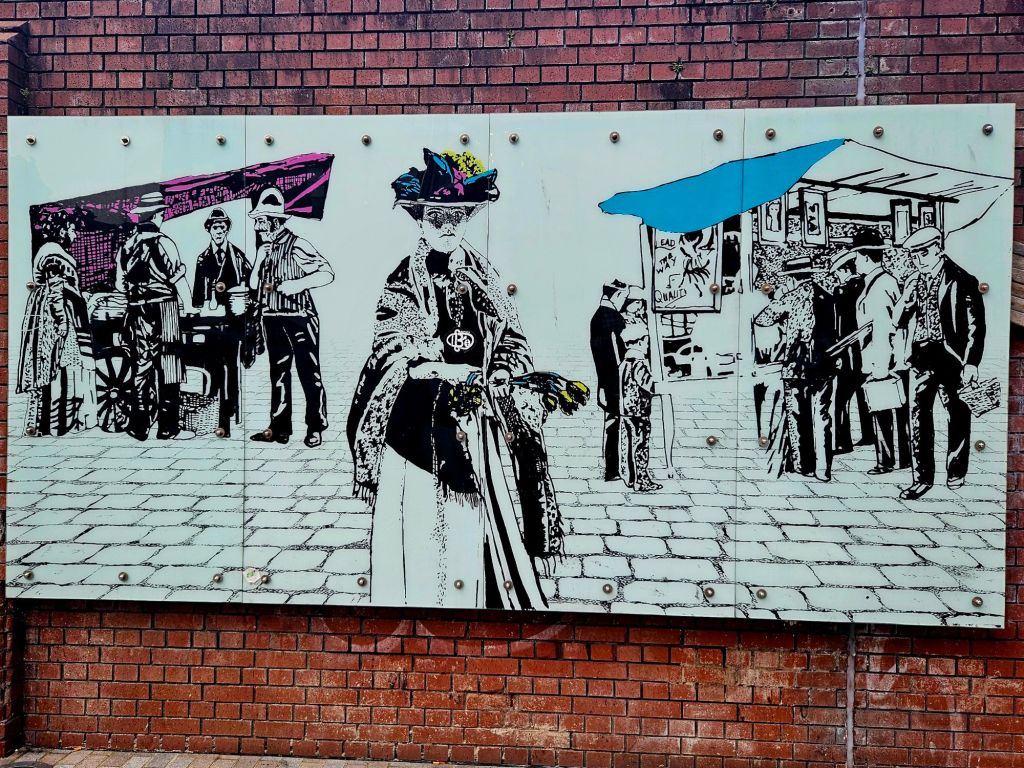
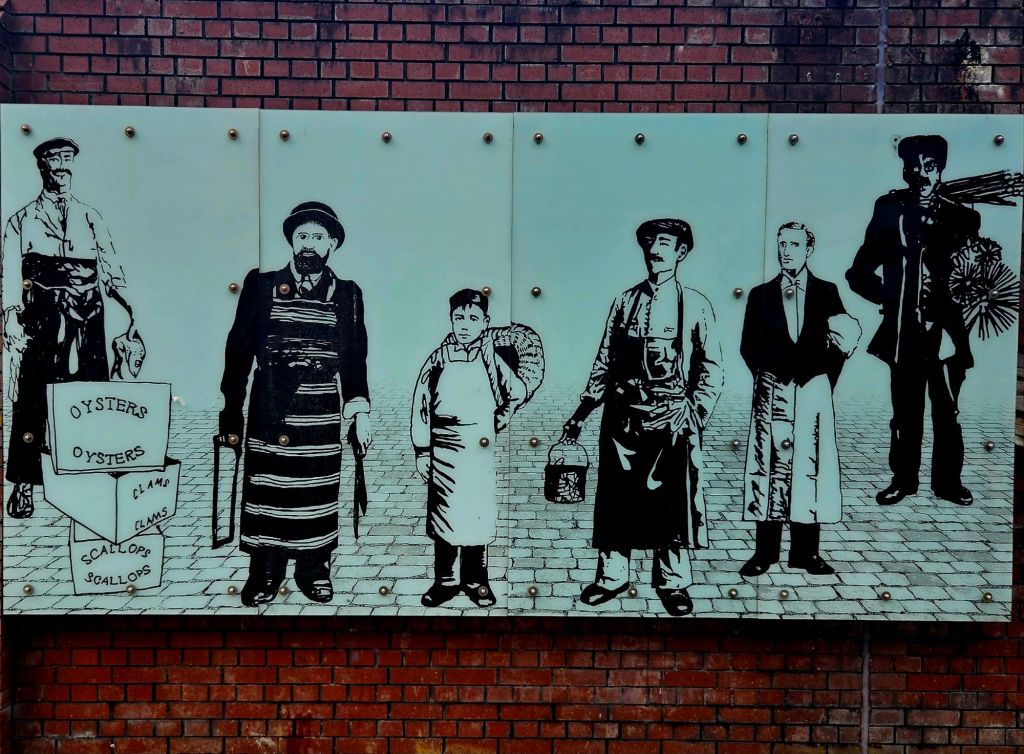
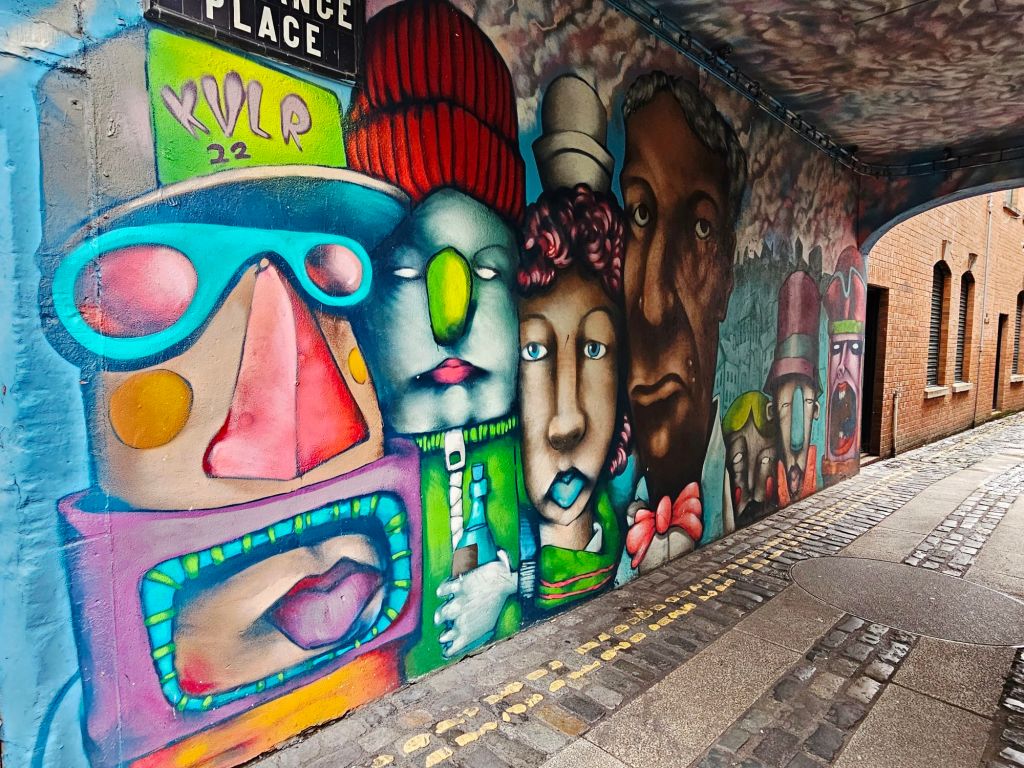
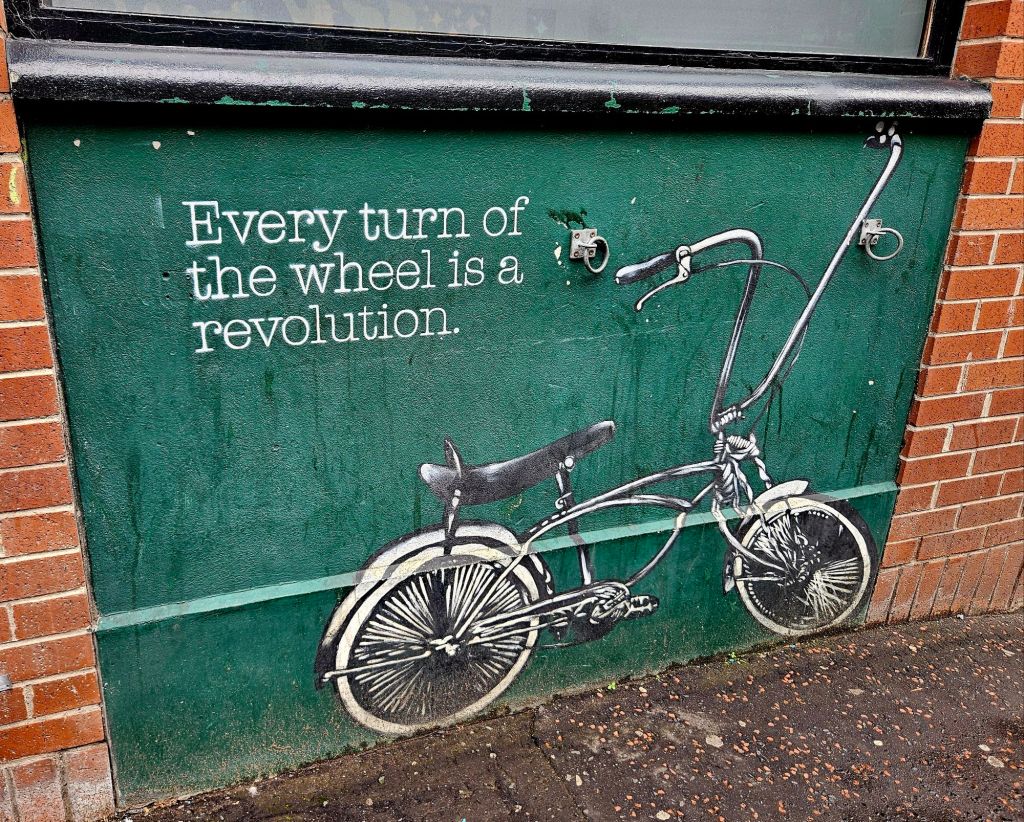
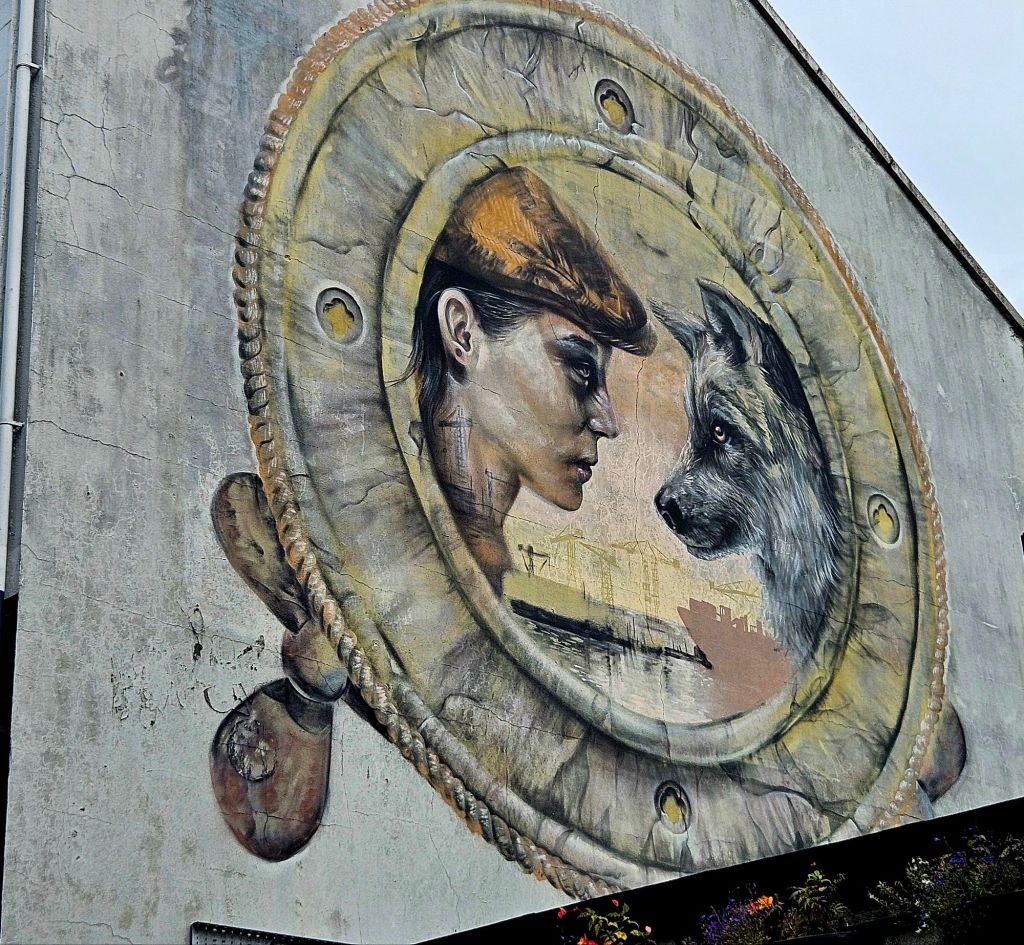
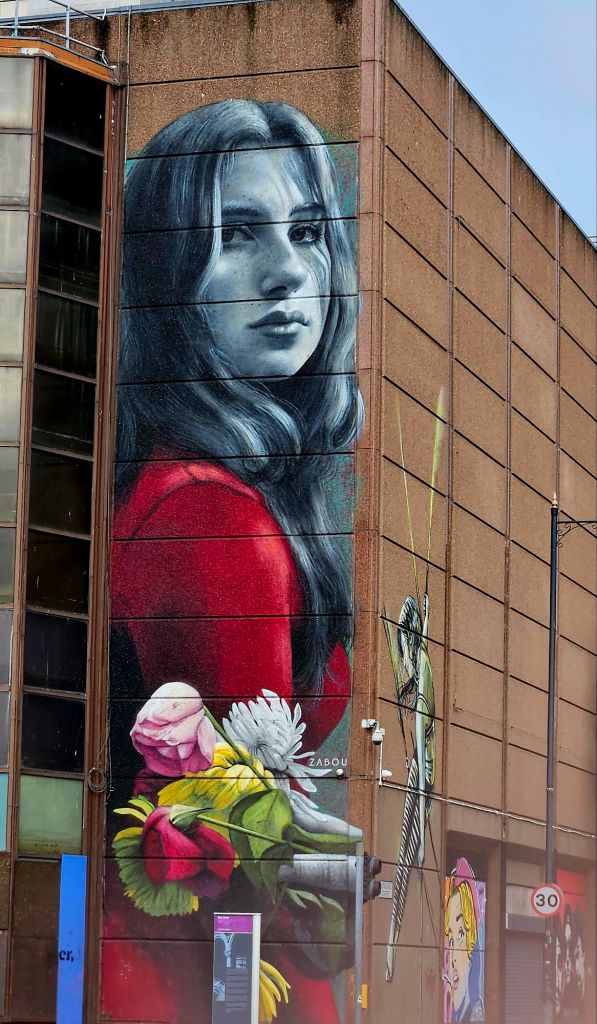
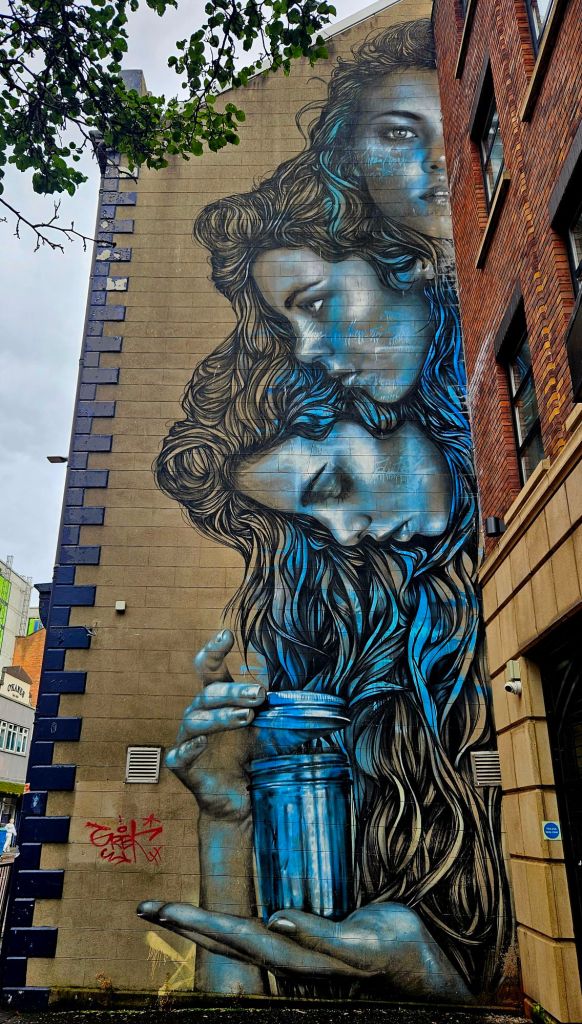
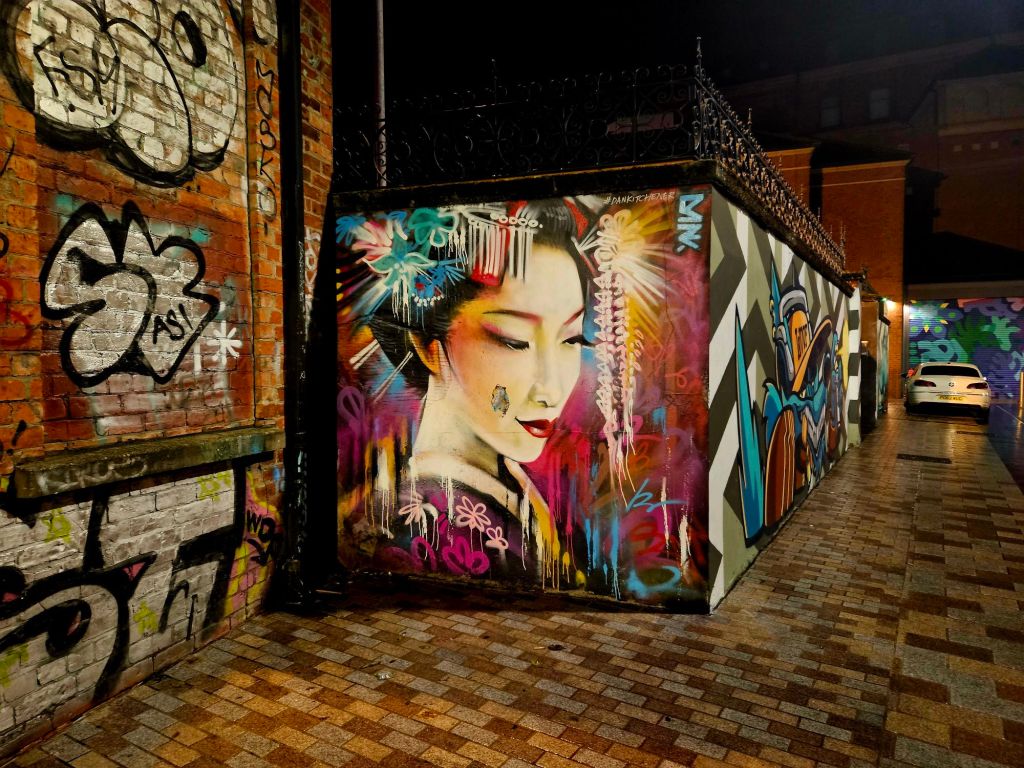
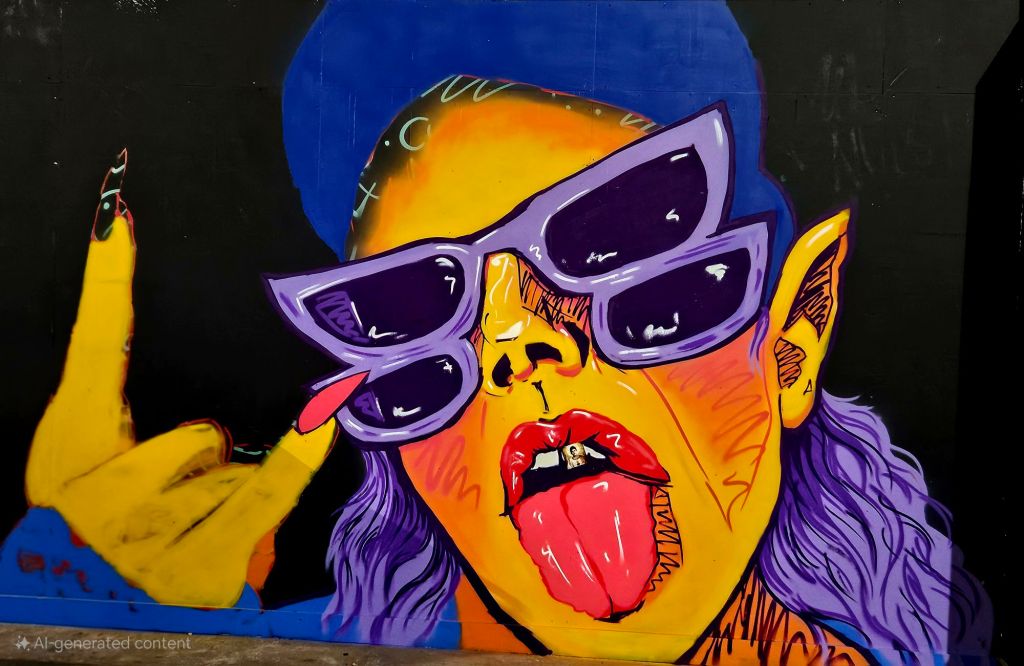
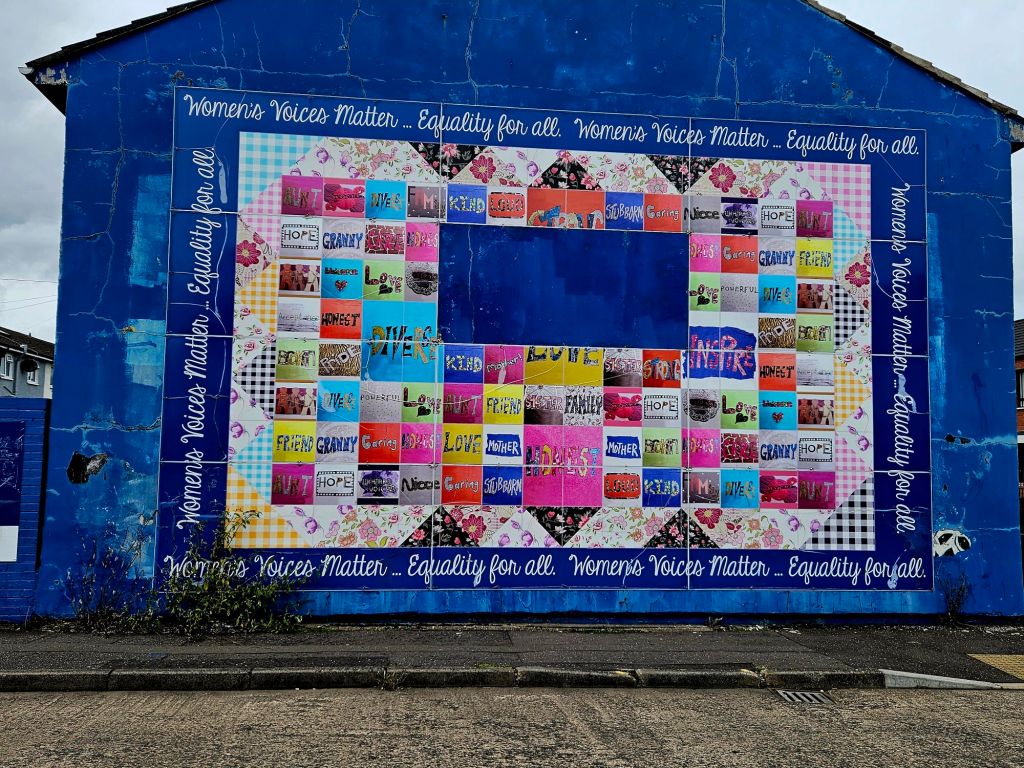
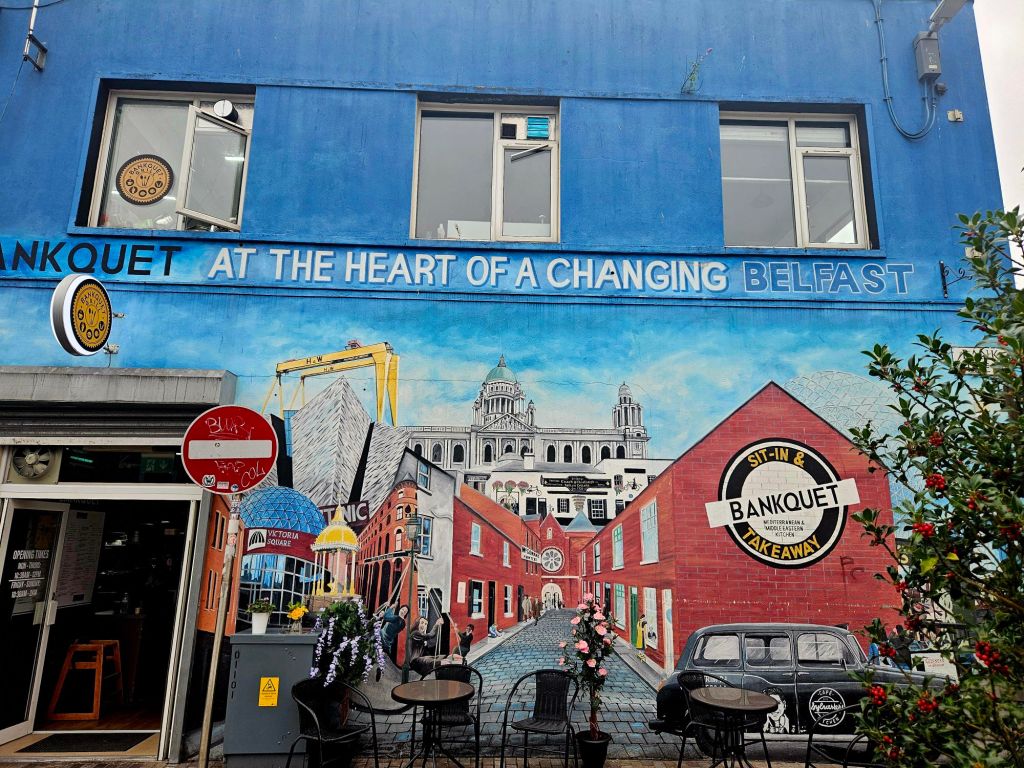
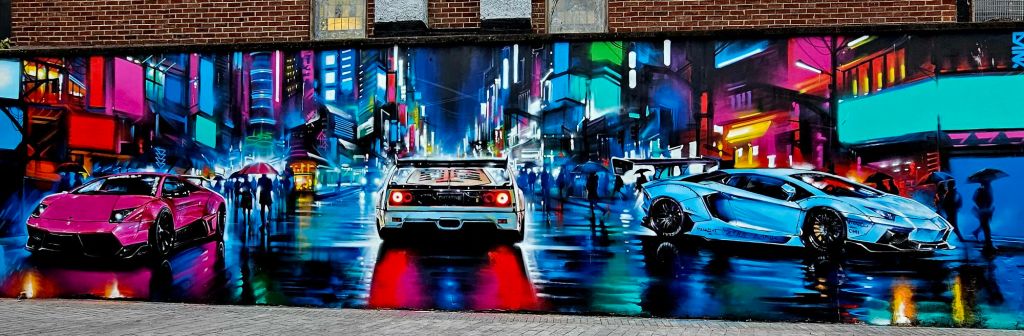
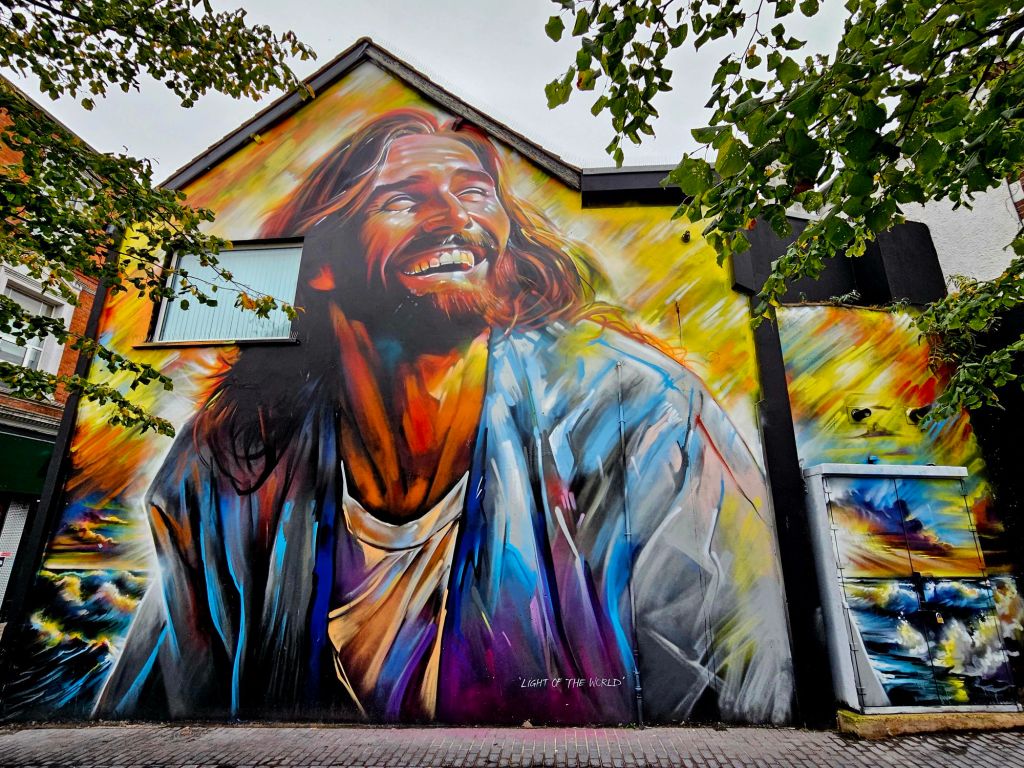
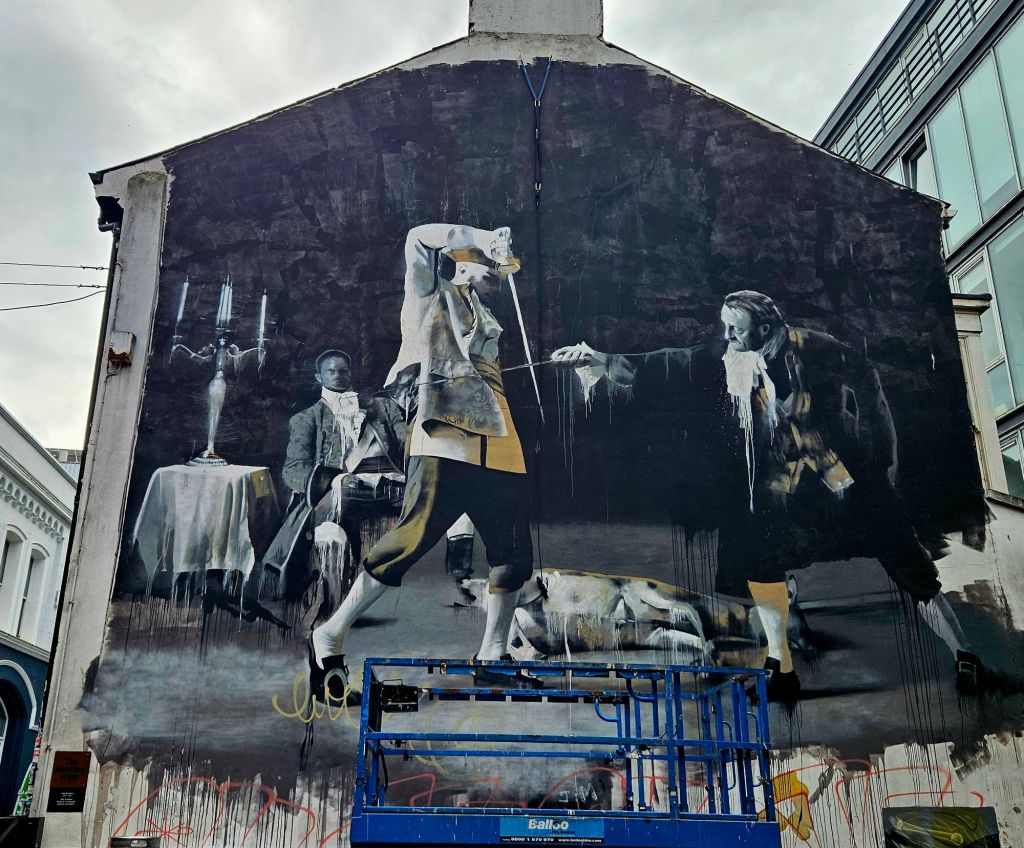
There were also some really nice murals there.
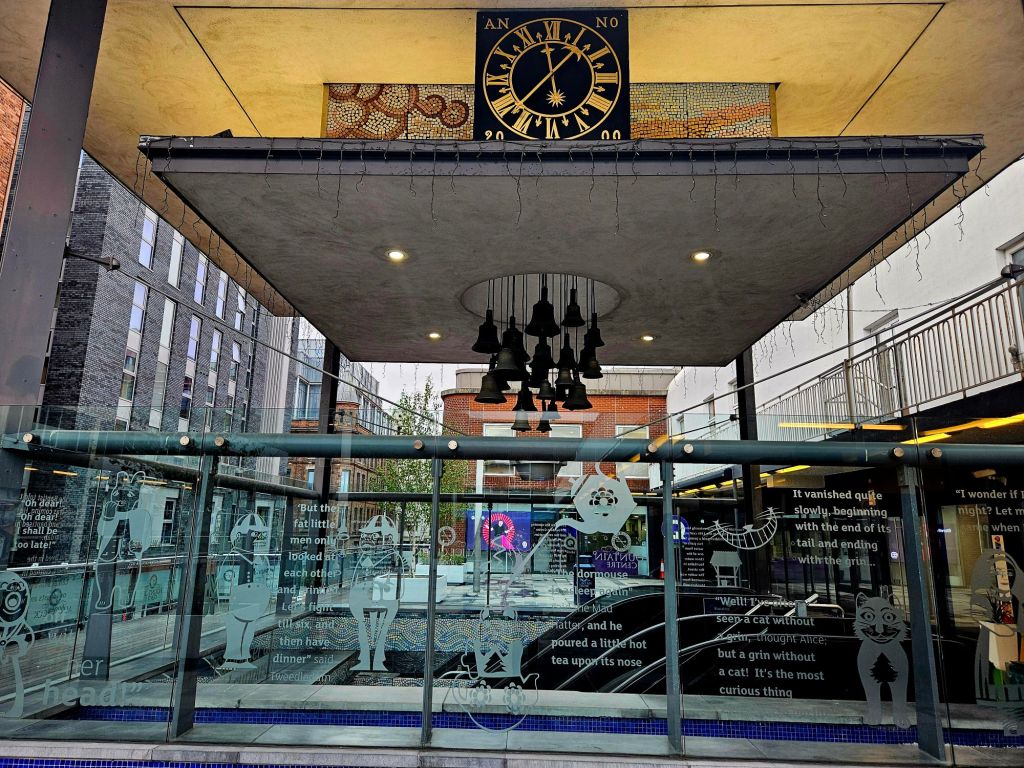
On the way into the centre of the city, I walked past the Fountain Centre and the Alice Clock. This clock is Irelands only automation clock and has a curious procession of characters from Alice in Wonderland and the Nativity. I wasn’t there at the right time to see the figures come out.
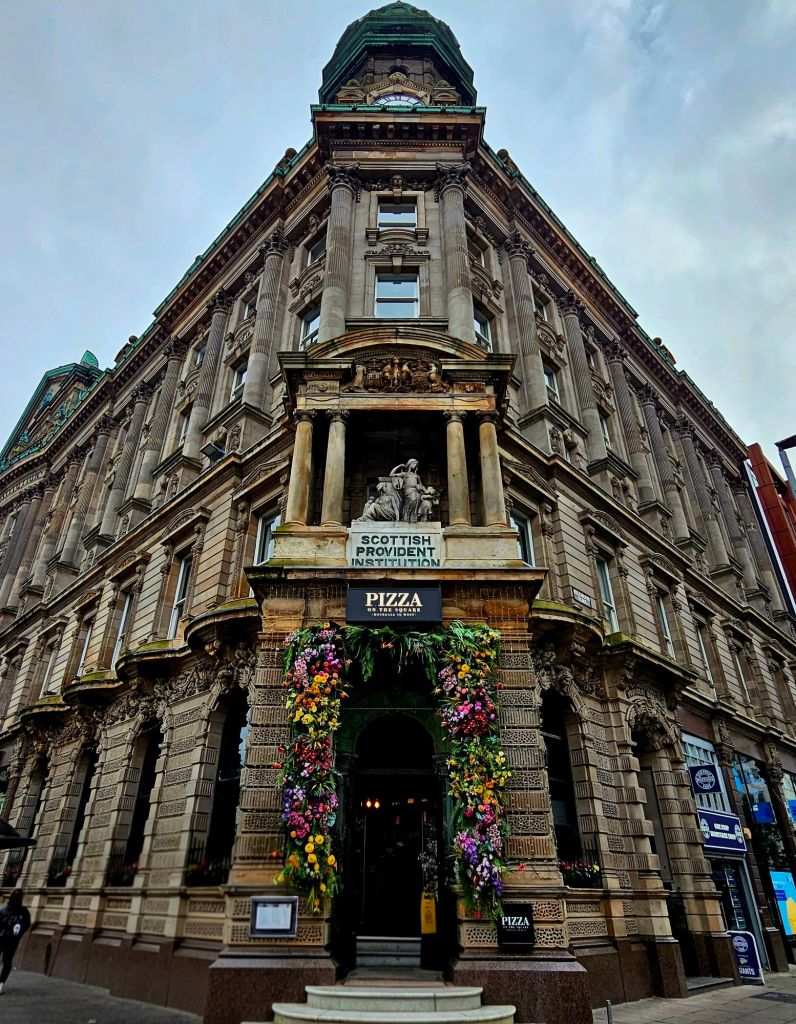
Shortly after, I came across a beautiful building, which is the Scottish Provident Institition. The architecture is amazing, and it was built in sections between 1897 and 1902. It was originally designed as offices but now also houses shops and cafes.
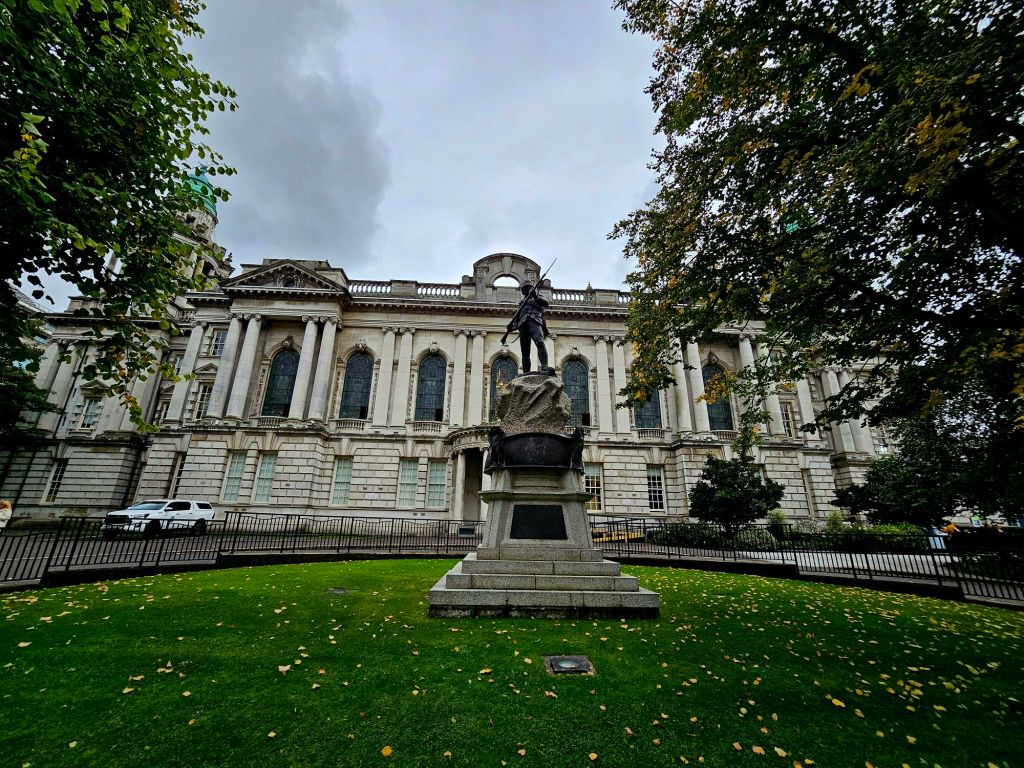
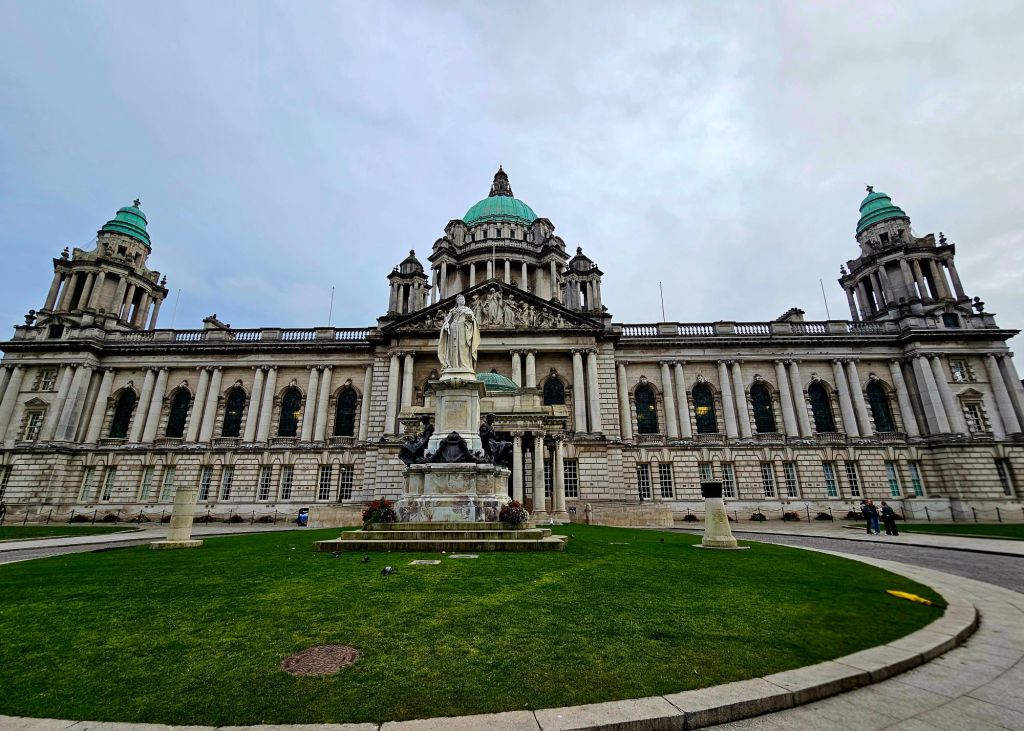
Just close by is Belfast City Hall, another grand building that looks a bit like St Paul’s Cathedral. A 53m copper dome rises up from the centre.
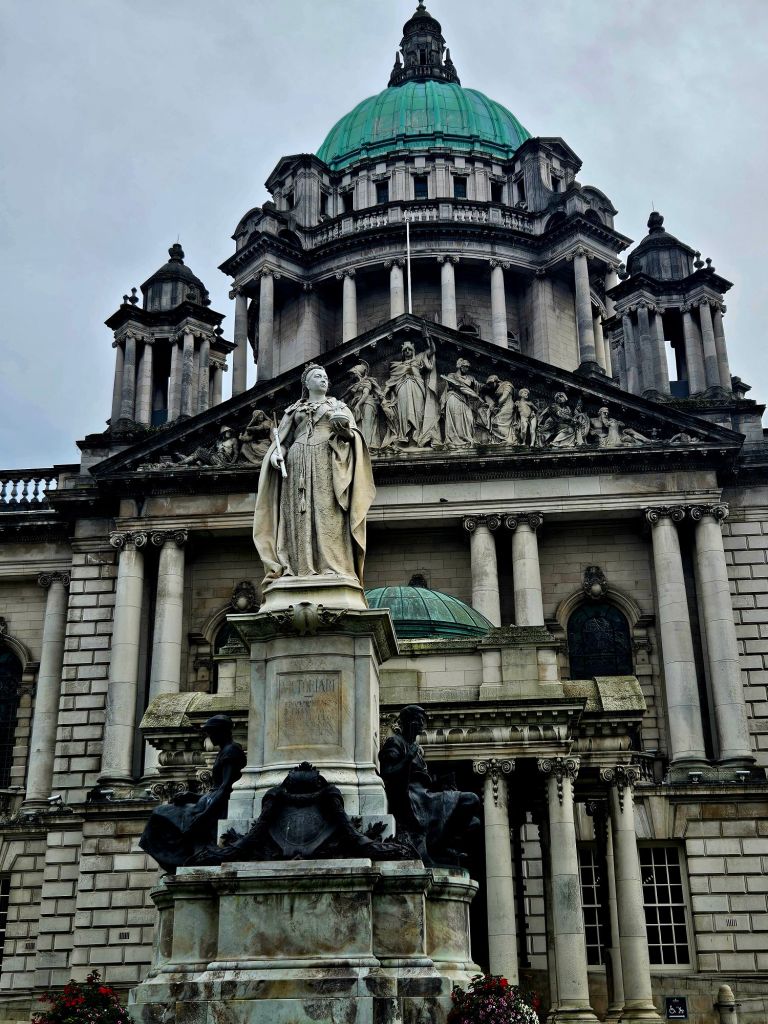
The city hall was built in response to Queen Victoria awarding Belfast city status in 1888. Building started in 1898 and took about 8 years to complete. At the front of the hall, there is a statue of Queen Victoria with her back to the entrance.
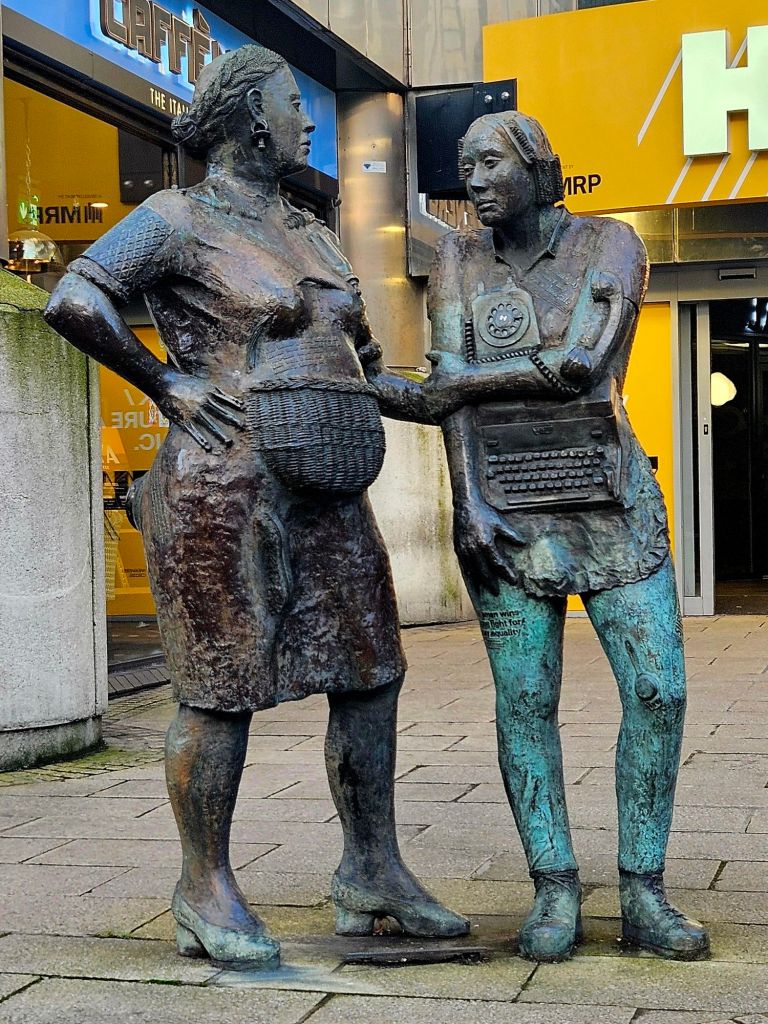
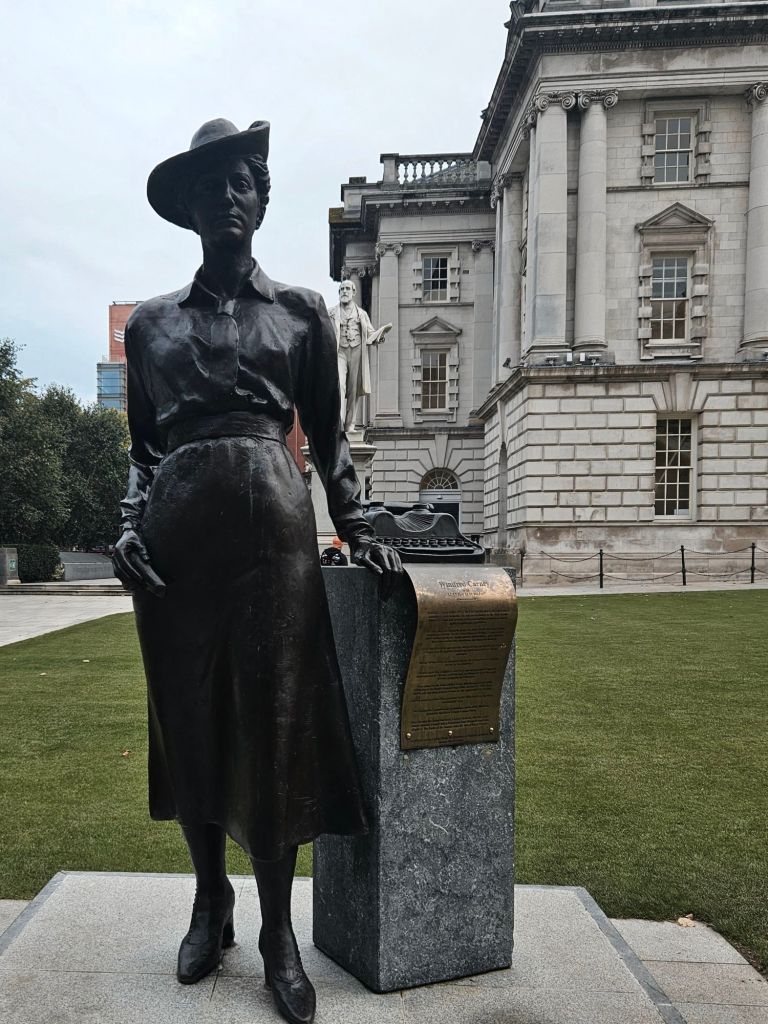
There are also two other statues to each side of the hall. The first is Winifred Carney, who was a suffragette and trade unionist. In 1913, she co-wrote the Irish Textile Workers Union manifesto called “To the Linen Slaves of Belfast.” It was a time when many women and children were working long hours in the linen mills in poor conditions, often working barefoot and going hungry.
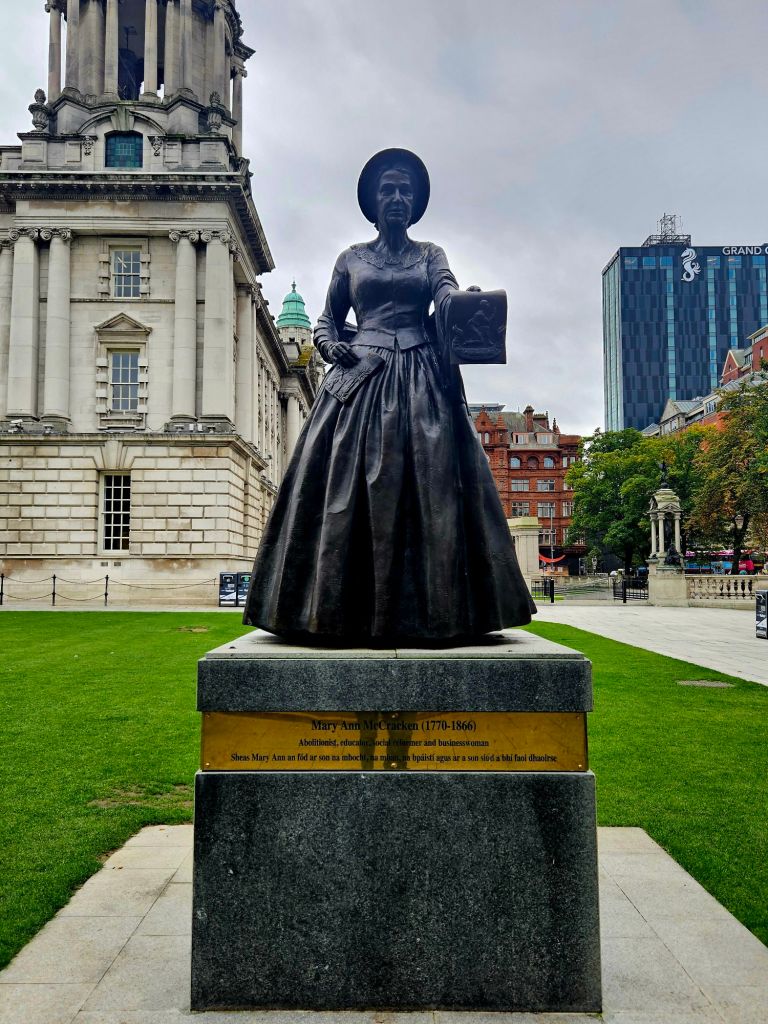
The other statue is Mary Ann McCracken, who is remembered as an abolitionist, educator, social reformer, and businesswoman in the muslin trade. She was an equal rights campaigner, petitioning for education, child welfare, and prison reform as well as an end to the slave trade. She campaigned against slavery at Belfadt docks until she was almost 90 years old.
On 3 December 2012, the City Council voted to limit the days that the union flag flies from City Hall to no more than 18 designated days. Since 1906, the flag had been flown every day of the year.
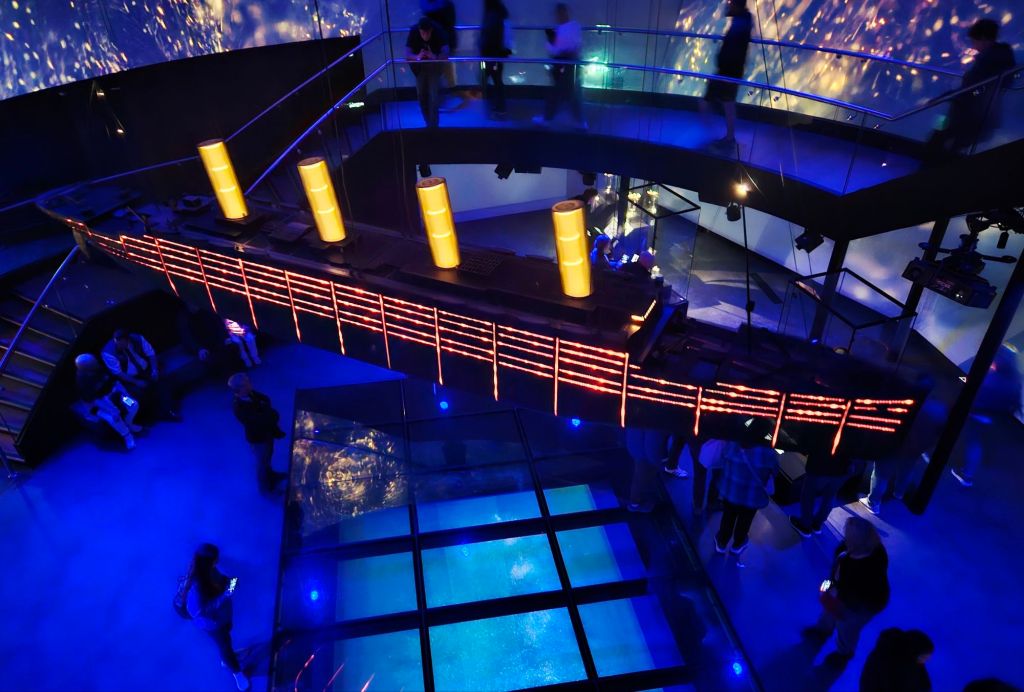
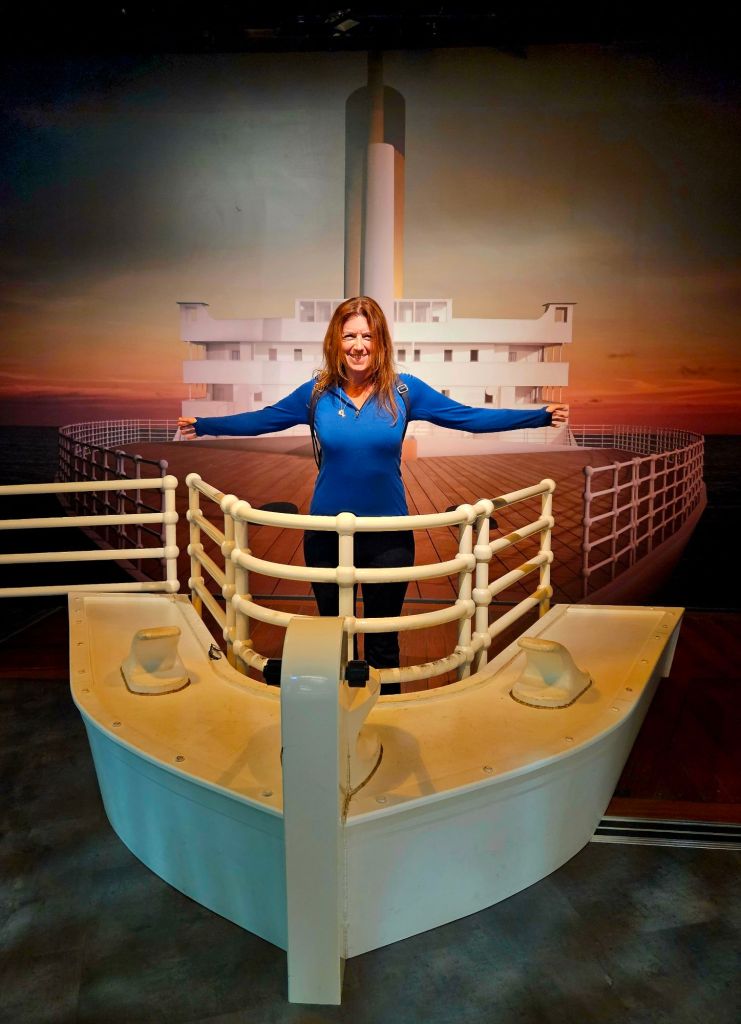
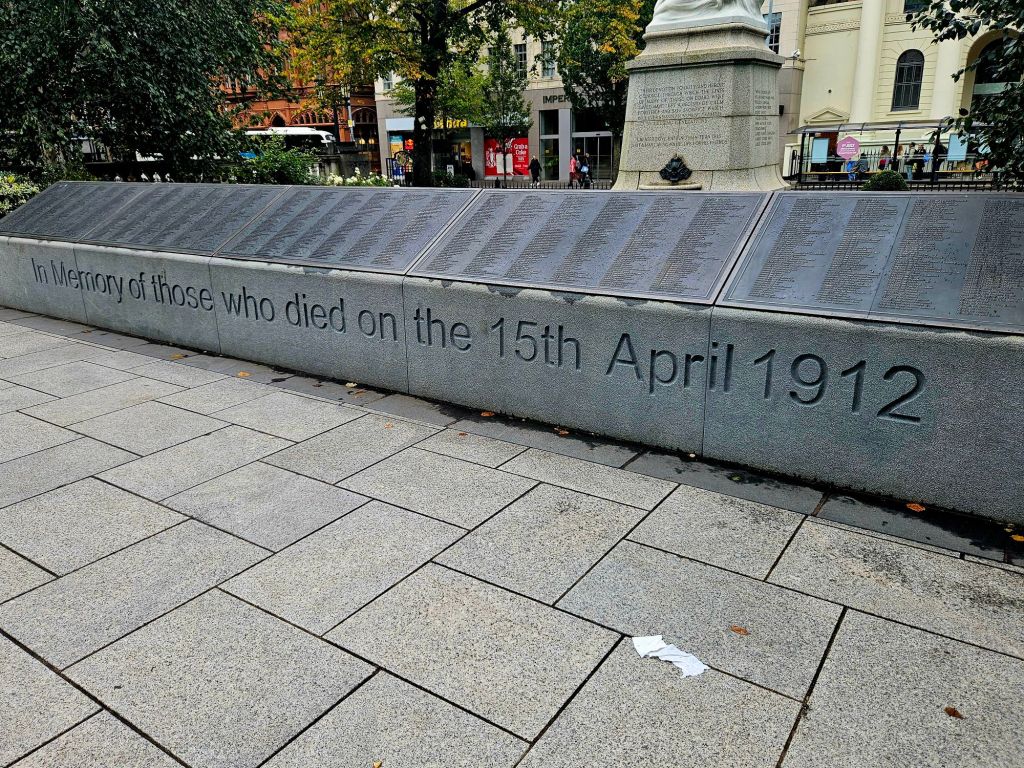
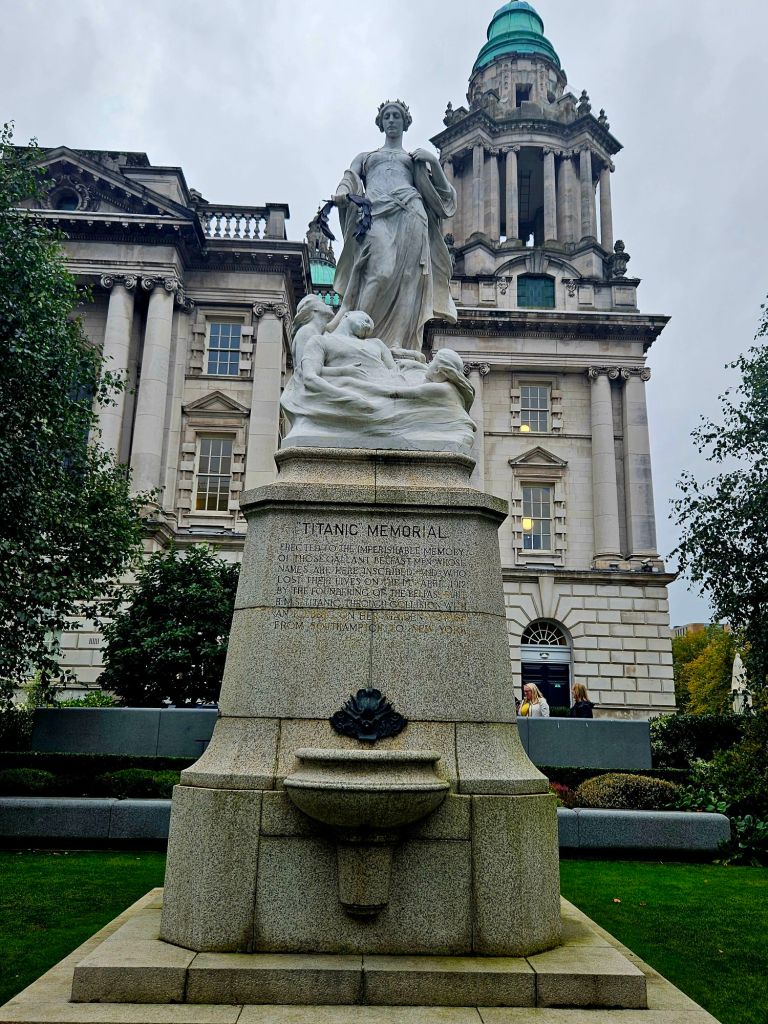
Within the grounds of City Hall is a Titanic memorial garden, remembering all those who died when the Titanic sunk. The Titanic was built in Belfast.
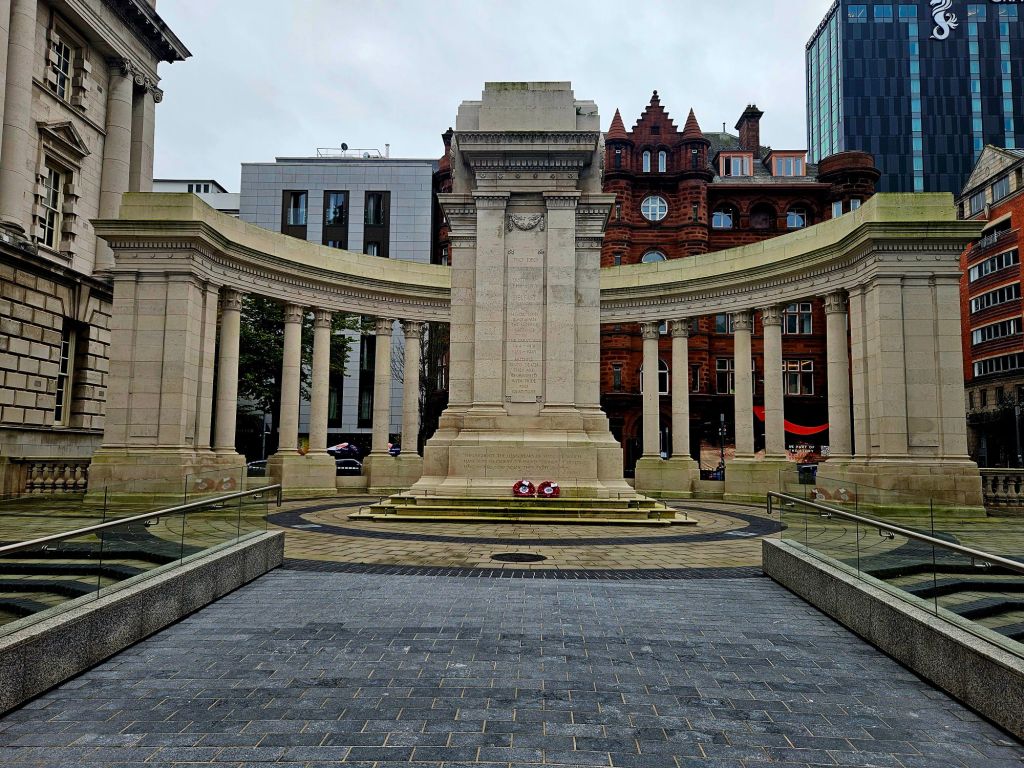
To the back of the city hall is the Belfast Cenotaph. It became a grade A listed building in 1984. The monument symbolises both victory and honour.
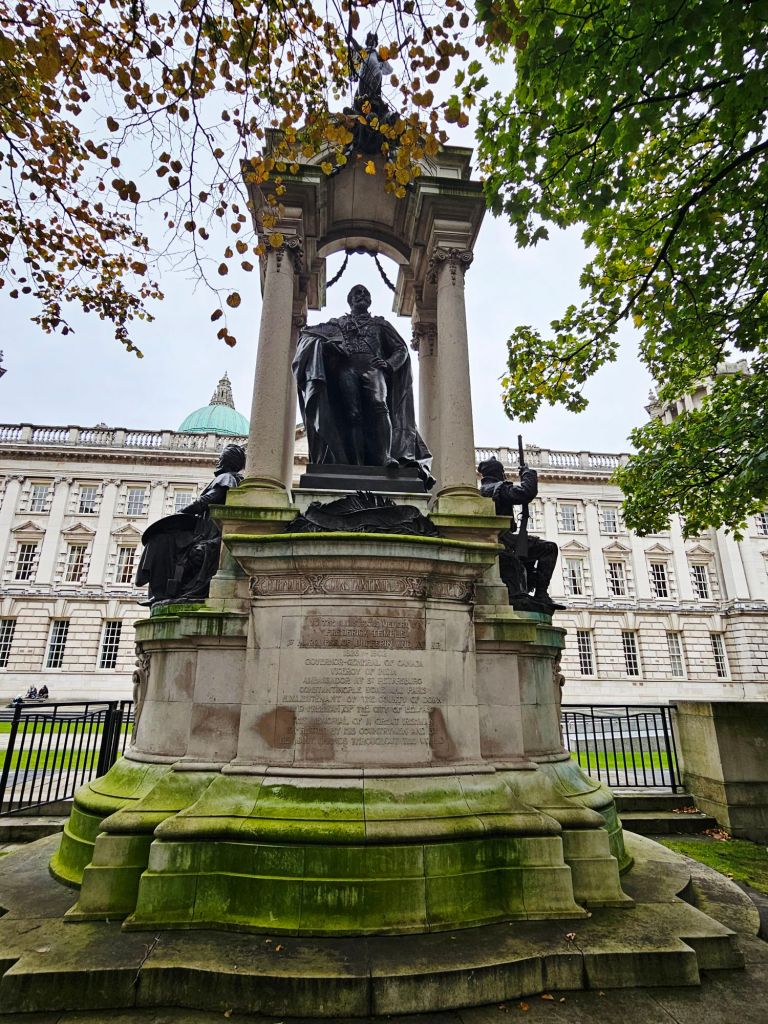
There is also a memorial to Fredrick Temple, the Marquess of Dufferin. He had a number of diplomatic roles and travelled to India, Canada, Russia, Turkey, Rome, and Paris. He served as Governor-General of Canada and Viceroy of India in his time.
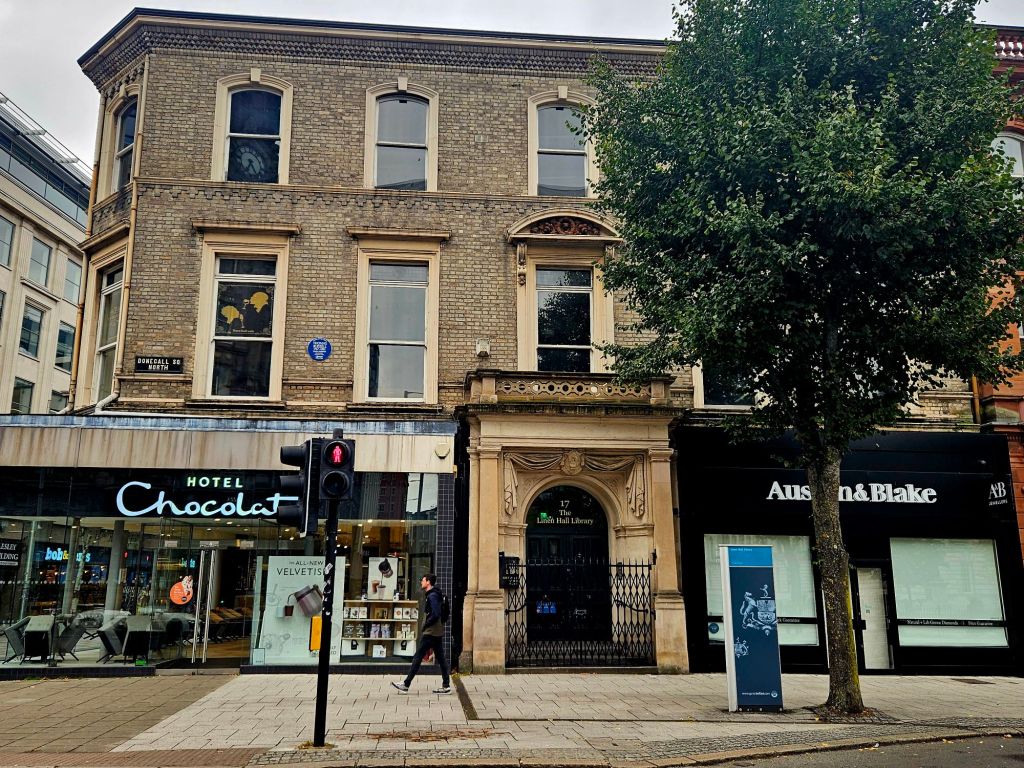
Just opposite the city hall is the Linen Hall Library, which is the last public subscription library left in Ireland. It was originally designed as a linen warehouse. It is the oldest library in Belfast, dating back to 1788.
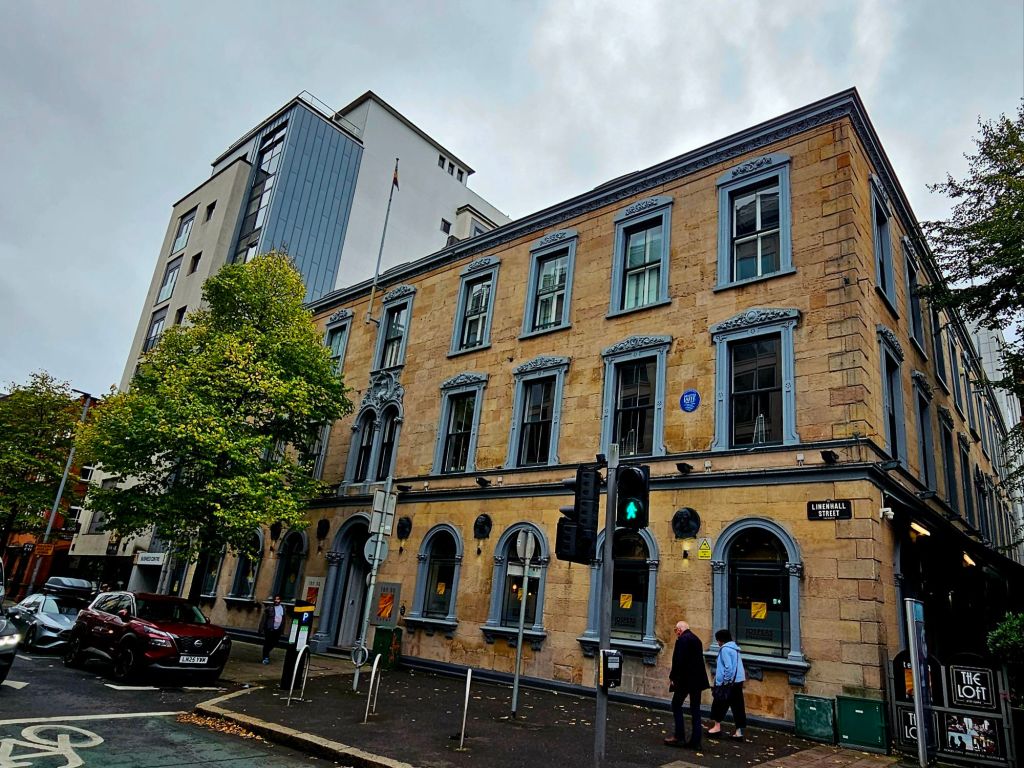
The next stop was Ten Square Hotel. This used to be known as Yorkshire House and was built in 1862 as a 3 storey linen warehouse.
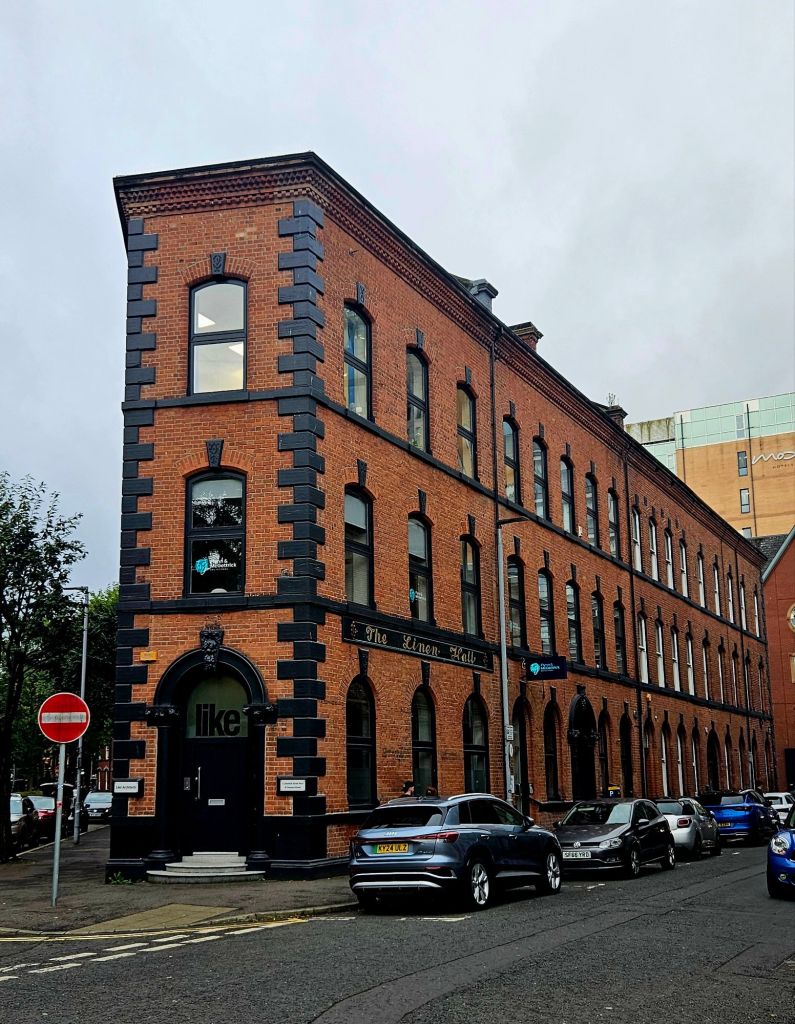
I walked past another building called the Linen Hall but couldn’t find any information about it.
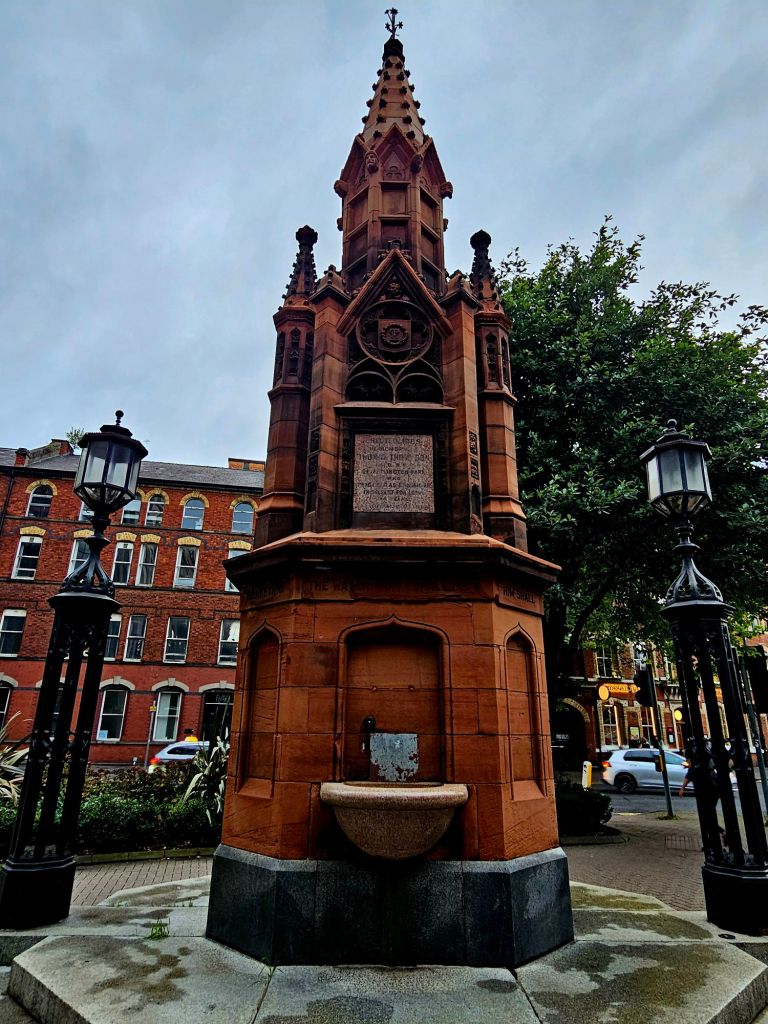
Just up from here was the Thomas Thompson Memorial Fountain. Thompson was a naval surgeon during the Napoleonic Wars and gained enough knowledge to help him combat outbreaks of cholera, smallpox, dysentery, and typhus in Belfast. He also was the founder of the city’s Home for the Incurable. In 1850, the average age of death in Belfast was just 9 years, following the Great Famine and outbreaks of cholera.
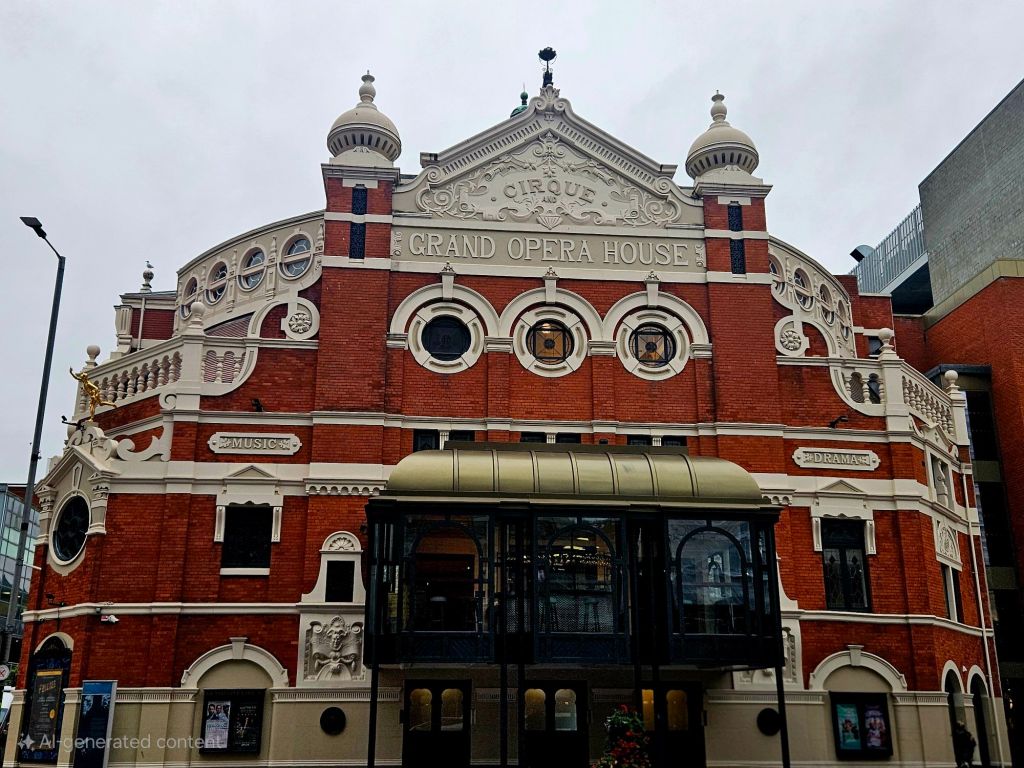
The Grand Opera house is a lovely baroque style building. It opened in 1895, and Van Morrison, who is from Belfast, recorded an album here.
Just next door is the Europa Hotel. It is notorious for being the most bombed hotel, suffering from 33 IRA attacks during the Troubles. This was because the British reporters all stayed here.
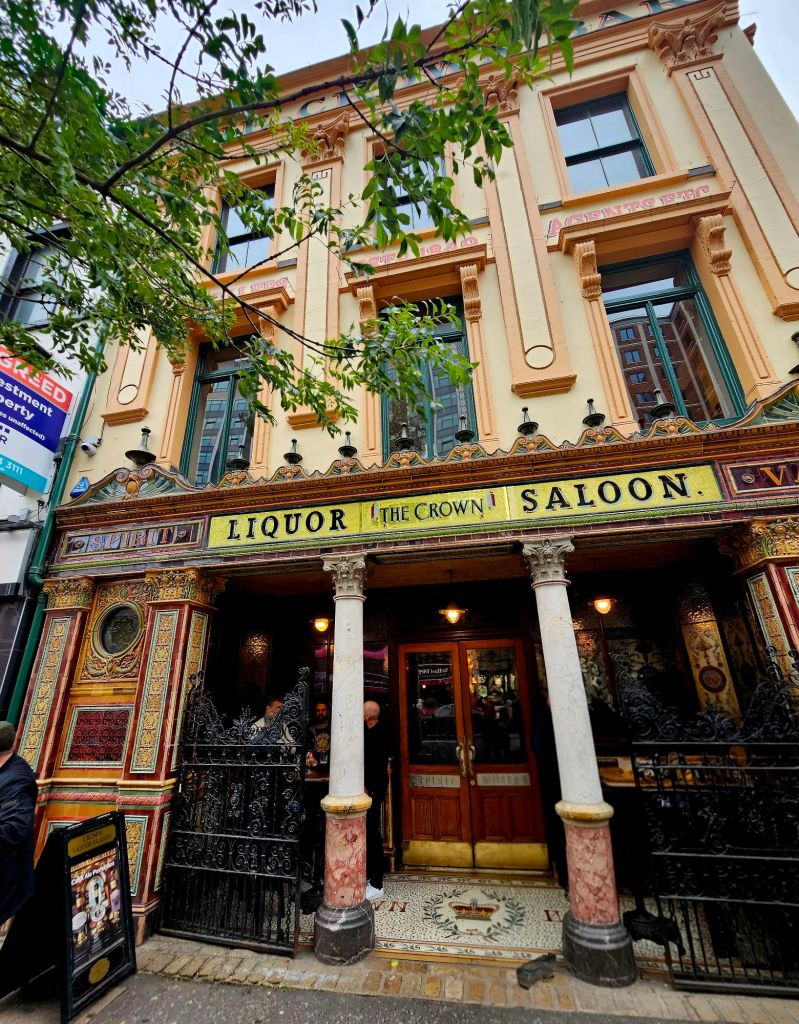
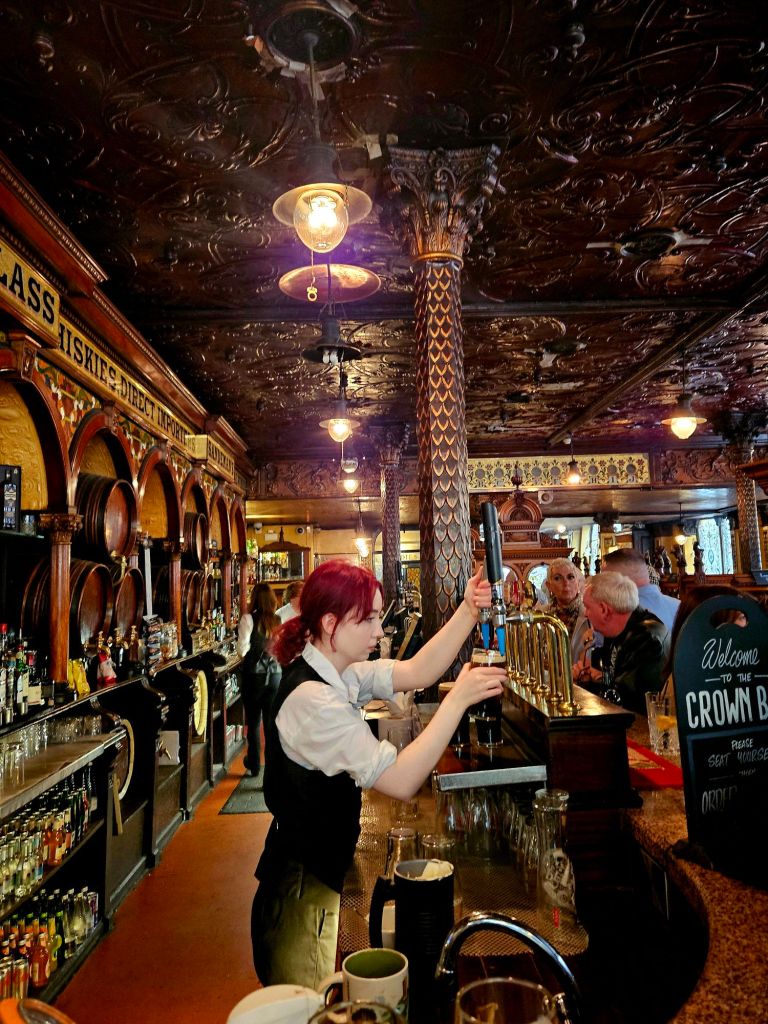
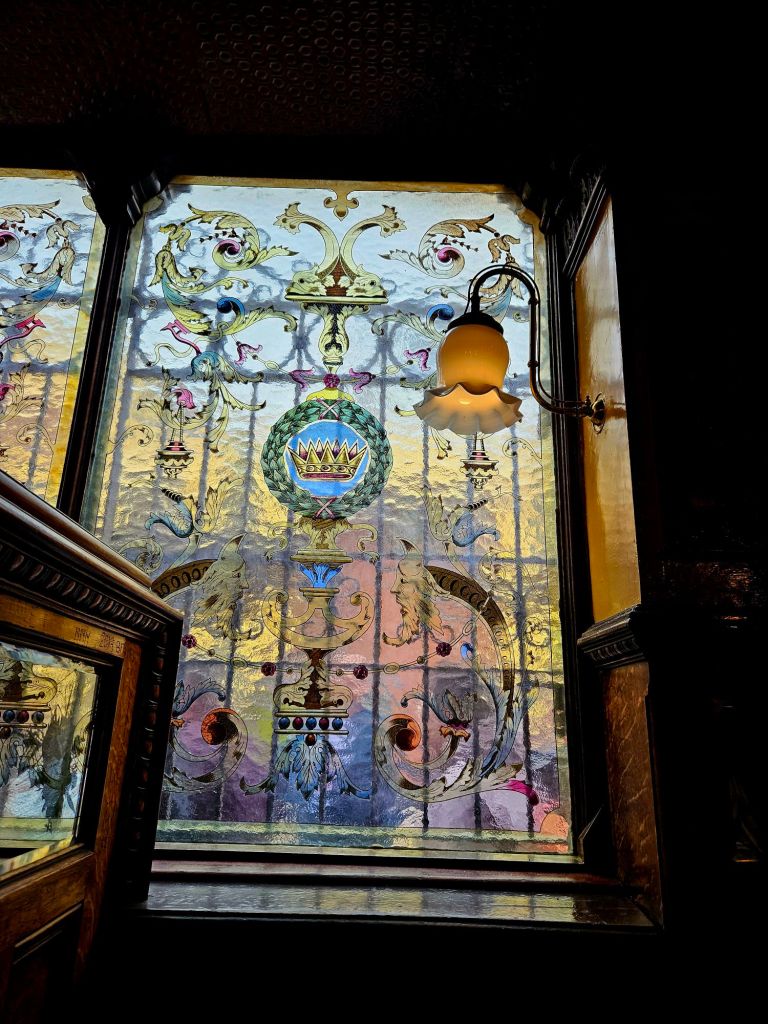
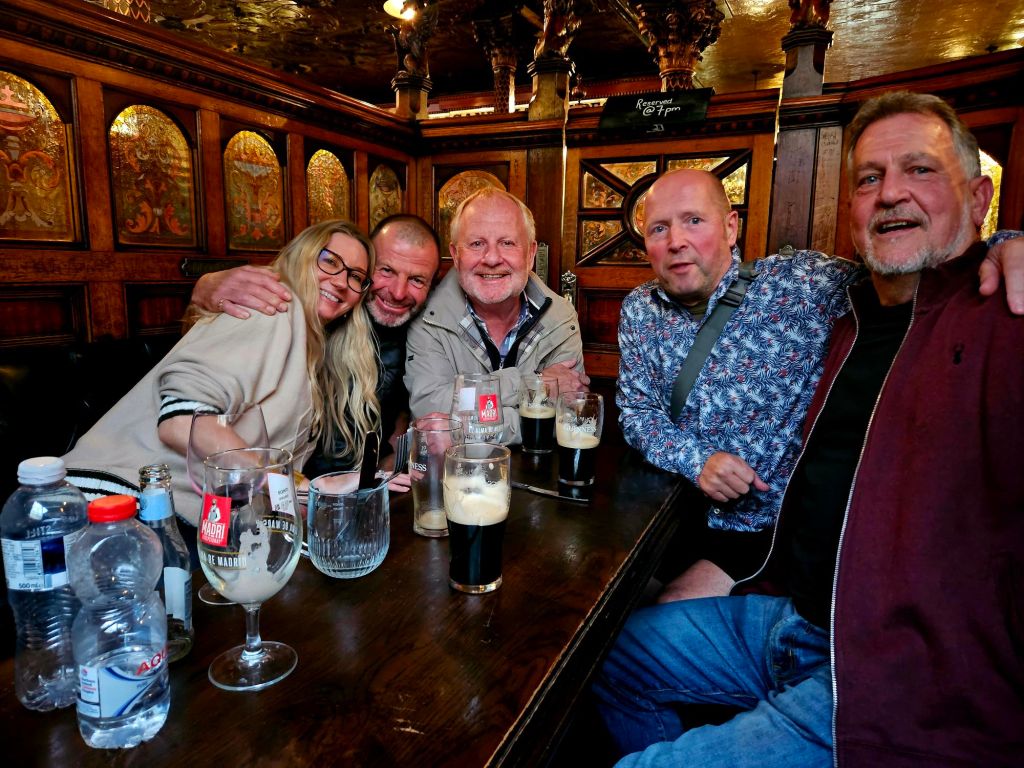
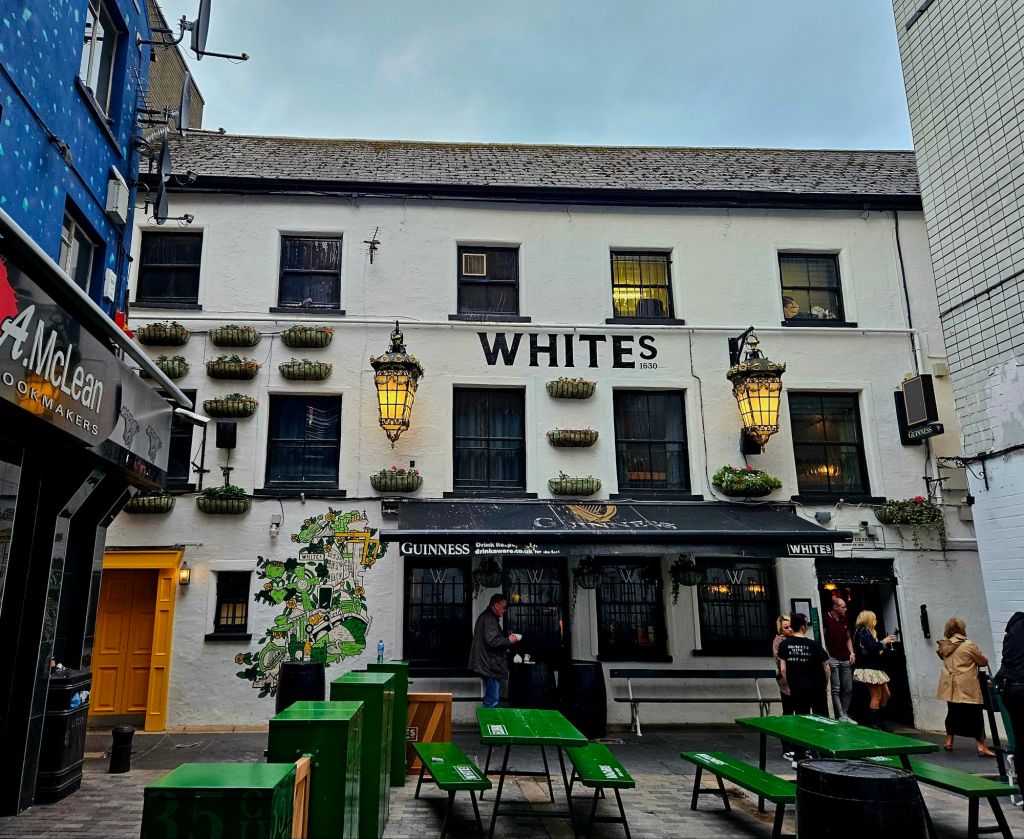
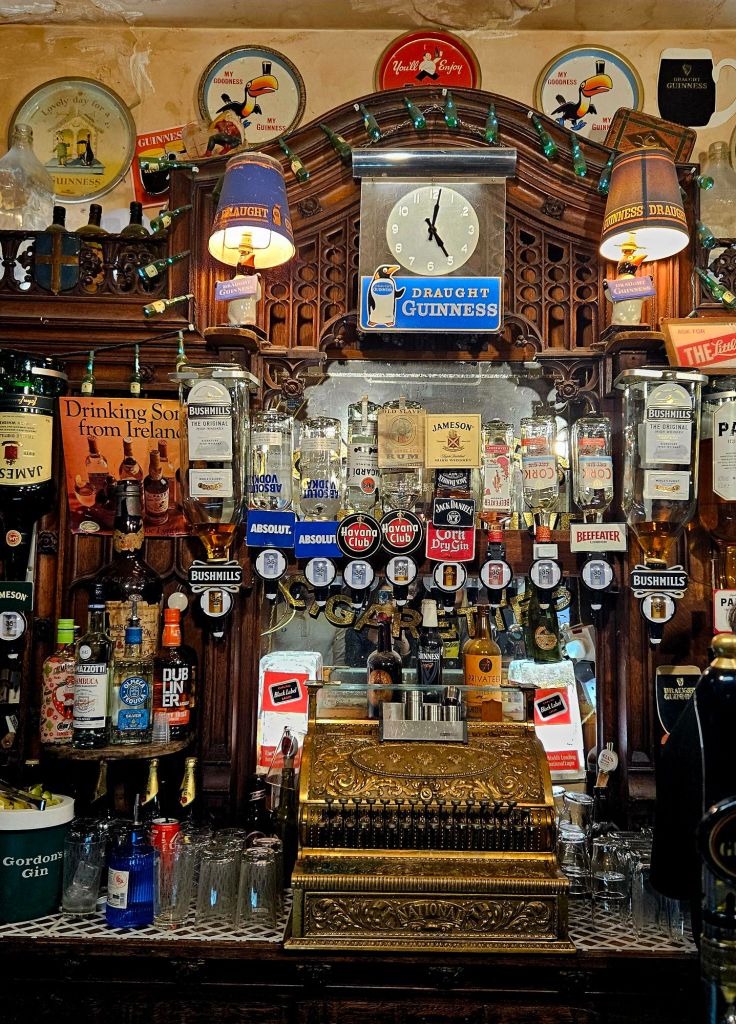
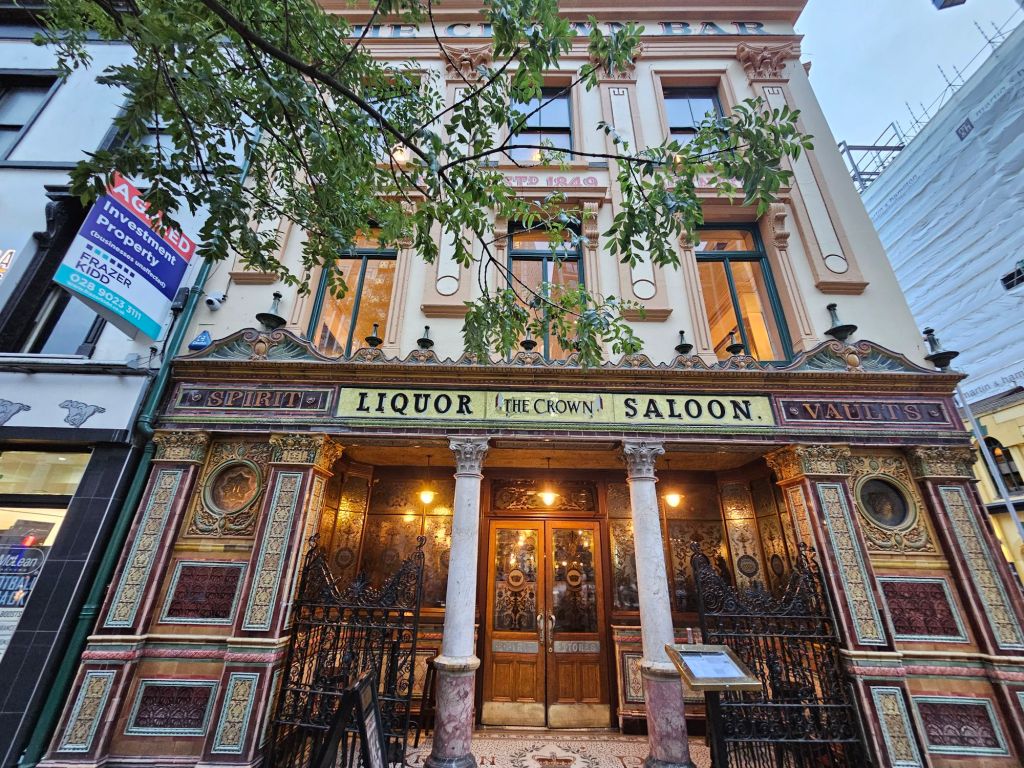
Just down from here is the Crown Liqour Saloon, which is Belfast’s most famous pub.
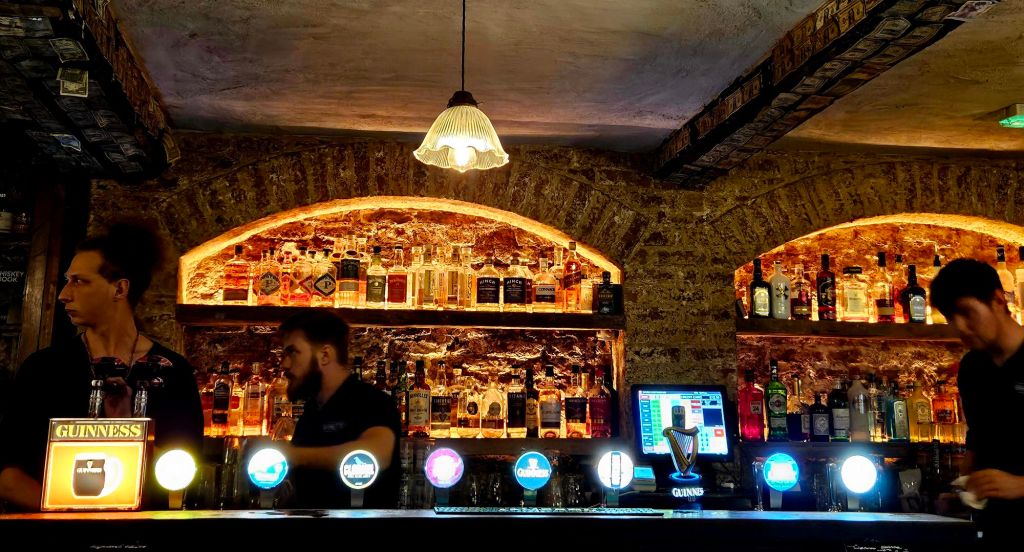
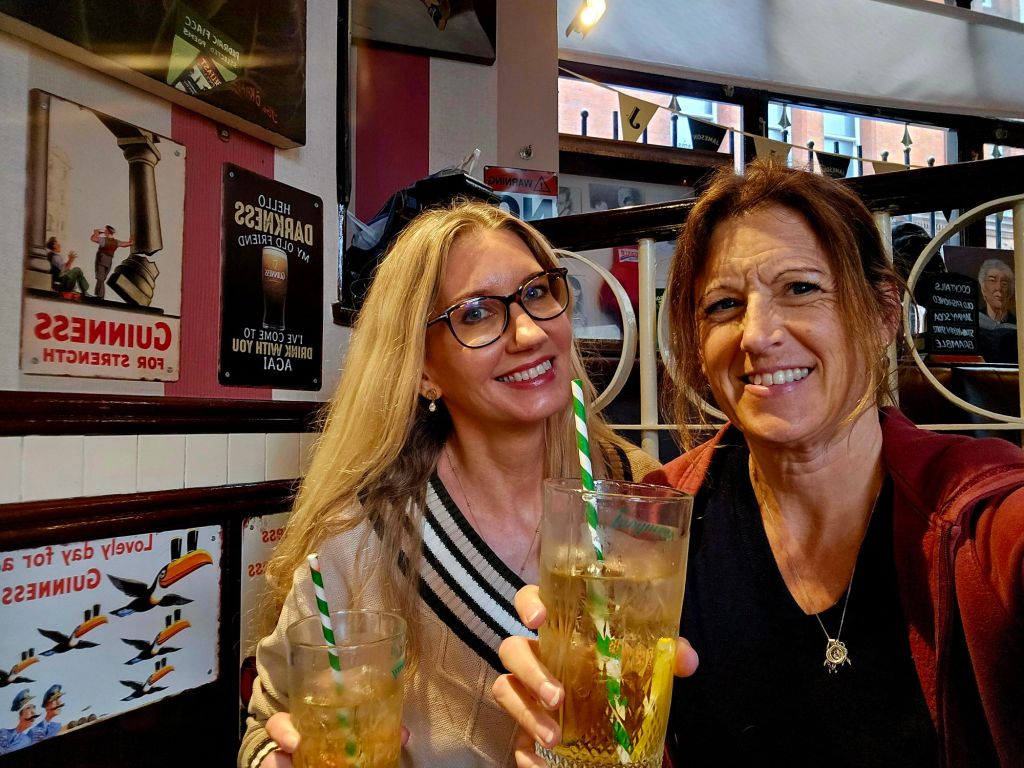
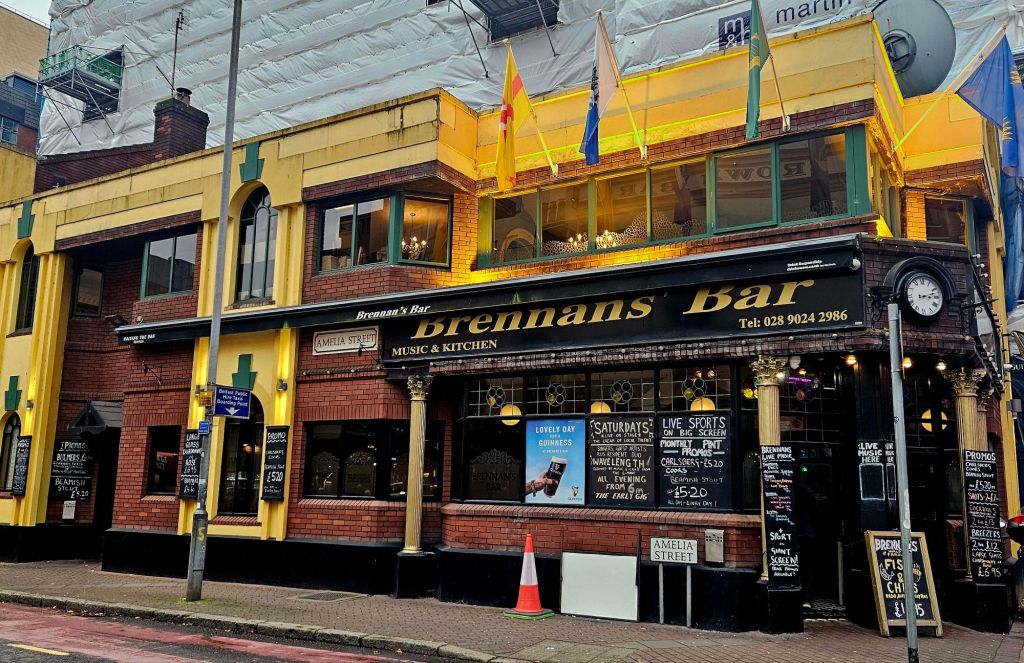
I went in the pub opposite, Brennans Bar.
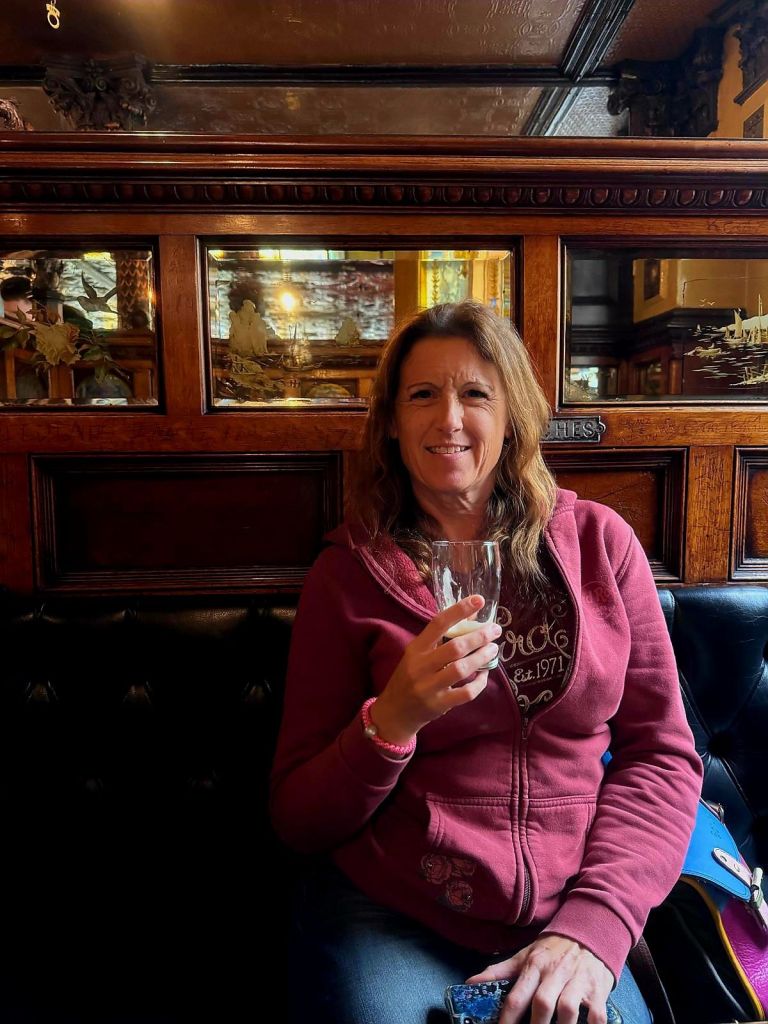
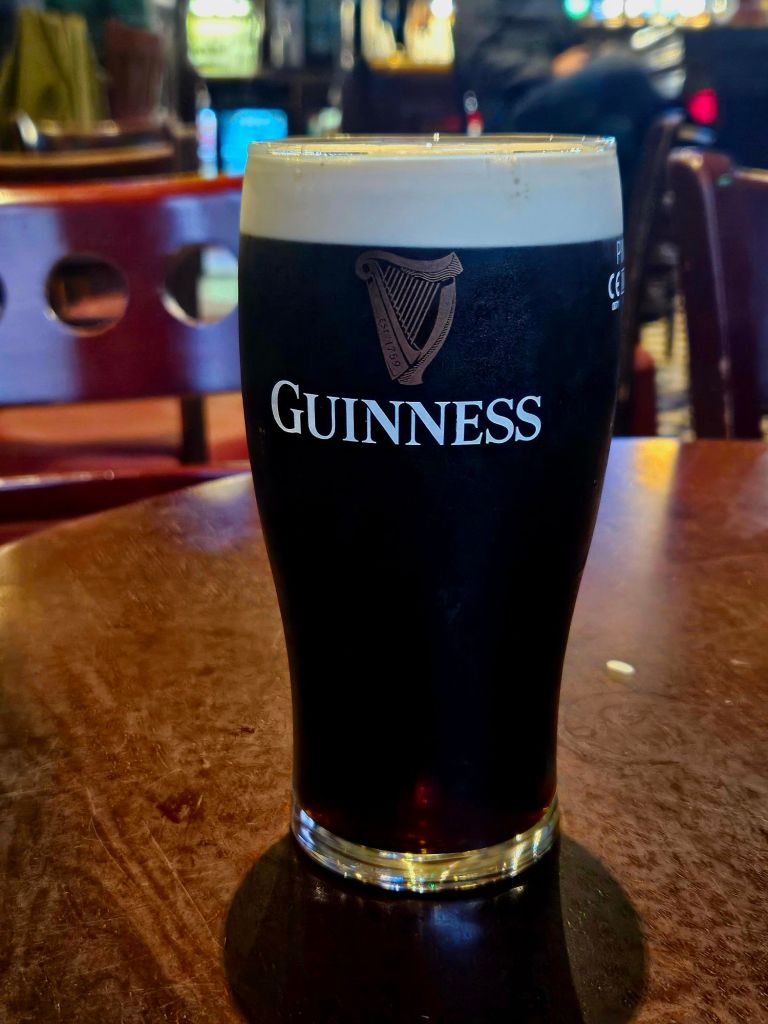
Being in Belfast, I thought I would try a Guiness. It was really nice and creamy. I dont drink Guiness that much, but it did seem like it was creamier than the pints back in England.
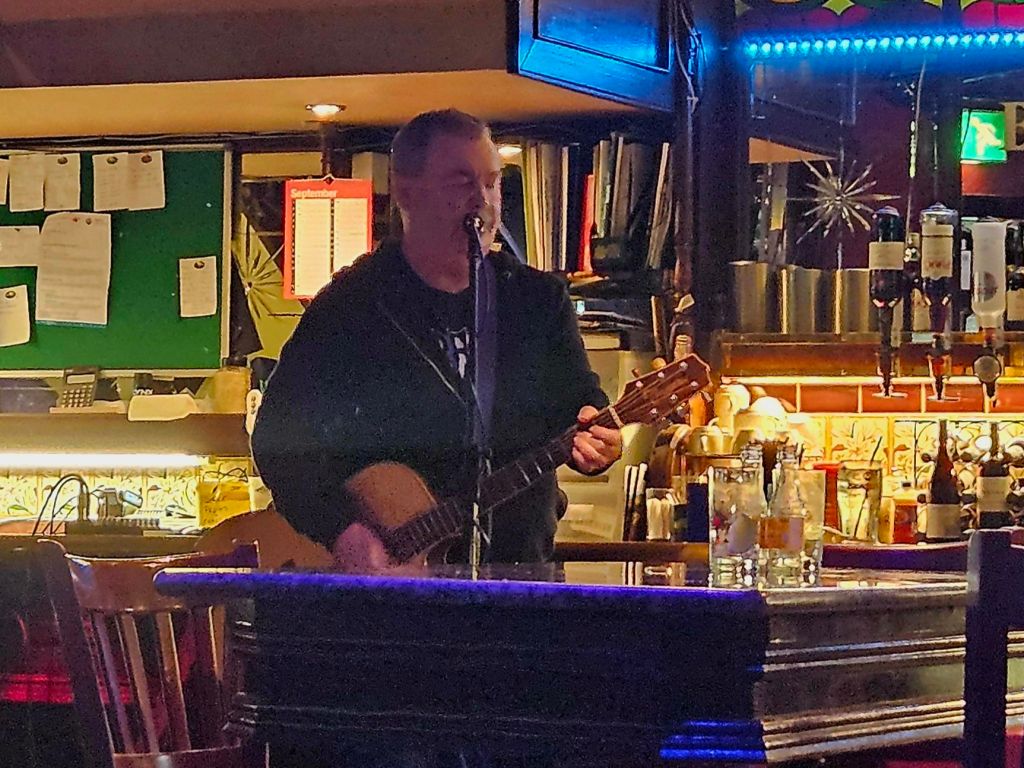
Part way through my pint, there was live music as entertainment. The majority of pubs in Belfast seem to have live music, which is great.
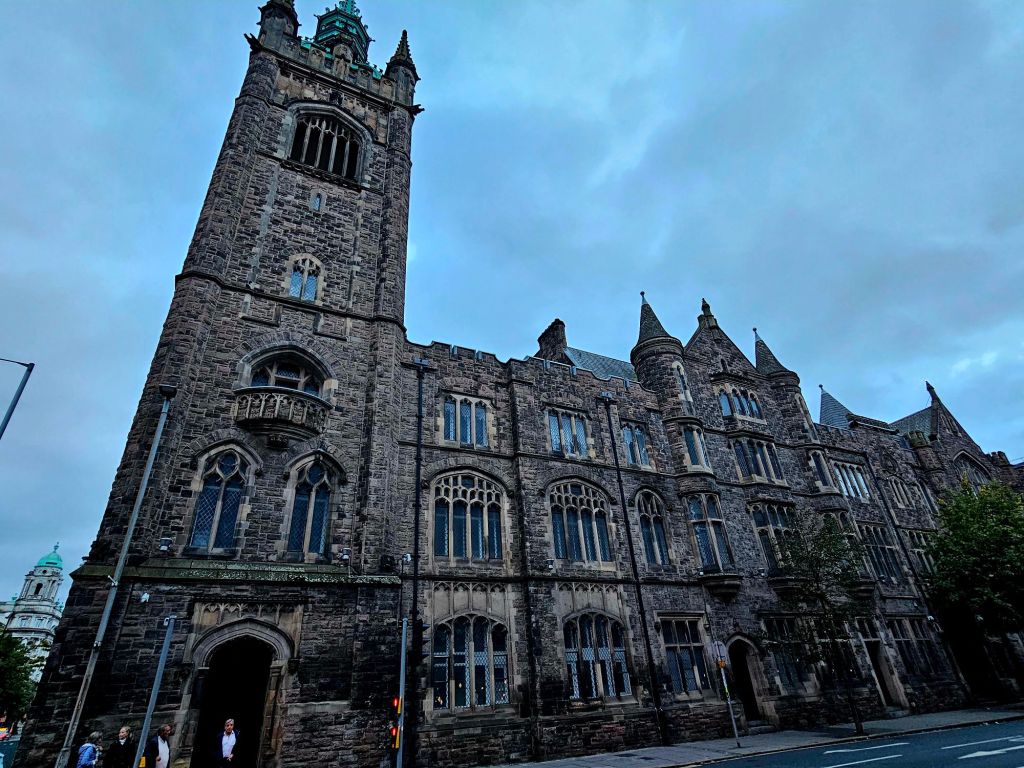
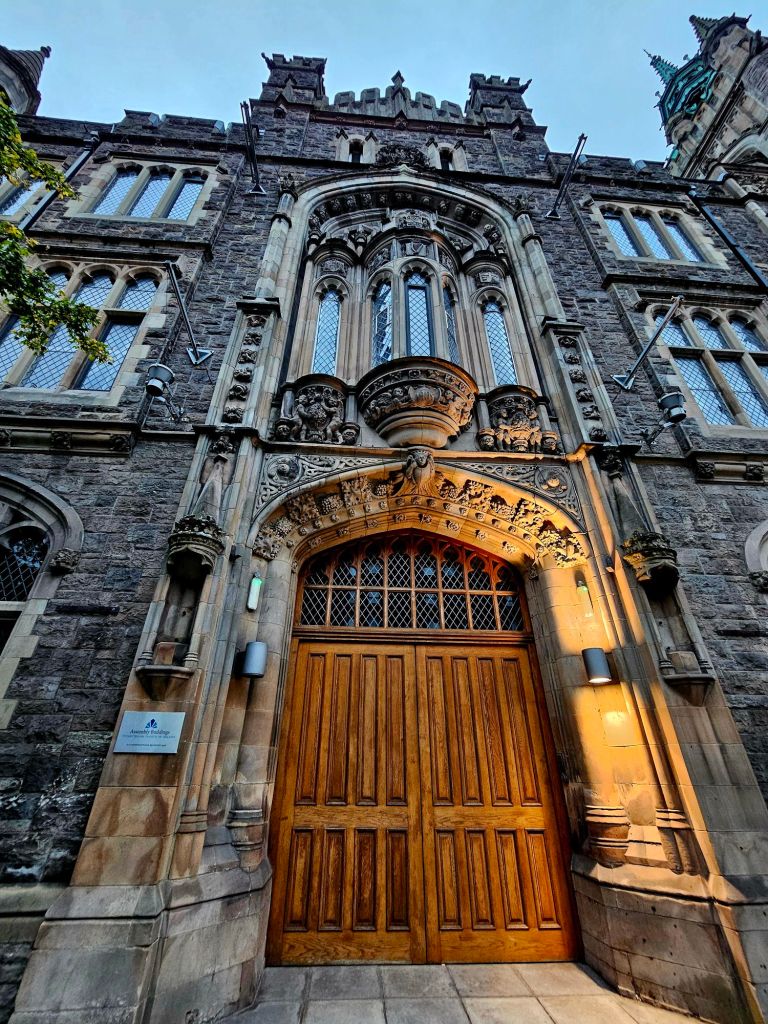
I walked a little further out to the Presbyterian Assembly Rooms, a building housing the headquarters for the Presbyterian Church. The contest for its design in 1899 caused a scandel as the winner was the church’s architect who actually devised the competition. The tower houses Belfasts only peal of 12 bells and is modelled on St Giles Cathedral in Edinburgh. The turret clock was the first in the British Isles to use electricity to drive its cogs and ring its bells.
The doorway arch and oriel window above are carved with biblical burning bushes and 14 angels.
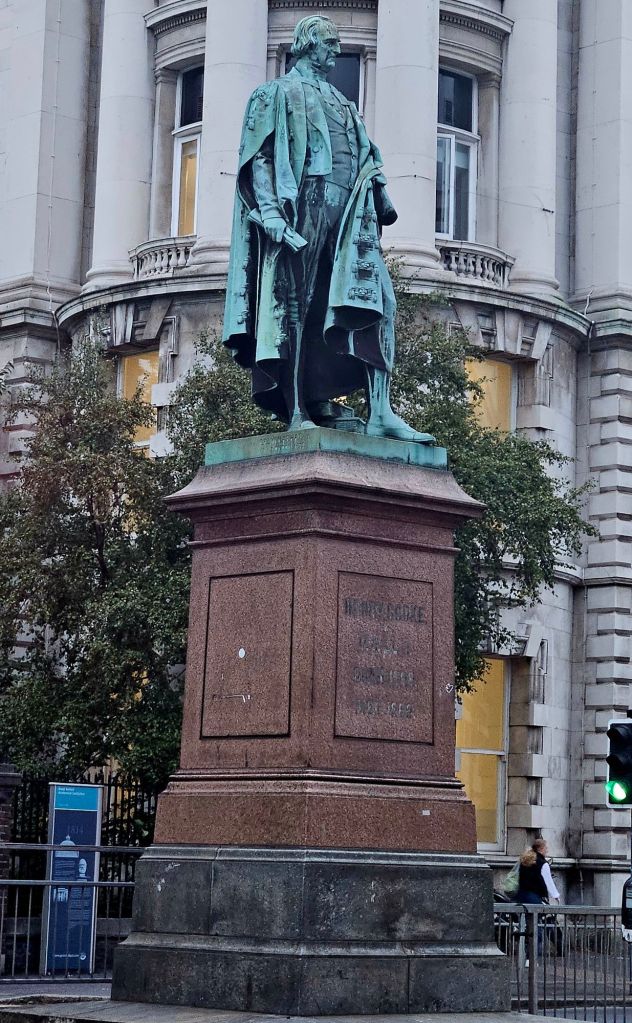
As I started to walk home, I passed the statue of the ‘Black Man’. This statue, built in 1876, is of Reverend Dr. Henry Cooke, who opposed political liberalism. The statue was originally black, but as it is made of copper, it has oxidised and turned green. The statue has his back to the Academy whose notions on equality and religious tolerance he desperately opposed.
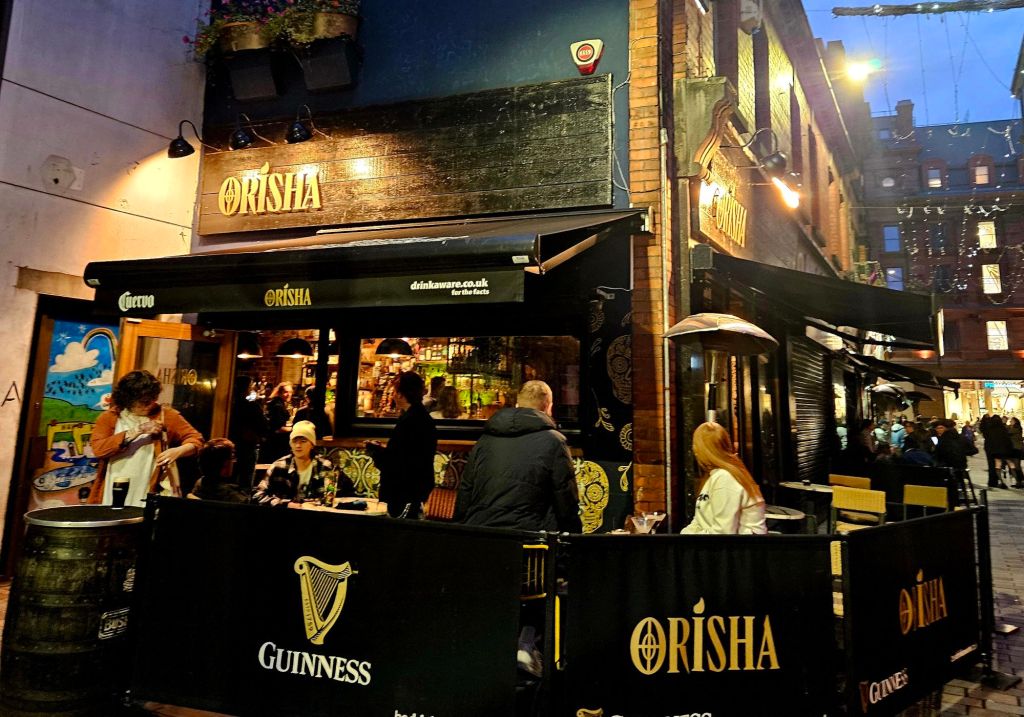
On the way back to mine, I stopped to have some pasta for dinner and another quick half of Guiness at the Orisha pub.
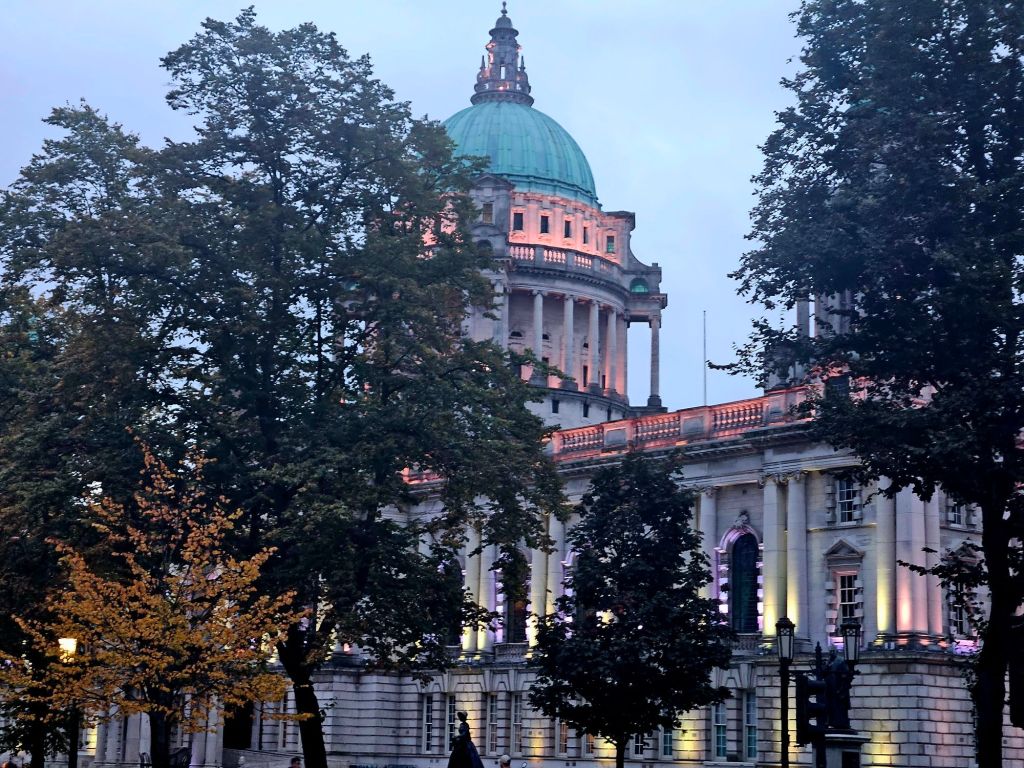
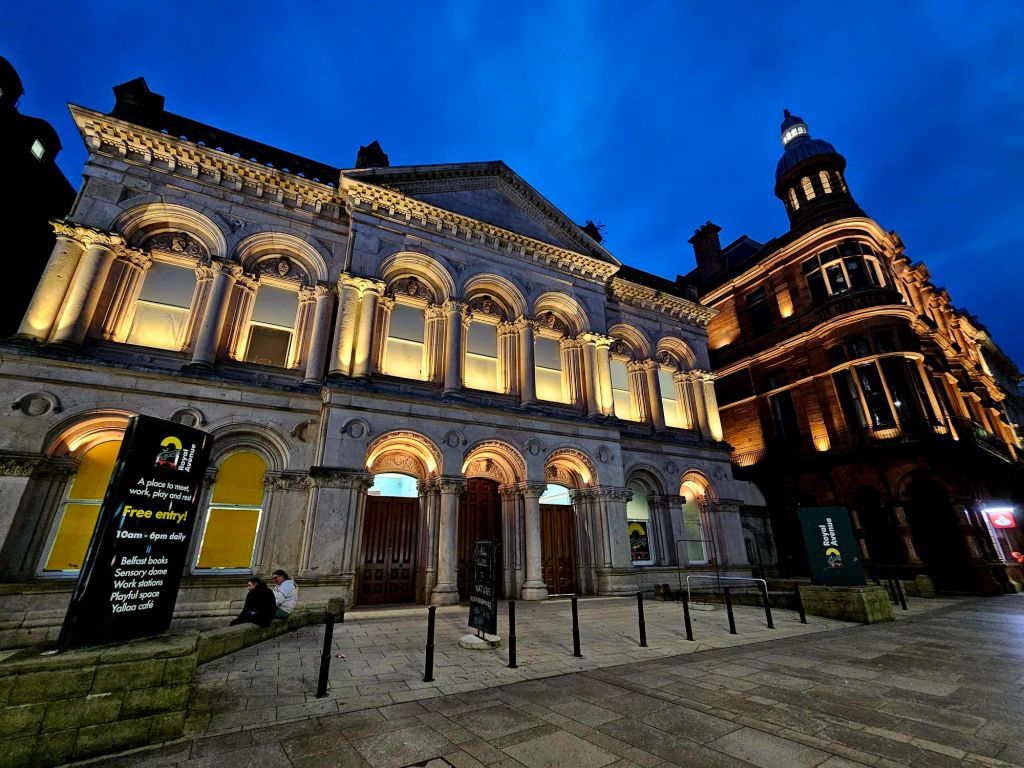
As night fell, some of the buildings were lit up and looked really nice.
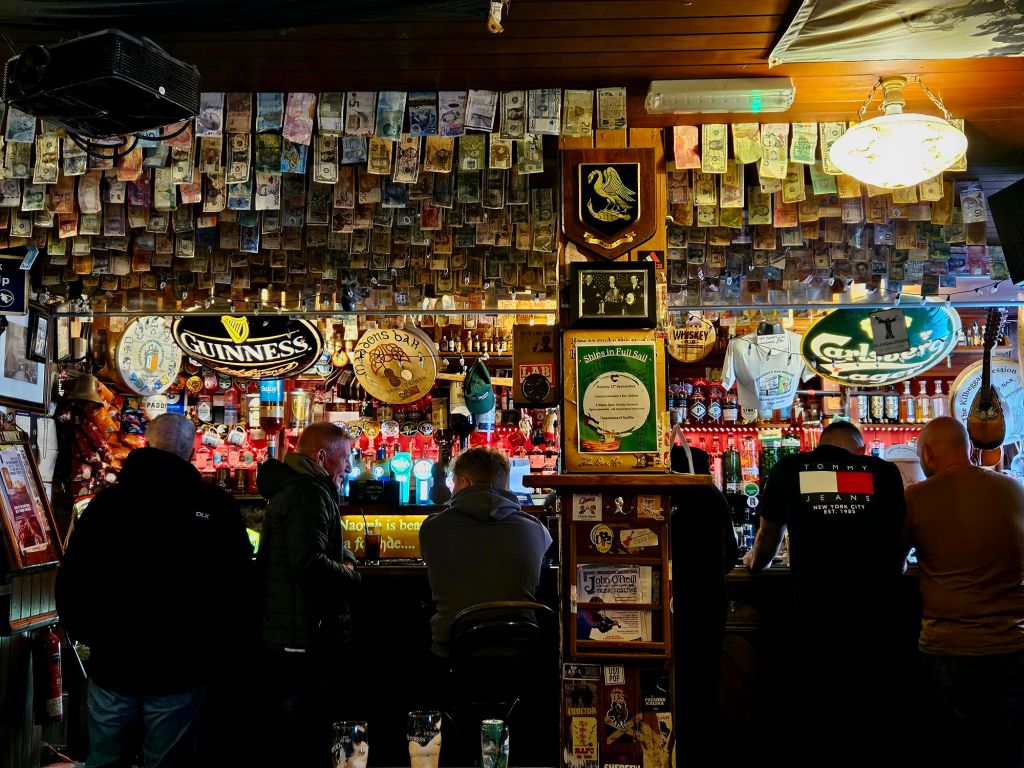
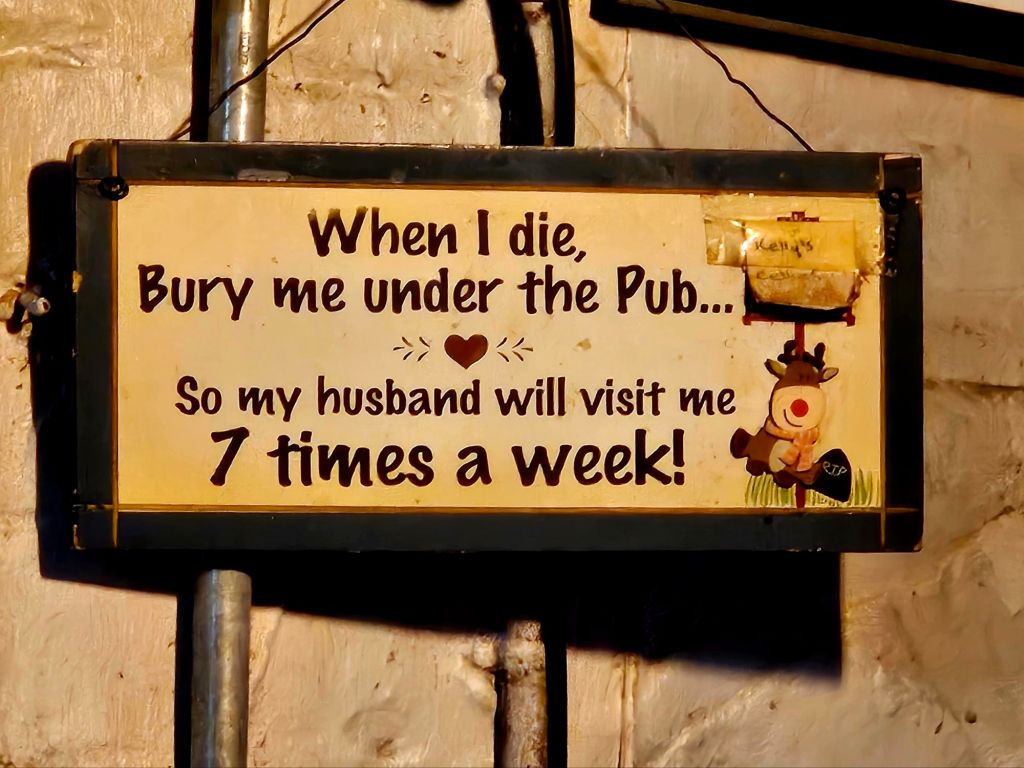
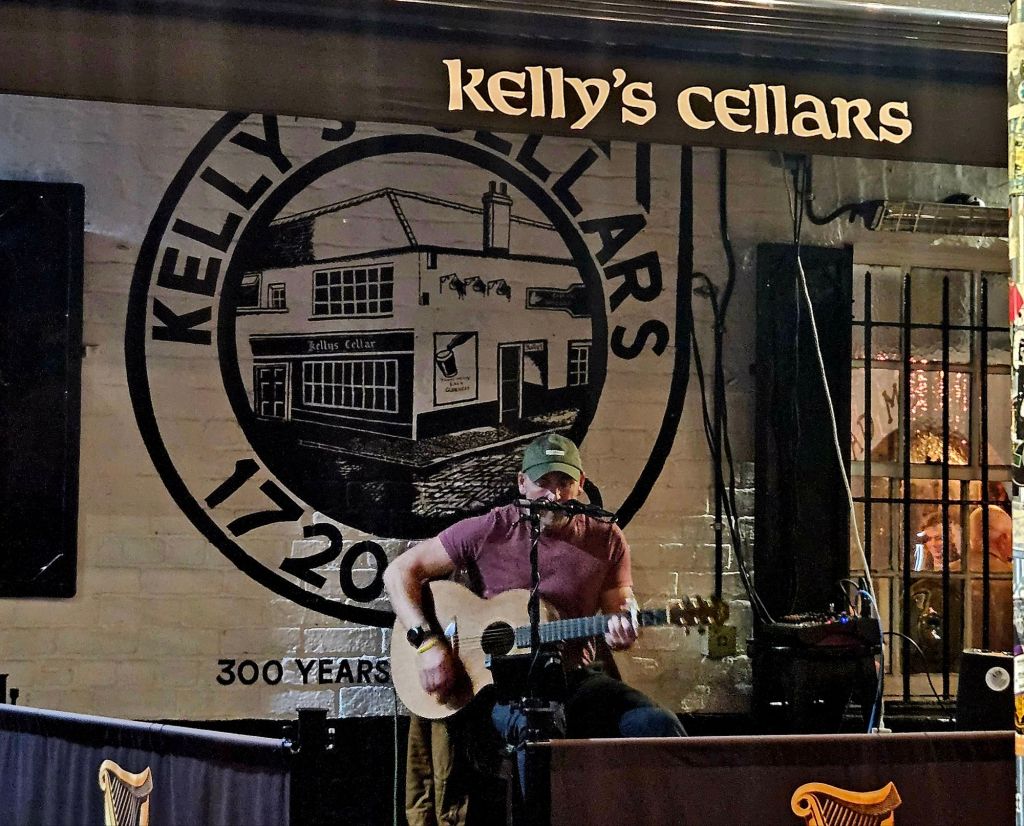
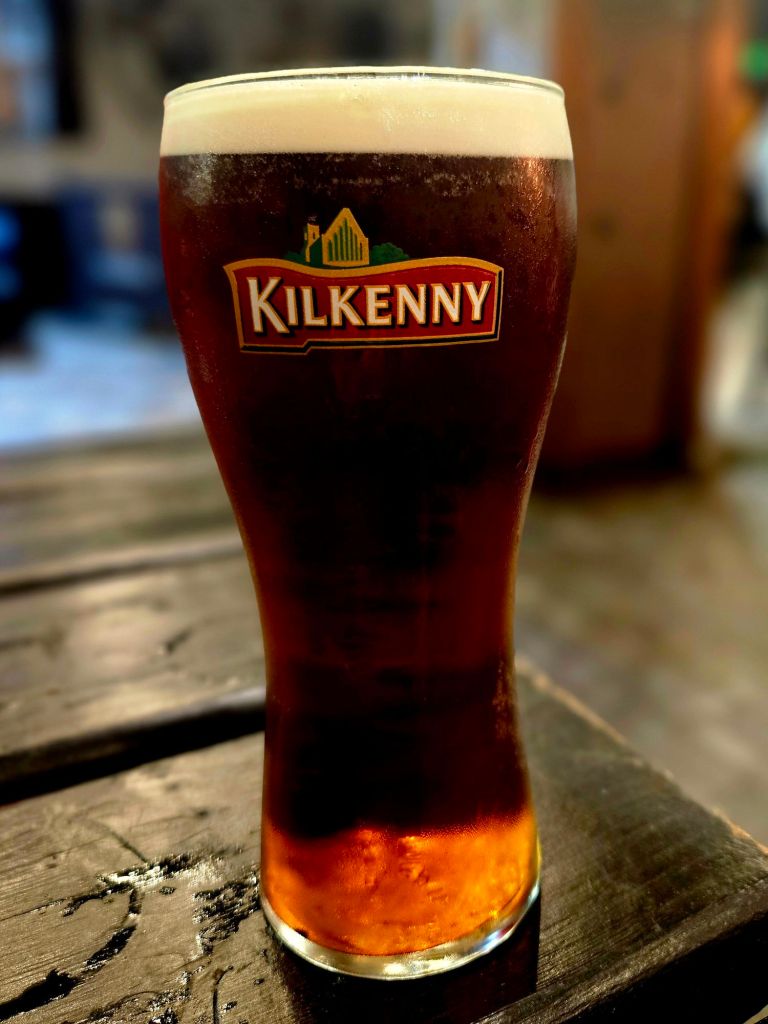
Right next door to our hotel is Kelly’s Cellars, a pub that opened in 1720. They also had live music, so I sat down and drank a pint of Kilkenny. I got chatting to a couple from Chicago who were about to run the Causeway half marathon on the Saturday.
And then it was a very short walk back to the hotel and bed.
Today was our last day in Barcelona. There were a couple of places that we hadn’t managed to pay a visit to that I really wanted to see. So I got up quite early and left around 8:45am to go and do a little solo sightseeing tour. I left the others in bed, although I think Mandy was up and about.
The first place I went to was Parròquia Basílica de Santa Maria del Pi, which was only a few minutes’ walk from the apartment. This is a 15th-century gothic church and was officially opened in June 1453. It was damaged in the 1428 earthquake and again in the bombings of 1714. And in 1936 a deliberate fire caused the church to be gutted. This church has the biggest rose window in Barcelona and houses the remains of many members of Barcelona’s nobility and the remains of the most Barcelonian of saints, Sant Josep Oriol, who was a priest at this famous church. It is believed that a pine forest once stood on this site, which is why the church is called ‘St Mary of the Pine’.
In the square by the church is a statue of the Catalan writer and poet Àngel Guimerà. He wrote a number of popular plays that helped in the revival of the Catalan language. He was nominated 23 times for the Nobel Prize in literature but never won it. He is buried at the Montjuic cemetery.
I carried on walking to the Plaça de Sant Felip Neri, which is presided over by the church of St. Felip Neri. The square is used as a playground for the school (to the left of the church) and has an octagonal fountain in it, symbolising life. Originally, the square was home to the Palace of Neri, built in 1752. During the Spanish Civil War, it became a makeshift orphanage. It was bombed, and 42 people died, most of whom were children. The square marks the entrance to the city’s Jewish quarter.
As I continued on, I came upon a beautiful mural – El Món Neix en Cada Besada, or the ‘Kisses’ mural. This is a photomosaic mural composed of four thousand individual ceramic tiles, each with a photograph submitted by locals. People were asked to submit photos that showed what living in freedom meant to them. The mural is 8m wide and almost 4m tall. It symbolises the universal themes of love and freedom. A quote appears alongside the mural, which was created to mark the 300th anniversary of the military seige of the city in 1714. It reads, “The sound of a kiss is not as loud as that of a cannon, but its echo lasts a great deal longer.”
Along the way, there was a lot of street art.
The next stop was the Roman Aqueduct. This used to be 11km long, bringing water into the city. The remaining part is only 20m in length and was only discovered in 1988. It was known to be in service in the 6th and early 7th century.
There were a lot of nice buildings and interesting streets around.
I walked past a memorial to Francesc Cambó. He was a wealthy conservative politician, lawyer, author, philanthropist, and Catalan nationalist. The statue was inauguration in 1997, 50 years after his death. There was some controversy as Francesc supported Franco during the Spanish Civil War.
Eventually, I came to the place that I had set out to visit – the Palau de la Música Catalana. This building is amazing and was built between 1905 and 1908. It is the only concert hall listed as a world heritage site by UNESCO. In the second photo below, you can see the original ticket box in the entrance pillar.
Outside of the building is a sculpture of a woman’s head known as ‘Carmela’. The sculpture is 4.5m tall and made from cast iron. The appearance of the face changes depending on your perspective and is associated with the concept of memory, compressing and representing it in its form.
It took me a bit of too-ing and fro-ing to get a ticket as I went in the wrong entrance to start with. But I managed to sort it out, and then I went straight up to the main hall.
The organ has more than 3,700 pipes and was made in 1908.
There are 18 muses surrounding the stage, all of them playing instruments from different parts of the world – representing music without frontiers.
The stained glass ceiling is stunning and symbolises the sun. It illuminates the whole concert hall.
The centrepiece is surrounded by the faces of 40 singers. This concert hall is the only auditorium in Europe that is illuminated during daylight hours entirely by natural light.
There are over 2,000 sculpted roses throughout the music hall, which is why the building is often referred to as the ‘stone garden.’
Looking down to the stage, there is a bust of the composer Josef Anselm Clave to the left. He was a key figure in Catalan popular music and in the social drive behind choral singing. And to the right is a bust of Ludwigvan Beethoven. So they represent both folk and classical music.
There are also sculptures of winged horses in honour of Pegasus, a symbol of high-flying imagination.
On my way up to the top tier of the music hall, I visited Lluis Millet Hall, which is a meeting area for music and society. It is made up of a number of mosaic columns, each one unique and representing nature.
The small hall itself contains several bronze busts of musicians related to the palace.
From the top tier, you had a great view out over the whole of the concert hall.
Even the stairways are very grand. The balustrades of the staircases, made from marble, are supported by unusual transparent yellow glass balusters. The undersides of the staircases are covered in tiles.
I was really glad that I made the effort to visit this concert hall.
On my way back to the flat, I still had quite a bit of time before we were meeting for lunch, so I decided to take a look inside the cathedral – Catedral de la Santa Creu i Santa Eulàlia.
The cathedral was built over 3 centuries, starting in 1298. It was built on the site of a former Romanesque chapel.
Inside, there are 25 side chapels.
The choir stalls are very regal and are where the Knights of the Golden Fleece gathered during the visit of Emperor Charles V of Germany in 1519. The coats of arms of the knights are pained on the backs of the choir seats.
There is also a pulpit, or high chair.
The highest point in the cathedral is 70m tall, up into the dome.
There are also some impressive stained glass windows.
The high altar is made of white marble and is around 3m long. Above the altar is the exhalation of the cross, which contains six angels and behind it,a seat carved from alabaster, dating back to the 14th century.
Beneath the high altar is the crypt of Saint Eulalia. Inside the crypt, there is a sarcophagus containing the remains of the Saint. Eulalia was a 13 year old Christian girl , a daughter of a noble family, who was persecuted by the Roman Emperor at the time who was trying to get rid of all Christians. Eulalia publicly confronted the governor over the persecution of Christians. The governor ordered Eulalia to be stripped and tortured – one torture for every year of her life. The tortures were: imprisonment in a tiny prison, being whipped, tearing her skin in strips, making her walk barefoot on burning embers, cutting off her breasts, rubbing her wounds with stones, branding her with cast iron, throwing boiling oil and molten.lead over her, subergong her in burning lime, locking her in a flea box, rolling her down a hill naked in a barrel full of knives, swords and glass and finally crucifying her. It is said that a snowstorm covered up her body. Her body was hidden in 713 during the Moorish invasion and only recovered in 878. In 1339, it was relocated to the sarcophagus in the crypt of the newly built Cathedral.
From the cathedral itself, you could walk out into the cloisters, a lovely and calm outside area with palm trees.
13 white geese are kept in this area, representing the 13 years that Saint Eulalia lived.
From the cathedral itself headed back to the apartment to finish packing and have a shower.
We were planning to go to the Colon Restaurant for lunch – you can’t book and have to queue. It is well known for its paella and is supposed to be the best in Barcelona. The restaurant was literally only a minute or twos walk from our front door, so Karen stood in the queue, and the rest of us quickly dropped the recycling rubbish off in the nearby recycling bins. The restaurant was due to open at 12:30pm, but it didn’t.
We were very hot waiting in the queue and Zoe wasn’t feeling great. At one point she fainted but luckily Mandy and I grabbed her and held her up while Karen managed to get a chair from the restaurant.
But we were one of the first in when it did open, and of course, we ordered paella. Zoe did go back to the apartment to have a lie down. The paella was delicious and very filling.
For dessert, we shared Crema Catalan, which is similar to creme brulee. The difference is in the way it is cooked, and the Crema Catalan is flavoured with lemon zest and cinnamon.
Following lunch, we went back to the apartment to collect our bags as we were planning to go to the main street for a coffee before getting our taxi. The cleaners were due around 230pm. So we got all our bits together, left the keys inside, and walked down the stairs. It was then Zoe realised she’d left her bag with her passport in the flat. Luckily, after a little while, I was able to get hold of the owner, and she said the cleaners were on their way so they could let us back in. They arrived around 330pm, and then we were on our way to the airport.
Check-in and security went smoothly, and we had a little wander around the shops – I bought some vermouth to bring home. There was one food outlet that was completely automated – you put in your food order, and a robot arm picked it and dispensed it. I didn’t fancy it, personally.
And soon it was time to board and head home. We ended up having 3 seats between 2 of us, which is always good. As we came into Gatwick, the sun was setting.
We arrived a little bit earlier than scheduled and then caught the train into Redhill and a taxi from there back to Mandys. Karen set off home, but Zoe and I stayed the night, and I then dropped Zoe off on the way home to Langley the next day.
We were up slightly earlier than normal and headed down to the main road for breakfast at one of the cafés. The only one that was open was Flor de Norte, where we had eaten previously. I had iced coffee and a croissant.
We then got a taxi to Park Guell. Our entry time on the tickets was 11:30am but we arrived about an hour early – but luckily they let us in. We started at the top of the park – that way, we didn’t have to walk uphill in the heat.
The park is on the southern slope of the Turo del Carmel Hill. It is one of the largest green spaces in Barcelona, covering 17 hectares. The area open to tourists covers only a small part of the whole park. Gaudí was hired by Eusebi Guell to create a miniature city for the wealthy in 1900, but the project was abandoned in 1914 as the plots of land did not sell. Eusebi Güell died in 1918, and his heirs sold the park to the Barcelona Council. It became a public park in 1926. In 1984, Park Güell became a UNESCO World Heritage site for its historical, architectural and artistic uniqueness.
We started at the low viaduct. This system was built to capture and filter rainwater that is then collected in tanks.
We walked up to the middle viaduct where the columns look like natural caves. These viaducts act as buttresses and retain the wall for the hill.
And then we were up at the top viaduct with good views over the city.
Our next stop was Casa Trias. This house is located on one of the only two plots ever sold. It was built between 1903 – 1906 for Guell’s lawyer. It is still a private residence and owned by the same family. Initially, the plan was to build 60 luxury homes in the park. Each house was only to occupy one sixth of its plot, and the rest would be garden to ensure that nature was respected and preserved.
From here, we wandered down the steps towards Gaudi’s house.
The Gaudi house museum was the original show home and was not actually designed by Gaudí. It was designed by Francesc Betenguer i Mestres. Francesc was employed by Gaudí in his workshop for 27 years and was considered Gaudi’s right-hand man. He died in 1914.
Gaudí moved into the house in 1906 with his father and niece. His father died later that year, and his nice passed away in 1912. Gaudí continued living in the house, supported by the Carmelite nuns until just before his death. He moved into his workshop at the Sagrada Familia in late 1925.
The house is now a museum, featuring some of Gaudi’s creations.
Gaudí was a perfectionist and paid attention to detail. His designs evolved over time, inspired by nature and leading to ergonomic designs.
From Gaudi’s house, we walked down a bit more, passing more artwork on the way.
And then we came to the centrepiece of the park – nature square. This is a huge terrace, surrounded on one side by the palm tree path.
Surrounding the square is an undulating bench decorated with a broken tile mosaic that looks a bit like a sea serpent. The design of the bench is such that it encourages social interaction.
This area was originally planned as an open-air theatre where shows could be watched from the surrounding terraces. Part of this square is dug into the rock, and the other part is supported by the columns in the hypostyle room. This area also doubles as a rainwater catchement area.
From the square, you could see Casa Larrard, a former mansion which, since 1931, has been a school. This house was already in situ when Guell bought the area, and he lived in it until his death.
You also got good views out over the main entrance of the park.
From the square, we walked through a passageway of twisted columns named the Laundrey Room Portico. It takes its name from one of the sculpted figures, as seen in the photo below. It looks like waves on top of slanted columns.
As we walked further, we saw a little bird in one of the holes in the wall.
And then we came to the Hypostyle Room. This has 86 columns supporting the square above and a beautiful tiled ceiling. It was originally intended as a market area. Some of the columns are inclined, which, once again, gives an undulating movement.
Then, we walked down the famous twin staircase past the 2.4 m long dragon / salamander mosaic sculpture. This is the most photographed image in the park. It was restored in 2007 but had one foot ‘bandaged’ when we saw it.
Further down is what looks like a serpents head and the emblem of Catalonia – the Senyera, a flag consisting of four red stripes on a yellow background.
And at the bottom of the staircase are some goblin like shapes.
Either side of the main entrance gates are the Porter’s lodge pavilions, otherwise known as ‘Hansel and Gretel’ houses. One of them was actually used as a porter lodge, with a waiting room and telephone booth, and is now a souvenir shop.
The other one is the porter’s residence, known as Casa del Guarda, and now houses a permanent exhibit of the Barcelona City History Museum.
This is a photo looking out on the square from inside the porter’s Lodge.
Shortly after leaving the park, we stopped for some cold drinks.
It was then a 20-minute walk to Casa Vicens, another of Gaudi’s buildings. This was the first important commission that Gaudi received, at age 30, and was created as a summer house for a stock market dealer and broker. It was built between 1883 and 1885 and has an oriental moorish influence.It is structured on four levels or floors: a basement to be used as a wine cellar and storage room; two floors with living spaces, the first with a kitchen, dining room and various other rooms, and the second with the bedrooms; and the attic used for the staff quarters.
There are a lot of mosaic tiles, more straight lines than curved lines, tiles featuring local yellow flowers (carnations), wrought iron balconies and grilles, and wrought iron gates featuring palmetto palmetto leaves. The tiles have a modular measurement of 15 cm. The house was declared a world heritage UNESCO site in 2005.
We were all flagging a bit now, so got a taxi back to the marina. As we were all hungry, we stopped at a seafront restaurant for some lunch – mussels and fries and more tomato bread.
Following lunch, we walked back to the apartment, past a shop selling some interesting pastries.
We had a bit of downtime at the apartment before having showers and getting ready to head out.
It was a nice walk through the small streets again.
We passed the Basílica dels Sants Màrtirs Just i Pastor. The building of this church began in 1342, and it wasn’t completed until 1574. It was built on the site of what was a small roman temple or sacred site. Tradition has always associated the basilica with the meeting place of the first Christians and is believed to be Barcelona’s oldest church. The square in front of the church was used as a marketplace in the film Perfume.
We came across a tapas restaurant that we all liked the look of – Lonja Tapas. It was pretty empty as we were early by Spanish standard, it was only around 730pm.
After dinner, we were still a bit early for the Flamenco show, so we stopped in Placa de Jaume Sabarties. The back of the Picasso Museum is on this square. Jaume Sabartés was a lifelong friend and associate of Picasso, and the numerous pieces he contributed from his collection of Picasso’s work formed the kernel of the museum’s collection.
We had a variety of cocktails from Bubita Sangria Bar. I had a vermouth.
It was now time to head to the Flamenco show, we were only a 10 minute walk away.
The venue was quite small and felt very authentic. We had front row seats, which was great, as you could really see how their feet moved. It was a brilliant show, and surprisingly, the main dancer was male, which I wasn’t expecting.
I can’t say I particularly enjoyed the singing, especially as I didn’t really understand what they were singing about, but the dancing was amazing.
On the way home, we passed Santa Maria del Mar church again, but this time from the front.
We stopped off in Plaça d’Emili Vilanova for a nightcap. This square is named after the writer Emili Vilanova, who wrote a number of books and plays between 1868 and 1905. Whilst we were sitting there, a group of children were setting off fireworks. It was quite worrying as some of them were very young and the older children were holding the fireworks in their hands – and sometimes the fireworks bounced off the surrounding buildings. Guests at other tables also seemed to be concerned. We later learnt that 24 June is the feast of St John the Baptist, which is why they were celebrating.
We walked through Sant Jaume Square again and past a horror museum.
And then it was time for a peppermint tea and bed.
After a late lunch, we wandered down to the main road, Passeig de Colon, to get a taxi to the Sagrada Familia. On the taxi drive we passed some interesting buildings.
We arrived at the Sagrada Familia a little bit early as we had booked tickets for 5pm. We were just going to sit down for a drink when we noticed that Hard Rock Cafe was right opposite us – so of course I had to go in and buy a t-shirt.
As we sat in the square awaiting our time slot, we took some photos.
We got chatting to the ladies who were sitting behind us, they had already been inside. They took a photo of us, too.
And then it was time to go in. The Temple Expiatori de la Sagrada Familia was Gaudi’s passion, and the details are amazing. The temple was commissioned by a conservative society that wished to build a temple as atonement for the city’s sins of modernity. Gaudí took over from the original architect, Francisco de Paula del Villar y Lorenzo, in 1883 and worked on its construction until his death in 1926. The temple Gaudí created was 95m long and 60m wide and able to seat over 13,000 people, with a central tower 172.5m above the transept. There would also be an additional 17 towers of 100m or more, representing the 12 Apostles, the Virgin Mary, the four Evangelists, and Jesus Christ. At Guadi’s death, only the crypt, the apse walls, one portal, and one tower had been completed.
As you walk into the building, you can see the Nativity Facade. This facade was completed before 1935 when work was halted due to the Spanish Civil War. Many of the plans for the temple were destroyed during this war. At the top of this Facade is a green Cyprus tree, providing refuge to white doves of peace.
The inside is just as dramatic. The plan is that of a Latin cross with five aisles. The ceiling is stunning and designed to look like trees and branches.
The nave with the stained glass windows was brilliant. As we went late afternoon, the sun was shining in through the orange and yellow windows, rather than the blue and green ones.
We walked through to the apse, the central vault of which is 60m high. An organ was installed in 2010 and has 1,492 pipes.
None of the interior surfaces are flat – they are made up of abstract shapes and smooth curves.
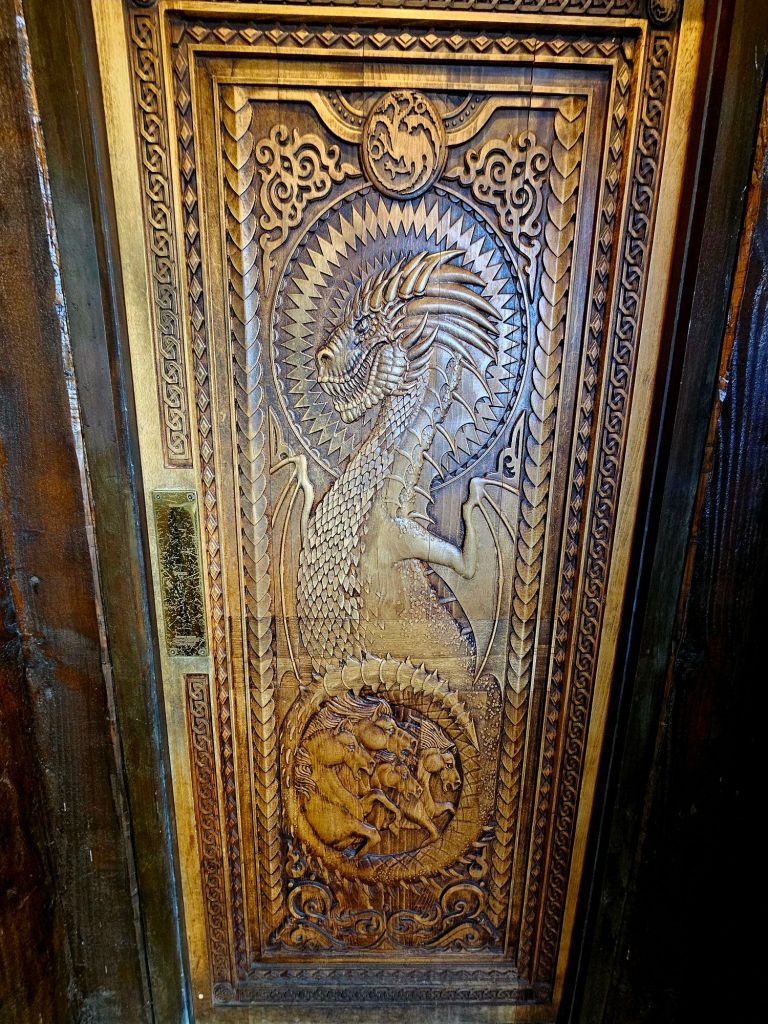
We had booked to go up the Passion tower, which has the towers of the apostles James, Bartholamew, Thomas and Philip surrounding it. We went to queue for the lift. As we went to queue for the lift, there was a very old wooden door.
The lift took us up to the top of Philip tower, we then walked across to Thomas tower and took in the views before walking down.
From the Passion Facade, you could look out over some of the lower spires of the temple. These have chalacises with bunches of grapes and sheaves of wheat on top of them.
There were also other shapes and mosaics dotted around. And a shiny tower.
The top of the towers representing the Apostles have communion hosts on top of them.
As we walked down, you could take photos outside of the ‘windows’. The one below has the Torre Glories in the background. This is a 38-story cucumber shaped building, mainly housing offices, but with a viewing platform on the top floors. The lift covers 30 floors in 34 seconds.
From the viewing bridge between the towers, you could see the unfinished Gloria Facade. The central spire representing Jesus will have a cross at the top and will be 172.5m tall in total. The central spire is surrounded by towers representing the 4 Evangelists, which have their traditional sculptures on the top of the towers – winged bull for St Luke, winged man for St Matthew, winged lion for St Mark and an eagle for St John. The completion of the Jesus Christ spire will make the Sagrada Familia the tallest church in the world.
From the viewing bridge, you could get some nice views over the city, one with Montjuic Hill in the background.
I took some moe photos of the unfinished Gloria Facade as we walked down. This facade will be the largest of the three and will represent ascension to God but will also depict various scenes such as the seven deadly sins and the seven virtues.
This is the glory facade from the inside. This facade will be the main entrance to the building once it is completed.
Initially, the spiral staircase we walked down felt quite safe. But after a while, it became very narrow, and one side was completely open.
Back on firm footing, I took some more photos of the inside of the building.
We walked around to the crypt, which is the oldest part of the building and is where Gaudí is buried. Gaudí was hit by a tram on 7 June 1926 and died 3 days later in hospital. He never married or had children and devoted his life to his work. It is also believed that he may have been colourblind.
We walked out via the Passion Facade. Here, the doors bear the inscription of the “Our Father” in Catalan.
The Passion Facade is based on Christ’s last days and his death and resurrection. It was officially completed in 2018. The main series of sculptures include the Last Supper, the stations of the cross, and Christ’s burial. It is harsh and has lots of straight lines, resembling the bones of a skeleton and is intended to represent the sins of man.
At the front of this facade is a sculpture of Jesus being whipped.
There is a very old building right next to the church, which i think could have been Gaudi’s workshop.
As we walked away from the building, I took a few more photos. From this angle, you could just see the star at the top of the Virgin Mary Tower. This was completed in 2023.
The building of Sagrada Familia initially relied solely on private donations. Even today, it does not receive any funding from government or official church sources, but the ticket sales help to fund the work. It was consecrated as a church in 2010.
As we walked away from the church, we came across some street art portraying Gaudí himself.
We decided to go and visit Gaudi’s other buildings in the area and on the way we passed a beautiful neogothic church – Sant Francesc de Sales. This building used to be a convent housing Salesian nuns, but they left in 1936. It was originally built between 1877 and 1885 and was later converted into a parish church.
We also walked past the Palau Montaner, which is one of the few remaining mansions in this area. It now houses the central government delegation in Barcelona.
We passed a couple of other nice buildings, but I don’t know what they were.
And, at last, we reached Gaudi’s La Pedra, or Casa Mila. This building has 33 balconies and was built between 1906 and 1912 as a combined apartment and office block. The name La Pedra means ‘the quarry’ and reflects the uneven grey stone of the building. Mila is the name of the businessman who commissioned the building.
The outside looks like a cliff face sculpted by waves and wind, and the wrought iron balconies look like seaweed washed up on the shore. Gaudí reused waste glass and ceramics in decorating parts of the building.
There were some artistic lampposts on the street, too, that looked like they had been inspired by Gaudí.
The next Gaudí building we visited was Casa Batlló, which was built between 1904 and 1906. Again, there are very few straight lines and is inspired by marine life with blue, mauve and green tiles.
The balconies look like the bony jaws of some strange animal, and the nickname for the building is Casa dels ossos – the house of bones.
We were quite tired, so headed back to the marina via taxi. We saw the El Cap de Barcelona sculpture again. This was designed by an American artist and was designed for the 1992 Olympic games. It is 15m tall and looks different when viewed from different angles.
As we headed home, we walked past a shop selling Picasso art on clothes, etc. One of the paintings was a copy of one of his first paintings using cubism – Les Demoiselles d’Avignon,”
We ended up back at Placa Reial and stopped at L’ambos Mundos for dinner.
We had lots of fruit salad and yoghurt left over, so we started the day with breakfast in the apartment.
We planned to do a bit of shopping, so we decided to head over to the El Born and Ribera area. On the way, we walked through Sant Jaume Square again and past the city hall and the Generalitat de Catalunya.
We also walked under Bishops Bridge again.
And past the amazing Cathedral.
We were all a little bit peckish, so we stopped at Cafe d’en Victor first for coffee and churros.
I also took another photo of the Roman Temple.
After refreshments, we headed off shopping, down the side streets, to El Born.
We passed a small chapel, the Capella d’en Marcús. This was built in 1166 and is one of the oldest chapels in Barcelona. It served as a refuge for travellers and also as a hospital. It was built on the ancient Roman road that led to France. The apse of the church was removed in the 18th century.
The trees in some of the streets were huge and went from one side of the road to the other.
After a bit more walking, we came across the Arc de Triomf. This is a memorial arch and was built as the main access gate for the 1888 Barcelona World Fair which was held in the Parc de la Ciutadella. The two pillars of the arch feature bats carved in stone, which were the emblem of King Jaume I, who ruled over a period of prosperity in Barcelona. At the top of the arch, the shields of the 49 Spanish provinces are presided over by the coat of arms of the city of Barcelona.
Along the side of the avenue are the courts of justice and some beautiful lampposts.
There is a monument at the end of the avenue, Monument a Rius i Taulet. This is dedicated to Francisco de Paula Rius y Taulet, who was a Spanish lawyer and politician. He was mayor of Barcelona in four different non-consecutive periods during the Restoration between 1858 and 1889. He promoted and supported the 1888 Universal Exposition. He died in 1890, leaving the government in heavy debt.
As we walked back to the shopping area, we passed the Laboratori de Natura. This is part of the Museum of Natural Sciences and was founded in 1882.
We also passed the Hivernacle, a greenhouse which is part of the Parc de la Ciutadella. It is an example of the iron architecture that took root in Barcelona in the late nineteenth century.
We continued through the side streets of the Ribera area and picked up a few more souvenirs.
We came across the Santa Maria del Mar church. The current church was built between 1329 and 1383, although it is believed that a church stood here as far back as 998 . It is built in the gothic style that was popular at the time and local parishioners helped build it. The total width of the church is 100 medieval feet, which is also equal to the maximum height of the building.
We had been on the search for somewhere to watch some authentic Flamenco dancing, and we came across a lovely place that had Flamenco shows – which we then booked for the following evening.
We saw a large sculpture, which was the entrance to the Moco museum, an innovative art centre. We didn’t go in.
As we headed towards home, we came across the lliures, feministes, i rebels mural. This was created by 8M, a feminist organisation who marched on 8th March, International Women’s Day, and whose motto is to be free, alive, feminist, combative, and rebellious. It features feminist rebels.
There was another mural next to it with dates and years, but I couldn’t find any information on it.
We passed a shop that had lots of different well-known people, squatting to take a dump, as small toys that you could buy.
We almost missed the Sinagoga Shlomo ben Adret, which is believed to be the oldest synagouge in Spain and one of the oldest in Europe, dating back to the 3rd century. Shlomo ben Adret was the officiating rabbi of this synagogue for about 50 years during the late 13th century. The synagouge is not used for daily prayers but is used to celebrate festivities. It was hard to get a photo because of the narrow streets.
We walked back through Placa Reial to get home and drop off our shopping.
Back at the apartment, we had some salad as a late lunch, which was very tasty before setting off for our visit to the Sagrada Familia.
We had a pretty lazy morning with a breakfast of fruit and yoghurt in the apartment. We bought some coffee as the apartment has a coffee machine – but it just tasted like flavoured water.
We all got ready for a beach day with our towels, books, and water.
On the way down to the Marina, we walked past the Basilica of Our Lady of Mercy. Our Lady of Mercy has been the patron saint of the city of Barcelona since 1687. The history of the Basilica dates back to medieval times when the inhabitants of Barcelona asked the Virgin Mary to protect them from the plague and pirates. Legend has it that the Virgin appeared to a merchant, Sant Pere Nolasc, and asked him to build a church in her honour.
Opposite the church is the Neptune Fountain, which originally stood in Bacelona harbour in 1826. In 1912, the fountain was moved to the Labrial Gardens on Montjuïc where it stayed until 1975. In 1983, after eight years in storage, it was finally transferred to its current location.
A lot of the pavements in Barcelona have a flower on them. The “flower of Barcelona” refers to a distinctive, four-petal flower-shaped design on a type of hydraulic cement tile called a “panot”. These tiles have become a symbol of the city. While there are other panot designs, the flower panot is the most well-known and iconic.
Before we went to the beach, we stopped for a soft drink at one of the cafes so we could use their toilets.
At the beach, we hired two umbrellas and four sunbeds, which the guys installed for us – it was quite windy, so we didn’t want the umbrellas to blow away.
Barcelonetta Beach is one of the oldest and most traditional beaches in Barcelona and was artificially created as part of the city’s preparations for the 1992 Olympic Games. it is 1.2km long.
Mandy and I went for a swim. The water was still quite cold, about 14⁰.
It was a very relaxing day, swimming and sunbathing. The beach was very busy and there were a few people who kept us entertained.
A lady came around offering us a massage, and Mandy took her up on the offer.
After a little more swimming and sunbathing, it was time for a beer.
We stayed on the beach until late afternoon and then wandered back up to the marina. By this time, we were all quite hungry, so we stopped at a restaurant – La Gavina for some food and drinks. For starters we had tuna tartare salad and a prawn and avocado salad. And for mains, I had a delicious gilthead bream. The food was amazing.
After all that delicious food, we didn’t feel like doing much, so we just moved to a table outside for drinks. We sat and chatted for a few more hours.
On the way home, we walked past the sculptures again.
Back at the apartment we had some drinks and we had our own little party until 1am.
The photo below is the view from our balcony. Most of the shutters down all of the streets have graffiti or street art on them.
We didn’t set any alarms and just got up when we were all awake.
We didn’t really have any food for breakfast in the apartment, so we headed out in the search for food. Before we set off, we took some more photos outside the apartment.
We walked through Placa de George Orwell. The writer Eric Arthur Blair lived in Barcelona between 1936 and 1937. It contains a surrealist monument.
We continued walking down to the main road, Passage de Colon, and stopped at a cafe for some breakfast. I had churros and chocolate with an iced coffee, and it was delicious.
Whilst we were eating breakfast, someone had a seizure on the street, not that far from where we were sitting, so it became quite busy with ambulances and paramedics.
There were some modern sculptures along the main street.
We crossed over a strange looking bridge to get over to the port side – we named it tge cling film bridge.
Just over the bridge, there was a Japanese fair going on. We decided not to go in and walked around the harbour.
You could look back to the Capitania General d’Espanya. This used to be a convent but has been used by the military since 1843. It is the residence and workplace of the captains general of Catalonia.
There was also a huge building housing the museum of the history of Catalonia. The museum is based in what used to be old trading warehouses and the sole building of Barcelona’s old industrial port that is still standing.
From here, we walked around the harbour to San Sebastian Tower, which is where the cable car goes from. The tower is 78.4m tall. We all purchased return tickets and then got the lift to the top of the tower. We didn’t have to wait too long for the cable car to arrive.
The cable car took us from Port Vuel up to Miramar on Montjuic, a distance of around 1.3km. According to the sign in the car, it can hold 20 people, but we had 15 in ours, and that seemed quite crowded. The journey takes around 7 minutes.
We jostled around a bit to get some good photos out of the windows.
The cable car was designed in 1926 but not completed until 1931. During the Civil War, the cable car was closed, the cables were removed, and the towers became a strategic place for the defence of the port of Barcelona.
At the top, we decided to have a drink on the terrace of the cafeteria Miramar.
We had a wander round the Costa I Llobera Gardens. There are various statues in the gardens and gravel paths to walk along.
The trees are also a bit strange, with the roots looking almost like lava formations.
We walked around the gardens for a bit and then decided to walk to get the next cable car all the way to the top of Montjuic. It was a gradual hill up to the Teleferic Montjuic where we caught the next cable car.
This cable car climbs 84m along a cable line of 752m. It has a stop in the middle, which you can get off at on the way down to see the views (we didn’t).
At the top of the hill is Montjuic castle, which sits 173m above sea level. This is an old military fortress, with roots dating back to 1640. The original fort was demolished in 1751, and the current structure was erected.
The castle is infamous in Catalan history because of its role in the civil war from 1936 to 1939, when both sides of the conflict imprisoned, tortured, and shot political prisoners at Montjuic.
We didn’t want to pay to get into the castle, so we had a wander round at the top.
The castle was fortified with 120 cannons, some of which you can still see today.
We then caught the cable car back down to the start, over the park.
By this time, we were all a bit hungry, so we stopped off at Salt Terrace for some food – salad and chips. This cafe overlooks the Olympic swimming and diving pools, which were built for the 1992 Olympic games.
The Olympic stadium was not too far away, so we decided to pay it a visit.
Barcelona put in several bids to host the Olympics in the 1920s. The stadium was originally built in 1927 and hosted the 1929 World Fair. It was thought that the 1936 Olympics would be held in Barcelona, but it ended up being hosted by Berlin. And in 1936 the Spanish civil war started, and the stadium became a shelter for refugees.
The stadium was almost demolished in the 1970s but ended up being completely renovated for the 1992 games. It was renamed as the Estadi Olimpic Lluis Companys after the president of the Catalan government, who was executed by the François regime by firing squad at Montjuic castle.
The Olympic stadium looks very impressive from the front.
On the other side of the stadium is Palau Sant Jordi, which is an indoor sporting arena and designed by a Japanese architect.
The views out over Placa d’Europa were also very impressive.
Our next stop was the National Art Museum of Catalonia, but on the way, we came across the Francesc Ferrer i Guàrdia monument. Francesc Ferrer was a freethinker and founder of the modern school. In 1909, he was shot in Montjuic after being convicted without any evidence by a military court as the instigator of Tragic Week – a violent uprising that took place between 26 July to 1 August 1909. The week was marked by widespread destruction of religious buildings and symbols and ultimately resulted in a brutal crackdown by the state.
The building that houses the National Art Museum of Catalan (NAMC) is really beautiful. It is housed in the Palau Nacional, a huge Italian-style building dating to 1929.
The Palau Nacional is a huge building, over 50,000 square metres, and has a great dome inspired by St. Peter’s Basilica in the Vatican City in Rome, flanked by two smaller domes, and four towers modelled on Santiago de Compostela Cathedral, stand at the corners of Oval Hall.
The views down into the city were amazing.
Unfortunately, the Montjuic Fountain was not working as renovations were being carried out. When it does work, it sprays 700 gallons of water a second through 3620 jets to create its effect. The highest water spout is 170 feet.
Just by the Fountain, there were some traditional dancers dancing a Catalan dance known as Sardana. The dance is a symbol of unity and pride.
As we walked back into the city centre, we walked past the Venitian Towers. The towers are each 47m high and were built in 1929. They serve an ornamental function and mark the entrance to the exhibition district. There seemed to be an exhibition of old buses going on whilst we were there.
Placa d’Espanya is one of the city’s biggest squares and a junction of several major thoroughfares. The square was built on a site that had been previously used for public hangings.
Arenas de Barcelona was a former bullring. It was built in 1900 in the Moorish Revival style and has been converted into a shopping centre.
We walked down quite a main avenue and saw some parakeets, they are actually quite common in Barcelona.
We walked past Sant Antoni Market. The market was built in 1882 and was the first market built outside of the city walls. It is a very distinctive iron structure and still serves as a retail food market.
We stopped at a supermarket on the way home and picked up some fruit and yoghurt.
As we came out, we were just in front of the Sant Llàtzer church. This is a Romanesque chapel that was part of a hospital located in this area between the 12th and 15th centuries. Since 1997, it has been open to the neighbourhood and continues to provide support and protection for the poor.
At home, we all had showers and got ready to go out. We took a wander too Placa Sant Jaume, which is the city’s political centre and contains the Catalonia City Hall and the Palau de la Generalitat.
There was a summer Solstice festival going on in the square when we arrived, which involved people dressed up as Kings and Queens in very tall costumes.
Barcelona city hall originates from the medieval ages, where it also served as the governing body of the city. It was originally built between 1399 and 1402.
Opposite the city hall is the Palau de la Generalitat de Catalunya. It houses the offices of the Presidency of the Generalitat de Catalunya and is the seat of government. It is one of the few buildings of medieval origin in Europe that still functions as a seat of government and houses the institution that originally built it. 132 presidents have governed from here.
We walked around a bit further up and passed under Bishops Bridge. This Gothic-style marble bridge links the Palace of the Generalitat with the Casa de los Canónigos, crossing the narrow Carrer del Bisbe. Although it looks like something straight out of medieval times, it was built in 1928. According to local lore, there is a curse placed on this bridge in the form of a skull piercing a dagger.
As we walked on a bit further, we passed the remains of the Roman Temple, which dates from the early 2nd century, the golden age of the Roman Empire.
There were some interesting cannabis shops along the street.
We continued walking and passed a pretty square and Barcelona Cathedral – Cathedral of Santa Eulalia. I will write more about the cathedral later.
As we headed back to the square, we passed the Monument als Herois de 1809. This monument to the martyrs of independence protrays five martyrs who were executed following an attempted uprising against the French troops during the occupation of Barcelona in 1808.
After this, we headed back towards where we lived as we were hoping to have paella at Colon Restuarant, but there was a massive queue, and you can’t book in advance. So we went to Placa Reial, our favourite square, for a drink. Whilst we were there, we watched some young guys do a gymnastic performance.
We tried the Colon Restuarant again, but it was still an hour long queue, so we opted to eat at Ocana instead. This is an inclusive bar and restaurant and the maitre d’s were amazing.
I had a black rice paella, made with squid ink, and the others had seafood paella. It was all delicious.
We paid a visit to the toilets which had a nice view over the square.
Mandy and Zoe headed home, but Karen and I decided to have a nightcap at Bar 7, which is just over the road from where we live. It wasn’t that busy, and we got chatting to a guy from Argentina as we watched his bike while he went to the toilet.
After a couple of rum and cokes, we went home to bed.