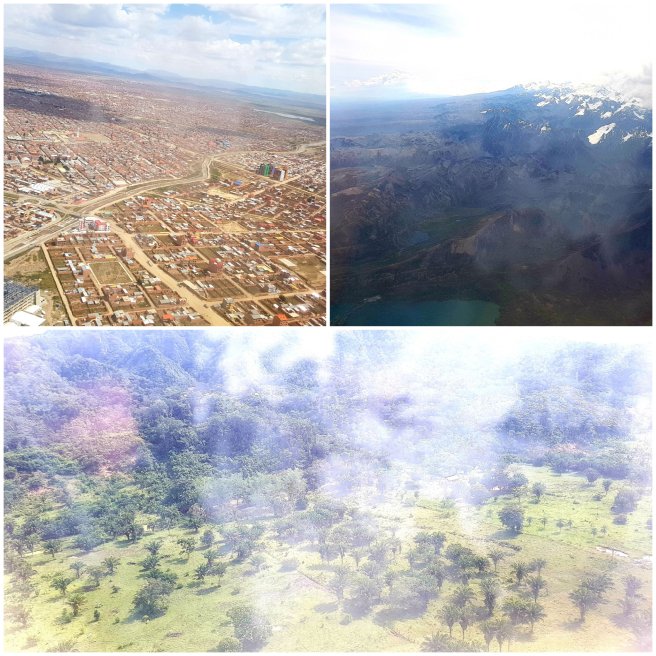
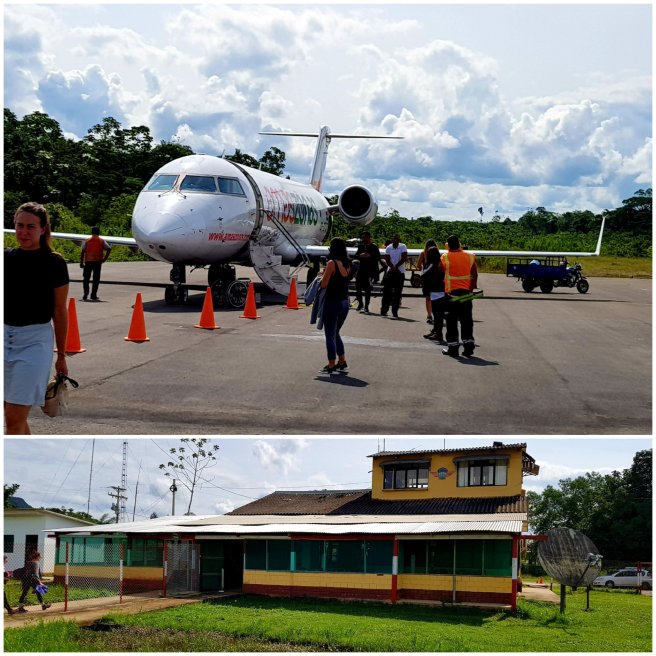
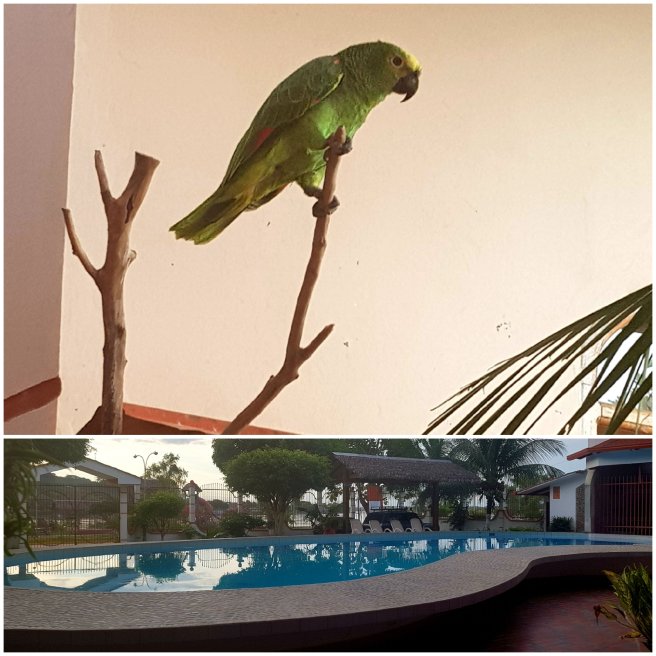
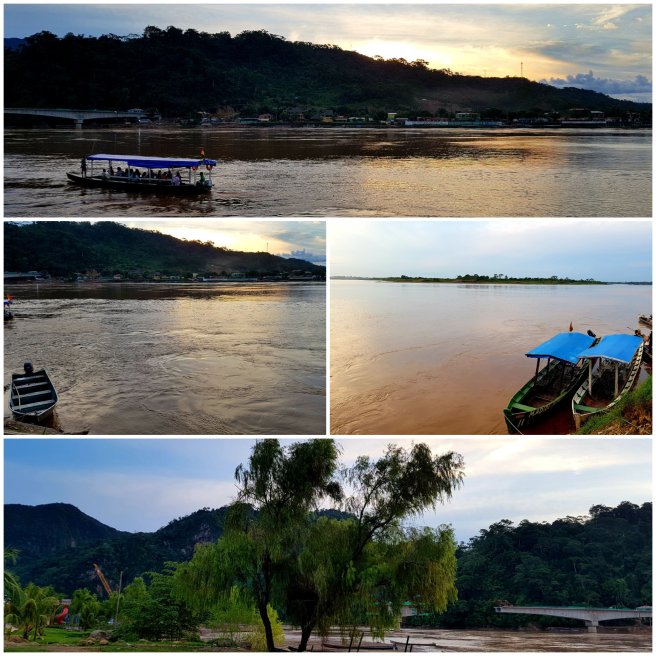
La Paz and El Alto market

We arrived in La Paz at 730am. Adam and Louisa were staying at the same hostel as me so we shared a taxi. The taxi driver didn’t know where the hostel was exactly and he took a bit of a detour, he then tried to charge us more than the price we’d agreed but we didn’t pay it.

When we arrived we were all pretty tired and you could feel the altidute as La Paz is at 3,600m. Lisa, the German girl I’d met in Sucre, came and sat with us as we drank coffee and tried to wake up as we couldn’t check in until midday.

We decided we would join Lisa and her friend Marion and take a trip to the El Alto markets.

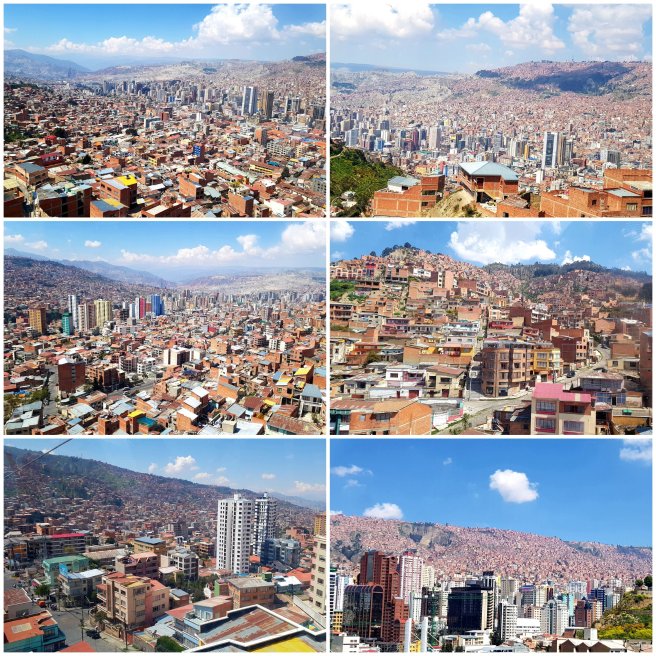
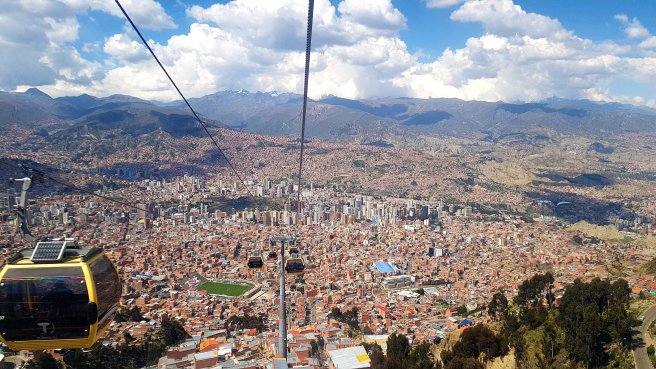
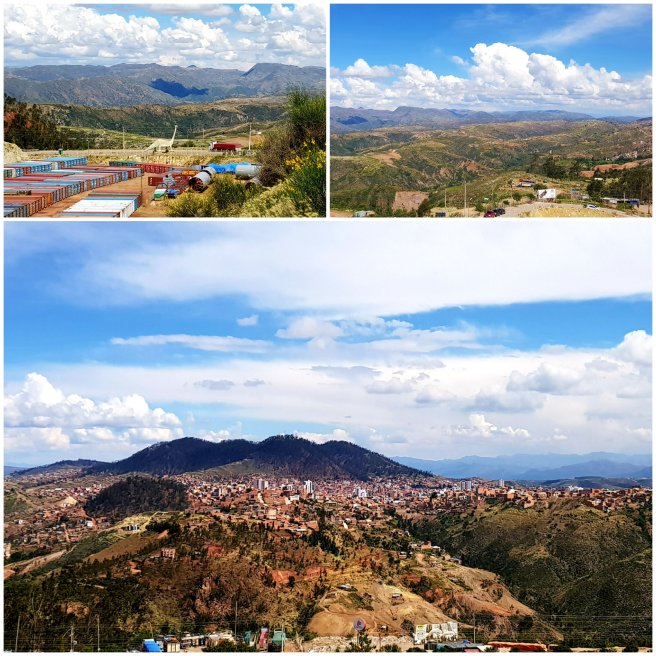
To get there you can take the cable cars. We walked to the start of the white line, changed to the orange line and then changed again to the red line to take us to the market. The views from the cable cars were amazing.

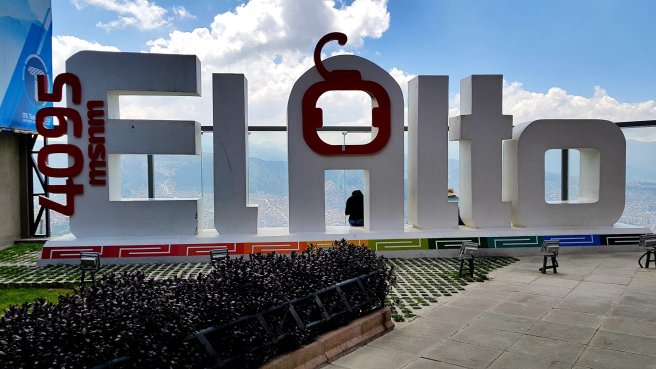
We got to El Alto pretty quickly and we were now at just over 4,000m and you could feel it quite a bit.

El Alto is the largest city in Latin America inhabited by indigenous Americans and it is the highest major metropolis in the world. El Alto is an economical centre in its own right.

On March 6, 1987, El Alto was politically separated from the city of La Paz and it became a self- governing entity. The population of El Alto is around 1 million which I think is larger than the population of La Paz.

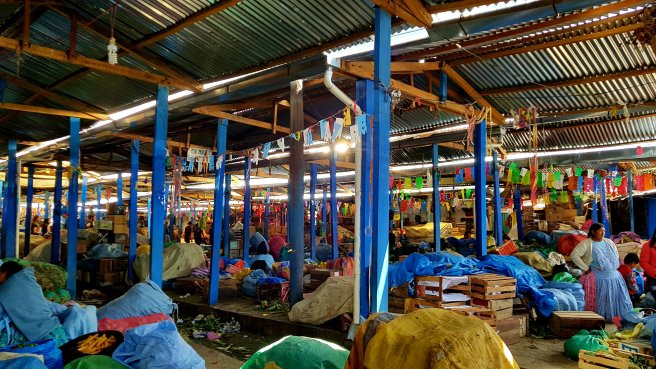
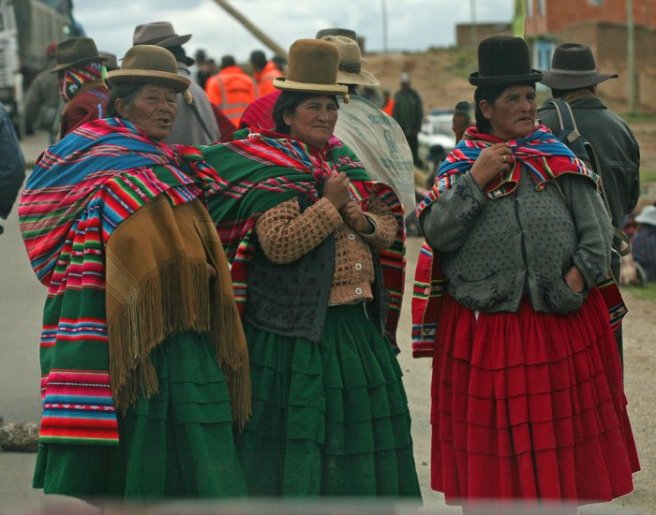
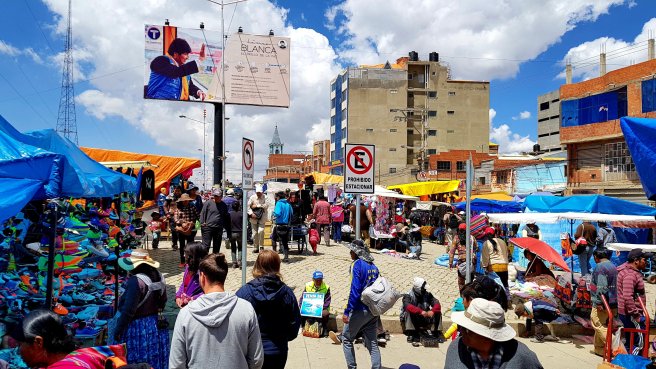
Like most tourists the main attraction for going to El Alto was to visit the market which is open every Thursday and Sunday. This is the biggest market in Bolivia and stretches over 5km.

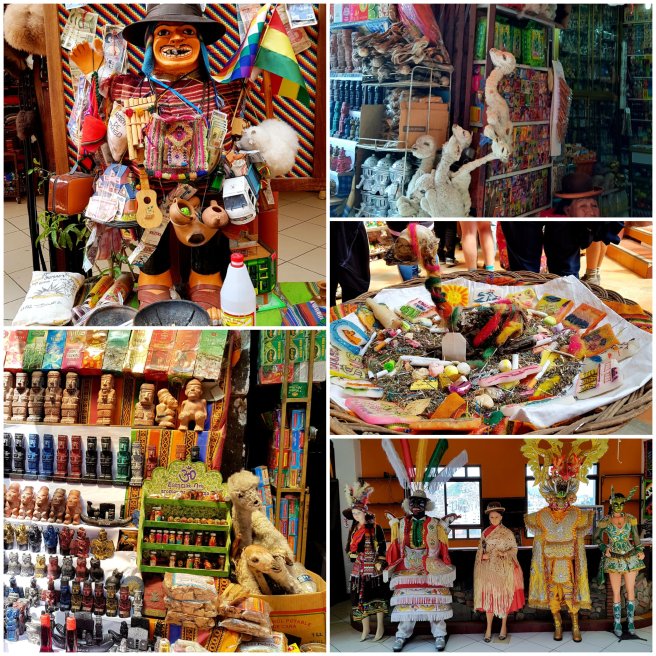
It literally sells everything including car parts, clothes, DVDs, medical equipment, food, shoes, toiletries etc. I bought some shoelaces but that was all.

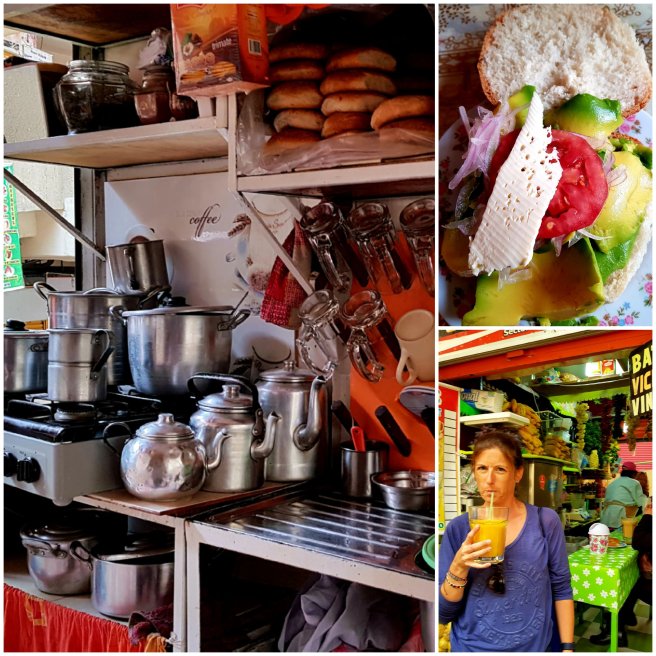
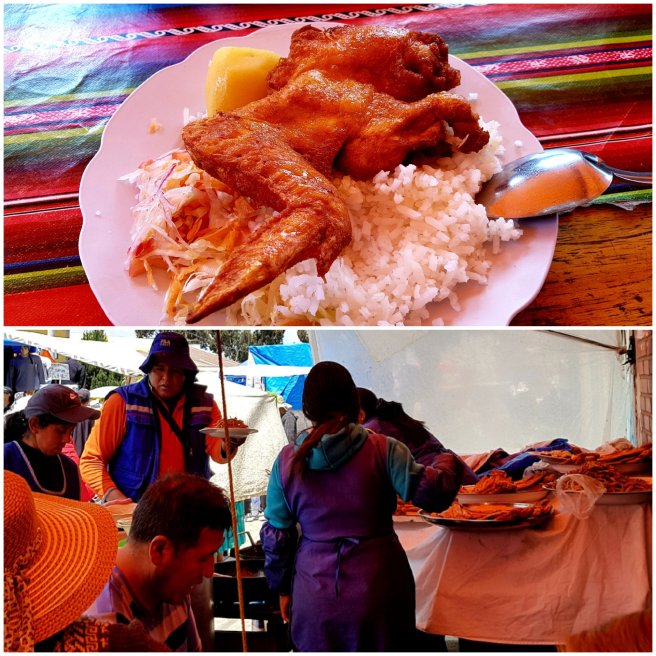
We decided to try some of the food at the market and it was actually really tasty and very cheap.

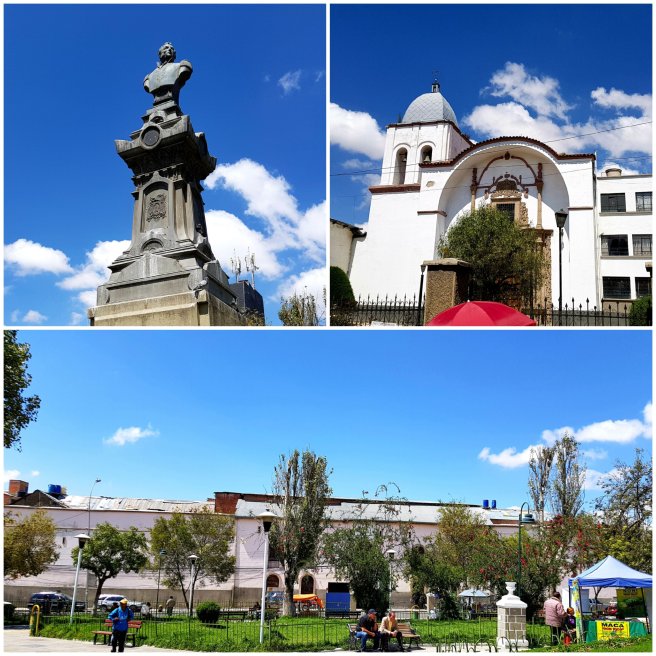
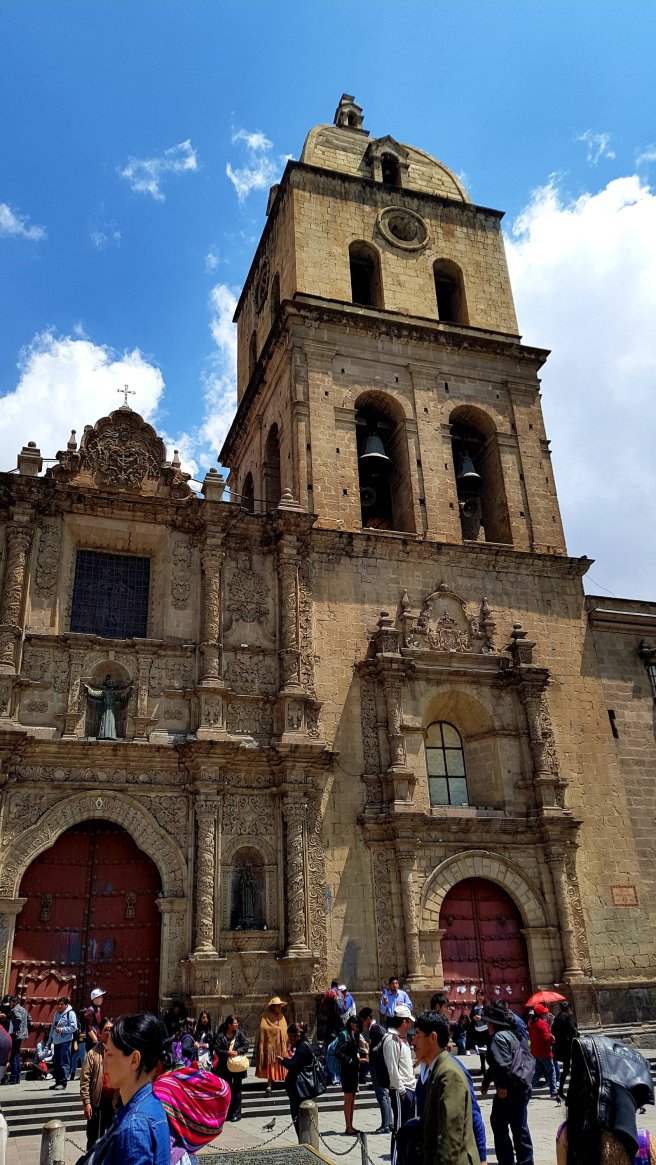
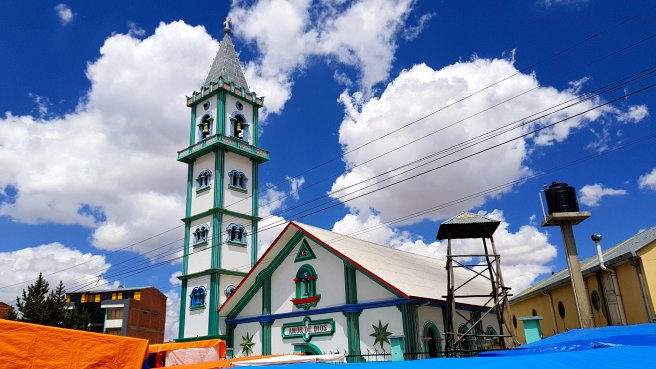
We also came across this little church as we walked through the market, I thought it looked really pretty.

We caught a different cable car down, the yellow line, in order to get some different views over the city.

Once we got back to the hostel I tried to have a little sleep but only really dozed for a few minutes.

In the evening I met up with Adam and Louisa and we went for some pizza which was delicious as it was all made thete and then and with lovely fresh ingredients.

Dinasour Park

So the first thing I did this morning when I got up was go and pick up my laundry so I could then pack my bags and check out. Jackie, the owner of the hostel was worried that my night bus might not be running as it was over Easter so she said she would ring and check. Luckily everything seemed to be in order.

After check out I wandered into the centre and met up with John from Ireland who I’d met a few days ago on the walking tour. We were off to see the dinasours.

The journey to get there was an experience in itself. We hailed down the number four bus and paid 15p to travel around 45mins to the dinasour park. On the way we went through a local market which was really colourful and the fruit looked amazing.

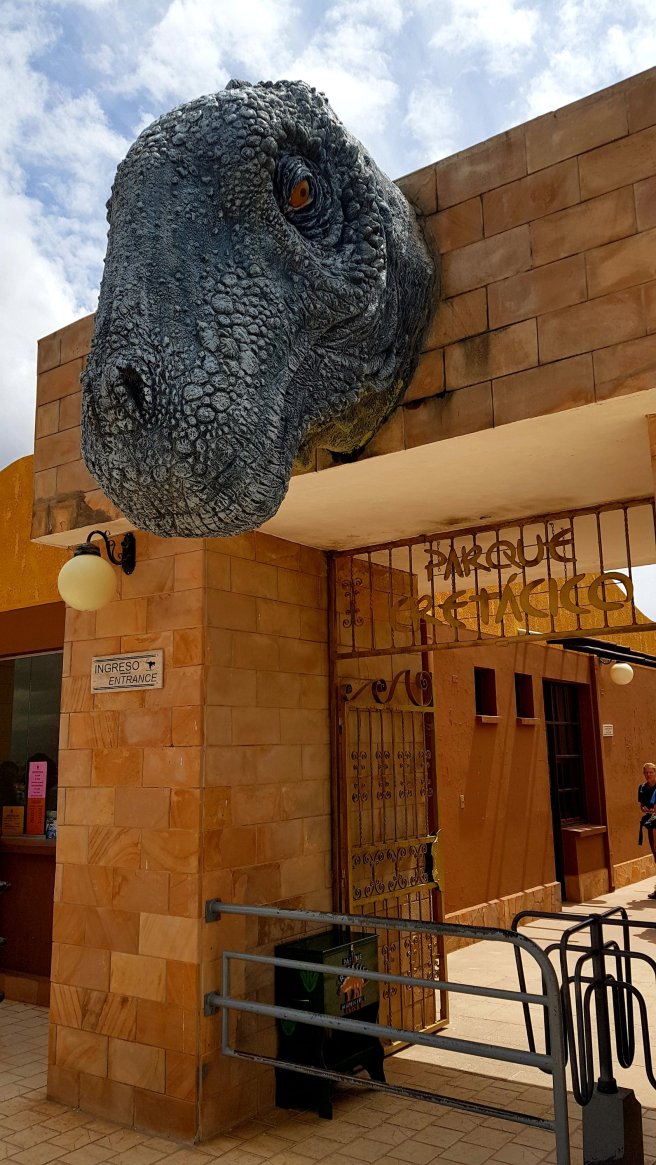
We arrived at the park just after 12pm. The park itself is next to a cement factory which is how the footprints were originally discovered.

The tour in English was supposed to start at 12pm but luckily for us it didn’t start until 1230pm so we were able to join it.

We learnt that around 68 million years ago there was a diverse population of dinasours living on, and stomping around in, the soft clay shores of a vast ocean inlet which came in as far as Sucre. As the clay dried, the footprints left behind by the dinasours became stone and eventually disappeared under layers of sediment.

Over time shifting tectonic plates formed the Andes mountain range which eventually pushed back the ocean. So what was once a flat clay beach became a near vertical limestone cliff.

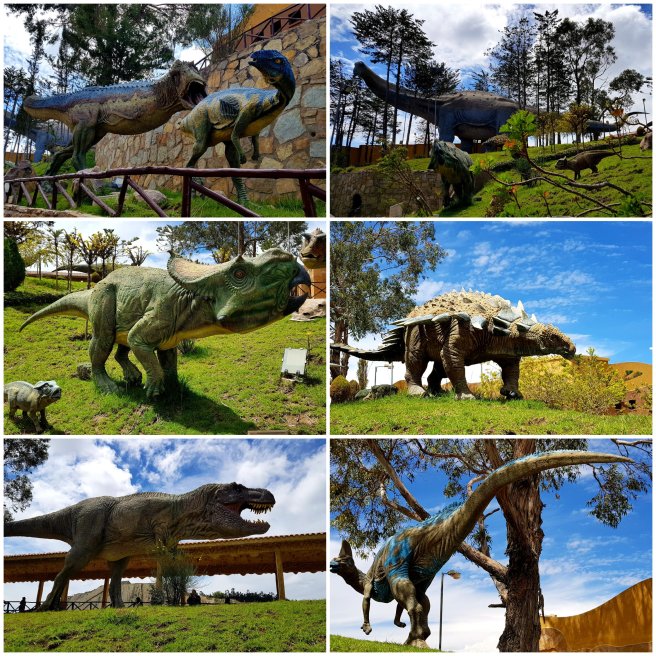
As we walked around the park thete were life size replicas of some of the dinasours.

There was also a small museum which housed a t-rex skeleton (not real) and some footprints, the largest one being over 1 metre long.

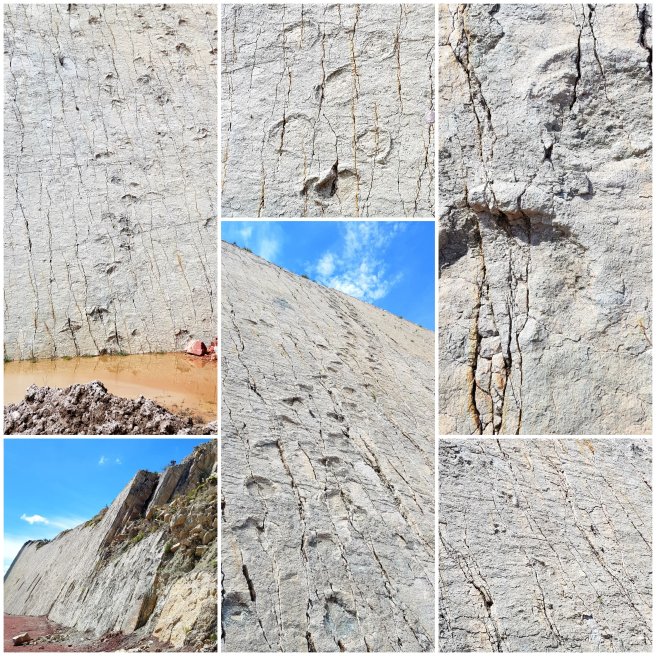
Then it was off to see the main attraction of the park – the footprints themselves. There are over 5000 footprints set into the Cal Orck’o cliff.

The footprints remained covered until The 1990s when the cement company were mining away the sedimentary layers for production of concrete. The mining stopped just short of the layers which contained the footprints – these layers were unsuitable for making concrete. Erosion then stripped away the remaining layers to reveal the footprints, some up to 80cm long, and from 15 different species of dinasours.

The cliff face has a 347 metre continuous trail of footprints made by a baby t-rex, apparently known as Johnny Walker.

In 2010 a section of the wall broke off revealing yet more tracks underneath. It is believed there are multiple layers of tracks below those that are visible. The park is currently seeking UNESCO world heritage site status which would then help conserve and protect the site.

The views from the site were pretty amazing too.

On return from the park I went back to the central market and bought some food for the 12 hour bus journey ahead. I then got a taxi to the bus station. The system here was very confusing. You have to drop your bag at a drop off point where it is weighed and then later lowered down to the buses on the lower levels. I made sure my bag was on the bus before I got on! There were also a number of buses from the same company going to La Paz at roughly the same time so it was hard to tell what bus was your one. I met another couple from the UK, Louisa and Adam, and we were all on the same bus.
I bought a blanket as I had heard the bus got very cold – I was glad I did.

I slept some of the journey, but to be honest not very much.

Maragua Crater- day 2

I woke up earlier than I needed to although I slept really well and the blankets kept me nice and warm.

It was good I got up and used the bathroom when I did as the electricity didn’t turn on until later so the water pump didn’t work which means the toilets didn’t flush – I still caught it with water from the night before.

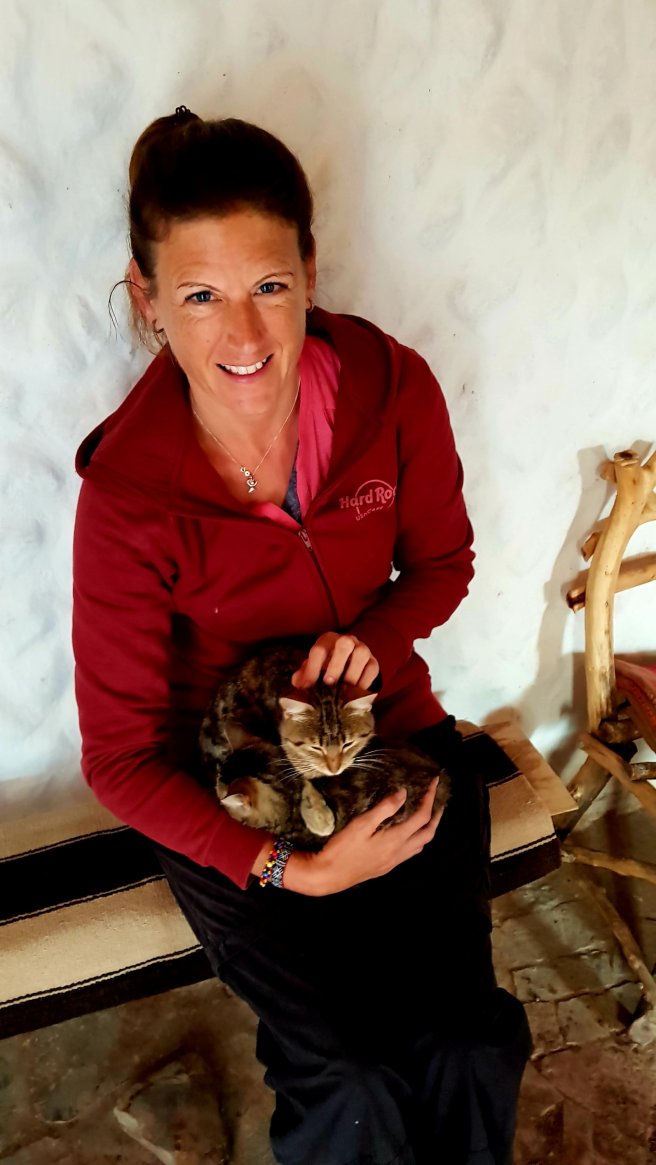
Once dressed I put my still wet shoe and sock out to dry and then cuddled the cats who fell asleep on my lap. They were so sweet.

After a breakfast of purple corn drink, which was quite thick and very tasty, and sweet bread we set off on our hike.

The first stop was at Don Crispin’s house. His original house he has converted into a museum with a whole range of archaeological finds including old arrows, jewellery, pottery, fossils and dinasour bones. He was very passionate about his collection and even showed us some human bones he had recently discovered in a field he was using to grow crops.

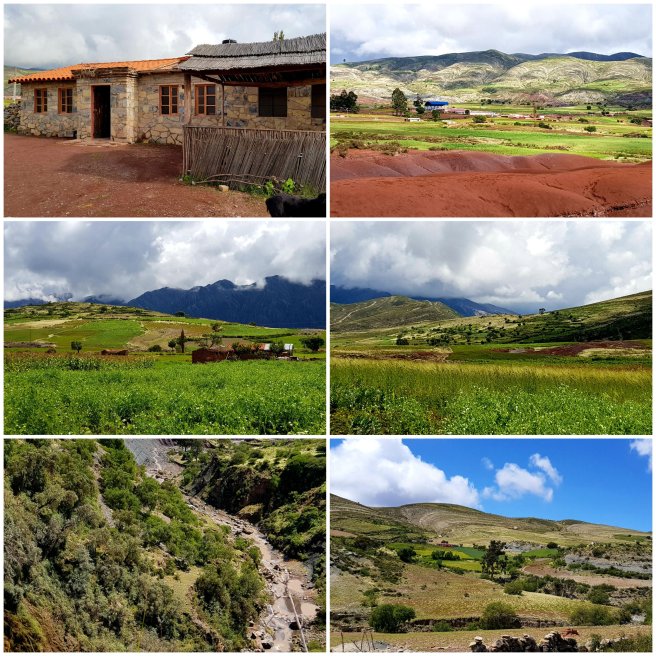
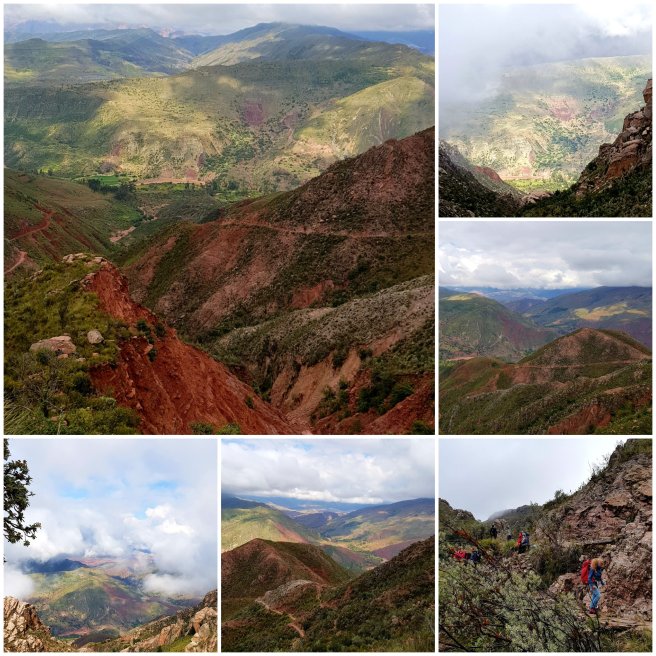
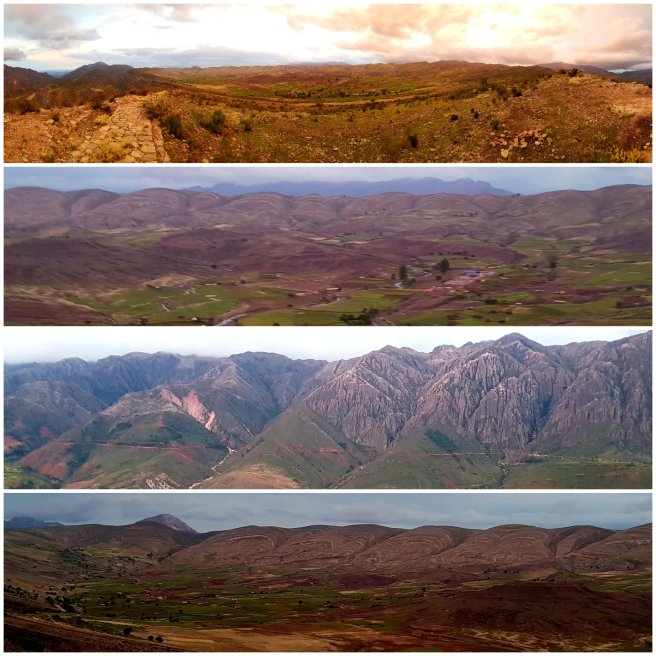
The first few kms of the hike were up and down with flat bits but we also climbed up for about an hour. The views were just as amazing as yesterday. The first photo below is of the hostel.

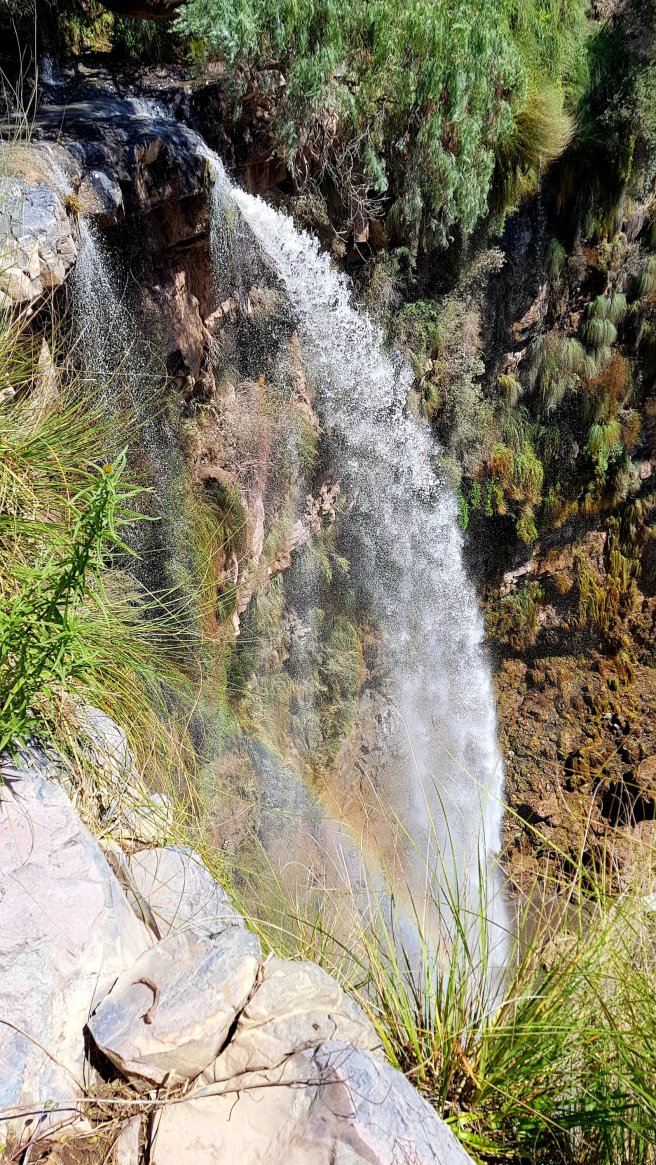
We passed a couple of waterfalls and I managed to catch a rainbow in one of them..

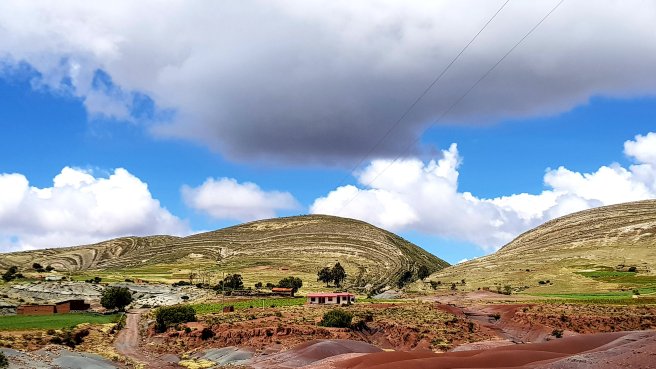
I really like this photo as the hills look like they have been painted.

After around 8km of walking the bus came along and we all jumped on for a short ride to the community of Quilla Quilla. We stopped here for lunch which we ate on the bandstand.

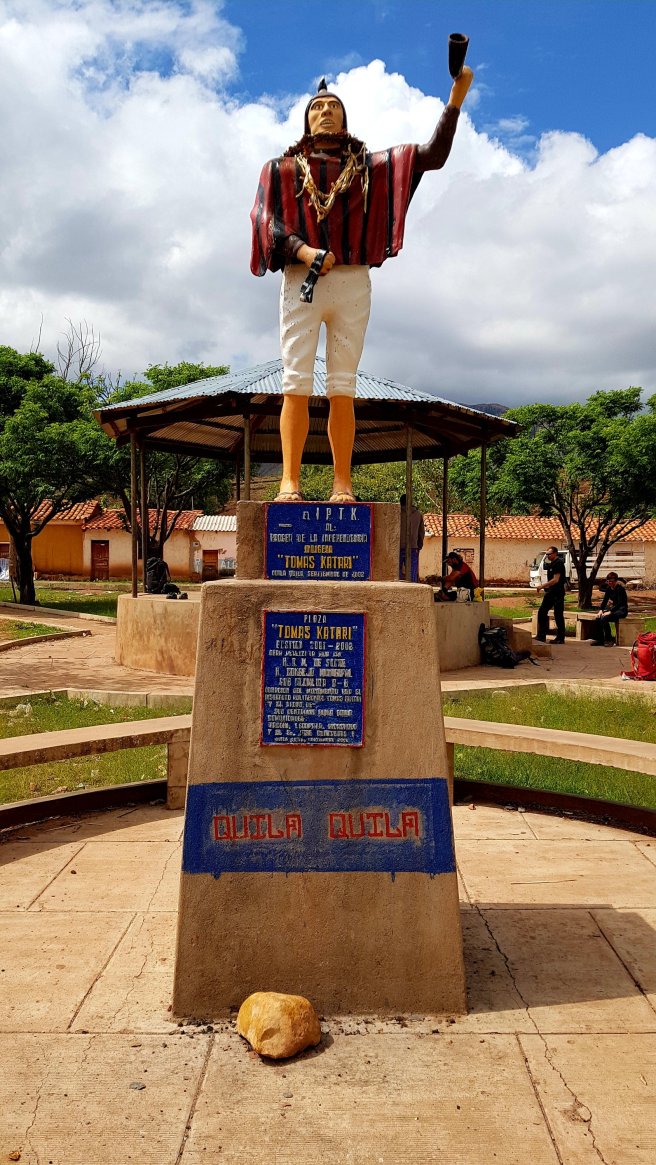
Quilla Quilla is famous for being the site where the indigenous rebel leader Tomas Katari was executed in 1781.

We then hopped back on the bus for the ride back to Sucre which took just over an hour.

The communities we passed through were Jalq’a communities. They live very basic lives in remote areas. Many of the traditions of the community are dying out as the younger generations move into the cities such as Sucre.

The company I did this hike with, Condor Trekking, are a not for profit organisation and they invest any profit they do make back into the communities we pass through including building and equipping schools, proving water pipes and supporting the communities in a variety of other ways.

Once I got back to Sucre I went back to the hostel, washed my clothes, my shoes and myself and had an early night – which was actually a good thing as we had lots of rain and storms in the night.

Maragua Crater – day 1

Another early start – we met at the offices of Condor Trekking at 630am. It was a little chilly but everyone was in good spirits and looking forward to the 2 day hike. We were a group of 11 including the two guides (Manuel and Laz). Two ladies from France (Franzi and Pascal), a couple from Germany (Brigitte and Richard), a couple from England (Dan and Clem) and a brother and sister from Holland (Rick and Marie).

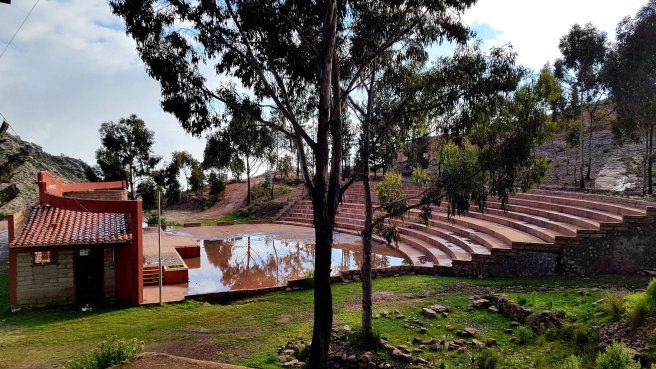
We started off by getting a bus to a small village called Chataquila, which is around 40kms outside of Sucre. There is a small church which is still used today and also a little theatre where they have celebrations. We had an outdoor breakfast here of cake and bananas.

The church has a small stone chapel to the side of it which houses a shrine to the Virgin of Guadalupe, the patron saint of Sucre. Locals also make offerings to Pachamama here and we all took some coca leaves and made an offering to ask for a safe journey.

We then set off on an old pre-hispanic trade route jn the direction of the Maragua Crater. The majority of the hike was downhill at this stage as we made our way down to the river. The views were amazing.

We passed loads of plants and trees. One particular tree used to be used for making paper as it’s bark is like paper and you can peel it off. And another amazing plant was the Phoenix plant. Basically this plant grows to a certain size and produces a flower. Once the flower has blossomed it then produces an oil which attracts the heat of the sun and makes the plant burn from the inside. A new plant then starts to grow where the old one was.

We had a brief stop at a point that provided a fantastic view over the area and showed how vast the landscape is.

We continued our journey downhill, past the aqueduct that carries water to Sucre and along the banks of the Ravelo River. I couldn’t get over the landscape, in particular the rock formations and all the different colours. The green colour comes from copper and the red from tin. You could also see the formation of quartz in the rocks. We stopped for lunch near another church and I tried to make friends with the local donkey but he was a bit timid.

We all helped carry the food in our rucksack but the two guides carried most of it.

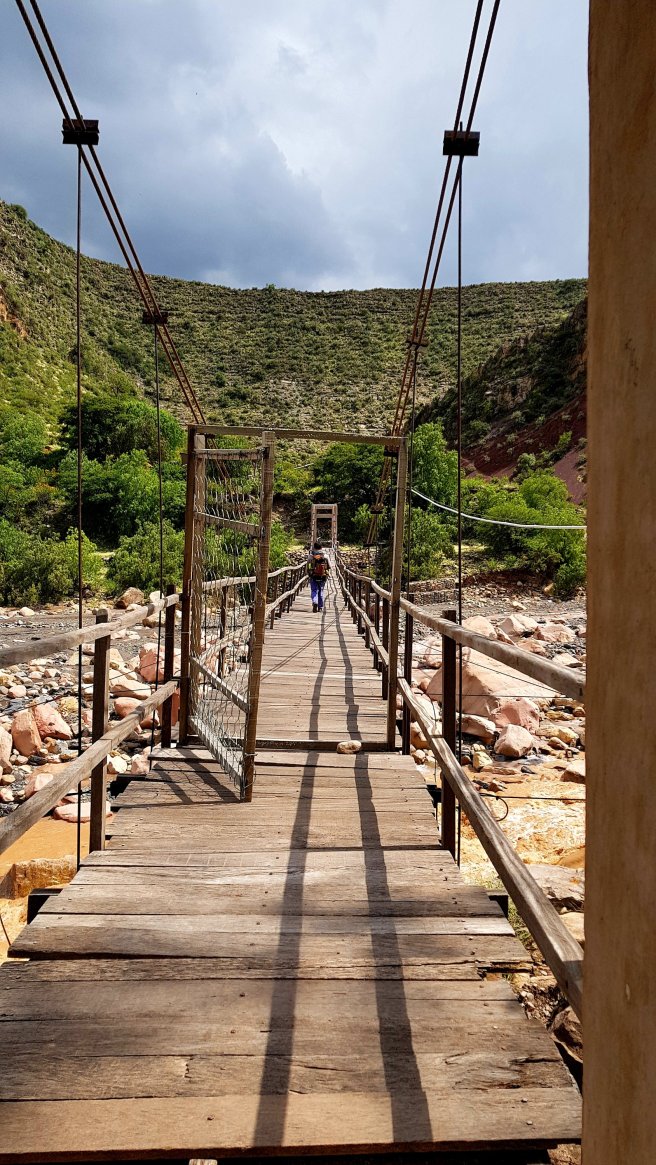
With full stomachs we then set off for the infamous suspension bridge at Socobamba. You can only walk over one at a time as in the middle the bridge leans to the right.

Not long after the bridge crossing we had to take off our sicks and shoes to cross another river. Then we started to climb uphill to the edge of the crater. It was quite difficult as we were at quite high elevation. At one point the path became very narrow as there had been a recent landslide, but we all got across safely.

We had another little rest and what I thought was originally a tree house was actually a purpose built ‘nest’ to hold the animal feed.

At the top of the mountains thete were lovely green fieldswhich the locals used to graze their cattle.

After around 16km of walking we were close to Maragua village and the sky turned quite dark. We could hear thunder and see lightening in the distance. Despite this we stopped at the deserted church in the old Maragua village. The priest from this church fell in love with a local girl and they started a relationship. The girl’s parents found out about this and the girl was moved to a village fitter away. The priest was so sad he committed suicide at the ‘devil’s throat (waterfall) and it is said that after dark you can hear him crying at the church. Most of the houses near the church have been abandoned and the people have moved into the new village of Maragua.

We then hurried to the hostel in the village of Maragua at the centre of the crater. The myth around this crater is that it was formed by a meteorite, but no evidence of a meteorite has ever been found. It was actually formed by the movement of tectonic plates and by erosion.

As we approached the hostel we met these gorgeous cats- mother and daughter, who I then cuddled for most of the evening.

As it didn’t actually rain where we were, after around half an hour and a hot cup of tea, we decided to walk to the ‘Devil’s Throat’. First we walked to the edge of the cliff to see the waterfall – I laid down at the edge to take some photos looking into the waterfall- and then down to the actual cave which looks like a devil’s face with some imagination.

Most of us took a photo standing on this rock too.

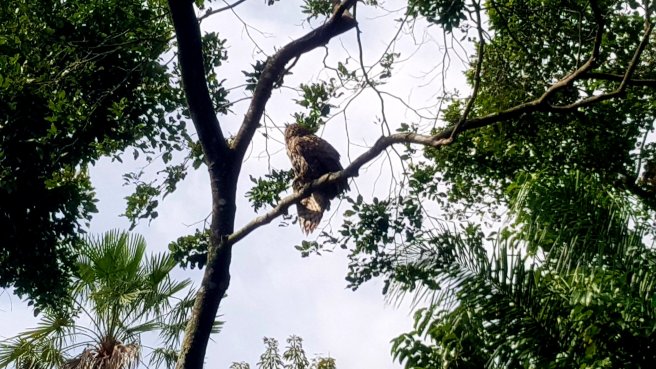
A few of us then decided to cross over the river and climb up the other side to see the view from the top. The views made those extra kms worthwhile, and we also saw an eagle fly past.

This is the hill / mountain that we climbed to get the view.

It was starting to get dark as we headed back down and we had to use our phones to see where we were going in some places.

It was nice to get back into the warmth of the hostel, especially as I had one wet foot from misjudging the river crossing.

Dinner was very welcomed and very tasty. Asparagus soup followed by spaghetti with mixed vegetables and cheese – all the meals on this tour were vegetarian. The cats got to have the left over spaghetti and they made light work of it.

After dinner we had some entertainment in the form of Bolivian folk music performed by Don Crispin and two of his young students.

Rick bought some Cachaca, spirit made from duger cane, with him so we all tried that and it was really nice. We also tried some fortified Bolivian wine which was also pretty tasty.

I spent most of the evening cuddling the cats even though they weren’t really supposed to be in the hostel. We managed to make sure they stayed in overnight so they were warm and away from the dogs outside.

Sucre

I arrived at Sucre bus station at 5am, jumped in a cab and went straight to bed once I arrived at my hostel. They normally don’t open until 7am but had agreed to open early so I could get into my room, which was really kind of them. I slept until around 9am which was just what I needed.

When I woke up the guy showed me round the hostel and gave me some tips on where to go and what to do.

I dropped off my laundry at the nearby laundrette and then had breakfast at a local cafe. I wandered round the city a bit – it is very white – and then went to the Bolivar park which is the main park in Sucre. They have a miniature Eifel tower and a pond with bushes shaped like frogs. I sat in the sun for a bit and then walked back to the hostel and took some more photos looking down on the city.

I decided to do a walking tour in the afternoon to hear more about the history and culture of Bolivia and Sucre.

We started off by learning about the indigenous people and saw some of the amazing weaving they make – many of which tell a story. The weaves can take up to a year to make and it takes around 10 years of watching your mother weaving before you can start doing it yourself.

Many of the locals in Bolivia speak Quechua and not Spanish and it is being taught again in Bolivian schools.

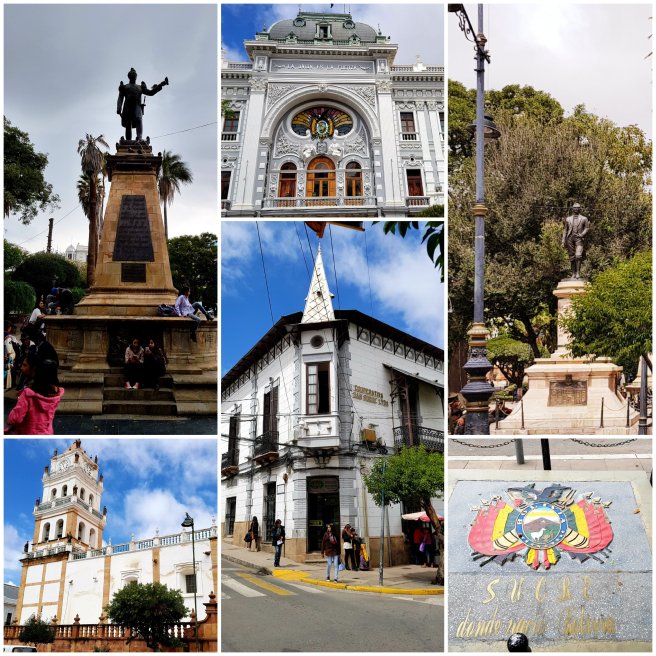
We then moved on to plaza 25 de Mayo where we saw the main cathedral and the city hall. Inside the cathedral is a statue of the virgin of Guadalupe which contains many gems including diamonds. There has beem some debate about selling part of the statue to get money to build new schools or hospitals etc in Sucre but the people living in sucre are mainly catholic so won’t allow this to happen. The statue in tbe square is of the second president of Bolivia following the start of the revolution.

jing.

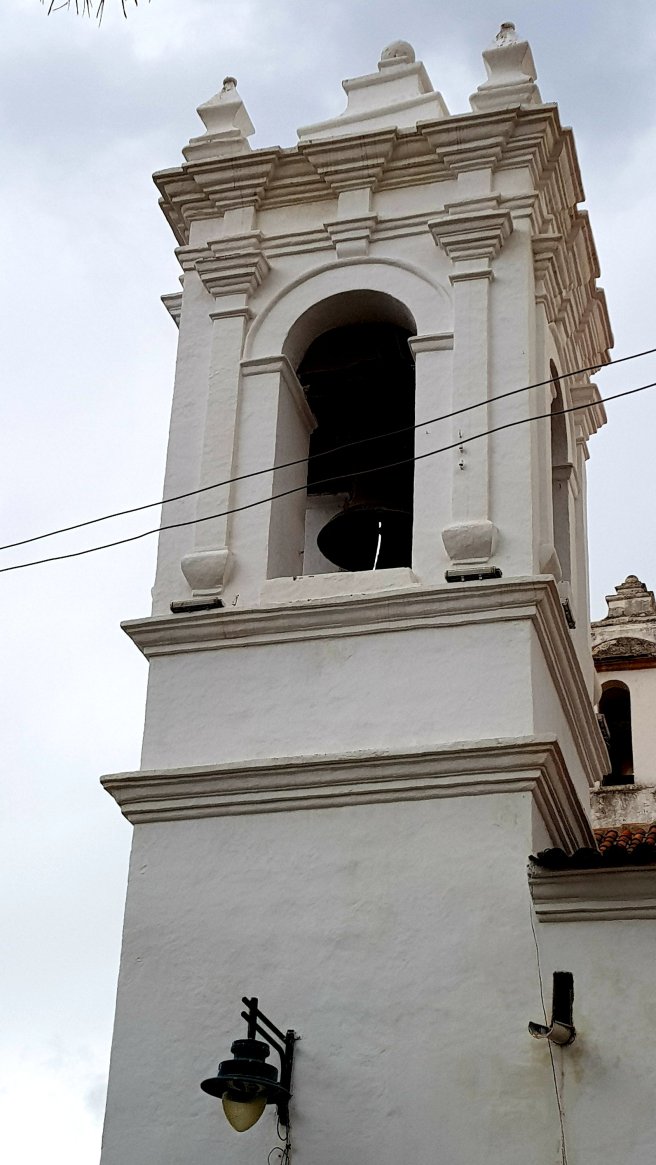
The next stop was Parque Santa Cruz where we saw the San Francisco church. This apparently was where the revolution and fight for independence against the Spaniards began. A young lad was imprisoned for no reason and some other people found out about this. They ran to the church and rang the bell so hard it broke- the bell is known now as the bell of freedom.

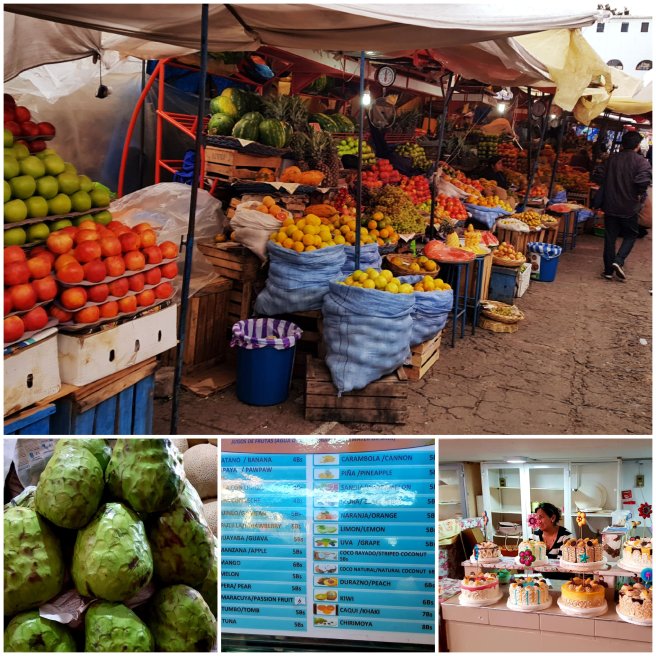
It was then onto the central market which sells absolutely everything. It was really colourful and also really clean.

I tried the green fruit which is called chirimoya and is only produced in Sucre. It was delicious. At the juicebar I tried some tumbo which looks a bit like a cucumber but tastes more like passion fruit. Others in the group had different juices so we got to try a variety of flavours including cactus juice and Alfa juice.

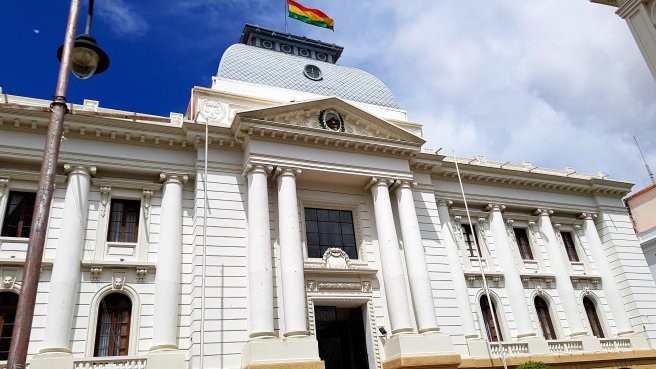
From here we walked to Boliviar park and our guide, Lucho, explained that although La Paz was now the capital of Bolivia, the justice element of the government still resided in Sucre which used to be the capital city. This is the justice HQ.

From here we caught a local bus to the area of Recolete. There are no official bus stops and you just flag the bus down anywhere along the route it goes.

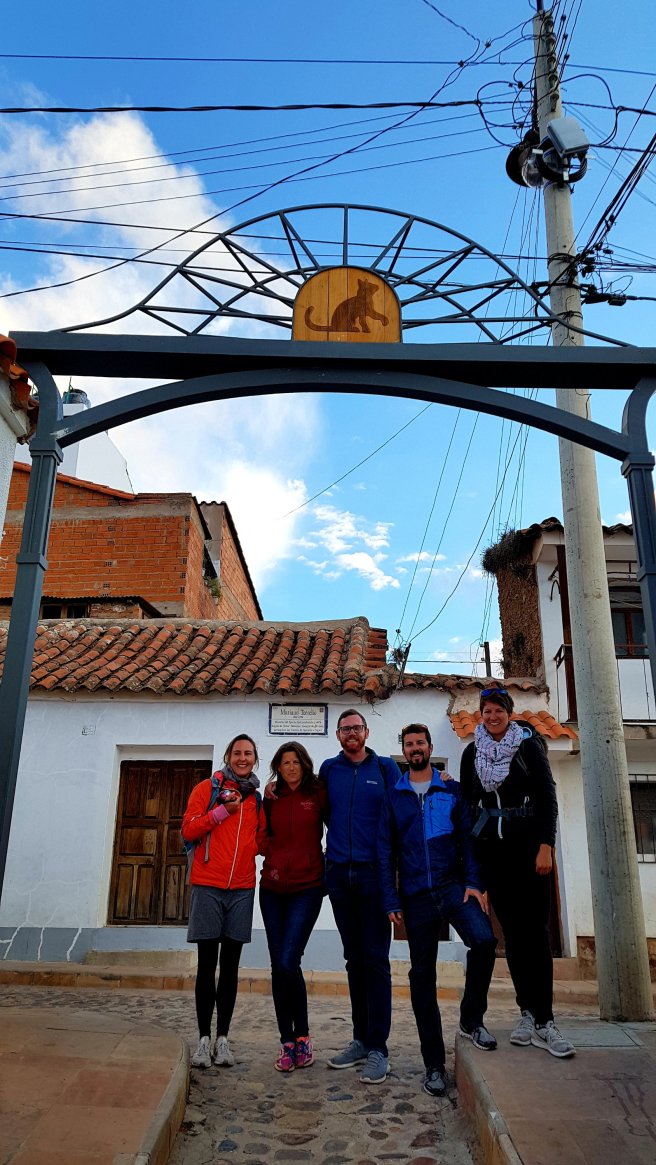
The streets and houses in this area are exactly how they used to be when the Spaniards came and the houses cannot be altered, although they can of course be repaired. The main street is Gato street, cat street, as the place used to be full of cats. But now, like most of South America it has a lot of street dogs.

We walked on to a local ‘pub which was basically someone’s house and tried some chicha – fermented corn. I tried some of this in Columbia but preferred the Bolivian version.

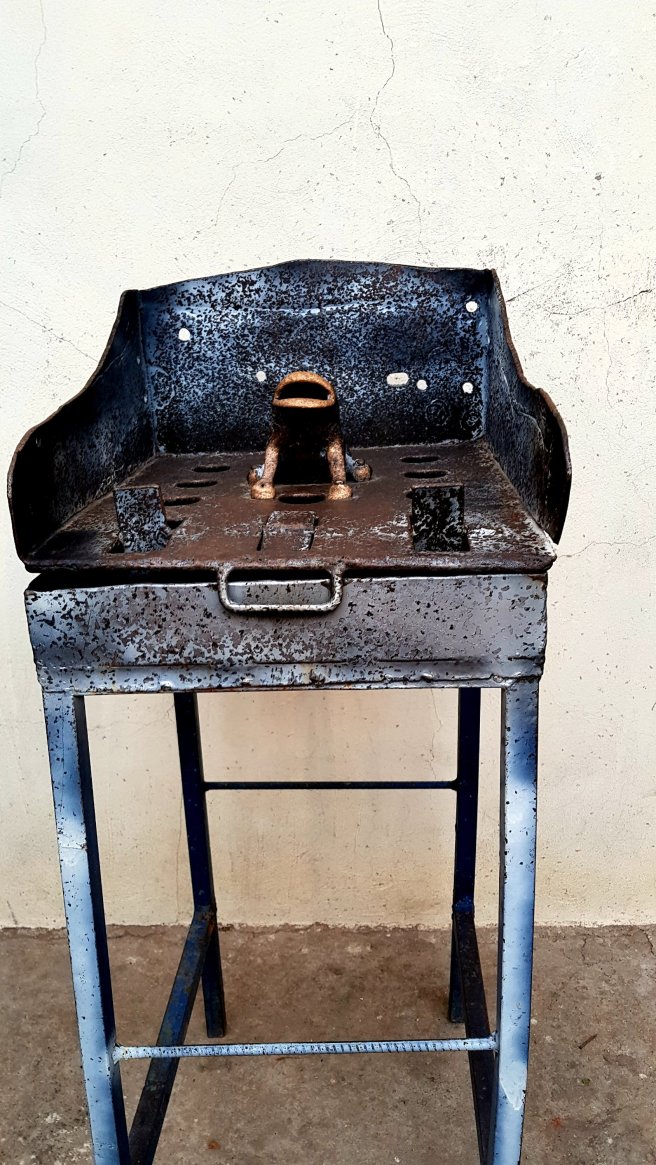
We played a game of frog – where basically you had to try and throw some heavy coins into the mouth of the frog. You scored points depending on the holes the coins went down – if any. I managed a fairly decent score of 50.

The last stop was the main square and watching the sunset over Sucre. The main square is where the city of Sucre was officially founded.

We strolled back into town and I went to a little restaurant called La Taverna, where I had some delicious grilled trout. It was a great place and the food and wine were superb. Lisa from Germany, who I met on the walking tour came and joined me for a glass of wine.

I returned to the hostel and packed my bag for tomorrow as I’m going trekking to a crater.

Exploring Uyuni

To be honest there is not a huge amount to see or do in Uyuni. It’s mainly a stopping off place for tourists going to or from the salt flsts or other day trips. It’s dry and dusty but actually a lot nicer than I expected.

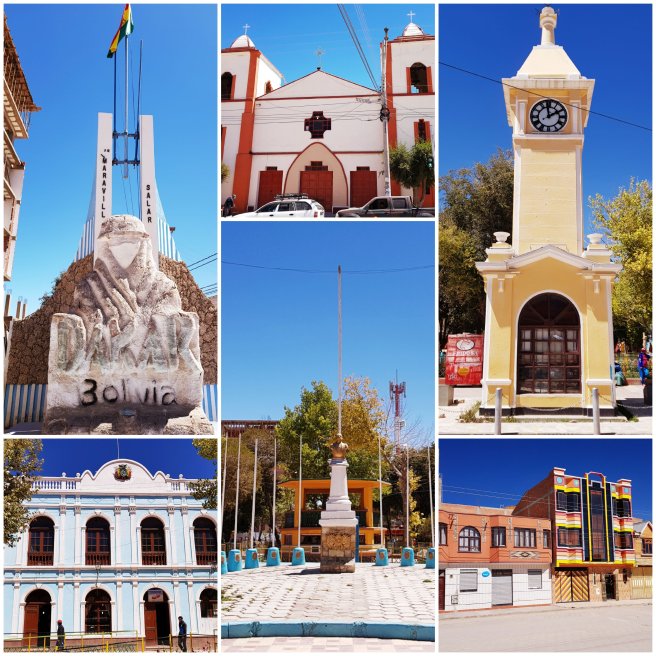
I had a lovely long lie in and a nice hot shower and a substantial breakfast before heading into the town centre. I trod the tourist path to see the clock tower and various other points of interest.

They have an interesting selection of monuments in Uyuni.

As I was wondering around the main square I bumped into Lauren and Ali from California who I’d met in the minibus from San Pedro so I joined them for a late lunch.

I then went back to the B&B and caught up on my blog posts and chatted to a German family that had just arrived. I also chatted to the guy who was managing the place. He wanted a selfie so we took this

At 10pm I caught the bus to Sucre. It was semi came which means the seats recline quite a bit but they don’t go all the way back and you also have a leg rest. My seat was broken so I just sat in the seat next to it.

The journey was around 7 hours and I did get some sleep but it was actually quite cold on the bus.

Salar de Uyuni – the salt flats

It was a really early start today as we left the hotel at 530am. It was an experience driving over the rough terrain in the dark. We drove for around 30 minutes before we got to the Salt Flat itself. Salar de Uyuni is the world’s largest salt flat at 10,582 kms squared. It formed as a result of transformations between several prehistoric lakes and is covered by a few meters of salt crust, which has an extraordinary flatness. The crust of the salt flat serves as a source of salt and covers a pool of brine which is rich in lithium. It contains 50% to 70% of the world’s known lithium reserves, which is in the process of being extracted.

As we drove onto the Salt Flats we were driving through around half a meter of water which felt like we were driving through the ocean.

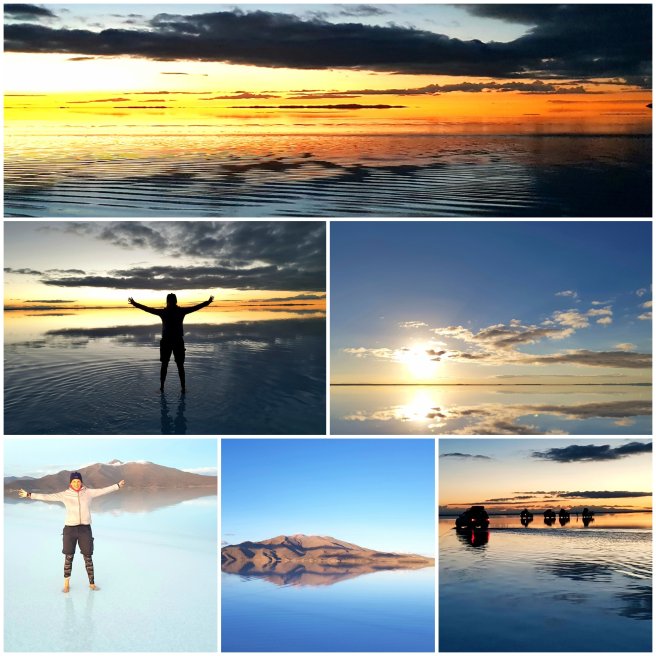
We watched the sunrise over the salt flat which was magical. We got out to take photos and were advised to wear flip flops because of the depth of the water and so as not to ruin our walking boots. The water was freezing so you could only stay in for a few minutes before getting back in to the jeep to dry and warm up your feet! The reflections in the water on top of the salt flat were amazing.

We then drive further into the salt flat where it was slightly drier so we didn’t have to walk through any water.

After a little while we had some breakfast out of the back of the jeep, again the food they produced was impressive and tasty.

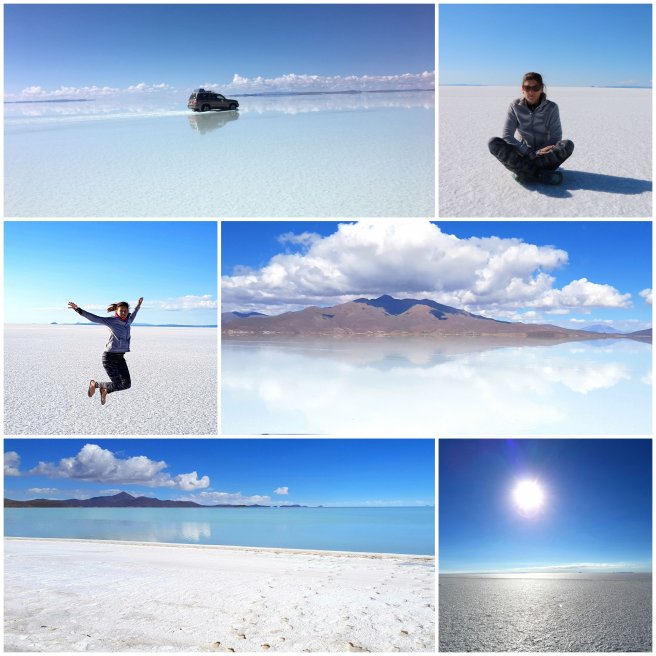
This area was great for taking perspective photos and we played around for a good couple of hours doing this. It’s quite hard to take these photos, especially as none of us had actually researched how to do it. But I think we made a pretty good job of it. We took some videos too which turned out well too.

It was great fun and the sun soon warmed us up. Around 11am we unfortunately had to leave. Normally we would drive right over the salt flat but there were areas that were flooded so the jeeps can’t get through. So we left the sane way we came in.

Just as we were coming out of the salt flat we realised we didn’t have a photo with Rodolfo in it so he quickly stopped the jeep so we could take a group photo. I was a little eager and as I jumped out of the jeep I walked a little bit too far and one foot sunk through the salt crust into the icy cold water below, not pleasant!

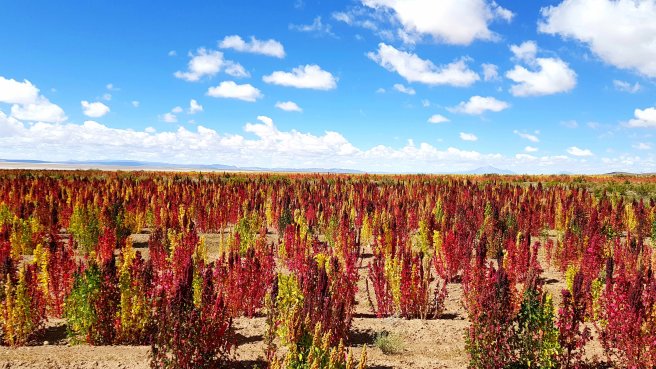
We drove back to the salt hotel passing many quiona fields. I must admit I had no idea what a quiona plant looked like until now. Rodolfo kindly made an extra stop so we could get some photos.

The lunch back at the hotel was delicious and we had a bit of time to relax before heading out again to Uyuni. We were around 40 mins from the hotel when Rodolfo started to get messages and calls. From what we could gather one of the jeeps had got stuck and the bags from the group needed transporting. It actually turned out that the driver had not gone back to the hotel to pick up the bags and have lunch which was a bit strange.

As none of our group had to be in uyuni by a particular time we turned round and drove back to the abandoned train station where the staff from the hotel met us with the extra bags. Fully loaded we drove on to Uyuni.

Our last stop of the day was the train cemetery – Cementerio de Trenes. The train lines were built by the British from 1888 to 1892, and primarily used for mining purposes. They were frequently sabotaged by indigenous people, and in the 1940’s left to rust in the salty winds after the mining industry collapsed. The train robbed by Butch Cassidy and the Sundance Kid is among the wrecks at the cemetery but I don’t know which one it was.

We arrived in Uyuni around 430pm and said our goodbyes before I headed off to book my ticket for tomorrow’s journey to Sucre and then book into my b&b.

But we met up again for some dinner before the girls all caught the overnight bus to La Paz.

This was one of the most amazing tours I have done. The scenery and landscape is incredible and the salt flats themselves are indescribable. Just standing on the vast whiteness was such an amazing feeling.

I was lucky I was with such a great group too, you never know when you travel solo who you’ll end up travelling with, but everyone was so lovely. And our guide Rodolfo was always smiling and making sure we were all ok – it’s really hard work for the guides with all the driving, the food, the packing and unpacking of the jeeps as well as providing us with so much information.

Day two of the Salt Flat tour

Breakfast was at 7am so we got up around 630am. There were no showers so it didn’t take long to get ready. As we were packing up the jeep a friendly baby llama came to investigate, it was so sweet. We had another quick stop at Laguna Colorada to see it from a different perspective and we managed to get another group photo – with Rodolfo too.

The first major stop of the day was to see the stone tree or Arbol de Piedra. It is an isolated rock formation projecting out of the sand dunes of the Siloli desert. It is about 7m high and was formed by the strong winds in the area.

The desert itself was also pretty stunning, it’s actually one of the driest areas on the world. As we drove through we came across an unusual animal called a viscacha which is kind of a mix between a rabbit and a kangaroo. I have no idea of the English name for it.

We drove on to see a number of high plateau lagoons – altiplano. The first lagoon we stopped at was Honda Laguna. Again extremely impressive views with white borax areas.

We drove past the next lagoon, Chiarcota but made a stop at Laguna Hedionda which actually means ‘stinking lake’. It didn’t actually smell at all.

There were more flamingos at this lake too and this sign made me smile.

We stopped here for lunch. I don’t know how they produced such delicious meals with the most basic facilities but they did.

After our delicious lunch it was time for another group photo.

After which we headed to volcano ollague overlook and Rocas Sora Valley or valley of the rocks. The volcano is not completely inactive and sometimes smoke can be seen from it. It stands at 5,868m and towers over the surrounding area

The rocks in the valley were fascinating with one in particular that looked like a condor.

We drove through San Augustin and it was amazing to see the change in the scenery with much more vegetation. Due to this there were a lot of llamas around too and many of them just oblivously crossed the road in front of us. We also saw the Andean deers which are called Vicuña, but they were always too quick to get a good photo.

From here we drove to Juluca train station which is an abandoned train station.

We got there as the sun was setting and it seemed wierd to be in a place that used to be active but was now completely abandoned apart from being a tourist attraction. The station was used as part of the route to transport the minerals from the Salt Flats out of Bolivia. We had some fun lying on the tracks and climbing on top of the old train carriages. A few of us also had a quinoa beer which just tasted like ordinary beer to me.

As the sun went down it got quite cloudy and windy and Laura took this amazing photo that looks like the end of the world is coming.

We then made our way to our accommodation for the night which was the Salt Hotel. This place was amazing- the walls, the bedside table, the bed, it was all made out of salt! We had a delicious dinner here too, along with a nice bottle of red wine.

After dinner we did a bit of star gazing – we saw the milky way and the southern cross. I didn’t actually know what the southern cross looked like but some of the girls had been on the astronomy tour in San Pedro so knew what to look for. You can just about see some stars in this photo, again courtesy of Laura.

It was then off to bed. I shared a room with Ellie and we both had a good night’s sleep even though we were still at quite high altitude, 3,600m.

Eduardo Abaroa Andean Fauna National Reserve

On Friday morning it was an early start as I was picked up from the hostel at 7am and taken by minibus to the Chilean border. It was quite cold and the clouds were at the same level as us. It was around a 30 minute drive and I met some nice people on the bus including two girls from California- Ali and Lauren.

The passage through the Chilean border was pretty uneventful but there was a long wait at the Bolivian side to show out passports. We had an outdoor breakfast which was really nice but as it was so cold it was hard to hold the food without any gloves on. We then all had to transfer into 4×4 jeeps which took six people each. I was with a really nice group of girls – Sarah, Laura, Chloe and Ellie from England and Vicki from Canada. As we drove away from the border we saw a desert fox.

Shortly after the transfer we reached the entrance to the park and paid our fees. This park is in the far southwest of Bolivia. The parks is located at an altitude between 4,200m and 5,400m and extends over an area of 714,745 hectares.

We made our first stop at the white lagoon. And then we continued onto the green lagoon. You could easily see the different colours in the lakes. The green lake contains arsenic among a number of minerals such as copper and lead. It’s this unique chemical composition that keeps the water from freezing in the subzero temperatures.The volcano in the background is inactive and is called Licancabur. It has a crater at the top which also contains a green lake.

We continued on through the Dali desert. Salvador Dali never actually visited this area but it looks like one of his surrealist paintings.

The next stop were the thermal springs –Termas de Polques. Sarah, Laura and I decided to get in and I’m really glad I did. The fresh water was around 35 degrees and it felt lovely just to relax in them. The view was pretty amazing too. Although it was pretty cold outside it wasn’t as bad as I thought it would be when we got out and got changed.

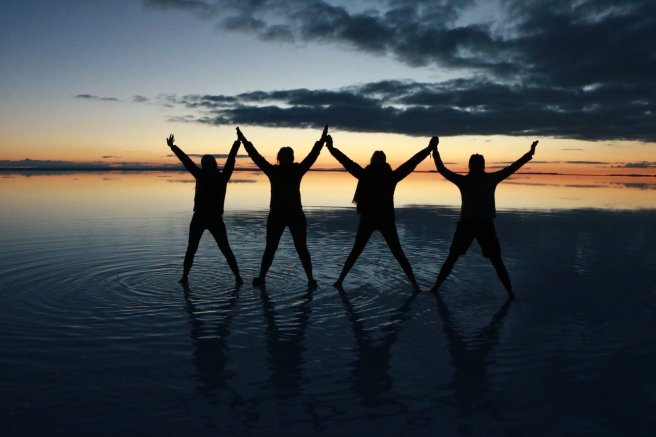
It was so interesting to see the changing landscape as we drove through the area, and there was more to come. This was a group photo of is in the desert, all trying to jump at the same time.

Our next stop was the morning sun geyser which is part of the 10 km squared Sol de Mañana geothermal field. You could walk all round the geysers, including the active ones, and through the steam they produced. The smell of sulphur was unsurprisingly pretty strong.

Following the geysers we drove to the hostel we were staying in for the night in Huayllajara and ate a late lunch.

It was then back on the road for a short drive to Laguna Colorada, known as the red lake. This is a shallow salt water lake and the red colour comes from red pigmentation and some algae. The white bits are islands of borax. Laguna Colorada is at an altitude of 4,278m and covers 60 square kms. It is named after the effect of wind and sun on the micro-organisms that live in it. The lake is very shallow, less than 1m deep, and supports some 40 bird species, providing pink algae to the flamingoes.

We walked around the lake – it was extremely windy and pretty cold too but gorgeous scenery which made it worthwhile.

The lake itself is home to three species of flamingos and the most common ones here are Jame’s flamingos which apparently are quite rare but there also some Andean and Chilean flamingos there too. There were also quite a few llamas wandering around.

After the walk around the lake we headed back to the hostel for dinner and bed. I was a bit worried that it would be cold in the night but we all borrowed an extra blanket from a room that wasn’t fully occupied and it was lovely and cosy.

Our guide, who we all thought was called Alfon but later found out was called Rodolfo, was the best. He kept making sure we were all feeling ok and gave us plenty of coca leaves to help with the altitude as we went up to 4,900m, climbing 1,880m in one day. He didn’t speak much English but I was actually able to understand a lot of what he said. I was lucky too in that I had the front seat in the jeep. I did offer to swap but nobody else seemed to want it.

By the way some of these photos are from the other girls in the group, especially Laura who had a great camera.

San Pedro and Valle de la Luna

Hi – I haven’t posted for a few days as I’ve not had any Wi-Fi because I’ve been on an incredible journey through the desert and the salt flats – but more on that later.

I’m going to catch up and start by going back to Thursday 22 March. Much of Thursday was spent travelling from Valparaiso to San Pedro. I was picked up at the airport in San Pedro by the hostel I was staying at and as we drive into town the views were pretty amazing.

When I arrived in San Pedro I quickly booked the valley of the moon tour for the next evening and also paid for my tour to Bolivia via the salt flats.

I met a girl in my dorm, Kirsten from Germany and also a guy, Filippo from Italy.

On Friday morning Kirsten and I explored San Pedro. There’s not a huge amount here and most of the main street is filled with tour agencies and souvenir shops.

We visited the small artisan market but as it’s no longer high season not many of the stalls were open. But it was a nice wander round the town.

Late afternoon Kirsten and I went on the moon valley tour and this was amazing. The tour started at the visitors entrance to the park and already the landscape was looking a little surreal.

A short distance into the park we reached the salt cavern where we got out and clambered and crawled through the cave, sometimes using the torches on our phones so we could see where we were going.

At the end of the cave we entered into a canyon where the guide explained about the formation and stratification of the rocks.

Following the canyon we walked back to the minibus and took a short trip to the great dune – and the size of this sand dune was pretty impressive.

We walked along the ridge for around 40 minutes before setting of to see the 3 Marias. On the way we drove past the amphitheatre.

The three Maries are a rock formation and have resulted from intense erosion and are around 1 million years old. You have to have a bit of imagination to see them especially as the head fell off the one on the left.

Personally I preferred the ‘pac-man’ formation which is officially supposed to be a dinasour.

We drove a bit further along to watch the sunset over the valley – it was beautiful.

Then it was home time and a quick change of clothes before heading out for dinner with Kirsten, Filippo, Max, Alfonzo and Carina. I had a local pie dish which was a pie surprise as it had all sorts inside – meat, corn, olives, vegetables and eggs. Very tasty but a little bit too sweet because of the corn. I refrained from alcohol too as I knew I’d be going to high altitude the next day.