Colca Canyon day 1

This morning my alarm was set for 230am but I was awake from around 130am anyway. I got up, got dressed and waited for the pick up bus to come. It arrived around 330am and we set off to the Colca Canyon. There were around 12 of us on the bus but two couples were doing different tours. The rest of us were all doing the 2 day trek into and out of the canyon.

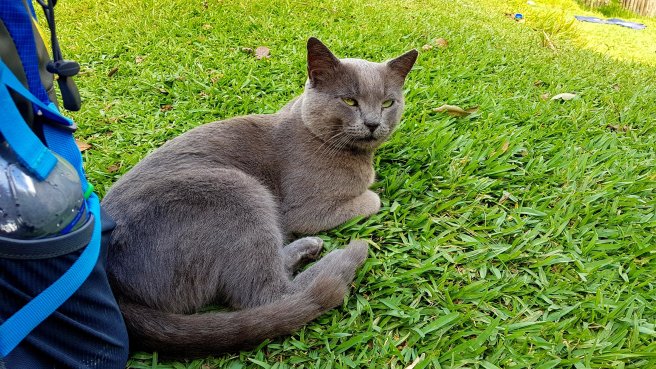
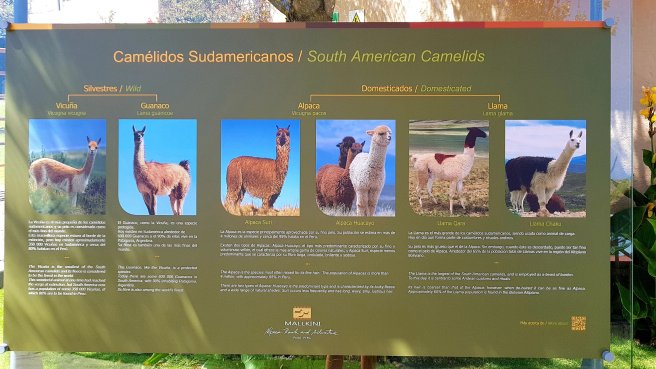
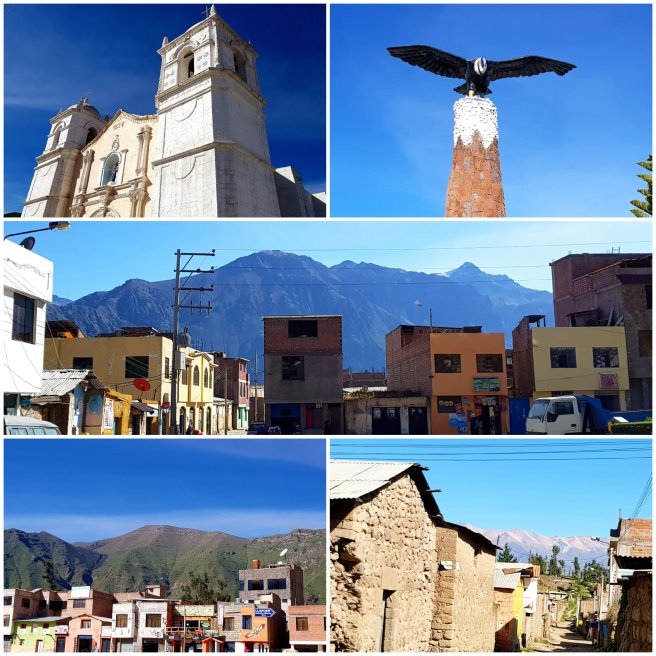
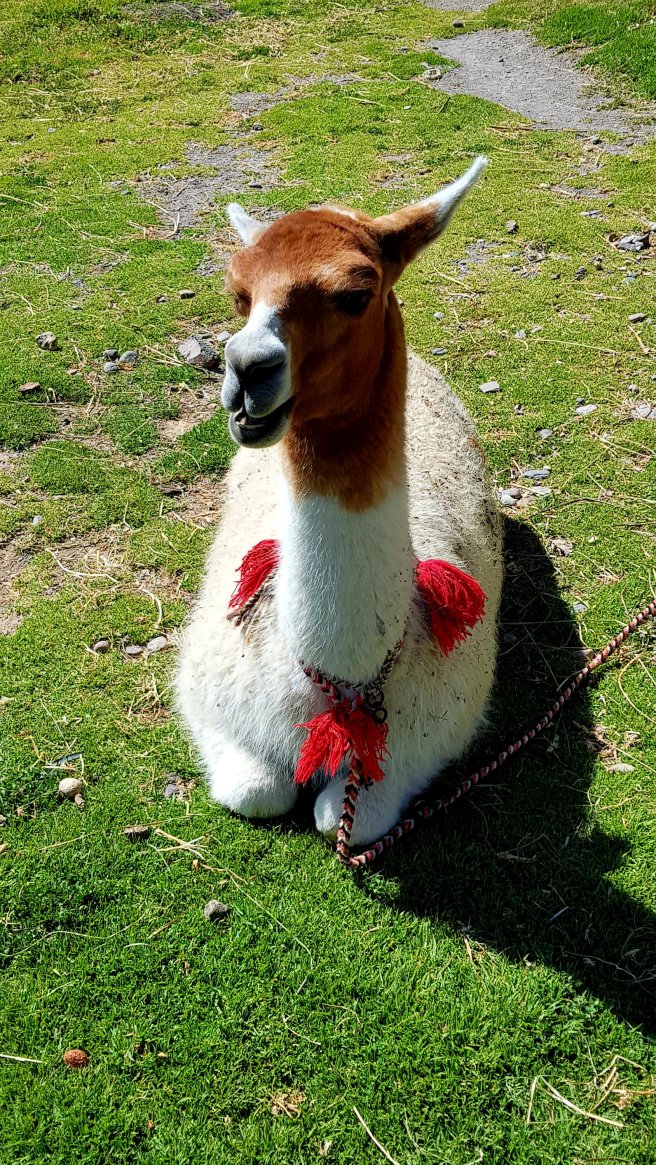
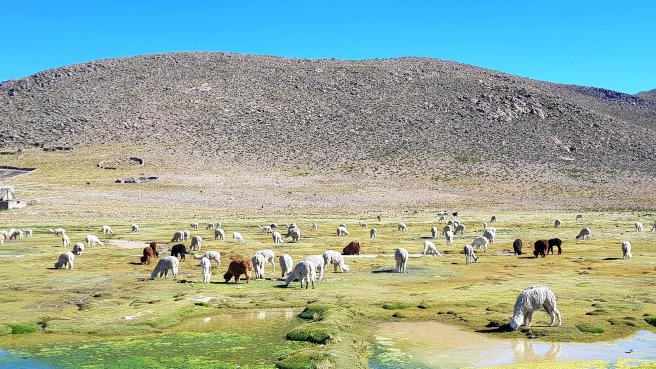
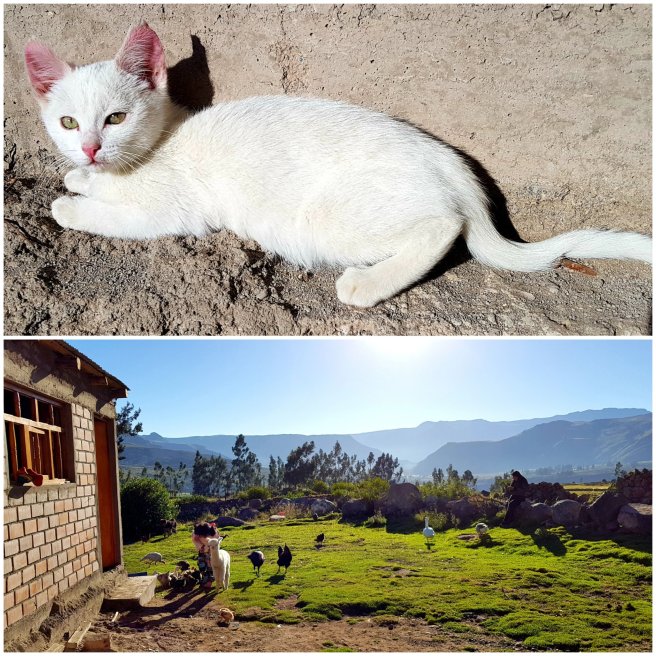
We drove for around 3 hours, during which everyone tried to sleep but the minibus wasn’t that comfy, to a place called Chivay where we had to pay our entrance fee to the park. We then drove a little bit further to a place just outside of Achoma where we stopped for breakfast. It was a nice place with a baby pet llama and a cute white kitten.

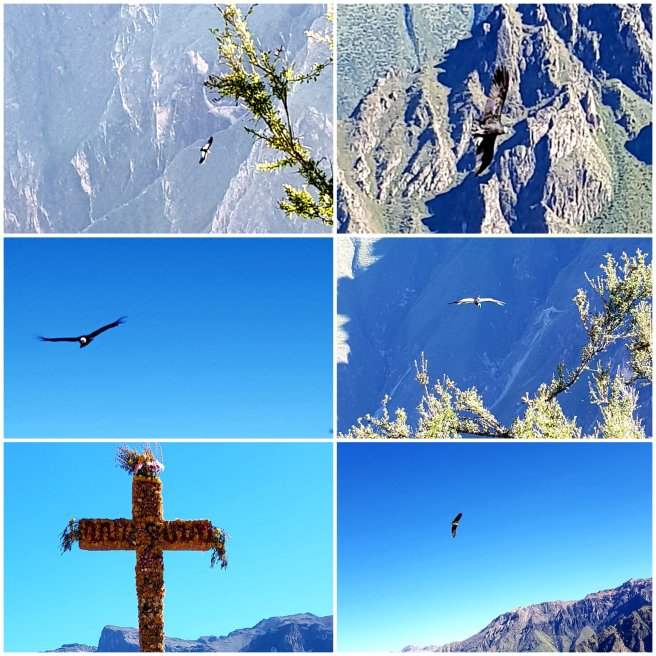
After breakfast we drove a short distance to the Cruz del Condor, basically the lookout point to see the famous condor birds which can have a wingspan of around 3m. We were not disappointed and we saw quite a few of the condors flying around including the younger brown ones as well as the black and white adults. We were really lucky as a couple of them actually flew over our heads so you could see them up close. They are very majestic birds. I have quite a few photos of them, mainly at a distance, but here are just a few.
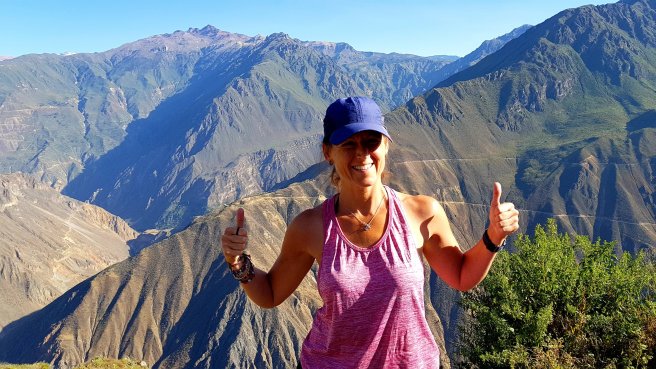
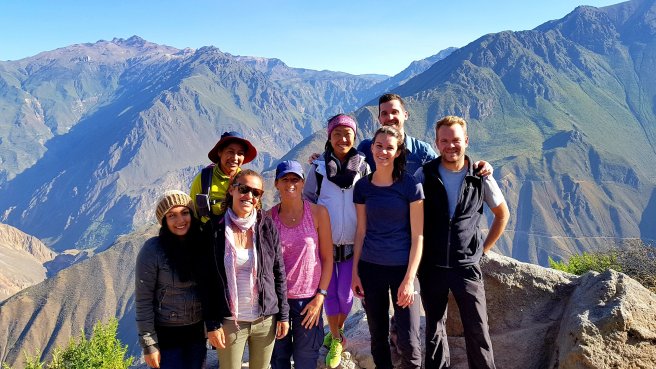
It was then back on the bus for a short trip to the start of the hike. Here I rented some bamboo walking sticks as recommended by our guide, Raquel. There were 7 of us doing the trek; Karsten and Jahn from Germany, Mara from Holland, Alex from USA, Marlene from Peru, Mina from Swizterland originally but now living in Indonesia and me.

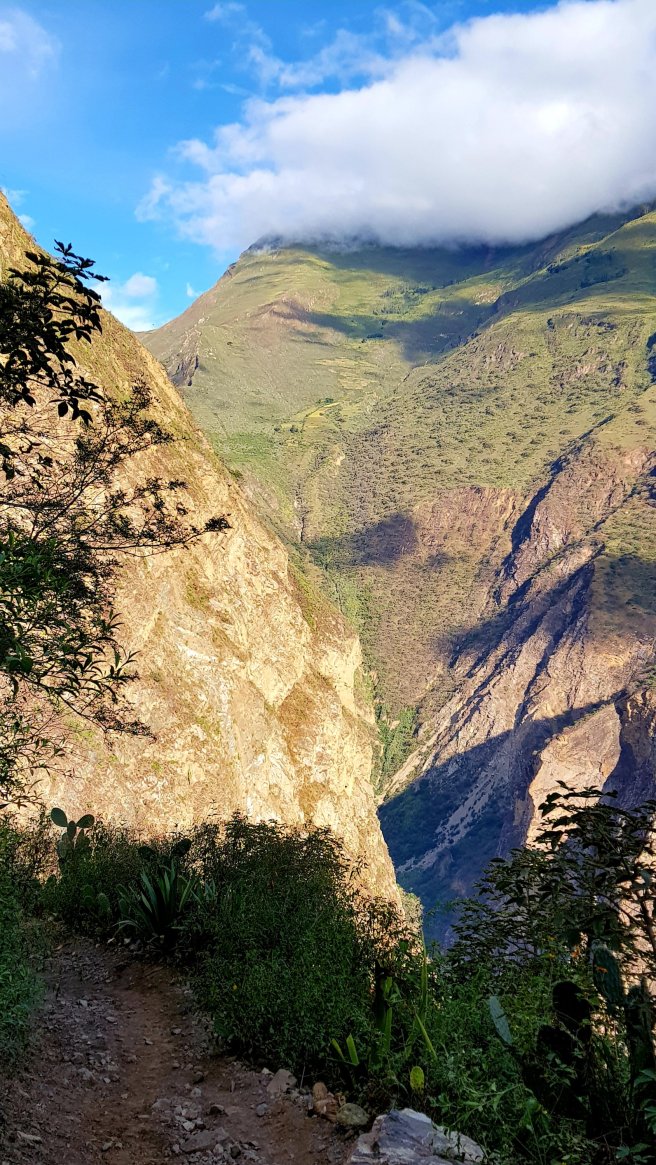
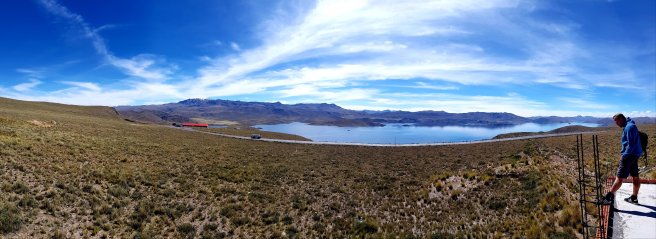
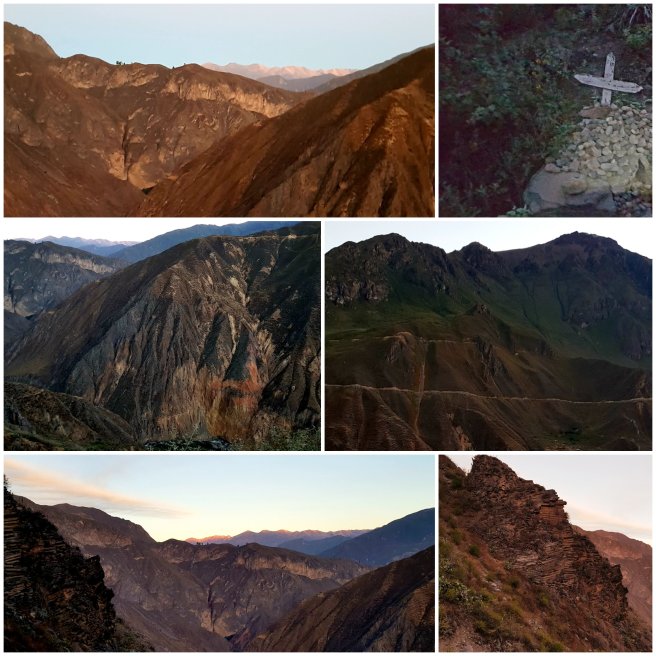
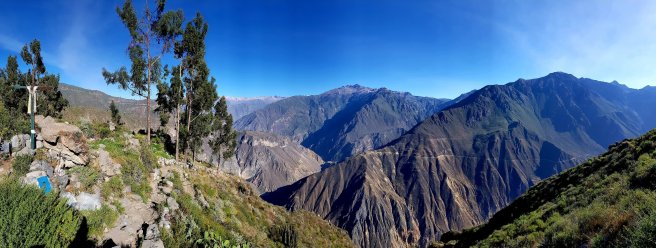
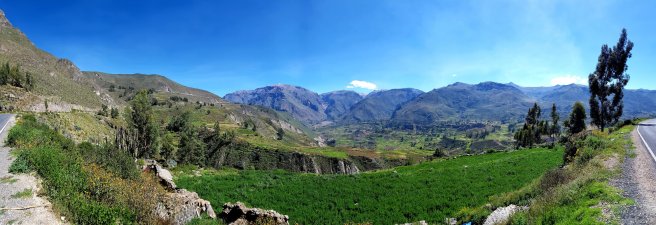
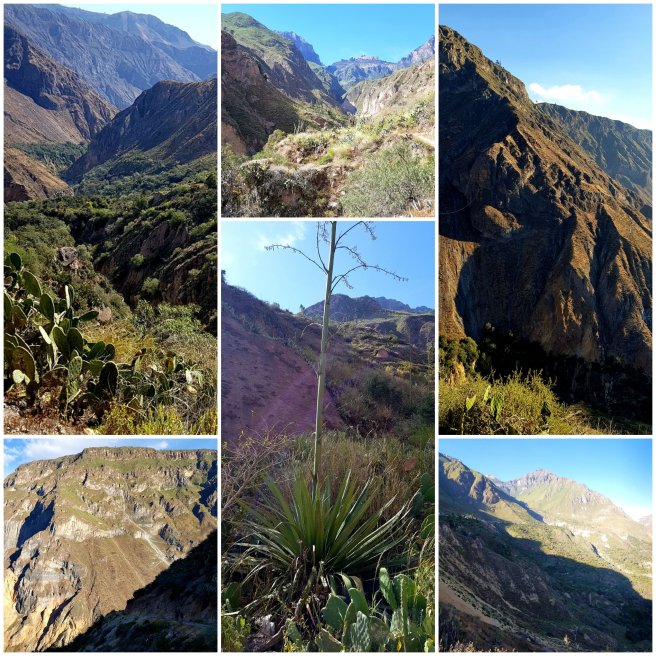
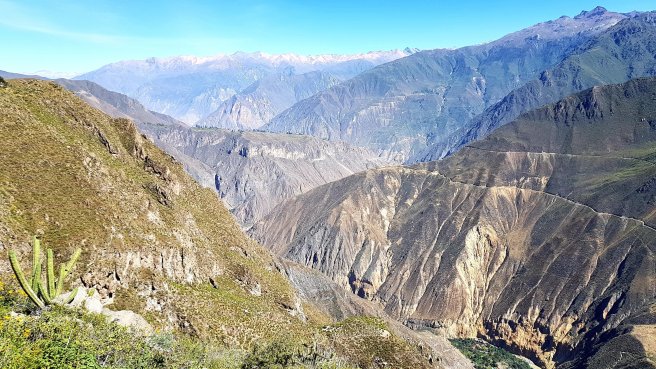
This was our first view of the part of the canyon we would be trekking.

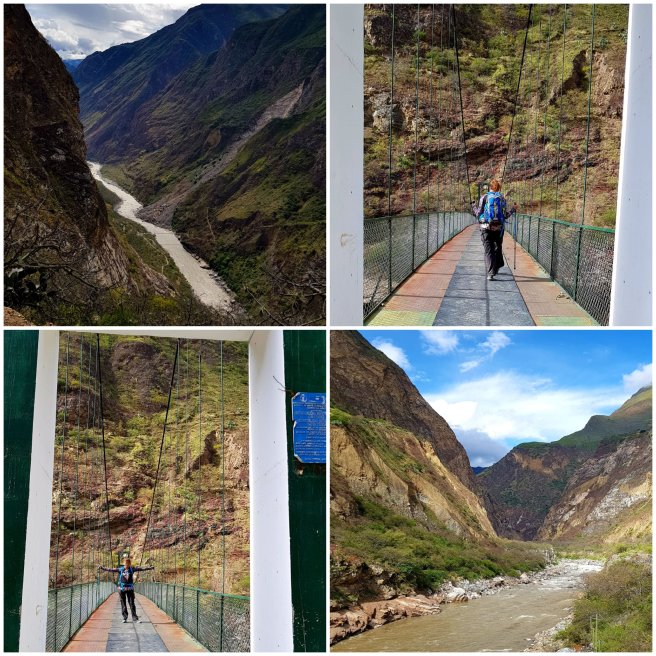
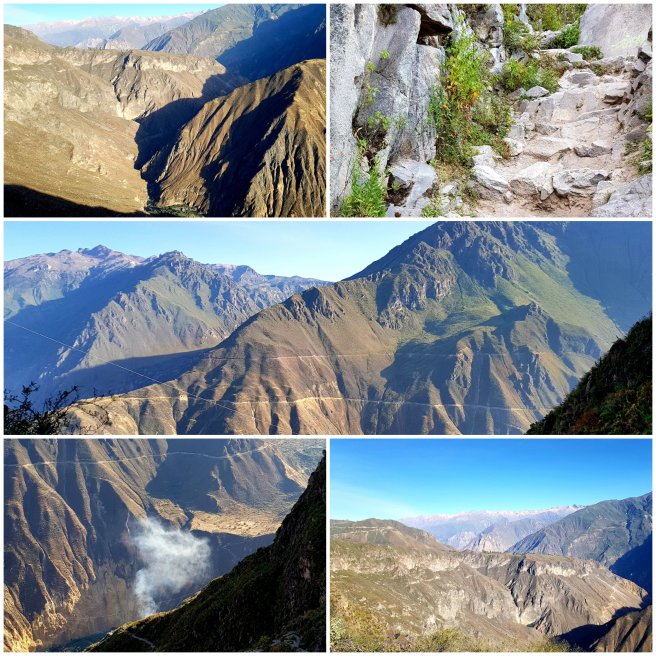
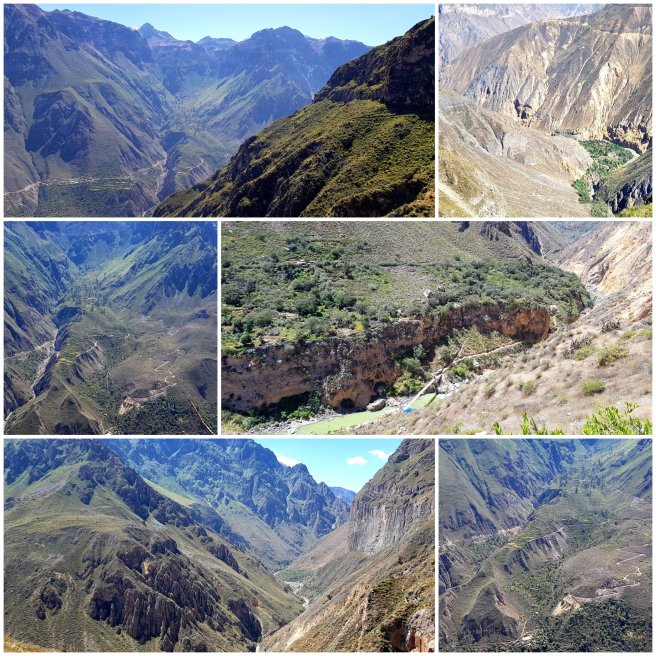
The Colca Canyon is the deepest canyon in the world, it has a depth of 4,160m. It is not as long or wide as the Grand Canyon. But it is impressive all the same and the views are beautiful.

So we started trekking. The trek was mainly downhill but there were some uphill bits and occasionally a nice flat bit too. The terrain was mainly rocky, stoney and sandy which actually made it quite easy to slip. We trekked down from 3,300m to around 2,100m to a small place called San Juan de Chuccho where we stopped for lunch.

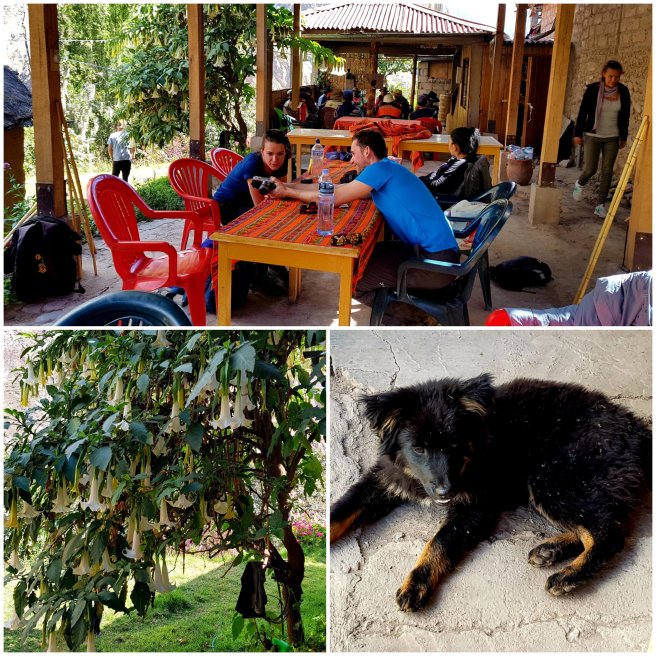
The lunch was good home made food. The tree in the picture is very poisonous and some people have taken it as a drug but it makes people do crazy things like kill themselves or kill other people. The puppy was at the lunch venue and he was so cute. He had grass burs all over his fur so I spent some time trying to pull them out.

After lunch we had been told it was downhill all the way but that wasn’t quite true. We walked uphill for about an hour before we started the trek downhill to Sangalle where we would be spending the night.

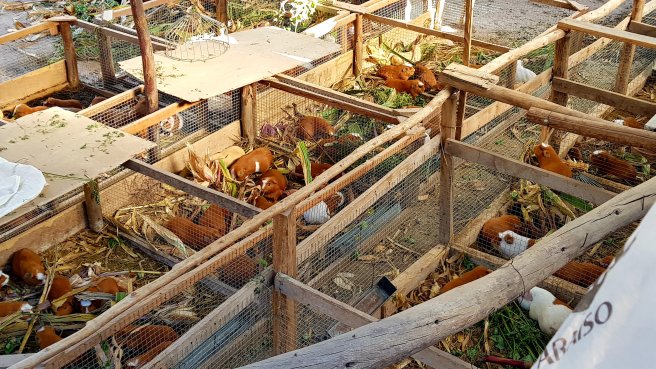
On the way down we stopped off at a guinea pig farm to buy some extra water. It was quite sad to see all the guinea pigs, but as I’ve eaten one before I can’t really say anything.

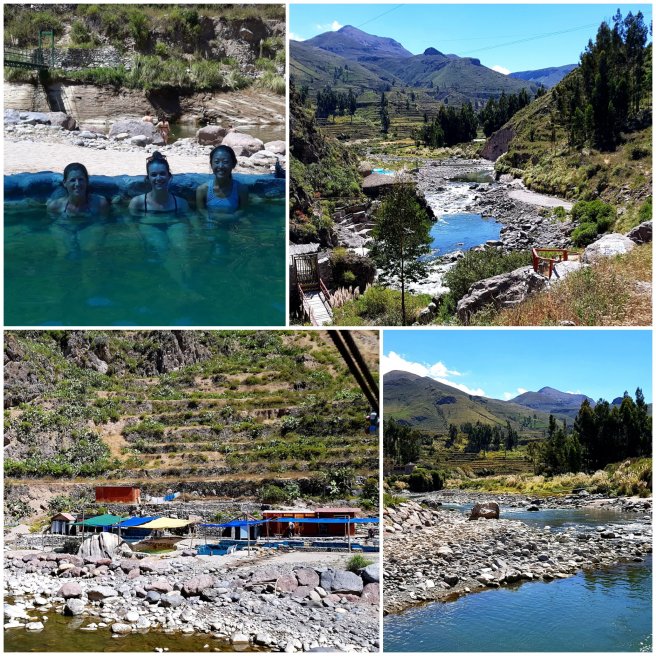
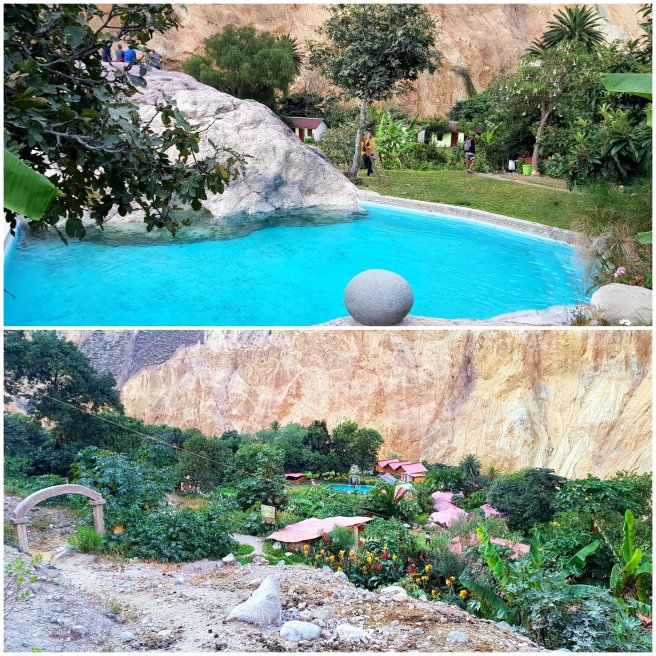
Sangalle Oasis is at around 1,900m and has a range of rooms and swimming pools. We did try the pool and although it wasn’t freezing it was pretty cold. But as the shower was roughly the same temperature it was ok.

After the sun went down it got pretty cold. All us girls just stayed in the room chatting and chilling until it was time for dinner which was soup and spaghetti bolognese. It was filling as there was plenty of it. After dinner we were so tired and after buying water for the next day, we all went to bed. The rooms were very basic but at least the beds were warm and pretty comfortable.

Arequipa day 2

Today was a more productive day. After a delicious breakfast I headed to the supermarket to buy my water and snacks for the 2 day canyon trek I’ll be starting tomorrow.

I then went to the Museo Santuarios Andinos. This is a museum which tells the story of the offerings the Incas made to the mountain gods. The offerings were young children between the ages of 6 to 15 who had been chosen to be sacrificed. For them and their families it was seen as an honour as the child, once dead, would be living with God’s and almost be like a deity themselves.

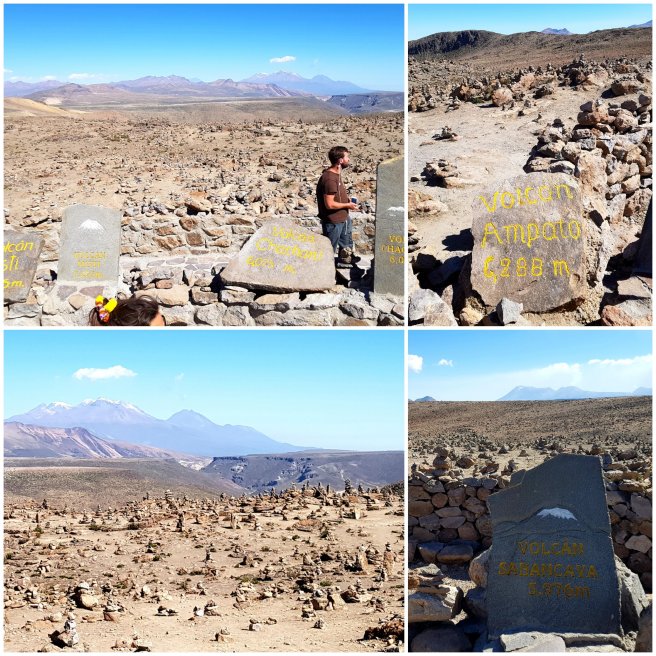
The visit began with a 20 minute film in English which talks about how some of the bodies on Ampato volcano were discovered. At the time of the sacrifices the mountains were not covered in snow but not long after the sacrifices the snow came and covered and preserved the bodies. As nearby volcanos erupted the snow melted and the bodies were discovered. The bodies that have been found are not mummies and they have not gone through a mummification process – they are basically frozen in time. One body of a young girl is the best preserved body in the world. Her name is ‘Juanita’ and she is known as the ice maiden. The body is over 500 years old and was discovered at over 6,000m in 1995. Her body is normally on display in the museum but it’s currently in the laboratory for preservation work so we saw the body of another young girl, Sarita, who was found on Sara Sara mountain.

The museum also has displays of many of the artefacts found with the buried children. Some of them are also really well preserved.

The ceremony was performed every 4-7 years in response to.problems such as earthquakes, volcanic eruptions, drought etc. The children would be chosen from across the Inca empire and they would walk to the chosen mountain with the priests who would perform the ceremony, the walk could sometimes take months. They were given a drink of fermented corn laced with hallucinogenic drugs, wrapped in blankets and then killed by being struck on the head with a mace with spikes on it. Pretty brutal.

In total 18 bodies of children have been found across the mountains in South America. No photos I’m afraid as no cameras were allowed.

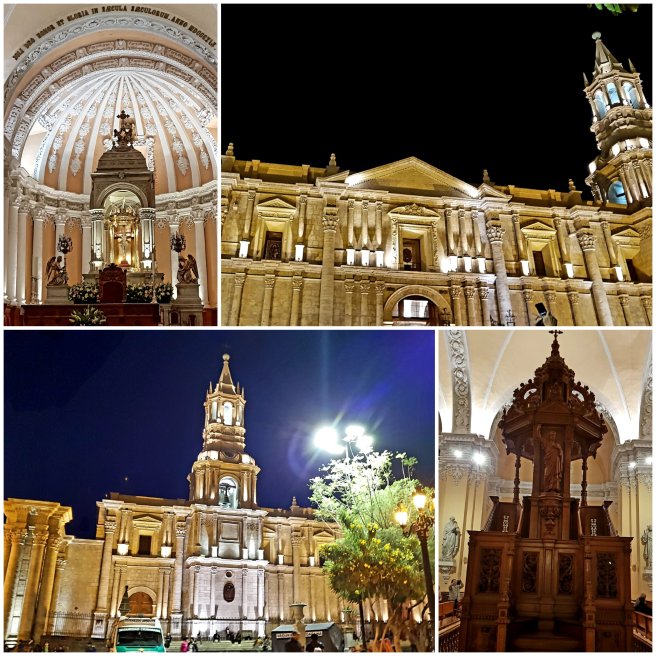
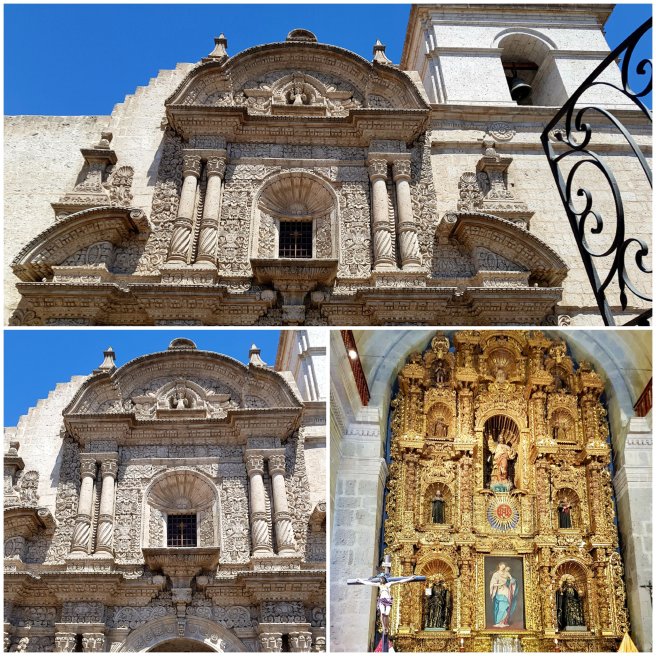
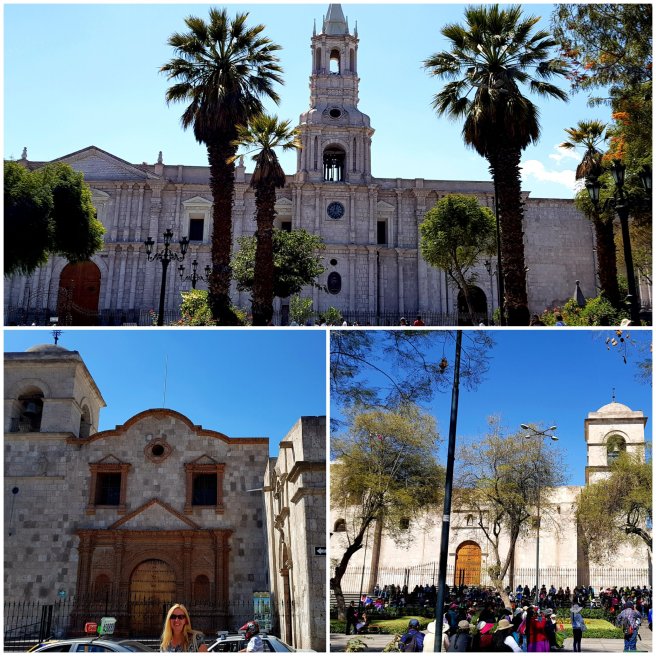
After the museum visit I went and bought a suitcase and took it back to the hotel before heading out to look at Iglesia de la Compañía, which is a beautiful church just near the main square.

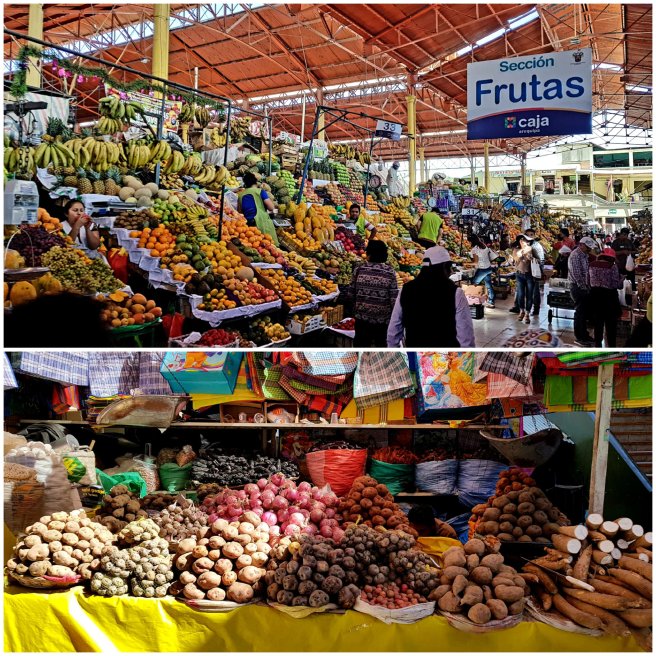
I then walked on to San Camilo market which is a huge market that sells absolutely everything. The range of different potatoes they have for sale was huge.

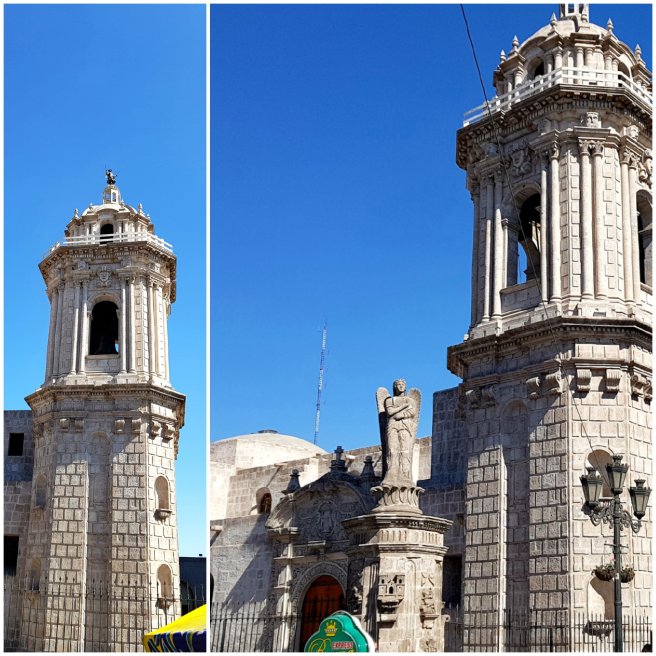
I then walked onto another church, Santa Domingo, but unfortunately it was shut but the outside was pretty impressive.

Back at the main square I tried some cheese ice cream, it actually was really nice, mainly vanilla flavour with some cinnamon sprinkled on top. It’s made with cheese and milk but doesn’t actually taste of cheese.

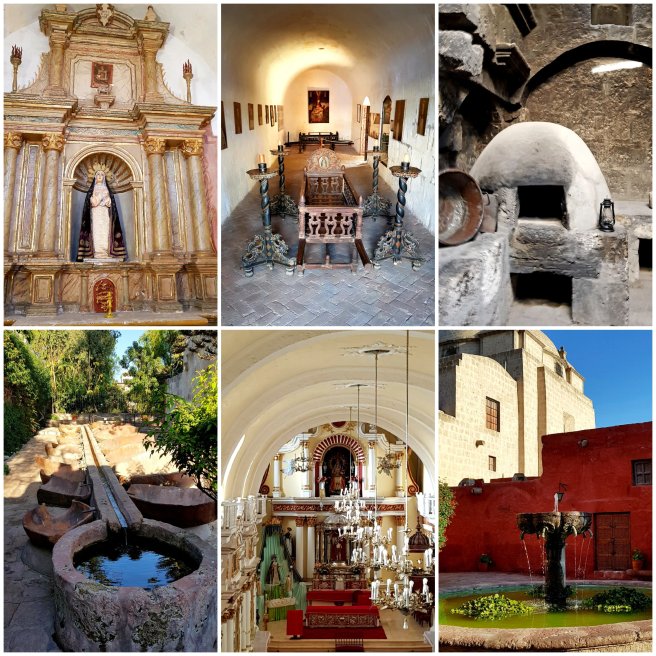
I then decided it was obviously a church day so I went to see the Santa Catalina Covent. This is a huge Covent also constructed from the volcanic rock sillar. Some serious earthquakes have caused damage to the structure but it has mainly been restored and you can walk around and see the rooms the nuns used to live in. They led very isolated lives and had little or no contact with the outside world. A handful of nuns still live in the convent but in a more modern building. The Covent has it’s own city inside it – it’s pretty amazing to see.

The photos below are of the novice chapel, the profundis room where the nuns were laid out before burial, a kitchen in one of the rooms, the laundry system, the main church and the fountain in one of the squares.

The original convent was built in 1578, 40 years after the Spanish arrived in the city. One of the most ‘famous’ nuns from the Covent is Blessed Sister Ana who was beatified in 1985 by Pope John Paul II.

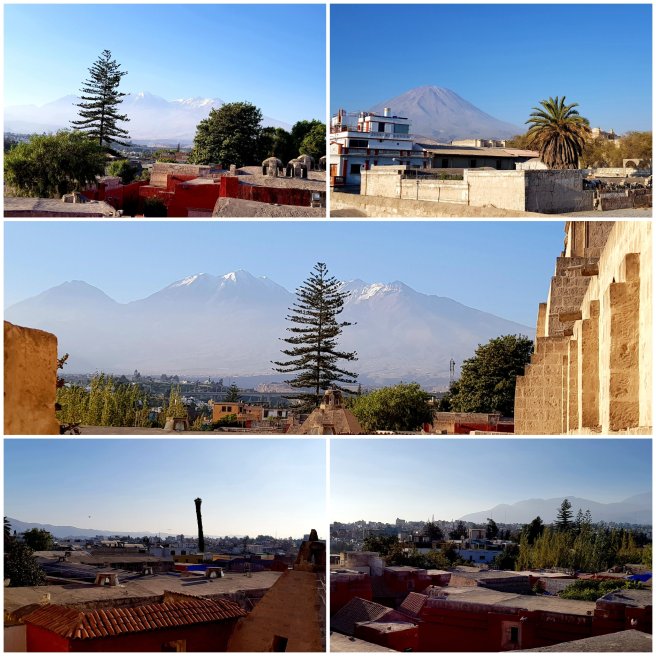
The views from the top of the cathedral with the volcanos in the background were pretty good too.

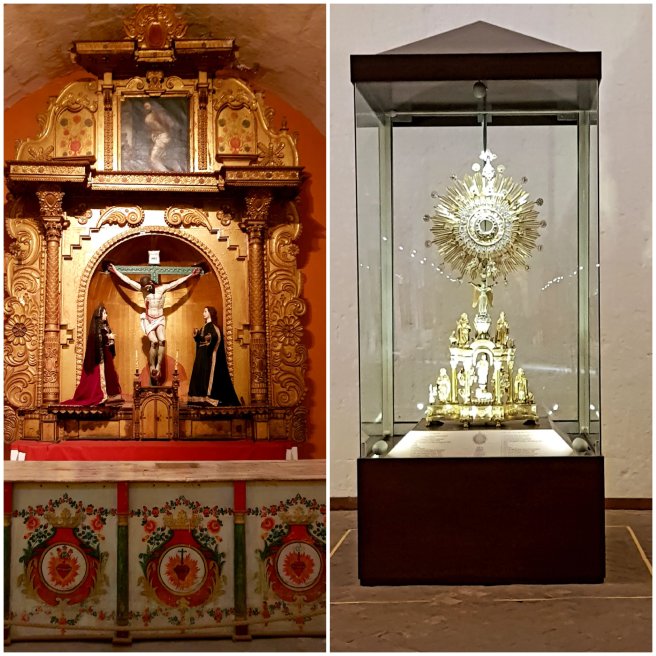
On the way out their is an art gallery where they had a lot of paintings but also some other artefacts.

After the convent I headed home and packed my new suitcase and also my rucksack for the two day trek. I ate at the hotel restaurant and am going to have an early night as I will be picked up at 3am tomorrow!

Arequipa day 1

We arrived into Arequipa at around five in the morning. I hadn’t slept hardly at all on the bus so I was completely shattered. The bus stopped right outside my hostel and luckily I could go straight to my room, unpack a little bit and then go to sleep.

I woke up just in time for the end of breakfast, which was a lovely buffet style breakfast, one of the best ones I have had in a long while.

I arranged to meet Alice in the main square around midday and we walked around the town for a couple of hours, browsing the shops and looking at some of the sights.

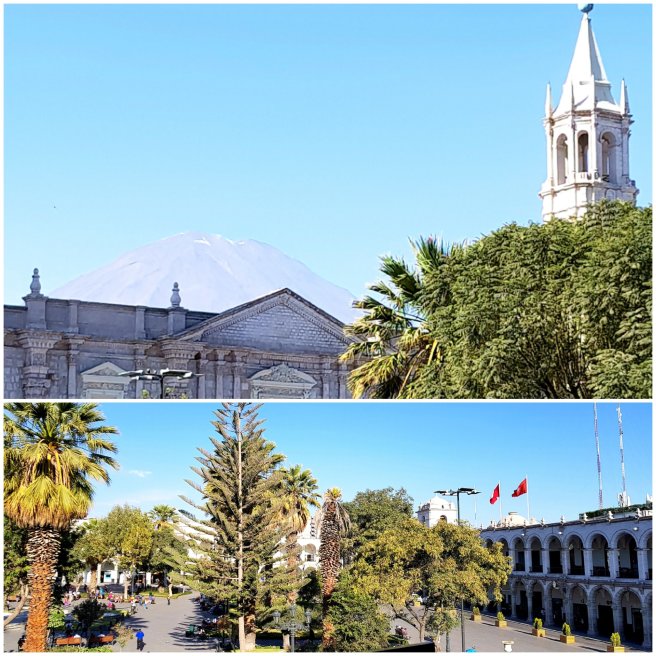
Arequipa is only at 2,380m so you can actually walk around without getting out of breath which is really nice. It’s called the ‘white city’of Peru because many of the buildings are built from sillar which is a white stone. This stone is quarried from the many volcanos that surround the city – there are three main ones, Misti, Chachani and PichuPichu.

After we wandered around for a bit and bought a couple of things, we went back to the main square and had lunch in one of the upstairs restaurants. From here you could see the Misti volcano in the background and also look down on the government buildings.

We decided it was a nice spot so we had a couple of Pisco Sours, chatted and watched the world go by. We then wandered to the supermarket so Alice could get some snacks for her trip tomorrow, which I’m actually doing the day after.

So it was a very relaxing day for me. Tomorrow I think I am going to buy a suitcase so I can start to buy some things to take home with me.

Floating Islands and Isla del Taquila

Today I was up and ready for breakfast at 615am! The Peru hop minibus came and picked me up around 7am and took us to the pier in Puno where we met our guide Hugo Saul. As we got into the boat I saw Alice from England too, a girl I met yesterday on the bus from Copacabana, so we sat together and chatted.

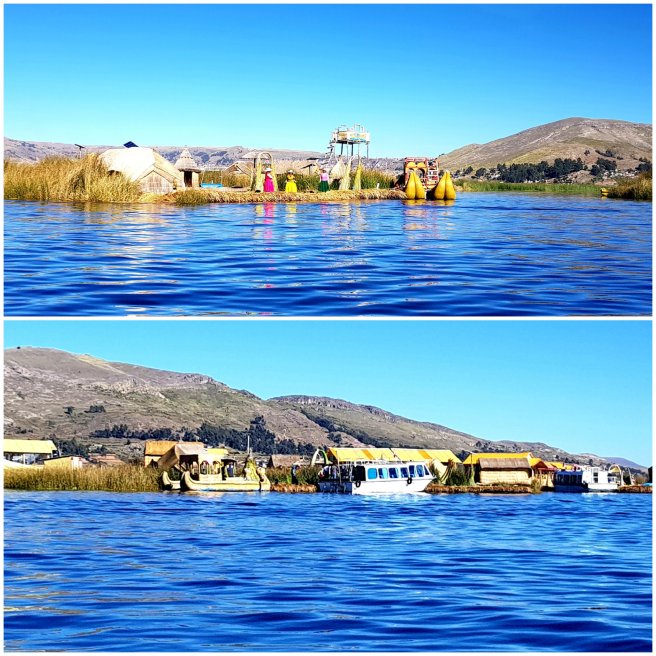
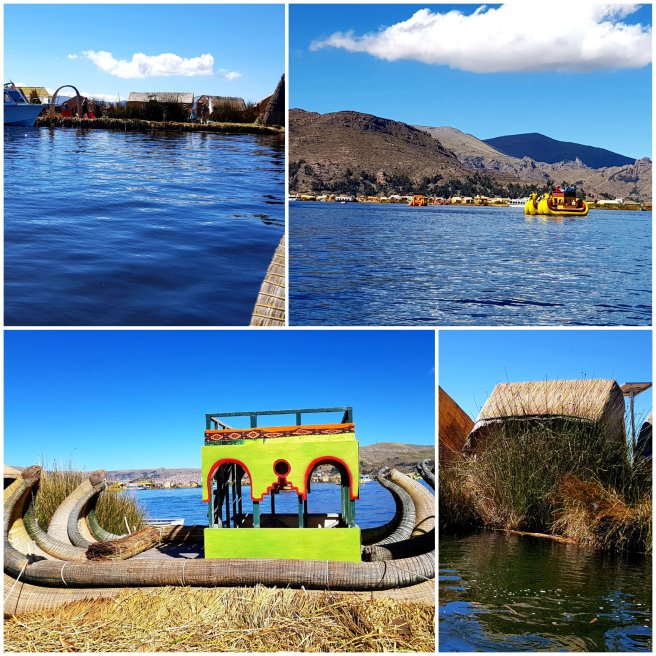
After about 20 minutes in the boat, around 5km from Puno port, we came to an area that was full of reeds and then we saw the floating islands of Uros.

There are around 42 islands in total, some much larger than others and they are at 3810m above sea level.

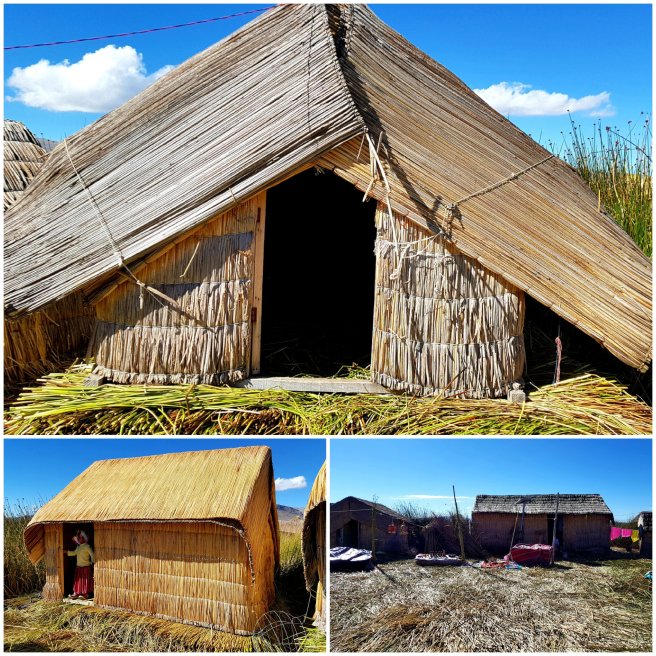
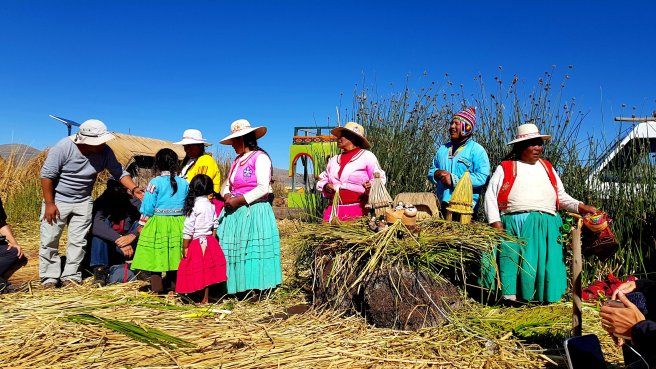
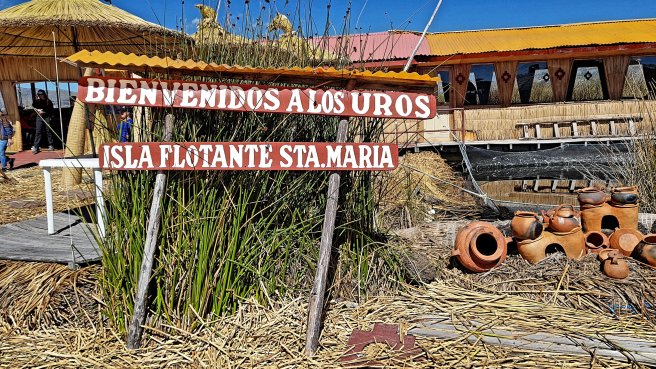
We stopped and got off at one of the smaller islands which had 25 inhabitants across 5 families. It was really wierd walking on the reeds as your feet sunk in a little bit and you could feel the island move in the water.

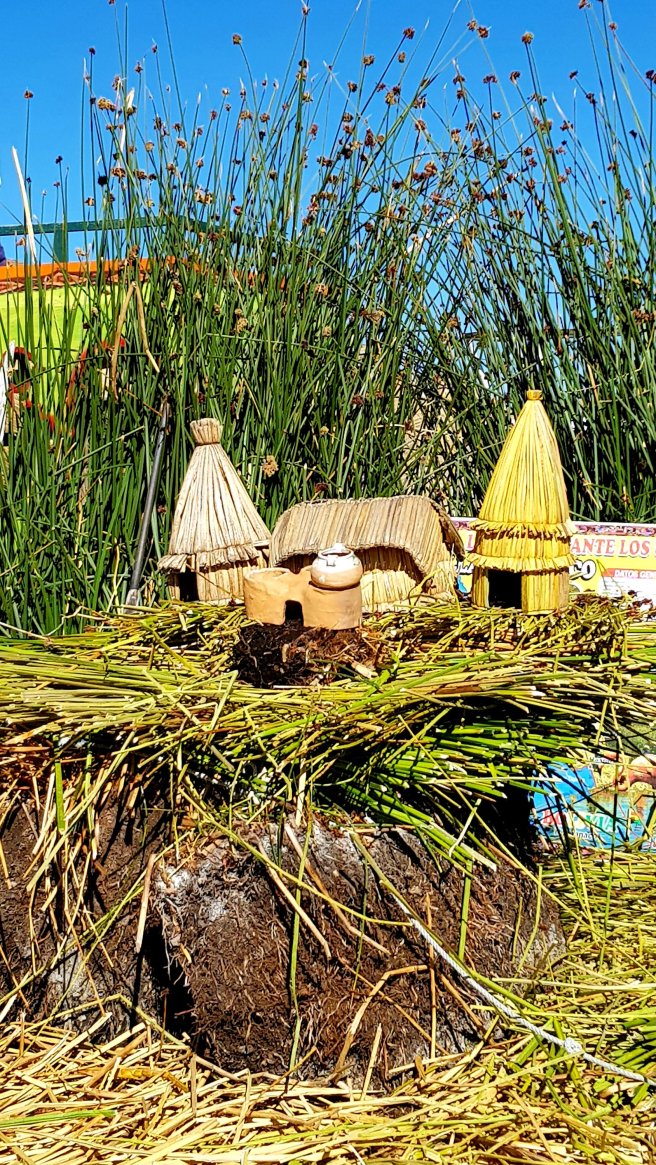
Our guide, with the help of one of the local men, explained to us how the islands are built with a miniature model. Basically the roots from the reeds grow quite deep into the water and interweave to form a solid block. This is around 1-2m deep. Several of these blocks are brought together and anchored using eucalyptus sticks and then tied together with ropes. More reeds are then laid over the island to form a layer to walk on. Obviously over time the reeds dry out and break so every 3-4 months new reeds are placed on top. The reeds right underneath start to rot too as the moisture gets through to them. For this reason, every now and then they place more reeds underneath the houses too to lift them away from the moisture.

The people on the island were very welcoming and friendly. Obviously they make money from tourists as you pay an entry fee to visit the islands and they also sell textiles to tourists. It did feel a bit staged but it was still really interesting.

We took one of the massive reed boats to a more commercial island where there was a small cafe and more wares to buy. It was a very relaxing 20 minutes boat ride between the islands.

After the visit to these islands we then travelled onto Taquila island which took around 90 minutes. This island has no modern transport but also no mules or llamas so the people have to carry everything themselves. It’s one of the most famous areas for weaving and is around 12 square kms.

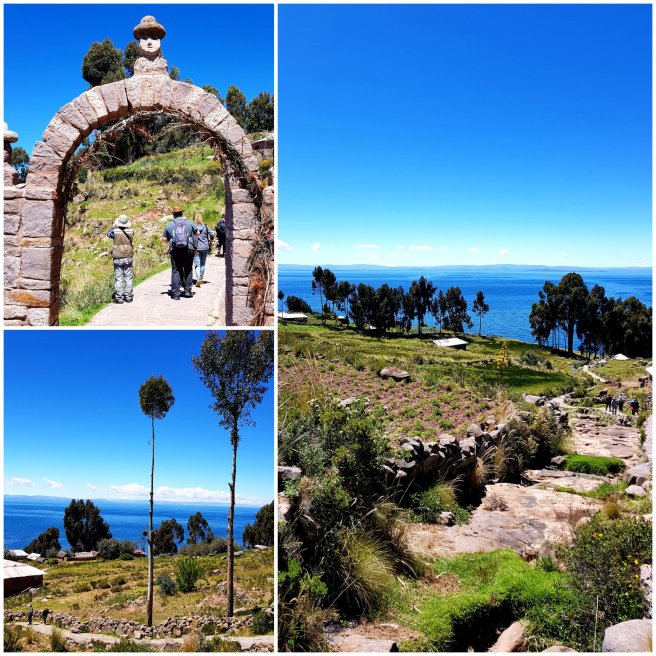
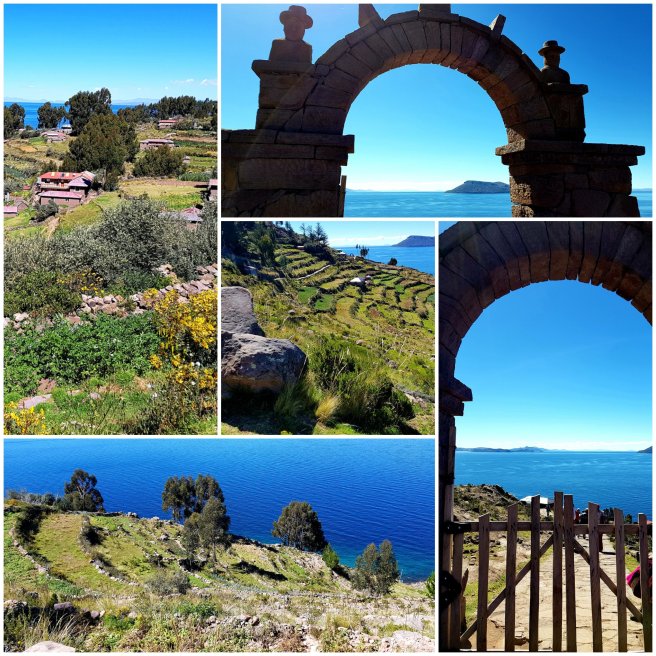
Taquila island is mainly used for agriculture and for that reason has many terraces to help with retaining the water when it rains.

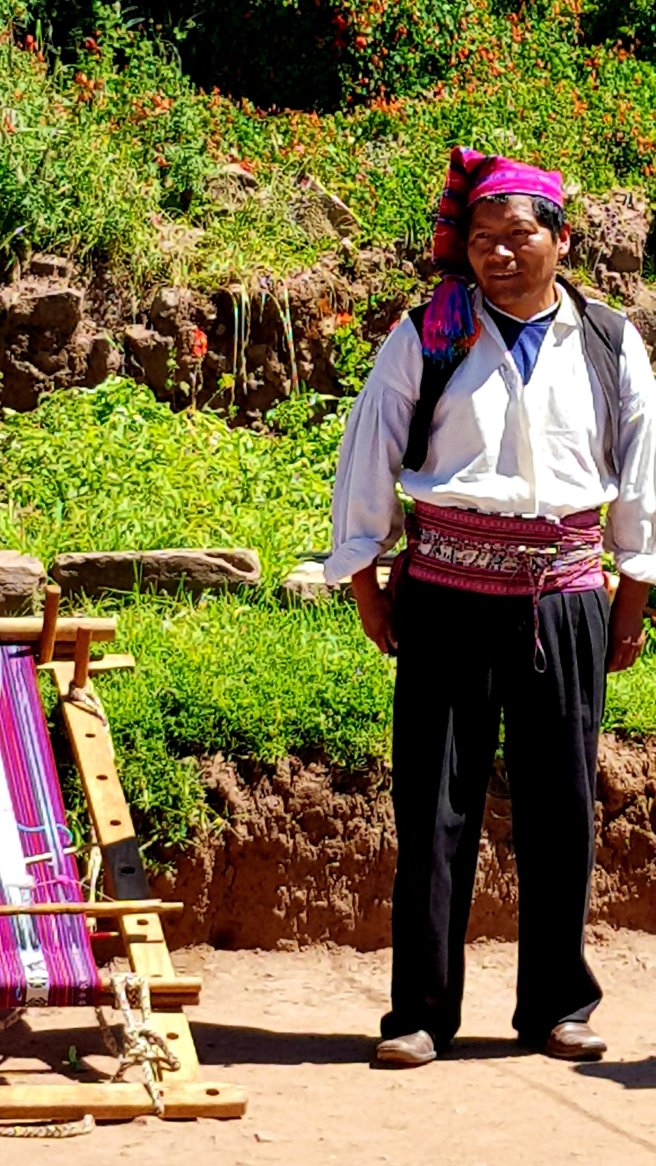
We walked uphill for around 10 minutes to a small family home where we had a delicious lunch of quiona soup and grilled trout. During lunch we learnt about the clothes that the men wore which included their matador type jackets adopted from Europe, their woven belts which are really strong so help support their backs when carrying heavy loads and their hats which differ if they are single or married or if they are a leader in the community.

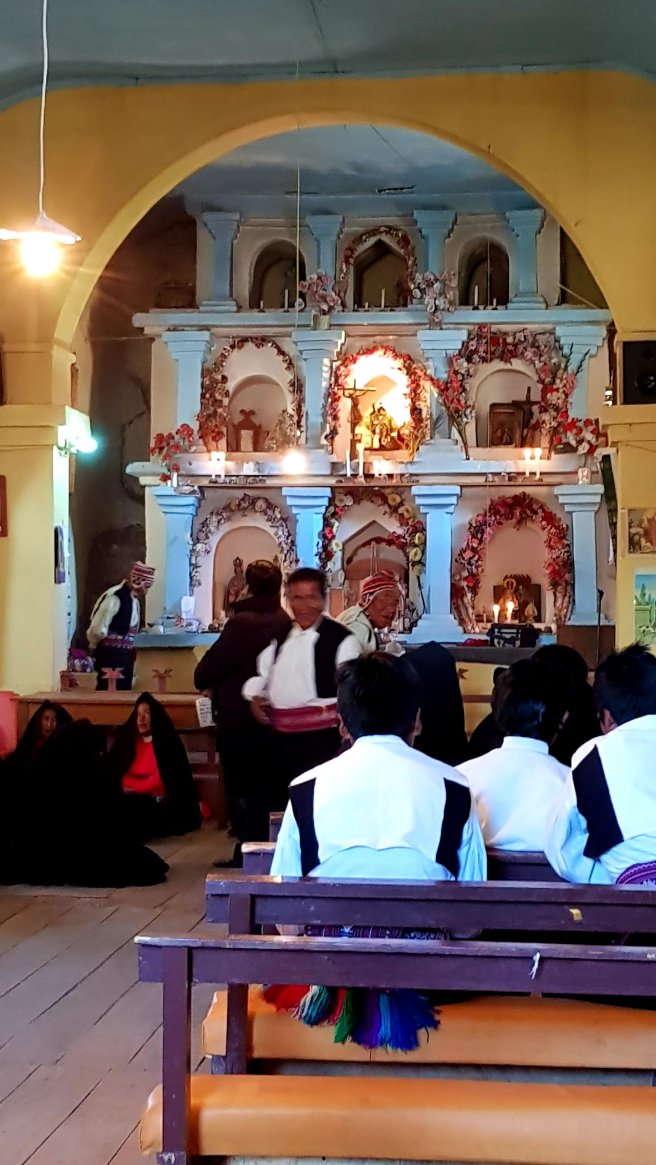
After lunch we then headed to the main plaza and visited the small church where there was a mass going on.

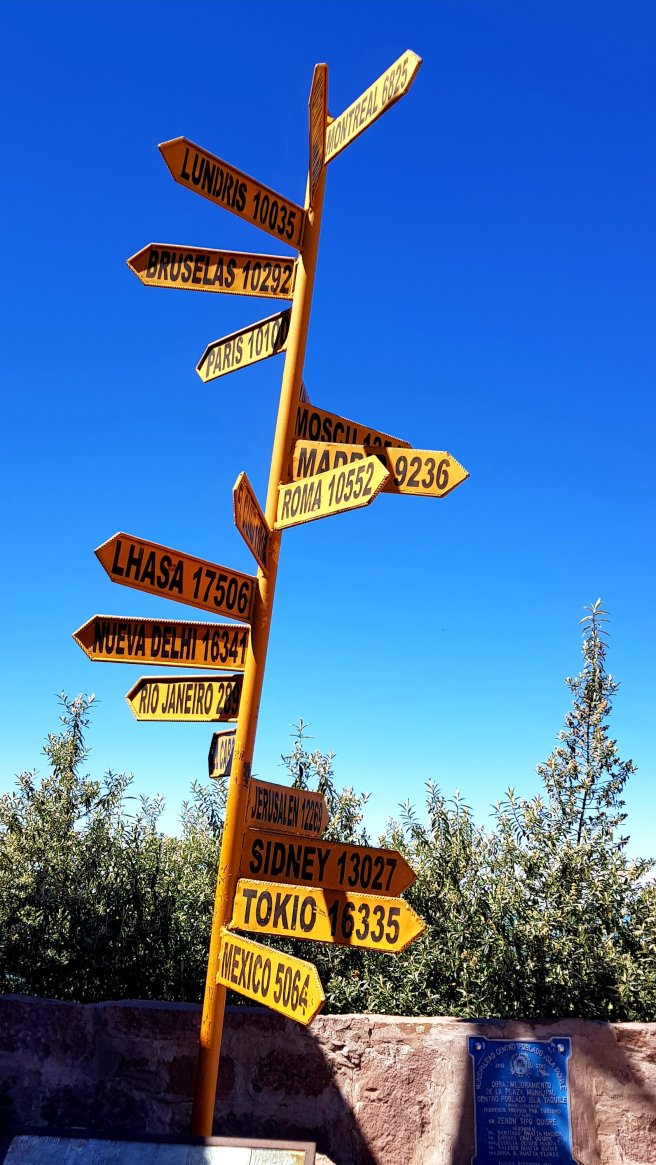
There was also a sign showing distances to some major cities.

After a quick puruse of the main square we headed over to the north side of the island.. It was a nice 30 minute stroll.

We got to the boat in plenty of time but one of our group had wandered off in the wrong direction after the visit to the main square so we all had to wait around an hour until he was found. Eventually he was so we sailed back to Puno.

We were dropped back at our hostel and I’d arranged to meet up with Alice for some dinner. We went to a really lovely restaurant Majosa where I had alpaca and Alice had guinea pig, we also shared a bottle of lovely red wine. We had a really good conversation about loads of things and then I had to leave to catch my bus to Arequipa.

It turned out that Alice was on the same bus! At around 1130pm we had to swap buses which was a bit of a hassle, especially as the seats on the first bus were much more comfortable.

Copacabanna

This morning I woke up and then had a snooze as there was no rush to do anything. I had a leisurely breakfast and then checked out of the hotel.

I decided to climb Cerro Calvario. To get to the start of the climb you go past a small church.

A bit further on you come to the start of the stairs which take you to the top as you walk past the stations of the cross.

Being at altitude the climb is pretty hard going. Around a third of the way up there is a resting place, although I rested a couple of times before this. It’s also a place where the locals carry out rituals as well as a great viewpoint. It’s called Mirador Sagrado Corauon de Jesus.

So after a long rest I tackled the rest of the hill. The top of the hill is at just over 4,000m and the views of Copacabana are fantastic.

Some people are buried at the top of the hill and there are a number of shrines along the side. There are also stalls selling goods to tourists. When I went up it was pretty quiet.

I spent a bit of time at the top as it was a lovely sunny day. And then I headed down again. This is one of the views looking back up.

When I got back into town I wandered over to see Basilica Virgen de Copacabana. This is a very impressive building from the outside and the inside is stunning, lots of gold and intricate artwork. You weren’t allowed to take any photos inside unfortunately and there were security guards who made sure you didn’t. I also visited the chapel of candles which was basically a place you went to to light a candle and say a prayer.

The photo below shows the hill I climbed in the background.

After all this exercise I needed some refreshment so I went back to stall number 12 and had more grilled trout, this time with lemon. It was delicious.

I then changed up some money from Bolivianos to Peruvian Sold before heading back to the hotsel.

At the hostel I just chilled and read my book and ocasdinally petted one of the pet alpacas who were wandering around freely.

Around 4pm I sorted out my bags and had a cuddle with this little guy, before heading down to the White Anchor to catch my bus to Peru.

At the meeting point I saw Adam and Louisa briefly, they were having a beer at one of the rooftop terraces above the road where I was waiting.

The bus journey to the border was around 20 minutes. We had to get off, take all our bags with us and get checked out of Bolivia. We then had to walk down the road and get checked into Peru – it all took quite a while and we are now a further hour behind.

In Peru we jumped on a different bus (Peru Hop) which took us to Puno. In Puno we transferred to a minibus that then dropped us off at our hostels. My hostel was really nice. I just sorted some things out for the trip tomorrow and then went to bed.

Isla del Sol again

The breakfast this morning at my hotel was amazing, it was huge so I managed to make a sandwich for lunch too and take an additional boiled egg with me!

After breakfast I met up with Adam and Louisa and we walked to the southernmost tip of the island. Currently you can’t go to the centre or north of the island as it is blocked off. There is some sort of conflict going on over tourism. I think someone started to build too close to one of the sacred ruins and then someone else blew up the building and now there is an ongoing conflict between the south and the rest of the island. It’s a shame as there are more Inca ruins in the north of the island.

We walked past the temple ruins again and a couple of ecolodges. We also made friends with some mules along the way. There are a lot of mules here as they are used to transport everything up and down the hills as there are no other means of transportation on the island.

Once at the tip of the island we had to backtrack a bit and then take a left to get to the southern lookout point. We passed some wierd wickerman like structure on the way.

We then walked all the way back to the top of the village where Adam and Louisa bought some take-away lunch. In total it was around an 8km walk.

We then decided to walk down to Playa Japapi. The walk down was lovely but when we walked back up that was a bit of a killer. On the way down a lovely dog befriended us and stayed with us all the time until we got back to the village.

On the beach we ate our lunch and then Louisa and I decided to go for a swim. It was freezing, the water was around 9 degrees. So the swim was very short. Louisa braved it a second time too. We did actually get all the way in and swim!

Now I can say I’ve swum in the highest navigable lake in the world as the lake is at 3,810m. It is also the largest lake in South America.

Once we’d dried off we then had to walk all the way back up to the top which was a difficult climb. But with a couple of stops on the way we made it.

This was the walk we did.

I said goodbye to Adam and Louisa (again) and headed down to the port – going down the Inca stairs is so much easier than going up them!

I managed to just catch the 3pm ferry and I met a group of French travellers on the ferry and we chatted throughout the journey (in English).

In Copacabana I’d booked into the same hotel as before and picked up my bags. This time the room I have is up in the attic but really spacious, with a small conservatory and a great view of the lake. It’s a shame it was so cloudy tonight so you couldn’t really see the sunset.

This evening I ate at the hotel restaurant. I took a break from trout and had lasagne and salad. The food was delicious. I also tried the typical Concepcion wine which was actually really nice.

Isla del Sol

This morning I had a lie in and then had a lovely breakfast of egg and toast. It was so nice not to have sweet bread, sweet pancakes or cake for breakfast! This was the view from the dining area.

After I had checked out and left my luggage in storage I just chilled in the garden of the hostel. They have pet llamas.

Around midday I met up with Adam and Louisa and we went into town and bought our tickets for the boat to Isla del Sol leaving around 2pm.

We decided to have lunch at one of the small lakeside stalls. We had been recommended stall number 12 and it did seem to be the most popular. So we sat and ate more delicious grilled trout with a view of cerro calvario.

After lunch we set out on our boat trip to Isla del Sol which took around an hour or so.

According to Incan lore, Isla del Sol is both the birthplace of the revered Sun God and also the world’s first two Incas.

Legend has it that following a great flood, the province of Lake Titicaca was plunged into a period of great darkness. After many days the God Viracocha arose from the lake and travelled to Isla del Sol where he commanded the sun to rise. He also created the world’s first two Incas; Manco Capac and Mama Ocllo.

Our first stop was at the Pilko Kaina ruins. This is a two story high temple which was built into the side of a cliff twenty metres above the lake. It’s amazing how well.preserved the building is despite its age.

After a little while wandering around we hopped back onto the boat which dropped us at the port of Yumani.

To get anywhere from here you have to climb the 204 Inca steps. Normally this wouldn’t be too bad but at almost 4,000m it’s a bit if a struggle. But we all made it.

At the top of the steps the reward is the Fountain of youth. This is a natural water source that contains three separate spouts which the Incas refer to as ‘don’t be lazy, don’t be a liar and don’t be a thief.’ It’s believed that if you drink from the fountains water you will remain young forever. I gave it a go – no harm in trying!

Then it was onwards and upwards to the hotel. All the hotels are up the hill so you get amazing views of the lake. It’s quite a demanding climb.

The hotel I’m staying at is at 3,973m and my room looks over the lake and you can see Moon island too. The room with the orange dot is mine.

Around 530pm I wandered over to where Adam and Louisa were staying and we walked over to the west side of the island to watch the sunset. On the way we bought a beer each. At the sunset place we met up with another couple of English people and also a guy from Ireland. The sunset was beautiful.

As soon as the sun went down you could feel the drop in temperature so after a little while we went to the restaurant Las Velas which translates as The Candles. The restaurant is all lit by candles with no electric lighting.

All the food is cooked fresh once you order it so you have to wait up to an hour for your dinner to arrive but the wait is worth it. I had wild trout cooked in a white wine sauce with spices and herbs and it was so delicious.

Adam and Louisa had lasagne and cannelloni and they both said it was one of the best they’d had.

After dinner we walked back to our hostels using our flashlights but on the way we stopped to look at the stars – they look so much better when there is no light pollution around.

Rurrenabaque to Copacabana

Another early start and another visit to the French bakery for croissants.I got to the Amazonas airline office for 720am and then took their shuttle bus to the airport. It’s only a 20 minute journey. Check in was an experience. The airport is so small so they literally take your luggage, weigh it and tag it and then dump it on a cart which drives 5 minutes down the runway and it’s loaded onto the plane. Once you’ve checked in and been allocated a seat you then pay your airport tax and sit and wait in the waiting room which is basically a small shack!Our flight was supposed to leave at 855am but due to fog in La Paz the flight hadn’t even taken off at 9am. At 10am we were told the plane was due to take off around 1015am so would arrive around 1055am.Luckily the information was correct and all passengers and luggage were on board the plane really quickly and we took off around 11:15am. I’m glad it wasn’t delayed any further as I had a bus to catch in La Paz at 130pm.At the airport I got chatting to a girl called Mary from Belgium and found out she was planning to get the same bus as me to Copacabana.Once we arrived in La Paz, Mary and I shared a taxi to the bus station. The drop in temperature and rise in altitude was really noticeable!We had a quick lunch at the bus station where we bumped into Adam and Louisa who were also getting the same bus to Copacabana. It’s a small world when you’re travelling.The bus from La Paz to Copacabana has to stop at San Pablo de Tiquina to cross the Titicaca straits. Passengers get across on one ferry and the bus is transported across on another kind of ferry.Once on the other side in San Pedro de Tiquina we all got back on the bus and drove the last 45mins to Copacabana. Some of the views from the bus were spectacular.On arrival in Copacabana we all went our separate ways to check into our various hostels, but agreed to meet up later for drinks at sunset. This is the view from my room in the hostel.Around 615pm I wandered down to the white anchor to meet Adam and Louisa. As I was taking some photos I met another girl, Barbara from Austria, who then joined us for drinks and dinner too.We went to a rooftop bar to watch the sunset whilst sipping on a caiprainha.One of the traditional local dishes is trout, so we had some stuffed trout for dinner at a lovely maritime restaurant called La Orilla. The food was delicious.

Zipline through the forest canopy

This morning I got up early, grabbed a croissant from the French bakery and headed to the office for the canopy zipline.

At the office I met my guide, Emil, and then we headed to the river to go by boat to te jungle. Once we reached the jungle – it took around 20 mins by boat, we then had to trek to the first of the zipline platforms at around 3000m. The trek was up and down.

On the way we stopped at a viewpoint. The hills in the distance are the ones I ziplined through.

The zipline canopy was built by an American who promised to give any profit back to the local community at Villa Alcira. However, he didn’t keep his promise so in the end the local community hired a lawyer and won the case.

On the trek I got stung by a wasp in my ear, it was pretty painful. I’m not quite sure how it happened but I guess at some point I walked quite close to a bush and I heard this had buzzing in my ear – I swatted it and it stung me! Anyway, inwards and upwards.

Just before the first platform Emil showed me the technique to zipline successfully, sit down in the harness, cross your ankles, hold onto the short rope with your left hand and use your right hand for a brake when needed (You wear a special glove for this).

We arrived at the first platform and Emil explained everything again and then he ziplined down to the second storm. Once he was safely hooked on at the second platform it was my time to go. I was nervous but more excited. It was brilliant! This is the view from the first platform down to the second one.

And so it continued down across all 10 ziplined. Some of the lines were faster and longer than others. I loved it and you got such a good view of the forest from a completely different perspective.

These are some of the views from the different platforms:

At around platform seven, Emil told me how a guide had died last year as he forgot to unclip himself from the tourist so when the tourist started to go down the cable he got dragged along and he crashed into a tree and broke his spine. I made sure I was not clipped to Emil before he went down the cables!!

The whole experience was so exhilarating, I wanted to do it again as it was over so quickly. In total it’s over 1500m of cables and the fastest one is around 250m in 10 seconds!

On the way back we stopped at the lookout again and I ate the fruit of the cacao plant, the seeds are the beans that are them ground down to make chocolate so we didn’t eat these, just the fruit around them. Emil also cut down a couple of jungle oranges which were really juicy and sweet.

As there was only me doing the tour this morning we finished a little early and the boat wasn’t at the meeting point to pick us up. But Emil just flagged down another passing boat and we got a ride back to Rurrenabque.

This afternoon I just sorted out some accommodation trips and travel in Peru and spent some time reading by the pool. Obviously I swam a bit in the pool too.

This evening I had some fish at a nice restaurant and then went for a drink at one of the bars. The restaurant was really good for people watching. Practically everyone in Rurrenabaque has a motorbike or moped and quite often you see families of four or five on one bike. I’ve even seen pet dogs on them. And nobody wears any helmets or protective clothing.

I really like Rurrenabaque, it’s a really chilled, laid back place.

Jungle day 3

Today was an easier day. In the morning we made jewellery from seeds. We had to drill holes in the seeds using a fork and some of them were pretty tough. One of the red ones took me about half an hour as you had to also be careful you didn’t put too much pressure on and crack the seed. Once the holes were drilled we learnt how to weave them onto the thread and we made braclets.

We then used the stone of the jungle mango fruit, which is like a mini coconut, to make rings. You had to saw a piece off, cut out the middle, sandpaper it down inside and out, polish it and then rub it in ash to give it a final shine.

Here are the finished products:

We did also see some butterflies that fluttered around while we were working on our jewellery. There was also a wierd kind of grasshopper jumping around.

The resident cats were never that far away either.

After lunch I took some more photos of the ecolodge. I really liked the design of the toilets – basically they were snail shaped with the toilet in the middle and you just changed the sign when you went in to say if it was occupied or not.

Early afternoon we got the boat back to Rurrenabque. It was actually quite sad to leave the jungle – I’d really enjoyed being there.

After checking in at the Max Adventure office I headed back to the hotel for a much needed shower. I also dumped all my smelly wet clothes into the laundry.

In the evening Ditte, Heinrick, Katrin and I met up for dinner at Moskkito restaurant. I tried their pisco sour and it was really good.

And then it was time to say goodbye. I’m looking forward to seeing all Heinrick’s photos though as he had a really good camera and is a great photographer.