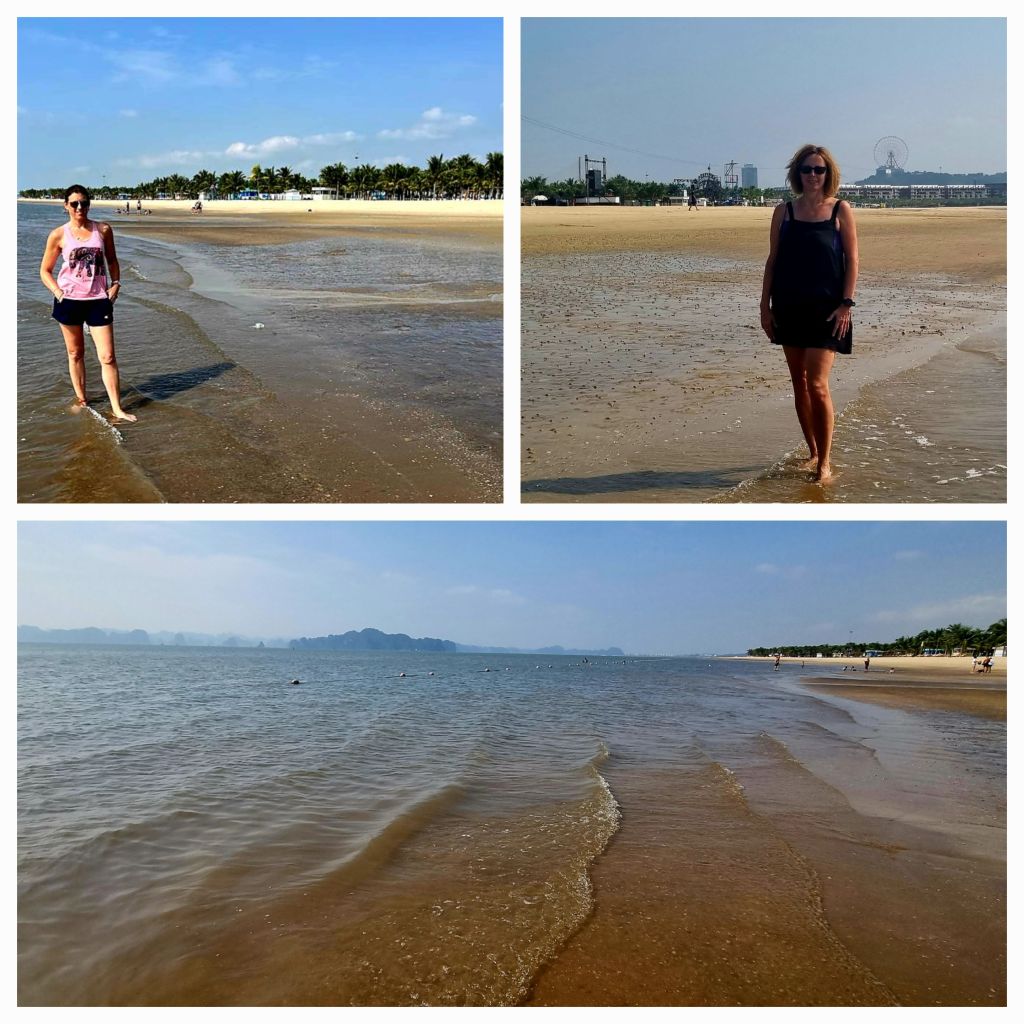
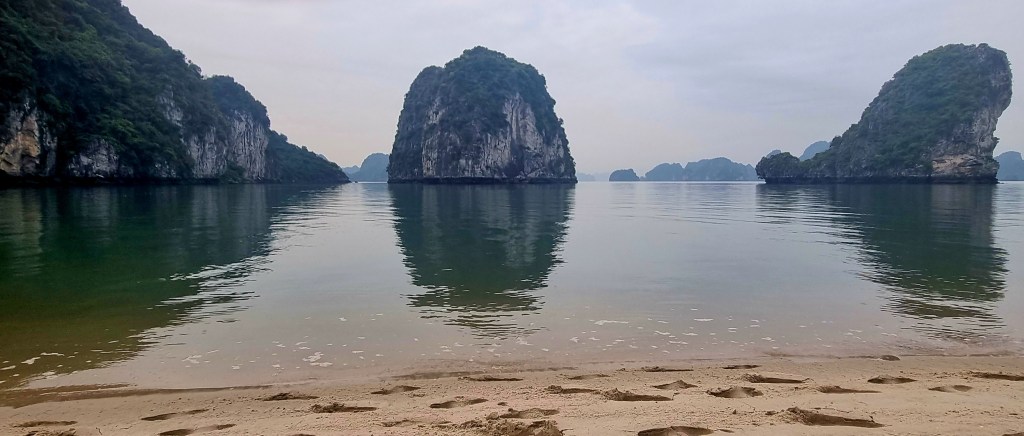
We weren’t leaving Halong until 11:30am, so after a bit of a disappointing breakfast, we headed to the beach.
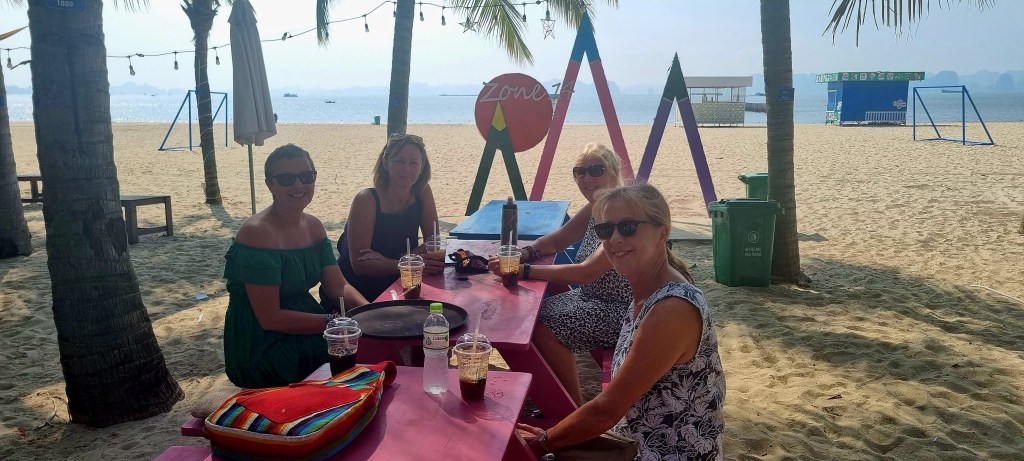
We ordered some iced coffees and soaked up the atmosphere.
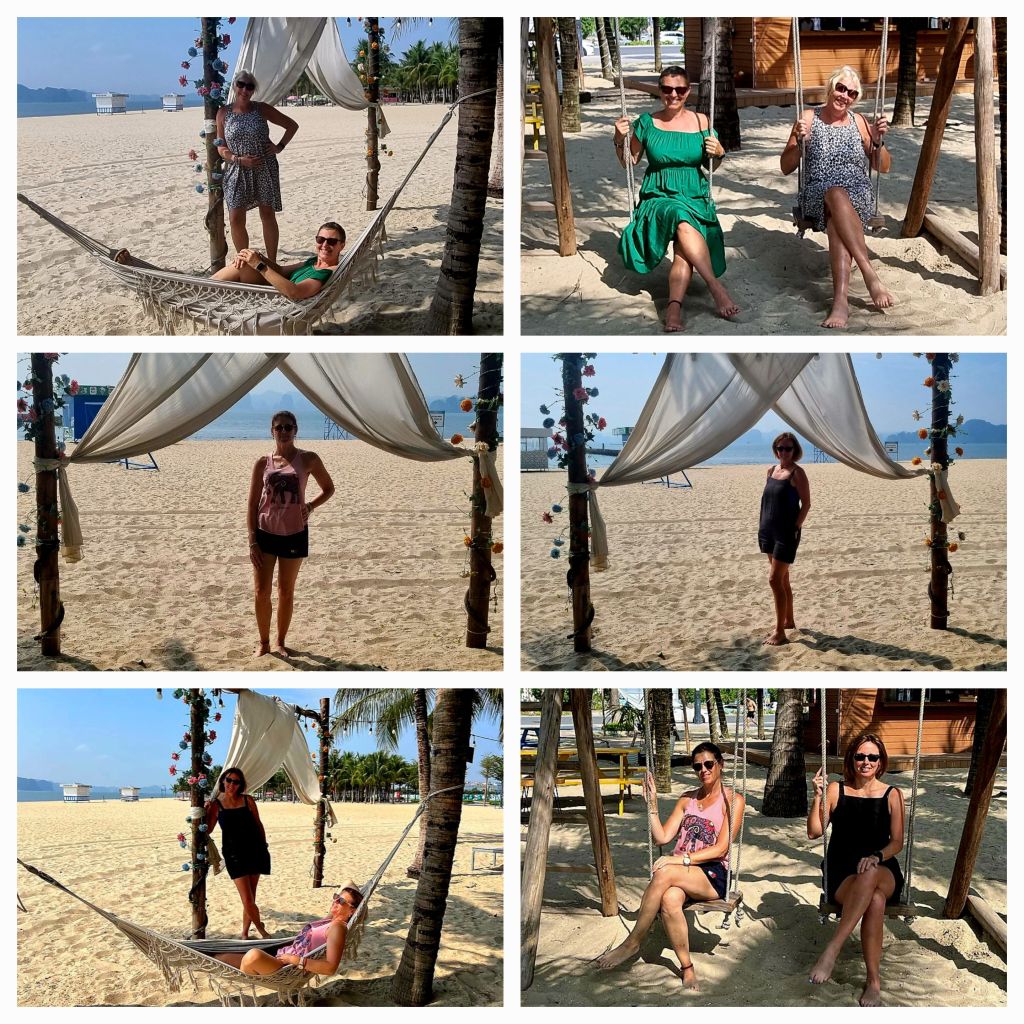
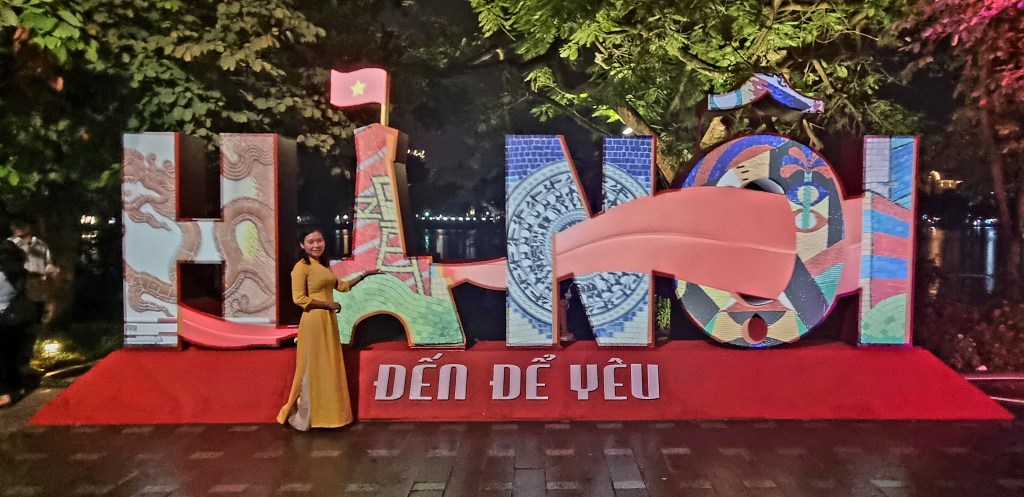
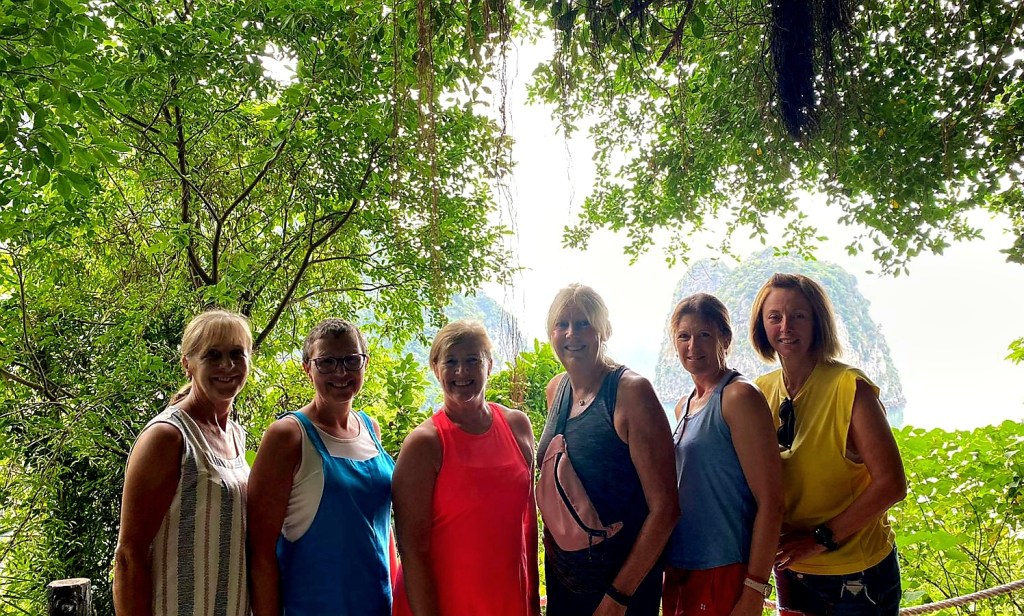
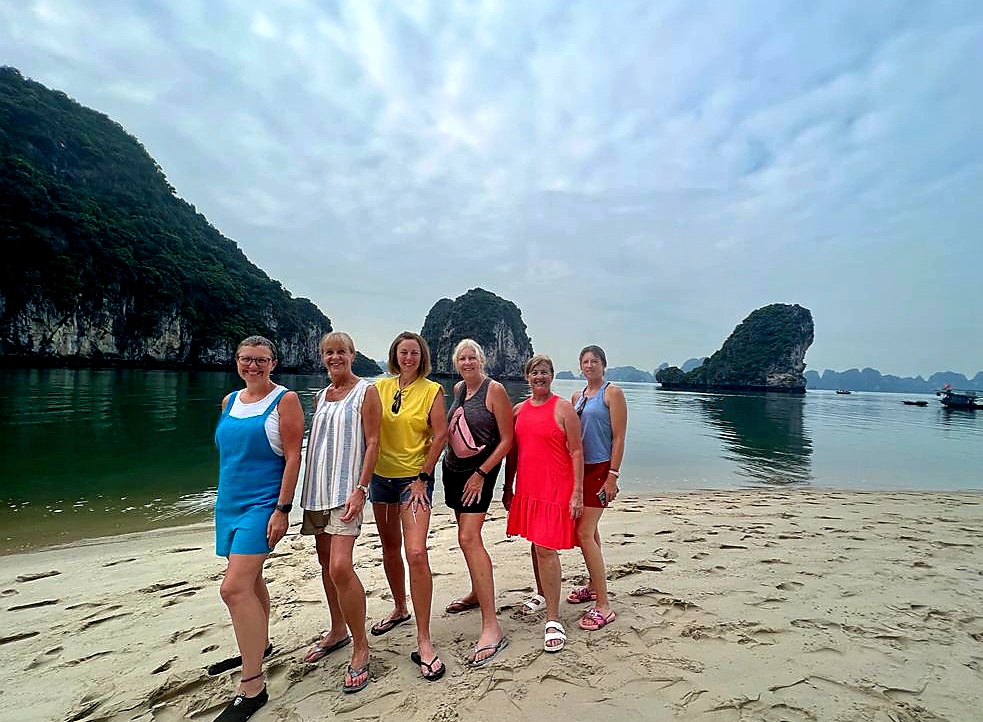
It was a Saturday, and a lot of the local girls were coming to the beach and taking photos of themselves – so we decided to do the same.
Then it was time to go back to the hotel, pack up some bits, and head back to Hanoi.
Once we got back to the Bespoke and Trendy Hotel, Mandy and I checked in to our room. Karen, Zoe, Gill and Tracey were leaving later in the day to get the overnight train to Hue. They took their suitcases to our room and we left them in peace to sort out all of their luggage.
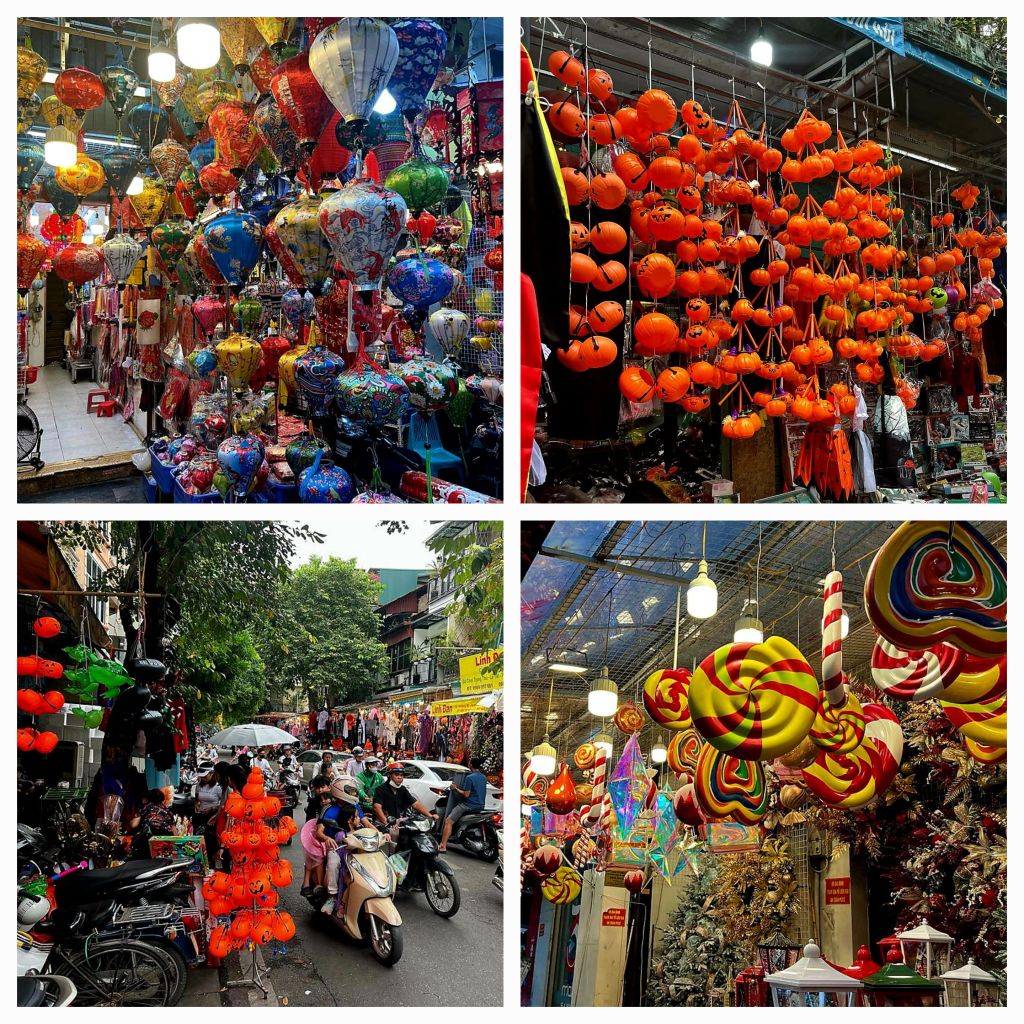
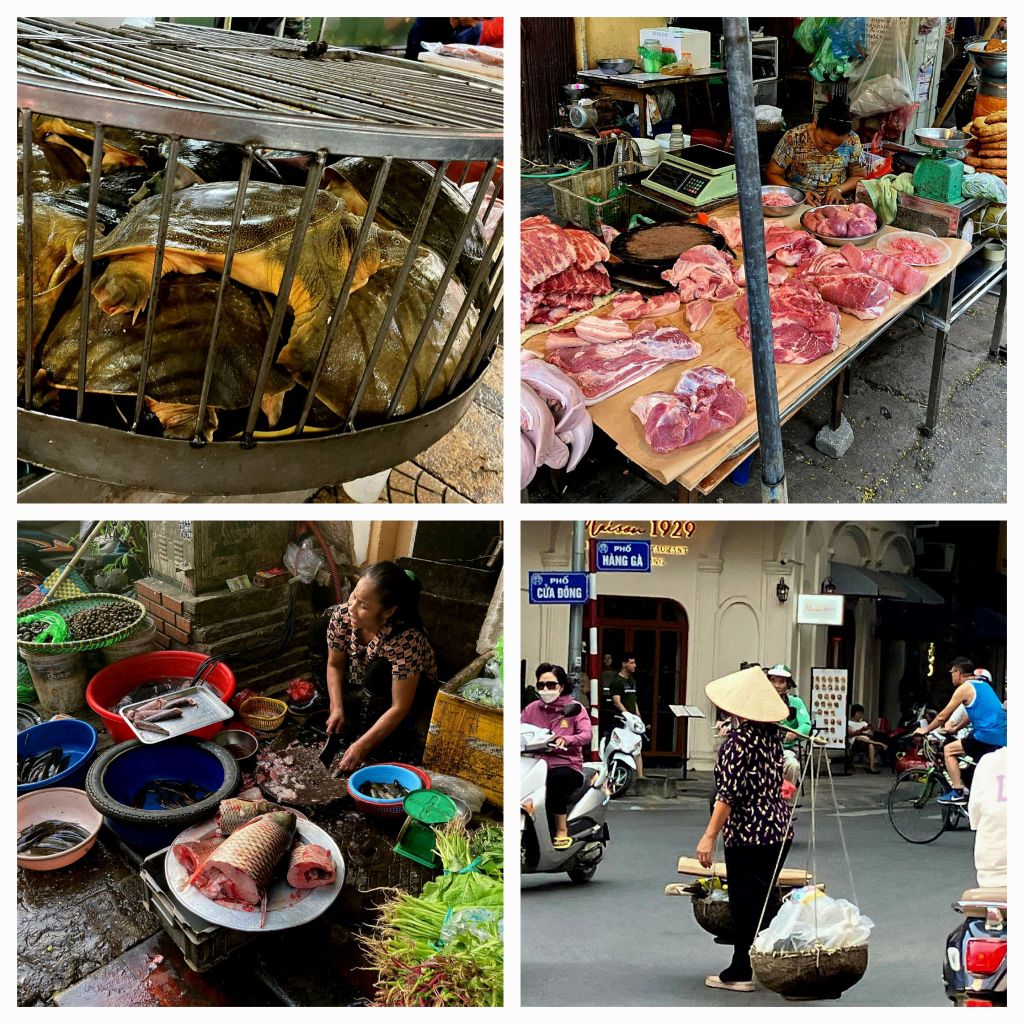
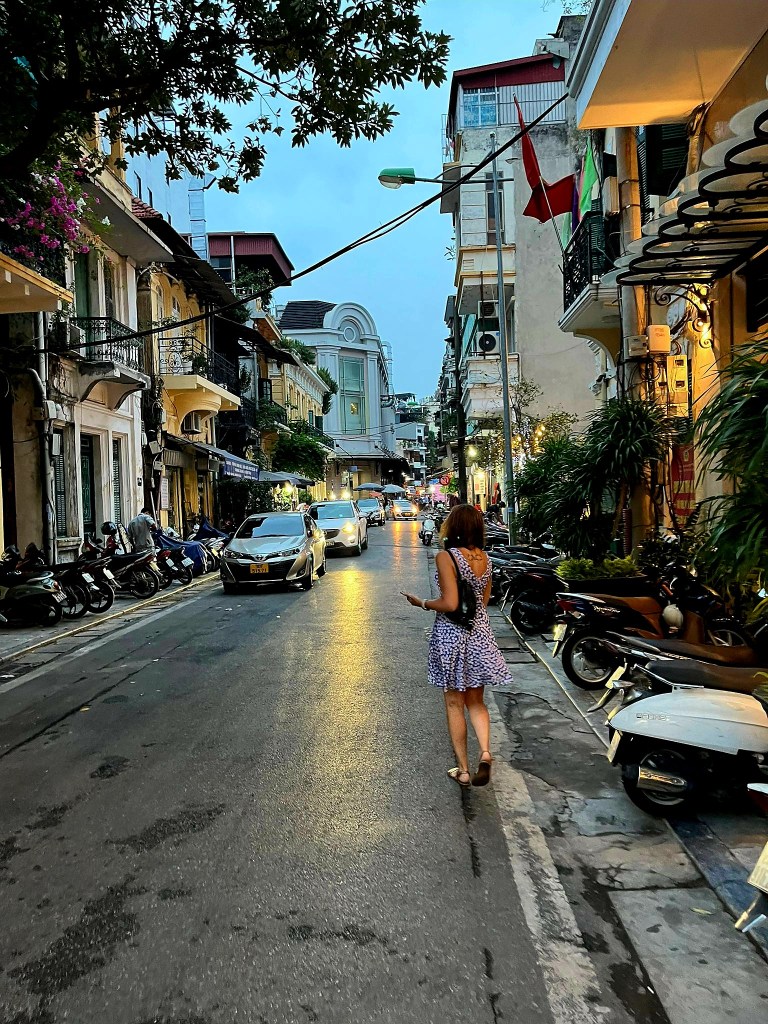
Mandy and I wandered through the side streets of Hanoi. They were very colourful and interesting. All the shops in one street sold the same kind of item. So one street had lights and lanterns, another one had clothes and another one stationary.
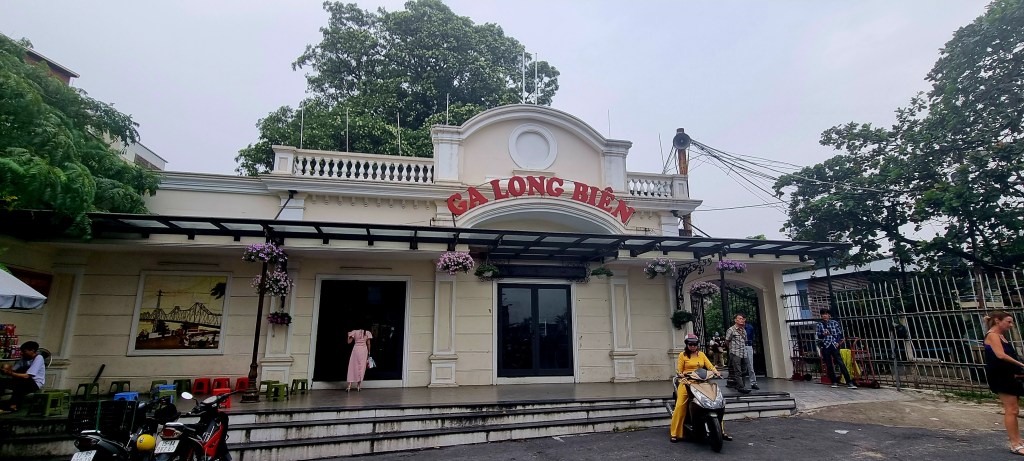
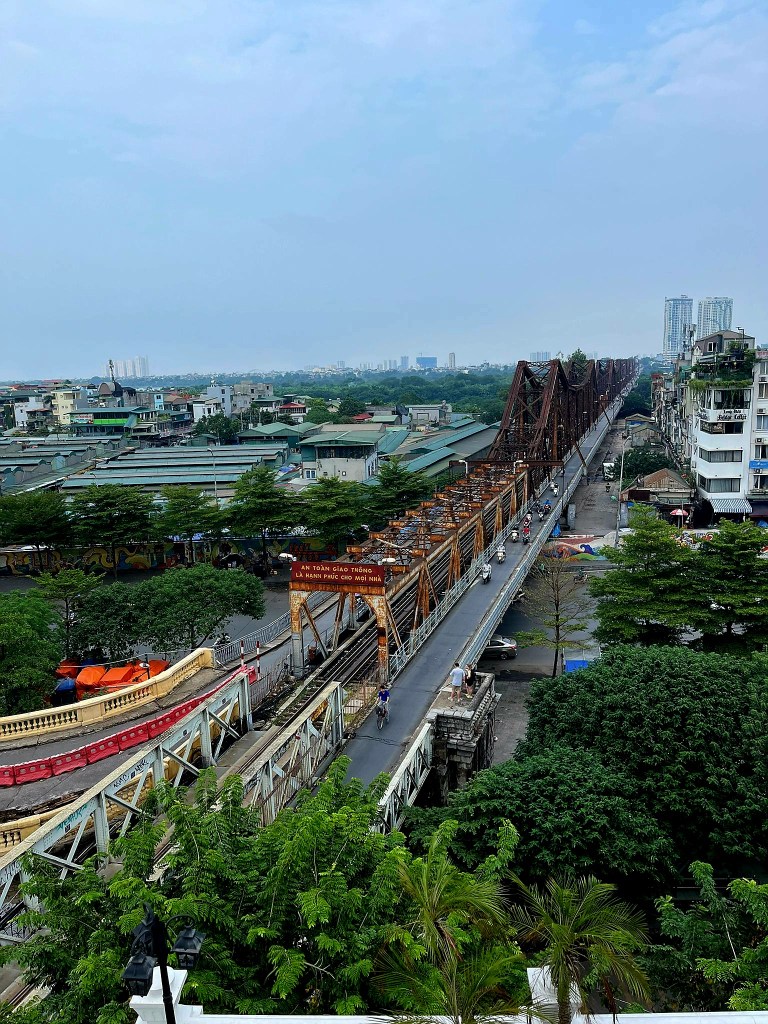
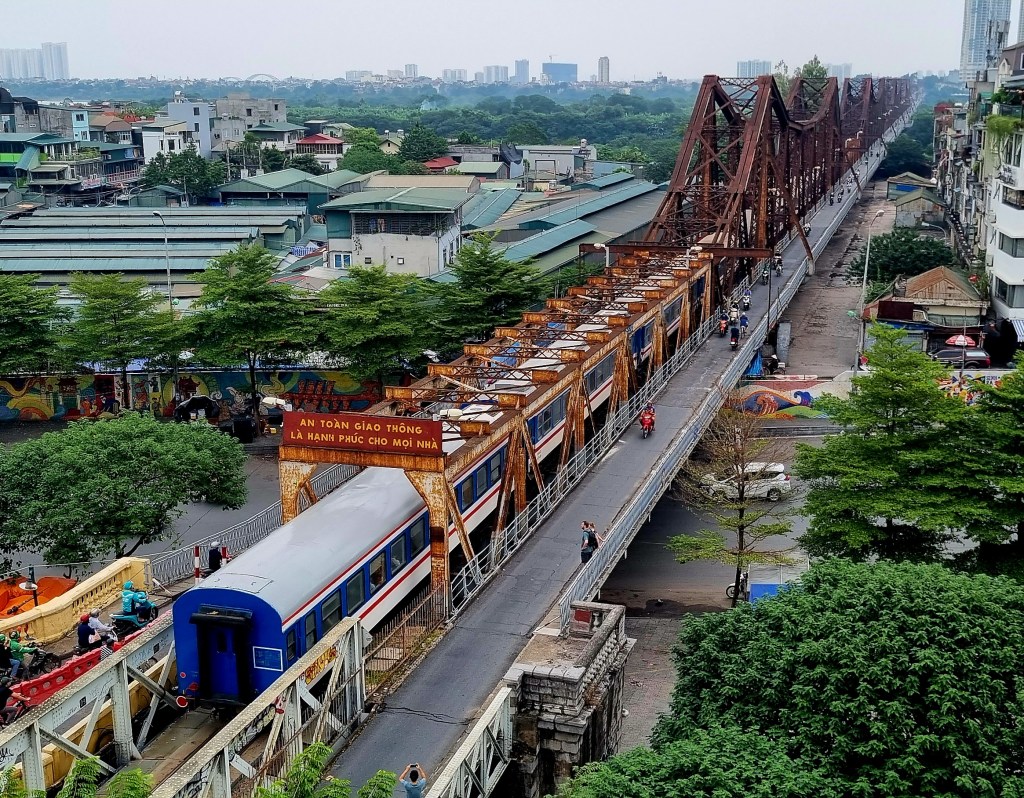
We headed to the station and the famous Long Bien bridge.
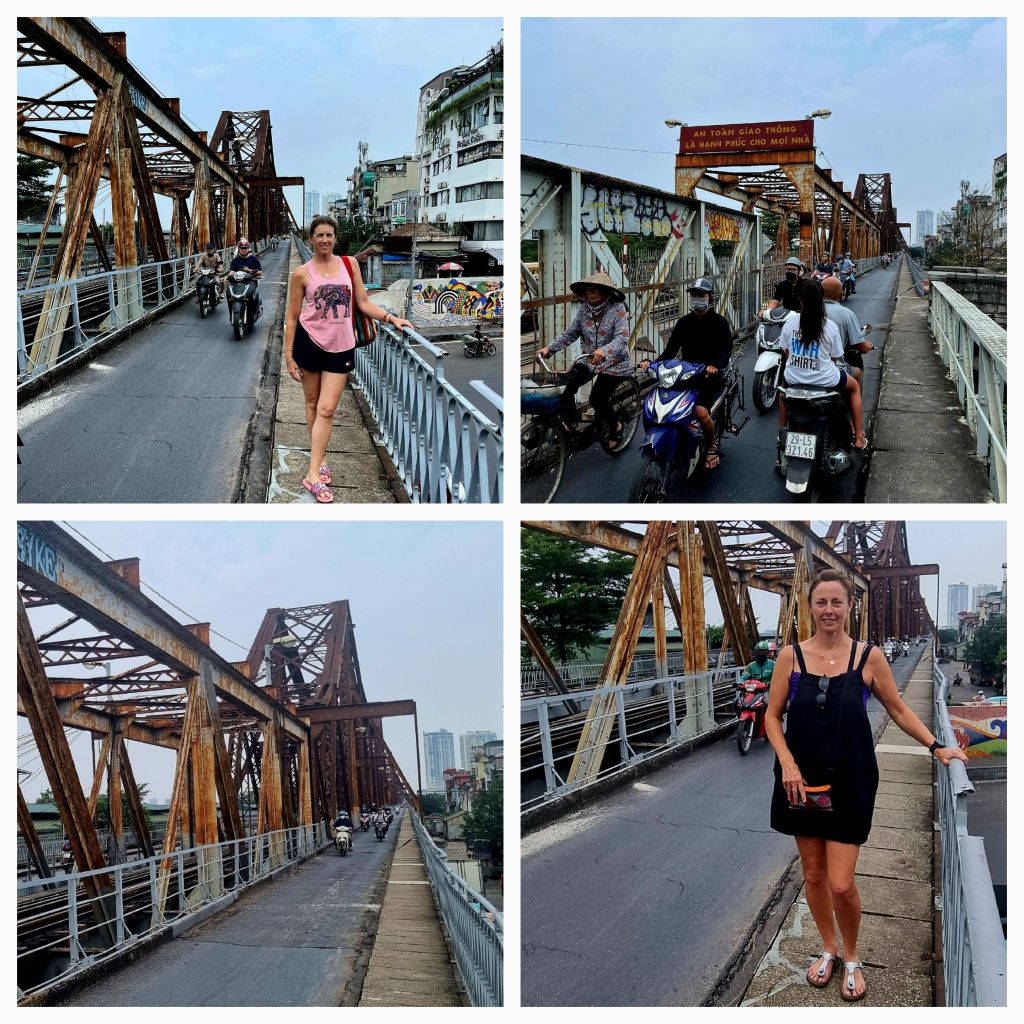
The bridge is 2.4km long and was the first steel bridge in Vietnam. It is often referred to as the horizontal Eiffel of Hanoi. Construction started in 1899 and it was completed in 1903, ahead of schedule. 3,000 Vietnamese workers built the bridge, using up to 30,000 cubic meters of stones and metals.
The bridge was attacked several times during the Vietnam War, and large sections have had to be rebuilt. The bridge is open to mopeds, cyclists, trains and pedestrians, and it is a left-hand drive road.
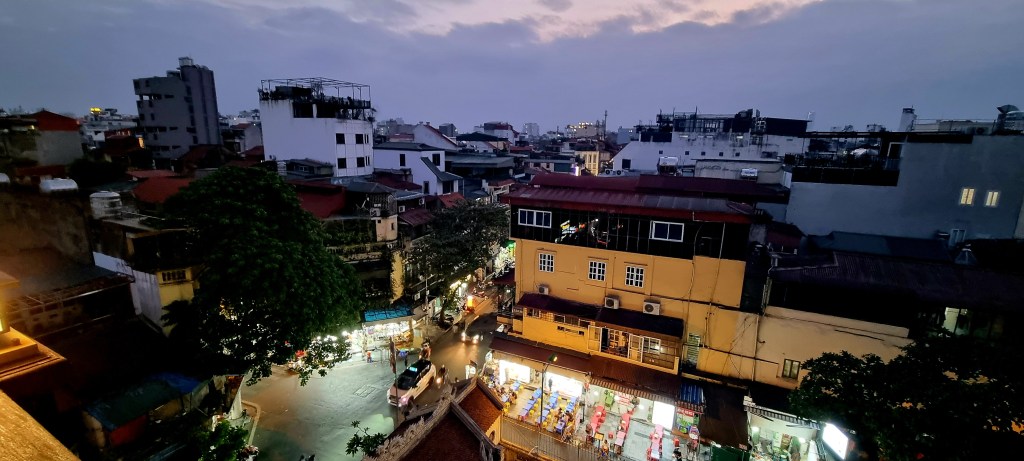
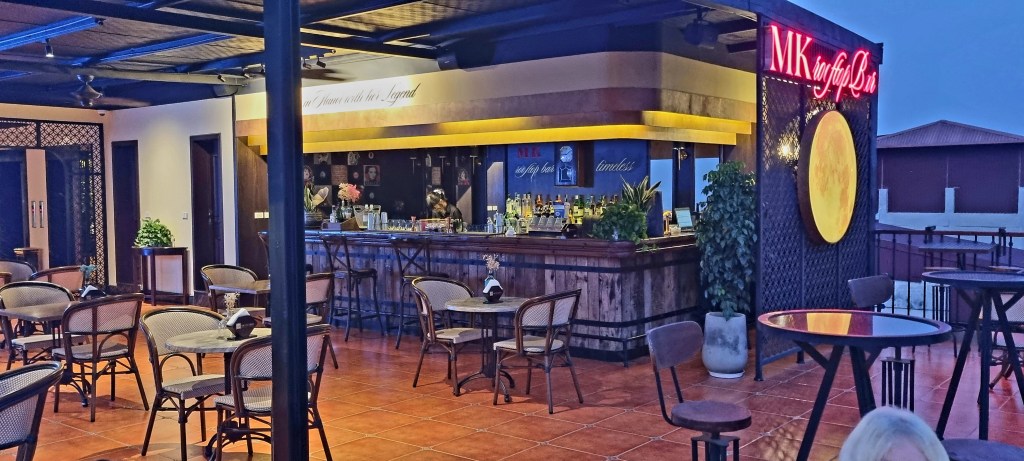
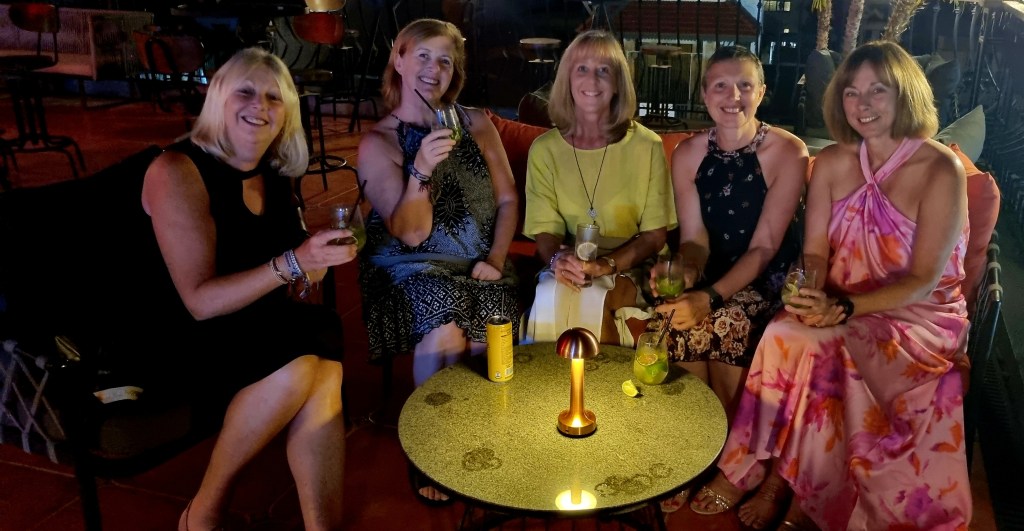
We found a rooftop bar that had a really good view out over the bridge, and as luck would have it,a train departed whilst we were up there.
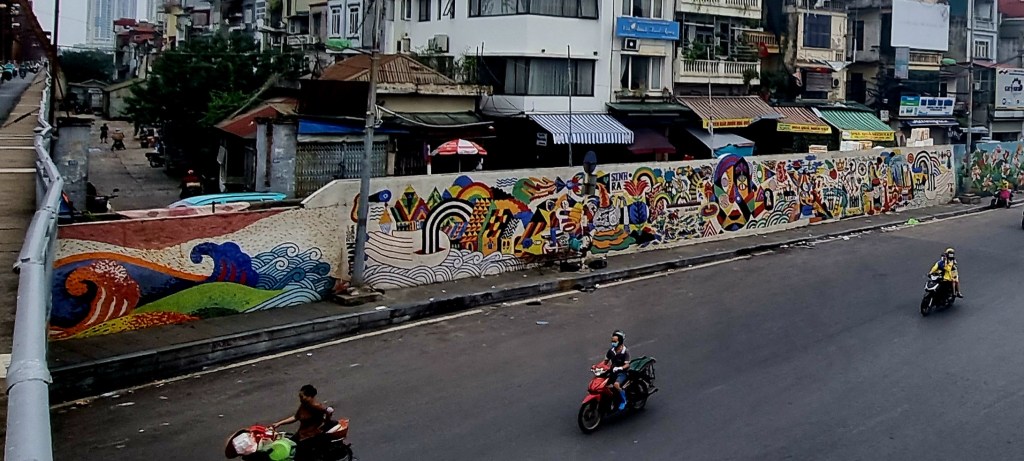
Looking down from the rooftop bar, you could also see a part of the long mosaic in Hanoi. The ceramic mosaic runs along the dike system of the Red River and is around 4km long. It started in 2007 and was completed in 2010 as part of the celebrations to commemorate the millennium anniversary of Hanoi.
The cocktails we had were really strong, so after just one of them, we headed back to the hotel.
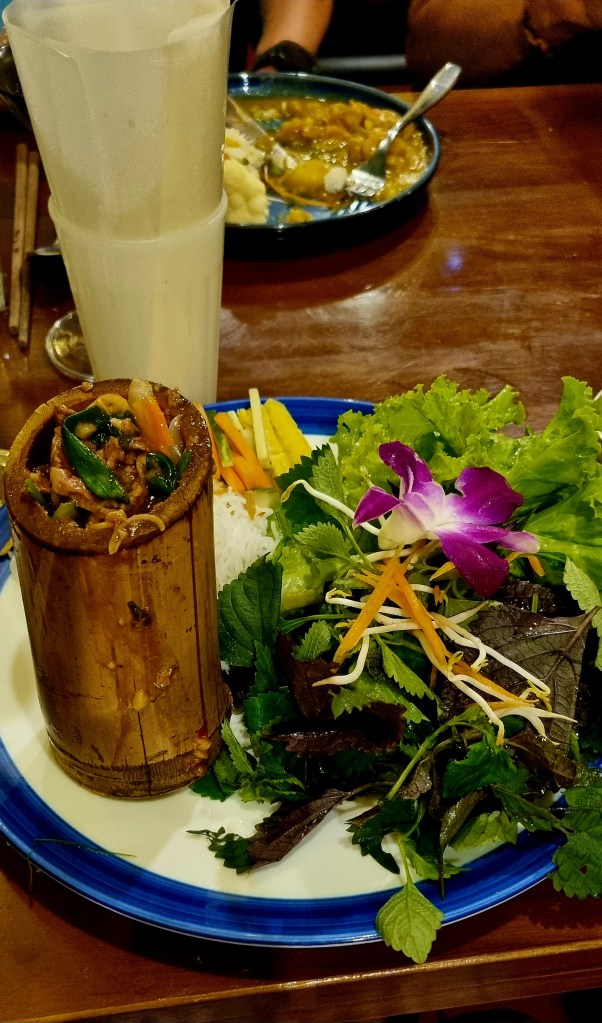
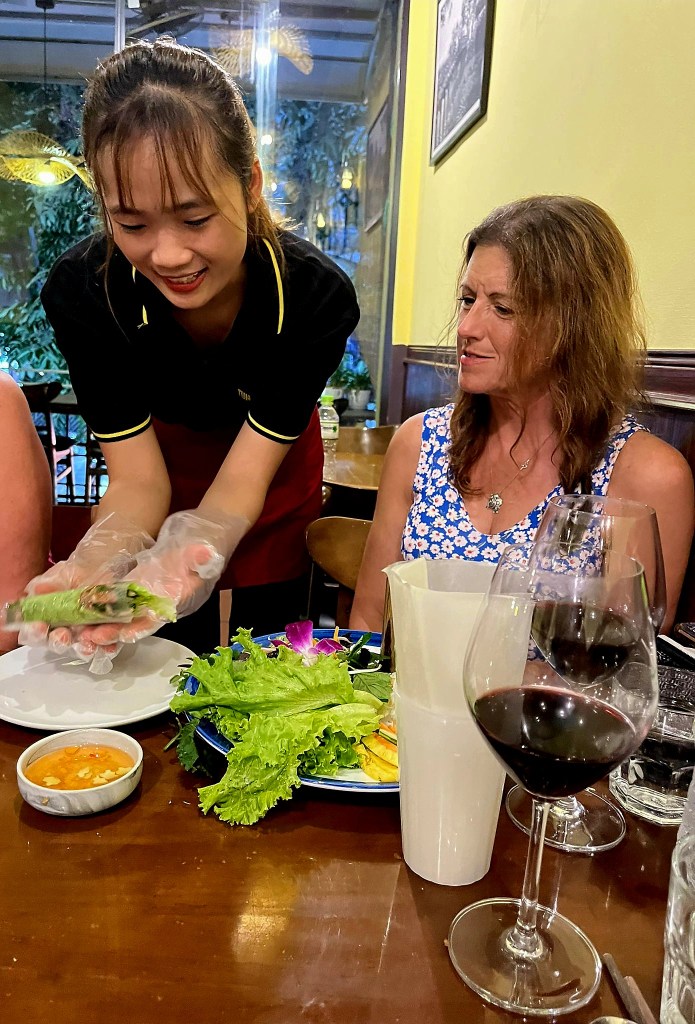
We met the others at Tang’s Kitchen, a lovely little restaurant not far from the hotel. I had a delicious meal of beef in bamboo, which the waitress showed me how to make into lovely fresh wraps.
It was quite sad as it was our last meal all together.
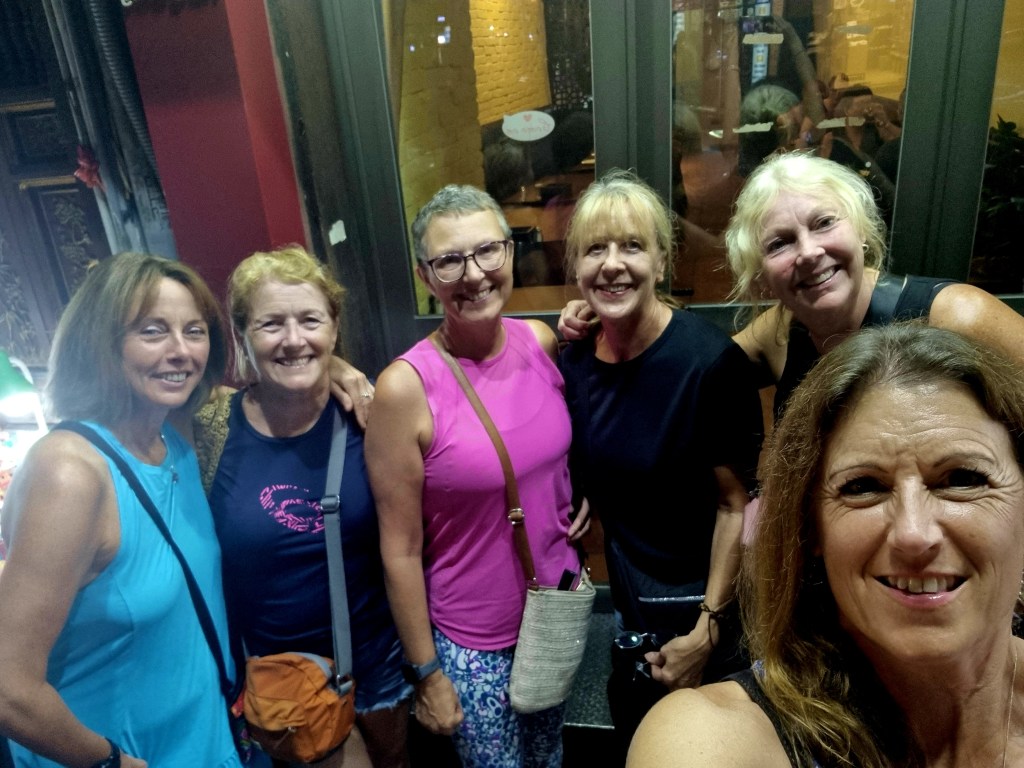
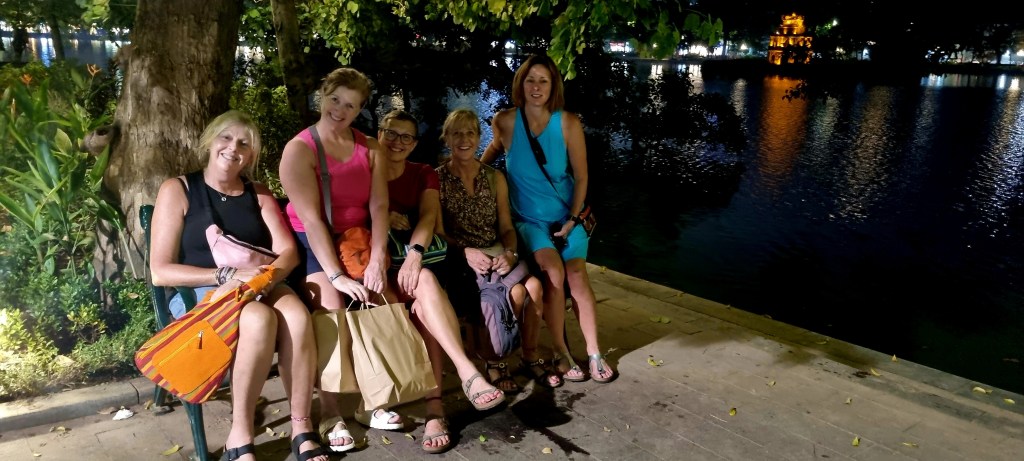
After dinner, we said goodbye to the others, who were getting a taxi to the train station, and Mandy and I went for a walk around Hoan Kiem Lake. Karen, Zoe, Gill and Tracey were all spending another 2 weeks travelling around Vietnam, and after that, all of them apart from Tracey, were spending 2 weeks in Thailand – I was a little bit envious.
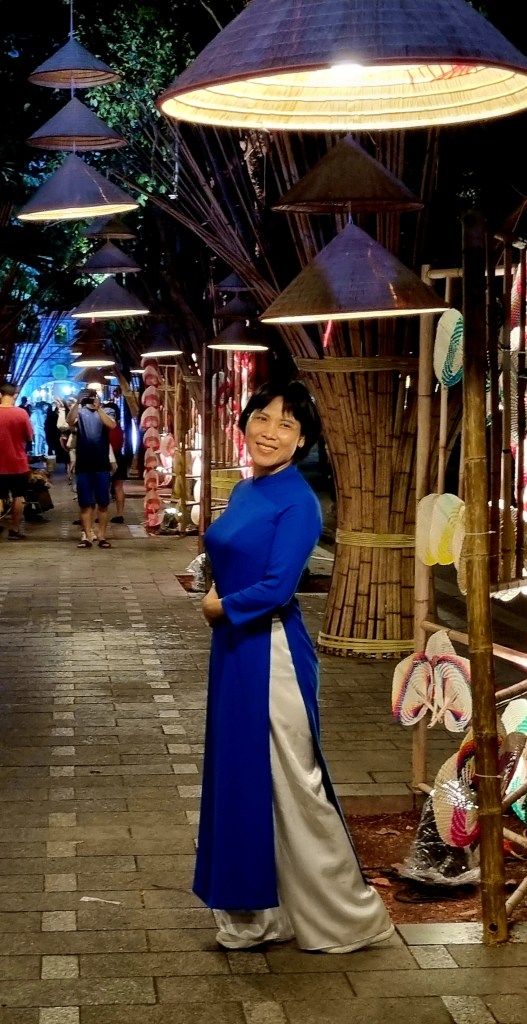
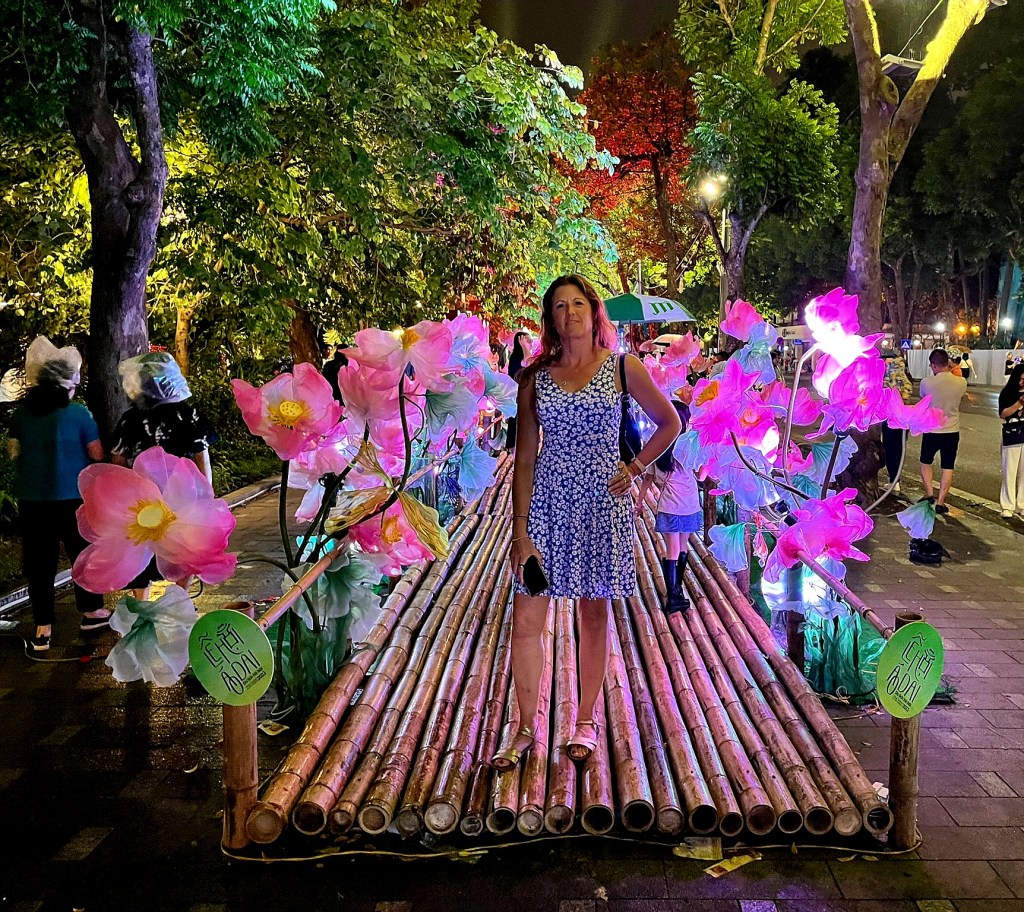
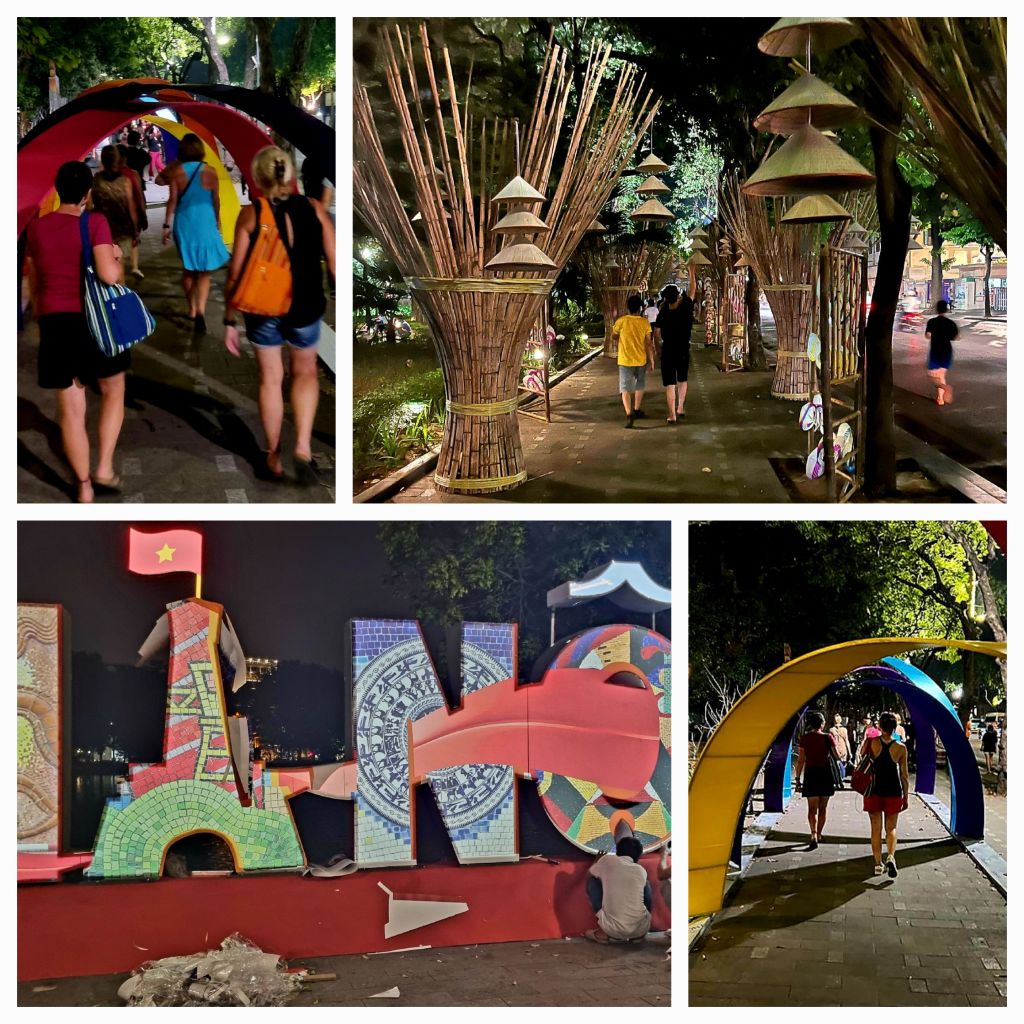
On Friday, Saturday and Sunday nights, the roads around the lake are closed, so it becomes a pedestrianised area. This means that there are a few bands playing and shows going on in the streets. There is also a night market with lots of stalls along the roads.
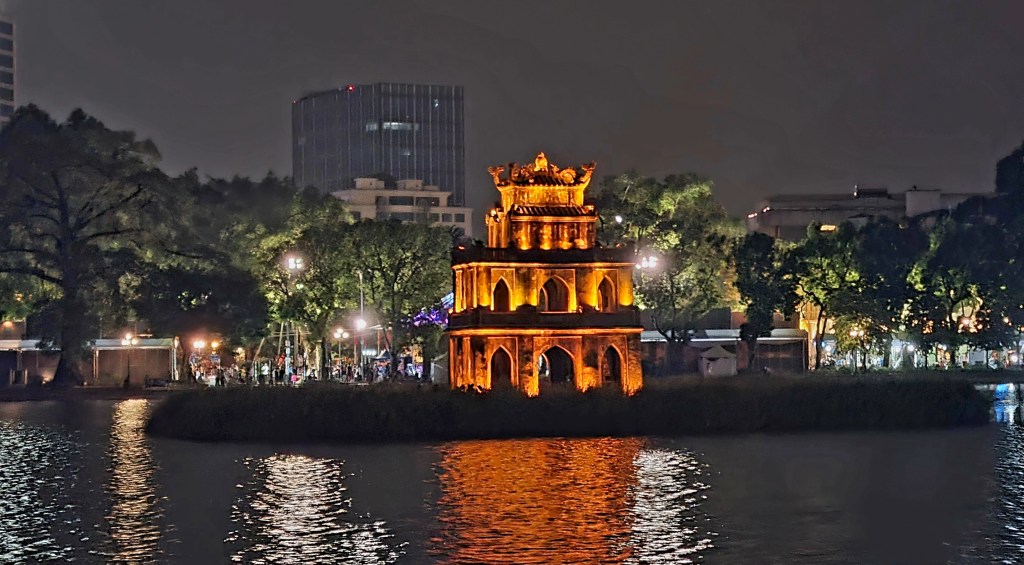
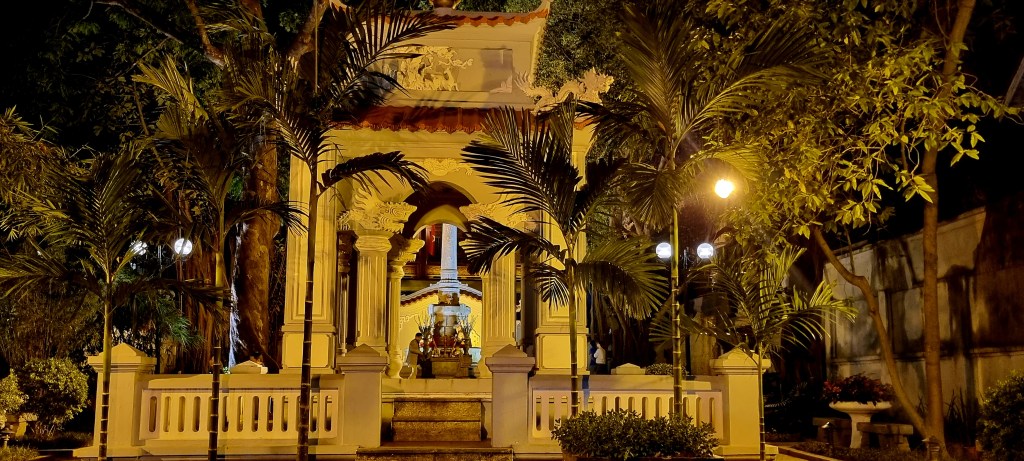
We took some photos of the Turtle Tower on the lake as it was all lit up. The tower has been standing for almost 150 years. It used to be a resting place when the King went fishing and was based on an older structure called Ta Vong Temple.
During the French occupation, the revolutionary flag of Vietnam was hung on the top of the tower, which always reminded the Vietnamese people to rise up and fight against invaders. Today, the structure stands as a sign of loyalty and patriotism.
We also passed the Monument of King Le Thai To. This is believed to be one of the oldest preserved monuments in Hanoi. In 1418, Le Thai To and his men rose up against Chinese Ming invaders. Nine years later, his resistance movement successfully drove the Ming armies out of Vietnam and restored Vietnamese independence. King Le Thai To is also the king who received the sword from the Lake.
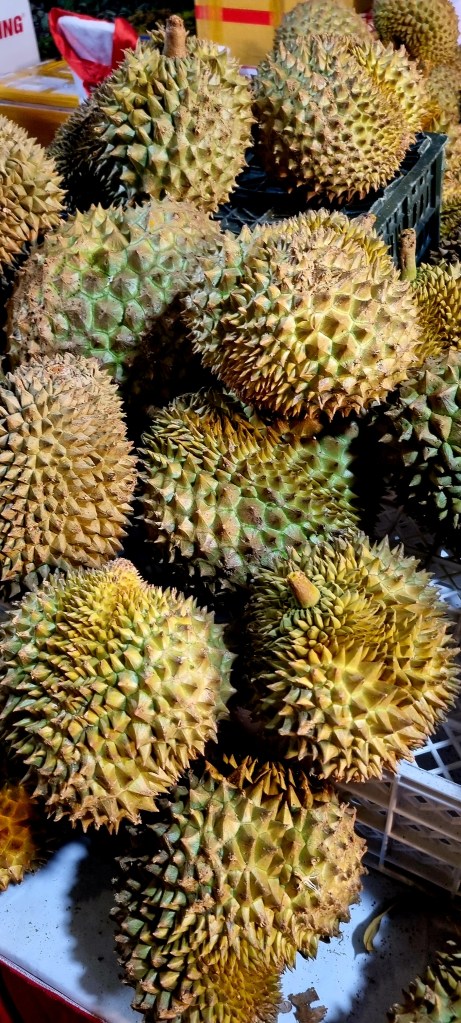
Lots of the stalls were selling fruit, spices or insence. We came across a lot of Durian fruit.
We walked through the streets for a bit longer before it started to rain.
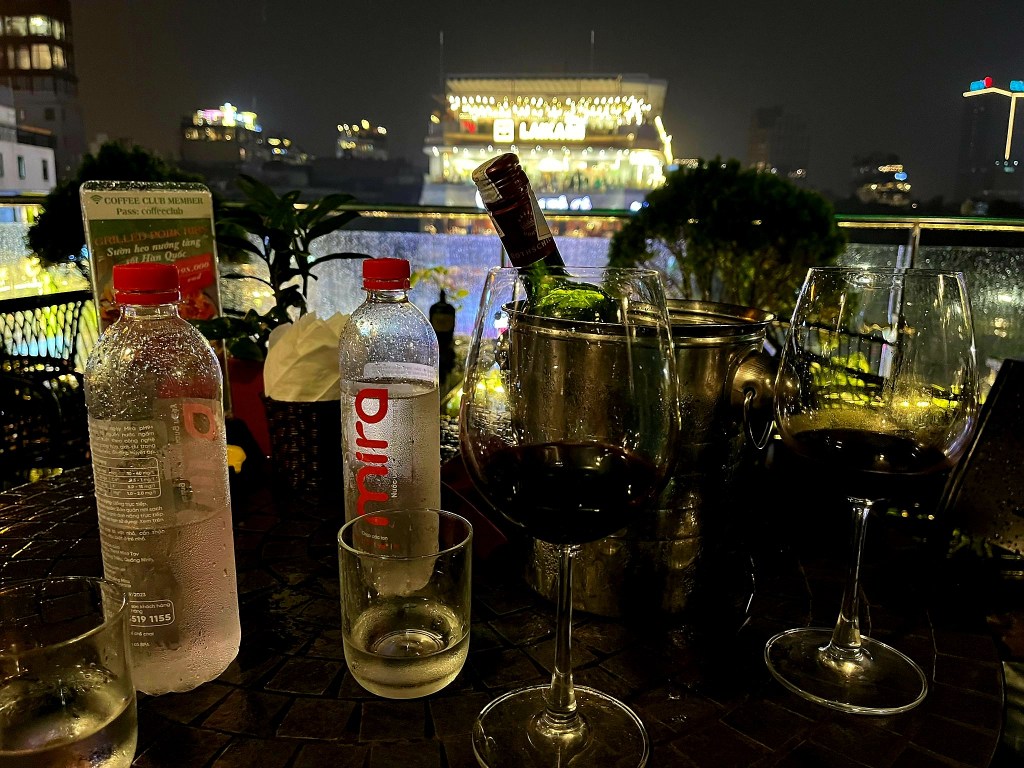
Although we both bought an umbrella (for £3 each), we decided to take shelter at a rooftop bar. We ordered a bottle of wine and watched the world go by.
We were up early again, and Zoe actually made it to the Thai Chi class. We all had a cup of coffee or tea before we headed off to see the cave.
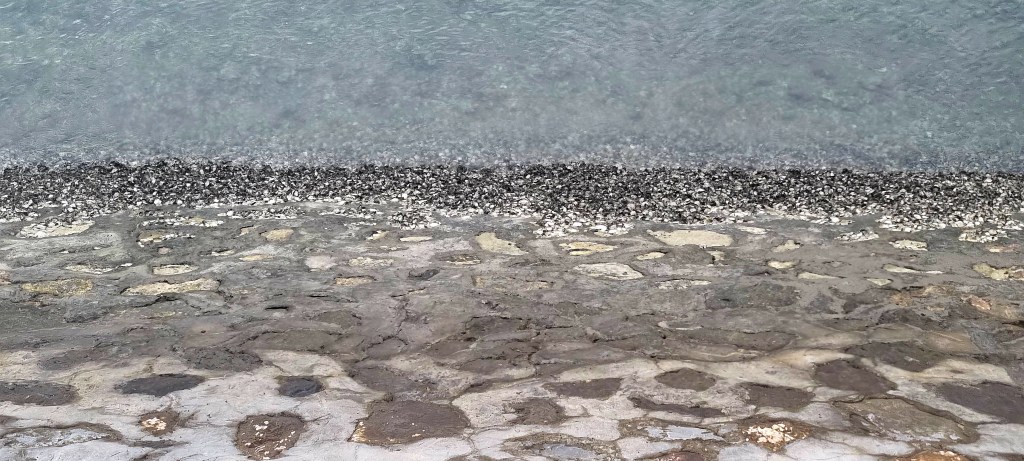
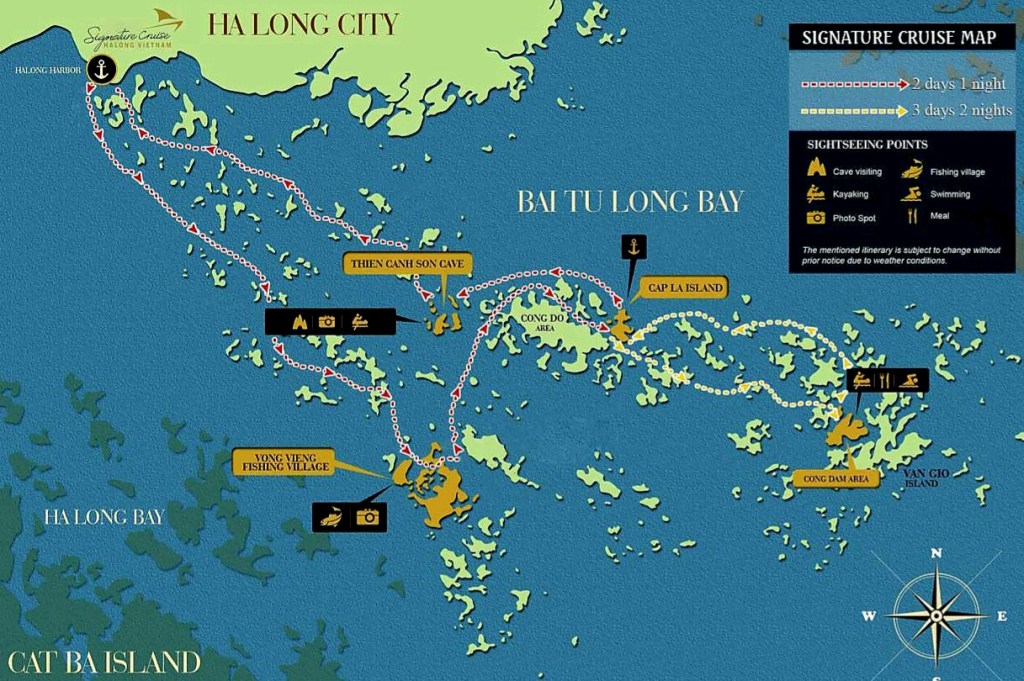
We hopped on the smaller boat, which took us across to the cave. As we walked to the steps to take us up to the cave, the water was at low tide, and you could see all the molluscs clinging onto the side of the rock. The fishermen come here early in the morning to get their haul.
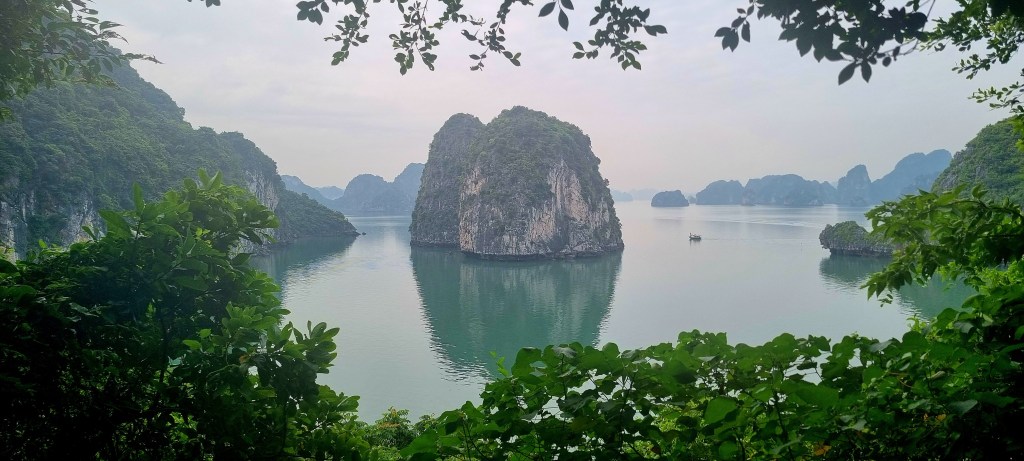
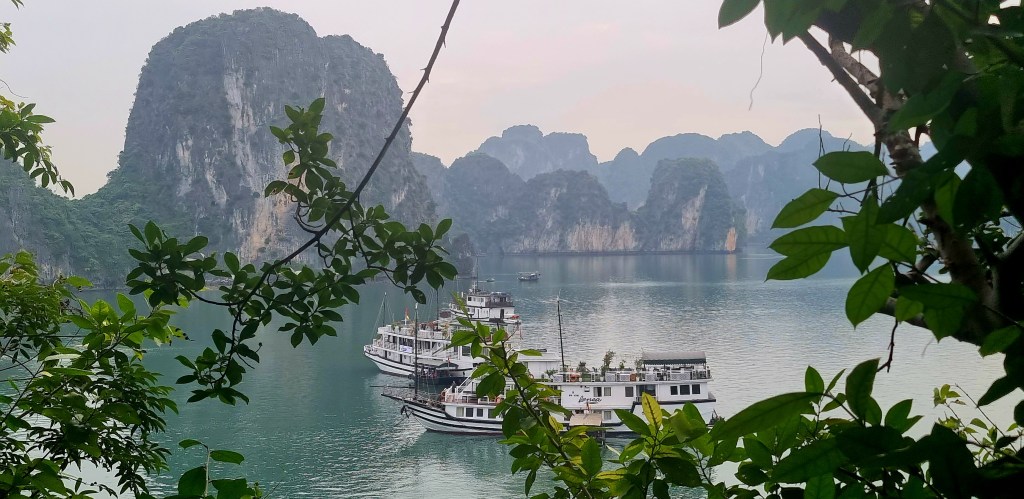
To get to the cave entrance, you have to climb up around 60 steps. From here, you get a lovely view over Bai Tu Long Bay, which is the largest sea sanctuary in North Vietnam. There are many plant species near this cave, so it has another name, “Hang Co”, which means “grass cave”.
It is just a few more steps to the small opening leading into the cave. You have to duck your head as you go through.
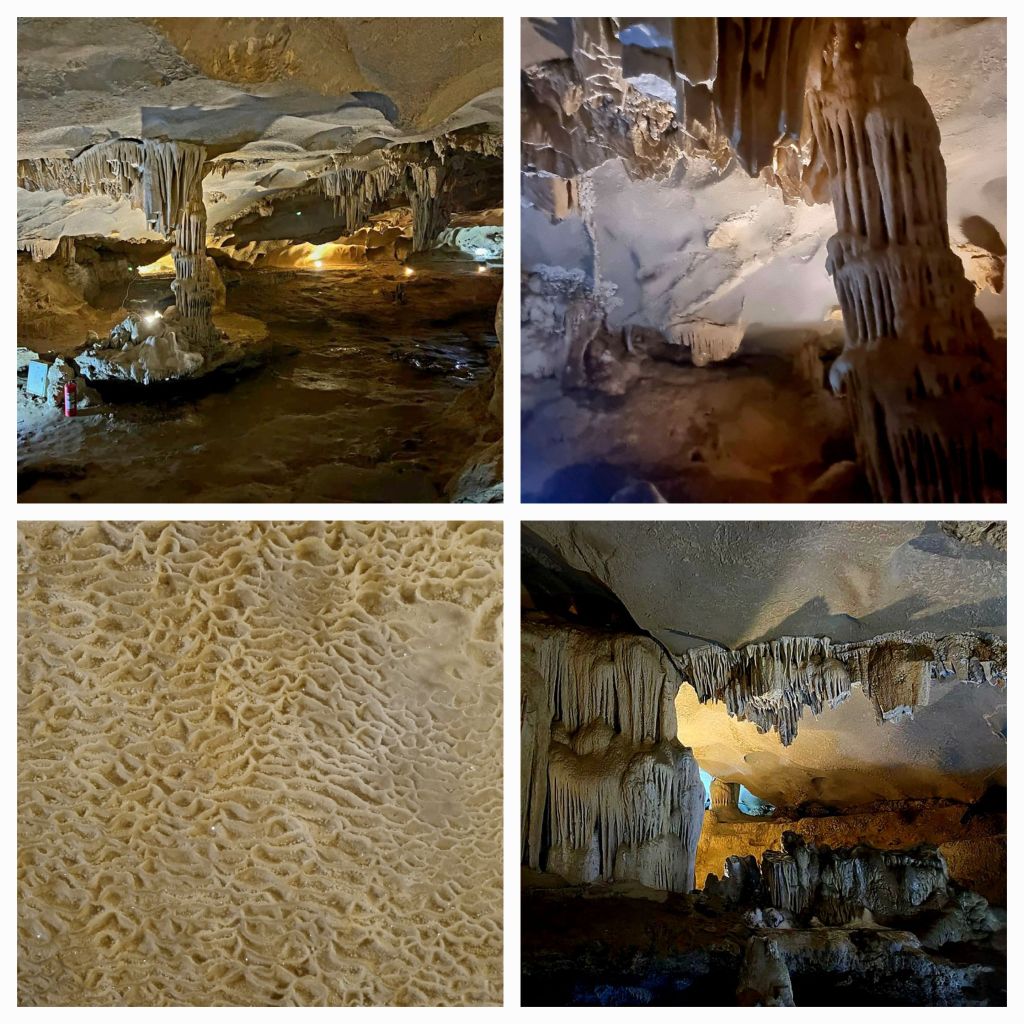
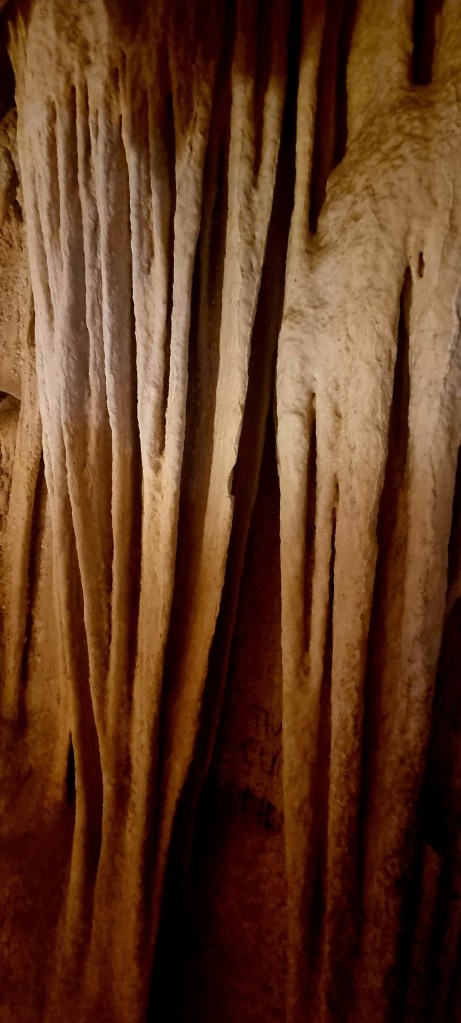
There is no fairytale legend associated with this cave, although its name means ‘mountain with a view of fairyland’. This cave has simply been formed by the erosion and deposition of limestones for millions of years. The impacts of water erode the calcium crystals in limestone, and then the crystals combine together on the ceiling and ground of the cave to create stalagmites and stalactites. It is a really beautiful cave, with lots of sparkling rocks.
Our guide showed us how you could play the drums on some of the stalactites, so we had a go at that, too.
We walked through the cave and popped out on the other side.
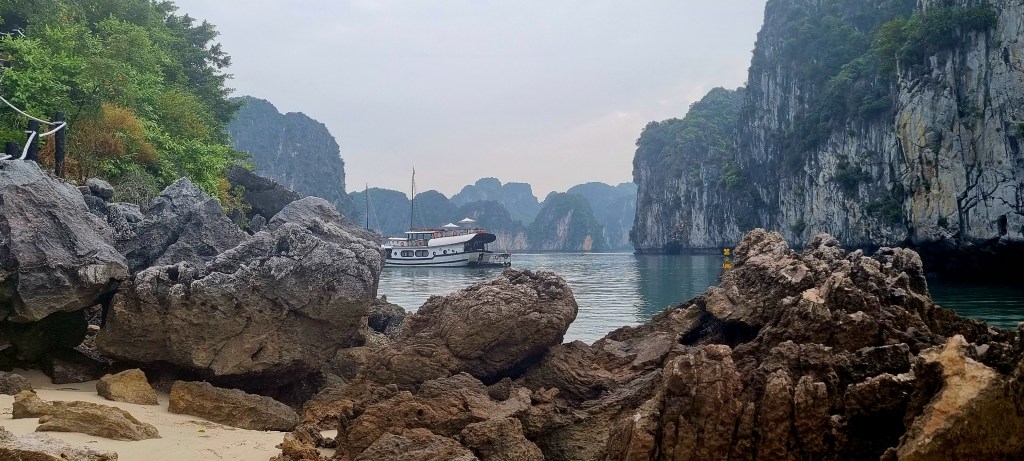
As we walked back to the entrance, several other groups started to come in, and it got a little bit crowded. We went down to the beach on Cong Do island and paddled in the water for a bit.
And then it was back to the cruise ship to pack up and have brunch.
Around 1200 to 1500 guests visit Halong Bay every day, and 100 – 200 people go to the cave every day.
We settled ourselves on deck whilst we made our final journey back to the international port in Halong Bay.
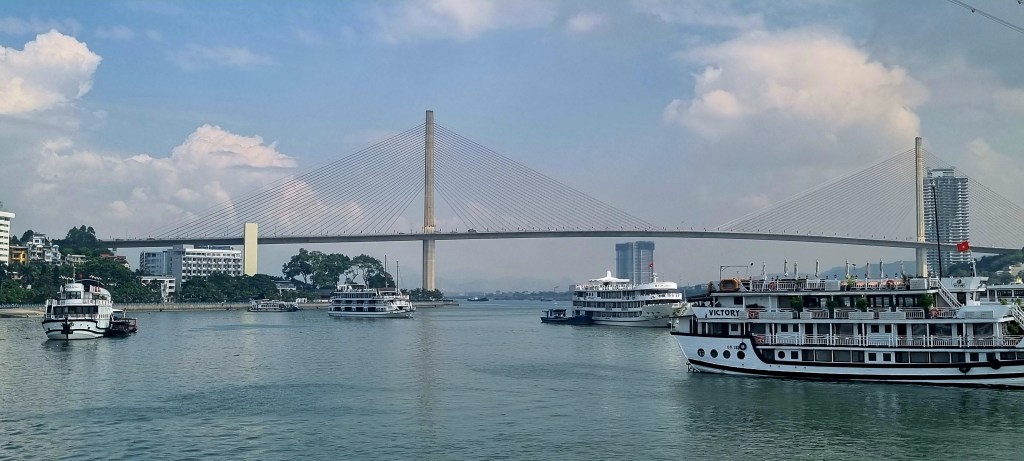
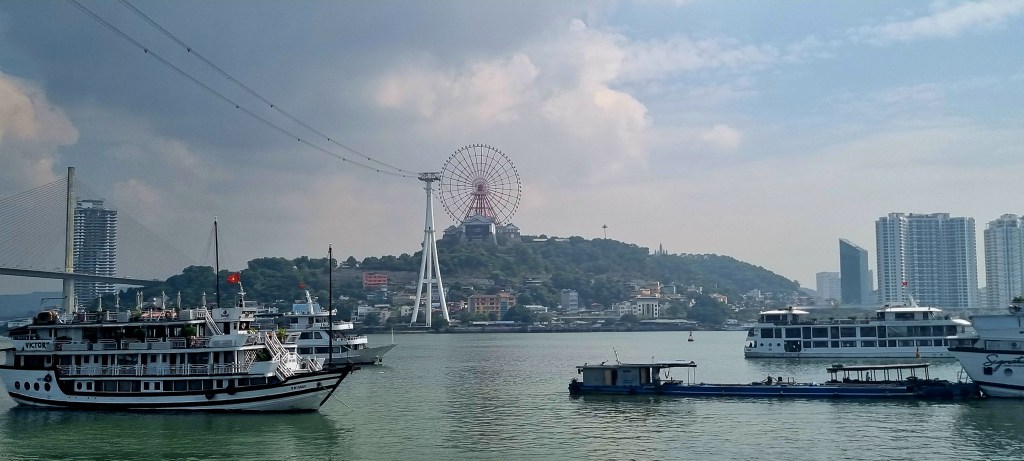
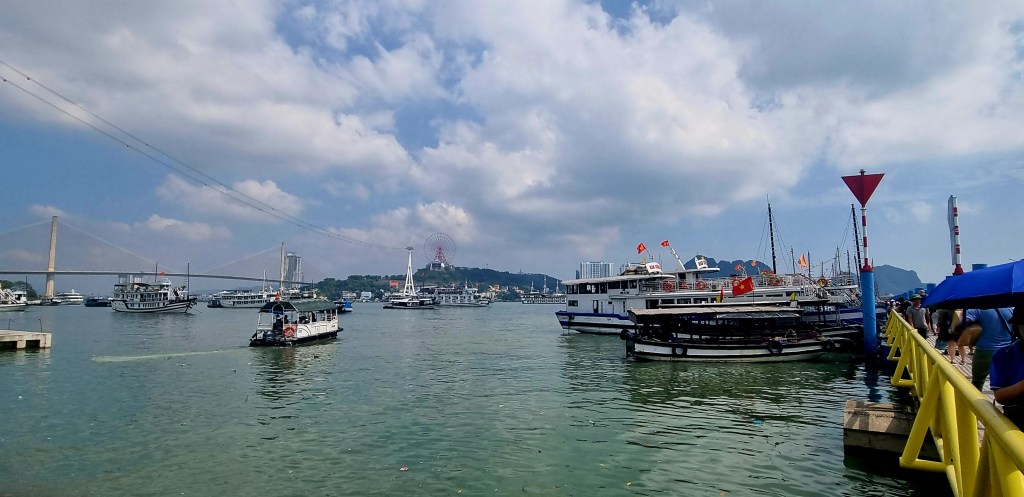
We anchored, and you could see the Bai Chay bridge, which is the longest central-lined cable-stayed bridge in Vietnam at a total length of 1,106m. Looking the other way you could see the’sun wheel’ which stands 215m above sea level.
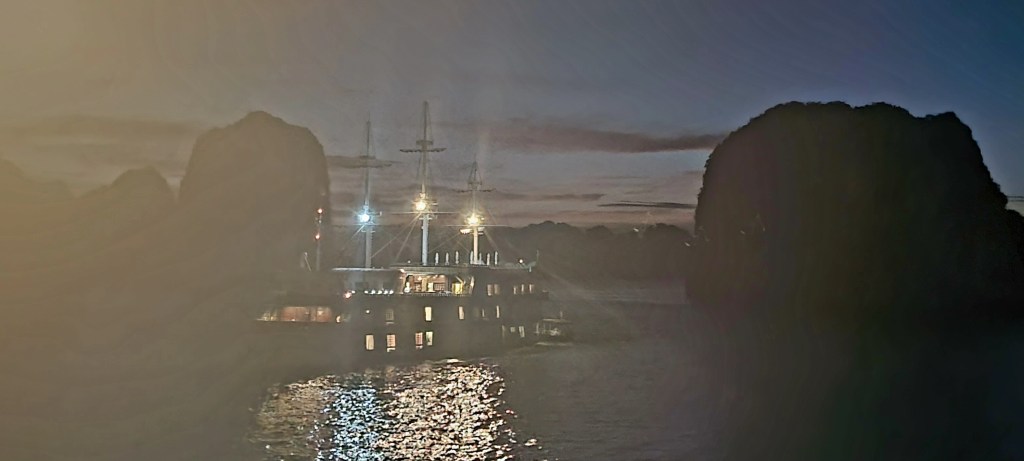
As we disembarked onto our smaller boat for the last time, the cruise ship raised its sails.
It was a really amazing 2 day cruise through the bays, and very relaxing, too.
Once back on dry land, we got a taxi to our hotel in Halong. The streets all looked very quiet as we drove through them, and we later learnt that we were very much visiting out of season.
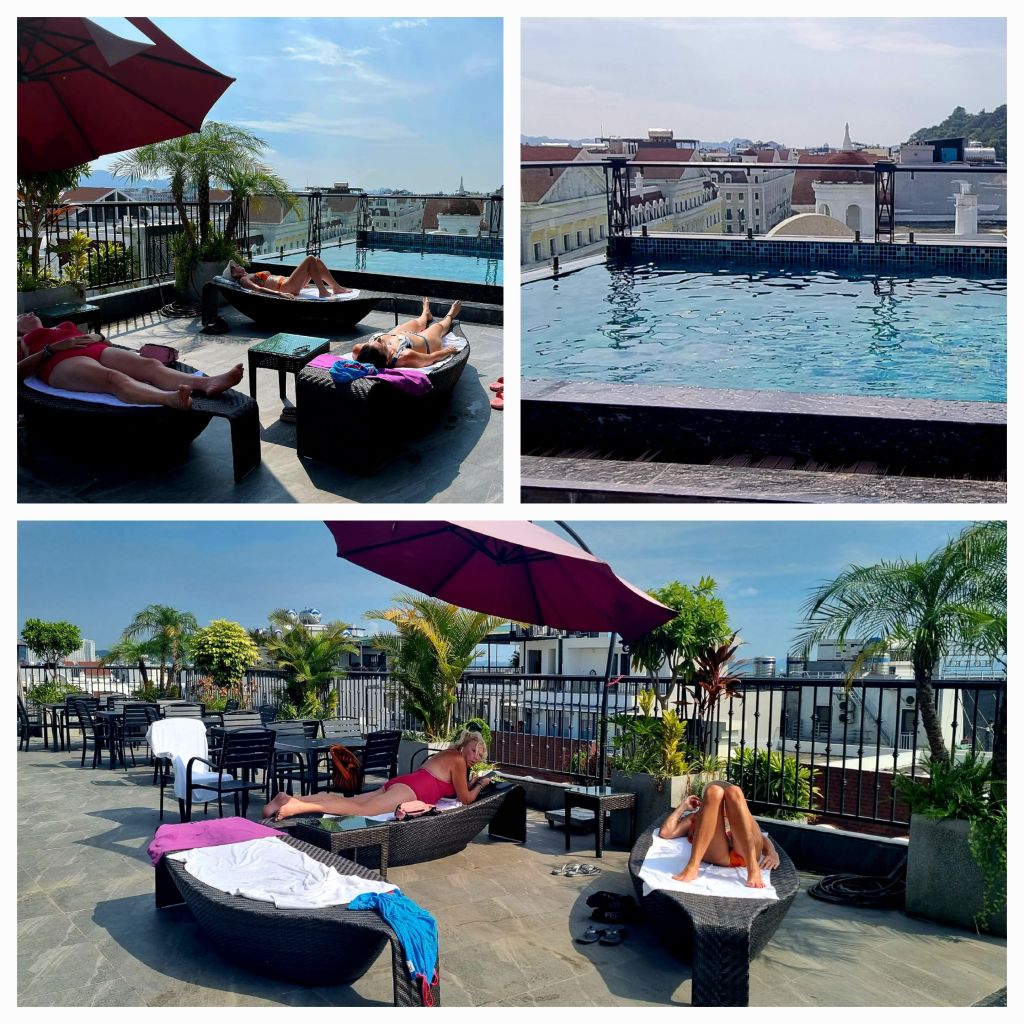
Our hotel had a pool so after we acquired some towels, we went upstairs to the pool to relax.
It was a really hot day, and there wasn’t much shade up on the roof, so we decided to go for a stroll instead.
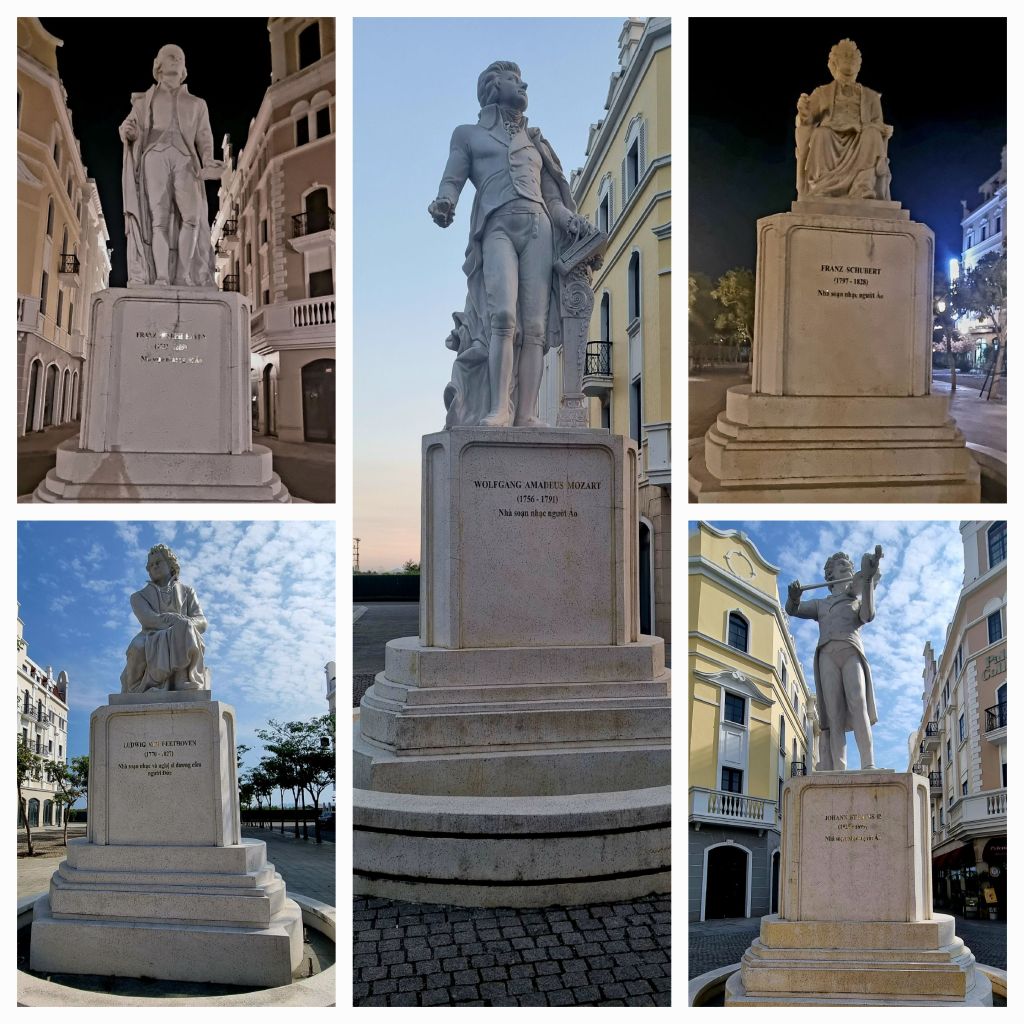
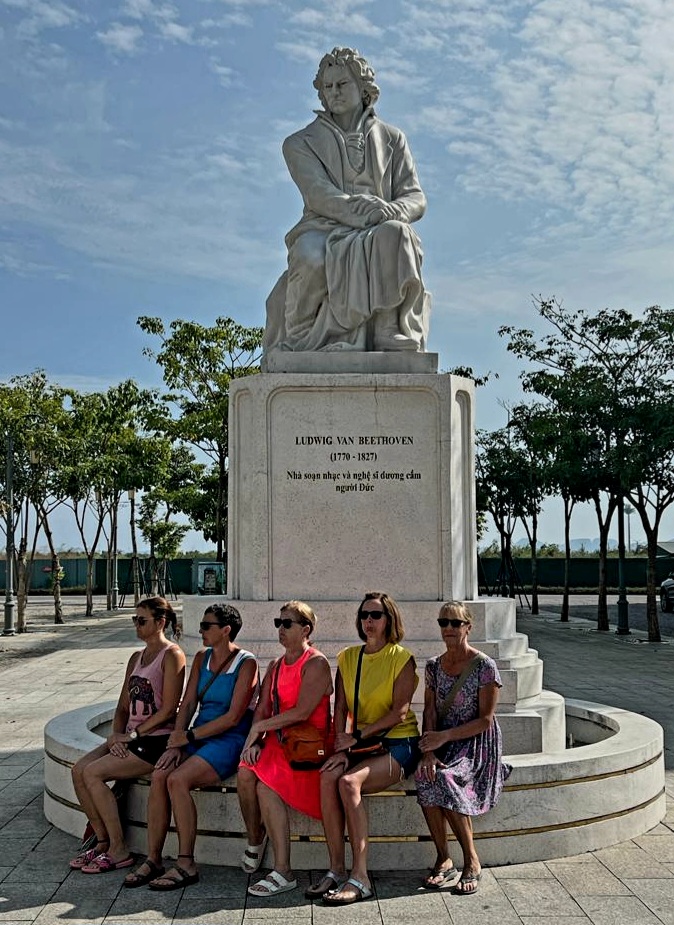
For some unknown reason, the main street our hotel was on, and the one we walked down, had a range of statues of composers.
We walked past Nhac Nouc – Sun Carnival, a massive open-air venue.
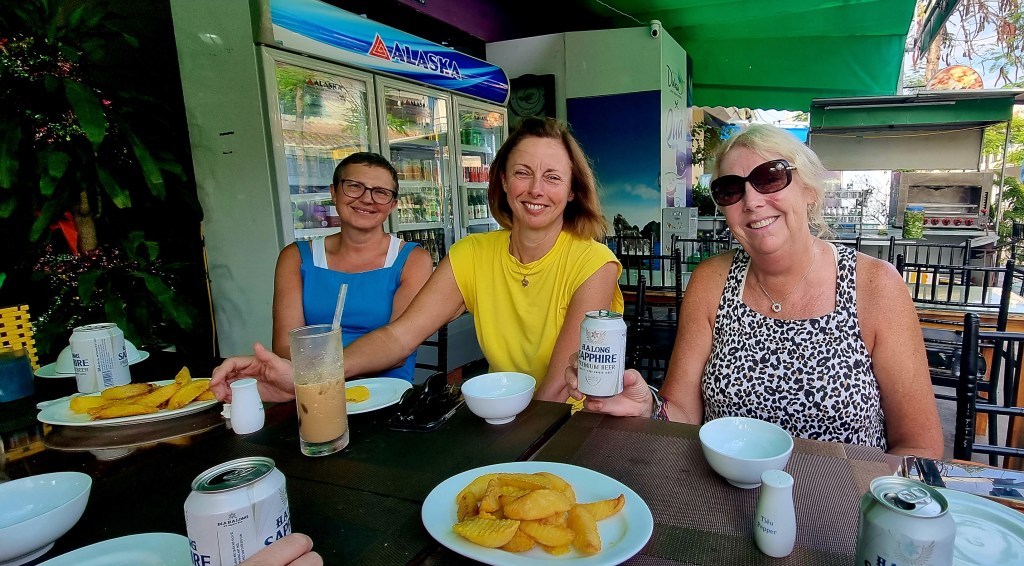
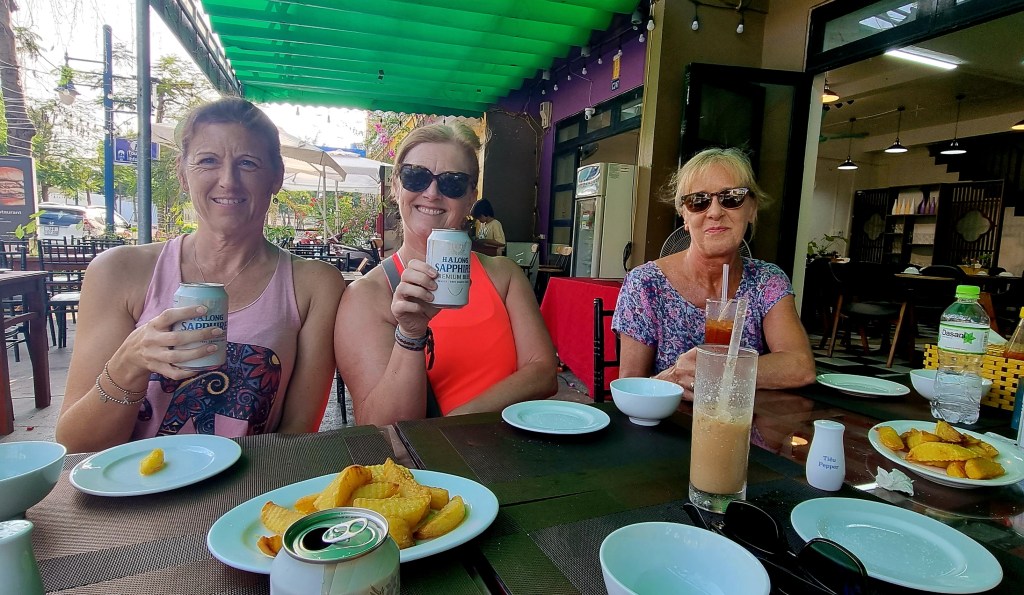
After a bit more walking, we decided it was time for a drink and some food. Unfortunately, we ordered cheesy chips and they tasted pretty awful – it was chips with some sort of powder sprinkled on top!
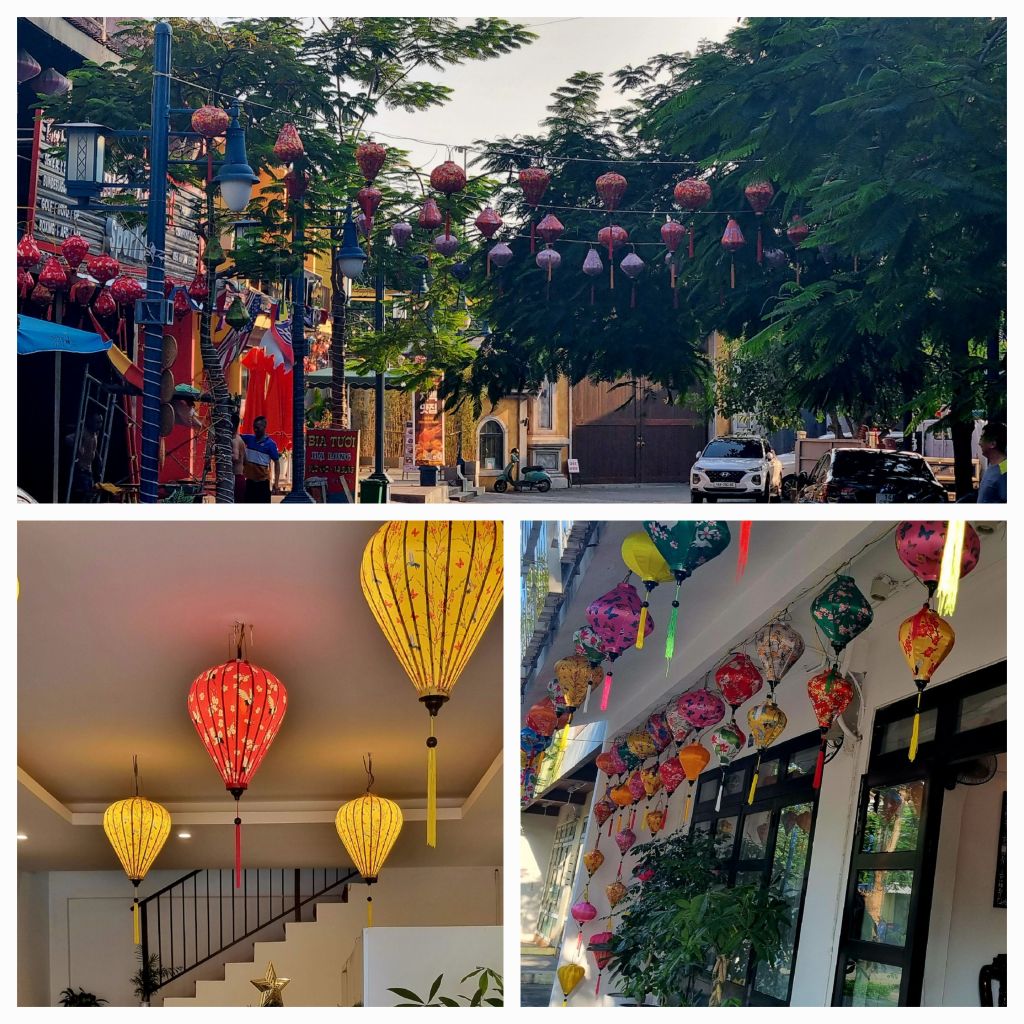
Although the streets were empty, they were quite pretty, with some lovely shops.
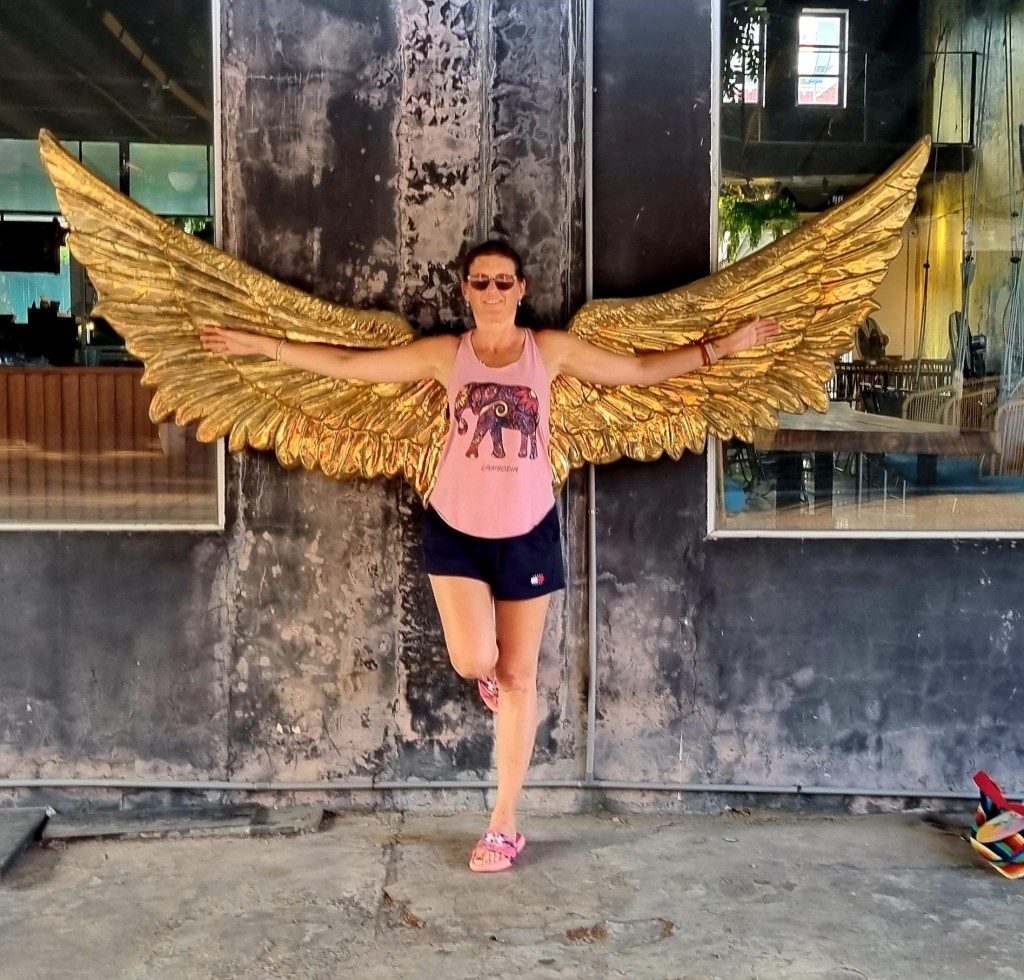
Gill and I found some angel wings, so had to take the obligatory photo.
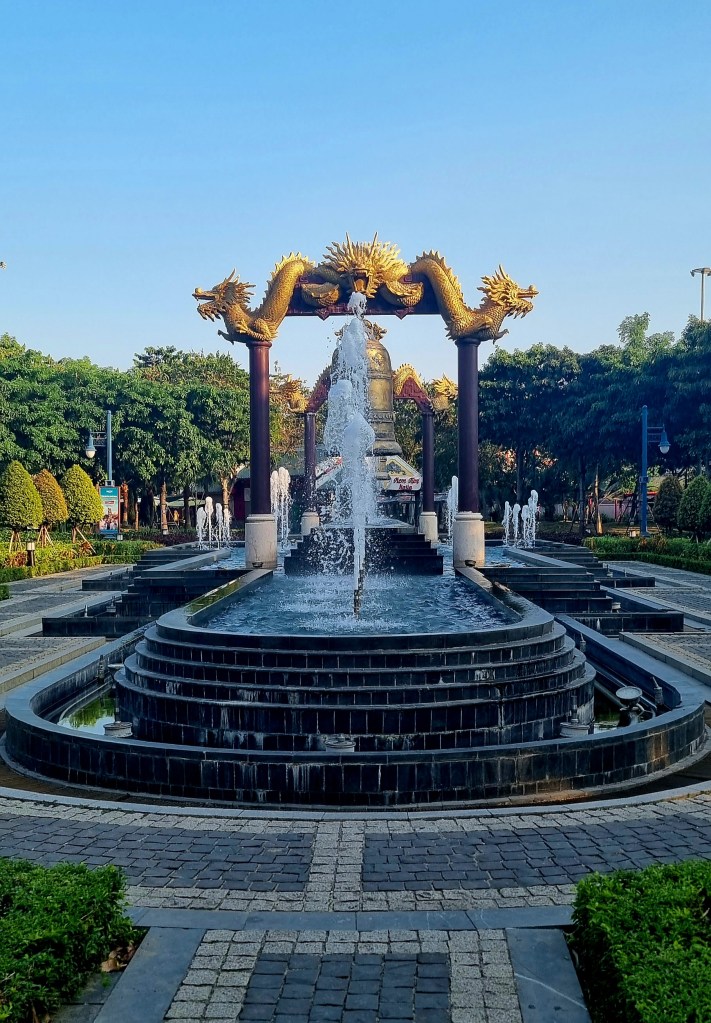
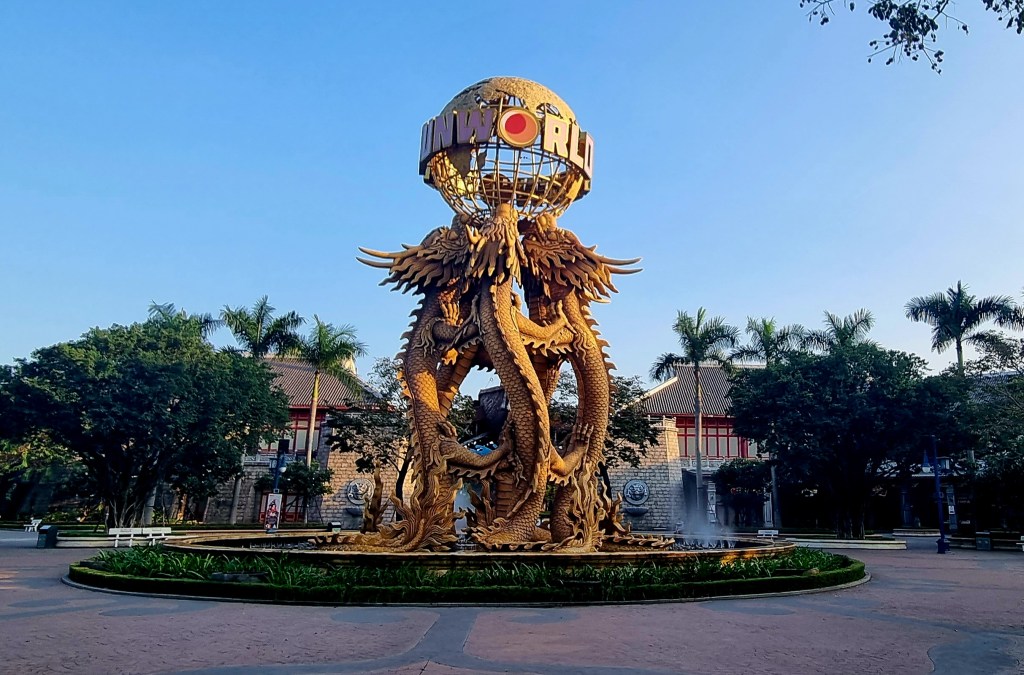
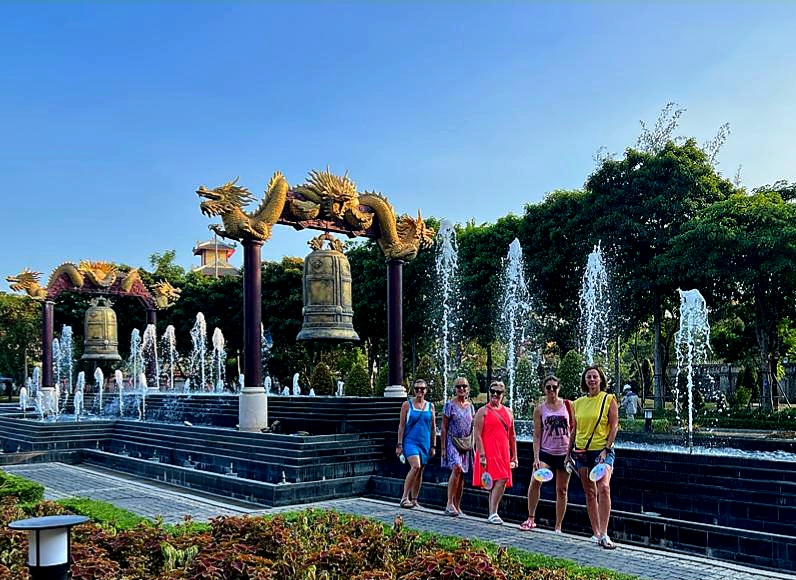
We continued walking down to Sun World, a massive recreational and amusement park.
We did think about getting the cable car over to the other side, but it was quite expensive, so we decided against it.
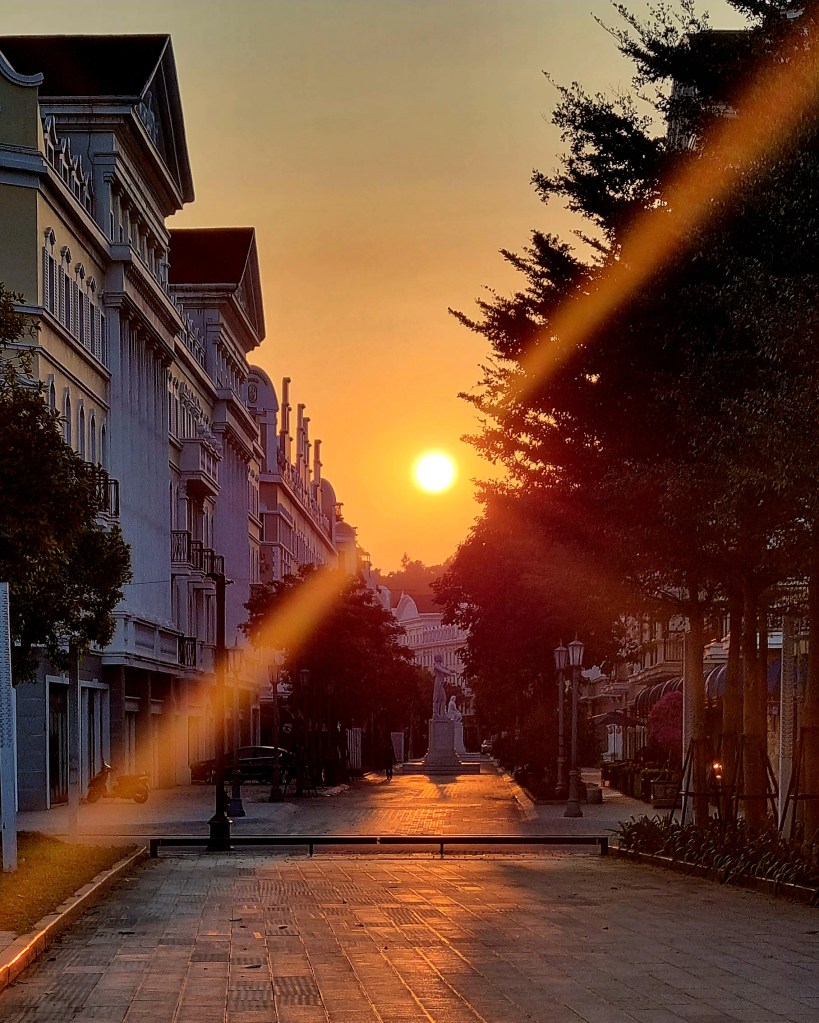
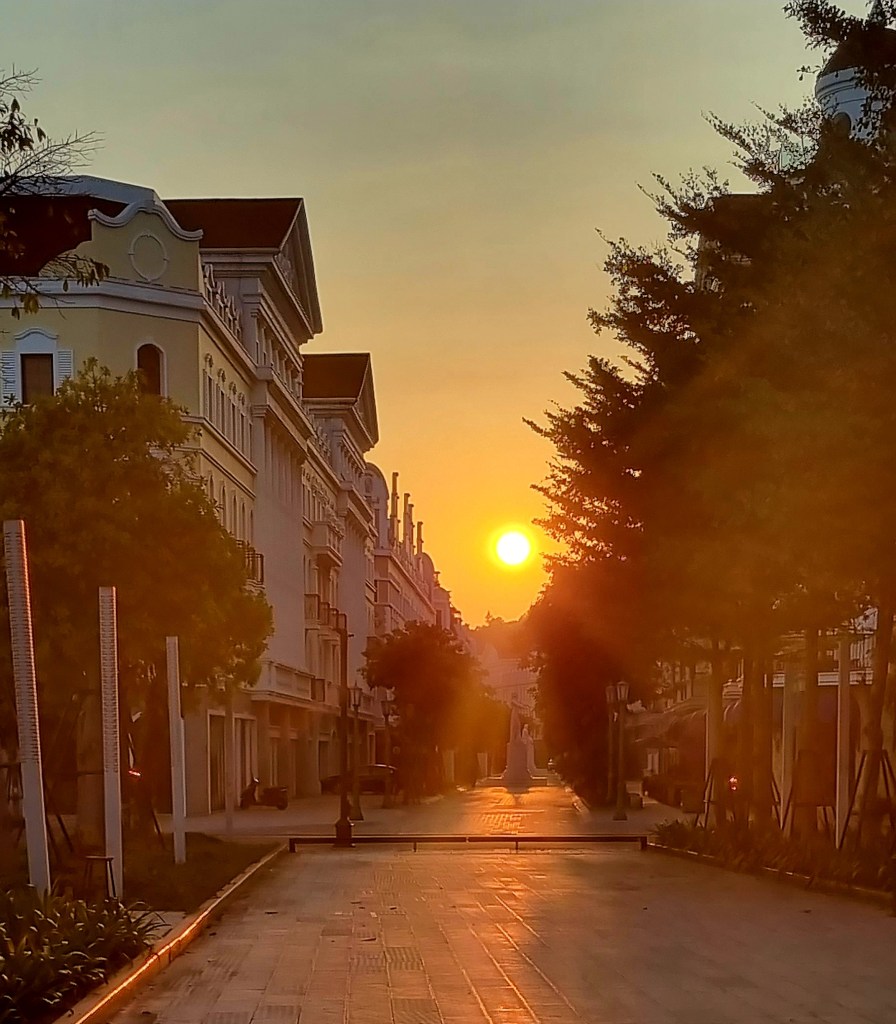
As we walked back to the hotel, the sun was beginning to set.
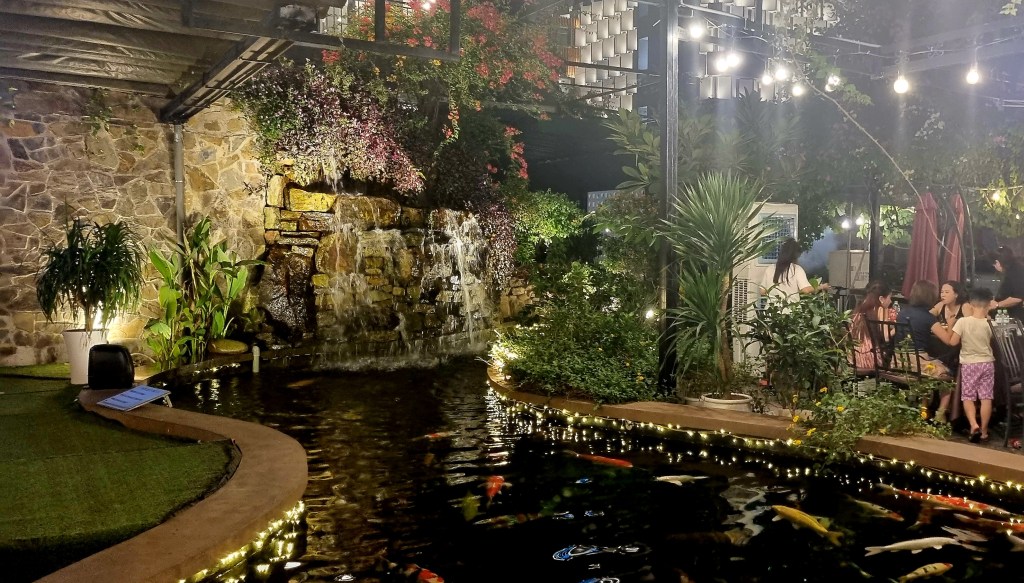
It was very strange being in a tourist area with very few people around. We asked the receptionist in our hotel for recommendations for dinner. She pointed us in the direction of a seafood restaurant. It was around a 20-minute walk from the hotel, but it was a great recommendation.
It seemed like all the people who were in Halong had congregated here as it was really busy. Our waiter and waitress were really patient with us as we tried to work out what to order.
Karen and Mandy picked their lobster, which ended up looking amazing on their plate!
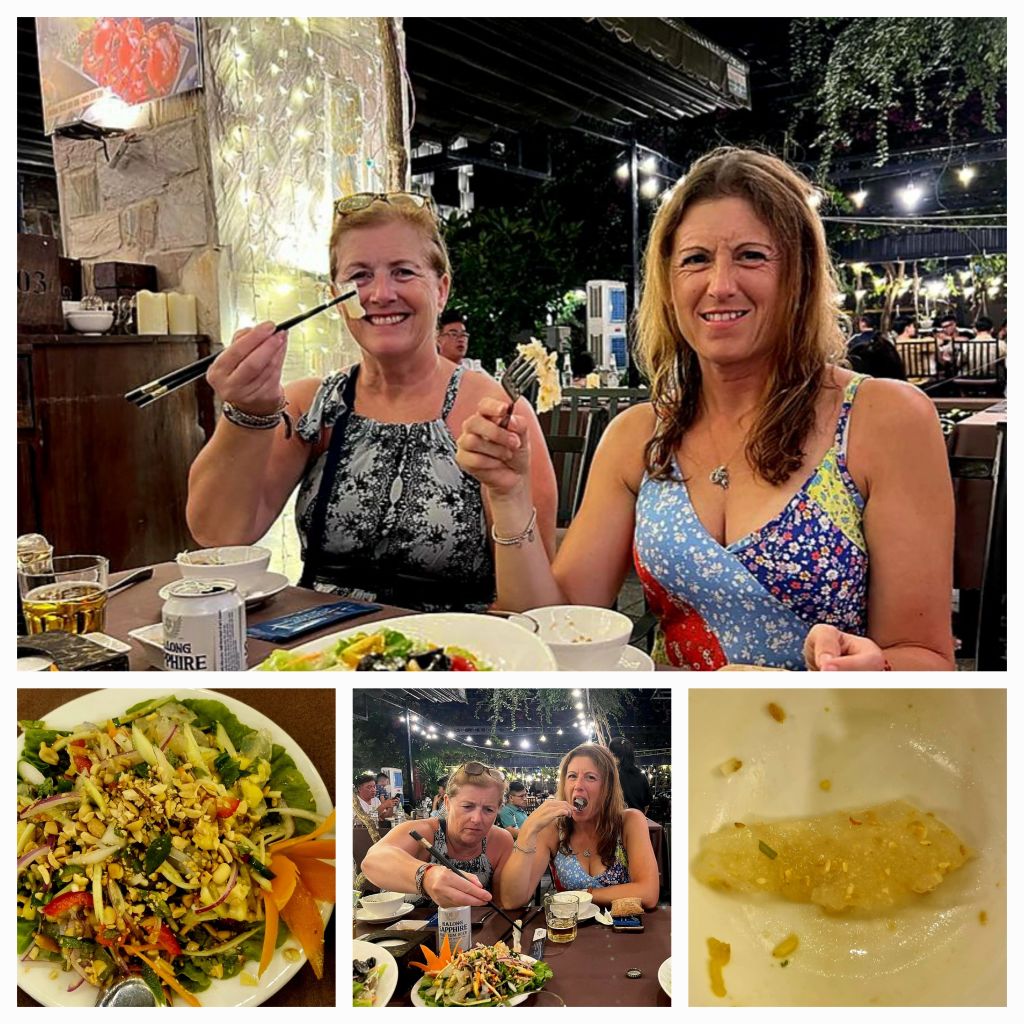
I ordered a jellyfish salad as I had never seen jellyfish on the menu before. It was definitely different – it didn’t really have any flavour, and the texture was a bit like cartilage – it was quite crunchy. I had about 8-10 pieces, but I probably wouldn’t order it again. Everyone else tried it, too.
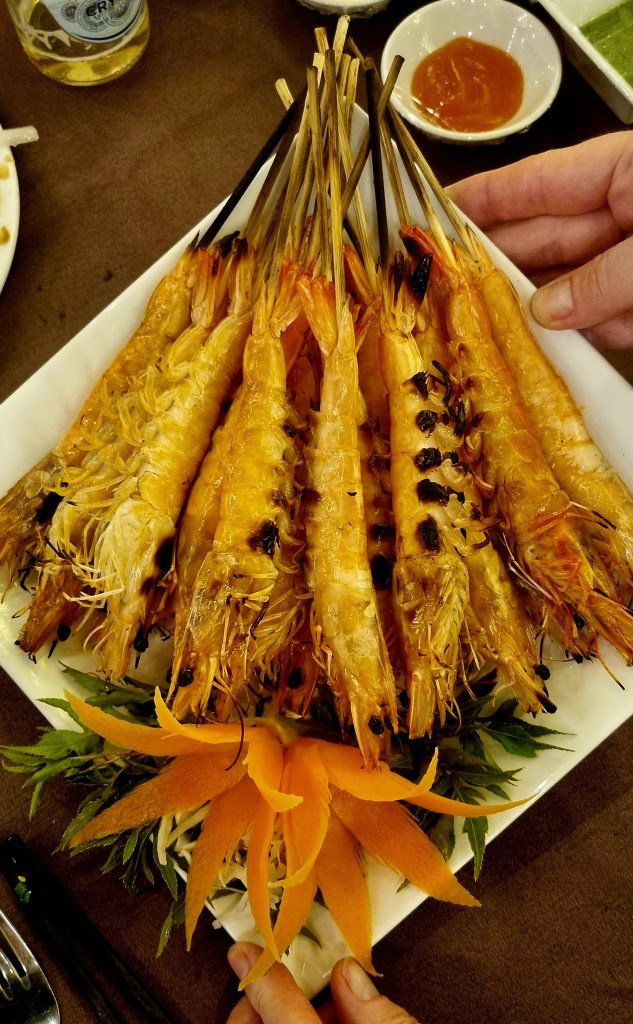
We also had some delicious grilled prawns and some morning glory salad, as well as fried rice.
After we had finished I went to look at the lobsters etc that you could choose to eat. The waitress handed me a squid, which o then dropped, trying to put it back in the tank. Trying to prise it off the floor took some doing.
This is one of the best meals wd had, and it was extremely cheap even though we had beer and wine as well. I think I paid about £15.
We got a little golf buggy type taxi back to the hotel and then headed to bed.
We had what they called a light breakfast, but it was pretty filling with omelette and pastries as well as a selection of fruit.
We woke up quite early, but not early enough to participate in the Tai Chi class.
We were then transferred from the main cruise ship to a slightly smaller dayboat.
On this dayboat, we cruised to Cong Dam and relaxed on the sundeck.
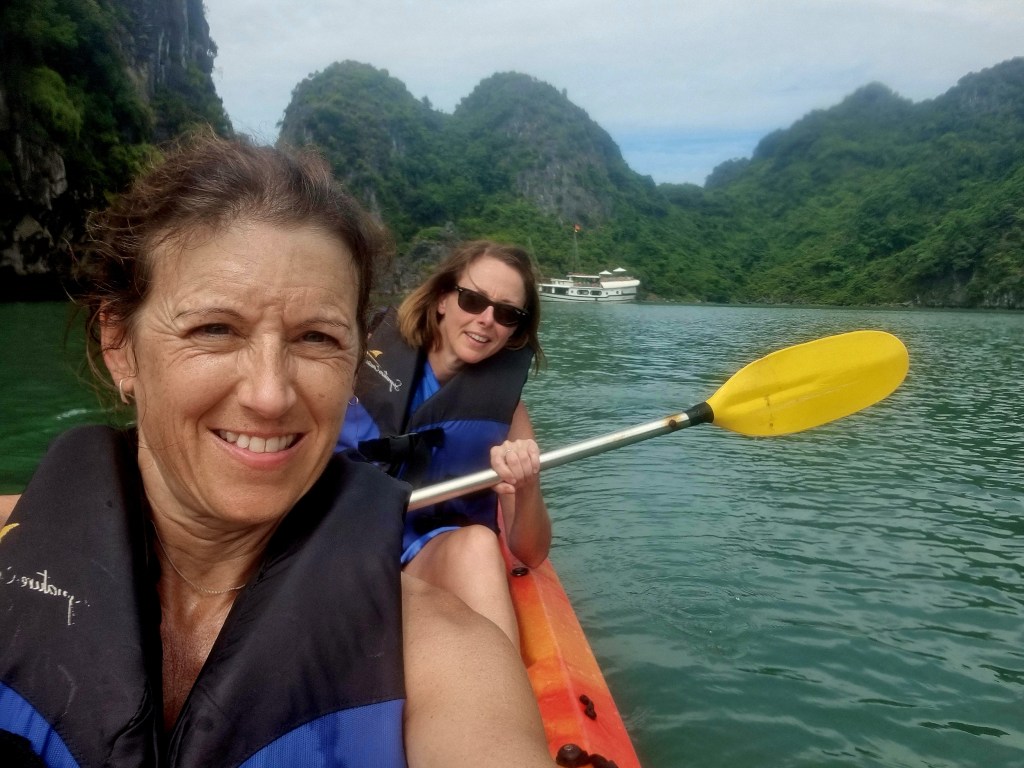
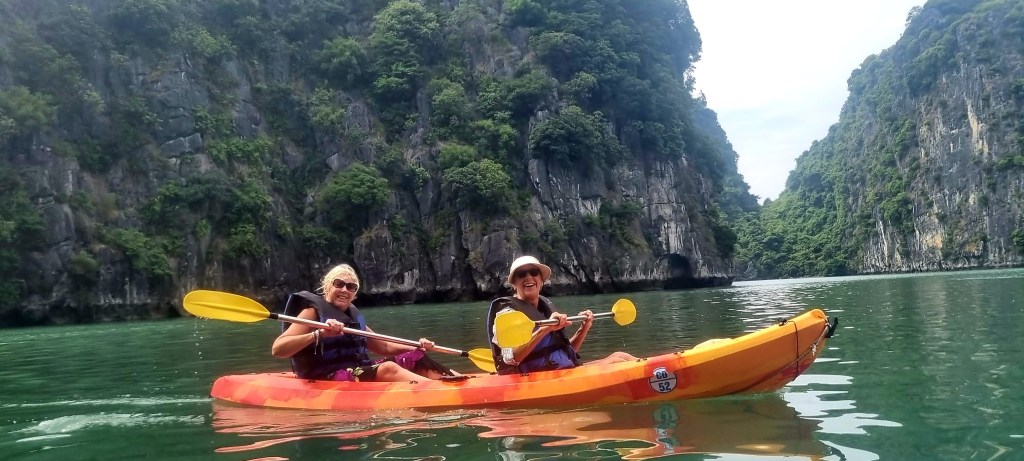
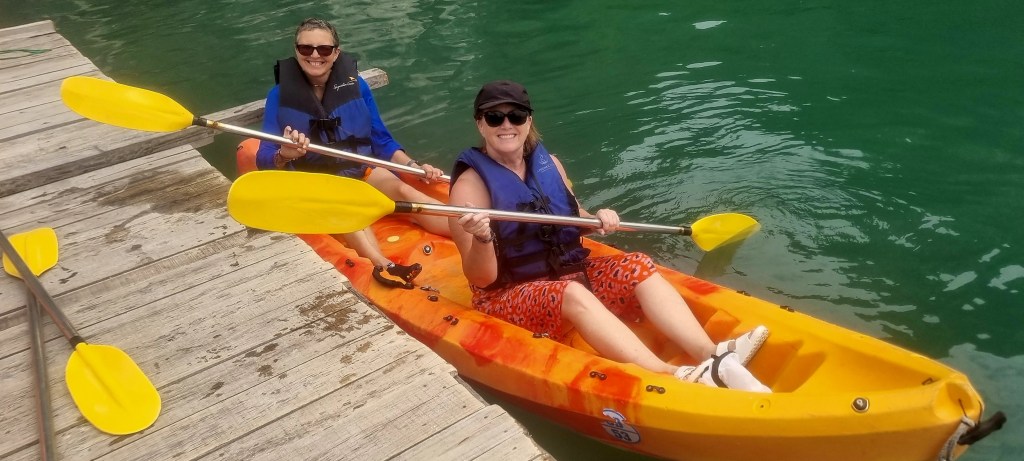
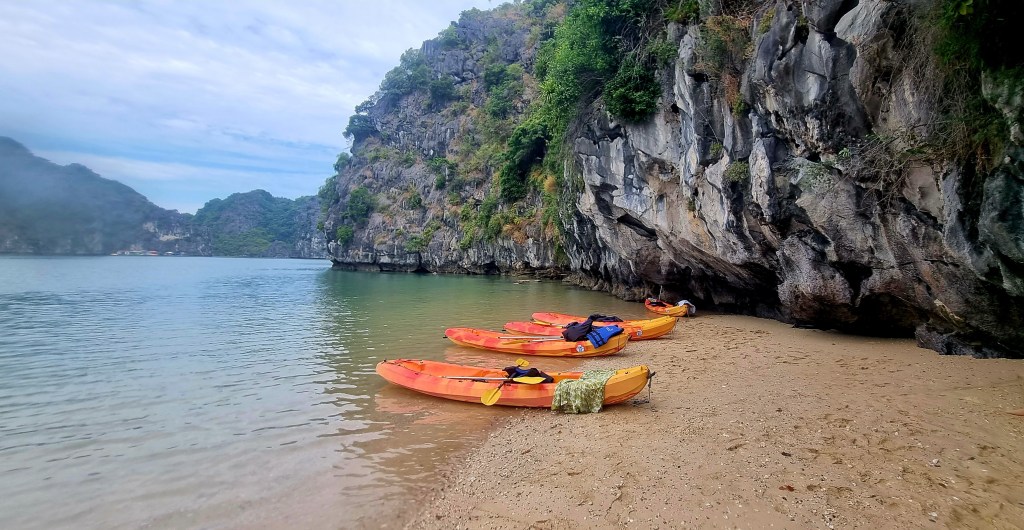
After a while, we reached the kayak station. We had 1 kayak between 2 of us, and we were shown how to get to a small area of beach.
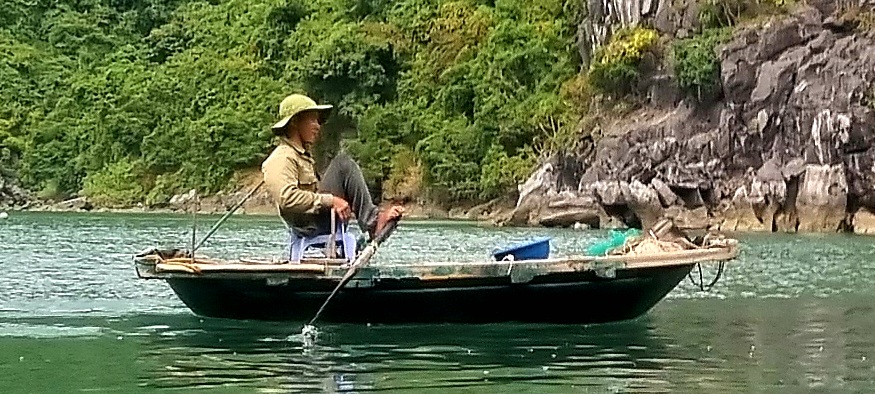
Whilst we were kayaking along, we saw a fisherman come past us who was rowing with his feet. We learnt that the fishermen are taught how to do this at a young age so that they can use their hands to fish.
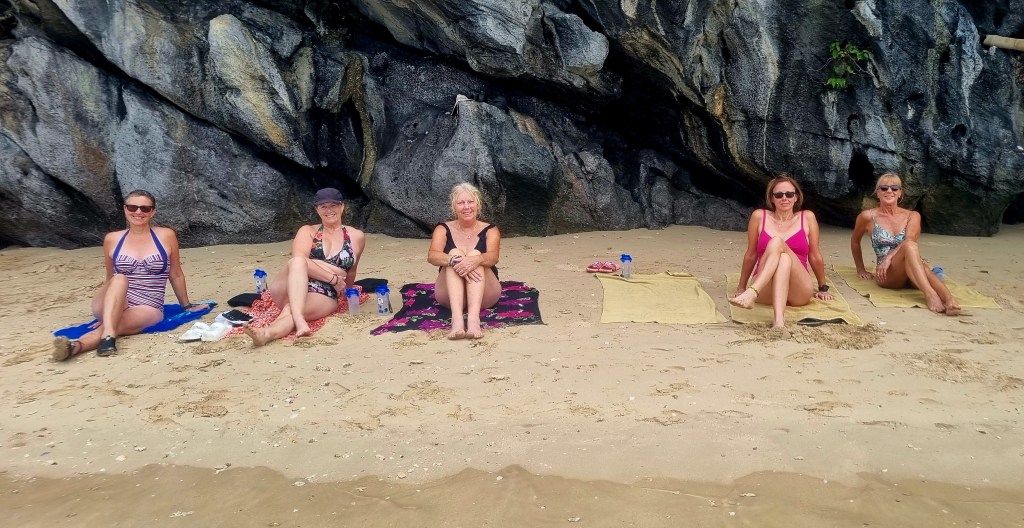
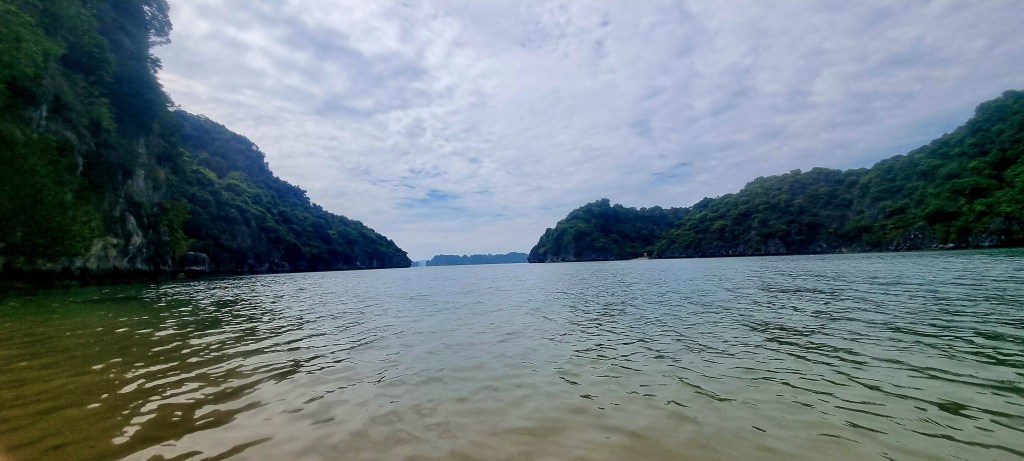
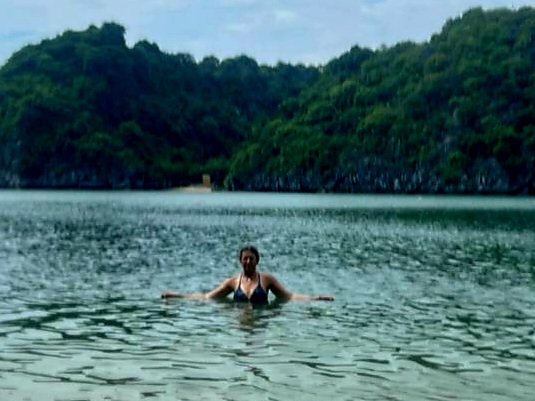
The beach area was quite small, but there was enough space for all of us, and it was an area where we could go swimming. I saw some small jumping fish in the eater whilst I was swimming.
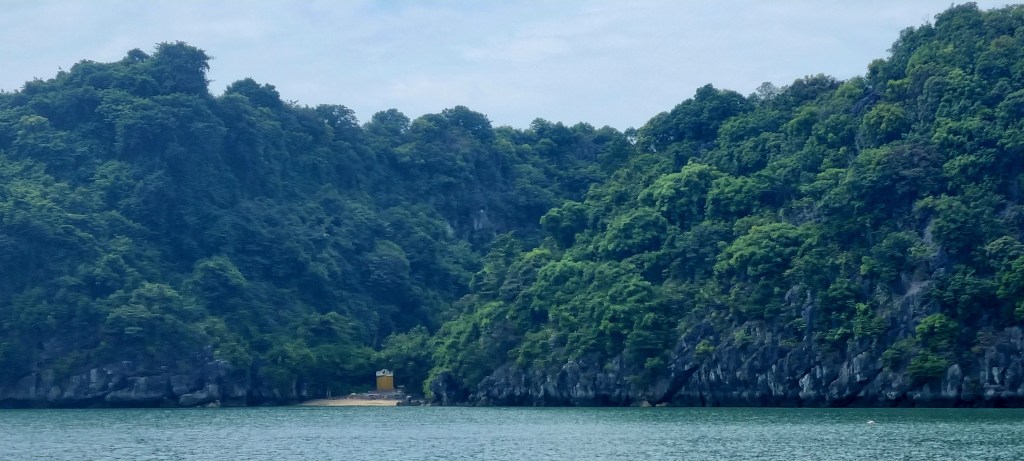
Just before we were going to get back in the kayaks, our guide told us that there was a small temple opposite the beach. Unfortunately, we didn’t get time to go and visit it.
We did come across a local boat on our way back, but luckily managed to avoid colliding into it!
Back on the dayboat, we had a delicious lunch.
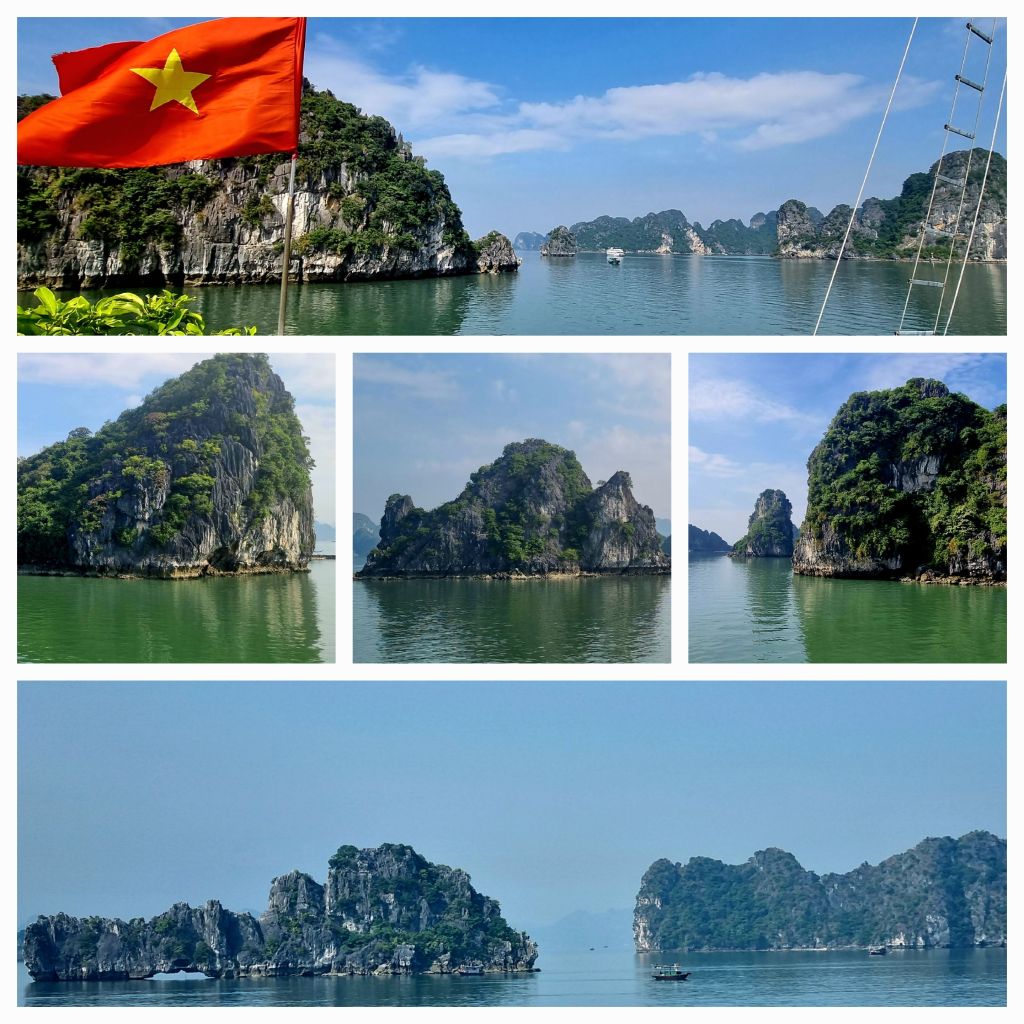
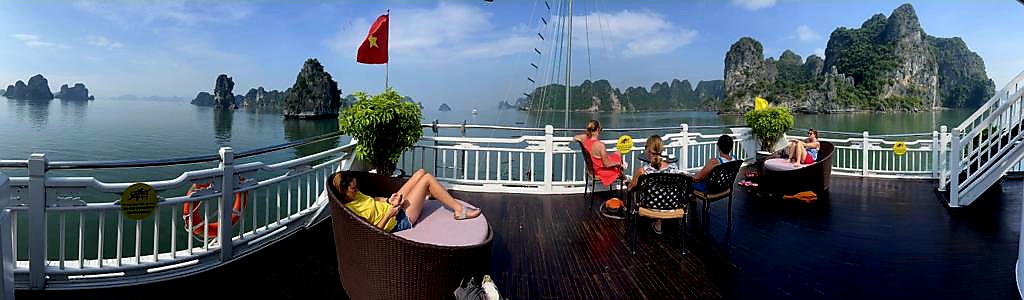
And then it was more relaxing on the top deck whilst taking in the amazing scenery.
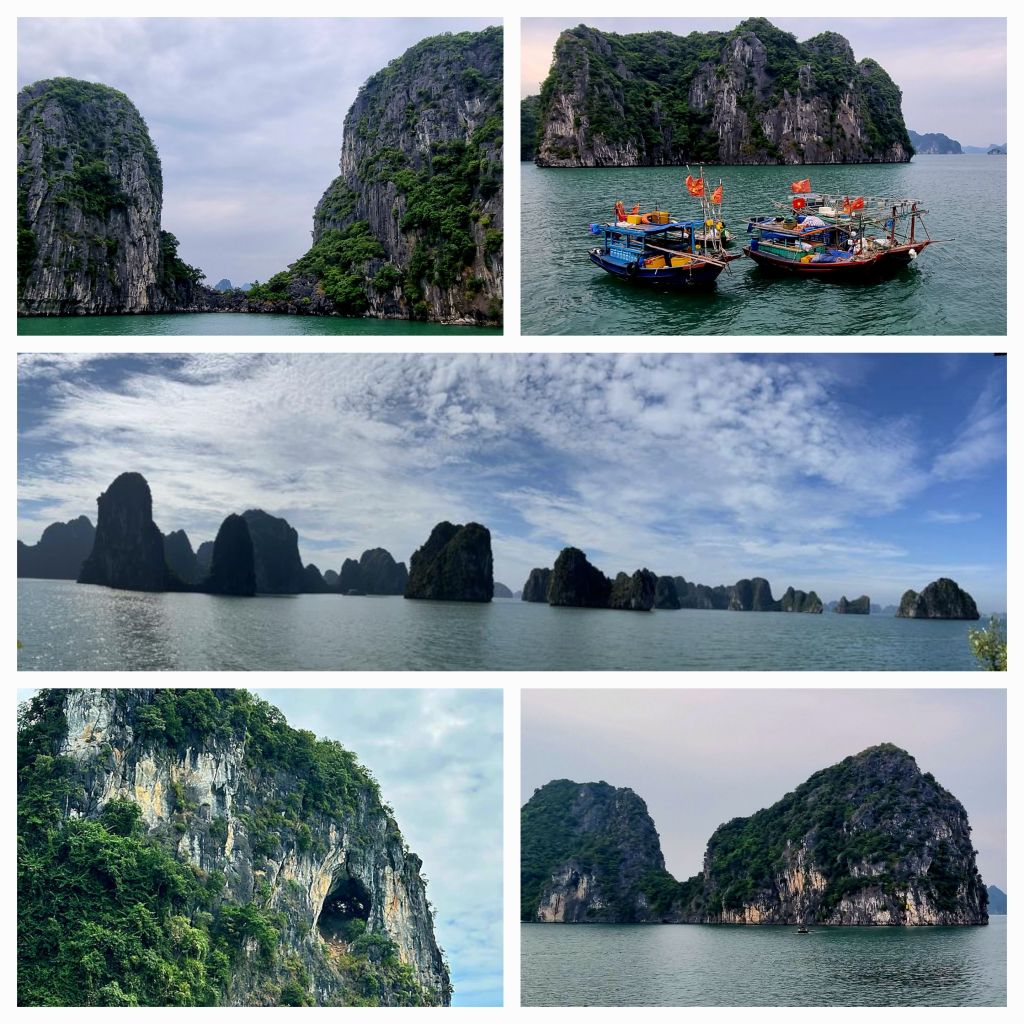
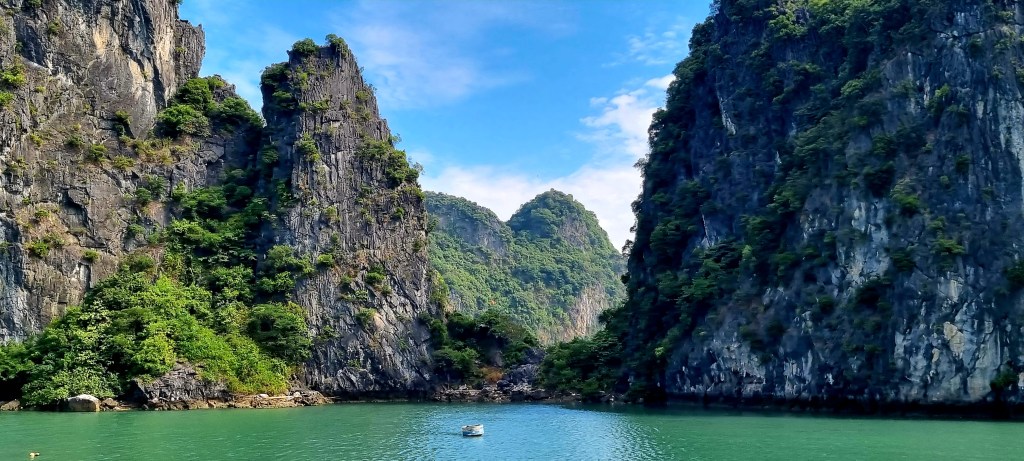
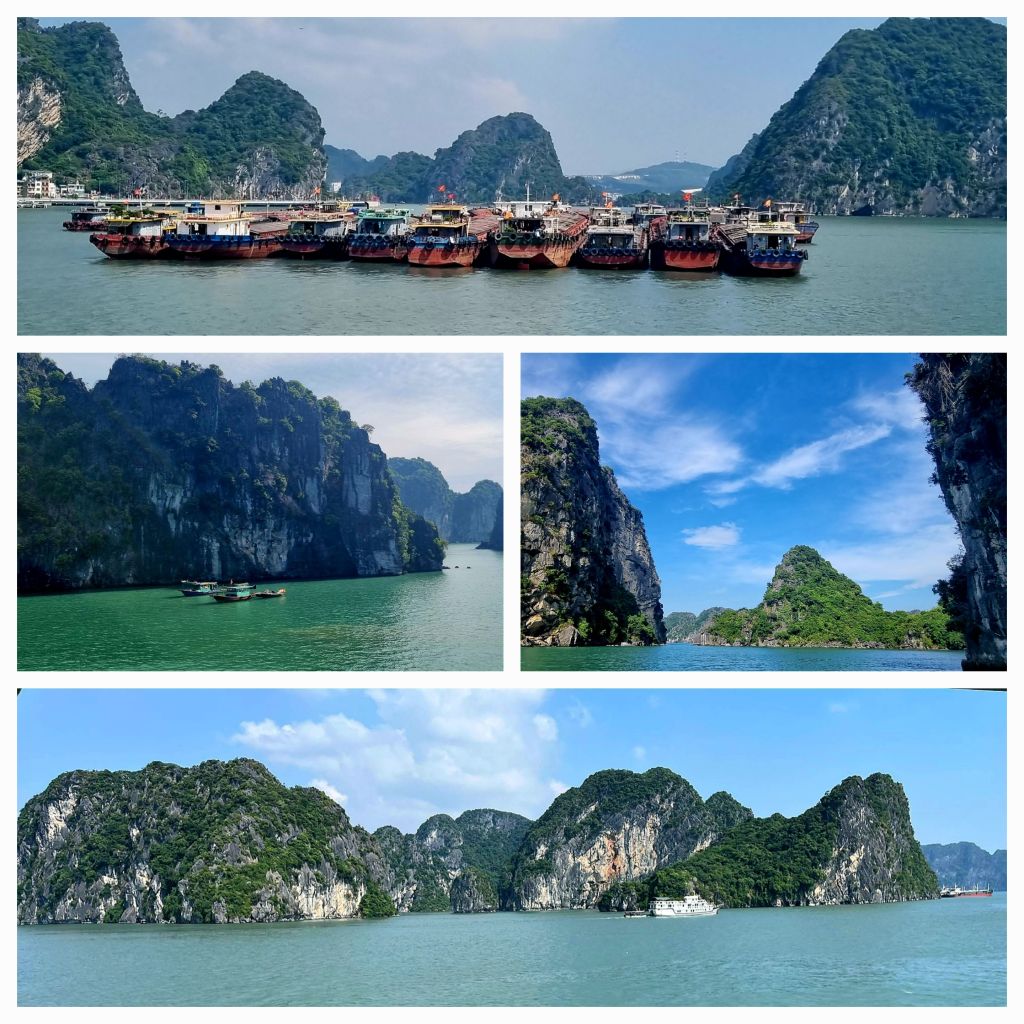
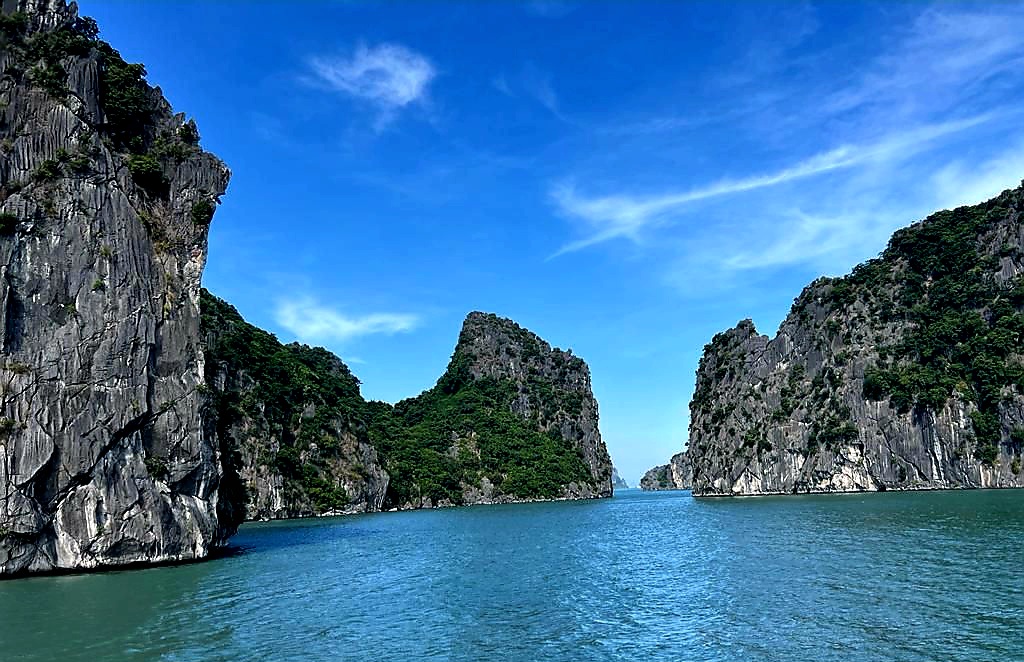
The formation of Halong Bay dates to over 500 million years ago. It consists of 1,969 ancient marine limestone rocks. These rocks used to stand at over 1,000 meters tall, but millions of years of erosion have reduced them to their present size.
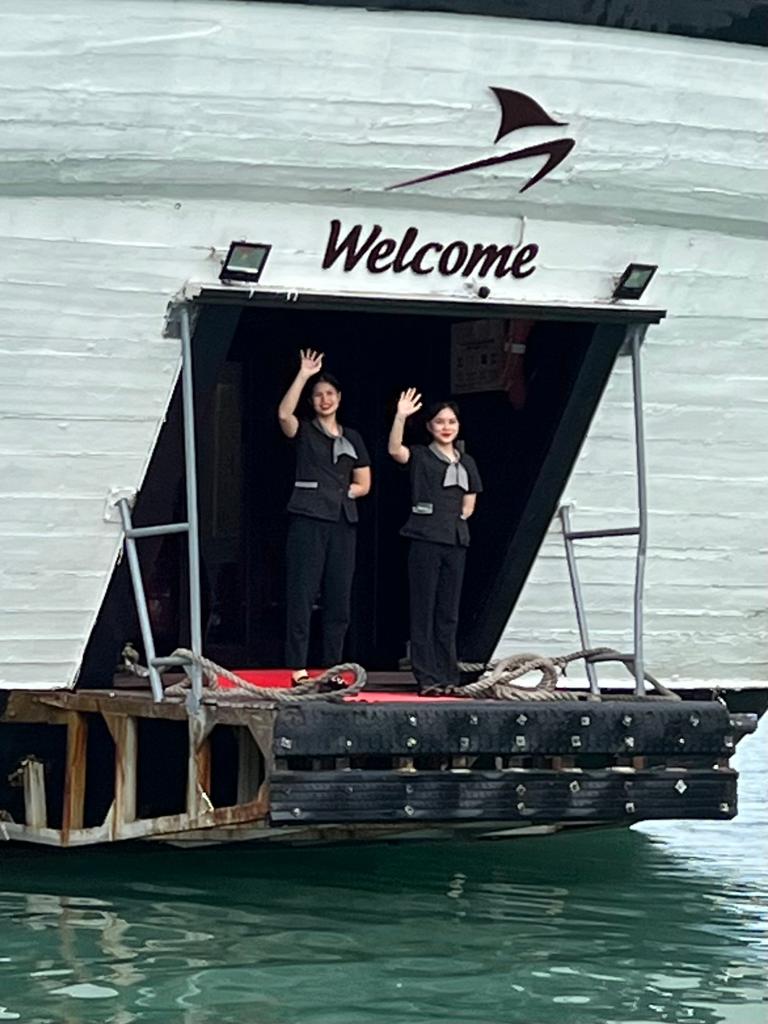
When we got back to the cruise ship, we received another warm welcome and refreshing drink.
Mandy and I had a massage booked for 3pm, so we headed off to get changed and go to the cabin where they were found the massage. It was a very relaxing body massage.
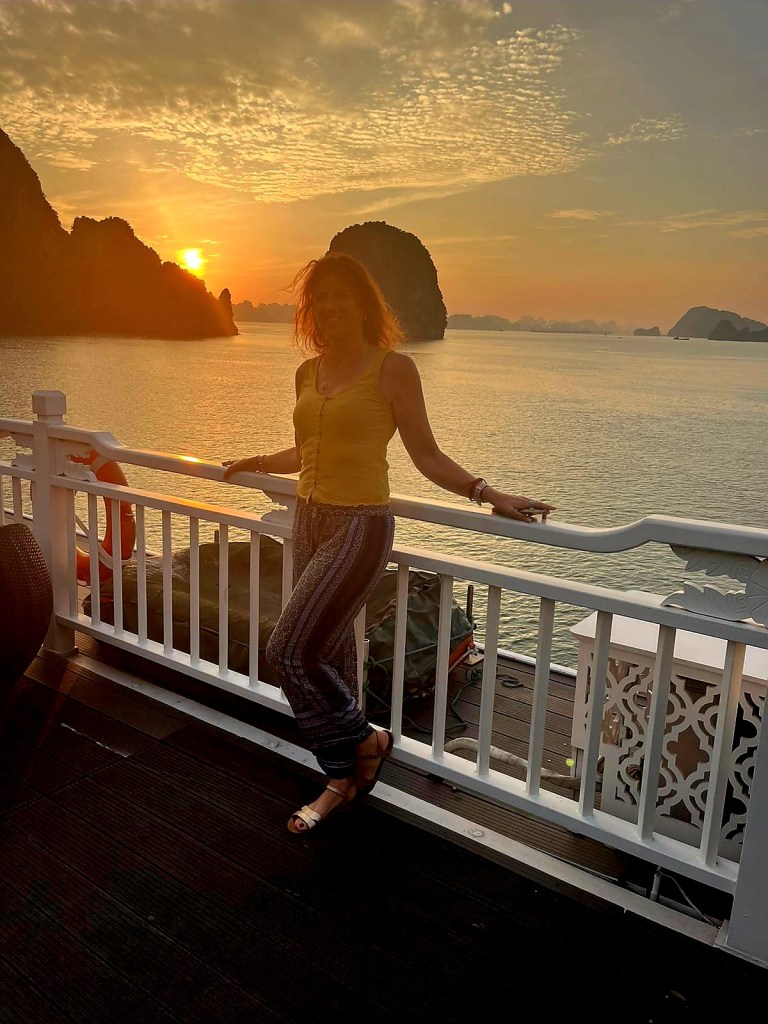
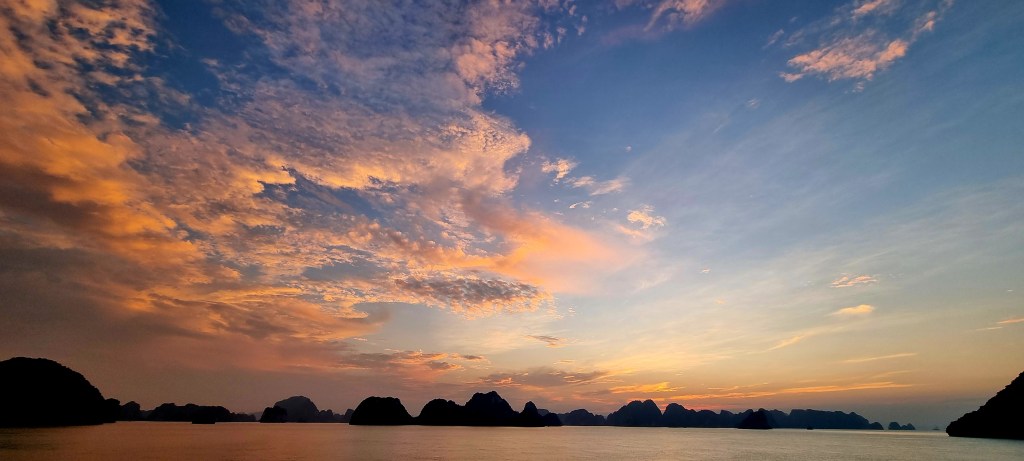
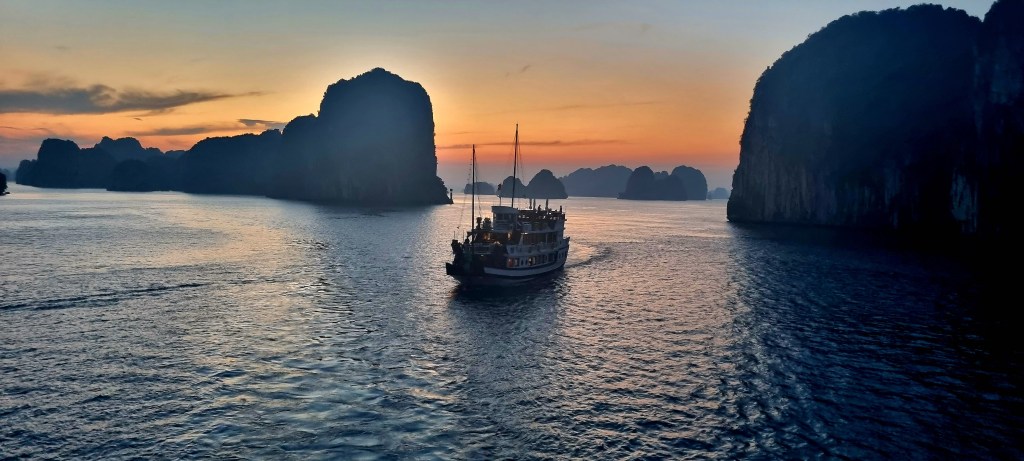
After a shower to we refresh, we went back to the sundeck to watch another amazing sunset.
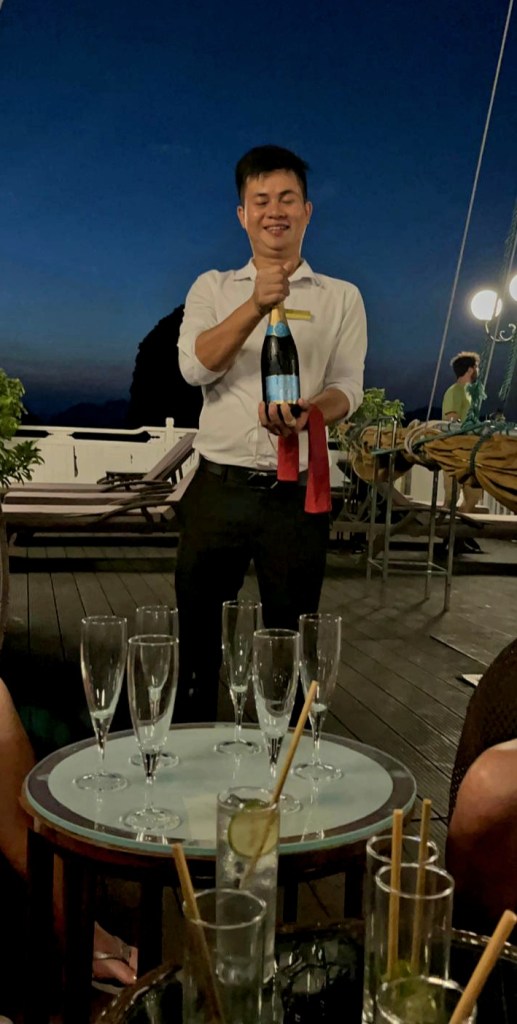
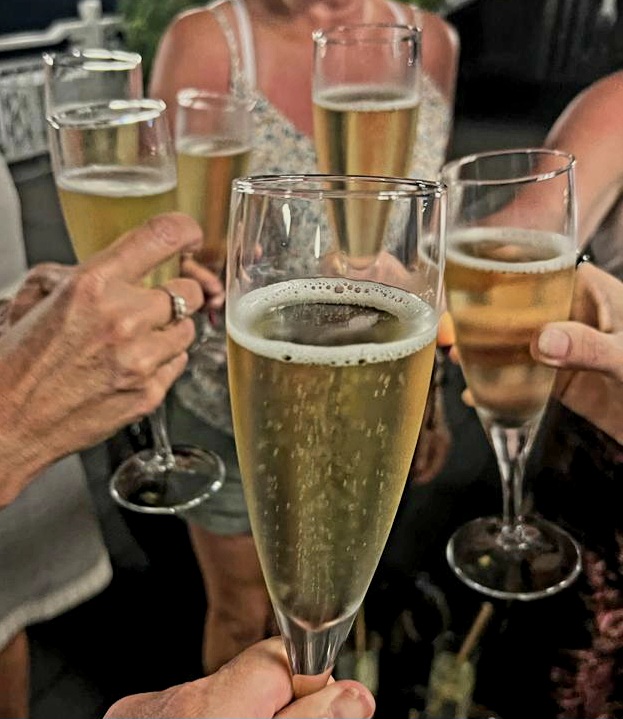
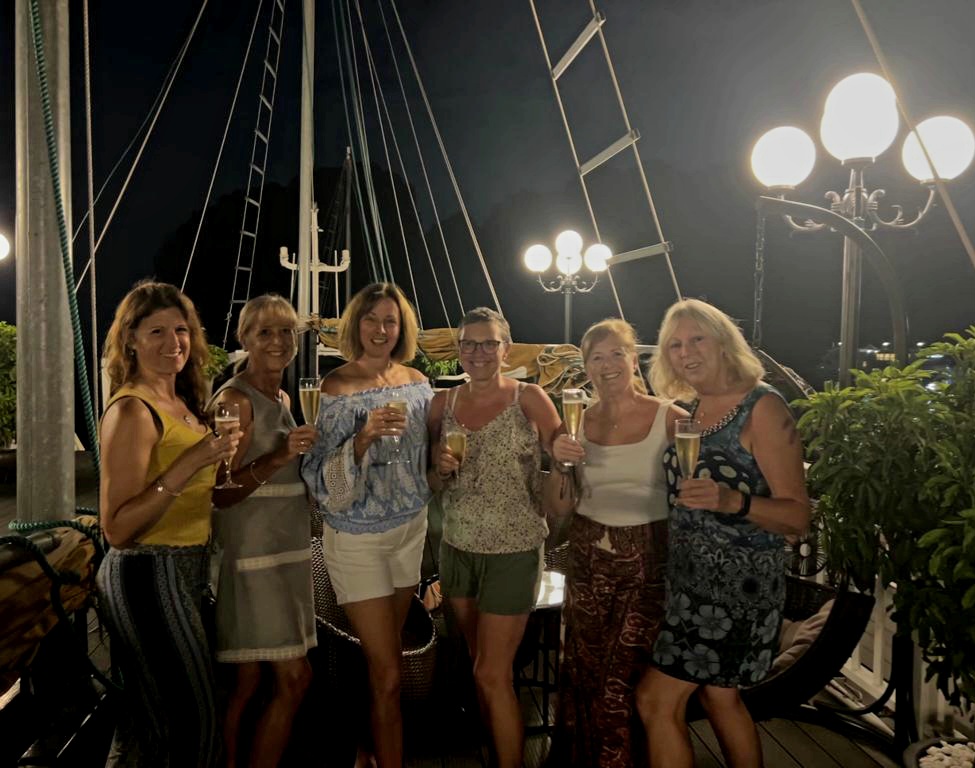
Mandy kindly bought a bottle of champagne to celebrate her birthday, a present from her boss.
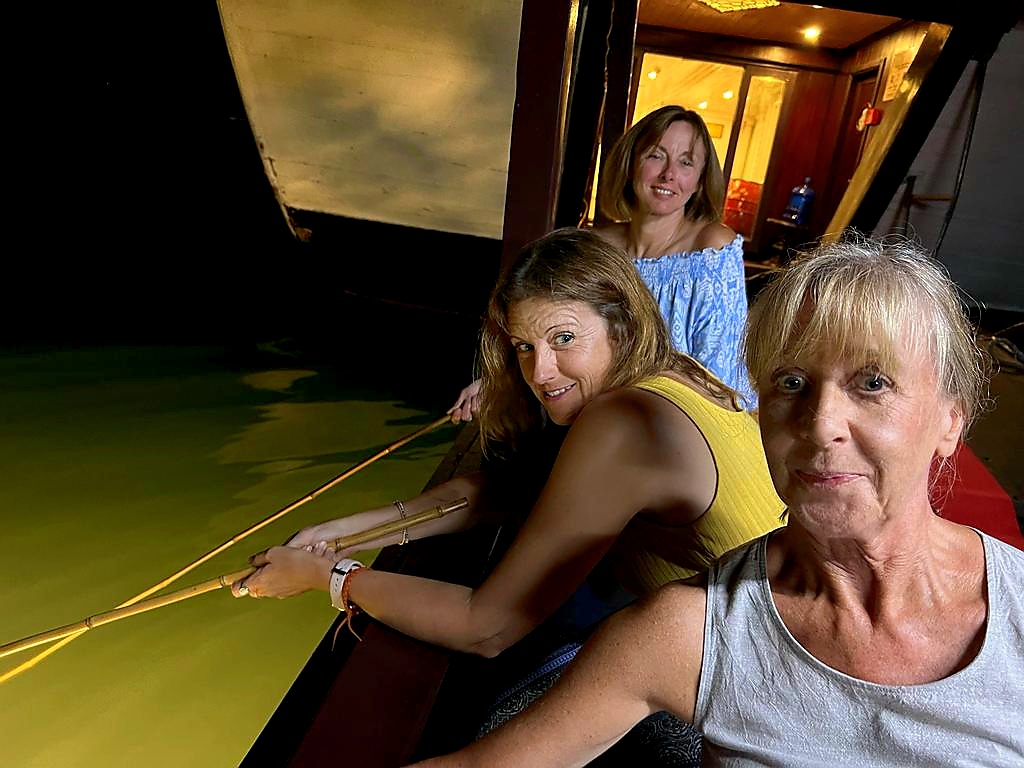
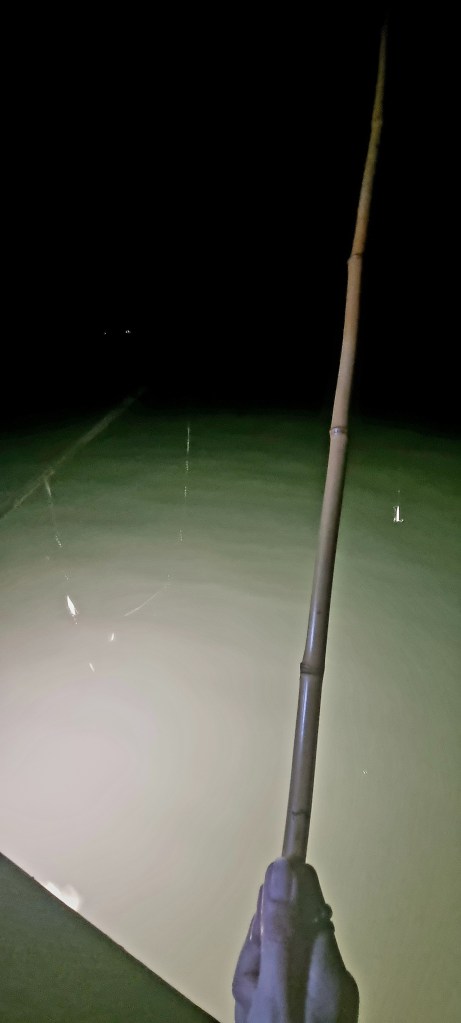
After another delicious dinner, we went to the reception area and onto the small boat to do a bit of squid fishing. We soon learnt that it wasn’t really squid season, and it had been over a week since anyone caught a squid.
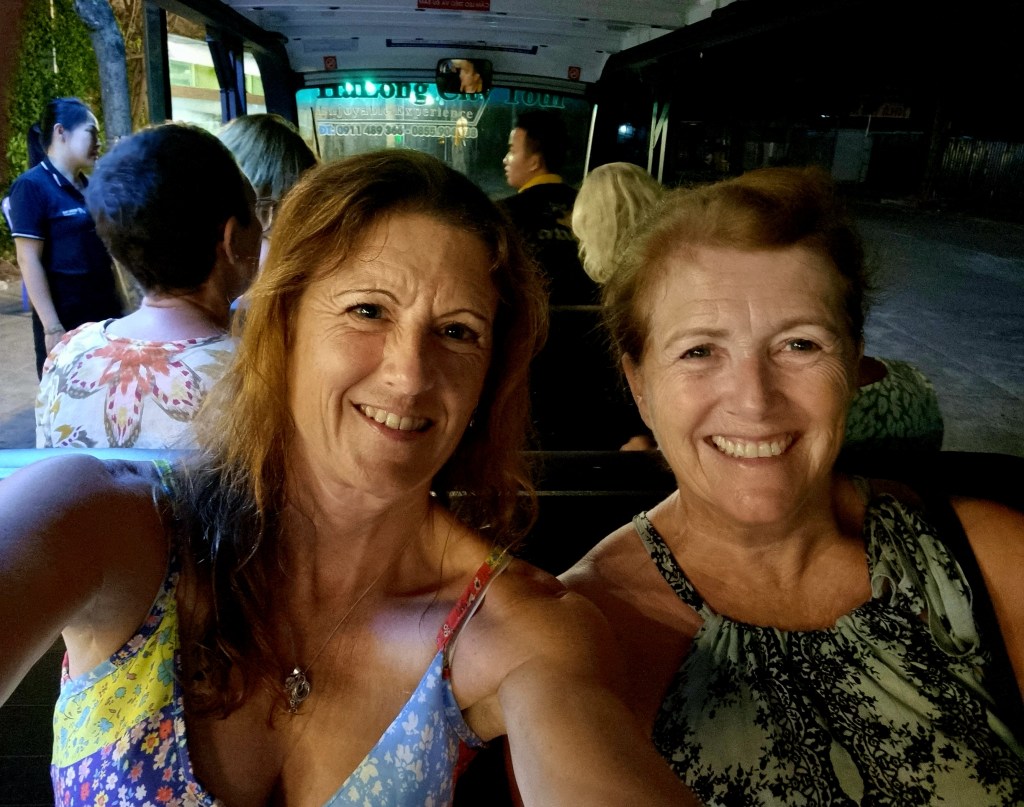
We got up early for breakfast, and then we were picked up from our hotel in a pre-arranged luxury minibus to take us to Halong Bay.
On route, the bus stopped to fill up and as a toilet break for us. As we came out of the toilet, we were accosted by a woman who then showed us the many pearls and explained the different kinds of pearls and the process of cultivating them.
The Tahiti pearls are grown in a black lip oyster and are known as ‘Queen of pearls.’ They can contain overtones and undertones of pink,yellow, silver and blue, the more precious ones being of the darker variety.
Akoya pearls are saltwater cultured pearls from the akoya oyster. They are quite small in size and are white, silver, pink and creamy in colour.
The Southsea pearls are the most expensive variety and are white, silver, yellowy and gold in colour. They take the longest time to produce, so can be quite large in size.
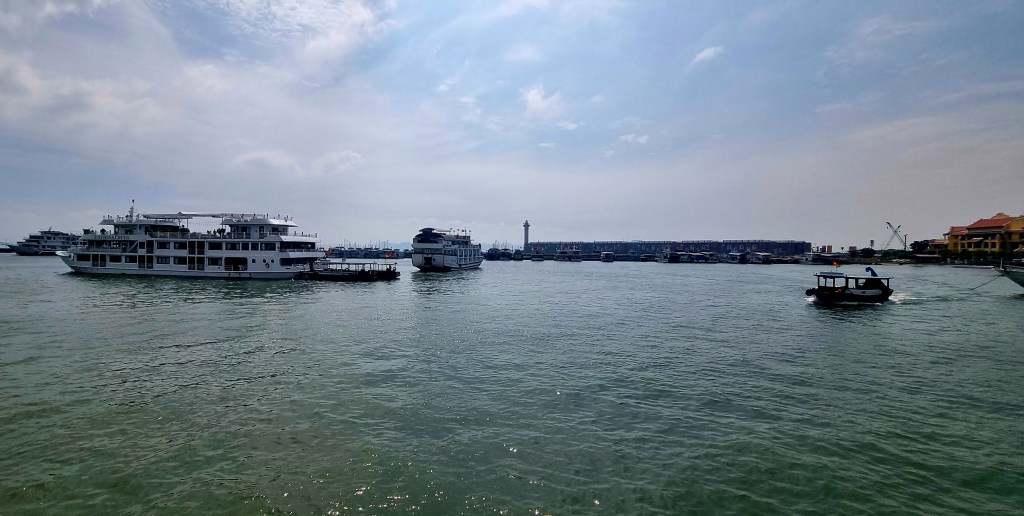
After a couple of hours of driving, we arrived at the International Port of Halong Bay. We were greeted by one of the Signature Cruise staff who took us to the check-in desk where we could leave our luggage.
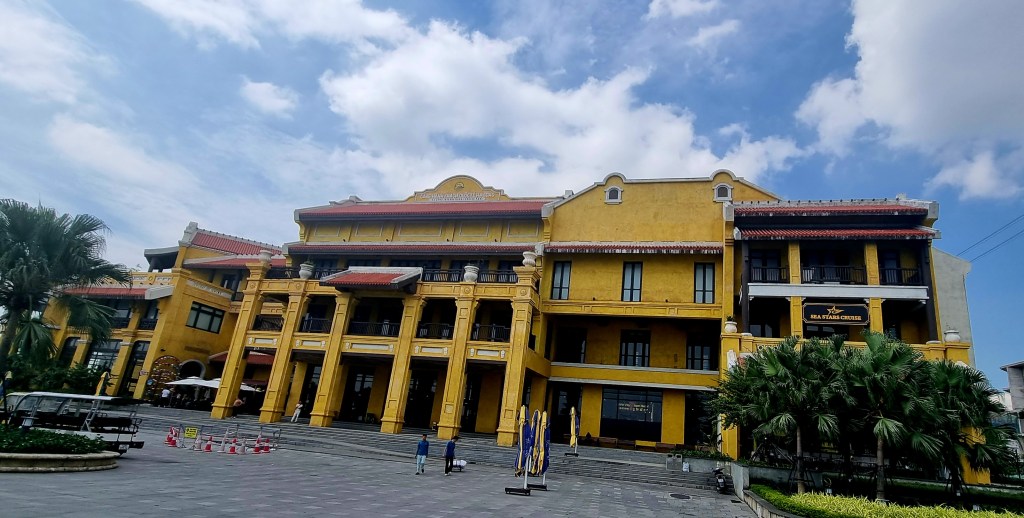
We had a bit of time to kill before we could board our boat, so we walked around the shops and had a coffee.
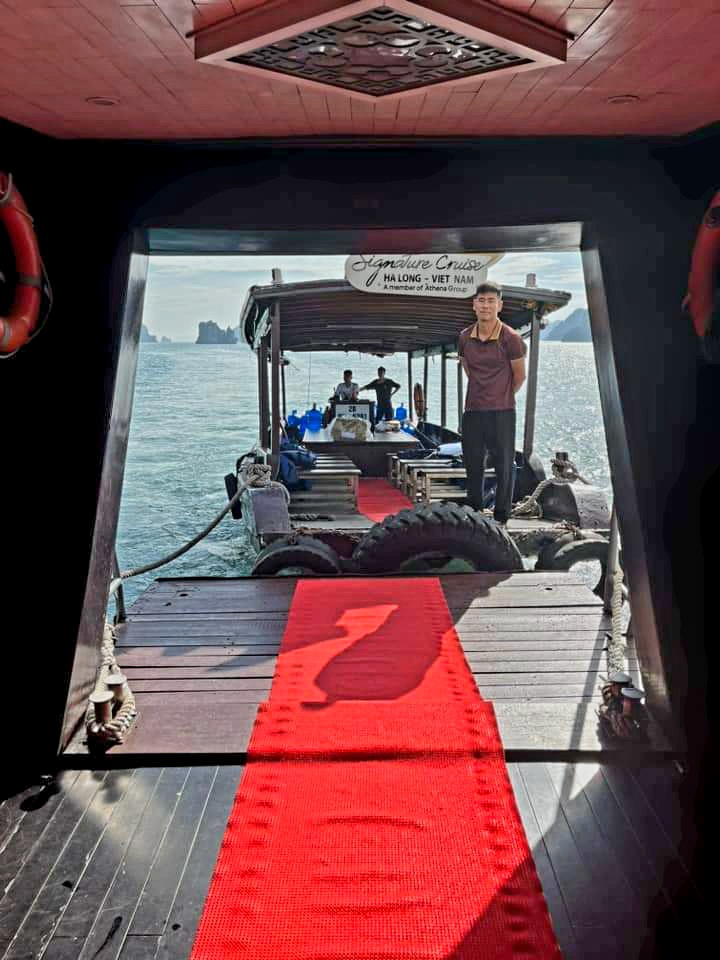
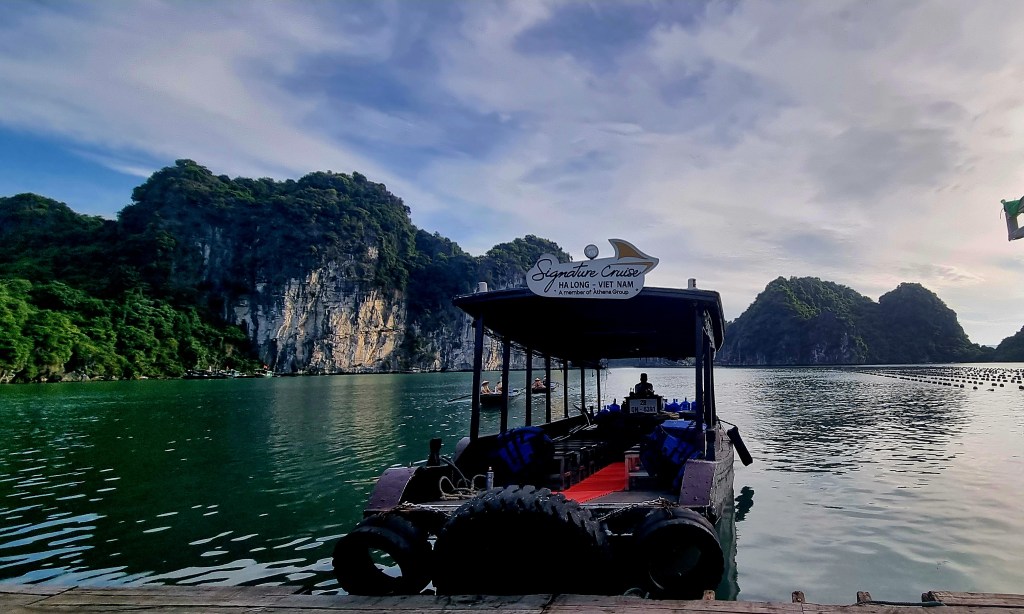
Shortly before 1pm, we were taken to the pier to board a small boat to transfer us to our cruise ship.
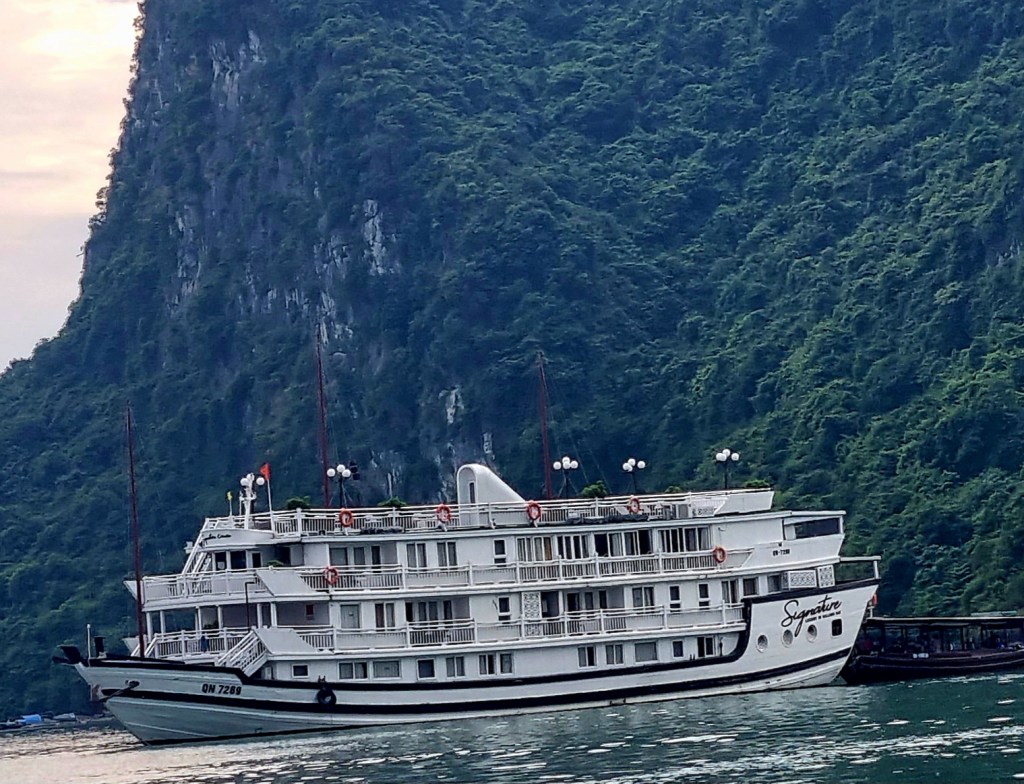
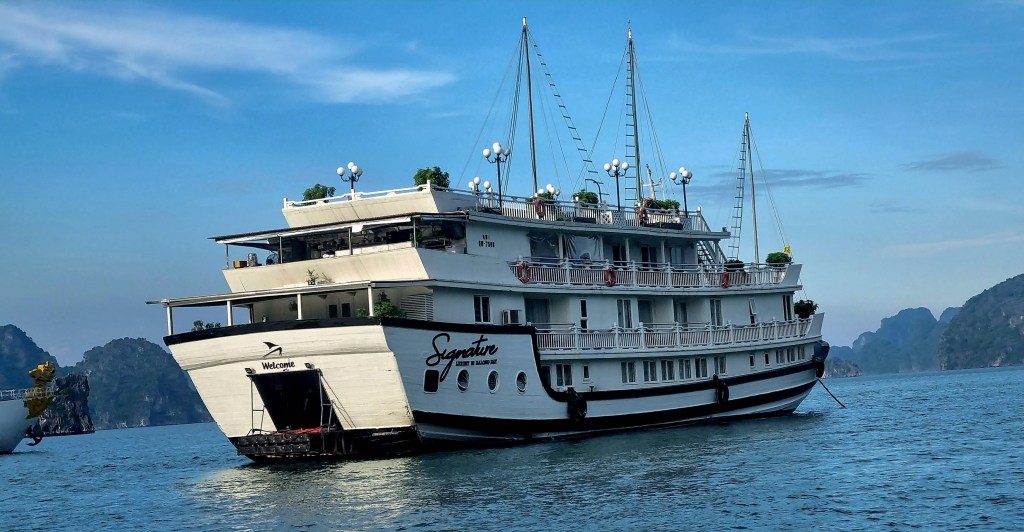
Our cruise ship was a wooden ship that can host around 24 people.
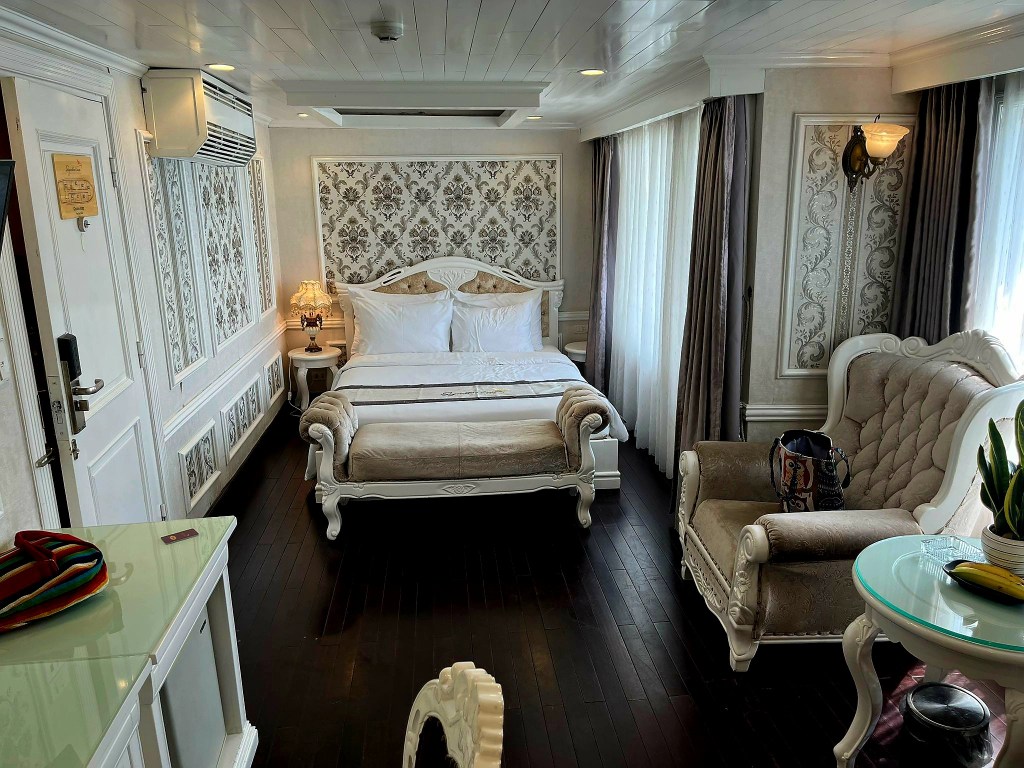
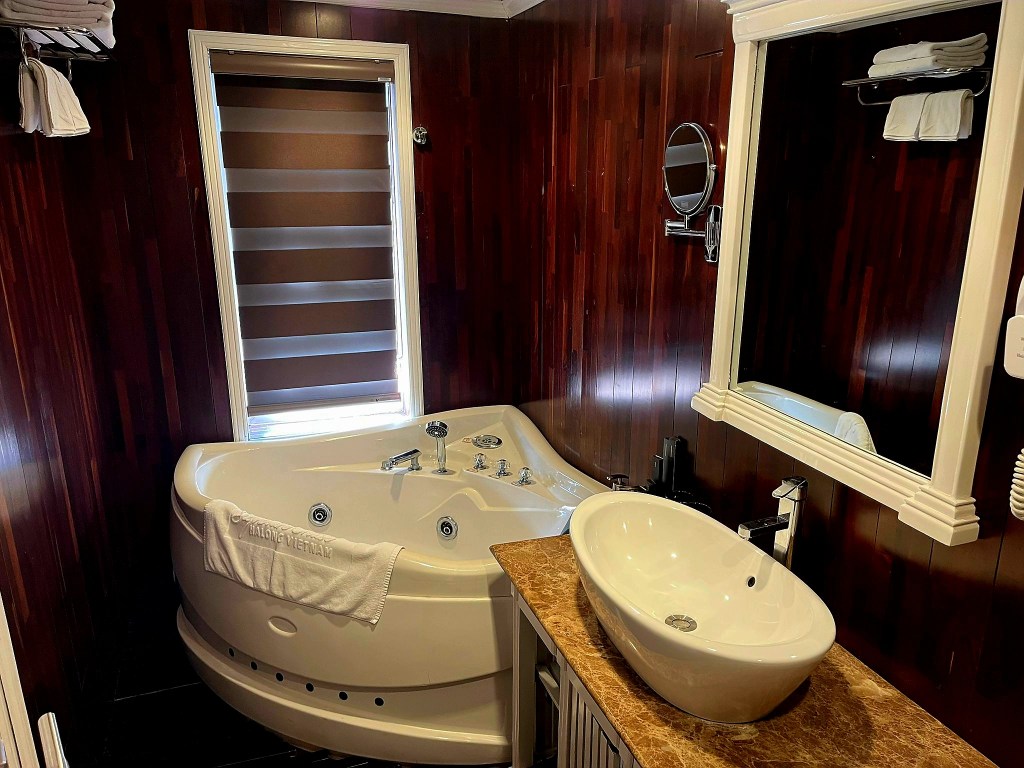
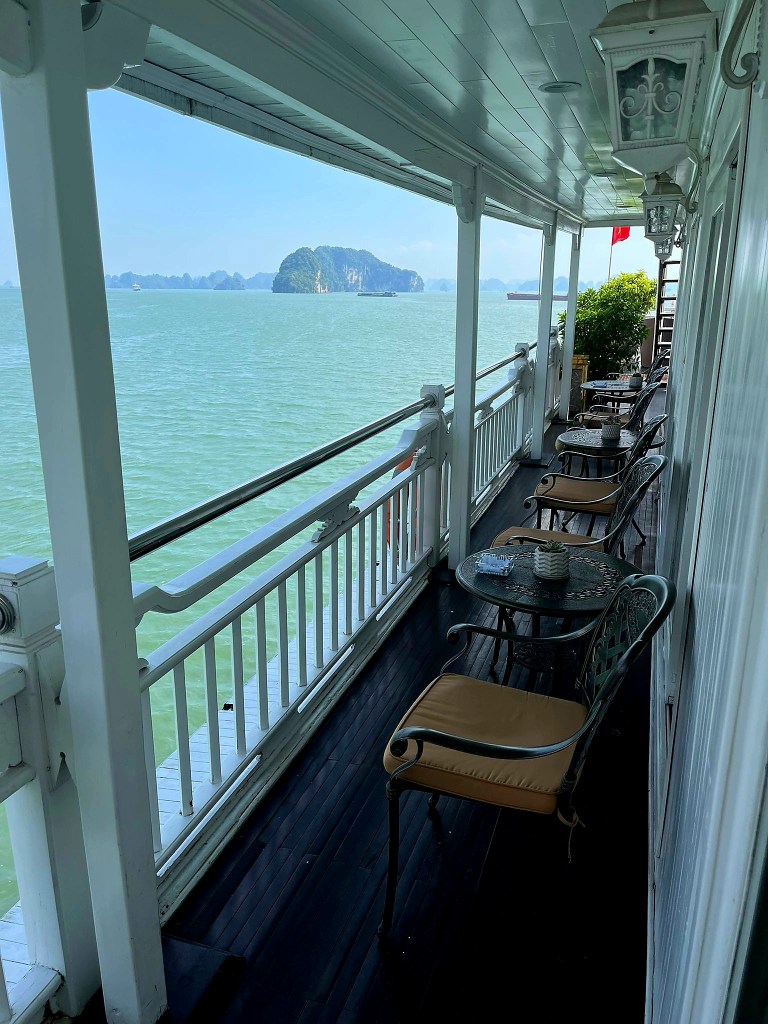
Once on board, we were offered a refreshing watermelon drink and shown the restaurant before being given the keys to our cabins. The cabins and bathroom were really nice, and we had a small balcony outside.
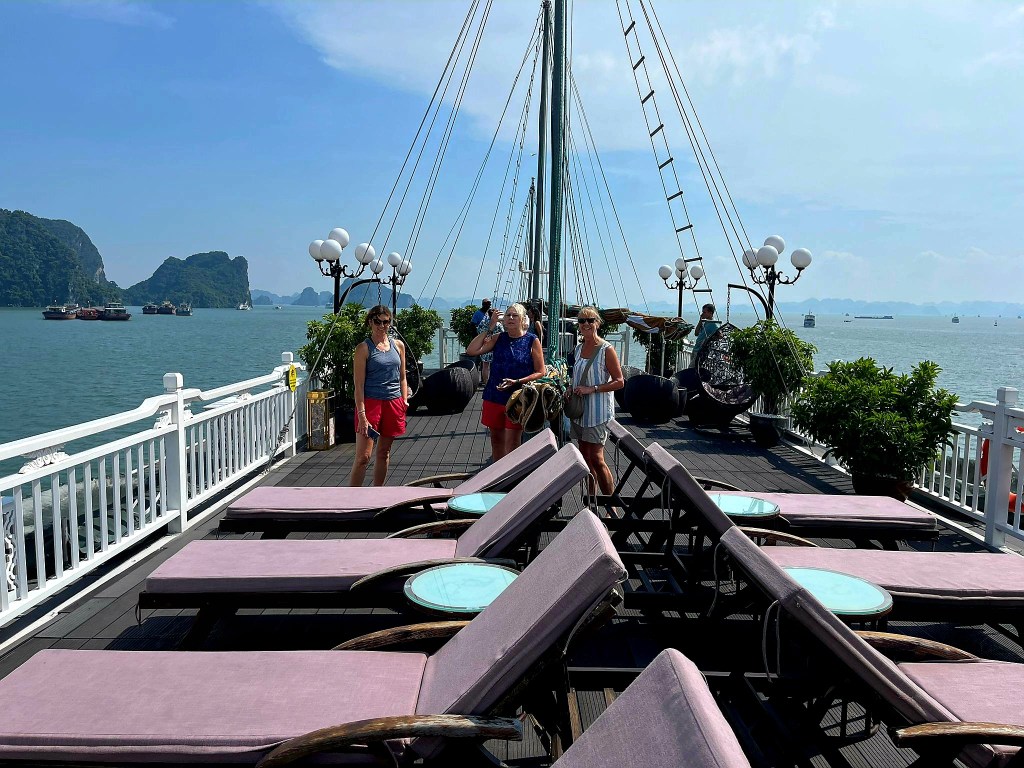
Whilst lunch was being prepared, we explored the outside area and the sundeck.
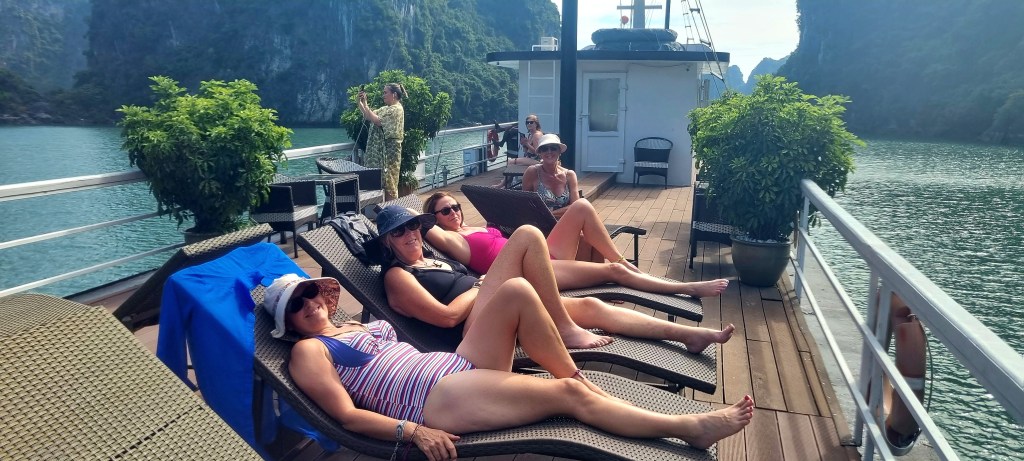
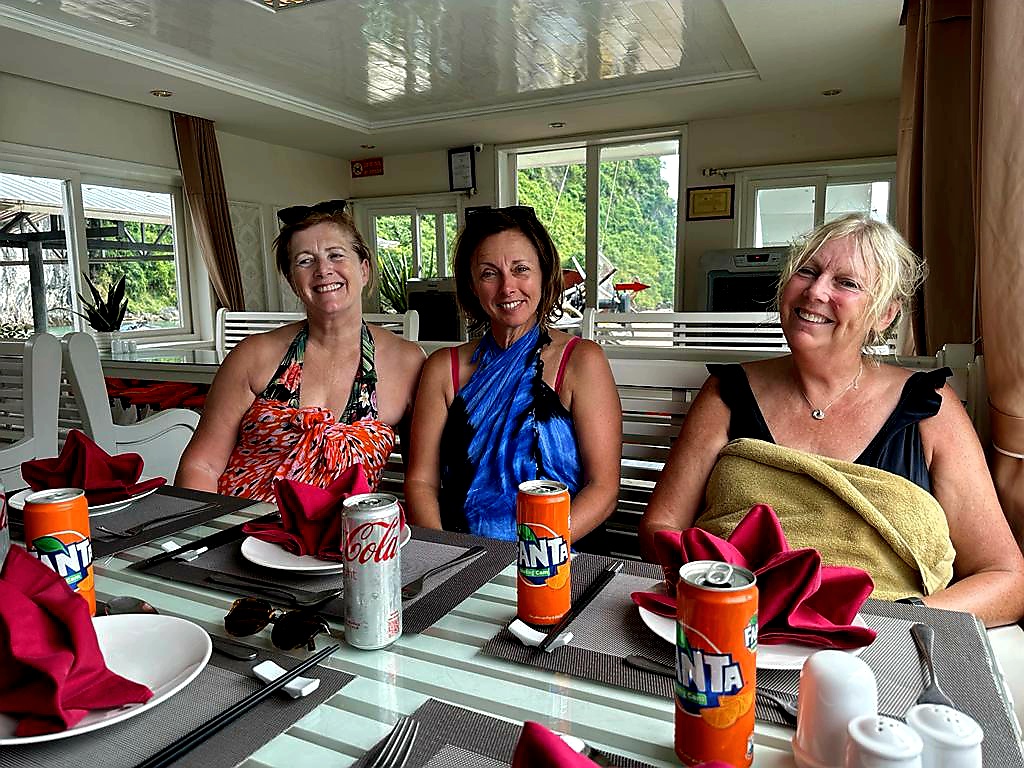
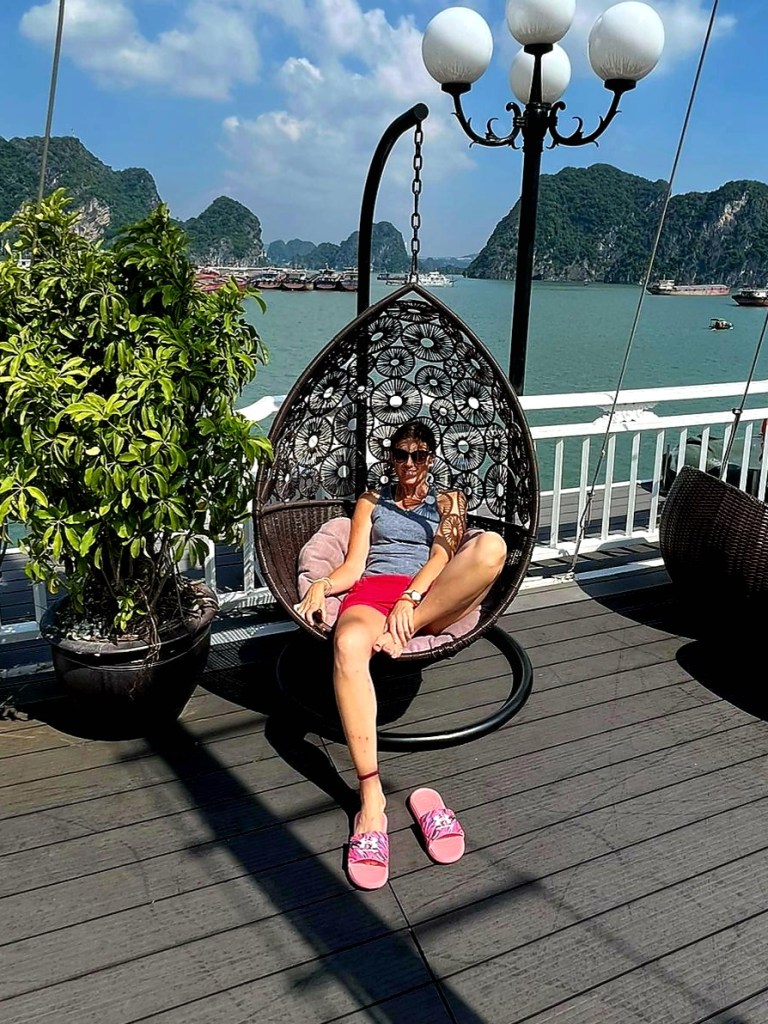
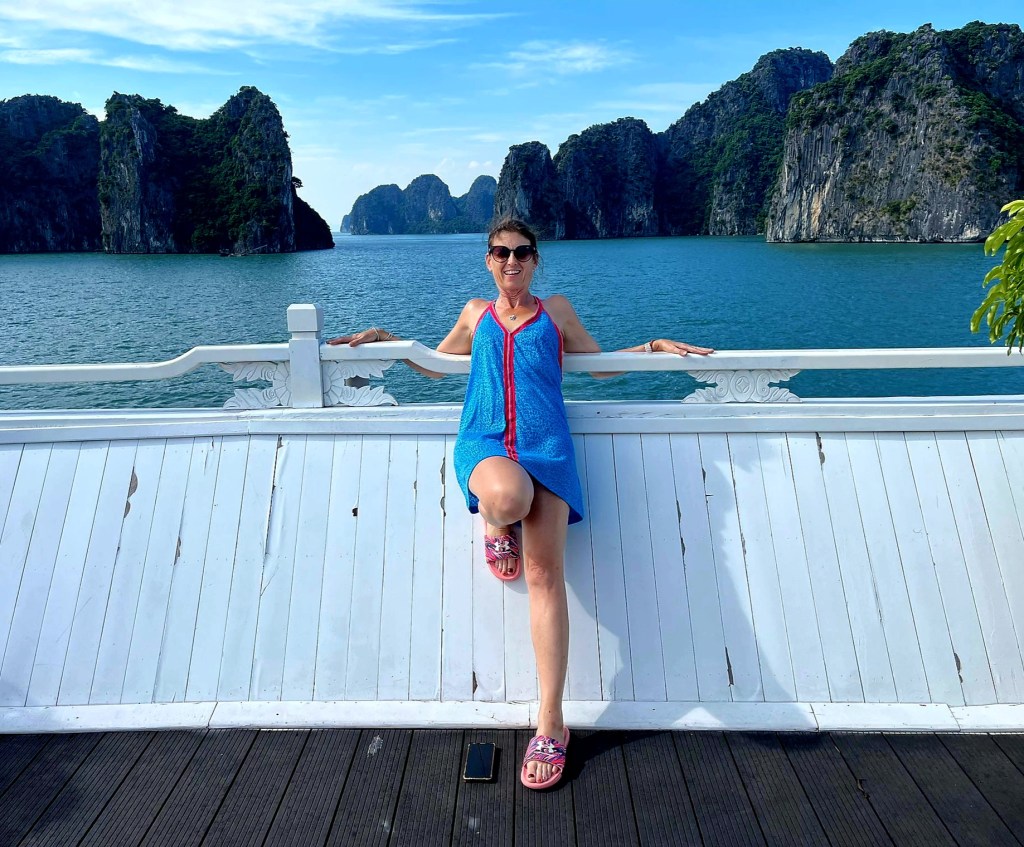
After a delicious buffet lunch, we changed into our bikinis and went to relax and soak up the sun.
The scenery was beautiful as the ship made its way to Bai Tu Long Bay. Bai Tu Long Bay translates to baby dragon, and Ha Long means mother dragon. It is said that the dragons came to Halong to support the Vietnamese against invaders. They breathed fire on the lake, which created the rocks and mountains.
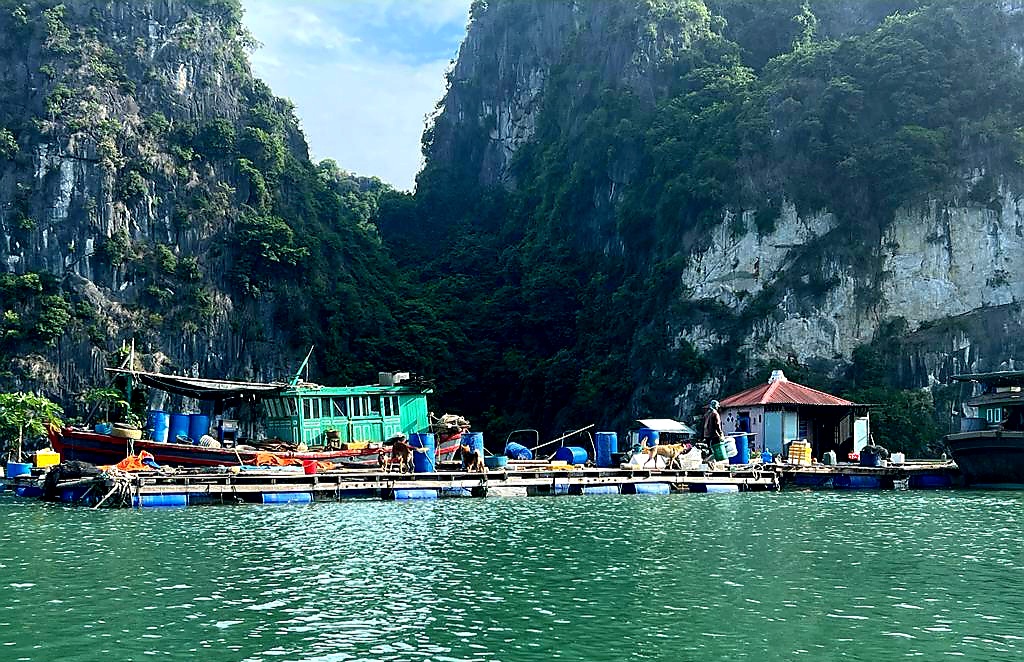
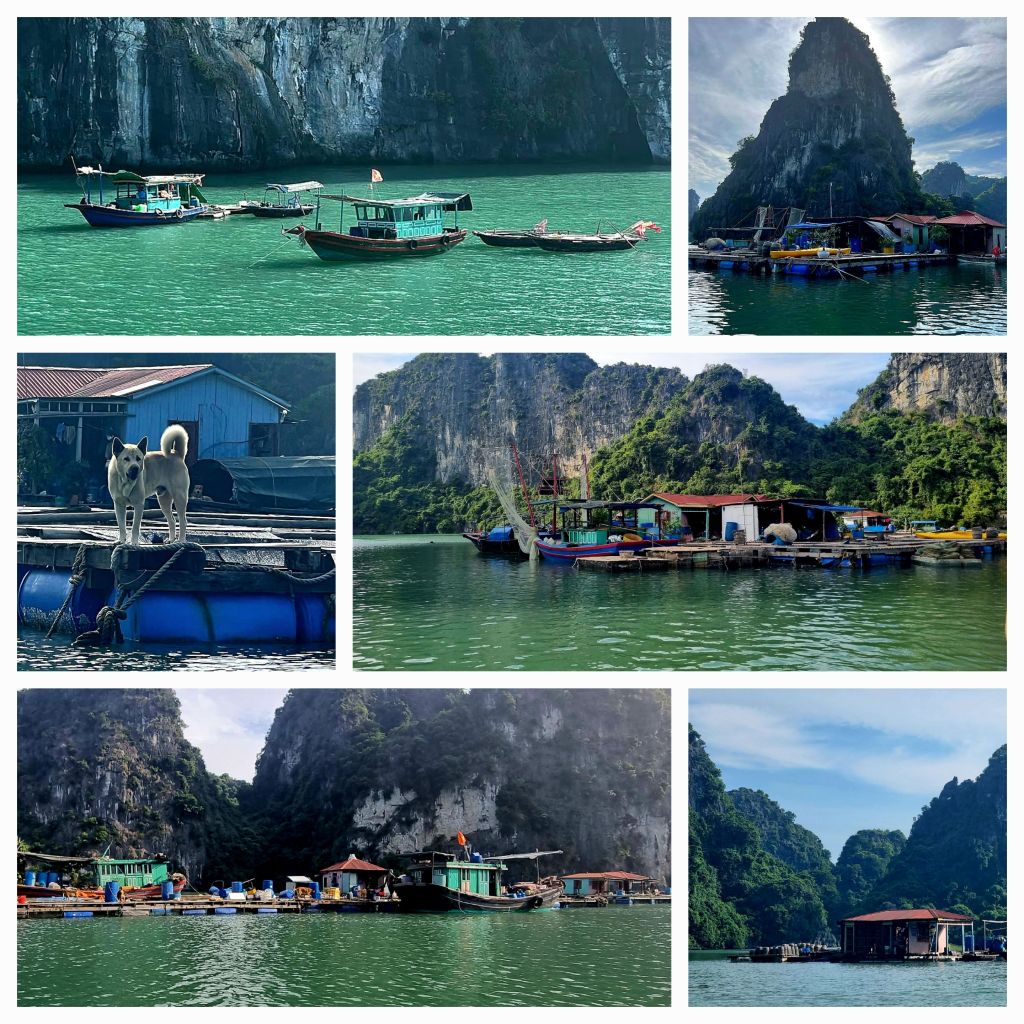
After an hour or so of cruising, we arrived at Vung Vieng Floating fishing village. The village was founded early in the 19th century, and it used to have 80 families back in 2014, but now there are only 15. There was a lack of education for the children, so they had no prospects, and the government moved the families back onto dry land.
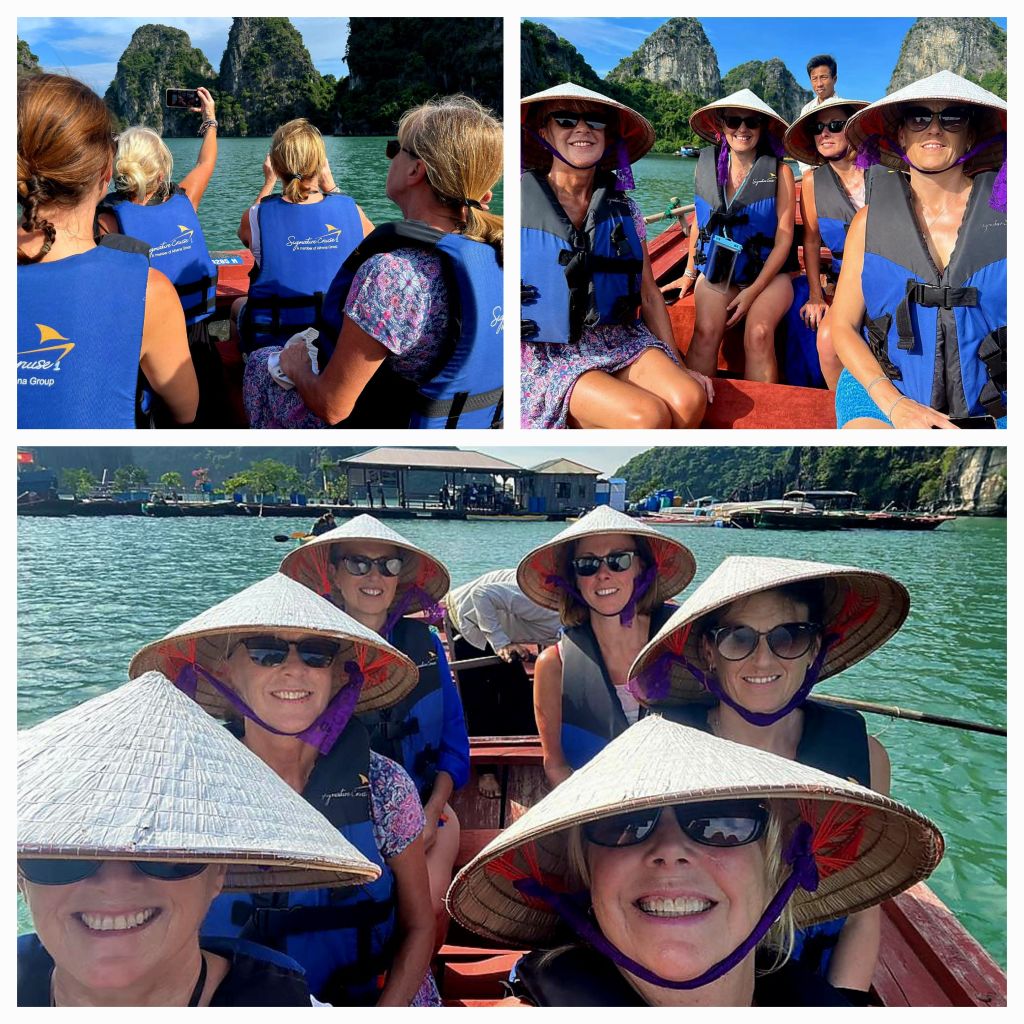
We took a bamboo boat and were rowed around part of the bay to see some more of the village, we had to wear the traditional hats to protect us from the sun! The village was mainly used as anchorage for the boats, particularly during stormy weather.
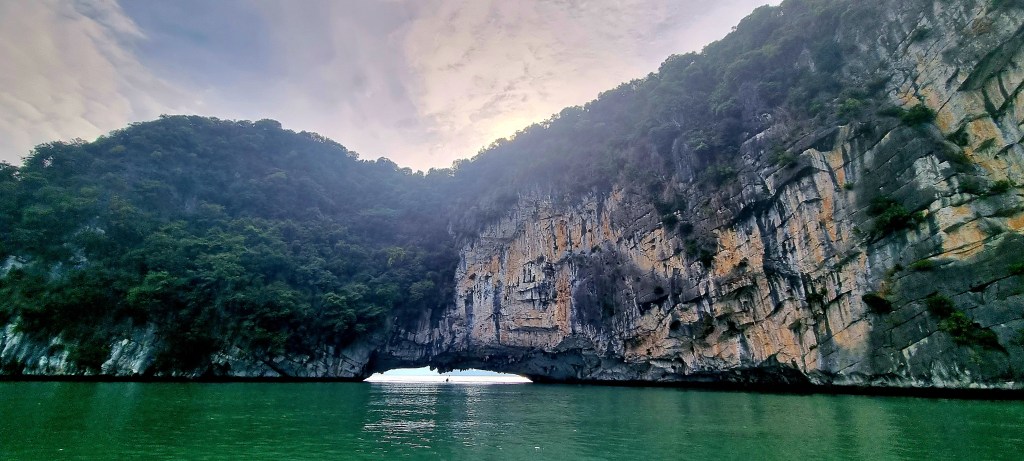
It was quite awe-inspiring being amongst the gigantic rocks.
After the bamboo boat trip, we were once more shown around a pearl shop, and a couple of people bought some souvenirs.
As we made our way back to the cruise ship via the transfer boat, we saw what looked like an eagle flying by. We saw a few more over the next couple of days.
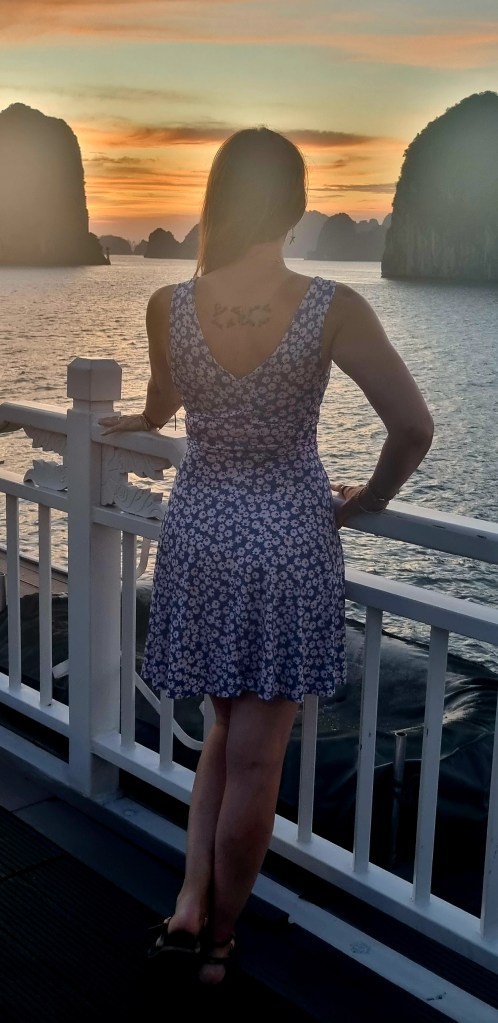
Back on board, we had more time to relax, so we got ready for dinner and watched the beautiful sunset.
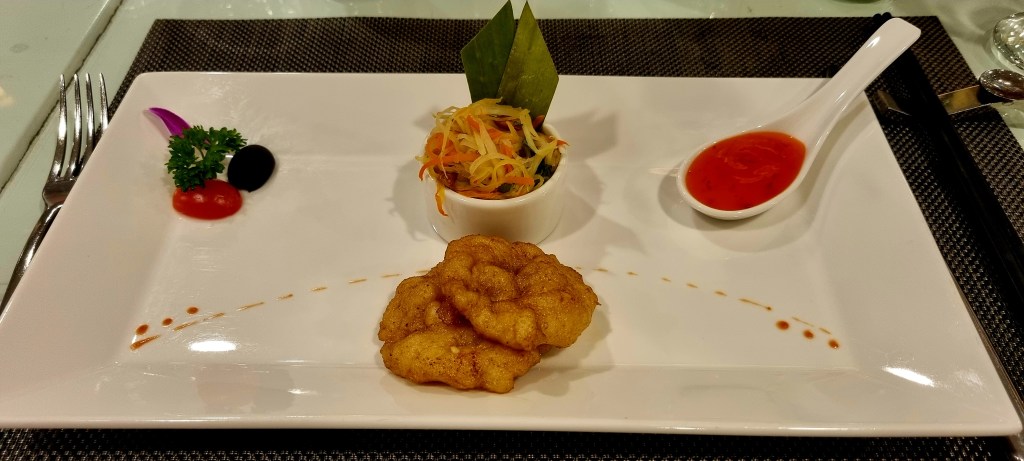
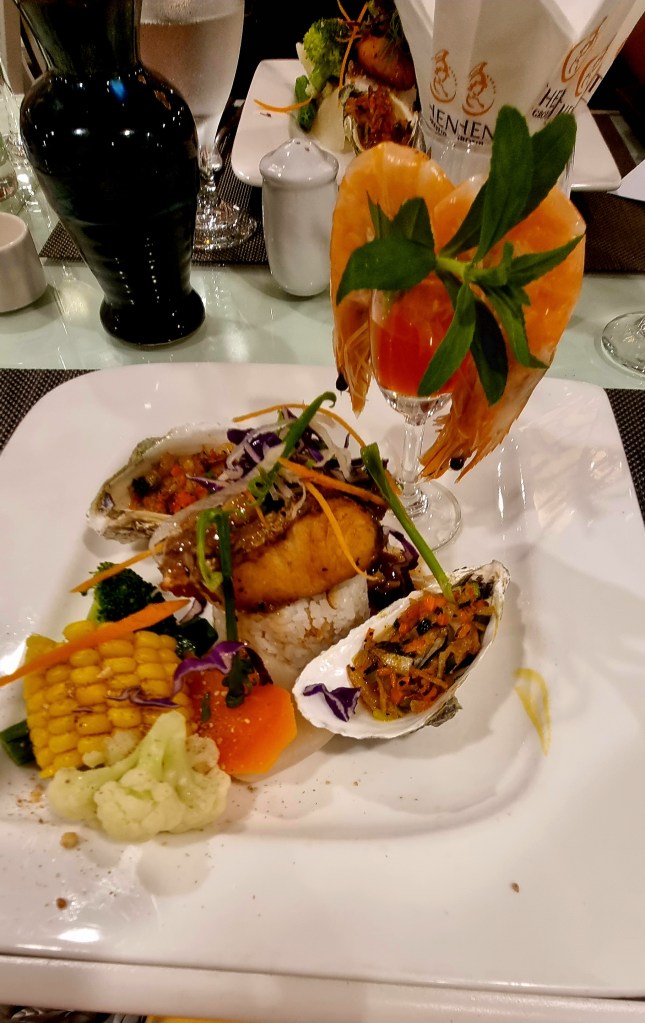
It was happy hour from around 530pm, so we made sure we took advantage of that. It was then time for a very tasty dinner.
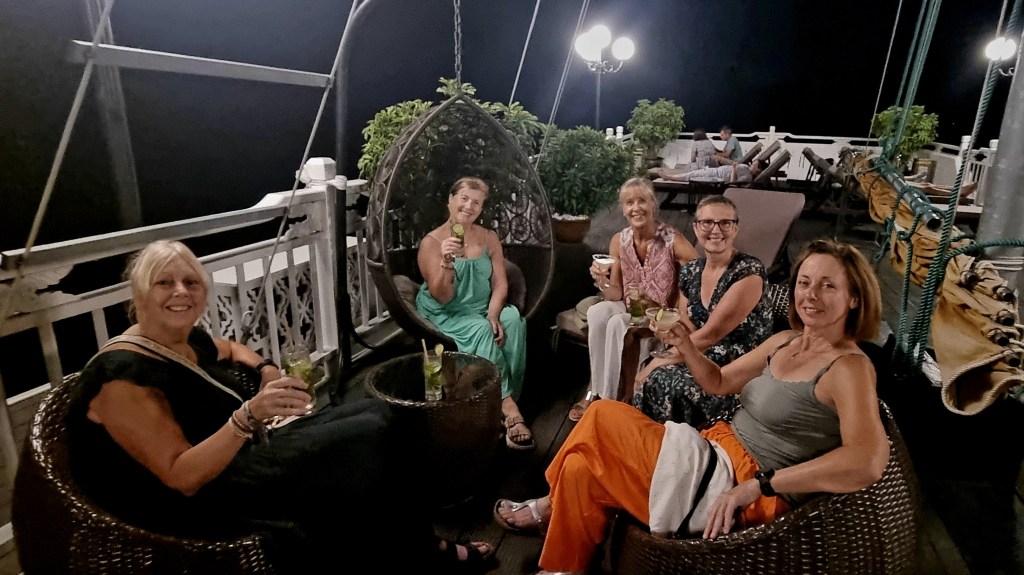
Then, we continued to have a few drinks on the upper deck.
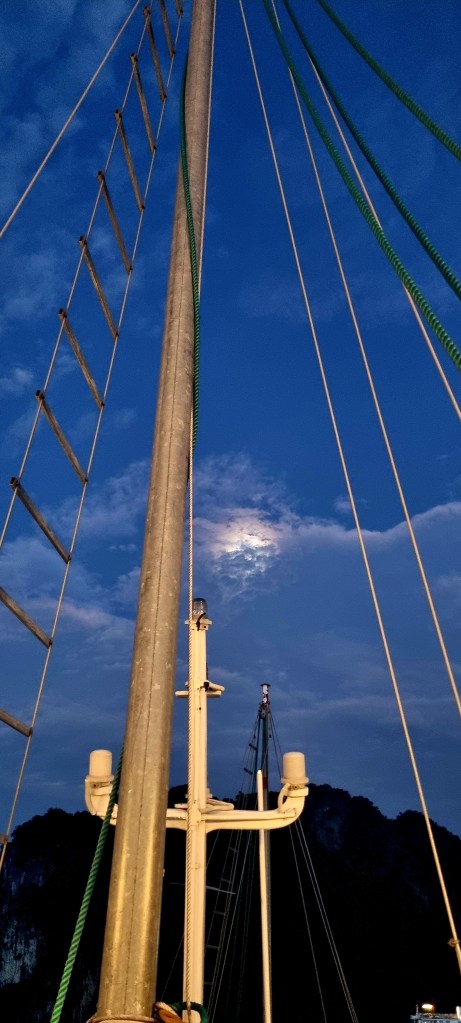
It was a lovely relaxing time under the full moon.
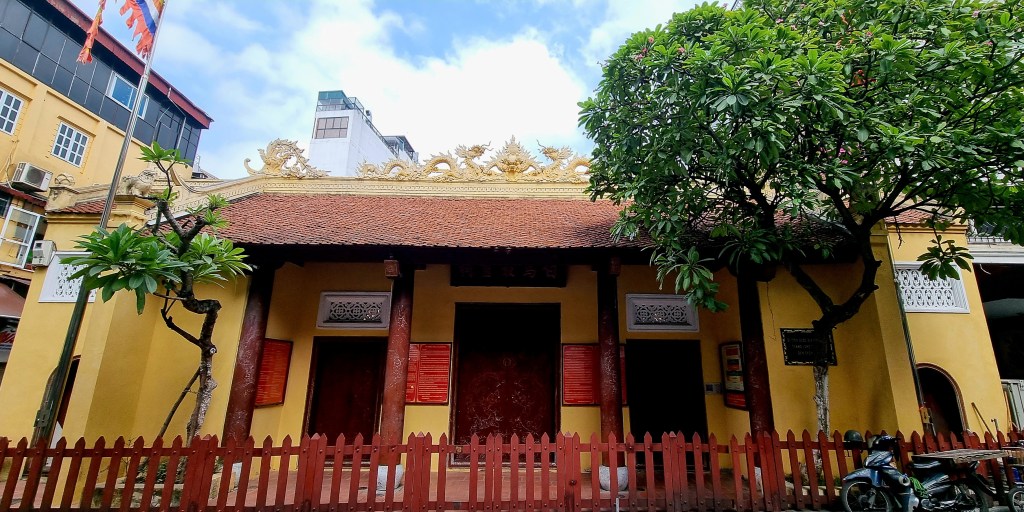
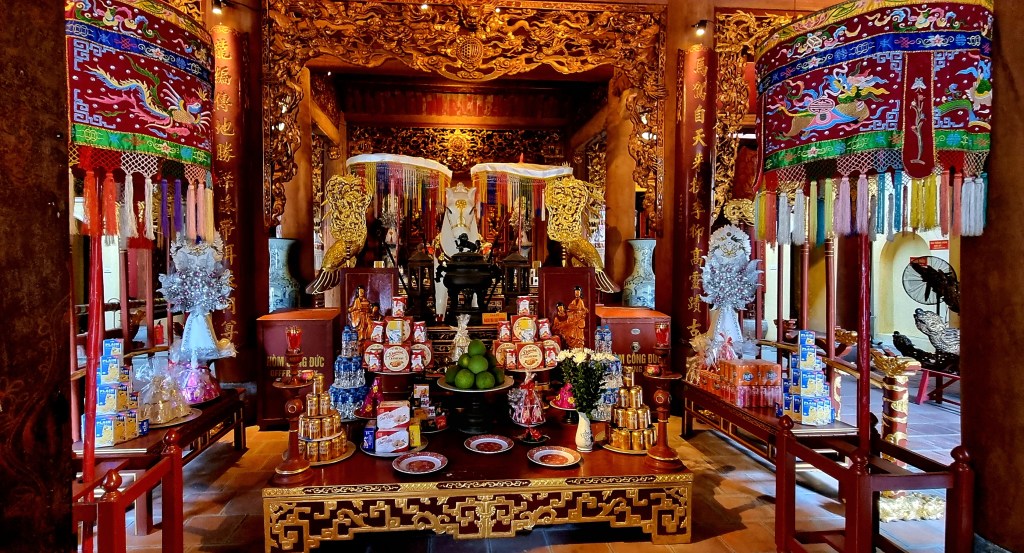
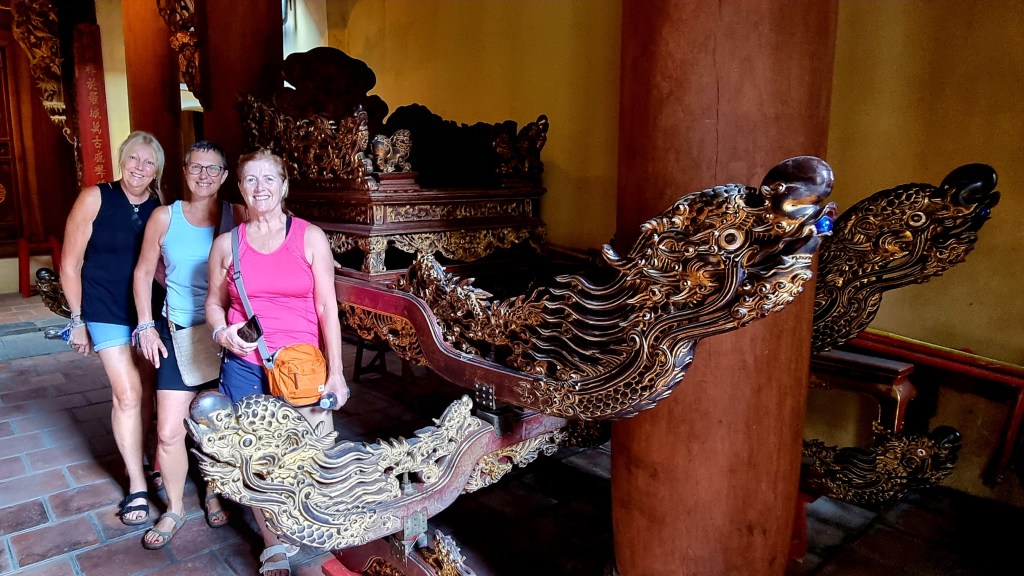
We were all feeling a little worse for wear after drinking quite a bit the night before, but most of us made it down to breakfast. This morning, we were moving from the Hanoi Boutique Hotel to the Bespoke and Trendy Hotel. But before we packed and left, we decided to visit the Bach Ma Temple as it was just around the corner from where we were staying.
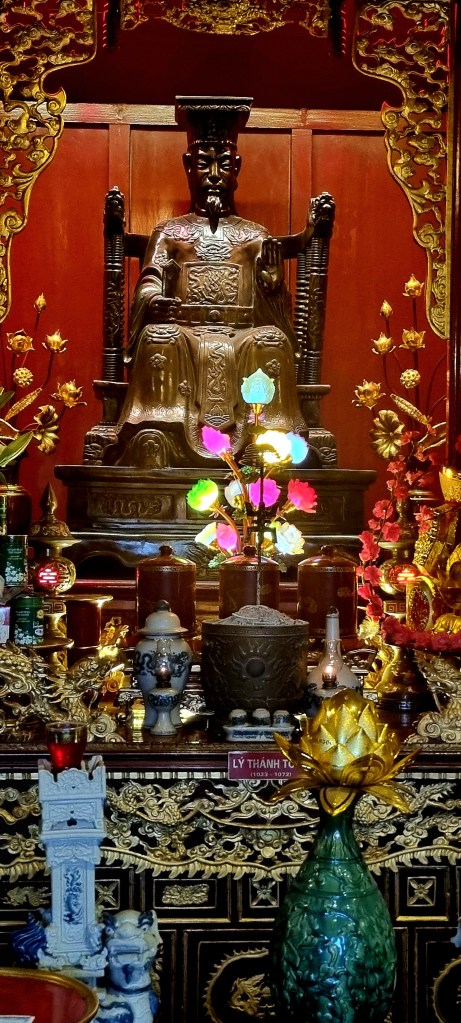
Bach Ma Temple translates to ‘White Horse’. It is said to be the oldest temple in the city, though much of the current structure dates from the 18th century and a shrine to Confucius was added in 1839. It was originally built by Emperor Ly Thai To in the 11th century to honour a white horse that guided him to this site, where he chose to construct the city walls.
After a few minutes inside, one of the temple guardians spotted us, and we were asked to leave as we were not wearing suitable attire – our shoulders and knees should have been covered.
We went back to the hotel, packed our bags, and jumped into a taxi to the next hotel – we were not going to risk walking through the chaos of Hanoi with our suitcases!
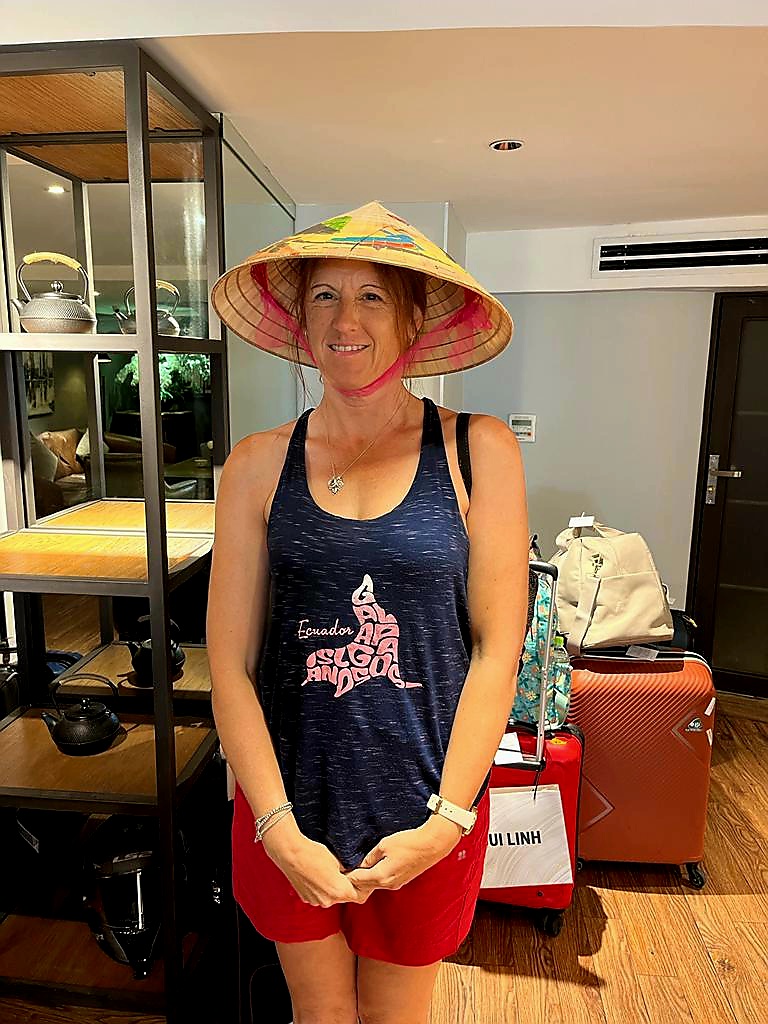
At the new hotel, we tried on the hats in reception whilst they got our rooms ready.
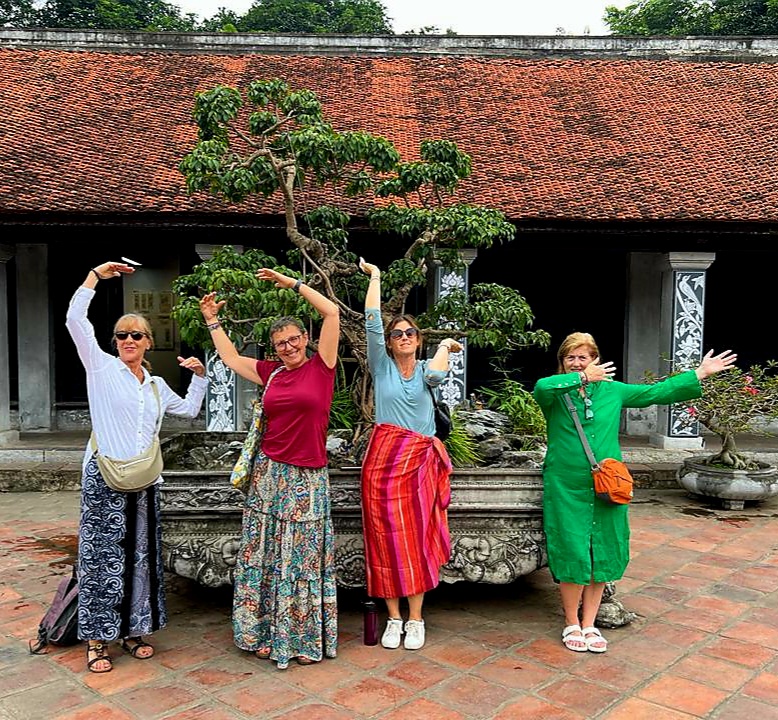
We left Mandy at the hotel to catch up on some sleep, and the rest of us took a taxi to the Temple of Literature.
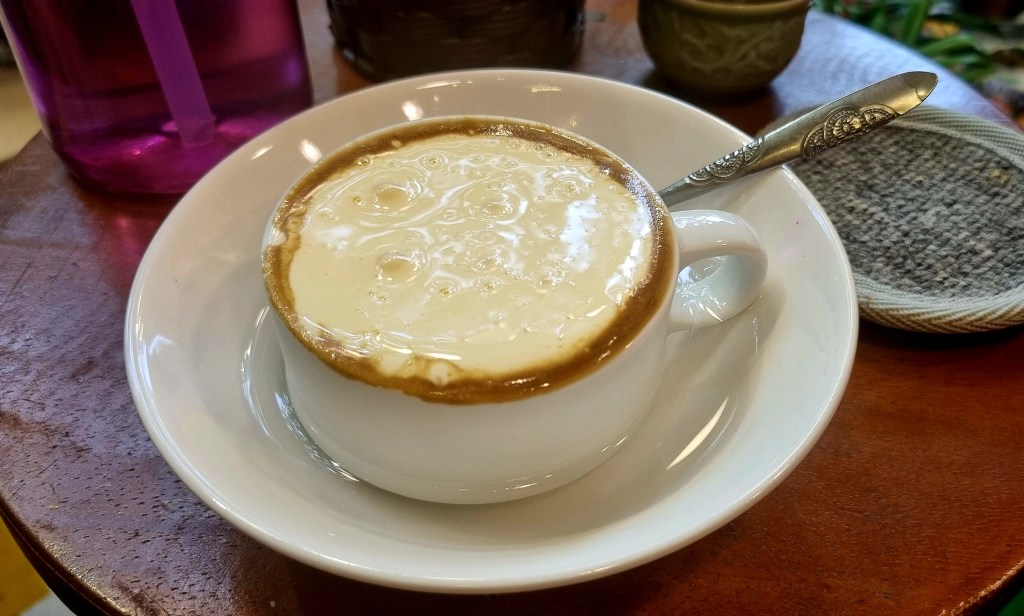
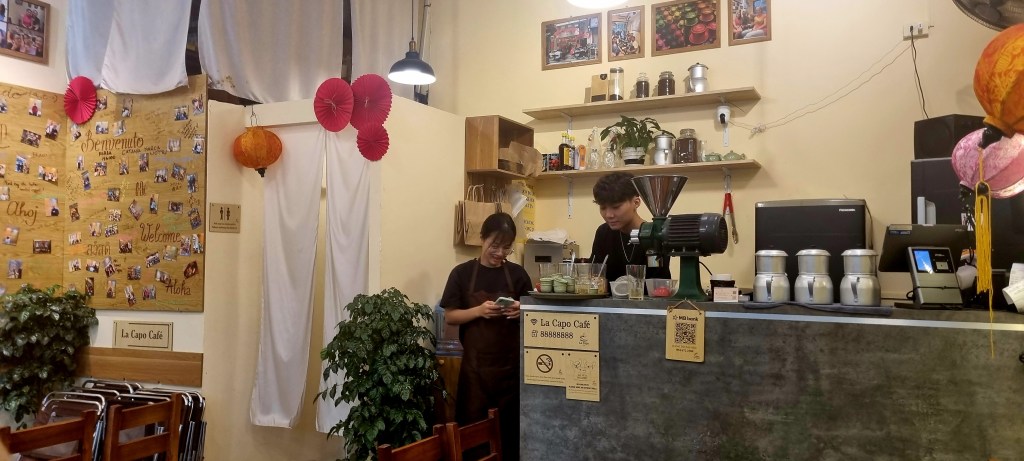
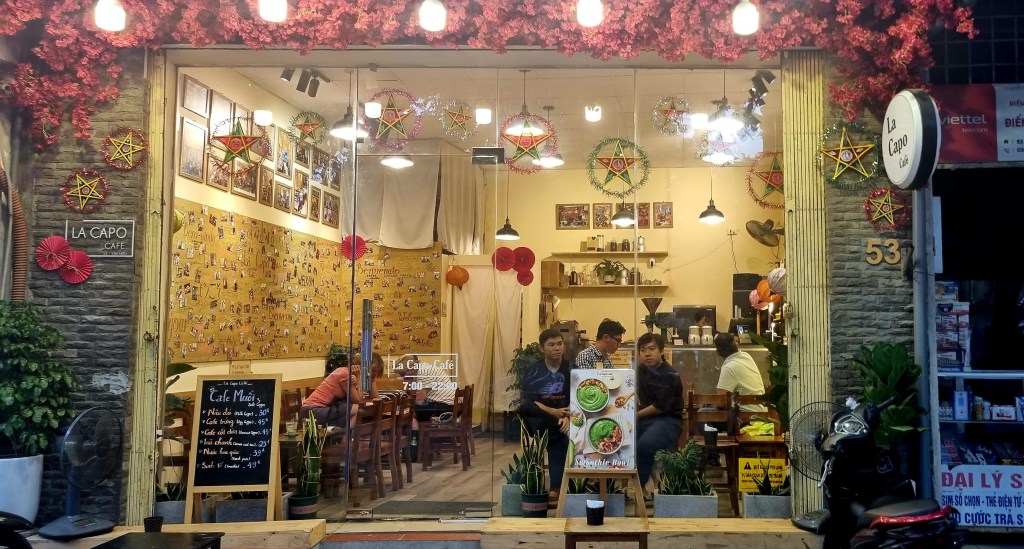
Before we went into the temple itself, we stopped for a coffee. I decided to try the Vietnamese egg coffee – it was delicious. It’s made with egg yolk, very strong coffee, condensed milk and vanilla extract.
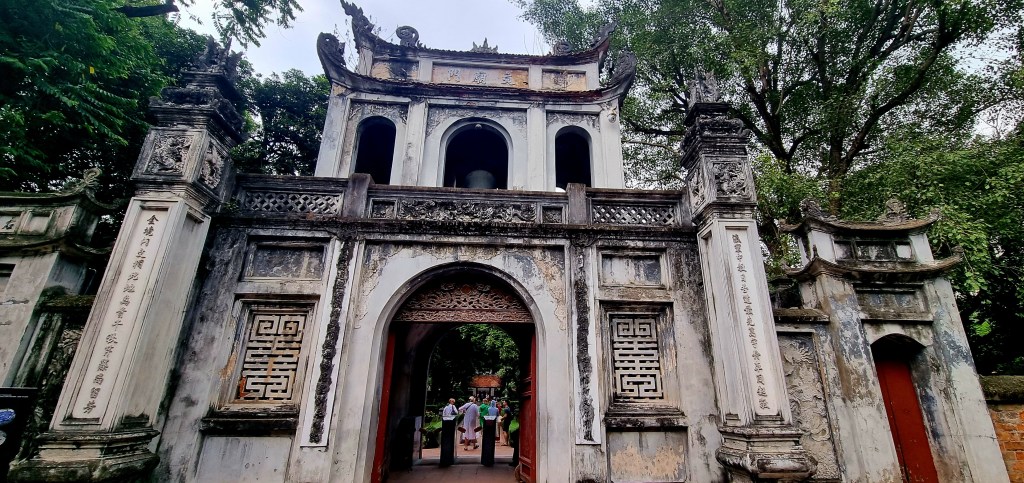
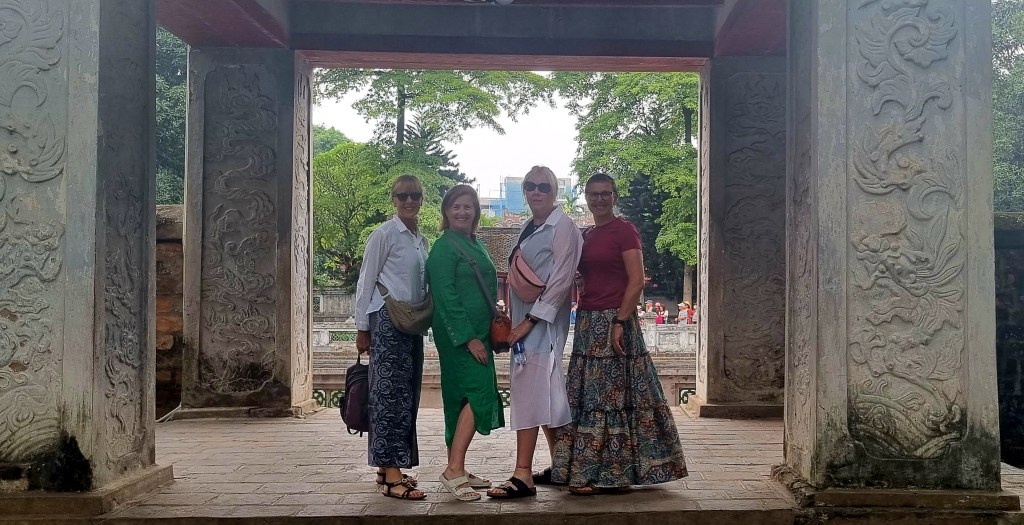
The Temple of Literature is dedicated to Confucius. It was built in 1070, and it hosted the Imperial Academy, Vietnam’s first national university, from 1076 to 1779. It covers an area of 54,000m².
The gate into the first courtyard is called the Great Middle Gate and has the virtue gate on the left and the talent gate on the right. These depicted the expectation of the King towards students attaining high education here.
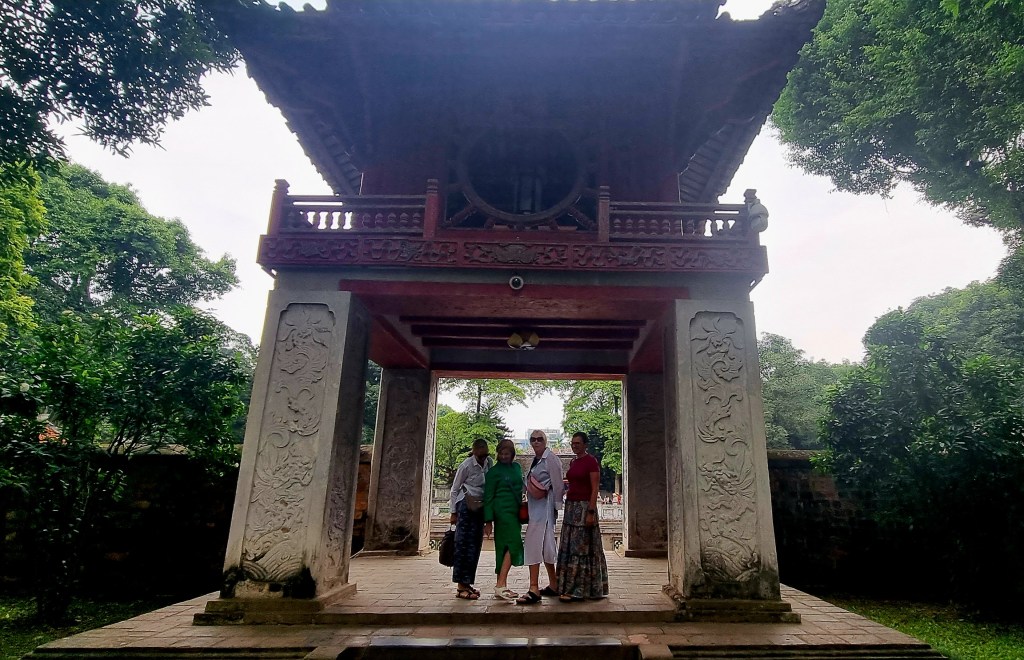
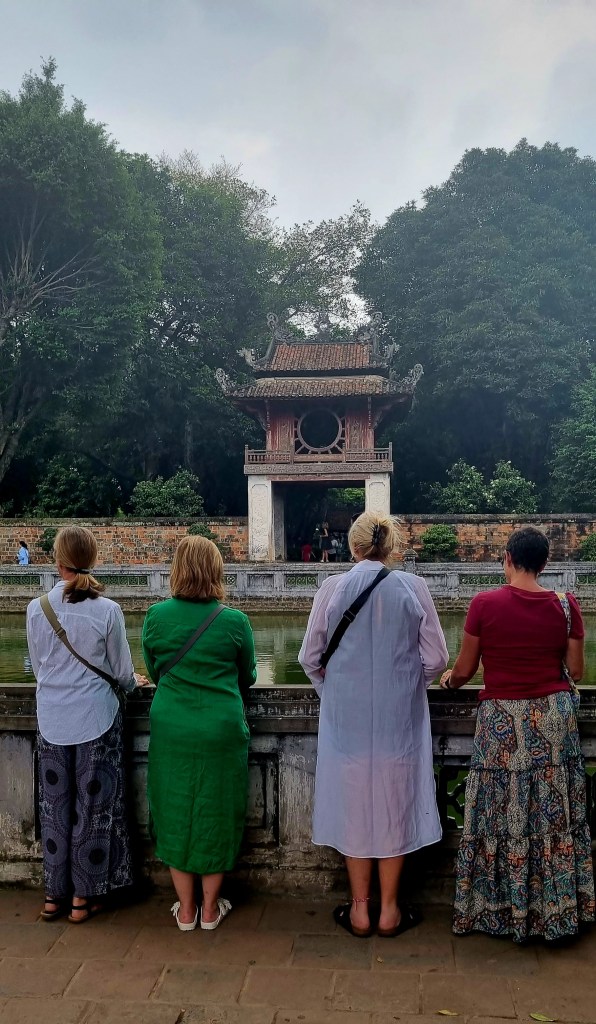
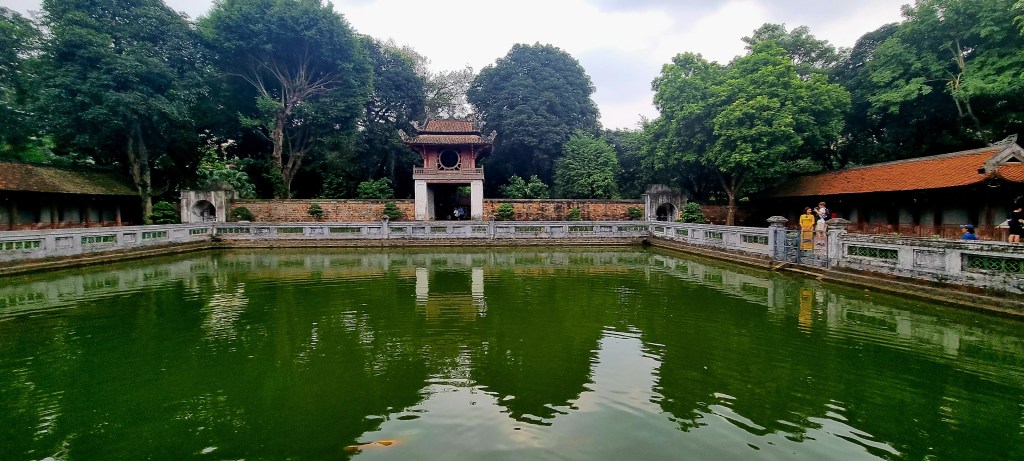
We entered into the second courtyard, which features the Khue Van Cac (Star of Literature / pavilion of constellation) pavilion. The building is said to represent humility, clarity and refinement. It was built in 1805 with its square plinth, symbolising the earth, the tower with its images of the sun, represents the sky and the open breezeway through the pavilion represents the wind. The pool in front of the pavilion symbolises Yin, with the pavilion representing Yang. The absence of a door in the pavilion indicates that the path to enlightenment is a continuous one as you walk from the second to the third courtyard.
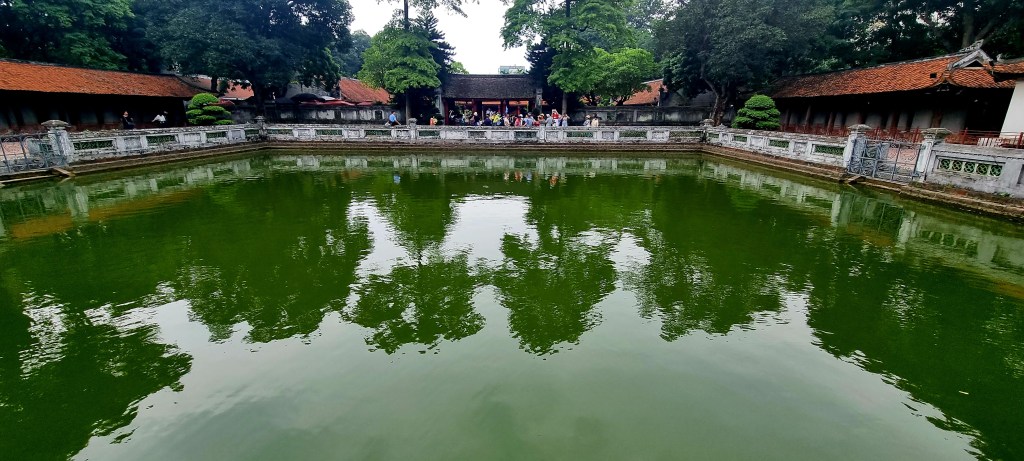
The third courtyard is known as the Well of Heavenly Clarity. The meaning behind the square well is that it represents the earth while the circle at the top of the pavilion represents the sky, all together creating harmony between the sky and earth. This well also functions as a mirror absorbing the best essence of the universe.
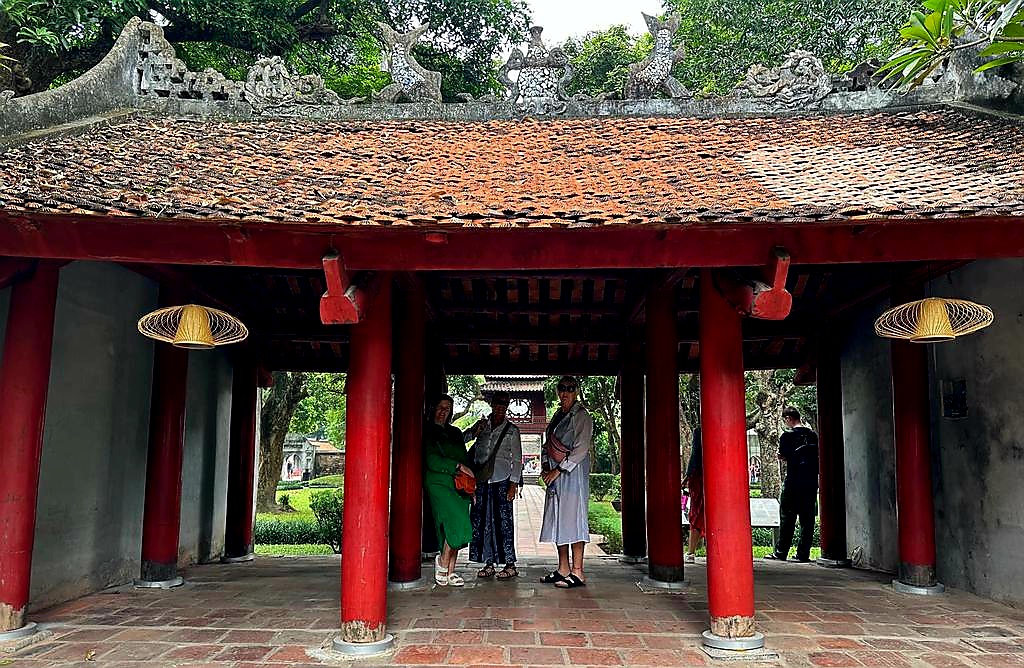
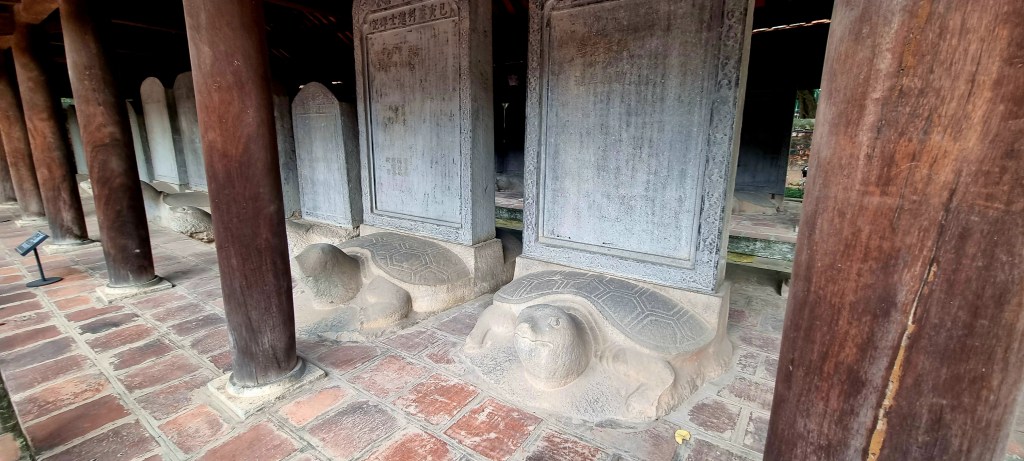
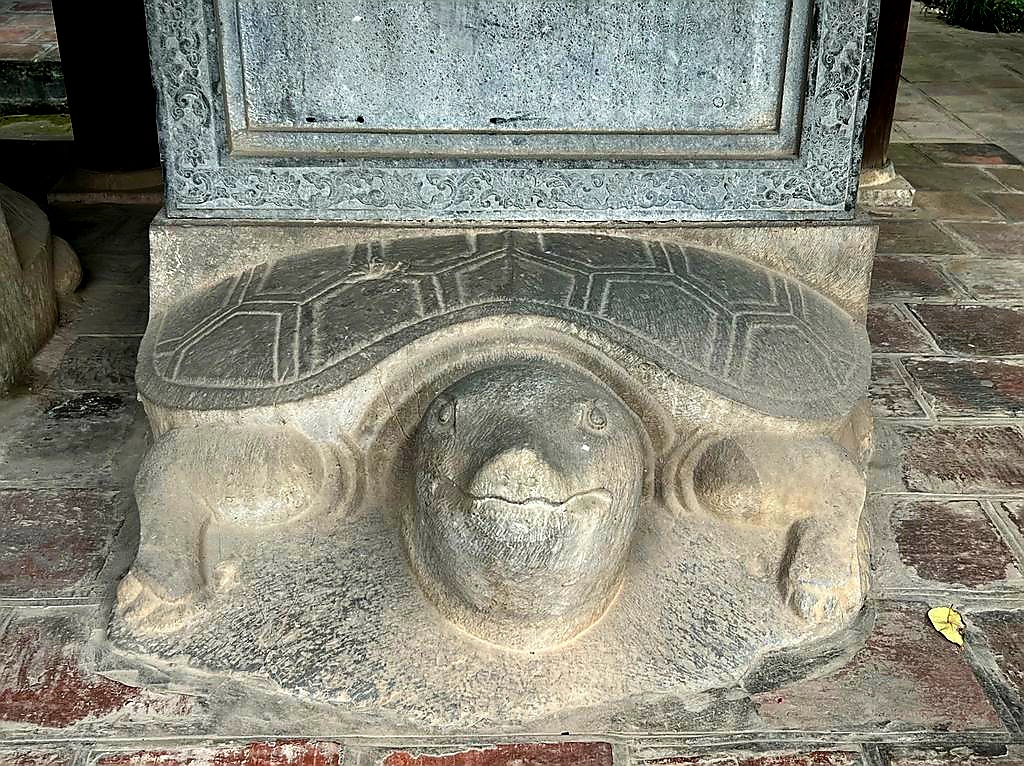
In this courtyard is also the house of stelae. Here, stone turtles carry large stelae on their backs, which depict the names and birthplaces of 1307 graduates of 82 triennial royal exams. Originally, there were 116 stelae, but only 82 remain.
The reason for the turtle is that this is the only real animal out of the 4 holy ones, which include Dragon, Unicorn, Turtle, and Phoenix. Not only is the turtle familiar with the mental life of Vietnamese people, but it also represents longevity and wisdom.
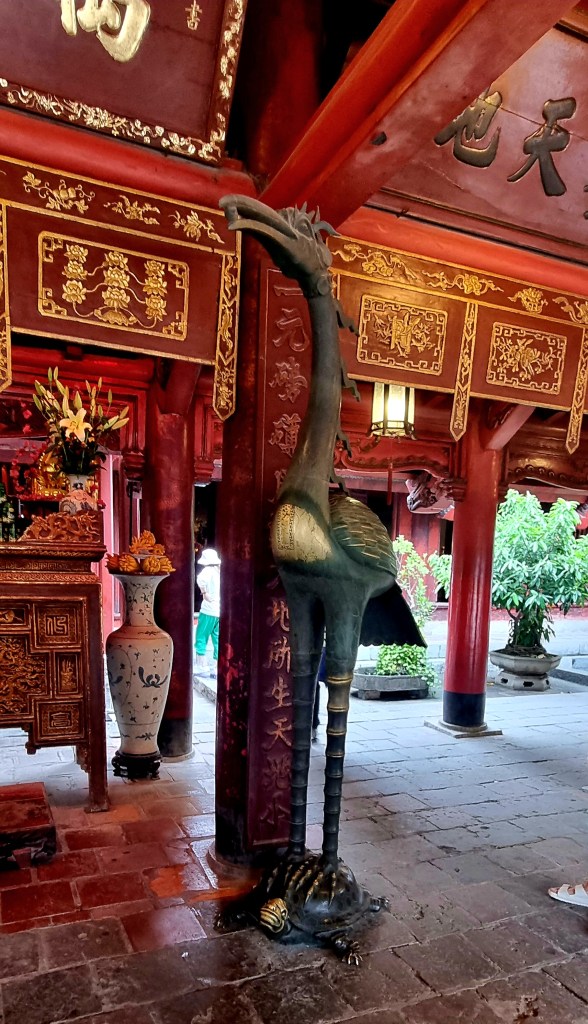
The fourth courtyard is the gate to great success and features the stunning House of Ceremonies and the sanctuary to Confucius. On either side of the alter is a pair of cranes and turtles that represent a desire for harmony and eternity.
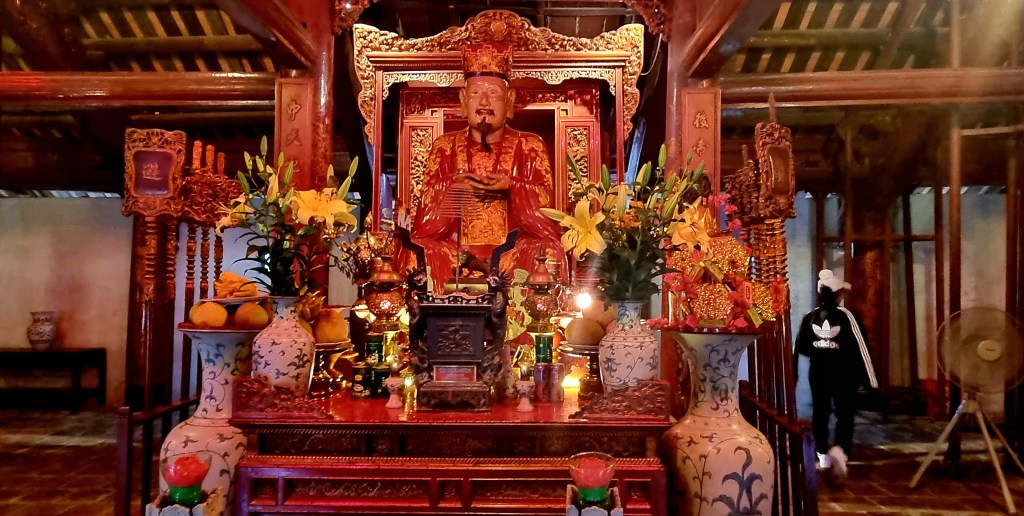
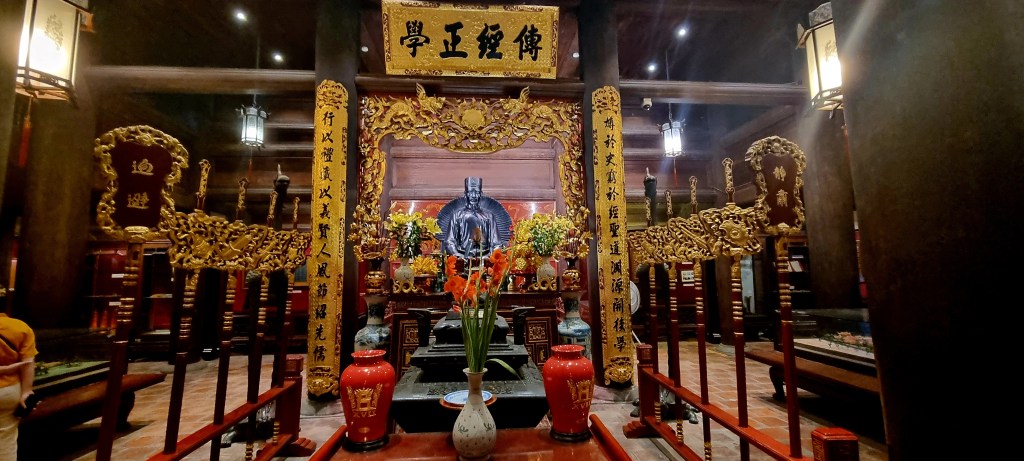
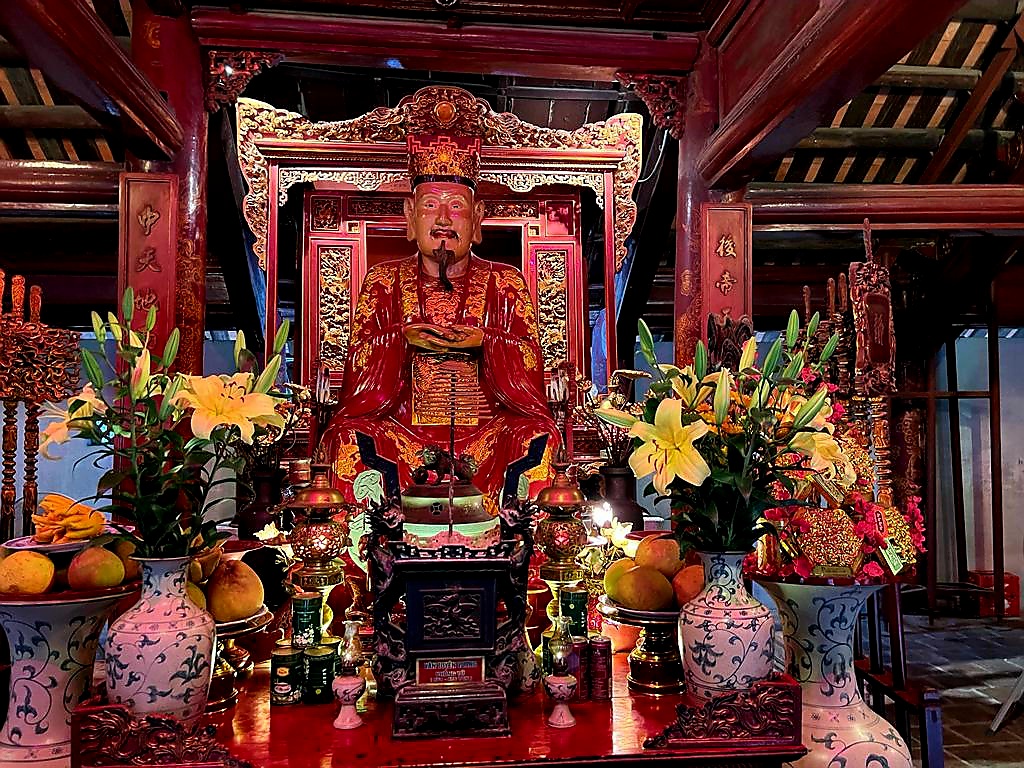
The fifth courtyard is the grounds of the imperial academy and is made up of 2 floors. On the bottom floor is a statue of Chu Văn An, a great teacher and the first rector of the Imperial Academy, who devoted all his life to Vietnamese education.
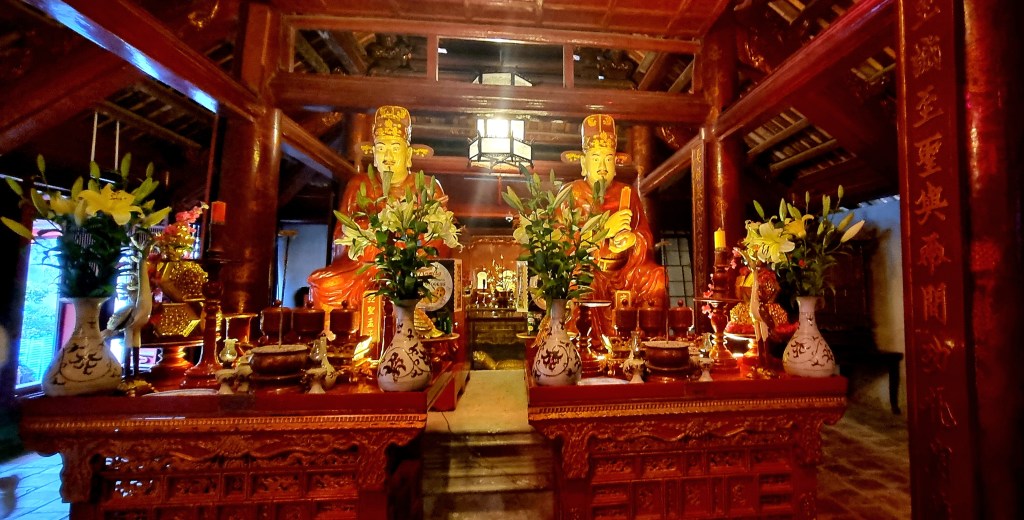
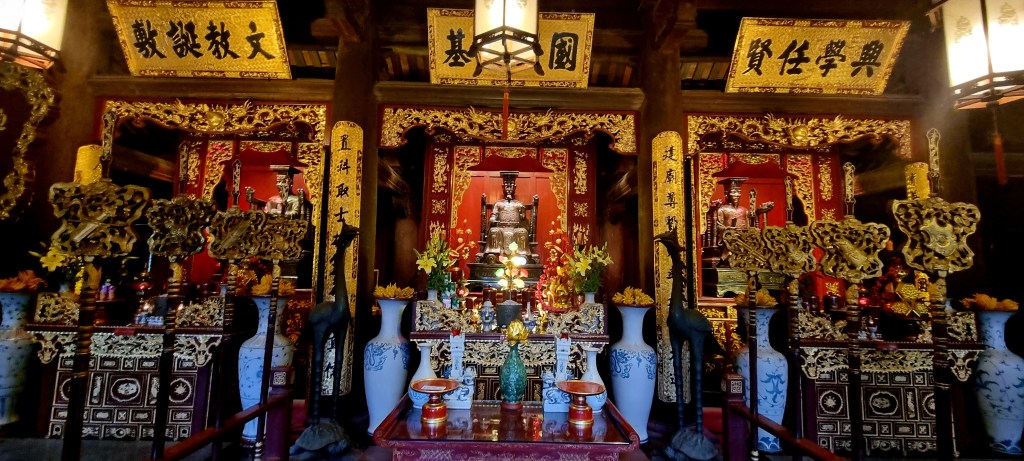
On the upper floor are where the people can worship the three kings who contributed most to the foundation of the temple and the academy.
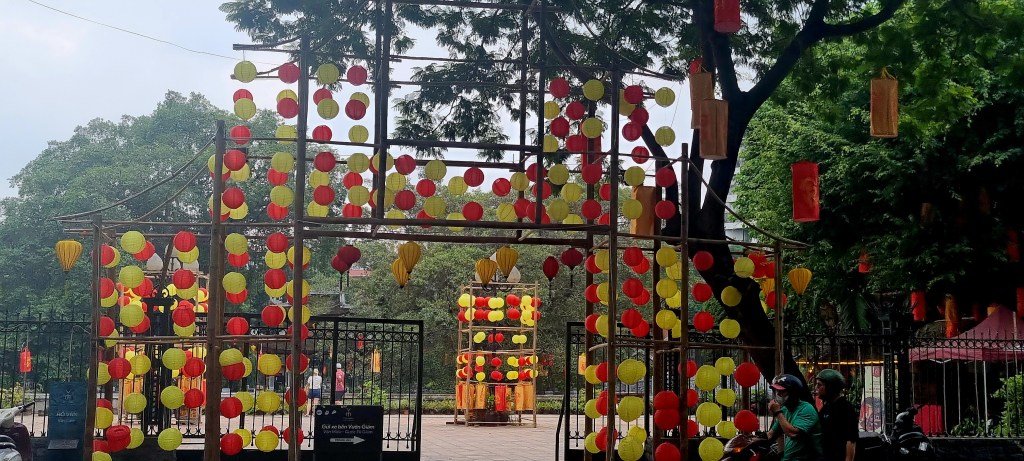
There was also a bit of an art installation going on on the ground floor.
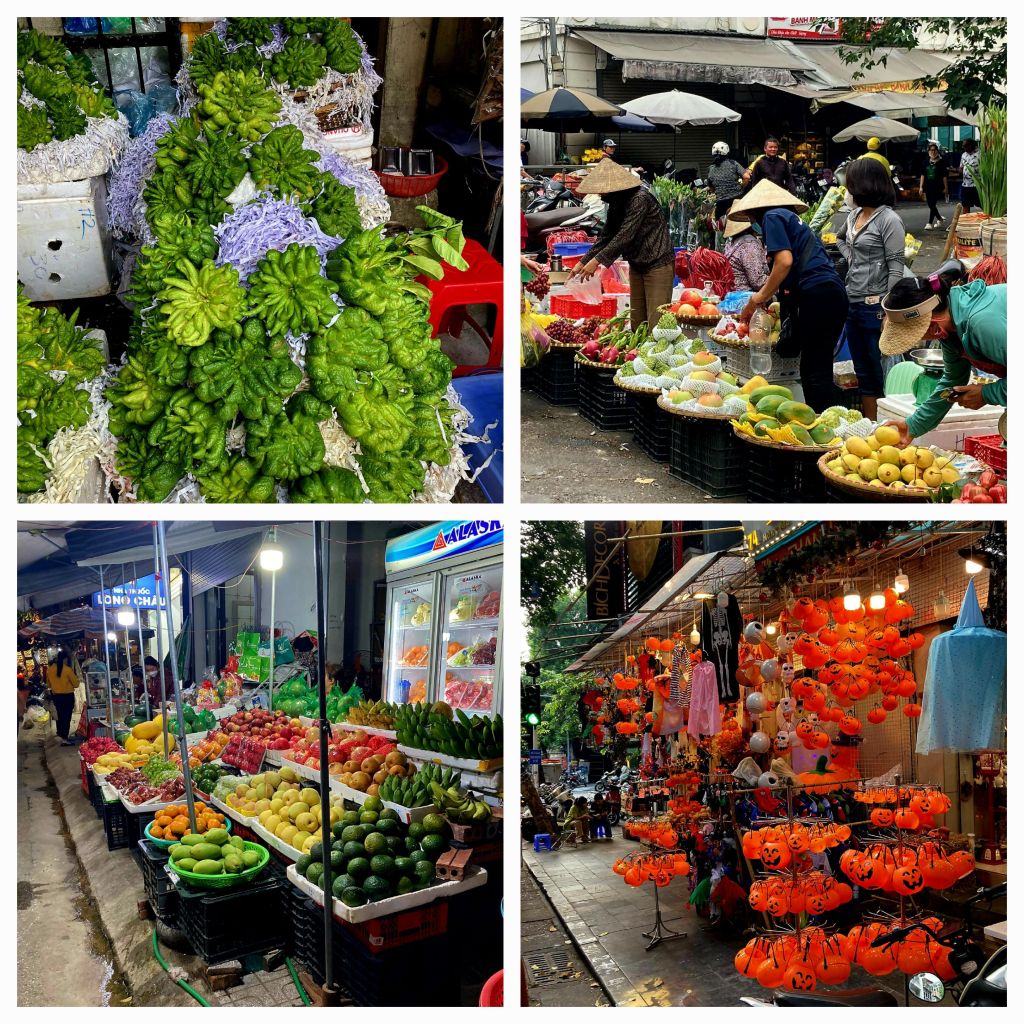
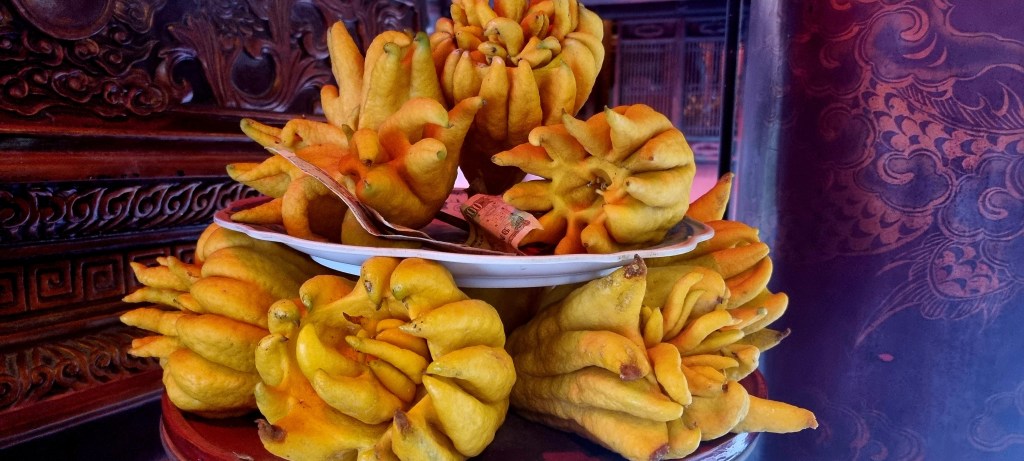
At a lot of the alters, we saw the Bhudda Fingers Fruit. This is a citrus type of fruit, originally from Japan. It It looks like several yellow fingers sticking out from a central base, resembling Buddha’s hands in meditation. It signifies longevity, happiness and good fortune.
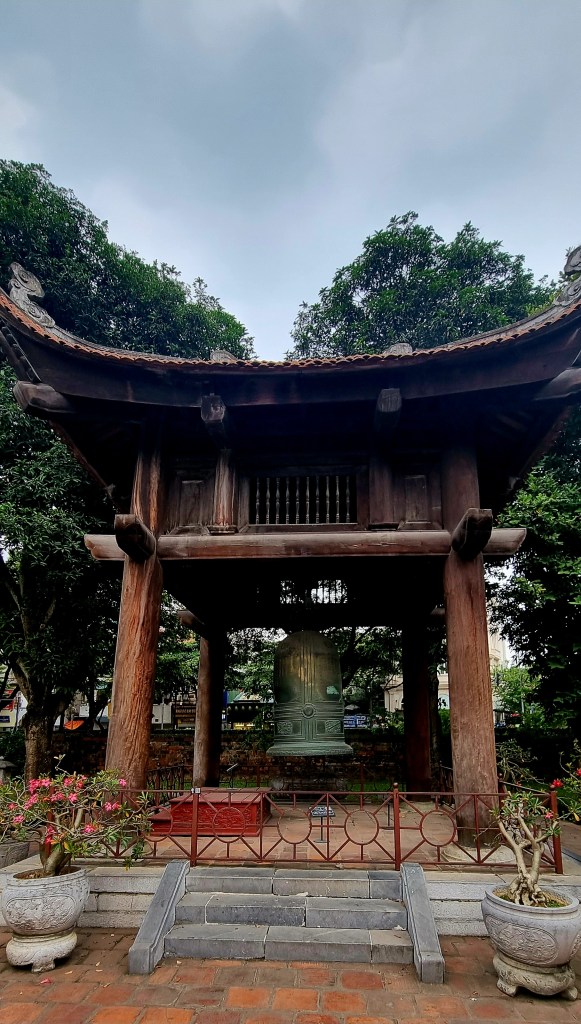
In the courtyard was also a large bell that was over 1,000 years old. The bell used to be located above the main gate and was used to signify that an important person was coming through. The bell was made out of bronze and could only be touched by monks
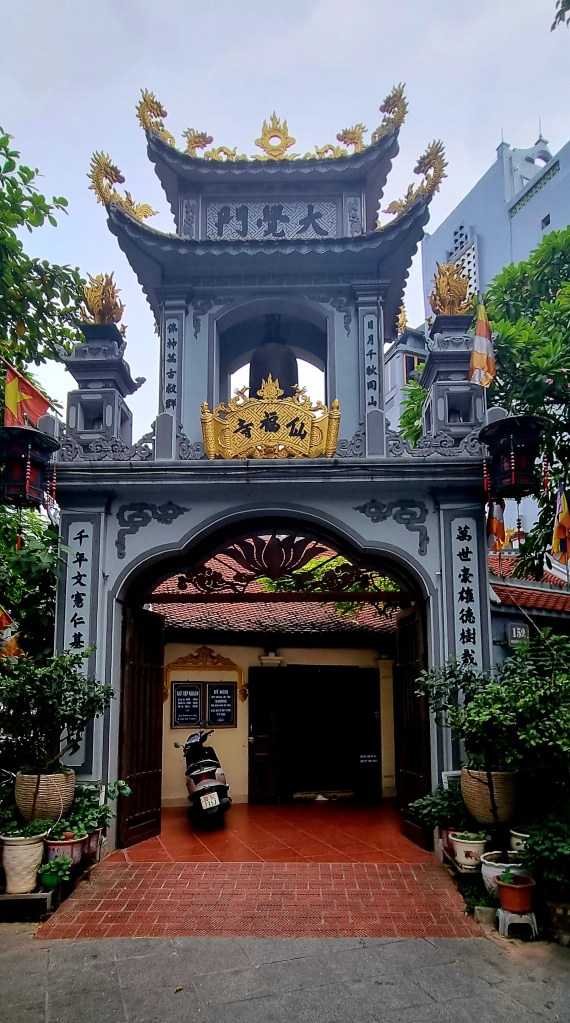
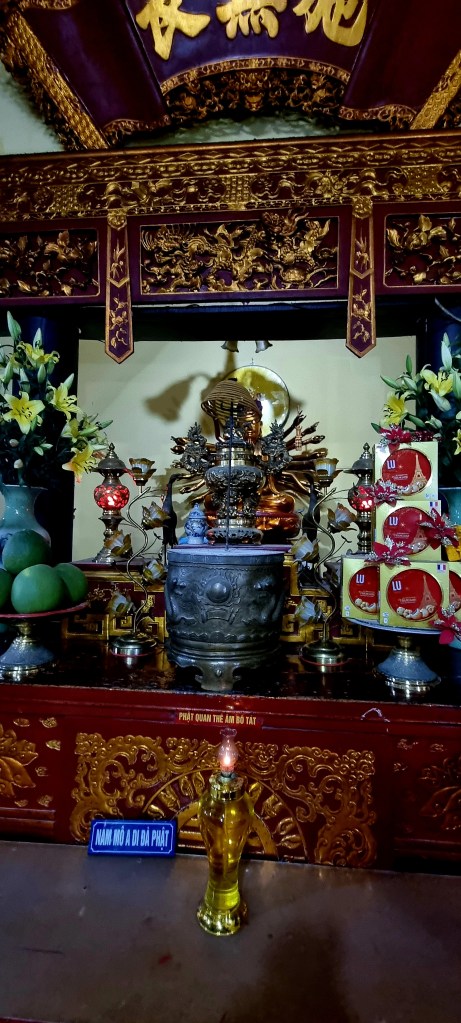
Shortly after leaving the Temple of Literature, we came across the Ba Nanh Pagoda. This is a Buddhist temple. Legend says that this pagoda was built to worship an unknown old woman who often sold tea and soybeans to students of Quoc Tu Giam school next door.
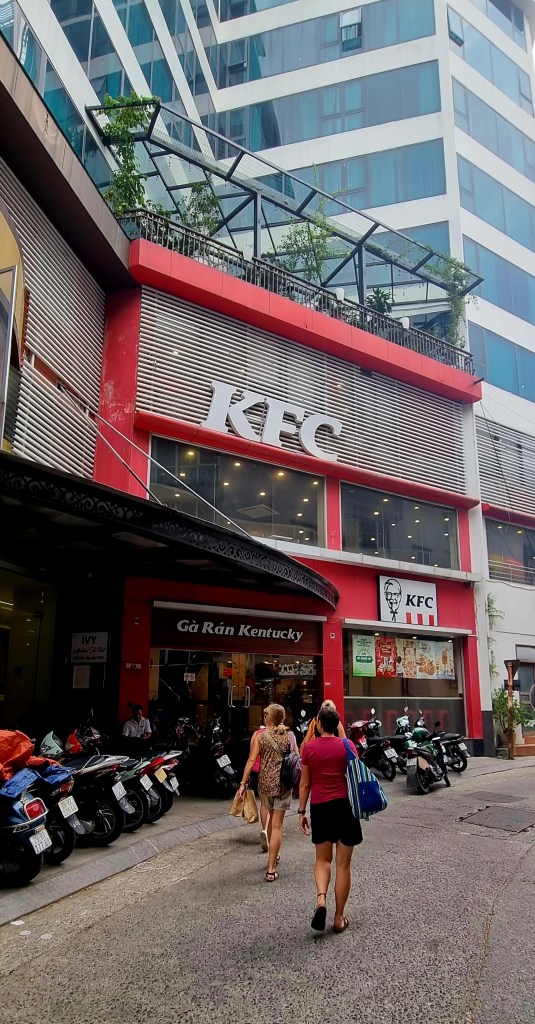
By this time we were all flagging a little bit. We found a nice German restaurant (Goethe) but it wasn’t serving any food when we got there. So we ended up going to KFC. Although the chicken was nice, it was a little spicy and the fries were cold and chewy!
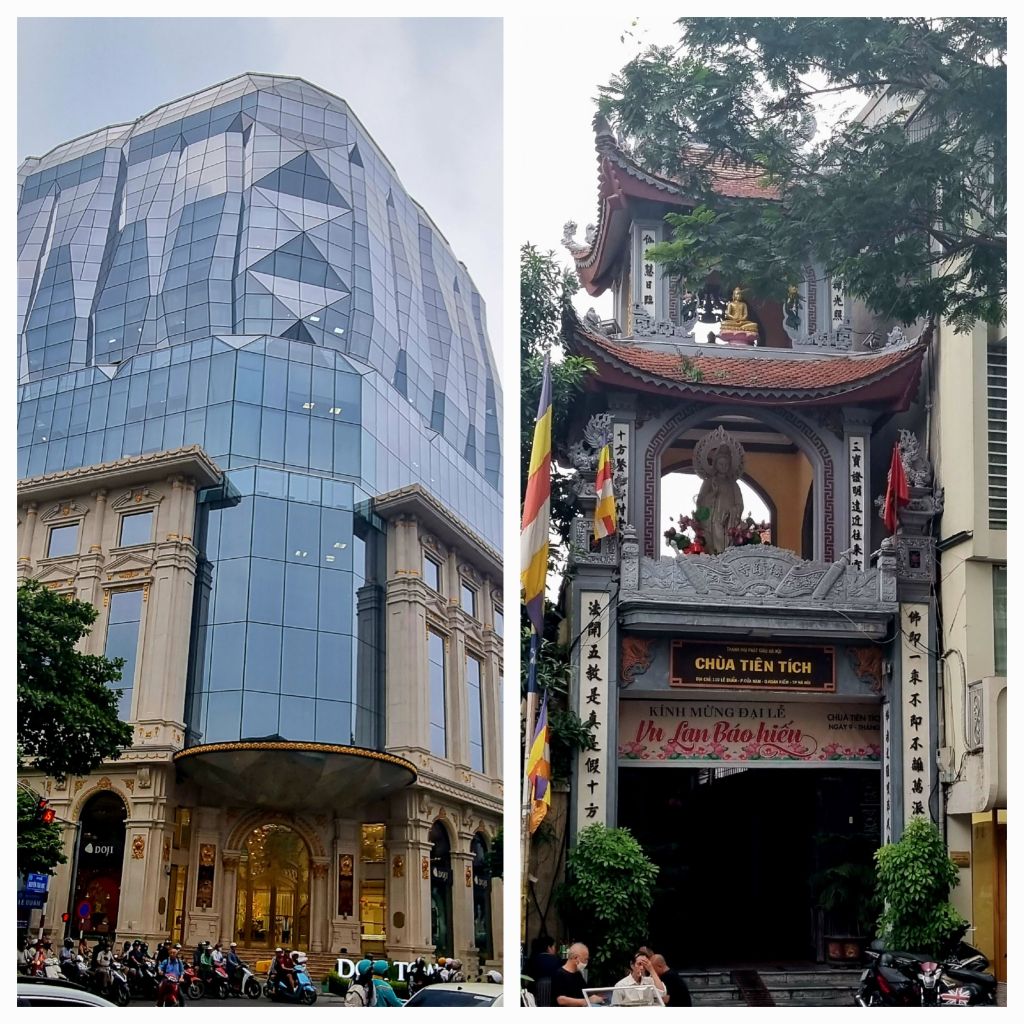
After lunch we carried on our sightseeing tour. Hanoi is a complete mixture of old and new.
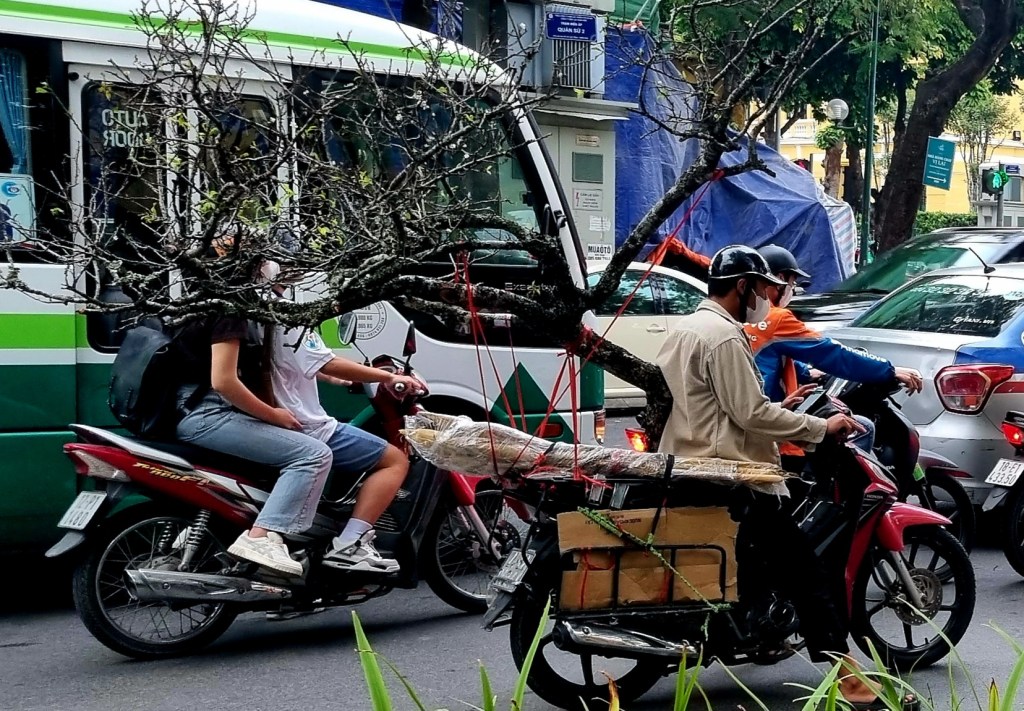
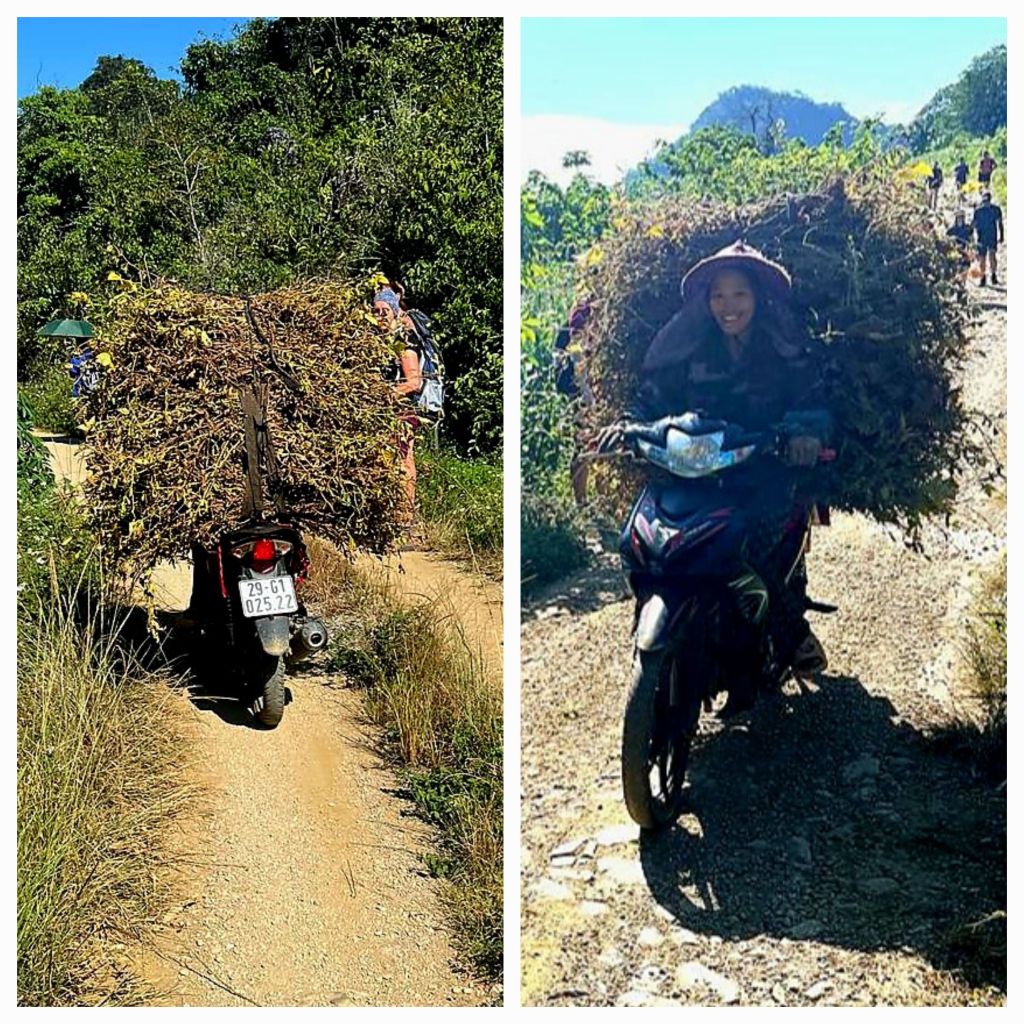
The main traffic is mopeds /scooters, and there don’t seem to be any rules on the road. Also, you can carry almost anything on a moped, including a tree.
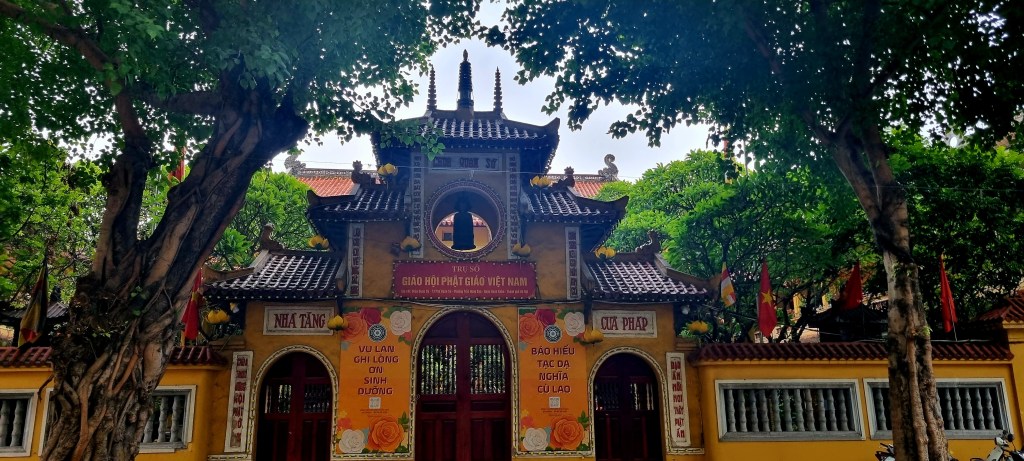
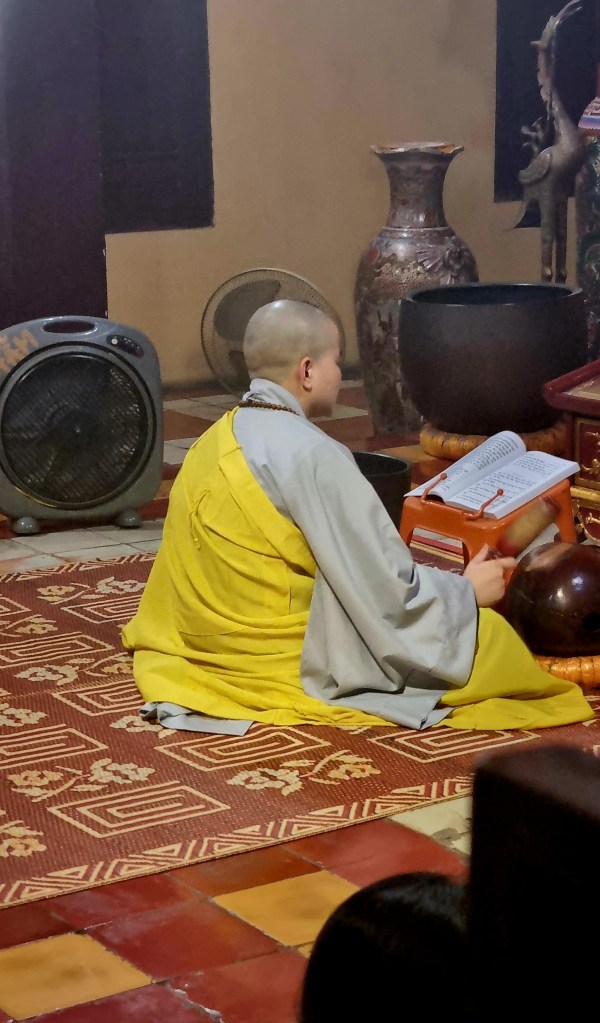
Our next stop was Chùa Quán Sứ Temple, one of the oldest Buddhist temples in Hanoi. It is one of the few ancient pagodas in Hanoi that maintains purity and sanctity in practice and religion.
The temple was built under the reign of King Tran Du Tong in the 14th century. Envoys from southern countries who came to Thang Long to pay tribute were all devout Buddhists. The court, therefore, built a pagoda named Quan Su and a building to receive envoys. This is where they could perform ceremonies during their stay here. That order was still preserved until the Le Trung Hung dynasty.
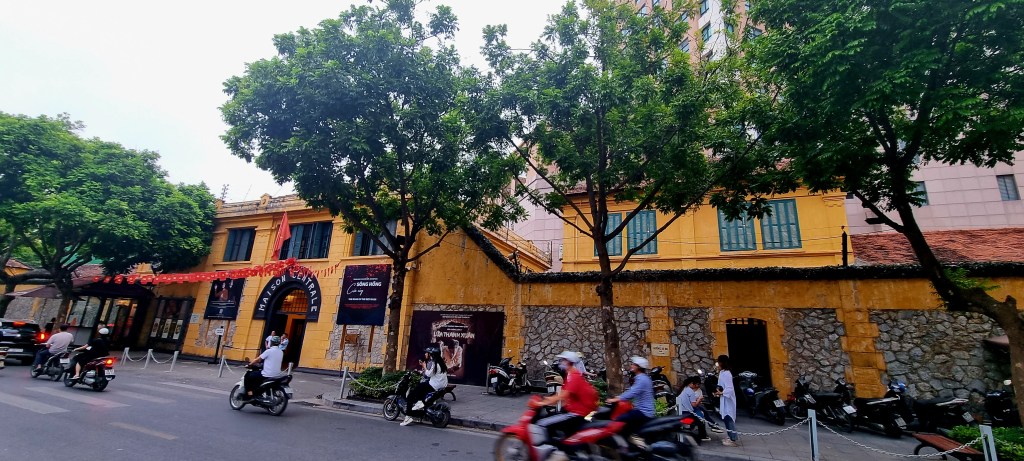
Quite close to the temple was Hanoi prison. This was originally used by the French colonists in Indochina for political prisoners and later by North Vietnam for U.S. prisoners of war during the Vietnam War. During this later period, it was known to American POWs as the “Hanoi Hilton”. This site was used by the North Vietnamese Army to house, torture, and interrogate captured servicemen, mostly American pilots shot down during bombing raids. Severe torture methods were employed, such as rope bindings, irons, beatings, and prolonged solitary confinement. It is now a museum, but we didn’t go in.
We walked past the Supreme Court to a lovely colourful street with lots of bookshops.
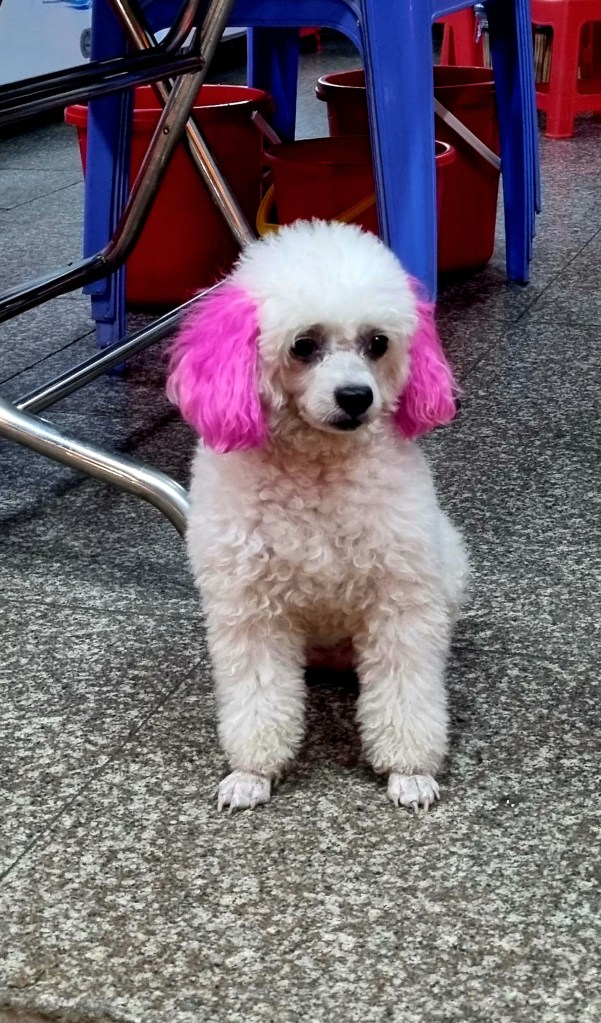
On our tour we saw another dog with colourful ears!
We walked down to the Vietnamese Women’s Museum. Unfortunately it was about to close for the evening so we decided not to take a look around.
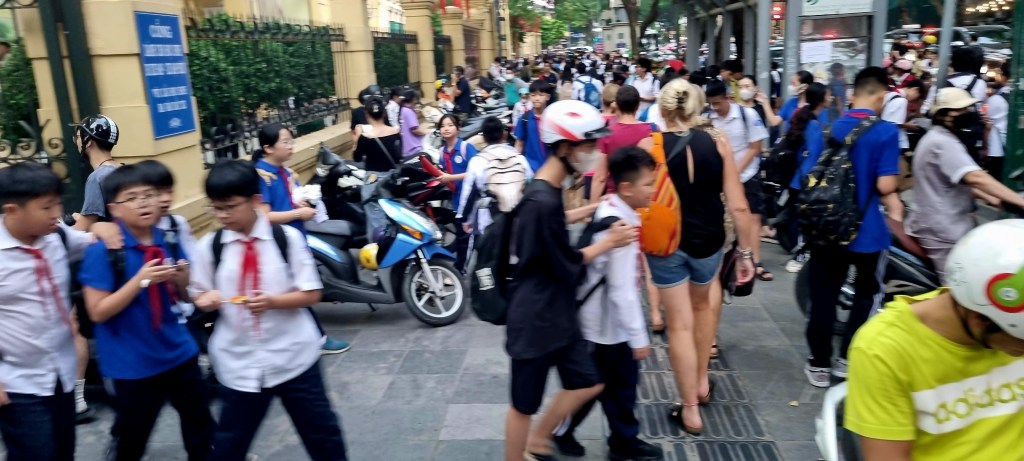
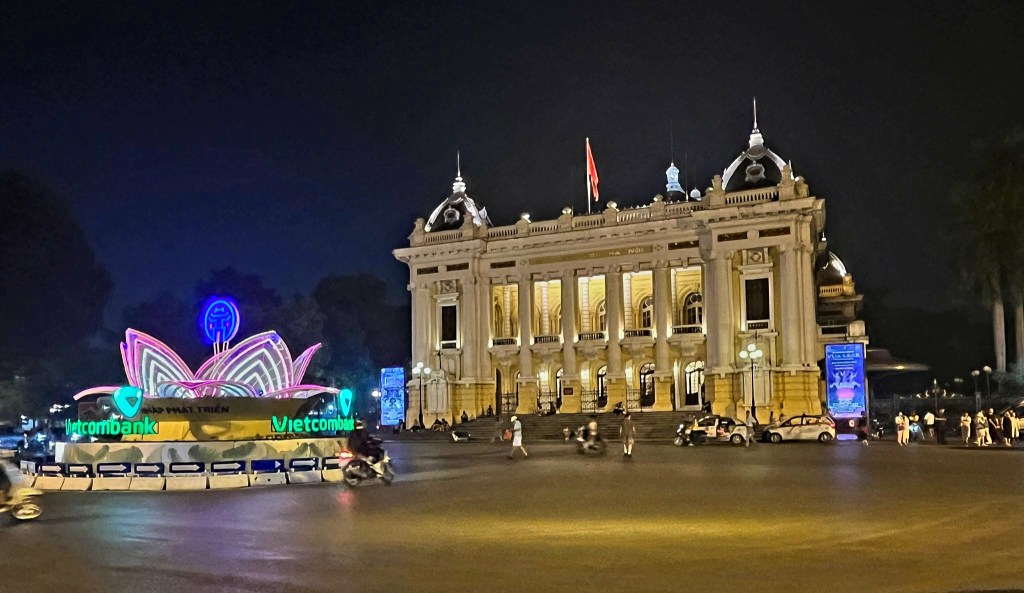
As we carried in walking to the opera house, we walked past a school where it was obviously home time – it was so busy. We decided to stop off for a quick cup of coffee or tea, and Mandy came to join us, too.
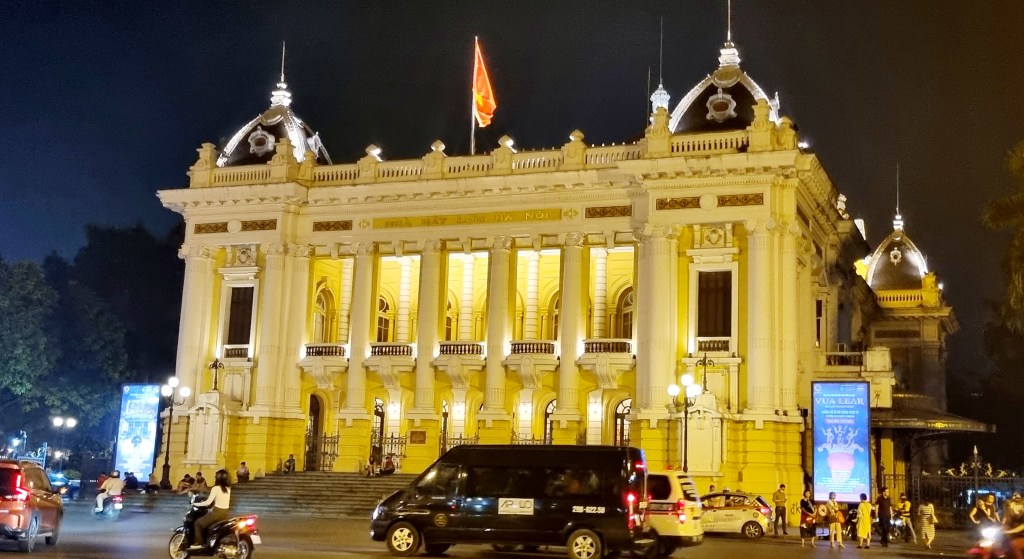
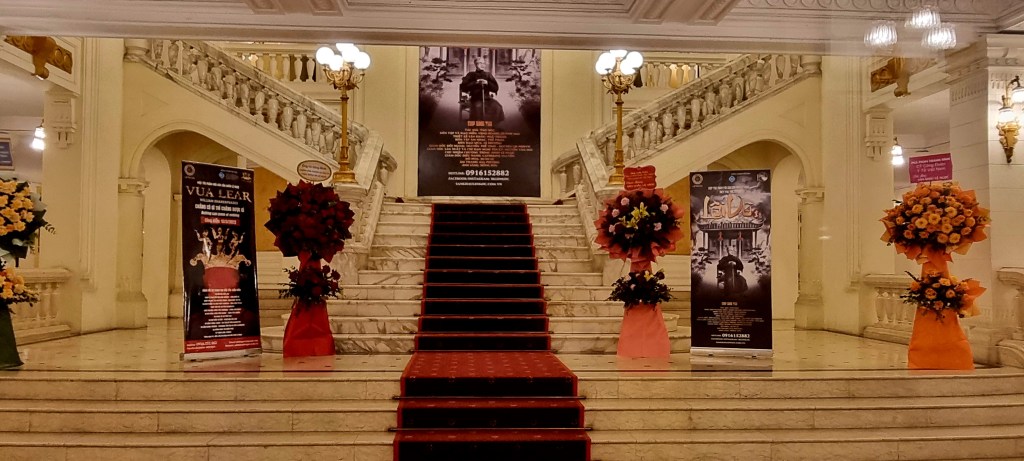
The Opera House was built by the French colonial administration between 1901 and 1911. It was modelled on the Palais Garnier, the older of Paris’ two opera houses, but with a smaller scale and using materials that are more environmentally friendly.
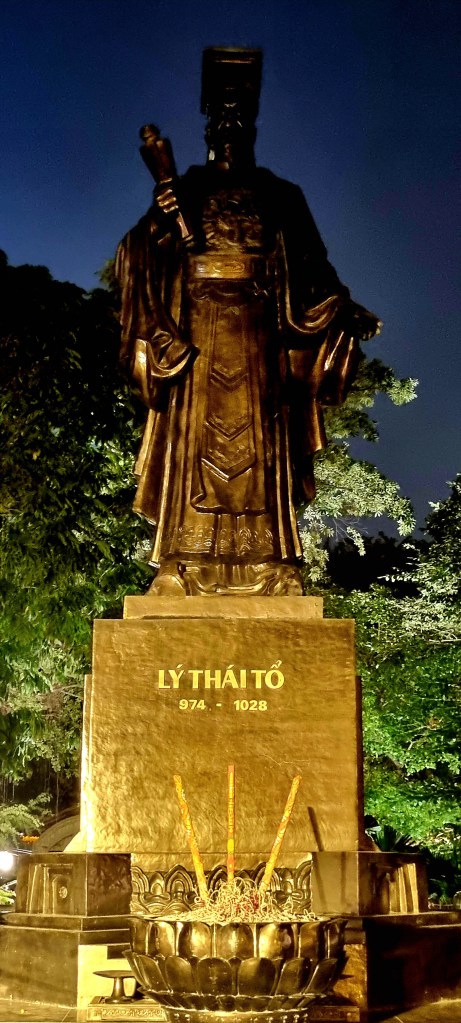
From the opera house, we walked to the smaller lake in Hanoi – Hoan Kiem Lake. On the way, we passed the statue of Ly Thai To. He was the founding emperor of the Ly dynasty and reigned in Vietnam from 1009 to 1028. When Ly Thai To came to Hanoi, he allegedly saw a soaring dragon above the city, and so he called the area Thang Long (ascending dragon). Thang Long remained the main capital of Vietnam until 1802, when the last Vietnamese dynasty, the Nguyen (1802–1945), transferred the capital south to Hue.
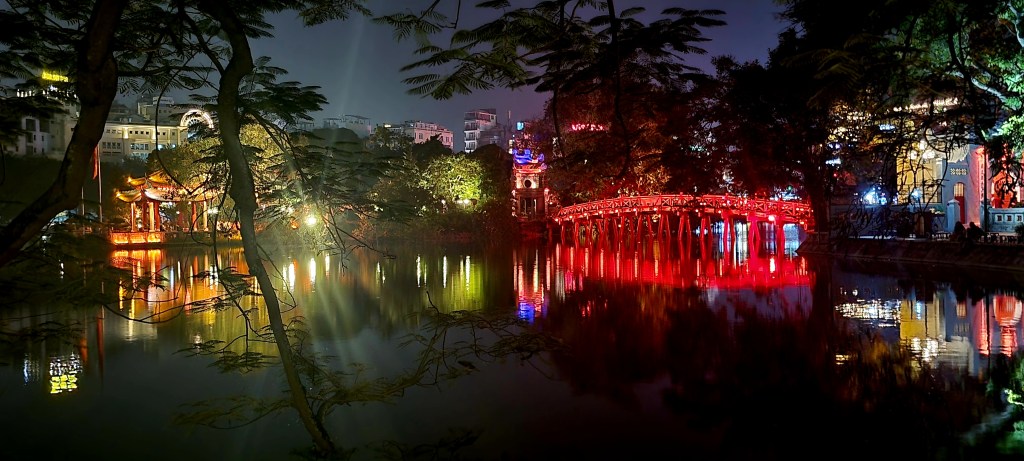
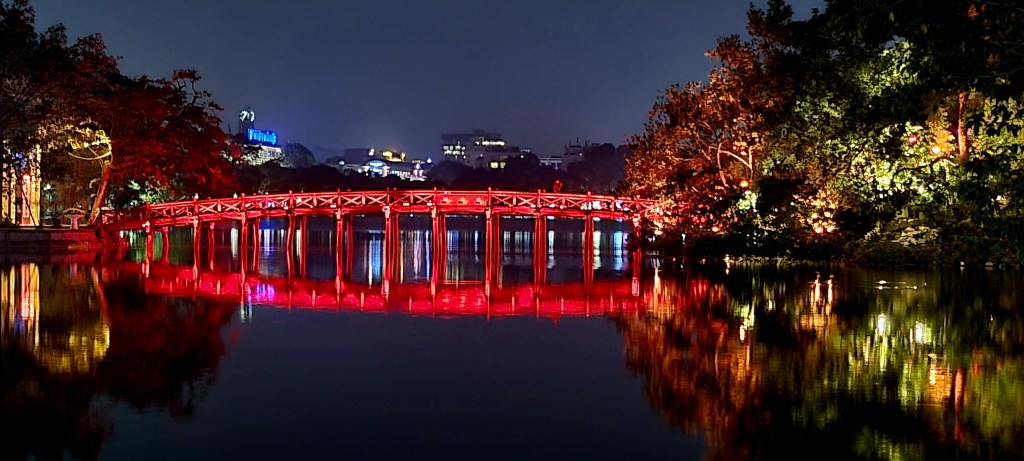
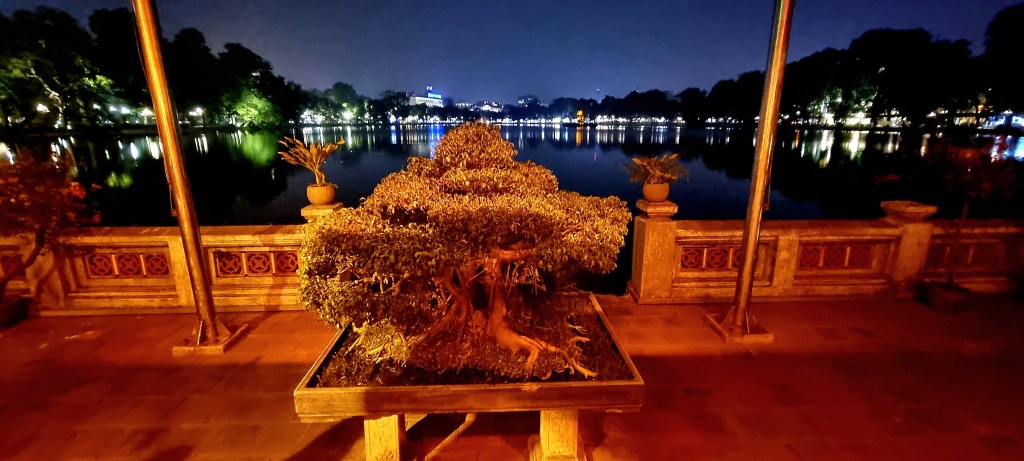
Hoan Kiem Lake was beautiful at night, all lit up and quite a busy area. Legend claims that, in the mid-15th century, heaven sent Emperor Le Loi a magical sword, which he used to drive the Chinese from Vietnam. After the war a giant golden turtle grabbed the sword and disappeared into the depths of this lake to restore the sword to its divine owners, inspiring the name Ho Hoan Kiem (Lake of the Restored Sword).
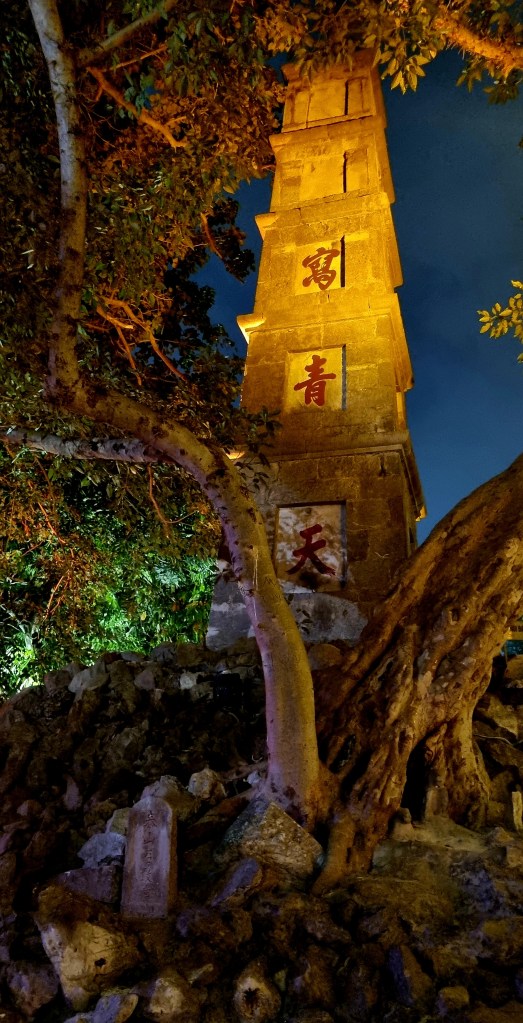
As you walk towards the bridge, you see Pen Tower. This tower is 12m in diameter and 4m high. It has 5 stories and reaches up to the sky, creating harmony between nature and people. Students often visit this site to pray for good luck in their exams.
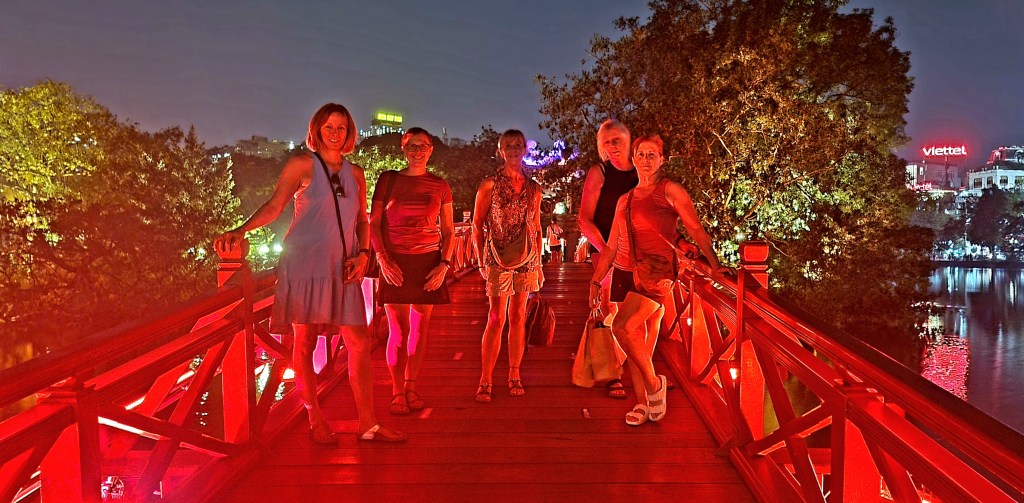
The Huc Bridge (Sunbeam bridge) is a lovely red coloured arch bridge with 15 spans and 32 pillars. During the day, the bridge reflects the cluster of sunlight, which is believed to bring hope, luck and happiness to the city.
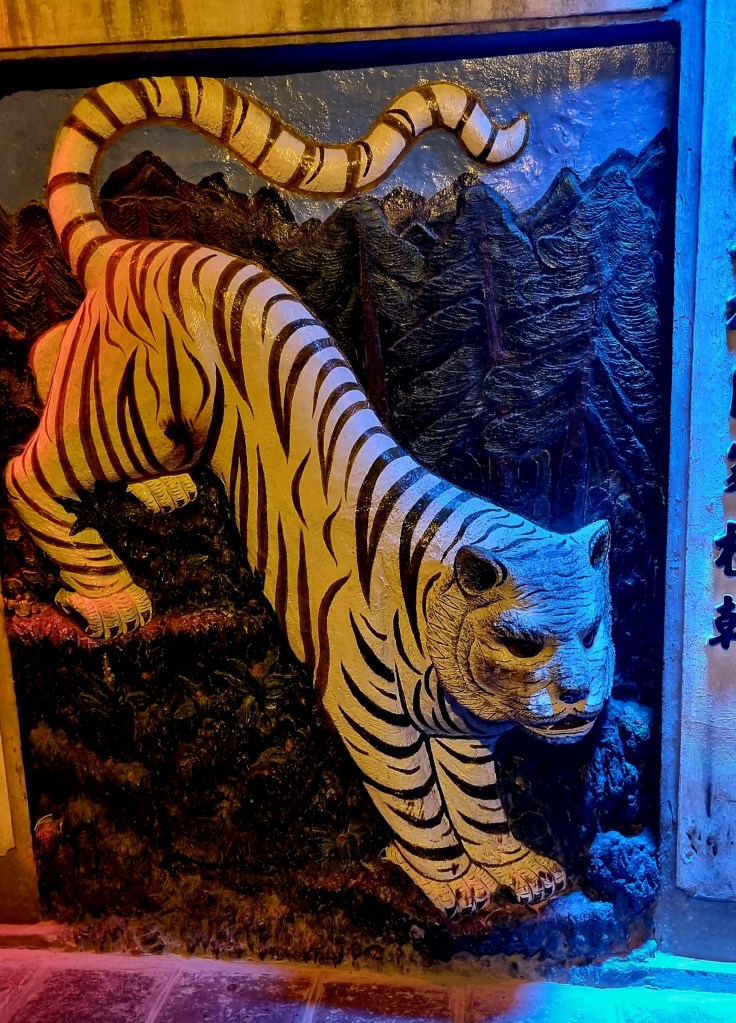
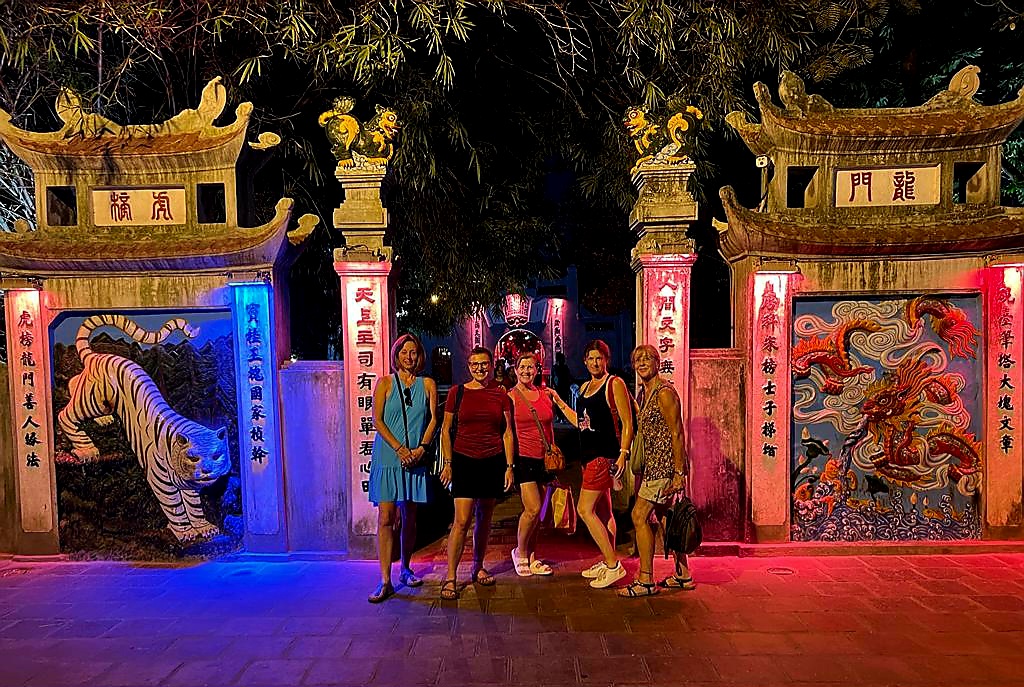
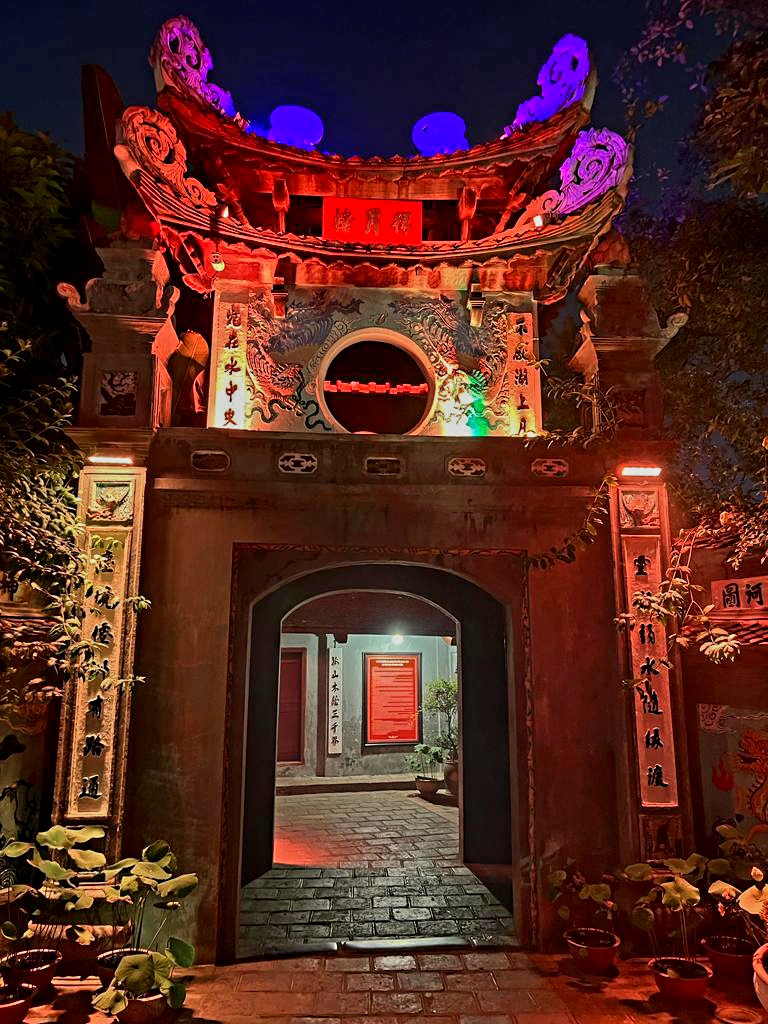
At the other end of the bridge, you come to Ngoc Son Temple (Jade Mountain Temple). The Temple was built in the 19th century in commemoration of Tran Hung Dao, the greatest military commander of the Tran Dynasty. It also pays homage to Van Xuong De Quan, the God of prosperity. You have to pass through several gates to get there, one of them being the Long Mon Ho Bang gate. The walls of the gate are designed with roofs like in many pagodas. The right wall is embossed with the shape of a dragon, with two Chinese letters on top meaning “Dragon Gate” (Long Mon). On the left wall, you can see a white tiger carved with Chinese letters, meaning Tiger Board (Ho Bang). The Dragon Gate and Tiger Board symbolises successful examinations and inspires young people to keep learning.
At the end of the bridge, you come to Dac Nguyet Lau Gate, also known as the “Moon Gazing Pavilion”.
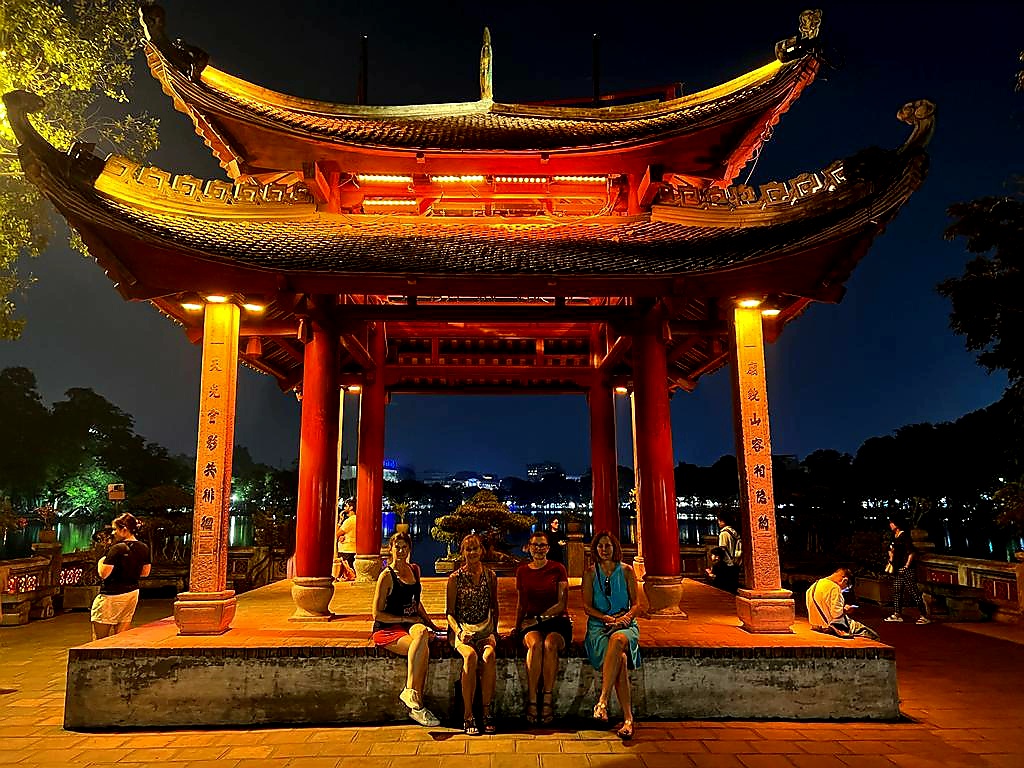
To the south of the temple is a pavilion known as Tran Ba Pavilion. It was built as a sturdy structure to protect against breaking waves and evil influences.
The Temple itself represents the diversity in Vietnam. There is a section devoted to worshipping Tran Hung Dao and Van Xuong De Quan as well as a statue of Amitabha, a holy Buddha.
There was lots of activity going on in the streets around the lake, too.
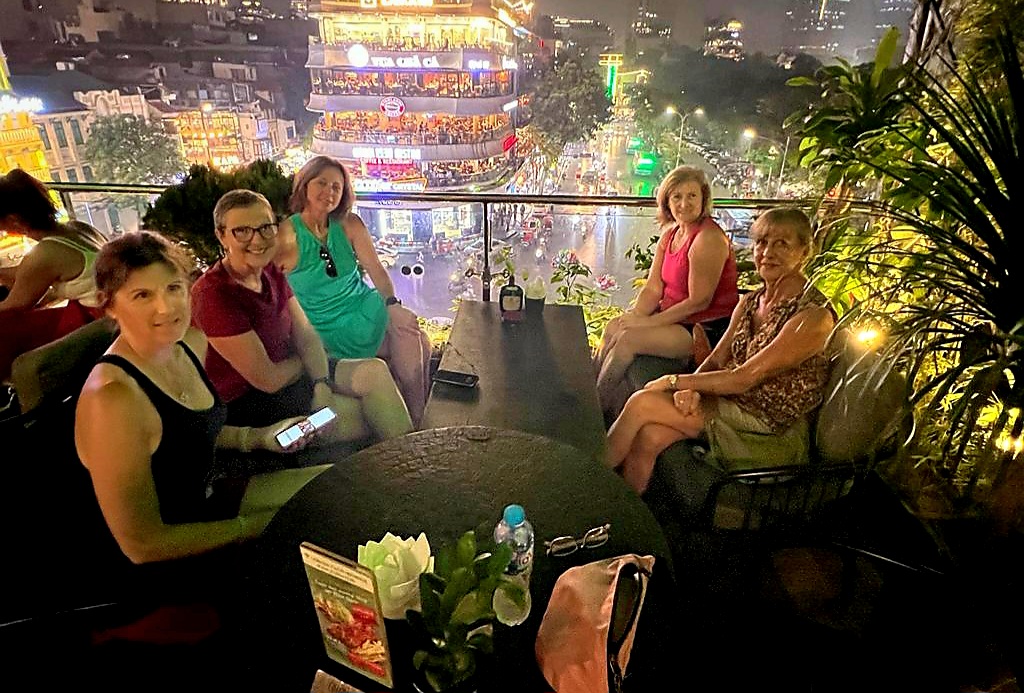
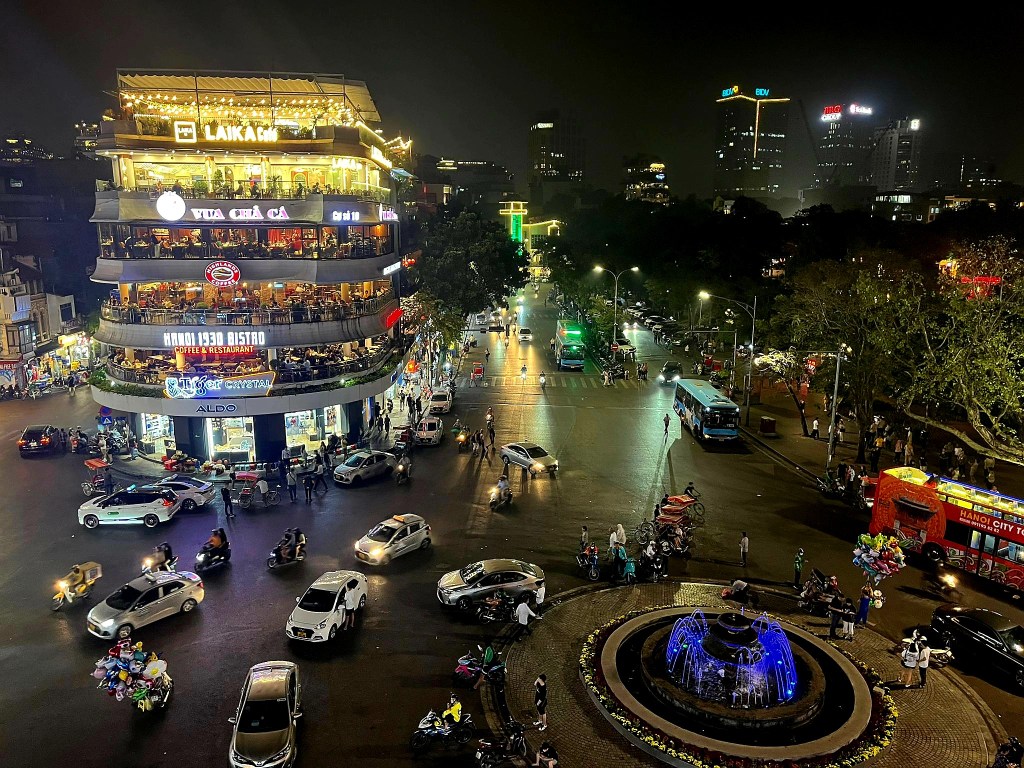
By now, we were a little bit hungry again, so we made our way to the Coffee Club, one of the rooftop bars in Hanoi.
After some wine and food it was back to the hotel and time for bed.
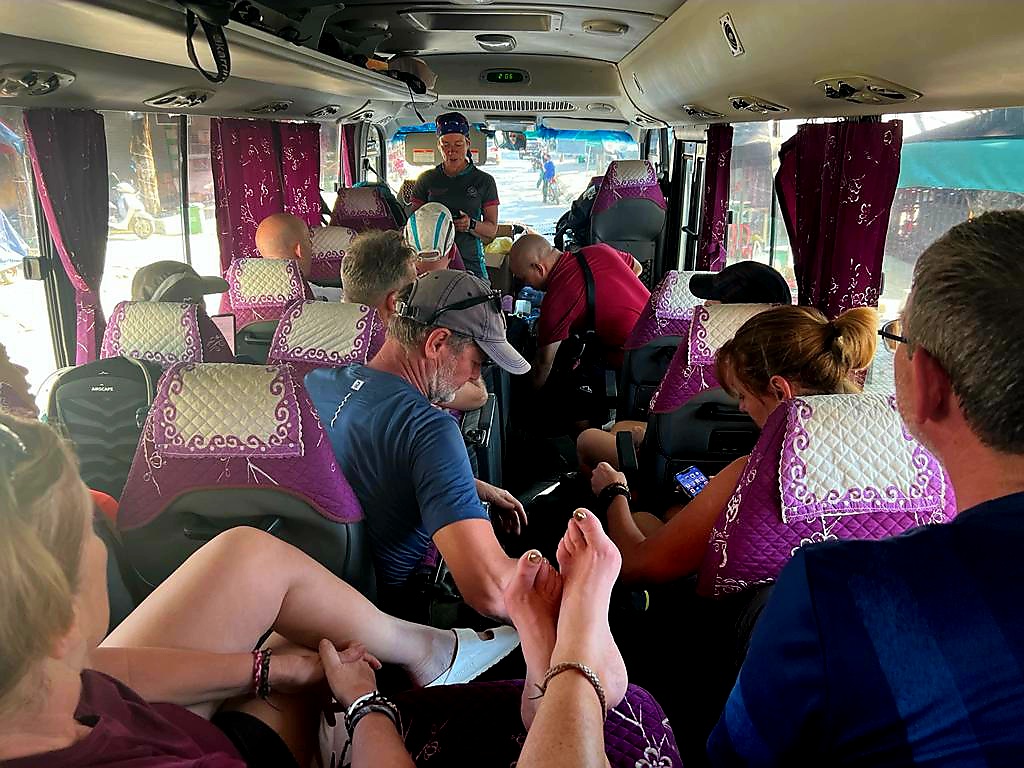
After a very early start, and after collecting and paying for our laundry, it was a 280km bus journey to Hanoi.
We stopped in a small town for lunch, where we actually had pizza and chips. The vegetarian pizza was a little different to normal.
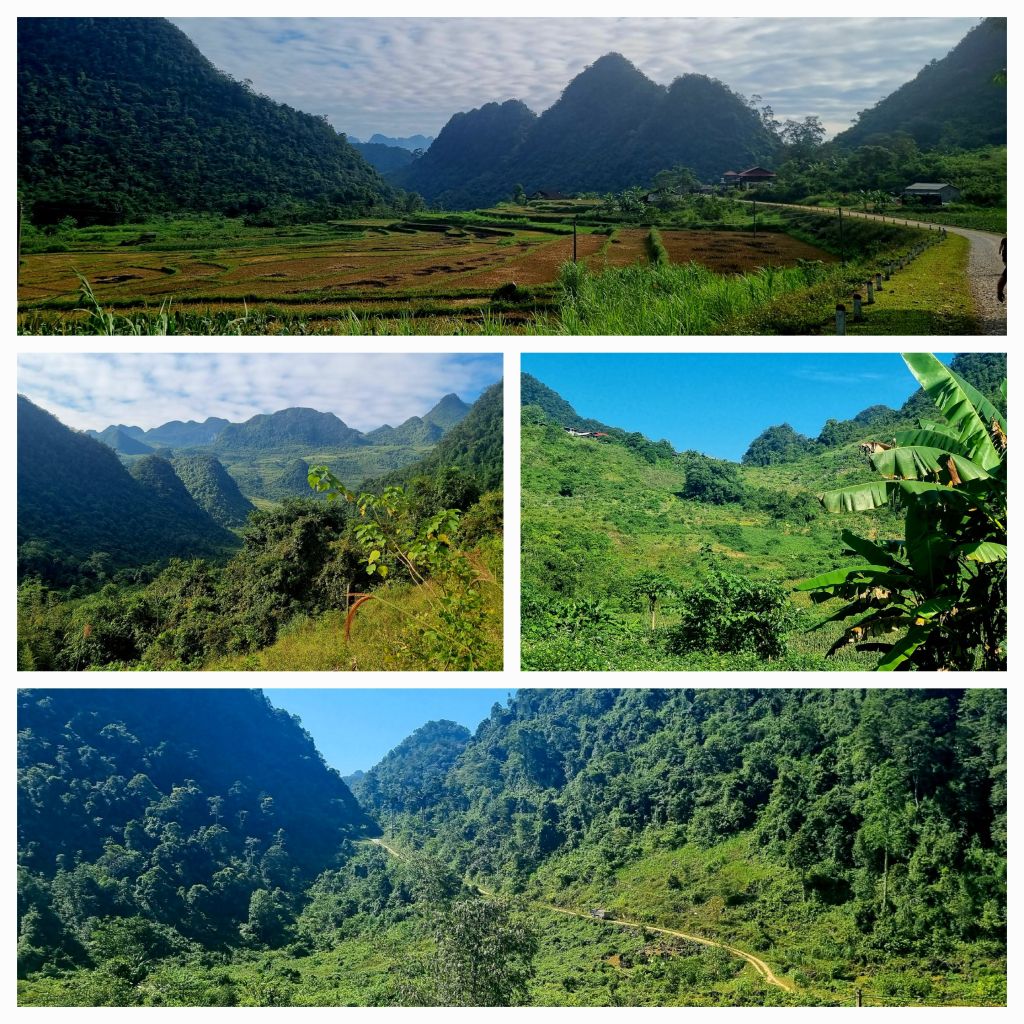
The drive was very scenic through forested mountains and remote villages.
After around 7-8 hours of driving, we arrived in Hanoi. Some of the group went on a guided tour around the city with Nhan, but as we were staying a few more days in Hanoi, we decided to take the time to refresh and get ready for the celebration meal. At the hotel, we met up with Tracey. Tracey is a friend of Karen’s who was joining them for the next 3 weeks travelling around Vietnam.
Just round the corner from where we were staying was a rooftop bar, so we started the evening off there with a couple of cocktails.
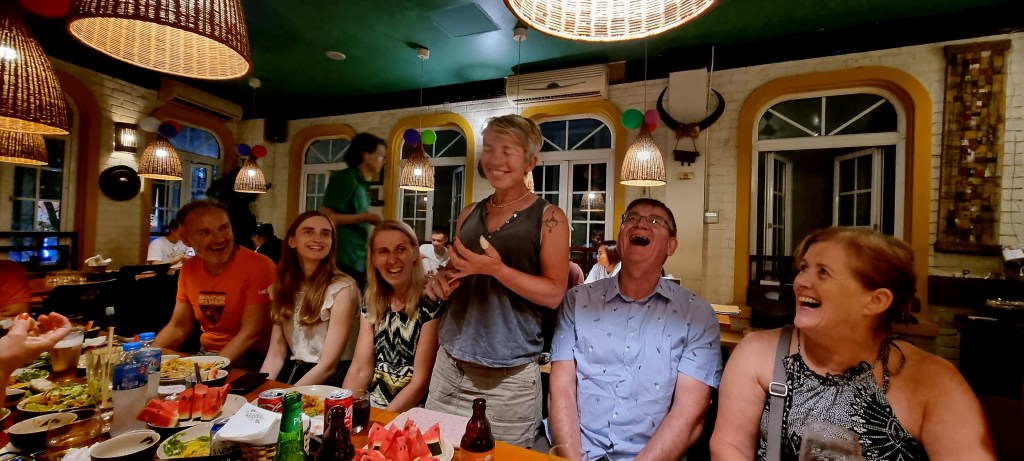
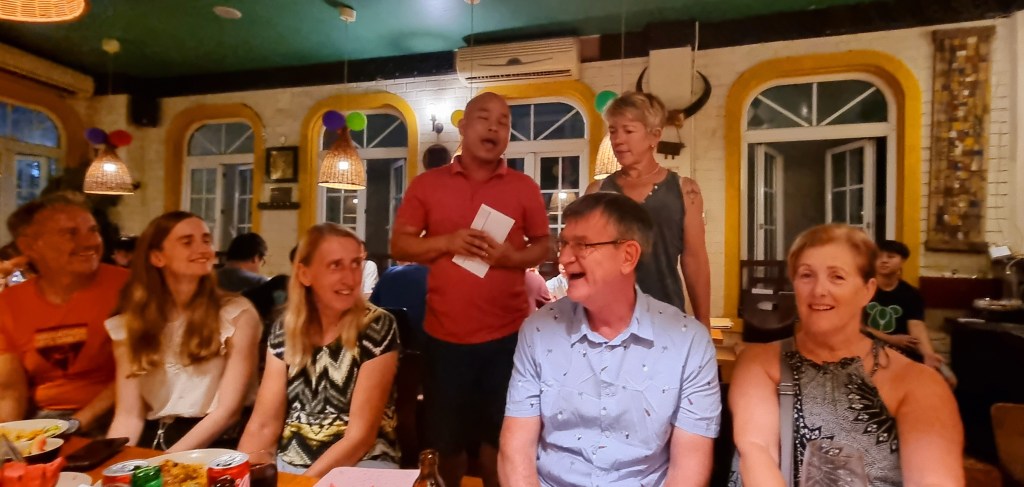
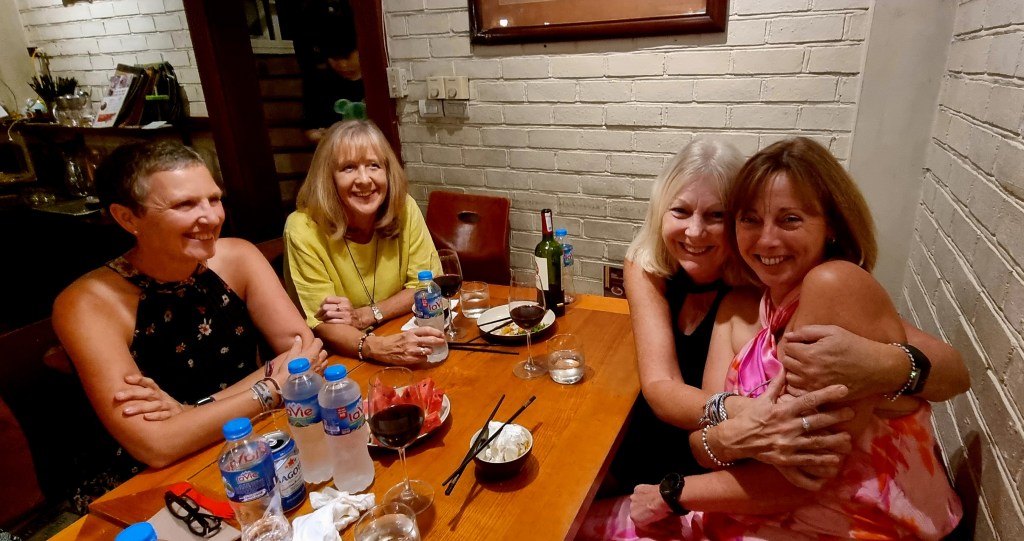
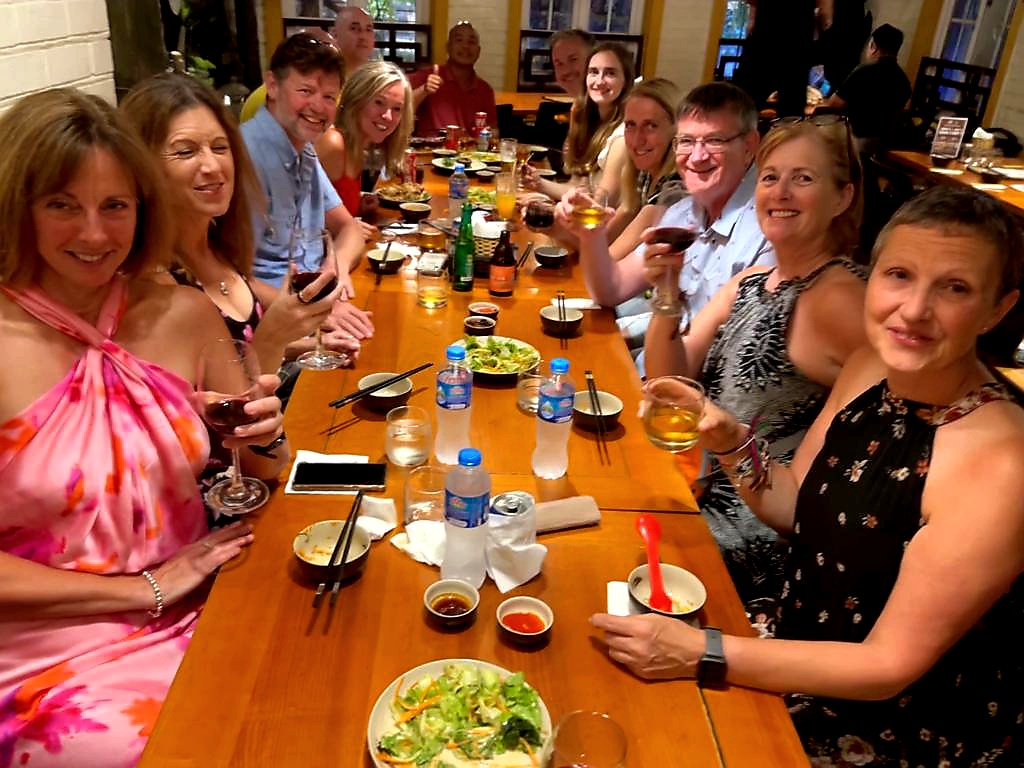
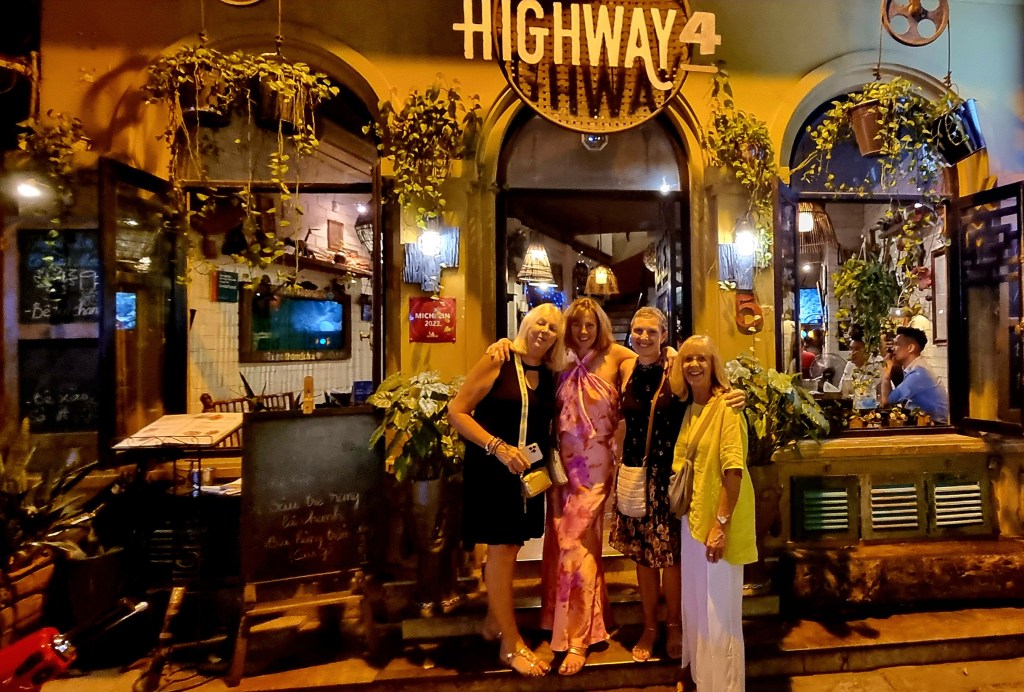
We then met the rest of the group back at the hotel and headed off to the restaurant – Highway 4. The food was delicious, and Chris and Nhan both made lovely speeches.
It was our last evening together as a group, and it was sad to say goodbye to everyone else.
The group members were:
Tim and Jackie (couple)
Stu and Alex (father and daughter)
Jason and Lee (uncle and nephew)
Maxine
Larry
Karen, Mandy, Zoe and Gill
Chris (DA leader)
Nhan (local guide)
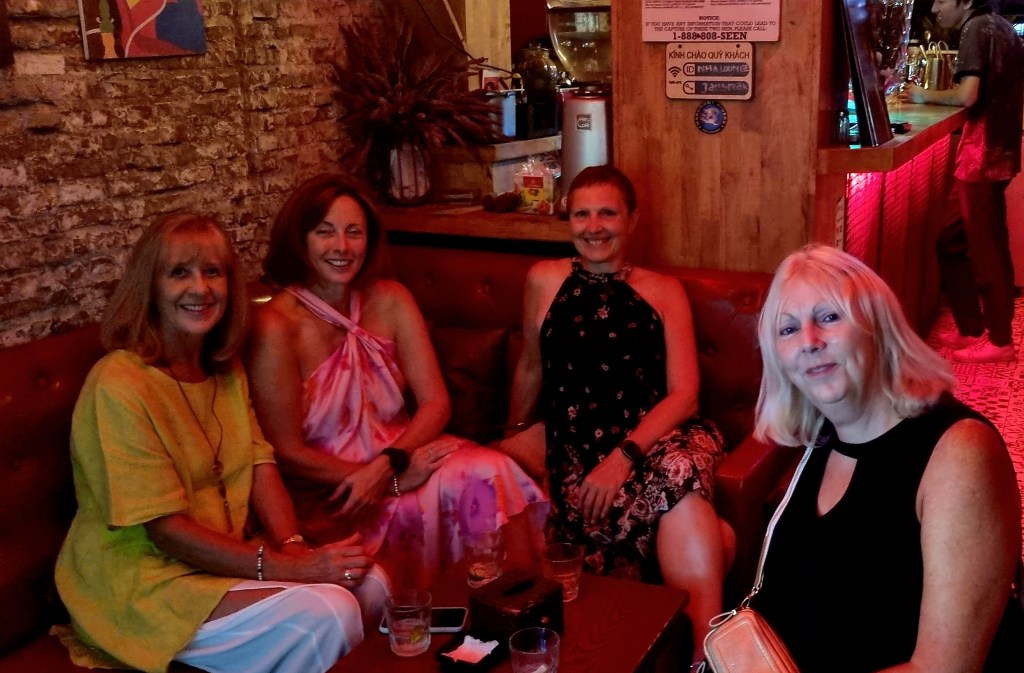
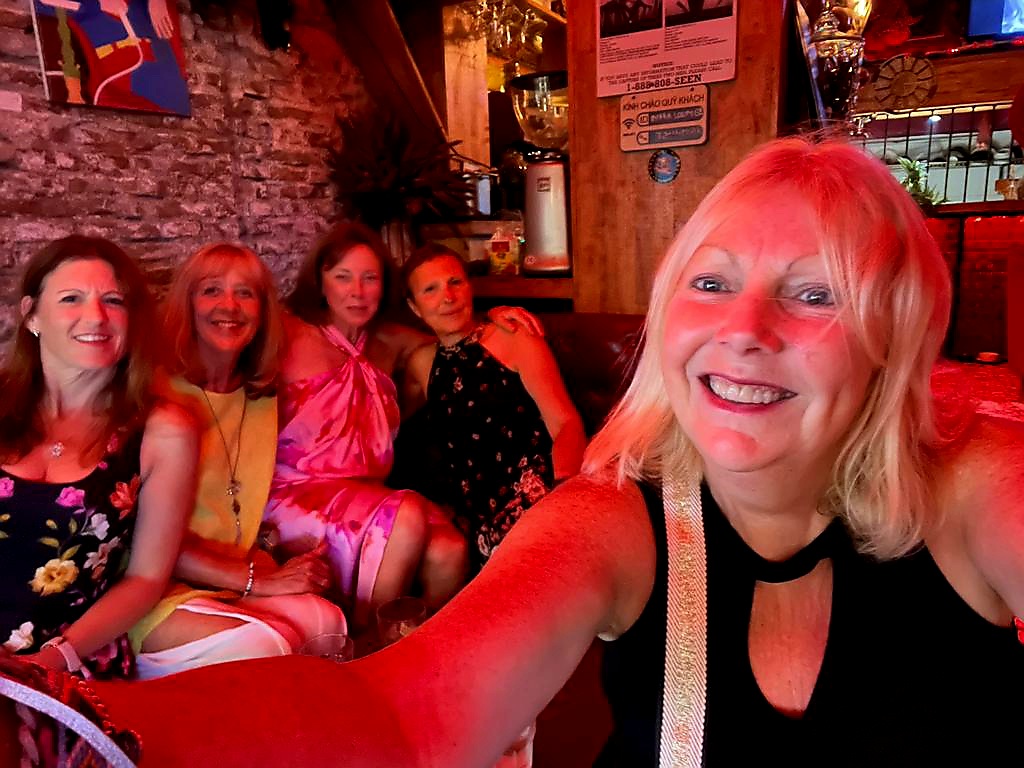
As everyone else made their way back to the hotel, we decided to go for another drink.
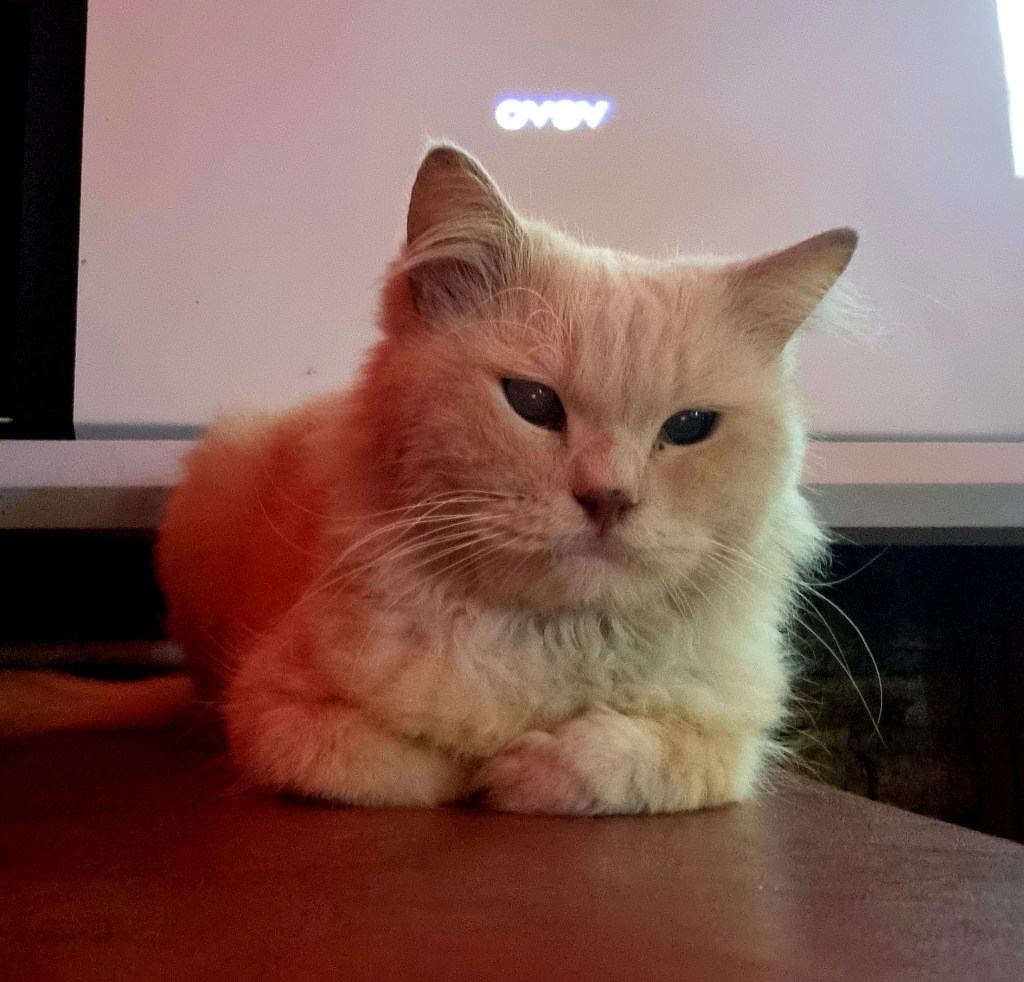
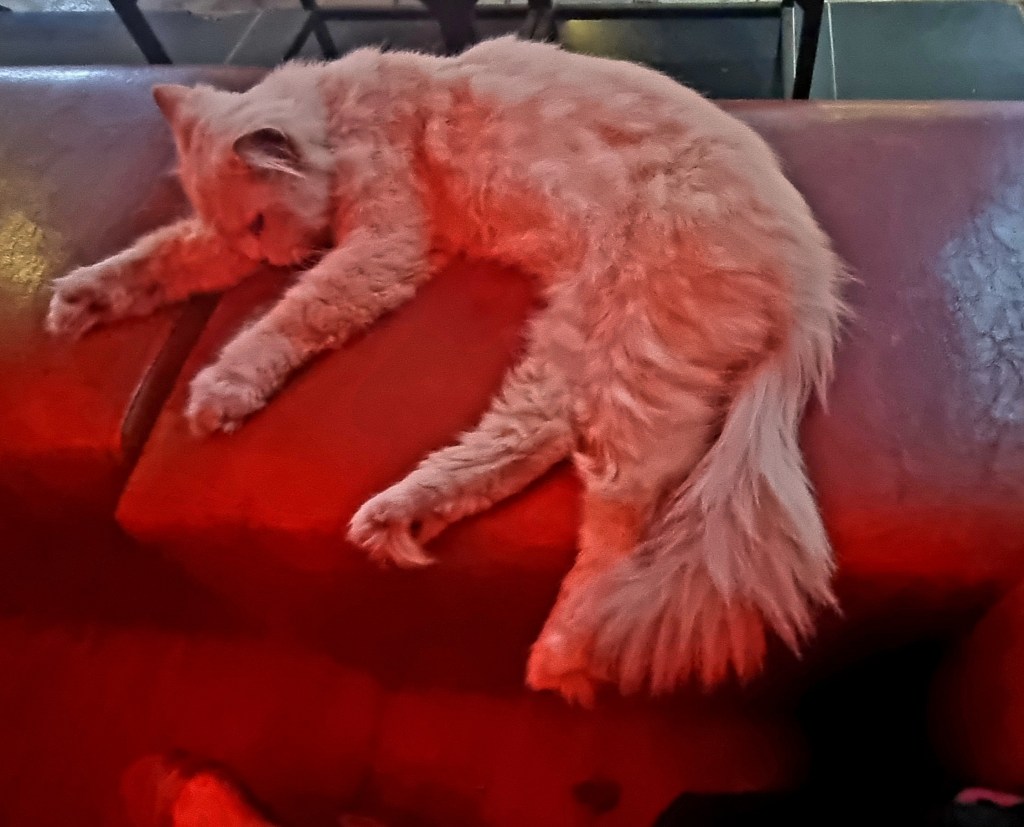
We headed down a few streets and found a bar called the jail pub. There was also a resident cat there.
On the way back to the hotel, we stumbled across Beer Street, so we decided to stop and have a beer.
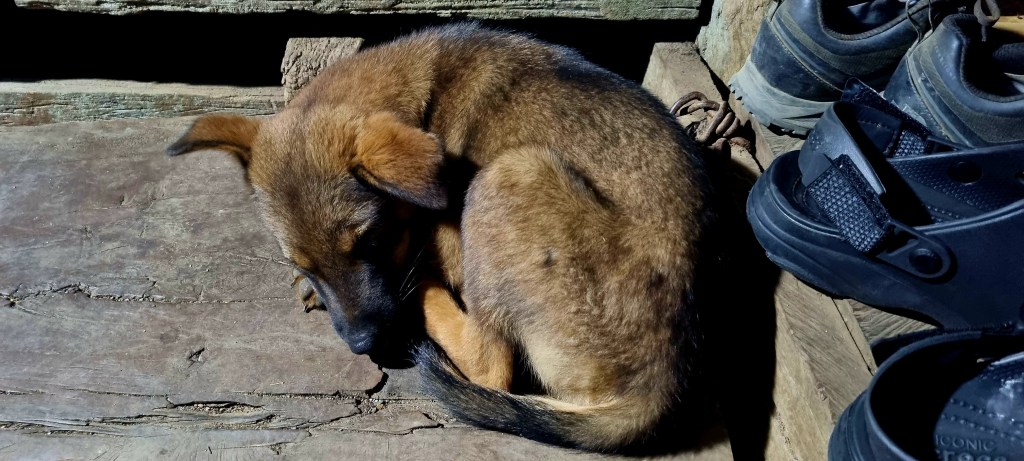
The family dog was curled up on the step outside the house when I went to the toilet in the morning.
Nearly all of us had washed in the river yesterday, so there was no need for a shower. To be honest, I only used the family shower once whilst trekking, we mainly just used baby wipes morning and night.
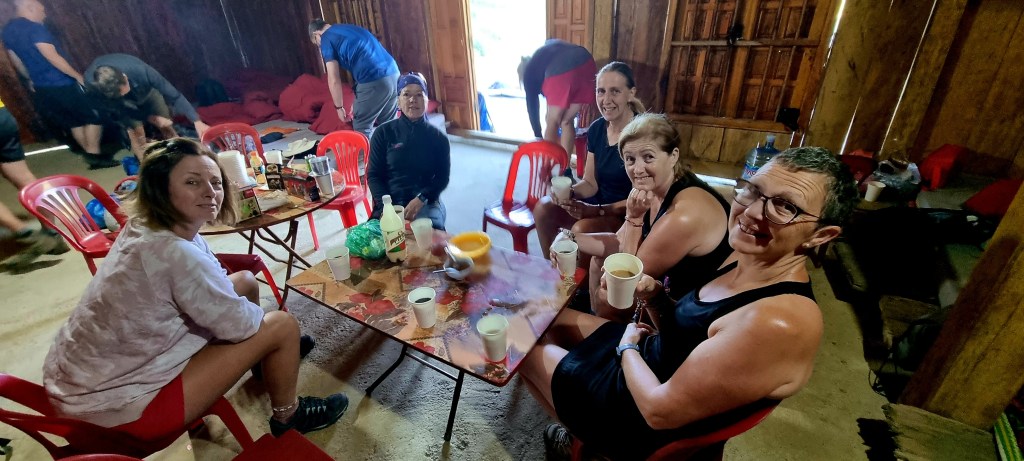
We had coffee, tea and a delicious breakfast of pancakes and mango.
After breakfast, I wandered around the outbuildings.
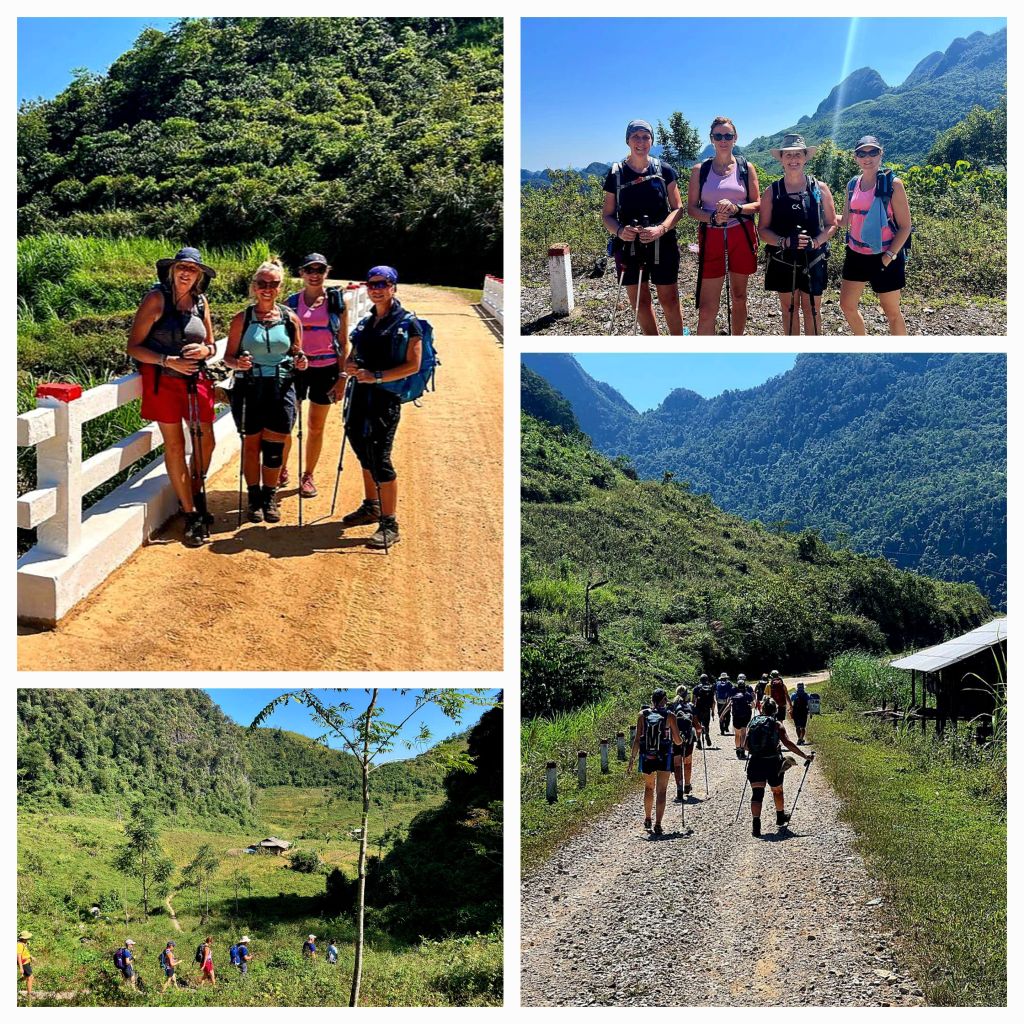
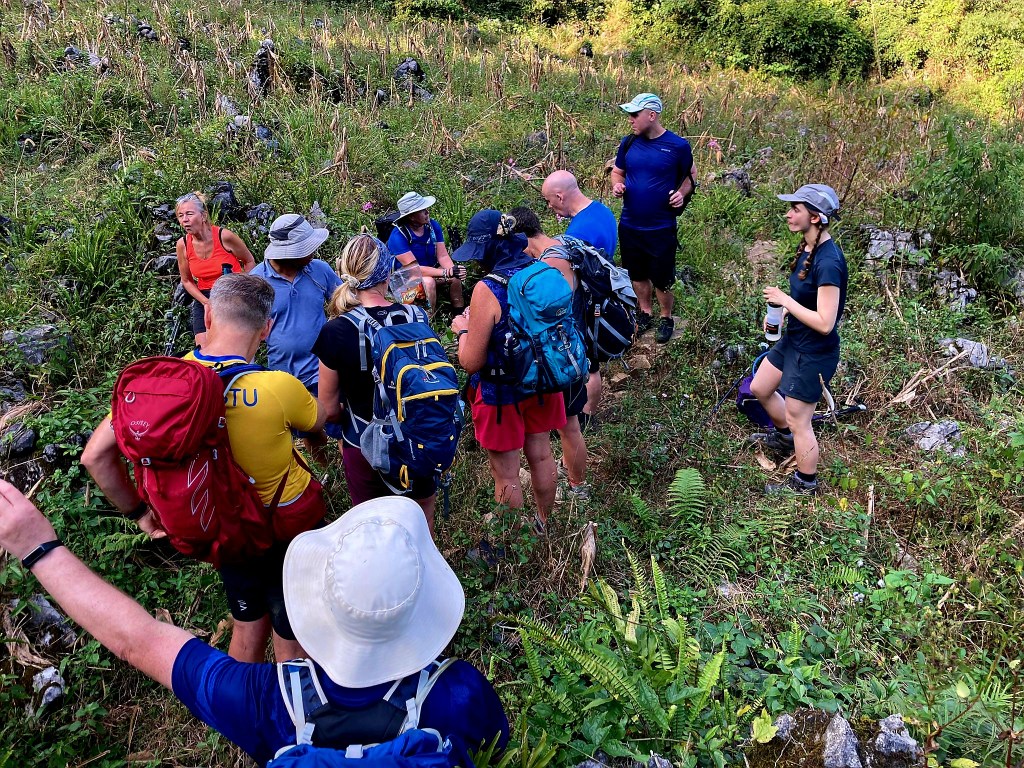
We packed our bags and put them in the bus, and then headed off on another hike.
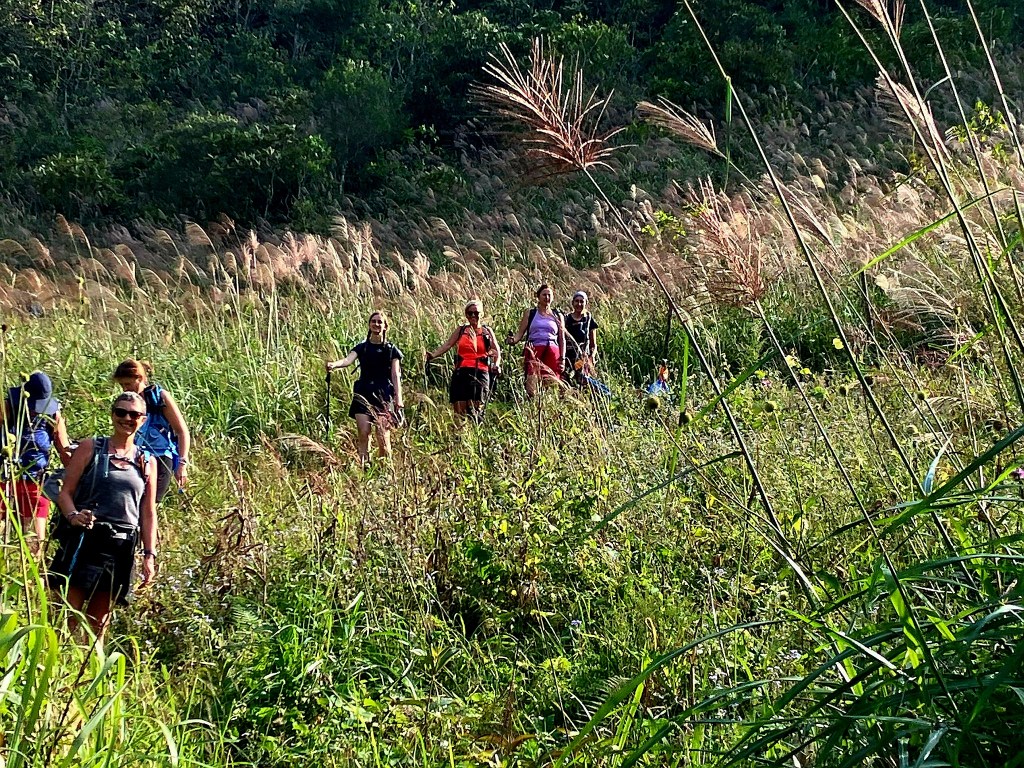
We followed the Na River and passed more Dao hamlets as we climbed up the valley.
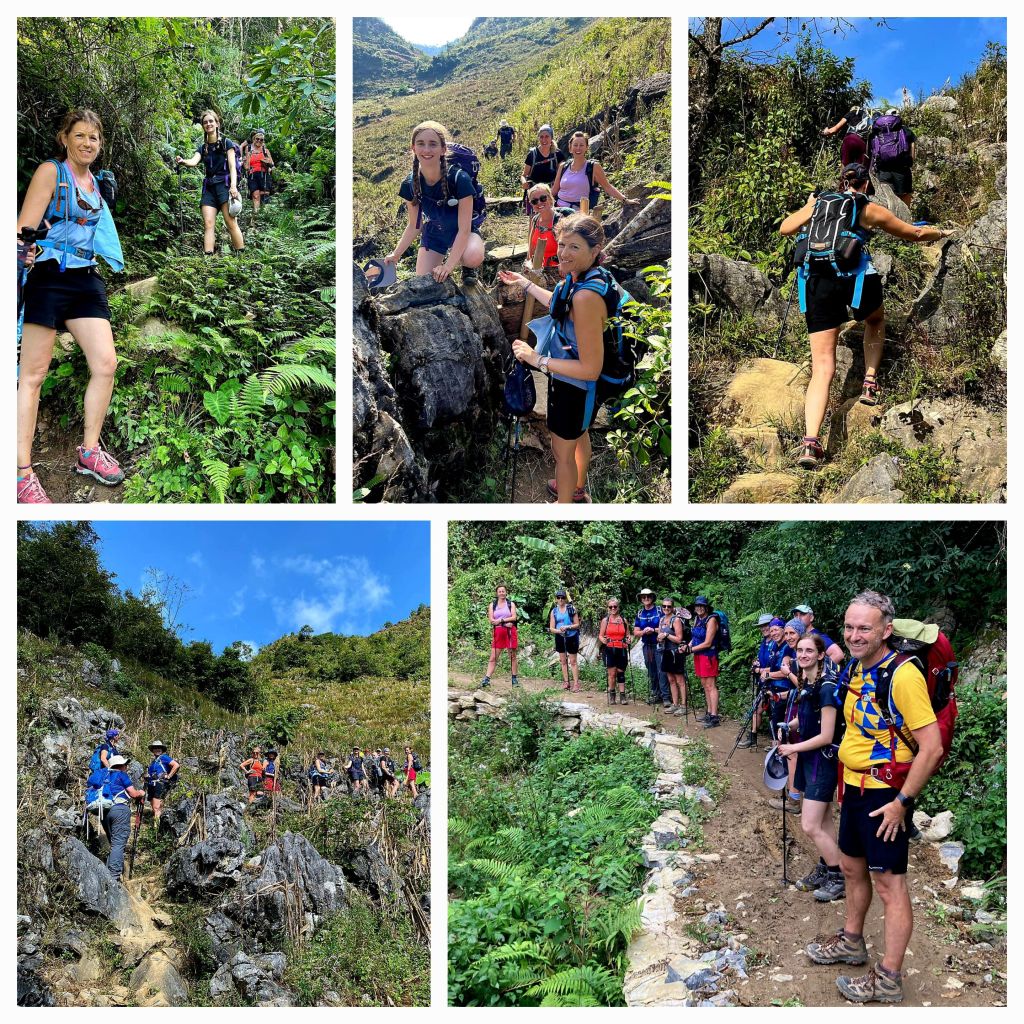
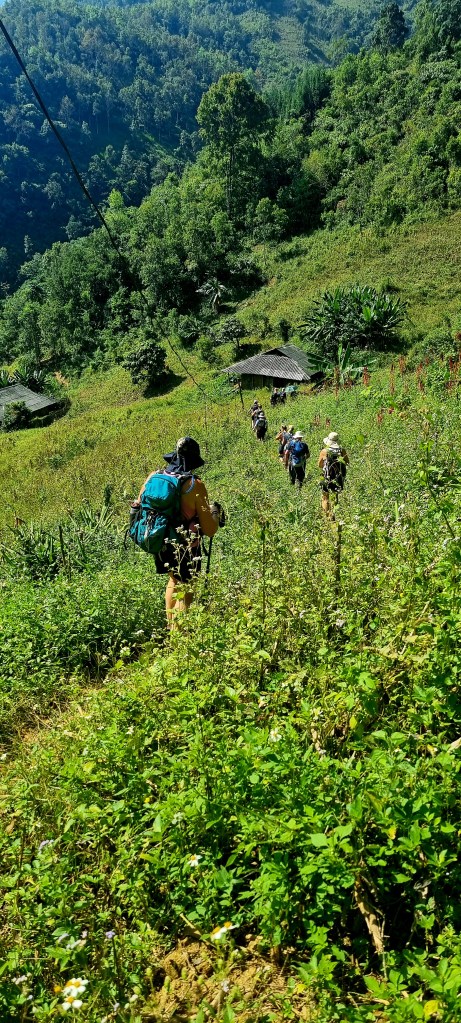
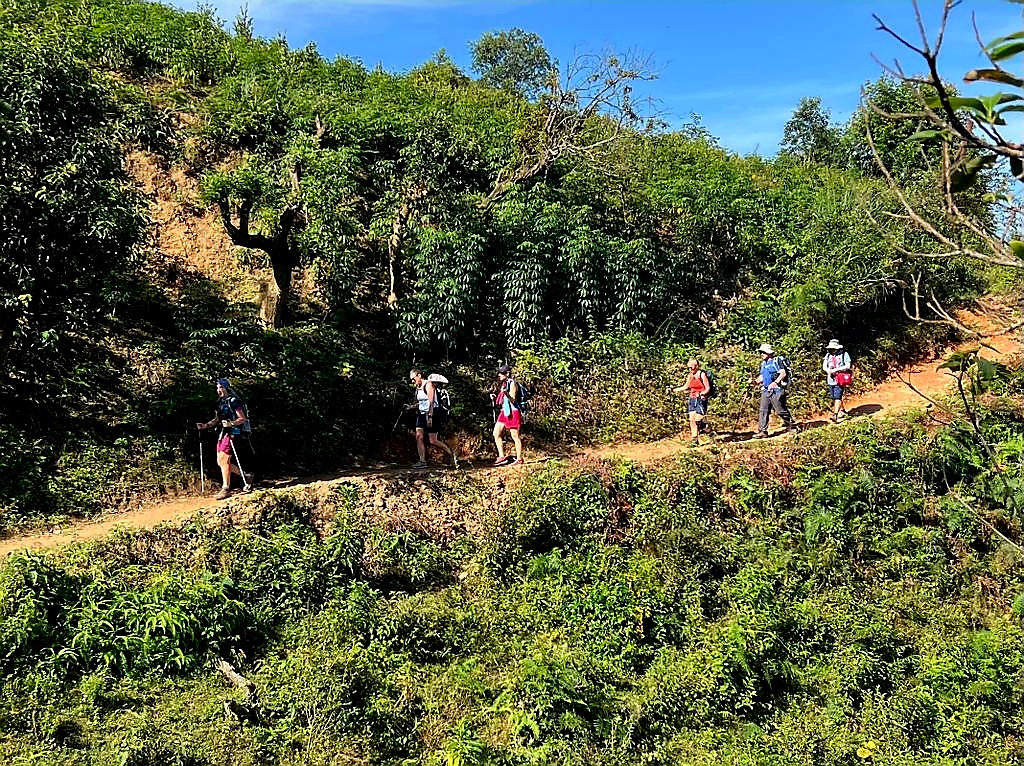
It was a tough hike with lots of ups and downs.
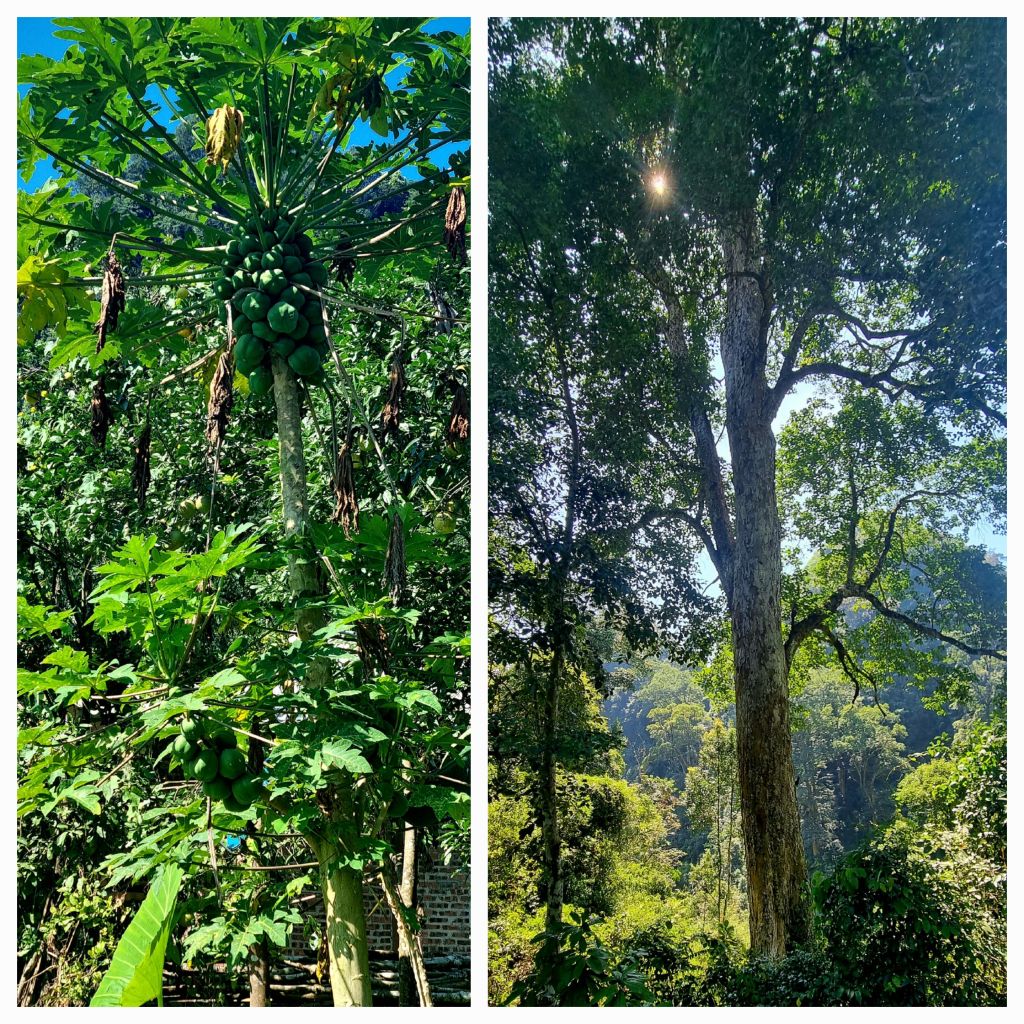
We passed a papaya tree and a hardwood tree that had a preservation order on it.
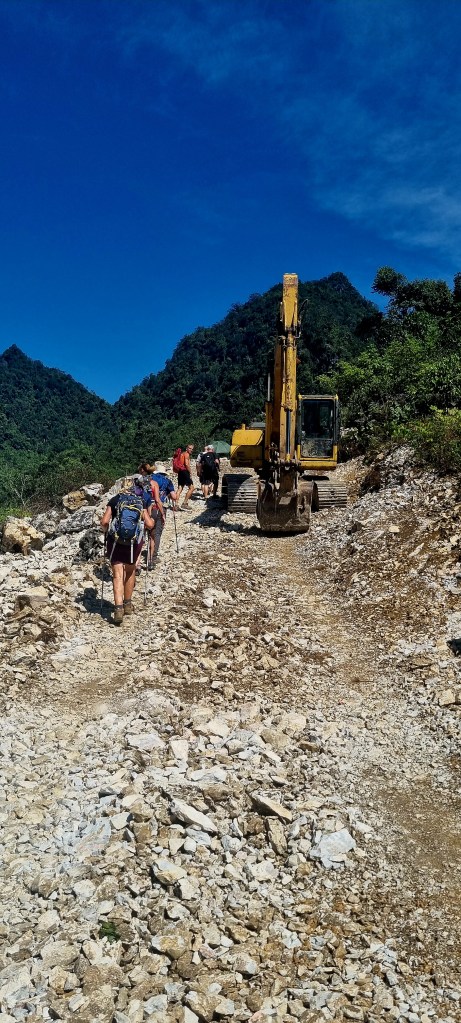
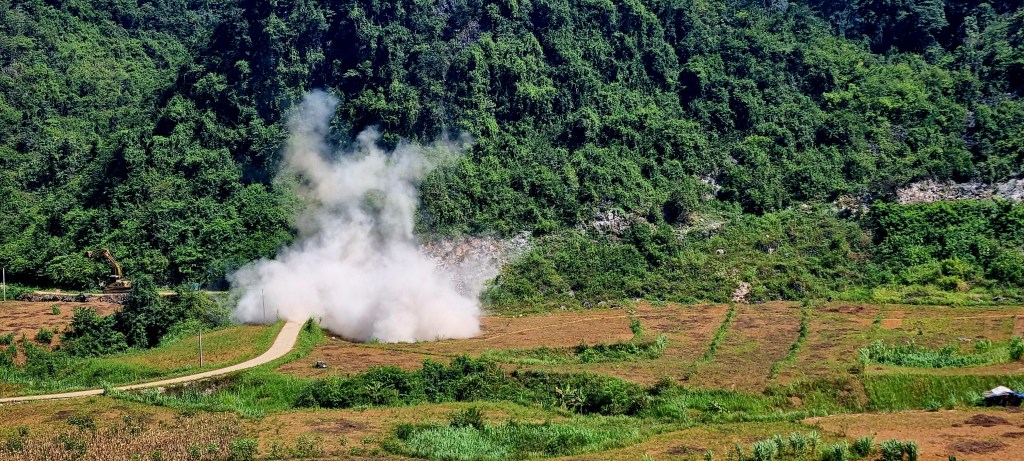
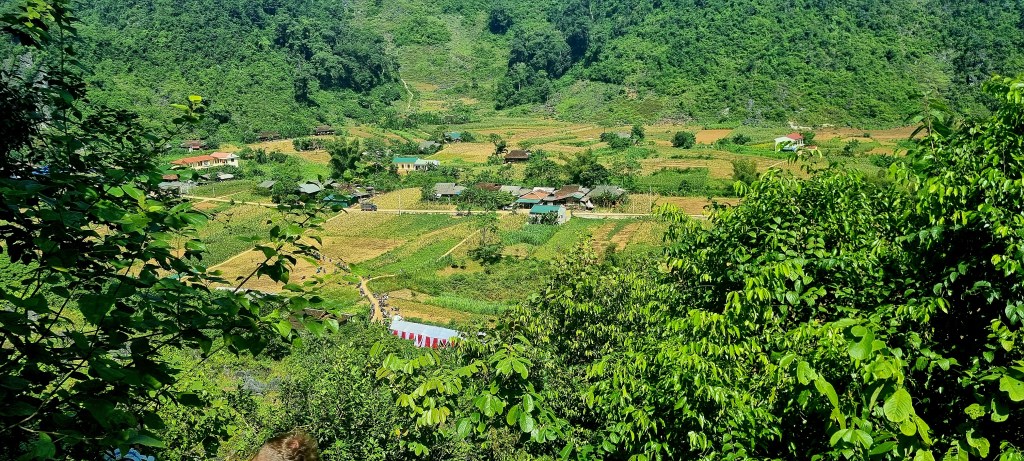
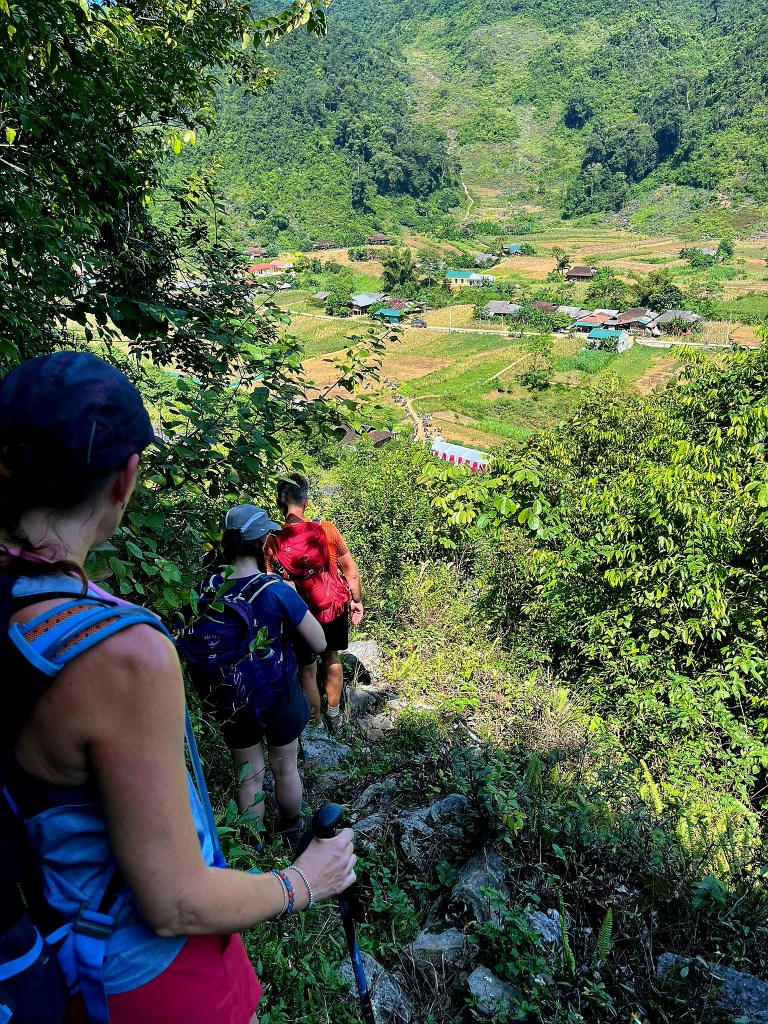
Towards the end of the hike, we headed down into a valley. Some people down below shouted at us to stay where we were, and shortly after there was a massive explosion – blasting into the stone.
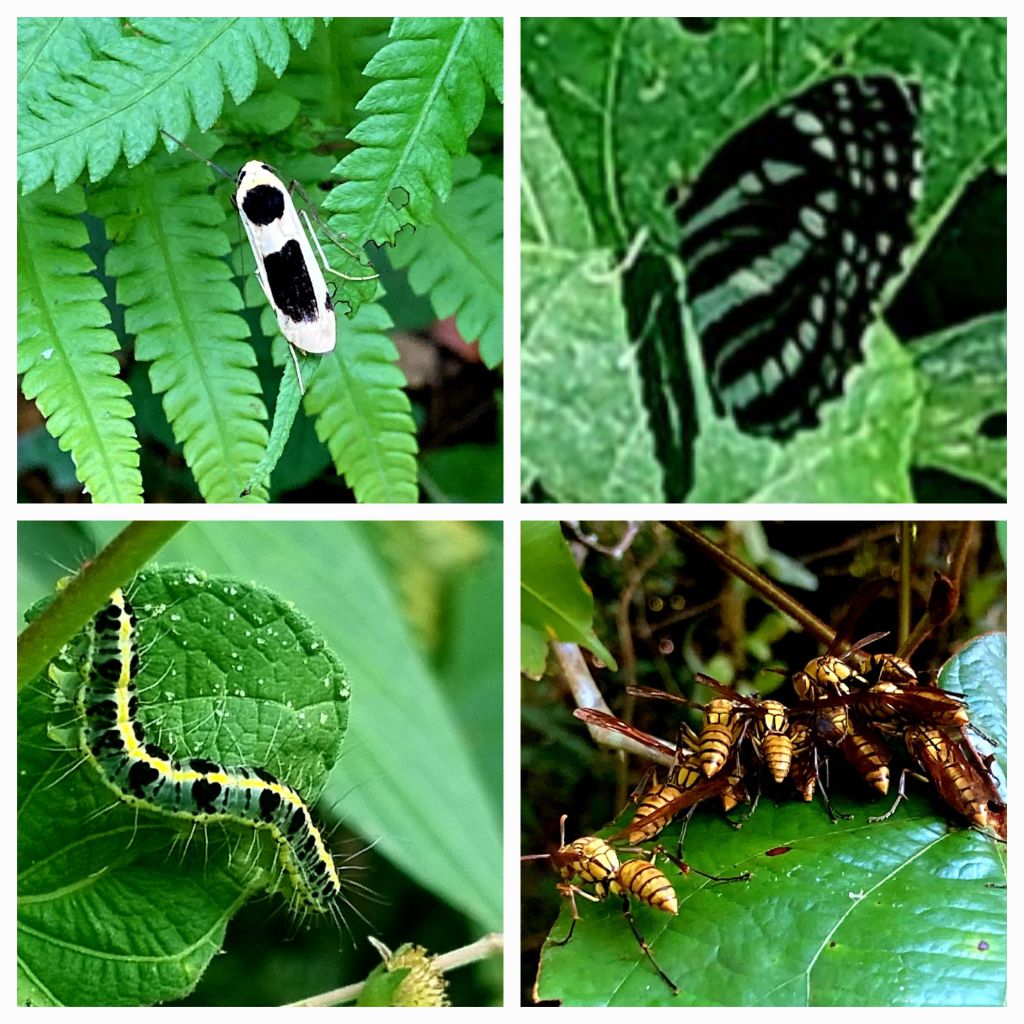
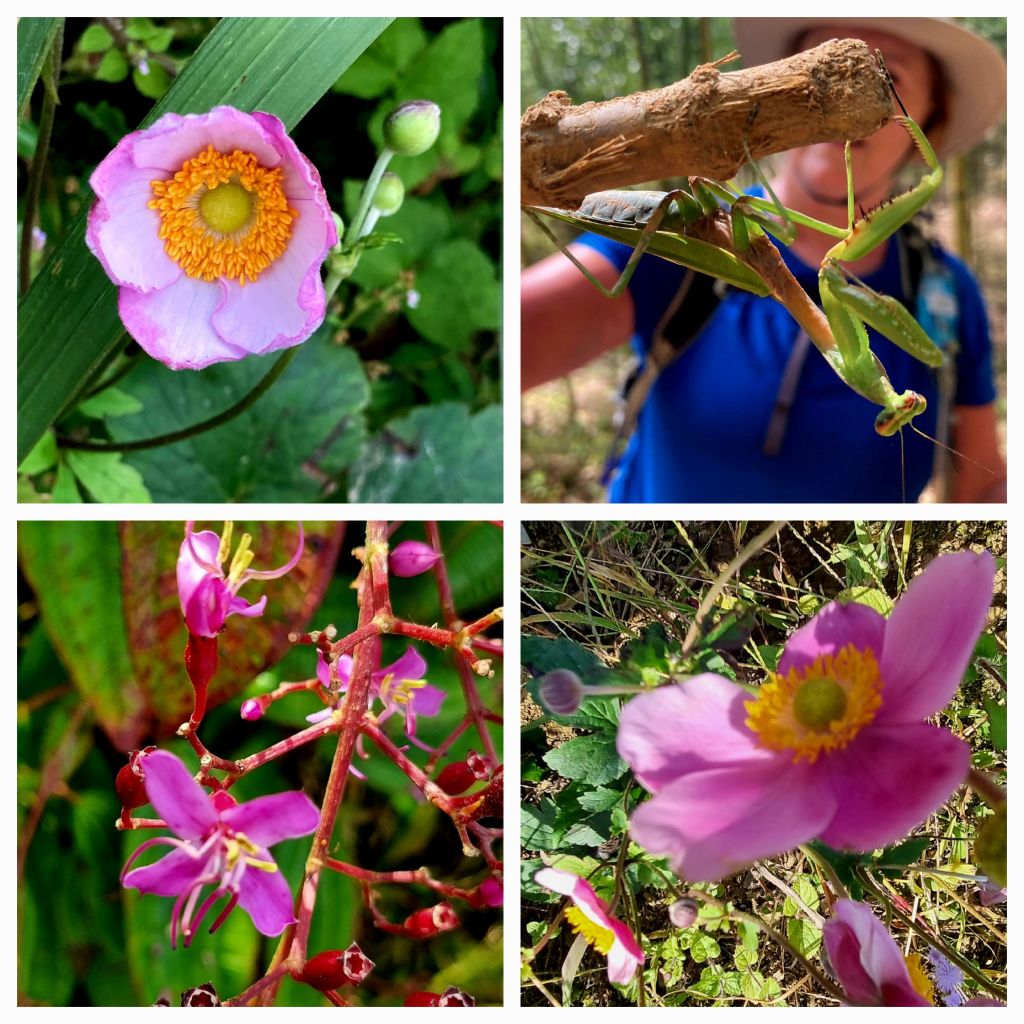
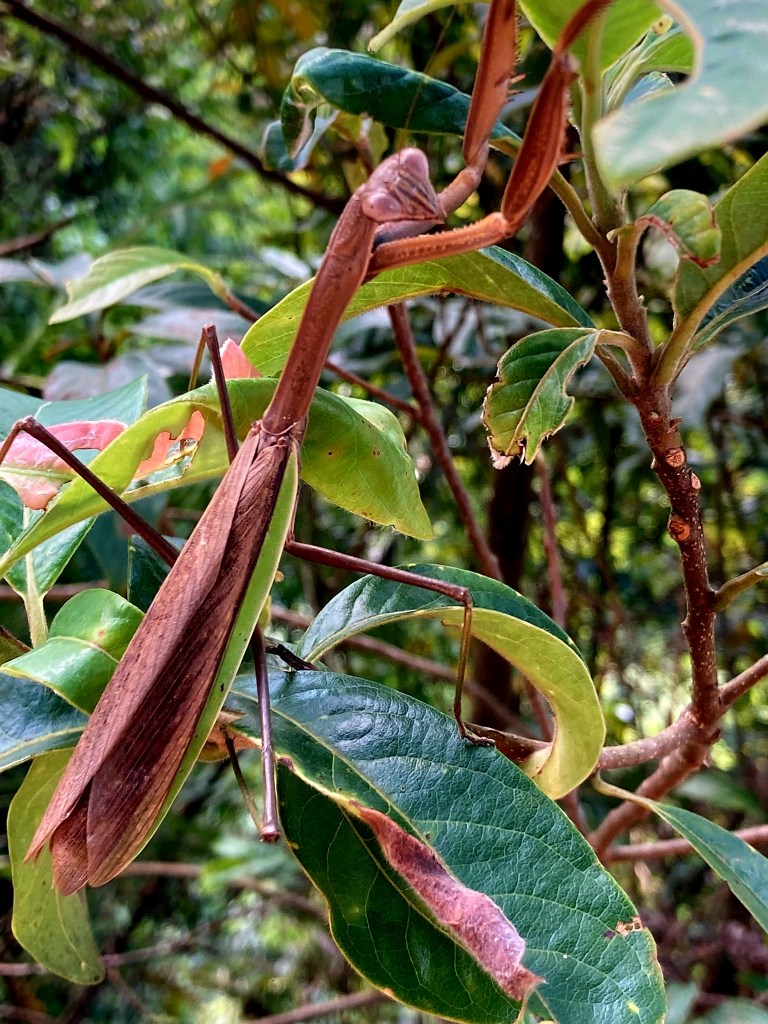
Obviously, there were bugs and butterflies on the way, too. We didn’t disturb the wasps.
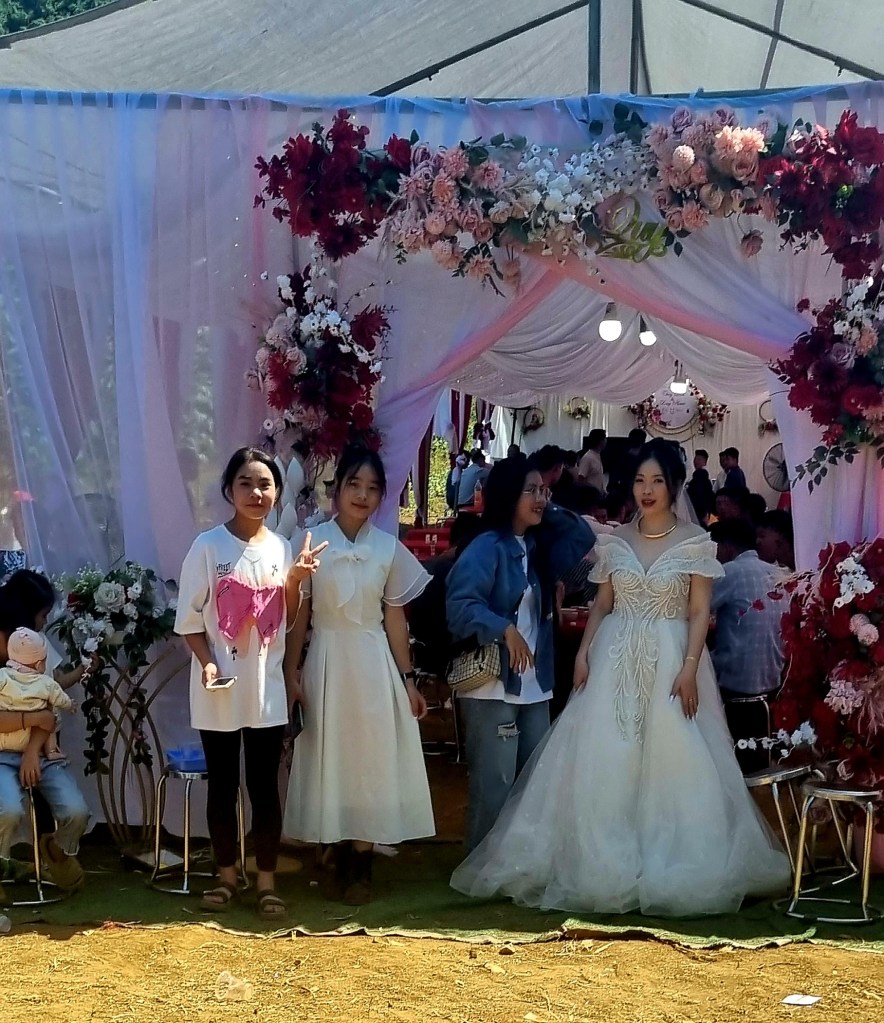
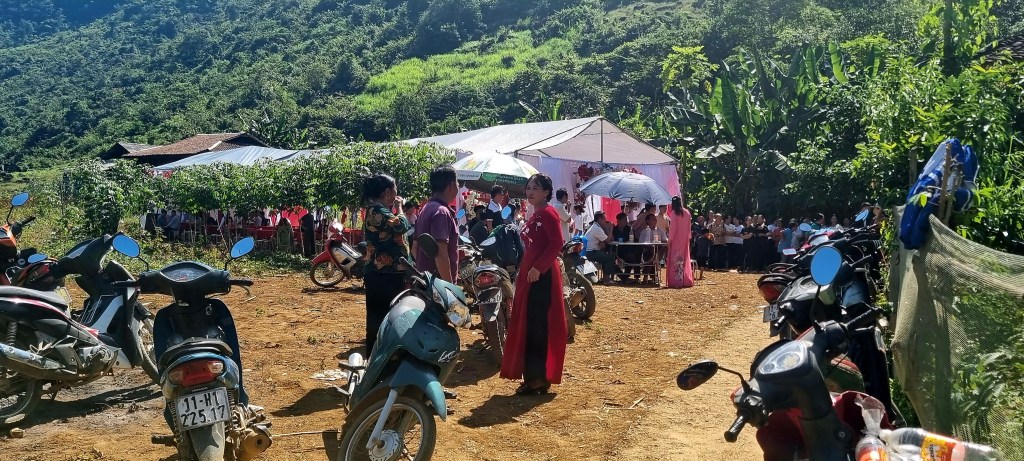
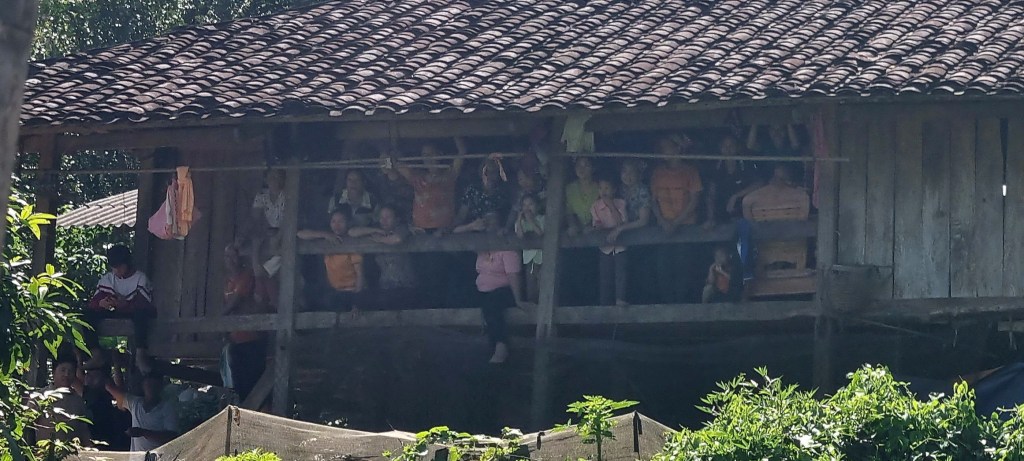
As we came to the bottom of the valley, there was a local wedding going on.
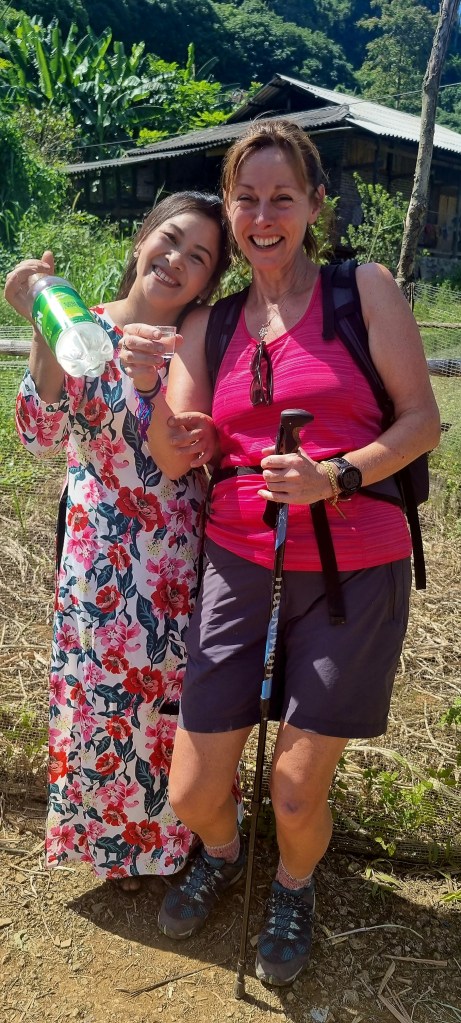
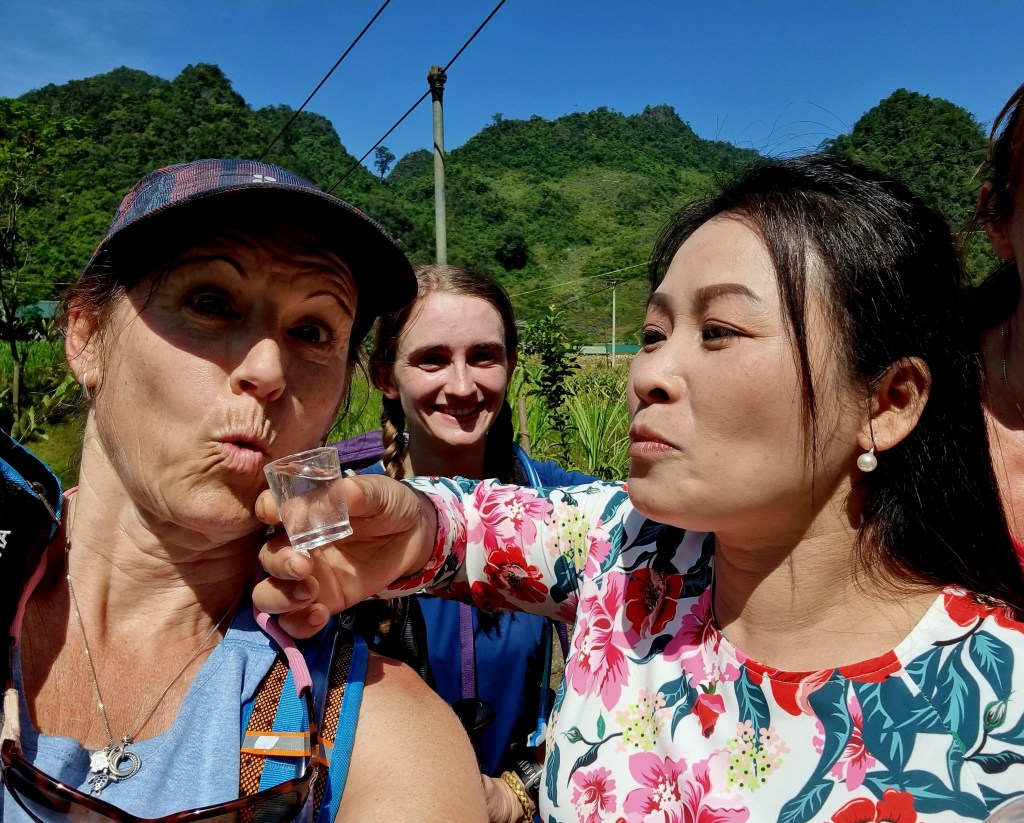
The wedding guests were really friendly and invited us to partake in a few shots of rice wine
And then it was the final 2km to where the bus was picking us up.
Ot was then a 1-2 hour drive to Cao Bong.
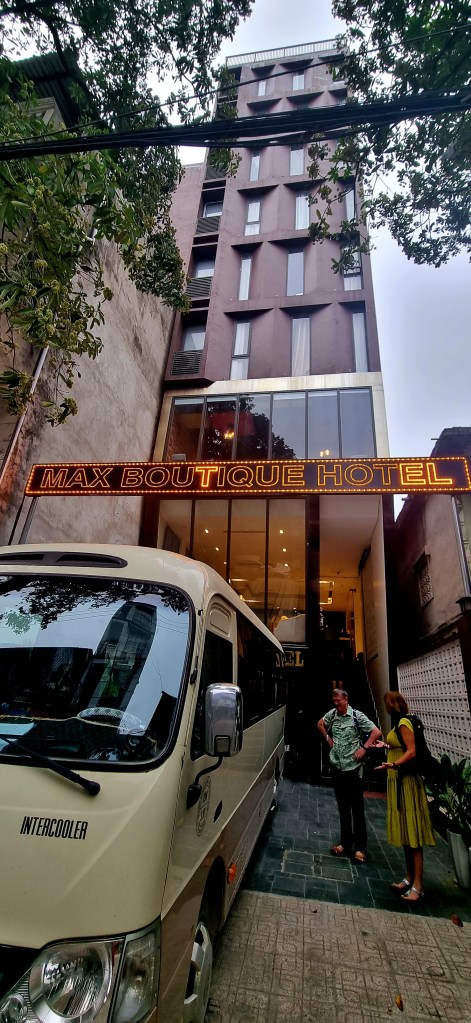
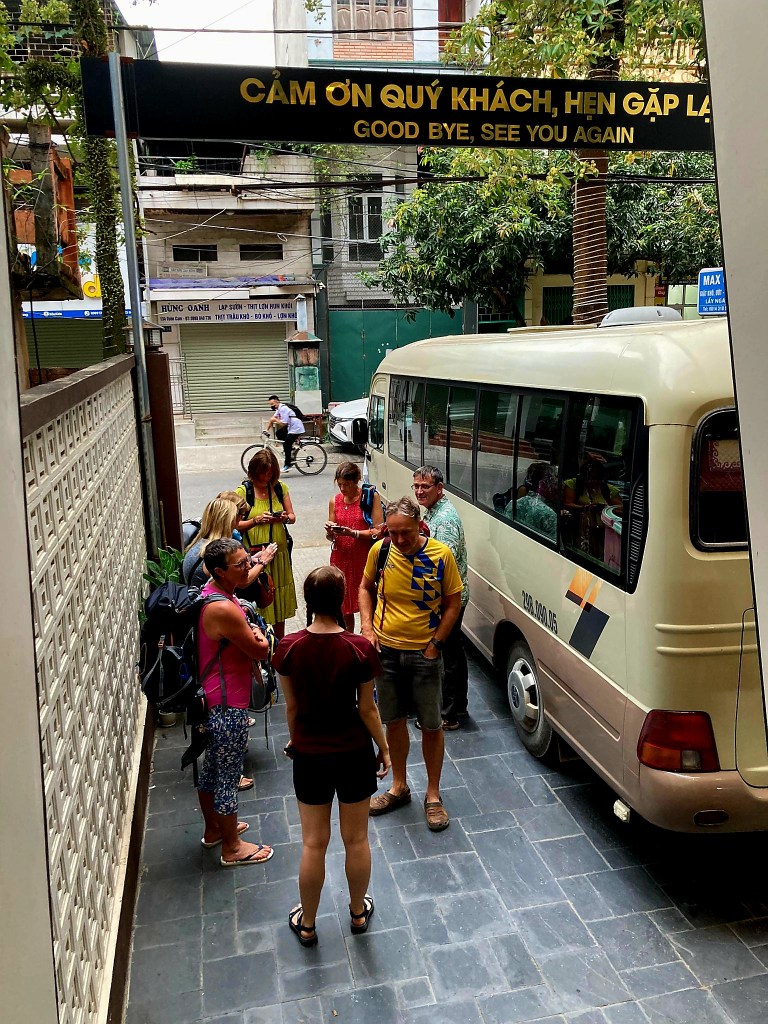
Cao Bong is the centre of many of Vietnam’s revolutionary movements. Once we arrived, we checked in to our hotel – Max Boutique Hotel. It was so nice to be in a hotel room again and have a proper bed to sleep in – as well as a nice shower!
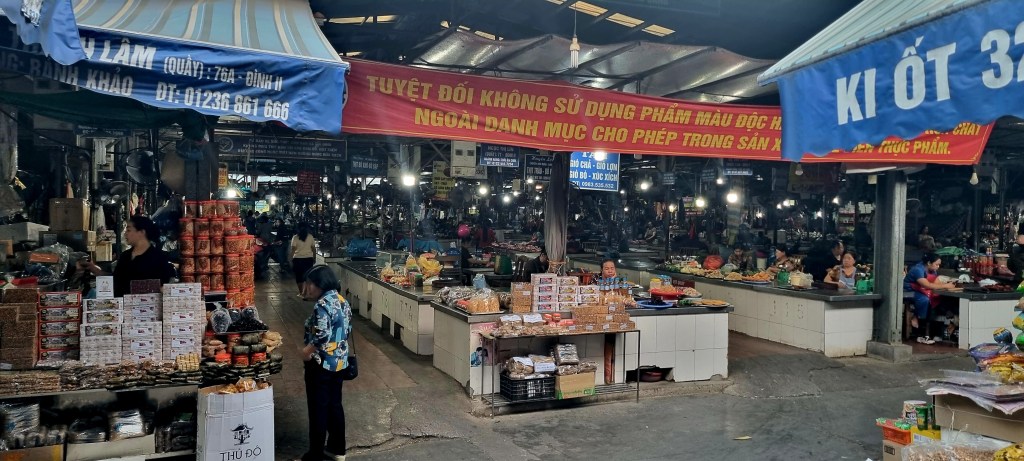
I put all my washing into the hotel laundry, which meant that I didn’t really have anything to wear that evening, except long leggings and a long sleeved top, which were too hot. So Mandy, Maxine and I decided to explore the local market, and Mandy and I ended up buying a dress each for £4.
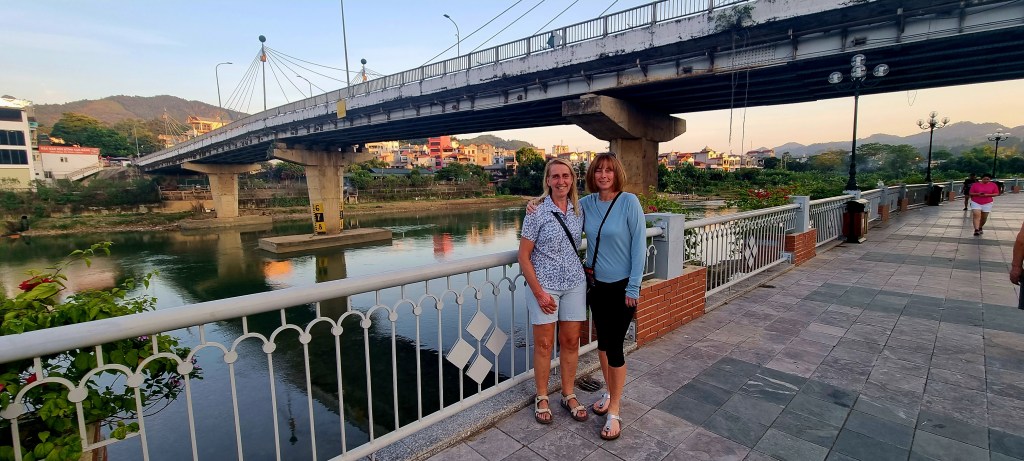
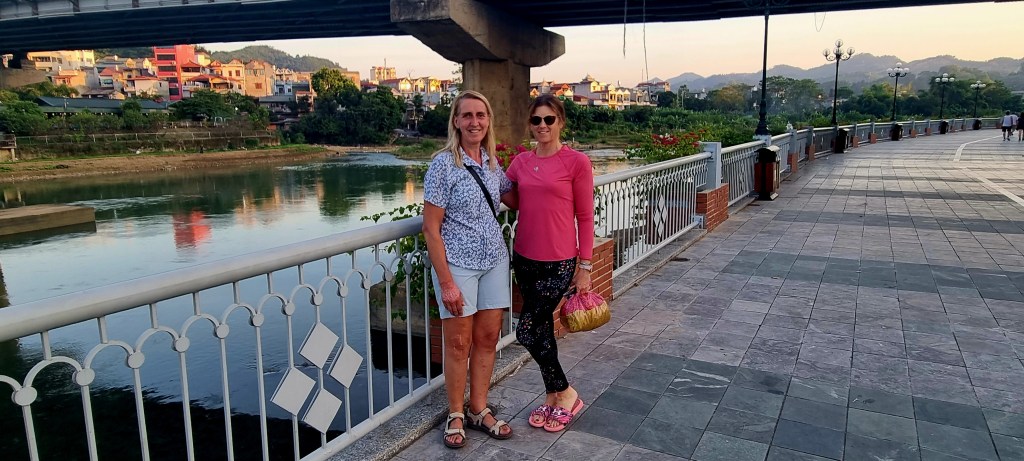
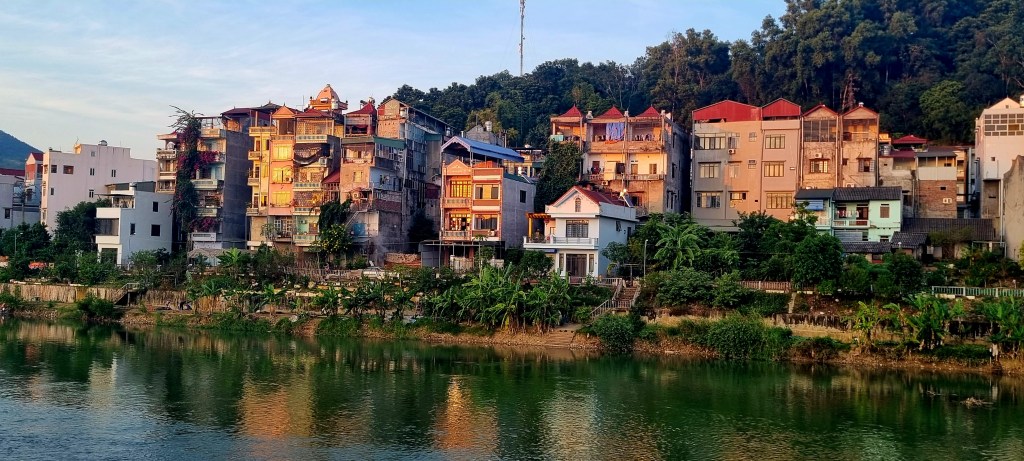
We walked along the promenade by the Quay Son River, and it was quite and picturesque.
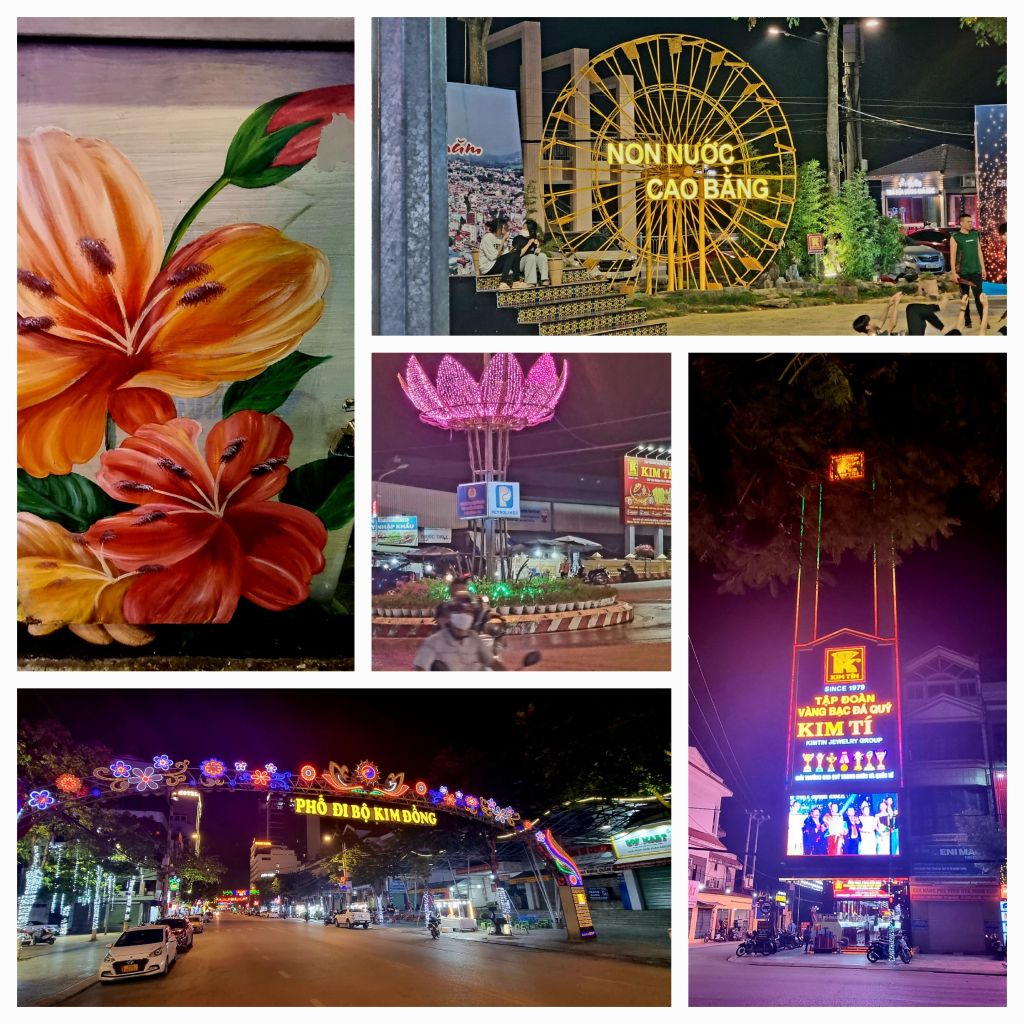
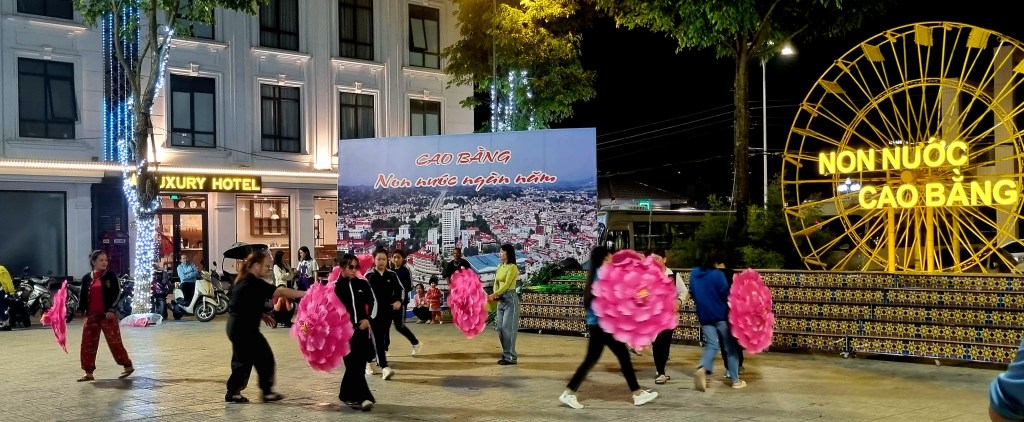
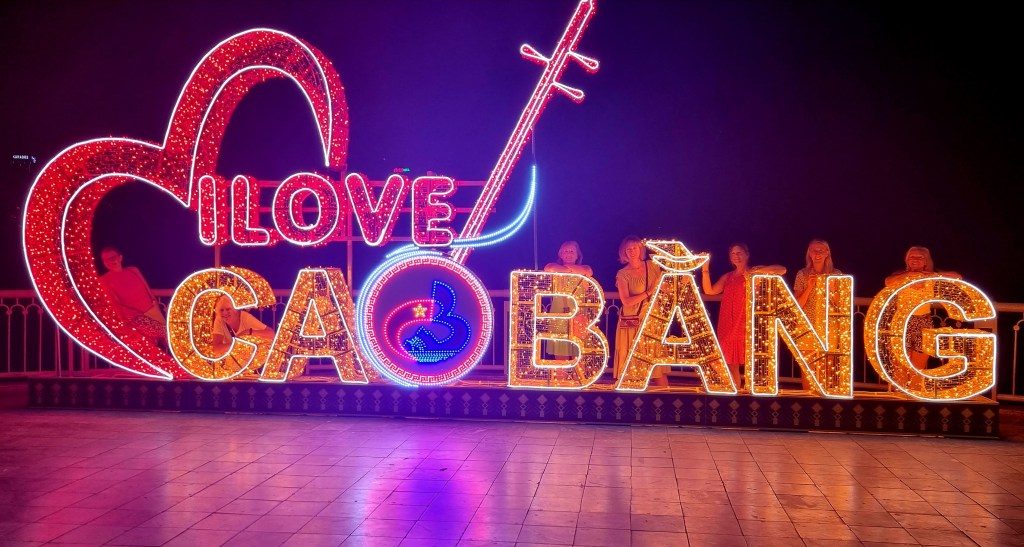
After a quick change, it was back out again for dinner. Cao Bong was colourful with lots of lights, and after 7pm, the road was allegedly closed off to traffic.
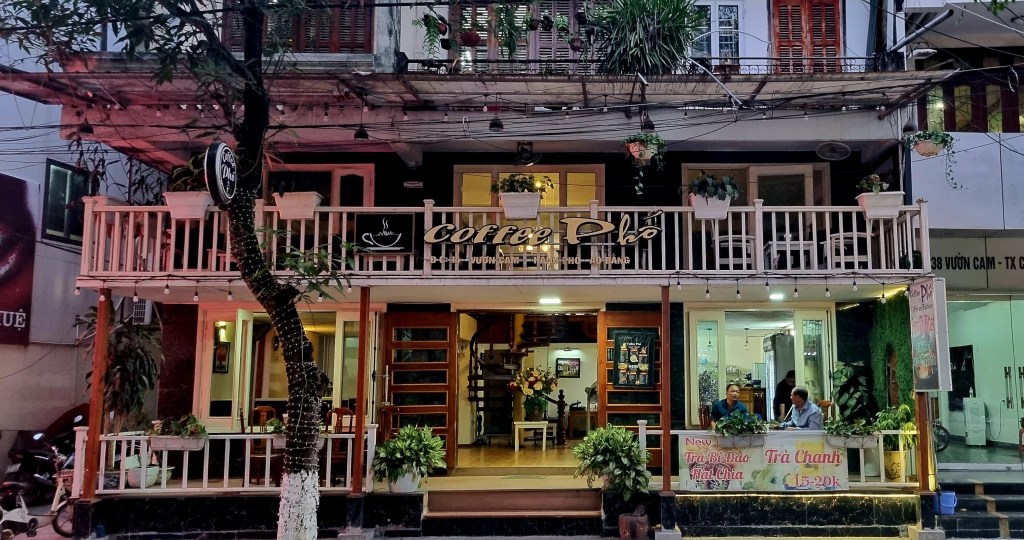
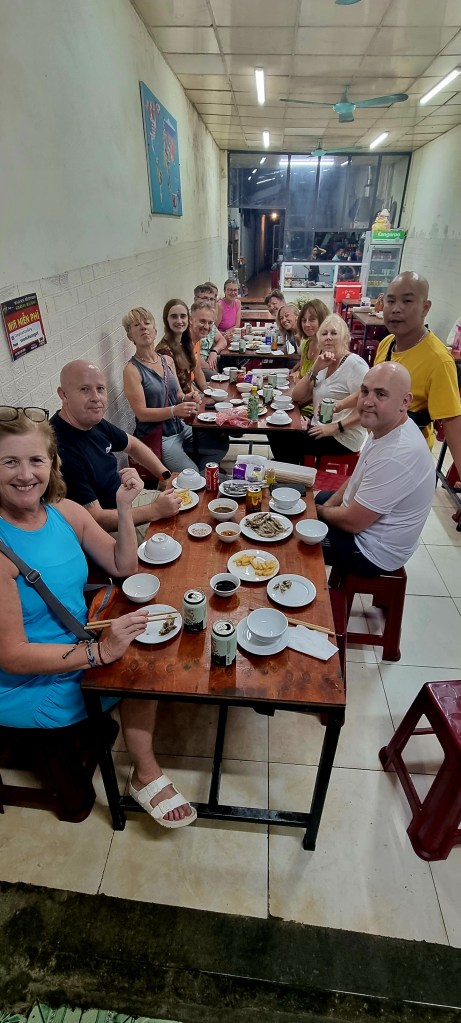
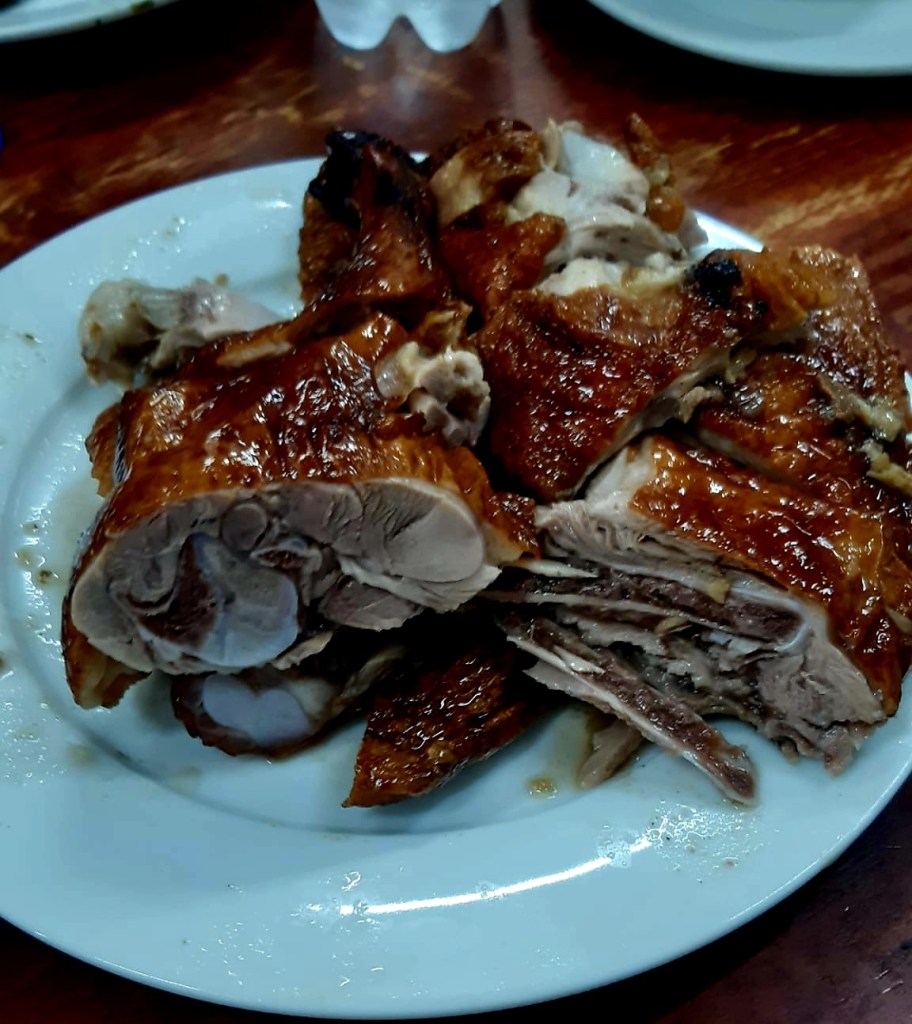
We walked by some really nice restaurants but ended up going to a local cafe for dinner. It was traditional Vietnamese food, but this time, we had duck, which was extremely tasty.
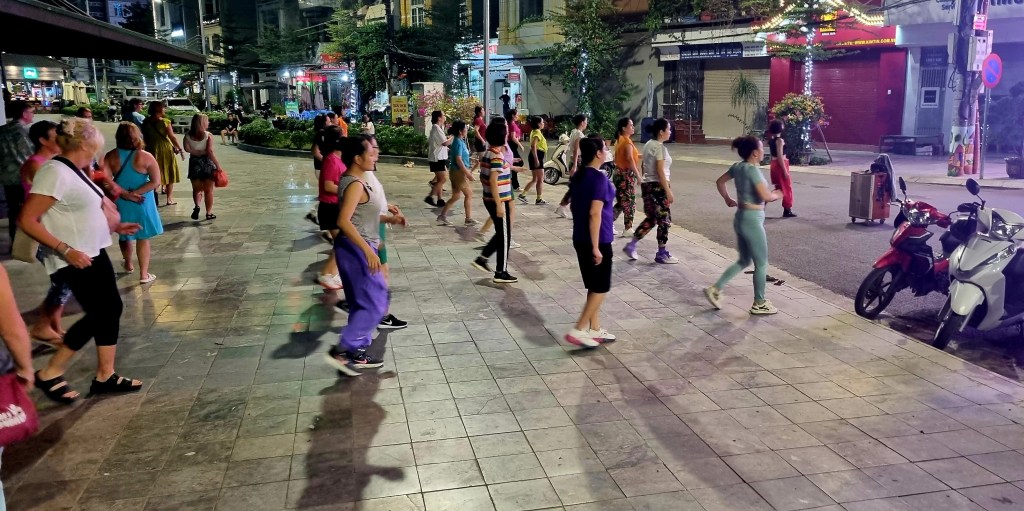
After dinner, we wandered around for a bit, looking for a bar, but there was none to be found, so we ended up having coffee and smoothies. It is very difficult to get a coffee in Vietnam that is not already sweetened. As we walked through the town, we saw people exercising and practising a dance routine.
We woke up to coffee, tea and a breakfast of pancakes and fruit.
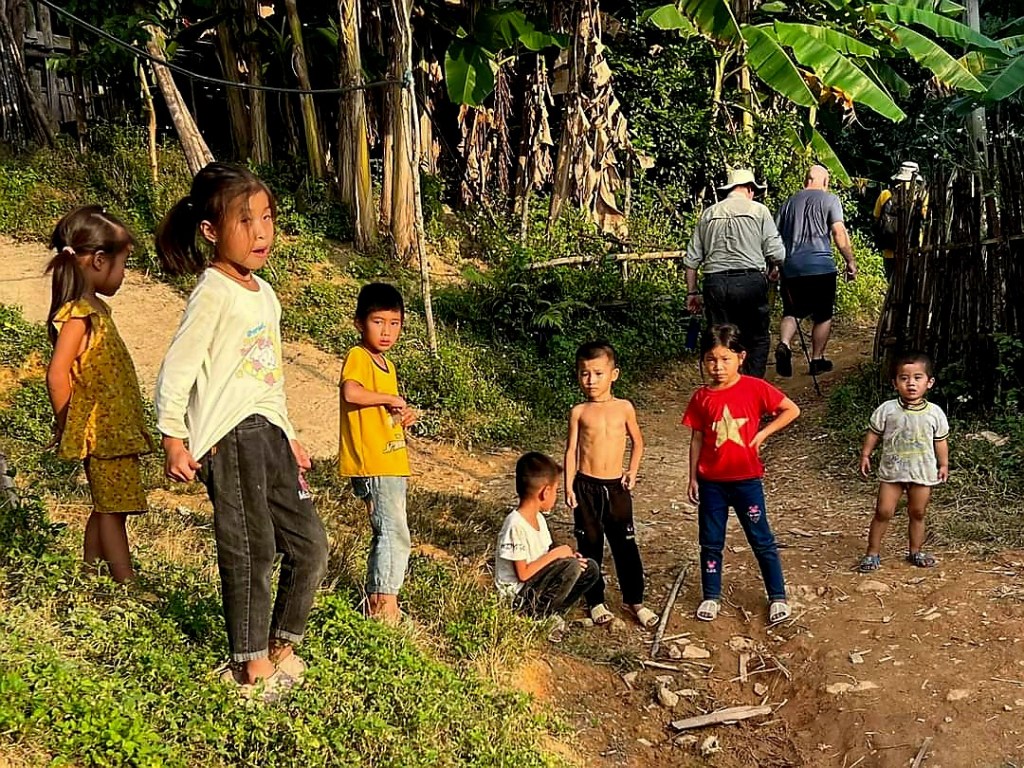
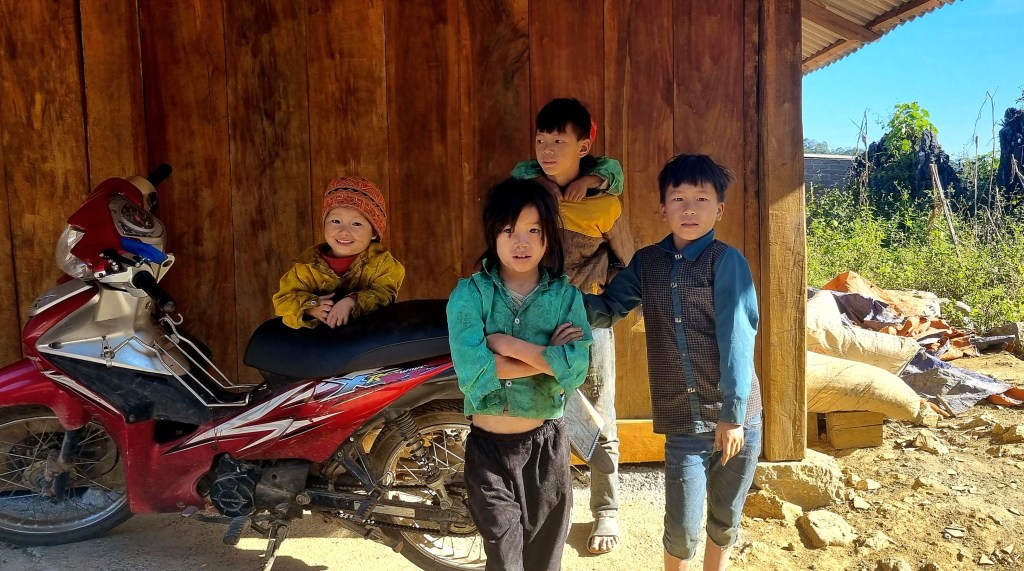
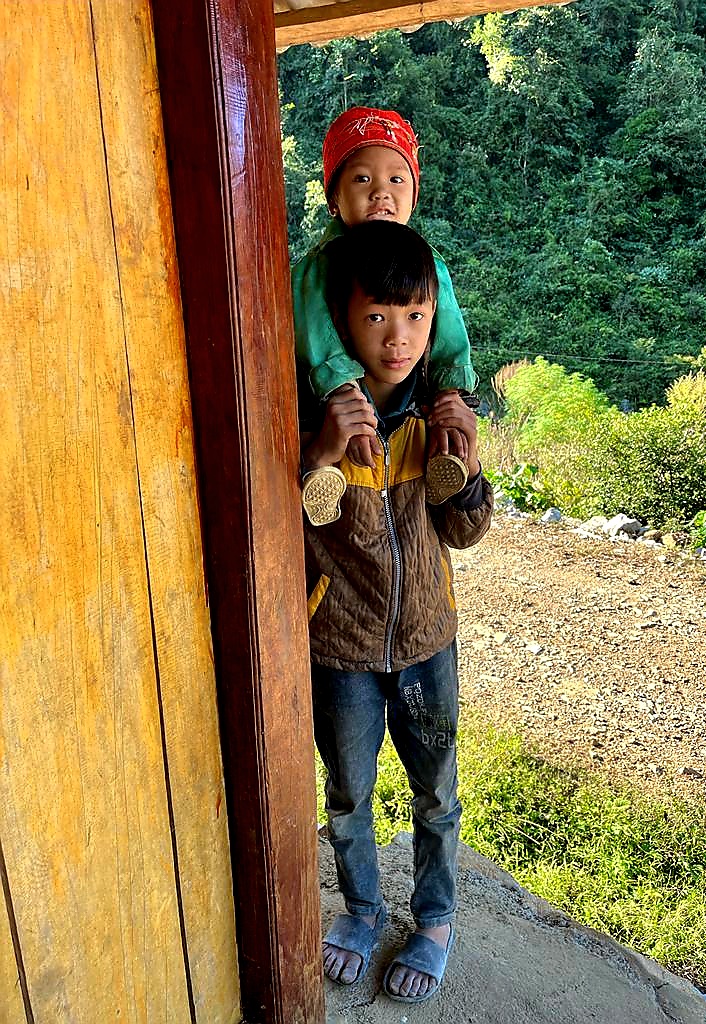
The family’s children and neighbouring children came to pay us a visit. We all gave the family some extra money, which will hopefully help them through the winter.
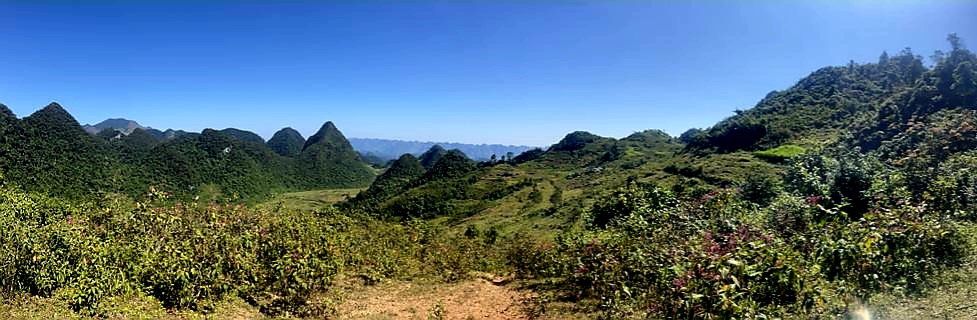
We took some photos of the surroundings before we set off, including some silly panoramic ones.
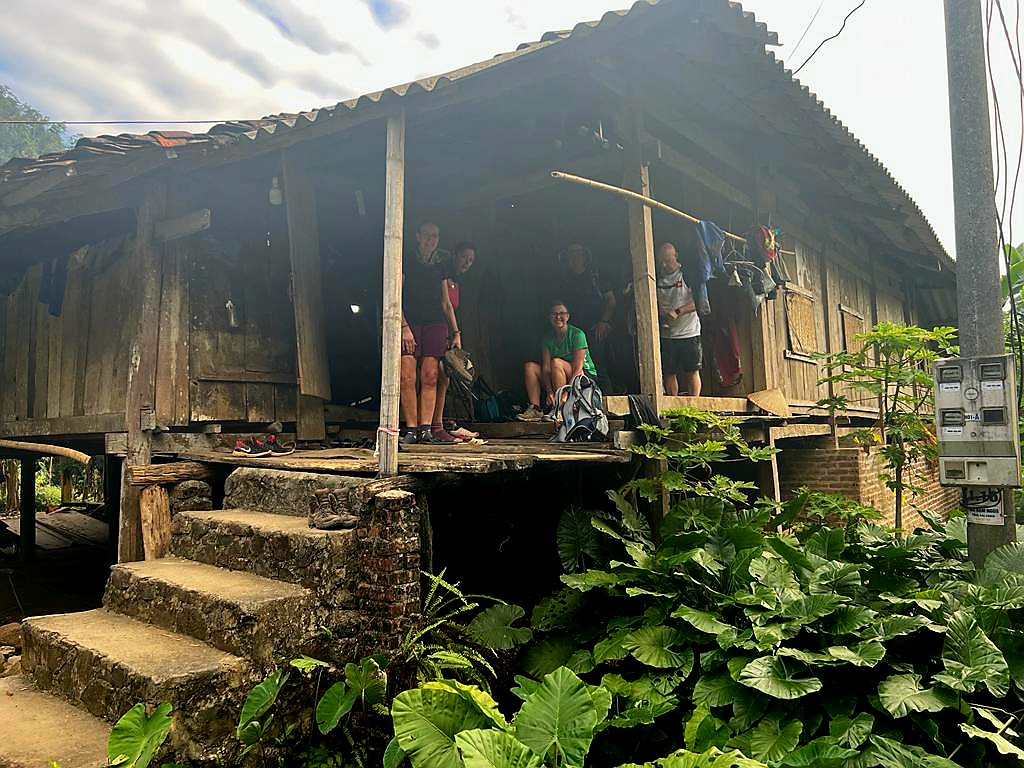
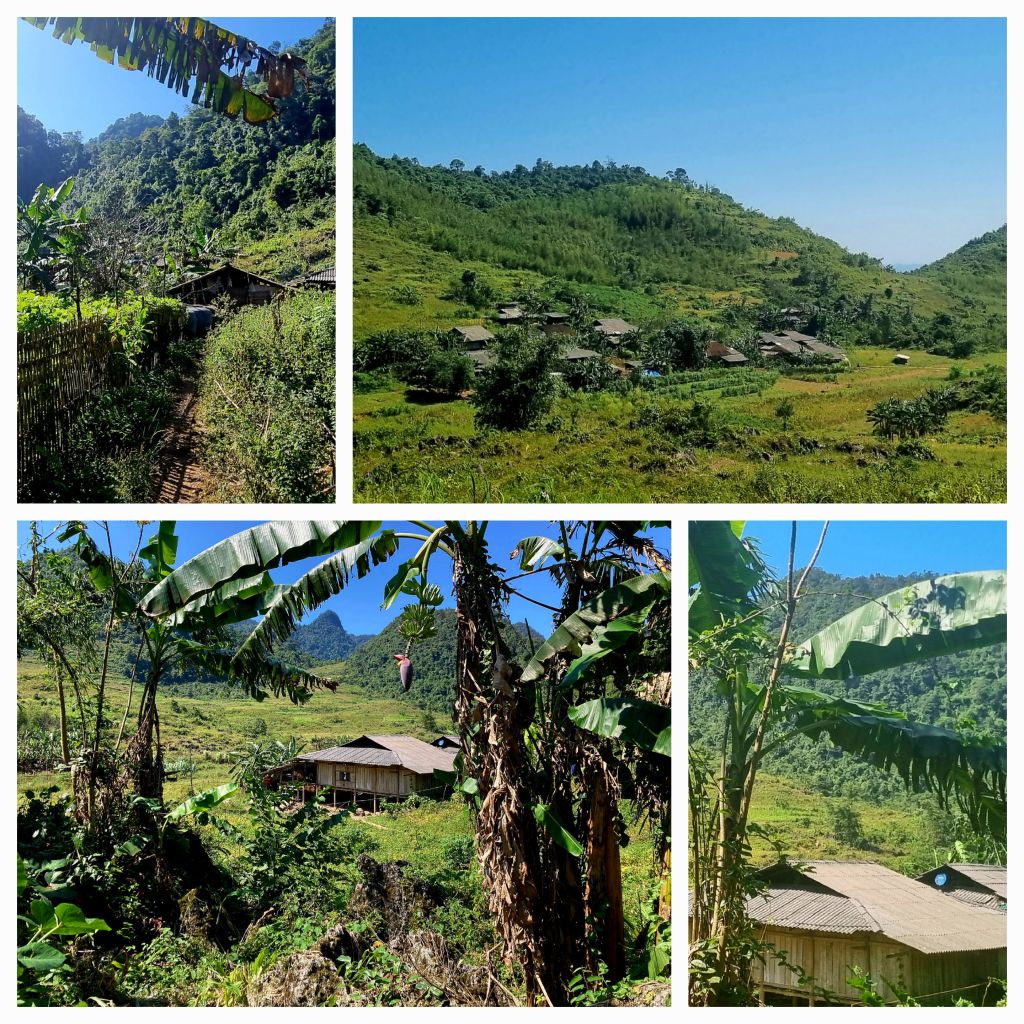
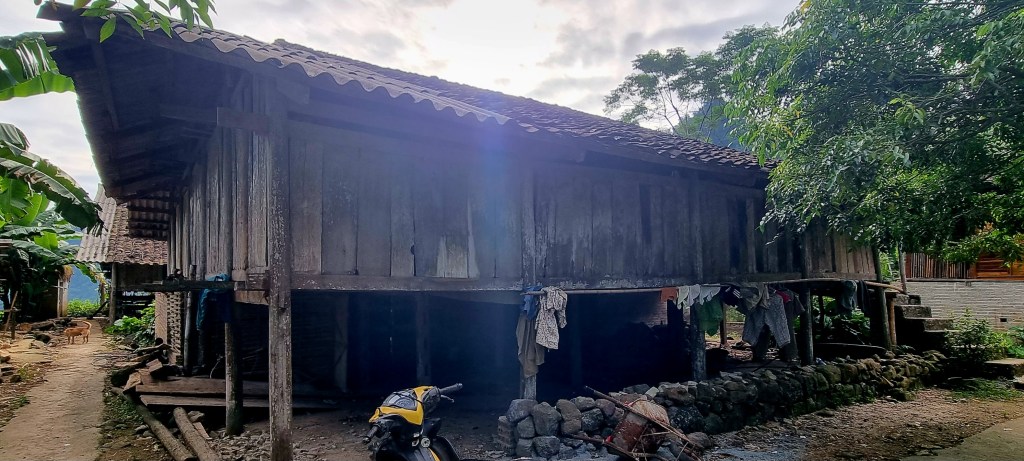
The photos below are looking back at the house where we stayed.
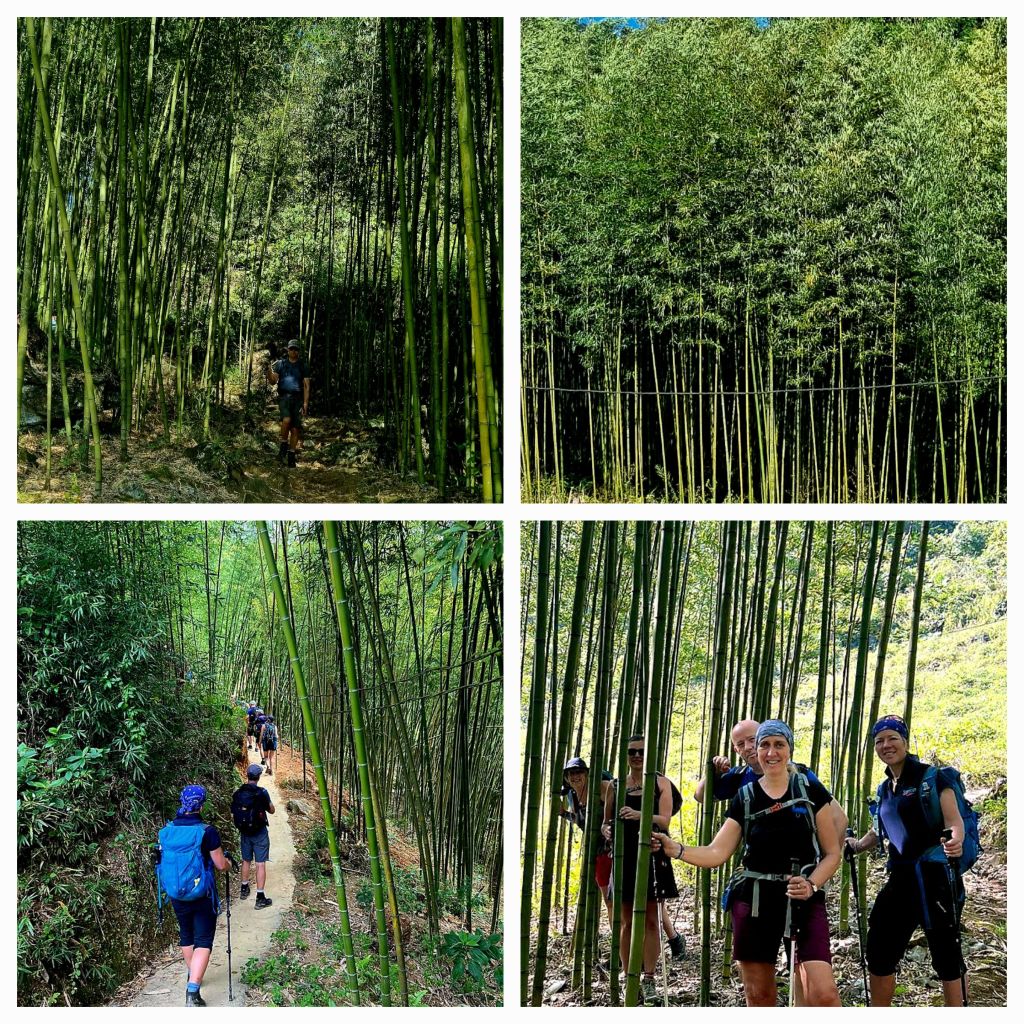
Shortly after we set off, we walked through a bamboo forest. The bamboo is used for houses and other structures, and the bamboo shoots are used for food. Chopsticks are made from bamboo and exported to Malaysia, China Singapore and Europe.
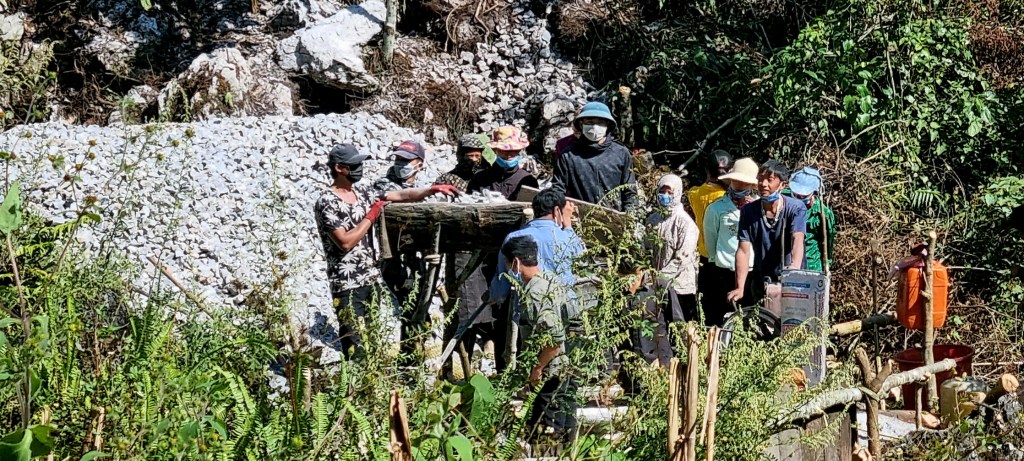
As we passed out of the bamboo forest, we came across a small local. quarry.
We passed through narrow valleys inhabited by the Hmong people.
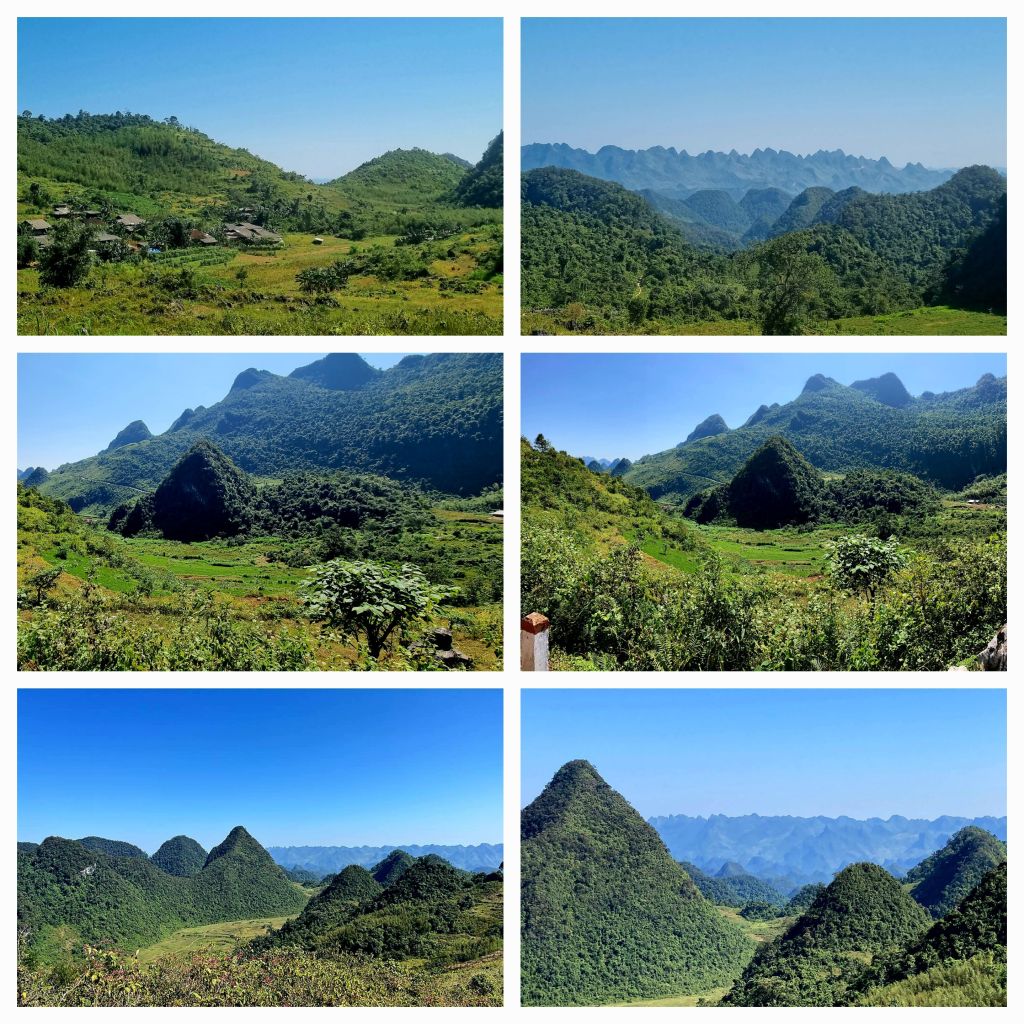
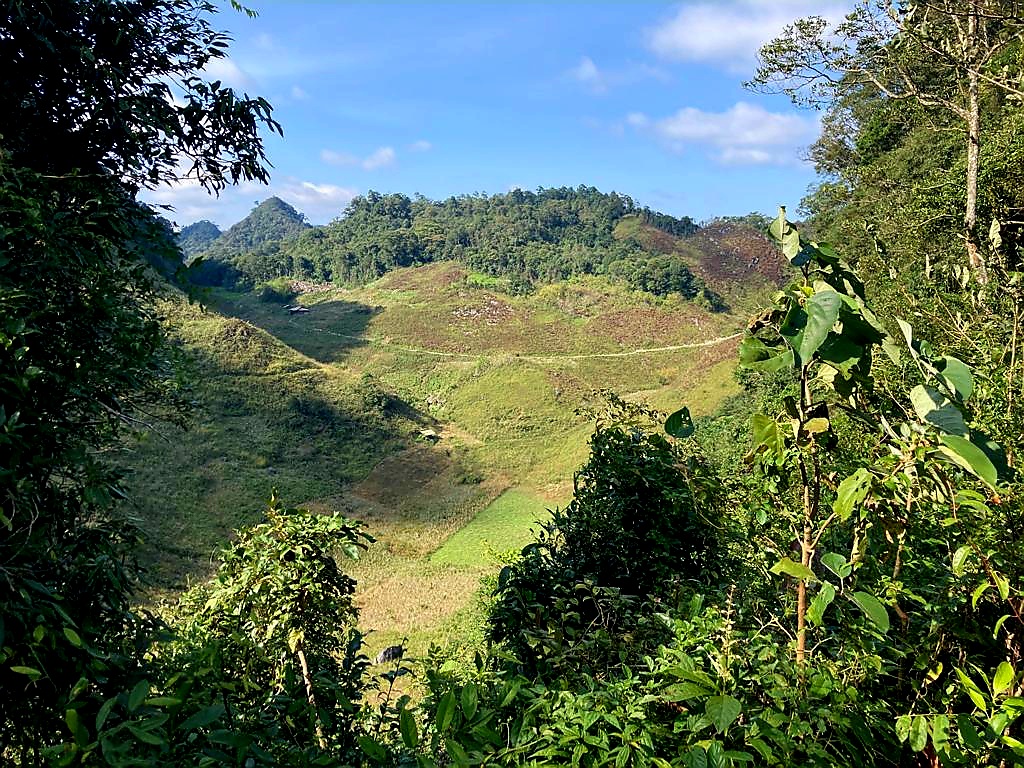
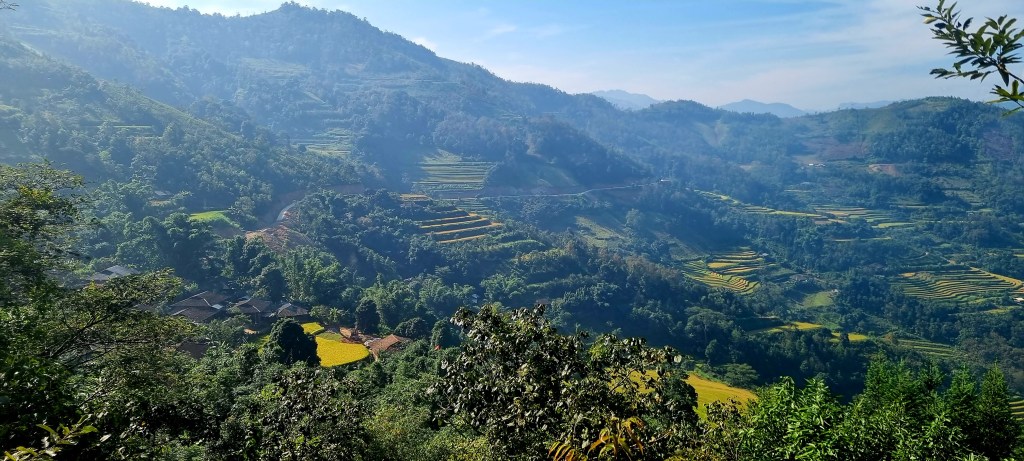
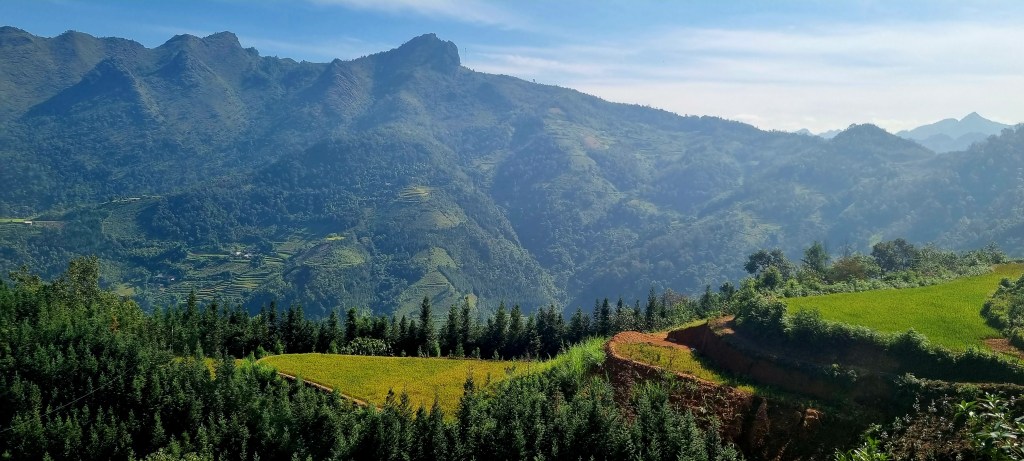
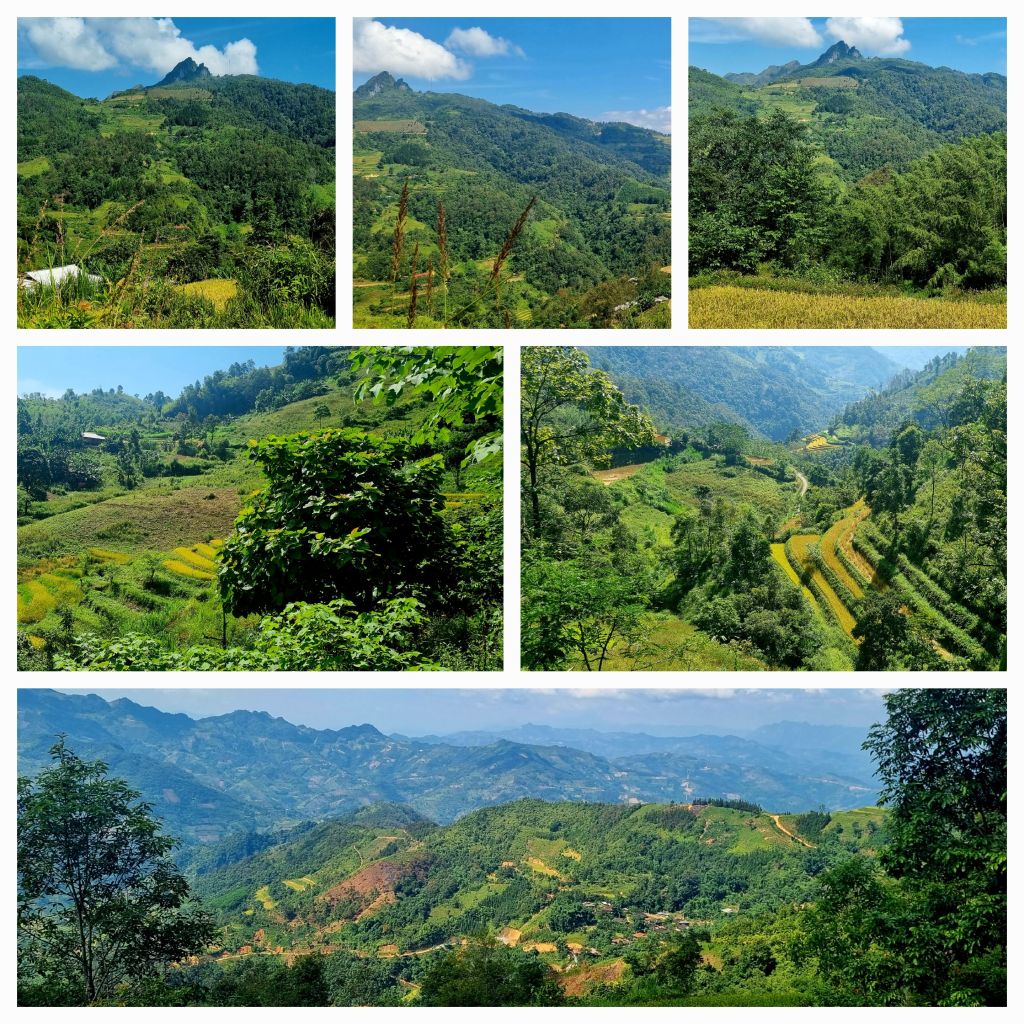
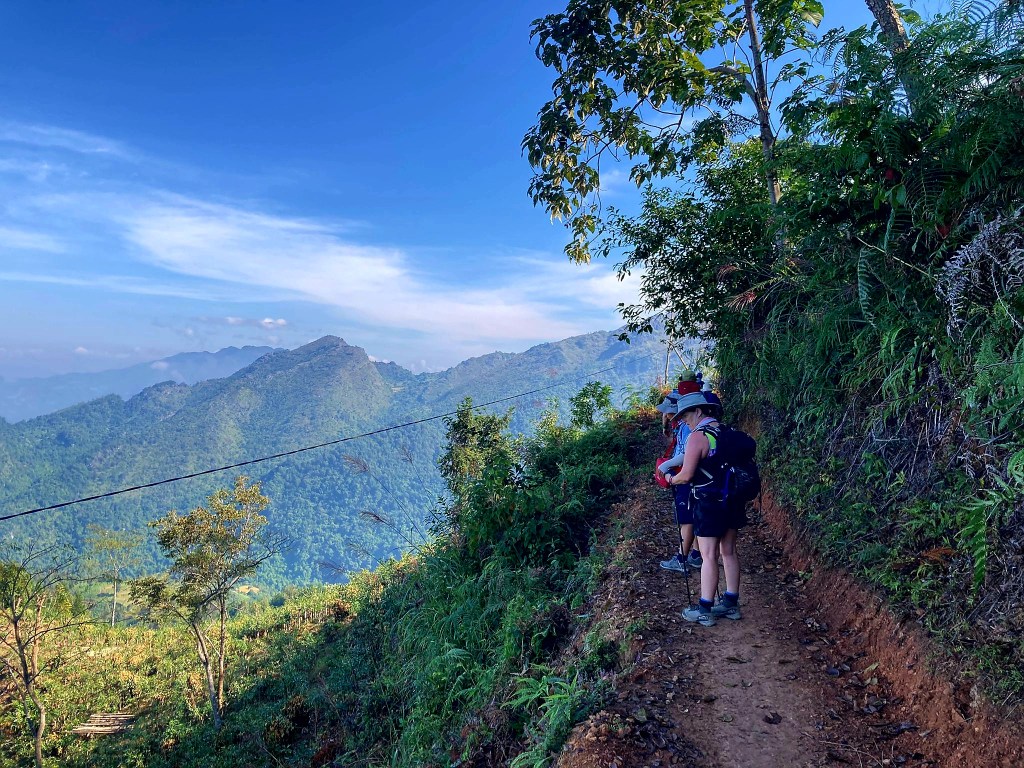
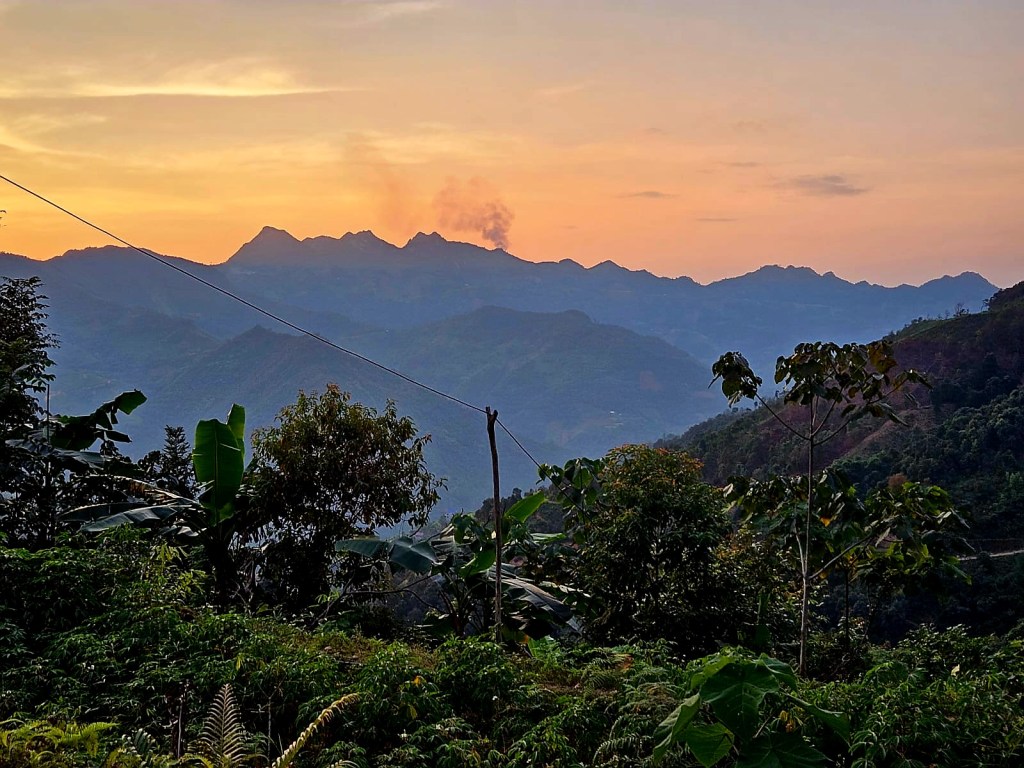
We headed up through the valley towards the hamlet of Lo Lung Xitun, past some incredible scenery. All the landscape is caused by wind and rain erosion only. There is a 1km limestone ridge all through Vietnam.
We continued on through pristine primary forest to Co Phat and then on to Nam Ngu.
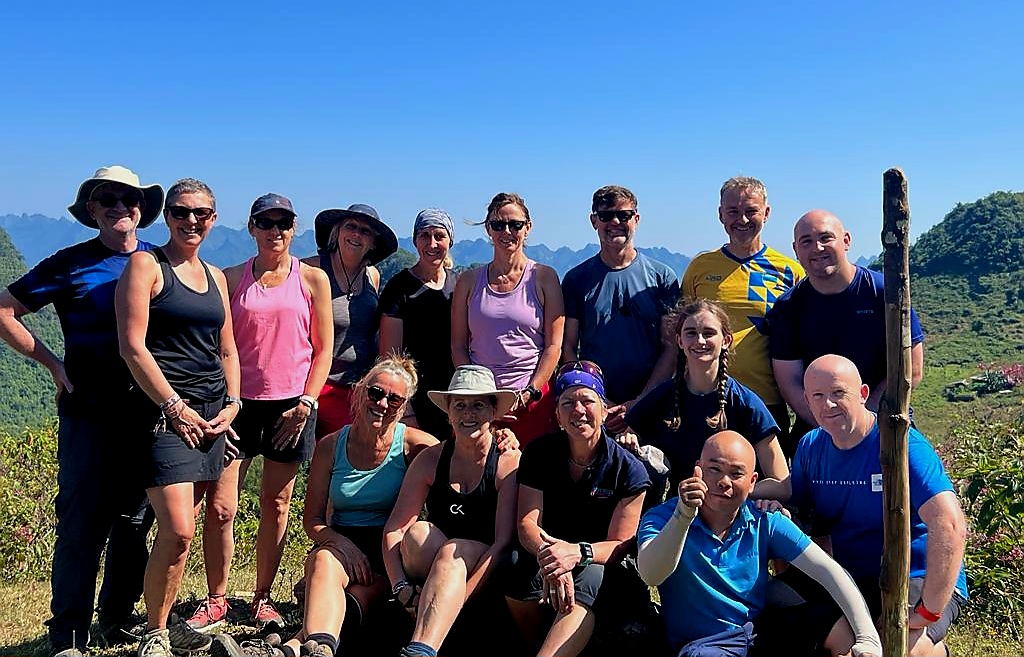
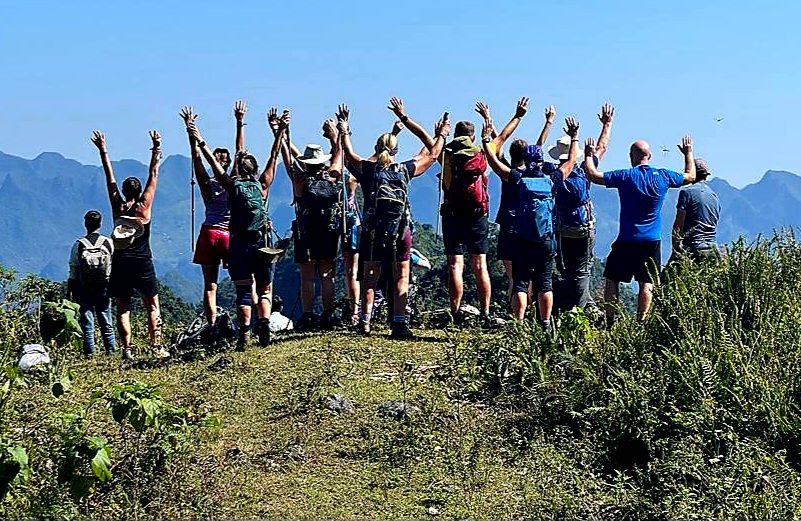
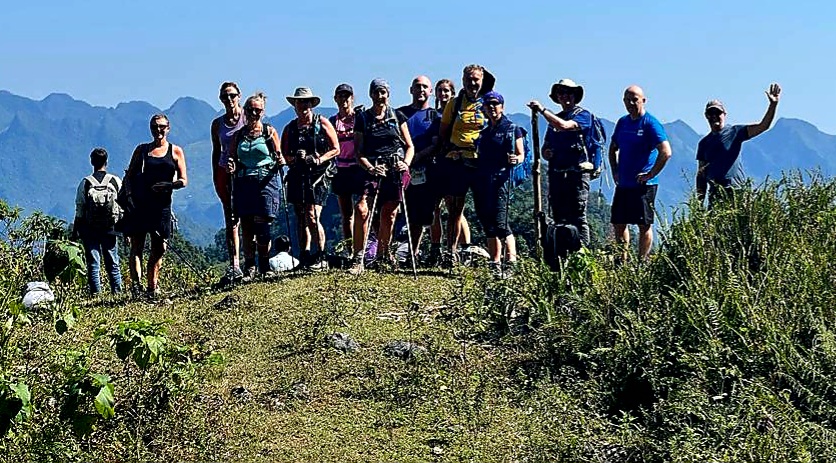
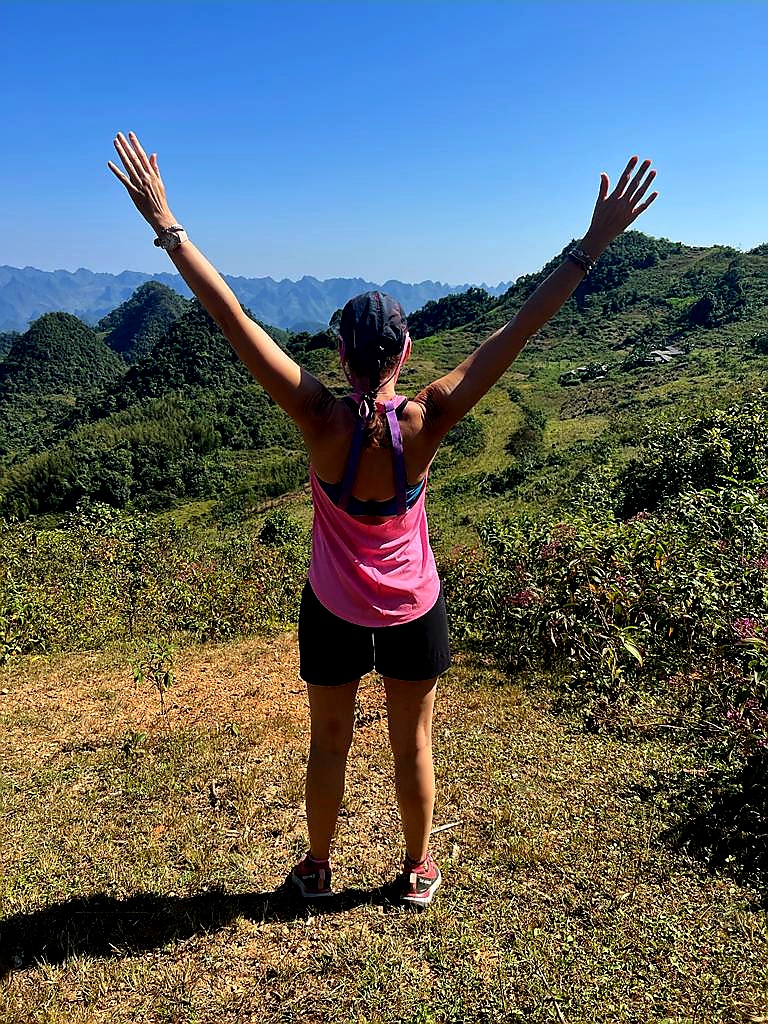
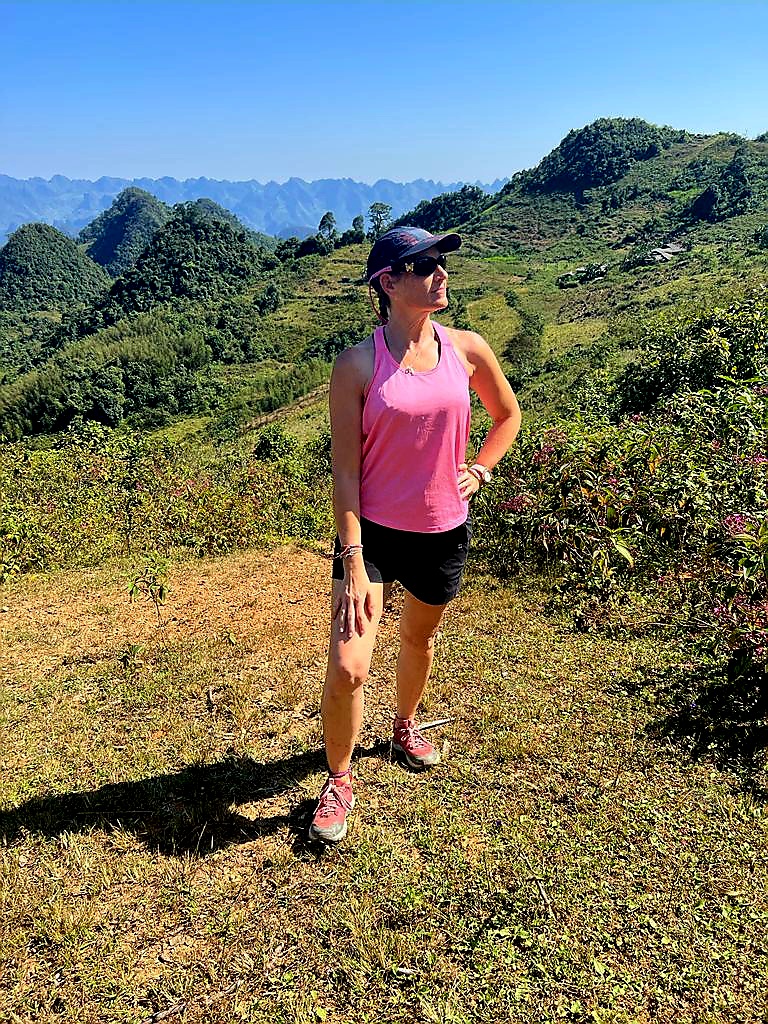
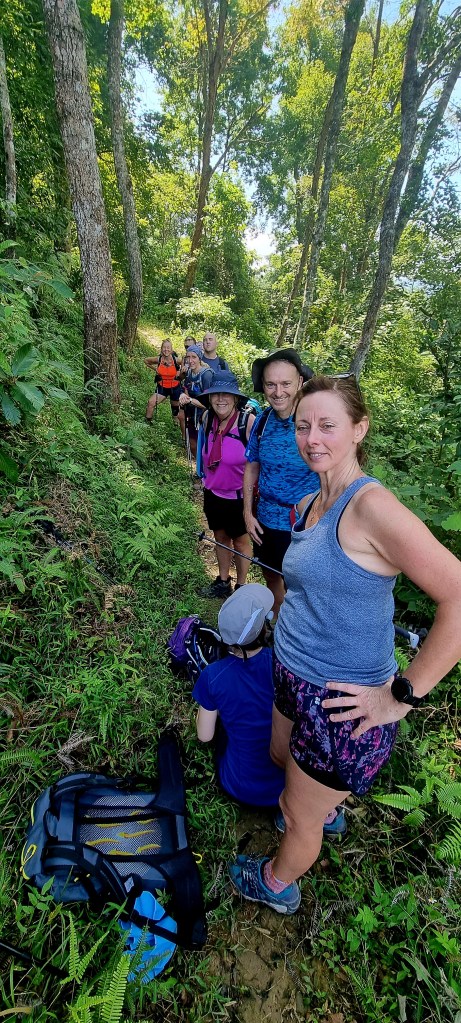
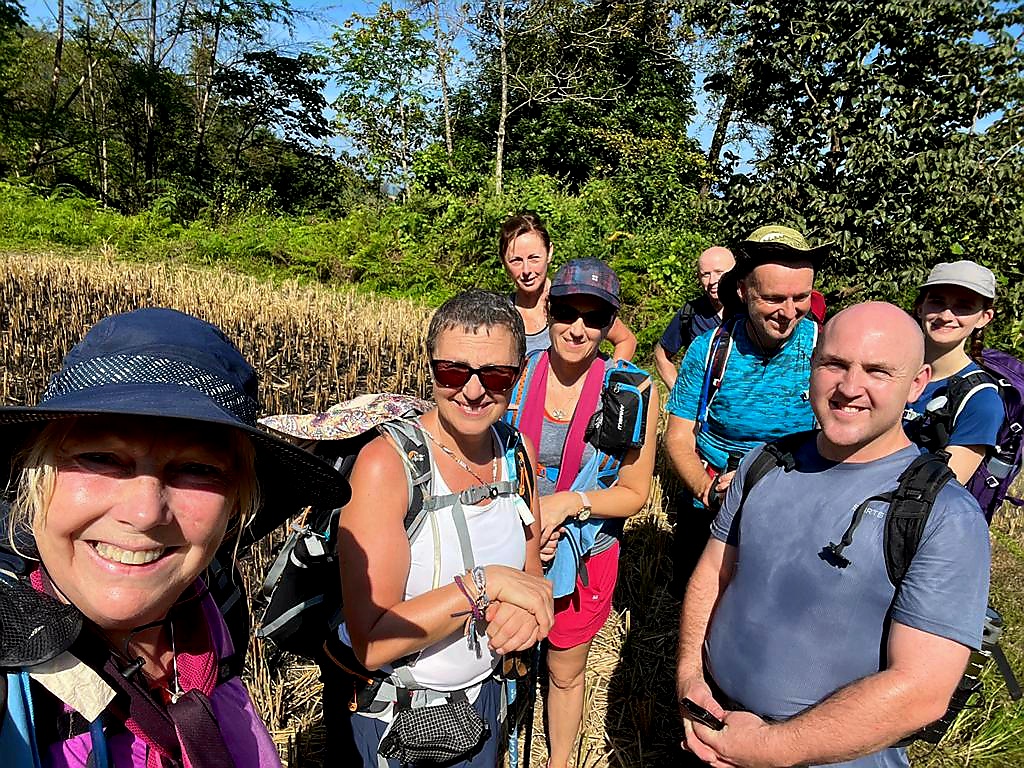
We also took some group and individual photos at one of the summits.
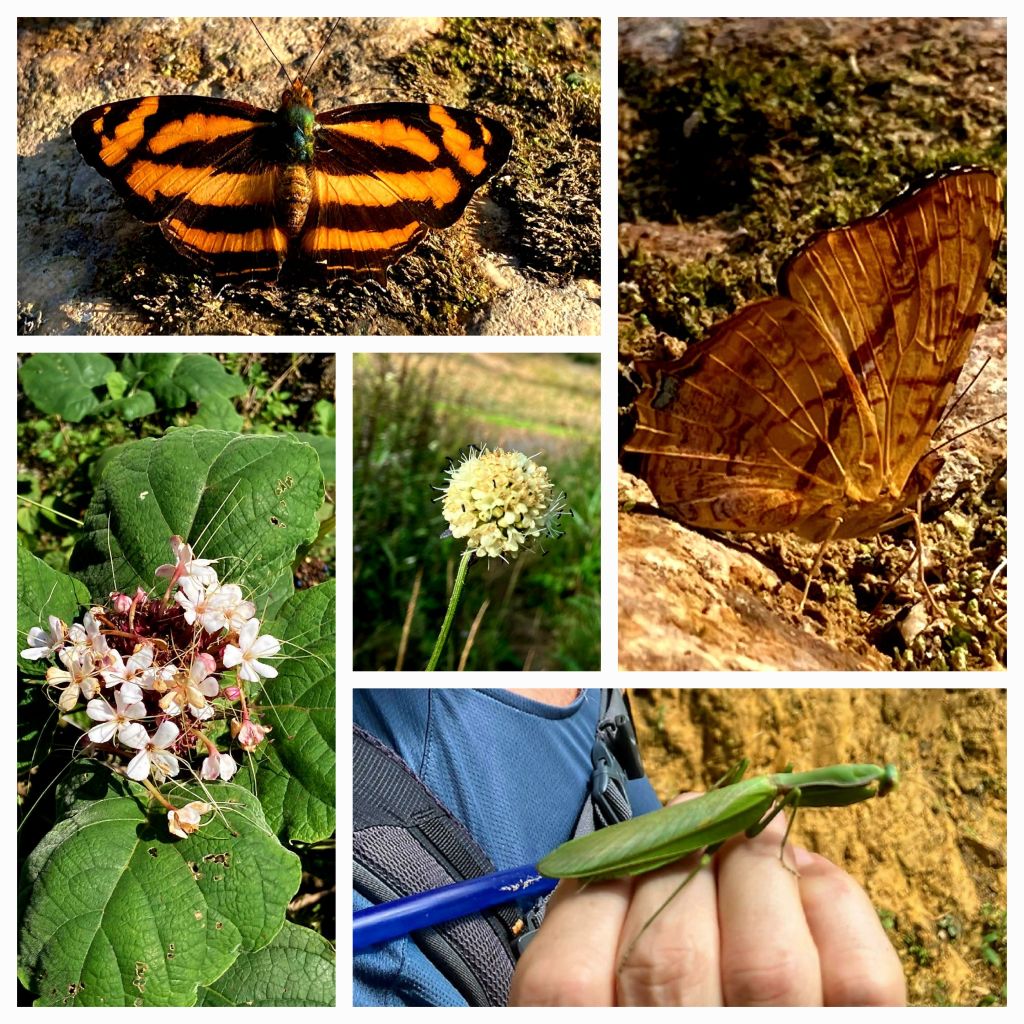
There were also more bugs and flowers to see.
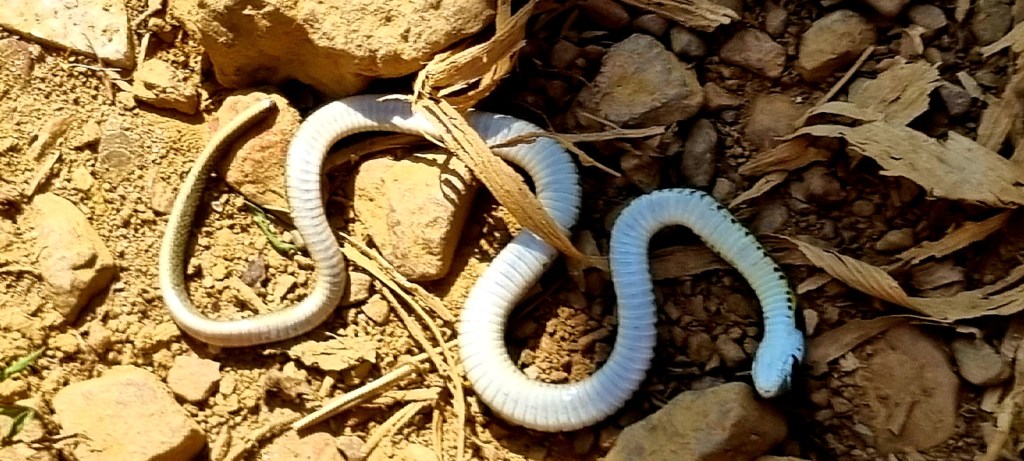
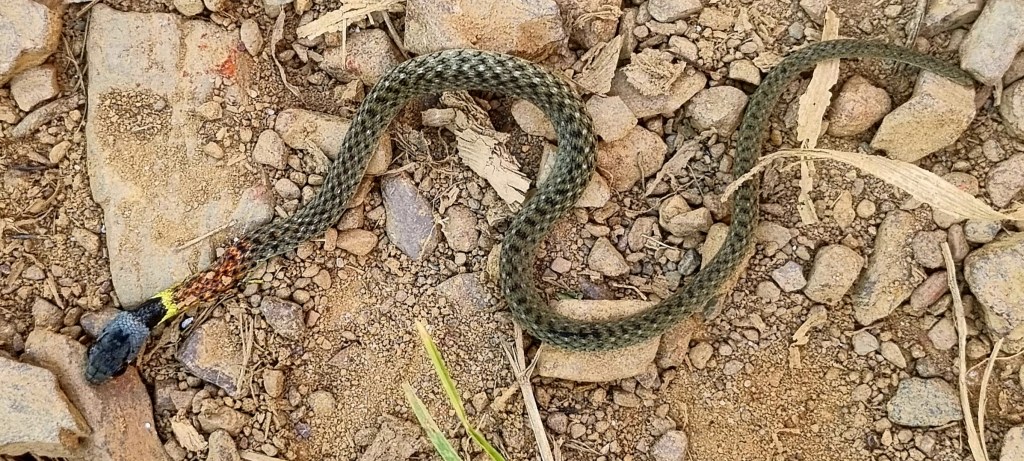
We also came across a rat snake. Originally, it was on its back, but we flipped it over.
I chatted to Nhan about illegal drugs. Although a lot of hemp is grown in Vietnam, the plant is used for weaving and indigo dye and is not smoked. However, if a person is caught in possession of 0.5kg or more of heroin then they could be sentenced to death. Vietnam is on the way to China, so drugs do come through. The same rules apply to foreigners.
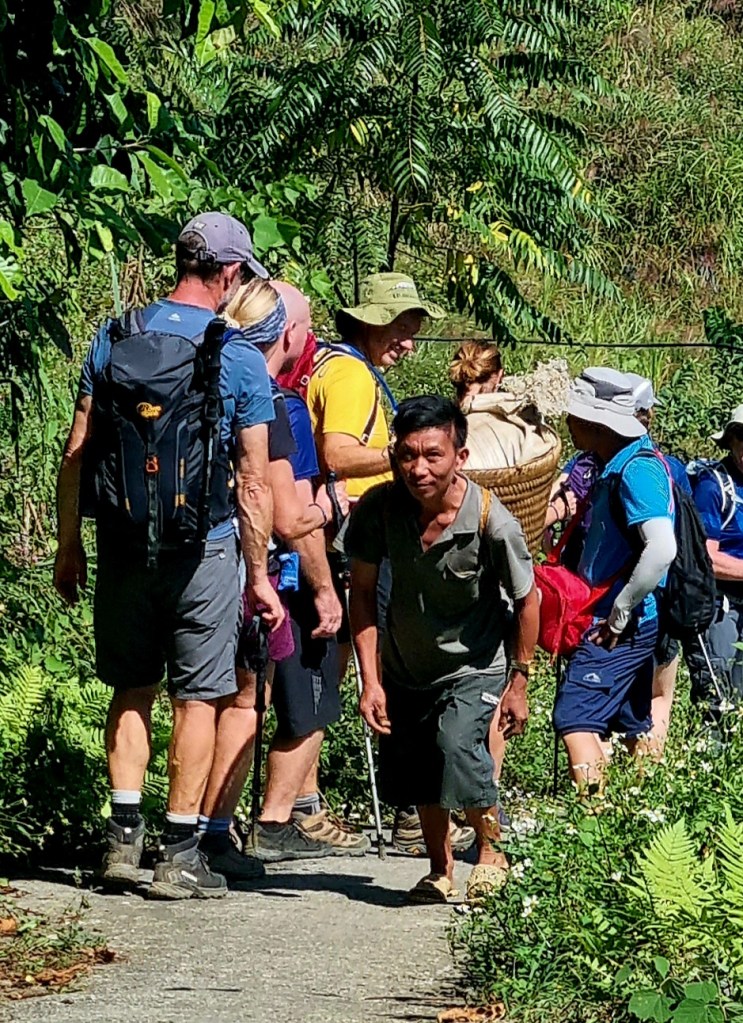
On the way, we came across a Vietnamese man carrying a heavy load of 40kg, and he was just easily walking up the hill.
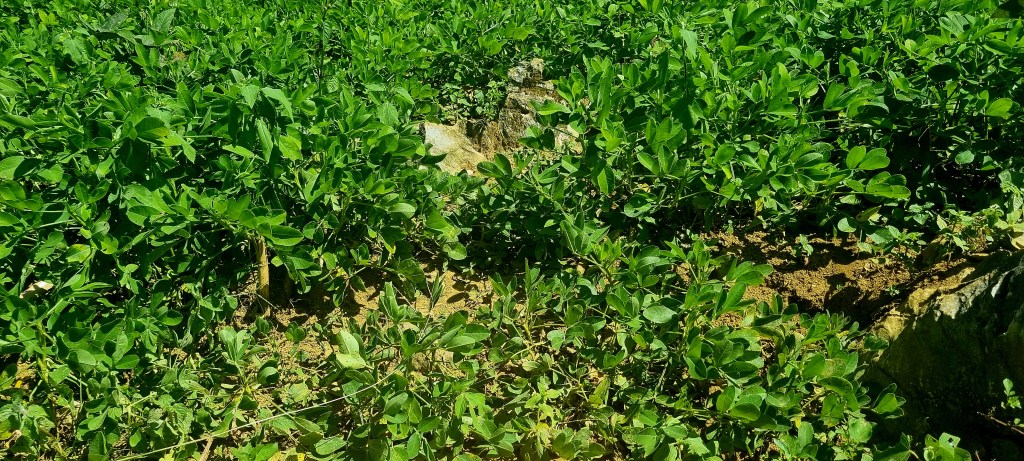
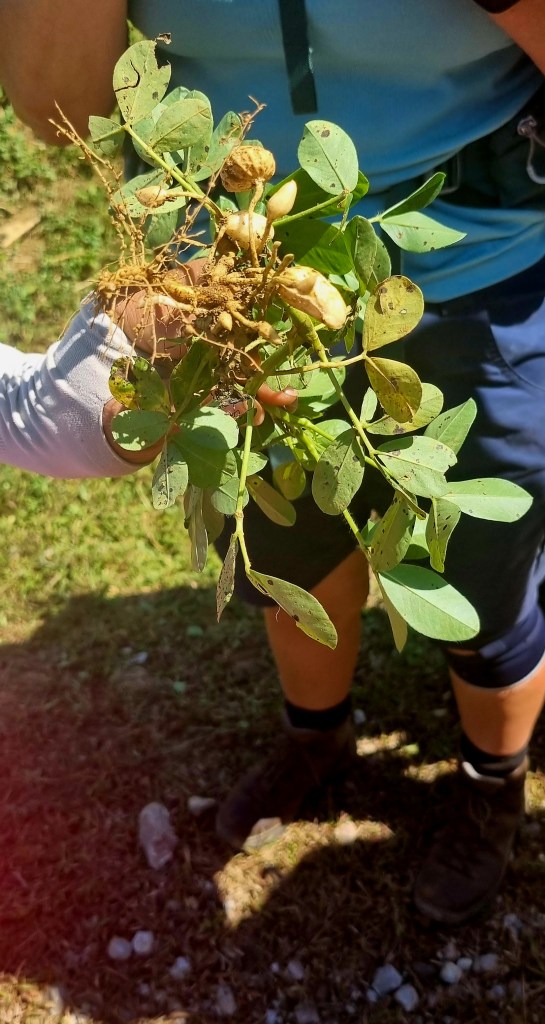
As we approached our new homestay, we came across a plantation of ground nuts, which some of the group tried.
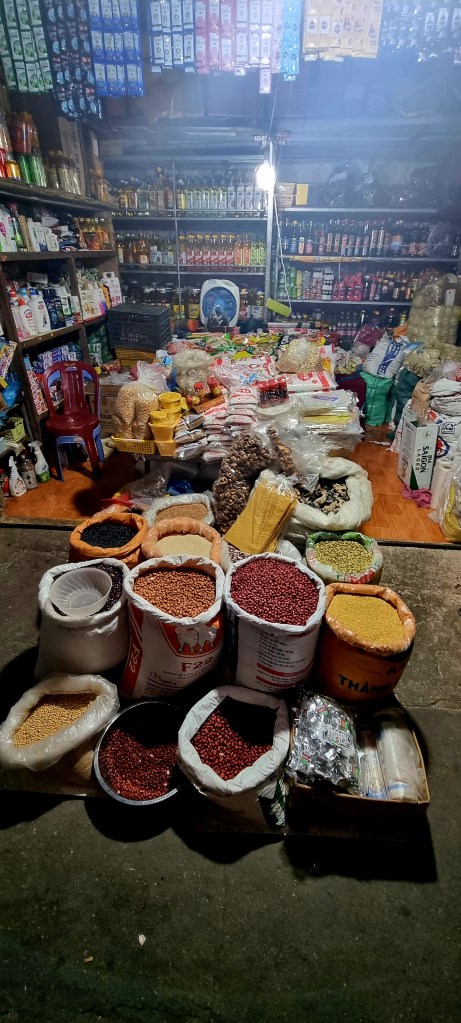
We also saw crops of soya beans, some of which were drying in the sun.
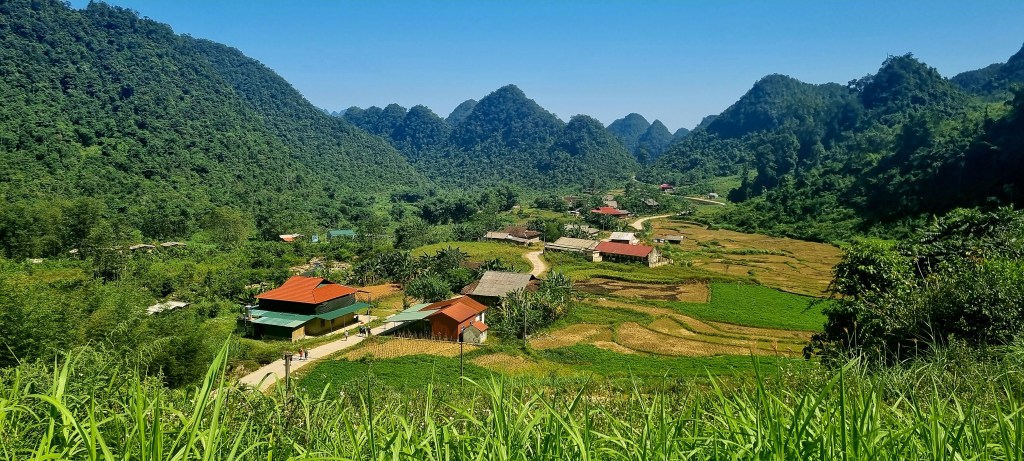
We walked down into the Nung hamlet. Three different tribes live in this village – Tay, Dao and Hmong people.
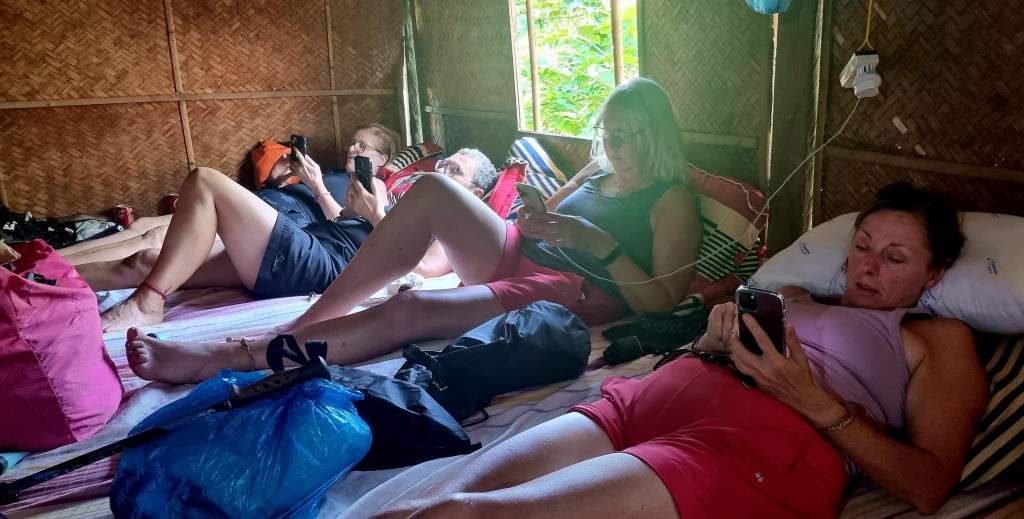
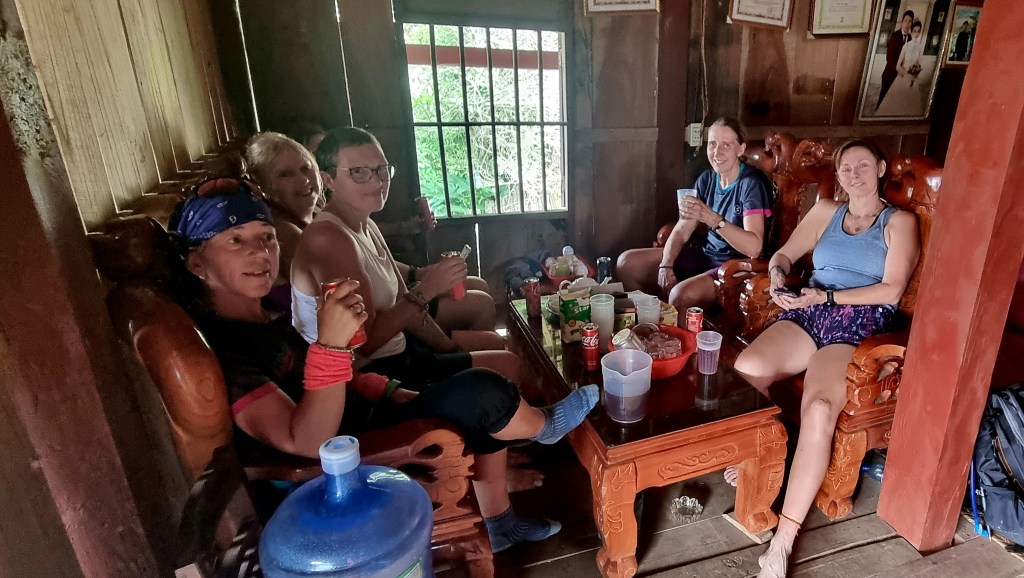
Once we arrived at our homestay, we were reunited with our larger bags, so we repacked a bit before lunch. We also had WiFi, so we were all on our phones.
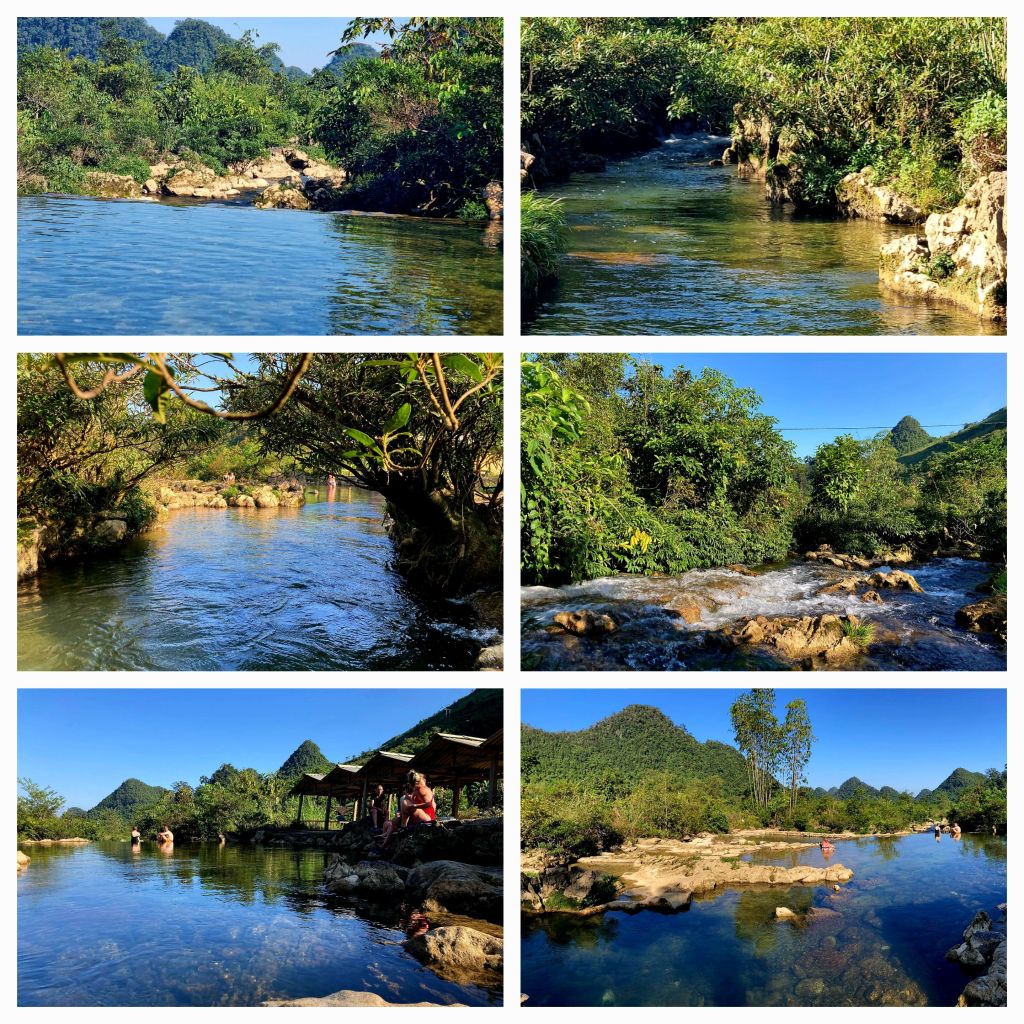
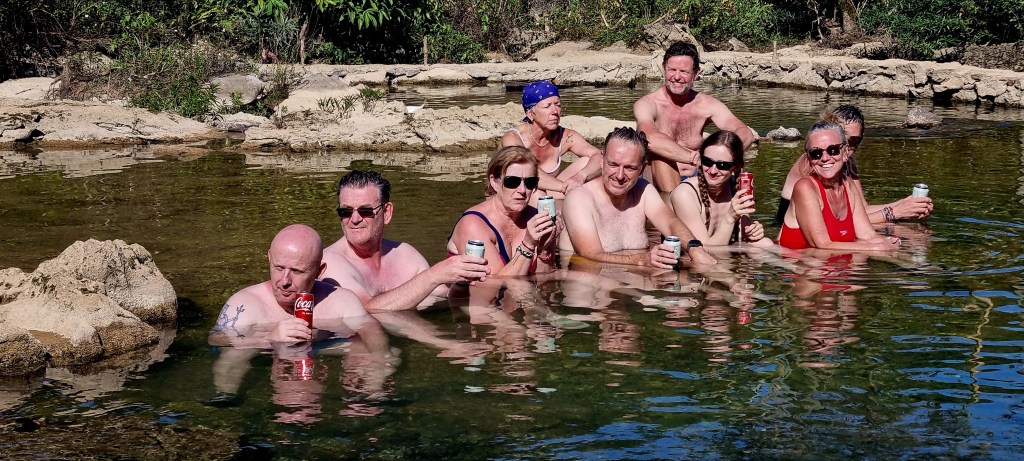
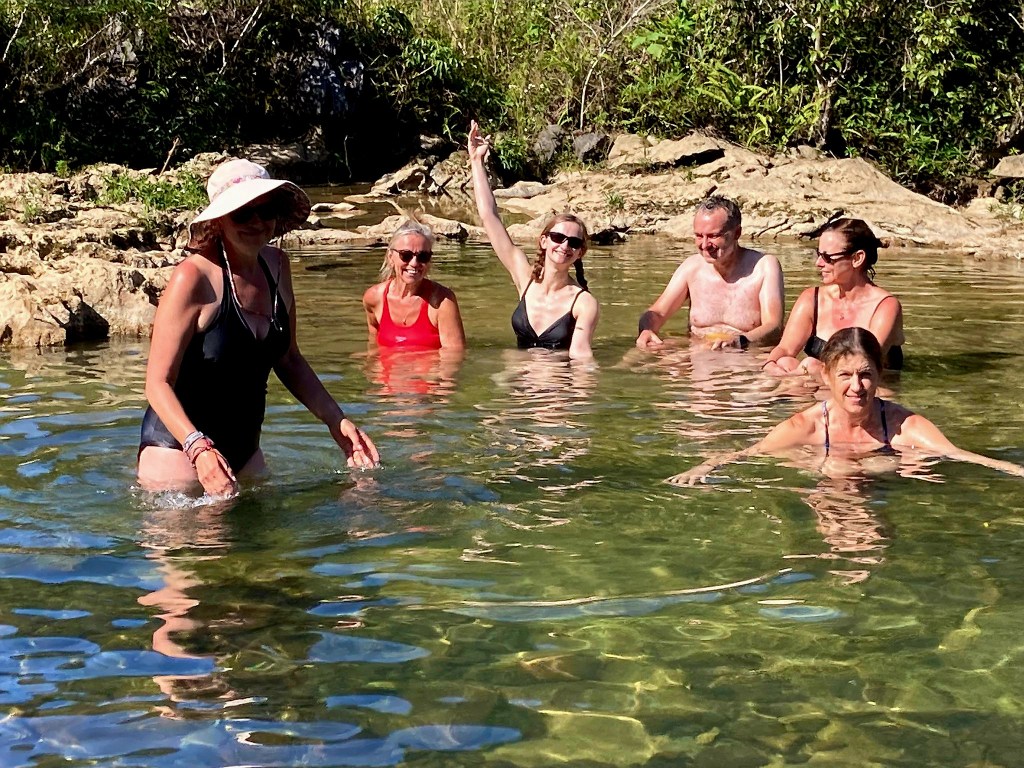
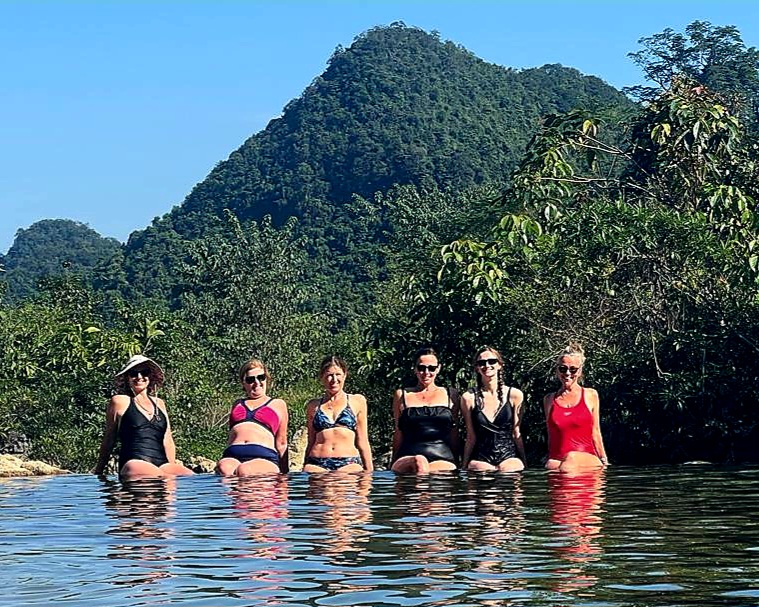
After lunch, we headed down the road to the river to have a welcome refreshing dip. The water was extremely cold.
We took a few beers down to the water, too.
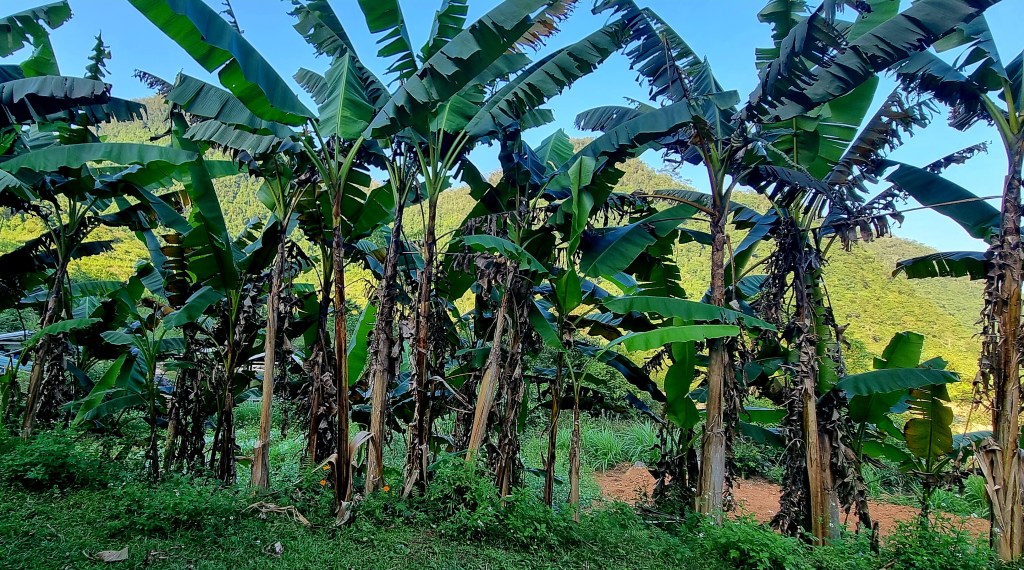
We spent a couple of hours down at the water before the sun started to fade. On the way back to the homestay, we passed some banana trees where the locals were harvesting the banana flowers.
We had some more delicious traditional food before another early night.
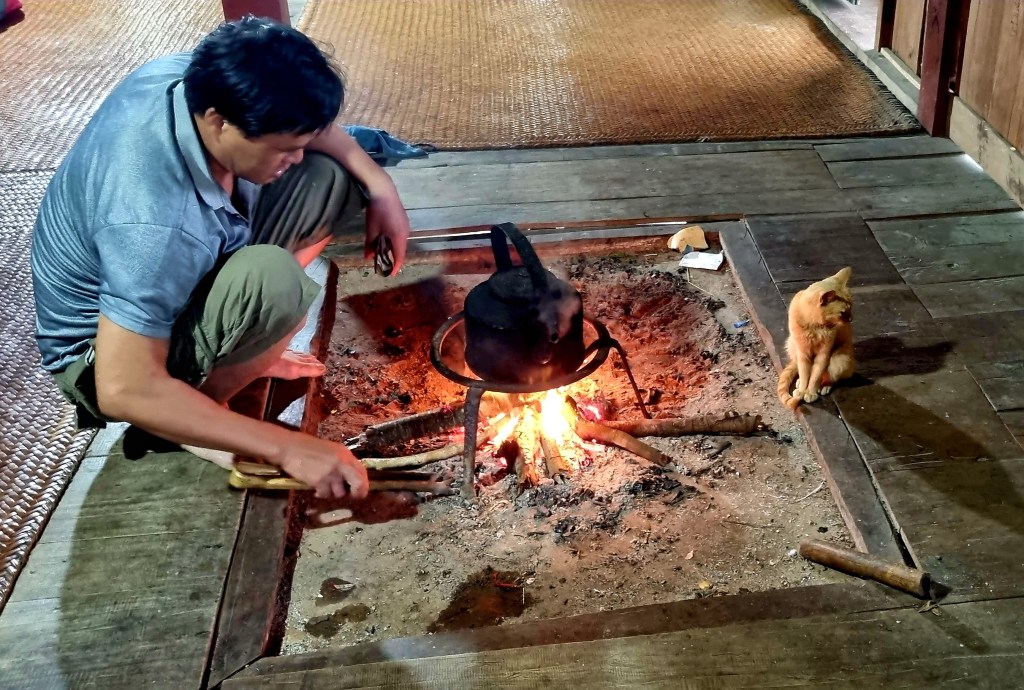
The ginger cat left me at some point during the night, and in the morning, he was curled up by the fire.
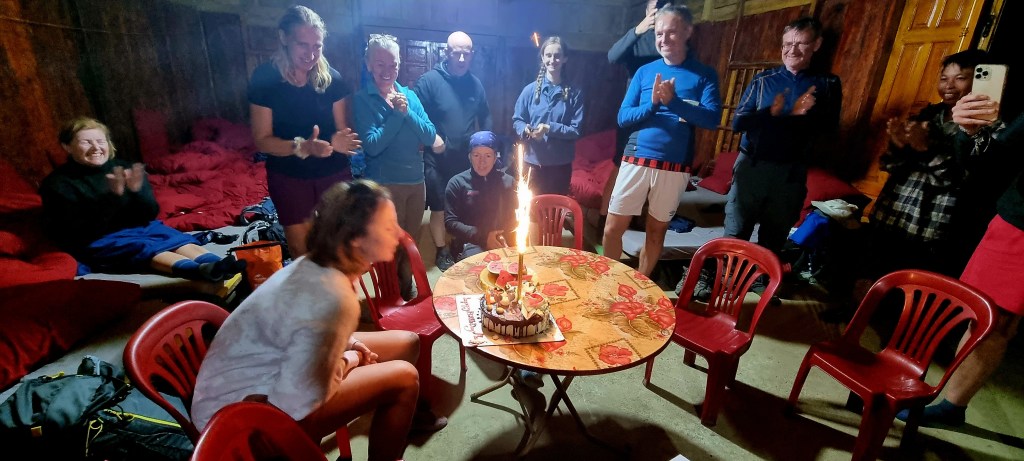
Today was Mandy’s birthday, so we all sang happy birthday to her and gave her a card that we had all signed.
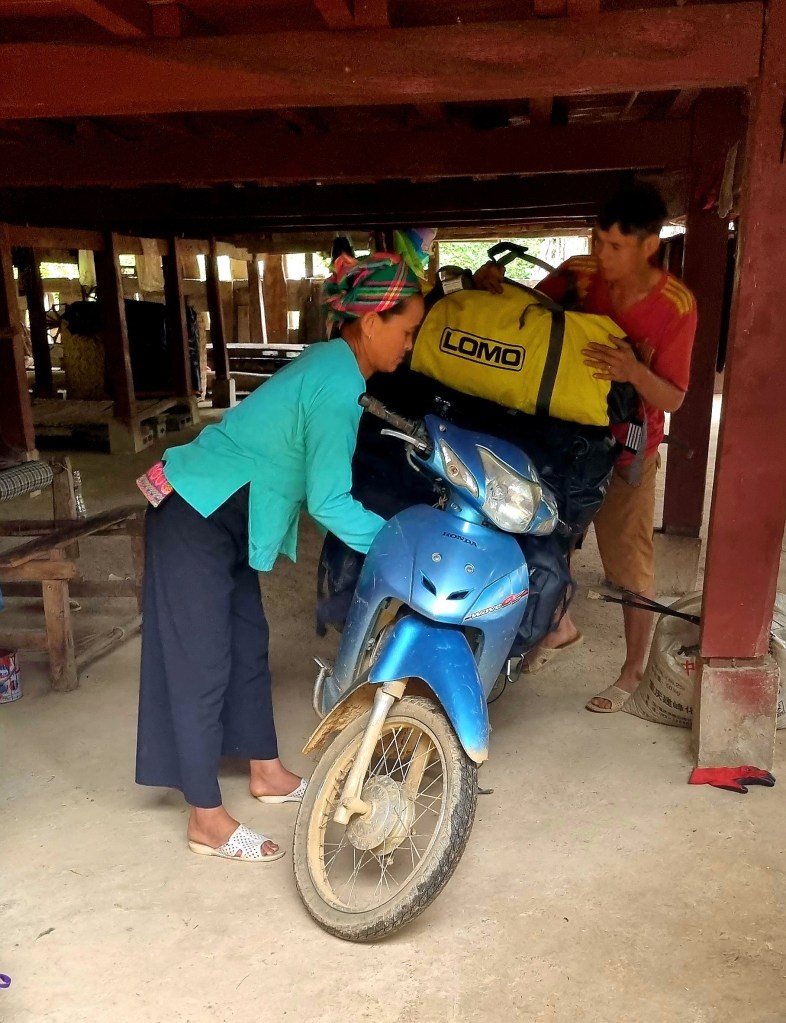
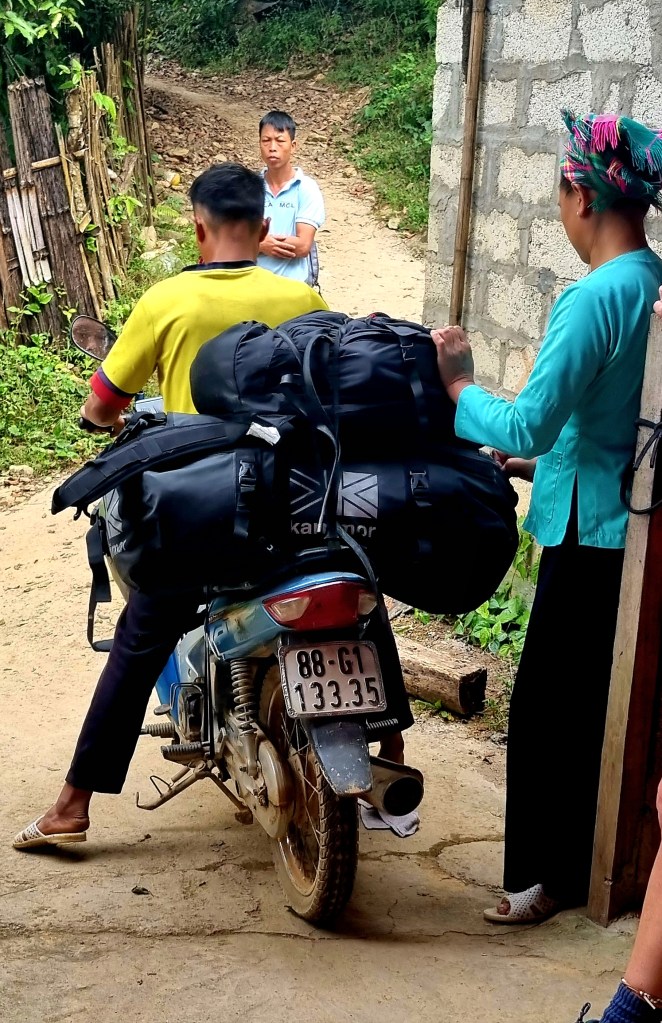
This morning, we packed our bags, and they were taken by mopeds to where the bus was parked.
We said goodbye to our host family, who had looked after us really well.
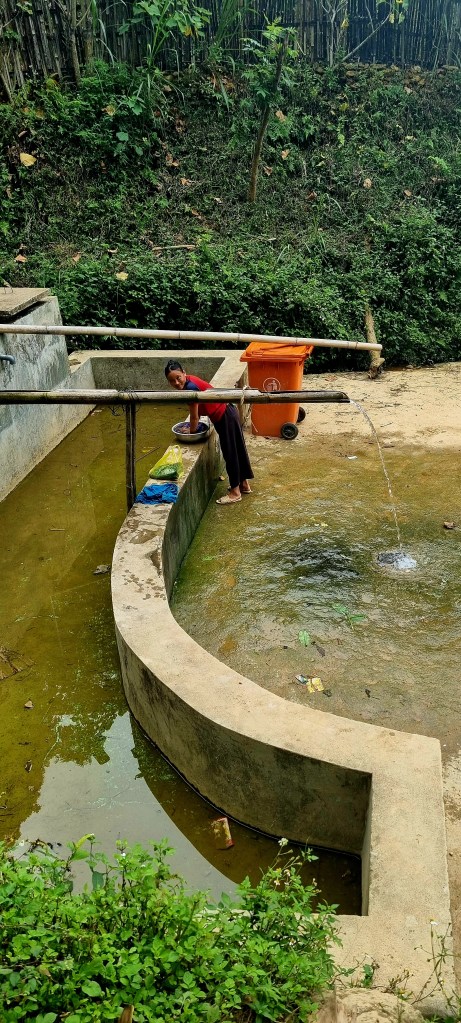
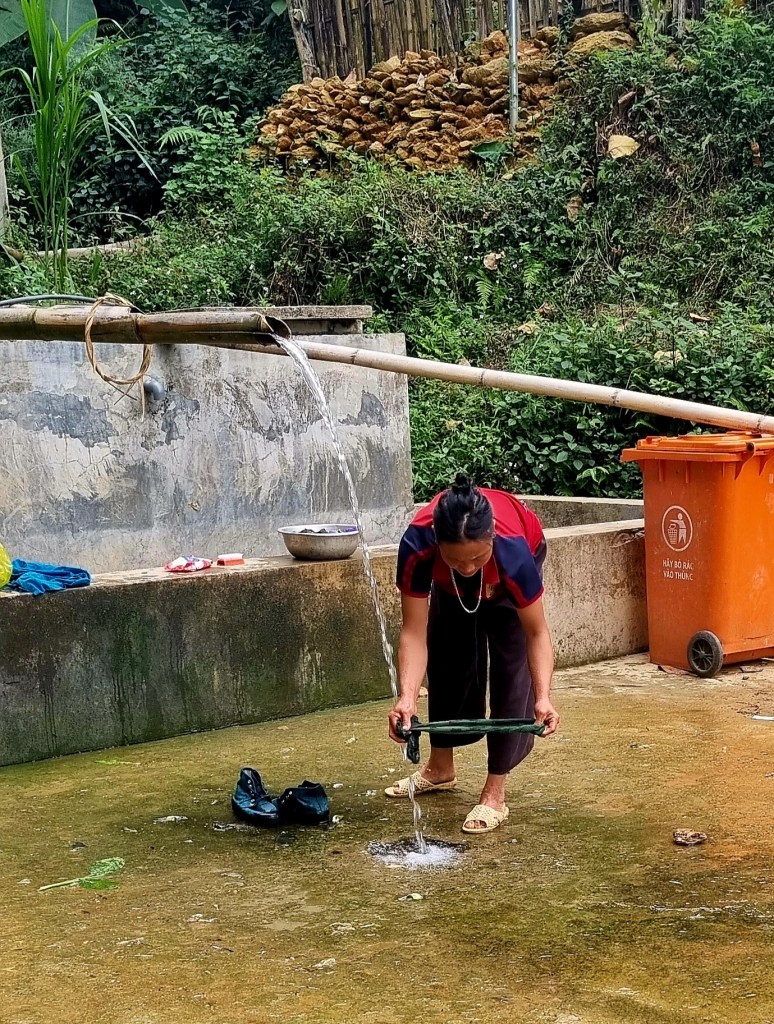
We walked back through the village, past some workers, and the communal shower / washing area.
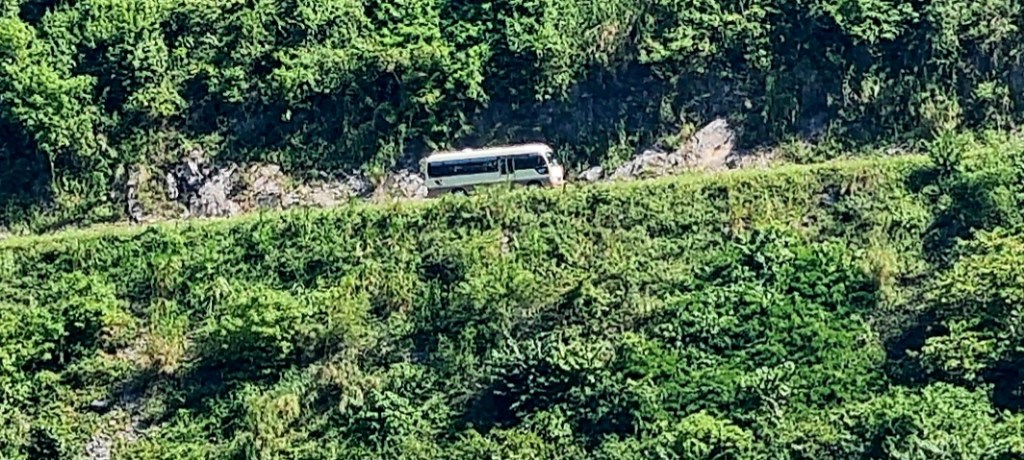
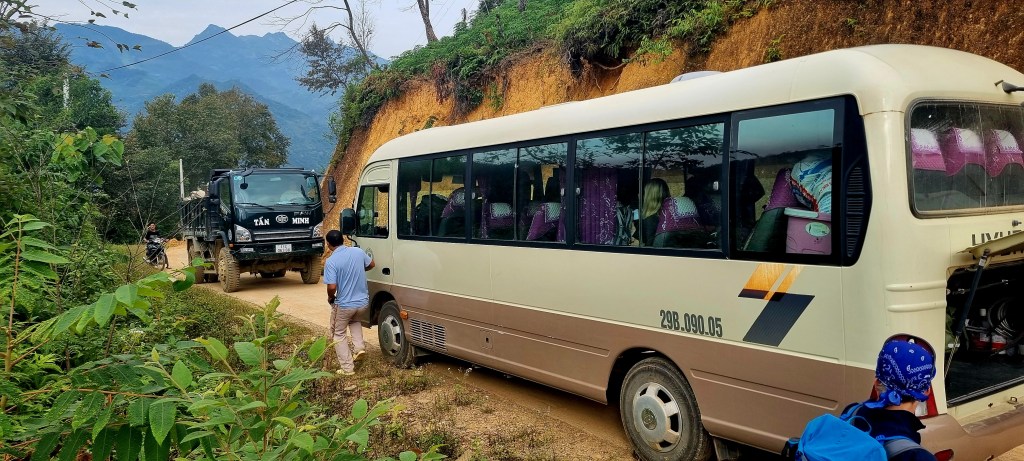
We were just loading up the bus when a truck came the other way, so the bus had to reverse into a small lay-by area.
Before we got on the bus, we did some stretching in the lay-by.
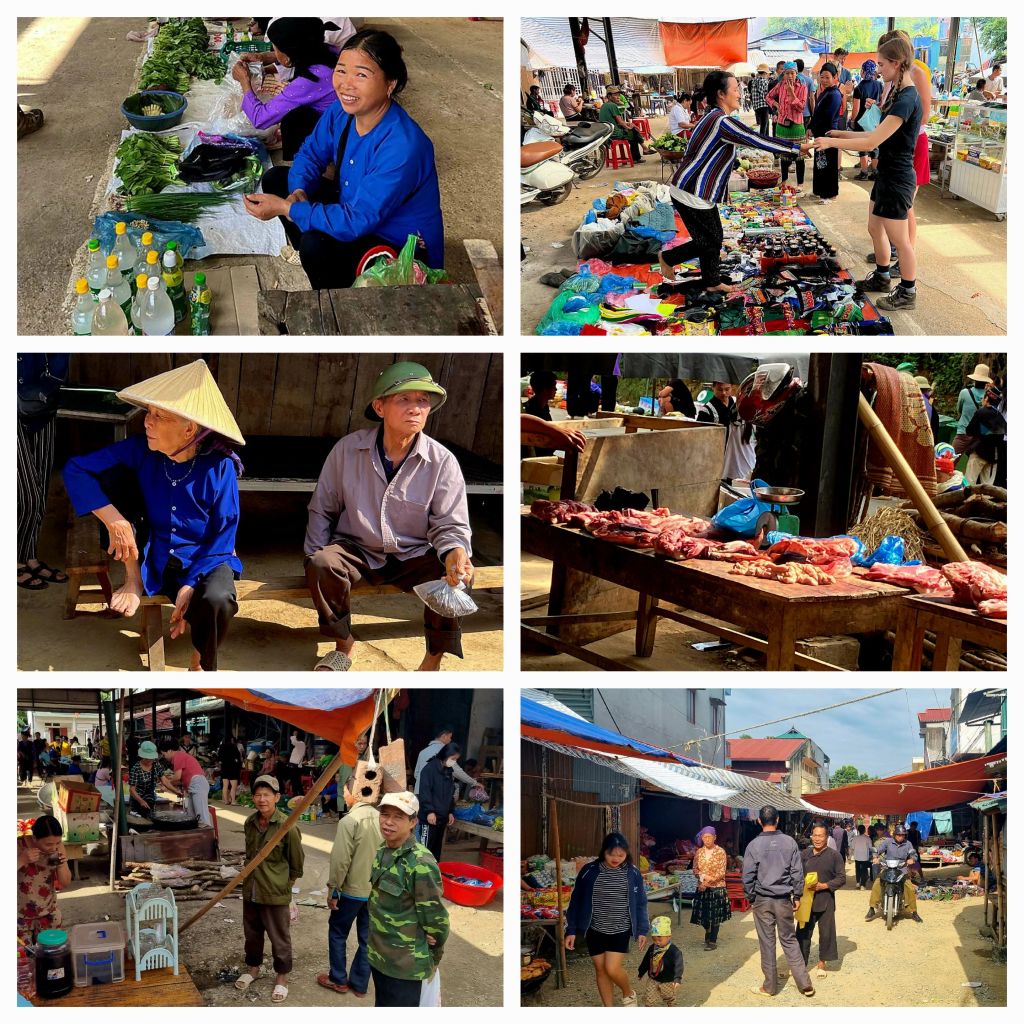
After a few minutes drive, we arrived at the local village market and we had a few minutes to walk around the stalls.
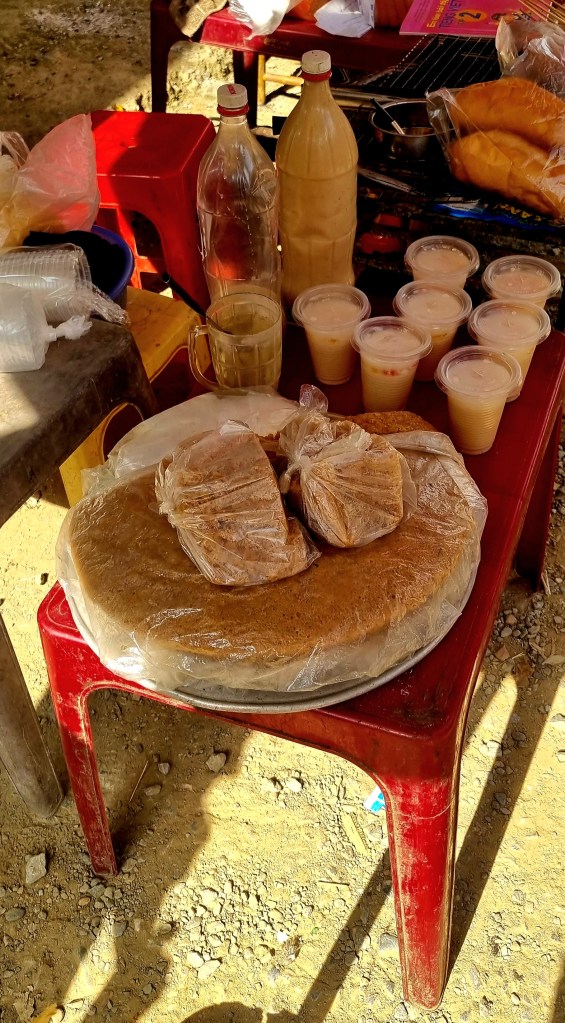
We found a local rice cake. Nhan bought some and we tried it on the bus, it was very sweet.
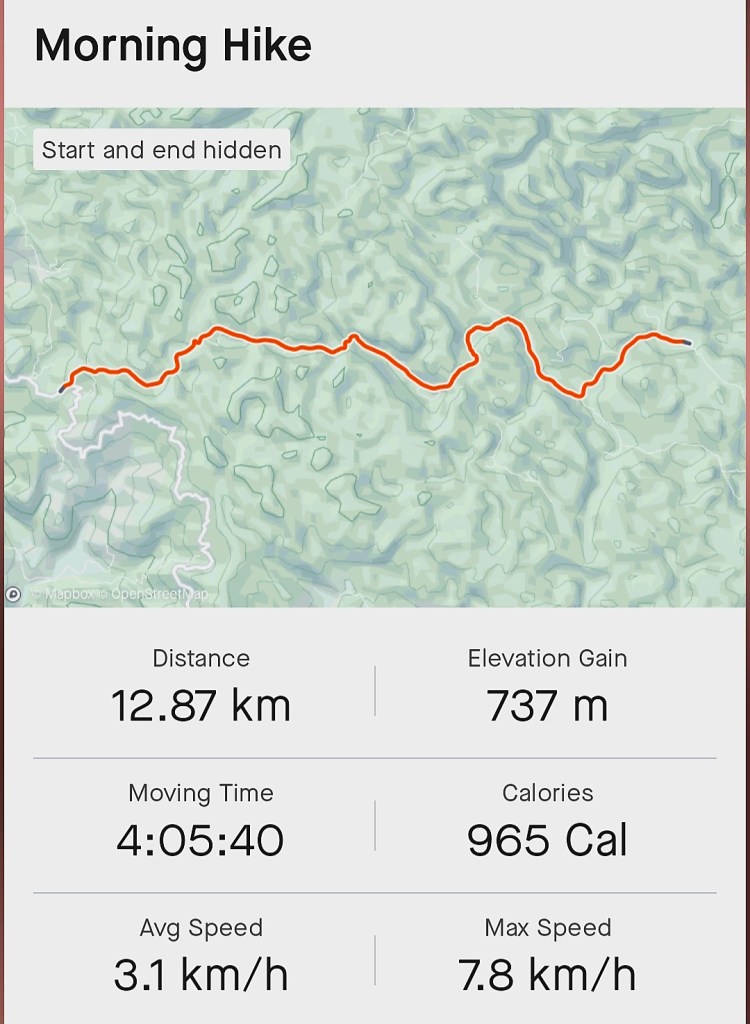
We drove for a little while longer before leaving the bus. We were going to be walking to our next homestay, which was a very remote hamlet. The previous evening, we packed a small overnight bag, which a moped was delivering to the next homestay, so we had to pack light.
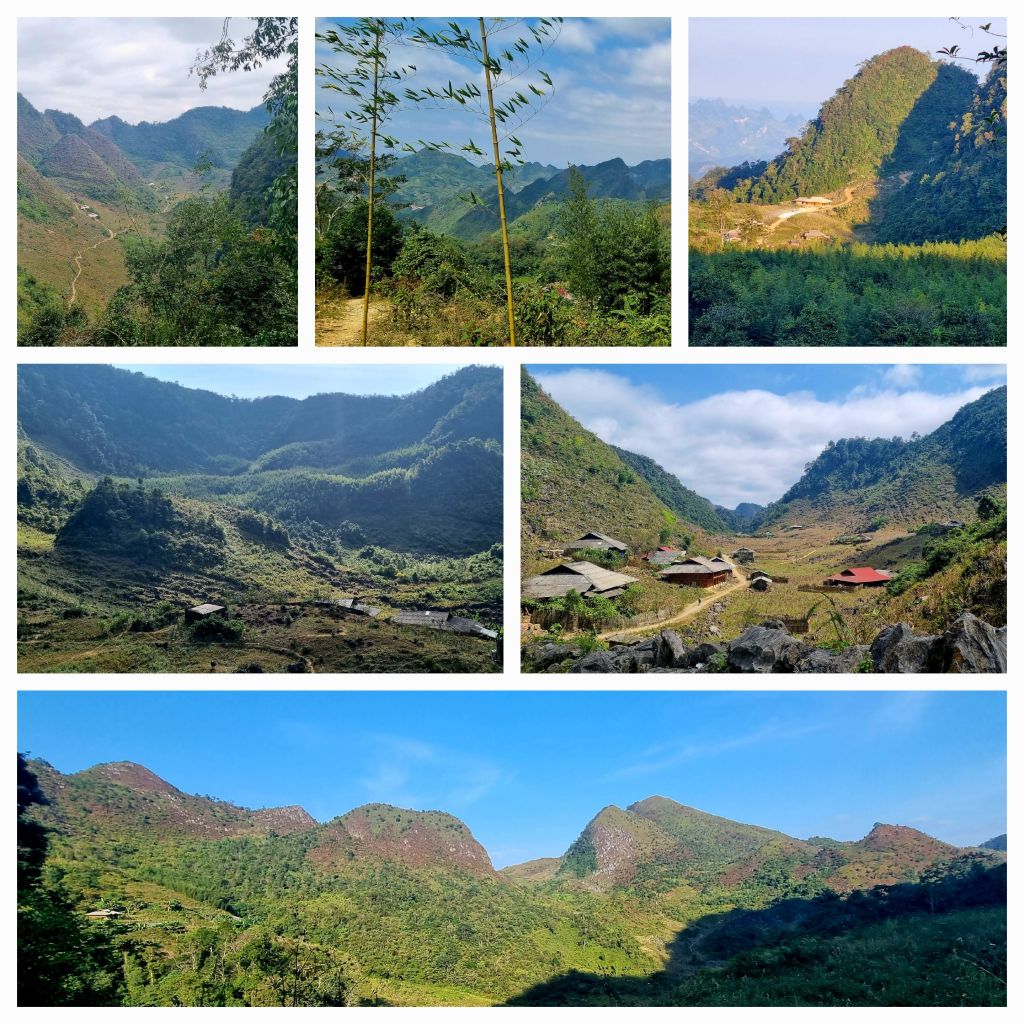
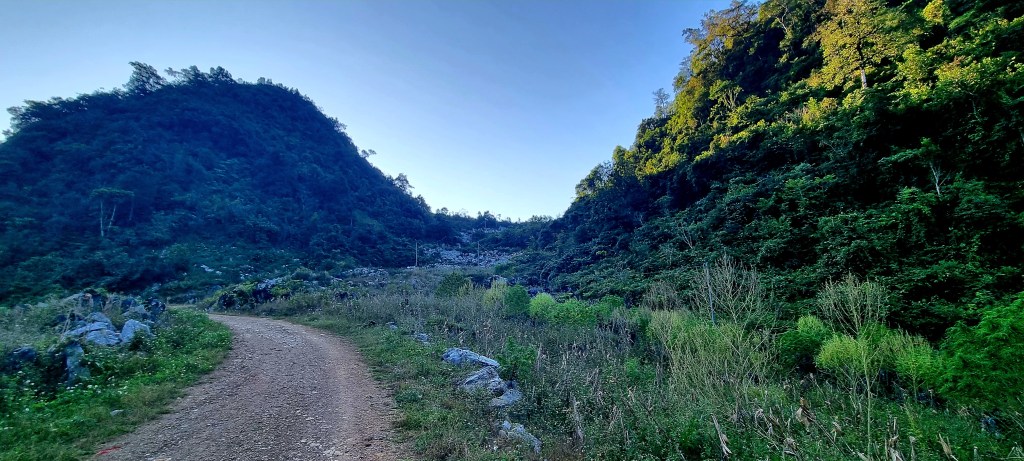
We trekked along the edge of the Thong Nong mountain range with some lunar-like landscape of limestone pinnacles and granite outcrops.
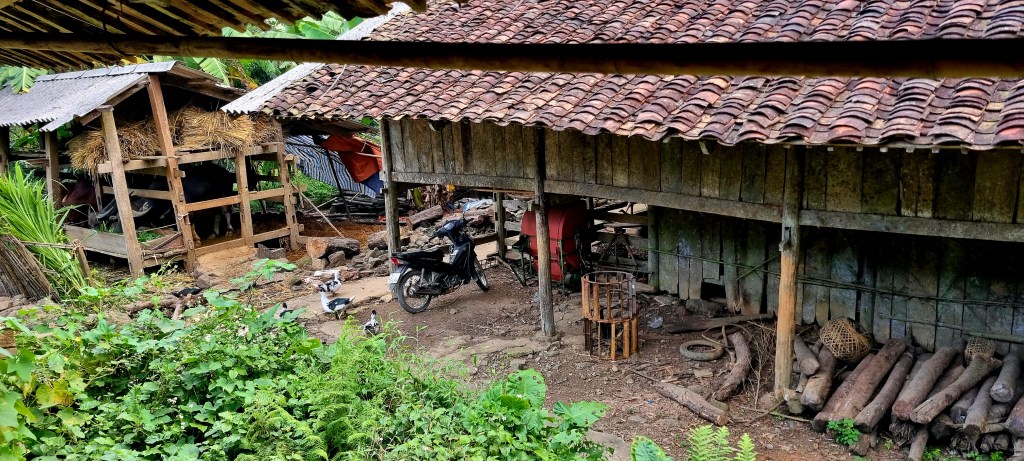
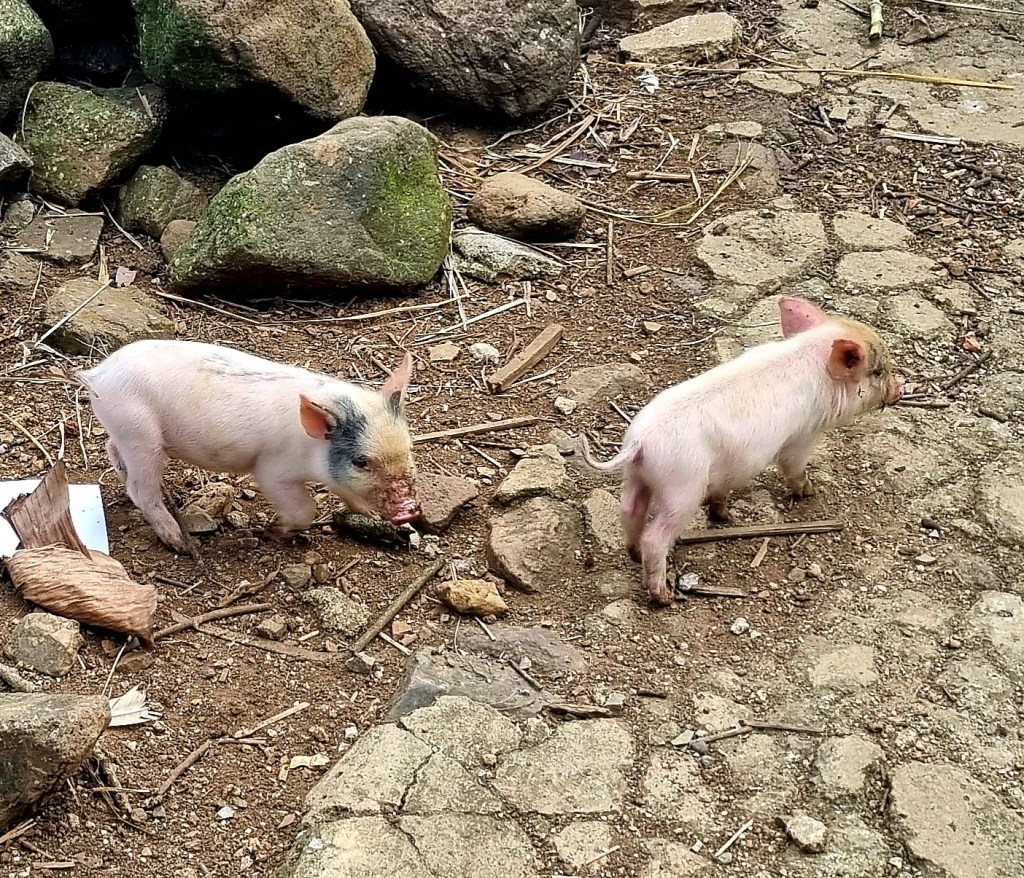
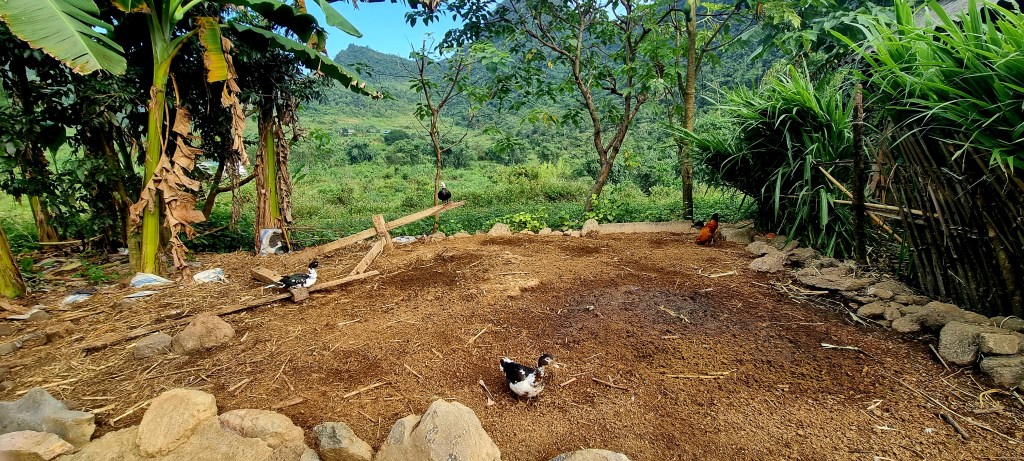
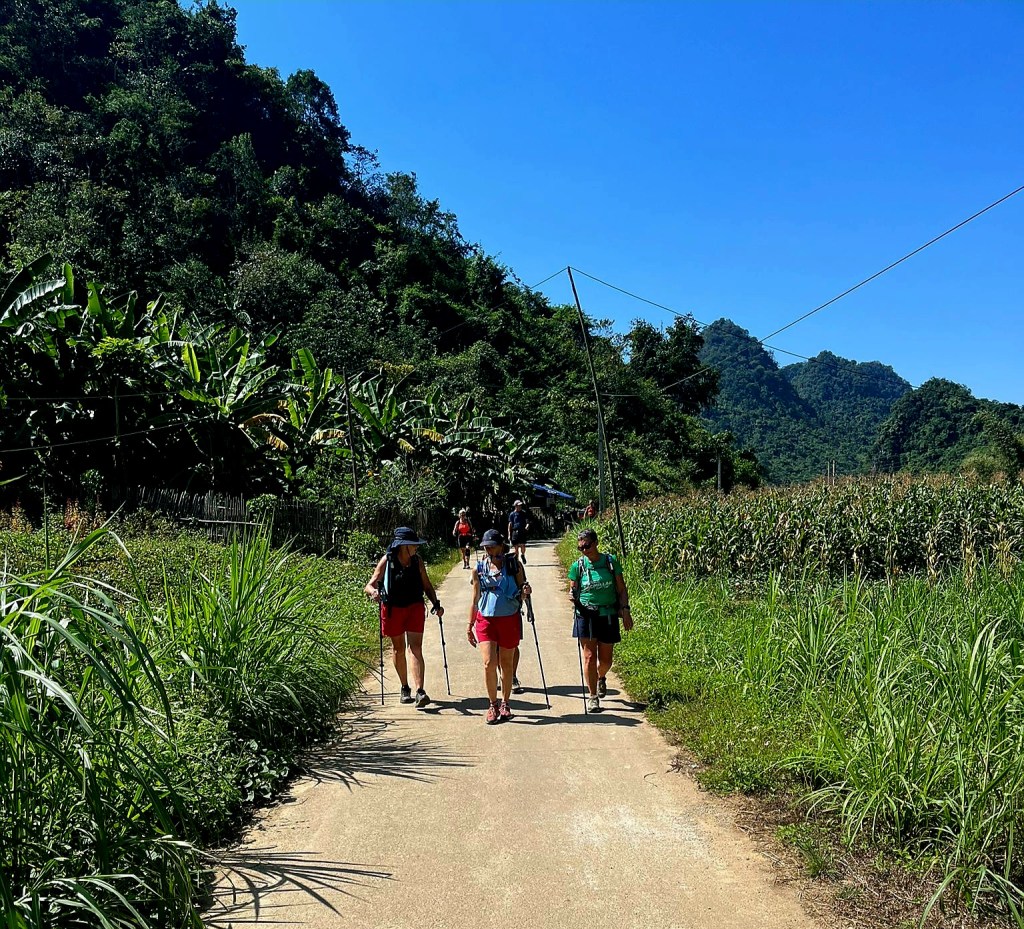
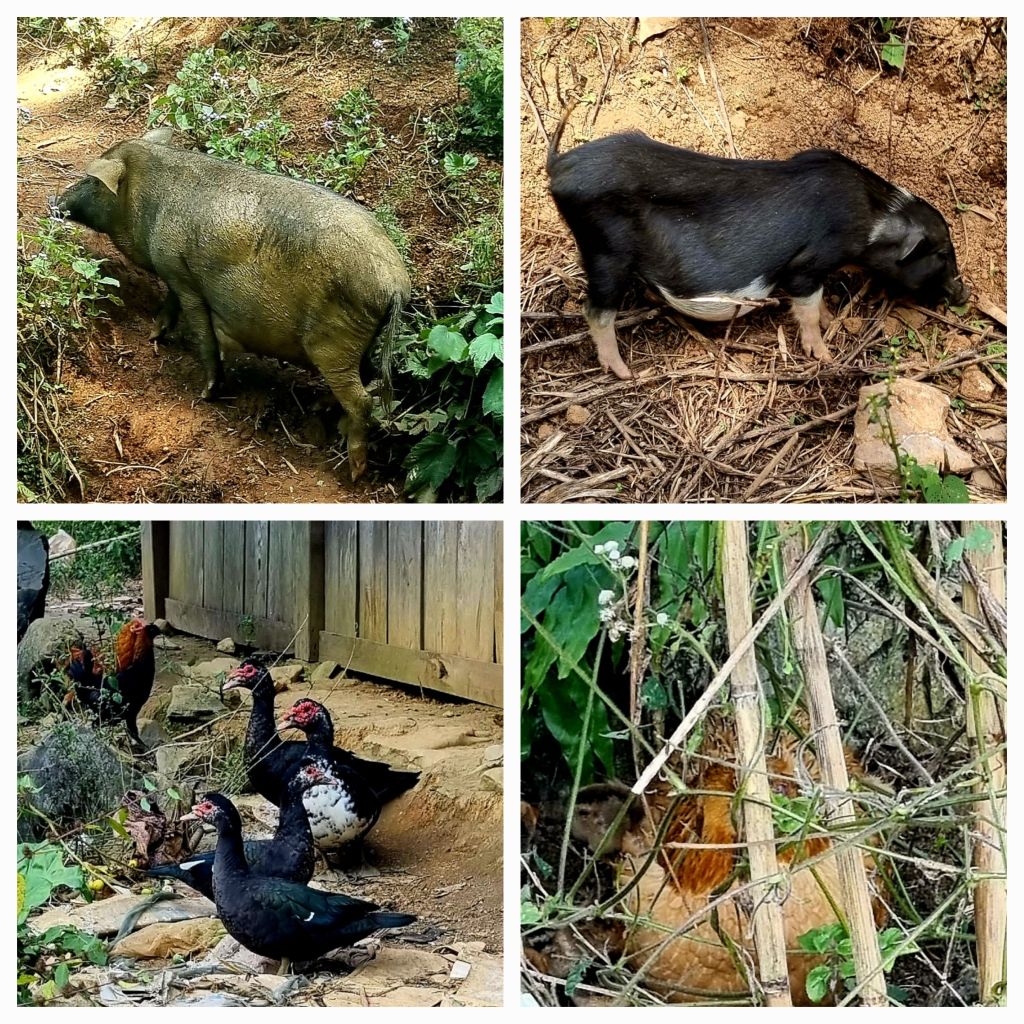
We passed through a number of remote hamlets inhabited by the Dao people. We also came across pigs,chickens, cows and dogs wandering around.
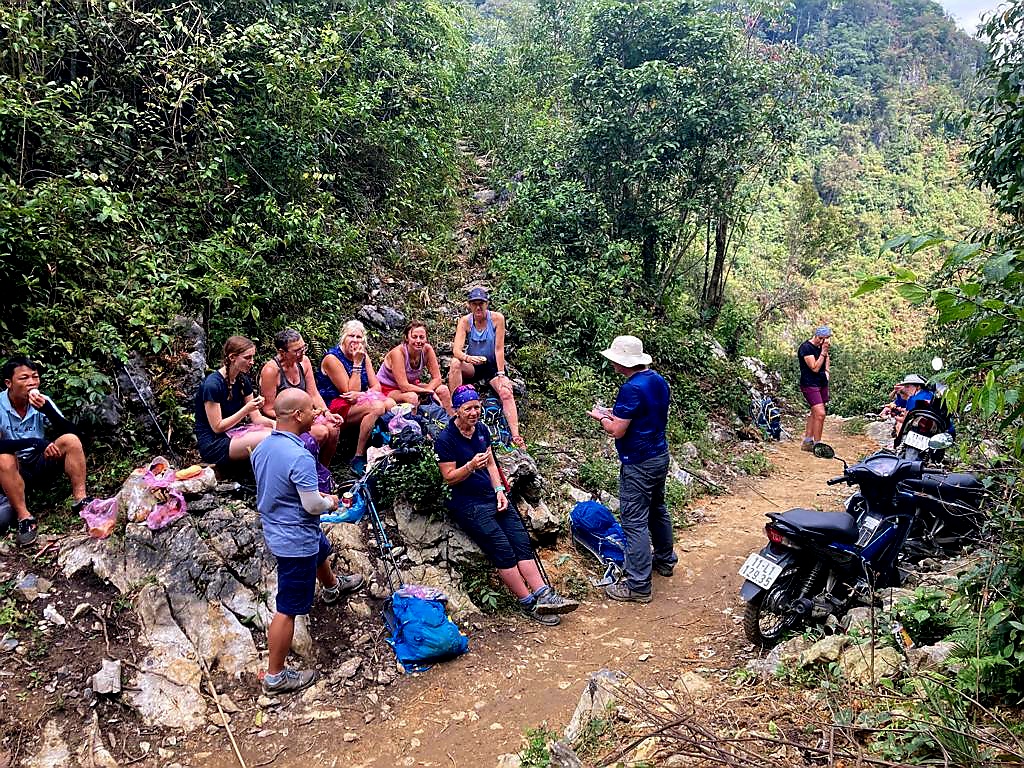
We had a packed lunch with us, so we just stopped and ate in the forest.
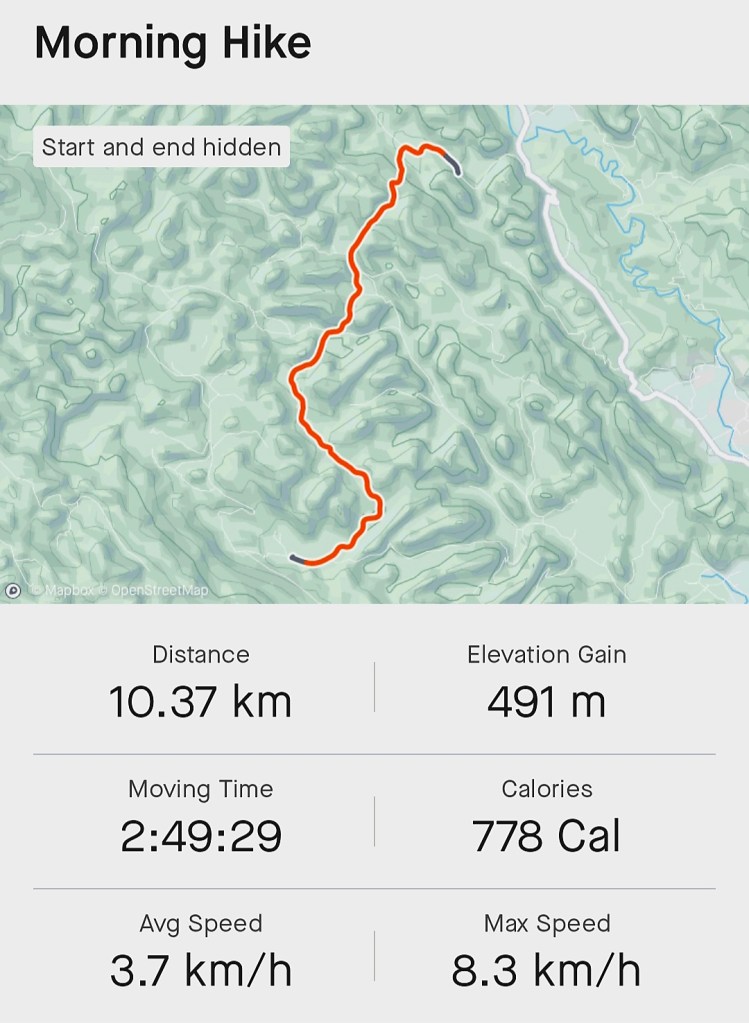
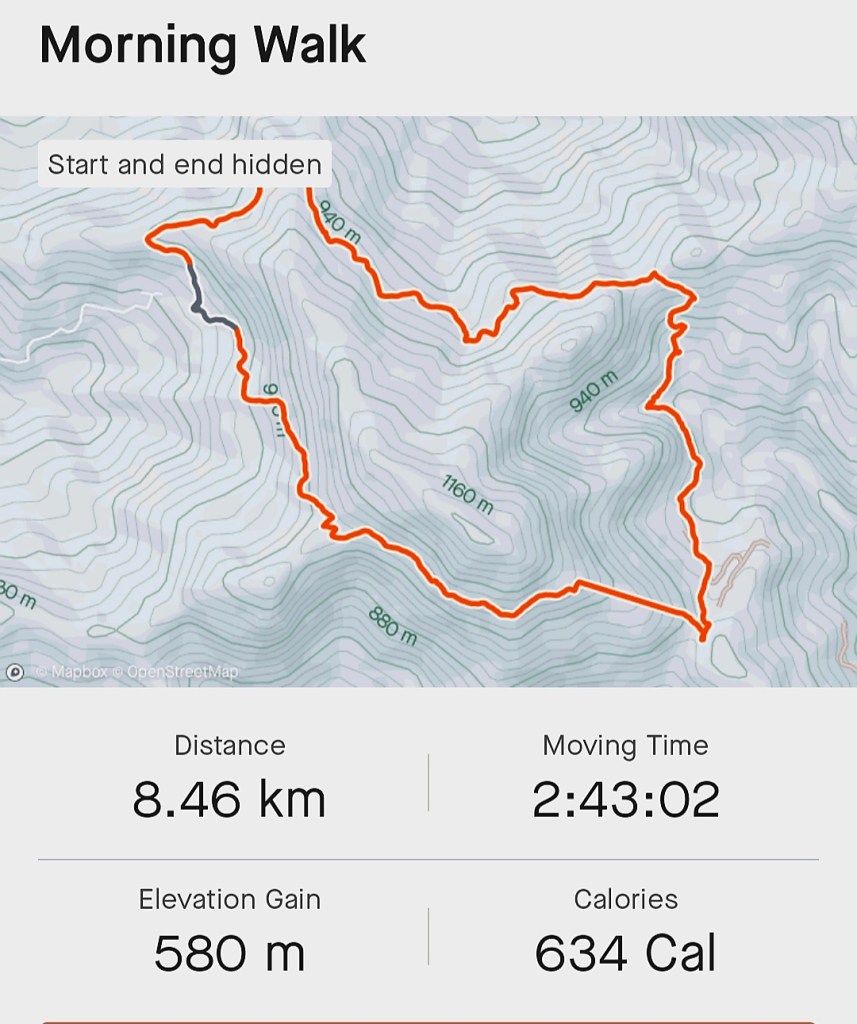
It was a pretty tough hike,with lots of scrambling up and down steep paths, I was grateful to have my walking pole.
Luckily, there was a bit of a breeze as we were walking to cool us down. There were some pretty flowers and a bug or two that we spotted on the hike.
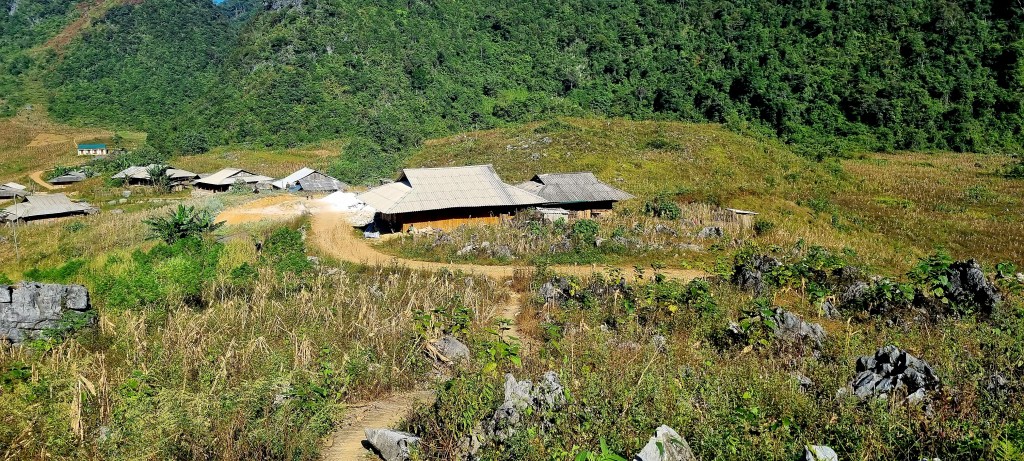
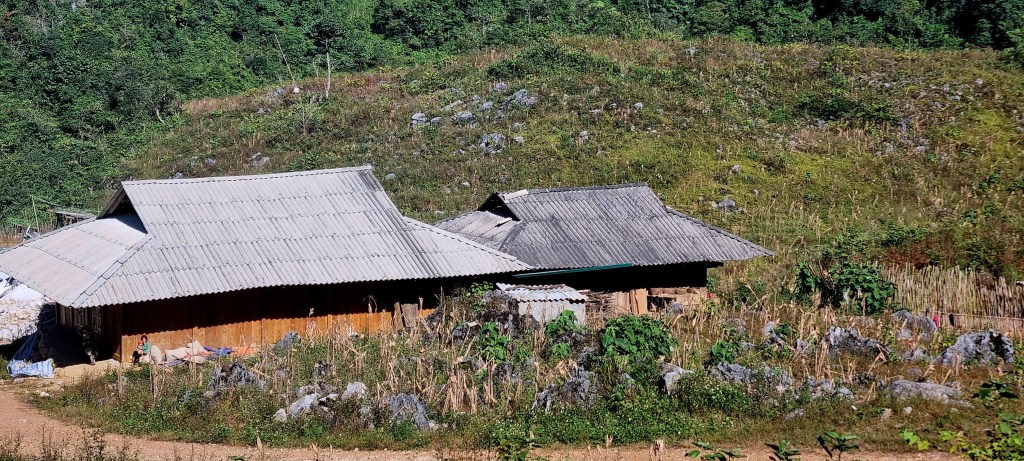
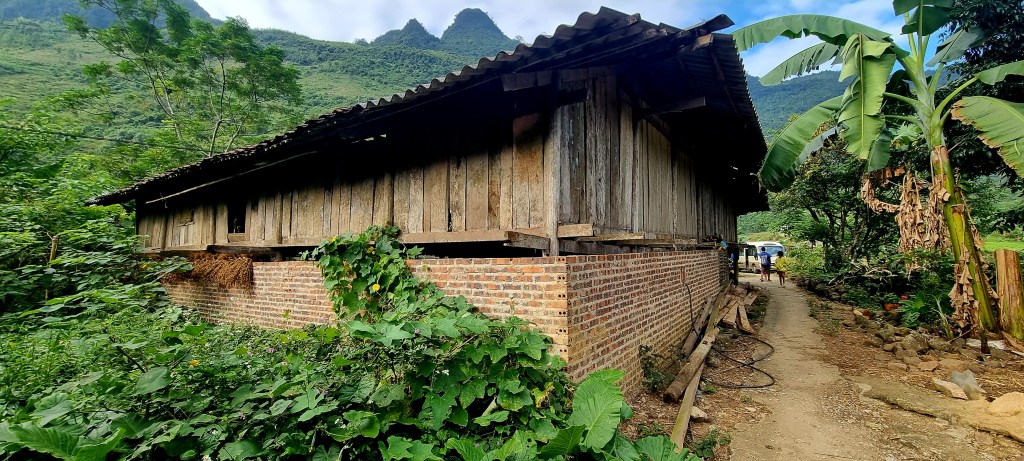
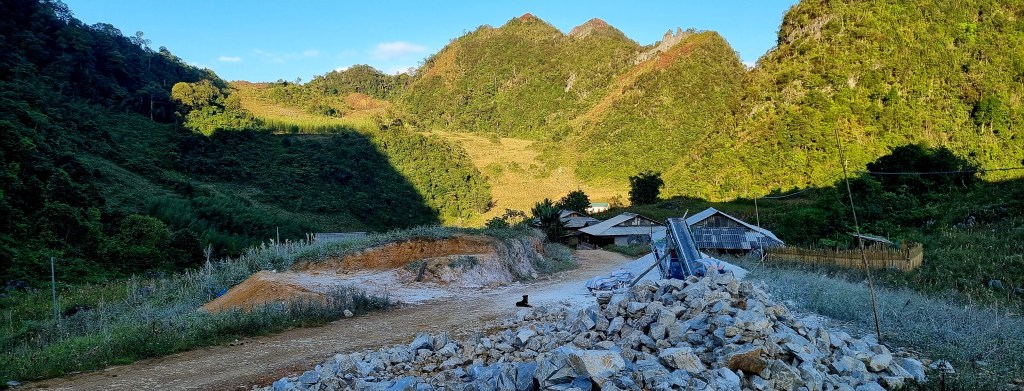
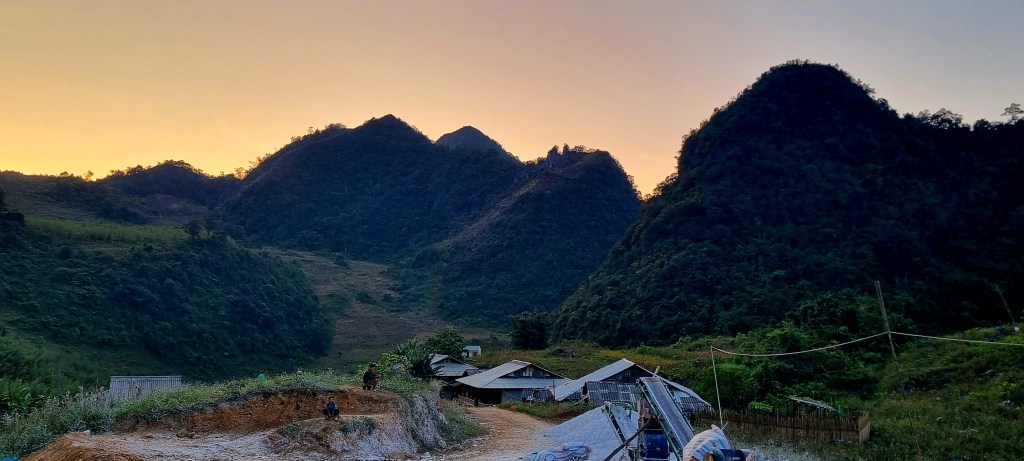
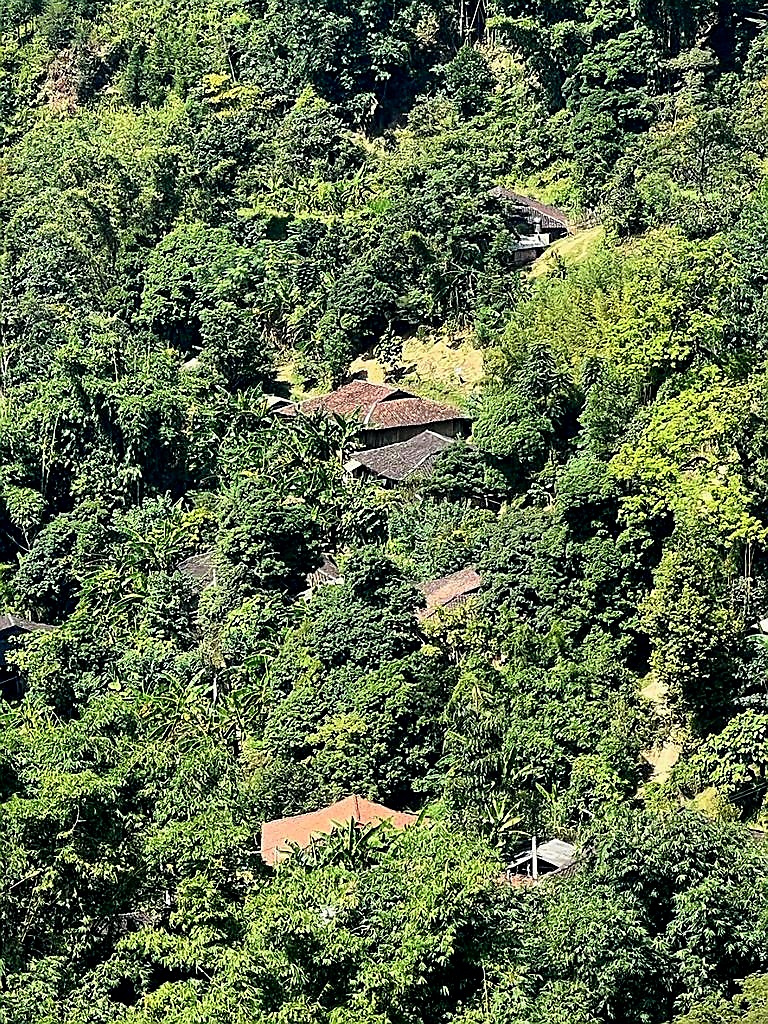
After around 4 hours of hiking, we could see the small hamlet where we would be staying. It is extremely remote, and it is inhabited by the Red Dao tribe. The Dao tribe migrated from China around 400 years ago as they tried to escape the Chinese dynasty. The hamlet is made up of around 4-5 houses, which all belong to different relatives. The Dao tribe chose to live in the higher areas of the mountains because they arrived later than many of the other tribes. The Dao people believe that nature, not people, ultimately controls how things change.
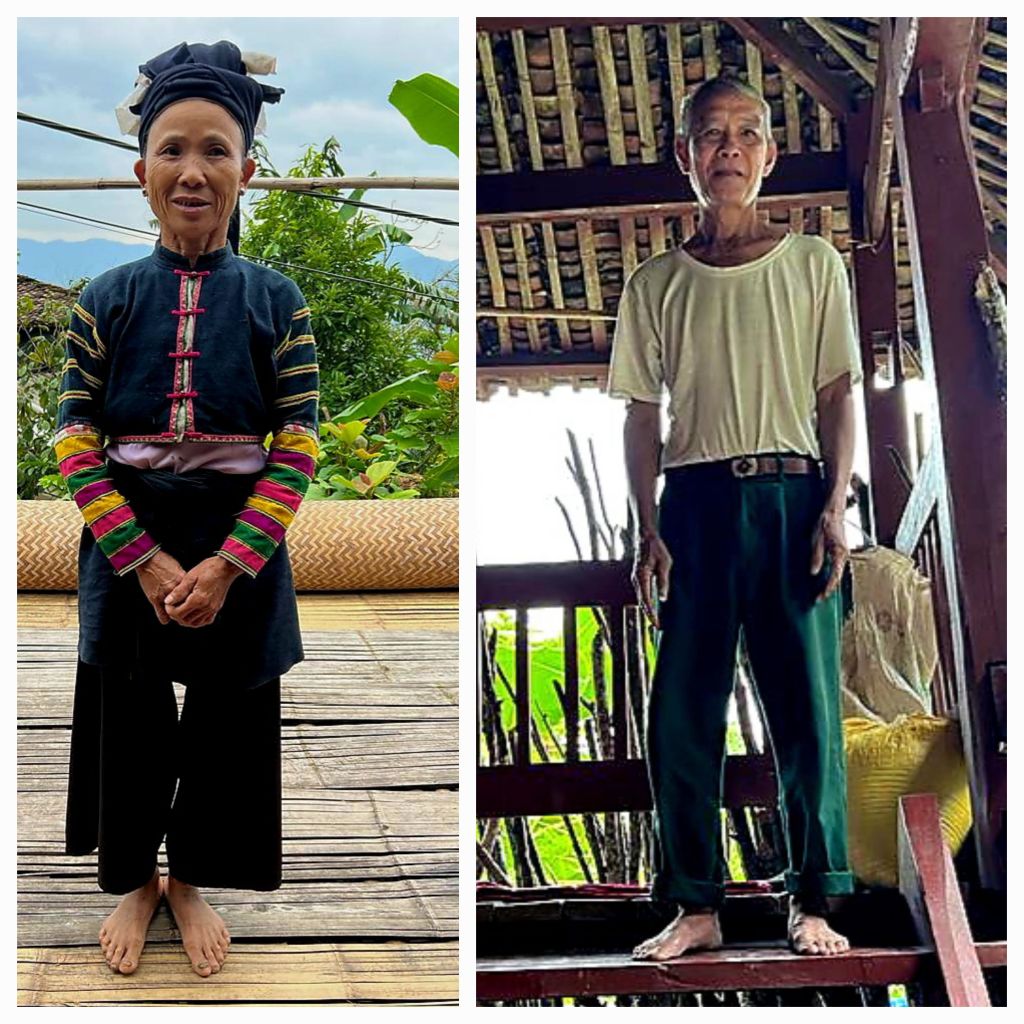
The family we were staying with were very young. The mother got married at 14, and her oldest son was 11. She also had 3 other children aged 9, 3 and a 1 year old baby. Her husband was around 8 years older than her. The local government gives permission to marry once the girl is 18, before that, it is illegal, but it happens anyway.
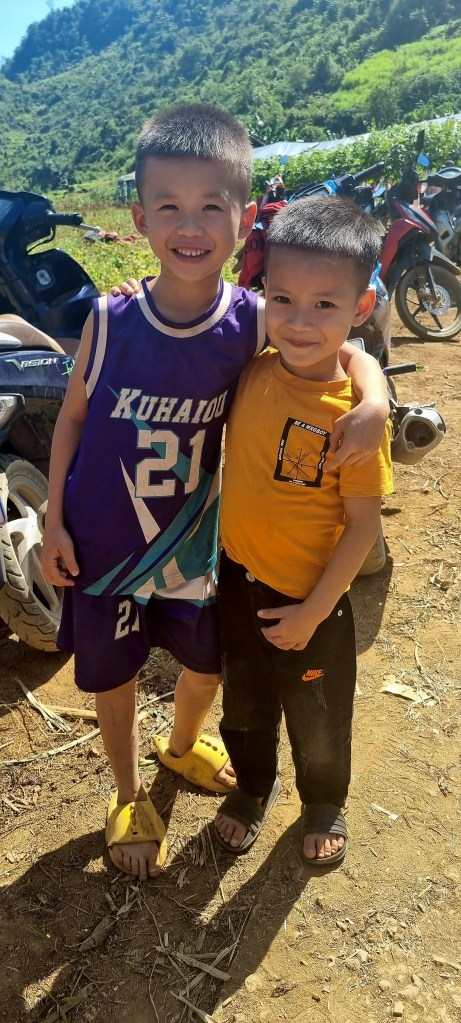
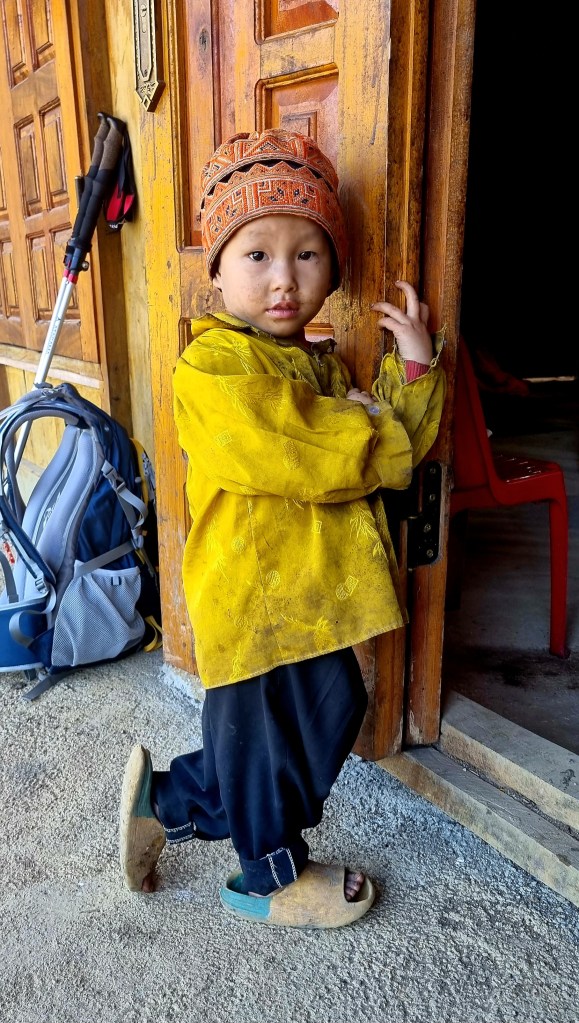
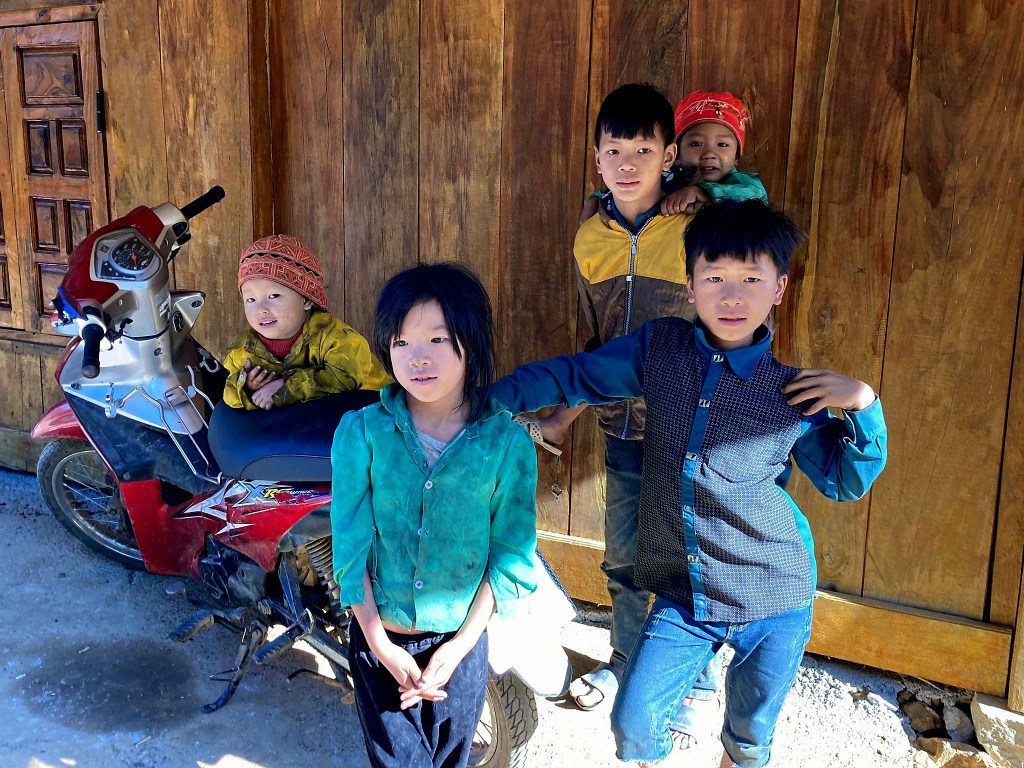
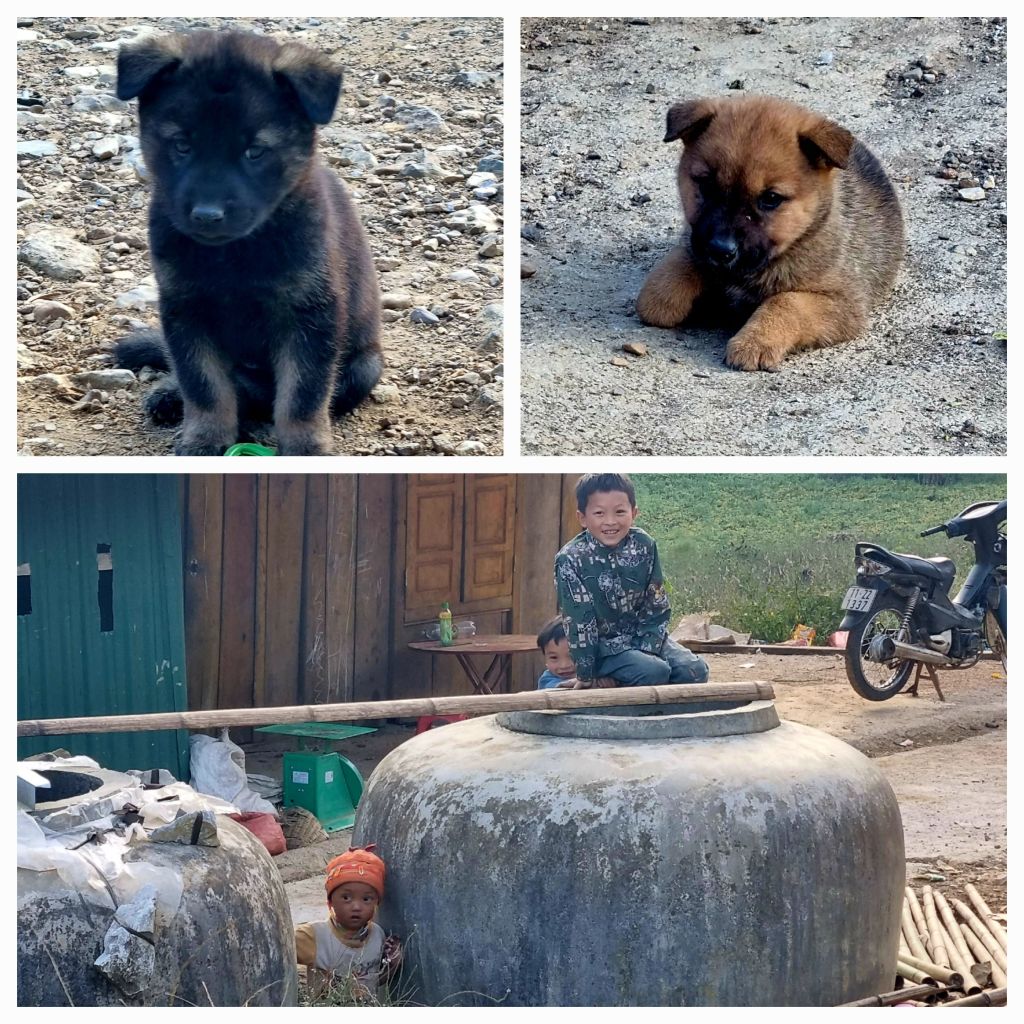
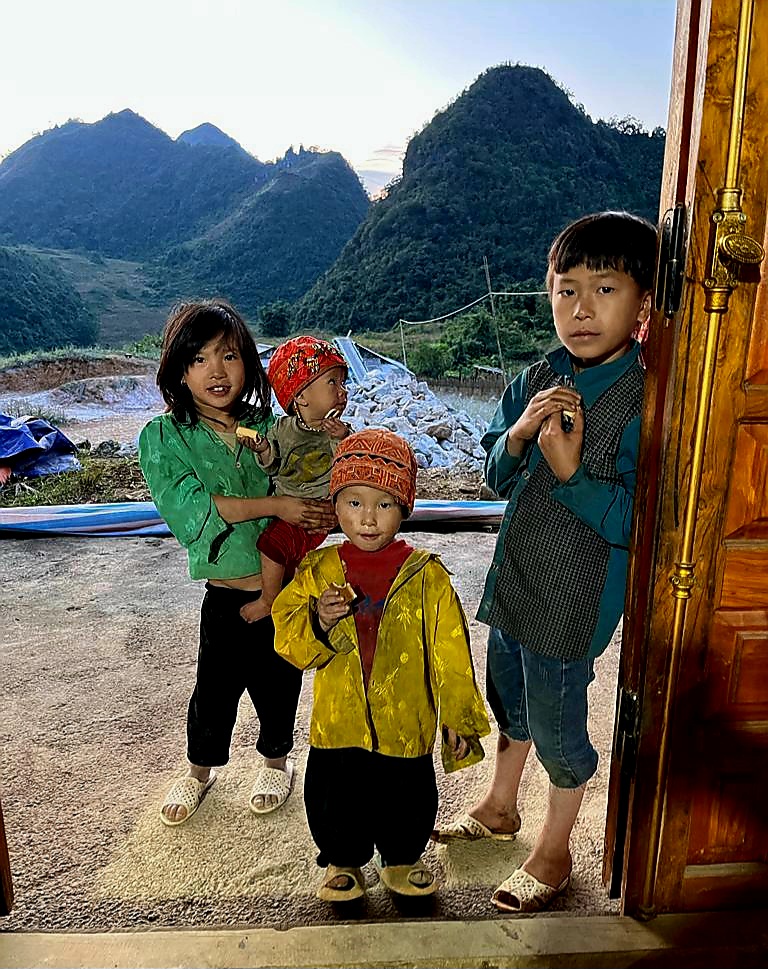
As we arrived, we were met by some adorable puppies and also some cute kids from one of the neighbouring families.
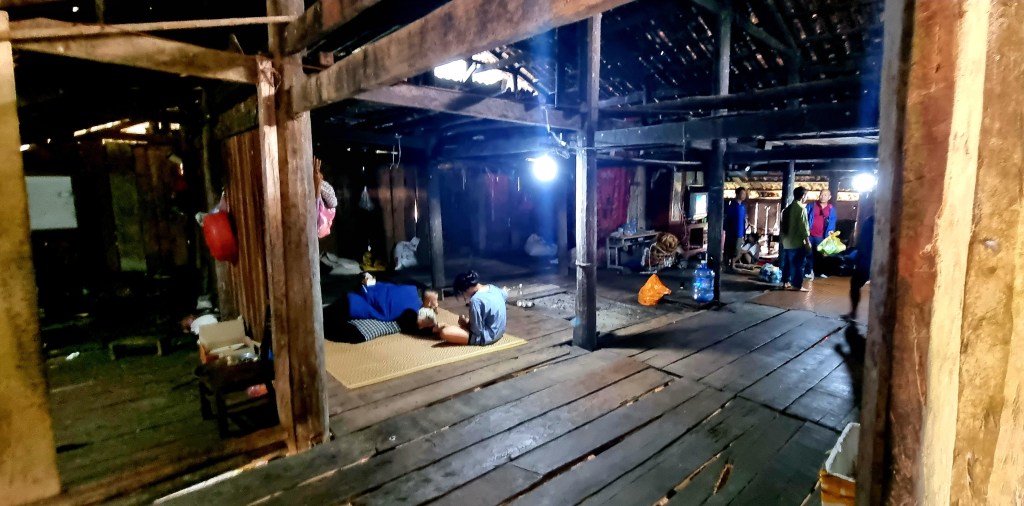
The whole hamlet relies completely on the rainwater that is collected during the rainy season in the massive urns. They don’t have any other water supply, so they have to make the water last all year round.
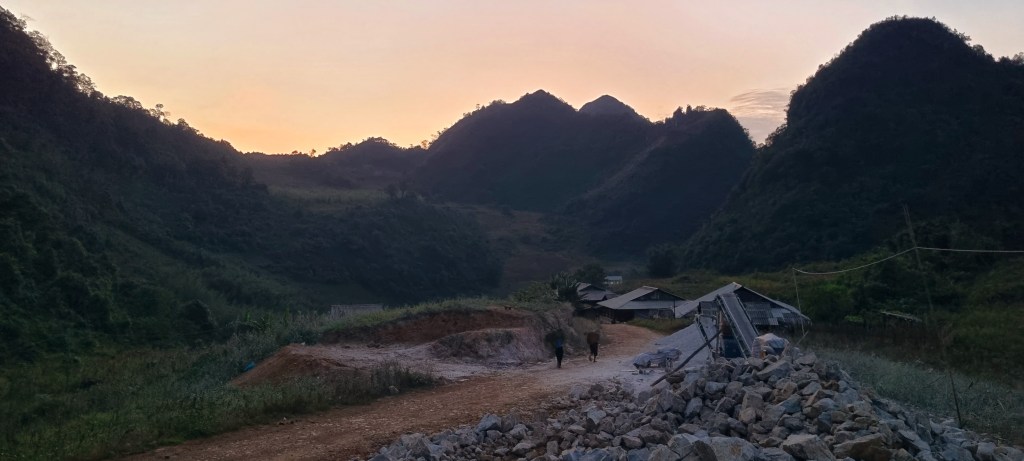
As we arrived, the sun was starting to set.
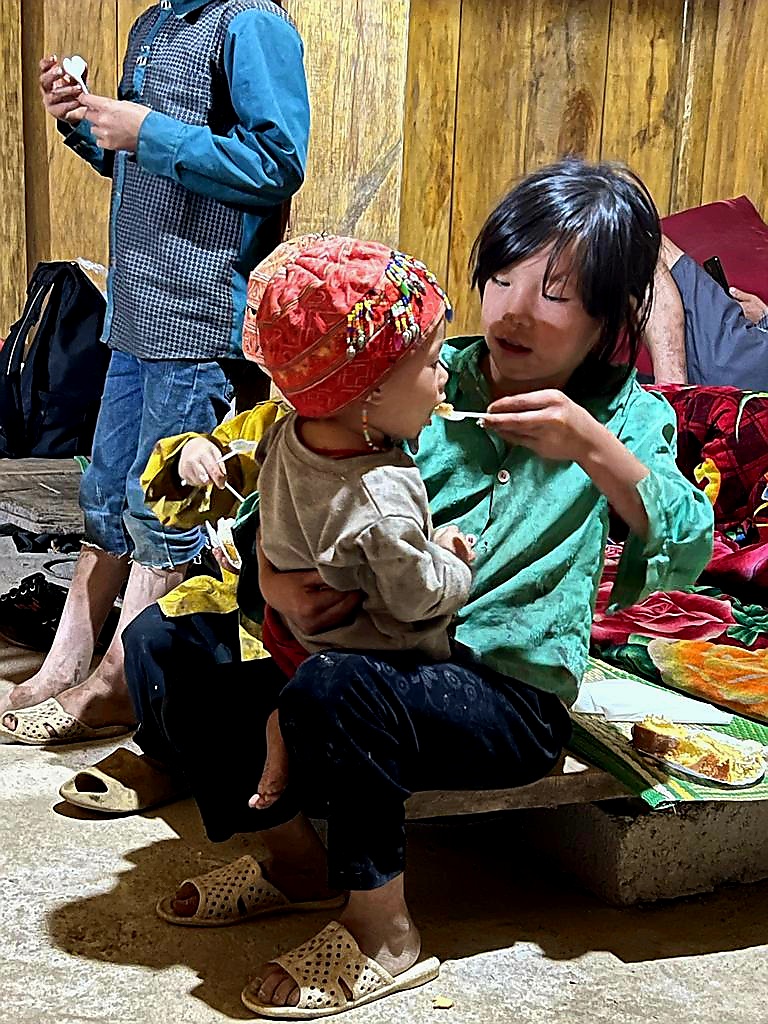
The children of the family came to see us, they were very shy but liked to watch us. The oldest daughter took on a mothering role to her youngest sibling.
The family were extremely poor, and it was hard to see. At this time of year, there are no crops to harvest and not much work to do in the fields.
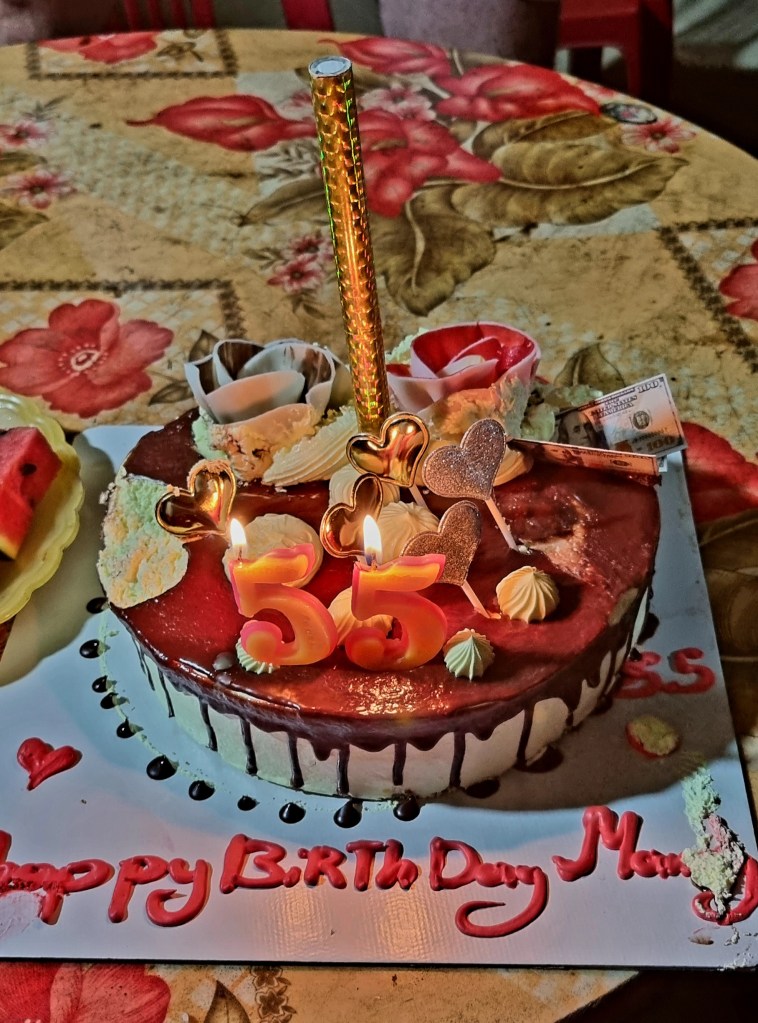
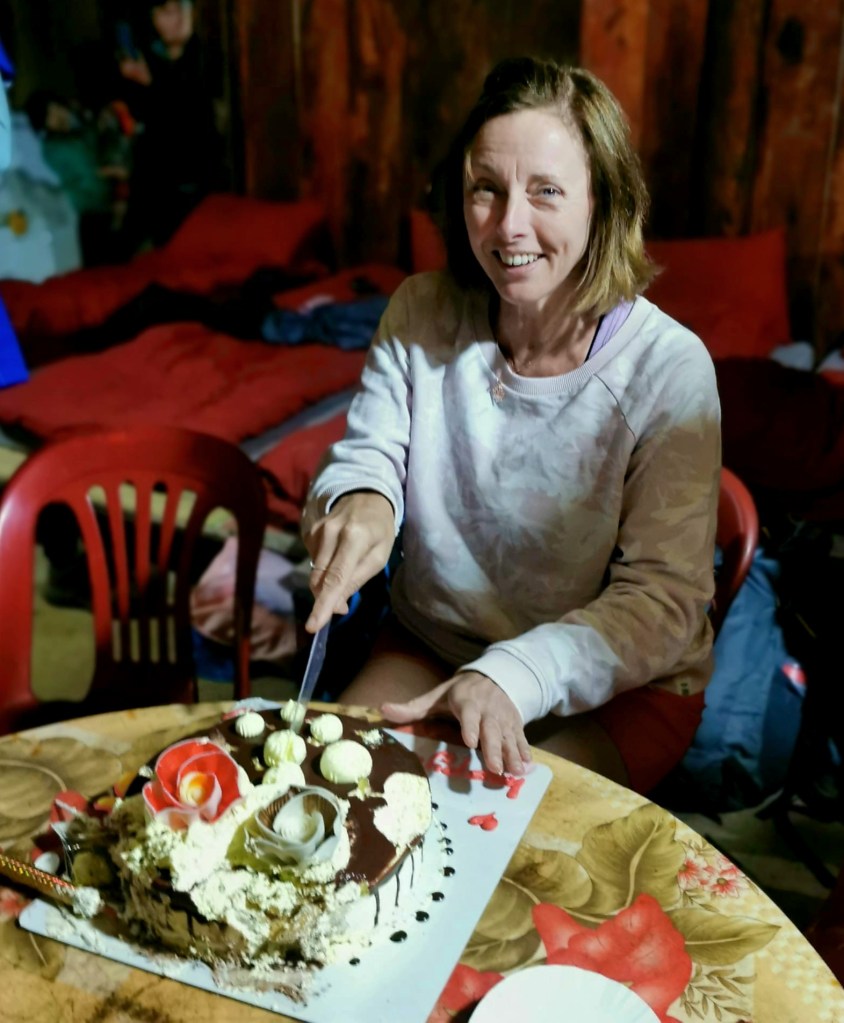
Chris and Nhan had arranged a birthday cake for Mandy, and amazingly, it arrived completely intact. I have no idea how it was transported to such a remote place without any damage.
After a delicious dinner, Mandy cut the cake, and it was shared out with everyone. The children really enjoyed it. It was a really nice orange and coconut flavour.
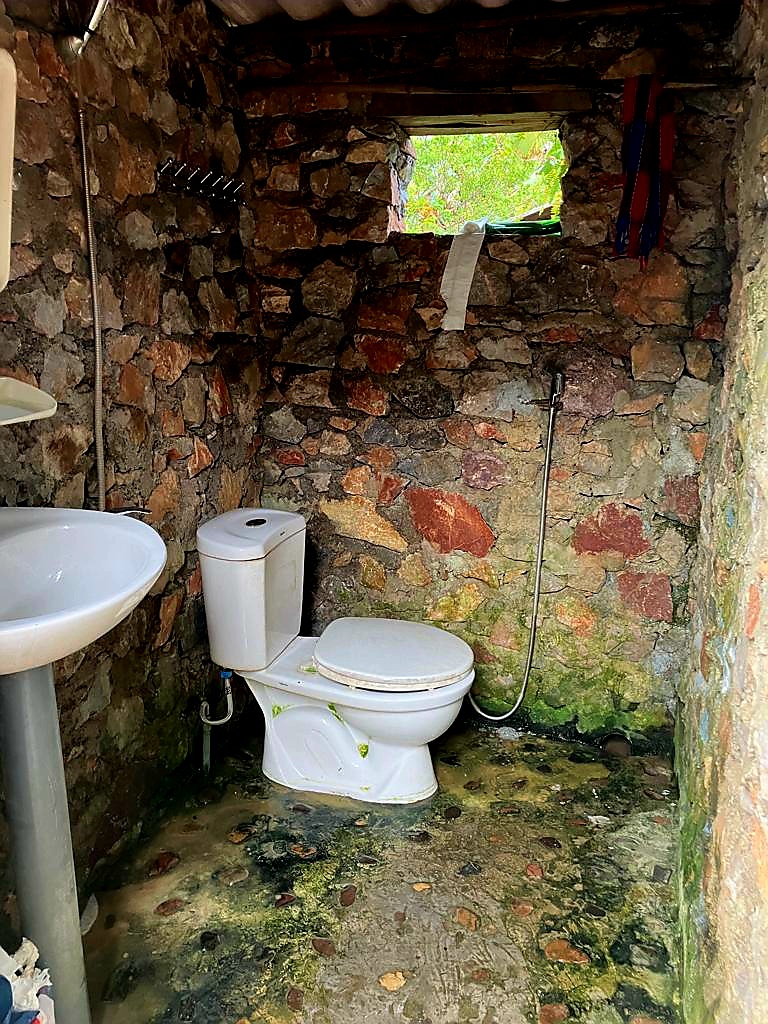
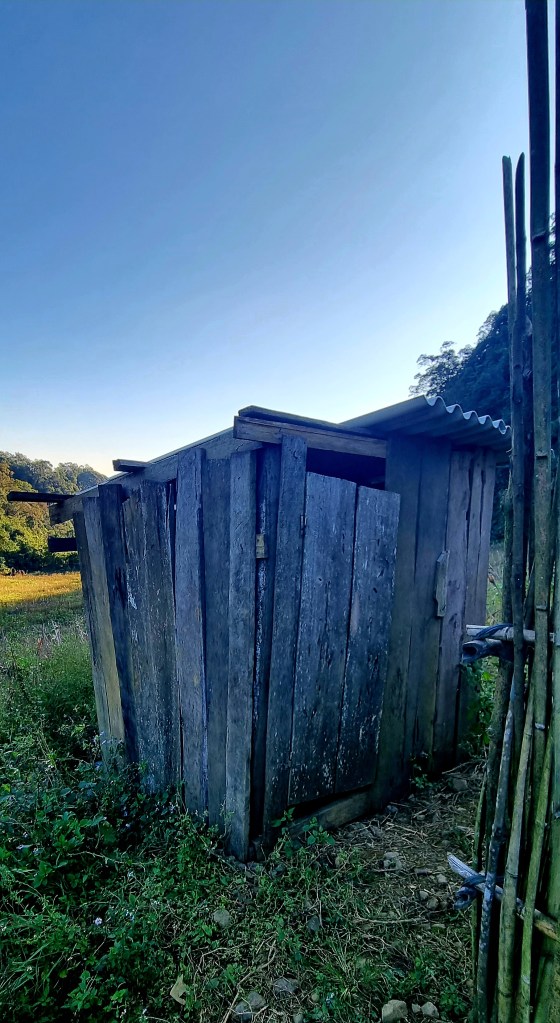
The toilet was in a shed, quite a distance from the house. But it was a normal toilet, but you had to chuck water in from a bucket to flush it, and then the waste just emptied into the field behind.
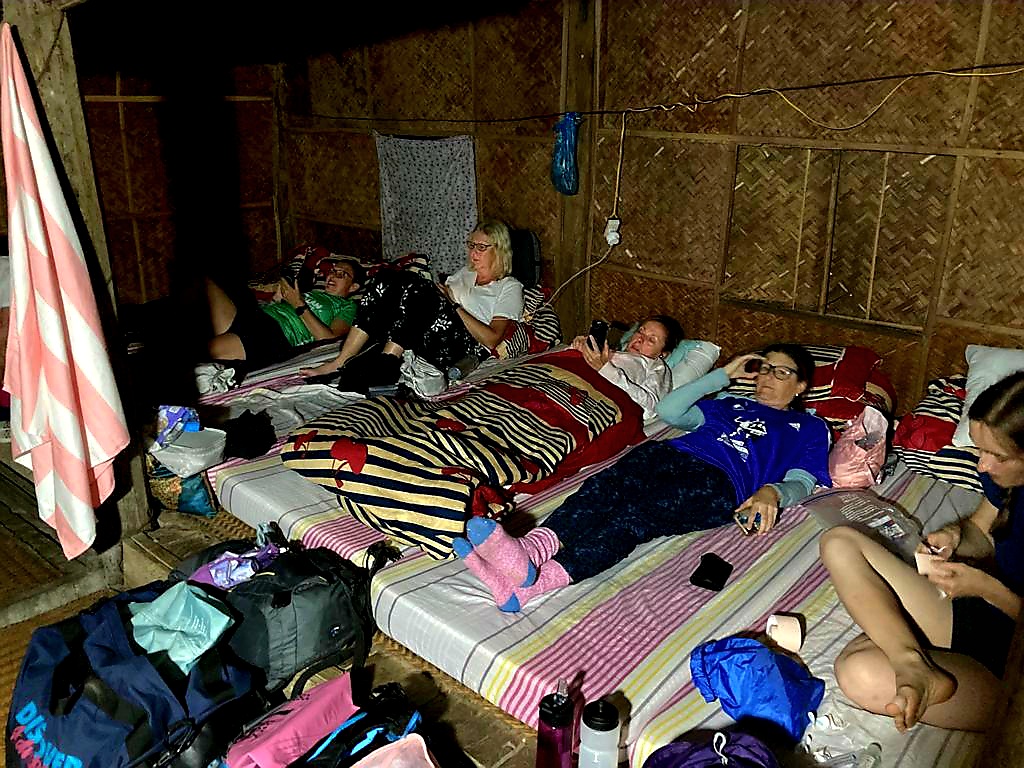
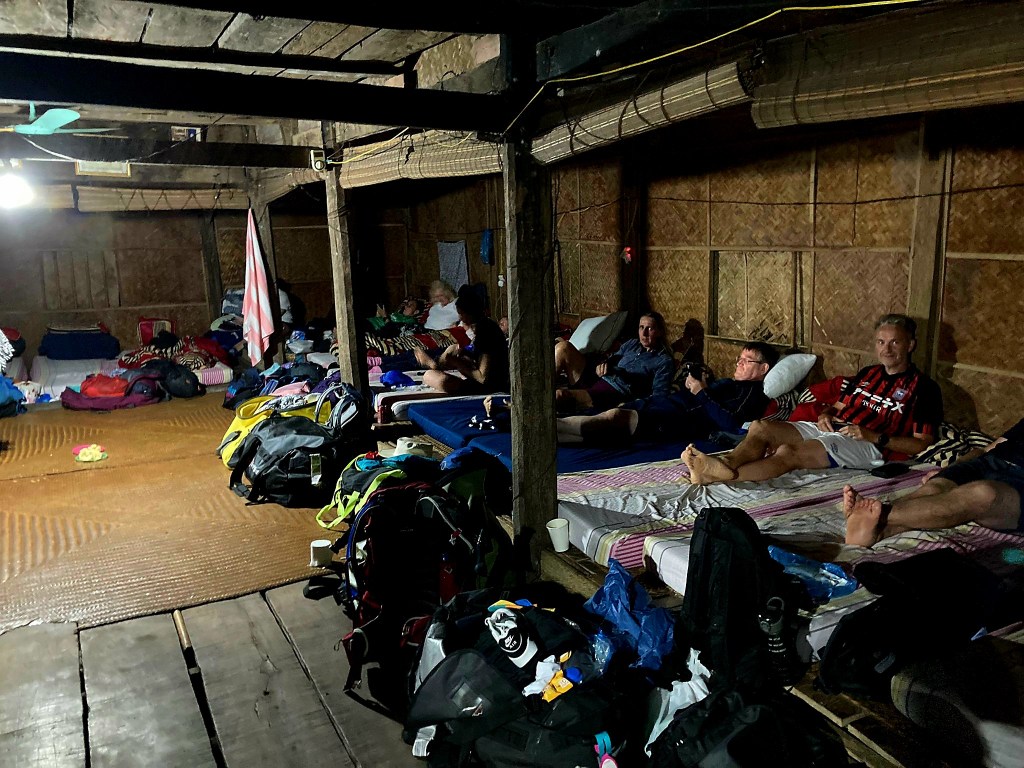
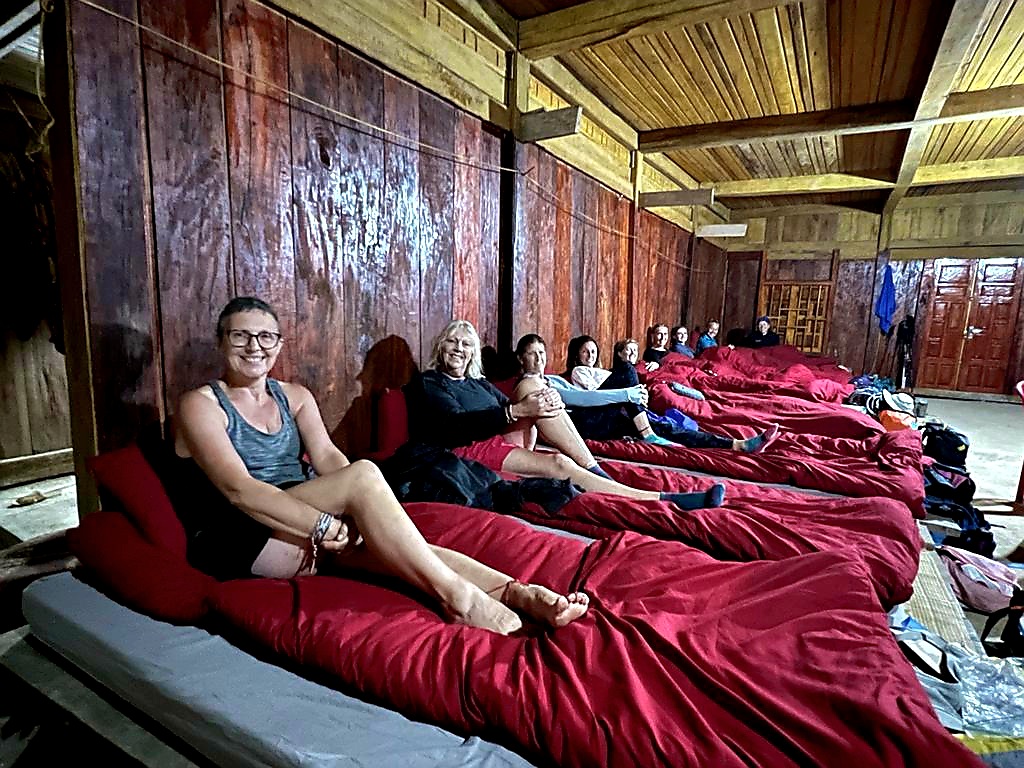
And then it was time for bed. The duvets felt a little bit damp, so most of us slept in our sleeping bag liners. Men and women slept on different sides of the room out of respect for the family.
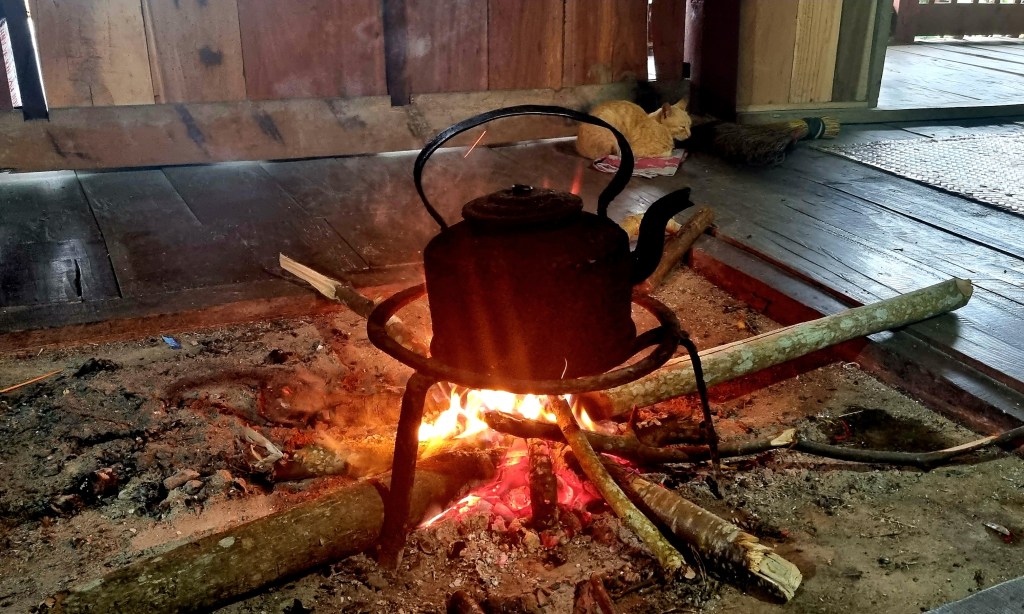
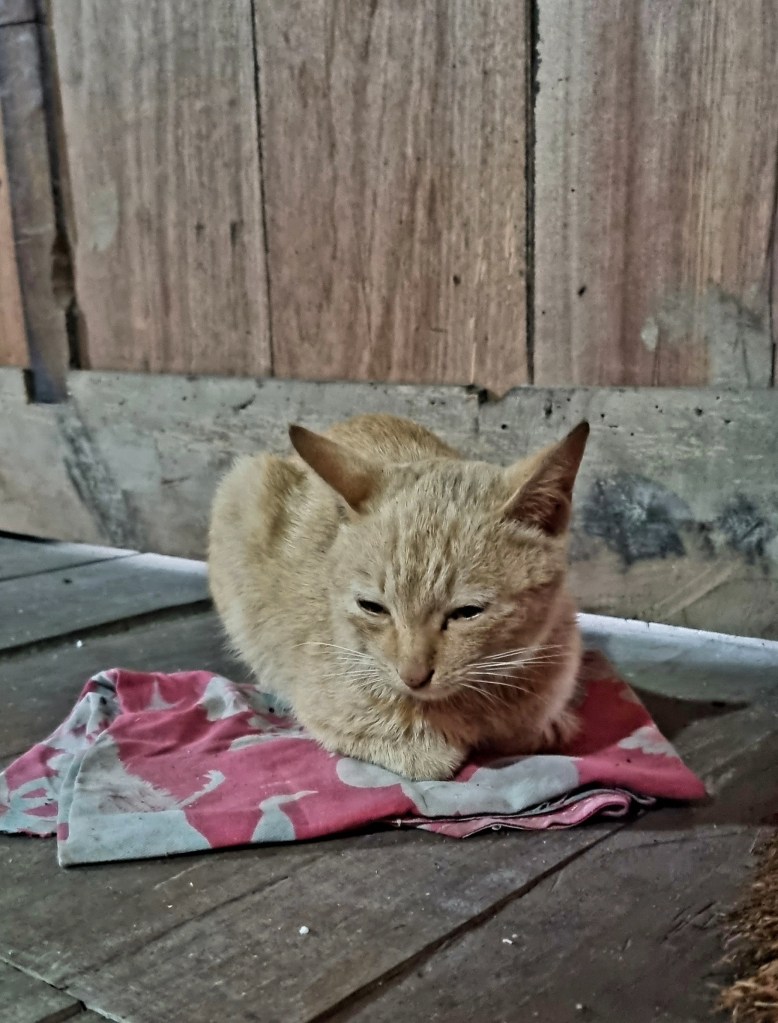
I didn’t sleep that well as my mattress was uncomfortable, but most of us were awake by 630am. The little cat was lying on a cloth by the fire.
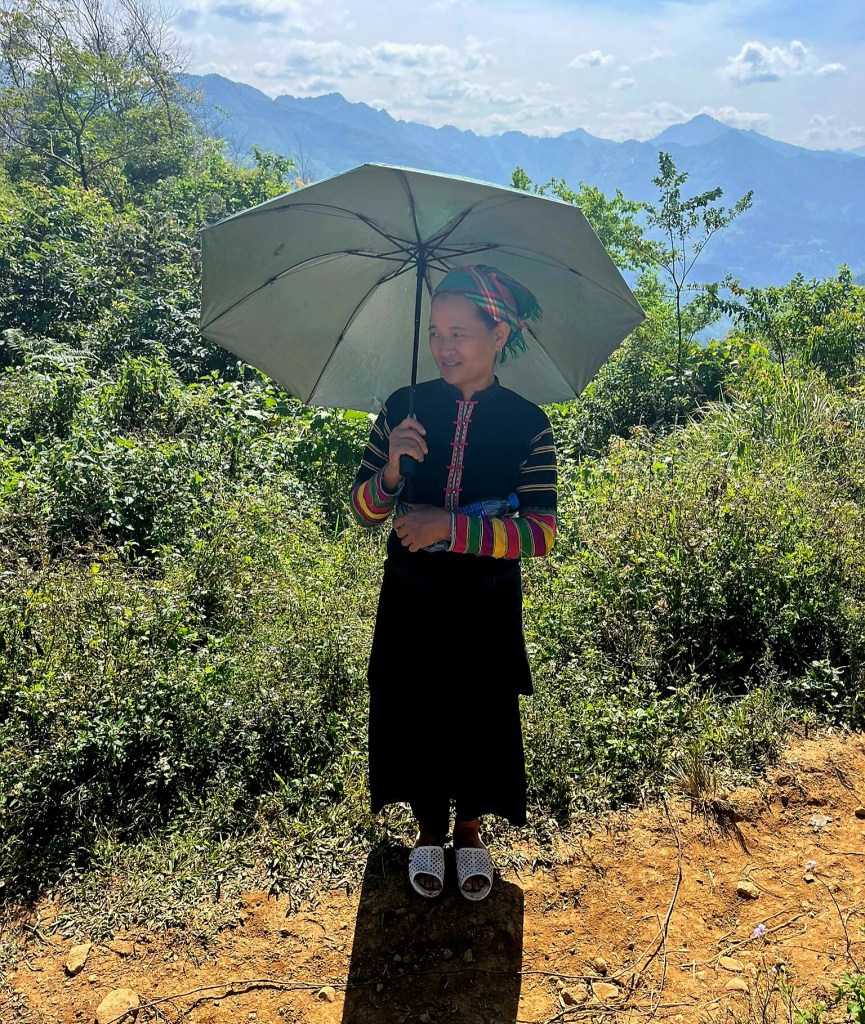
After breakfast, one of the women from the host family led our trek through the mountains. She did the whole walk in sliders and long sleeves and hardly broke a sweat. Again, we walked through some amazing scenery.
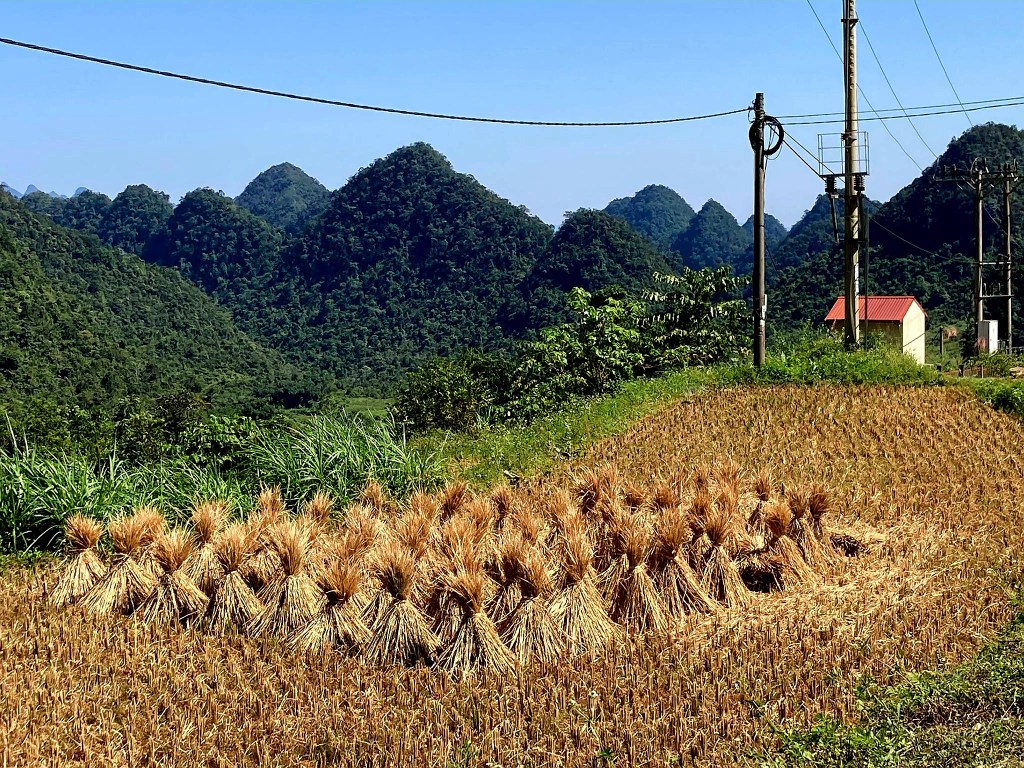
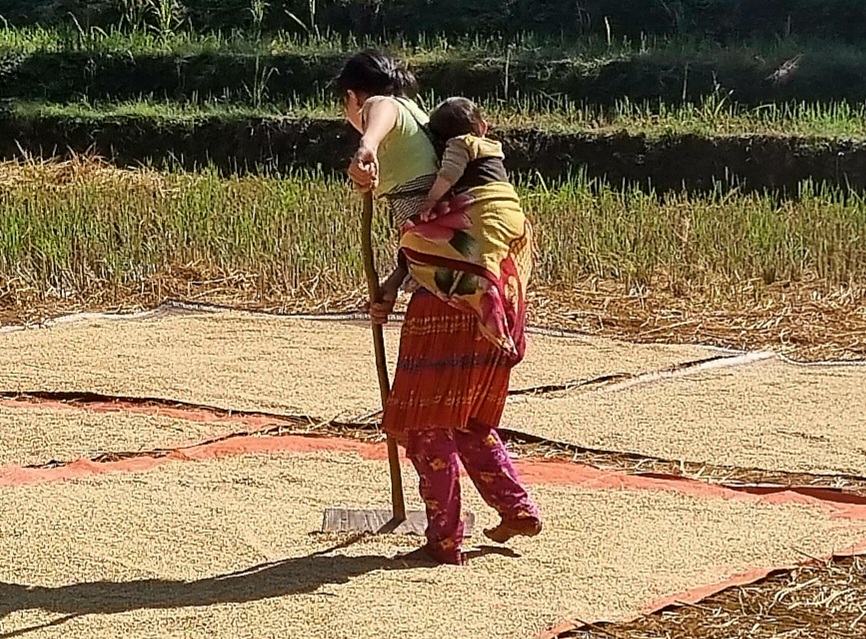
We crossed through paddy fields and cornfields and saw some women working, drying the rice in the sun.
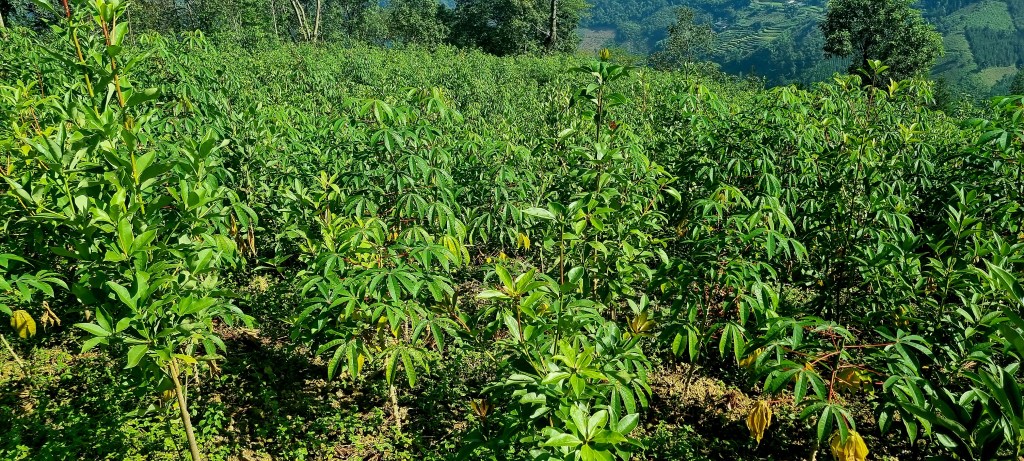
We passed by more tapioca and star anise plants and through remote villages where the livestock were kept in small barns.
The hike was pretty strenuous, with lots of uphill sections and very little flat.
But we had a few rests in-between to help keep our energy levels up.
There were also more bugs and butterflies to spot, as well as cows wandering through the forest.
After trekking for around 3 hours, we came back to our homestay. It’s the one right at the back in the photo below.
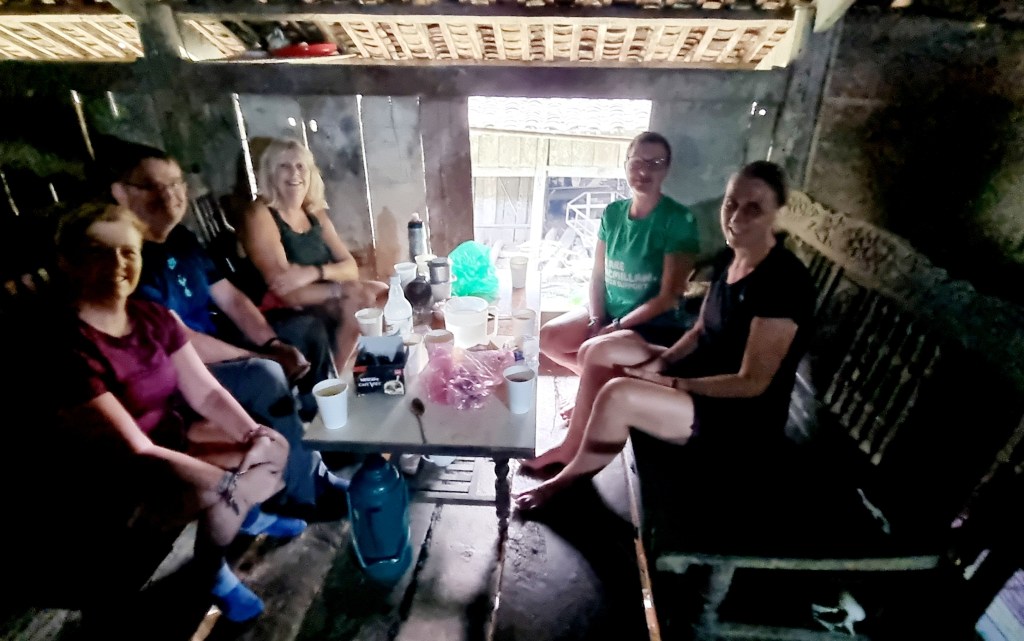
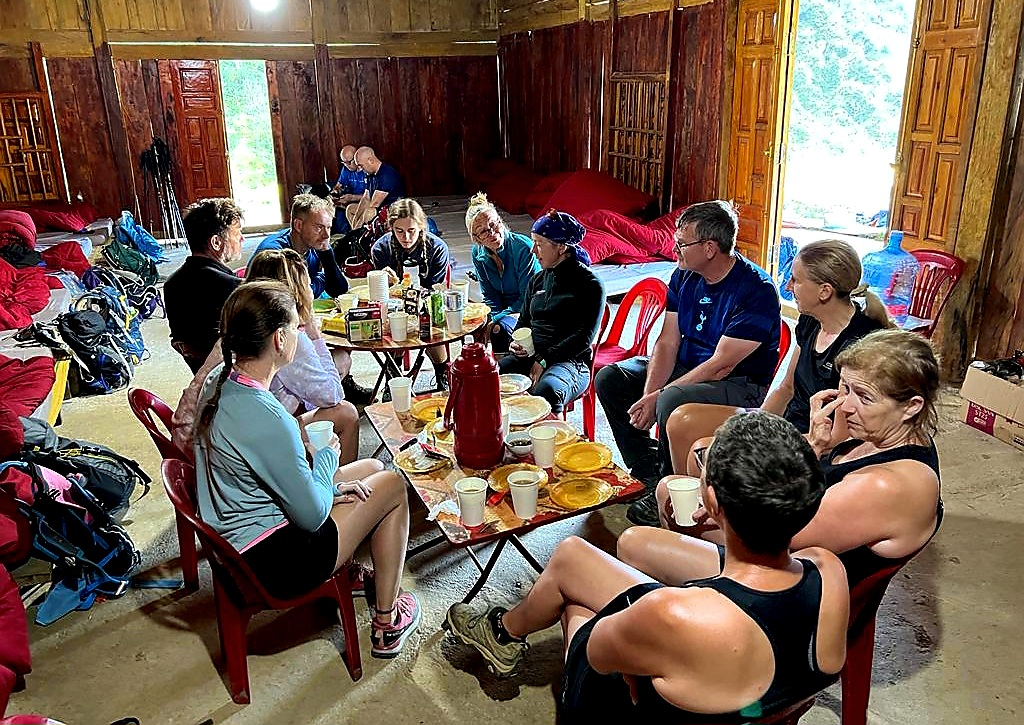
We had some lunch and a cup of tea /coffee before embarking on the afternoon activities.
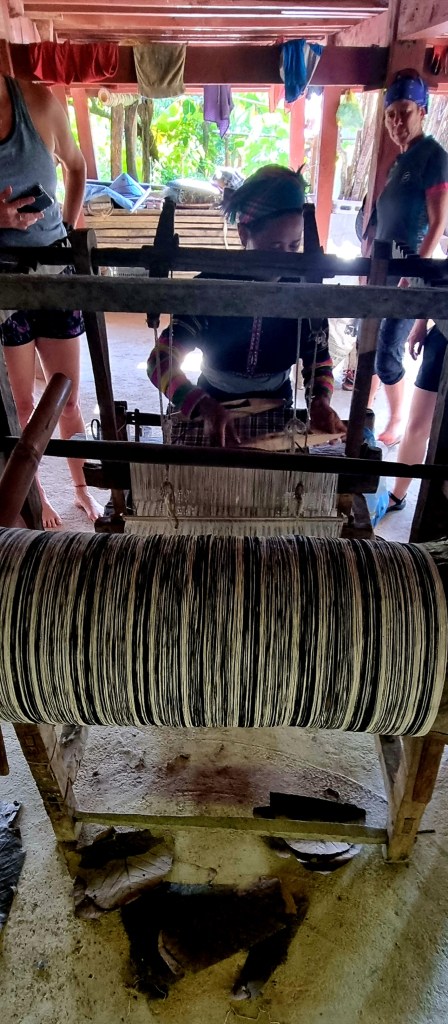
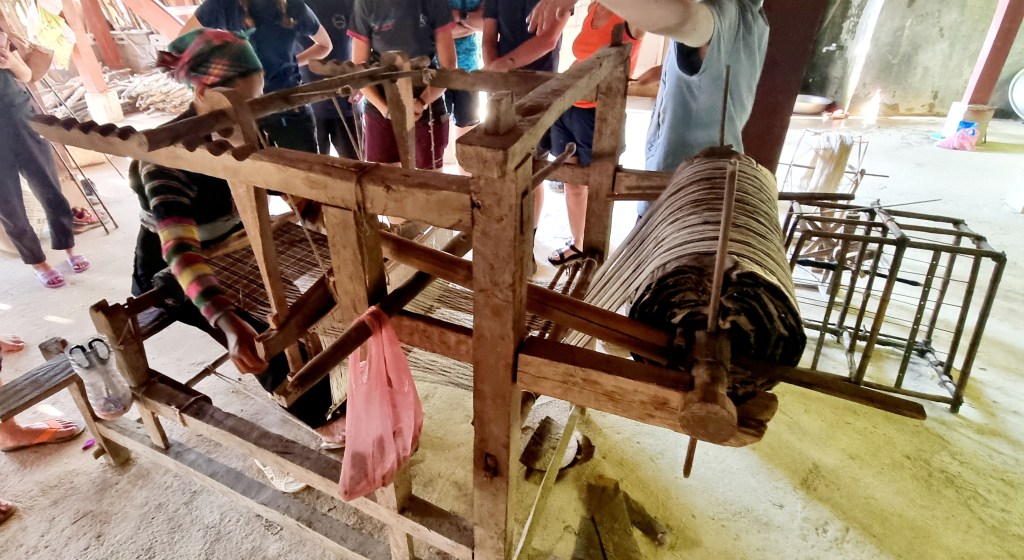
The ladies of the family showed us how to embroider the bags and also how to weave using a very basic weaving machine. Some of the group had a go at weaving.
A number of the older generation in Vietnam have black teeth. Partly this is due to the fact that they don’t brush their teeth and can’t afford to see a dentist – there are always toothpicks on the tables in Vietnam. But it is also due to the fact that they chew tobacco leaf filled with ground betel nut or betel leaf and limestone,allegedly to be able to keep their teeth longer. The betel nut and leaf juice makes their teeth red from and then over time, black. Betel is addictive.
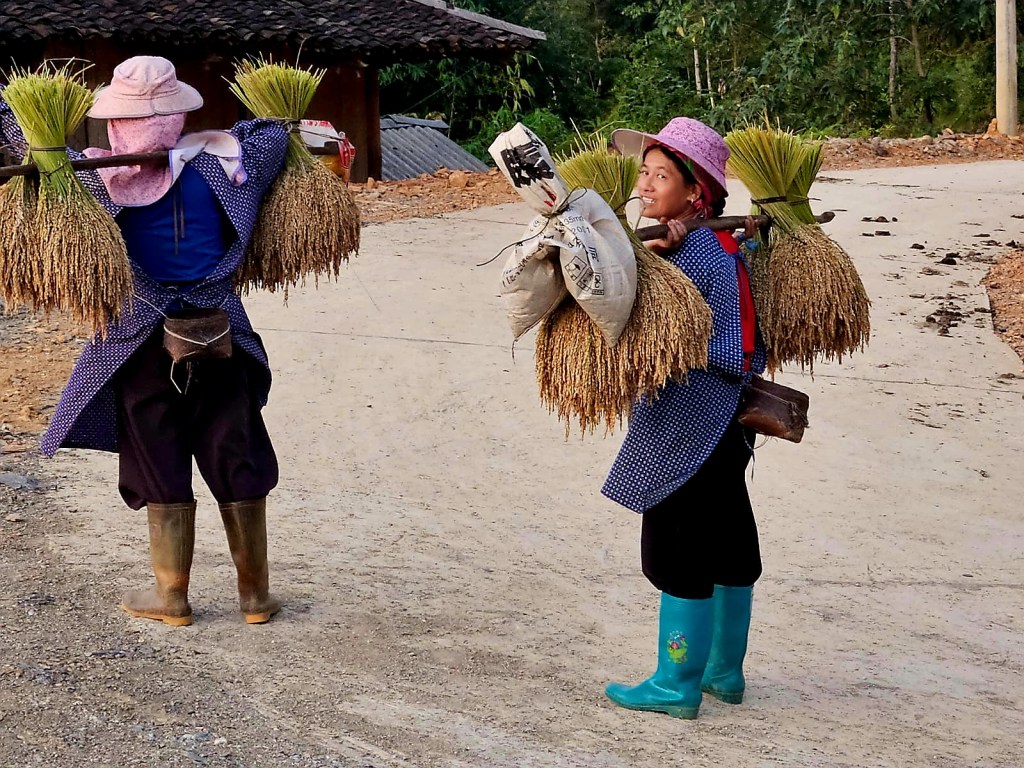
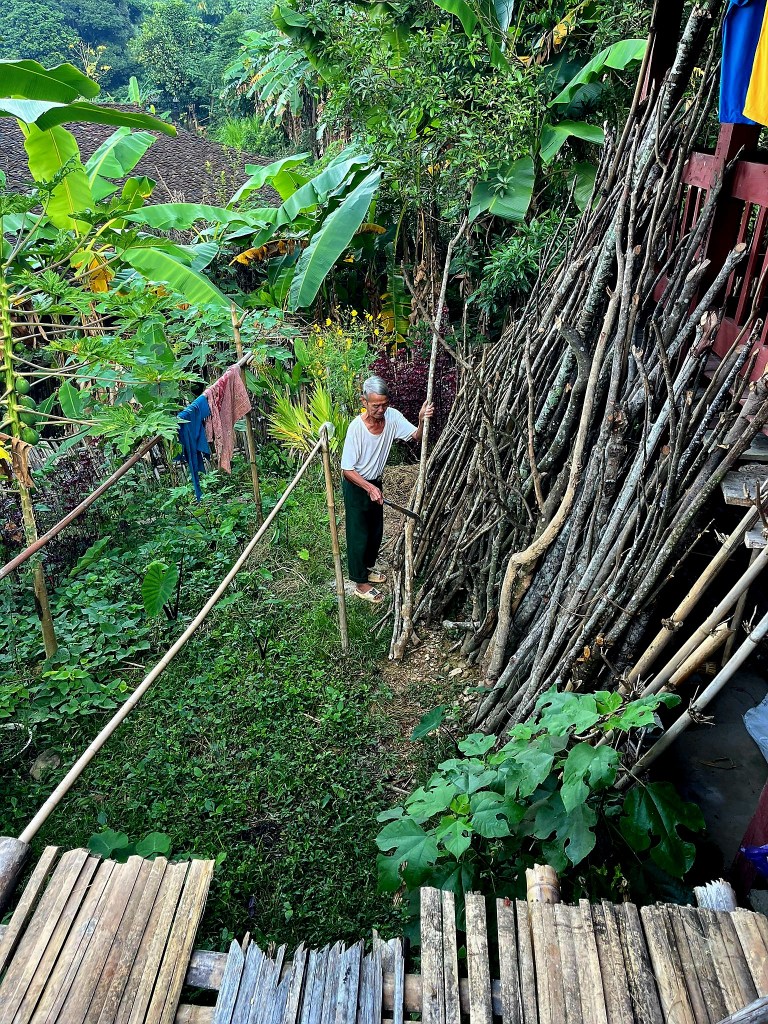
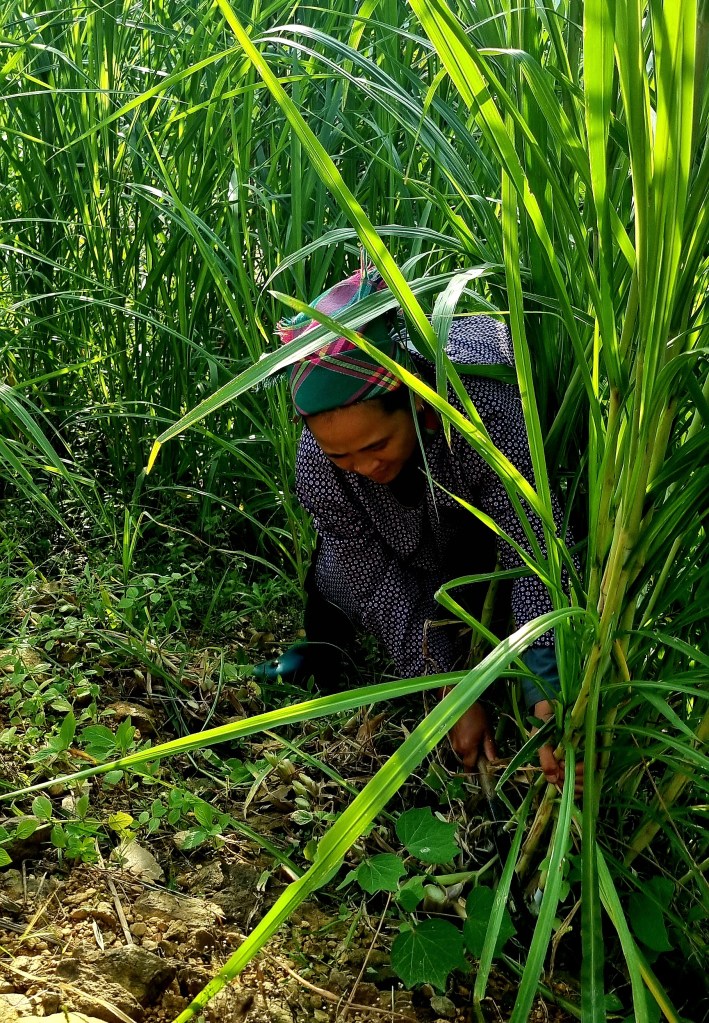
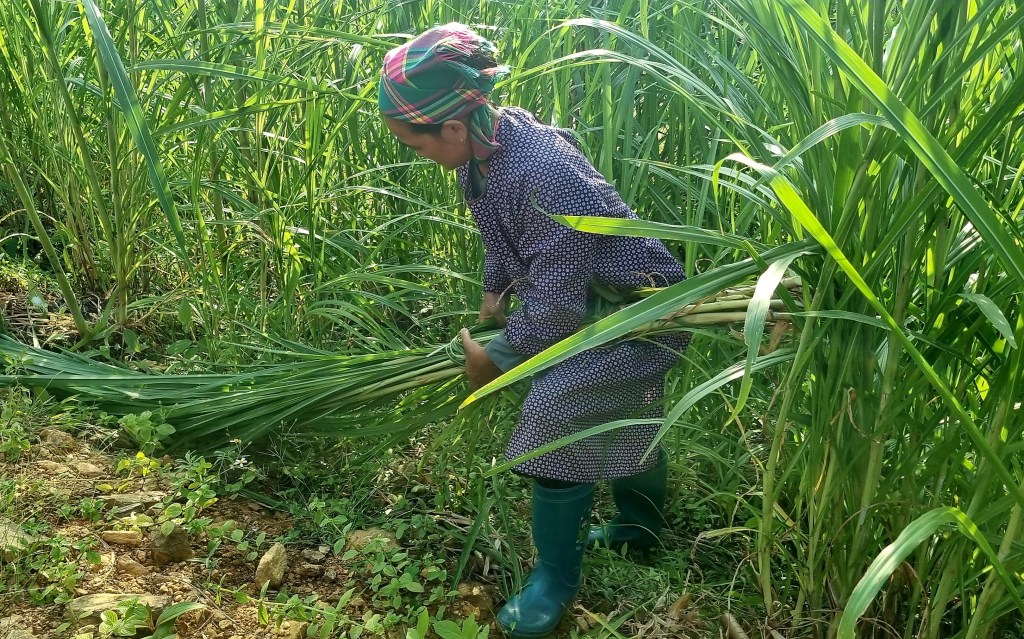
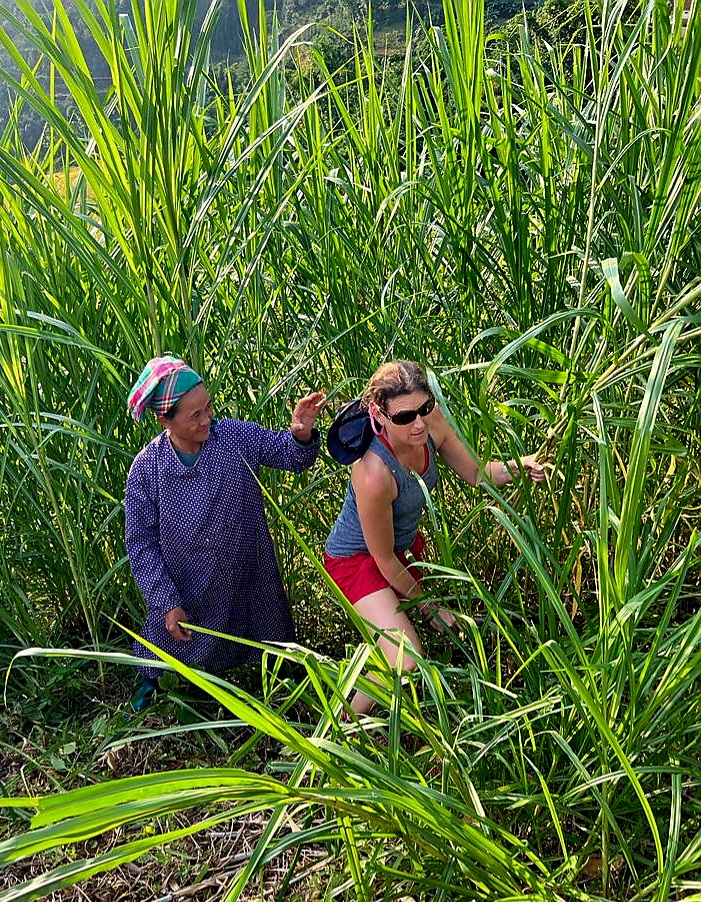
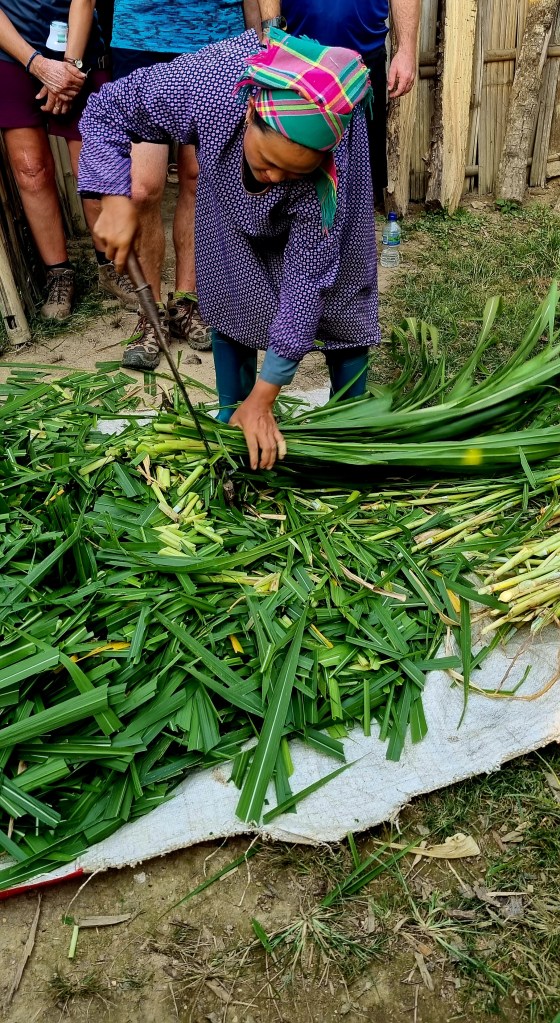
And then it was time to go out and cut some grass. In the mountains, it is mainly the Vietnamese women who do all the hard physical work in the fields,as well as looking after the animals and children. But we did see the elder man of the house doing a bit of chopping too.
A number of women who live in the mountains often end up committing suicide. When the women get married, often at a young age (14+), they move to their husband’s house. They are often mistreated by their husband or his family. If they were to get divorced, they would have no income and nowhere to live. They would rather kill themselves. Only 7% of the Vietnamese population get divorced.
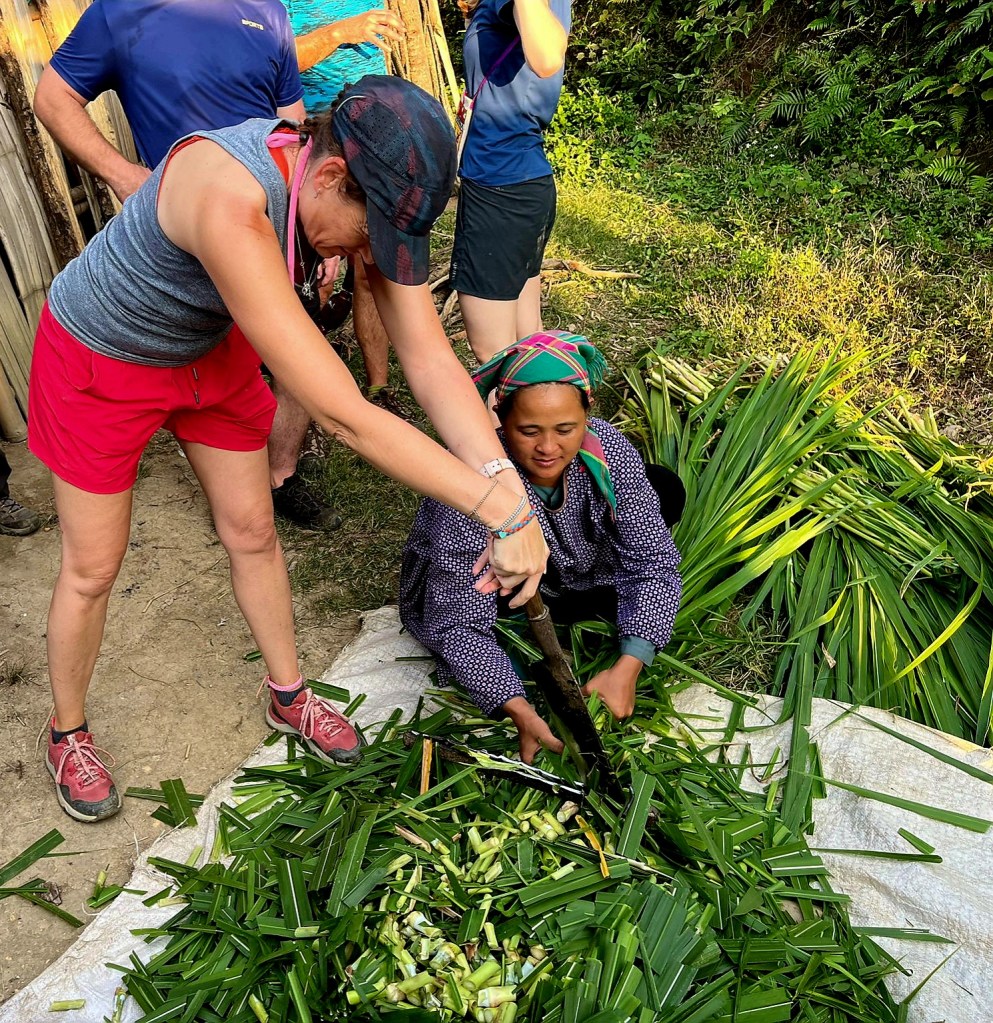
One of the ladies of the family showed us how to cut the elephant grass and tie it up into a bundle.
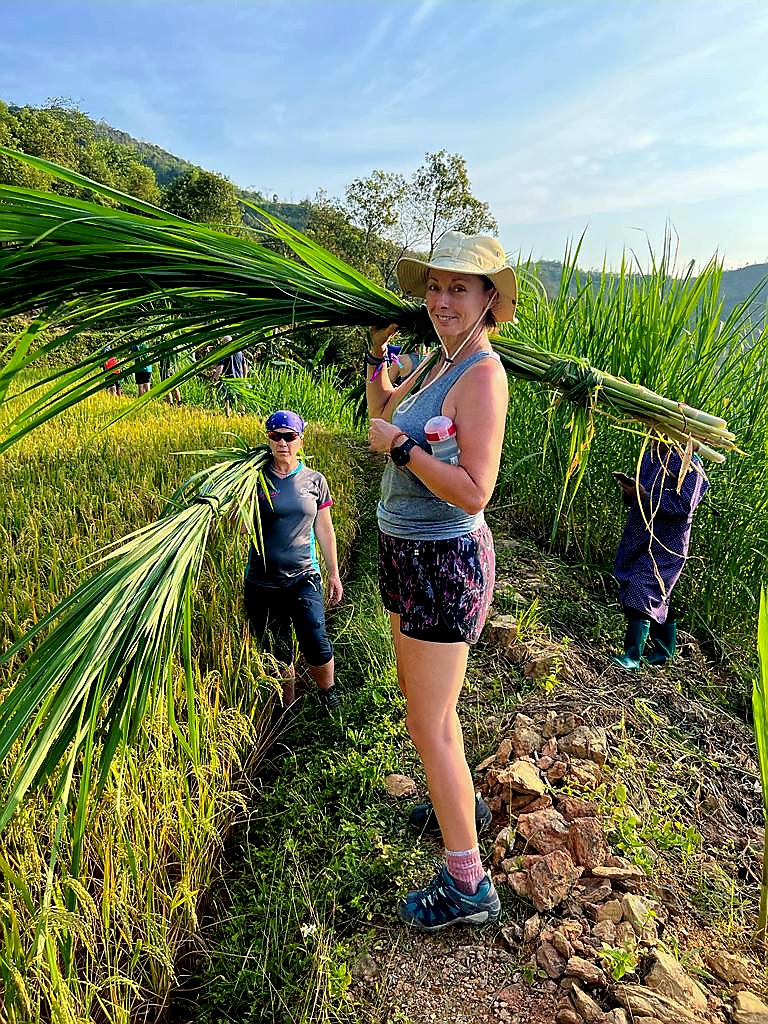
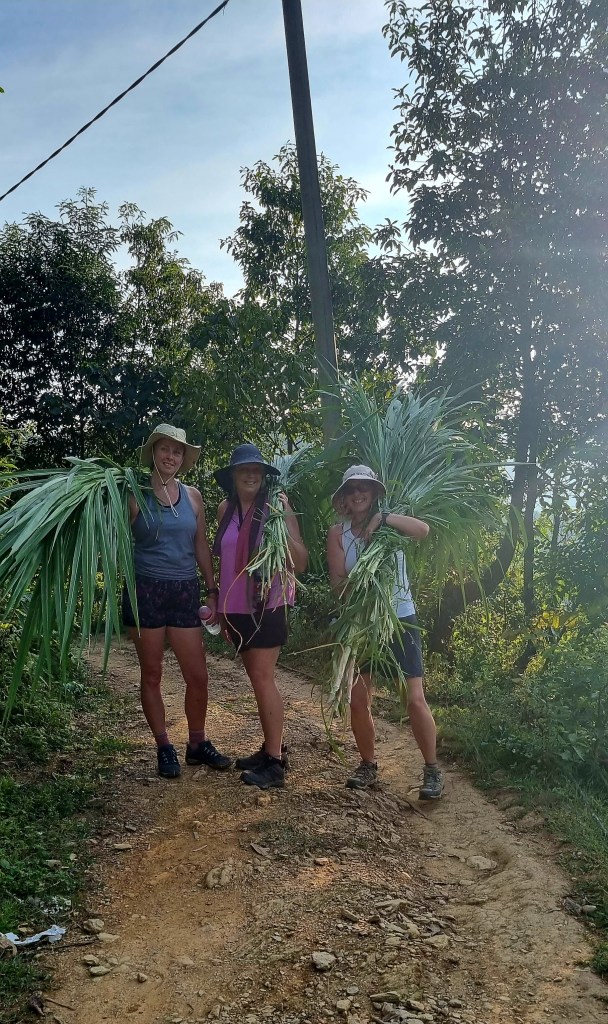
And then we were all able to have a go. It was easy to cut the grass, but it was backbreaking work in the heat.
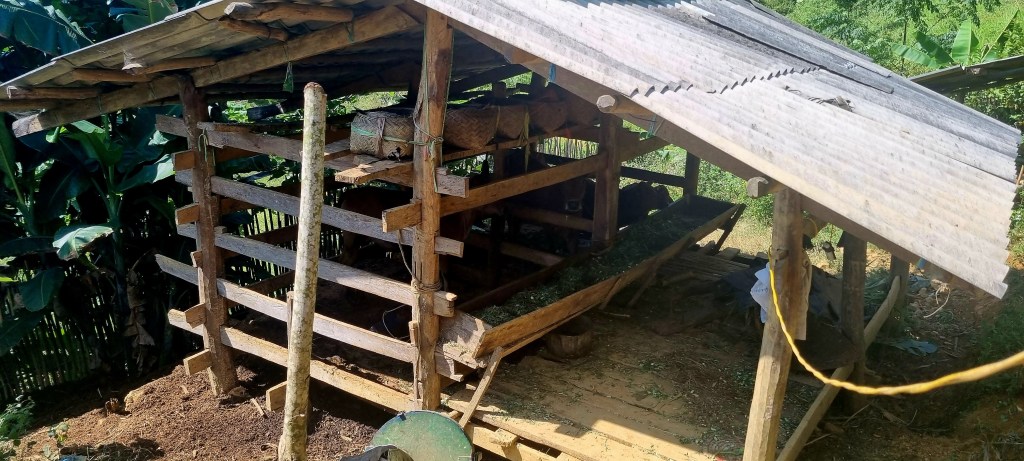
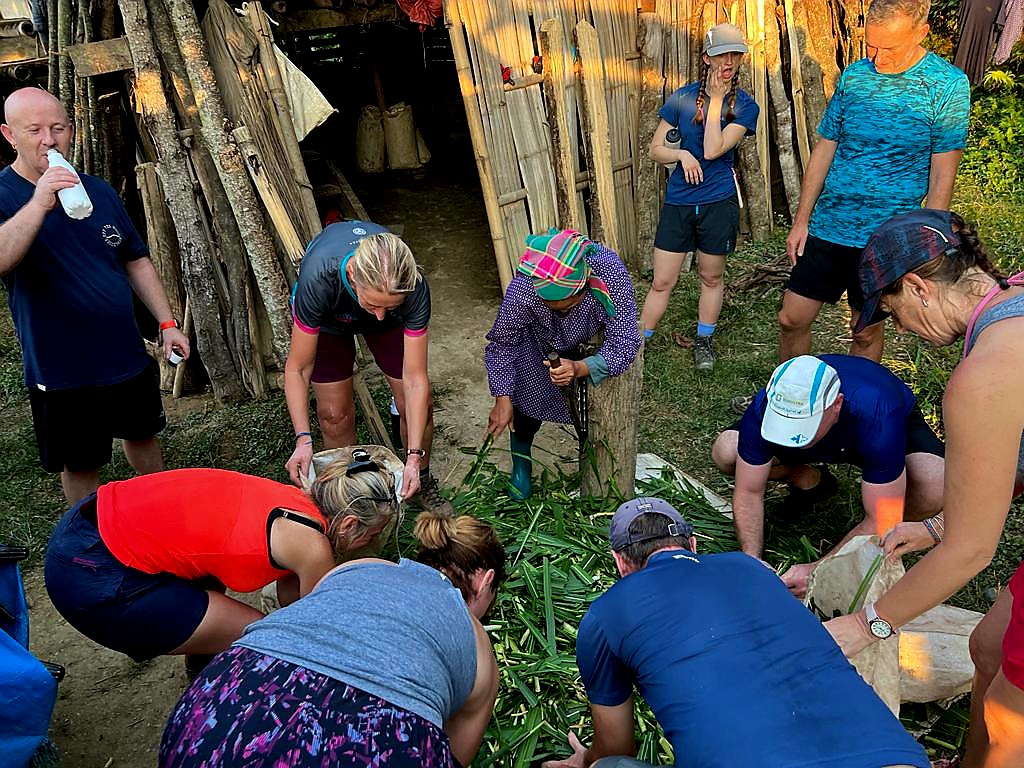
We then carried the grass to the barn where it had to be chopped into smaller pieces using a small hand chopping machine. The lady showed us how it was done and then fed the grass through as we chopped. Normally, she does both the feeding of the grass into the machine at the same time as chopping it. It was hard work.
Once the grass was all chopped, it had to be bagged up and left to dry for a few days.
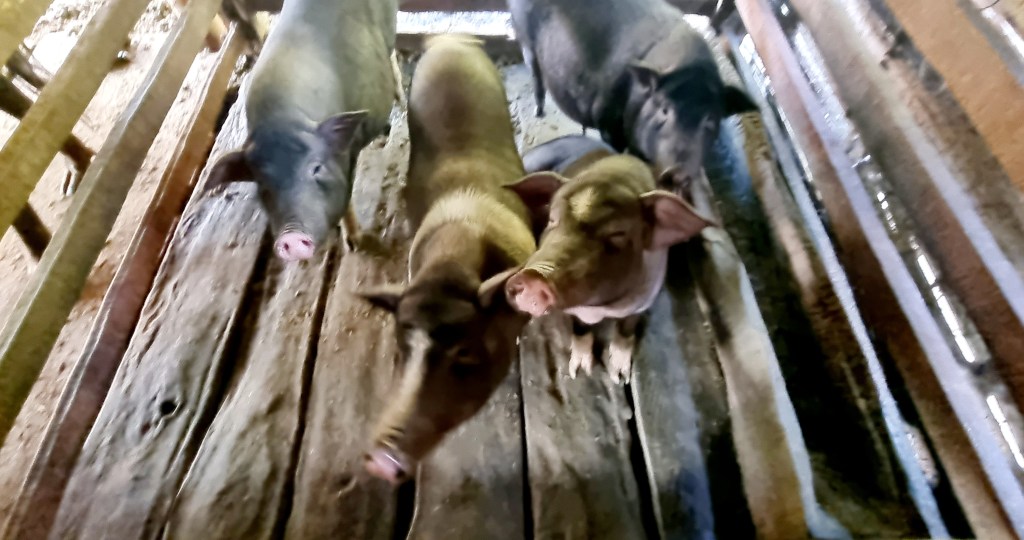
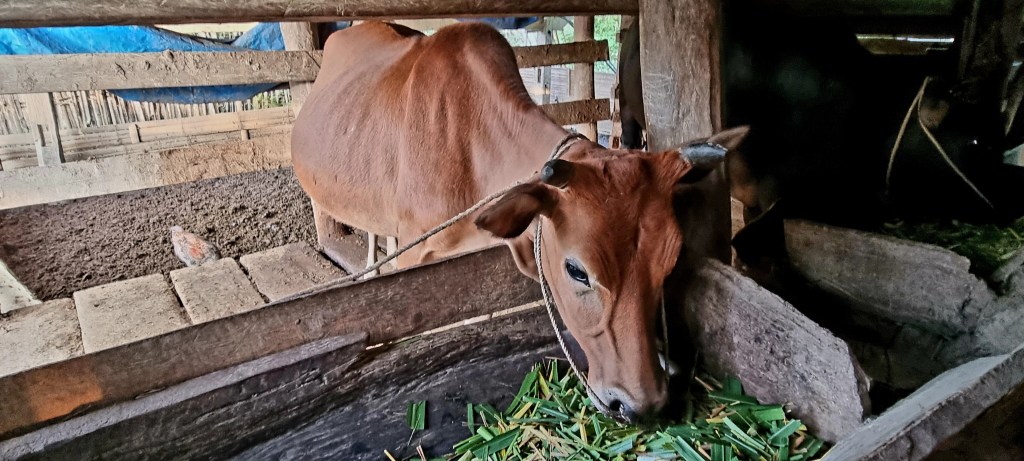
And then it was time to feed some already dried grass to the pigs and the cows.
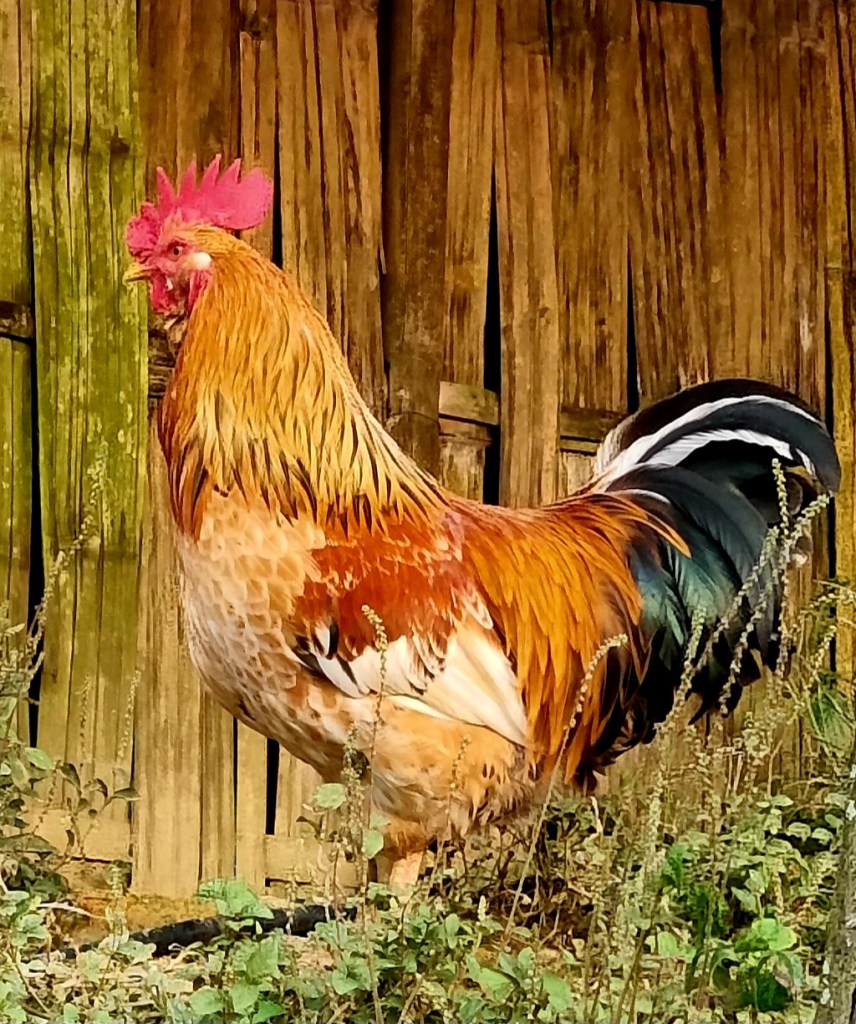
The chickens were also hanging around for some food.
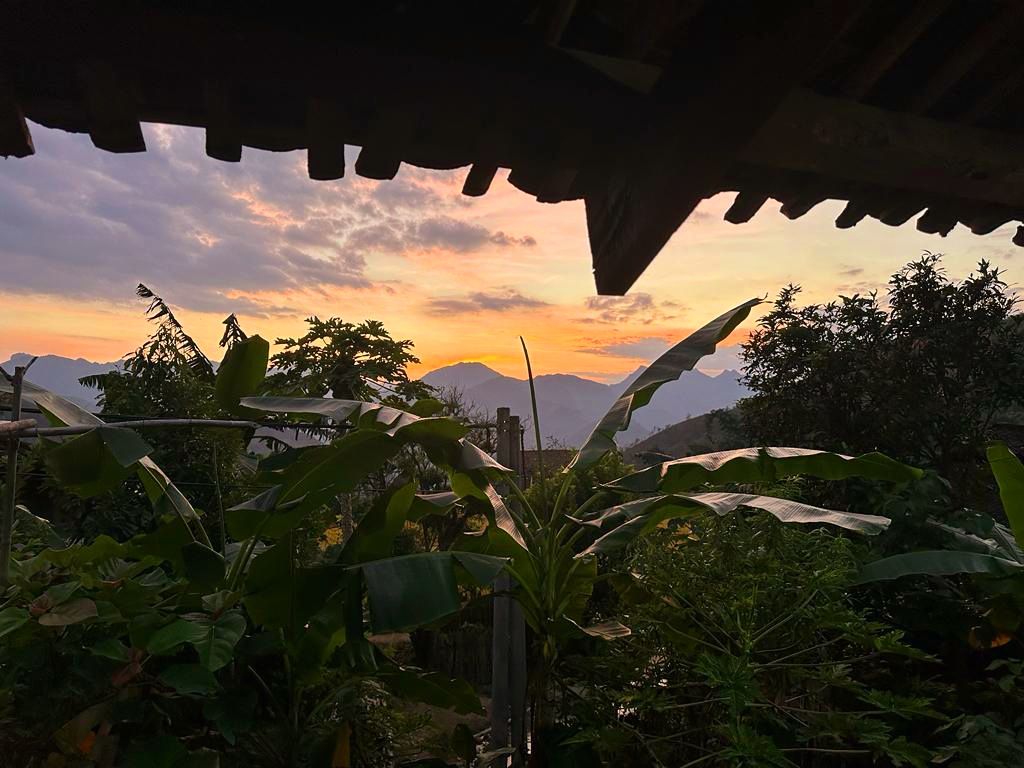
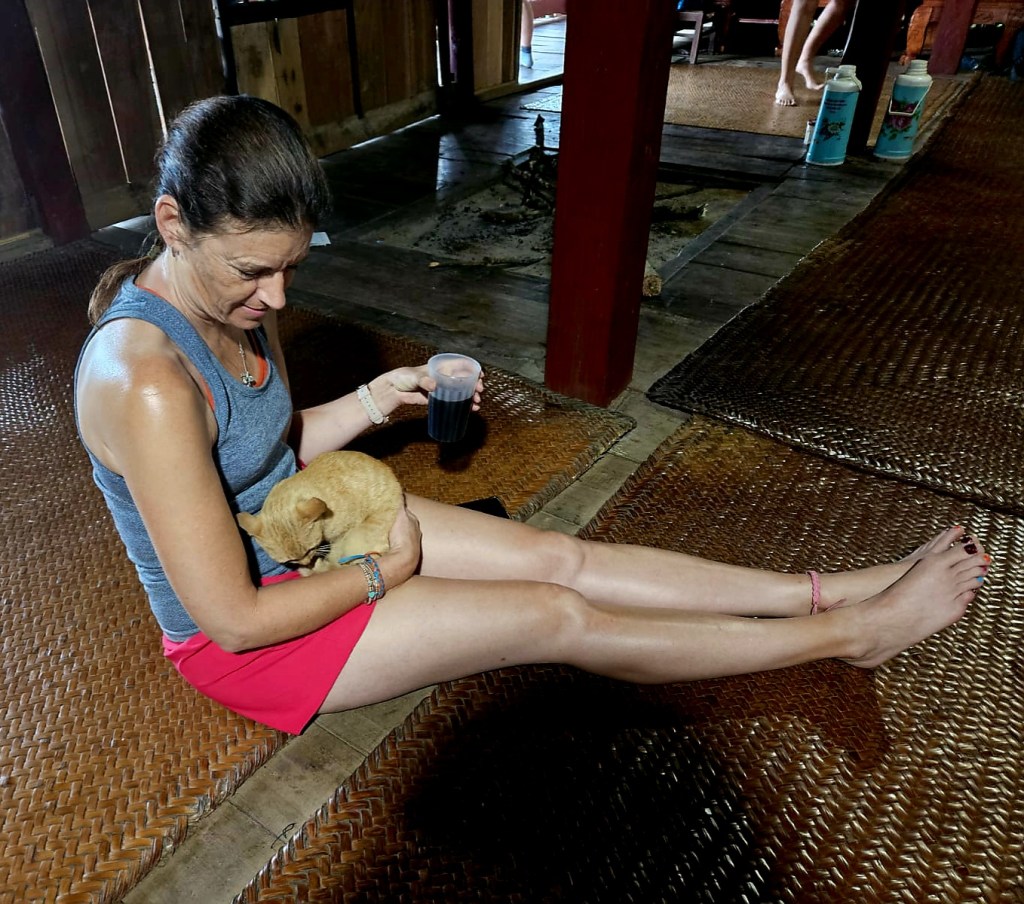
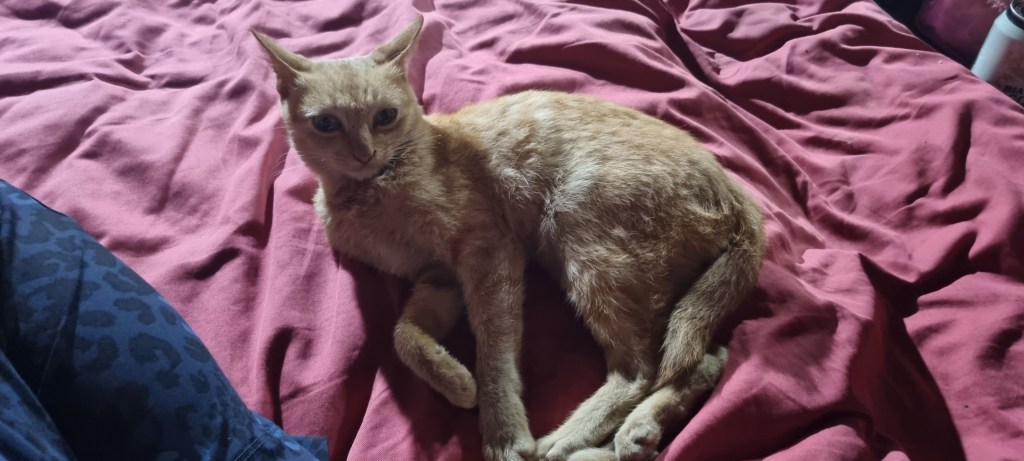
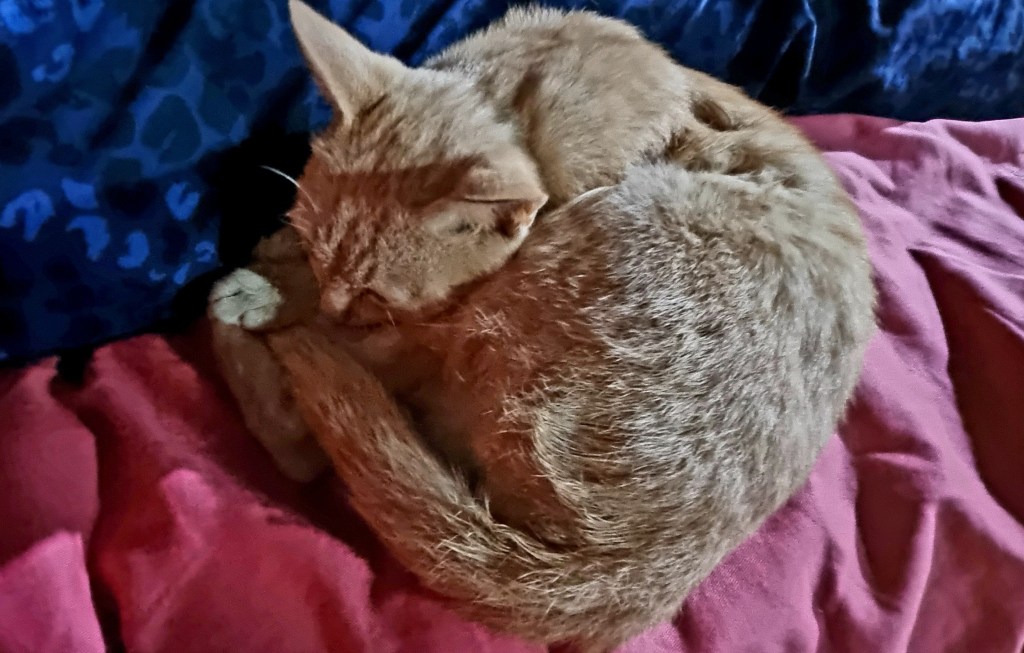
Back at the homestay, the sun was setting, and it was time to cuddle with the cat.
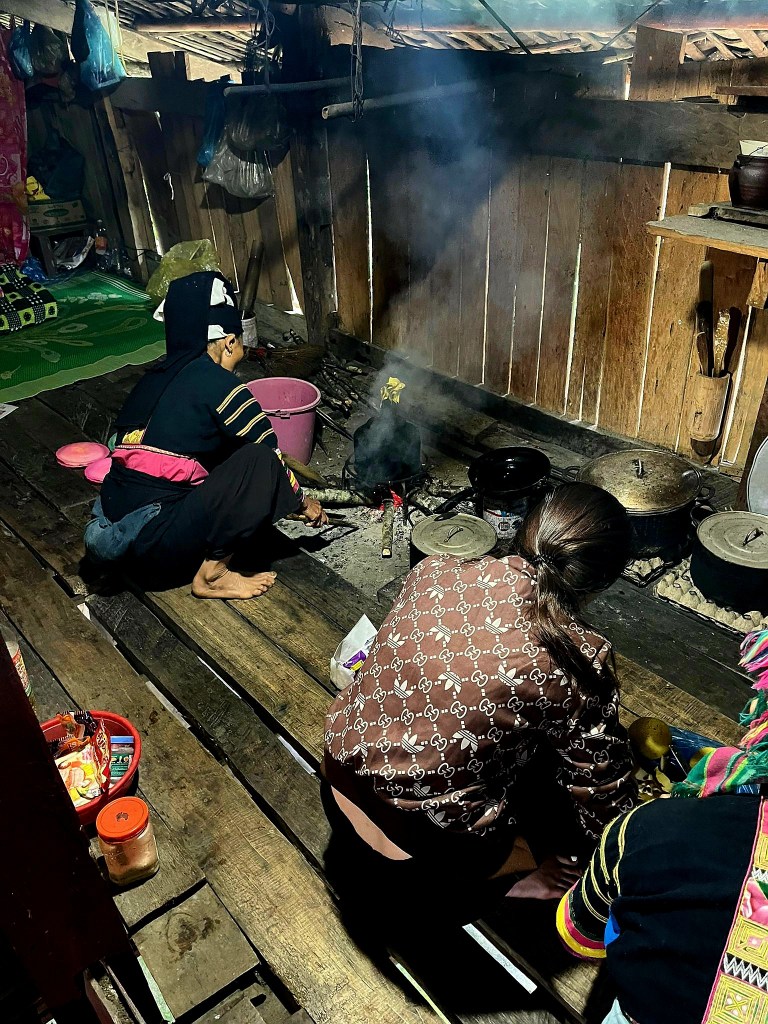
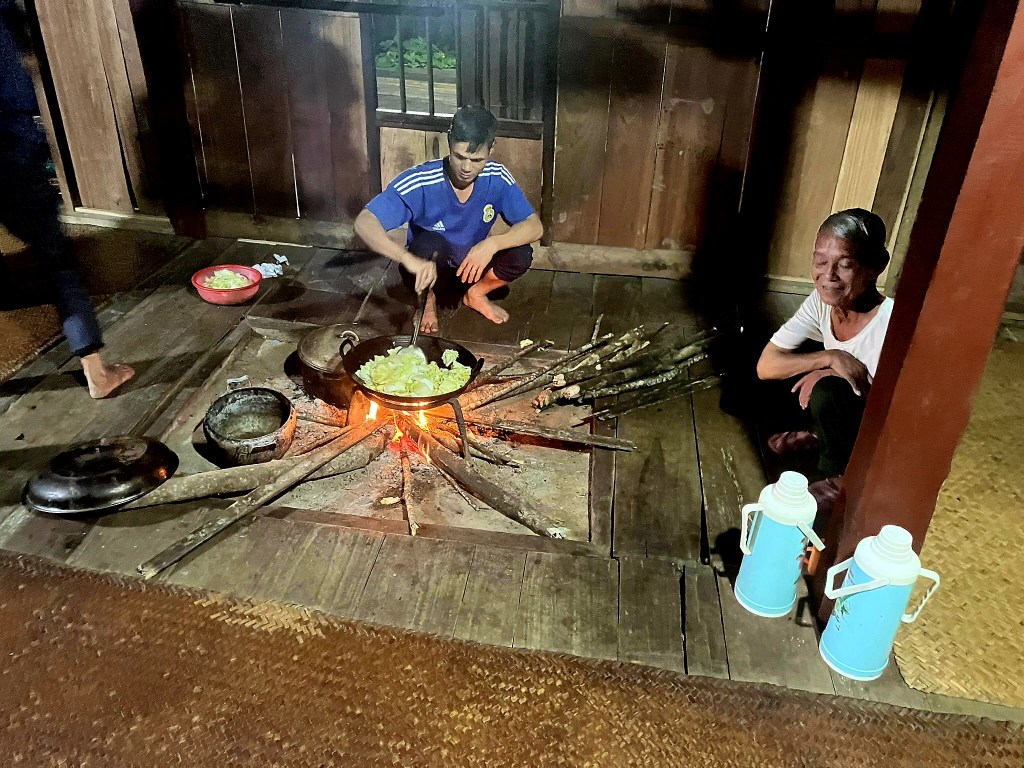
Dinner was once again prepared over an open fire, and it was very tasty, especially the spring rolls.
After dinner, as it was still early, we played a game of charades. Alex downloaded it on her phone, and you had to guess the person or activity that everyone else acted out. It was quite funny, but we had to be careful not to be standing up with our backs to the shrine in the house as that was disrespectful. In this homestay, the men and women had to sleep on different sides of the room.
Shortly after, we went to bed. The little cat came and cuddled up with me and went to sleep on my bed.














































































 Fun, Fitness and Fabulousness in your Fifties