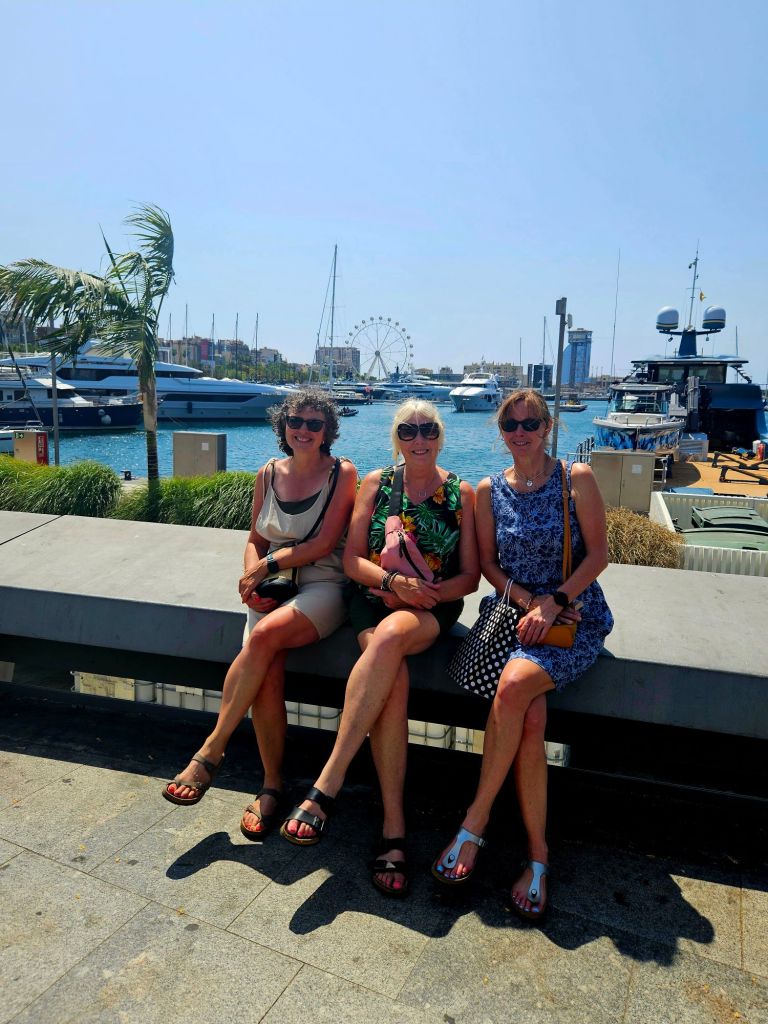
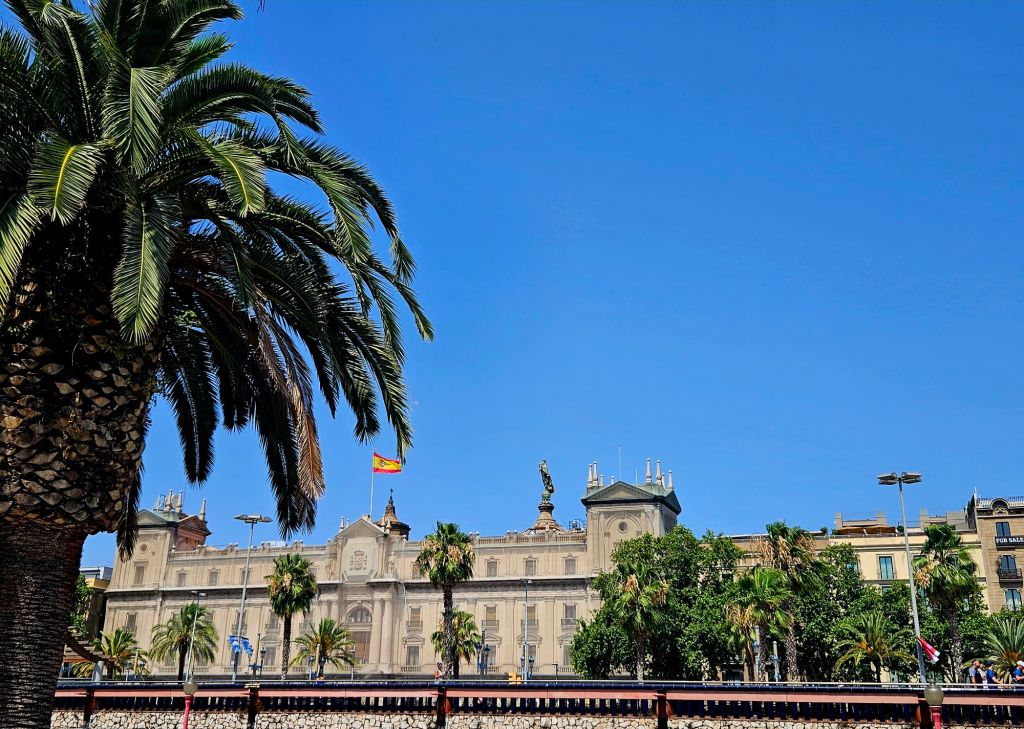
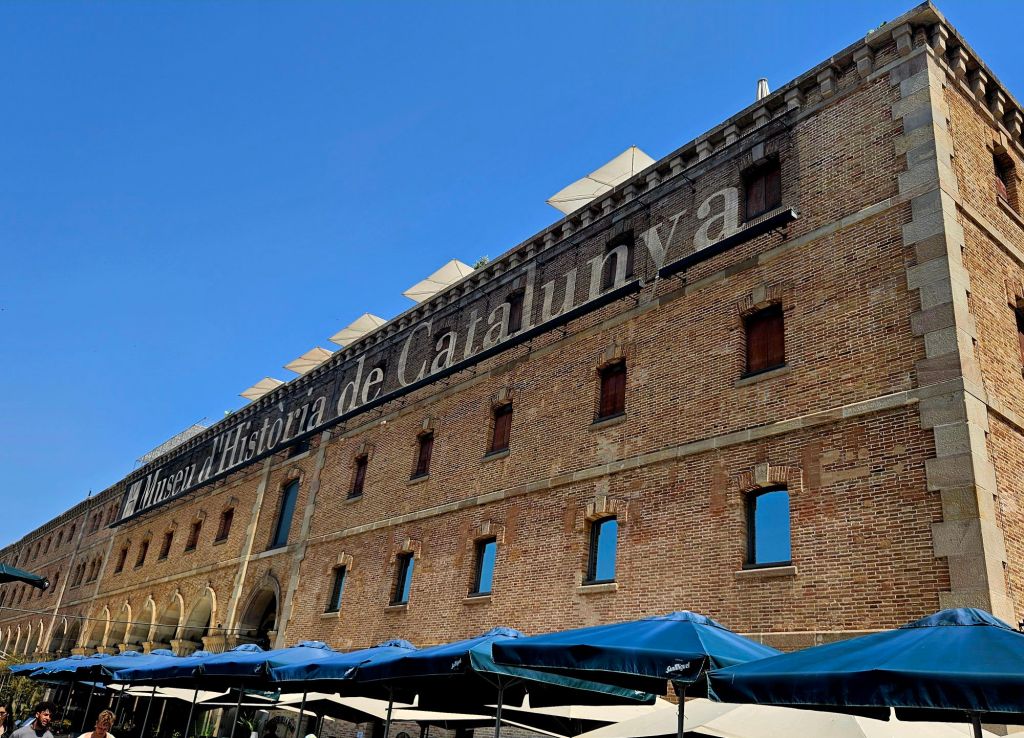
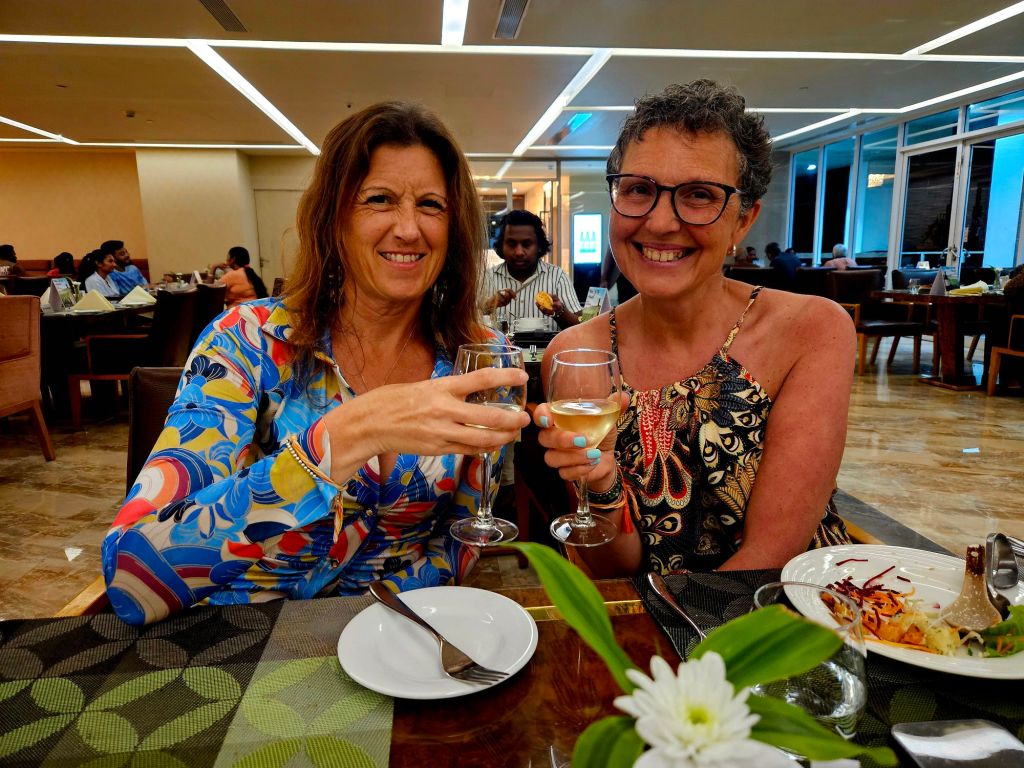
Day 1 – Travelling to Barcelona and exploring

I was in Birmingham for work on Wednesday and Thursday, so on my way down to Mandys, I picked Zoe up. Zoe kindly fed me, and I met her daughters, Millie and Nicola.

It was an easy drive down to Redhill, where Karen was already with Mandy. We chatted for a while before heading to bed.

It was an early start, with our alarms going off around 530am. The taxi picked us up around 620am, I had a last-minute panic as I couldn’t find my phone charger, but it was packed in my suitcase.

Check-in went smoothly – we had 2 hold bags between us. We then headed to the Breakfast Club for some breakfast.

While we were eating, I had a notification that our flight was delayed until 9:50am, originally 9:10am. It then was further delayed until 10:30 and then 11:20. We were all really tired and not looking forward to a long delay. But when we looked at the fight information board, it was saying to go to airline information. After a bit of walking around, we found the information place, and there were a few people asking about the Barcelona flight. Apparently, it was leaving on time, and we had to go to the gate – it was all very confusing. Especially as they had 2 flights with the same number on the flight information board – one saying go to desk and one saying delayed until 9:50am.

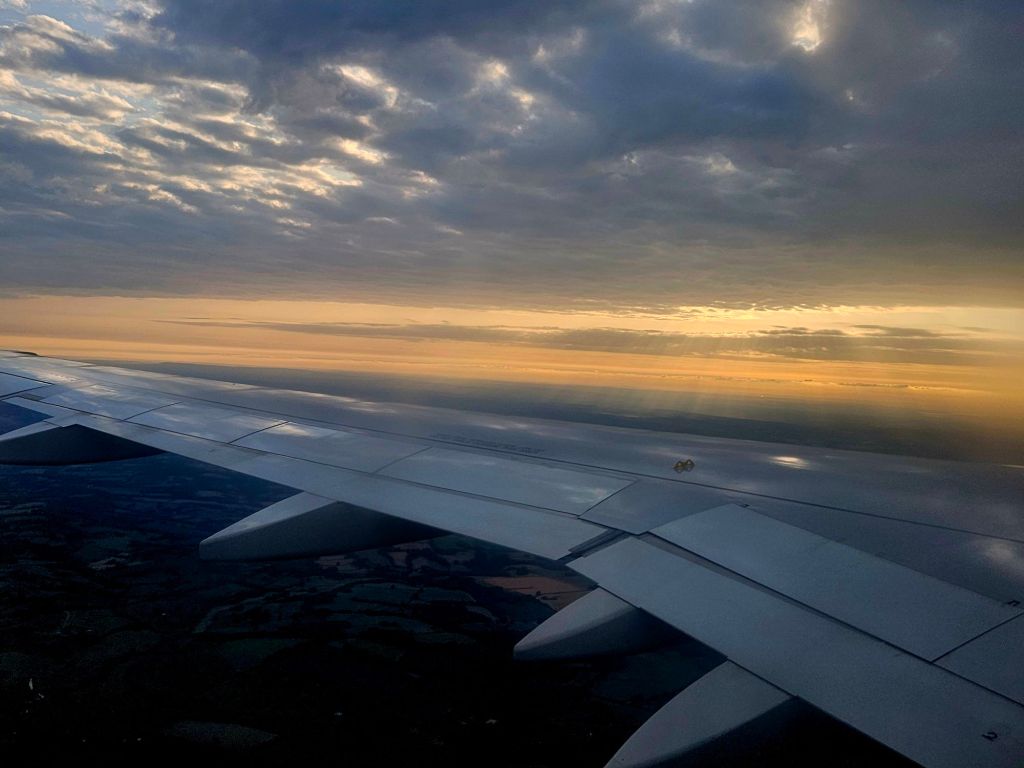
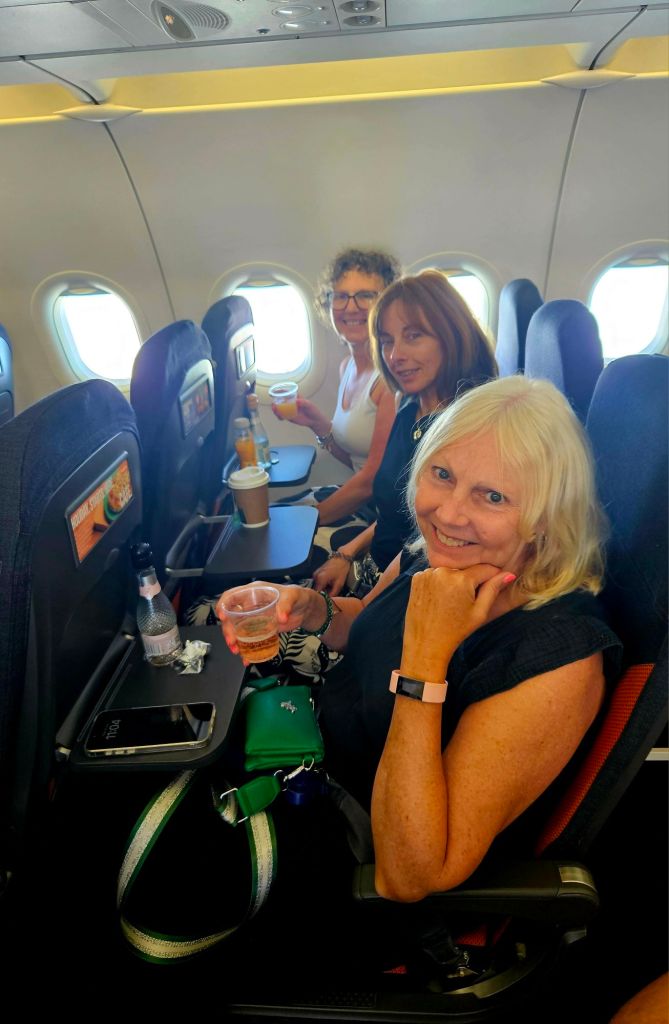
In the end, we left about an hour later than originally planned. I think we all had a little snooze on the plane, and then we had a small prosecco. Unfortunately, the prosecco was a bit warm, and they didn’t have any ice as the plane hadn’t been catered as it wasn’t expecting to fly.

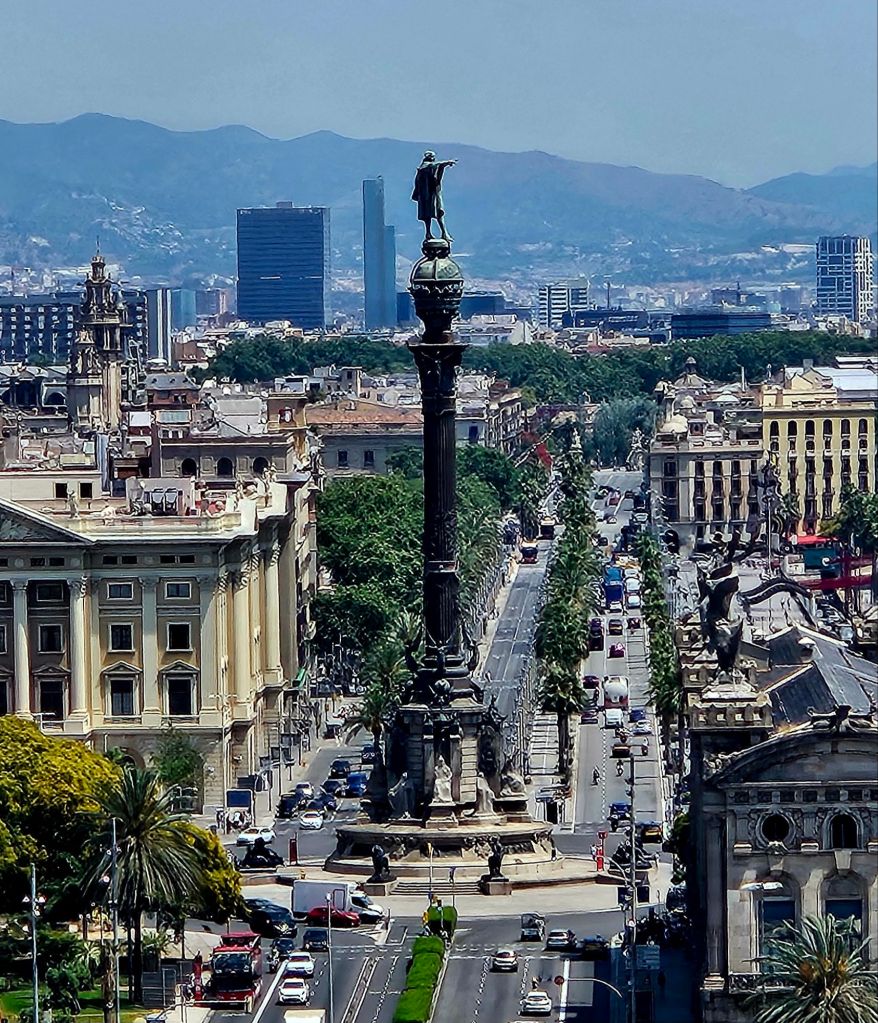
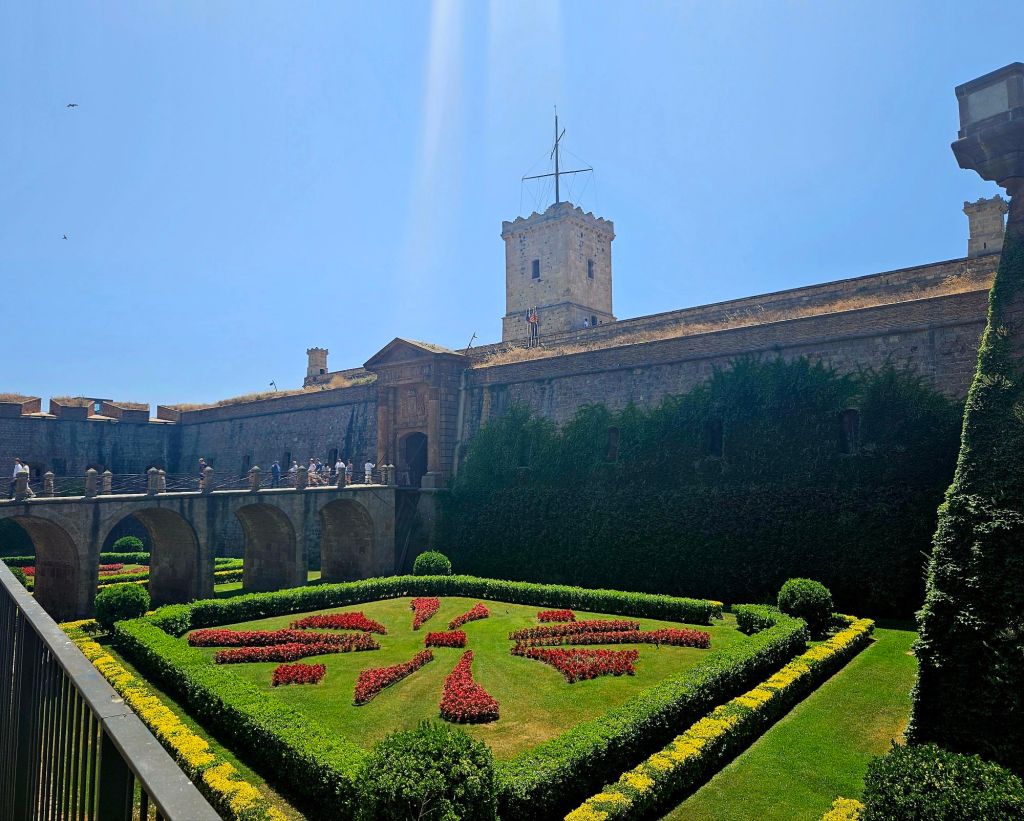
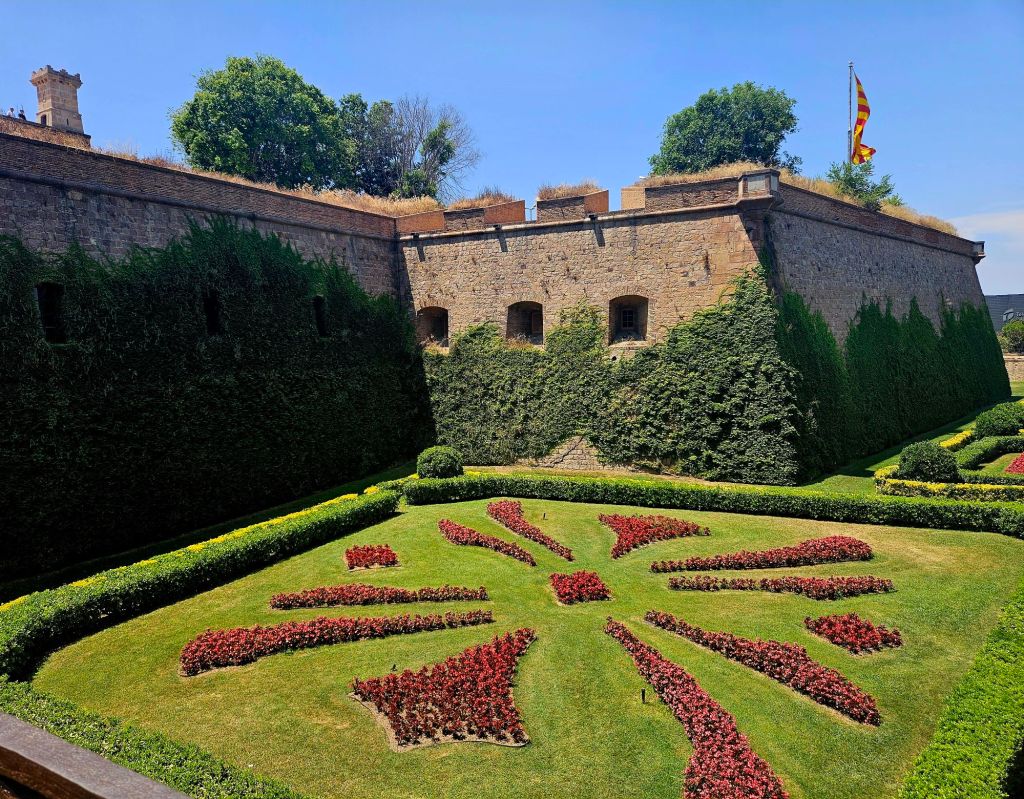
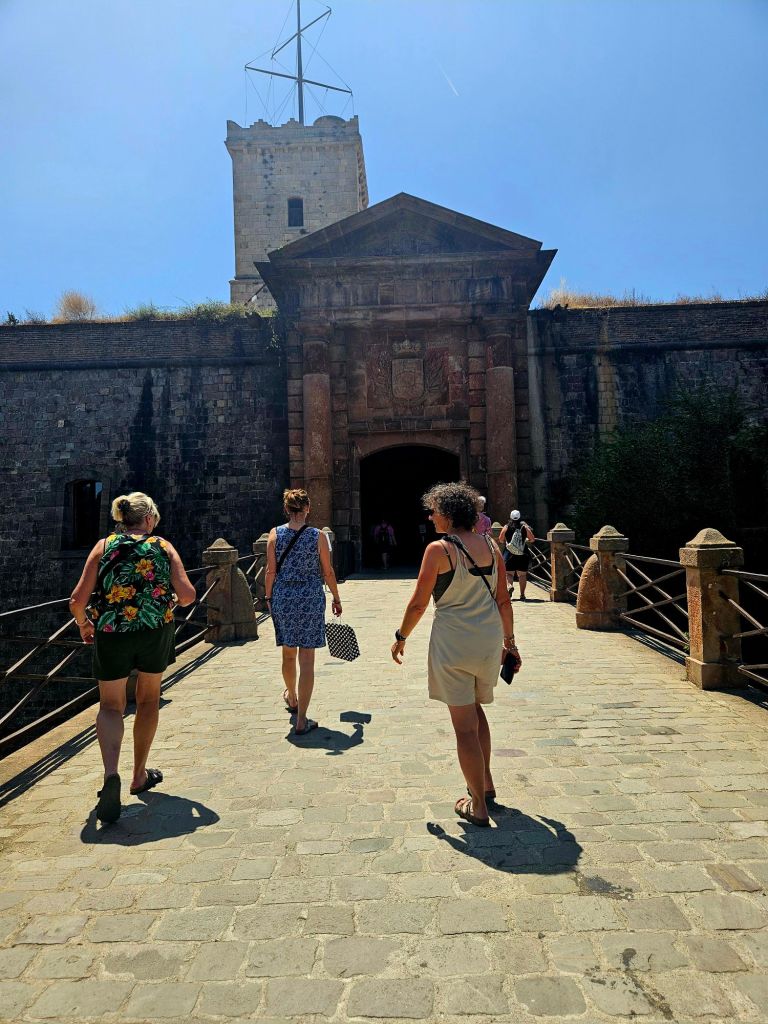
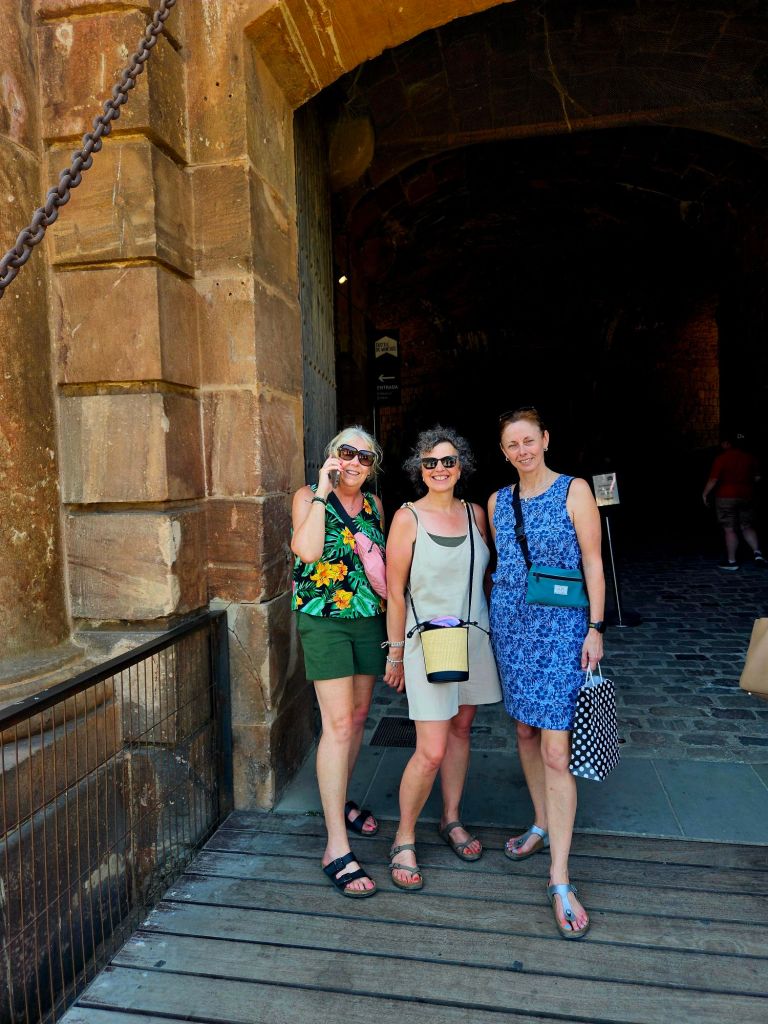
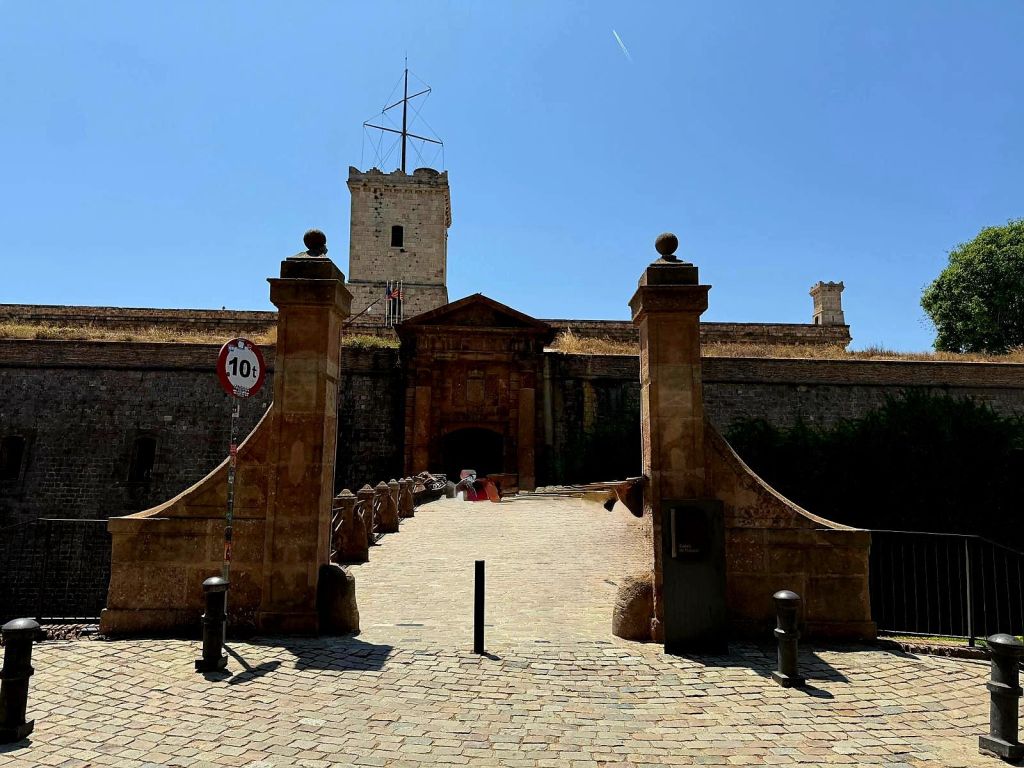
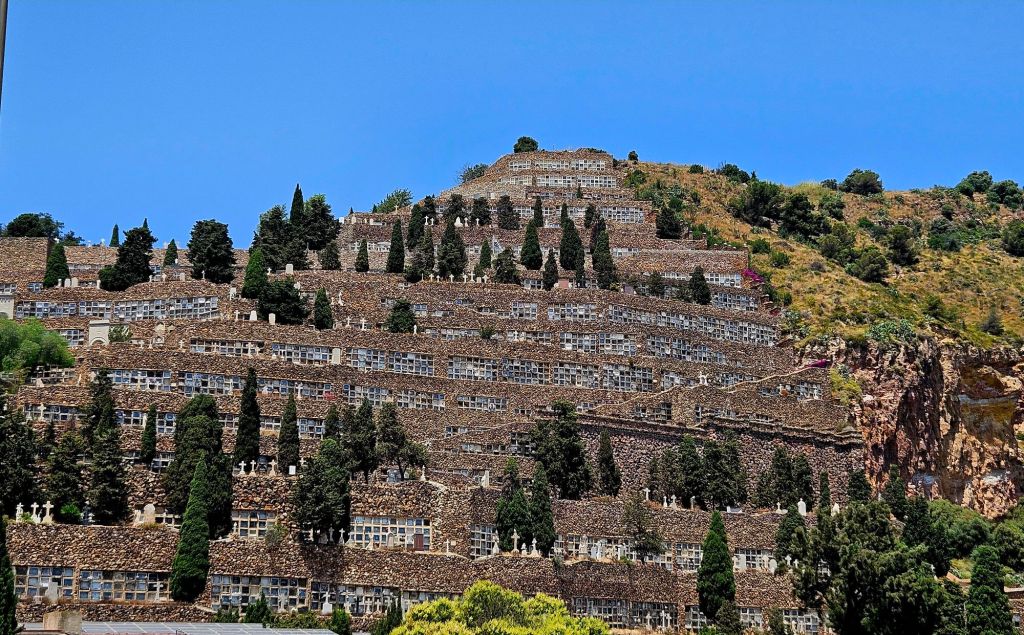
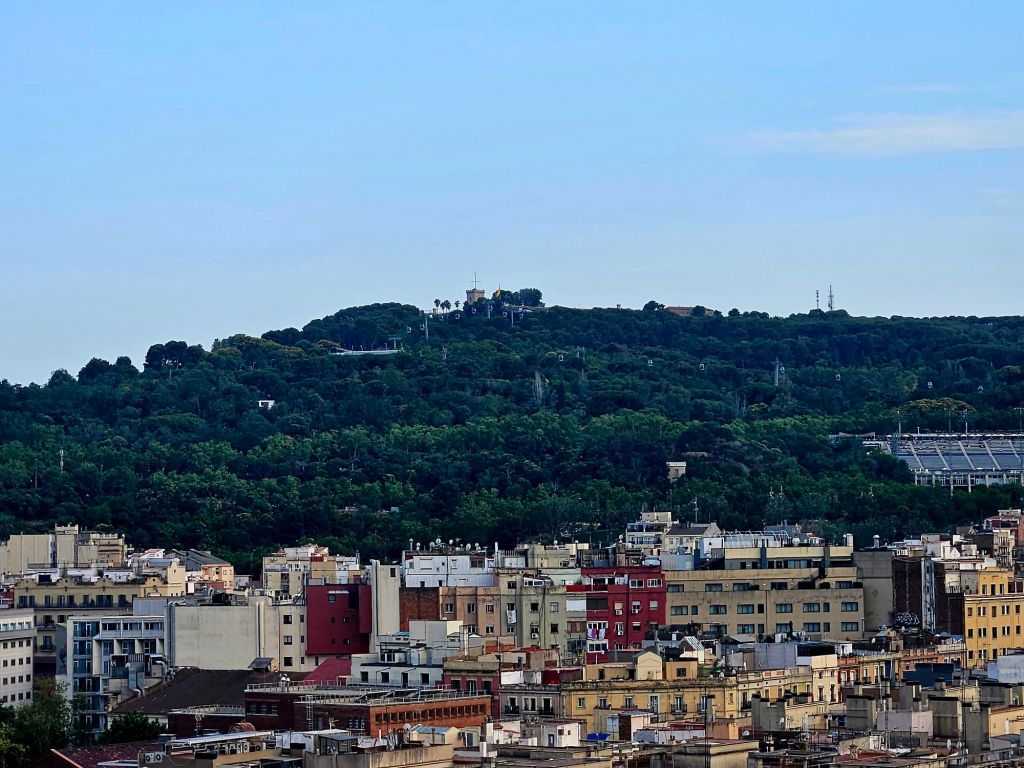
At the airport the bags came through really quickly and we had arranged for a taxi to pick us up. On the drive in, we could see Montjuic hill and the castle.

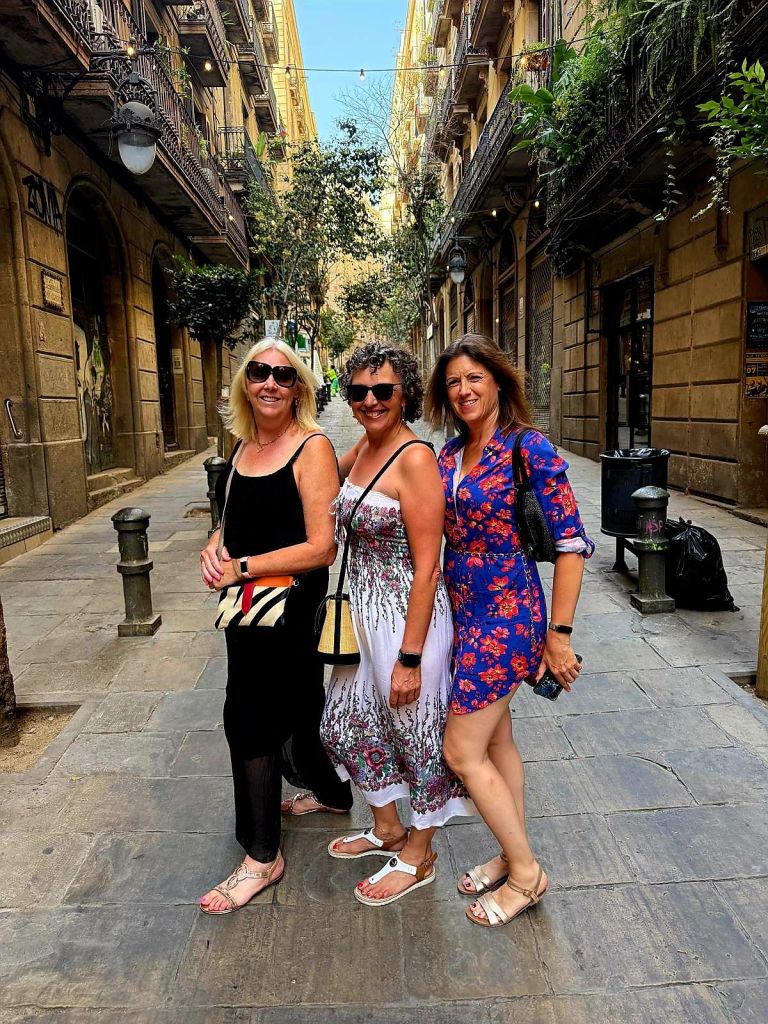
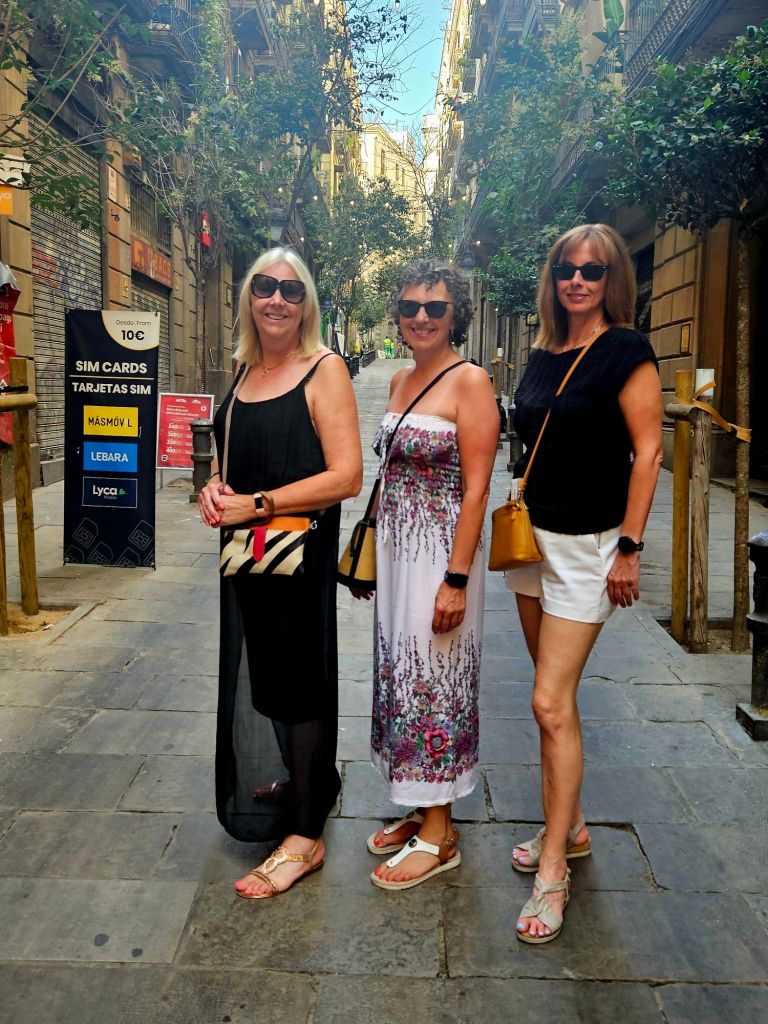
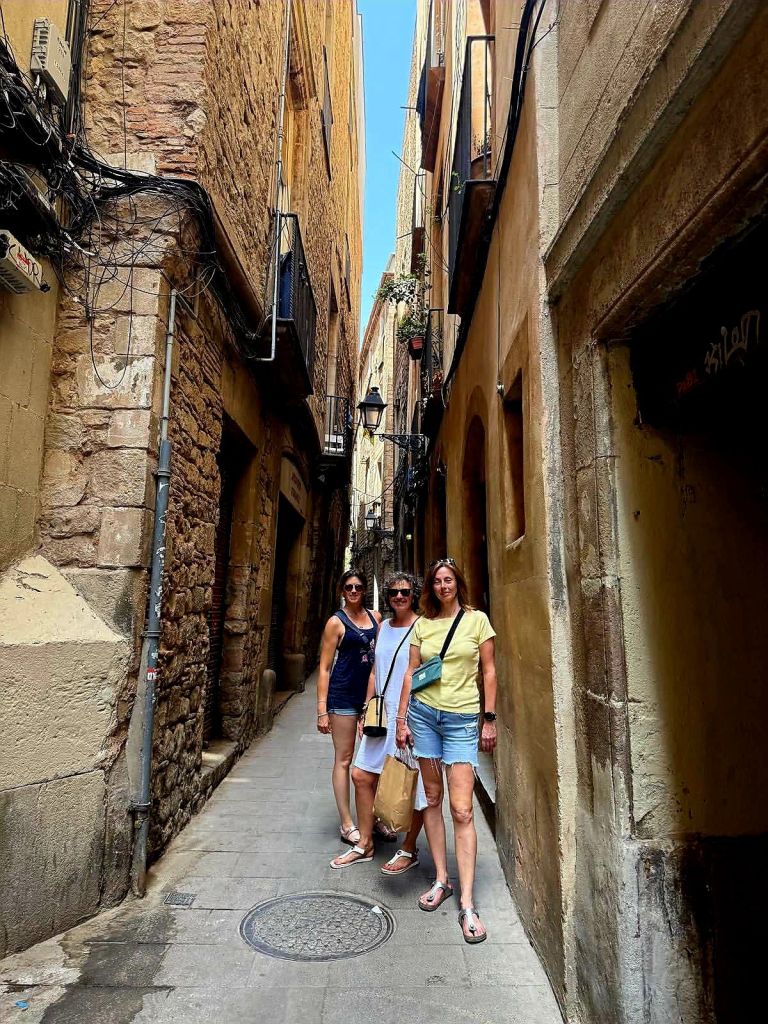
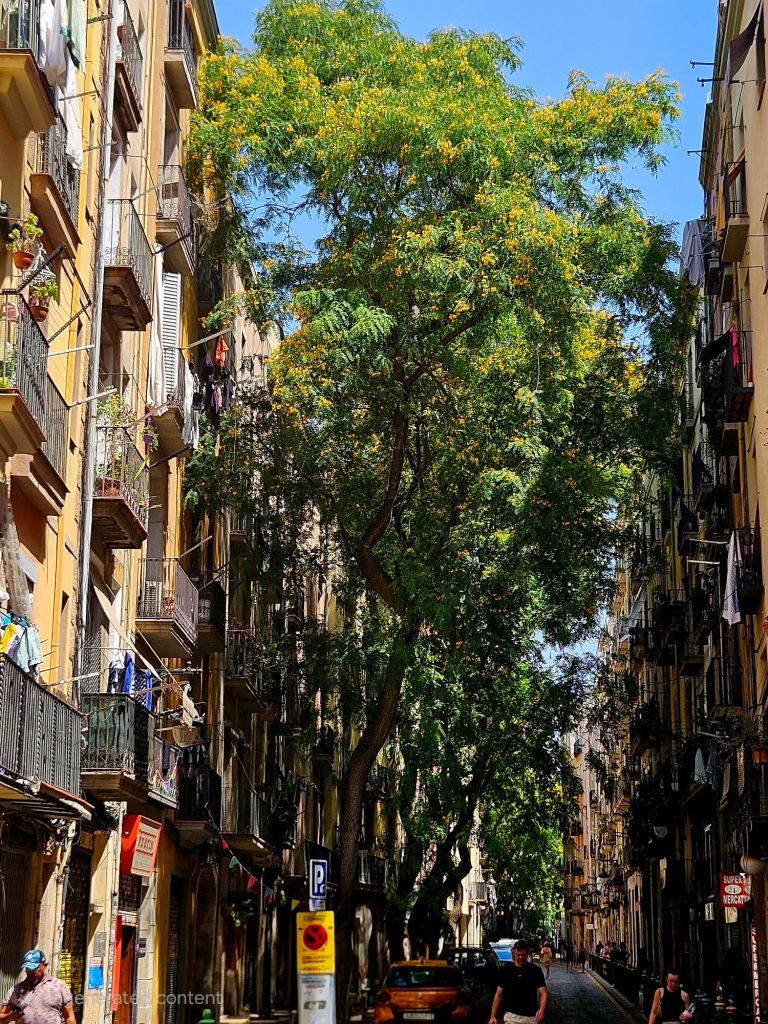
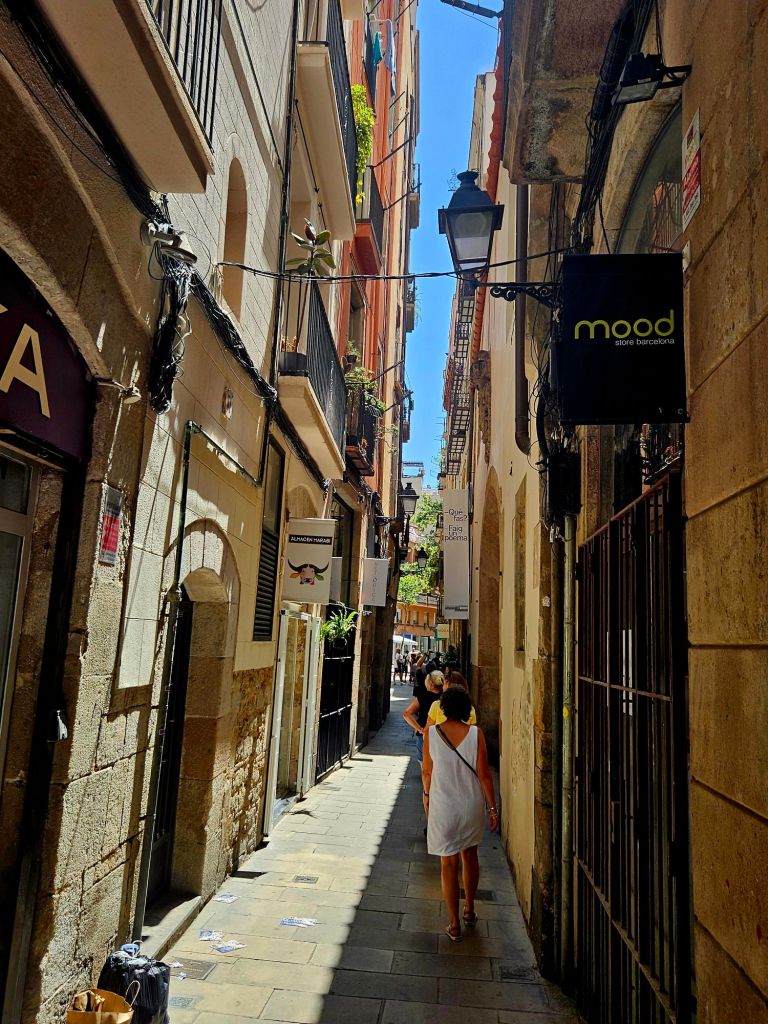
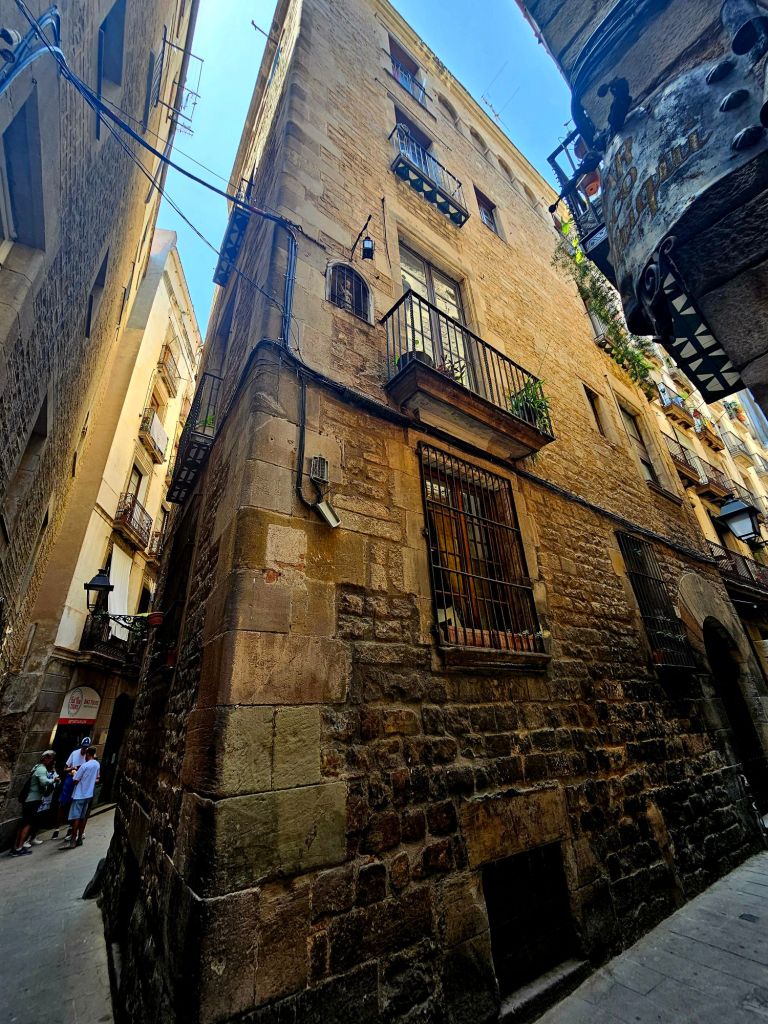
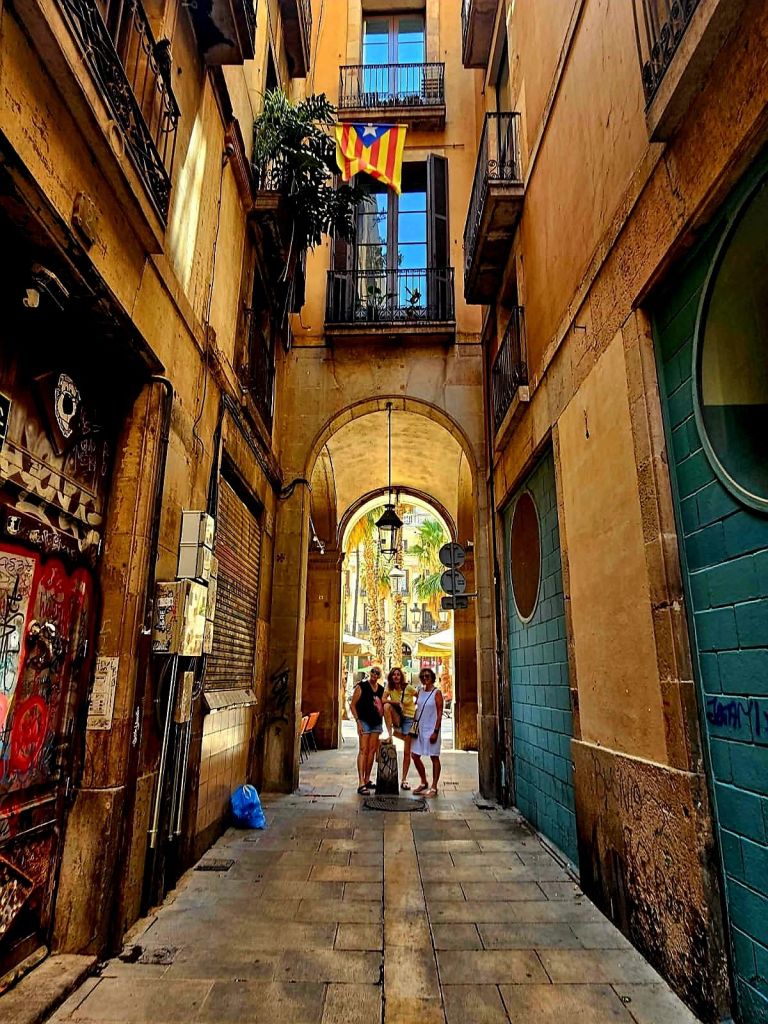
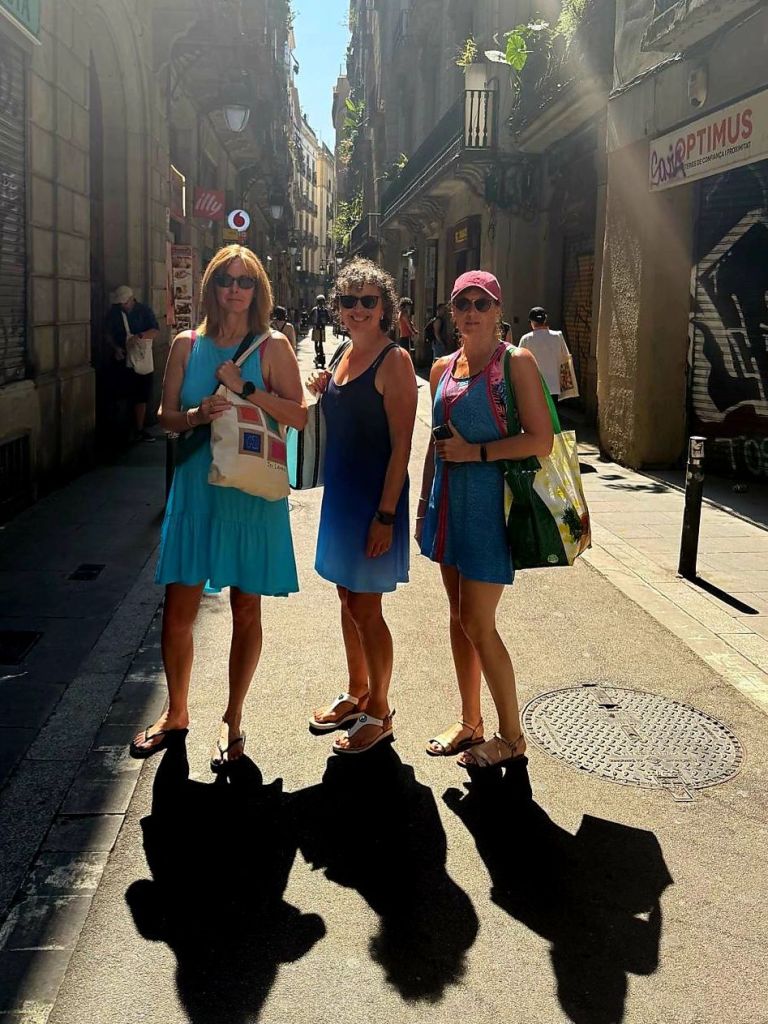
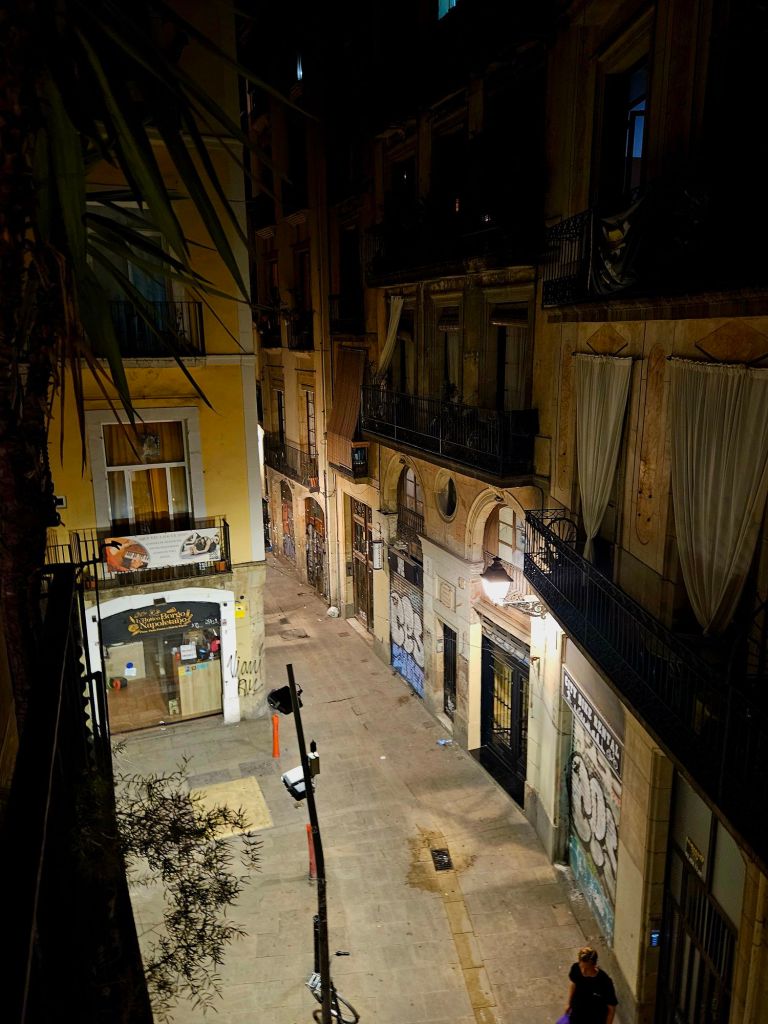
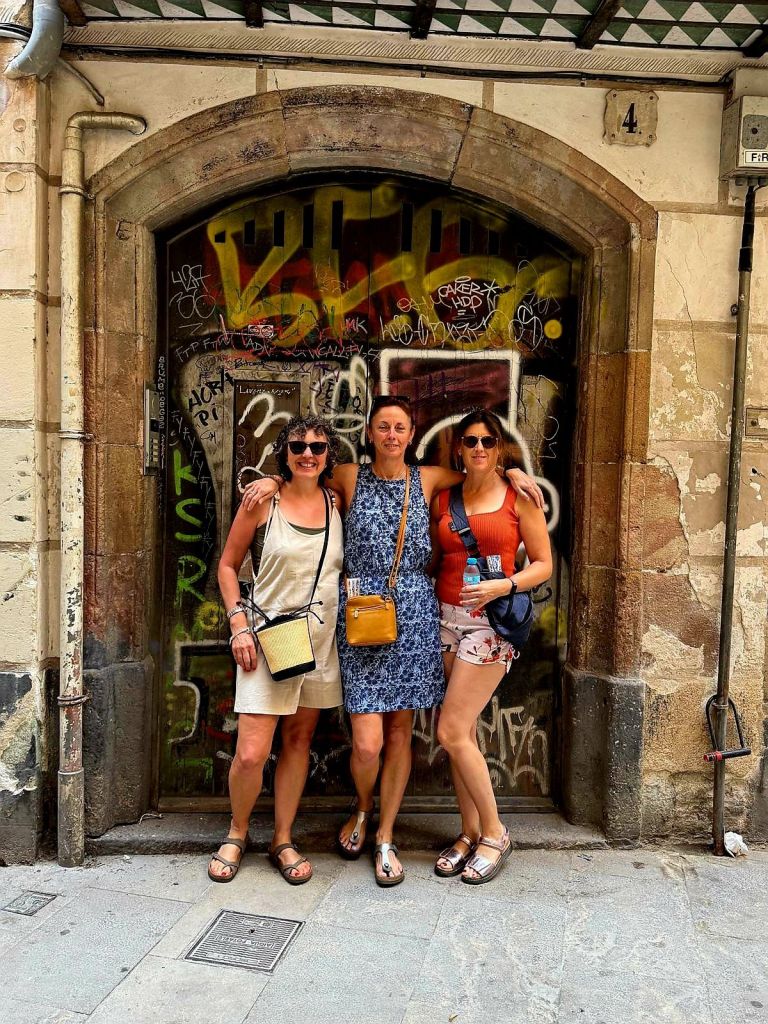
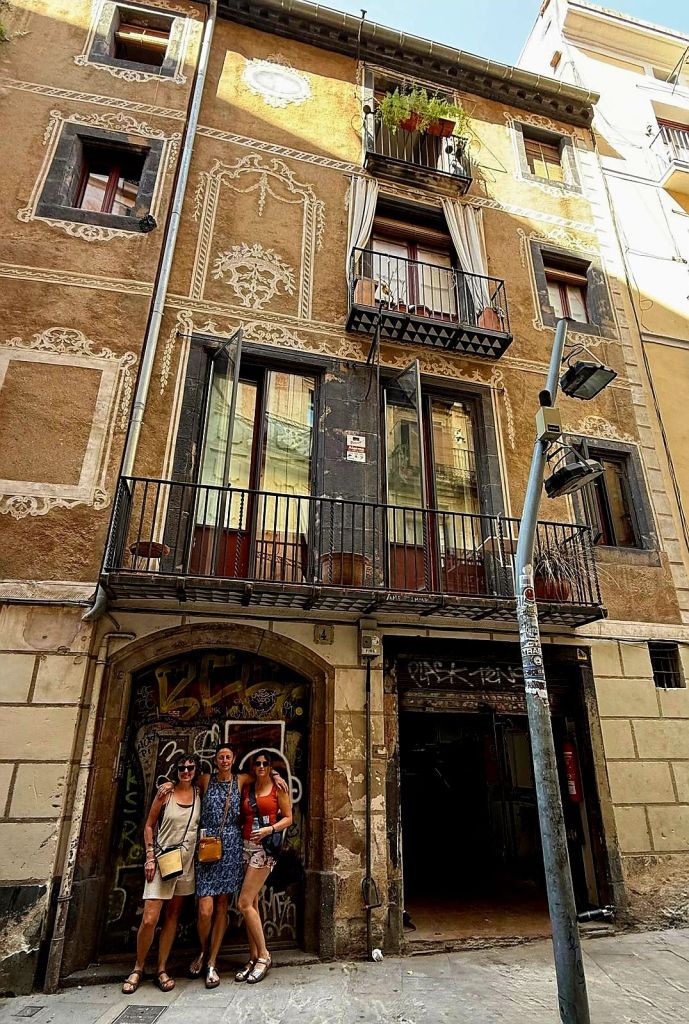
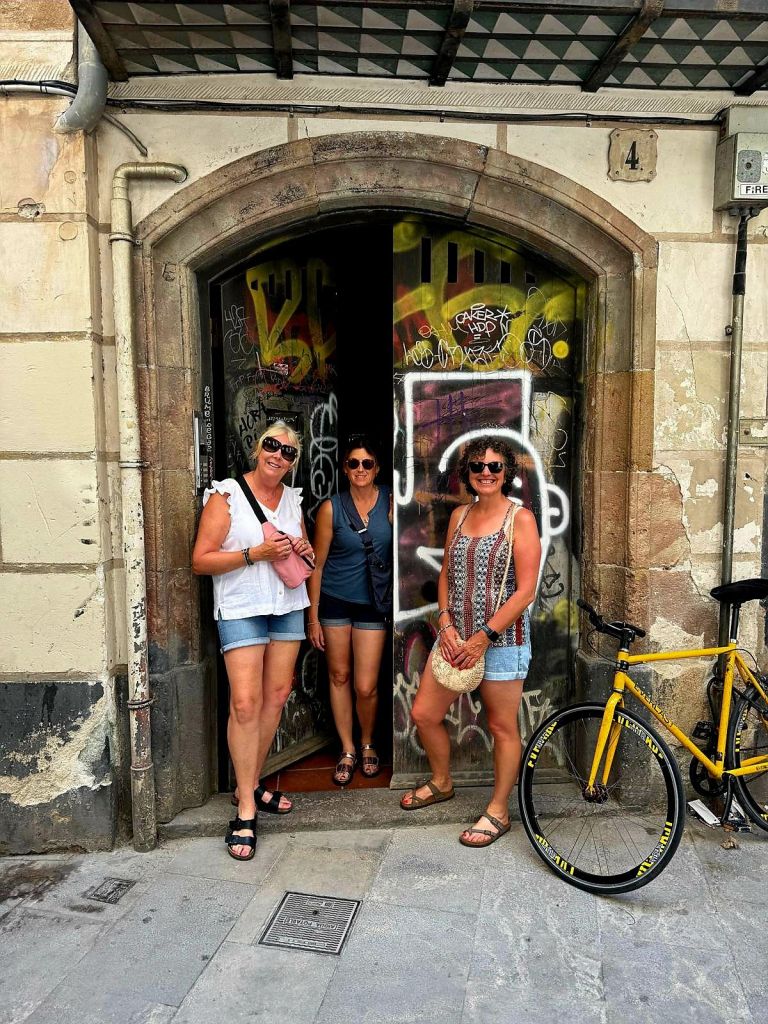
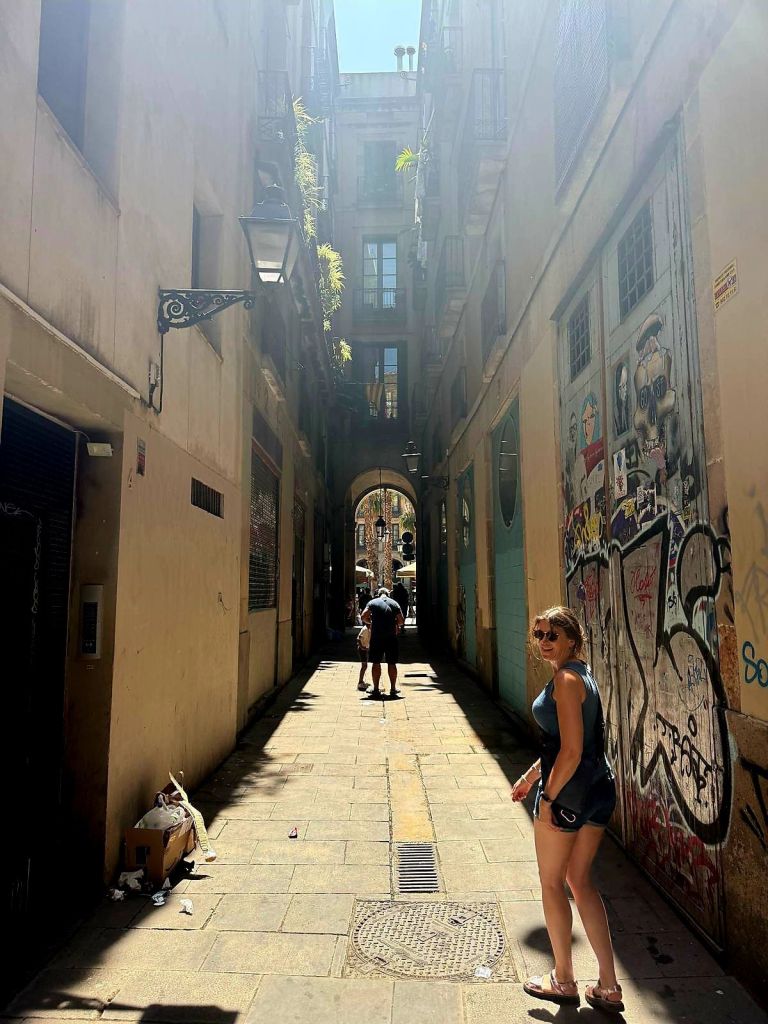
Our apartment is down a small pedestrian street, not far from Las Ramblas, the main shopping street in Barcelona. It looks like a bit of a dodgy area, and our taxi driver did point out a club nearby that, apparently, is full of youngsters taking drugs! The photo below is our front door.

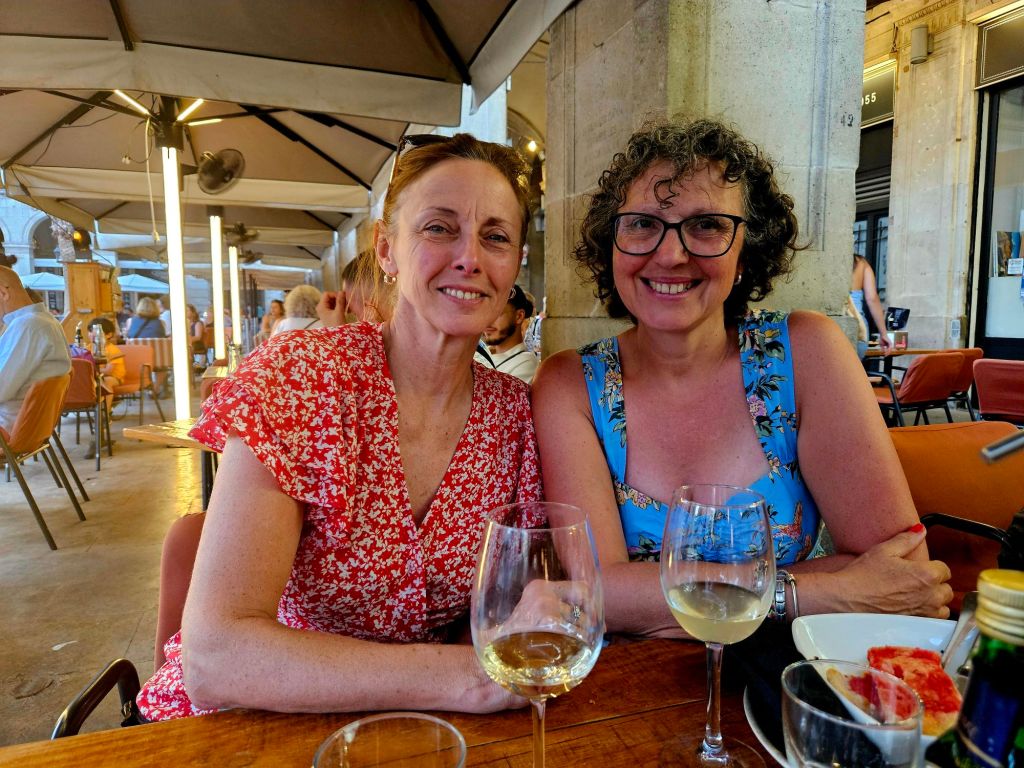
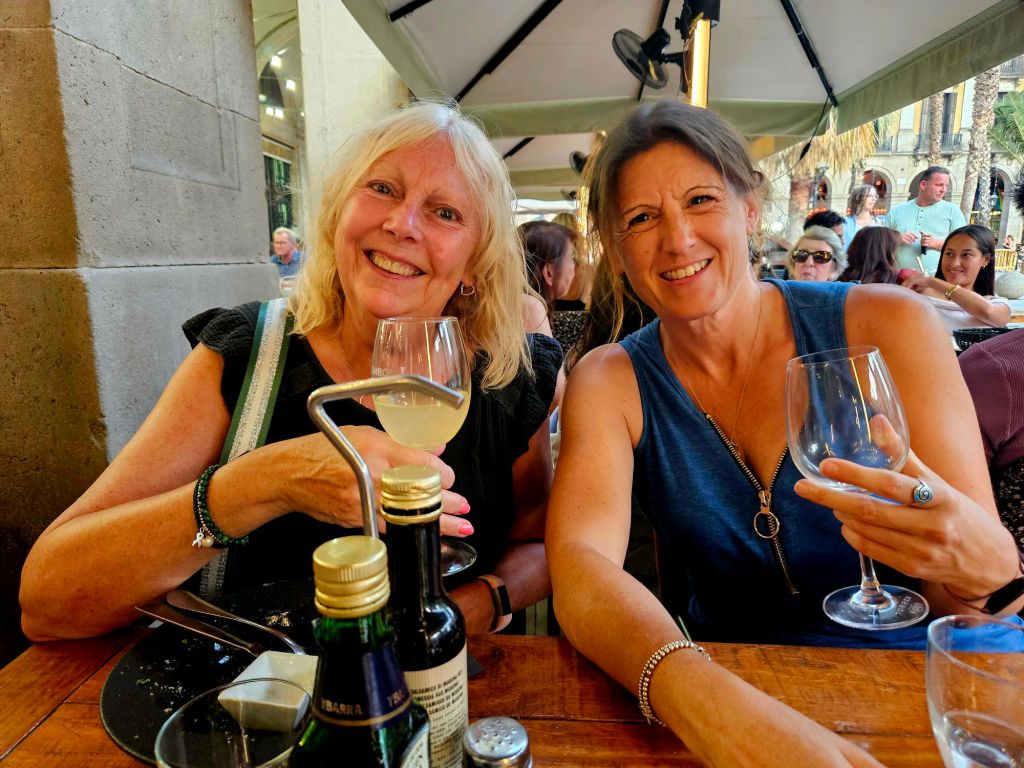
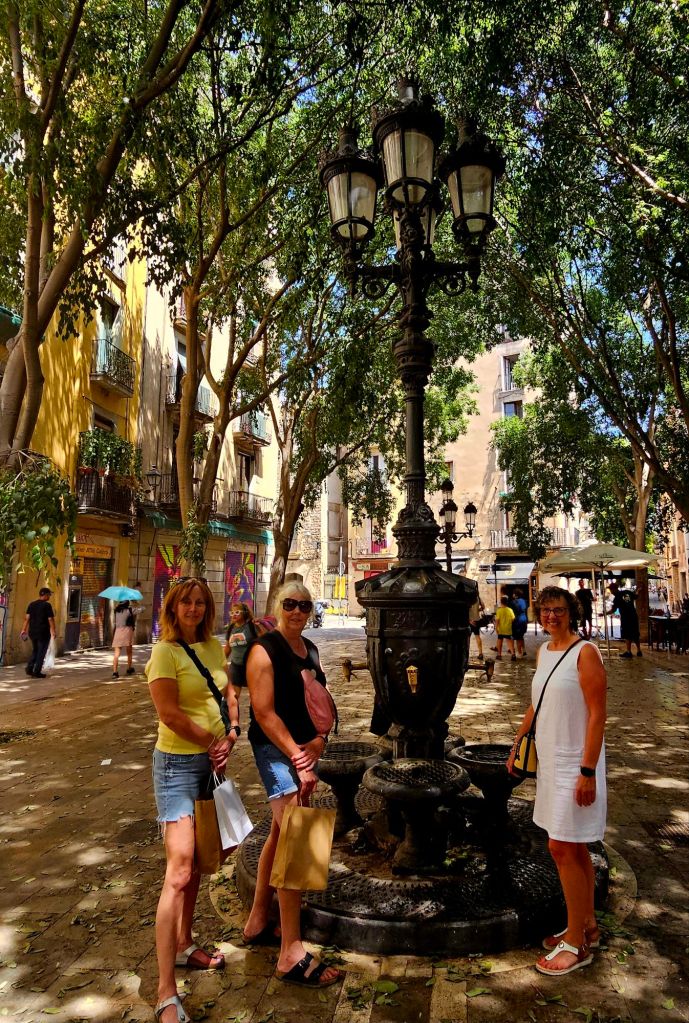
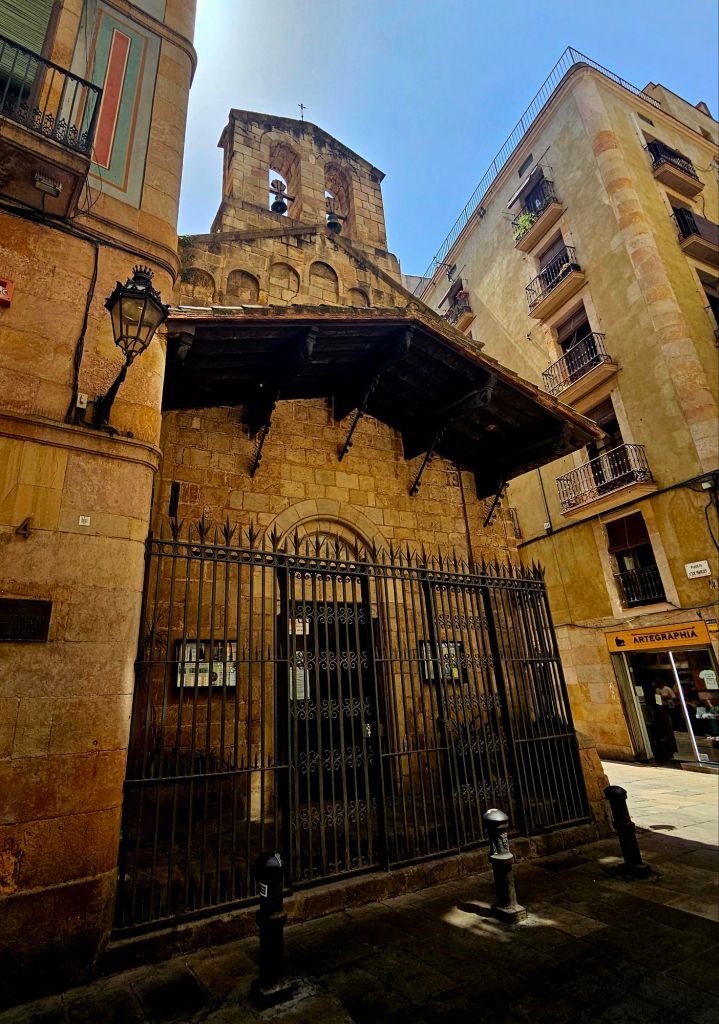
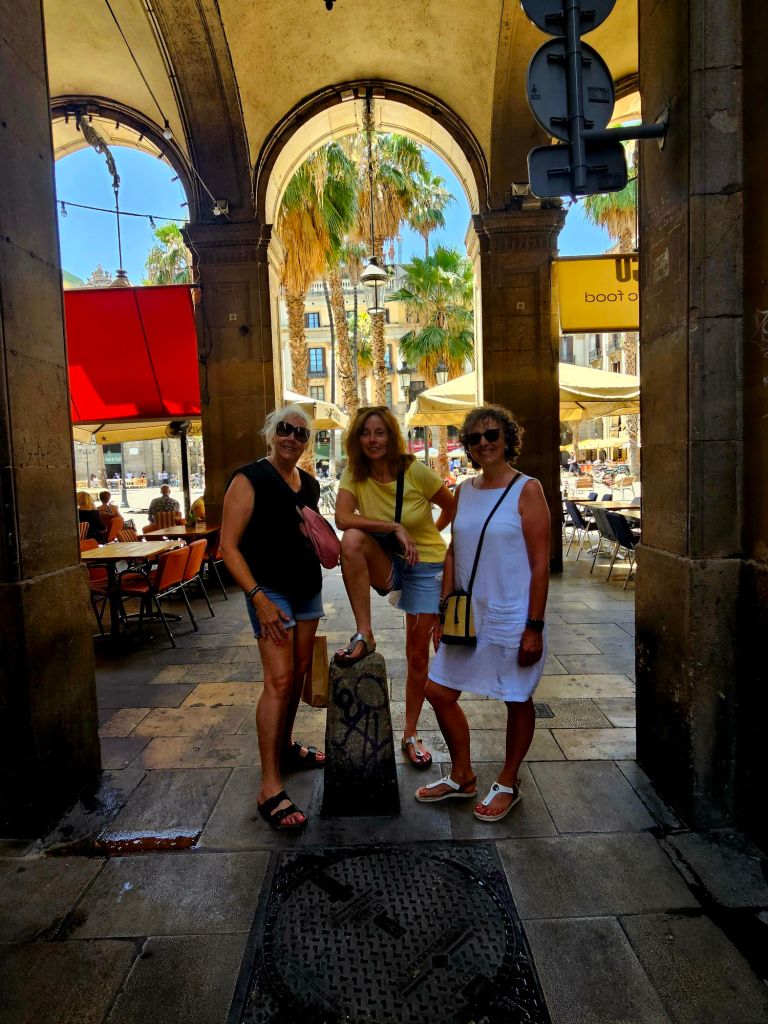
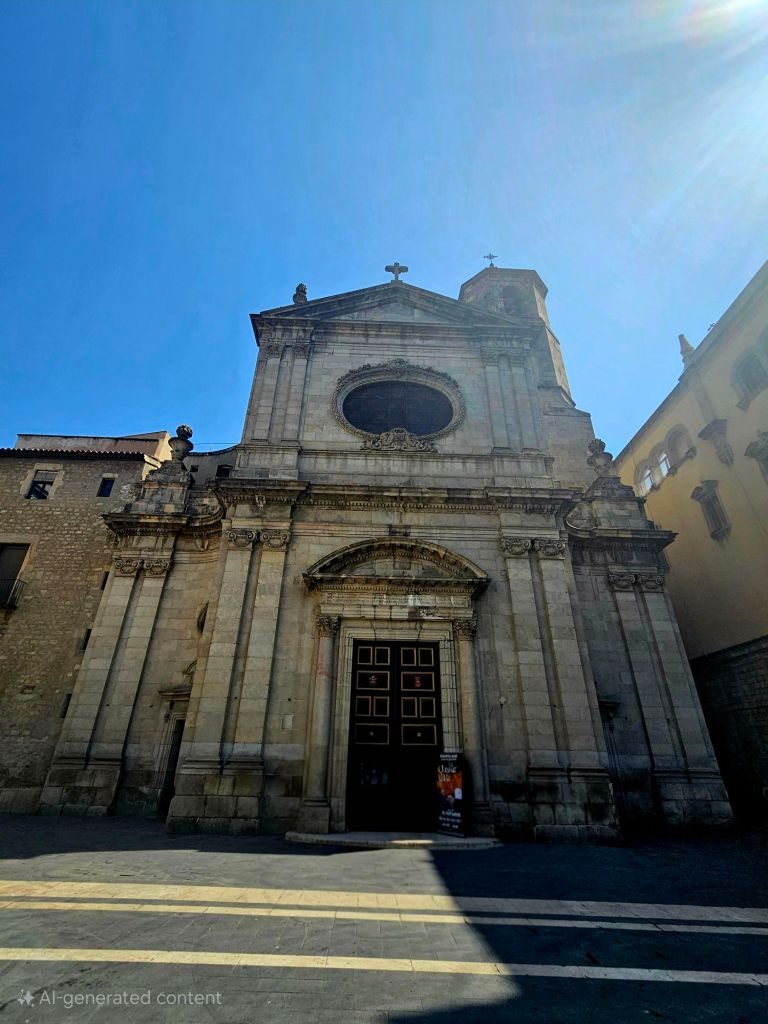
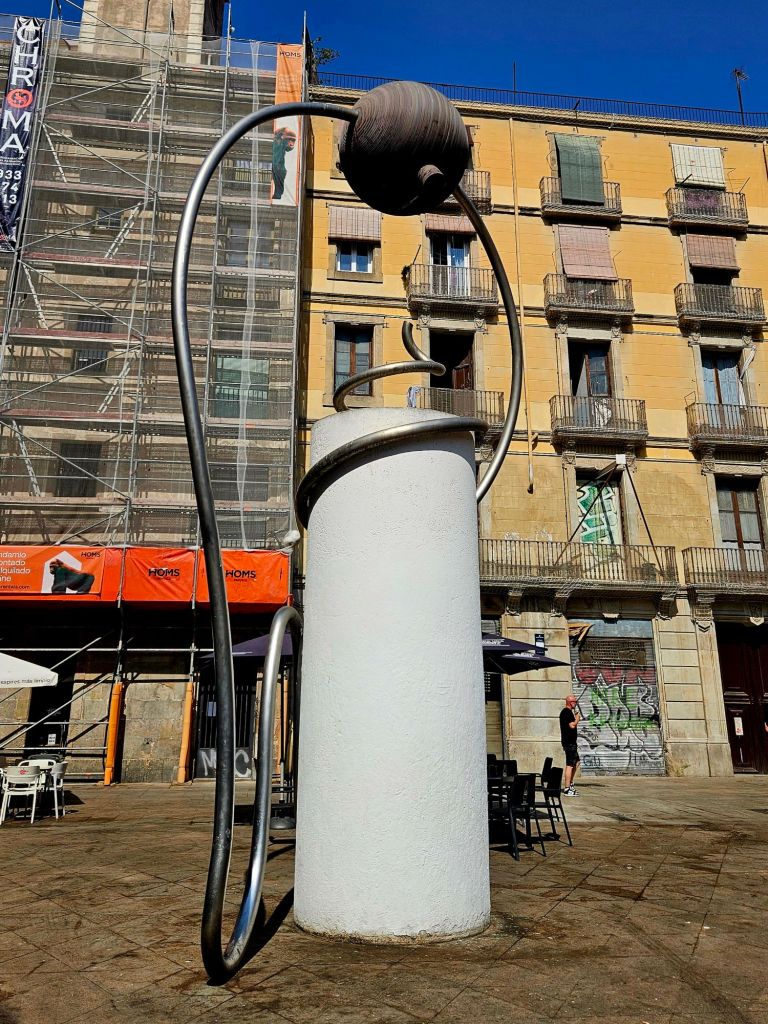
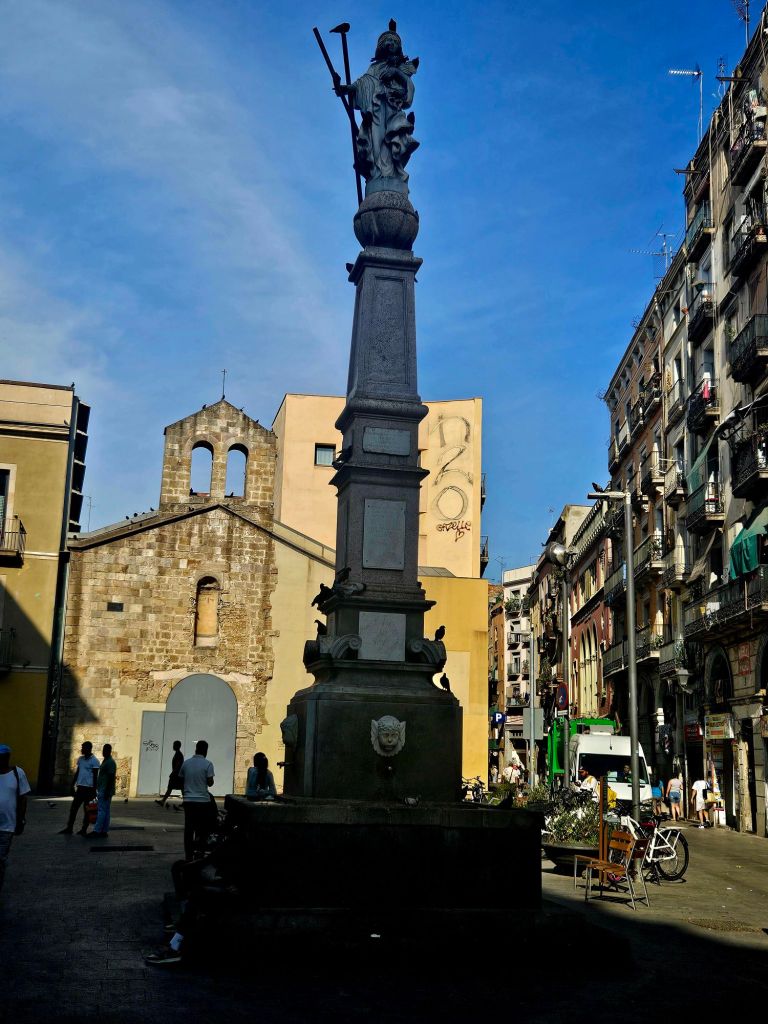
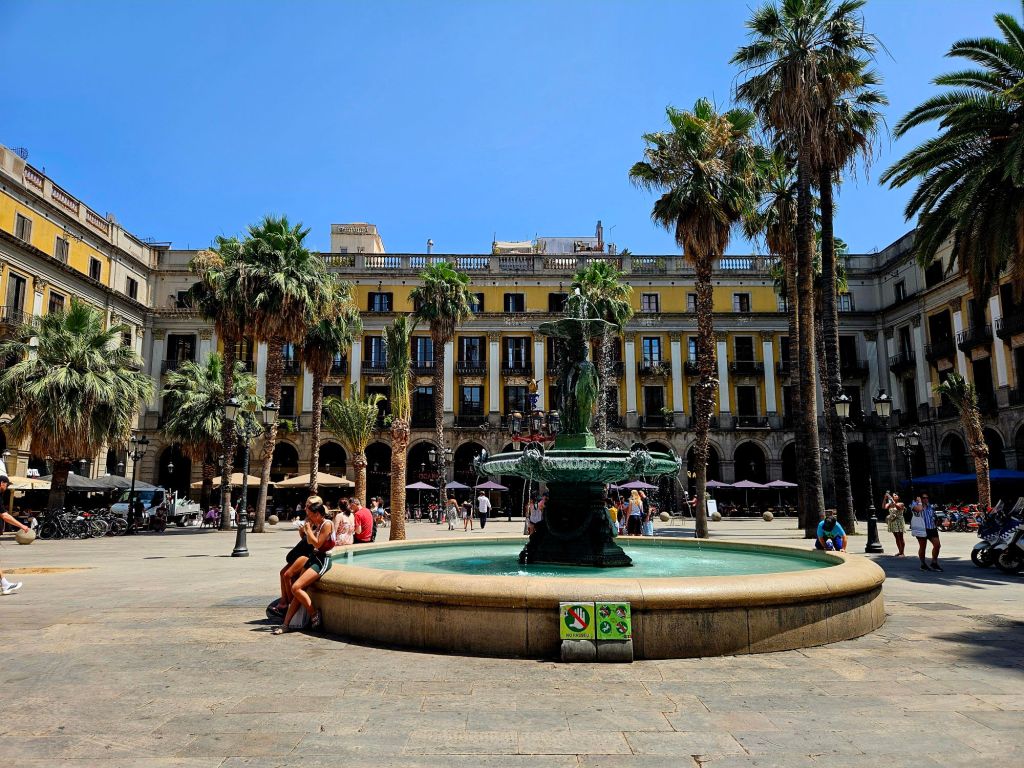
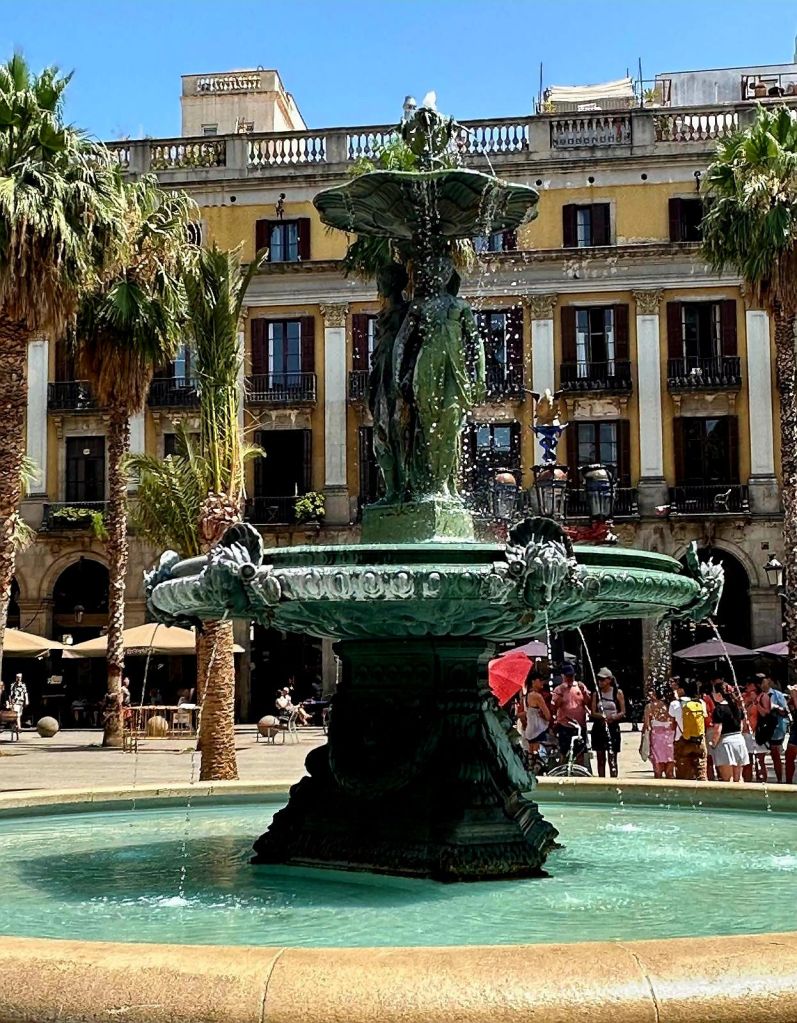
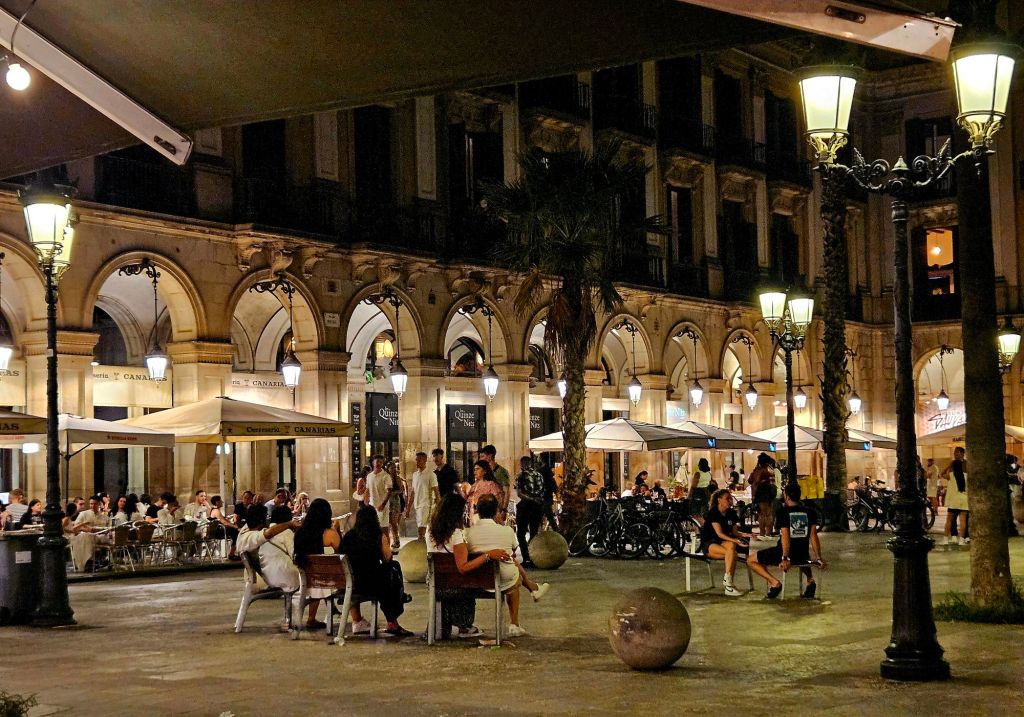
Once we had unpacked, we walked a very short distance to Placa Reial, a lively square near to our apartment. The original building on the site was the Capuchin convent of Santa Madona, which was demolished in 1835.

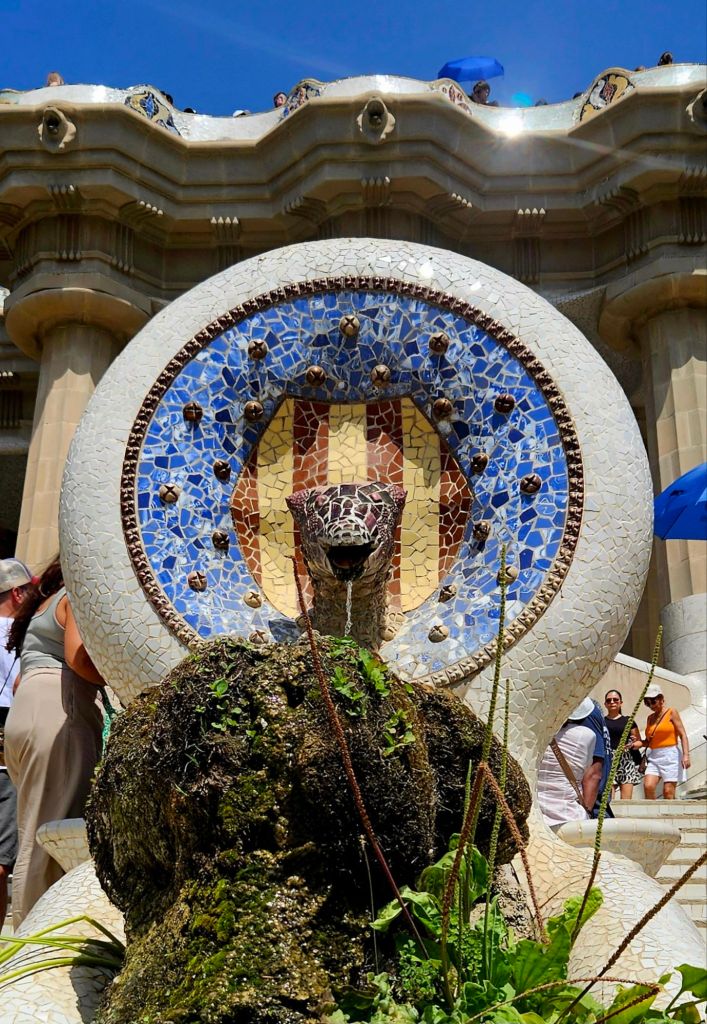
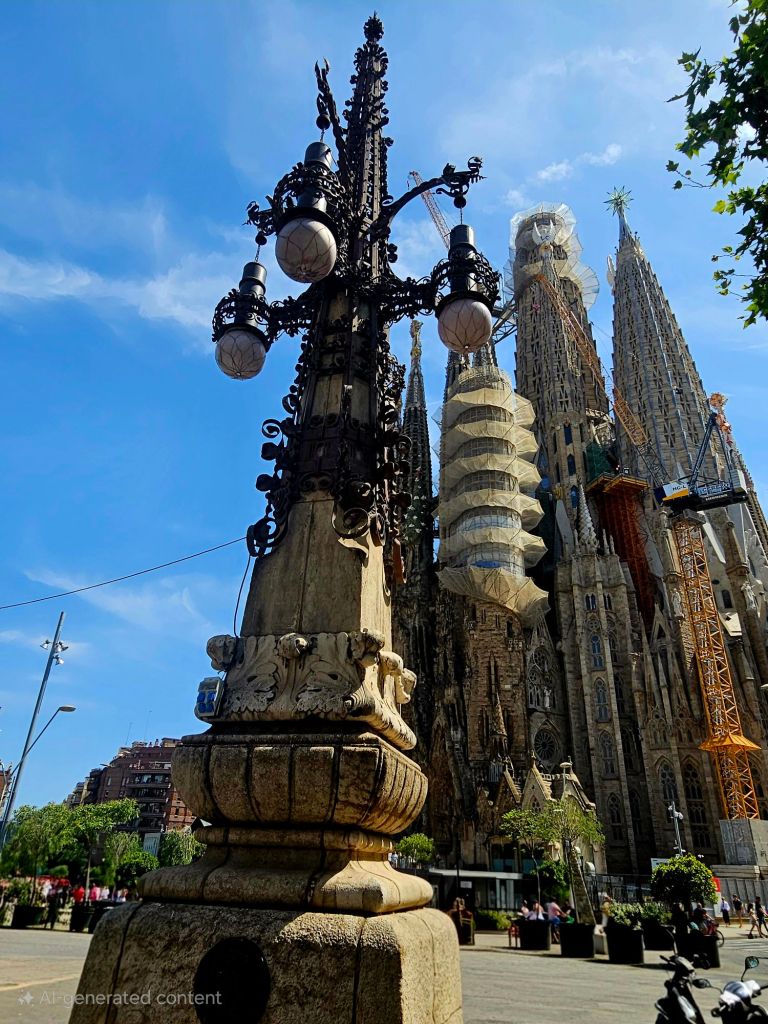
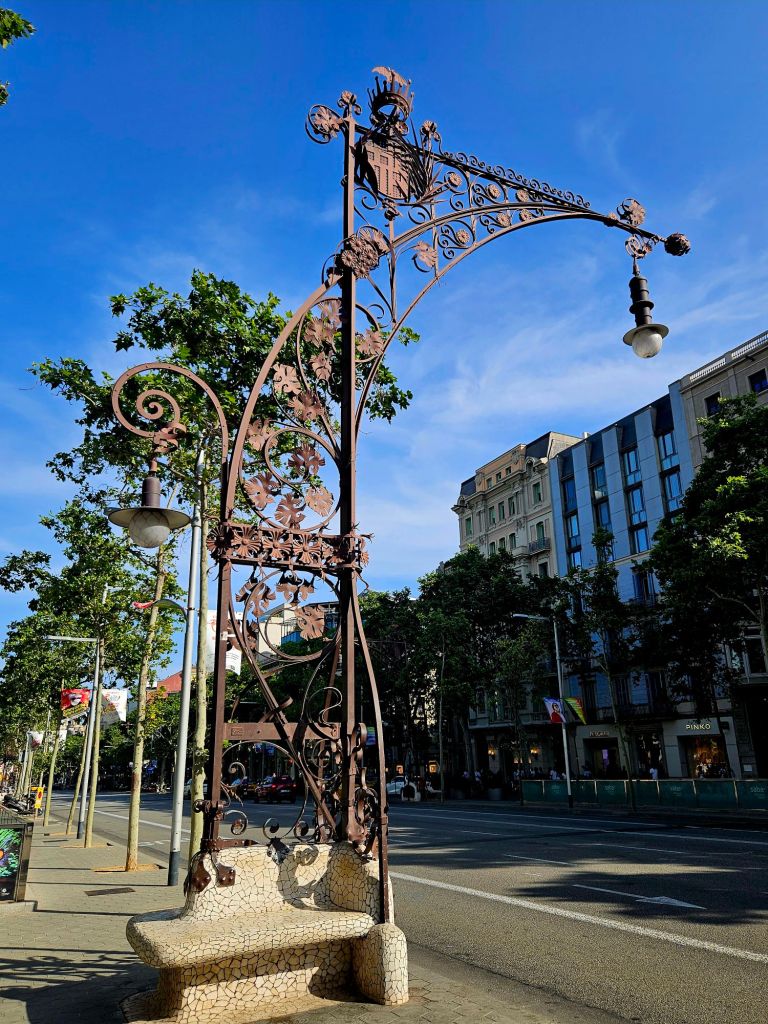
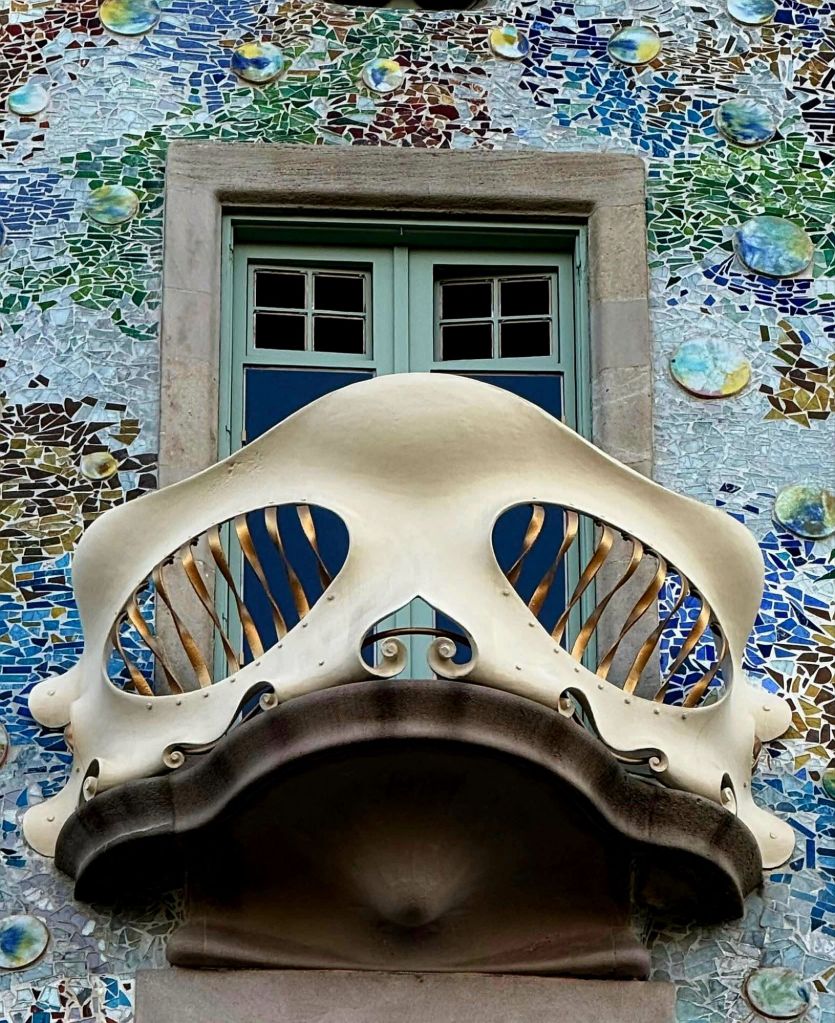
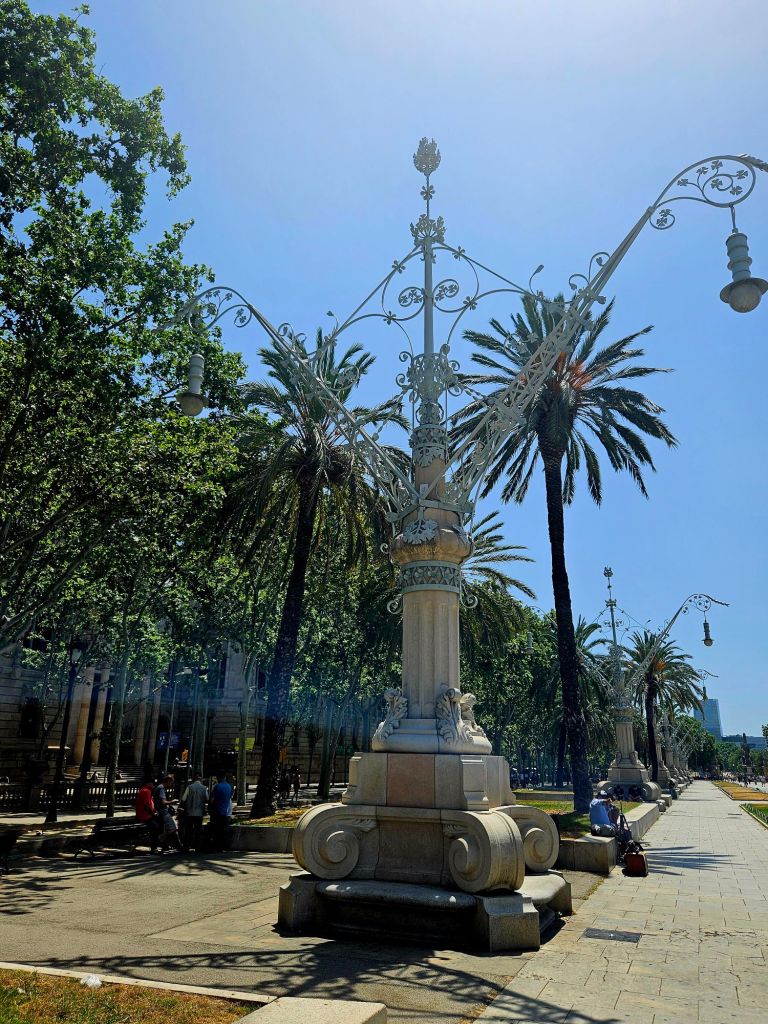
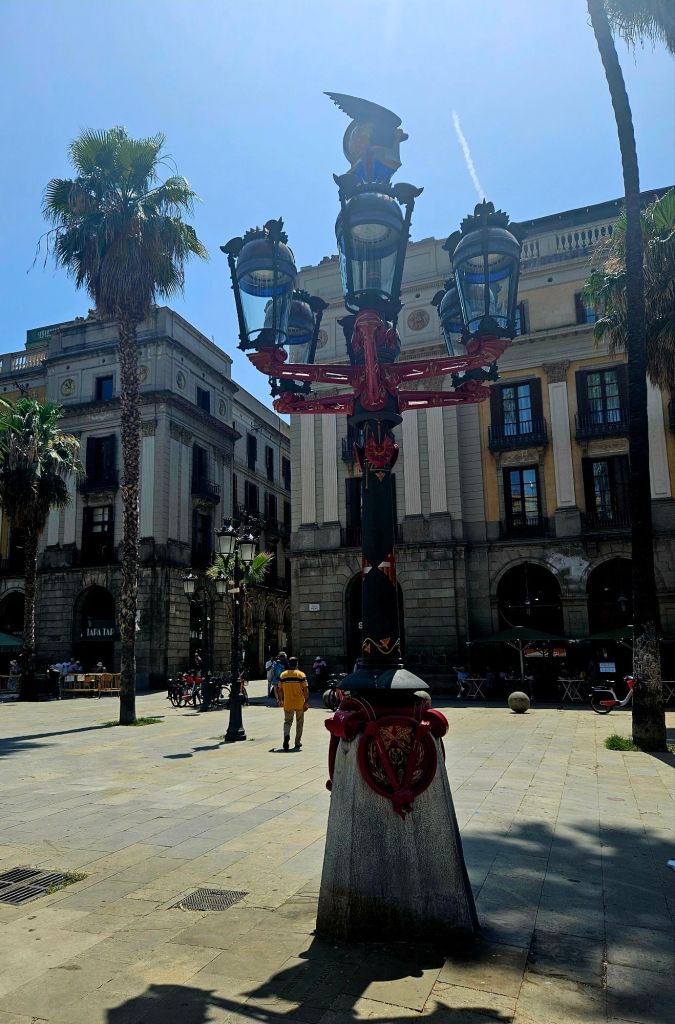
The square’s lampposts were designed by the Catalan architect Antoni Gaudí.

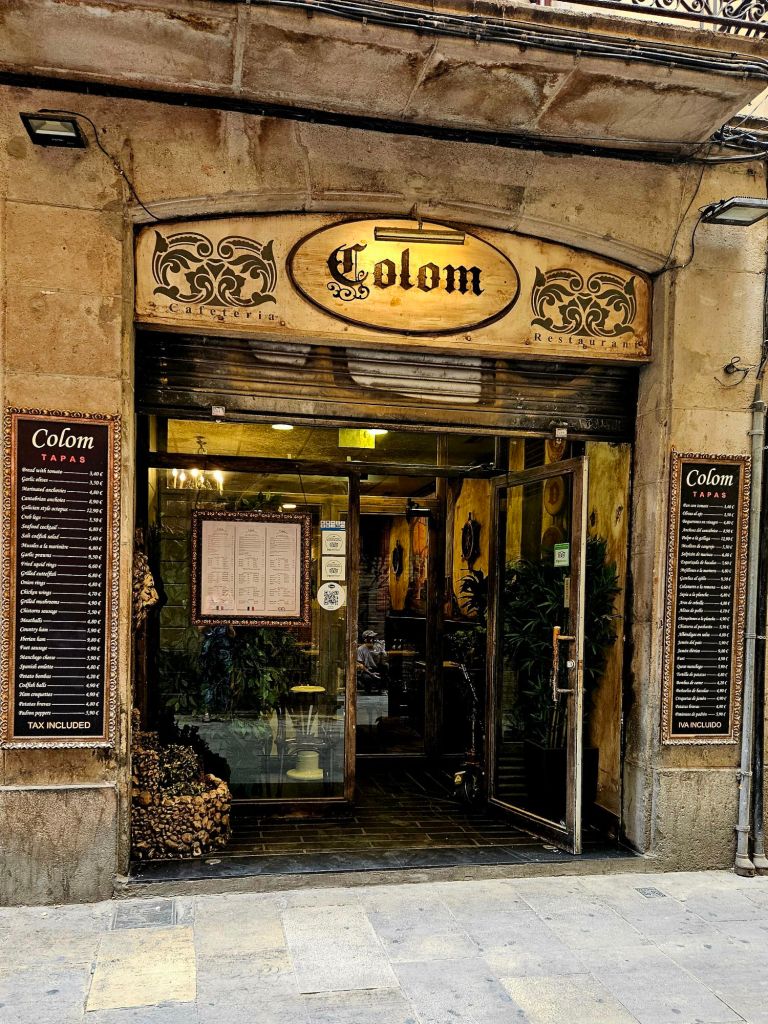
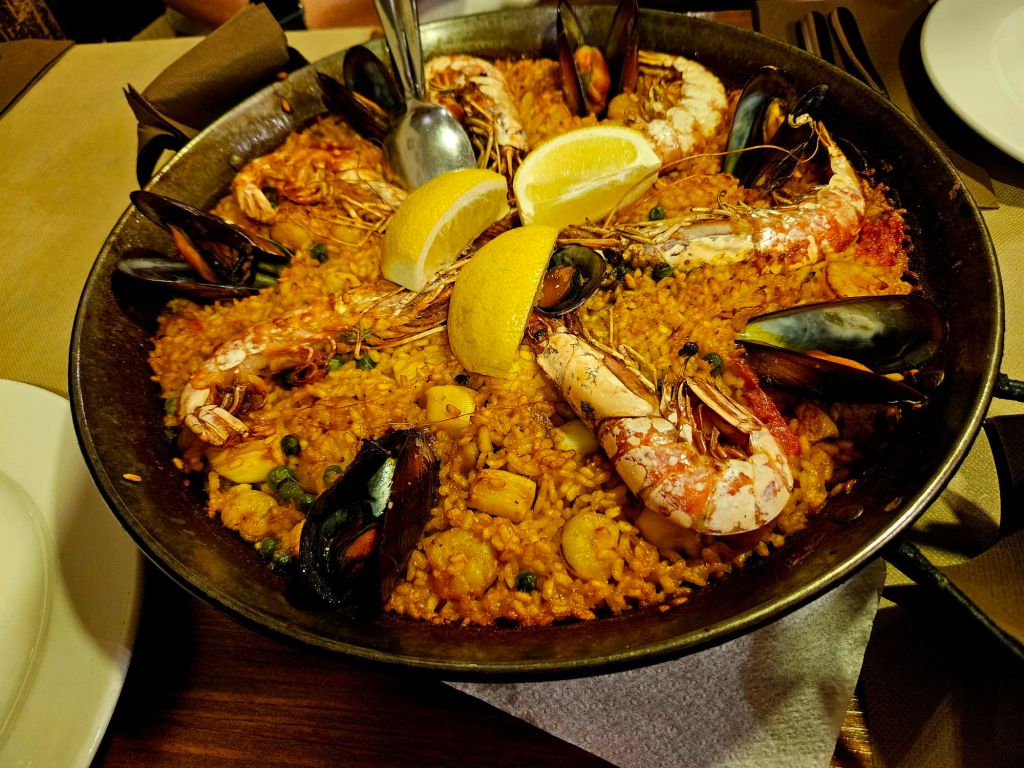
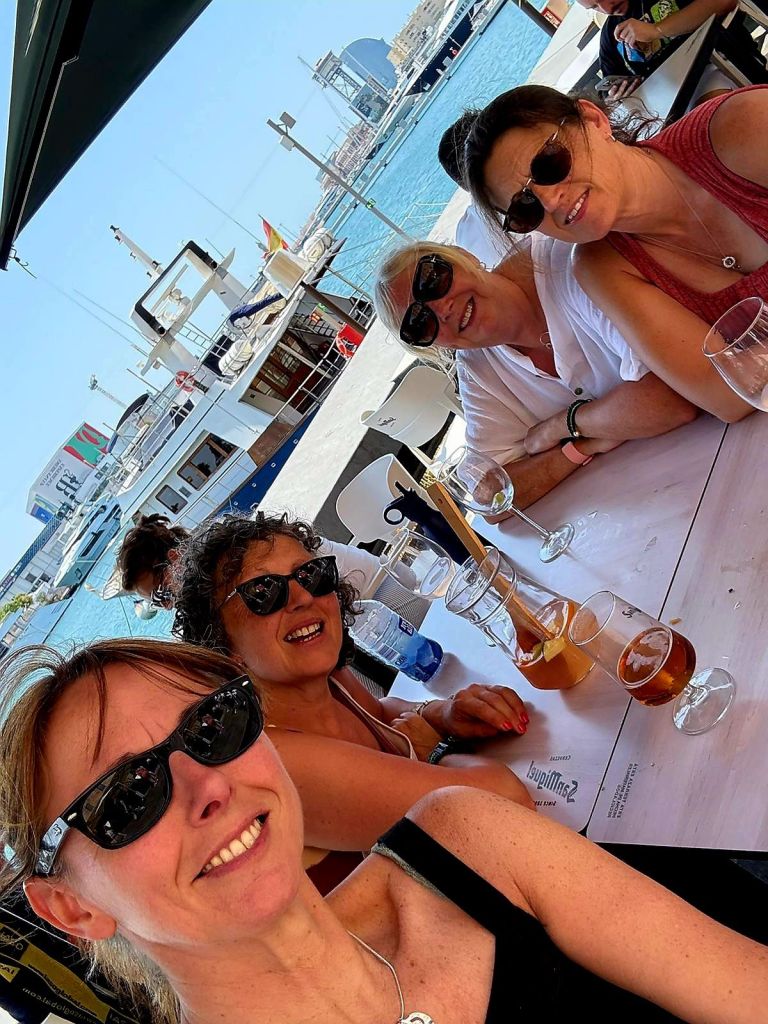
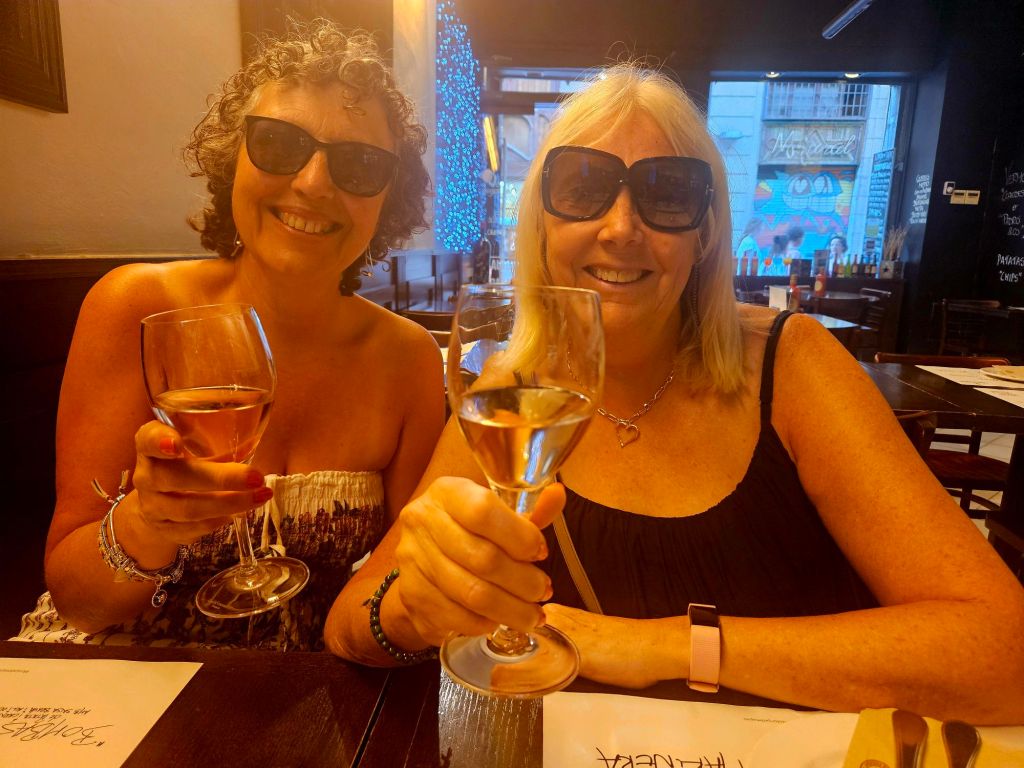
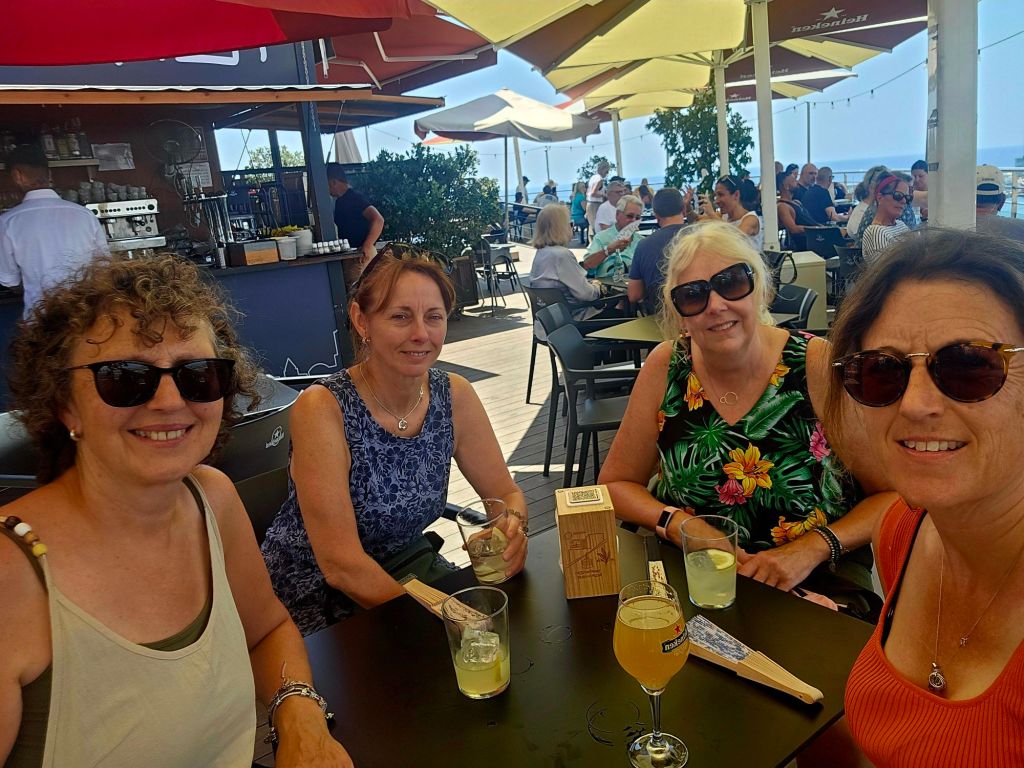
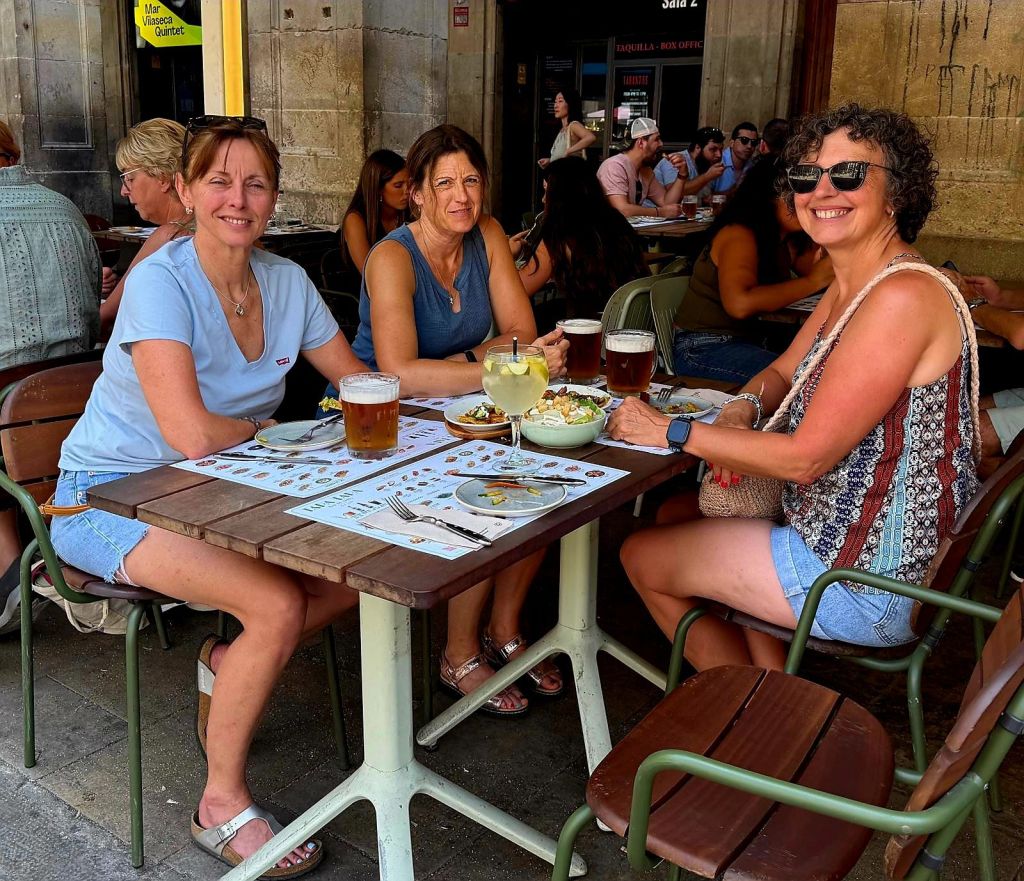
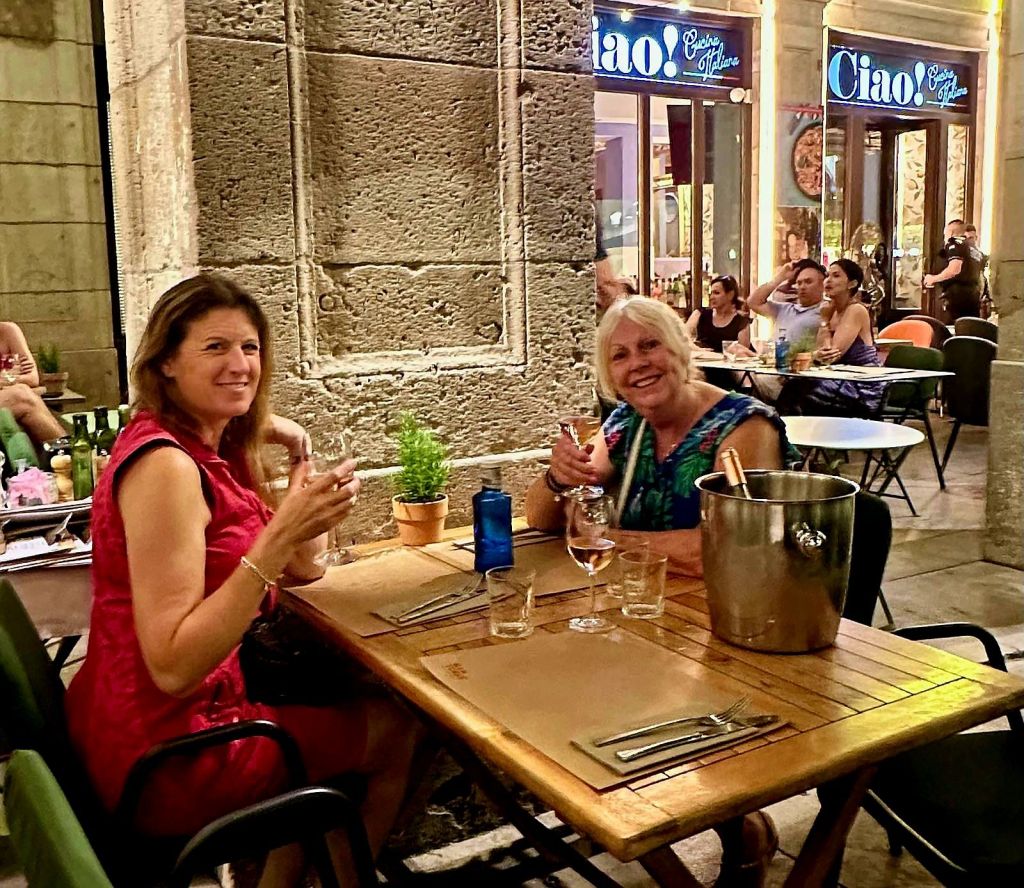
We sat down at a Tapas place and had some very nice tapas with beer and white sangria.

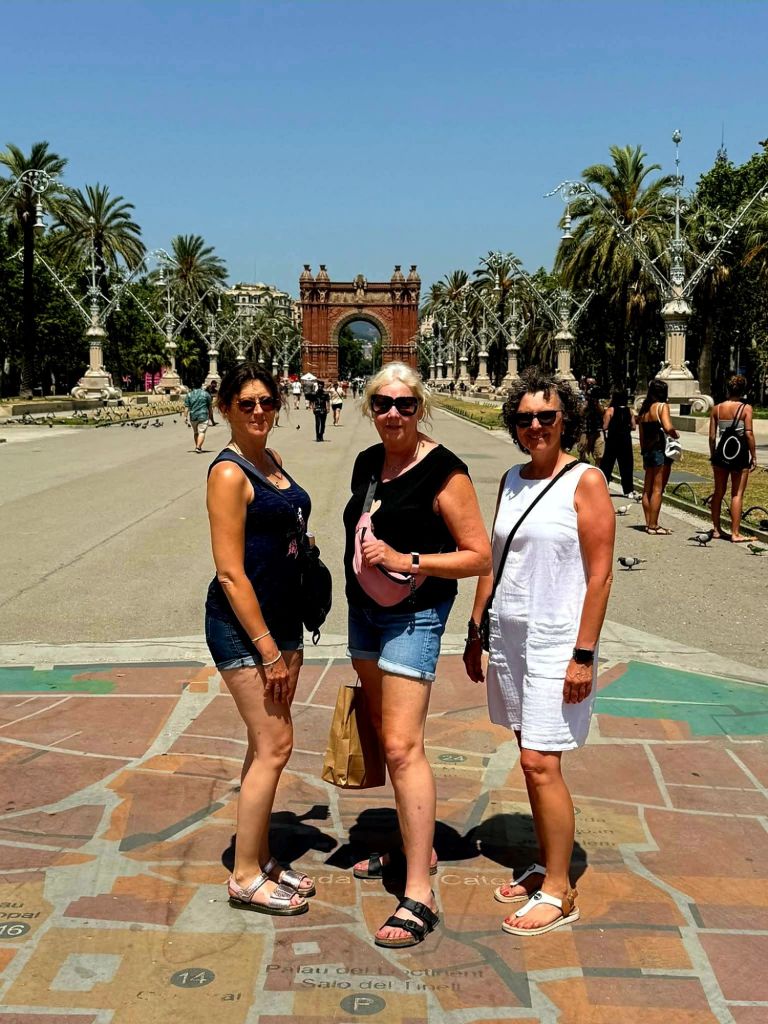
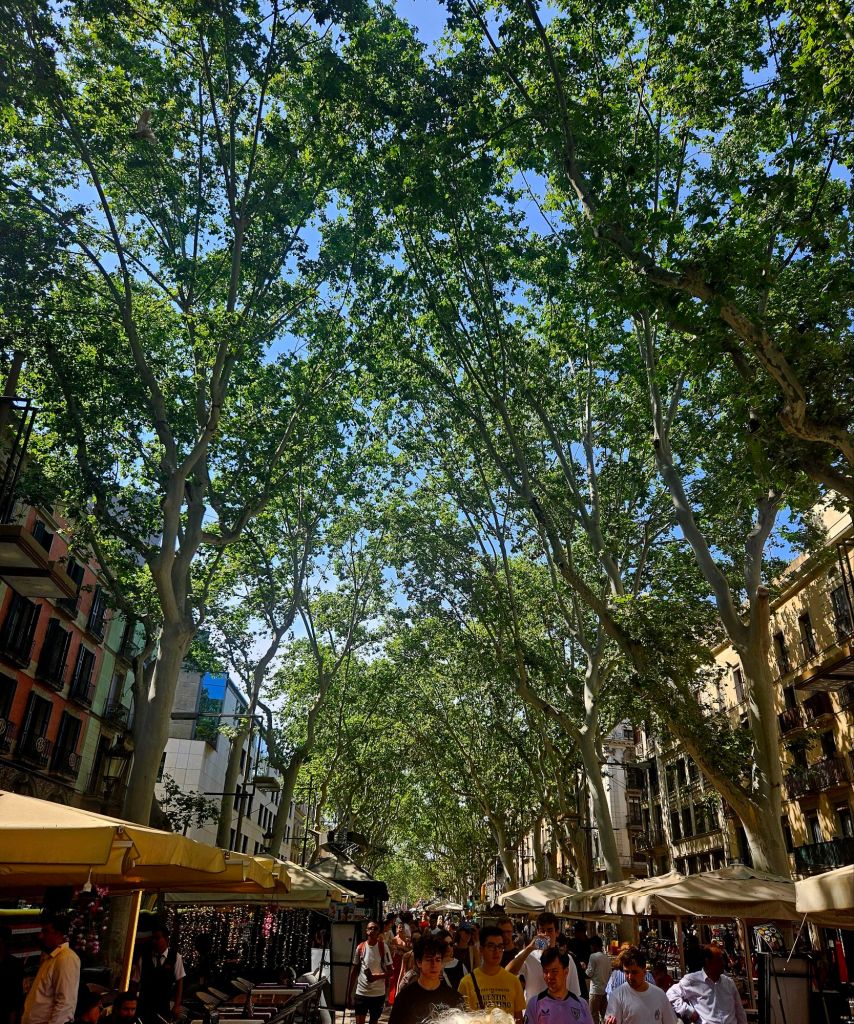
After a relaxing lunch, we wandered down Las Ramblas. This is the most famous street in Barcelona. The street itself is flanked by plane trees, and the middle section is a pedestrian boulevard.

The name La Rambla comes from a seasonal stream that used to run through the street.

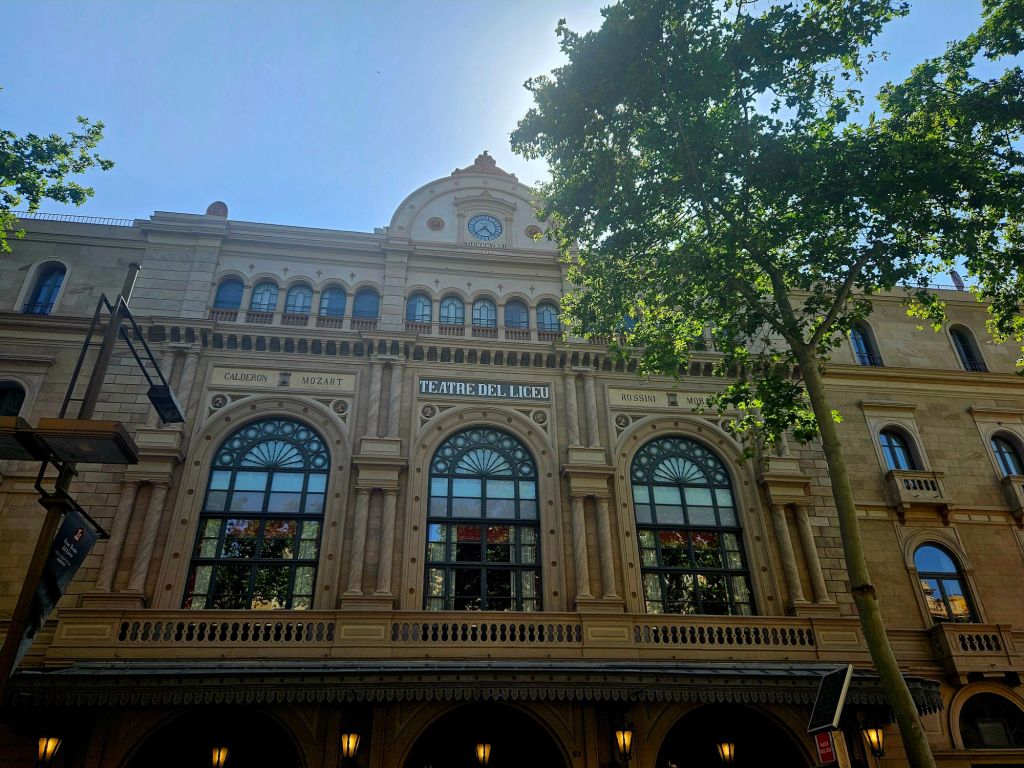
We passed the theatre – Teatre Lice –  which is the oldest theatre in the city. It opened here in 1847 and functions as an opera house.

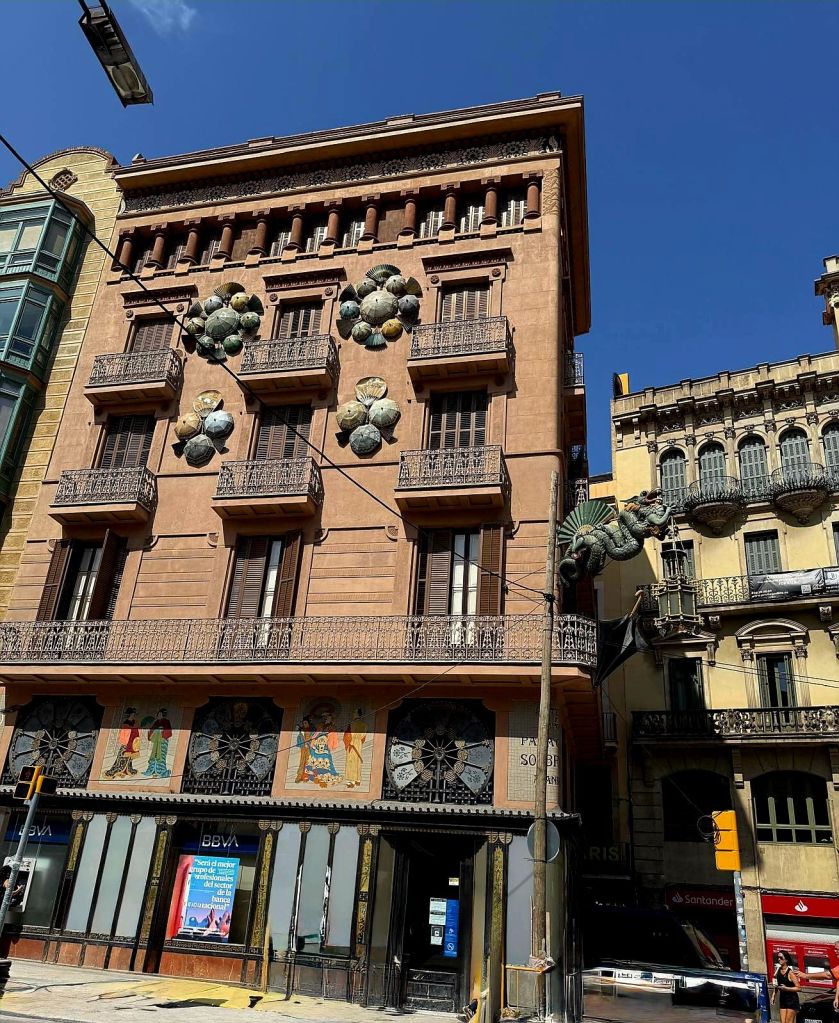
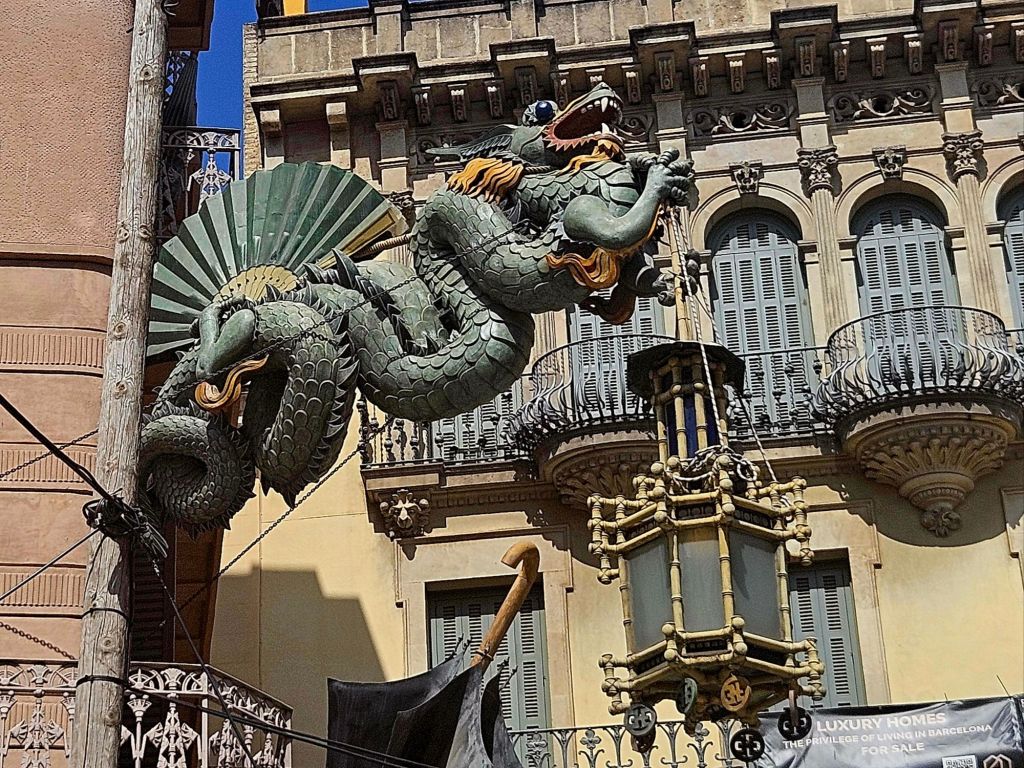
Quite close by was an unusual umbrella building with a lovely dragon light.

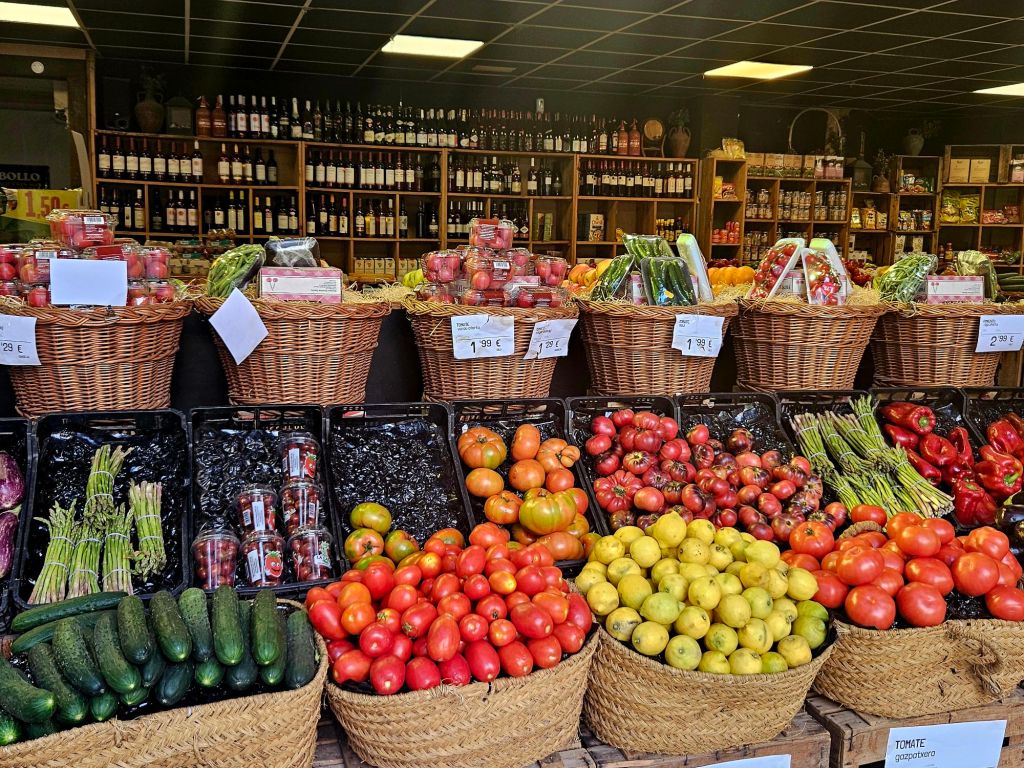
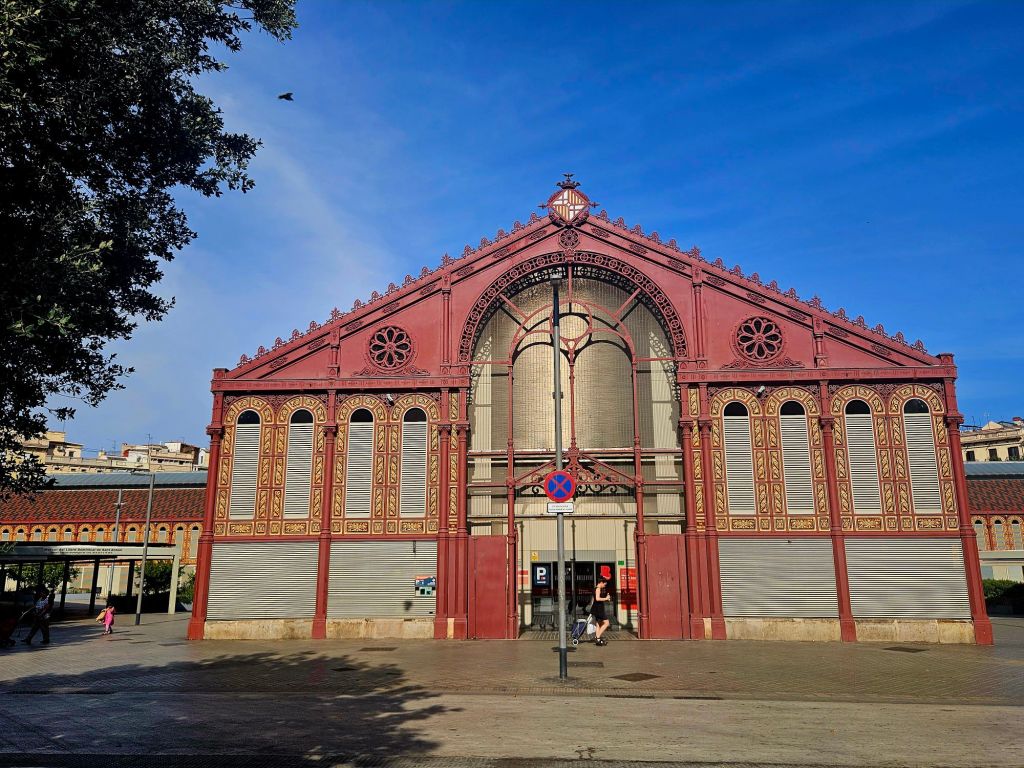
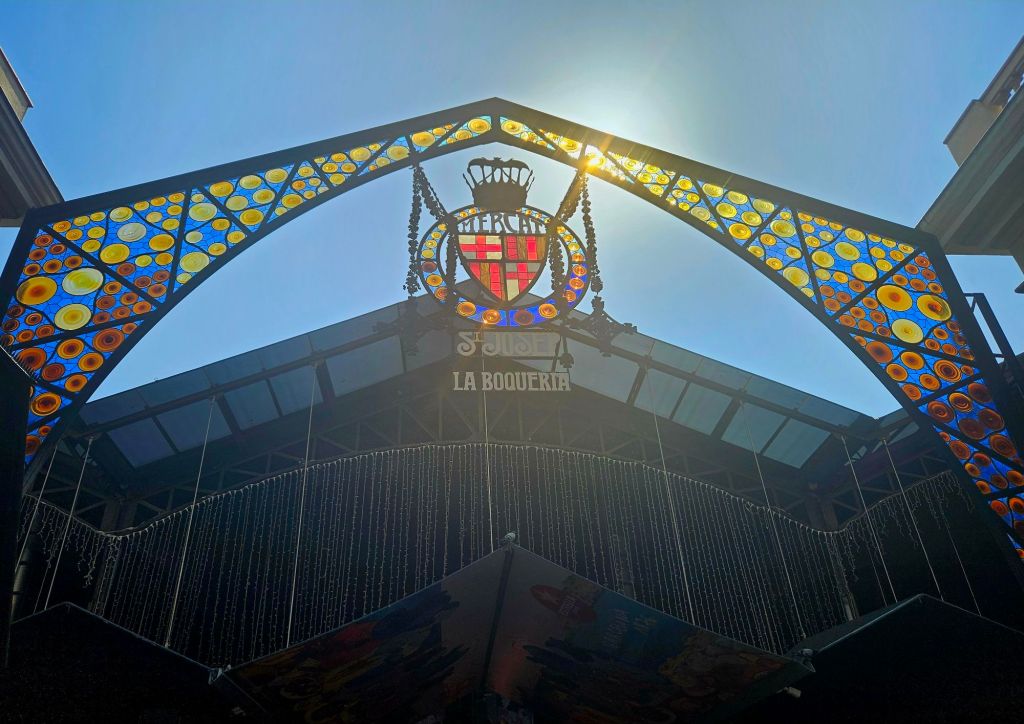
As we continued up the street, we came across Mercat St Josef La Boqueria.

This is a very large fresh produce market. The building it is housed in was built between 1840 and 1914 and is on the site of a former monastery. There is believed to have been a market on this spot since 1217. The iron gate was added in 1914.

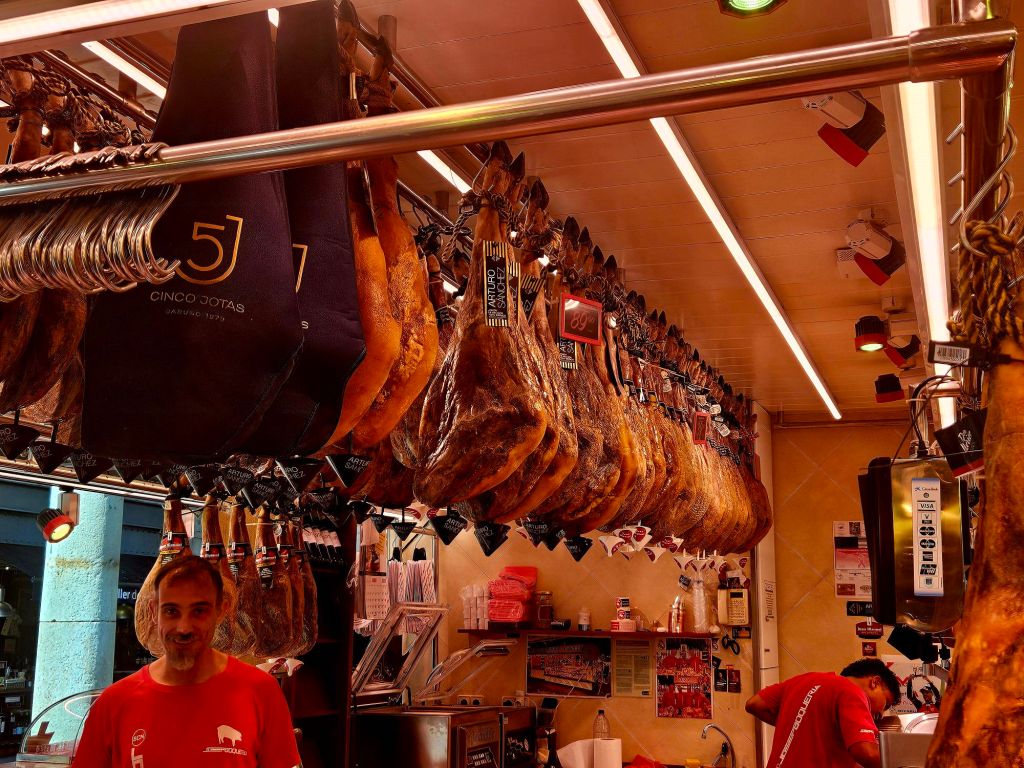
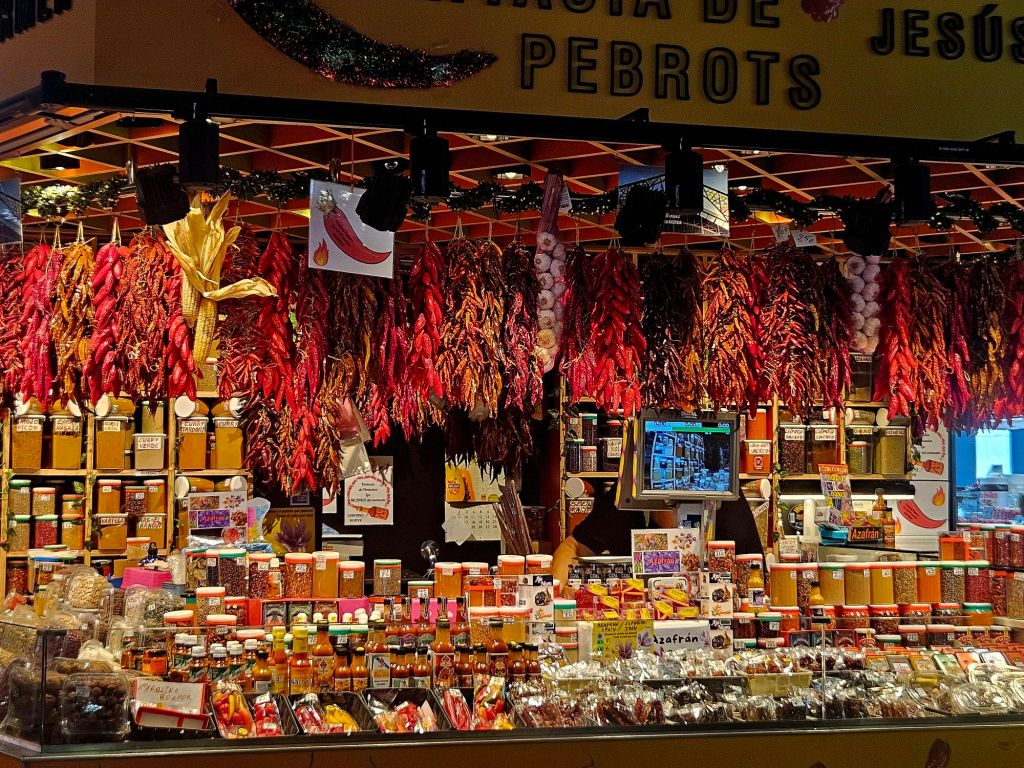
There were some lovely food stalls. If we hadn’t just eaten, I would’ve  bought something.

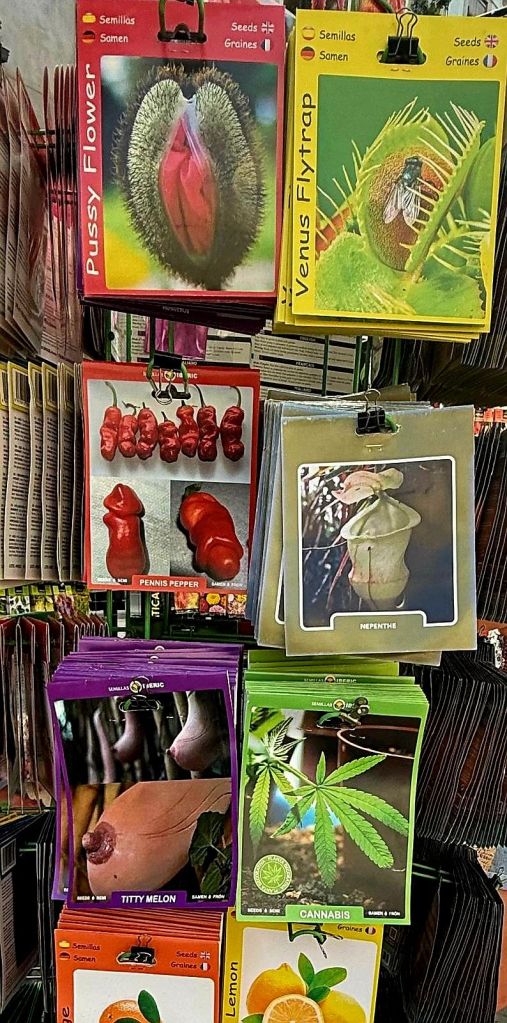
There were also a lot of stalls down the side of the avenue – some selling some very unusual products.

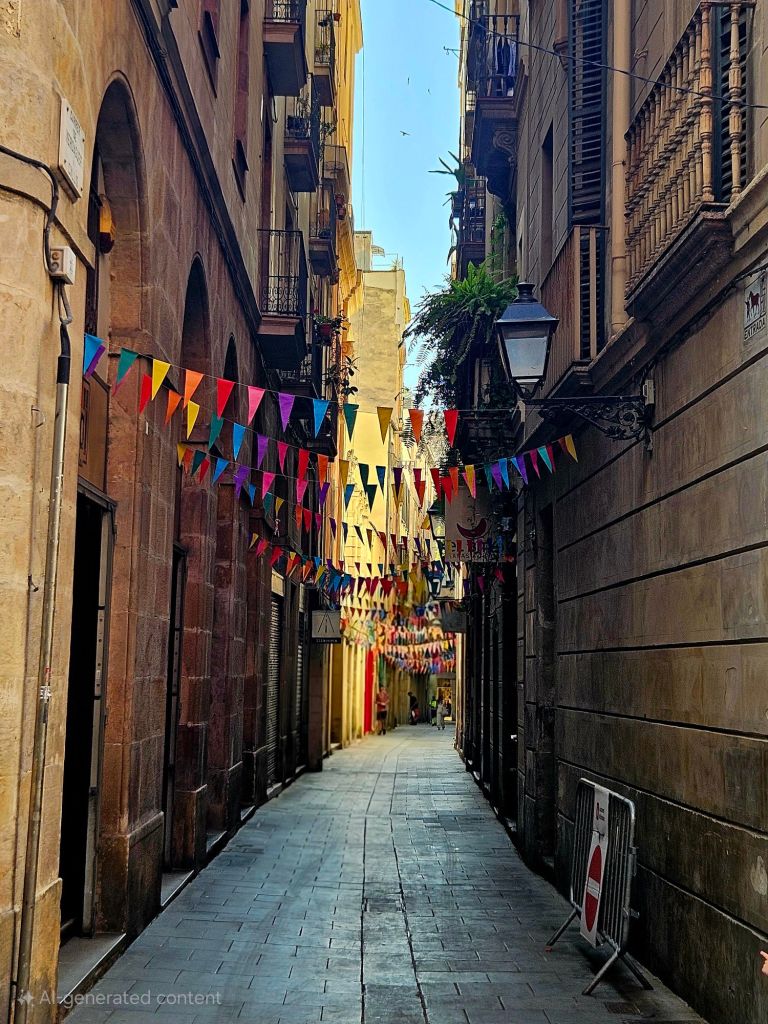
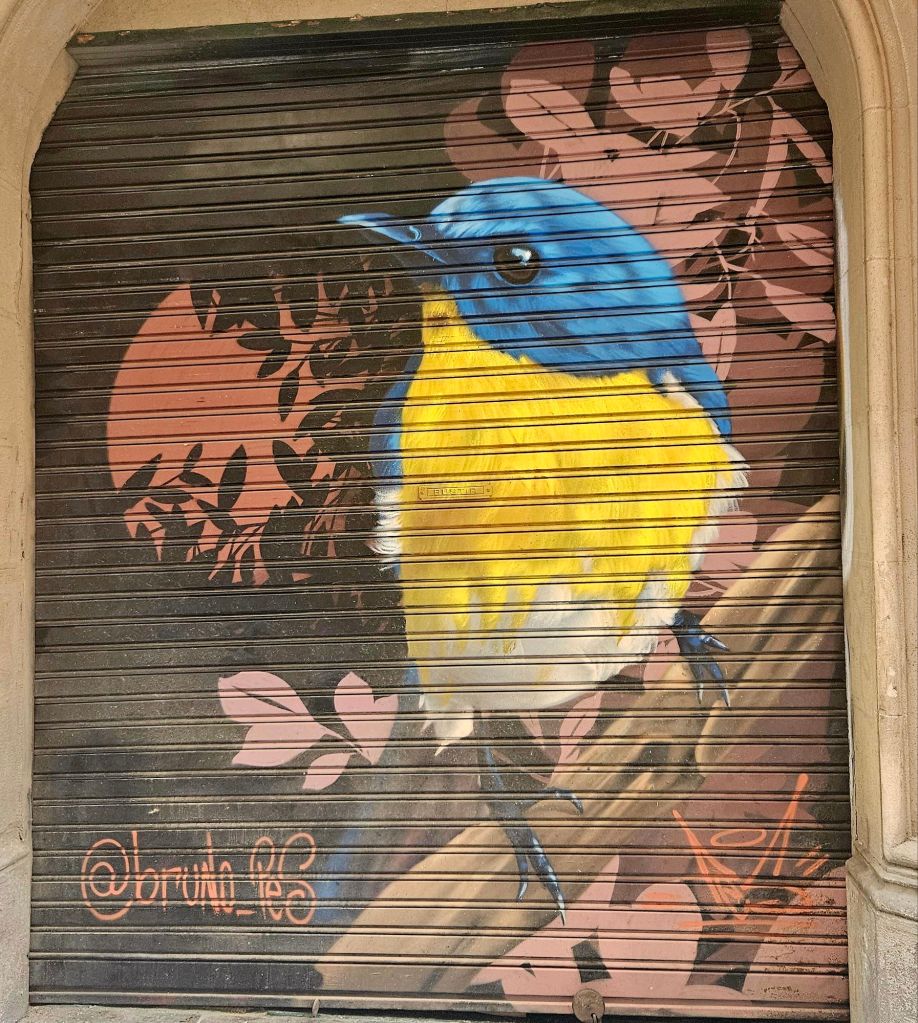
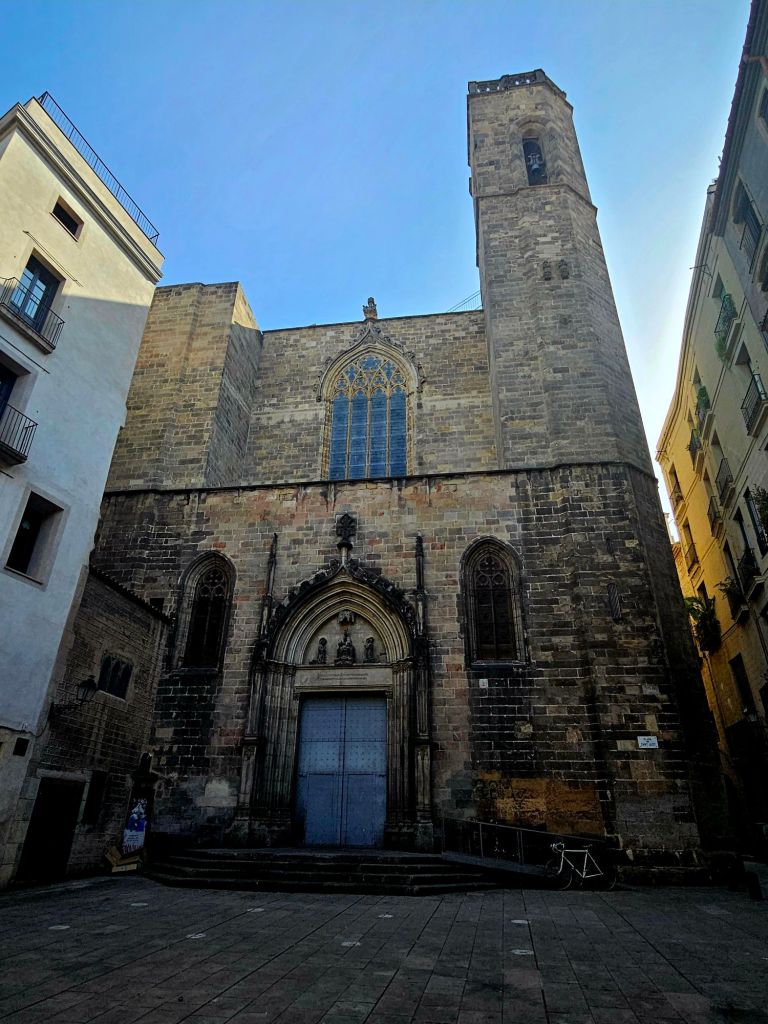
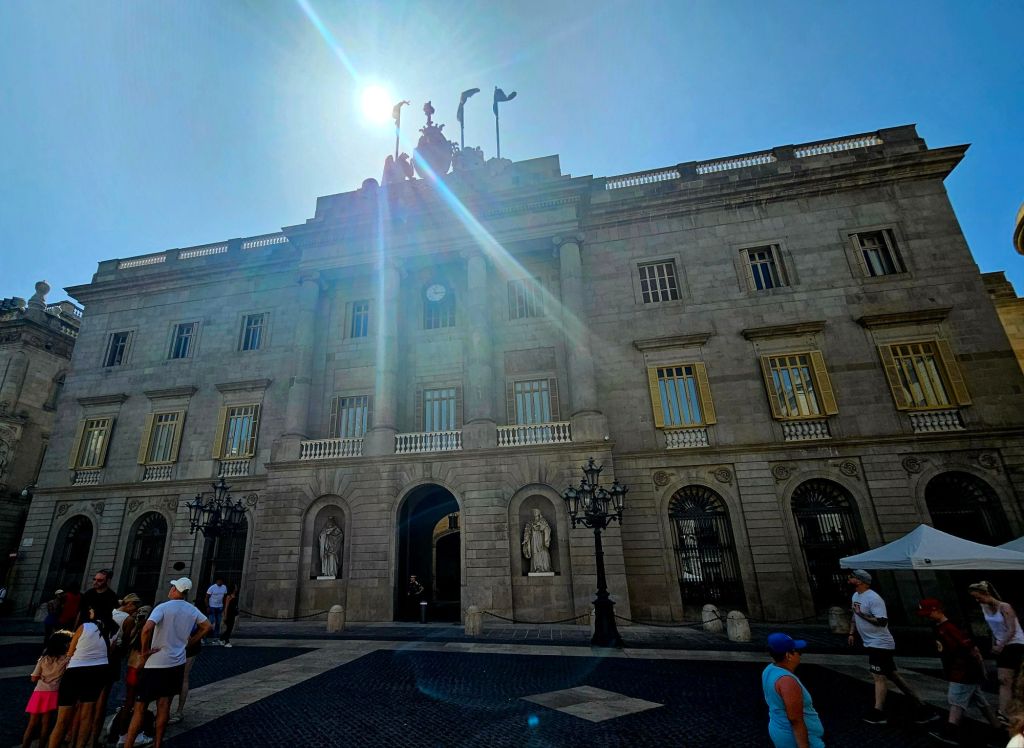
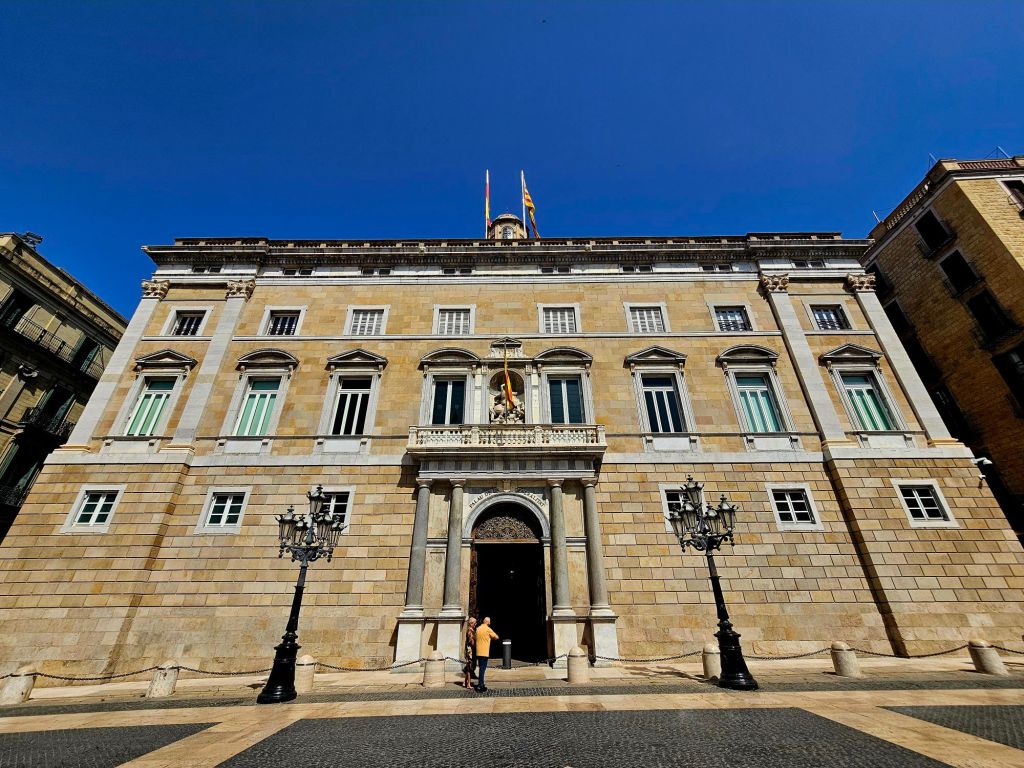
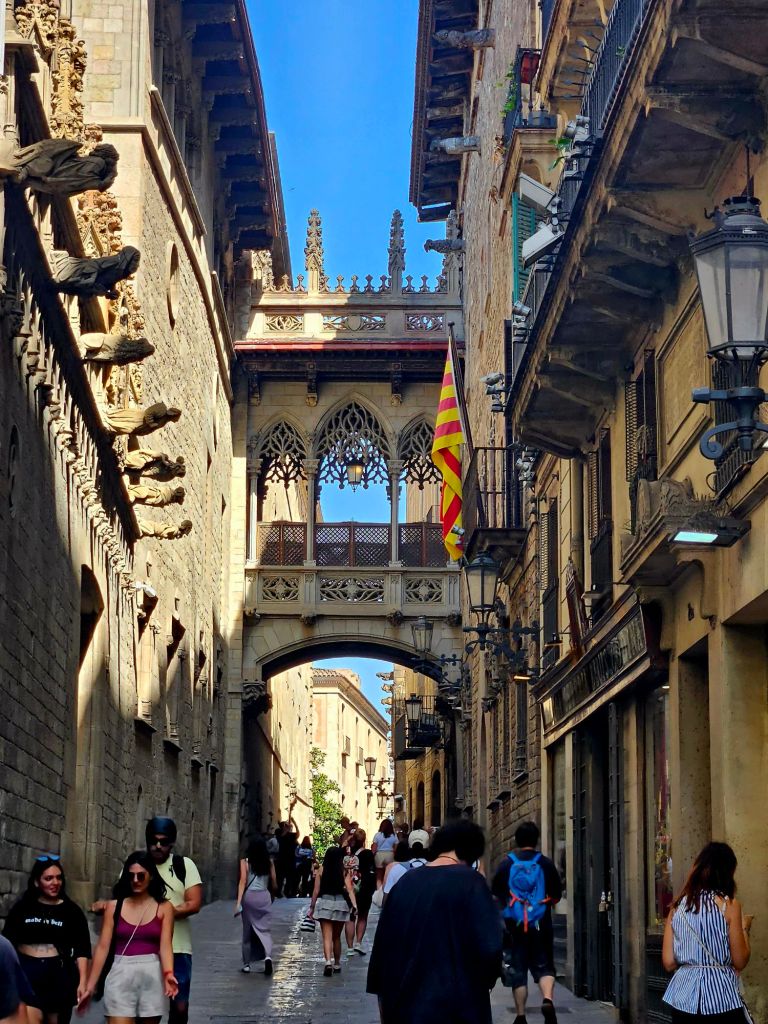
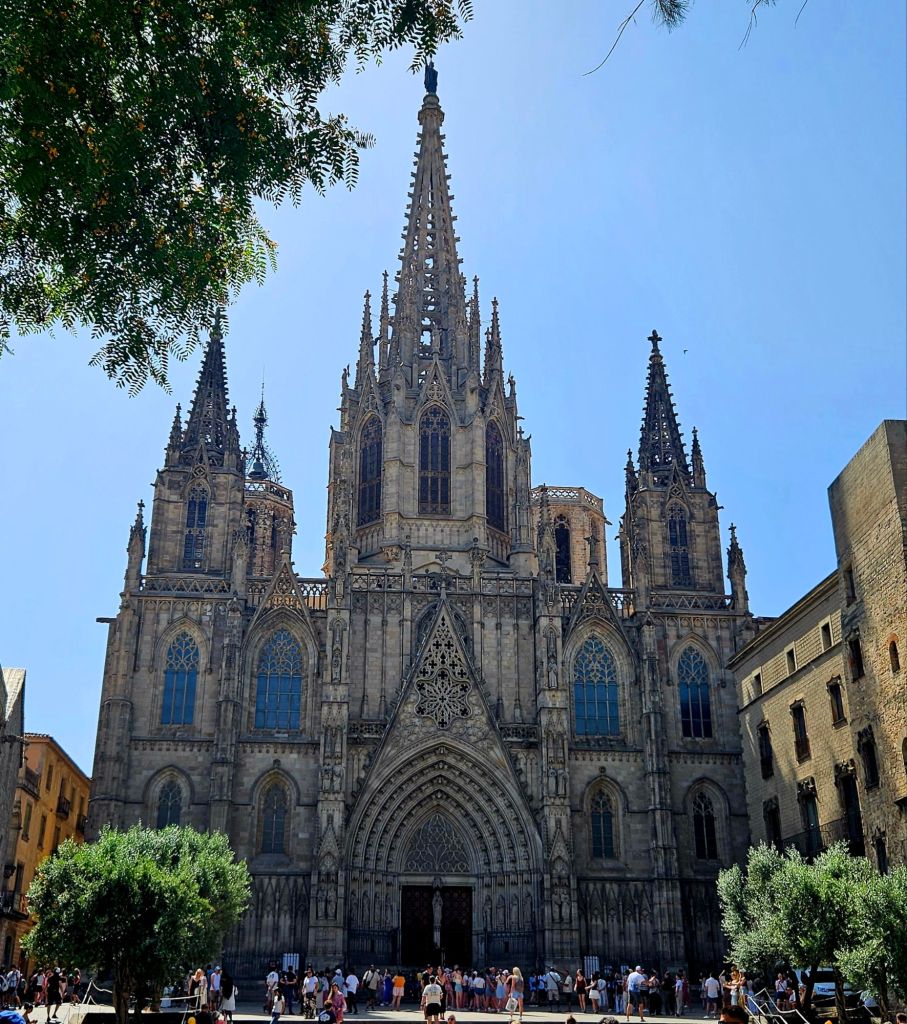
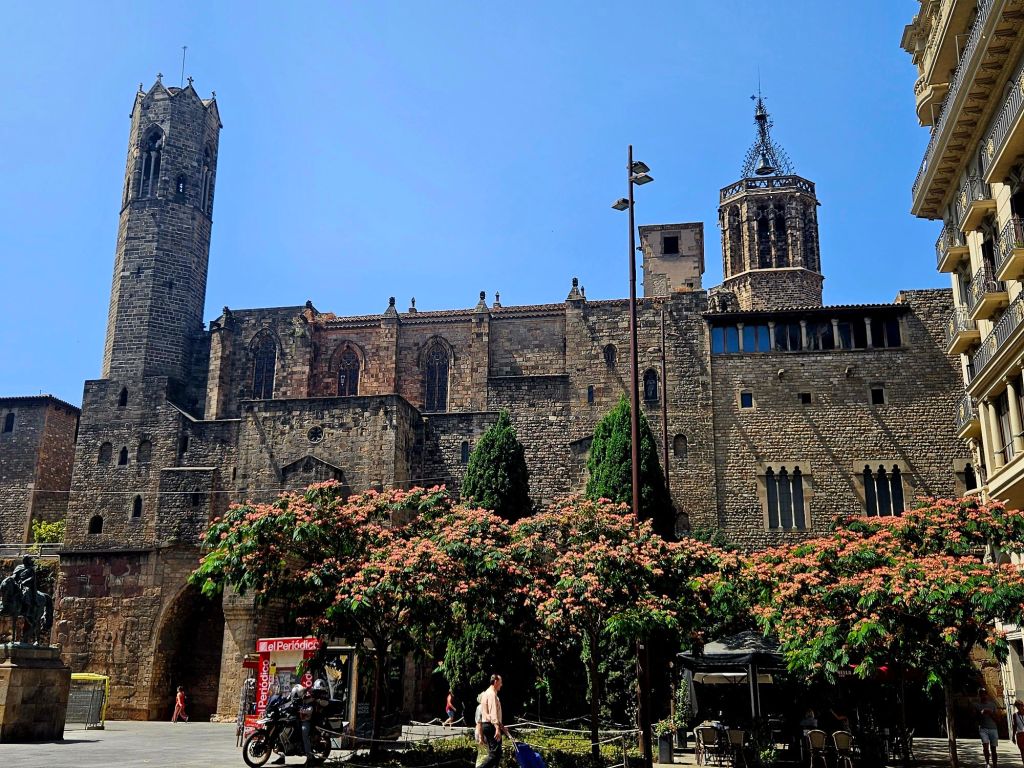
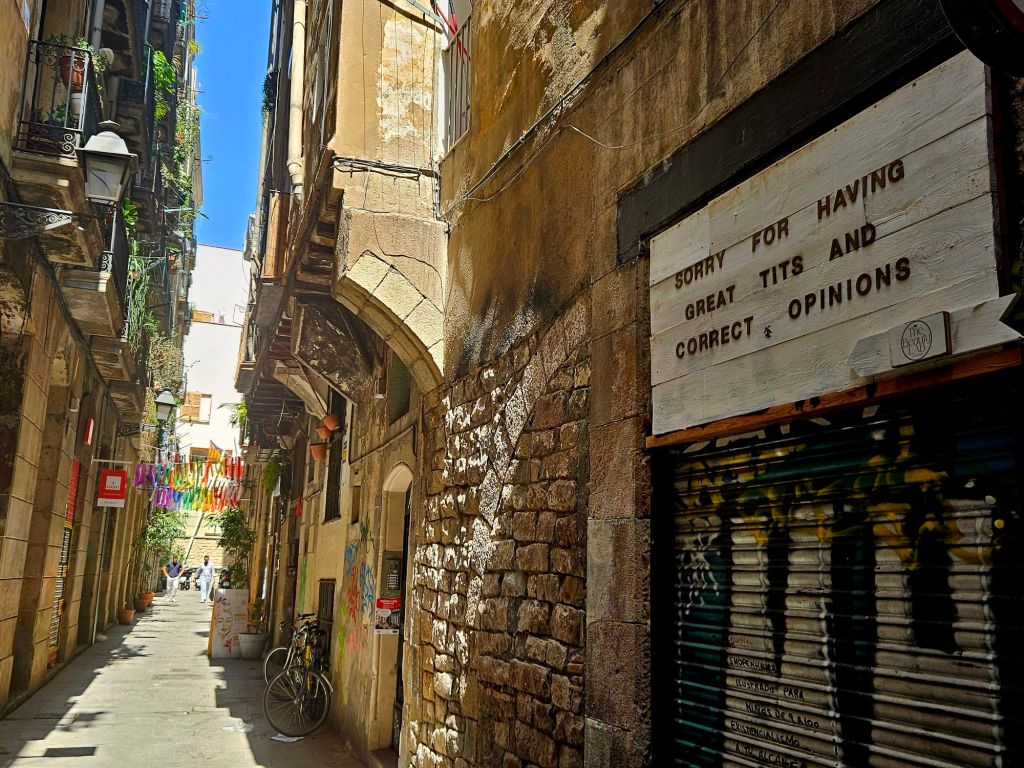
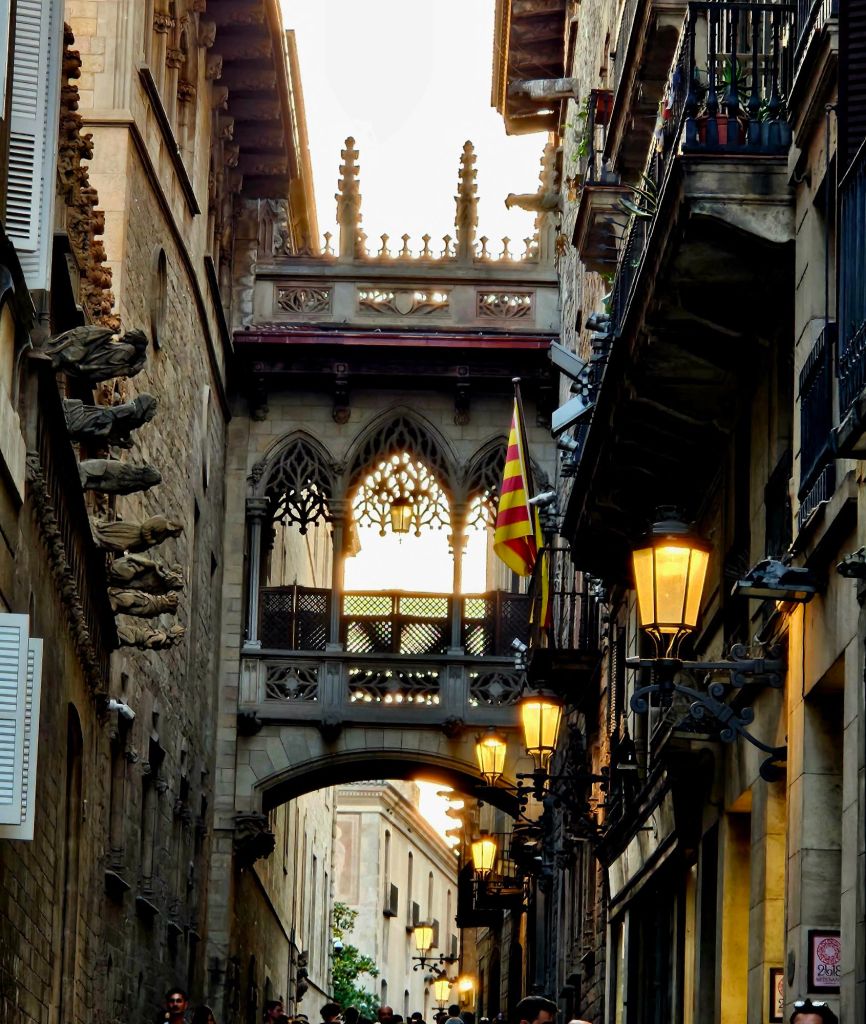
After wandering around the market for a bit, we decided to turn off the main street into the side streets of Barri Gotic.

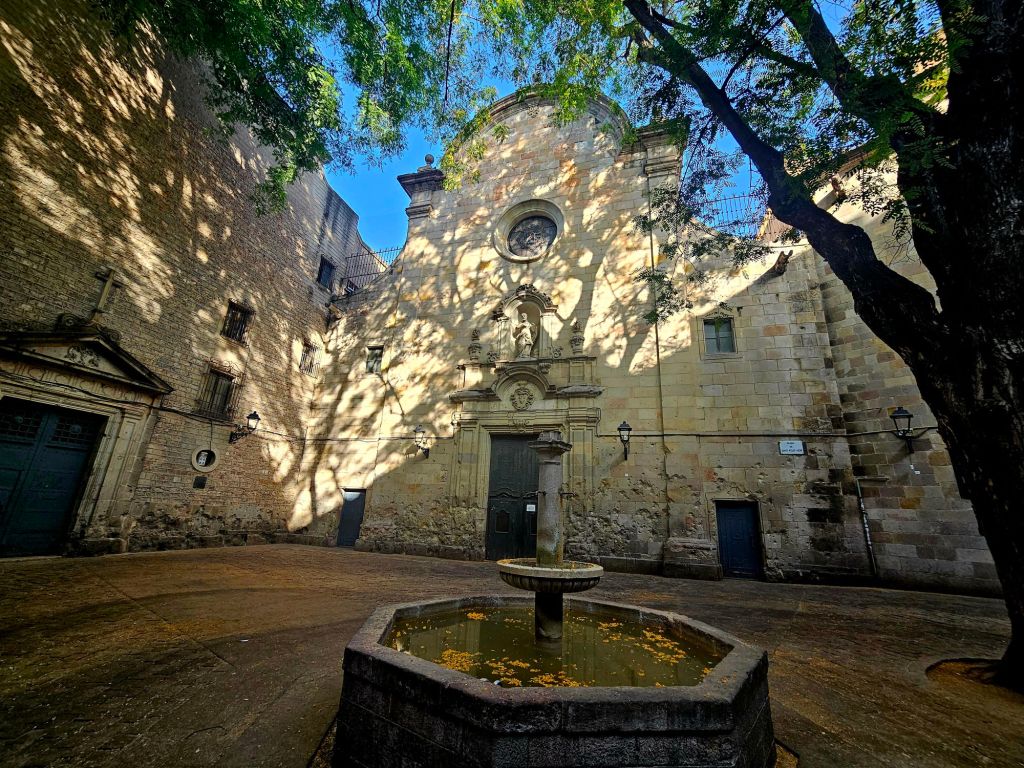
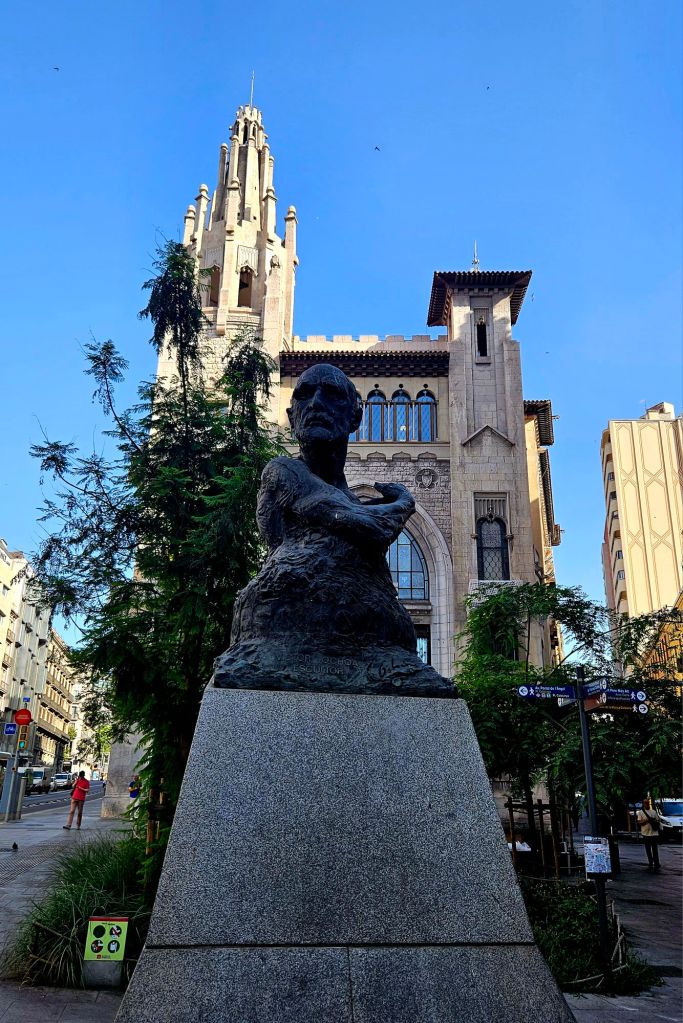
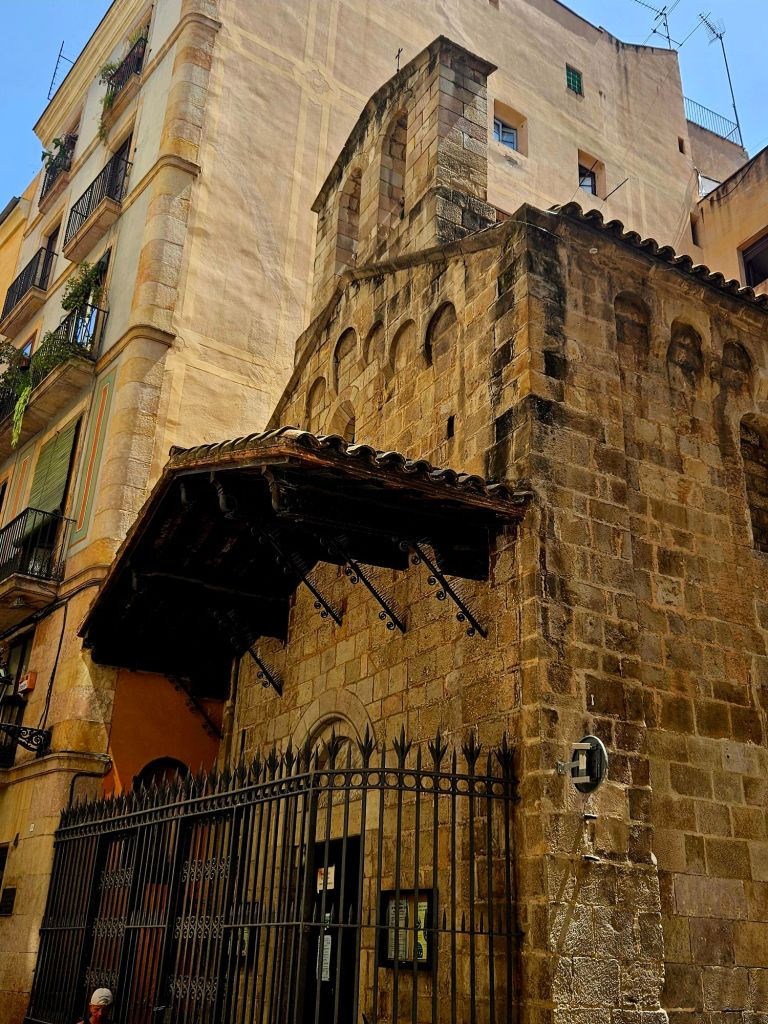
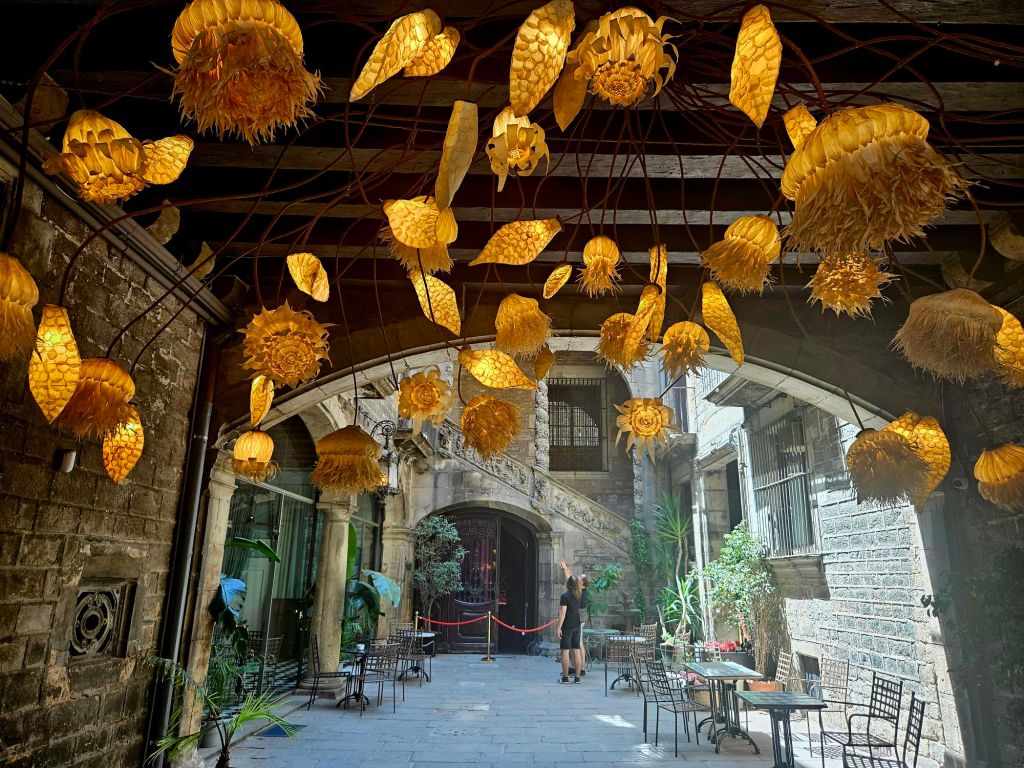
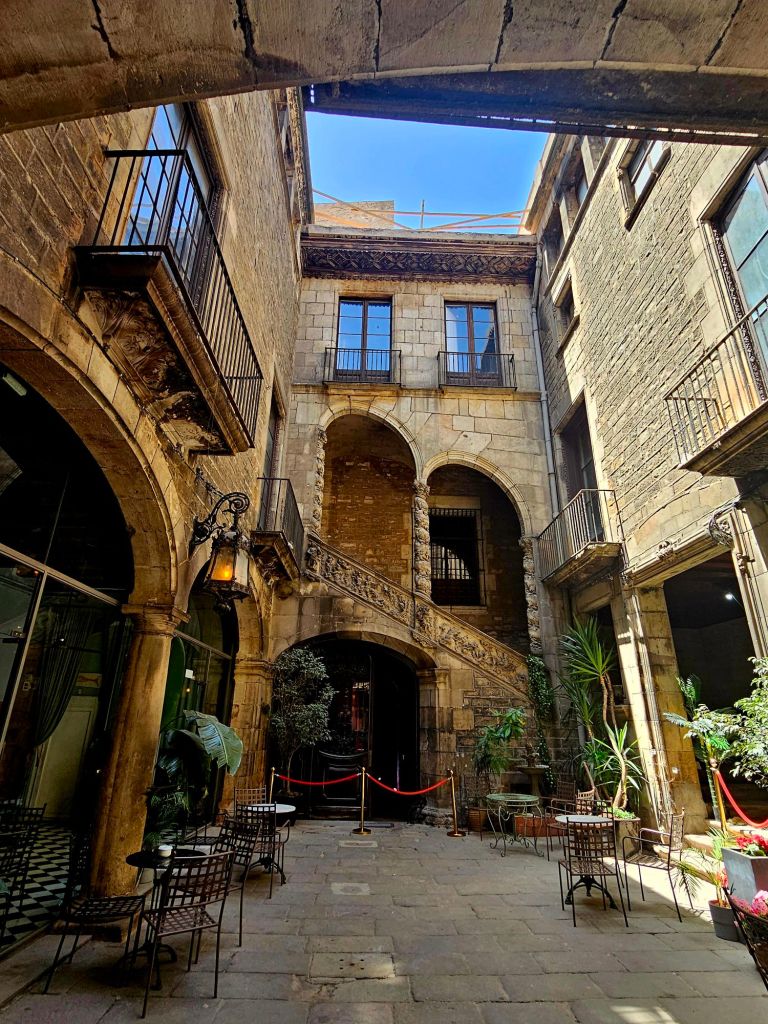
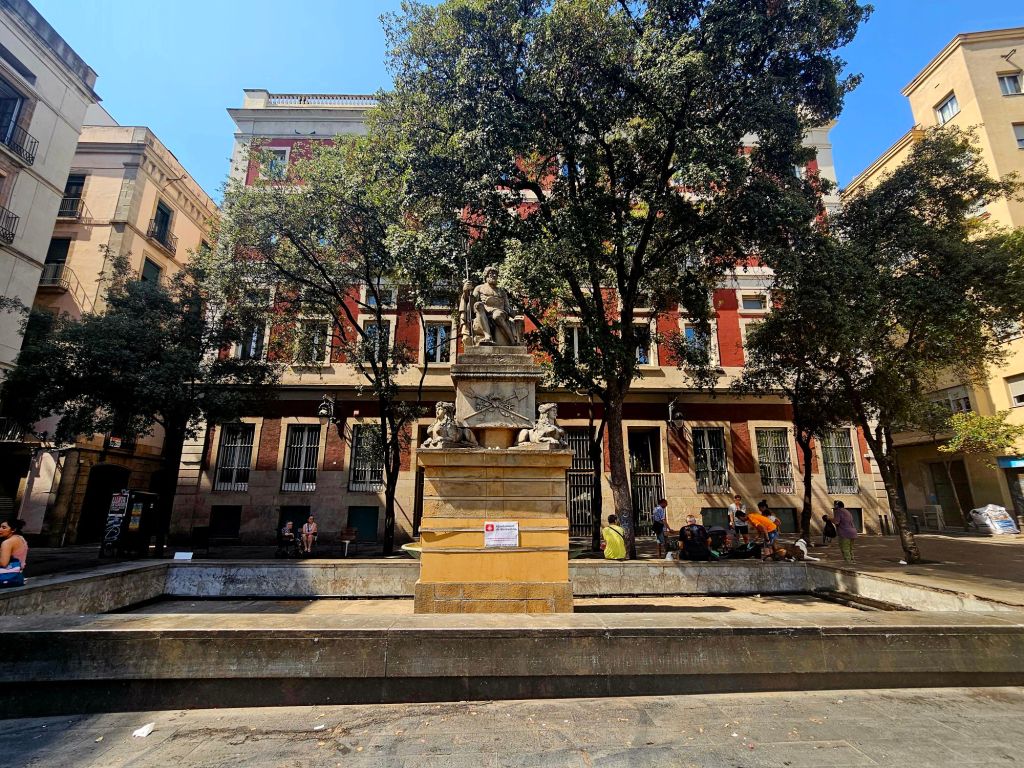
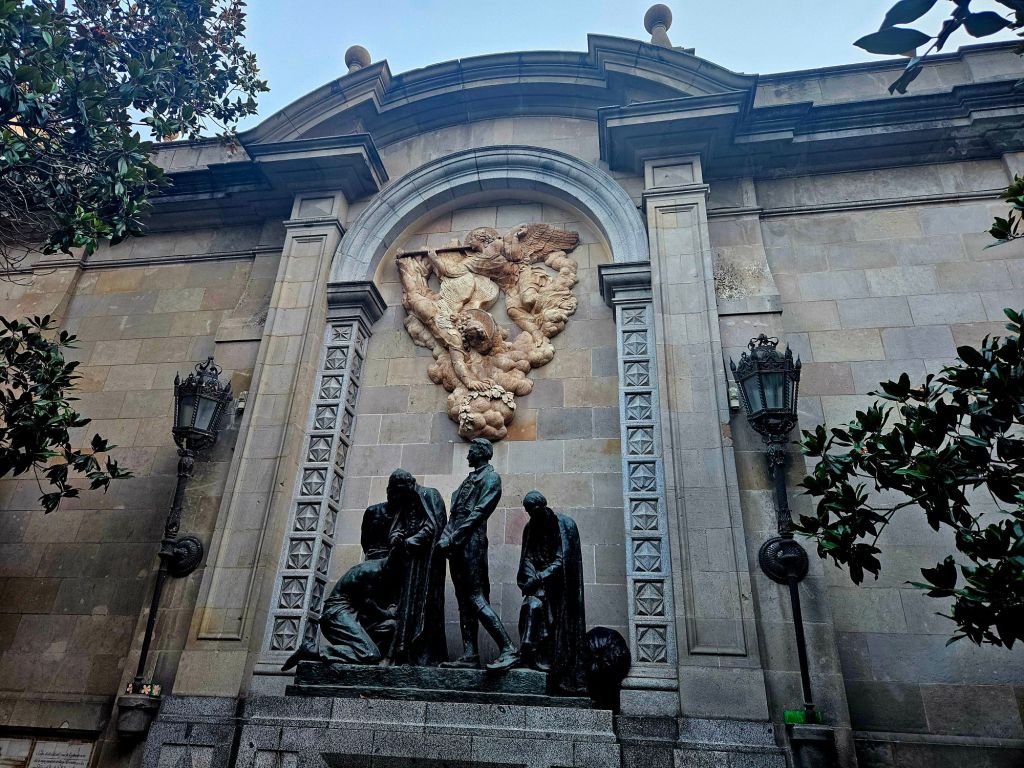
We walked through the Sant Josef Oriol Square. This square is named after the priest Josef Oriol, who was born in Barcelona in 1650, and he dedicated his life to looking after the sick and poor. The area where the square is now used to be one of the churches’ cemeteries. The photo is of the Palau Fivaller, which is now an Institite of Art , and dates back to the 16th century.

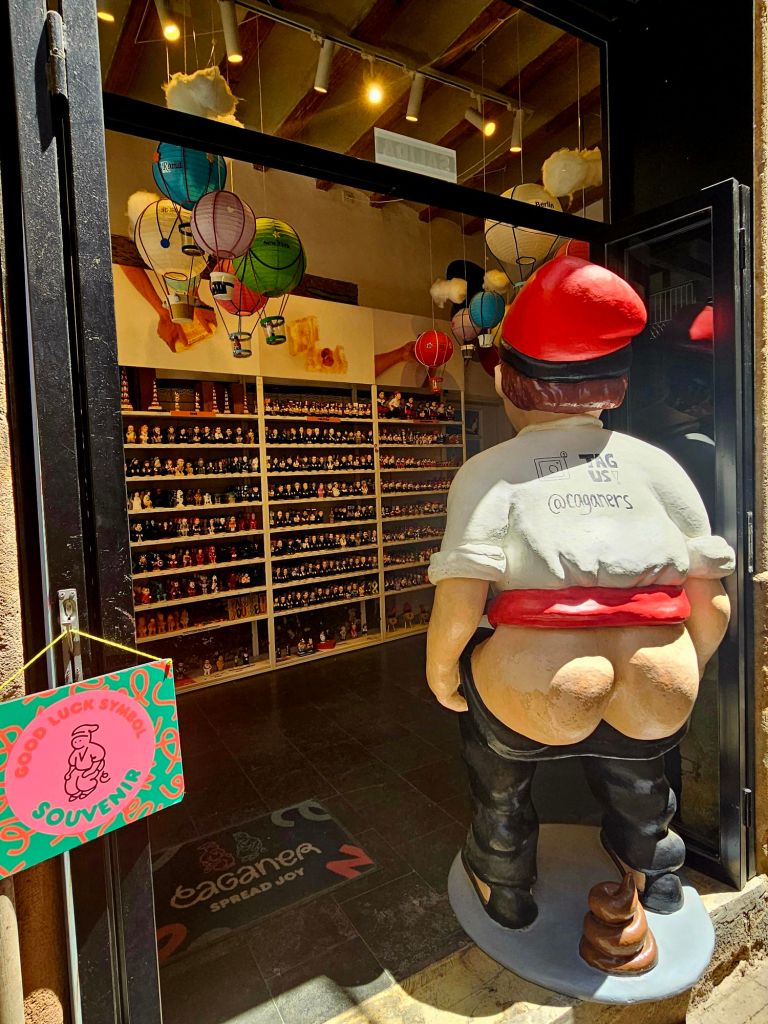
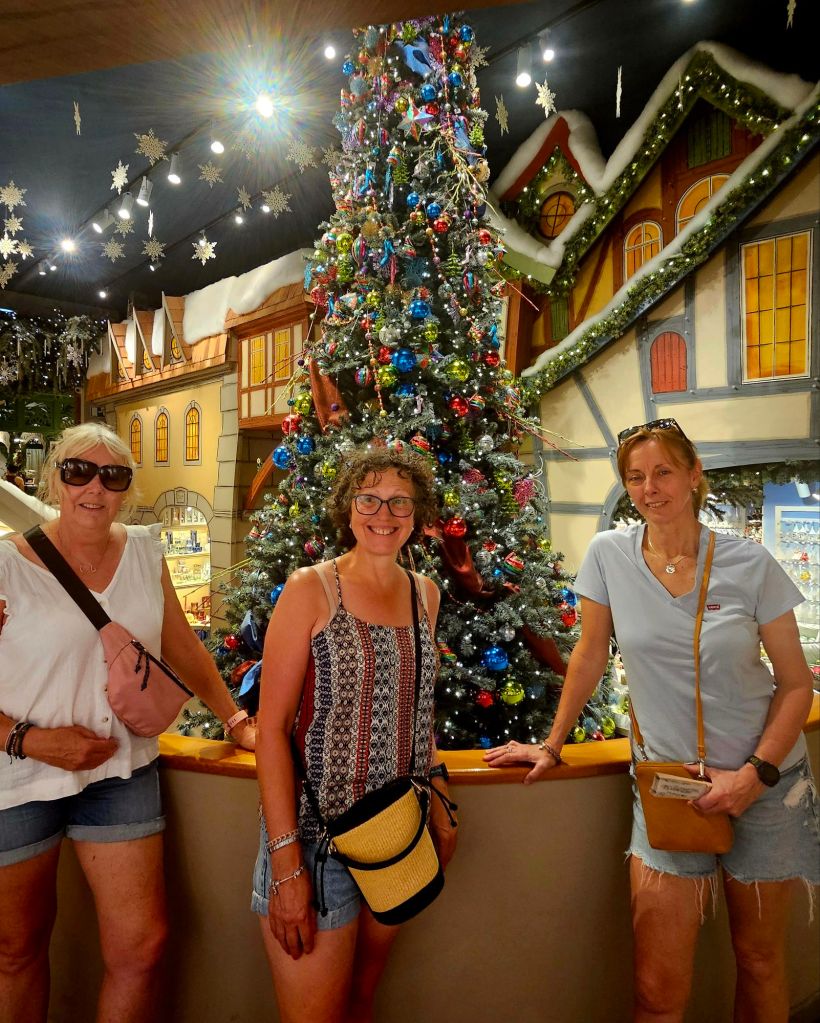
As we walked through the little streets, we came across a Christmas shop.

On our way home, we stopped at a small local supermarket and picked up some wine, beer, and other essentials.

Back at the apartment, we had showers and a bit of downtime. Mandy wasn’t feeling great and made the decision not to come out with us in the evening.

A couple of Karen’s friends were in Barcelona for a short while before going on a cruise, so we arranged to meet them at their hotel as it had a rooftop bar.

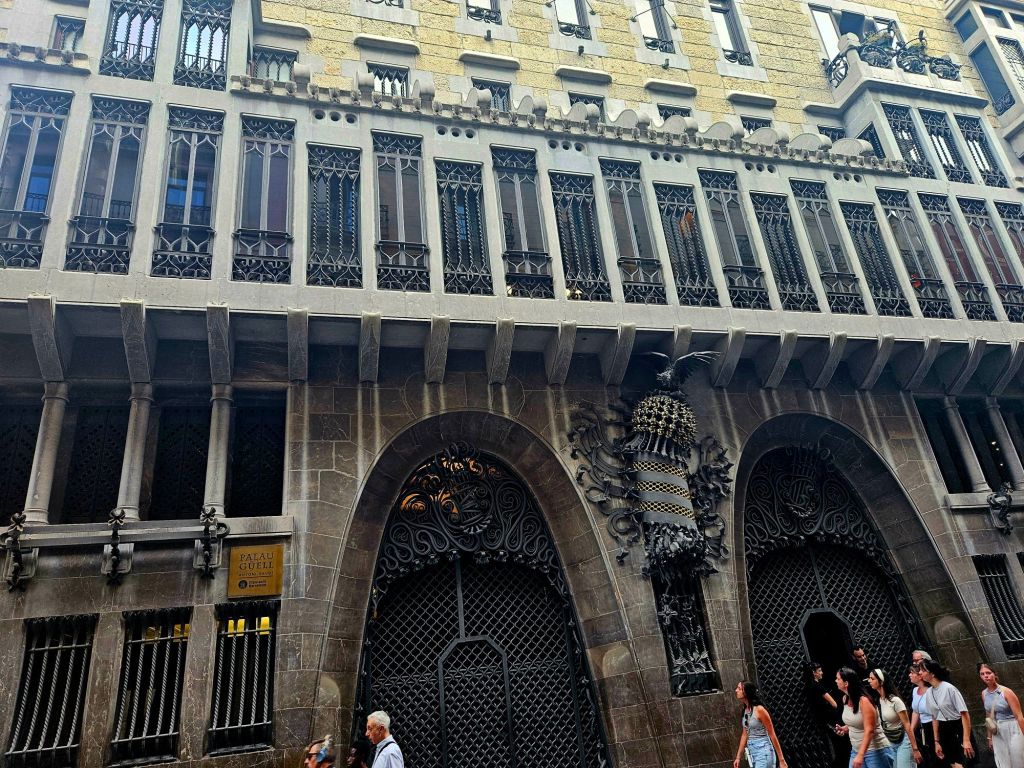
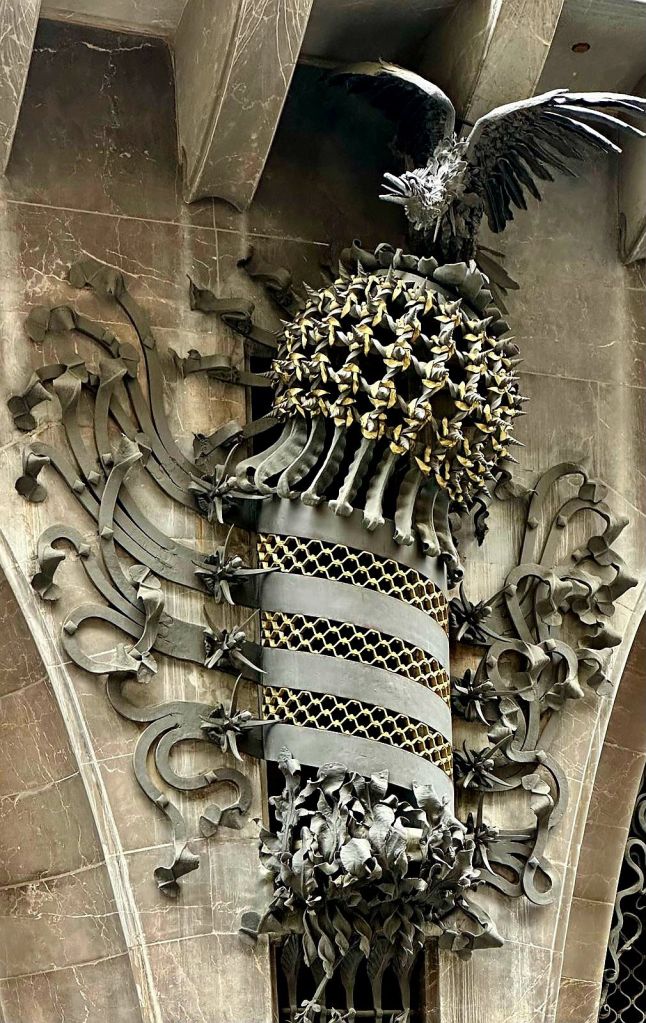
On the way to theirs, we walked past Palau Guell, which is a mansion designed by Gaudí. It was built between 1886 and 1888 and was originally designed for entertaining high society guests. It is very ornate and has iron gates at the front.

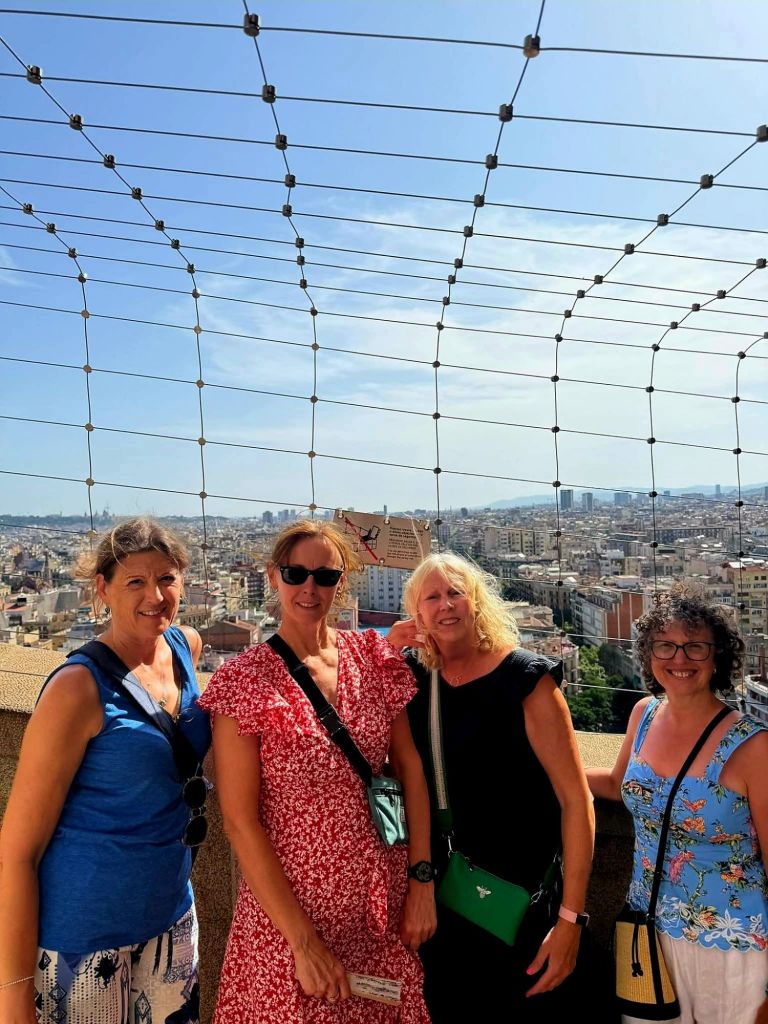
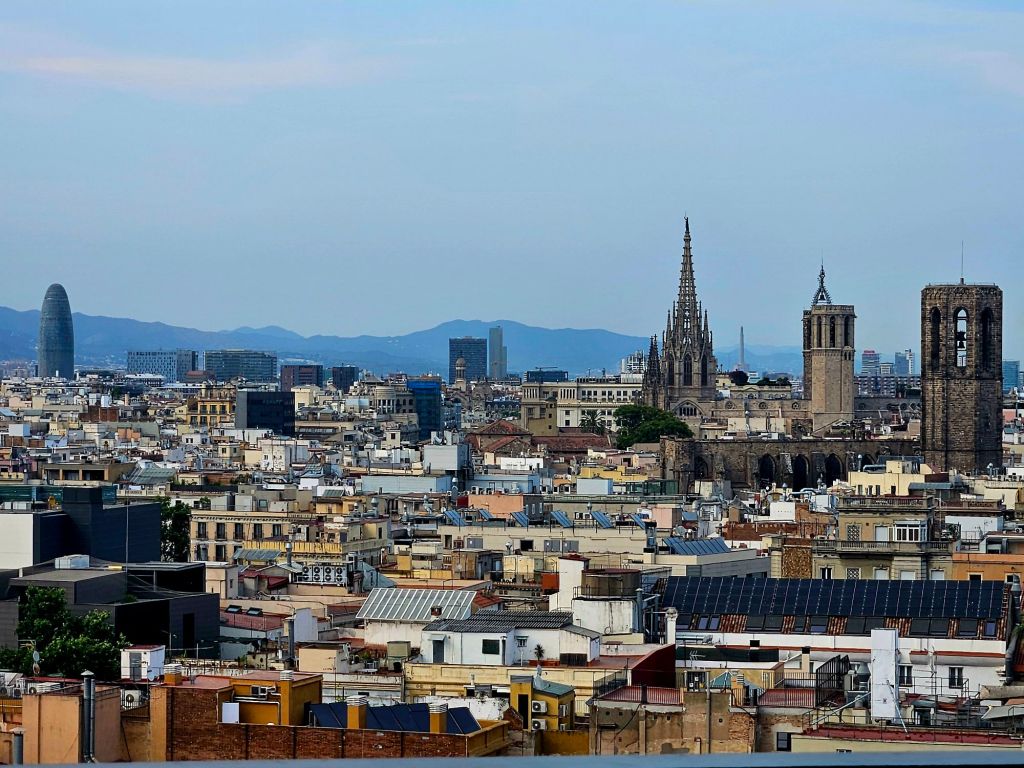
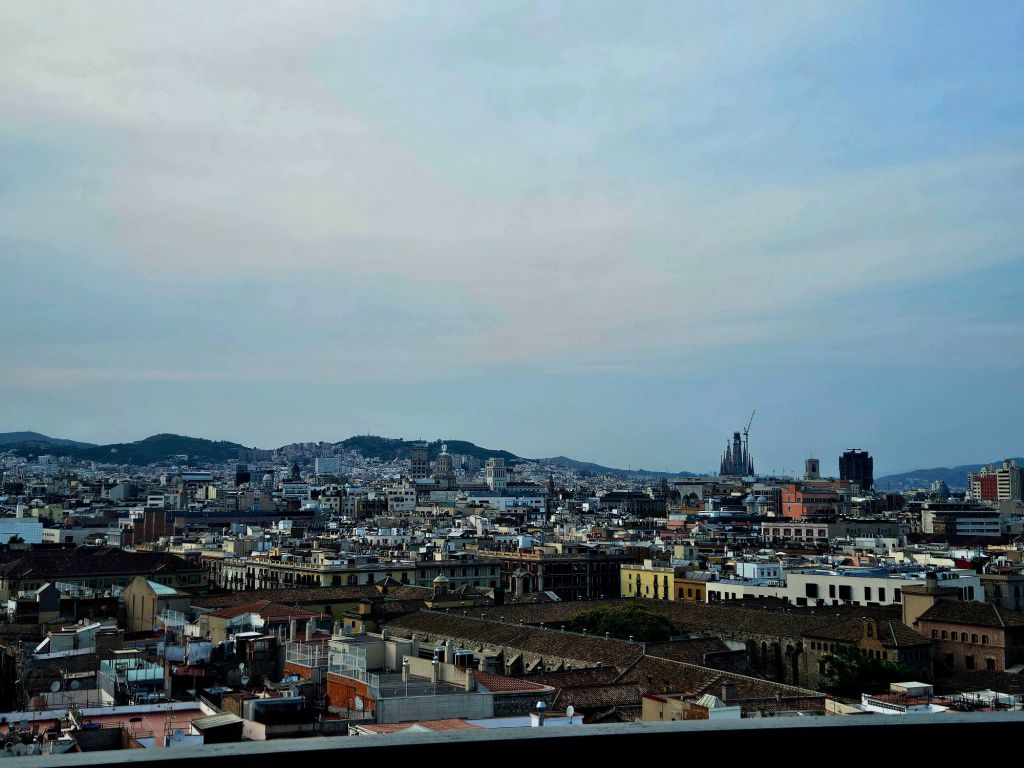
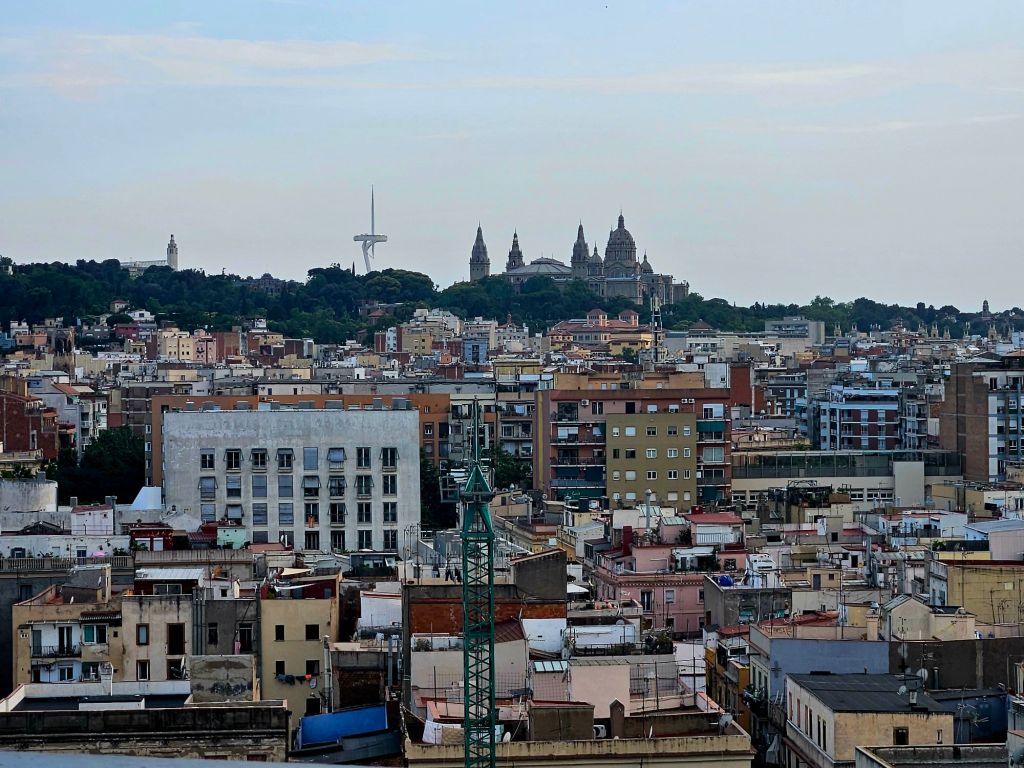
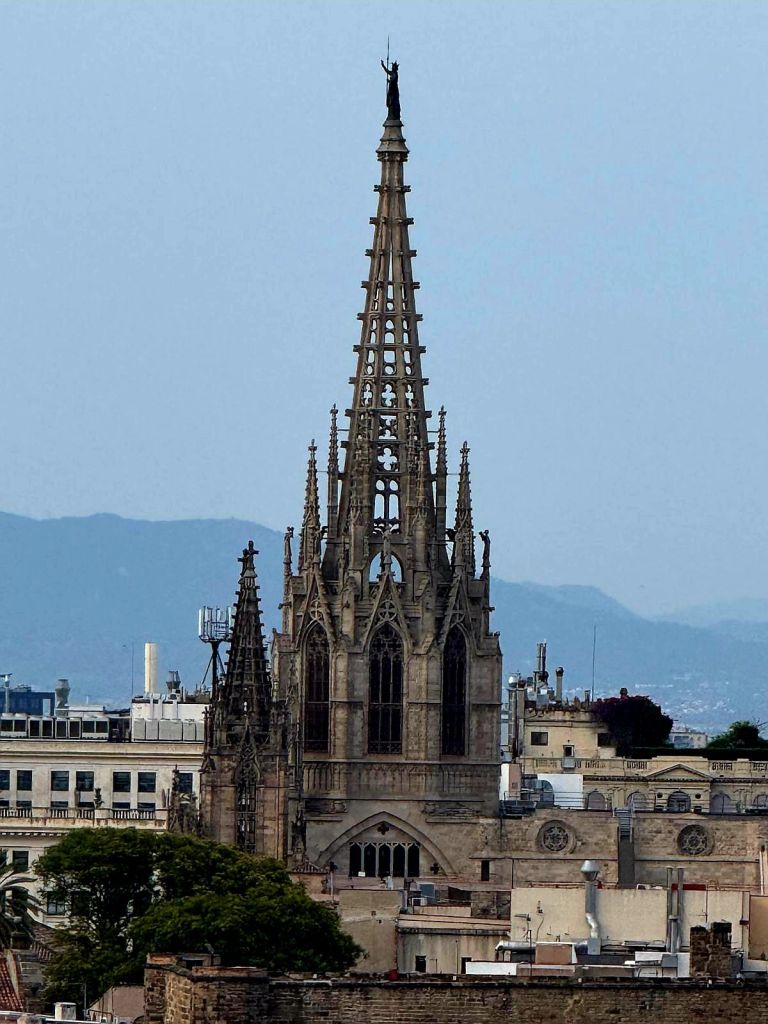
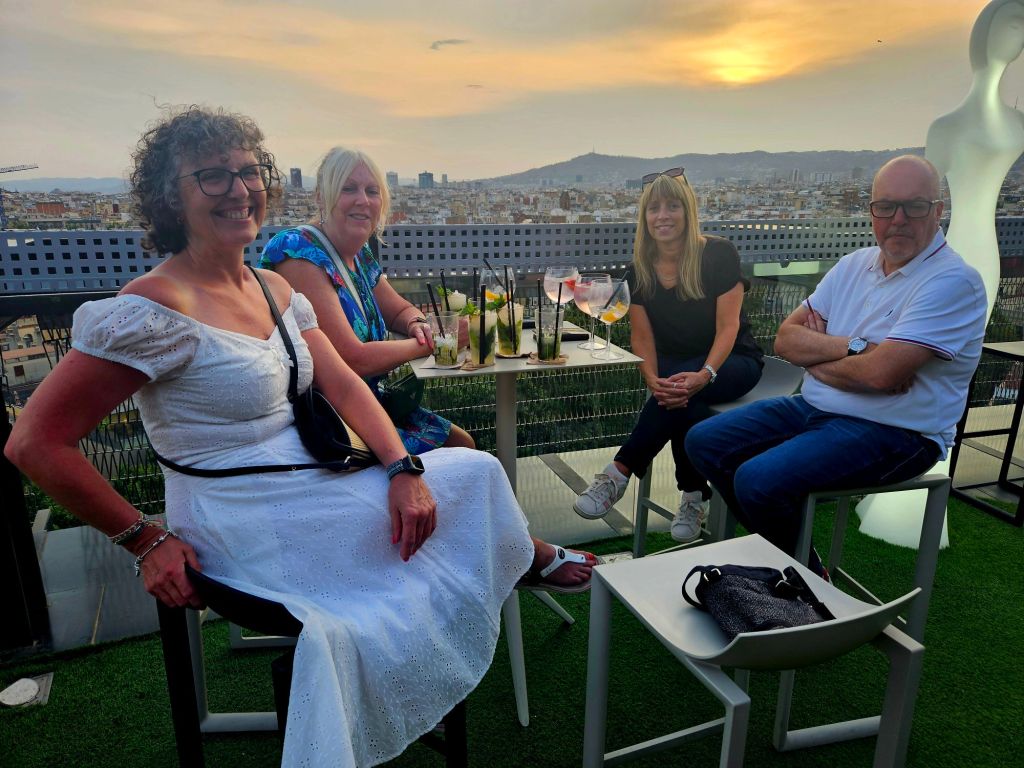
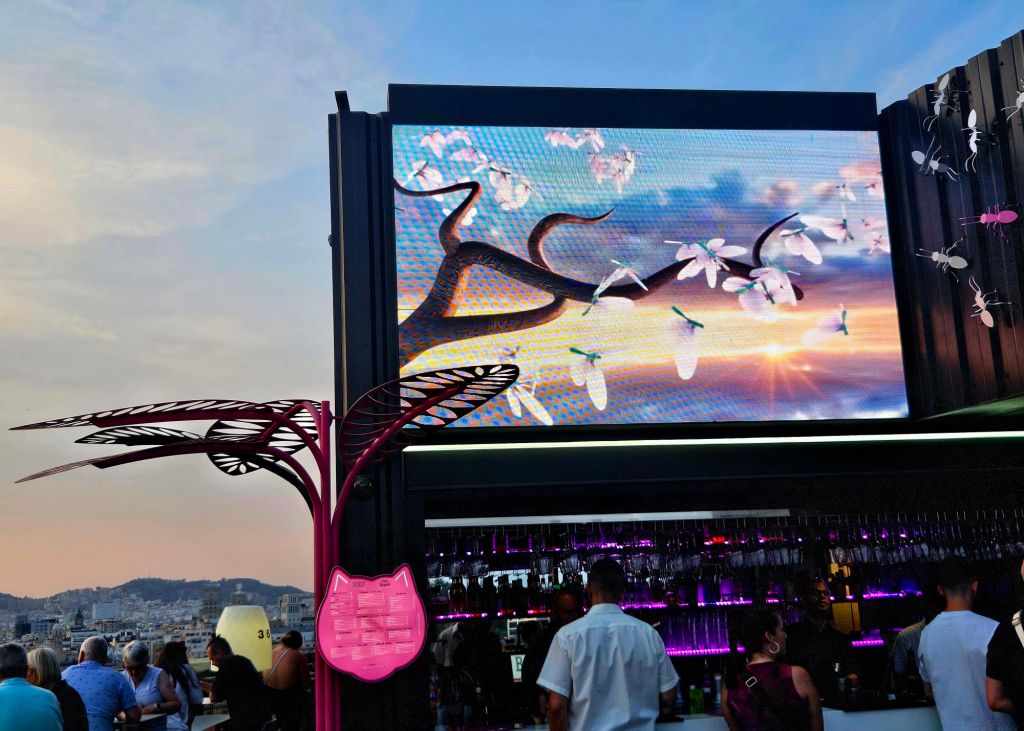
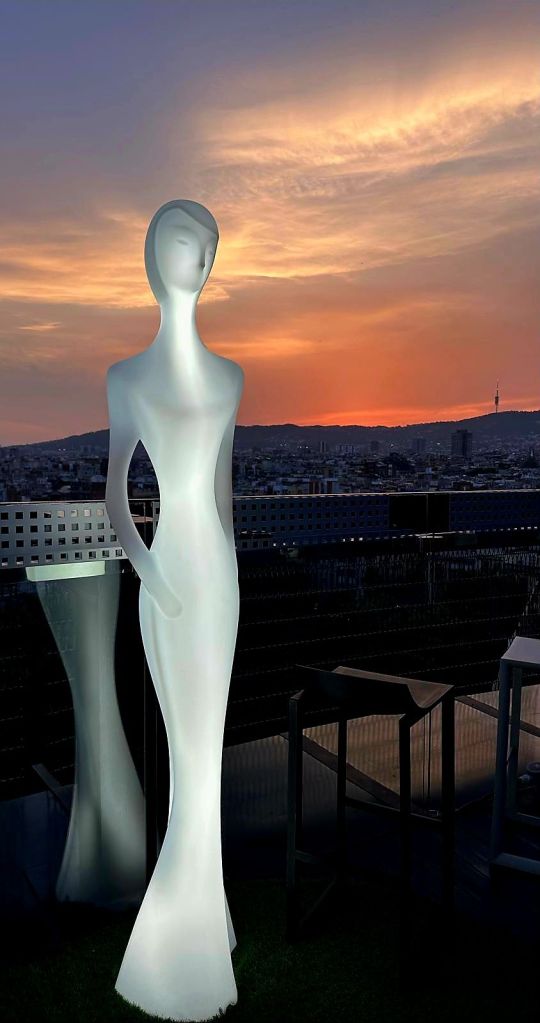
The Barcelo Raval hotel has an amazing 360⁰ rooftop bar, so after a quick hello to Jules and Jay, I walked around, looking at the amazing views.

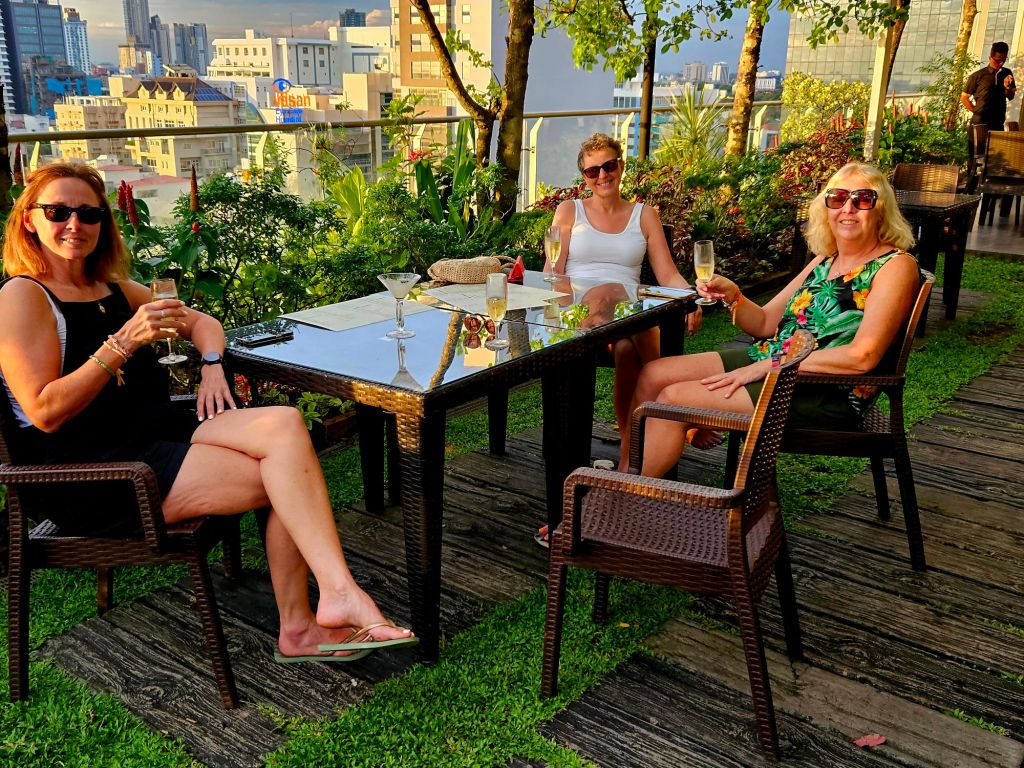
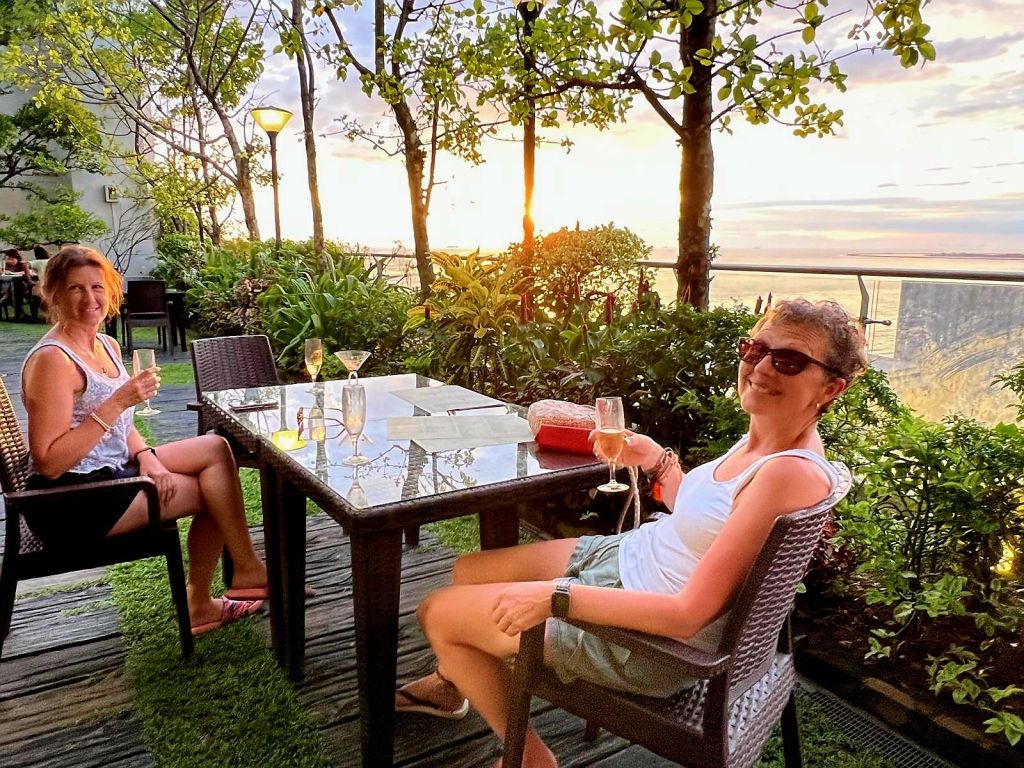
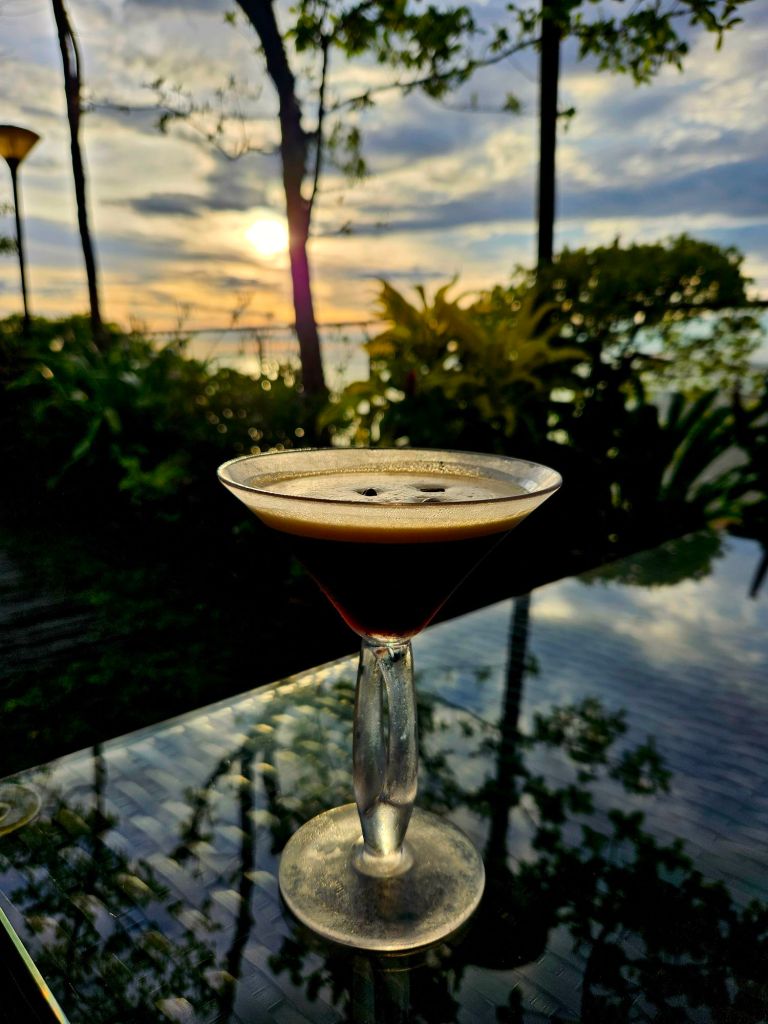
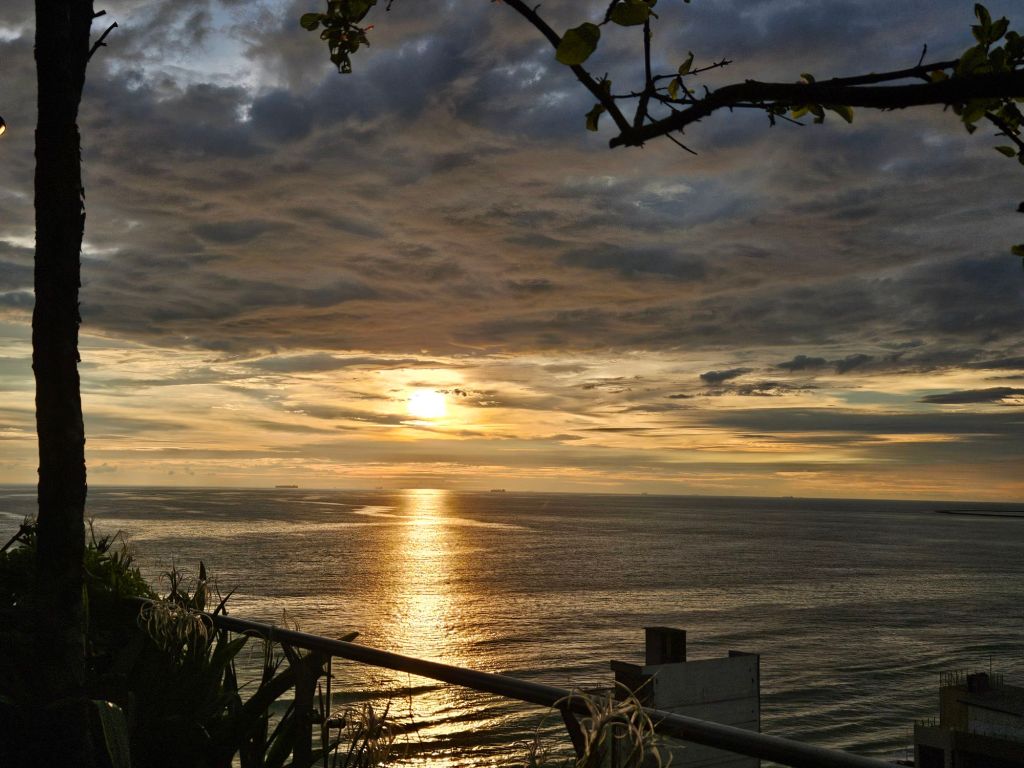
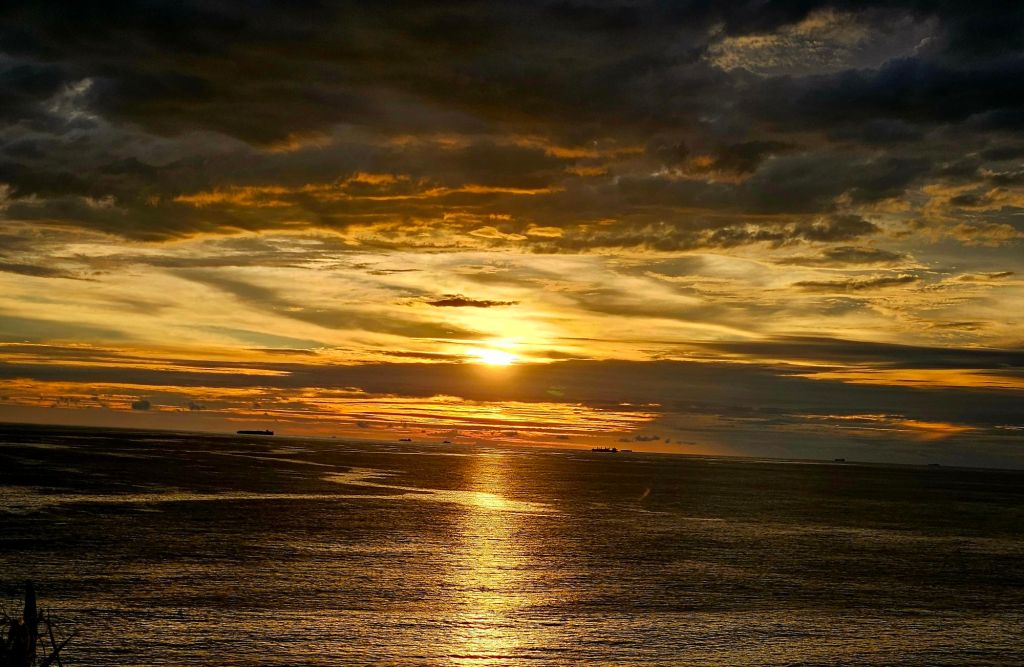
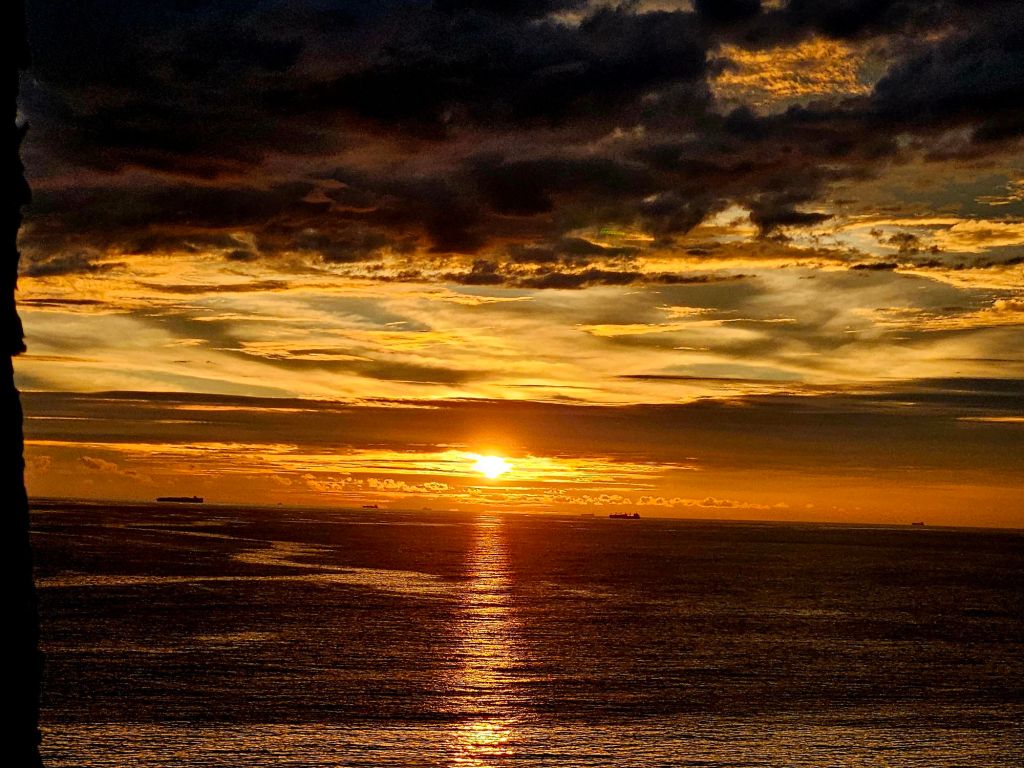
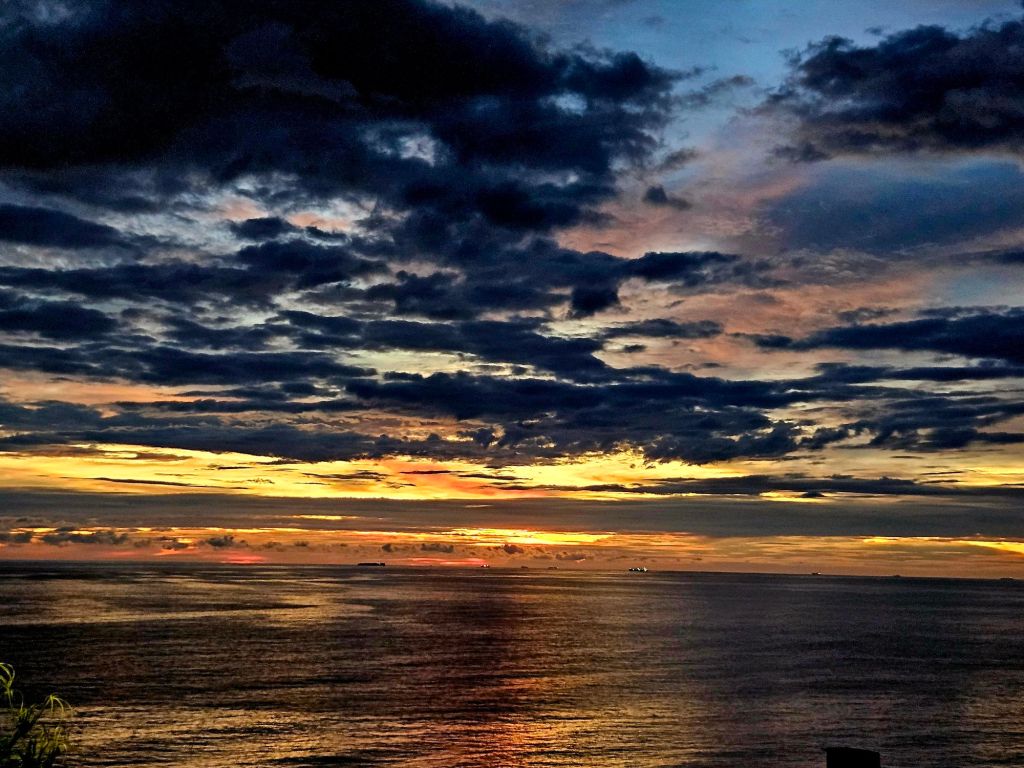
The bar was really nice and we sat and chatted as we watched the sun go down.

The hotel opened in 2008 and has since become a prominent feature of the Raval landscape, contributing to the area’s rebranding and revitalization.

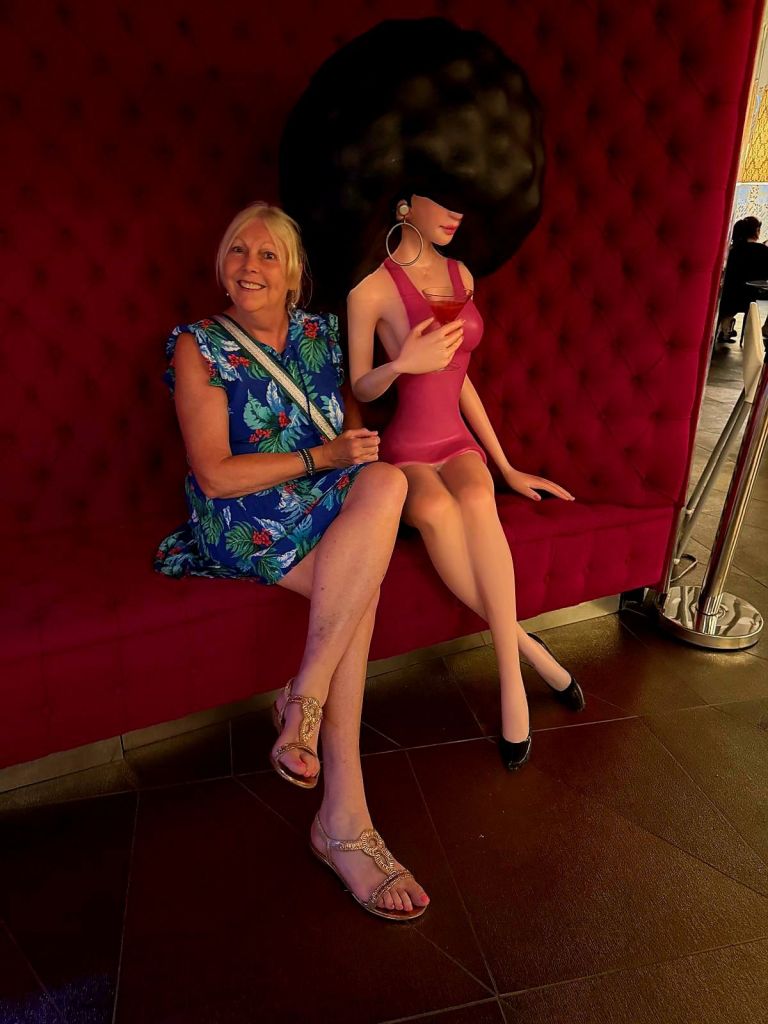
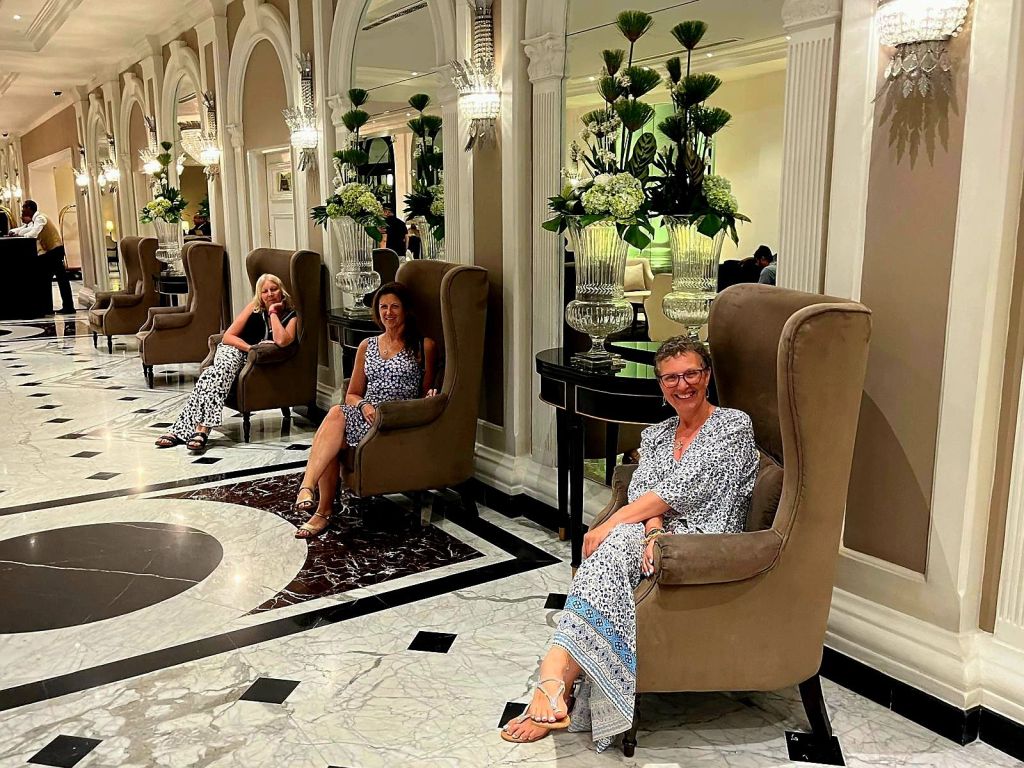
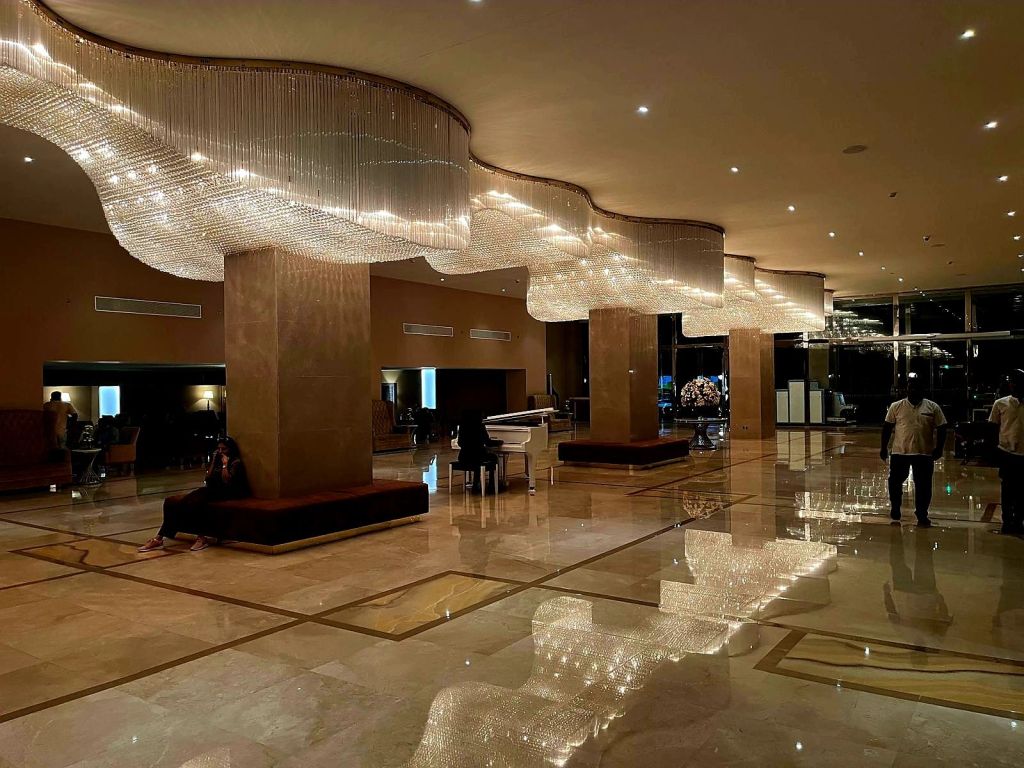
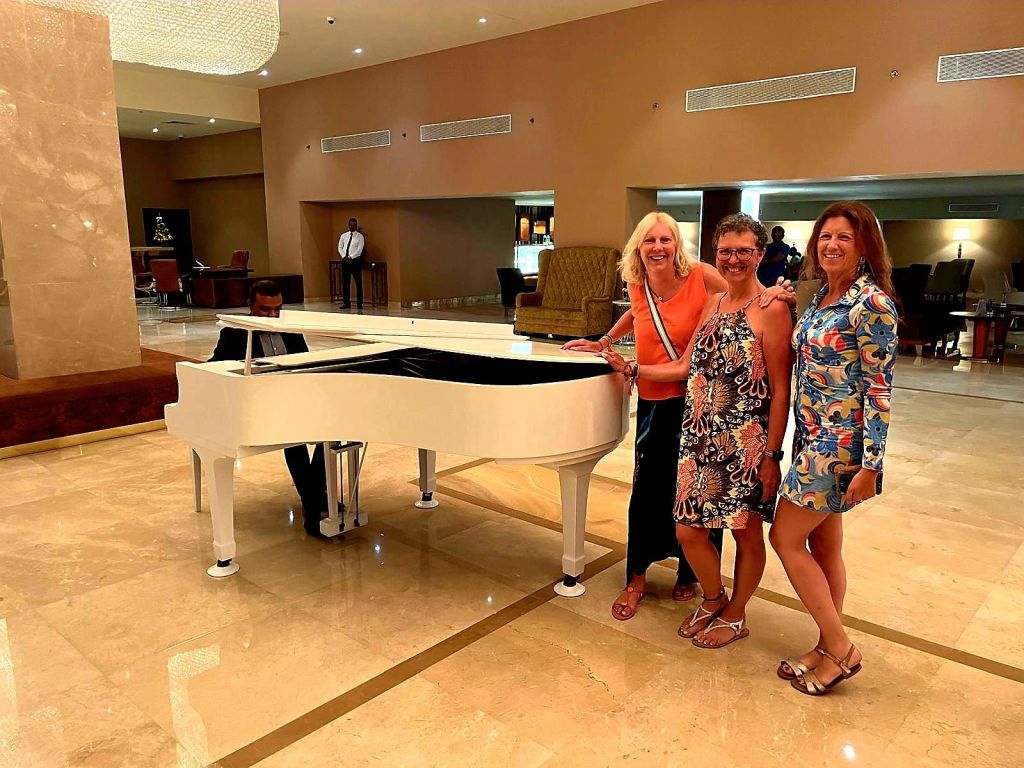
Back in the lobby, we took a couple more photos.

From the hotel, we walked into the gothic area and came across a nice looking bar. We missed the entrance and walked down a side street to try and find it. In that instance, Jay had his watch stolen – it was a Rolex and worth a lot of money. It was shocking how quickly it happened. All I saw was someone duck in among our group and then run off. Karen tried to grab the guy and managed to get hold of his t-shirt, but he was too strong and ran off. It all happened in a matter of seconds. We were all a bit shaken up and went into the bar, which was actually really nice.

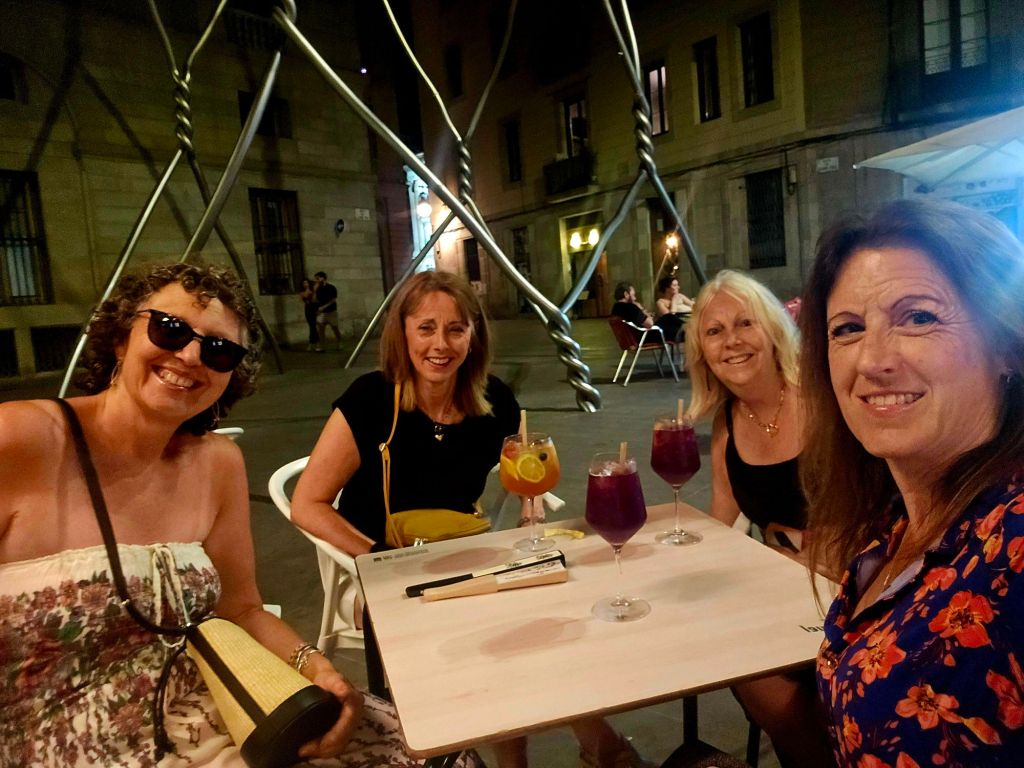
After one drink, Jules and Jay decided to go back to their hotel, and we wanted to get some food, it was around 10pm. So we walked back to Placa Reial, holding on very tightly to our bags.

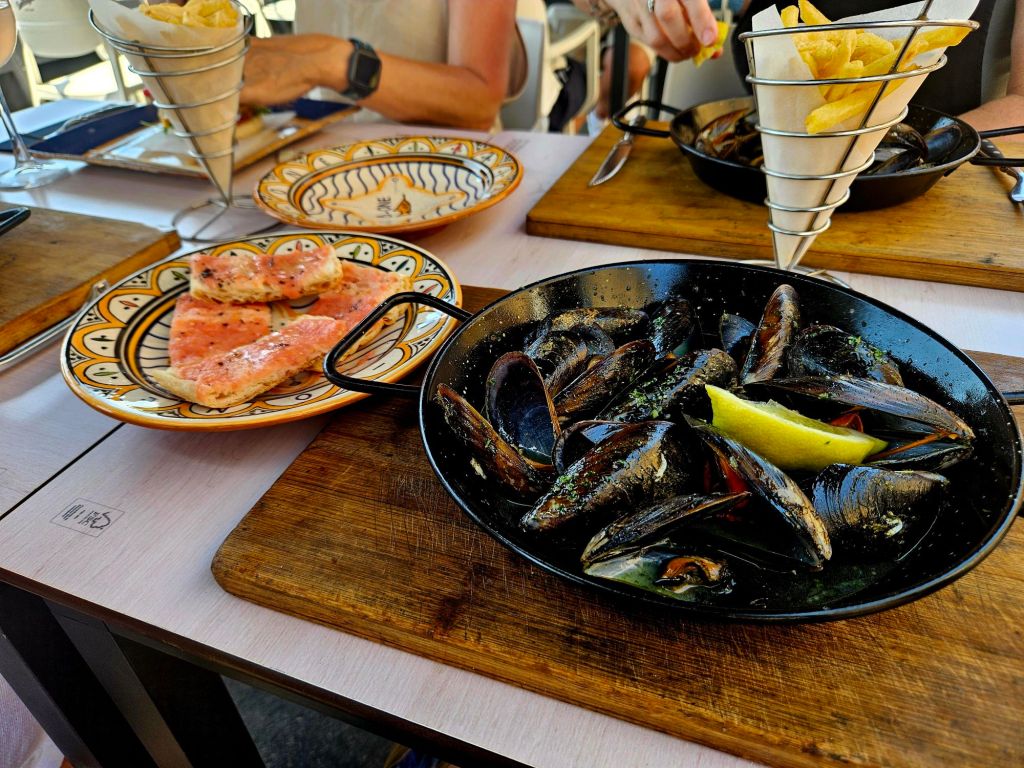
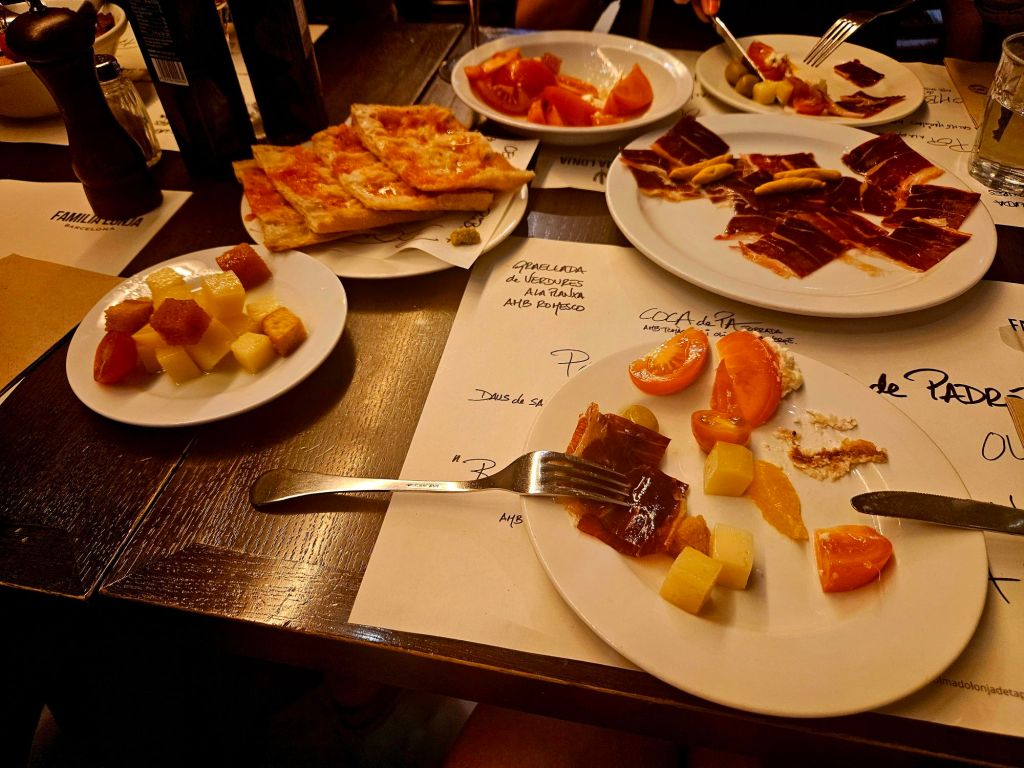
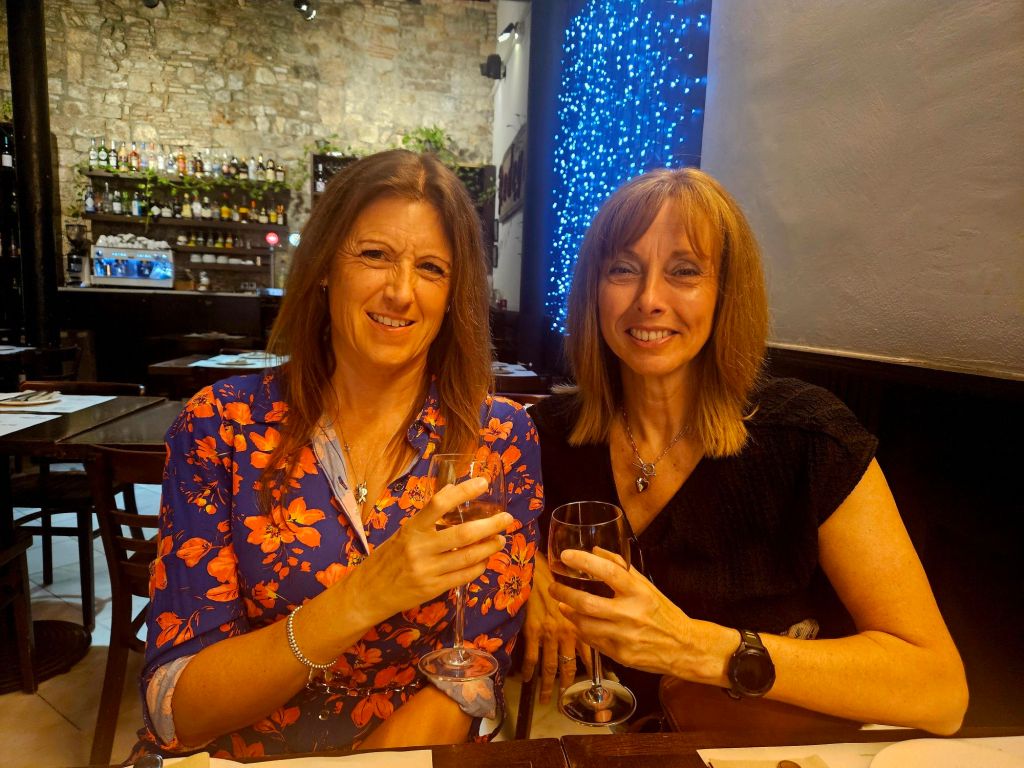
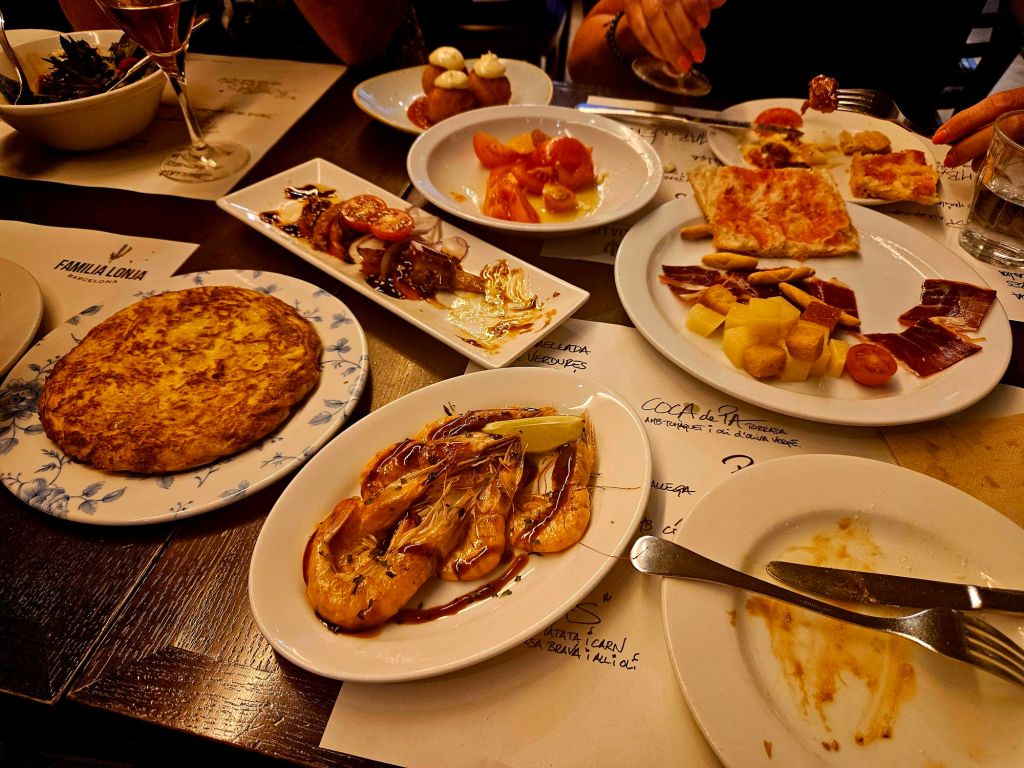
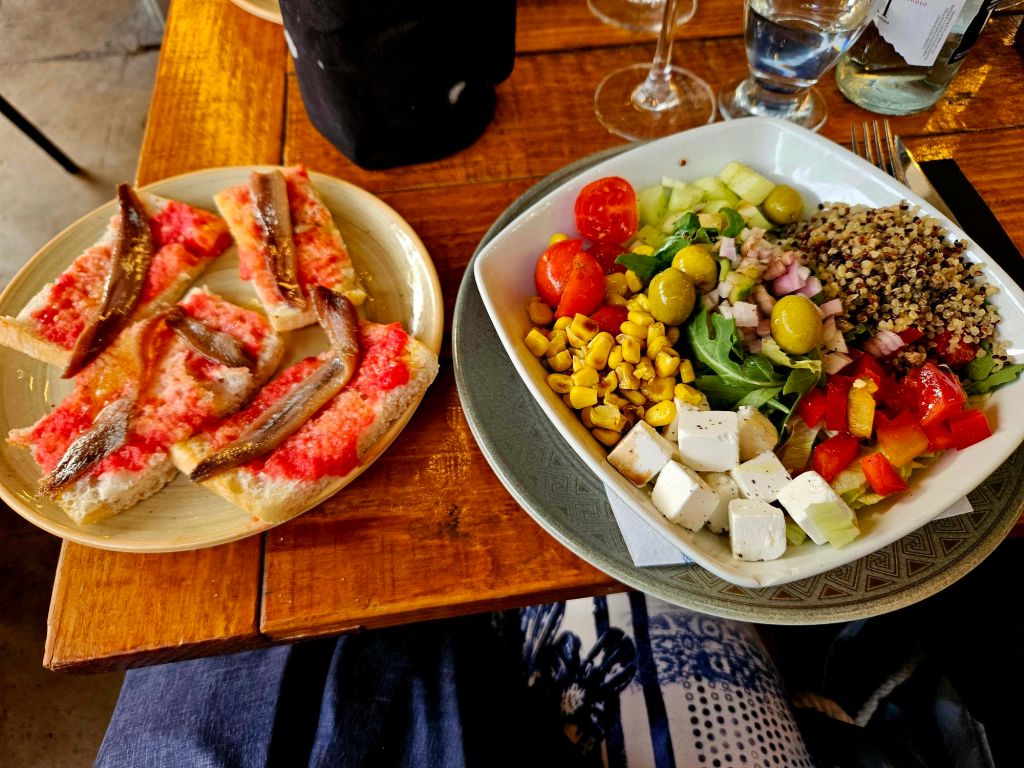
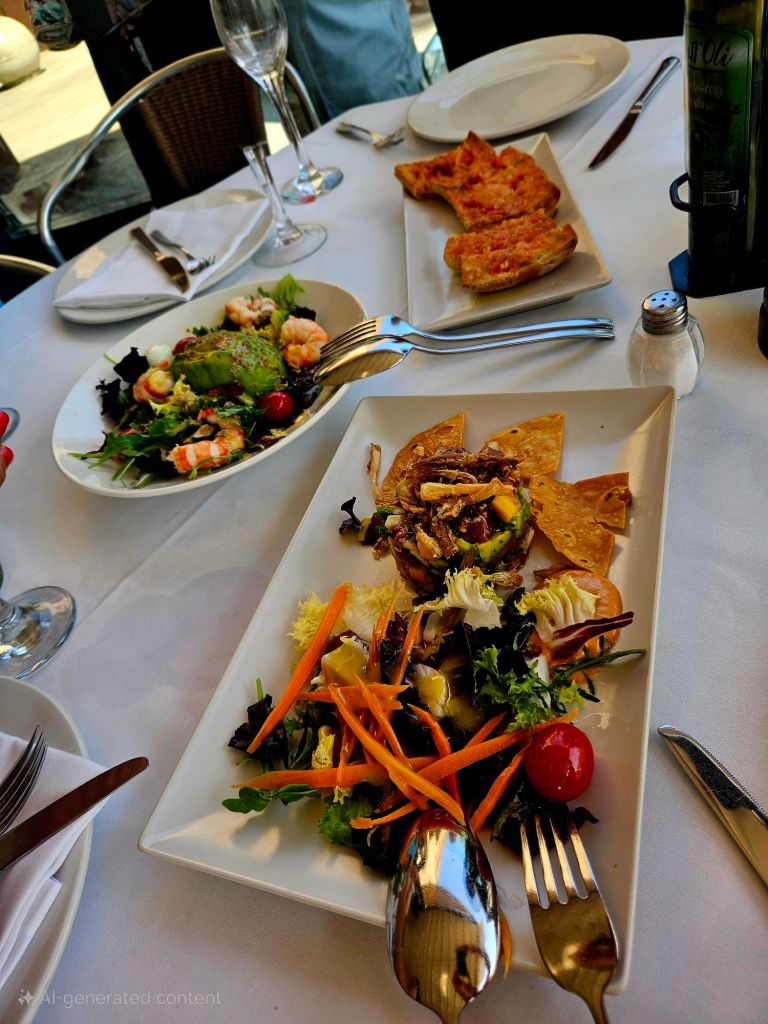
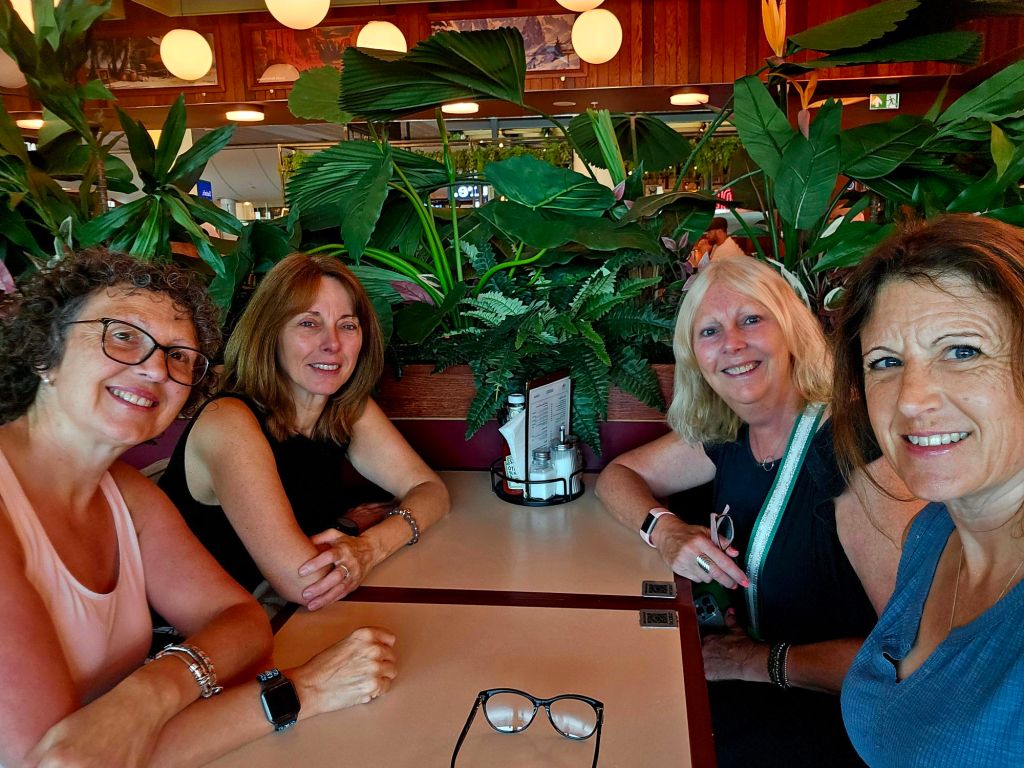
We decided to try Bar Tomato and had some delicious tomato bread with a sharing platter of cheeses and meats and a small Spanish omlette.

After dinner, we headed home to bed.

Day 14-Last day in Sri Lanka

Today was our last full day in Sri Lanka, so we had planned to take it easy and not do too much.

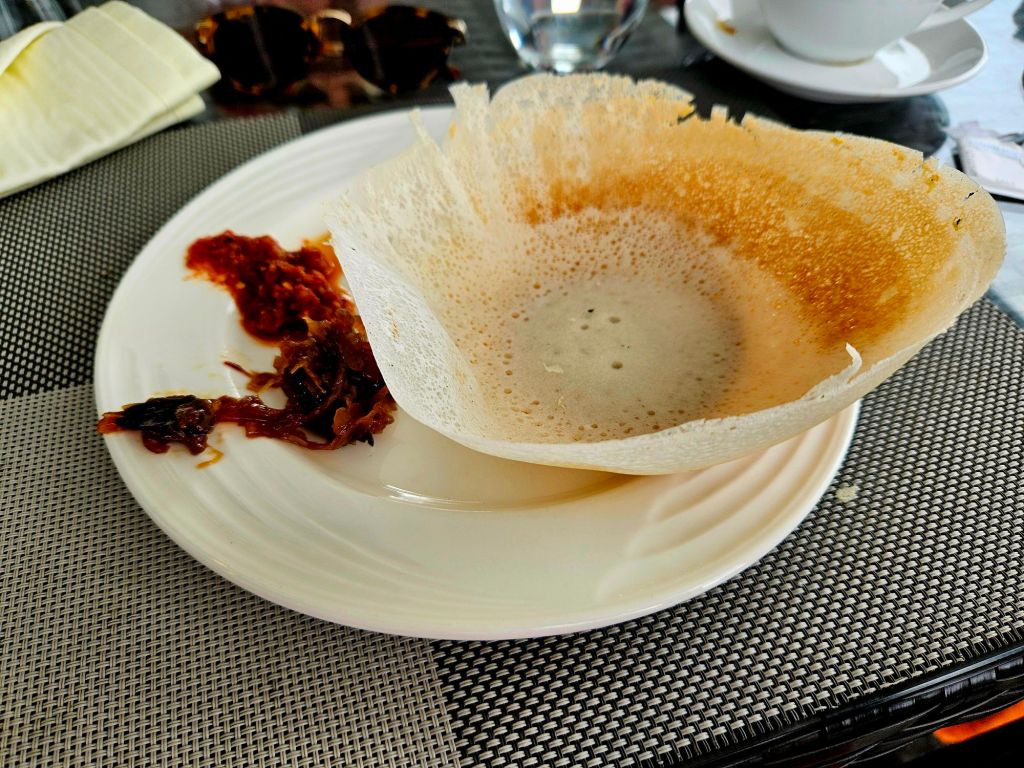
We had a full buffet breakfast again. I tried a plain hopper, which is a bit like a crepe. It came with a very spicy accompaniment, which I didn’t eat.

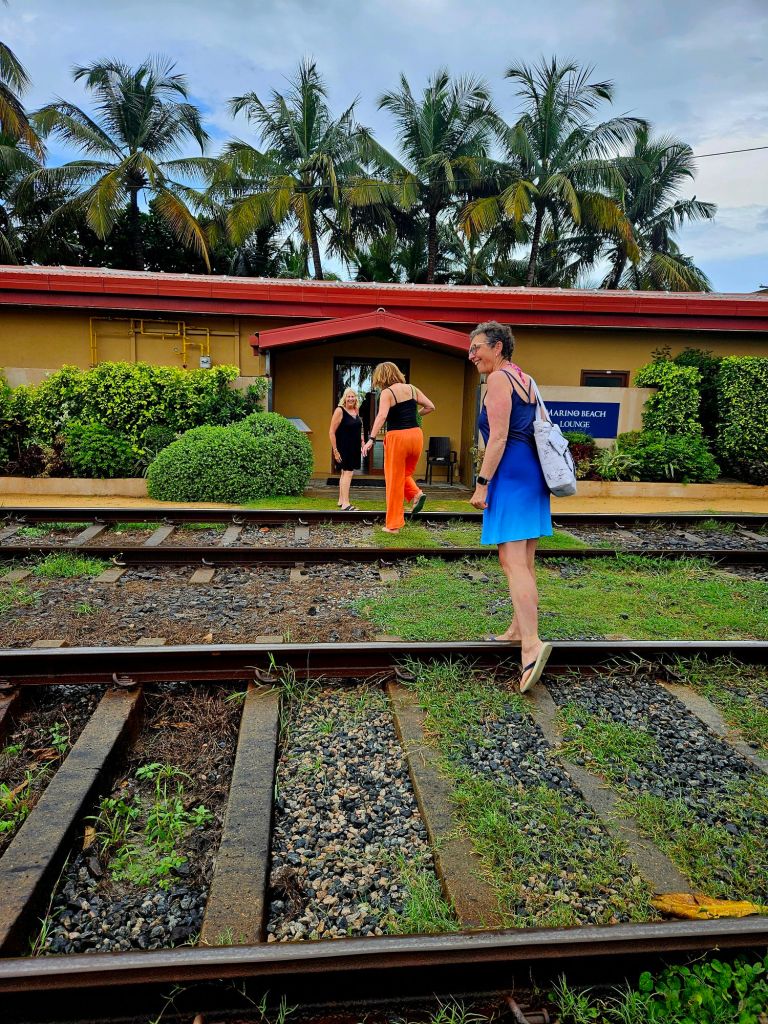
As the weather was looking ok, we decided to head to the beach. A lot of the hotels in Colombo also own a stretch of beach, and they offer a free shuttle service to and from the hotel to the beach. The shuttle bus dropped us off on the roadside, and we had to walk across the railway lines to get to the beach.

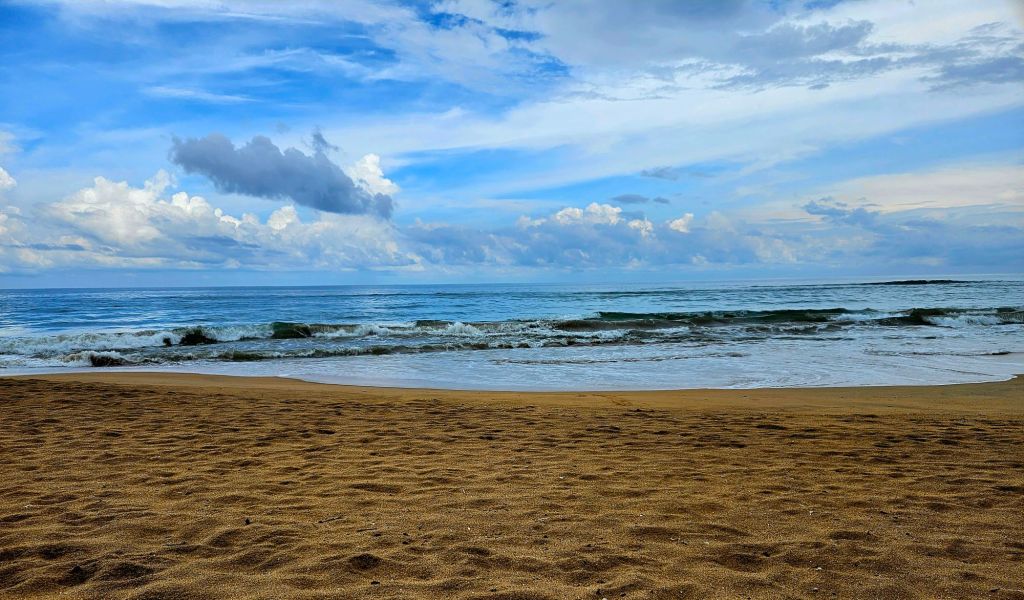
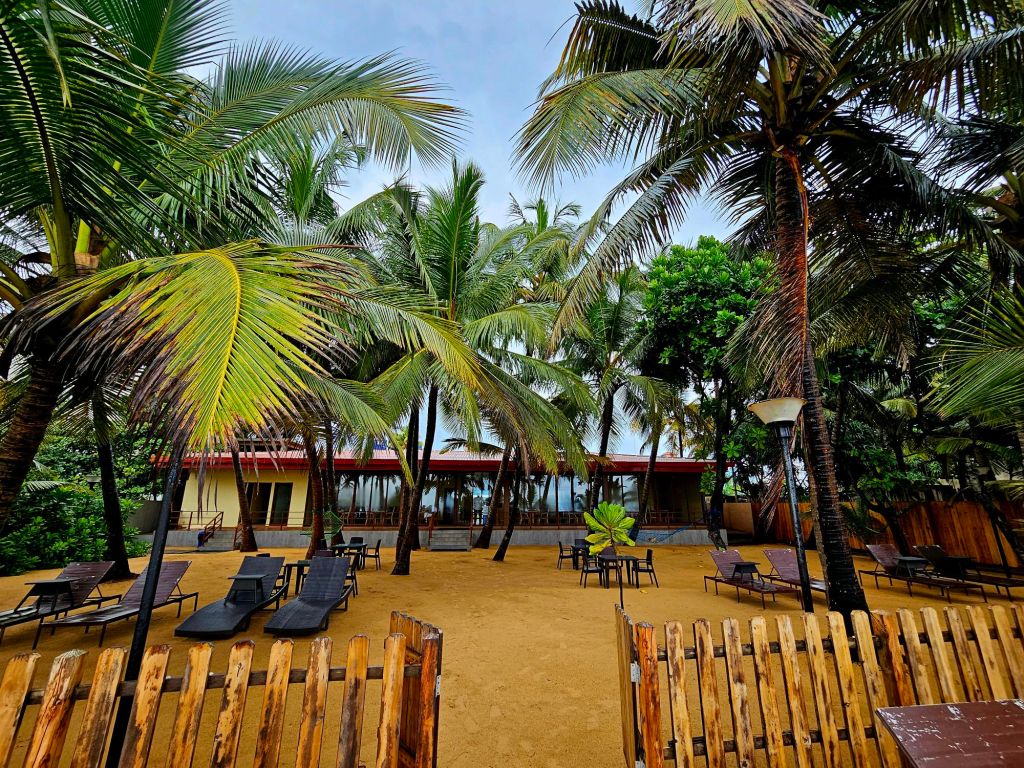
The beach area was very quiet – probably because it had been raining and was looking like rain again. It was very pretty, though.

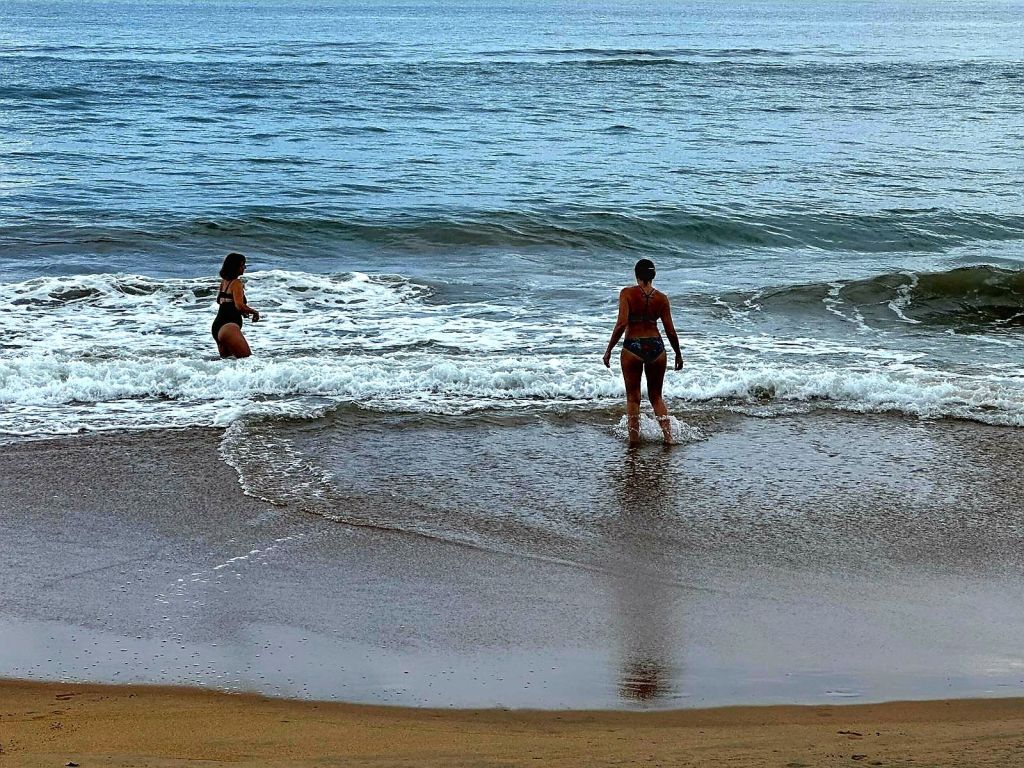
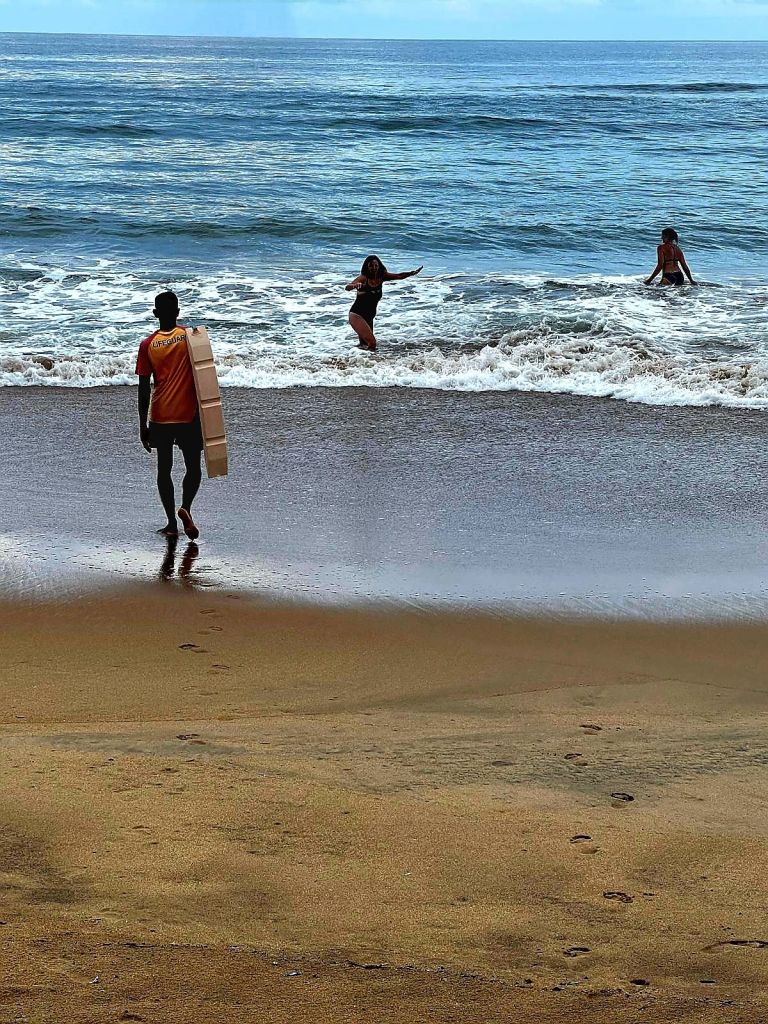
Mandy and I went for a swim. The lifeguard came down to check we were ok, which was quite funny as we are both good swimmers.

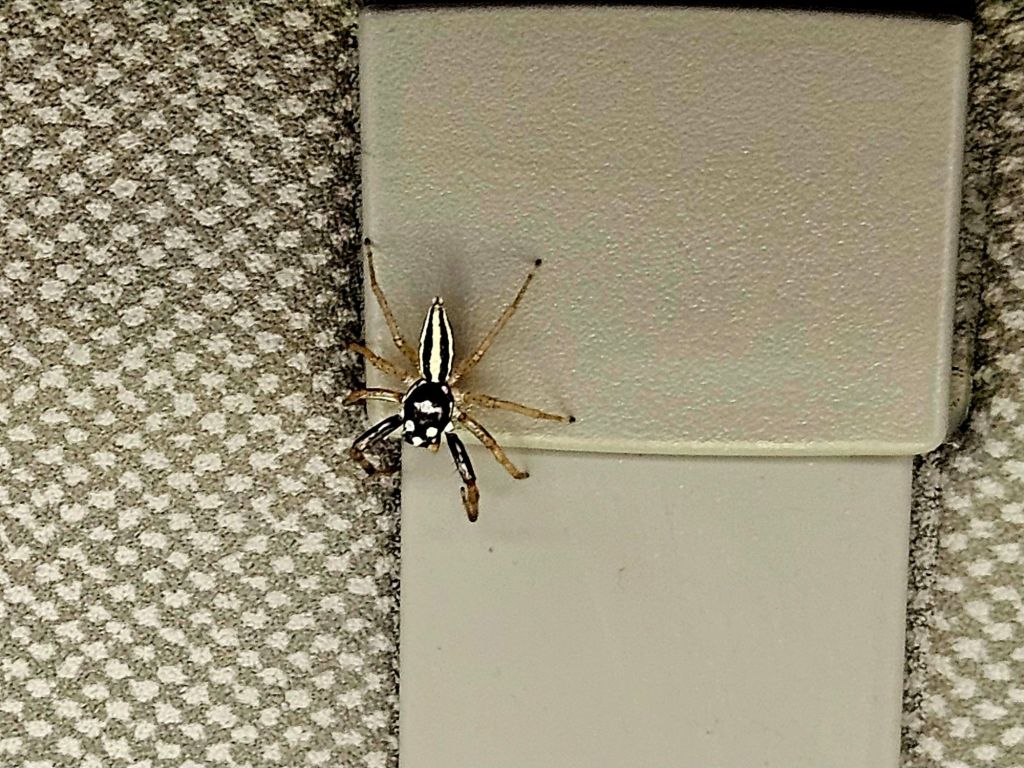
We stayed for a little bit longer, relaxing on the sunbeds, but after about an hour, we decided to head back to the hotel. There was a spider in the shuttle bus back – I was keeping an eye on it as it was right above me.

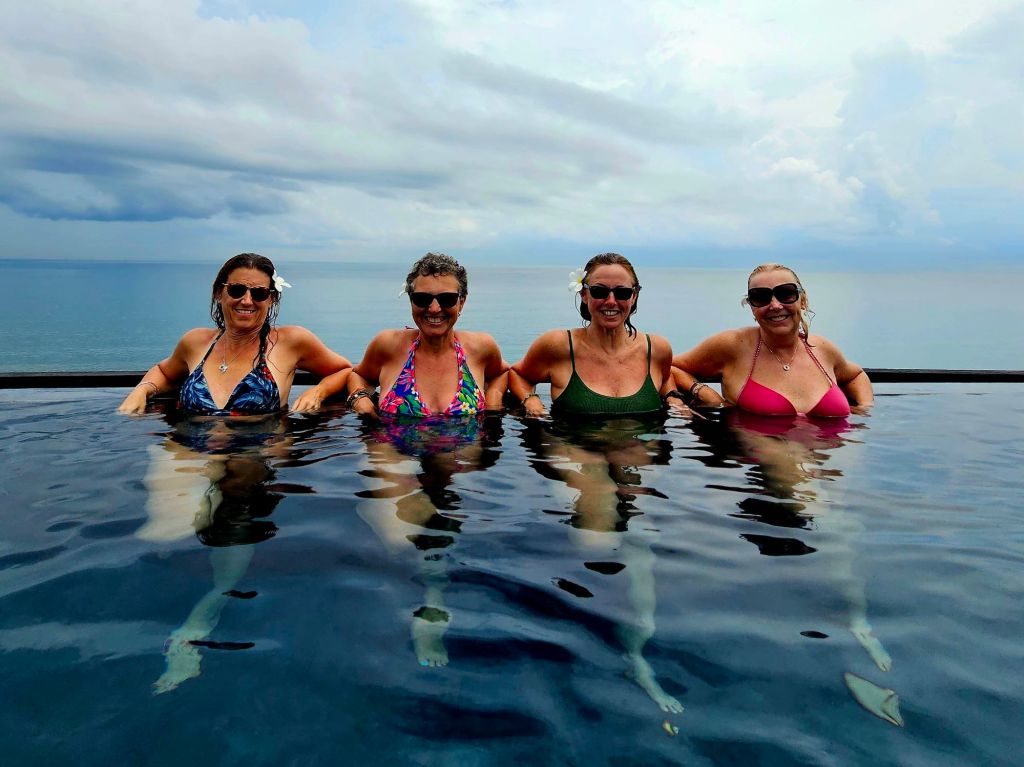
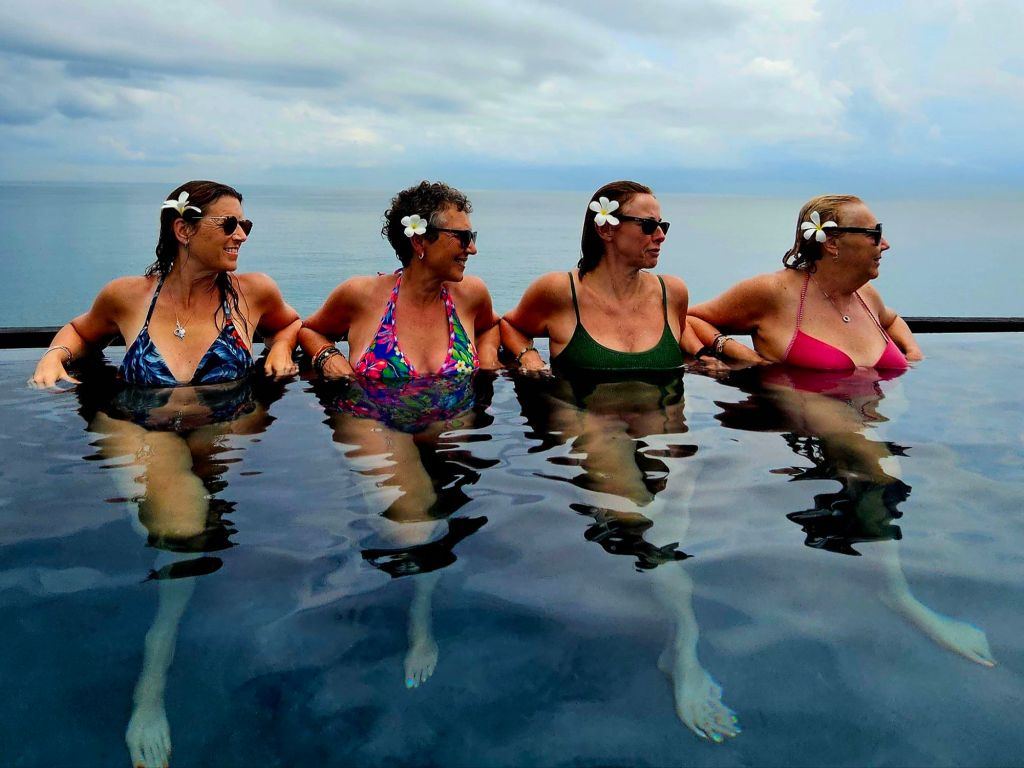
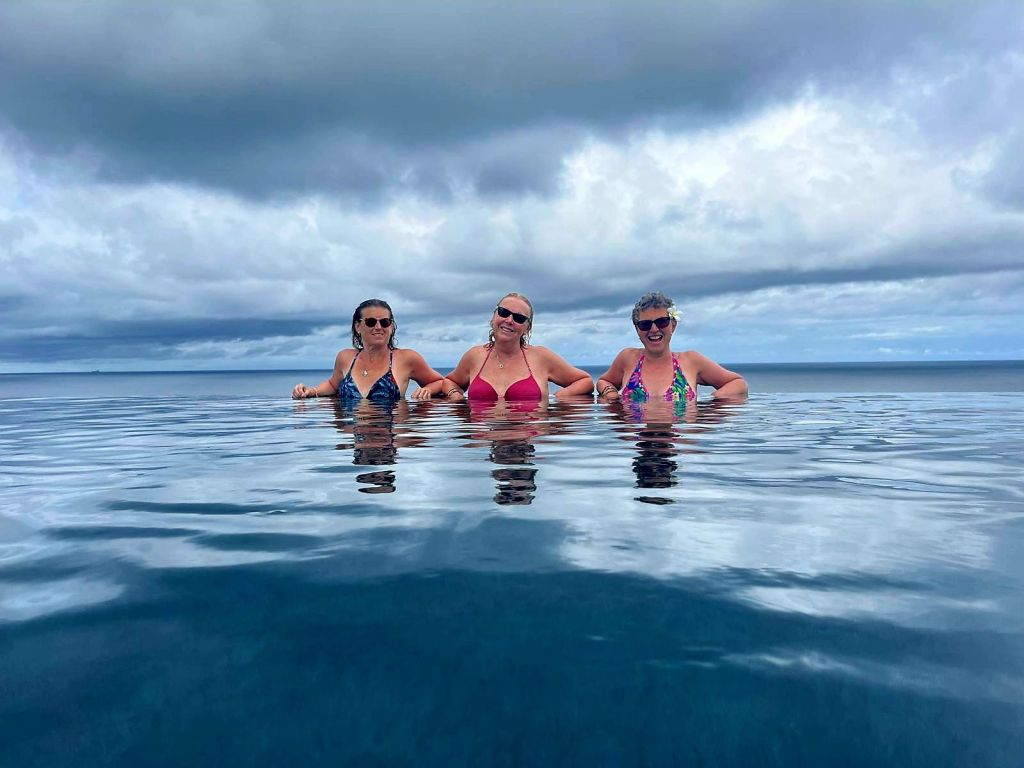
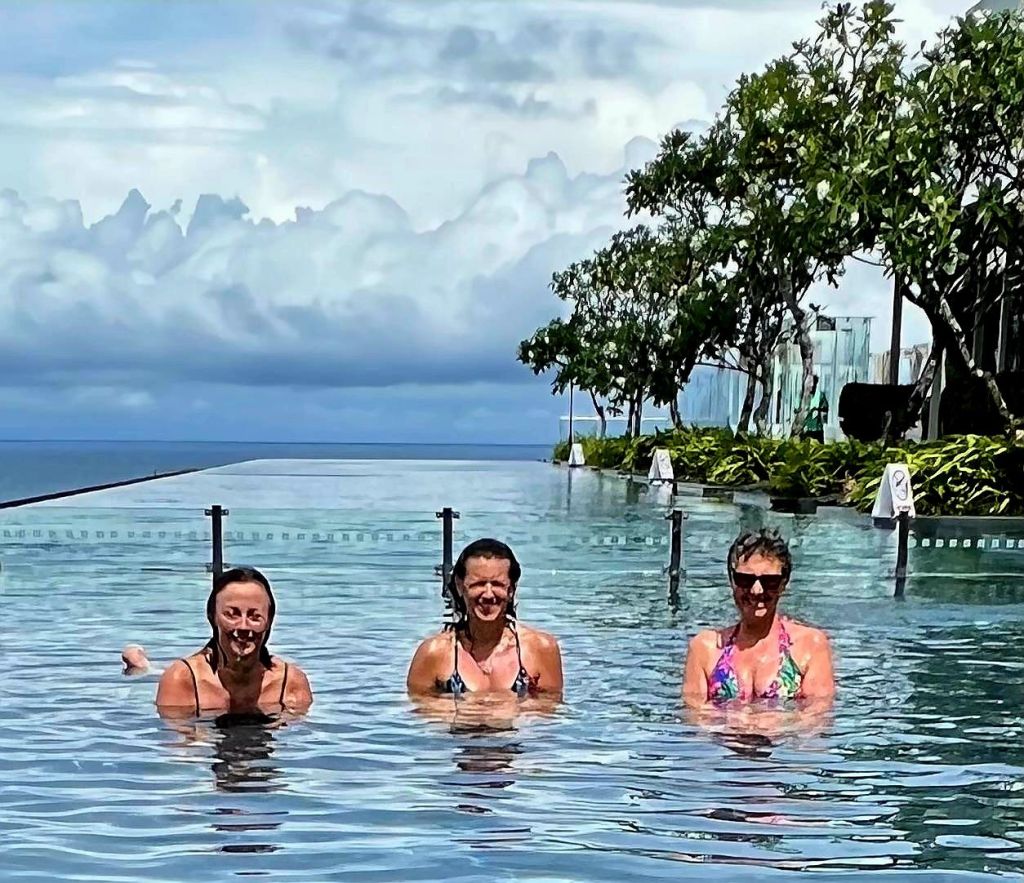
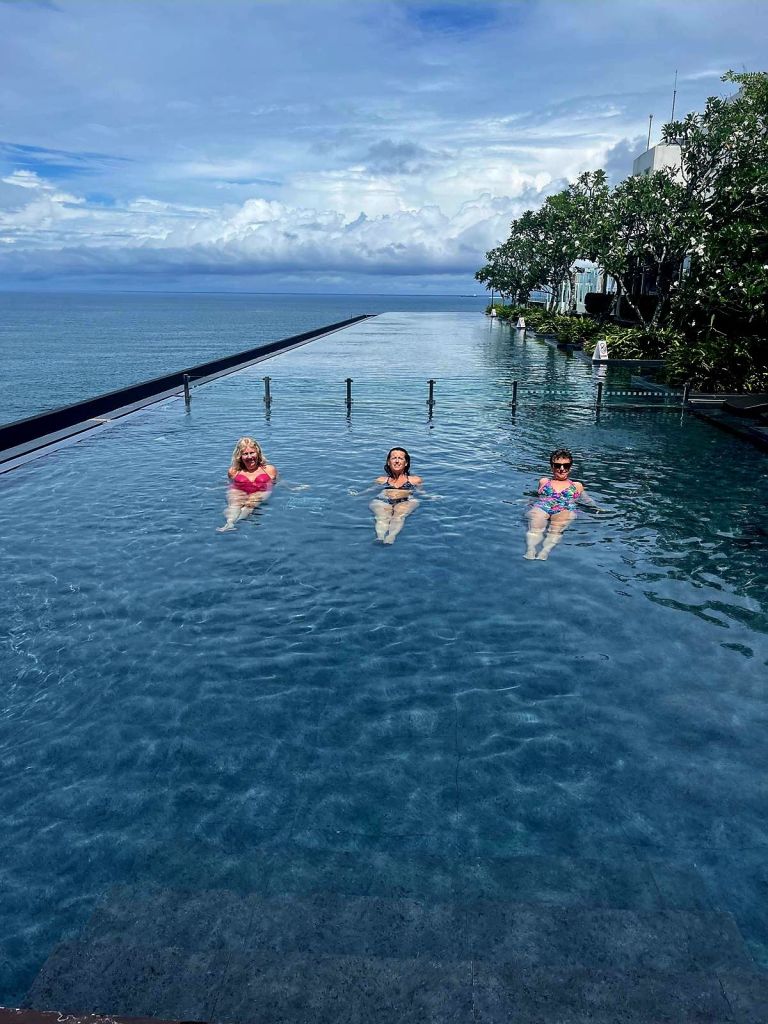
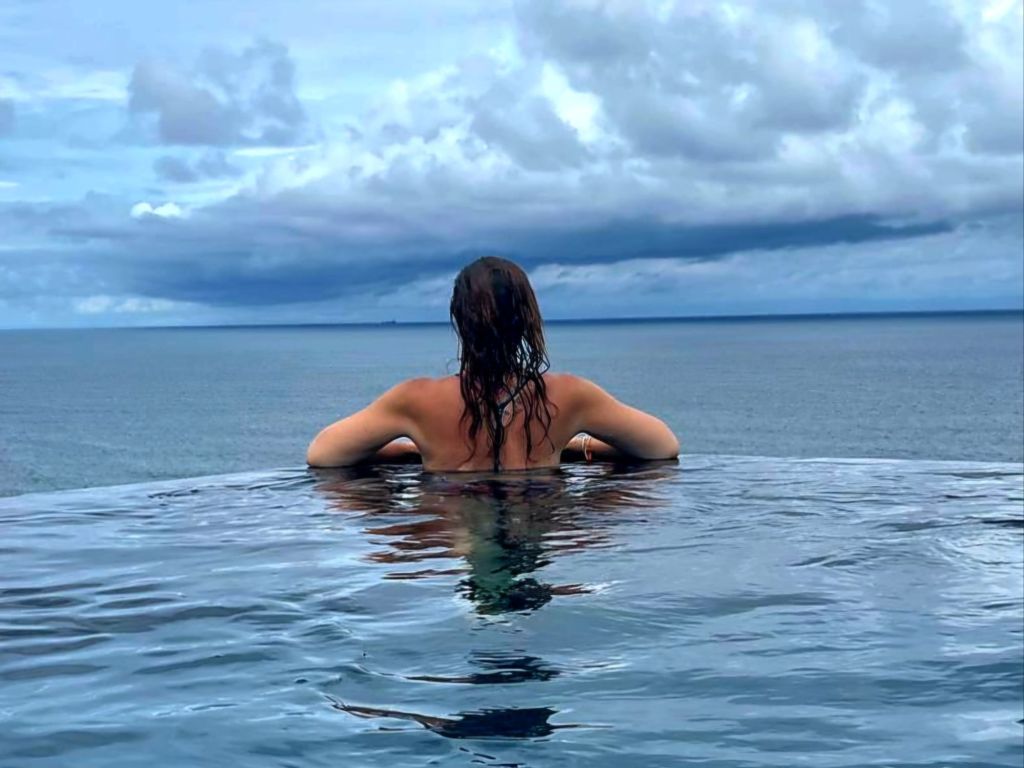
We made it safely back to the hotel and decided to make use of the swimming pool. We did some more posey pictures.

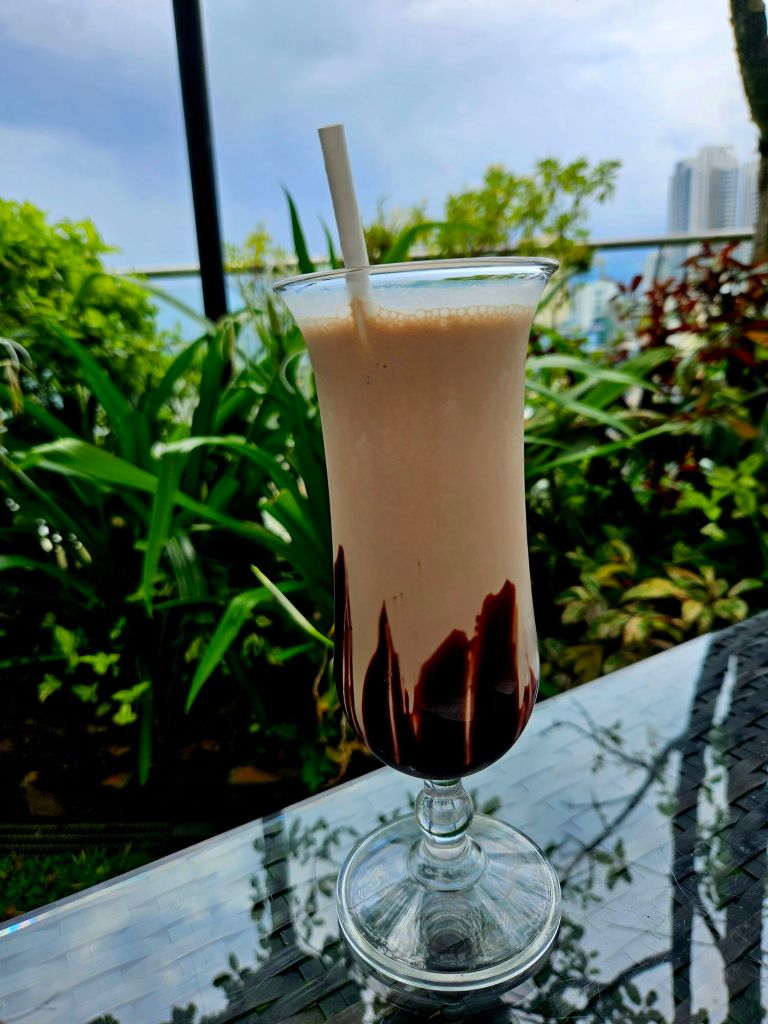
In the afternoon we had a drink – I went for a chocolate milkshake.

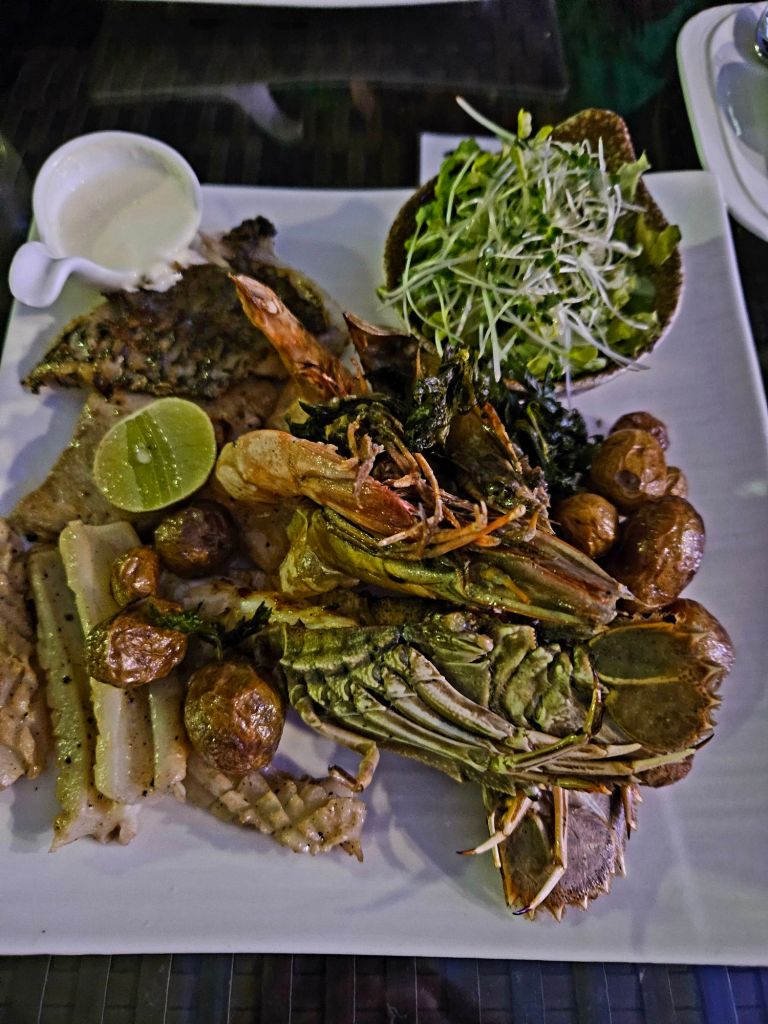
In the afternoon we all packed our suitcases, ready to travel home tomorrow. As we were having a very lazy day, and as it was pouring with rain, we decided to eat dinner at the hotel. I had a mixed seafood grill. It had lobster, prawn, squid, cuttlefish and other white fish and it was ok, but nothing spectacular.

It was a lovely evening but quite sad too as we were back to England in the morning.

After dinner, we headed to bed as we were up early in the morning, as we had a taxi booked at 8am.

We had breakfast at Colombo airport, along with a bottle of fizz. We also did a bit of shopping as we wanted to spend the last of our Srilankan rupees. The first flight to Doha seemed to go quite quickly. I watched the ‘Boys on the Boat’ film, which was really good.

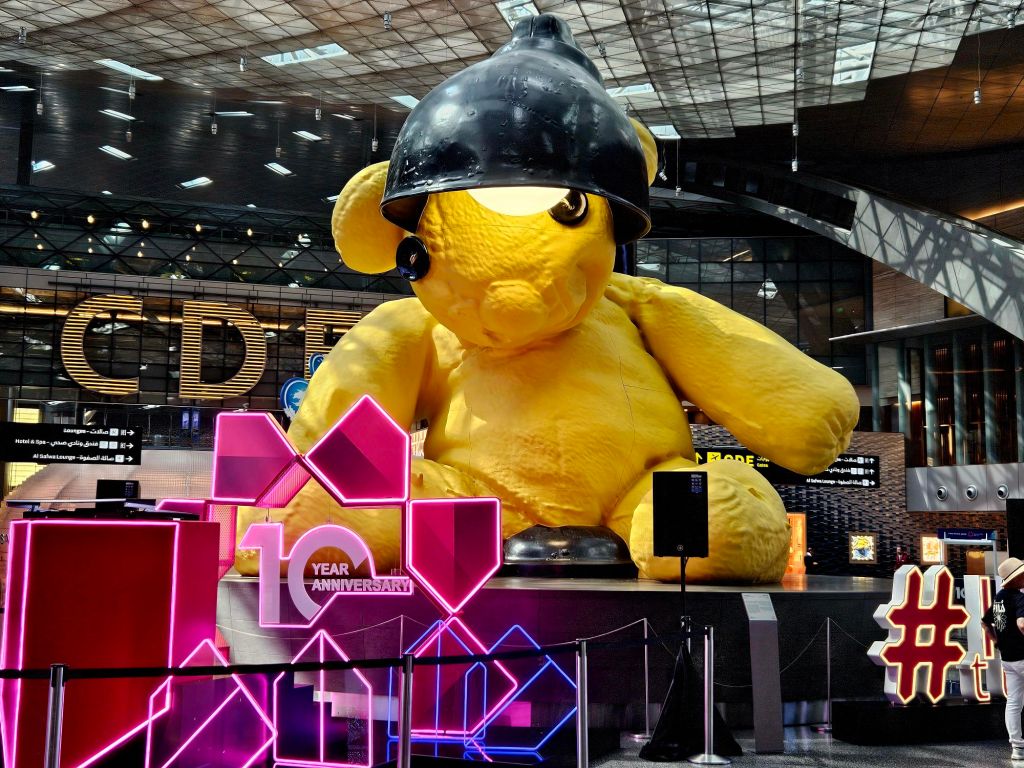
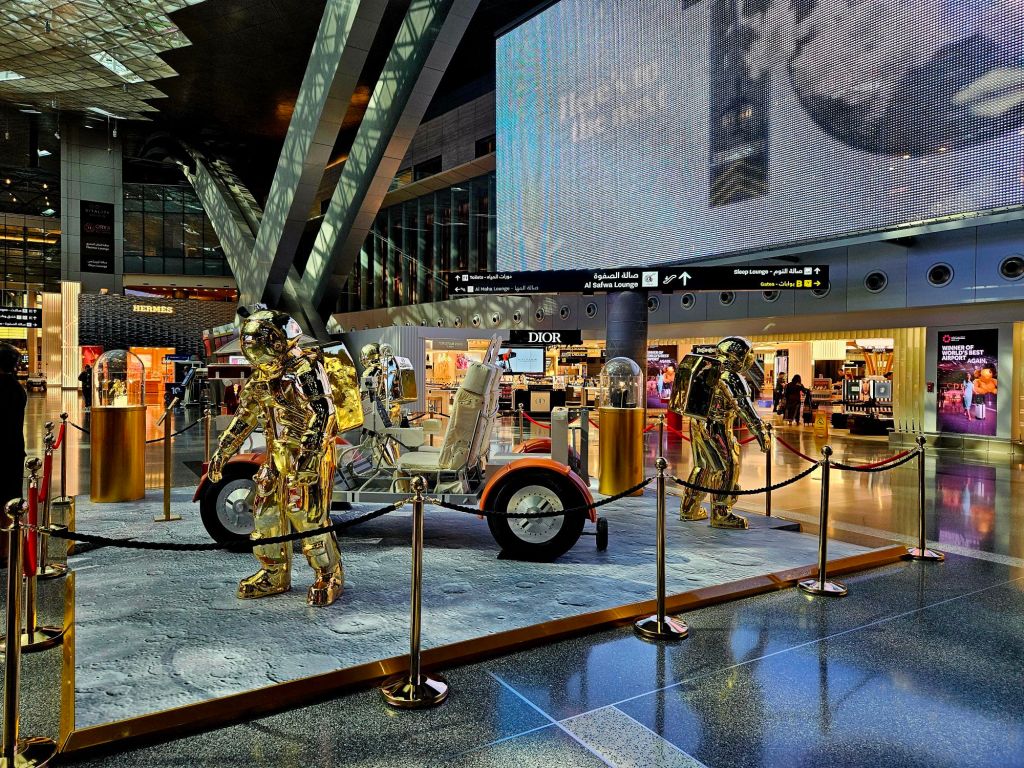
We had a couple of hours stop over in Doha, which is a huge airport.

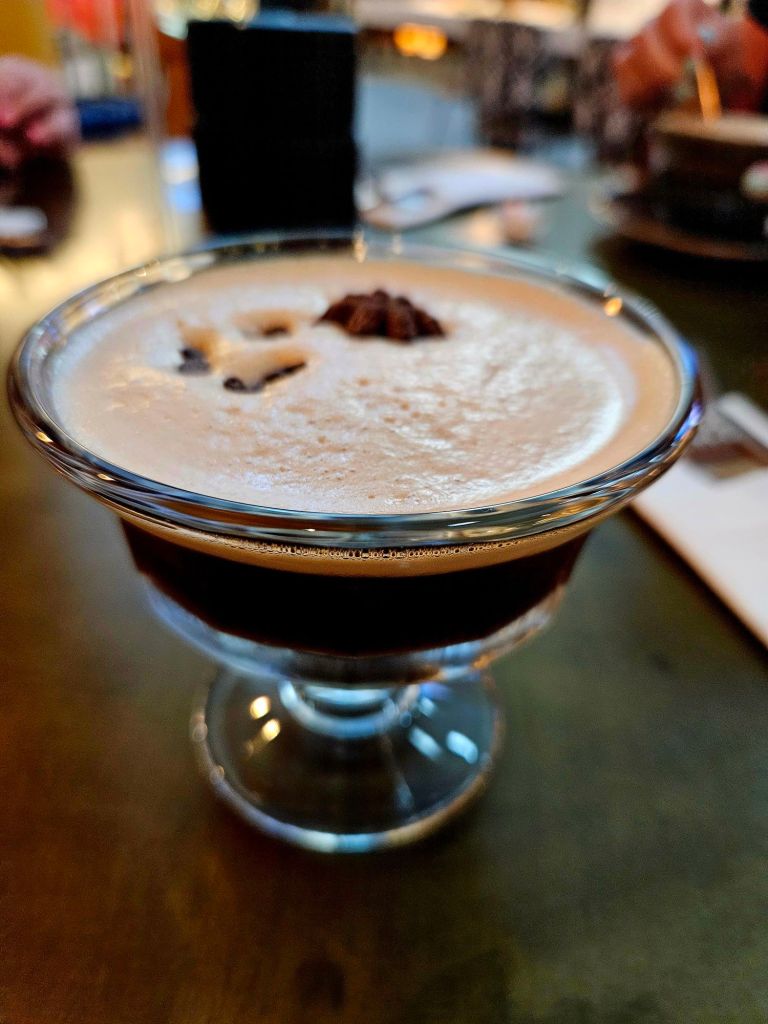
We had a cocktail at the only bar we could find.

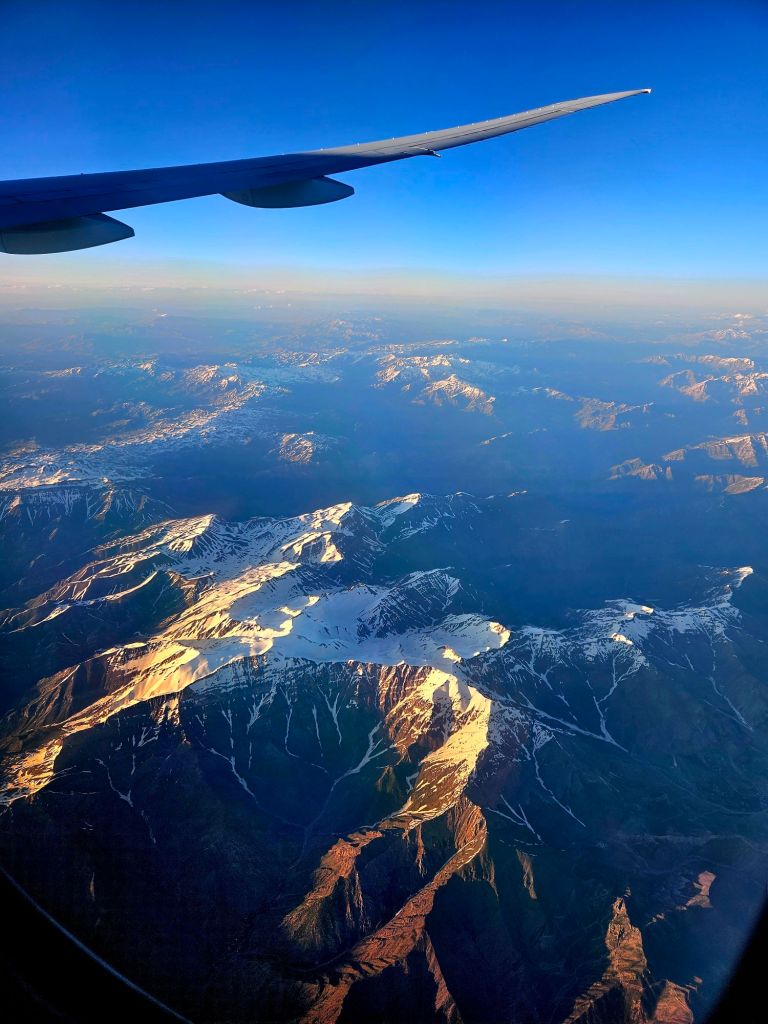
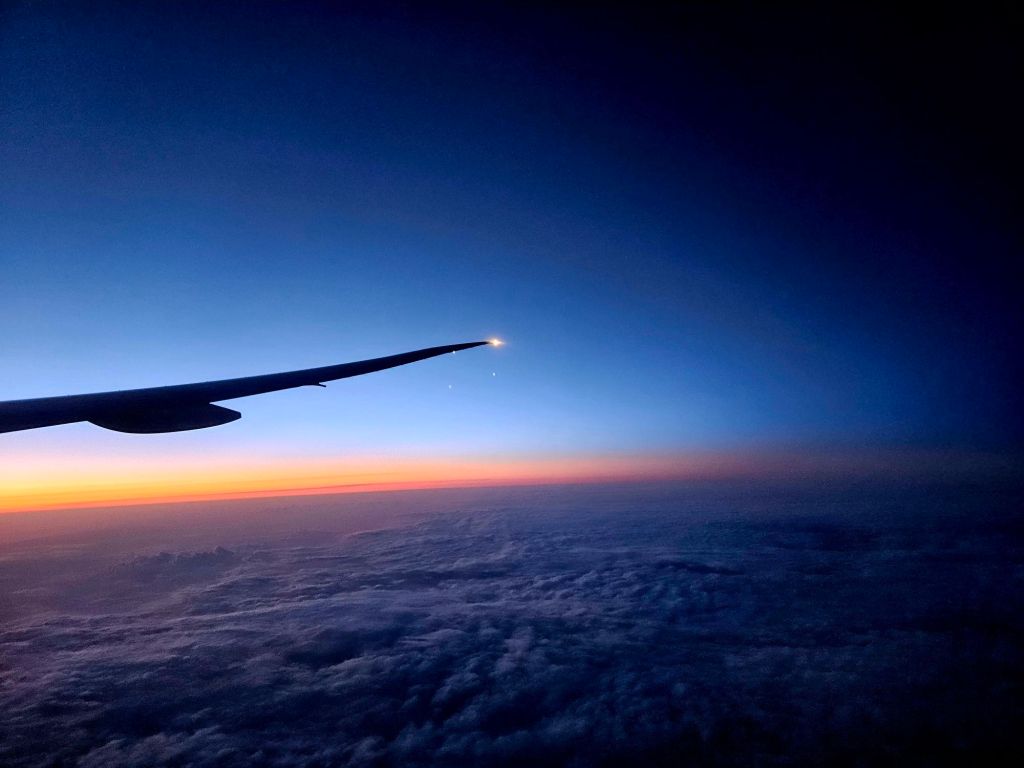
The second flight did seem to drag a bit, but I watched a couple of other films and time passed. I also slept for an hour or so.  Some of the views out of the window were lovely.

We arrived back at Heathrow at about 10pm. Mandy had booked a taxi to take us back to hers and after a bit of searching we managed to find it. We were back at Mandys and in bed by midnight. Karen and Zoe weren’t so lucky as their taxi was late, and then they got caught up in a traffic jam leaving the airport.

Sri Lanka is a beautiful country, the food is delicious and the people are lovely.

Day 13 – Colombo

We didn’t get up too early and met at breakfast. It was a buffet style breakfast, and they had a huge range of dishes, including traditional Srilankan and western dishes. It was almost too much to choose from.

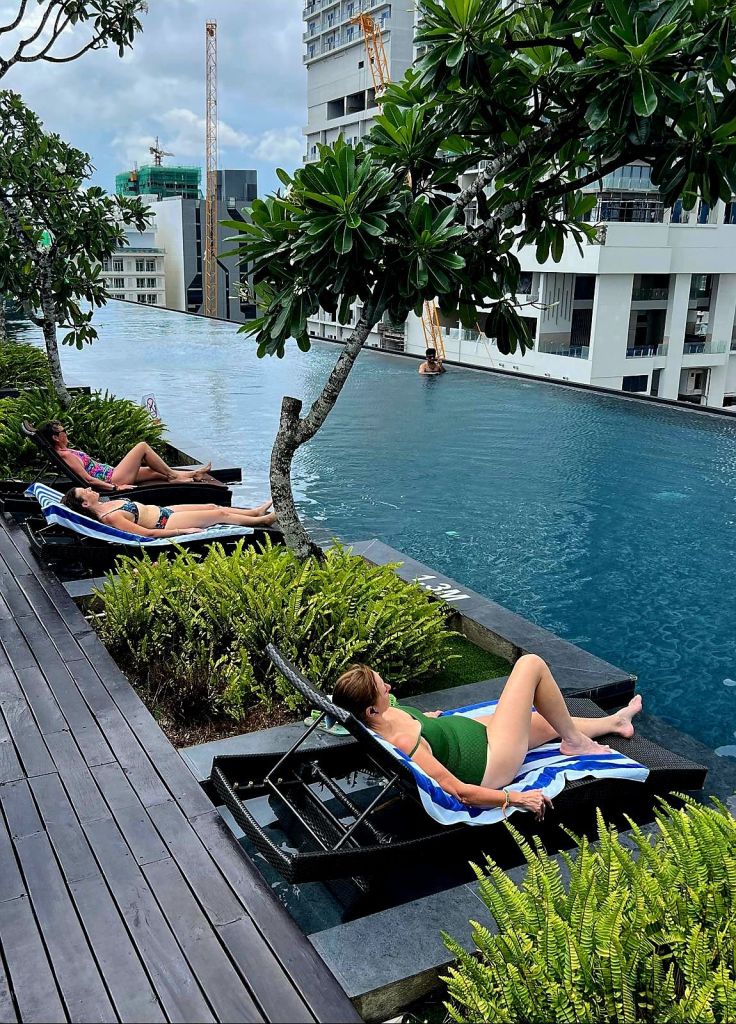
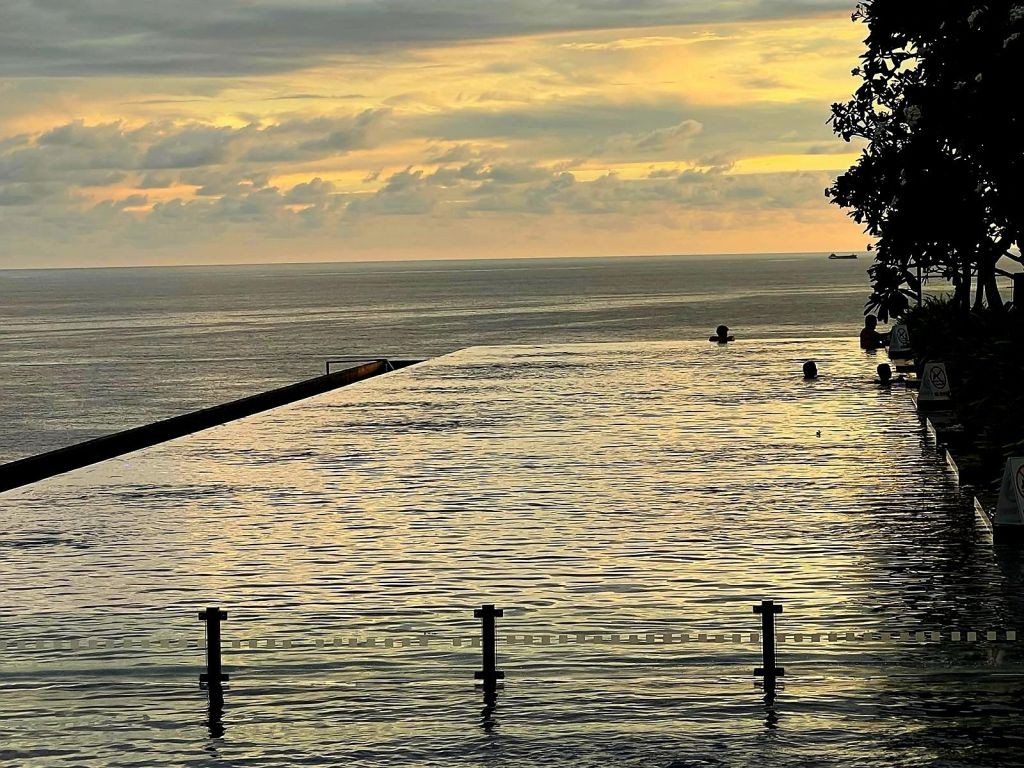
After breakfast, we went upstairs to try out the pool. It is a lovely place and looks great on a photo.

The view on the other side wasn’t as pretty, though.

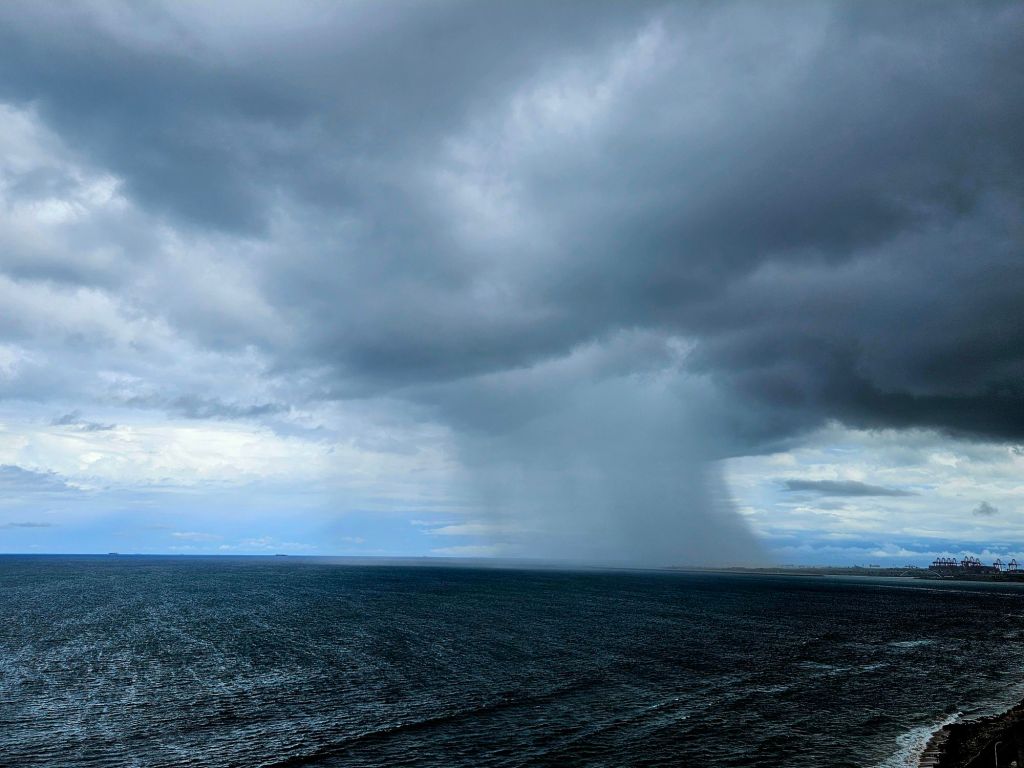
After spending some time sunning ourselves and chatting to a couple of the other guests, it looked like the rain was coming in.

But luckily the rain seemed to miss us.

It was a very relaxing morning, just what we needed after climbing Adam’s Peak, as all our legs were a bit sore.

For lunch, we just had some unhealthy bar snacks.

In the afternoon, we had booked onto the complimentary city tour provided by the hotel. So, after a quick change of clothes, we met in the hotel lobby and joined some other hotel guests on the city tour.  It had started to rain again, but luckily we were on a bus.

The first building we passed was the ‘Lotus pond’. This is a performing arts centre and theatres – both an indoor and open air theatre. The construction of the building began in 2006 and took four years to complete.

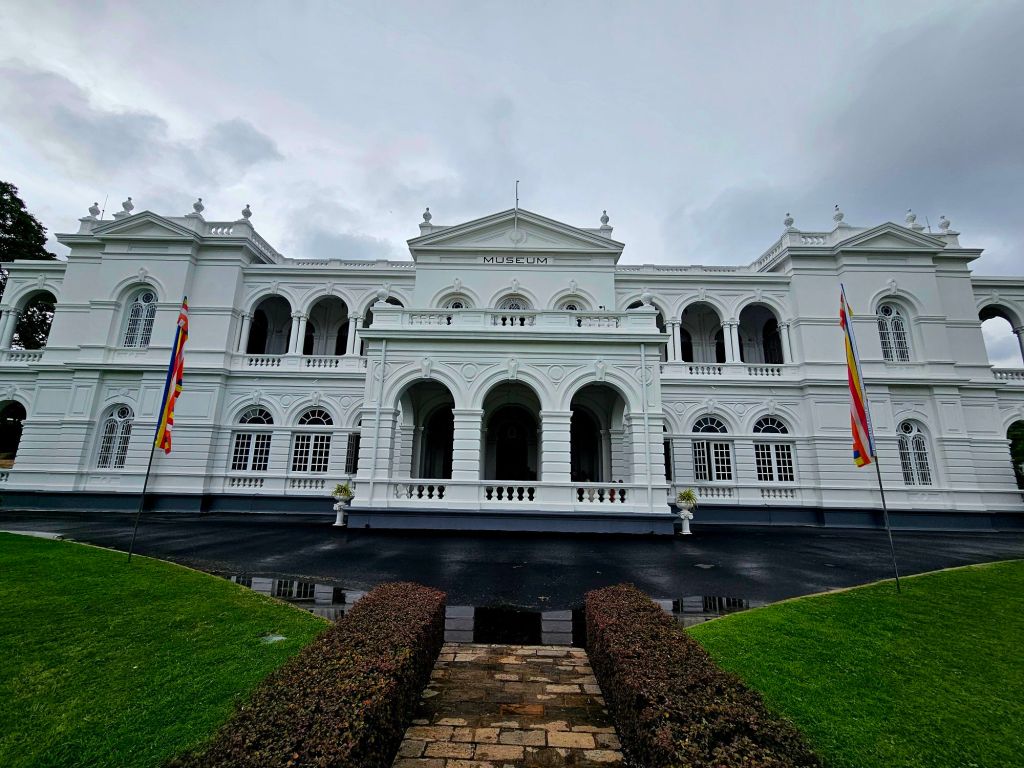
Our first stop was the Colombo National Museum, which was first established on 1 January 1877.

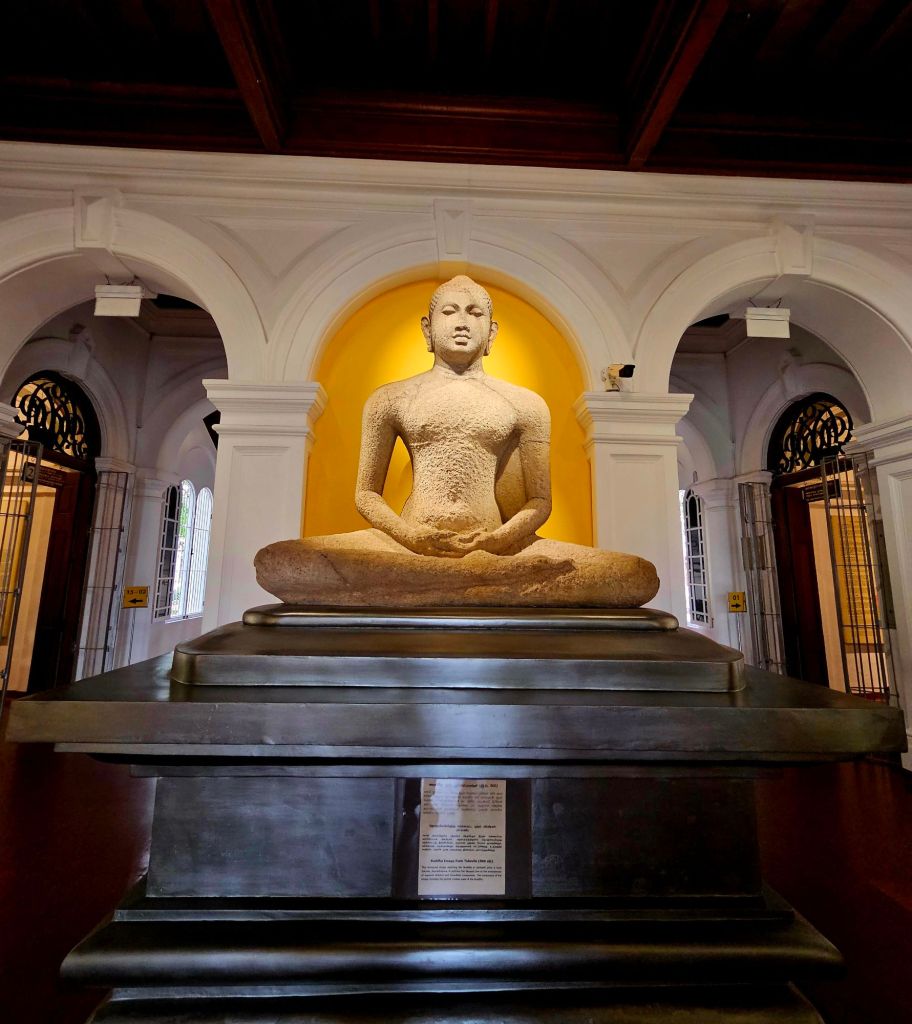
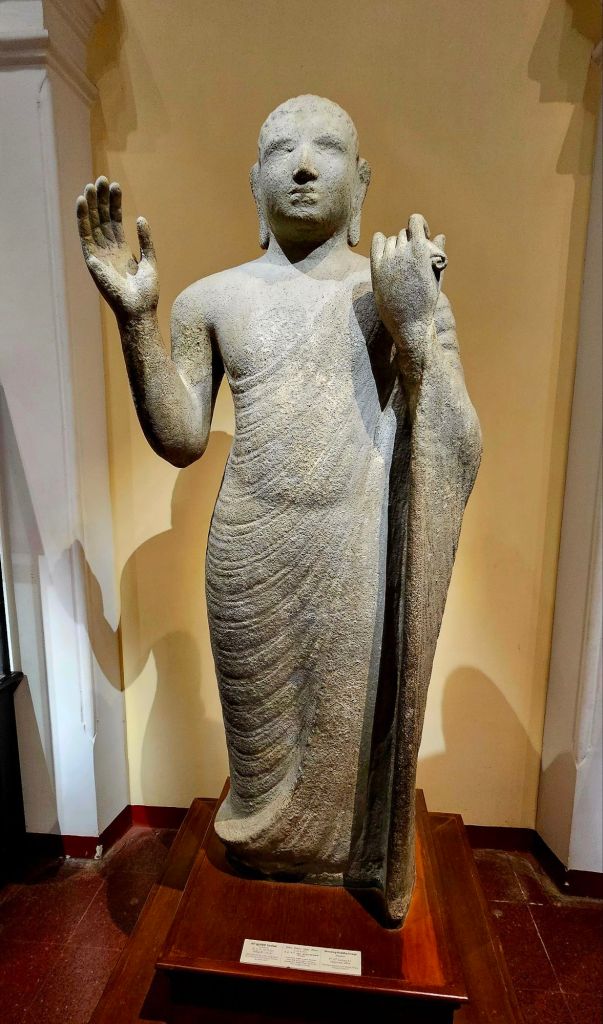
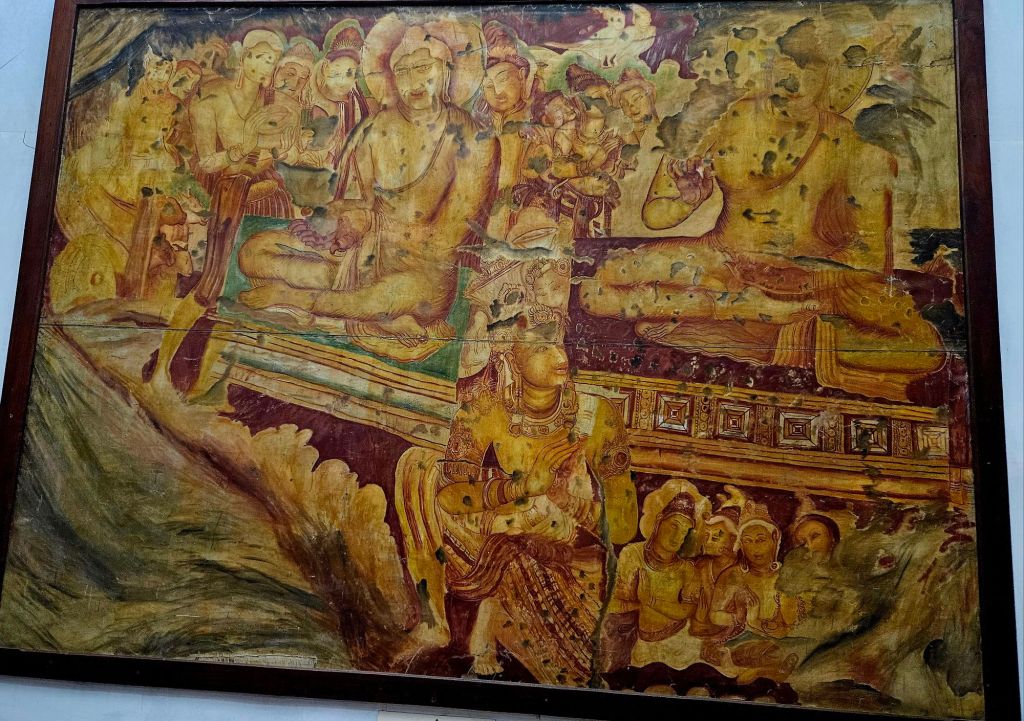
The first thing you see on entering the museum is a Buddha statue from Anuradhapura from the year 800AD. The statue depicts wisdom and boundless compassion.

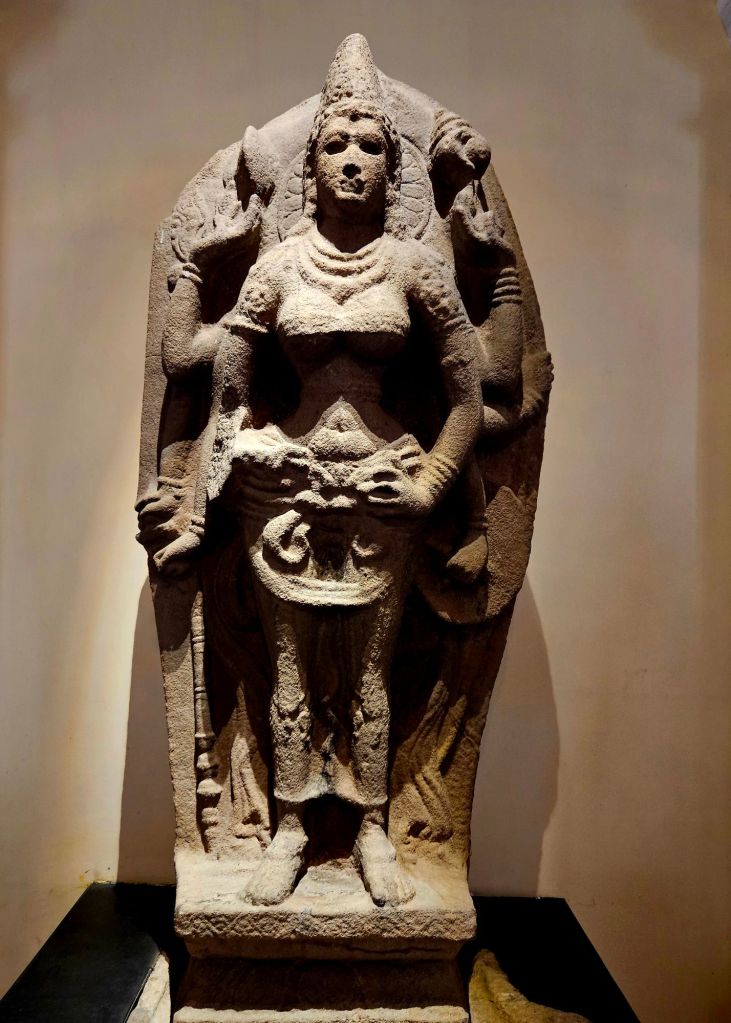
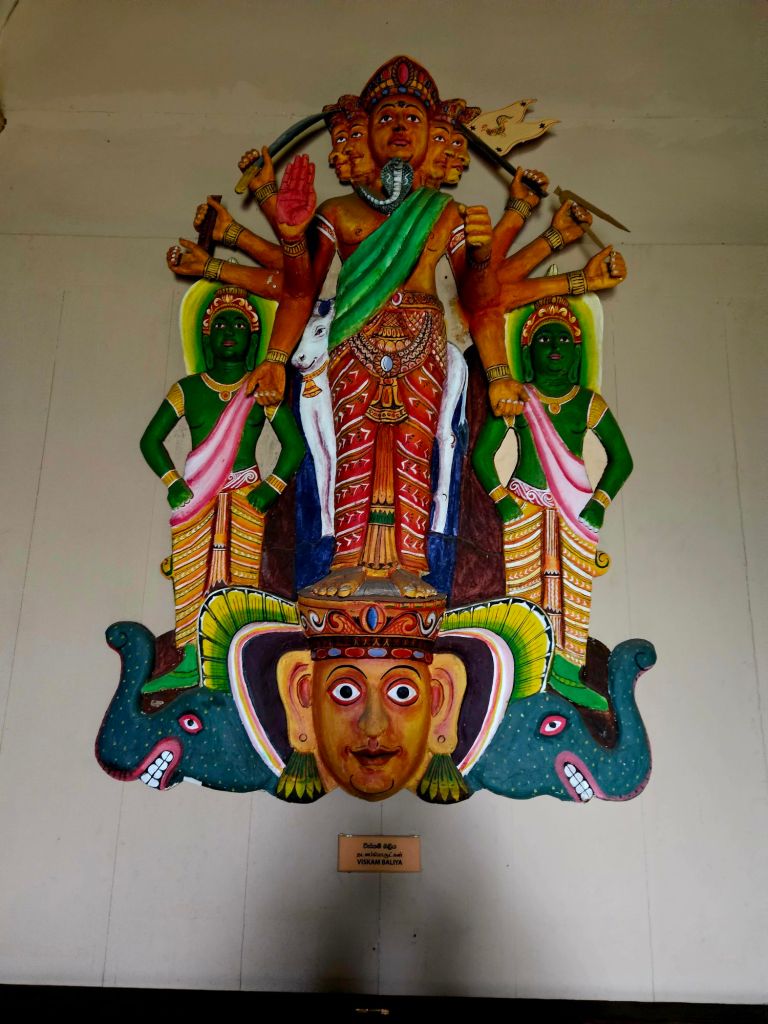
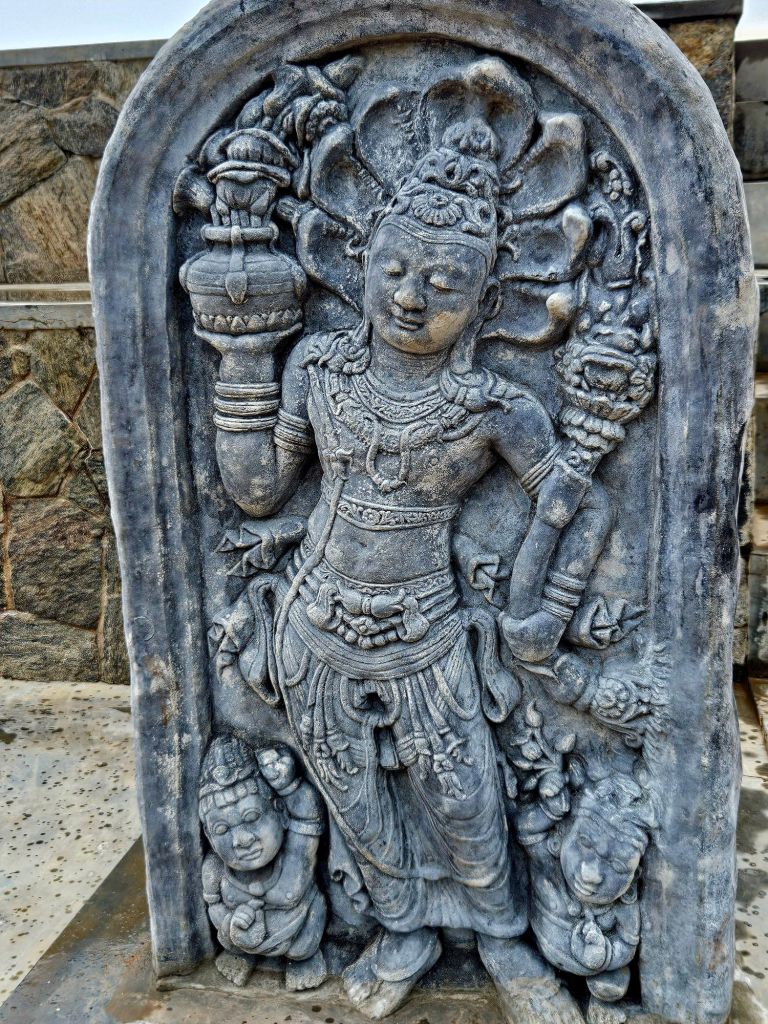
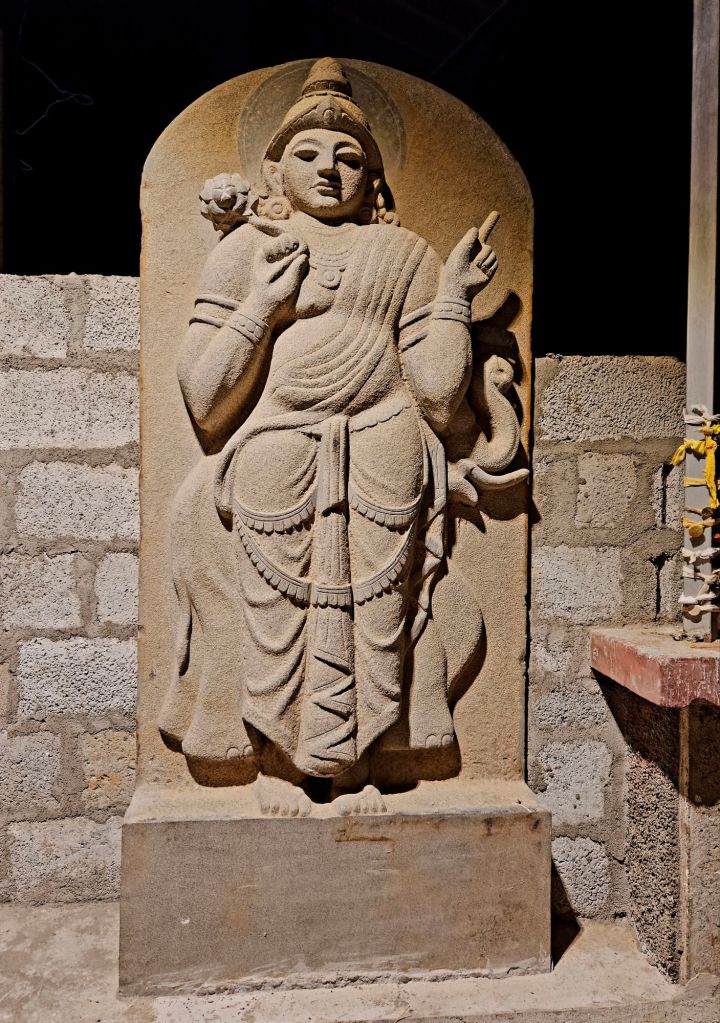
There was also a statue of the Goddess Durga from the 9th – 10th century. Goddess Durga is a major hindu goddess associated with protection, strength, motherhood, destruction, and wars.

We learnt a little about the history of Sri Lanka. The Dutch settled in Sri Lanka during a long period of war, originally with the Portuguese (1638-1658) and then with the Rajashima II (1658-1688).  Initially, the Dutch were interested in the cinnamon trade, but they soon wanted to take over colonial power. In 1762, there was a rebellion,supported by the King of Kandy, and war broke out. In 1765, the Dutch destroyed and looted the palace of Kandy.

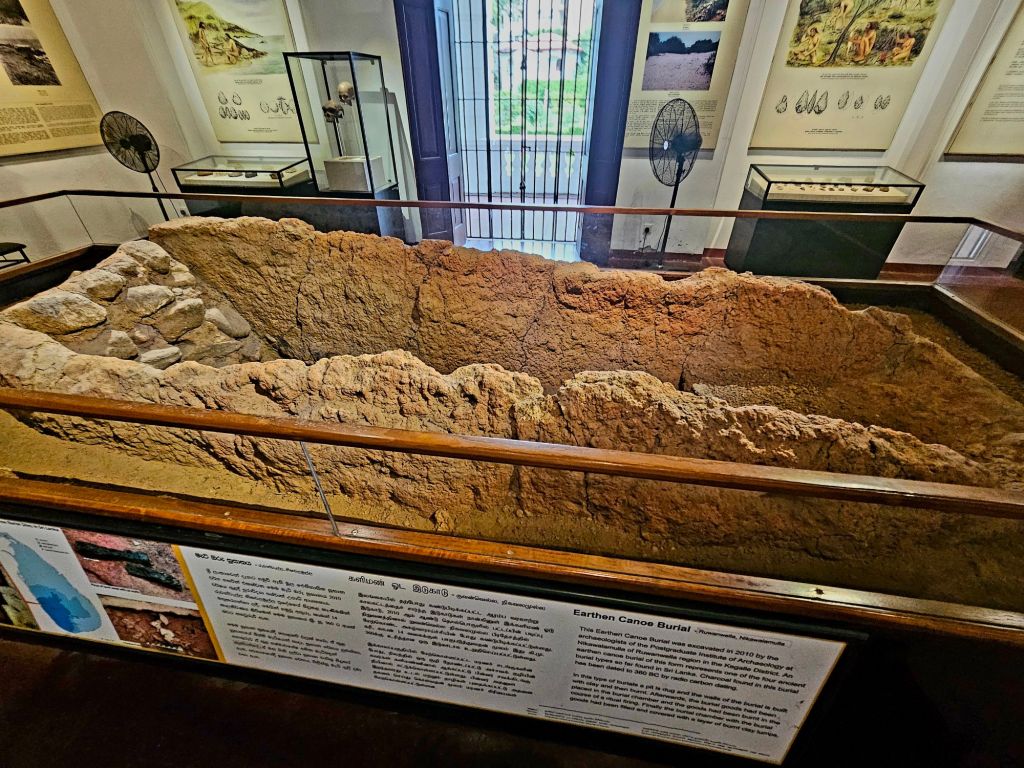
We walked past an earthen canoe burial dating back to 360 BC. For this type of burial, a pit is dug, and the walls are built with clay and then burnt. The body and burial goods are placed in the burial chamber and then ritually set on fire. Finally, the burial chamber is filled and covered with burnt lumps of clay.

We saw a standing statue of Buddha. This is a replica statue of an original held in the Marble Temple in Bangkok. Buddhism was introduced to SriLanka in the 3rd century BC. Originally, the followers were made up of two sections – forest dwellers and city dwellers. Over a period of time, large temples were built in the cities, and gradually, all villages had a Buddhist temple. With the bringing of the Dacred Tooth Relic to Sri Lanka in the 4th century BC, the practice of ritual worship was enhanced. Buddhism is the most popular religion in Sri Lanka.

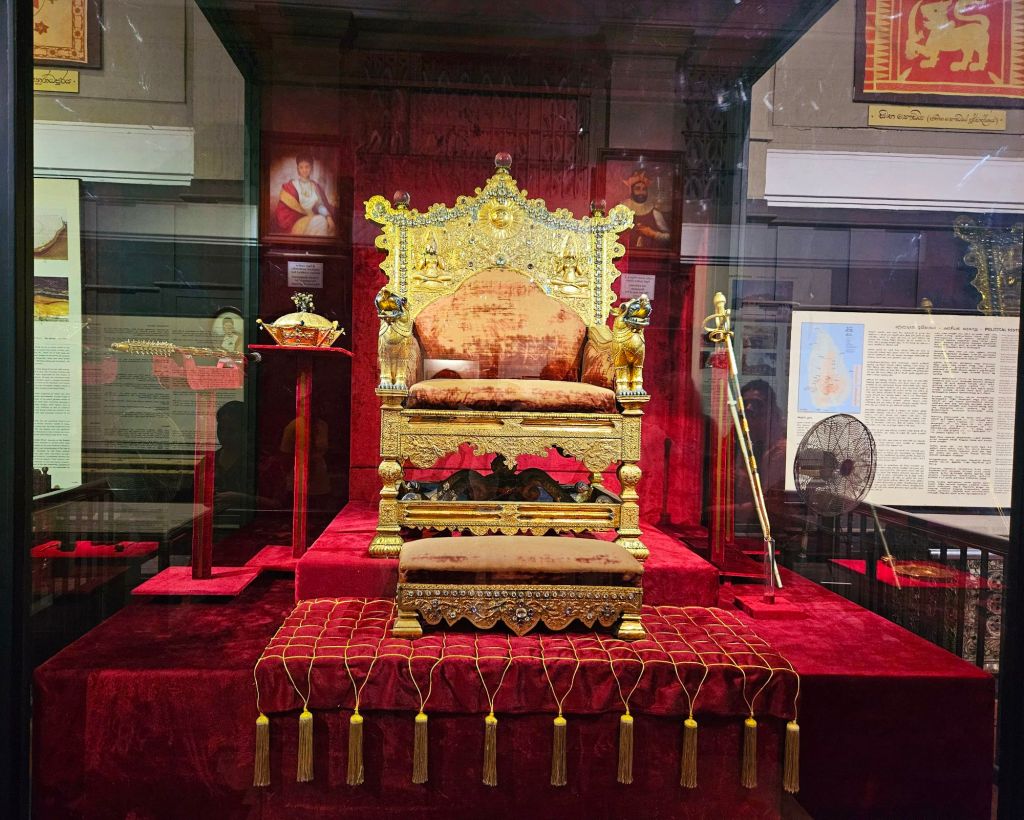
An interesting item that we saw was the Royal Seat. This was donated to the King of Ceylon, by the Dutch, in 1693. Six kings used this seat, including the last King of Sri Lanka, King Sri Wickrama Rajasinghe. He was captured by English soldiers in 1815, and the seat and other items were sent to England. The seat was sent back to Sri Lanka by King George V in 1934. The sword of state, sceptre, and other items were returned in 1936 by King Edward VIII.

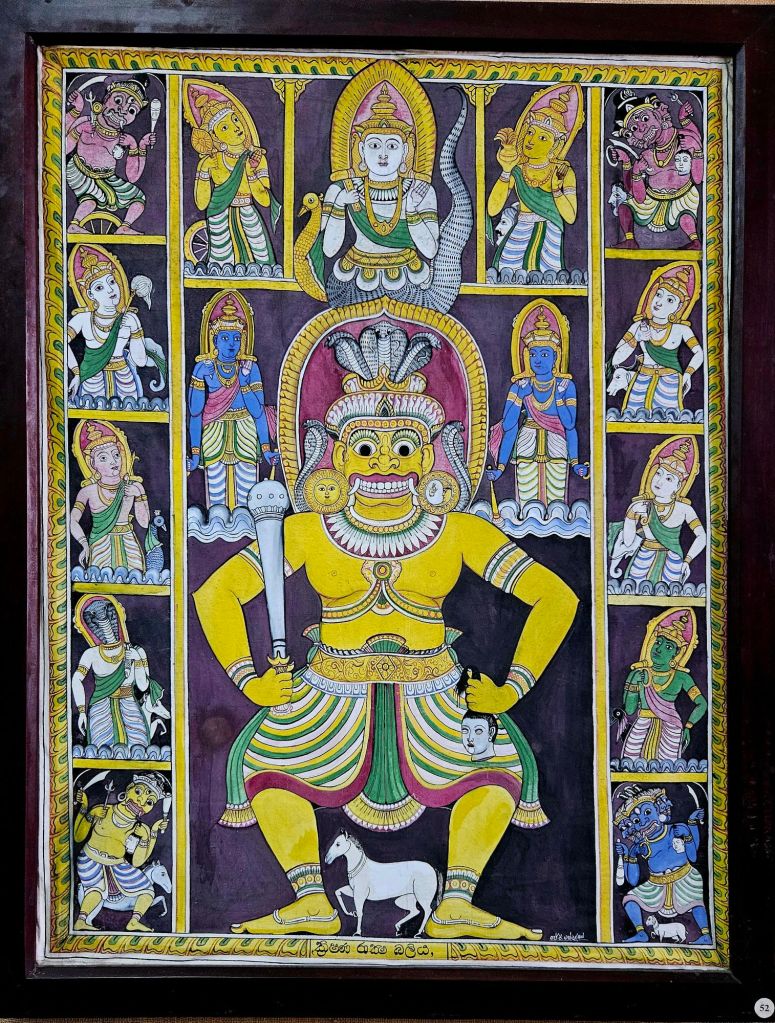
We saw a few other interesting items.

After around 40 minutes in the museum, we hopped back on the bus and drove to our next stop – Independence Square.

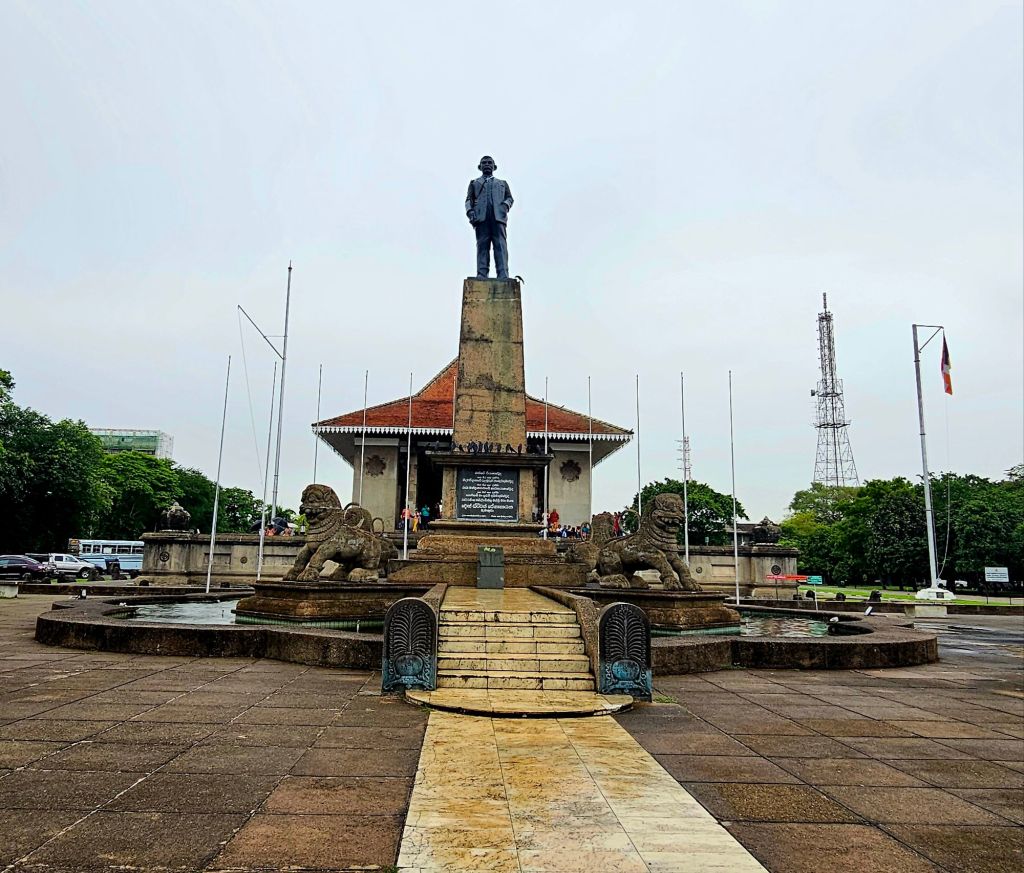
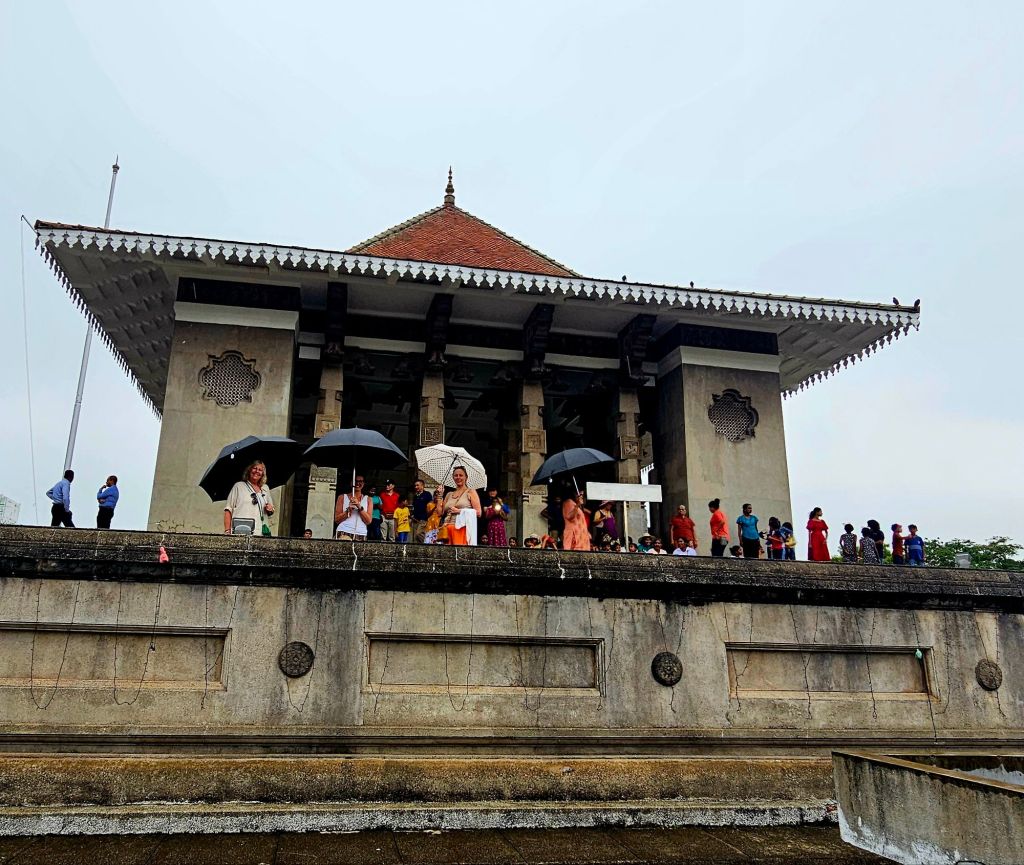
It commemorates Sri Lanka gaining its independence from the British Empire in 1948. The exact location is where Prince Henry, the Duke of Gloucester, opened Sri Lanka’s first parliament on a special podium, bringing an end to almost five centuries of colonial rule and marking the beginning of Sri Lanka’s self-rule. The Independence Memorial Hall sits on the square and used to be home to the two houses of Parliament- the Senate of Ceylon and the House of Representatives of Ceylon.

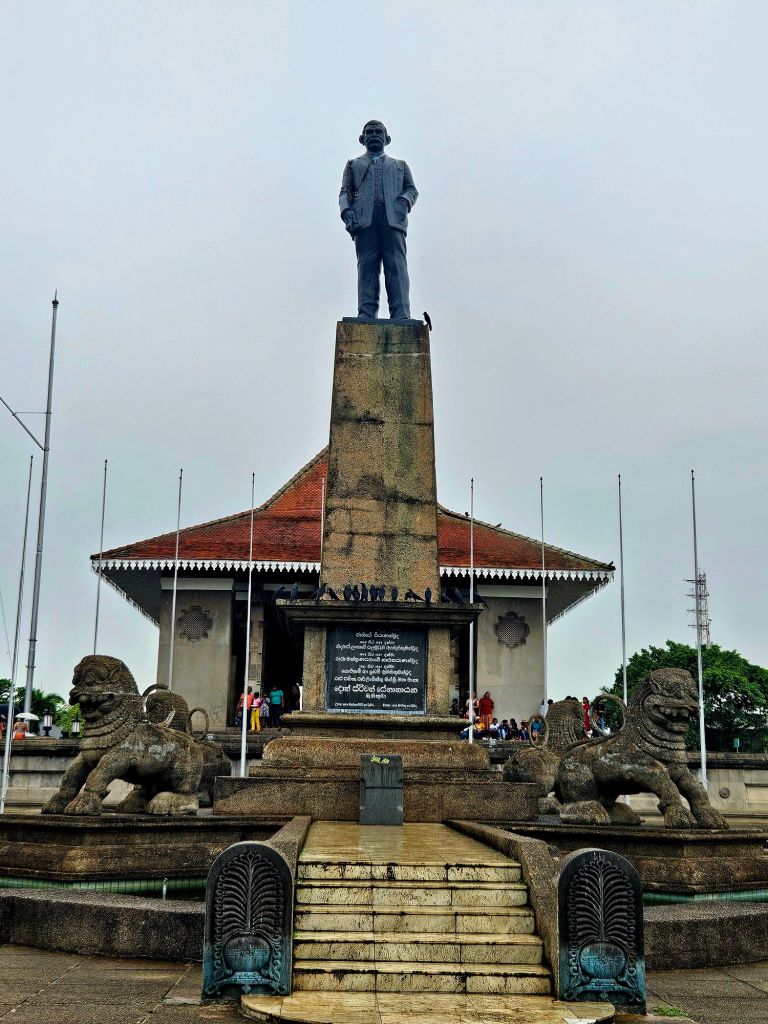
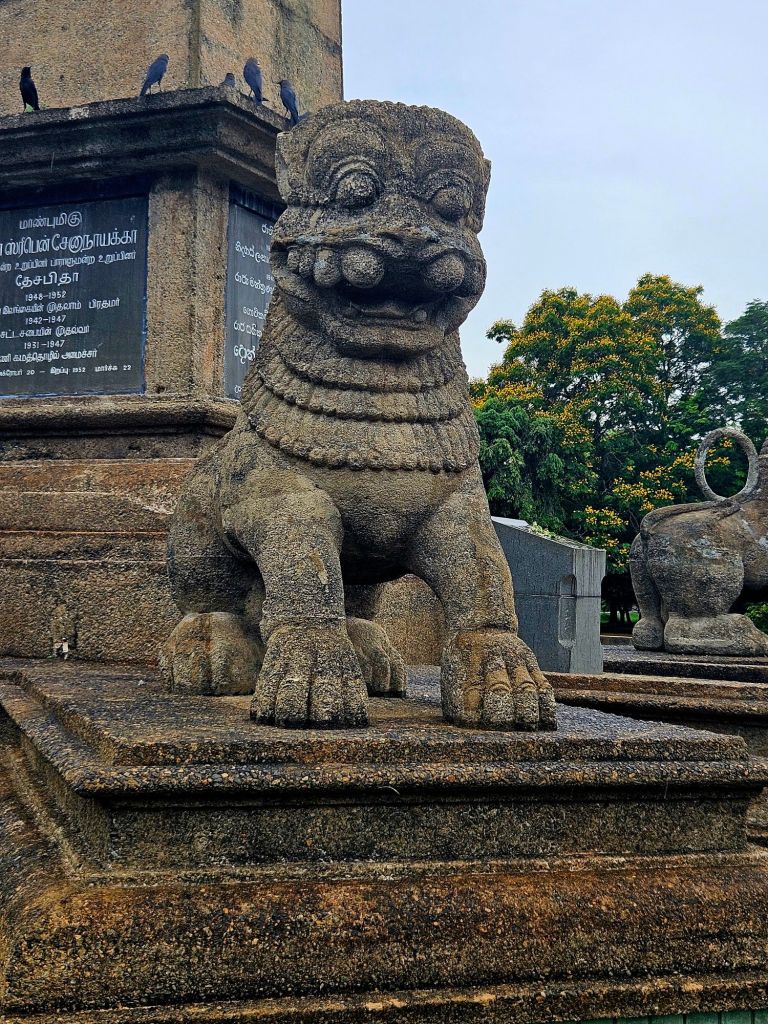
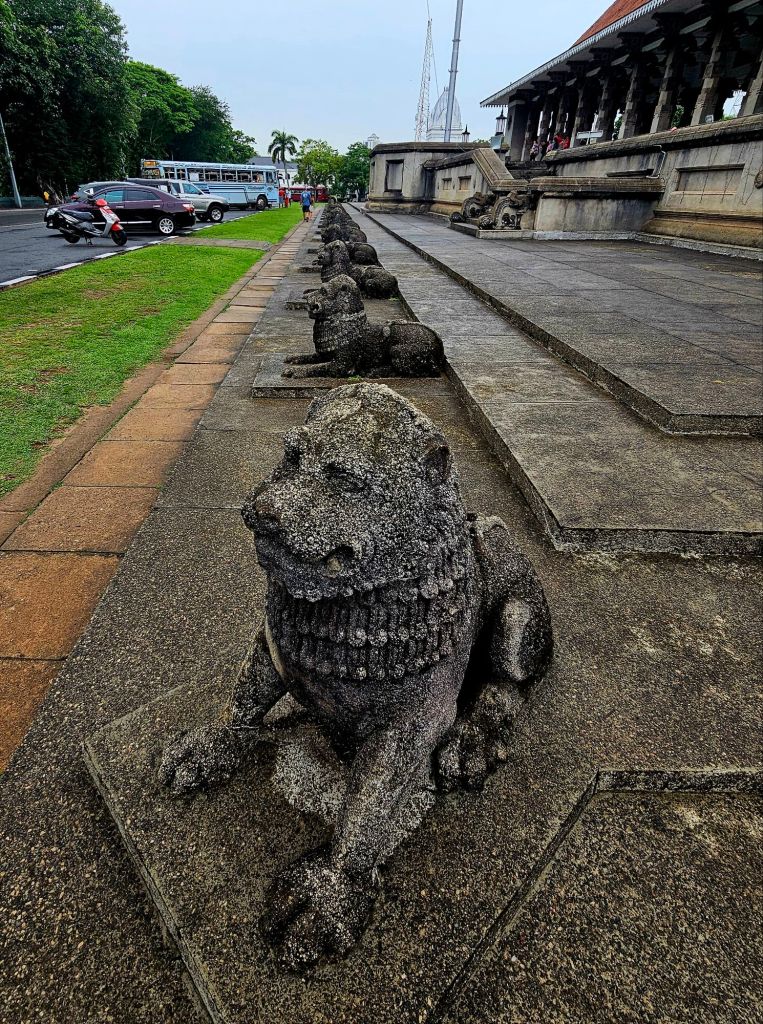
At the entrance to the building is an imposing statue of D.S. Senanayake, Sri Lanka’s first prime minister, surrounded by four stone lions with protruding eyes.

The open sided hall was inspired by the “Magul Maduwa,” the royal court of the King of Kandy, the last kingdom on the island. It was at the Magul Maduwa that the Kandyan chieftains handed over the island’s sovereignty to the British throne in 1815. 

Ceylon was an independent country in the Commonwealth of Nations from 1948 to 1972. In 1972, it became a Republic within the Commonwealth and changed its name to Sri Lanka. In July 1960, Ceylon had the first female elected head of government in the world.

Opposite was another beautiful building which I later learnt was a shopping centre.

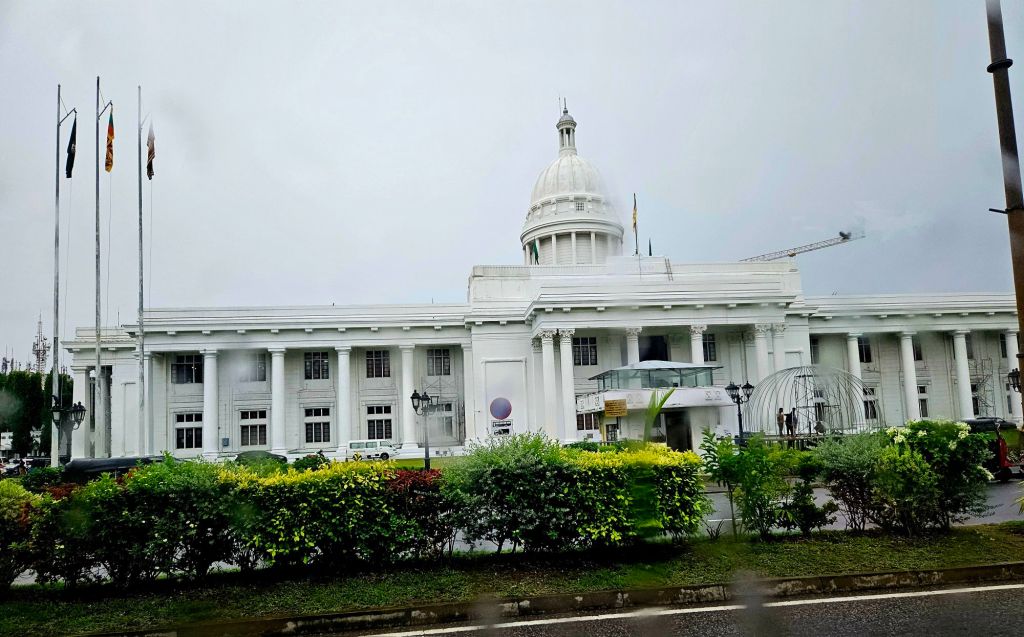
We then got back on the bus to visit another attraction. On the way, we passed the town hall. The foundation stone for the town hall was laid on 24 May 1924, and the building was completed in 1928.

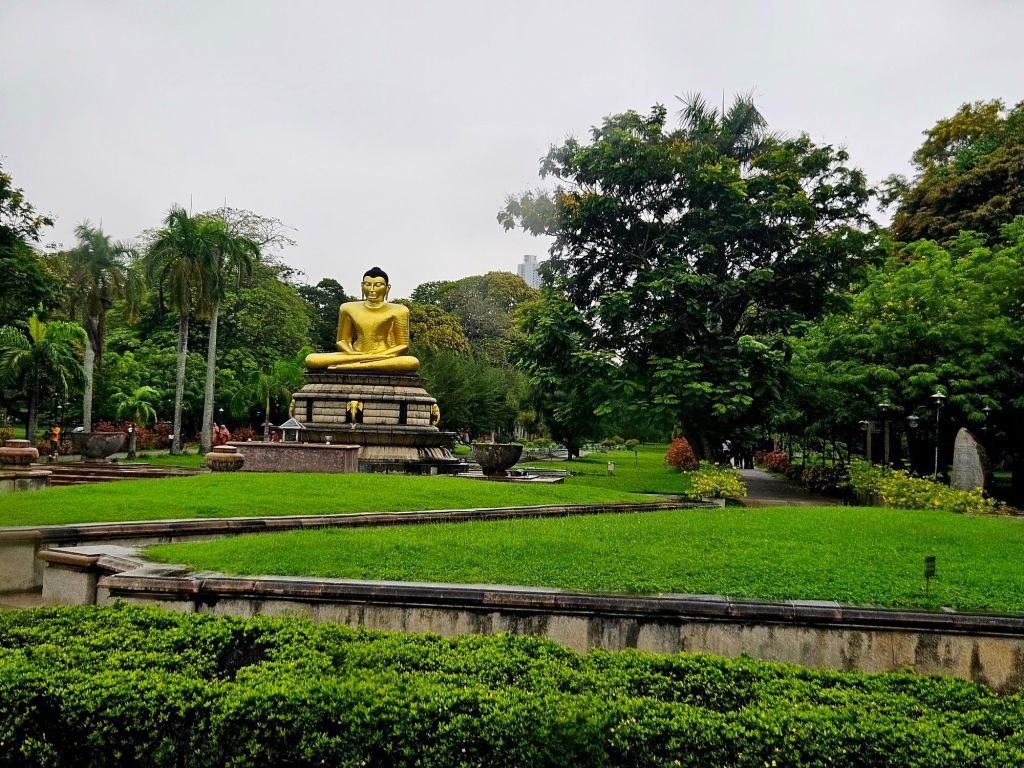
The town hall is opposite Viharamahadevi Park, which is the oldest and largest park in Colombo. The park was originally calked Victoria Park after Queen Victoria but changed to Viharamahadevi Park in 1958, named after the mother of one of the Srilankan Kings. During WWII, it was occupied by the British Army but opened to the public again in 1951. There is a huge Buddha statue in the park – this replaced the previous statue of Queen Victoria.

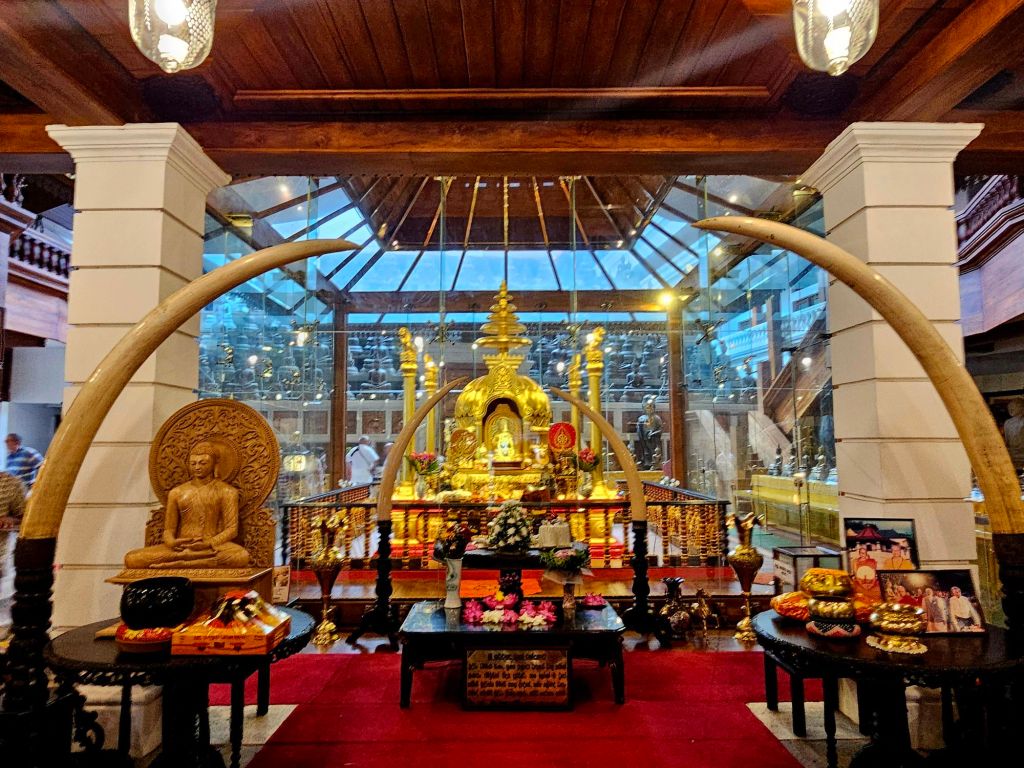
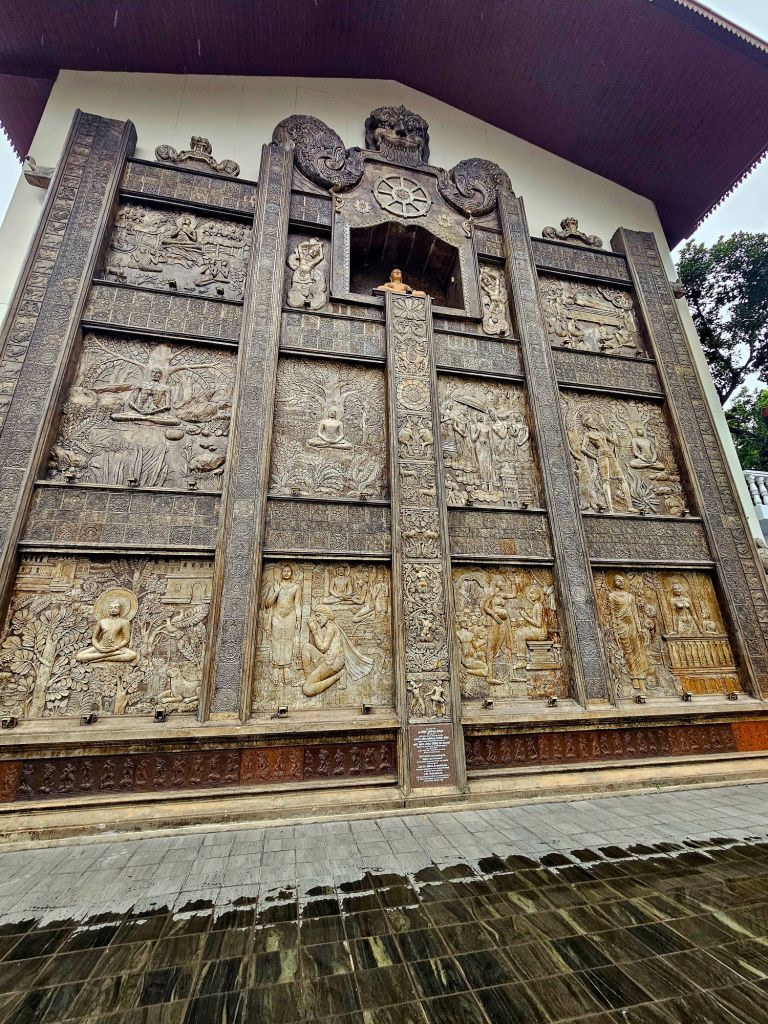
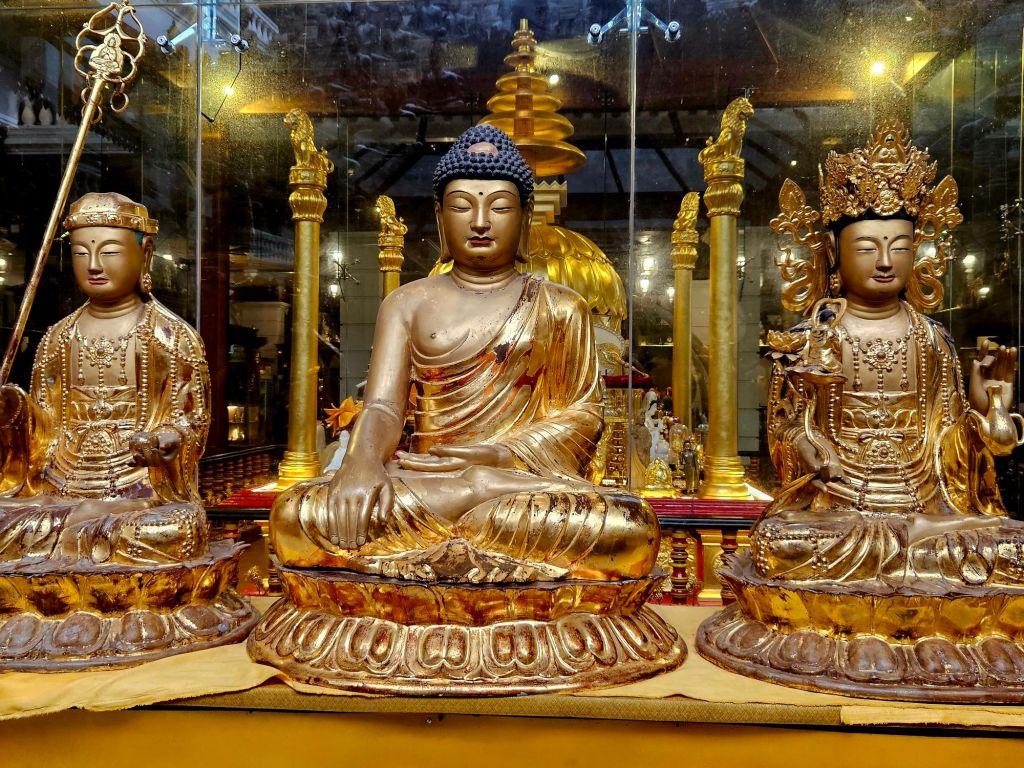
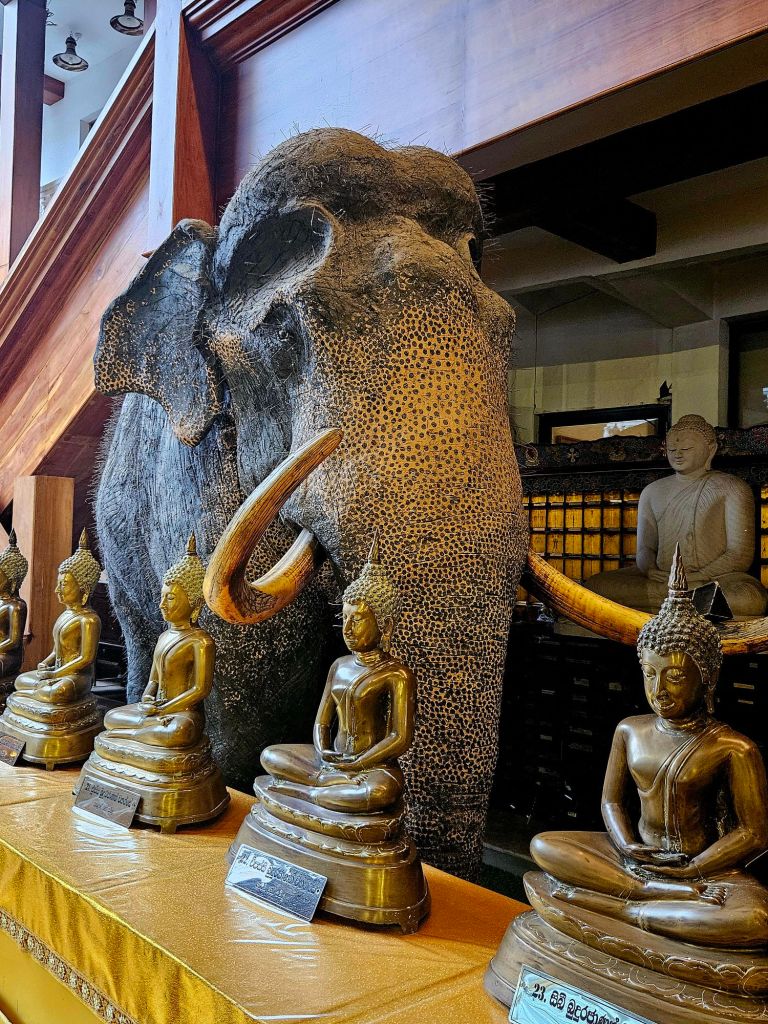
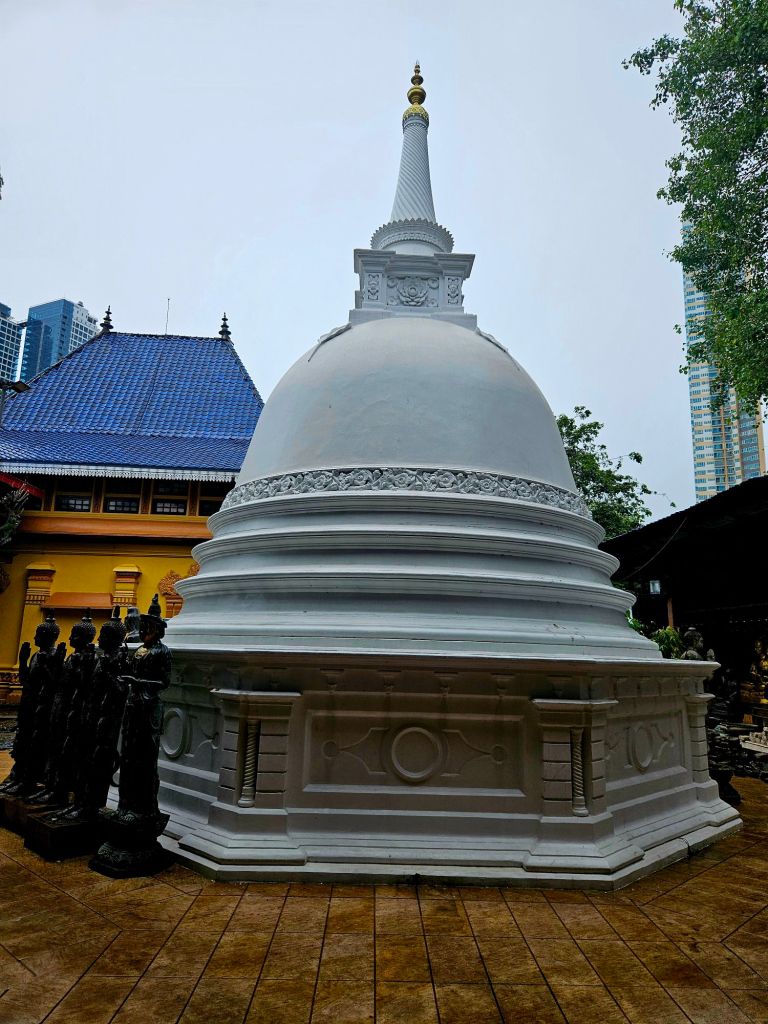
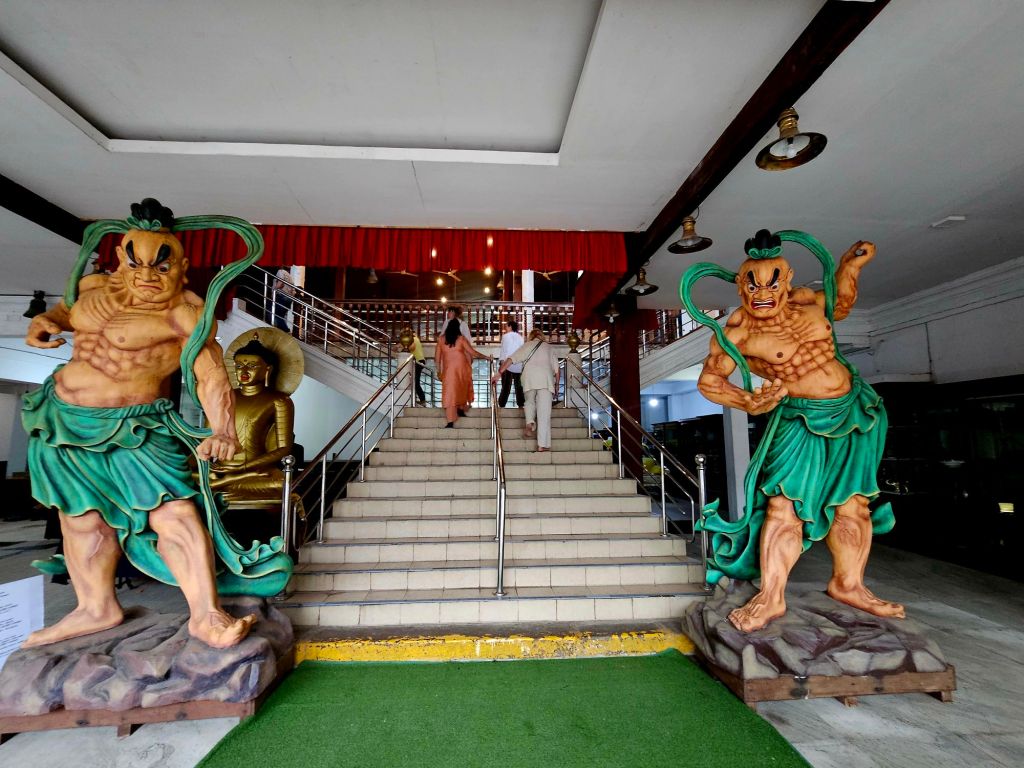
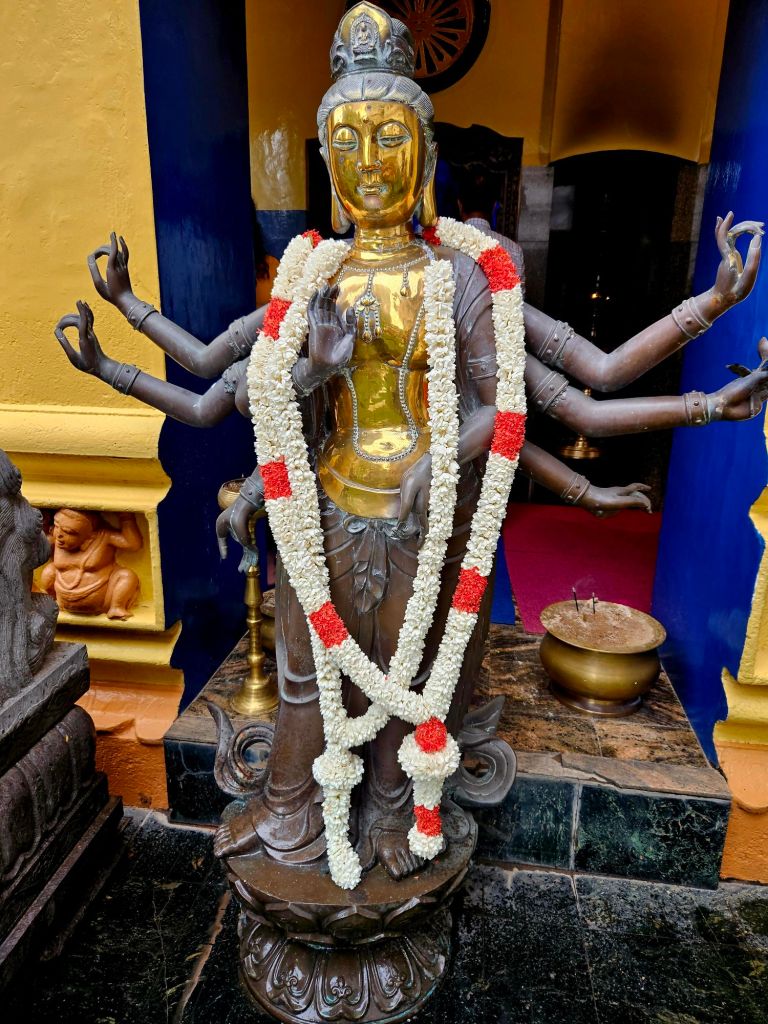
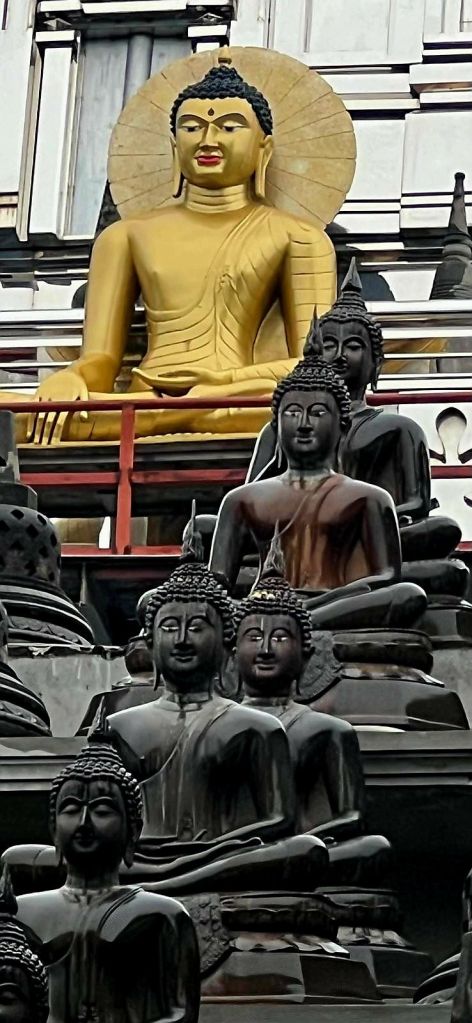
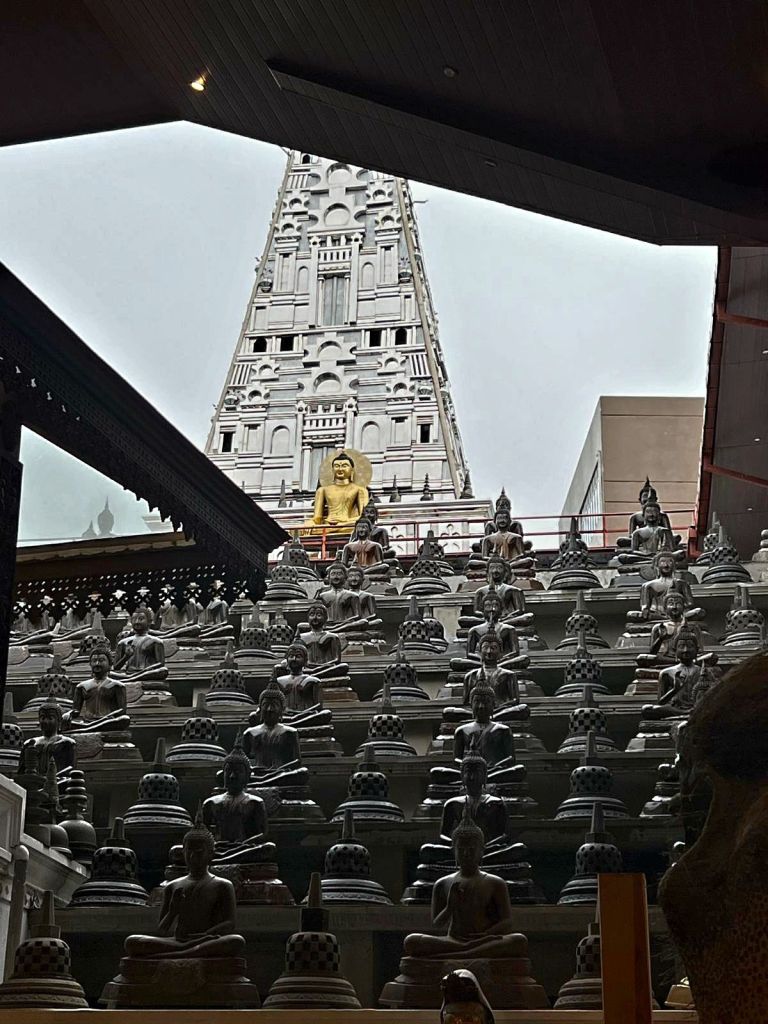
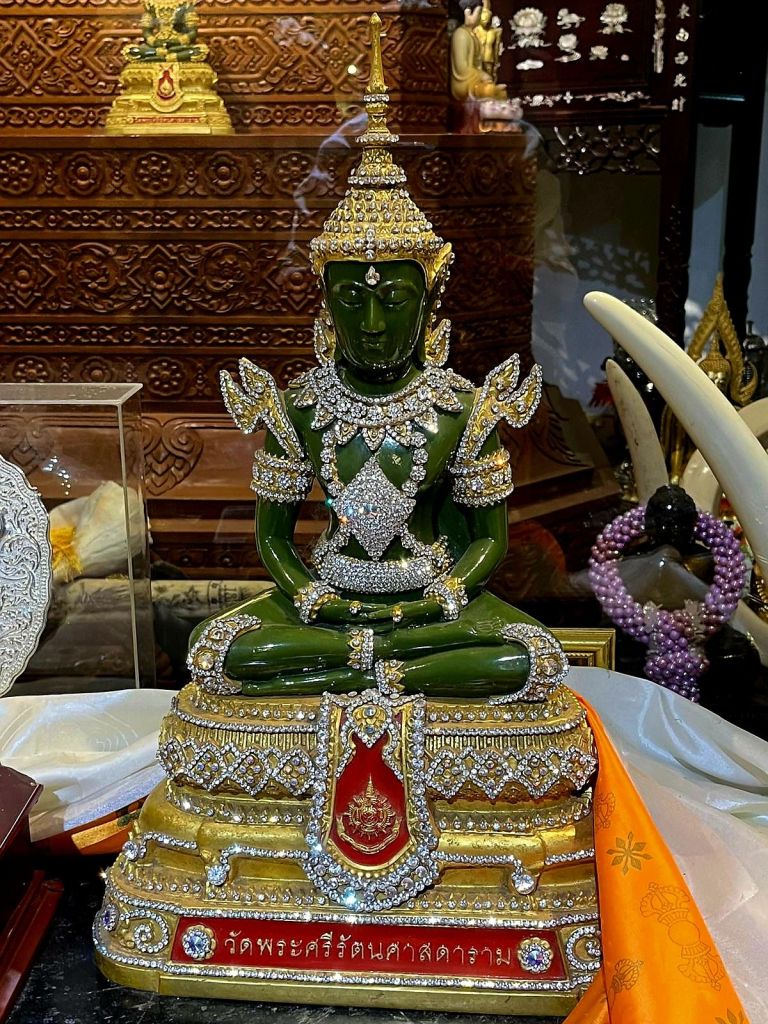
Our penultimate stop was the Gangaramaya Temple. Which was completed in the late 19th century. Whilst this was a temple, it also felt a bit like an antique store as there were just so many statues and other items to see.

This is one of the oldest Buddhist temples in Colombo, dating back to the 19th century. It is also a learning centre and cultural centre and houses a museum and library. There was a huge amount to see.

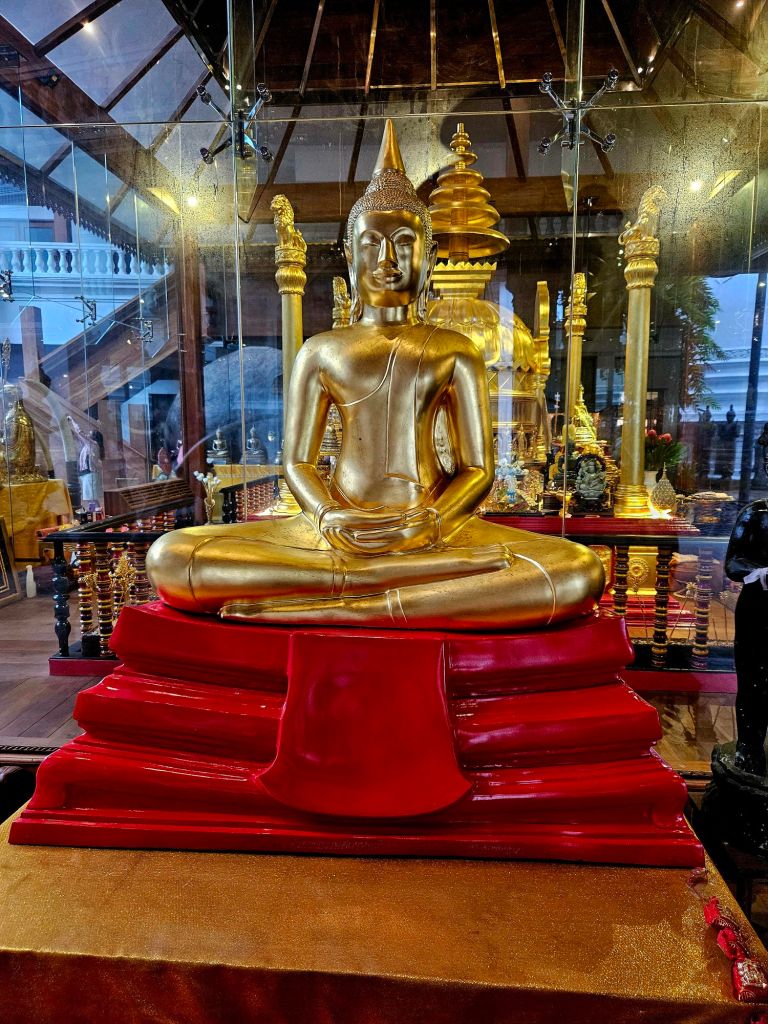
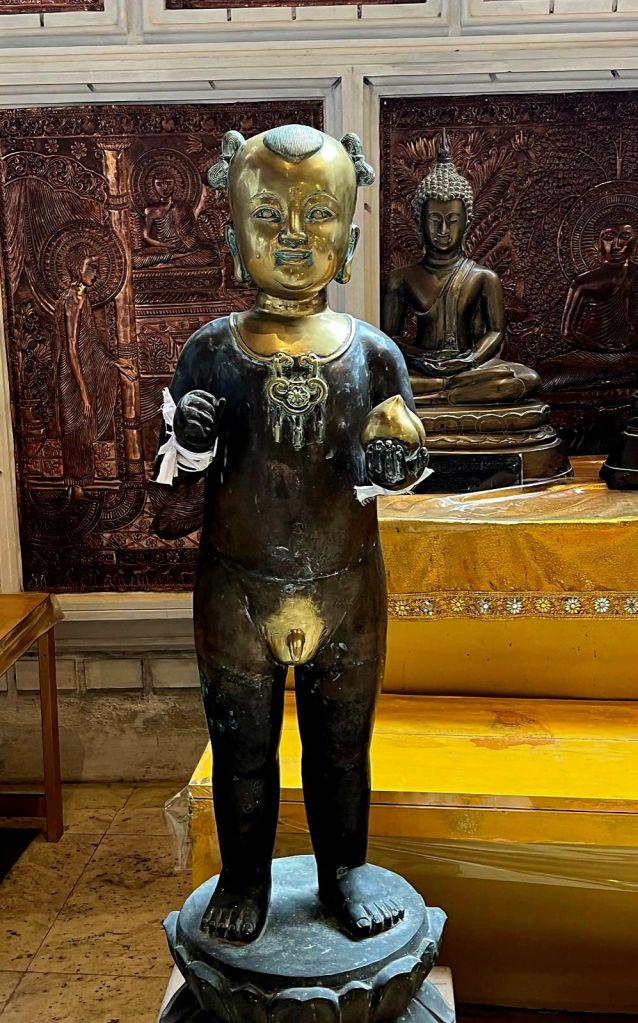
This statue seemed to be one of the favourites amongst the visitors.

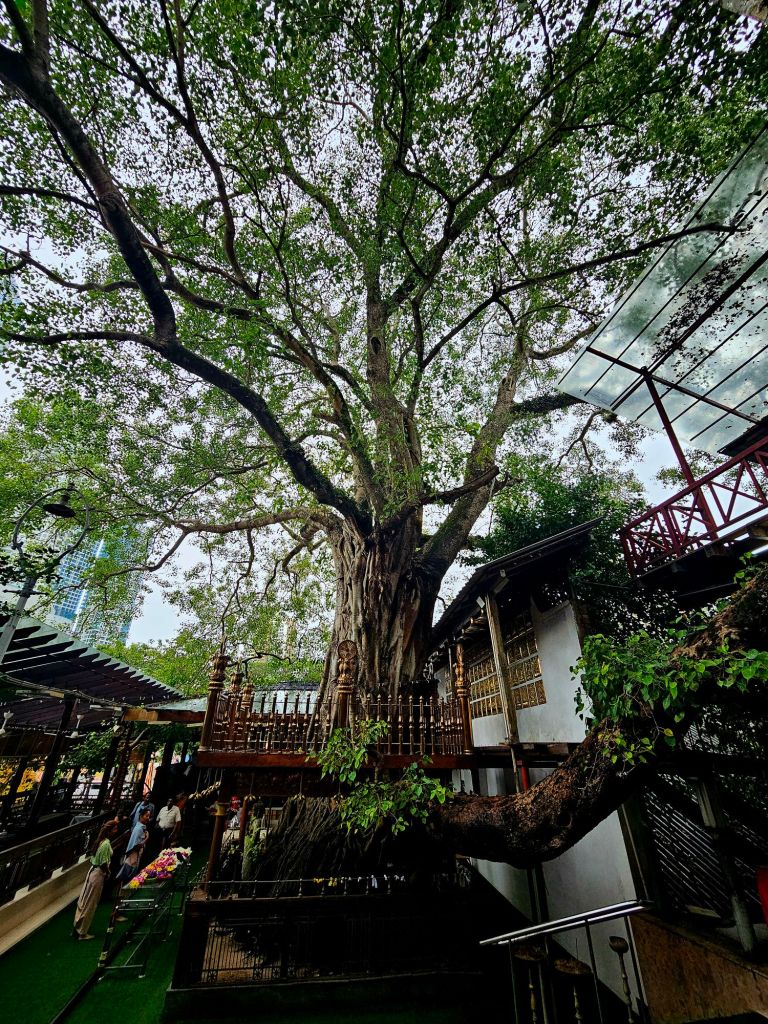
The temple also has a Bodhi tree, grown from the tree under which Buddha gained enlightenment.

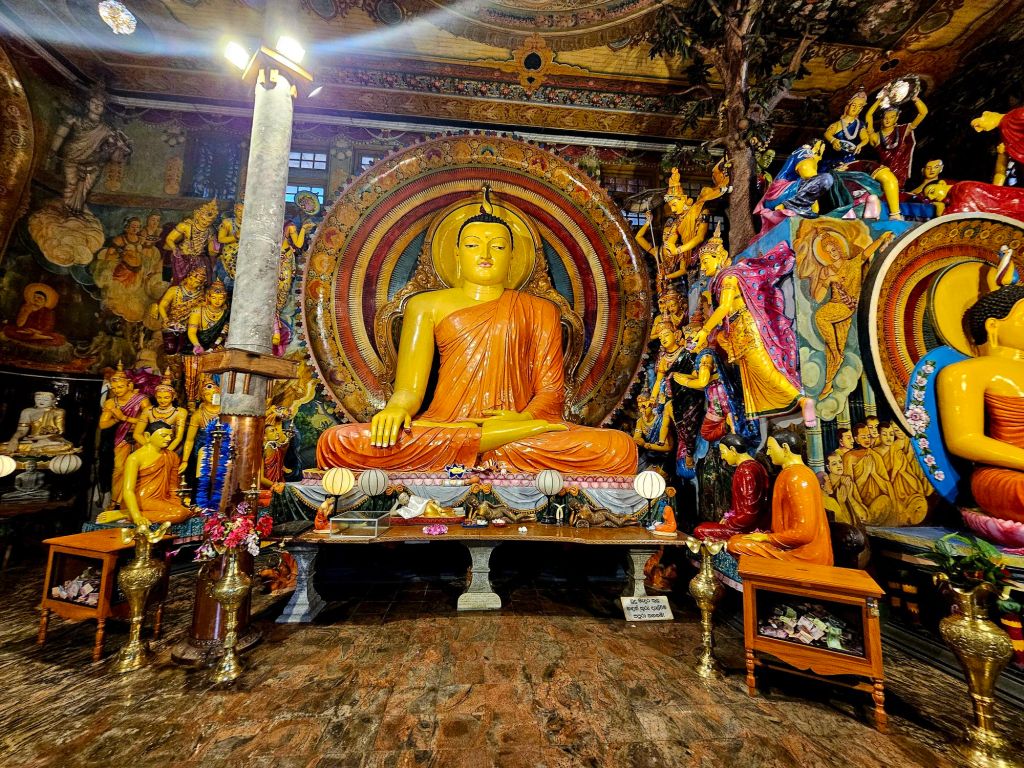
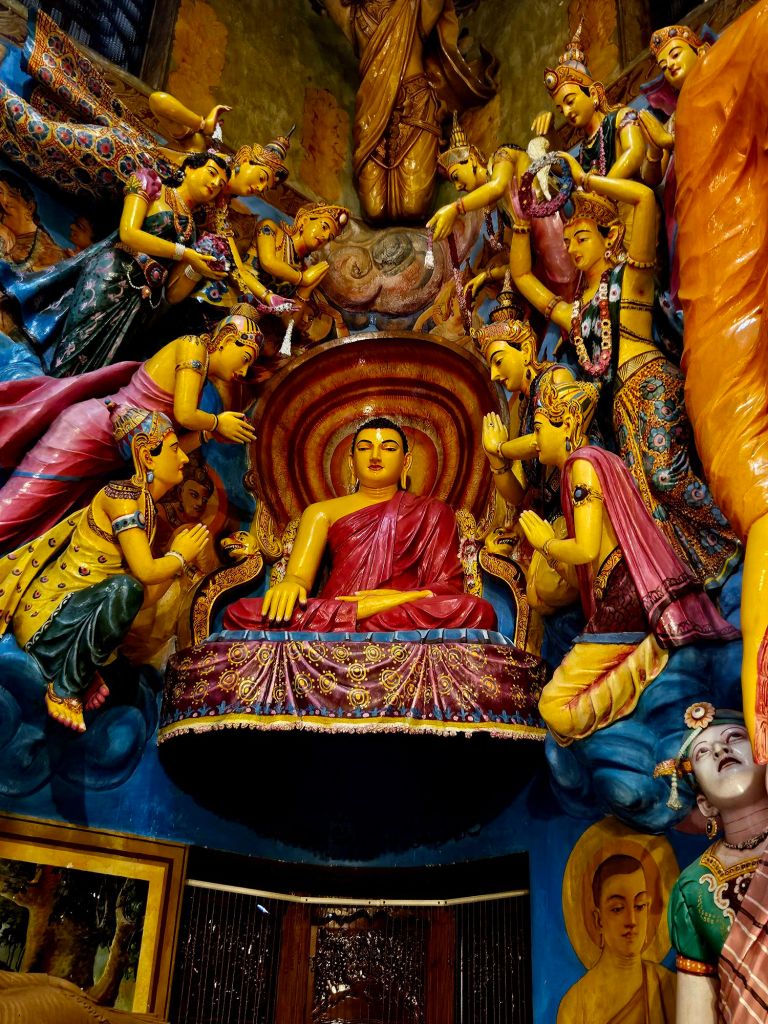
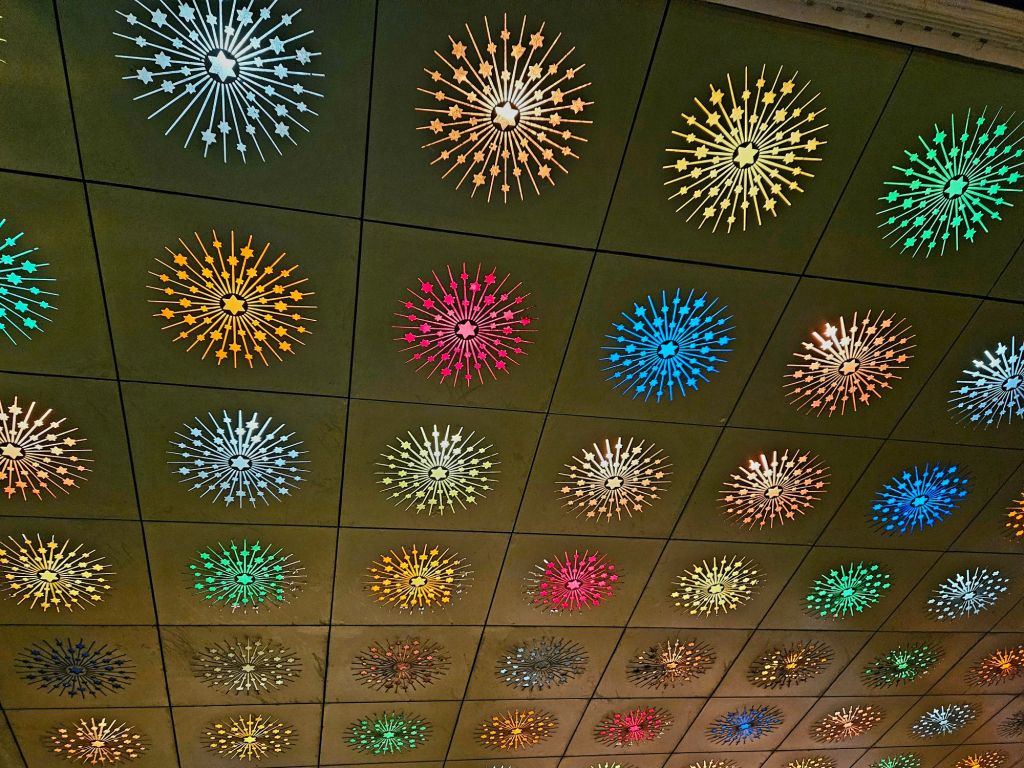
Just as I was making my way out, I noticed another temple area. This is the main sanctuary is a soothing room decorated in soft yellowish hues, housing a massive Buddha statue in meditation pose flanked by statuettes of heavenly creatures. The ceilings are decorated with vibrant pastel paintings depicting Buddhist stories, and the columns are  covered with traditional Sri Lankan art.

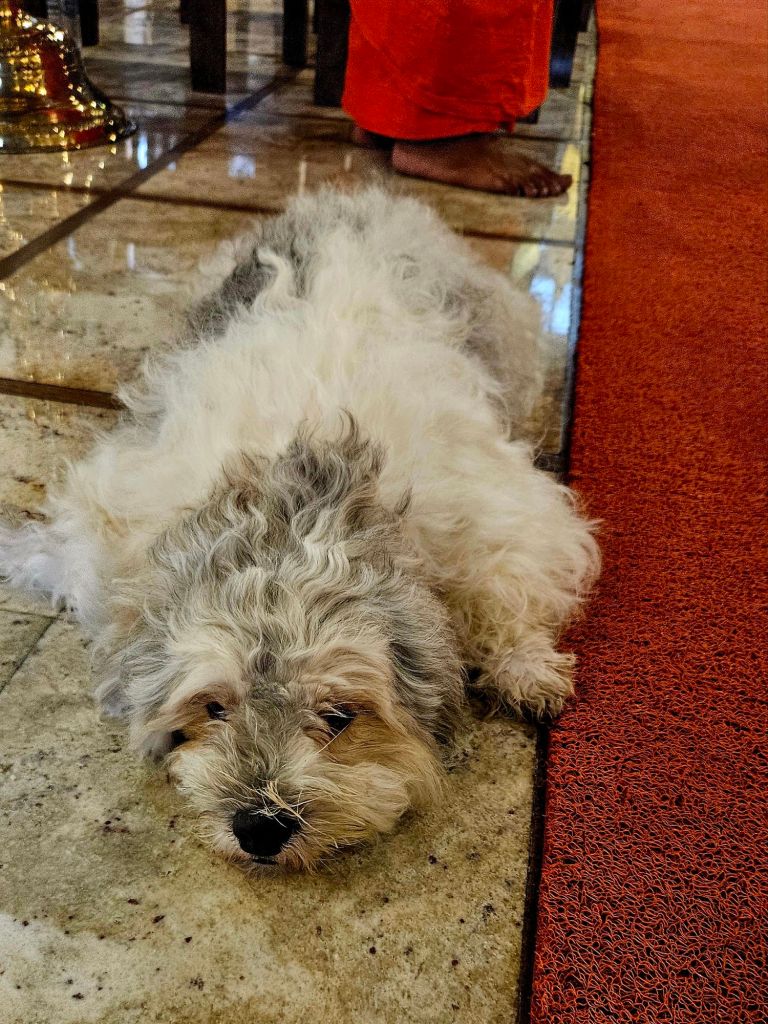
I also made friends with the monk’s do. He was really fluffy and soft and very friendly.

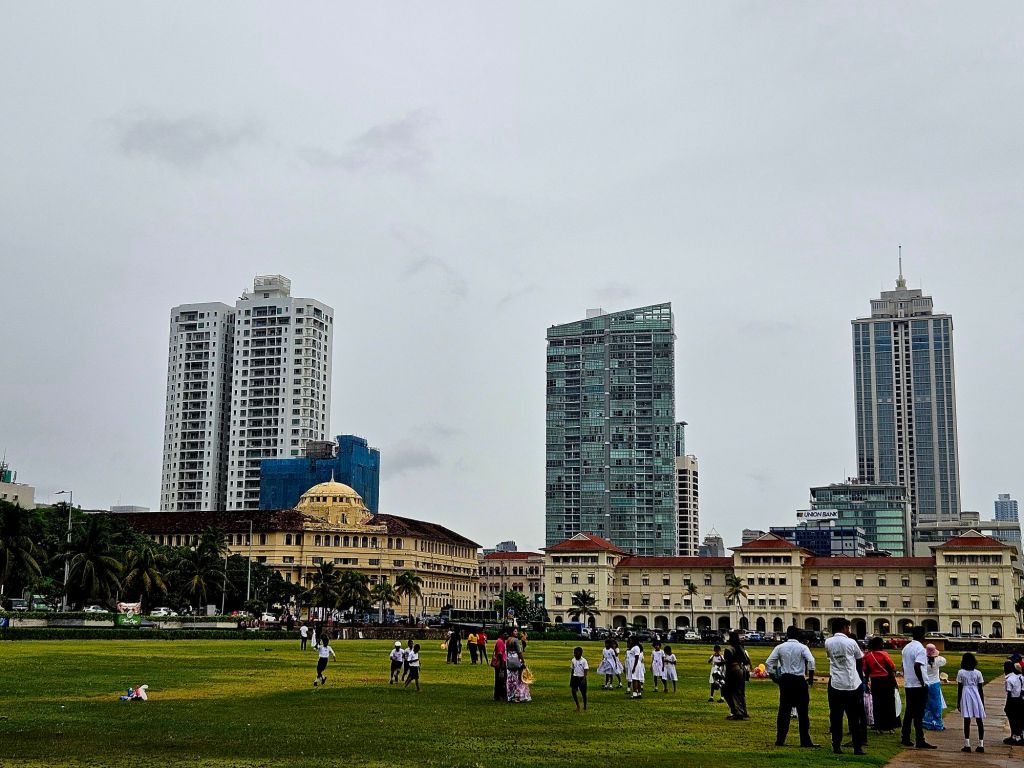
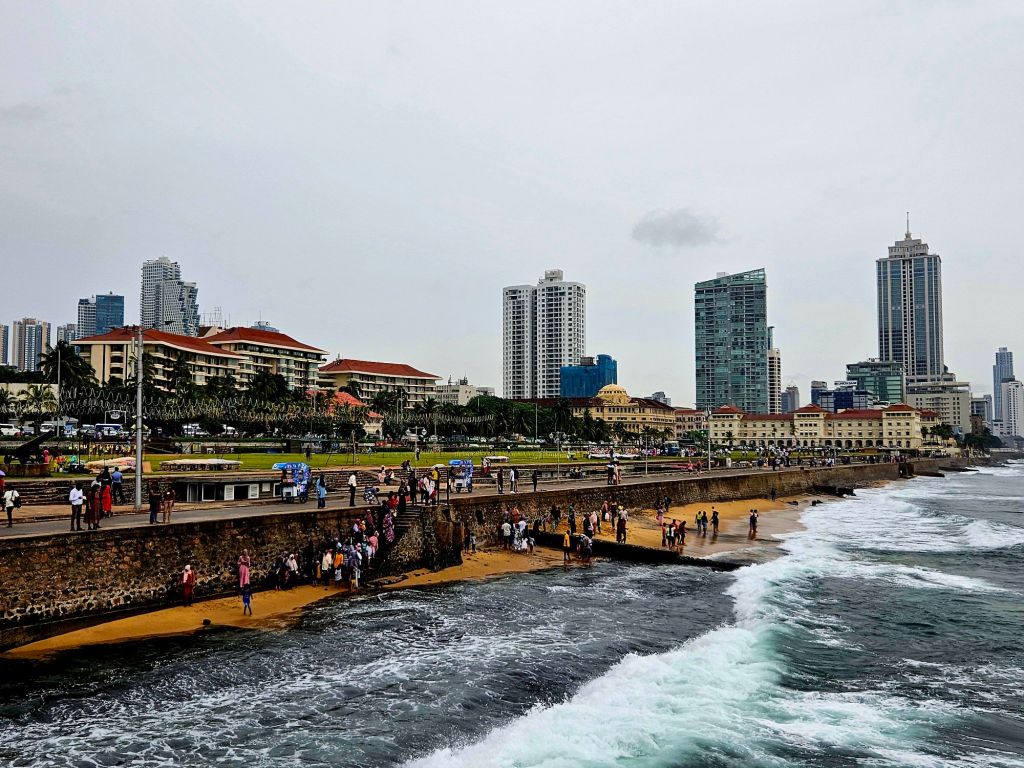
And then we were off to our last stop, Galle Face Green. This is an urban park in Colombo and stretches for 500m along the coastline.

The promenade was completed in 1859, and the area used to be used for horse racing, known as the Colpetty Race Course, and golf as it was a larger area than it is today. It is a popular area for families to come to and despite the weather, it was quite busy.

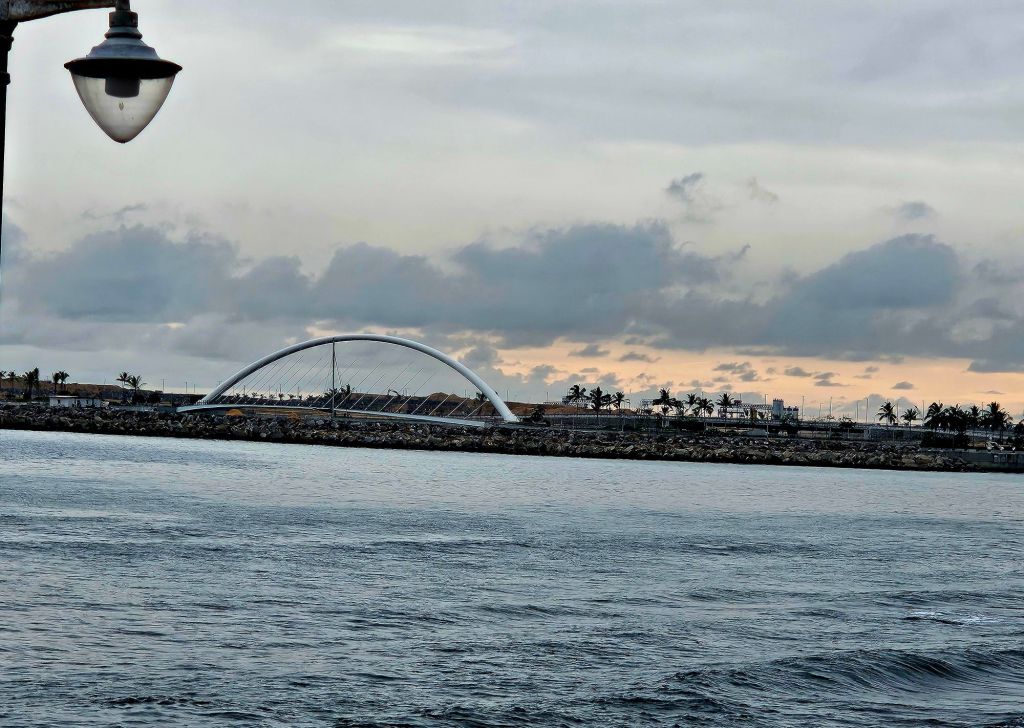
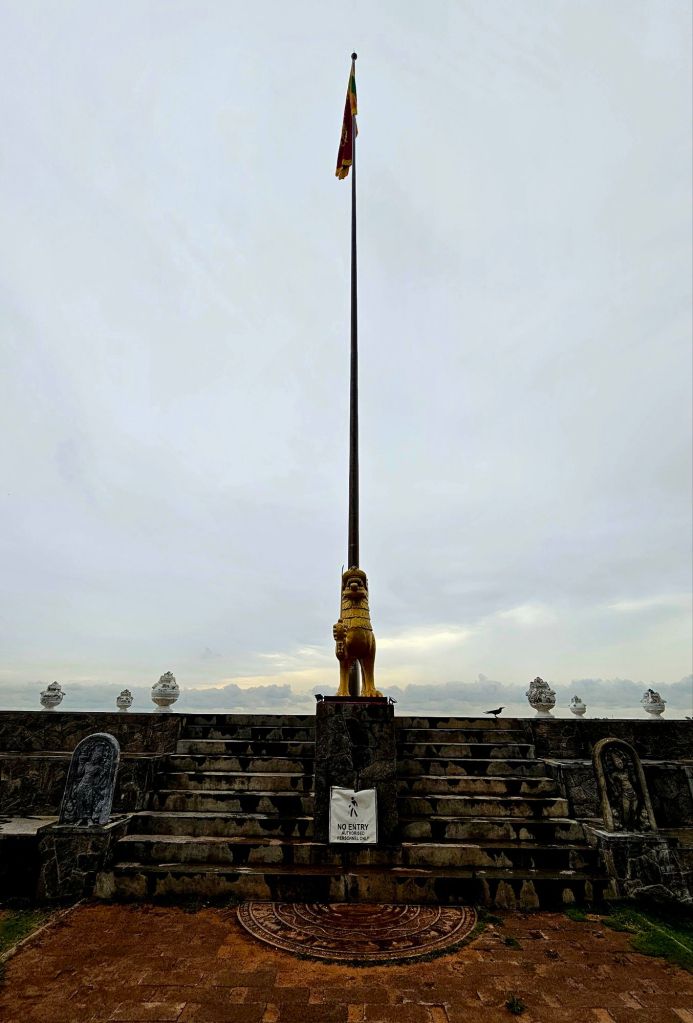
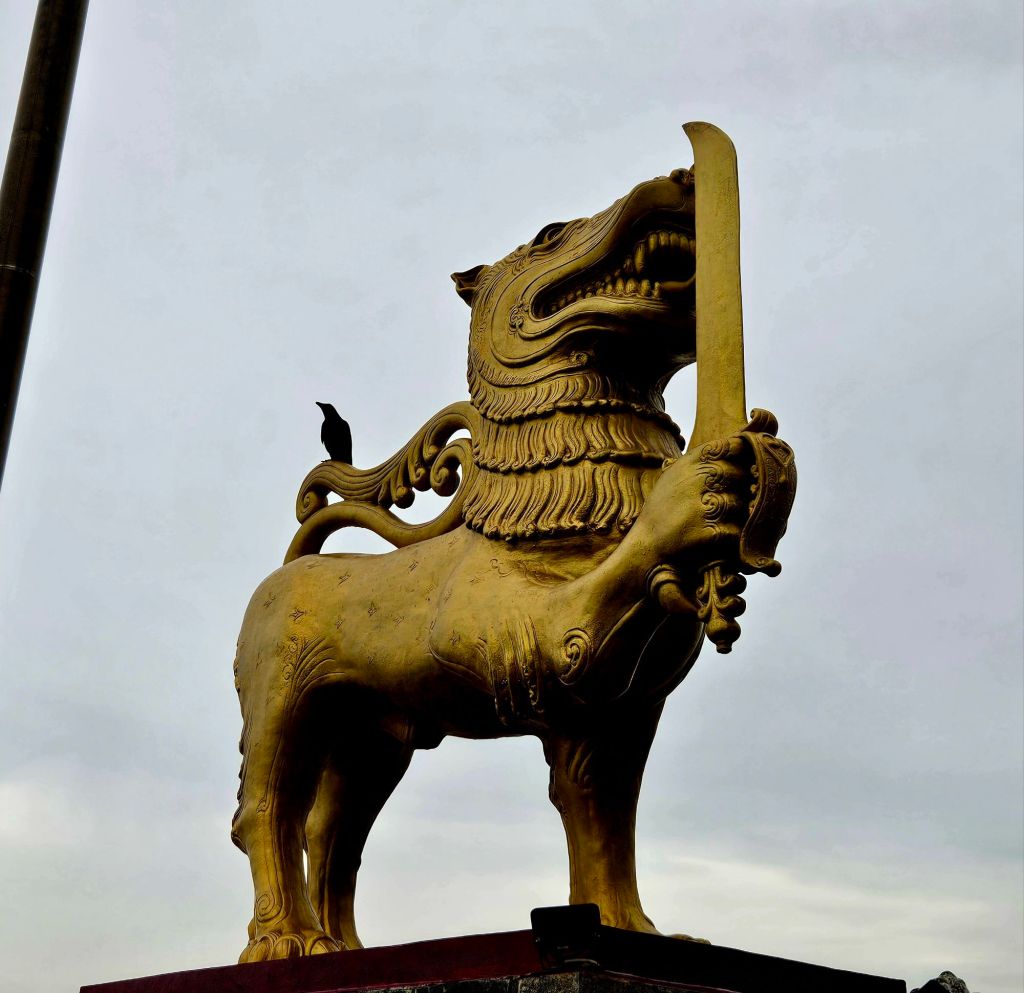
We walked down to the end of the pier.

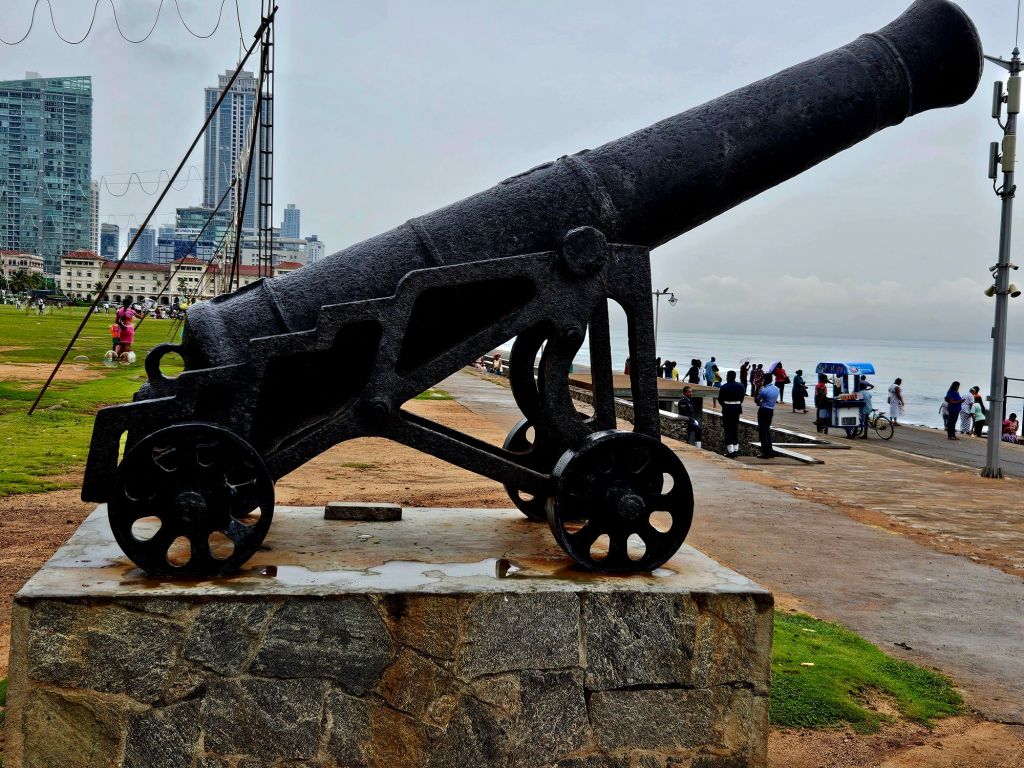
The promenade was initially laid out by the Dutch for a military purpose. They used it as a means to enable their cannons a strategic line of fire against the Portuguese. A couple of canons are still on site today.

There was also what looked like a war memorial statue in the park.

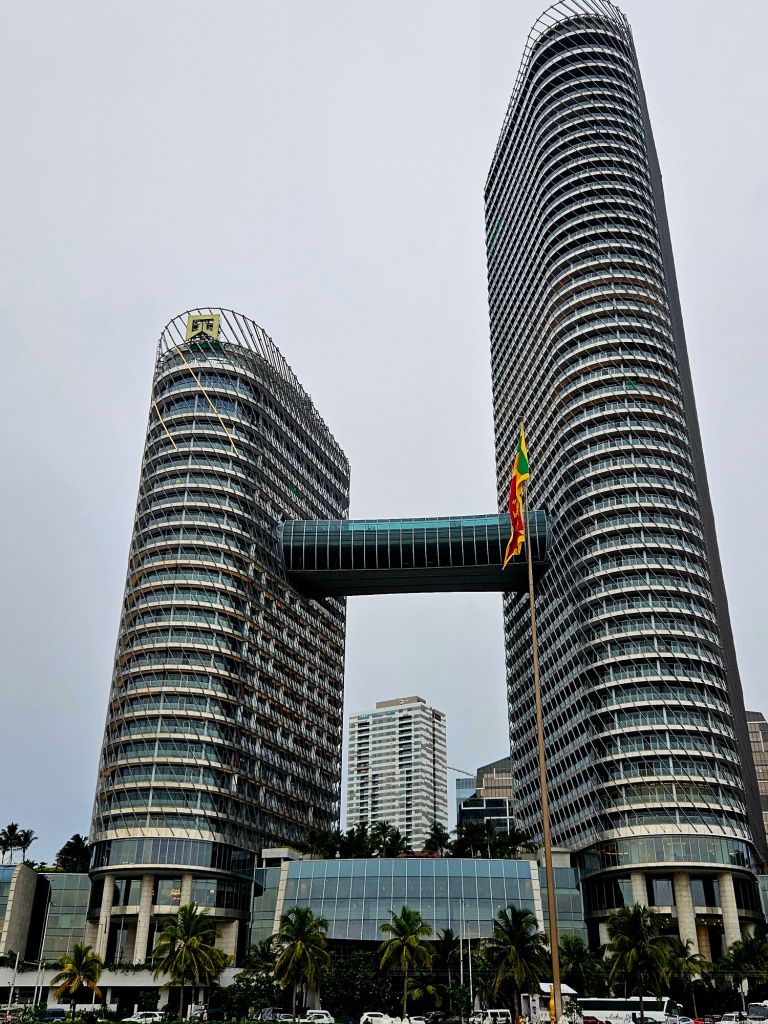
Opposite the park was a very modern but interesting building.

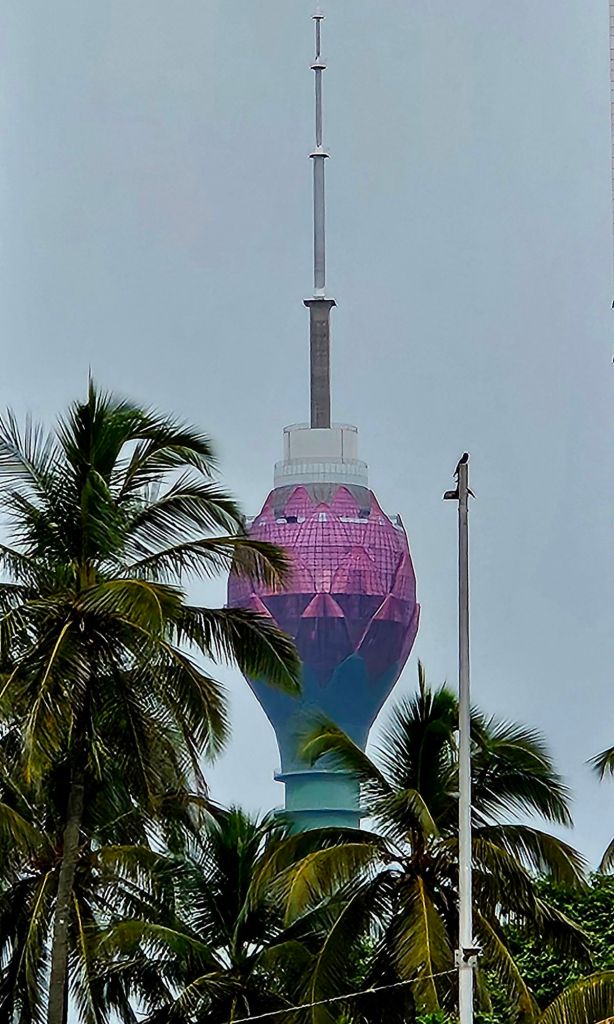
And we could also see the Lotus Tower. This is just over 351m high and is the tallest self- supported structure in South Asia. The lotus symbolizes purity within Srilankan culture and is also said to symbolize the country’s flourishing development.  There is an observation deck at the top.

After a stroll in the park, we headed back to the hotel and got ready to go out.

We went to Floatz pub to try out their cocktails during happy hour.

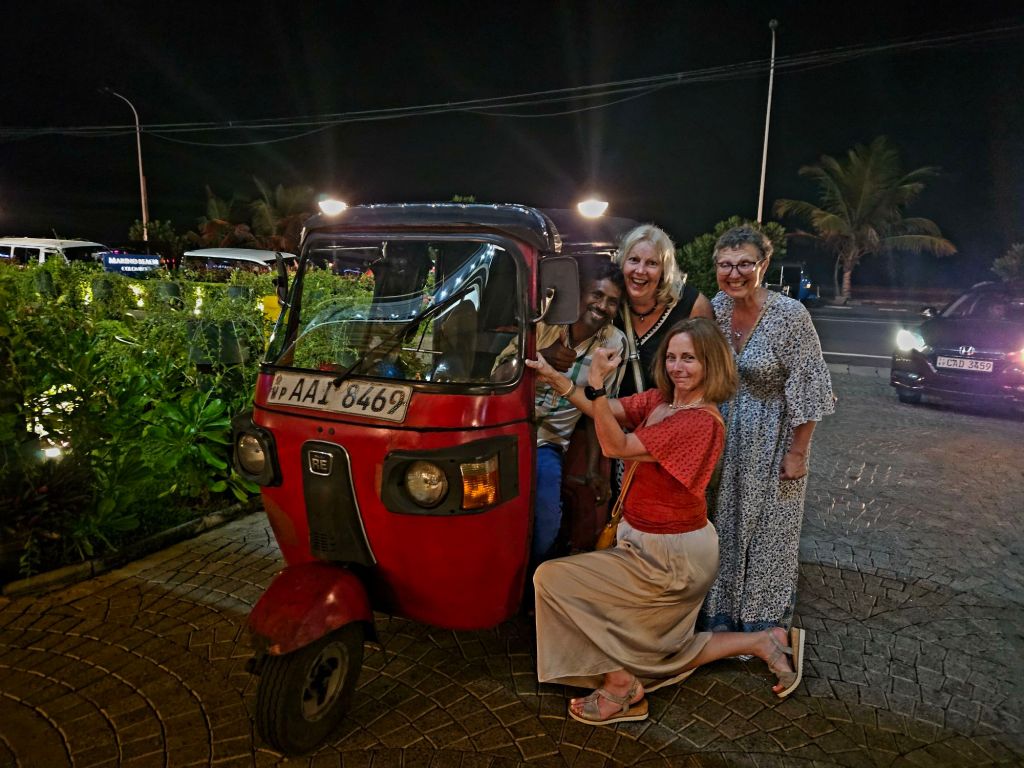
This wasn’t our favourite place, so we headed out to the Sky Lounge at the Kingsbury Hotel. On the way, we had a tuk tuk blow dry!

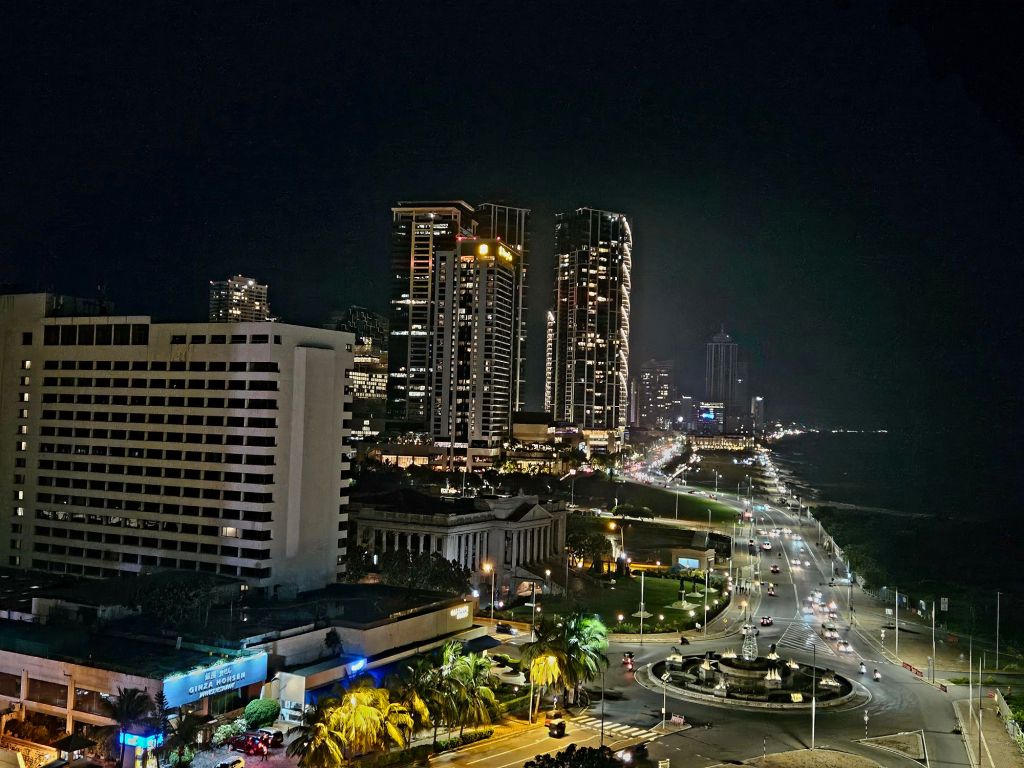
The views from the Sky Lounge were really good.

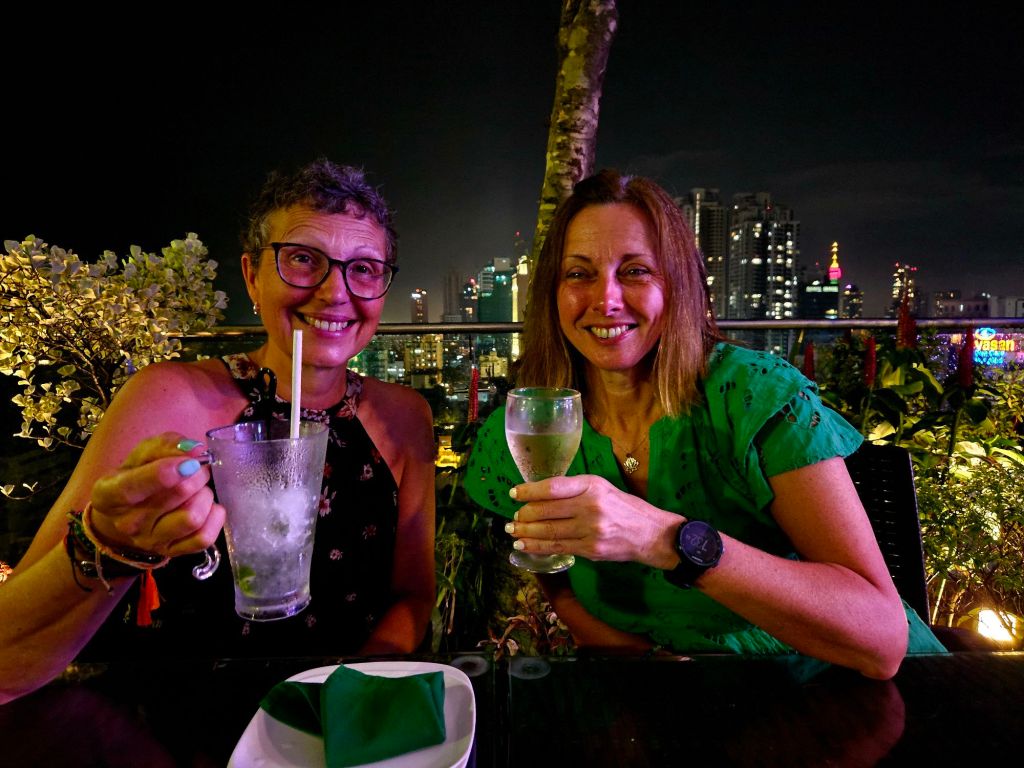
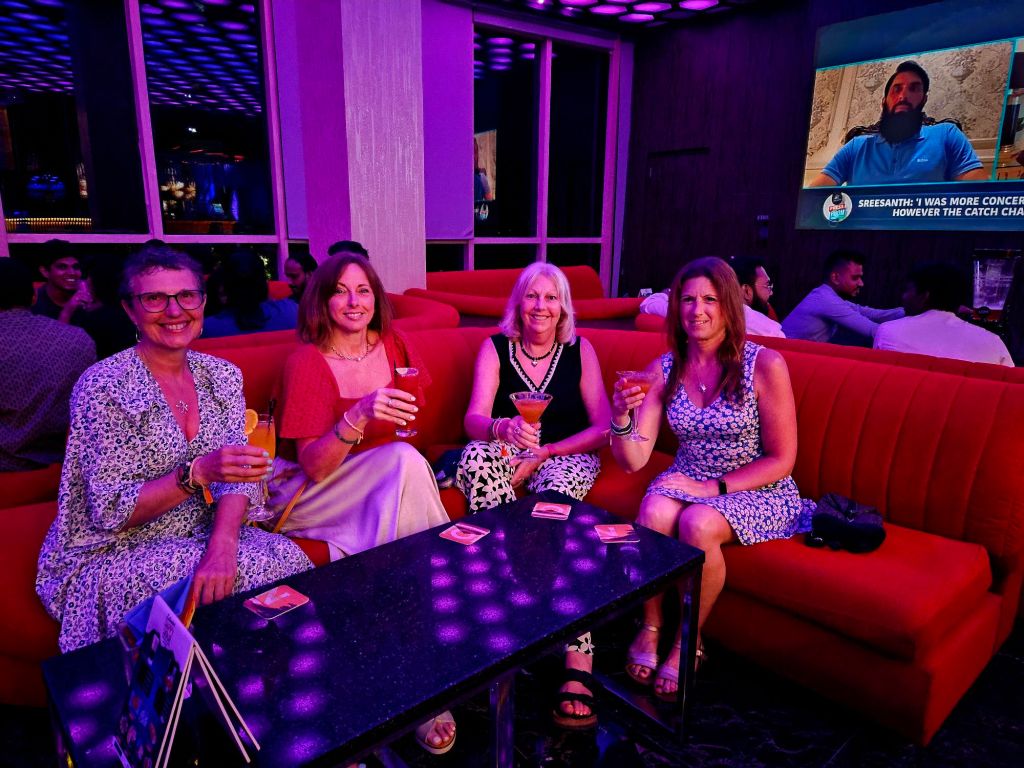
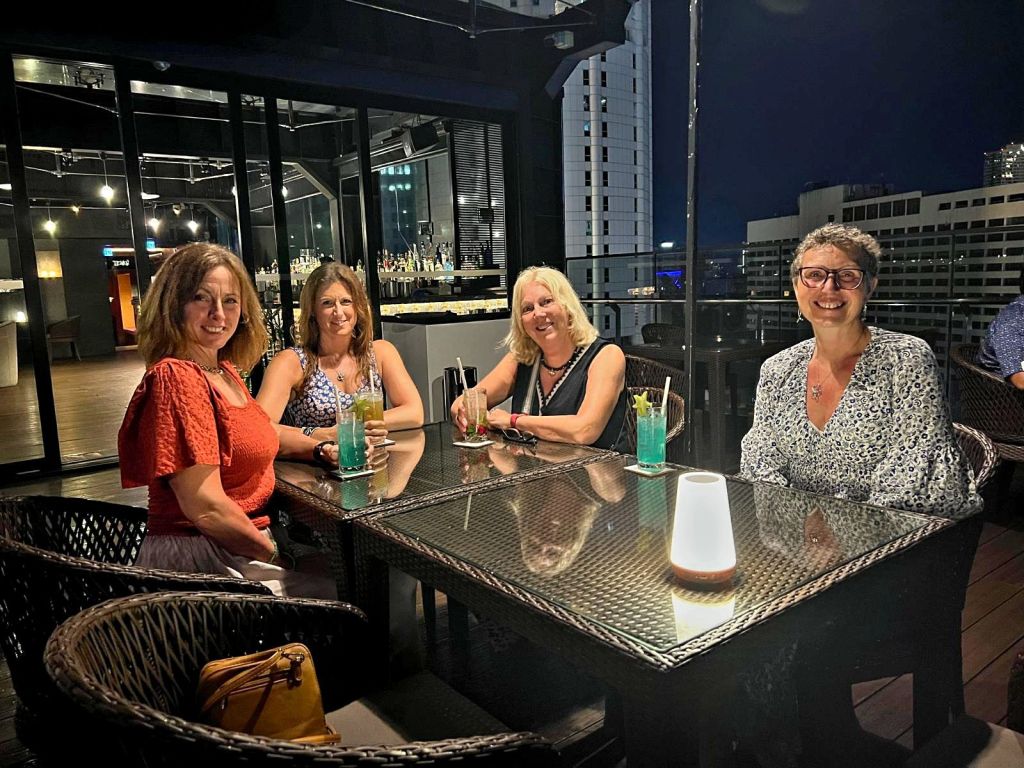
We had some tasty cocktails at the rooftop bar.

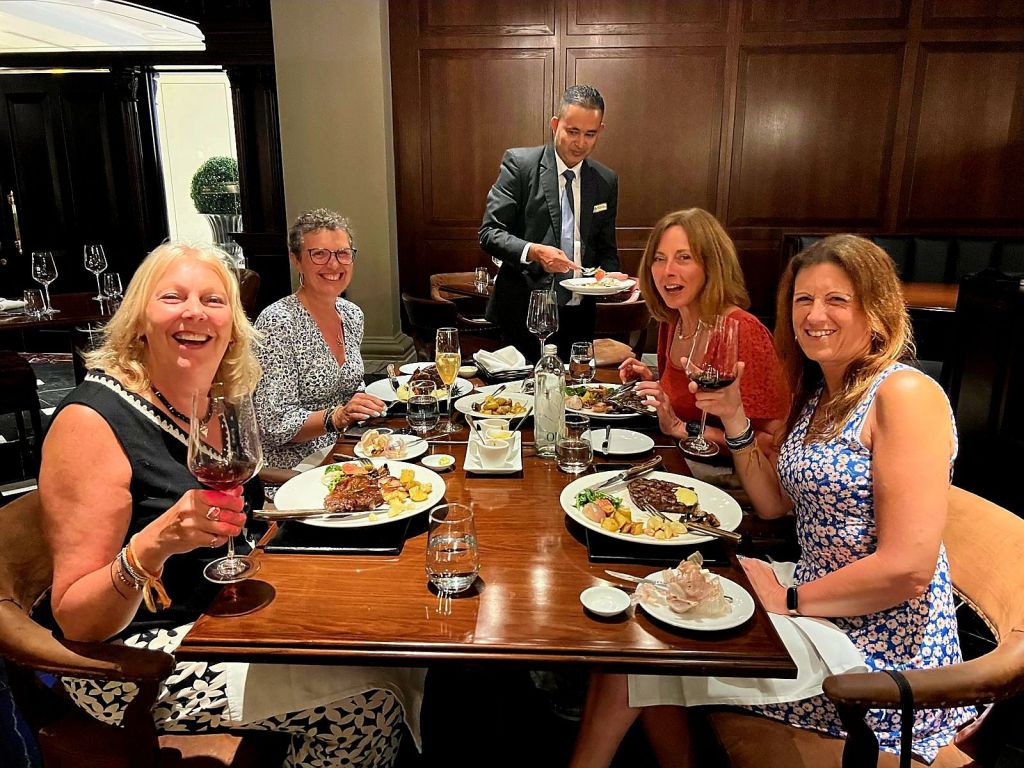
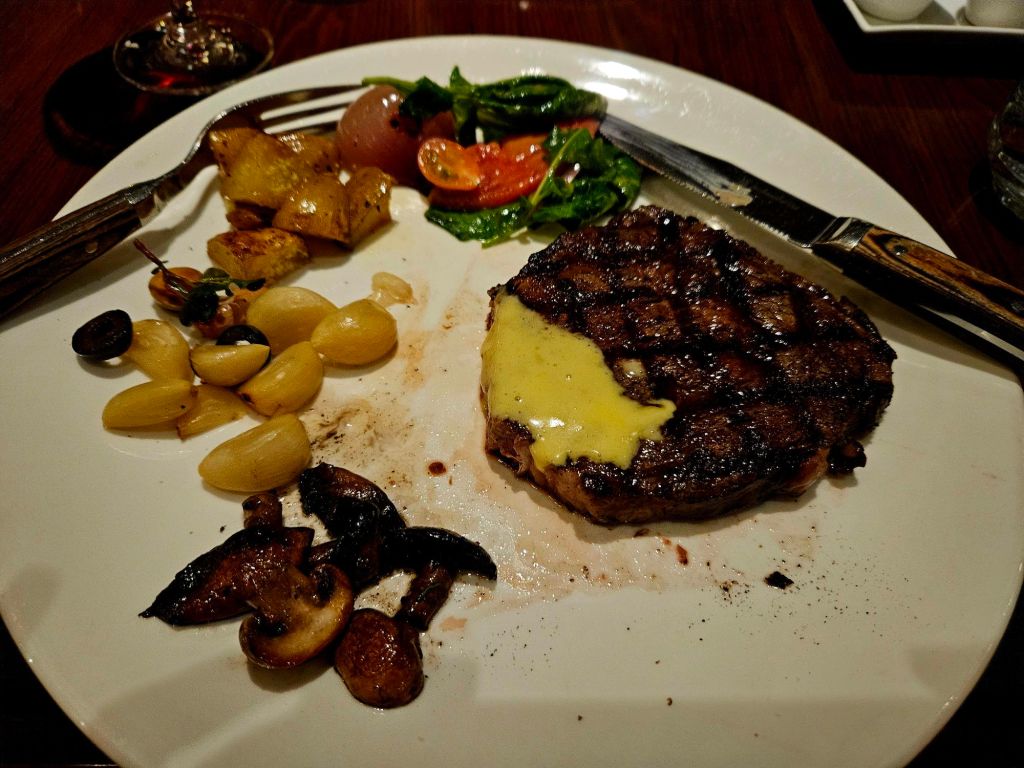
And then we went back down to the steak restaurant for dinner. Three of us ordered Wagyu rib eye steak. I’ve not had Wagyu steak before, but it was absolutely delicious and just melted in your mouth.

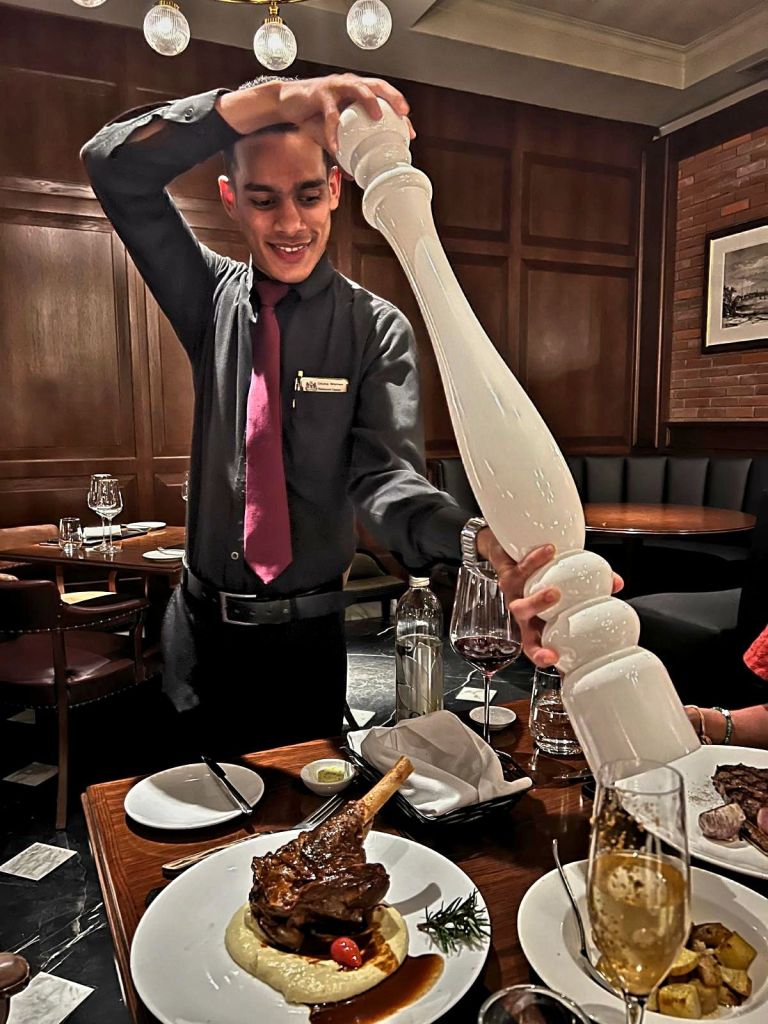
The waiter had a massive salt and pepper pot.

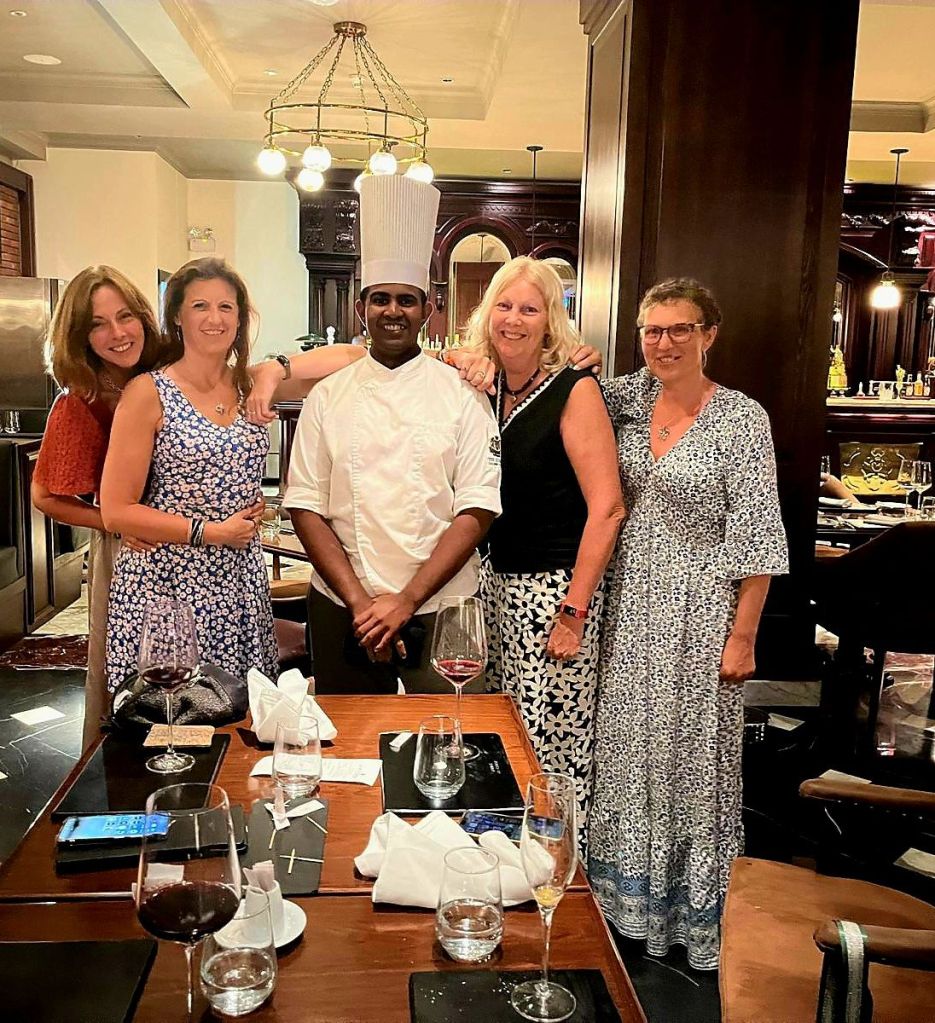
There was live music in the restaurant which was really nice to listen to, and at times sing along to. We had a really lovely meal accompanied by a couple of bottles of Malbec. At the end, we thanked the chef.

Then it was time to head home.

We managed to fit all four of us plus the driver in 1 tuk tuk, I’m not quite sure how.

But we made it home in one piece and headed to bed.

Day 12 – Adam’s Peak

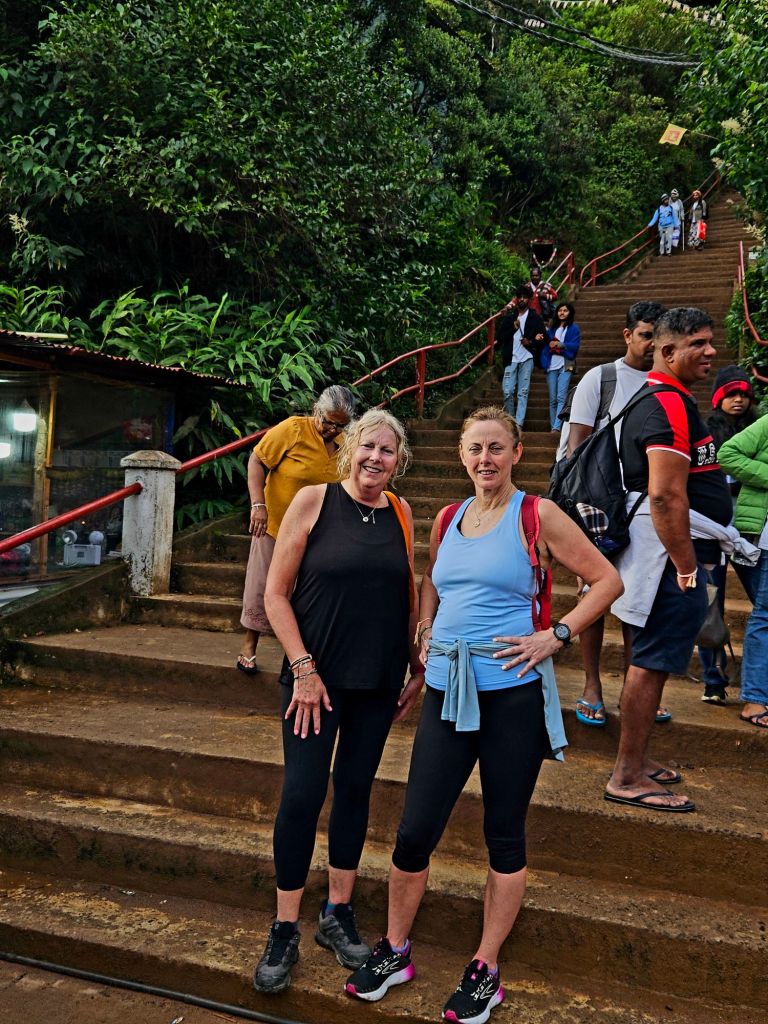
We had all set our alarms for 145am, so we were up and ready to leave around 215am.

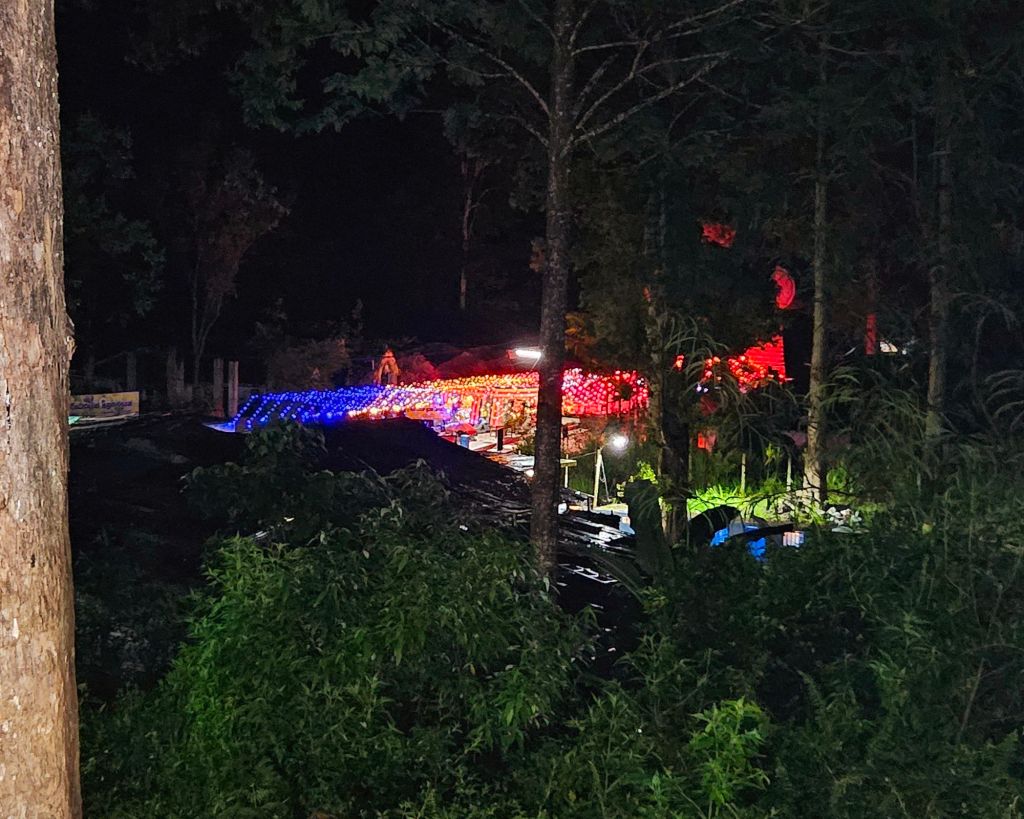
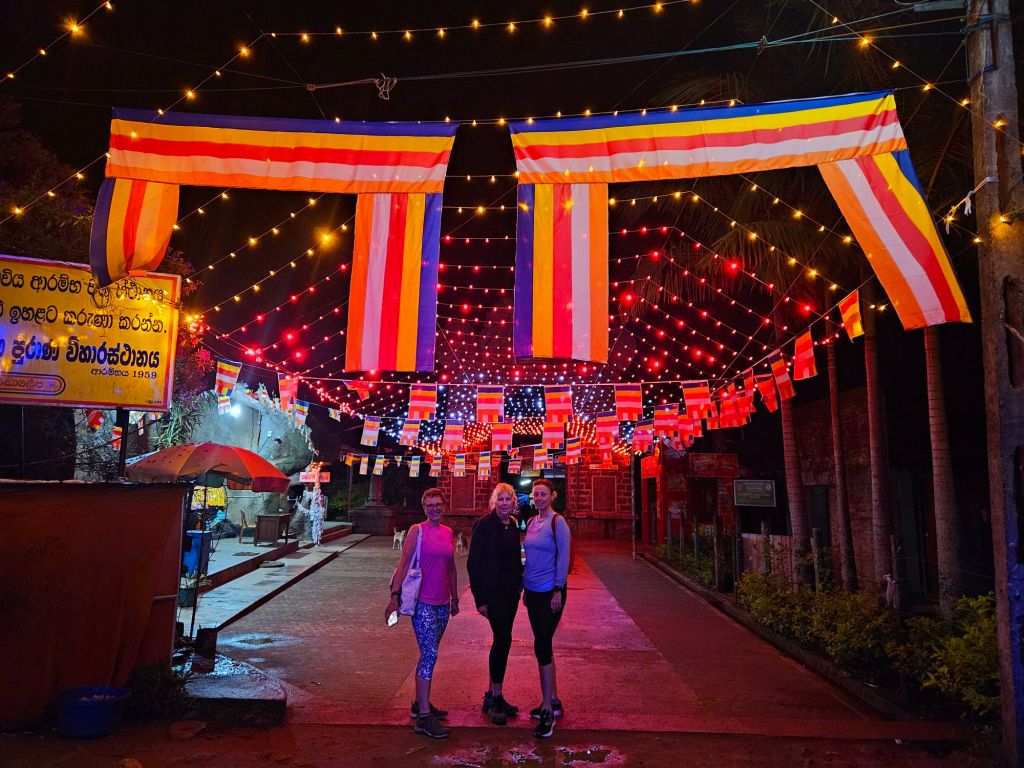
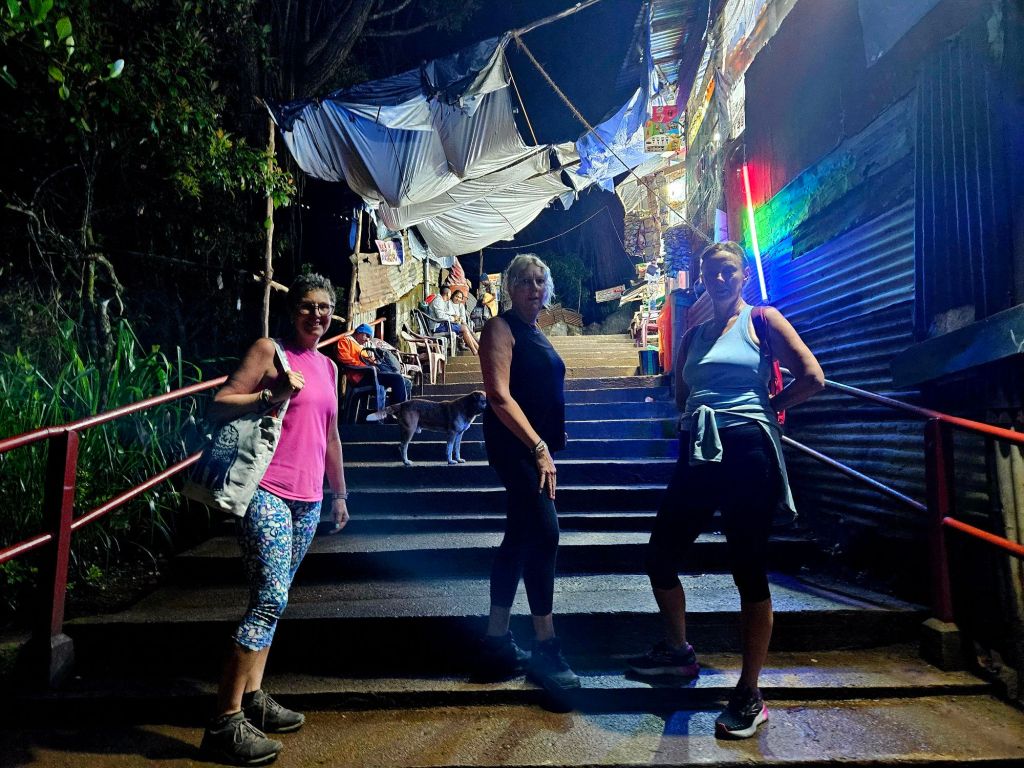
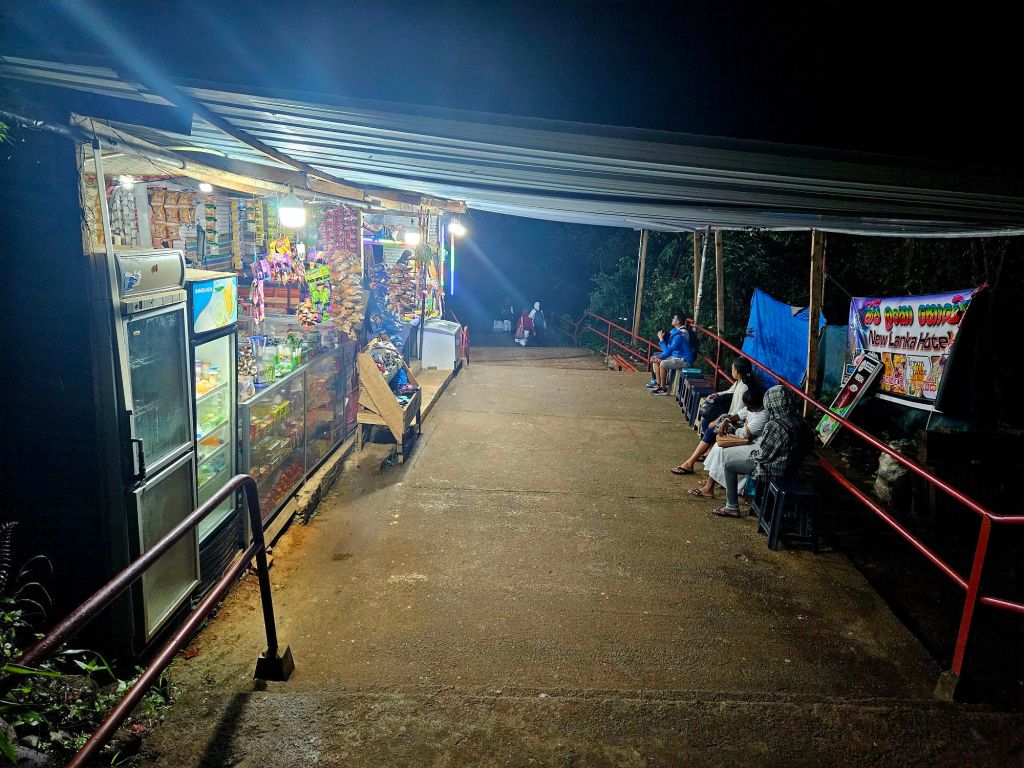
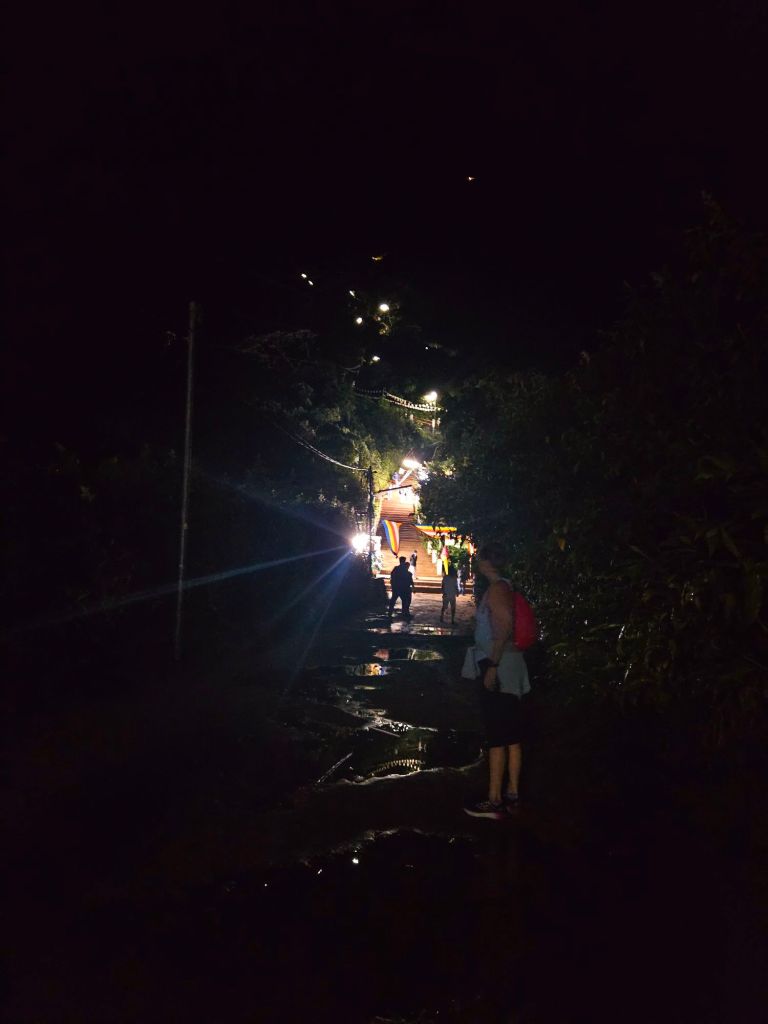
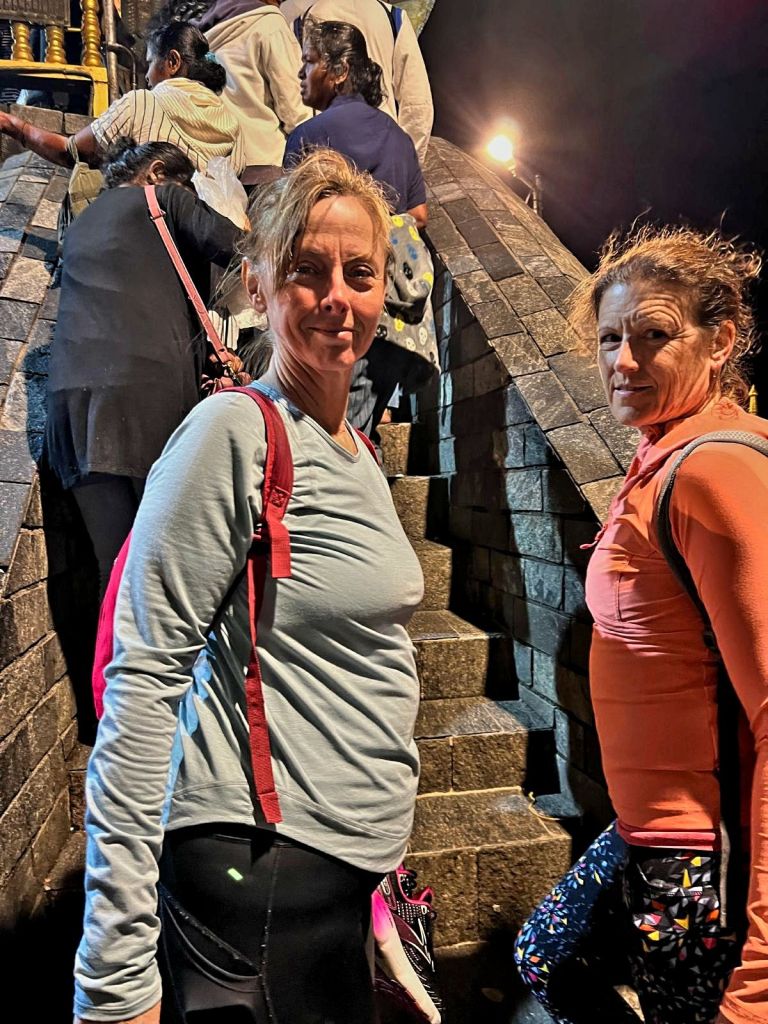
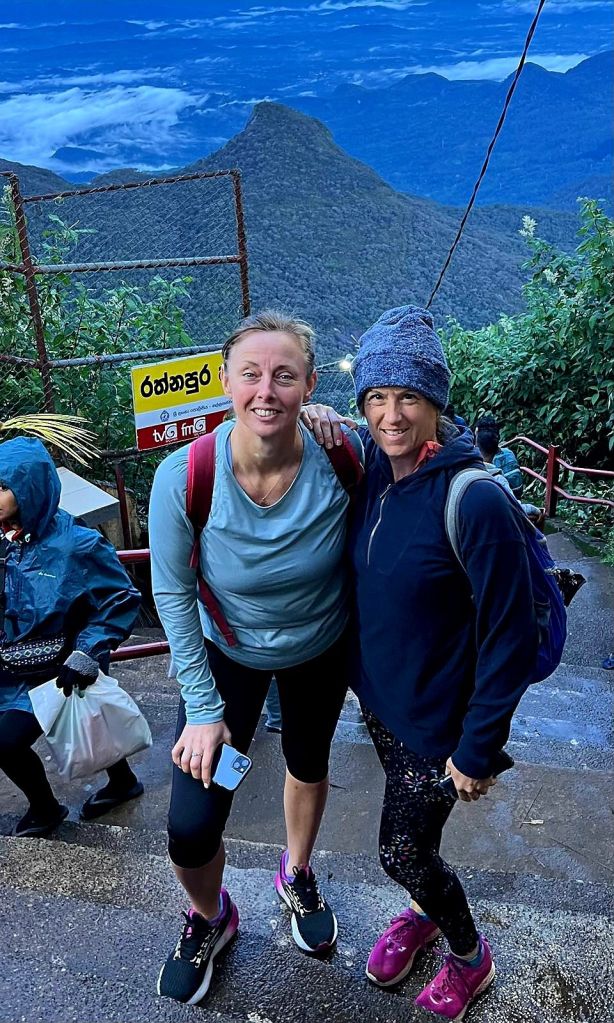
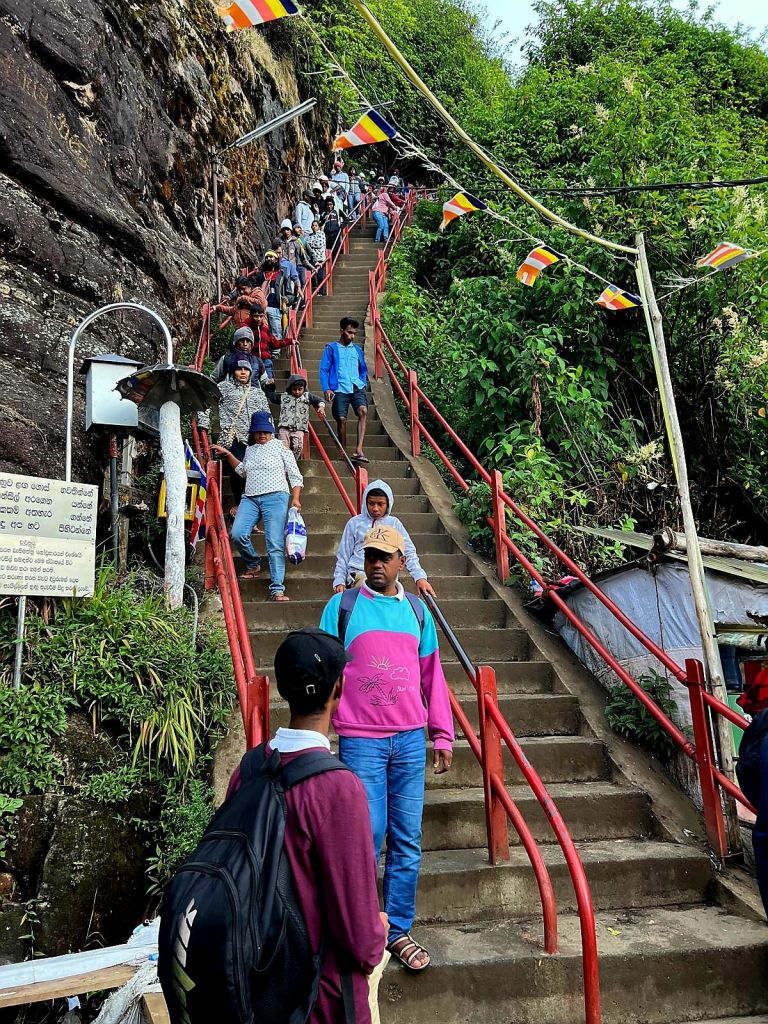
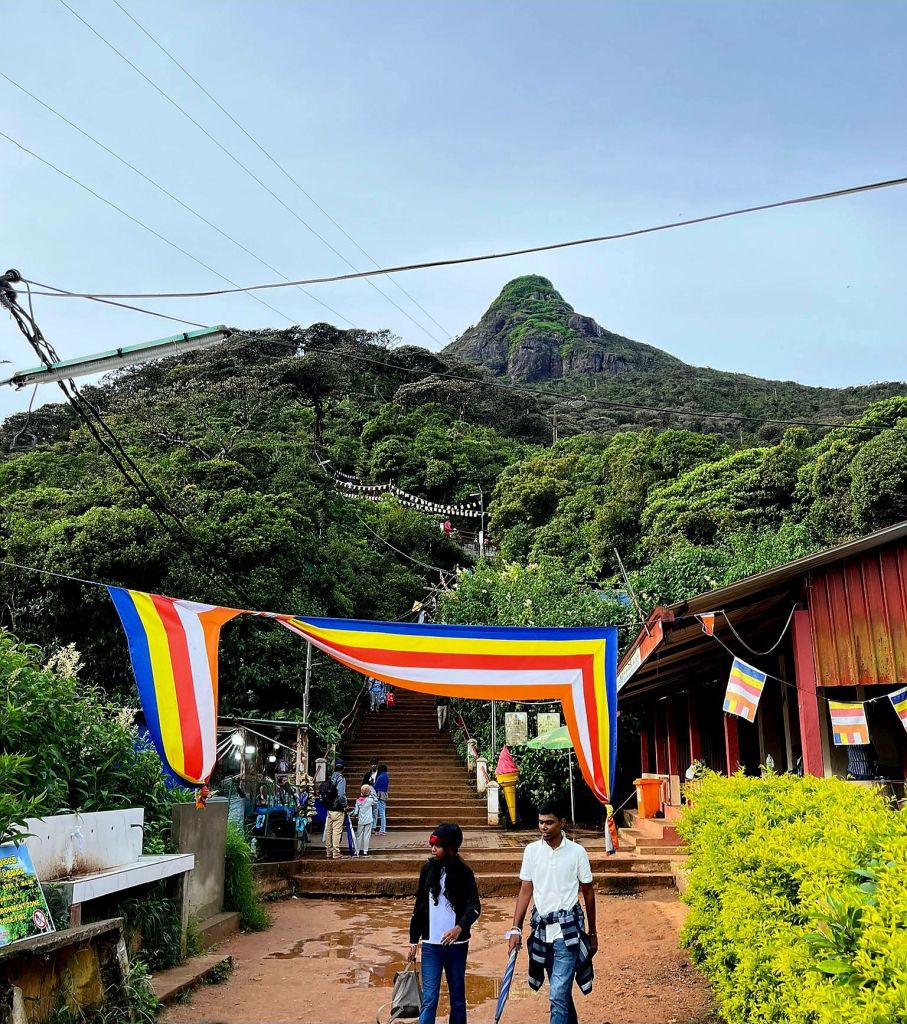
It was still dark, but luckily, the trail up Adam’s Peak is well lit, and there are a lot of stalls on the way.

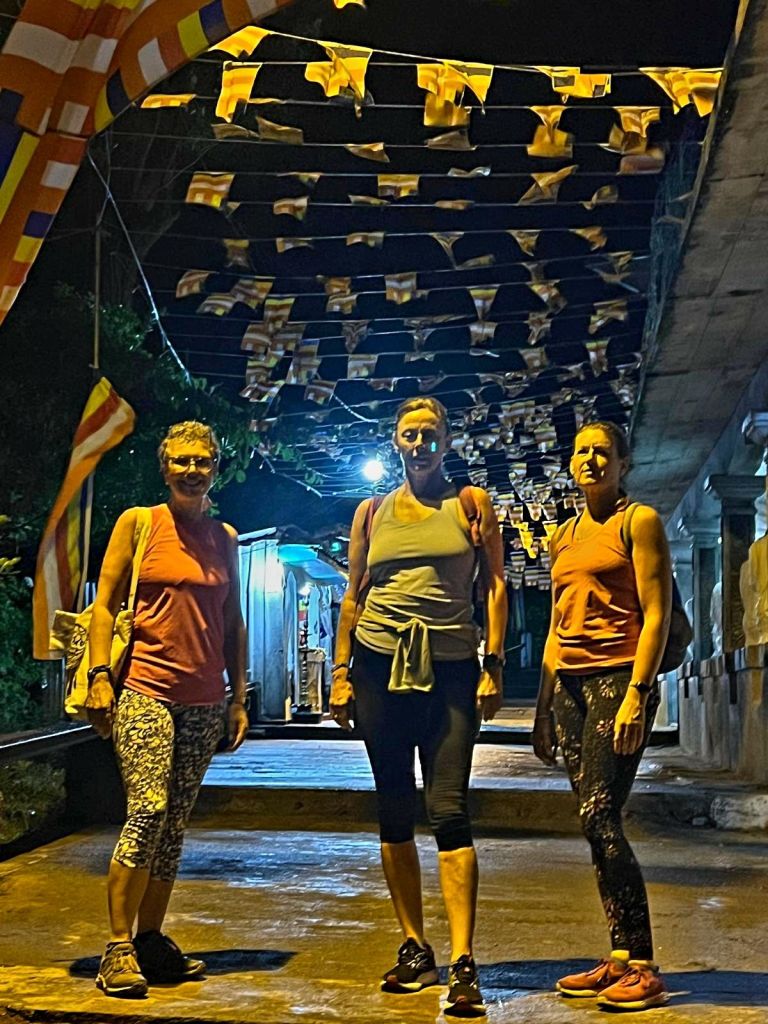
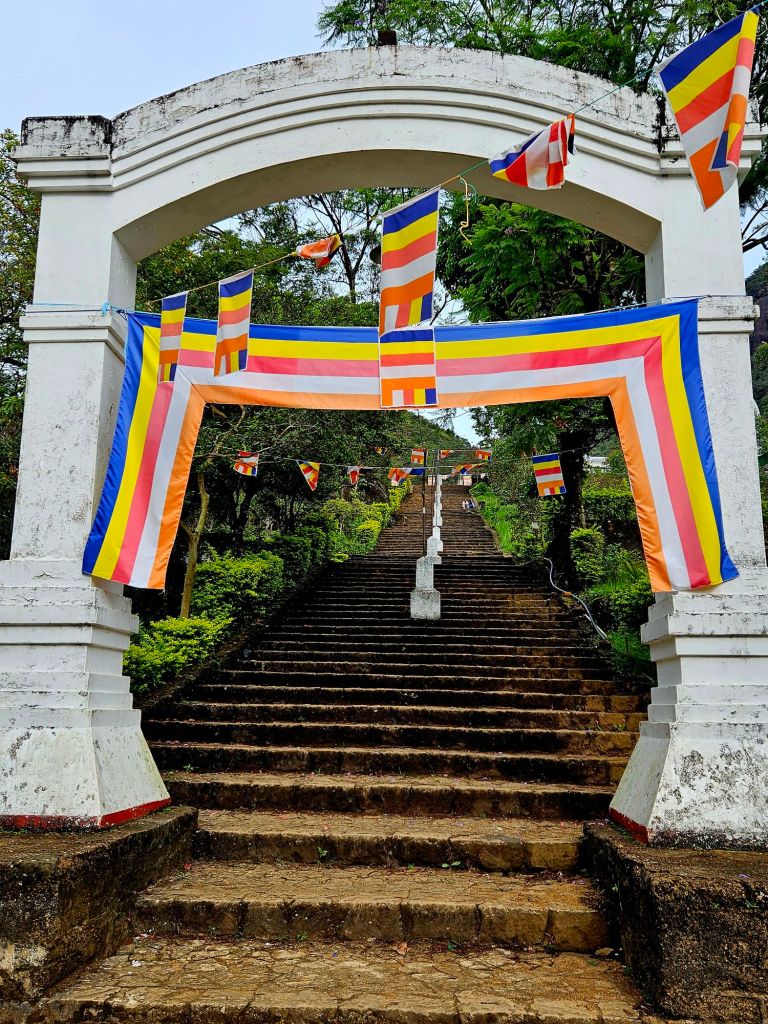
At the start of the trail is an arch, known as  Makara Torana or Dragons Arch, where you are encouraged to sign a book and leave a donation.

Some parts of the trail were very well lit!

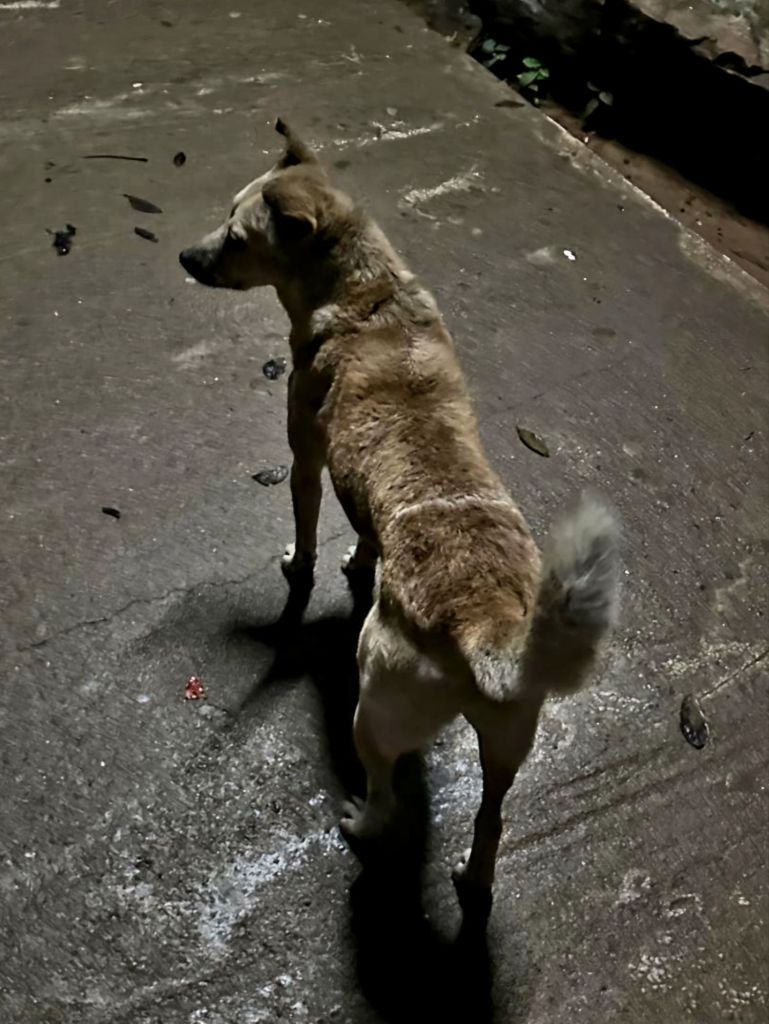
Not long after we started walking, we were joined by 3 dogs, who ended up walking quite a long way with us.

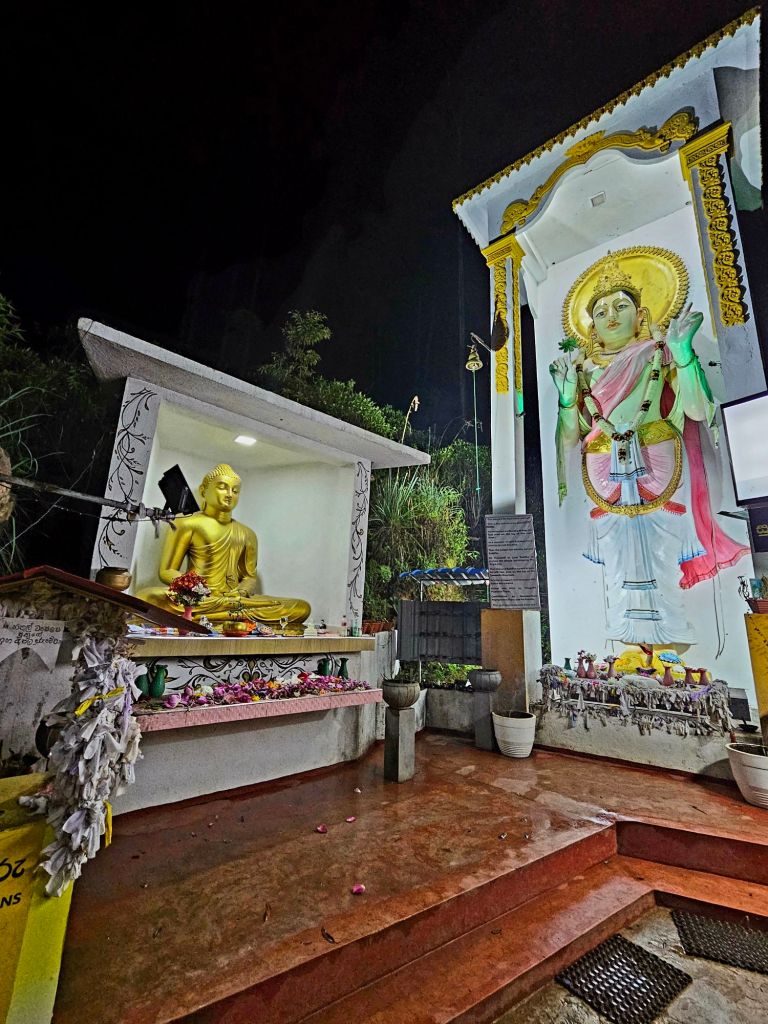
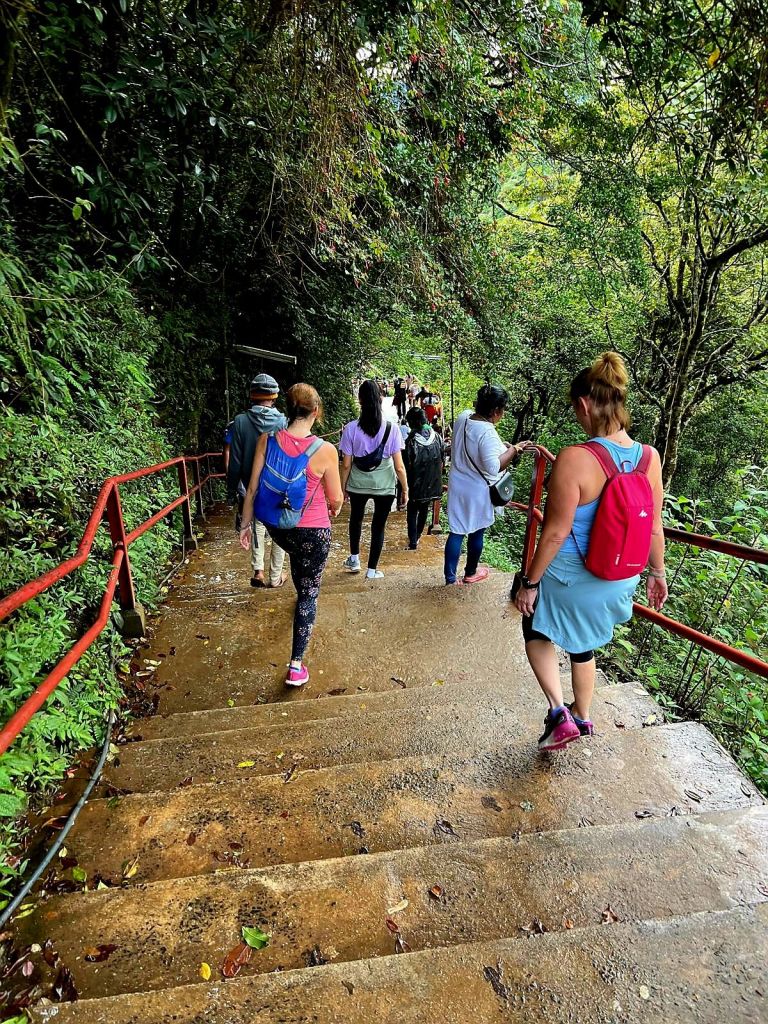
The start of the trail is okay and pretty manageable. The steps are widely spaced out, and it feels quite easy. There are a lot of stalls, rest places, and shrines along the way, and as we were there in the pilgrimage season (during Poya days in December and May), it was all lit up. There were, though, more people coming down the mountain than going up it initially.

We stopped at one of the shrines, which hadn’t yet been fully completed. We were all blessed by a Buddhist Monk and received a thread bracelet for a small donation.

We picked up some more water and snacks on the way.

Although we had been walking for quite a while by now, the top of the peak still looked a long way off.

And the climb was beginning to get steeper. At this point, Zoe decided that she wouldn’t be able to make it to the top as she still wasn’t feeling that great and hadn’t eaten very much over the last couple of days. So she decided to have a little rest before heading back down.

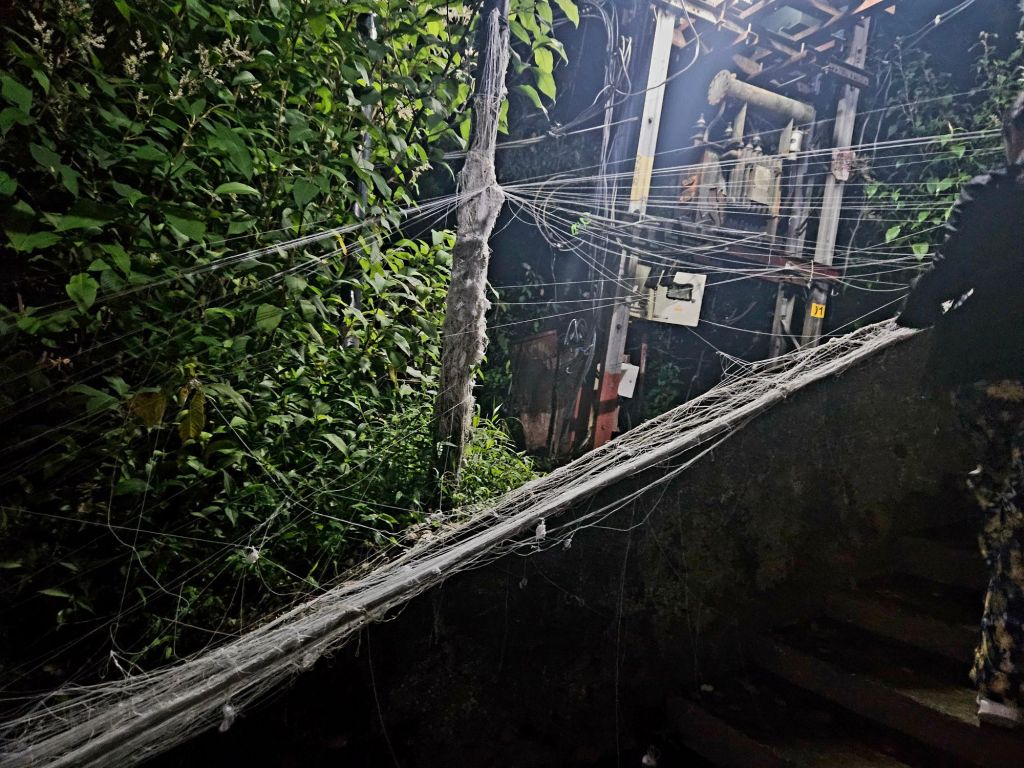
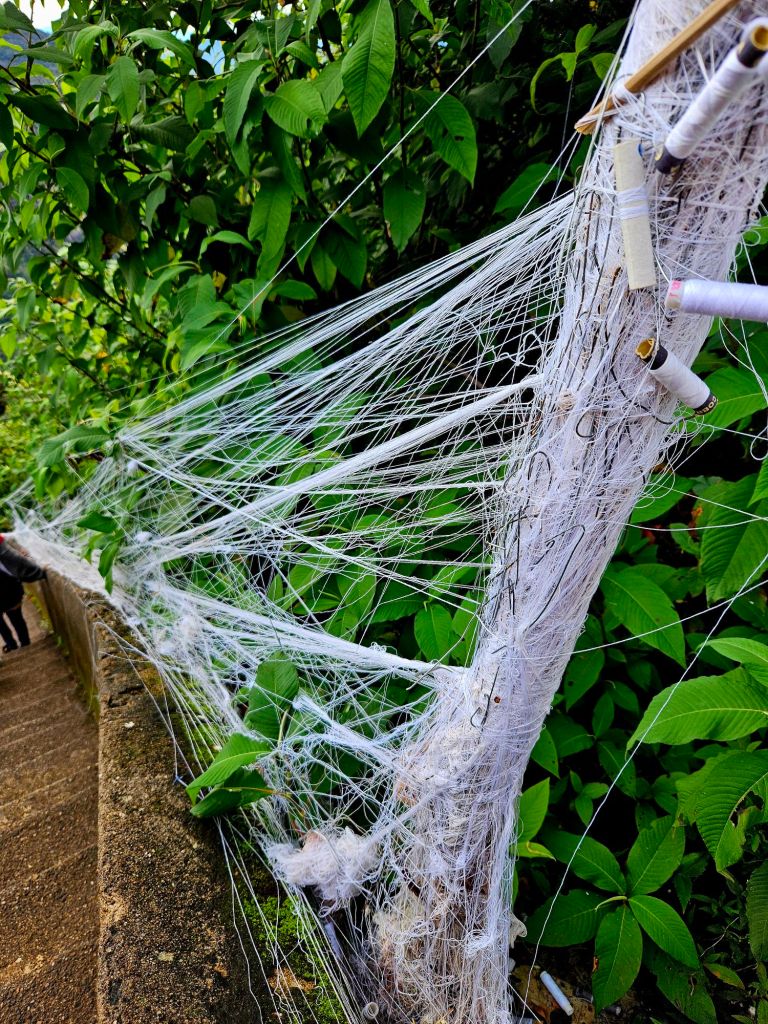
The rest of us continued upwards. At one point, we came across what looked like spider webs on the side of the path. Apptently Buddha had torn his robe in this spot and he had stopped his climb until he was able to mend the loose strands of his robe so they would not get caught on the brushes and rocks along the way.  In order to commemorate that moment, pilgrims take a long white string from this spot and carry it along the railing until the entire string has been unwound and released. It has also been said that pilgrims drew string along the path to demarcate the pathway down the hill.

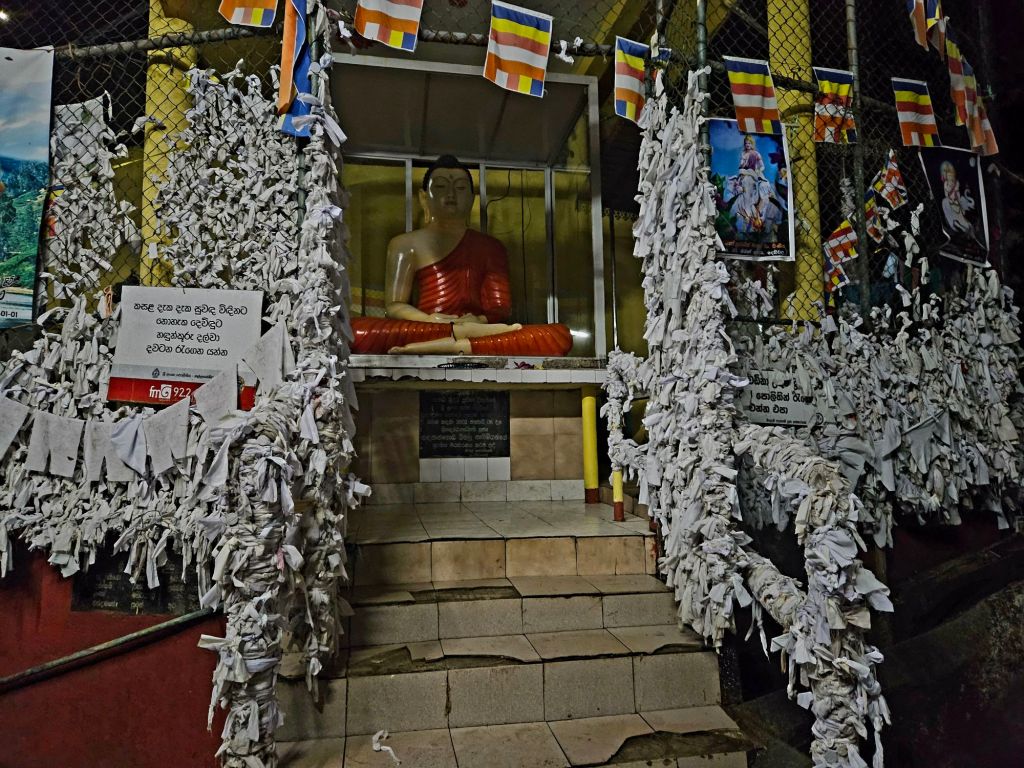
There were also areas where what looked like pieces of fabric were tied to a shrine.  It is said that these are tied as a prayer and for protection.

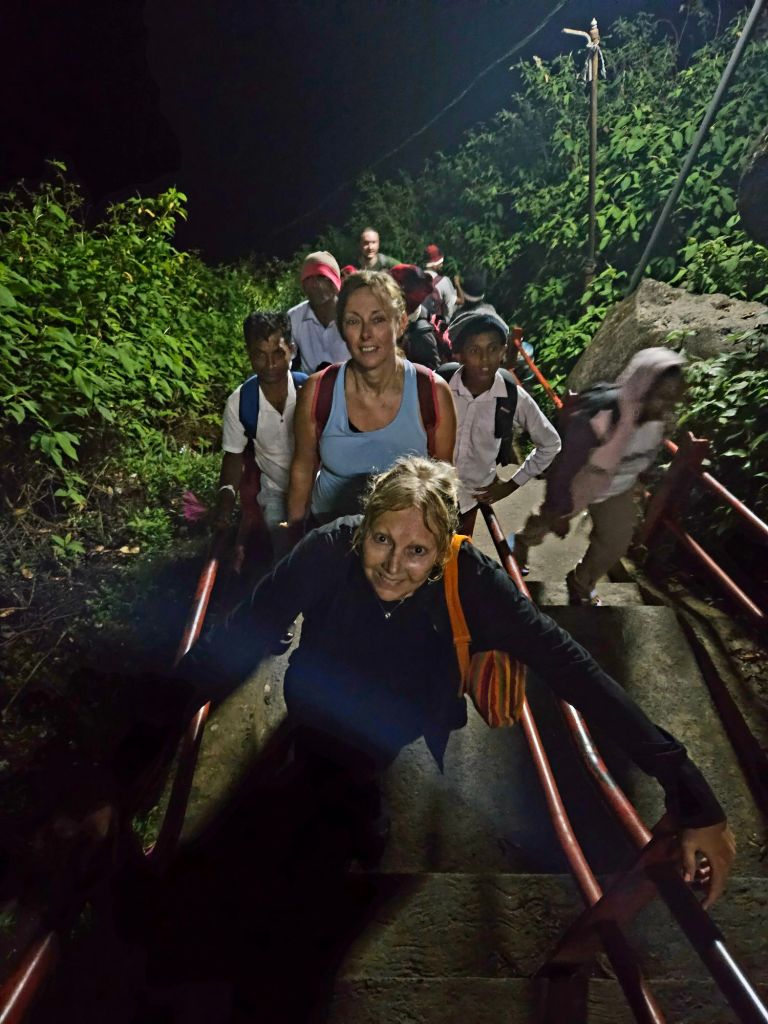
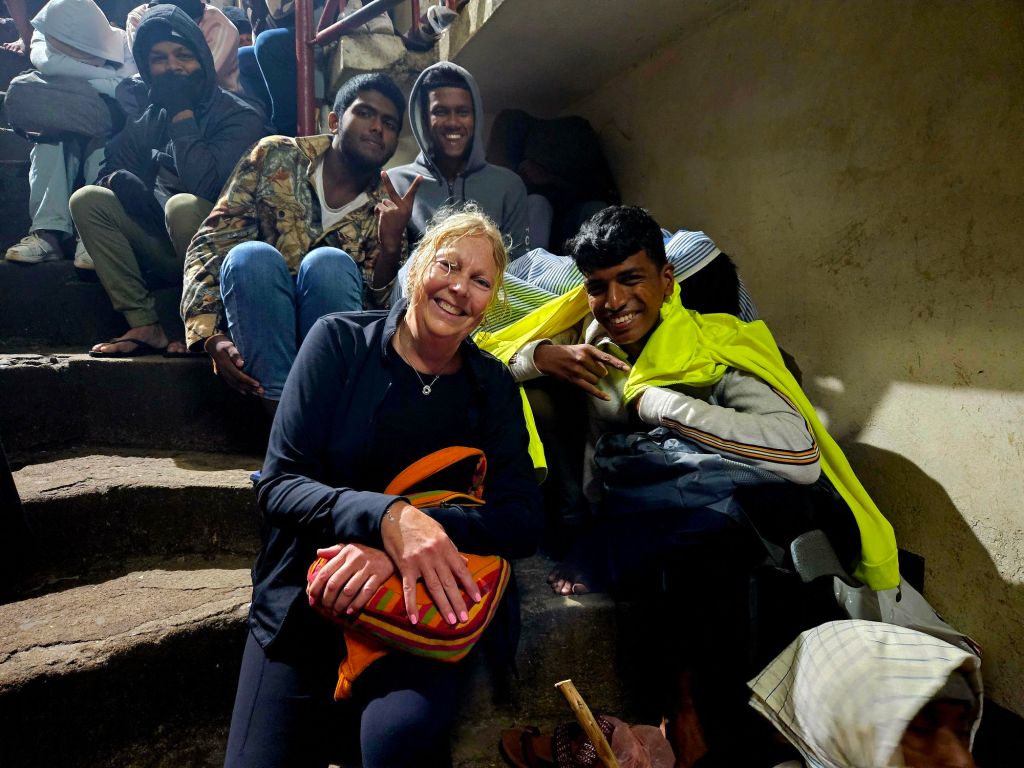
It seemed like we had been walking forever, trudging up the steps. What was amazing, though, was looking at some of the other people climbing up. Many of them were barefoot or just wearing flip flops. A number of them were quite elderly and were literally hauling themselves up each step or being supported by family members. It was quite humbling to see.

I saw the sign for just over 4000 steps and realised I still had another 1,400 to go!

As we got closer to the top, there were quite a few people resting and sleeping on the side of the steps. At one point, Karen got really bad cramps in her thighs and had to sit down to massage it out. The boy next to her suddenly woke up and Karen just said ‘hello’, it was a very funny moment.

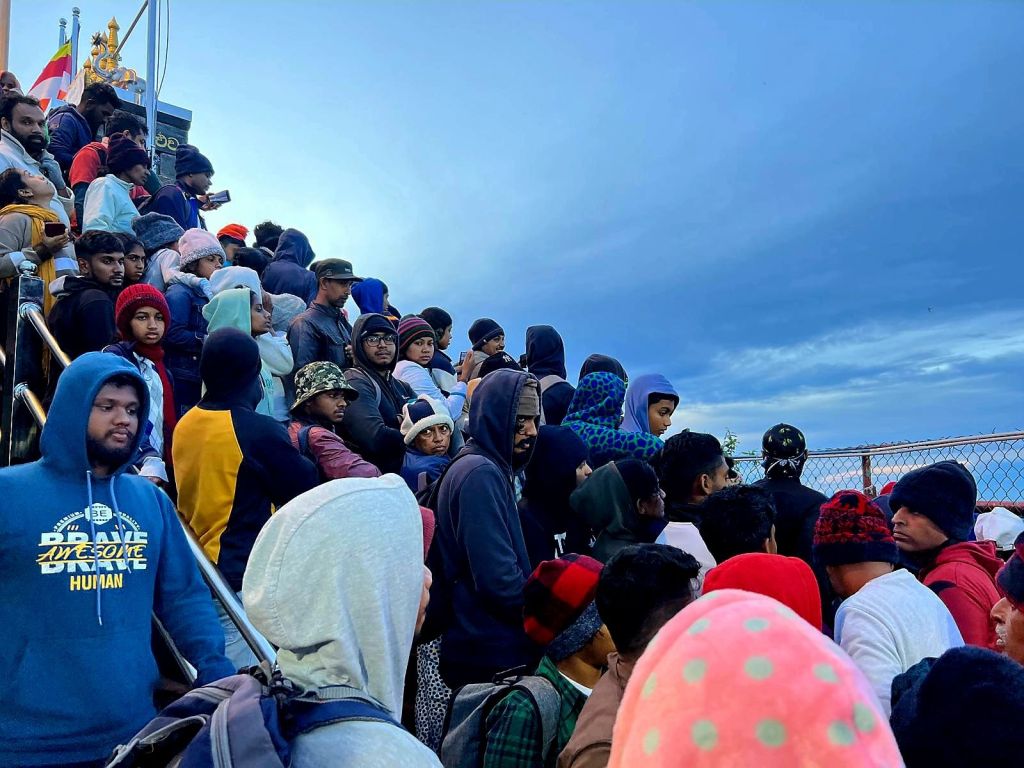
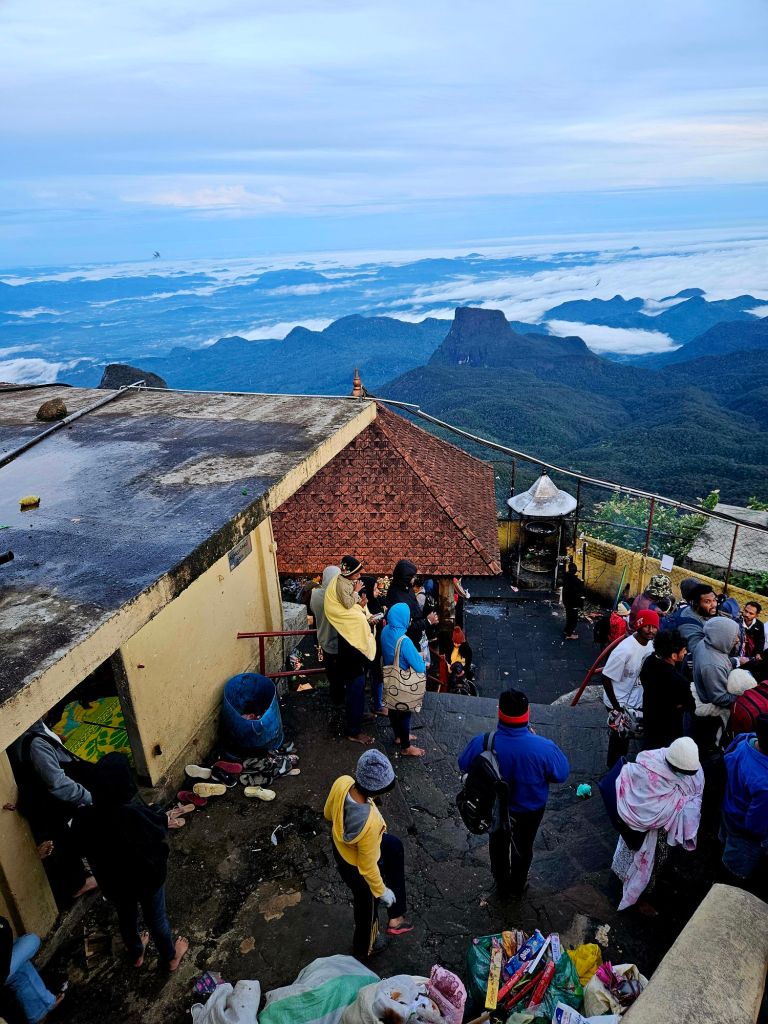
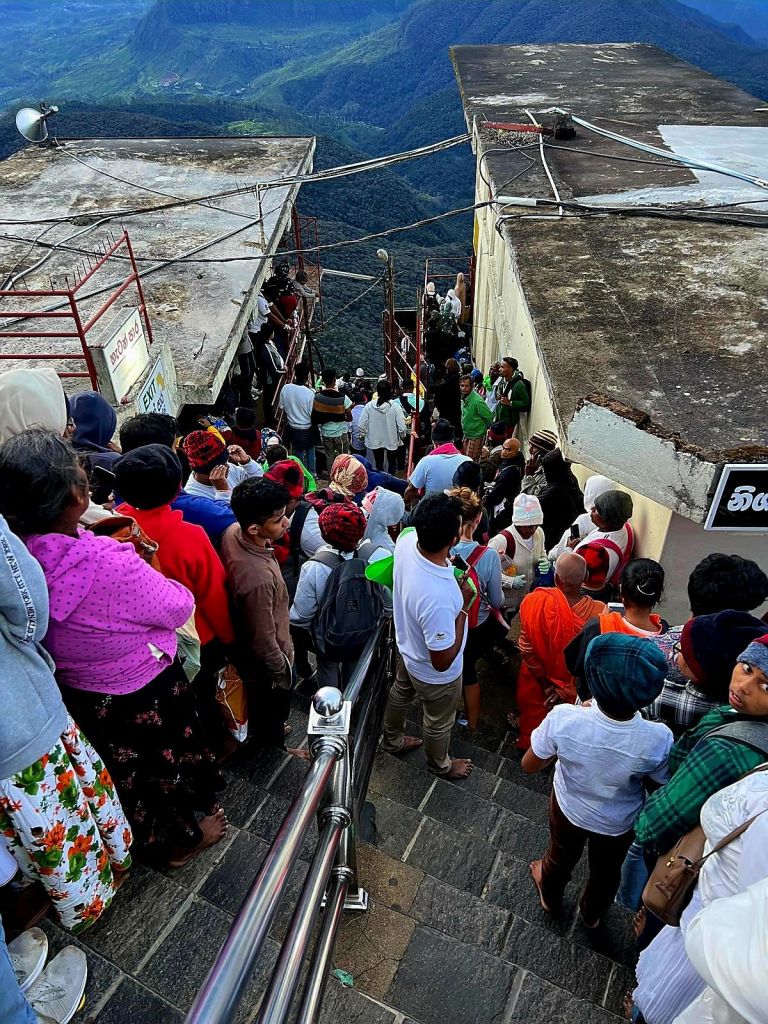
After around 3 hours of climbing, we were almost at the top. You could hear the monks singing and chanting over the loudspeakers, and there were a lot more people around.

Adam’s Peak is 2,243m high with a total of 5,500 steps to climb up (and down again). It is also known as Sri Pada or Sacred Footprint. There is a 1.8m rock formation at the summit that is said by Buddhists to be the footprint of Buddha. Hindus believe it to be the footprint of Shiva and Muslims, and Christans believe it to be the footprint of Adam after he was ejected from the Garden of Eden or St. Thomas A shrine to Saman, a Buddhist deity charged with protecting the mountain top, can be found near the footprint.

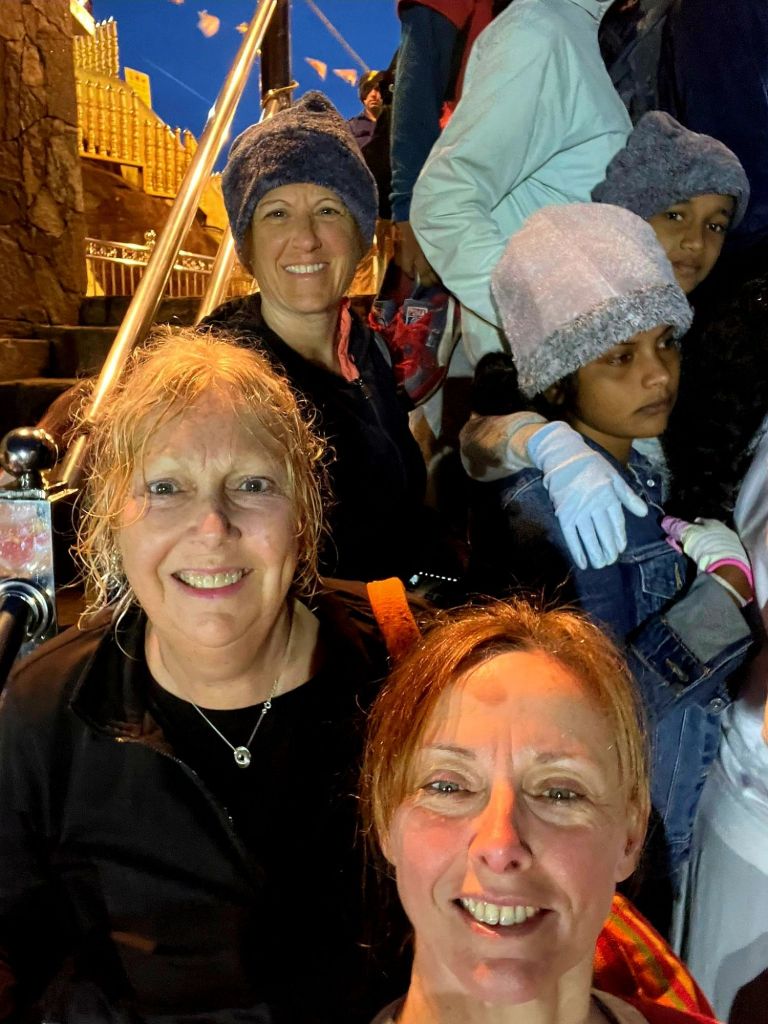
Once you get to the top and the temple area, you have to remove your shoes. You are then allowed to walk through the temple and pay your respects. There are no photos allowed inside the temple, and this is strictly enforced.

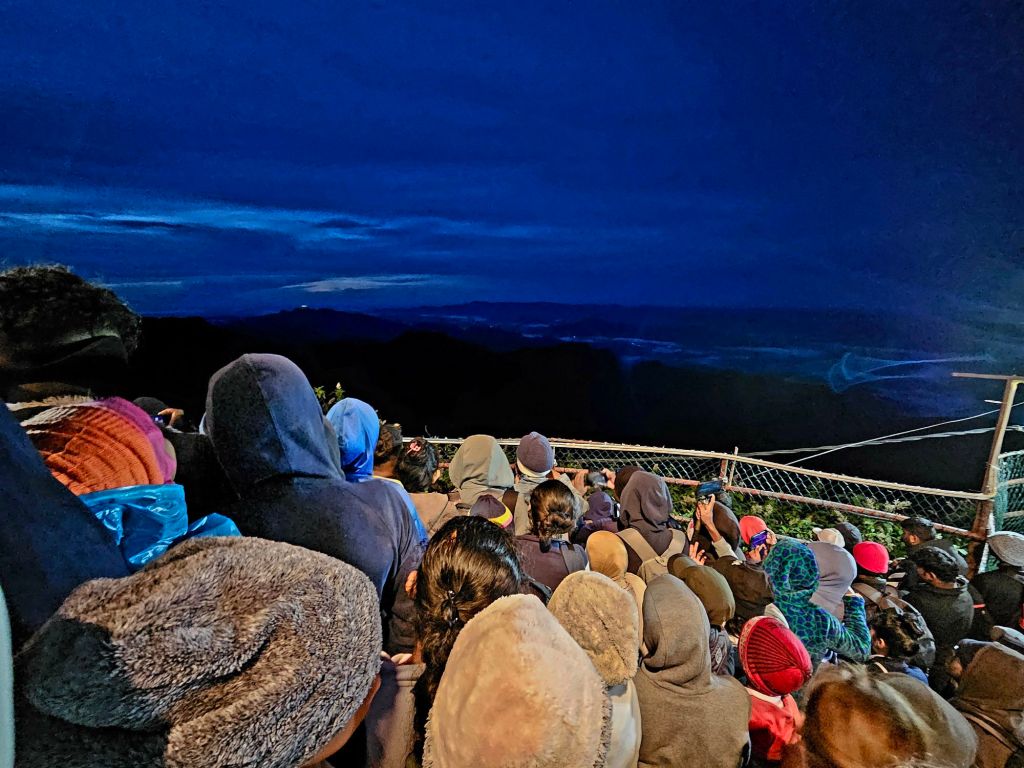
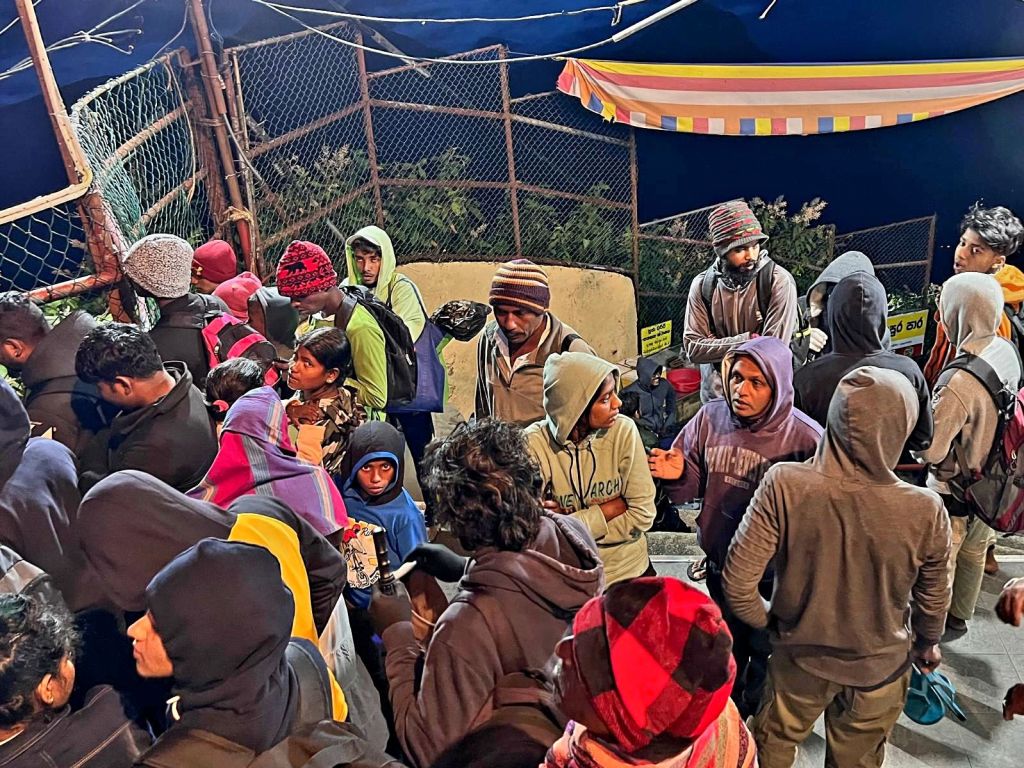
It was quite cold at the top, so it wasn’t pleasant walking around barefoot. I also dug out my hat and jacket to wear. There were a lot of people at the top waiting for sunrise, and it was difficult to find a spot.

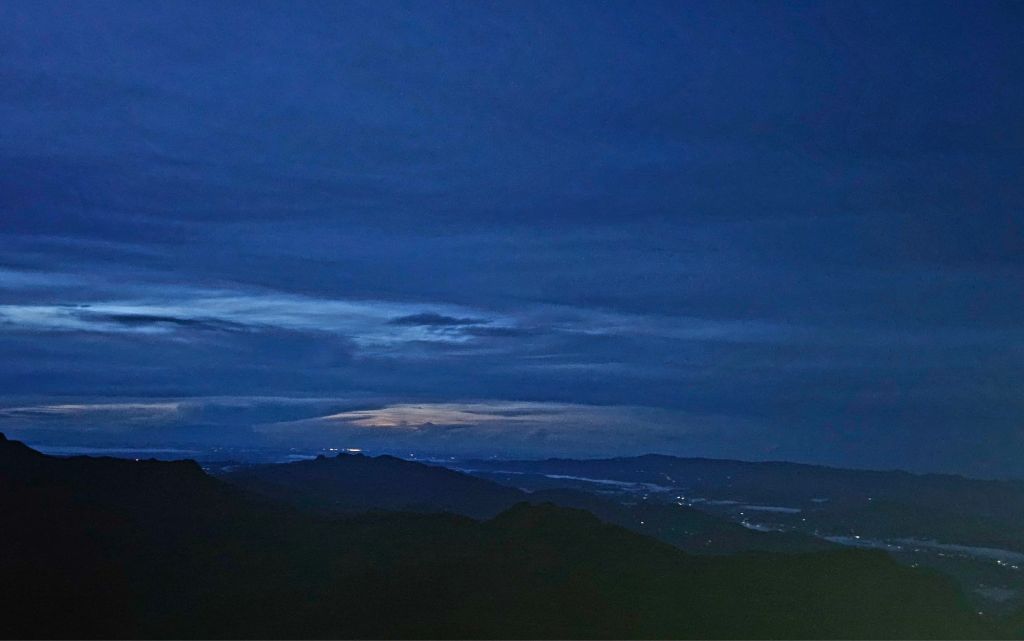
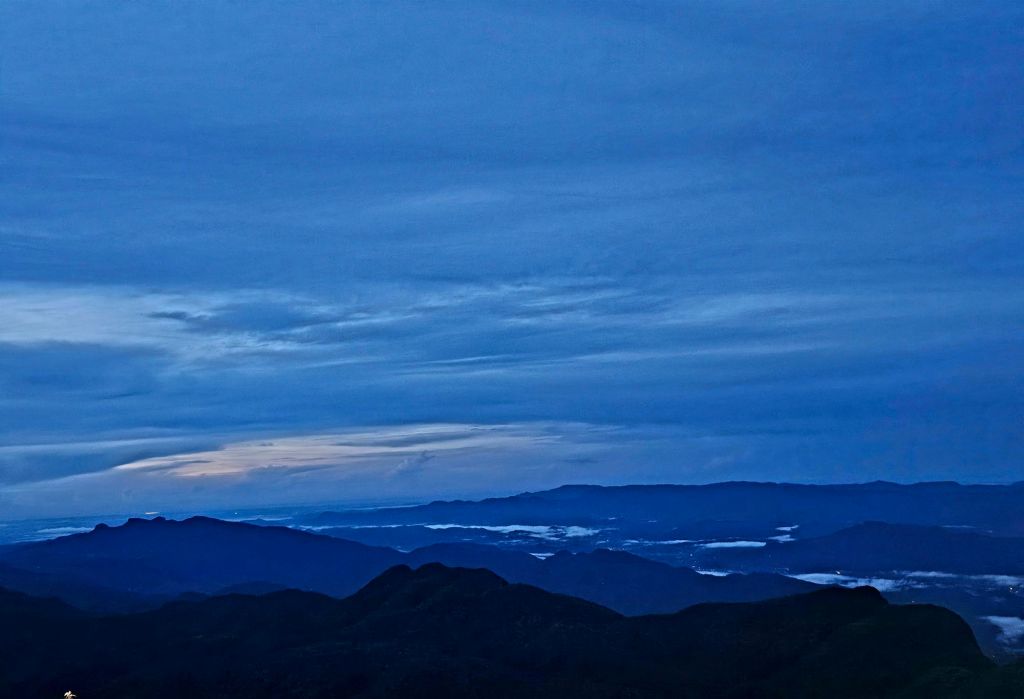
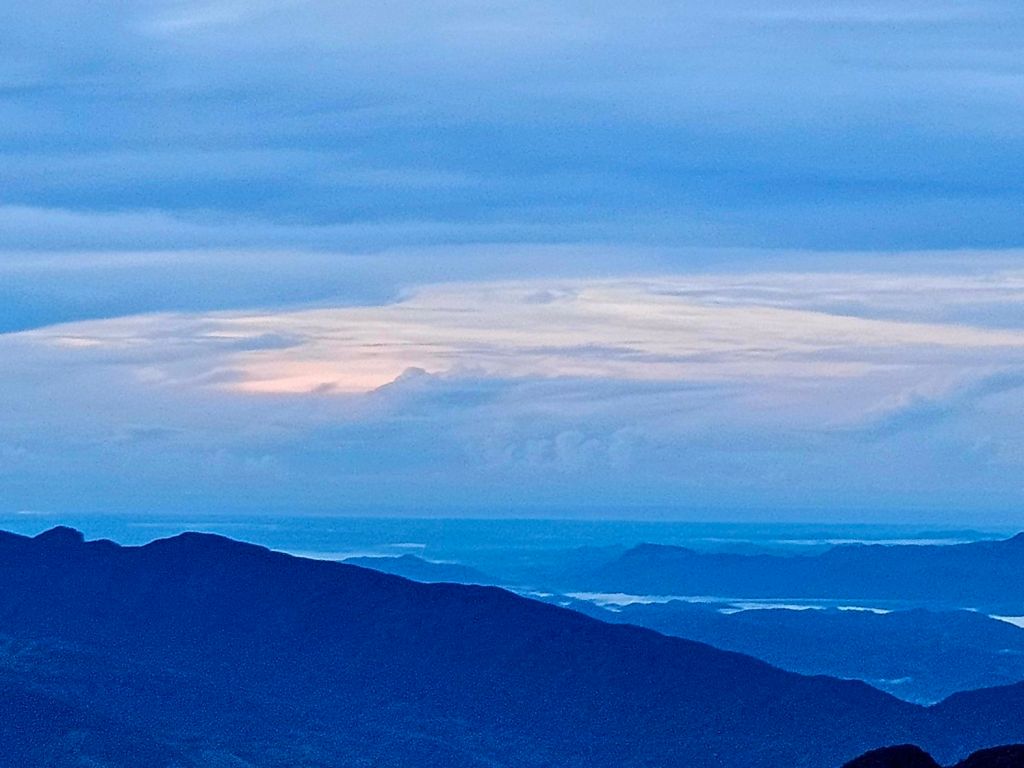
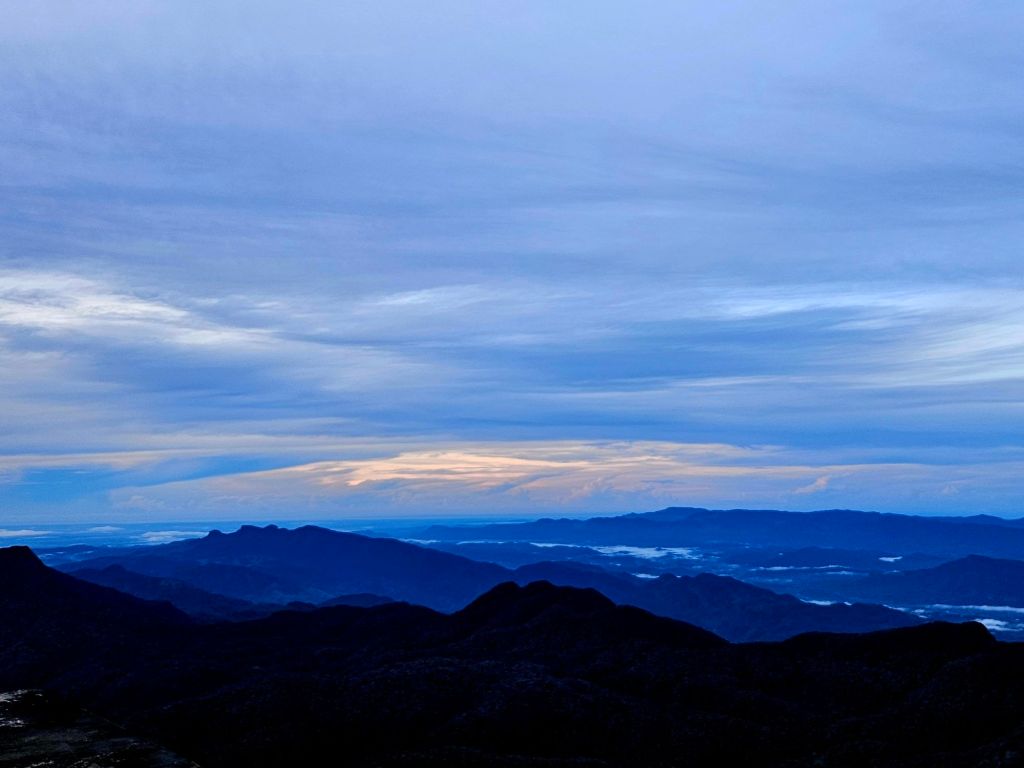
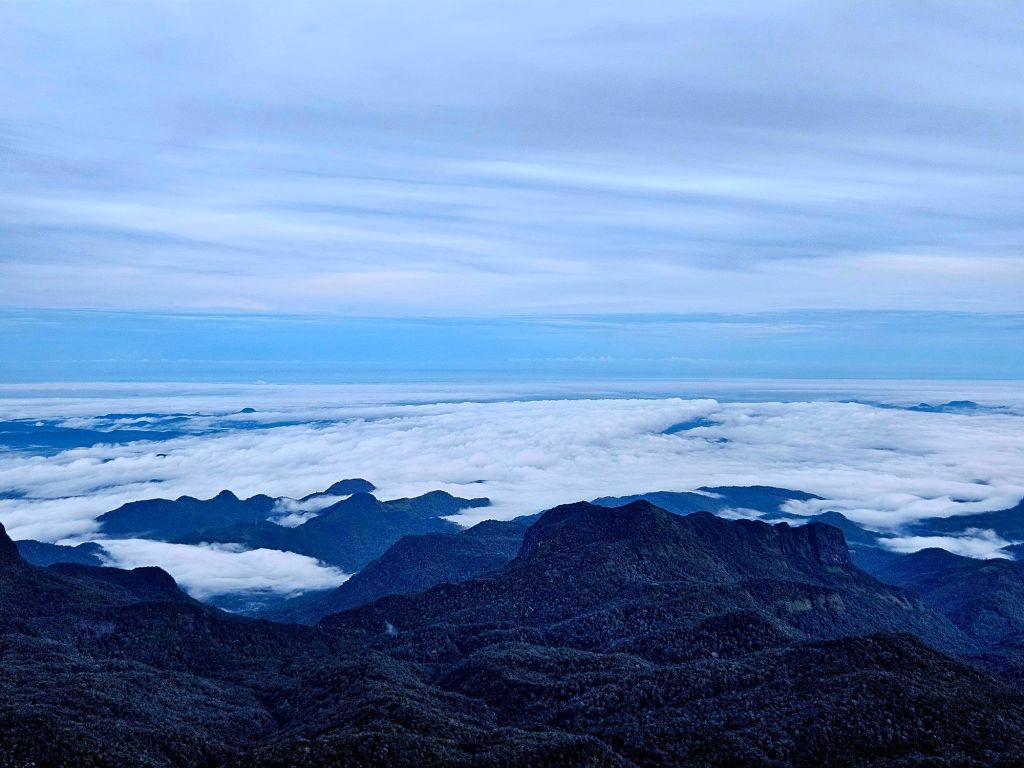
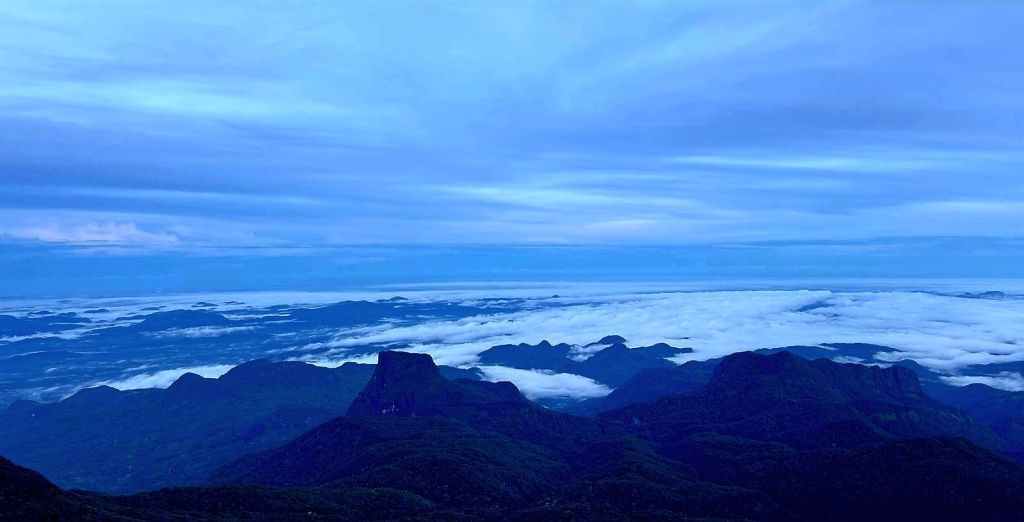
Unfortunately, the sunrise wasn’t particularly spectacular as it was very cloudy.

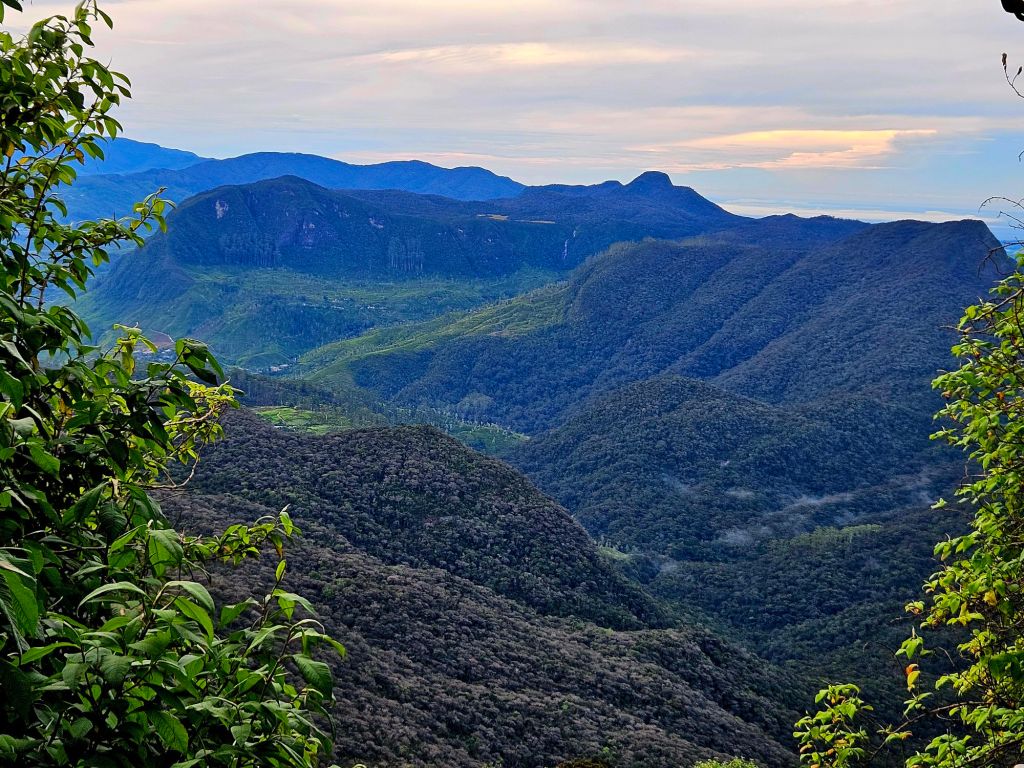
But we did get some great views of the clouds amongst the mountains.

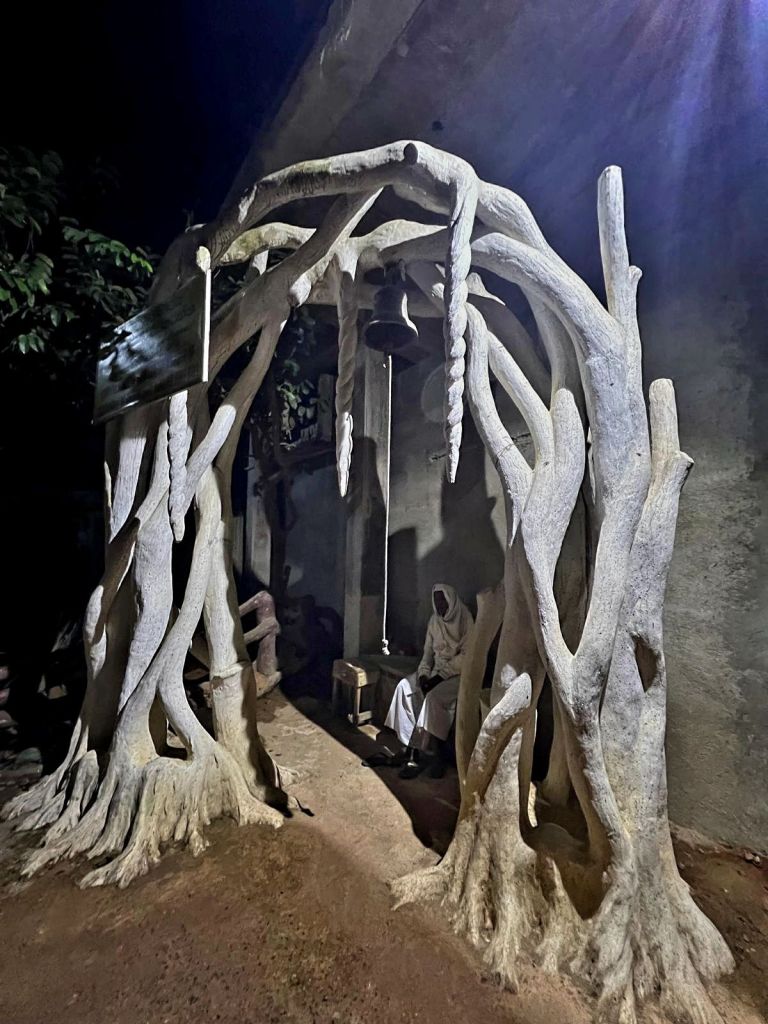
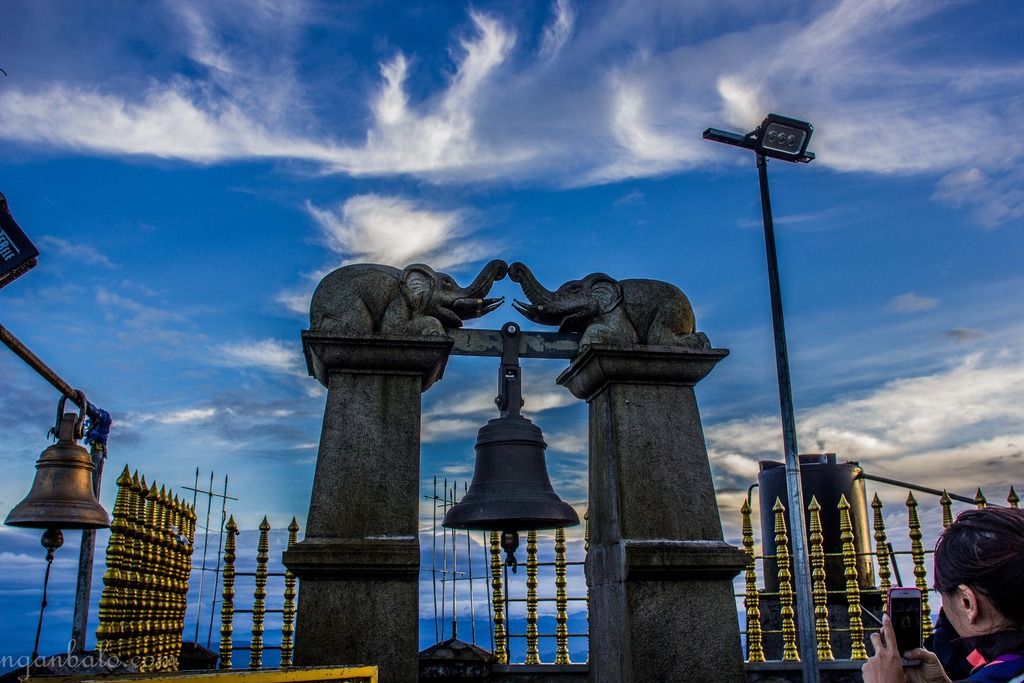
After a while, we walked back down from the temple area and put our shoes back on. We were going to start going down a path when Karen suddenly realised it was the wrong path. This meant we had to take our shoes off again so we could walk across the temple area to the start of the correct path. But it also meant we got the chance to ring the bell at the top. Everyone rings it the number of times they have made the pilgrimage, so we all rang it once. It is also said to wake you up so you can complete your descent safely.

It was then time to start the descent, once we had put our shoes back on.

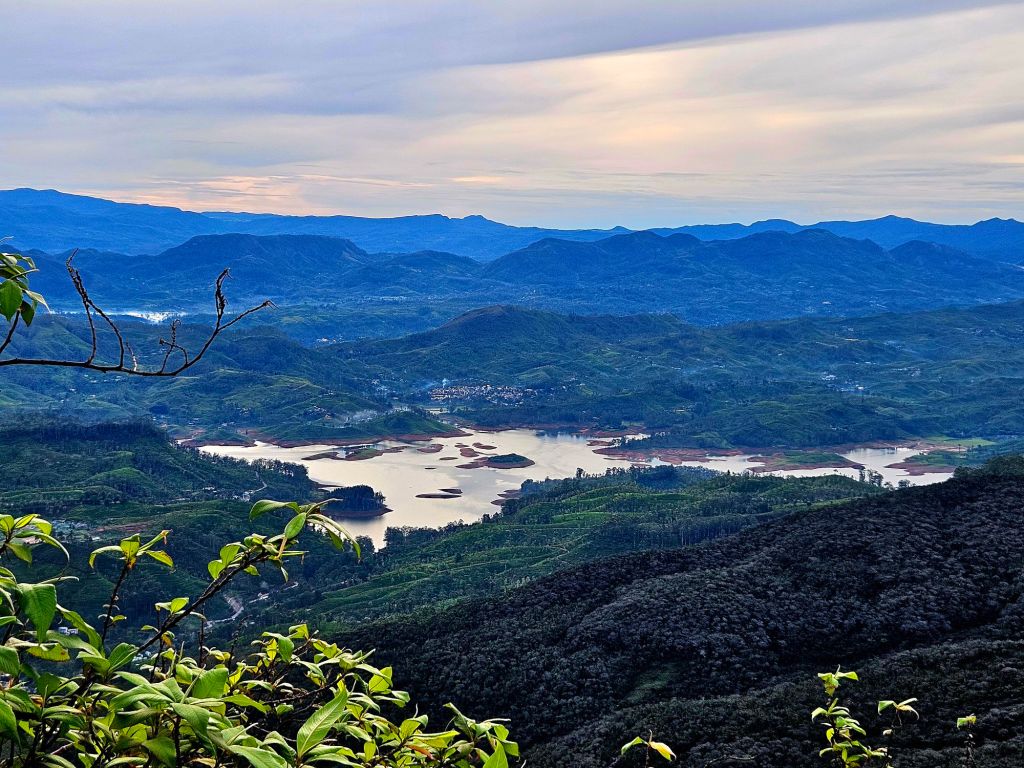
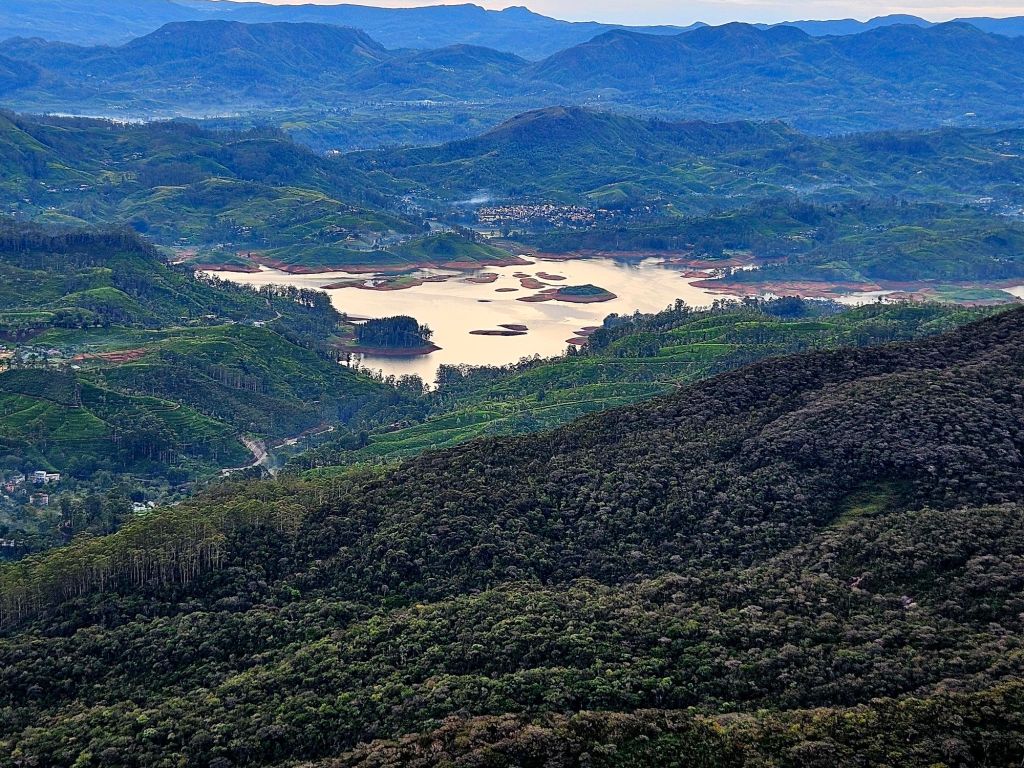
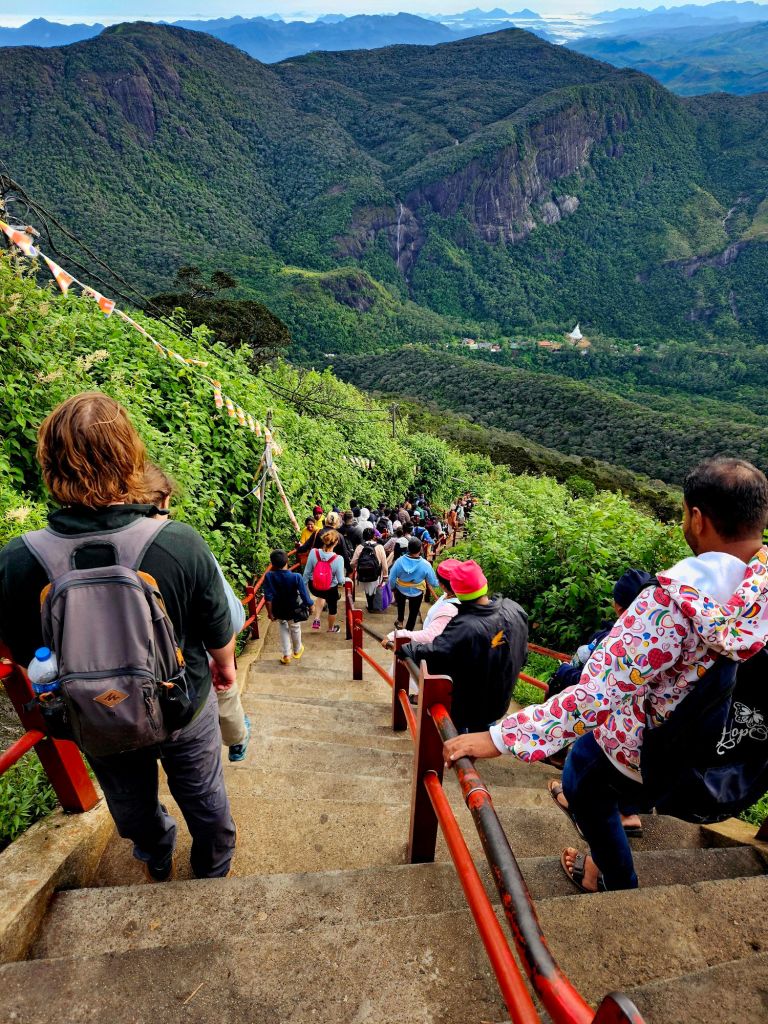
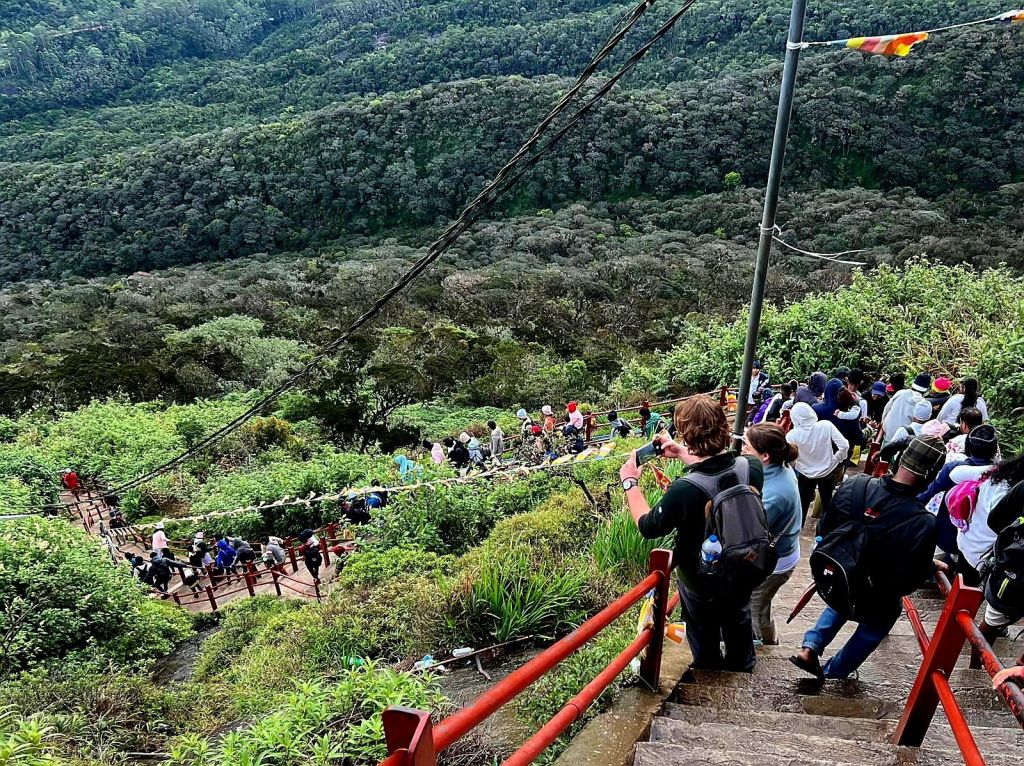
It was a lot busier going down, and quite a few people were also on their way up. The views out over the reservoir and mountains were stunning.

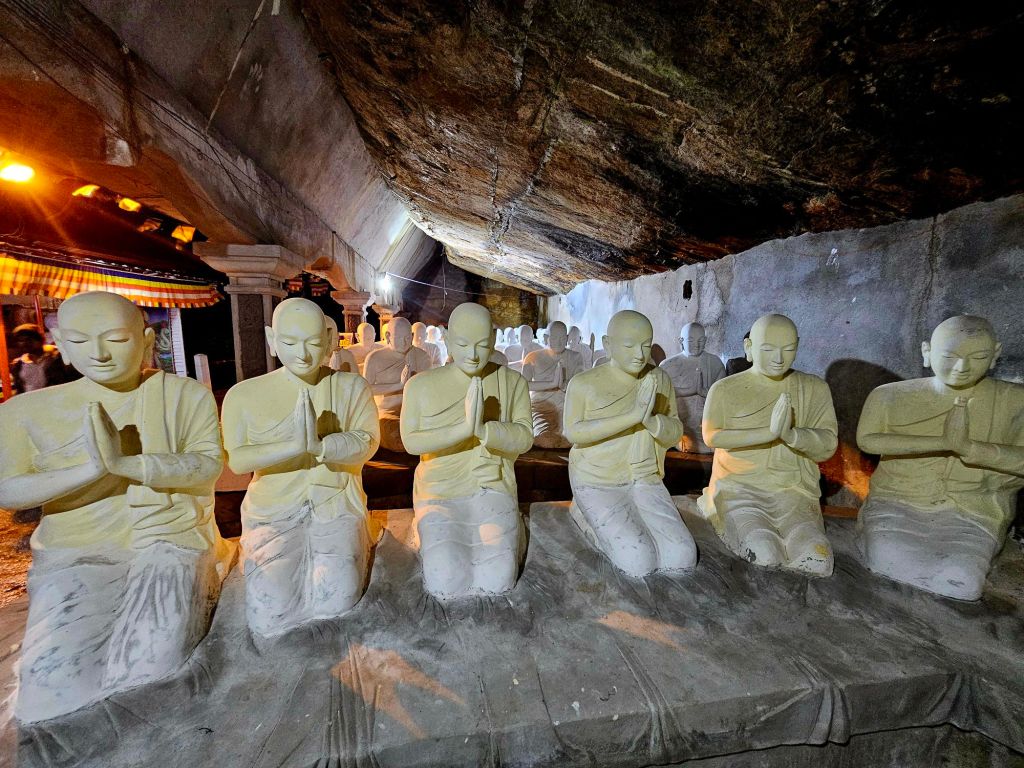
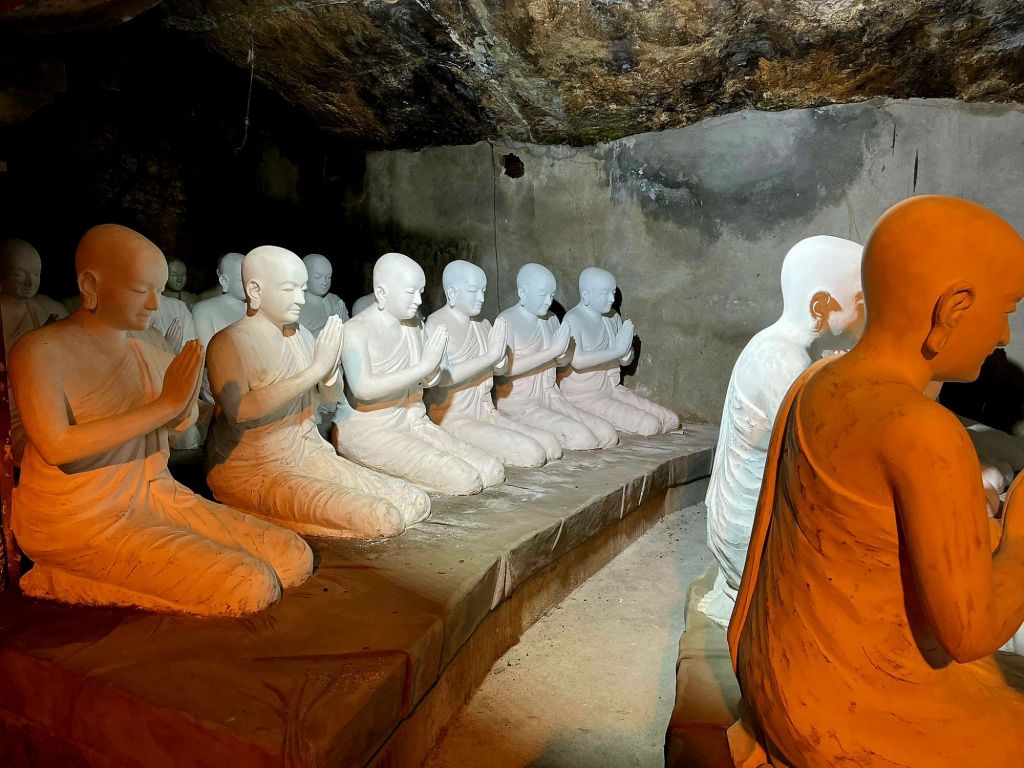
We passed some shrines that we hadn’t been able to see clearly on the way up.

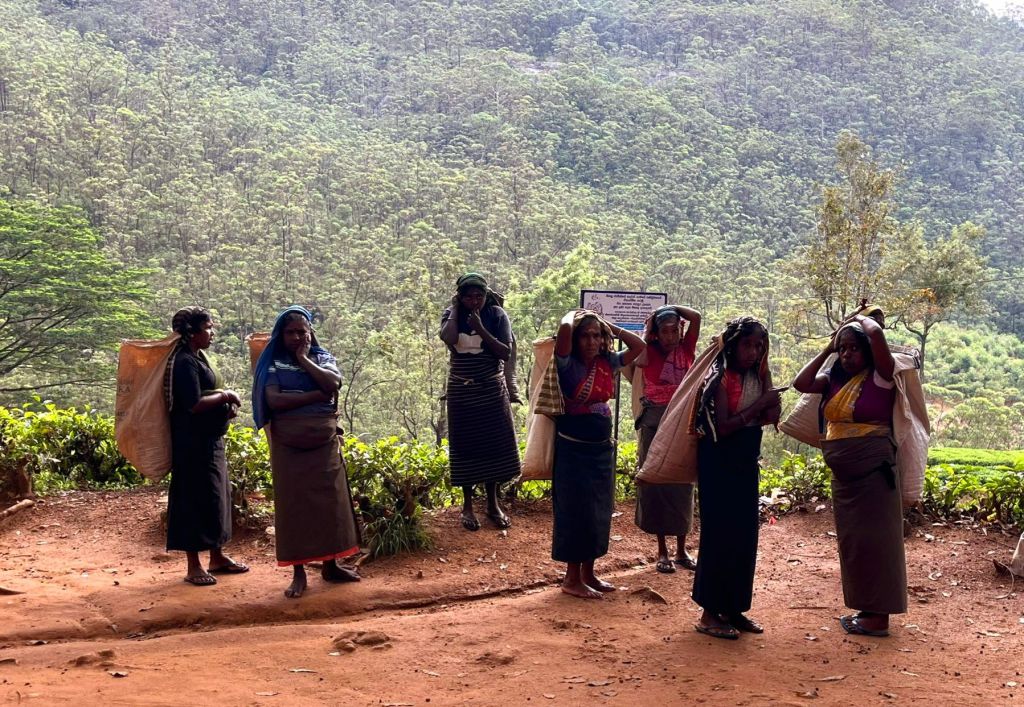
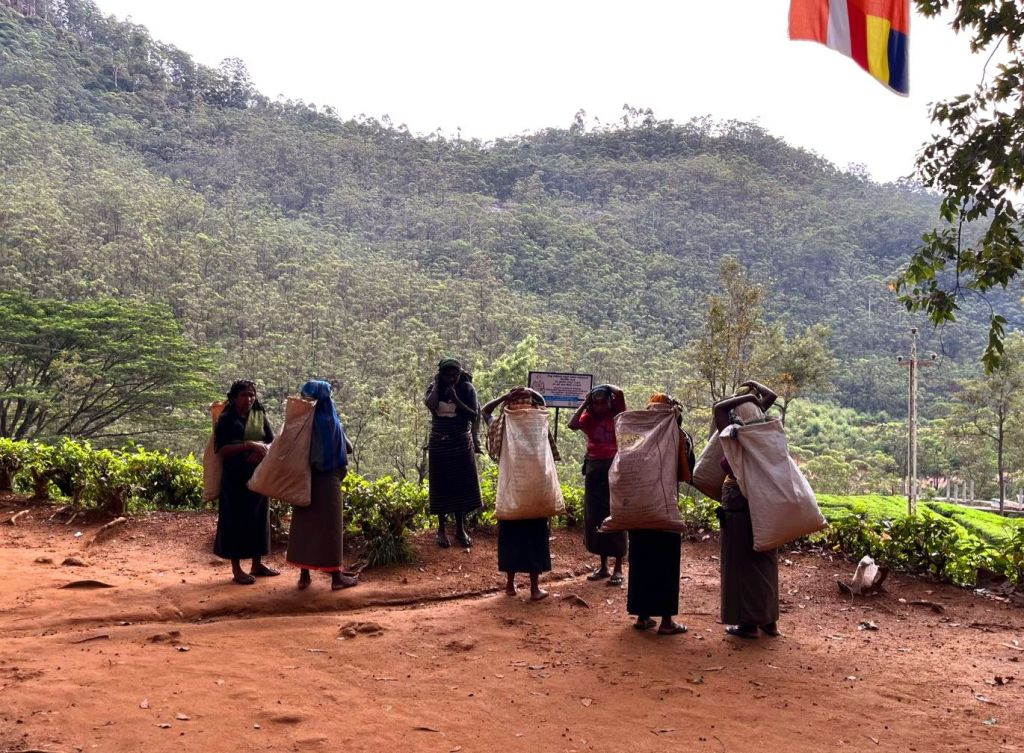
At one point, we passed some ladies who were getting ready to go tea leaf picking. The traditional woven baskets have been replaced with lightweight bags to make it slightly easier for the women to carry them.

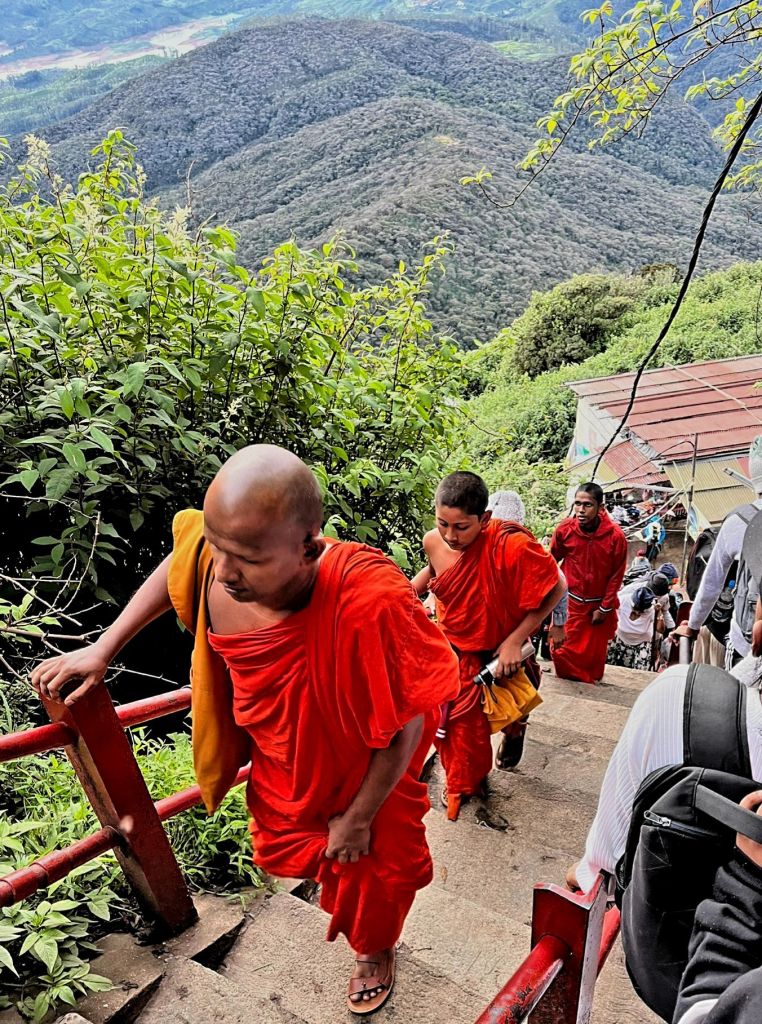
We also passed some monks who were on their way up to the top.

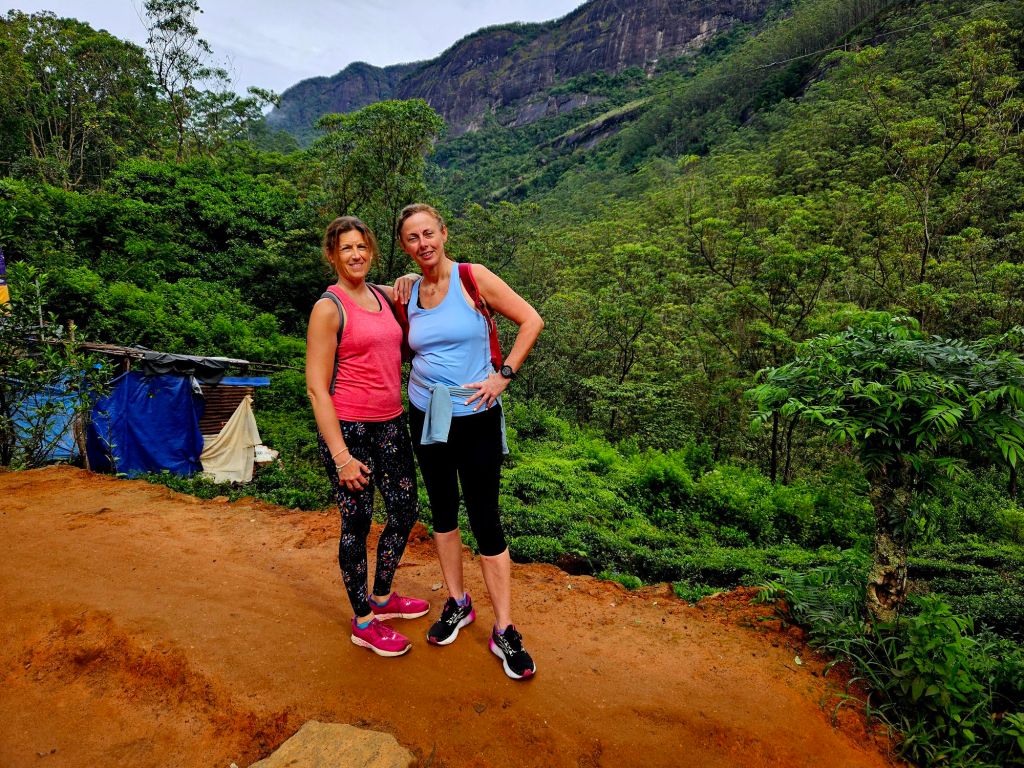
We took quite a few photos on the way down.

We also passed the spider web area again

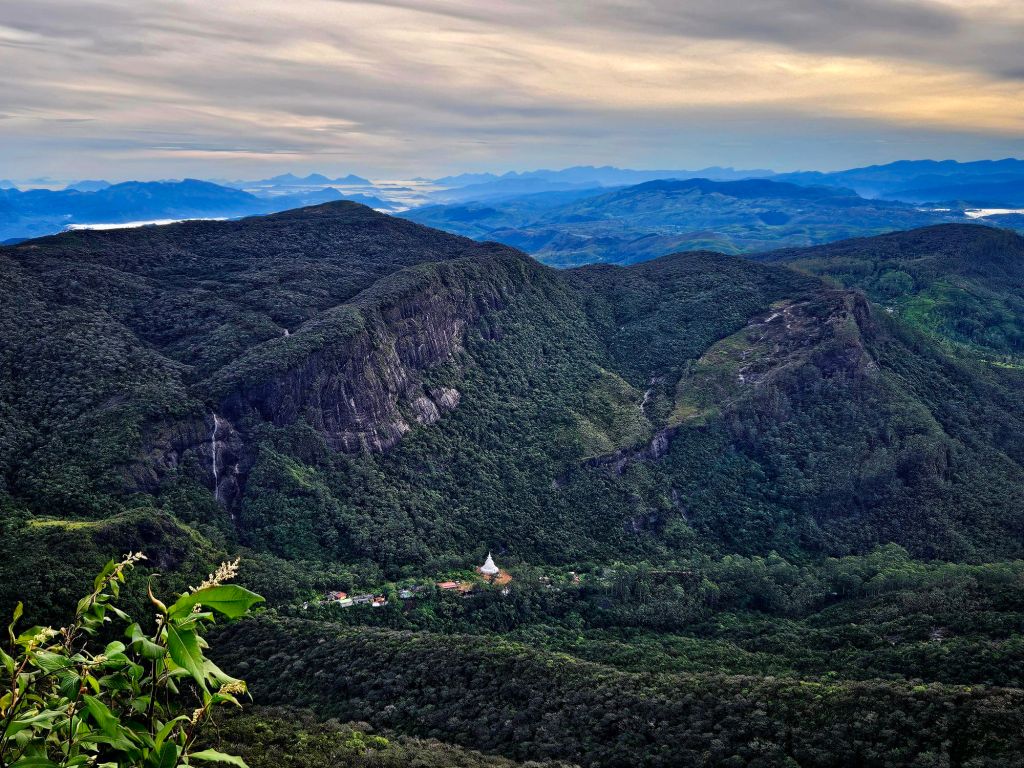
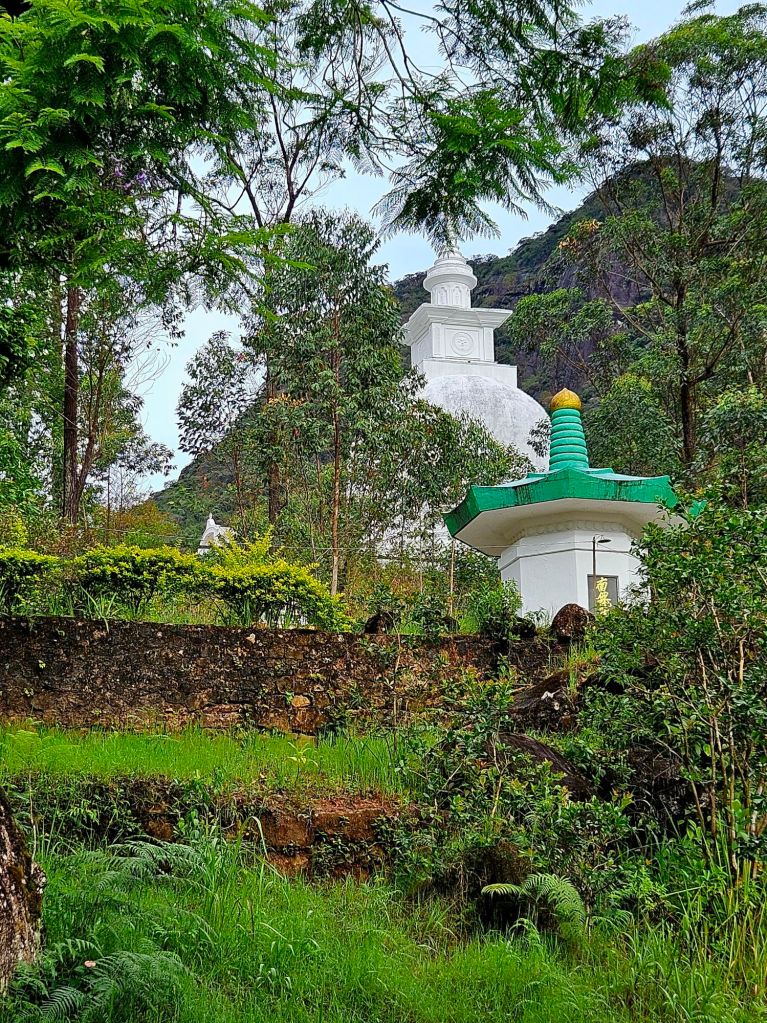
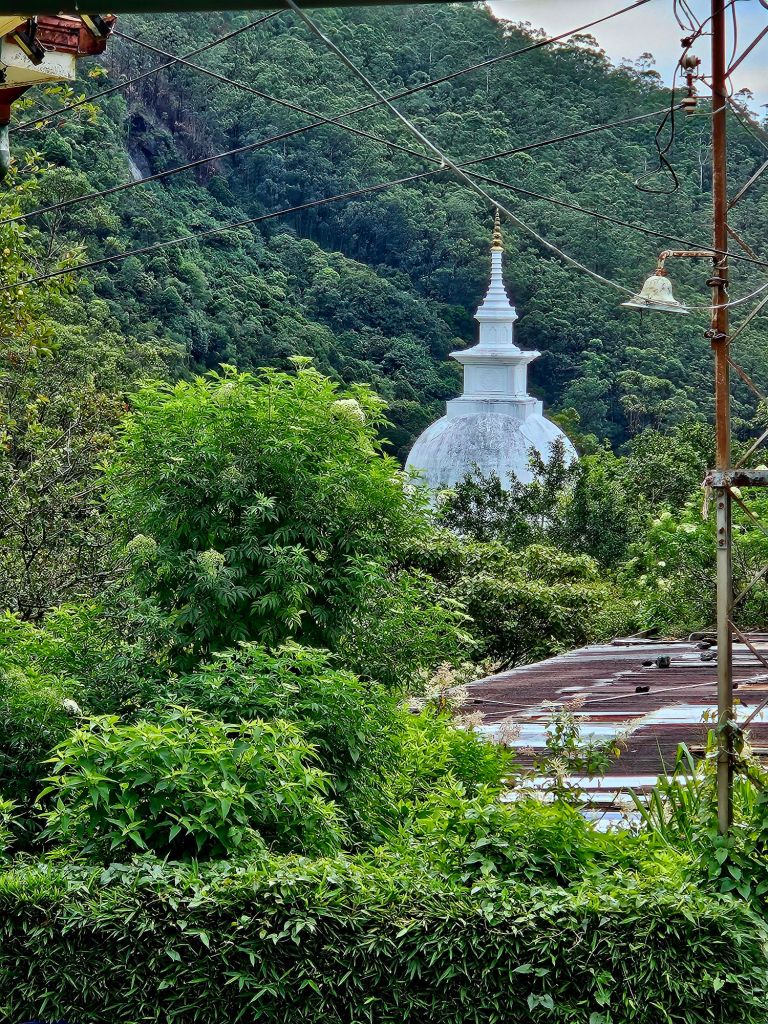
As we descended, we came across Sama Chatiya, the World Peace Pagoda. This stupa was built by the famous Japanese Buddhist monk Ven Nichi Fuji in 1976 and is maintained by several Japanese monks.

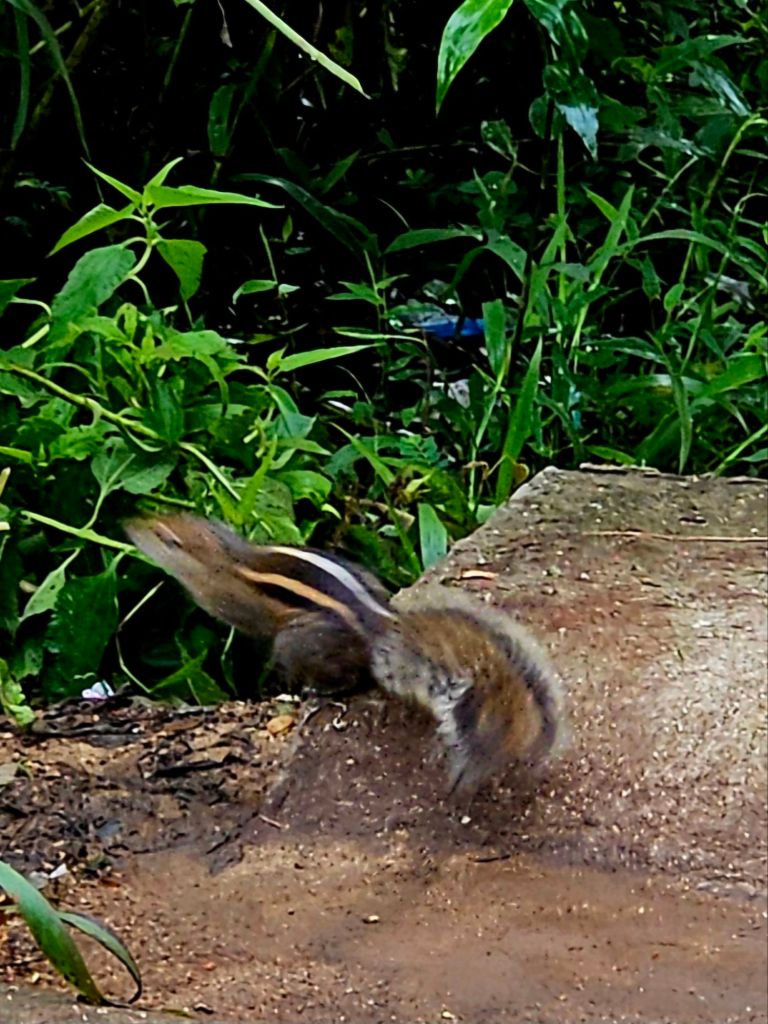
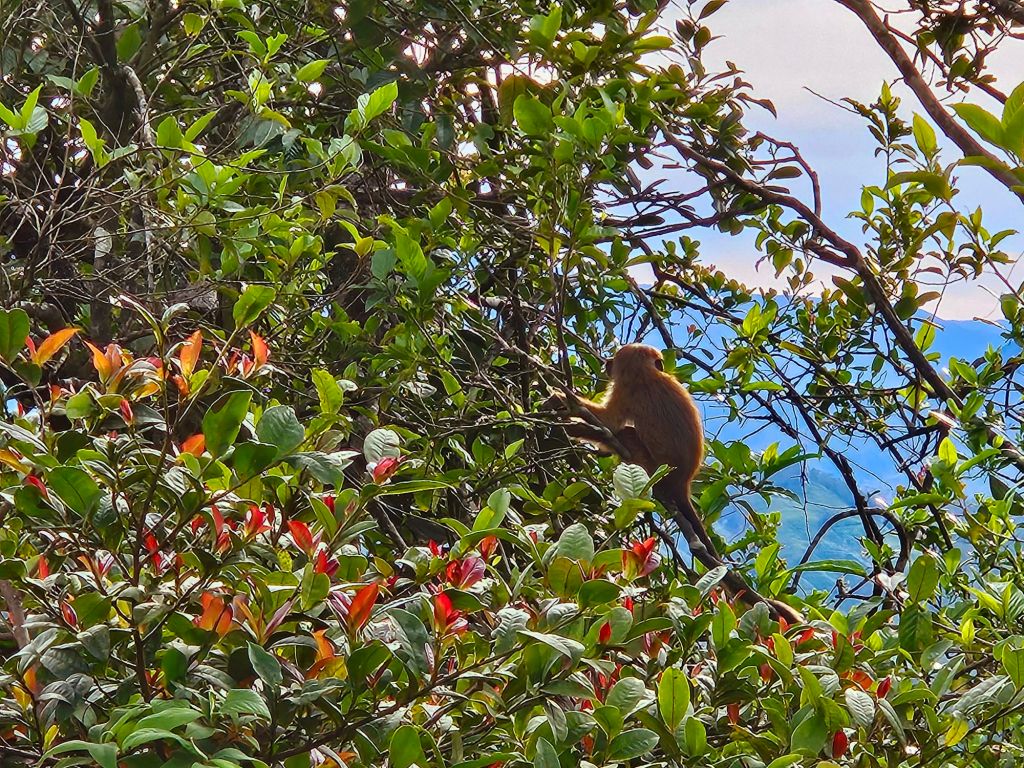
We also saw a chipmunk and some monkeys on the trail.

Towards the end of the trail, you could look back and see how far we had climbed. It’s around a 7km hike each way.

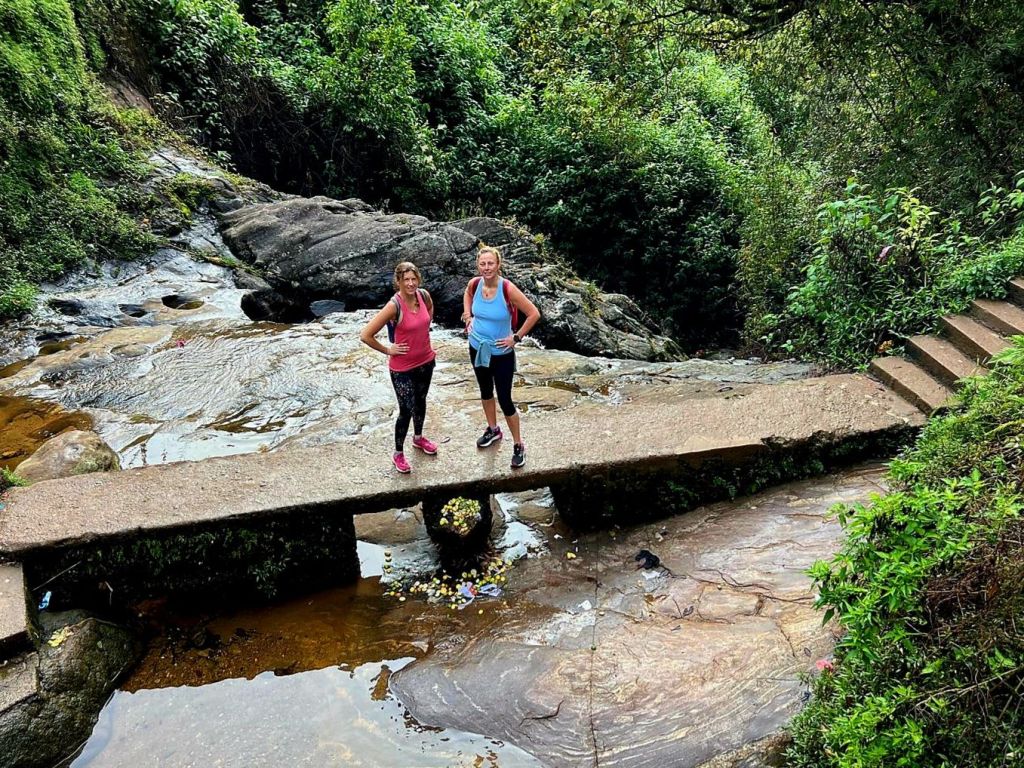
Once at the bottom, we walked across the river. A lot of pilgrims bathe in the river washing themselves with lime to cleanse themselves before starting the pilgrimage.

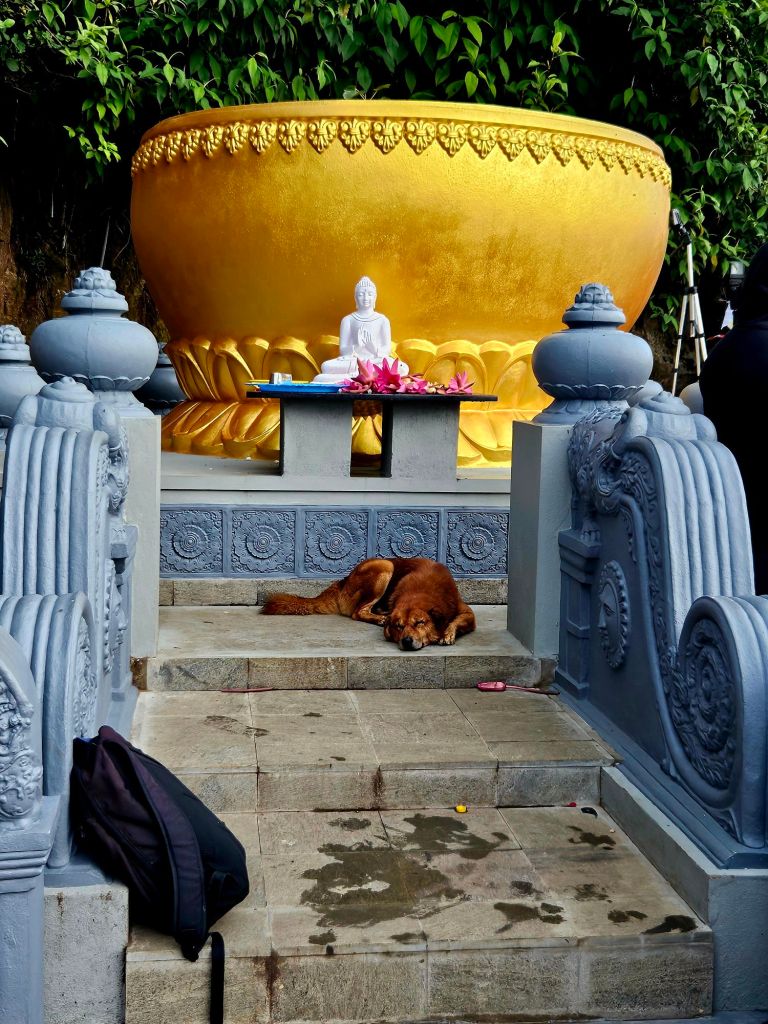
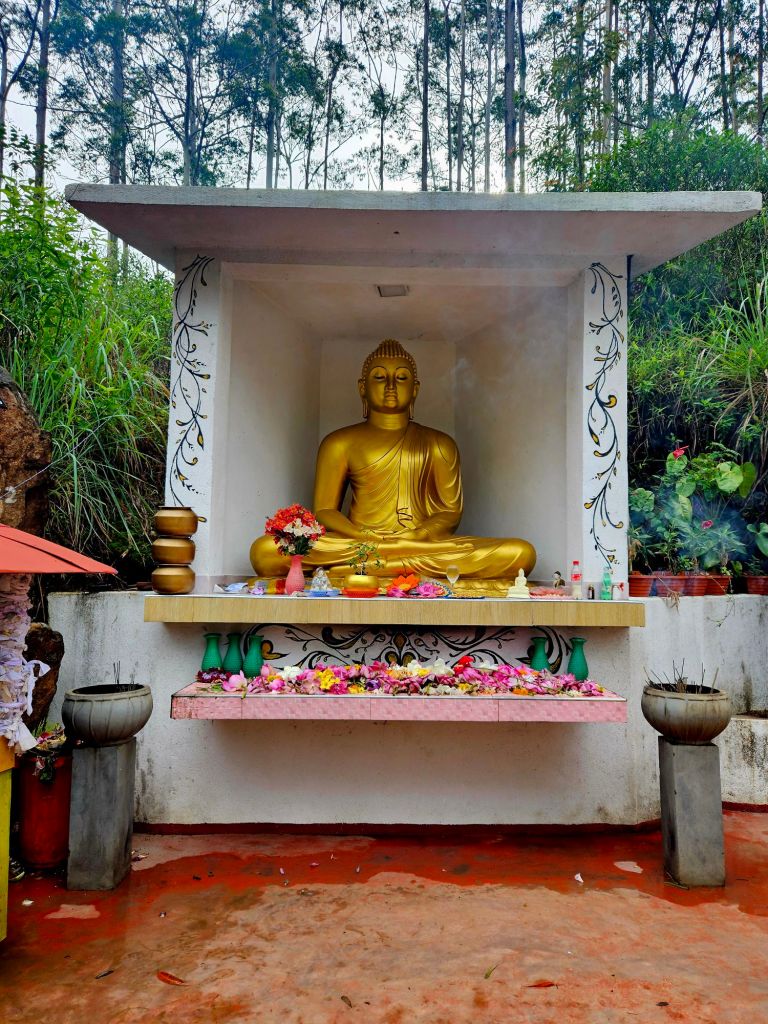
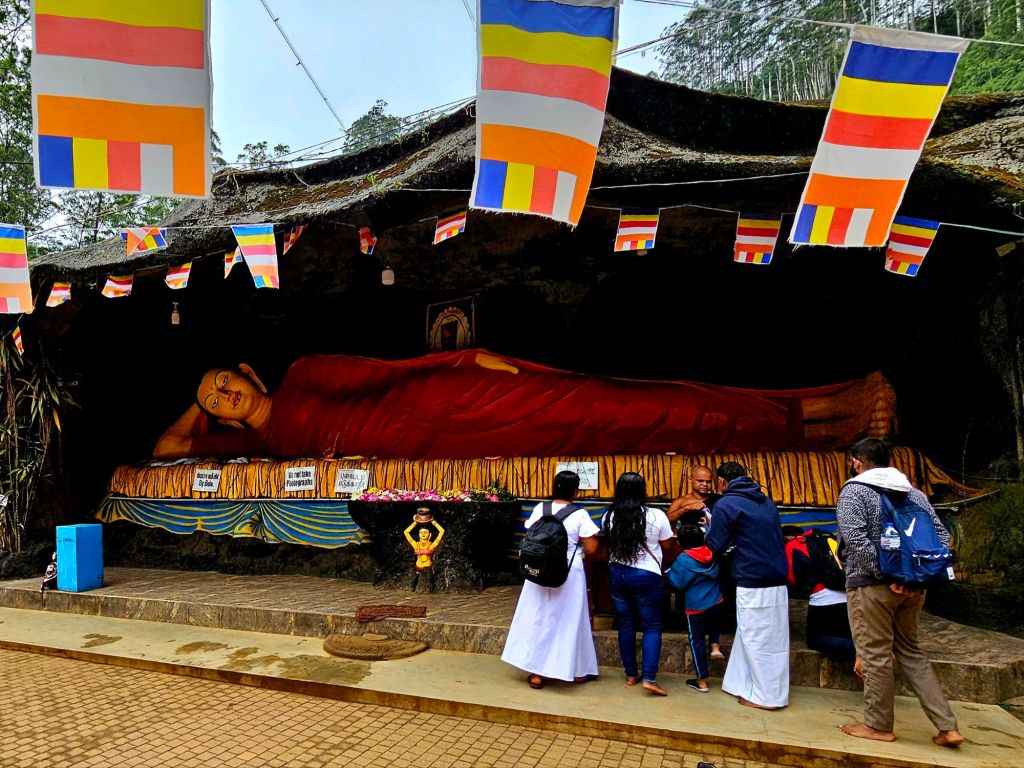
We paid our respects at the Buddha statues at the end of the trail, too.

We were all knackered when we got back to the hotel. It had been a difficult climb and descent, and my legs were definitely shaking when I stood still.

After a much needed shower, we headed to breakfast, which was a mixture of delicious buttered chunky toast, flatbreads, fried eggs, and sauces.

Zoe told us that she had met up with one of the three dogs again on her way down the trail. It was like a furry spirit guide.

We had considered spending the rest of the day in Nallathanniya and perhaps doing a short trip to one of the waterfalls. But the weather forecast said rain so Terry kindly organised a driver to pick us up and take us to Colombo, our last stop on this trip. We packed up and left the Mango Tree Hotel.

It was another 4 hour drive, but definitely the right decision as when we arrived it was lovely and sunny.

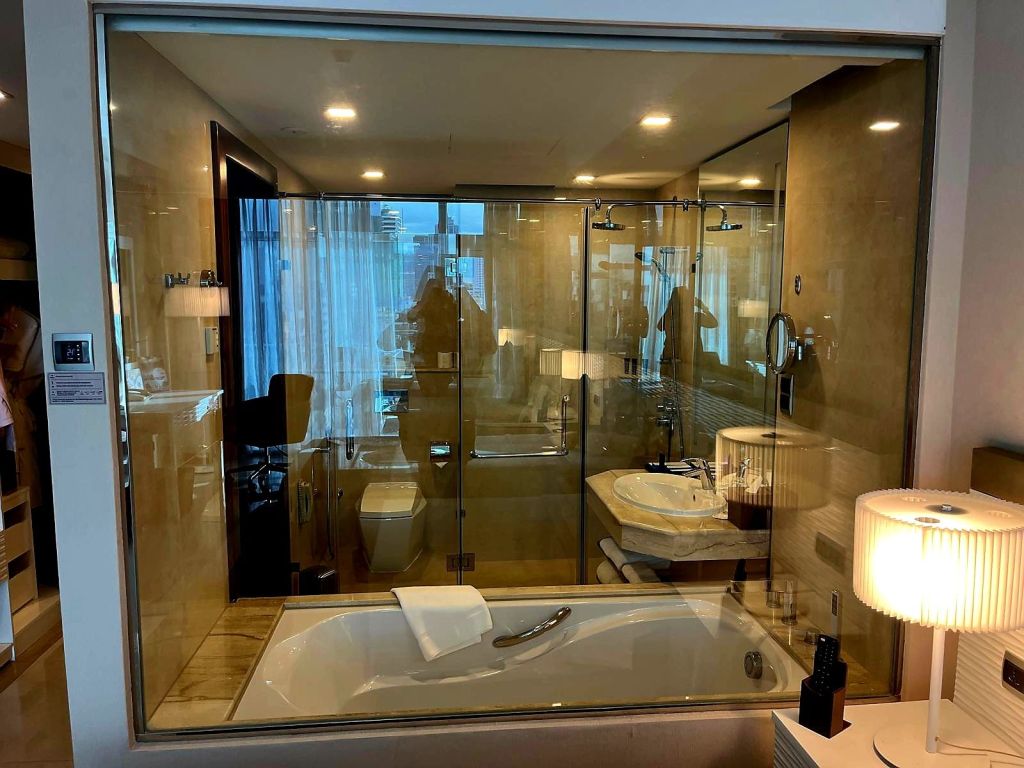
We had booked at the Marino Beach Hotel, and it is beautiful.

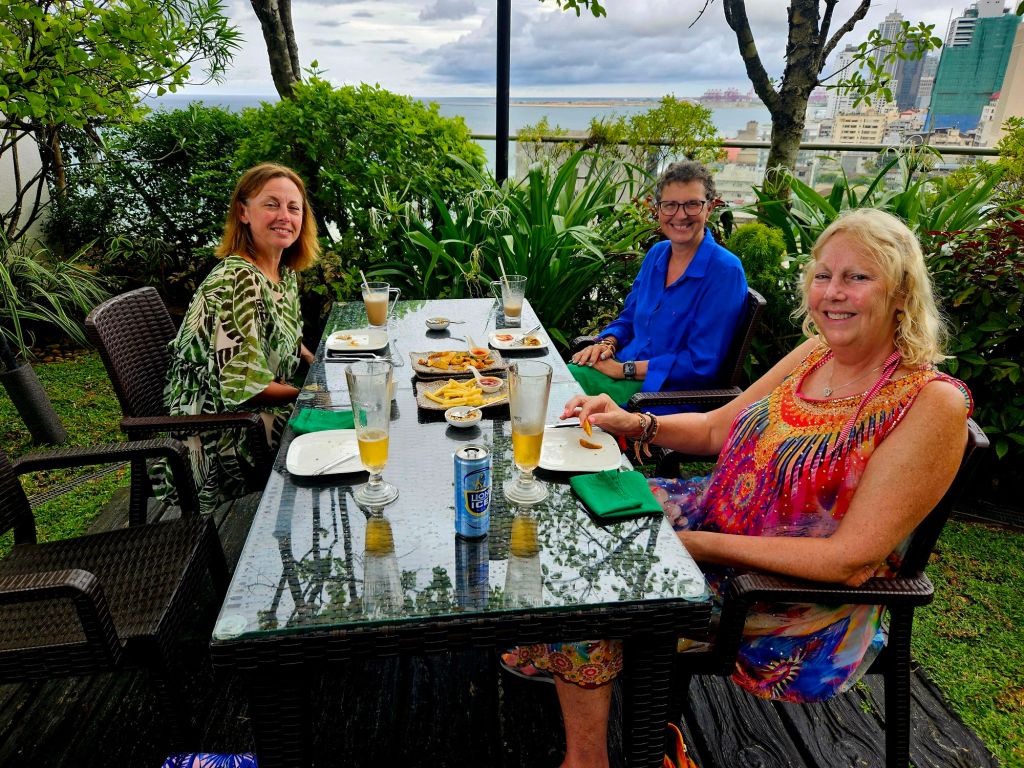
After a change of clothes, we went upstairs to the rooftop pool and bar to have some cocktails.

The sunset was amazing.

We were all quite tired, so we decided to eat in one of the hotel restaurants. We chose the buffet style restaurant so we could try different dishes. There was a huge amount of choice of both traditional Srilankan dishes as well as more western style food.

Shortly after dinner we headed to bed.

Day 11 – Train ride from Ella and on to Nallathanniya

We had booked train tickets from Ella to Nanu Oya, so after breakfast, we got a lift to the station with the owner of the hotel.

The only tickets that had been available at the time of booking them were the first class tickets, which meant we had a lovely air-conditioned carriage.

Once we had dumped our cases in the luggage stand and found our seats, we settled down for the journey. The views out of the windows were amazing – of tea plantations, mountains, and small villages. Everything was really green.

We also soon realised that the doors at the end of the carriage were wide open so you could hang out of the door and get a much better view. Luckily, the train doesn’t go very fast. Although you had to be careful and keep an eye out for what was coming the other way. And it did say ot wad unsafe.

The views were always changing, of mountains, waterfalls, woodland, small villages, tea plantations etc.

When the train stopped at a station, vendors would board the train to sell you their wares. It was mainly different types of food. Sometimes, they would sell their products through the windows.

Around three quarters of the journey in, it started to rain, so I didn’t take quite as many pictures.

We had a lovely train guard in our carriage.

Over the course of the 65km journey, we climb around 800m before arriving in Nanu Oya.

I was still at the door taking photos as I didn’t realise it was our stop, but luckily, the others did, and we got off on time. Unfortunately, in the chaos, Karen left her water bottle behind.

A kind man helped us get the cases off the train, but he had an ulterior motive as he was a driver. We were heading to Nallathanniya, which was around a 2 hour drive away. He offered us a price, which we accepted. The car was only just big enough as it was a struggle to get all our cases in the boot.

Shortly into our car journey, we came across the Somerset Estate, a tea plantation that was established in 1880. This whole area of Sri Lanka is well known for its tea plantations and this particular estate covers 460 hectares and processes upwards of 40,000 kilograms of grain leaf each year.

The driver then stopped to let us take a picture of the Devon Waterfalls. The waterfall is named after a pioneer English coffee planter called Devon, whose plantation was situated nearby and is also known as ‘Viel of the valley’. It is the 19th highest waterfall in Sri Lanka.

We continued on our journey and drove into Hatton, a town that is a major part of the Srilankan tea industry.  On the day we passed through, there was a Hindu festival being celebrated – shukla pasha shashthi festival. Shukla Paksha means the period of the waxing moon. During this time, the Moon’s illumination increases as it moves away from the position of the New Moon. This phase symbolizes growth, expansion, and positive energy. It is considered an auspicious time for new beginnings, initiating projects, and manifesting intentions. It is a day of great blessings for Hindus belonging to the Tamil community. The town was very busy and very colourful.

As we drove on, we came across another large tea estate, the Norwood Estate. This was the first tea estate in Sri Lanka. It was started in 1867 by a Scotsman called James Taylor. Sri Lanka is the fourth largest producer of tea globally. It has mainly prospered because of the ideal climate conditions but was also successful due to the coffee blight and the emergence of the Industrial Revolution in Great Britain, which enabled locomotives to operate in the tea regions.

We stopped to take some pictures of the women picking the tea leaves. Whilst the tea plantations are tended by men, it is the women who undertake the daily task of picking the tender leaves.

We carried on past the Maskeliya Reservoir. During the rainy season, which was just beginning, the water gets right to the top of the banks.

And our last viewing spot was of the Mohine waterfalls. This is quite a small waterfall just close to the reservoir. It is about 30m high, and the water flows under the road and into the reservoir. The locals believe there is a female devil inhabiting the surrounding area. This female devil is referred as Mohini.

Just after the waterfall, we arrived in Nallathanniya. The car we were in was not allowed to cross the small bridge in the village – and we needed to get across to get to our accommodation. So our driver rang the hotel and they sent a couple of tuk tuks to pick us up from the main parking area. We managed to fit two passengers and two cases into the tuk tuk.

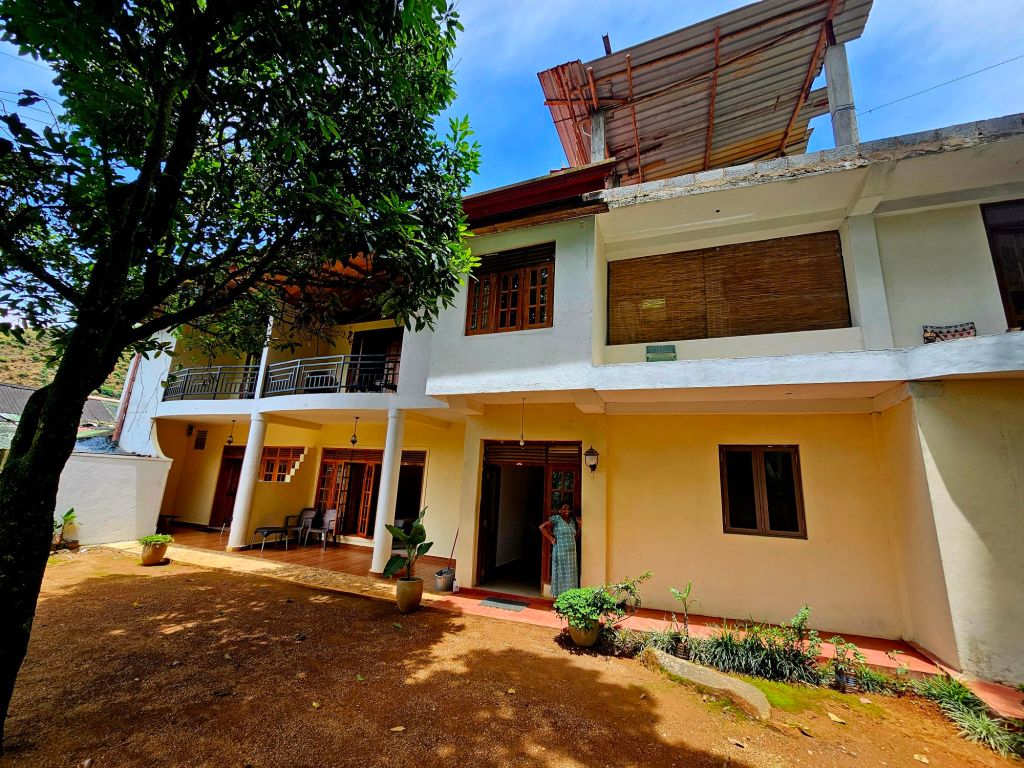
At the hotel, which was quite basic, we were sharing one room, but it had loads of room.

As we had been sitting down for a lot of the day, we thought it would be a good idea to go for a walk and also find out where the trail started for the climb to Adam’s Peak. We found the start of the trail, which was literally a minutes walk from our front door.

We passed a small temple and walked across the narrow bridge. There were quite a few people bathing in the river as we walked past.

We walked past another massive statue. This one had a beehive hanging from her arm.

There were also lots of birds using the candle holders as perches.

We continued walking to the archway into the town.

As we were wandering back, it started to rain, but we had come prepared with our umbrellas.

We passed quite a few shops selling Watalappam. This is a traditional Sri Lankan dessert made with coconut milk, jaggery (palm sugar), and spices. It’s steamed and served chilled, with a jelly-like texture. Karen and I tried some, and it wasn’t as sweet as I thought it was going to be – but still not great.

We headed back to the hotel and dried off before dinner. We had requested an early dinner at 6pm as we were going to be up at 2am the next morning to walk Adam’s Peak.

Dinner was traditional chicken curry with both boiled rice and butter rice, as well as some side dishes. It was all really tasty, but the amount of food was way too much.

We had a furry friend during dinner too.

We were in bed by 830pm, and surprisingly, I went to sleep pretty quickly.

Day 10 – Ella

We woke up and went for breakfast in Java Cafe. I had a really nice coffee and almond croissant.

You could see our hotel from the cafe and some police horse guards also came to direct the traffic.

After breakfast we packed up and headed down to the lobby.

We had originally planned to get the train from Kandy to Ella, but there were no train tickets available – the only ones we could get were from Elka to Nanu Oya. So we booked a driver via the hotel. The first car that turned up wasn’t very big and we couldn’t fit all of the suitcases in the boot. We had to wait around 45 minutes for another car to turn up. This wasn’t really suitable either, but I sat in the back with the cases, and we set off. The journey was around 4-5 hours.

Zoe was still feeling quite poorly, so we had to stop a couple of times. At one point, she fainted, and we were all really worried. We stopped at a pharmacy to get some rehydration sachets.

Some of the views along the way were really nice.

Unfortunately, as we got to Ella, it started to rain.

Our hotel was right at the top of a hill, and from our balcony and from the viewing point upstairs, we had great views of Ella Rock and Little Adams Peak. (Ella Rock on the right and Little Adams Peak on the left).

You could also see the small Rawana waterfall.

As it was raining, we decided to get a tuk tuk into the town and do some shopping.

I bought a few bits, as did Mandy and Karen, and then we decided it was time for some lunch. We went to Chill Cafe as it had been recommended to us by the dive instructor in Kalpitiya. We had some delicious bruschetta and wine.

We were hoping to do a small hike of some sort in Ella, but it was continuously raining. We went back to the hotel to check on Zoe, who still wasn’t feeling great. She had mainly been sleeping whilst we were out.

After a freshen up, we headed back to Chill Cafe for some dinner. Zoe stayed behind.

Mandy and I tried Lumprais. This is a Srilankan dish, which is rice, chicken curry, deep fried hard boiled egg, deep fried sweet aubergine, and all wrapped in banana leaf. It didn’t look great but tasted really nice.

After dinner we had another small walk before heading back to the hotel and to bed.

Day 9 – Kandy

It was a lovely sunny morning when we woke up so we took some pictures on our balcony.

We headed out for breakfast and decided to try a local Srilankan cafe. I had a cheese dosa. This is a savoury type of crepe made from a fermented batter of ground white gram and rice. It tasted quite nice, but it was a little bit greasy. I had a black coffee to go with it, which was really sweet.

The cafe looked out over one of the main roads, which was quite busy.

After breakfast, Mandy and I ordered a tuk tuk to take us to the Sri Maha Bodhi Viharaya, the big Buddha statue looking out over the city.

The statue is of Buddha in the posture of meditation associated with his first Enlightenment and can be seen from almost everywhere in Kandy. It stands at 26.83m high and is one of the tallest Buddha statues in Sri Lanka.

The construction of the statue started in the 1980s and was completed in 1992 and officially opened in 1993.

The temple and statue are on the top of Bahirawakanda hill. Bahirawakanda means “Gnome Mountain”, and this name harks back to the legends surrounding the temple’s hill. The villagers who lived in the surrounding areas once believed that the hill was the home of an evil gnome that devoured unsuspecting humans. In an effort to appease it, the villagers would sacrifice a virgin girl (or several virgins) to the hill. Over time, the fear of the hill and the superstition of the villagers faded.

You have to take your shoes off at the bottom of the steps, and the ground is really hot. I had bought some socks and tried stepping in puddles to cool my feet down.

There was a lovely monk’s garden, and we did see some monks working in the garden, too.

You can climb part way up the statue, and the views from up there were amazing.

Kandy got its name from the Sinhala term “Kanda”, which translates to ‘mountain’, due to its geographical location amongst the mountains. Kandy dates back to 1476 and operated as a semi-independent kingdom within Sri Lanka. The city resisted invasion by both the Portuguese and the Dutch. On 14 February 1815, the last King of Kandy was captured by the British with the help of some of the Kandy ministers. The Kandyan people continued to fight for their freedom, which played a significant part in gaining total freedom for the entire country in 1948. Kandy remains the capital of the Central Province and is both an administrative and religious city.

As we were walking down, we went into one of the temple areas.

Further on, down the steps, I could hear some chanting, and it sounded like children. One of the guides asked if we wanted to go inside and watch what was happening. It was some young monks chanting, aged around 10 or 11. Their families were in the room, too. The guide told us that the family bring the young boy of 9 to the monastery, after which they never leave, although their families are allowed to come and visit them. They grow up as Buddha would have with no worldly goods. They are also not allowed to touch women. We did try and find out if they could leave the monastery if they were unhappy, but that didn’t seem to be the case.

The room they were in was where the Chief Monk comes to meditate, so it was quite a privilege being invited in there.

Our tuk tuk driver had waited for us at the bottom.

We met Karen and Zoe back at the hotel, they had been out to buy train tickets. Shortly after we got back it started to rain so we decided to explore the indoor shopping centre and we also stopped for frappes and milkshakes.

The indoor shopping centre was not that interesting so we went to explore the local market instead – Kandy Central Market. There were lots of interesting stalls with souvenirs, spices, crafts, meat, and fruit. There are 269 stalls within the market, although not all of them were open.

The present building’s site has a history traceable to the 19th century. It is located exactly where Kandy had its old market beginning in 1874. The new market was opened to the public in 1959.

The market belongs to the people of Kandy, and they help to maintain it. Every day, three tractor loads of rubbish are discarded from the market. It is open from 6am to 9pm with the fishmongers receiving the daily catch at 4am.

Just outside the market area were a couple of statues and a war memorial. One statue was of George E de Silva, who was a lawyer and politician. During his time at the Municipal Council, he introduced several municipal reforms, including the slum clearance scheme and the Peradeniya river pumping scheme.

Another staue was of General Anuruddha Ratwatte, who was a Srilankan soldier and politician. He opposed the Kandy Municipal Council and led the Srilankan Freedom Party.

The war memorial commemorated those who died in the First World War. Over  a million South Asian men served in the Indian Army during this time, and more than 400 Srilankan soldiers lost their lives during this conflict.

We walked back to the hotel, and then Mandy, Karen, and I went for a walk around Kandy Lake. The lake is an artificial lake that was built in 1807. Over the years, it has reduced in size, and the shore length is now 3.4km. The lake is known as Sea of Milk as formerly there used to be a small pond there called the same. The rest of the area was originally paddy fields.

There is an island in the middle of the lake that the king used for relaxation. It is also said that this island was used by the king’s harem for bathing and was connected to the palace by a secret tunnel. It is currently used as a police post.

There are a lot of different birds on the lake, including some ugly looking ducks, nicer looking ducks, cormorants, egret cranes, herons,  storks and I spotted a kingfisher too.

There are a variety of different trees planted around the lake, including Nuga trees, palm trees, fruit trees, Sal trees, and Mara trees. Some of the trees are about 74 years old.

The lake is surrounded by a wall called Walakulu Bamma, or Cloud Wall, which was built to enhance the beauty of the lake. The wall only extends around half of the lake because the architect was unable to complete the wall before the city was captured by the British. The triangular shaped holes in the wall are used for lighting oil lamps on festival days. So you have the milky, cloudy lake, the ‘stars’ caused by the lights above that, and the palace sits above all of this in a ‘heavenly realm’.

You could see our hotel from the other side of the lake, and we also found an old British post box.

After we walked around the lake, I left Mandy and Karen at the hotel and went to visit Sri Dalada Maligawa, the Temple of the Sacred Tooth Relic. It is where the left  tooth of Gautama Buddha is enshrined.

The relic was historically held by Sinhalese kings and kept in various shrines within the palaces. It is believed that whoever holds the relic holds the governance of the country.

I entered the temple complex through one of the side entrances and had to immediately take off my shoes. I visited the stupa and statues around the temple grounds.

I didn’t actually go into the temple itself as I had heard you can’t actually see the relic as it is encased in a casket. But lots of people were going in to pay their respects.

All along the side roads to the temple were stalls selling offerings.

Right next to the temple is an Anglican church, the church of St Paul. This was built in 1852. The church houses the only pipe organ in Kandy and potentially, the largest pipe organ in regular use in Sri Lanka. Unfortunately it wasn’t open so I couldn’t see it.

Once I got back to the hotel, I met the ladies in the bar for a drink. There were a couple of gentlemen in the bar looking very smart in their suits. We got chatting to them, and it turned out they were pharmacists, and they had just attended the AGM of the Srilankan pharmaceutical society. So obviously, we discussed how pharmacy was going in Sri Lanka and in England.

After a quick drink, we got ready to go out for dinner. We had decided to go to Fab Ceylon as it had really good reviews.

The menu was written on the wall, and I tried some Mongolian chicken rice. It was quite spicy but tasted really nice.

One of the other tables ordered a different dish. It was served on a shovel directly onto paper on the table.

After dinner, we headed back to the bar at our hotel for a nightcap. Zoe wasn’t feeling great, so she went up to bed.

The Queens Hotel was a former governor’s residence and is one of the oldest hotels in Sri Lanka with a history of over 160 years.  During its history, it has been used as barracks for the Ceylon Rifle Regiment, a hostel, and a boarding house. In 1869, it became the Queens Hotel. The Pub Royal in the hotel is the only British Pub in the city that offers service with an old colonial flavour.

Day 8 – Snorkelling and drive to Kandy

Mandy and I had another earlyish start as we had booked to go snorkelling at 8am. We walked down to the dive centre and were fitted with flippers. Although I had my own snorkel and mask, I ended up borrowing one of their masks as they were glass, so don’t steam up so easily.

The guys had to do the whole routine with the boat again to get it in the water. This time, it was only Mandy and myself, along with the dive instructor and the driver.

This photo is looking back to Uppuveli Beach.

We motored out to Navy Island, which was only about 15 minutes from where we were staying. Mandy and I immediately got into the water and started snorkelling.

My underwater camera wasn’t working, so I put my phone in a day bag and tried taking photos and video on that. It kind of worked.

We saw lots of different colourful fish, and there was some really pretty coral as well.

We were in the water for quite a long time. At one point, I went too far around the rock and got called back.

Once we were back on the boat, we had some water and watermelon and headed to Angel Reef, which was quite close by. On the way, the dive instructor spotted a turtle, so we all jumped in the water. I saw him from above the water but not actually in it. Mandy jumped in the other side to me and actually managed to see the turtle in the sea.

We then swam to the reef where we saw a lot more fish and coral. The dive instructor dove down and picked up a starfish.

From the water, you could see Seruwila Raja Maha Vihara temple. This is an acient temple and is amongst the sixteen holiest buddhist shrines in Sri Lanka. The stupa was originally built  in the 2nd century BC and was restored in the 1920s. It is said that the frontal bone of the Buddha, as the sscred relic, is enshrined in the stupa.

The Seruwila region used to be a vast swamp or villu where the flood waters of the Mahaweli Ganga collected. This villu was the home of large flocks of teals (seru) during the migratory period. That perhaps was how the place came to be known as Seruwawila.

After around another hour of snorkelling, it was time to head home.

On the way back, we were quite close to the rock where the Koneswaram temple is situated. This is a classical medieval Hindu temple complex on top of the promontory overlooking the Indian Ocean and the Trincomalee district. It was originally built around 1580 BC.

We had a similar beach landing with the boat as the previous day, and this time, I took a video of it.

We met Karen and Zoe at Cafe on the Eighteenth for breakfast. This time, I had the poached eggs on avocado toast. It was delicious.

We were originally going to stay another night in Trincomalee, but as we had already done everything we wanted to do in the area, we decided to move on.  I meant to have a kettle shower on the beach but never got round to it.

So after breakfast, we packed up and organised a driver to take us to Kandy. We said goodbye to the lovely family who had looked after us.

It was a good four to five hour drive from Trincomalee to Kandy. On the way, we saw an elephant on the road.

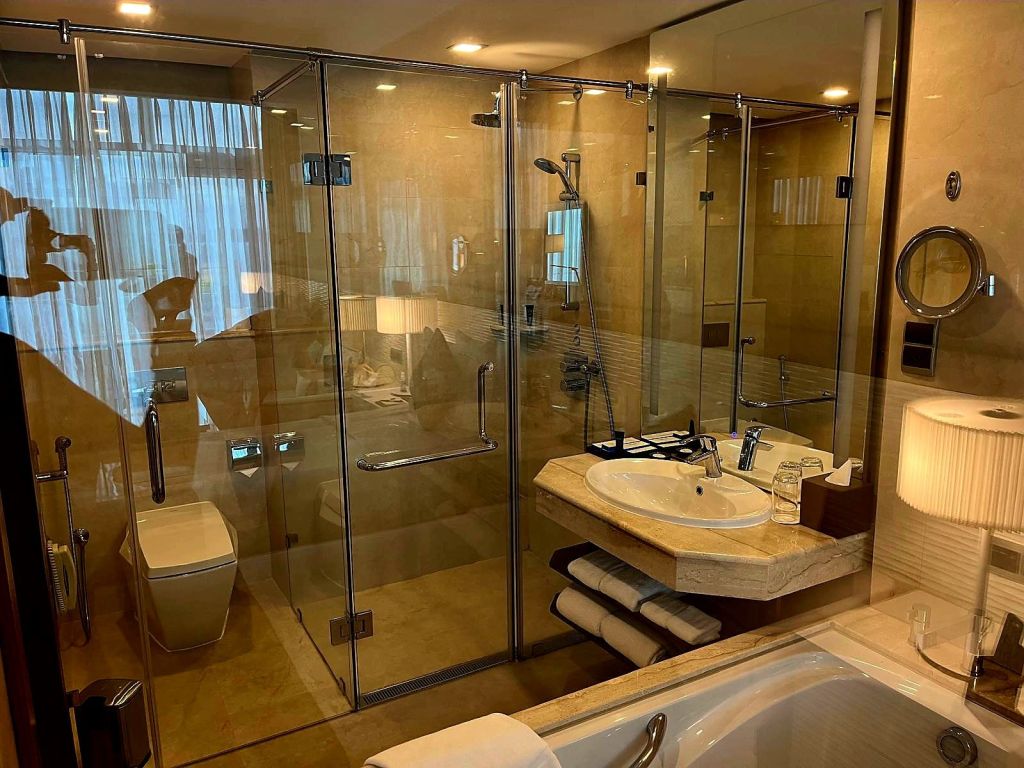
When we got to Kandy, we had to sort out the rooms as we had made separate bookings for the two different nights, which caused some confusion. We were given an executive suite for four,which was very spacious. We were staying at the Queens Hotel, which must have been amazing in its time, but was now moe like faded grandeur. It had a very old-fashioned lift in it.

It was raining quite heavily so we decided to go somewhere quite close for dinner. The hotel staff recommended a place called ‘Delight’ so we headed there.

We had a mixture of chicken kottu, seafood kottu, and a house special, which wasn’t so spicy. Kottu looks like fried rice but is actually made from broken up flatbreads, roti. It was quite spicy but very tasty, the chicken was better than the seafood. The house special was really nice too.

We had heard about a place called ‘Slightly chilled lounge bar and restaurant’ so after dinner we walked to it. It was about a 15-minute walk, and it was raining quite heavily. I completely soaked my feet, through my trainers, in a massive puddle – it’s really hard to see where you’re going as there are no street lights.

Eventually, we made it to the bar, which was also not easy to find as it was up a hill down a side road.

We had some cocktails, but they weren’t that great. But the bar had live music and they were really good.

I tried to take some night time views of the city from the bar and on the way home.

Once we got back to our hotel and into the dry, we decided to call it a night.

Day 7 – Dolphins and Beach

This was an early morning for all of us. We were up at 530am to go dolphin watching. We walked down to the beach to catch the boat.

The guys from the dive shop had to swivel the boat round and then drag it down to the beach – it looked like hard work.

There were the four of us and another couple from Vienna. As we motored out into the sea, we passed ‘Lover’s Leap’.  This is a true story attested by an inscription on a pillar on Swami Rock. It follows Francina van Reed, the daughter of a gentleman of rank in the civil service of Holland. She was engaged to a young Dutch officer who broke off the engagement upon the end of his foreign service and returned to Holland. Forsaken and distraught, she watched atop Swami Rock as the vessel carrying her faithless lover passed beyond the horizon. Overcome by sorrow, she flung herself from the rock into the violent sea below – a sheer drop of 400 feet. A pillar set up on the promontory records the fateful date of the tragedy that has since propelled the location to notoriety – 24 April, 1687. Now, the authorities have taken measures to build a protective fence for the protection of visitors.

The cleft in the rock also has a tale behind it. King Ravana and his mother had worshipped Siva at the shrine. The King wanted to remove the temple of Koneswaram when his mother was in ill health around 2000 BC and take it to her.  The literature says that as the king was heaving the rock, Lord Siva made him drop his sword. As a result of this, a cleft was created on the rock, today called Ravana Vettu – meaning Ravana’s Cleft.

Not long after we made our way out of the bay, we started to see pods of dolphins. There were a few boats around, but there were lots of different pods, so it didn’t get too busy most of the time.

We were all looking out and spotting the dolphins, and then we would motor over to where they were so we could get close to them and take pictures. The dolphins were very playful, and a couple of times, they jumped right out of the water and spun around. They were the bottle- nosed dolphins.

It was really amazing seeing all the dolphins and being that close to them. Sometimes you can see whales in the sea too, but it wasn’t really the right time of year, so we didn’t spot any. We did see some local fishermen out in the sea. These small boats can only use fishing rods and not nets.

As the boat approached the beach, we were all told to hold on tight. The boat then accelerated onto the beach and came to an abrupt stop, it was really funny.

And then it was time for breakfast. I had a raspberry smoothie bowl, which was delicious.

The lattes all came out with different animals on top.

After breakfast, we went back to the rooms to dump our bits.

Then we walked down the beach to the sunloungers with umbrellas.

A lot of the stray dogs dig holes under the sunloungers and go to sleep in the shade.

We laid on the beach, swam in the sea, and I had a little sleep. Around 3pm we were a little peckish, so we just walked up to Blue Sands restaurant to have some lunch.

I had a delicious Greek salad, and we shared a bottle of white wine.

We had a furry friend for company too and I gave her some chicken that Mandy couldn’t finish.

Mandy also had some leftover sausage, so I took this and fed it to some of the dogs.

We headed back to our rooms, had a quick shower, and then headed put into the town. We all needed to get some more cash, so we headed to the main street. There was a pretty church right next to the ATM.

On the way back to the beach, we stopped at a reggae bar for a cocktail.

Outside the reggae bar they had a small fish selection.

We had such a lovely meal at Waves the previous night that we decided to go there again. The fish of the day was red snapper, white snapper or parrot fish.

They all looked a bit big, so I settled for the tuna steak, which was very tasty.

As we were waiting, Raj came back with some fish he had caught.

Ian, Raj, the local diver, Brun, and a couple of other guys all got chatting to us, so we sat around having a few drinks.

On the way home, we stopped at Fernando’s bar as there was a party going on, and we actually recognised the music.  We were all on the dance floor (sand) having a boogie, and the local guys were teaching us a few moves. We also had some fun on the swings. The photos got more blurry as the night went on!

We went home around midnight.

Day 6 – Trincomalee

Mandy was up earlier than the rest of us and took some pictures of sunrise at the beach.

It was a relaxing start to the day. We wandered back to Cafe on the 18th for breakfast. I had a Srilankan omlette, and it tasted really good.
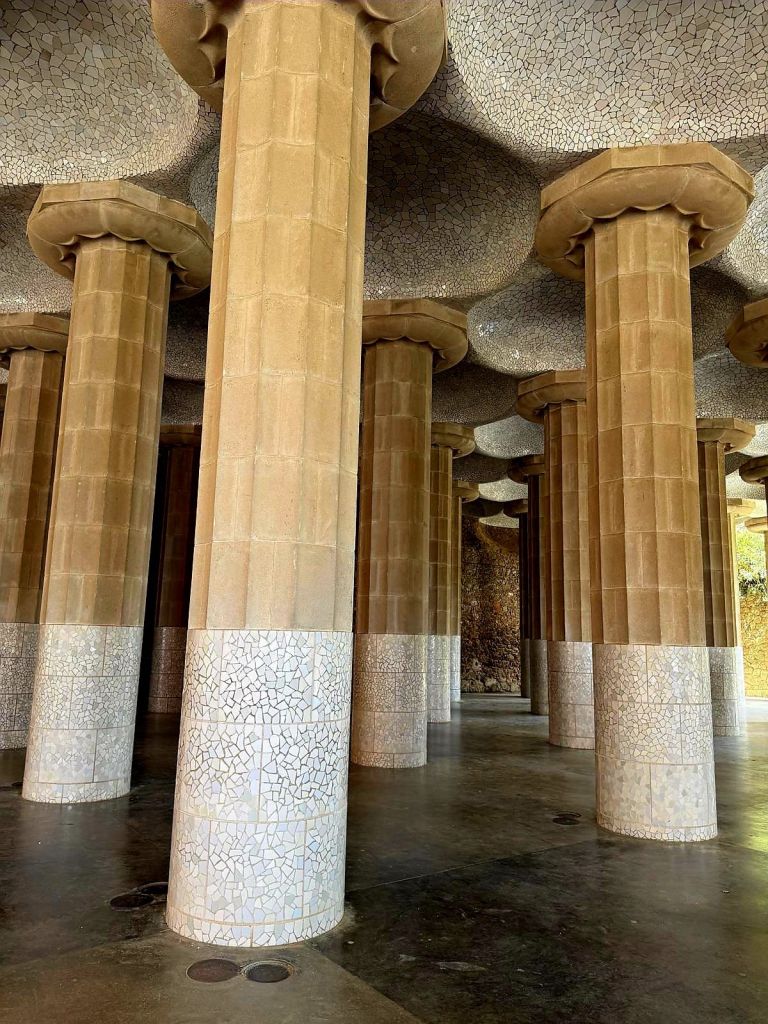
As we eating breakfast, the fishermen were pulling their nets along the sea.

After breakfast, we made ourselves comfortable on some sun loungers on the beach.

It was really hot, around 35⁰C and there were no umbrellas for shade, so we had to keep getting in the sea to cool down.

We also went and sat in the swing chair in the shade.

Around lunchtime we went to the open cafe area and had a beer.

We had decided we wanted to go dolphin watching the next morning so we went to the shop next door on the beach to book it. While we were there, Mandy and I booked to go snorkelling the day after, too.

We were all getting very hot lying on the beach, so we decided to walk along the beach into town – it’s around a 3-mile walk.

We passed the temple on the beach, which is really colourful, and lots of fishing boats.

Around an hour and a half later, we made it to the town. We walked up a little side ally to get onto the main street and walked along this for a bit.

We were all quite thirsty, so we managed to find a locals cafe for a drink. I had a passionfruit milkshake.

Trincomalee has been one of the main centres of Sri Lankan Tamil speaking culture on the island for nearly a millennium. Trincomalee is sacred to SrilankanTamils and Hindus around the world. The city has many Hindu sites of historical importance. These sites are sacred to the Hindus, and some Buddhists also worship at these Hindu sites.

The harbour in Trincomalee is renowned for its large size and security; unlike any other in the Indian Ocean, it is accessible in all weathers to all craft. It has one of the largest Dutch forts, which is now used by the Srilankan navy.
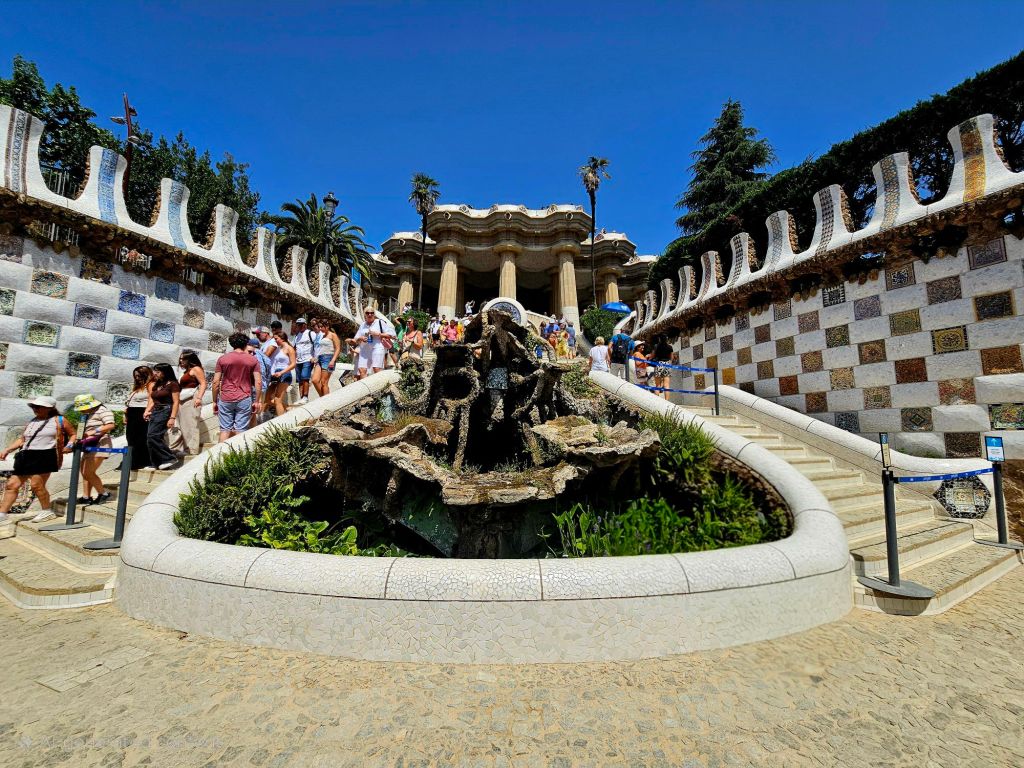
We wandered around the town for a while before deciding to head back home.
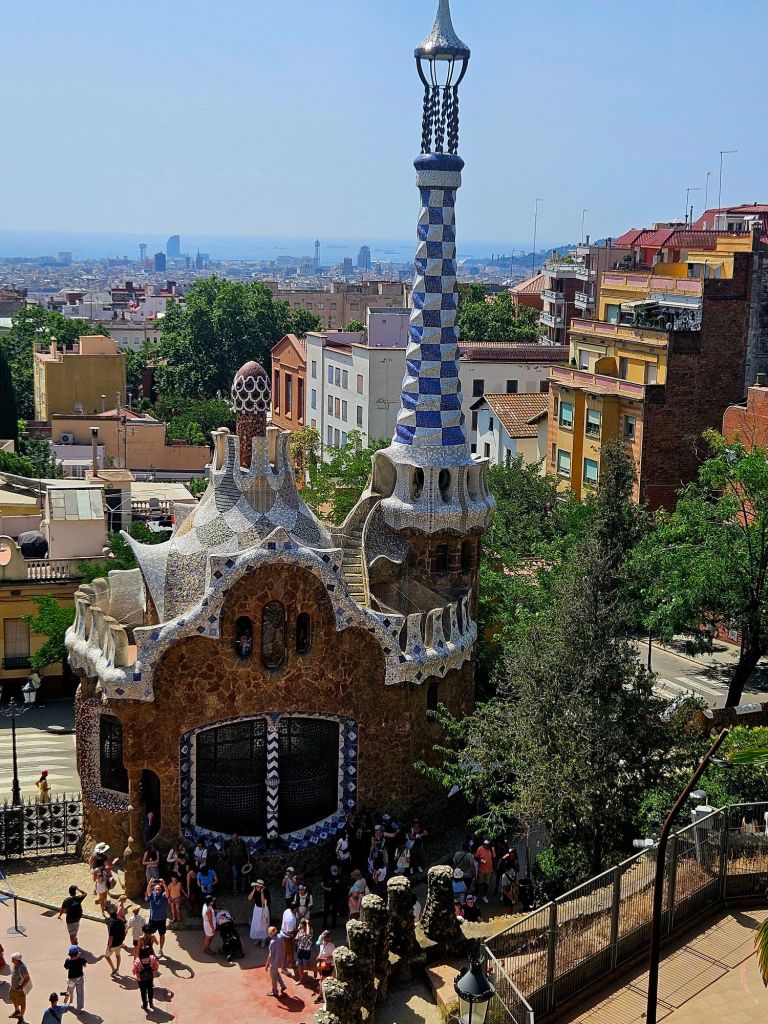
It was a long, hot walk back along the beach, but we did spot a pretty bird.
As we were walking down to our hotel, we decided to stop off and have dome refreshment on the beach.

As we were walking back to the hotel, the sun was starting to go down.

We walked back to the hotel. I say hotel, but it’s more like a b&b without the breakfast.

After a refreshing shower, we noticed a couple of cockroaches in the room. Mandy and I managed to catch the one under the bed in a glass, scoot it over to the door, and chuck it out. The second one was in the bathroom, and we just left it under the glass as there was a step up to the bedroom, and we couldn’t scoot it along the floor without it escaping.

For dinner, we walked down the beach to a restaurant called Waves. It had loads of fish and seafood, and we decided to share the garlic prawns and fries. They tasted really good.

We got chatting to the owner, Raj, who has recently undergone a hip operation. We also chatted to a welsh guy called Ian, who was teaching diving for the dive shop that Raj owned. It was interesting chatting to them both.

We had a couple of drinks with dinner and I tried some of the Red Rum, it was really nice.

We had a lovely evening chatting with everyone, but after a while, we decided to head home.

There was a DJ night going on at Fernando’s bar, so we stopped for a quick drink. But we didn’t recognise any of the music, so we headed home.