This morning I decided I would walk up Monserrate. It’s one of the mountains surrounding Bogota. It’s 1500 steps and the highest point is at 3150m. It was quite a tough climb and I had to stop a few times to catch my breath.
One of the other girls from the hostel, Sabrina from Germany, decided to do it too so we started the climb together. On the way we met a Canadian guy Christof and then three other girls; Olivia from England, Rebecca from Finland and Franzi from Germany.
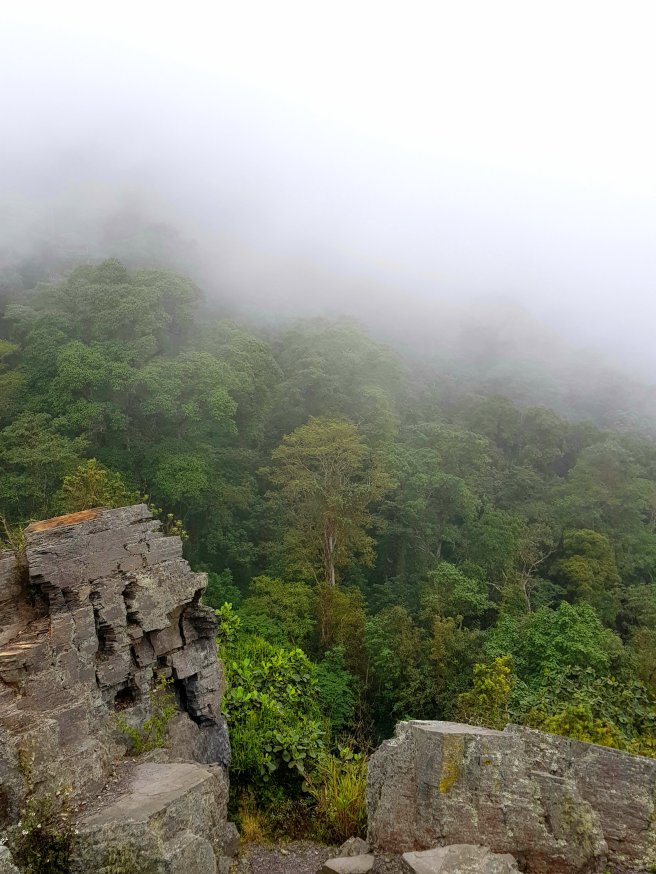
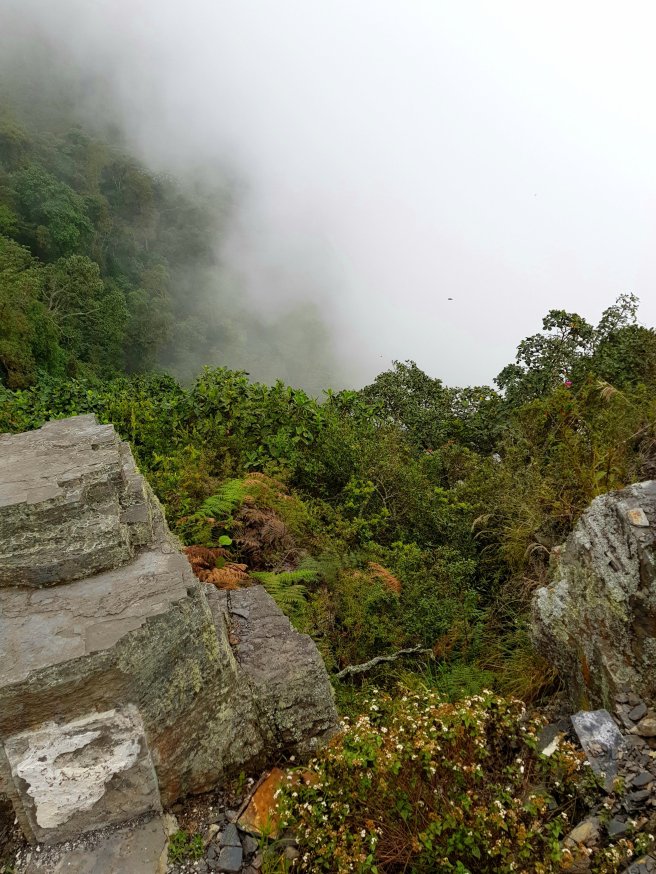
Although the climb was hard the view was stunning. You could see all across Bogota and the surrounding mountains.
There was also a church at the top and quite a large market. We were lucky with the weather as there weren’t too many clouds and we got a good view.

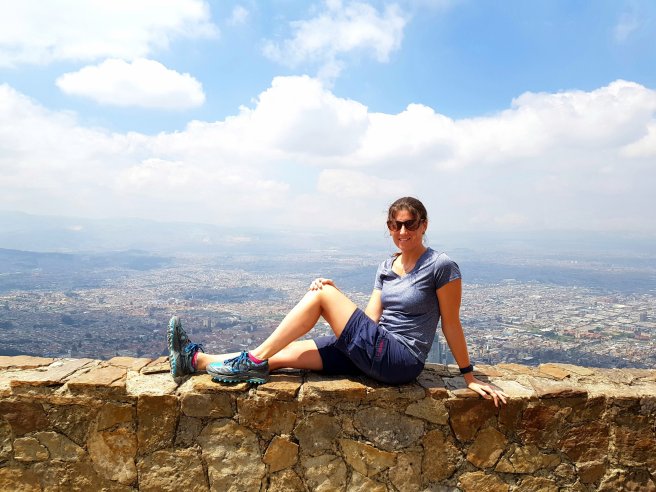

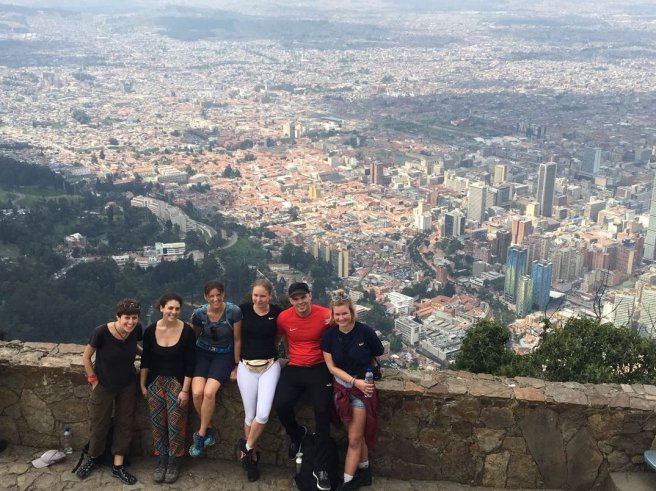
We wandered around at the top for a bit and I had a vanilla milkshake type of drink with a cheesy roll.
We then caught the funnicular back to the bottom which took a couple of minutes – very different to the hour and a quarter it took to climb up!
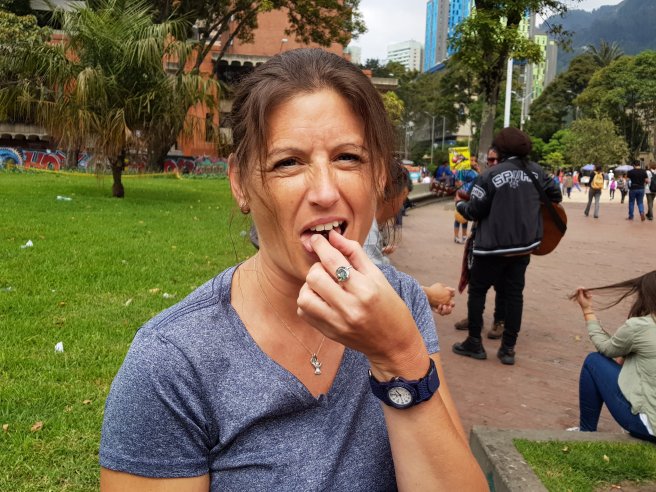
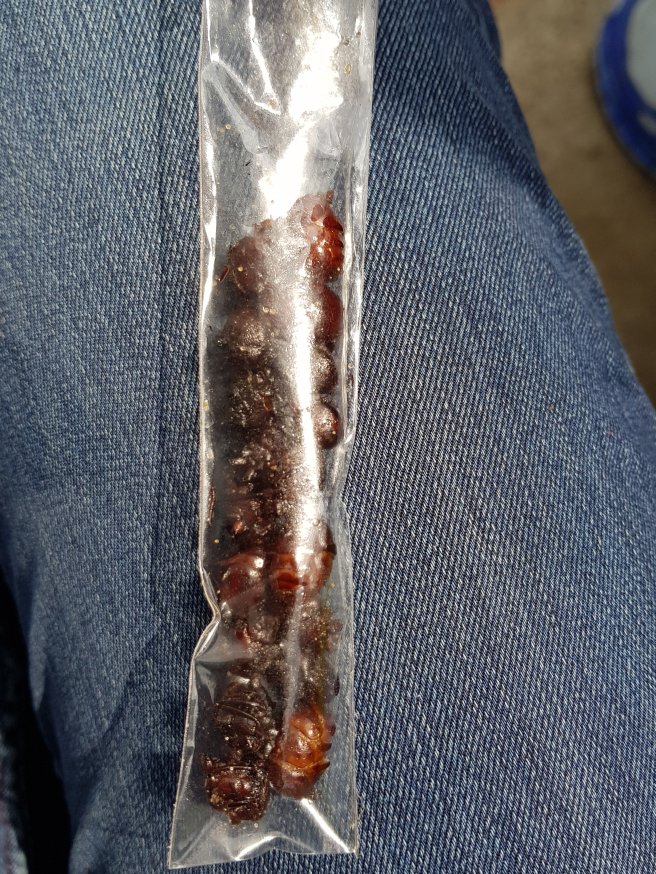
Sabrina and I went back to the hostel for a quick rest and a cup of coffee before setting out to join the free graffiti tour. We met Olivia there again too. In the square where the tour started they were selling fat bottomed ants to eat so I decided to try them – they taste like crispy bacon!
The free graffiti tour was amazing. Our guide was fantastic and as well as explaining about the graffiti, or rather street art – as it is so much better than the average graffiti you see – he explained all of the history behind it, including all the politics. Only 6 and a half years ago a young 16 year old graffiti artist was shot by the police for creating his street art.
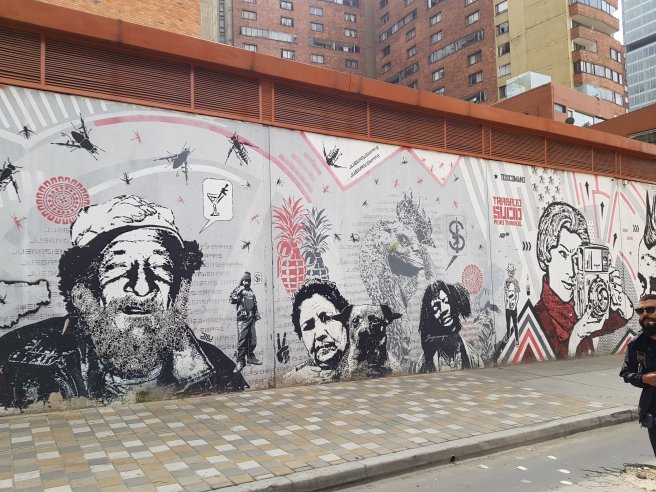
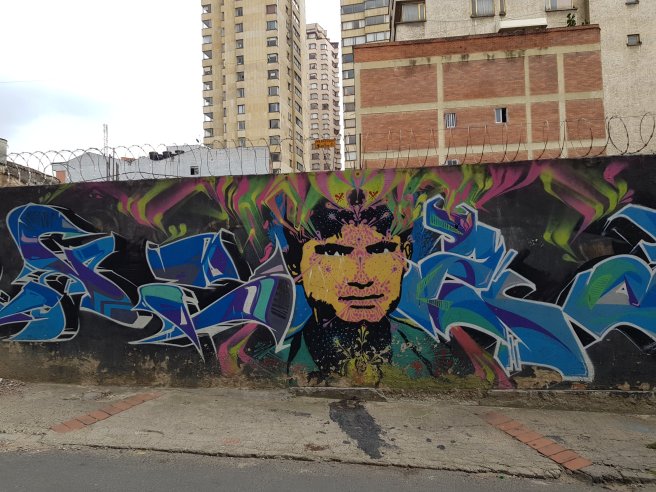
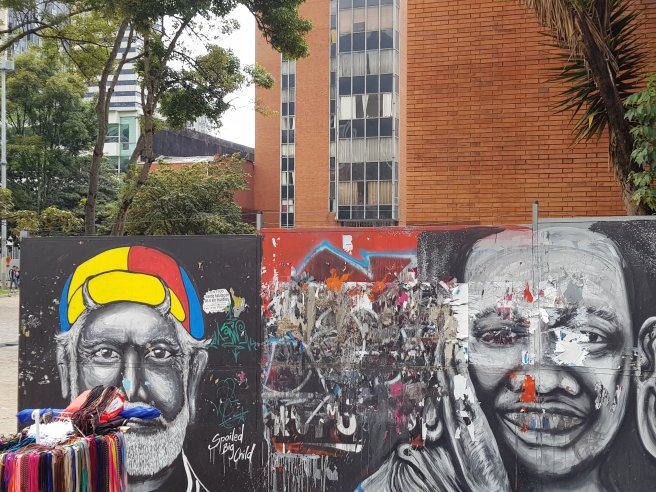
A lot of the graffiti speaks out against the corruption in Colombia. Although creating graffiti is not illegal in Colombia it is prohibited unless you get permission from the owner of the property on which you want to paint.
Some of the graffiti doesn’t have political messages and in one area the city have paid graffiti artists to create art in a play / sports area.
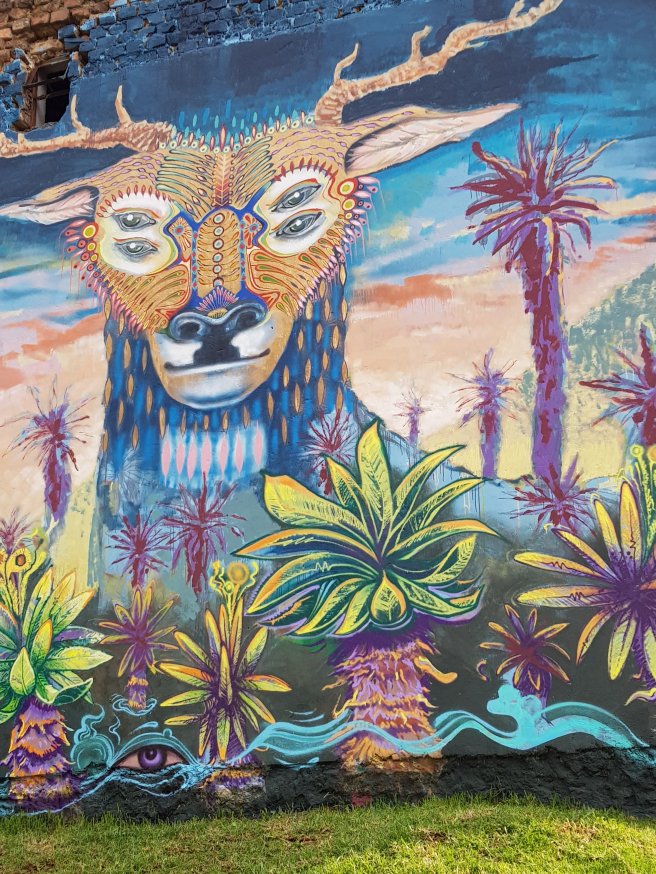
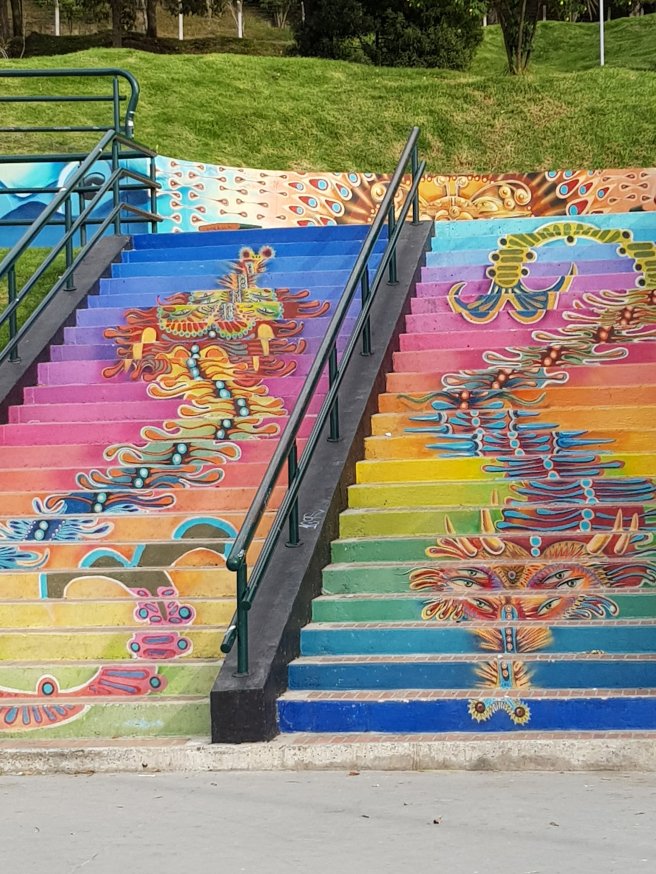
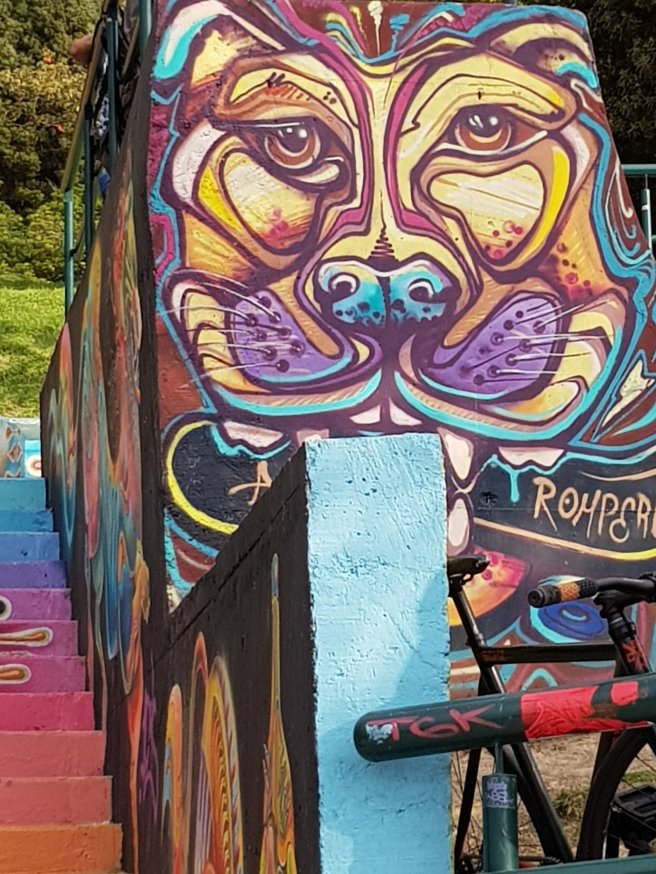
I think a couple of my favourite pieces were these two:

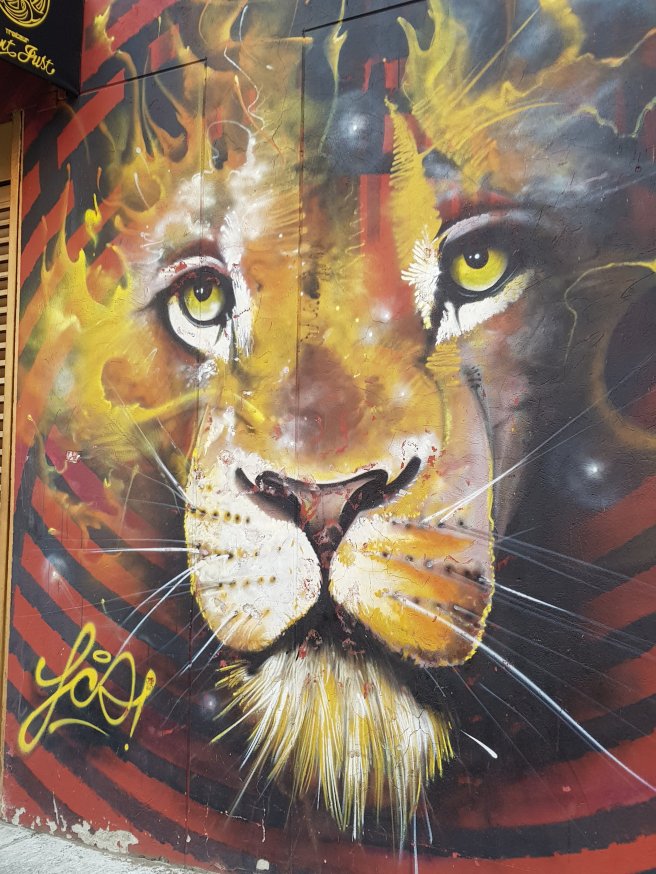
It’s amazing what the artists create.
During the tour the police came and spoke to our guide. Tours in Colombia have to have a certified guide – our guide wasn’t one but had bought a certified guide along. However, the police questioned him for around 30 minutes but after this time he found us and continued with the tour. It’s a shame the police feel they need to do this.
The art below was also a very clever use of space, using the lamppost and sign as part if the artwork. We came and ate here later this evening too.

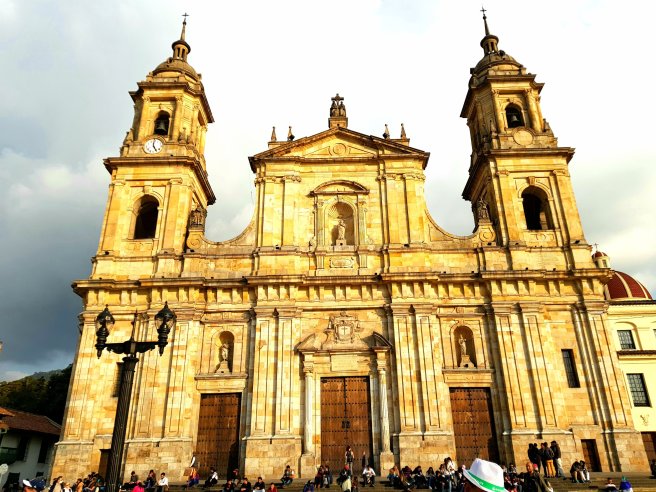
After the tour Sabrina and I had a quick look around the main square (Plaza Bolivar) which actually wasn’t that nice and full of pigeons. The cathedral at the square was a nice building.
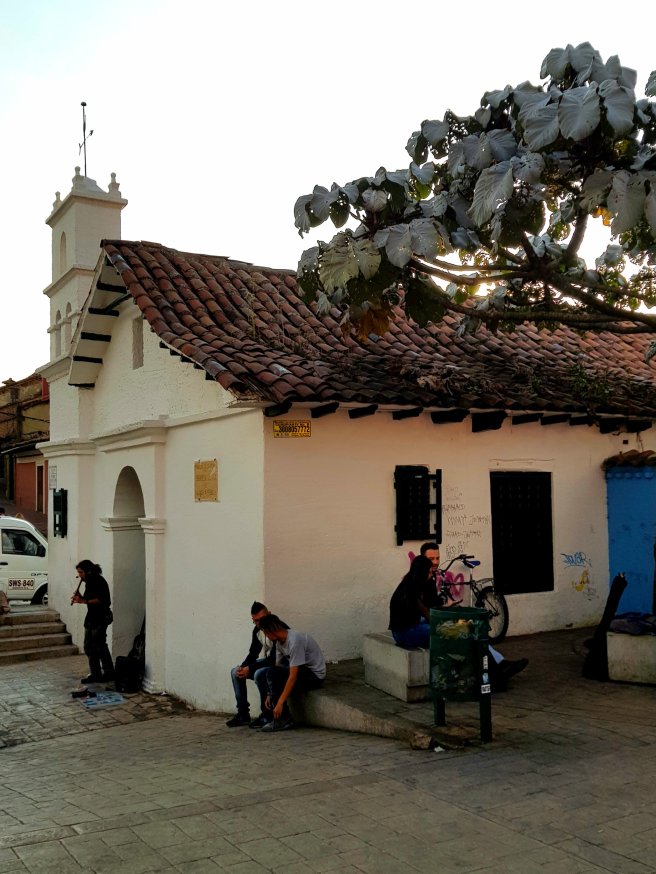
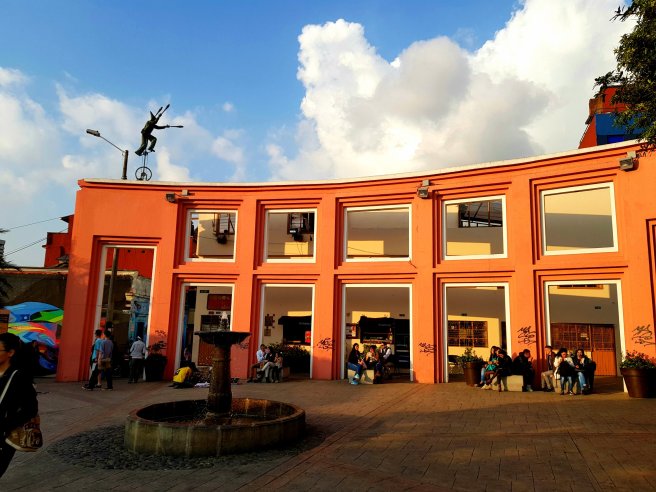
We then walked to another small square, Chorro Quevedo, which is where they say the city of Bogota was founded.
By this time were pretty hungry so we stopped off and had a Tamal which was very tasty.
We headed back to the hostel down a gorgeous pedestrianised cobble street with more graffiti on the walls.

I had a bit of a rest before meeting up with Sabrina, Rebecca and Olivia for dinner at Dos Gatos y Simone – a Mexican/ Colombian restaurant where I had some steamed trout with quiona.

We decided to go for a drink and I tried chiachi- a sort of fermented corn drink – which was actually ok although not my favourite drink in the world. We had a bit of a chat for our reasons for travelling and what might change when we get home which was very interesting.


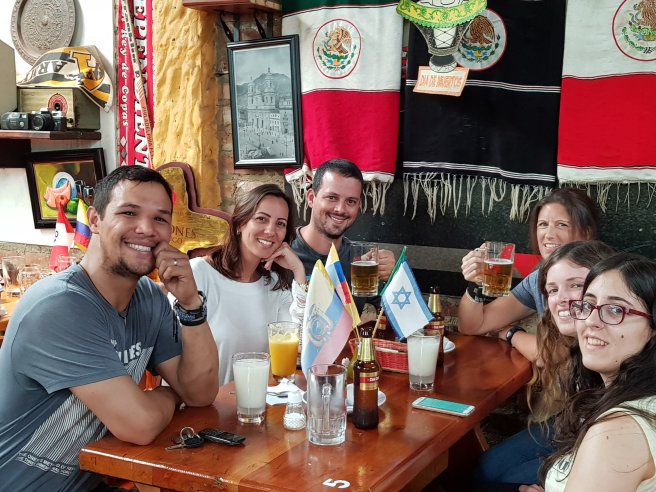








 I then wandered back into town where I met a guy, Marcus from Germany, in the town square – we chatted for a bit and then decided it was time for a beer.

