Tierra del Fuego national park

The park is part of the Tierra del Fuego region. The name Tierra del Fuego comes from the Portuguese Ferdinand Magellan who was the first European to come to this area. He saw the many fires (fuego in Spanish) of the Yaghan natives, which were visible from the sea.

The park itself is 63,000 hectares and belongs to both Argentina and Chile. It became a national park in 1960.

I met a girl, Ainhoa from Madrid but living in Canada, on the bus from Ushuaia to the park. We chatted and found out that we were both intending to do the same hikes so we decided to hike together.

Initially we went to the very end of route 3 which goes all the way from Alaska to the park.
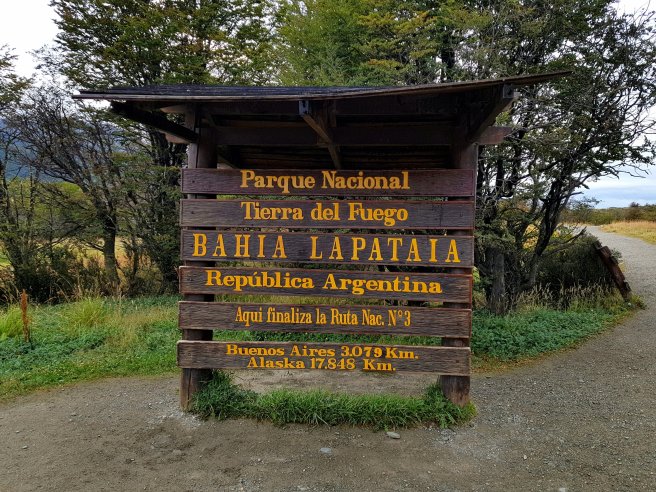
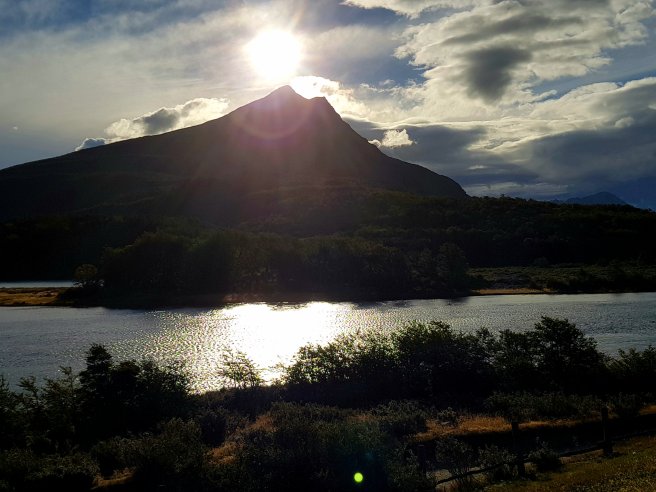
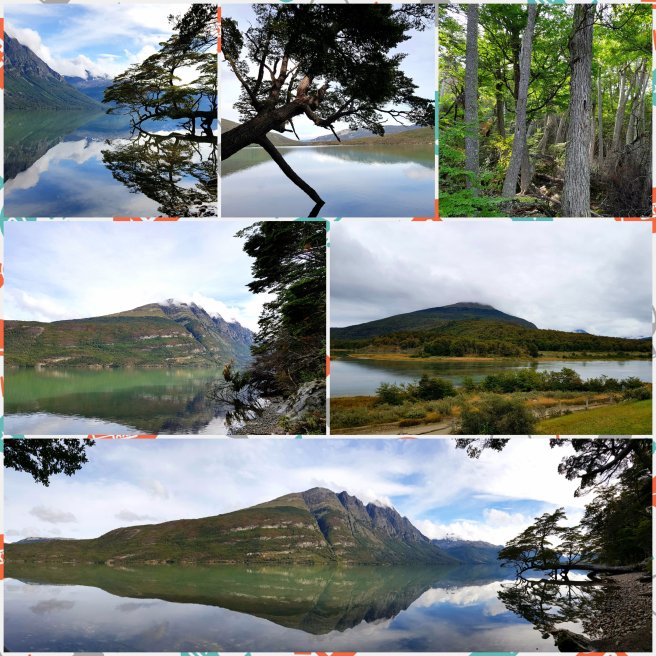
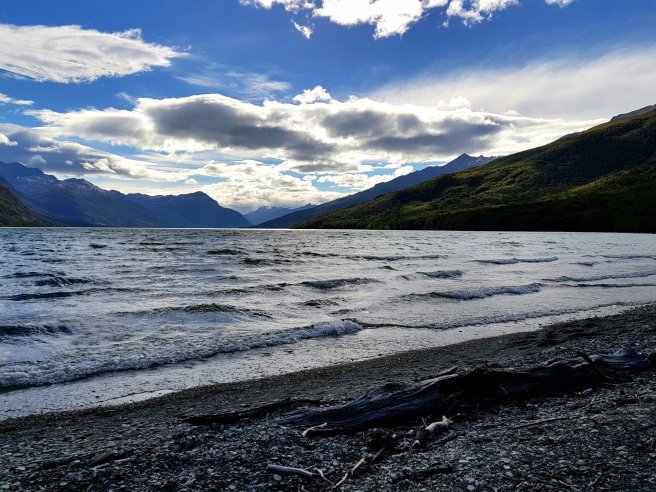
We then did a small hike around Lapataia lake through a beech forest. The lake was really calm and you could see the reflections of the mountains and sky in the lake.

We then hiked up to the visitor centre past Laguna Negro which is a peat bog and also passed Laguna Verde.
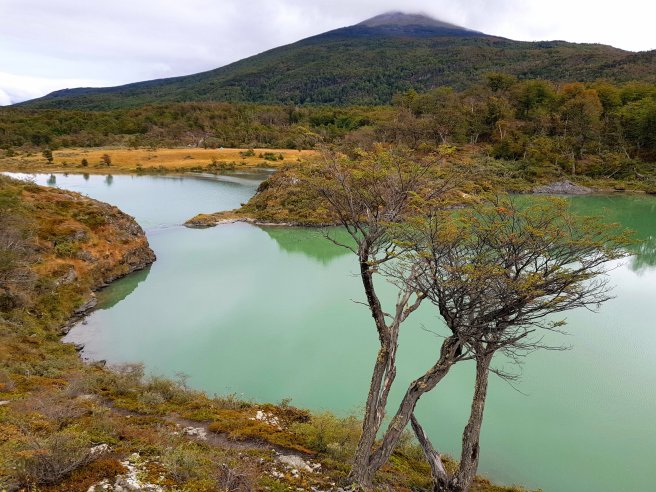
At the visitor centre we stopped for a coffee and a sandwich before setting out on the Hito trail. This trail was a great hike through the forest around the perimeter of Laguna Acigami, to the border between Argentina and Chile. On the way we met another girl, Yana from New York but living in Santiago, who I met yesterday on the penguin trip.
It was around a 4km hike to the border and when we got to the border there was just a little sign.
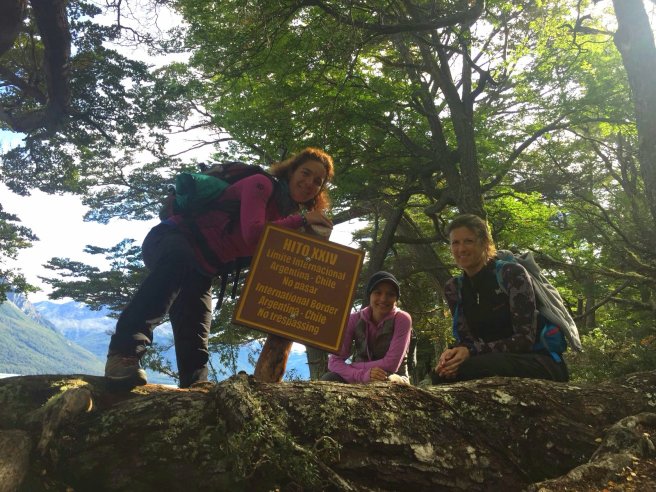
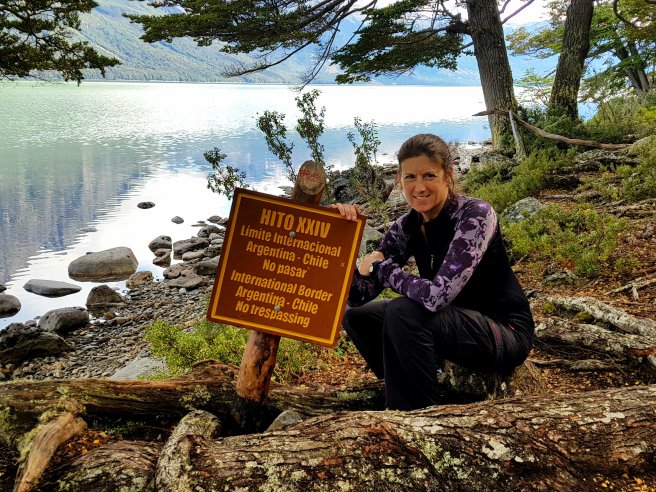
You could actually pick up the sign and we did think of moving it a bit further up or down the path but thought it was probably best not to!

It was a beautiful sunny day so we decided to take a little rest in the sunshine on the shore of the lake before heading back to the visitor centre. On the trek back we heard a woodpecker but we couldn’t actually see it.

During the hike we saw a couple of chimangos, which are from the falcon family, and what looked like a wild goose.
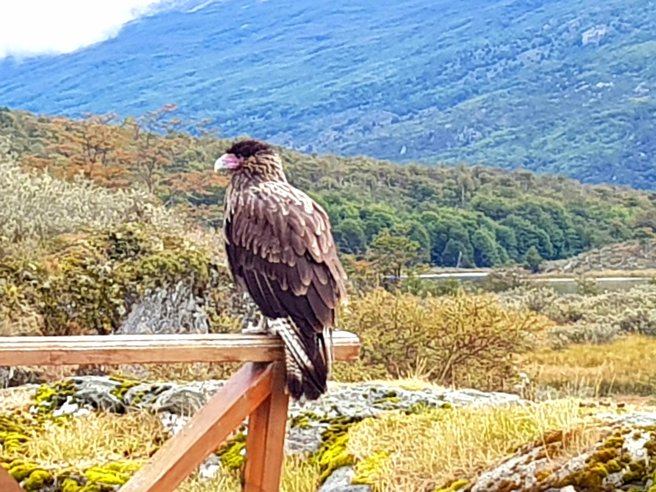
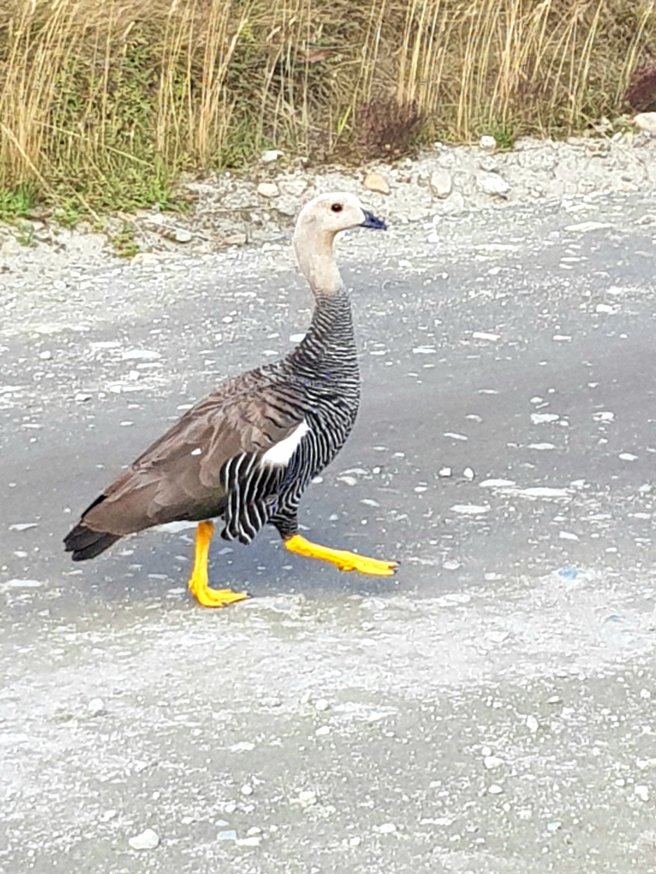
We also saw a herd of wild mustang on the drive back out of the park.

As we were leaving the weather started to get windier and colder.
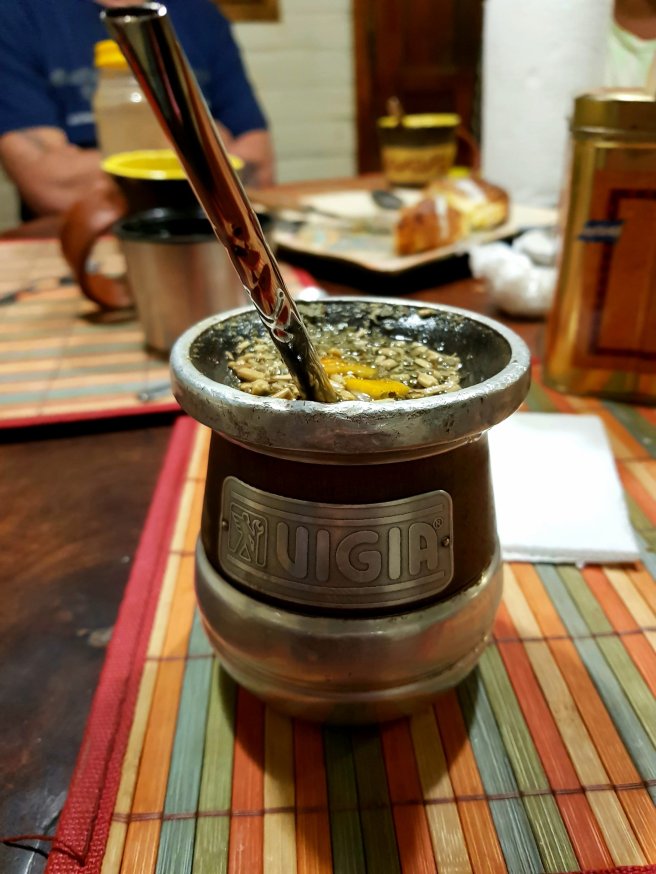
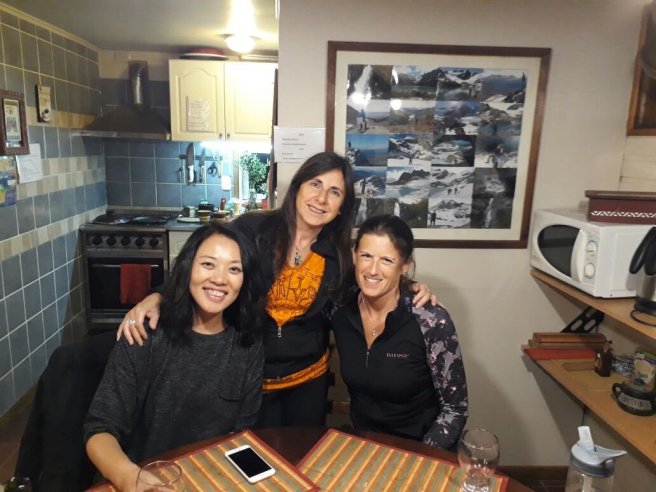
When I got back home, the couple I was staying with (Laura and Dani) had some friends over so we all sat around chatting and I tried some mate tea. It’s really bitter but I actually quite liked it.
A little later the girl staying in the apartment came home. She had just been on a 10 day trip to Antartica and the photos were amazing – another trip to add to my list.
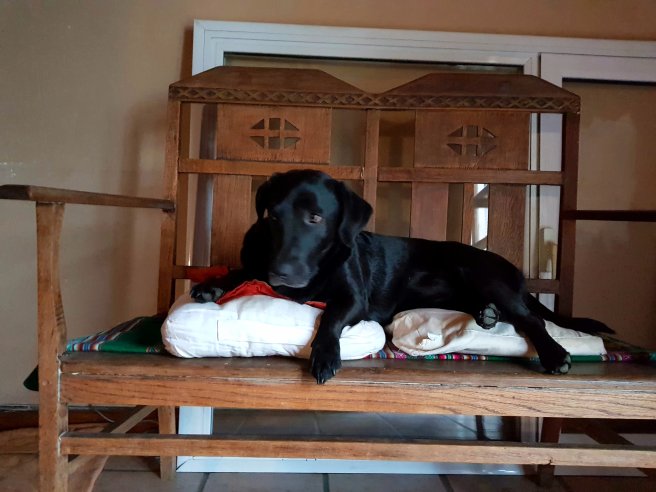
Laura and Dani have a gorgeous dog, Morita, who is really friendly and so well-behaved.
Ushuaia and Penguins

This morning I woke up and everything was frosty, it felt like being back home as it was only around 5 degrees.

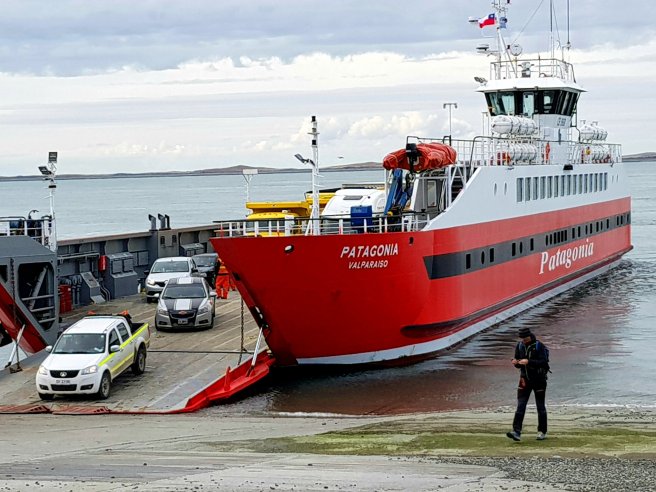
Yesterday I travelled from Punta Arenas to Ushuaia which took around 12 hours, mainly in a bus but also a quick ferry ride and two stops at borders to exit Chilli and enter Argentina again. I sat next to a girl called Laura from Switzerland and we chatted quite a bit inbetween snoozing.

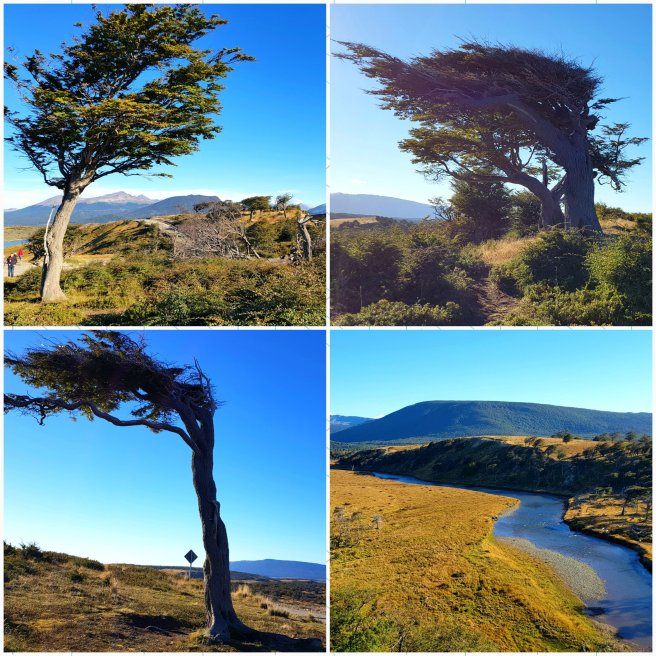
Today I went to see the penguins as part of an organised tour with PiraTour. We left the port at 8am and went by bus to Harberton Ranch. On the way we stopped to see the famous flag trees which have been bent into the flag shape by the strong winds.

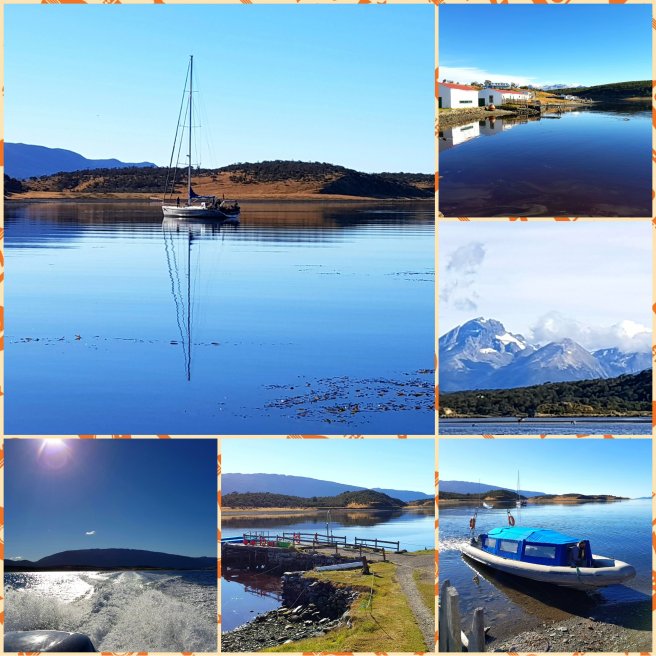
It was then just a short drive to the ranch where we took a motorboat over to Isla Martillo.

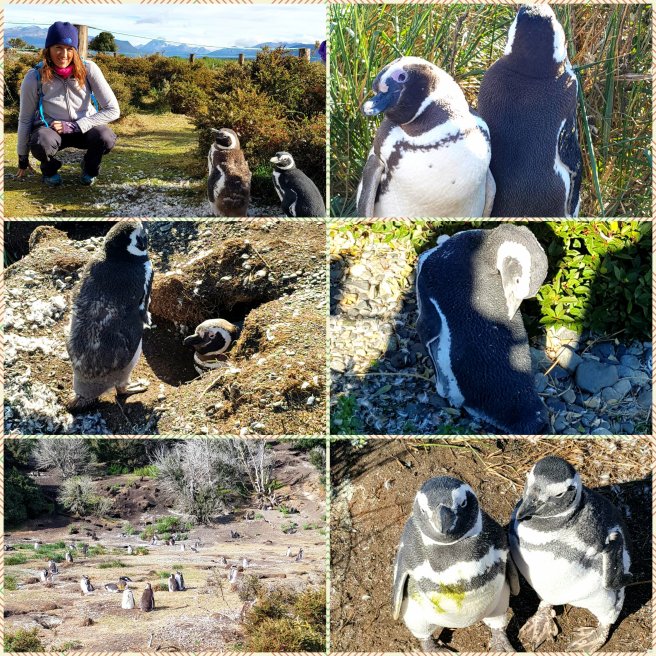
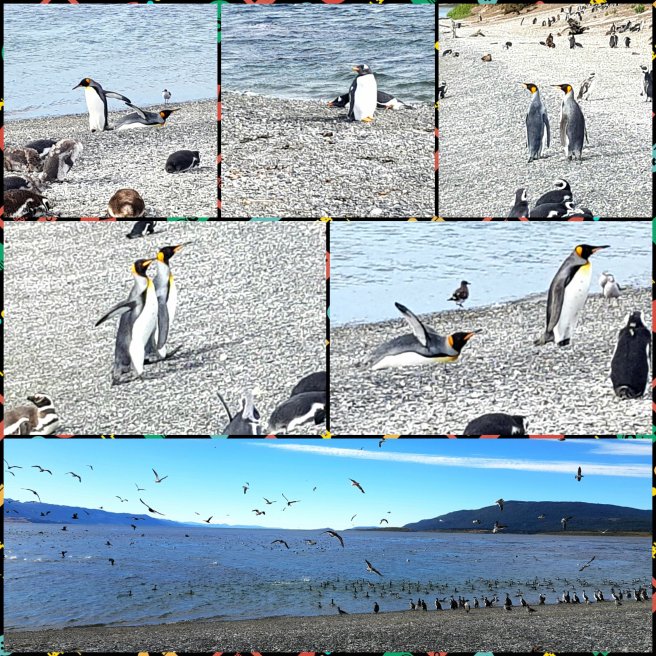
This island is a nature reserve so only groups of a max of 25 people can visit at any one time. The island has a colony of around 12,000 Mallagenic penguins and a small colony of 80-100 Gentoo penguins. The Mallagenic penguins come to the island every year between the end of September for around 6 months to mate, raise their young and then malt before heading back to warmer climates. The young mature quickly – only taking 2 months to become independent and all the chicks have already left the island. The adults are monogamous and they dig a hole in the earth as their nest which they line with feathers and grass etc and they return to the same nest each year. You could get really close to the penguins – obviously you weren’t allowed to touch them, but they seemed perfectly happy to have people around.

We also saw the Gentoo penguins and these are slightly larger with orange beaks and feet. They seemed slightly more wary of people. These penguins stay on the island the whole time and make nests out of rocks. We were also really lucky as we got to see a pair of king penguins – these were much bigger with the distinctive colours on their chests and heads.

The island is quite large and everywhere you looked there were penguins. There were also quite a few Cormorants which are easily mistaken for penguins but can fly. We also saw albotros from the boat.

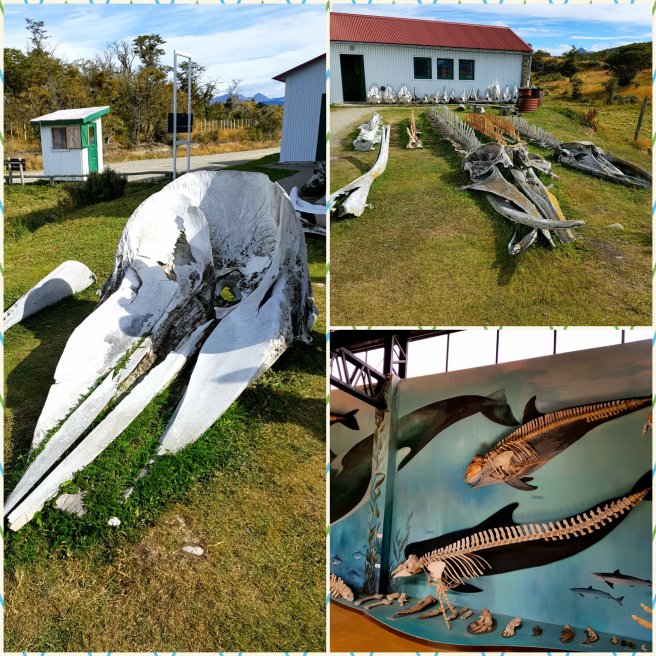
When we got back to land we went to visit the museum at the ranch which had numerous bones from a variety of marine life – it was really interesting to see the size of some of the animals and also to discover that killer whales actually have more in common with dolphins than whales.

The skull below is from a sperm whale. Up until the 1980s these whales were hunted for the oil they had in the top of their heads that enables echo location. This is now banned.
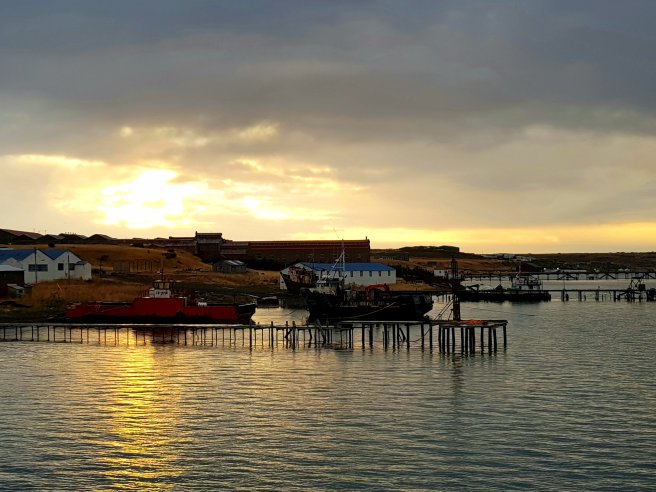
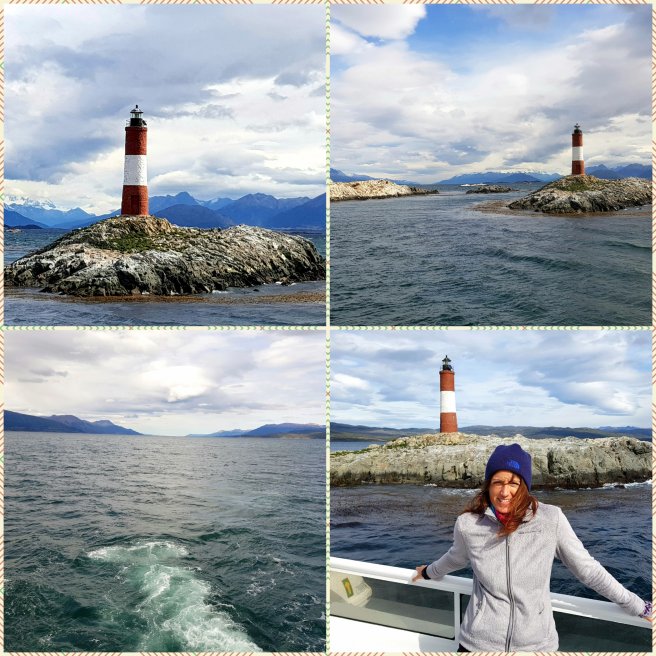
We then caught a larger boat to navigate through the beagle channel named after the HMS Beagle captained by Robert Fitzroy with Charles Darwin on board.
We stopped to have a look at the ‘end of the world’s” lighthouse on the way through. The photo on the bottom left shows were the two oceans come together.
We also stopped at a sea lion colony – the majority of the sealions were the south American variety but there were some fur sealions too.

A couple of the males had a bit of a fight over terroritory – the males have a mane, a bit like a lion.

It was an amazing trip and I’m so lucky to get so close to these animals in their natural habitat.

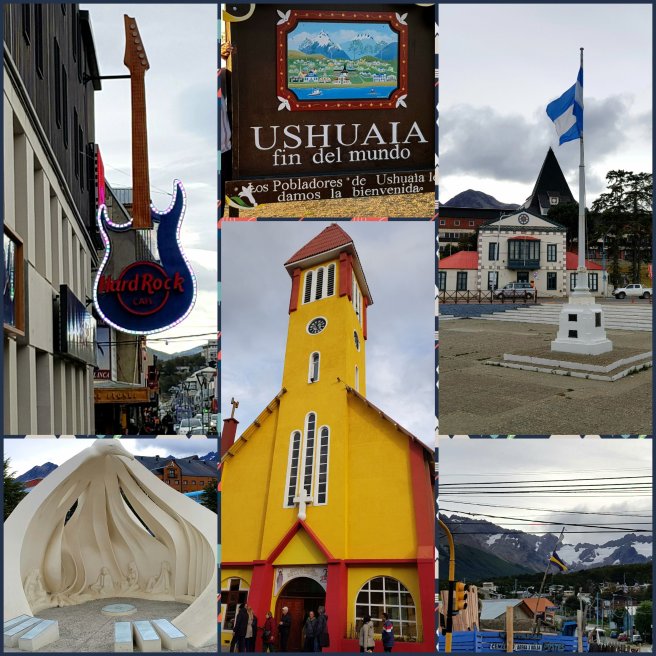
On the way home I wandered around Ushuaia- it’s a pretty town.

This evening I met up with Laura and we went for dinner, some delicious grilled trout, and a couple of drinks in the local Irish pub.

Punta Arena

Today I didn’t have to get up quite so early – around 7am! I got the bus from Puerto Natales to Punta Arenas which was around 4 hours.

After checking in at the hostel I decided to go and explore the town as I’m only here one day.

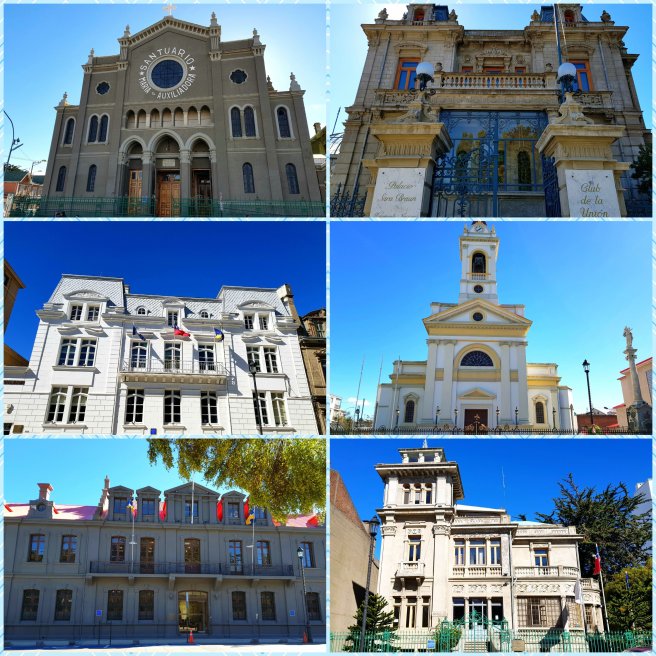
I walked to the town square passing several churches (Maria Auxiliadora Don Bosco, Catedral de Punta Arena) and some lovely buildings, mainly old palaces, private clubs and military buildings.

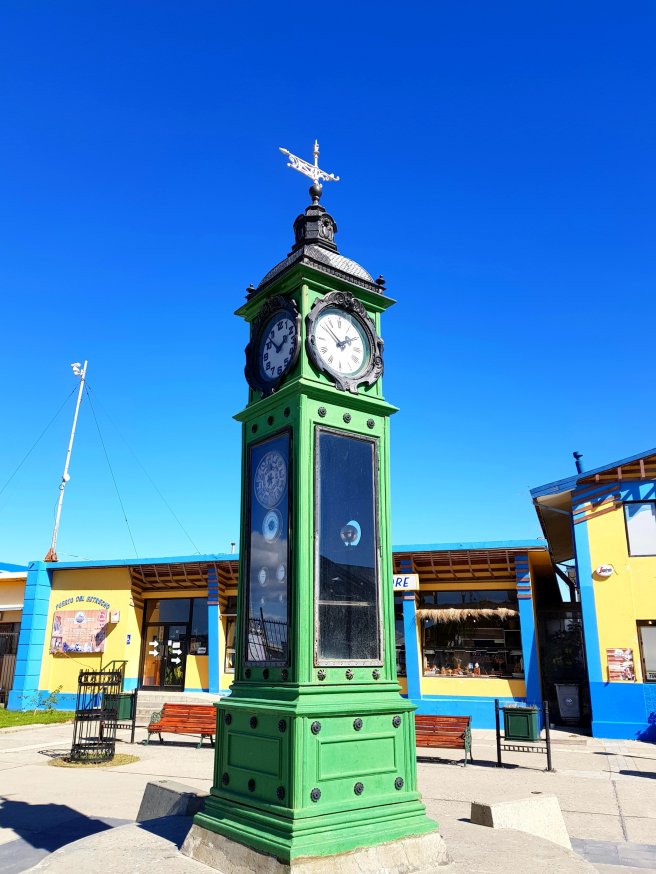
I then went to have a look at the historical clock.This is a meteorological clock that is equipped with a barometer and hygrometer (an instrument used to measure moisture content in the atmosphere) to provide meteorological information, as well as to tell the time.

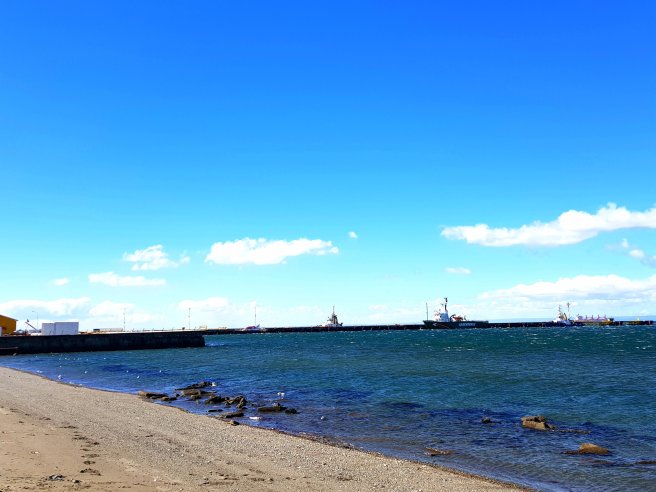
I then decided to take a walk along the coast as it was nice weather- pretty windy though as seems to be the norm in Patagonia.

It was quite nice walking along the beach as there was hardly anyone else around.

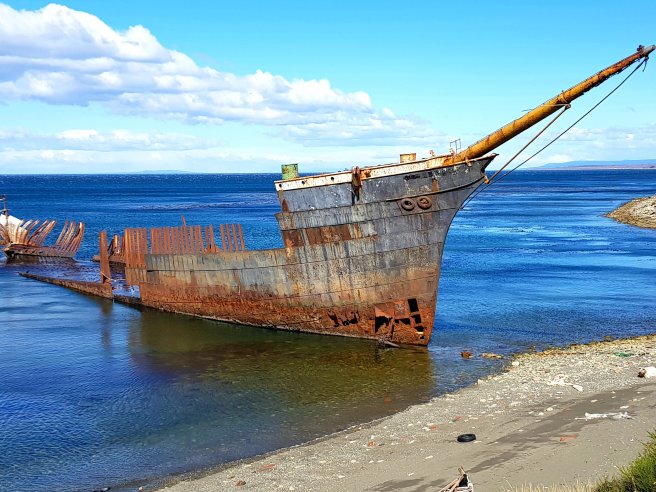
I walked around 4km to the shipwreck of the Lord Lonsdale (and back again. This was an English frigate and nobody knows quite how it ended up here in Punta Arena. There is a plaque in Spanish that says: A tribute to seafarers of all nationalities who crossed the Magellanic sea and made possible the best knowledge and settlement of this region.

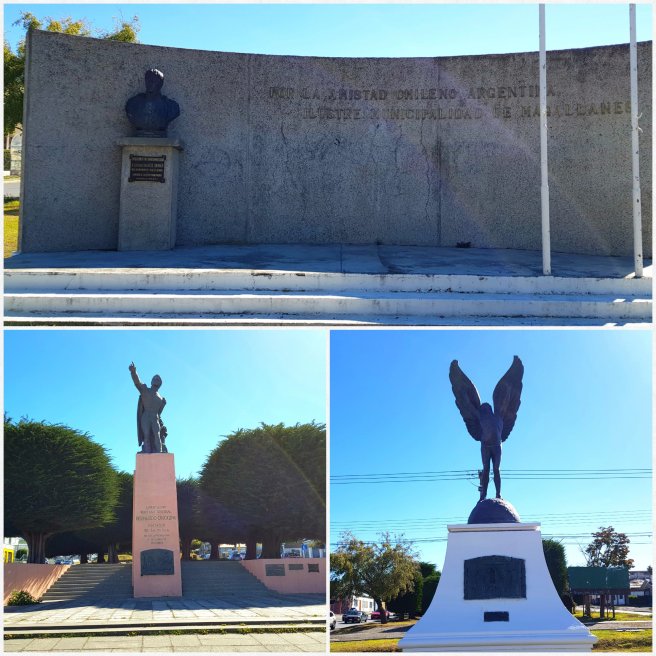
I walked back along the beach into town and all the way up Independence Avenue taking pictures of the monuments on the way.

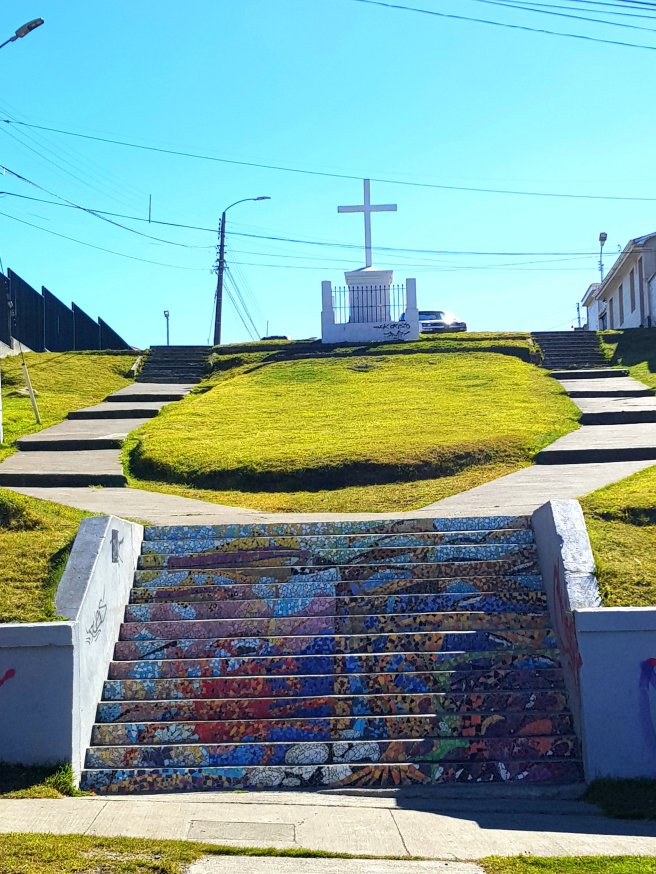
In order to get a good view of the town I went to the Mirador at Cerro de la Cruz which provided a great outlook over the whole town.

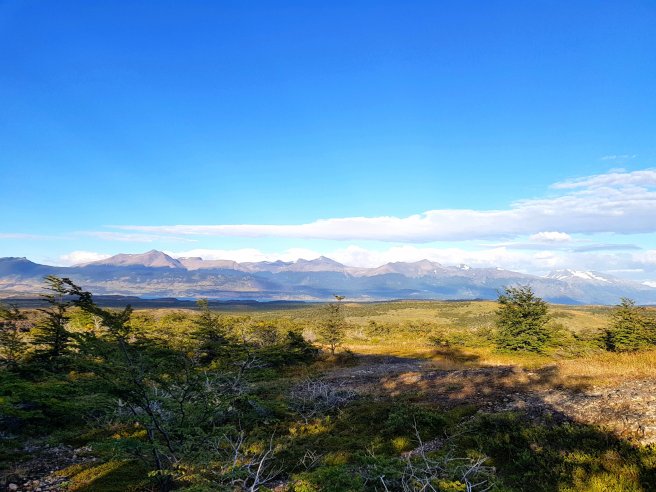
I did then walk to another viewpoint but the outlook wasn’t quite so good.

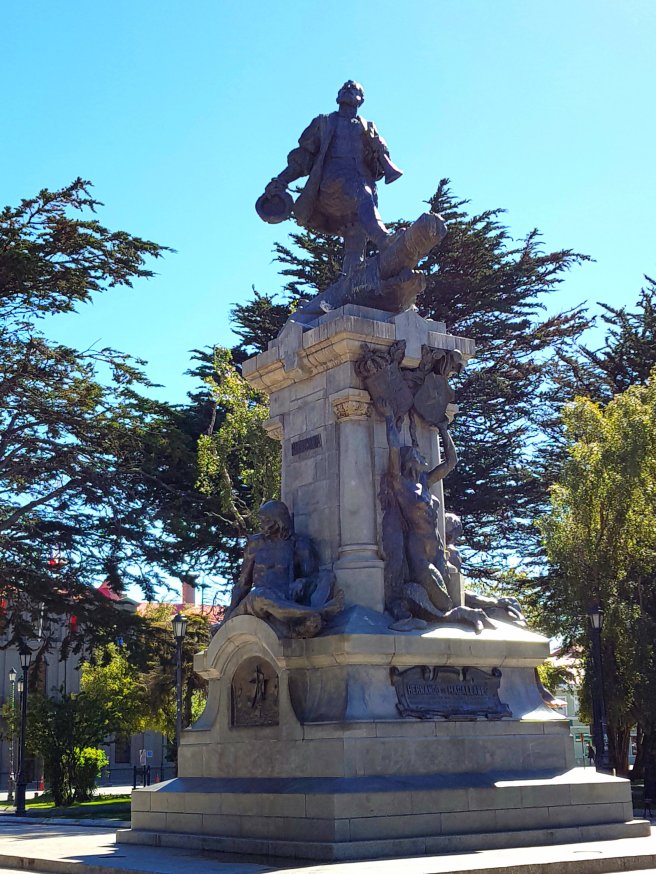
I then walked back to the main square. This is a photo of another monument honoring Hernando Magellan. Apparently if you rub the bronze foot hanging down from the monument you are destined to one day return to Punta Arenas, have good luck and safe voyages!

After all that walking around I decided it was time for afternoon tea – well hot chocolate and lemon pie! It was delicious.

I chatted to a few people in the hostel, a lot of people here are from Germany so I practised a bit of German too.

In the evening I went to a lovely restaurant called La Marmita.

They had guanaco on the menu and although they are really cute I had to try it as I might never get the opportunity again. I’ve got to say it was delicious. I had a berry pisco to accompany it made with calfate berries.

Torres del Paine

Another early start but when I was picked up from the hotel the sun was shining – although it was very very windy.

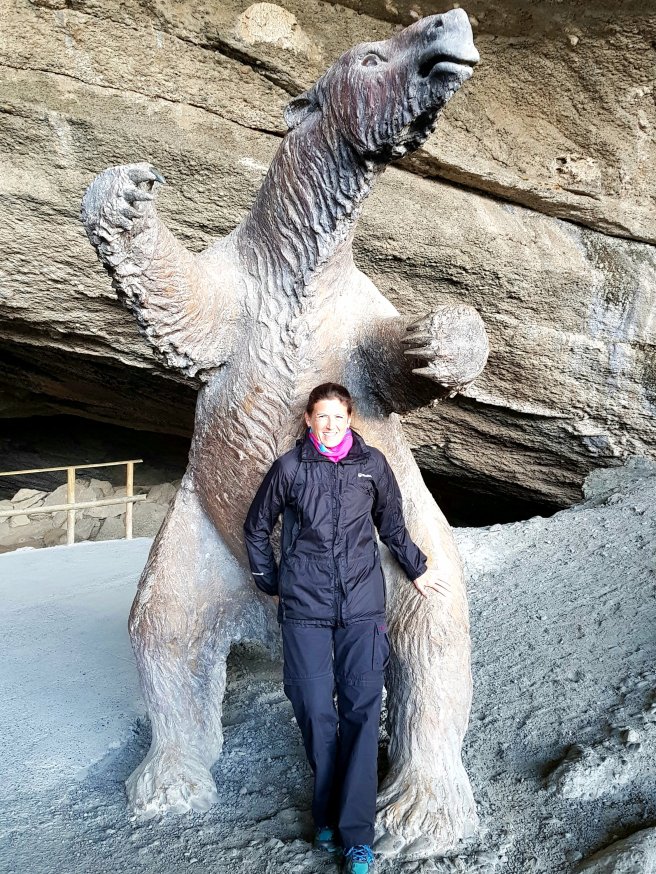
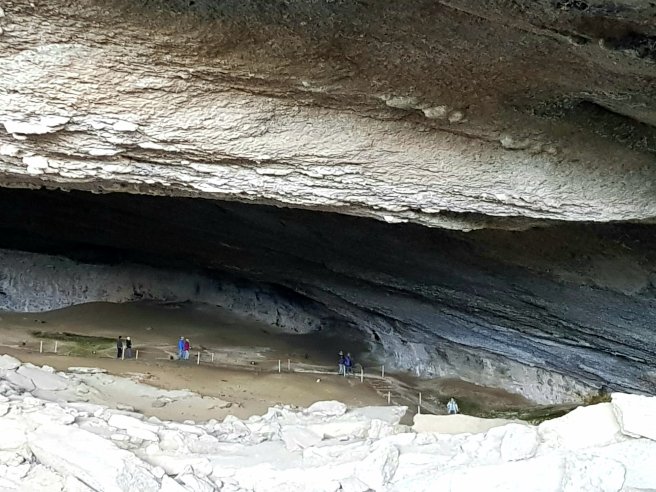
Our first stop of the day was at the Cueva del Milodon at Benitez Hill. Back in 1895 a German explorer – Herman Eberhard- found some animal remains inside the cave. It was the remains of a Milodon which was a giant sloth like animal which is now extinct. They think it was around 2m tall, weighed around a ton, moved on all fours, was a herbivore and was covered in long thick fur. It also had tiny bones embedded in its skin which were the remains of an outer protective shell like an armadillo.

They have a life size replica at the cave and the original remains are at the Natural History Museum.

The cave itself is also really interesting as it was originally formed by a glacier and is now really dry and almost like concrete.

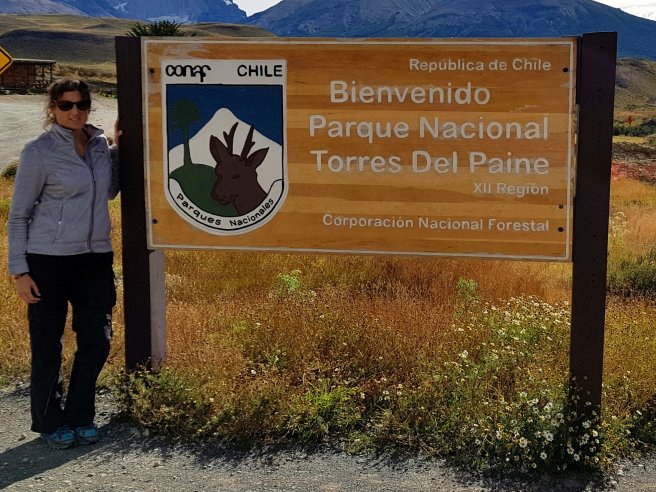
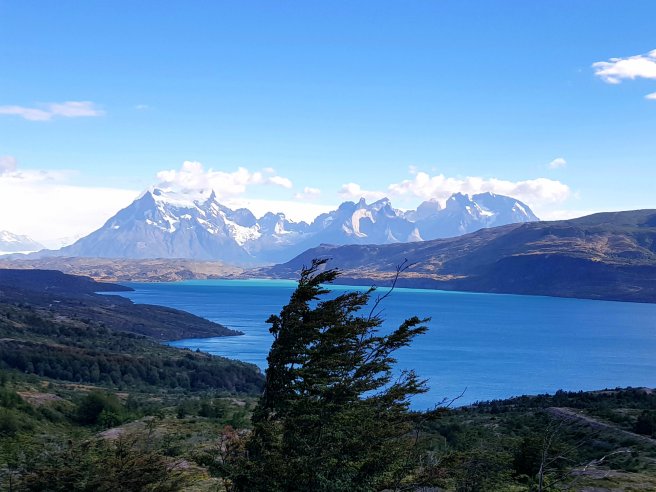
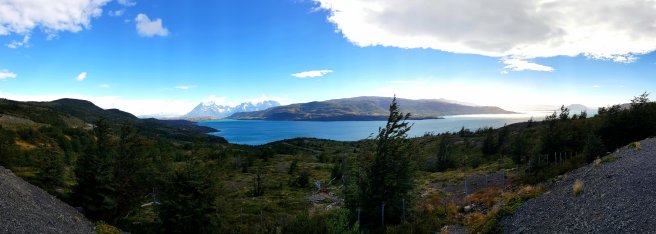
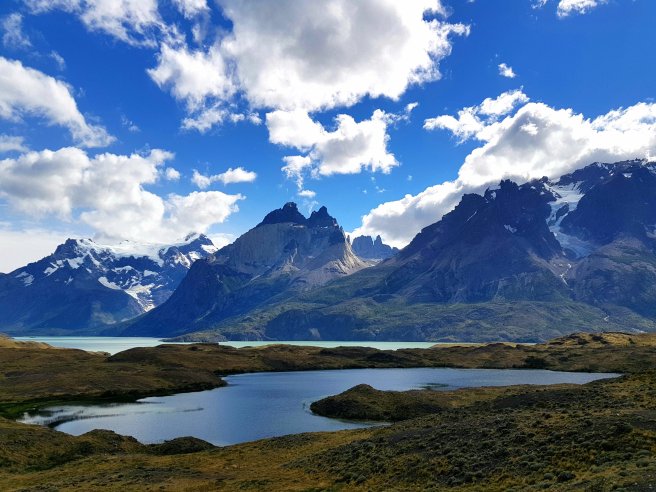
Following the cave stop we headed towards the National park of Torres del Paine. Our first sight of the ‘tower’s’ was at Largo de Toro. This is a huge lake close to the entrance of the park. By the way the National park is immense and covers over 448000 acres of land. It was deemed a protected area in the 1960s. Some of the land is still privately owned and used for sheep and cattle farming.

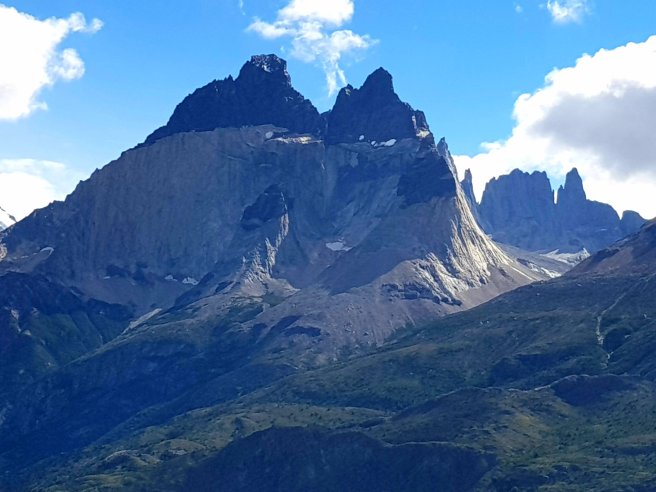
Paine means “blue” in the native Tehuelche and Torres del Paine is named after the three granite towers which rise 2500m above sea level.

We were going to go to Lago grey to wall around the lake and see the glacier but due to all the rain yesterday the lake was at a dangerously high level and the path was flooded and because of the strong winds too the path had been closed. So we walked around 5km up and down along the River Paine. The route itself wasn’t that challenging but the strong winds made it quite difficult as you almost got blown off your feet.

The River Paine is around 23km long and is served by 5 of the glacier lakes.

You can see how windy it was in this video.

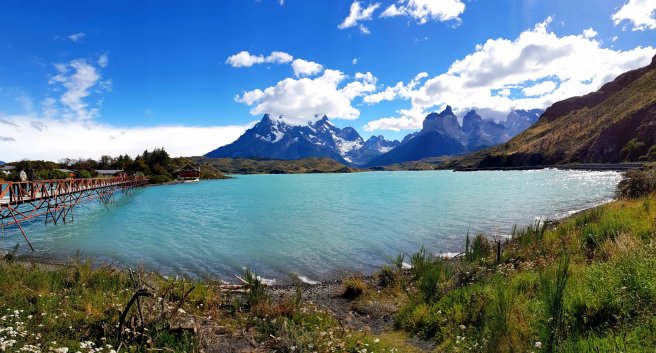
After the walking we’d built up quite an appetite so we stopped at Lago Pehoe for some lunch.

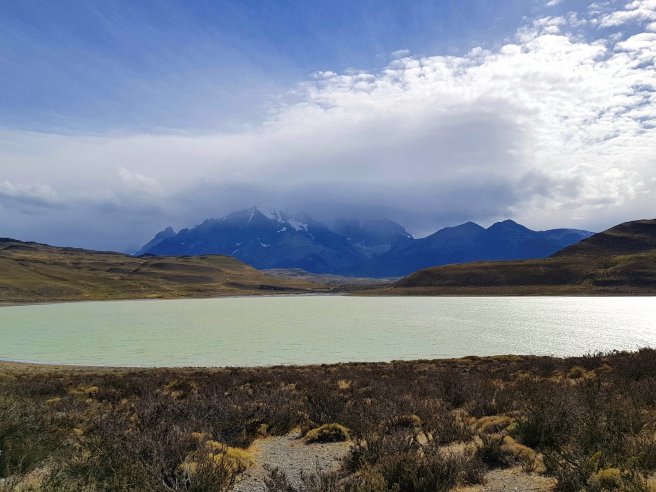
This was a beautiful lake with a really good view of the mountains.

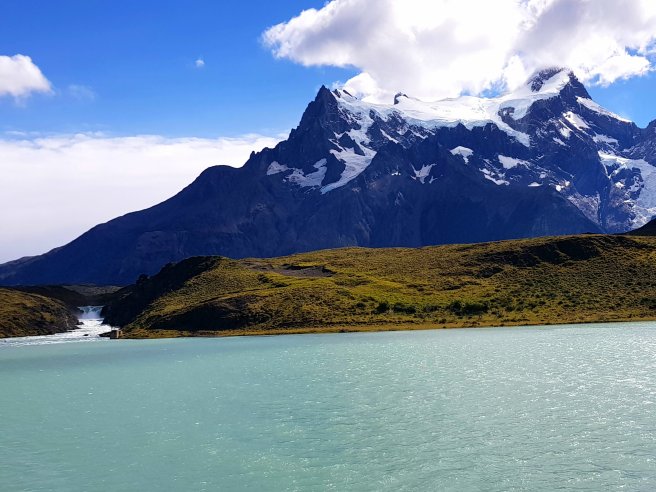
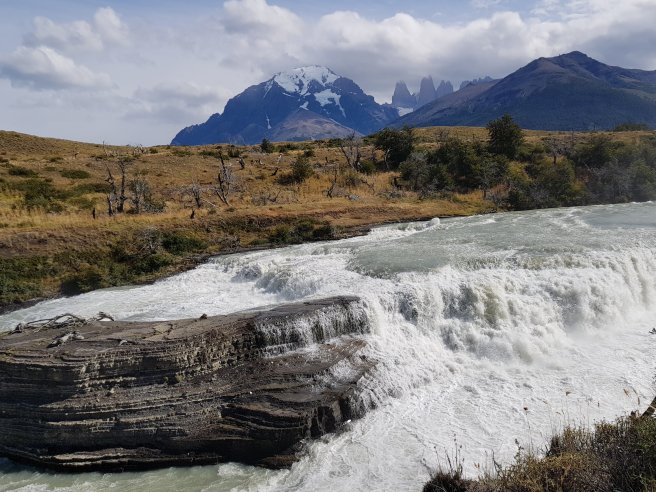
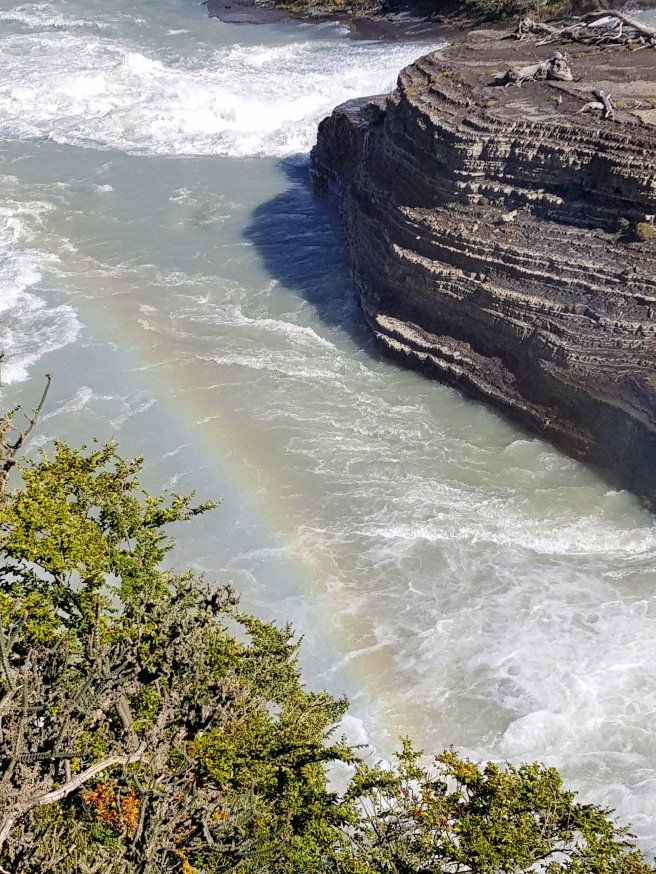
We then moved onto what is called the grand waterfall but it was actually pretty small.

We then visited both Lago Nordernskjold which is known as the winter lake and Lago Samiento which is actually a spring water lake rather than formed from melting glaciers.

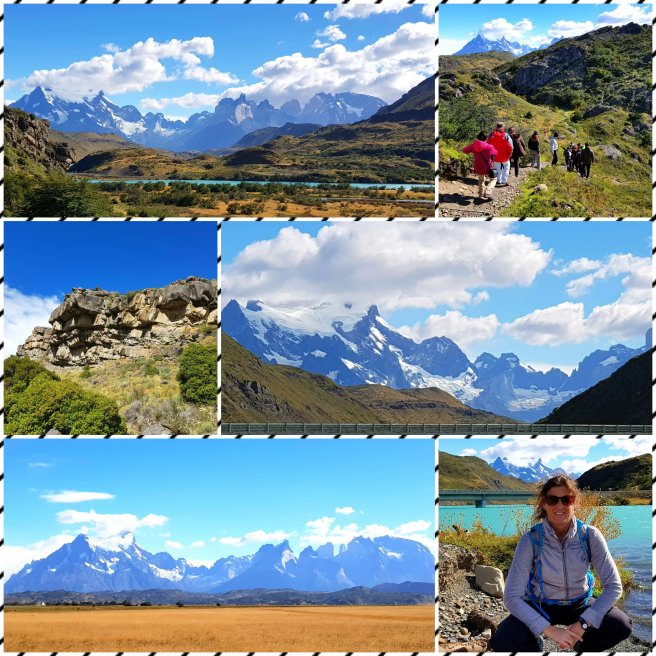
All the time we could see the amazing mountains, some with glaciers at the top. These mountains had been formed by volcanoes that never erupted due to the pressure of the glaciers on top of them. The different colours of the rock are due to granite being uplifted over the sediment and also because certain parts of the rock used to be covered in ice. This can be seen most in the middle tower.

As we neared the end of the tour we stopped at another waterfall to catch a view of the three tower’s again and then at Lago Armaga.

You can see that it was starting to cloud over as we left the park.

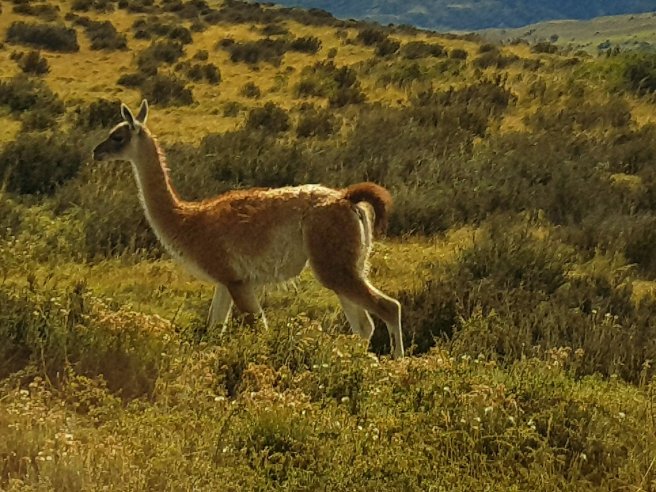
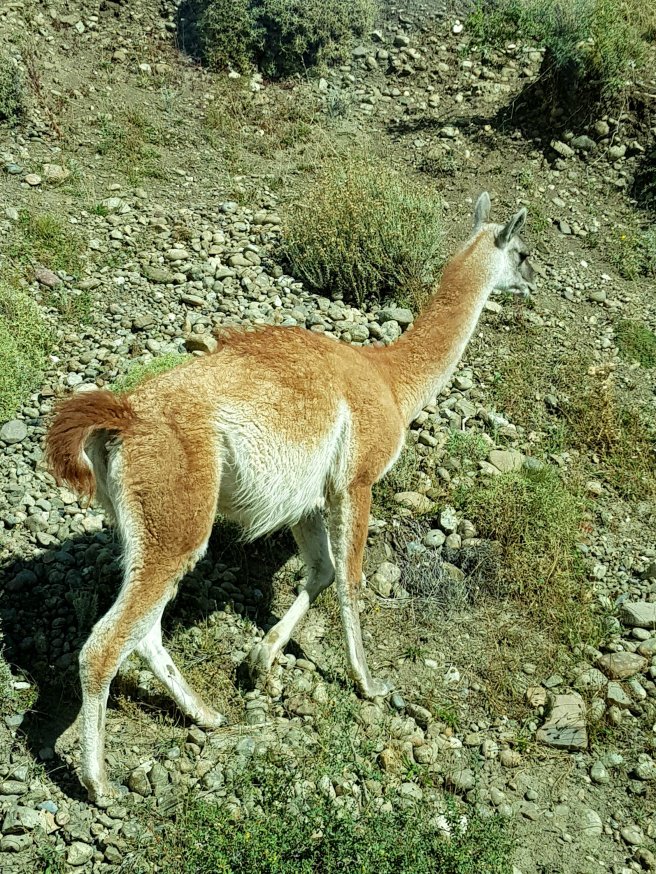
As we travelled around the park we saw some guanacos – these are wild llama and are very cute animals.

We also saw a bird that looks like an ostrich known as a Rhea. You can just about see them in this photo.

We did see a gaucho herding his sheep but I didn’t take a photo of that.

A great day and we saw so much. We were really lucky with the weather too.

Boat trip to Balmaceda and Serrano glaciers

Another early start and I was able to watch the sun rise over Puerto Bories.

Unfortunately the weather was pretty awful today – basically it poured down with rain all day. But despite that the boat set sail and if you stayed inside you kept dry. But this meant you couldn’t see anything so every now and then you had to brave the weather to see the sights.

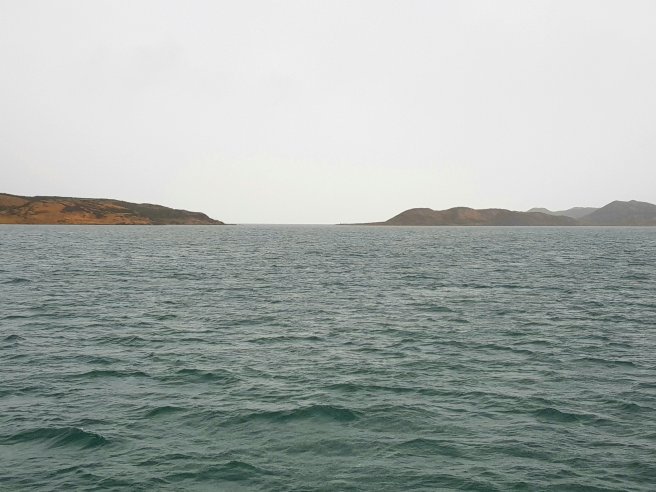
We sailed down the Senoret Canal to the mouth of the Fjord Eberhard and then into Fjord Ultima Esperanza. You can see the mouth of the Fjord in the photo below. You can also see how rainy and cloudy it was.

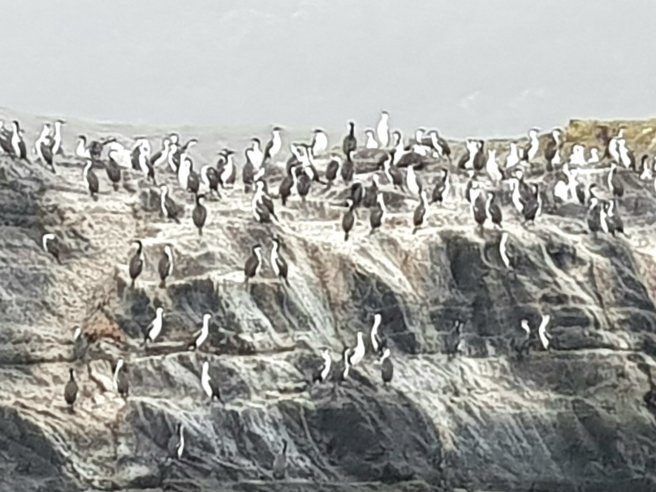
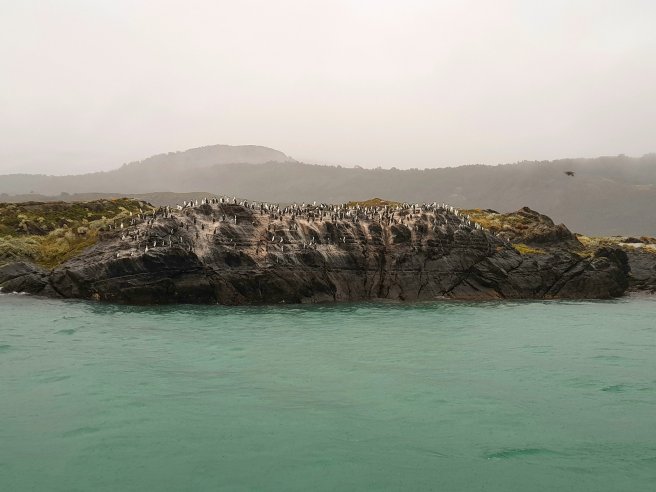
After about another 30 minutes or so we walked past the Cormorant colony. These birds look a bit like penguins but they can fly. The boat stopped for a bit whilst we all took photos.

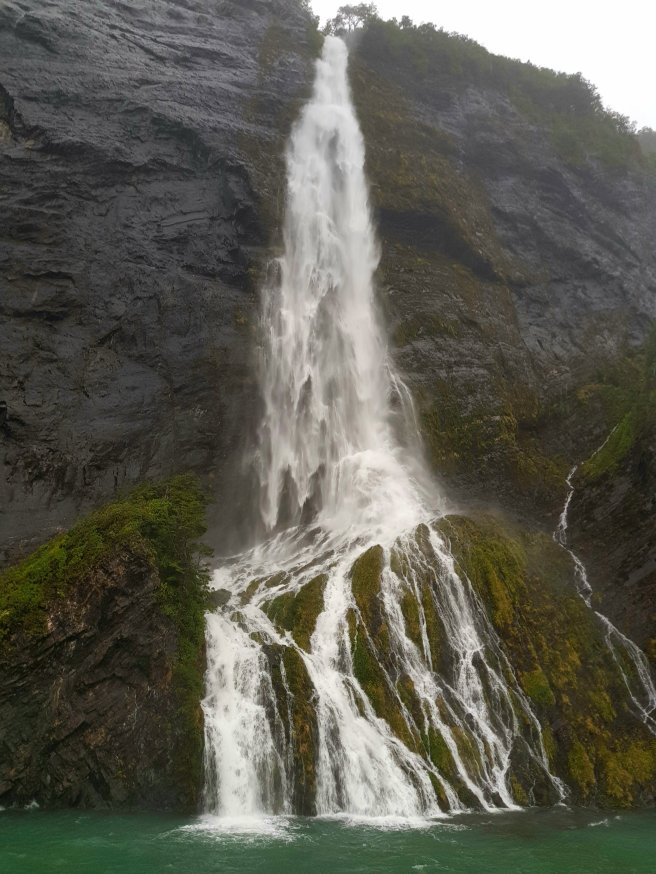
And then we carried on for another 30 minutes or so until we came to the Condor Cliff – but there were no condors to be seen as it was too wet and windy for them. But luckily there were some pretty impressive waterfalls instead.

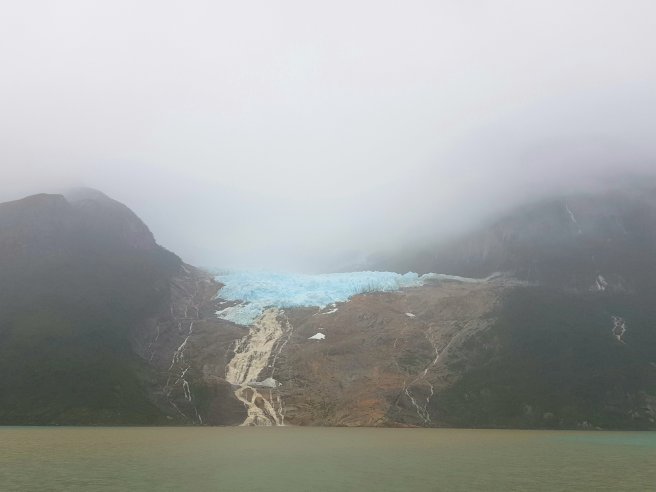
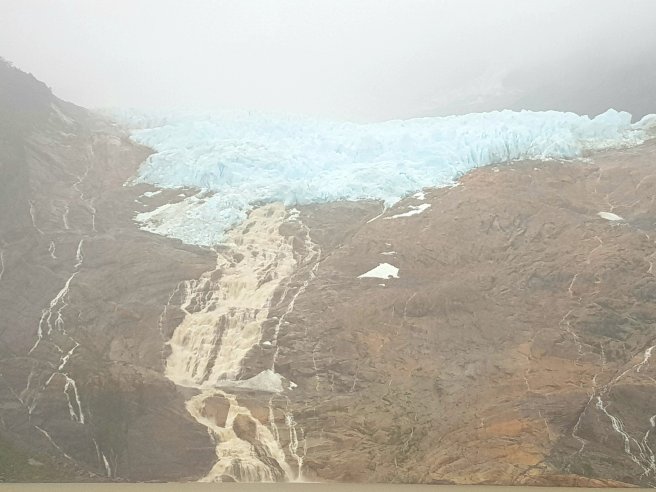
After another while we saw Monte Balmsceda and the glacier on its eastern slope.

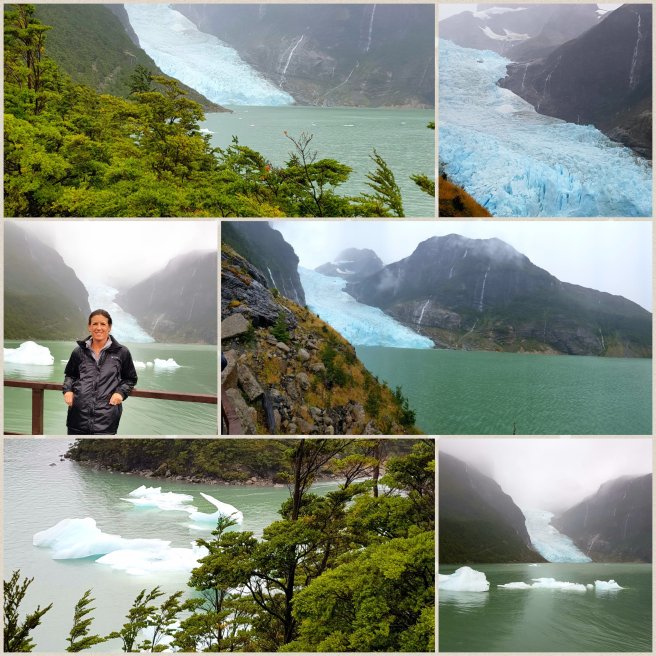
Eventually we docked at Puerto Toro where you could see the Serrano glacier.

We walked for around 20 minutes to get to the base of the glacier where we posed for photos and then walked back to the boat. The walk was through a lovely forest.

Everybody was soaking wet but it was worth it to see the amazing scenery. On the way back we stopped at a cattle ranch – Estancia Perales for a late lunch.

The food was amazing- barbecued lamb with red wine. Just what I needed.

Then it was back to the boat for the final leg back to the port – and just as we were coming in to dock the weather dried up.

All of this was part of the National Bernardo O’Higgins park which is part of the Andean mountain range.

Puerto Natales

It was another early start today. I was picked up from the hostel and taken to the bus station to catch the bus to Puerto Natales in Chile.

I sat next to a girl called Monika from Munich and we chatted a lot about travelling, she is travelling on her own too.

The bus journey was around 6 hours. We had to get off the bus at the Argentinian border to get our passports stamped.

And then at the Chilean border we had to pick up our bags and have them scanned as well as getting our passports stamped. They are very strict about what you can bring into Chile and a few people had items such as fruit and salami taken off them. This all took quite a while.

The landscape during the journey was amazing- a few people said it looked like New Zealand. We did see some wild llama type animals, some emus or ostriches and some wild horses.

We arrived in Puerto Natales in the early afternoon and I was picked up from the bus station and taken to my hotel which is basic but clean.

I decided to go for a walk along the harbour and nearly got blown away – the winds here are really strong. The views of the snow capped mountains behind the harbour are beautiful. The sea was pretty rough too.

All along the harbour they have statues and monuments – and a nice church in the town centre too.

I bought myself a scarf as I think I might need it on the treks I’m going to be doing.

In the evening I met up with Monika and a guy she will be trekking with, Jeff. We went to a restaurant for dinner and tried some craft beer which was pretty good.

Perito Moreno Glacier

So yesterday was mainly spent packing up my rucksack and travelling. I flew from Buenos Aires to El Calafate and as soon as I arrived I went to a travel agent and booked a trek on the glacier for today.

The hostel is lovely and the lady who runs it is super friendly and welcoming.

The landscape in El Calafate is already really different from anywhere else I’ve been.

So this morning I was up early and we set off for the glacier. We were a big group of 30+ people but they split us into smaller groups to go walking on the glacier.

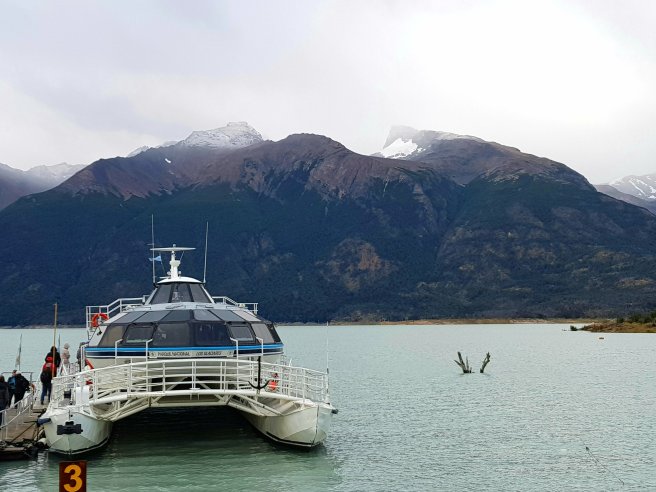
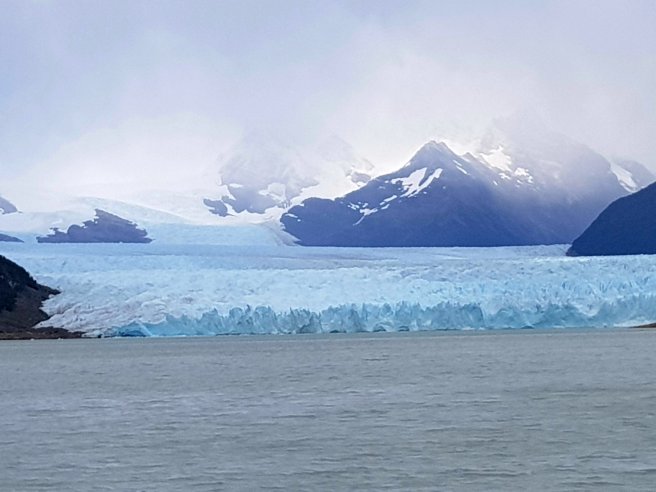
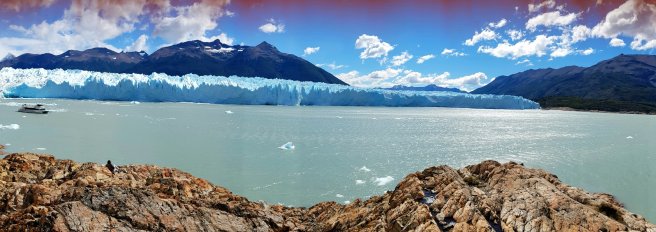
When we arrived at the park we had to get a boat across to the glacier and we had our first sighting of the south wall of the Moreno Glacier.

You can see the top.of a tree in the first photo above. That’s because the lake is now around 14m higher than normal as the glacier has moved right across and joined up with the land and formed a dam. So the water on one side of the dam is much higher than the other side – eventually the water will find a way through and form an ice bridge which will eventually collapse. You can see the dam here:

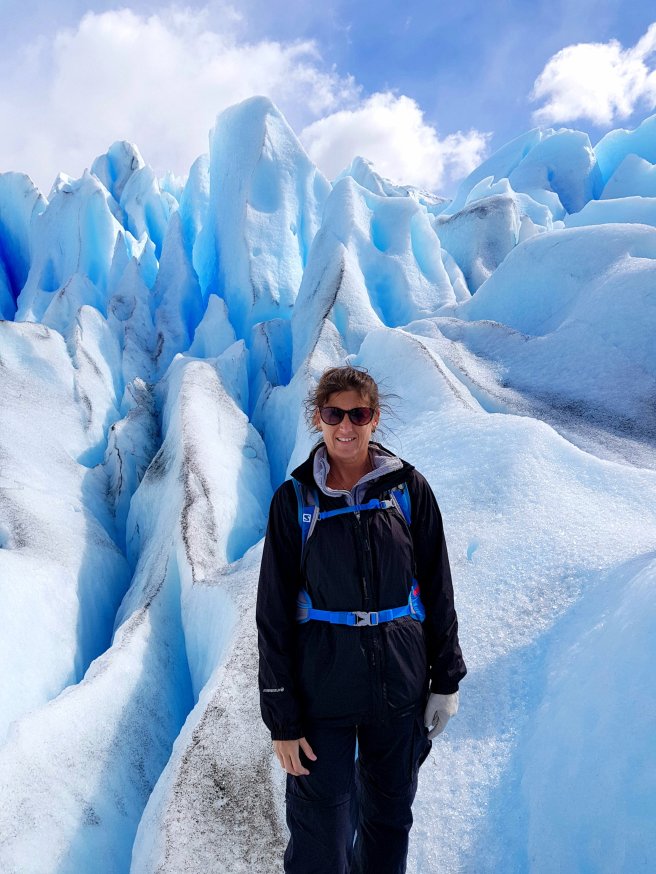
When we got off the boat we could leave some of our bits on a shelter and then we all had to put on crampons to go walking on the ice – they gave us a short lesson on how to walk in them. All the time you can hear the ice moving and cracking. This glacier moves around 2-3m a day but it’s currently in equilibrium as it also builds that much a day.

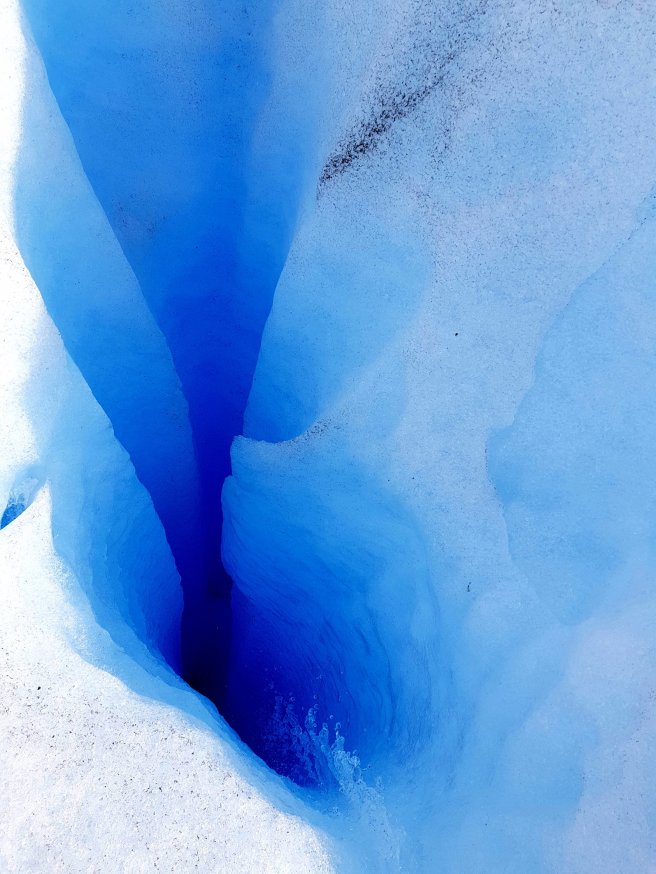
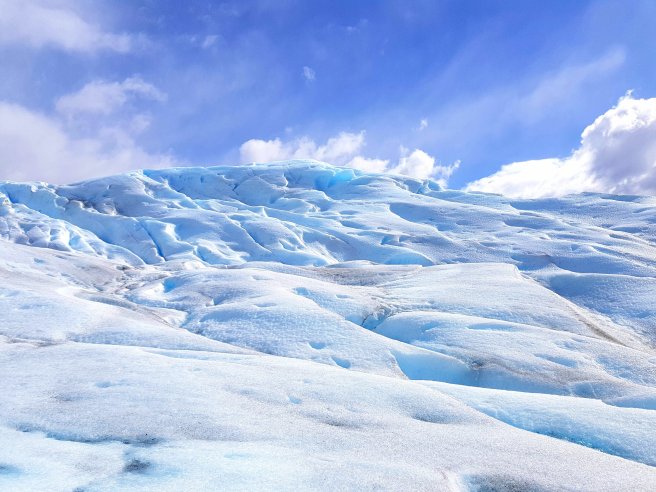
The walk on the glacier was unbelievable – it’s really hard to describe. It’s so amazing and so different to anything else. The glacier looks like snow dunes in places and like spiky meringue in other places. There are lots of crevases and ice holes which look really blue where the light is reflecting off the compact ice.

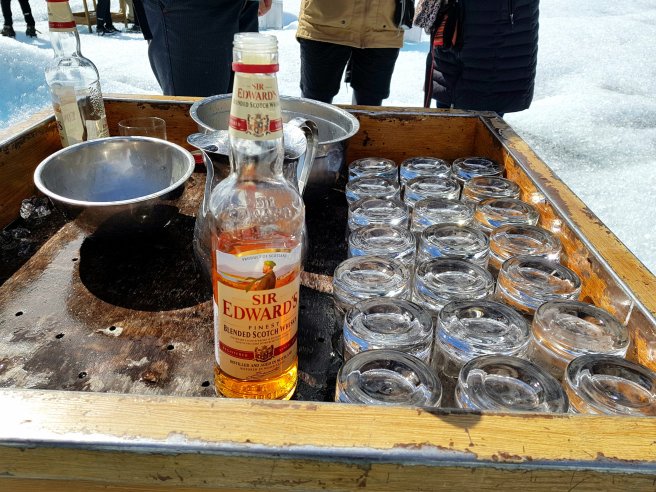
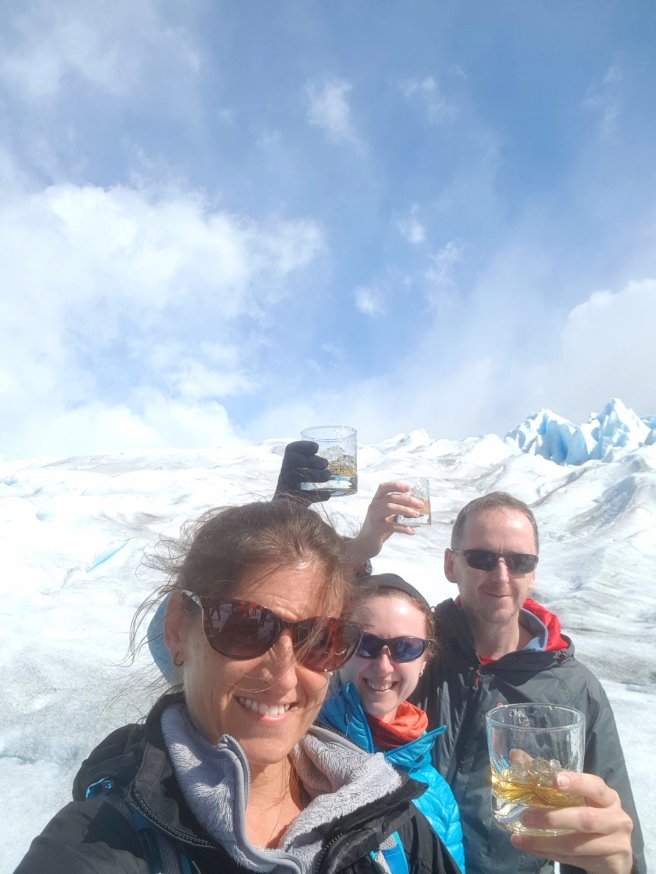
Before getting off the ice we stopped for a whisky and glacier ice – delicious.

I could be easily spent another hour or so walking on the ice but unfortunately we had to leave.

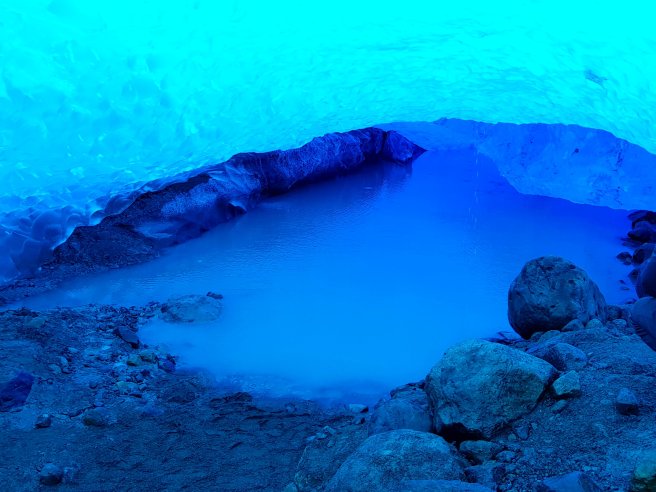
On the way back we visited an ice cave – the walls were really smooth like glass.

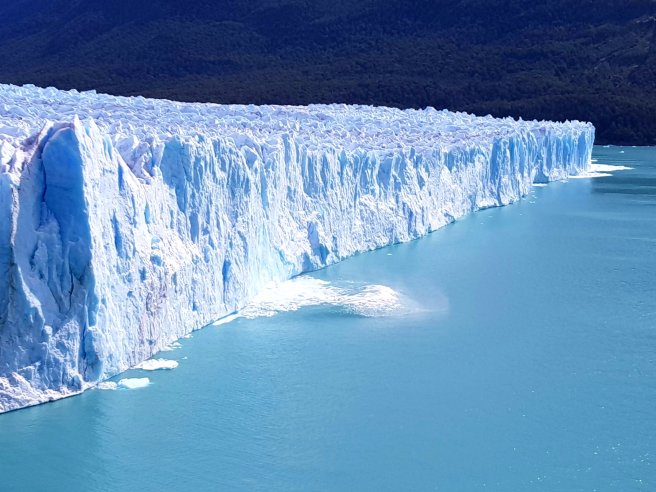
But that wasn’t the end as we were then driven to the other side of the glacier where we could get a better panoramic view and also see the glacier calf.

We actually saw it calf three times when we were on the south side, and once on the other side, but it happens so quickly that you don’t get time to take a photo. The sound is incredible though and the waves it makes are huge.

I managed to catch a bit of it in this photo.

This was a fantastic experience, and the whole trip was really well organised. The glacier looks like something from another world.

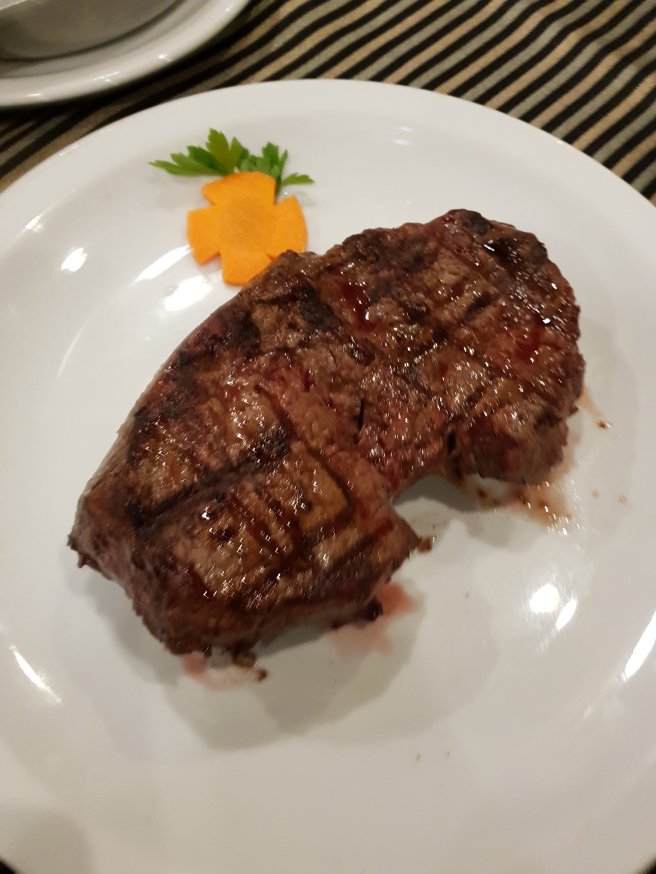
So a great day was finished off with a great steak. I went with a German girl, Tabea, into town and we found a really nice restaurant.

I have loads more pictures of the ice but none of them can capture what it feels like and what it sounds like when you are actually there.

Friday in Buenos Aires

Today was my last day at school- the week has gone so quickly. The school has been brilliant and it’s been a great way to meet people too. I got a certificate at the end of the class which was really nice.

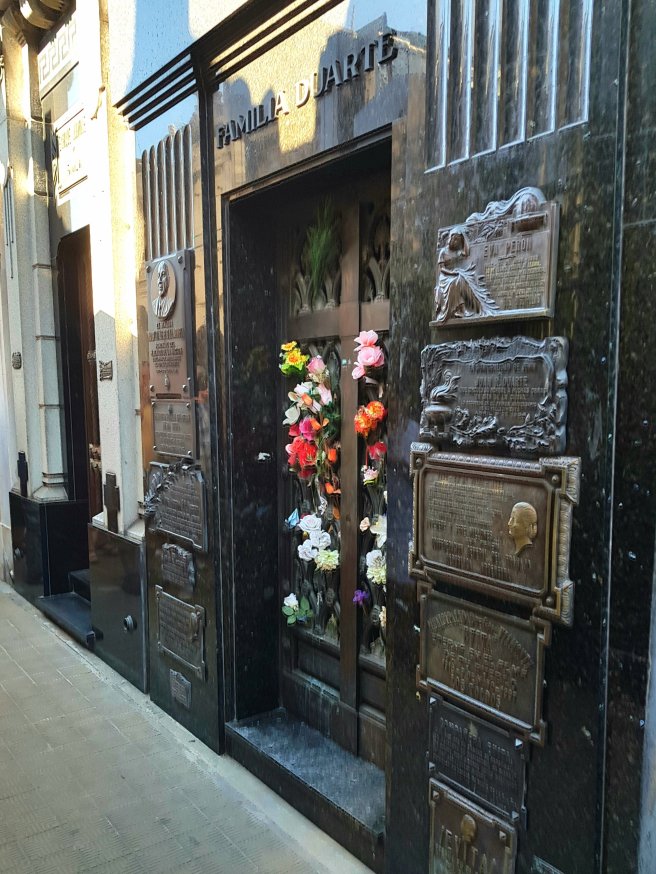
We had empenadas again for lunch – there’s lots of different varieties to try – and then we walked over to Recoleta cemetery to join a guided tour.

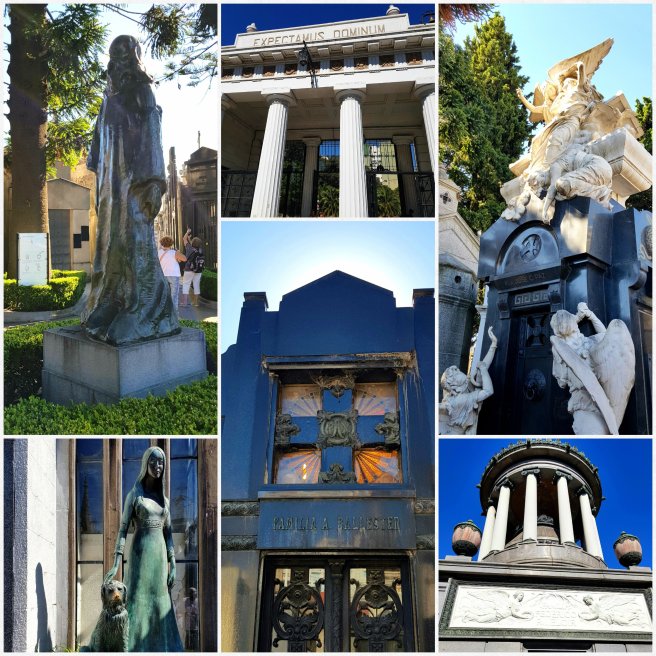
This cemetery is for the elite and has a lot of very ornate graves. The guide told us a lot of stories like a story about a young girl being buried alive, the caretaker of the graveyard still haunting the place and another you g girl who died abroad and then her dog died at the same time even though she was in another country. These may or may not be true.

Obviously the most famous grave here is that of Eva Peron. There is a huge history around this as when she died Peron had her body embalmed and it was on display in the Presidential Palace. However, when Peron was overthrown then Eva’s body was kidnapped and it went missing for around 20 years. Now it is back in Buenos Aires and it is buried under her family name. Thete is talk of moving it again so Evita and Peron can be buried next to each other.

The graveyard is strange as the graves are above ground – although some ha e u get round space too, and you can actually see the coffins. Some of them you could touch if you wanted to.

You could spend hours in the cemetery as thete is so much to see but after the tour we headed home.

In the evening everyone came over to mine for beer and wine and then we headed out to a bar in Palermo where there were a lot of language school students as well as locals. The idea was to practice different languages – I did try out some Spanish.

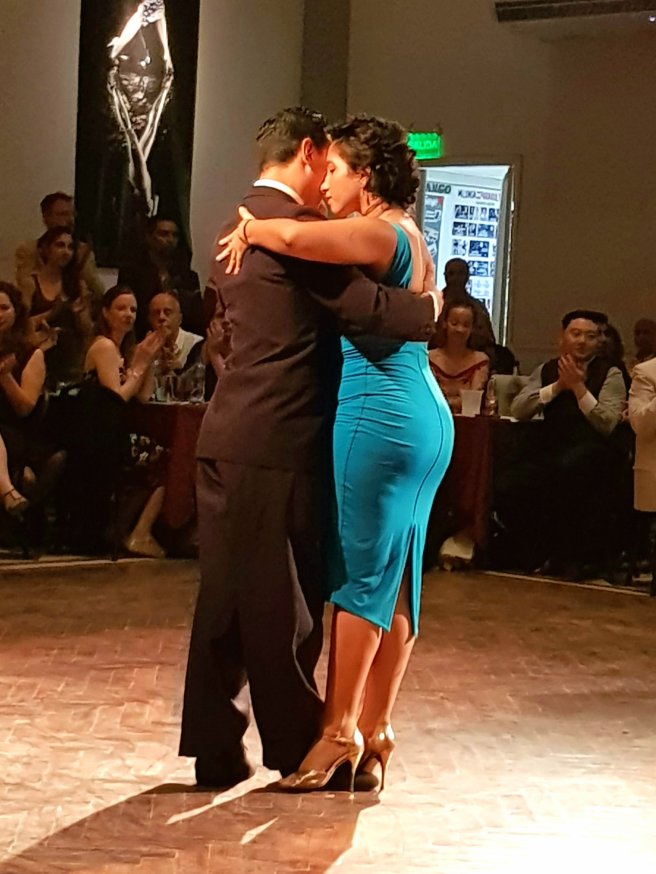
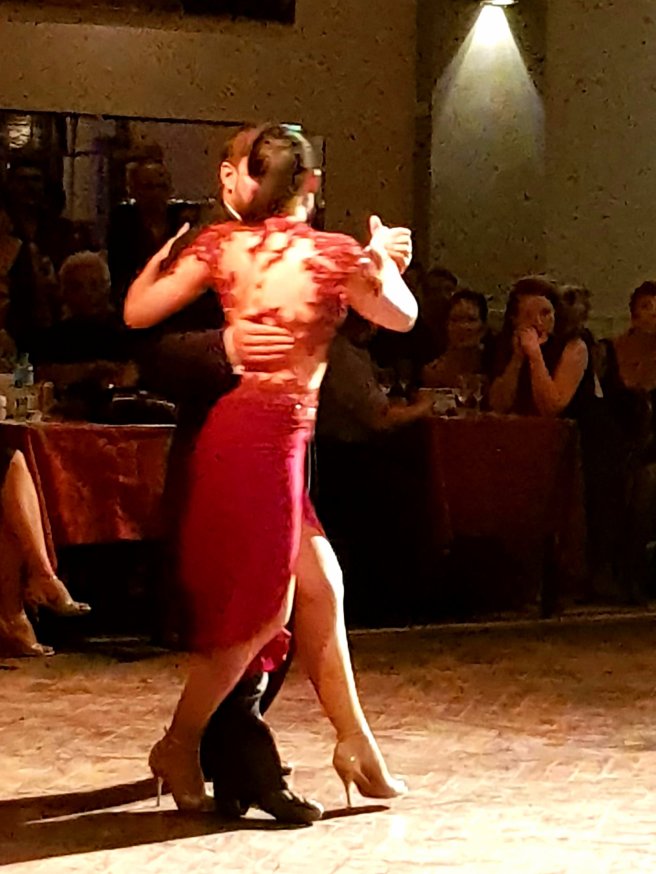
Around midnight we went to a milonga club – basically a danc3 club where people come to watch and dance tango. Thete were some professional dancers who put in a show, but mainly it was just people getting up and having a dance.

I had a go but I wasn’t that this- it needs a lot of practice.

It was a late night – I got home around 4am, but a great last night in BA.

Thursday in Buenos Aires

I went to school again in the morning where I learnt a lot about verbs.

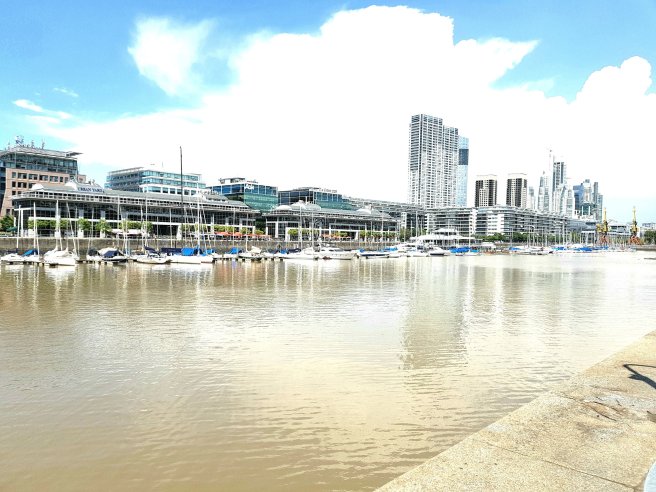
At lunch time we went to get some more empenadas and we went down to the harbour to eat them and enjoy the sunshine.

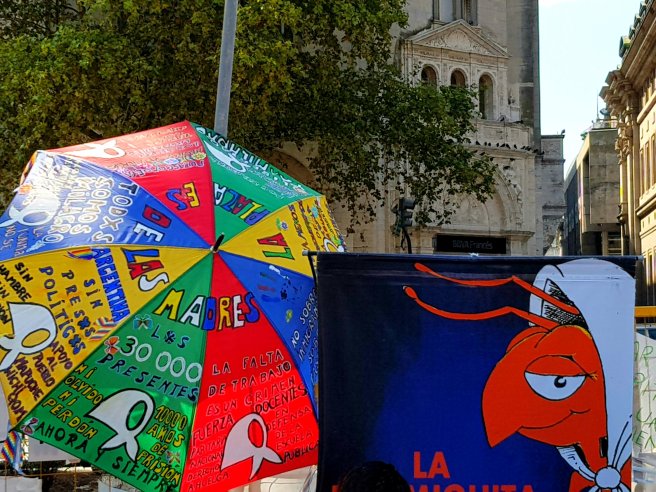
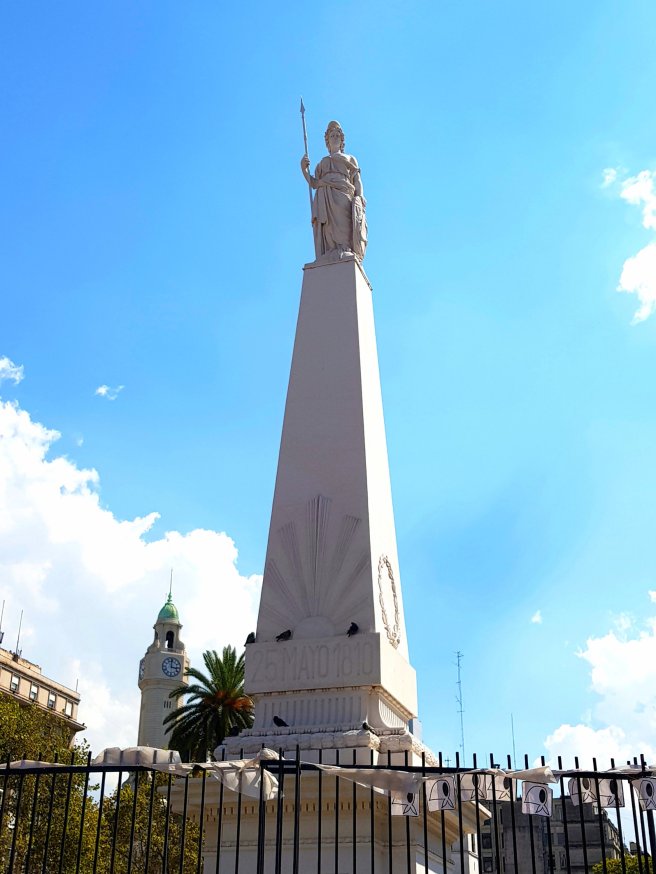
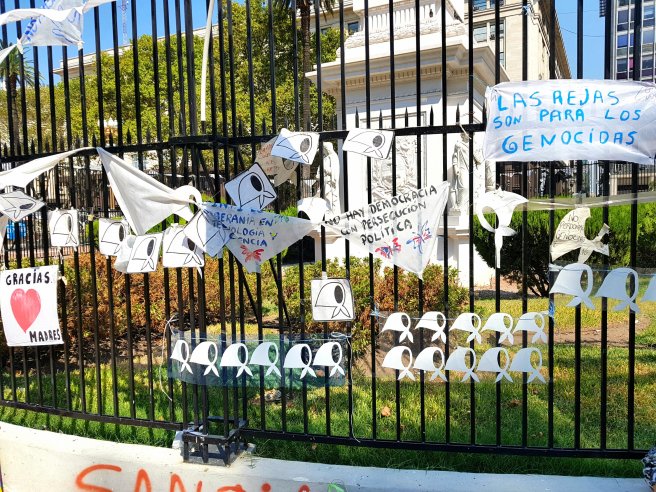
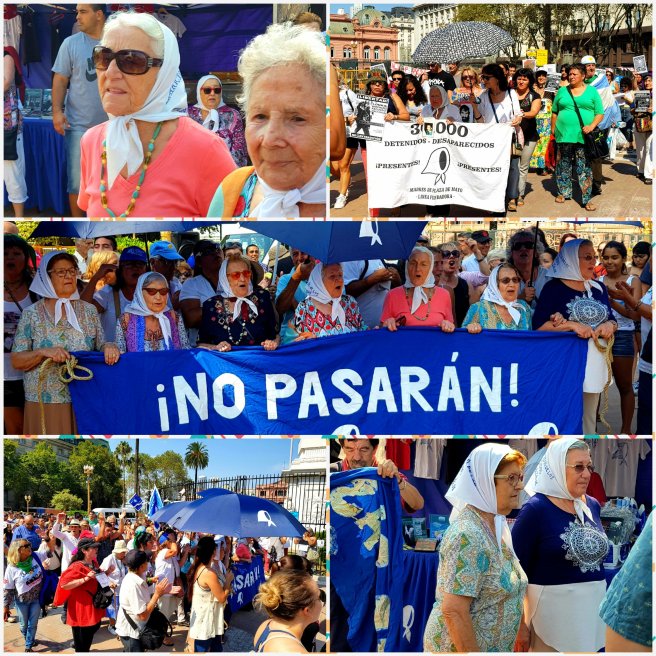
Afterwards we went to the Plaza de Mayo to see the Asociación Madres de Pls a de Mayo. This happens every Thursday at 3pm.

The Mothers of the Plaza de Mayo is an association of Argentine mothers whose children “disappeared” during the state terrorism of the military dictatorship, between 1976 and 1983. They organised the association to try to find out what had happened to their children, and began to march in 1977 at the Plaza in front of the presidential palace, in public defiance of the government’s state terrorism which was intended to silence all opposition. It is thought around 30,000 children ‘disappeared during this time and these children were tortured and killed. There are now only a few of the original mother’s left but other people come and support them.

It was actually quite moving and emotional – these mothers will never know exactly what happened to their children or where their bodies are.

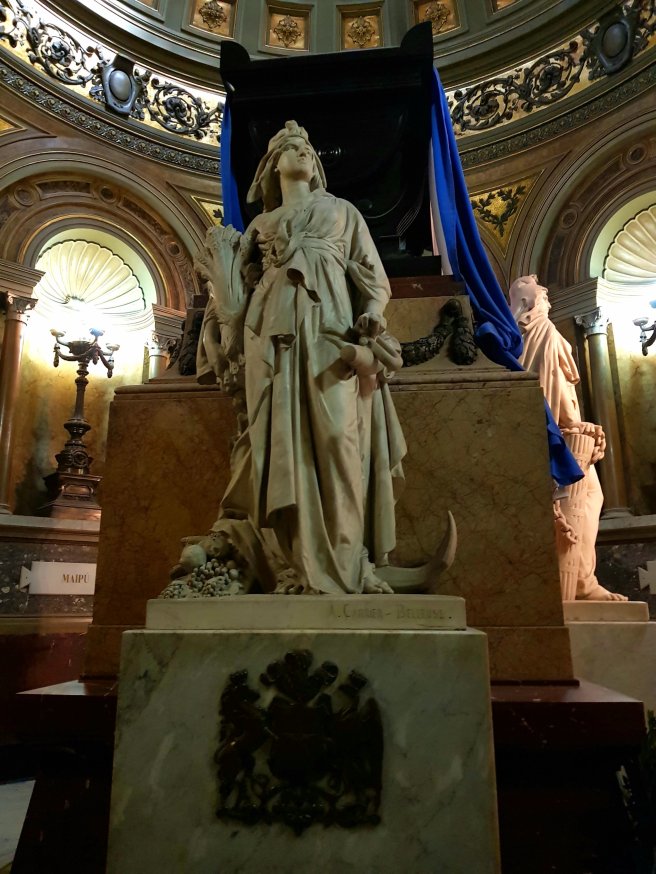
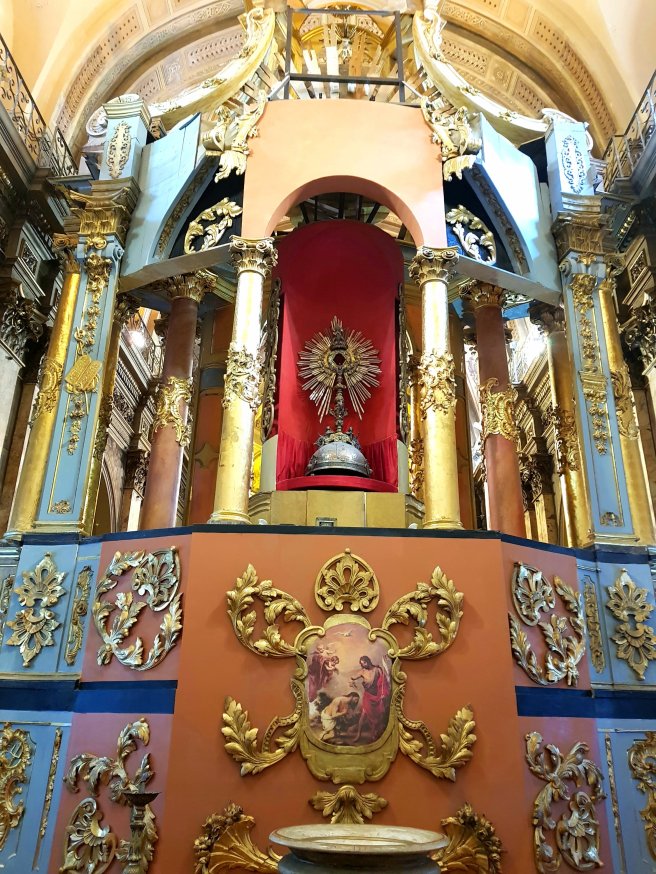
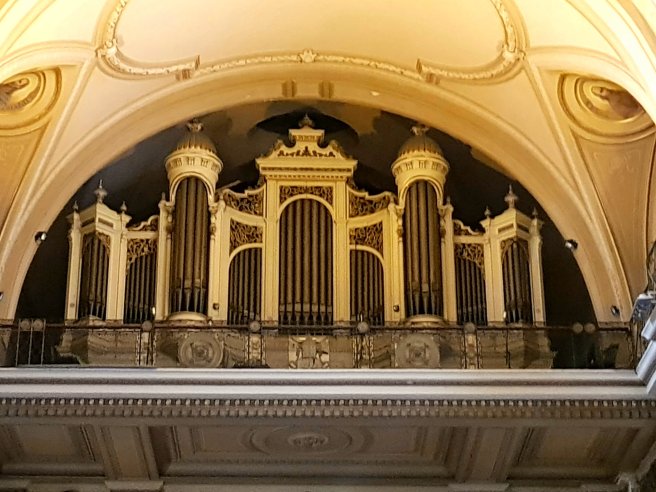
Following this I went with Joe to the metropolitan cathedral. It’s an impressive building and Pope Benedict was cardinal here.

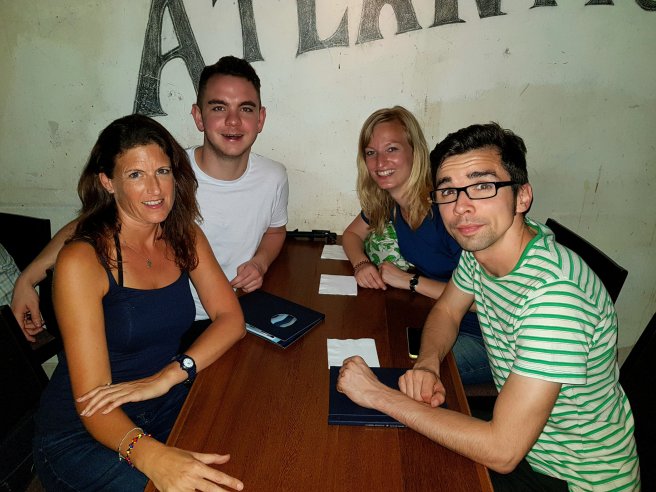
In the evening a few people came over to mine for wine and beers (Monique, Joe, Mike, Merlin, Andy and Toby). Around 10pm we went to a speakeasy bar – Floreria Atlantico. It looks like florist shop from the street but you walk through a fridge and it takes you down some stairs to the bar. It was a really cool place.

Part of our homework was to interview a native Spanish speaking person and record it. So I asked the lady upstairs on the bar to do the interview and luckily she said yes. It went ok – although I didn’t completely understand all of her answers.

Wednesday in Buenos Aires

School again this morning. Learnt a lot around pronunciation and personal information. So much to think about.

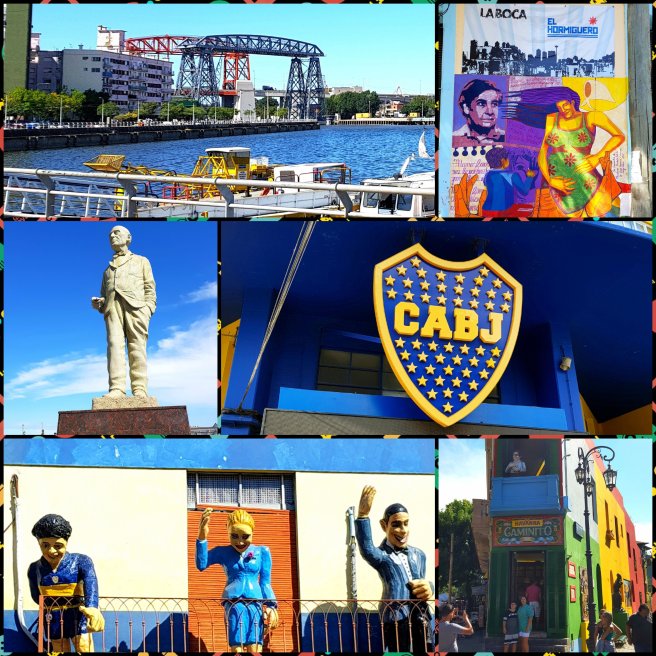
After school I rushed home, grabbed some lunch and then met Monique at her apartment – it’s about half an hour walk from mine. We then walked for another 30-40 minutes to La Boca which is one of the areas of BA.

La Boca means ‘the mouth’ and it’s named that way because it’s at the mouth of the river and it was the place where immigrants landed when they first came to Argentina.

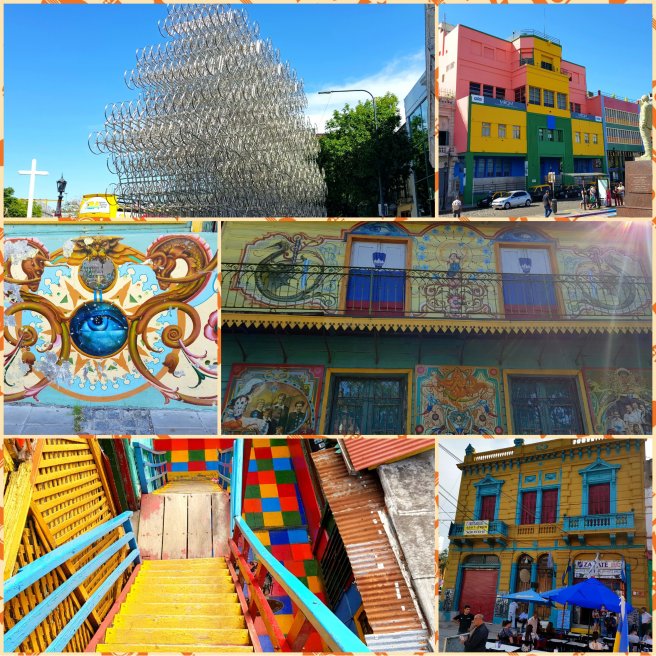
It’s a beautiful and colourful place with lots of history – but it’s also a poorer part of the city. It was initially quite a prosperous area but with the financial crash, investors pulled out, and this had a negative effect on the area. But because it is a cheaper area to live a lot of artists and immigrants live here.

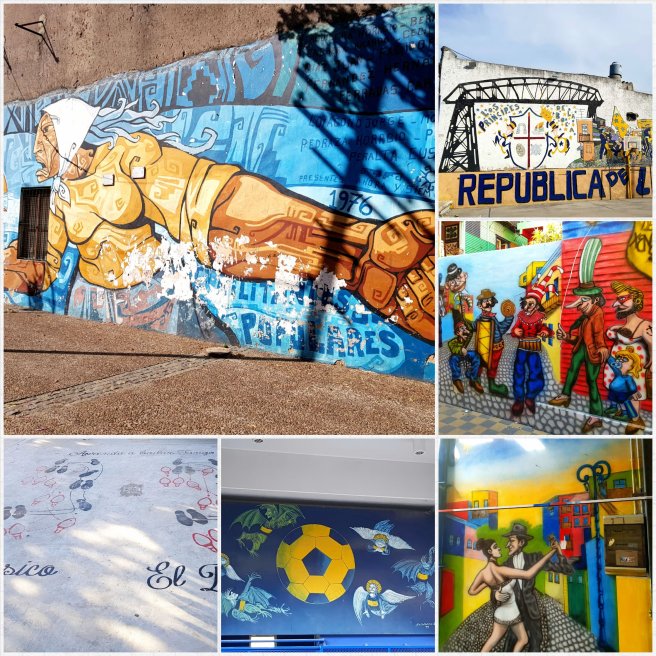
In La Boca thete are three main passions – football, tango and politics, in particular huge support for Peron and the reforms he and Evita put into place. The stadium in Boca was built in 1940 and is one of the most famous stadiums in the world.

One artist – Quinquela – painted huge artworks in bright colours and worked with other artists to create mosaics which can be seen all over the area. He also started painting the houses the bright colours.

The street art is also amazing – a lot of it is political or symbolizing things that might need to be changed, such as womens place in society. There was also some footprints on the pavement that showed the basic steps of tango.

It was a really interesting place to visit and the walking tour guide was brilliant and even gave us some recommendations on where to go to see some authentic tango.

Even the local dogs were dressed up:

I was very tired after all that walking so just had a quite night in and sorted out some treks in Patagonia which is where I will be headed next.