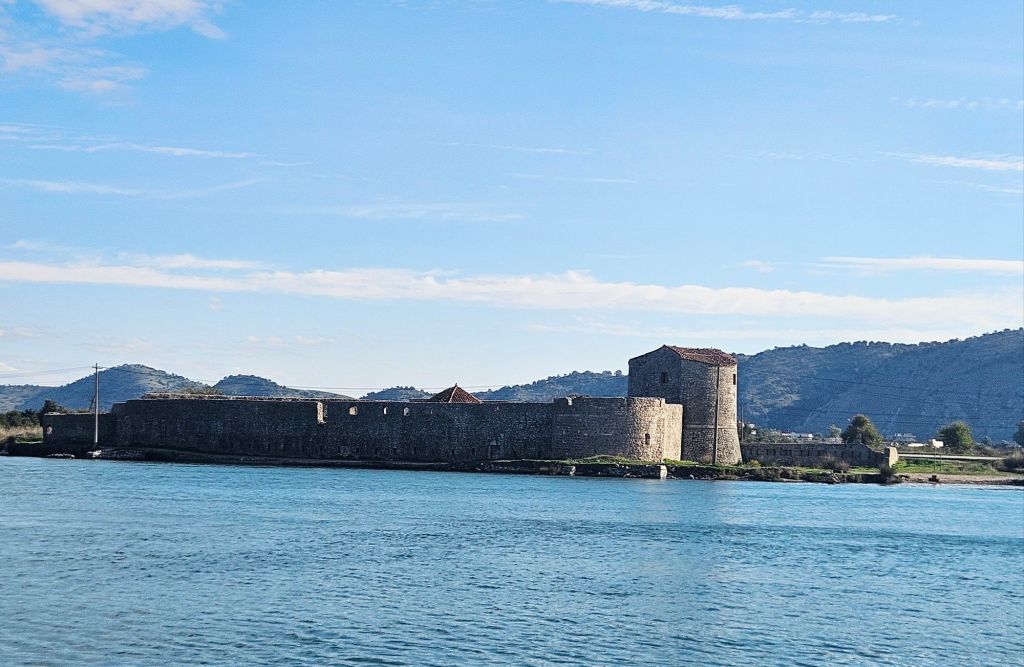
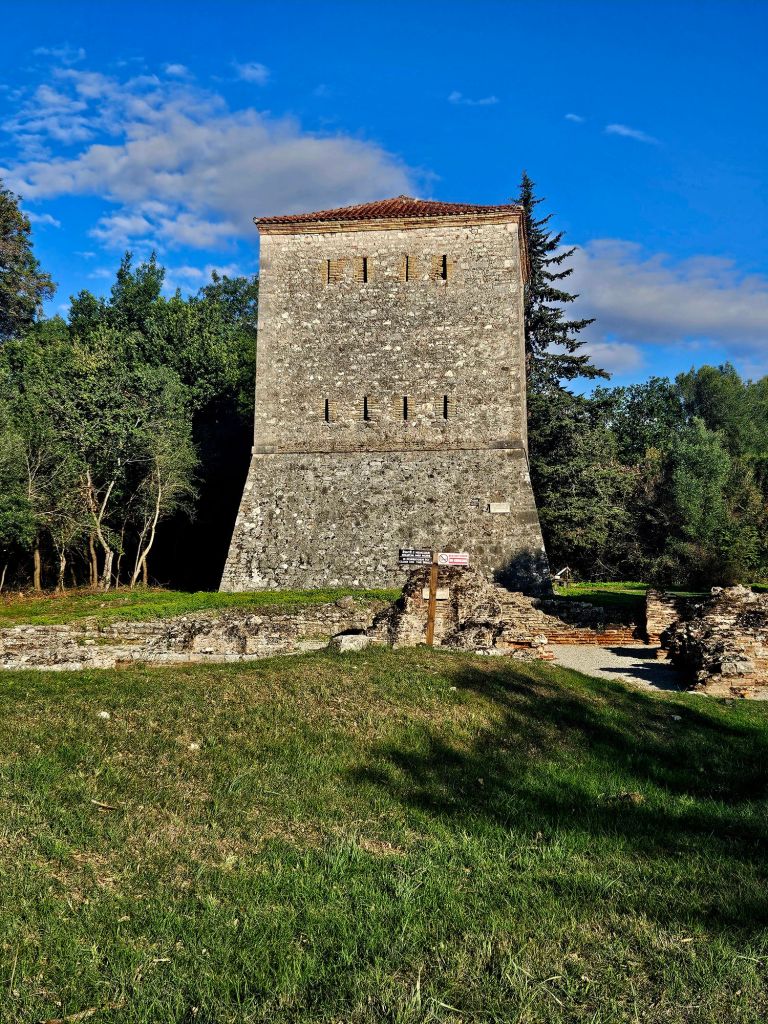
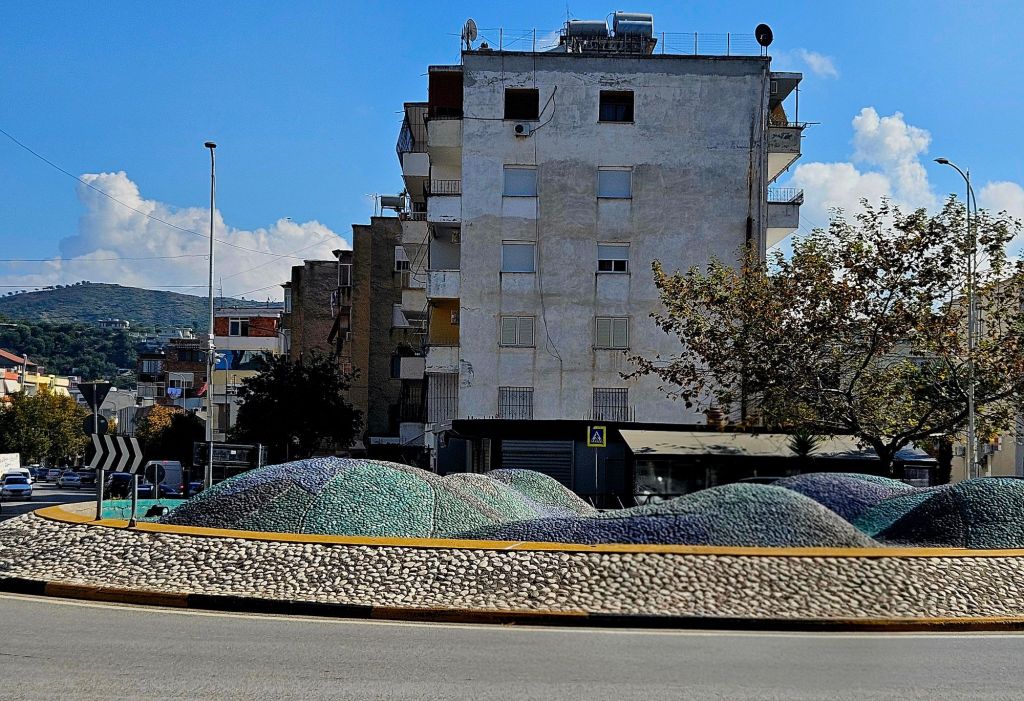
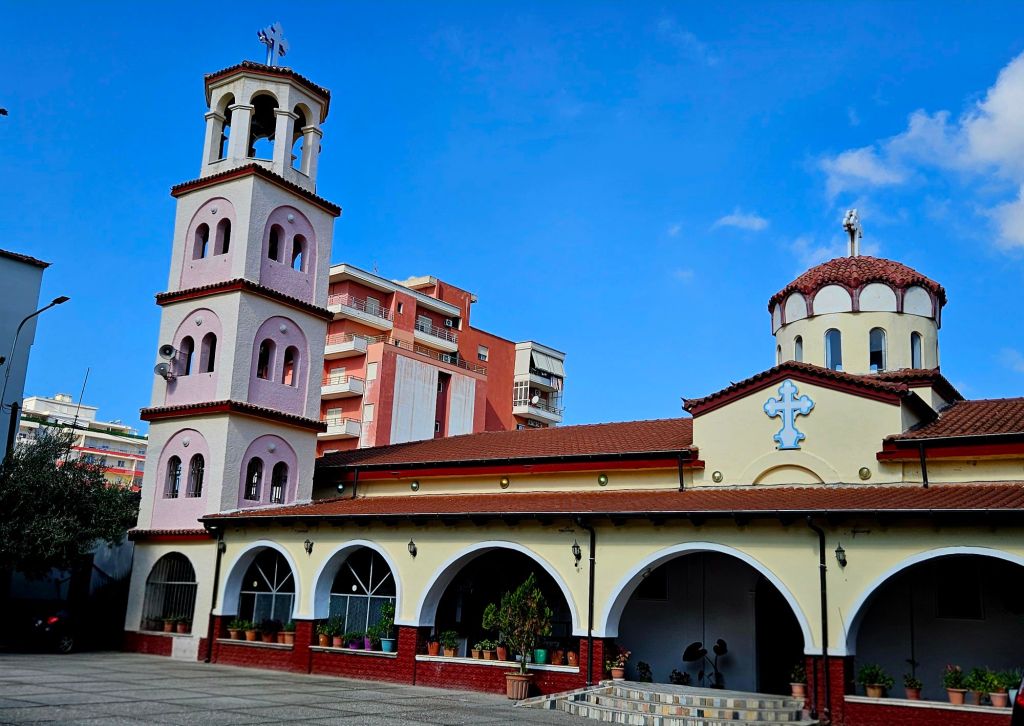
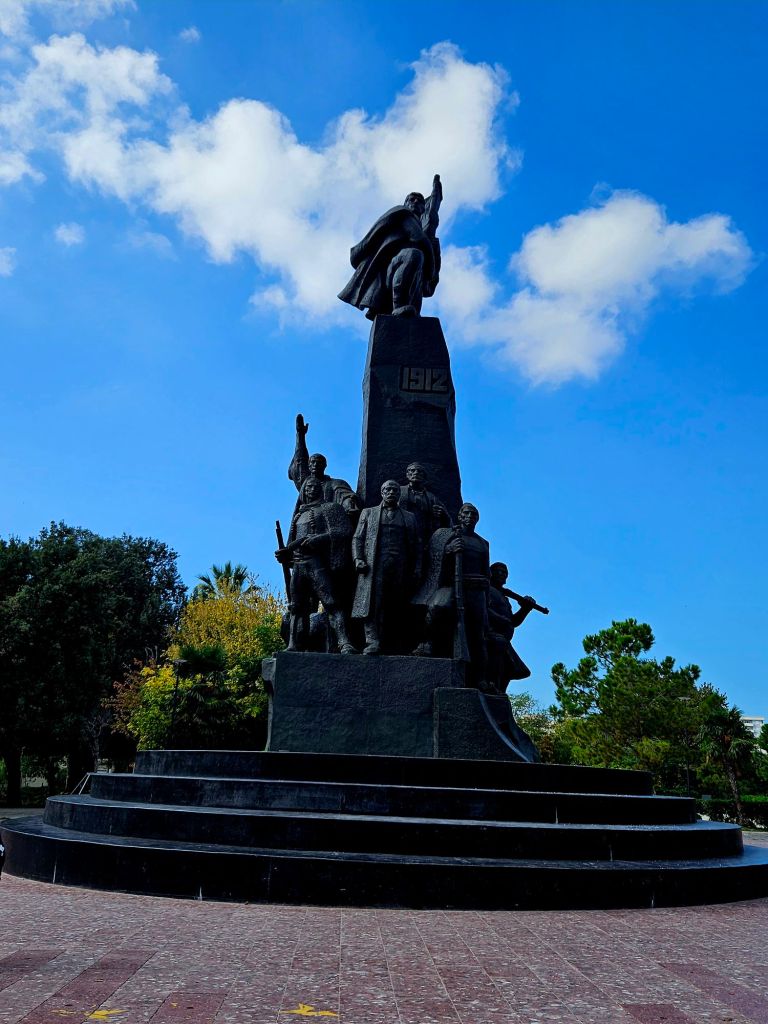
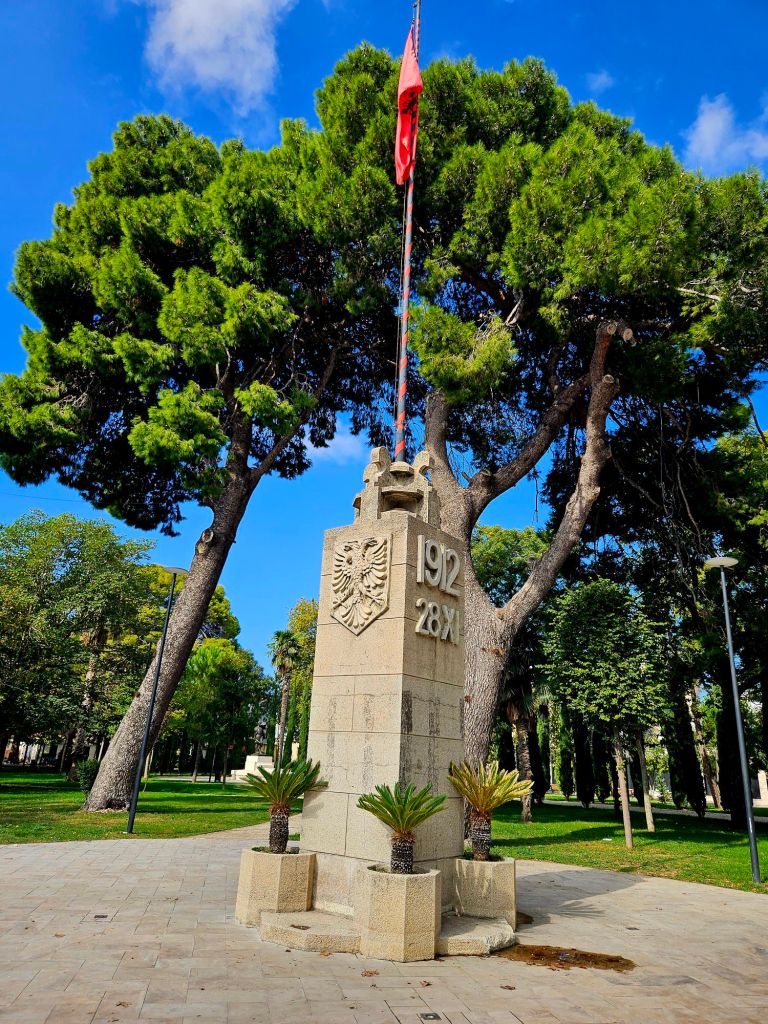
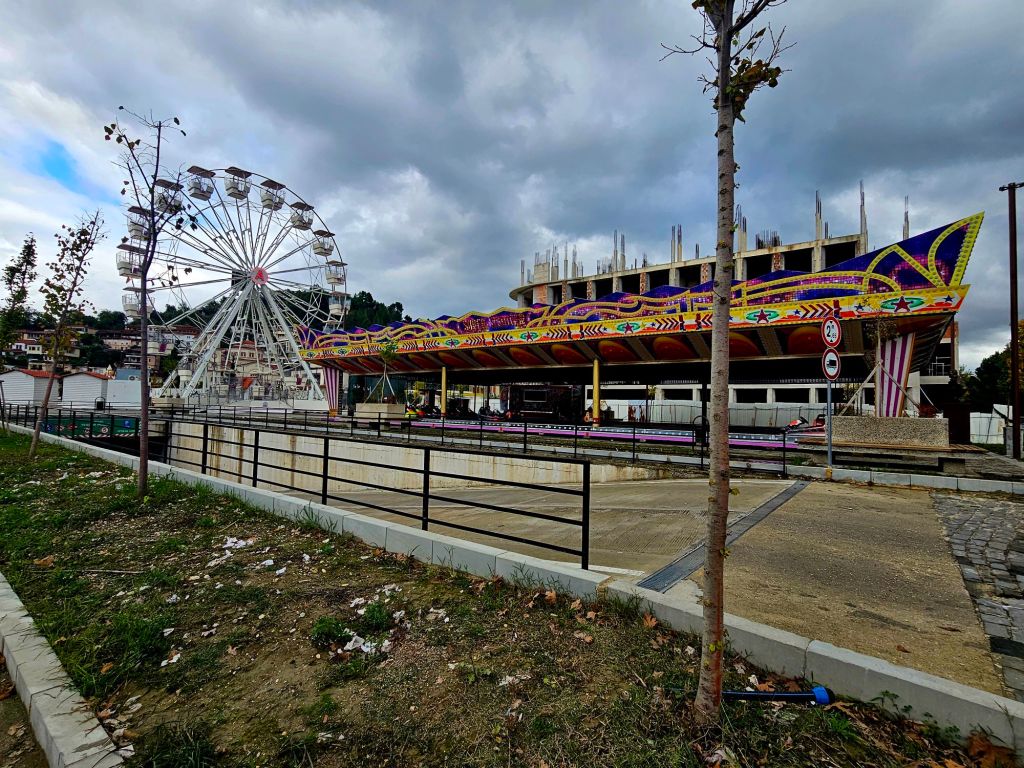
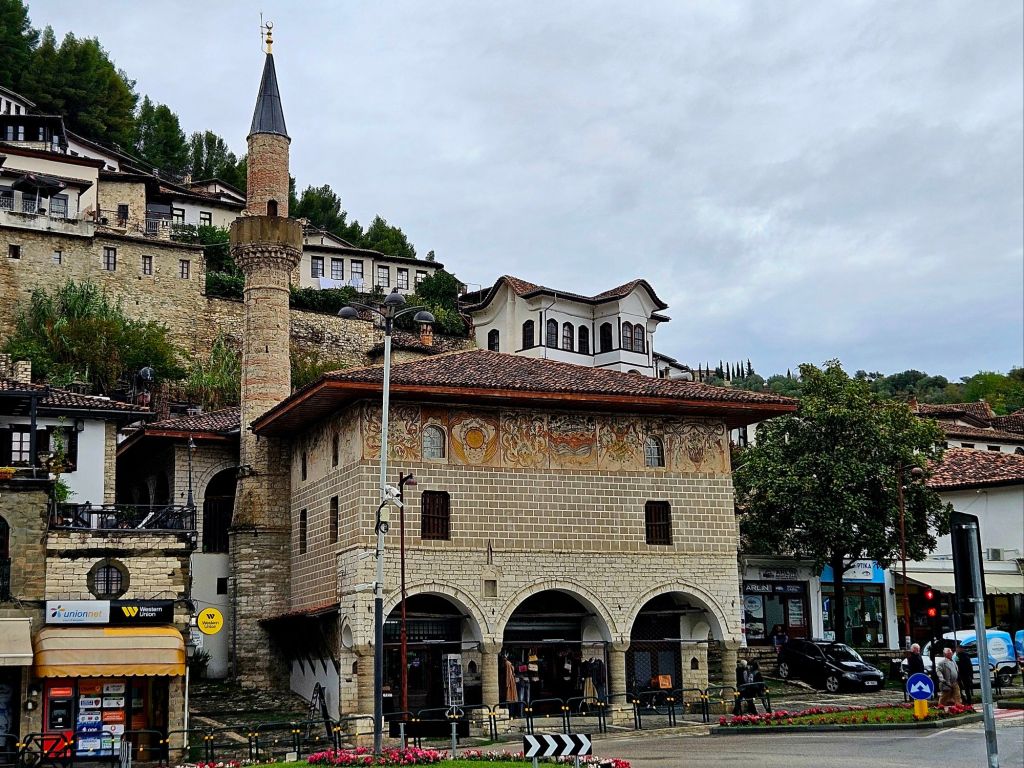
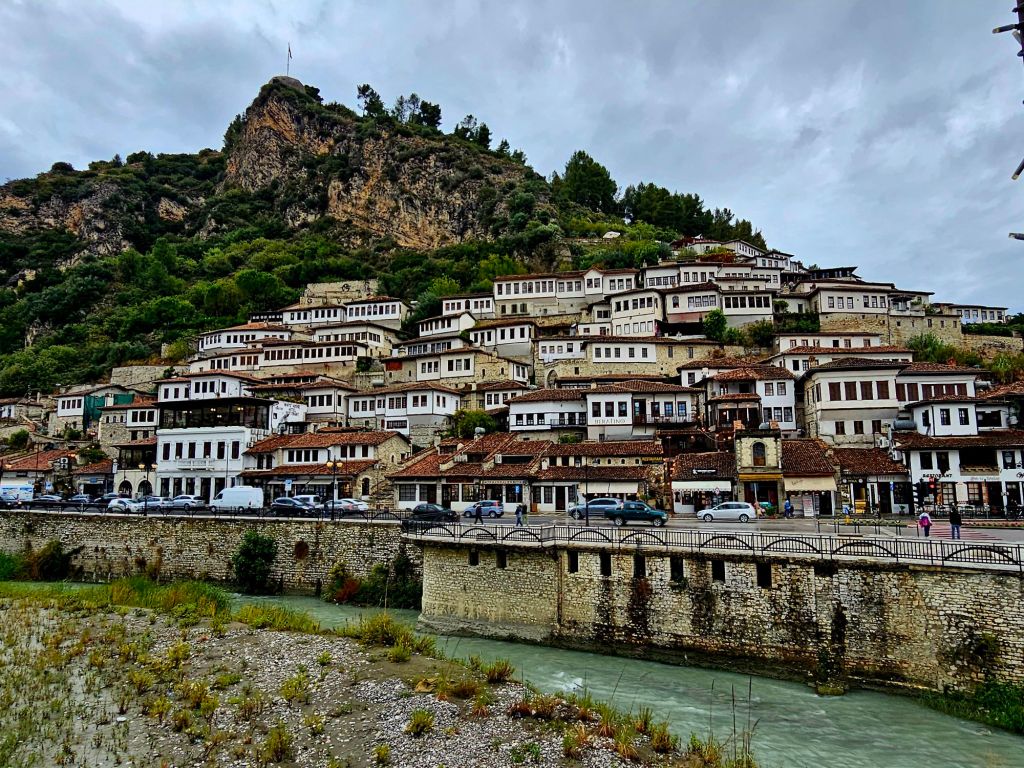
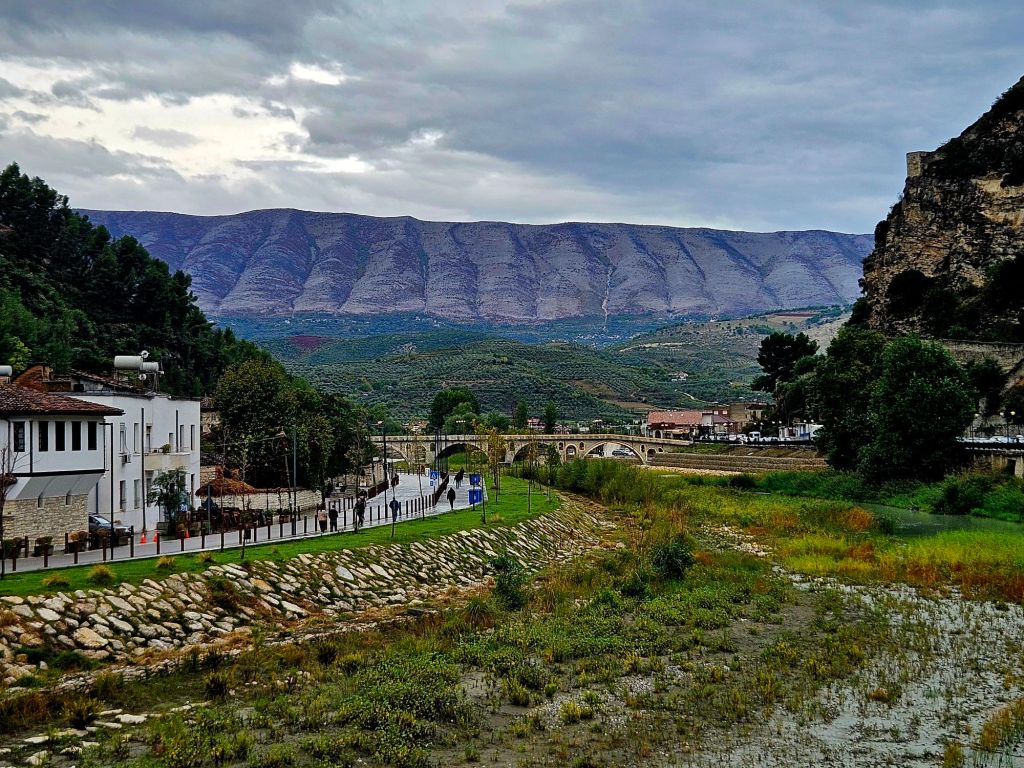
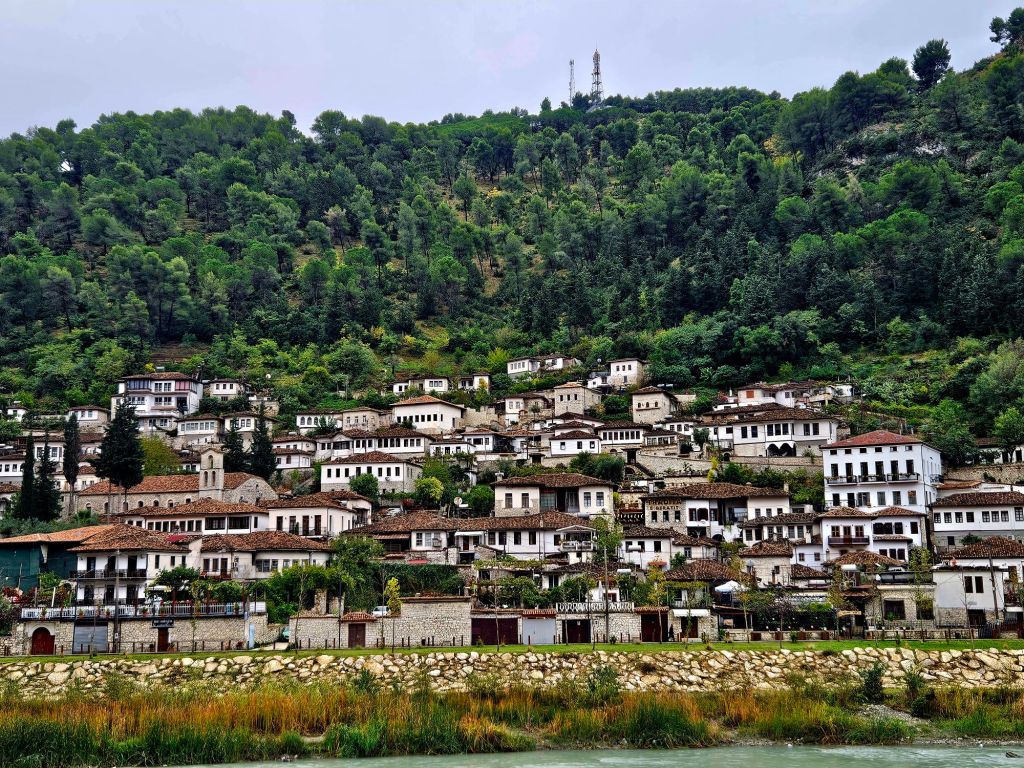
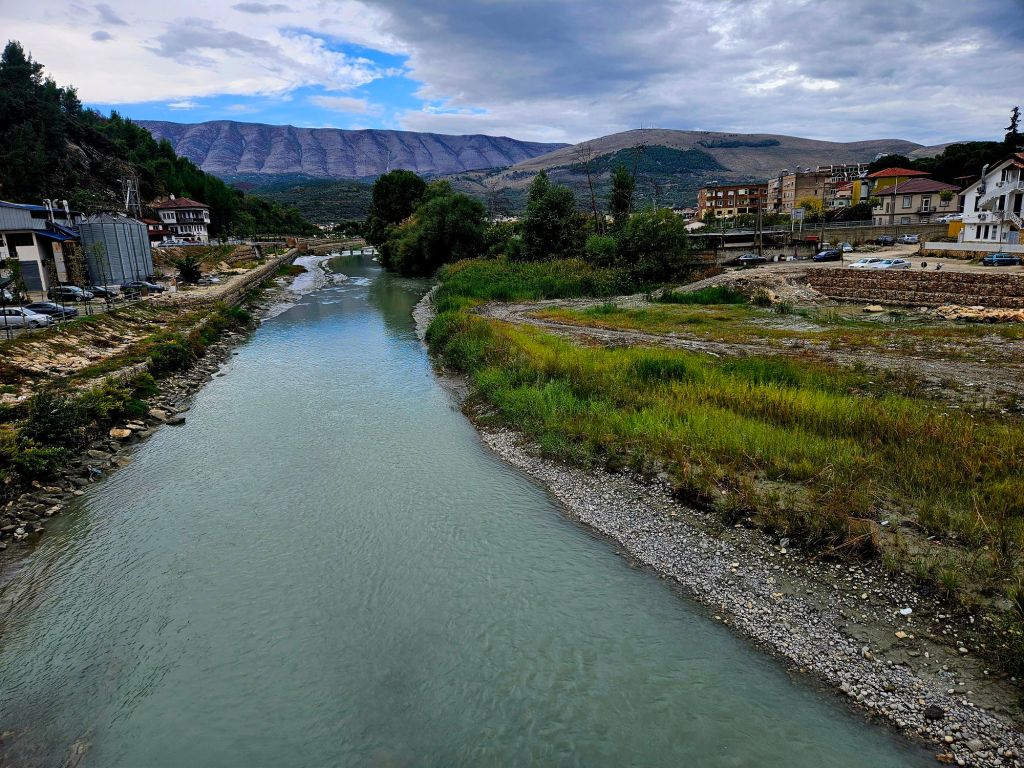
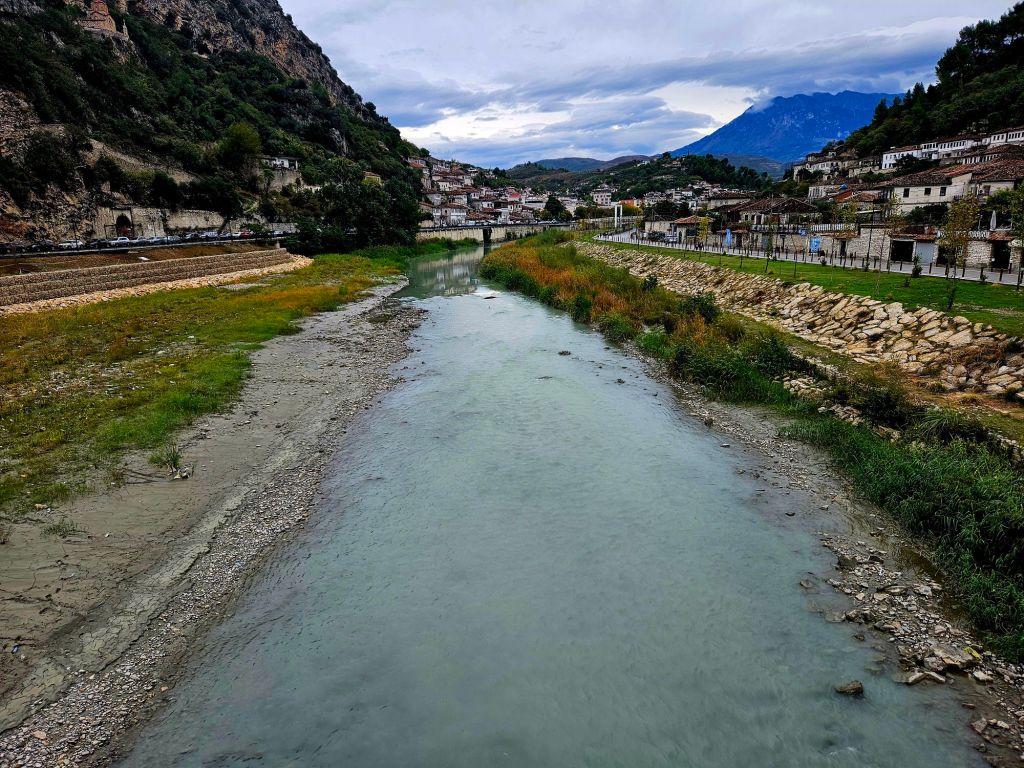
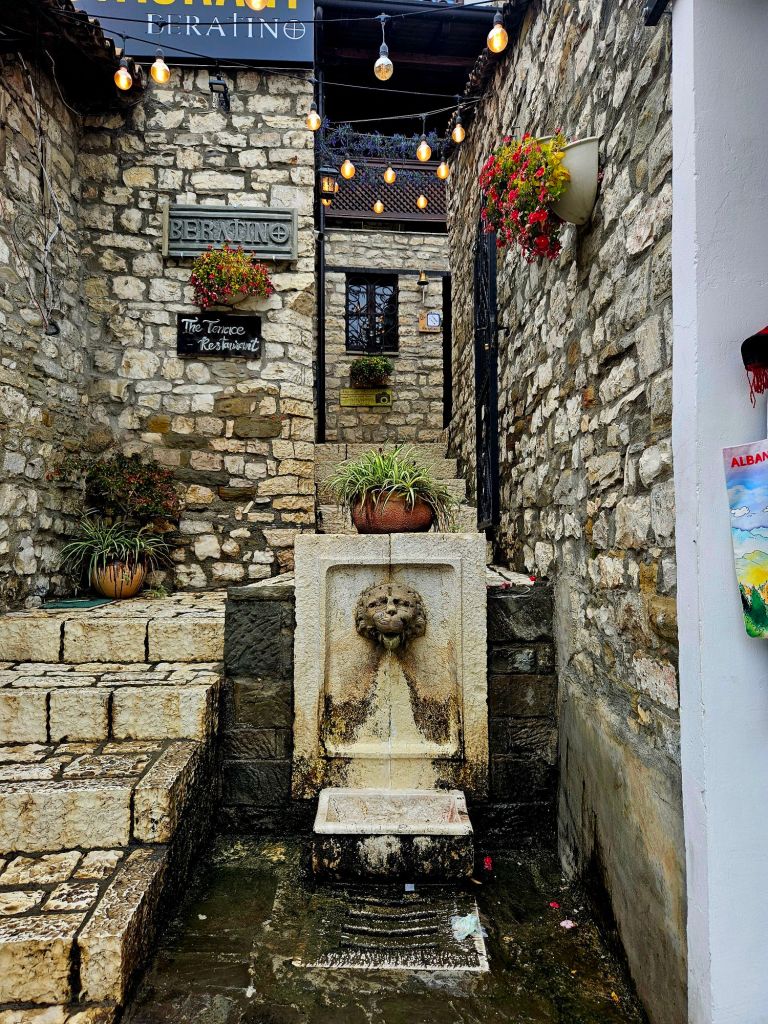
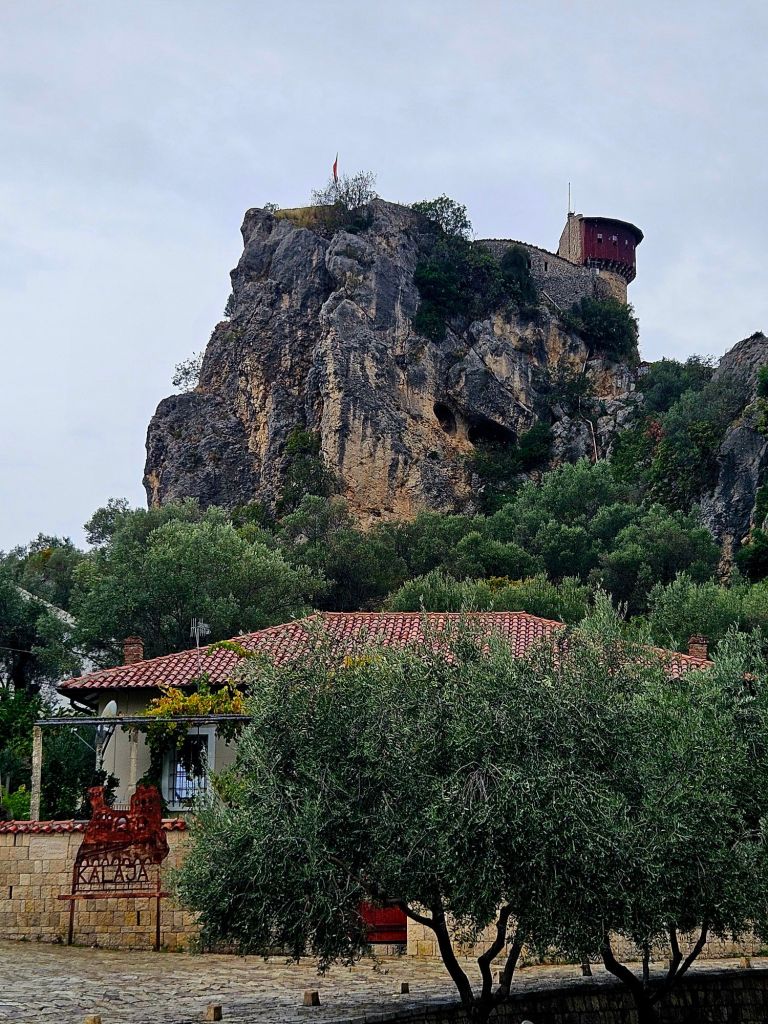
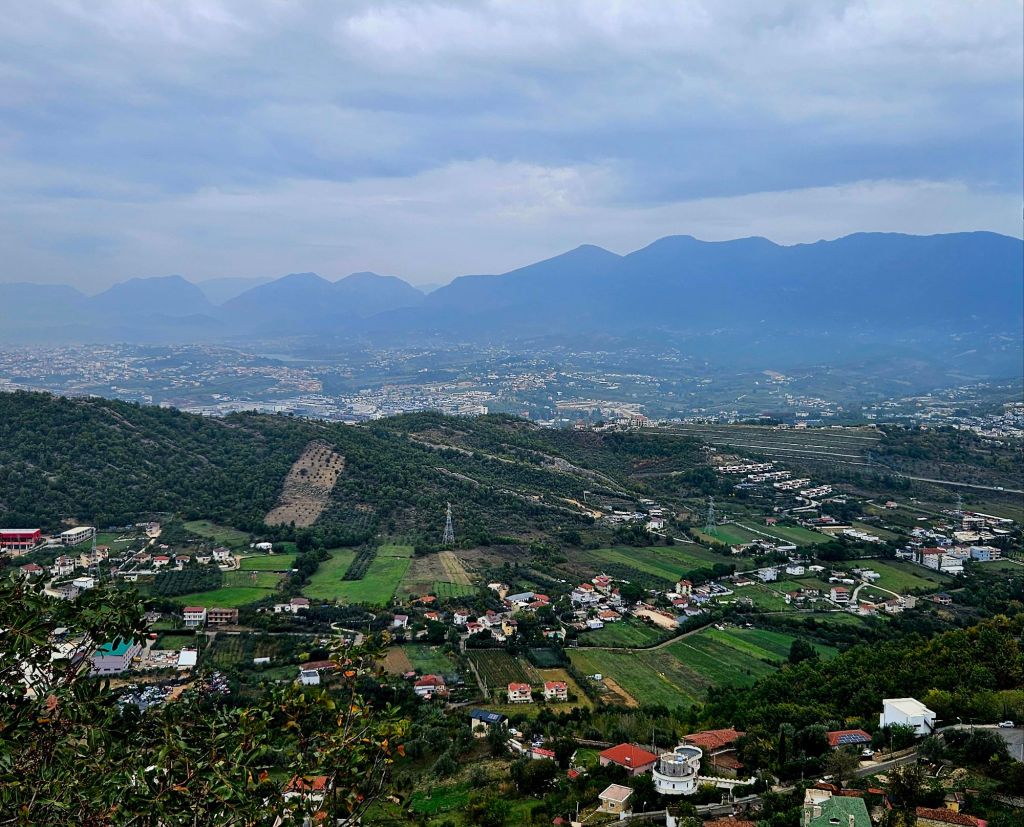
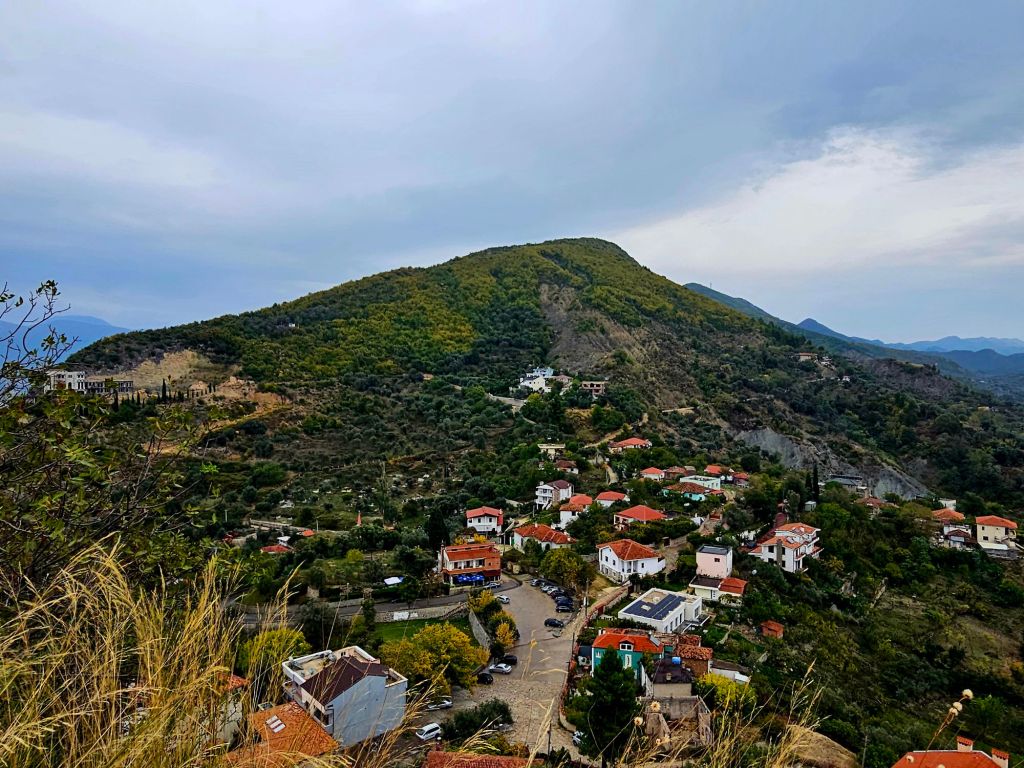
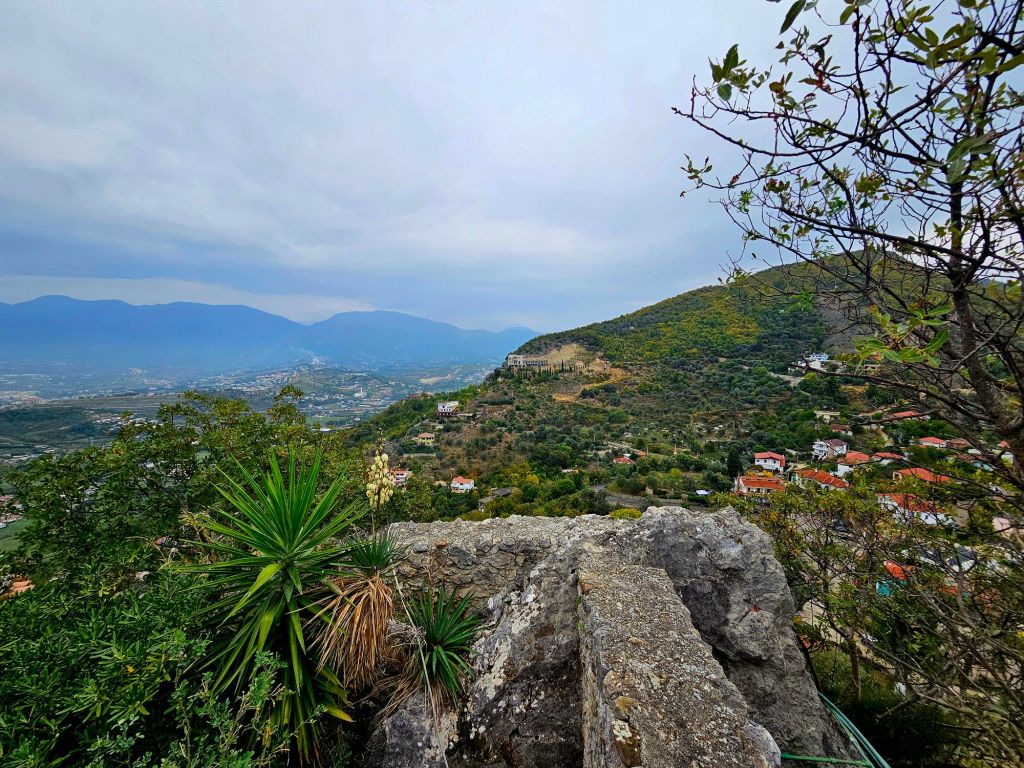
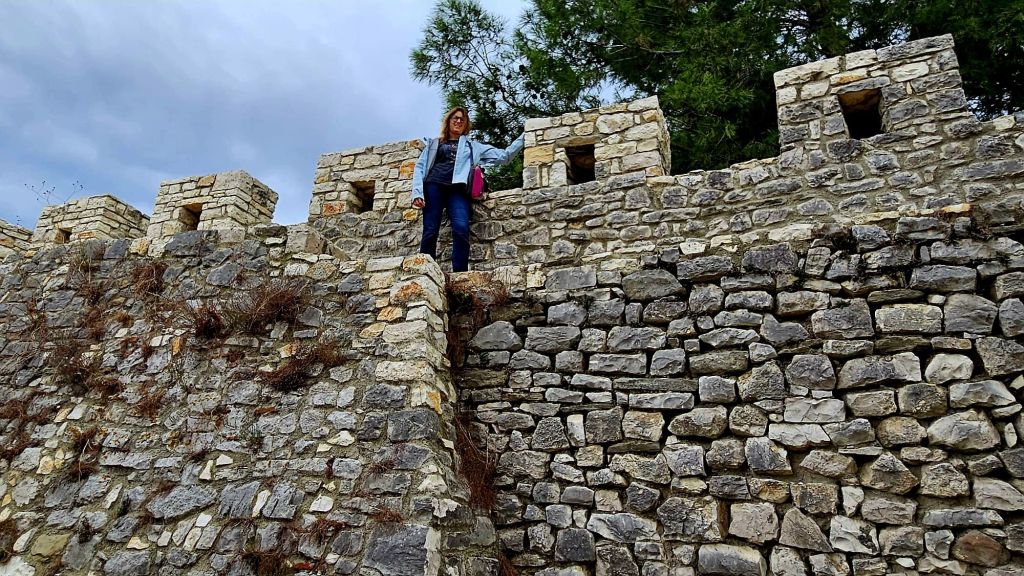
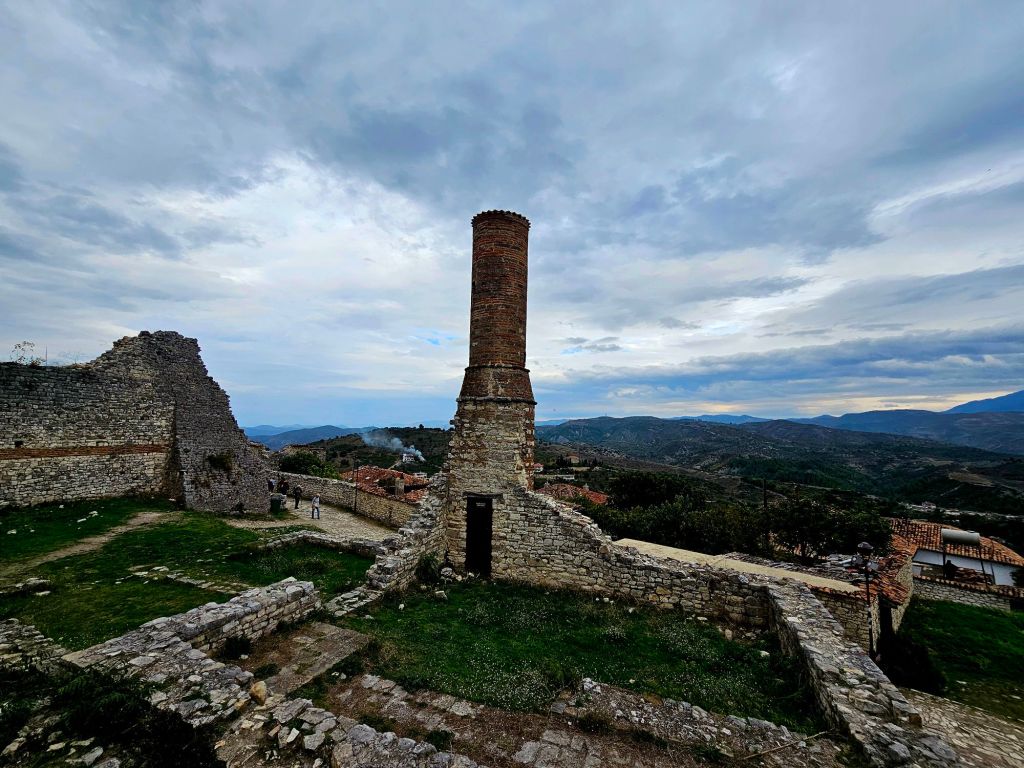
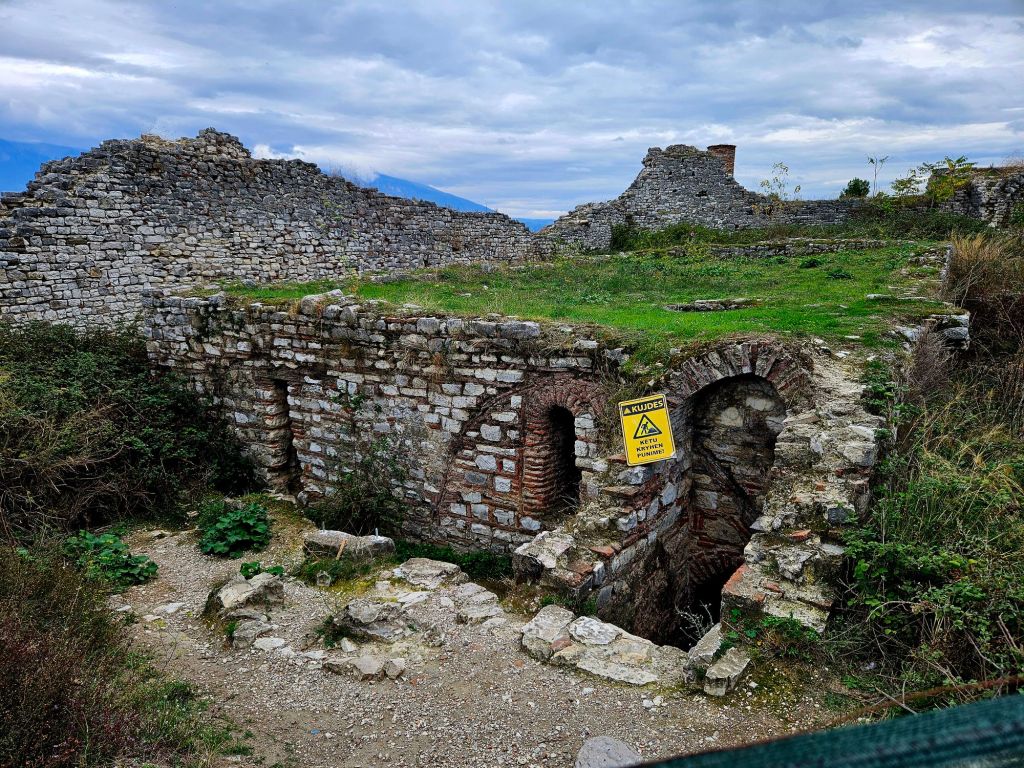
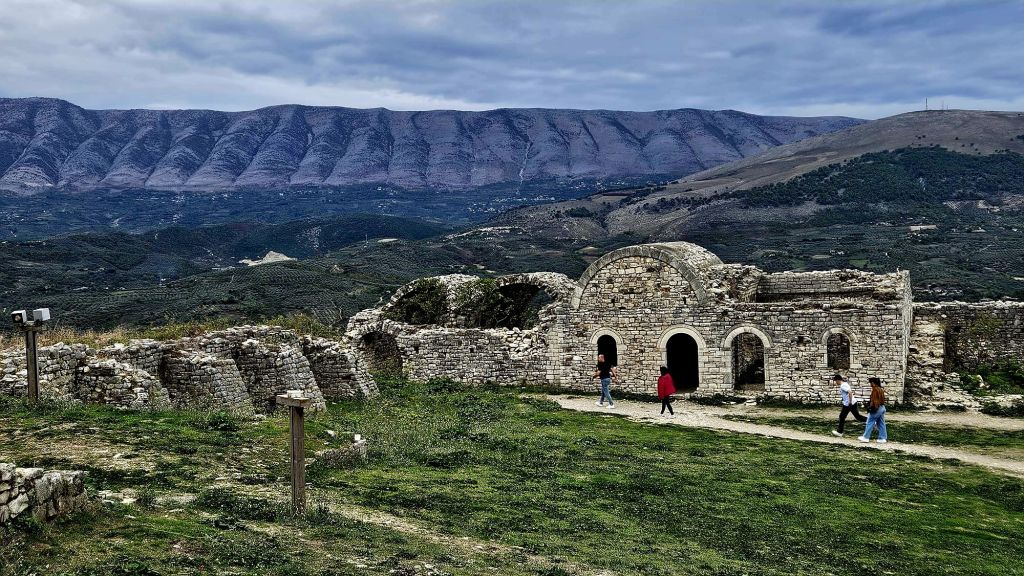
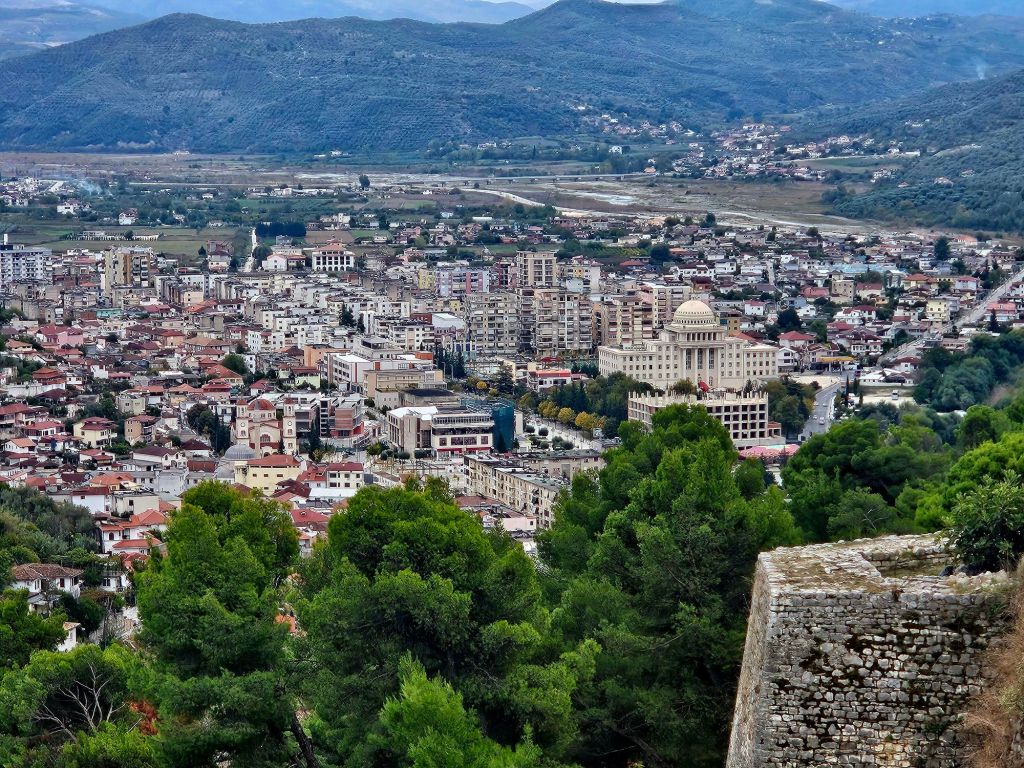
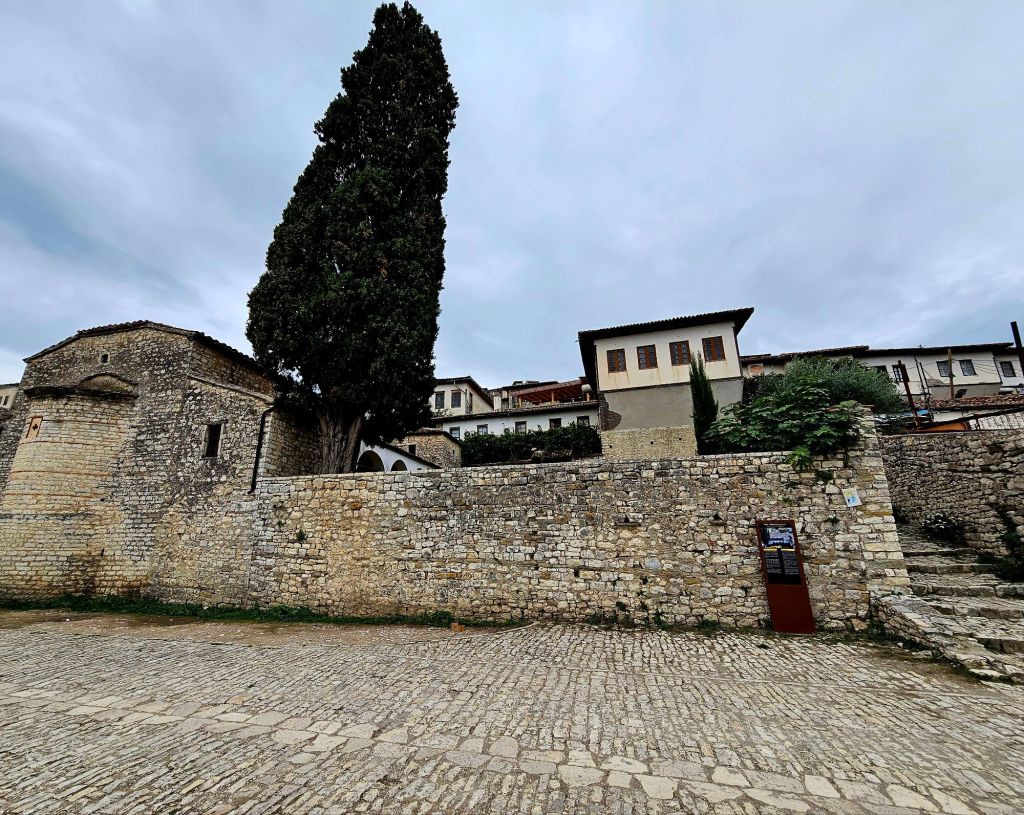
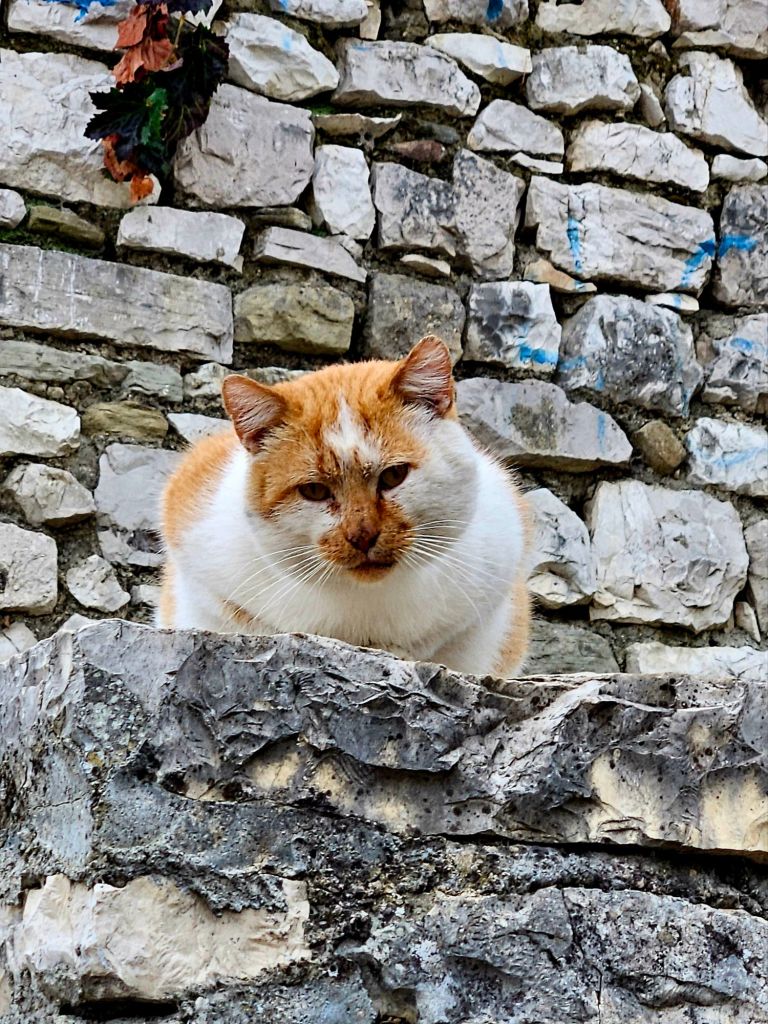
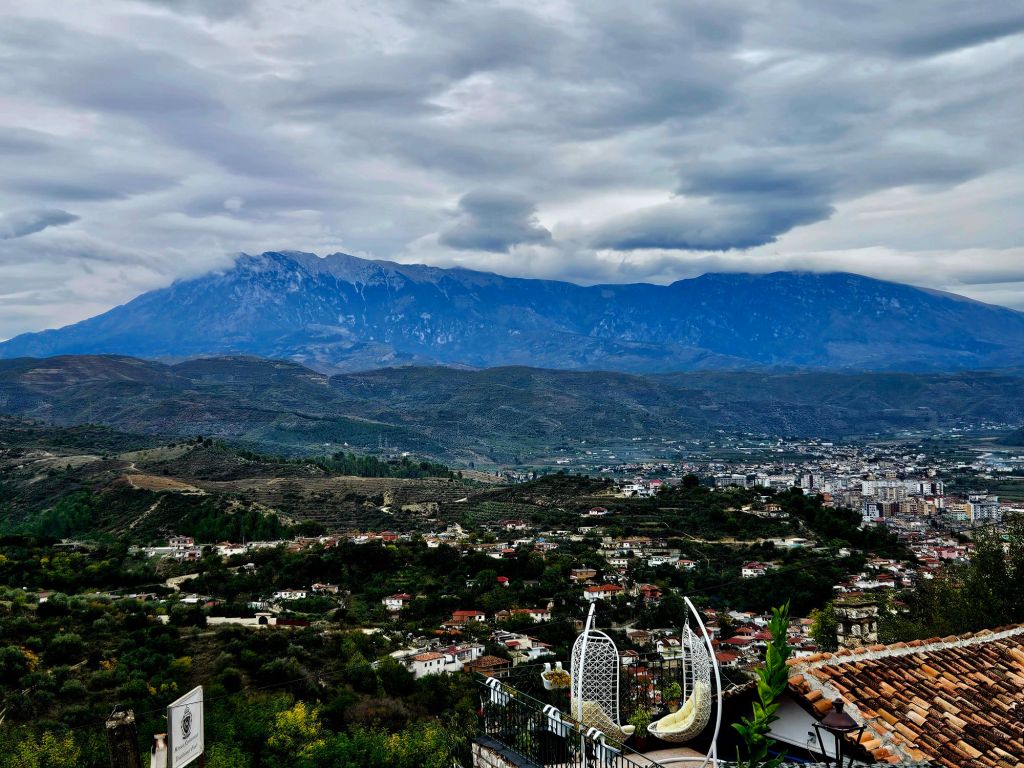
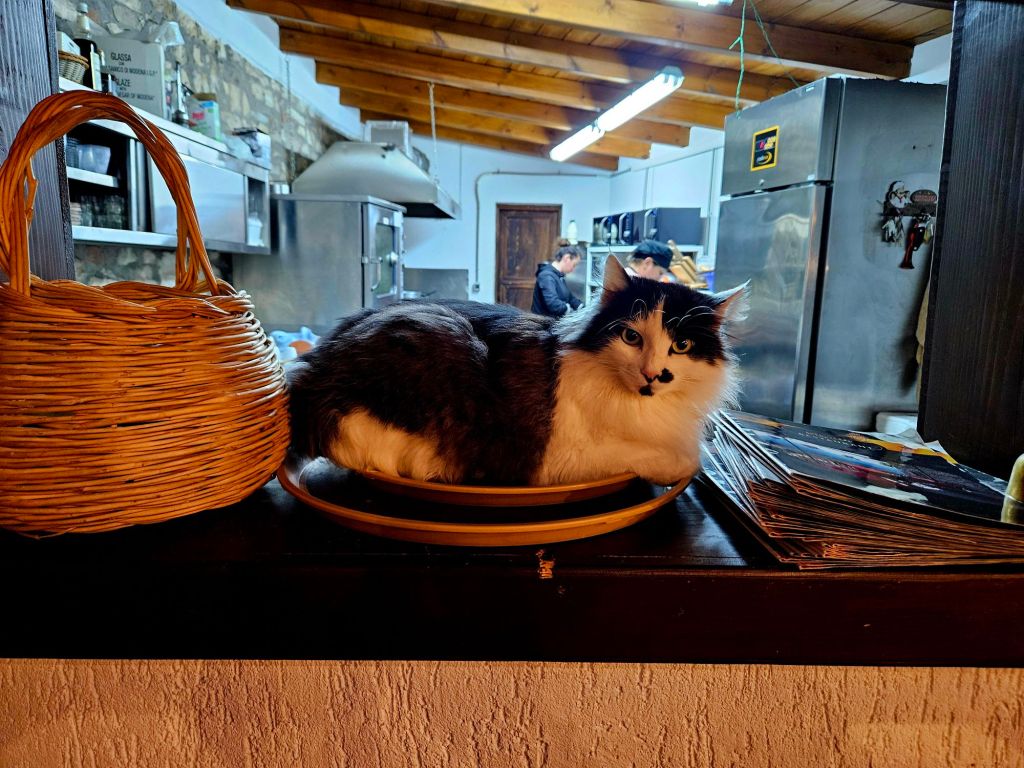
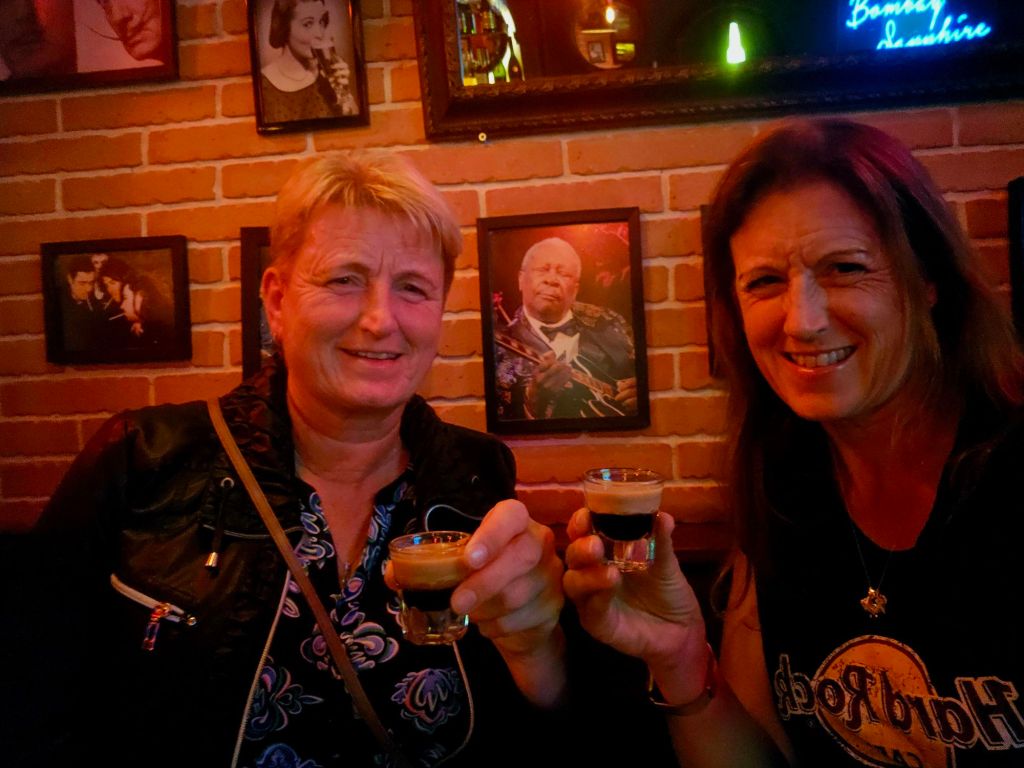
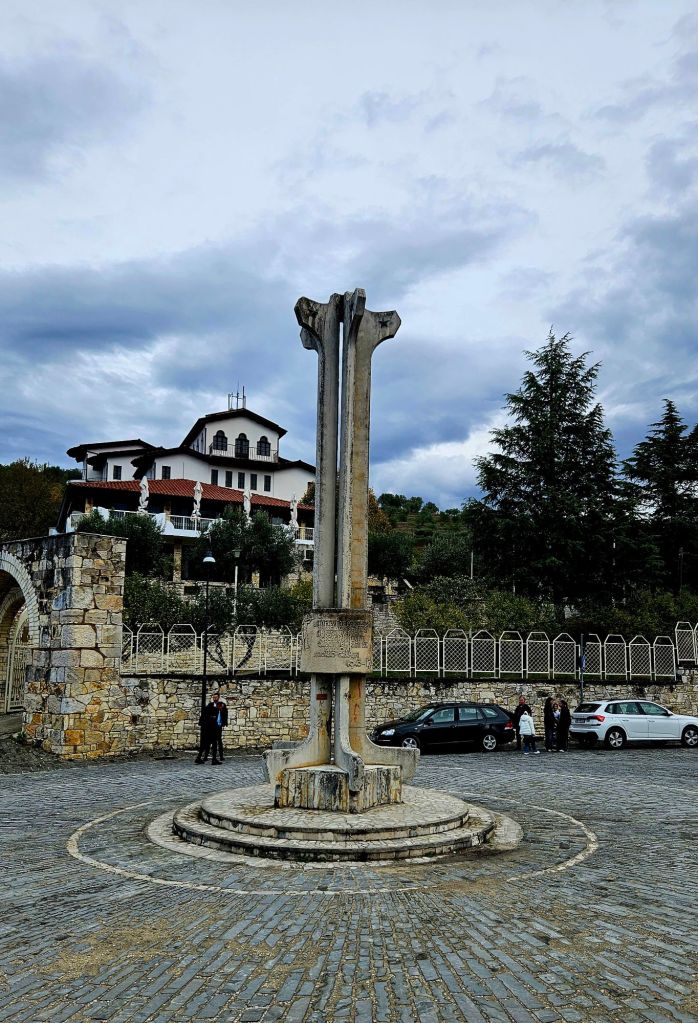
We had arranged for the winery to send a car to pick us up, so we walked down to the roundabout outside the entrance to the castle.
The lady who picked us up was the wife of the guy who showed us around. It took around 25 minutes to get to the winery. As you drove up to the building it was like driving down a residential drive. We were greeted by a cobo winery employee.
Cobo winery covers around 37 hectares (91 acres) and is a family owned business. It specialises in native grape varieties like Puls, Vlosh, Shesh i Bardhë, Shesh i Zi, and Kallmet. The winery is ever expanding and receives 15,000 visitors from over 70 countries.
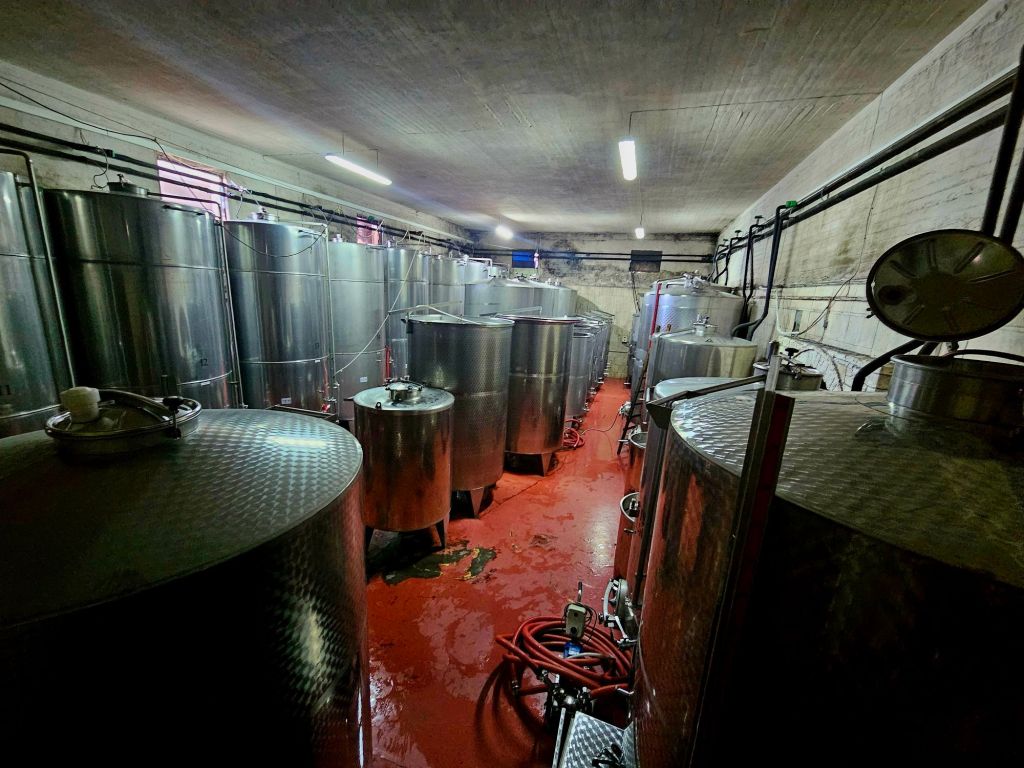
We were shown round the production area with the steel vats. The wine is fermented and the white wine is stored in the steel vats.
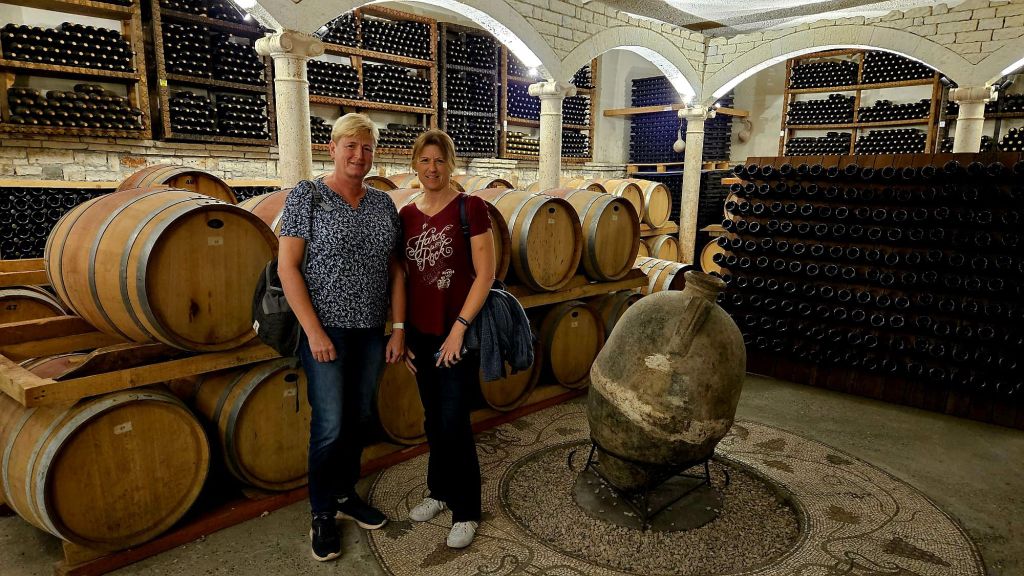
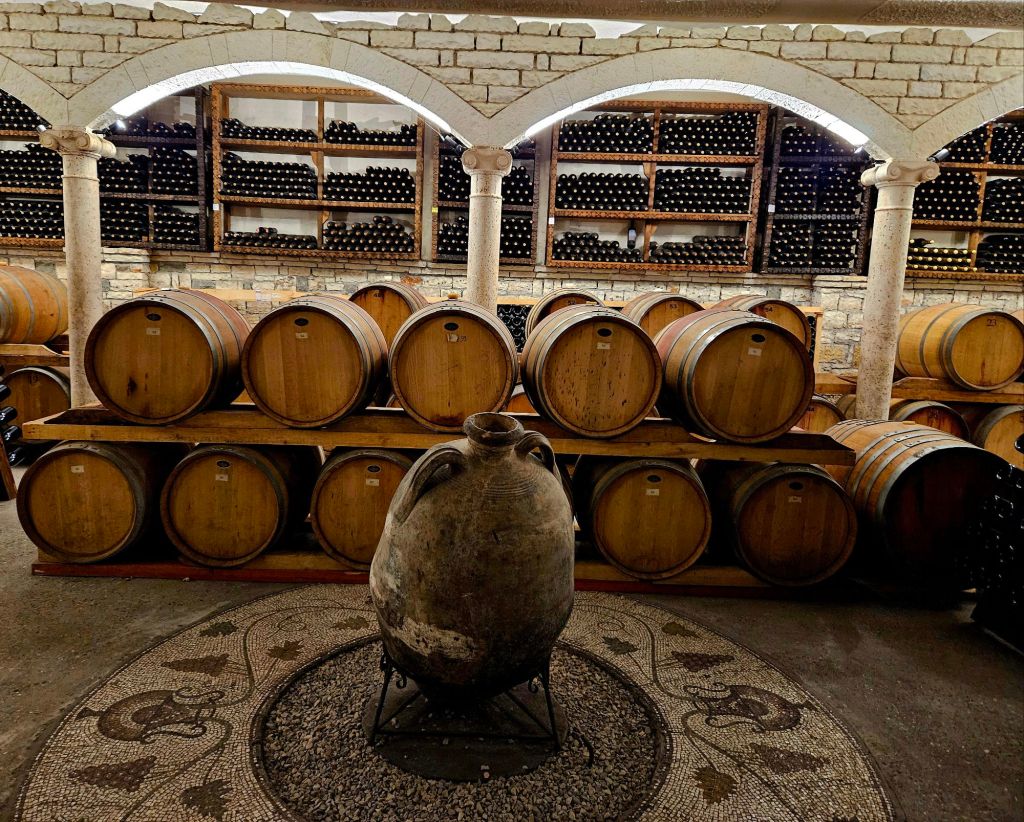
The red wine is stored in oak barrels.
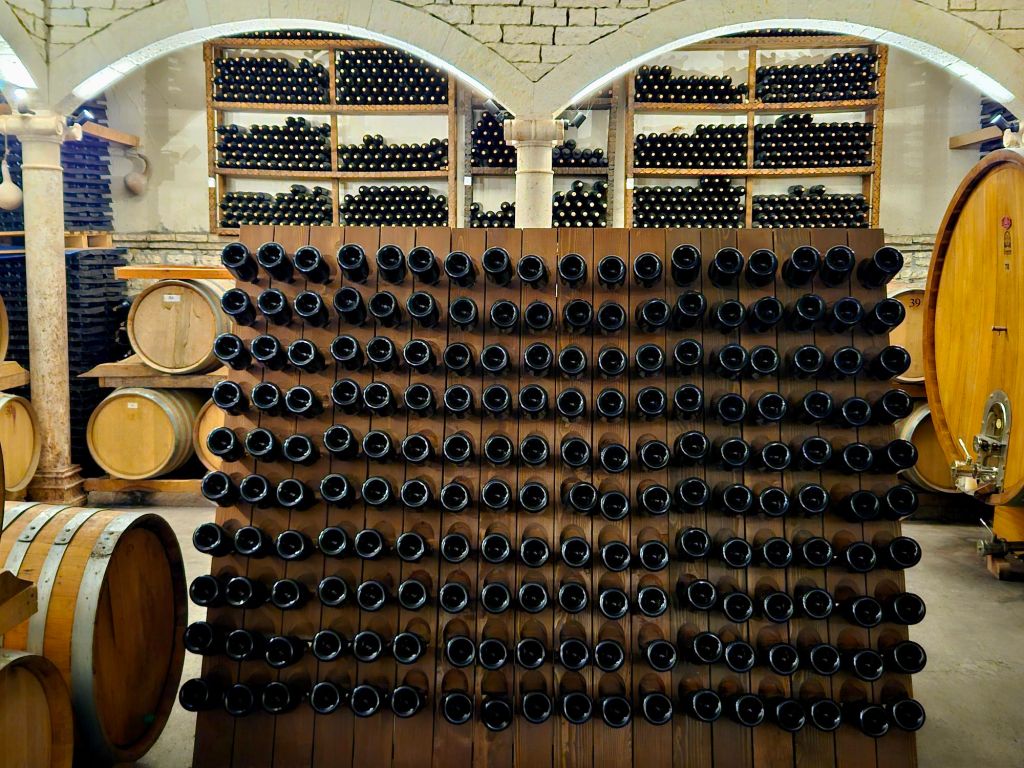
And the sparking wine is stored and turned in the Champagnois method.
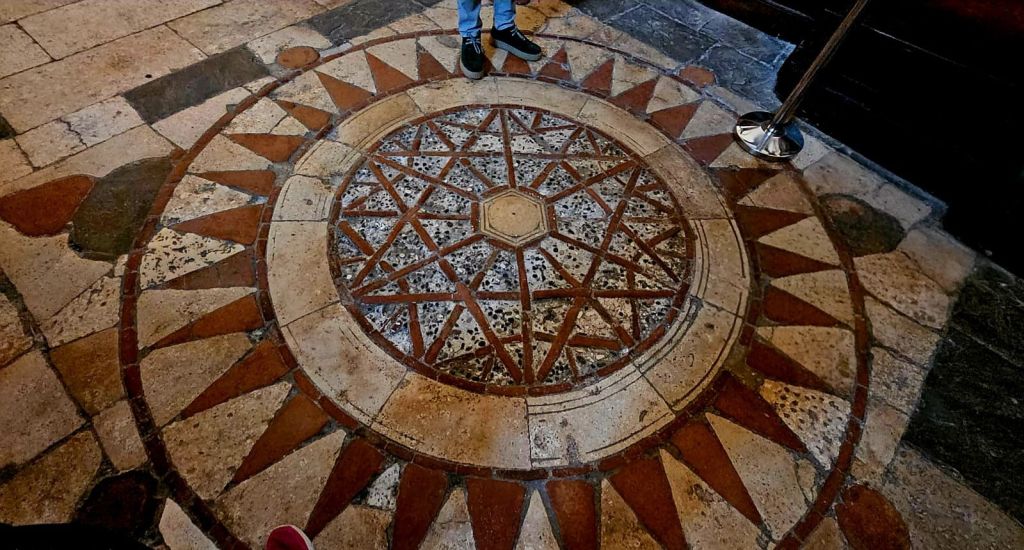
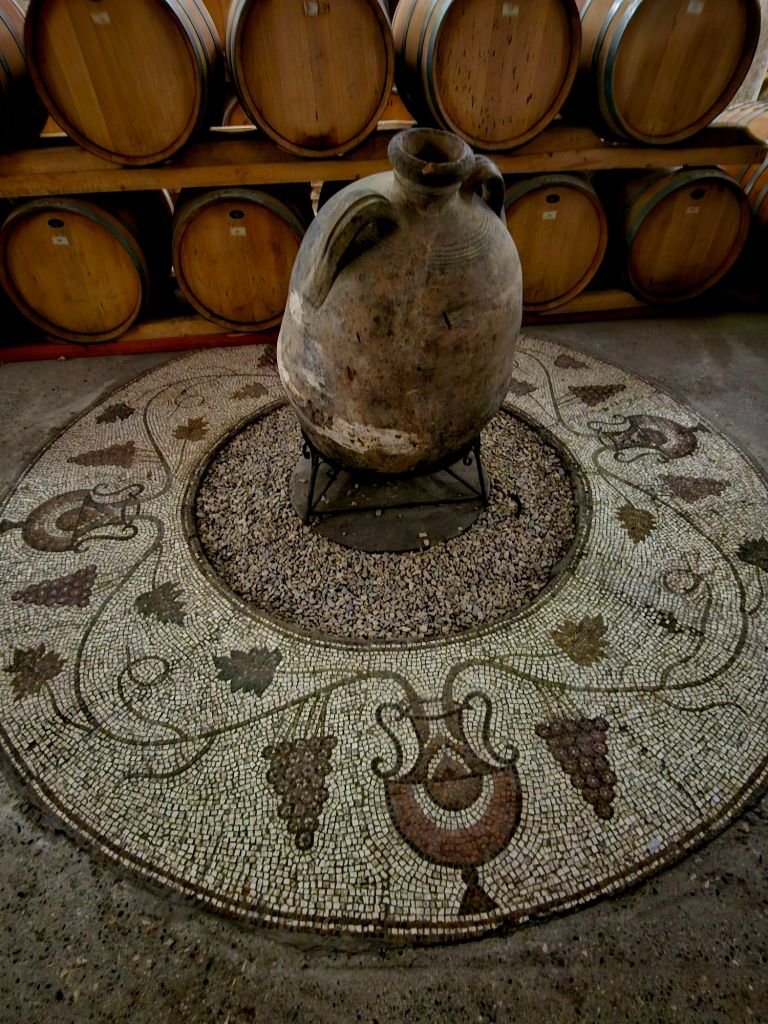
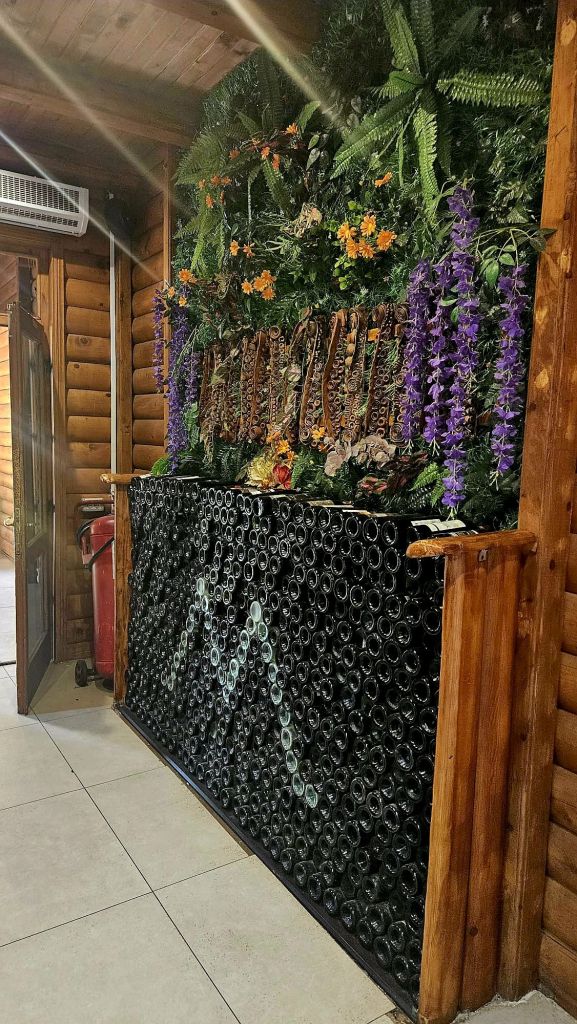
The old wine container and the wine themed mosaic in the cellar were a nice touch. The mosaic was from a local village.
The winery has a capacity of 80,000 bottles and they currently export around 10% of these. The oldest bottle they have is 25 years old.
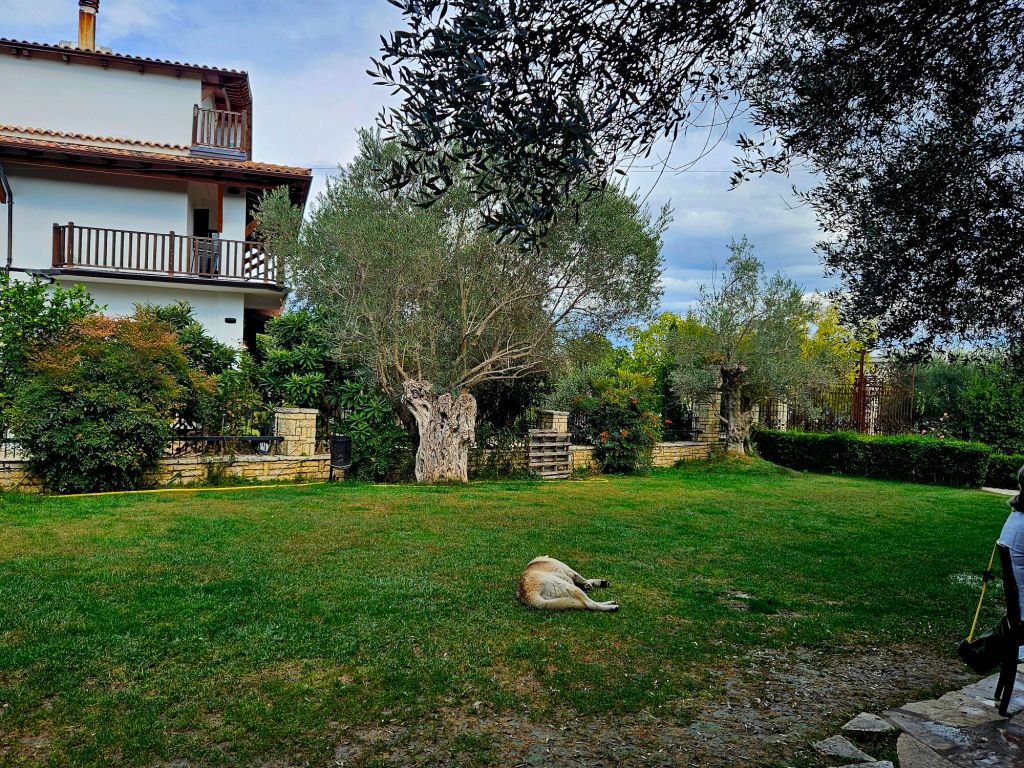
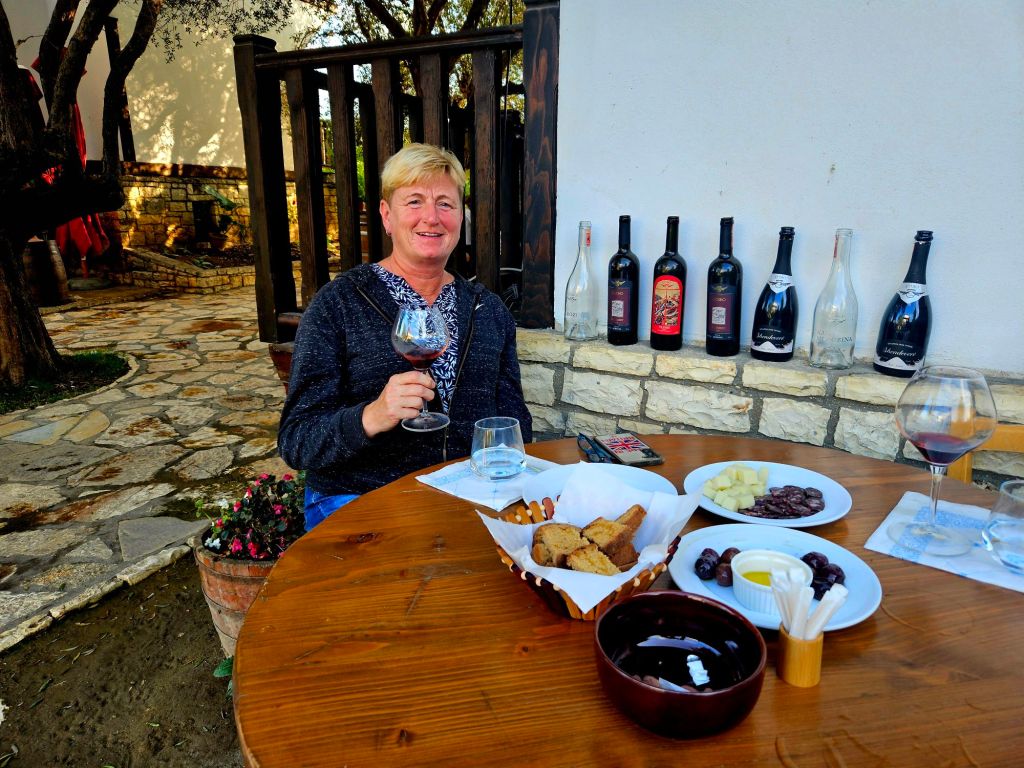
After the tour we were taken into the gardens for our wine tasting. It was a lovely sunny afternoon.
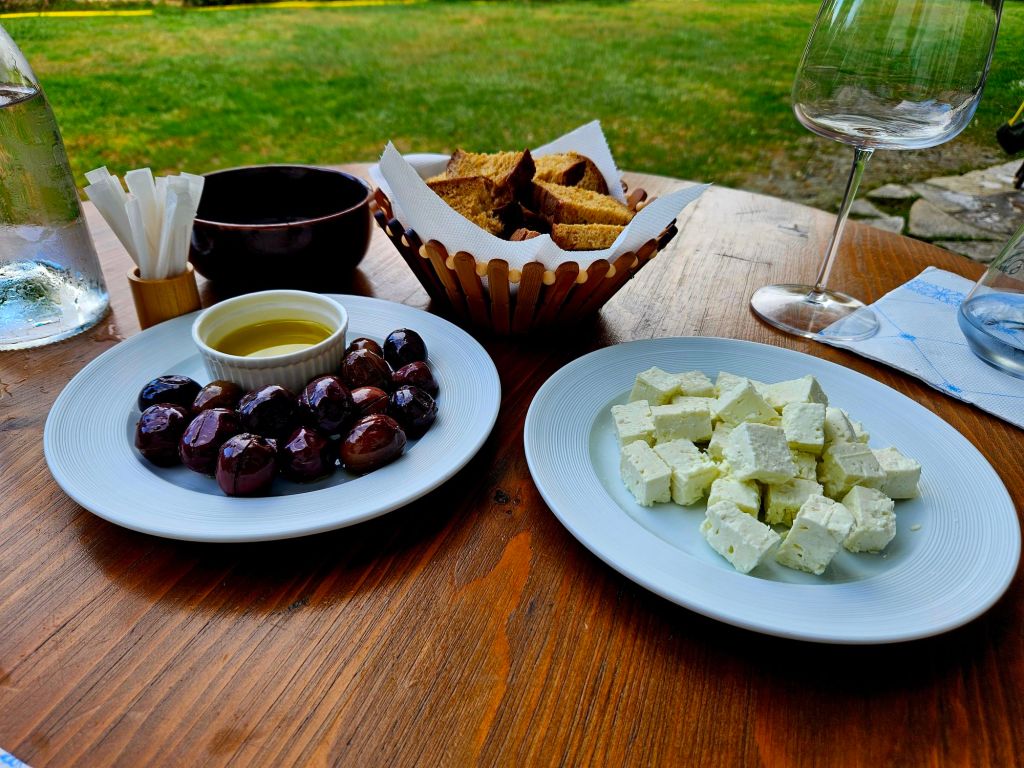
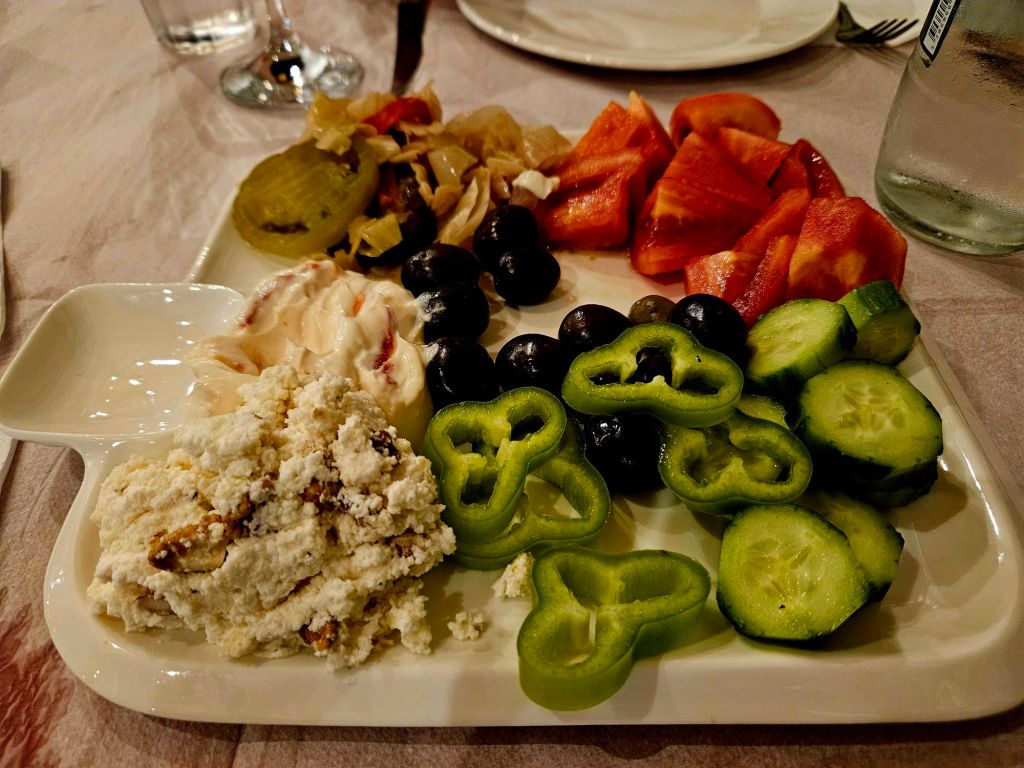
We were given a variety of snacks; cheese, olives and breads to pair with our first wine. I learnt that the large olives are best to eat and the smaller olives are used to make the oil.
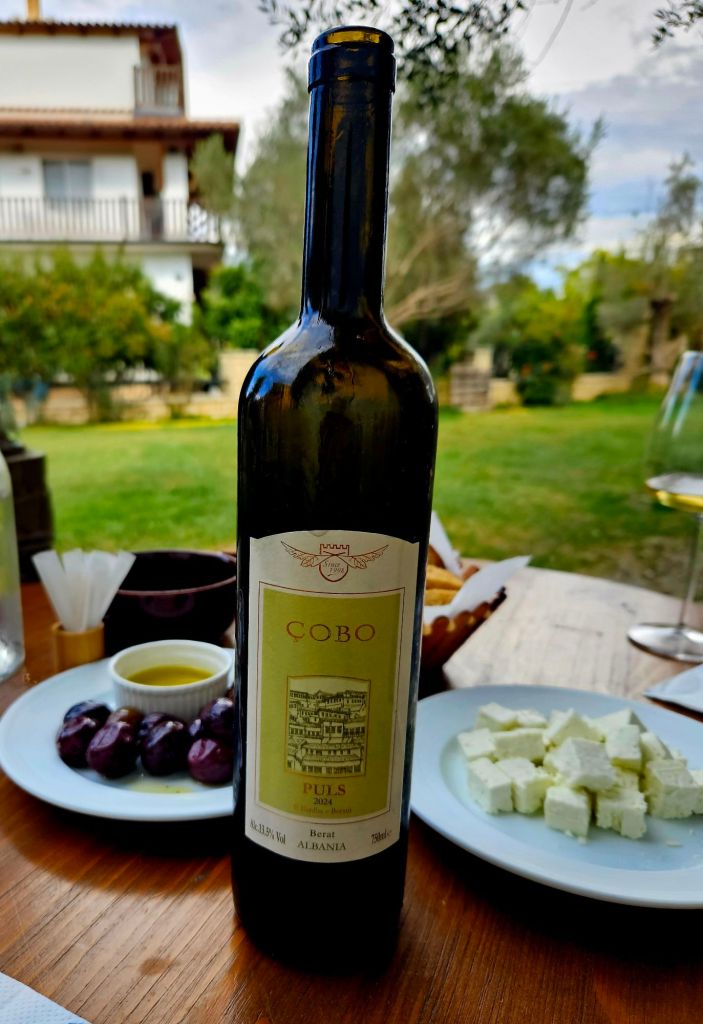
The first wine we tried was a dry white Puls wine. It was really nice and we ended up buying a bottle to drink over the rest of the holiday.
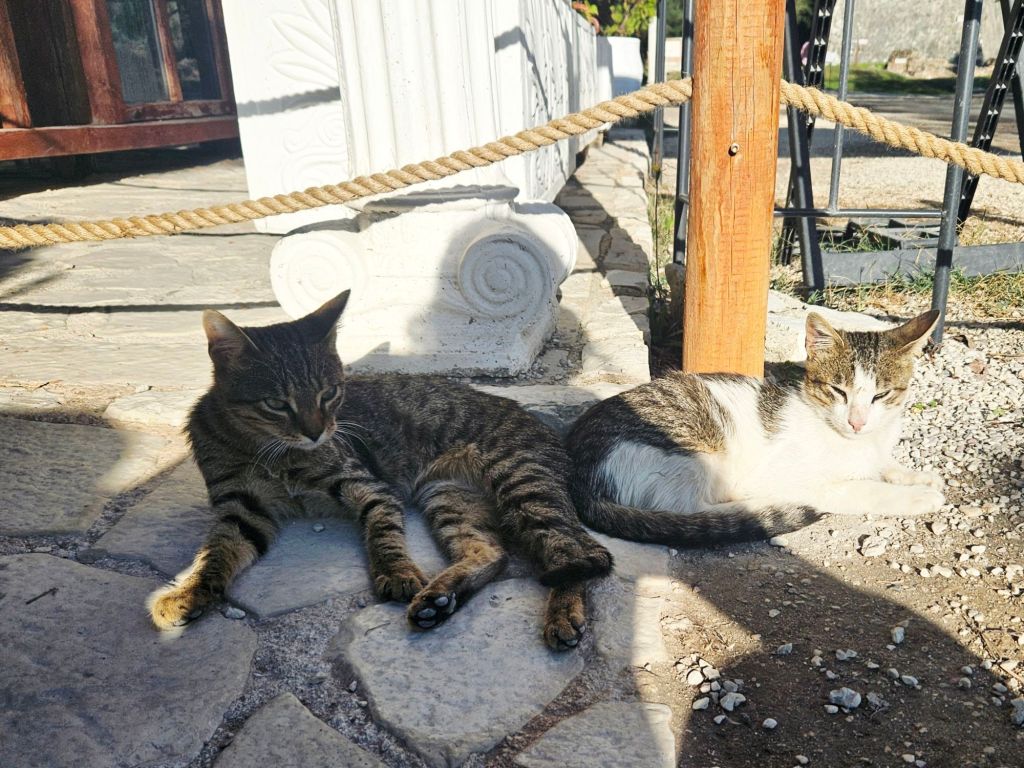
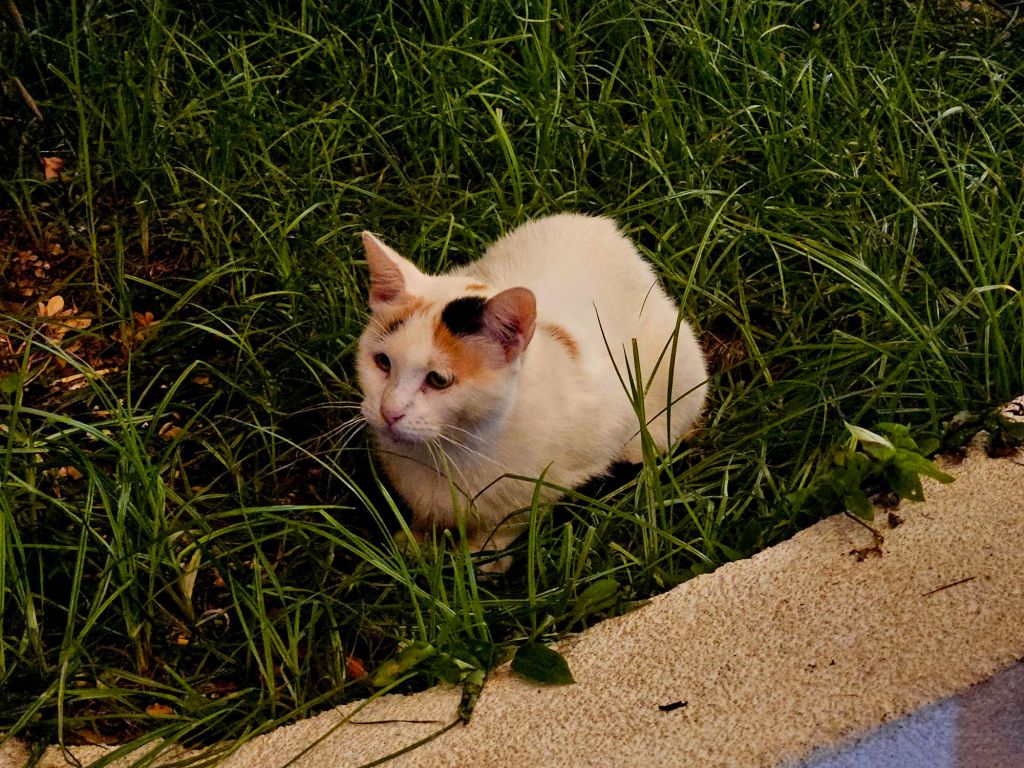
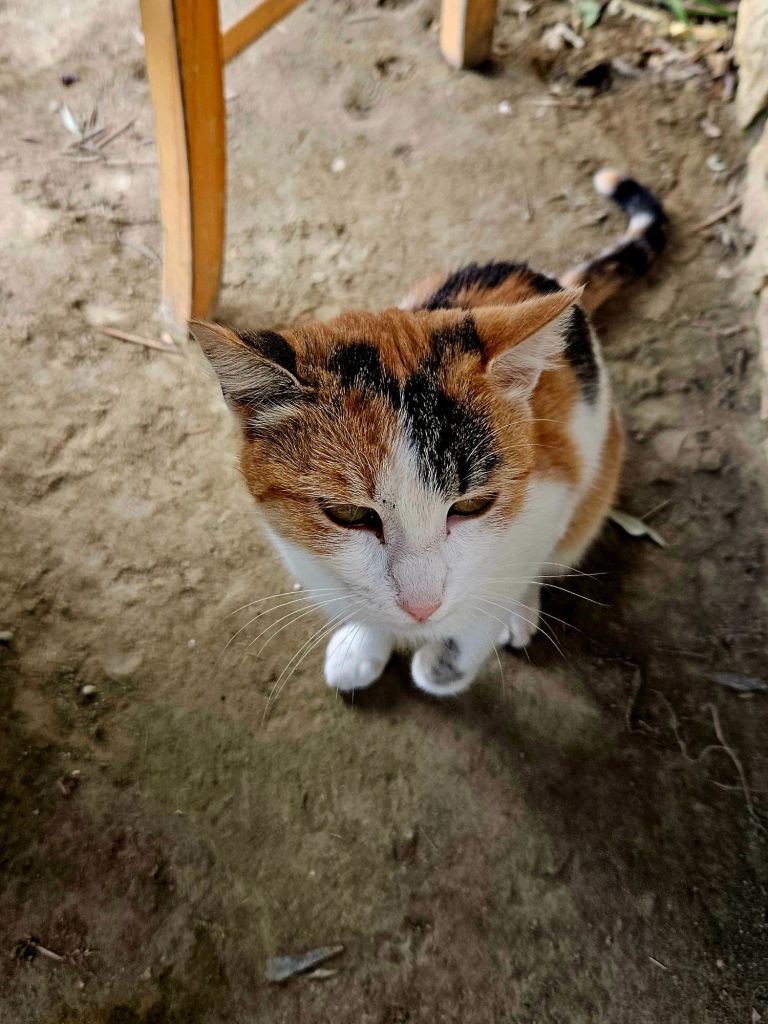
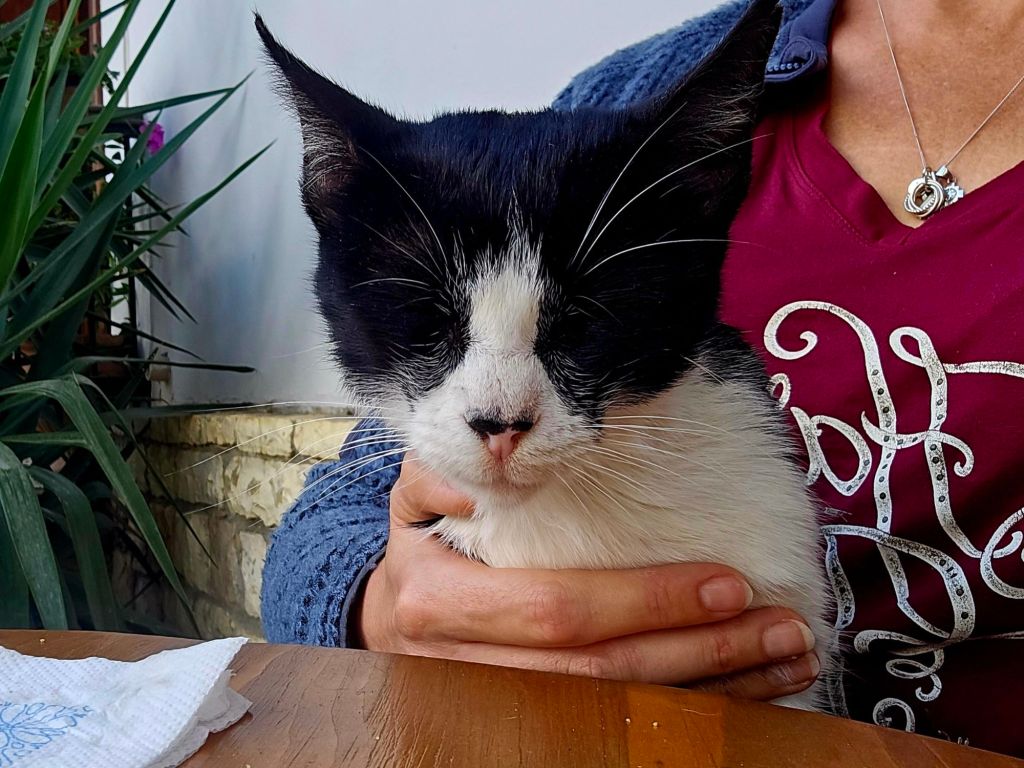
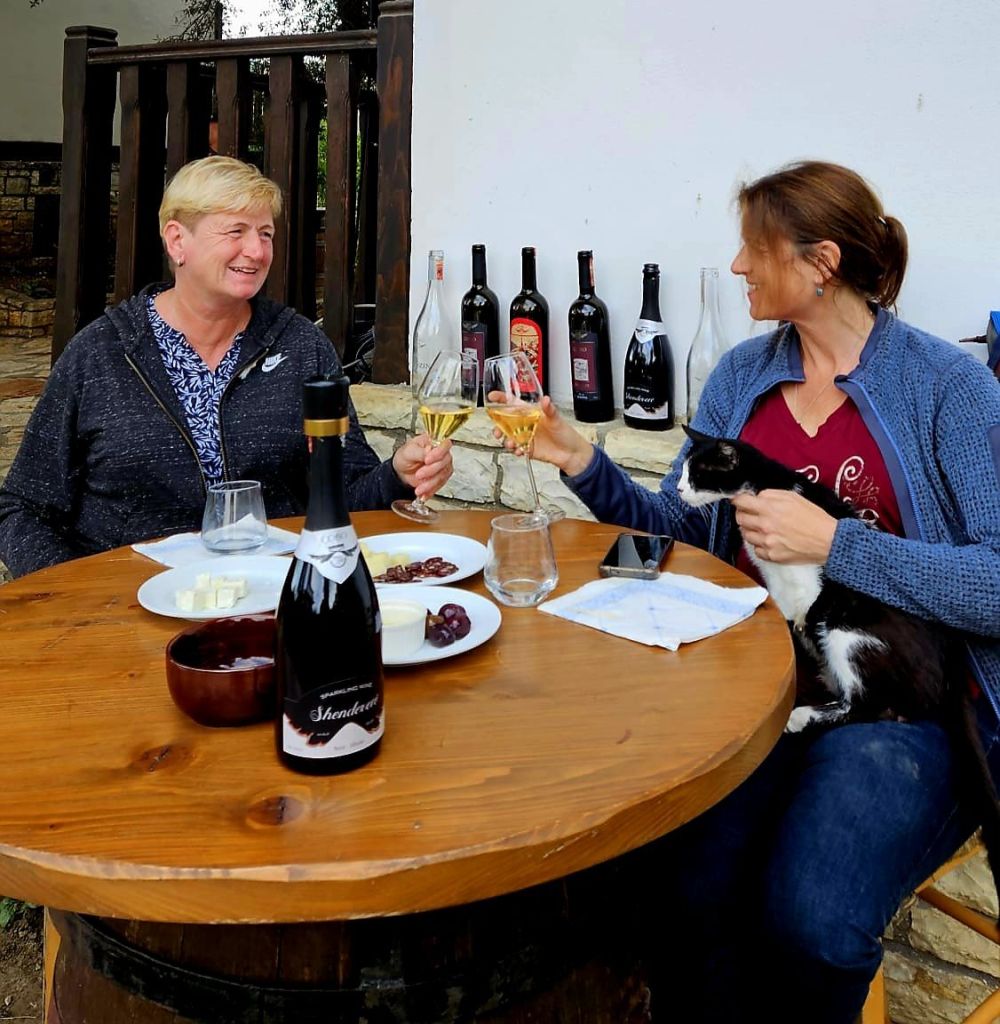
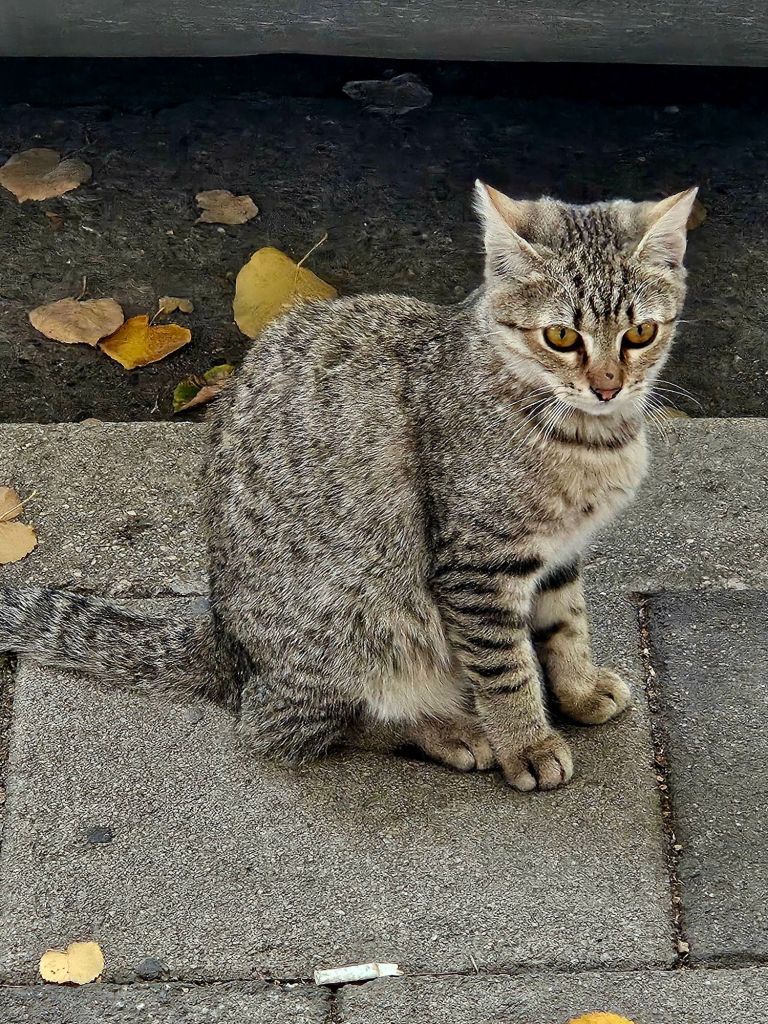
At this point we had a couple of furry friends join us.
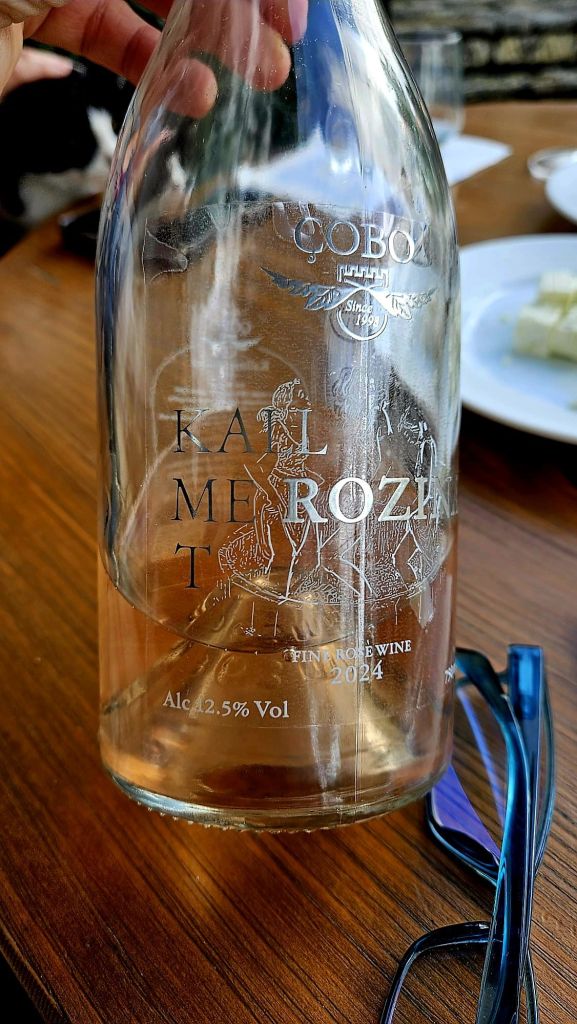
The next wine we tried was a light rose wine. The skin is left on the grapes for 40 days to get the colour.
The next wine we tried was a new wine they were testing out. It was an orange wine and tasted really nice.
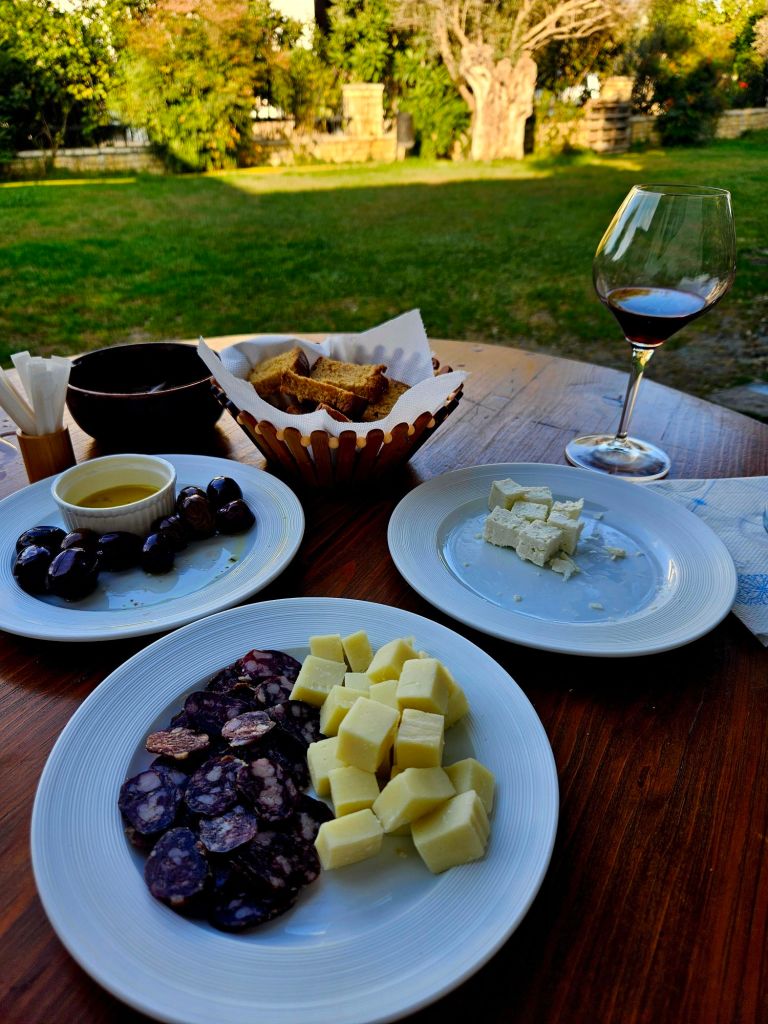
At this point were were given even more food; some hard cheese and sausage.
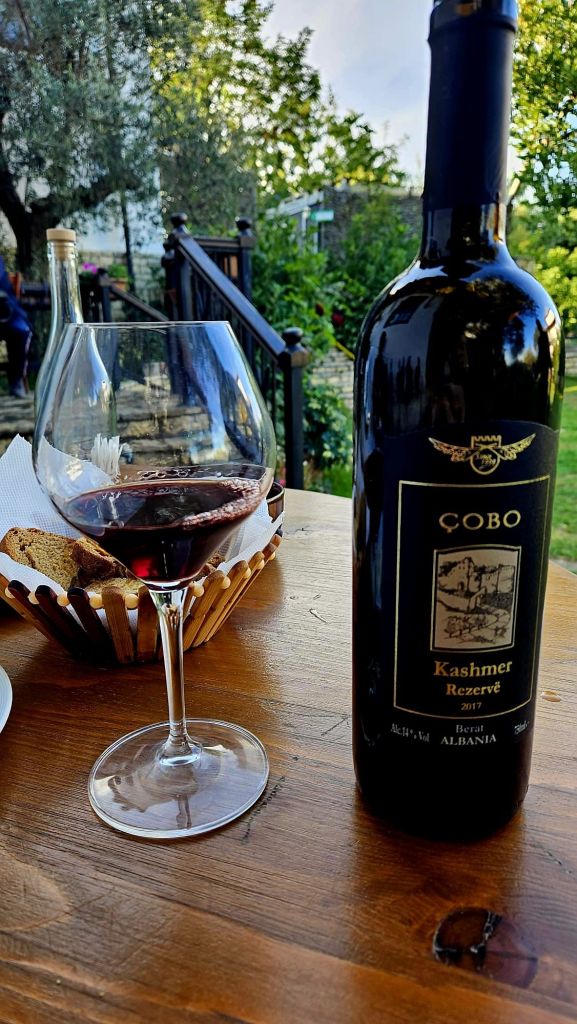
And our fourth wine came too. This was a red wine, Kashmer, made from 70% local grapes and the other 30% was a mixture of cabernet sauvignon and merlot. The bottle we tried was from the 2017 harvest. The wine is left in the barrel for a year, and then in the bottle for a further year.
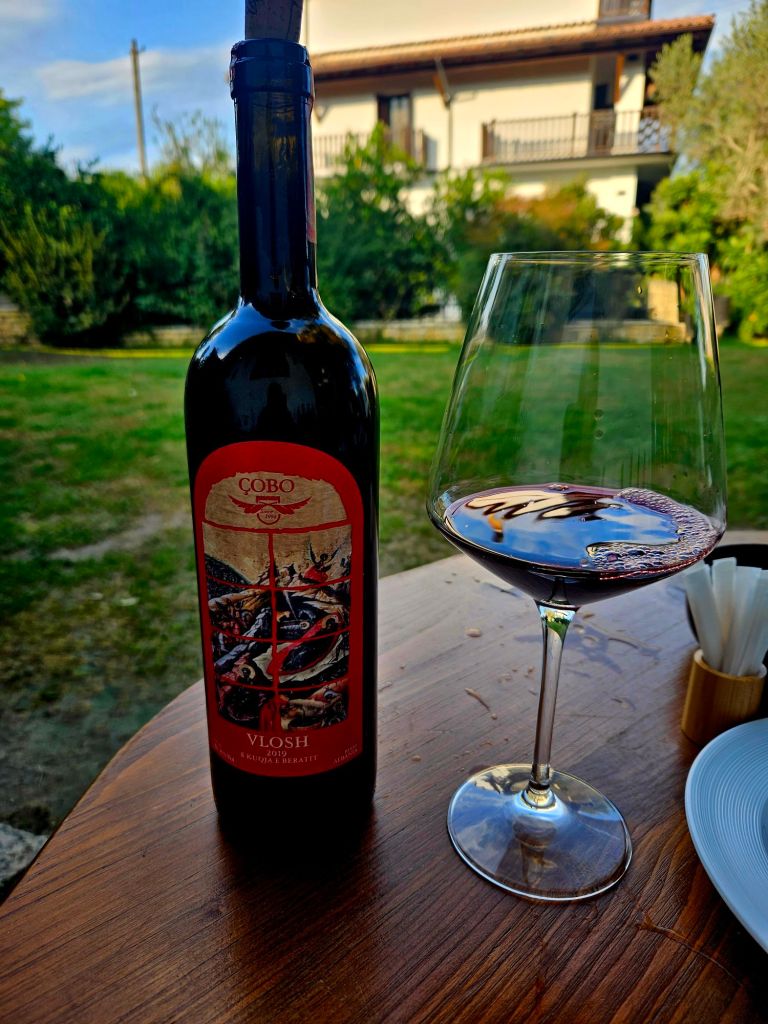
We then tried another red wine, Vlosh. This is entirely made from local grapes. The winery produces 10 hectares of this grape and it is only used at Cobo winery.
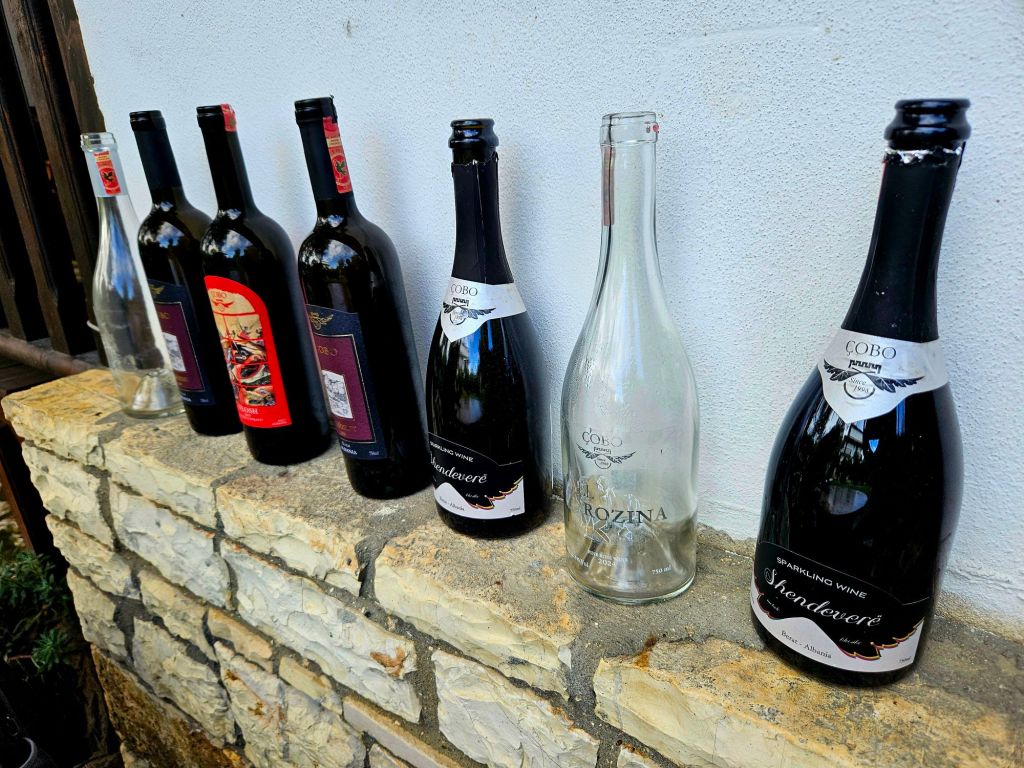
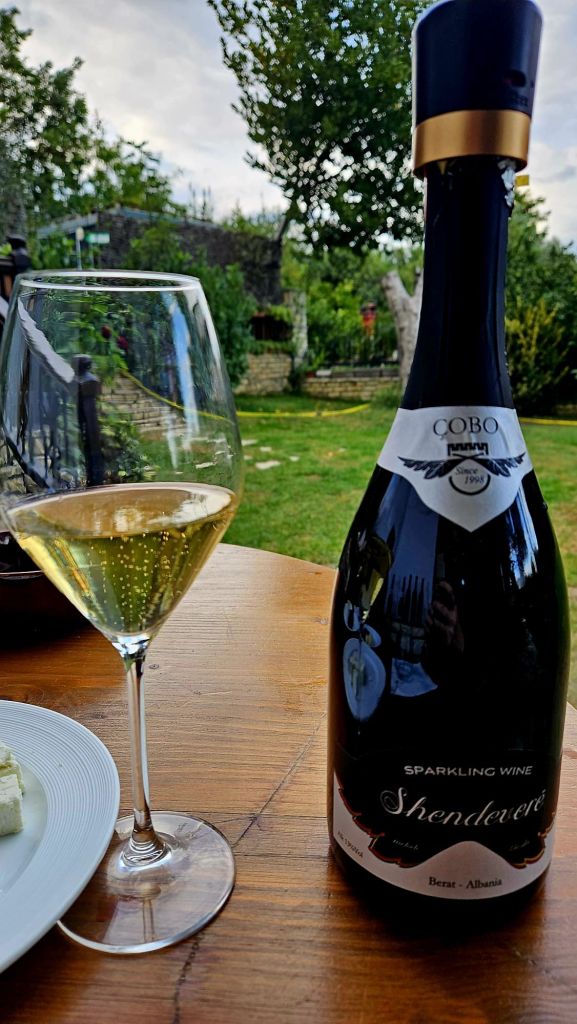
The final wine was their sparkling wine, Shendevere. This was really nice, but the English sparkling wines are better.
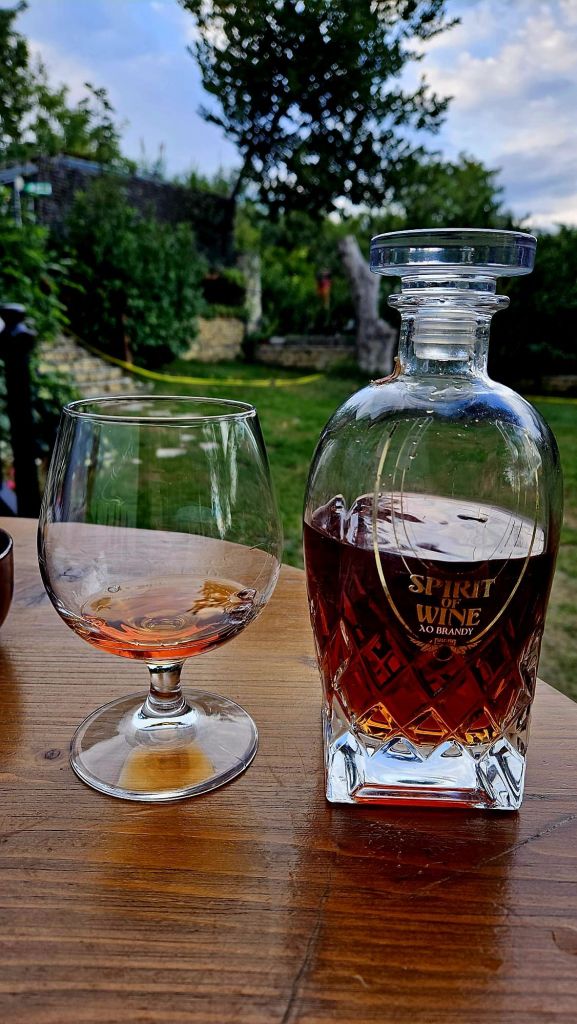
After all of these wines we were offered a taste of their brandy, Spirit of Wine. This is left for 8 years in oak barrels and tasted delicious,and it was very smooth.
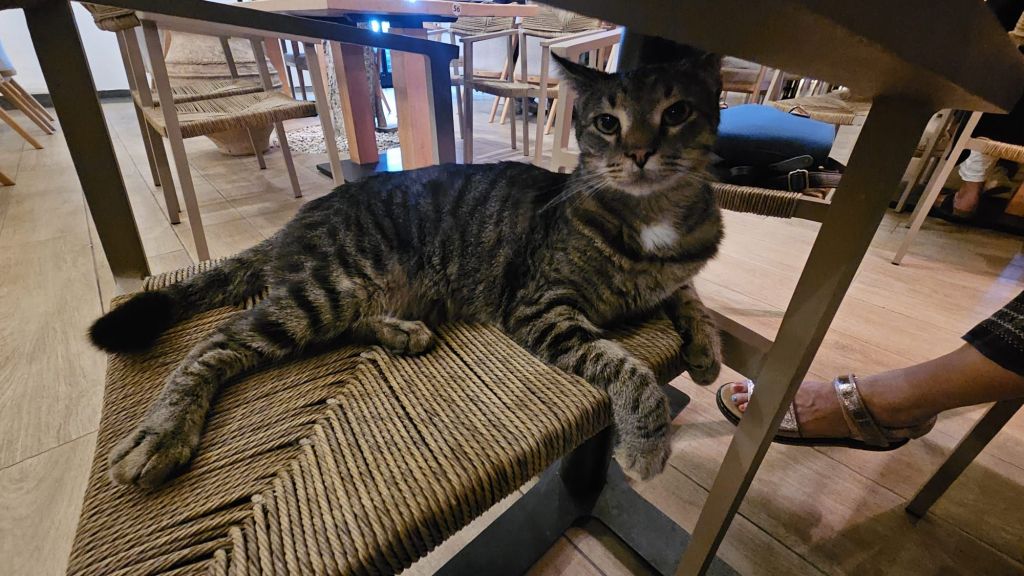
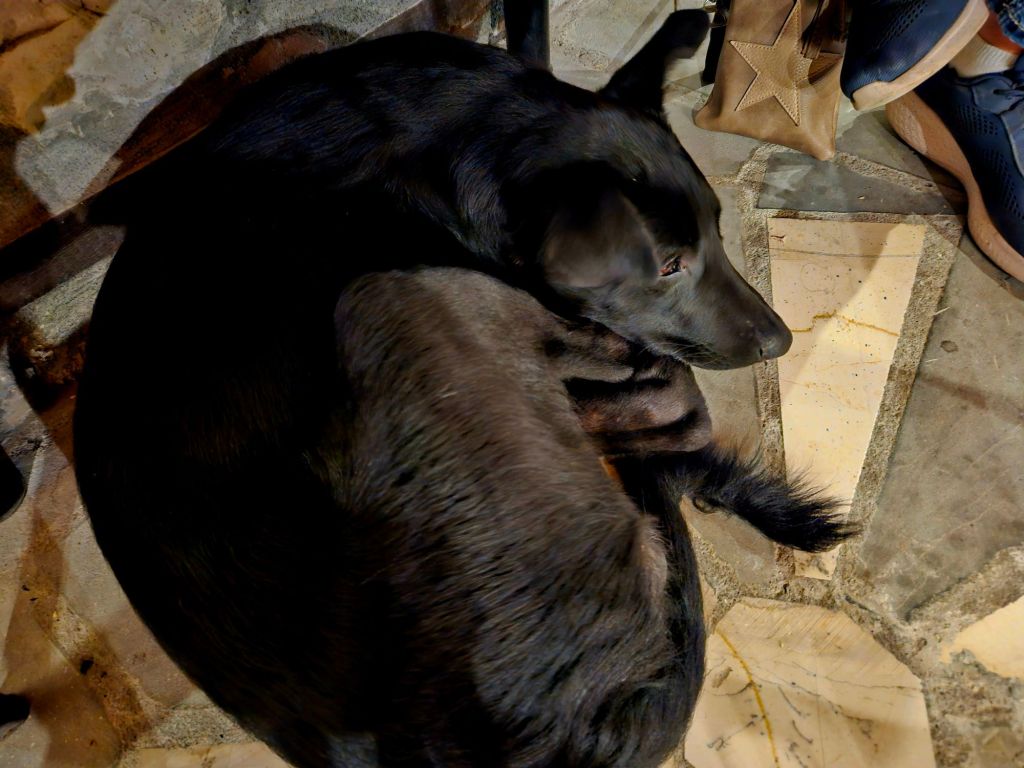
We sat and enjoyed the rest of the brandy, playing with the cats and also the dog who tried to scare them off.
The wine prices were really expensive so we only bought the white wine.
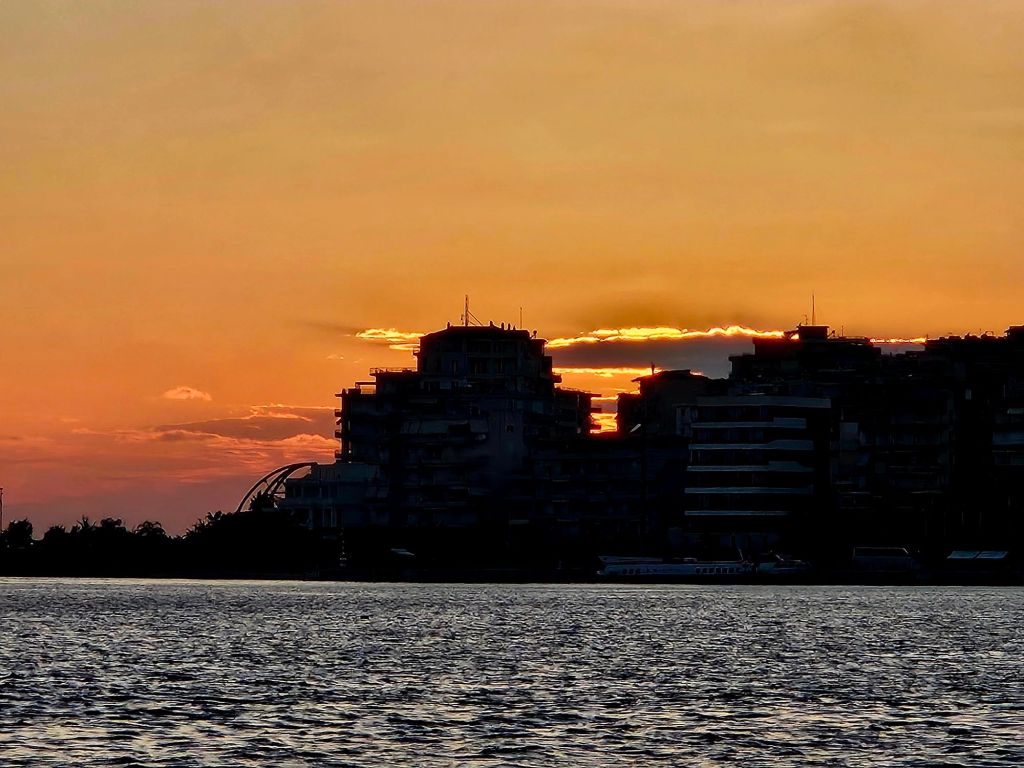
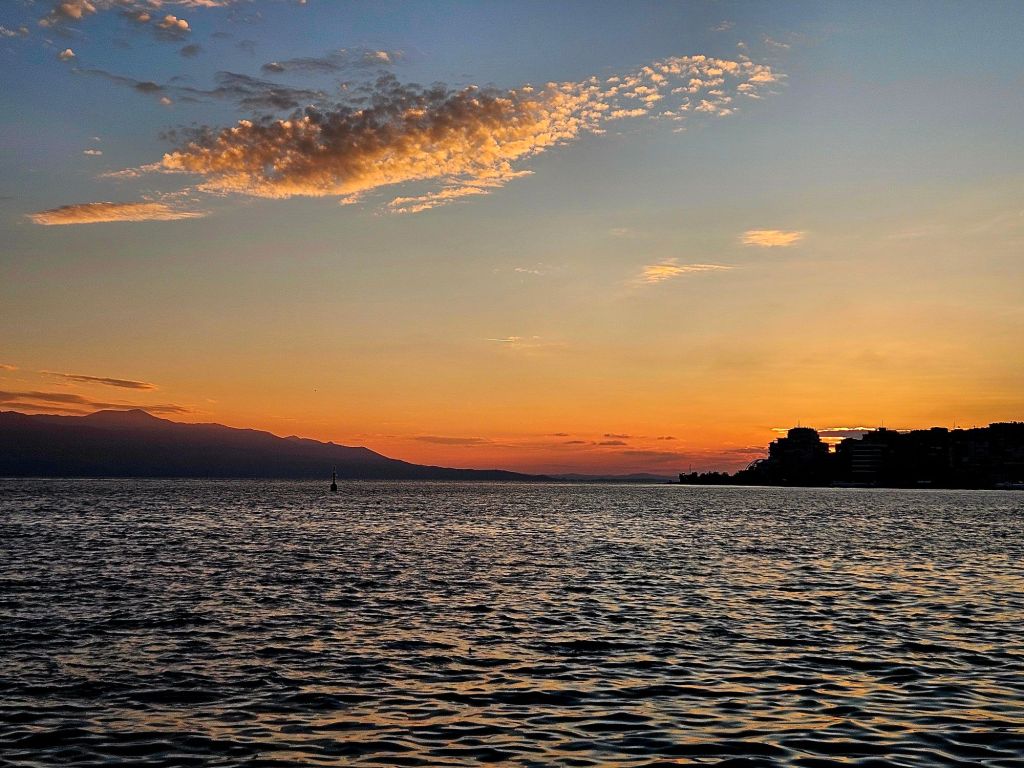
When we arrived back at the castle the sun was just starting to set, it looked beautiful.
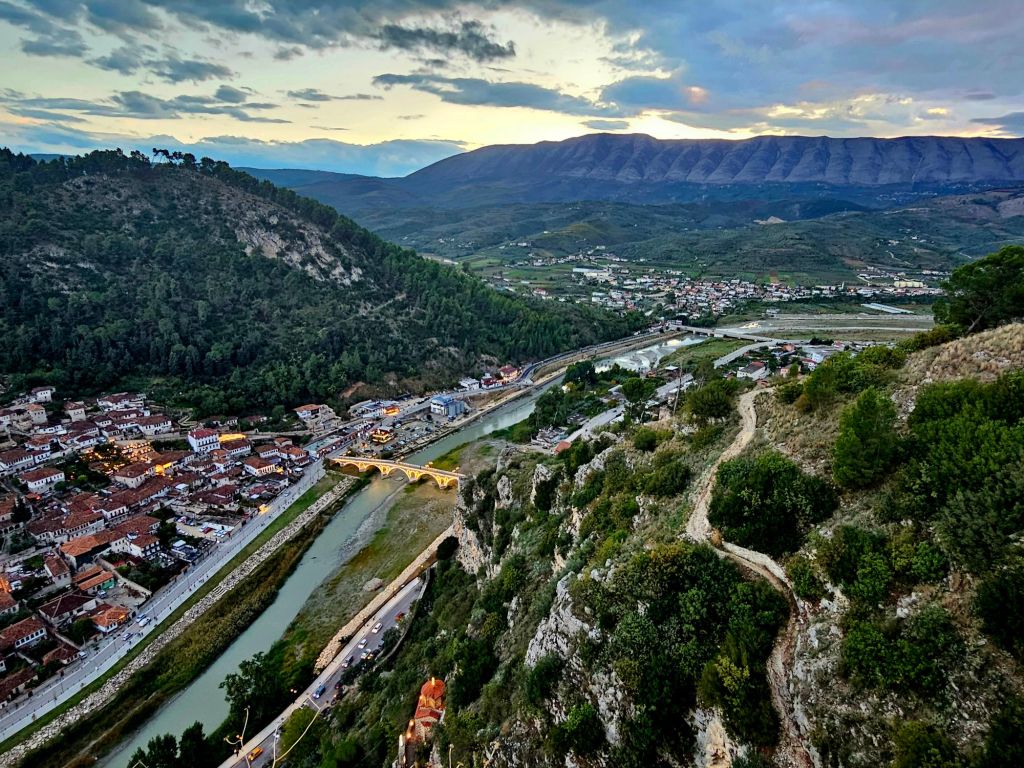
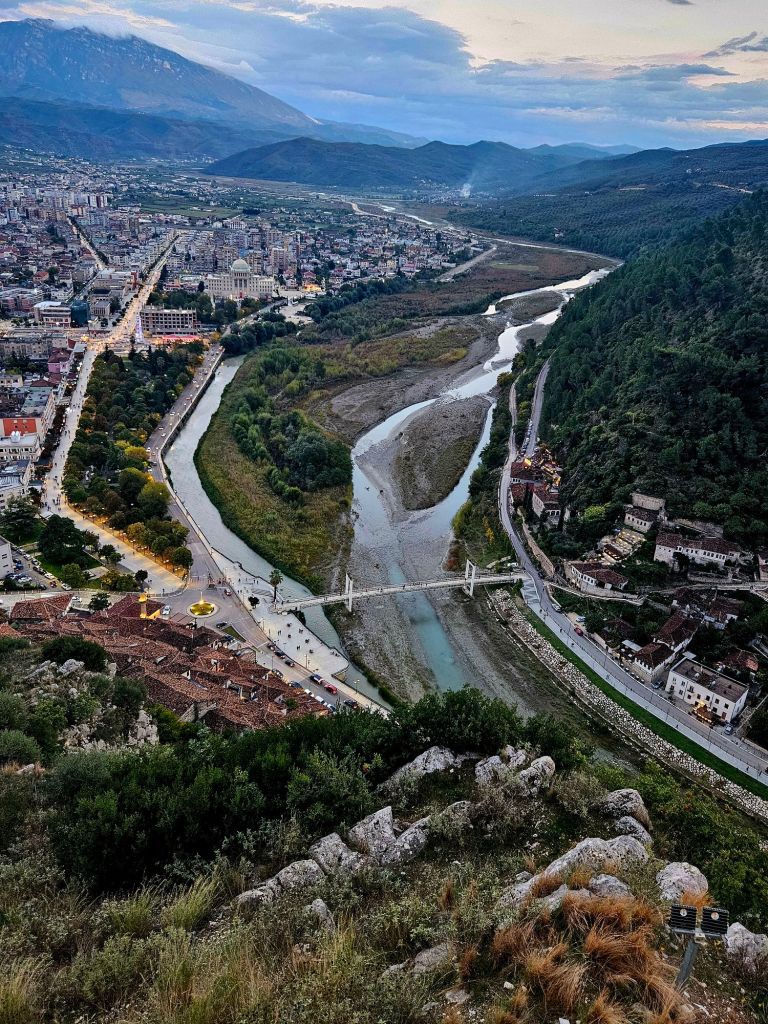
We decided to take a walk over to the viewing point at the other end of the castle. The views were really nice.
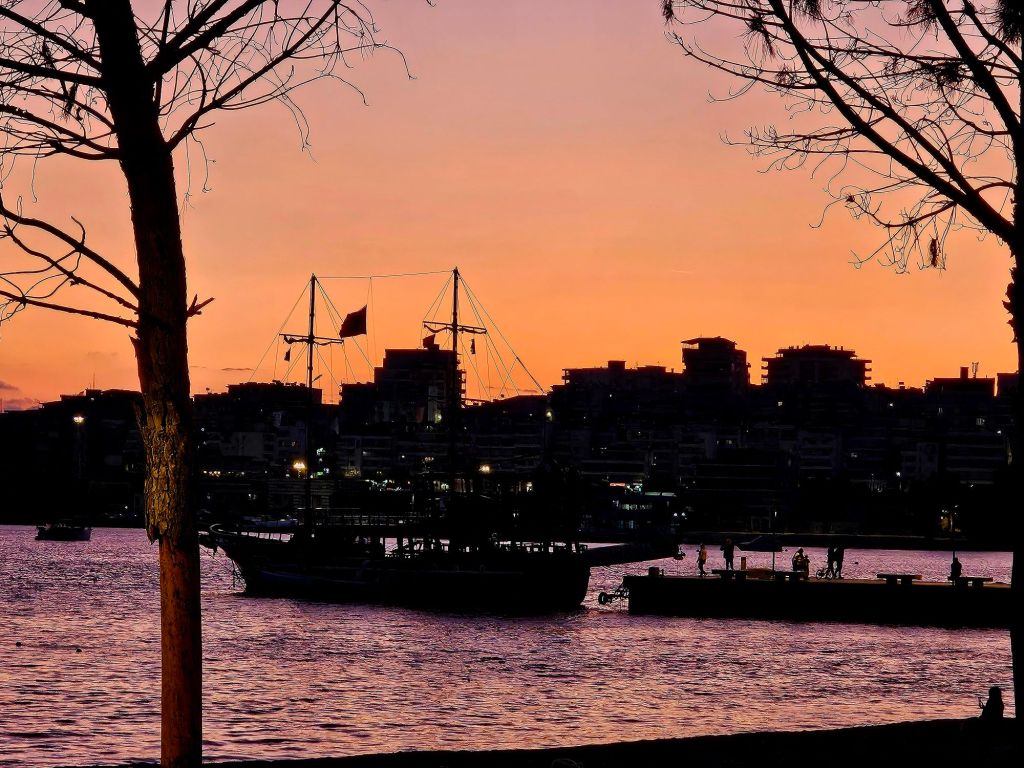
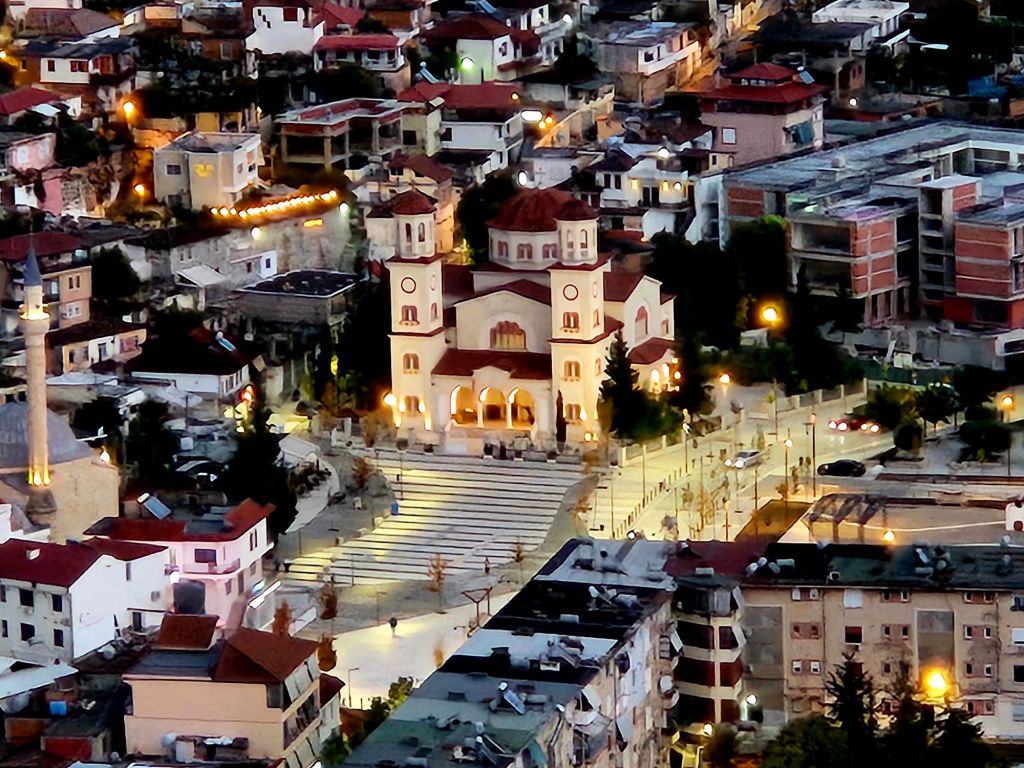
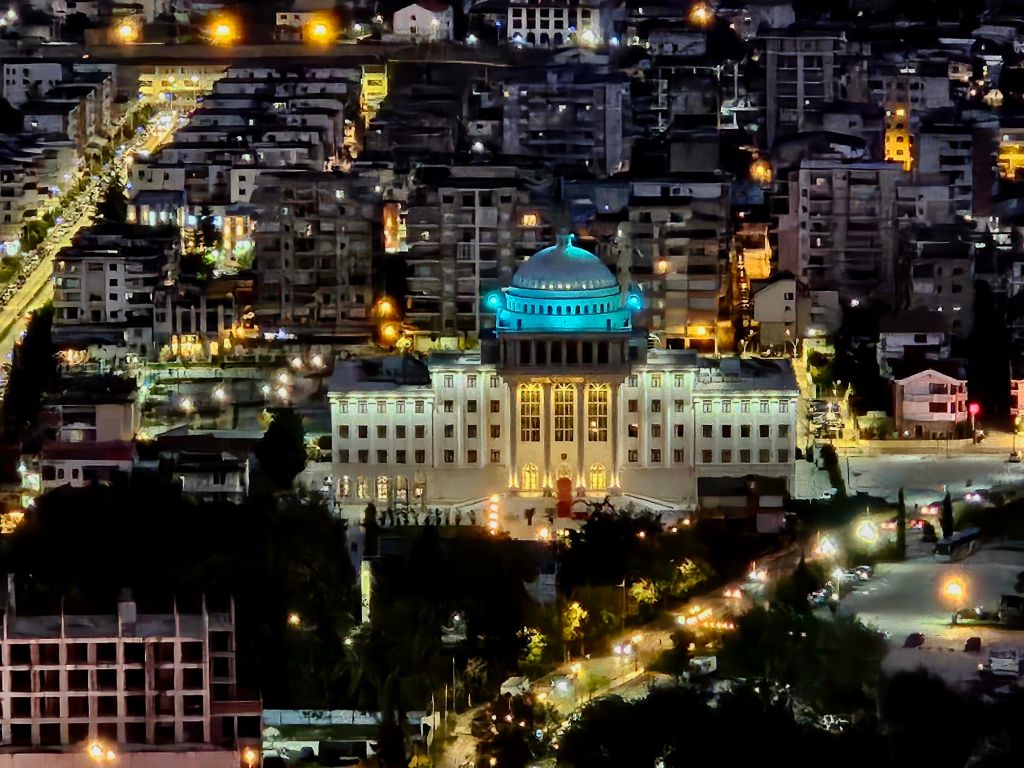
As the sun went down the city looked very pretty with all the lights.
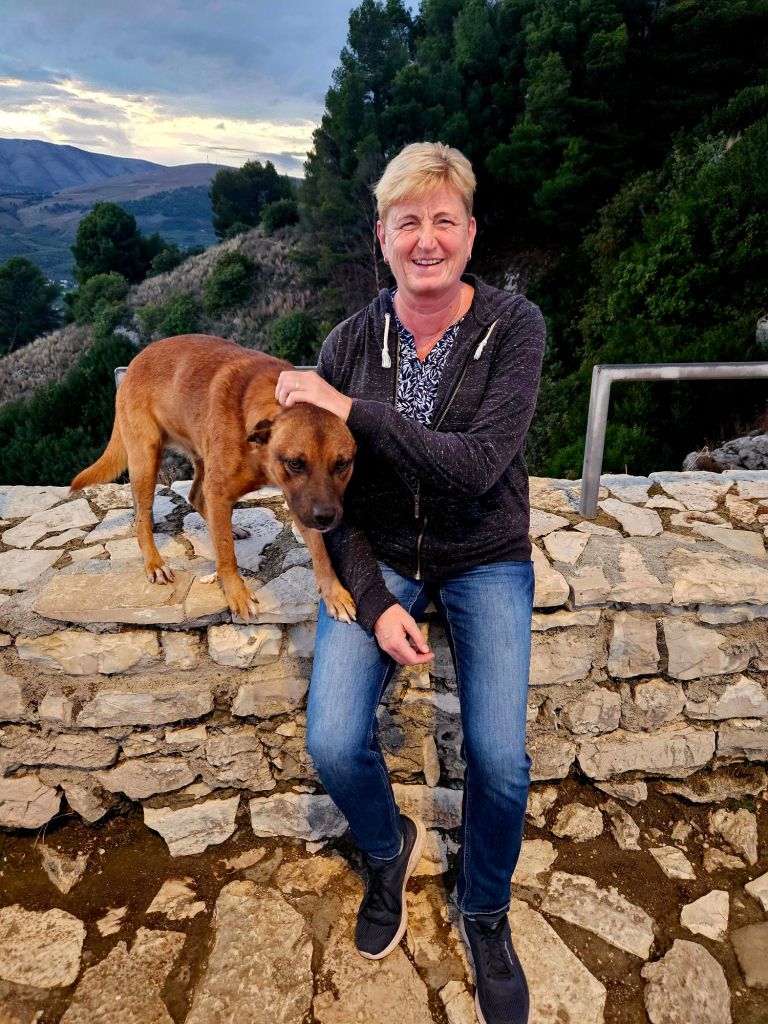
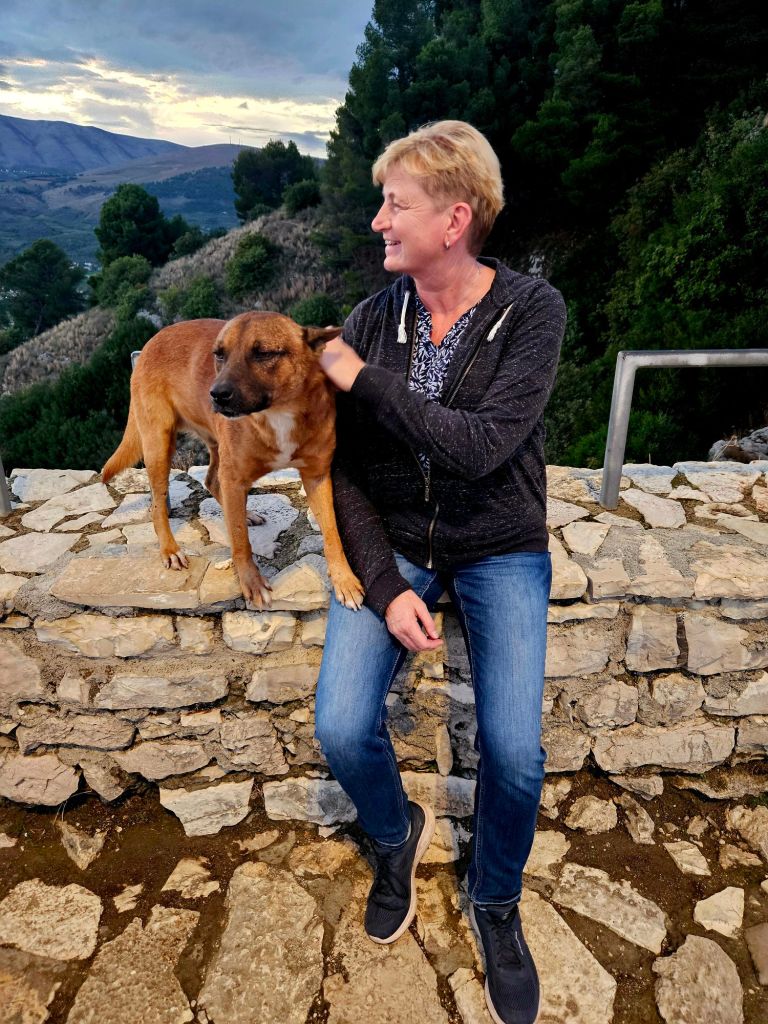
Nicola made a new furry friend too!
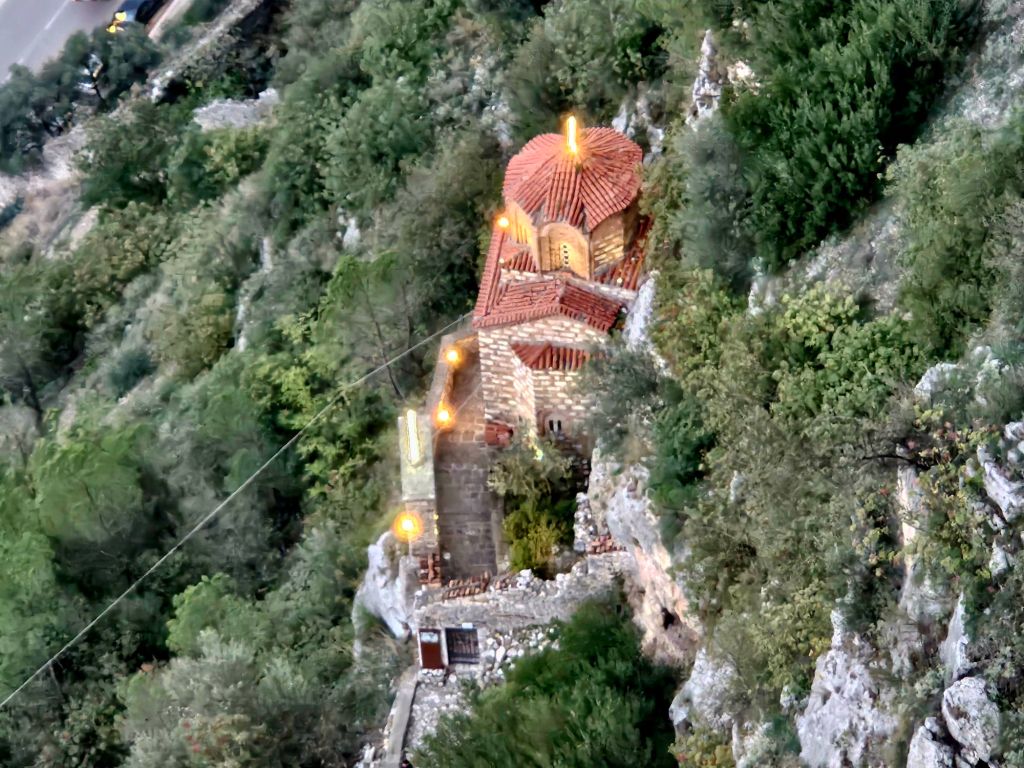
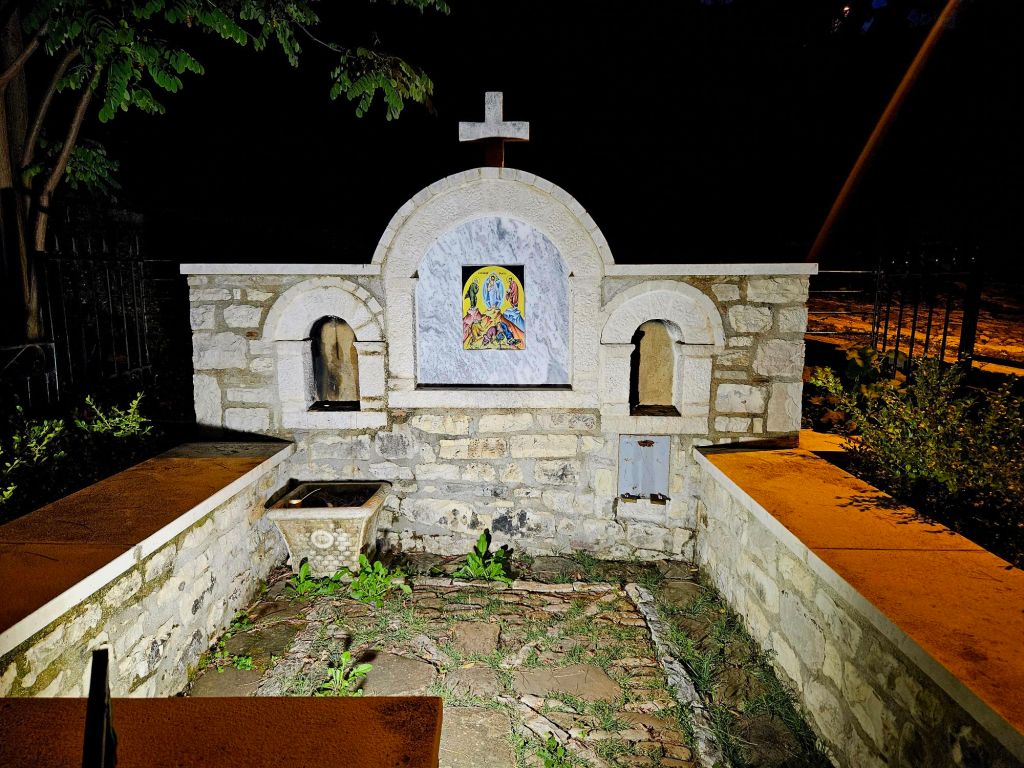
On the way back we passed a little shrine.
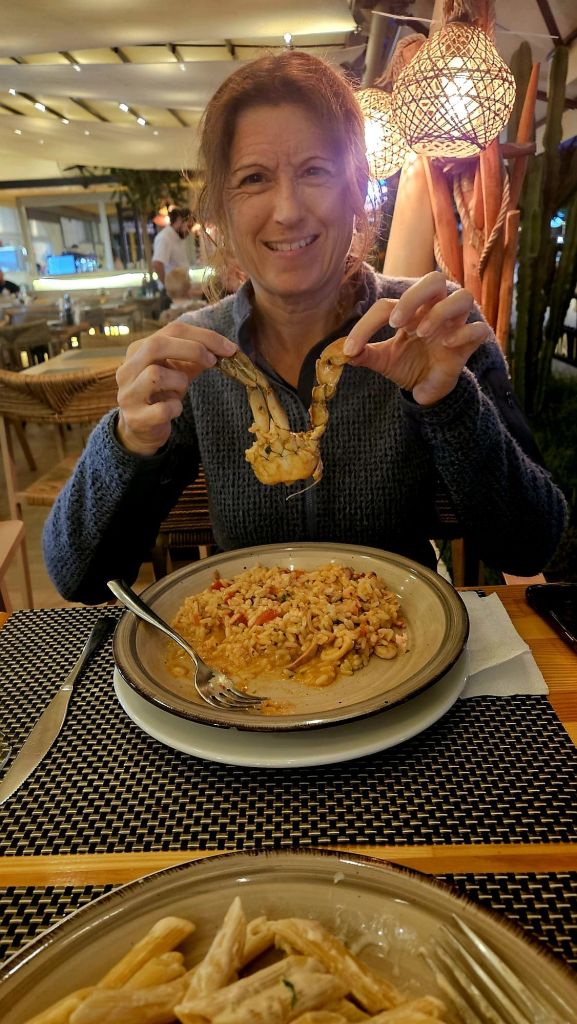
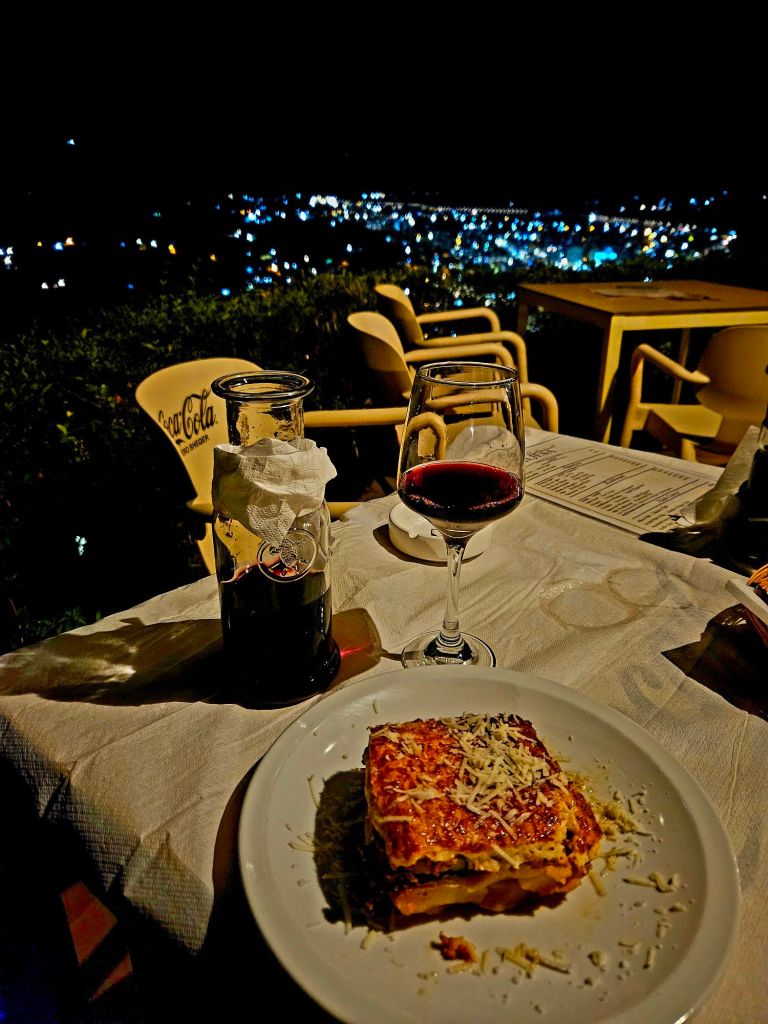
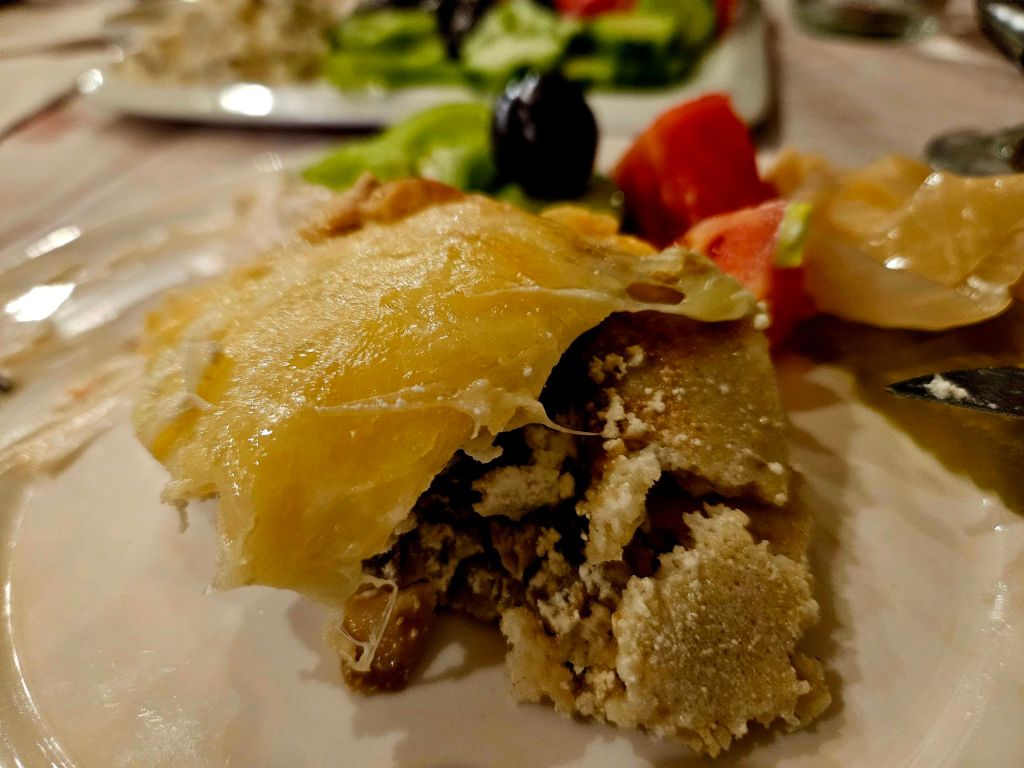
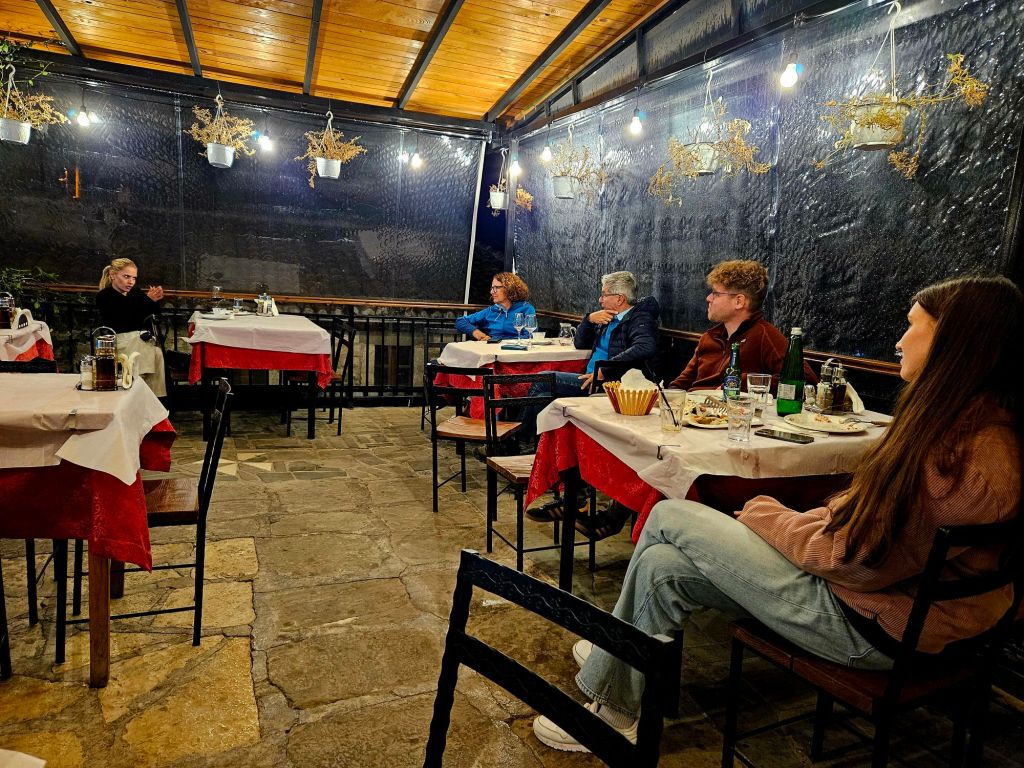
As we had such a good meal at Mbrica the night before we went back there again. This time we had the Albanian casserole, Shapkat, (corn pie with spinach and cheese) with mixed salad. We had the house red wine to go with it and were again offered a free raki at the end.
We woke up fairly early and had a cup of tea on the terrace outside. We had already booked a wine tour at a local vineyard for the afternoon so we decided to walk into Berat and explore the town.
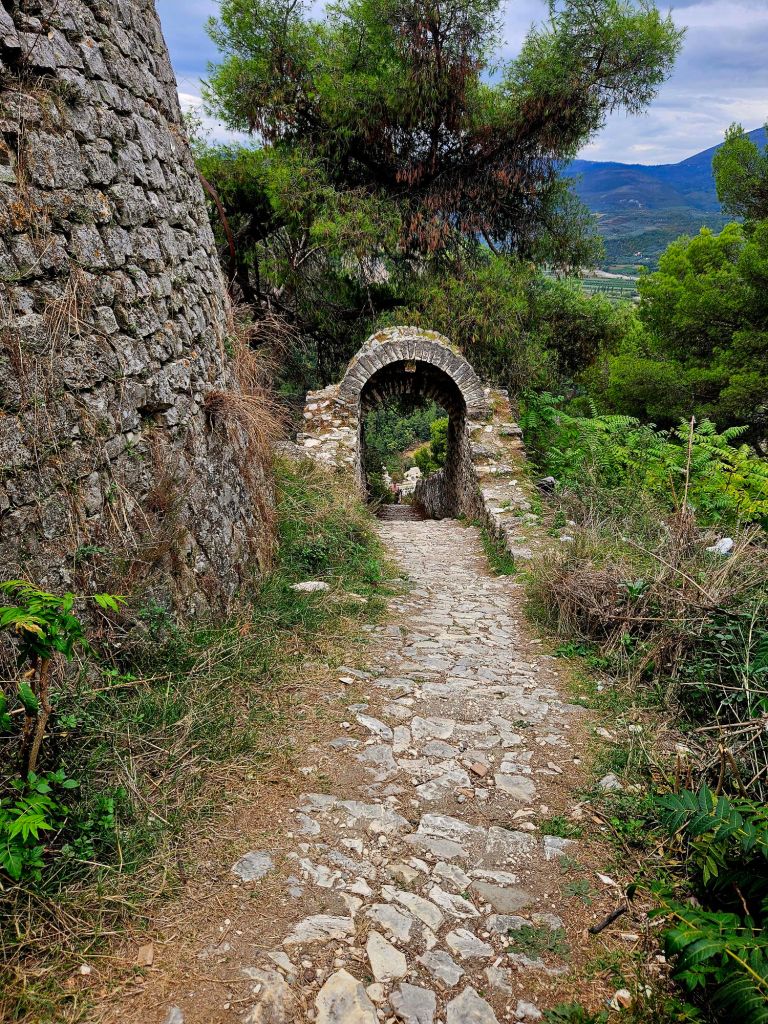
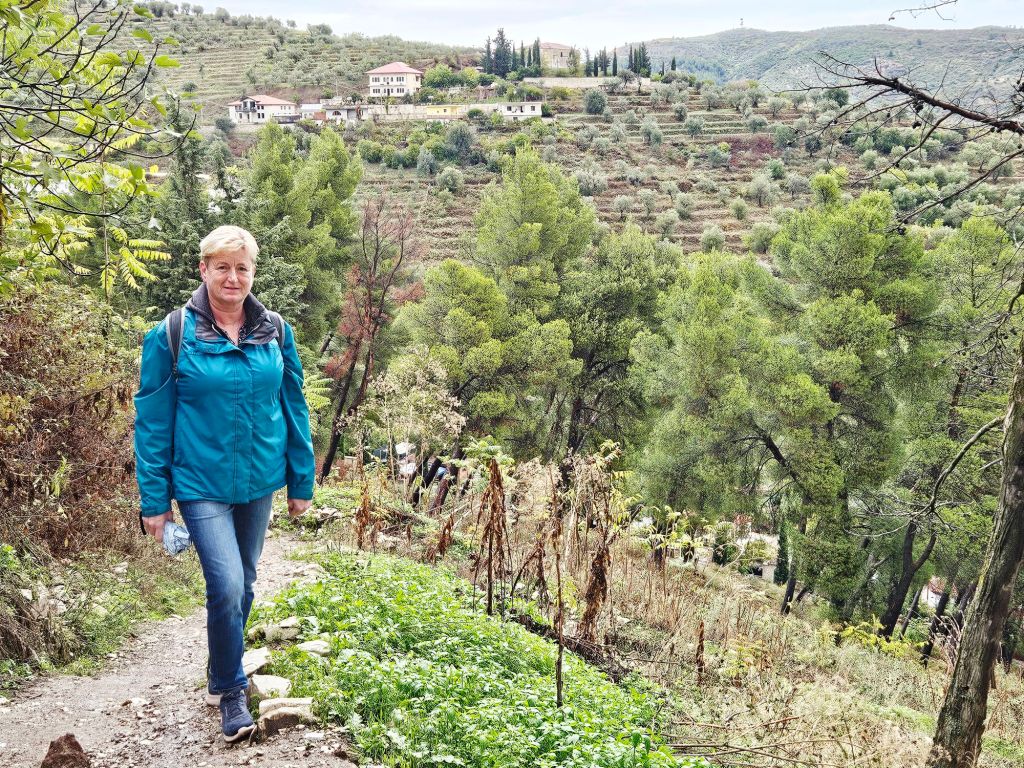
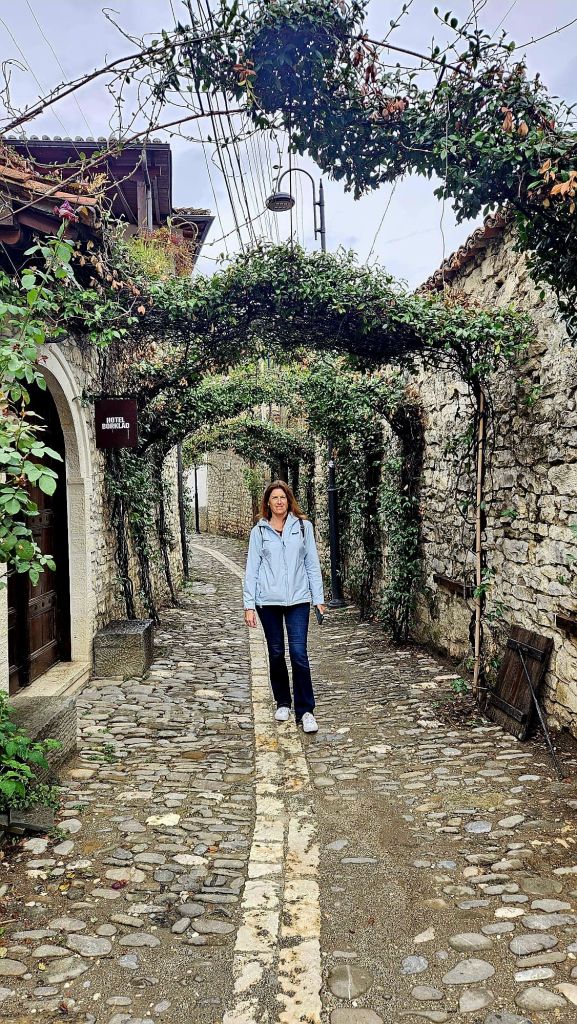
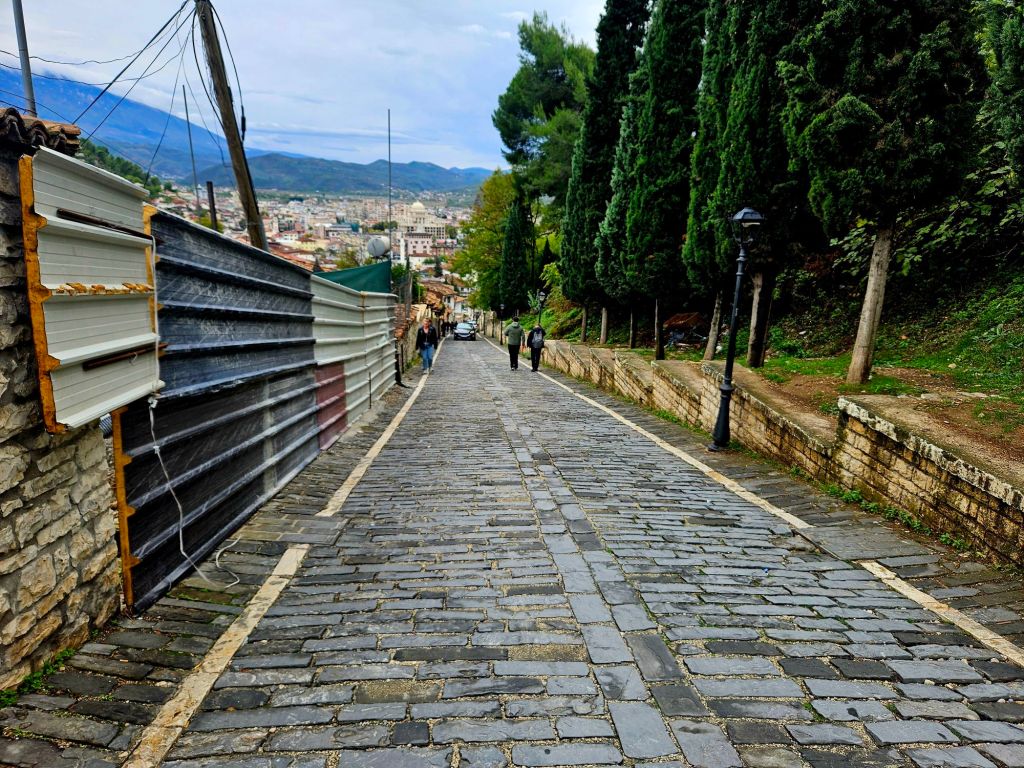
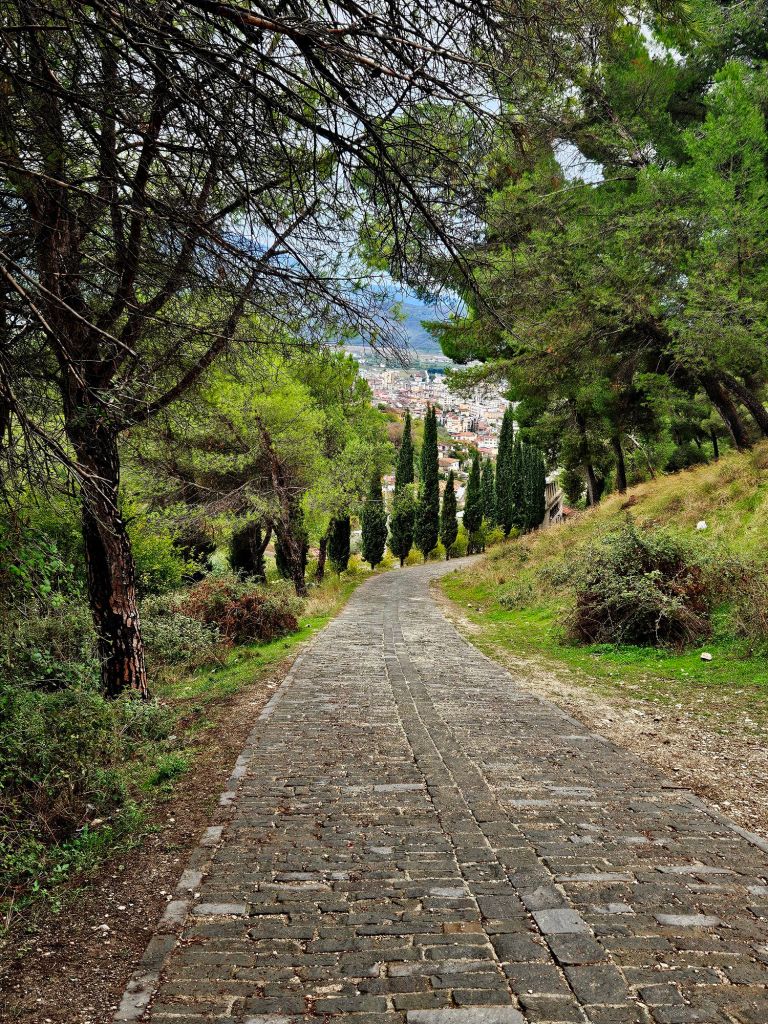
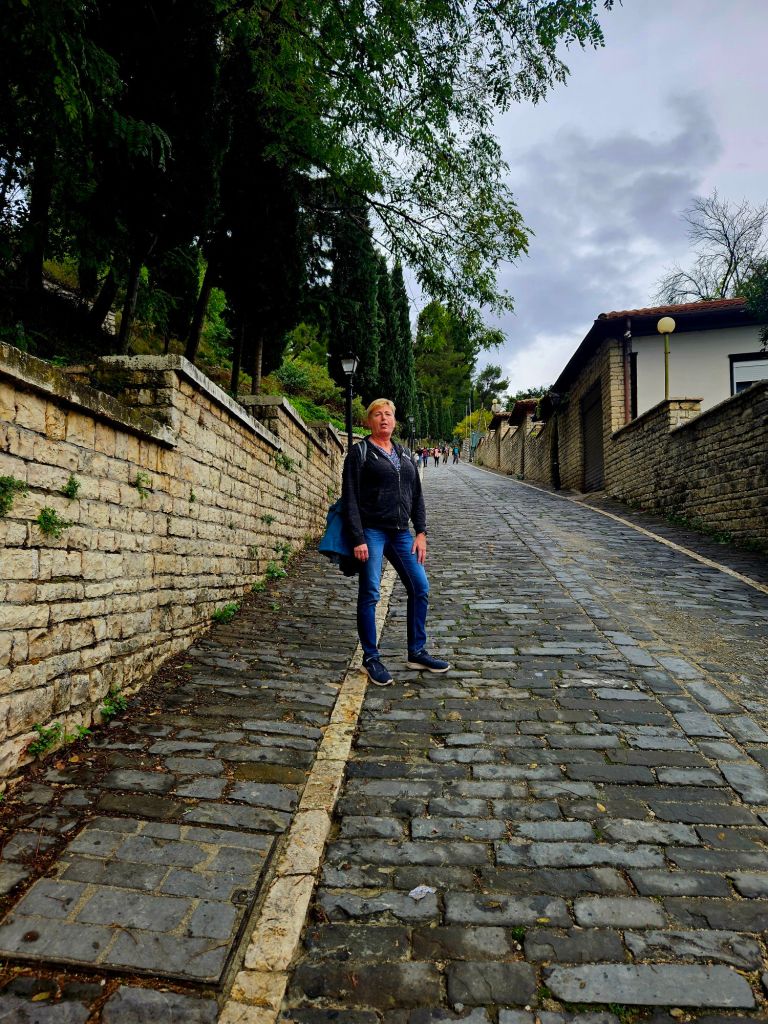
The path down through the woods was quite steep in places but also very pretty.
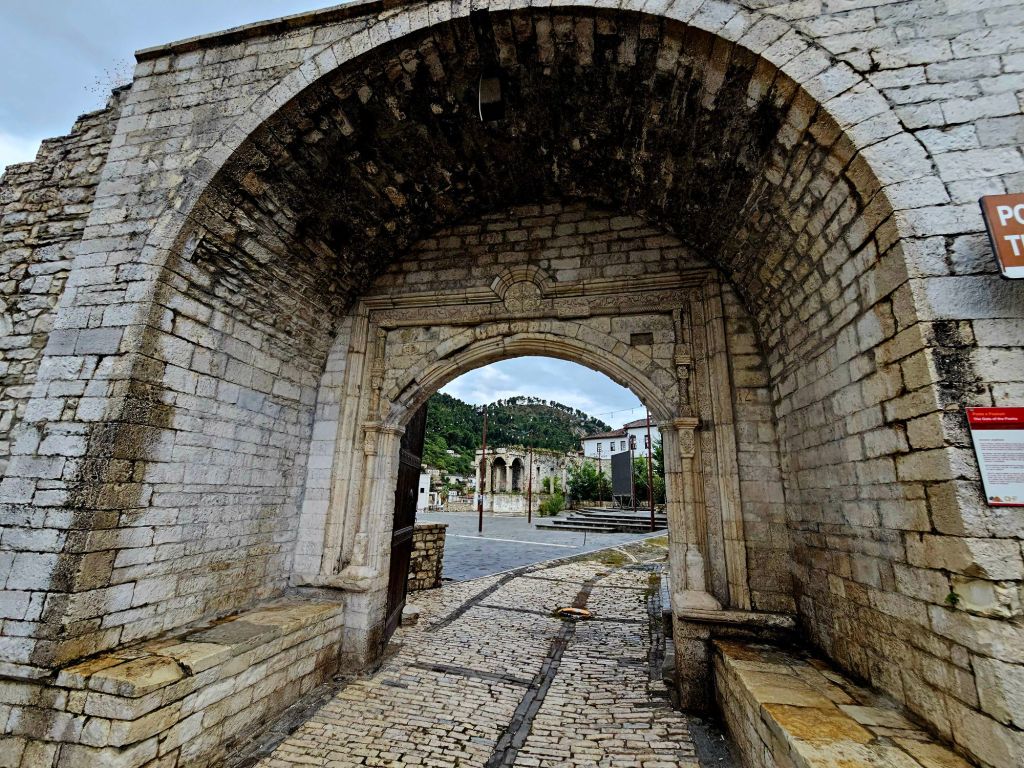
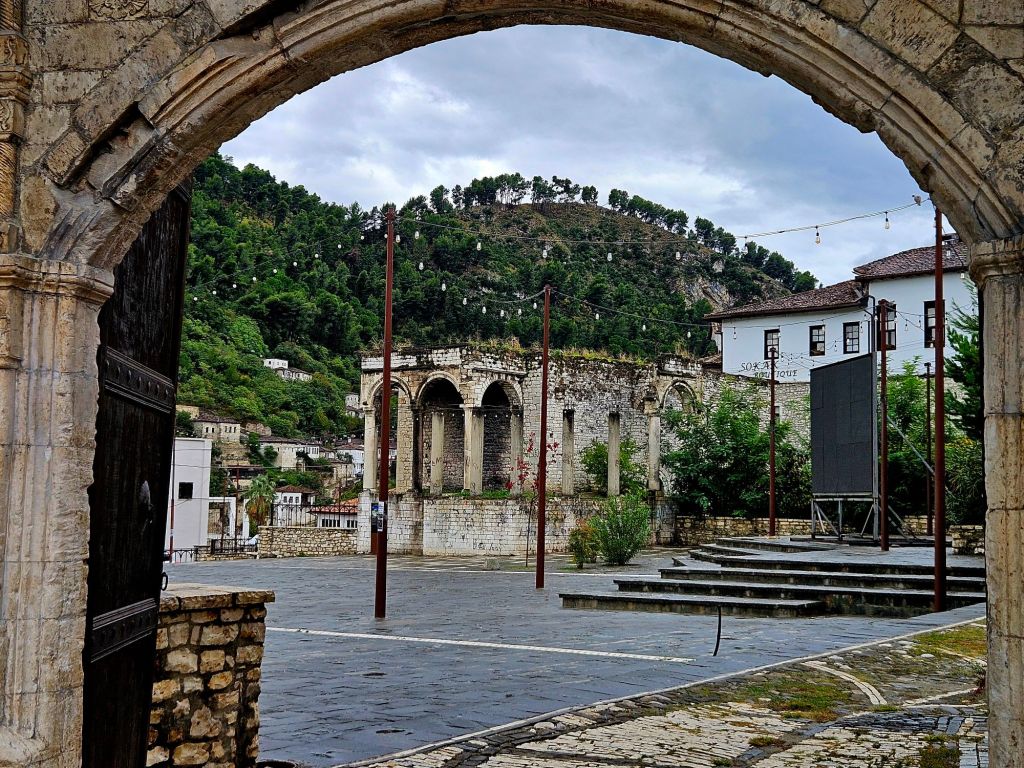
As we came down into the town we came across Pasha square. At the opening to the square is the Gate of Pasha. This was built in the 18th century under the reign of Ahmet Kurt Pasha. It is designated as a first category cultural monument. It is made of thick stone arches and has some intricate carved decorations.
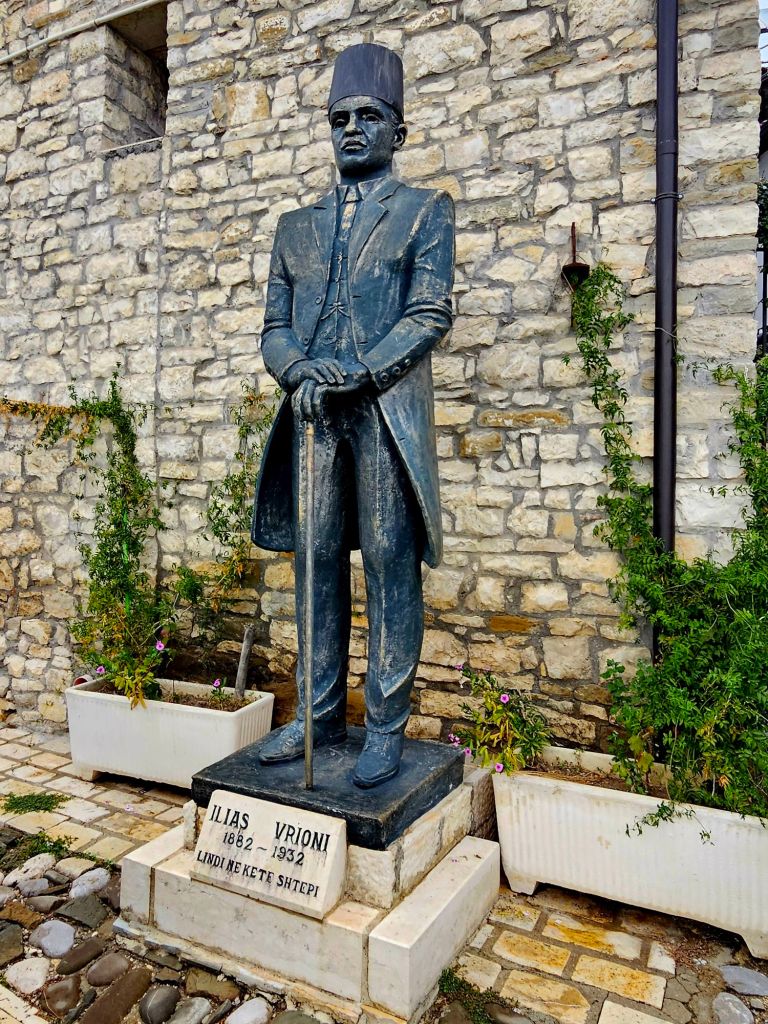
Within the square is a statue of Ilias Vrioni, who was an Albanian politician and diplomat. He was also a signatory of the Albanian Declaration of Independence in 1912 and was Prime Minister three times and was also Minister of Foreign Affairs on five occasions.
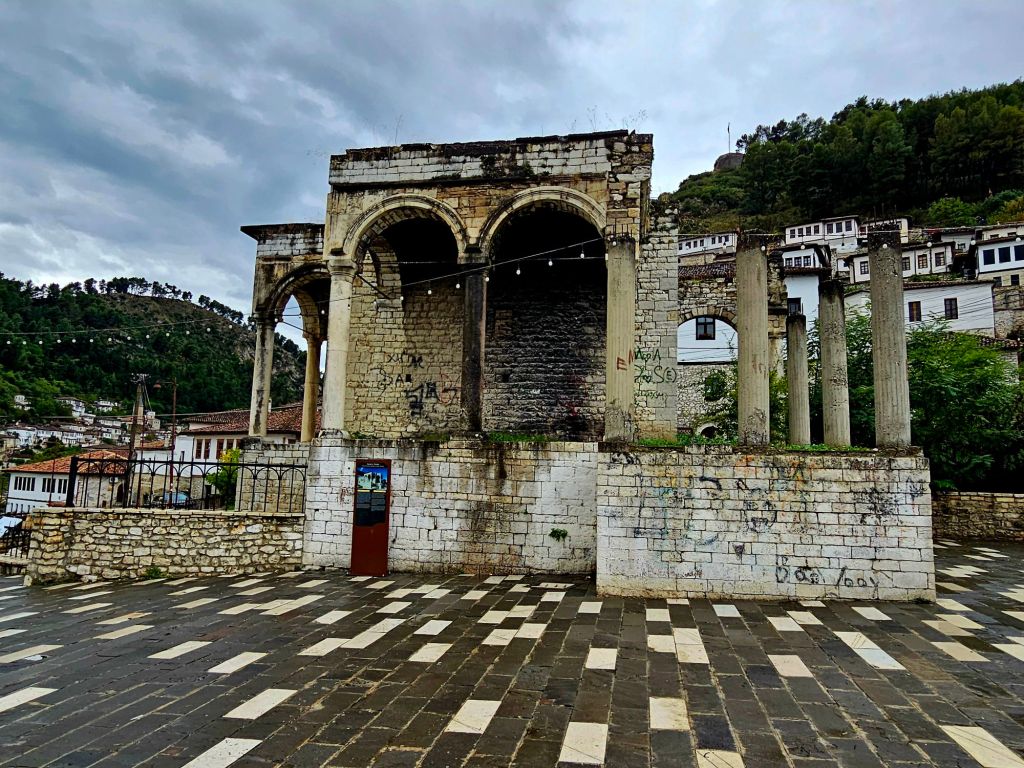
The square contains the remnants of the palace (sarays) that Ahmet Pasha had built. These were also built towards the end of the 18th century.
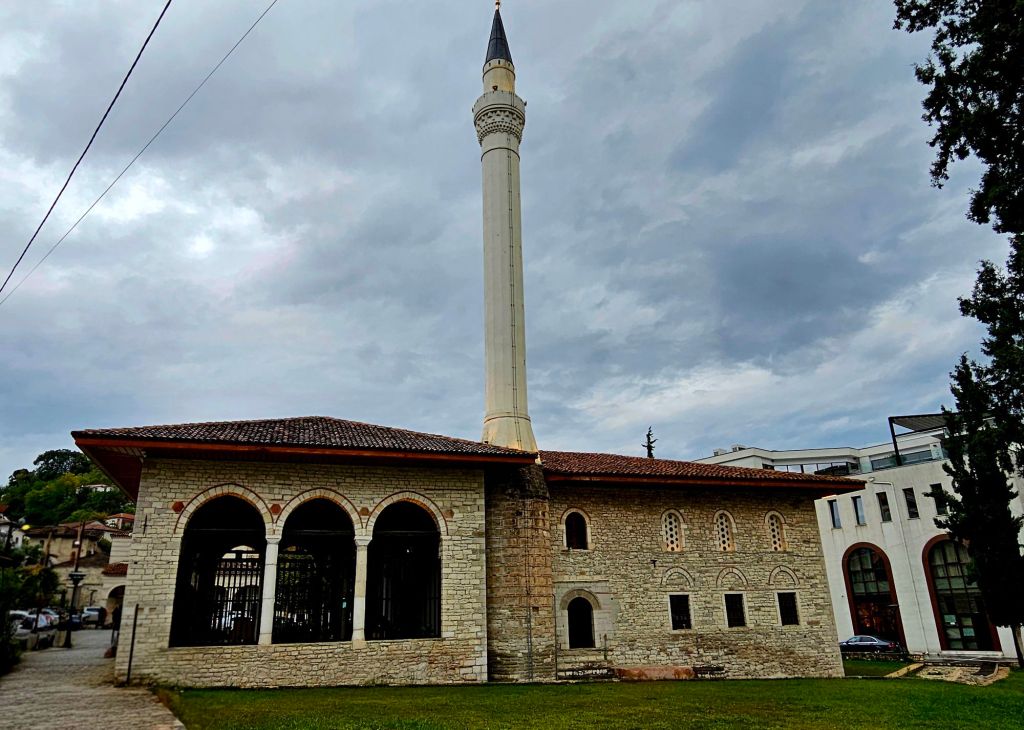
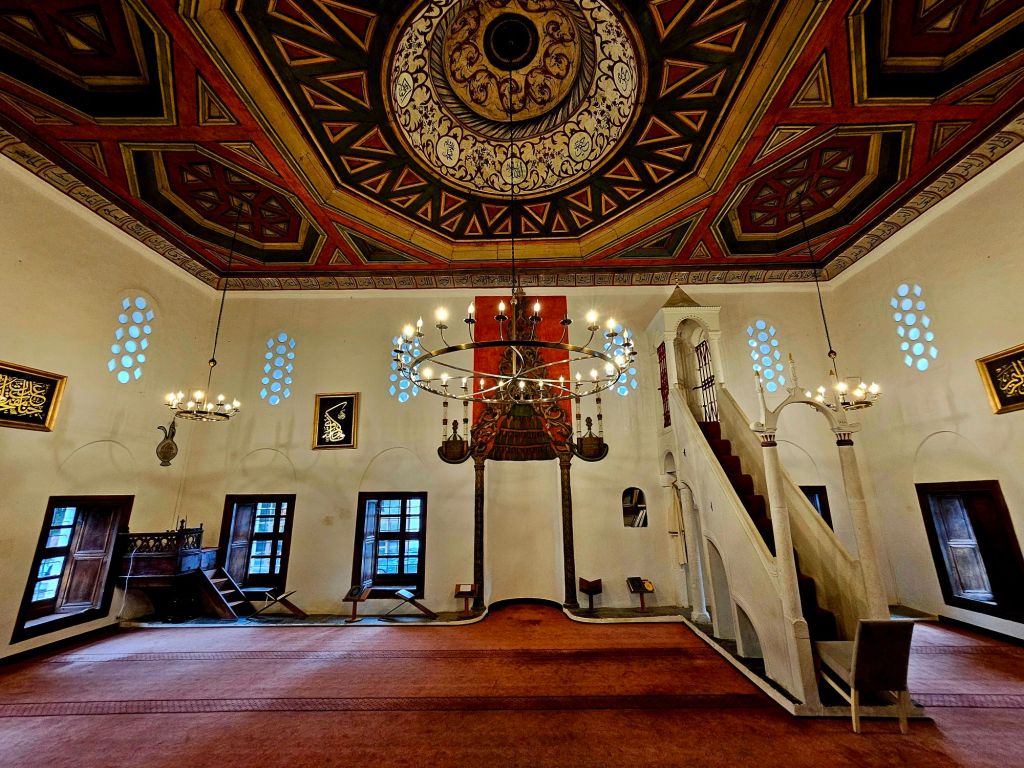
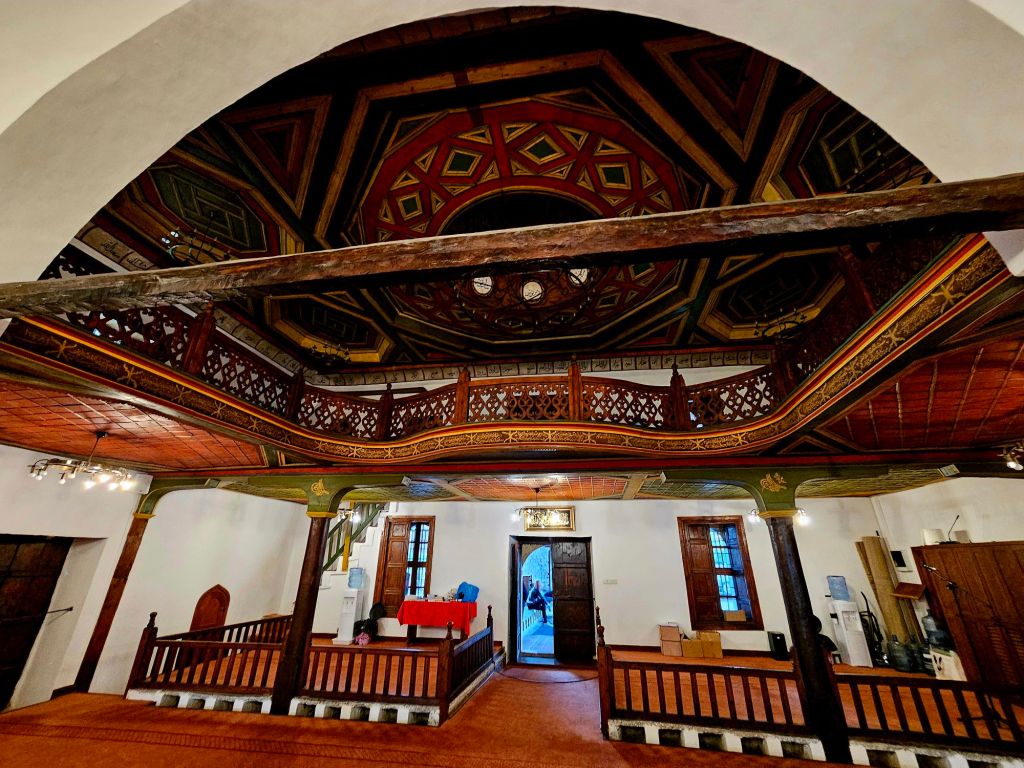
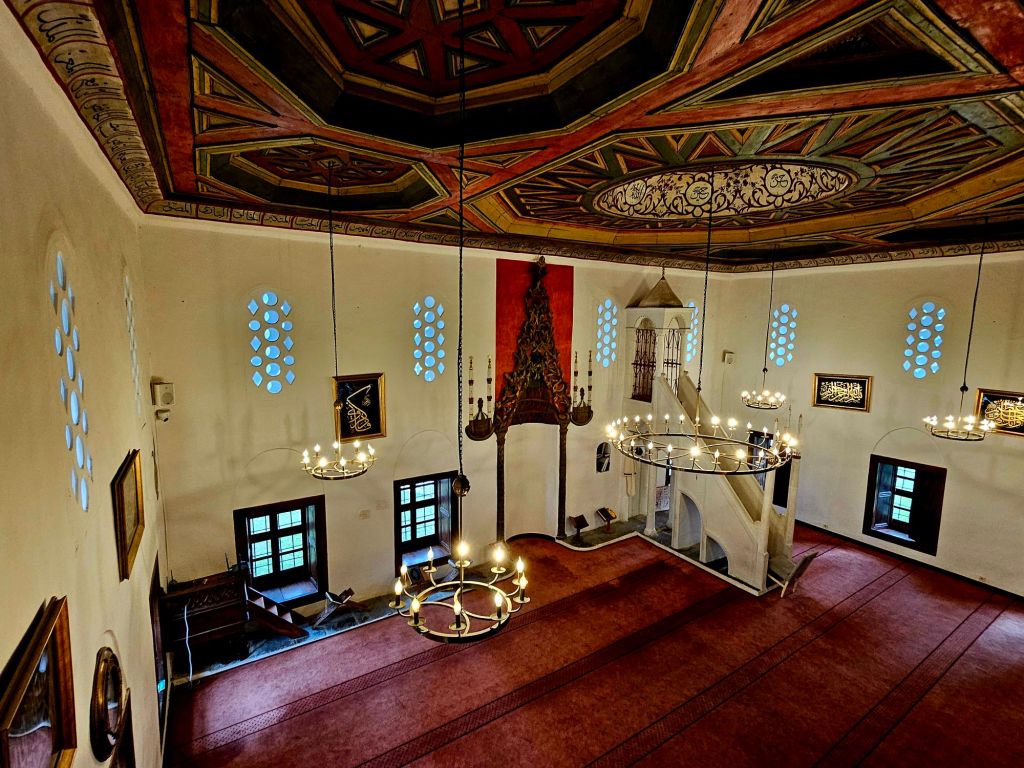
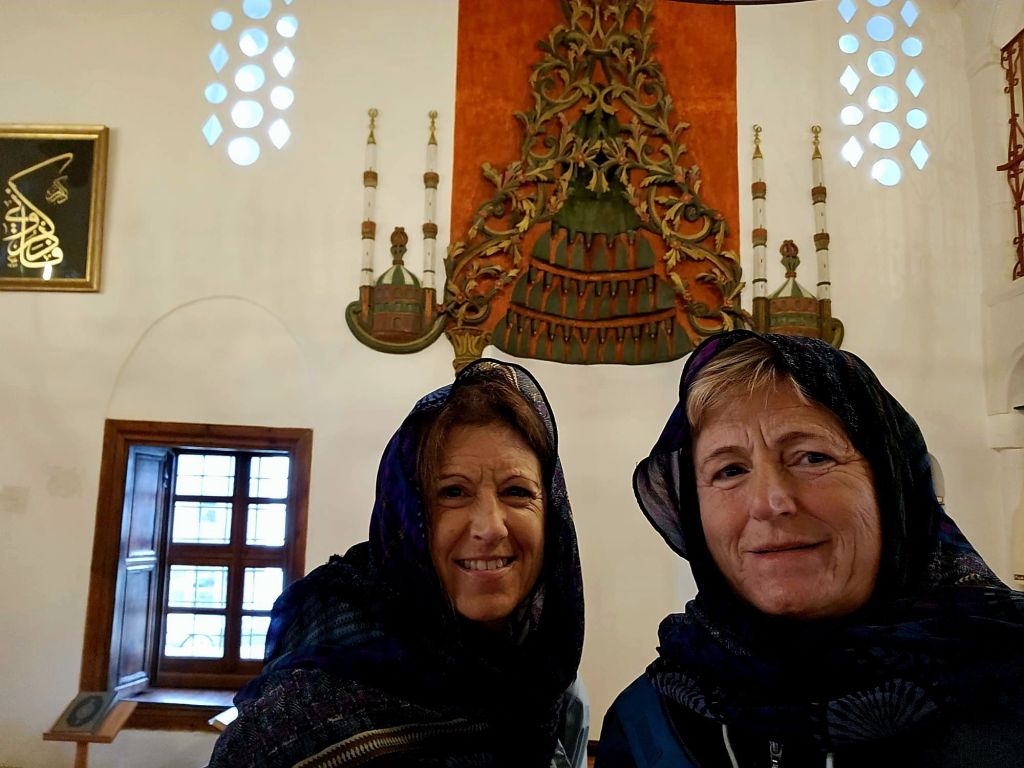
Just a bit further along was the Kings Mosque. This was built in the 15th century, around 1480. We had to cover our heads to go inside.
Inside the large prayer hall is a huge painted ceiling with lots of rosettes with inscriptions of various Qur’anic sayings. A frieze below the ceiling contains 99 beautiful names of God (Allah).
Just close by is the Halveti Tekke which was originally built in the 15th century but was rebuilt by Ahmet Pasha and was completed in 1782. It belonged to the Khalwati (Halveti) order which is an Islamic order known for its strict ritual training of its dervishes and its emphasis of individualism. The focus of the order was on purification, spirituality, ritualism and asceticism.
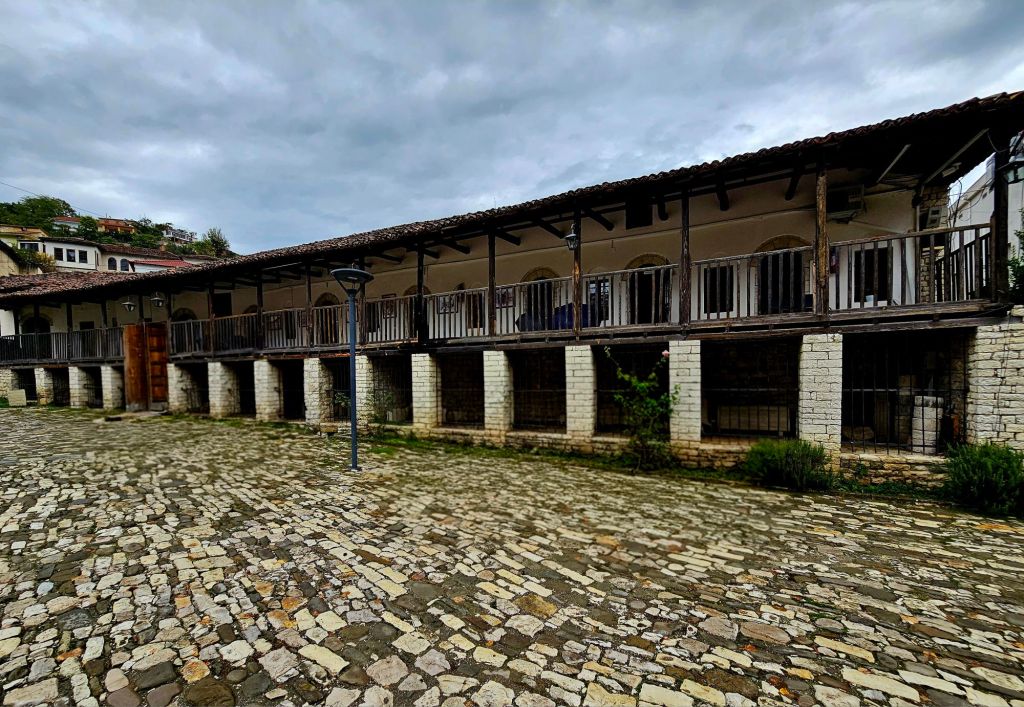
And the living quarters for the dervishes was also here. These were built in the 19th century. They were used for religious ceremonies as well as serving as accomodation for the dervishes associated with the tekke.
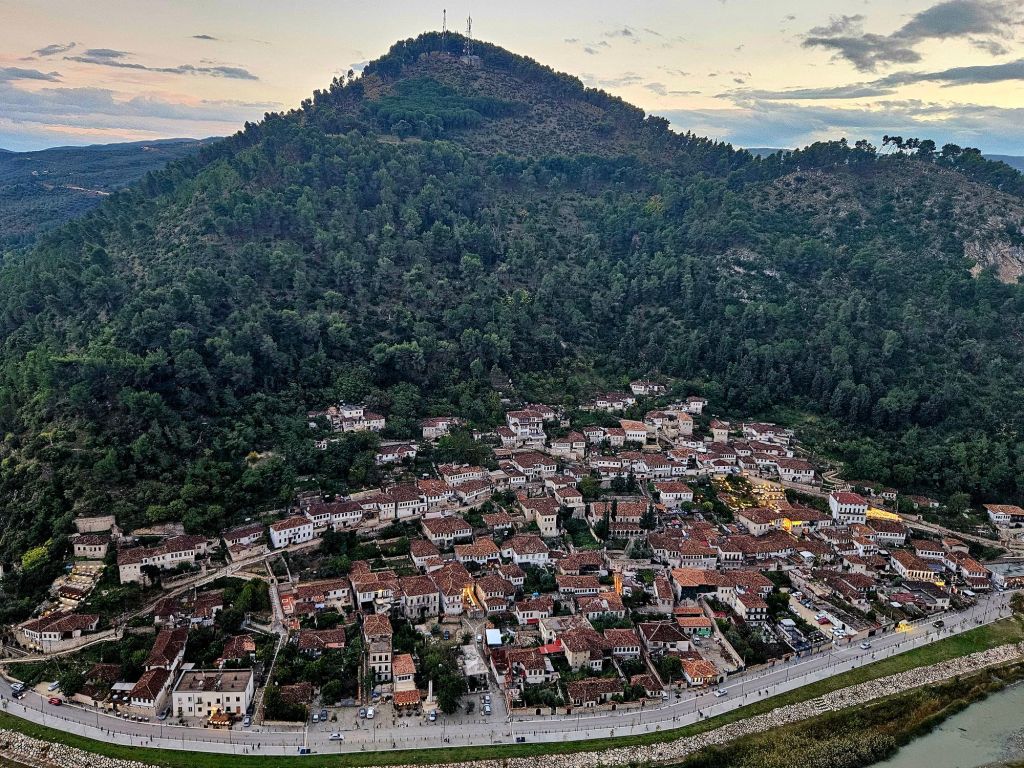
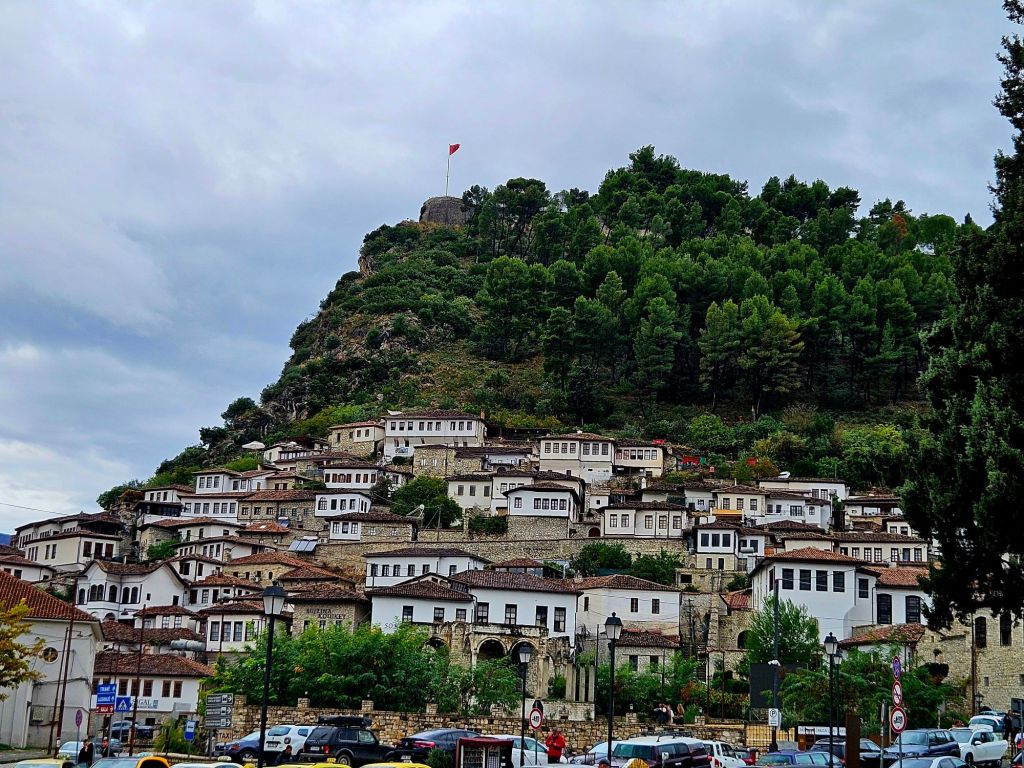
Berat is known as the ‘City of a thousand windows’ and is a UNESCO World Heritage site due to its unique Ottoman architecture. The white houses with the large windows line the hills above the Osmun river.
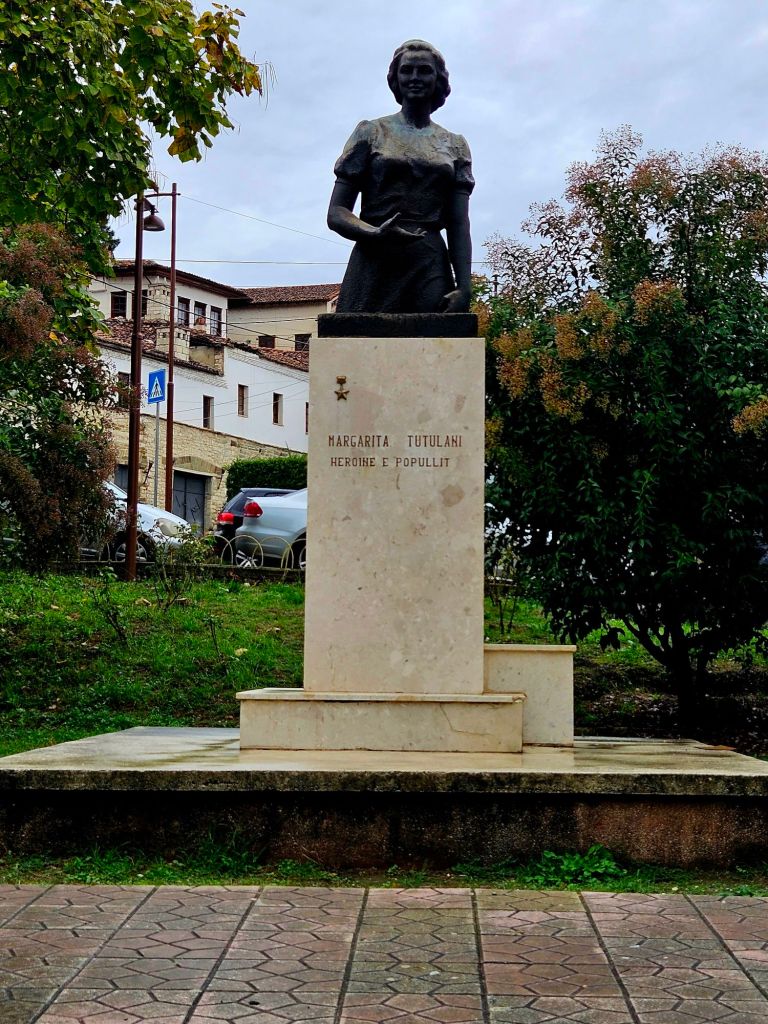
We wandered a bit further down into the city and passed a statue of Margarita Tutulani. She was born in Berat and then went travelling. However, when Italy invaded Albania in 1939, she returned to Berat where she protested and demonstrated against the invasion. She joined the communist party in 1942 and was a leading figure in the November 1942 demonstration in Berat, which was an anti-fascist protest that drew 1000s of people. She and her brother were captured by the Italians in 1942 and subjected to torture in prison. They were later shot on 6 July 1943. The brutality of her death inspired people to join the resistance against the fascist government.
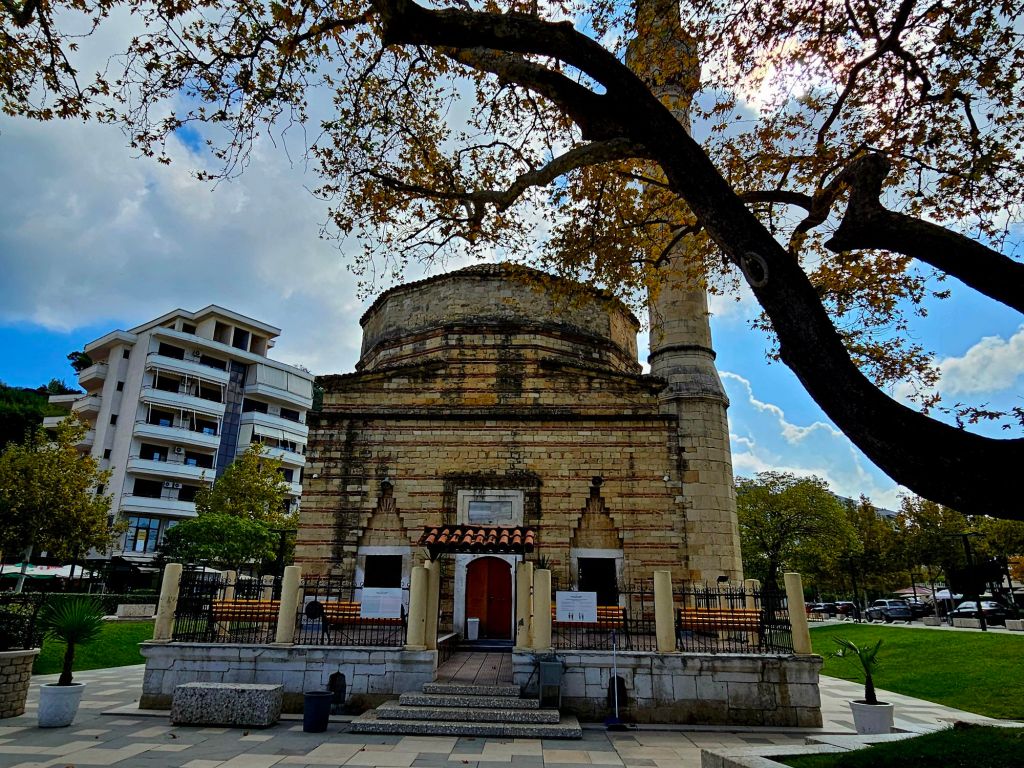
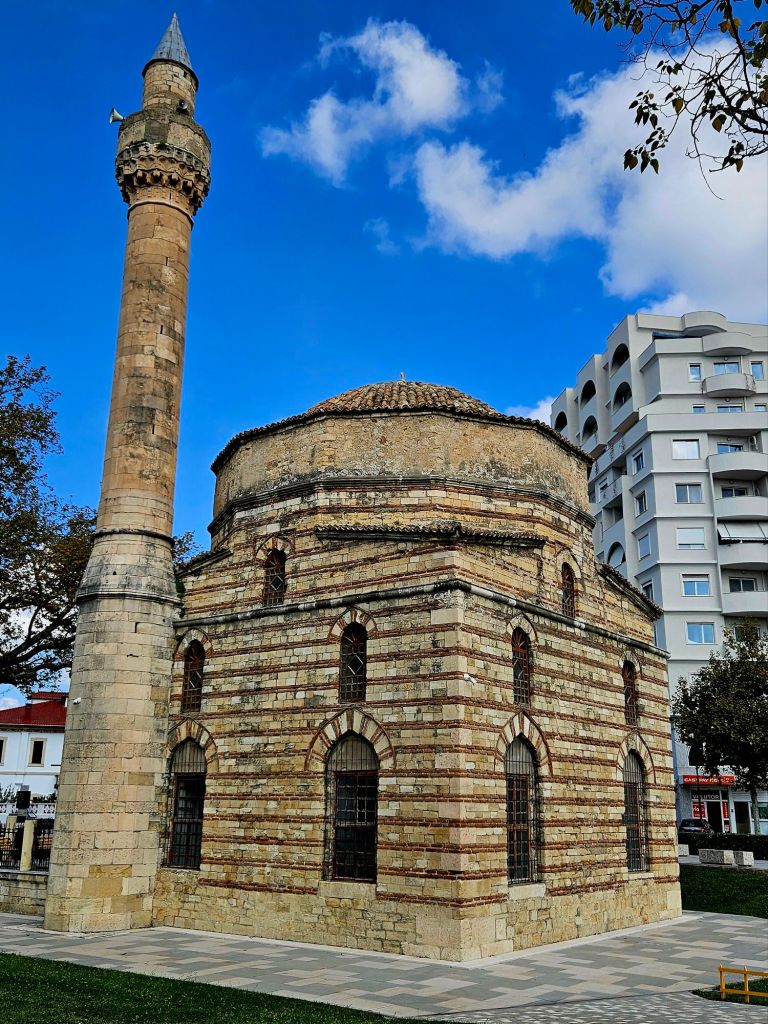
The Bachelors mosque was built in 1828 and was built for unmarried shop assistants and junior craftsmen. Since the time of Communism, the Portico of the mosque houses some stores, one of which is a lingerie shop, which can be seen as a disgrace to Islam.
We then walked over the suspension bridge from Mangalem (Ottoman) side to Gorica (Christian) side of Berat. This is a 100m pedestrian bridge which took 14 years to build and was completed in 2002. You could take some good photos from it.
We were now in the Gorica quarter. This area was founded in the 16th century as part of the expansion of the old town and was traditionally inhabited by Christians.
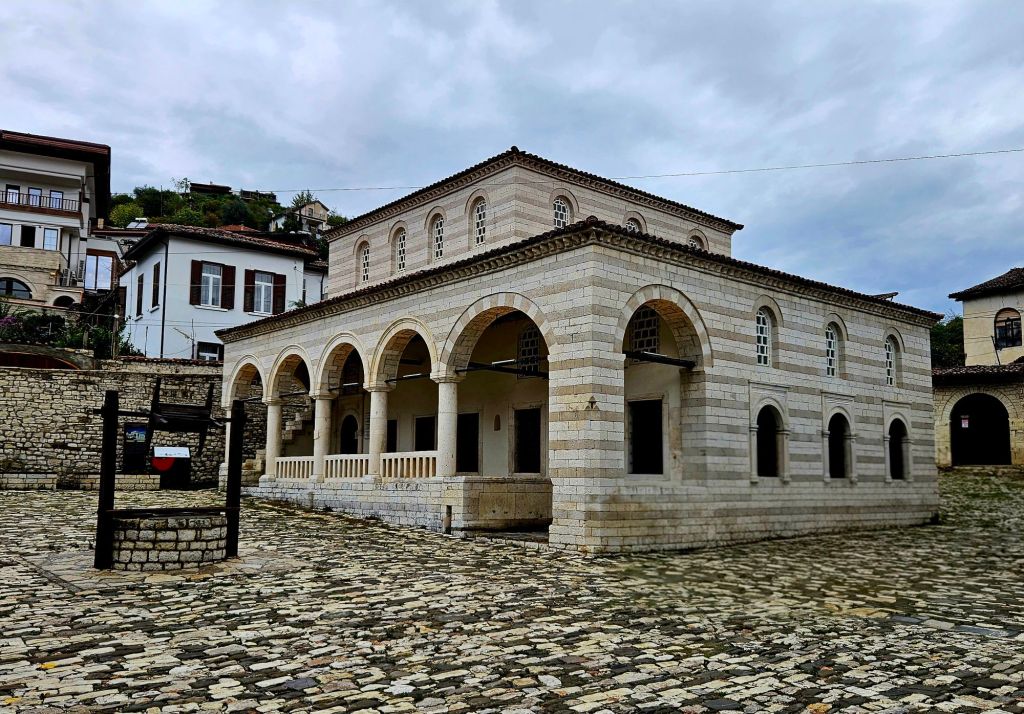
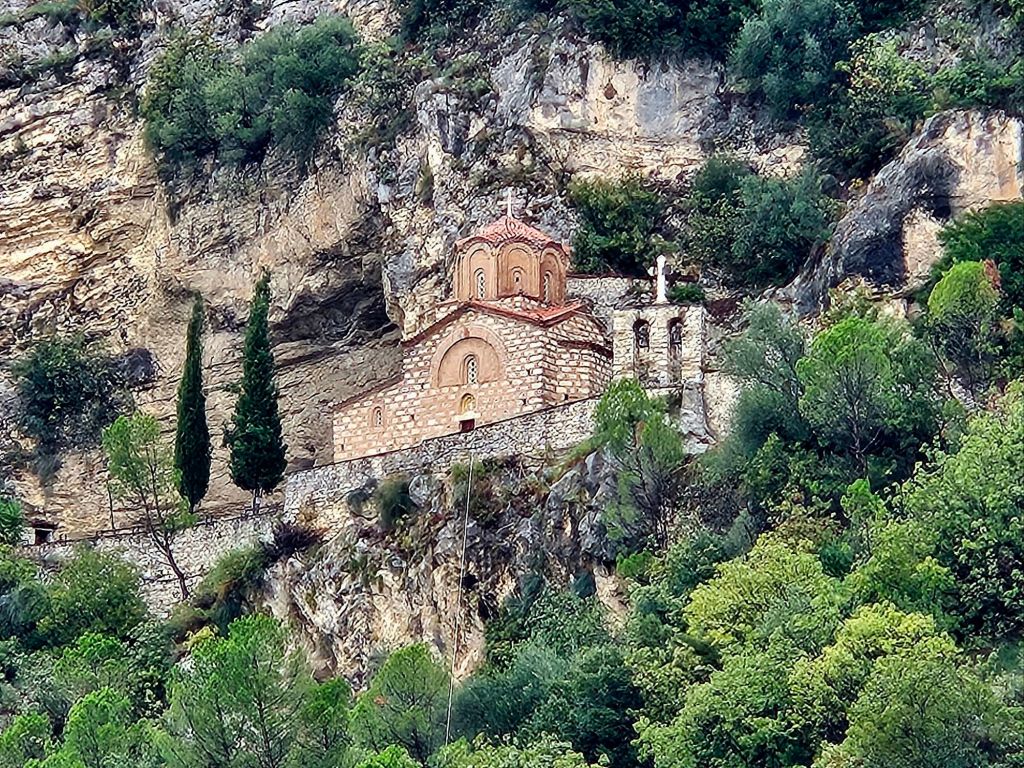
From the Gorica side you could see the Church of St Michael on the hillside. This is a medieval orthodox church and was potentially built in the 14th century. It is built by combining rows of bricks with rows of stone.
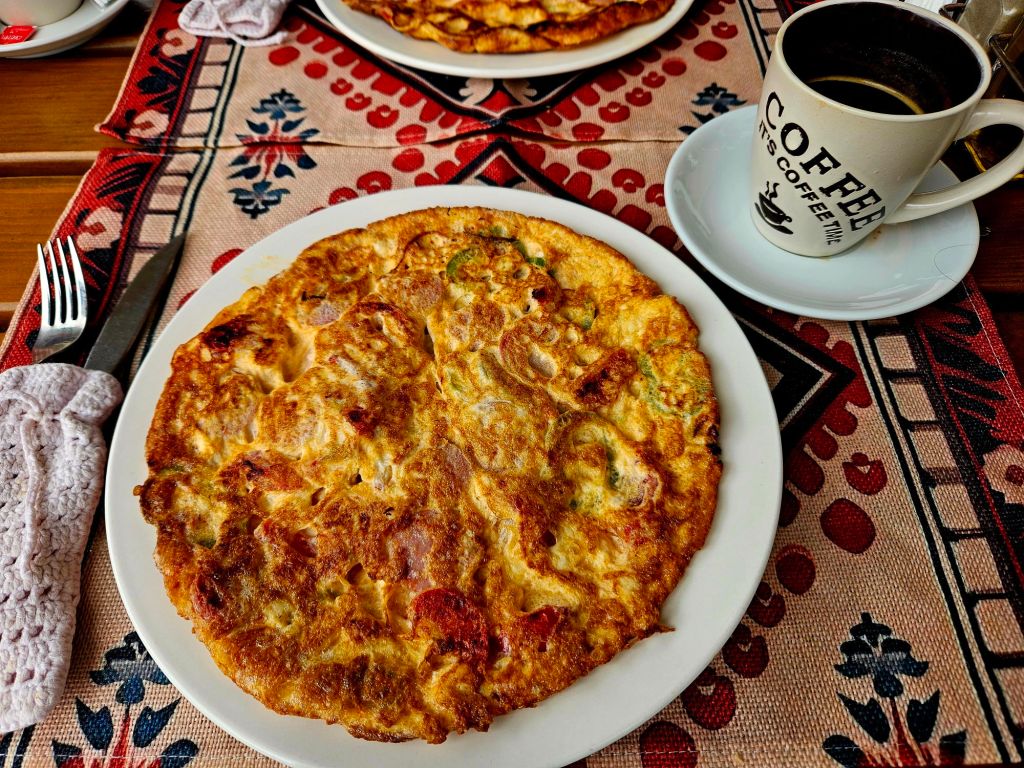
By now we were feeling hungry so we stopped off at the Te Ura cafe. We had a delicious Albanian omelette.
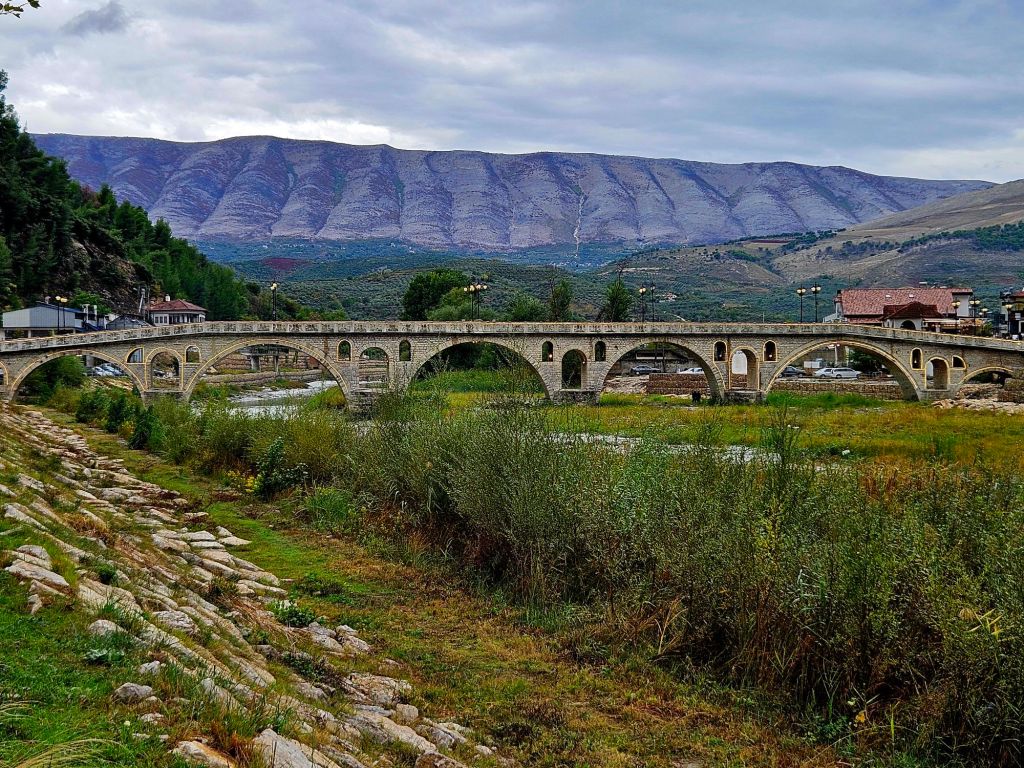
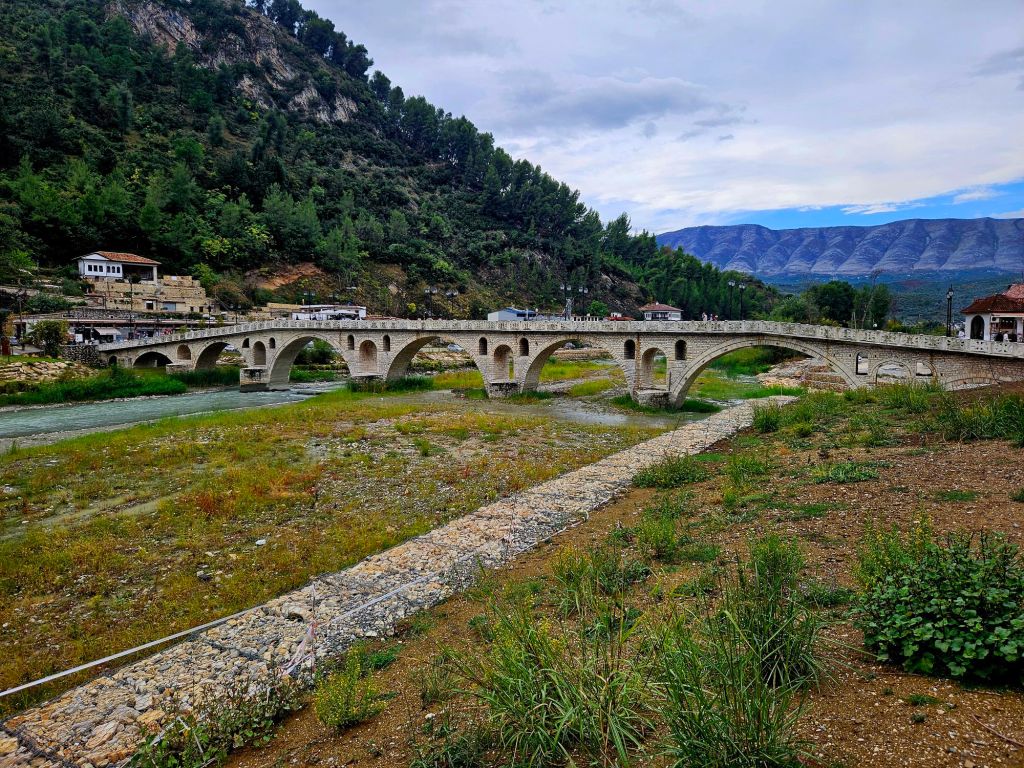
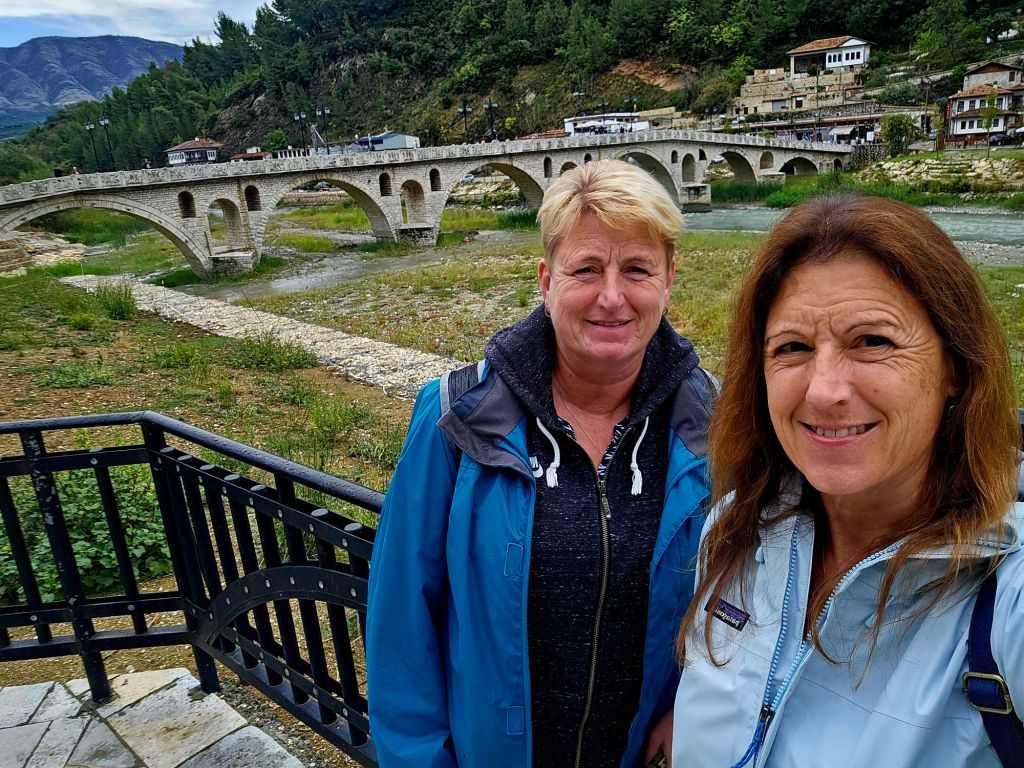
The cafe was right next to the Gorica bridge. This is one of the oldest Ottoman bridges in Albania. It was originally built in wood in 1780 and then rebuilt in stone in the 1920s, following its collapse in the 1880s due to repeated flooding of the river. It has seven arches, is 129m long and 5.3m wide. Local legend has it that the original wooden bridge contained a dungeon where a young girl would be imprisoned and starved to appease the spirits and allow safe passage over the bridge. The bridge is one of the famous symbols of Berat.
Obviously we walked over the bridge, and took some photos!
We then made our way back through the town, stopping every now and then to look at some of the shops. It’s a very pretty city.
The walk back to the castle was very steep and tiring.
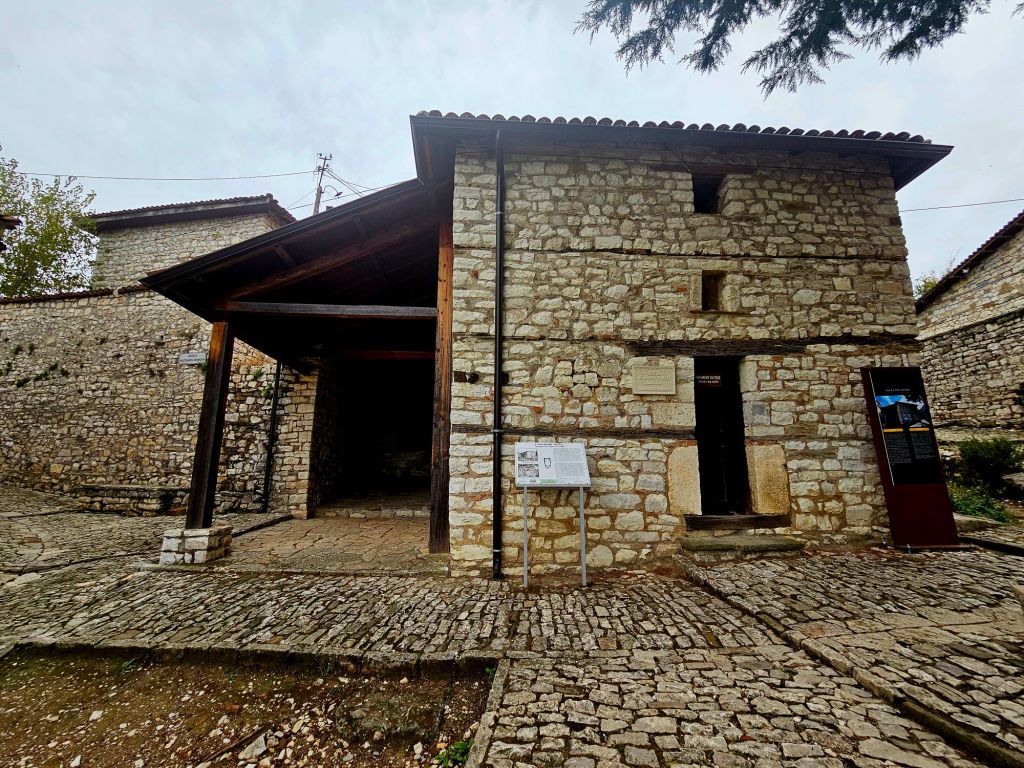
Once back at the castle we explored a couple more churches. The first one was the Orthodox Church of St Nicholas, which was built between 1521 and 1565.
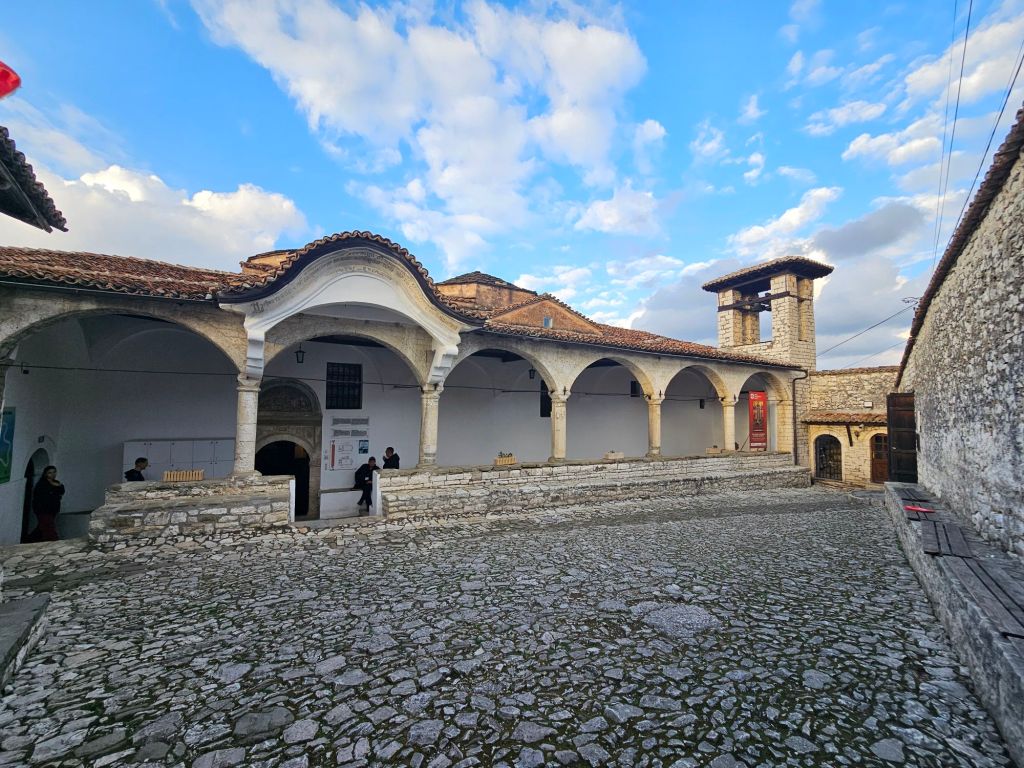
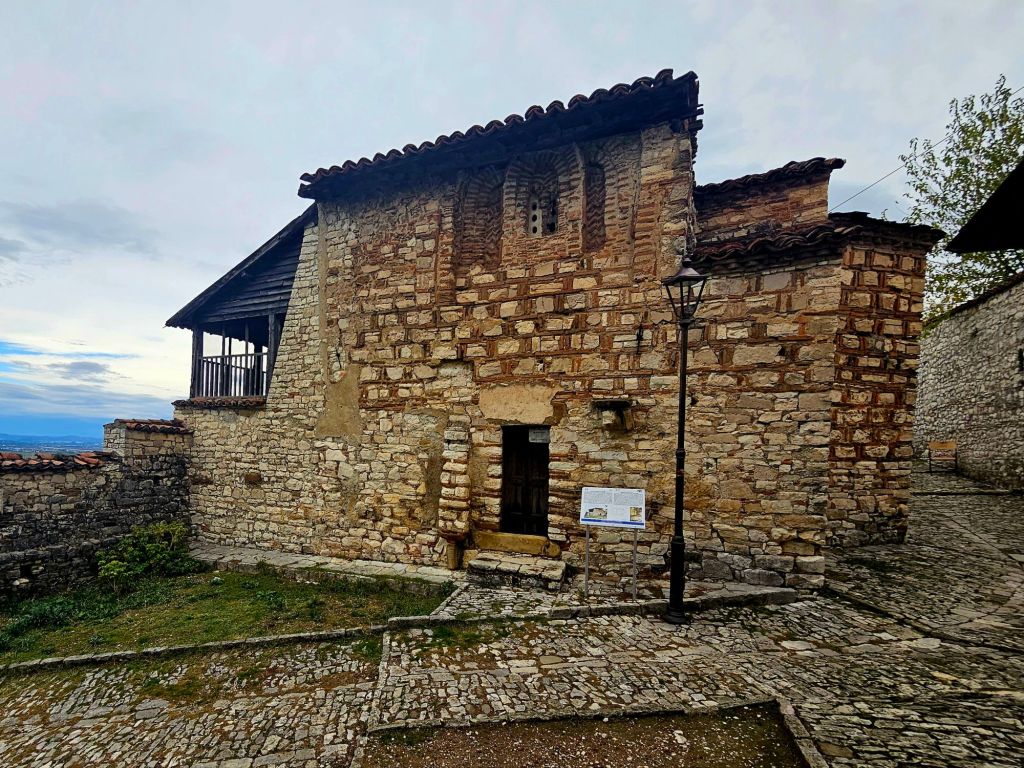
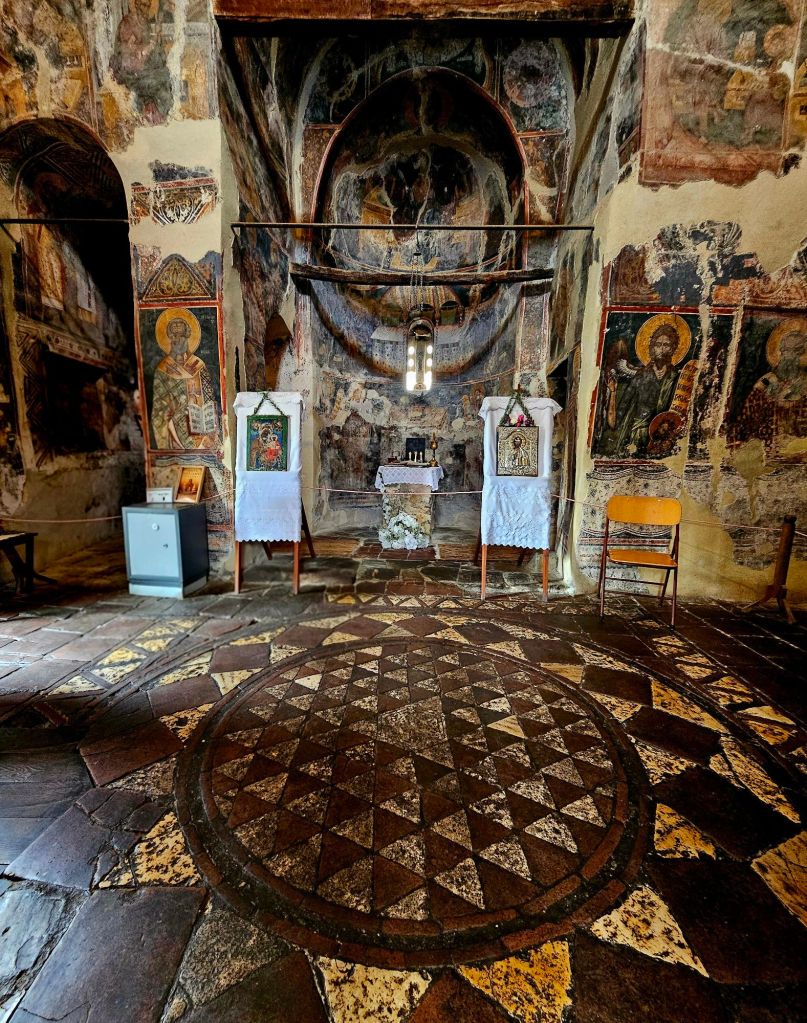
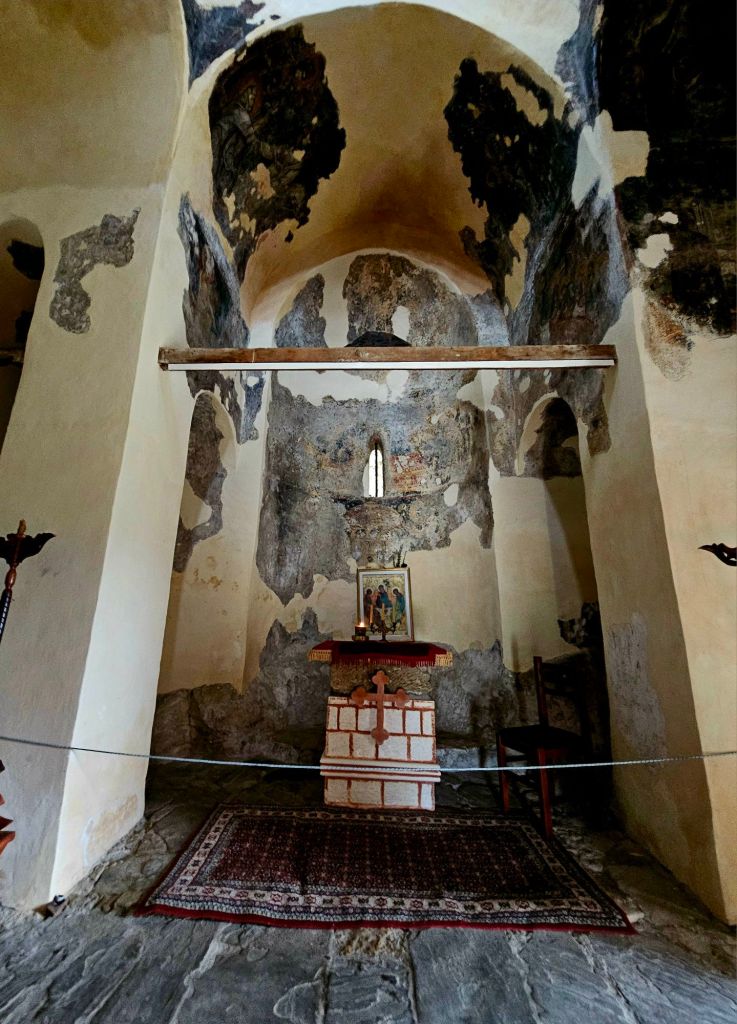
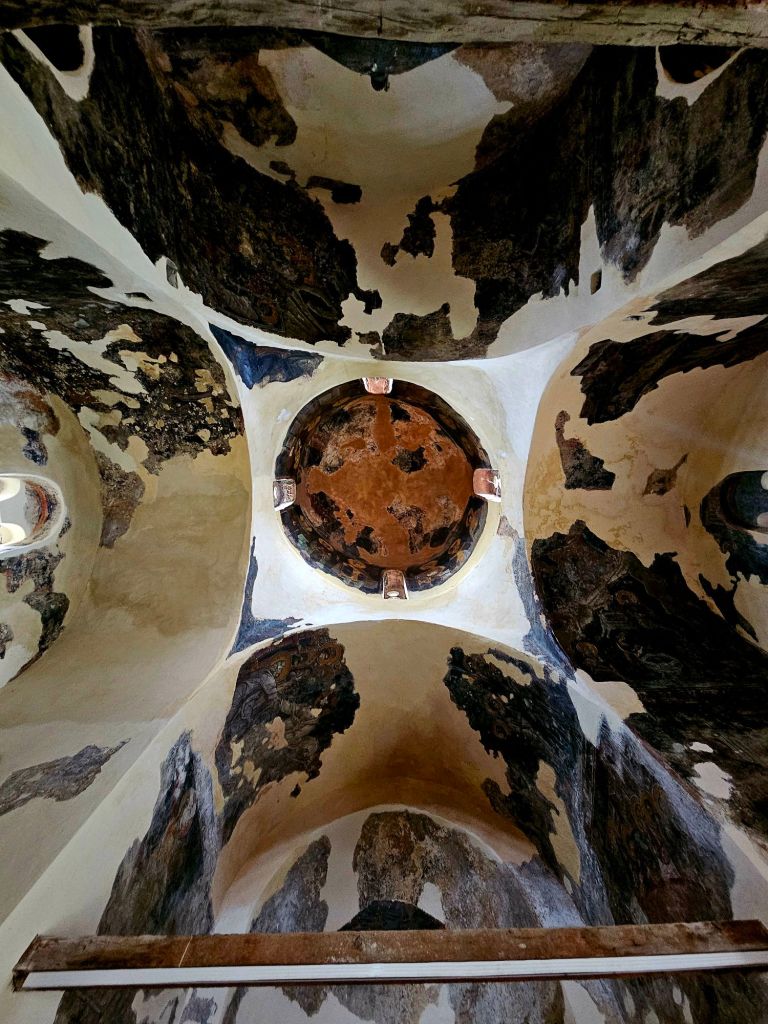
The next church we saw is one of the oldest orthodox churches in Berat. It was built in the early 13th century on top of a ruined 5th century church. Following the Ottoman conquest of Berat in 1417, the Church of St. Mary of Blachernae survived as a functioning Christian site despite a predominantly Muslim population. This reflects the city’s tradition of religious tolerance that allowed new church constructions to resume both within and outside the castle wall.
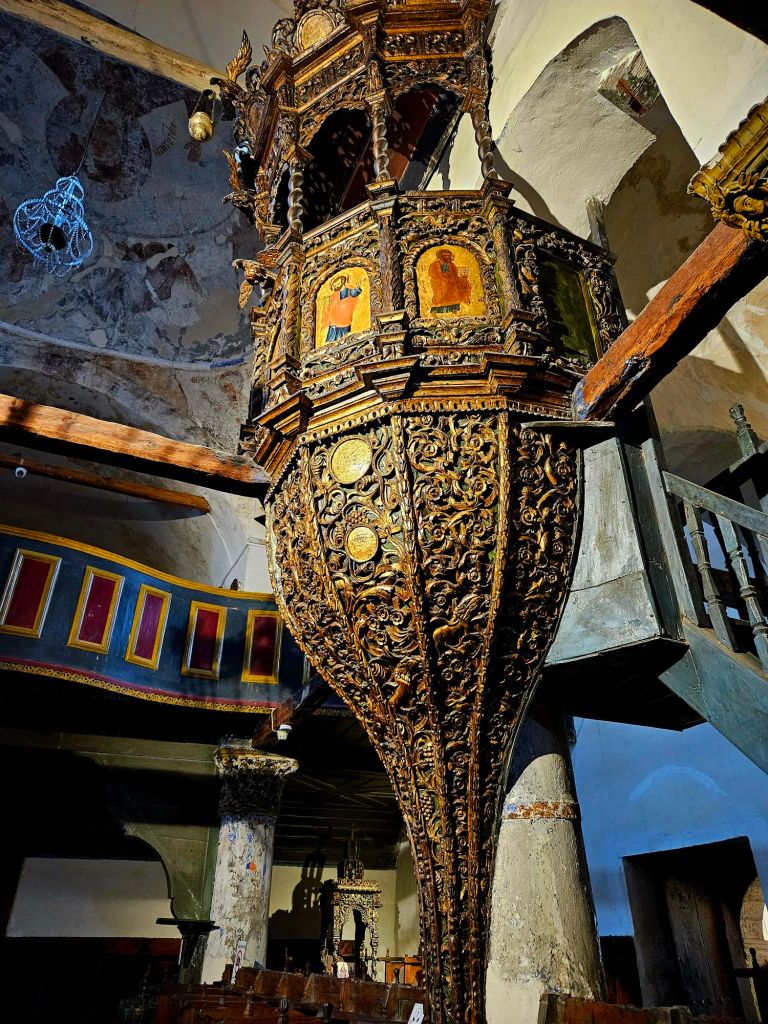
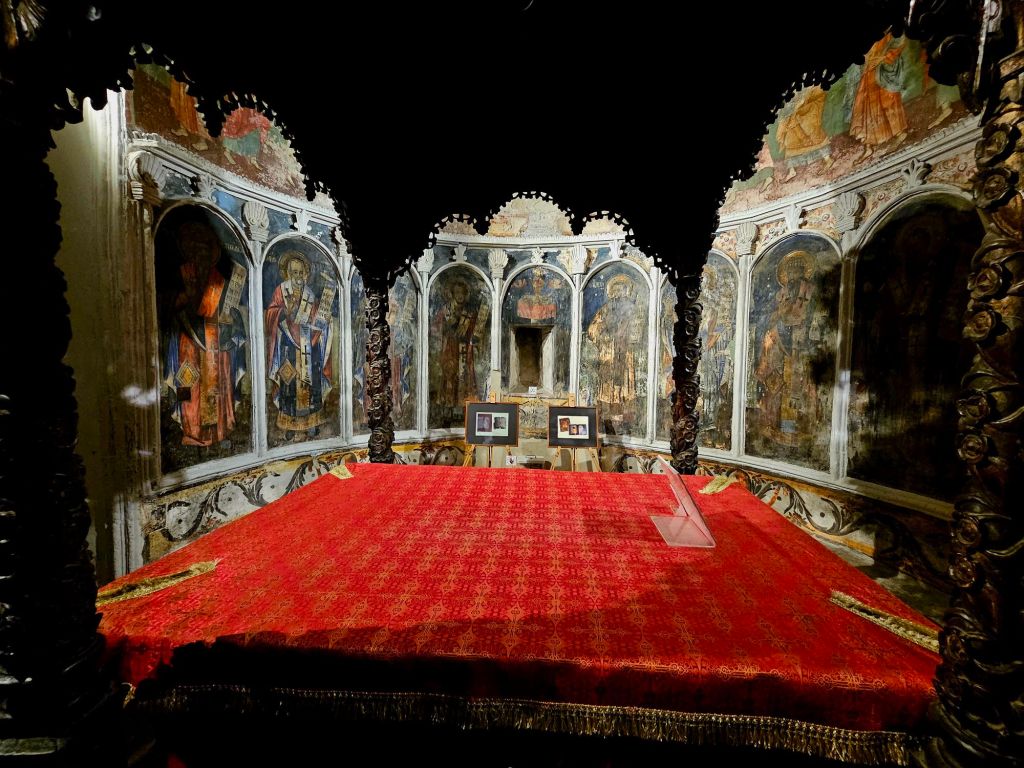
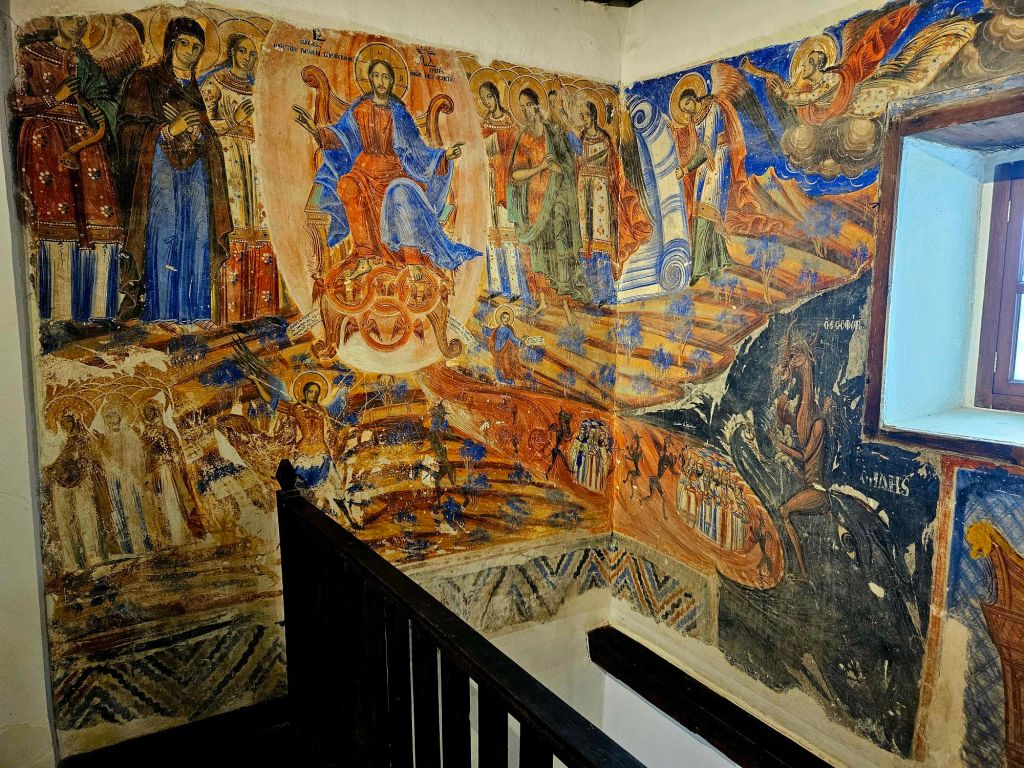
You weren’t really supposed to take photos inside the church but I managed to sneak a few in. The frescos inside the church were painted by Nicholas Onufri, son of the famous master painter in Berat.
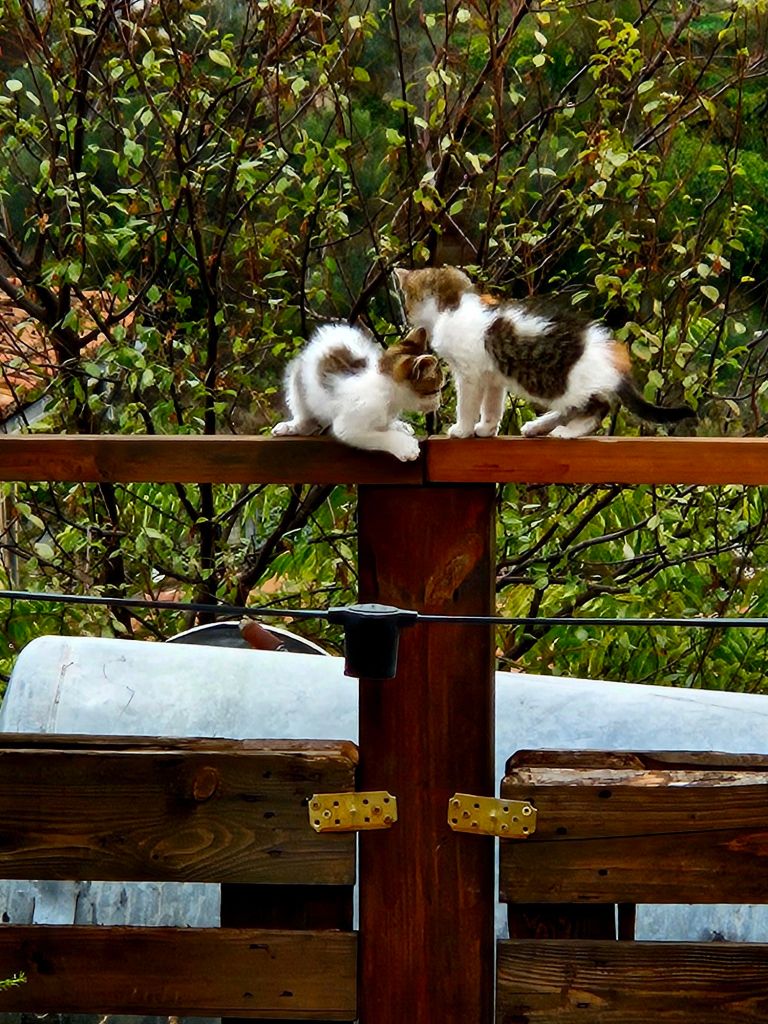
On the way back to our apartment we passed some cute kittens.
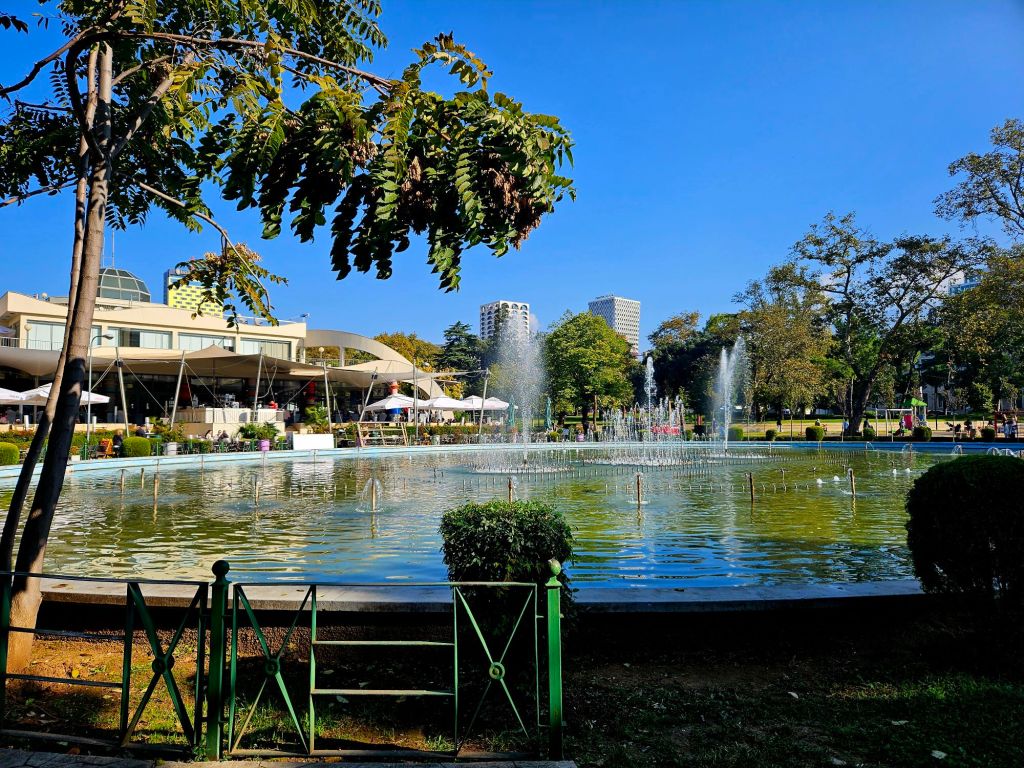
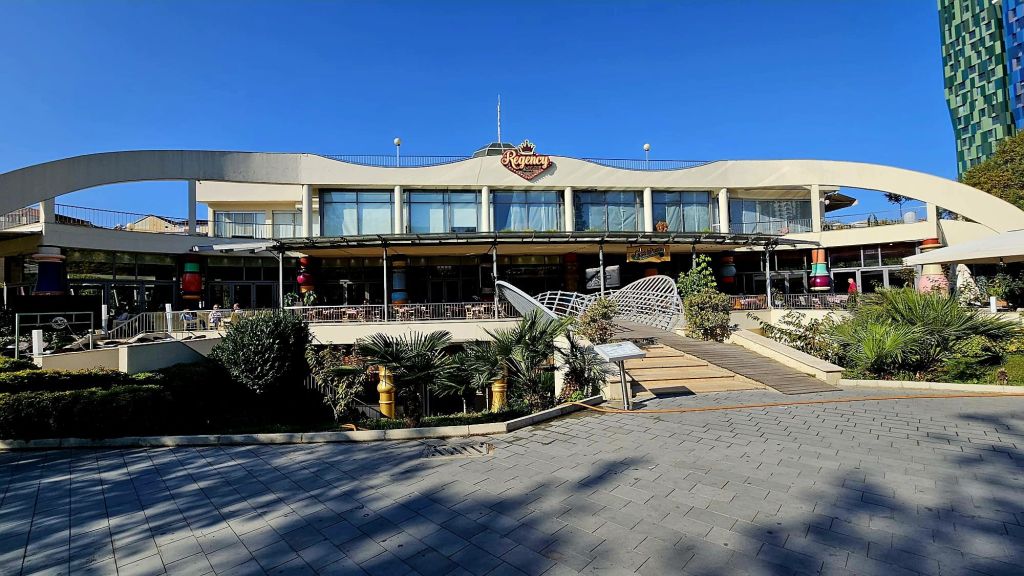
Today was our last day in Tirana. After we finished packing we wandered down to the lake in Rinia Park and the Taiwan Cafe for breakfast.
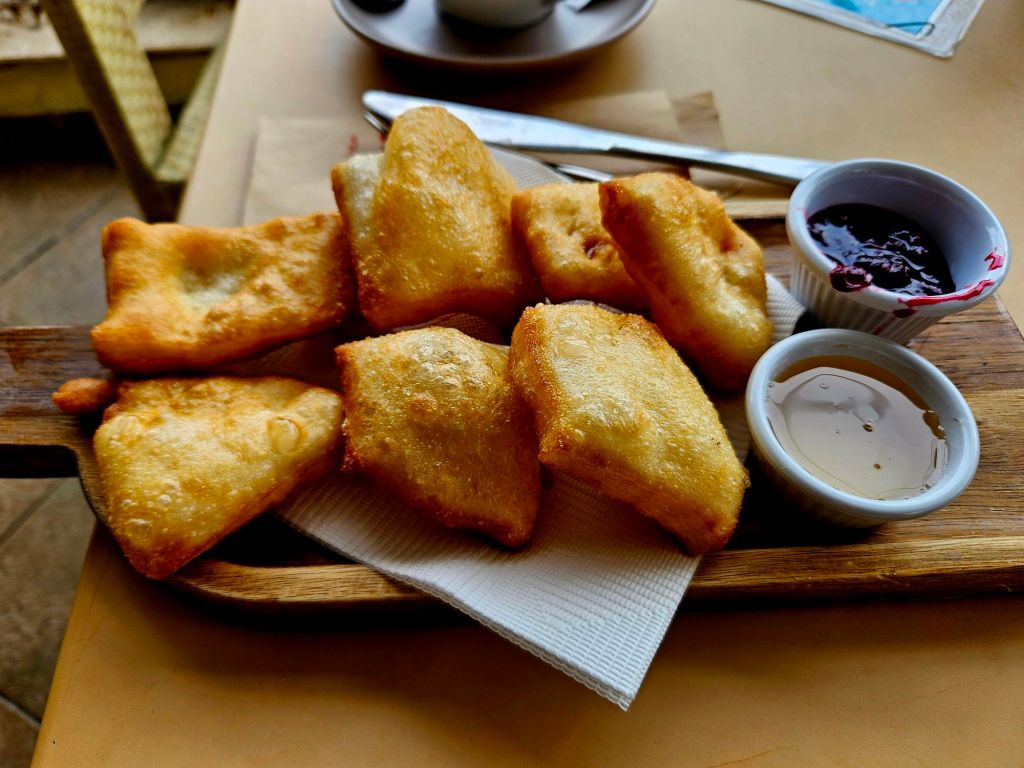
I tried the Petulla, an Albanian style of pancakes which was basically like fried doughnuts. They were ok.
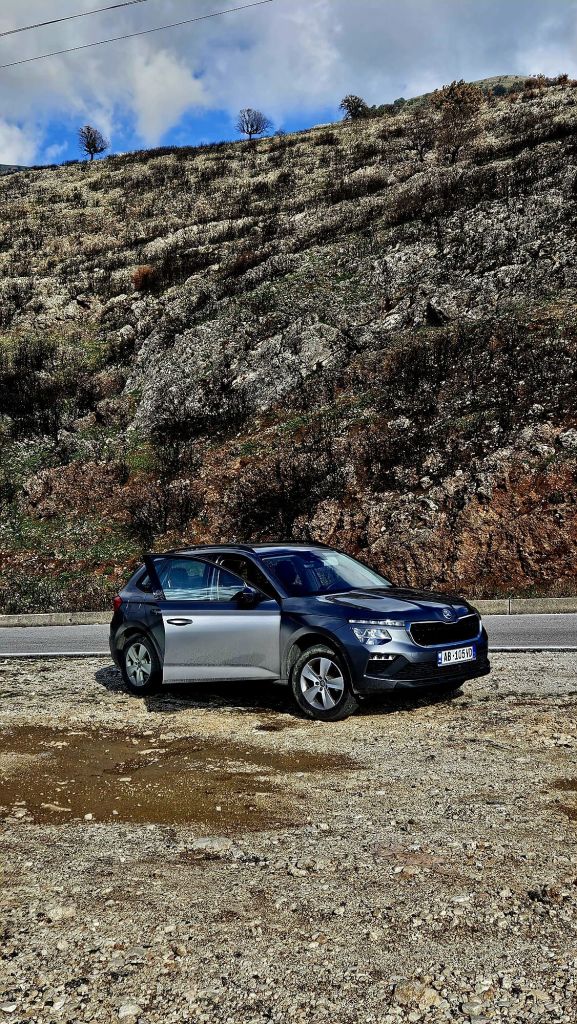
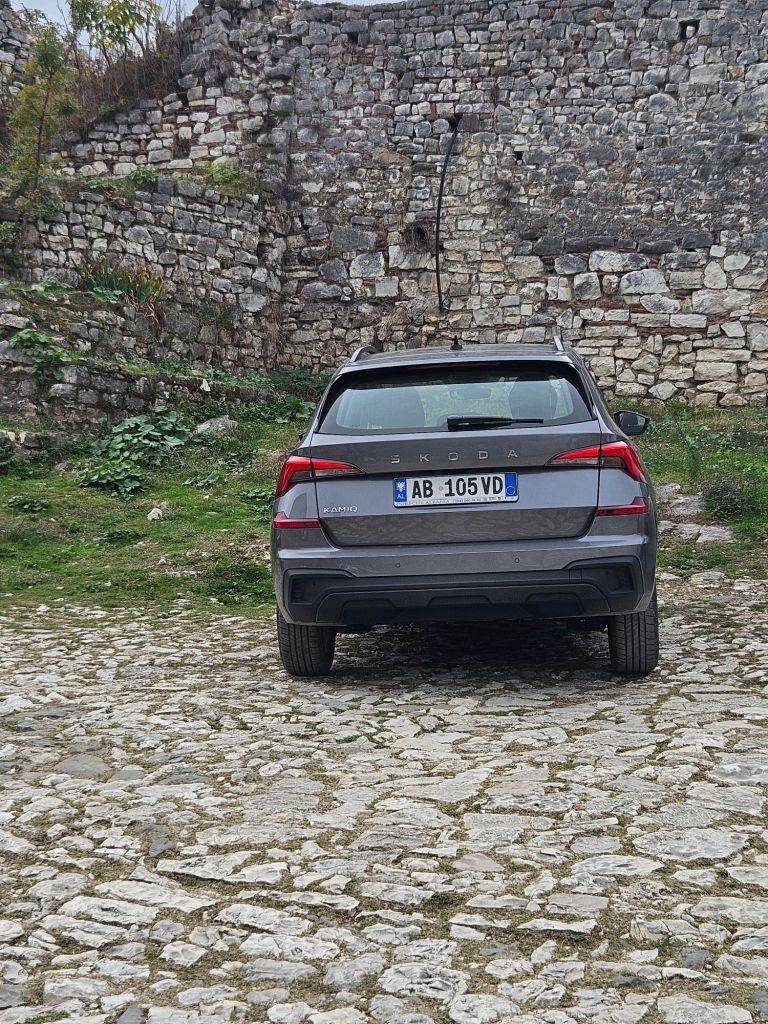
After a leisurely breakfast we walked to the Radius office where we had booked to hire a car. The guy in the office took us to their parking lot and handed over a brand new Skoda Kamiq. It’s a very nice SUV and I especially ordered an automatic so I could drive it too.
After filling out all the paperwork I decided to take the wheel and drive us back to the apartment to pick up our cases. Perhaps not the best decision, as not long after leaving the car park I scrapped the passenger side of the car against the wall of a narrow street. I did continue driving to the apartment. As expected there was no parking outside the actual apartment so I parked on a nearby road while Nicola quickly went in to get her case. Once she arrived back at the car I quickly went to get mine. Whilst I was doing that, Nicola was asked to move the car by the police – so she was now driving, which was not a bad thing.
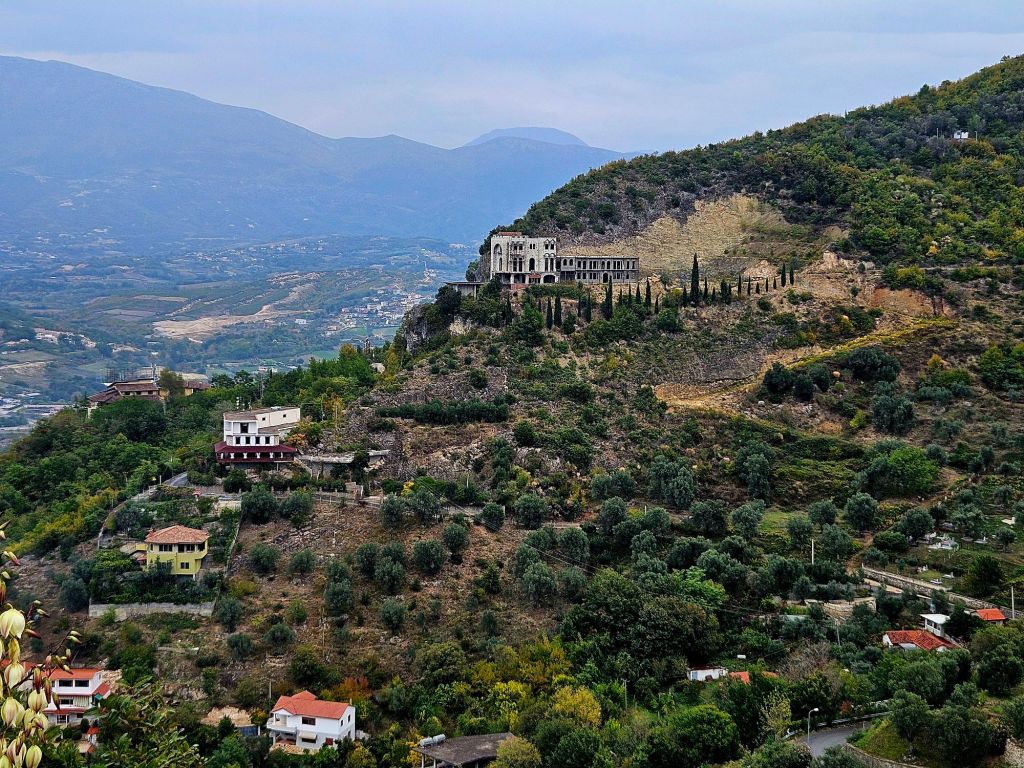
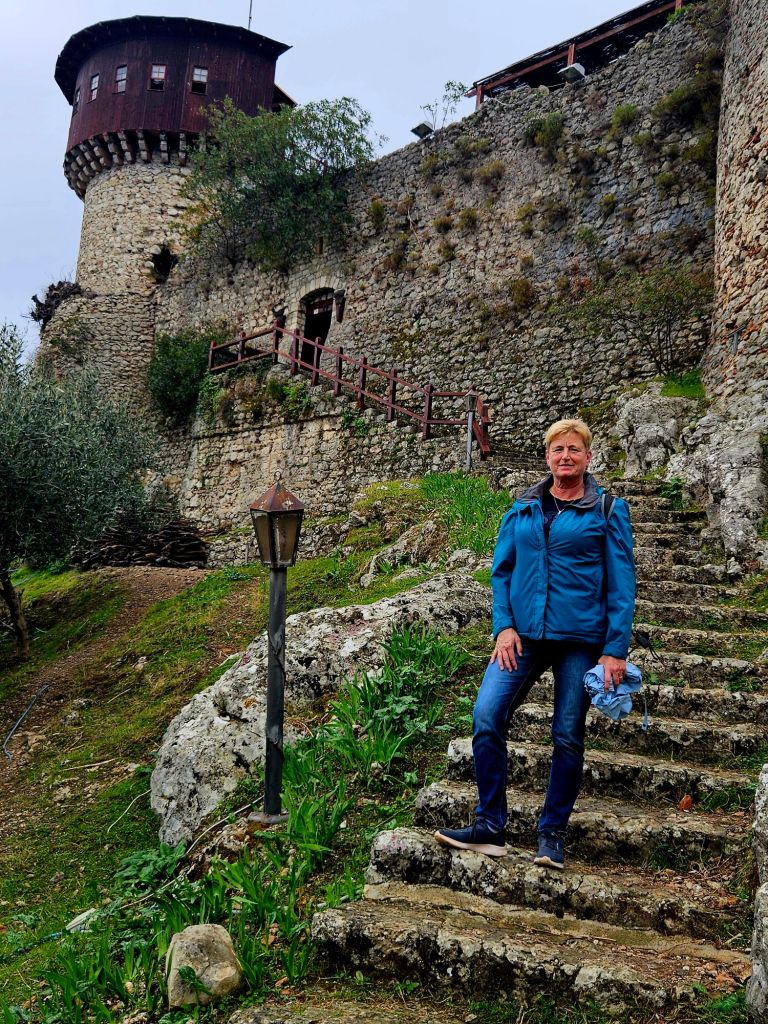
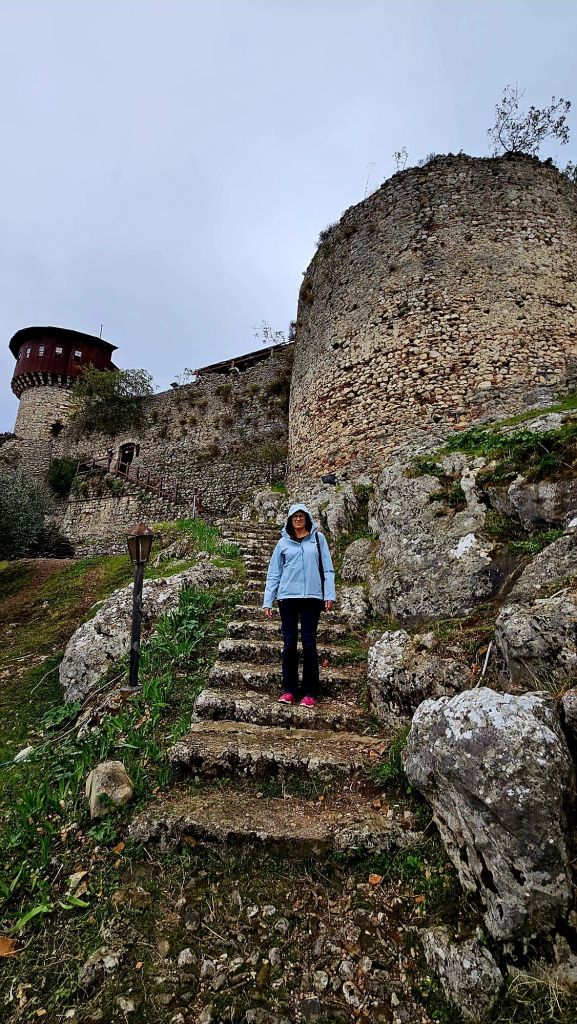
We drove for about 30 minutes to Petrele castle. This castle was built in the 6th century and is 329m above sea level.
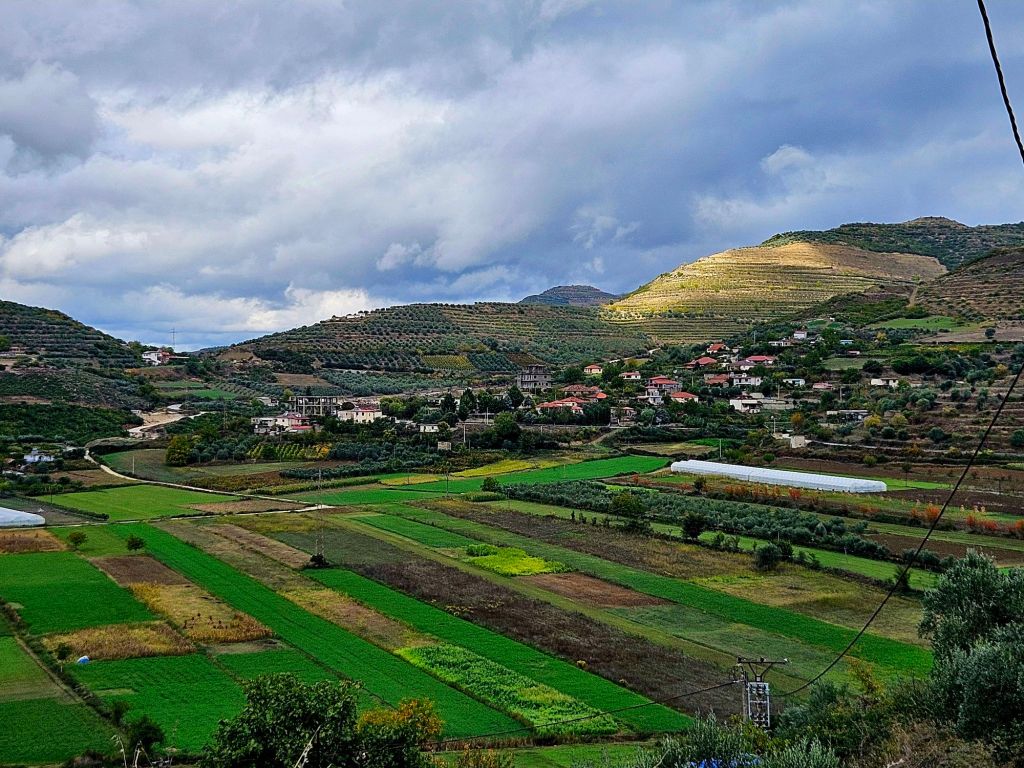
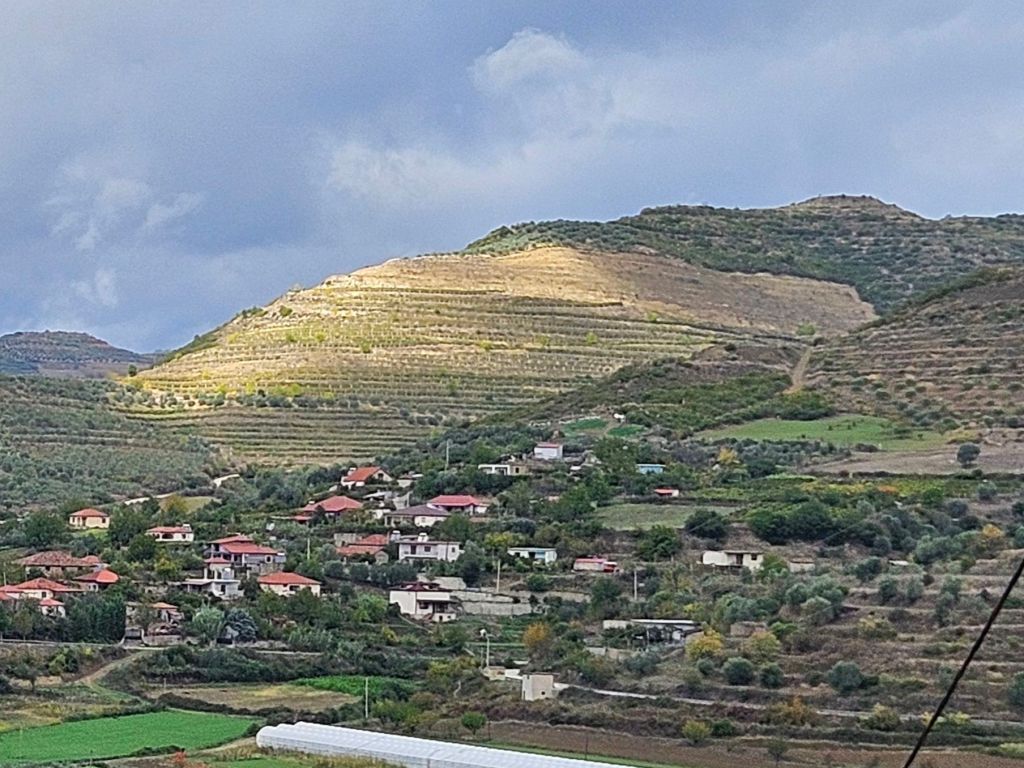
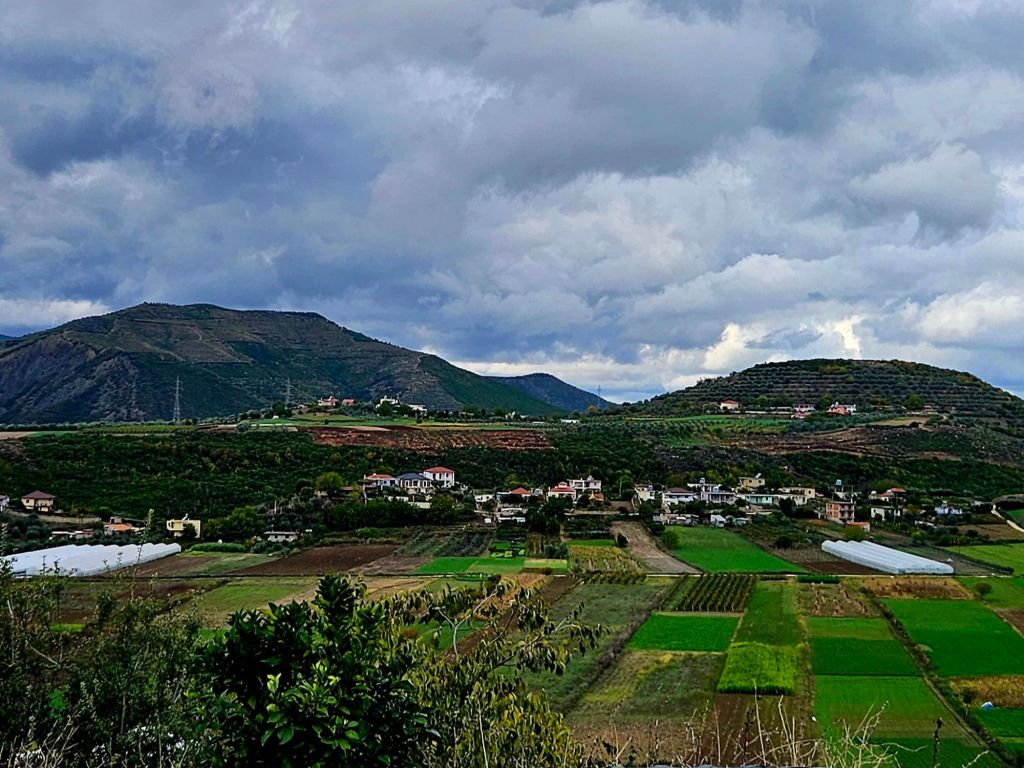
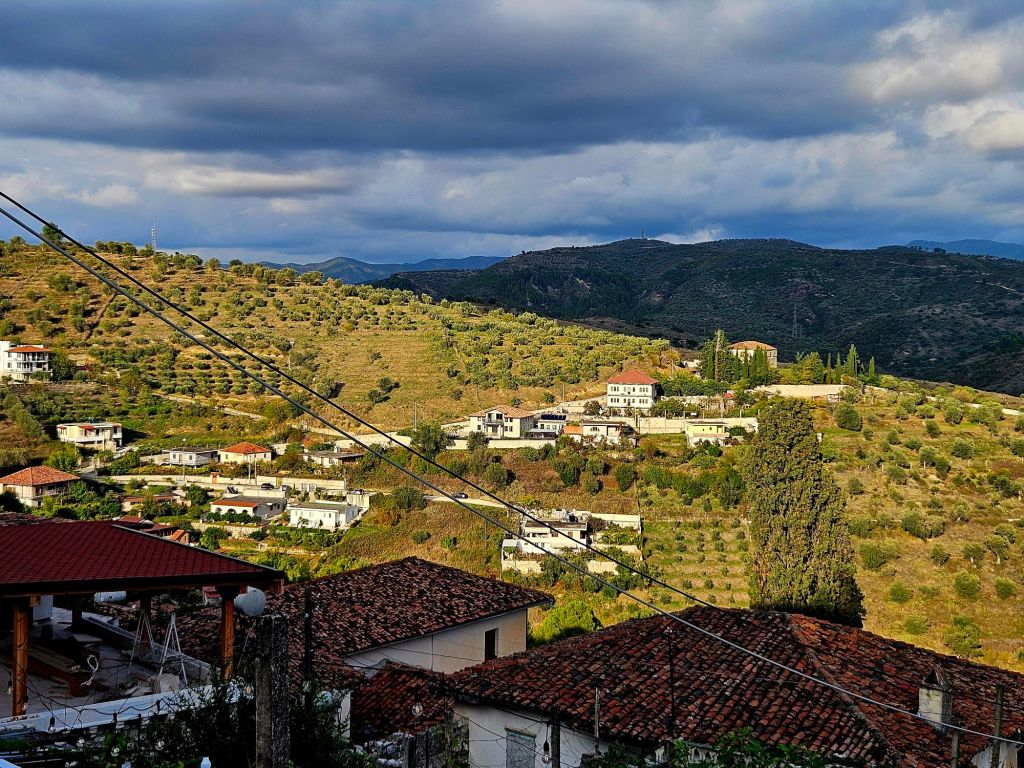
Although it was raining there were some lovely views from the top over the surrounding mountains and olive groves.
During the middle ages the castle was a key defensive position against the expanding Ottoman empire and witnessed several battles. During the Ottoman reign it was used for administration and surveillance purposes.
The castle now hosts a restaurant and is a popular tourist destination.
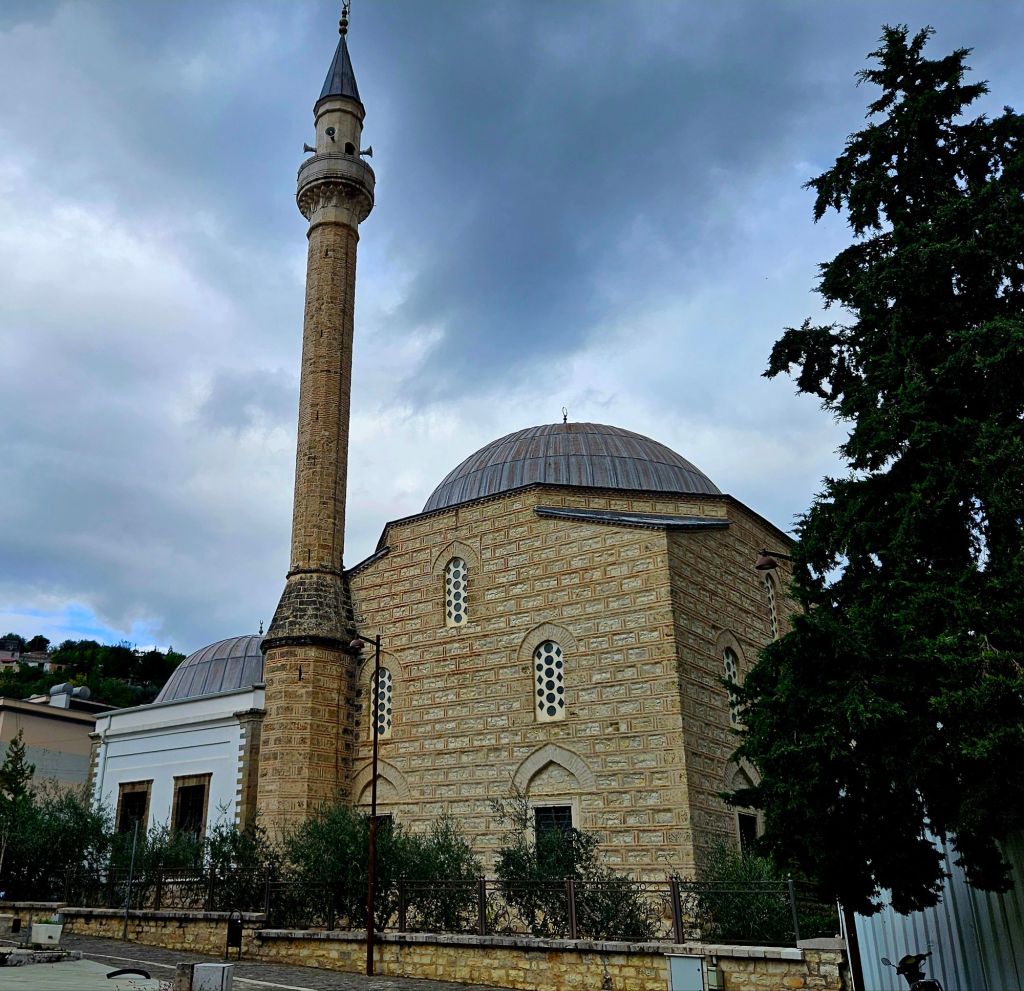
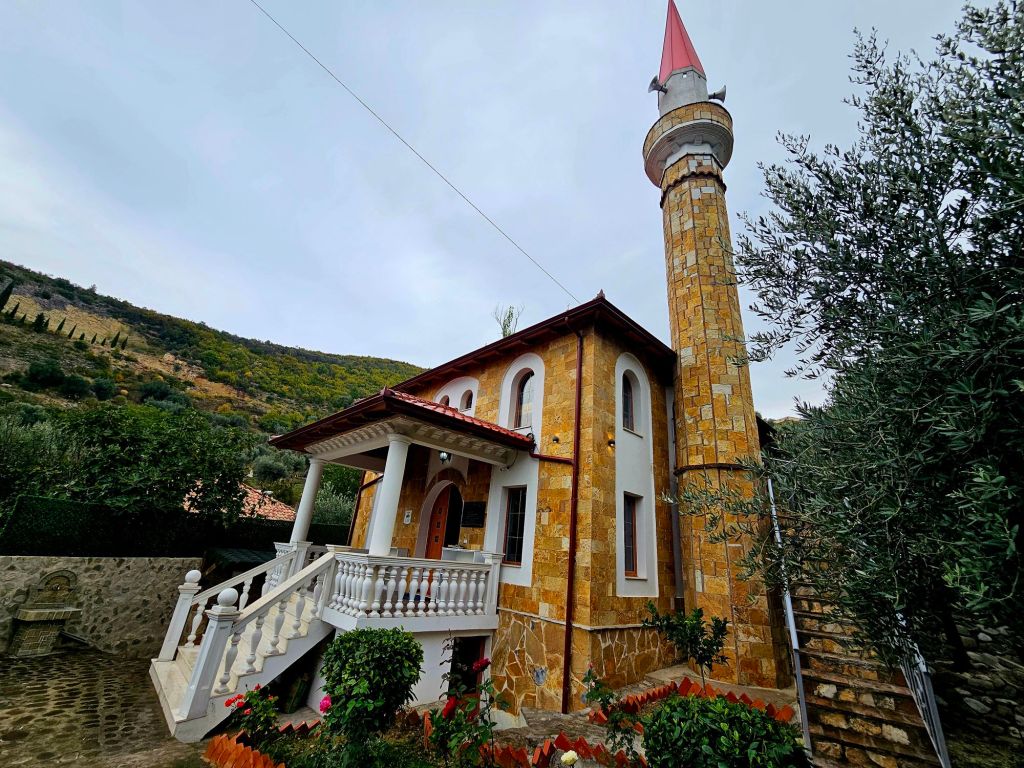
Following our tour of the castle we then drove roughly one and a half hours to Berat. Once we were back on the main roads I did some driving but Nicola did all the smaller and narrow roads. On the way we stopped and took a photo of a very picturesque little mosque.
The roads into Berat castle were very narrow. I tried navigating using the instructions we had been sent, but we ended up in the wrong car park and had to go back down to the lower car park. I then messaged our air bnb hosts and the father came to pick us up from the car park to show us to our apartment. We quickly unloaded the cases and then he drove us to the nearby car park, where we could leave the car.
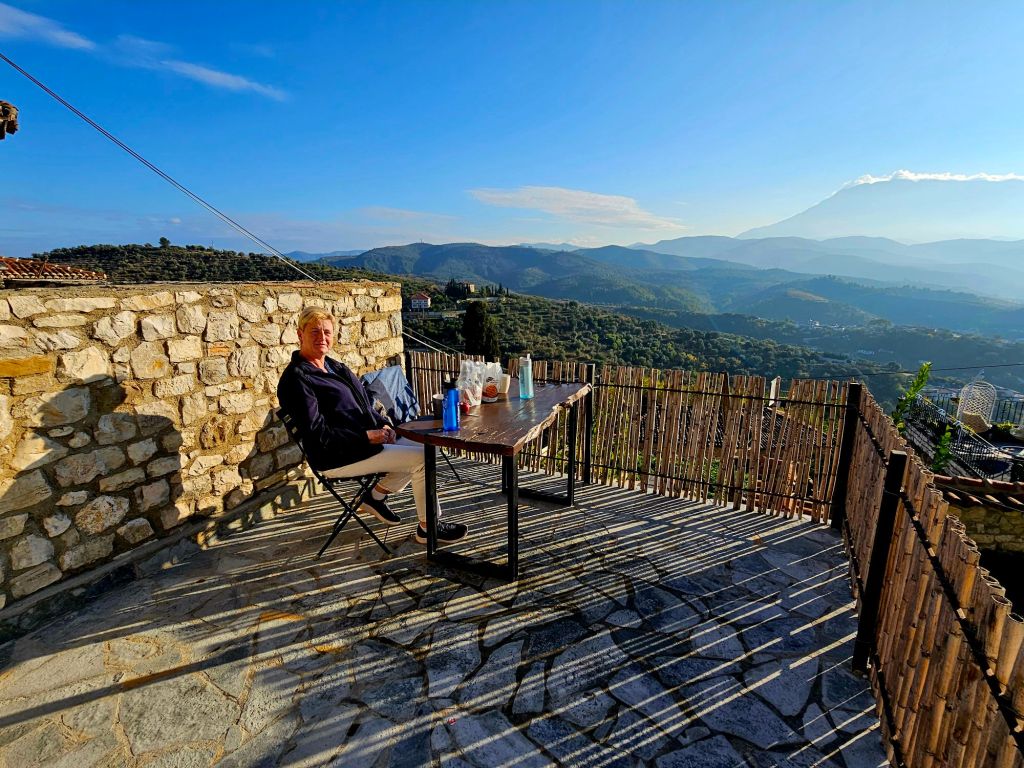
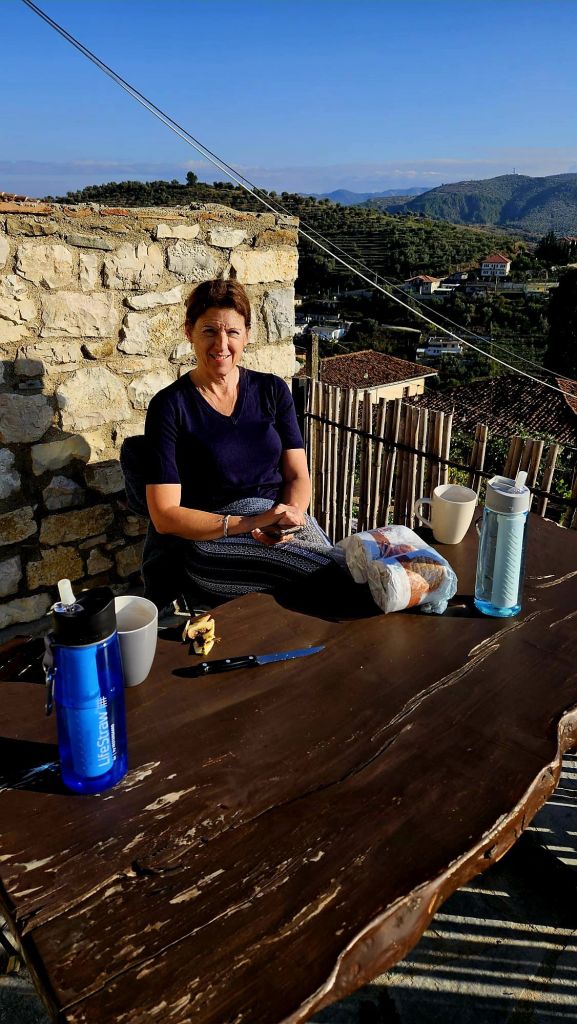
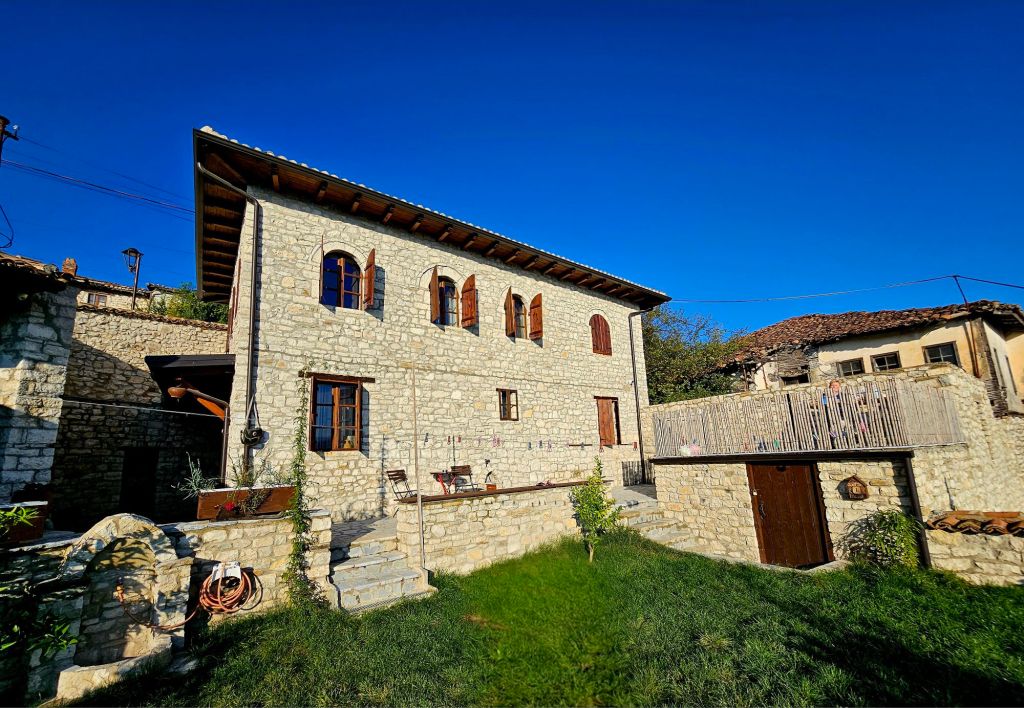
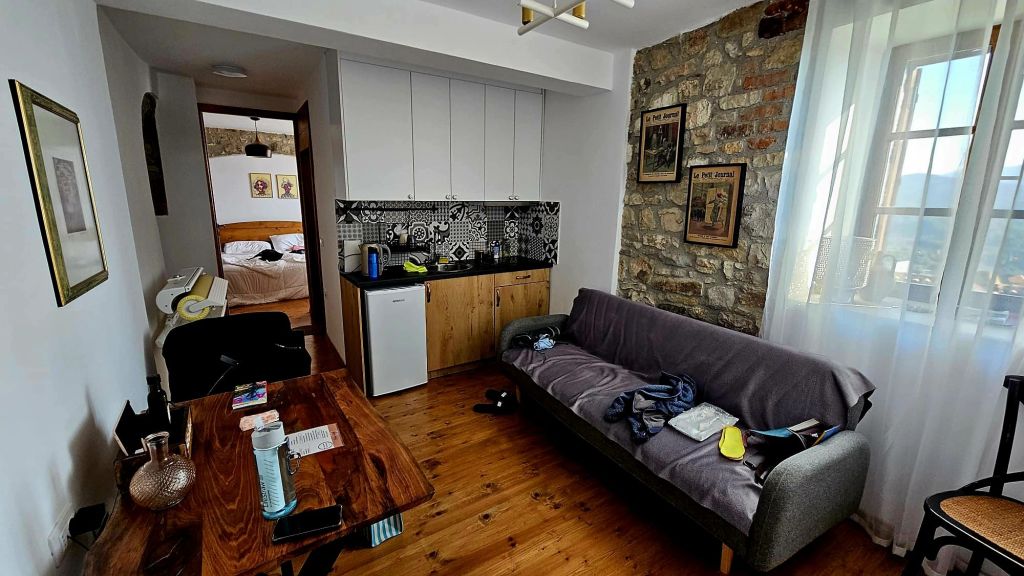
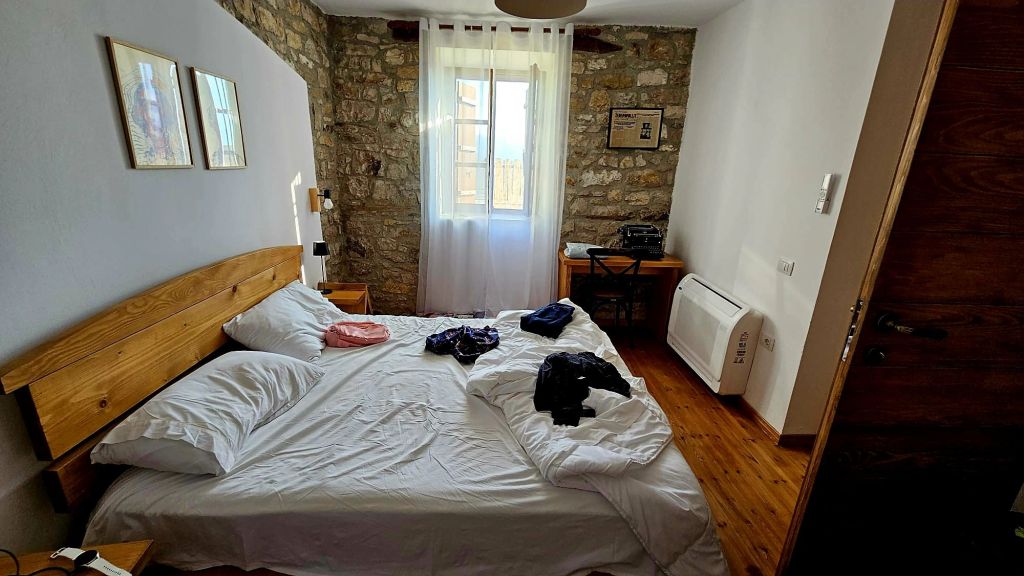
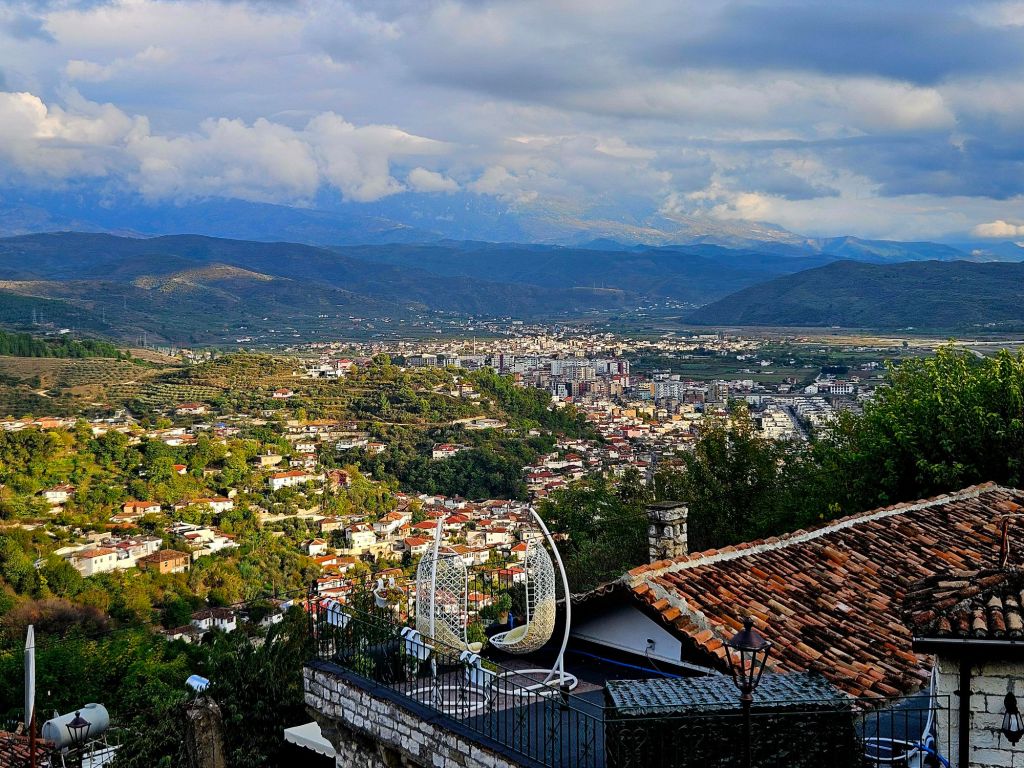
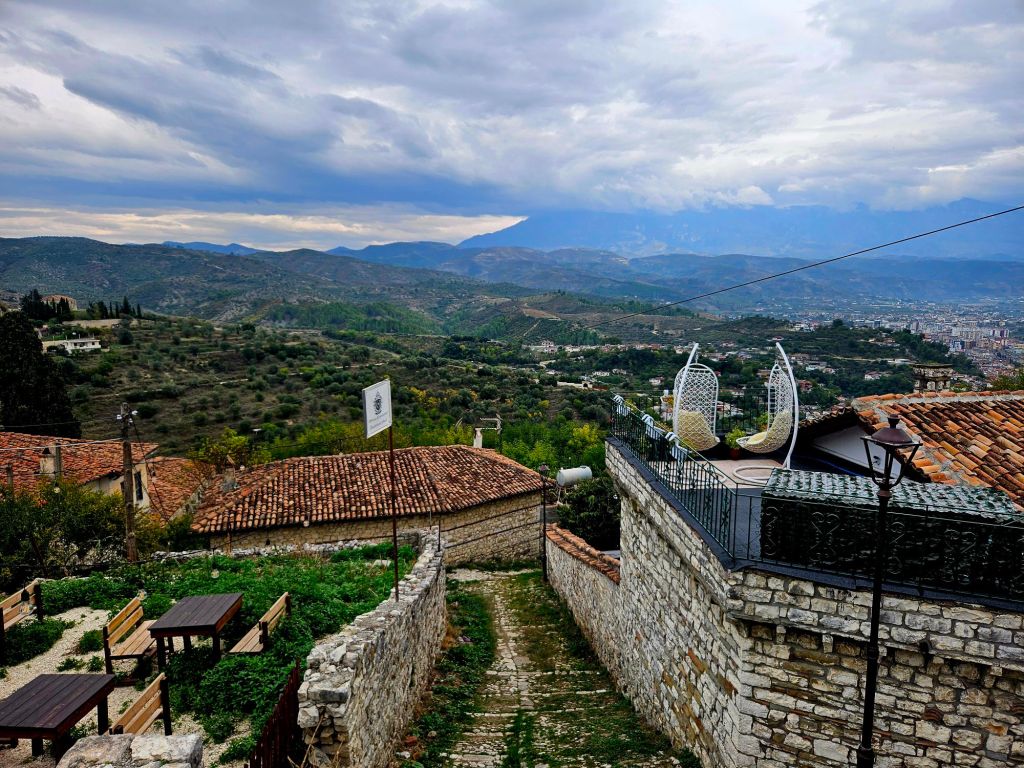
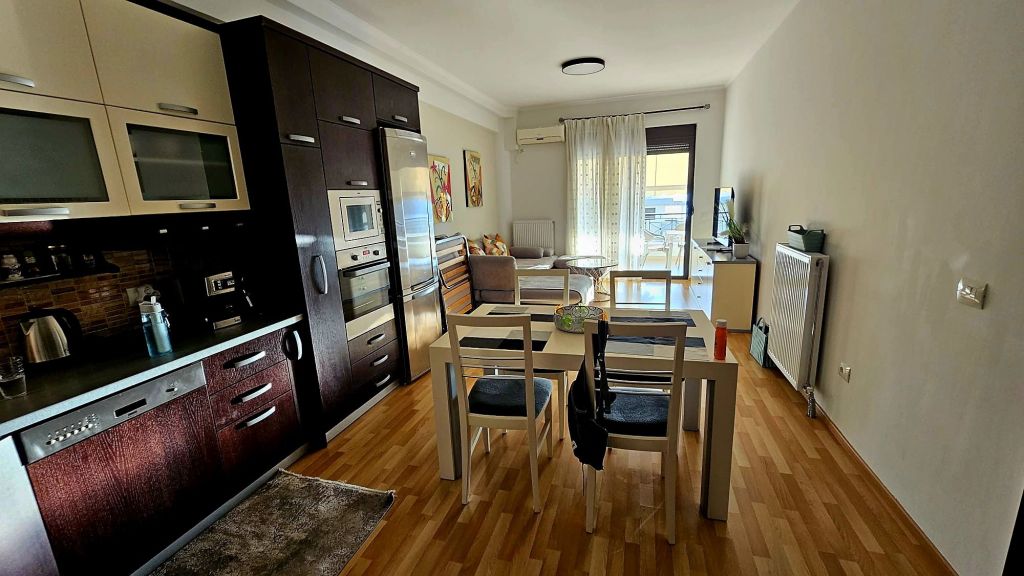
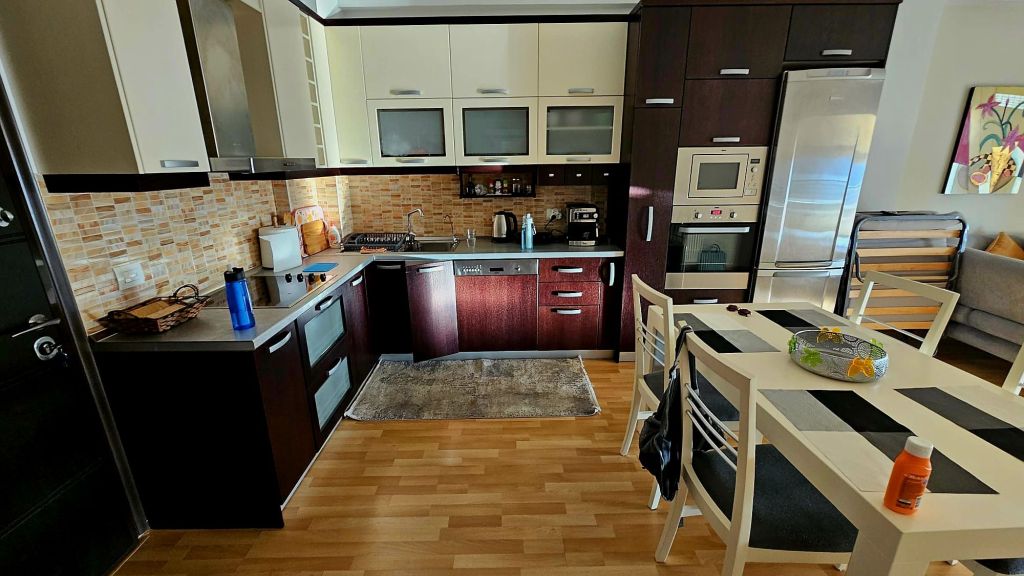
The apartment was small but lovely – it was amazing living inside the actual castle. Once we had unpacked a little bit we had some tea and biscuits outside in the garden. The view was amazing.
We met Tim and Sandra who were staying in the apartment next to us, so chatted to them for a little bit. They had travelled from Chicago and were also doing their own tour of Albania.
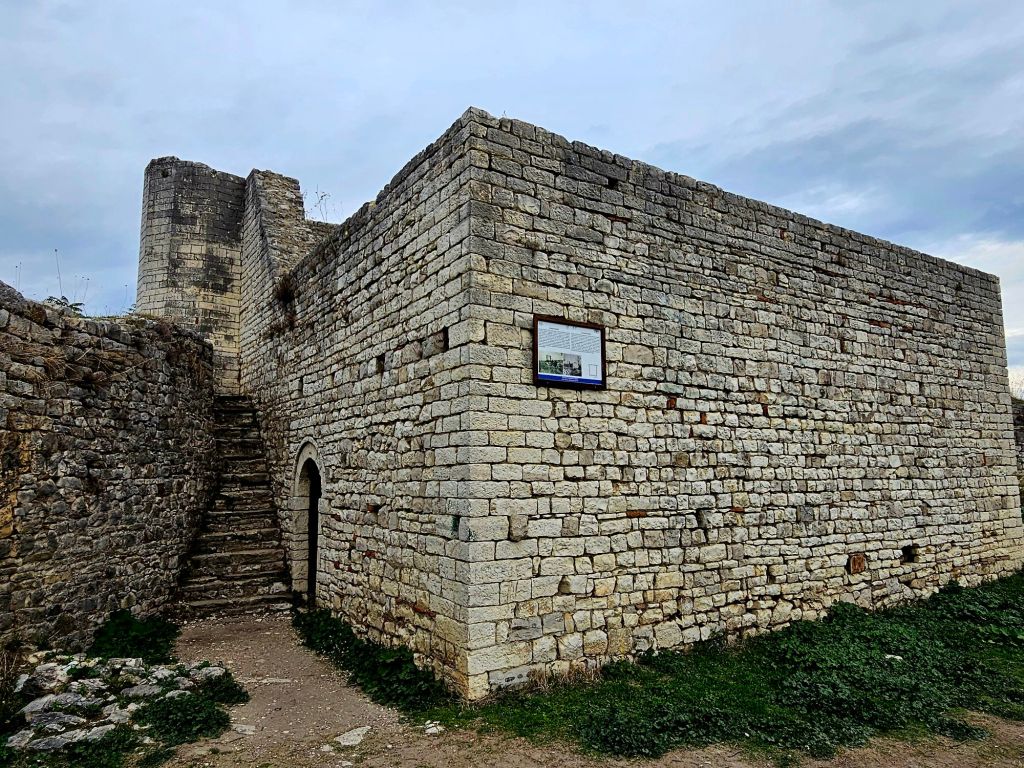
It was then time to go exploring. Berat castle dates mainly from the 13th century and contains around 20 churches and some mosques. It is only accessible from the south side and stands at an elevation of 214m.
The castle was burnt down by the Romans in 200BC but then rebuilt and strengthened in the 5th century. In the 6th century there were more additions and again in the 13th century. Most of the buildings inside the castle were built in the 13th century.
The first church we came across was the Orthodox church of St George. This church was made into a government residence in the 1980s. The upper part of the church, which was originally a basillica style, was destroyed and replaced with a structure resembling a traditional residential house.
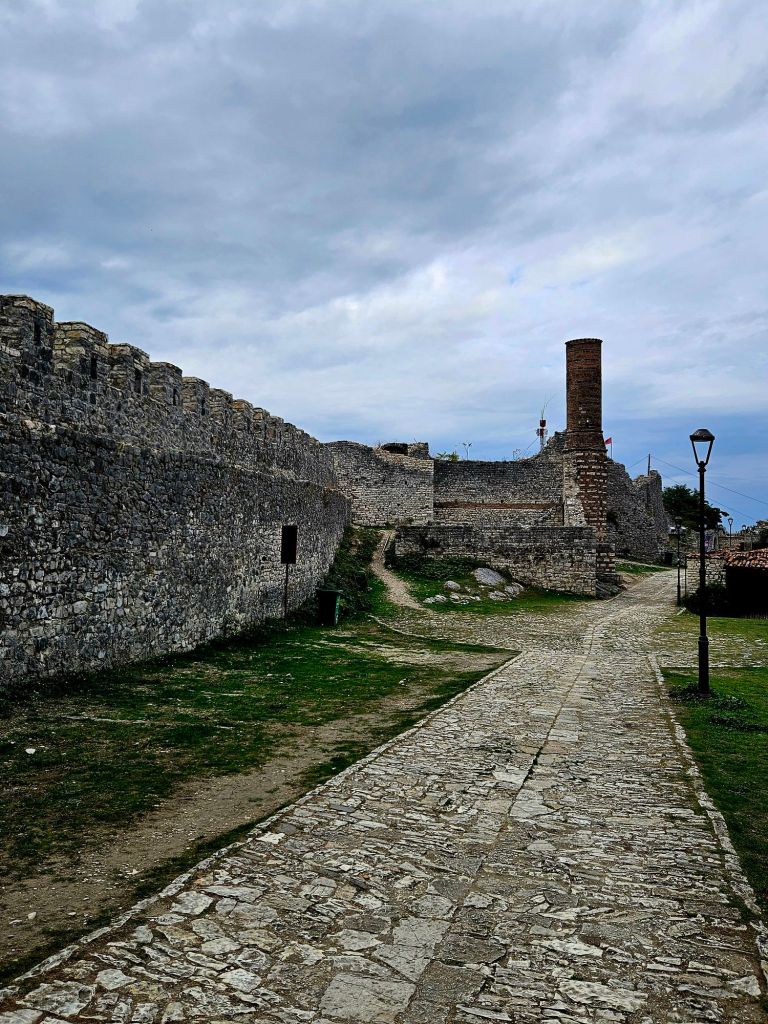
The walls of the castle are extremely thick and made of solid stone. They act both as a barrier and a symbol of power.
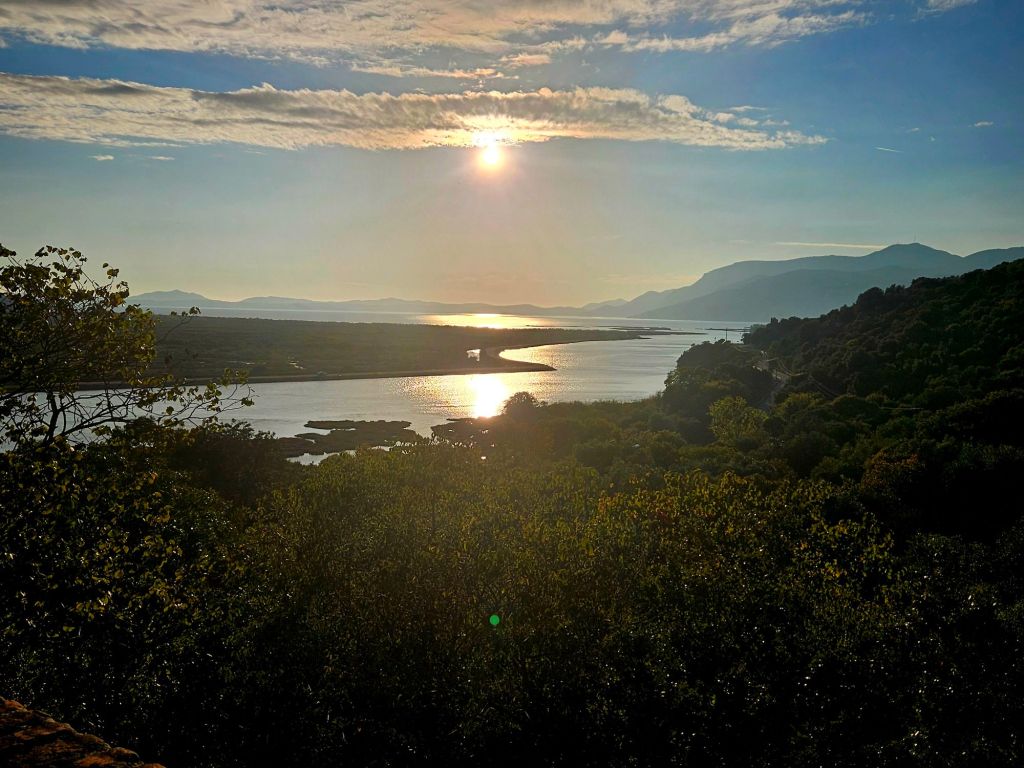
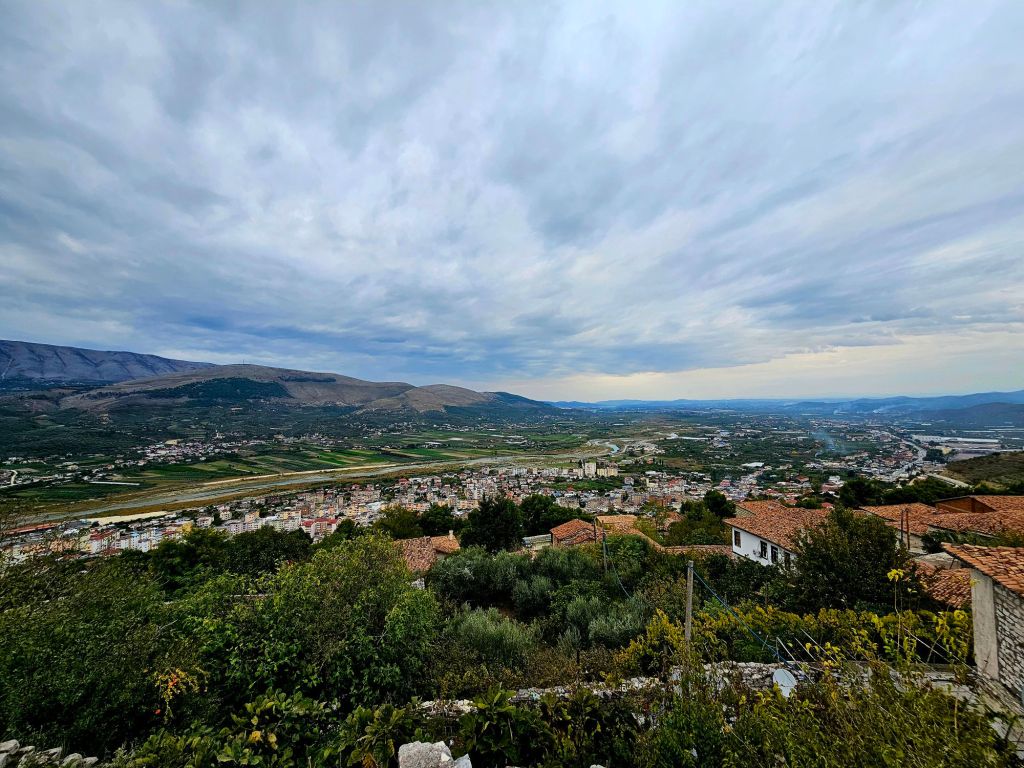
There were some amazing views from the top of the castle.
After walking around the walls for a bit we made our way to the Acropolis area within the castle. The layout mirrors the contours of the hills on which it stands, creating a minature version of the terrain.
One of the main attractions here is the water cistern. This drops to 6m below ground and is still partially functional today.
We then came across the white mosque. It’s believed that this was built during the 15th century and was used by the ruling administration and the garrison soldiers. It is built from white limestone.
Once again we had amazing views over the town of Berat and Shpirag mountain.
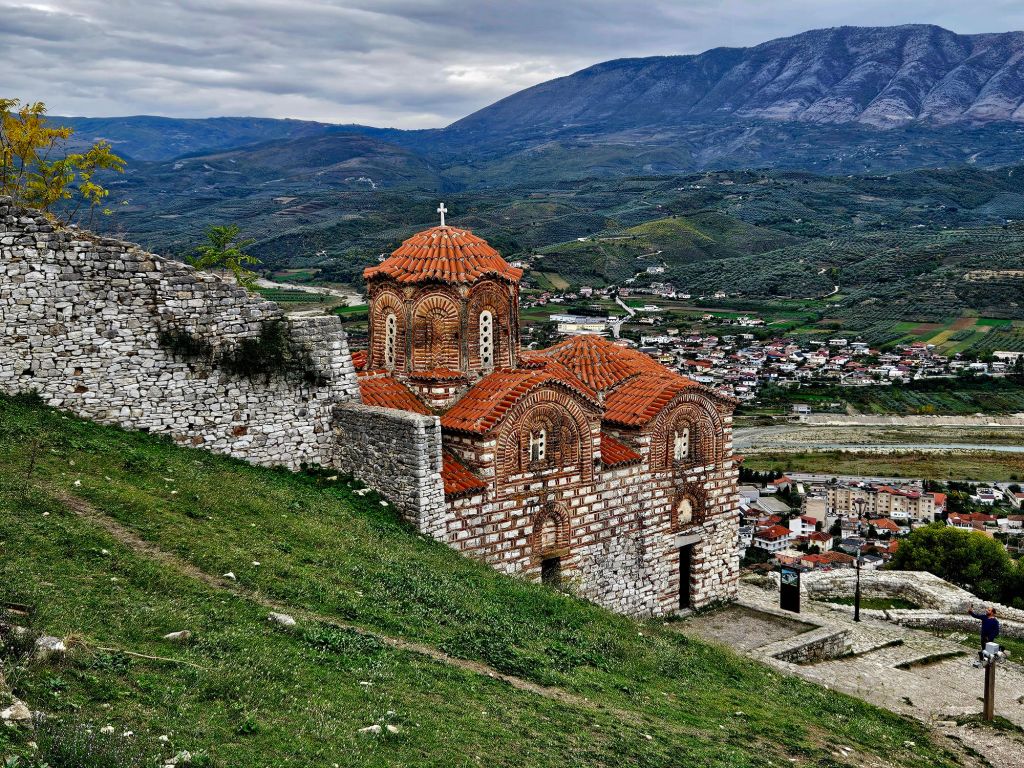
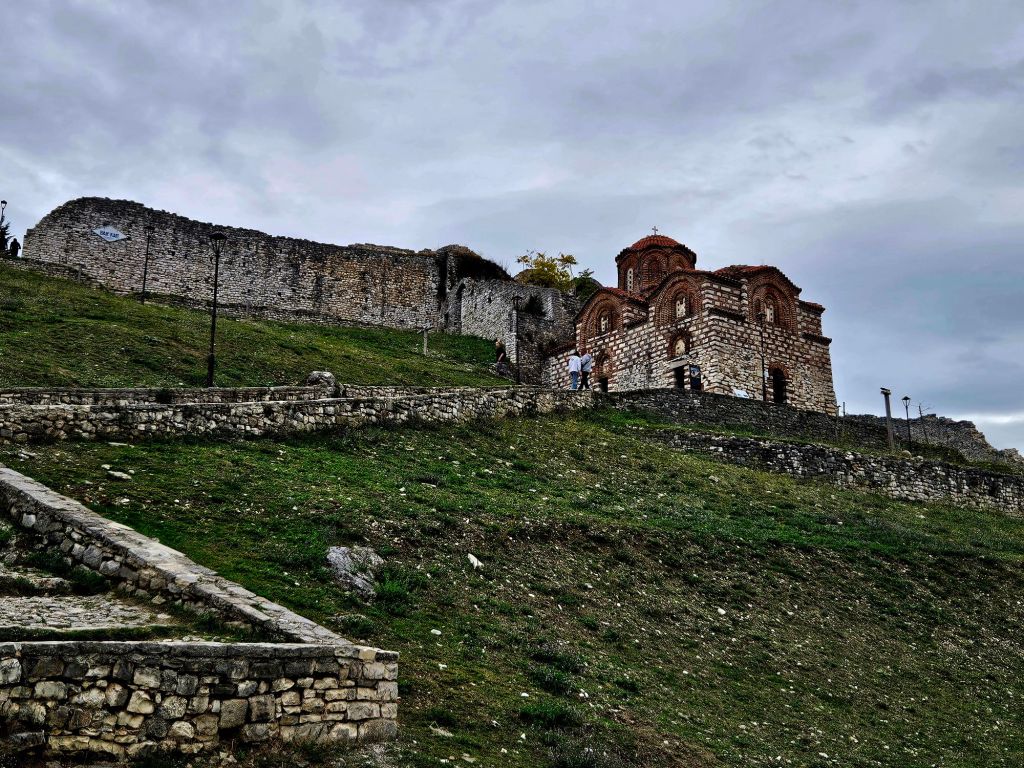
The next church we saw was the beautiful Holy Trinity Church. This is an amazing 14th century church which was unfortunately closed.
We carried on walking to the church of St Mary of Blachernae. This church was built in the 13th century and is the oldest preserved church in Berat. It also used to have a dome roof but that collapsed and the roof was reconstructed in its present form.
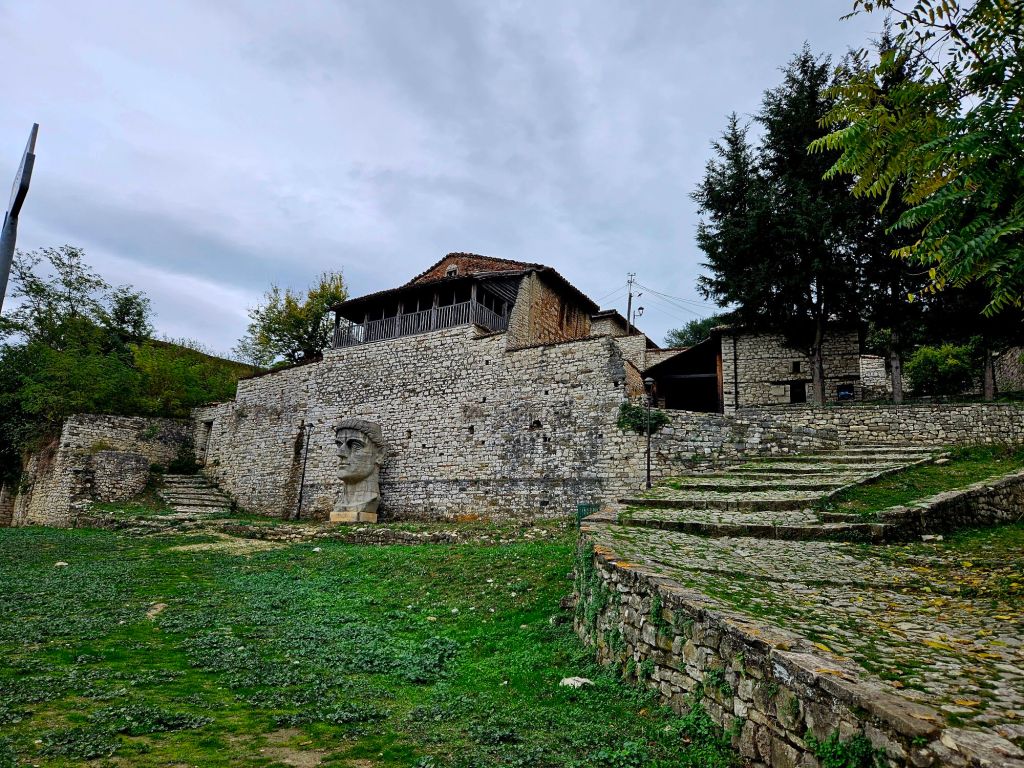
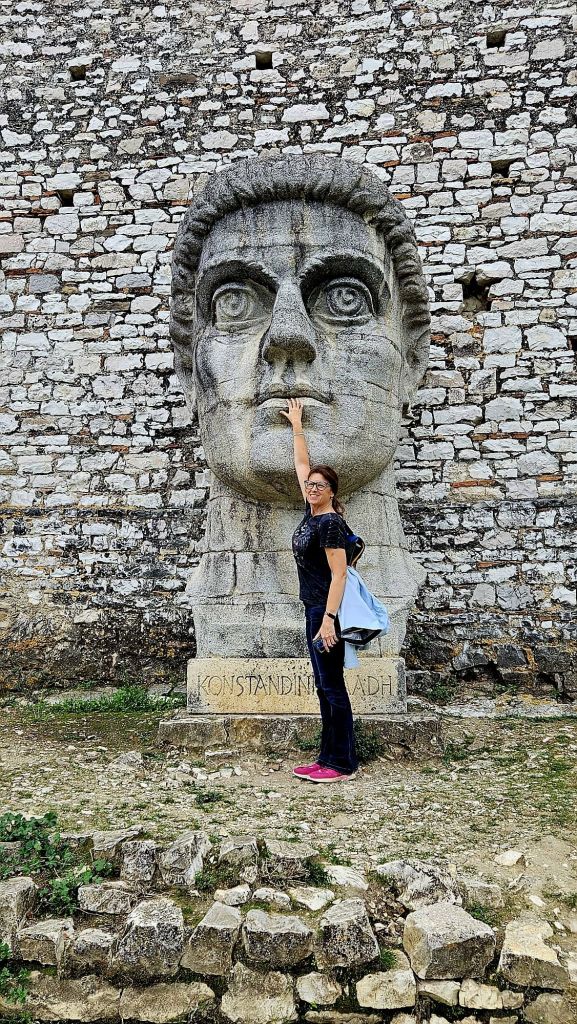
Outside the church is a huge bust of Constantine in honour of the first Christian Roman Emperor. It’s 3.5m tall and symbolises Albania’s historical ties to the Roman Empire and Christianity.
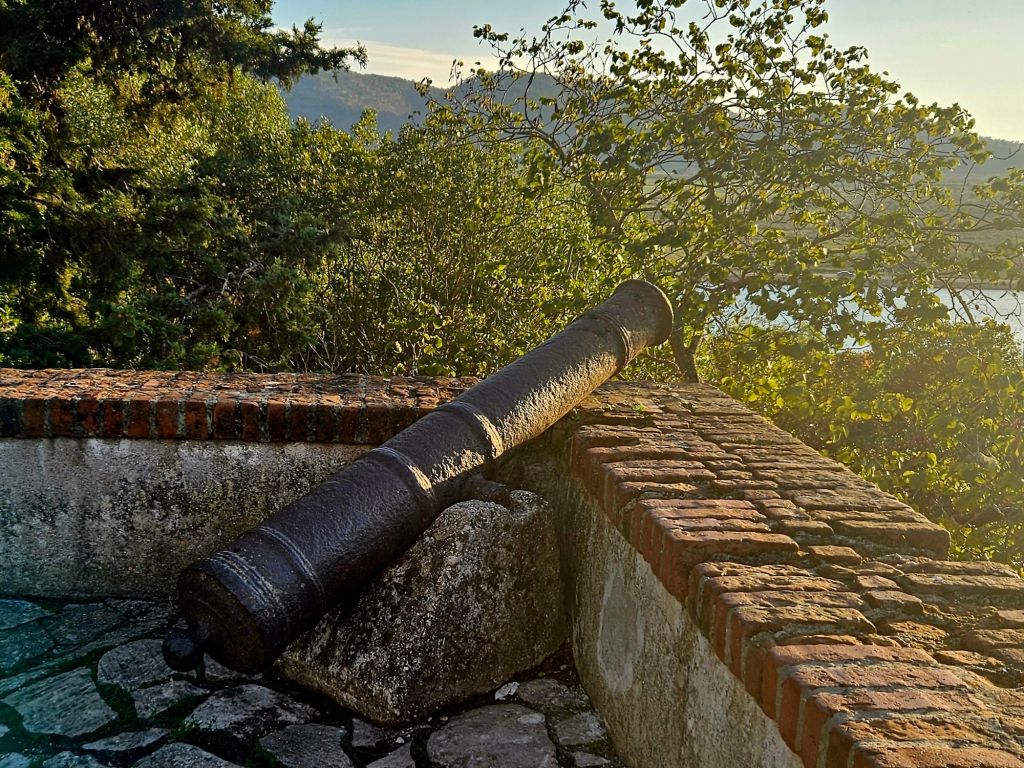
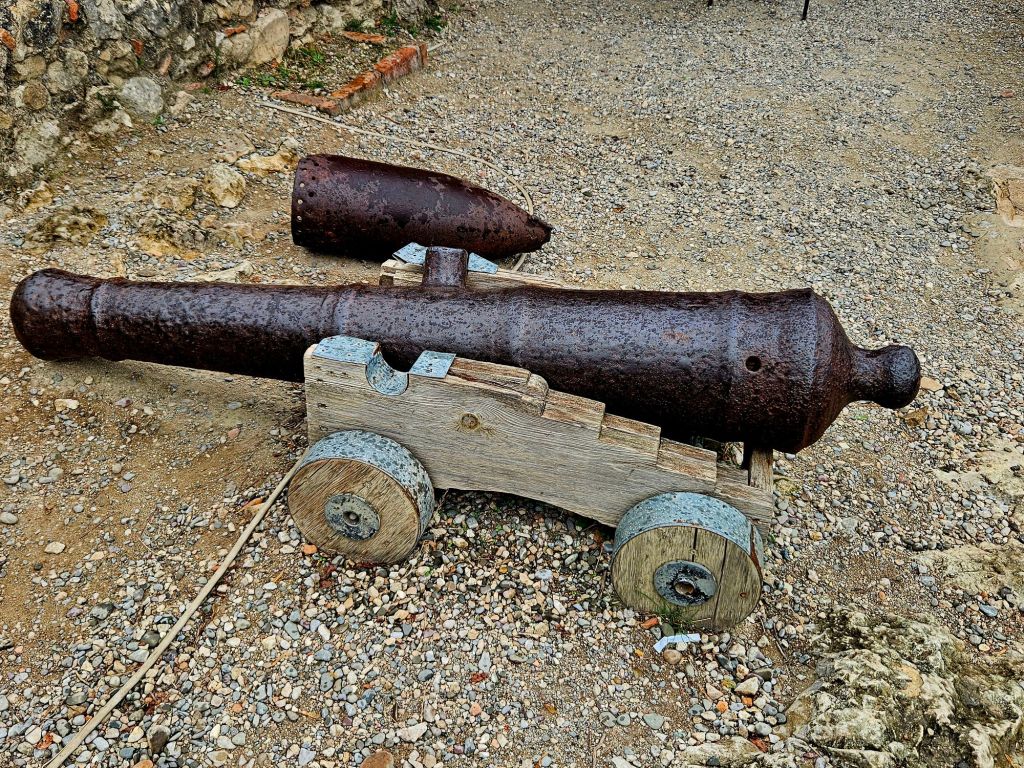
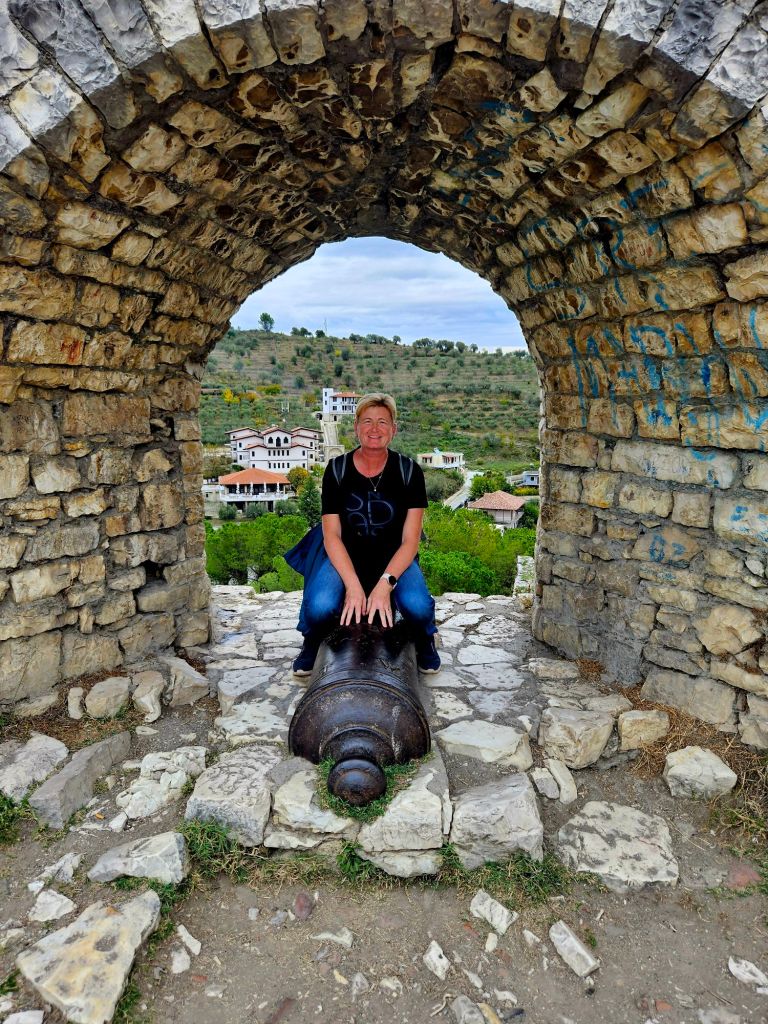
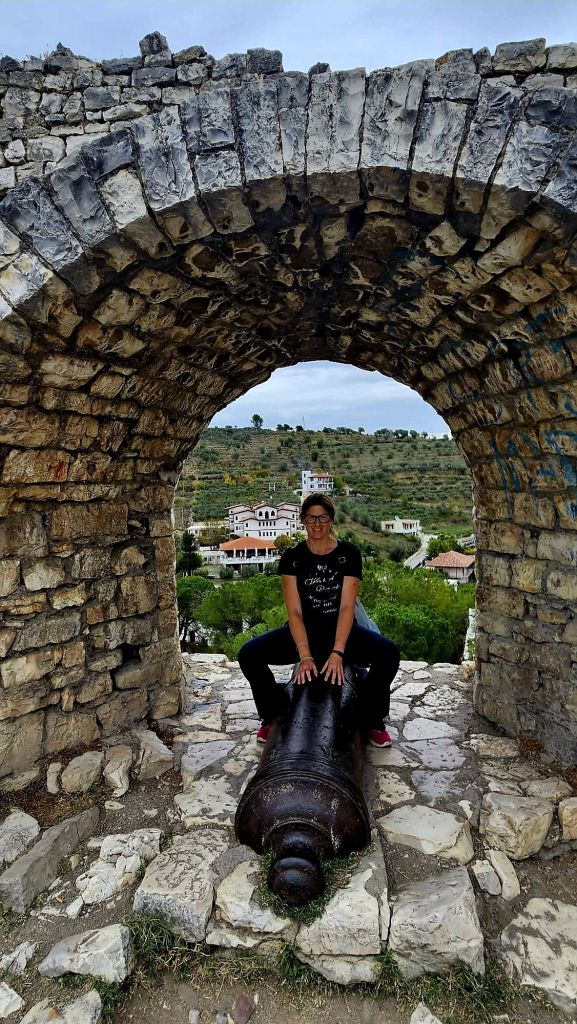
Some cannons were situated on the ramparts, so we decided to take some photos.
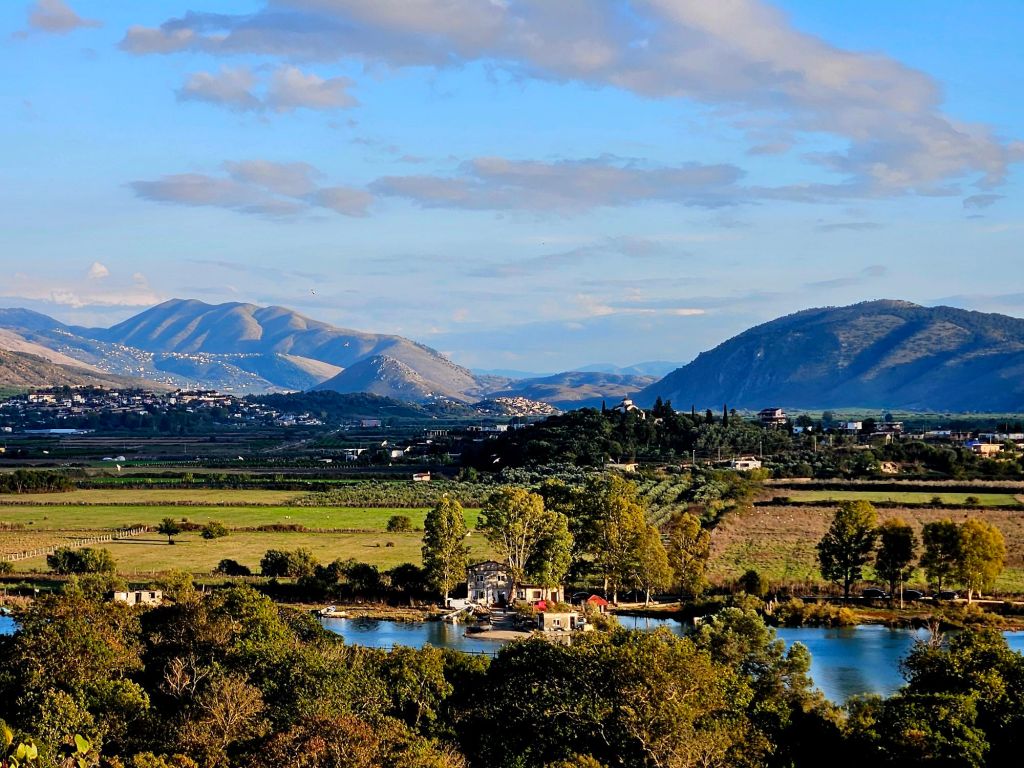
And some more great views over Berat.
On the way back to our apartment we passed two more churches. Firstly the church of St Thedore, originating from the 13th century. It is a simple single nave church.
And secondly the curch of the St Evangelist which is likely to have been built in the 17th or 18th century.
And we passed a lovely little cat.
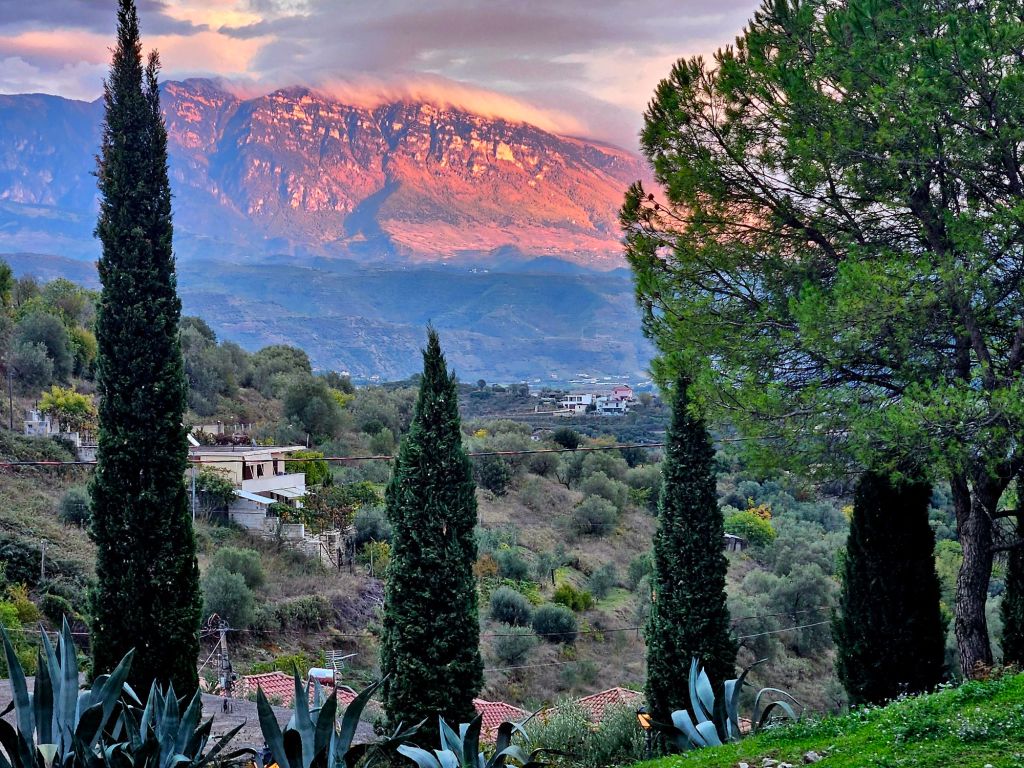
After a quick refresh we decided to have a glass of prosecco on the terrace before heading out for dinner. I took another photo from the garden as the mountain, Mount Tomorr, was looking a bit clearer.
Just next door to our apartment was a restaurant called Mbrica so we went there for dinner. A little cat greeted us as we arrived.
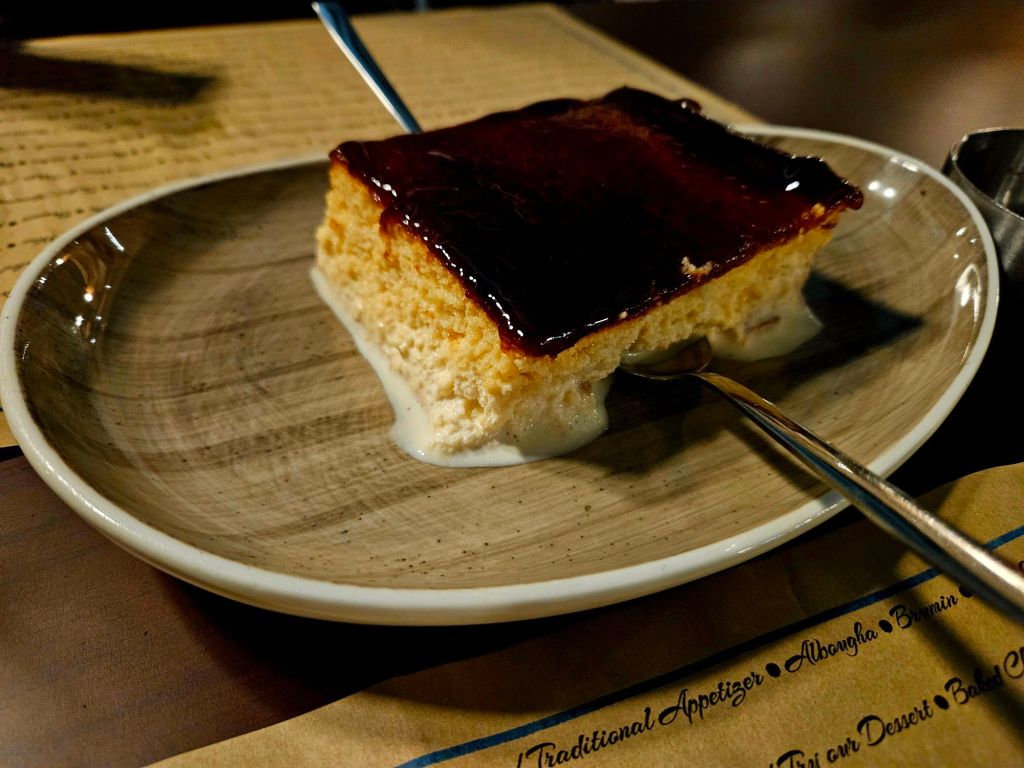
For dinner we had Berat meatballs and a house red wine, both of which were delicious. This was followed by Monblan berati – a meringue type dessert with almonds, milk and honey. I’m glad we shared one as it was very sweet. A lovely dog kept us company too.
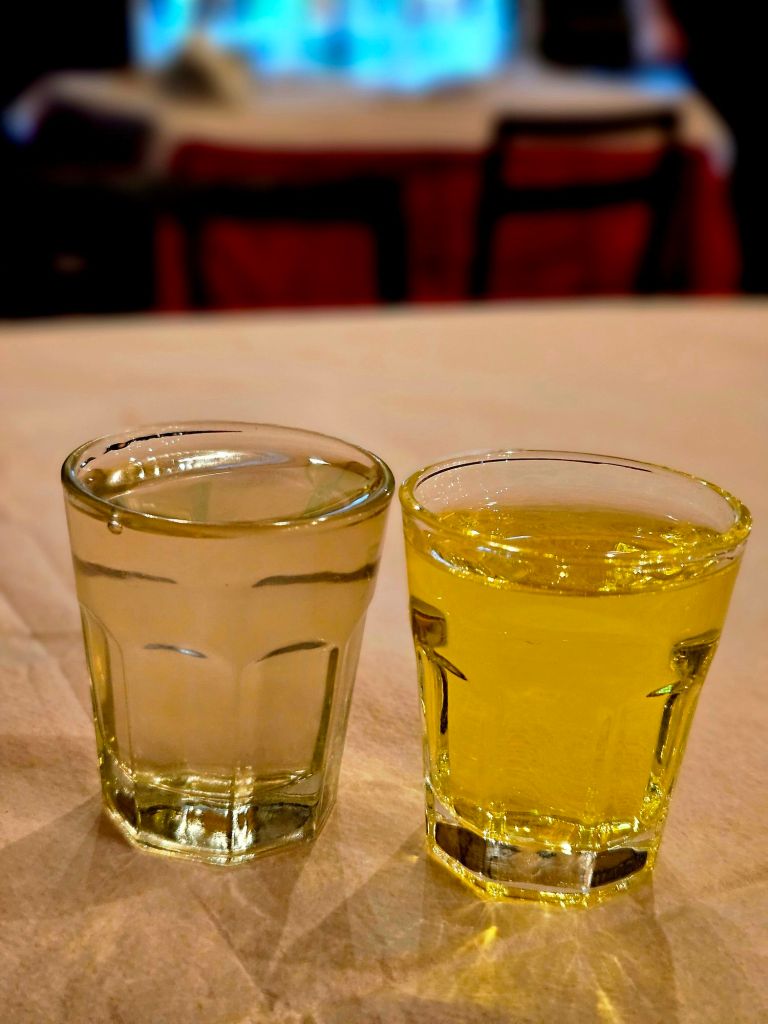
And then the owner offered us some free raki to finish.
During the evening we got chatting to the other people in the restaurant. There was a young girl travelling on her own from Australia and two couples from Germany. The younger couple from Germany had just found out she was pregnant so we all congratulated them.
It poured down whilst we were eating so the owner put the sides down on the terrace.
After chatting for a while we headed back home to bed.
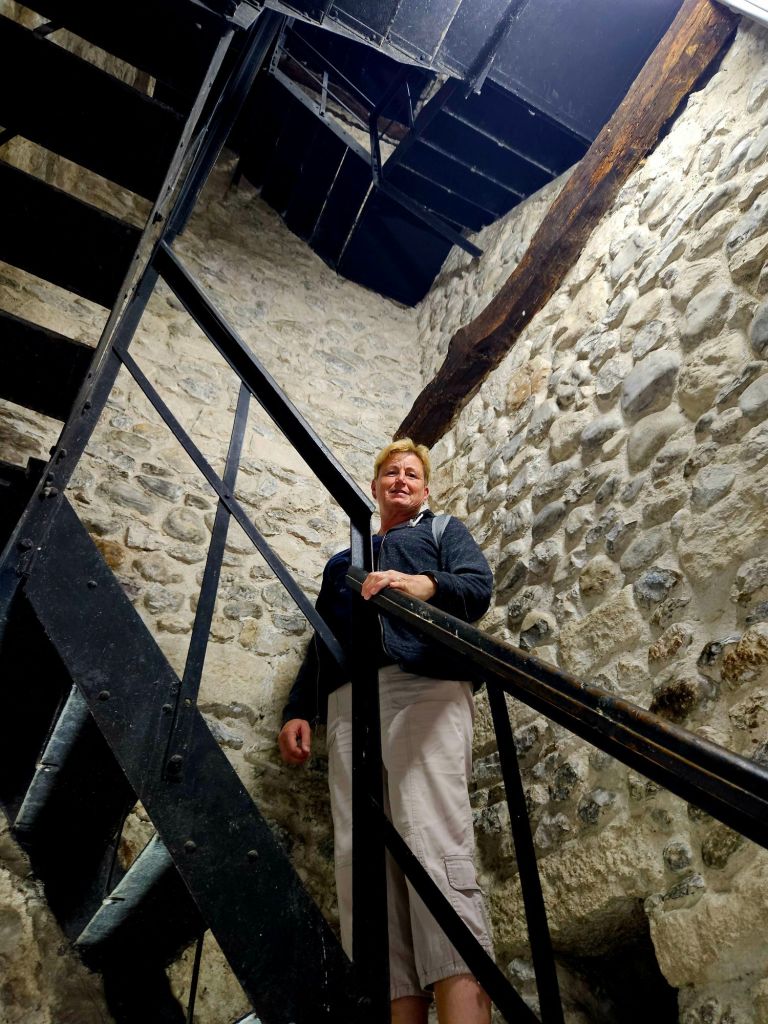
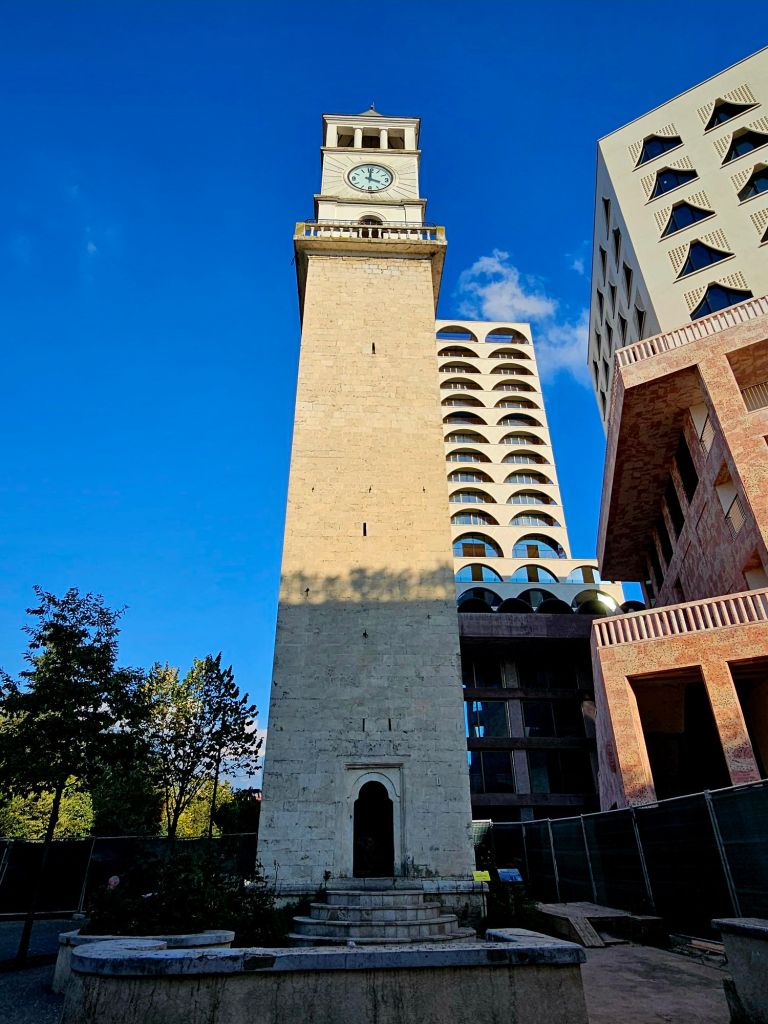
We had a breakfast of crackerbreads, tea and coffee at home again. This time when we walked past the clock tower, it was actually open so we decided to take a look.
The clock tower was built in 1822 by the Ottomans and is 35m high. In 1928 renovations were carried out and the original clock mechanism, which was looted by the Austrians in WWI, was replaced. It was damaged in WWII, but those damages were repaired and it continued to operate from 1946. The bell inside the tower was cast in 1838 and has seven holes in it – most likely a result of damage inflicted in WWII.
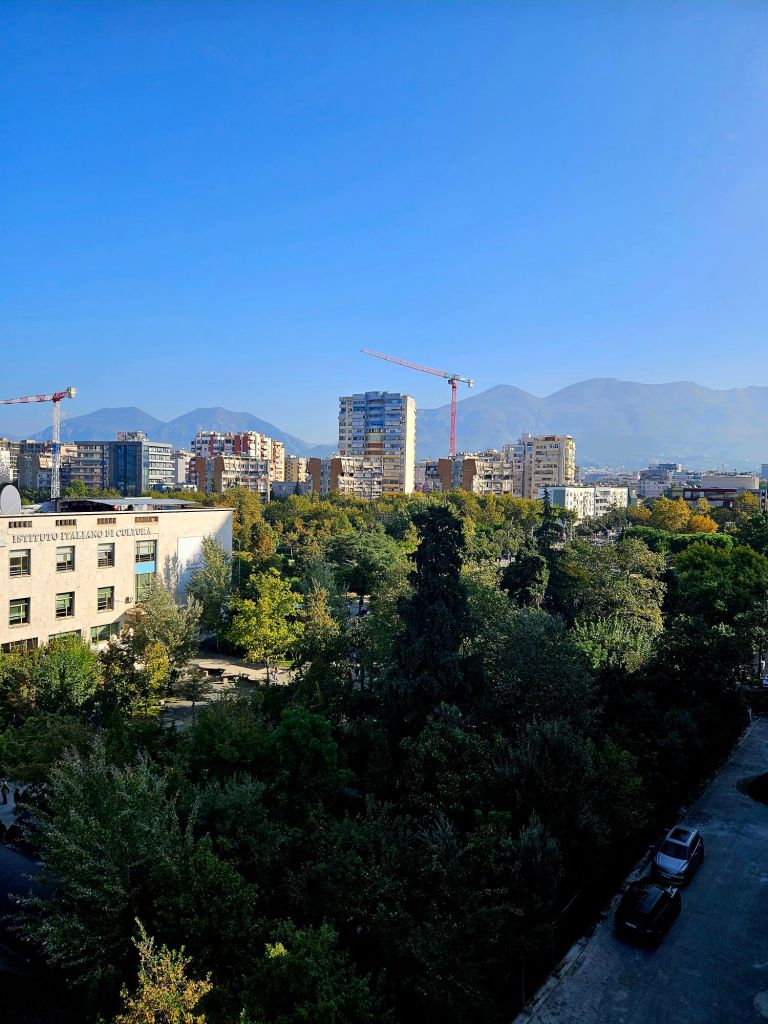
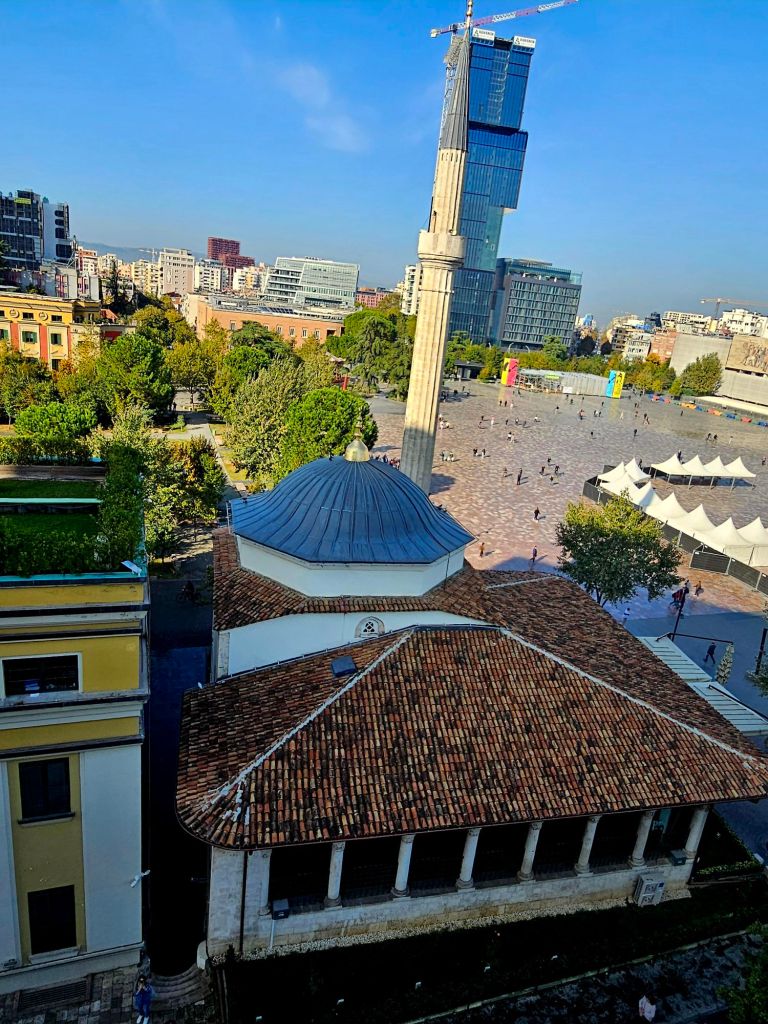
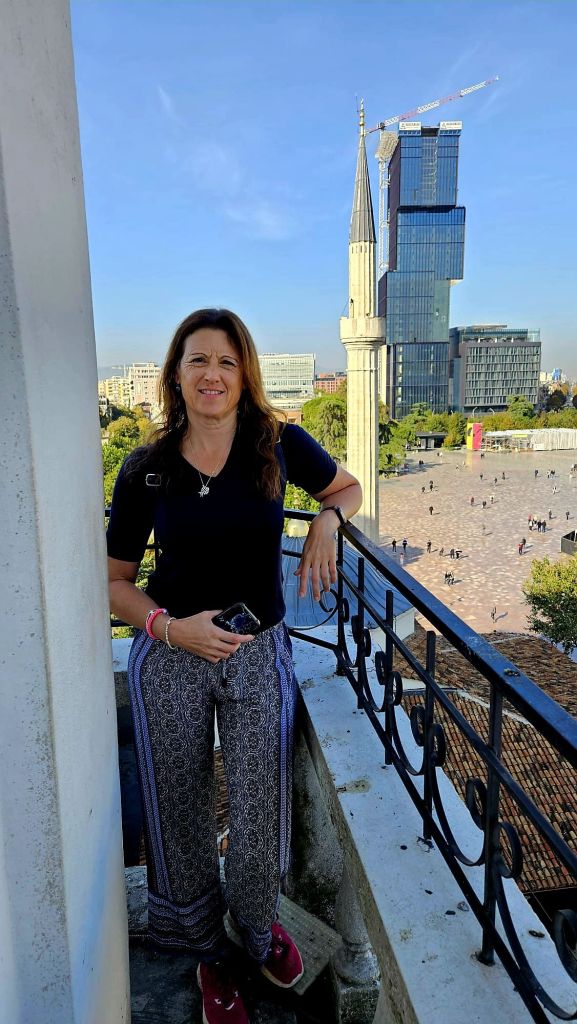
You could get good views from the top, including of Skandenberg square.
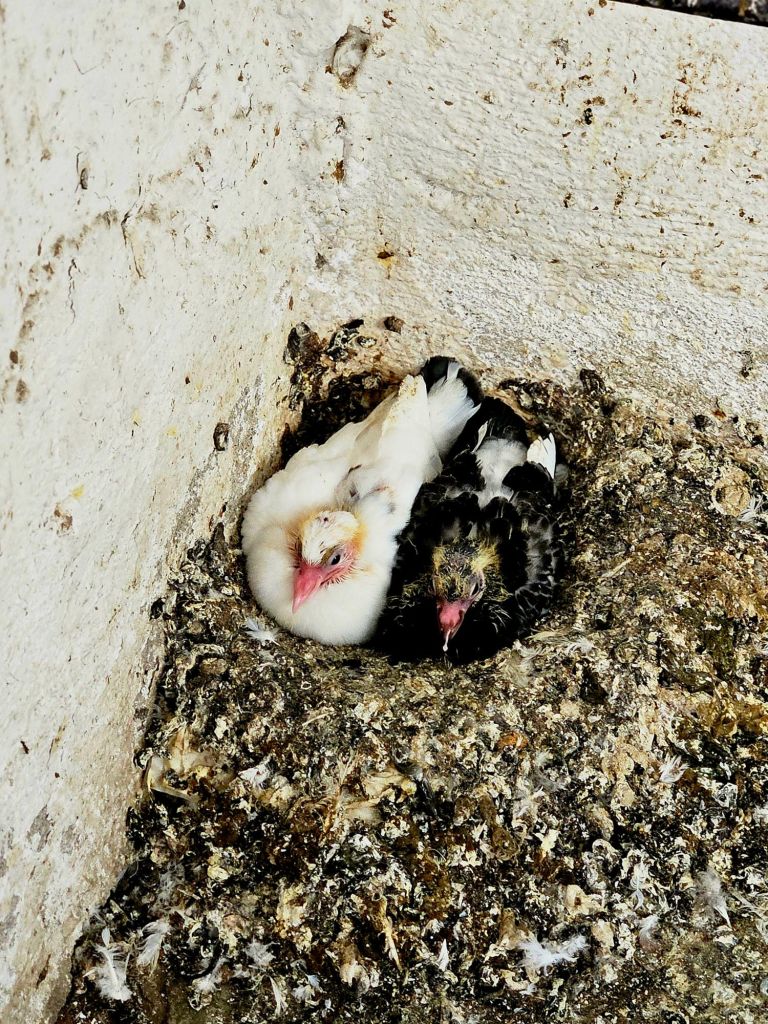
We stayed at the top for a little while, taking photos. On the way back down we noticed pigeons in the corners -basically nesting in their own poop.
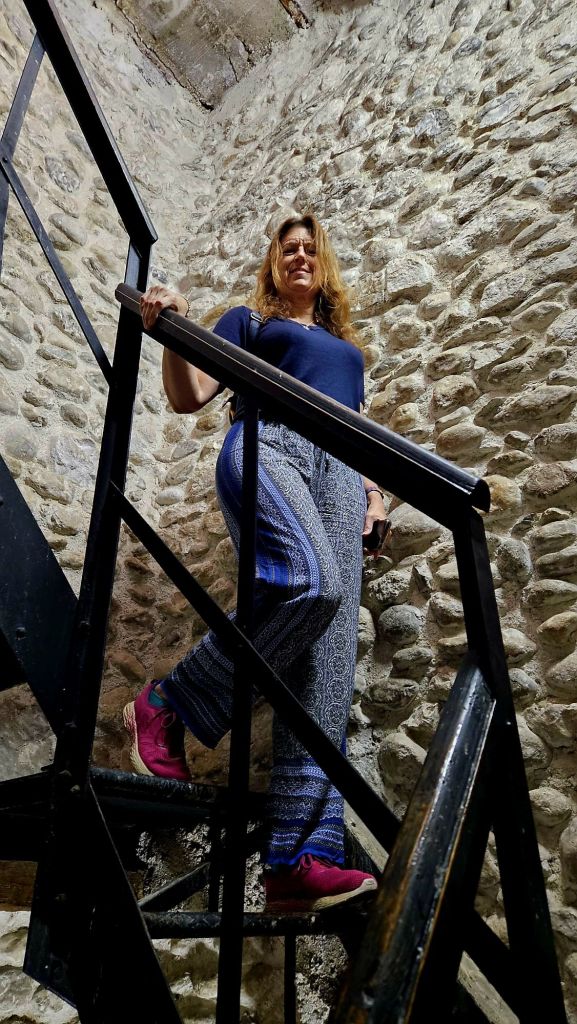
The staircase was very narrow so you had to hope you didn’t encounter anyone going in the opposite direction.
From here we walked down to the bus stop where the bus to Dajti left. The bus fare was extremely cheap, around 40p each for around a 30-45 minute journey. We got off at the stop closest to the Dajti express – the cable car that goes to the top of the mountain.
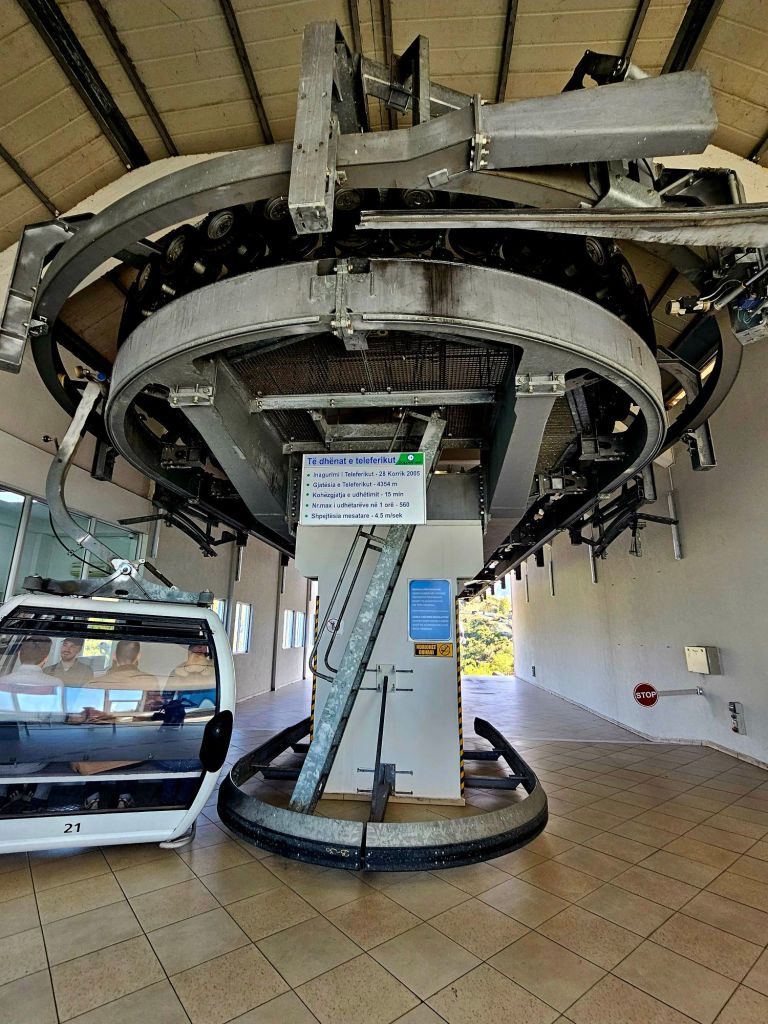
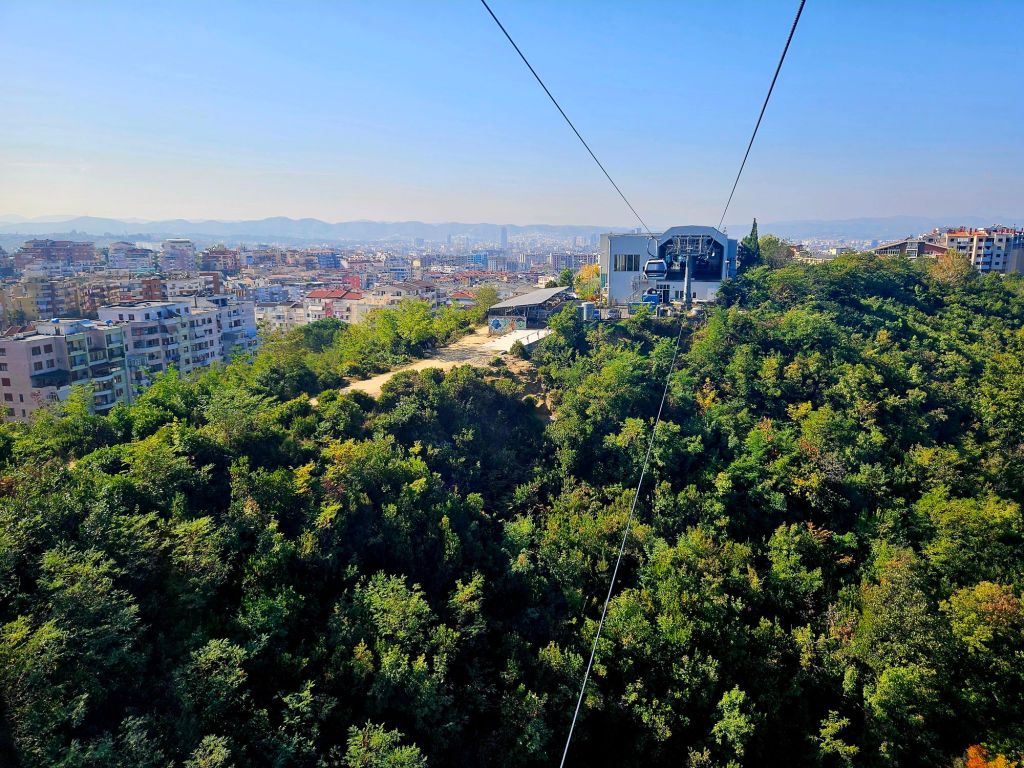
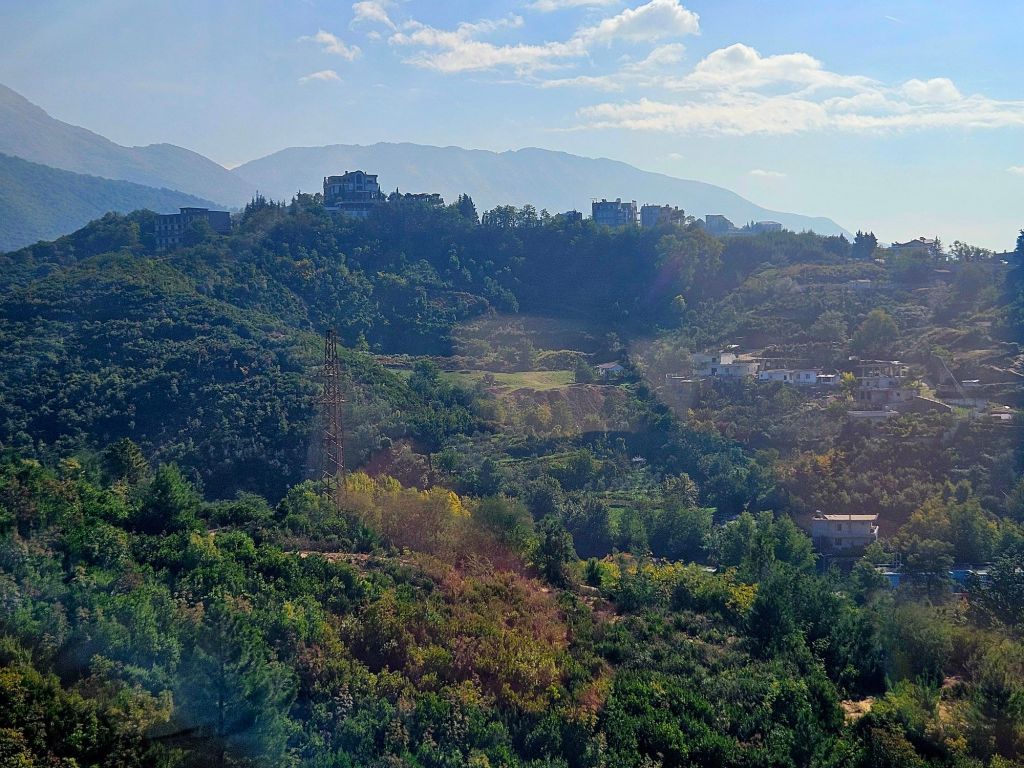
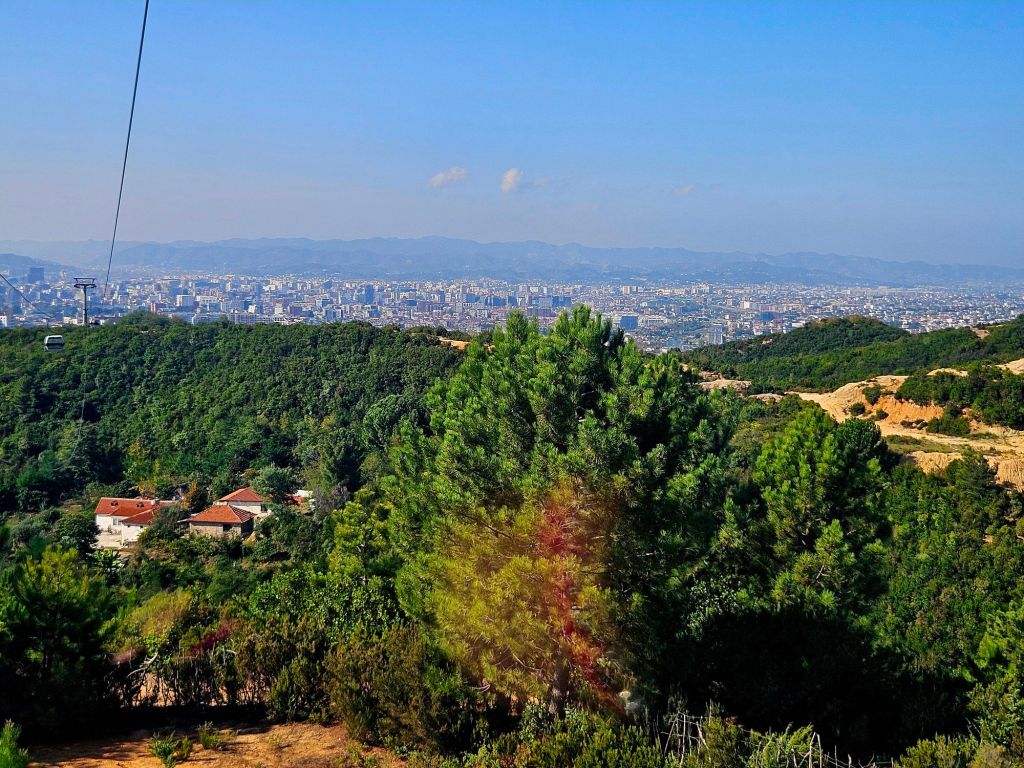
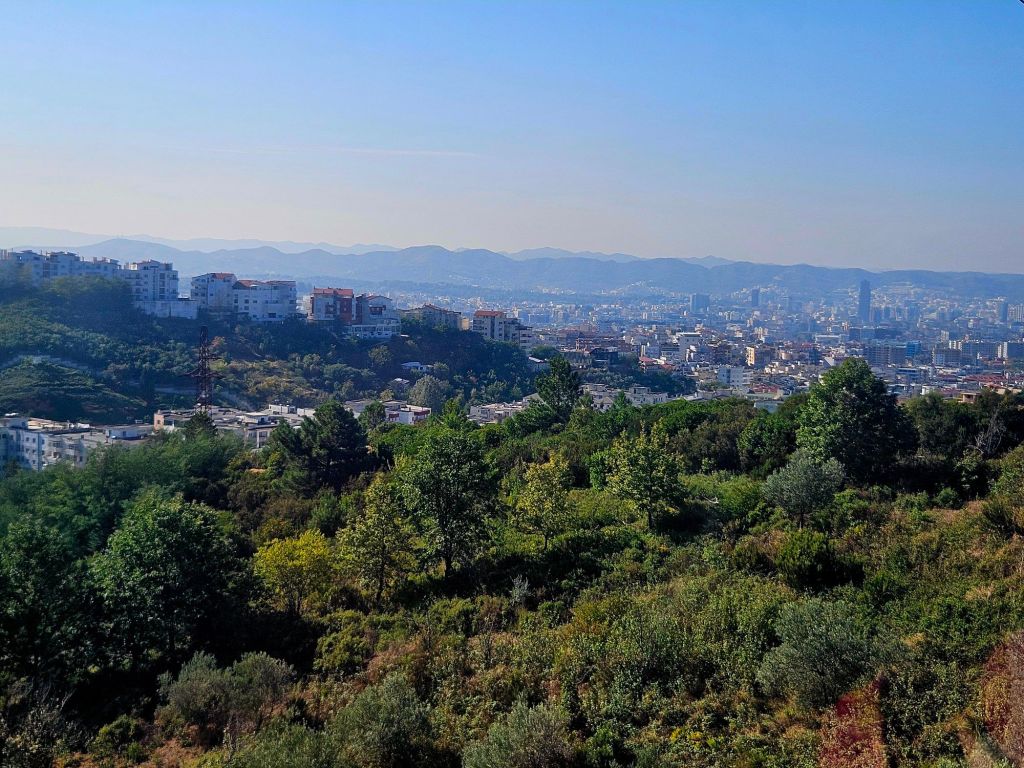
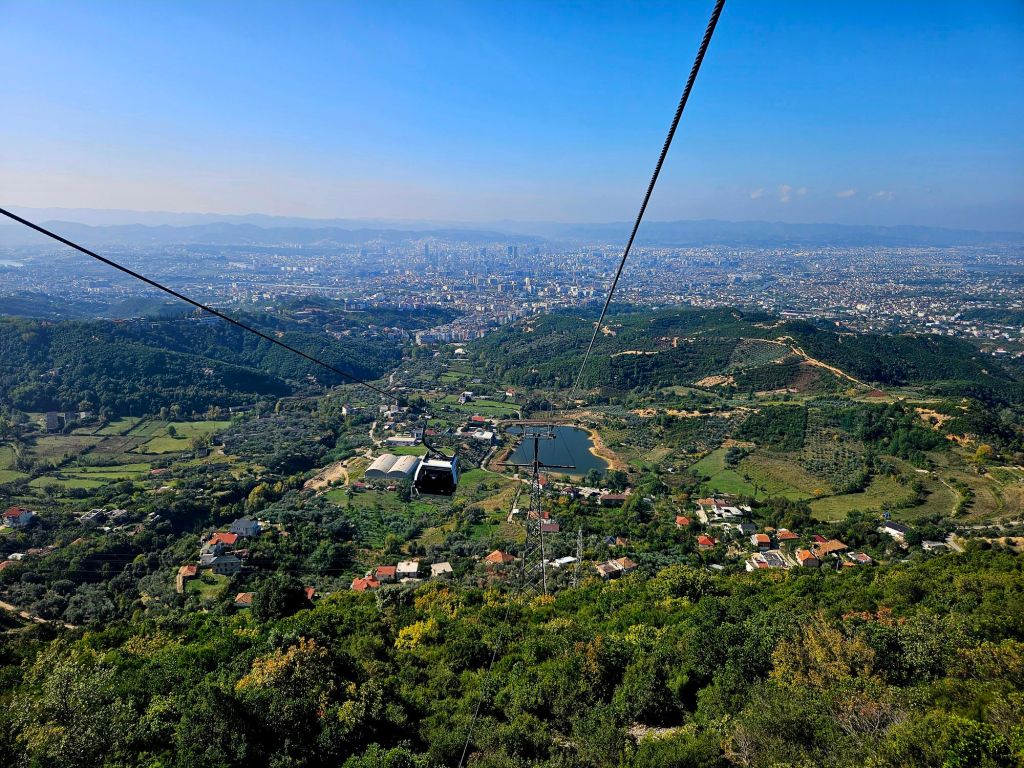
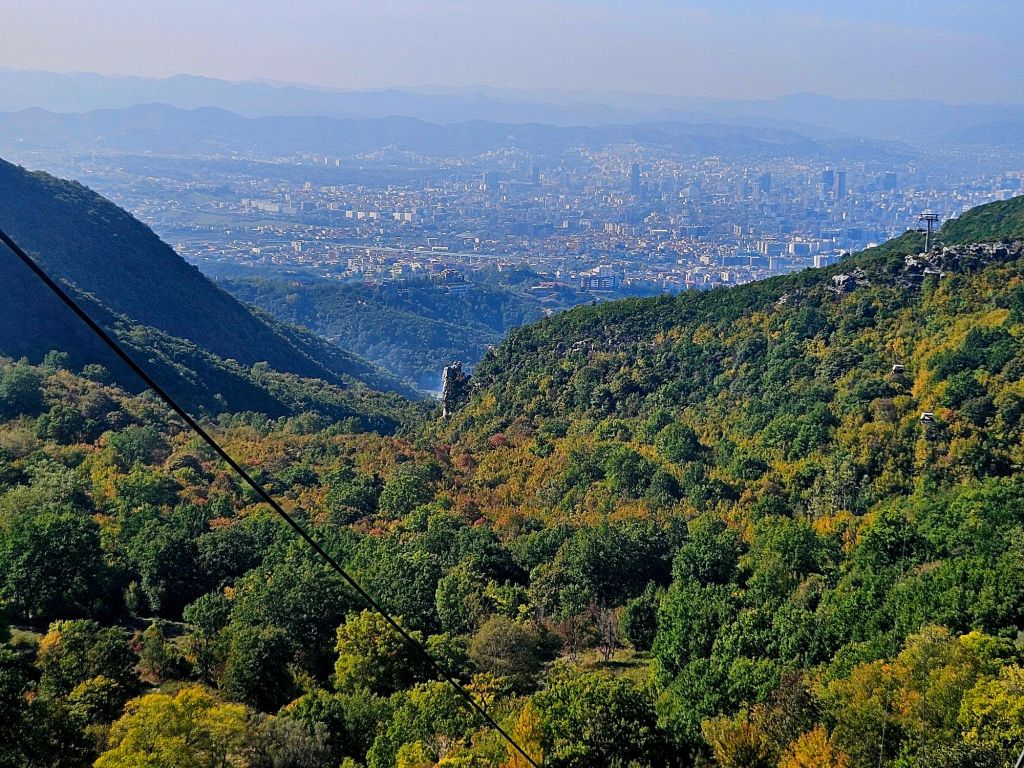
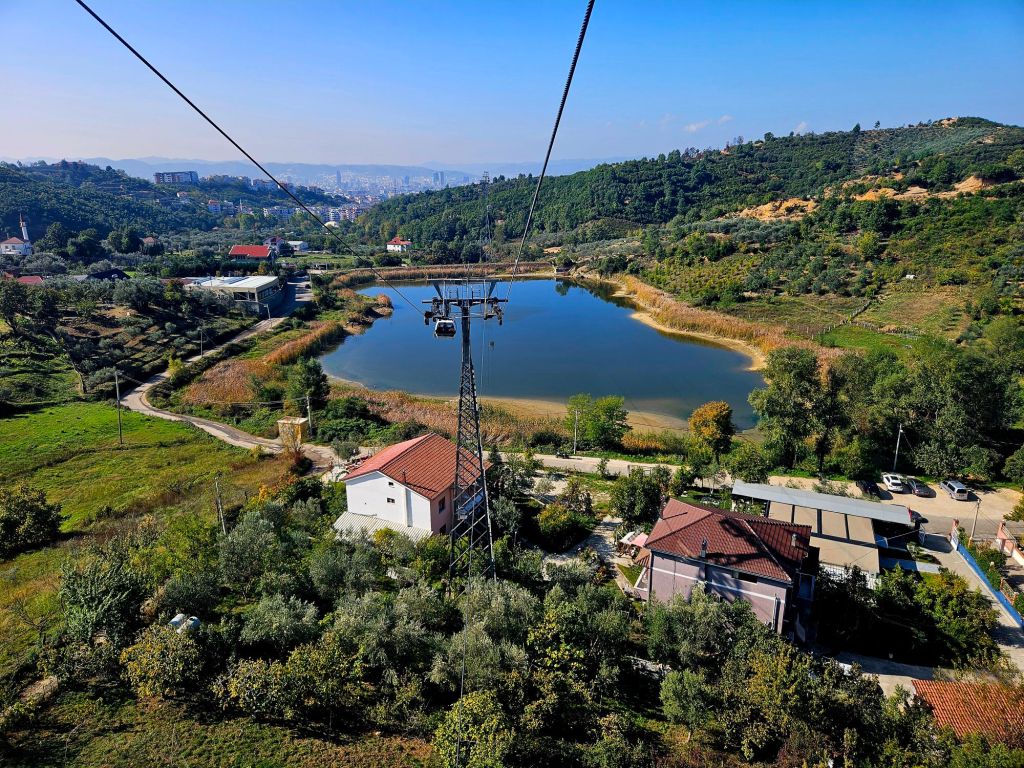
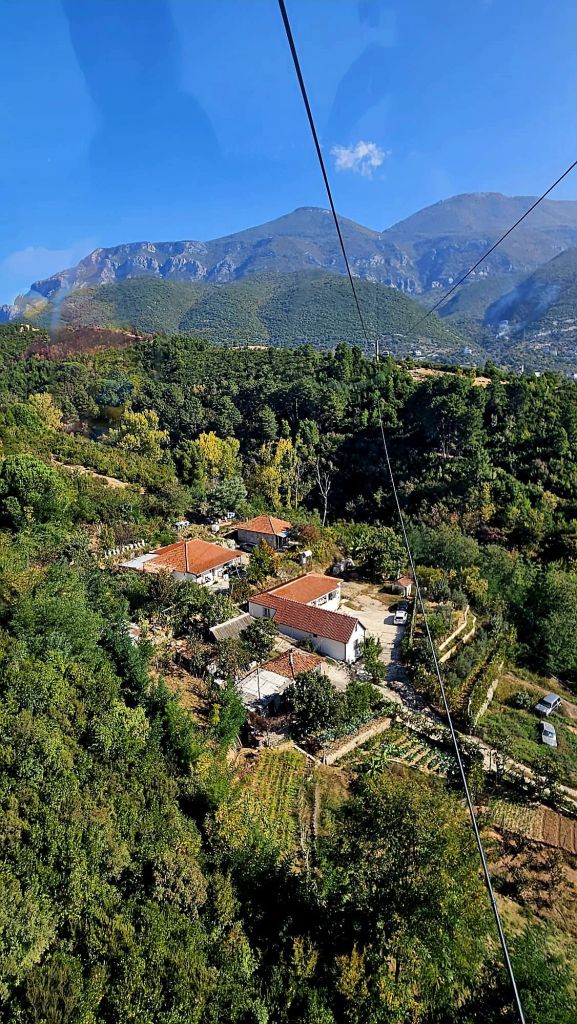
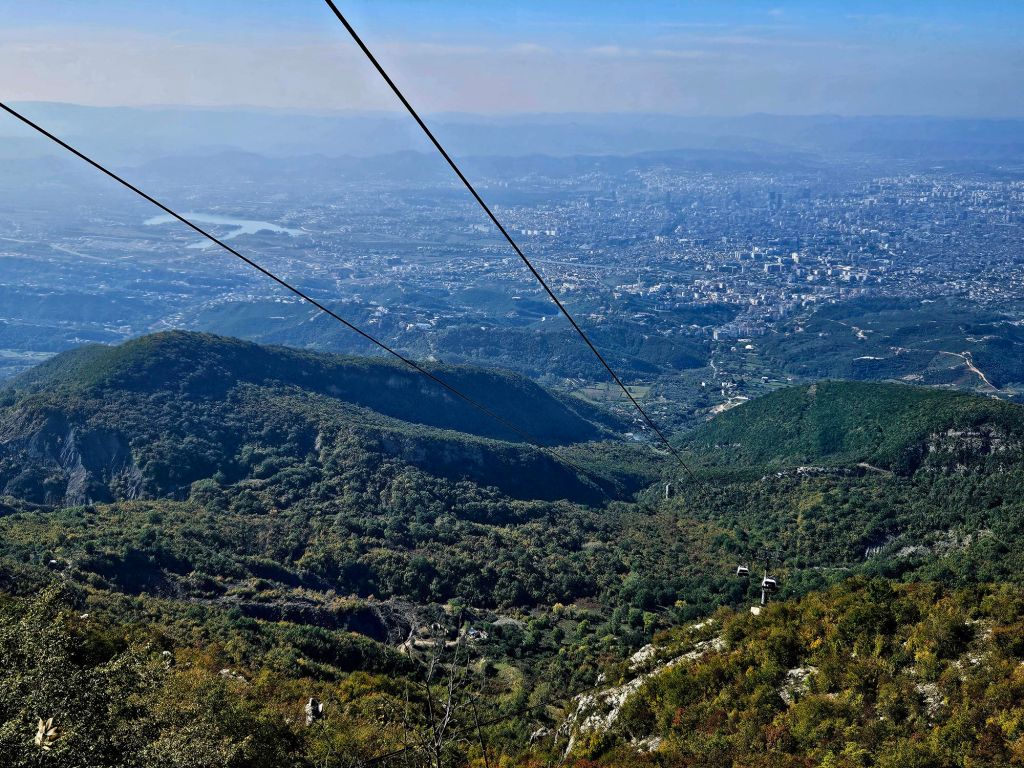
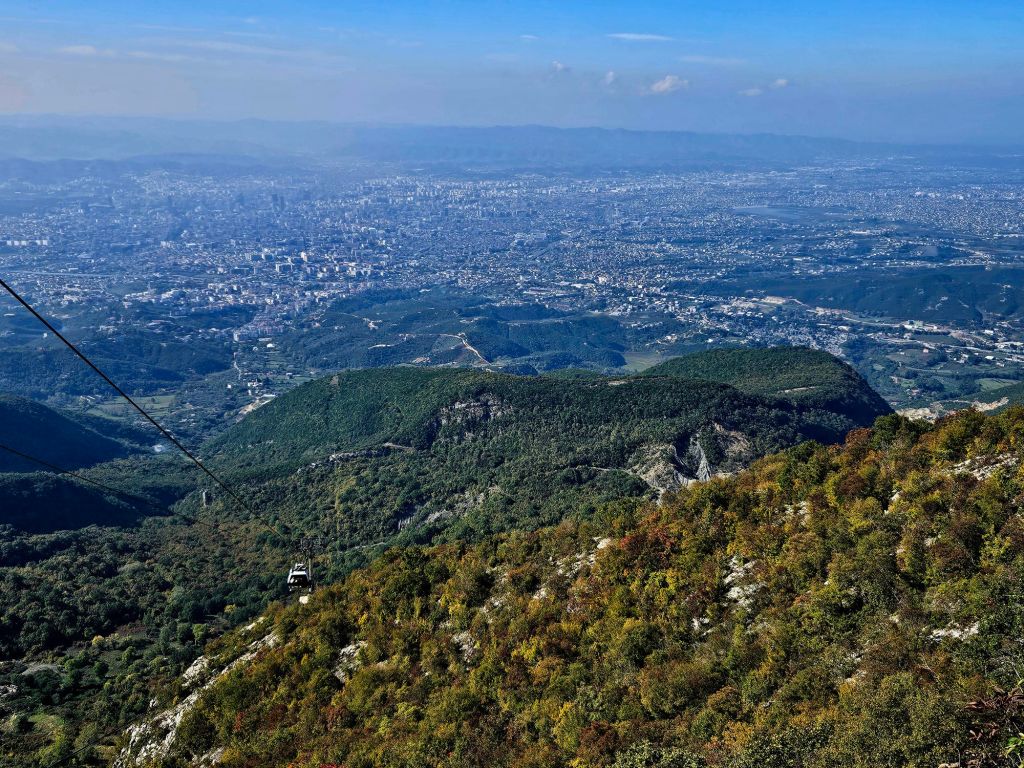
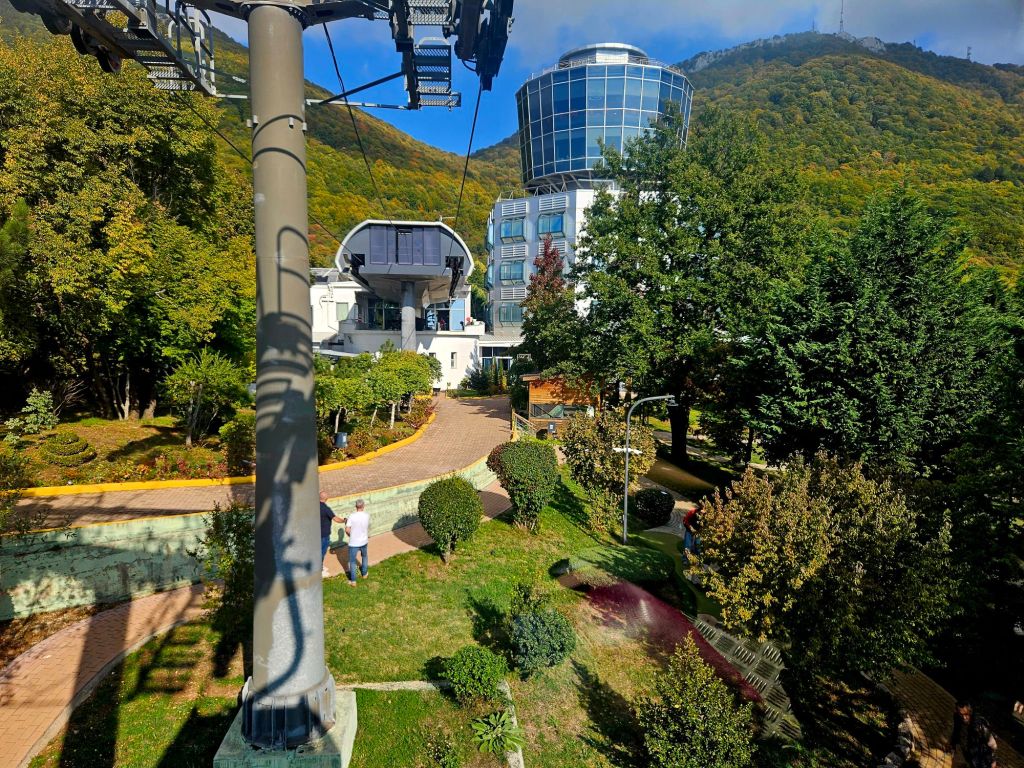
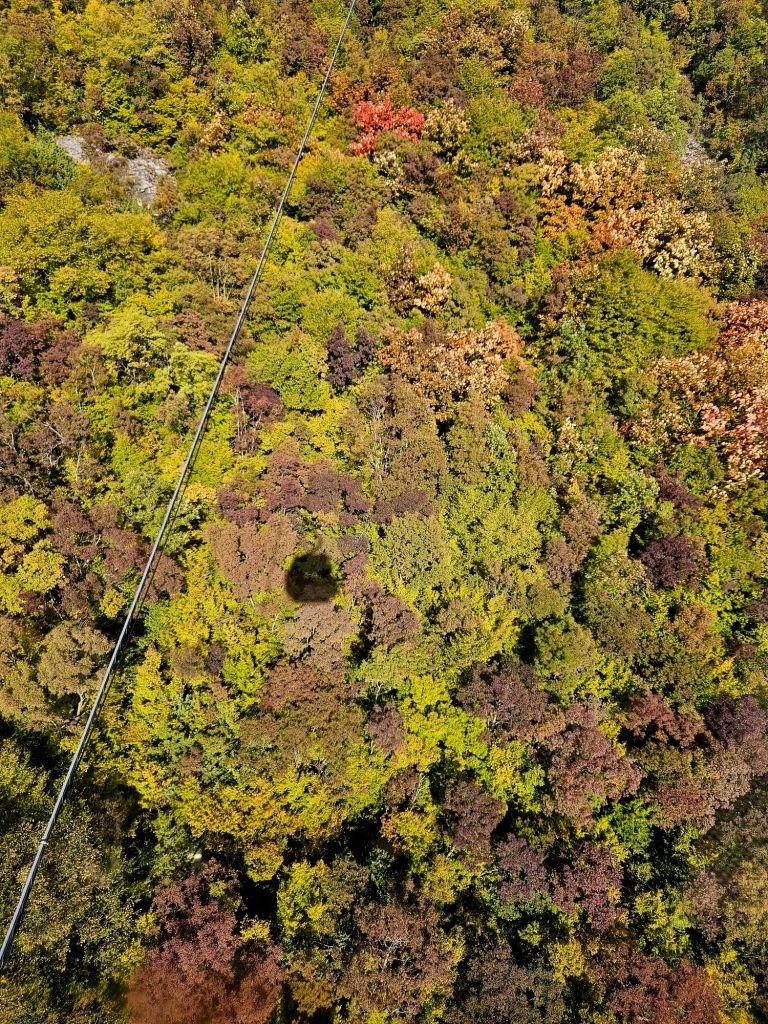
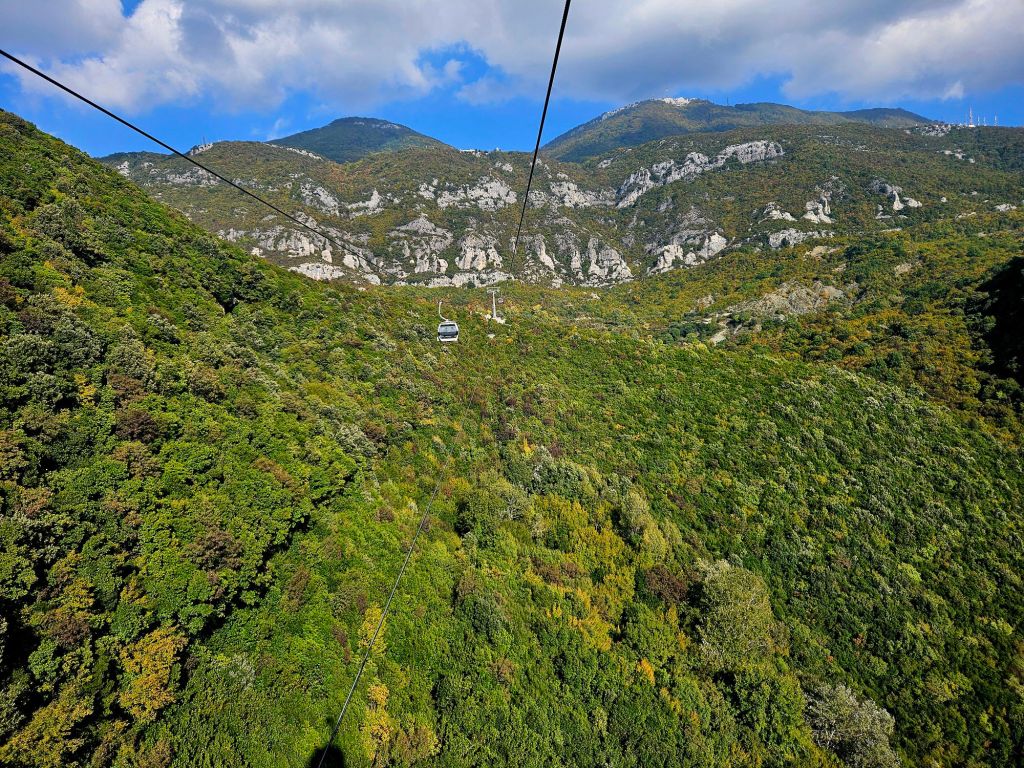
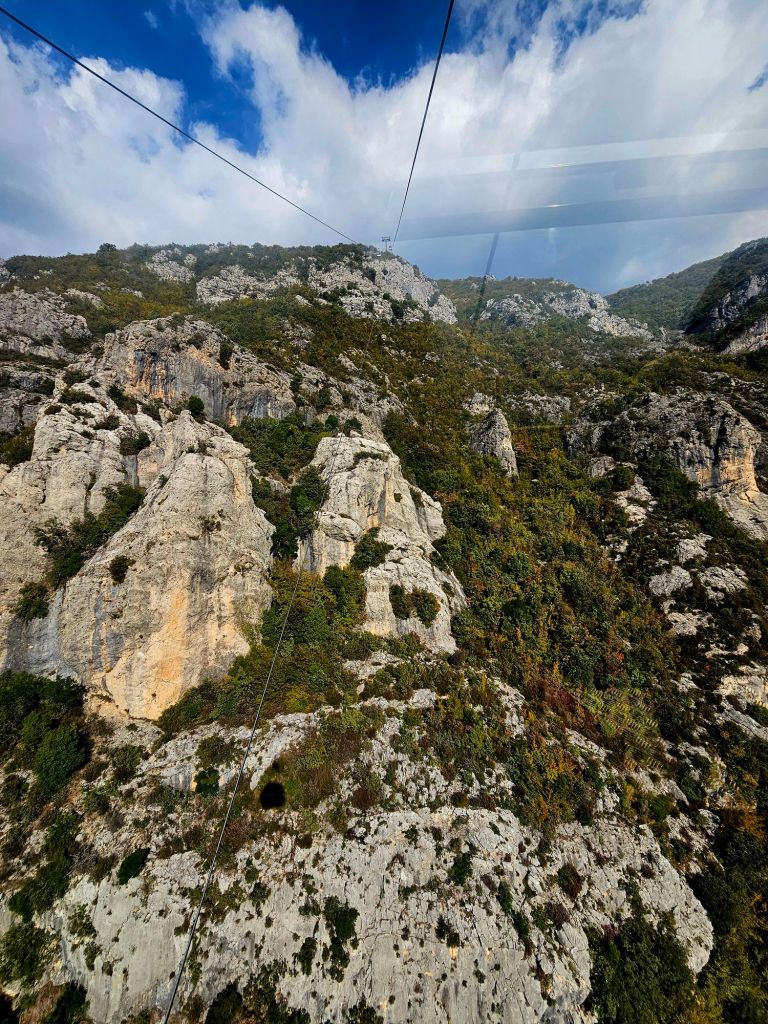
The cable car was built in 2005 and covers a distance of over 4.5km in around 15 minutes. It is the longest cable car in the Balkans. We took loads of photos on the way up.
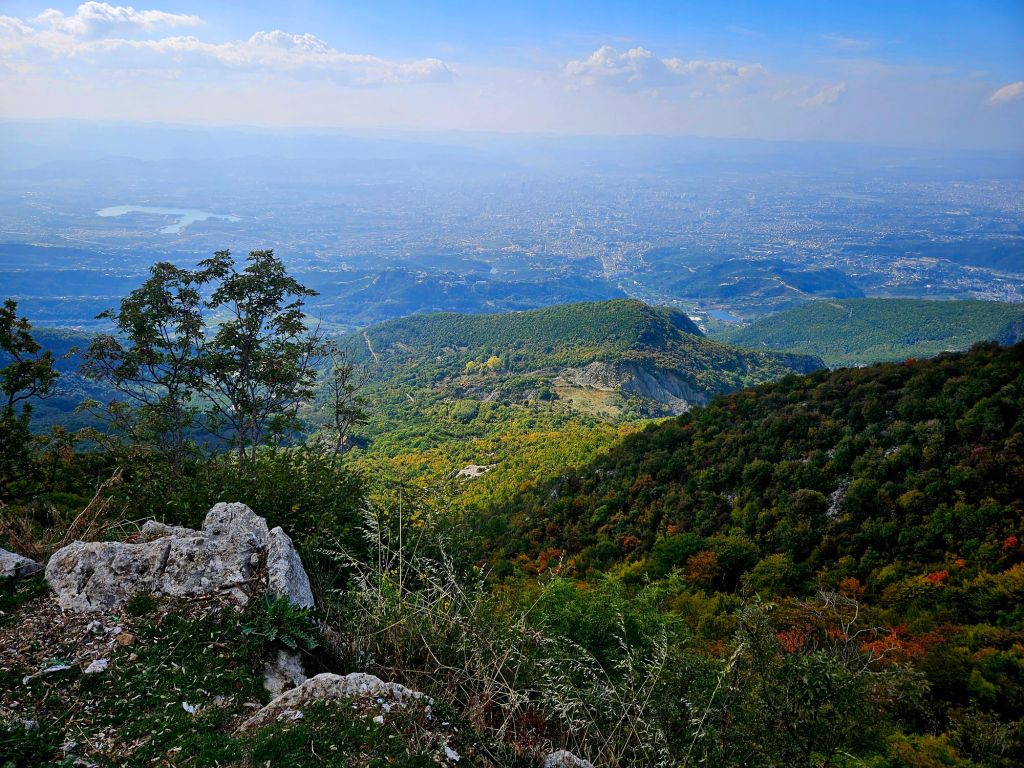
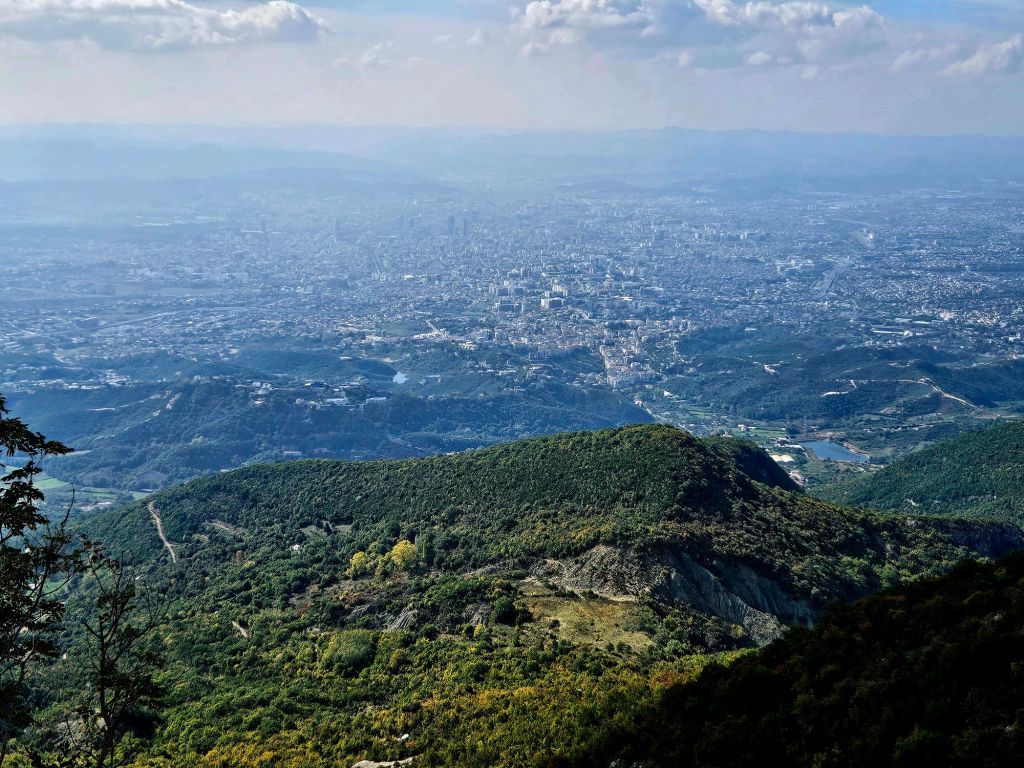
Once at the top, which is 1613m high, we had a little wander around. The mountain is a National Park and was established in 1966. It was originally used as a hunting ground for the aristocracy during the Ottoman Empire. It has since become a symbol of prestige and luxury. Although it was a bit hazy, there were some nice views from the top.
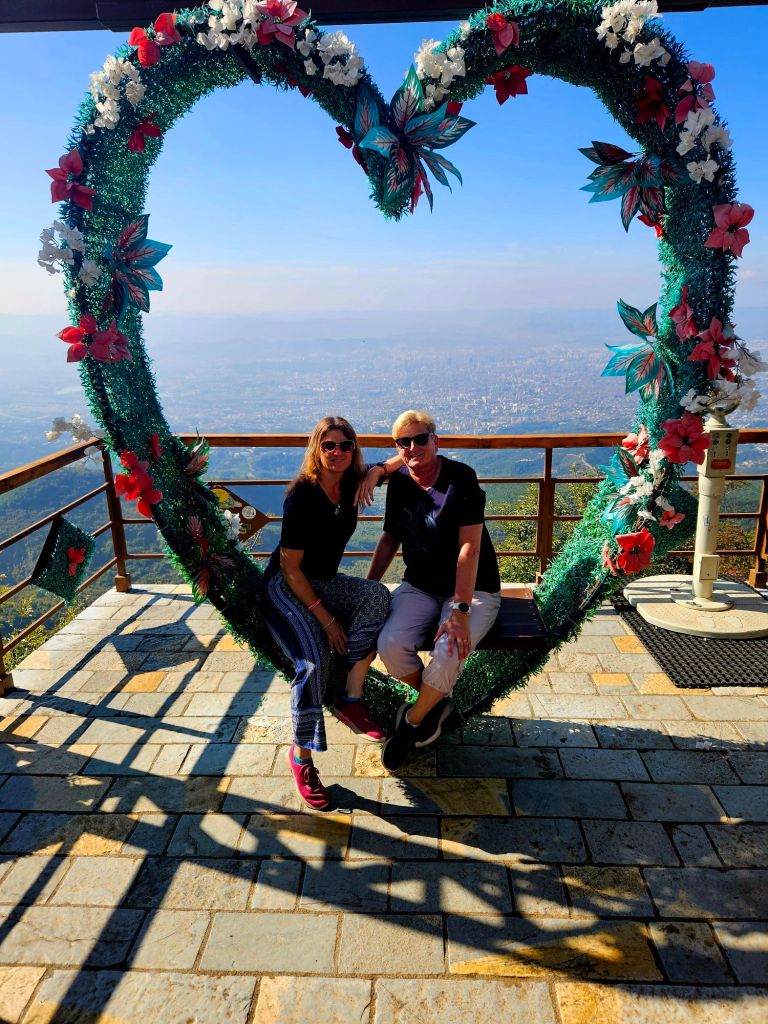
We found the photo corner and posed for some pictures.
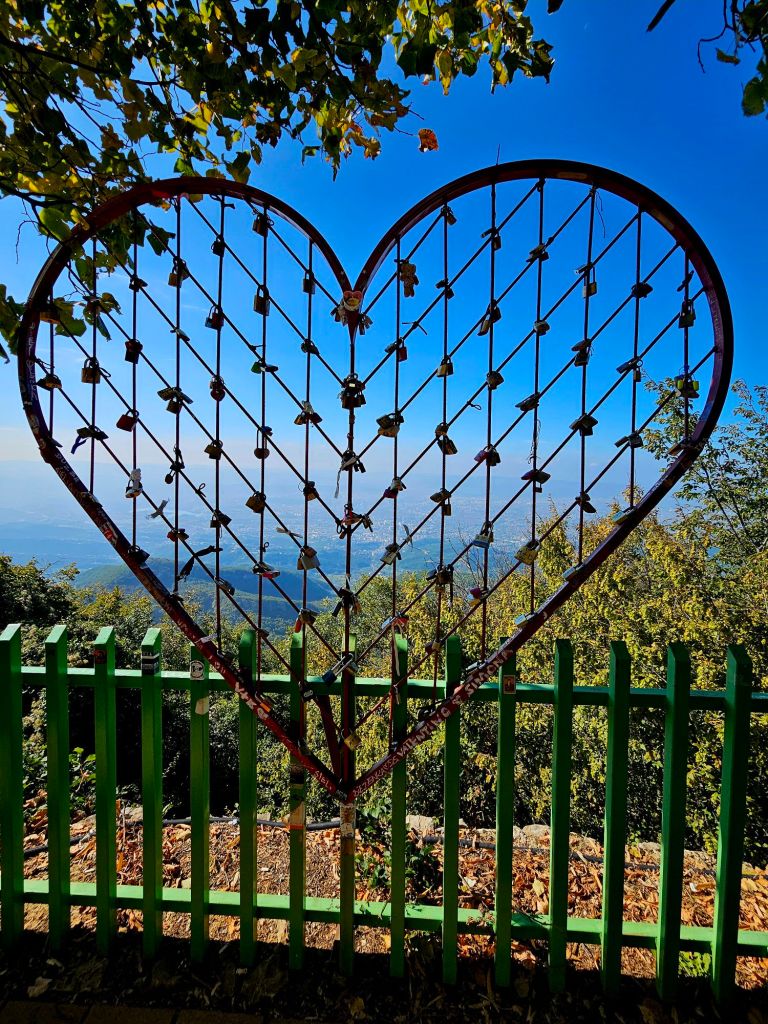
We also found the place to leave your padlocks, but didn’t leave one ourselves.
And then it was time for lunch. We had intended to go to the Dajti tower for a drink, some snacks, and the views, but unfortunately it was shut.
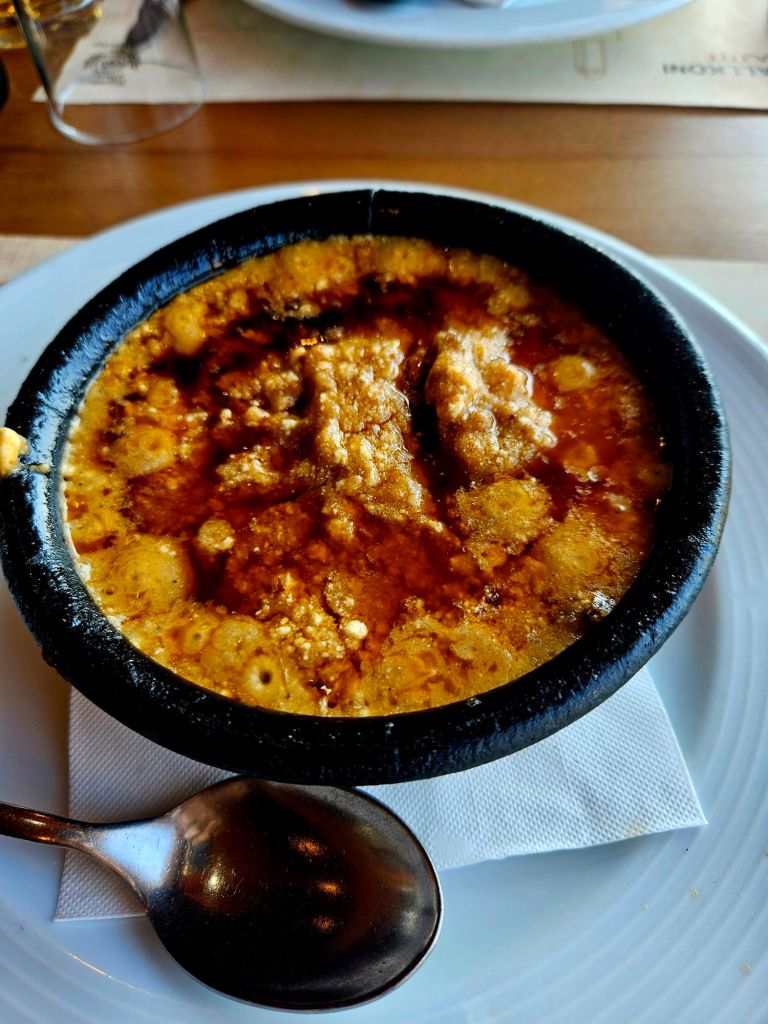
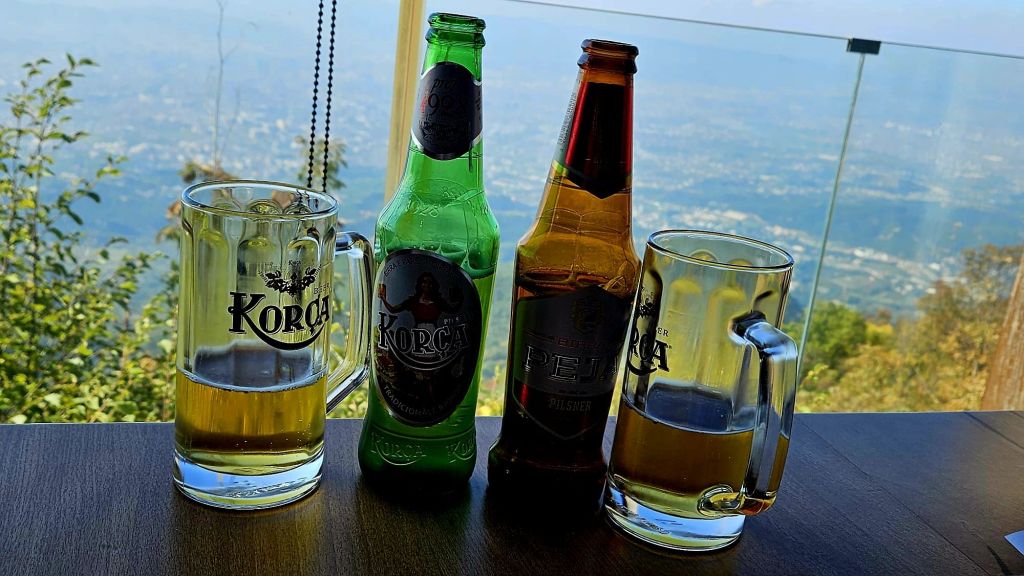
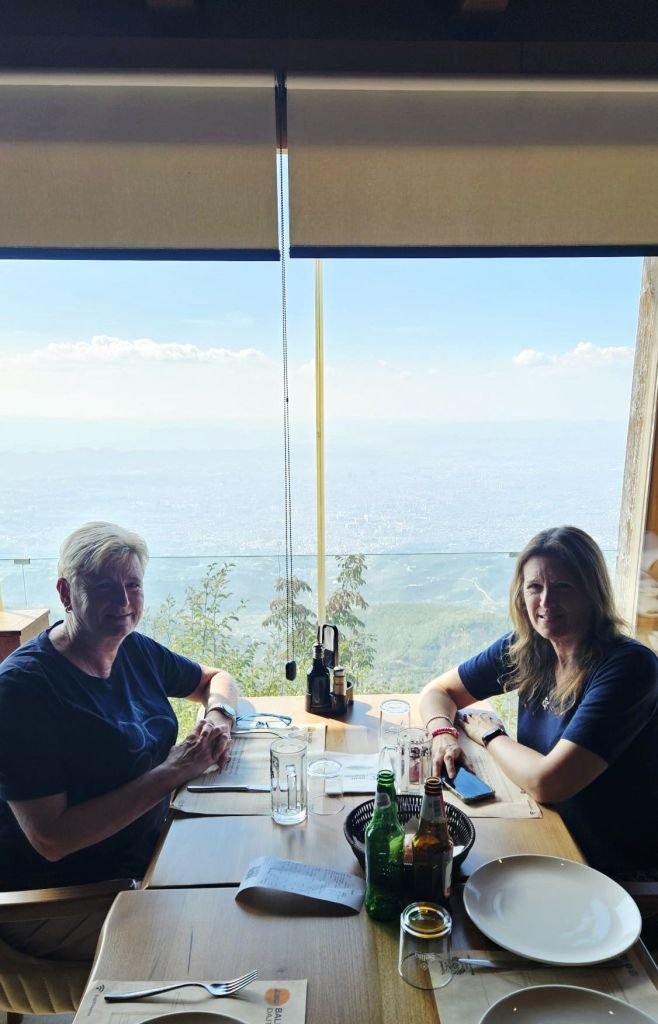
So we went to the Ballkoni Dajti Restaurant instead. We both ordered the beef tava and an Albanian beer. Tava is an Albanian casserole made with meat, yoghurt and eggs. It was quite fatty, very hot, and extremely delicious.
The restaurant is built in the style of a log cabin and looks very Scandinavian.
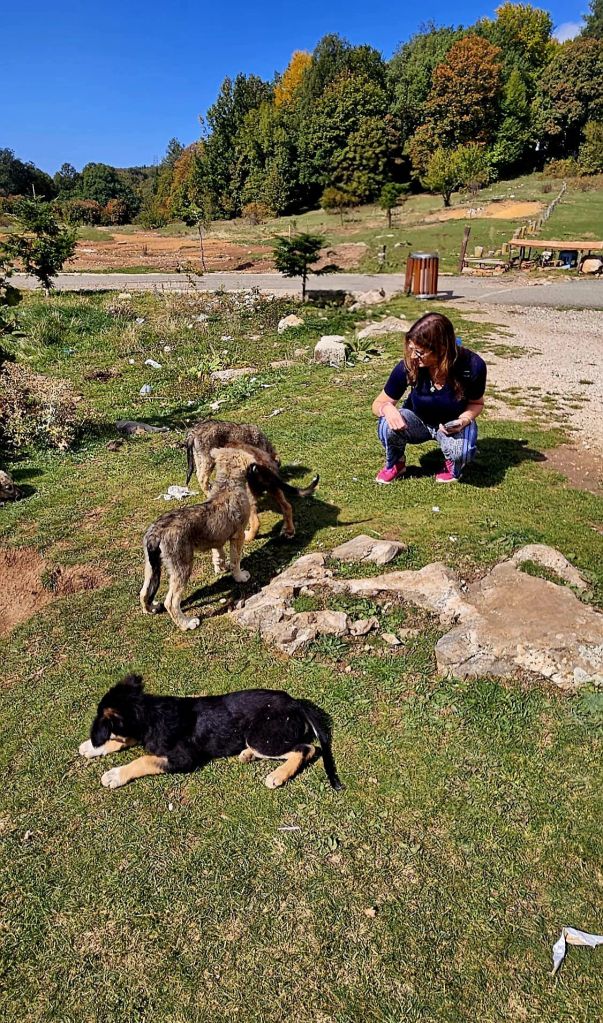
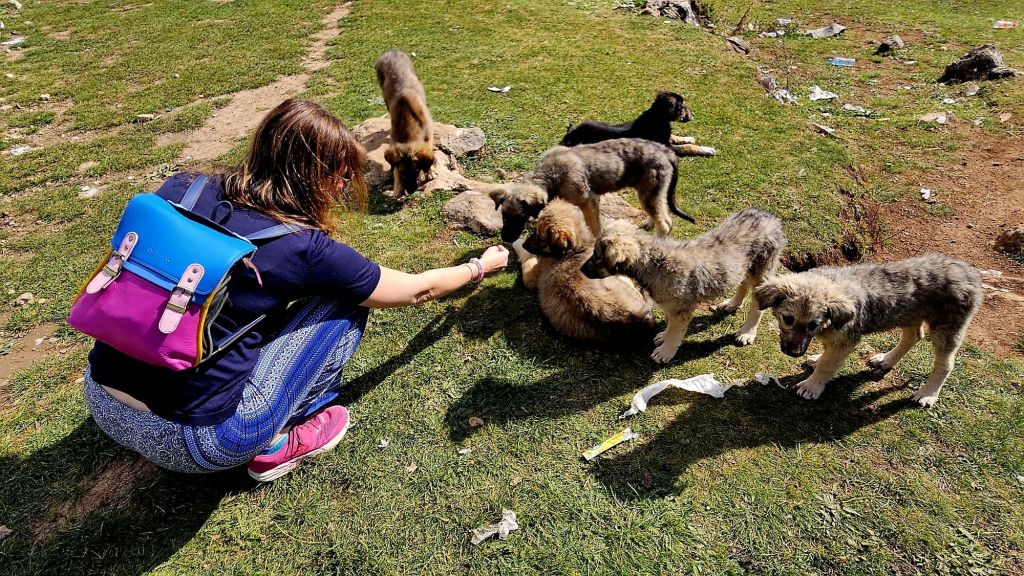
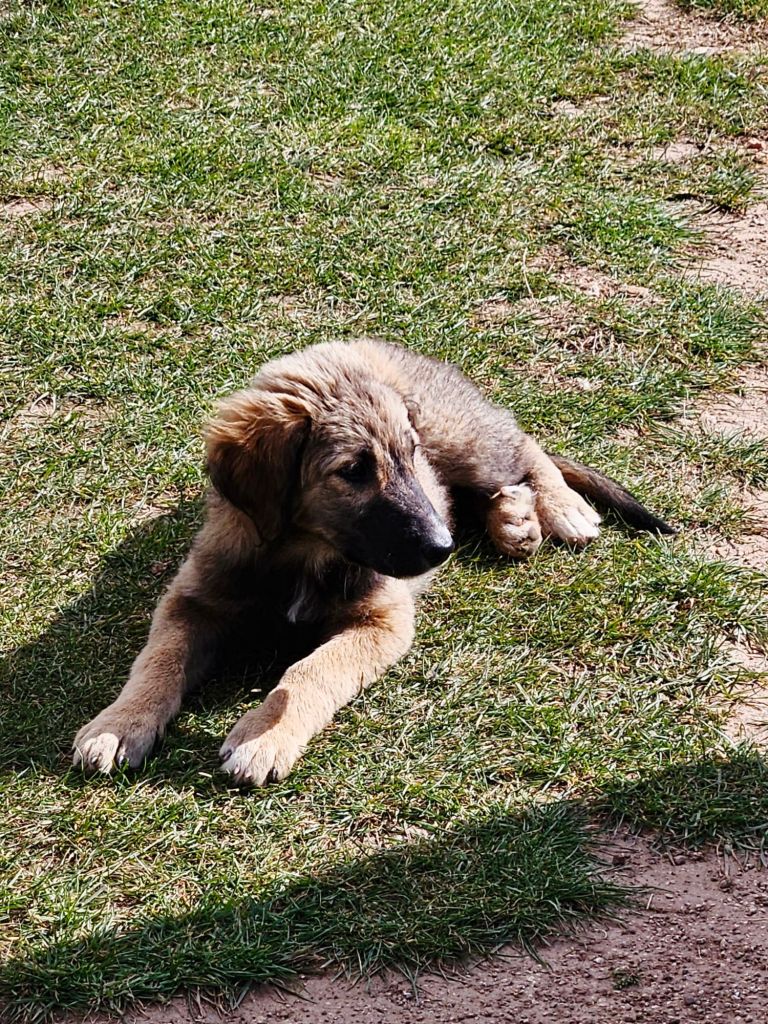
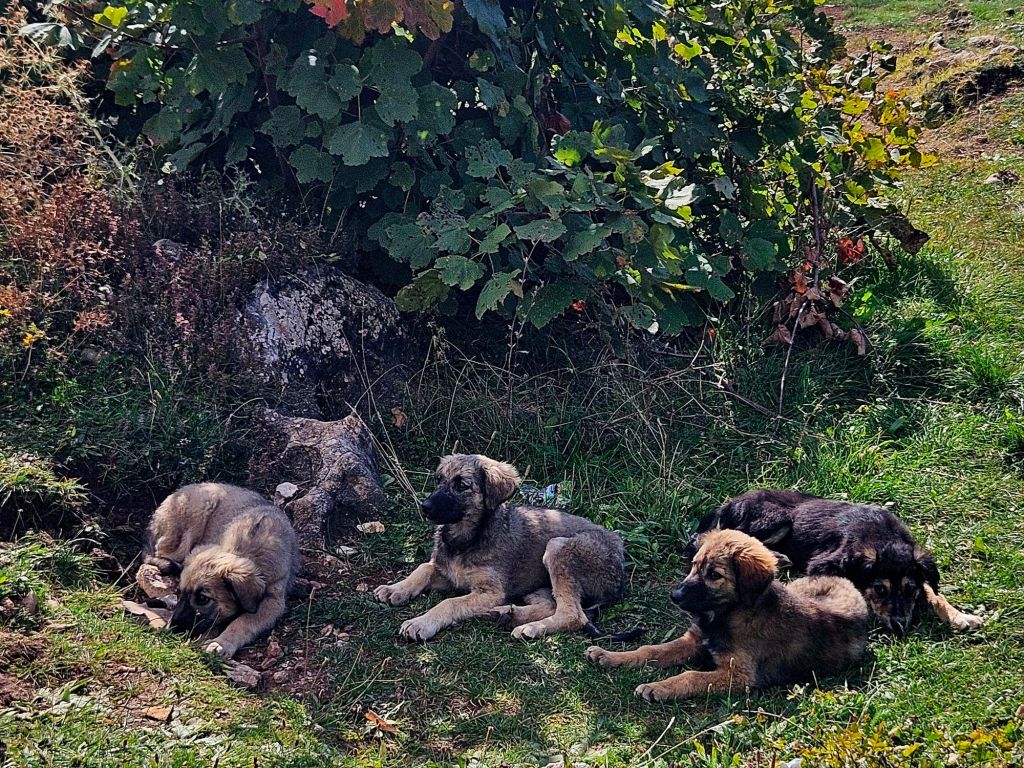
From here we decided to go for a walk through the National park. There are lots of different routes to choose from but they all start at the car park. And just by the car park we saw some gorgeous puppies, who were very friendly. Unfortunately we didn’t have any snacks or food for them, but they came over for a pet or two.
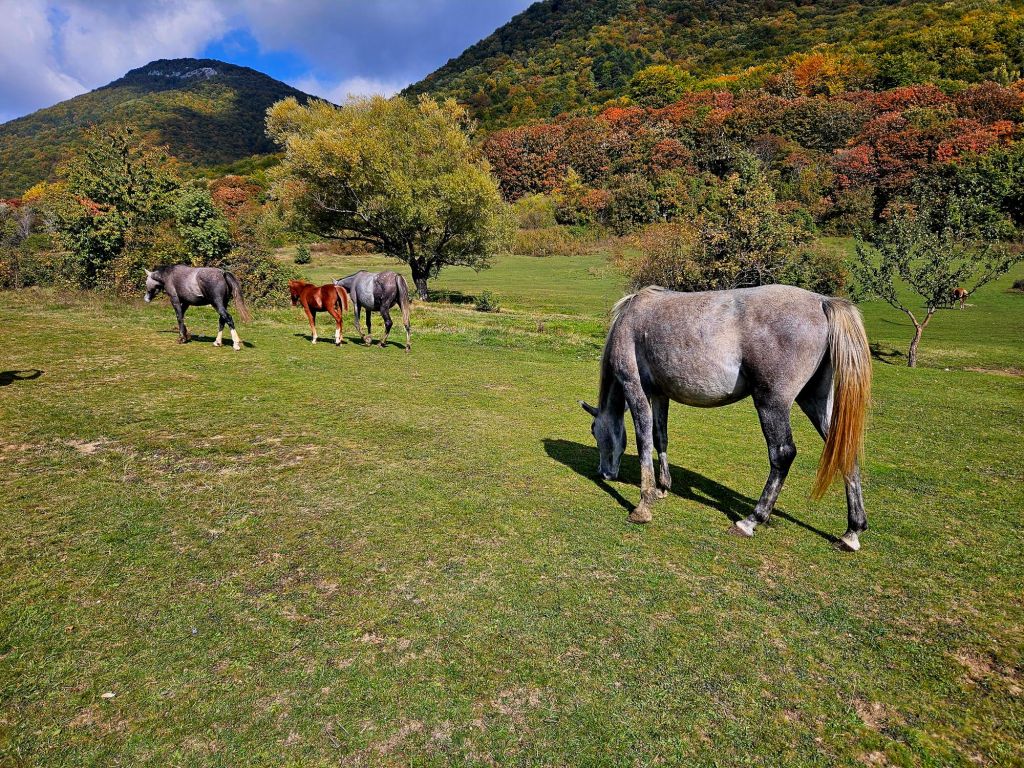
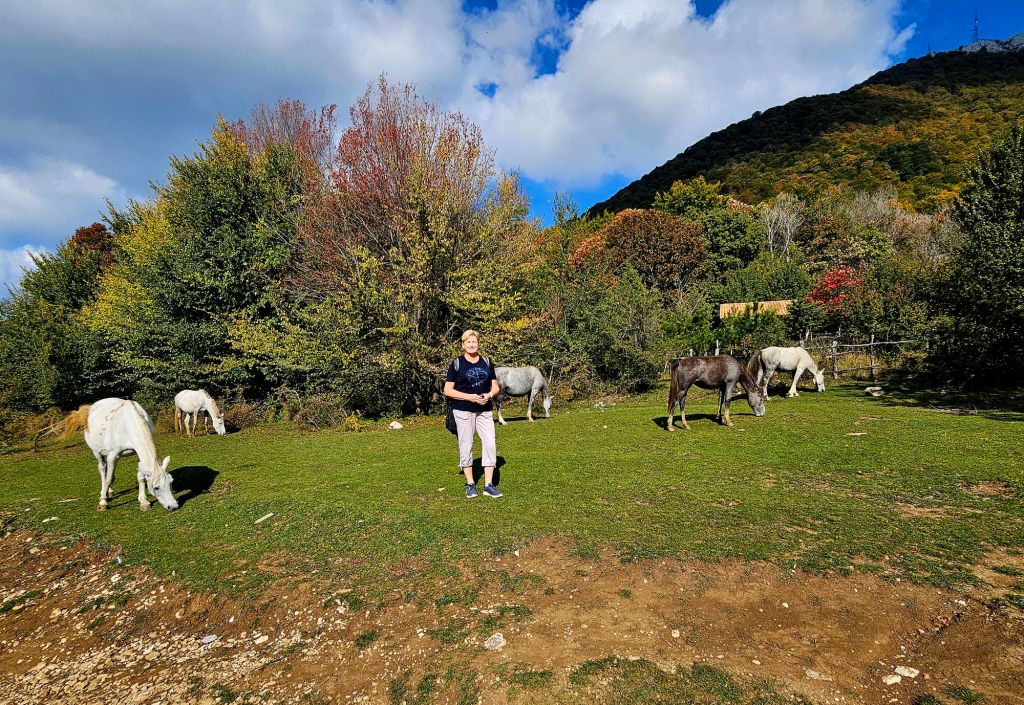
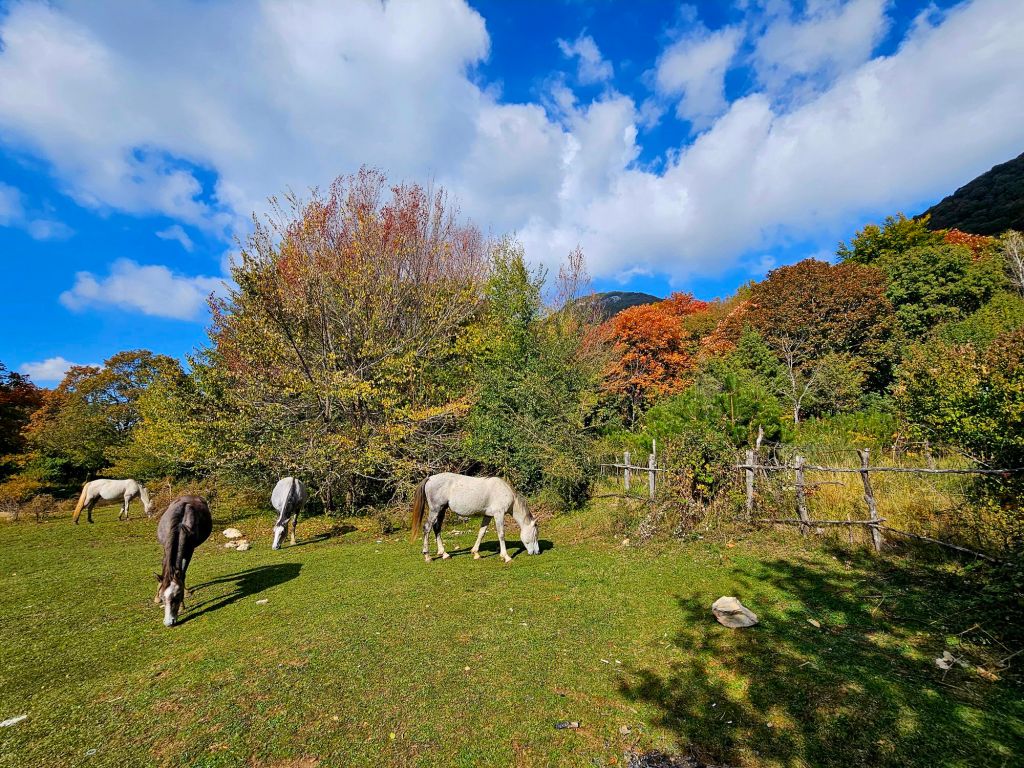
We had to abandon the first route we tried to take as it went through a military zone that members of the public were not allowed to enter. The route we did take took us through some open fields with horses and with some lovely views.
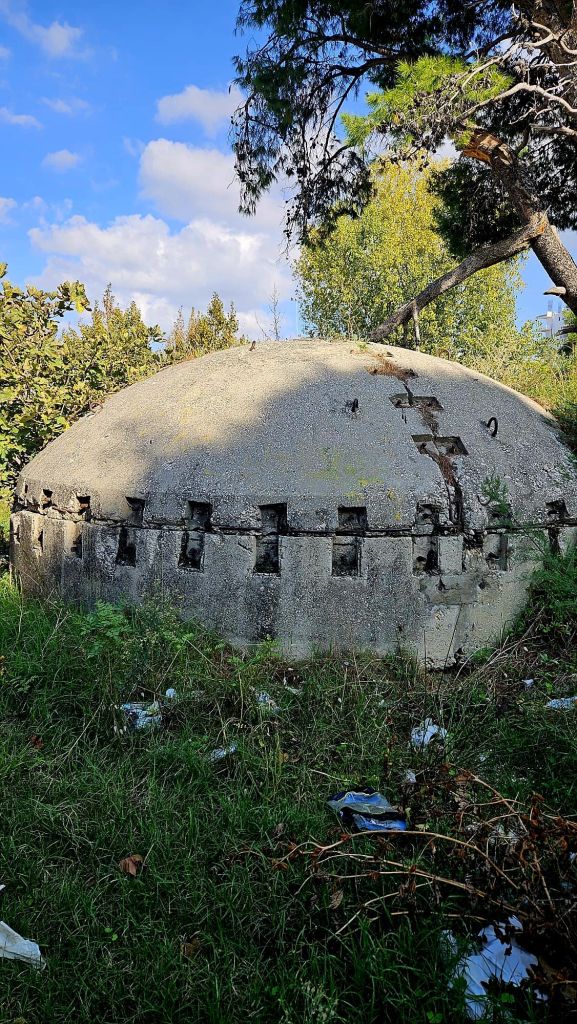
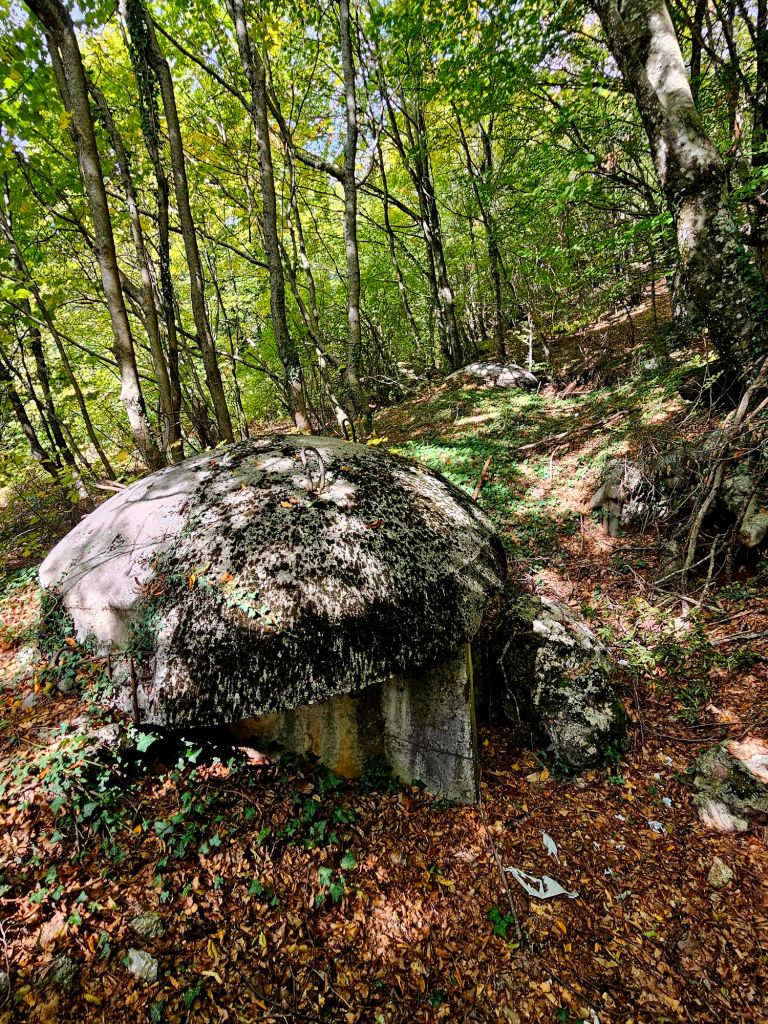
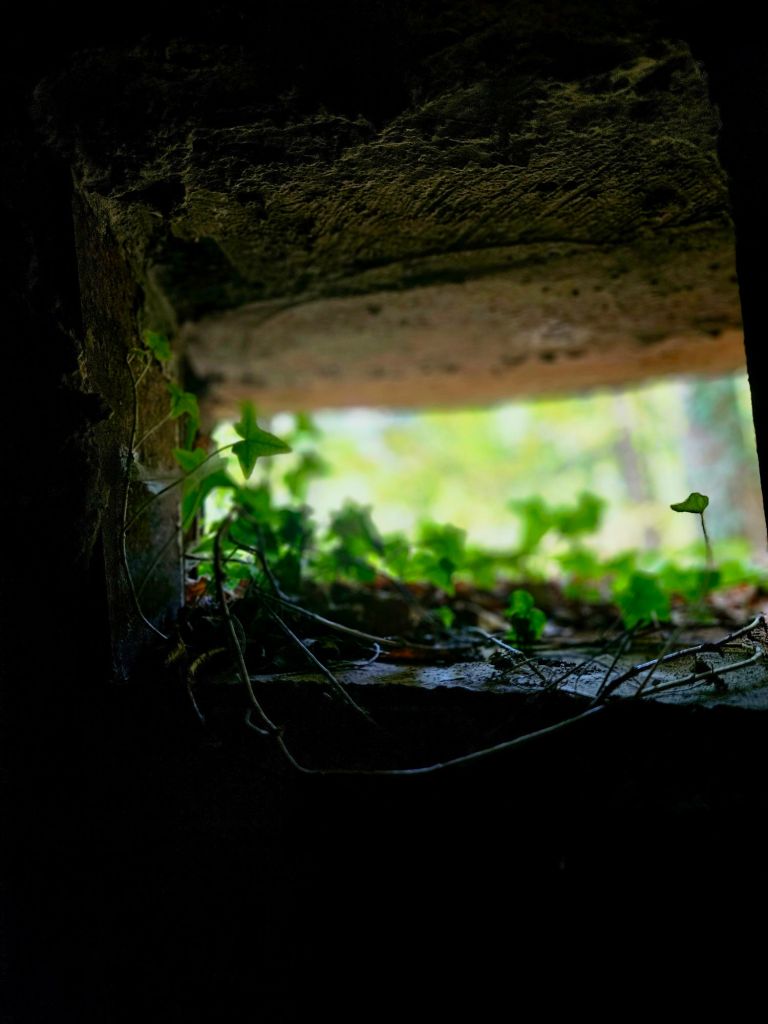
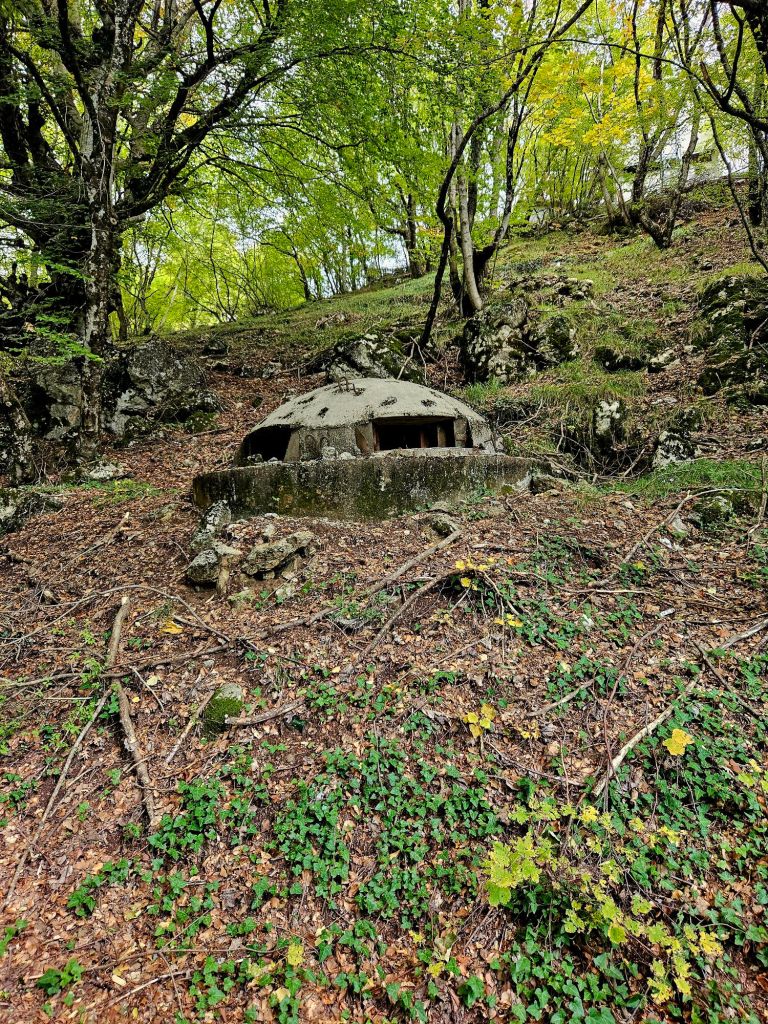
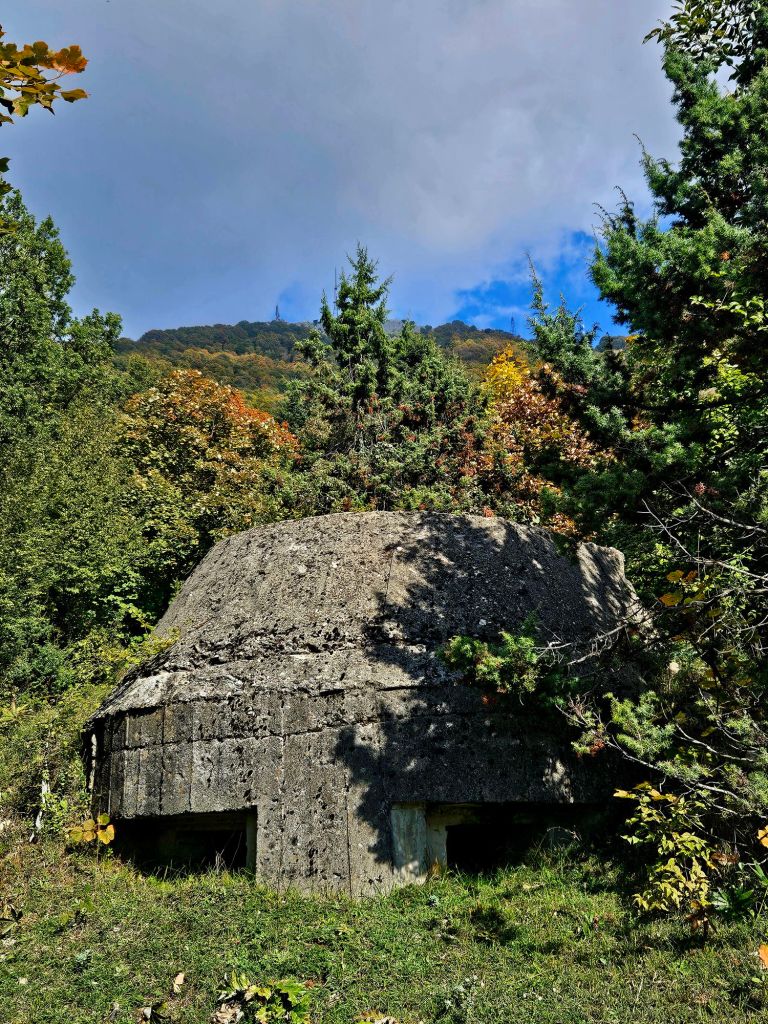
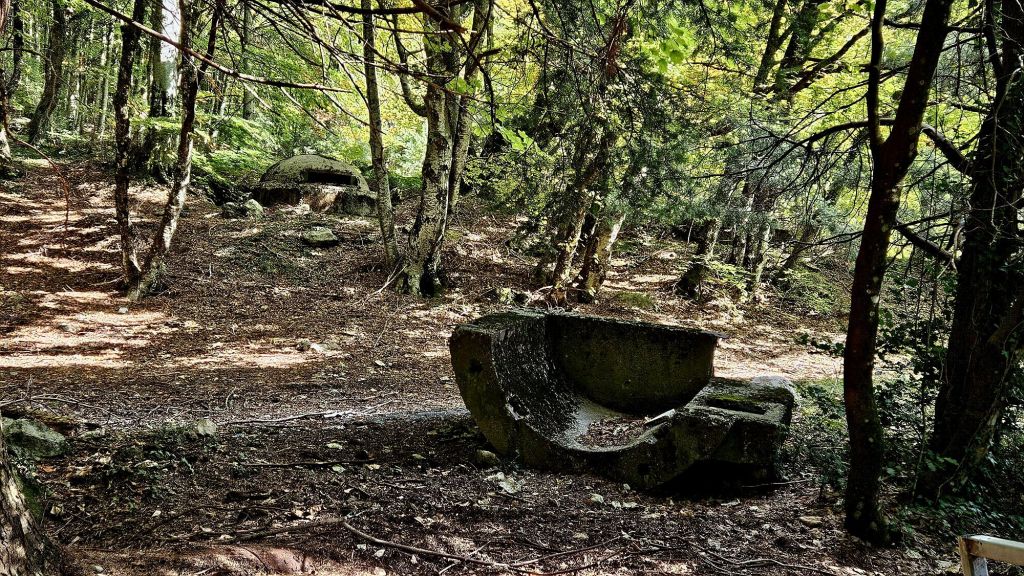
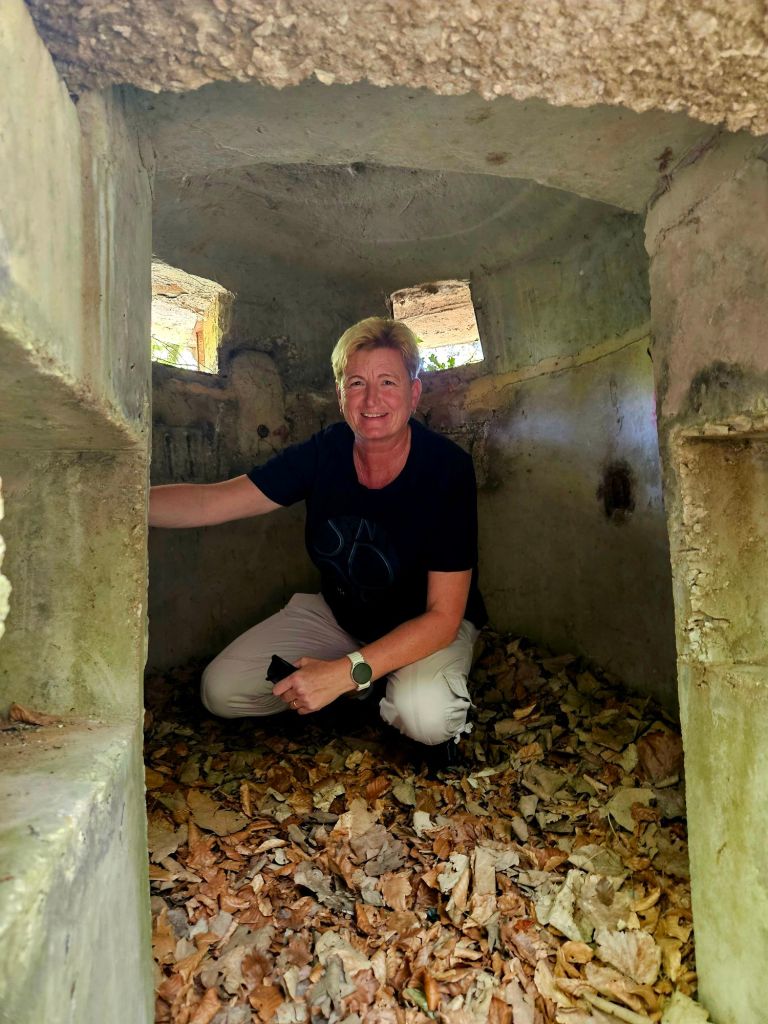
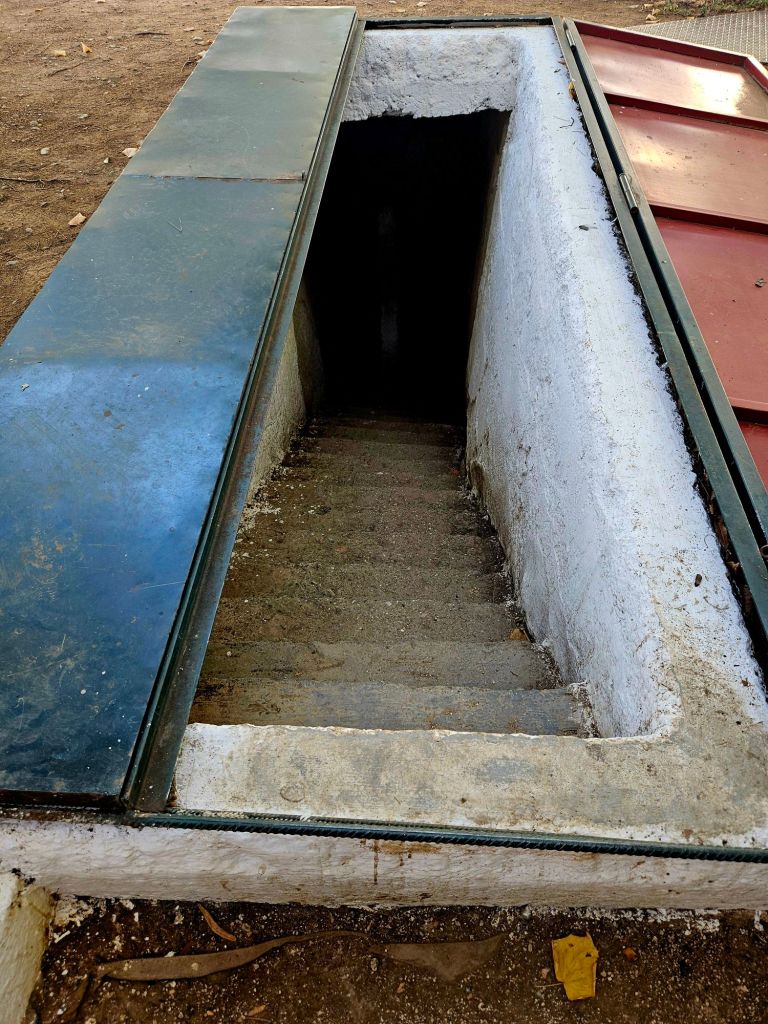
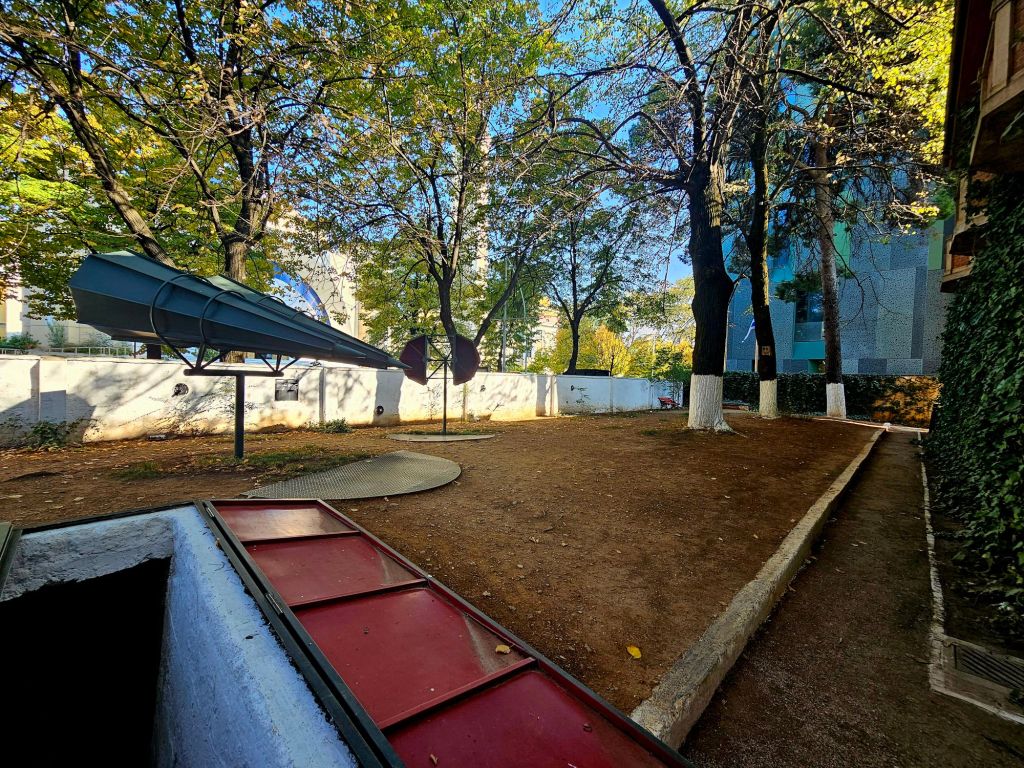
Throughout the national park we came across quite a lot of bunkers. Enver Hoxha was convinced that all of the neighbouring countries wanted to invade Albania so he set up a bunker- building programme. It’s estimated that around 170,000 bunkers were built, most of them being the QZ (firing position) model, designed to hold one or two people. Hoxha called on the mobilisation of the general population, most of whom had to do basic military training each year, to form a resistance in their tens of thousands if needed. From the age of twelve children were trained to go to the next bunker in case of emergency and to defend it. All families had to keep the bunkers clean and ready for action in the vicinity of their homes and apartments. At least twice a month, combat exercises took place, each lasting up to three days. Ironically, during Hoxha’s reign there was not a single armed conflict.
The cost of building the bunkers was significant and took funds away from resident housing and broken roads. It’s believed that 70-100 people died each year whilst building the bunkers due to forced labour, dangerous conditions and poor working practice.
The weather was nice and the sun was shining so we walked around for a couple of hours.
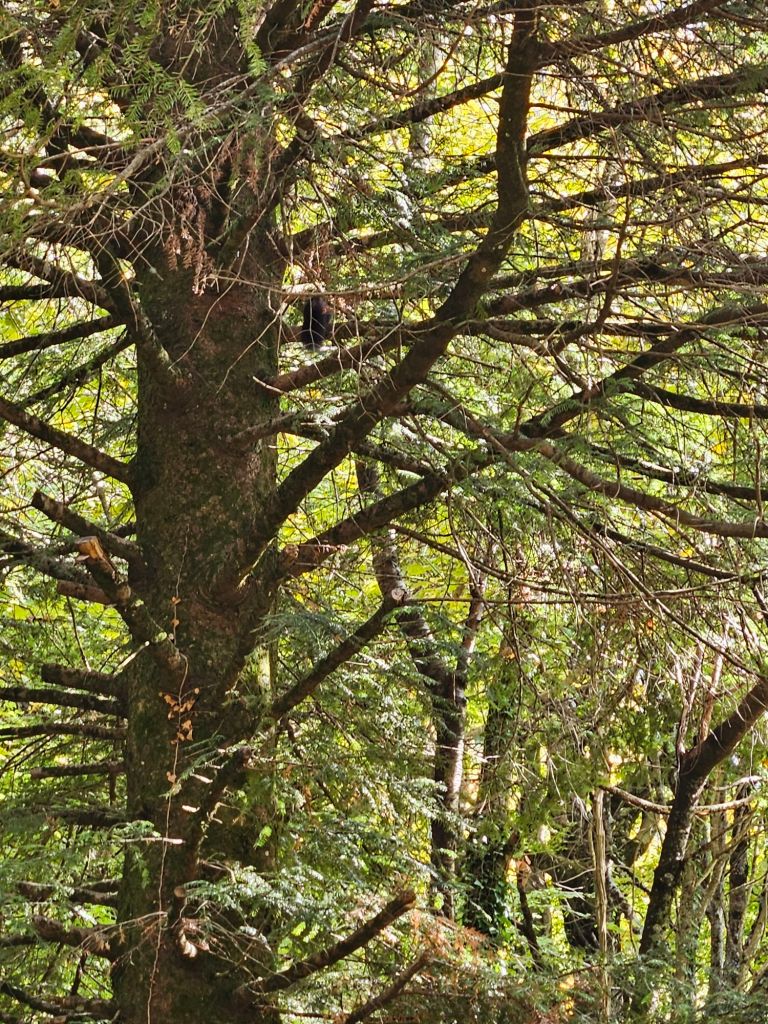
We did see a black squirrel too. We tried to get a photo of it – it’s somewhere in the tree below!
And then we headed back to the cable car and headed back down.
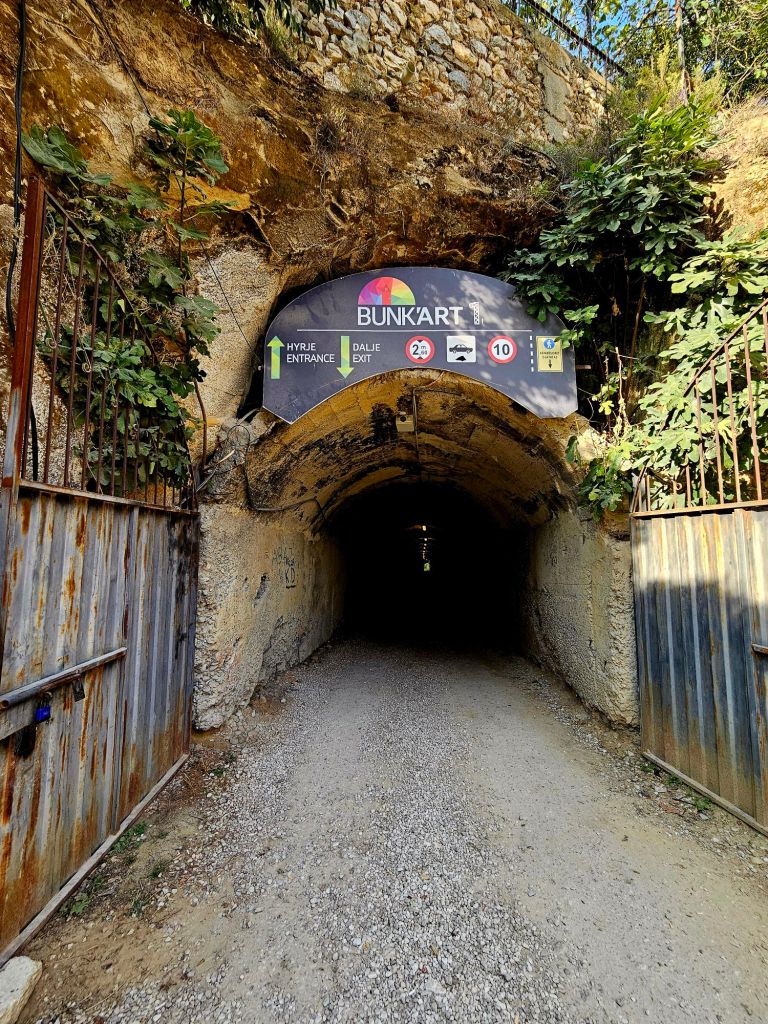
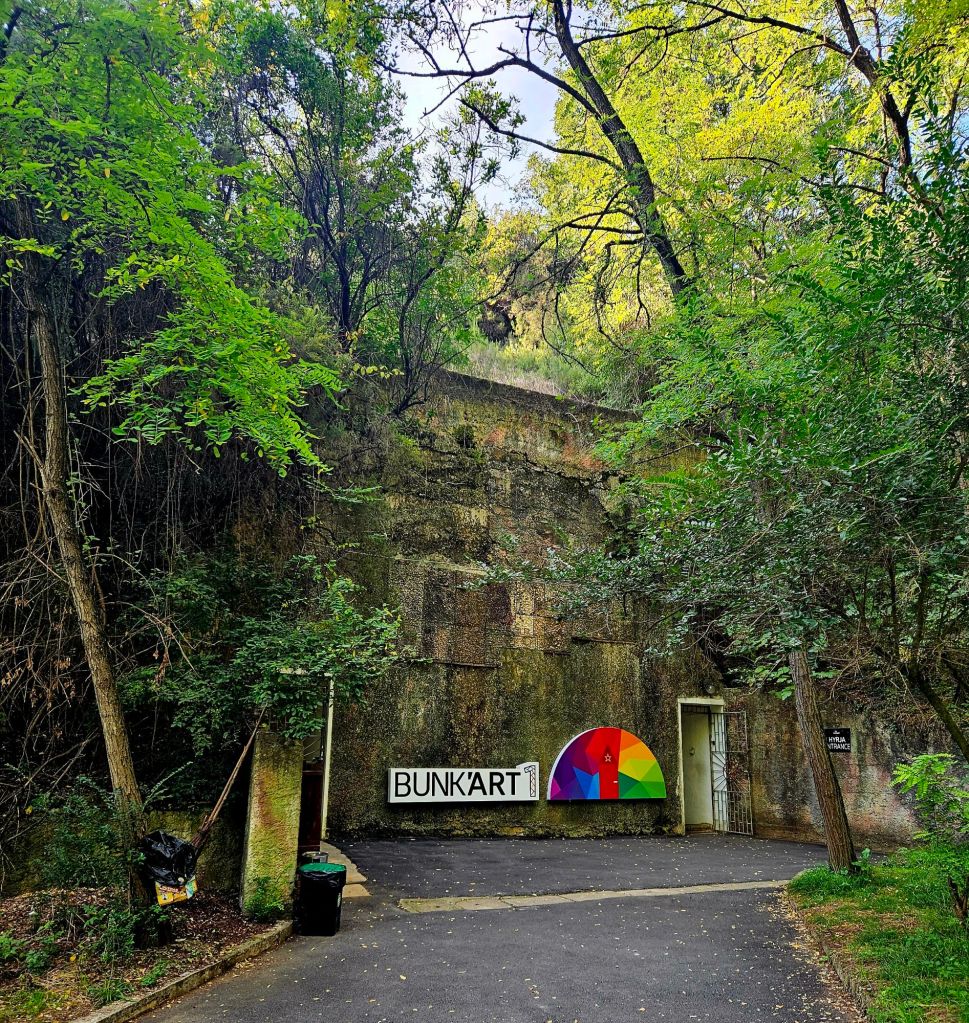
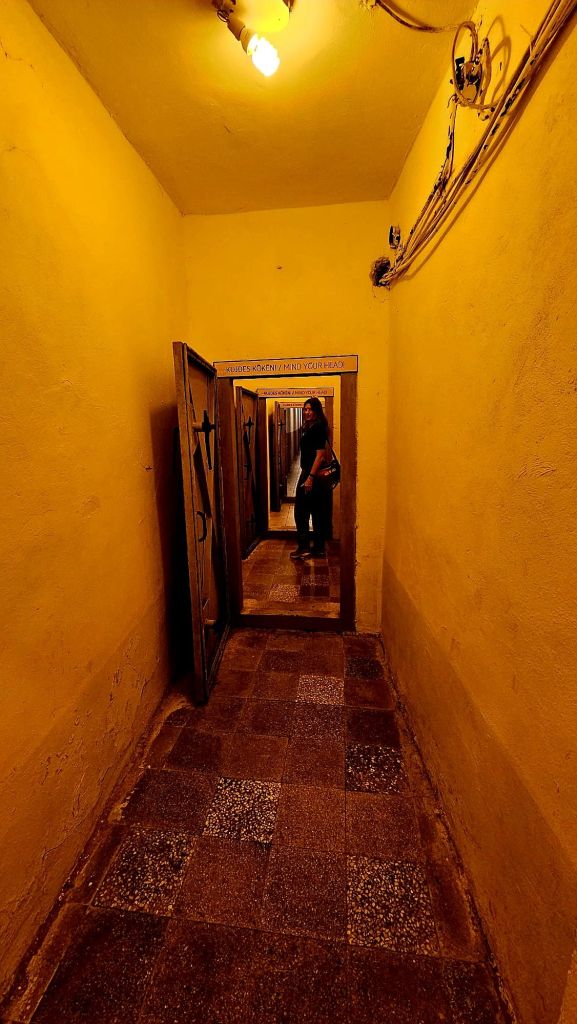
Quite close to where the cable car starts is Bunk’Art 1. This is a huge underground nuclear shelter and was built for Hoxha and the innermost circle of his government. It is built over 5 floors, contains 106 rooms and covers an area of 3000m². To get there you had to walk through a long dark tunnel.
Between 2014 -2016 the bunker was refurbished and then opened as a museum dedicated to the history of the Albanian communist army and to the daily lives of Albanians during the regime. The bunker was built between 1972 -1978 and remained in military use until 1999.
At the end of the tunnel you buy your tickets and then walk through a wooded area, where you can already see parts of the bunker jutting out from the rock face. And eventually you get to the entrance.
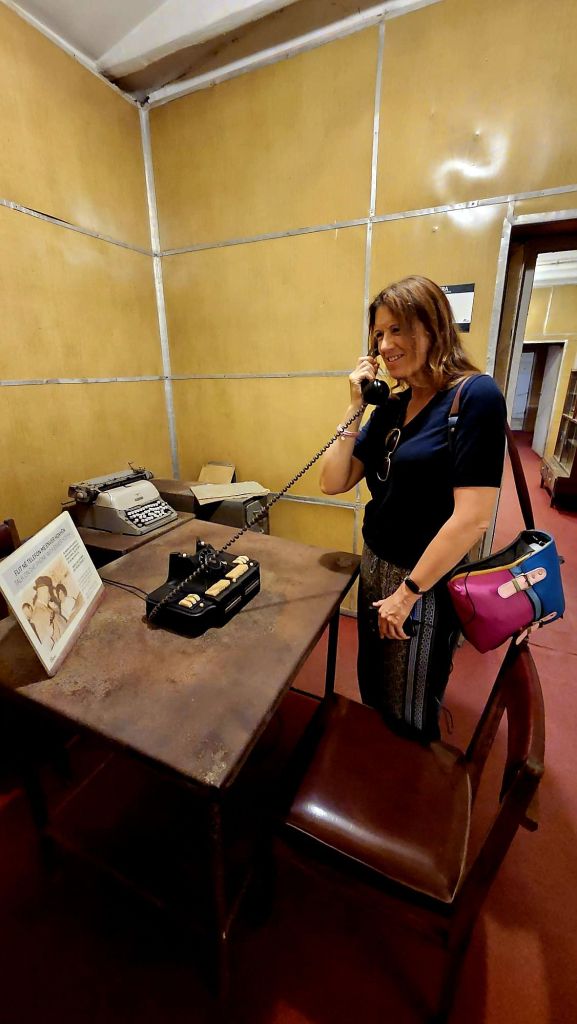
One of the first parts you come to is the private rooms for Enver Hoxha. On a small table there is a telephone and you can pick it up and listen to an audio recording of Hoxha.
Although the rooms were definitely not five star luxury, they had carpets, specially veneered walls, comfortable armchairs and a seperate office. There is a double bed in the bedroom and a large bathroom with a shower, toilet and bidet.
Mehmet Shehu also had private quarters as part of this bunker complex. They are not quite as luxurious as those of Hoxha but also have a double bedroom, a living room and a bathroom.
We were not supposed to take photos, so I don’t have many from inside the bunker.
The historical exhibition starts with Italy’s facist occupation of Albania in WWII and then the Nazi German invasion a bit later in the war. It then moves on to the early phases of how Albania was shaped following its liberation and the efforts of the partisan army.
One room tells the story of the survivors of an American plane crash. The C53 plane was a transport plane and had to make an emergency landing on 8 November 1943. The 30 survivors were taken in by partisans, who also dismantled the plane and hid the parts. At the time the Americans were considered allies in the fight against the Germans. A man called Kostaq Stefa was tasked with leading the 30 survivors to freedom, through the mountains – a journey which lasted 63 days, one way. Once Hoxha was in power there was an anti-american sentiment. Kostaq was arrested in 1947 and tortured for 3 months and was sentenced to death in 1948. His wife appealed the sentence and it appeared that the sentence was reduced to life imprisonment. Eleni visited her husband for a brief 4 minutes and was told that he would be transferred to a state prison the next day. But he was killed by firing squad the next morning.
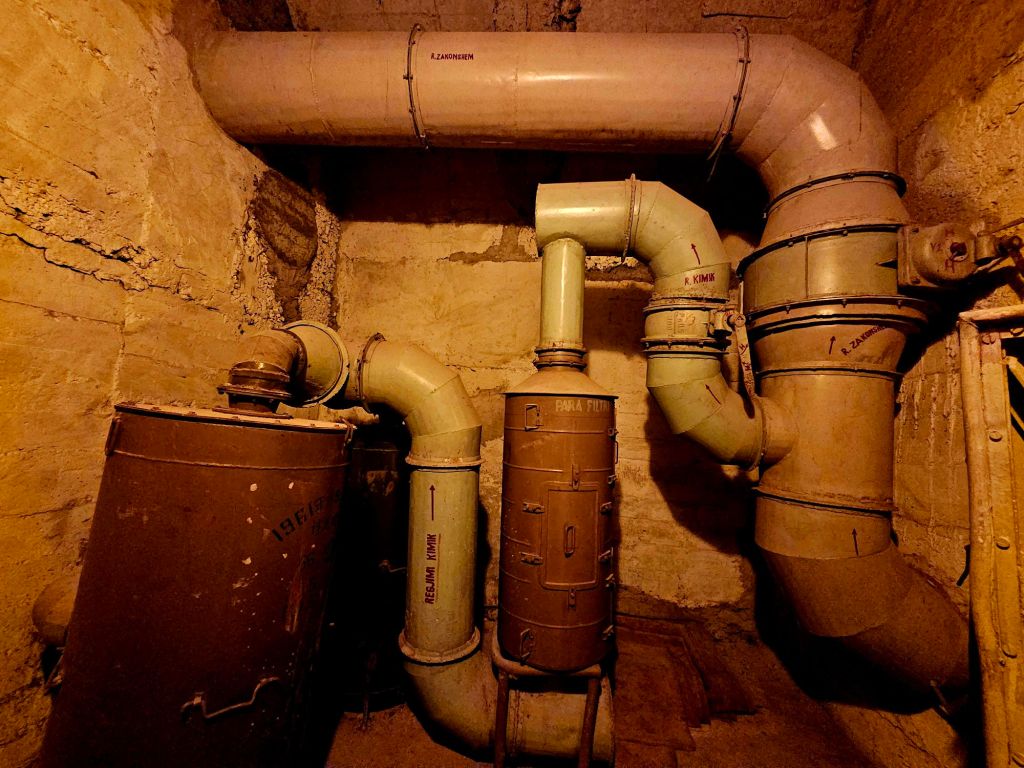
We passed one of the filter rooms. The air in the bunker is chemically filtered to ensure toxins do not get inside.
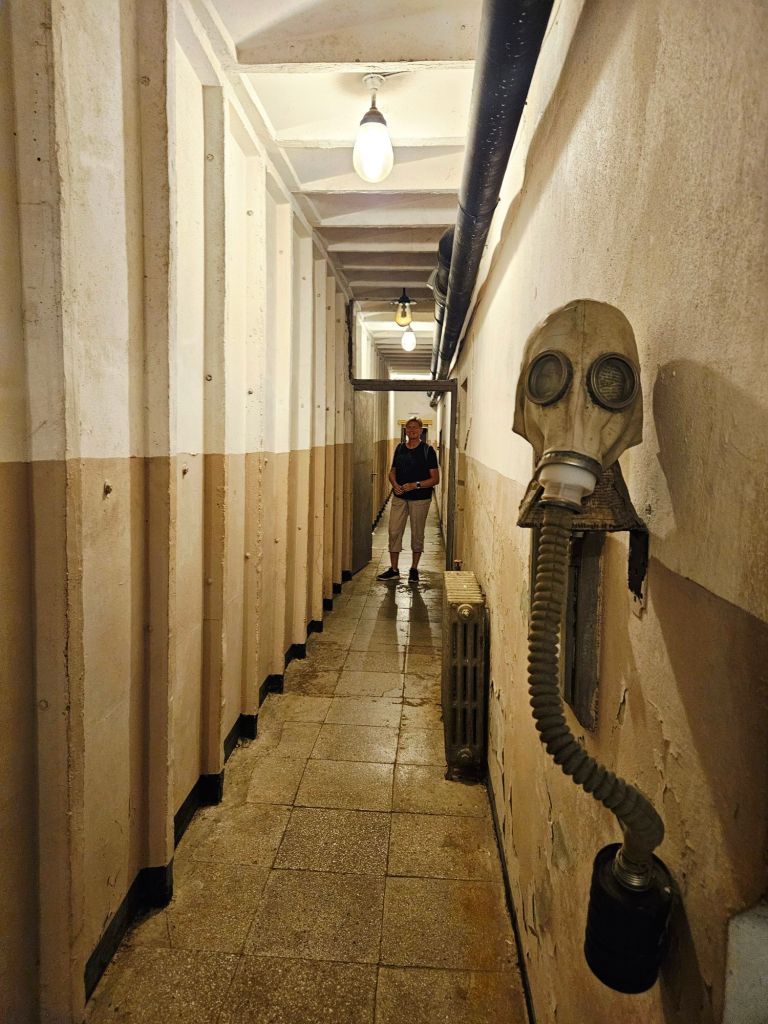
One room is all about chemical warfare as Hoxha was particularly paranoid about chemical weapons.
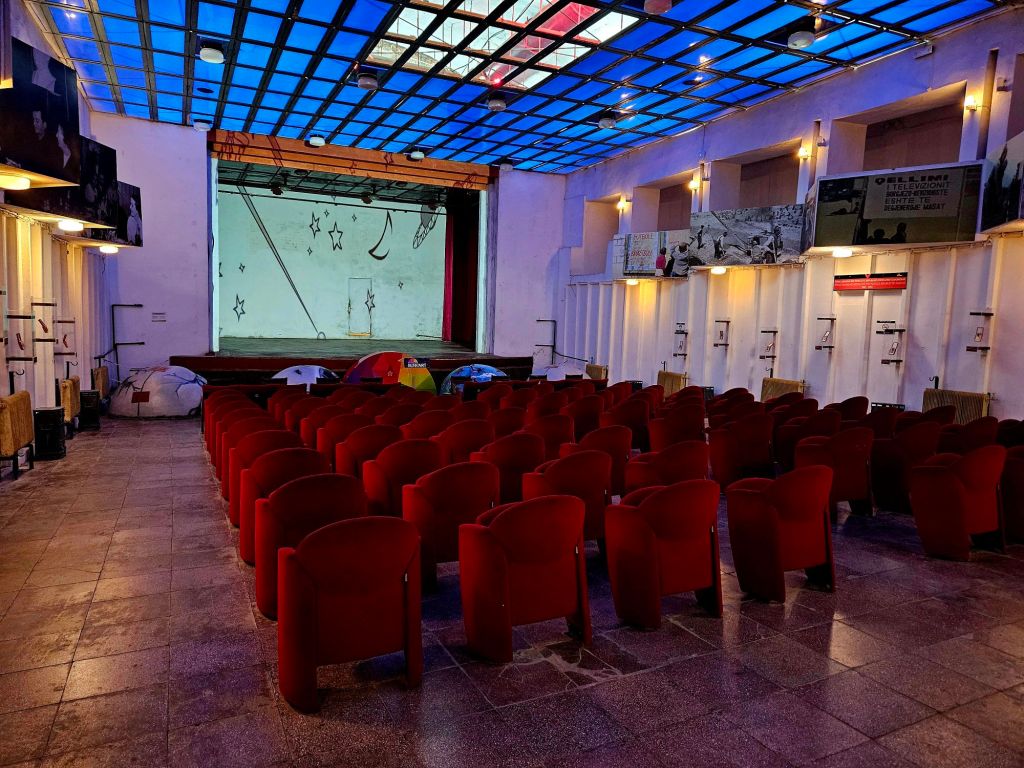
There is a huge assembly room in the bunker. This room is two storeys high, with a large stage and rows of theatre seats.
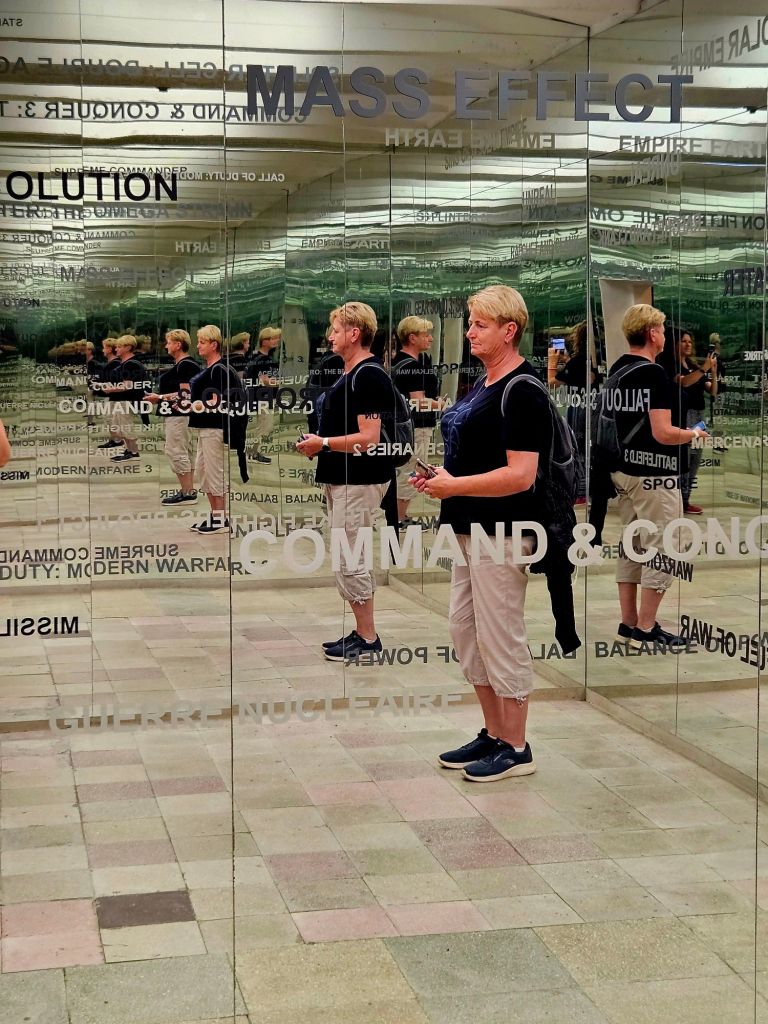
There are a couple of art exhibitions. One is a room of mirrors covered in war words.
The everyday lives of Albanian citizens is reflected throughout the bunker and it highlights the fact they lived in constant fear. Many intellectuals were imprisoned, tortured or killed. Often their families also suffered the same fate.
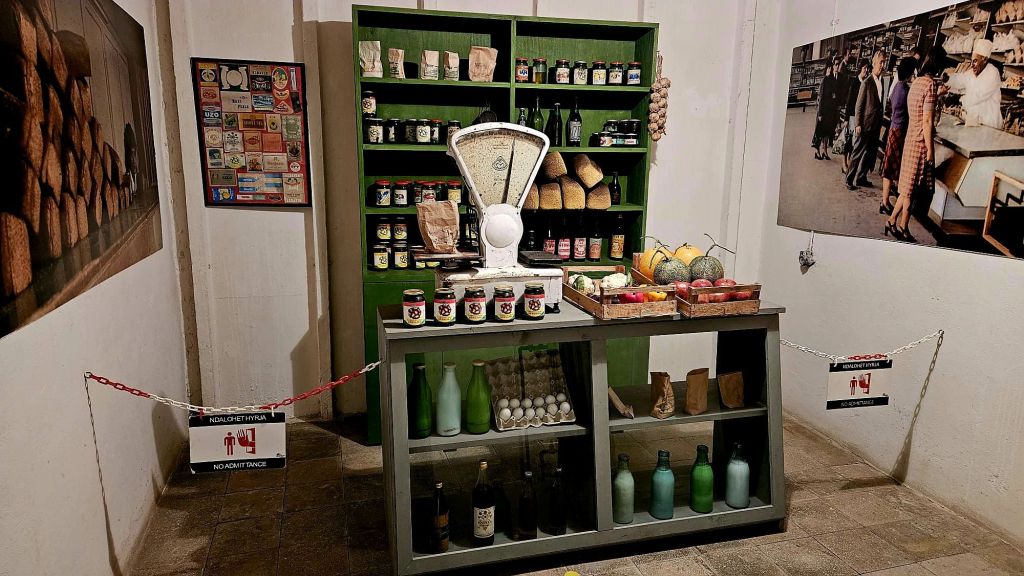
There is a replica of an grocery store as it would’ve been at the time.
The final exhibition room focuses on bats. Many of the former bunkers have become invaluable shelters for bats.
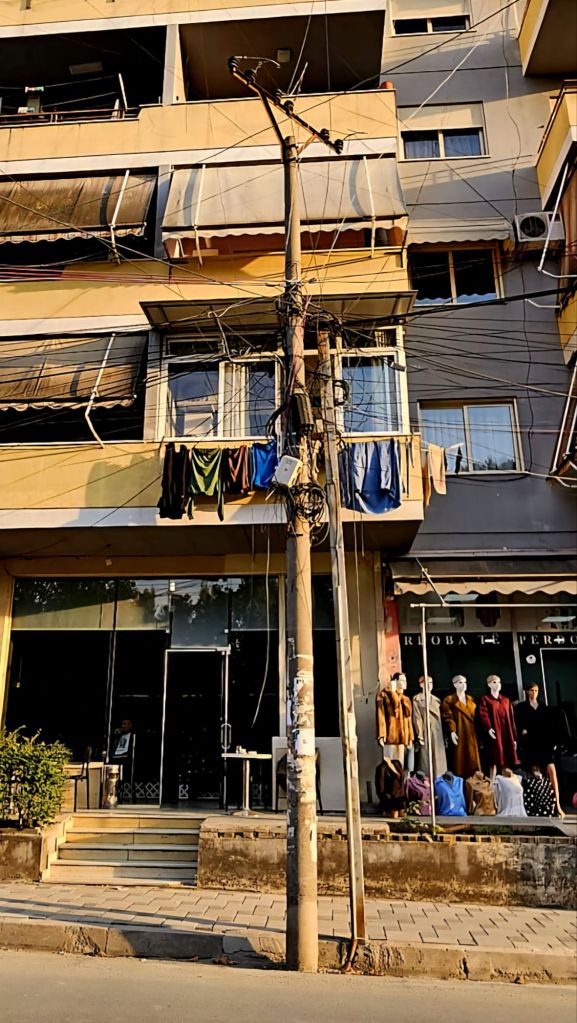
From the bunker we walked down to the bus stop – the long way round – and caught the bus back into Tirana centre. Some of the electrics and wiring we saw left a lot to be desired.
We went back to the apartment to change and freshen up. We couldn’t decide where to go for dinner so just wandered down one of the streets until we saw somewhere we both liked.
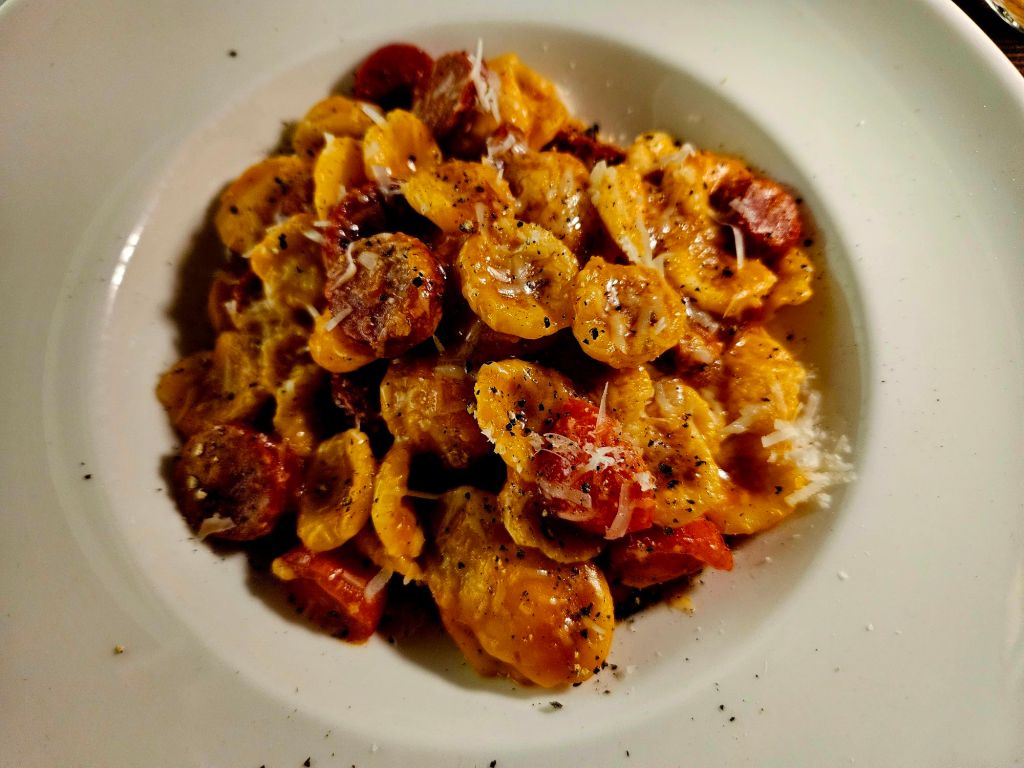
We ended up at Rooms restaurant. I had a beef pasta dish which was very tasty.
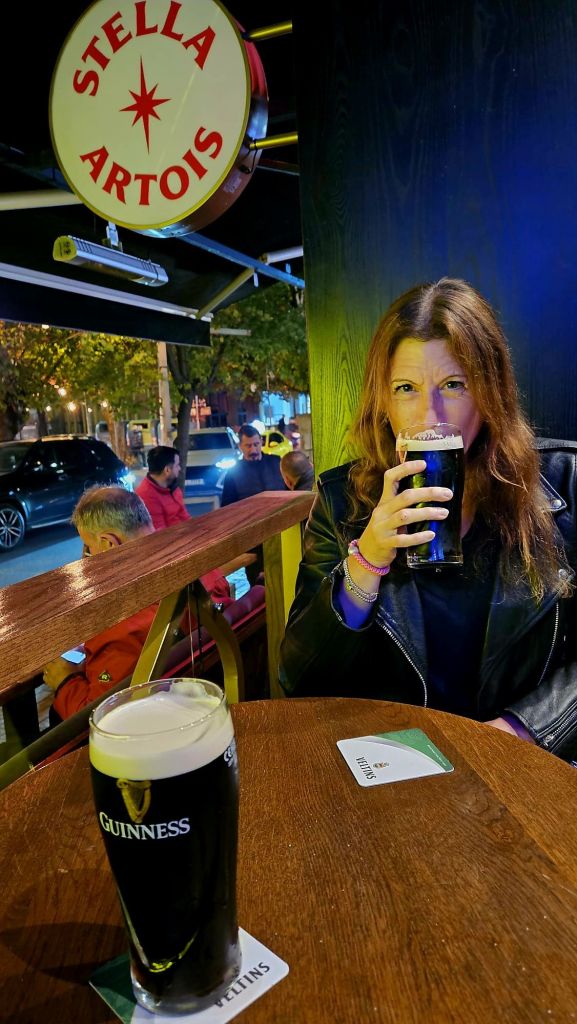
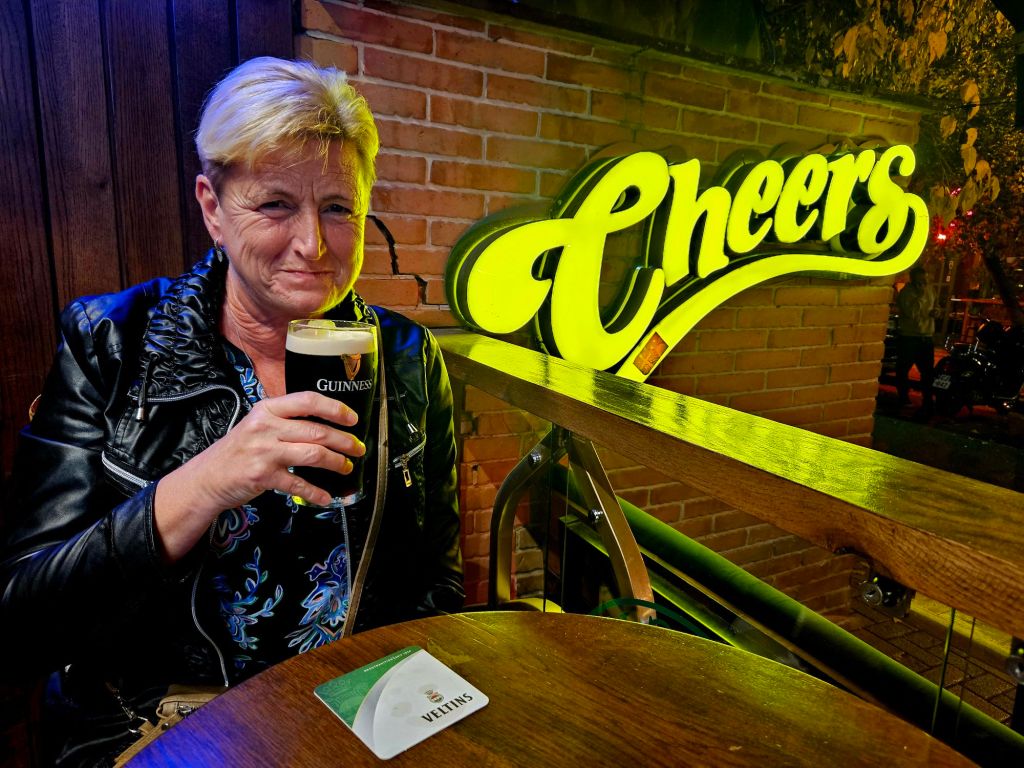
On the way back to the apartment we passed the Irish pub again, and this time they had Guiness. So obviously we had to stop for a pint.
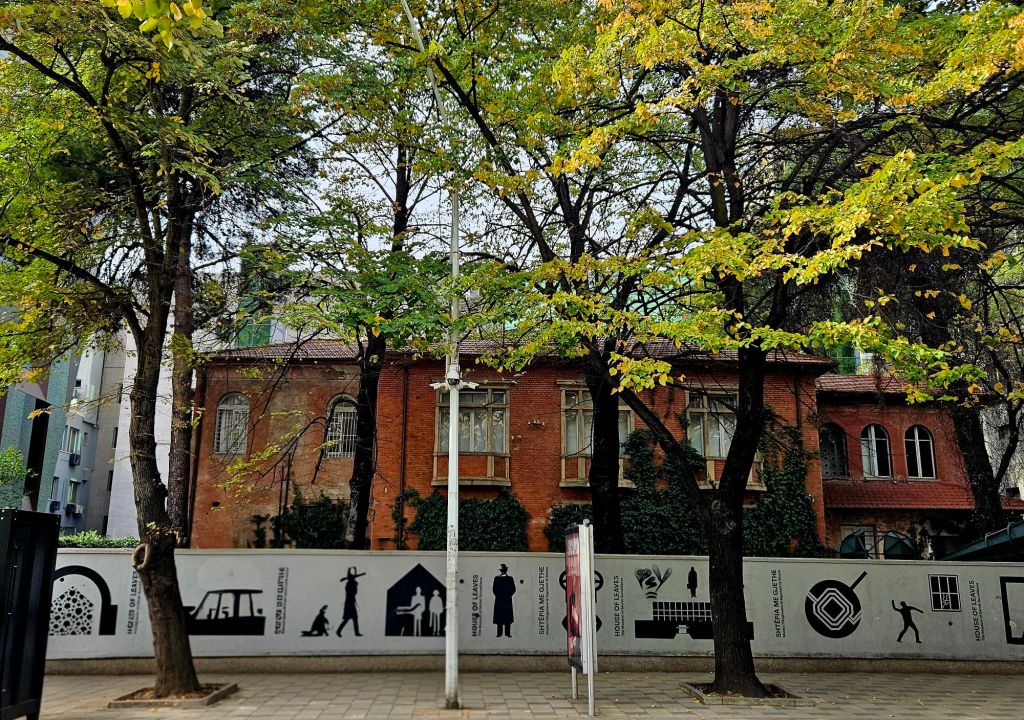
After lunch we made our way to the House of Leaves. This building was originally built in 1931 as a maternity/obstetric clinic, but was appropriated by the Gestapo during the German occupation and later by the Albanian “Sigurimi” to serve as its main HQ after the liberation of Albania and the takeover of communist rule after WWII.
The main role of the Sigurimi at this location was electronic surveillance, postal interception and keeping tabs on and observing foreigners. It only ceased to function in 1991 shortly before the eventual collapse of communist rule in Albania. It is now a museum about the political repression of that era and especially about the methods of surveillance and torture employed by the security service. Under the mantle of “security”, the Sigurimi was basically an organsation that suppressed any kind of opposition and freedom. And it did that with ruthless determination and largely with success.
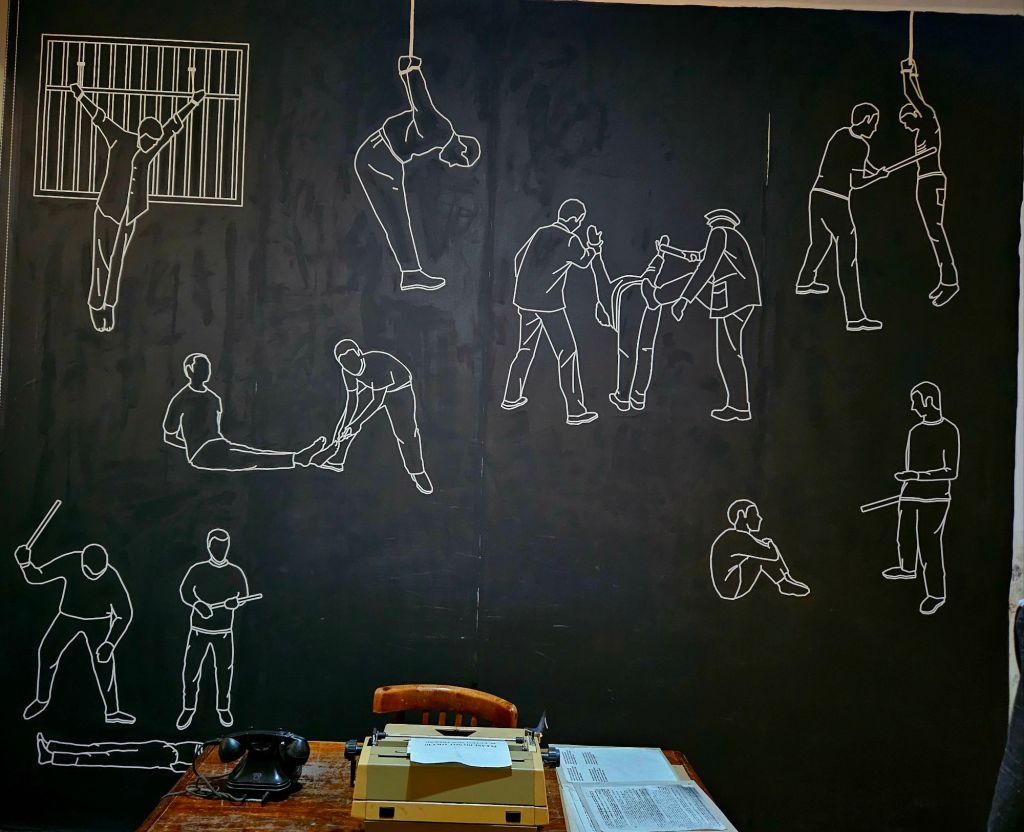
One of the first sections in the house focused on torture and interrogation. Various methods of torture were graphically displayed on the wall.
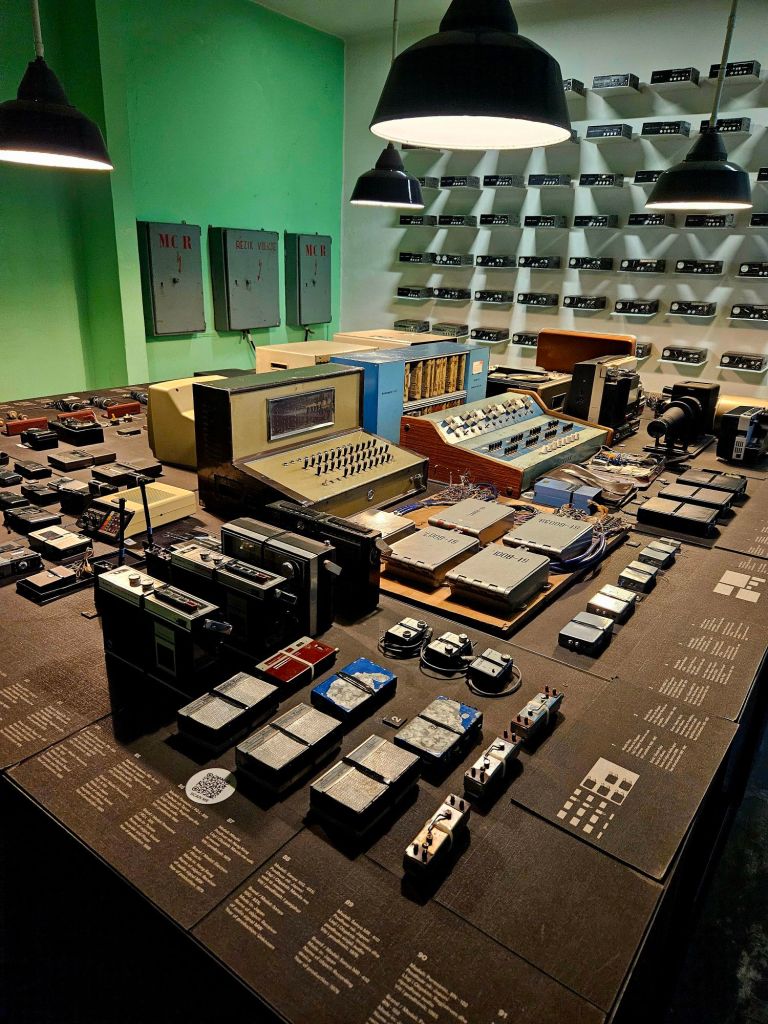
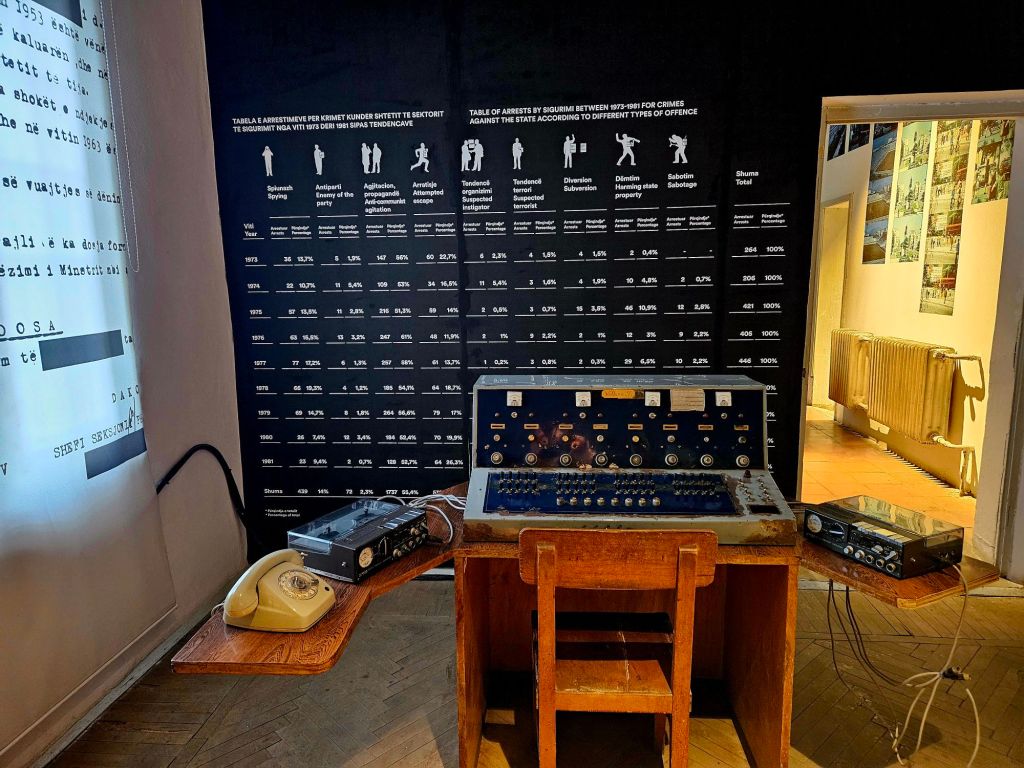
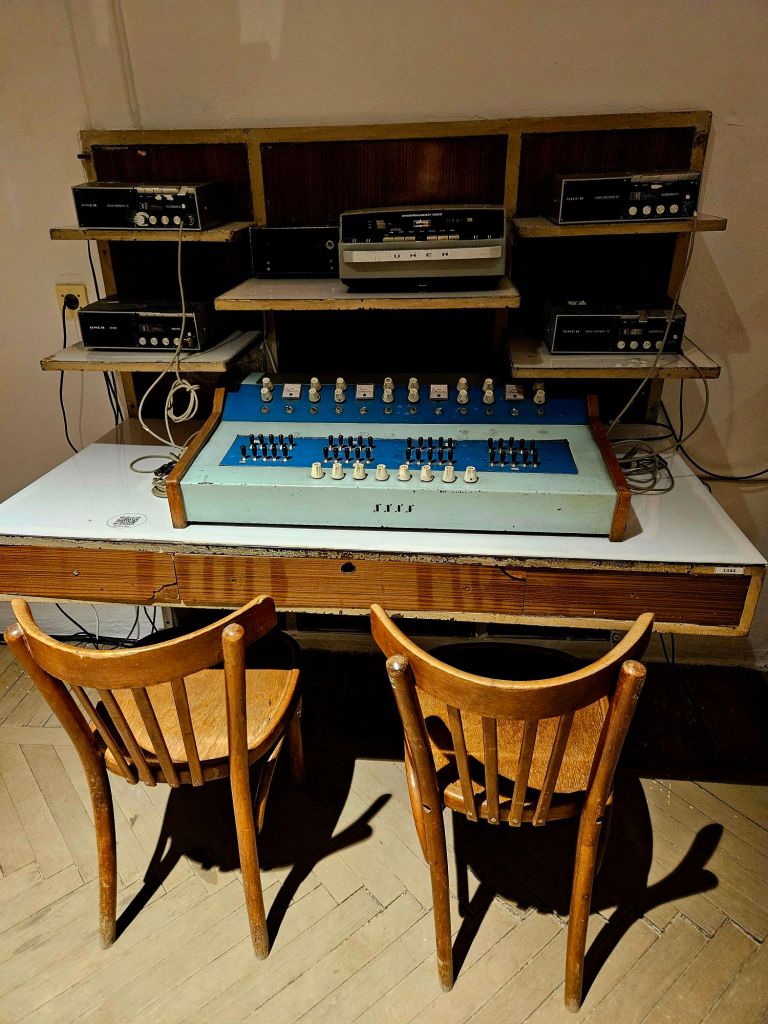
The next room was a display of the equipment used by the Sigurimi to undertake surveillance and persecution, as well as documents outlining methods and strategies for deploying operational techniques.
The Sigurimi used bugs to listen in to private conversations. They used the A1 Transmitter which was produced in Albania.
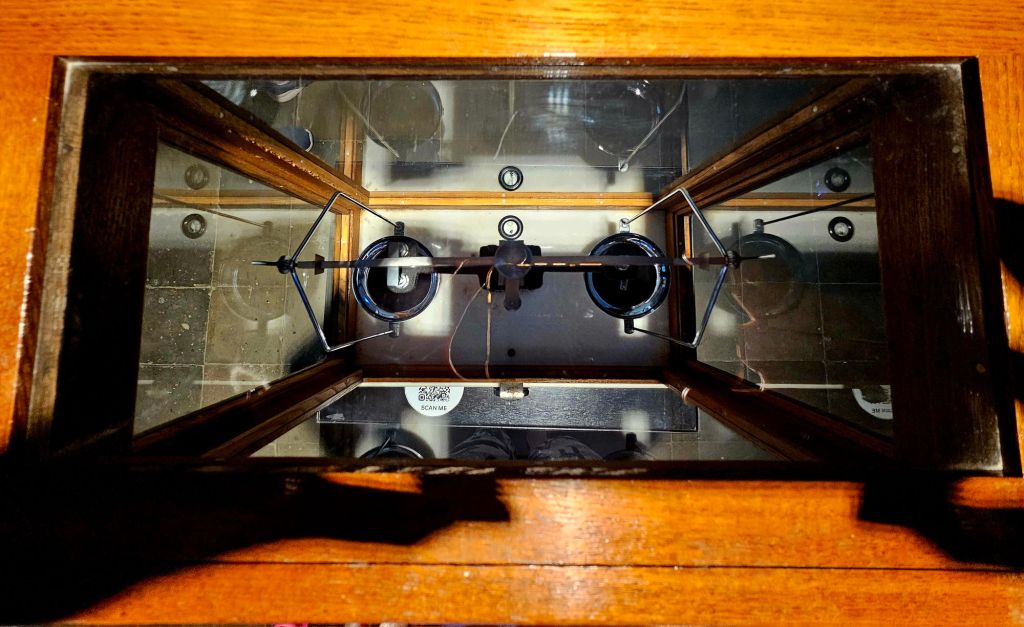
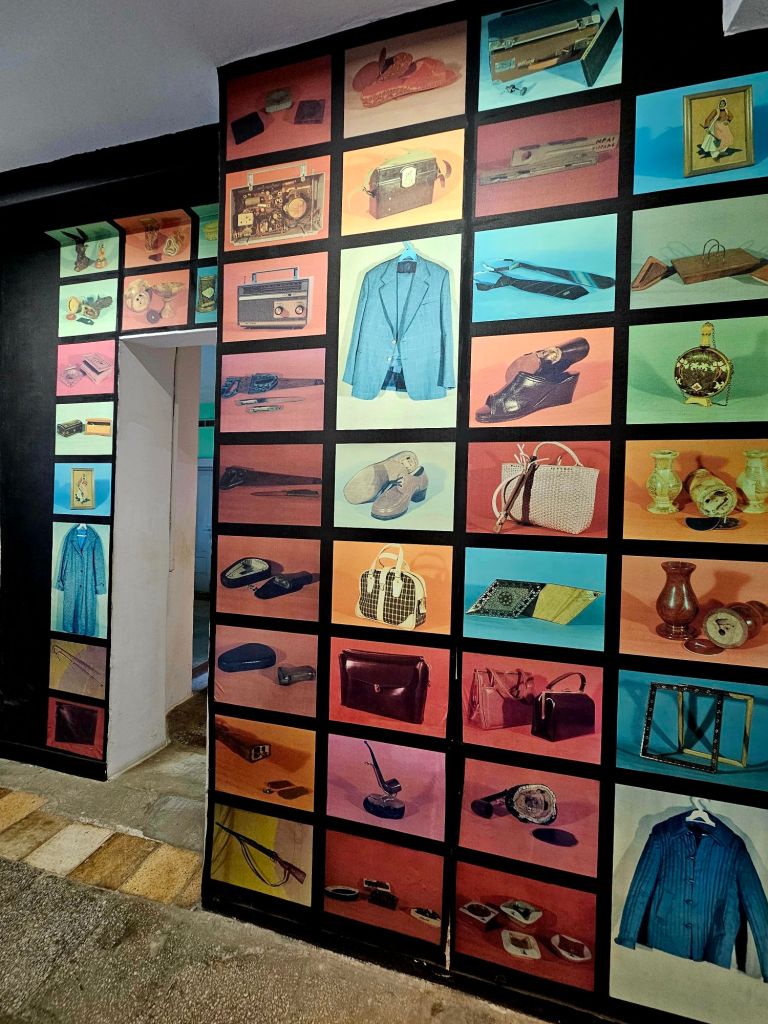
There was a display of all the ordinary items in which the bugs would be hidden.
There was more to see upstairs. One section here specifies who the internal “enemies” were and what their “crimes” were supposed to be (e.g. “anti-communist agitation”). There are statistics, of how many people were arrested and for what, and how many were imprisoned (around 18,000) and executed (over 5500). There are photos of mock trials and video testimonies.
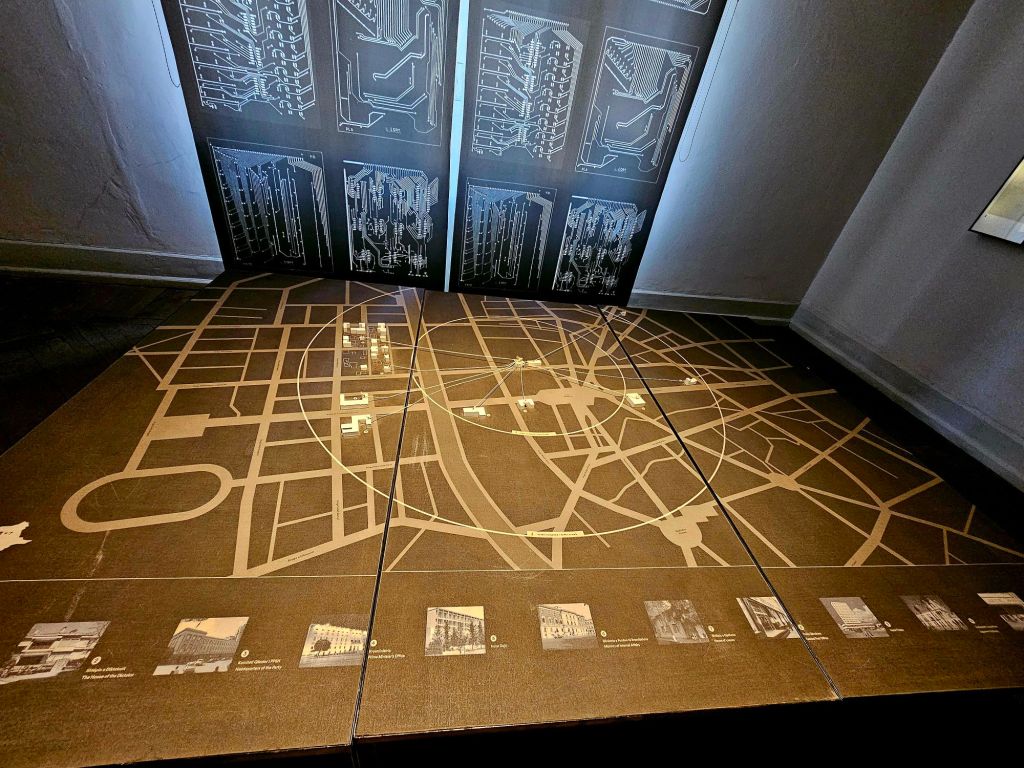
The targeting of foreigners, i.e. mainly staff of foreign embassies, as these were basically the only foreigners allowed to visit the country, was one of the activities co-ordinated from this building. A rough map of central Tirana shows the various connections this building had to other locations, including embassies and an international hotel.
There is a section that shows just how much surveillance and control penetrated everyday life in Albania. The right to privacy at an individual level was not recognised by the communist regime. The regime inserted itself into family life, taking on the role of the patriach. This meant that the regime had the right to know and to make decisions about an individual’s life. The use of bugs to listen to private conversations was just one tactic used and it was used as often as the Sigurimi saw fit.
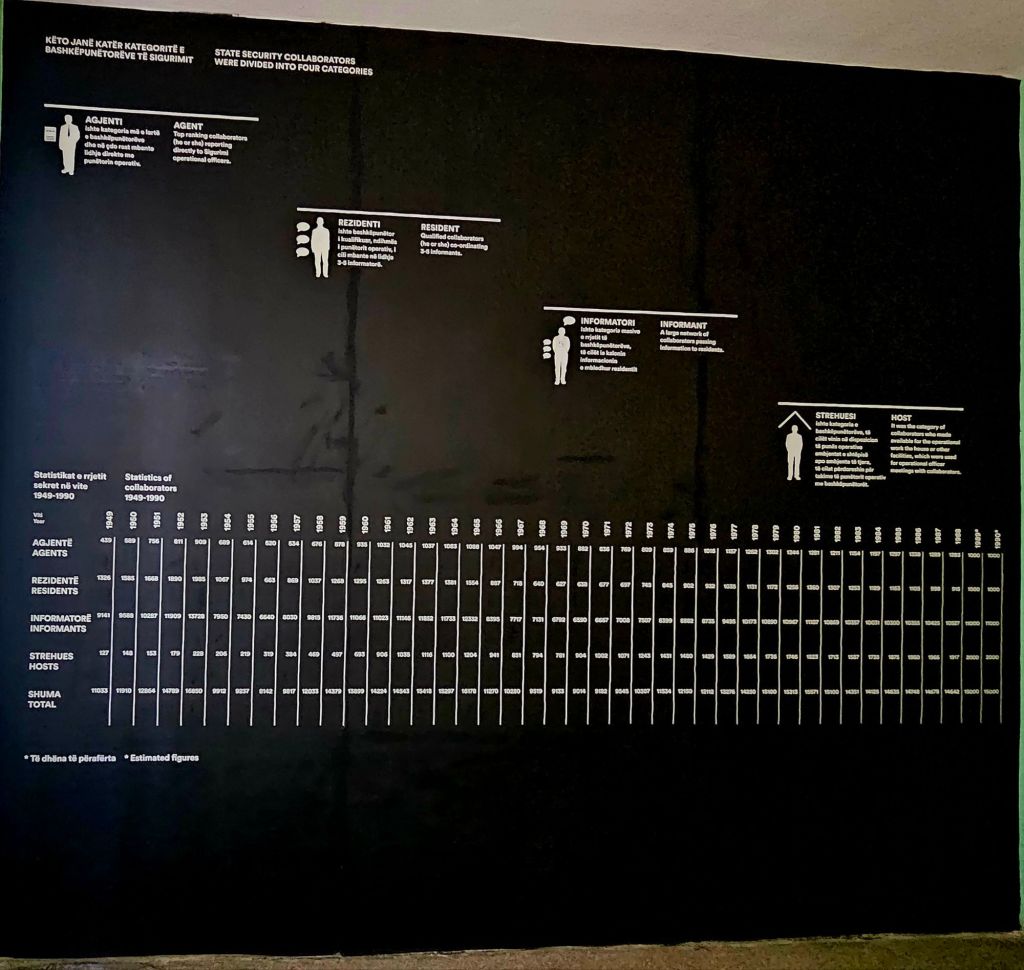
One of the graphics on the wall shows the number of agents, residents, informant and hosts that worked for the Sigurimi between 1949 – 1992. In total this ranged from 9,000 to just over 15,000 people.
The internal hierarchy of the Sigurimi organisation is explained in quite a bit of detail length, obviously Enver Hoxha is at the very top. In contrast to his over forty solid years of dictatorial rule, the direct heads of the Sigurimi seem to have changed fairly frequently.
During the communist regime, the only public space in which individuals were safe to express their thoughts were the public toilets.
On leaving this museum we walked past the clock tower, and it was still closed.
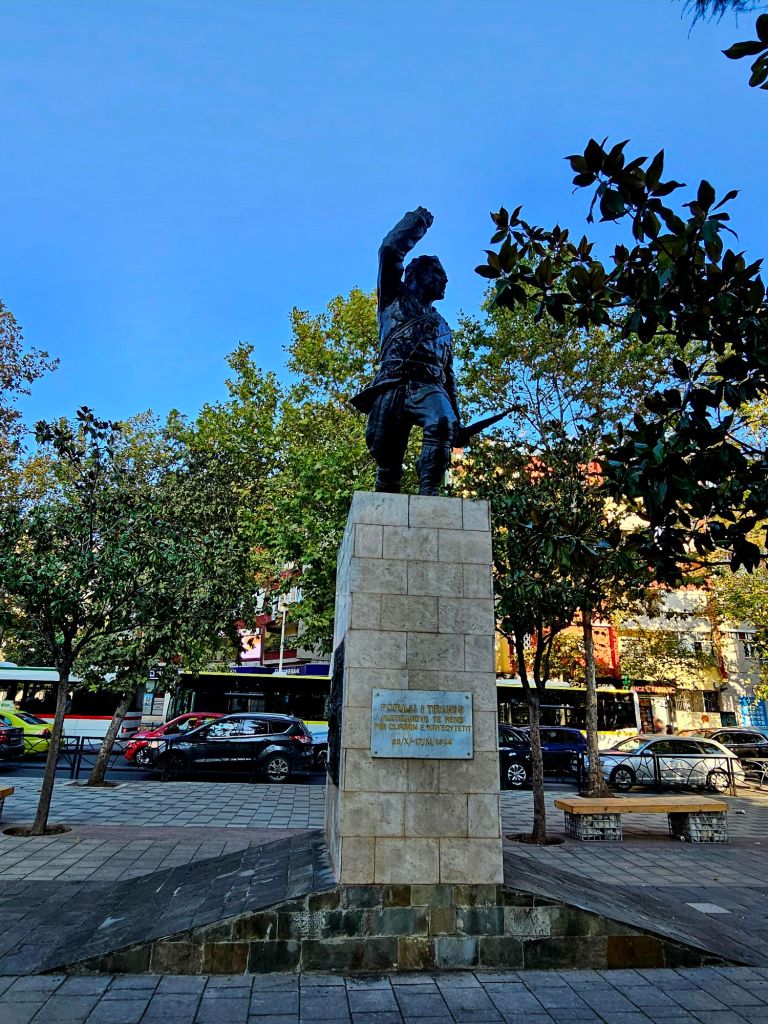
We carried on and passed a statue known as the ‘Monument to the Partisan’. This statue was created in 1949 and depicts a communist Partisan in full uniform and armed. The area where the statue stands is the area of Tirana where, on 17th November 1944, the last remnants of the Nazi invaders were either killed or surrendered to the Partisan army.
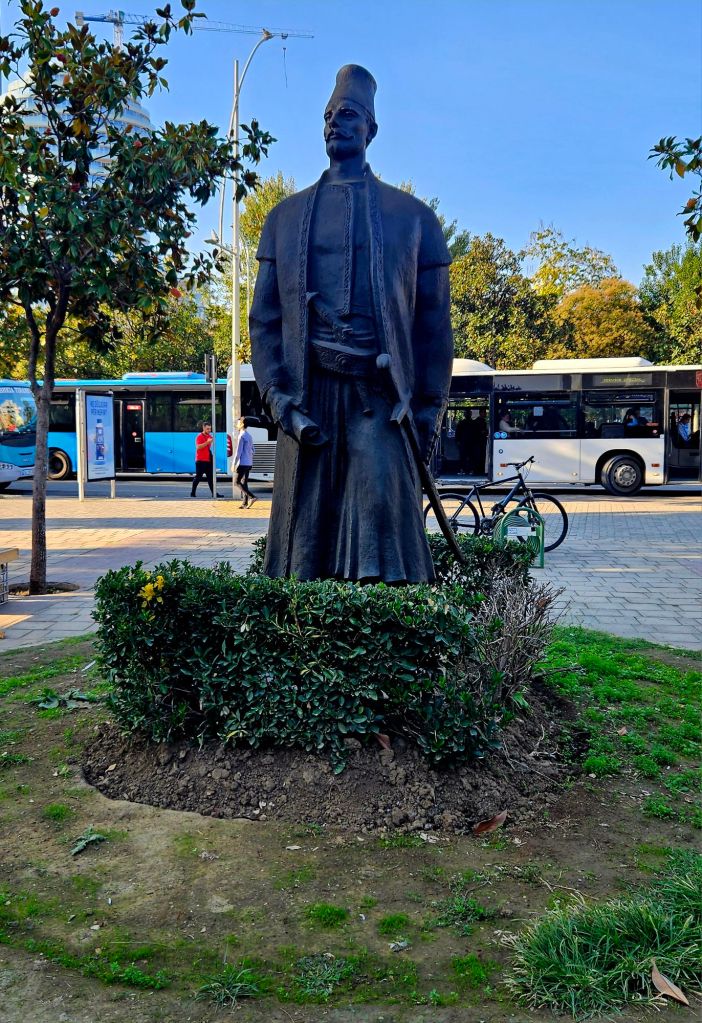
A short walk away was another statue. This one was of Sulejman Pasha who was an Ottoman general and nobleman. He was Governor of the Ottoman Empire and founded Tirana in 1614. The first mosque in Tirana was originally built by Sulejman Pasha, but it was partially destroyed in WWII and then completely eradicated by Hoxha.
We wandered down the streets a bit further to take a look at Oda Garden restaurant as this had been recommended, but it mainly served lamb or offal. On the way back into the centre we stopped off at Zgara te pazari for a Kriko beer.
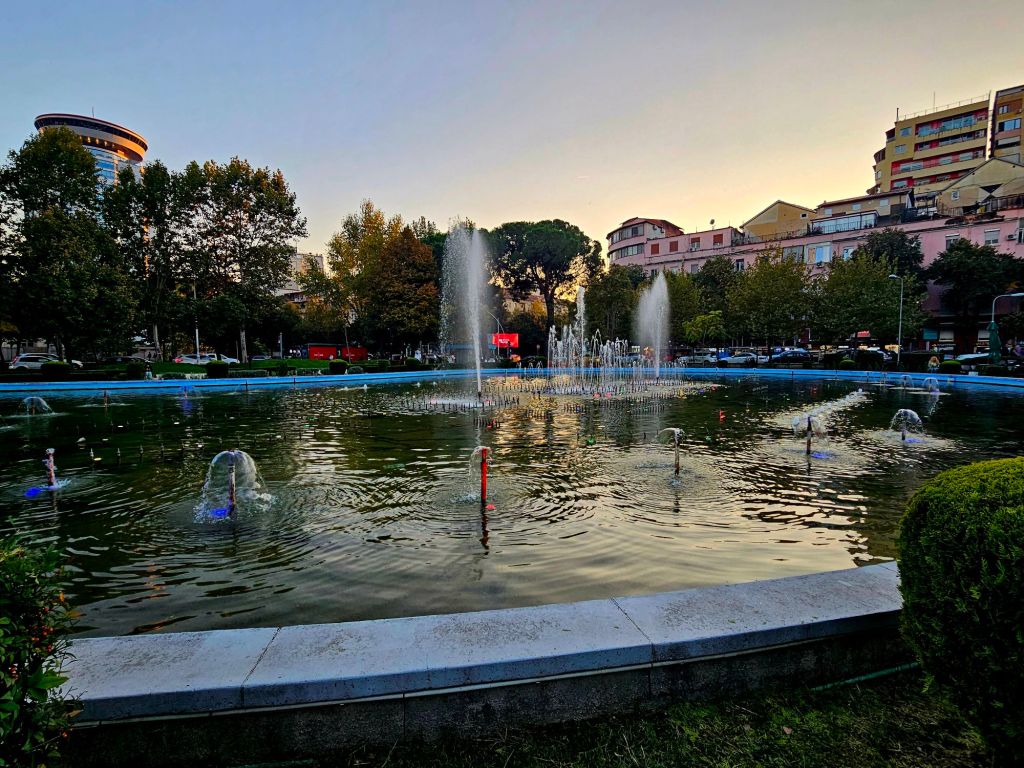
On our way back to the apartment we walked back through Rinia Park. The lights in the fountain were just starting to show. We kept meaning to come back and see them at night but we never did.
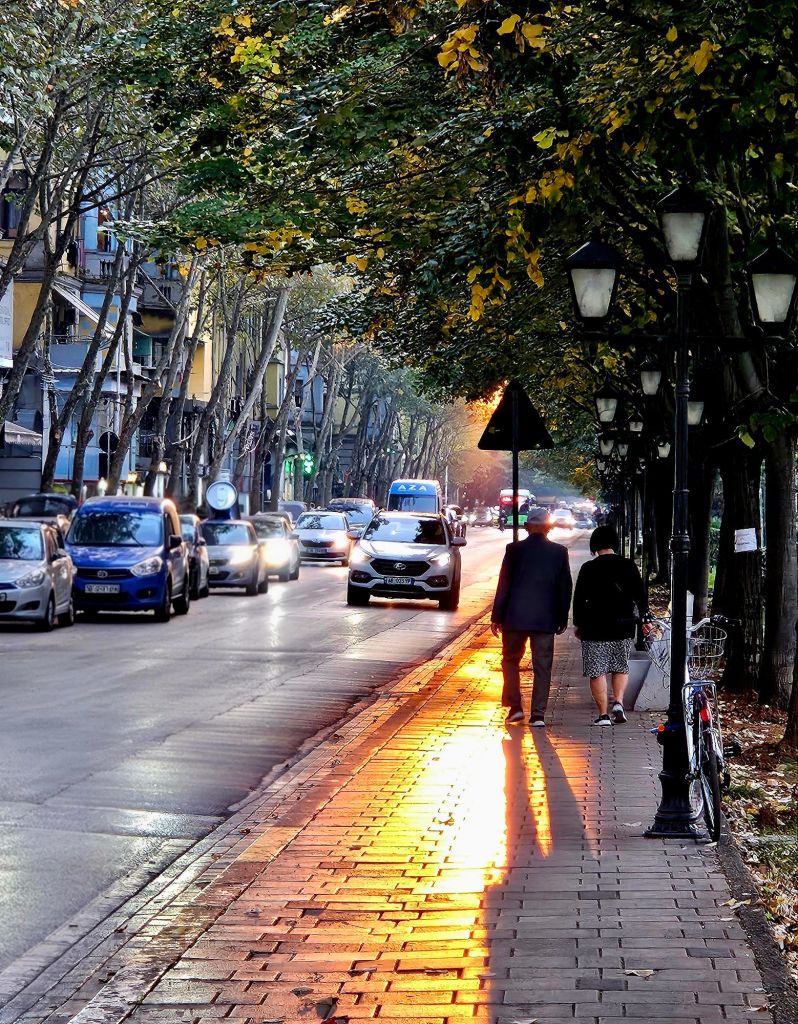
The light from the sun was really golden.
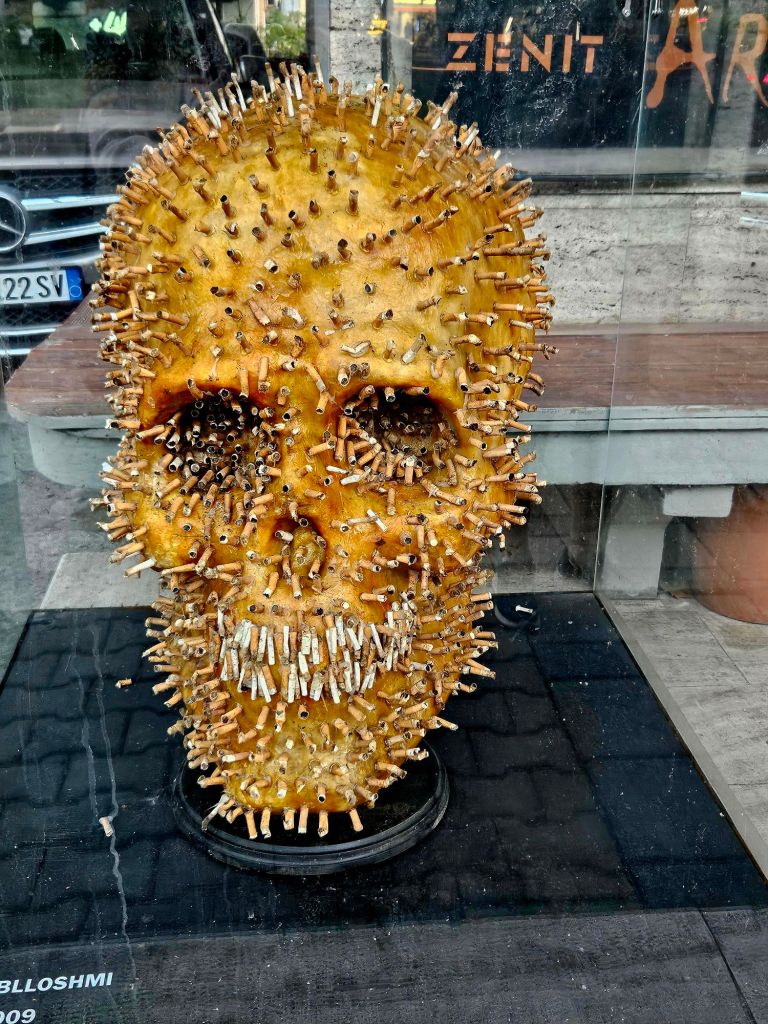
We passed a different type of sculpture not far from ours, obviously showing the harms of smoking.
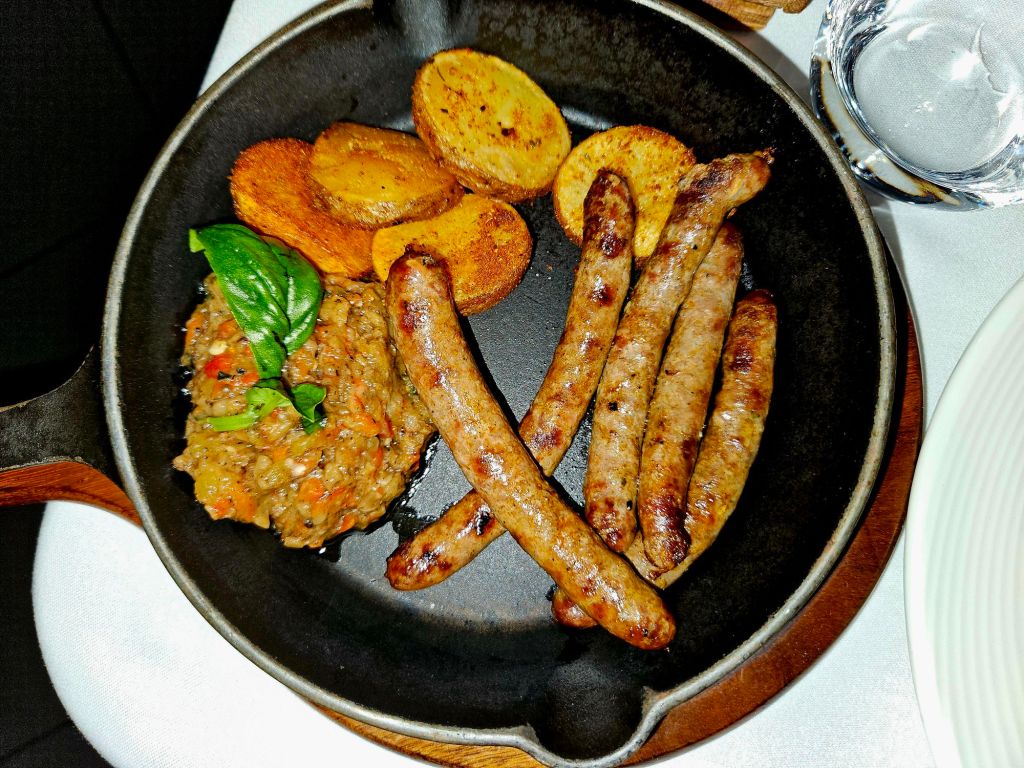
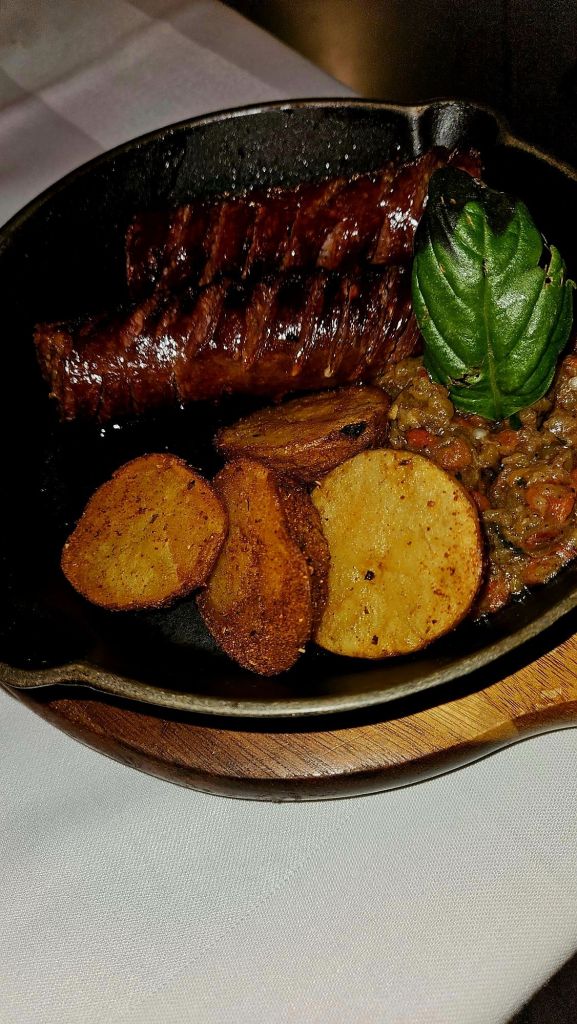
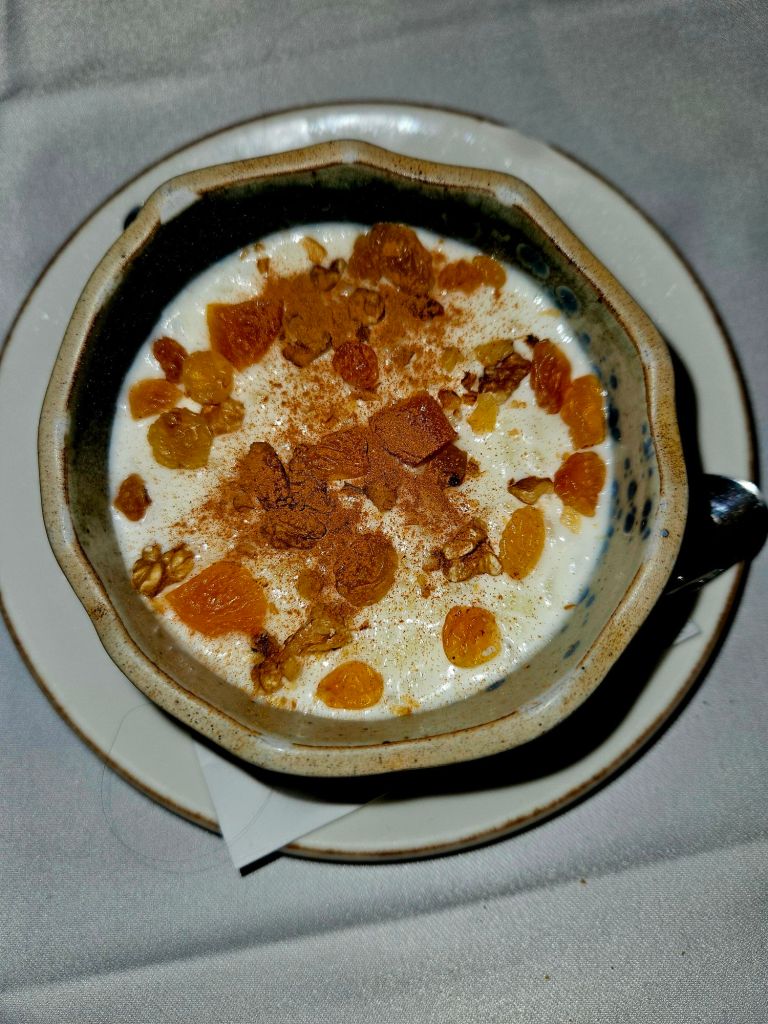
We went home, freshened up, and then headed out again. A nother restaurant that had been recommended was Era, so we decided to go there. The food was delicious. I had lamb sausage and Nicola tried Kosovo sausage. For dessert we shared a rice pudding – allegedly the most famous rice pudding in Albania. It was very creamy and tasty.
Very close to the restaurant was the football stadium and Albania were playing Jordan that evening. It was a friendly match and Albania won 4-2. As we were eating the match finished and there were drummers playing in the street and a lot of people milling around – it was a great atmosphere.
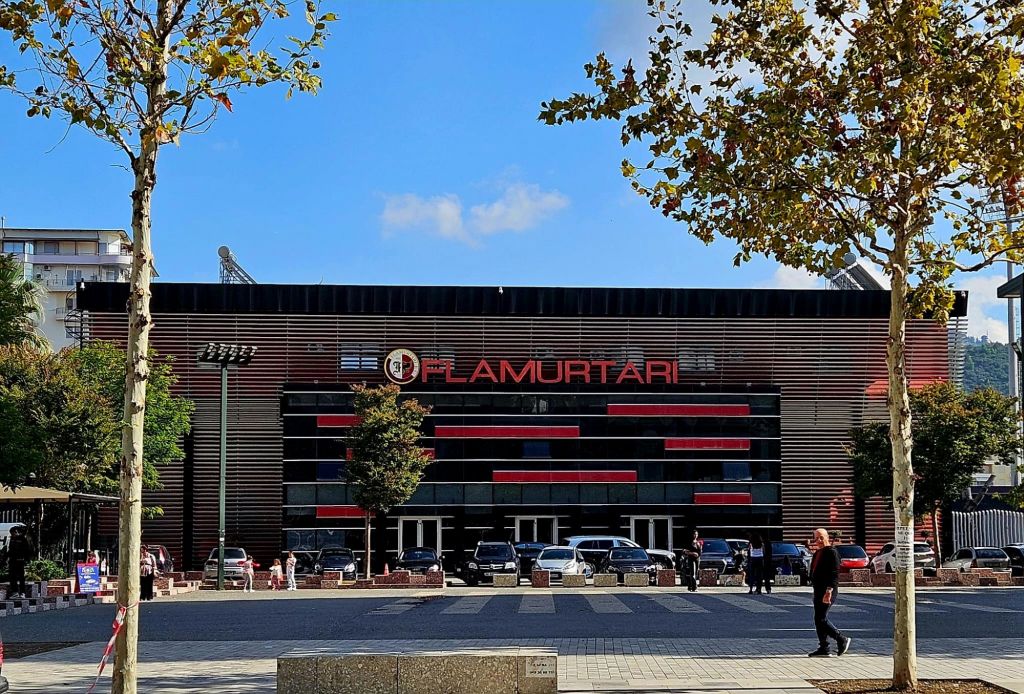
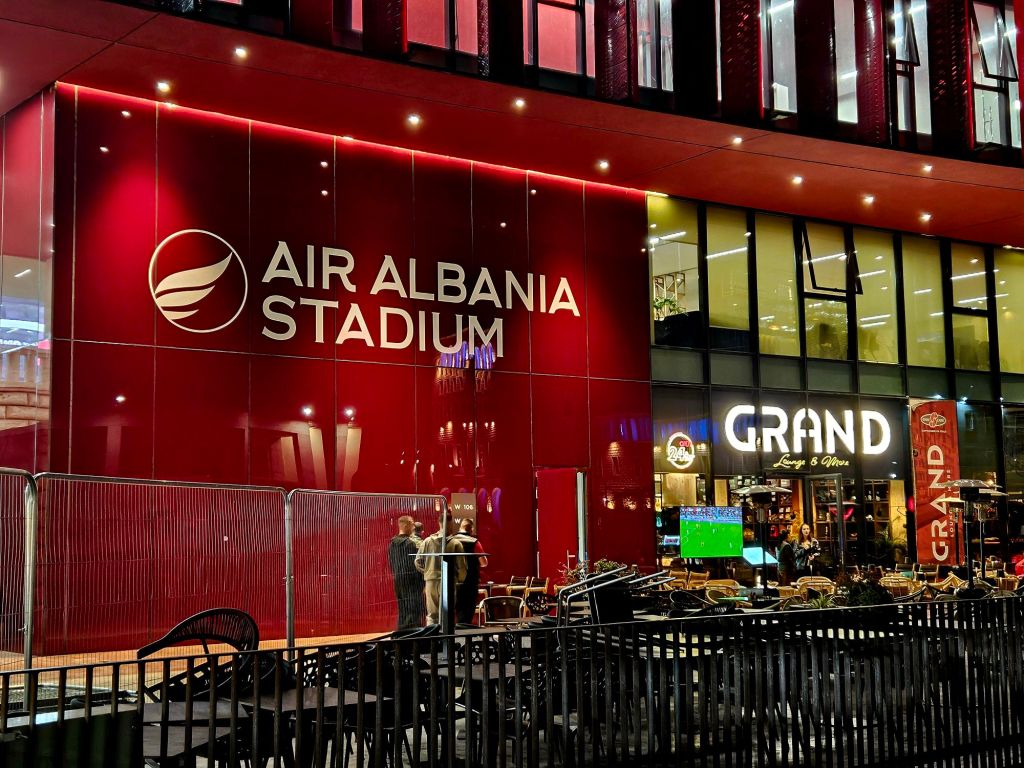
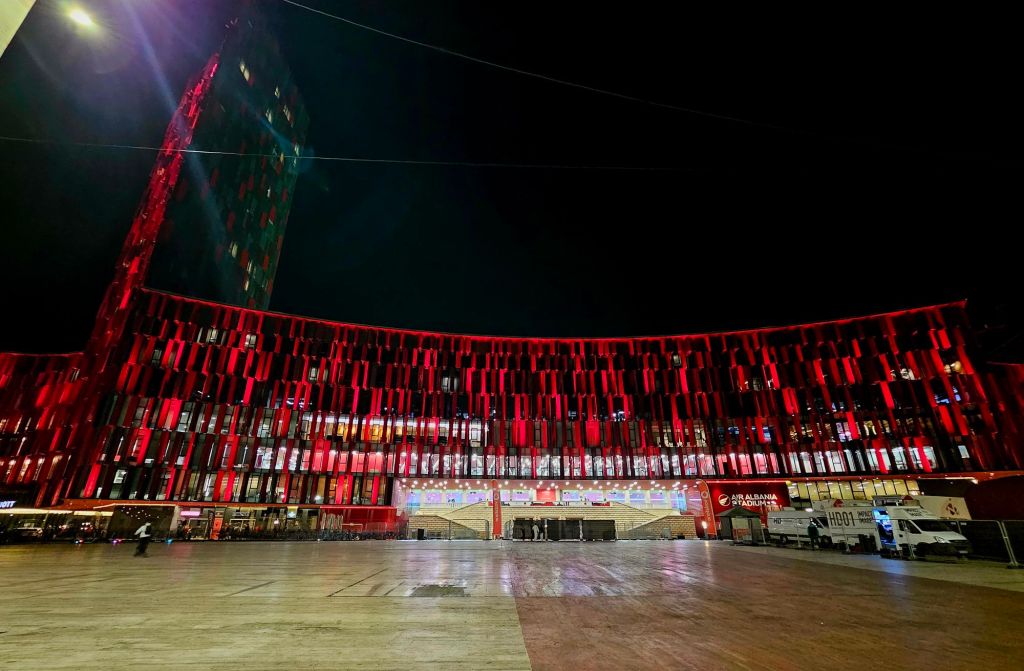
After dinner we walked over to the stadium, which was all lit up.
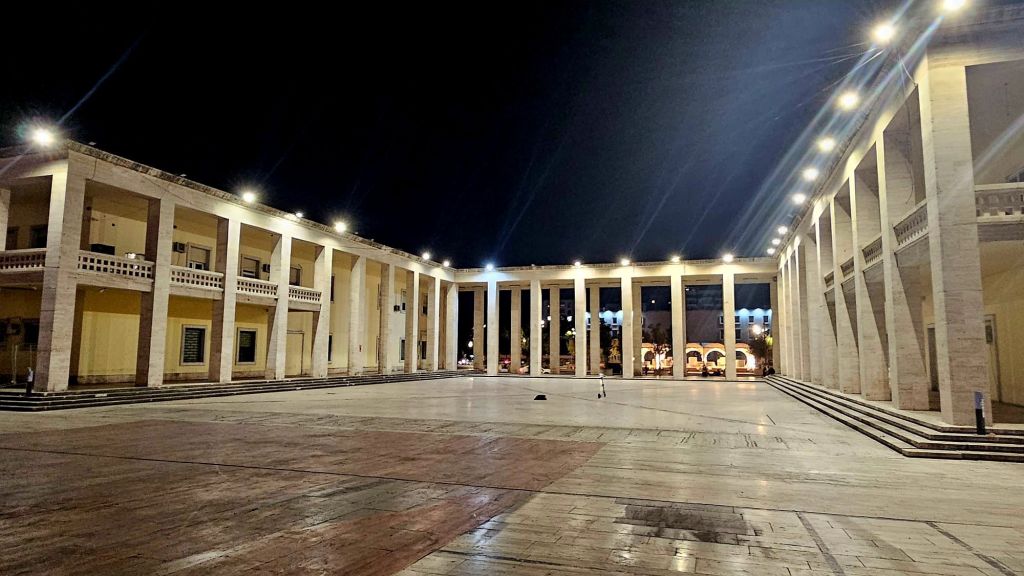
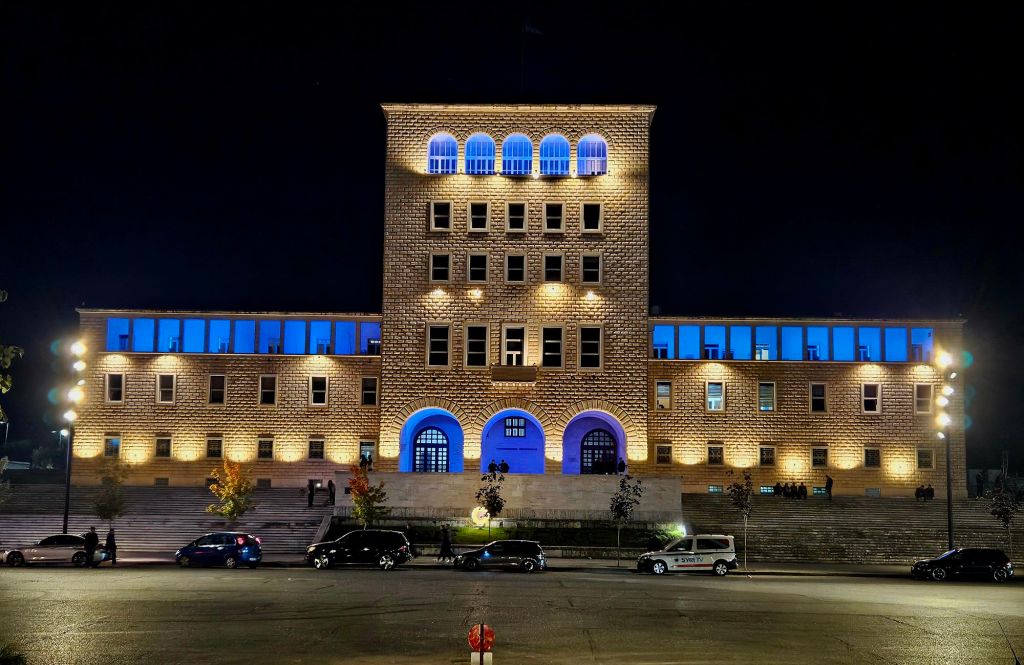
The stadium opened in 2019 and is built on what was known as Italia Square, which itself, was built in 1939. The square is huge and also has University buildings and the museum of archaeology surrounding it. After the fall of the Facist regime, the square was renamed Mother Theresa square.
There is also a large sculpture at one end of the square.
There was an outdoor seating area, which unfortunately was shut, but i can.imagine its quite lively when its open.
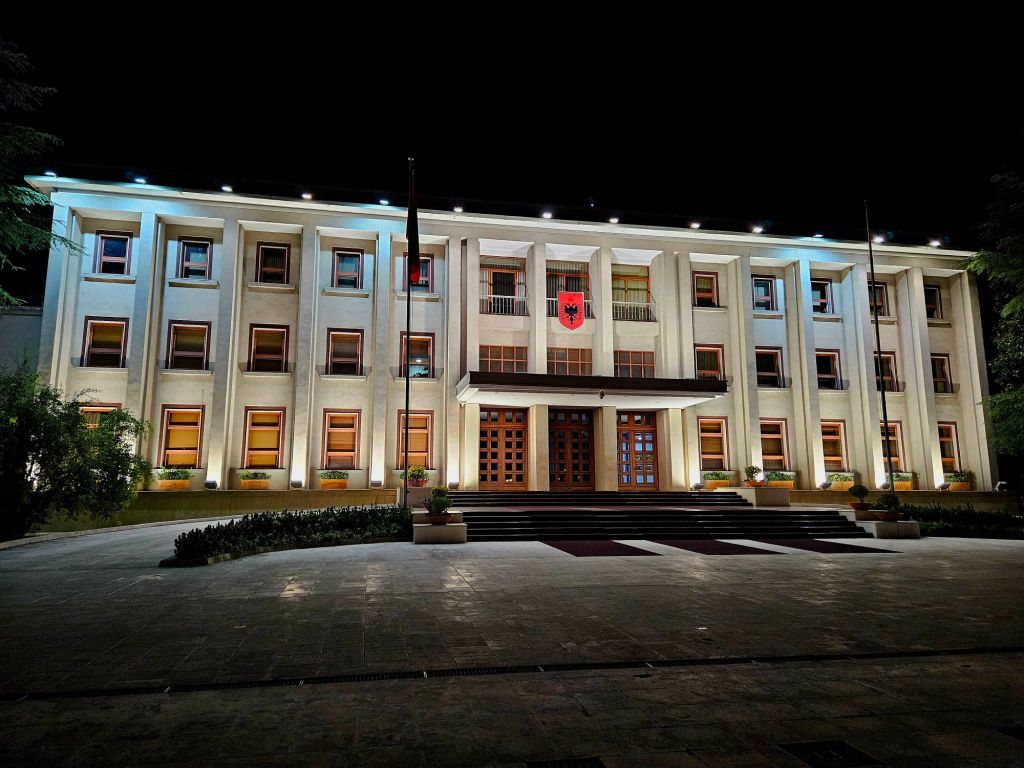
On the way home we passed the presidential palace which is the official residence of the president of Albania. The palace was originally commissioned by King Zig as a Royal residence. The palace was designed by Italian architects in 1936. However, with the 1939 Italian Fascist Invasion, King Zog fled Albania and never saw the palace completed. The palace was used as army headquarters and then as a royal palace for the Italian King Vittorio Emanuele III in 1941. It was used for Government receptions under communist rule and in 2013, President Bujar Nishani, claimed it as a presidential residence. The gardens of the palace extend for 200m.
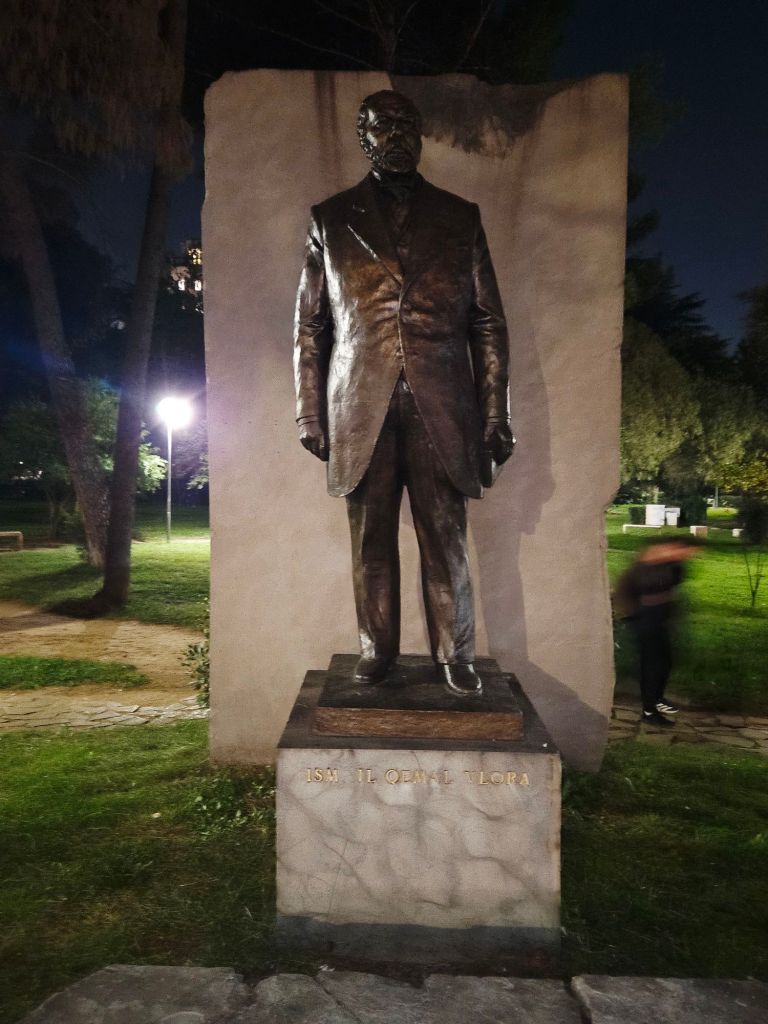
1Just down from here is a statue of Ismal Qemali who was the first Prime Minister of Albania from December 1912, until he resigned in January 1914. He is regarded as the founder of modern Albania and was the principal author if the Declaration of Independence. He died in exile in Italy in 1919.
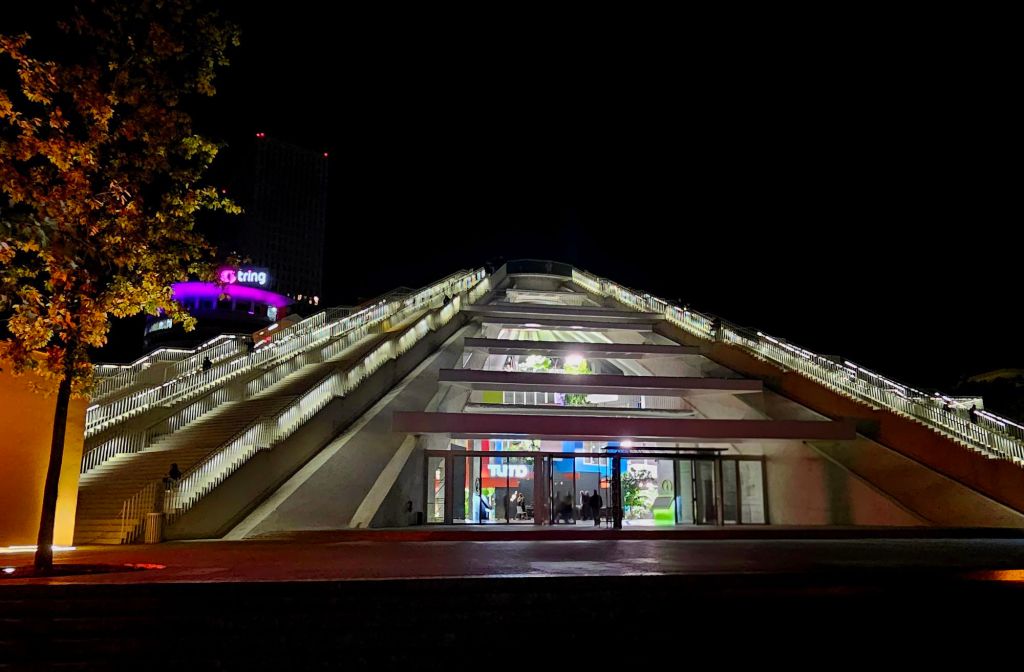
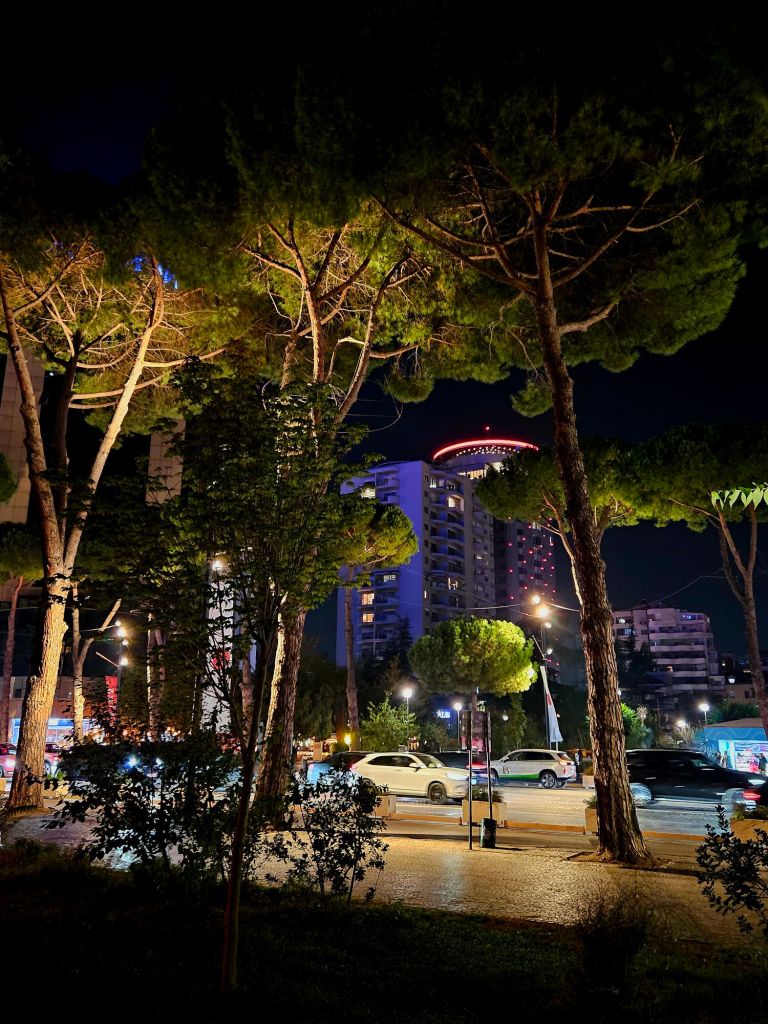
On the way home I took photos of the Pyramid and the Sky Tower lit up.
We woke up and had breakfast in the apartment. Nicola had bought some crackerbreads with her, so we had those on the balcony with a cup of tea. There wasn’t any coffee. It wasn’t the best view but it was nice and sunny.
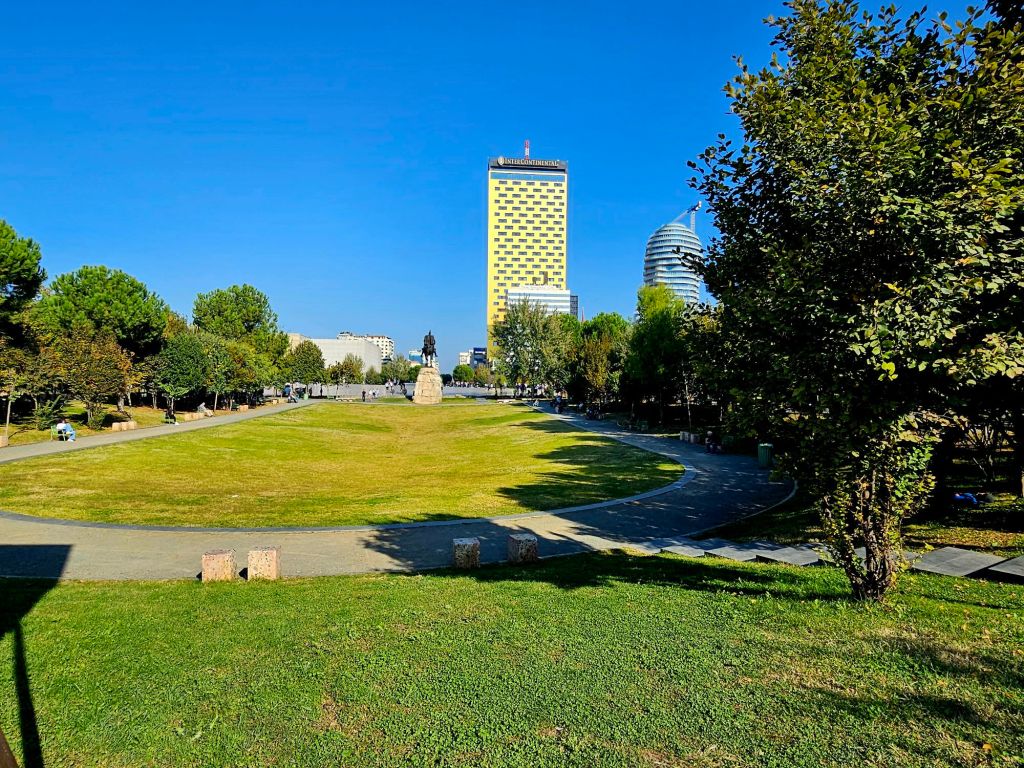
After breakfast, we headed out, walking through Rinia Park. This is one of the green open spaces in Tirana and was built in the 1950s, during the communist times. It was originally designed as an open space for the young people to go and was known as the Youth Park. After the fall of communism a number of bars and restaurants were built in the park, but during a revamp in the 2000s, many of these were taken down, and the park reseeded with grass.
There is a complex in the centre of the park called the Taiwan centre, which houses one of the few legal casinos in Albania. The construction of the Taiwan complex finished just when Albania’s communist regime broke relations with China. At that time, Albania recognized the sovereignty of Taiwan and named the new structure in the middle of Tirana in their support.
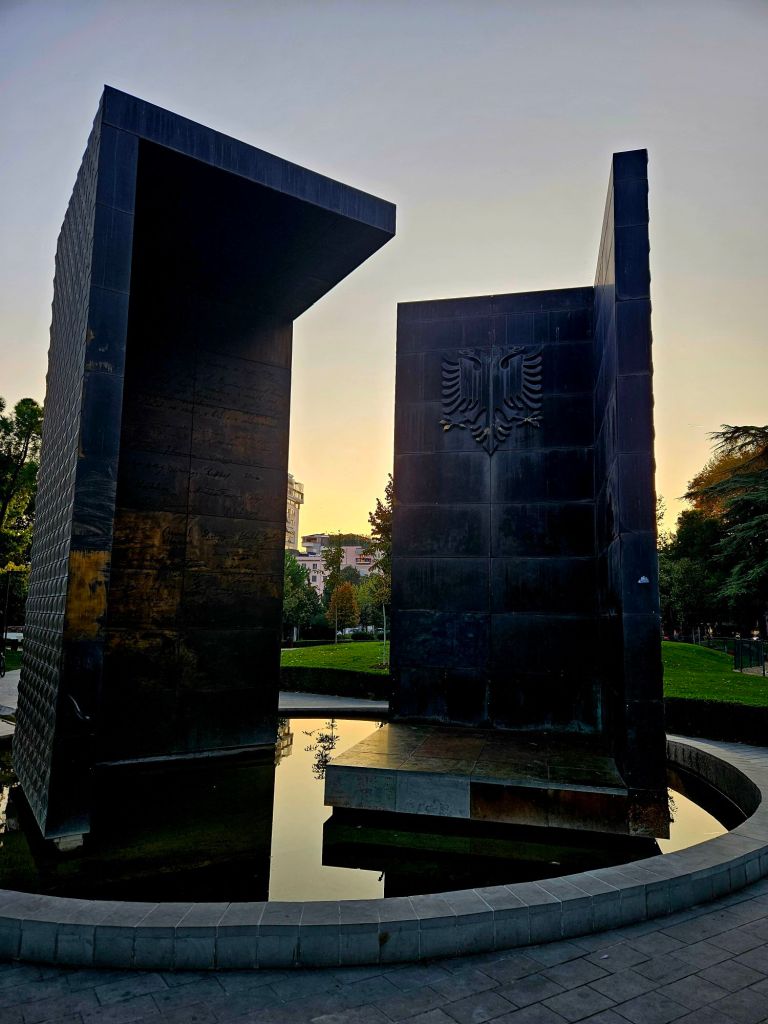
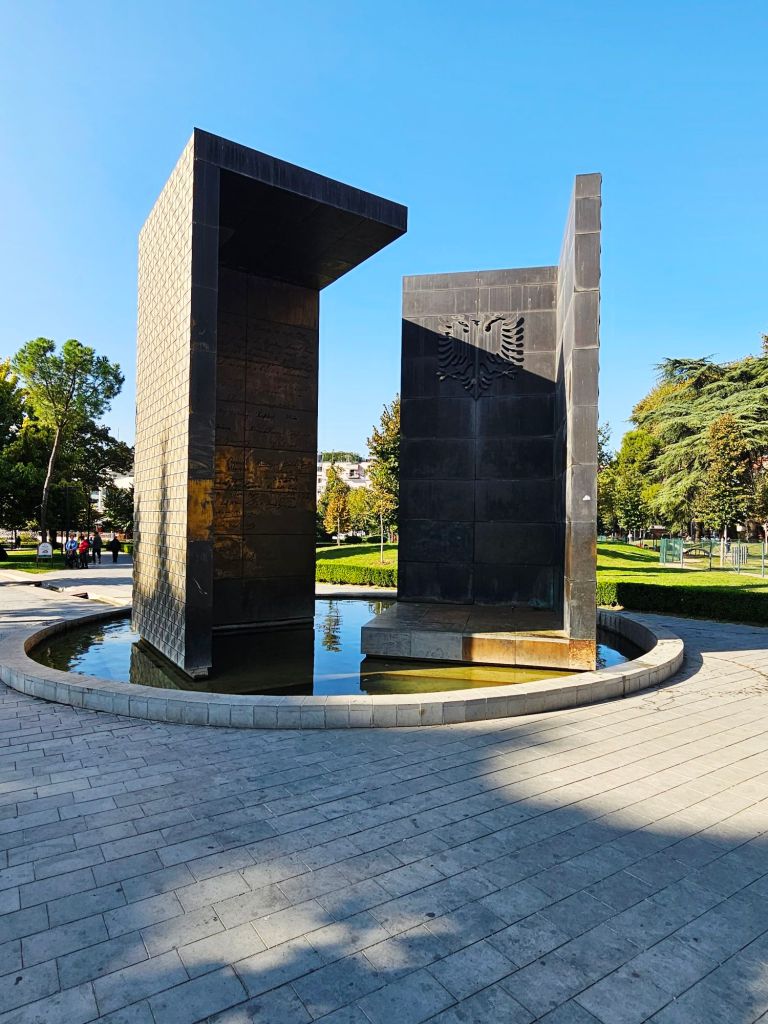
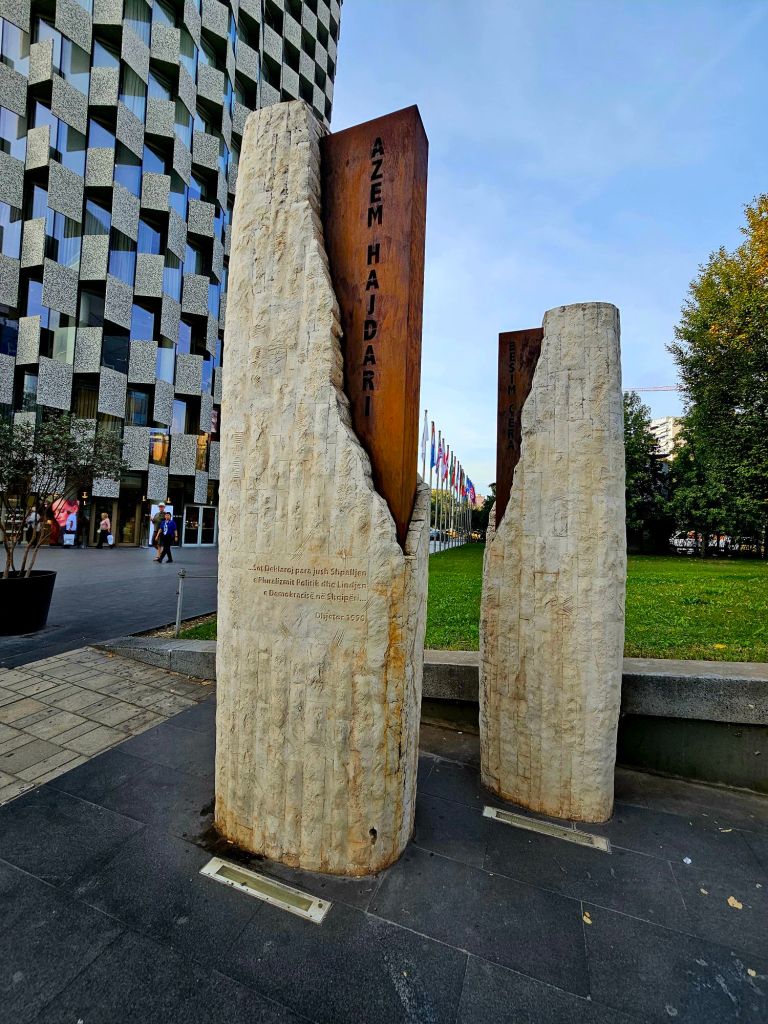
Towards one end of the park is the Independence Monument. This was established in 2012 to mark 100 years of Albanian independence. The monument’s design features two shapes that, when joined, form a rectangular tower. One part represents repression and isolation, while the other symbolizes freedom and independence.
We also walked past Europa Park, which is at the back of Skandenberg Square. This is another green space to enable people to come and relax in the city.
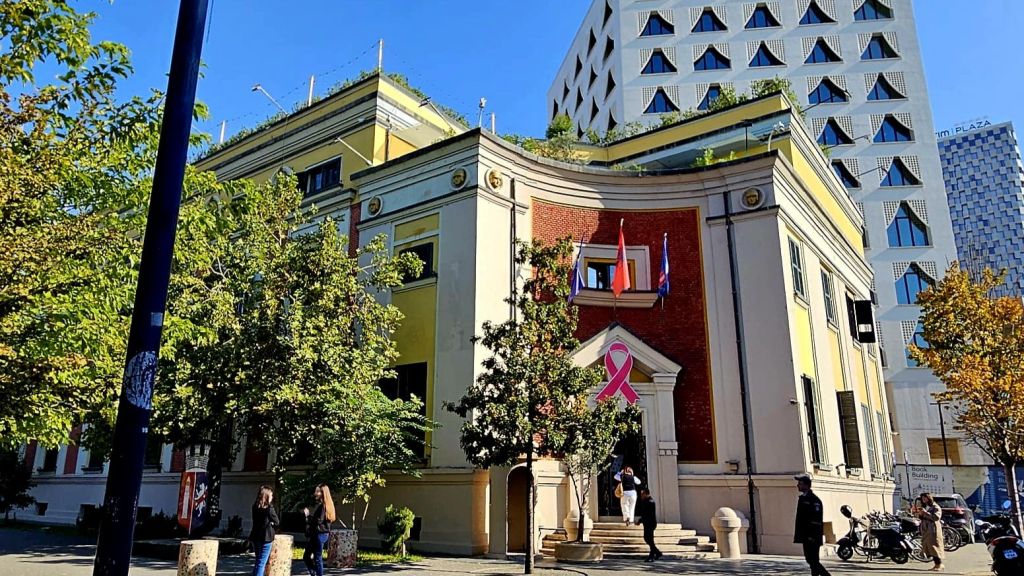
On our way into Skandenberg Square, we passed the City Hall. This is the headquarters of the Municipal Council in Tirana and the mayor’s office.
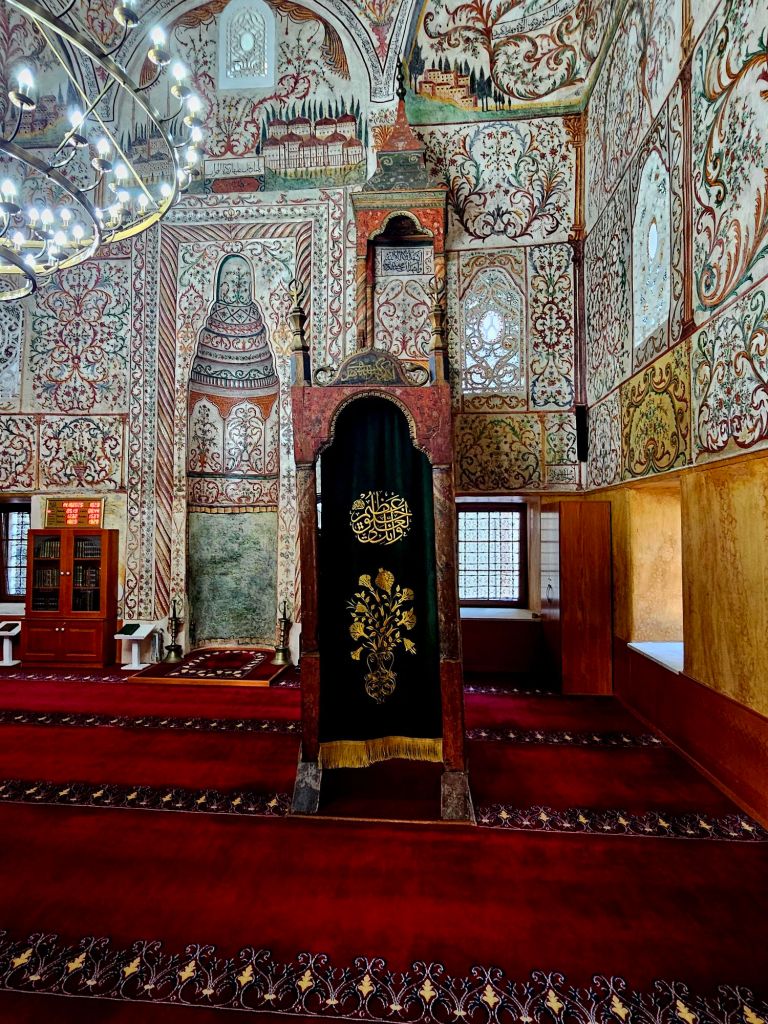
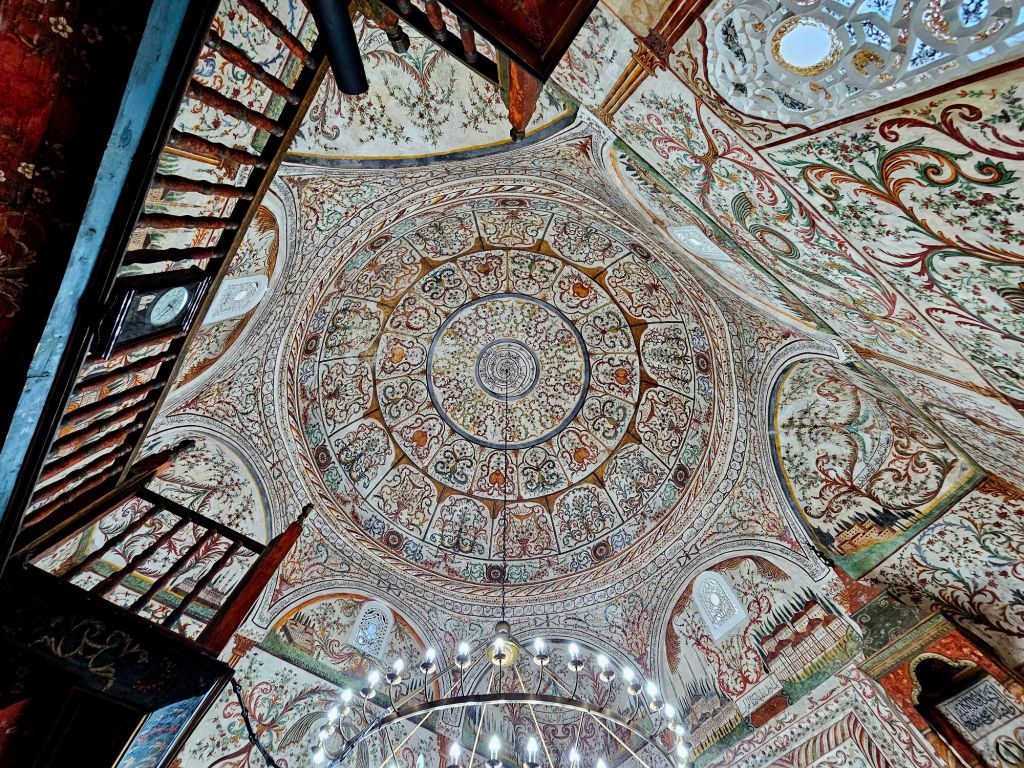
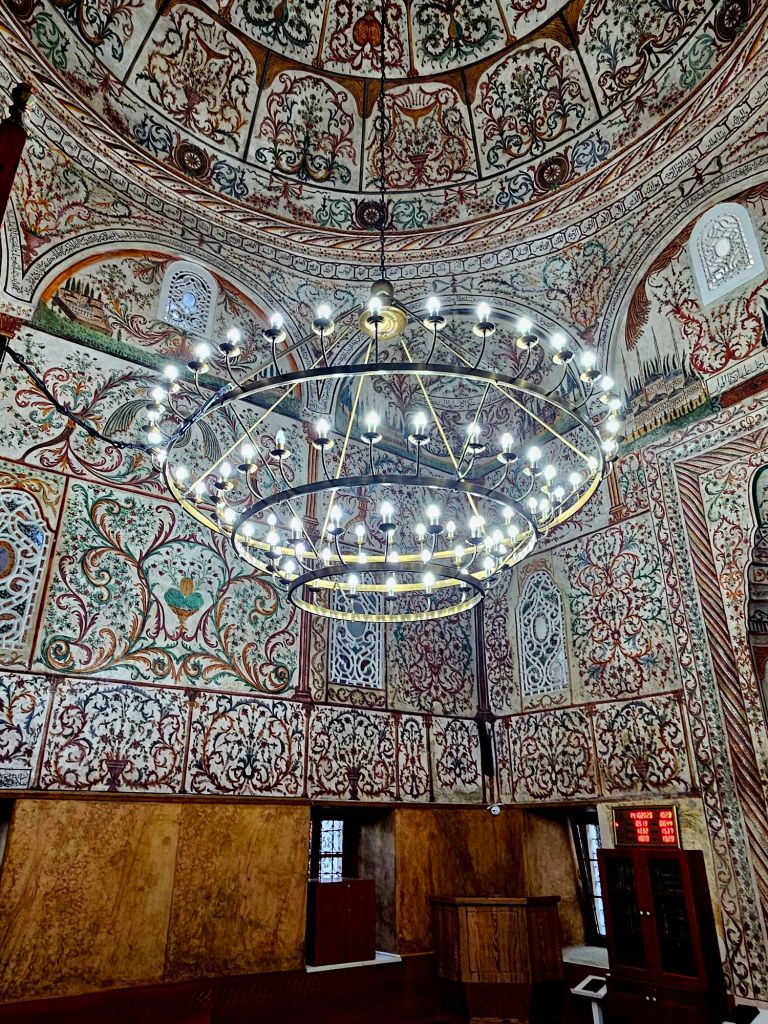
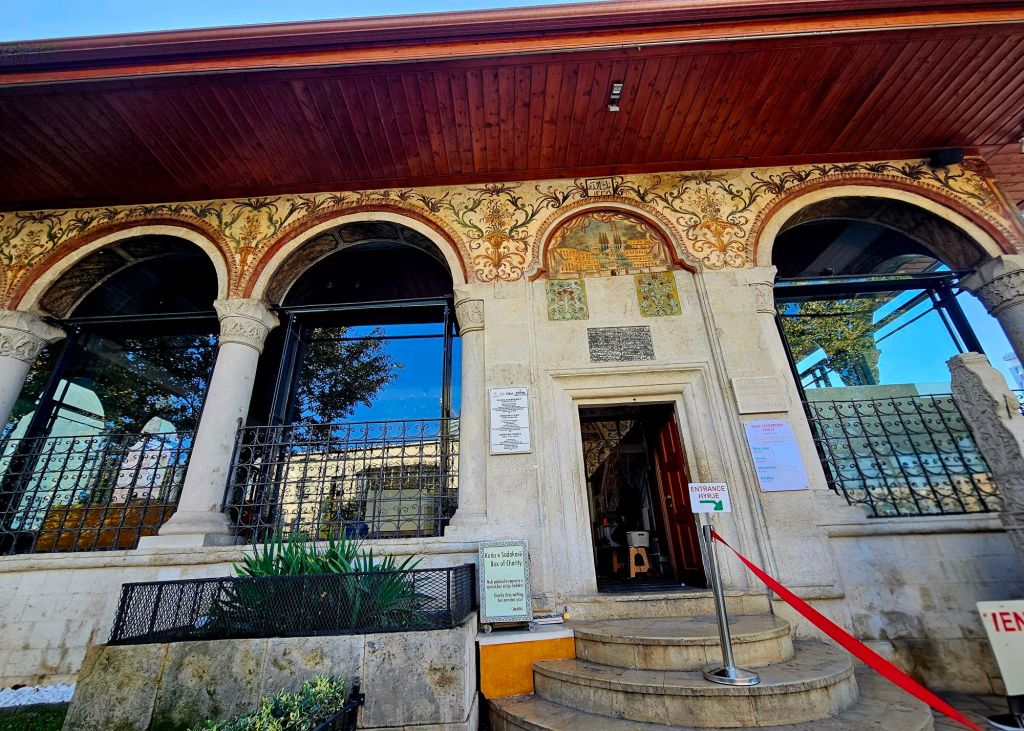
From here we came to Et’hem Bey Mosque and visitors were allowed to go in as it wasn’t a set prayer time. Construction of the mosque started in around 1791 and finished in 1824. When it was built it was part of a complex with 2 other mosques and a Bazaar. It was closed during the communist regime but in 1991, when the communist reign was about to fall, 10,000 people entered the mosque carrying flags. This was a milestone event, leading to the rebirth of religious freedom in Albania.
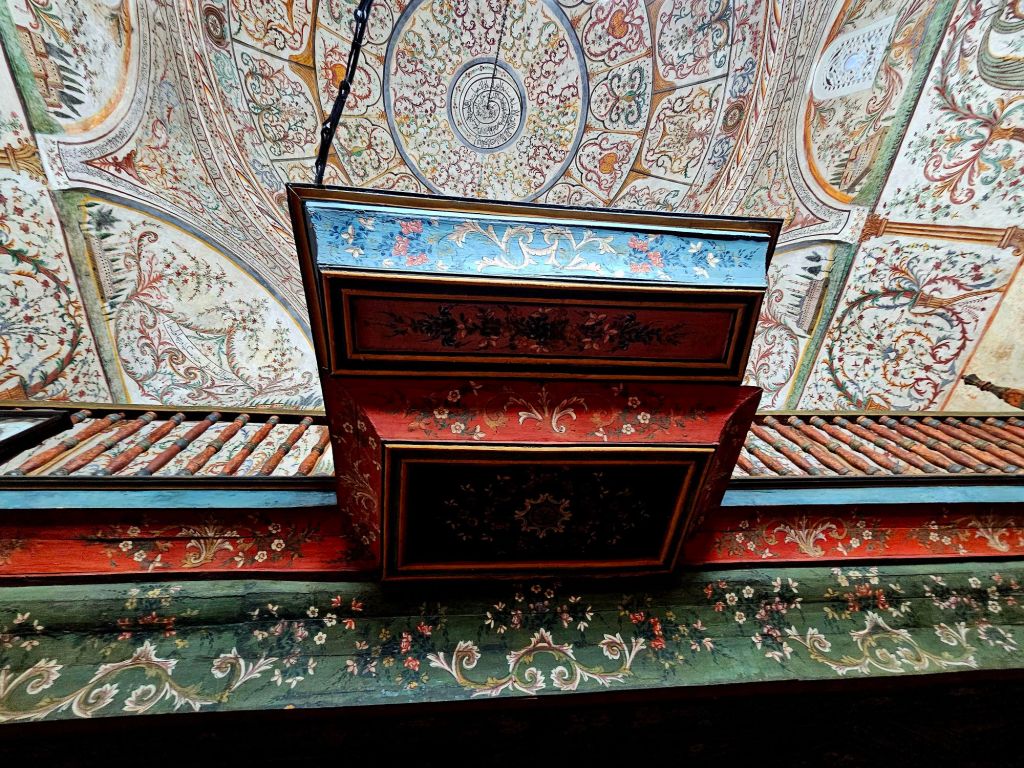
Inside the mosque is very ornate with frescoes of trees, waterfalls and bridges, still life paintings that are a rarity in Islamic art. It was a beautiful building.
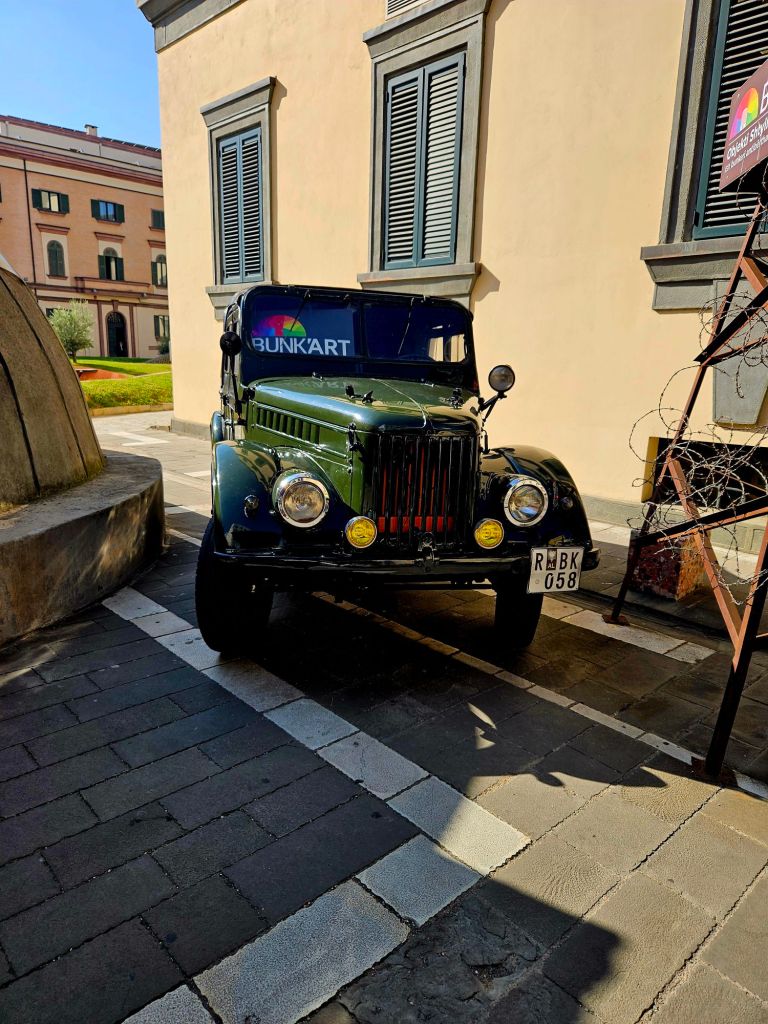
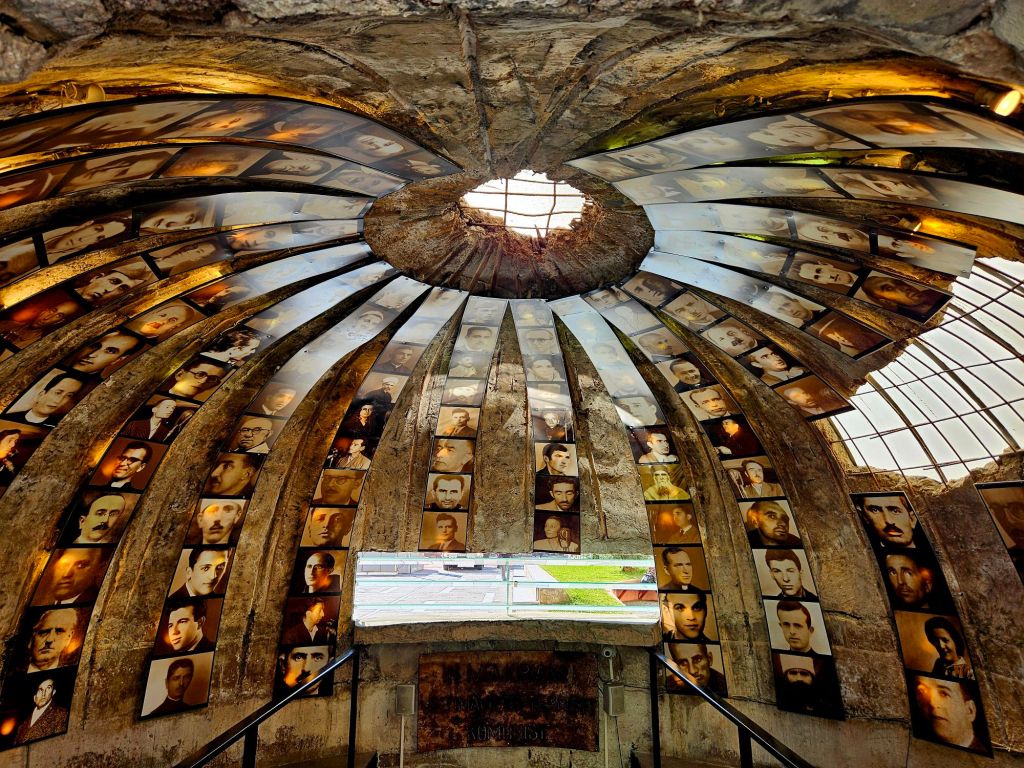
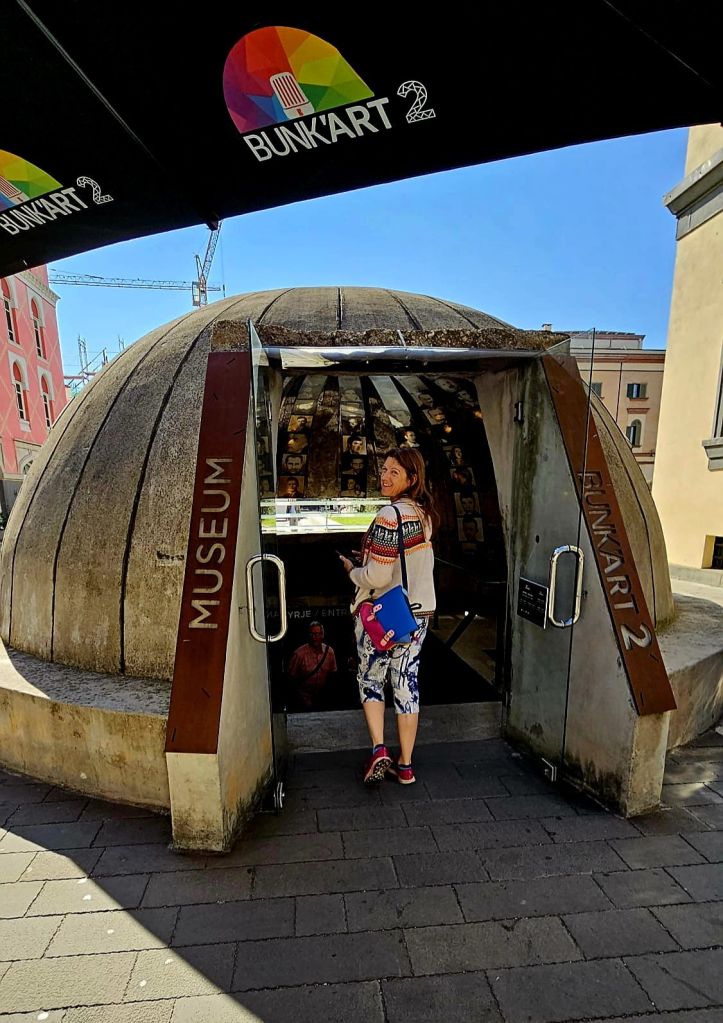
We walked over to BunkArt 2. This is a 1000m² cold war bunker and houses around 24 rooms, an apartment for the minister and a common hall. It was originally built for the Ministry of Internal Affairs and completed in 1986, a year after Enver Hoxha’s death.
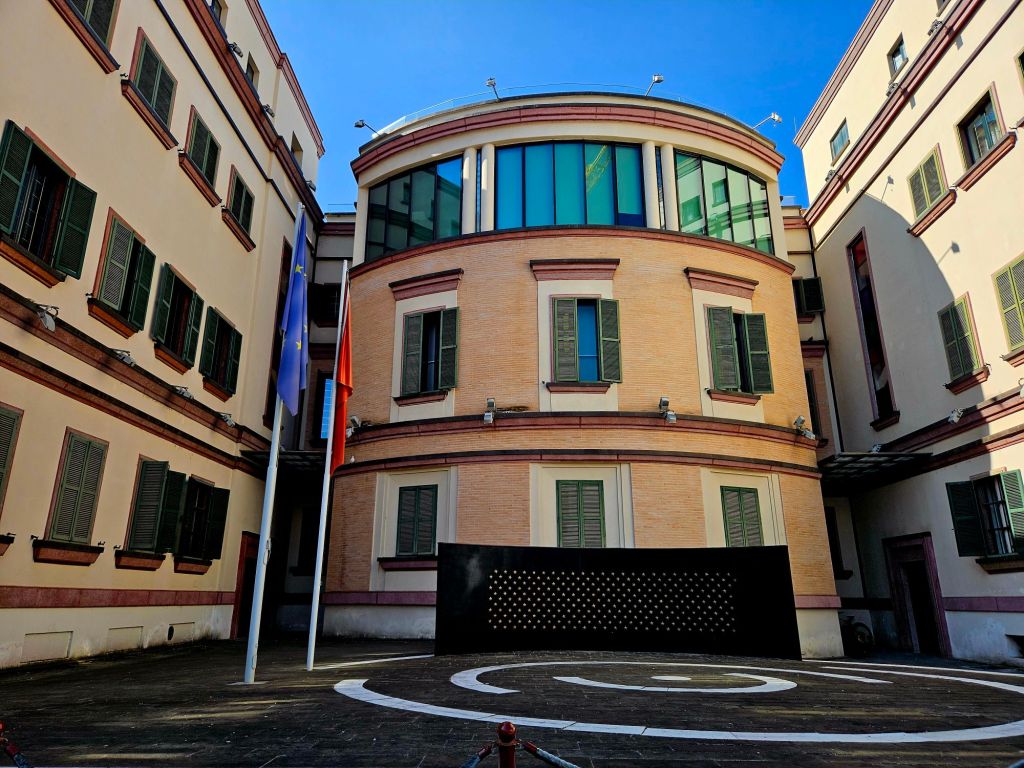
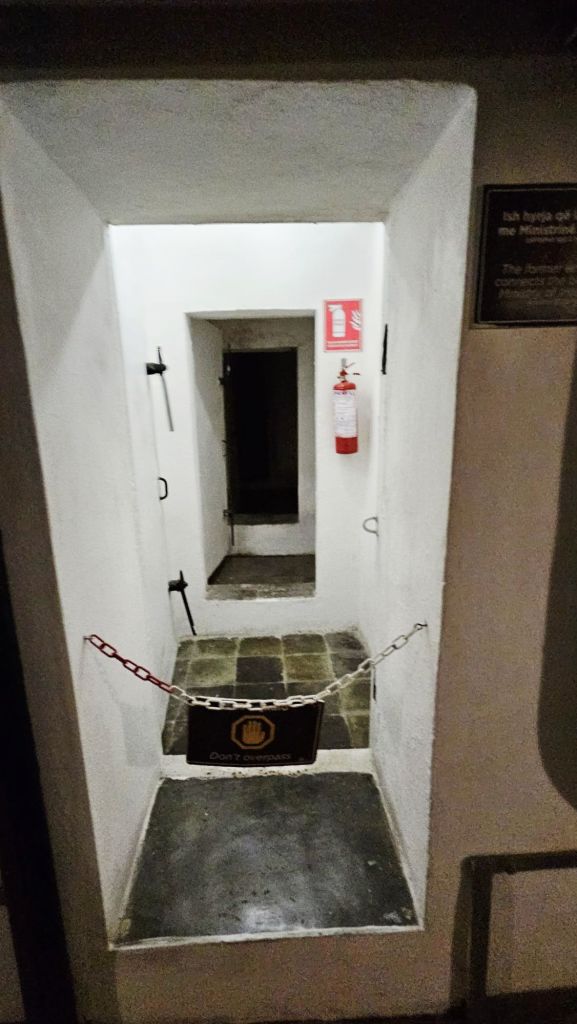
The original entrance to the bunker was inside the Ministry of Internal Affairs building.
It was never used, not even for training purposes. It was reopened as a museum in 2016 and focuses on the police system in Albania in general and the reign of repression and control by the Sigurimi in particular. The Sigurimi were the secret surveillance agency during Hoxha’s regime.
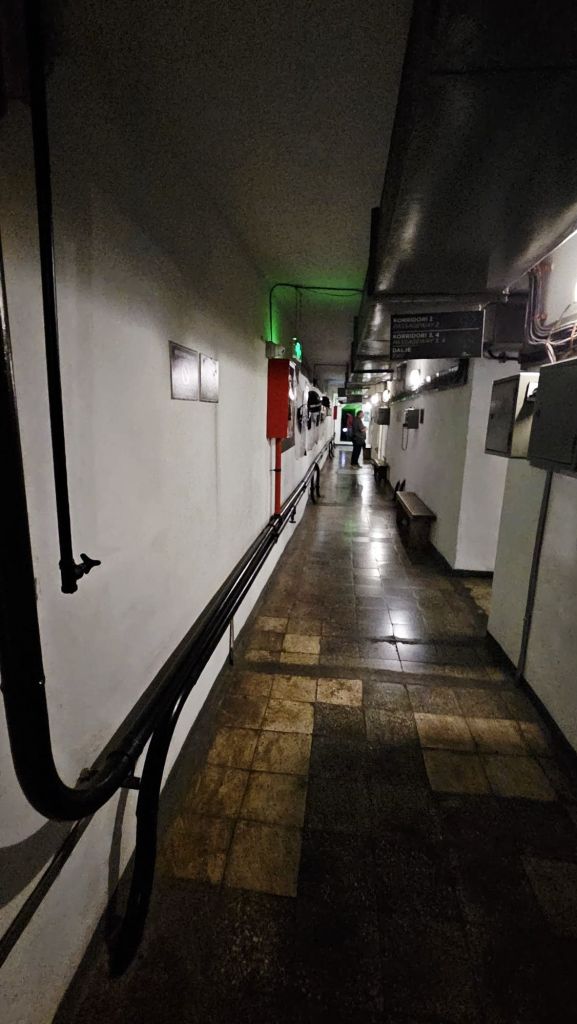
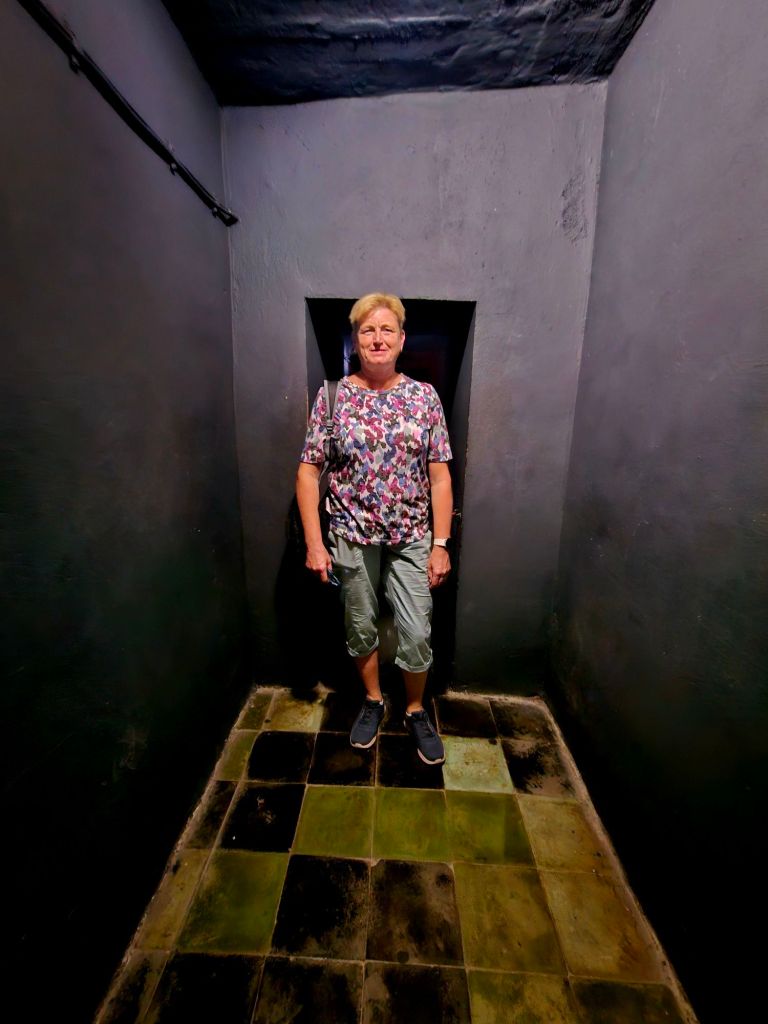
There is a huge amount of history to absorb as you walk through the bunker. The corridors are quite narrow and the ceilings are low. Once the internal spaces were built, the roof was topped with a layer of reinforced concrete up to 240cm thick.
The exhibition begins long before the Sigurimi came into being, namely at independence of Albania in 1912 and the years of the kingdom (1925-1939). So it starts with the “gendarmerie” and police before the communist era.
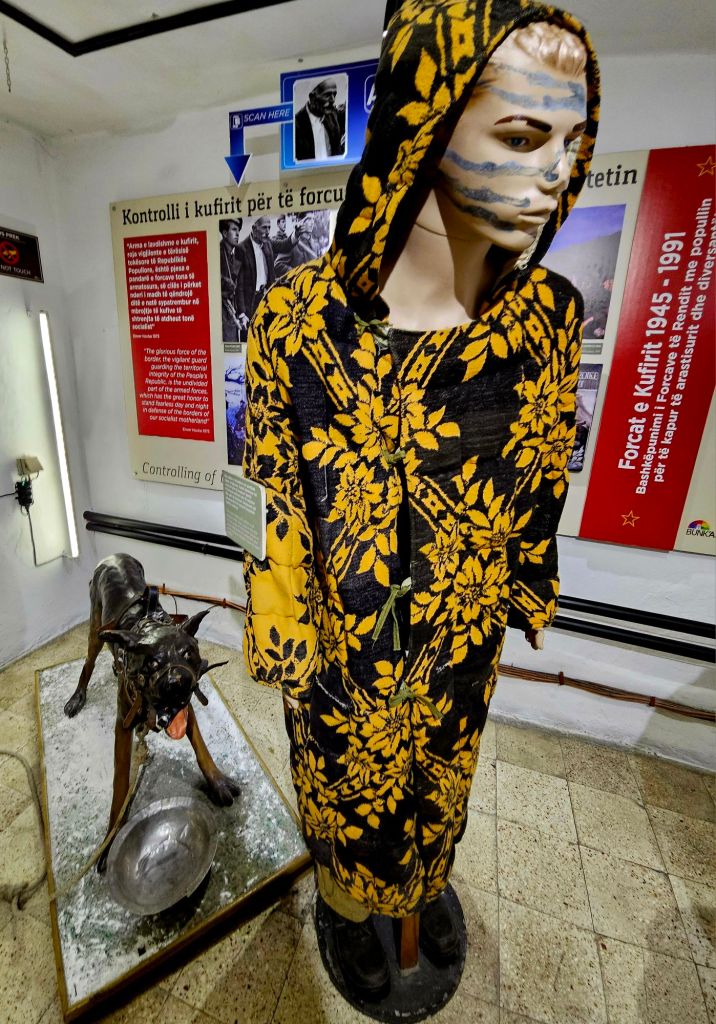
From 1945 to 1991, the Border Forces were part of the Ministry of Internal Affairs. As in other communist countries, citizens were not allowed to leave the country and attempting to flee was one of the worst “crimes” in the eyes of the regime. Therefore, the border was tightly controlled and fortified. Trying to flee was a crime punishable by death. There was an exhibit of a border force policeman and dog. The coats were used when training the dogs to attack people trying to escape.
Between 1944 -1991 over 6,000 people were executed in Albania – with or without a court order, mainly by shooting or hanging. Many political prisoners also died in prison or labour camps. The death penalty was only abolished in Albania in 1995.
The early history of the Sigurimi secret surveillance and espionage agency is elaborated on, including the ironic fact that the first head of the Sigurimi, the especially brutal Koçi Xoxe became victim of the regime himself, when he was tried as a traitor and executed. His successor was one Mehmet Shehu, who would become Prime Minister and the “right hand” of Enver Hoxha, only to fall out with Hoxha and losing his life under dubious circumstances in 1981. His death is recorded as suicide.
Another room is about the political prisoners and labour camps. From 1946 -1950 there were 20 Labour camps but this increased to 110 camps by 1990. The prisoners built many of the public buildings across Albania. They were forced to work and often lived in inhumane conditions. They often died from hunger, disease or exhaustion. It is believed that there were around 32,000 political prisoners in Albania. This system seemed to be quite similar to equivalent methods employed by the East German Stasi. Another similarity is the way in which both the Stasi and the Sigurimi tried to destroy documents and other evidence of their doings when the fall of communism came.
The system of informers, or “collaborators”, is detailed too, with some personal files on display. The Sigurimi used secret photos, videos and audio recordings as part of their surveillance. This included a range of ‘bugs’. The Sigurimi also listened in to telephone conversations.
One section focuses on the use of torture in interrogations by the Sigurimi. A large panel lists an excruciatingly long list of the various methods employed
You can also see the original suite for the Minister of the Interior with its wood-panelled anteroom, the main meeting room, and the Minister’s bedroom. And on the wall of the meeting room hang portraits of all the Interior Ministers of the communist period.
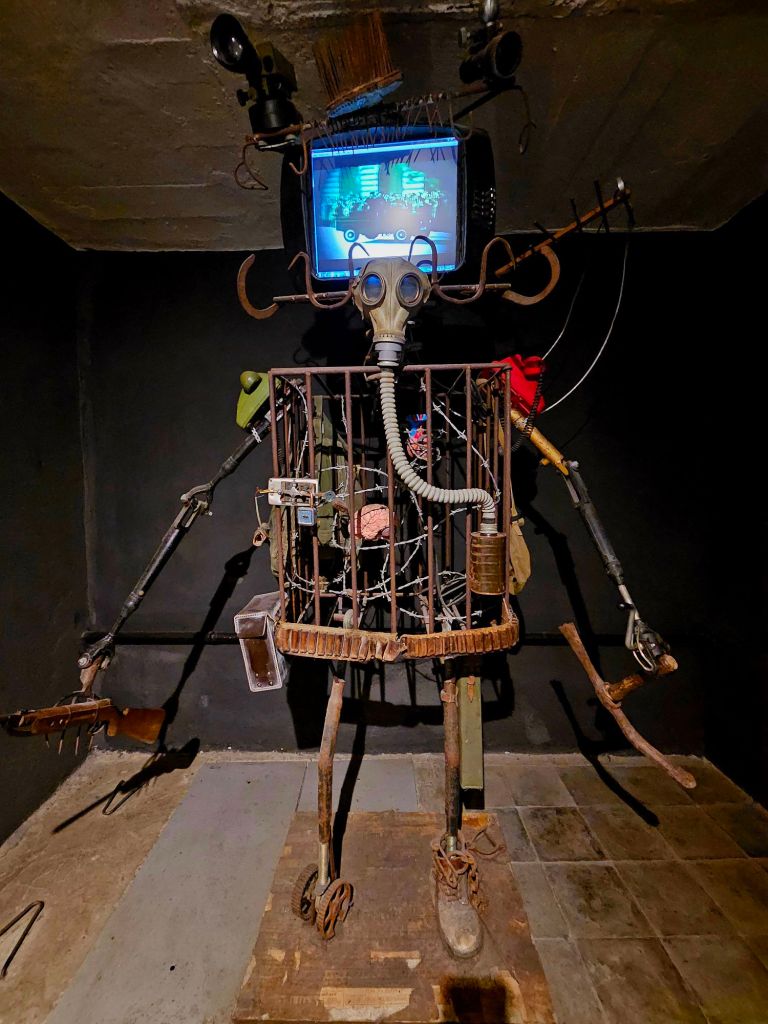
There is an art installation, a large robot-like sculpture assembled from various items such as a cage for the torso, a TV monitor for the head, a gas mask for a nose, telephones for shoulder pads, and metal arms that hold a pickaxe on the left and a rifle in the right hand, which ia an allusion to a Sigurimi slogan from the communist days.
It was definitely worth a visit and I learnt a lot about the history of Albania.
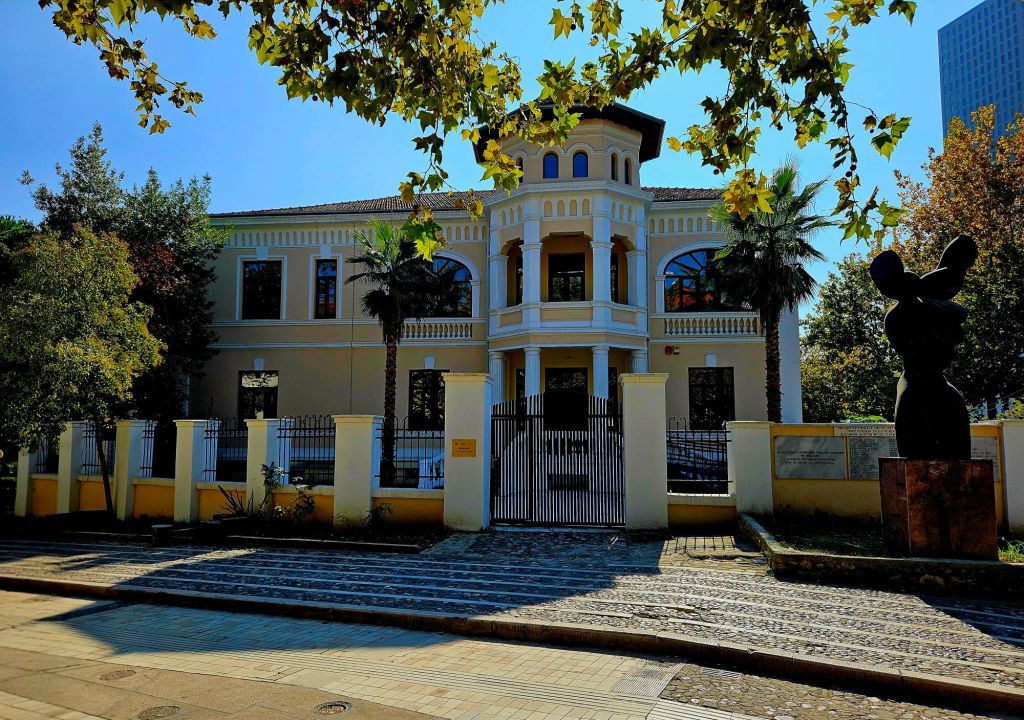
On exiting we walked past the building “The Institute for the Formally Politically Persecuted”. The building was originally built in the 1930s as the Italian Embassy. The Institute is part of the Albanian government with responsibility for granting financial compensation to former political prisoners of the communist regime and to family members of those executed or interned at concentration camps.
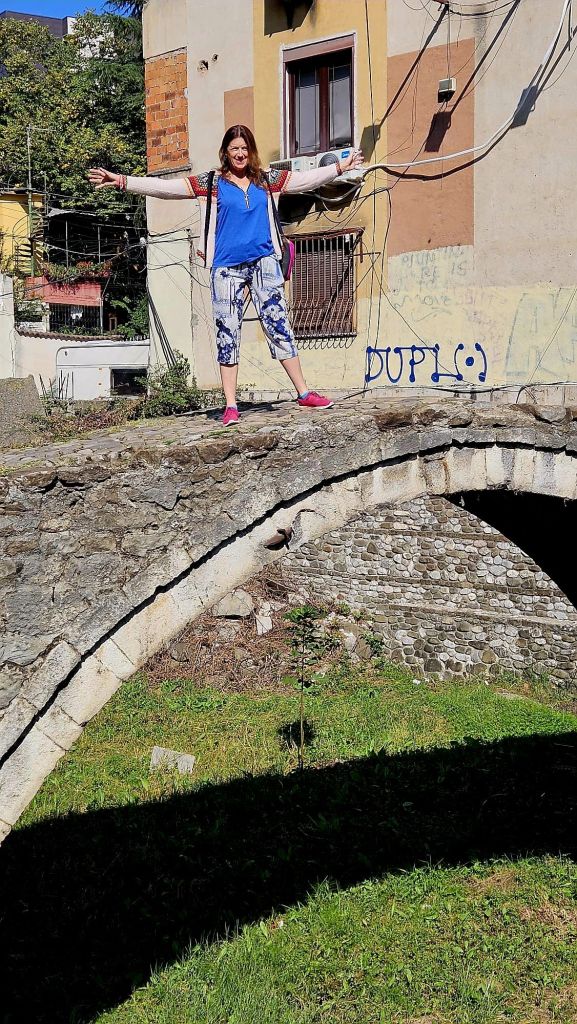
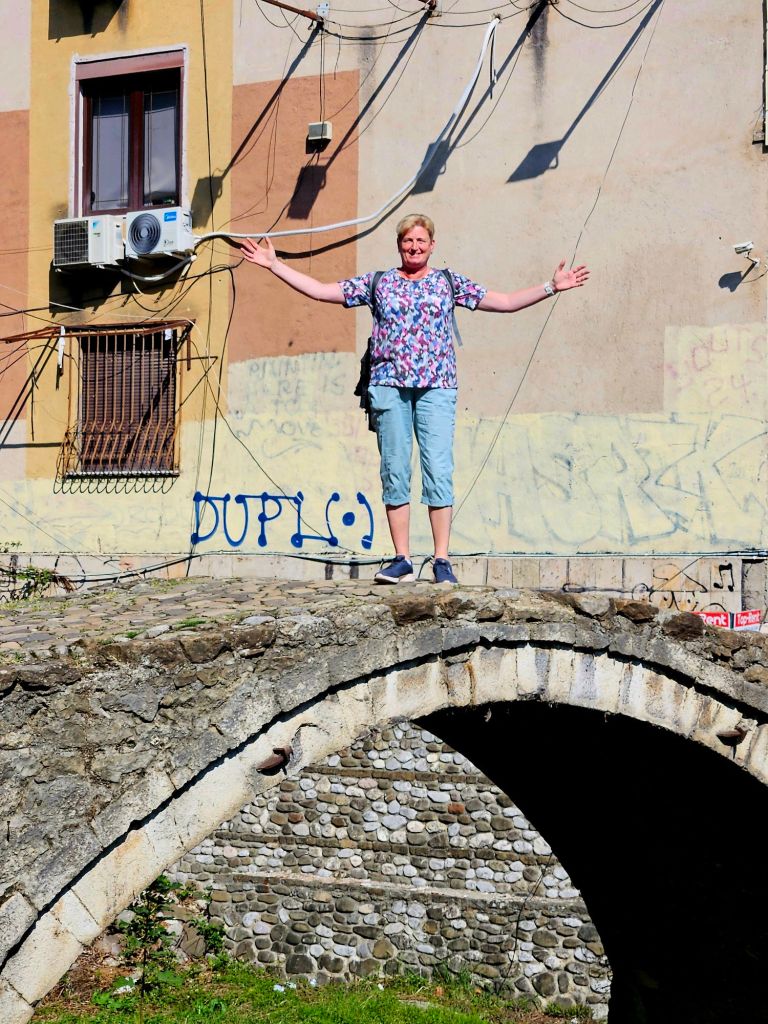
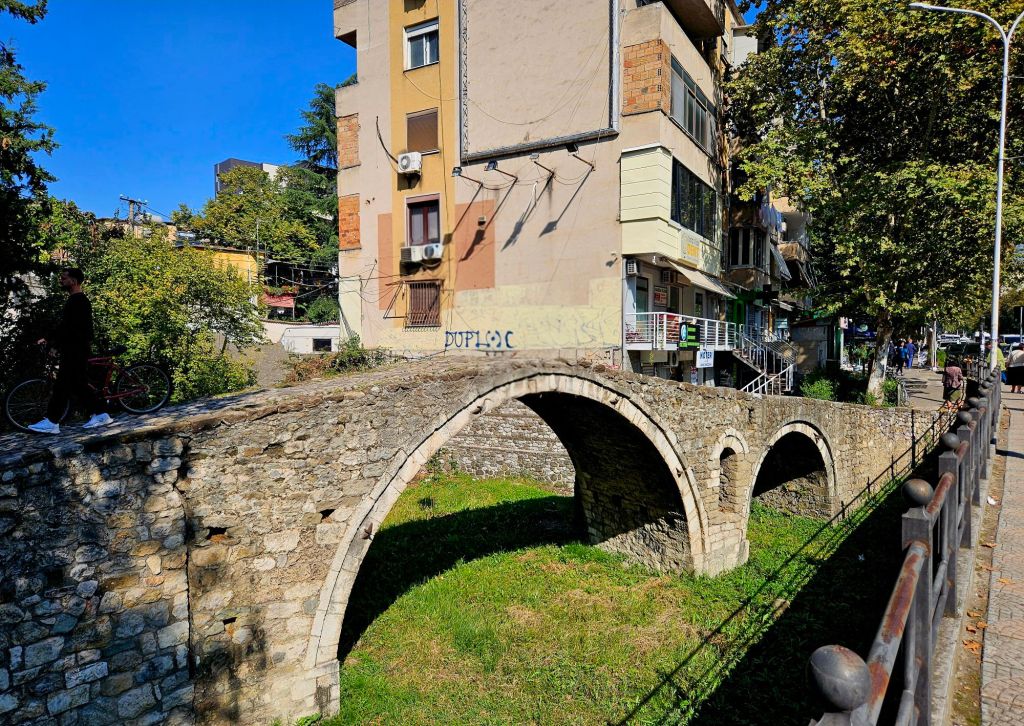
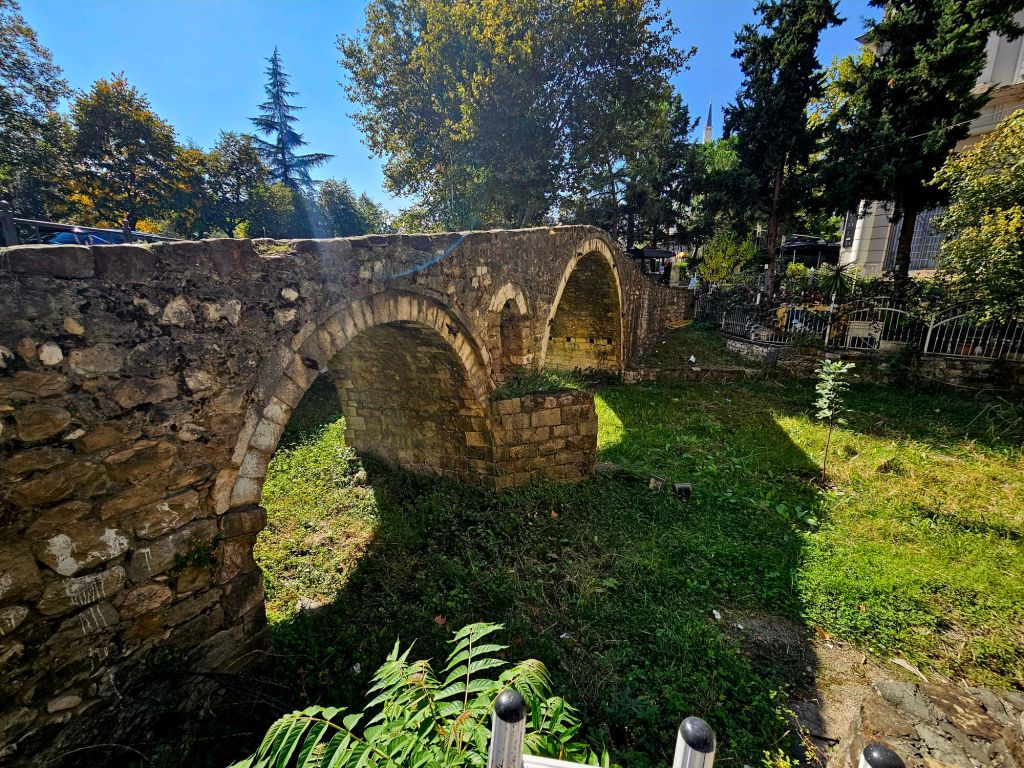
We walked on down to Tanner’s Bridge. This is an 18th century stone footbridge, built during the Ottoman period. It linked Tirana with the eastern highlands and was the way in which livestock, raw hides and produce were bought into the city. The hides were destined for the tanner shops nearby.
It fell into disrepair in the 1930s and was rebuilt in the 1990s. The bridge used to cross the Lana stream, but this was diverted in the 1930s. The bridge was quite slippy to walk on as the stones were very smooth.
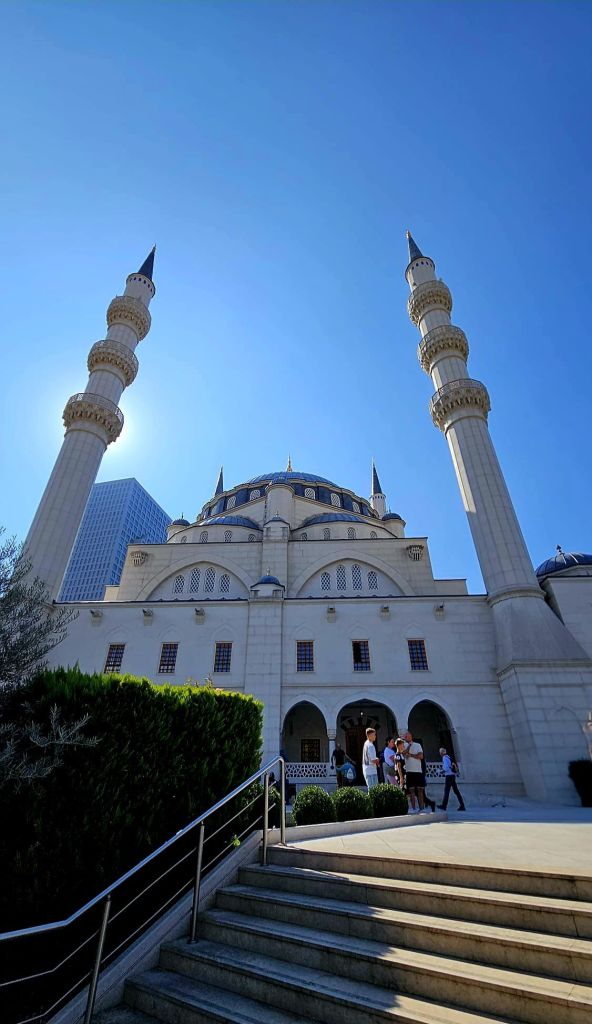
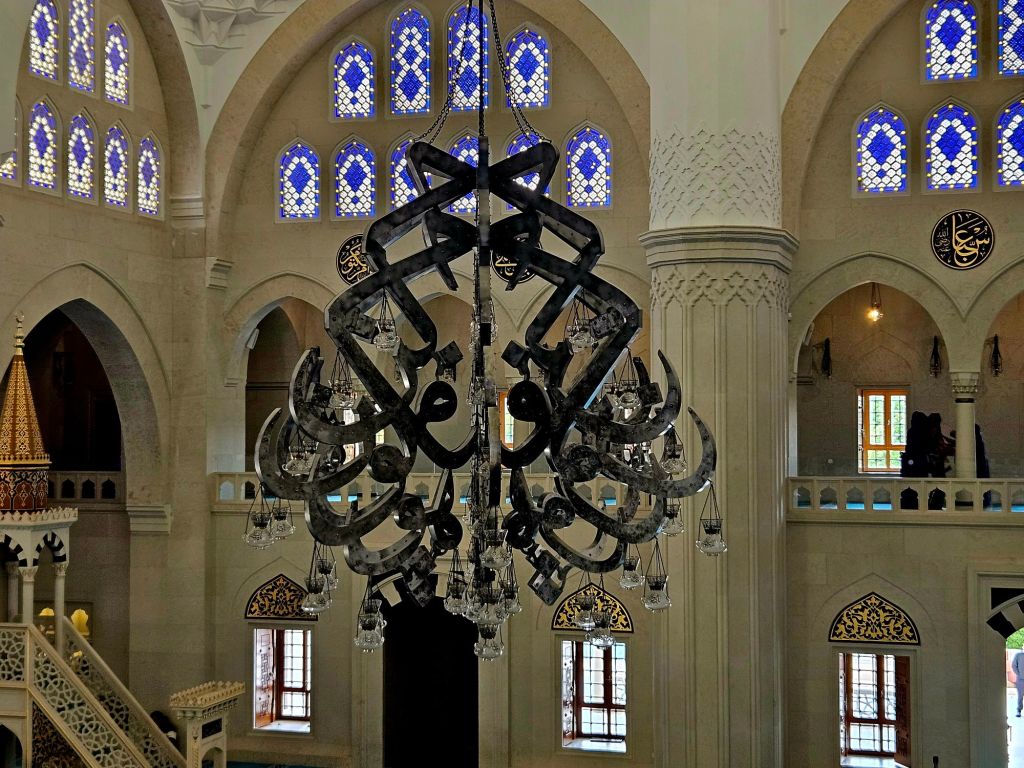
A short walk from here was the Great Mosque or Namazgah mosque. The decision to build the mosque was take in 2010, as many.mosques had been destroyed during the communist regime and Muslims didn’t have enough space to worship. Construction began in 2015 and the mosque opened in 2024. The mosque is the largest in the Balkans and has capacity for 10,000 people. Turkey funded the majority of the build.
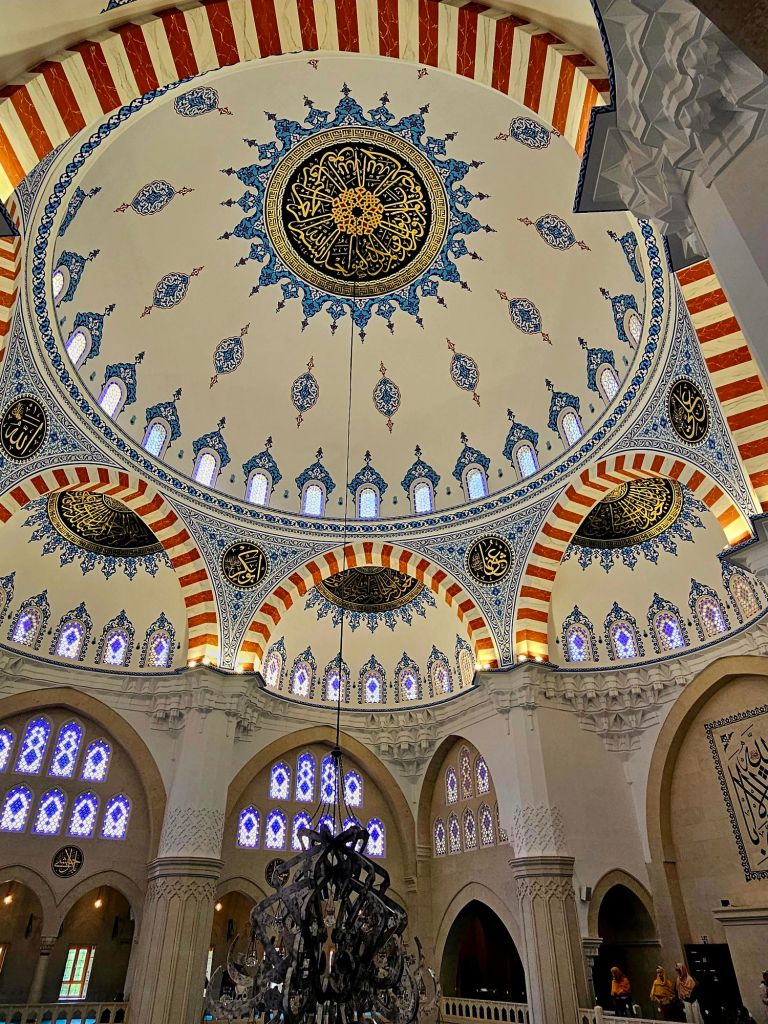
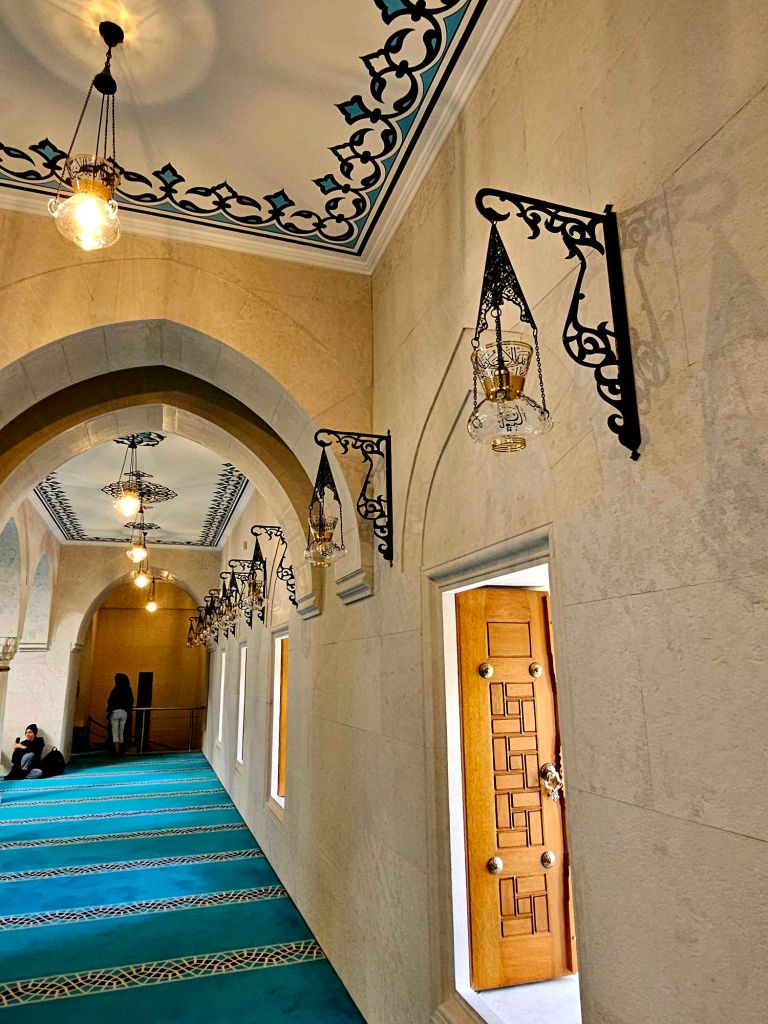
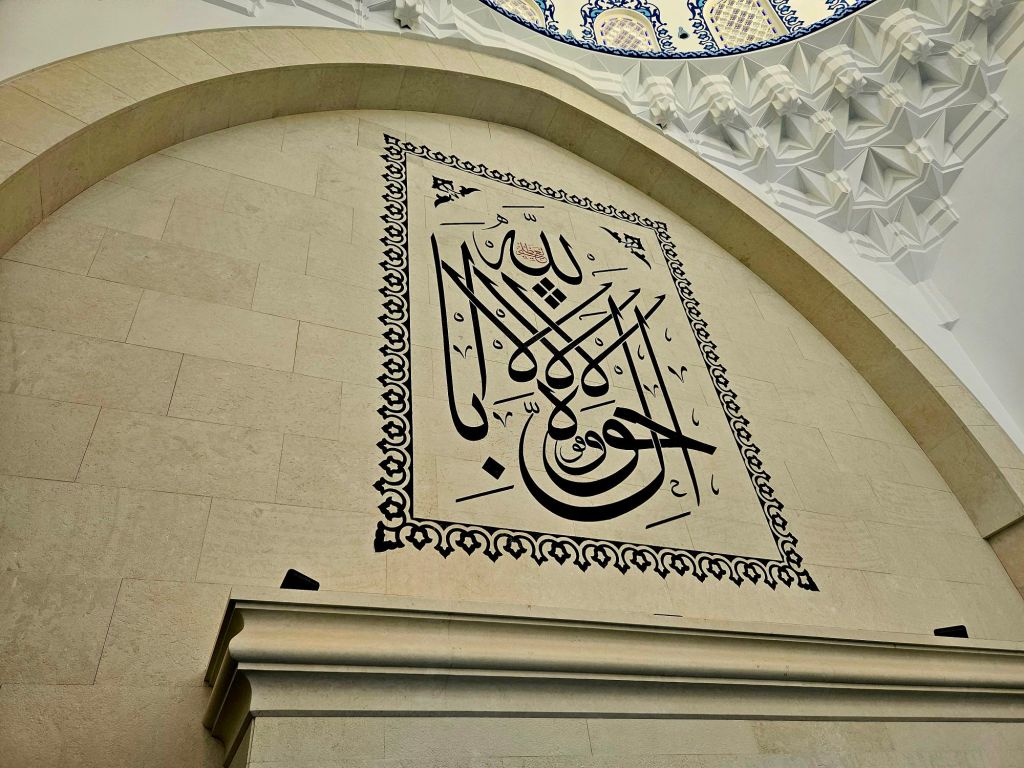
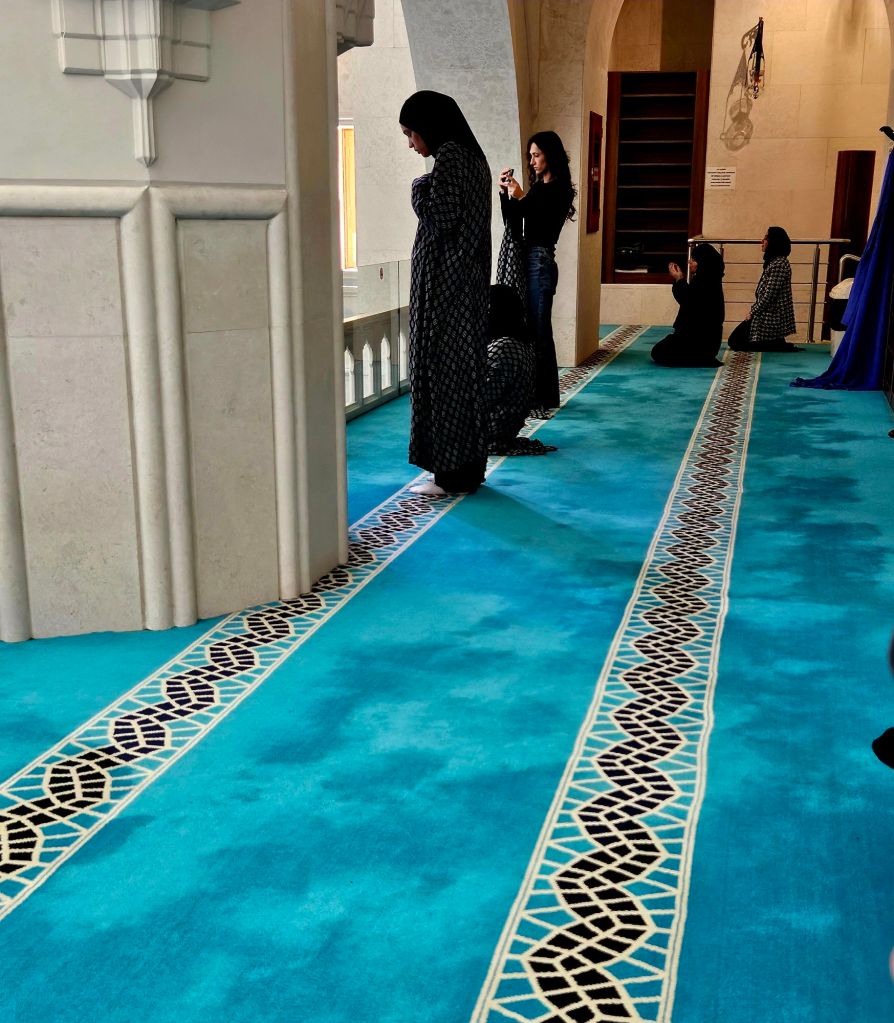
The mosque has four minarets, each towering 50 meters high, and a central dome reaching 30 meters high. The mosque is very spacious inside and has a huge prayer hall. Prayers were being recited during the time we visited. As women, we were only allowed upstairs.
The mosque also houses a conference room, a library, and classrooms for Quranic studies, reflecting its role as a center for both worship and education.
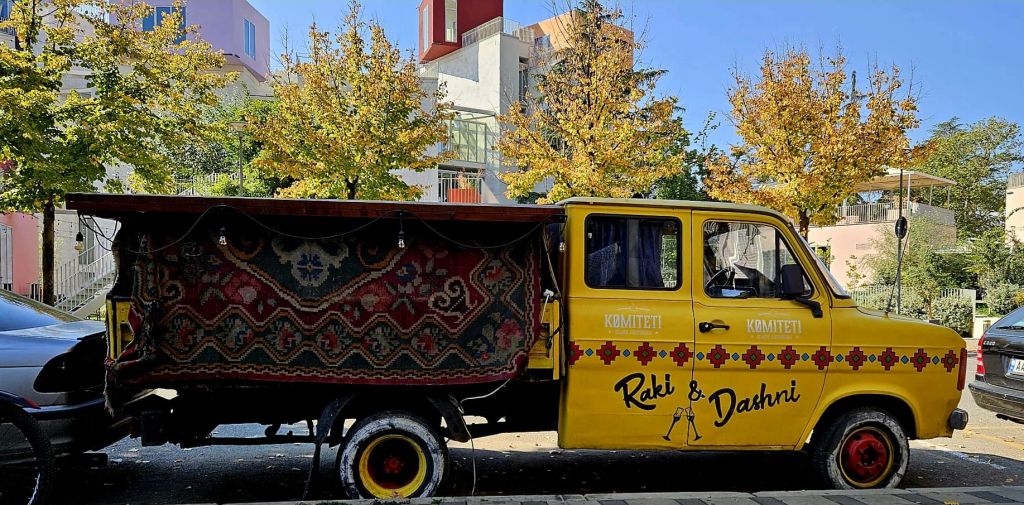
By this time we were both getting hungry – it was time for a snack. Komiteti was close by so we decided to go there. We ordered some cornmeal spinach pie, along with another couple of Rakis.
After our delicious lunch, we decided to go back to some of the sights we had visited in the morning and explore them in a bit more detail.
We started off with the Orthodox Cathedral – the church of the resurrection of christ. On the way, we passed a statue, but I can’t find any information about it.
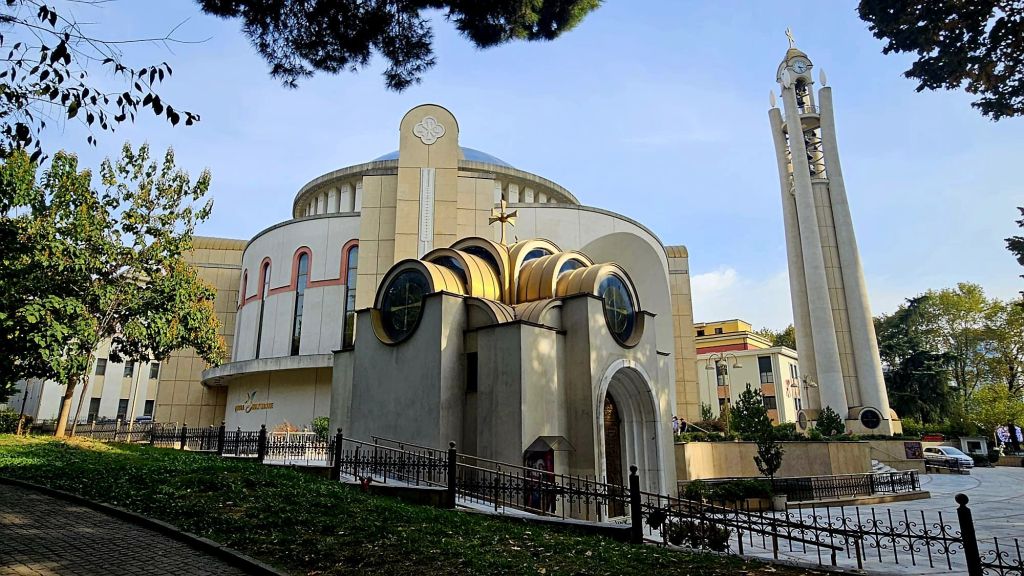
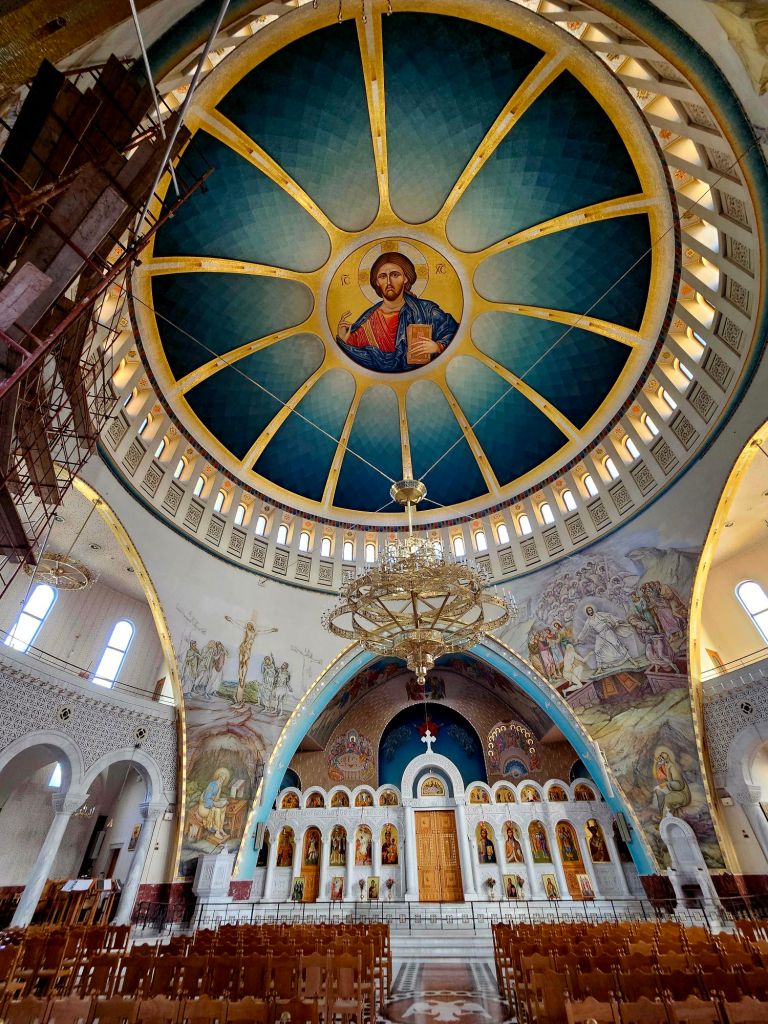
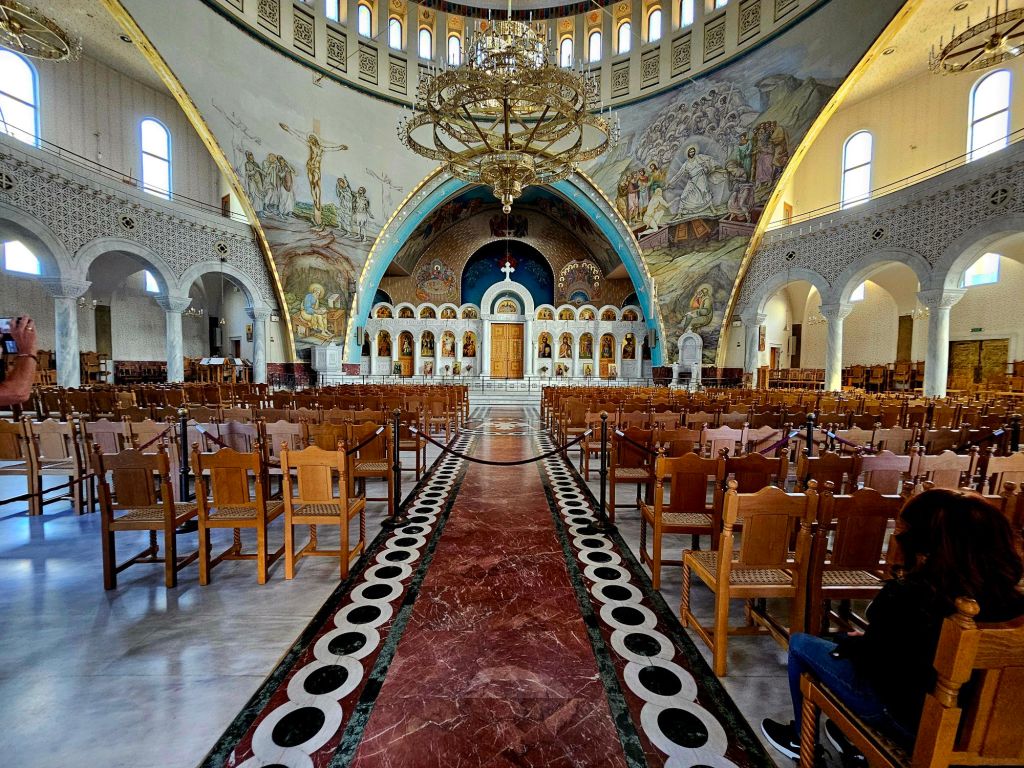
The Orthodox Cathedral opened on June 24, 2012, to celebrate the 20th anniversary of the revival of the Albanian Orthodox Church. Outside, there is a small Chapel of the Nativity to one side and an impressive bell tower to the other. The cathedral is one of the largest Orthodox churches in the Balkans, with the dome being 32m above the ground and the bell tower 46m tall.
The original Orthodox church was built in 1865 and was built where Hotel International Tirana now stands on Skandenberg square. It was shut during the communist times and completely deteriorated. The new cathedral took around 10 years to build. Inside, there are some beautiful mosaics, frescos and icons, while the dome is shaded in blue with a central painting of Christ Pantocrator. The church has its own radio station, named “Ngjallja” (Resurrection), which 24 hours a day broadcasts spiritual, musical, informative and educational programmes and lectures, and also has a special children’s programme.
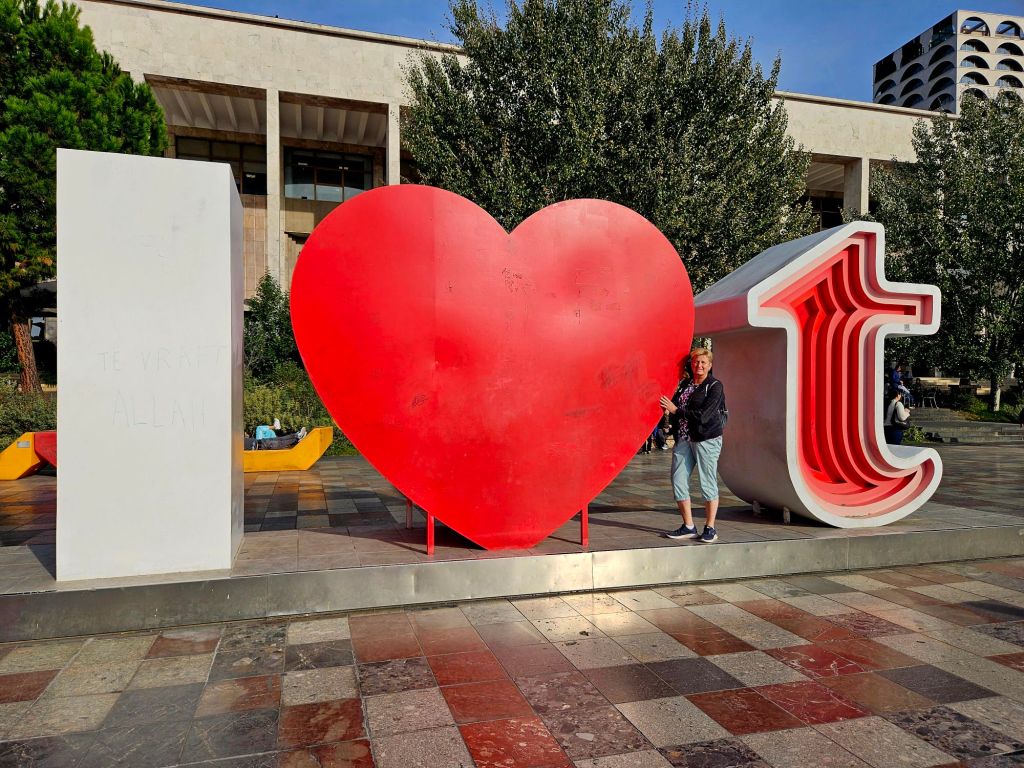
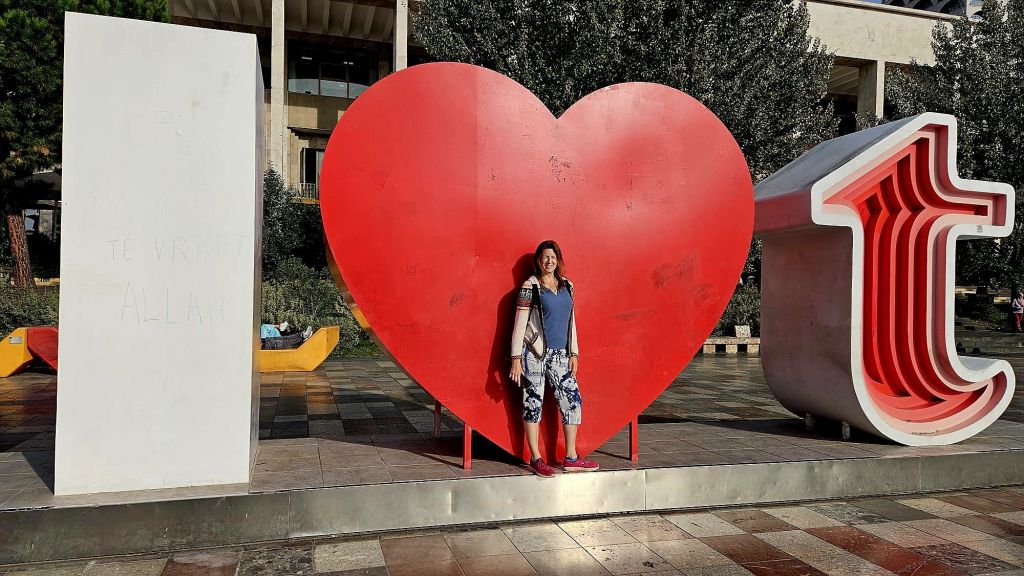
From here, we found ourselves back at Skandenberg Square, and we took some more photos.
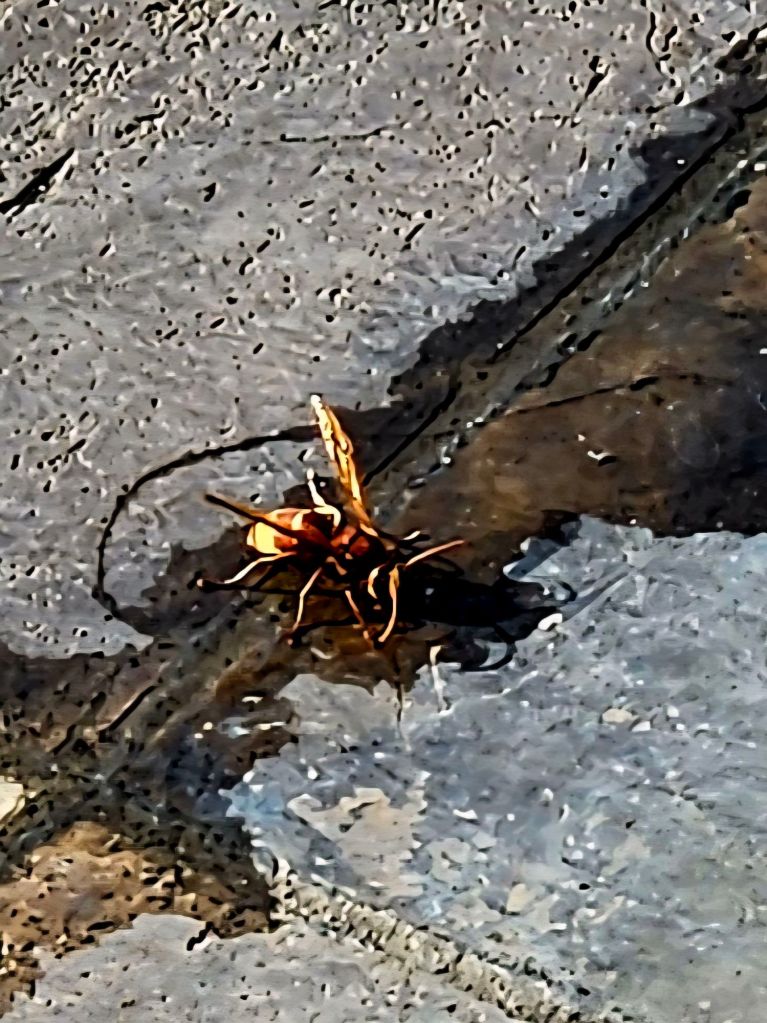
There were a lot of what looked like European hornets around one particular area where some water had spilt.
The square is the main plaza in Tirana and covers around 40,000m². The initial square was built by the Austrians in 1917, but when Tirana was named the capital of Albania in 1920, the population of the city increased, and plans were drawn up. During the period of the monarchy (1928 – 1939), the square was a roundabout with a fountain in the centre.
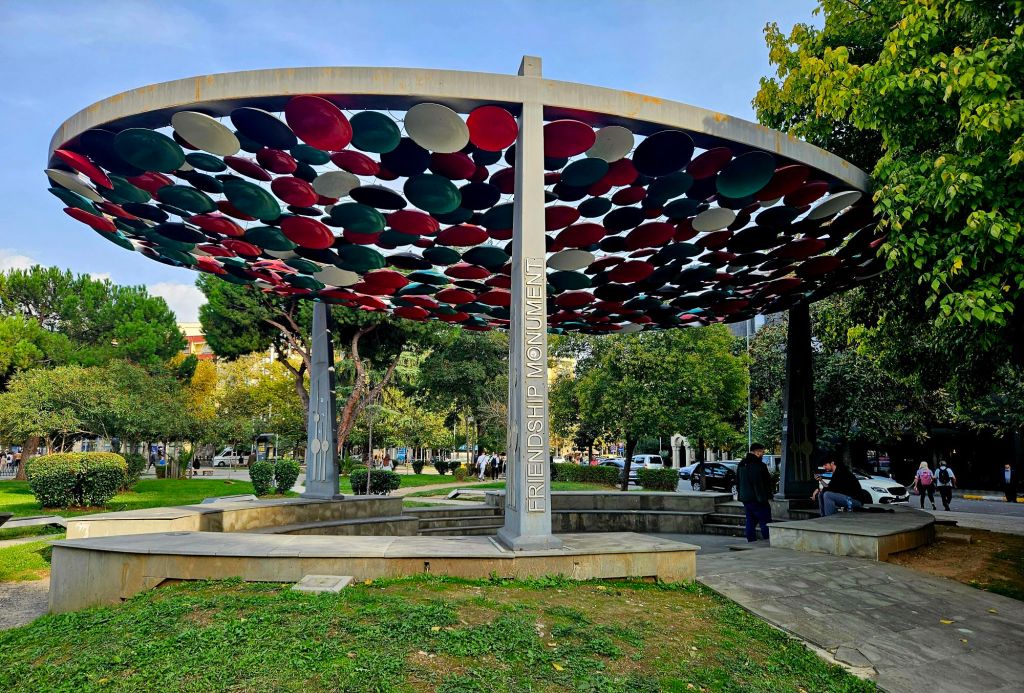
We wandered to one of the small parks to see the Friendship Monument, which commemorates the friendship between Albania and Kuwait. Kuwait has been investing in Albania since 1993, and the monument was established in 2016. It has the flag colours of Kuwait’s state.
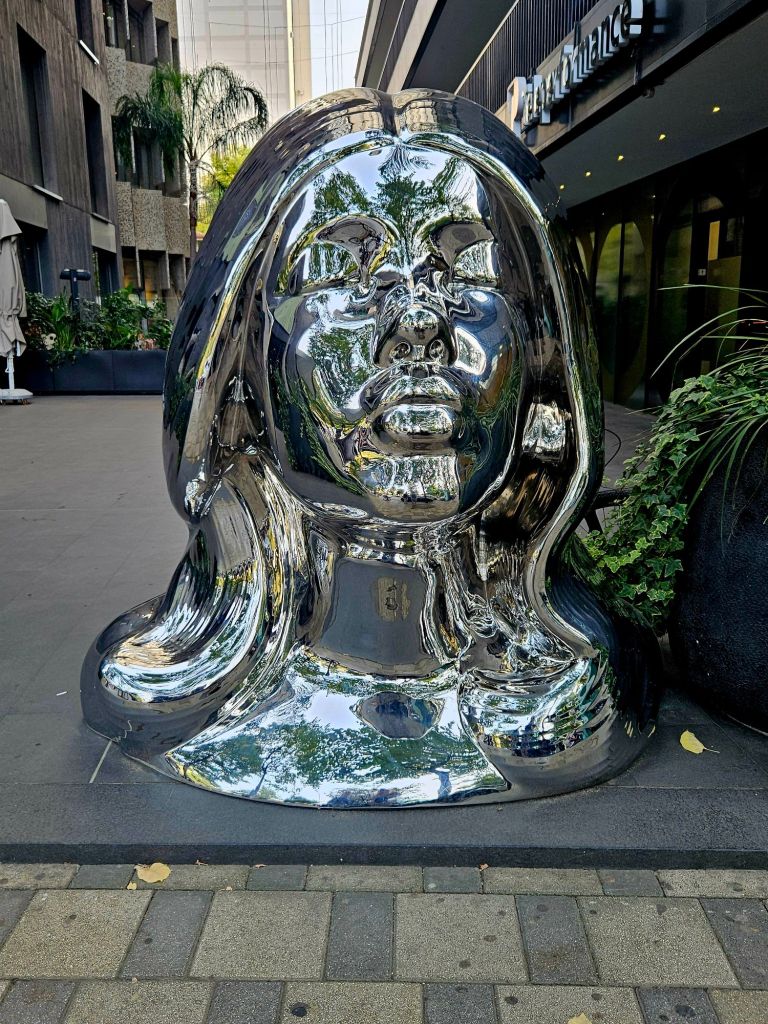
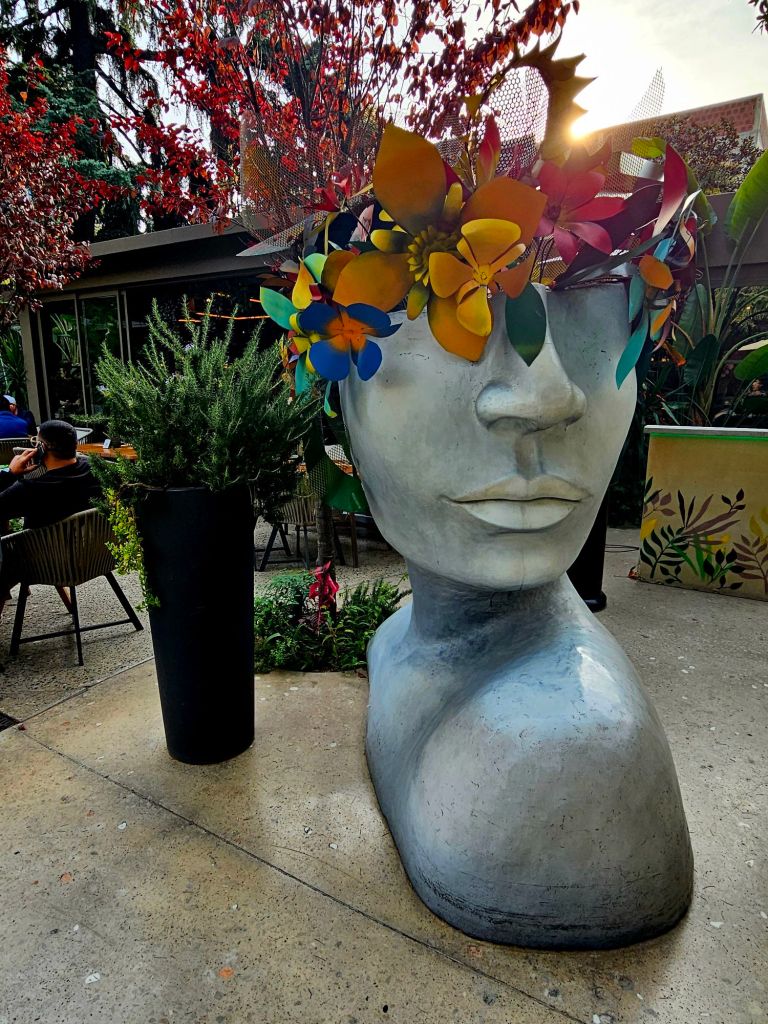
We walked past another interesting sculpture outside the Plaza Hotel.
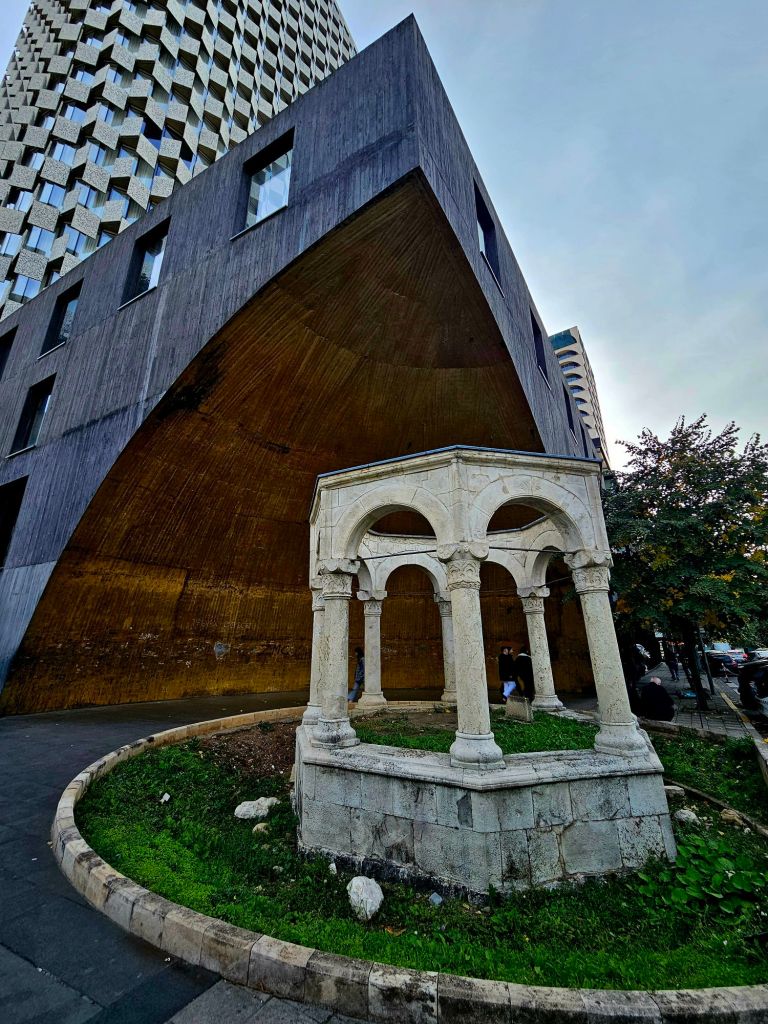
Our next point of interest was Kapllan Pasha’s tomb. Kapllan Pasha was an Ottoman administrator of Tirana, who died in 1819. The tomb was built in the early 19th century, but today is empty, as Kapllan Pasha’s remains were later exhumed and reburied in Istanbul. However, the tomb itself remains and is protected as the only remnant of the mosque that first stood here in 1614. The rest of the mosque was destroyed by bombings in 1944.
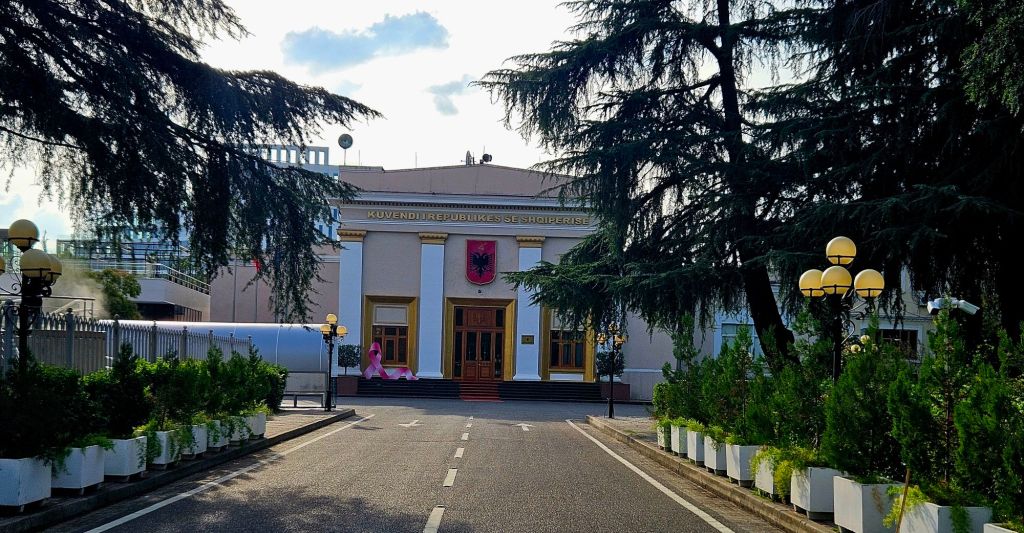
We walked down to the main Assembly / Parliament building in Tirana. Access was closed off, so you couldn’t get too close. It was originally constructed to be the headquarters of the Central Committee of the Labour Party during the communist era.
One of the guards started chatting to us, and we heard all about his family history, and he even showed us photos of his family on his phone. He was very friendly.
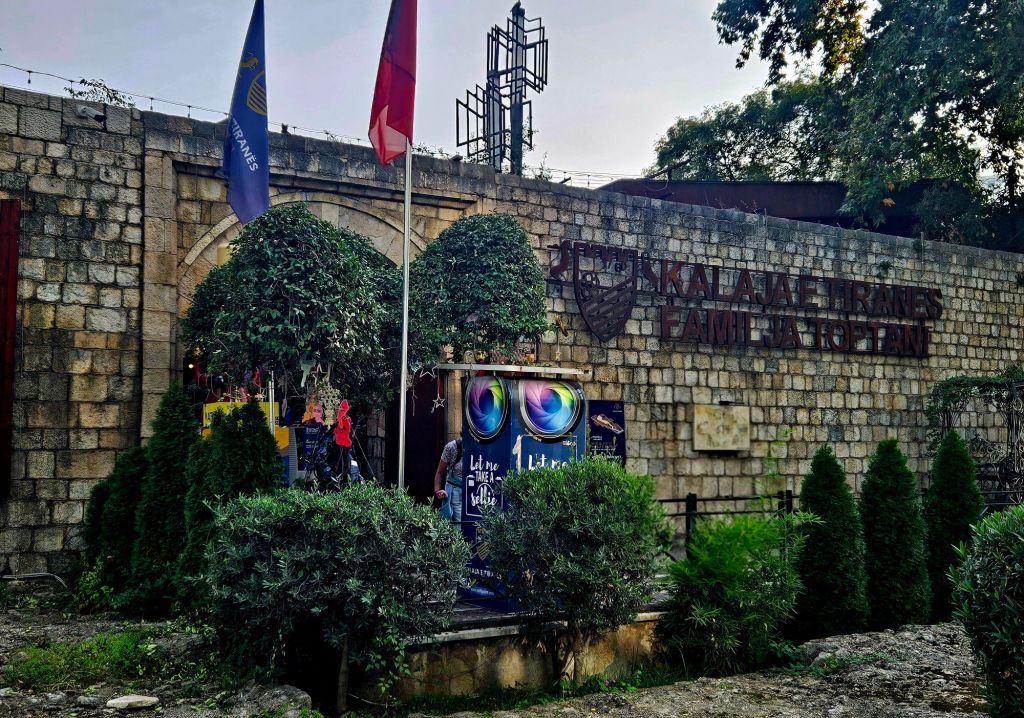
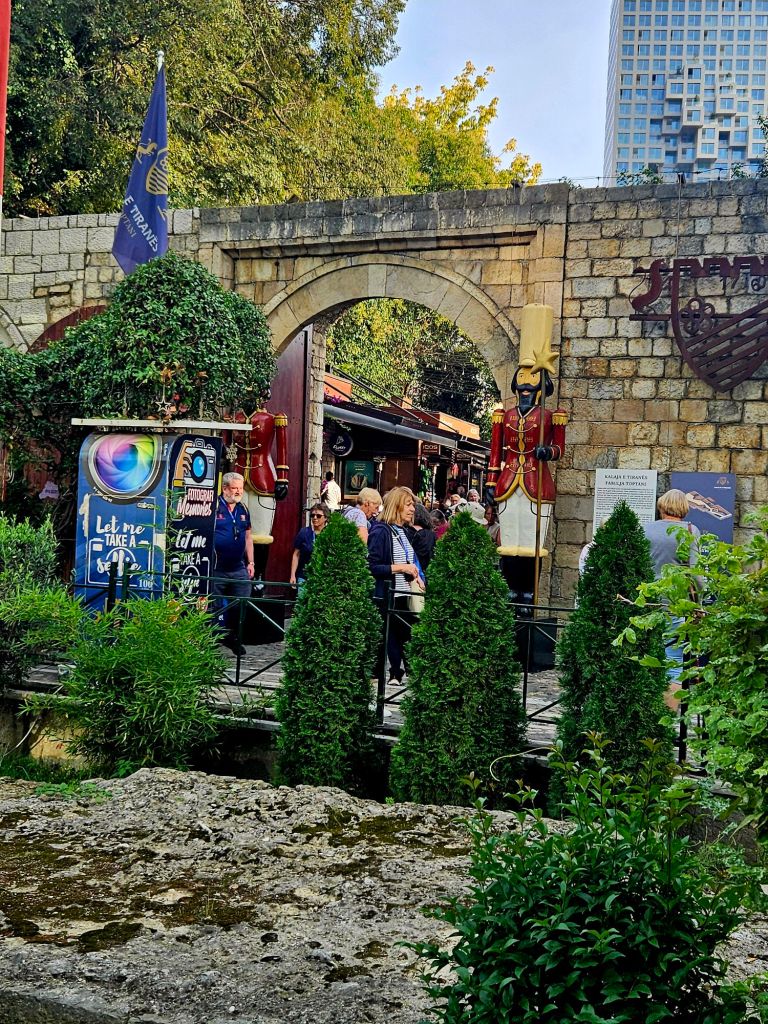
We walked past the old castle wall again and had a quick look inside. It was a lot bigger than it looked from the outside and there were a lot of small shops and places to eat inside.
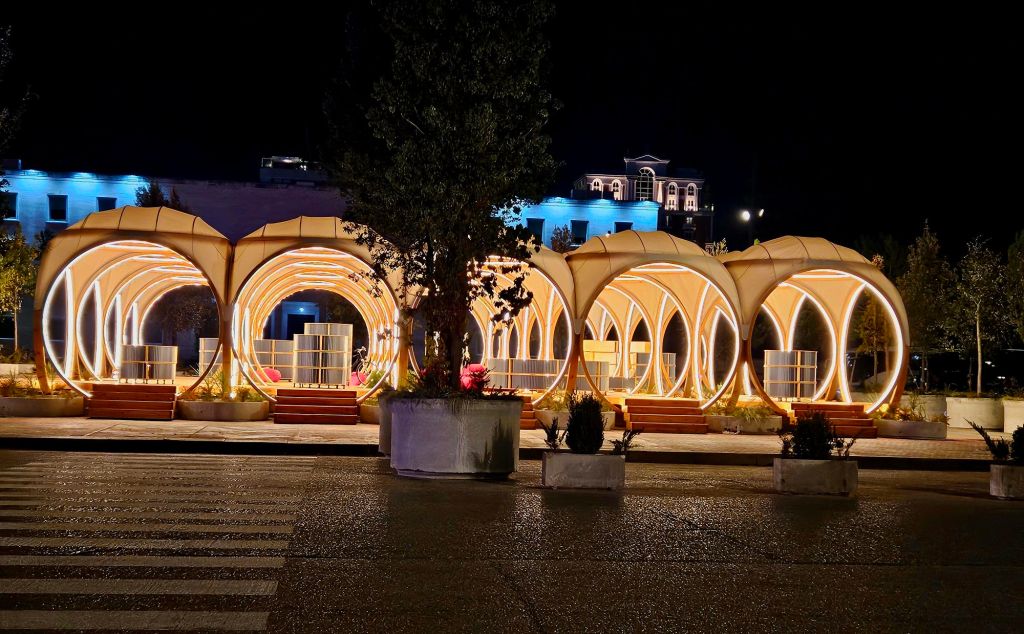
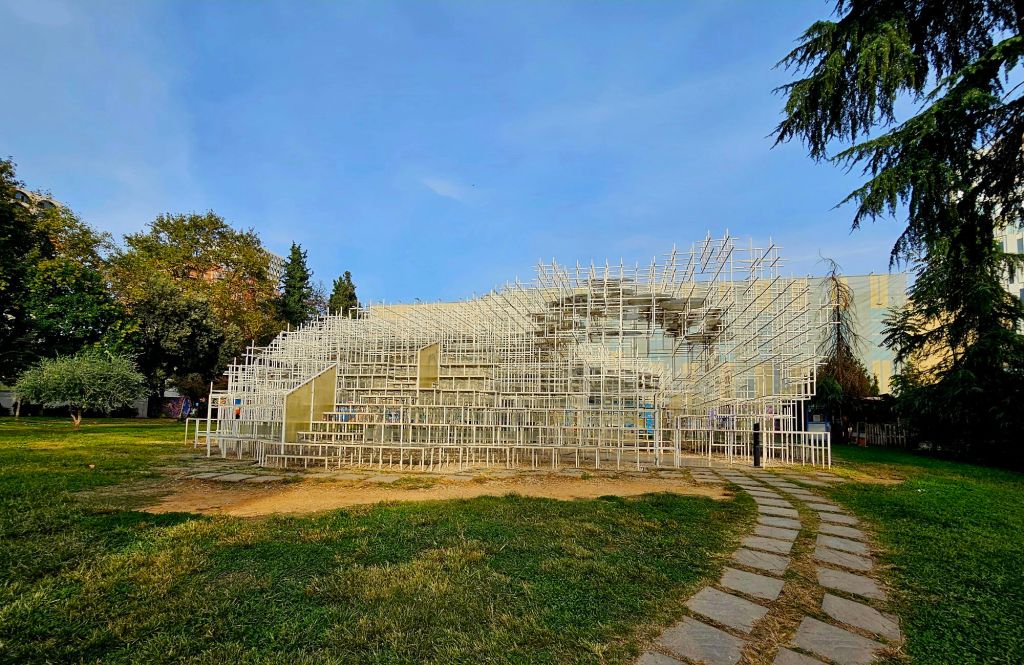
We also walked past a structure called ‘The Cloud’. This art installation was installed in 2016 and is a multipurpose social space with some seating and protection from the elements.
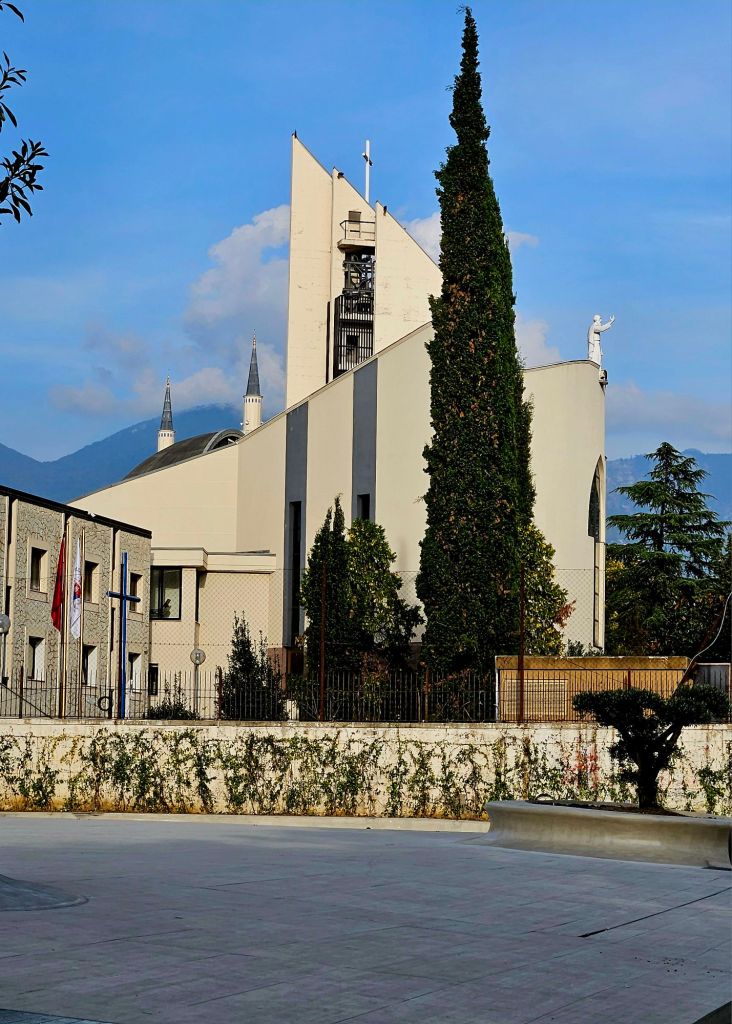
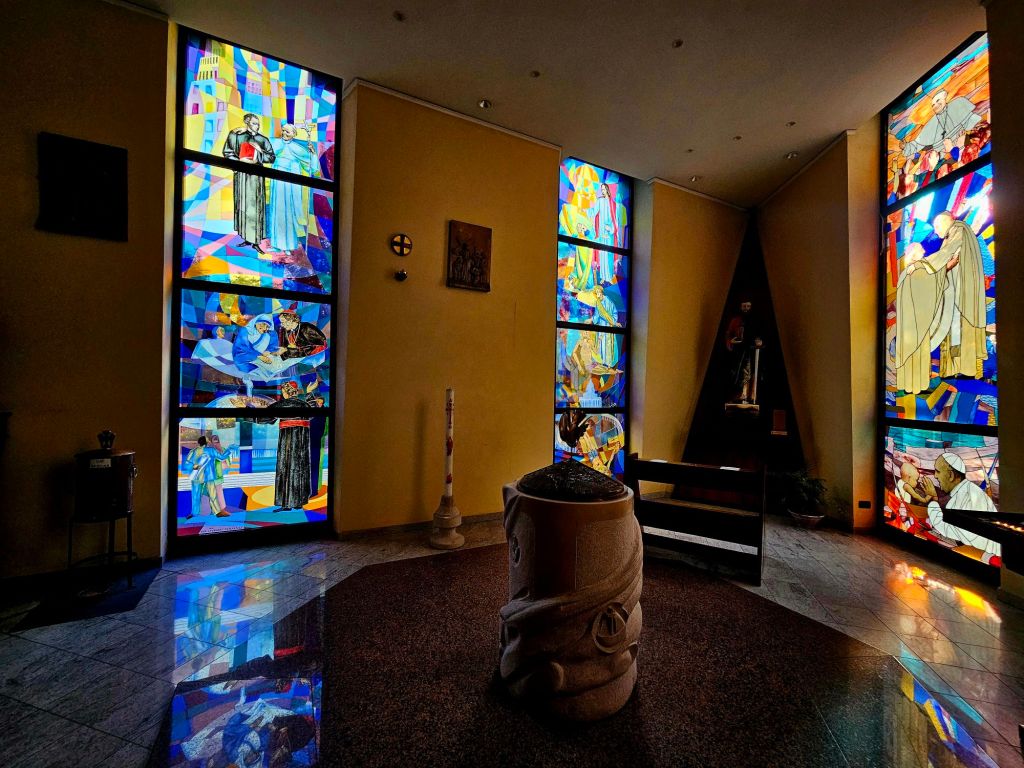
St Paul’s Cathedral is a very modern building that was only completed in 1999 and consecrated in 2002. St John Paul II laid the cornerstone during his visit to Albania in 1993.
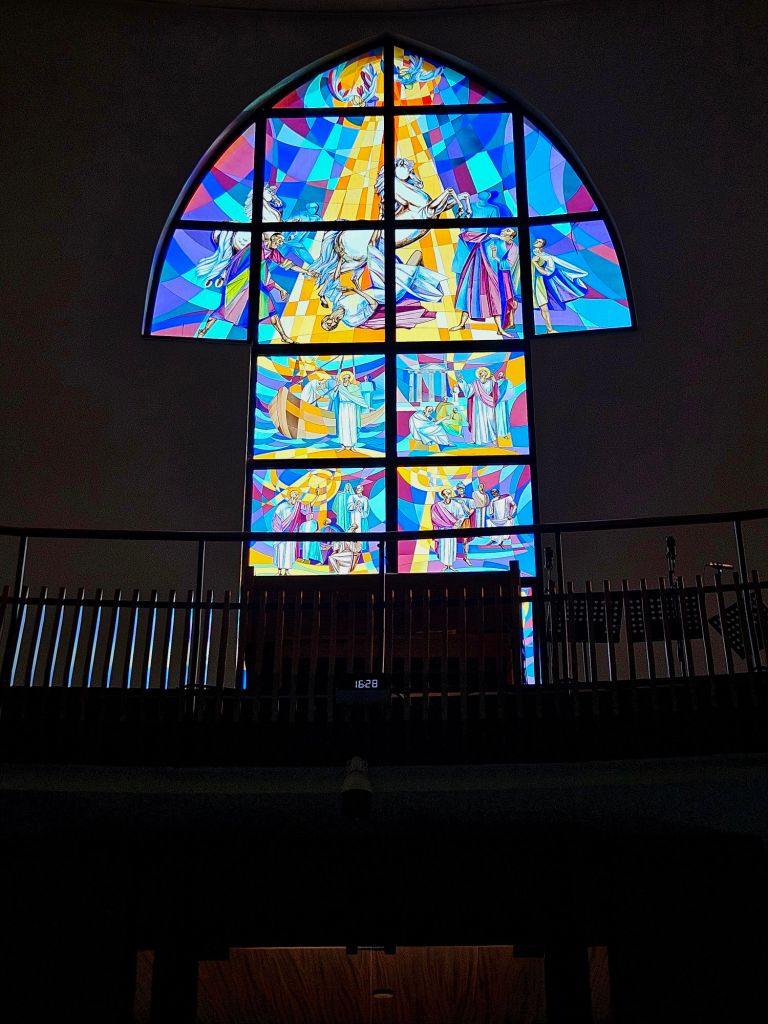
The inside is also very modern, with some large, vibrant stained glass windows.
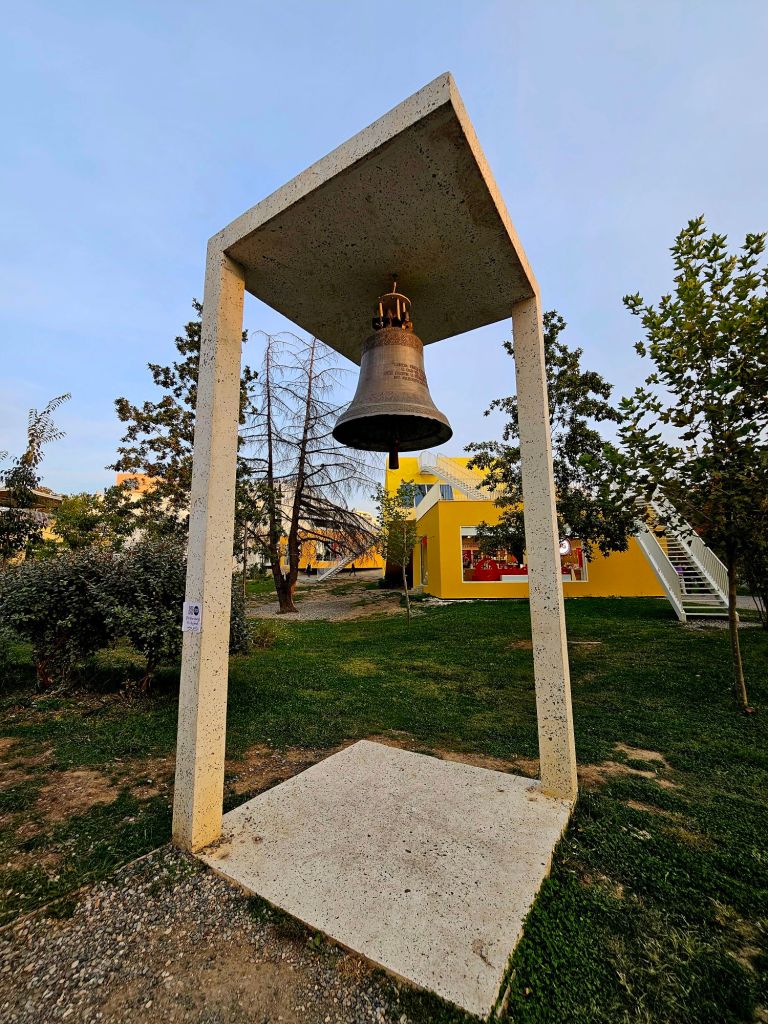
The next thing we saw was the Tirana Peace Bell. This bell is made from the bullet shells from the bullets that were fired during the unrest in 1997. The conflict lasted from January to August 1997 and was due to the collapse of the pyramid schemes where Albanian citizens had lost more than $1.2 billion. Large amounts of money had been syphoned by the government to fund the schemes. Over 2000 people were killed during the unrest, and a new government was formed.
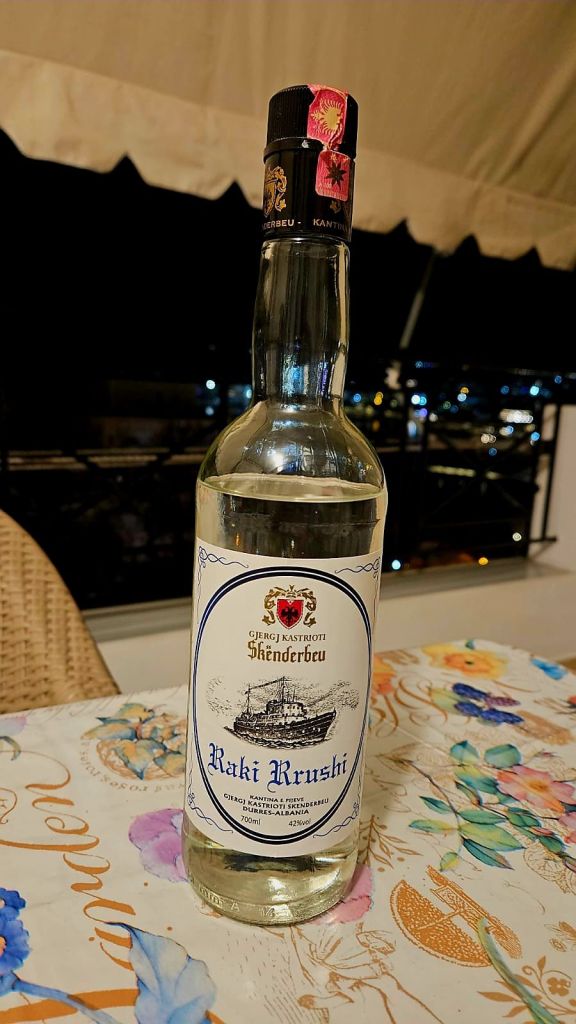
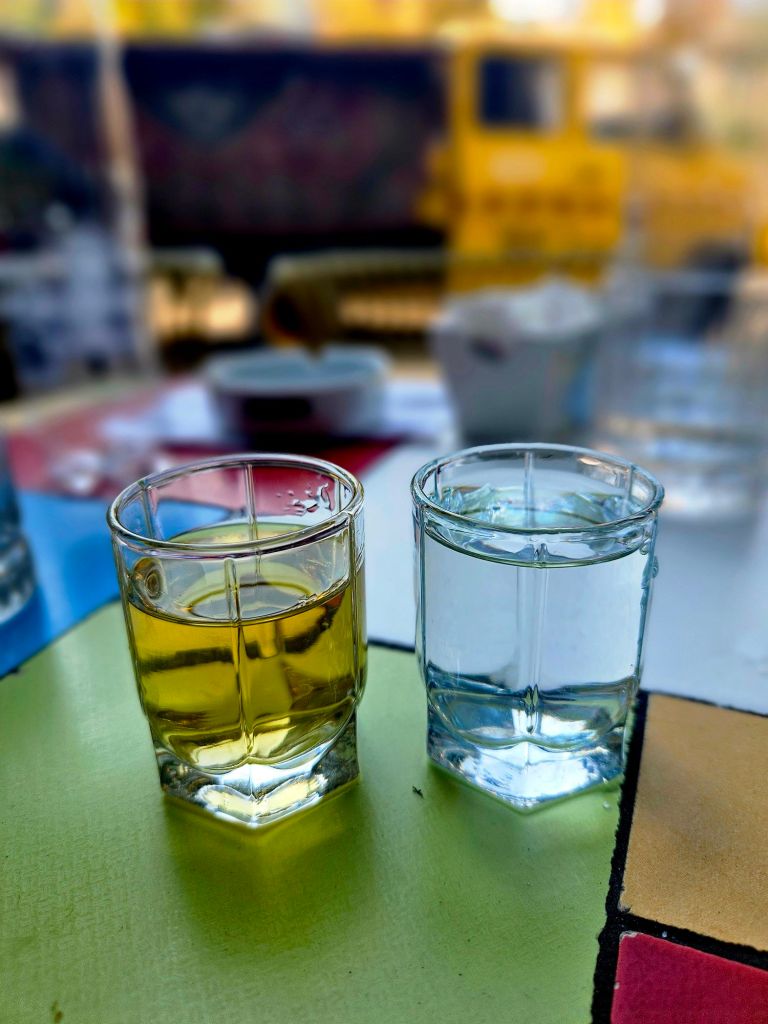
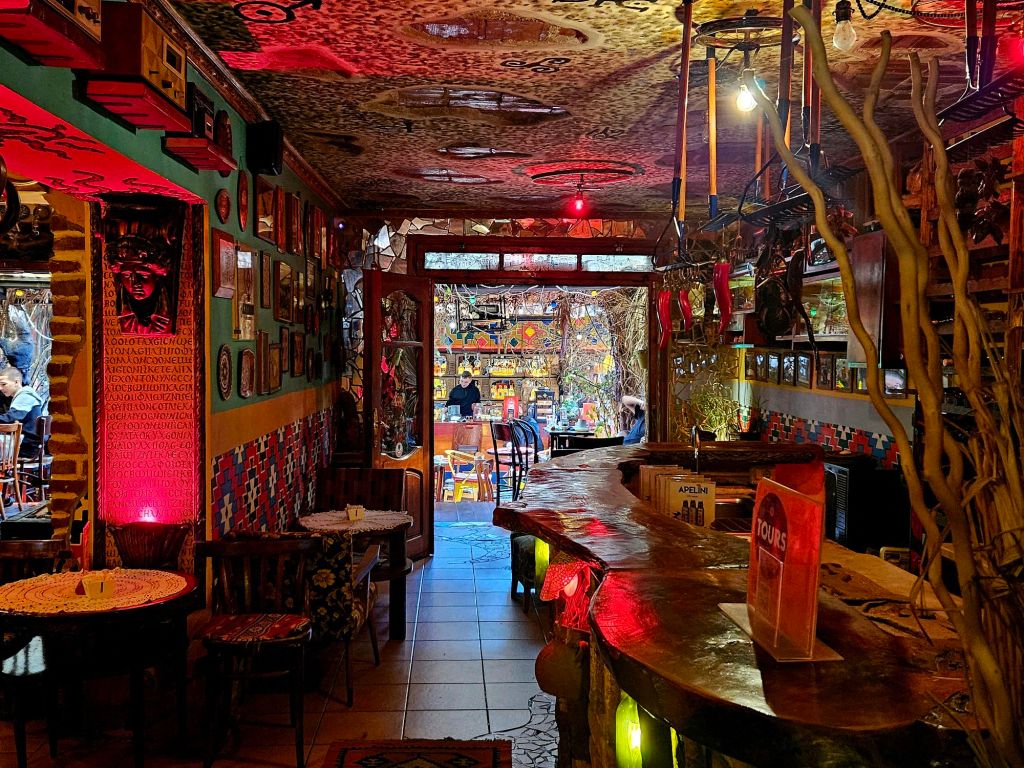
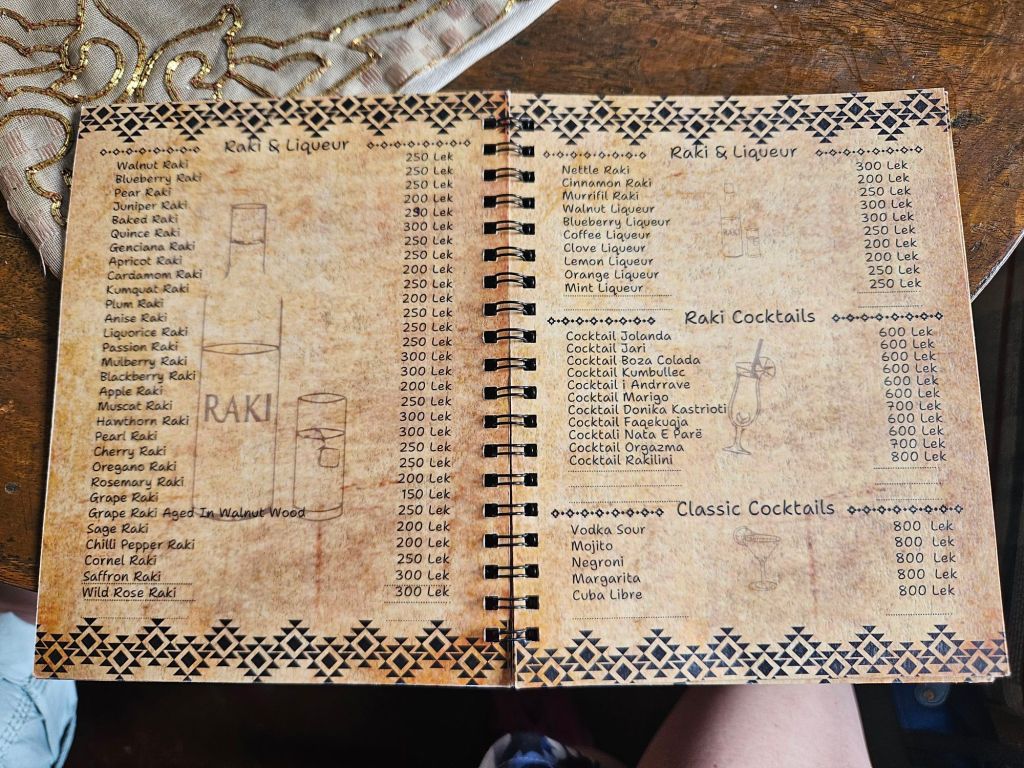
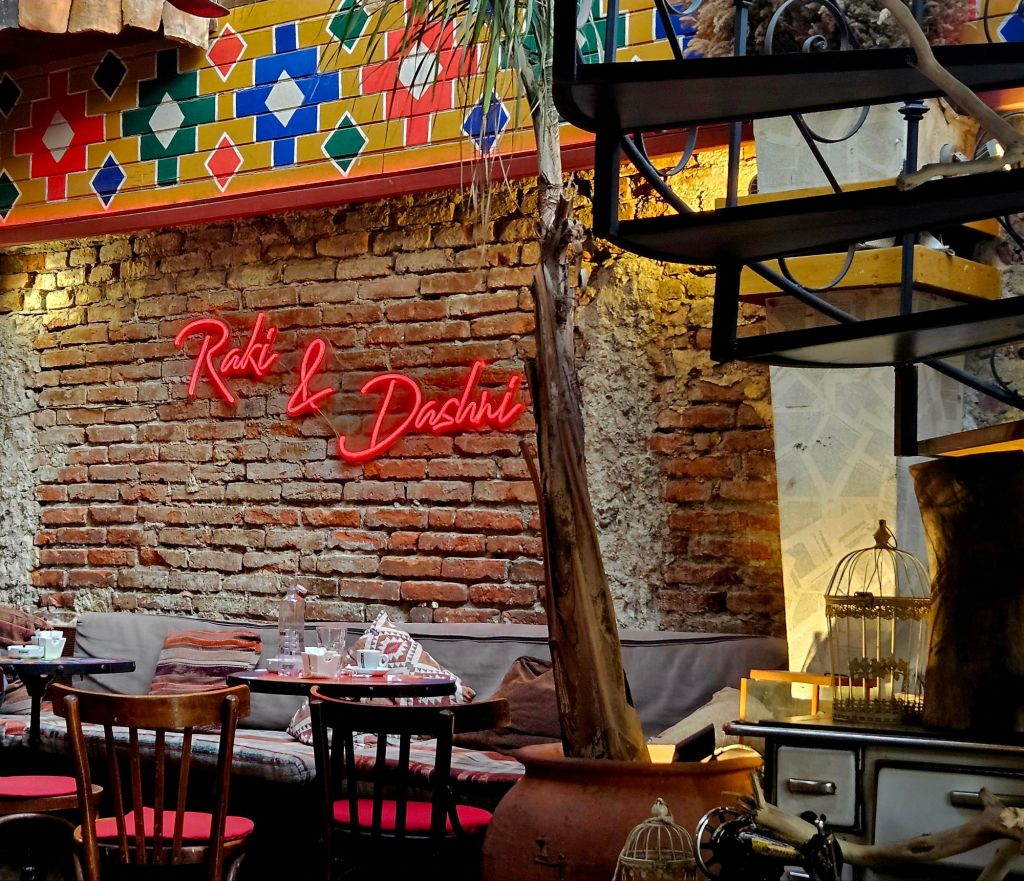
We had been recommended a Raki bar called Komiteti, so we made our way there. It was a really nice bar with a huge selection of different raki’s.
We tried a couple of different rakis each. My favourite one was the honey and cinnamon, even though it was quite sweet. We met a little furry friend too.
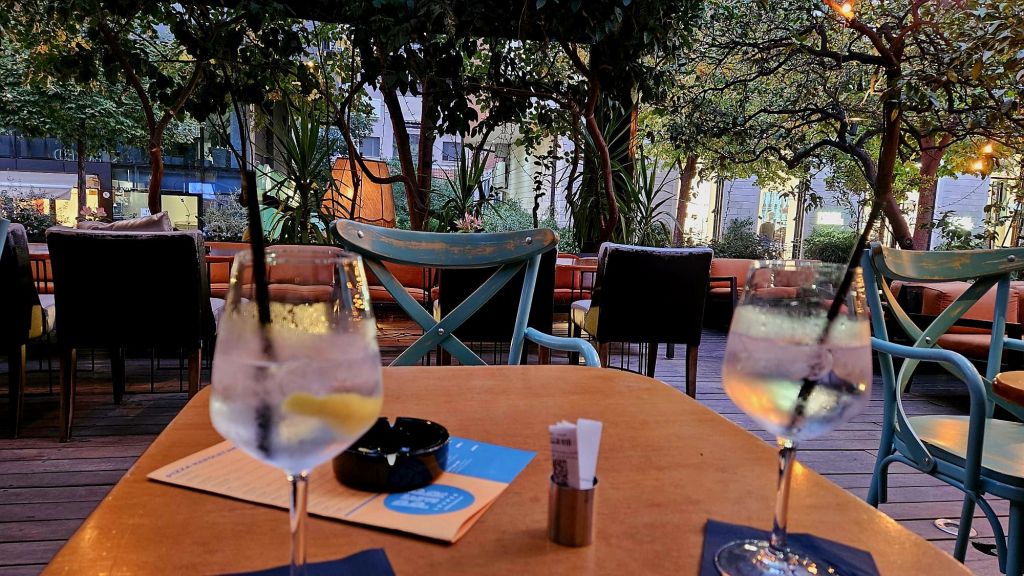
On the way back to our apartment, we stopped off at the Pepper Lounge, which was in our street. We ordered a couple of double g&ts and later found out the cost £20 each – crazy prices! We did contest and complain about the price, but we ended up having to pay it.
Once home, we got changed and headed out for dinner. Nicola’s taxi driver had recommended a restaurant just at the end of our road called Juvenilja, so we went there. We both ordered baked meatballs and a bottle of the house red. Both the food and the wine were delicious.
On the way home, we passed the Irish pub and both of us fancied a Guiness so we stopped off. Unfortunately, the pub had not had Guiness available for the last 3 days, so we ended up with a baby Guiness instead.
We had booked a walking tour for 11am, but we were both awake quite early, despite going to bed about 1am.
Once we had showered, we wandered up our street and found a cafe called Tribeca, which looked quite good, so we stopped for a coffee and chocolate croissant, tea for Nicola.
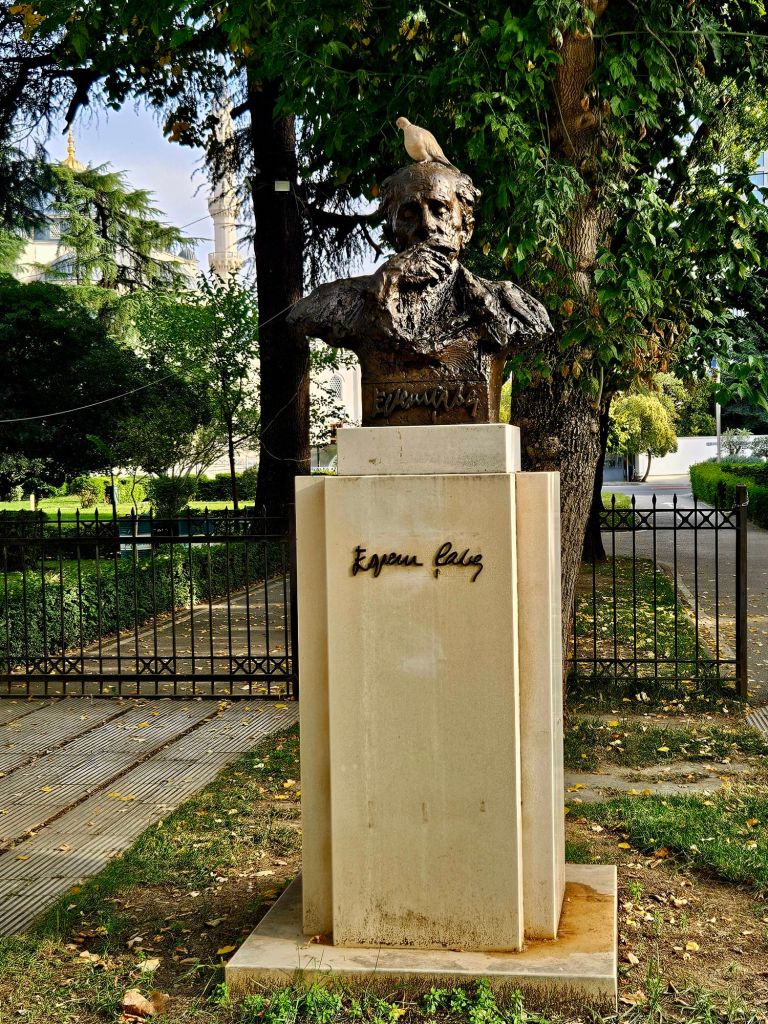
After breakfast, we headed towards our meeting point, although we were still really early. We walked through Vëllezërit Frashëri, a park in Tirana celebrating the Frasheri family. The Frashëri brothers were key figures in the National Renaissance, and they played an important role in the efforts for the independence and rights of Albanians. Naim Frashëri was a poet and writer. He died in 1900 and played a key role in the development of Albanian literature.
On the way to our meeting point, we crossed a bridge over the River Lana. There were sculptures on the bridge so we took some photos with them.
There are huge horse chestnut trees along the sides of the main boulevard.
And the traffic lights in Tirana are very patriotic, displaying the Albanian symbol of a two-headed eagle.
We met our tour guide, Brikena, and another couple from England at the Twin Towers. Brikena told us that a new law had been laid in Tirana that electric scooters and mopeds were no longer allowed due to the high numbers of accidents. The law was temporary whilst safety measures were being put in place. The law was only announced the day before and then immediately implemented.
Our first stop was the Prime Ministers office. There were guards standing outside as there was a meeting going on.
We moved on to a small park that contained part of the Berlin Wall and remnant of Spac Labour Camp Mine. Inmates at Spaç labour camp endured harsh conditions, including forced work in the copper mine, minimal free time, and extreme isolation in one of the most remote prisons in the world. Prison Guards at Spaç enforced strict discipline through brutal punishments, including beatings and torture of those expressing political dissent or failing to meet work quotas. Female prisoners were also subjected to abuse, including beatings, sexual assault, and forced abortions. The prison remained open until 1990. It held many political prisoners, including prominent intellectuals, and became one of the most infamous sites of repression in the country.
The Blloku area we were in was one of the most isolated areas in Tirana as it was where the majority of the officers lived, including the ‘leader’ (dictator), Enver Hoxha. Ordinary citizens were not allowed to enter the area as it was an exclusive residential quarter for members of the Albanian elite and their families. On most maps during this period, the area remained deliberately unmarked.
We passed the former house of the dictator. His two sons and his daughter all had their own apartments as part of this house, and all had separate entrances. It was known that Enver’s wife was part of the mastermind behind the communist regime.
A private chef visited the house twice a day. One of Enver’s sons married outside of the Blloku area. Within the Blloku area, they were generally unaware of the level of poverty outside as nobody within the area spoke the truth. The other son worked at the post office so he could look at the letters and keep everyone under surveillance.
During the time of communism the buildings were all very uniform, being 5 storeys tall and square looking. They have since been painted to make them look more attractive.
The bigger buildings were built since the regime ended in 1991. Many of them survived the earthquake in 2009. One of them contains the map of Albania.
There is no official religion in Albania. The population consists of 70% Muslim, 20% catholic, 5% orthodox and the rest unknown or atheist. Albanians respect all religions. Under communism religion was not allowed, and many of the churches and mosques were shut down or used for other purposes. In 1967, Albania became the first atheist country. Many of the people who were killed by the communists were religious leaders, teachers, and intellectuals. Albania was ruled by the Ottoman empire for over 500 years before 1945, and the Albanias were forced to convert to Muslim.
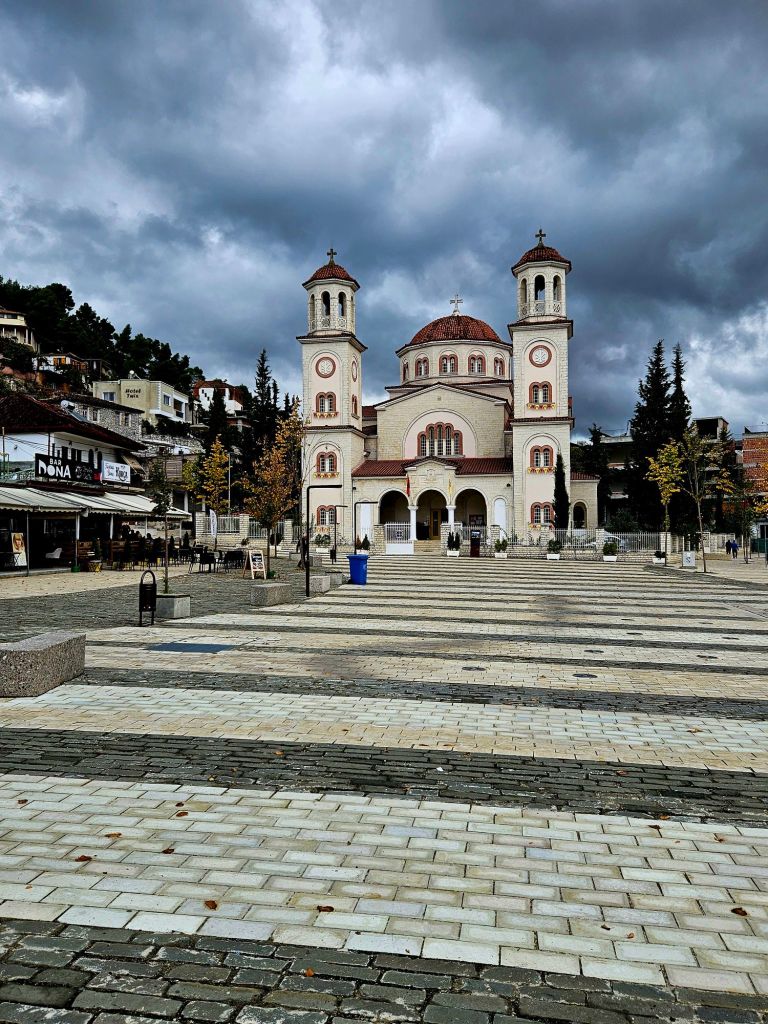
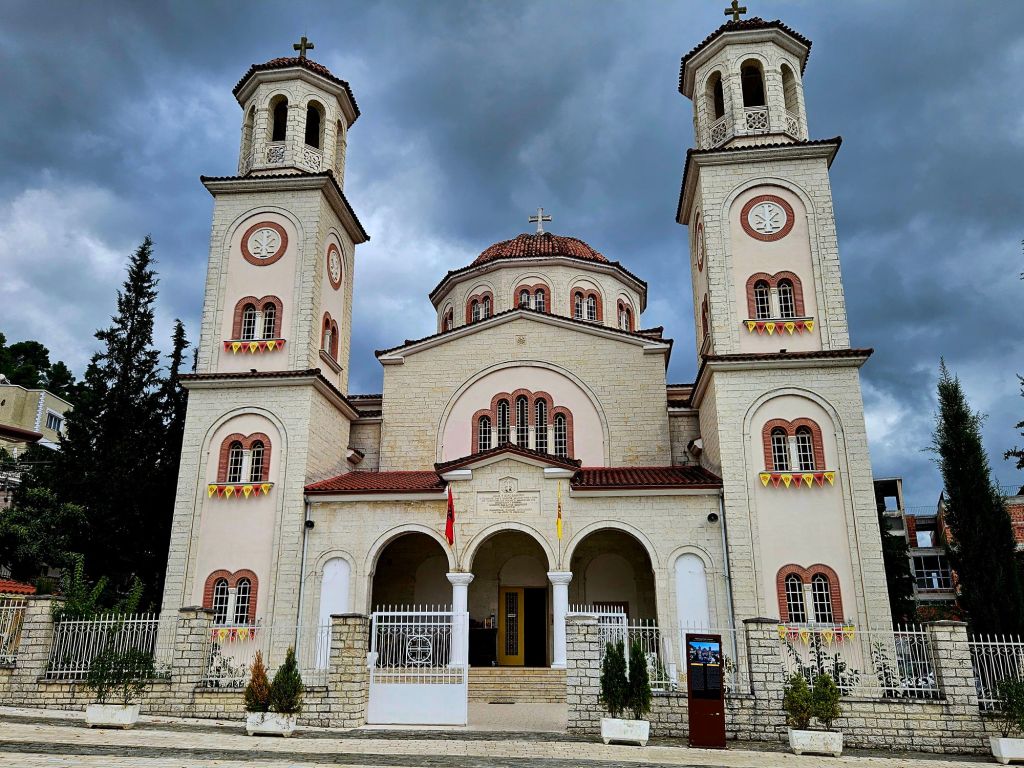
We walked past the Greek Orthodox Church, The Resurrection of Christ, which was built in 2012.
And opposite this church is the House of Leaves, which is now a surveillance museum.
The Eye of Tirana is a high-rise multipurpose building standing 135m tall and contains 31 floors. It is still under construction.
One of the buildings reflects the face of Skandenberg but also looks similar to the current prime minister, Edvin Rami. He was formally the mayor of Tirana and bought a lot of the modern architecture and colour to the buildings.
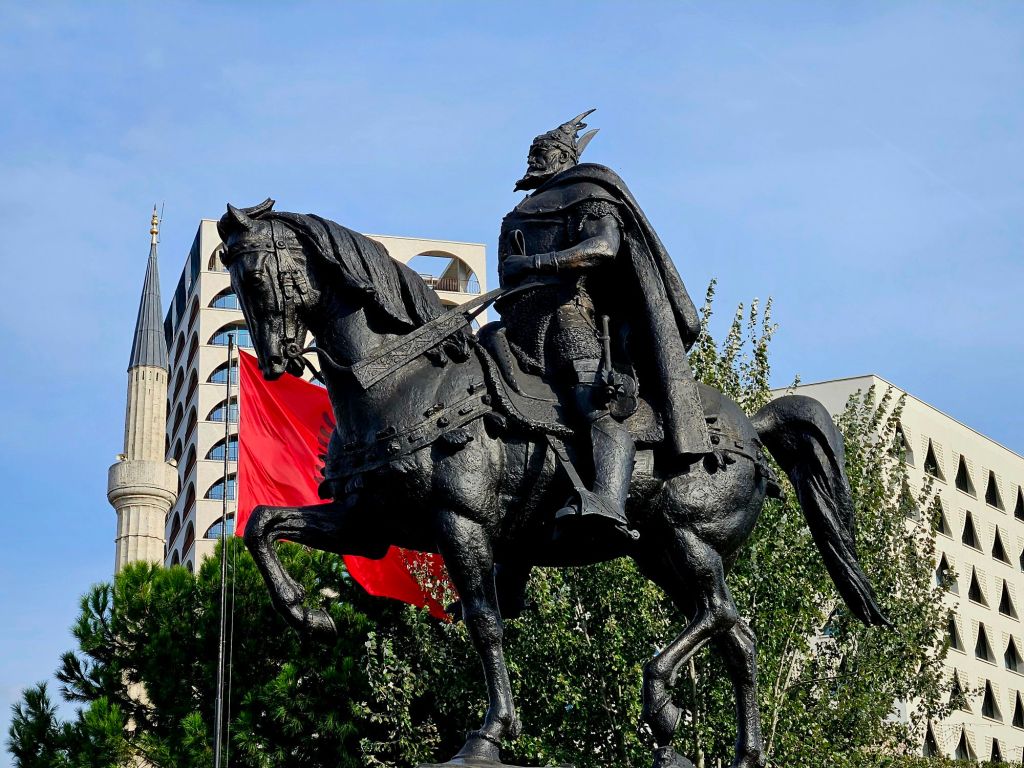
We reached the main square in Tirane, skandenberg square. Skandenberg is a national hero who fought for Albanian independence against the Ottoman empire. His real name was Gjergj Kastrioti and he was taken by the Ottomans to train as a soldier in Turkey when they invaded Albania. He ended up as a commander of the army and learnt everything he could about the empire and the way they fought. During a battle in 1443, Skandenberg deserted the Ottoman army. He went to Albania and set up a military alliance that unified the Albanian leaders at the time. Due to this alliance, Skandenberg was able to amass an army of 10,000 men, and he fought the Ottoman army for 25 years. He freed Albania from Ottoman rule and gained independence for the country. He died from natural causes in 1468. Ironically, it was under the leadership of Enver Hoxha that a statue of Skandenberg was erected in the square.
Underneath the square is a 2 storey underground parking lot.
Skandenberg adopted the two-headed eagle as his family coat of arms, and it was used on his flag – a black eagle against a red flag. The two-headed eagle represents unity between east and west against a backdrop of blood spilt. Also representing unity is the fact that the square itself is made up of the stones from different areas across Albania.
Opposite us was the National Museum of Albania, which has an impressive mosaic on the wall. The mosaic was created in 1981 and shows the history of Albania from the wars with the Ottomans, fighting for independence in the 20th century and the fight towards a socialist future. The mosaic covers 440m².
As we were standing in the square, Brikena spoke to us about some of the realities of living in Albania. Although the communism regime ended in 1991, it has taken a while for the country to recover. Many young people don’t see a future in Albania and are now leaving the country to gain employment abroad as there is a lack of opportunities in Albania itself. During the communist times, 1944 -1991, nobody was allowed to leave Albania, and anyone entering was placed under strict surveillance. Many people were killed trying to escape the country. Enver and his family did travel, but most people didn’t know about it.
The family structure was strong. All jobs were assigned by the government, and this meant many people had to relocate for work. The agricultural business was huge. The motto was ‘produced here, used here’. The government also owned all the buildings, so nobody owned their own property. And there was only one tv channel available to watch.
Enver had connections with Yugoslavia, Russia and China, although those with China were later cut.
The Albanian language is unique, and I couldn’t really hear any familiar words or sounds. Their alphabet contains 36 letters and is a phonetically language. There are two dialects, one in the north and one in the south where the vowel sounds are pronounced differently. Albanians get 16 bank holidays a year.
On one side of the square is Et’hem Bey Mosque, which is over 250 years old. It was closed during the communist times. And behind the mosque is Tirana City Hall.
From here, we walked on to the old castle ruins, past a couple of administrative government buildings.
The history of the castle dates back before 1300 and is a remnant from the Byzantine-era. The fortress is the place where the main east–west and north–south roads crossed and formed the heart of Tirana. The only part of the castle that has been uncovered is a 6 metre high wall, and behind the wall are eateries and craft stalls.
The Great Mosque was our next stop. This mosque was only finished last year and was entirely funded by the Turkish government.
From here, we visited St Paul’s Cathdral, a Roman Catholic church that was built in 2001. Outside the cathedral is a statue of Mother Theresa. She was Albanian and is the only Albanian to have won a Nobel Prize.
To cross the river, we walked over the ‘Vodafone’ bridge.
And soon we were at the Tirana Pyramid. This pyramid opened in 1988 and was built as a museum to honour Enver Hoxha. When it was built, the pyramid was said to be the most expensive individual structure ever constructed in Albania. Following the fall of communism the pyramid became a conference centre, and during 1999, as the Kosovo war was taking place, it became a NATO base. In 2018, a new project started that incorporated steps onto the sides of the pyramid and more glass to allow natural light. It is now used for the youth of Albania with a focus on computer programming, robotics, and start-ups.
There are 114 steps to climb to get to the top of the pyramid. There were some great views from the top, including the twin towers of Tirana. These two skyscrapers are identical in architecture and stand 15 stories tall.
And that was the end of our walking tour.
We were both a bit peckish, so we decided to search out some lunch. On the way, we passed a mushroom structure. This is a contemporary art installation that was erected in 2015. It is called ‘The Giant Mushroom with Three Parts’ and creates the idea of knowledge that humanity has created and continues to develop. Also, the many bunkers in Albania are often referred to as mushrooms. There are also mushroom installations along the side of the main street.
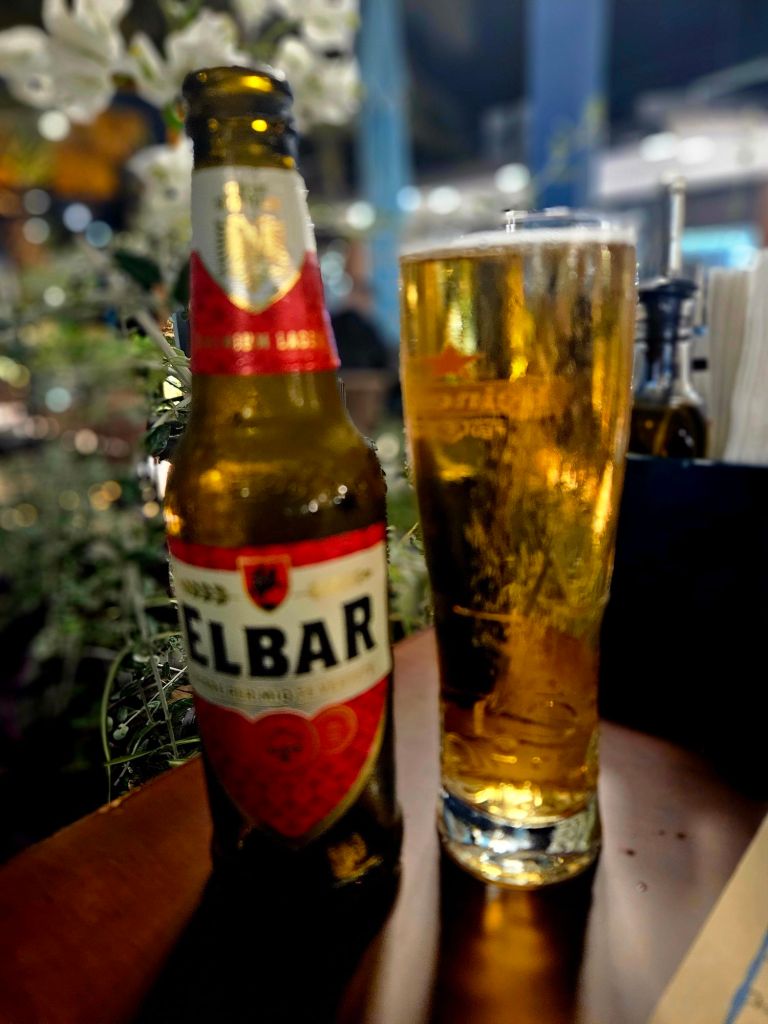
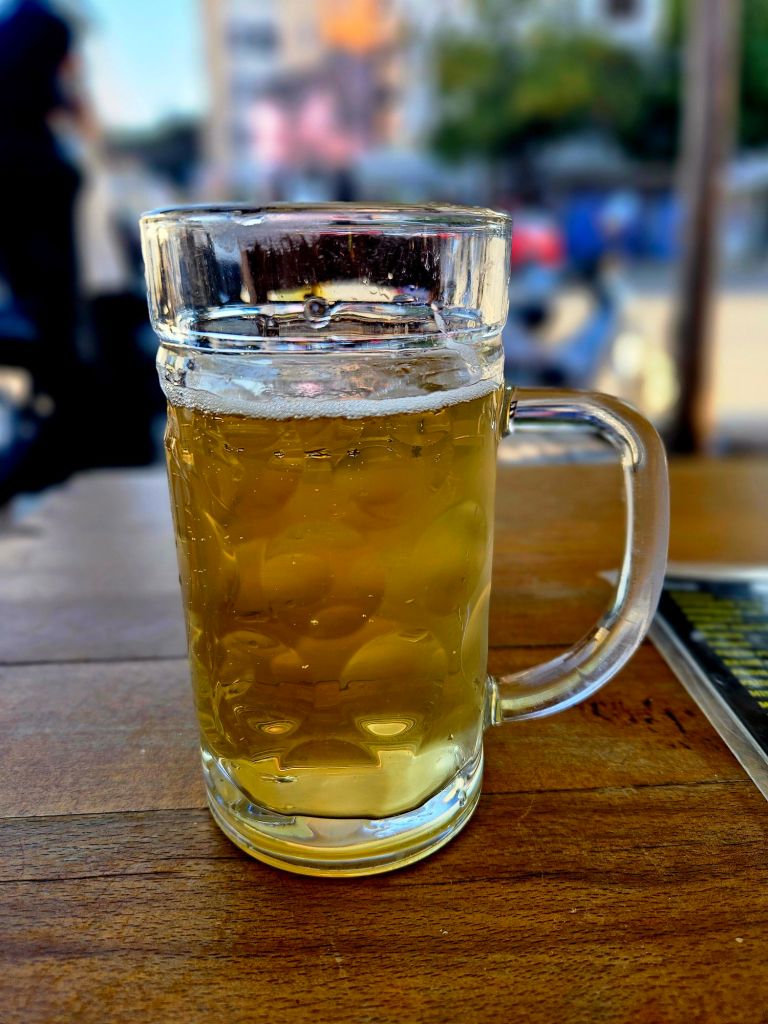
We stopped at Opa for lunch, which is well known for its Greek street food. I had a massive and delicious Greek salad and tried an Albanian beer, which was also very tasty. Nicola had a filled pitta.
My journey over was a bit of a nightmare. After Chris dropped me off at the airport, check-in went smoothly, and I then had some dinner at the airport. I noticed that the flight was delayed by around 30 minutes, which wasn’t surprising as it had been foggy all day. After a bit, Ryanair called us to the gate. Our plane hadn’t even landed at Manchester at this point, so we were just waiting around. Once it did land, there was a very quick turnaround and we were soon boarding the plane. It was still really foggy, even though it was around 530pm.
Once on the plane, there was someone sitting in my seat. We checked boarding passes, and the guy went to move. Once I sat down, I spoke to the guy next to me, and he said he had bumped into his friend who he hadn’t seen for 10 years, and that was the person sitting in my seat. I offered to swap seats so they could catch up and ended up moving a couple of rows back, unfortunately still in a middle seat.
Once seated, we then waited over an hour and a half before we took off – which was really frustrating, especially as they asked us all to stay seated. Apparently, there was a huge queue of planes waiting to take off as everything had been delayed because of the fog.
Once we took off, I slept for an hour or so. The girl next to me woke me up at some point as the man by the window needed the toilet. I then got chatting to the man next to me. He was from Corfu originally but was working in Harrogate.
Once we landed, 2 hours late, getting through passport control was quick and easy and the luggage didn’t take long to arrive either.
I went to the taxi rank and agreed a price before getting into the taxi to take me to the apartment. I had bought an eSim, but for some reason, it wasn’t connecting or working.
The taxi driver wasn’t sure exactly where the road was, but he dropped me off and helped me look for a couple of minutes, but then he had to leave. So I was kind of stranded with no internet at around midnight. I walked up the road, looking for the apartment which I had a photo off, but couldn’t find it. I asked another taxi driver, and he told me I was on the wrong street and showed me where I had to go. So I walked down to the correct street and went up and down it looking for the apartment – and I still couldn’t see it. I saw a guy going into one of the buildings, so I asked him if he knew where the apartment was – he wasn’t sure, but he gave me his hotspot so I could connect to the Internet. I called Nicola, who had arrived earlier in the day, and she sent me a pin to the apartment on Google maps – it was down the other end of the street to where I was.
Nicola came out onto the street so I wouldn’t miss it. And then we had a little prosecco before bed.
Luckily, Faye was feeling a lot better when we woke up, so after packing and storing our luggage, we headed out for breakfast. We did try the Linen cafe in the Linen Hall, but the kitchen was being renovated, so they weren’t serving any hot food. So we went back to Maggie Mays. I had a delicious 3 egg bacon and mushroom omlette and coffee.
After breakfast, we walked down to the docks and over to the Titanic Quarter. Throughout this area, there are a number of stained glass windows depicting themes from the GoT. It was a major filming location for the show.
The Titanic Quarter is a major waterfront regeneration project. It is around 185 acres in size and used to be part of the Harland and Wolff shipyard. Originally the island was known as Dragan’s Island, prior to the Titanic being built. It was created in 1840 when a deep channel was cut through the mudflats of the River Lagan, and the discarded material was used to create the island. It was later renamed Queens Island after Queen Victoria’s visit to Belfast in 1849. The island’s first use was as a people’s park, with a zoo, a crystal palace, gardens, and a bathing pond.
In 1861, Edward Harland and Gustav Wolff established the Harland and Wolff shipyard. By 1875, they employed over 1000 workers, and in 1909, they started to build the Titanic.
The largest development is the £97 million Titanic Belfast visitor attraction, which holds the record for the island’s largest ever single concrete pour (4,300 cubic metres) for its foundations. The vistor centre captures the spirit of the shipyards, ships, water crystals and ice.
On the way to the visitor centre, we passed the Nomadic SS. This boat was built alongside the Titanic in 1911 and is exactly one-quarter of the size of the Titanic. Nomadic was used to transport first – and second-class passengers from the shallow dockside in Cherbourg out to Titanic, which was moored in deeper water just off shore. The boat has had active service in both world wars, over fifty years experience of carrying thousands of passengers to the world’s largest transatlantic liners and nearly thirty years as a restaurant and party venue moored beside the Eiffel Tower in Paris. It is the last remaining White Star vessel (the company that built Titanic).
Next to the Nomadic was what looked like a very rusty ship. It is a caisson, a movable lock gate that was once used for the Hamilton Dry Dock. It’s a historic but non-seagoing vessel that was left in the dock after it was no longer needed. Caissons like this were used to seal off a dock, with water being pumped in to sink it and seal the entrance, and the caisson then floated and was pumped dry to open it.
We had pre-booked our Titanic experience tickets, so we didn’t have to wait in a queue and could go straight in. There was huge amounts of information to absorb, and it took us nearly 3 hours to go round it all.
I found the fact that flaxseeds were ground and made into flax and then rope, which was used on the ships, really interesting. The long fibres were spun into threads and twisted together to create strong rope for a wide range of uses, such as for the sails of ships.
There was another old time clock, too, which was used by the Islandmen to clock in and out of work. At the time Titanic was built, about 14,000 men worked at the shipyard. They worked a 49-hour week, with only half an hour for lunch and received about £2 a week. They had 1 weeks holiday in the summer and 2 days at both Christmas and Easter.
There was a very gentle ride that you could go on, which took you around the various elements of construction of the Titanic.
At one point, we looked down at the Olympic slipway. This is where RMS Olympic was built beside her sister ship, Titanic. Olympic was built in 1910 and was the first of a trio of Olympic-class vessels for the White Star line built by Harland and Wolff. Titanic was the second ship, and the third one was originally called Gigantic, but this was changed to Britannic.
Everyone knows the story of the Titanic. TheTitanic was built over a period of three years. The ship was launched in May 1911, and then the fit and finish were completed post launch. The Titanic left Belfast on 2 April 1912 bound for Southampton. After leaving Southampton, the Titanic stopped at Cherbourg, then Queenstown, to pick up passengers who ranged from immigrants to wealthy figures in London and New York high society. Only a few days after setting sail, on 15 April 1912, the Titanic hit an iceberg and sank.
Of the 2,224 passengers on board, only 710 survived. The ship only had enough lifeboats for half the passengers, but some of the lifeboats were launched before they were full. Also, the radio system was mainly being used to send messages for the passengers rather than receive weather reports, so some of the weather warnings were not picked up. And the binoculars that were stowed in the crows nest were locked away, and the crew member who had the key was not on board the ship. The percentage of survivors who were first class passengers was around 62% , compared to 43% from second class, and 26% from third class. More women and children survived as they took priority when the lifeboats were loaded.
Harland and Wolff continued to be a global shipbuilder after the Titanic. During WWII, the shipyard built 6 aircraft carriers, two cruisersand 131 other naval ships. The last liner the company launched was in 1961. The shipyard then started to build oil tankers. The last ship built here was in 2003, although they do still carry out ship repairs. From 2025, the yard will be constructing three new solid stores replenishment vessels for the Royal Auxillary.
After leaving the Titanic experience, we went to see Samson and Goliath – the two yellow cranes. Goliath was built in 1969 and Samson in 1974. They are still used today in ship repairs.
As we left the Titanic Quarter, we passed the three bouys. These were originally installed in the cathedral gardens in 1983 and were a gift from the Commissioners of Irish Lights and are estimated to be around 80 years old.
On the way back to the hotel, we stopped for coffee and cake at Trait Cafe again.
And then, as we still had some time to kill before heading to the airport, we stopped at Maddens Bar, which is a very traditional Irish pub.
You had to ring a doorbell to be allowed inside, and whilst we were there, a guy came in with fireworks and made a joke about setting off explosives in a pub.
The pub was established in the 1870s by the Madden family and becoming a landmark for traditional music. It survived 3 car bomb attacks as well as drive-by shootings during the Troubles, with its owners showing defiance in the face of paramilitary attacks on Catholic-owned pubs.
And then it was time to head to the airport. Our flight was delayed by around half an hour, which wasn’t too bad.
As we took off, you could see the giant cranes again.
And the sun was setting too.
We arrived safely back at Heathrow and got the train back to Fayes.
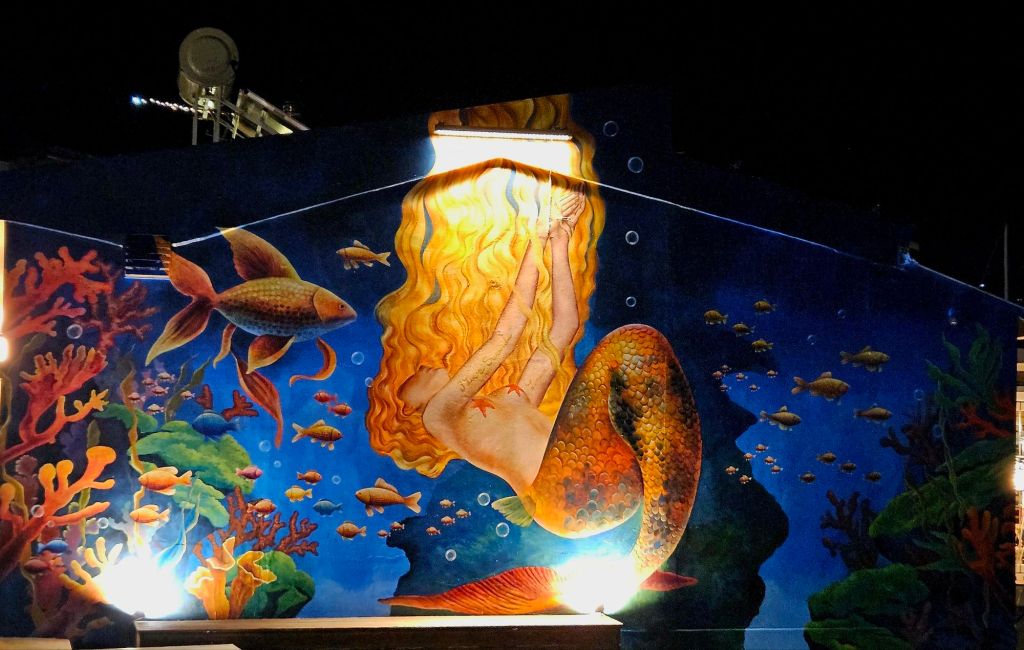
Some photos below of the street art around Belfast.