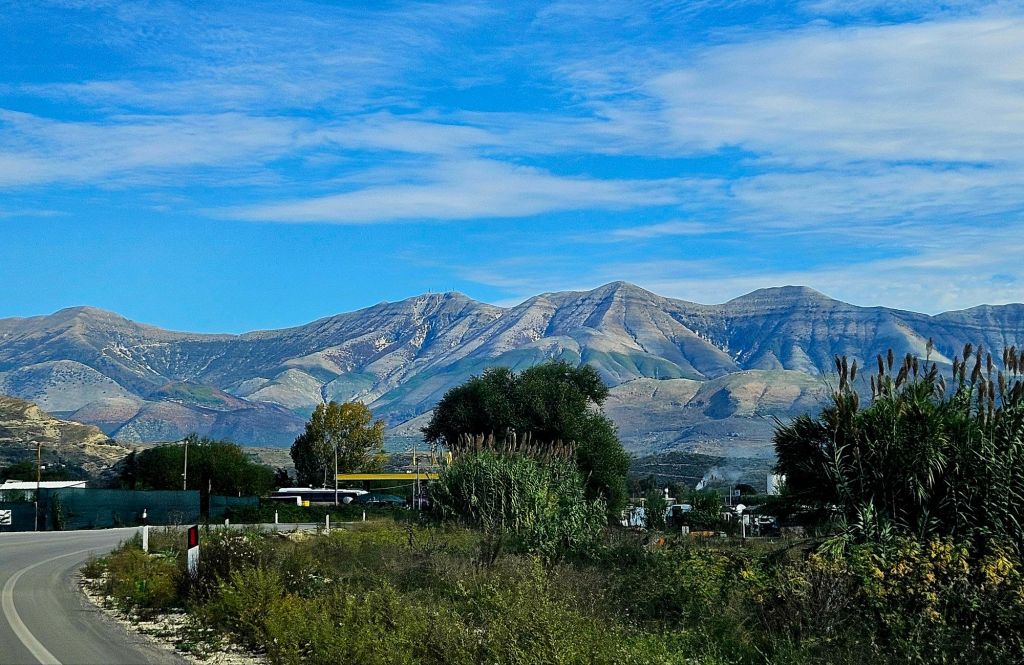
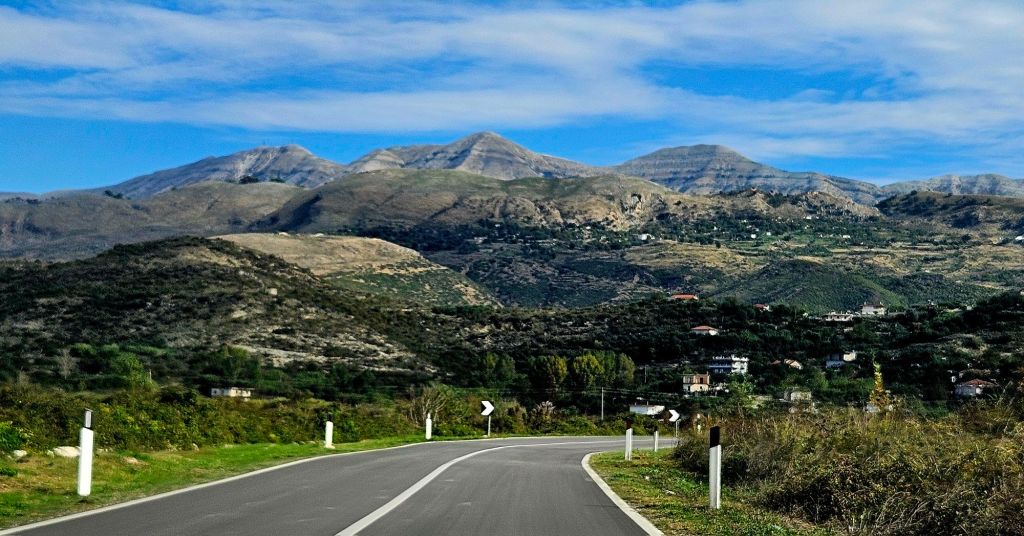
We started the day with breakfast at home, after which Nicola drove us to Mesopotam, around a 20 minute drive away. There were some lovely views of the hills on the drive over.
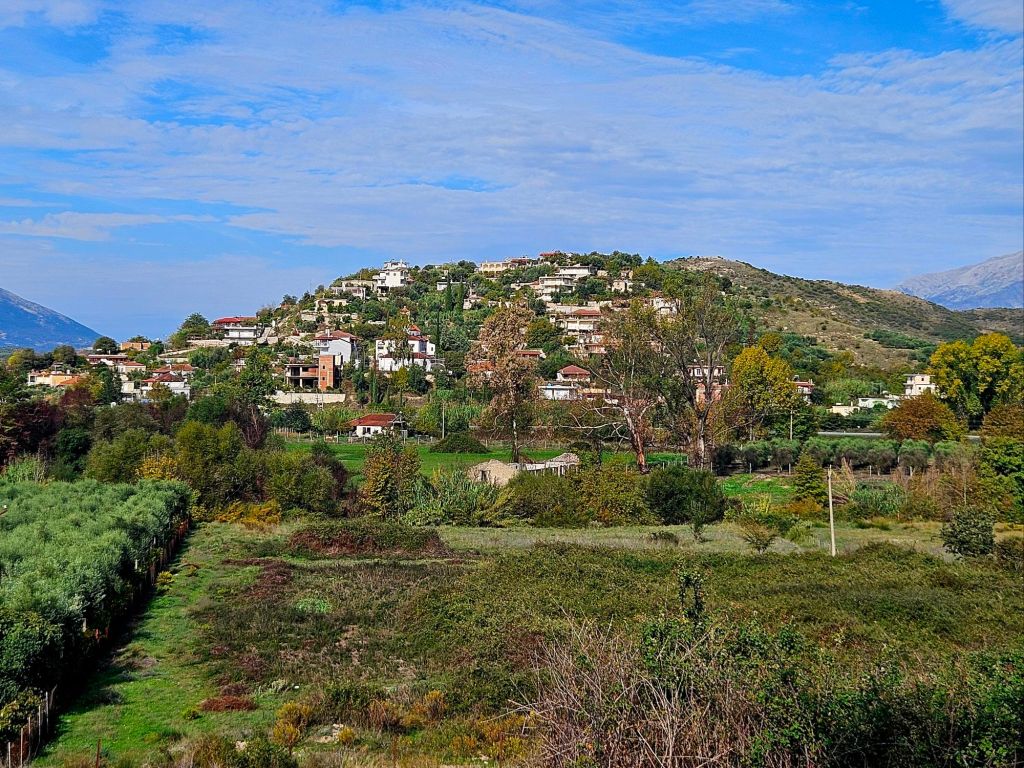
When we reached Mesopotam we stopped at St Nicholas monastery. We parked the car at the bottom of a track and took a short walk up to the monastry. You could look out over Mesopotam on the way up.
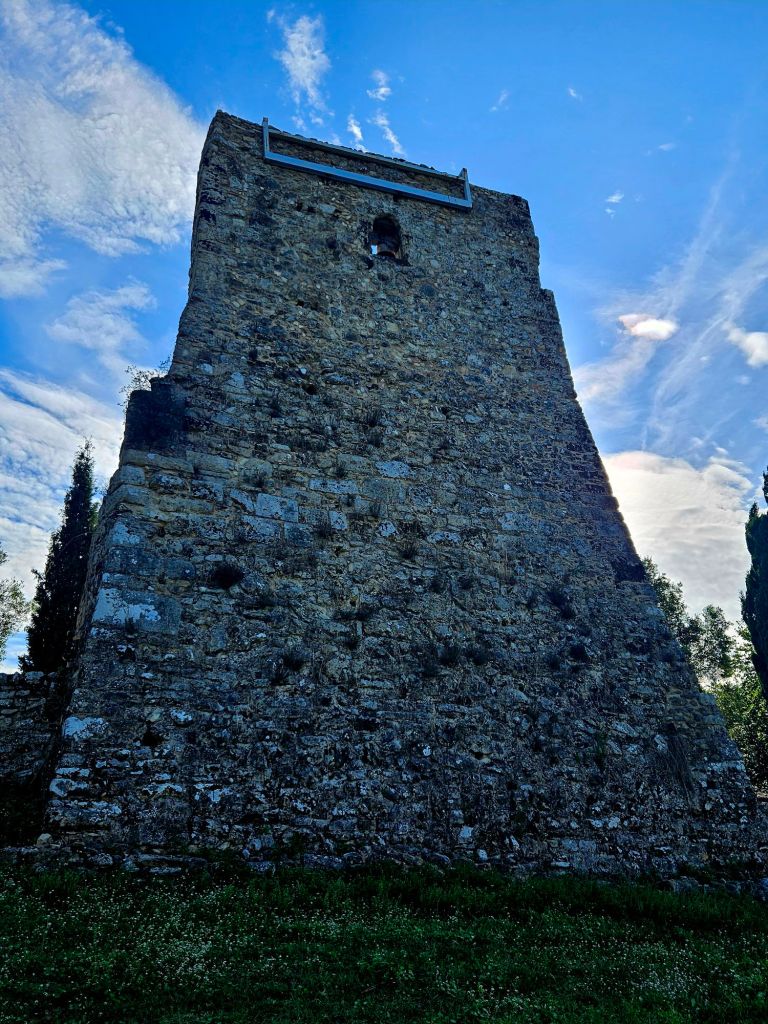
On reaching the monastery the first thing you see is the remains of a large tower, one of originally seven towers. The tower dates back to the 6th century and formed part of the former circular wall surrounding the monastery, covering an area of around 100m.
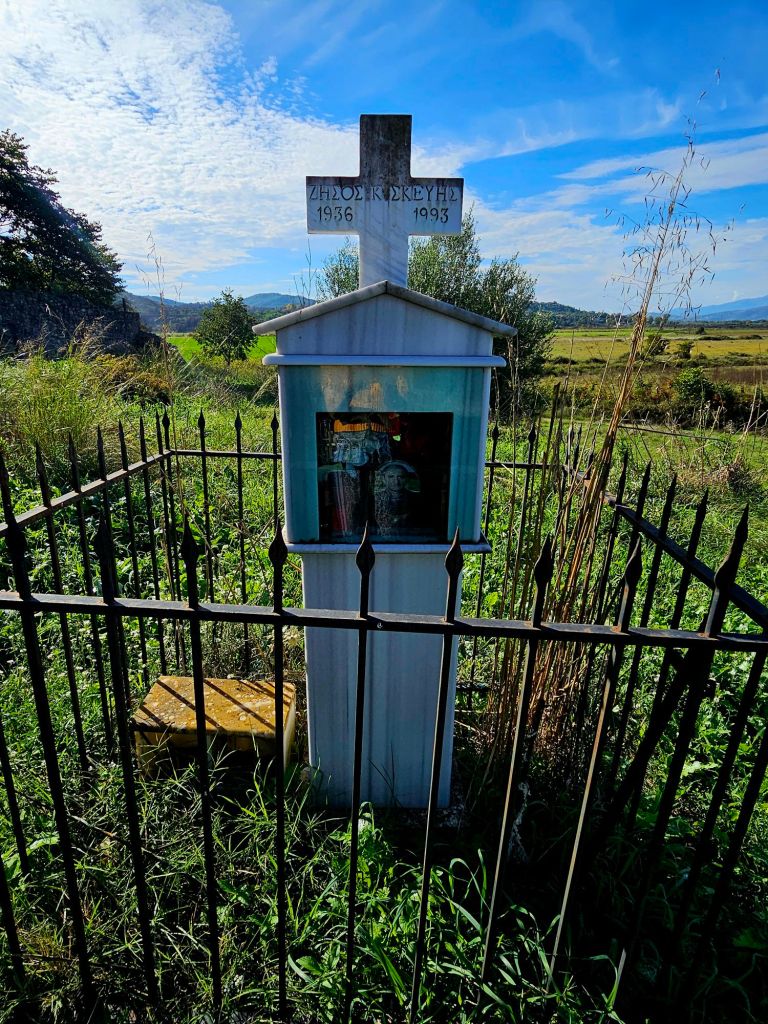
There is also a solitary grave that is fenced off. It looks to be the grave of a local priest.
The monastery itself is believed to have been built around 1224. However, it was built on the remains of a temple linked to the ancient city of Phoenice, around 3km away, and this was originally built in the 3rd or 4th century BC.
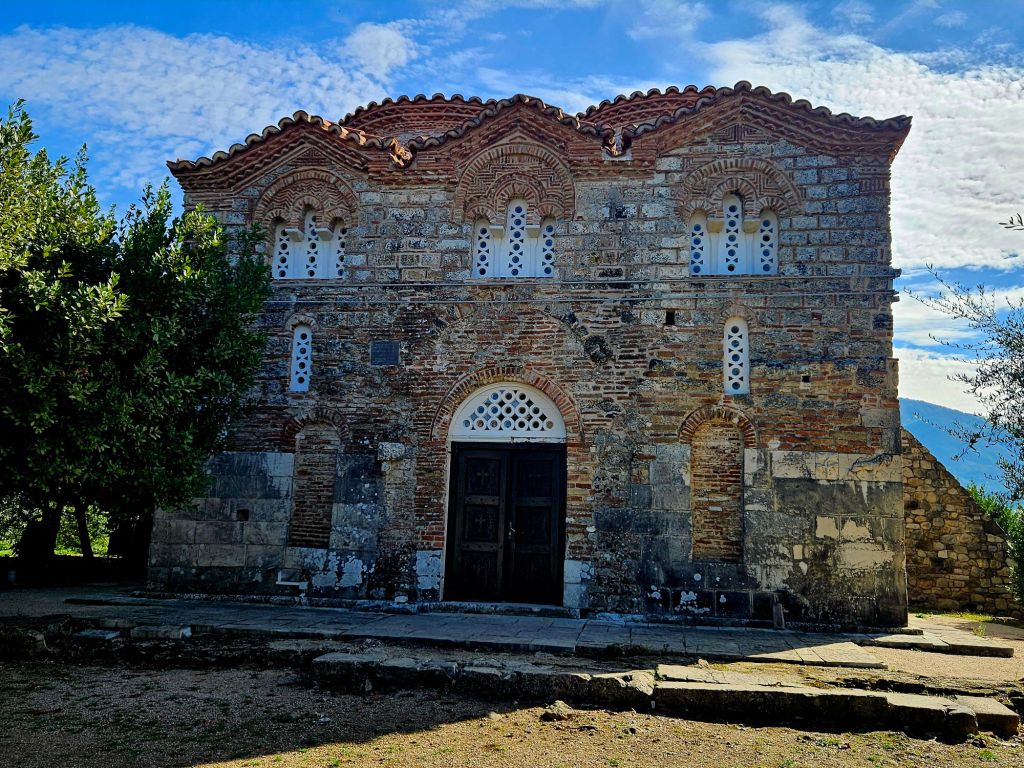
The monastery is unique in that it provided both catholic and orthodox rites and it was also the largest monastery in Albania. It also has a double apse, which is very unusual. It is one of only 350 churches to survive the forty year rule of Enver Hoxha.
The monastery’s dedication to Saint Nicholas is a testament to the enduring legacy of this revered figure. Known as “Agios Nikolaos” in Greek, “Sveti Nikola” in Serbian, and “Shën Kollit” in Albanian, Saint Nicholas is a universally venerated saint whose influence transcends cultural boundaries. He shares historical ties with Saint Spyridon, the patron saint of the nearby island of Corfu, located 20 kilometers west of Mesopotam. Both bishops, Nicholas and Spyridon, were contemporaries who attended the First Council of Nicaea in 325.
Inside there is a lot of restoration work going on,with the uncovering of original Bzyantine frescos.
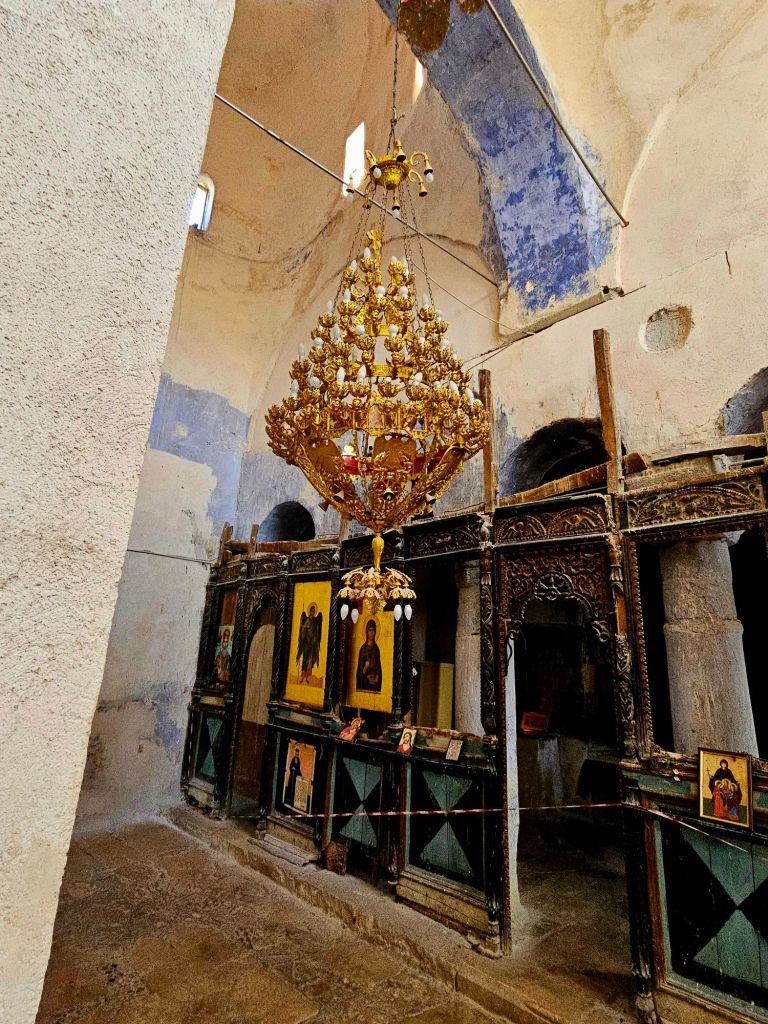
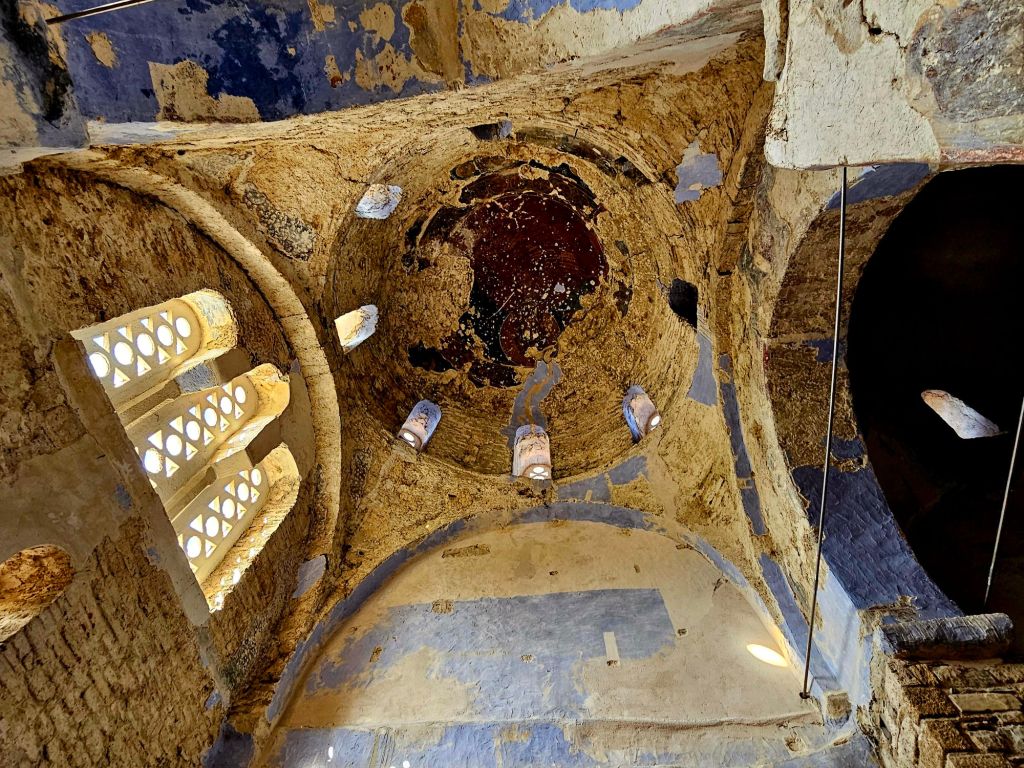
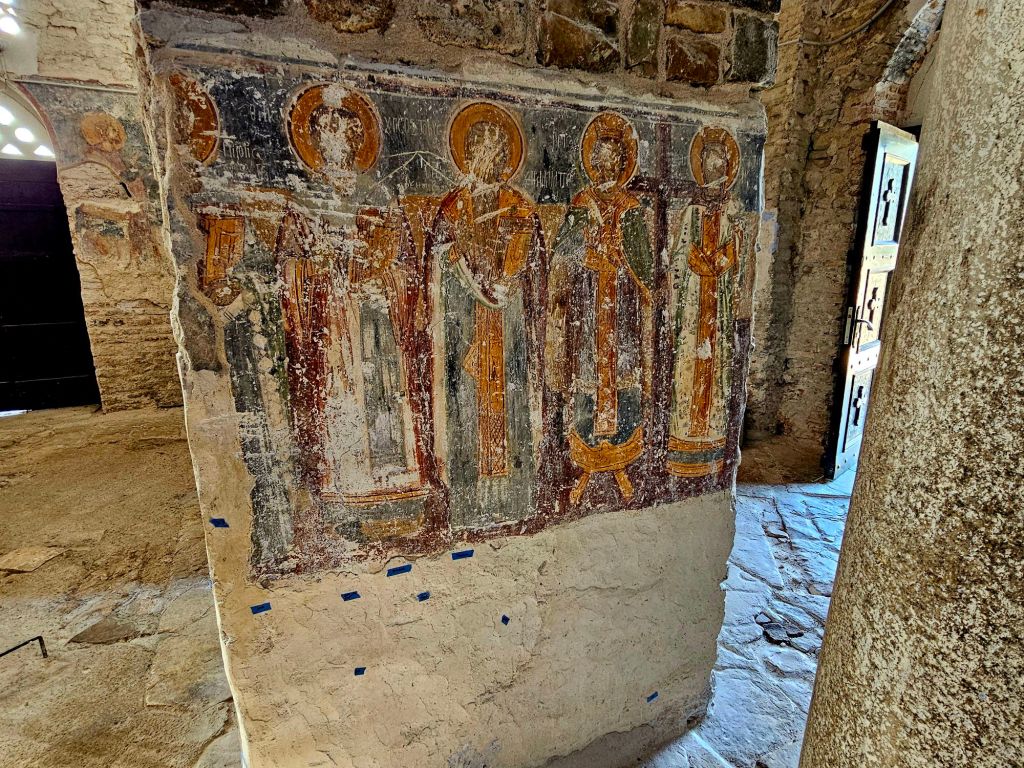
The monastery was converted to a mosque by the Ottomans, who painted the walls blue. The frescos are being discovered as the blue wash is removed.
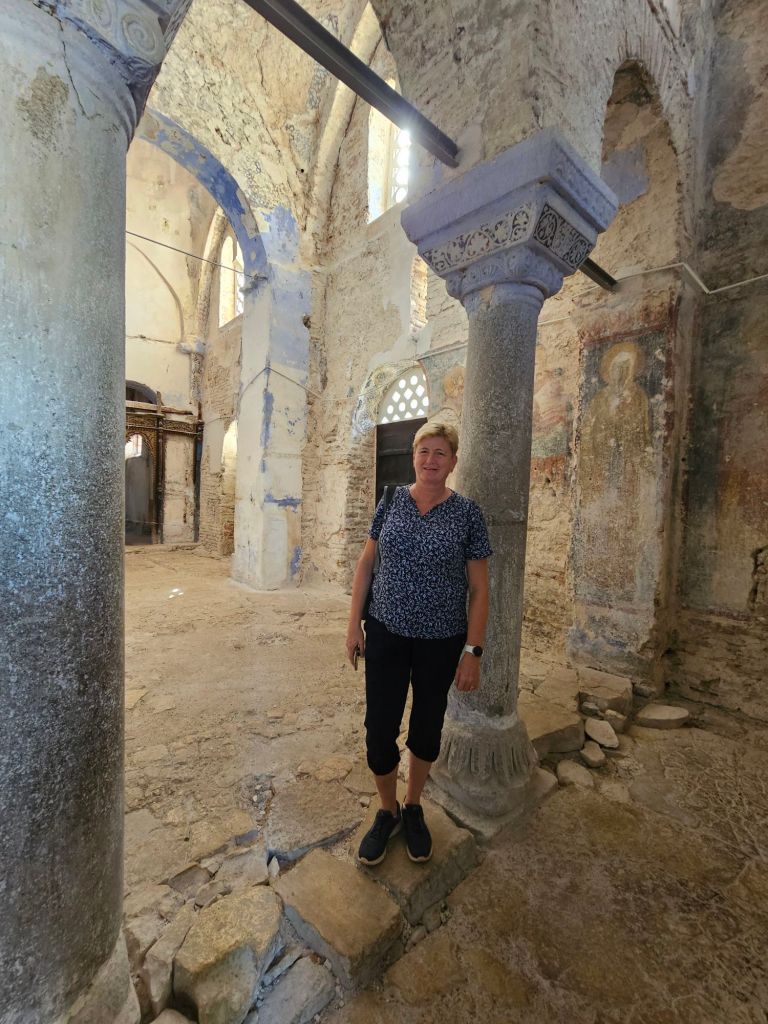
Restoration started in 2021 and is ongoing.
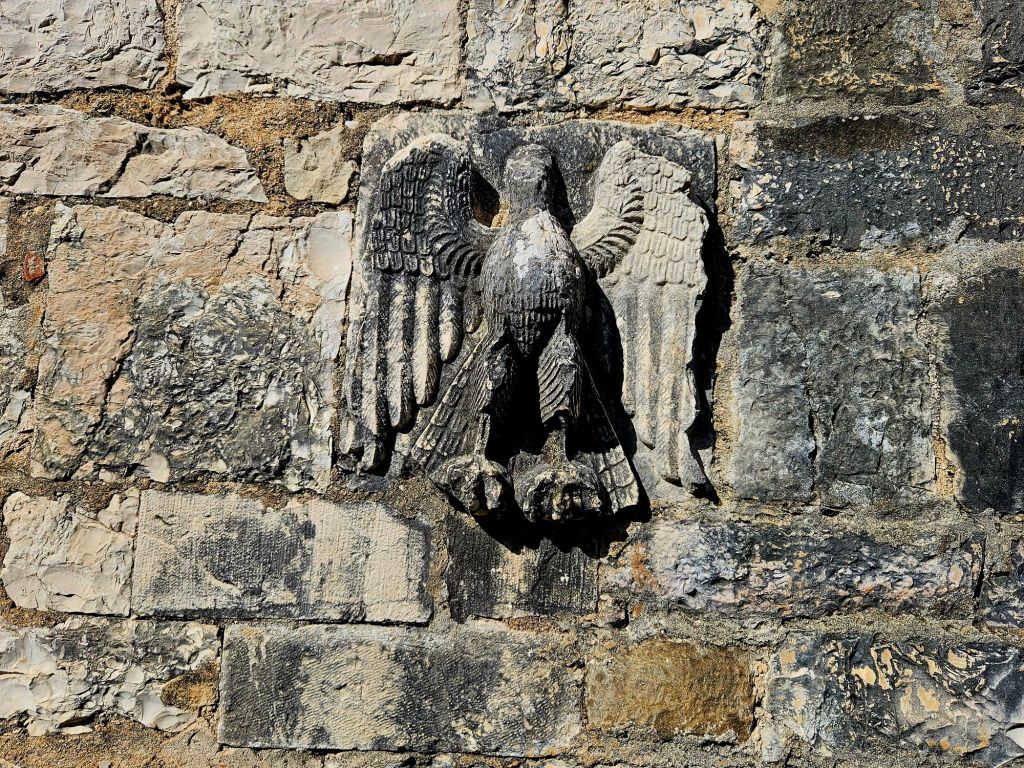
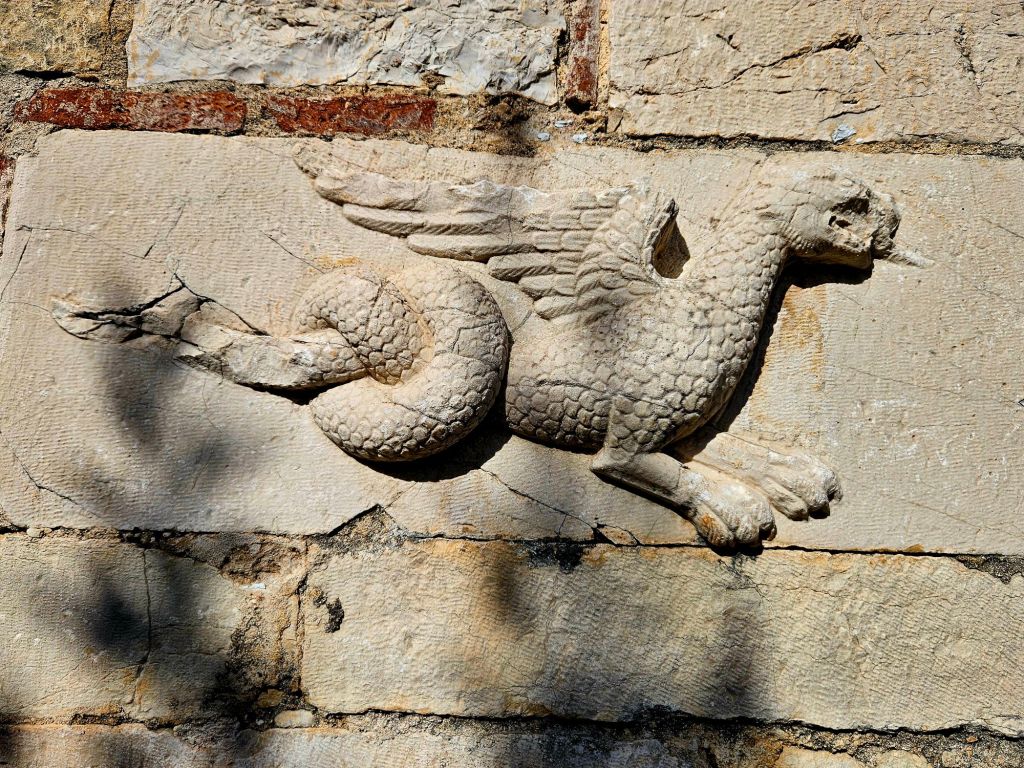
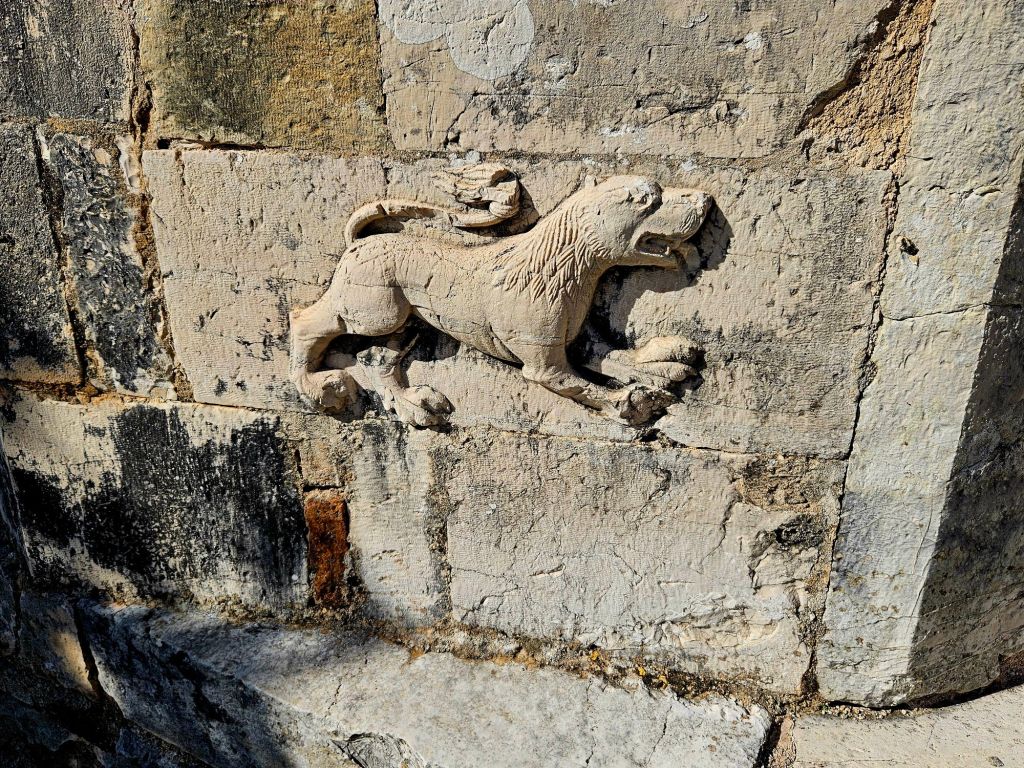
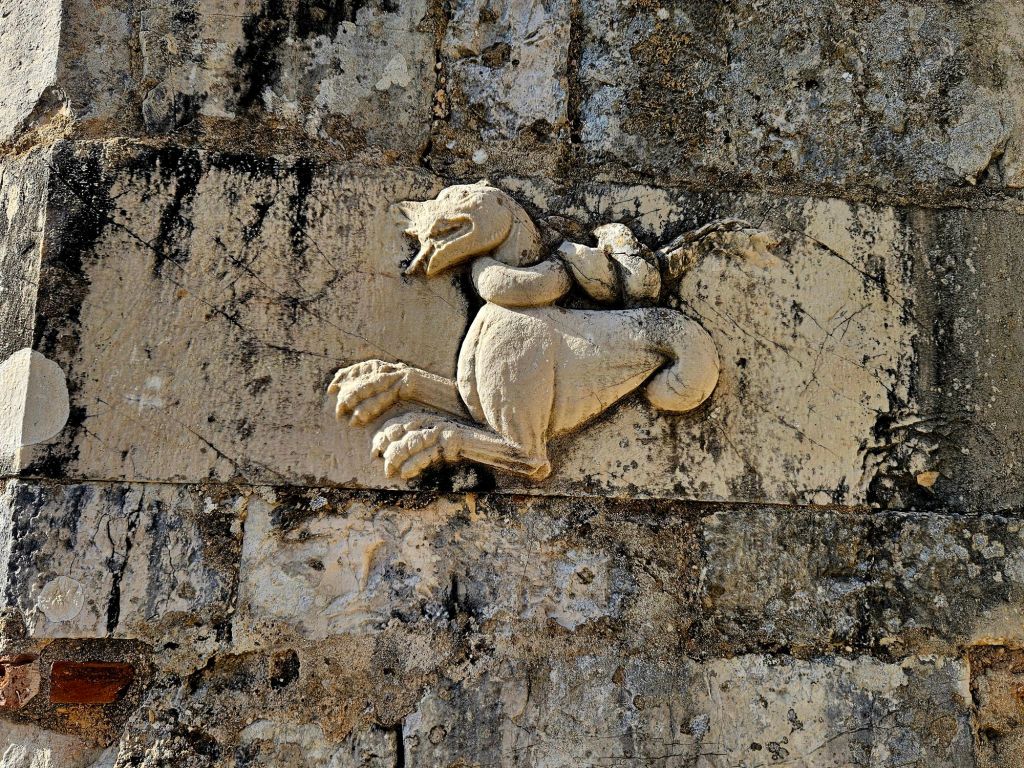
The walls of the monastery contain several icons including an eagle, a dragon, a lion and a serpent dragon with its tail coiled around its neck. These are thought to pre-date the arrival of Christianity.
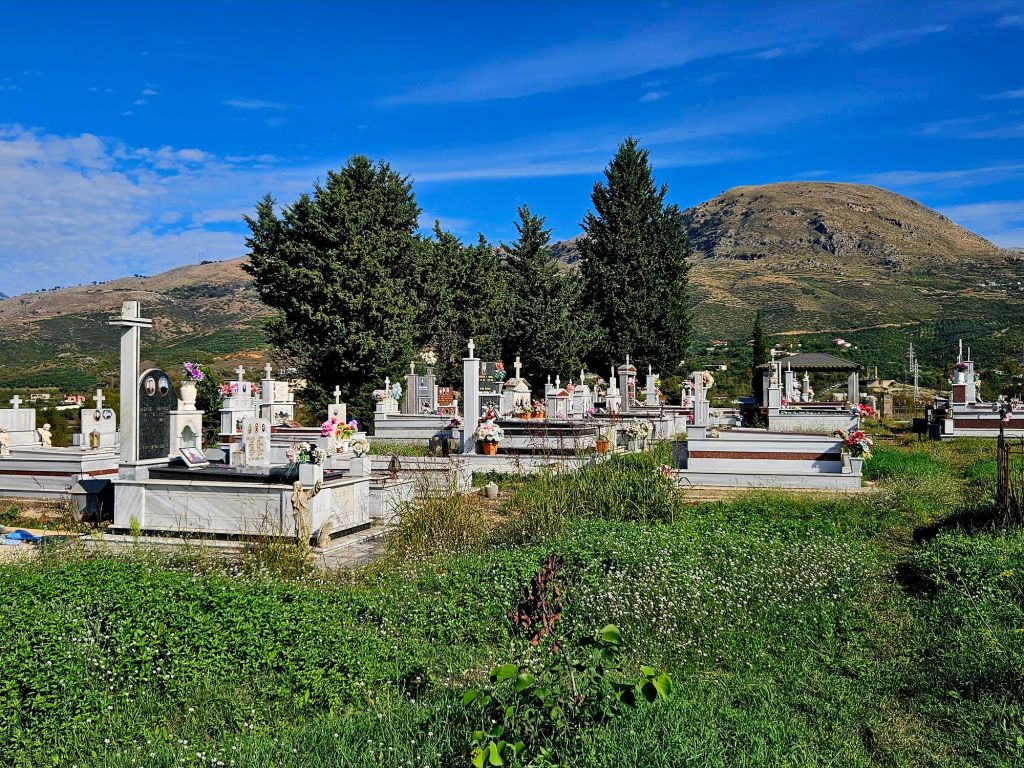
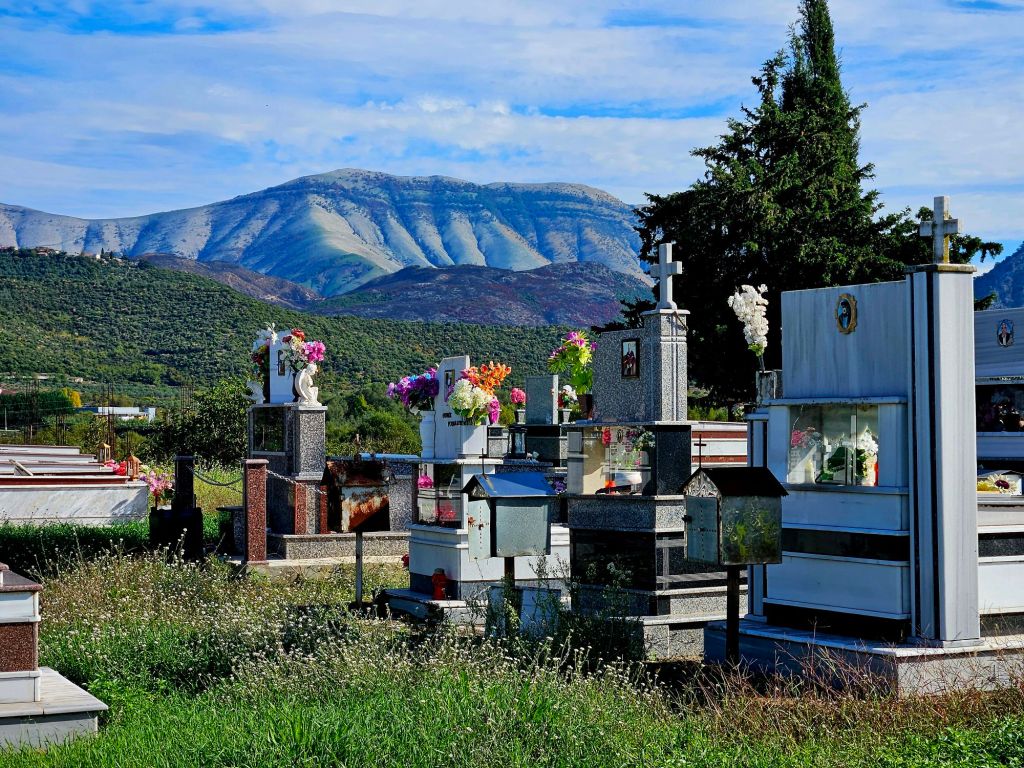
Just outside the monastery is a modern Greek orthodox graveyard.
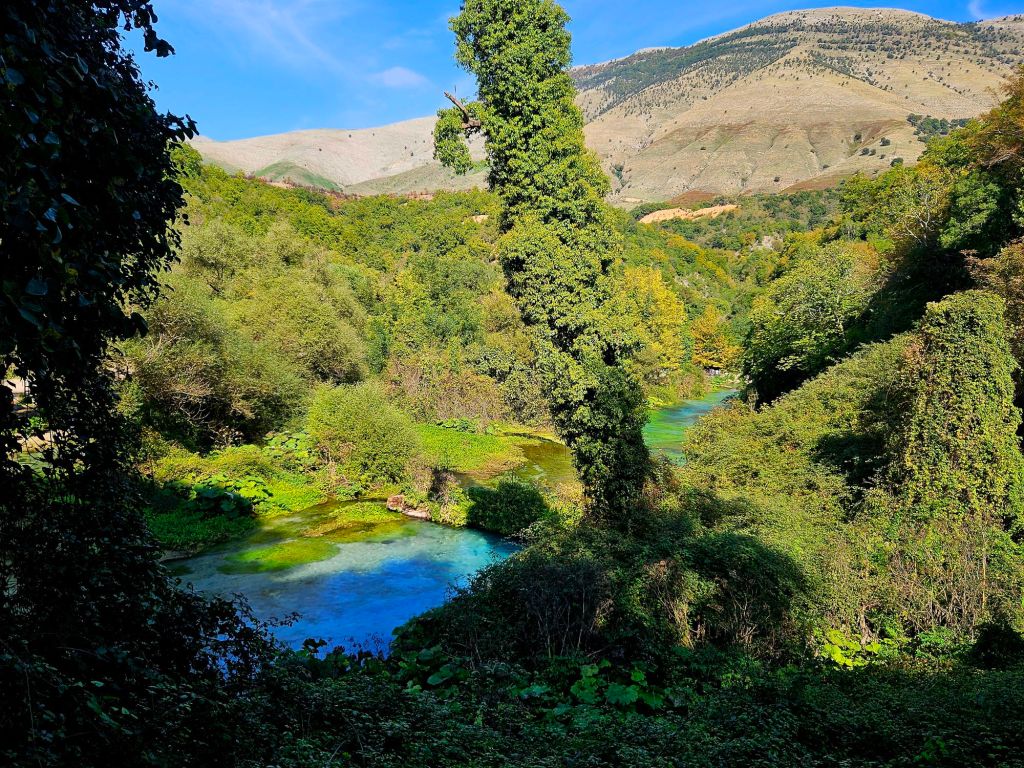
After walking back down to the car we headed on to the Blue Eye, otherwise known as Syri i Kaltër. This is a natural water spring and is the original source of the Bristrice River which flows out to the Ionian Sea. The blue eye is situated in a natural monument of 1.8km².
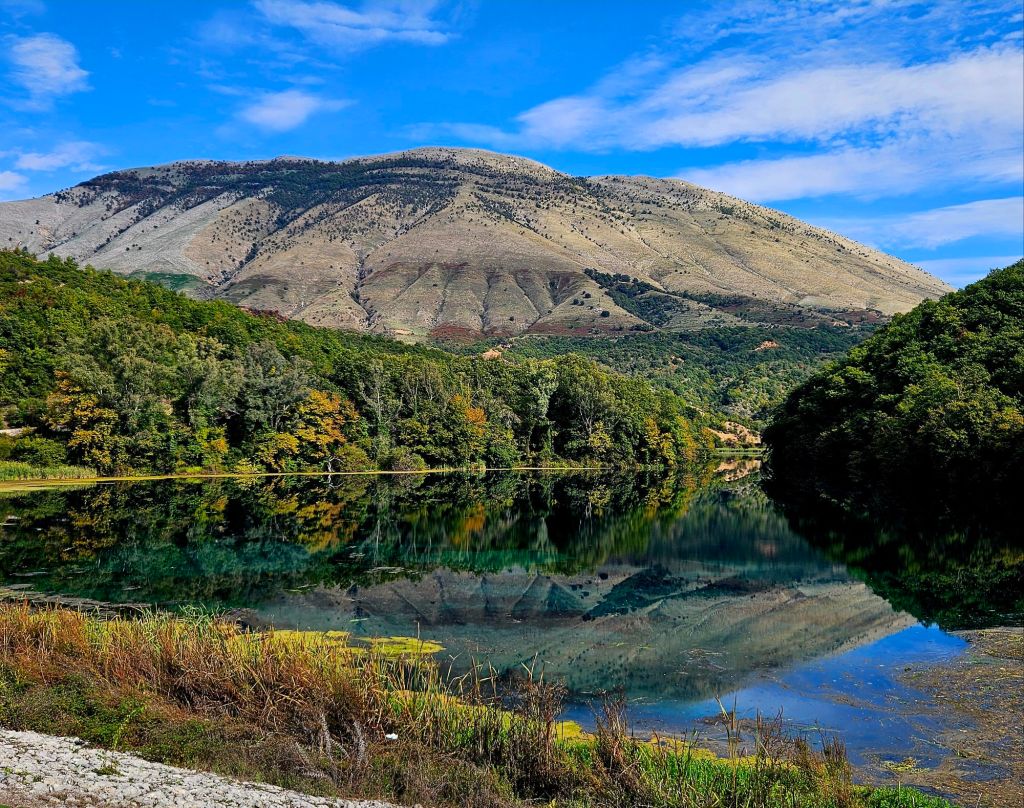
The view from the start of the trail into the area was quite stunning itself.
It was about a 25 minute walk from the car park to the Blue Eye itself. We both took lots of photos. As you can see, the blue colour and the shape of the spring, give it its name. The middle of the spring, the pupil, is a deep abyss, with the surrounding shallow water over limestone creating the iris of the eye.
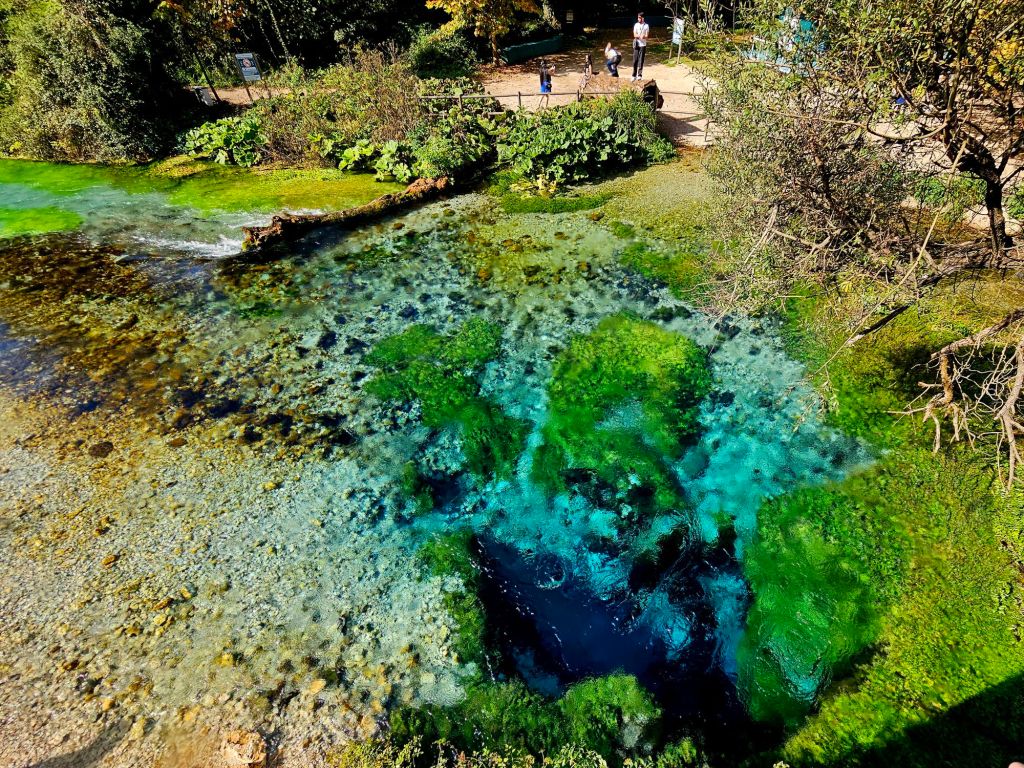
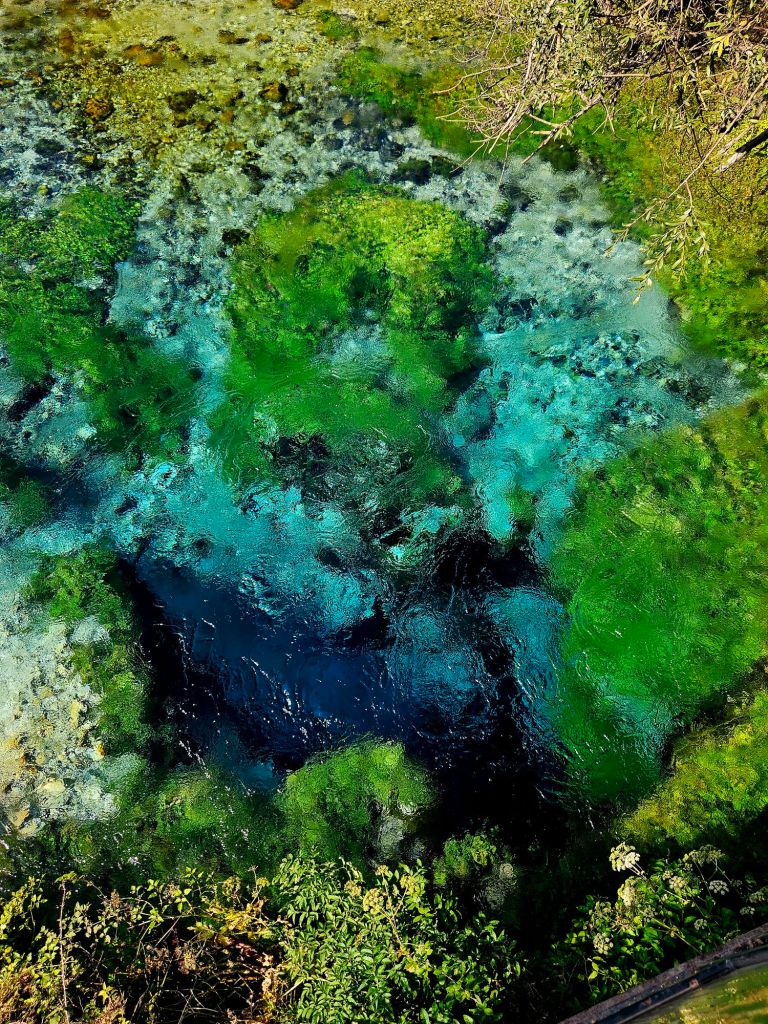
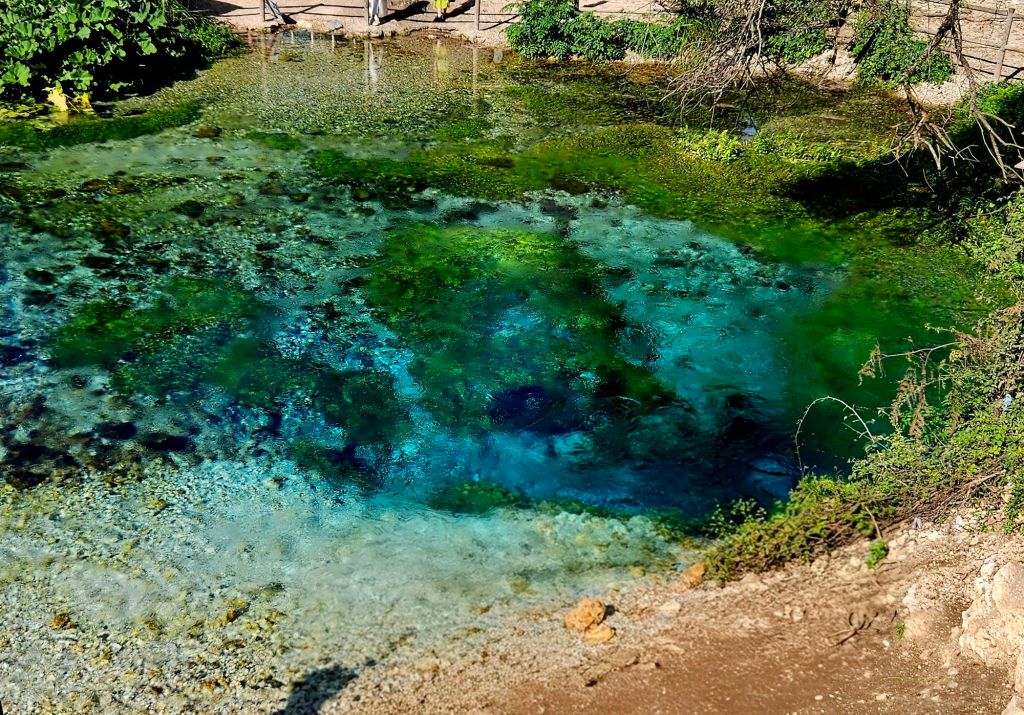
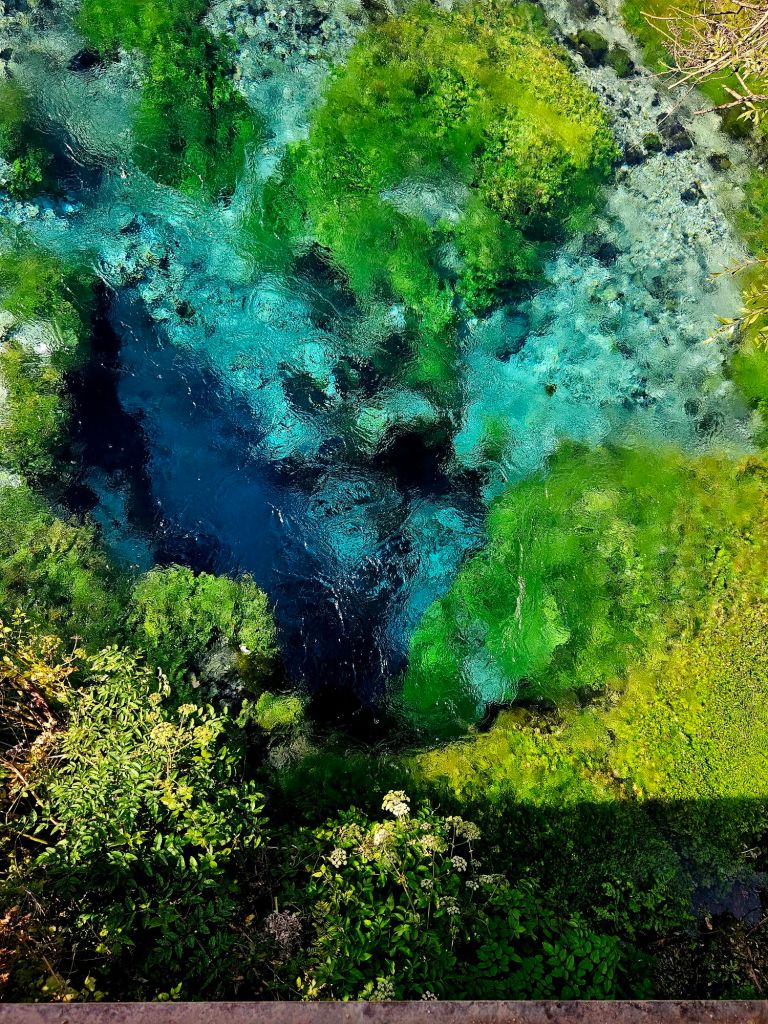
The blue eye is a karst spring which means it is a natural outlet where groundwater discharges to the surface from a subterranean network of fissures, caves, and underground rivers. It pumps around 5000l/s of water from as yet unexplored deep cave, believed to be over 50m deep. You can see the water being pushed upwards from the centre of the spring. The water is around 10⁰C and unfortunately swimming is forbidden.
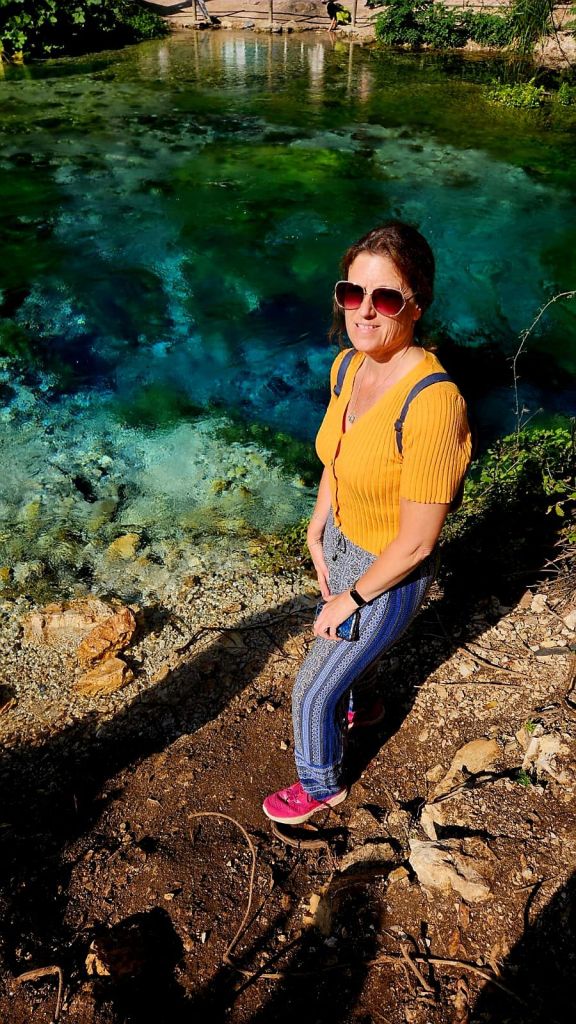
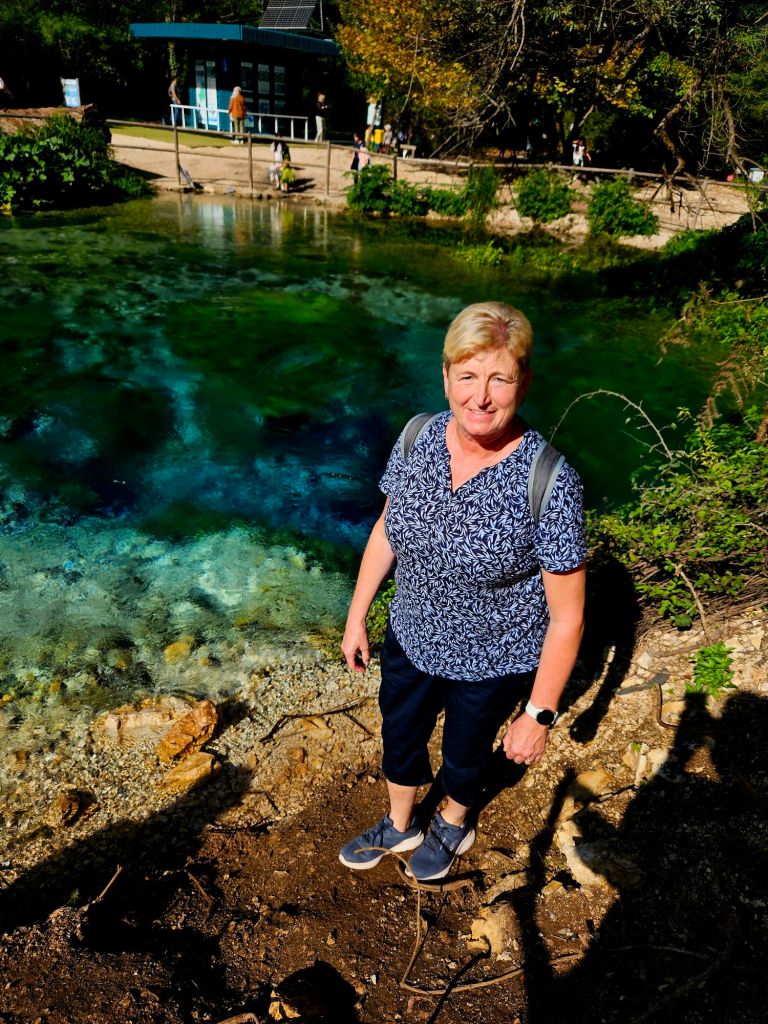
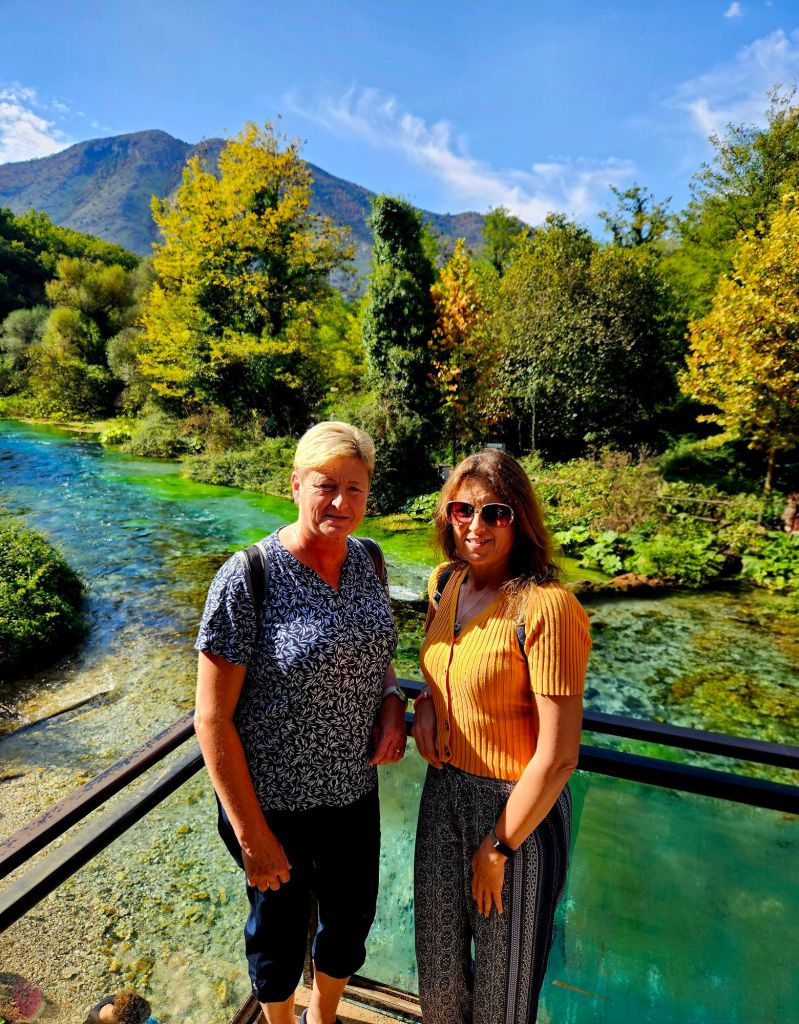
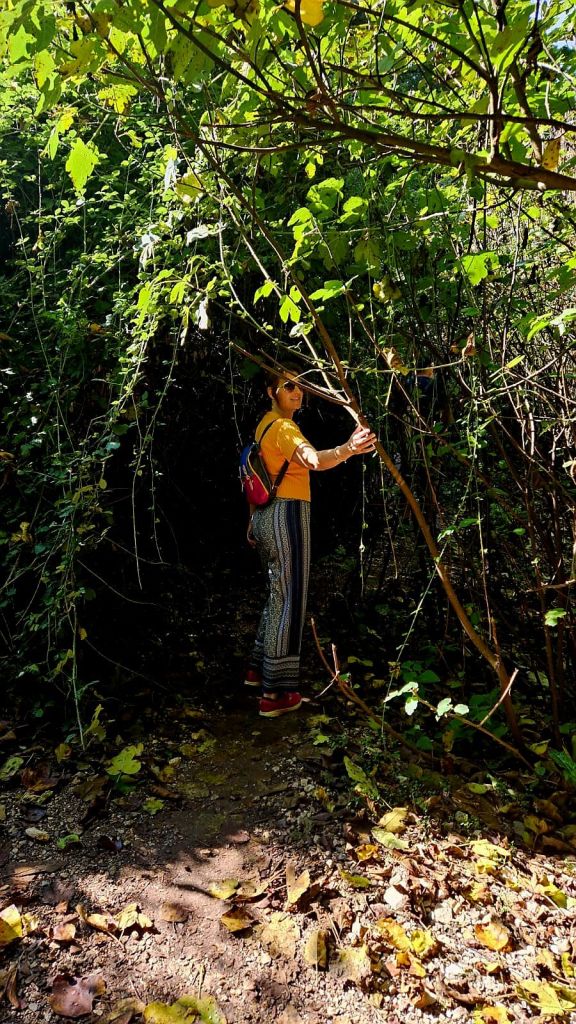
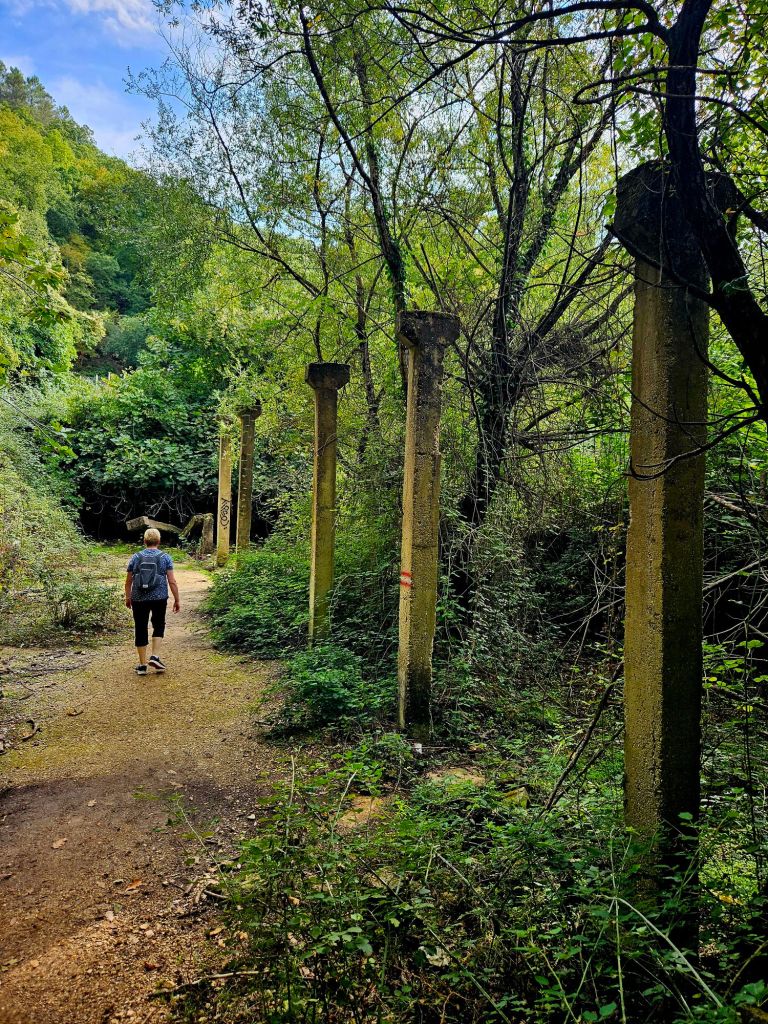
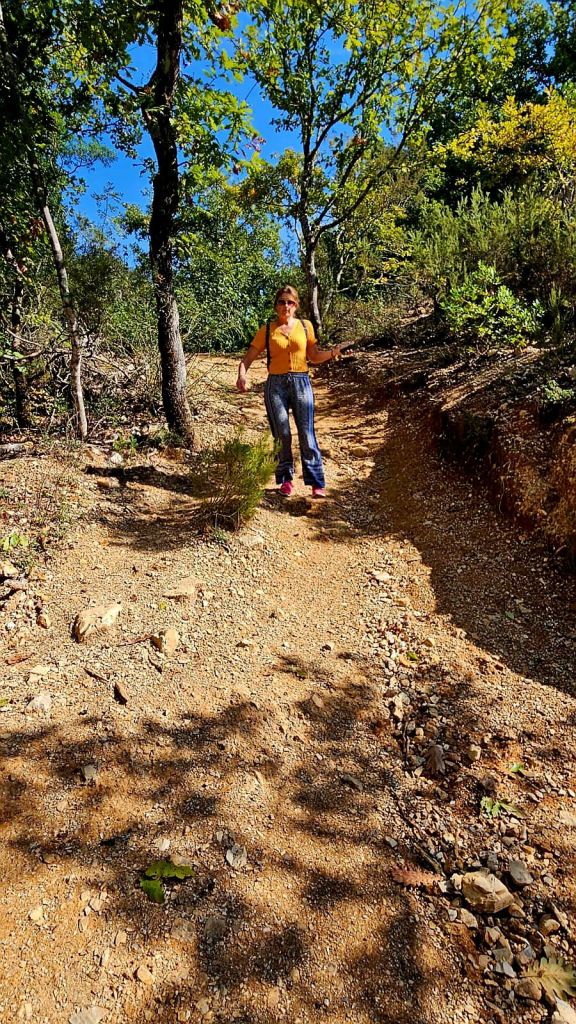
After taking a huge number of photos we decided to take a trail through the surrounding natural park area back to the car park.
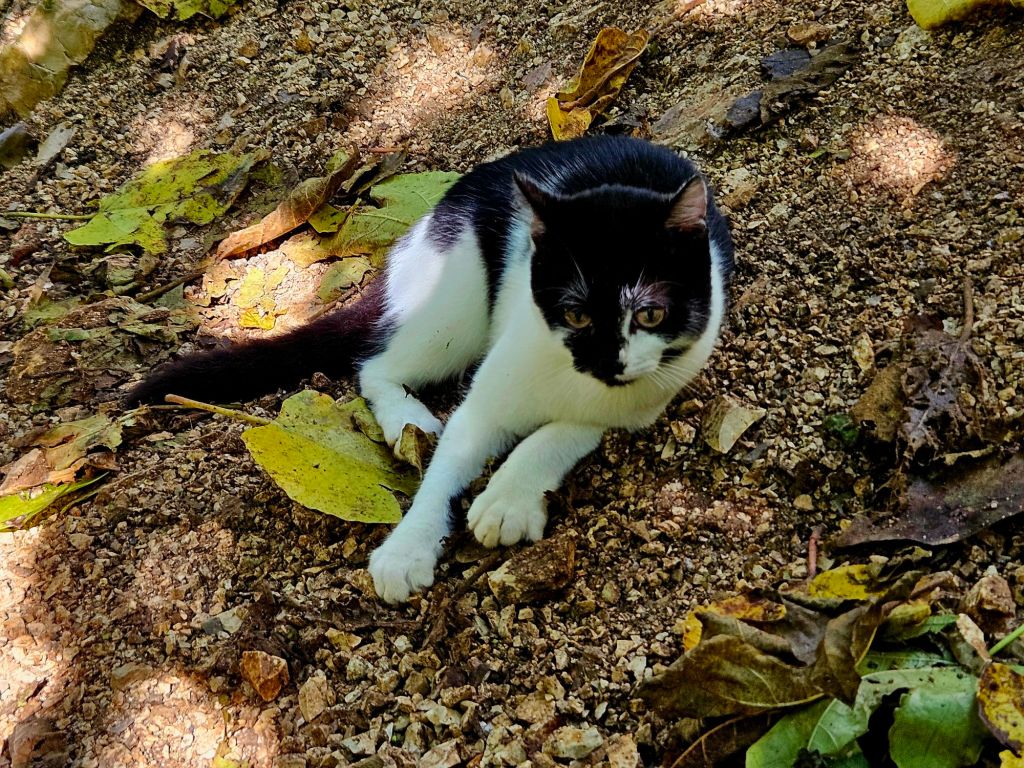
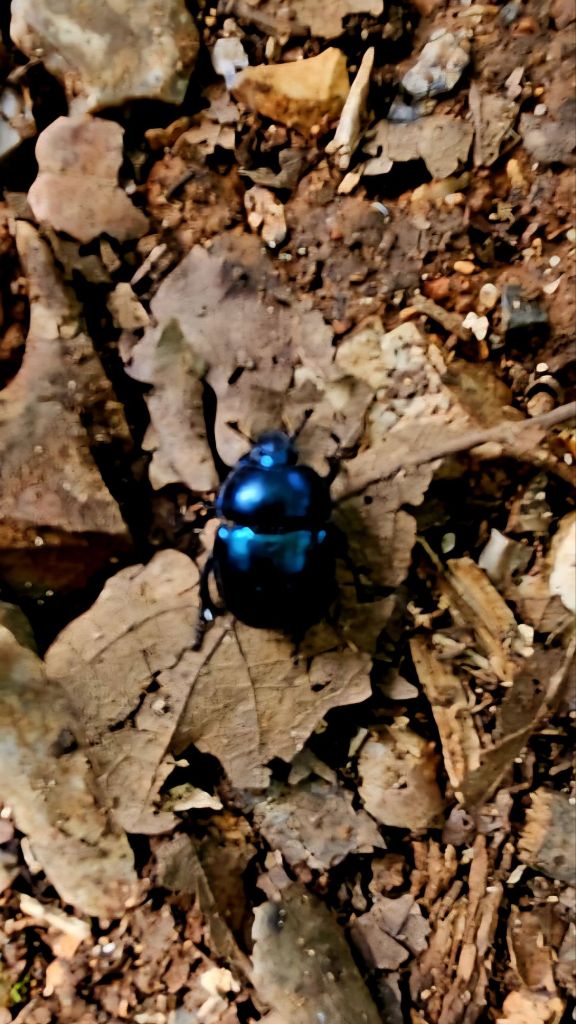
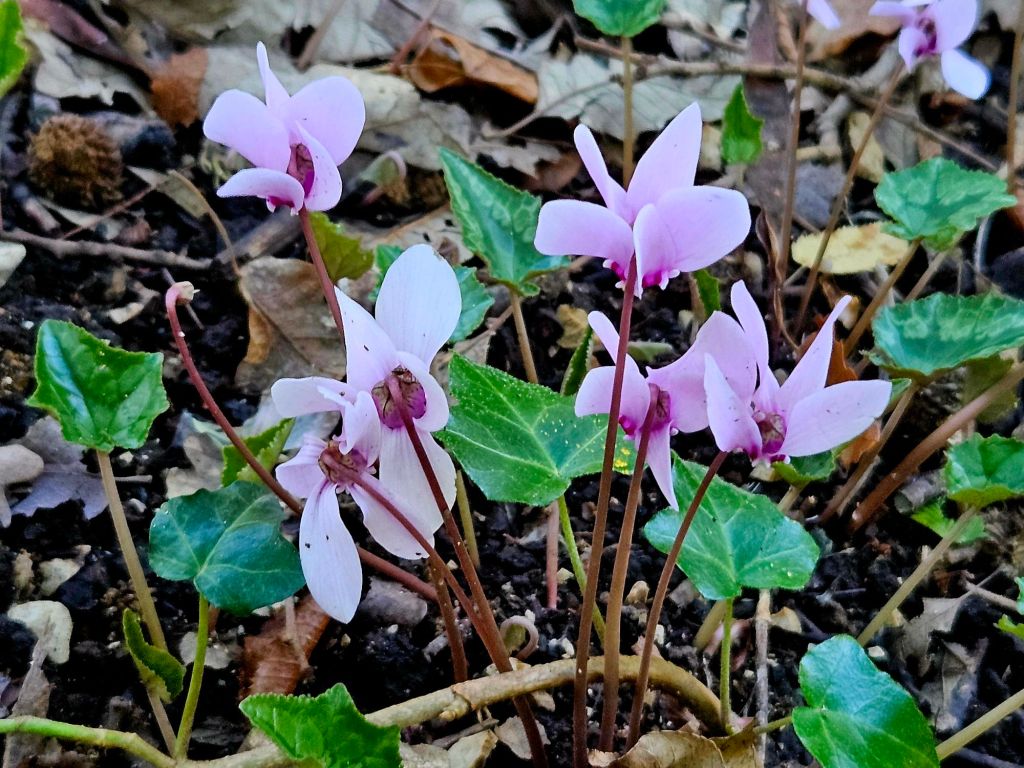
It was a beautiful walk through the oak and sycamore woodland, and we came across a tiny bit of wildlife too.
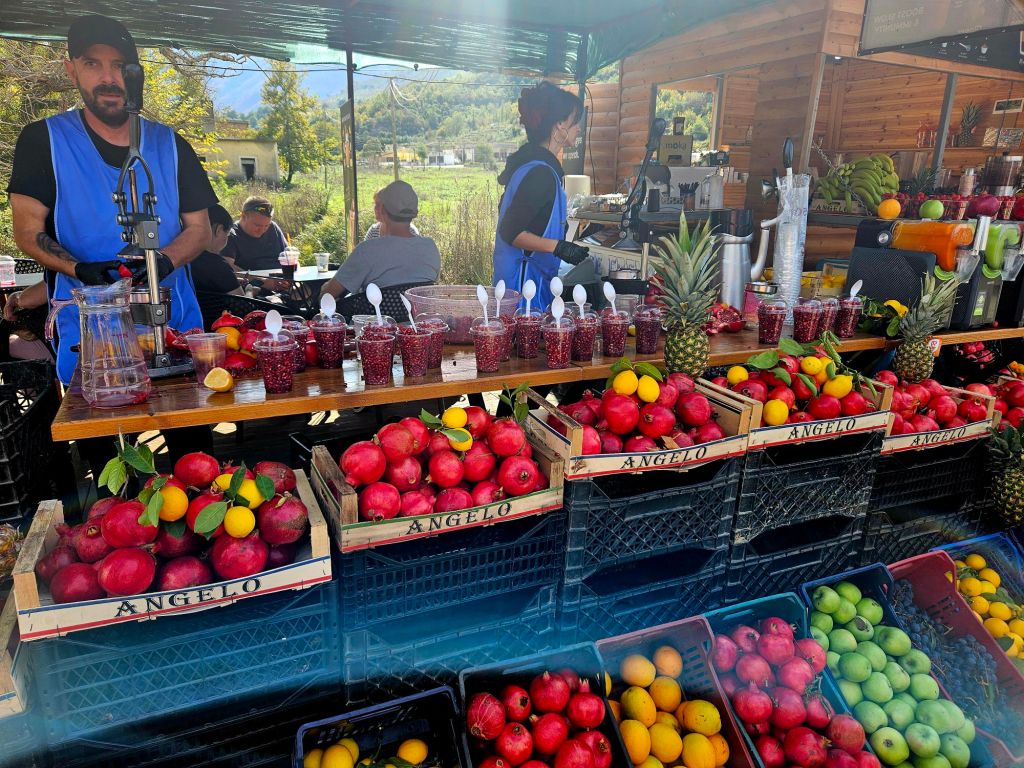
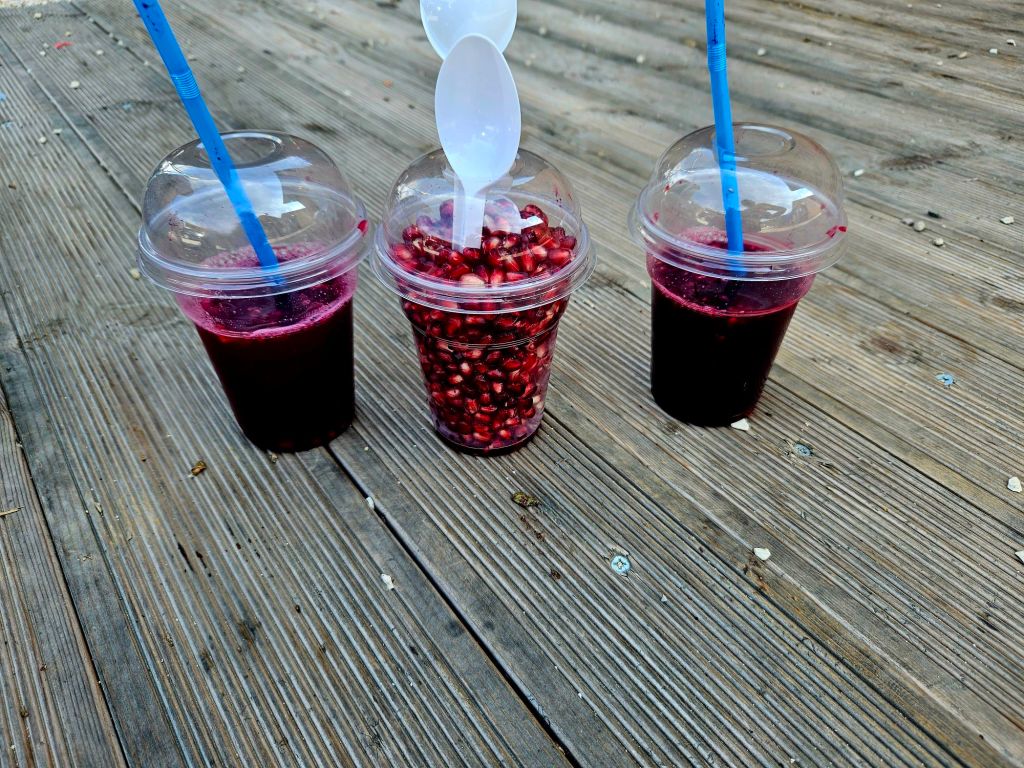
Just before the car park there were a number of fruit stalls, all selling pomegranate, so we bought a couple of juices and some seeds. They were quite sour but very refreshing. There were also a lot of wasps around so we had to be careful they didn’t get into the juices.
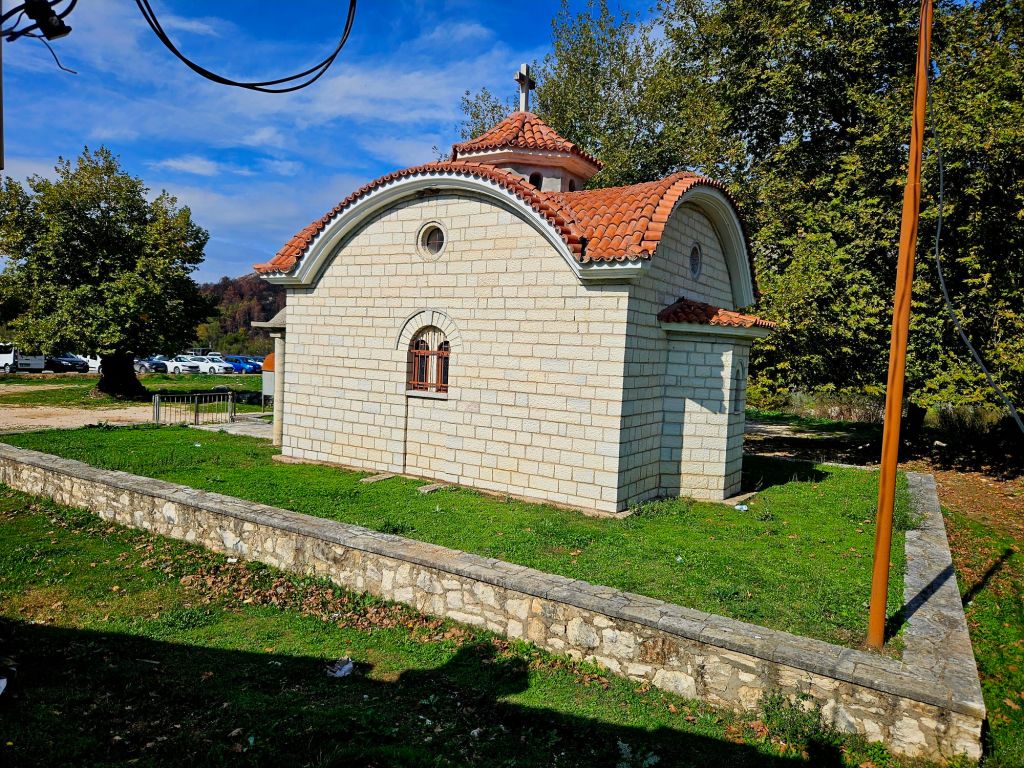
And there is also a small church just by the car park, but it didn’t seem to be open when we were there.
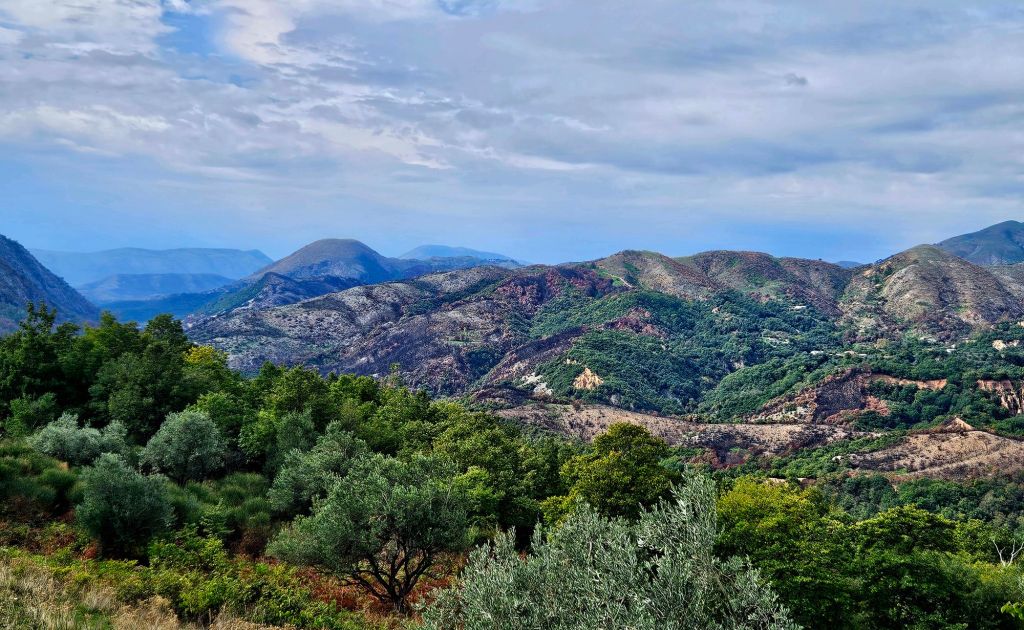
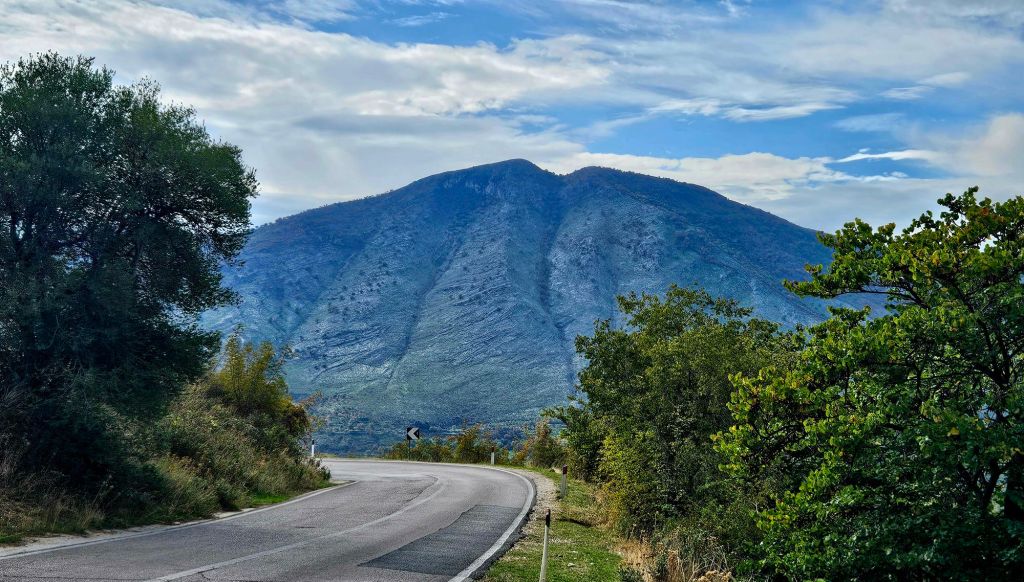
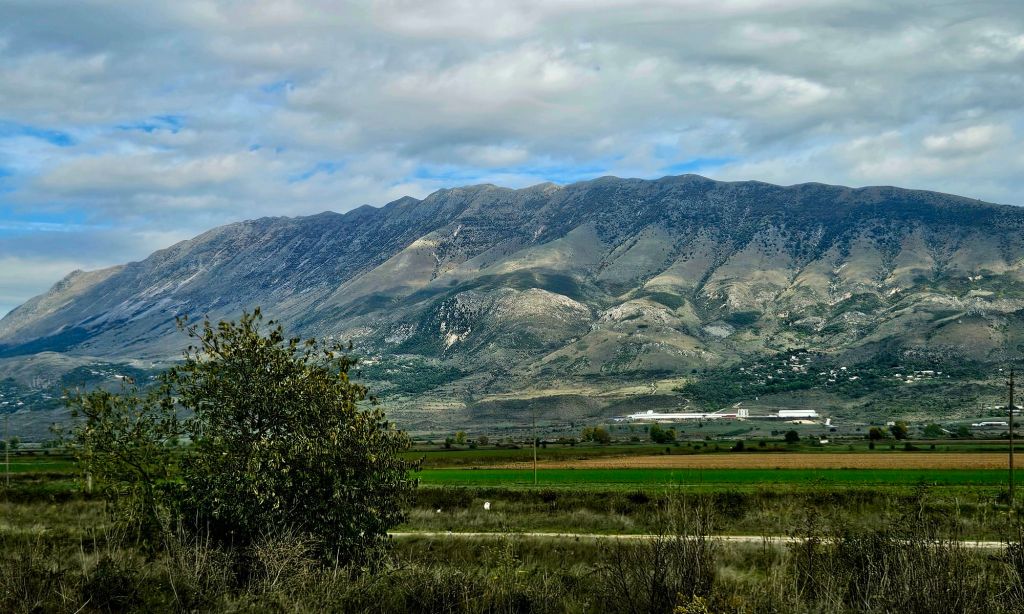
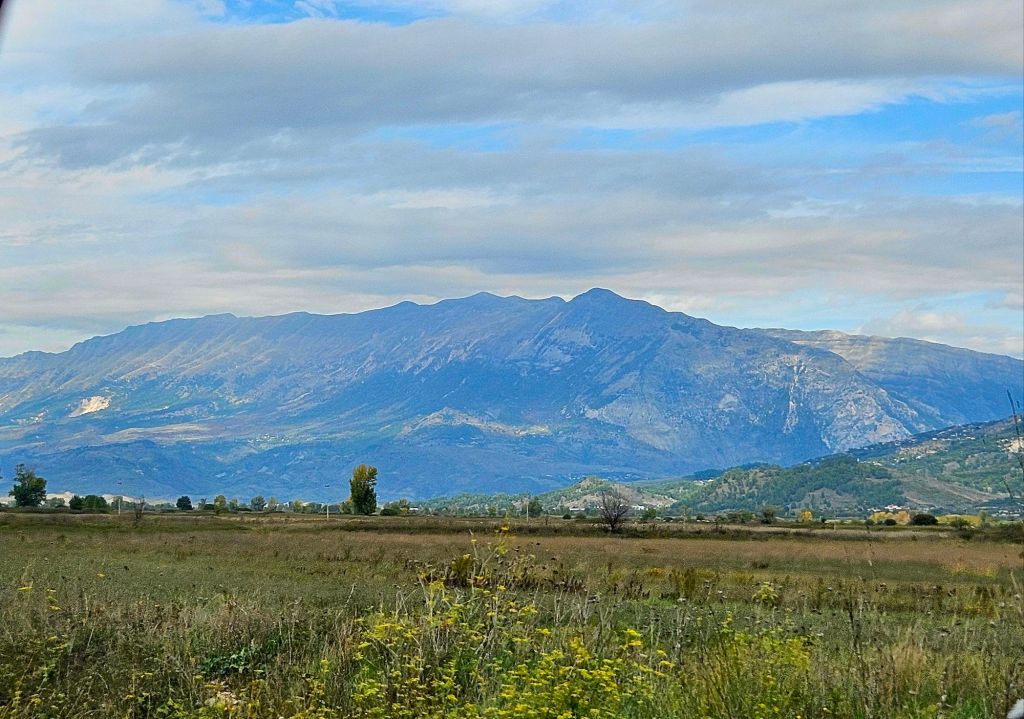
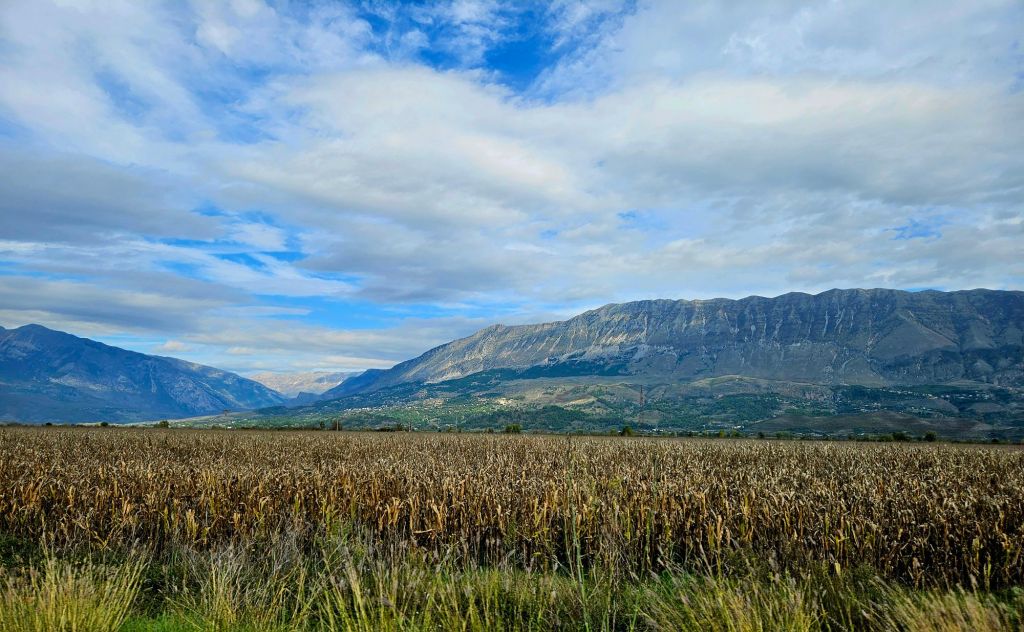
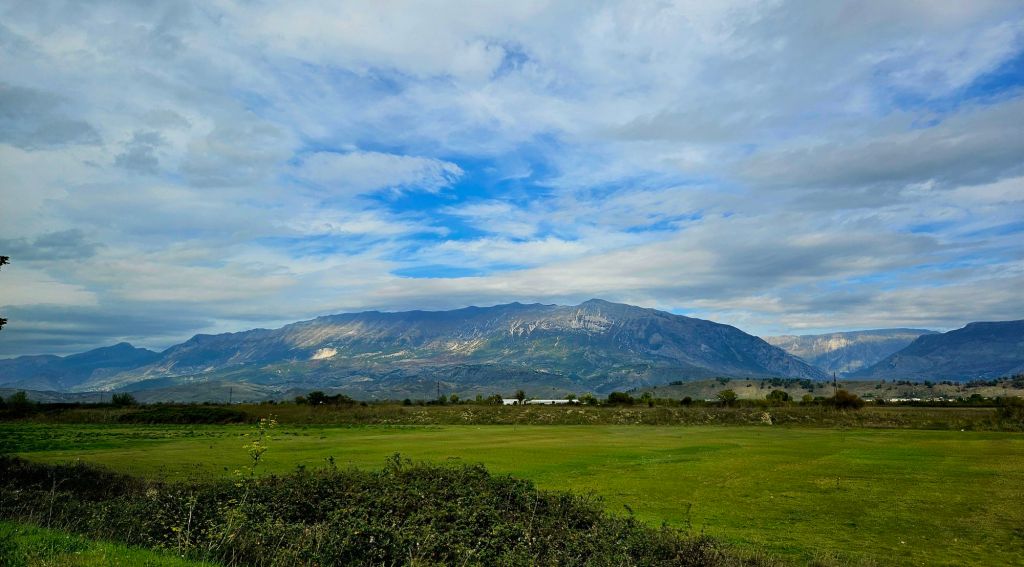
Our next stop was Gjirokaster which was around an hours drive away. Again, we had some beautiful views on the drive over. The landscape is really stunning.
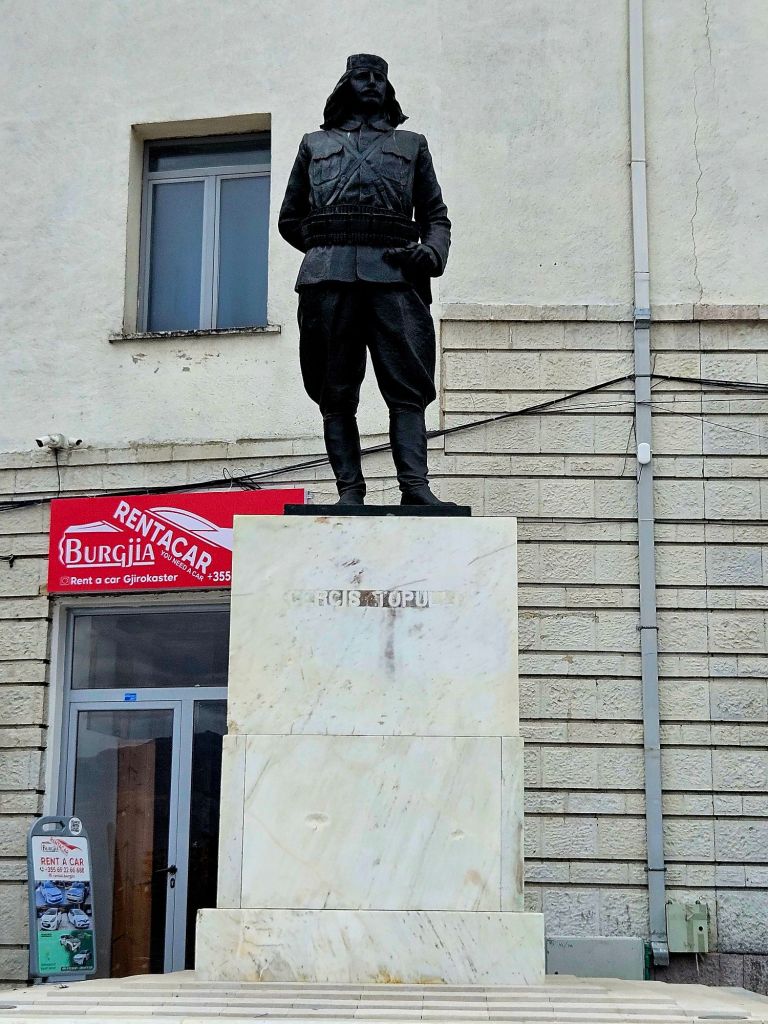
We managed to find parking pretty much in the centre of the town. As we exited from the car park we were immediately in one of the main squares, Topulli Square. This has a statue of Cercis Toppuli, who was a prominent Albanian revolutionary, guerilla fighter and national hero. He was born in Gjirokaster and fought for the independence of Albania against the Ottoman empire. One of his most notable achievements was the killing of Turkish Bimbashi, the Ottoman commander of 1000 soldiers stationed in Gjirokastra.
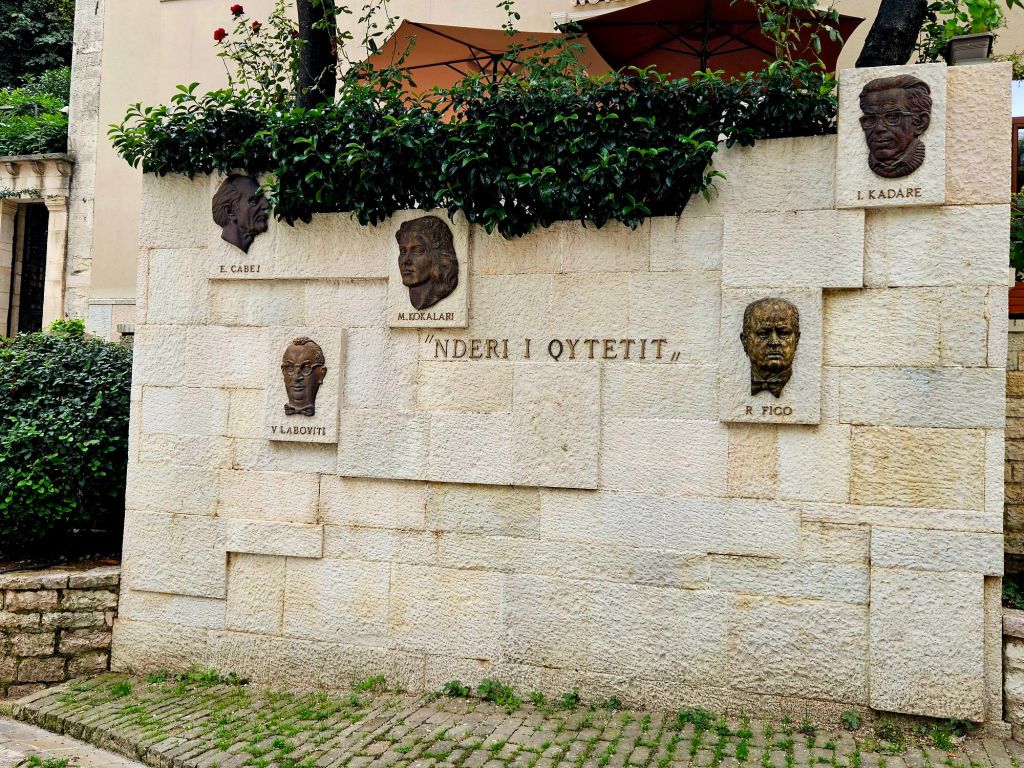
There is also a monument of famous people / monument of intellectuals of Gjirokaster at this square. It is a small stone wall featuring bronze portraits of prominent individuals who contributed to the development of the city, one of them being a famous writer, Ismail Kadare.
Enver Hoxha was also born in Gjirokaster in 1908.
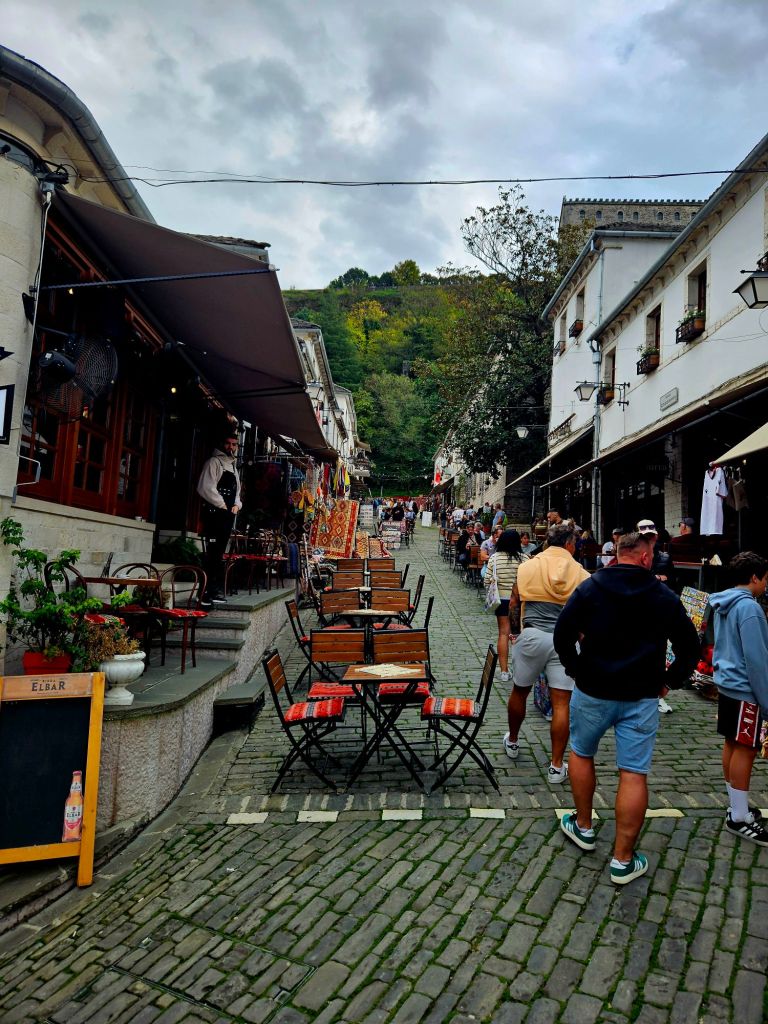
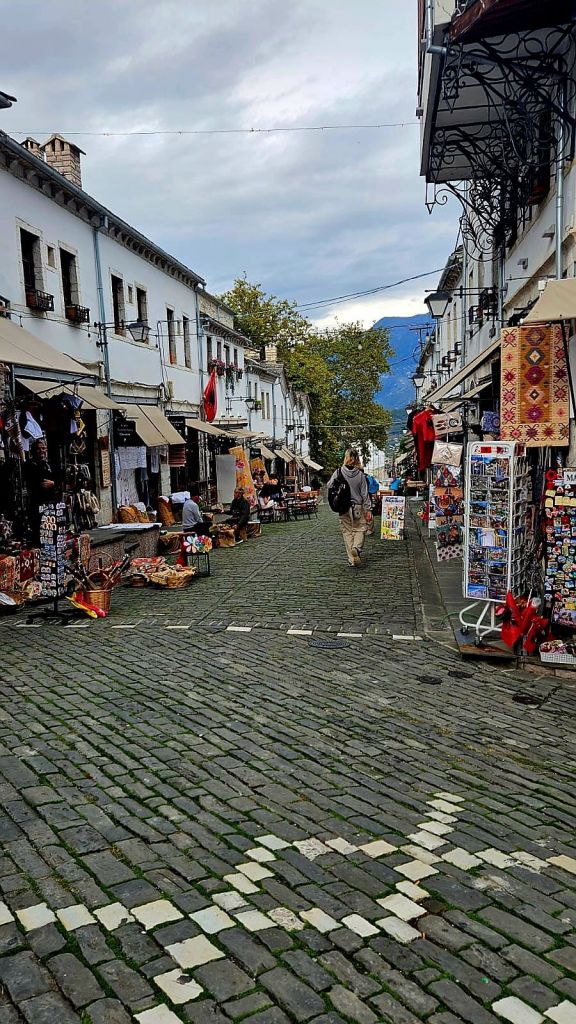
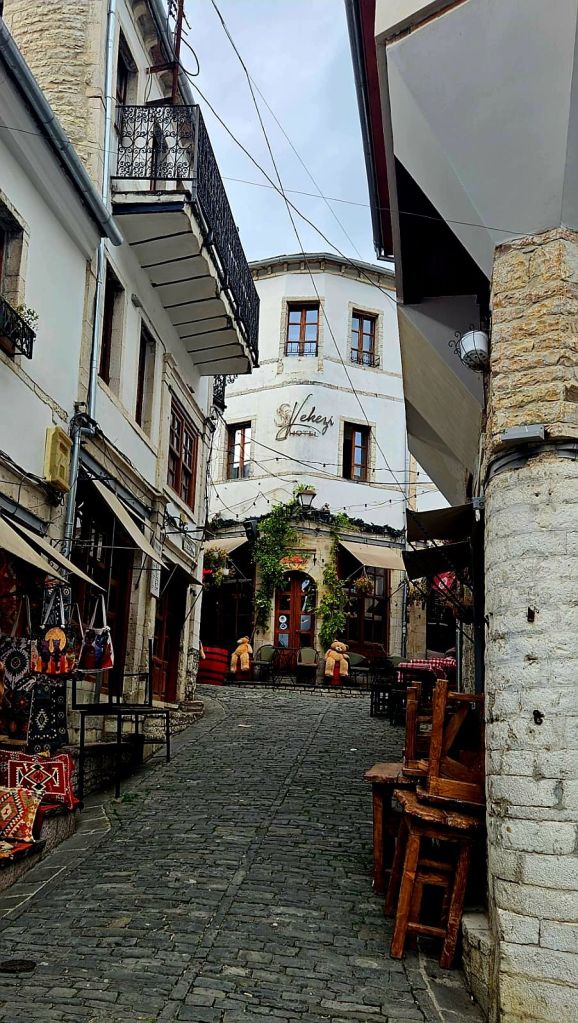
This square is on the eastern edge of the Bazaar, known locally as Qafa e Pazarit. The history of the Bazaar dates back to the 17th century but, unfortunately, a fire in the late 19th century destroyed a lot of the buildings. A lot of the buildings are now of a similar architecture and have been built to fit in with the sloping terrain. All the main roads of the town come together at the point of the Bazaar.
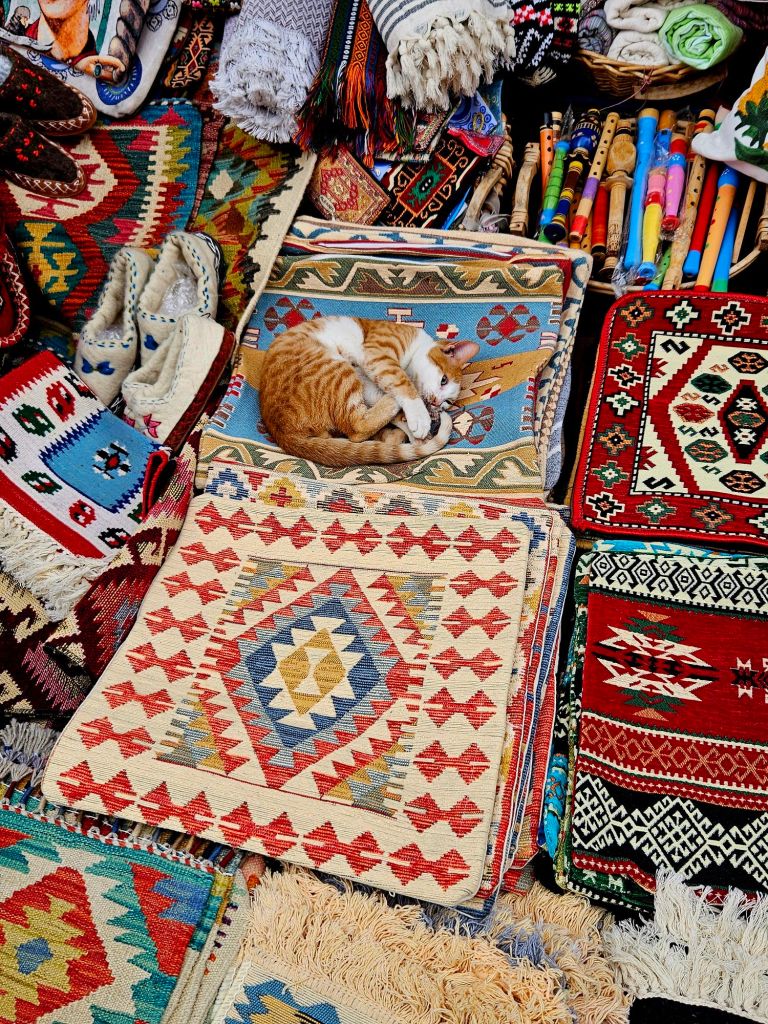
The shops are a variety of local artisan and craft shops as well and souvenir stalls, bars and restaurants. Gjirokaster was an important market center for agricultural products and handicrafts until the mid 20th century which provided wealth to the city. The interlacing black and white paving stones were allegedly laid by a single man.
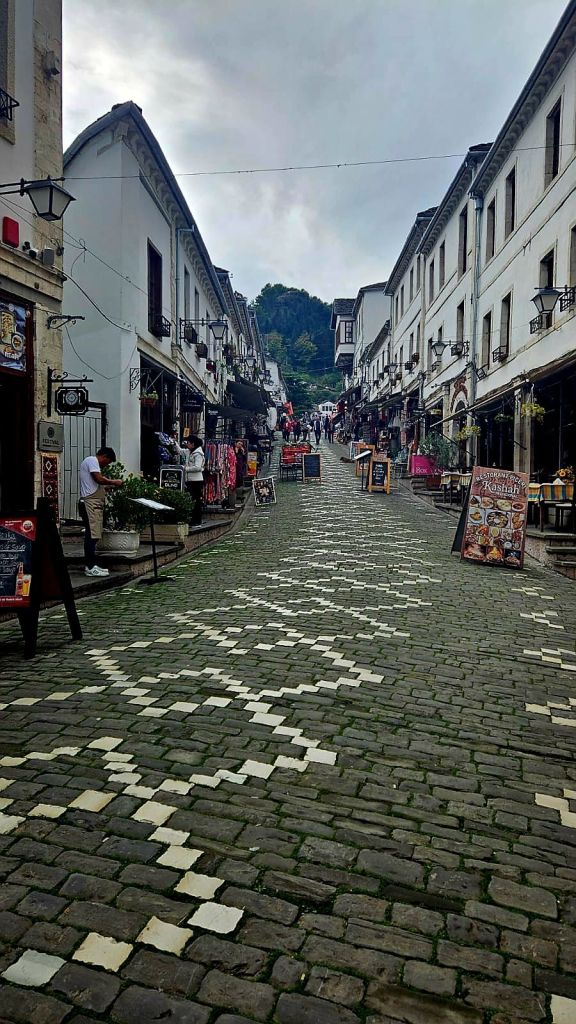
From here we took the path up to the castle, which was quite steep. The castle was built in the 12th century and is situated at a height of 336m. It was renovated in 1812 and expanded in 1932 to include a castle prison.
The castle prison was used extensively during the reign of King Zog and also during the Communist period. It was originally known as prison 17 and has been described as one of the most horrible punishment sites. Cells were 3x2m and had a damp concrete floor. At one point there were around 740 political prisoners held here, it only had capacity for 350. Inmates suffered from malnutrition and extreme temperatures and were forced to undertake hard labour. Some families of the inmates never found out what happened to their relatives who got arrested and never returned. The prison was often known as the prison of seven windows. The prison closed in 1968.
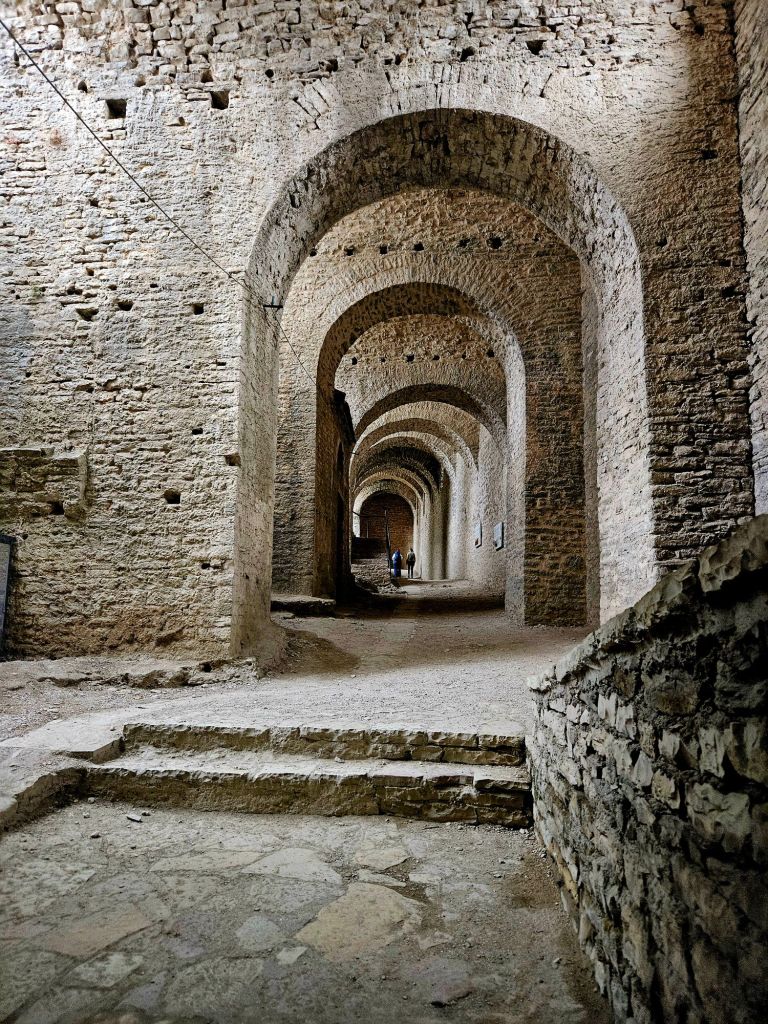
We walked through the inner walks of the castle to the shared tomb of Baba Sultan and Baba Kapllan. These were both Bektashi Sufi leaders and recognised as high level spiritual leaders or dervishes.
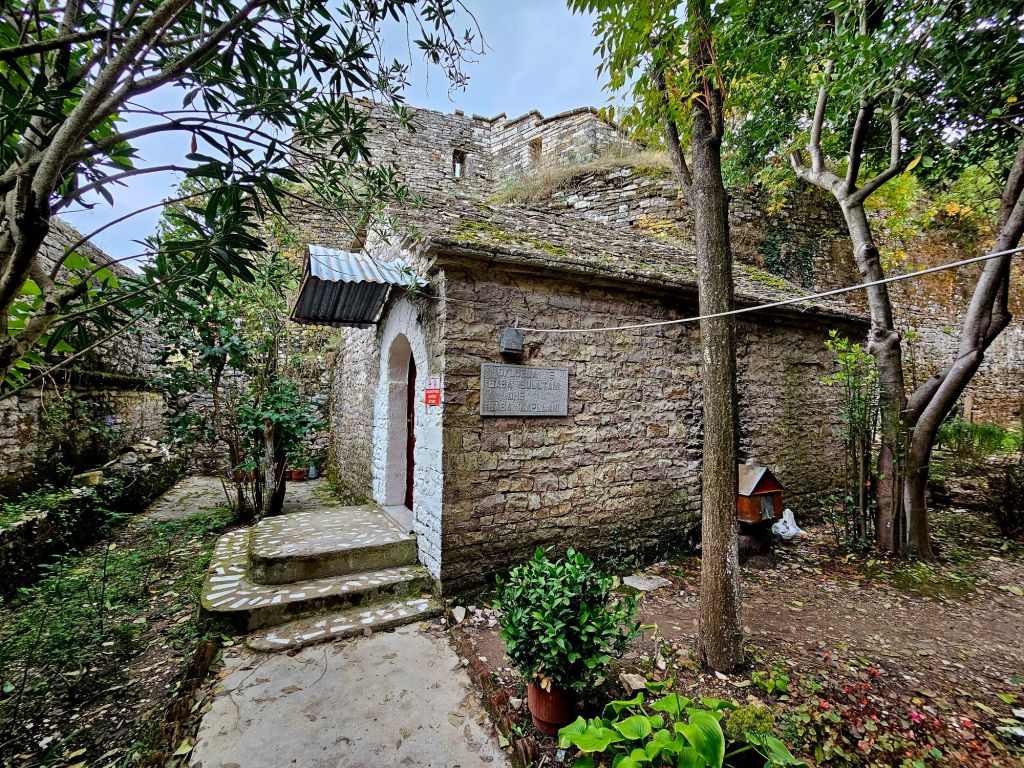
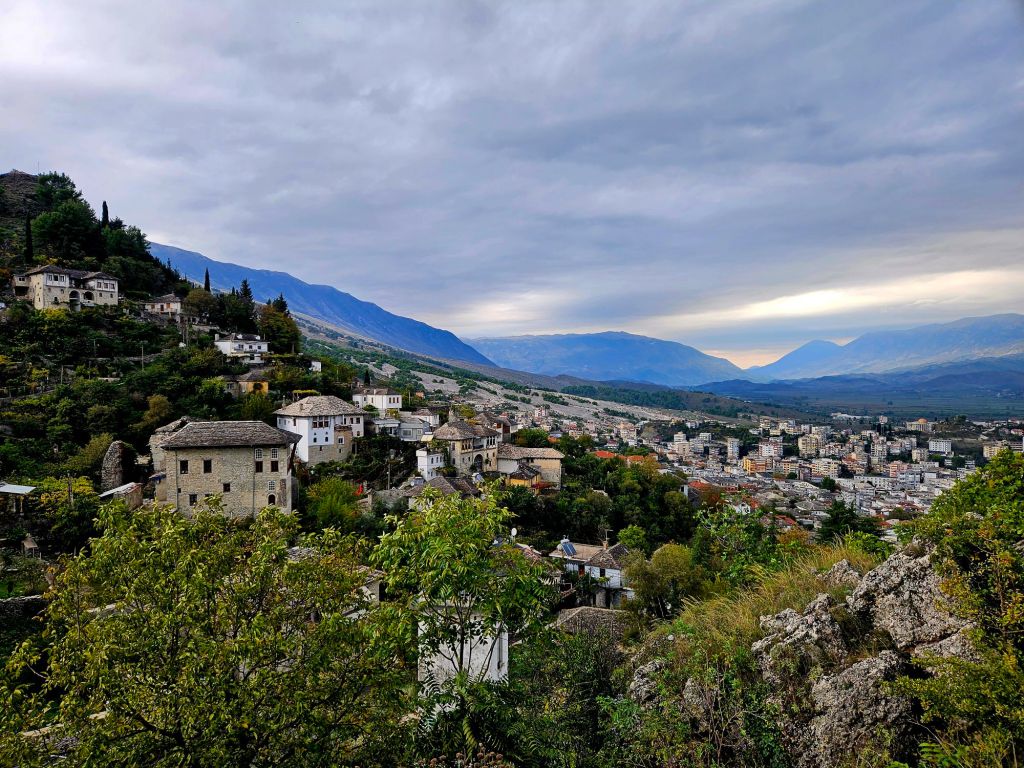
We continued through the castle but came to a dead end so we then found a path that led us outside. We had some spectacular views of the city, as well as the Drinos Valley and the Lunxhëria Mountains behind.
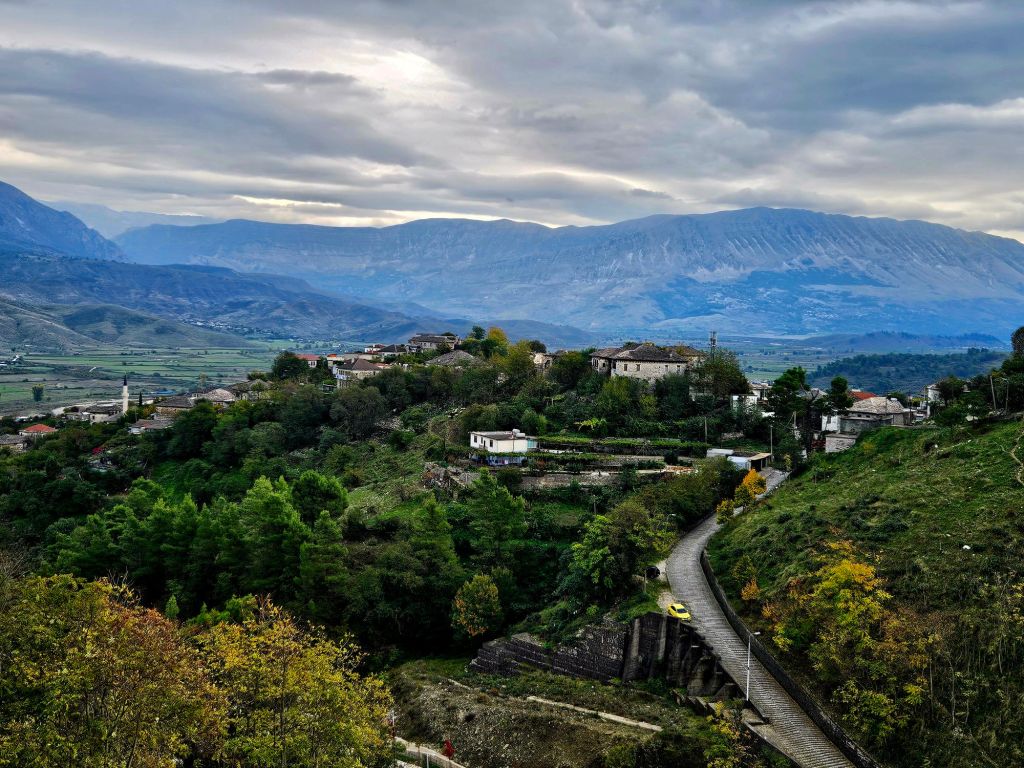
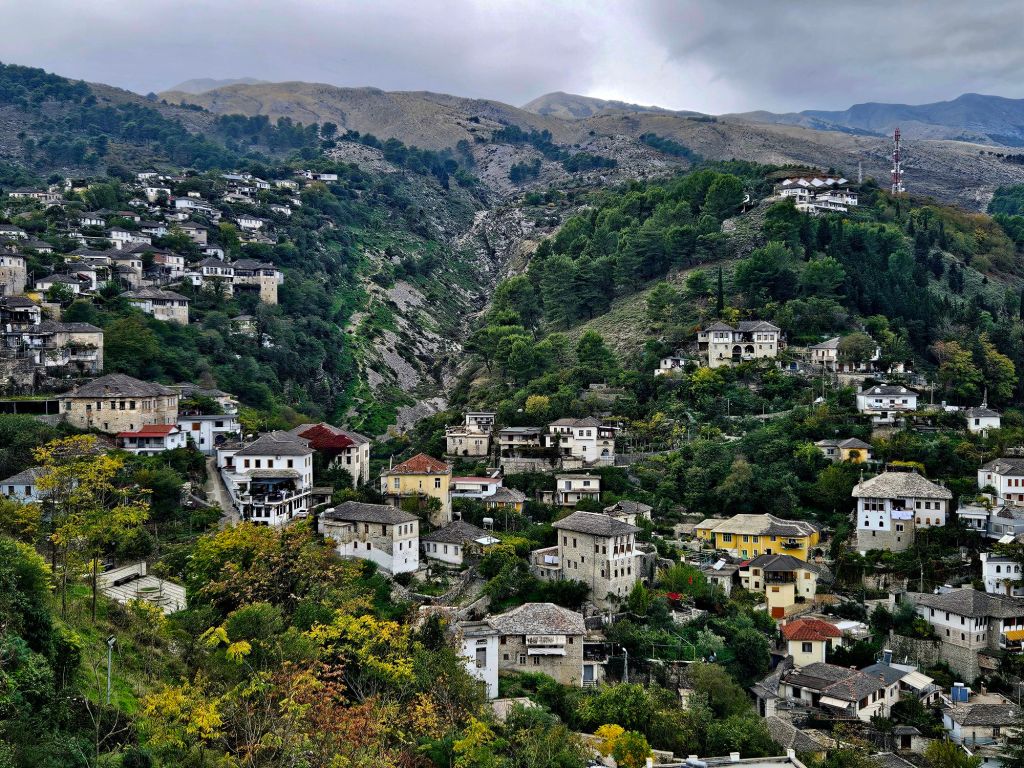
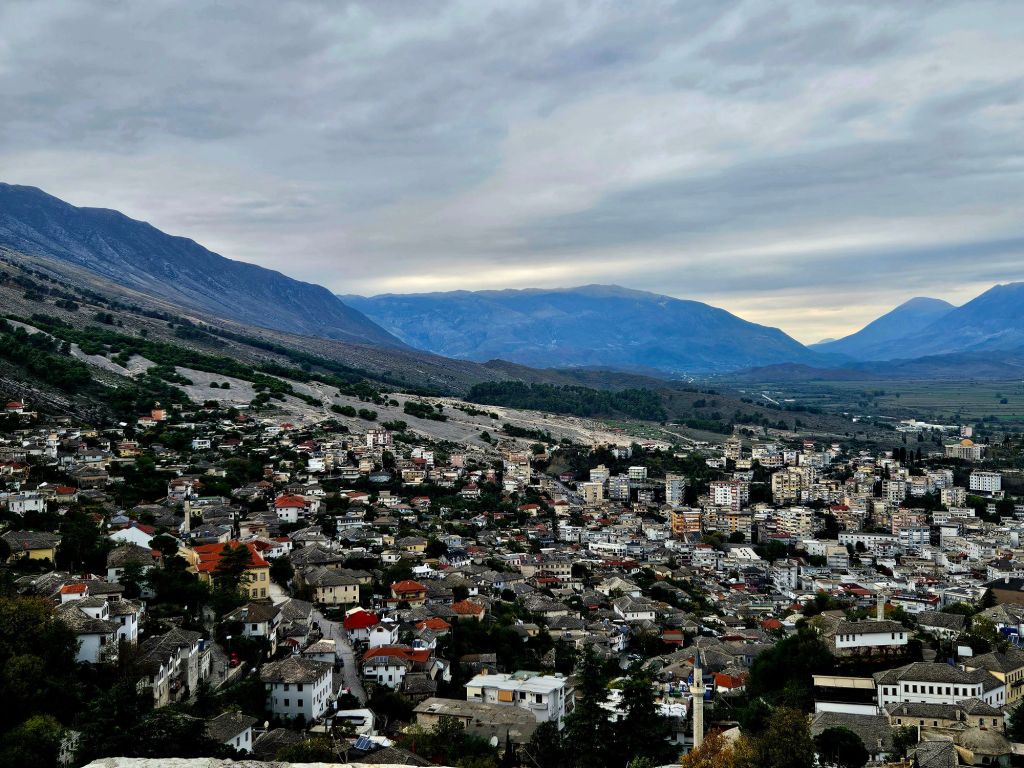
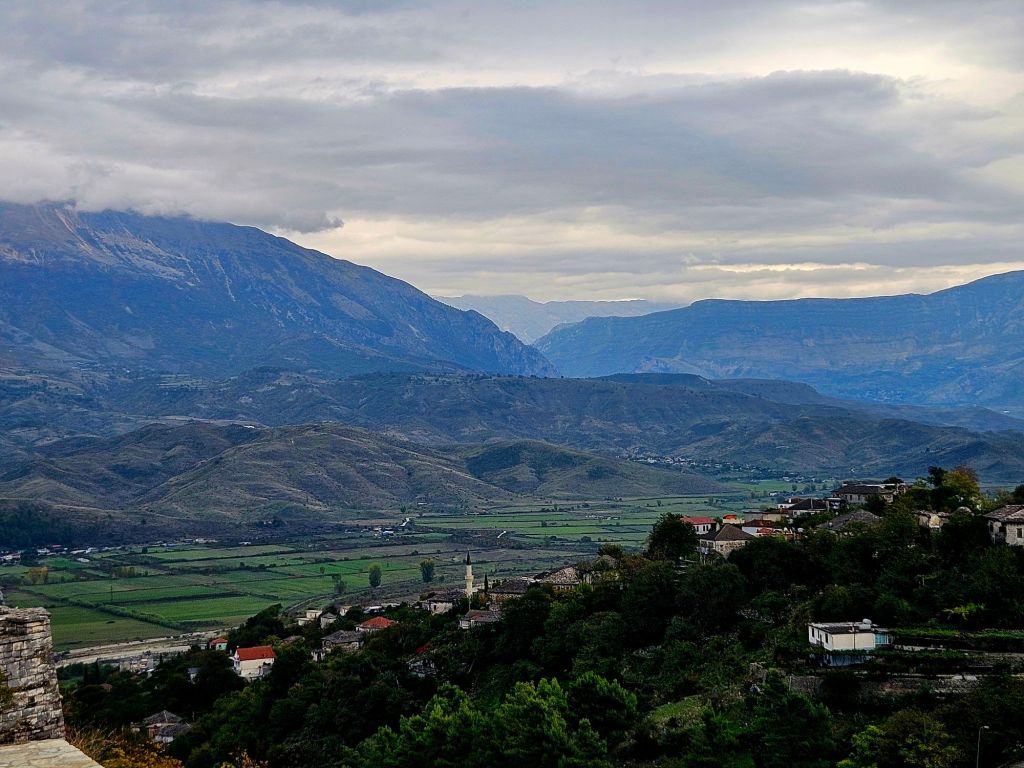
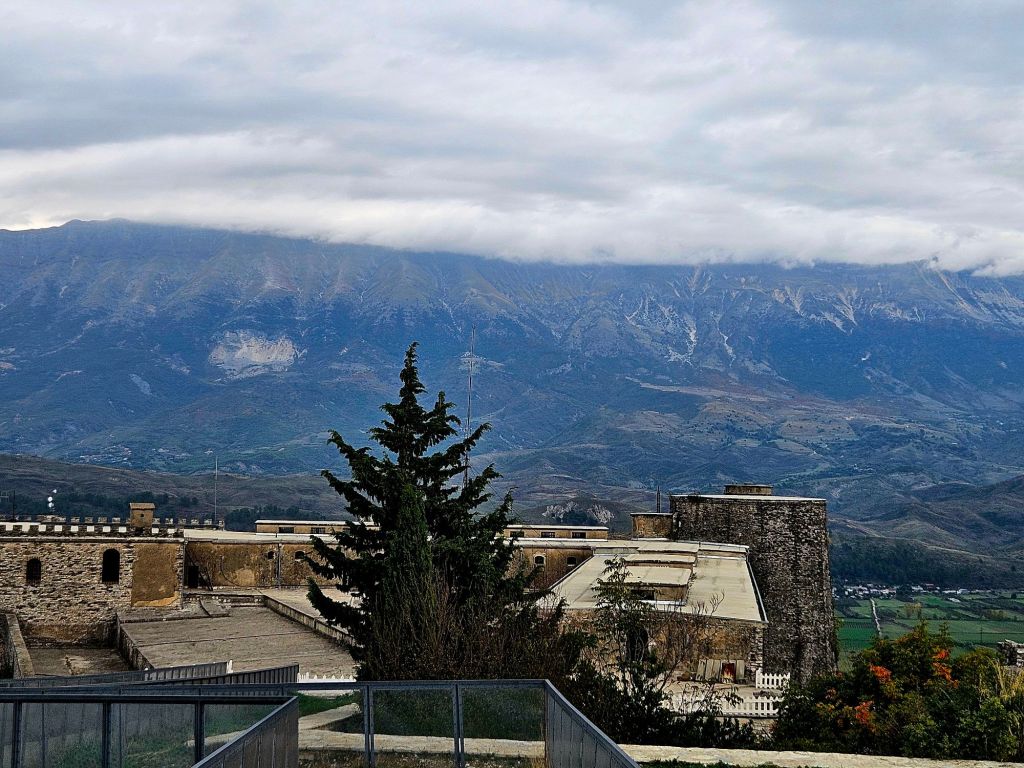
Gjirokaster city dates back to 1336 in the historical records. It was originally confined to a city within the castle walls. It was taken over by the Ottomans in 1418 and was eventually incorporated into the independent state of Albania in 1913. Gjirokaster is called the ‘City of Stone’ as many of its houses are made from local limestone and grey slate and were built to resemble small, fortified castles.
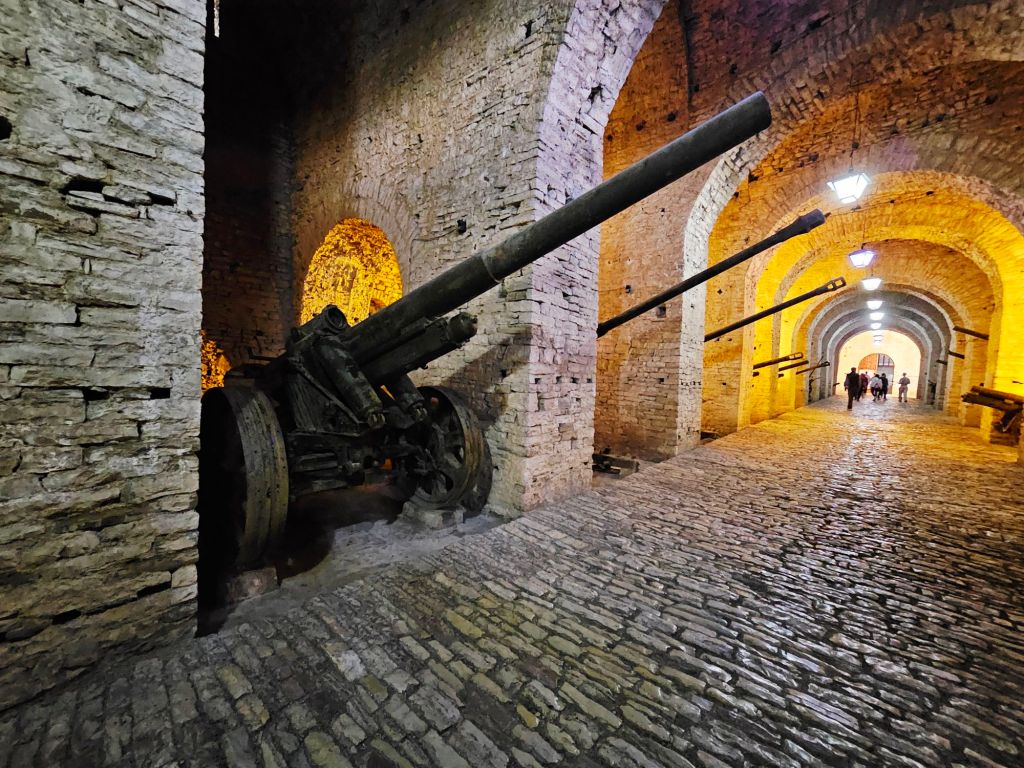
We walked back into the castle via an area housing a number of different canons.
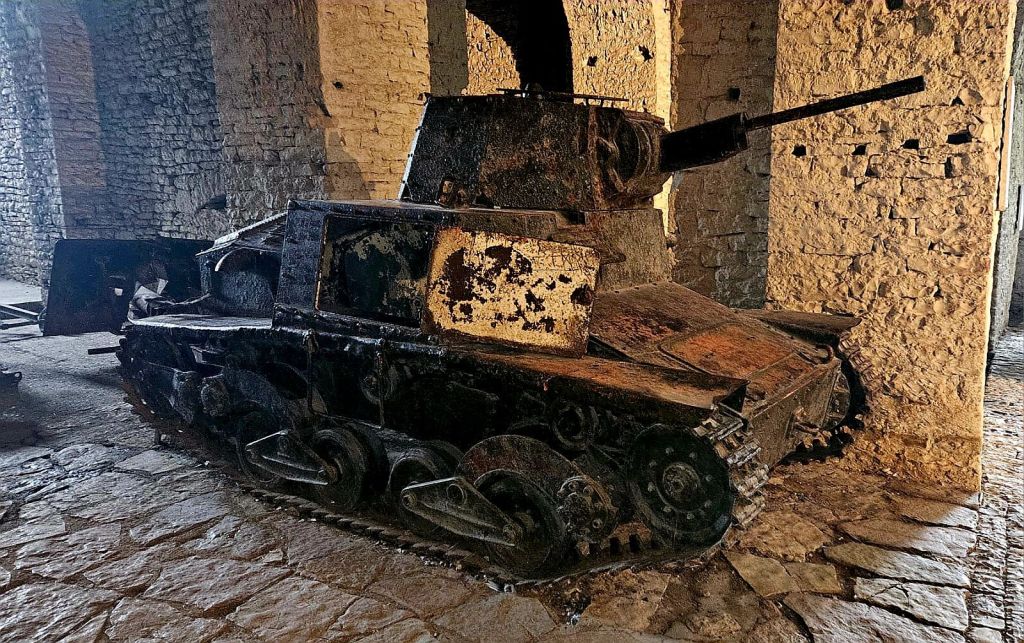
In this area there is a small Italian Fiat tank. There are only 3 of these tanks remaining, out of 283 commissioned by the Italian forces during WWII. They weren’t really suited for front line conflict so many of them were destroyed in action.
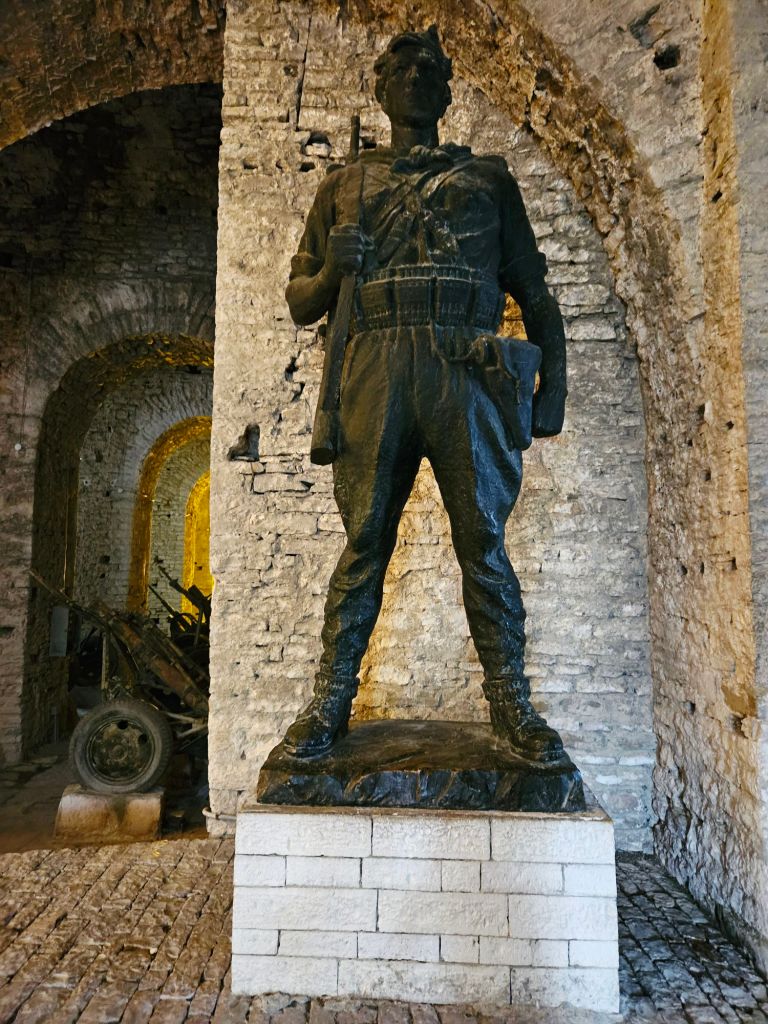
There is also a monument to the People’s Power. The statue of a partisan represents the resistance fighters that opposed the fascist Italians and Nazi Germans. The partisans were celebrated for liberating Albania from the invading forces.
We then ventured into the castle basement. We came across an old Ottoman bakery and you could still see some of the ovens that were used to bake the bread for the soldiers.
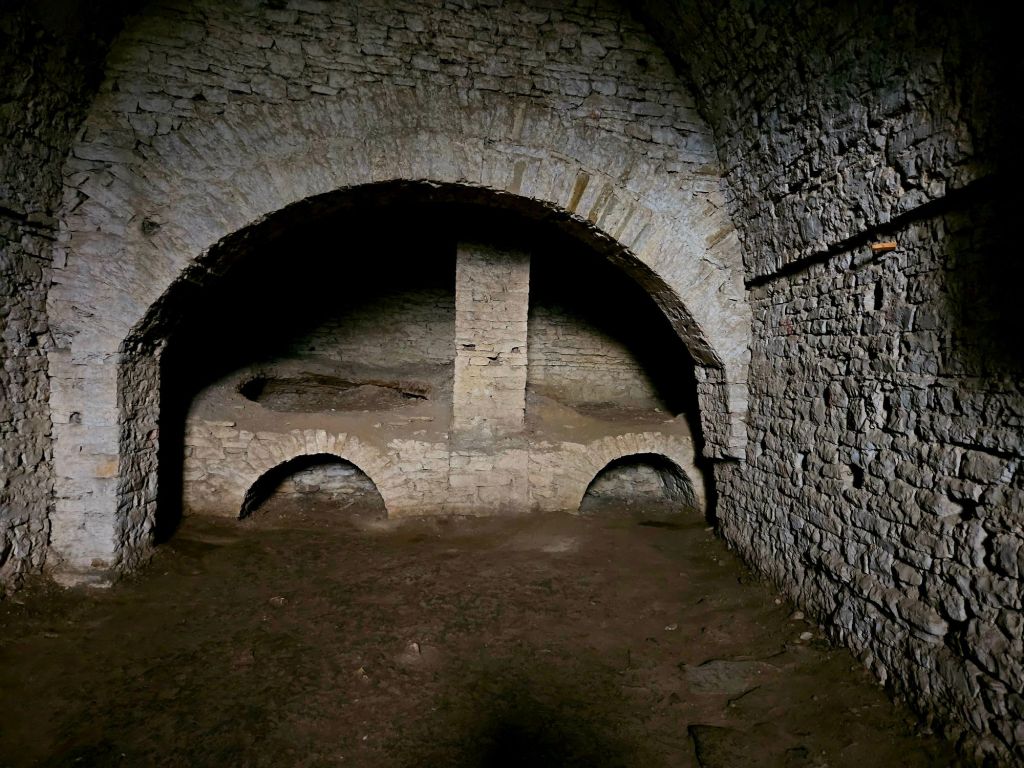
We also found some small rooms that looked like they could have been prison cells, with a very small opening to let in some natural light.
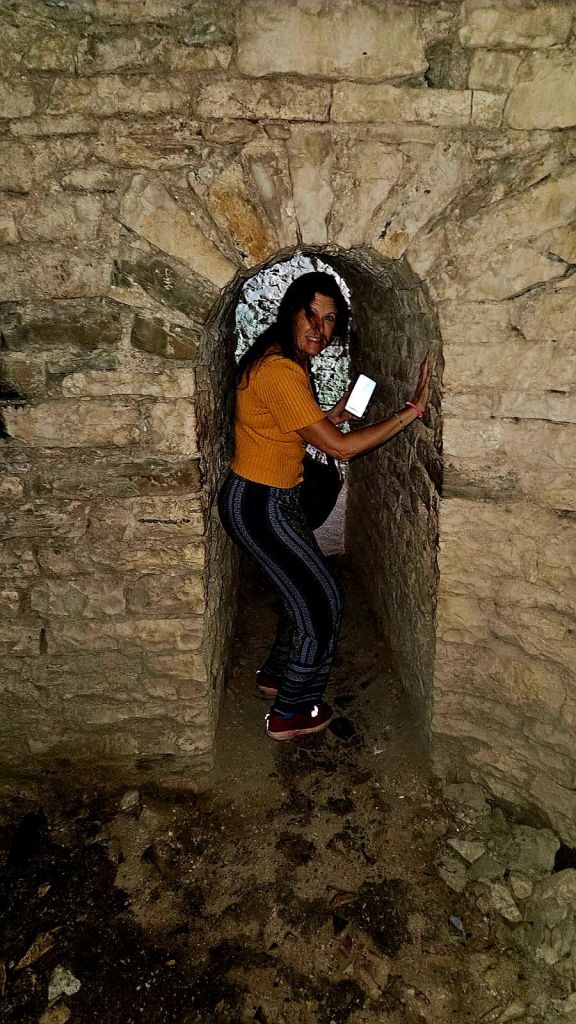
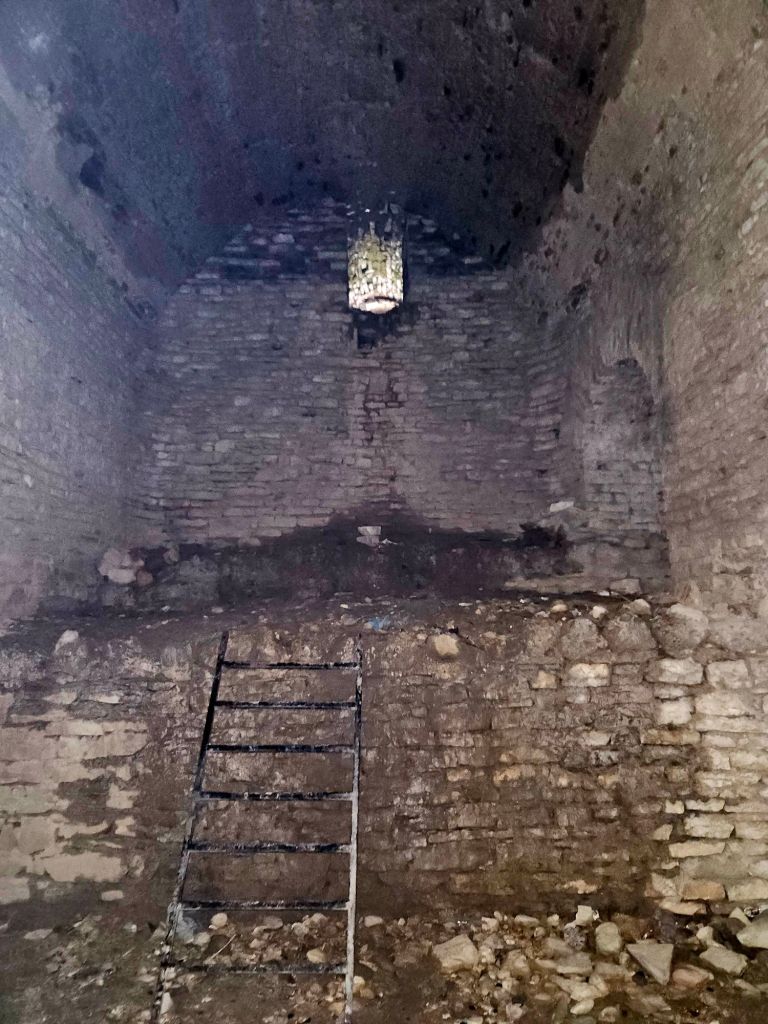
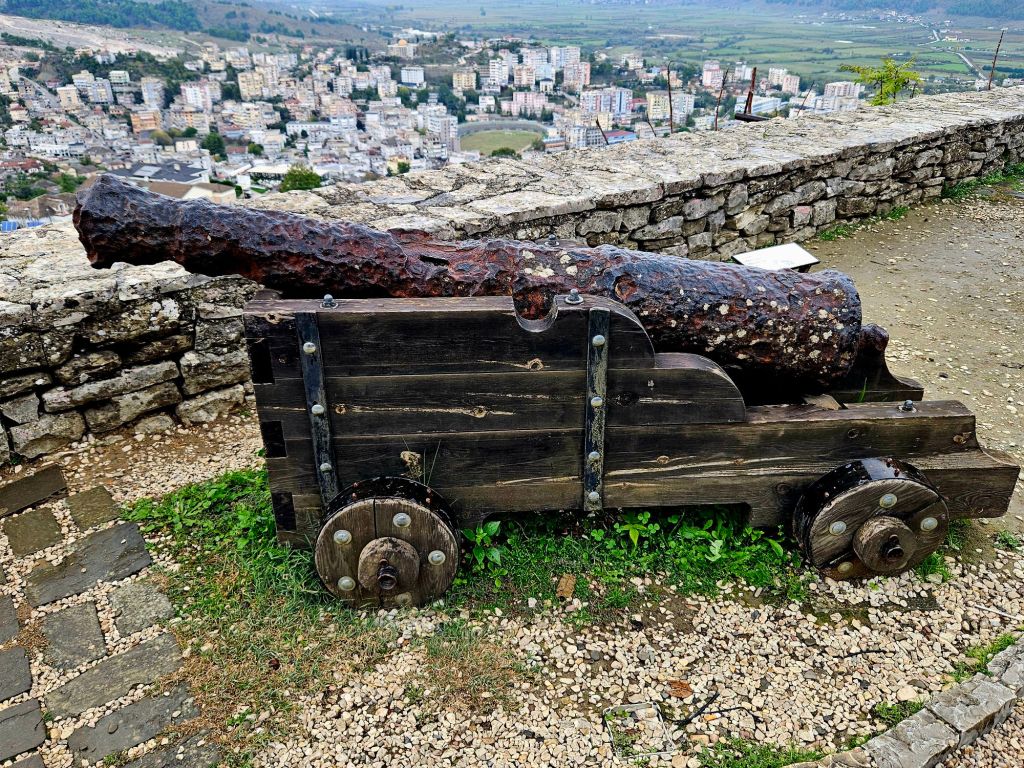
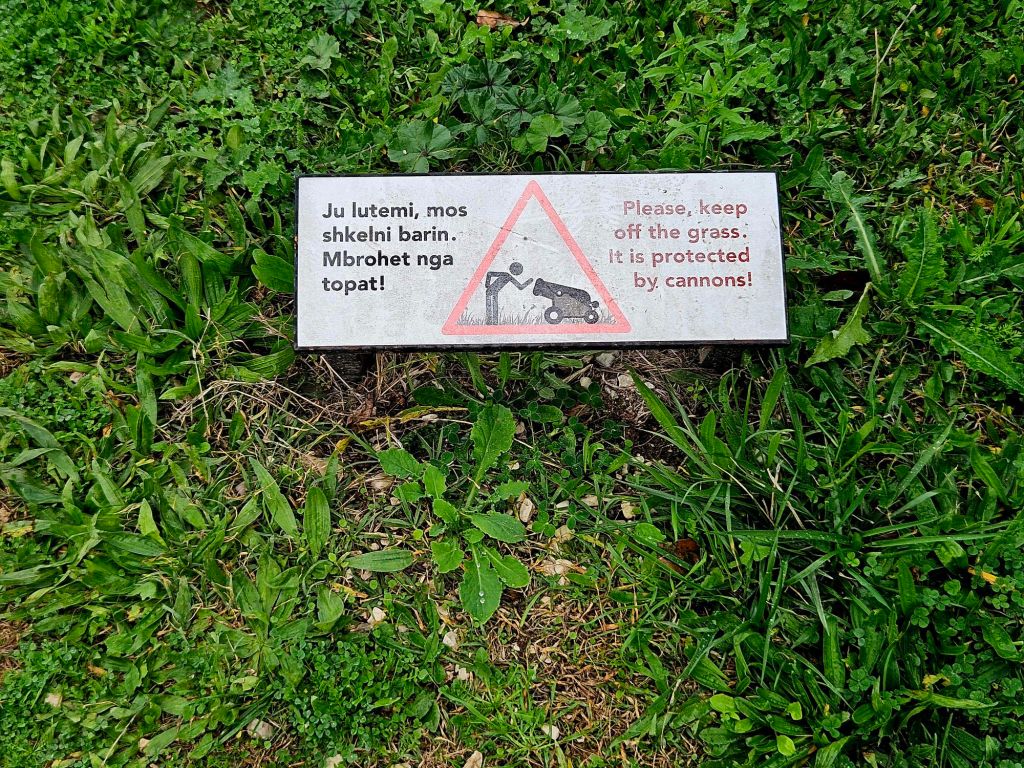
And then, once again, we were outside, and it had started to rain. There were a number of old, small canons on the top of the castle, with some humorous warning signs.
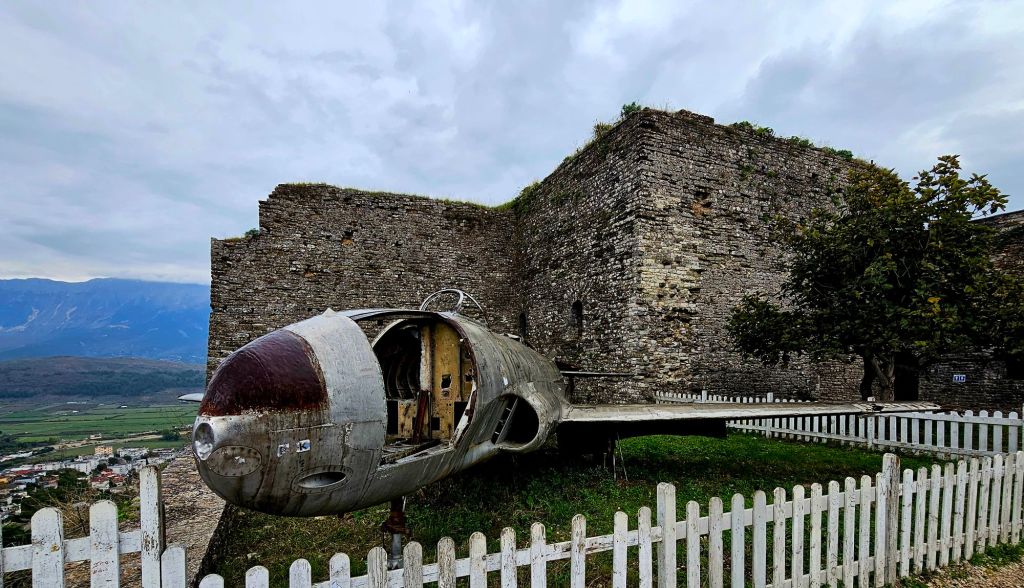
In one corner was the remains of an old US aircraft, a Lockhead T33 Shooting Star. The aircraft landed at Rinas Airport, near Tirana, in December 1957. The Americans claim that, due to heavy fog, the pilot made an emergency landing in Albania. He was on his way to Italy from France. The Albanians claim that they intercepted an American spy plane and forced it to land.
Again, we had some lovely views out over the city.
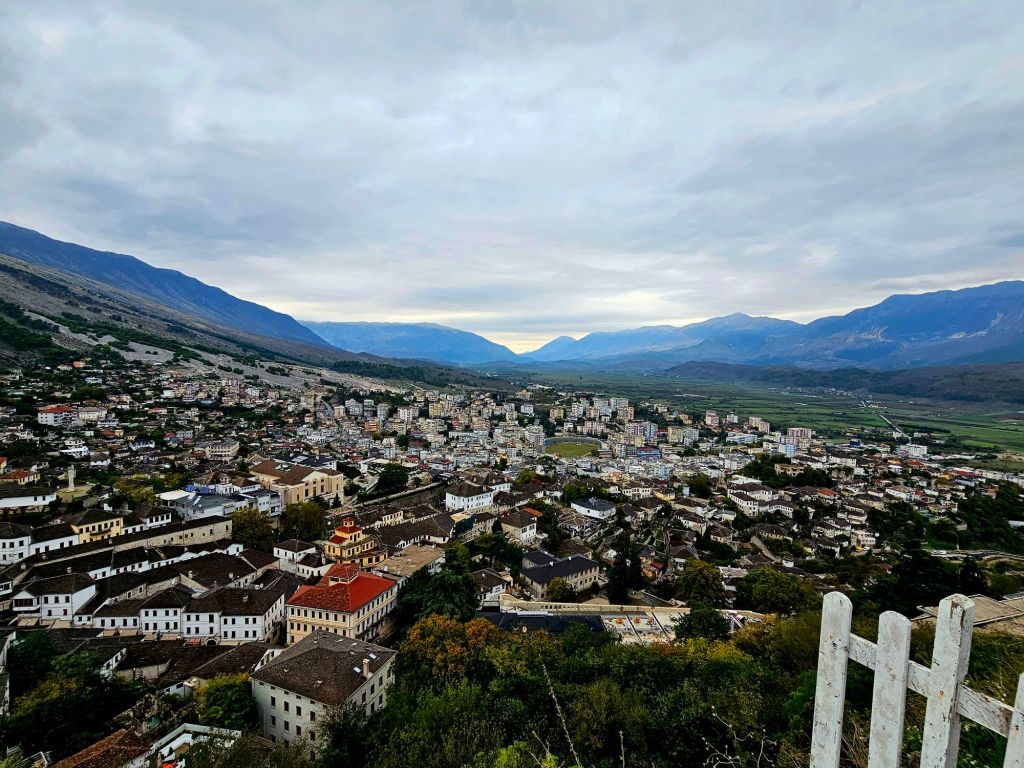
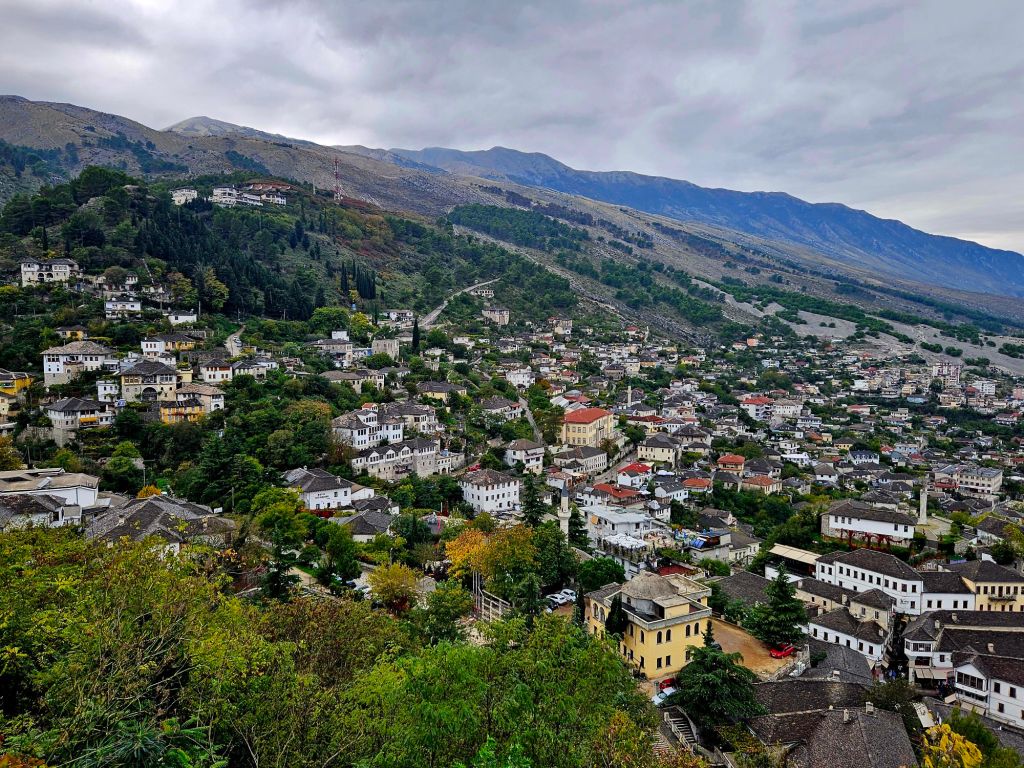
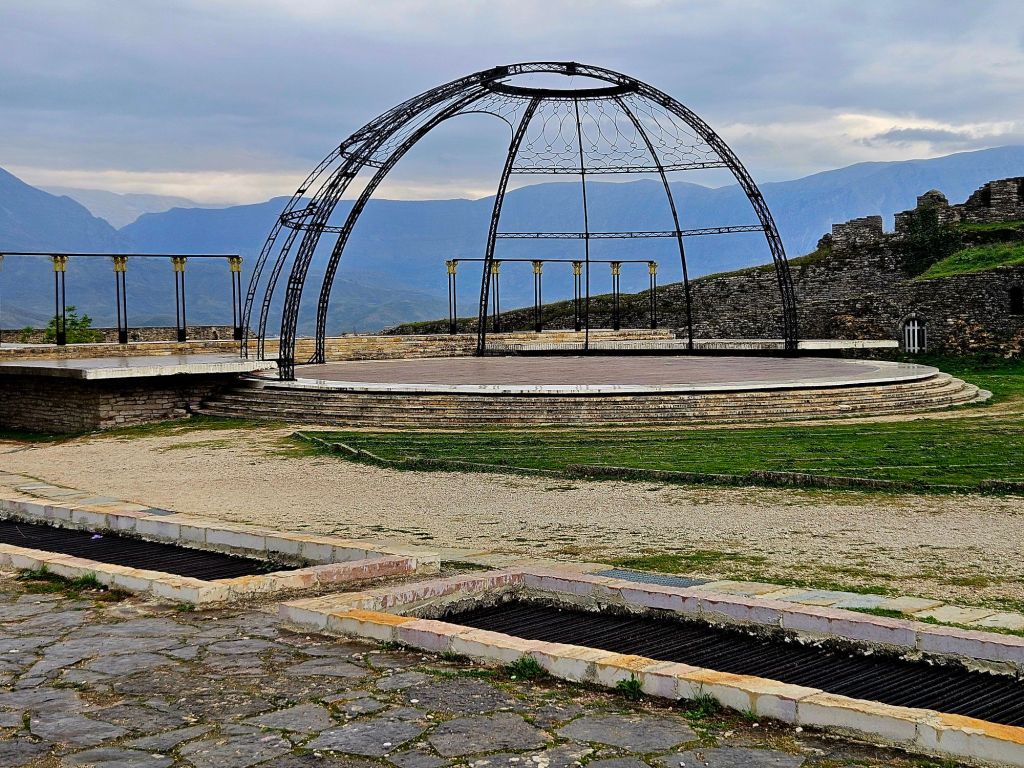
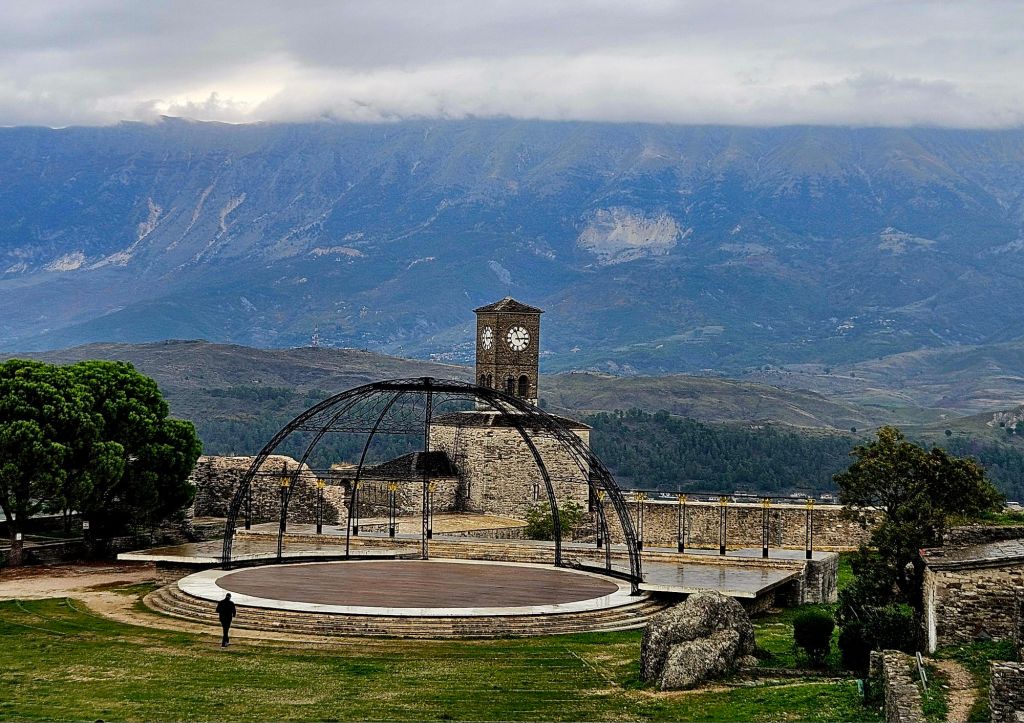
On the top of the castle is the Festival Stage. This was built in the 1980s and hosts the National Albanian folk festival every five years. The next one is in May 2026. It is also used on public holidays for music and dance events.
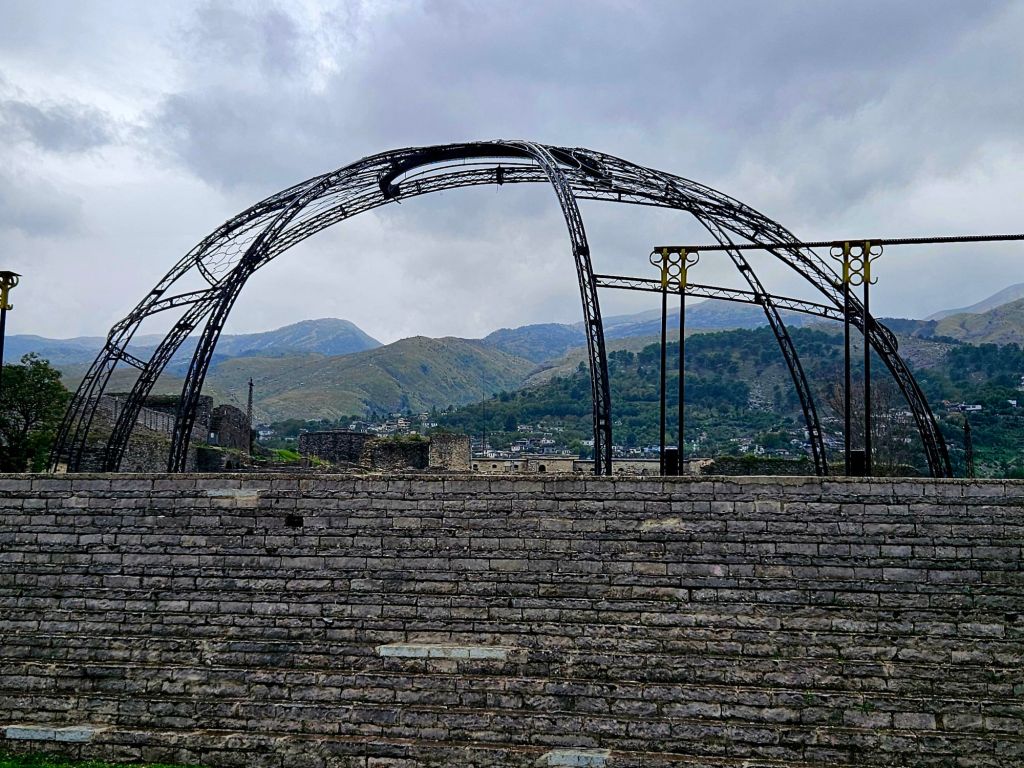
And just around the corner is the old clock tower, which was built in the 19th century during Ali Pasha’s rule. It was built to help determine the time of the five daily prayers. It was restored during the 1980s.
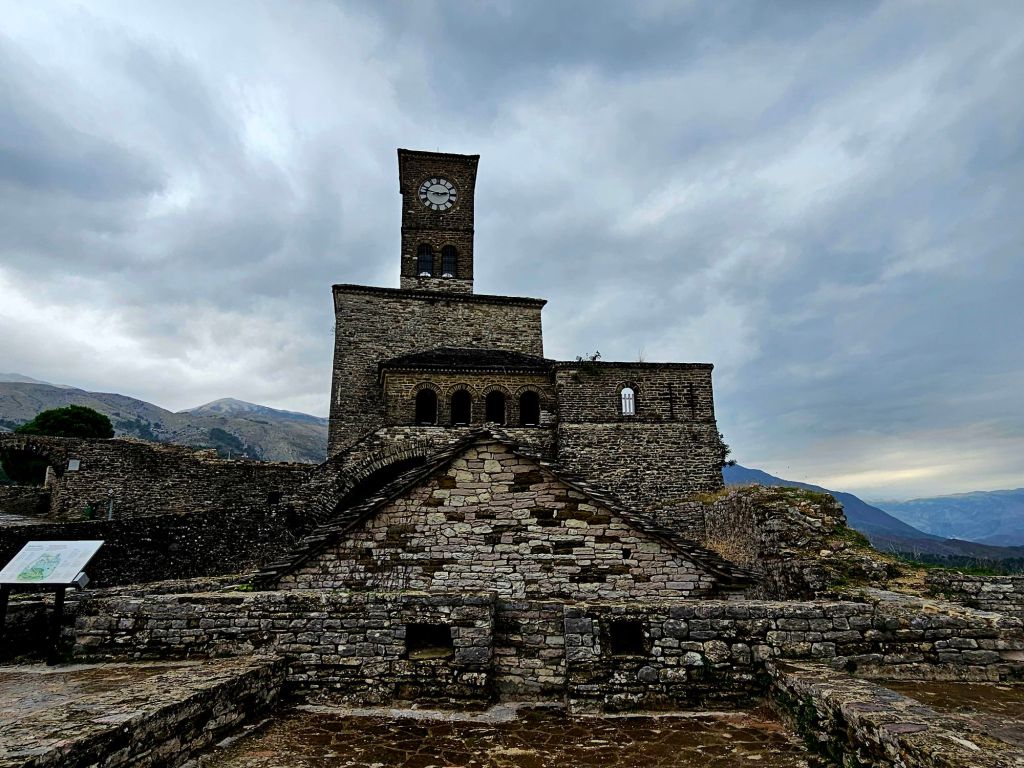
We walked over to the eastern edge of the castle. When the castle was taken by Ottoman invaders in the 15th century, the country was ruled by Gjin Zenebishi. Legend has it that his sister, Princess Argjiro refused to surrender and took her baby in her arms as she ran towards the eastern wall of the castle and subsequently leapt to her death. Miraculously her baby survived, and where she fell, milk flowed from the rocks to feed the child. White calcium deposits can apparently be seen on the limestone cliffs at the foot of the castle walls, which some take to mean that there must be some truth in the legend.
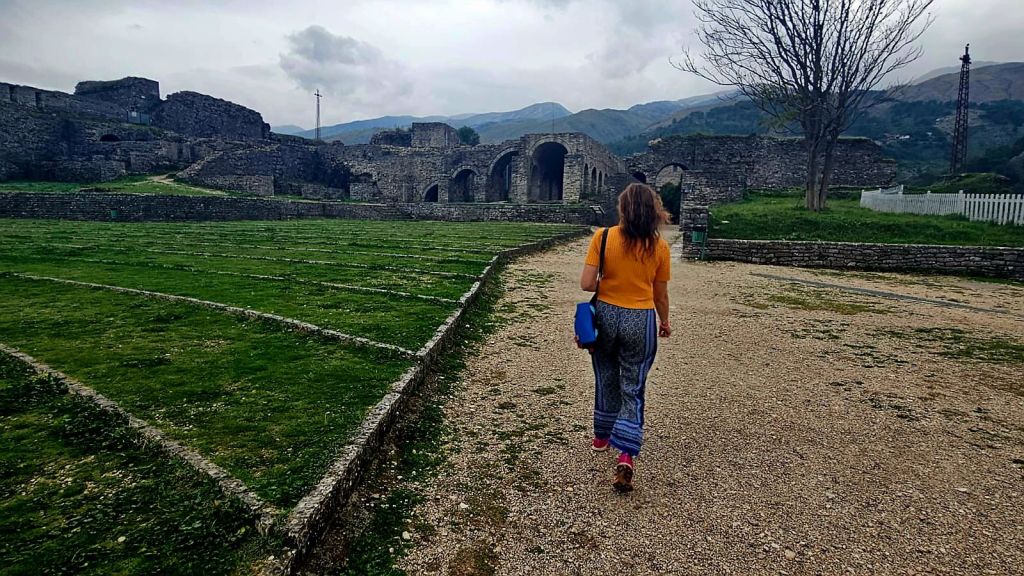
We then made our way back to the entrance / exit of the castle. We captured a good view of the clock tower and festival stage.
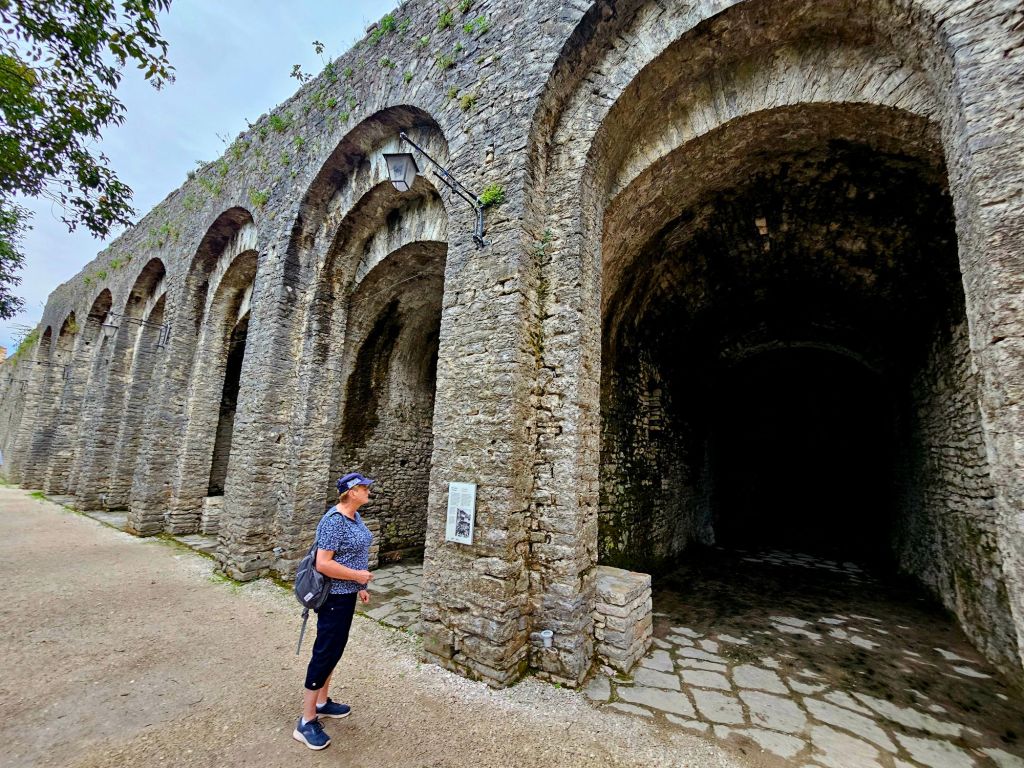
On our way to the exit we saw the large vaults that used to house the workshops of the artisans and craftsmen.
From the castle we made our way back into the town and Nicola bought a lovely stone tile from one of the local craftsmen.
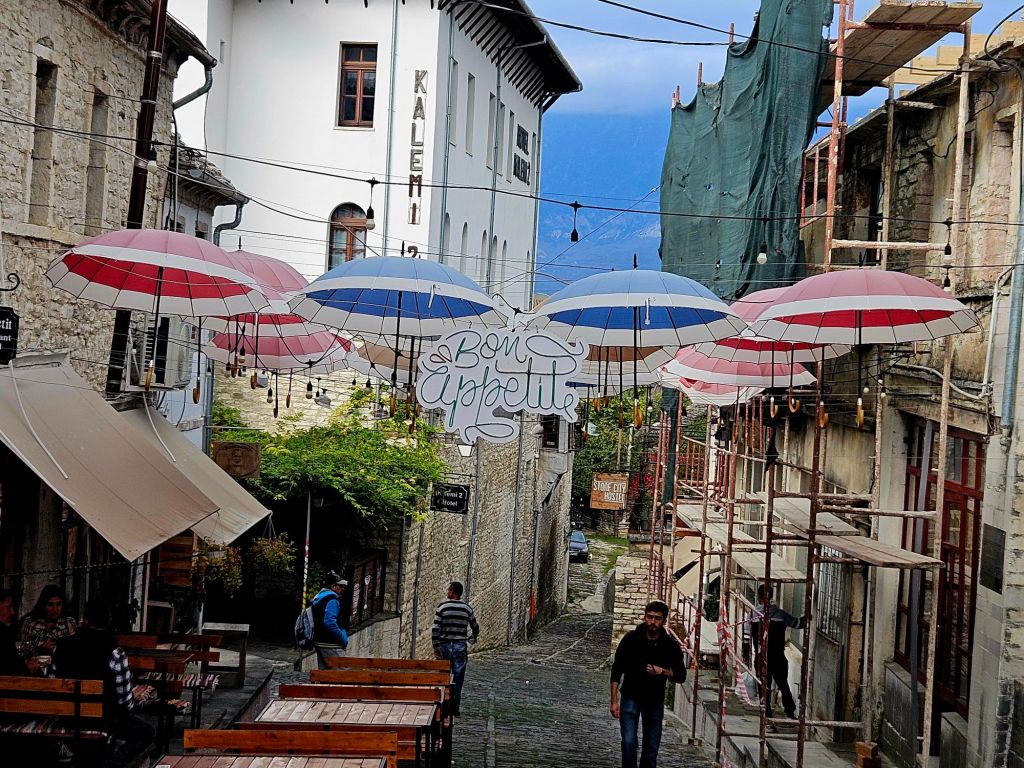
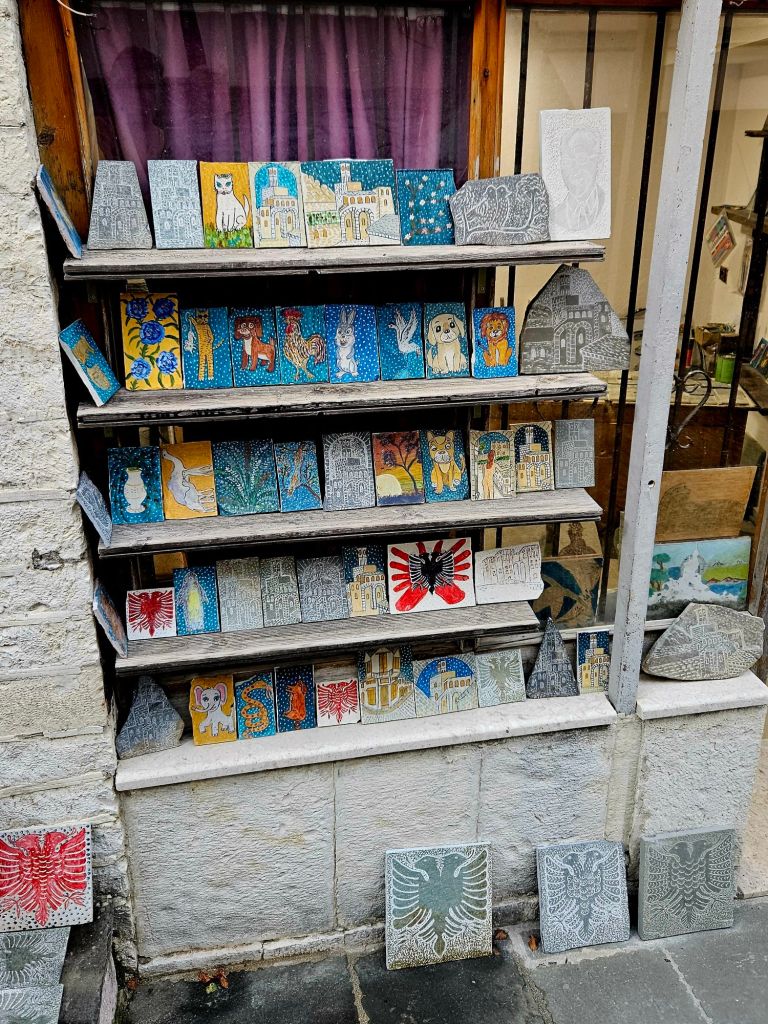
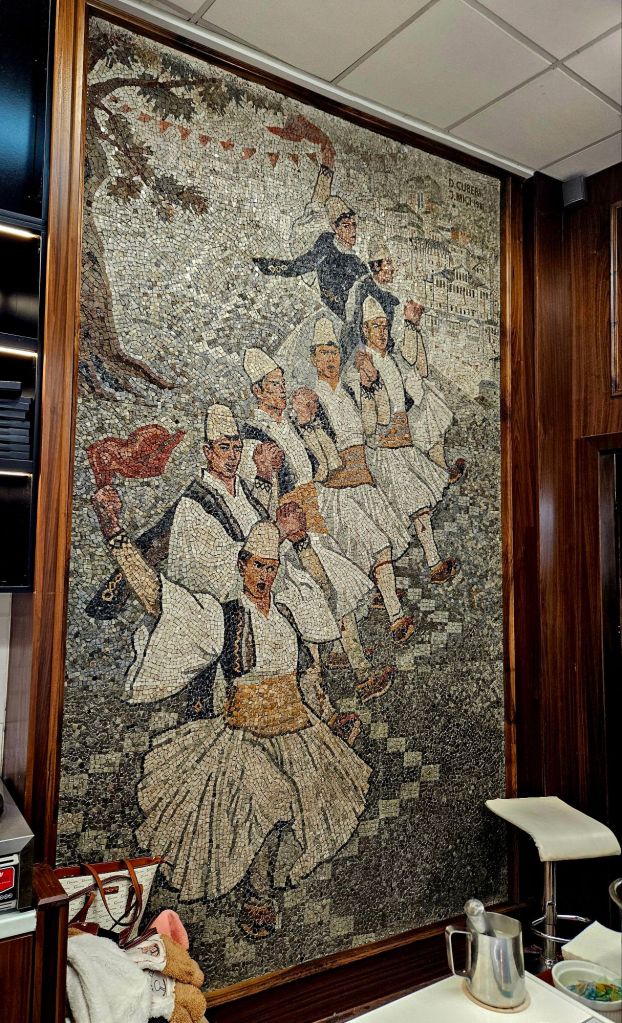
It started to rain again so we ducked into a lovely cafe in the Bazaar. The cafe had an old mosaic on the wall.
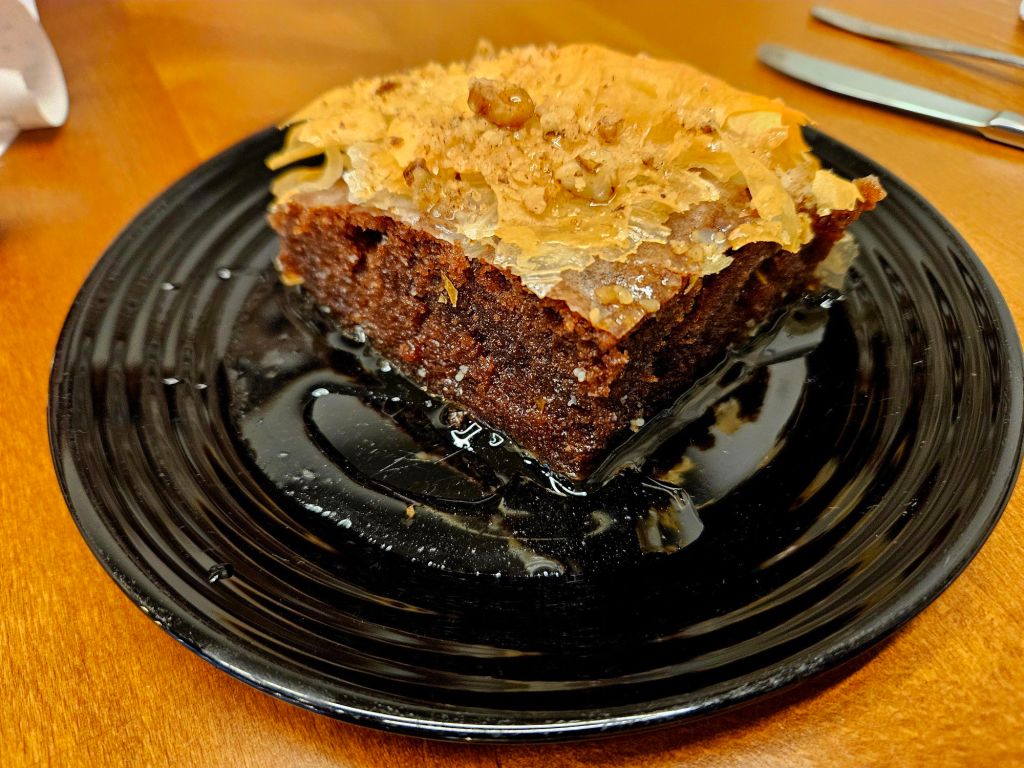
We both ordered some traditional chocolate cake, it was delicious but very sweet.
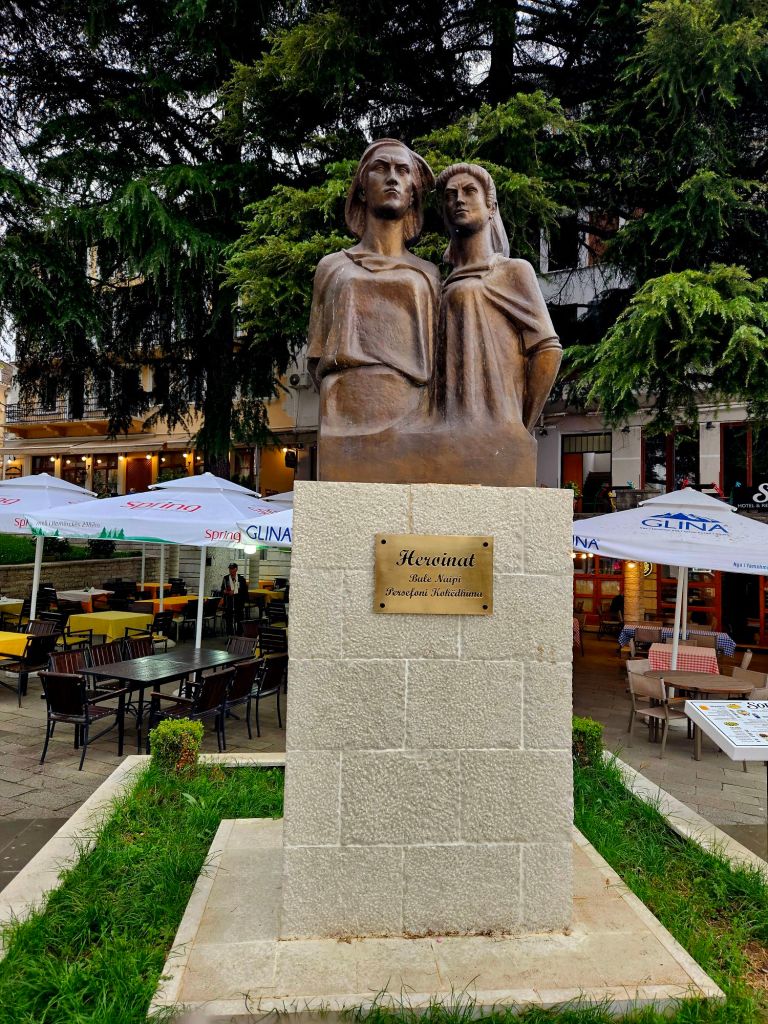
Once the rain stopped we made our way back to the car via the statue of the hanged women. It represents Bule Naipi and Persefoni Kokedhima, two women who were executed by the Naxis in 1944. Both ladies were partisans and were in their 20s when they were captured. The Germans hung them as an example, and as a deterrent. They were hung in Topulli Square, where their statue now stands.
Nicola then drove us back to Sarande.
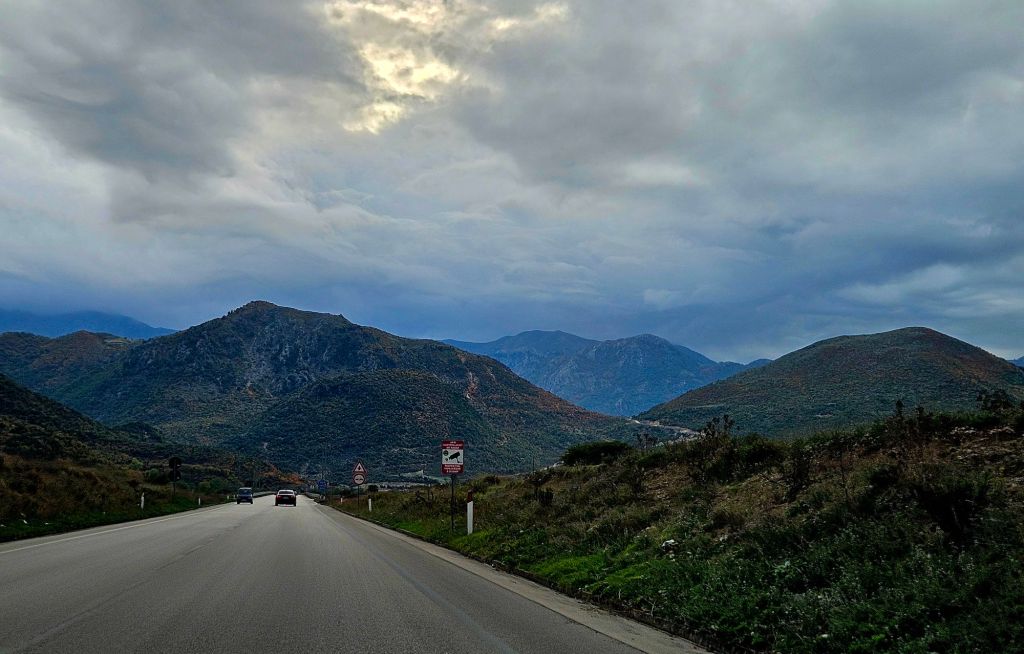
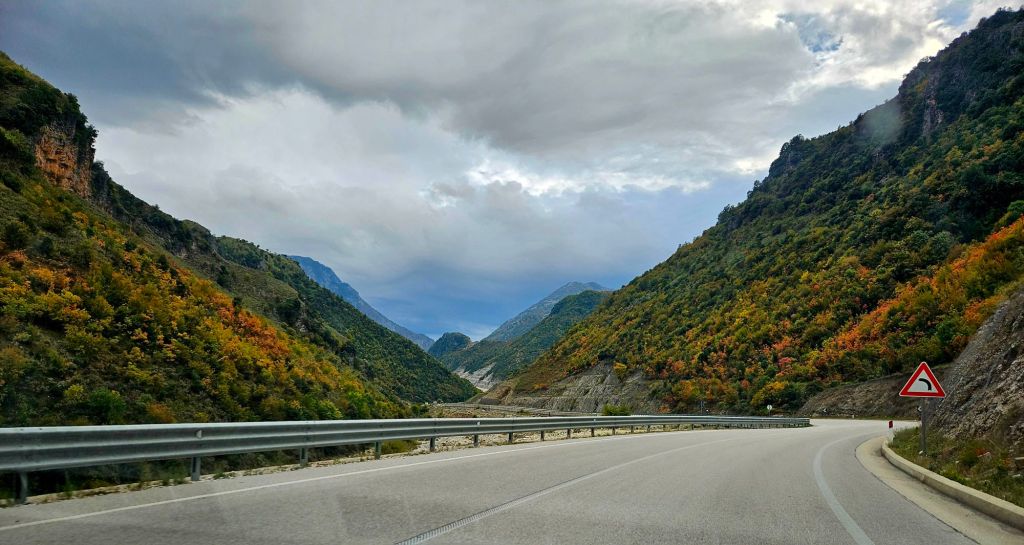
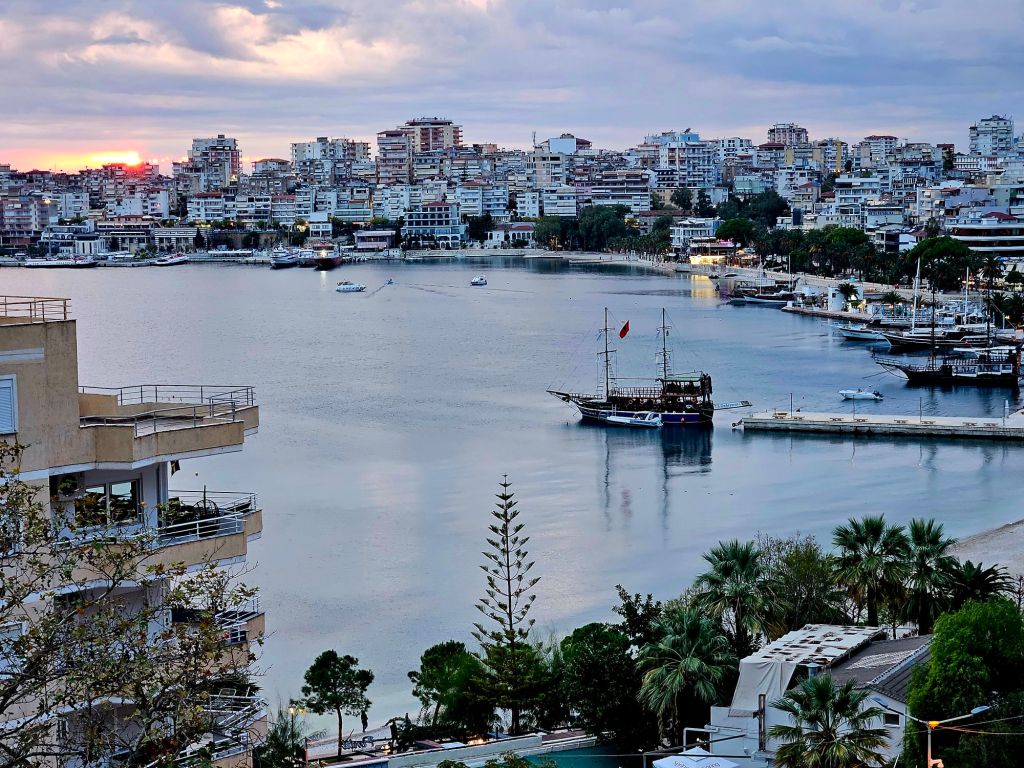
As we arrived home the sun was starting to set.
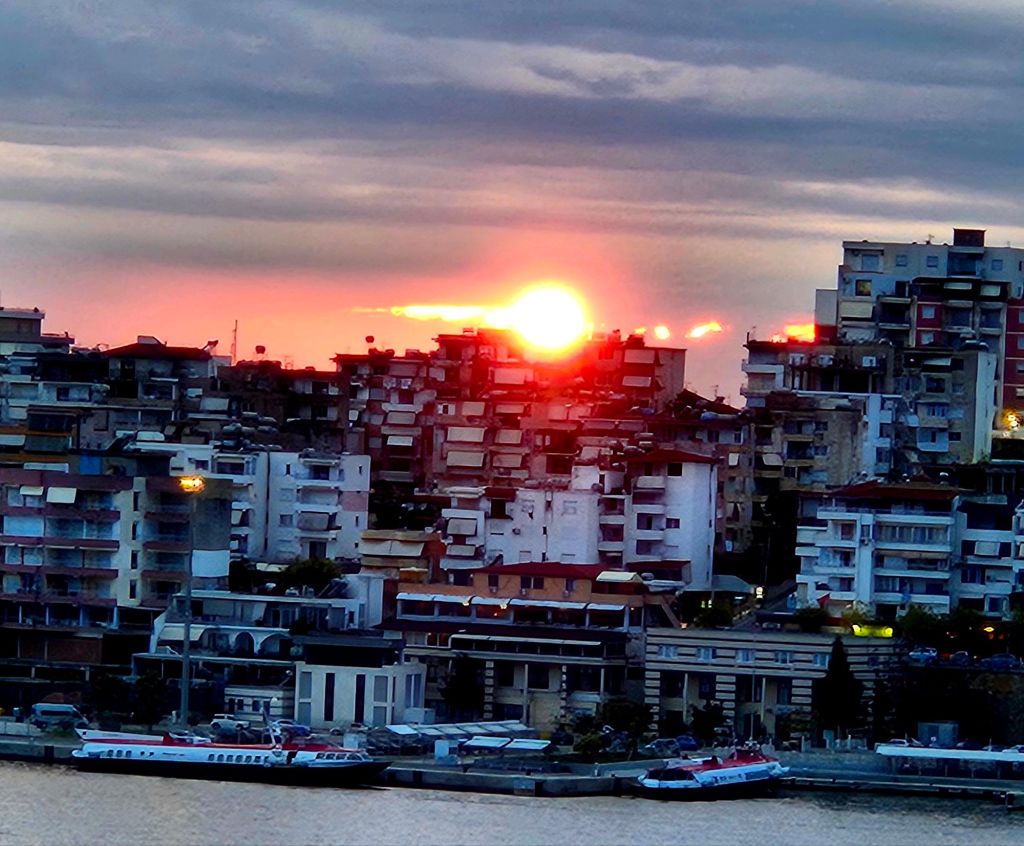
After a quick refresh we made our way to Taverna Kapitain, a restaurant that was recommended online and in the guide books.
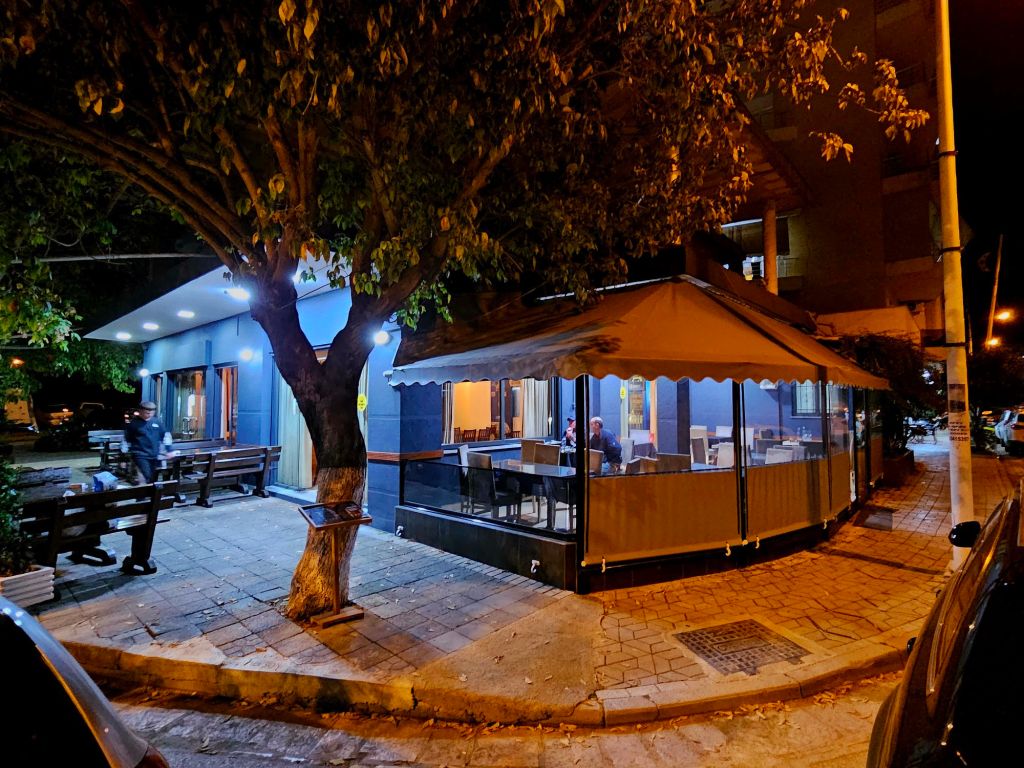
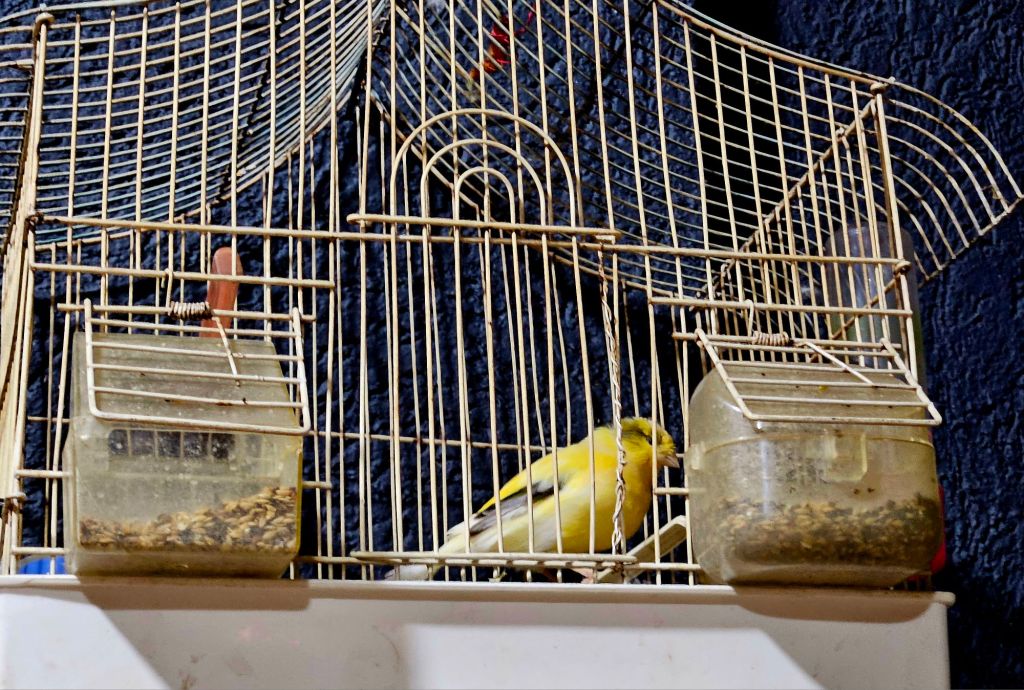
We sat in the sheltered outside area and unfortunately there were a few men smoking nearby. There was a small canary above our table.
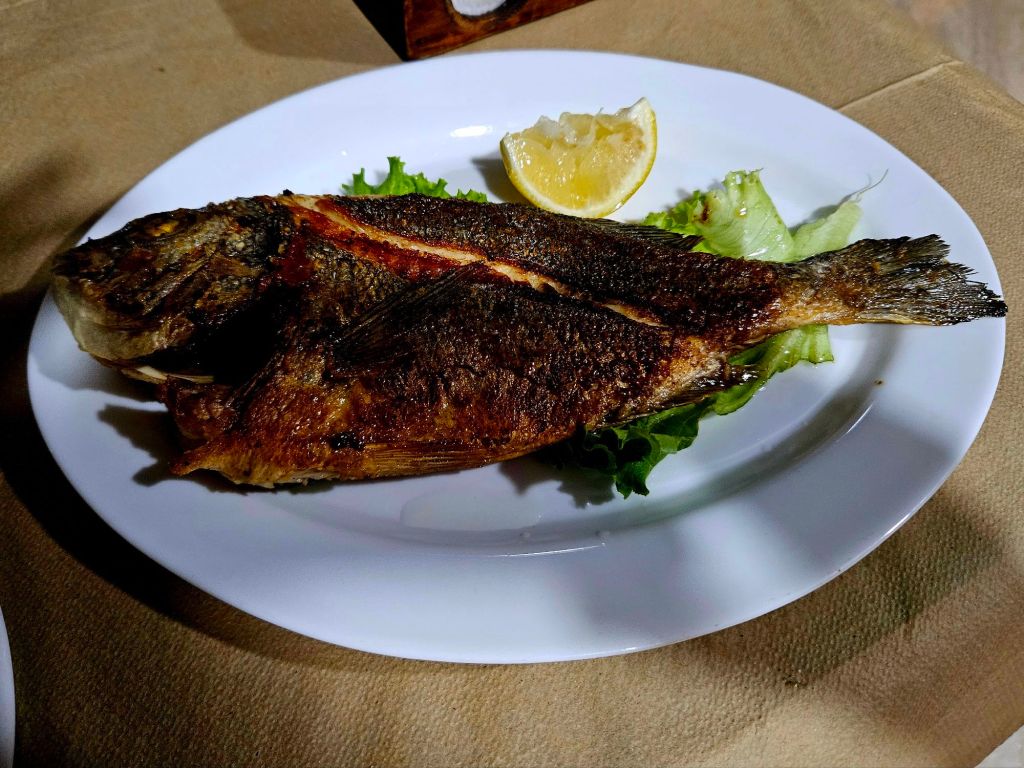
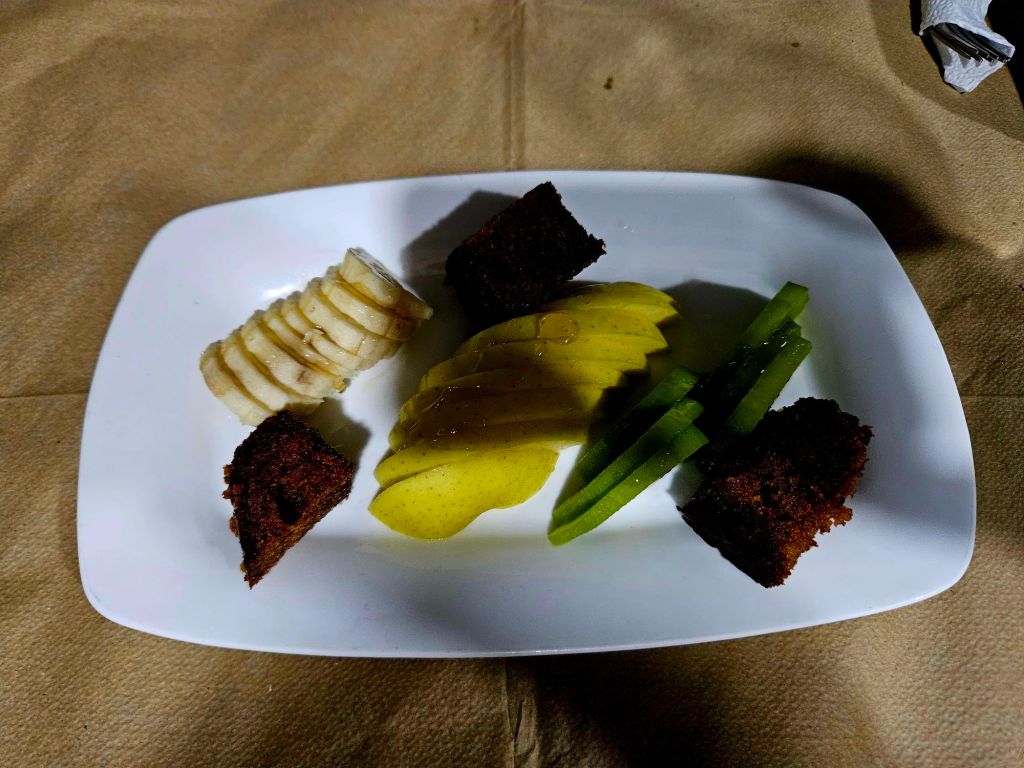
I ordered the gilthead and it was very tasty, unfortunately Nicola’s meal, also fish, was very dry and not so appealing. We had some free fruit as desert.
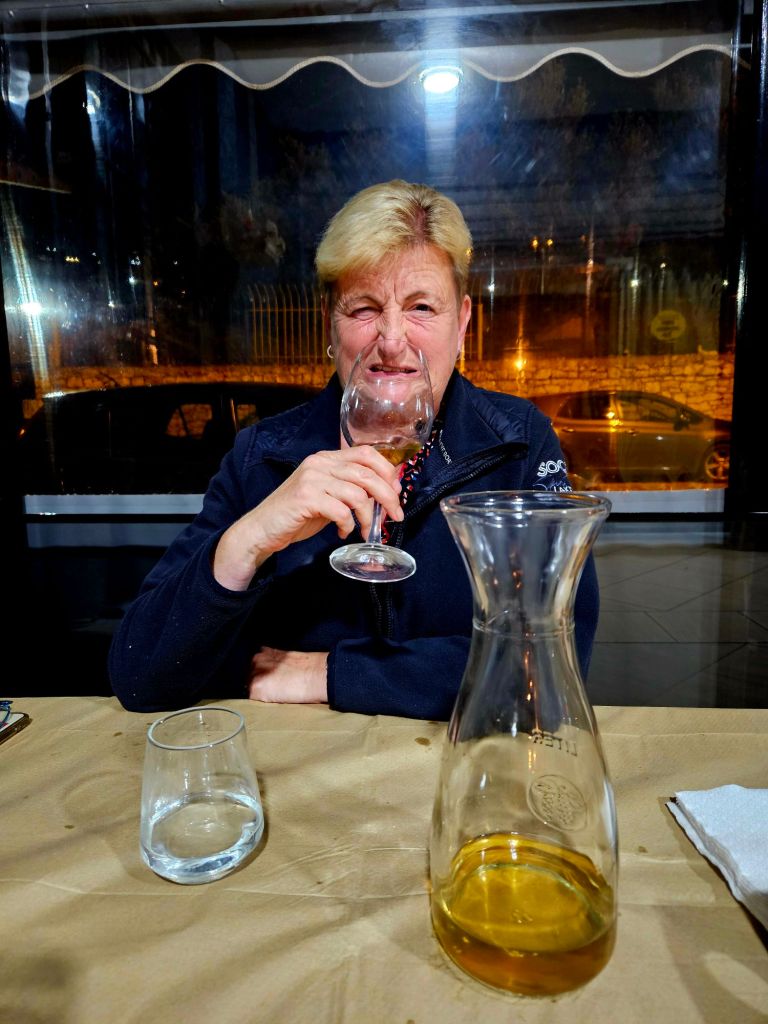
And this was the only restaurant where we ordered the house wine and didn’t really enjoy it, although we managed to finish it.
After dinner we walked back to the apartment and had some of the wine we bought from Cobo, and some raki.
 Fun, Fitness and Fabulousness in your Fifties