The weather forecast for the day was dry and sunny so we made a decision to go to the beach. We had breakfast in the apartment and put some washing on, too.
It was only a 30 minute drive to Ksamil and we found some free parking on one of the roads not too far from the beach, known as Ksamil Beach 7.
We walked down to the beach. There were areas where you could hire a sunbed and other areas where you could just use your own towels – we opted for the later as we weren’t sure how long we would stay. There weren’t many people on the beach but its not huge and I can imagine it gets really crowded in the summer months.
The beach was beautiful white sand and the water was very blue, perfect.
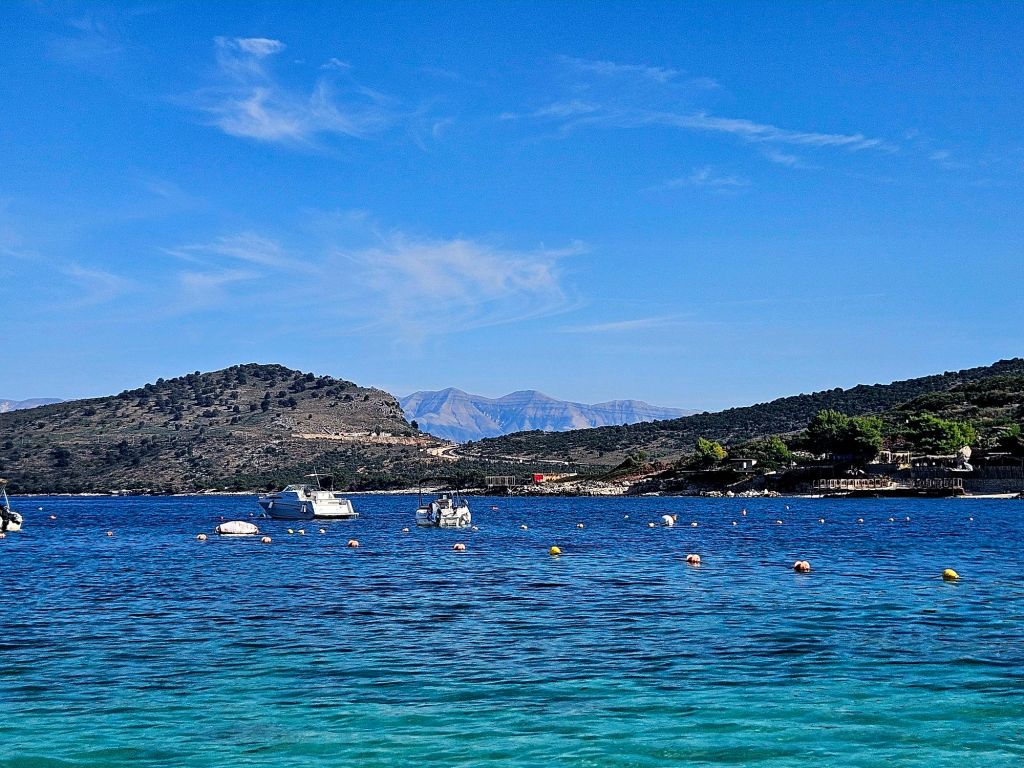
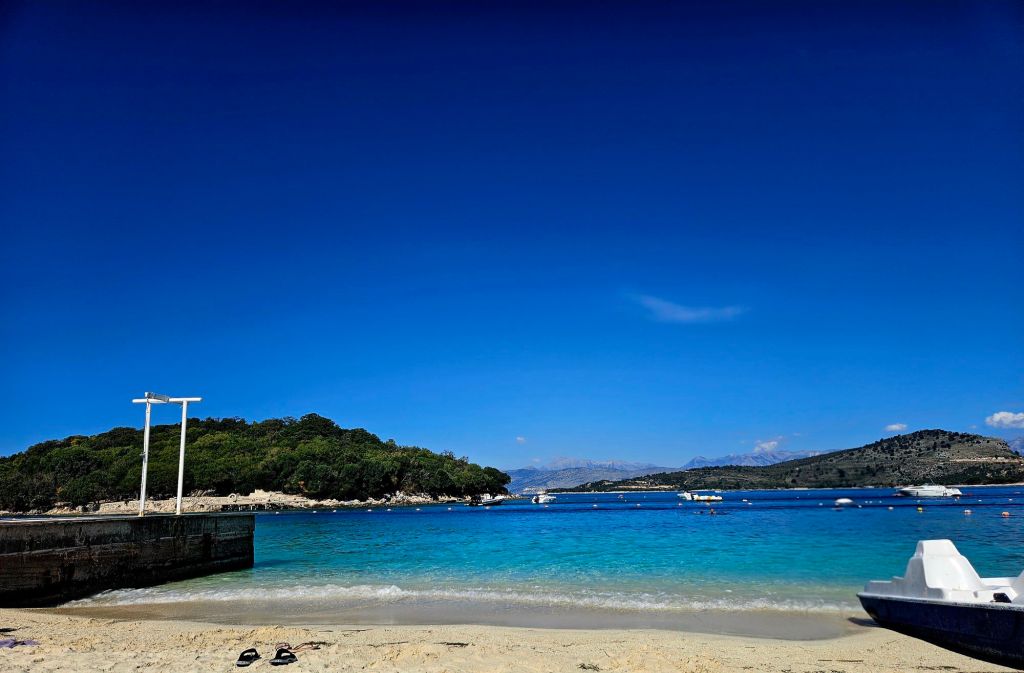
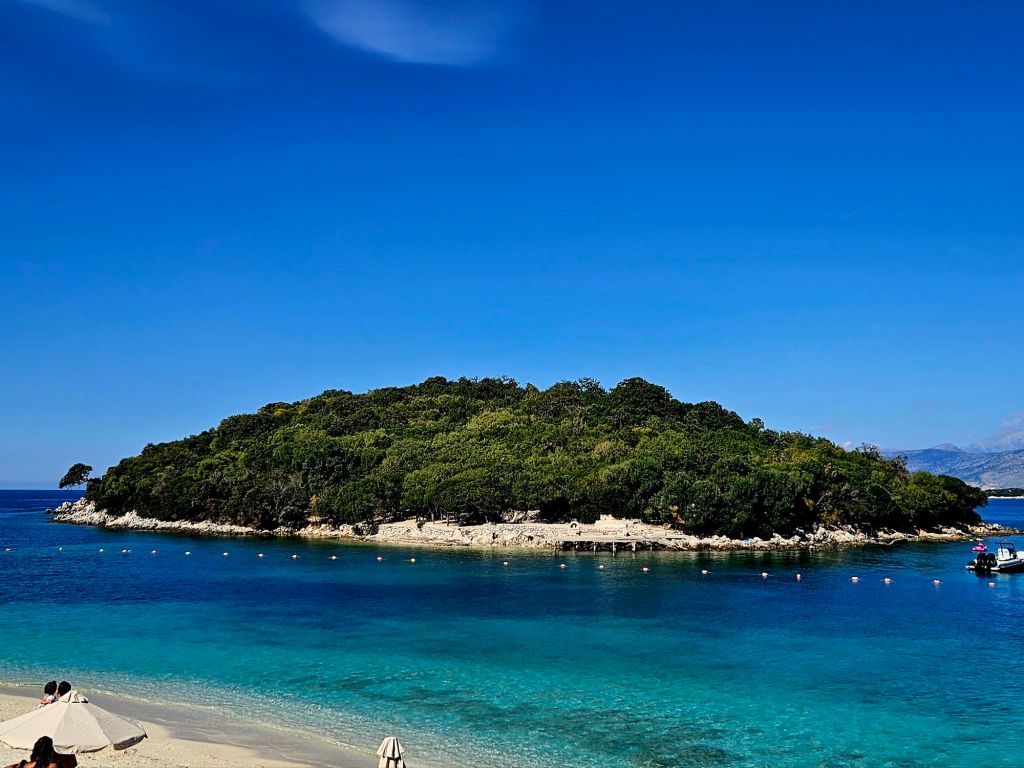
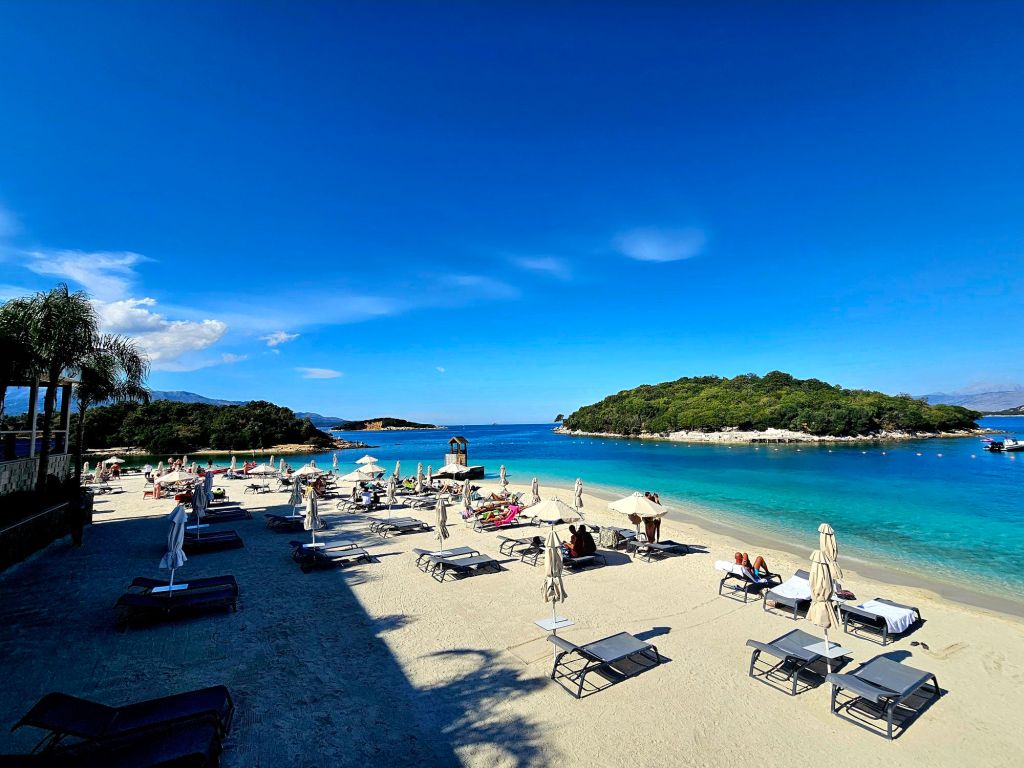
Ksamil was only founded in 1966 as a model socialist village. Prior to this, the area was largely uninhabited, consisting of hills, small bays and four islands in the Ionian Sea. Initially Ksamil served as a coastal settlement for workers and it was relatively secluded. Located so close to the border with Greece, a country with which Albania was officially at war during much of the 20th century, Ksamil was a military zone under the communist regime. Movement was restricted and everyone was under surveillance. Following the end of the communist era, Ksamil underwent rapid, and often unregulated, development.
We went for a swim. The water was quite cold, but lovely and clear.
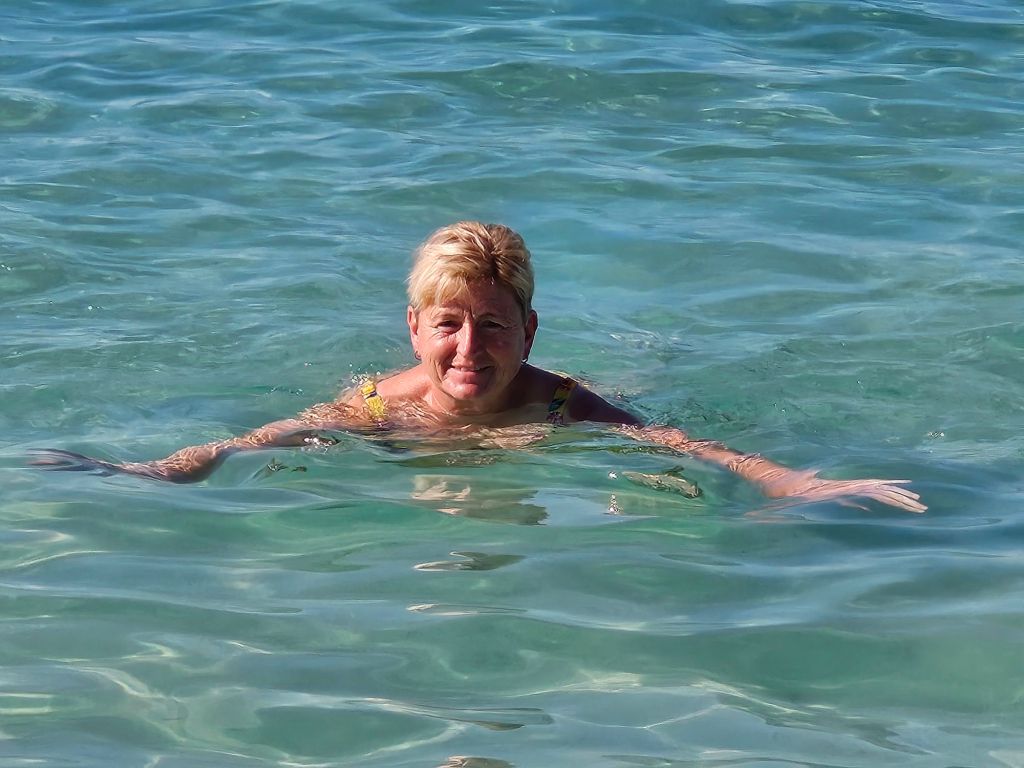
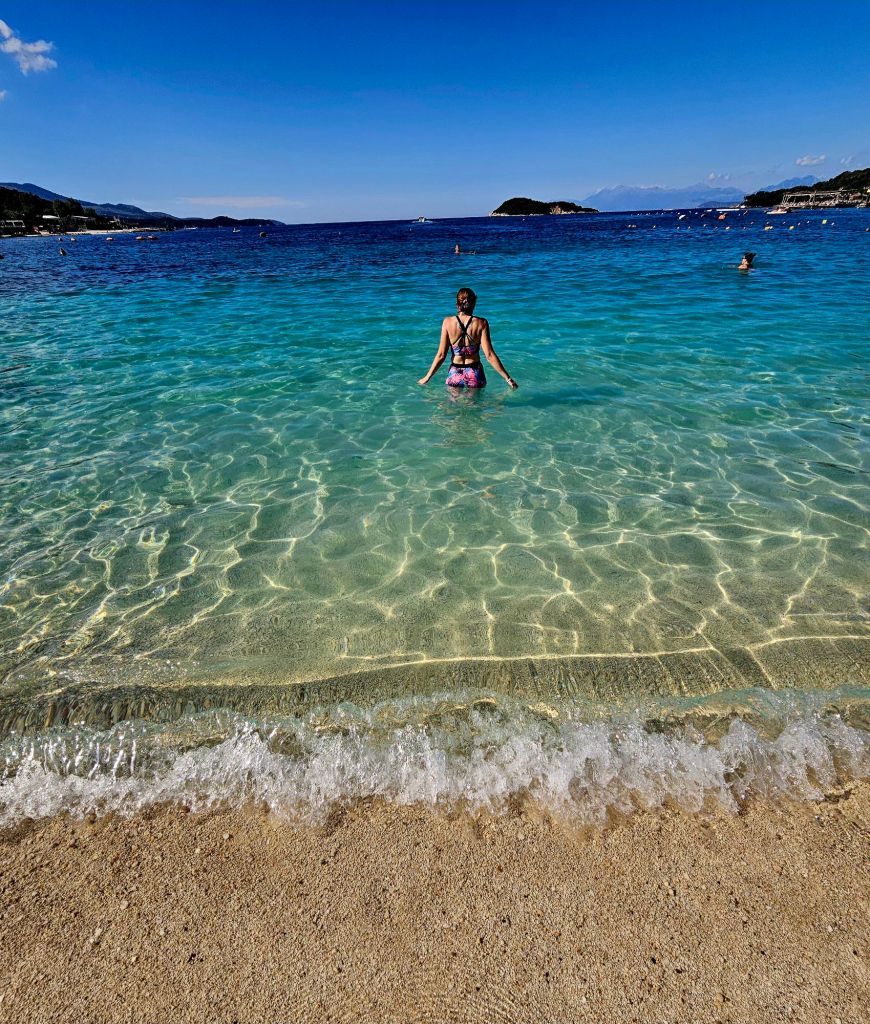
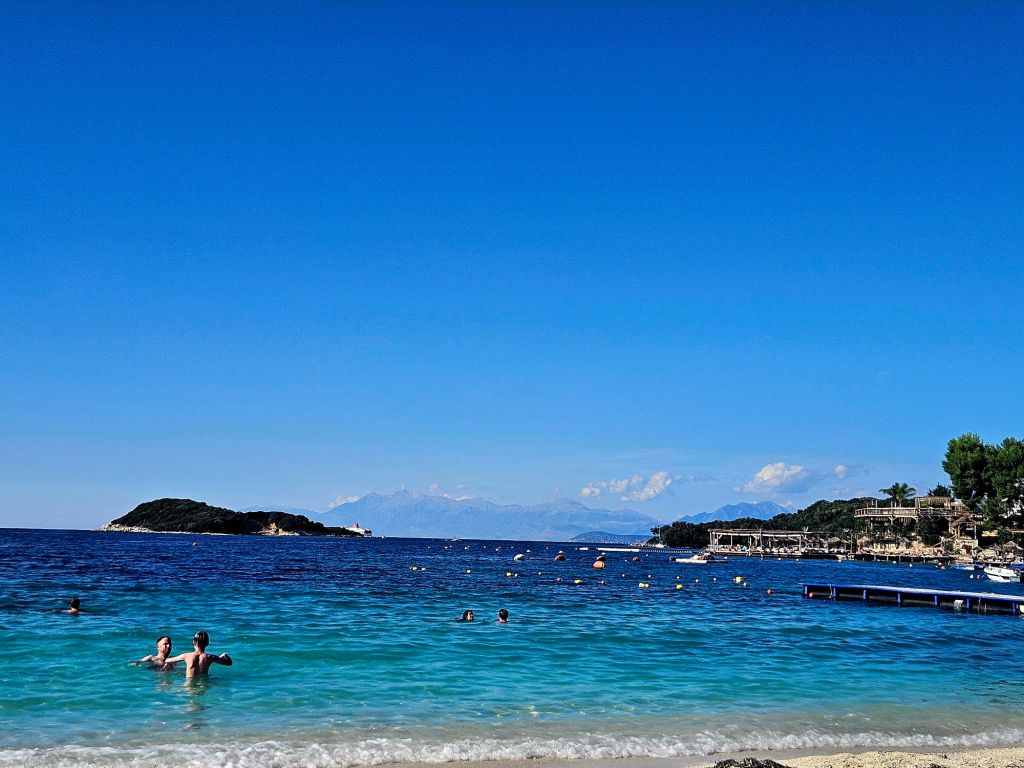
After a while we decided to go and visit the famous ‘Hand of Ksamil’. We didn’t want to loose our parking spot so we walked through the town.
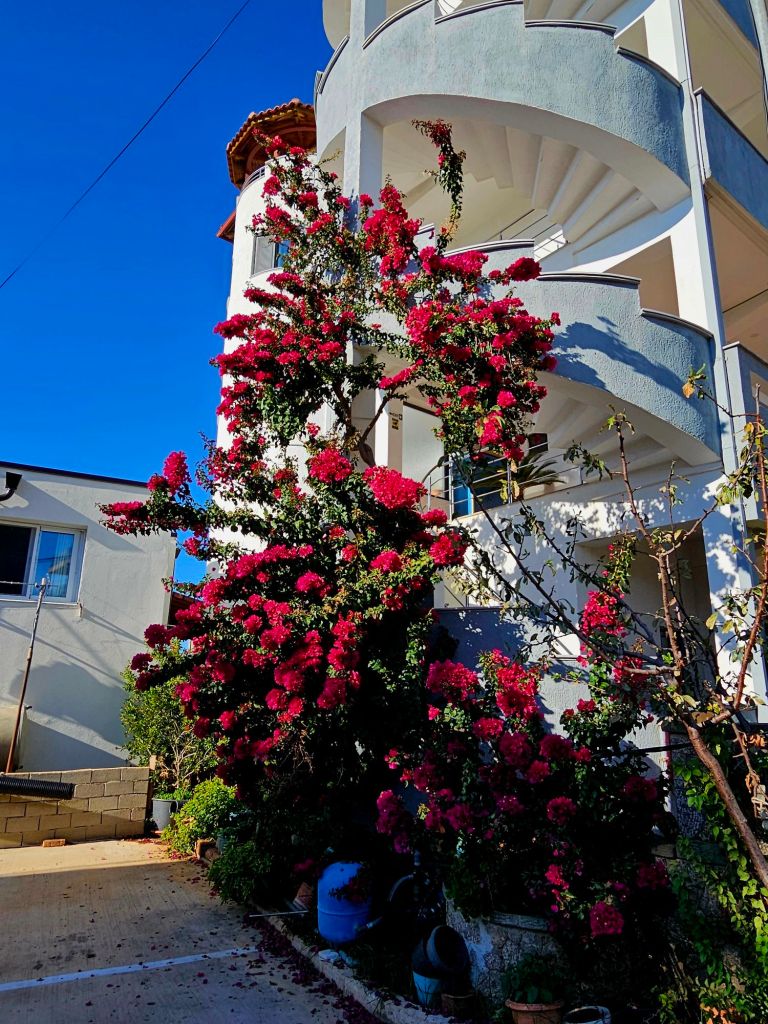
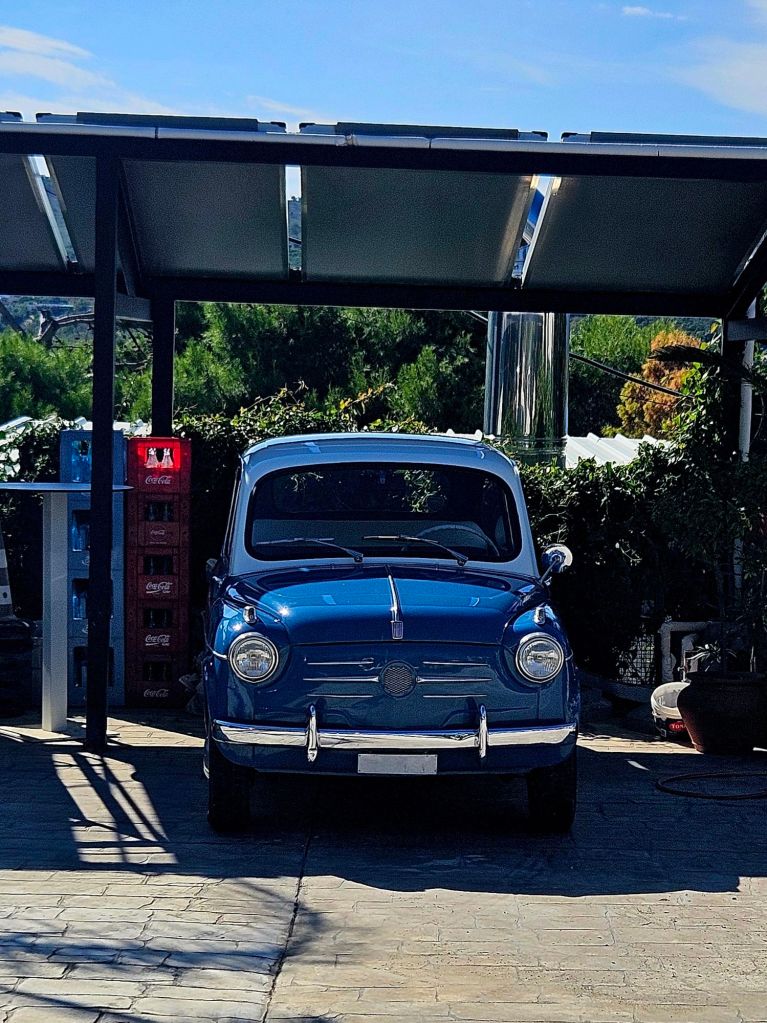
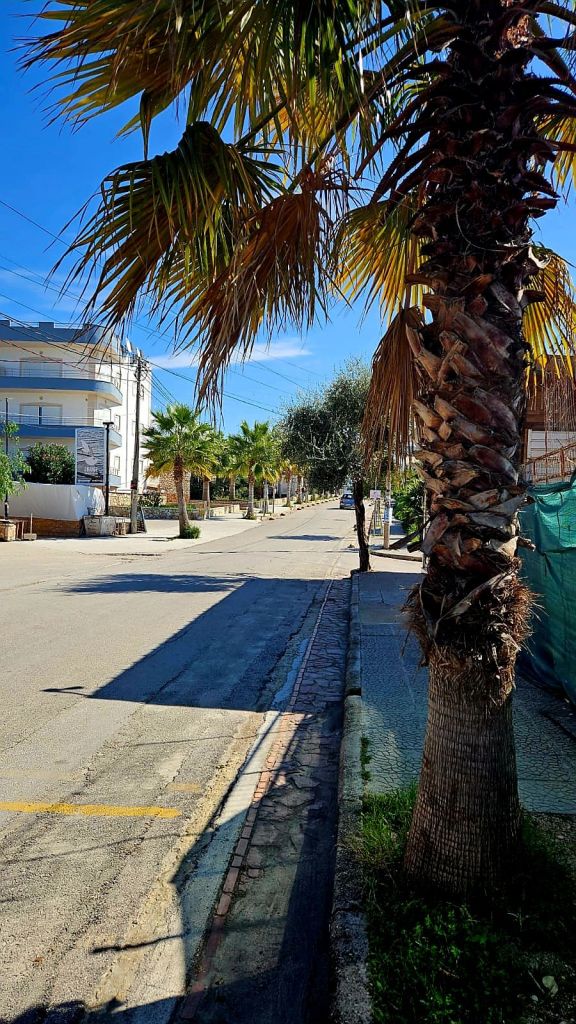
It was only just over a 10 minute walk to the Hand. The Hand of Ksamil is a modern art installation designed as a large open hand reaching up to the sky. It is a symbol of welcome and openness.
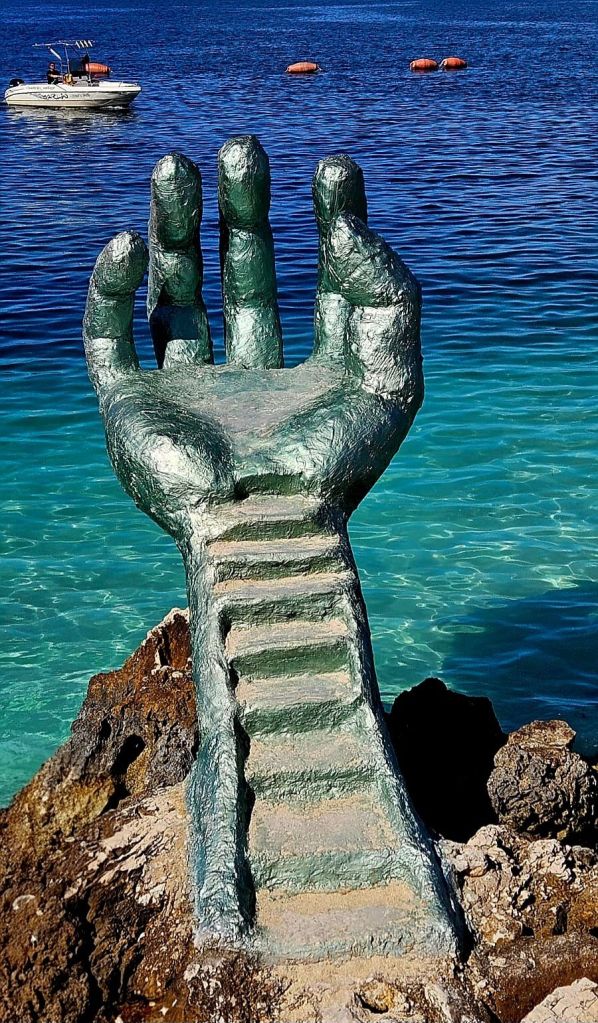
There was a small queue to take photos on the hand, so we waited our turn.
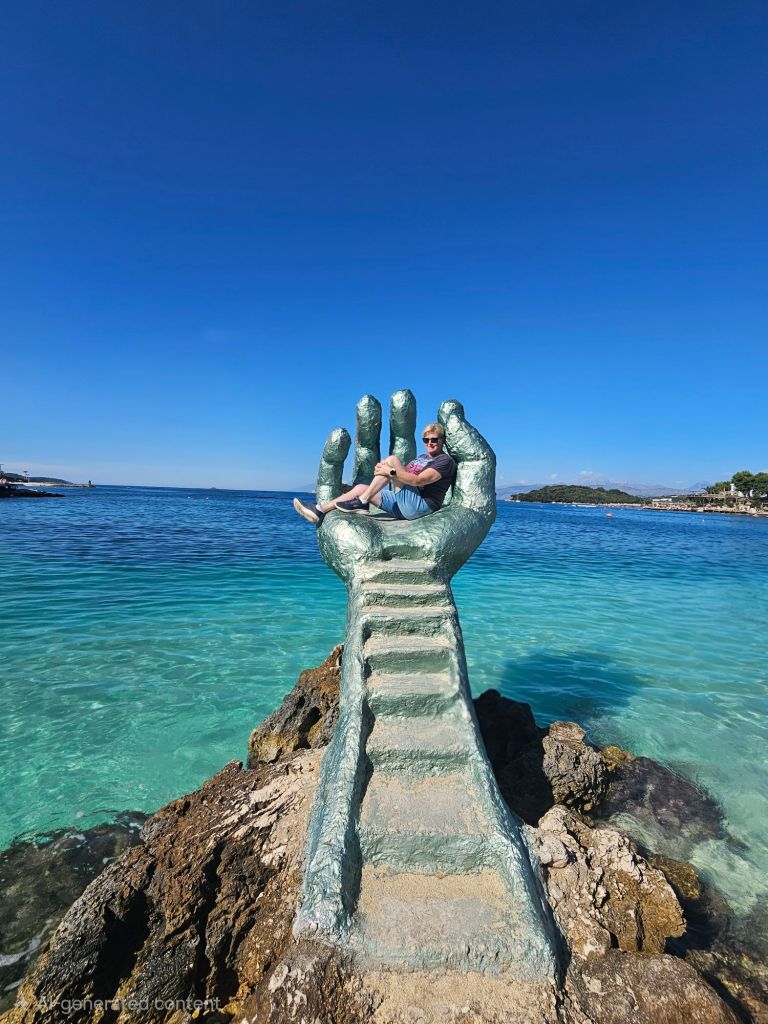
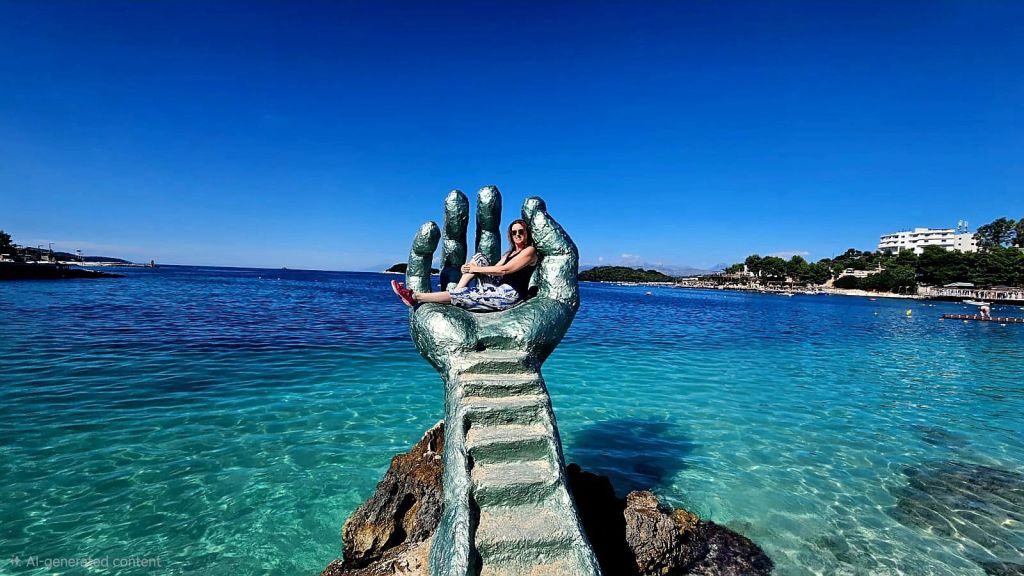
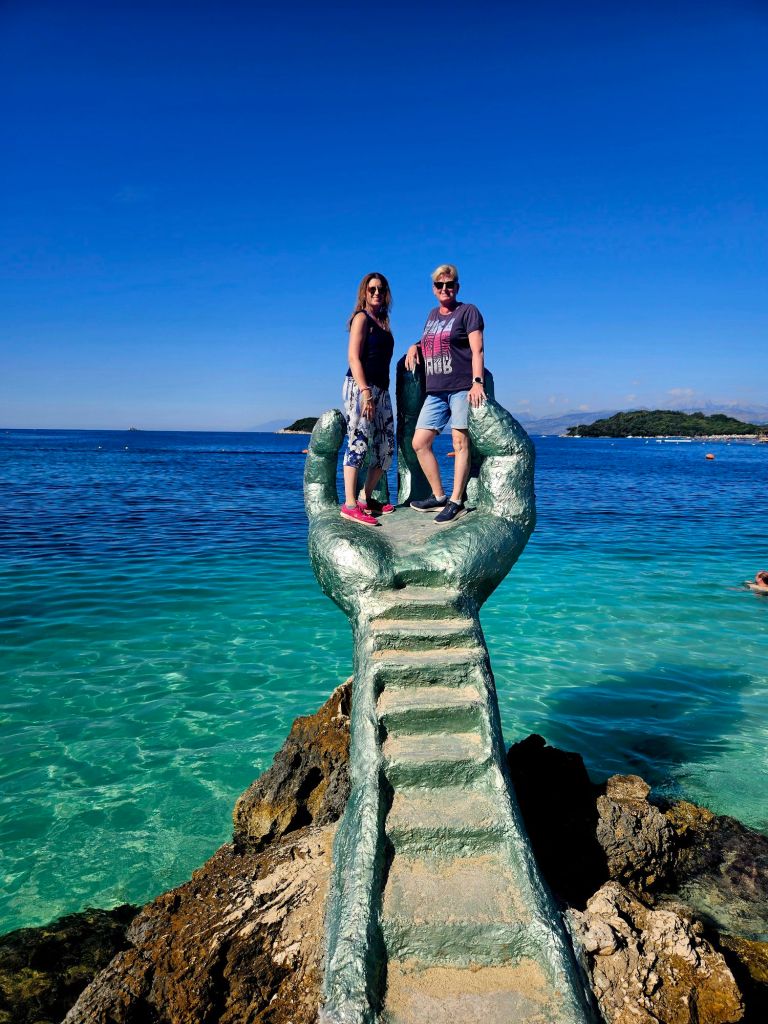
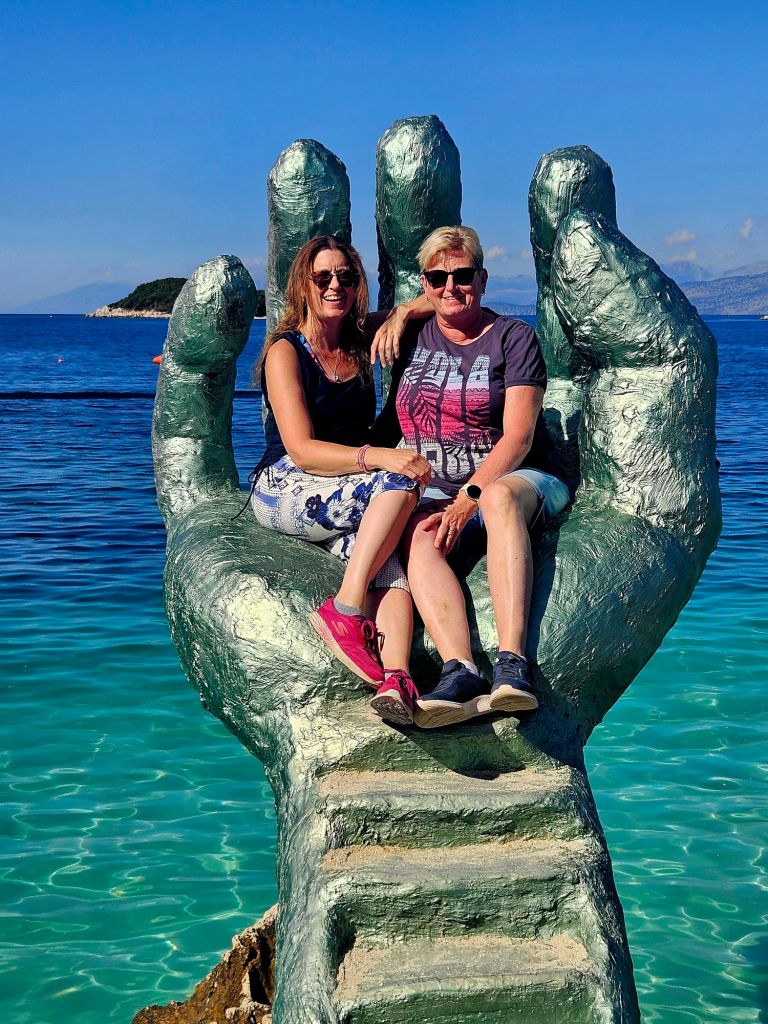
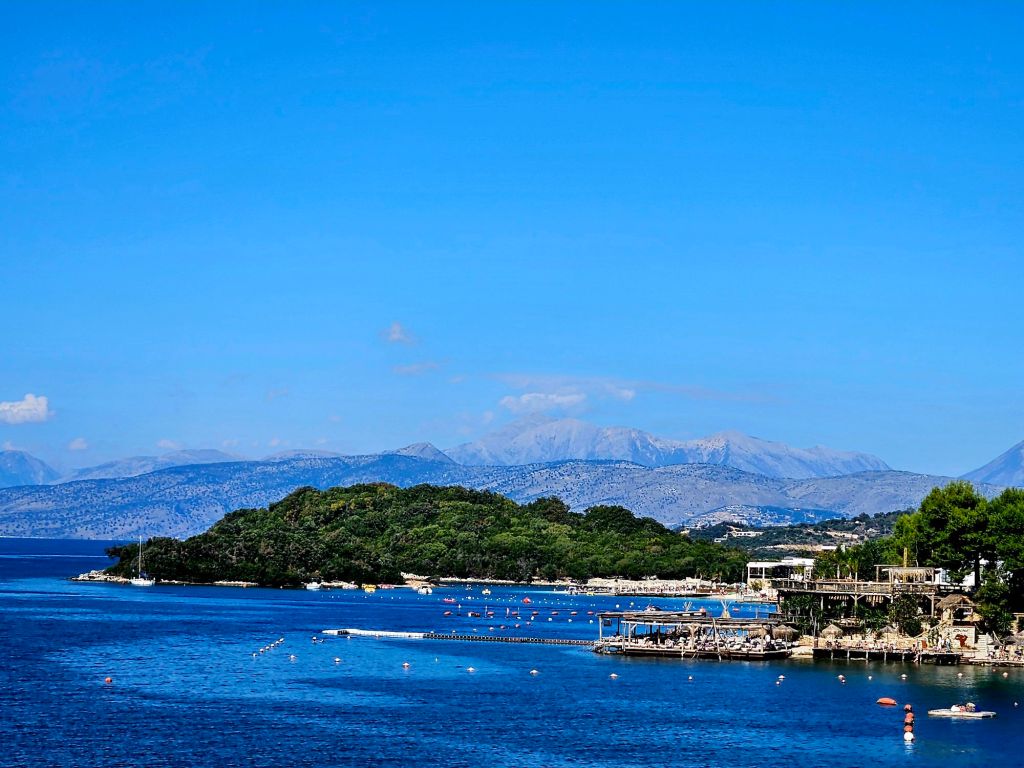
After our posy photos we walked back to the car and then set off for Butrint National Park. This was only a 15 minute drive away.
Butrint National Park is a world heritage UNESCO site. It consists of a 2,500 year old archaeological site, with Greek, Roman and Venitian ruins, as well as protected ecosystems of wetlands, islands and forests. The site spans several different periods, from the Bronze Age through to the Ottoman period.
Butrint’s name (originaly Buthrotum in Latin) was derived from the word buthrotos, which means “wounded bull”. This is based on a Greek mythological legend, in which the offering of a bull failed on the island of Corfu. The bull escaped and swam to the mainland, which was considered a sign of the gods, so the Greeks decided to build a settlement at this place.
Helenus, son of King Priam and Queen Hecuba of Troy, is considered the founder of Butrint.
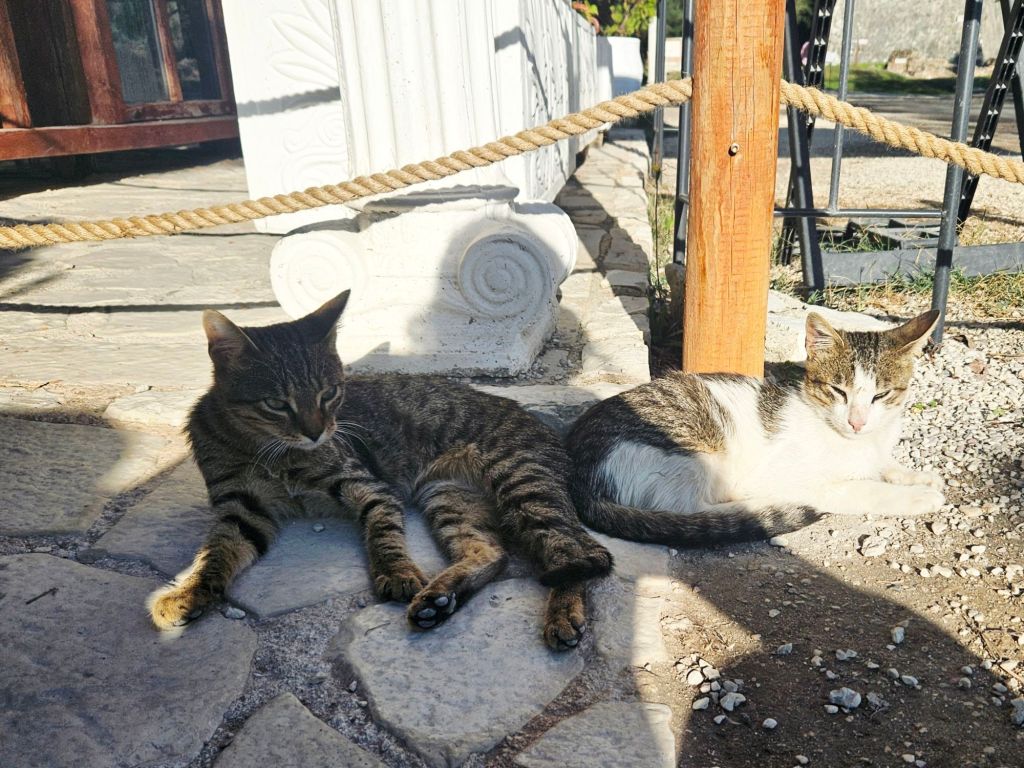
On entering the park the first thing we saw were some cute kittens.
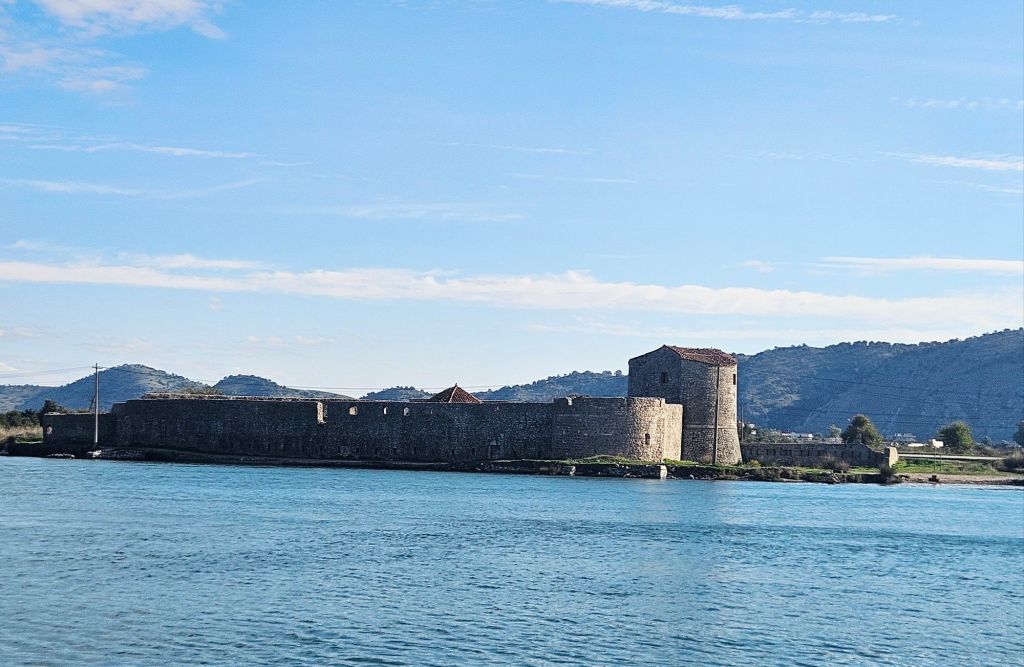
Across the water, the Channel of Vivari, you could see the Venetian Triangular Castle. This castle was built in the 15th century by the Venetians and was created to defend the fish traps, which were an important source of food and income for the nearby settlements.
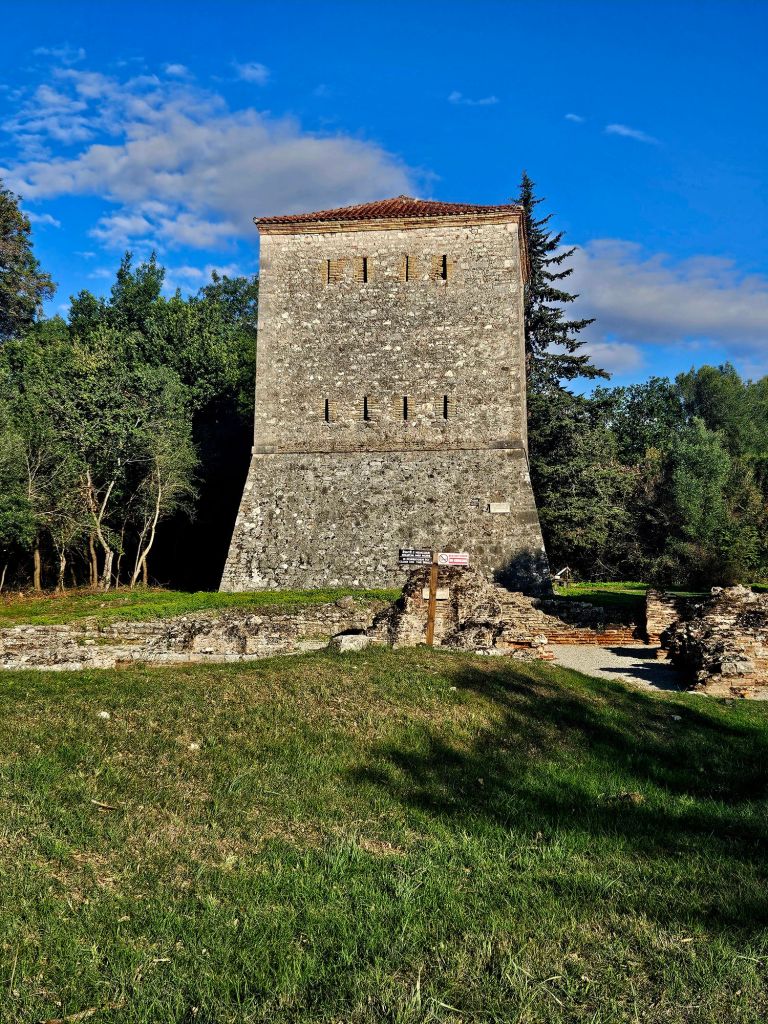
The Republic of Venice dominated Mediterranean trade between Europe and the Levant (area covering Syria, Lebanon, Jordon, Palestine and Israel) from 11th to the 18th centuries. The Republic purchased Butrint and Corfu in 1387 so it could control shipping and trade along the Adriatic Coast.
From the 15th Century the Venetians were constantly attacked by the upcoming Ottoman Empire, and occupation of Butirint passed back and forth between the two opposing sides. The Venetians built the Castle and the Venetian Tower to protect their mainland resources. In 1797, the Venetians surrended to Napoleon and Butrint fell into the hands of Ali Pasha of Tepelena. Under Ottoman occupation the town ended up being deserted and hadn’t been populated for centuries when it became part of the independent Albania in 1913.
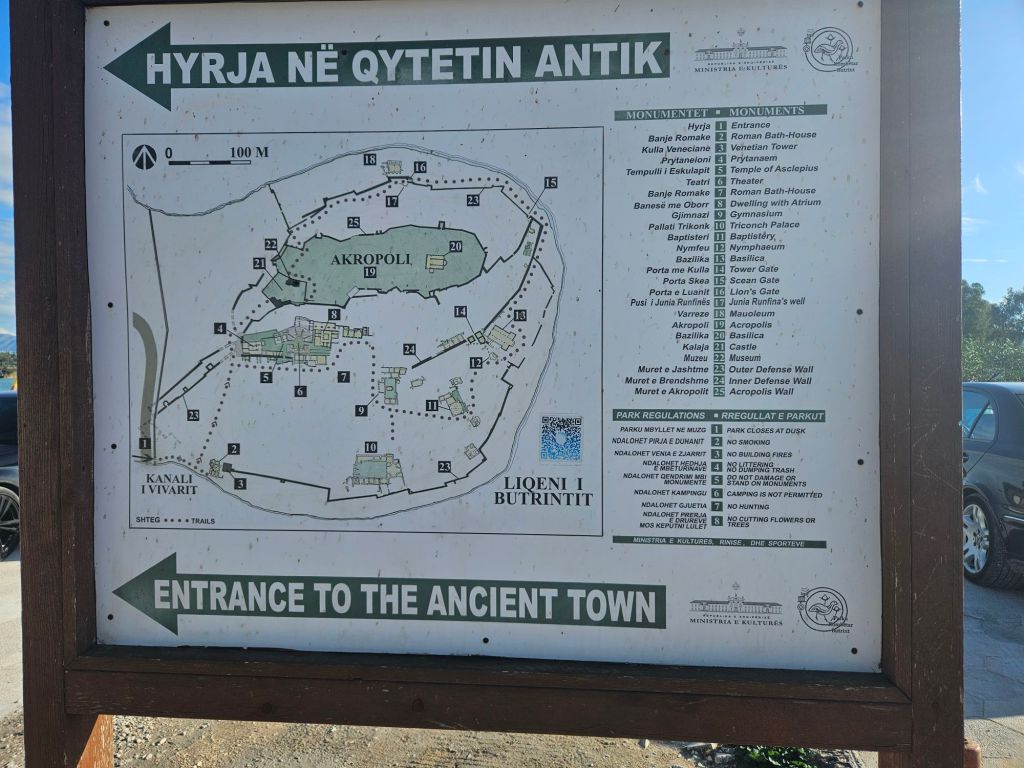
We then made our way to the Sanctuary. This is a large 10 hectare area which used to be surrounded by a wall of bricks, which were fitted together without mortar.
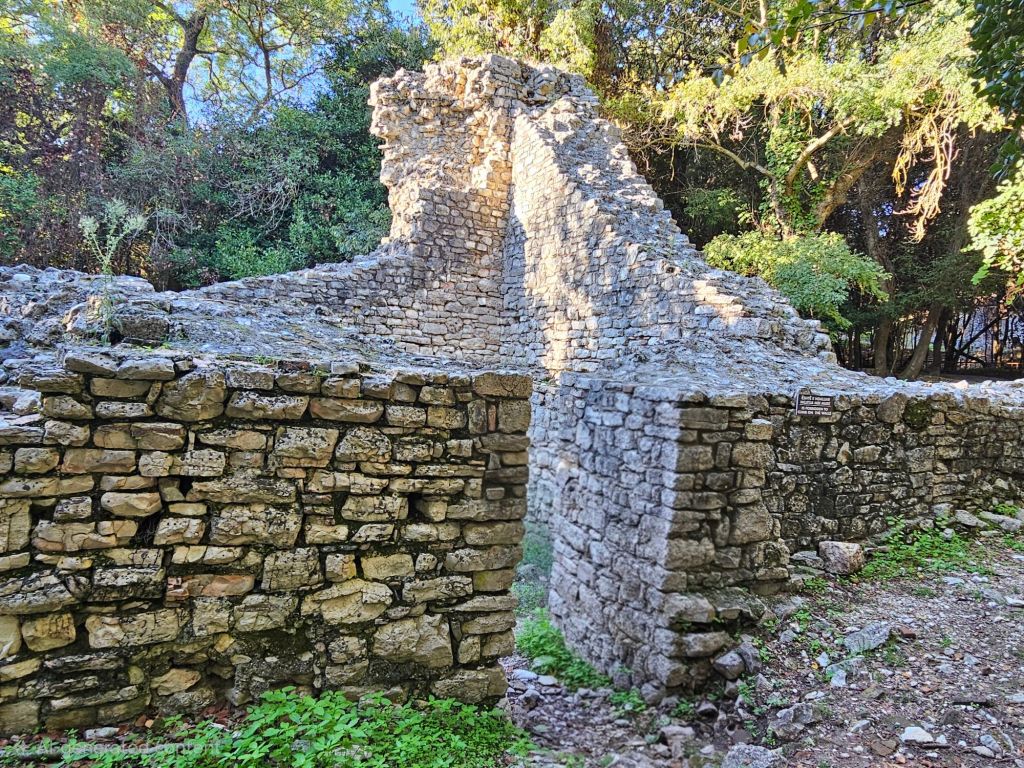
The Sanctuary was dedicated to Asclepius, the god of medicine, in the 4th century BC. Worshippers came to the Sanctuary to be healed and left gifts of money and symbolic objects to the god and his attendant priests. The sacred powers of Butrint waters were revered as long as the town lasted.
We entered the inner part of the Sanctuary via a walkway.
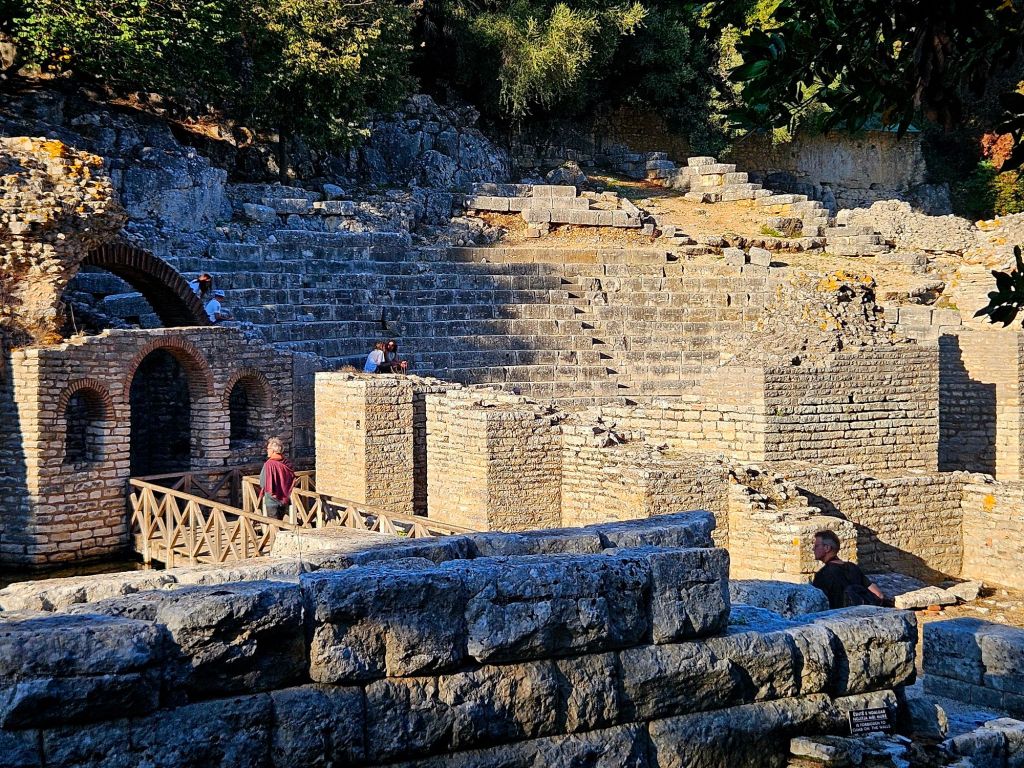
The theatre is still in good condition despite its age. The original theatre was built in the Greek style in the 3rd century BC. It was funded by donations to the Sanctuary. On some of the walks there are inscriptions, manumissions, that record the freeing of slaves in honour of the god Asclepius.
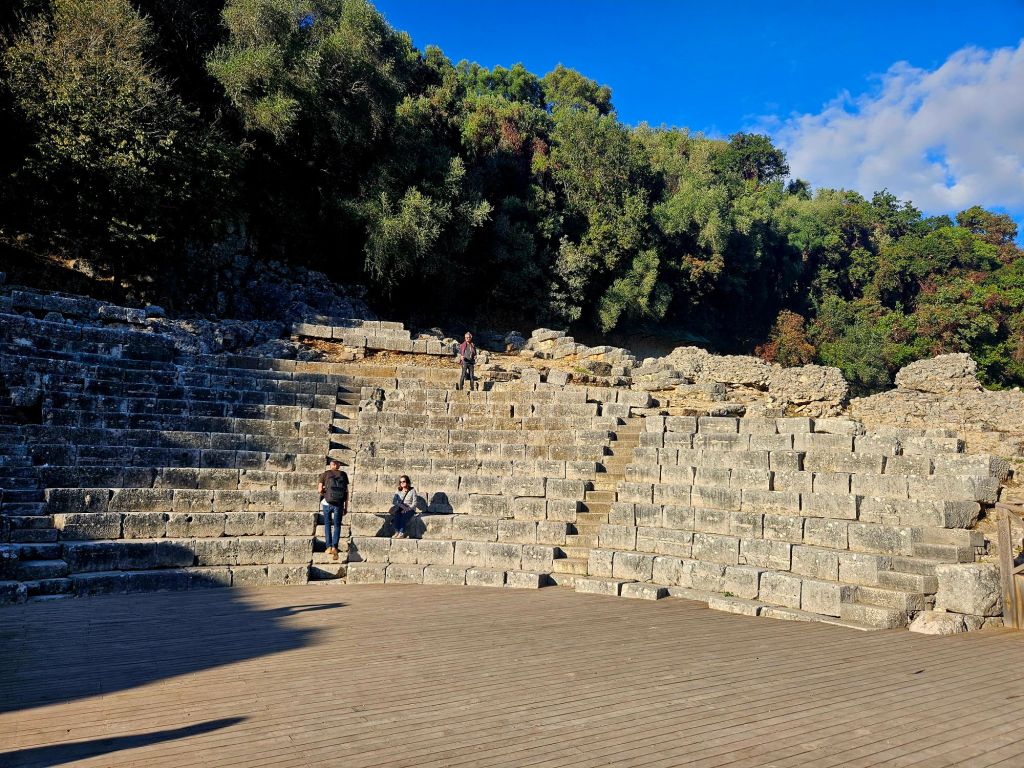
In the 2nd century AD, the theatre was rebuilt and enlarged in the Roman style, and a stage was added. The theatre could accommodate 2,500 spectators.
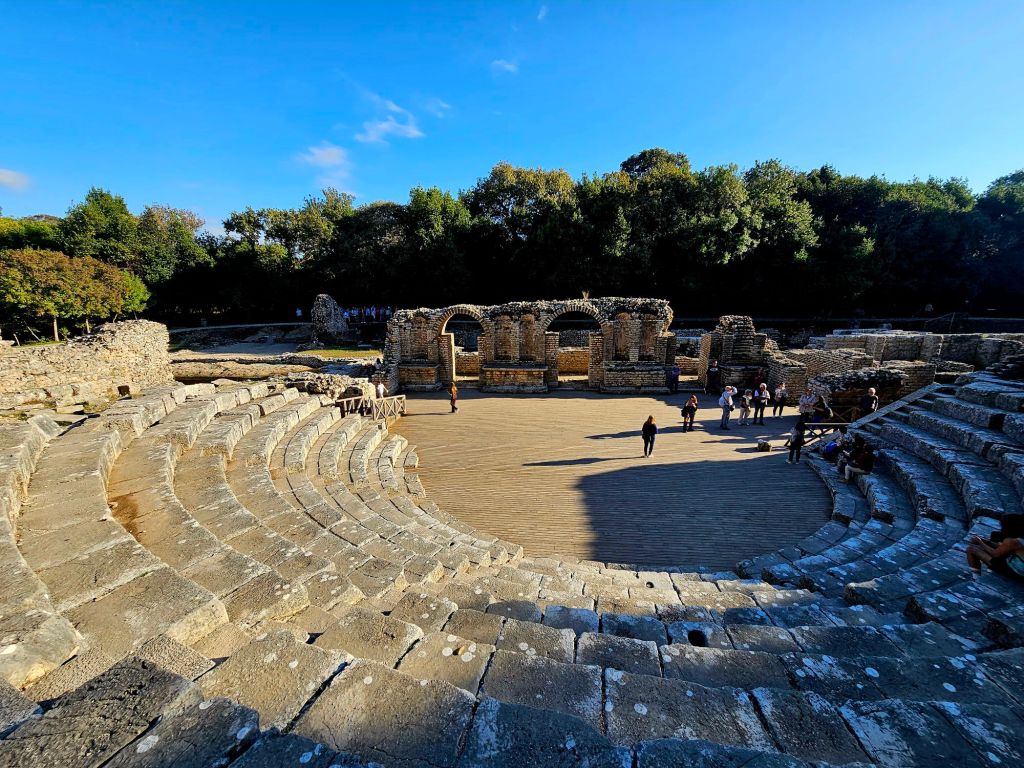
Caesar arrived in Butrint in 44BC and recognised its potential and designated it a Roman colonial city. The soldiers who fought in Pompey were invited to settle in Butrint. Caesar’s son, Augustus, further developed it as a colony. Augustus, his family and private sponsors funded a major building programme. In the 1st century AD the funds paid for a new aqueduct and bridge across the Vivari channel.
Next to the theatre is the remains of a Roman Forum. This was an open space used for public business and worship and was built where a Greek marketplace once stood. Most of the forum is still under a few centimetres of soil. The forum was once lined by Roman buildings, including temples. An earthquake in the late 4th century AD destroyed the forum and its adjacent buildings.
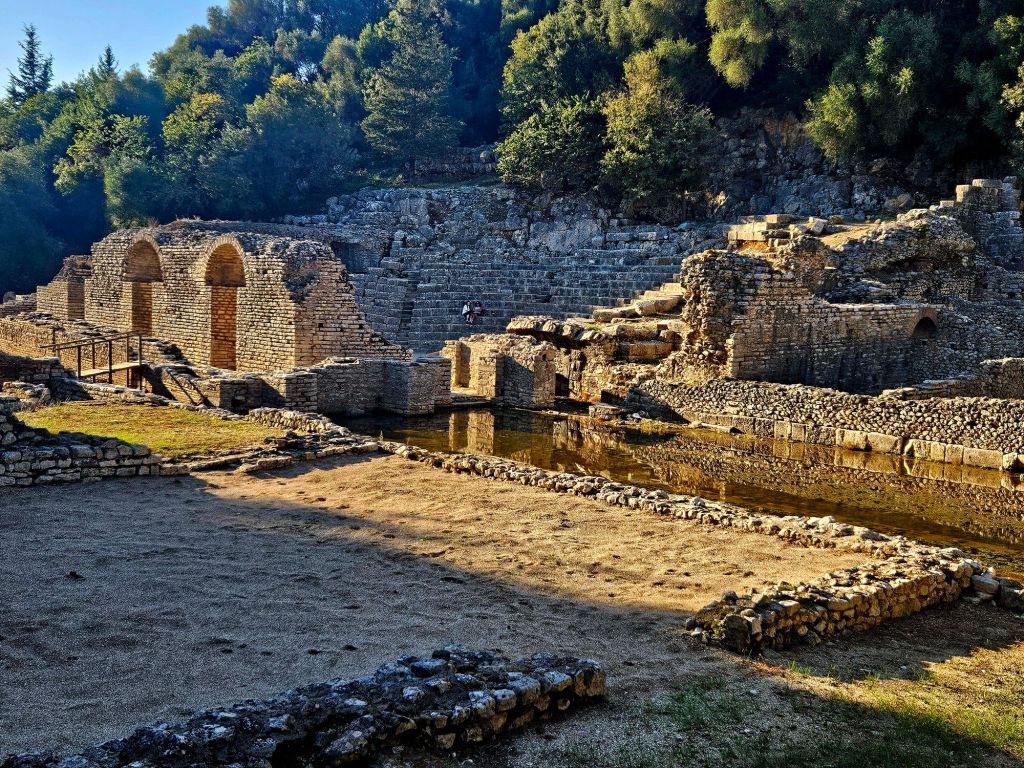
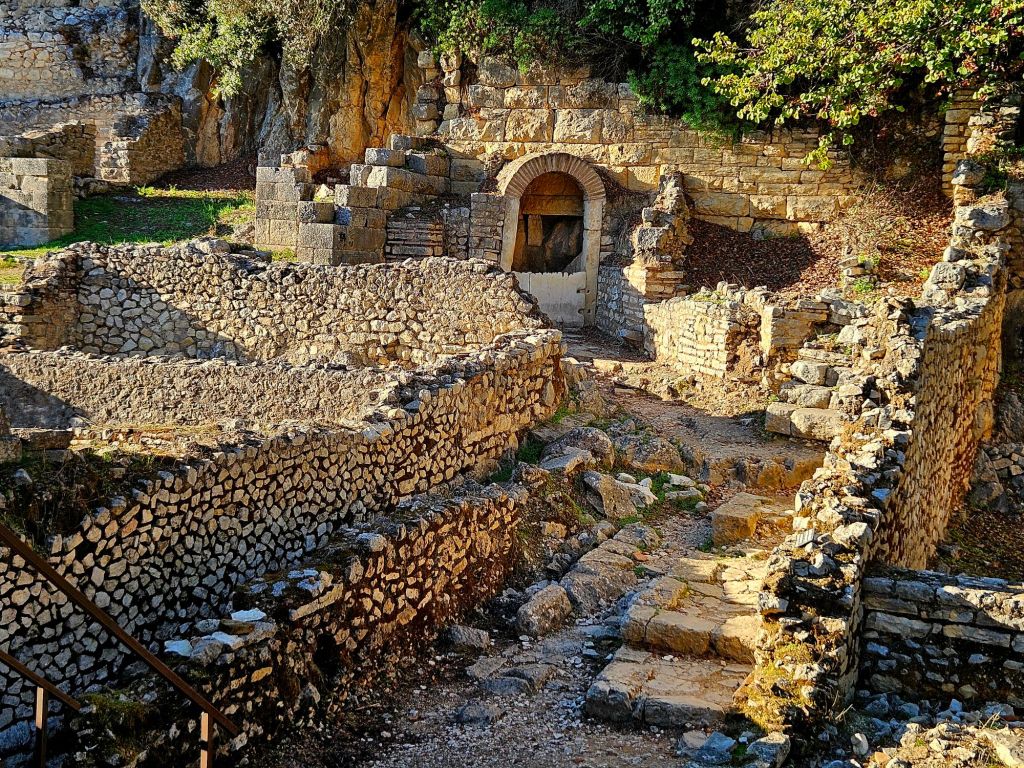
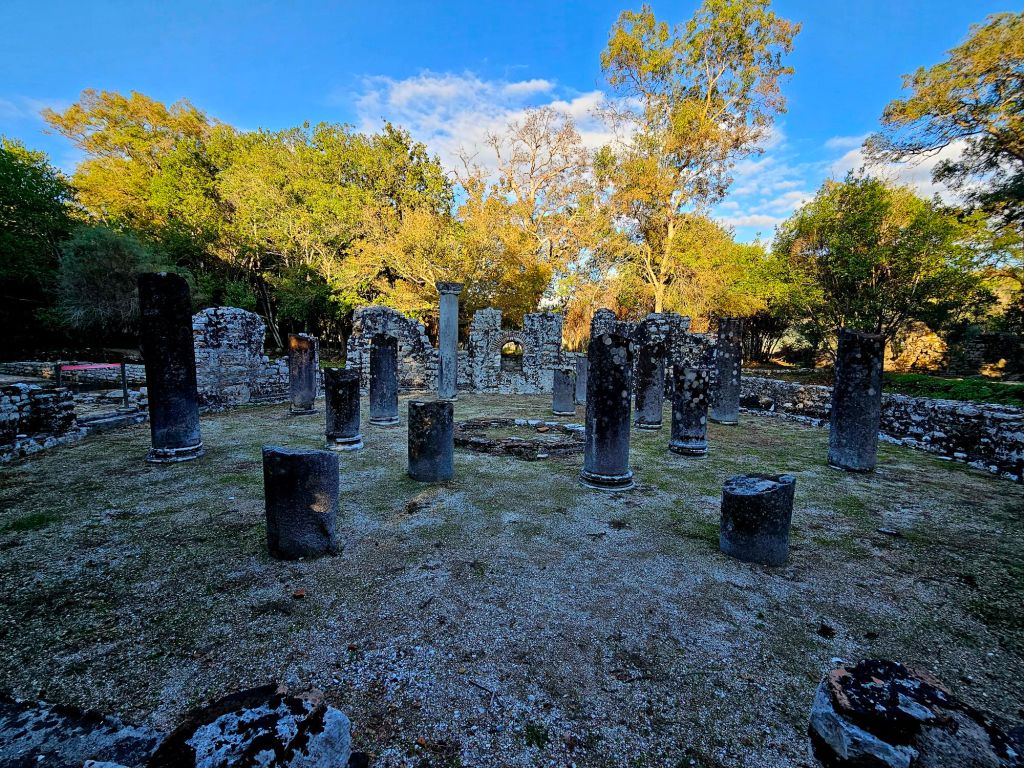
Our next stop was the Baptisery. It is one of the most complex, large free standing baptisteries in the Mediterranean. It was constructed in the 6th century AD. Two circles of 8 columns (inner and outer) once supported a wooden roof. The columns were made from Egyptian granite. The site was probably a former Roman bathhouse or household bathing complex and was adapted to the needs of Christianity.
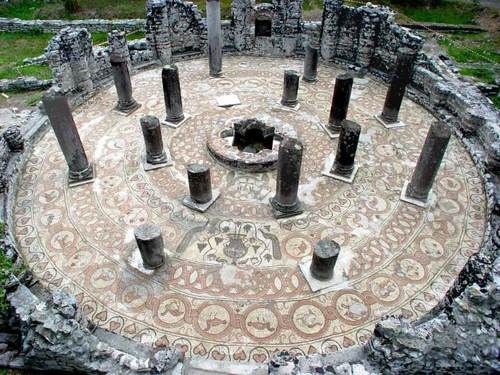
It has an amazing, and extremely well preserved mosaic floor. Unfortunately the floor is mainly covered up to protect it from the elements. It is only uncovered for a limited time every few years. This is what it looks like (photo courtesy of the internet).
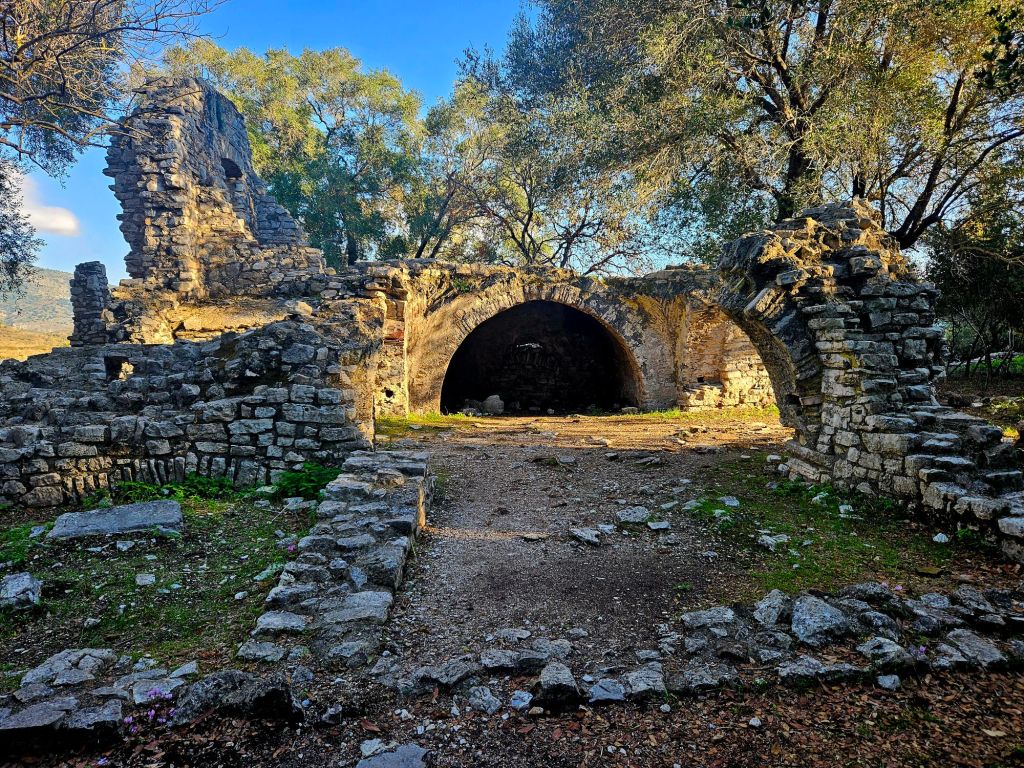
Parts of the old wall were still intact and some still had arches and openings out to the water. The main entrance into the city was still partially intact. It was the main entrance between the 3rd century BC and 14th century AD.
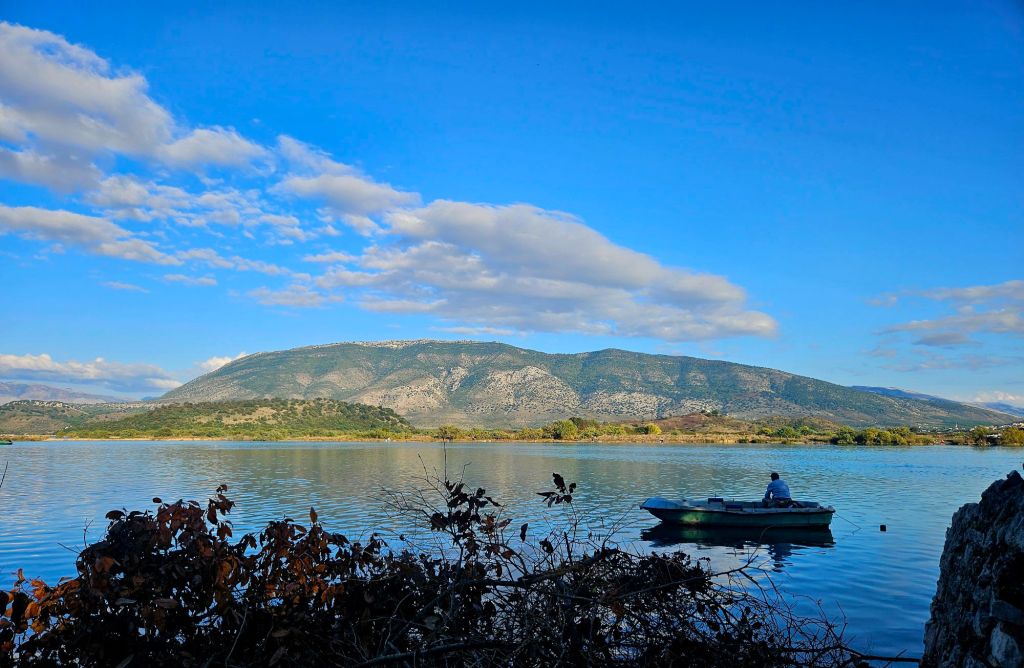
The views over the lake were beautiful.
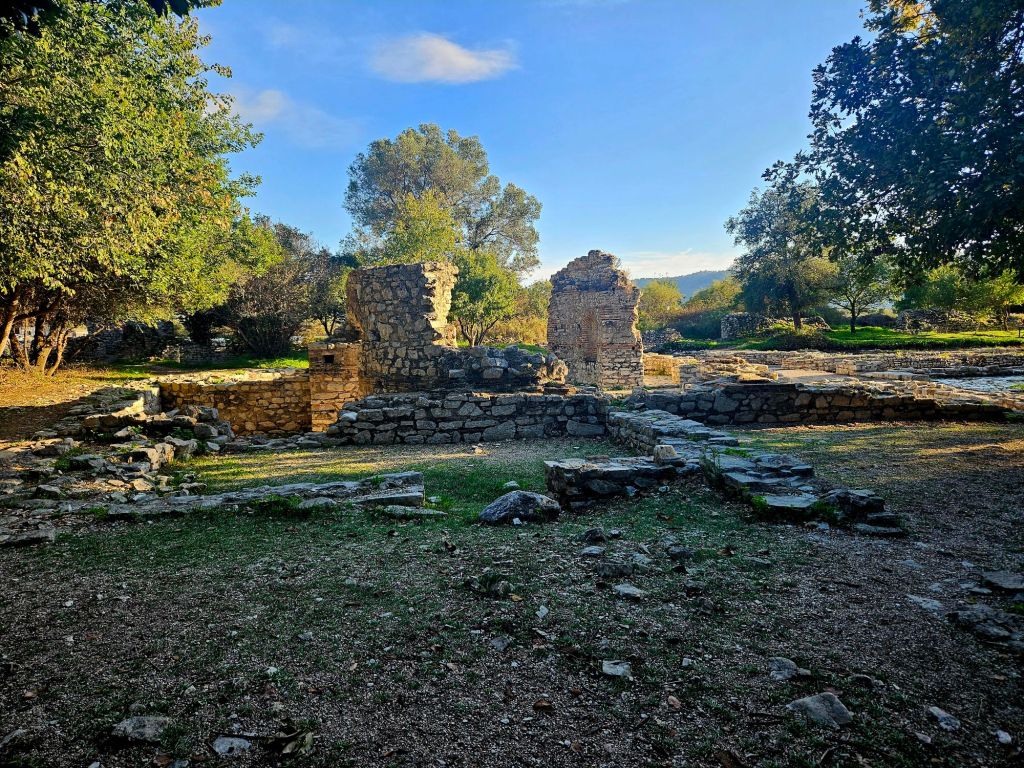
Butrint had many townhouses and villas. Of these, the so-called Triconch Palace was a townhouse that was later developed into a great palace around AD 400.
The early house followed a traditional Roman villa building plan with rooms arranged around a central courtyard, cooled by a fountain. An inscription in the mosaic at the entrance reveals that it was owned by someone of senatorial rank.
The rising water table compelled the owner to abandon the palace, although the unfinished shell accommodated many generations of fishermen and craftsmen until the late 6th century AD. In the 9th century AD it was occupied again as a temporary market. Dwellings and possibly a church were built here in the 13th century AD.
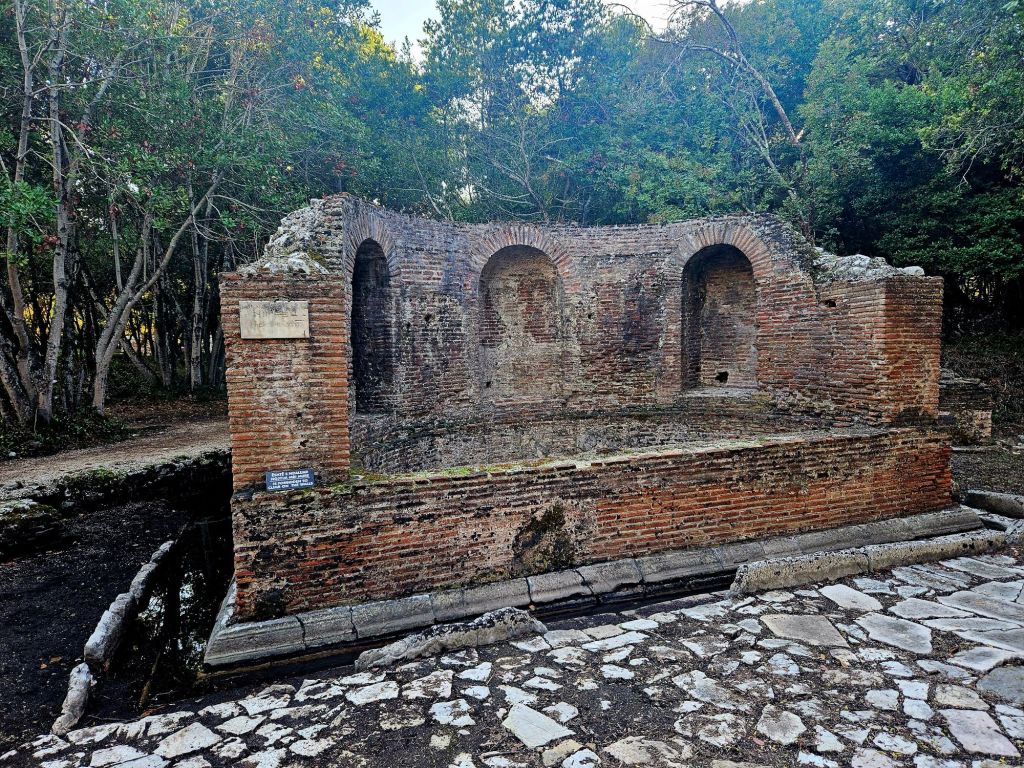
Just by these ruins we found the Fountain of the nymphs. There used to be two fountains here, but only 1 remains.
The great basilica was built at the beginning of the 6th century and symbolizes the catholic influences. It was built as the Bishop’s church and is pretty large in size. Several metamorphoses have been done over the centuries and until the 18th century the the basilica was still a functioning church.
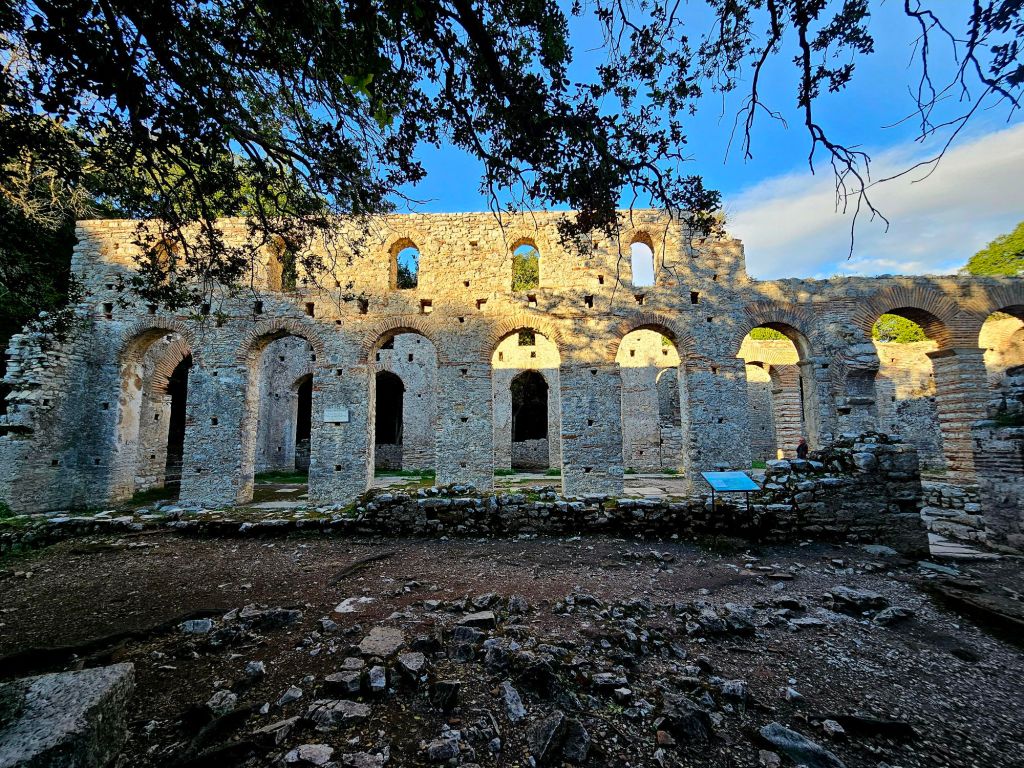
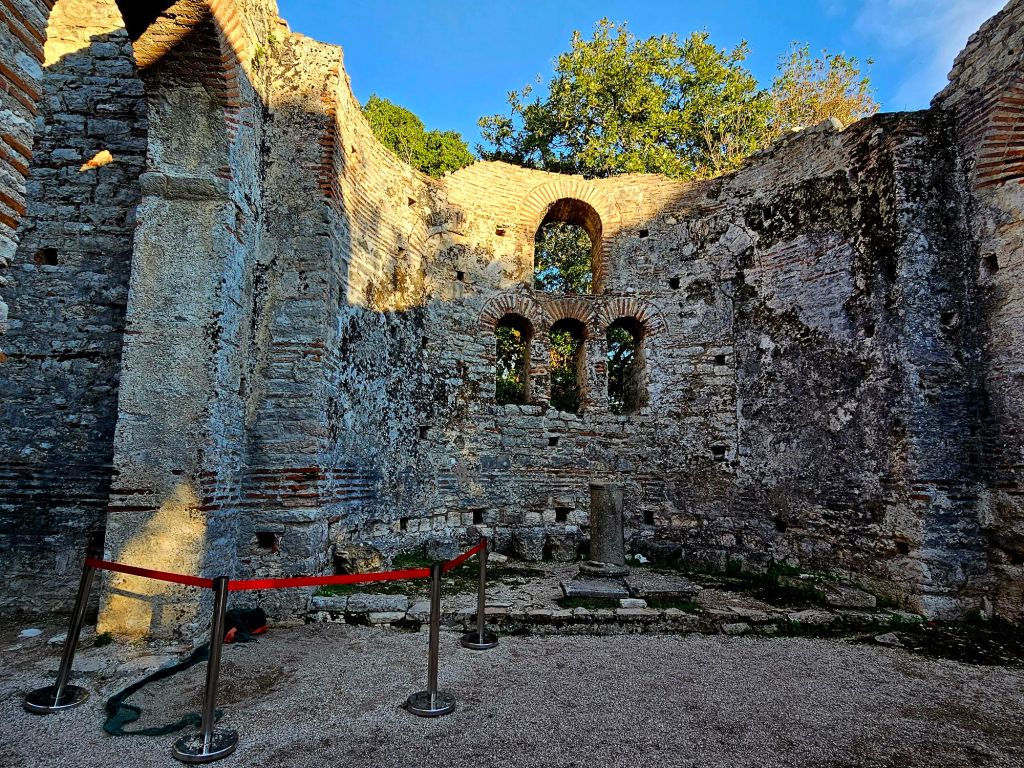
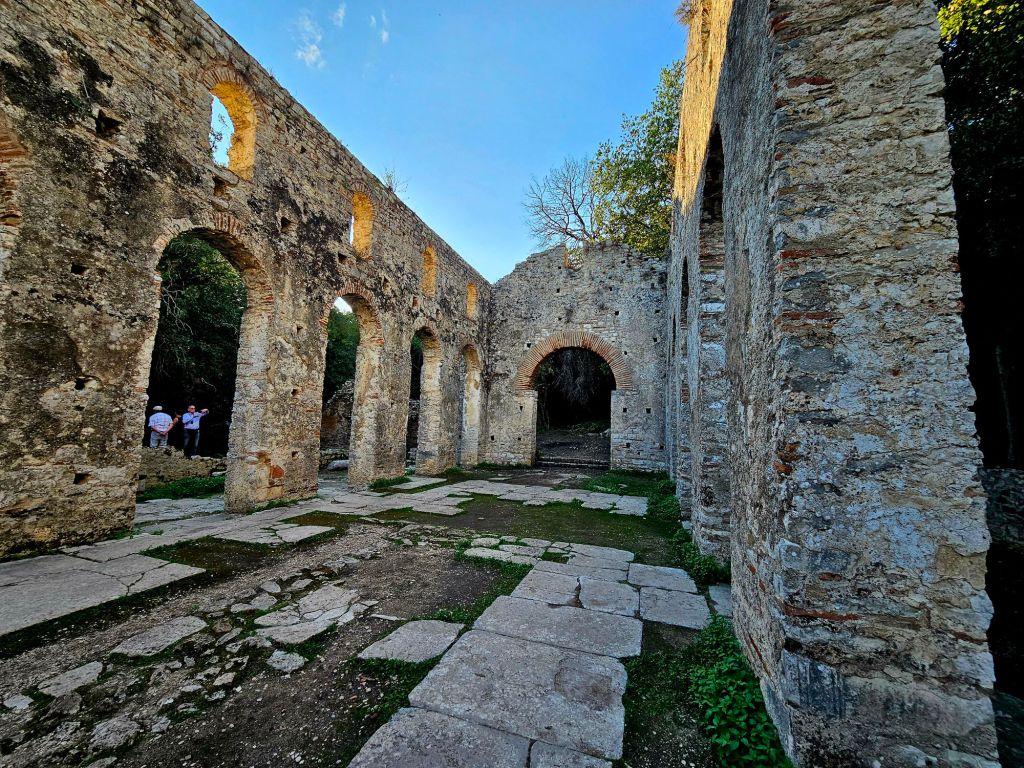
In the later 3rd century BC an imposing entrance, the Tower Gate, was constructed, which remained the main entrance into Butrint until the 14th century AD. It was flanked by a round tower on one side and a rectangular tower on the other, both with arrow slits. Wooden gates sealed each end of the long passageway between the two towers, which was wide enough for a cart to pass.
In the Roman period a bridge and aqueduct were constructed and crossed the Vivari Channel at this point. The water would have been distributed within the city by branch aqueducts, although none survive today.
By the medieval period the bridge and aqueduct had long since collapsed. Nevertheless the Water Gate, built here in the 13th century shows how the gate remained Butrint’s most important entrance.
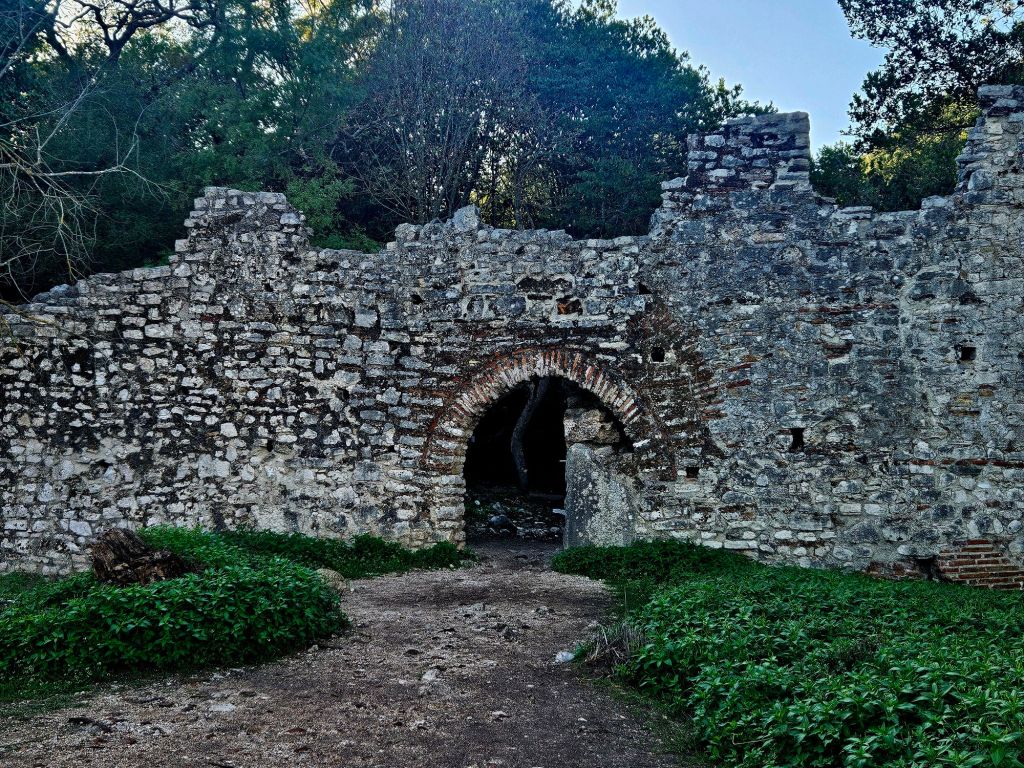
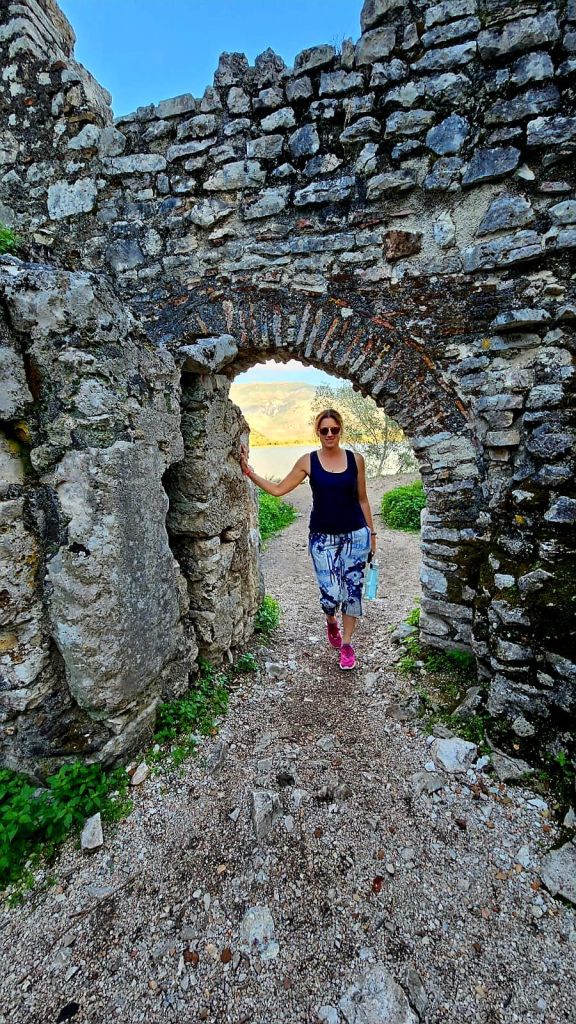
And some more beautiful views across Butrint lake.
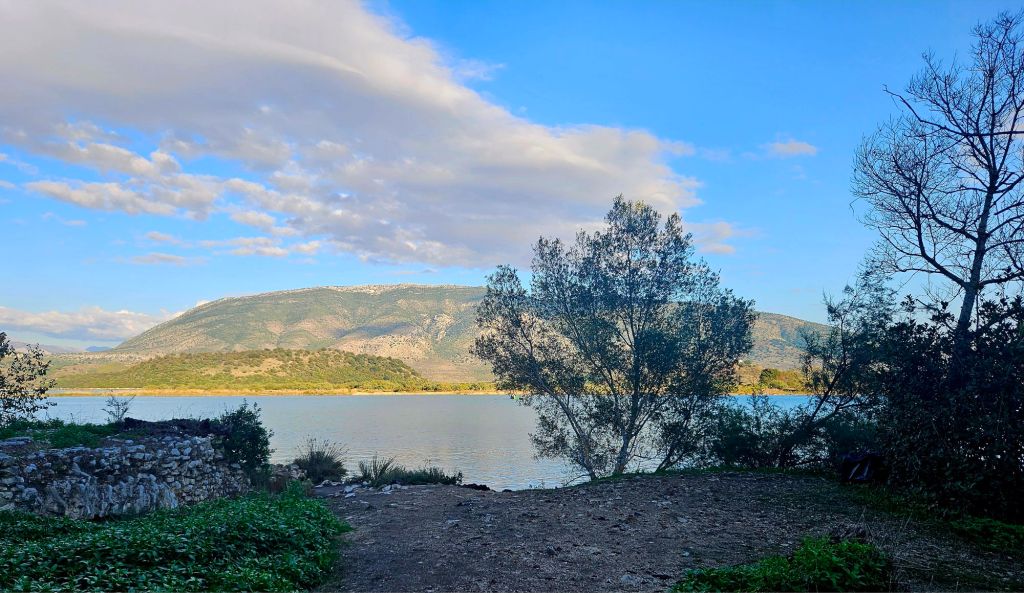
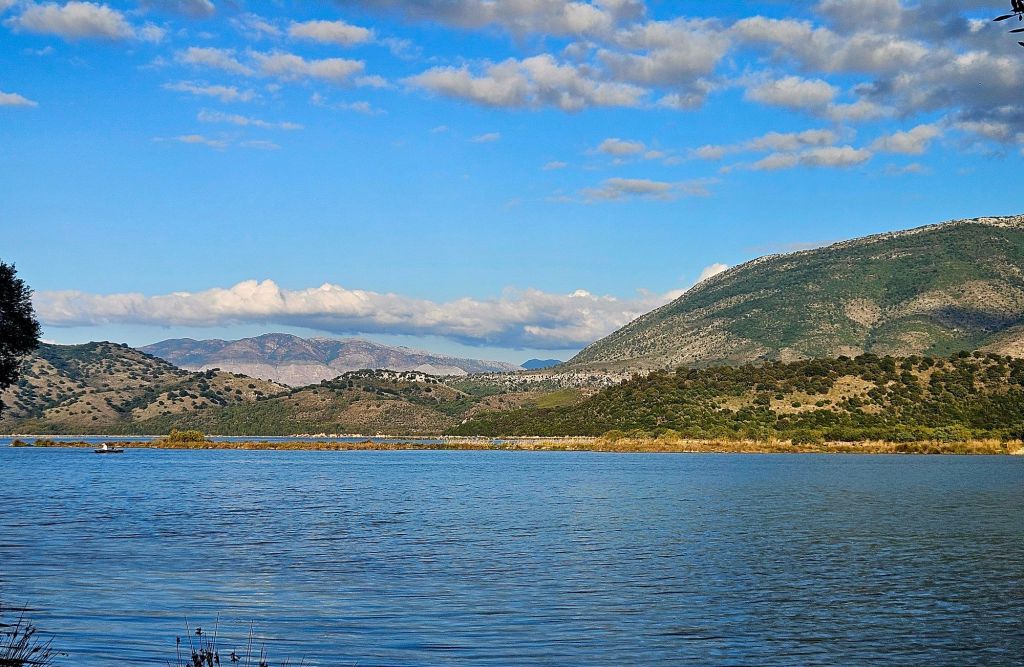
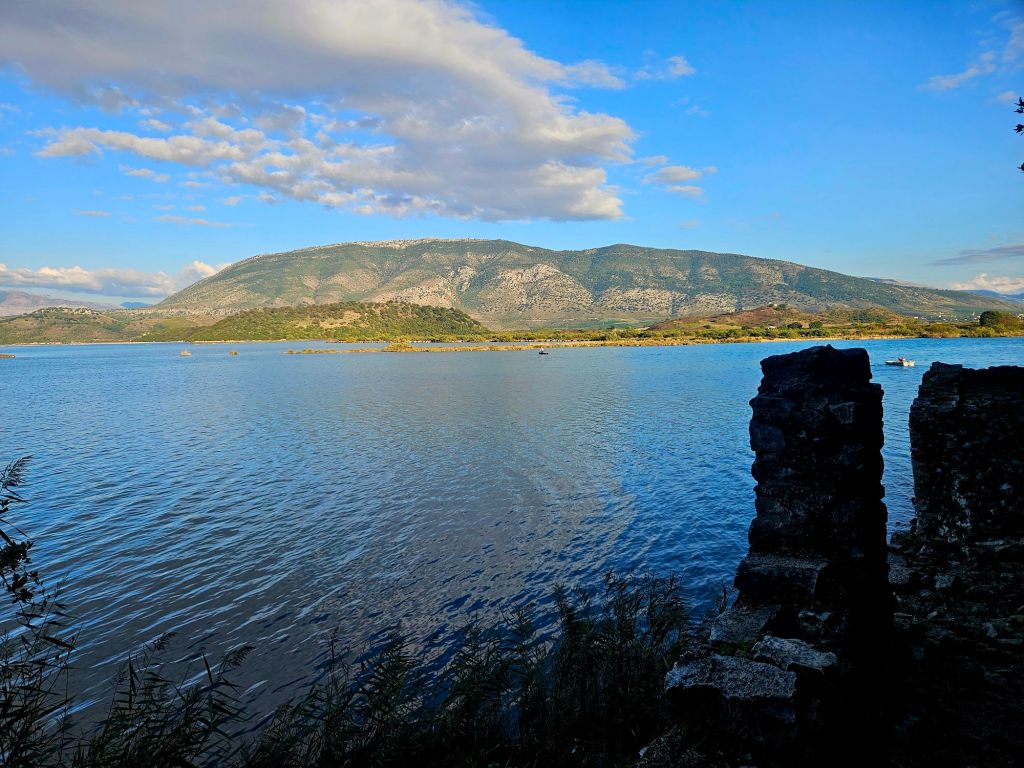
We passed another gate, the Lake Gate, also named Scaean Gate after the poem Aenied. This gate is in a section of wall that dates back to the 4th century BC. There is a plumb-line cut into the corner of the wall. This may have been to ensure the bricks were aligned in a straight line or else it served as a drainpipe.
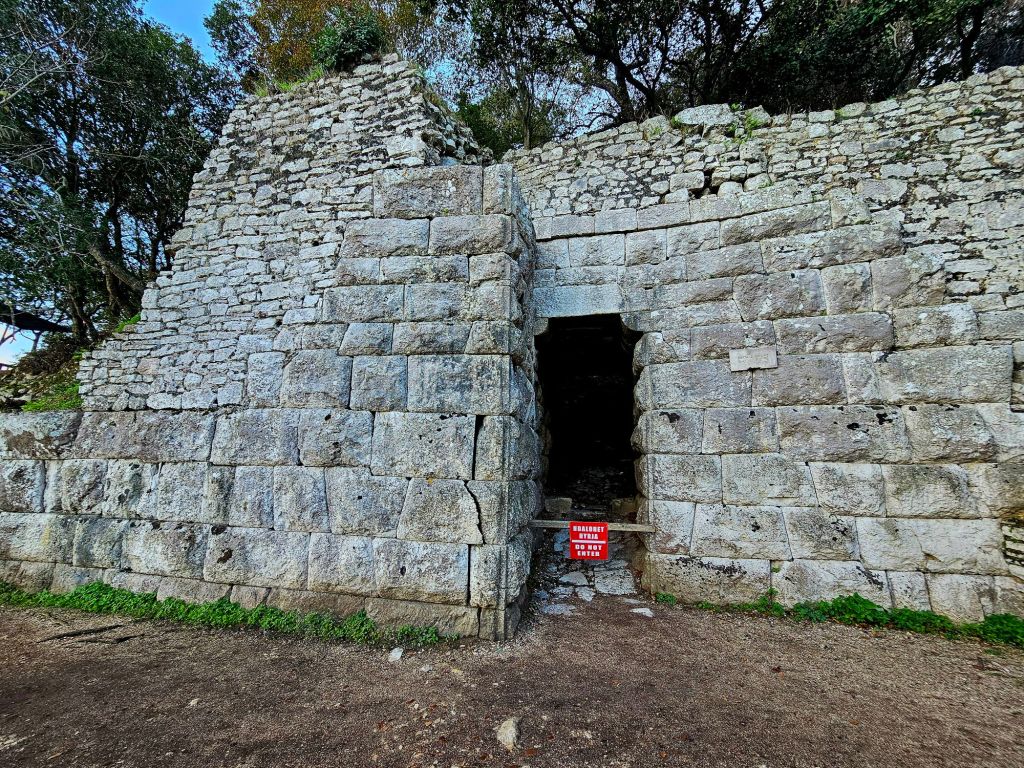
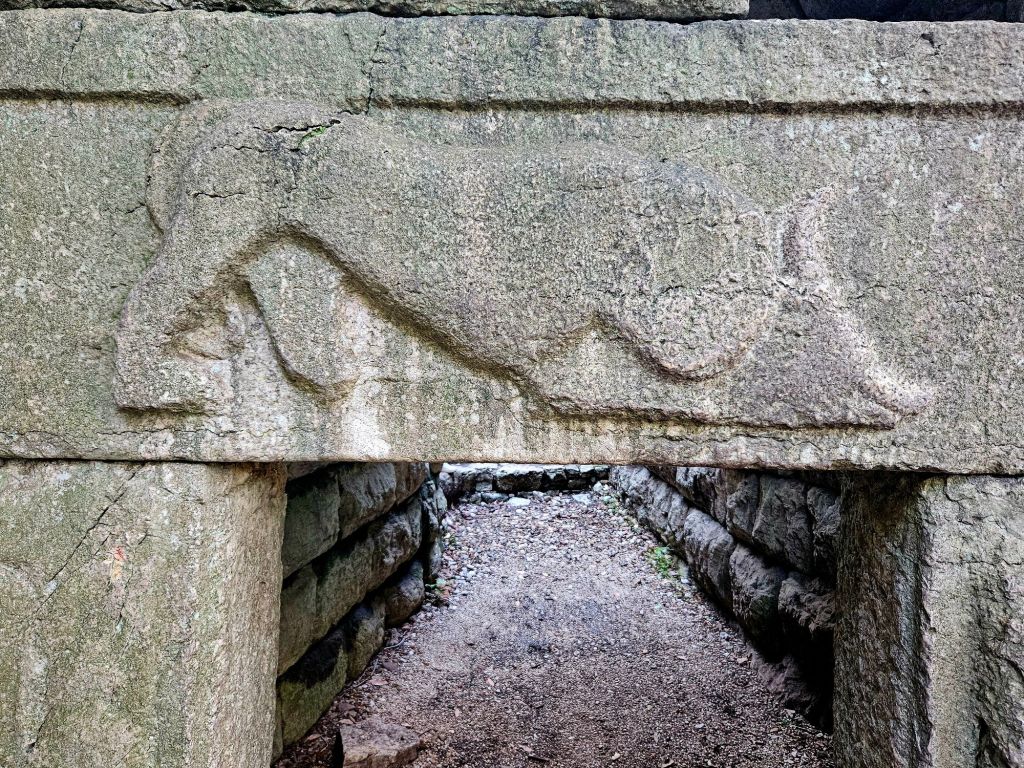
Another gate we saw was the Lion Gate. This gate takes its name from the relief depicting a lion devouring the head of a bull positioned above the entrance. The lion relief was not part of the original wall, but was placed here in the 5th century AD, in order to reduce the side of the gate, making it narrower and thereby making it easier to defend. The relief is from a temple building and may date from as early as the 6th century BC.
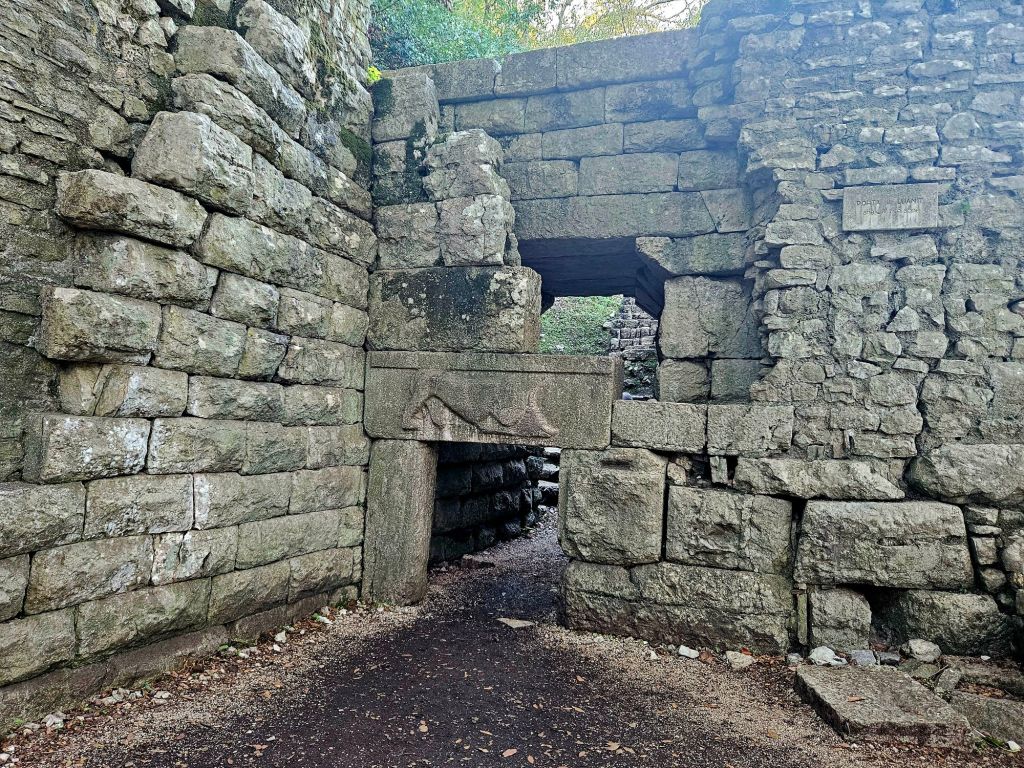
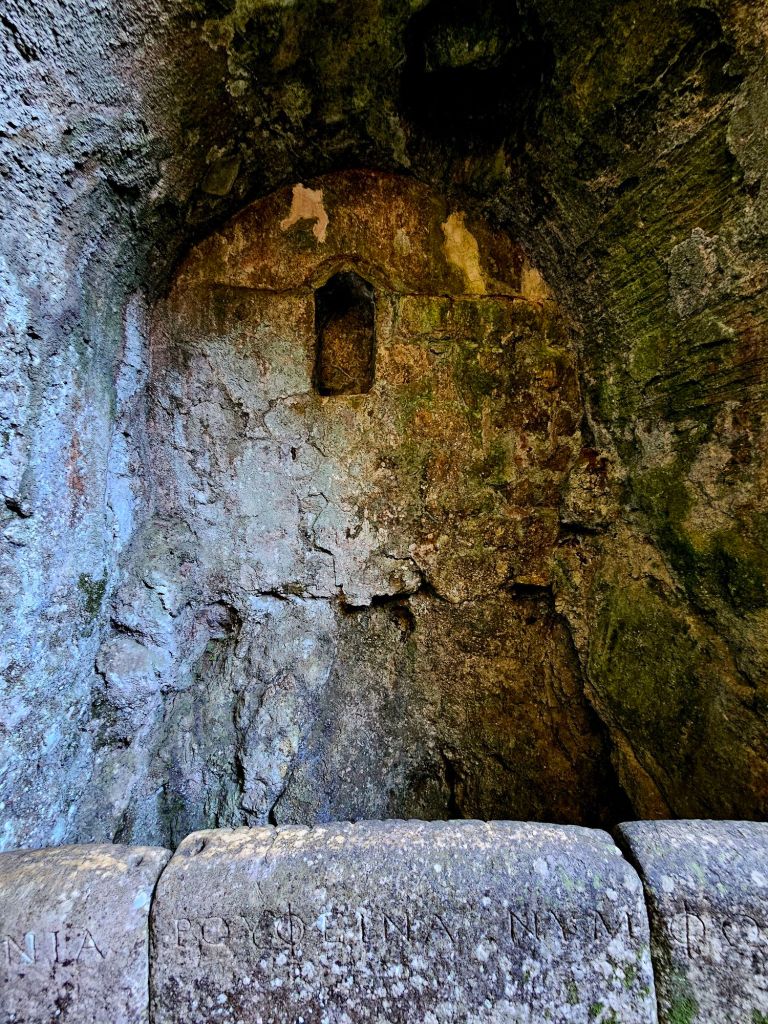
Through the gate is a spring which, during Roman times, was associated with the cult of nymphs. An inscription in front of the well records that a citizen of Butrint, Junia Rufina, paid for its refurbishment in the 2nd century AD: “Julia Rufina friend of nymphs”.
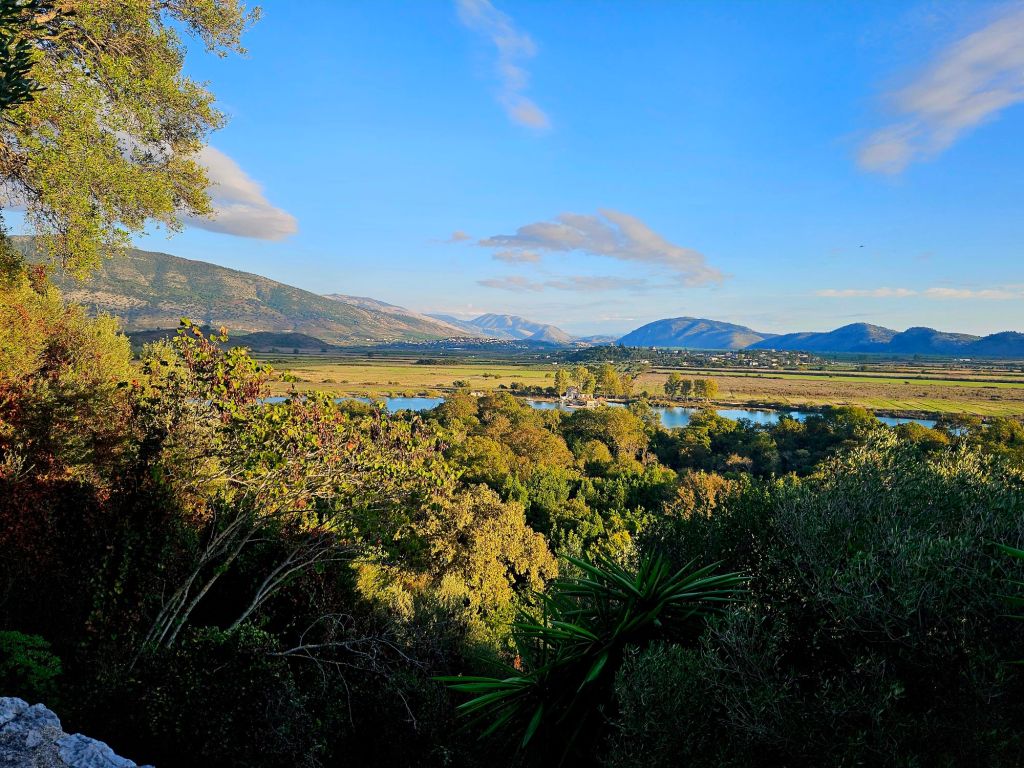
I took some more photos of the views.
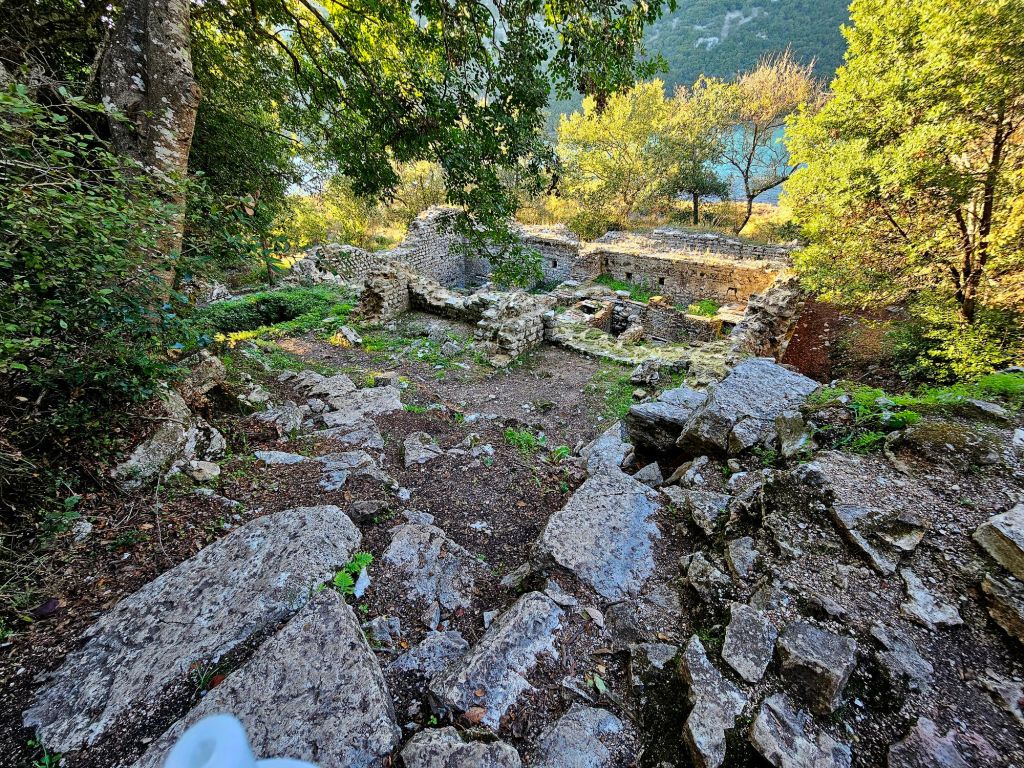
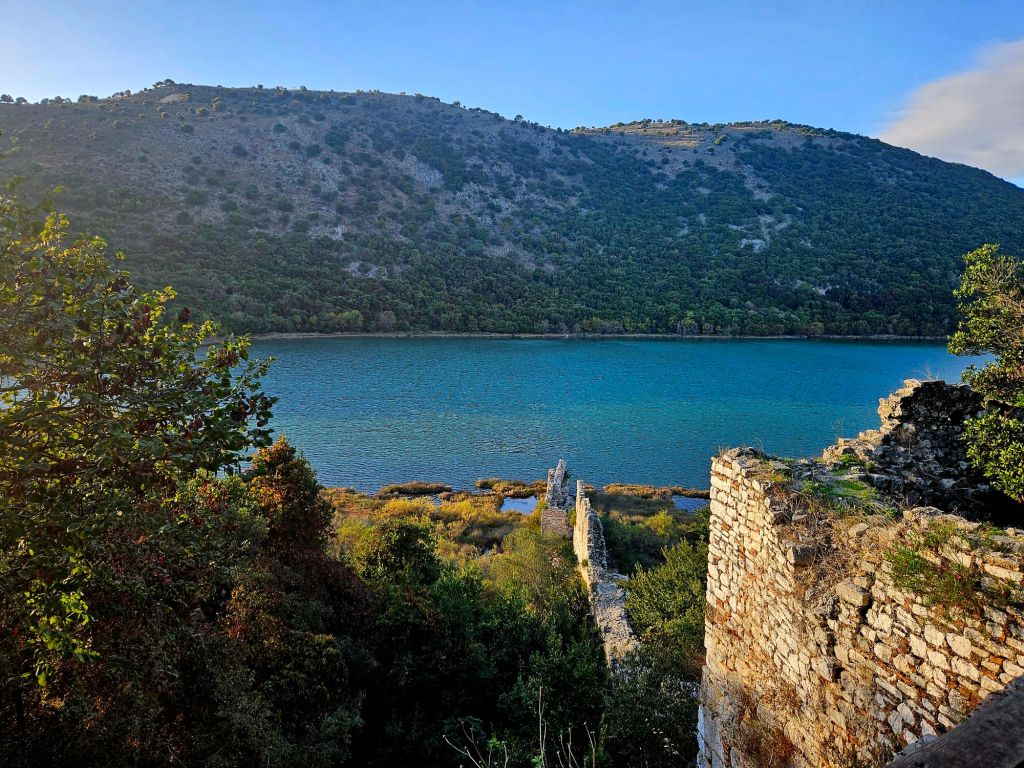
The Acropolis of Butrint is the highest point of the ancient city, located on a hill within the park. It serves as the historic, fortified core of the city, and featura a 14th-century Venetian castle that houses the Archaeological Museum.
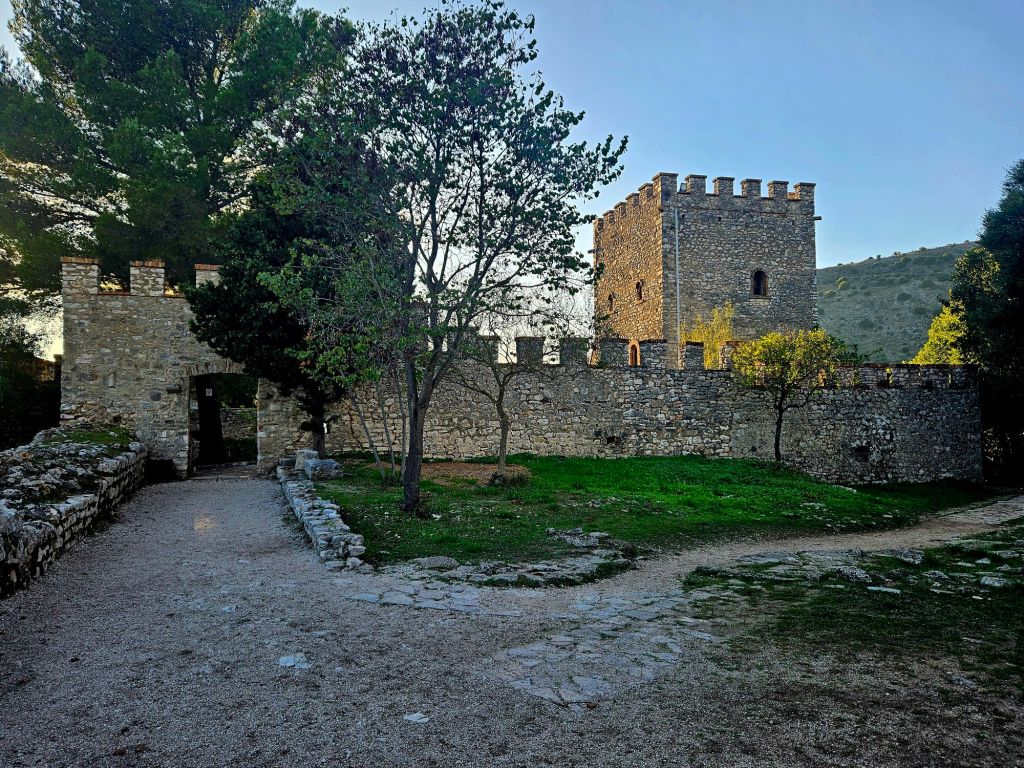
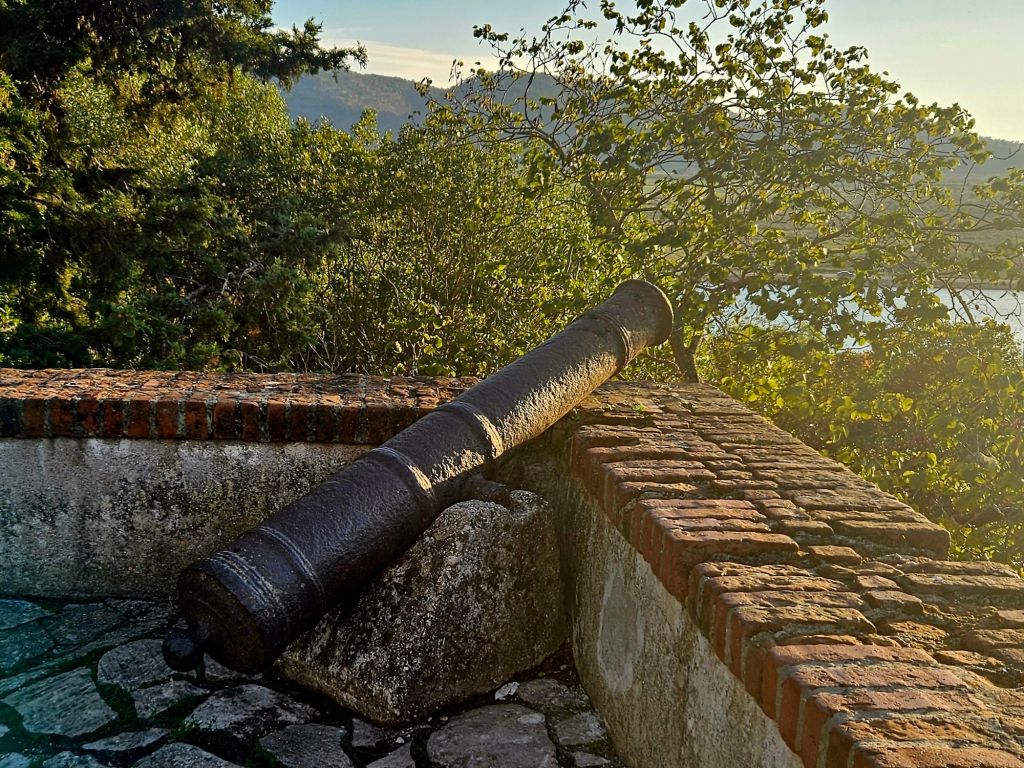
We had a quick look around the museum. Inside the entire history from the first occupation until the middle ages is displayed in chronological order. There are also collections of araeological objects, including some sculptures and mosaic.
At the top of the hill we had some more amazing views.
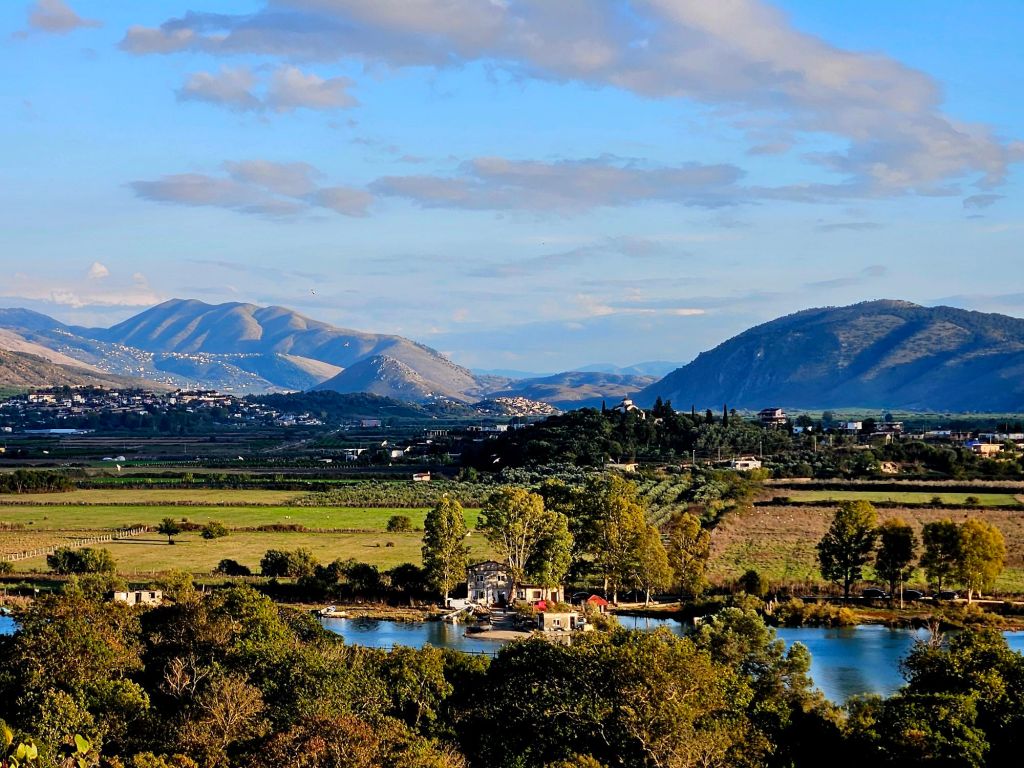
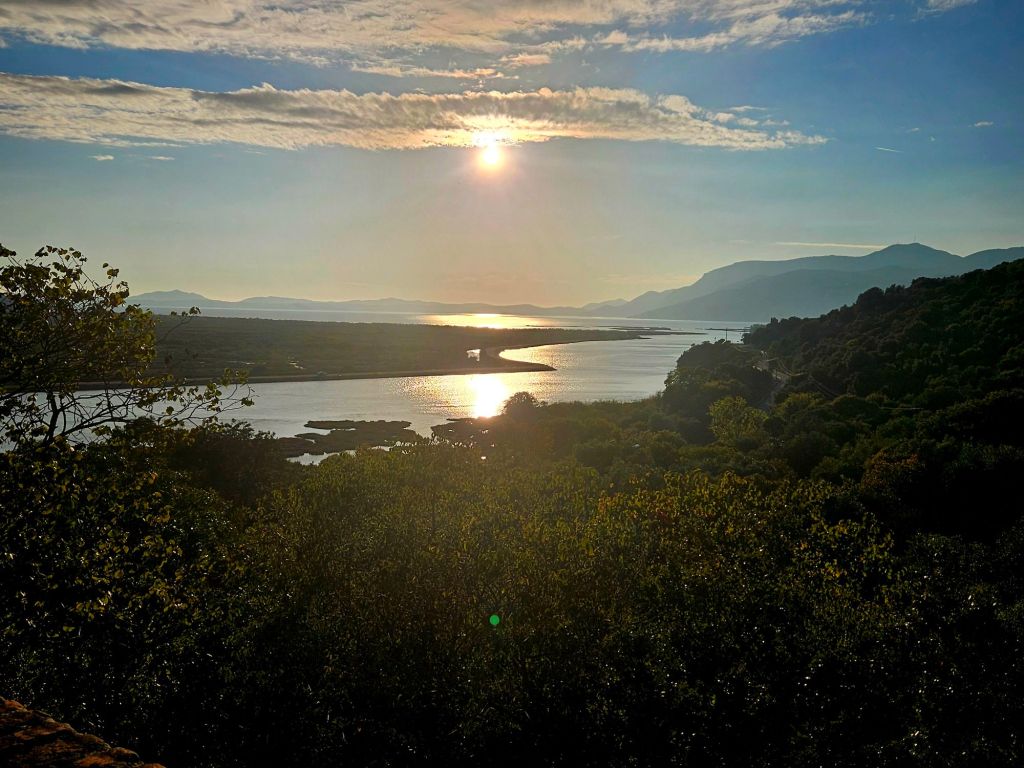
After the museum we headed back towards the entrance of the park, and took some pictures of the Triangular Castle as the sun was shining on it.
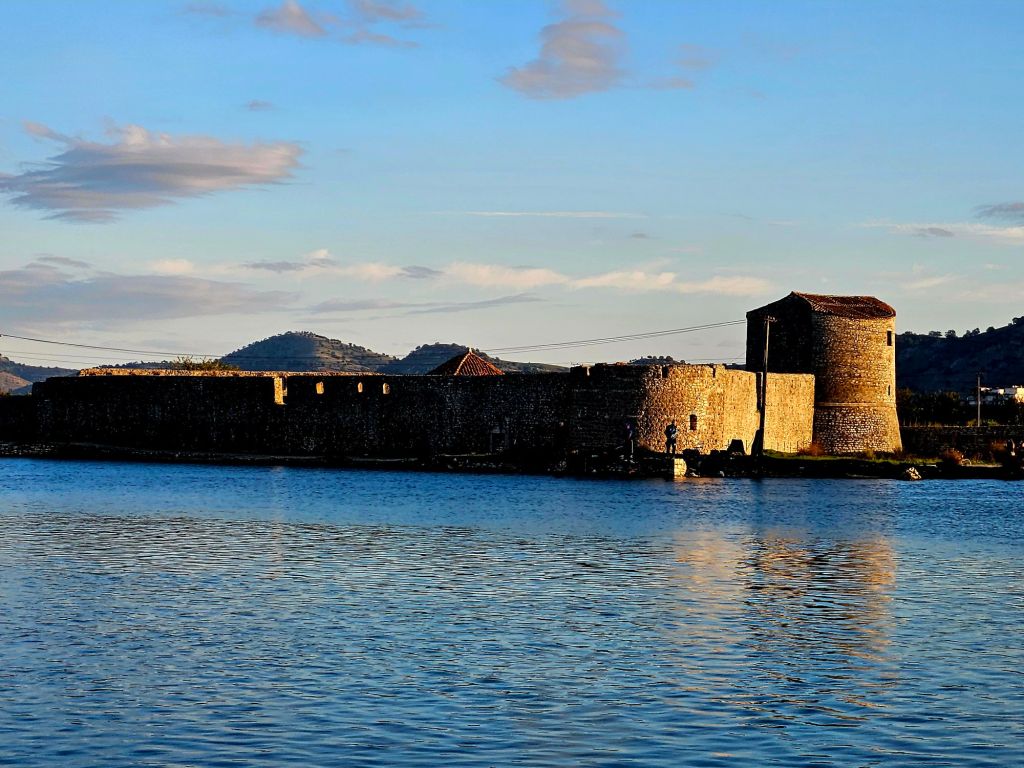
Nicola drove us back to Sarande, and I took a couple more photos from the car.
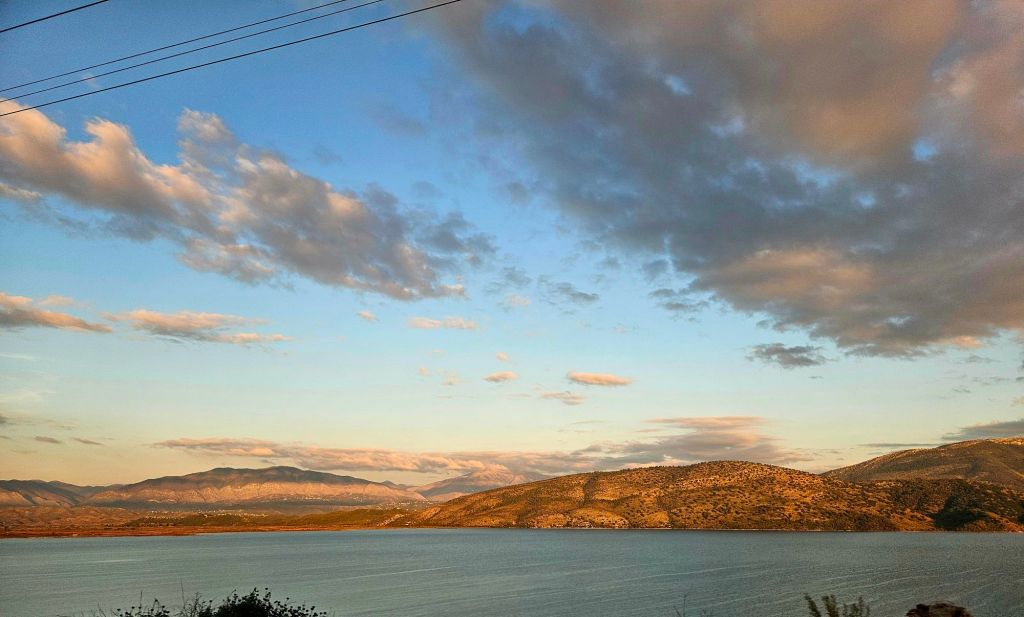
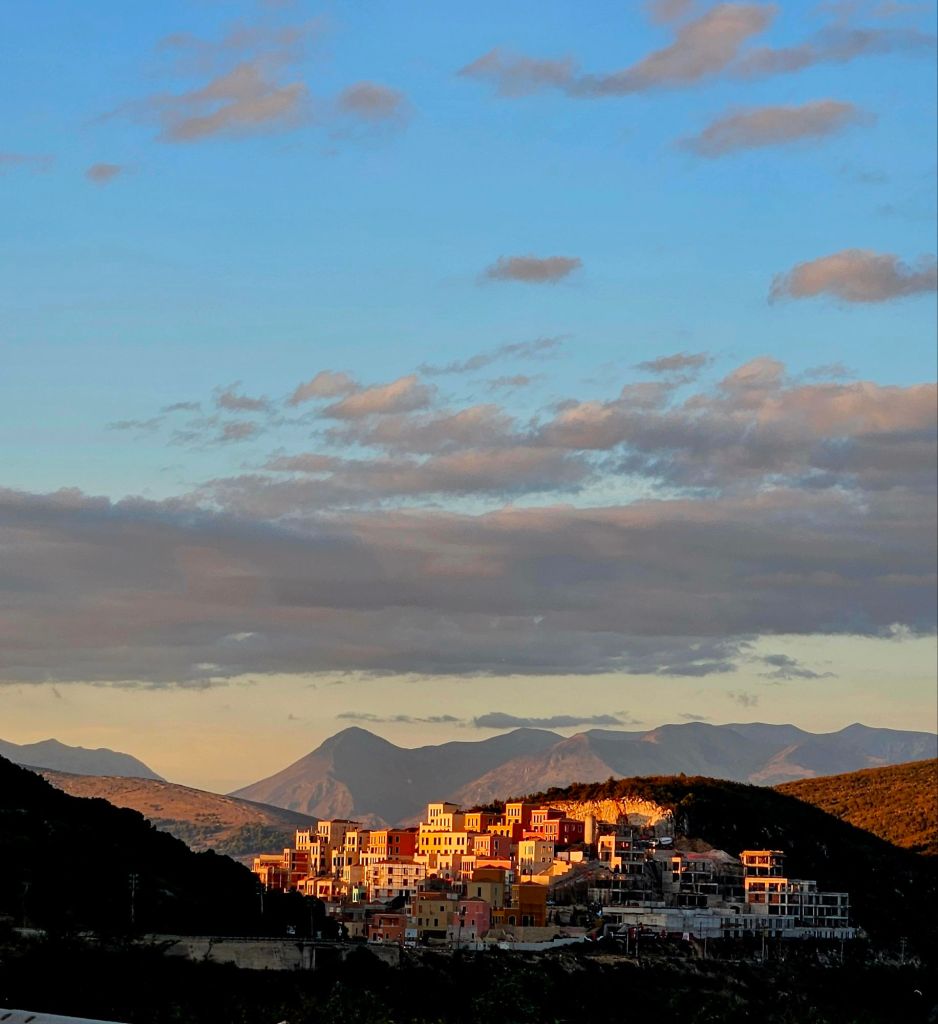
Once we got back to the apartment, we washed out our swimming things and hung them up before heading out for some dinner.
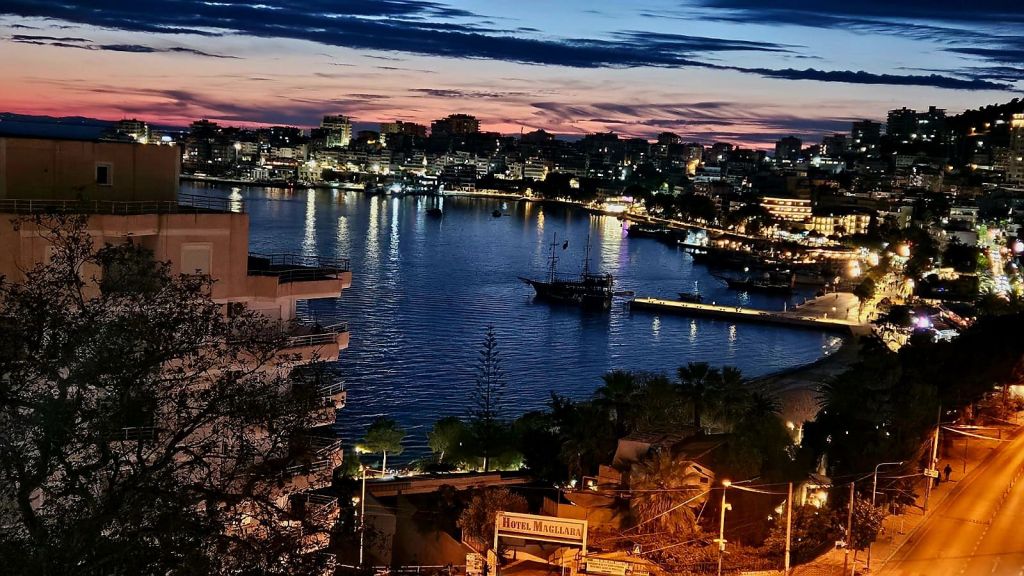
We wondered down the promenade and ended up going to Limani restaurant.
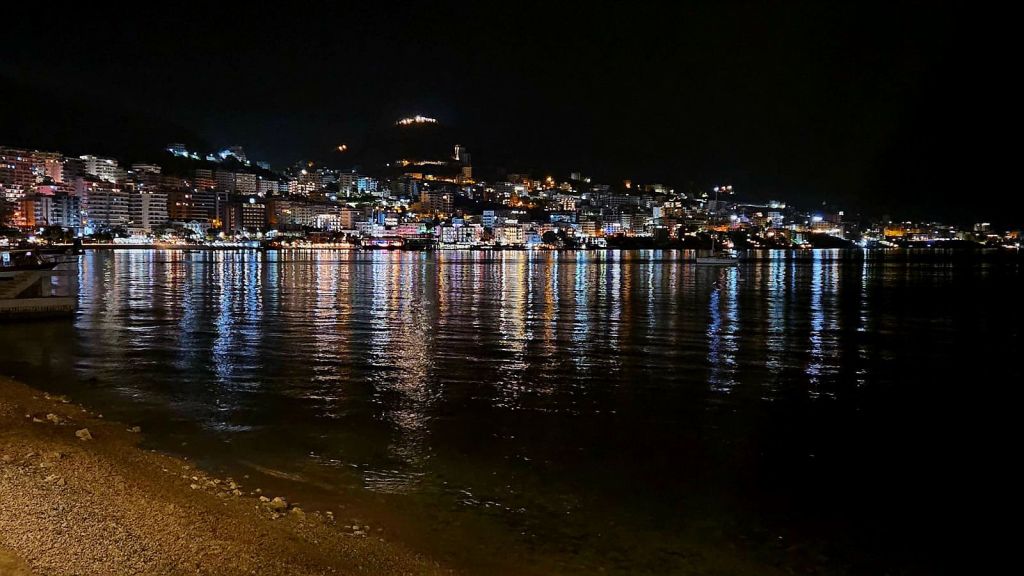
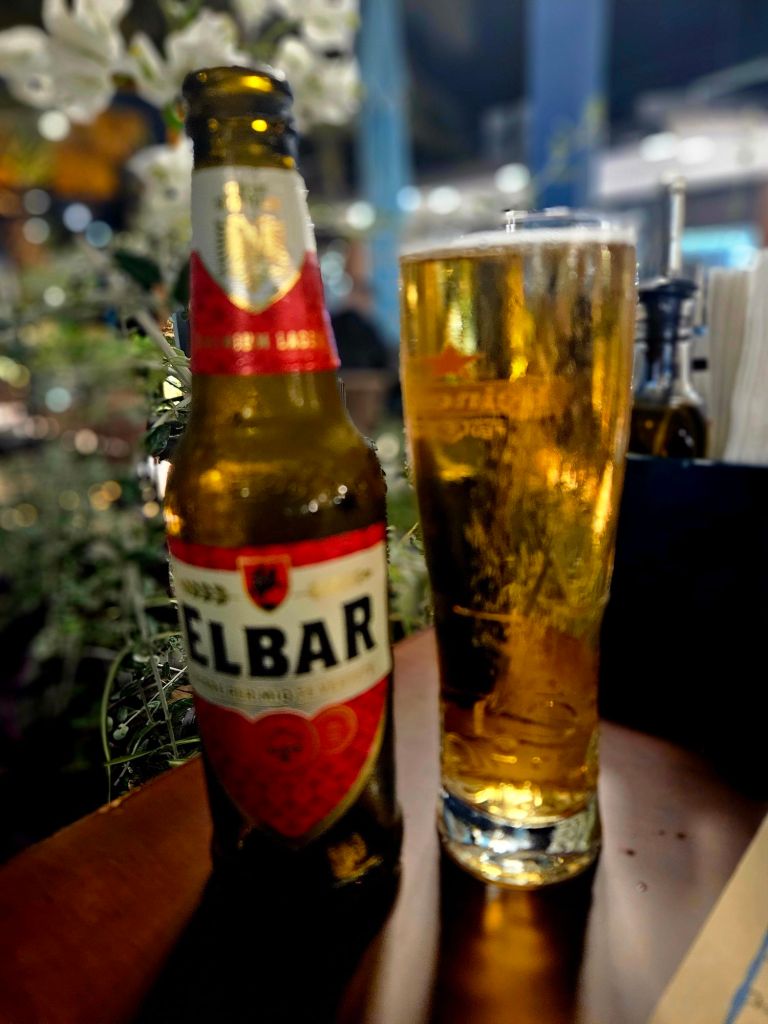
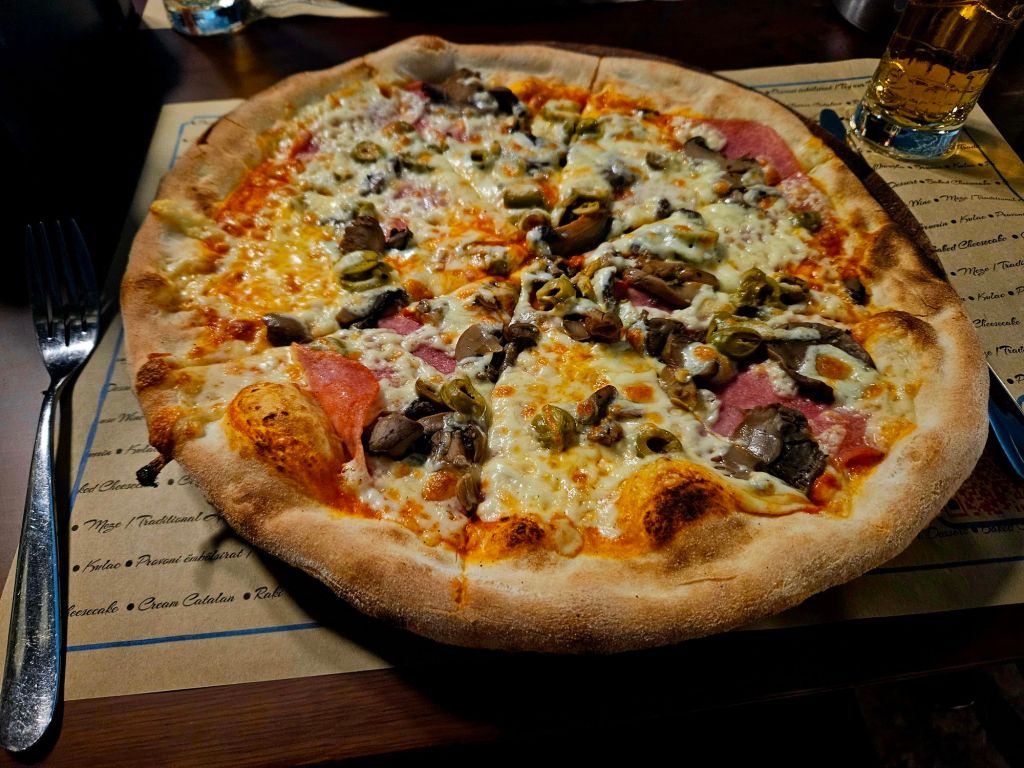
We tried some different Albanian beer and ate a delicious pizza each – mine was mushrooms, ham and olives.
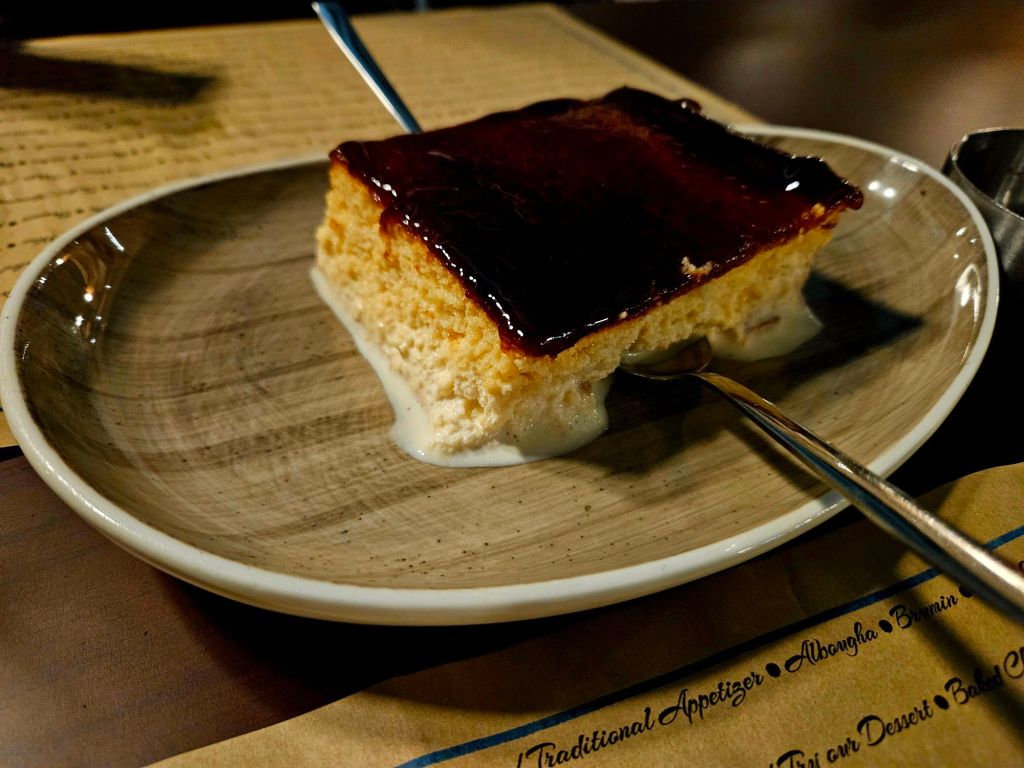
For dessert we tried Trilece. This is a typical Albanian dessert where a light sponge is soaked in 3 different types of milk, cream, evaporated milk and condensed milk. It is topped with a layer of caramel sauce. I am very glad we only ordered one between us as it was very sweet.
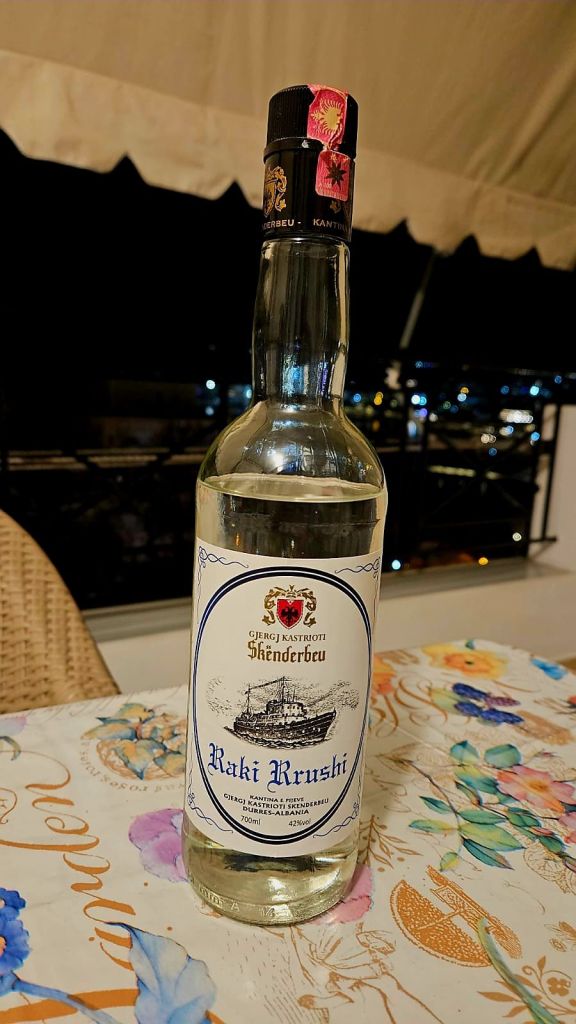
Back at the apartment we had a glass or two of Raki on our balcony.
Ksamil has a legend associated with it.
 Fun, Fitness and Fabulousness in your Fifties
Love the mix of gorgeous beaches and rich history. That Trilece dessert sounds insanely sweet but so worth a try!
LikeLike