We woke up fairly early and had a cup of tea on the terrace outside. We had already booked a wine tour at a local vineyard for the afternoon so we decided to walk into Berat and explore the town.
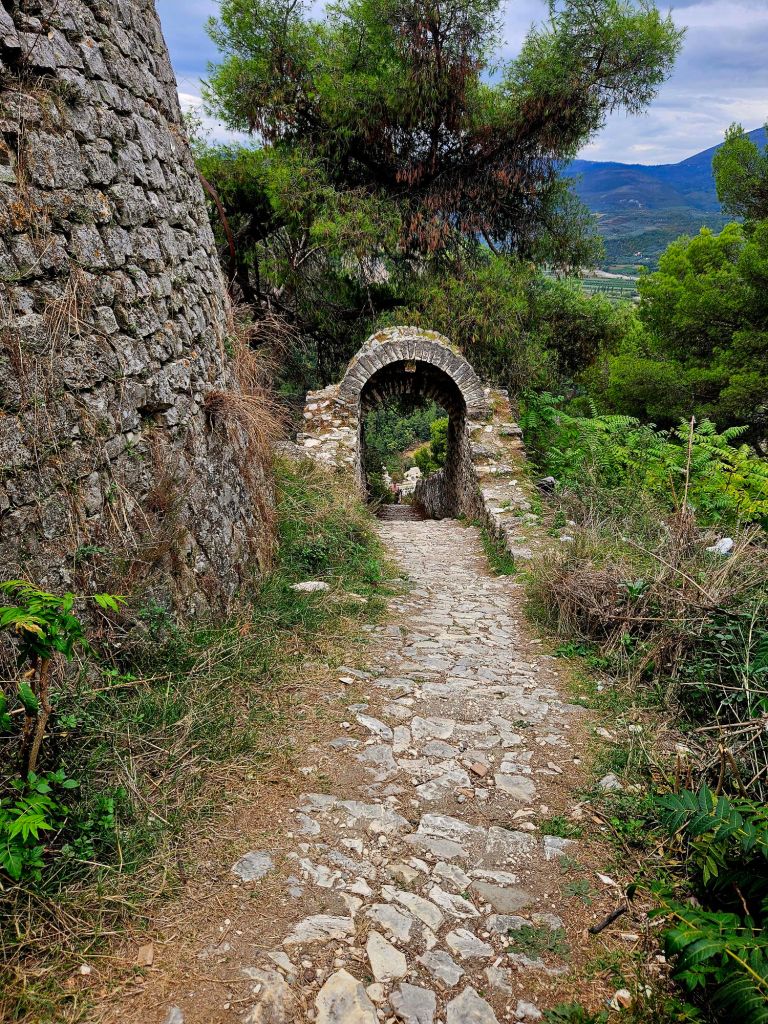
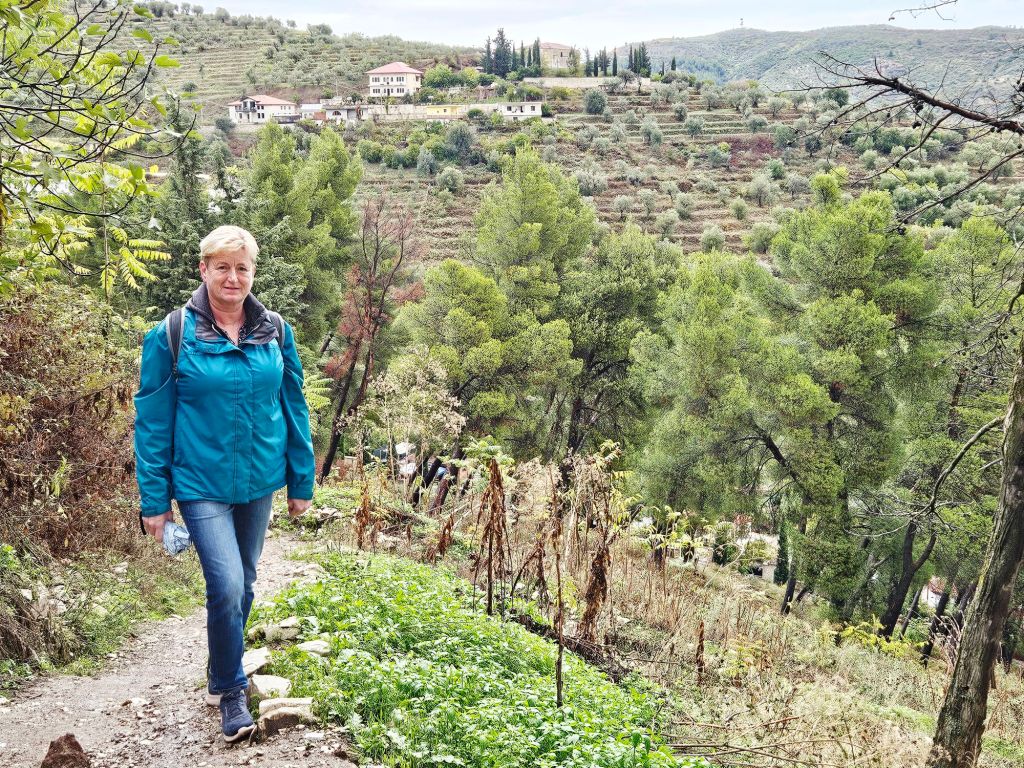
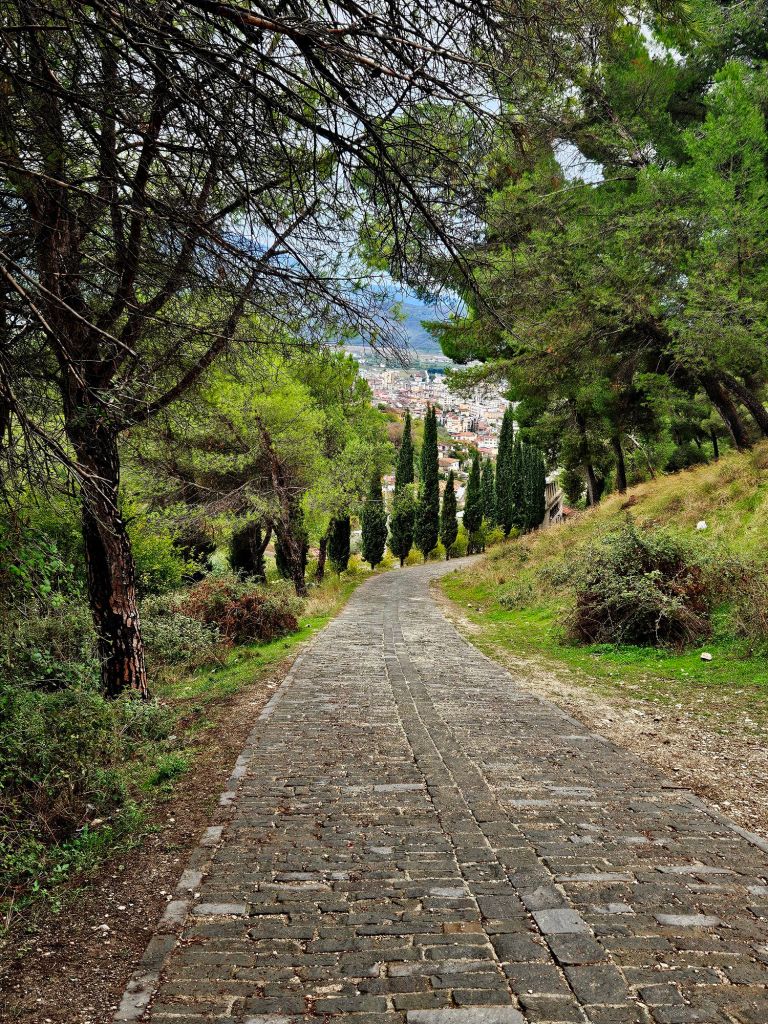
The path down through the woods was quite steep in places but also very pretty.
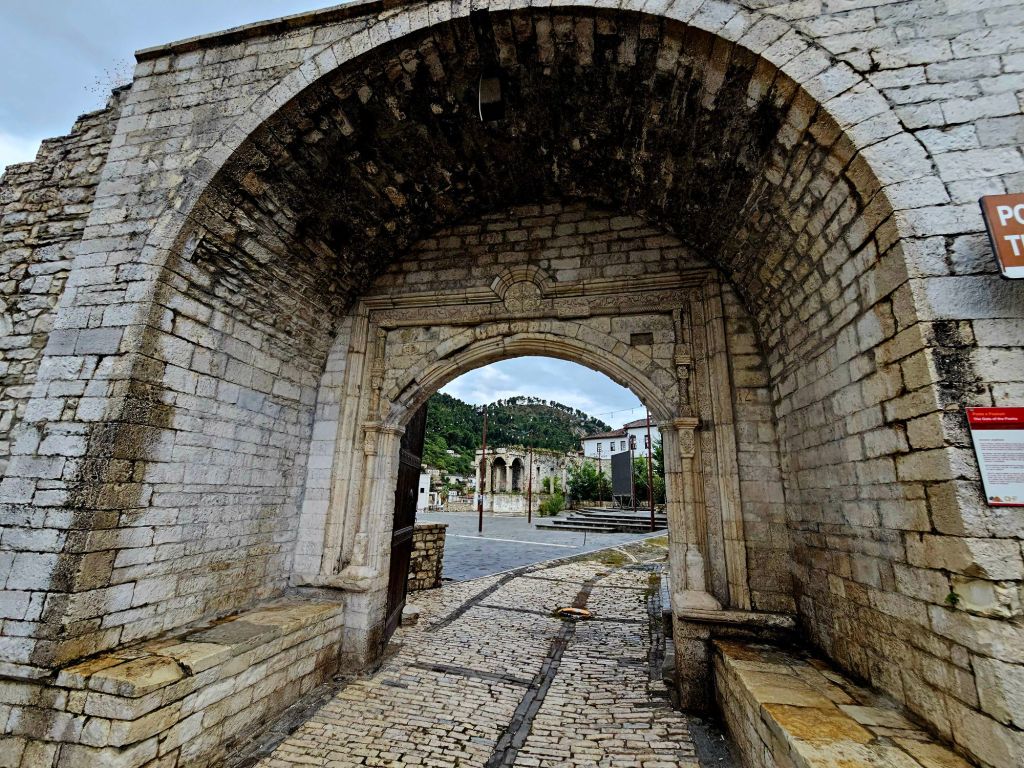
As we came down into the town we came across Pasha square. At the opening to the square is the Gate of Pasha. This was built in the 18th century under the reign of Ahmet Kurt Pasha. It is designated as a first category cultural monument. It is made of thick stone arches and has some intricate carved decorations.
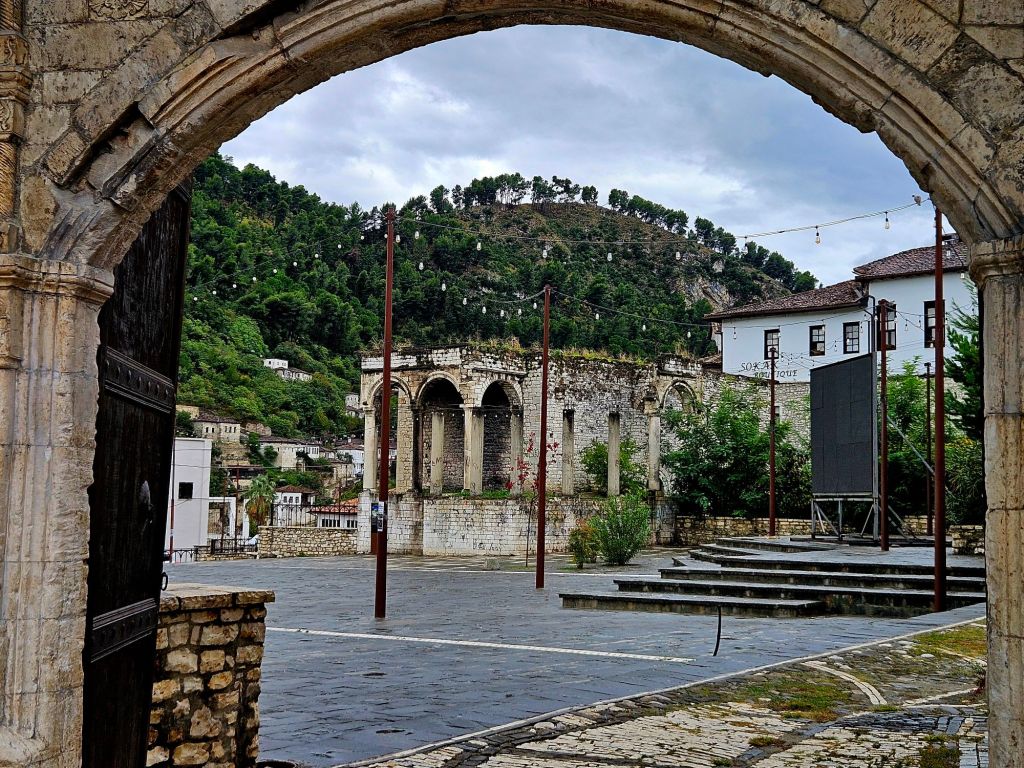
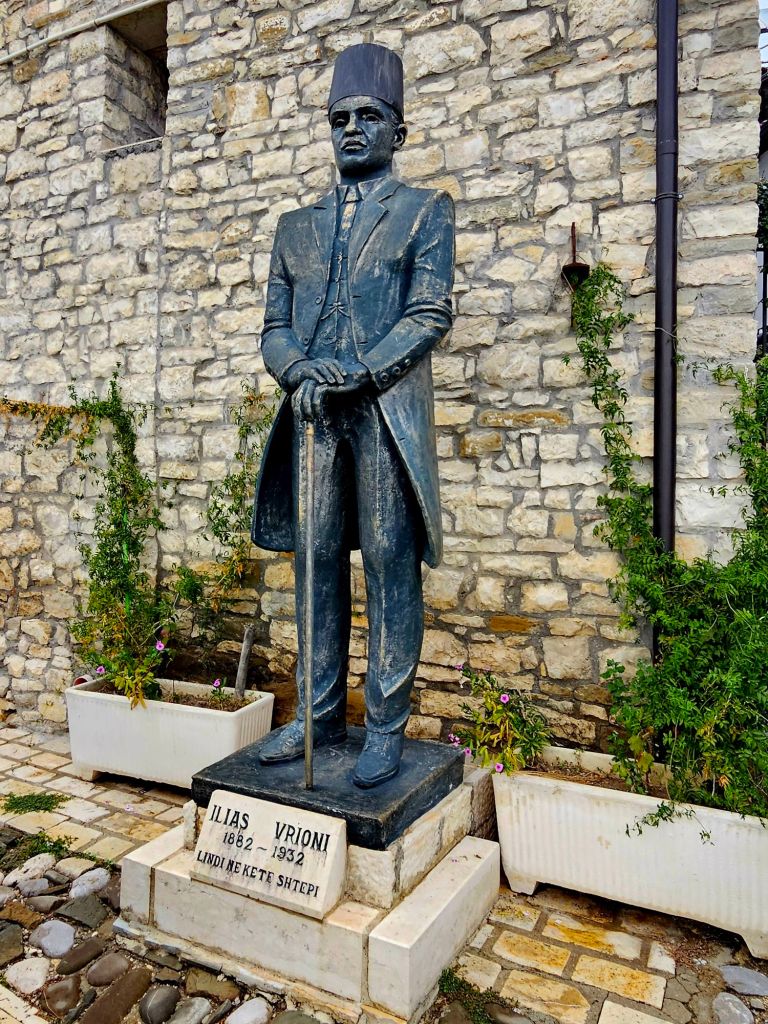
Within the square is a statue of Ilias Vrioni, who was an Albanian politician and diplomat. He was also a signatory of the Albanian Declaration of Independence in 1912 and was Prime Minister three times and was also Minister of Foreign Affairs on five occasions.
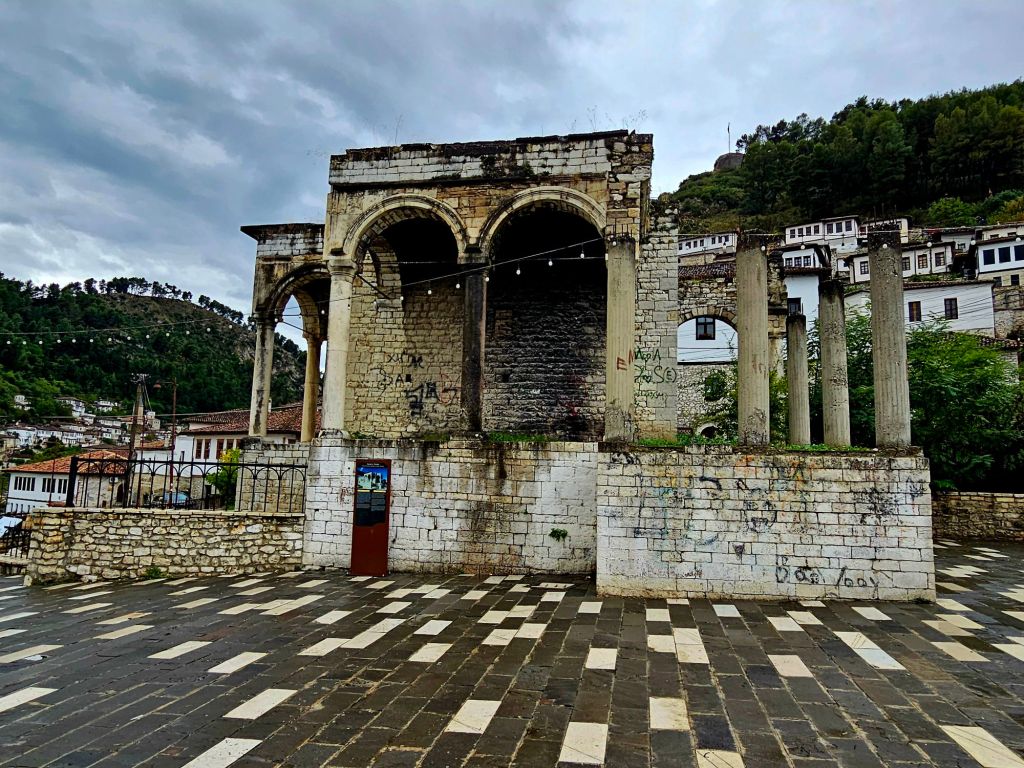
The square contains the remnants of the palace (sarays) that Ahmet Pasha had built. These were also built towards the end of the 18th century.
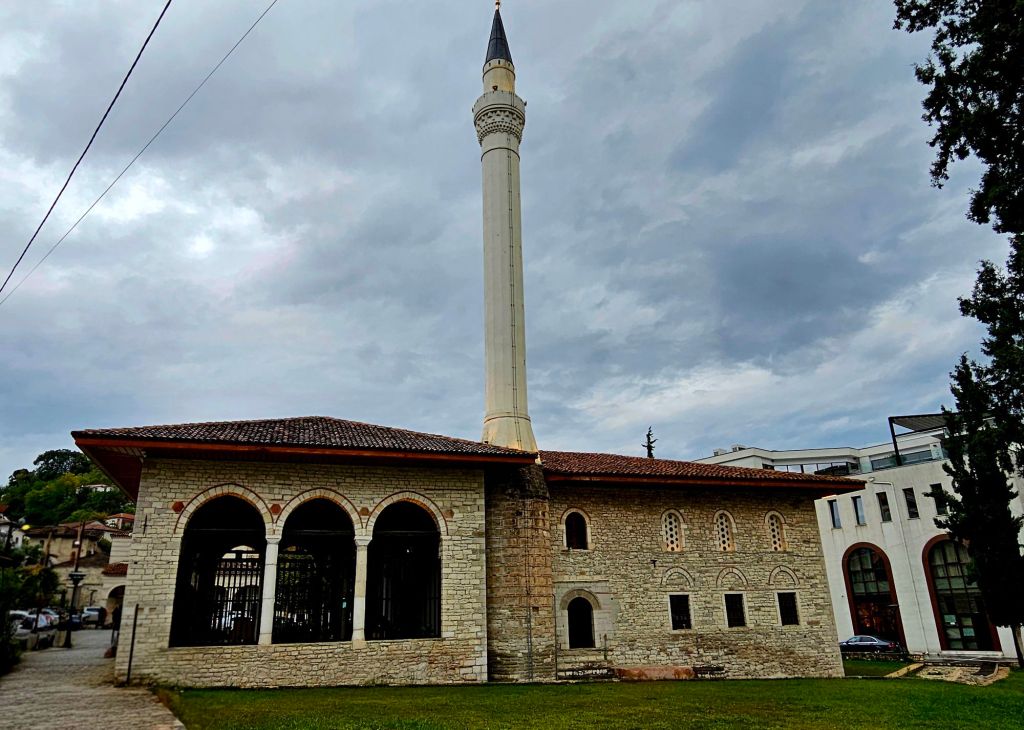
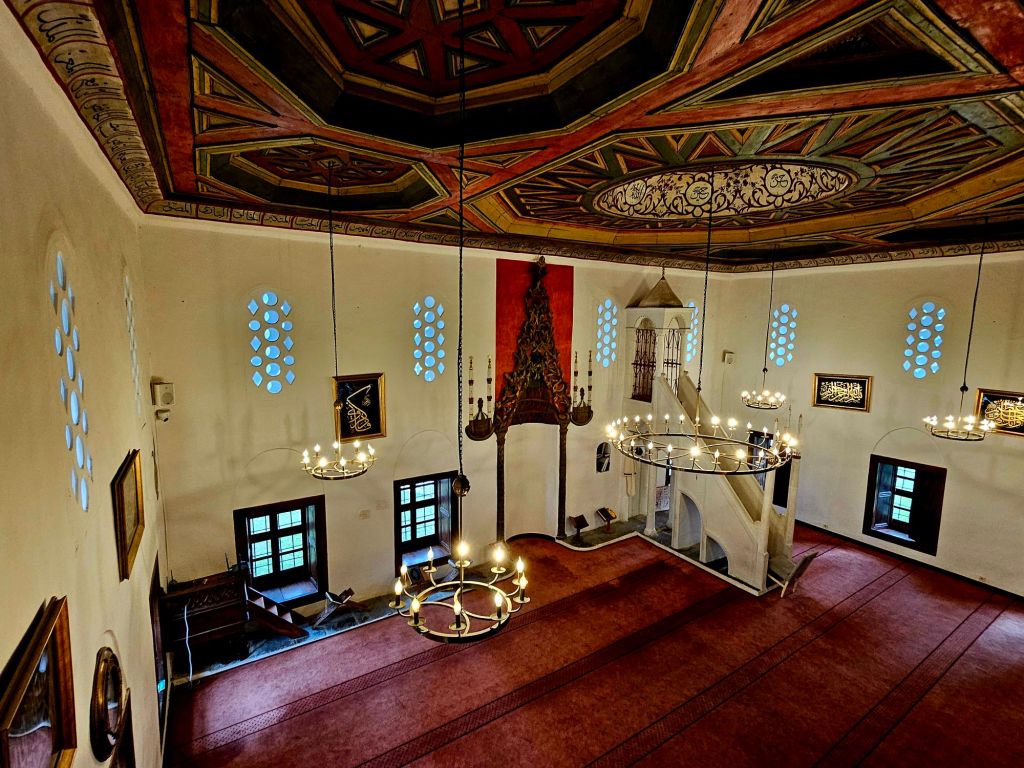
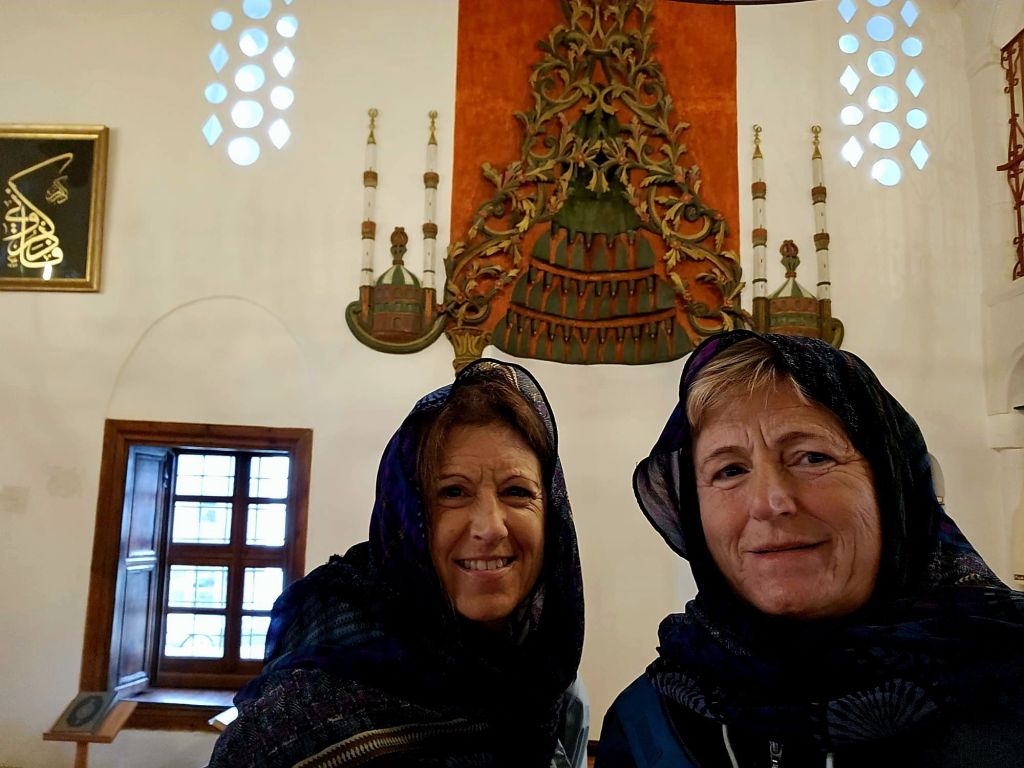
Just a bit further along was the Kings Mosque. This was built in the 15th century, around 1480. We had to cover our heads to go inside.
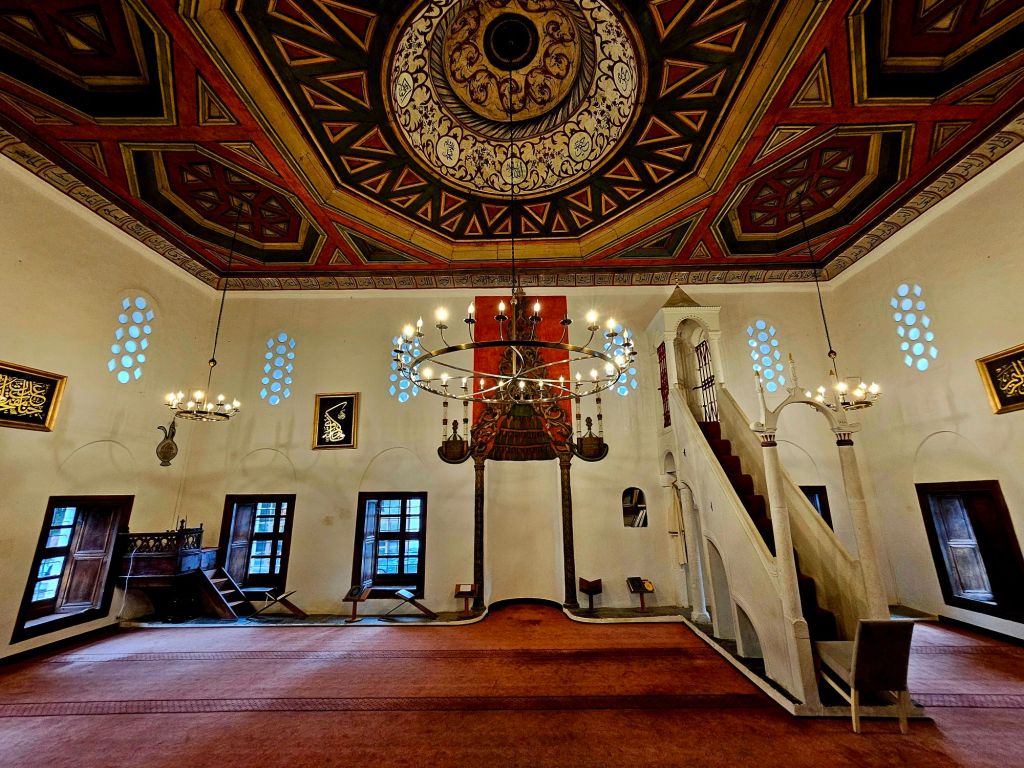
Inside the large prayer hall is a huge painted ceiling with lots of rosettes with inscriptions of various Qur’anic sayings. A frieze below the ceiling contains 99 beautiful names of God (Allah).
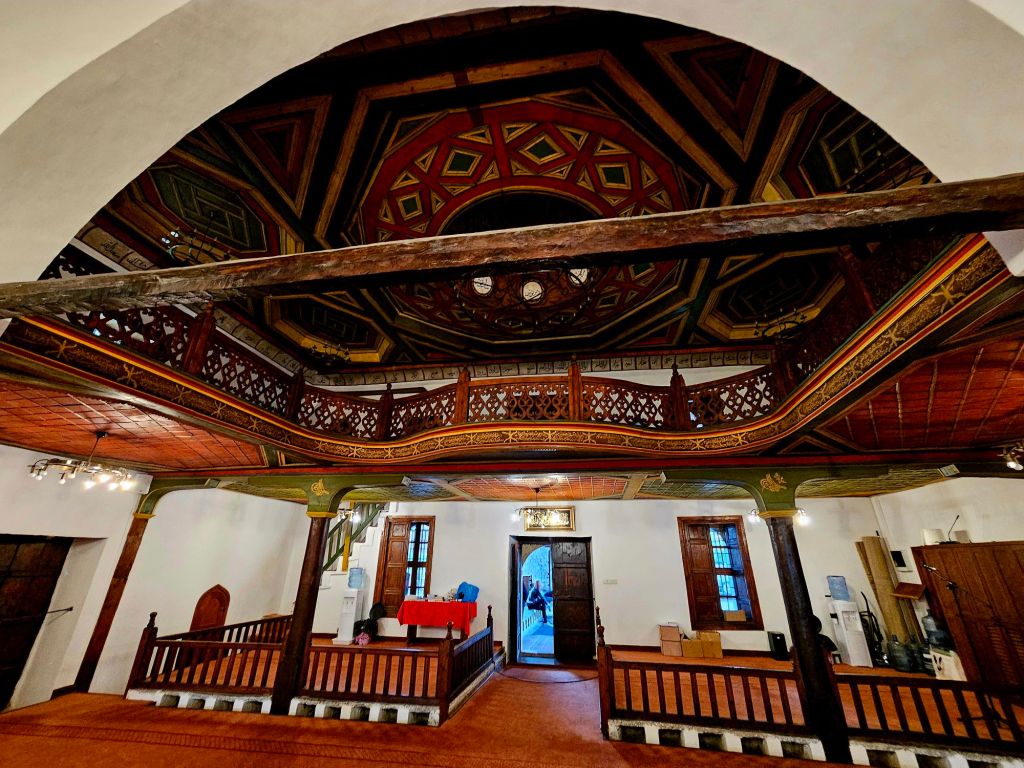
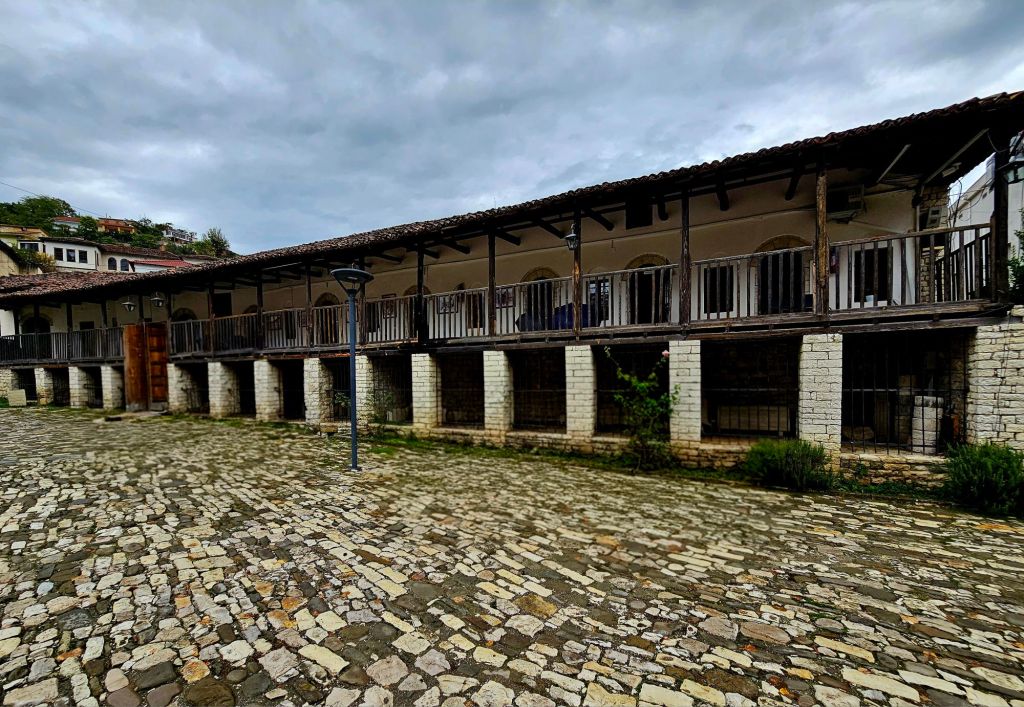
Just close by is the Halveti Tekke which was originally built in the 15th century but was rebuilt by Ahmet Pasha and was completed in 1782. It belonged to the Khalwati (Halveti) order which is an Islamic order known for its strict ritual training of its dervishes and its emphasis of individualism. The focus of the order was on purification, spirituality, ritualism and asceticism.
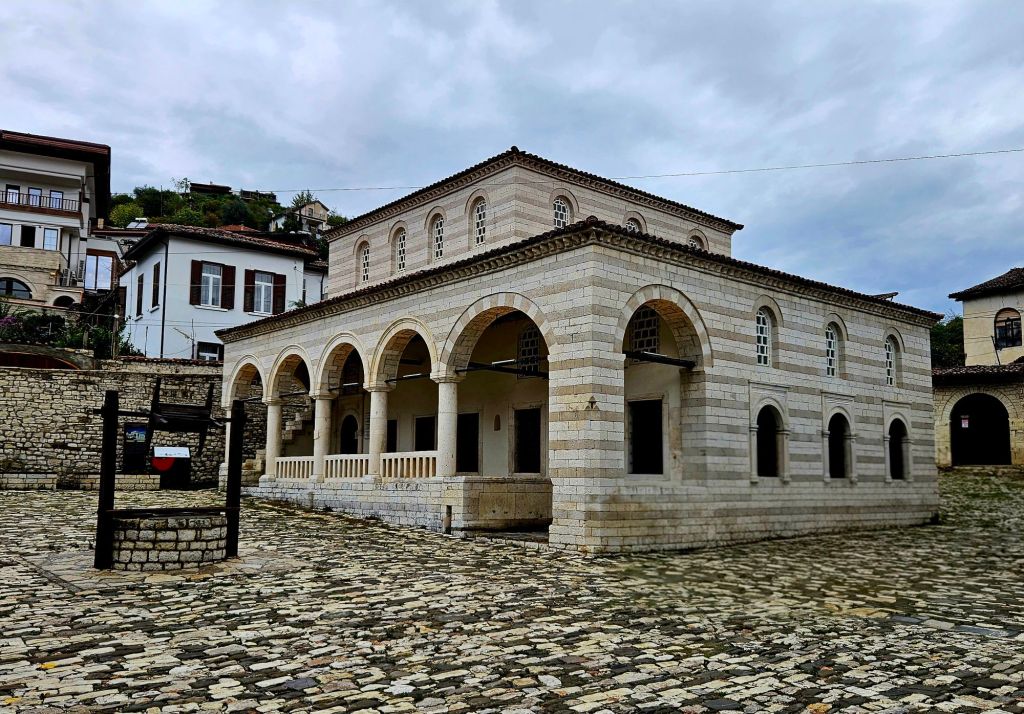
And the living quarters for the dervishes was also here. These were built in the 19th century. They were used for religious ceremonies as well as serving as accomodation for the dervishes associated with the tekke.
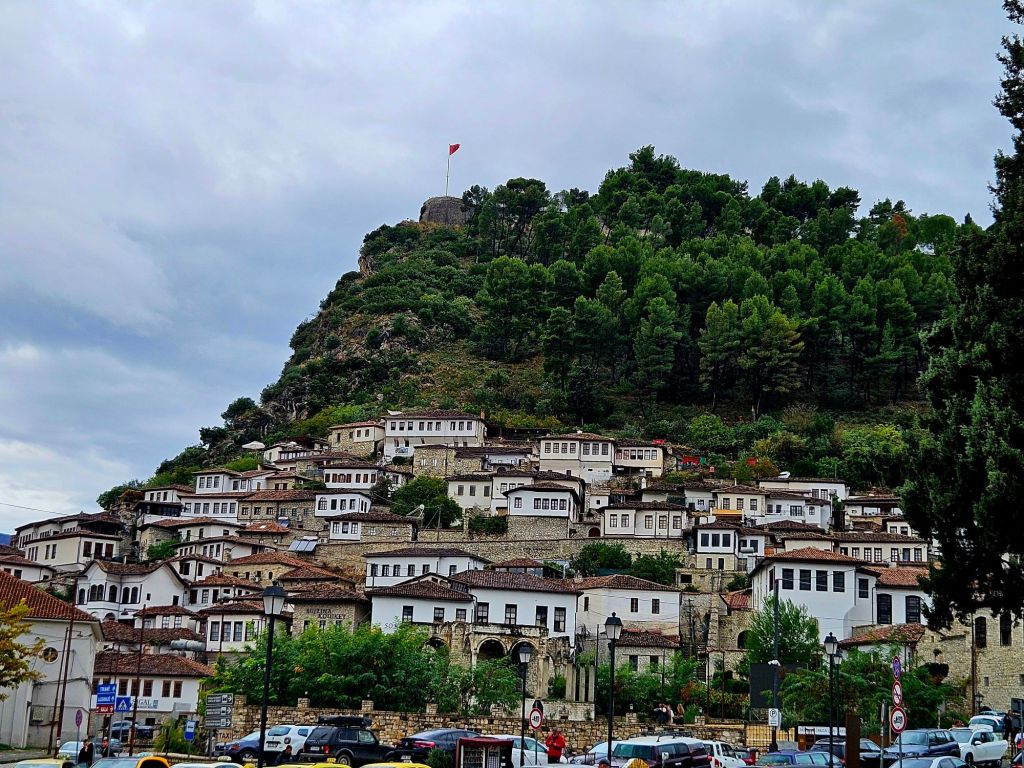
Berat is known as the ‘City of a thousand windows’ and is a UNESCO World Heritage site due to its unique Ottoman architecture. The white houses with the large windows line the hills above the Osmun river.
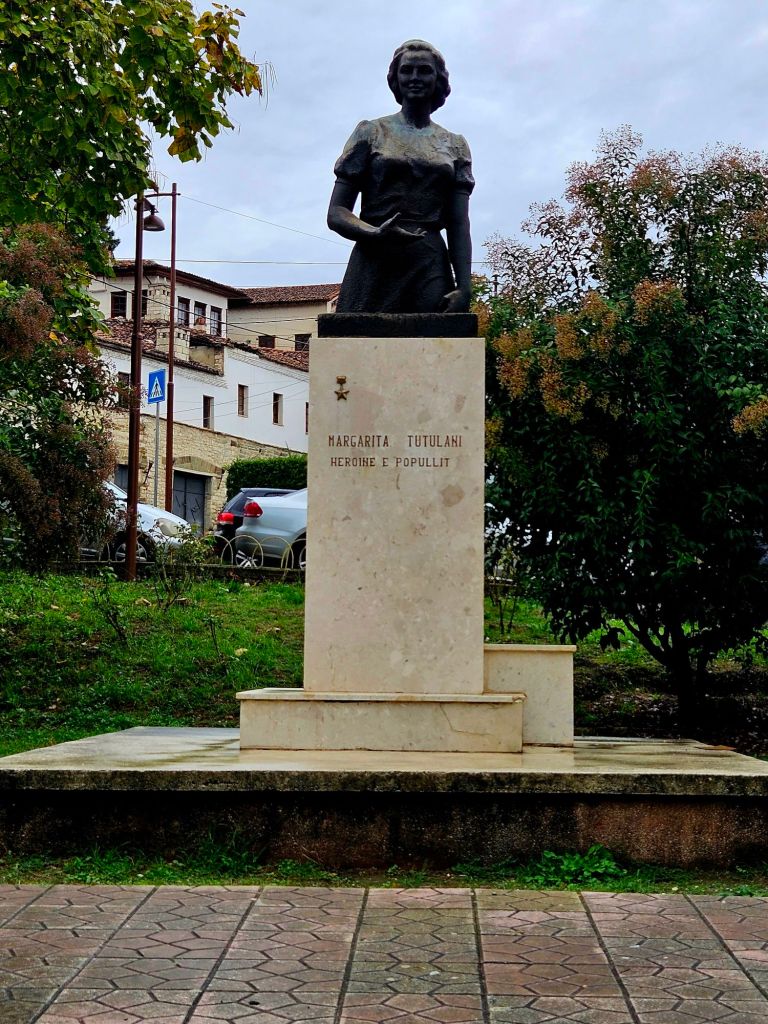
We wandered a bit further down into the city and passed a statue of Margarita Tutulani. She was born in Berat and then went travelling. However, when Italy invaded Albania in 1939, she returned to Berat where she protested and demonstrated against the invasion. She joined the communist party in 1942 and was a leading figure in the November 1942 demonstration in Berat, which was an anti-fascist protest that drew 1000s of people. She and her brother were captured by the Italians in 1942 and subjected to torture in prison. They were later shot on 6 July 1943. The brutality of her death inspired people to join the resistance against the fascist government.
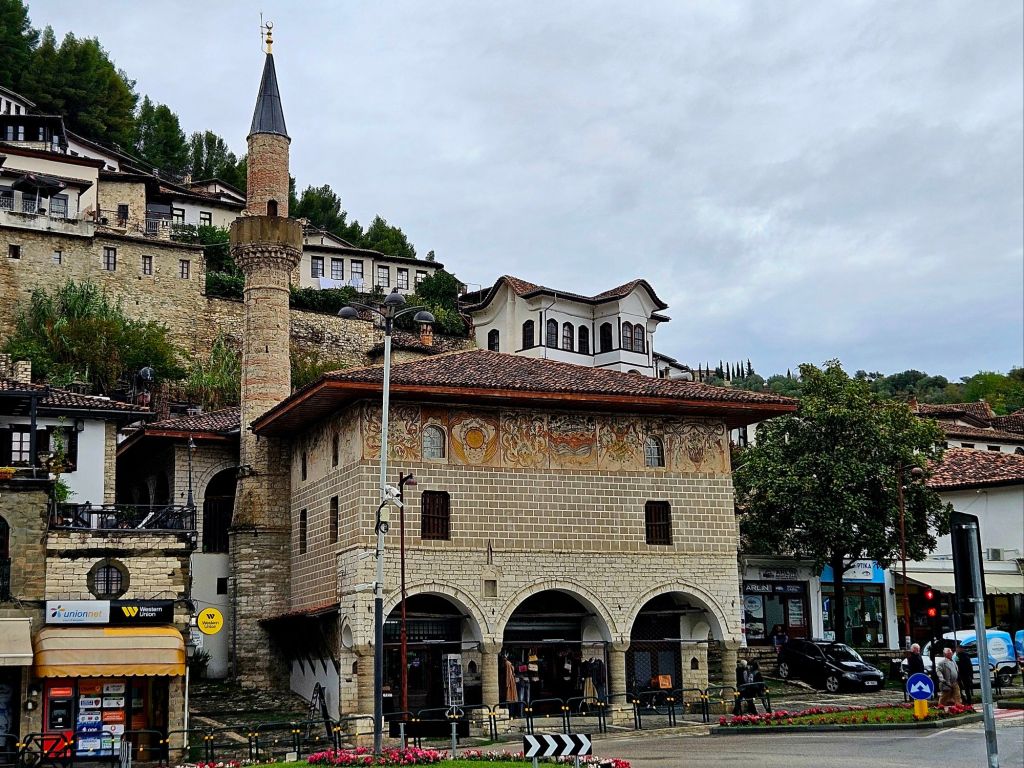
The Bachelors mosque was built in 1828 and was built for unmarried shop assistants and junior craftsmen. Since the time of Communism, the Portico of the mosque houses some stores, one of which is a lingerie shop, which can be seen as a disgrace to Islam.
We then walked over the suspension bridge from Mangalem (Ottoman) side to Gorica (Christian) side of Berat. This is a 100m pedestrian bridge which took 14 years to build and was completed in 2002. You could take some good photos from it.
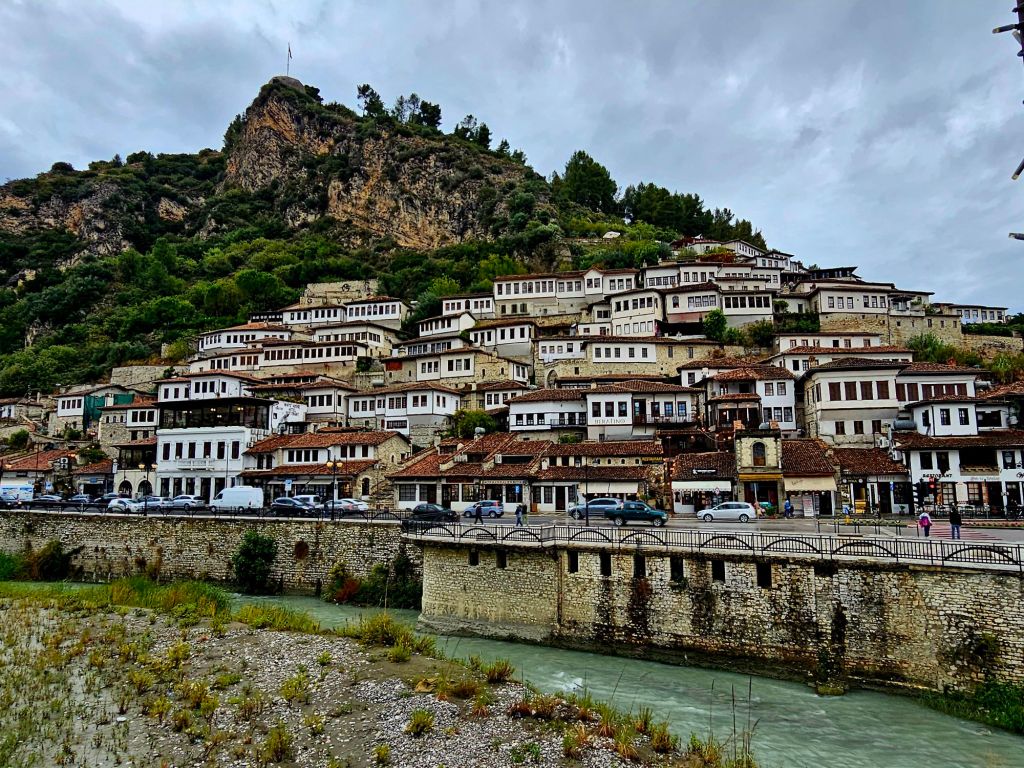
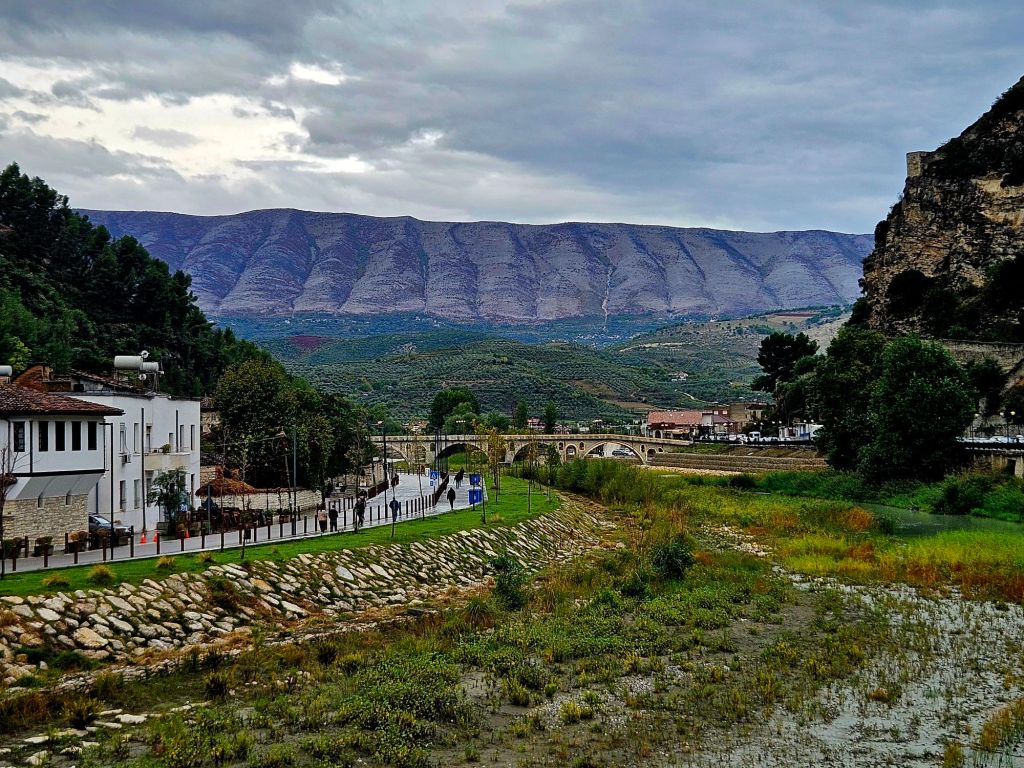
We were now in the Gorica quarter. This area was founded in the 16th century as part of the expansion of the old town and was traditionally inhabited by Christians.
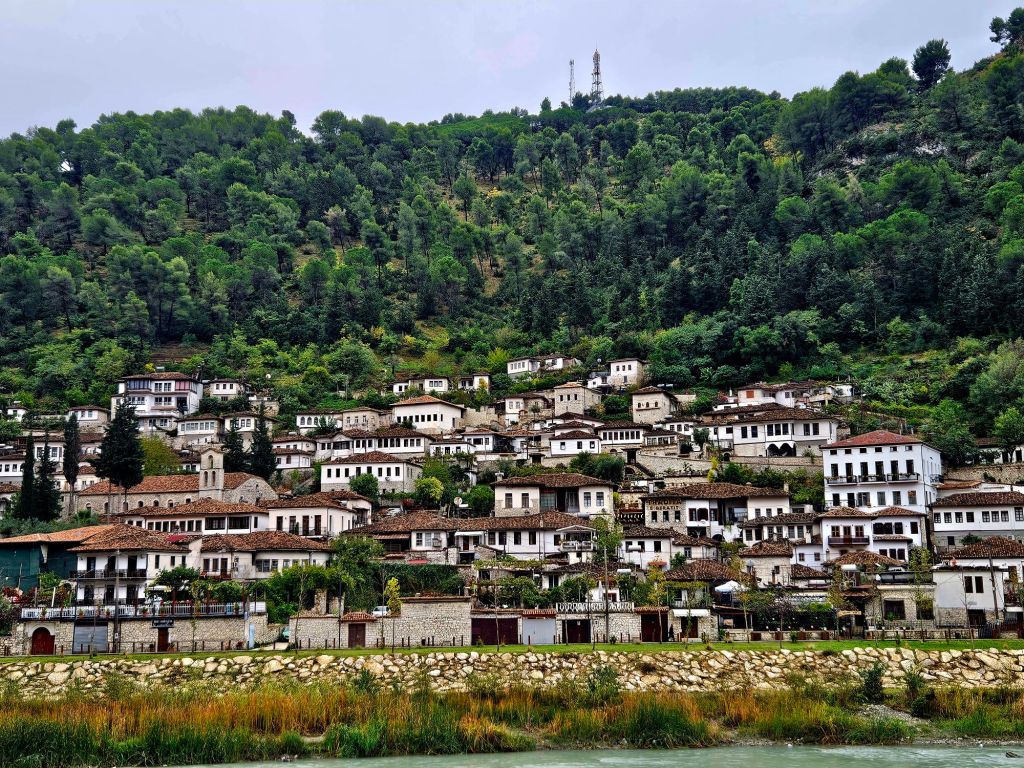
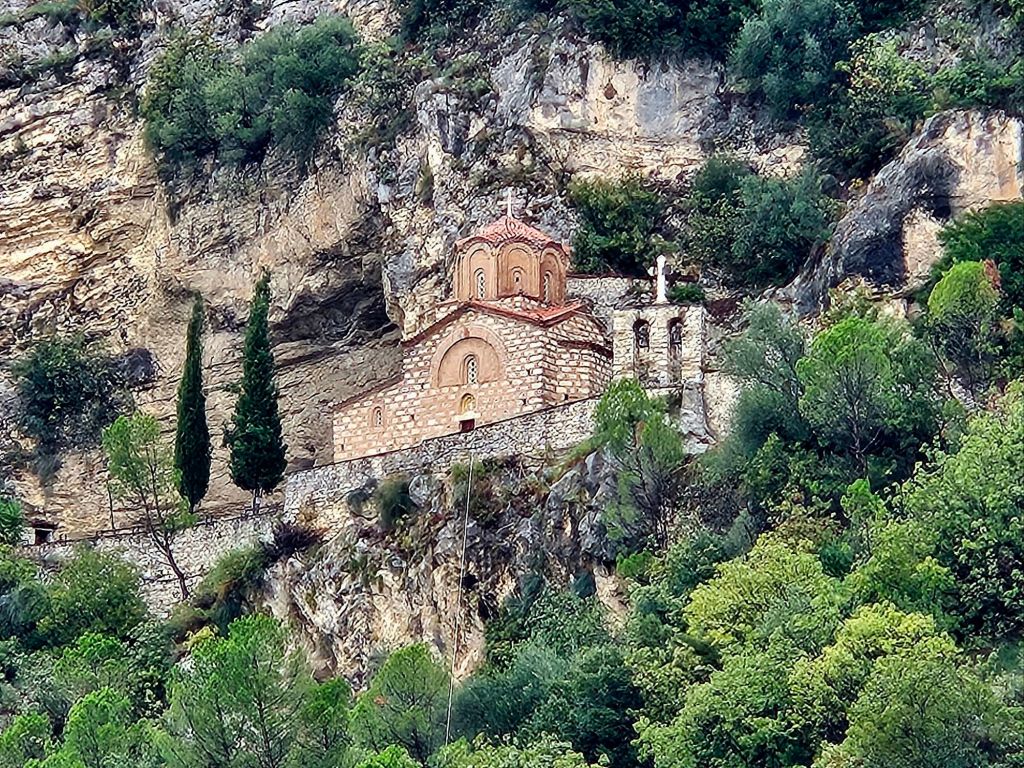
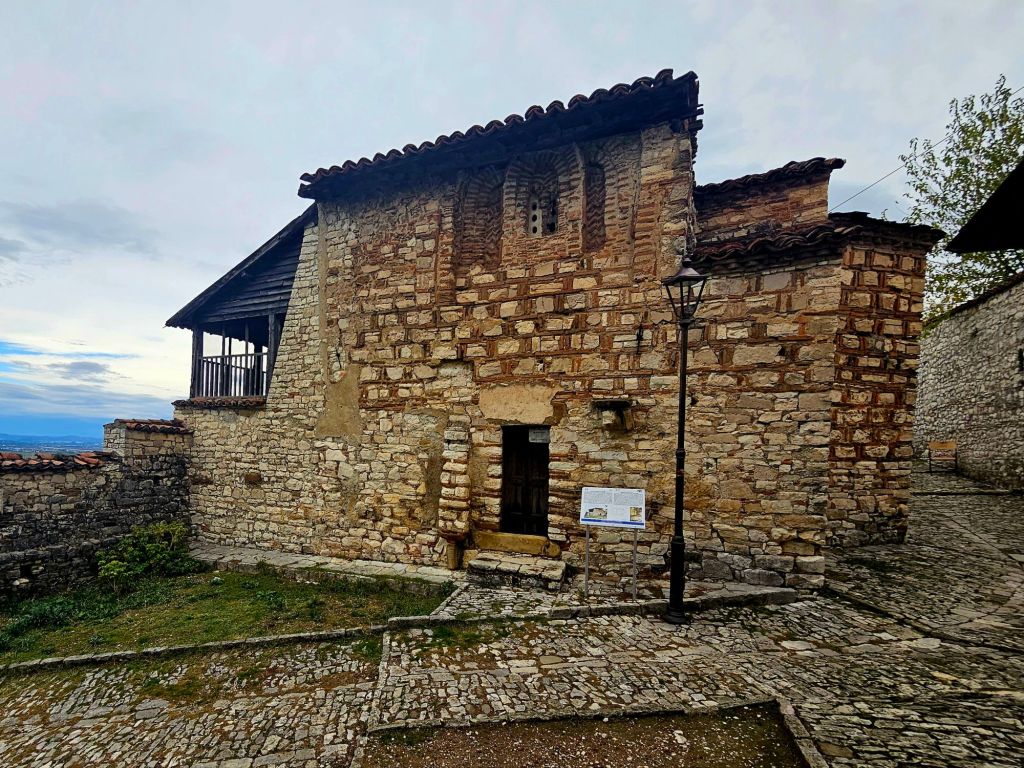
From the Gorica side you could see the Church of St Michael on the hillside. This is a medieval orthodox church and was potentially built in the 14th century. It is built by combining rows of bricks with rows of stone.
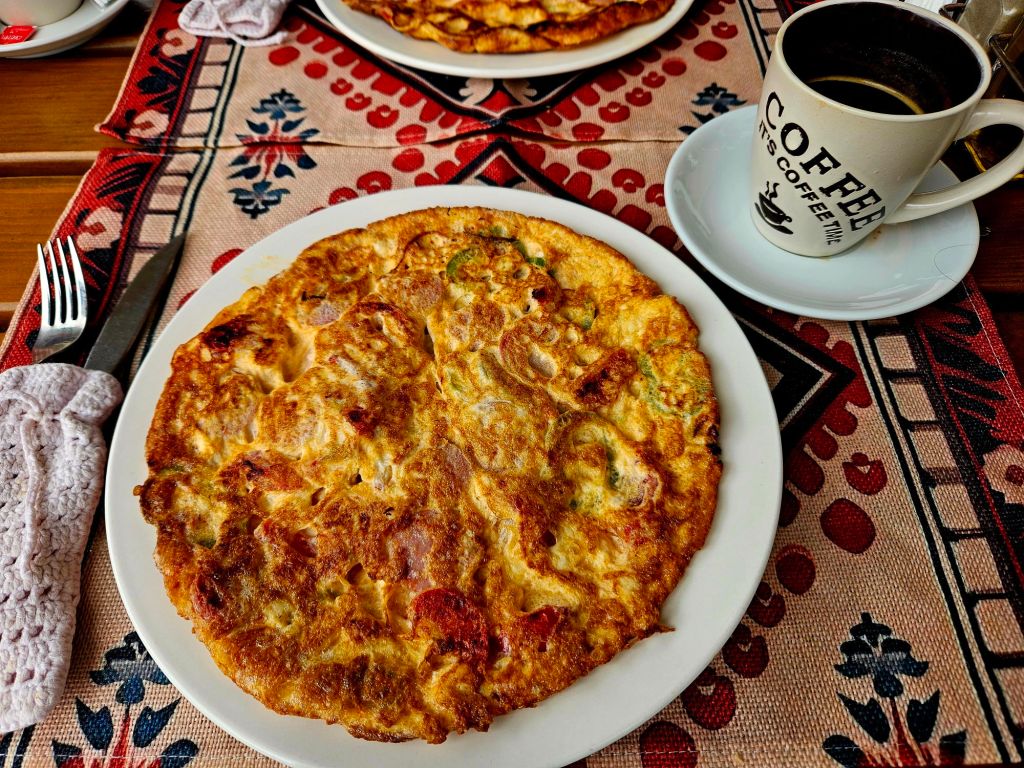
By now we were feeling hungry so we stopped off at the Te Ura cafe. We had a delicious Albanian omelette.
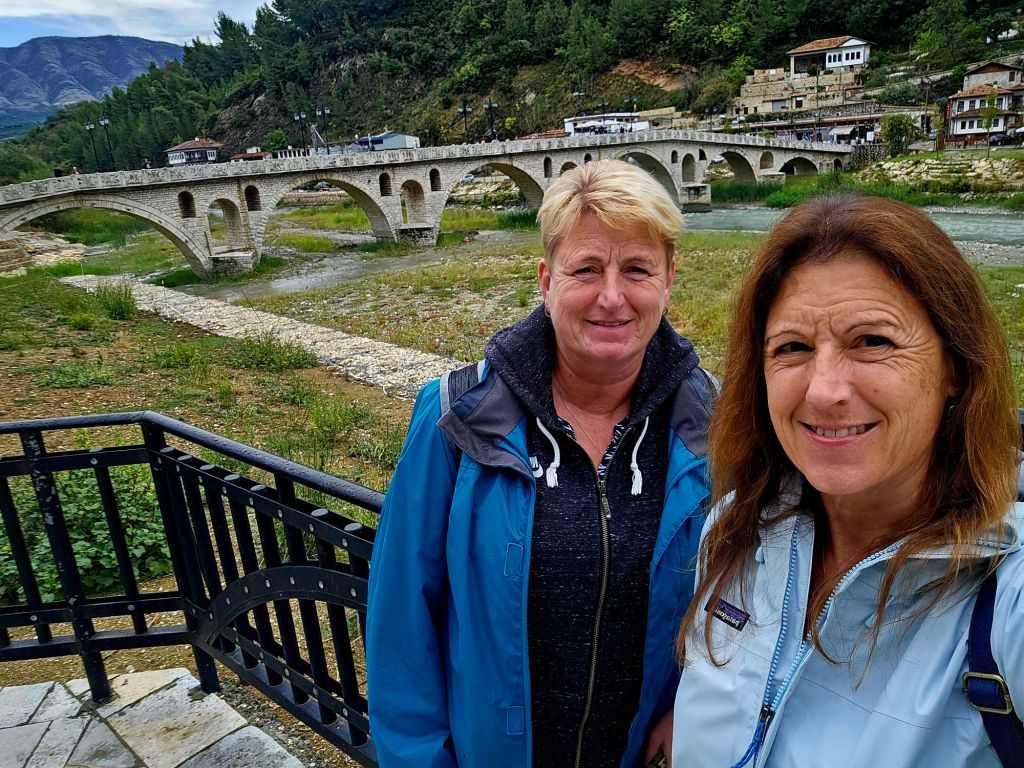
The cafe was right next to the Gorica bridge. This is one of the oldest Ottoman bridges in Albania. It was originally built in wood in 1780 and then rebuilt in stone in the 1920s, following its collapse in the 1880s due to repeated flooding of the river. It has seven arches, is 129m long and 5.3m wide. Local legend has it that the original wooden bridge contained a dungeon where a young girl would be imprisoned and starved to appease the spirits and allow safe passage over the bridge. The bridge is one of the famous symbols of Berat.
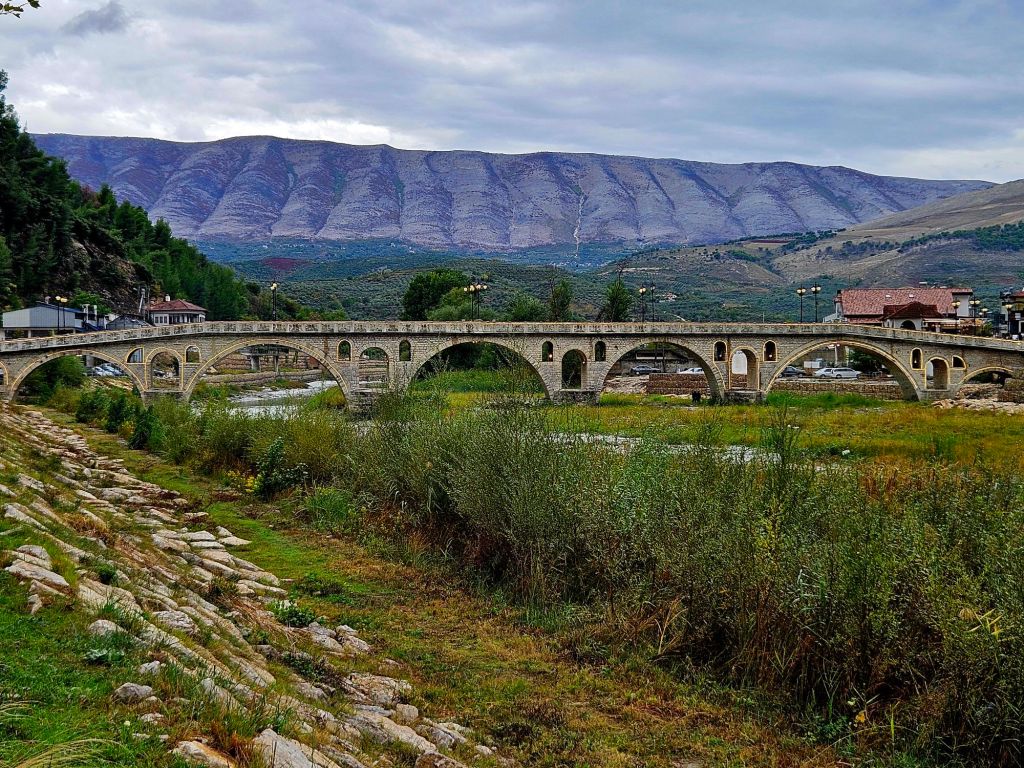
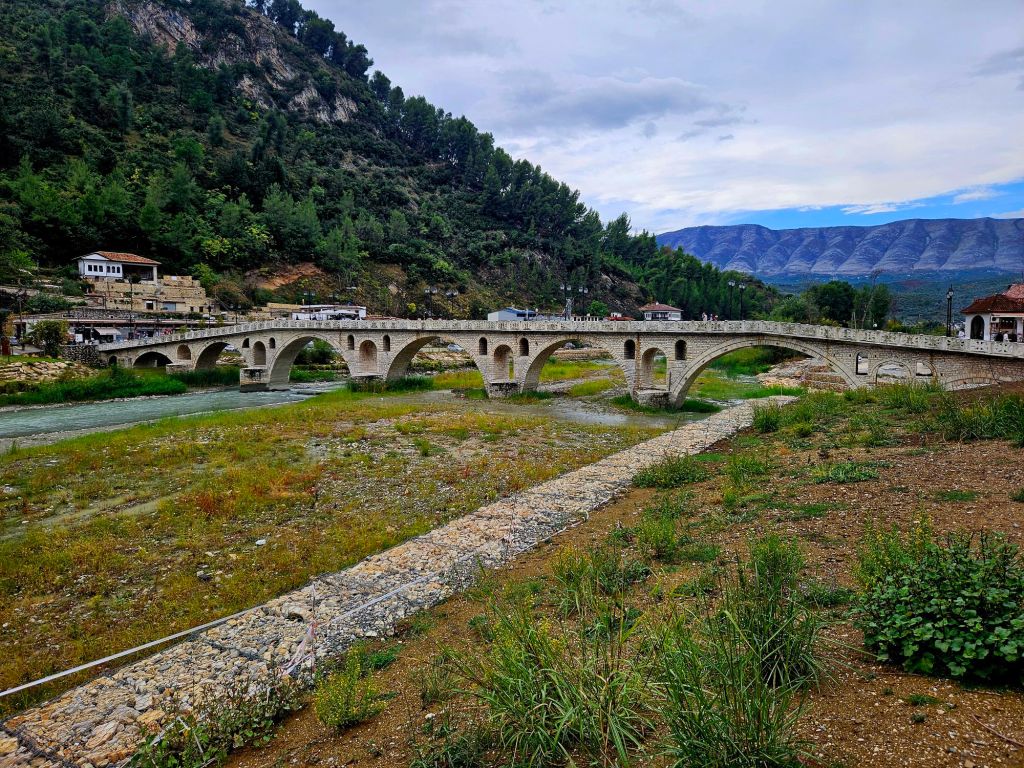
Obviously we walked over the bridge, and took some photos!
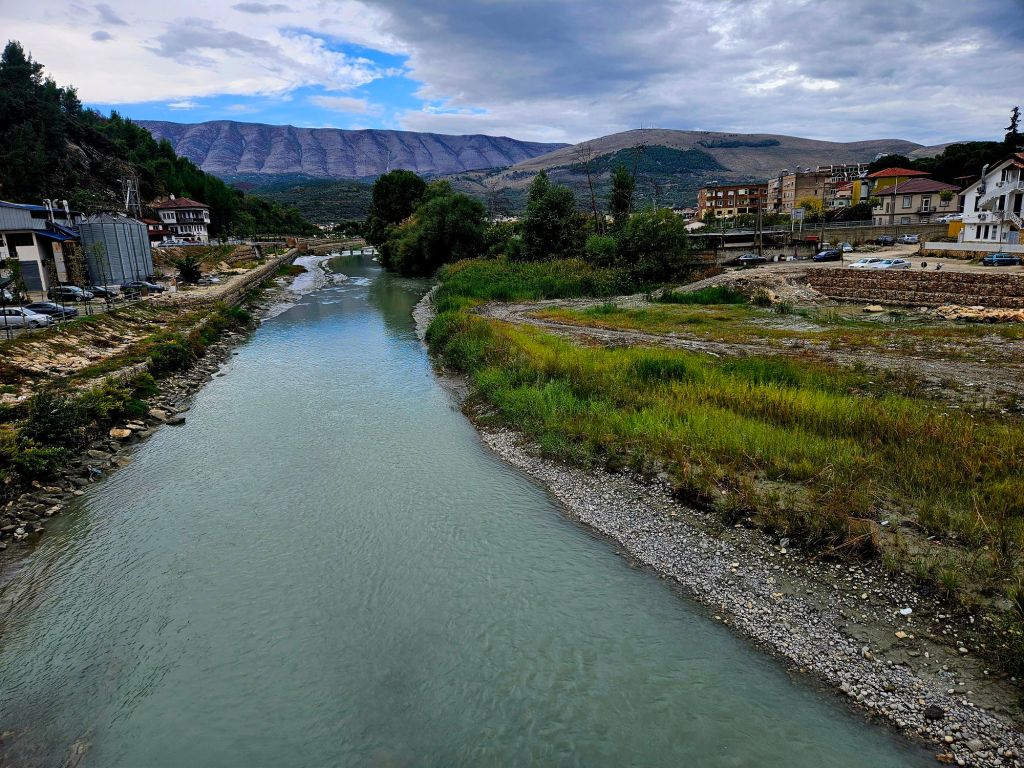
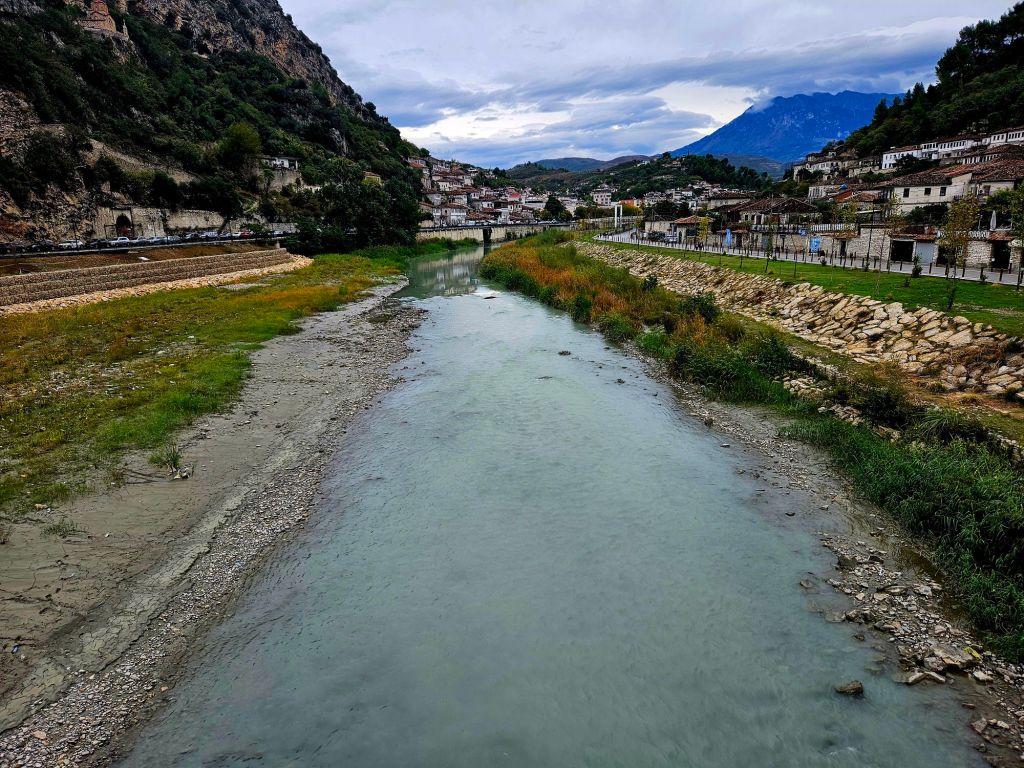
We then made our way back through the town, stopping every now and then to look at some of the shops. It’s a very pretty city.
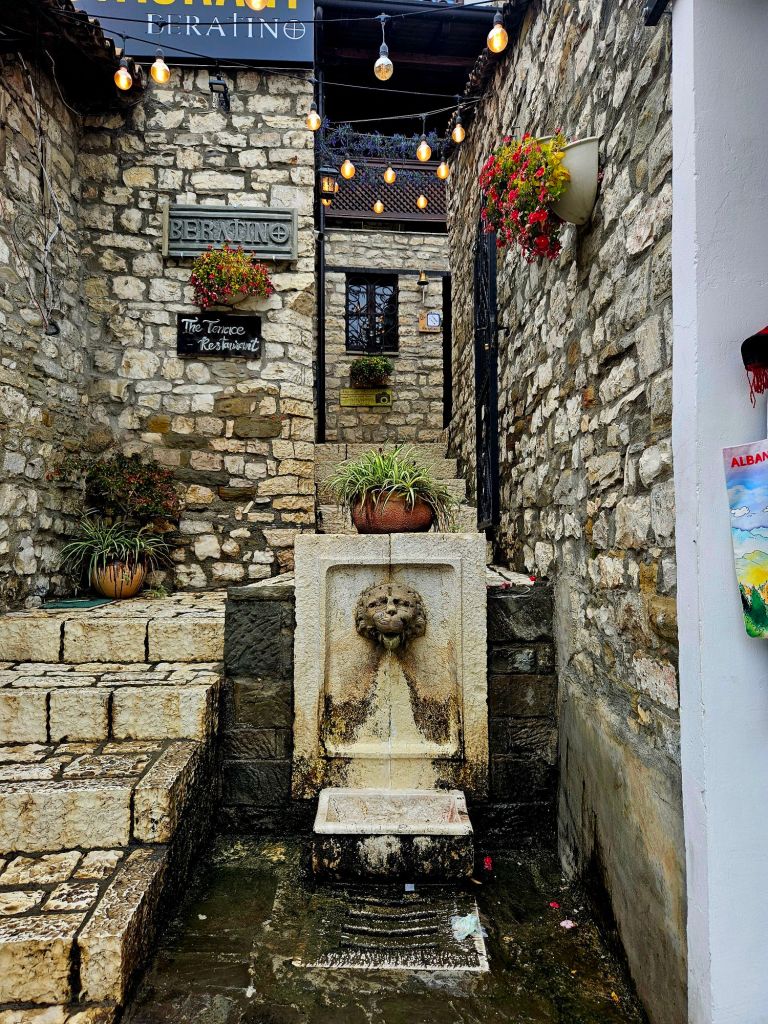
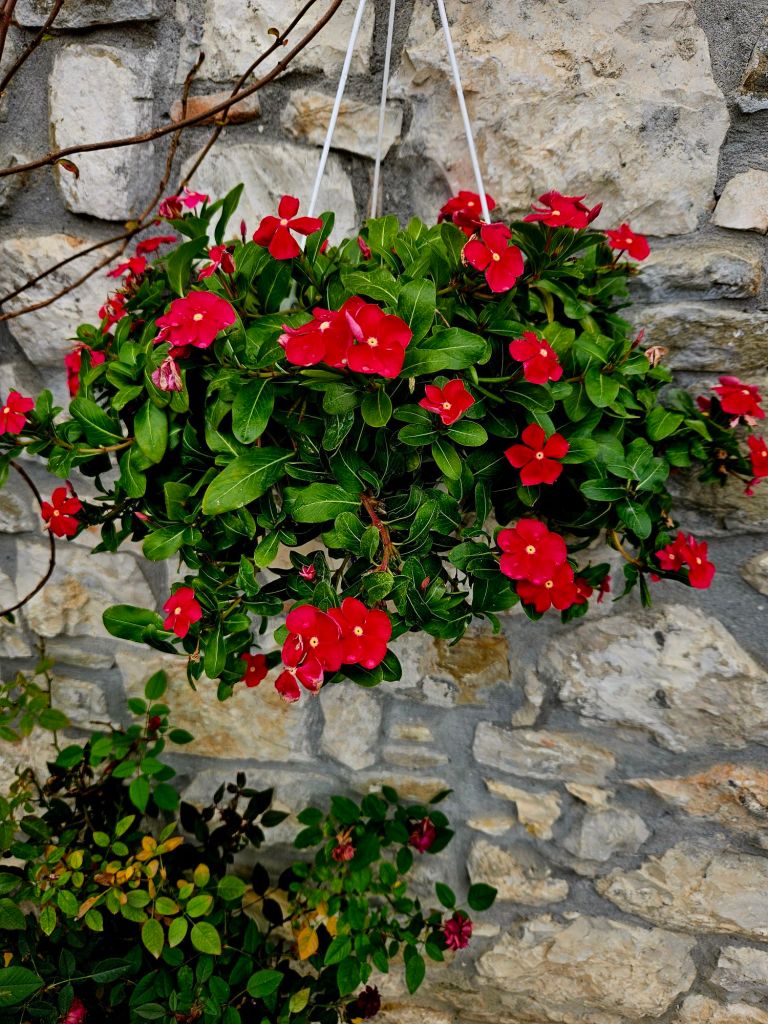
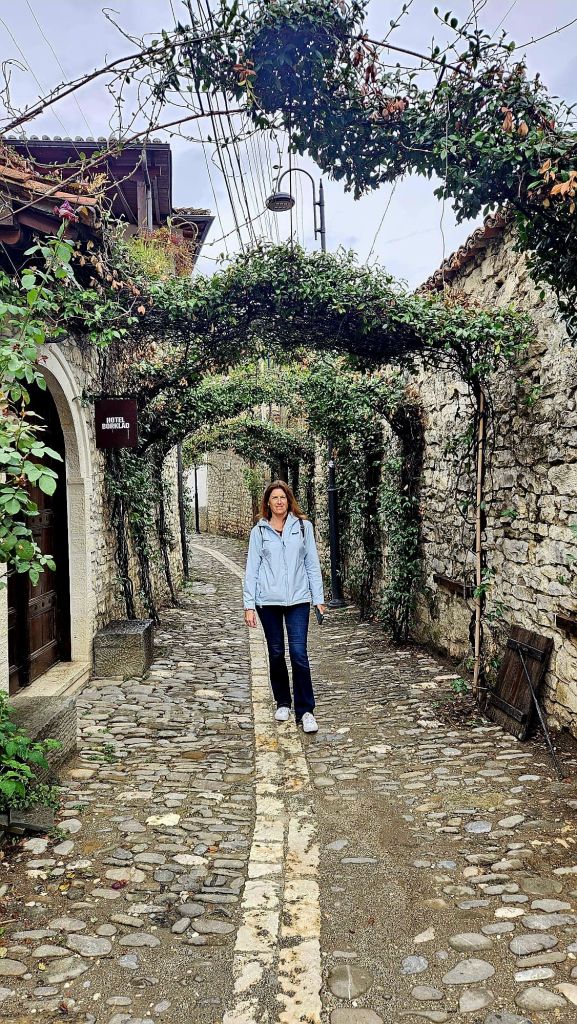
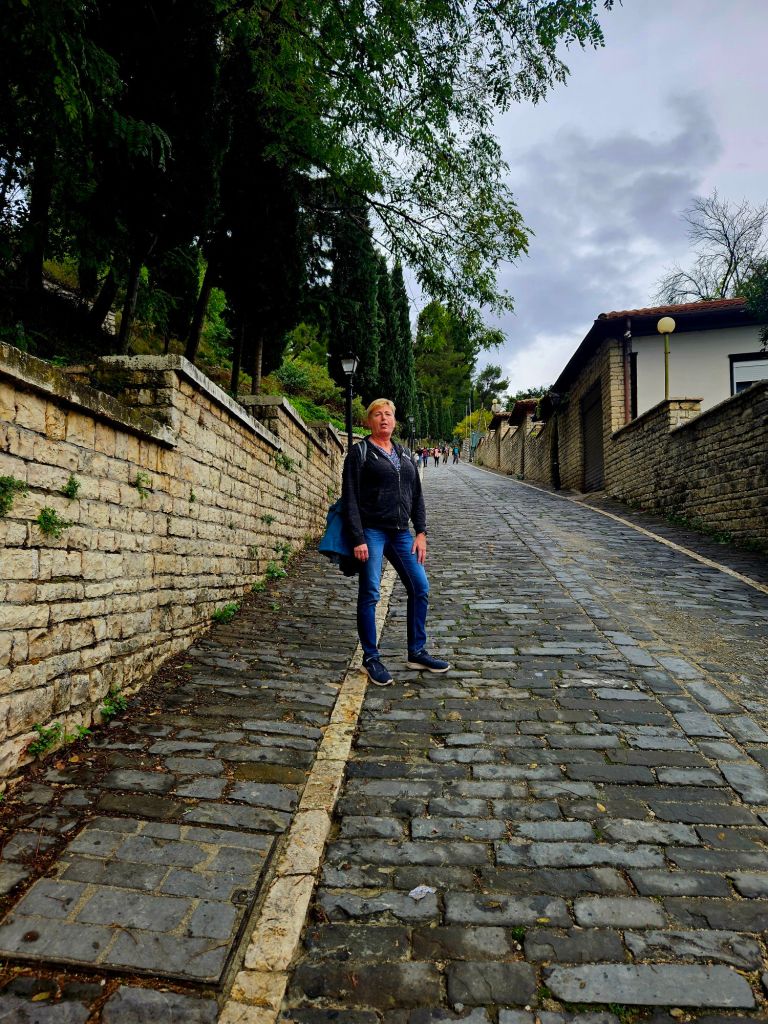
The walk back to the castle was very steep and tiring.
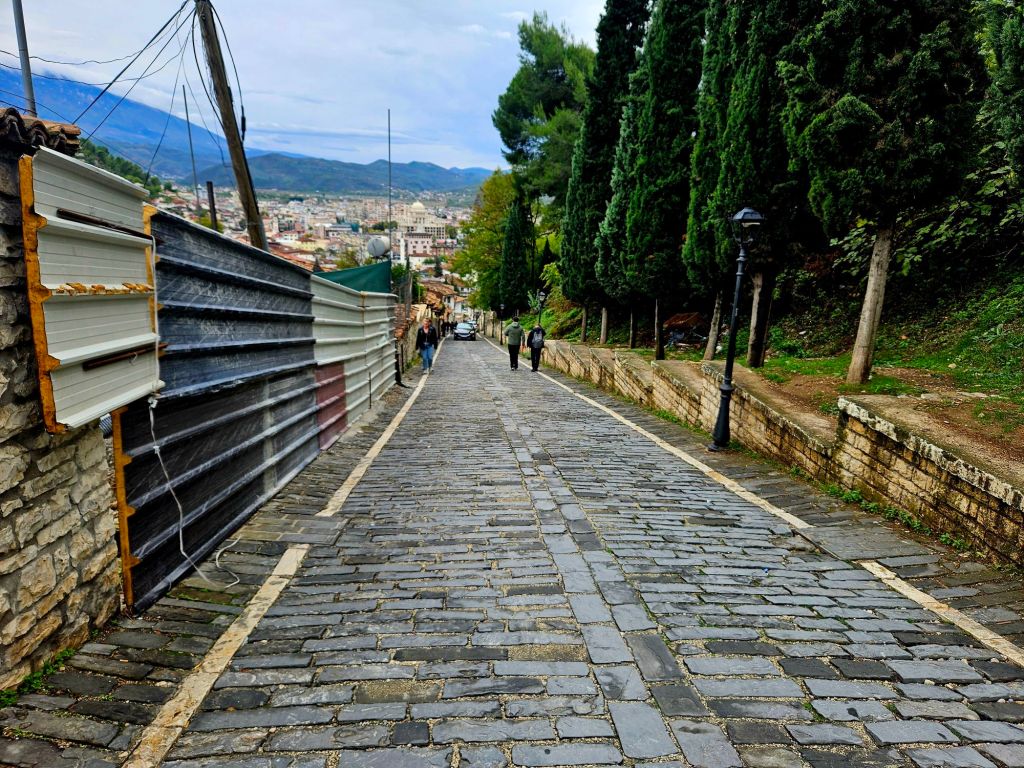
Once back at the castle we explored a couple more churches. The first one was the Orthodox Church of St Nicholas, which was built between 1521 and 1565.
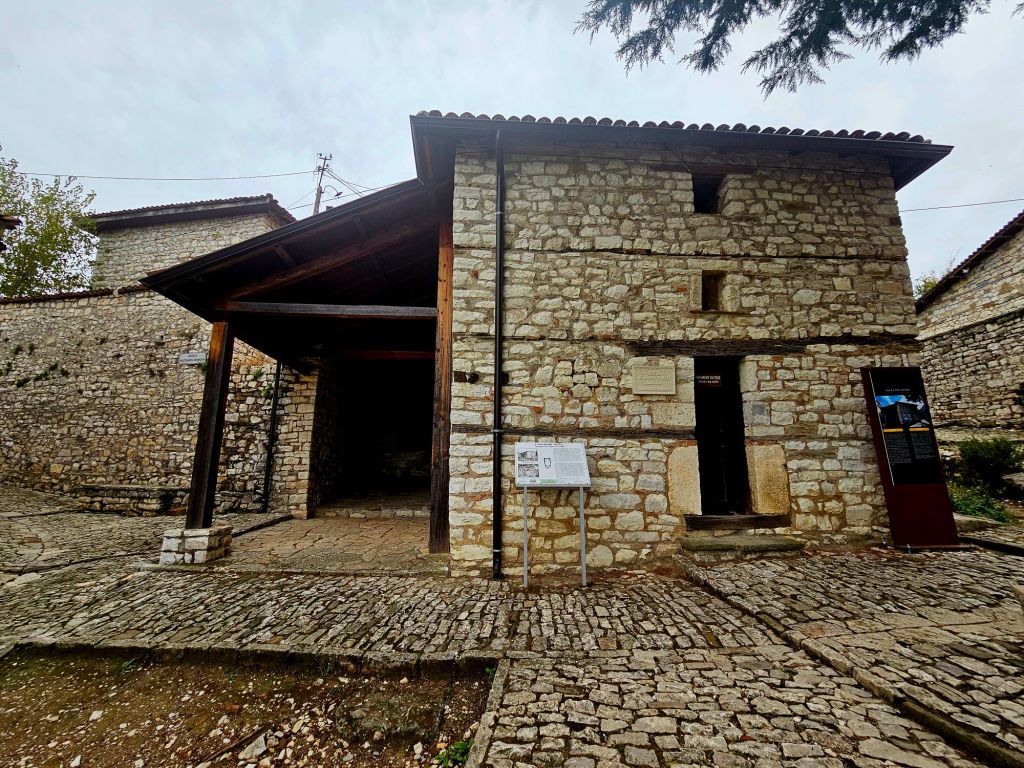
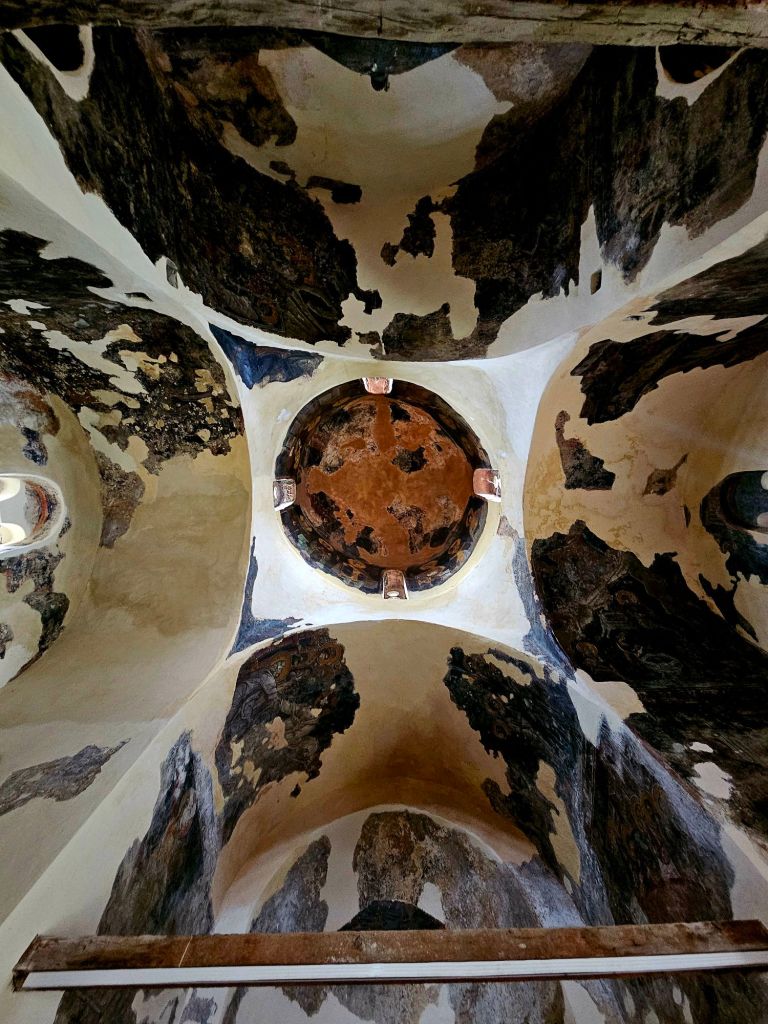
The next church we saw is one of the oldest orthodox churches in Berat. It was built in the early 13th century on top of a ruined 5th century church. Following the Ottoman conquest of Berat in 1417, the Church of St. Mary of Blachernae survived as a functioning Christian site despite a predominantly Muslim population. This reflects the city’s tradition of religious tolerance that allowed new church constructions to resume both within and outside the castle wall.
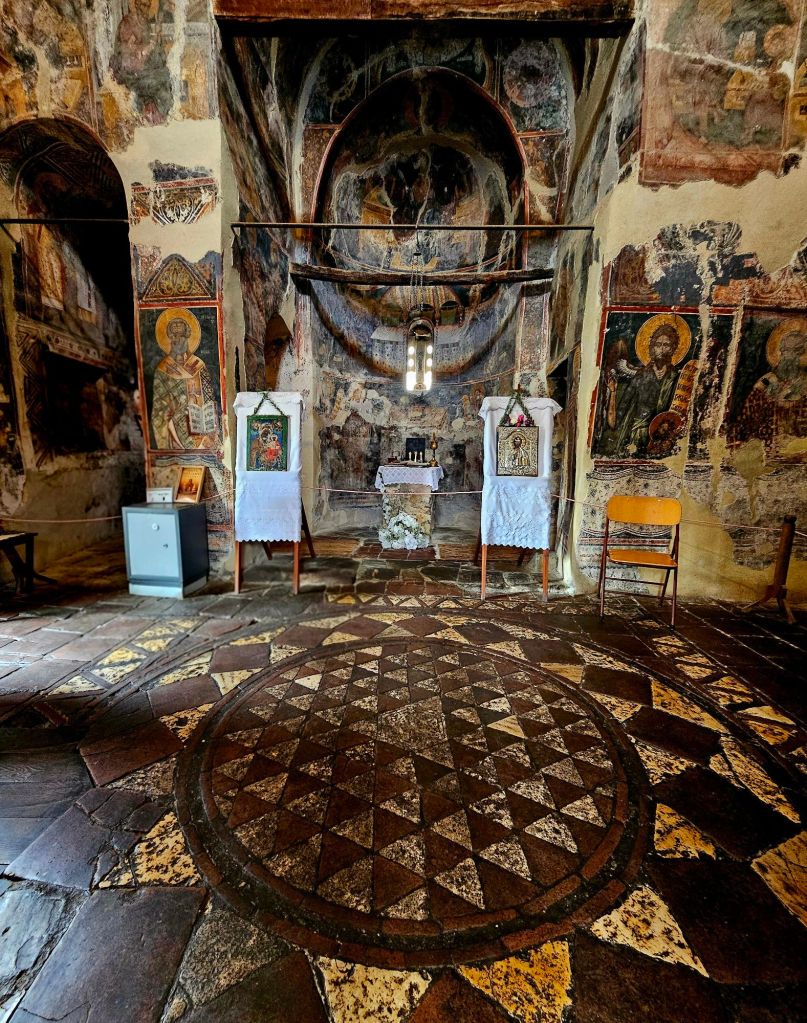
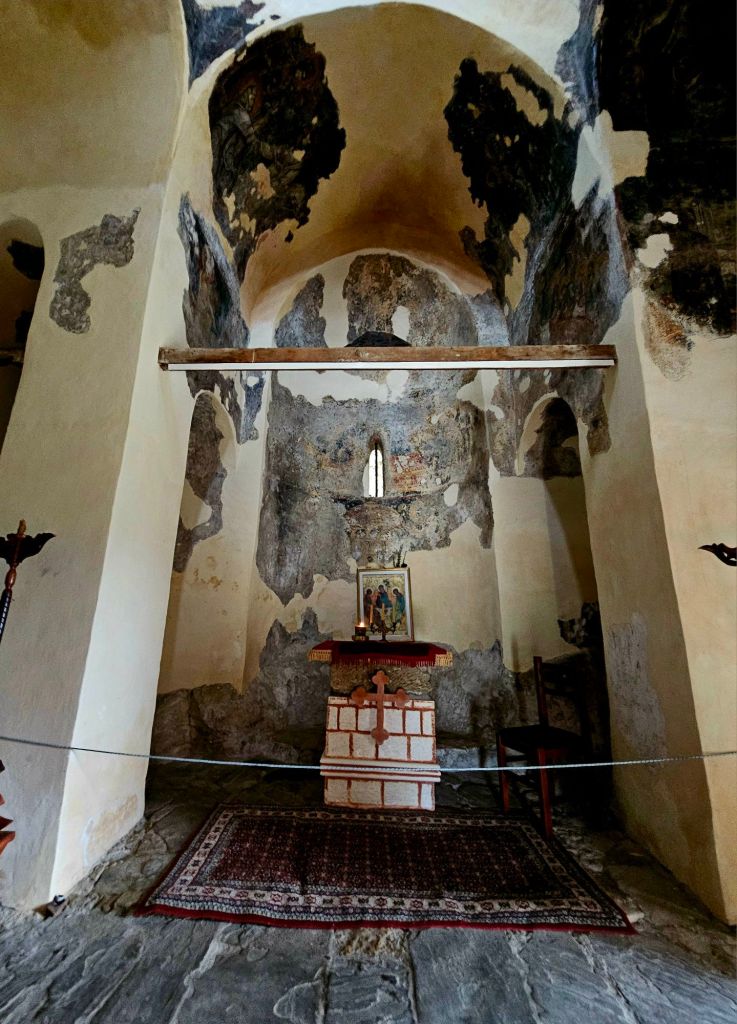
You weren’t really supposed to take photos inside the church but I managed to sneak a few in. The frescos inside the church were painted by Nicholas Onufri, son of the famous master painter in Berat.
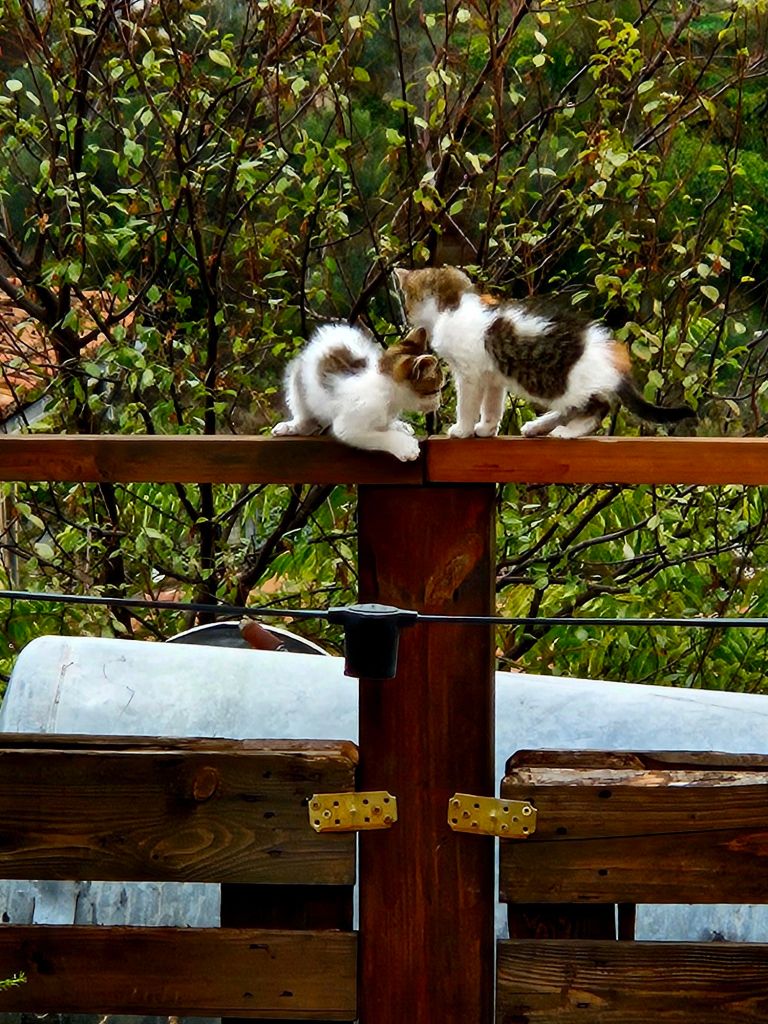
On the way back to our apartment we passed some cute kittens.
 Fun, Fitness and Fabulousness in your Fifties