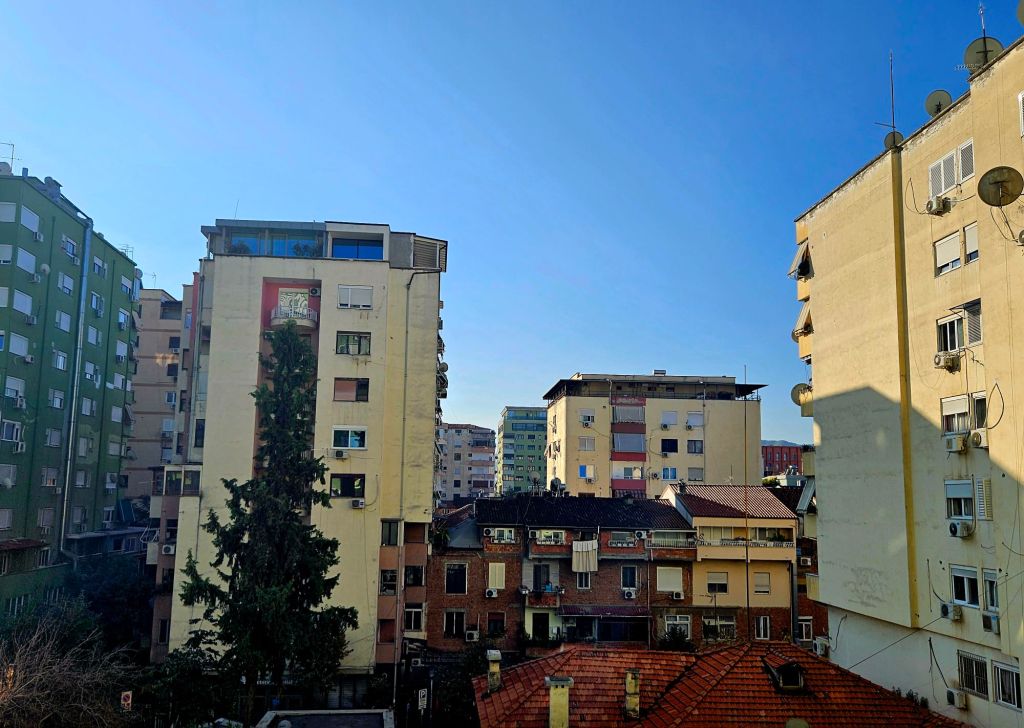
We woke up and had breakfast in the apartment. Nicola had bought some crackerbreads with her, so we had those on the balcony with a cup of tea. There wasn’t any coffee. It wasn’t the best view but it was nice and sunny.
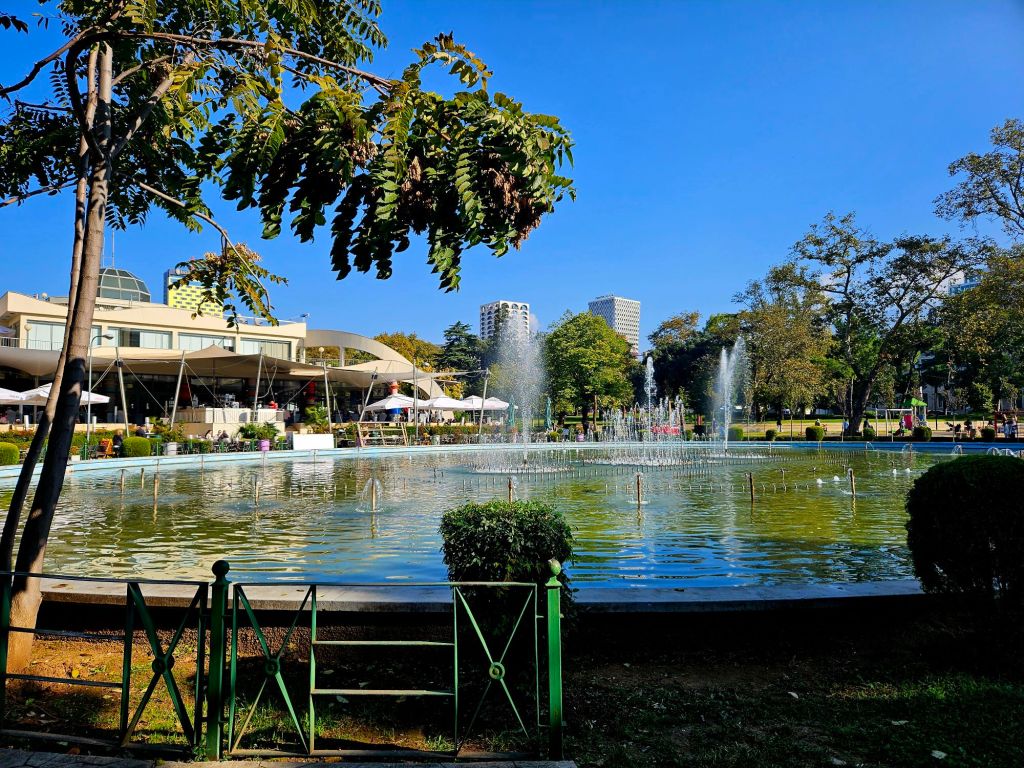
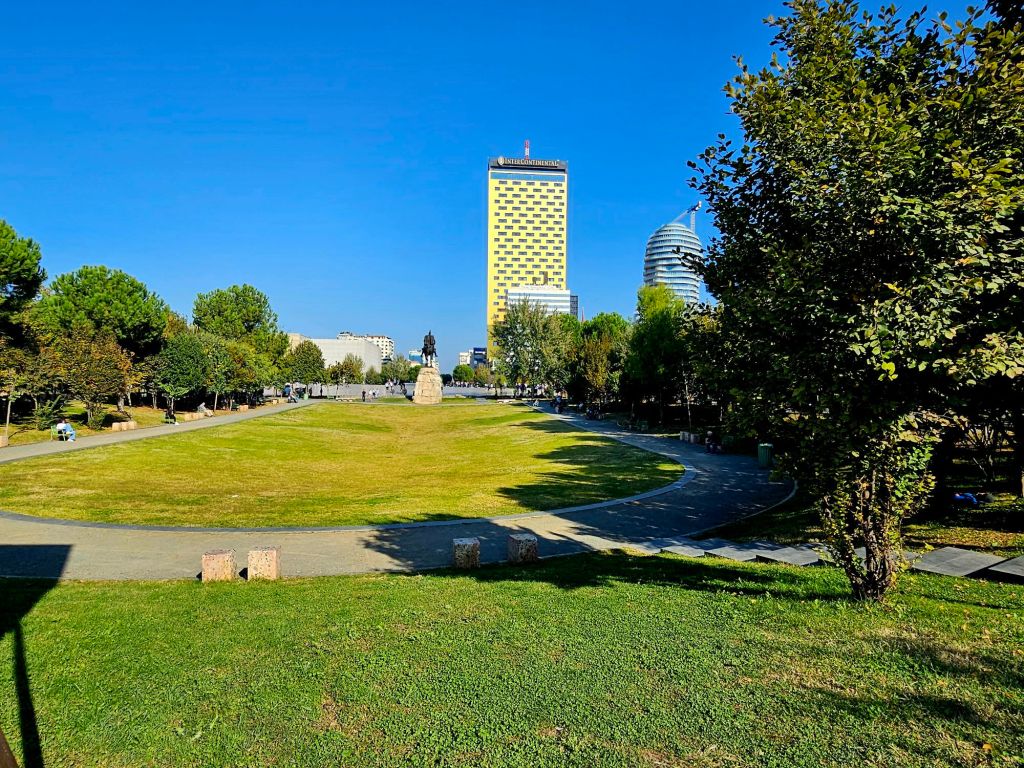
After breakfast, we headed out, walking through Rinia Park. This is one of the green open spaces in Tirana and was built in the 1950s, during the communist times. It was originally designed as an open space for the young people to go and was known as the Youth Park. After the fall of communism a number of bars and restaurants were built in the park, but during a revamp in the 2000s, many of these were taken down, and the park reseeded with grass.
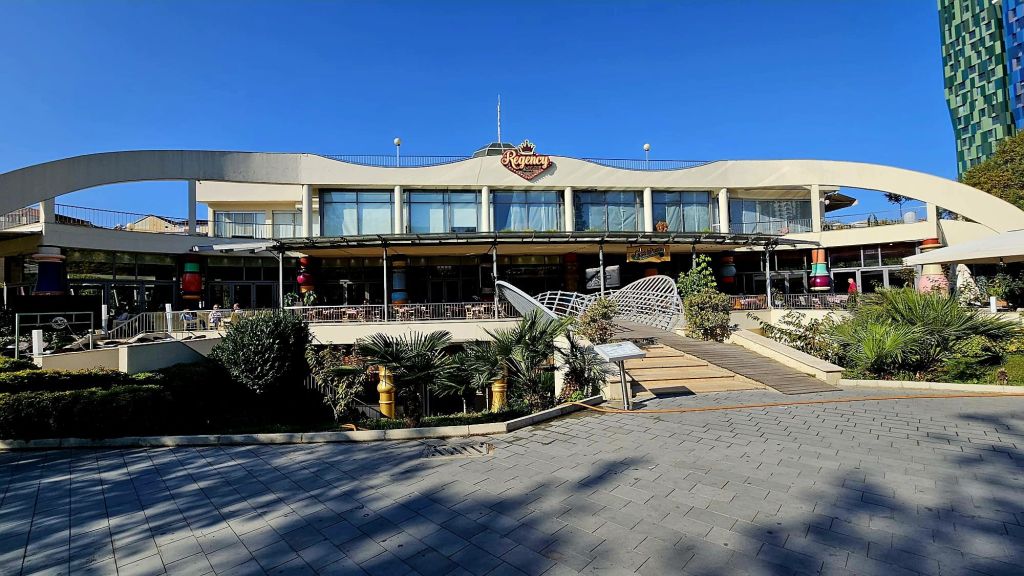
There is a complex in the centre of the park called the Taiwan centre, which houses one of the few legal casinos in Albania. The construction of the Taiwan complex finished just when Albania’s communist regime broke relations with China. At that time, Albania recognized the sovereignty of Taiwan and named the new structure in the middle of Tirana in their support.
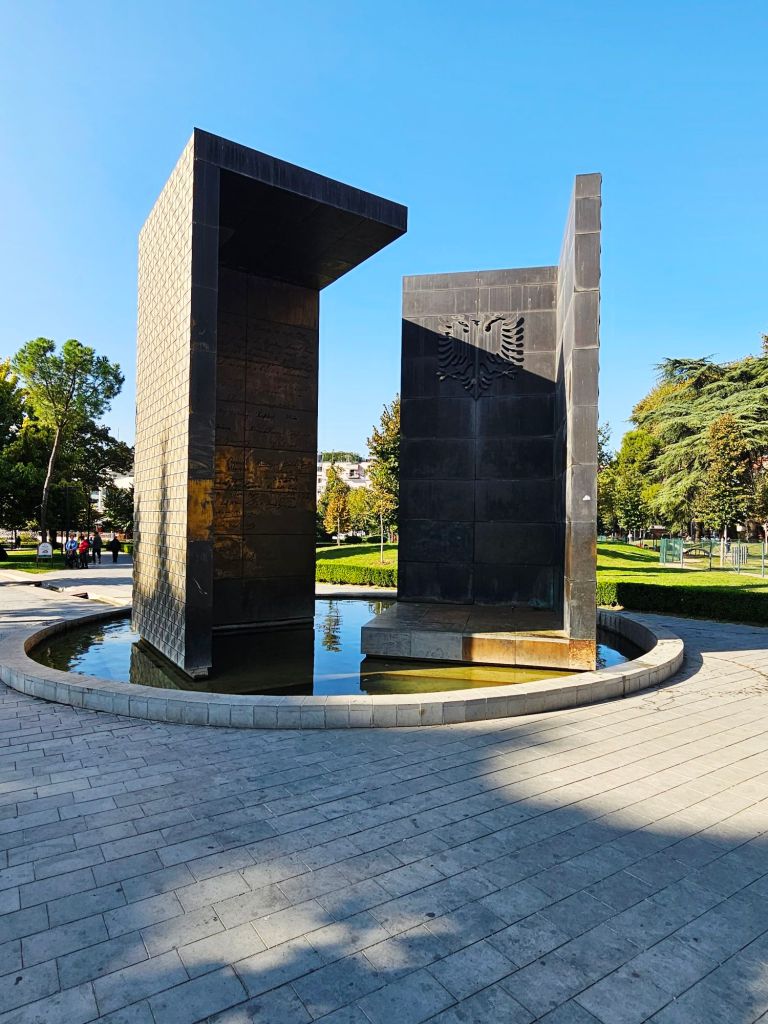
Towards one end of the park is the Independence Monument. This was established in 2012 to mark 100 years of Albanian independence. The monument’s design features two shapes that, when joined, form a rectangular tower. One part represents repression and isolation, while the other symbolizes freedom and independence.
We also walked past Europa Park, which is at the back of Skandenberg Square. This is another green space to enable people to come and relax in the city.
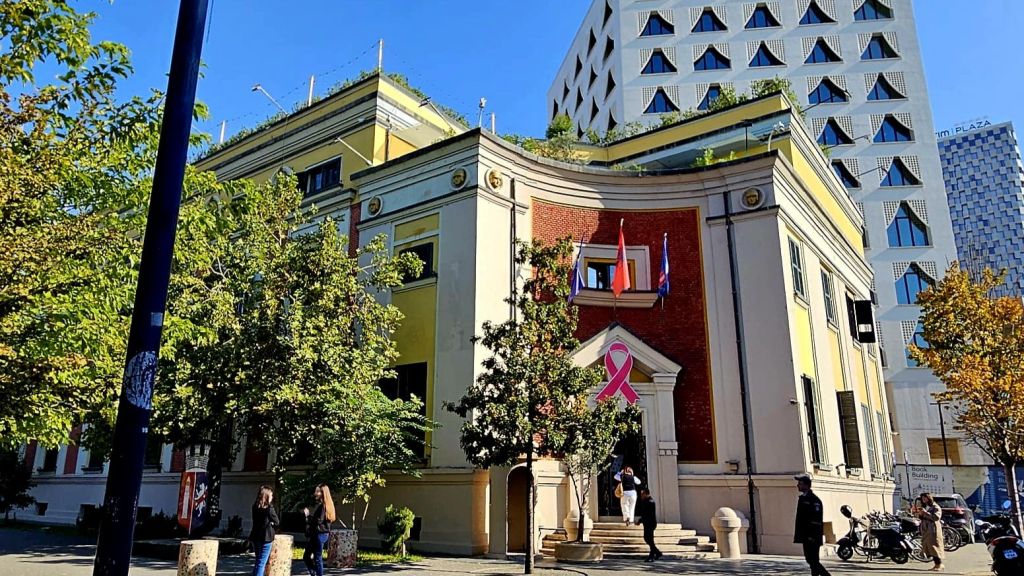
On our way into Skandenberg Square, we passed the City Hall. This is the headquarters of the Municipal Council in Tirana and the mayor’s office.
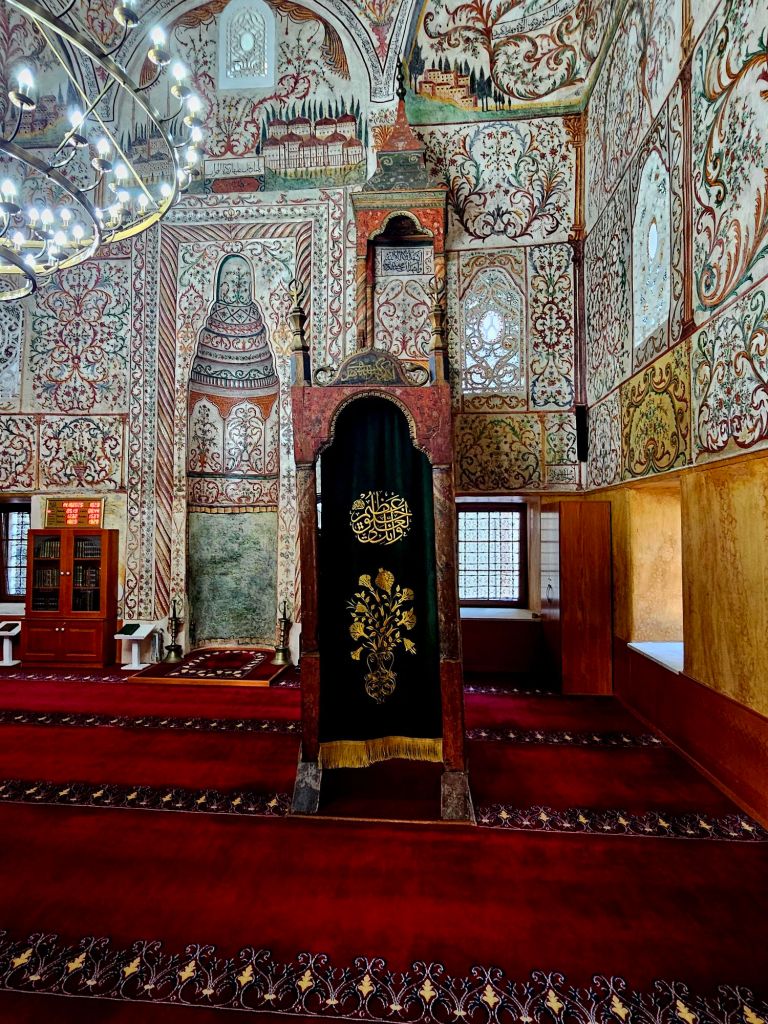
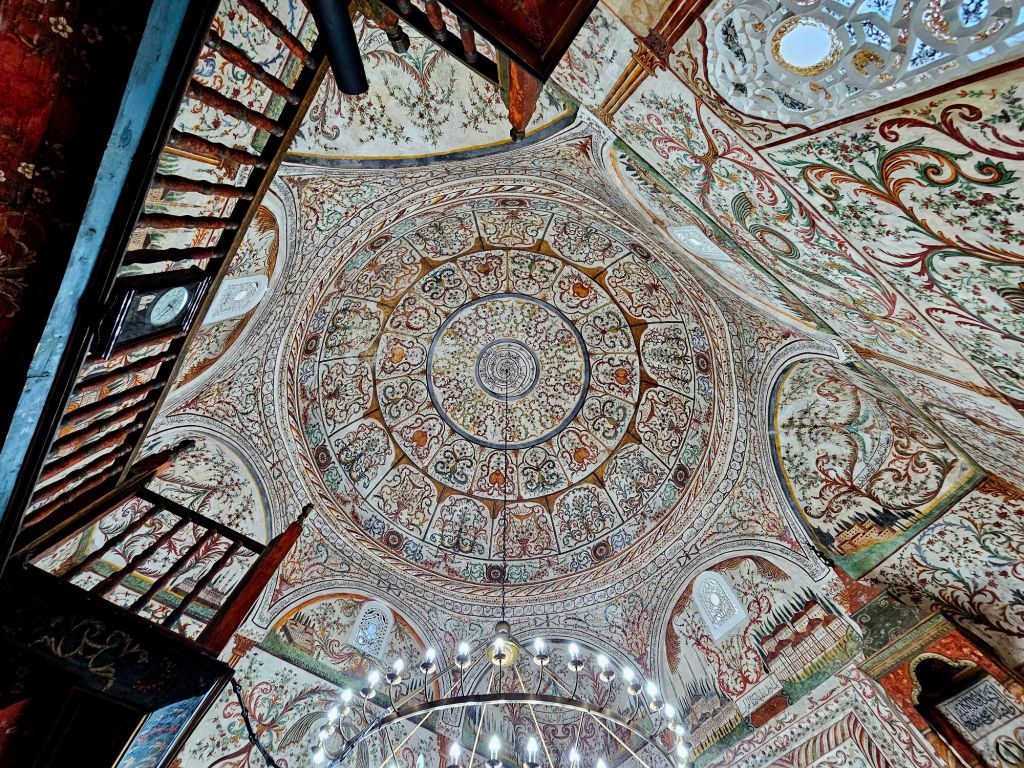
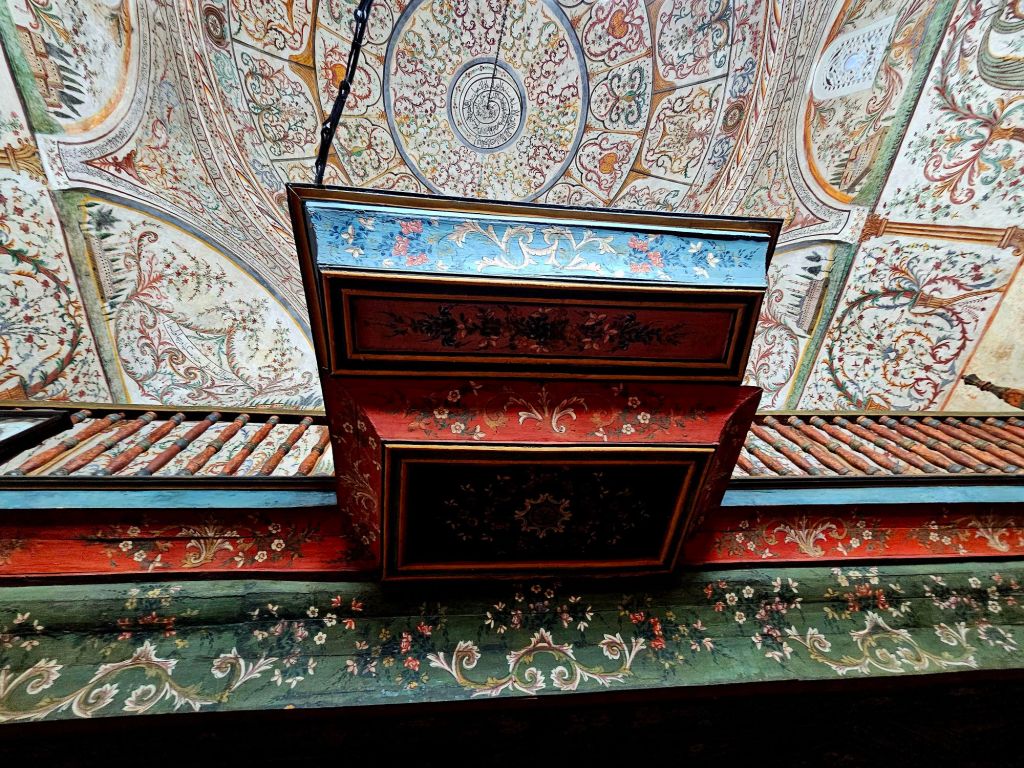
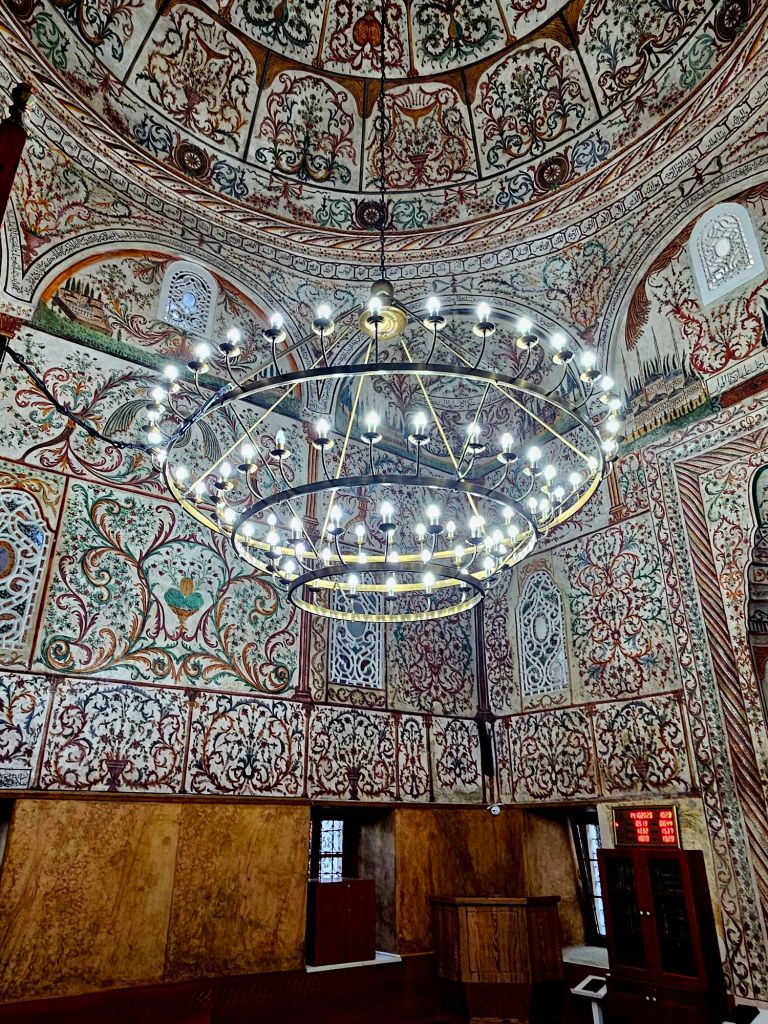
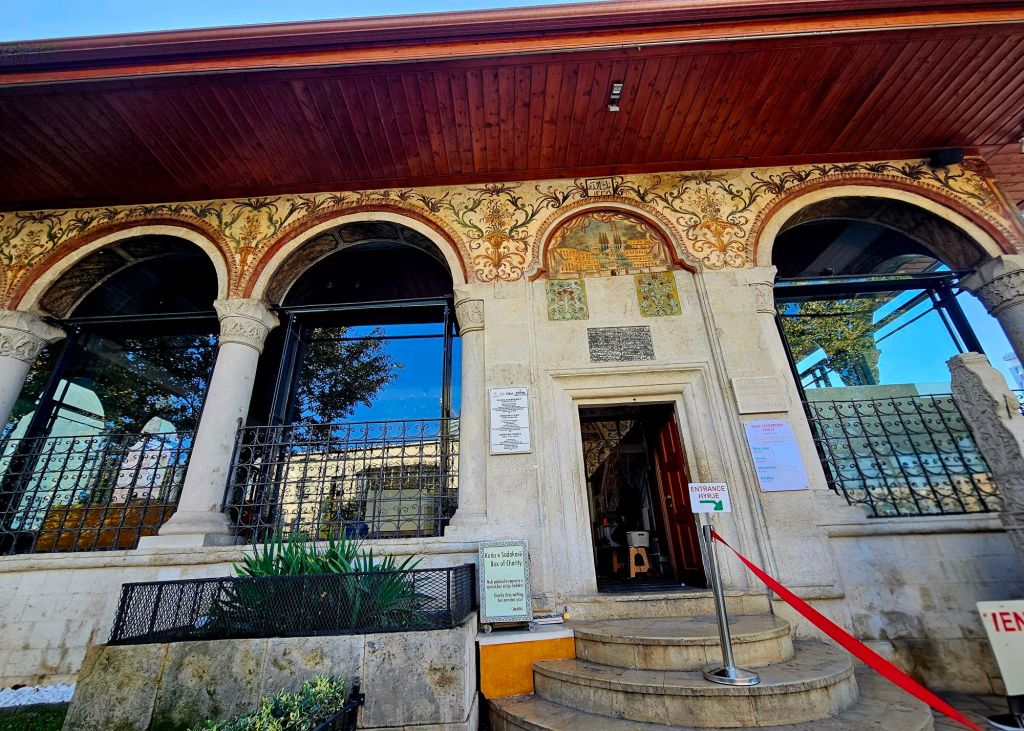
From here we came to Et’hem Bey Mosque and visitors were allowed to go in as it wasn’t a set prayer time. Construction of the mosque started in around 1791 and finished in 1824. When it was built it was part of a complex with 2 other mosques and a Bazaar. It was closed during the communist regime but in 1991, when the communist reign was about to fall, 10,000 people entered the mosque carrying flags. This was a milestone event, leading to the rebirth of religious freedom in Albania.
Inside the mosque is very ornate with frescoes of trees, waterfalls and bridges, still life paintings that are a rarity in Islamic art. It was a beautiful building.
We walked over to BunkArt 2. This is a 1000m² cold war bunker and houses around 24 rooms, an apartment for the minister and a common hall. It was originally built for the Ministry of Internal Affairs and completed in 1986, a year after Enver Hoxha’s death.
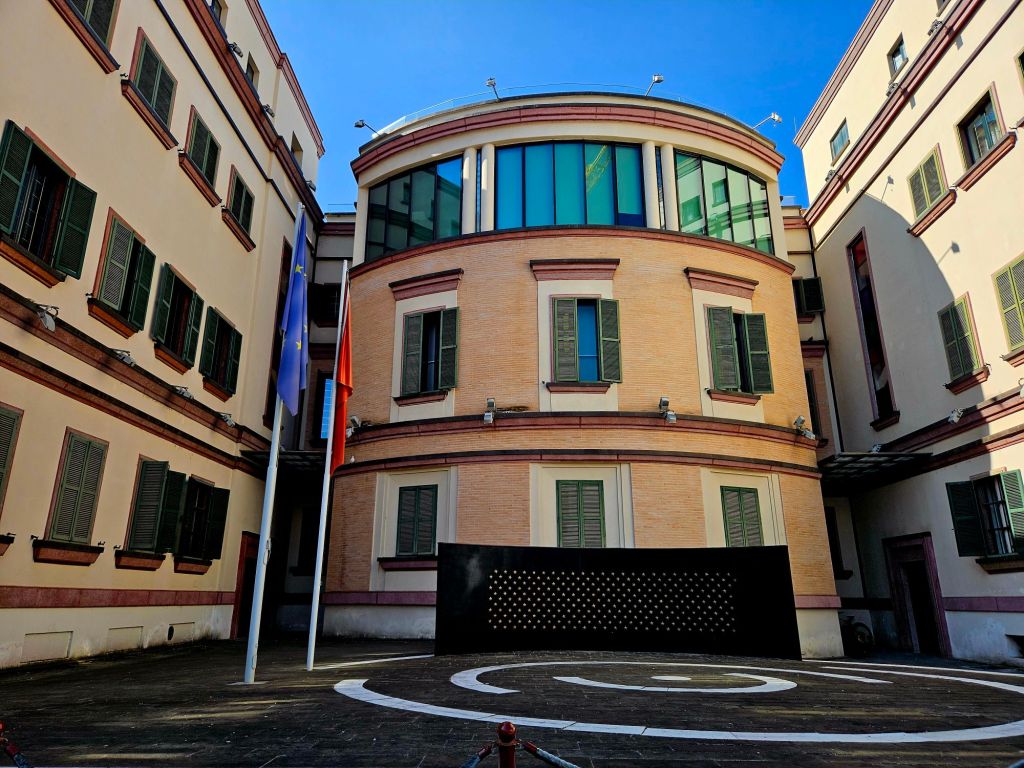
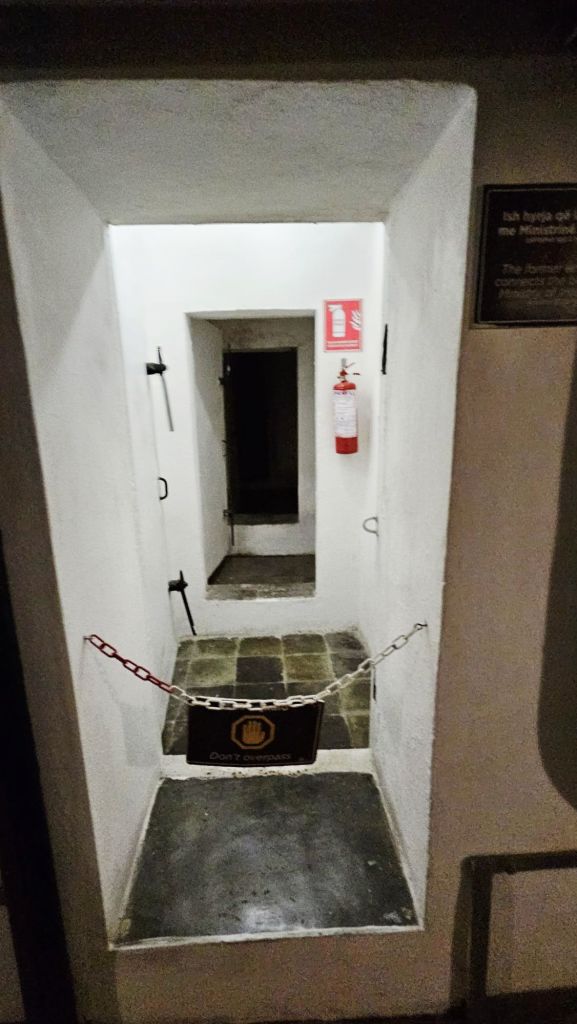
The original entrance to the bunker was inside the Ministry of Internal Affairs building.
It was never used, not even for training purposes. It was reopened as a museum in 2016 and focuses on the police system in Albania in general and the reign of repression and control by the Sigurimi in particular. The Sigurimi were the secret surveillance agency during Hoxha’s regime.
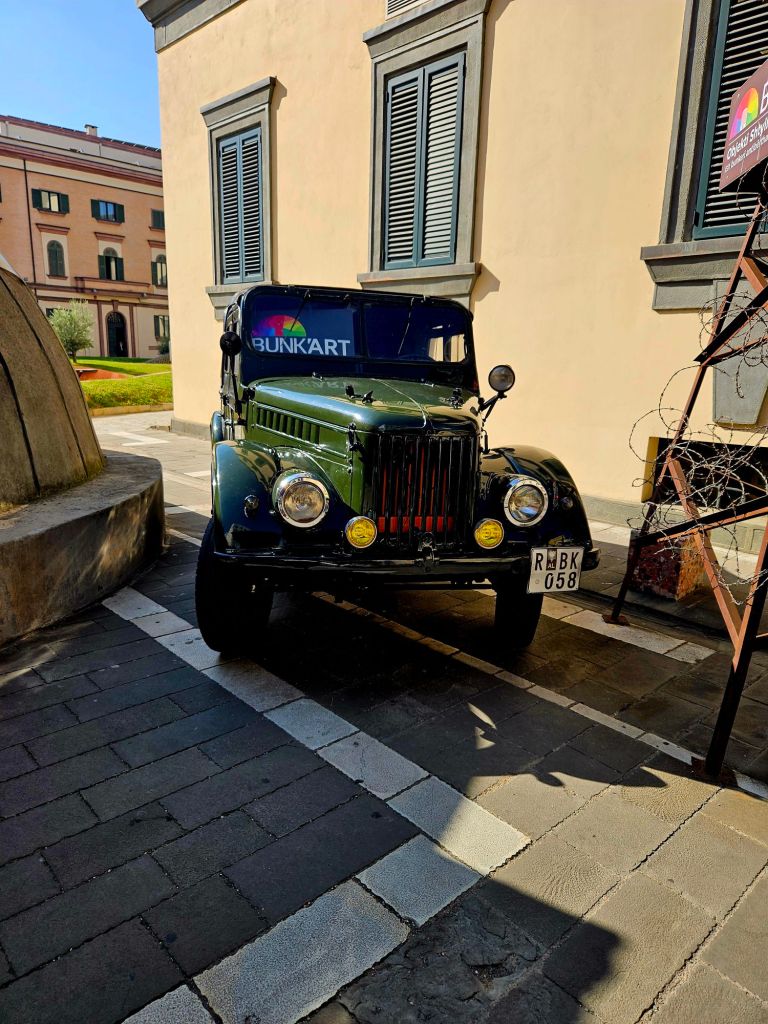

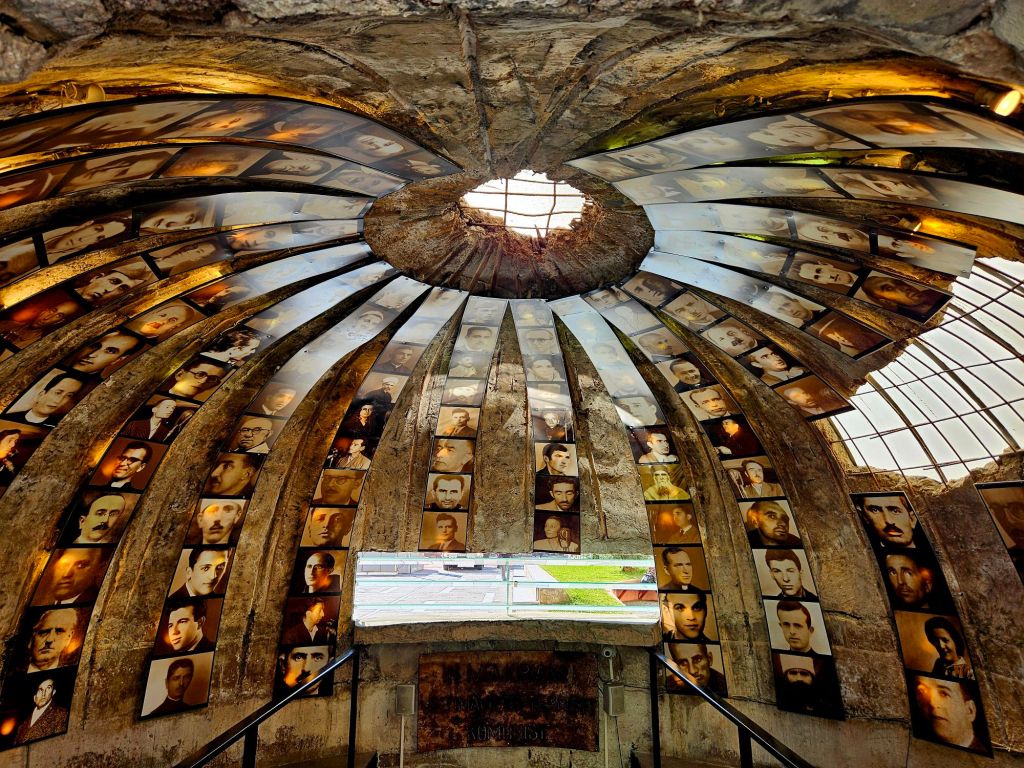
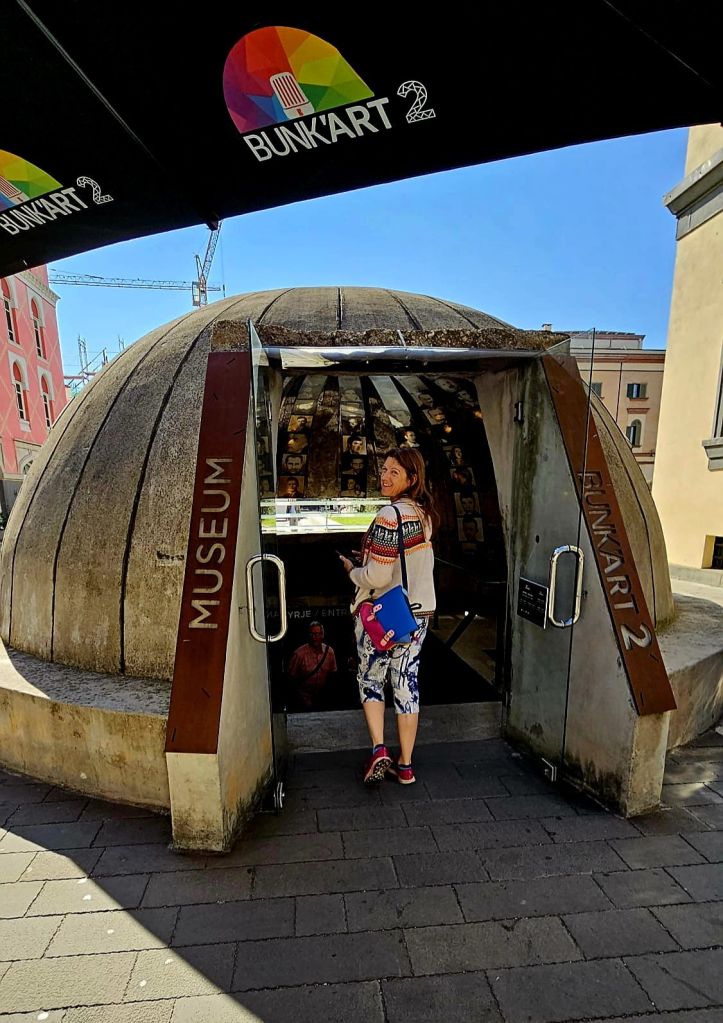
There is a huge amount of history to absorb as you walk through the bunker. The corridors are quite narrow and the ceilings are low. Once the internal spaces were built, the roof was topped with a layer of reinforced concrete up to 240cm thick.
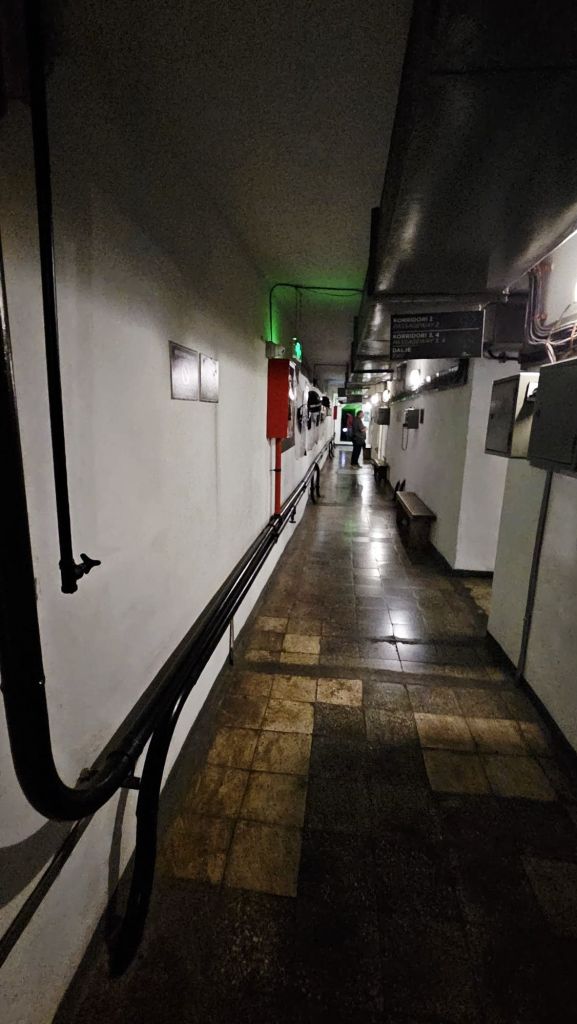
The exhibition begins long before the Sigurimi came into being, namely at independence of Albania in 1912 and the years of the kingdom (1925-1939). So it starts with the “gendarmerie” and police before the communist era.
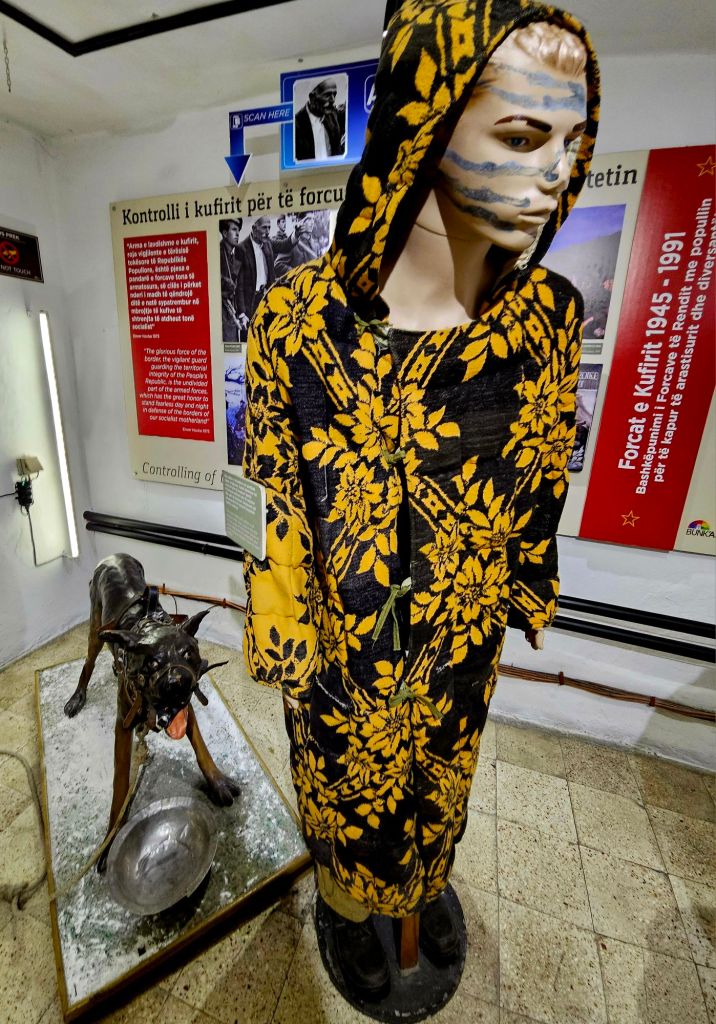
From 1945 to 1991, the Border Forces were part of the Ministry of Internal Affairs. As in other communist countries, citizens were not allowed to leave the country and attempting to flee was one of the worst “crimes” in the eyes of the regime. Therefore, the border was tightly controlled and fortified. Trying to flee was a crime punishable by death. There was an exhibit of a border force policeman and dog. The coats were used when training the dogs to attack people trying to escape.
Between 1944 -1991 over 6,000 people were executed in Albania – with or without a court order, mainly by shooting or hanging. Many political prisoners also died in prison or labour camps. The death penalty was only abolished in Albania in 1995.
The early history of the Sigurimi secret surveillance and espionage agency is elaborated on, including the ironic fact that the first head of the Sigurimi, the especially brutal Koçi Xoxe became victim of the regime himself, when he was tried as a traitor and executed. His successor was one Mehmet Shehu, who would become Prime Minister and the “right hand” of Enver Hoxha, only to fall out with Hoxha and losing his life under dubious circumstances in 1981. His death is recorded as suicide.
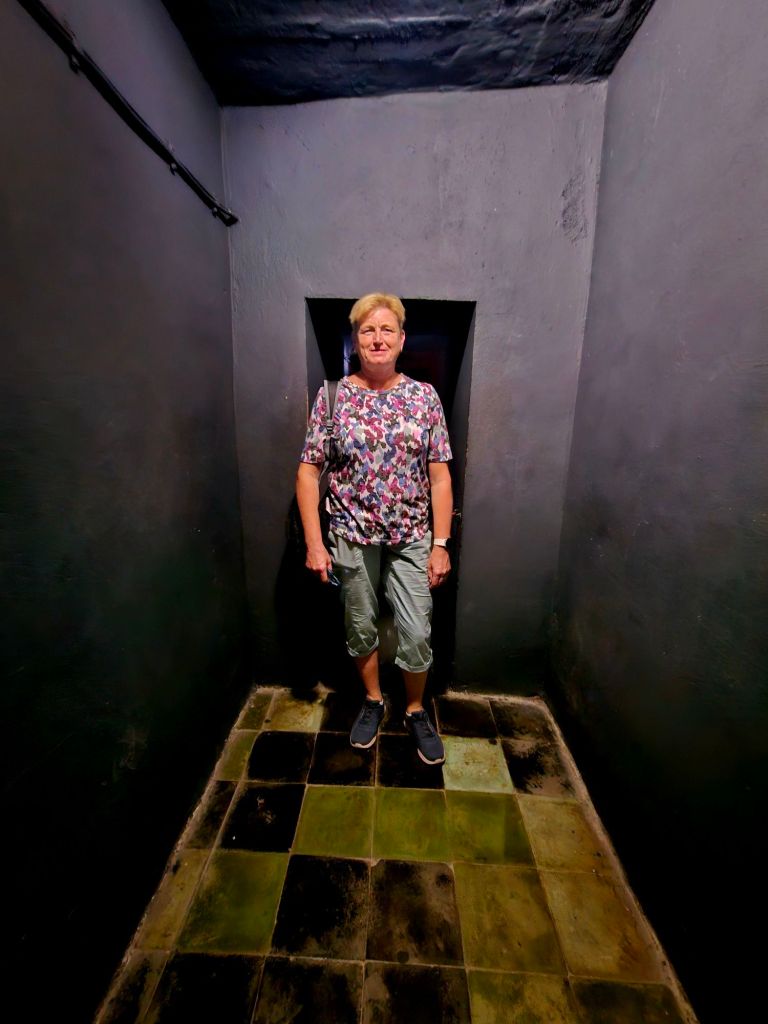
Another room is about the political prisoners and labour camps. From 1946 -1950 there were 20 Labour camps but this increased to 110 camps by 1990. The prisoners built many of the public buildings across Albania. They were forced to work and often lived in inhumane conditions. They often died from hunger, disease or exhaustion. It is believed that there were around 32,000 political prisoners in Albania. This system seemed to be quite similar to equivalent methods employed by the East German Stasi. Another similarity is the way in which both the Stasi and the Sigurimi tried to destroy documents and other evidence of their doings when the fall of communism came.
The system of informers, or “collaborators”, is detailed too, with some personal files on display. The Sigurimi used secret photos, videos and audio recordings as part of their surveillance. This included a range of ‘bugs’. The Sigurimi also listened in to telephone conversations.

One section focuses on the use of torture in interrogations by the Sigurimi. A large panel lists an excruciatingly long list of the various methods employed
You can also see the original suite for the Minister of the Interior with its wood-panelled anteroom, the main meeting room, and the Minister’s bedroom. And on the wall of the meeting room hang portraits of all the Interior Ministers of the communist period.
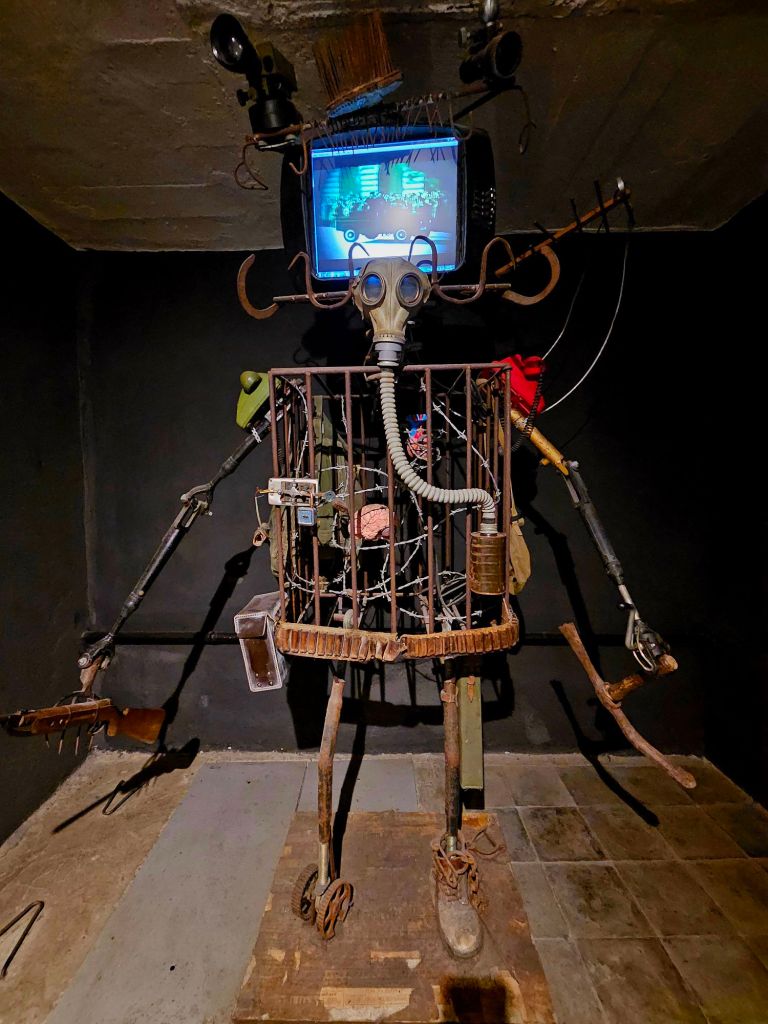
There is an art installation, a large robot-like sculpture assembled from various items such as a cage for the torso, a TV monitor for the head, a gas mask for a nose, telephones for shoulder pads, and metal arms that hold a pickaxe on the left and a rifle in the right hand, which ia an allusion to a Sigurimi slogan from the communist days.
It was definitely worth a visit and I learnt a lot about the history of Albania.
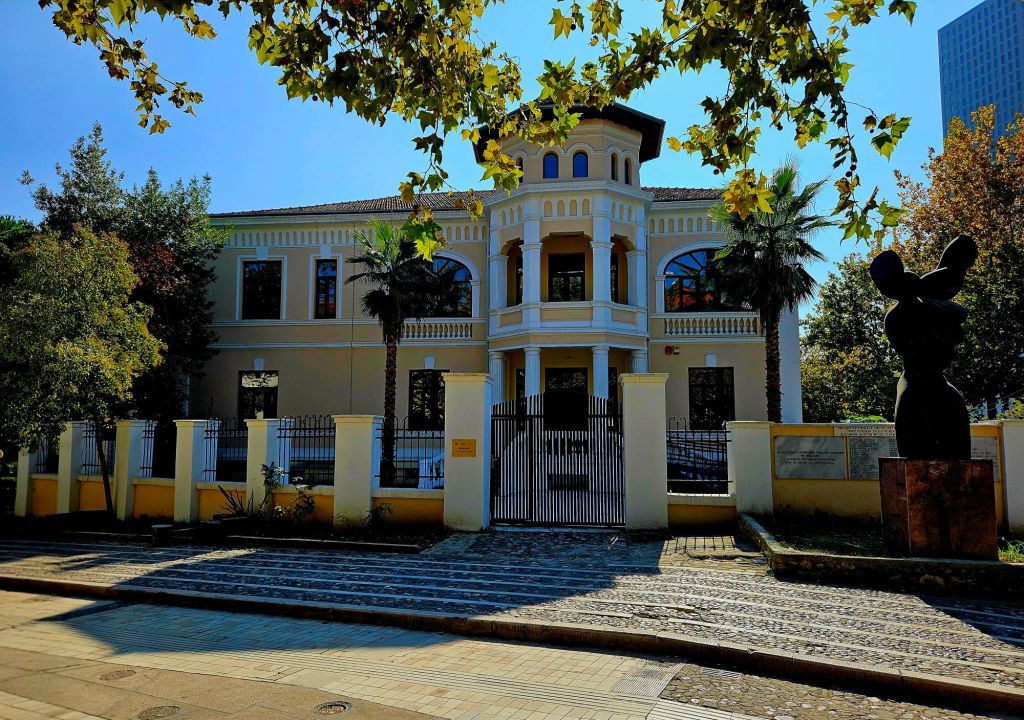
On exiting we walked past the building “The Institute for the Formally Politically Persecuted”. The building was originally built in the 1930s as the Italian Embassy. The Institute is part of the Albanian government with responsibility for granting financial compensation to former political prisoners of the communist regime and to family members of those executed or interned at concentration camps.
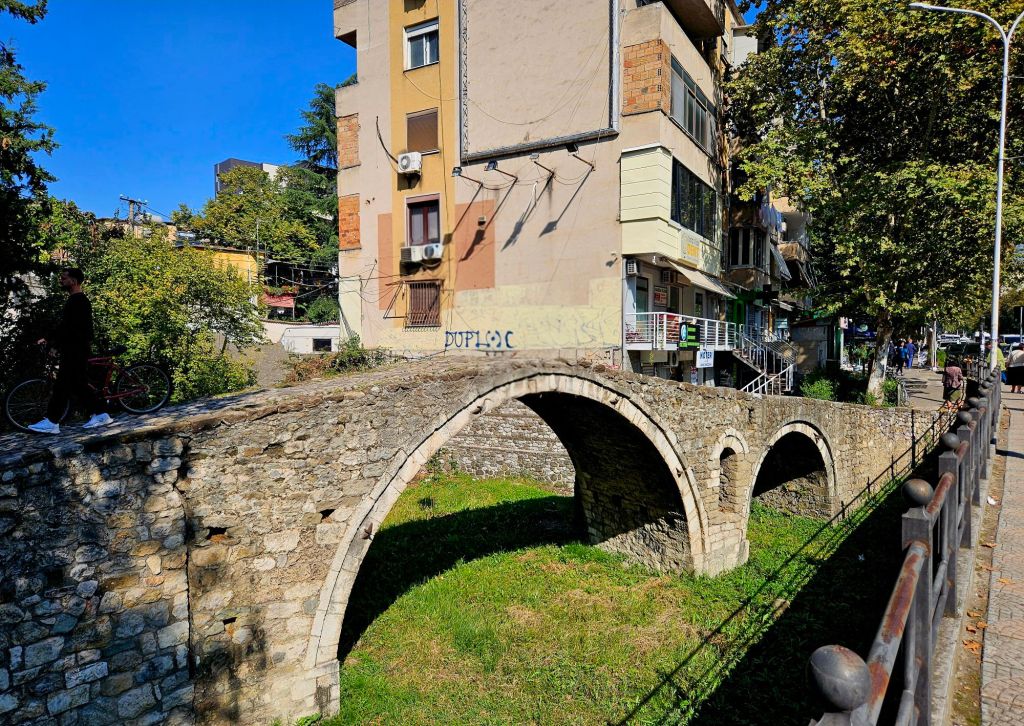
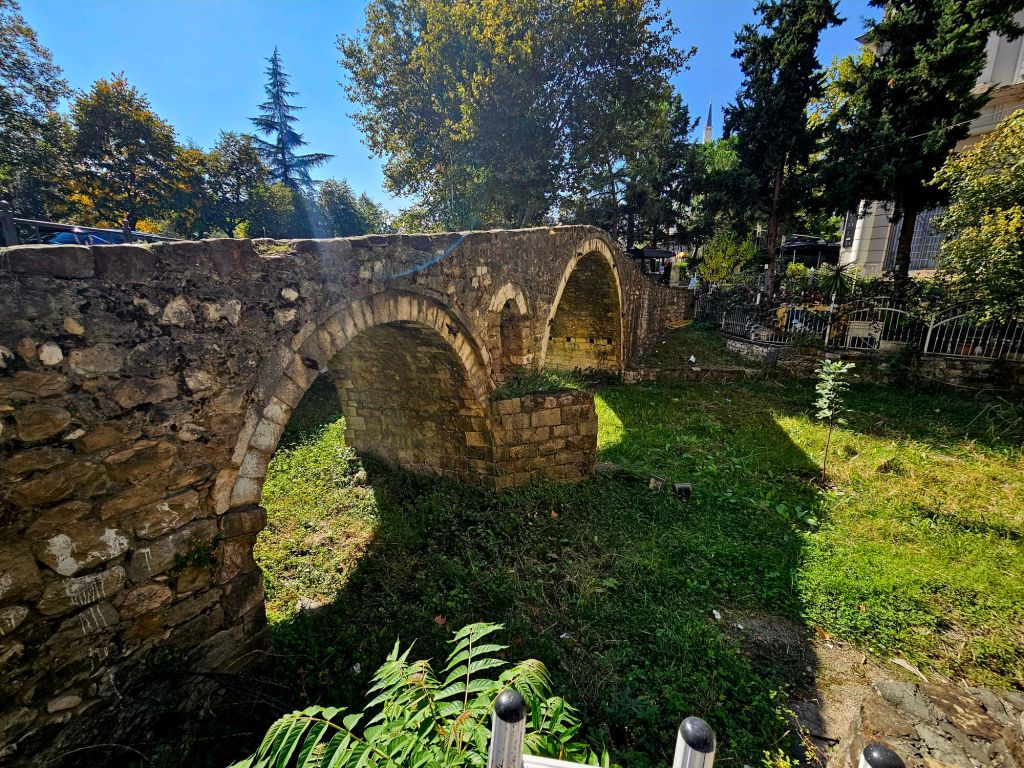
We walked on down to Tanner’s Bridge. This is an 18th century stone footbridge, built during the Ottoman period. It linked Tirana with the eastern highlands and was the way in which livestock, raw hides and produce were bought into the city. The hides were destined for the tanner shops nearby.
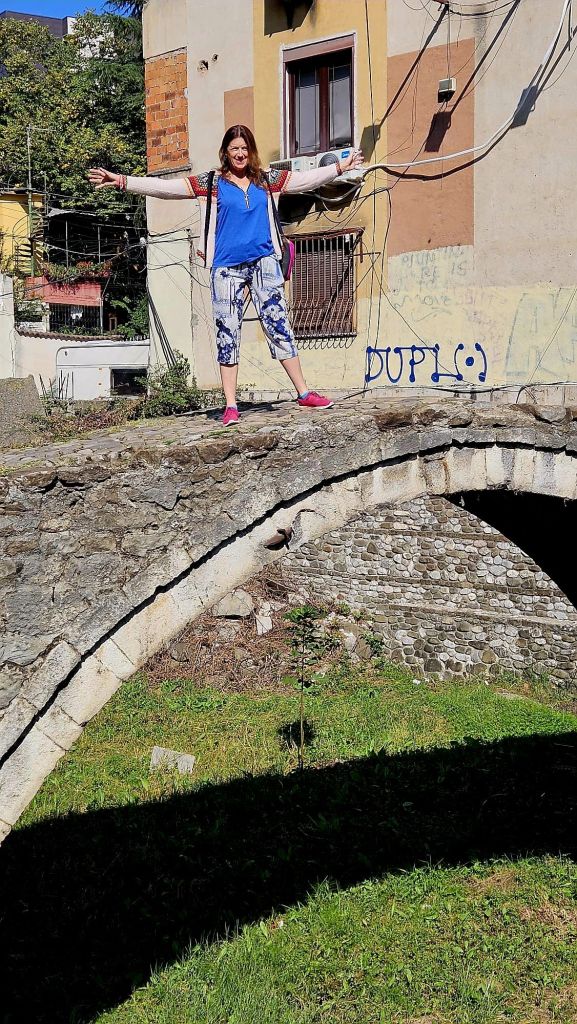
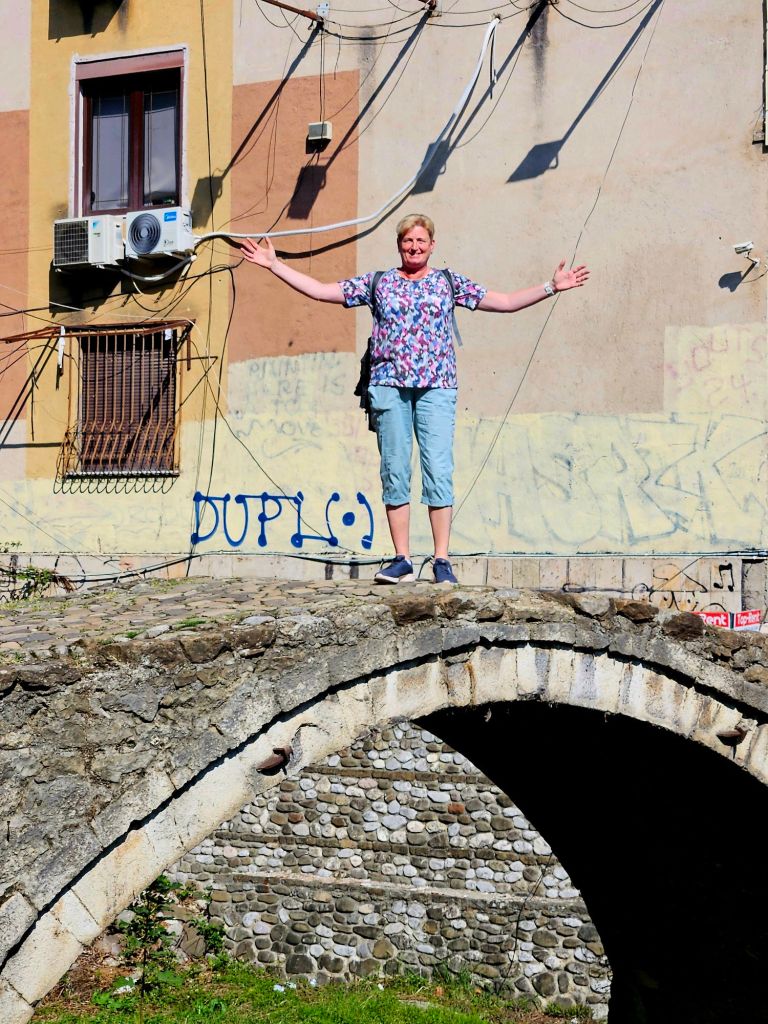
It fell into disrepair in the 1930s and was rebuilt in the 1990s. The bridge used to cross the Lana stream, but this was diverted in the 1930s. The bridge was quite slippy to walk on as the stones were very smooth.
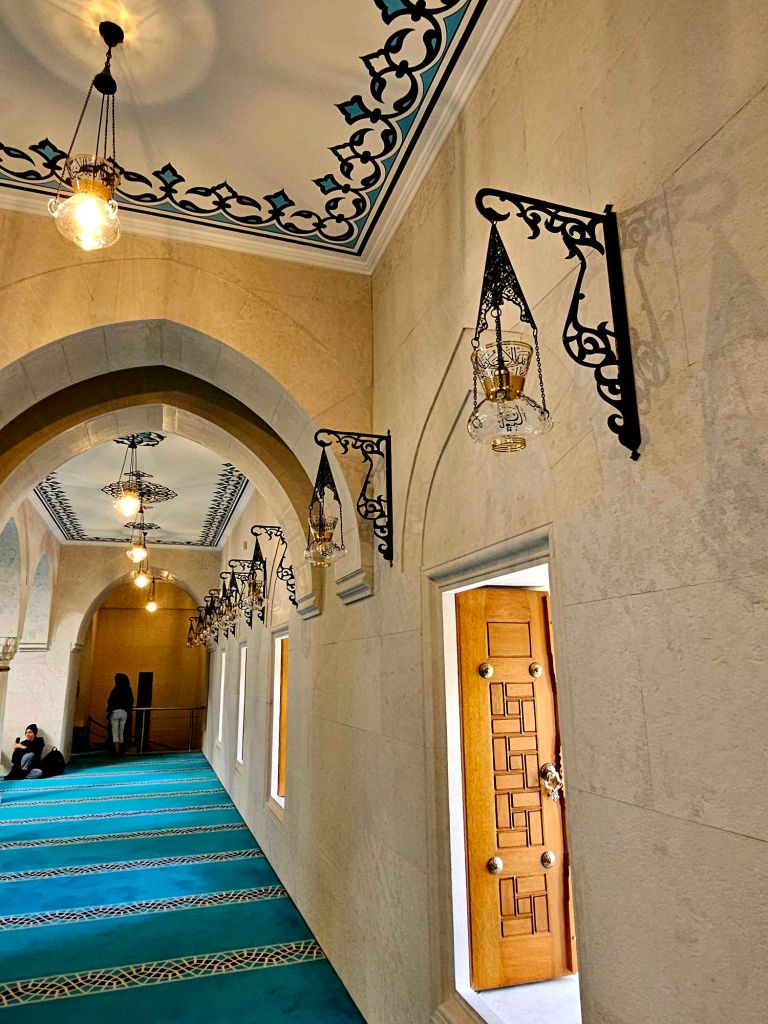
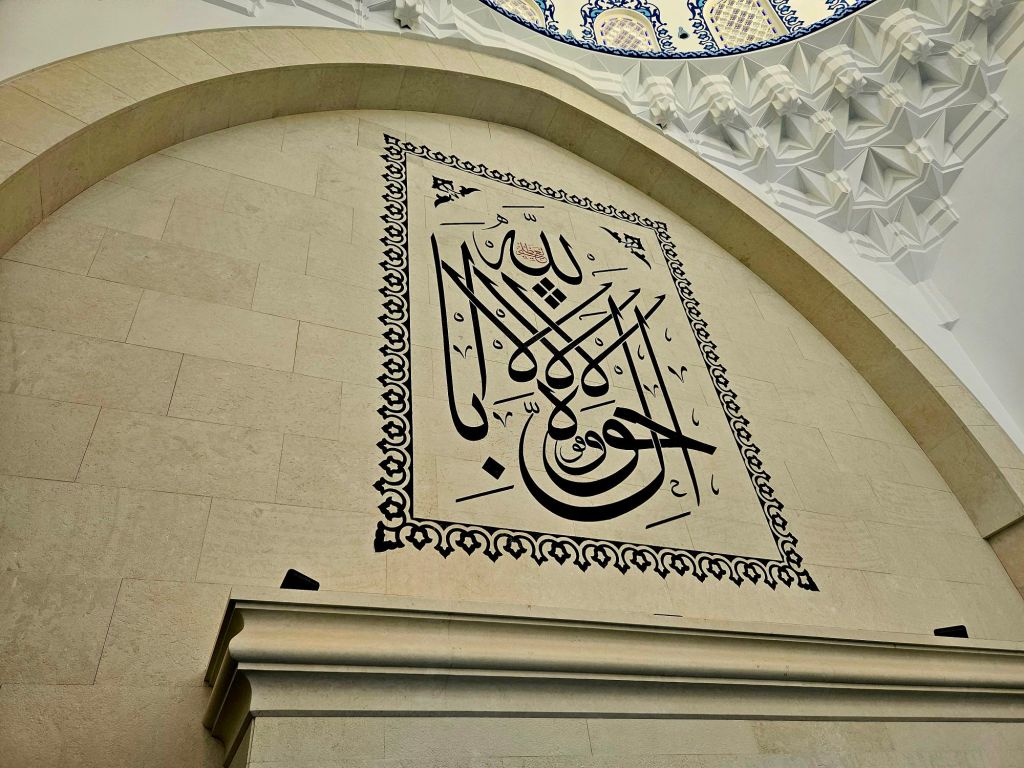
A short walk from here was the Great Mosque or Namazgah mosque. The decision to build the mosque was take in 2010, as many.mosques had been destroyed during the communist regime and Muslims didn’t have enough space to worship. Construction began in 2015 and the mosque opened in 2024. The mosque is the largest in the Balkans and has capacity for 10,000 people. Turkey funded the majority of the build.
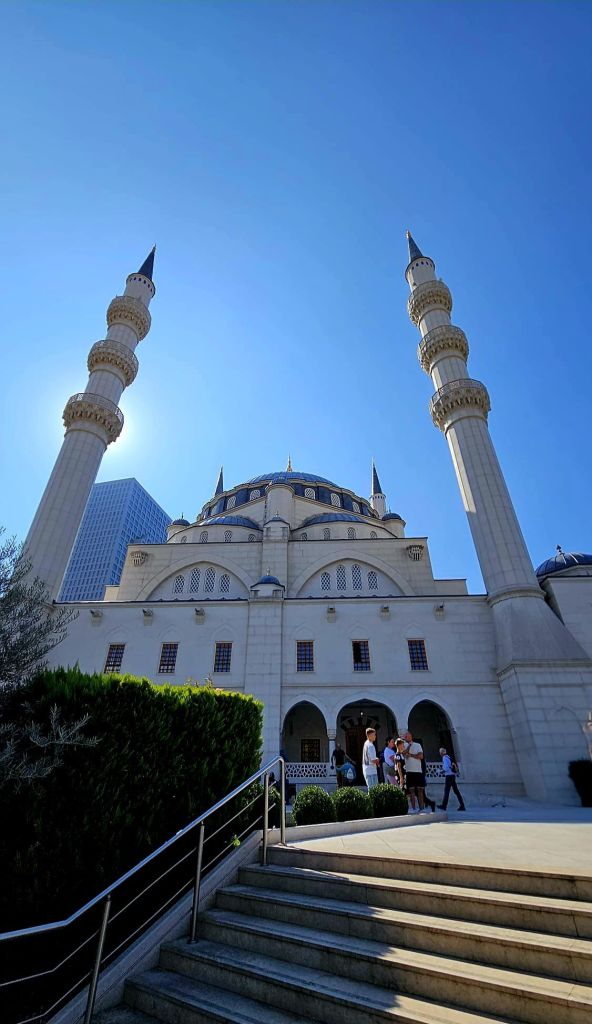
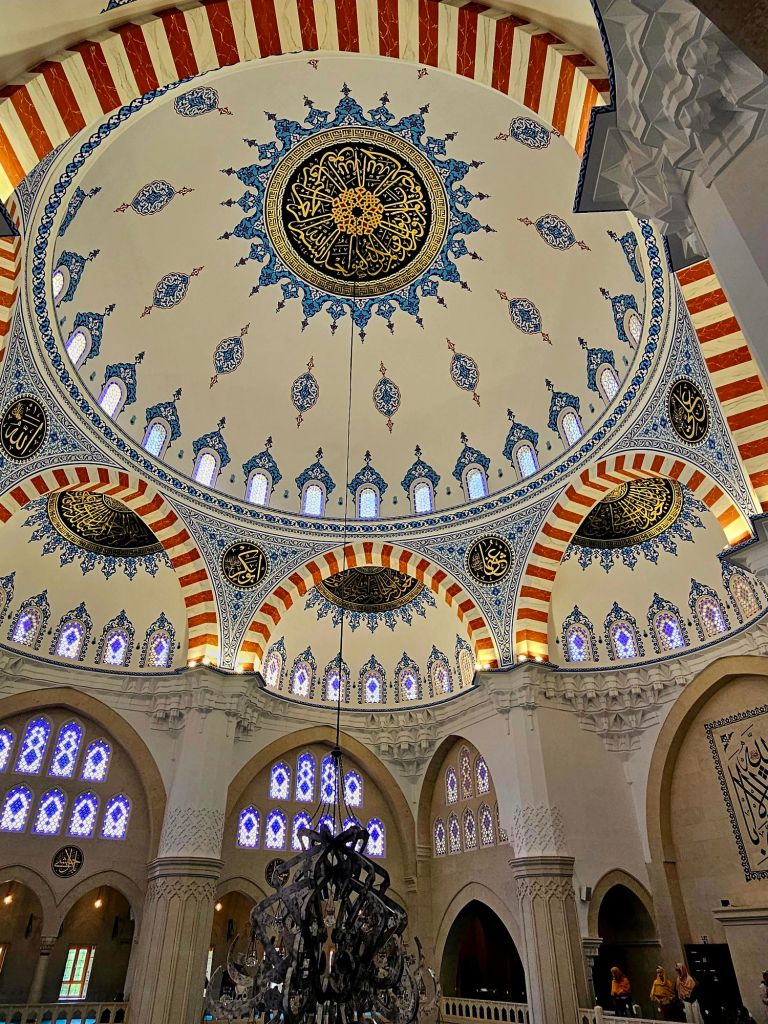
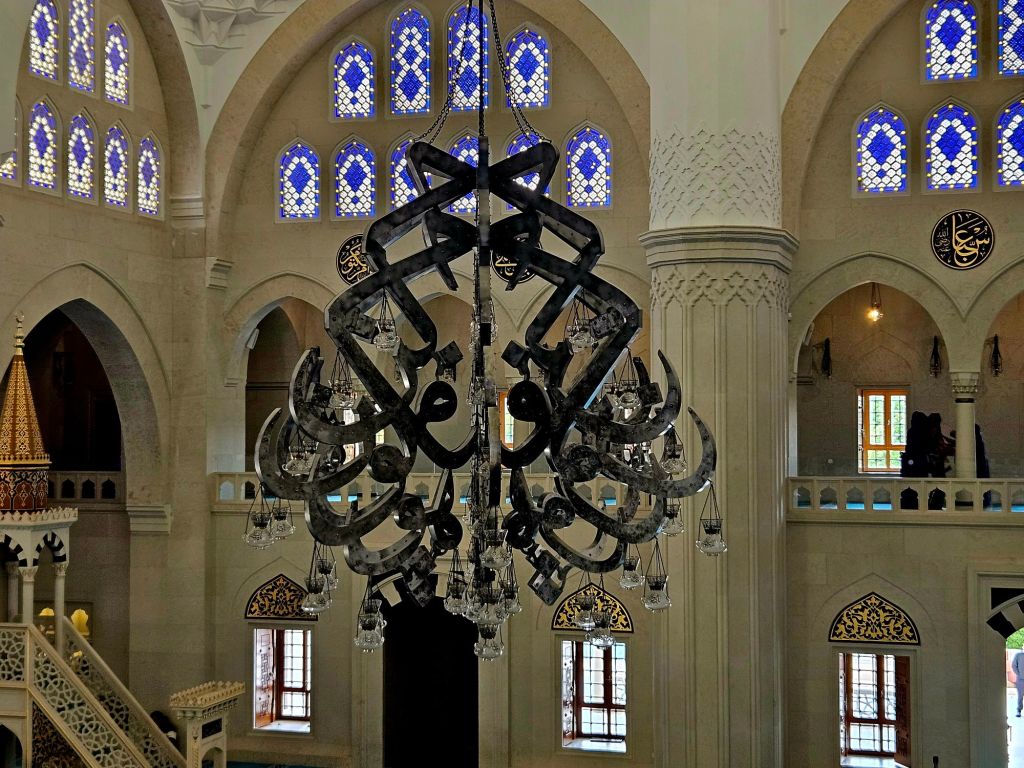
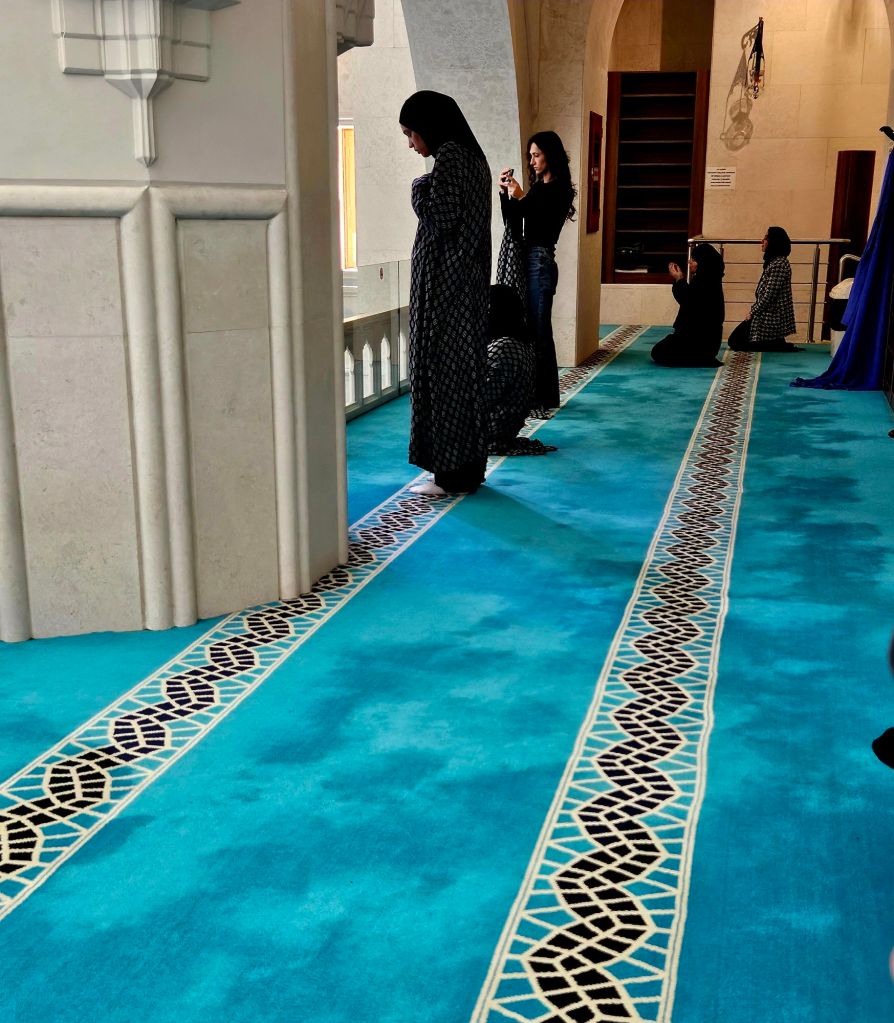
The mosque has four minarets, each towering 50 meters high, and a central dome reaching 30 meters high. The mosque is very spacious inside and has a huge prayer hall. Prayers were being recited during the time we visited. As women, we were only allowed upstairs.
The mosque also houses a conference room, a library, and classrooms for Quranic studies, reflecting its role as a center for both worship and education.

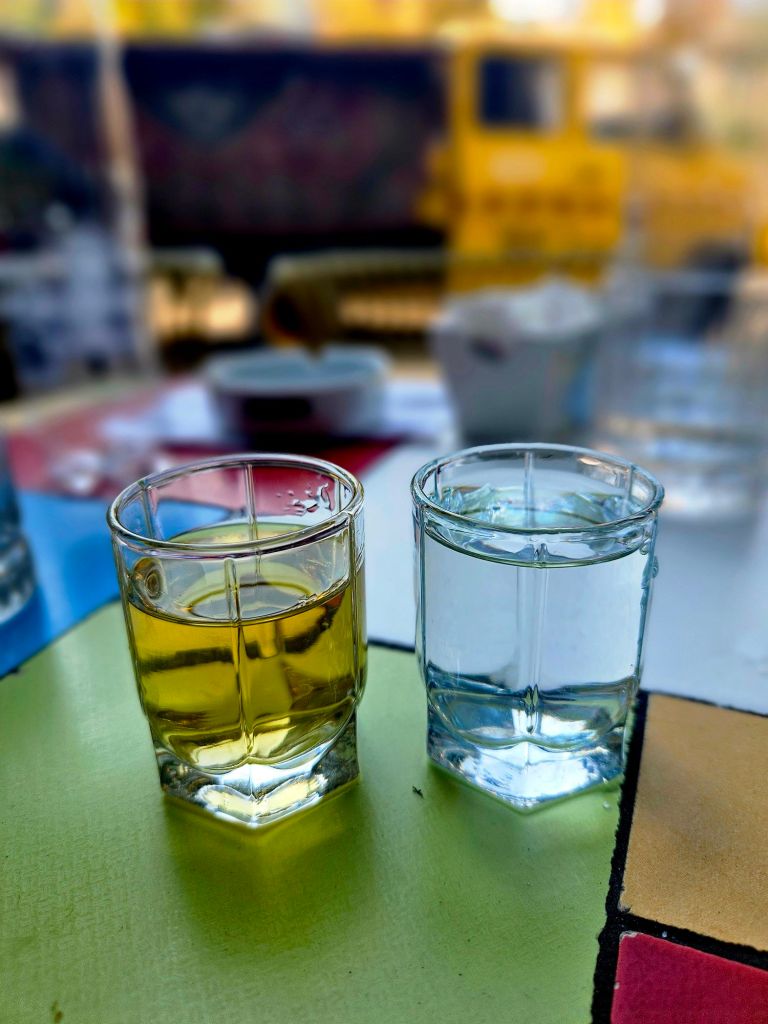
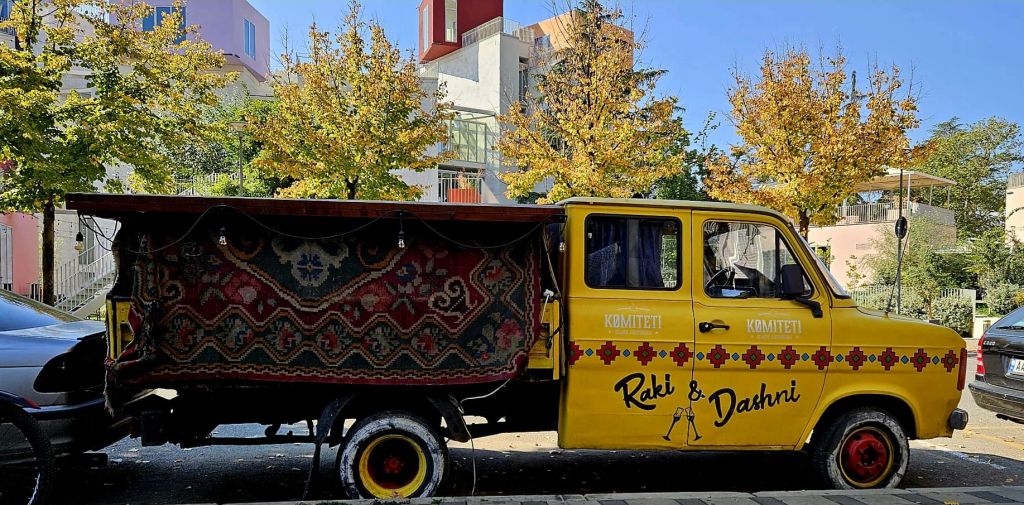
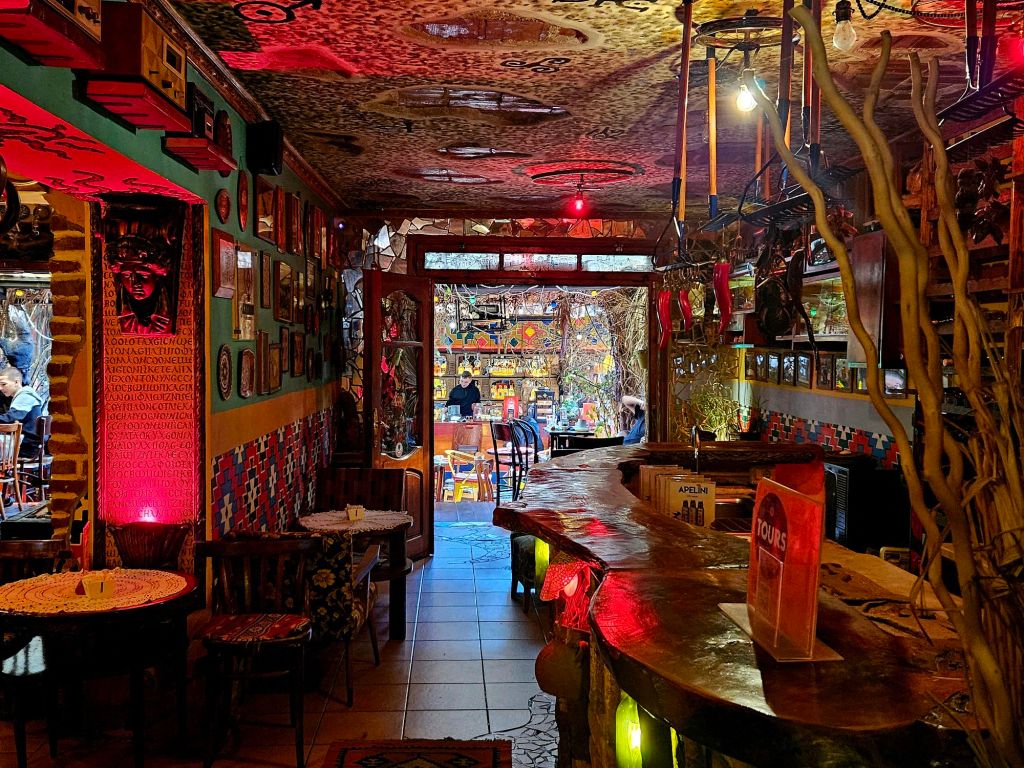
By this time we were both getting hungry – it was time for a snack. Komiteti was close by so we decided to go there. We ordered some cornmeal spinach pie, along with another couple of Rakis.

 Fun, Fitness and Fabulousness in your Fifties