We didn’t get up too early, so it was about 10am when we left the hotel. Our hotel didn’t serve breakfast, so we went to a little cafe round the corner called Maggie Mays. This is a family fun cafe and has been a fixture in Belfast for 30 years.
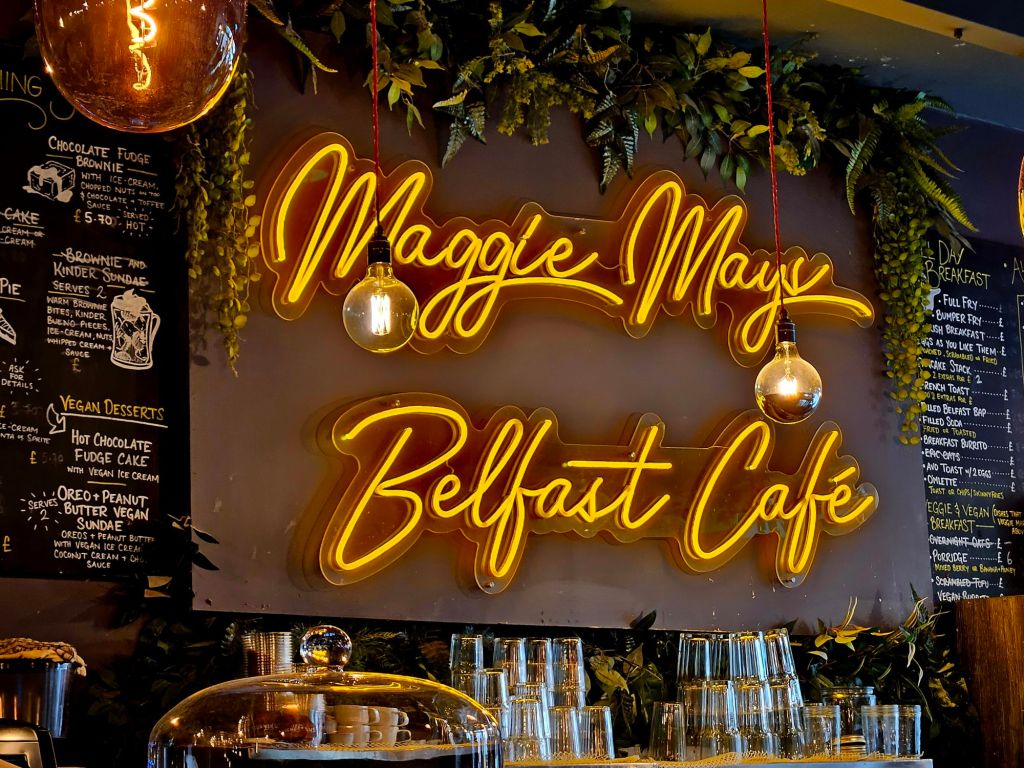
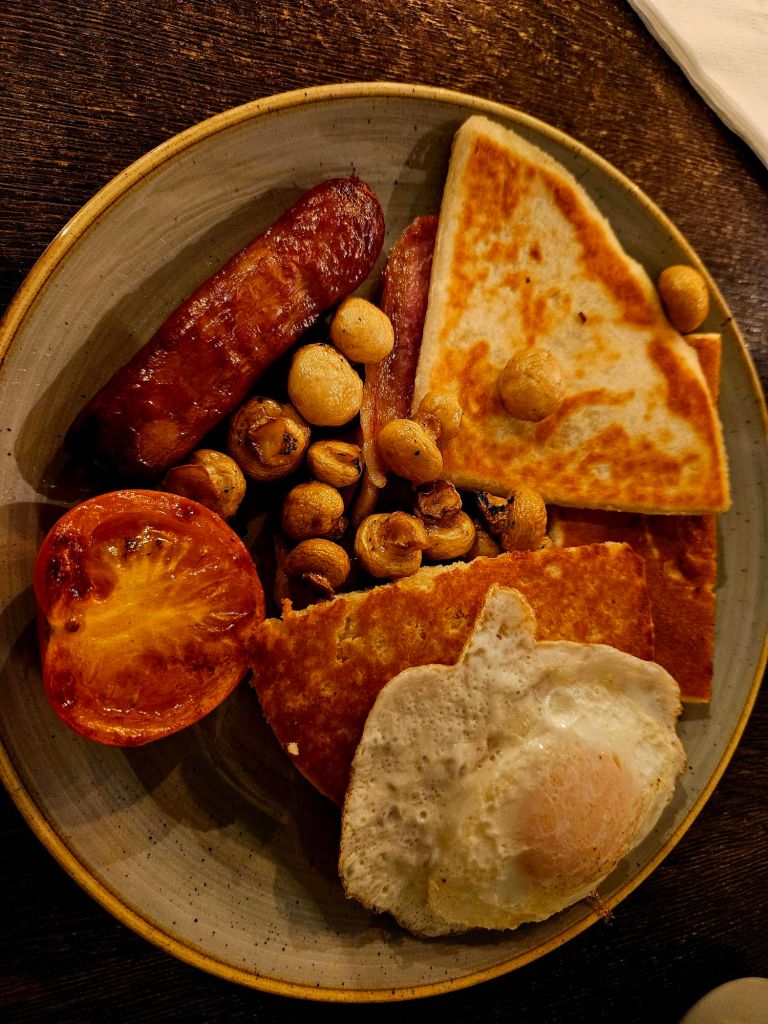
My head was a little bit fuzzy from the night before, and I was craving carbs, so I had an Irish breakfast with soda bread, potato bread and pancakes. It was just what I needed.
After breakfast, we made our way to St George’s market. The market house seen today originates from 1890 but there has been a market on this site every friday from 1604. There used to be many such markets along May Street, but this is the only one left. It is the oldest covered market in Ireland and is made from brick, iron and stone. During WWII, the market was used as a mortuary for around 250 people

The market only opens on Fridays and at the weekend and has a complete mixture of stalls selling crafts, meat, fish, other foods and plants, as well as live music. Within the market is the Old Belfast Fish Market Clock. This clock was originally built in 1821 and had been lost for years. It was discovered in the basement of City Hall in the 1980s and restored using an unused bell from the Smithfield market nearby. There’s a special mechanism in the clock that ensures the regular strikes won’t interrupt concerts and events.
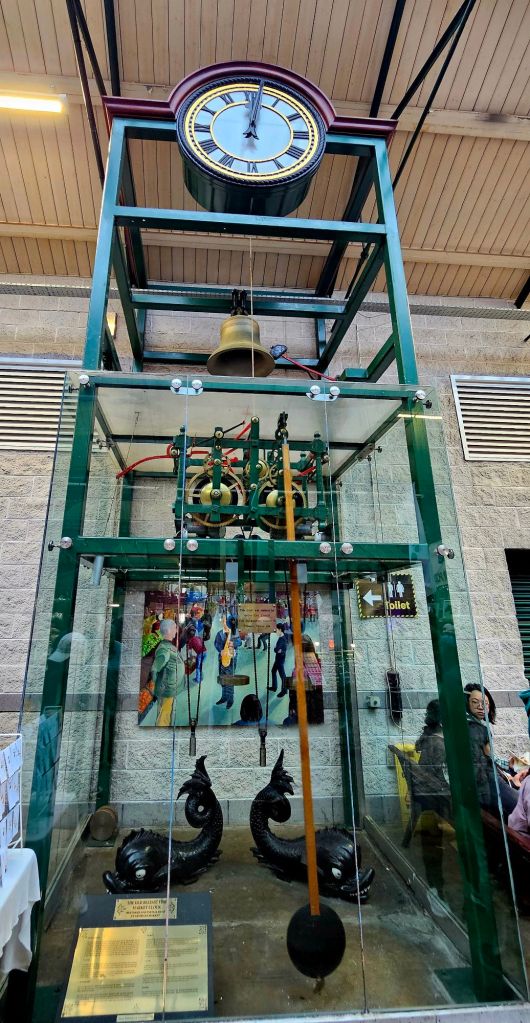
We wandered around for a little while – it’s a huge market with over 200 stalls.
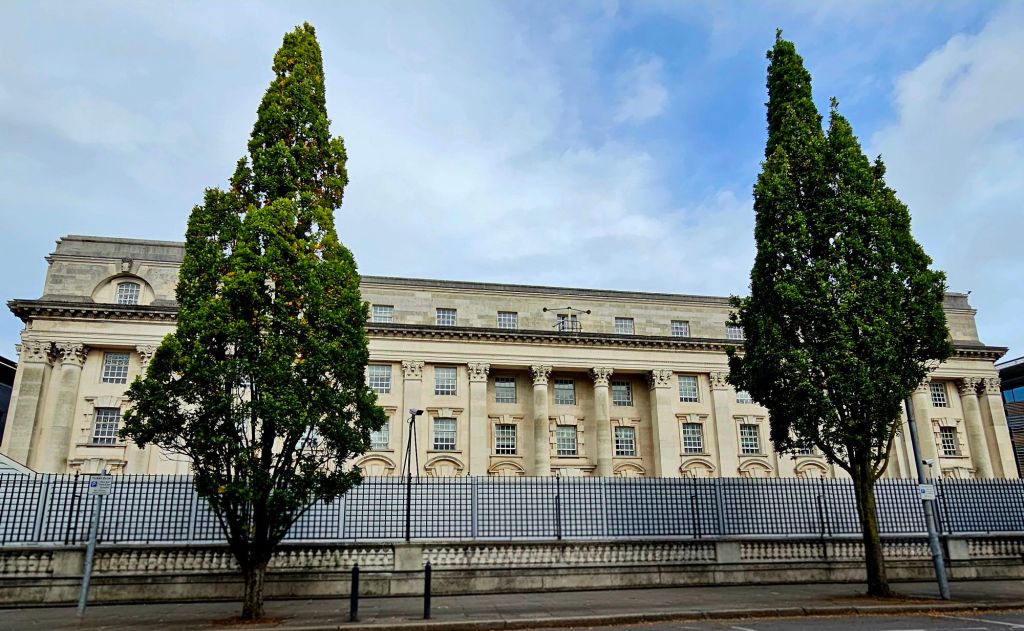
Opposite the market area are two imposing buildings. One is the old town hall of Belfast, which was restored as Belfasts County Courts but is now vacant. The hall was built in 1870 to house the council and its meetings, but a new City Hall was built when Belfast was declared a city by Queen Victoria. In 1912, it became the headquarters of the Ulster Unionist Council, and it was where the Ulster Covenant was signed in protest against Home Rule. After WWII, it went back to being a courthouse until 2020.

The other building is the Royal Courts of Justice. Until 2920, the most senior courts in Ireland were in Dublin. This building was built between 1928 and 1933. It was heavily targeted during the Troubles and suffered from bomb damage in 1989 and 1997.
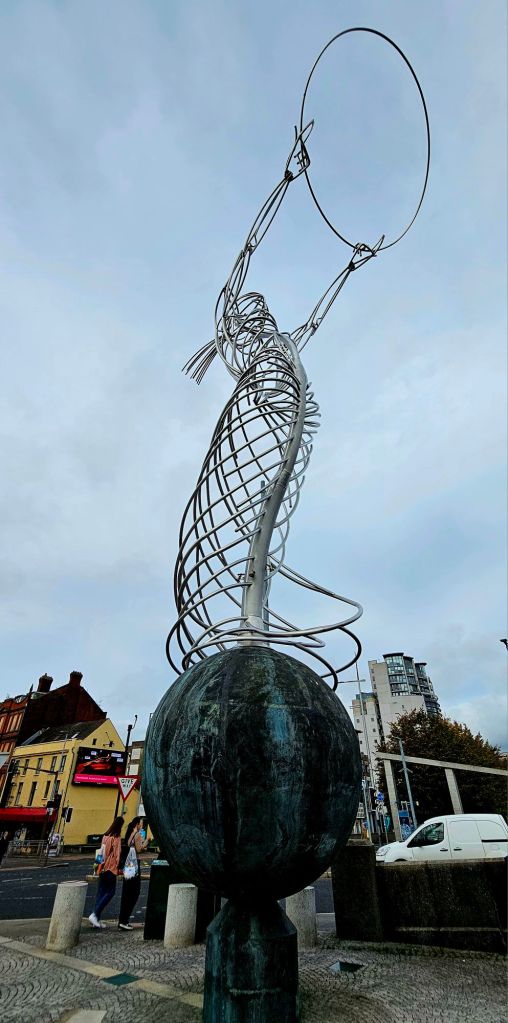
We weren’t far from the docks, so we decided to take a wander down there. On the way, we passed the Statue in Thanksgiving Square. This statue represents hope and aspiration, peace and reconciliation. Her position on the globe represents a unified approach to all life on earth.
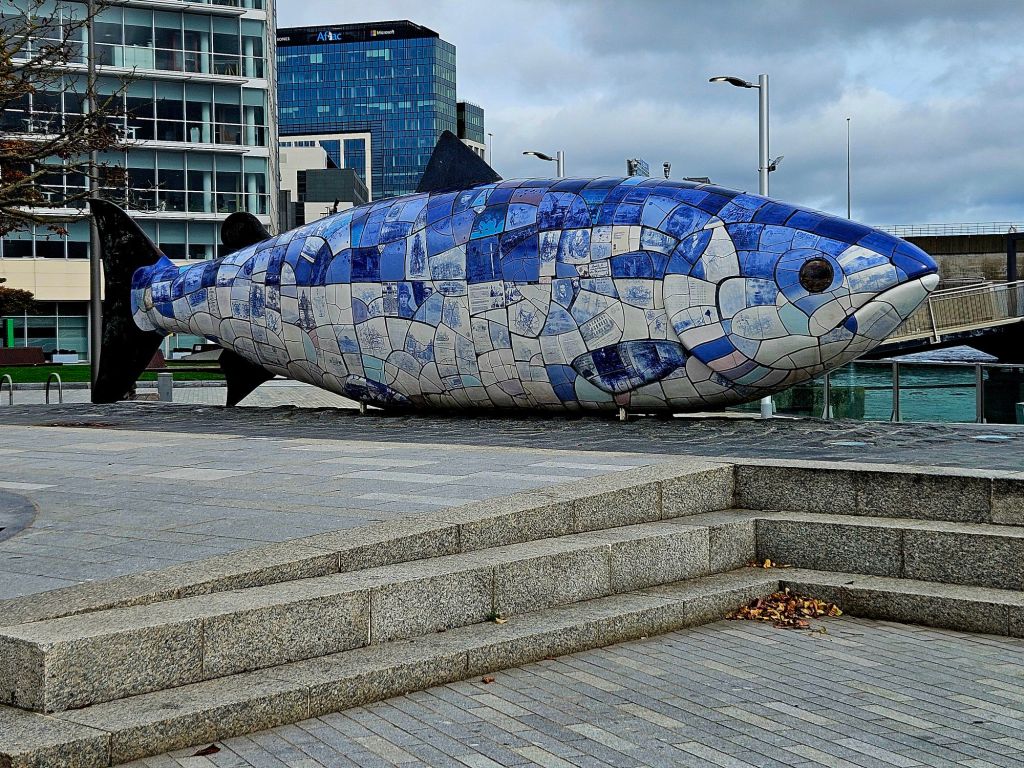
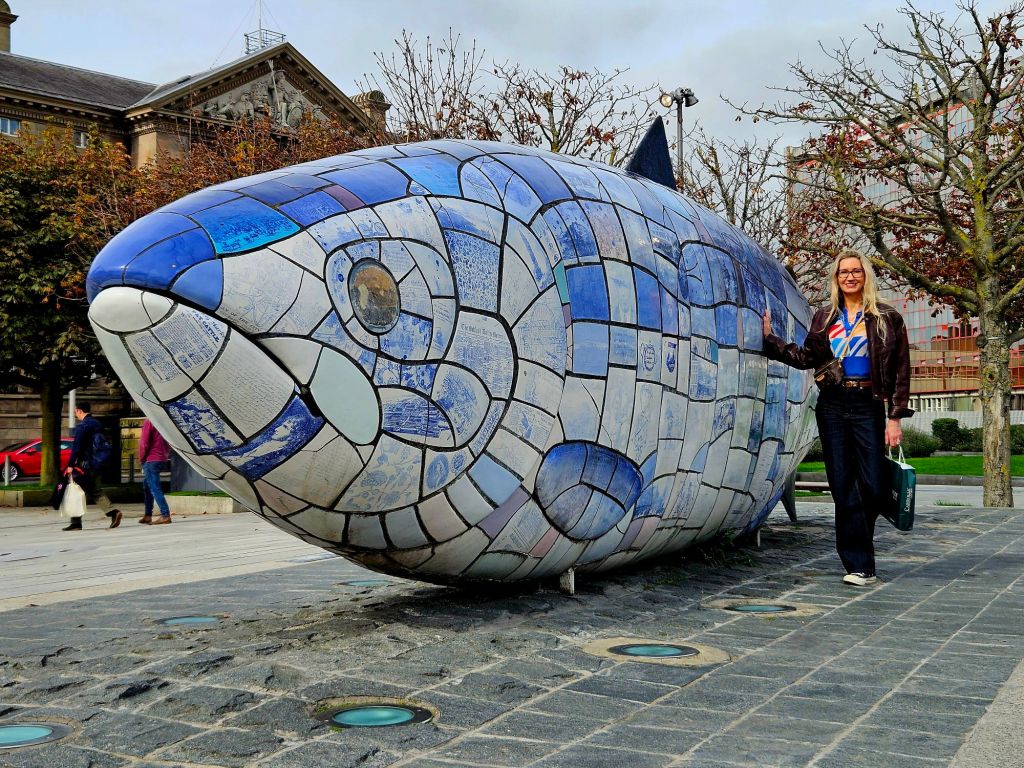
The next sculpture we came upon was the Big Fish, also known as the Salmon of Knowledge. The sculpture is 10m long and was created in 1999. The tiles feature texts, images and newspaper clippings reflecting moments in Belfast’s history. The ‘Salmon of Knowledge’ comes from an Irish legend about Finn MacCumhaill, a mythical warrior who gained all the world’s wisdom by tasting a magical salmon.
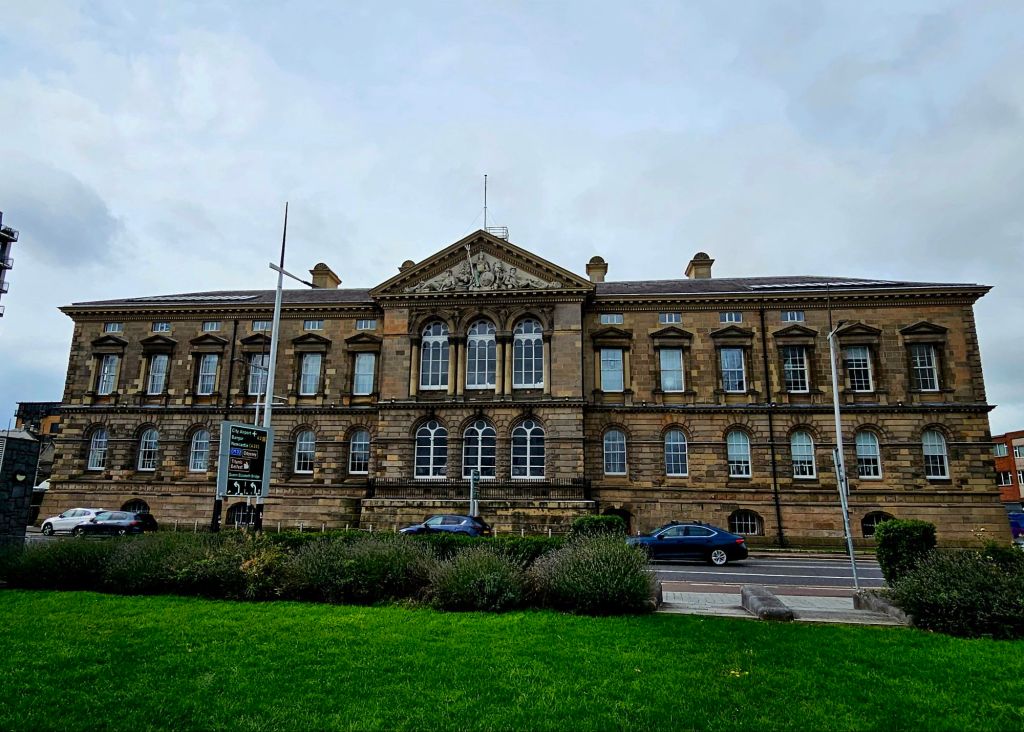
Opposite where we were is Customs House. This was designed in 1847, and the building was completed 19 years later in 1857. It has been used by various governmental departments over the years.
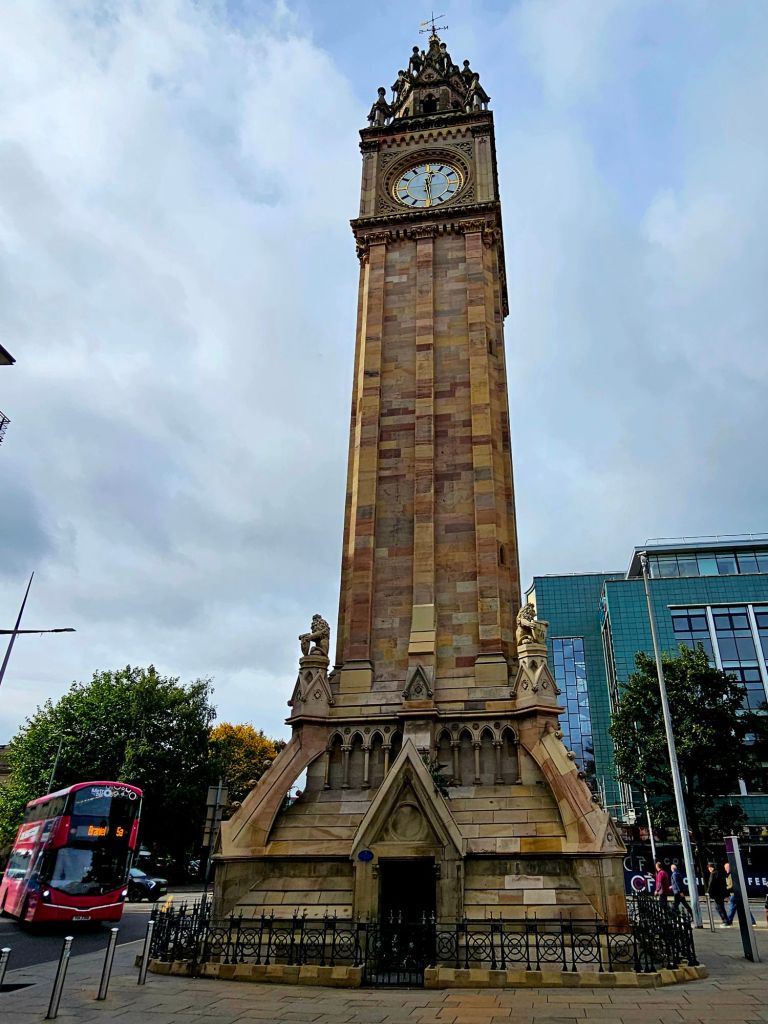
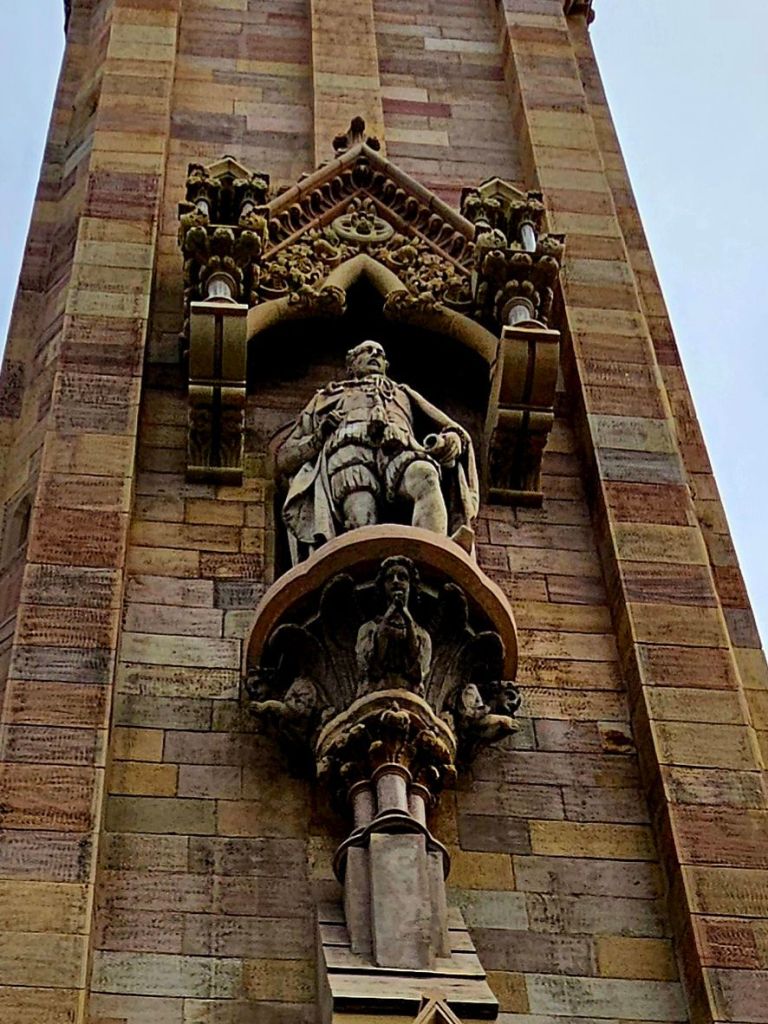
On the way back into the city, we passed the Albert Memorial Clock. The clock was built in 1869 as a memorial to Queen Victoria’s late husband, who passed away in 1861. The cost of the clock was funded by public subscription and the Lord Mayor at the time donating his salary for 2 years. The design was the result of a competition and unfortunately, the designer, William Barrer, died of TB before the memorial was completed. It stands 35m high and is constructed mainly of sandstone. It is built on wooden piles on reclaimed marshy land, and over the years, subsidence has caused a lean of 1.25m from vertical. The clock tower houses a 2 tonne bell. In the 1950s there was a caretaker of Belfast Council’s public clocks, Tom Carragher. In February 1977, the clock suddenly stopped ticking, Tom had passed away an hour before.
We stopped off at Trait Cafe for a quick caffeine boost before heading back to our hotel.
 Fun, Fitness and Fabulousness in your Fifties