I woke up around 8 am, and after a quick shower, I left the hotel to do some more exploring. Initially, Faye was supposed to travel with me yesterday, but her little dog needed some care, so she decided to fly out a day later and was due to arrive early afternoon. As Faye is not the biggest fan of churches, I planned to get a few ticked off the list.
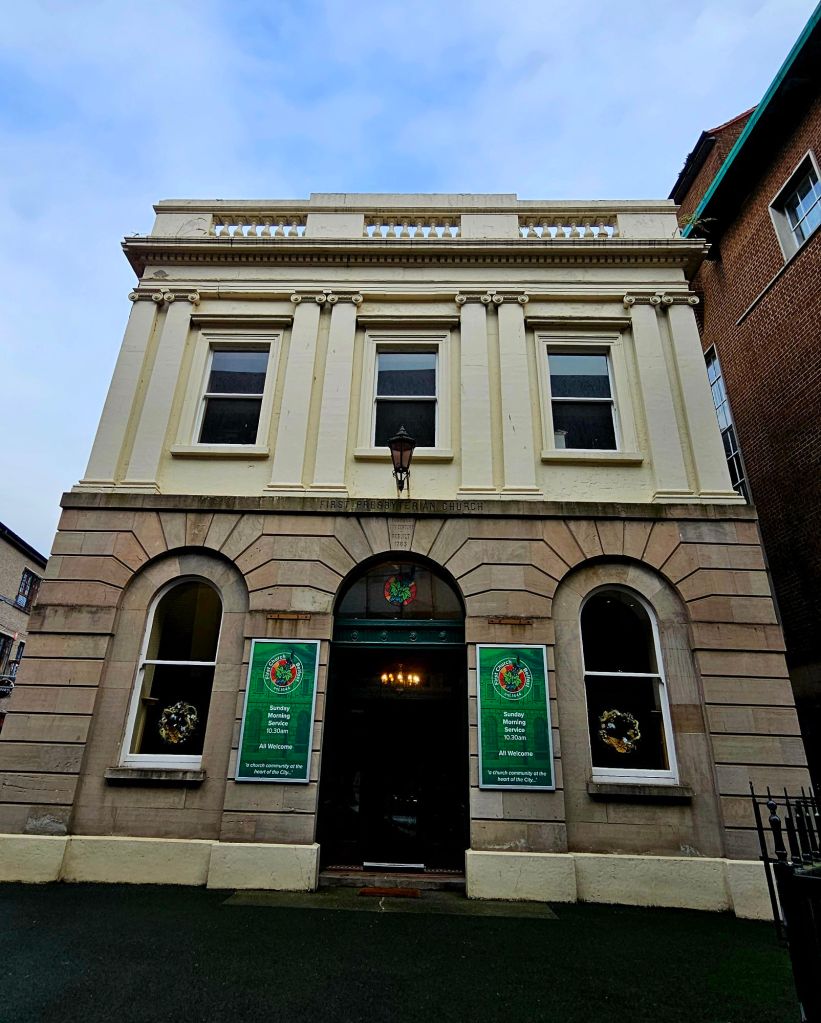
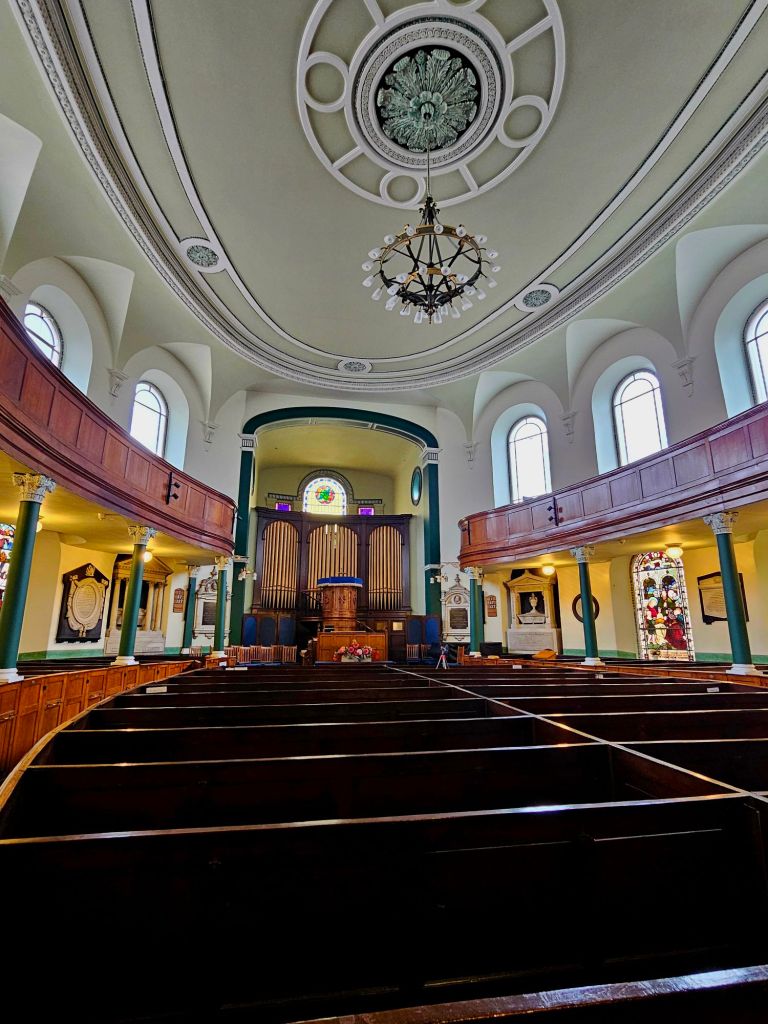
My first stop was at the First Presbyterian Church in Belfast. Its congregation was established in 1644 and the current building opened in 1783. It is the oldest surviving place of worship in Belfast. It is a non- subscribing church, which means it does not subscribe to the Westminster confession of faith. The church survived four bombings in the 1970s. It looks a little bit like a boat on the inside.
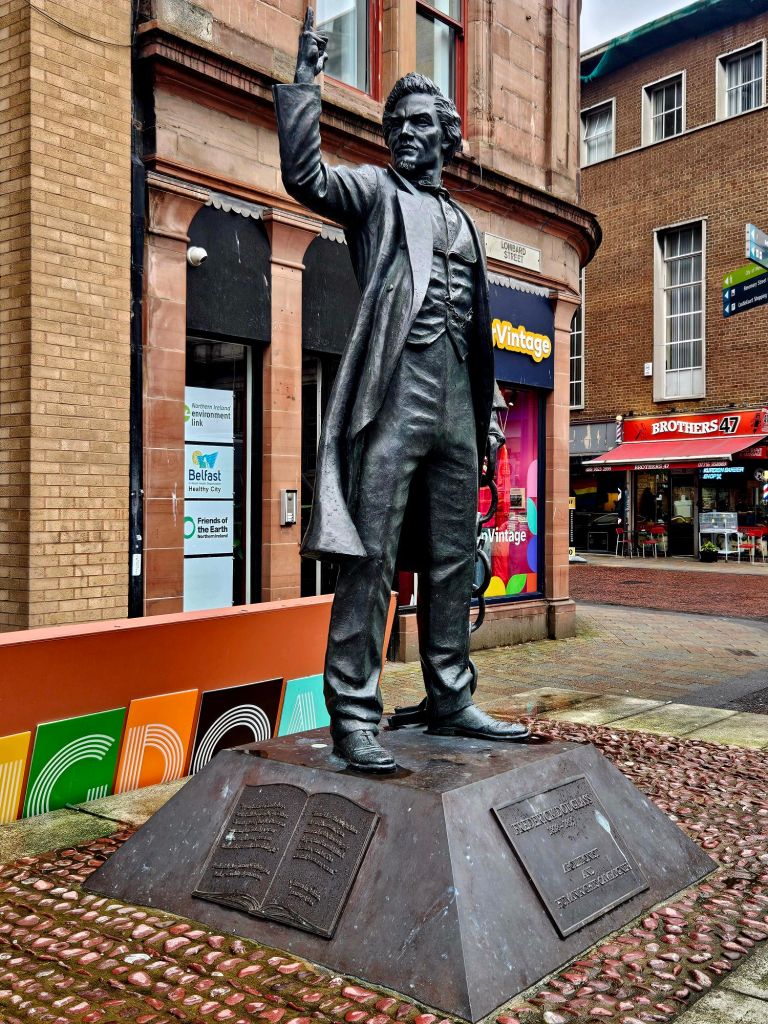
Not far from this church is a statue of Frederick Douglas. It is on the site where Frederick often addressed crowds when he came to Belfast. Frederick was an escaped slave and was the most important leader of the movement for African-American civil rights in the 19th century. He was warmly welcomed in Belfast by the antislavery societies, and he gave over 50 speeches in Ireland, recognising the shared struggles against oppression under British rule.
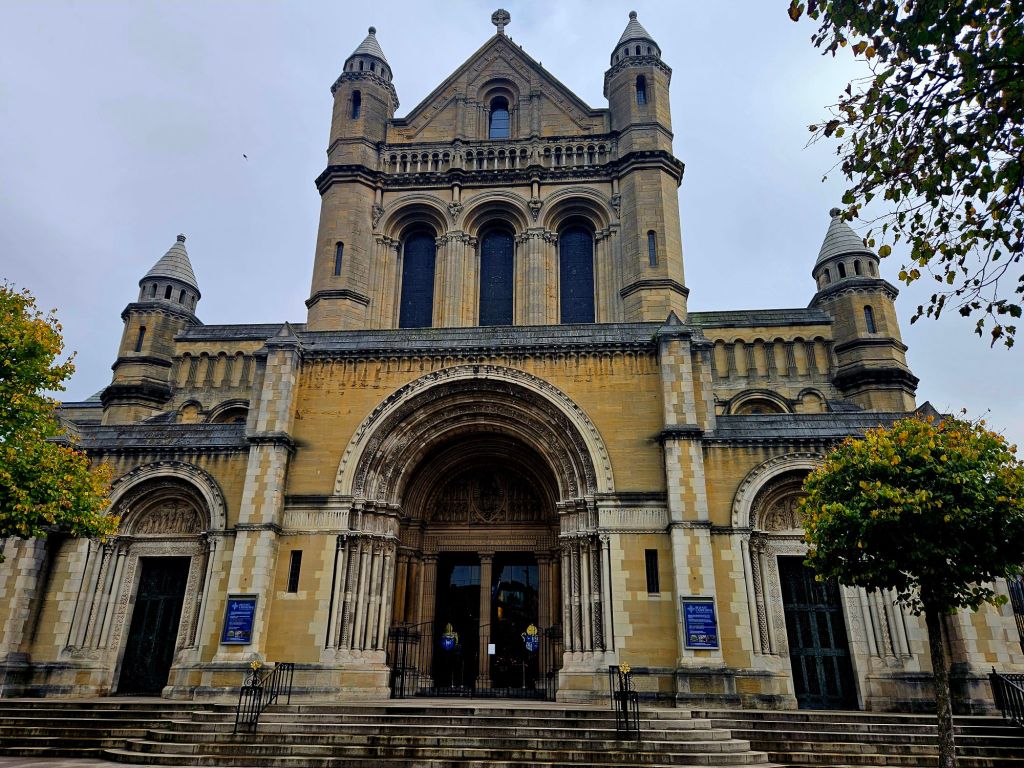
I then made my way to Donegall Street where St Anne’s Cathedral is. I was a little bit early as the cathedral was still shut.
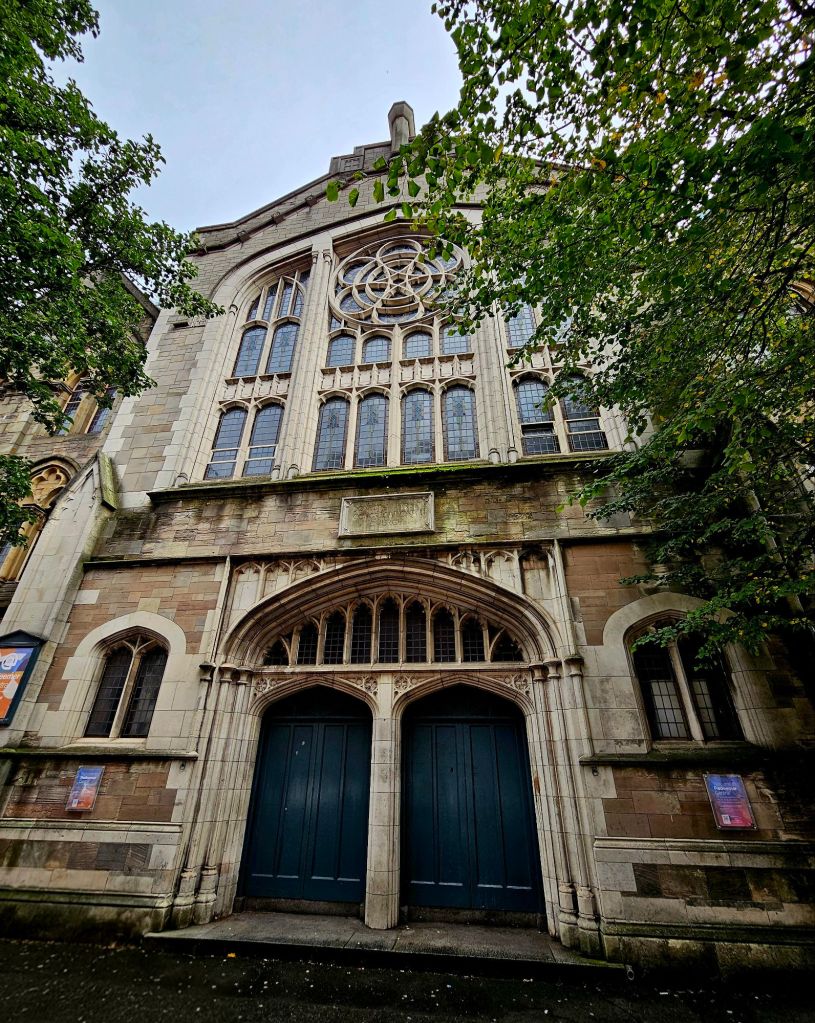
I continued walking down the street and passed the Reedemer Church – the Congregational Church. A congregational church is one where the congregation makes the decisions. There is no central authority or hierarchy, but there is a unity in belief that the bible is the word of God. The initial church was founded back in 1804, but the current building dates from 1934. The church was damaged during the Belfast Blitz and a rose window installed during repairs.
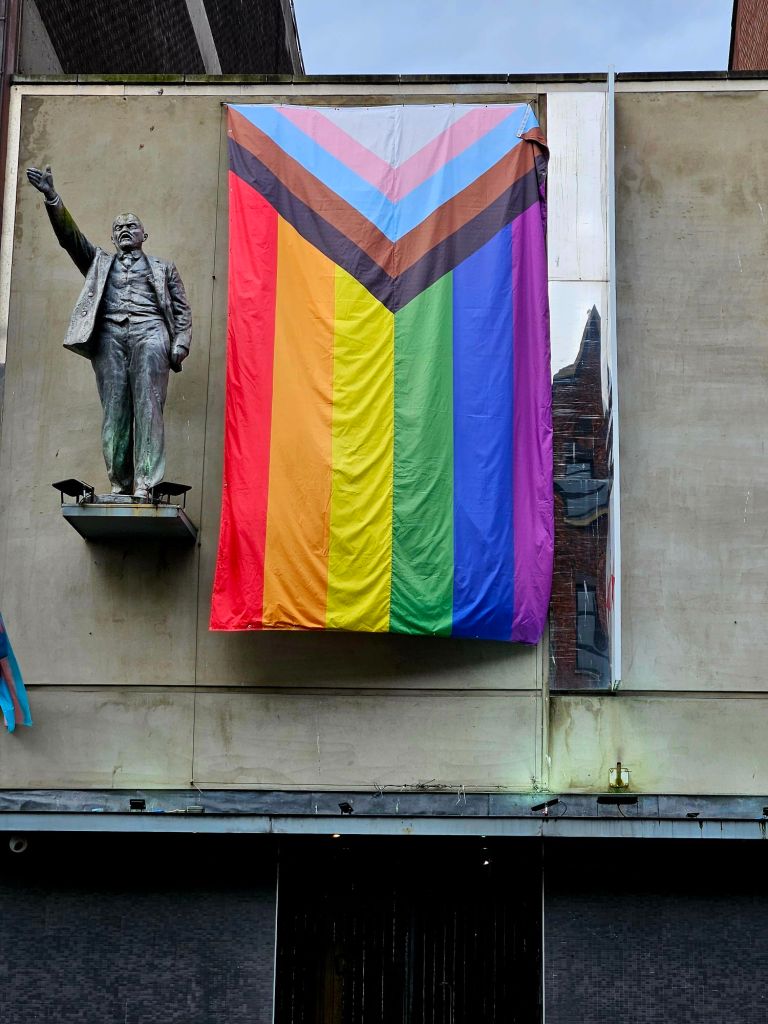
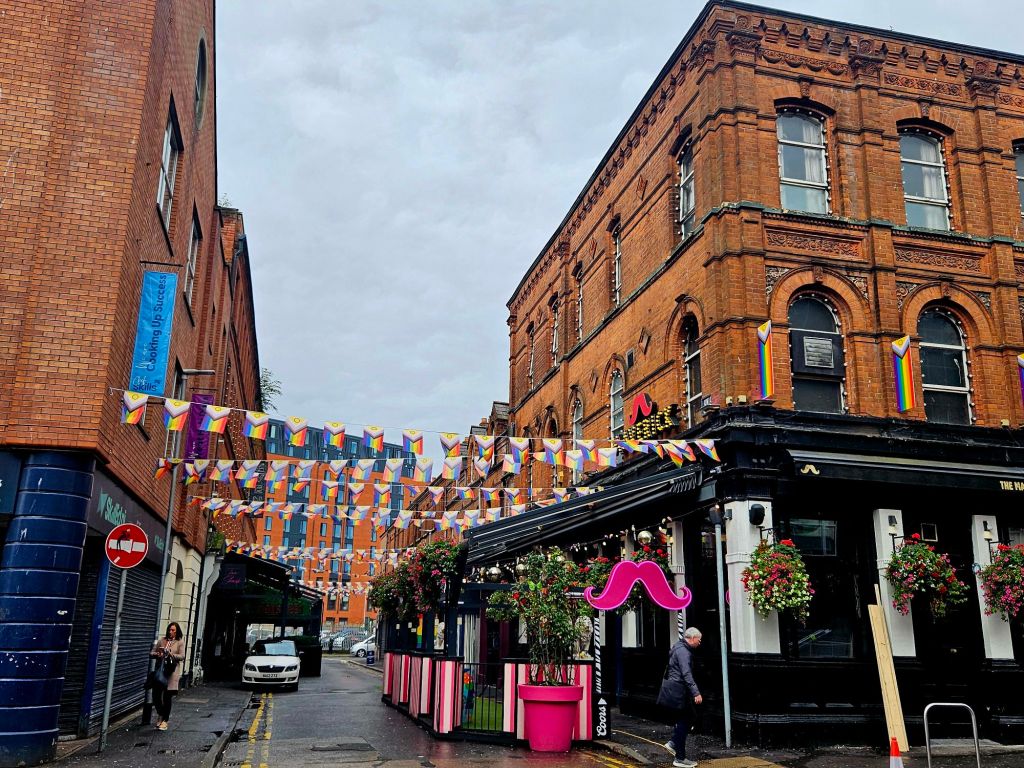
On the other side of the street, I passed the designated Gay area. The statue is of Vladimir Lenin, located above the entrance of the Kremlin, one of the gay nightclubs in the area.
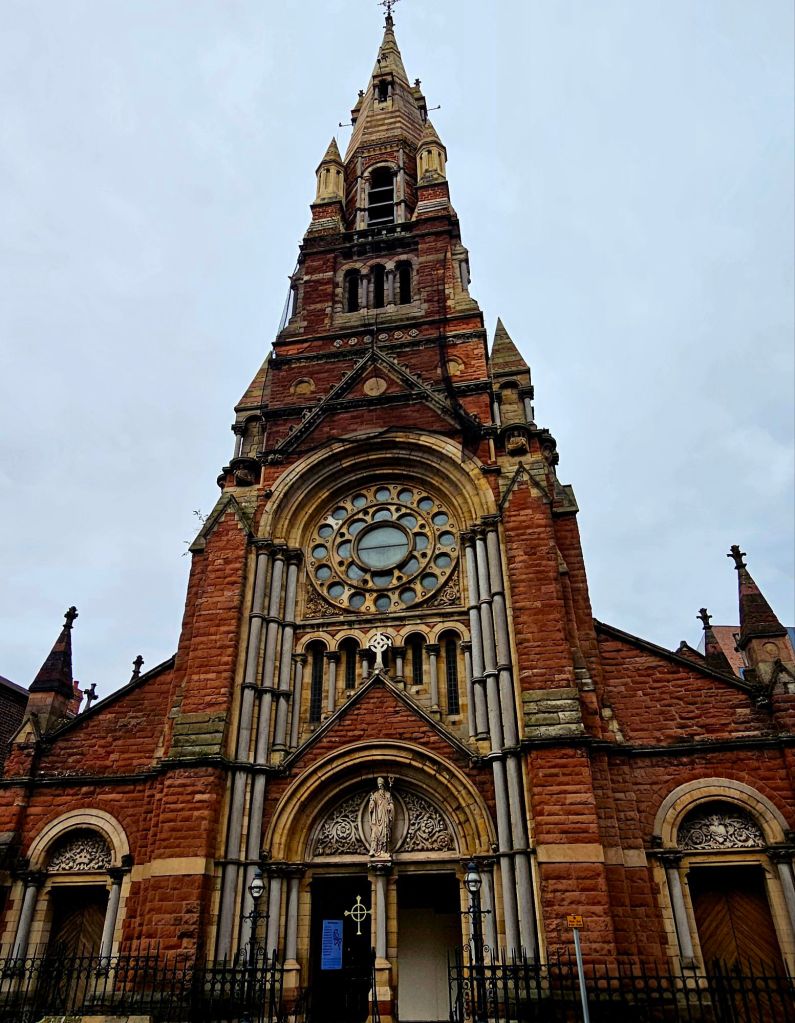
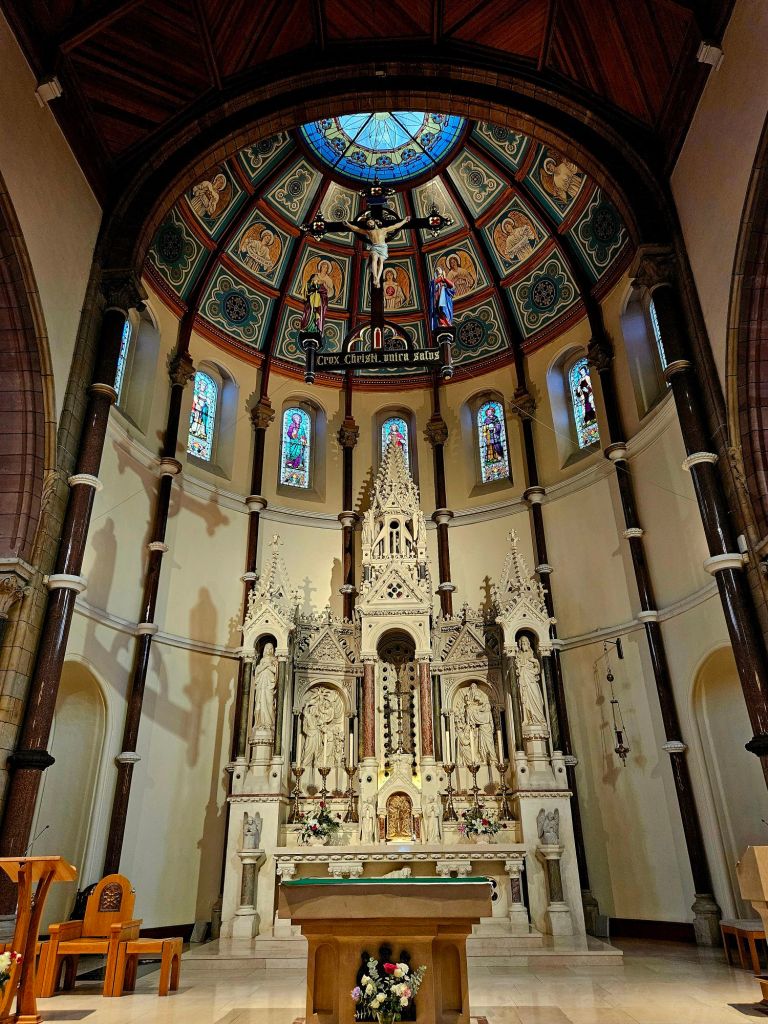
A bit further along was St Patrick’s Church – the Catholic church – which has a beautiful red sandstone exterior. The first church was built here in 1815, but the current church was built between 1874 and 1877. The new church was built around the old one, which was then demolished. There is a 2.1m tall statue of St Patrick above the entrance and a 2 ton bronze bell in the tower. The inside has a gothic feel to it.
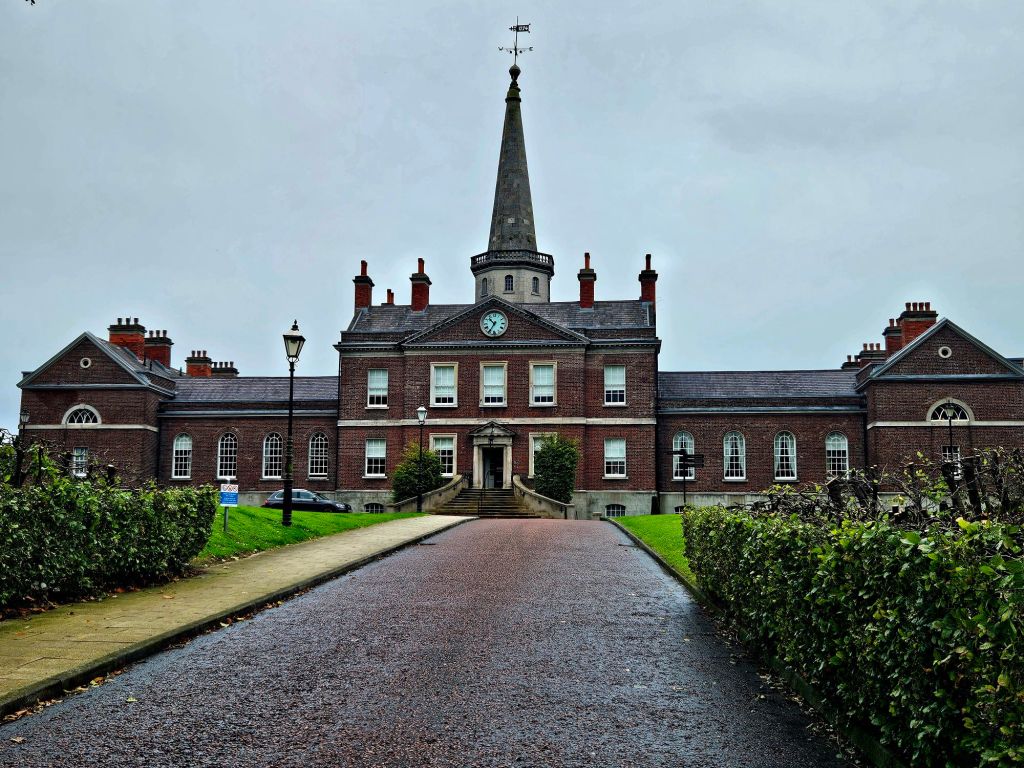
Towards the end of Donegall Road is Clifton House. It opened in 1774 and was the original poor house until the 1880s. It then became a hospital and nursing home. Until the mid 1700s, there was no formal system of legislative or public funding to support the poor in Ireland. A combination of harvest failure, seed shortages, and bad weather led to severe famine in Ulster in 1741, and around 300,000 people died, similar to the Great Famine a century later. Today, the house still provides some residential and sheltered housing for older people.
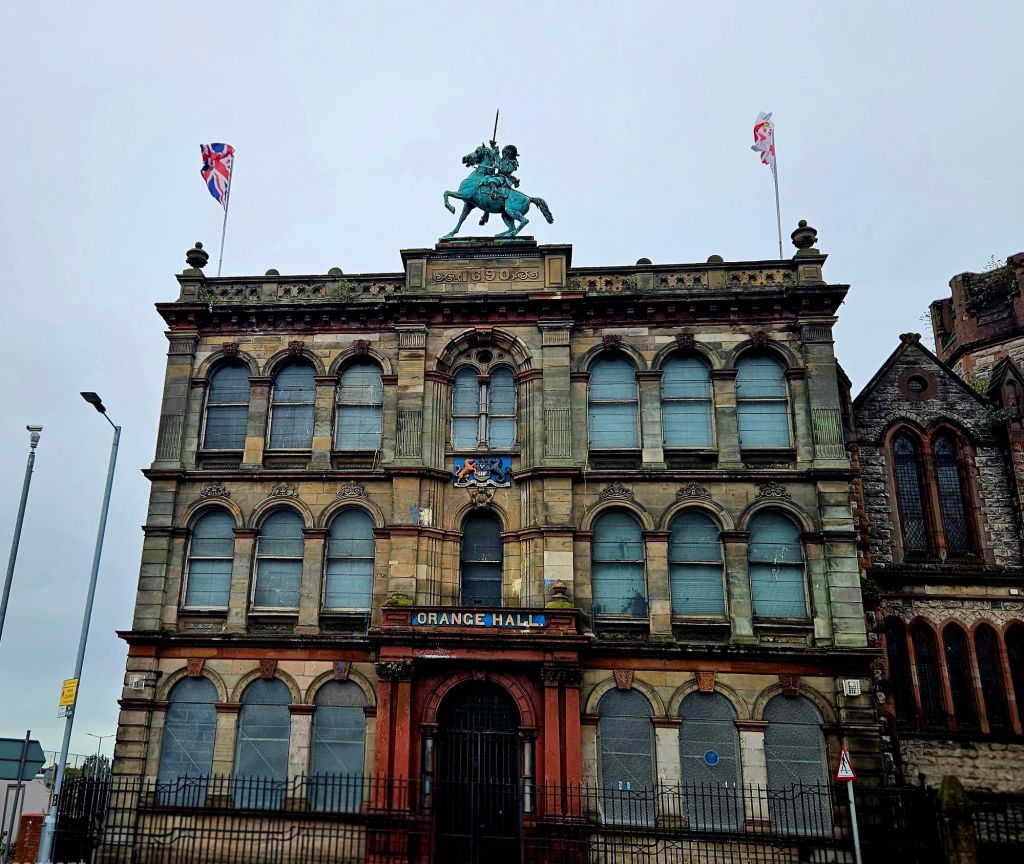
Almost opposite Clifton house is the Orange Hall, which opened in January 1885. This hall was built as a result of the growing prominence of the Orange Order in late-Victorian Belfast, which saw a surge in membership in response to Home Rule anxieties. It is the largest purpose built Orange hall in the world and now houses a museum with artefacts related to the Orange Order.
Right next to the Orange Hall is the Indian Community Centre, which houses a Hindu Temple. It was originally built in 1889 and was the former Sunday school of Carlisle Memorial Church.
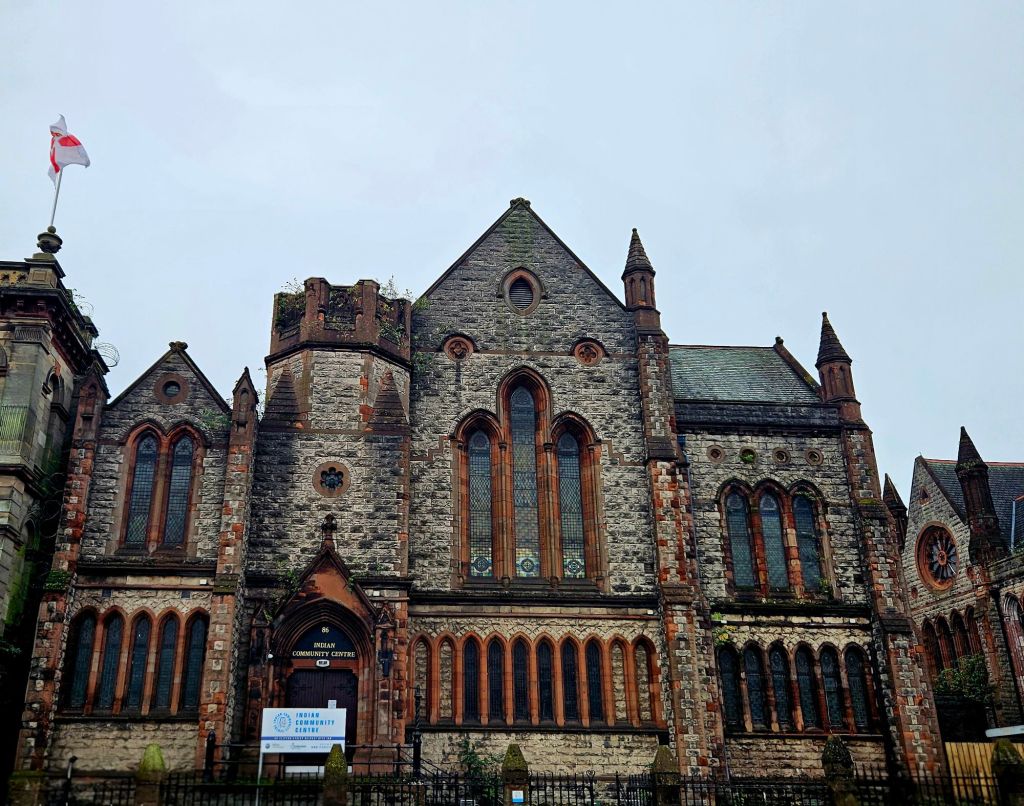
And on the other side of this is the Carlisle Memorial Methodist Church. The church was completed in 1875 and was home to one of the largest Methodist congregations in Belfast. It stopped being used as a place of worship in 1982 as a consequence of the declining congregation and its location at a major interface between Catholic and Protestant populations. It doesn’t look like it is currently being used for anything.
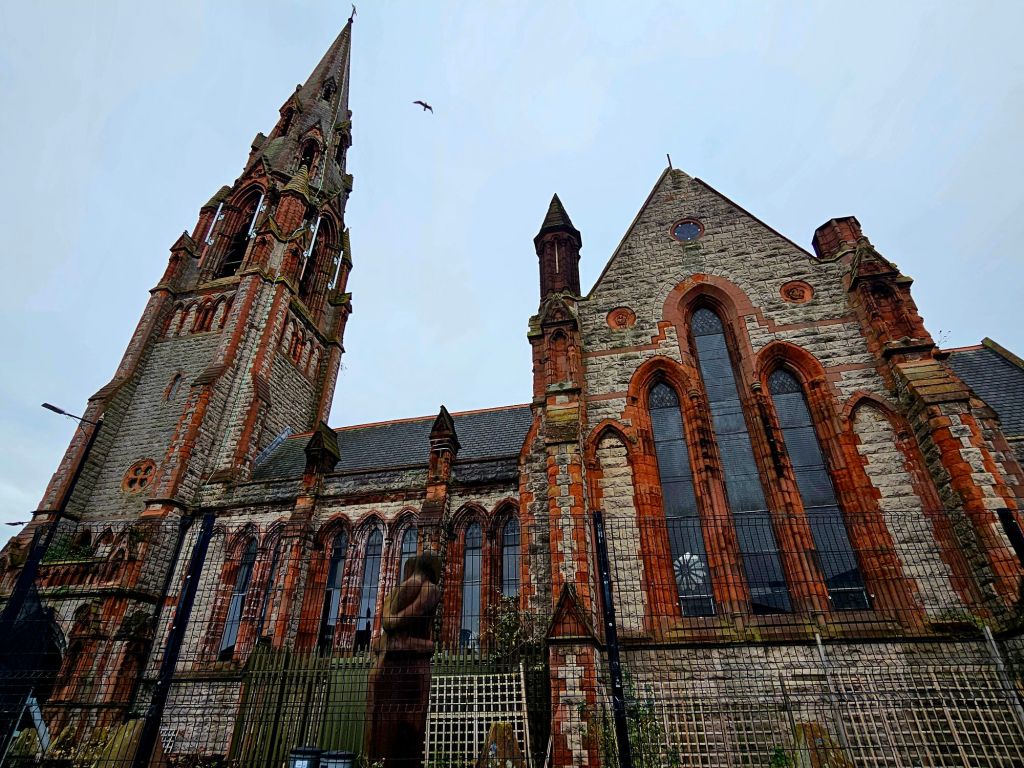
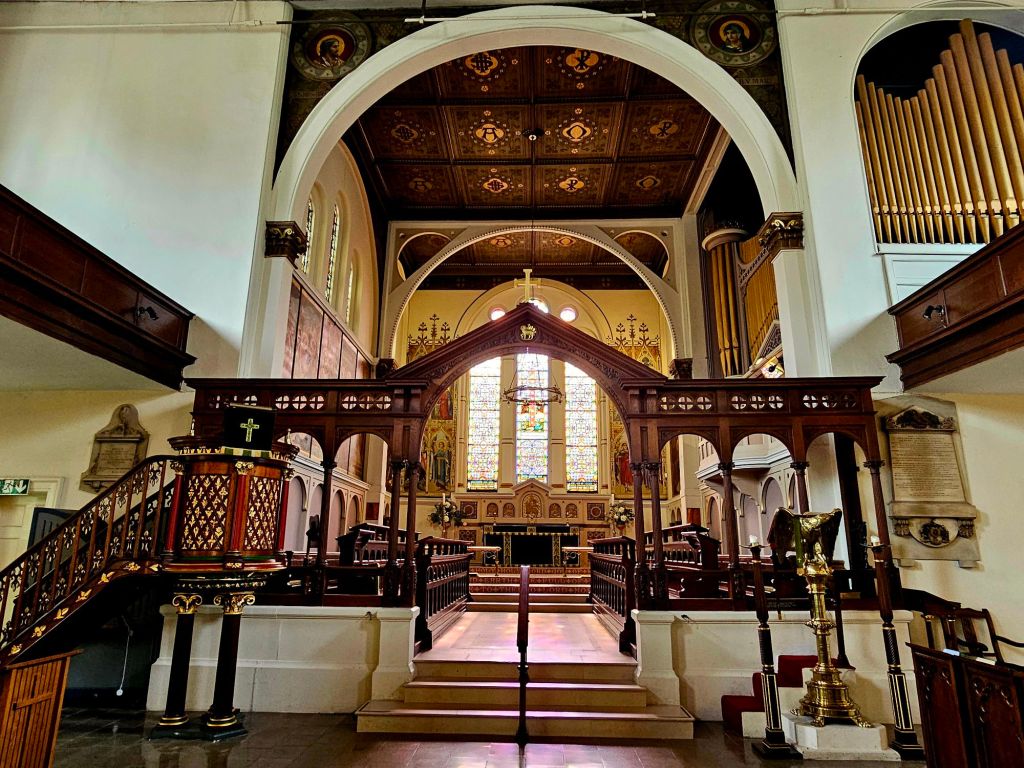
And then I made my way back to St Anne’s Cathedral, which was now open. Construction began in 1898, and it involved 8 architects over a period of 80 years. After Queen Victoria declared Belfast a city in 1888, it was felt a more prestigious place of worship was needed. The current cathedral was built around the old church of St Anne’s before it was demolished. This previous church was a gift to the town of Belfast by its landlord, Lord Donegall, whose wife also happened to be called Anne. Services continued to be held in the old church until 1903. Athough it is mainly built from Portland Stone, it includes a stone from each county in Ireland. This is the Church of Ireland Cathedral, and the Celtic Cross on the outside is the largest one in Ireland.

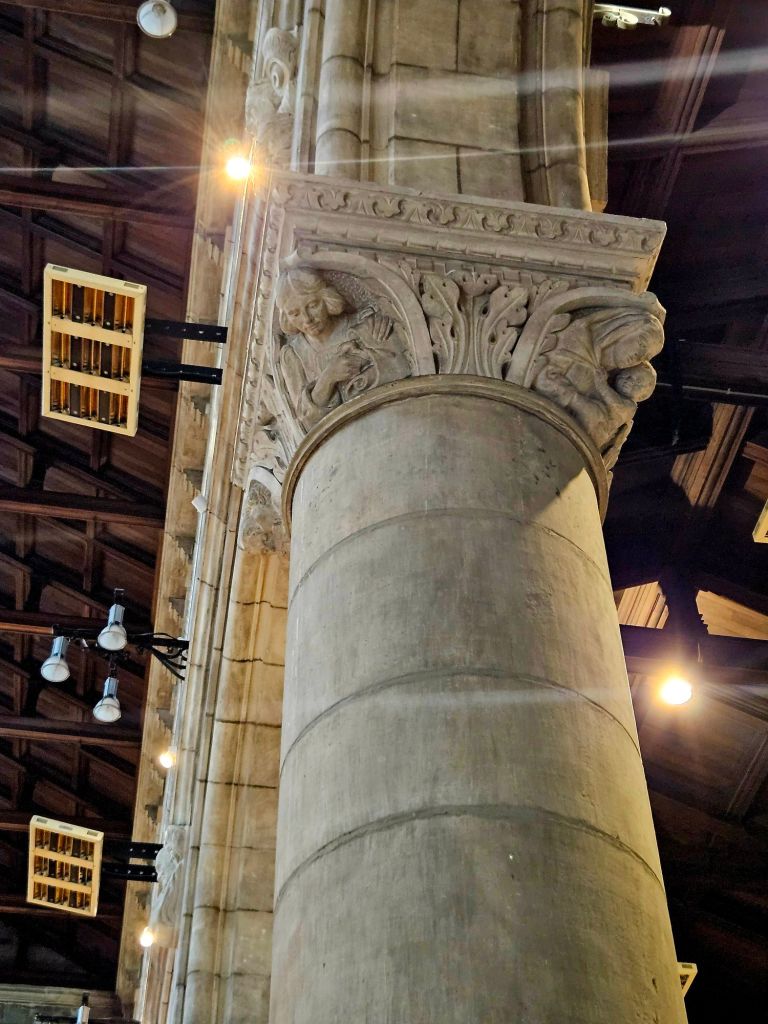
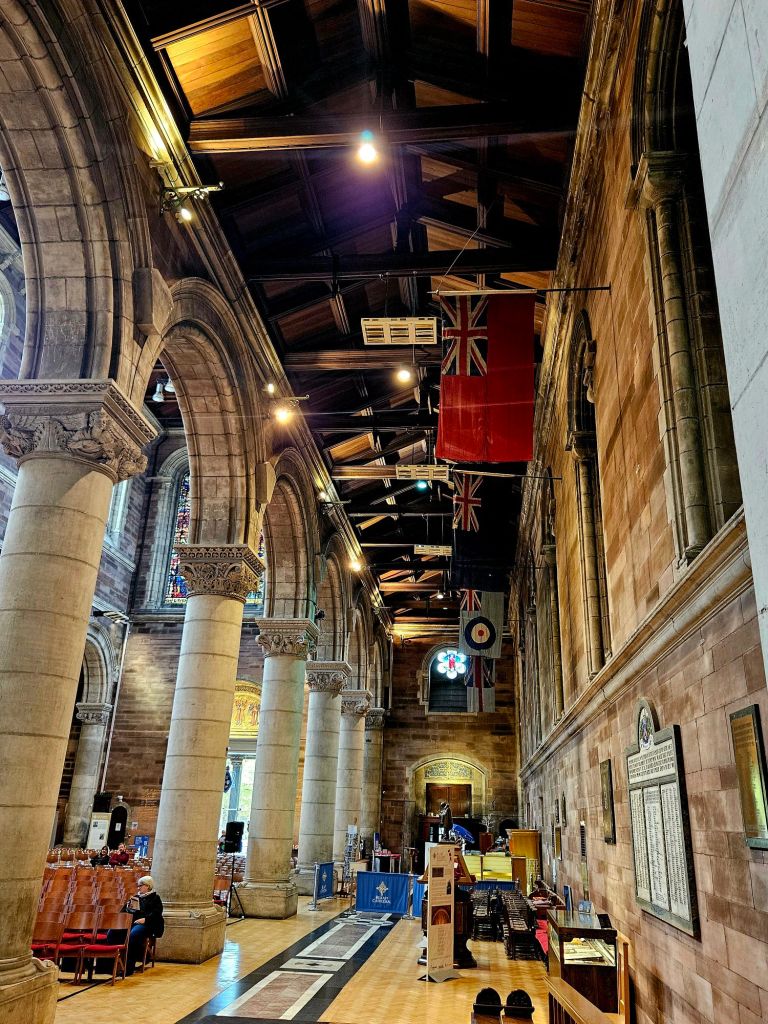
I decided to pay the £5 entrance fee to take a look around the inside. The nave of the cathedral is made up of 10 pillars, each with a different theme.
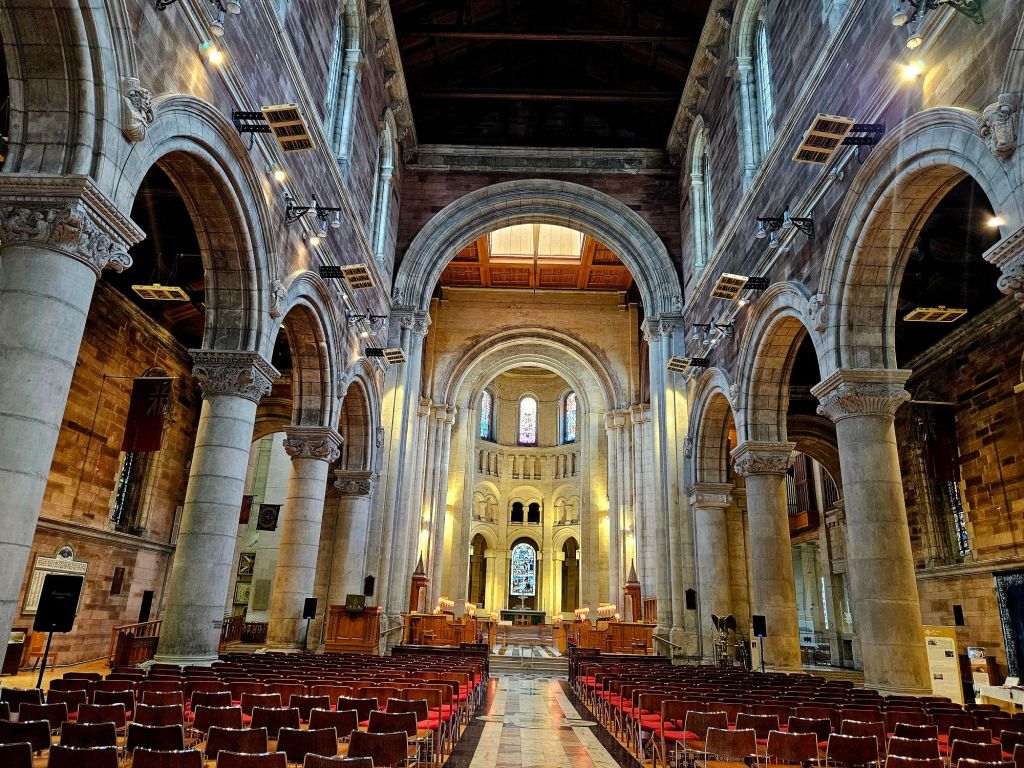
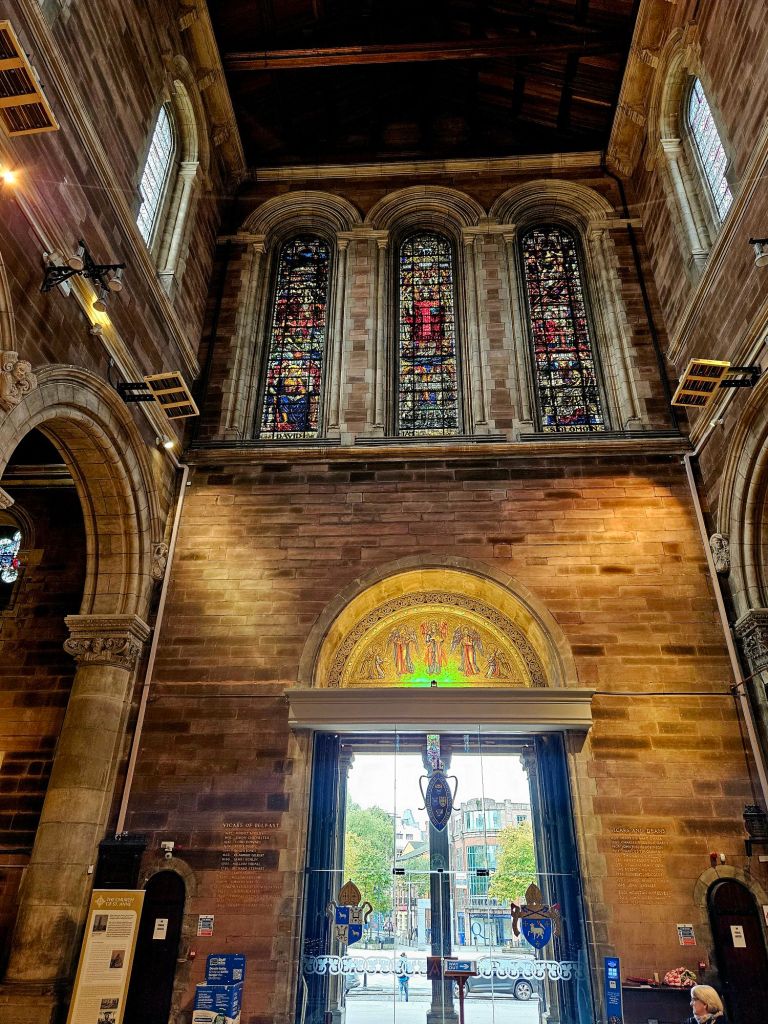
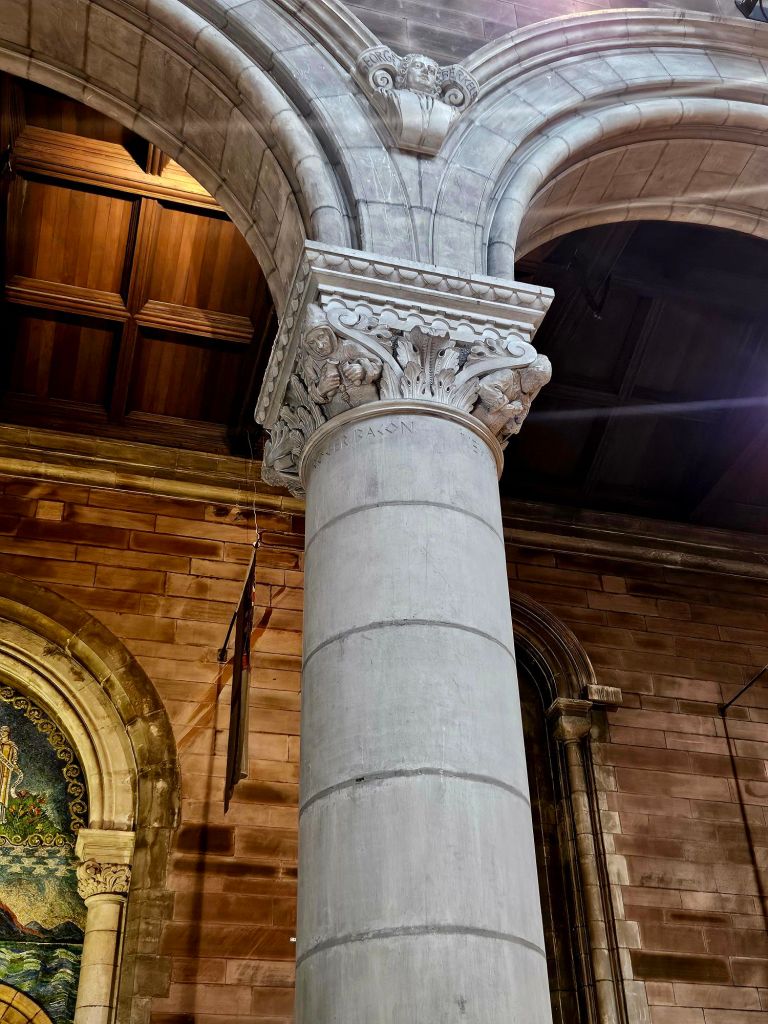
The first pillar on the right side is the pillar of science, and the one on the left is the pillar of womanhood.
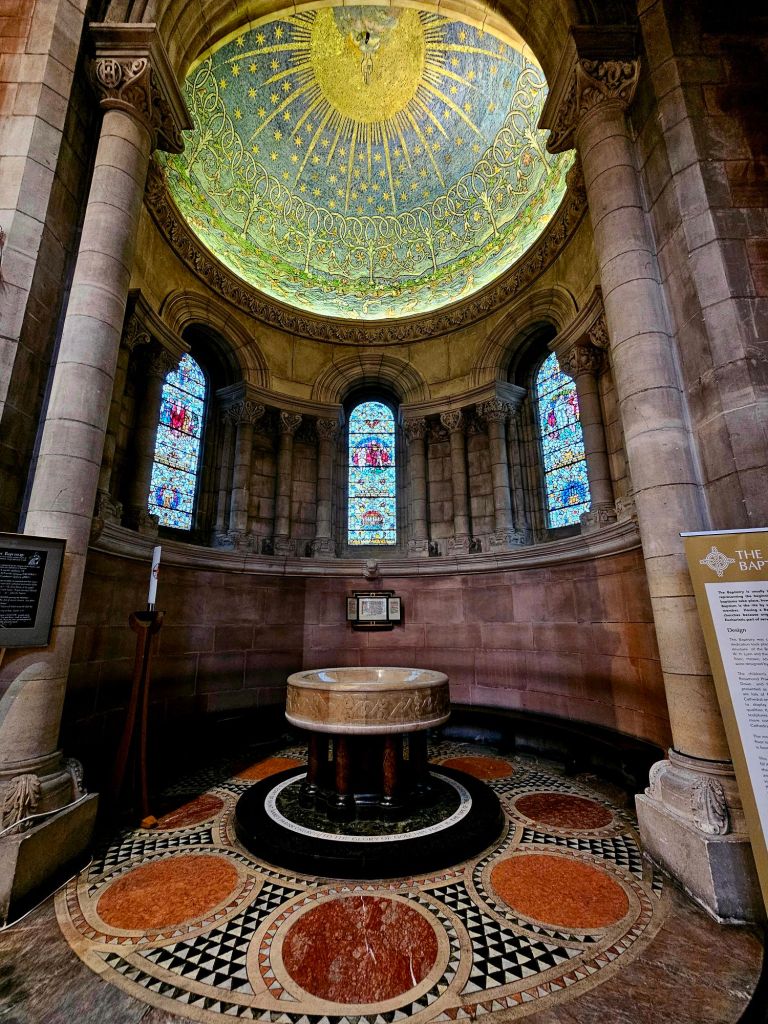
The baptistery ceiling is made from 150,000 pieces of glass, representing the basic elements of creation; earth, air, fire and water, and each one was placed by hand. It was completed in 1924. The font takes 12 buckets of water to fill it, so it is rarely used. Instead, a Baptisimal bowl or wooden font in one of the chapels is used.
I then came across Carson’s tomb. He is the only person to be buried inside the cathedral. Lord Carson was an Irish Unionist politician, barrister and judge, and was the Attorney General and Solicitor General for England, Wales and Ireland as well as the First Lord of the Admiralty for the Royal Navy. He became a minister without portfolio as part of the British War Cabinet in 1917 and was a life peer in the House of Lords. He is widely regarded as one of the founding figures of Northern Ireland. On his death, he had a British state funeral, one of the only non-monarchs to receive such an honour.

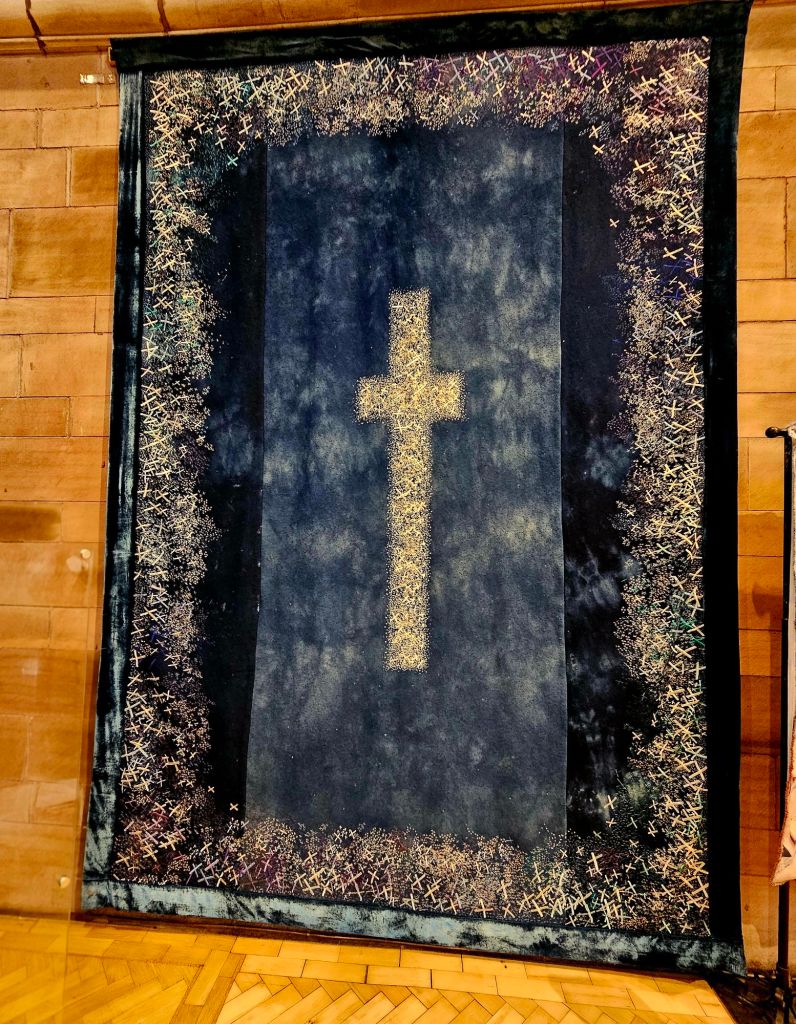
The Titanic Pall was commissioned to mark the 2012 centenary of the sinking of the Titanic. A pall is a cloth that is placed over a casket or coffin at a funeral. There are 1517 hand embroidered gold crosses, stars of David and crescents, which represent each of the people who died.
The choir at St Anne’s has two Bishop’s thrones, which is very unusual. But this is due to the fact that the Cathedral actually covers two dioceses.
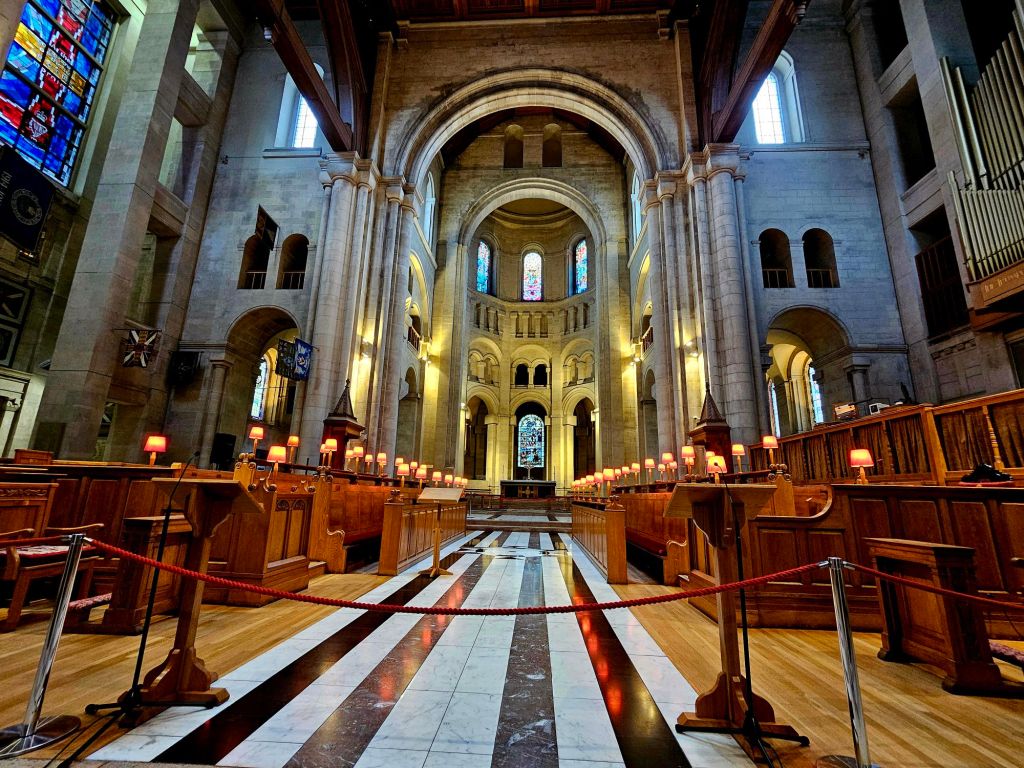
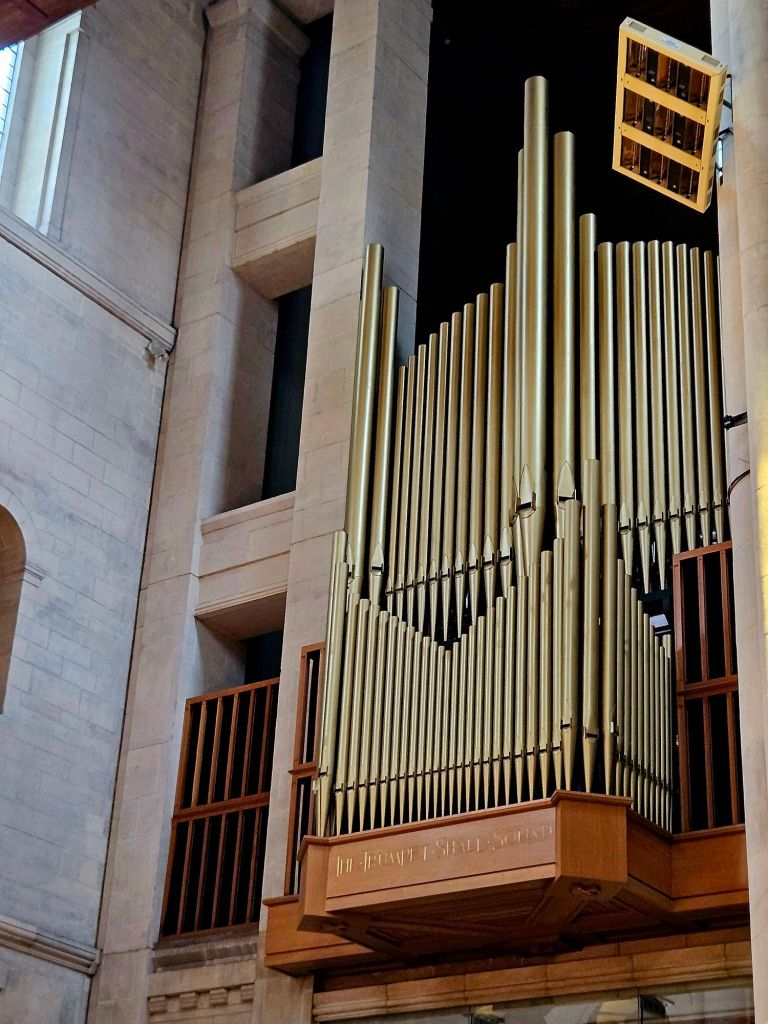
To the right of the choir is the pipe organ, which is the second largest such organ in Northern Ireland.
Originally, a bell tower was planned for the cathedral, but the ground the cathedral was built in could not support the weight. Below quite a bit of Belfast city centre are deposits of wet clay known locally as ‘sleech’. Because it has never been subjected to pressure, it has not consolidated and gives very little support to the building.
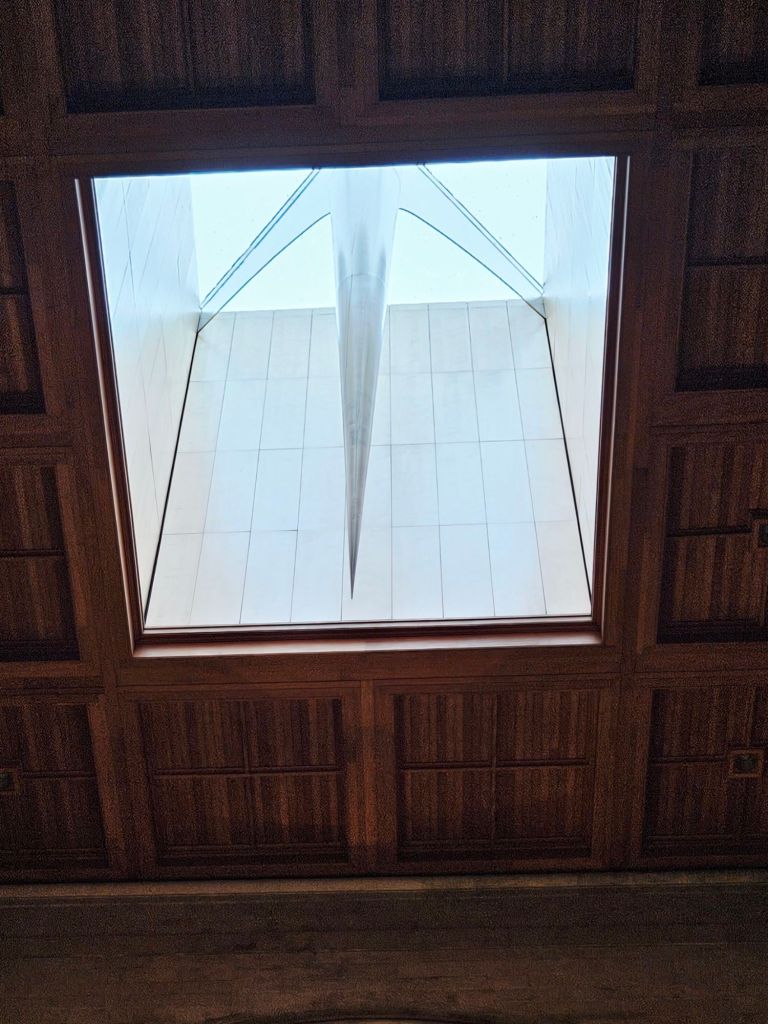
So a competition was opened for a design for a spire. The Spire of Hope is very lightweight in design. The stainless steel spire is 53m in height and extends 10m into the cathedral.
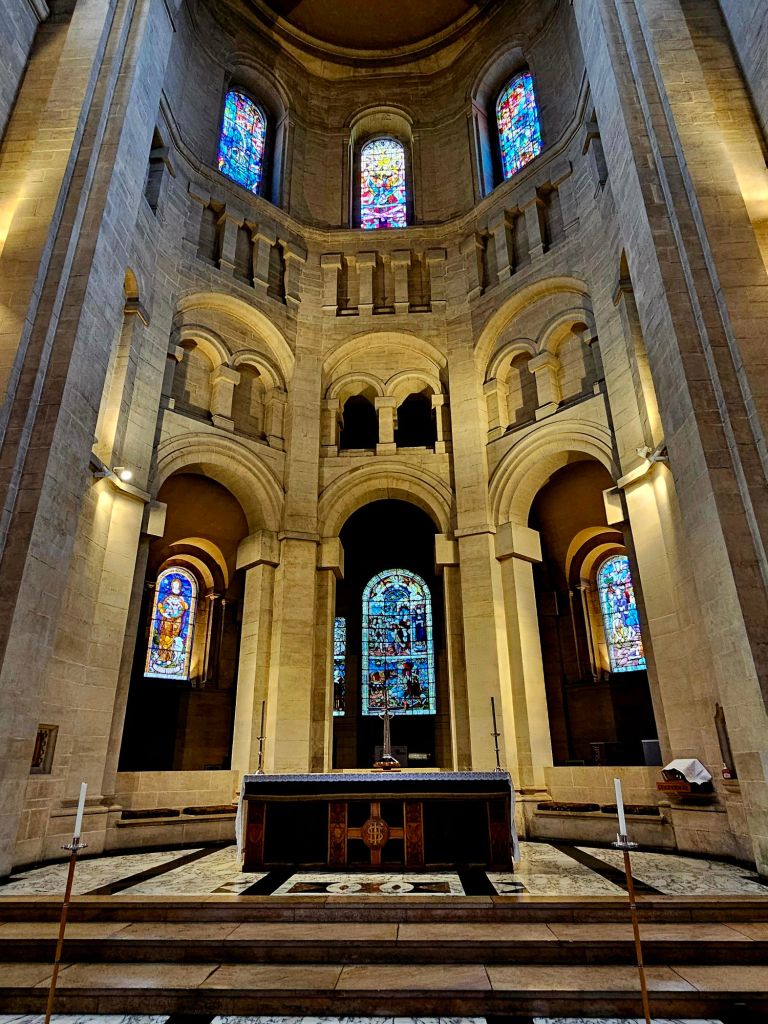
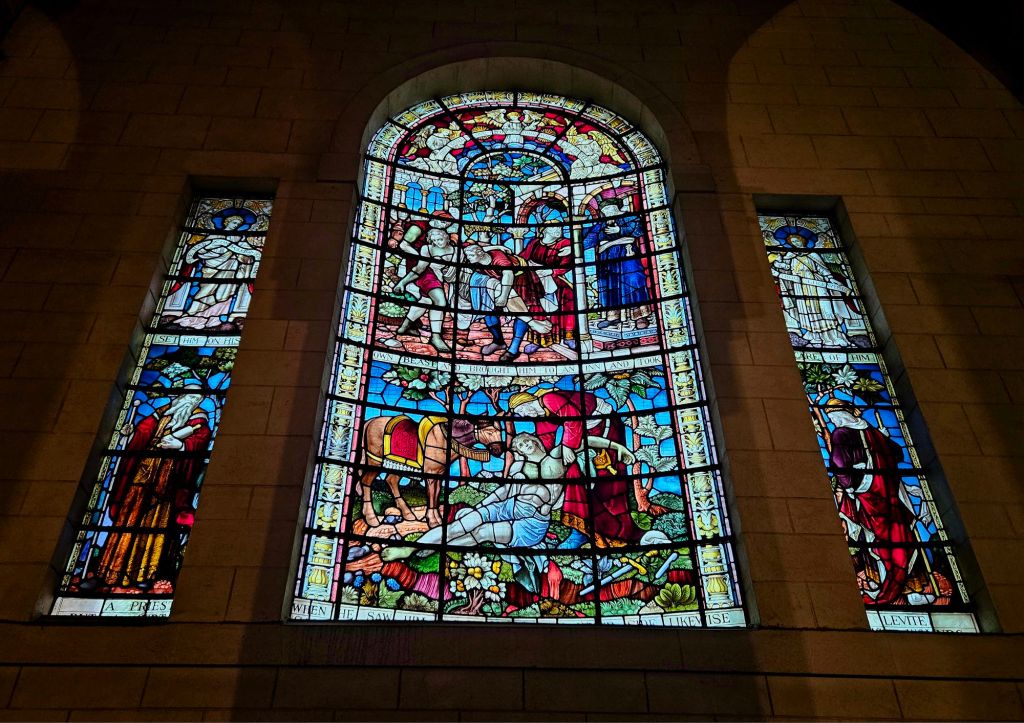
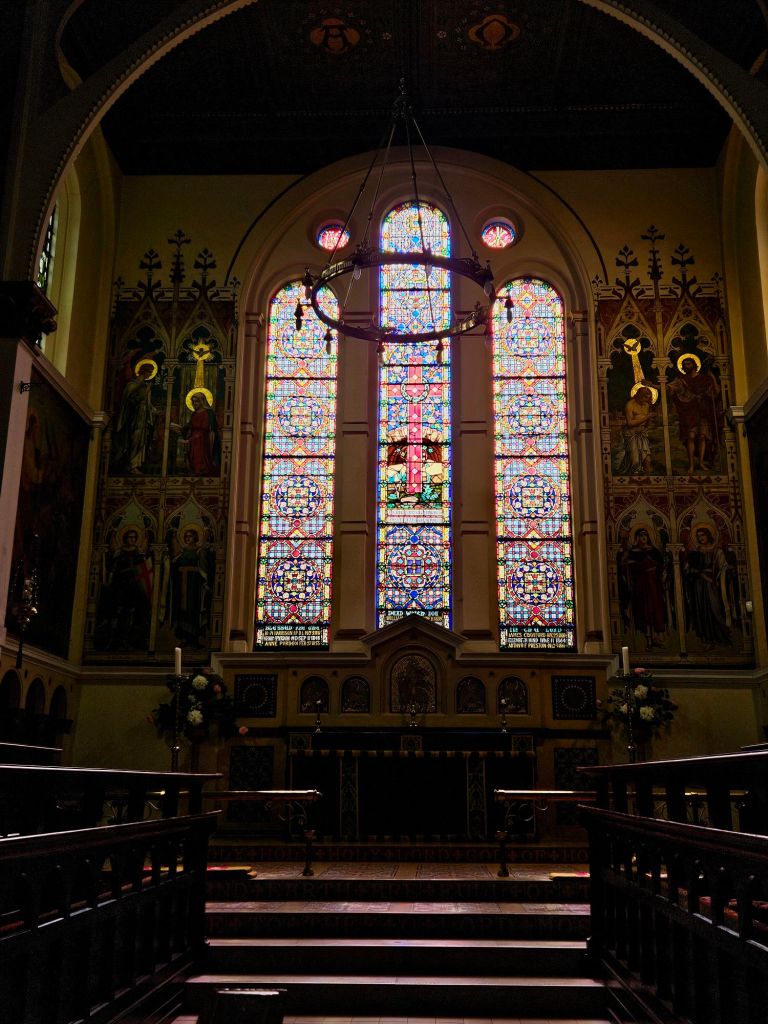
The three windows above the altar at the top, in the Sanctuary represent creation, the Trinity and the Eucharist. The ‘Good Samaritan’ windows at the bottom in the middle comes from the original St Anne’s church.
The cathedral has a Chapel of Unity, which embraces the theme of ecumenism – being similar but different. The stained glass windows contain the emblems for the scout association, girl guides and the girls brigade.

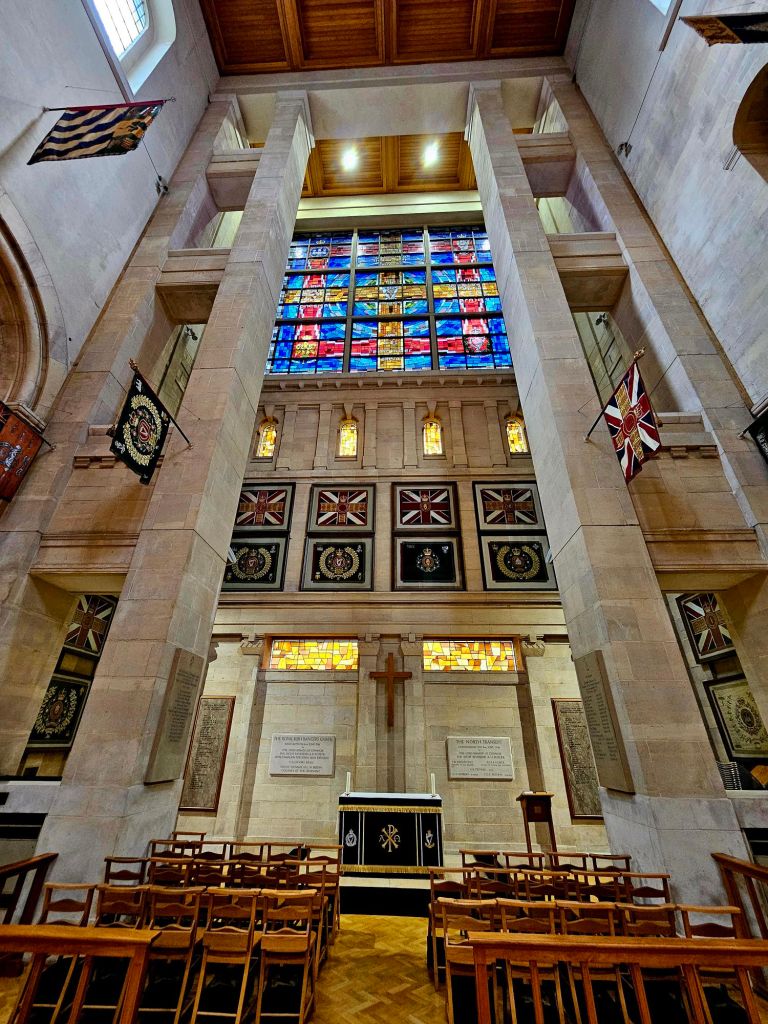
It also has a Regimental Chapel, and this is the spiritual home of the Royal Irish Regiment. The stained glass window in this chapel is the largest in the cathedral.
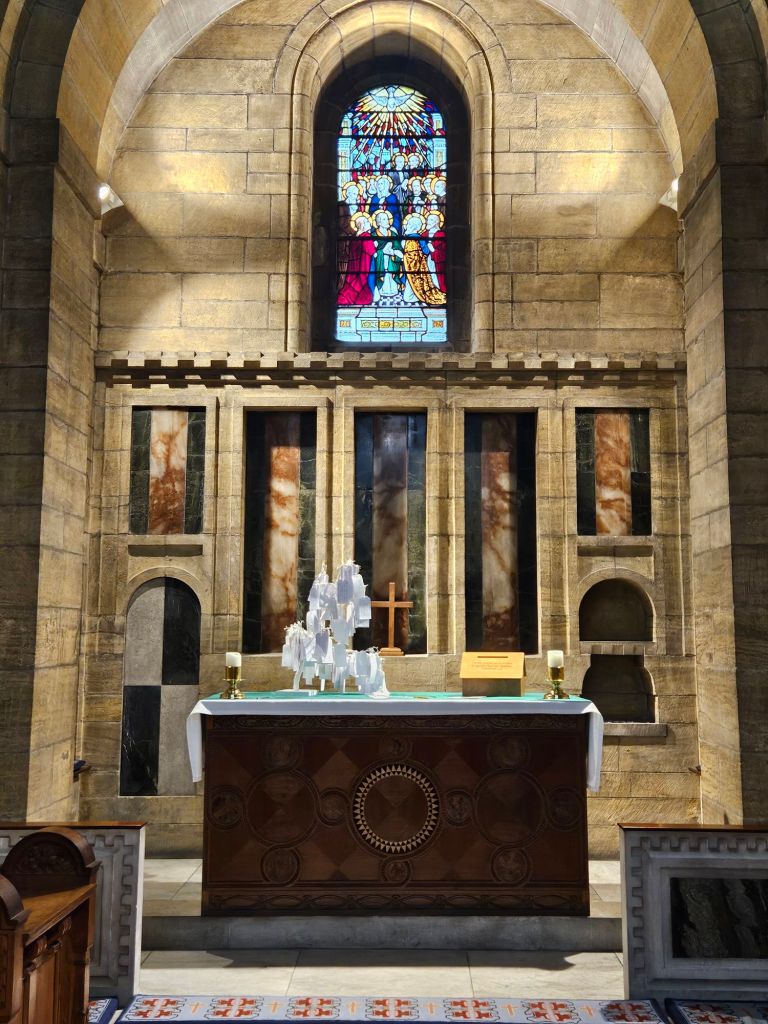
Towards the exit is the Chapel of the Holy Spirit. The altar in this chapel is a replica of an early Christian altar often found in the Roman catacombs where the first christians worshipped to avoid persecution. Above the entrance to the chapel is a painting of St. Patrick introducing Christianity to Ireland.

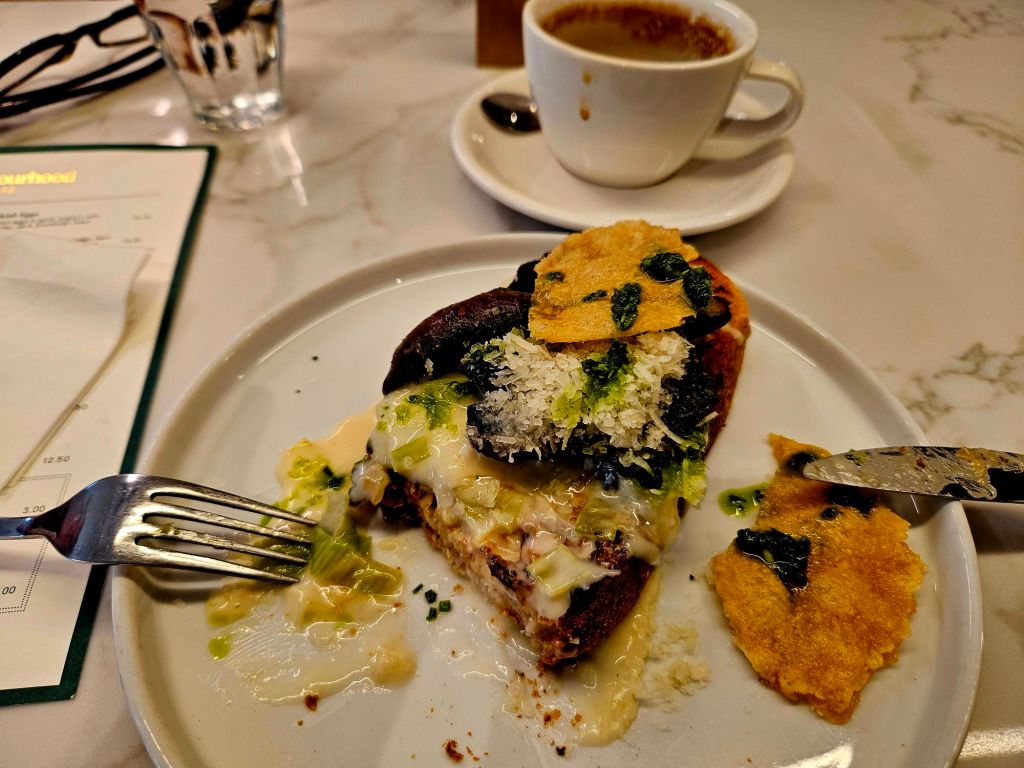
I was now quite hungry, so I stopped off at the Neighbourhood Cafe for brunch – delicious roasted mushrooms on toasted sourdough with a leek and cheese sauce.
Feeling refreshed, I found the oldest building in Belfast, which is now the Dirty Onion Pub. It was first built in 1608 and was originally used by fish merchants. It then became a greengrocers before becoming a warehouse and traded everything from fish and tea to tinned soup, linen, whiskey and much more.
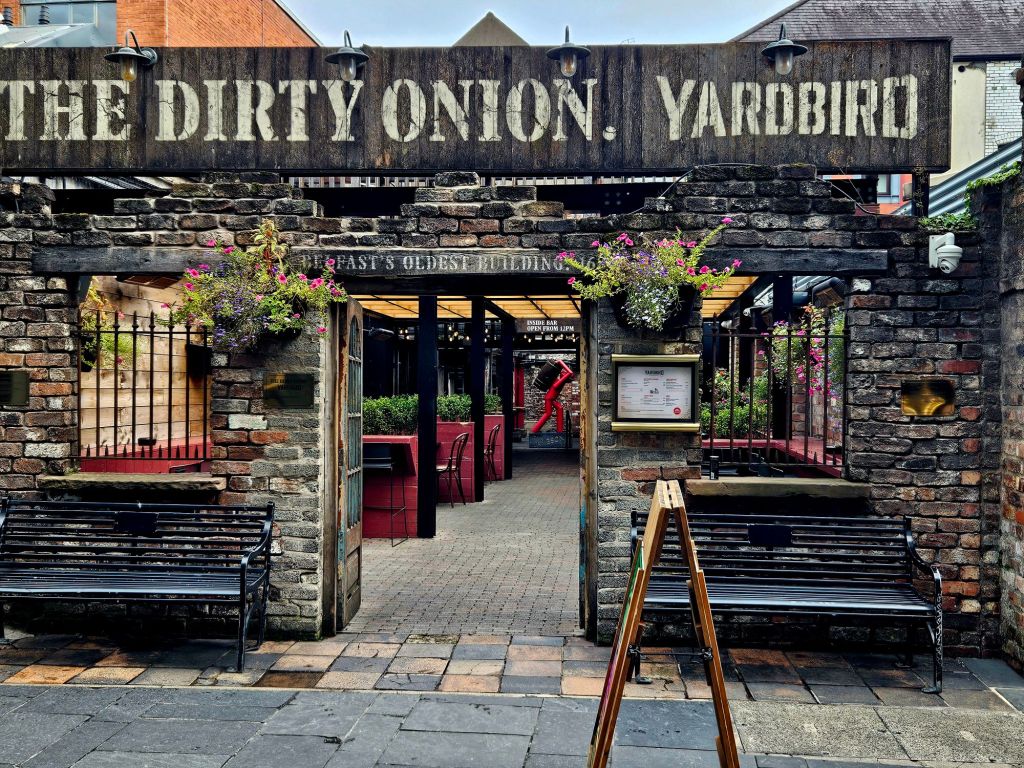
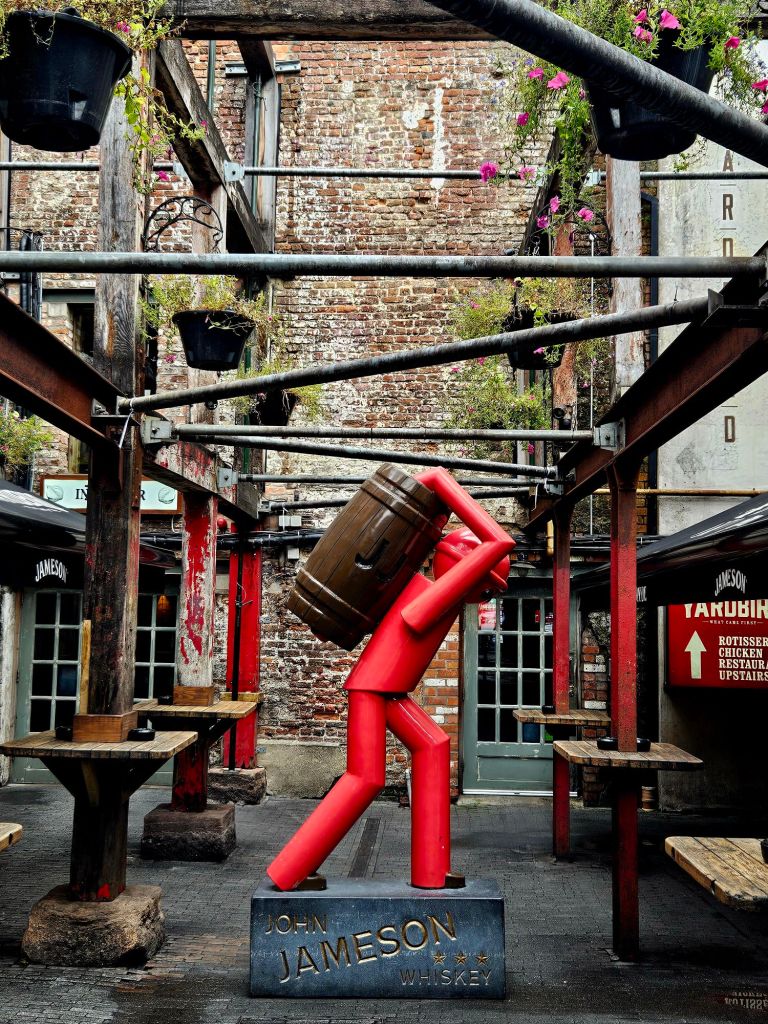
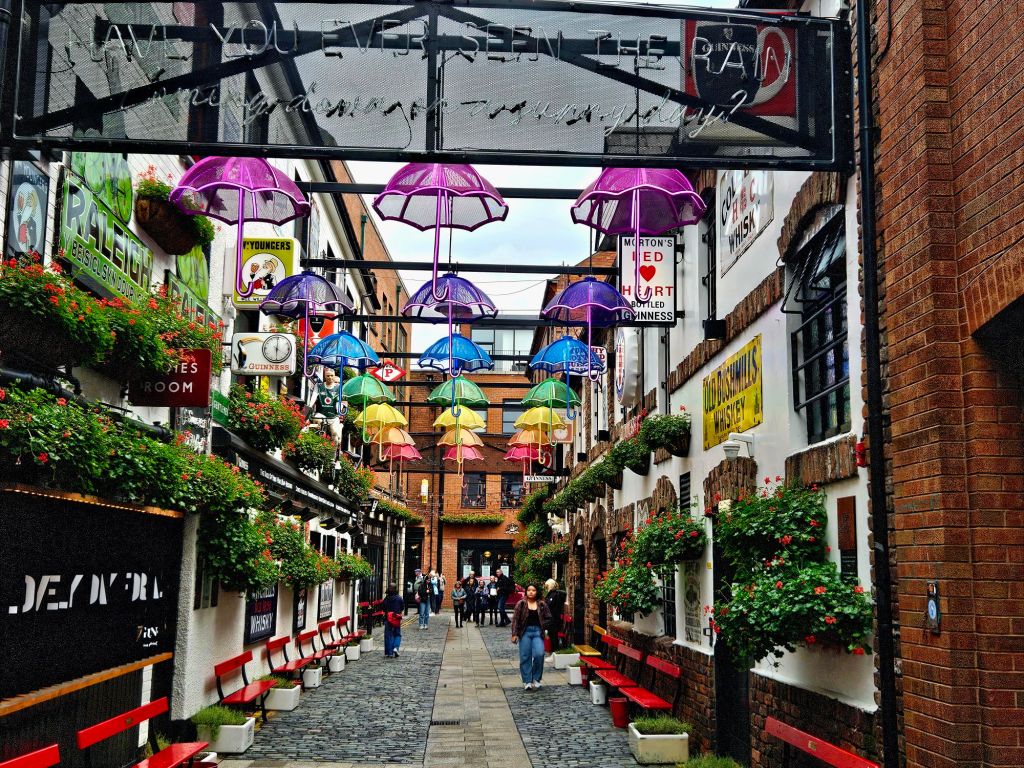
Continuing walking, I came across Exchange Place, which looked like it would be a good place to go in the evening.
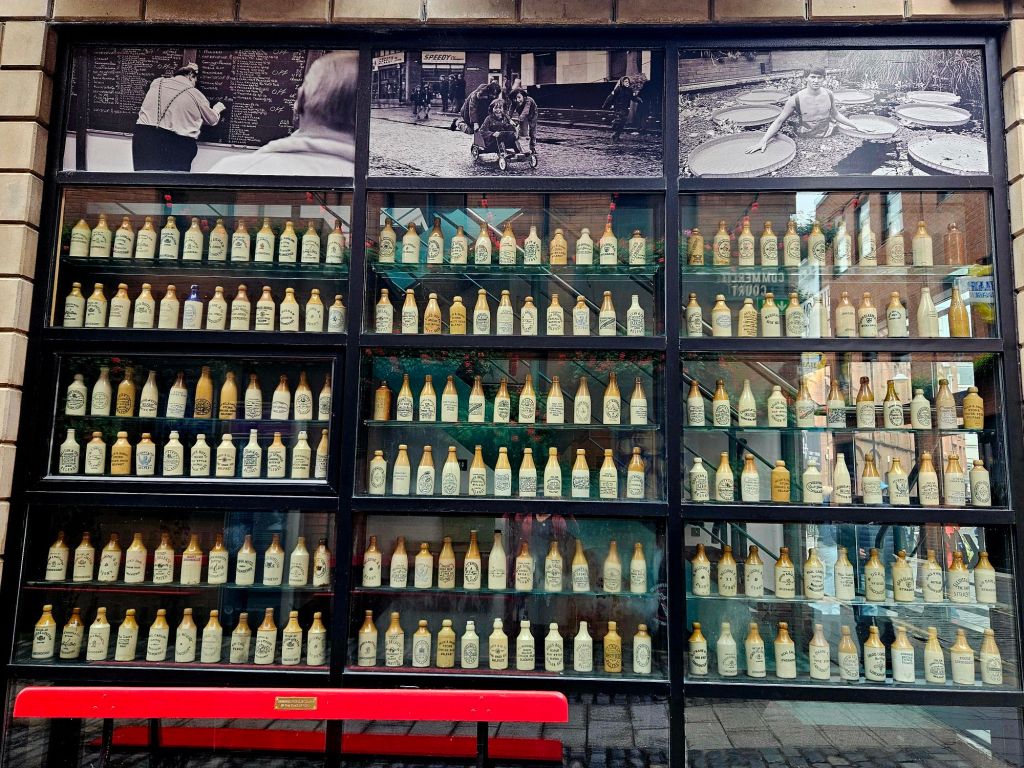
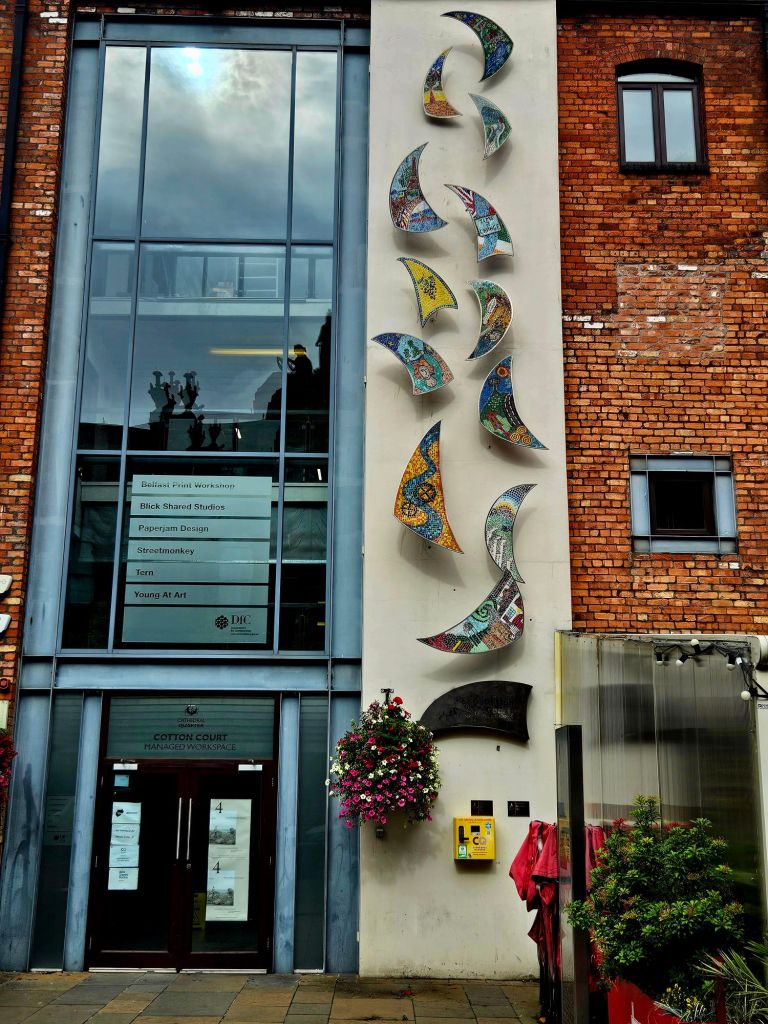
A bit further up on Waring Street is a 3 storey cubic building on the site of an original 17th century pot-house, it’s history is reflected in the use of stone, wood, glass and cobblestones to construct the new building. It was the original site of William Waring’s home, a tanner after whom the street was named.
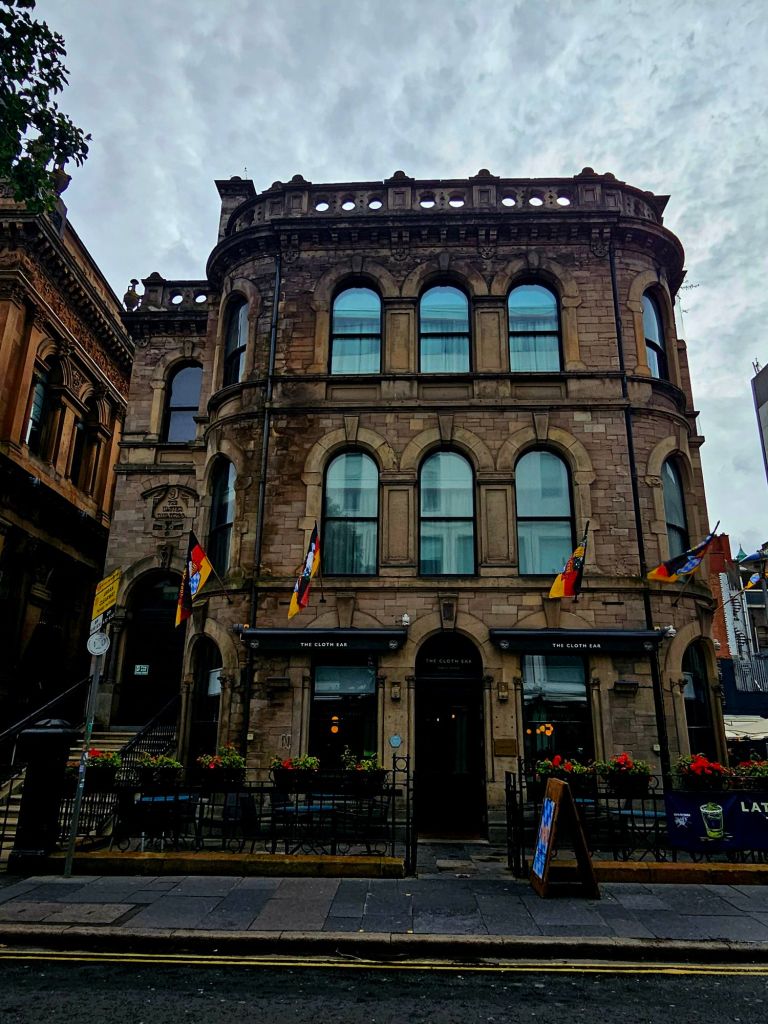
Opposite this is the Cloth Ear, now a restaurant,which was built in 1869 and is one of the Ulster Buildings.
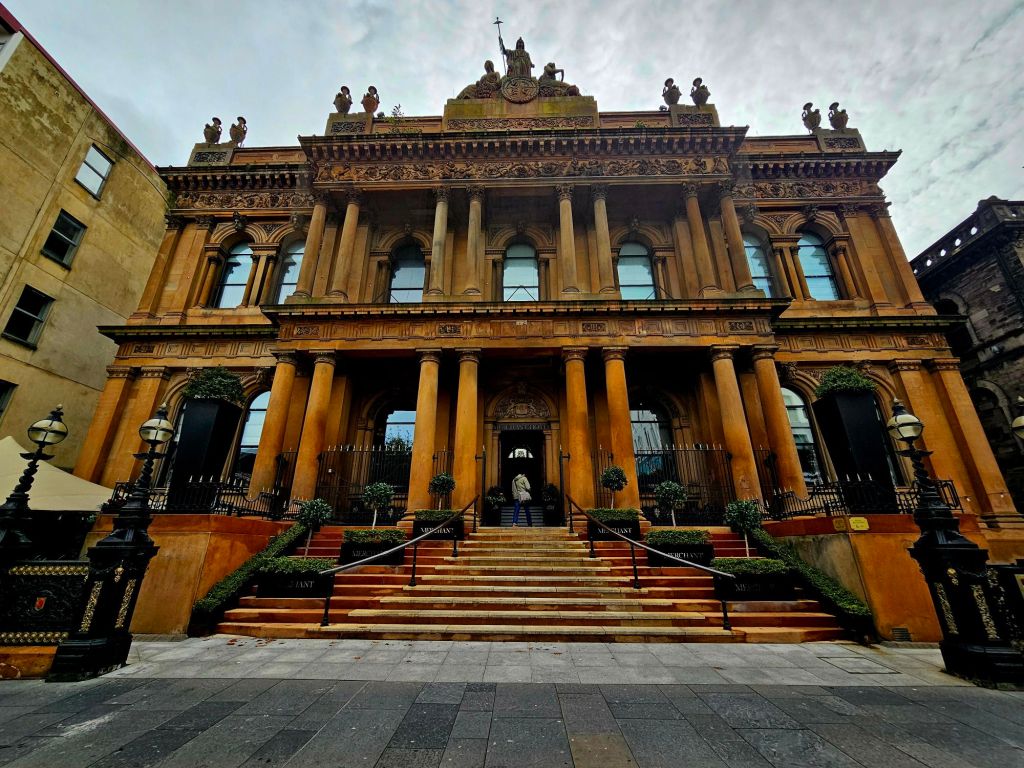
And right next to this is the Merchant Hotel, the 1860s former Ulster Bank. It is a Grade A listed building and is now a luxury hotel and restaurant. We had booked the restaurant for later that evening.
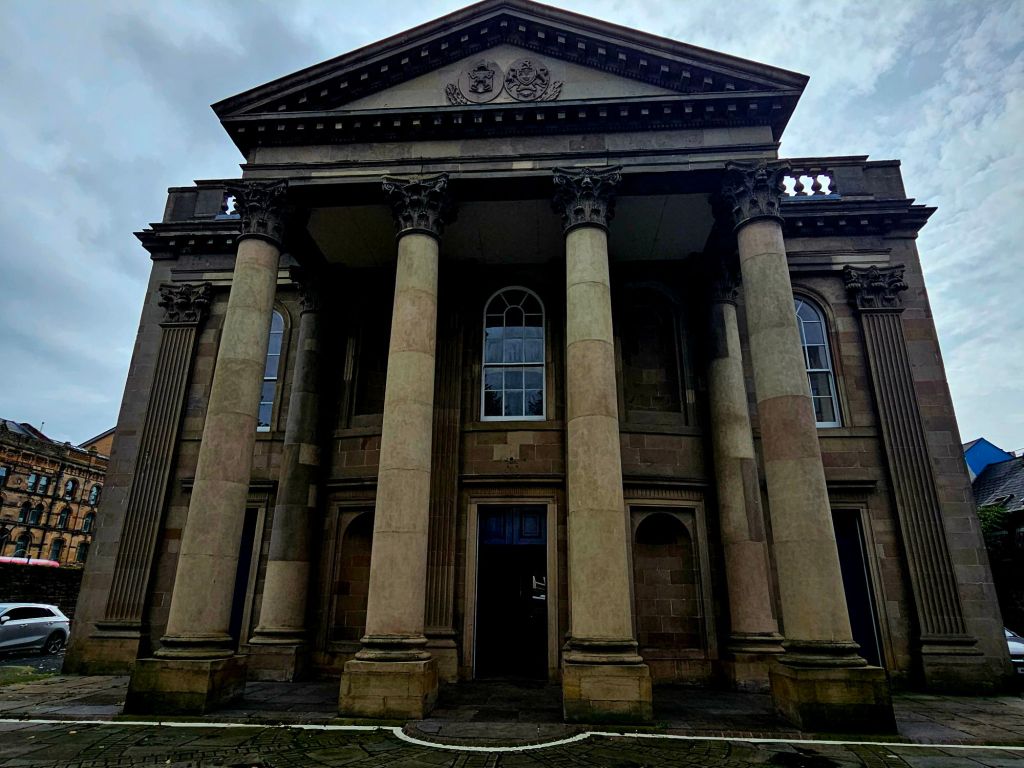
My next stop was the Parish Church of St George. Opening in 1816, it is the oldest Church of Ireland in Belfast. The church stands on what had been a fording place where the River Lagan and River Farset met. The earliest mention of a place of worship existing on this site is in the papal taxation rolls of 1306. The Chapel of the Ford was a chapel of ease of the main parish church at Shankill, and was constructed here for those waiting to cross the mud flats which covered most of the area that has since become central Belfast. It was seriously damaged on a number of occasions by IRA bombs.

Just up from here is the Jaffe Fountain Memorial in honour of Belfasts only Jewish Mayor. It is a gilded, cast iron drinking fountain (now dry) and was first erected in 1874 by Sir Otto Jaffe in memory of his father, the German-born merchant Daniel Joseph Jaffe. Daniel Jaffe came to Belfast to open a linen warehouse but settled there in 1850. He is seen as the founder of Belfast’s Jewish community and built the city’s first synagogue in 1871.

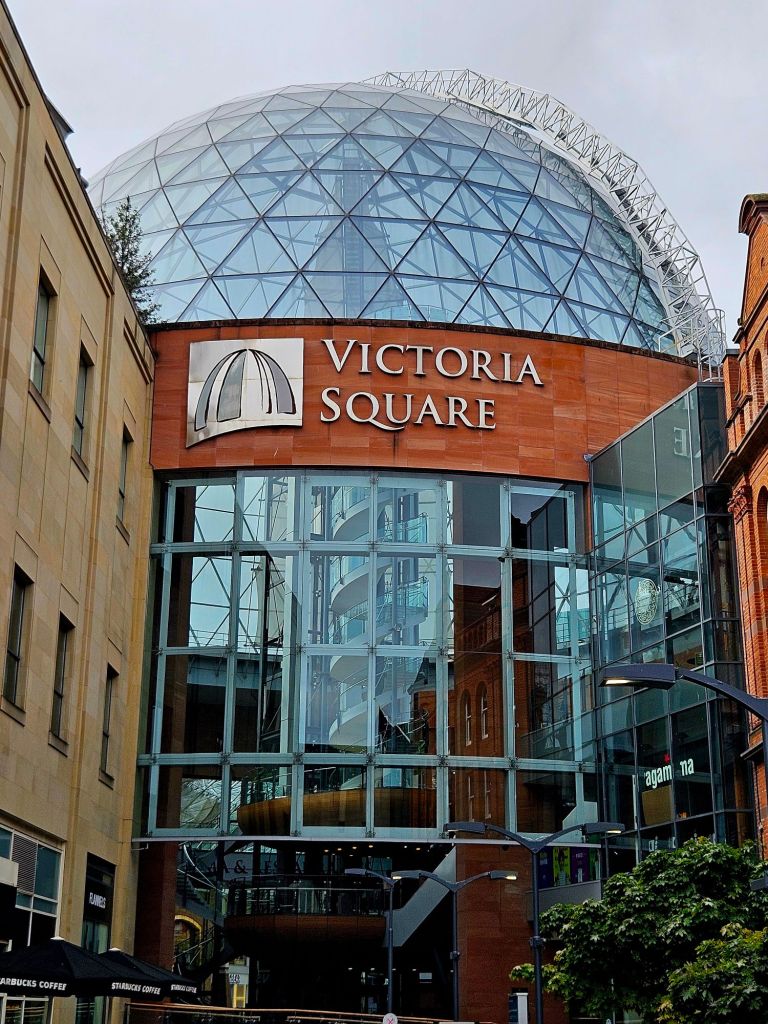
Right opposite this memorial is the biggest shopping centre in Belfast, Victoria Square. It has a 360⁰ glass dome above it.
A short distance away is the Spirit of Belfast sculpture, unveiled in 2009. It is reflective of Belfast’s linen and shipbuilding industries. Locally, it is referred to as the ‘Onion Rings’.
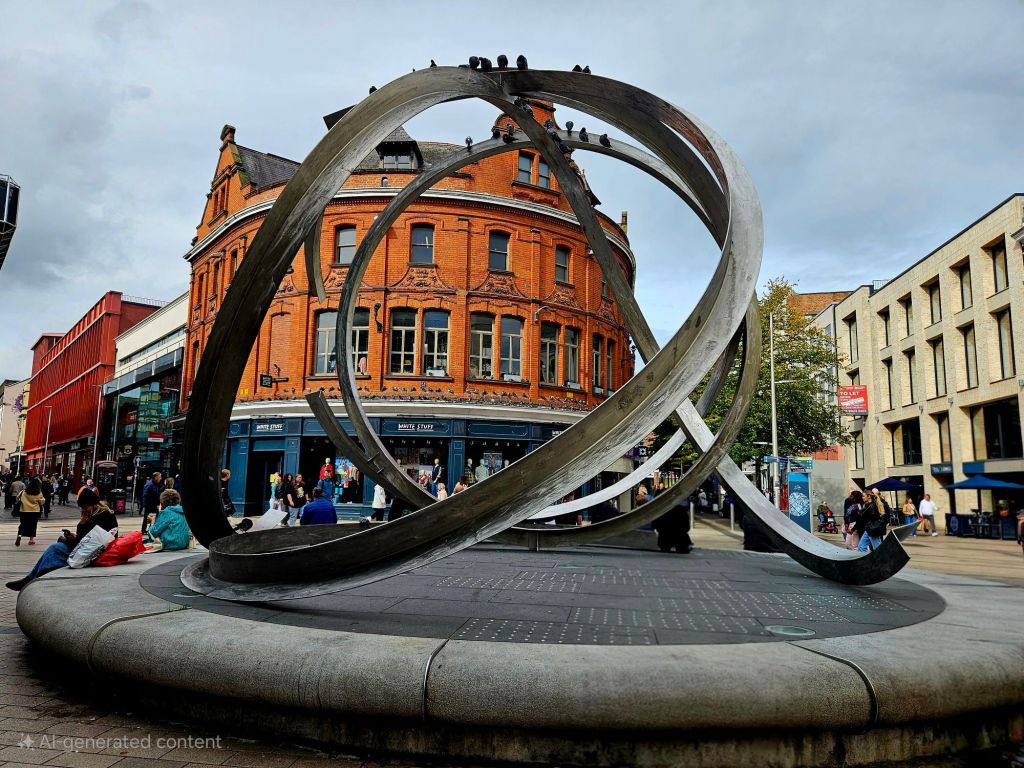
The building behind used to house a grand restaurant and cafe and was originally built in 1889. It now houses a variety of shops.
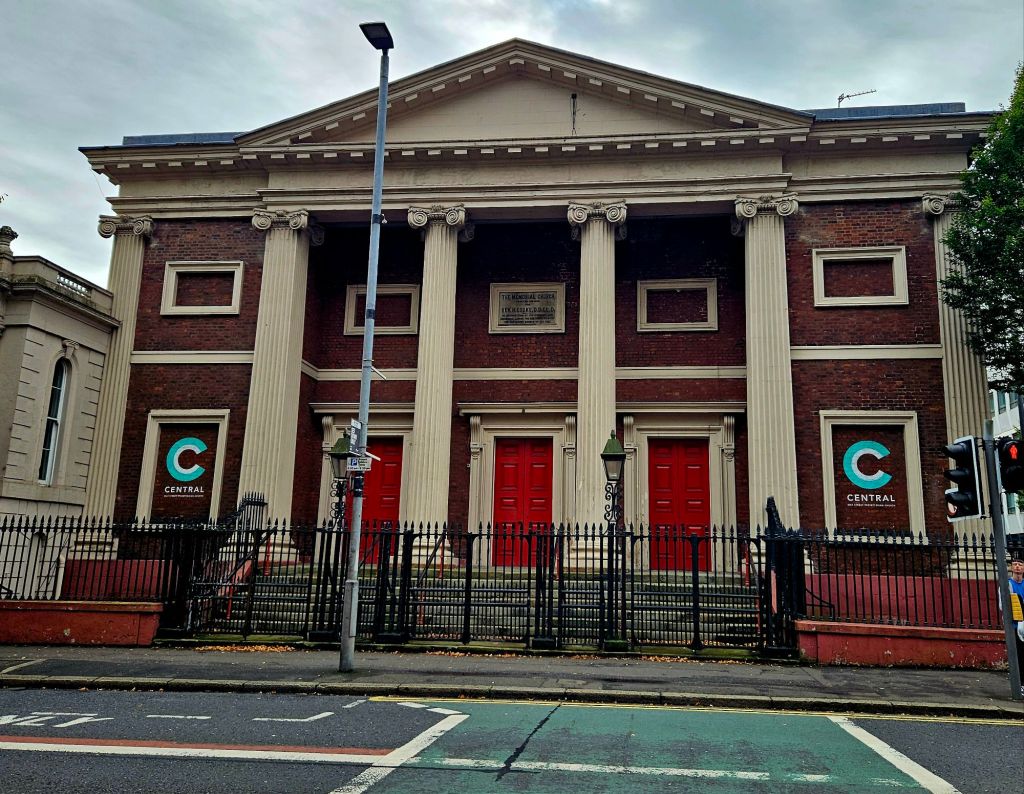
I had a couple more churches to see before Faye’s arrival. The first was May Street Church, a Georgian church which opened in 1829. The first minister of this church was Henry Cooke, the famous reformer of the Presbyterian Curch in Ireland. The basement of the church was originally used as a cemetery and had vaults in it containing interments. It was later converted into school rooms.
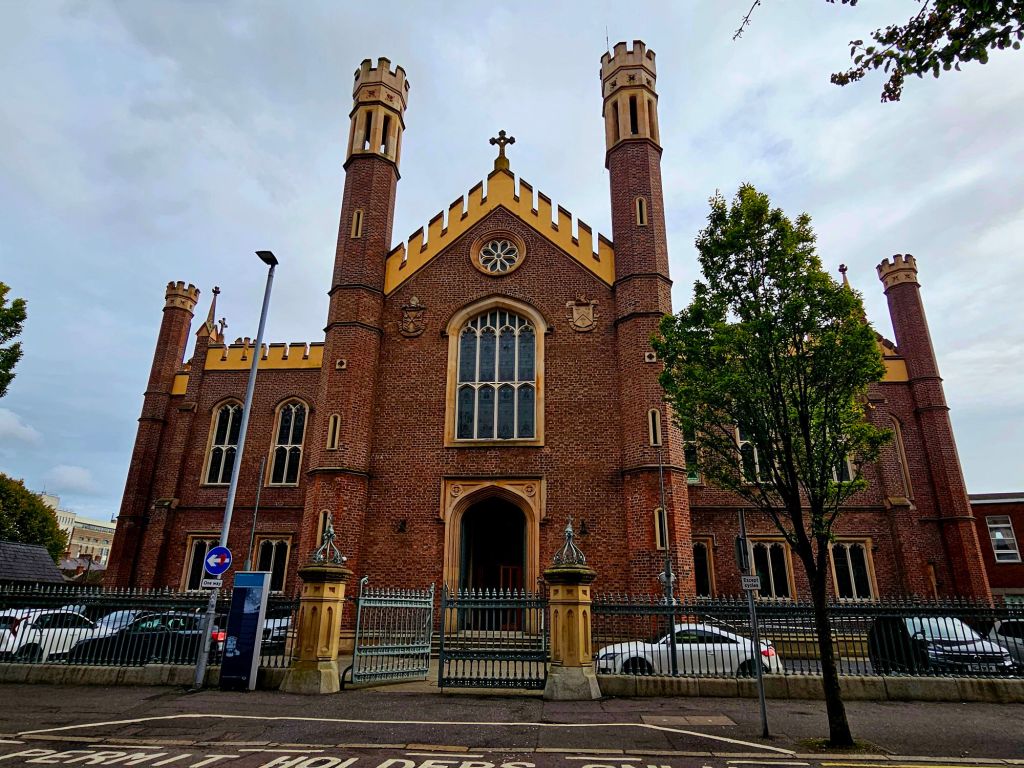
Just down from here is St Malachys Church. The foundation stone was laid on 3 November 1841 on the feast of St Malachy and it opened in 1844.
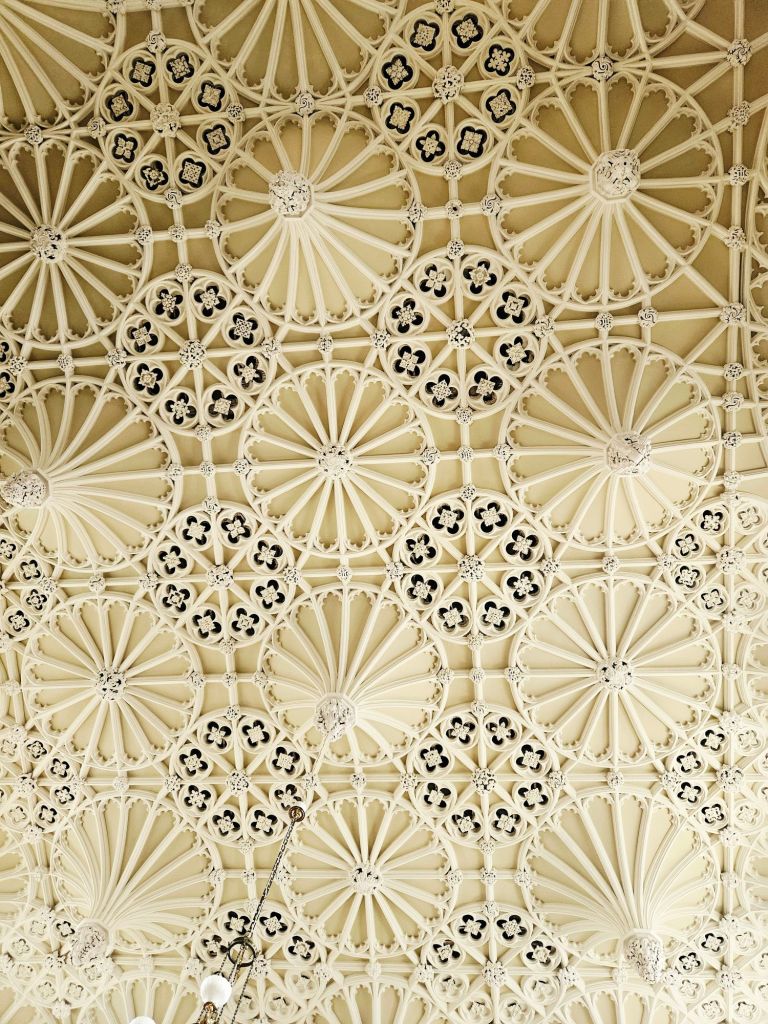
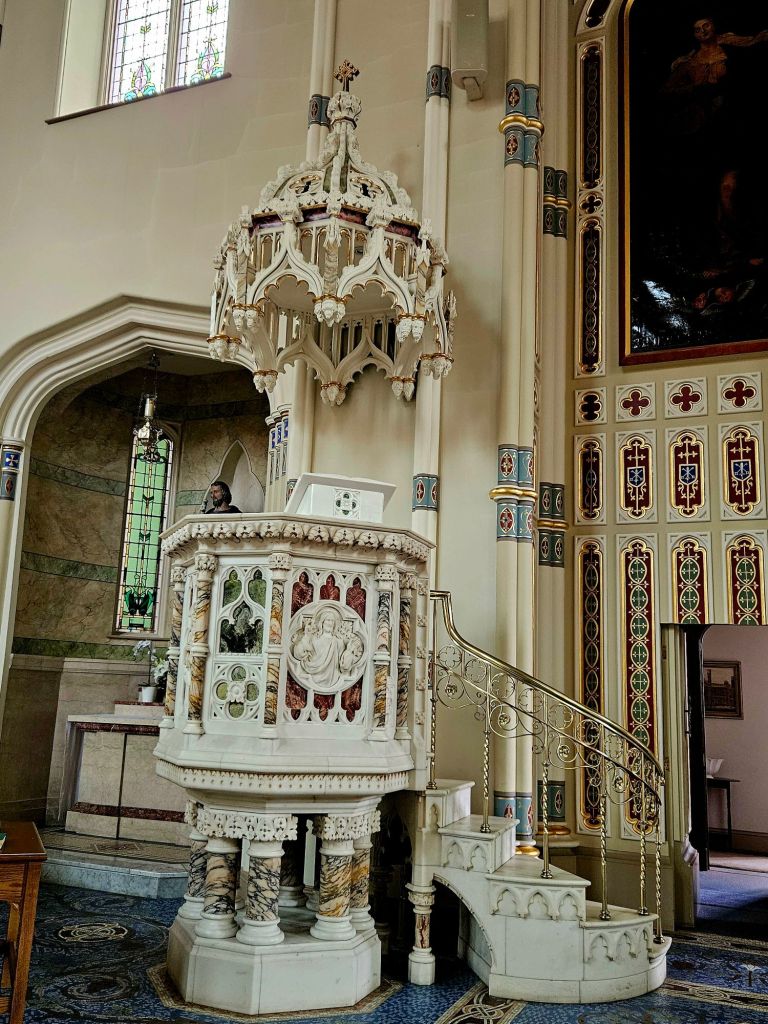
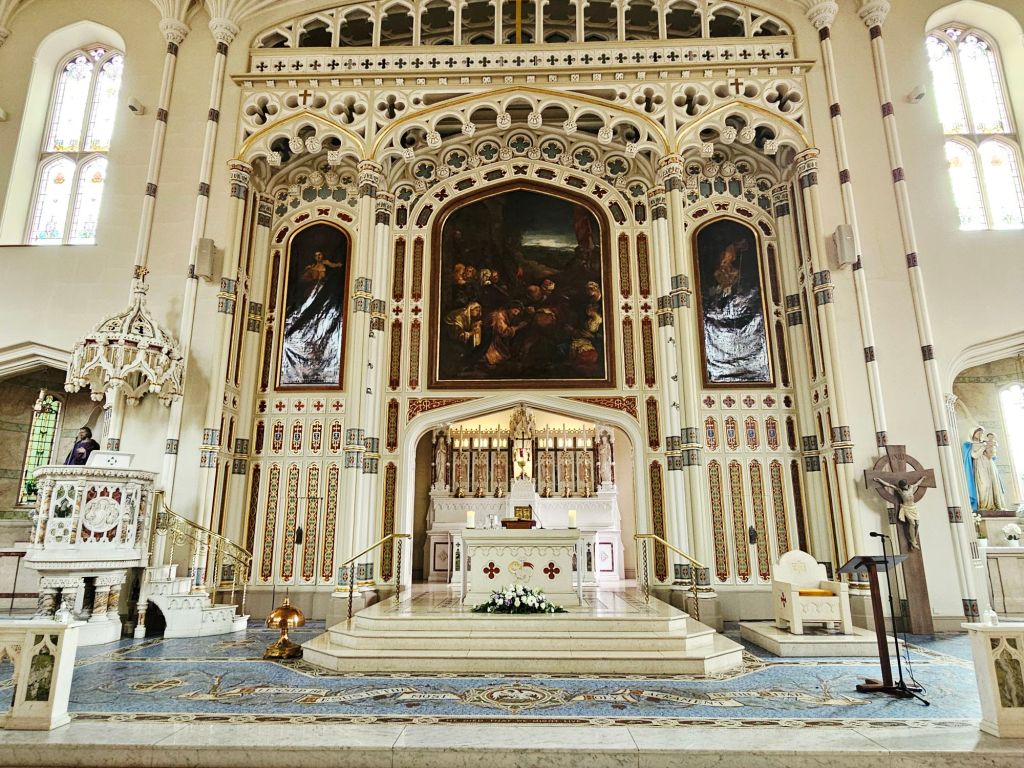
The inside of the church is stunning. It has a fan-vaulted ceiling, which looks a bit like a wedding cake turned inside out. It is seen as the city’s Roman Catholic Cathedral.
The original high altar, pulpit and altar rails were made of Irish oak but were replaced with marble when the church was renovated in 1926. At the foot of the altar is a pelican, a Christian symbol of sacrifice.
The original bell of the church cracked in 1845, soon after it opened. It was replaced in 1868 and is the largest bell in Belfast. The bell was silenced for a while, and then later, it was coated in felt to muffle it slightly. The legend is that it was too loud, and its peal sent shock waves which interfered with the distilling of whiskey in the Dunville Distillery, located near the church but now long gone.
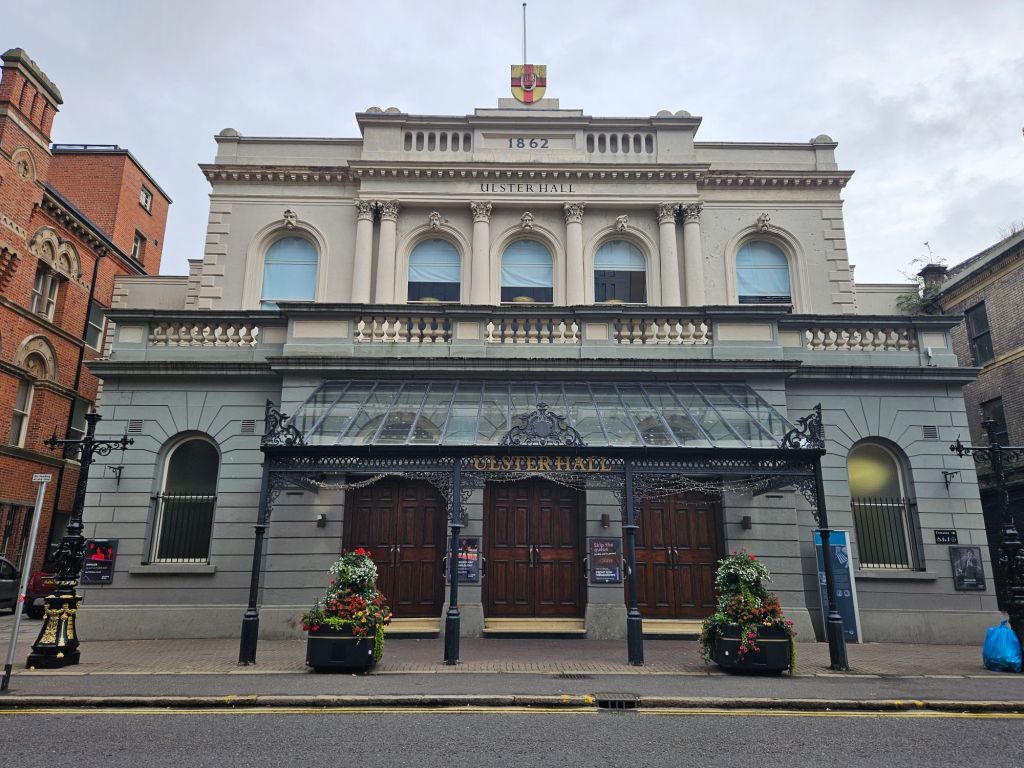
On the way back to the hotel, I passed Ulster Hall, which is a theatre. It was built in 1862 as a multipurpose venue for the city. During WWII, it was used as a dance hall to entertain American troops based in Ireland. From the late 19th century, it became the traditional venue for high-profile unionist rallies.
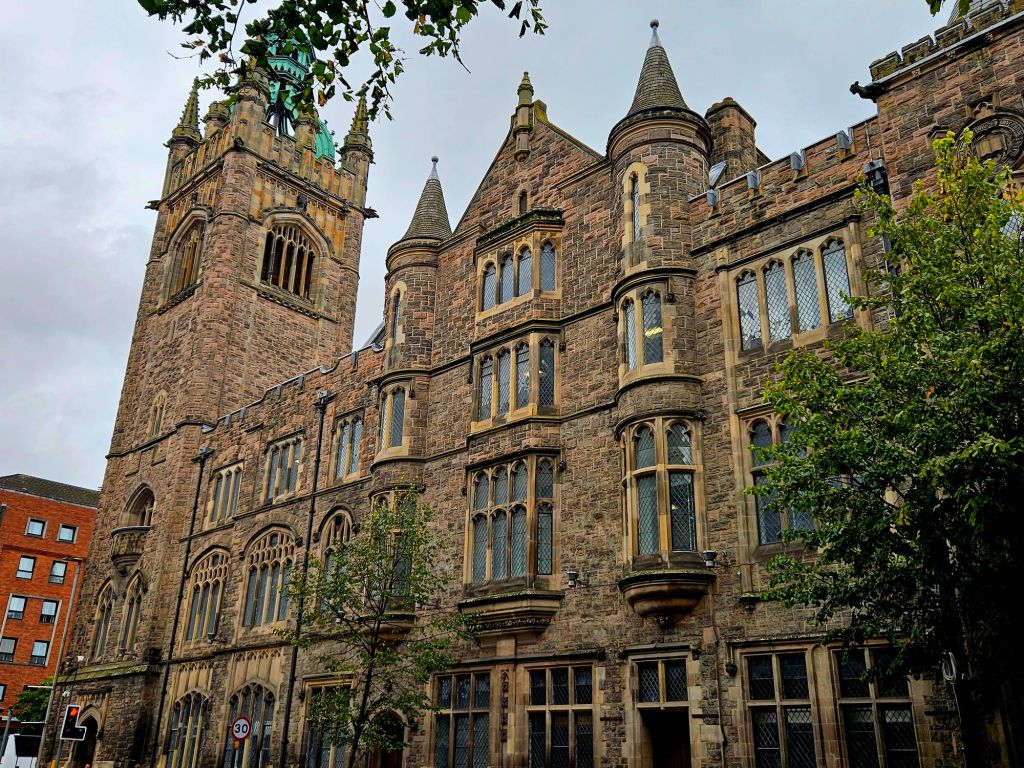
I also walked past the Presbyterian Assembly Building again – it’s a very grand building.
On the street next to our hotel is St Mary’s Church. It opened in 1748 and was the first Catholic church in Belfast. Protestants contributed significantly to the cost of the building. The original building has been extended to accommodate an increasing size of congregation. The church holds two masses a day from Sunday – Monday, and three a day on Friday and Saturday. The 6pm Mass on both Friday and Saturday is celebrated in the Irish language.
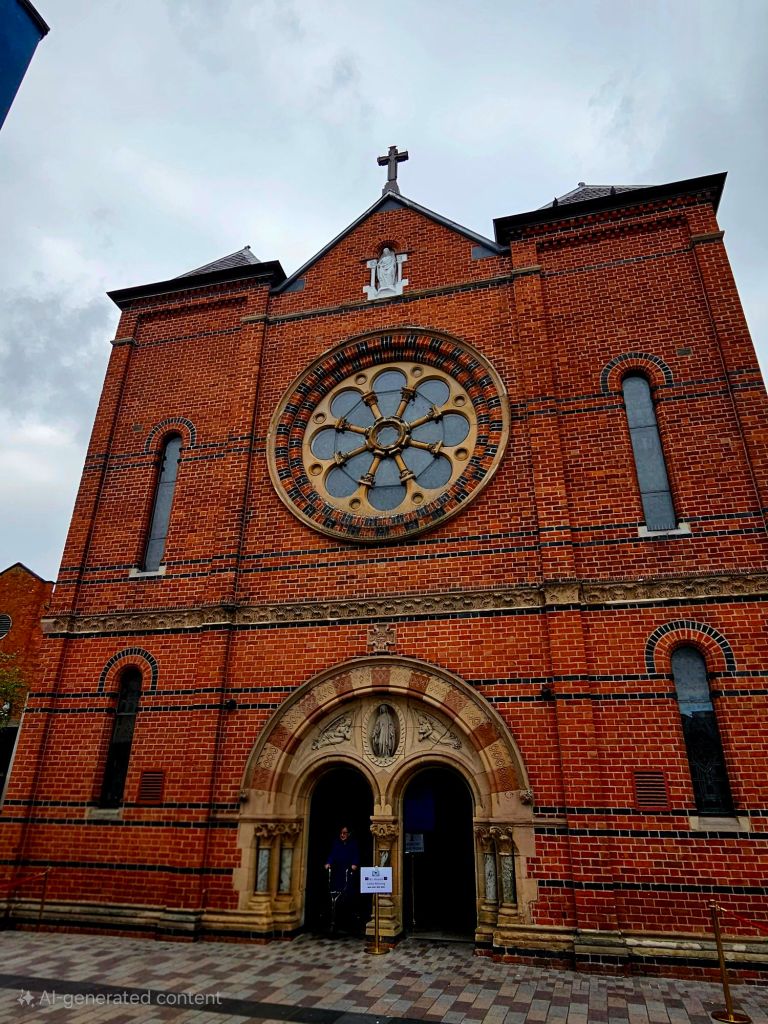
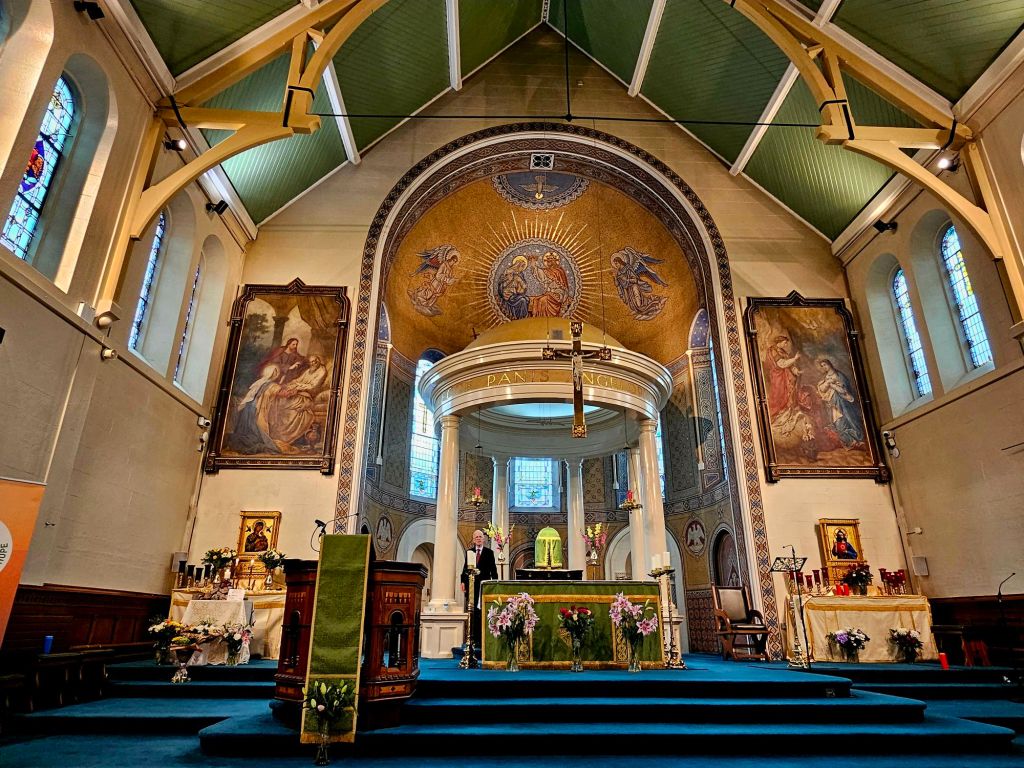
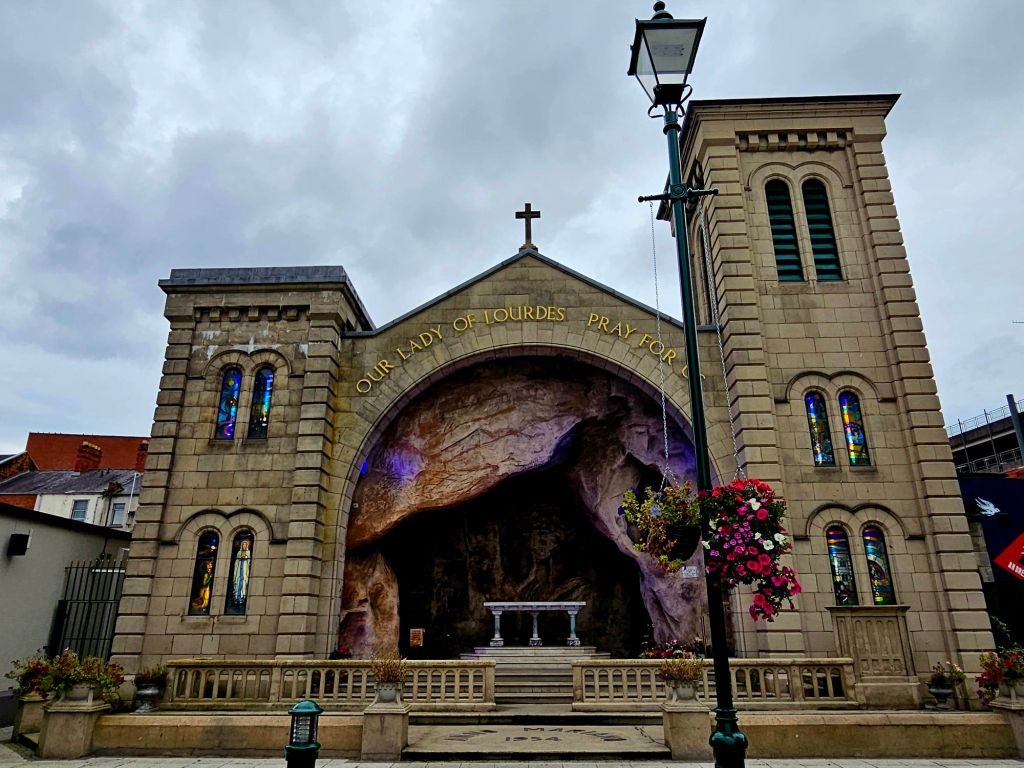
In 1954, a Grotto to Our Lady of Lourdes was built in the gardens surrounding the church.
And then it was time to go back to the hotel and meet up with Faye.
 Fun, Fitness and Fabulousness in your Fifties