Today was our last day in Barcelona. There were a couple of places that we hadn’t managed to pay a visit to that I really wanted to see. So I got up quite early and left around 8:45am to go and do a little solo sightseeing tour. I left the others in bed, although I think Mandy was up and about.
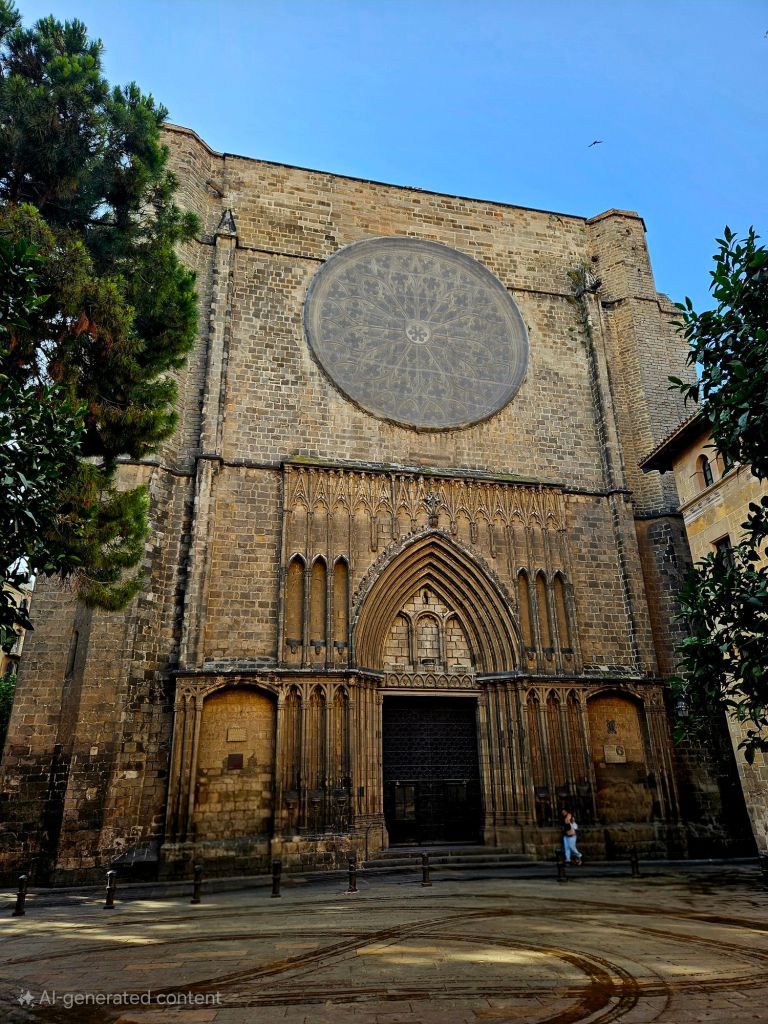
The first place I went to was Parròquia Basílica de Santa Maria del Pi, which was only a few minutes’ walk from the apartment. This is a 15th-century gothic church and was officially opened in June 1453. It was damaged in the 1428 earthquake and again in the bombings of 1714. And in 1936 a deliberate fire caused the church to be gutted. This church has the biggest rose window in Barcelona and houses the remains of many members of Barcelona’s nobility and the remains of the most Barcelonian of saints, Sant Josep Oriol, who was a priest at this famous church. It is believed that a pine forest once stood on this site, which is why the church is called ‘St Mary of the Pine’.
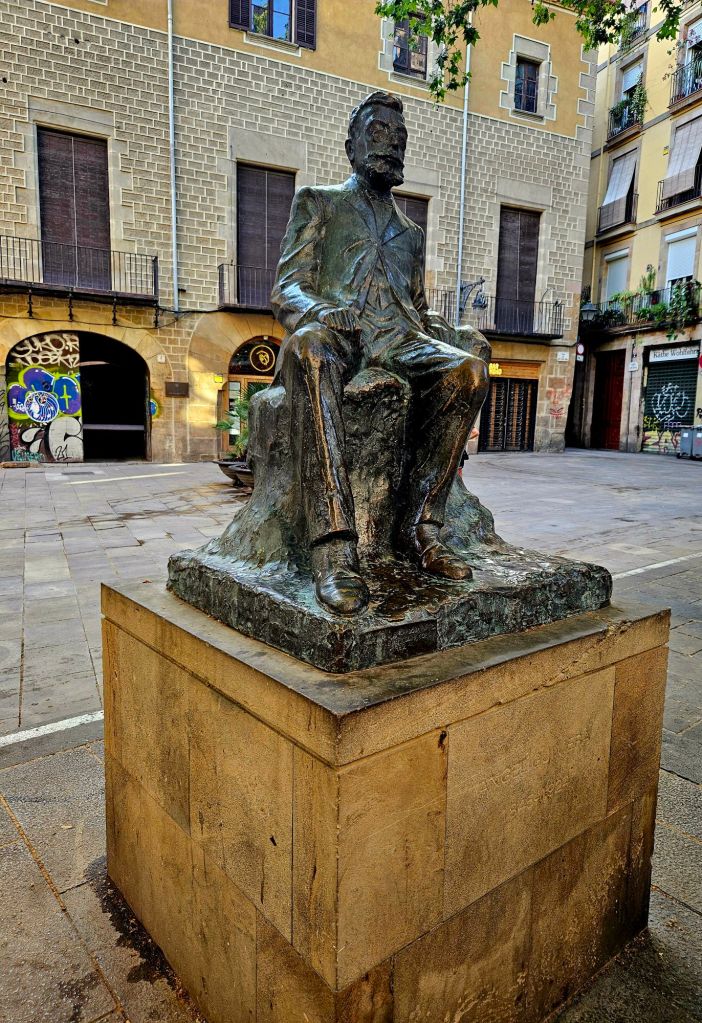
In the square by the church is a statue of the Catalan writer and poet Àngel Guimerà. He wrote a number of popular plays that helped in the revival of the Catalan language. He was nominated 23 times for the Nobel Prize in literature but never won it. He is buried at the Montjuic cemetery.
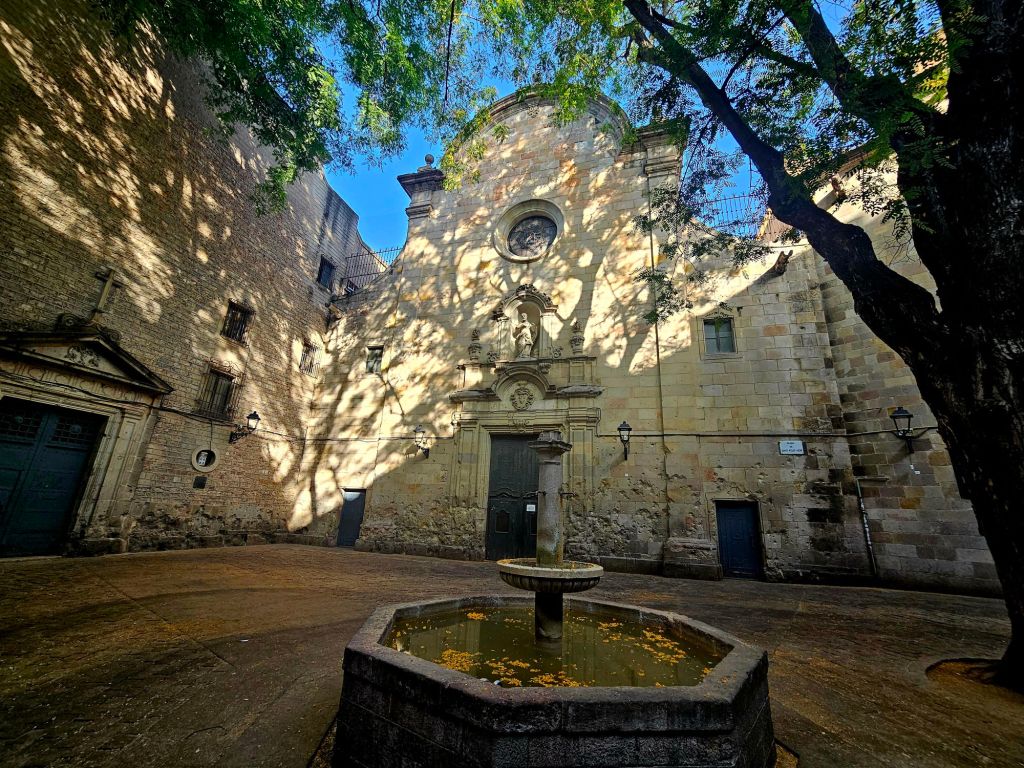
I carried on walking to the Plaça de Sant Felip Neri, which is presided over by the church of St. Felip Neri. The square is used as a playground for the school (to the left of the church) and has an octagonal fountain in it, symbolising life. Originally, the square was home to the Palace of Neri, built in 1752. During the Spanish Civil War, it became a makeshift orphanage. It was bombed, and 42 people died, most of whom were children. The square marks the entrance to the city’s Jewish quarter.
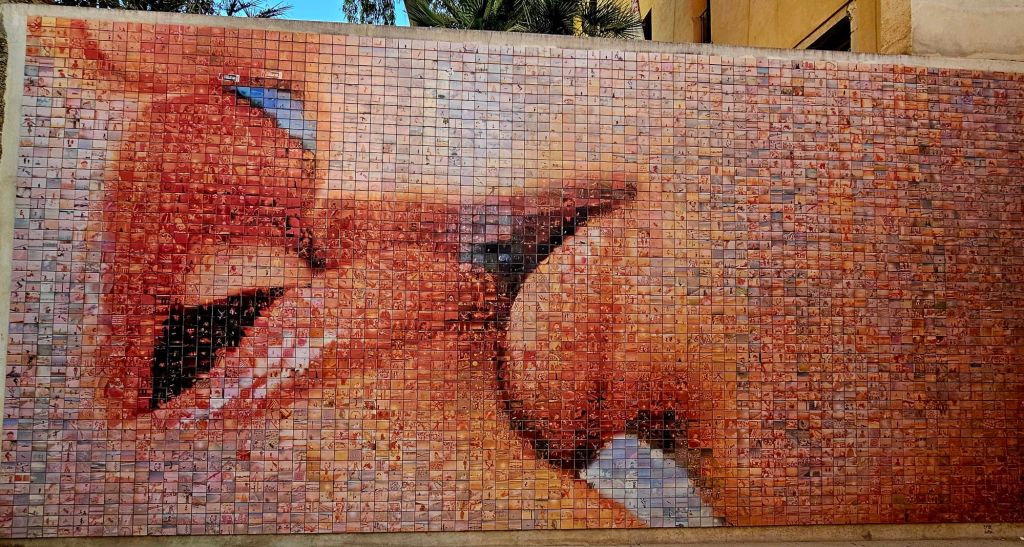
As I continued on, I came upon a beautiful mural – El Món Neix en Cada Besada, or the ‘Kisses’ mural. This is a photomosaic mural composed of four thousand individual ceramic tiles, each with a photograph submitted by locals. People were asked to submit photos that showed what living in freedom meant to them. The mural is 8m wide and almost 4m tall. It symbolises the universal themes of love and freedom. A quote appears alongside the mural, which was created to mark the 300th anniversary of the military seige of the city in 1714. It reads, “The sound of a kiss is not as loud as that of a cannon, but its echo lasts a great deal longer.”
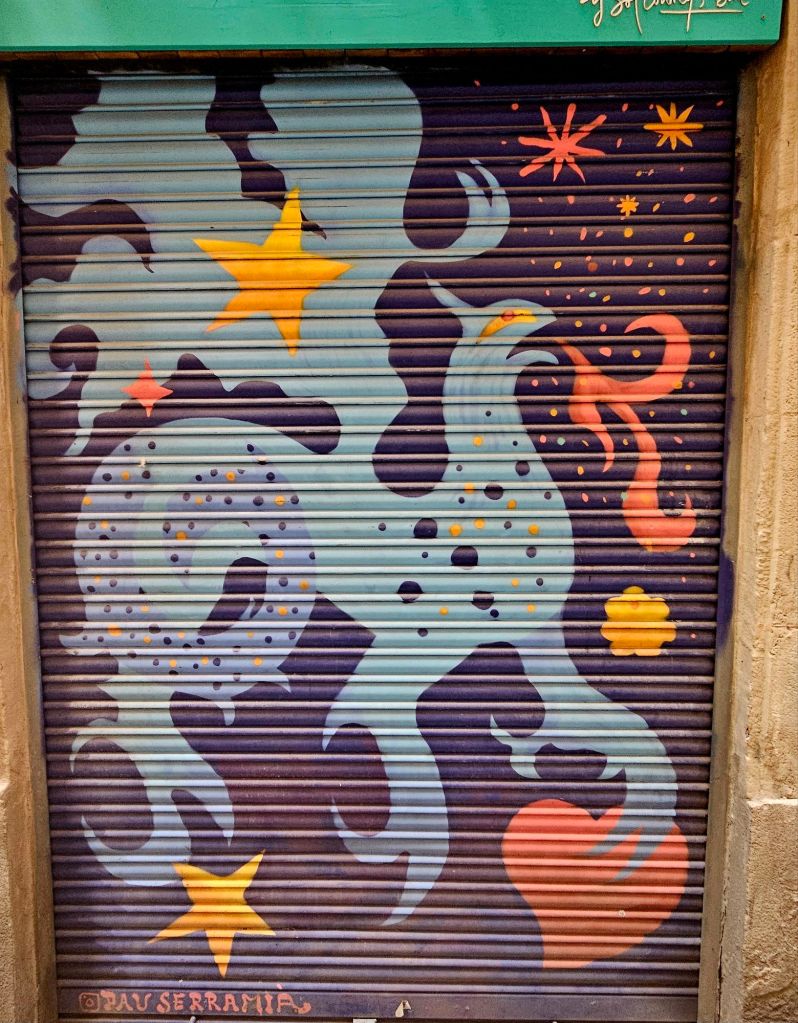
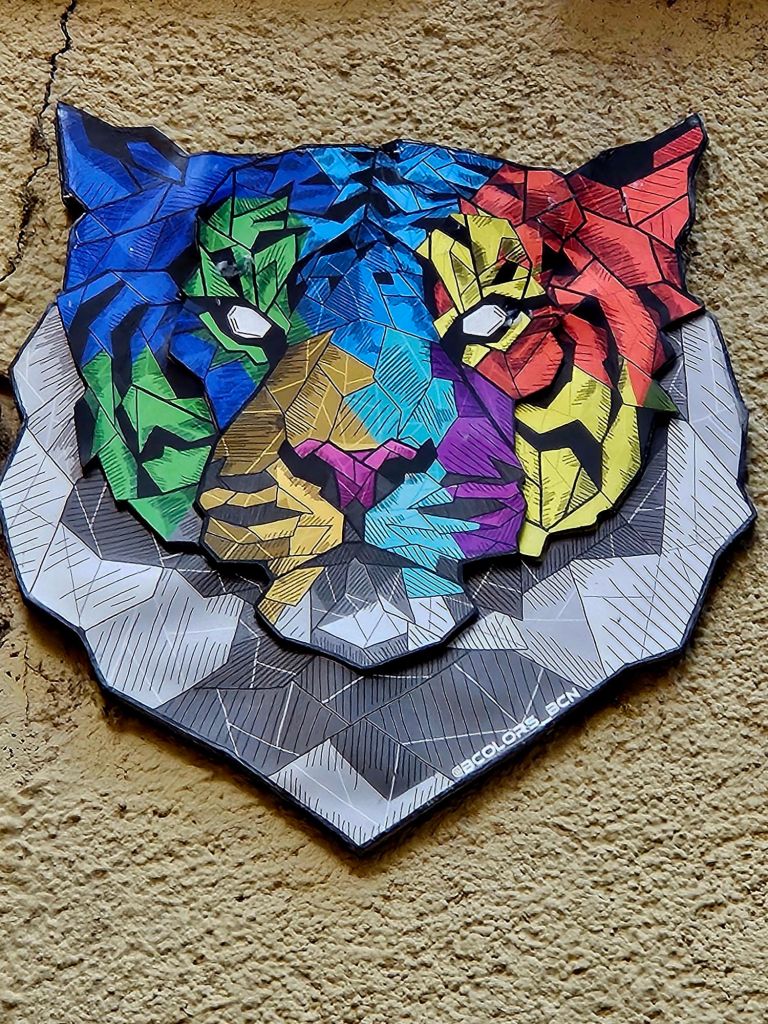
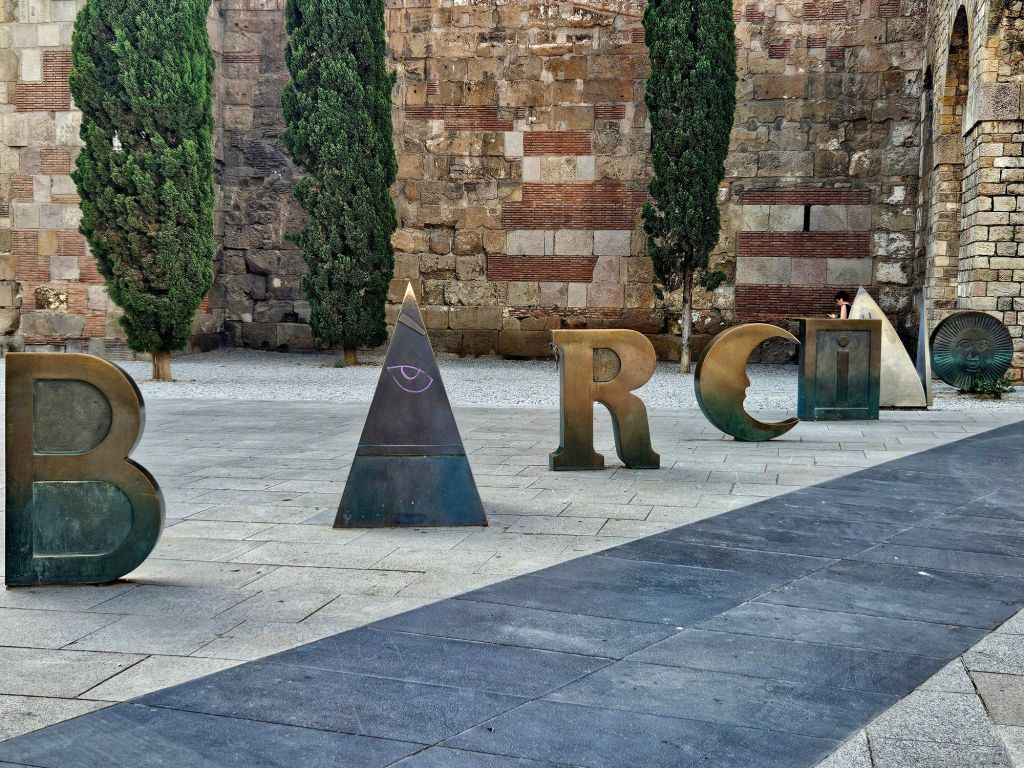
Along the way, there was a lot of street art.

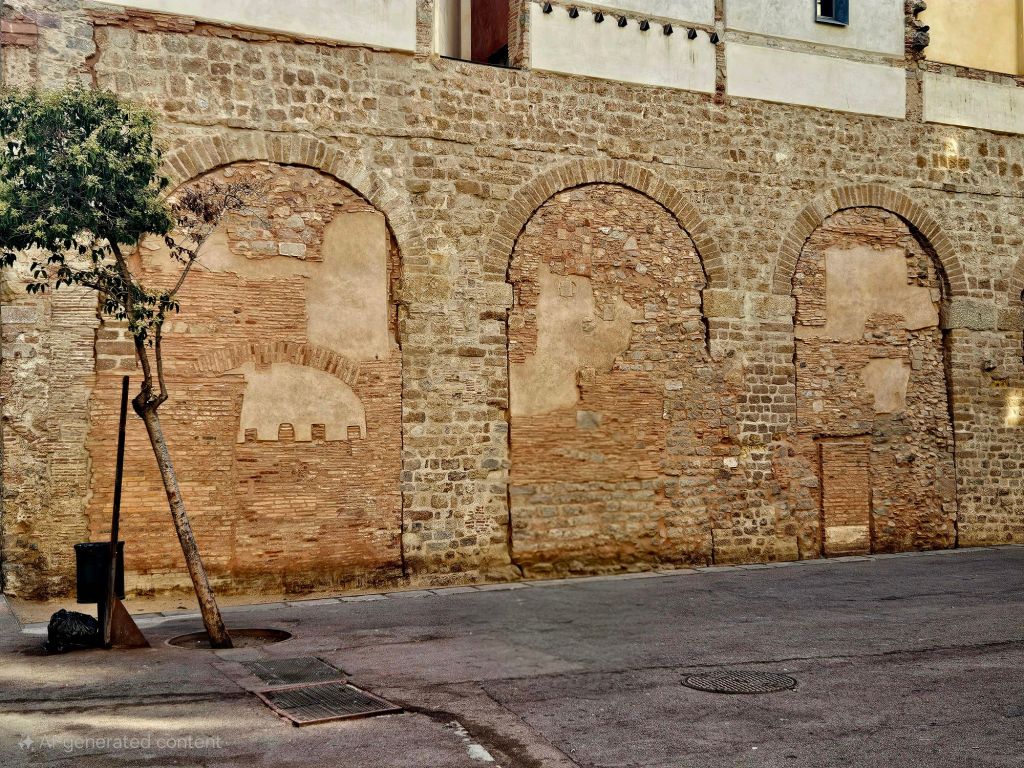
The next stop was the Roman Aqueduct. This used to be 11km long, bringing water into the city. The remaining part is only 20m in length and was only discovered in 1988. It was known to be in service in the 6th and early 7th century.
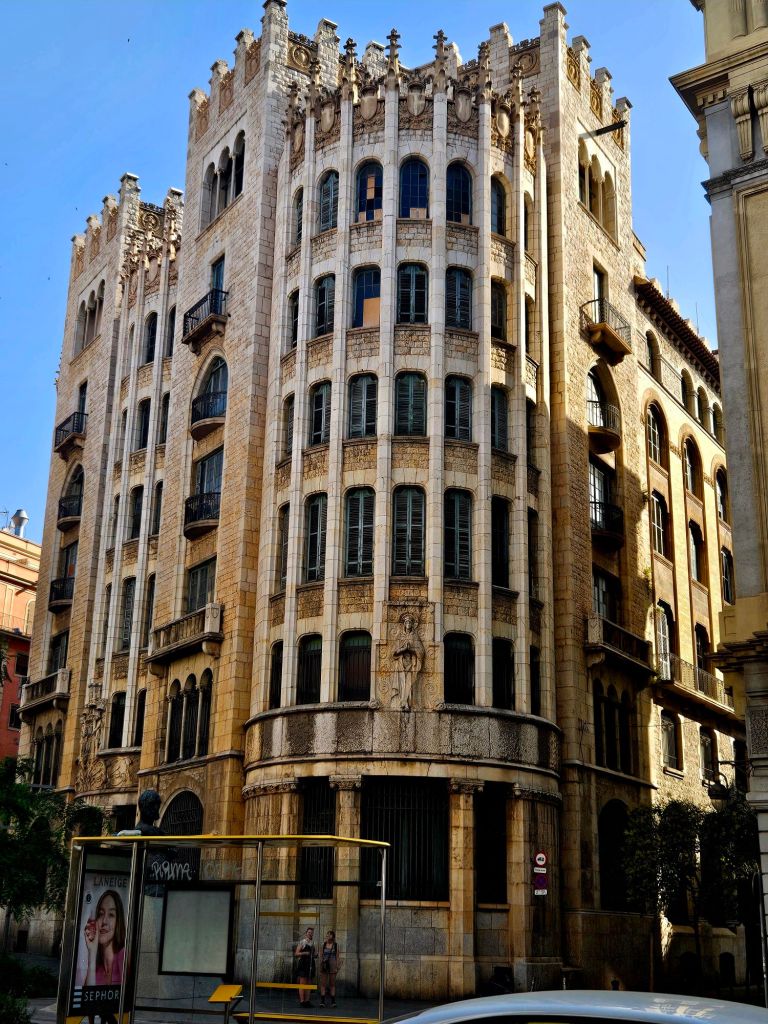
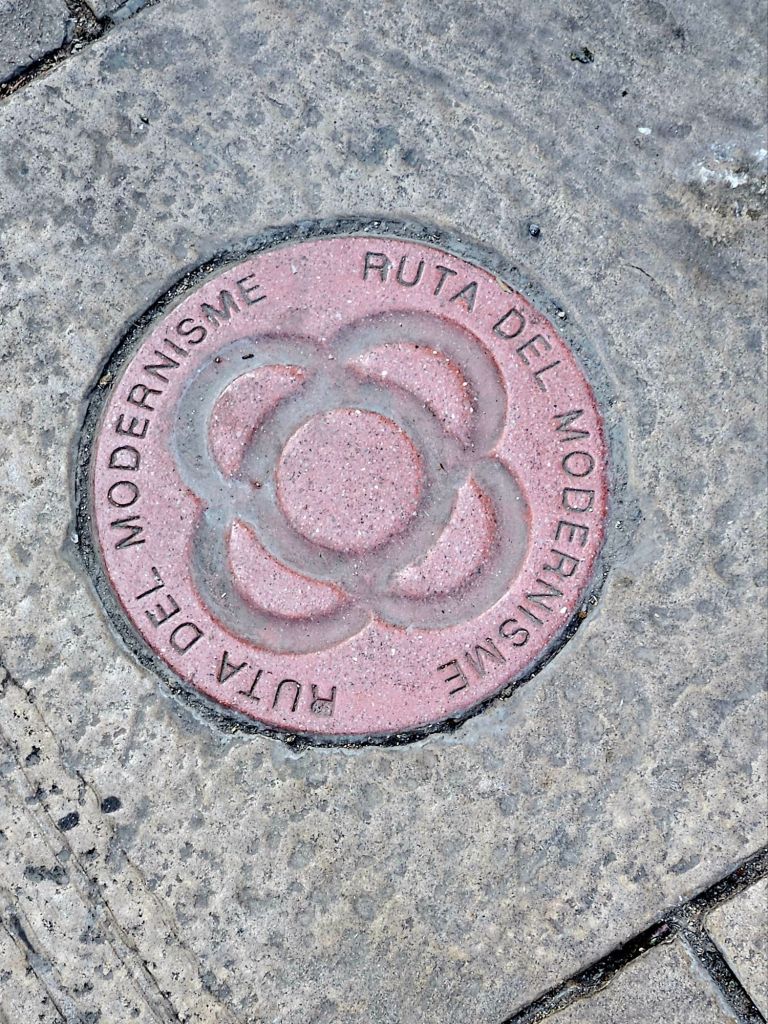
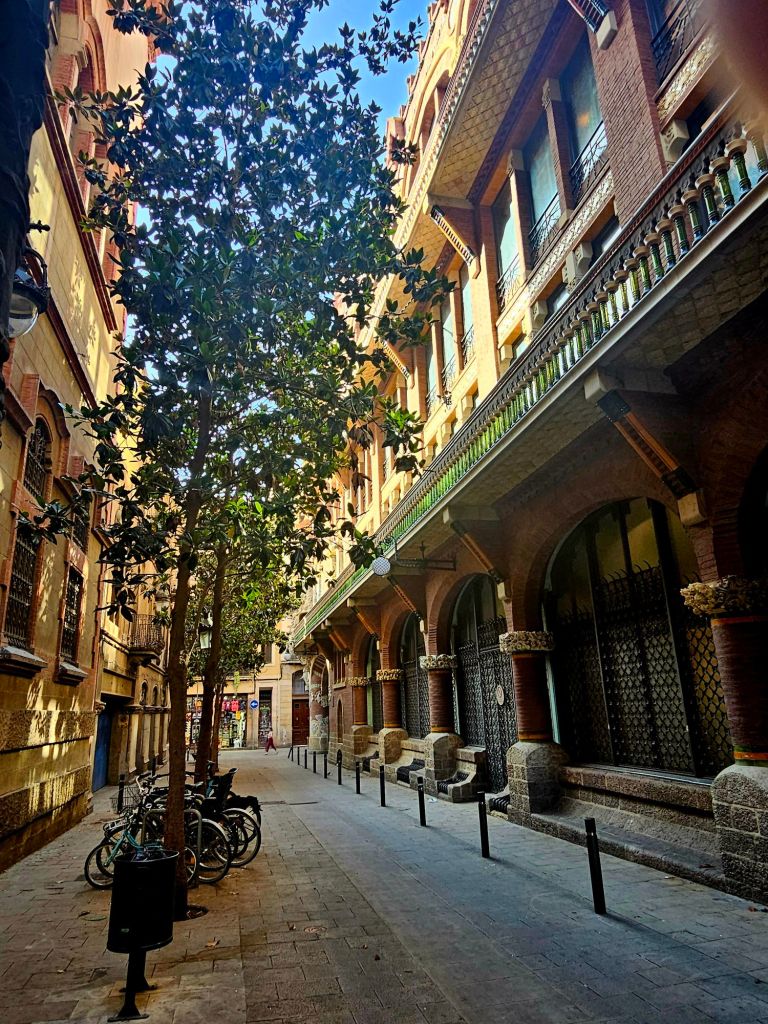
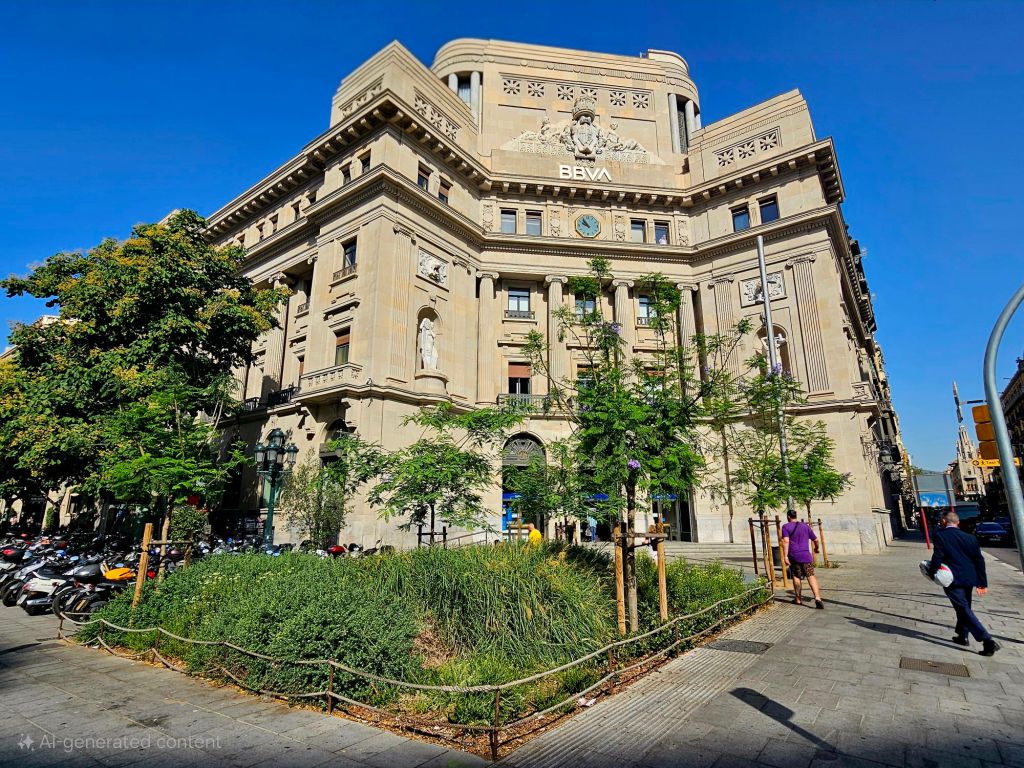
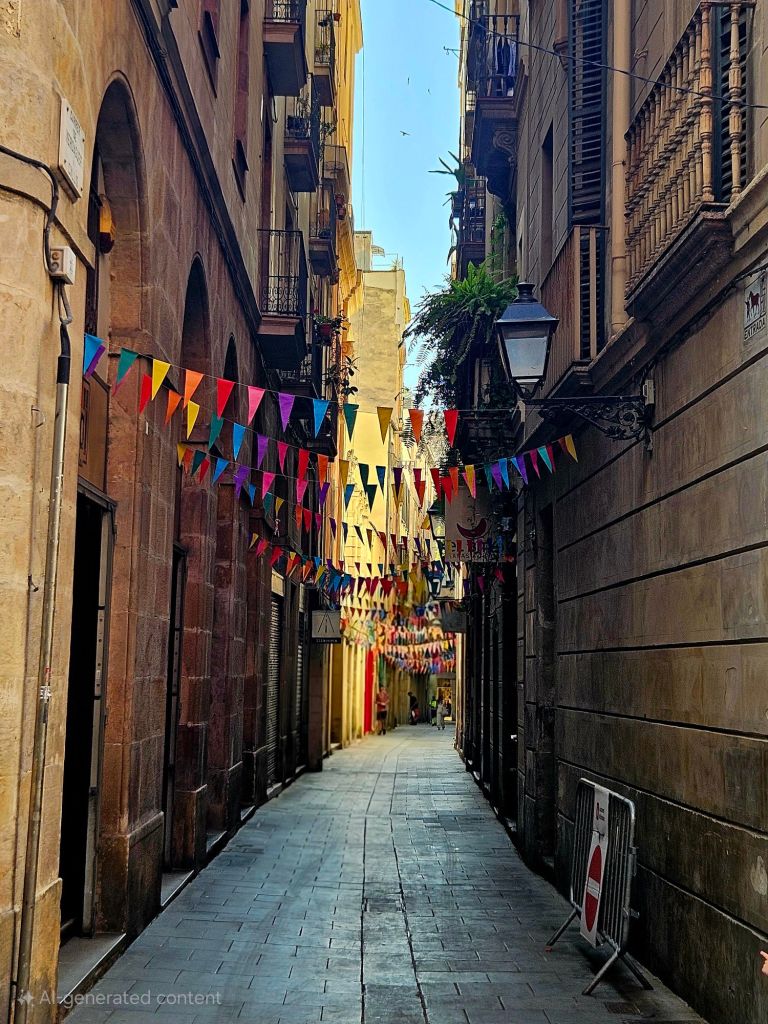
There were a lot of nice buildings and interesting streets around.
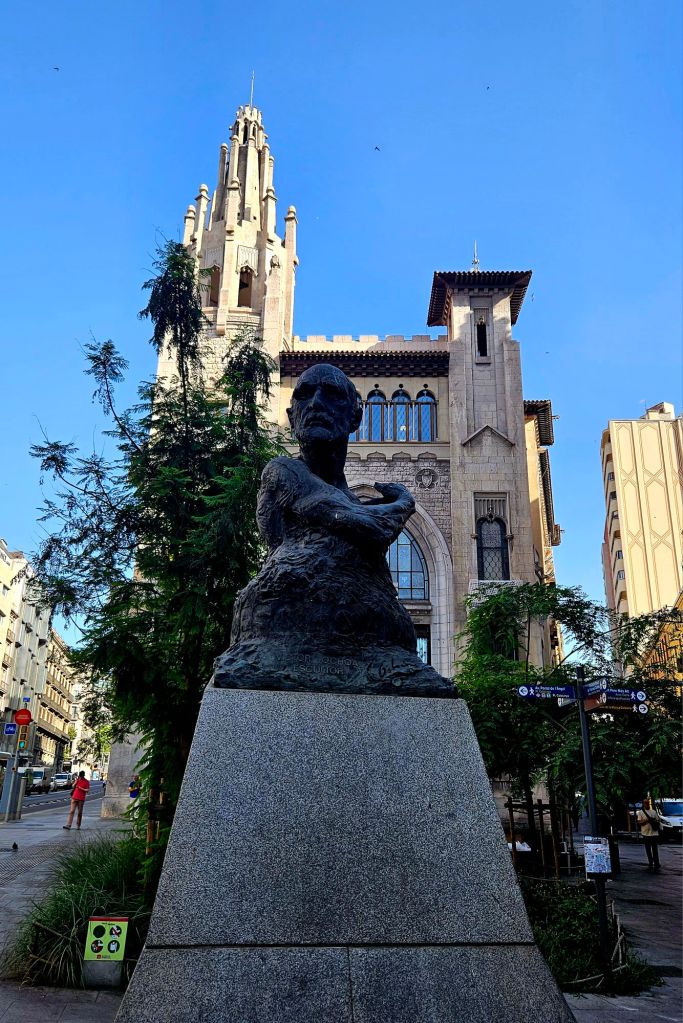
I walked past a memorial to Francesc Cambó. He was a wealthy conservative politician, lawyer, author, philanthropist, and Catalan nationalist. The statue was inauguration in 1997, 50 years after his death. There was some controversy as Francesc supported Franco during the Spanish Civil War.
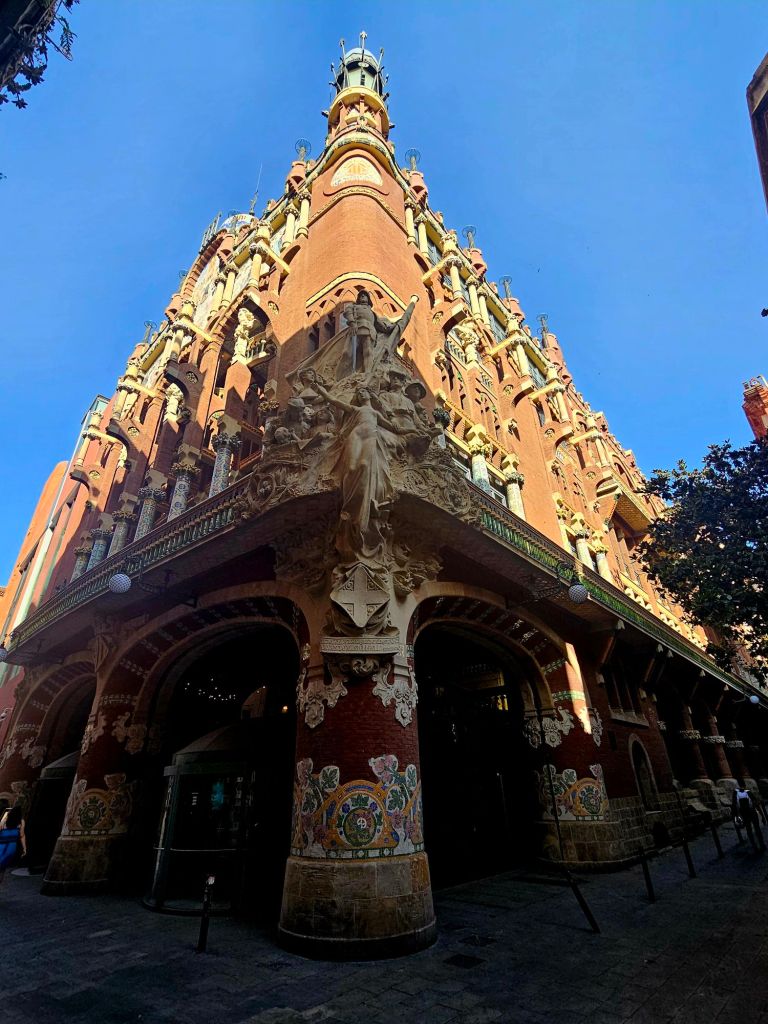
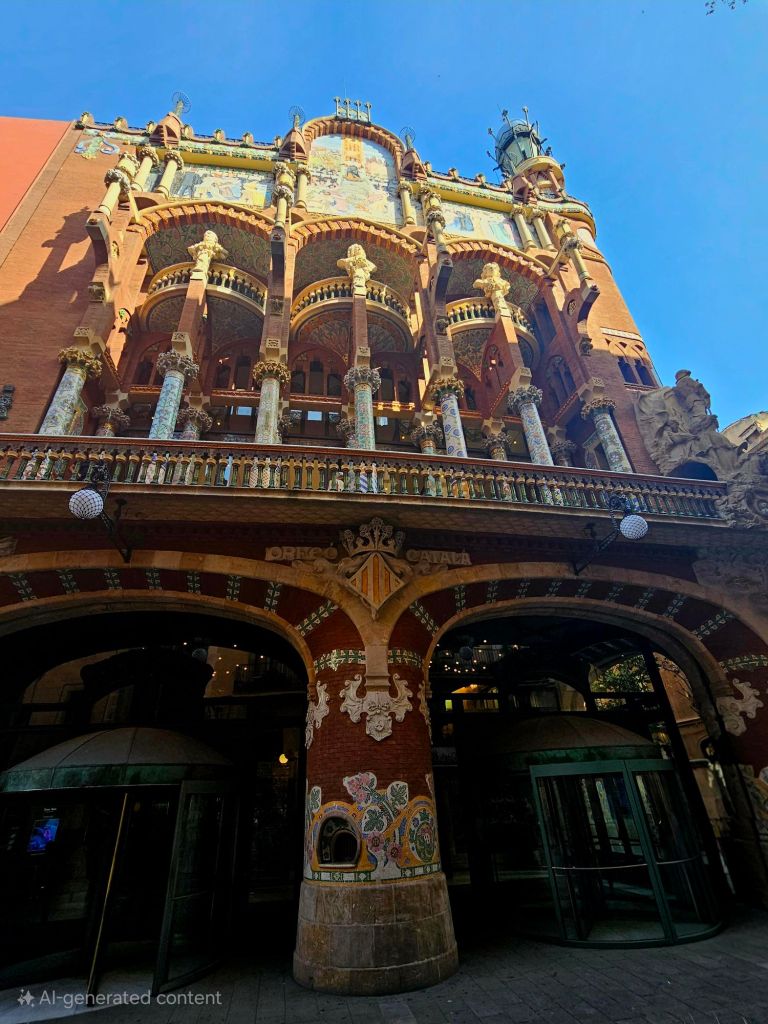
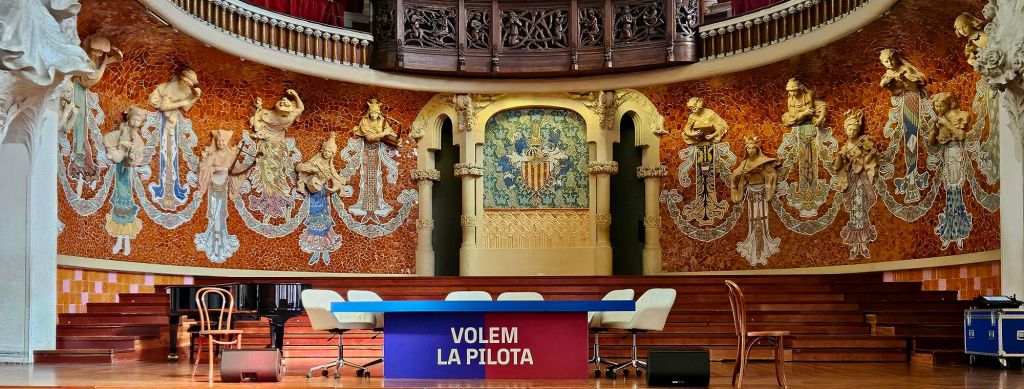
Eventually, I came to the place that I had set out to visit – the Palau de la Música Catalana. This building is amazing and was built between 1905 and 1908. It is the only concert hall listed as a world heritage site by UNESCO. In the second photo below, you can see the original ticket box in the entrance pillar.
Outside of the building is a sculpture of a woman’s head known as ‘Carmela’. The sculpture is 4.5m tall and made from cast iron. The appearance of the face changes depending on your perspective and is associated with the concept of memory, compressing and representing it in its form.
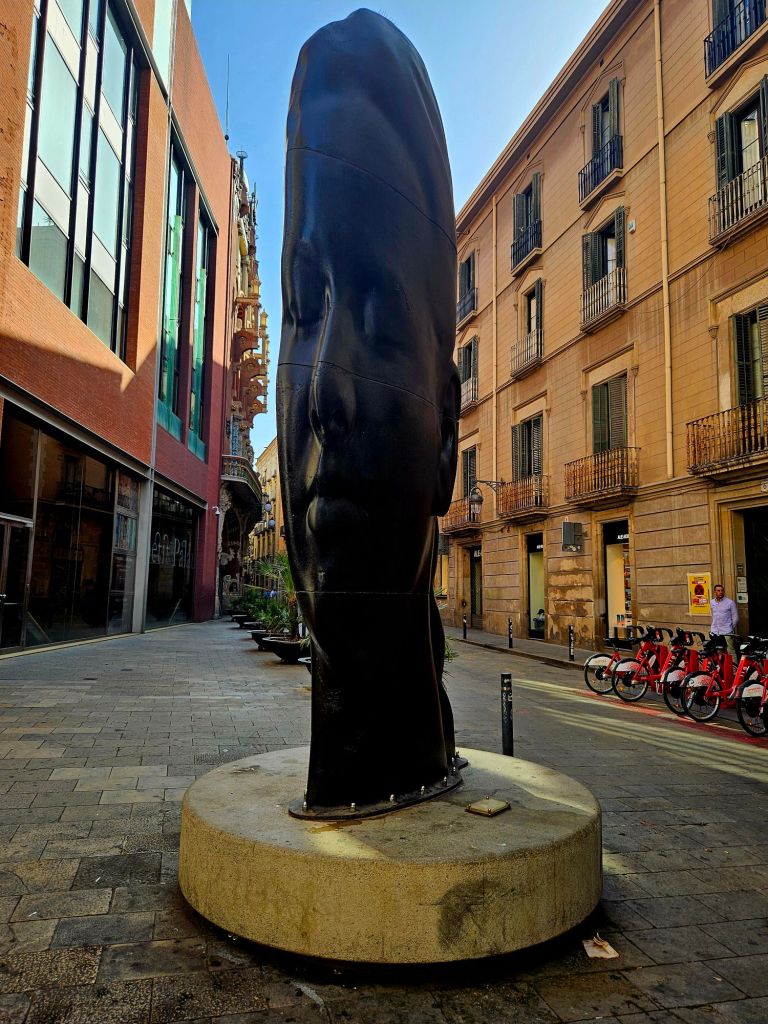
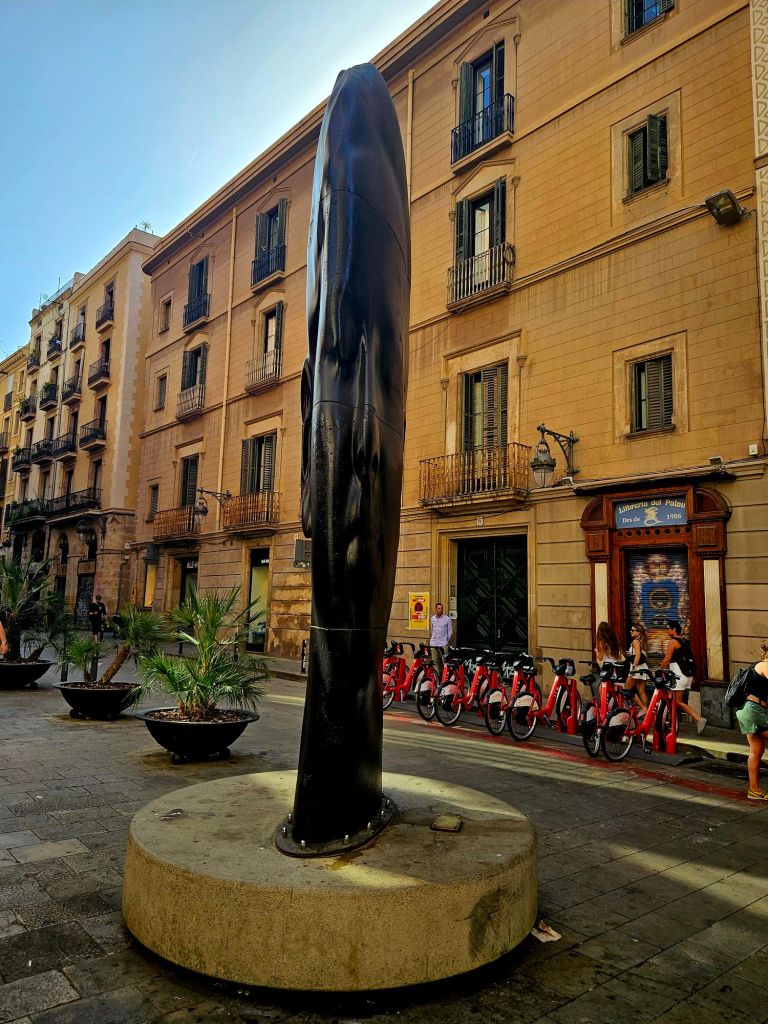
It took me a bit of too-ing and fro-ing to get a ticket as I went in the wrong entrance to start with. But I managed to sort it out, and then I went straight up to the main hall.
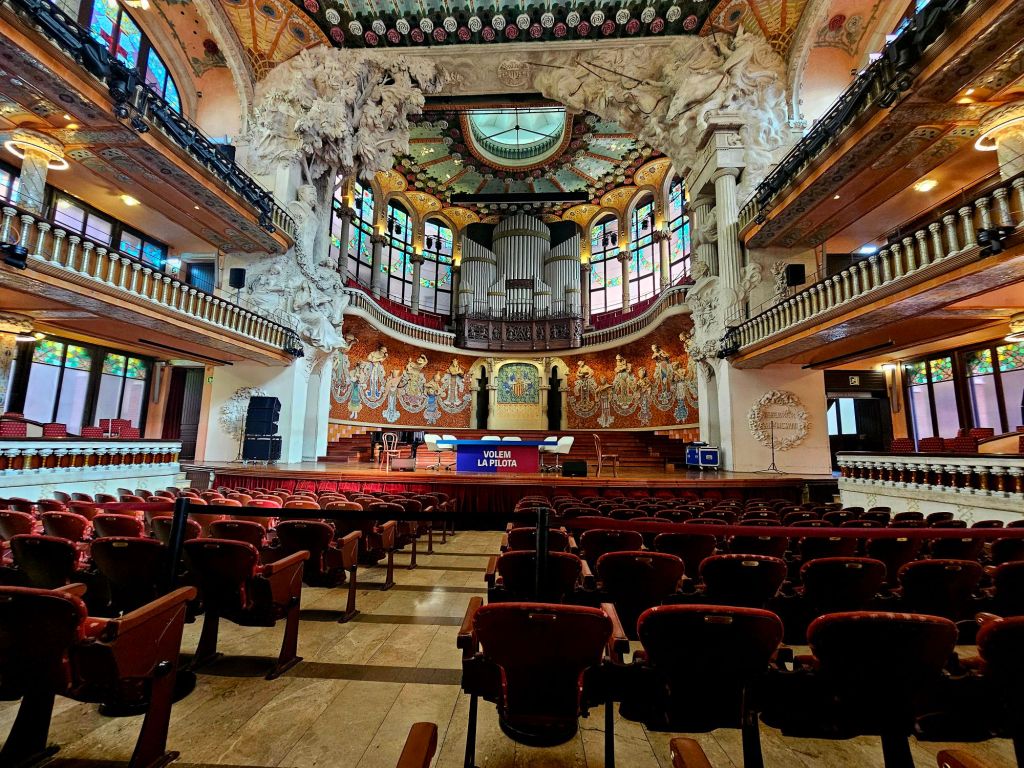
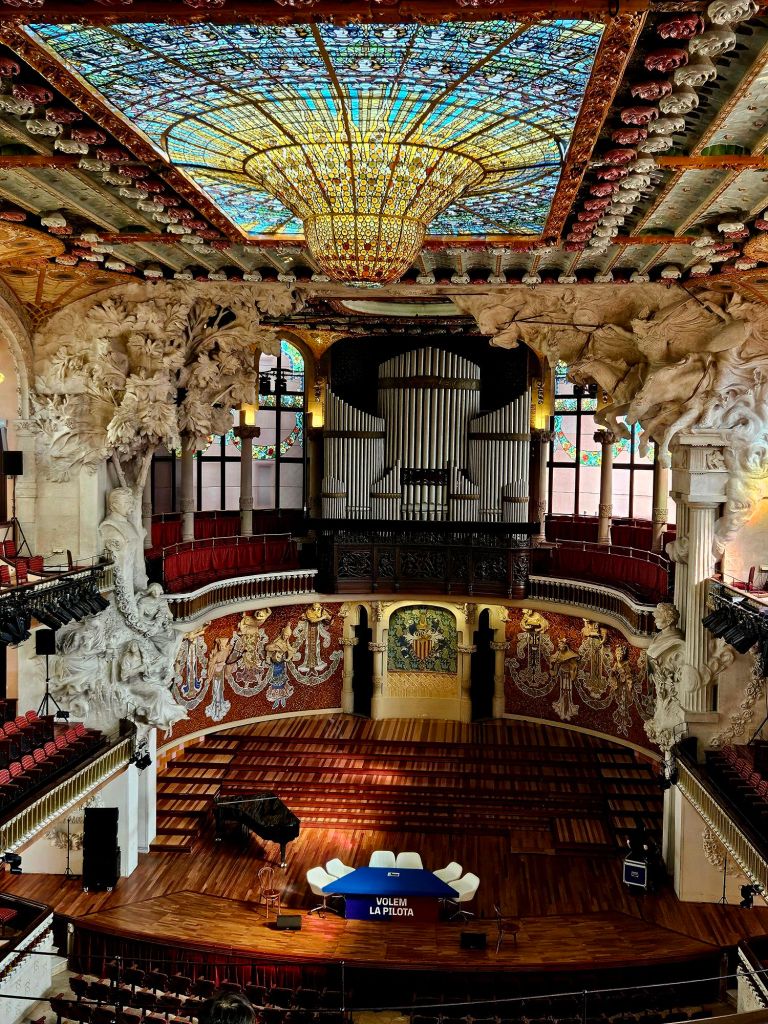
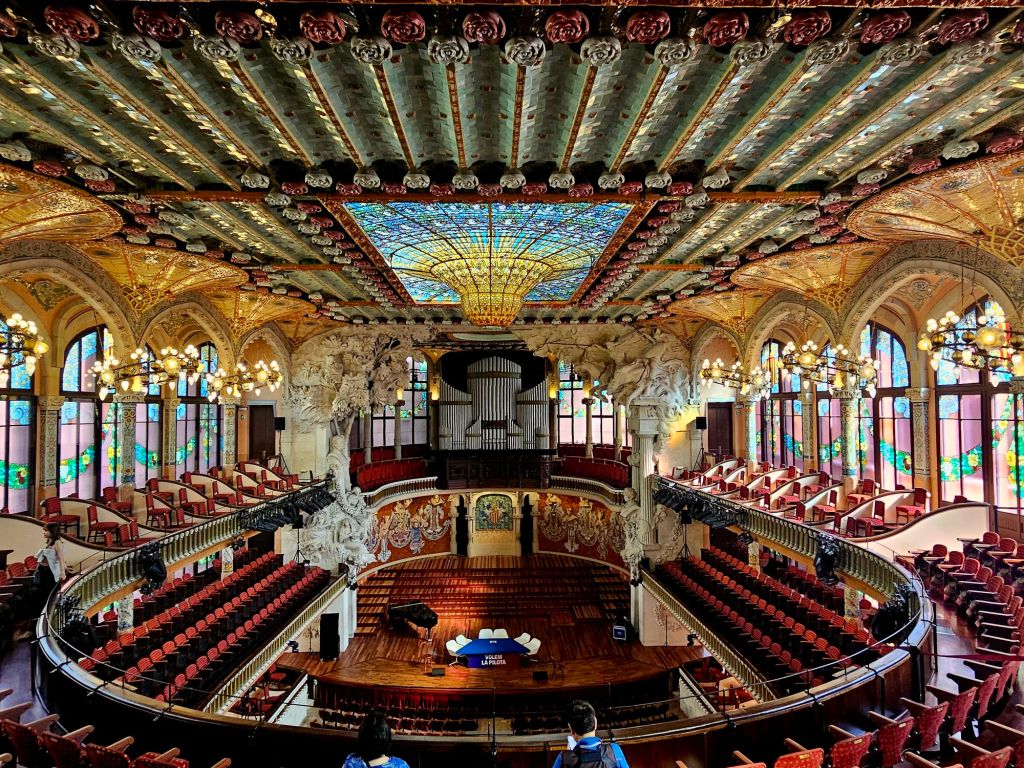
The organ has more than 3,700 pipes and was made in 1908.
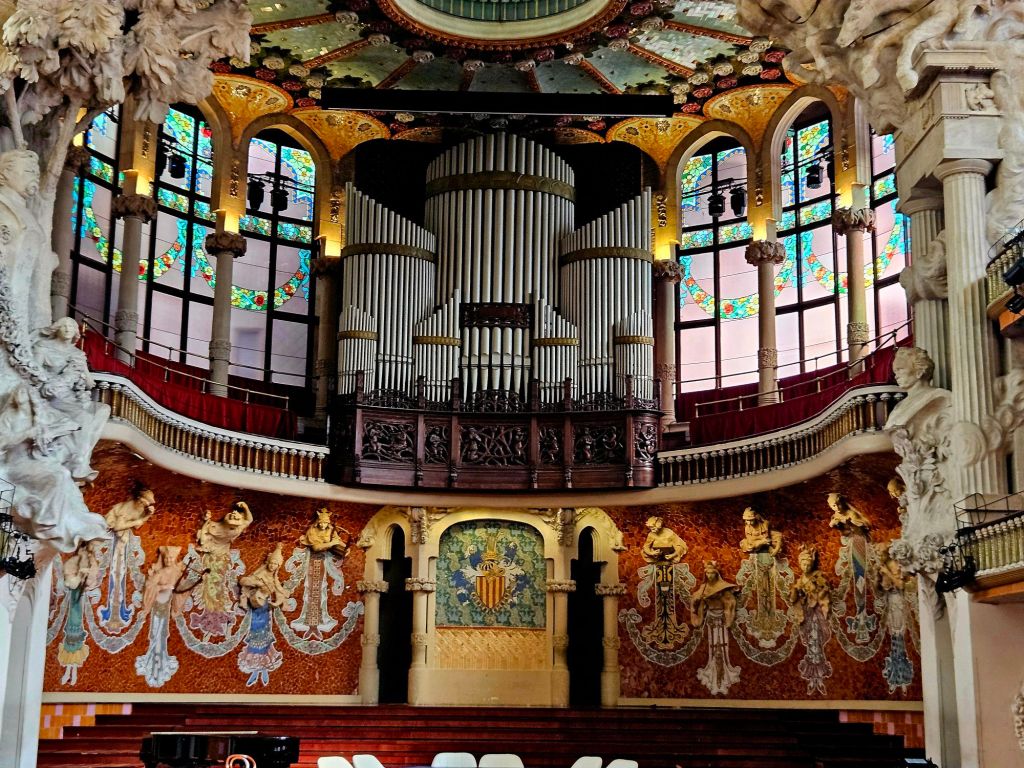
There are 18 muses surrounding the stage, all of them playing instruments from different parts of the world – representing music without frontiers.
The stained glass ceiling is stunning and symbolises the sun. It illuminates the whole concert hall.
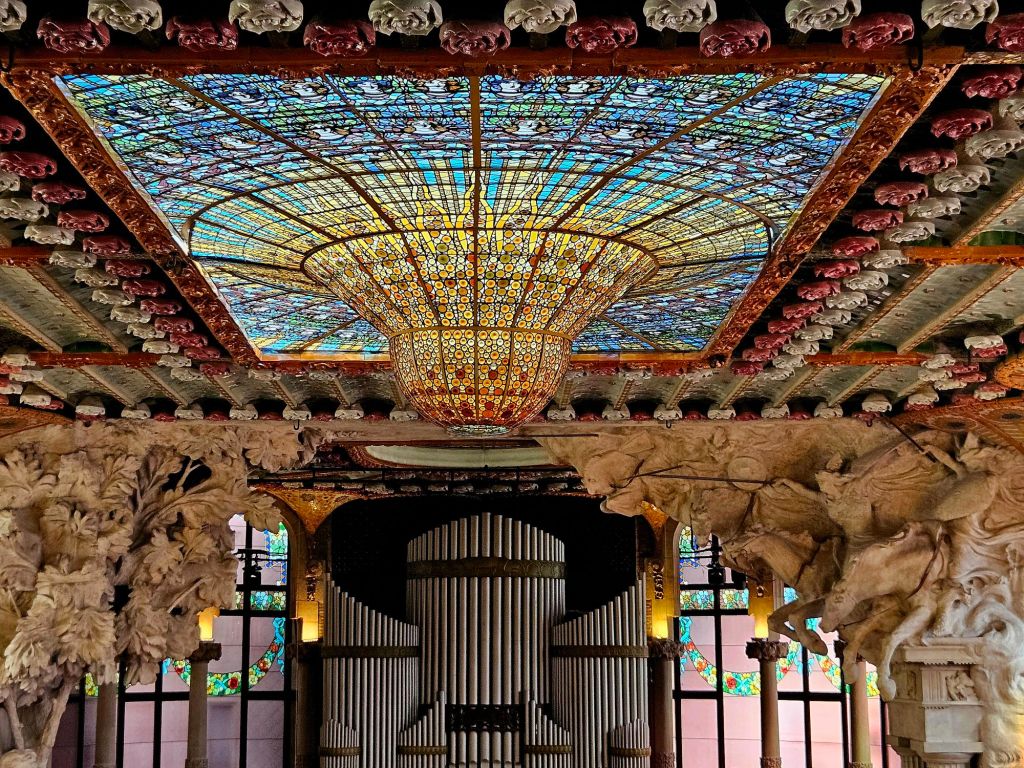
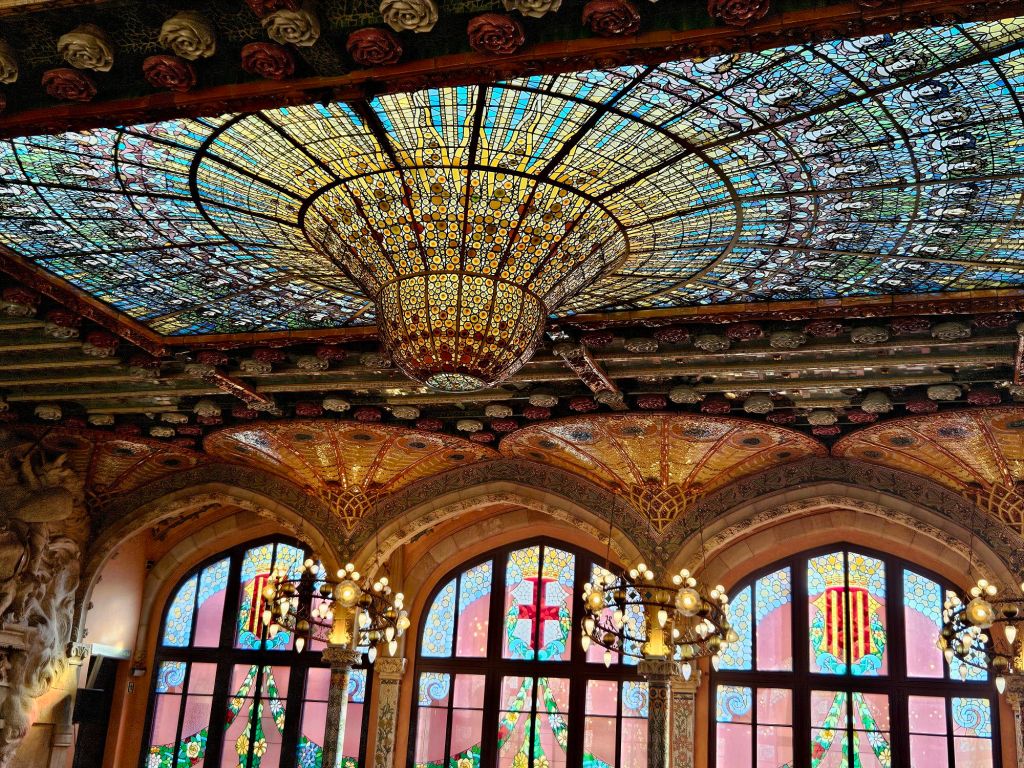
The centrepiece is surrounded by the faces of 40 singers. This concert hall is the only auditorium in Europe that is illuminated during daylight hours entirely by natural light.
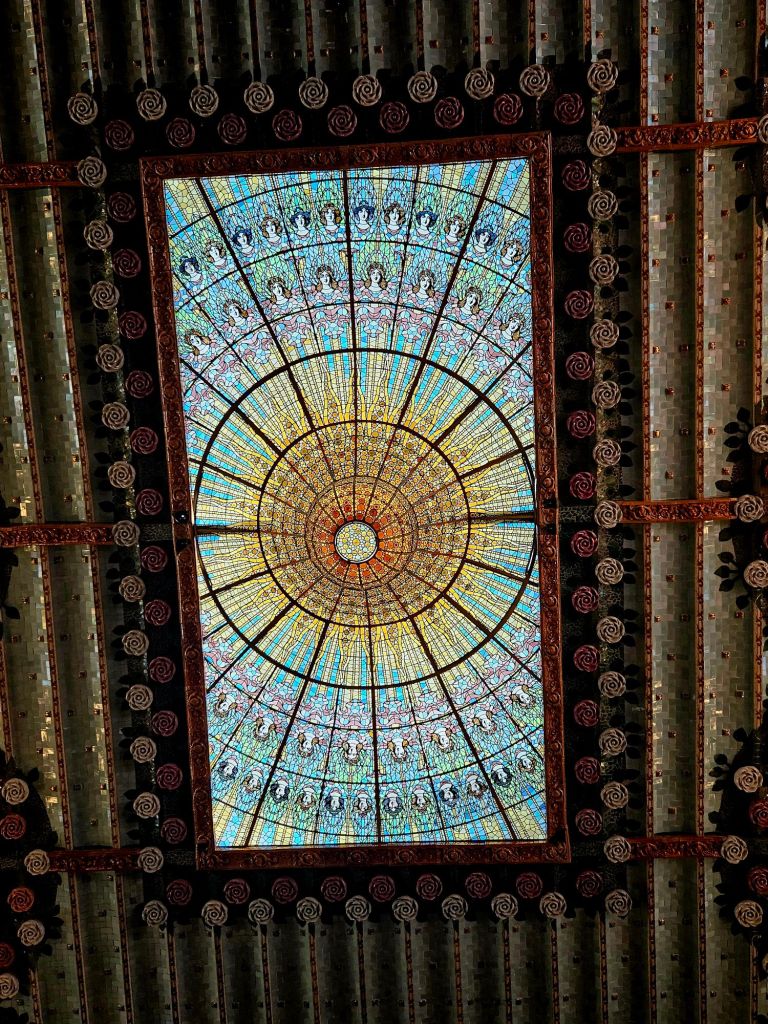
There are over 2,000 sculpted roses throughout the music hall, which is why the building is often referred to as the ‘stone garden.’

Looking down to the stage, there is a bust of the composer Josef Anselm Clave to the left. He was a key figure in Catalan popular music and in the social drive behind choral singing. And to the right is a bust of Ludwigvan Beethoven. So they represent both folk and classical music.
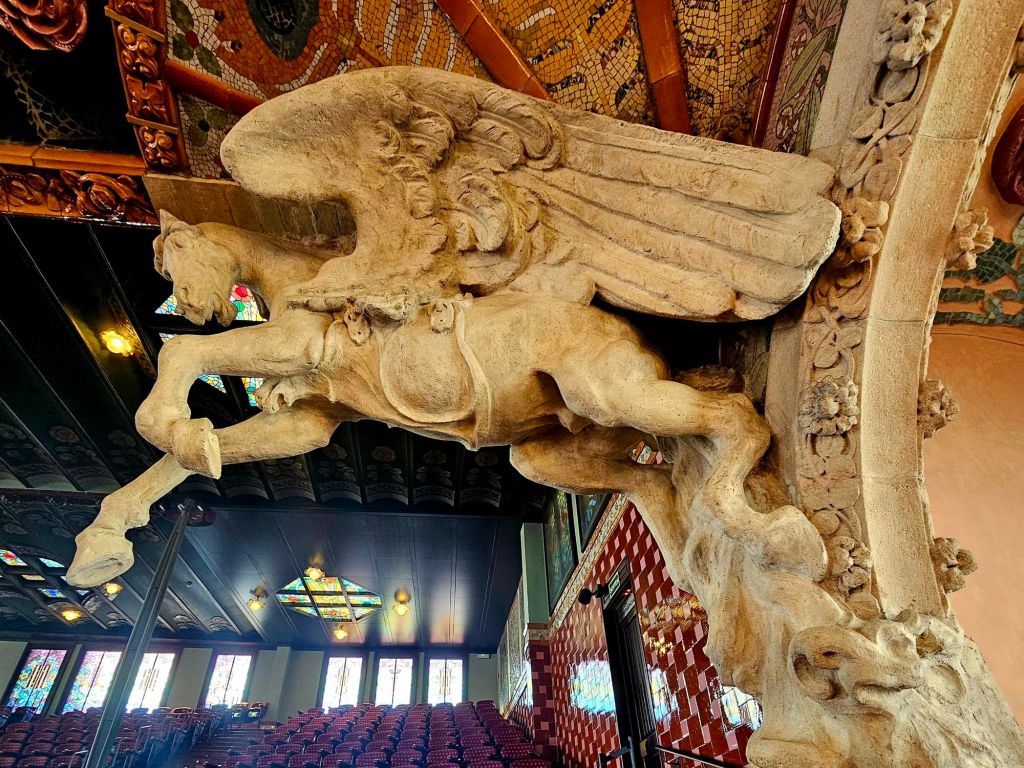
There are also sculptures of winged horses in honour of Pegasus, a symbol of high-flying imagination.
On my way up to the top tier of the music hall, I visited Lluis Millet Hall, which is a meeting area for music and society. It is made up of a number of mosaic columns, each one unique and representing nature.
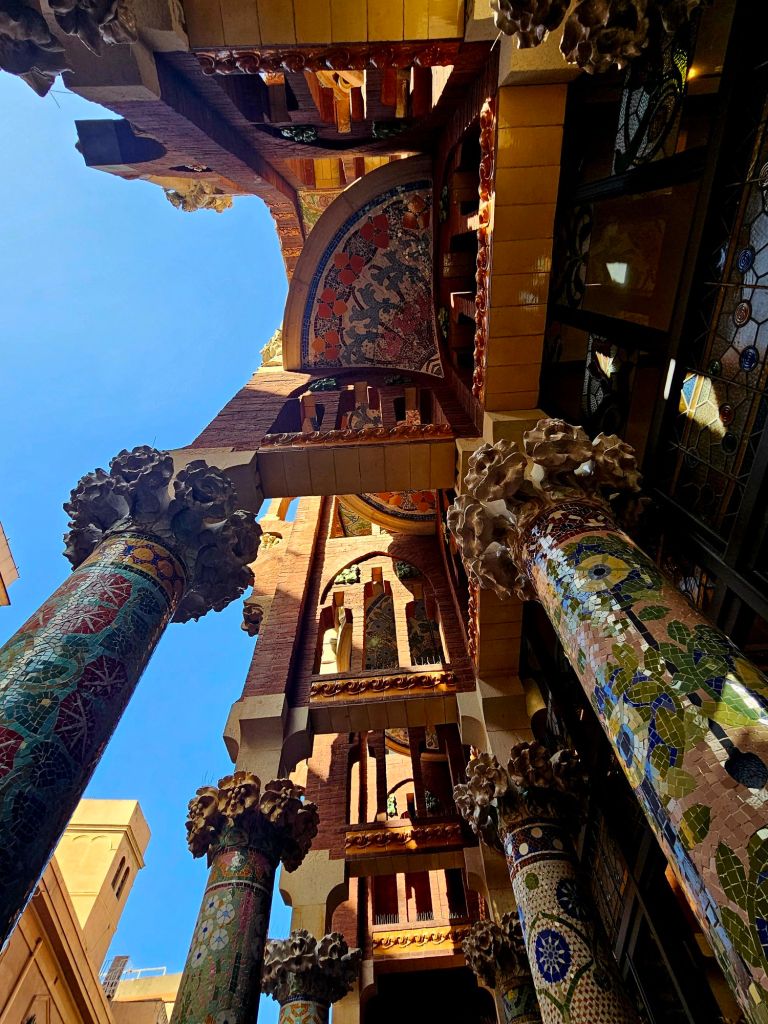
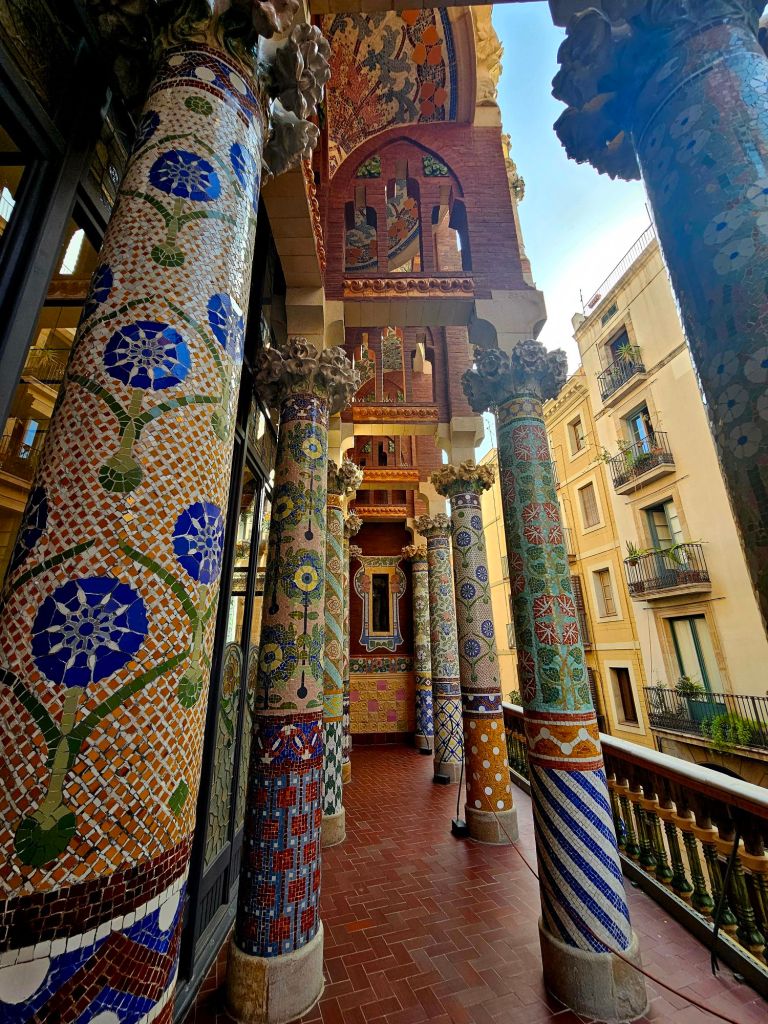
The small hall itself contains several bronze busts of musicians related to the palace.

From the top tier, you had a great view out over the whole of the concert hall.
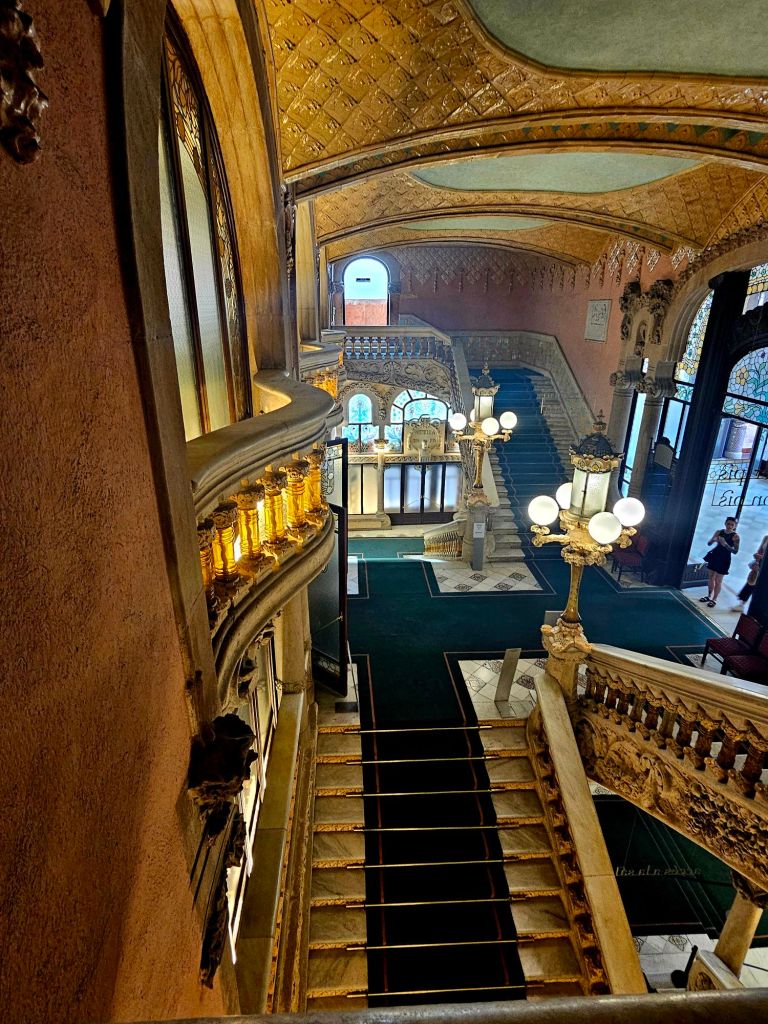
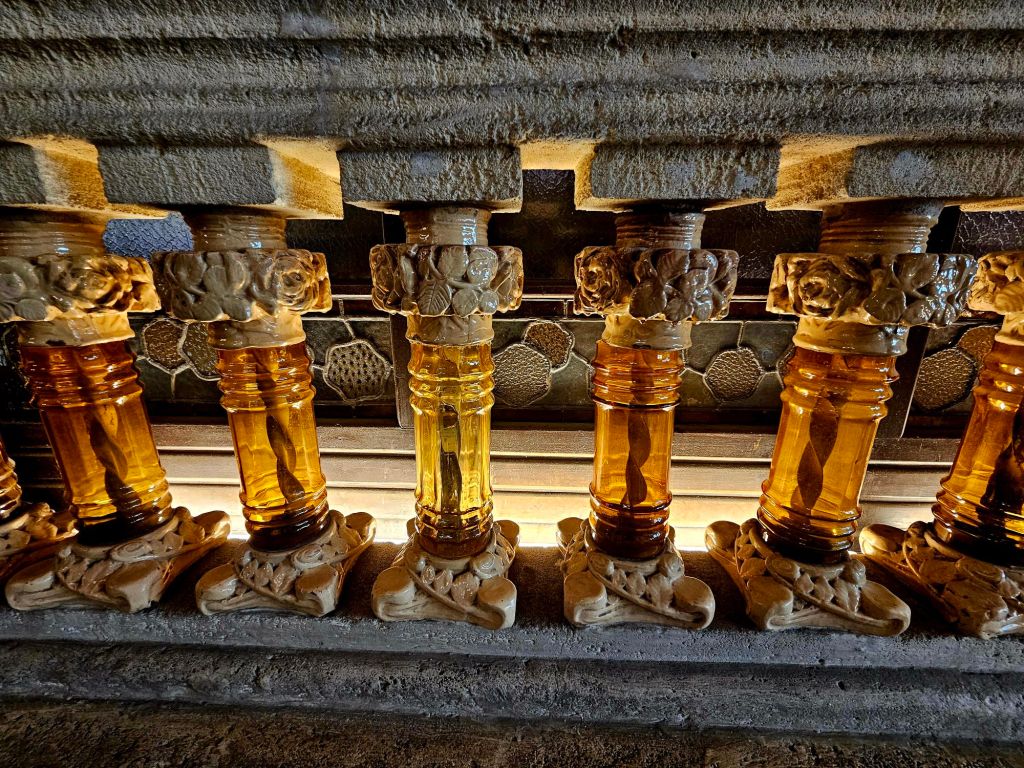
Even the stairways are very grand. The balustrades of the staircases, made from marble, are supported by unusual transparent yellow glass balusters. The undersides of the staircases are covered in tiles.
I was really glad that I made the effort to visit this concert hall.
On my way back to the flat, I still had quite a bit of time before we were meeting for lunch, so I decided to take a look inside the cathedral – Catedral de la Santa Creu i Santa Eulàlia.
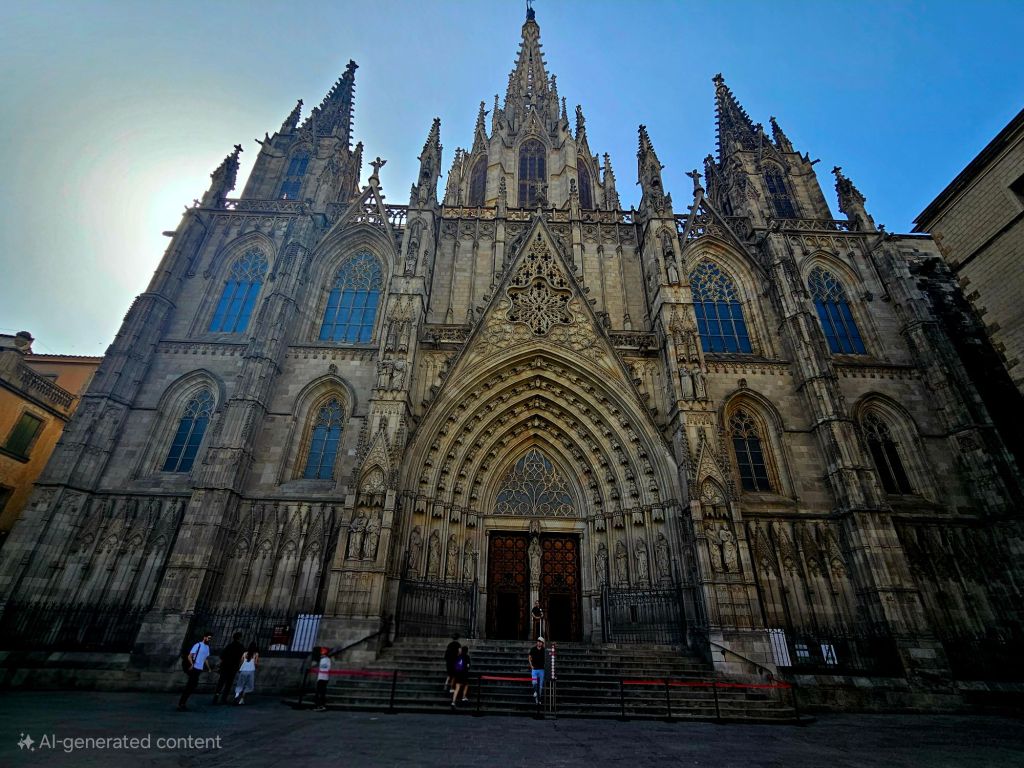
The cathedral was built over 3 centuries, starting in 1298. It was built on the site of a former Romanesque chapel.
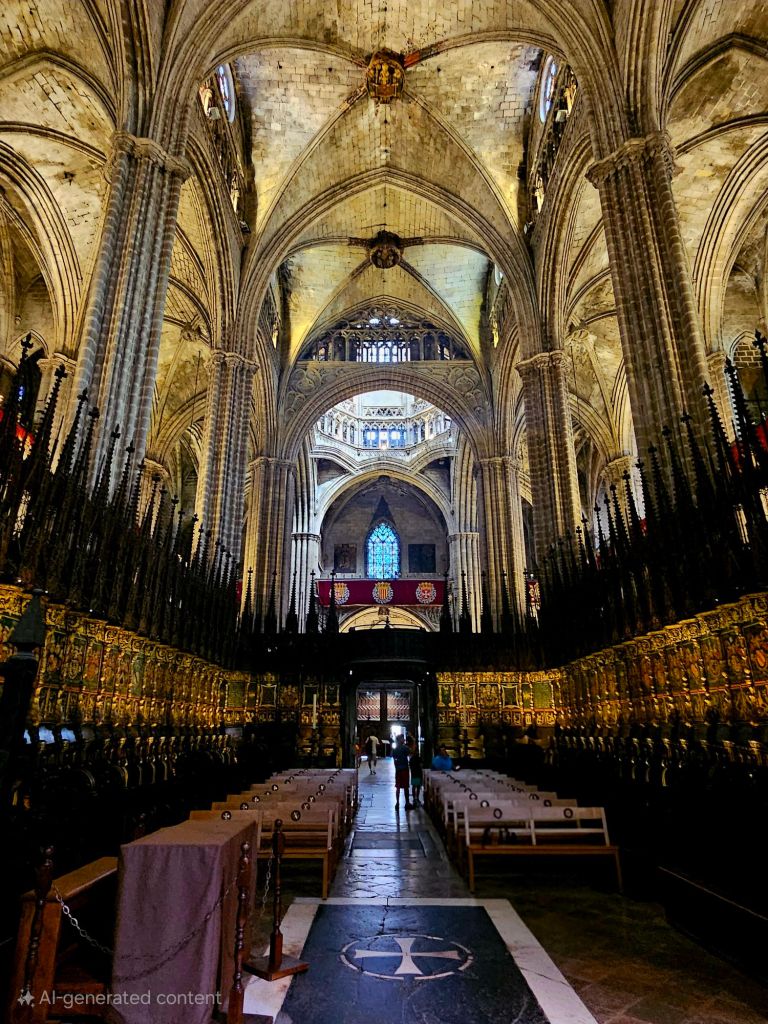
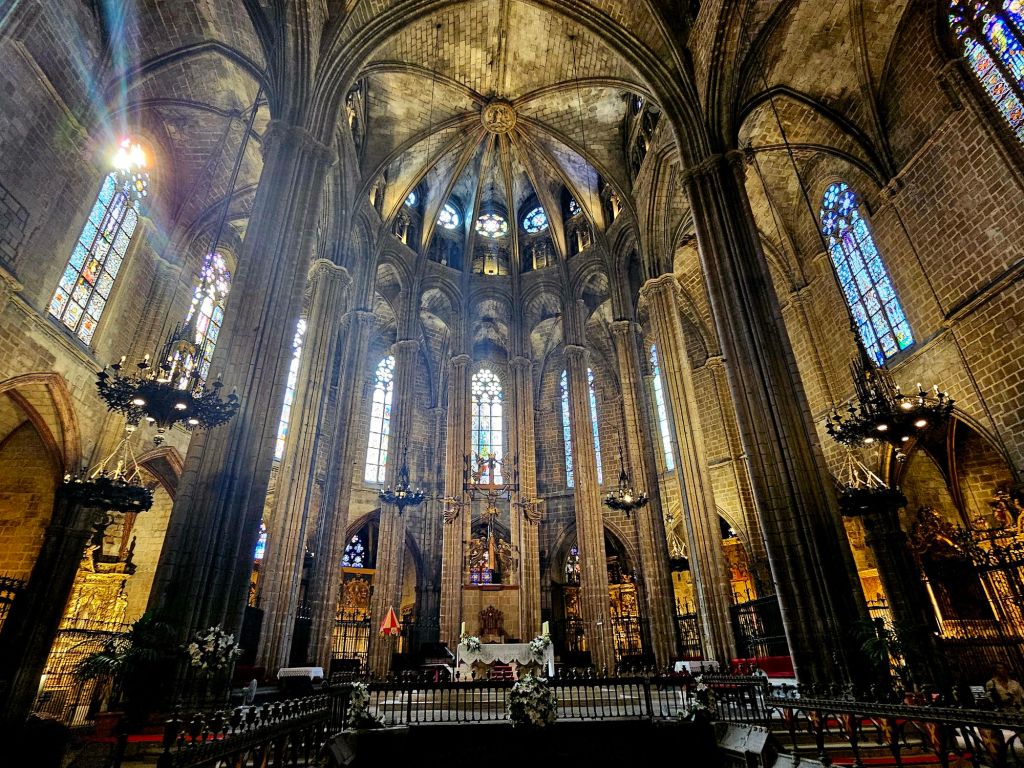
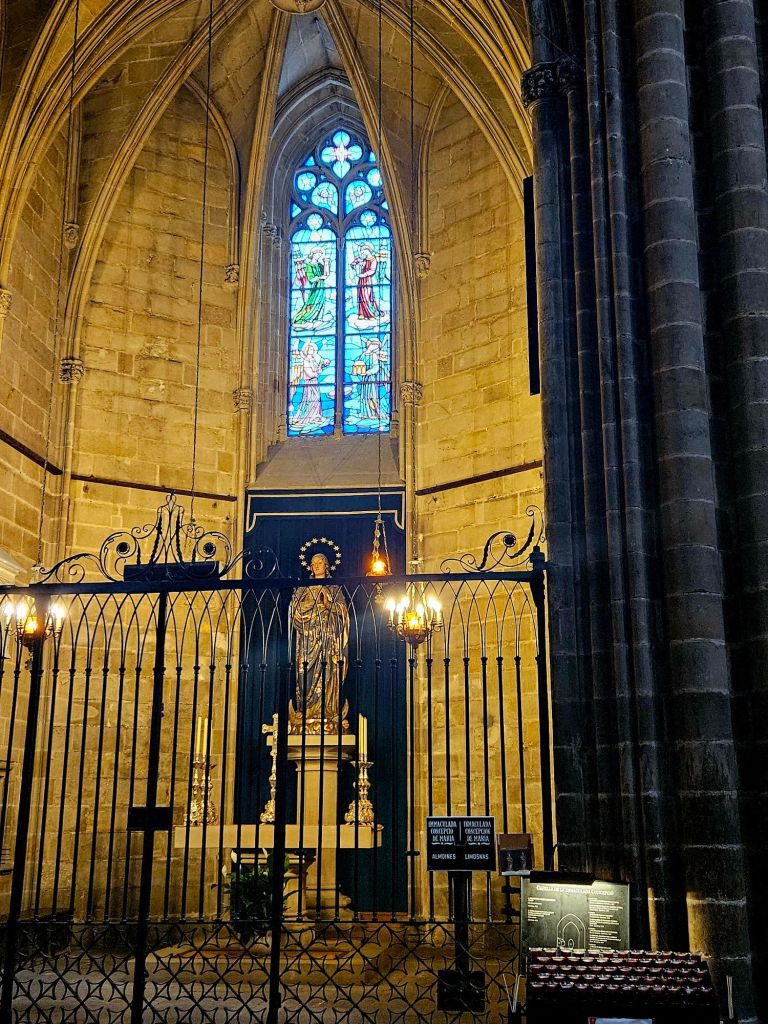
Inside, there are 25 side chapels.
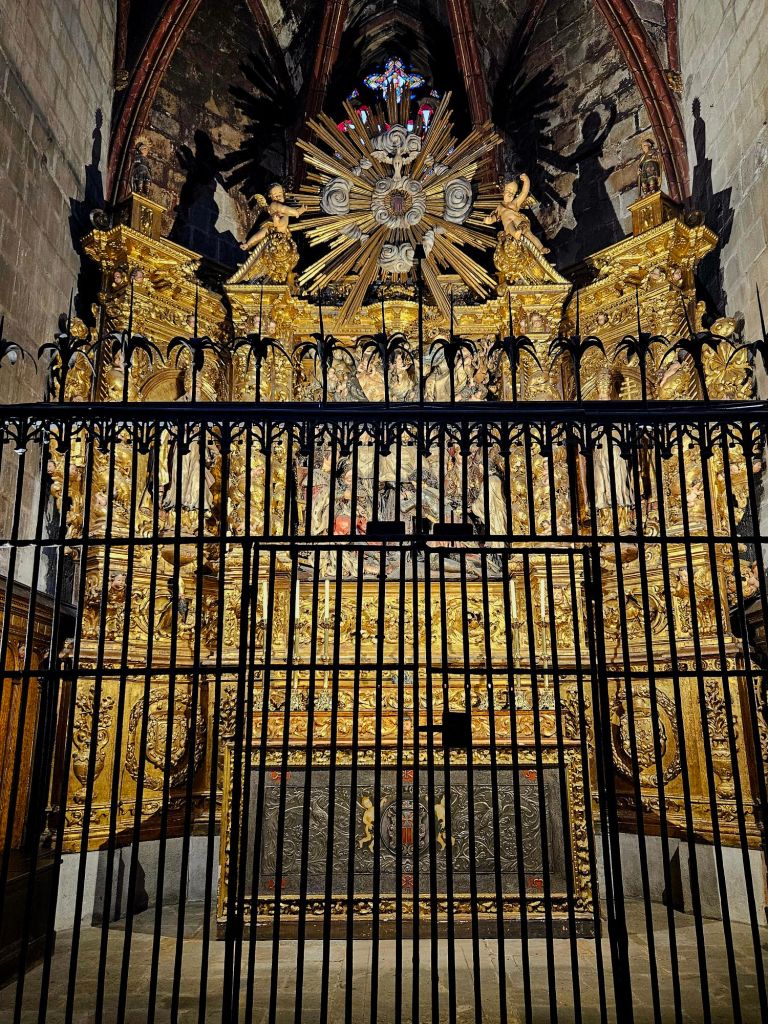
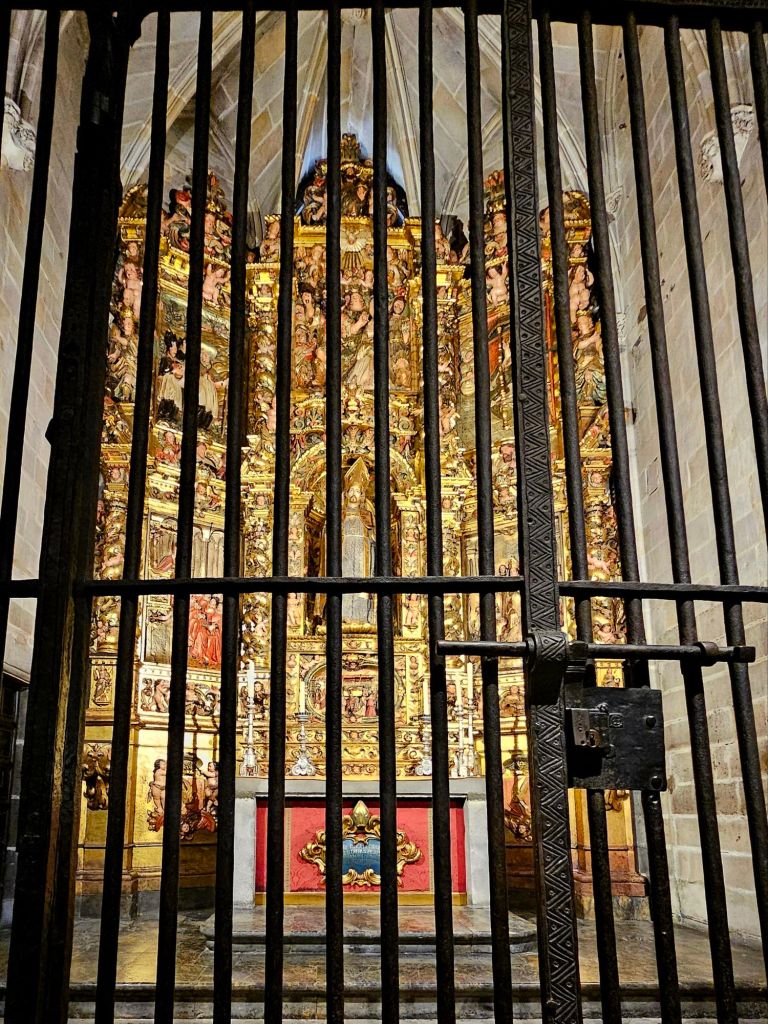
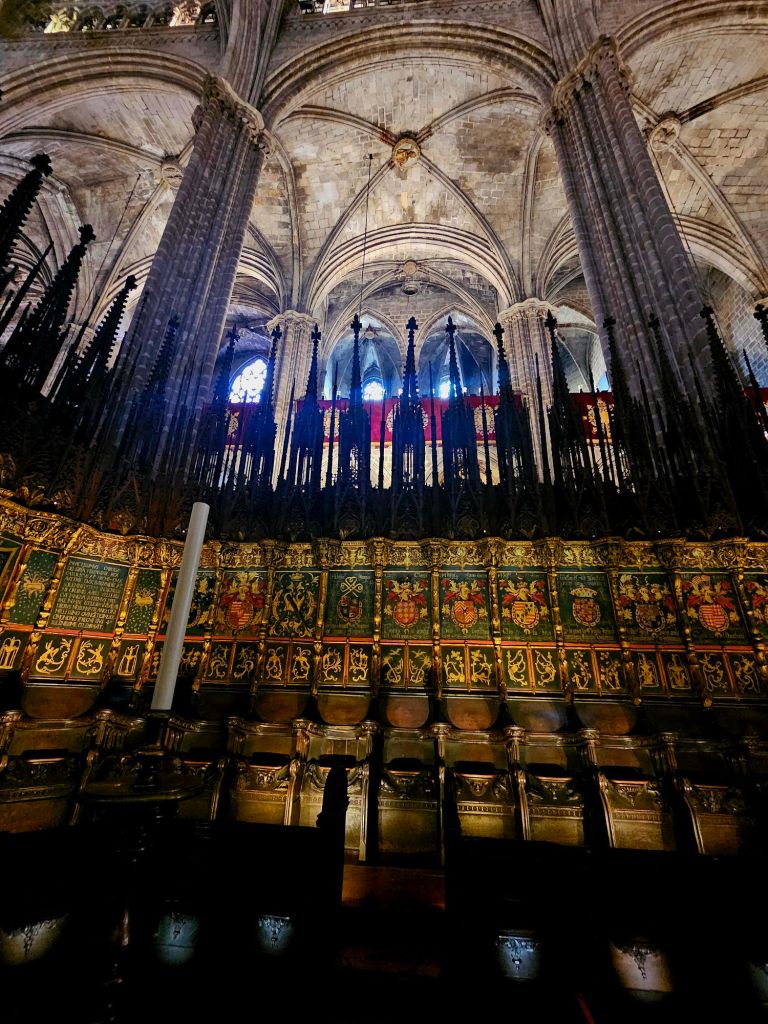
The choir stalls are very regal and are where the Knights of the Golden Fleece gathered during the visit of Emperor Charles V of Germany in 1519. The coats of arms of the knights are pained on the backs of the choir seats.
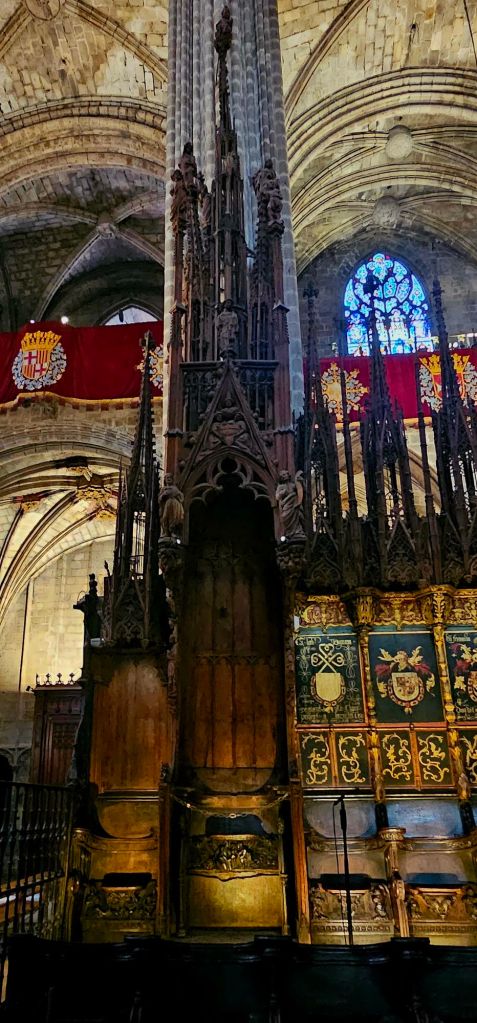
There is also a pulpit, or high chair.
The highest point in the cathedral is 70m tall, up into the dome.
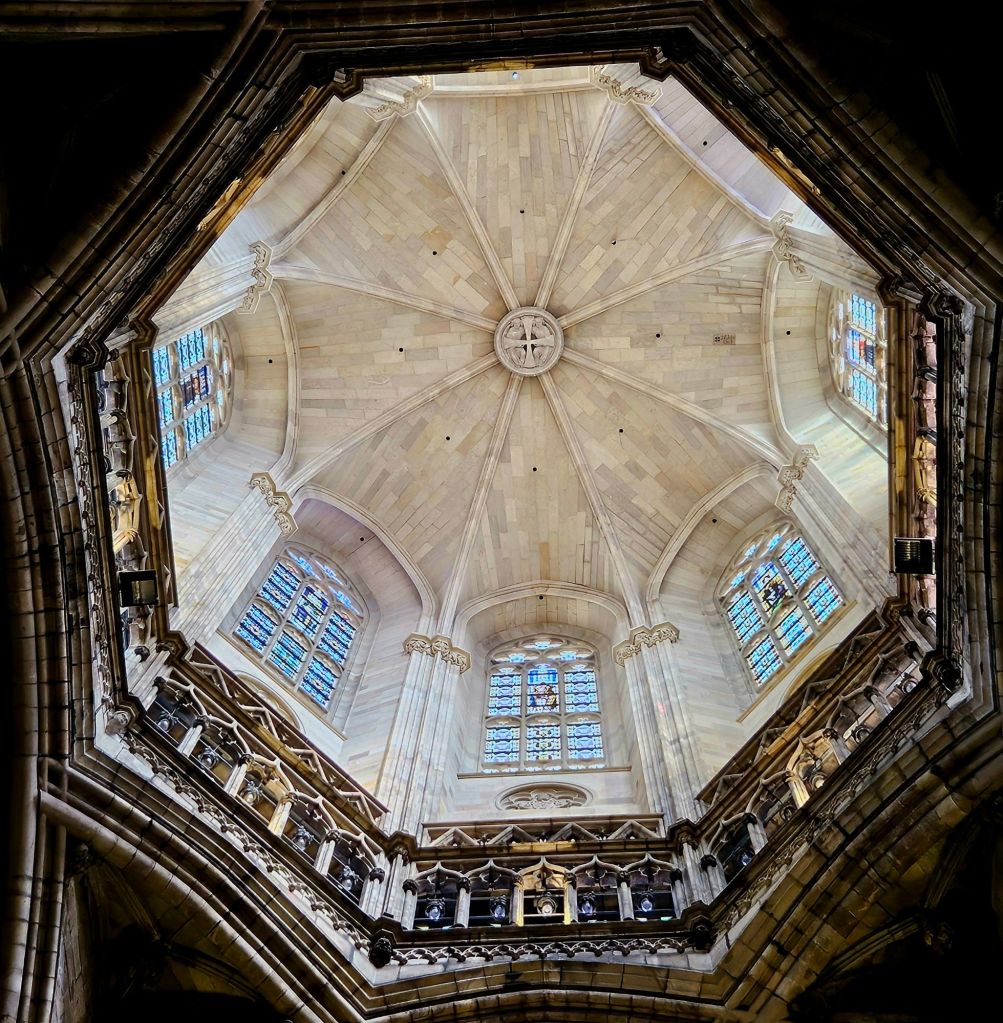
There are also some impressive stained glass windows.
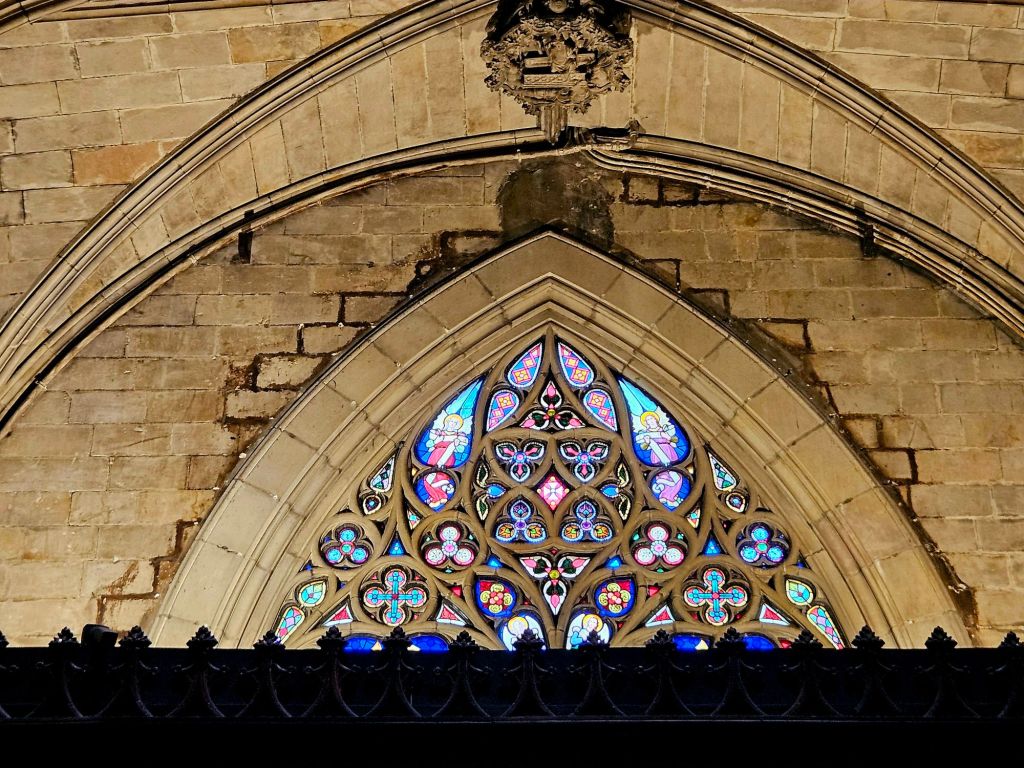
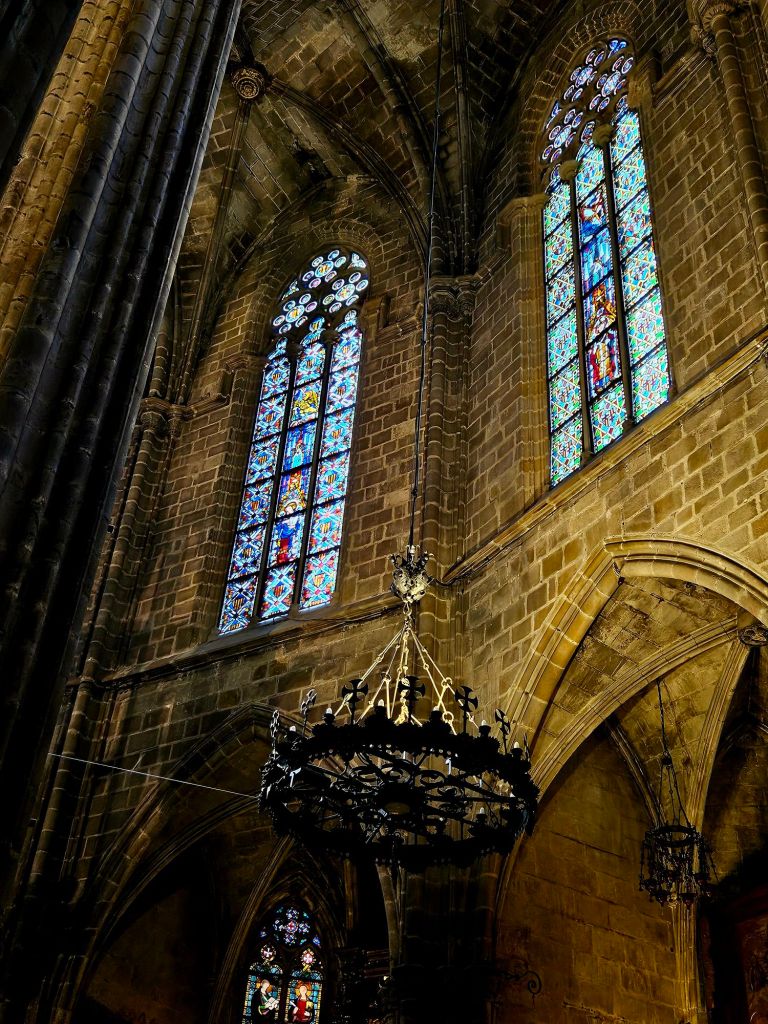
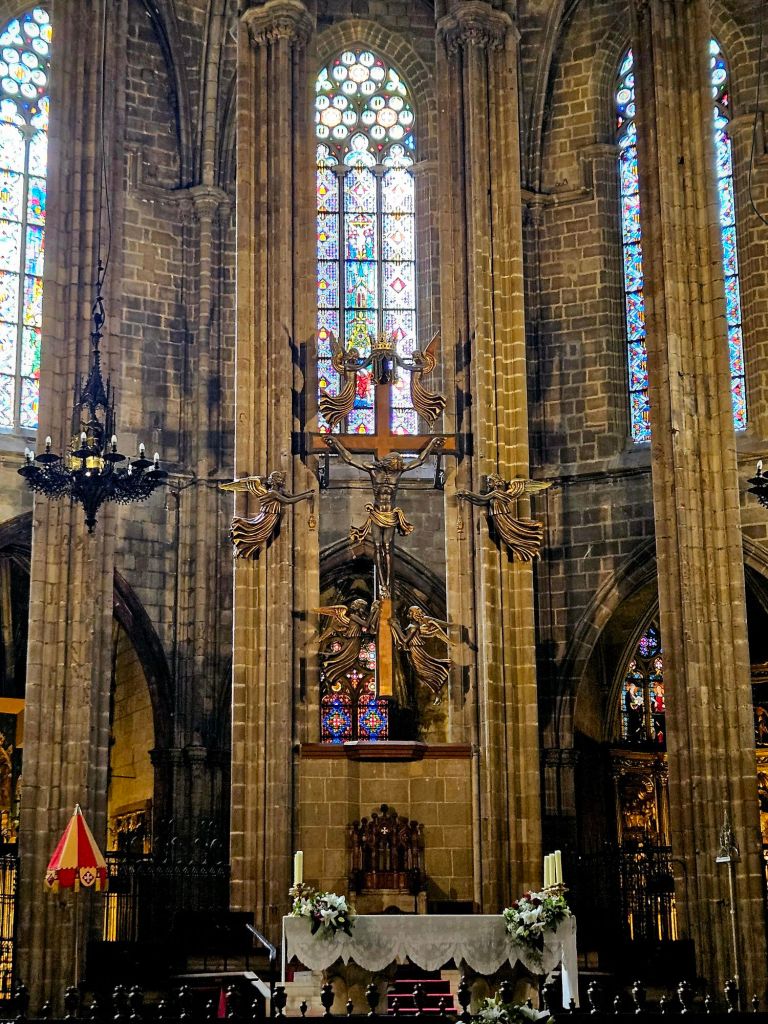
The high altar is made of white marble and is around 3m long. Above the altar is the exhalation of the cross, which contains six angels and behind it,a seat carved from alabaster, dating back to the 14th century.
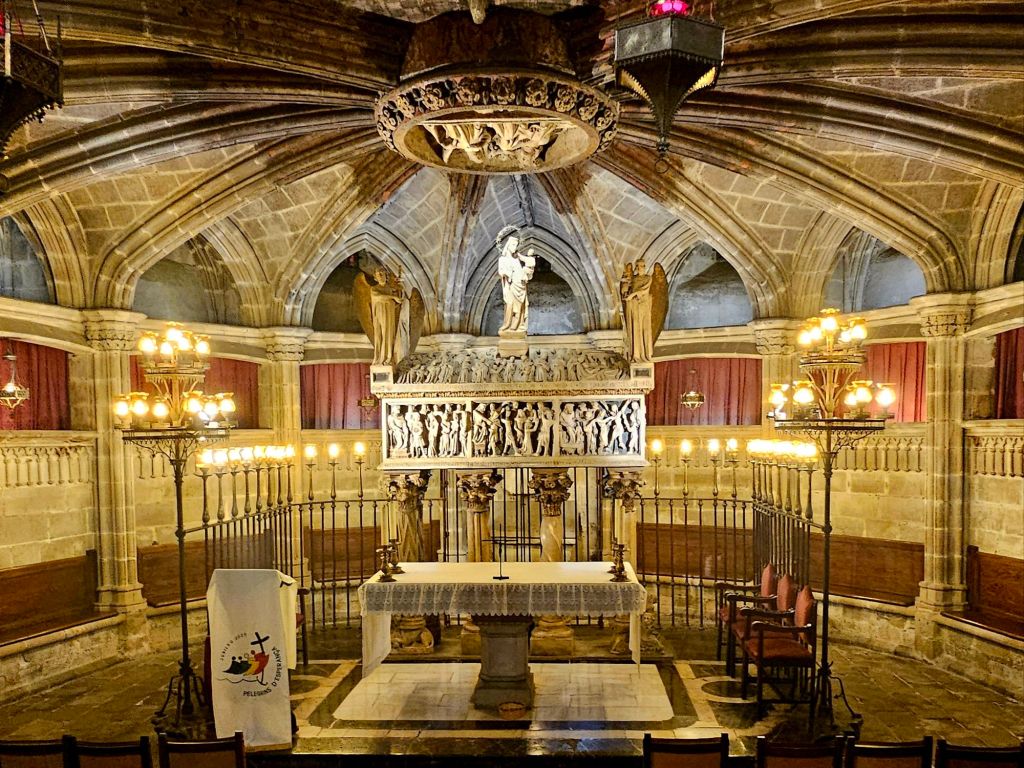
Beneath the high altar is the crypt of Saint Eulalia. Inside the crypt, there is a sarcophagus containing the remains of the Saint. Eulalia was a 13 year old Christian girl , a daughter of a noble family, who was persecuted by the Roman Emperor at the time who was trying to get rid of all Christians. Eulalia publicly confronted the governor over the persecution of Christians. The governor ordered Eulalia to be stripped and tortured – one torture for every year of her life. The tortures were: imprisonment in a tiny prison, being whipped, tearing her skin in strips, making her walk barefoot on burning embers, cutting off her breasts, rubbing her wounds with stones, branding her with cast iron, throwing boiling oil and molten.lead over her, subergong her in burning lime, locking her in a flea box, rolling her down a hill naked in a barrel full of knives, swords and glass and finally crucifying her. It is said that a snowstorm covered up her body. Her body was hidden in 713 during the Moorish invasion and only recovered in 878. In 1339, it was relocated to the sarcophagus in the crypt of the newly built Cathedral.
From the cathedral itself, you could walk out into the cloisters, a lovely and calm outside area with palm trees.
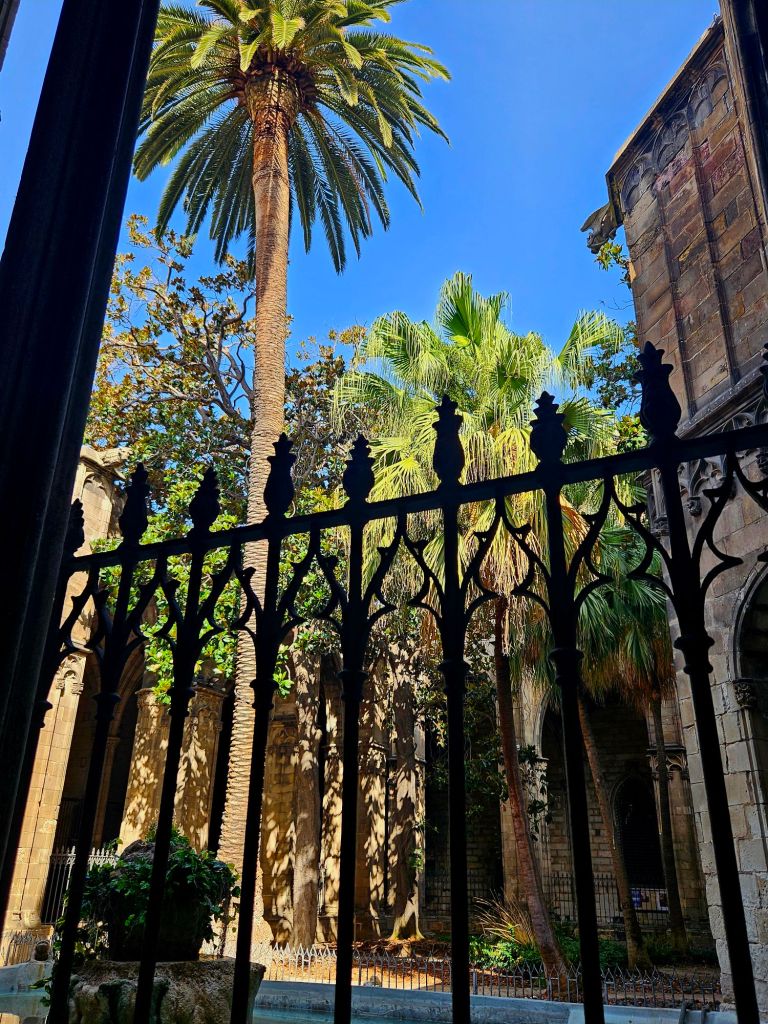
13 white geese are kept in this area, representing the 13 years that Saint Eulalia lived.
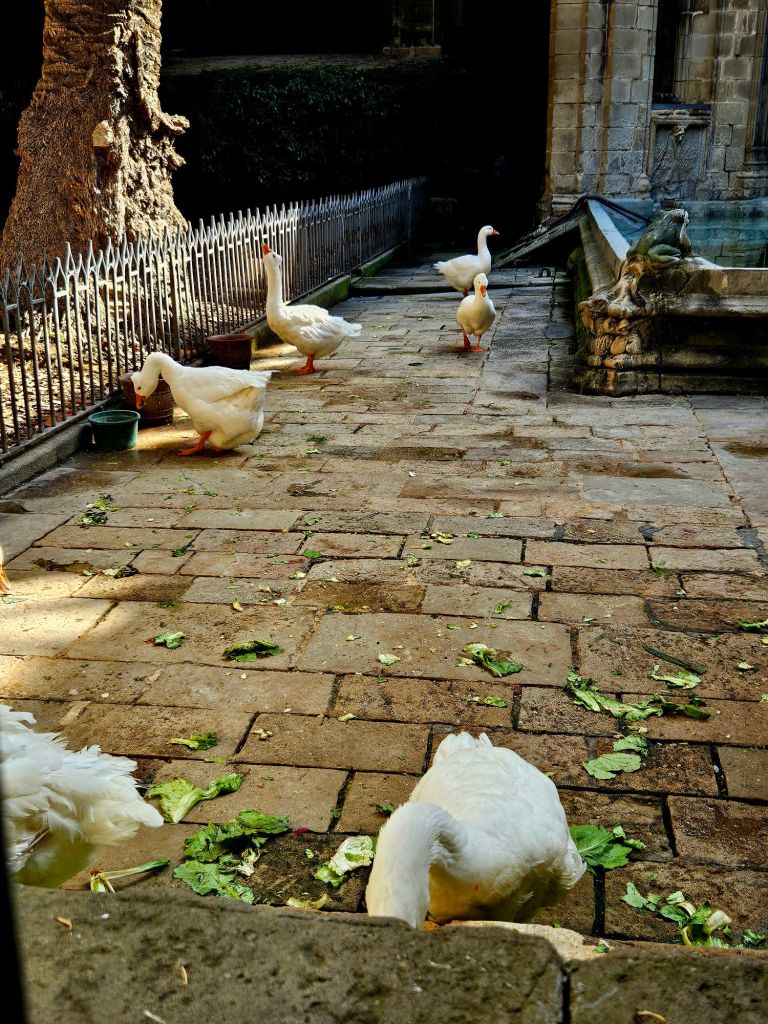
From the cathedral itself headed back to the apartment to finish packing and have a shower.
We were planning to go to the Colon Restaurant for lunch – you can’t book and have to queue. It is well known for its paella and is supposed to be the best in Barcelona. The restaurant was literally only a minute or twos walk from our front door, so Karen stood in the queue, and the rest of us quickly dropped the recycling rubbish off in the nearby recycling bins. The restaurant was due to open at 12:30pm, but it didn’t.
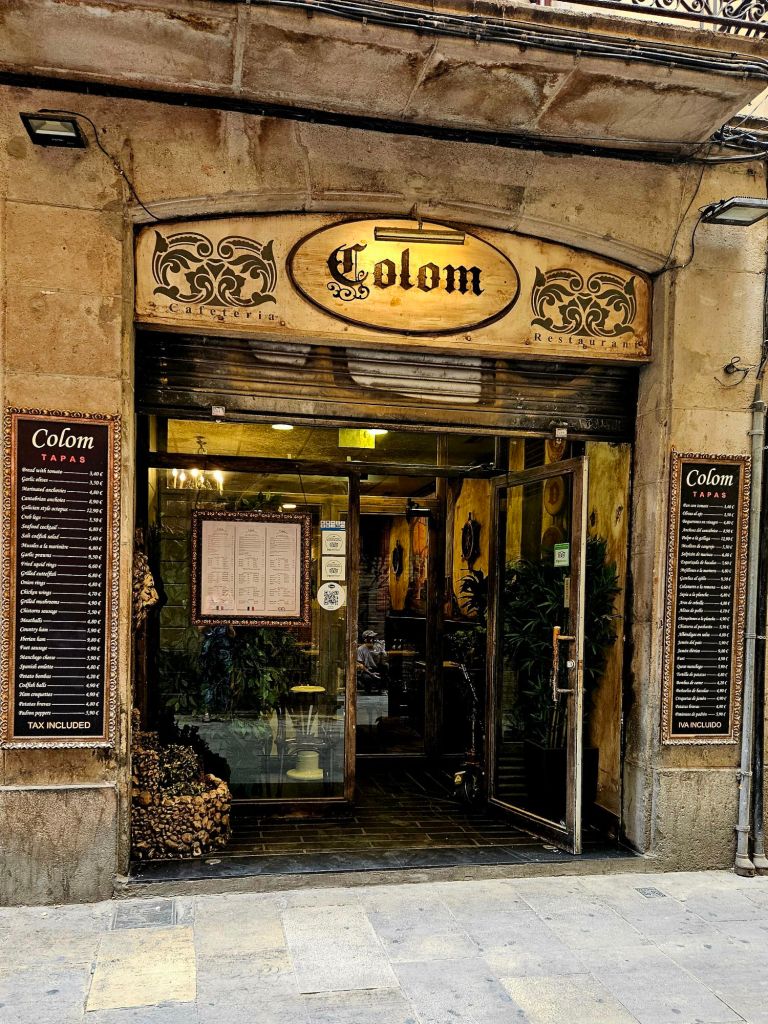
We were very hot waiting in the queue and Zoe wasn’t feeling great. At one point she fainted but luckily Mandy and I grabbed her and held her up while Karen managed to get a chair from the restaurant.
But we were one of the first in when it did open, and of course, we ordered paella. Zoe did go back to the apartment to have a lie down. The paella was delicious and very filling.
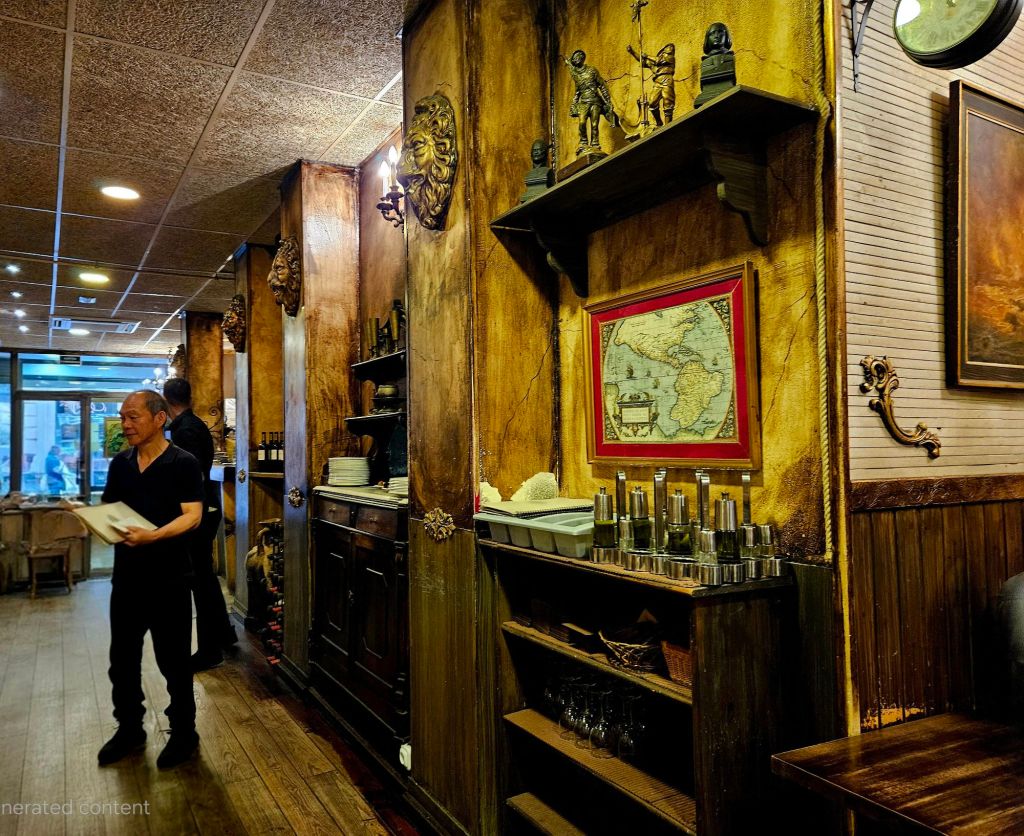
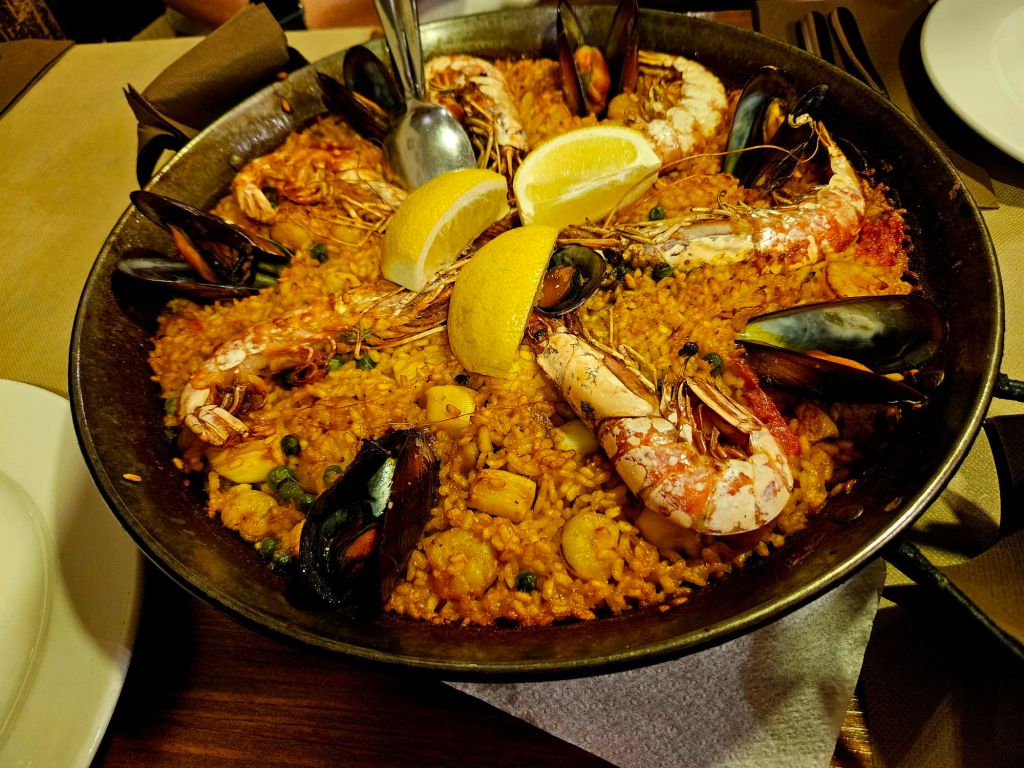
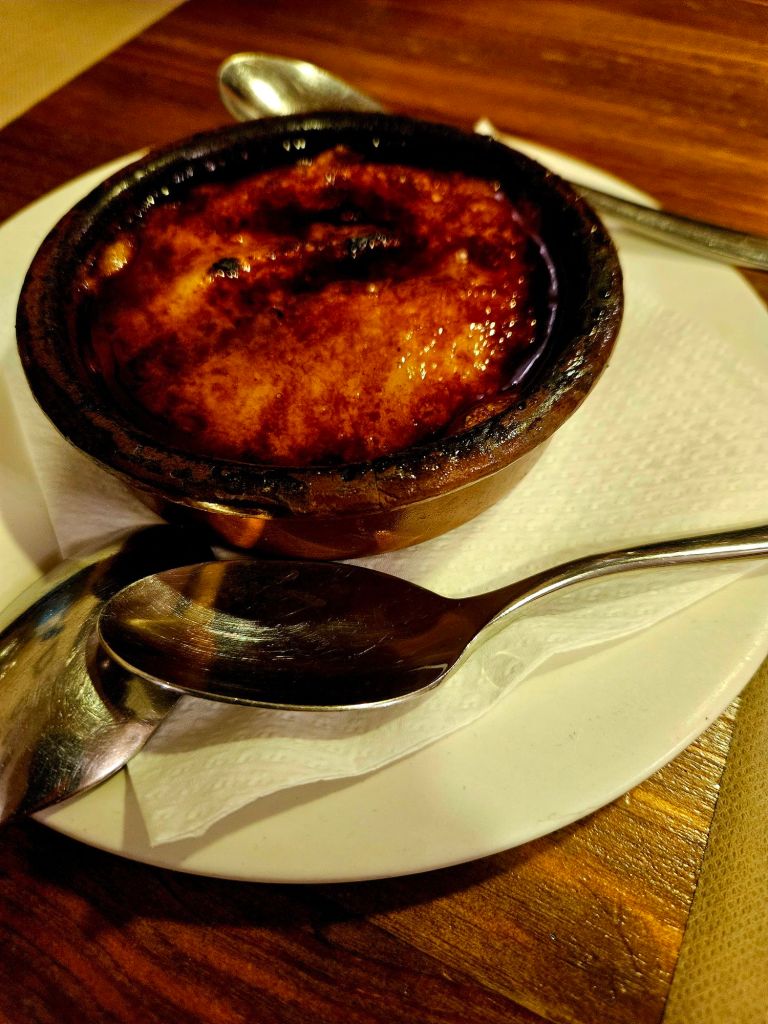
For dessert, we shared Crema Catalan, which is similar to creme brulee. The difference is in the way it is cooked, and the Crema Catalan is flavoured with lemon zest and cinnamon.
Following lunch, we went back to the apartment to collect our bags as we were planning to go to the main street for a coffee before getting our taxi. The cleaners were due around 230pm. So we got all our bits together, left the keys inside, and walked down the stairs. It was then Zoe realised she’d left her bag with her passport in the flat. Luckily, after a little while, I was able to get hold of the owner, and she said the cleaners were on their way so they could let us back in. They arrived around 330pm, and then we were on our way to the airport.
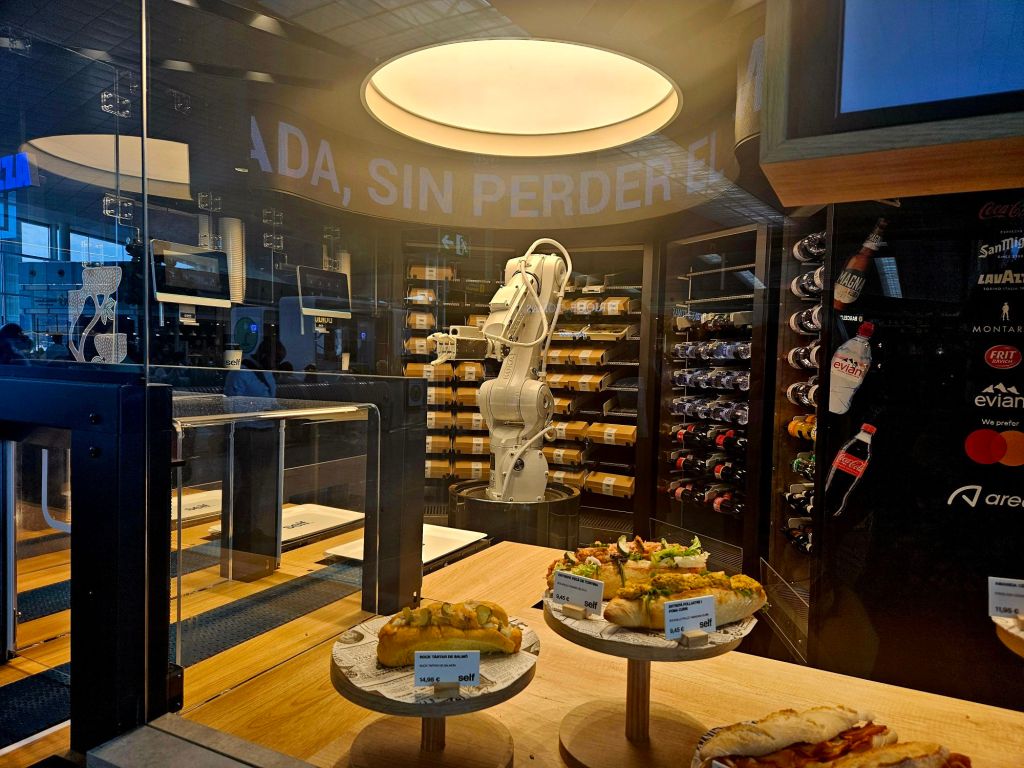
Check-in and security went smoothly, and we had a little wander around the shops – I bought some vermouth to bring home. There was one food outlet that was completely automated – you put in your food order, and a robot arm picked it and dispensed it. I didn’t fancy it, personally.
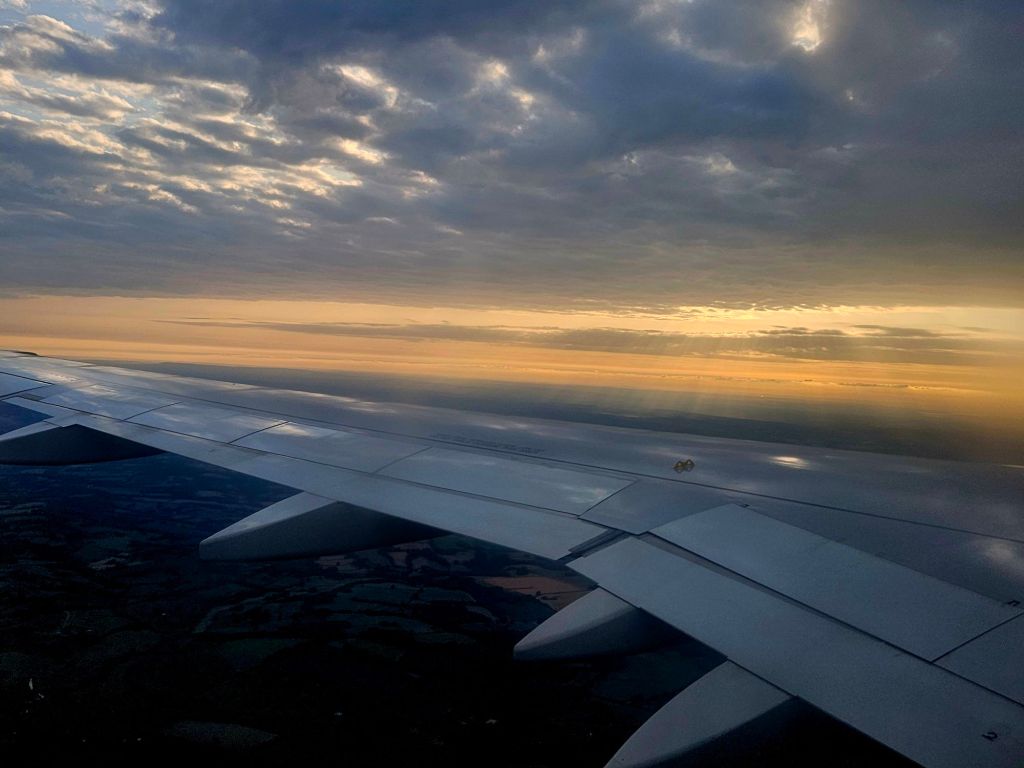
And soon it was time to board and head home. We ended up having 3 seats between 2 of us, which is always good. As we came into Gatwick, the sun was setting.
We arrived a little bit earlier than scheduled and then caught the train into Redhill and a taxi from there back to Mandys. Karen set off home, but Zoe and I stayed the night, and I then dropped Zoe off on the way home to Langley the next day.
 Fun, Fitness and Fabulousness in your Fifties