We were up slightly earlier than normal and headed down to the main road for breakfast at one of the cafés. The only one that was open was Flor de Norte, where we had eaten previously. I had iced coffee and a croissant.
We then got a taxi to Park Guell. Our entry time on the tickets was 11:30am but we arrived about an hour early – but luckily they let us in. We started at the top of the park – that way, we didn’t have to walk uphill in the heat.
The park is on the southern slope of the Turo del Carmel Hill. It is one of the largest green spaces in Barcelona, covering 17 hectares. The area open to tourists covers only a small part of the whole park. Gaudí was hired by Eusebi Guell to create a miniature city for the wealthy in 1900, but the project was abandoned in 1914 as the plots of land did not sell. Eusebi Güell died in 1918, and his heirs sold the park to the Barcelona Council. It became a public park in 1926. In 1984, Park Güell became a UNESCO World Heritage site for its historical, architectural and artistic uniqueness.
We started at the low viaduct. This system was built to capture and filter rainwater that is then collected in tanks.
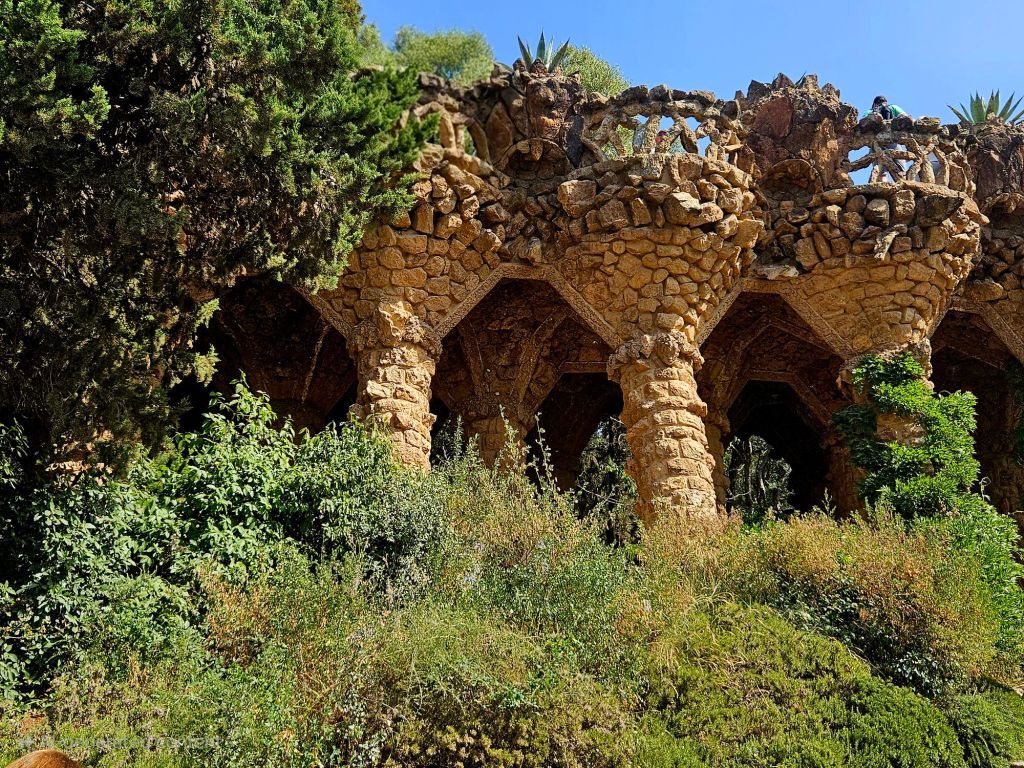
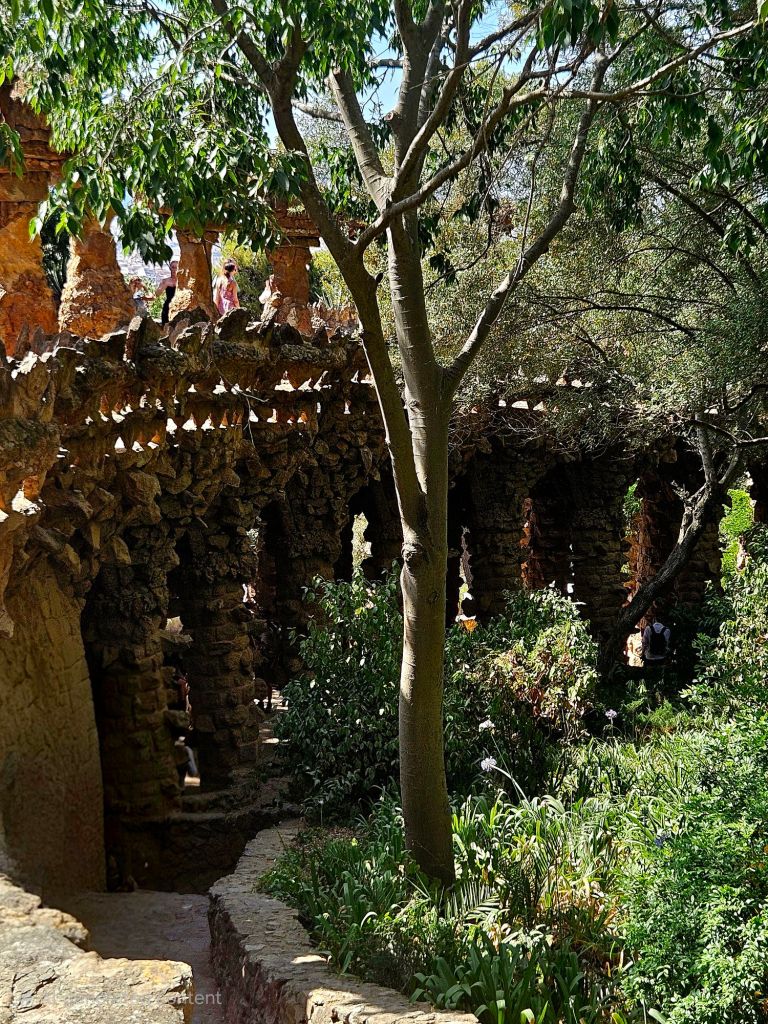
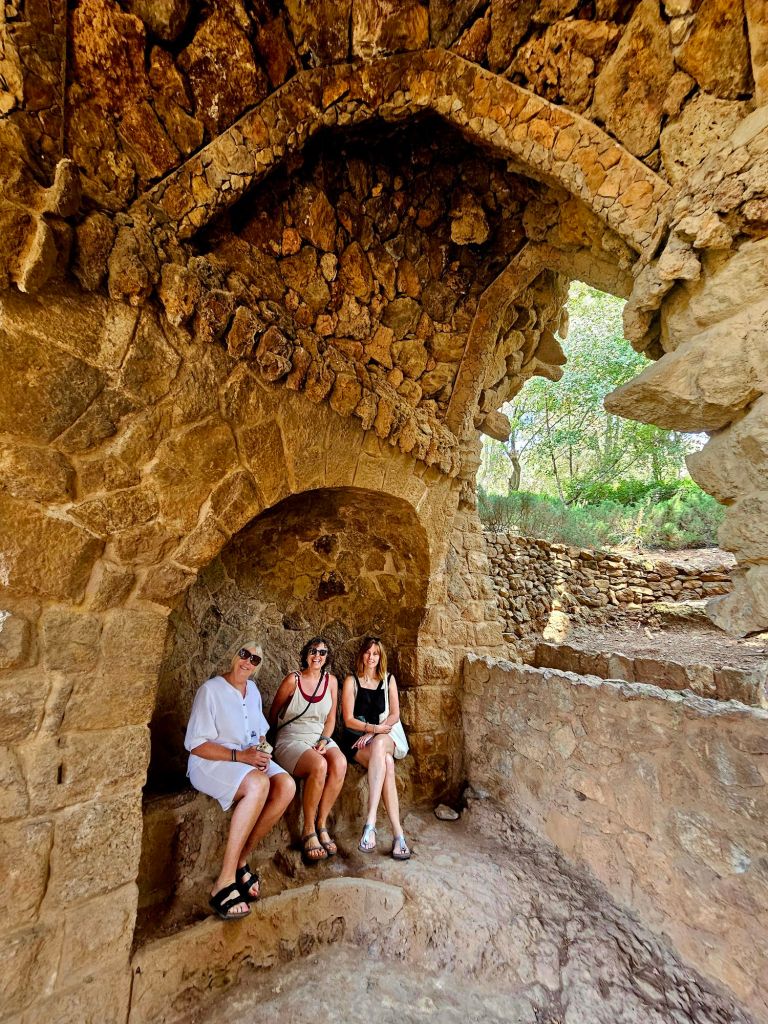
We walked up to the middle viaduct where the columns look like natural caves. These viaducts act as buttresses and retain the wall for the hill.
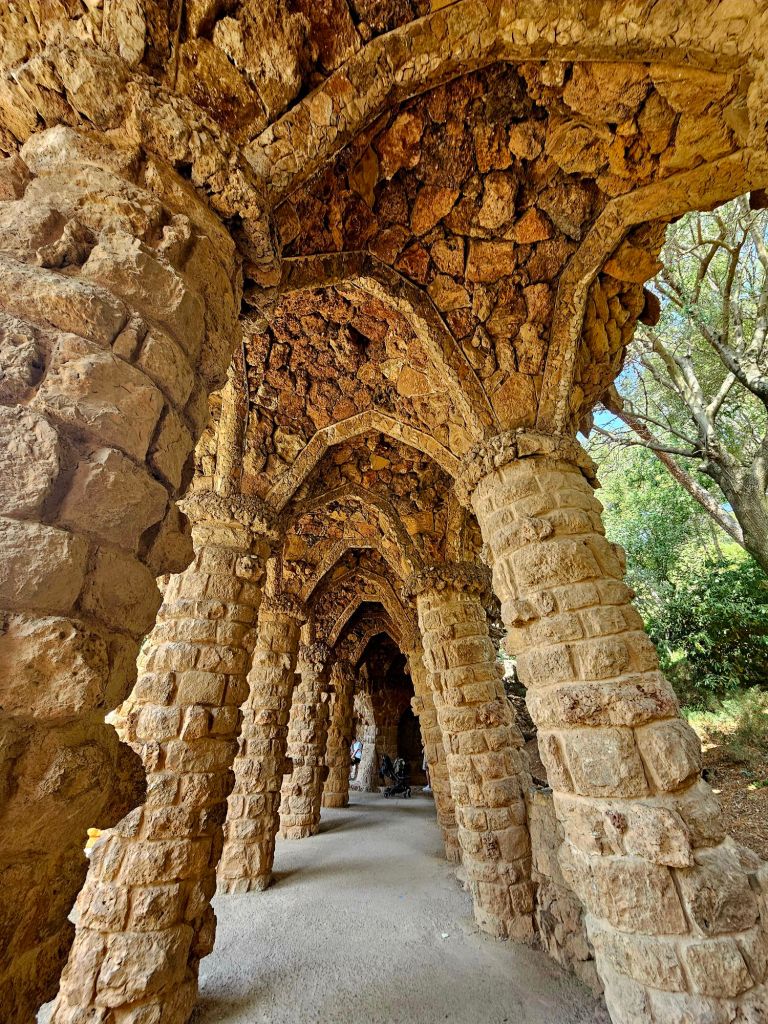
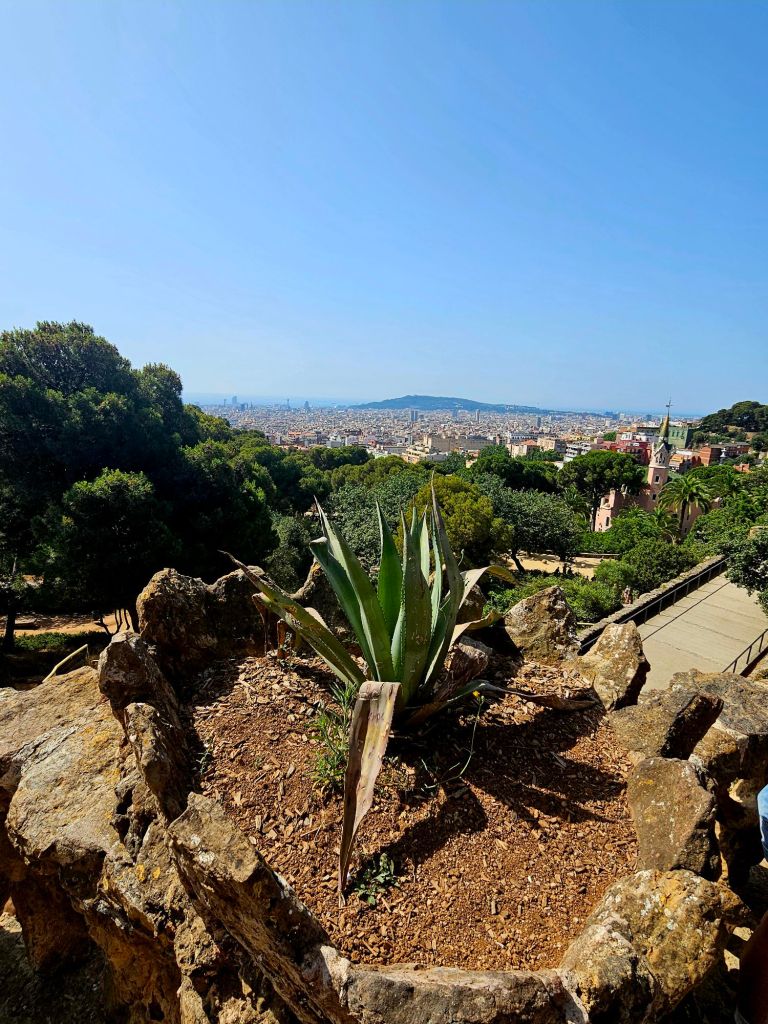
And then we were up at the top viaduct with good views over the city.
Our next stop was Casa Trias. This house is located on one of the only two plots ever sold. It was built between 1903 – 1906 for Guell’s lawyer. It is still a private residence and owned by the same family. Initially, the plan was to build 60 luxury homes in the park. Each house was only to occupy one sixth of its plot, and the rest would be garden to ensure that nature was respected and preserved.
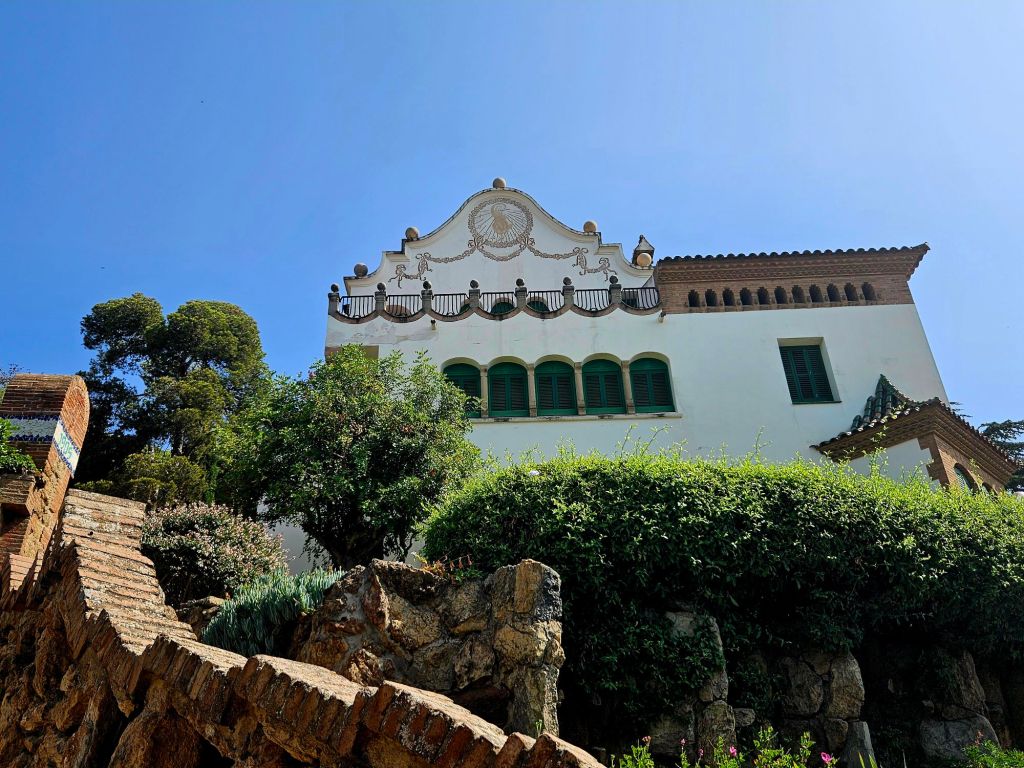

From here, we wandered down the steps towards Gaudi’s house.

The Gaudi house museum was the original show home and was not actually designed by Gaudí. It was designed by Francesc Betenguer i Mestres. Francesc was employed by Gaudí in his workshop for 27 years and was considered Gaudi’s right-hand man. He died in 1914.
Gaudí moved into the house in 1906 with his father and niece. His father died later that year, and his nice passed away in 1912. Gaudí continued living in the house, supported by the Carmelite nuns until just before his death. He moved into his workshop at the Sagrada Familia in late 1925.
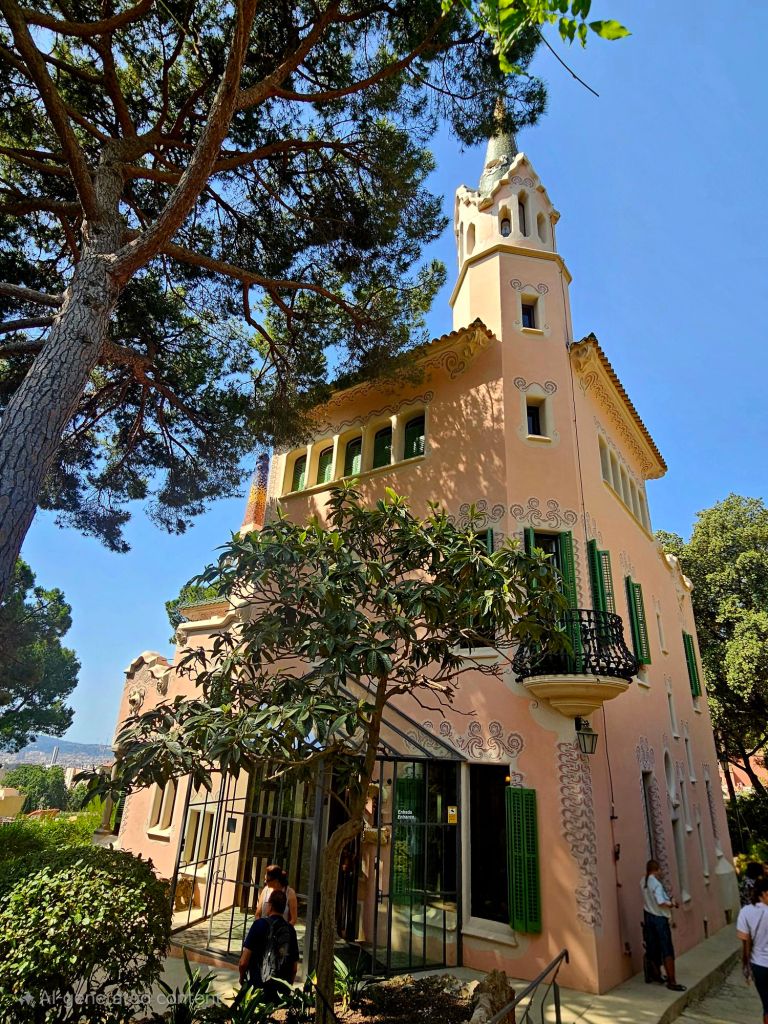
The house is now a museum, featuring some of Gaudi’s creations.
Gaudí was a perfectionist and paid attention to detail. His designs evolved over time, inspired by nature and leading to ergonomic designs.
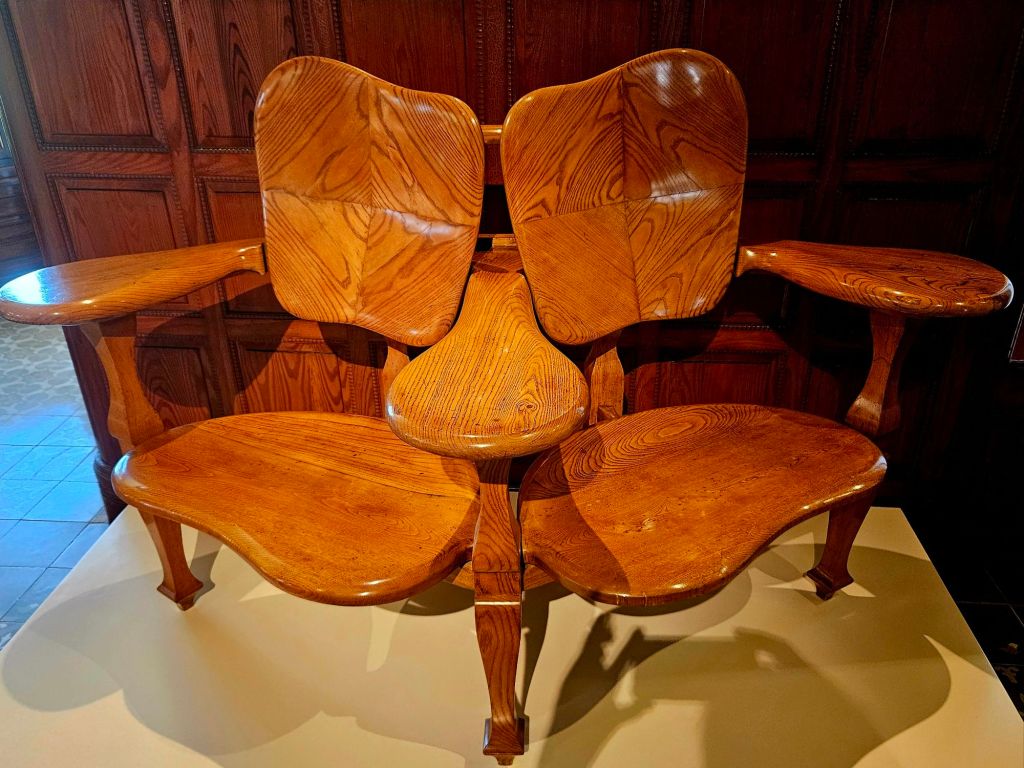
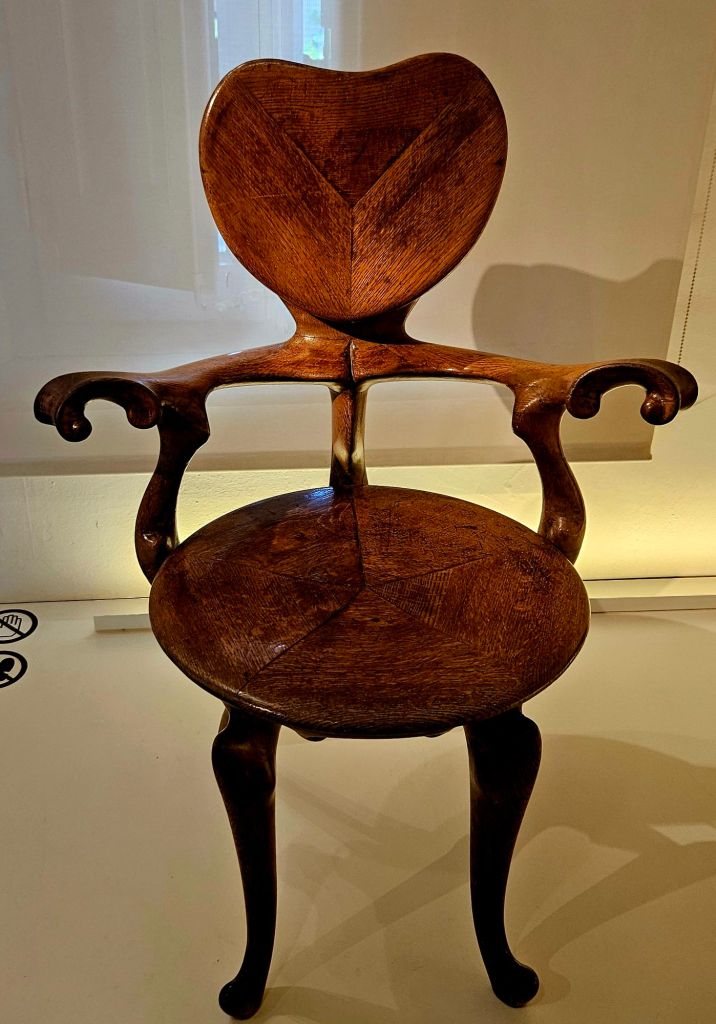
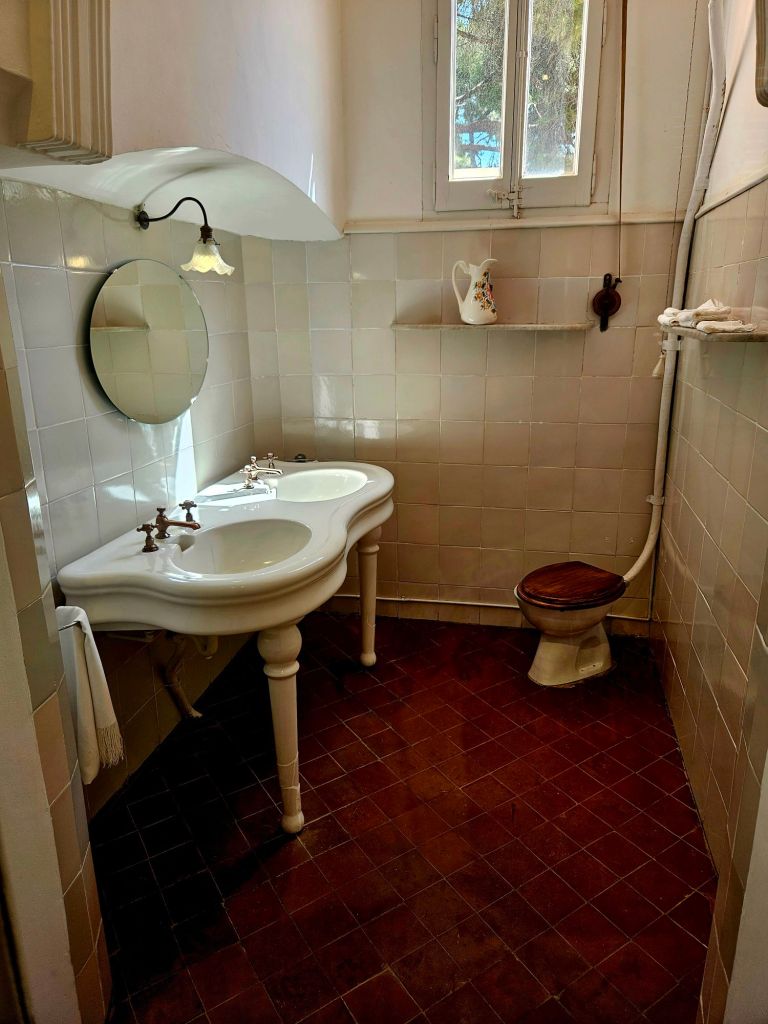
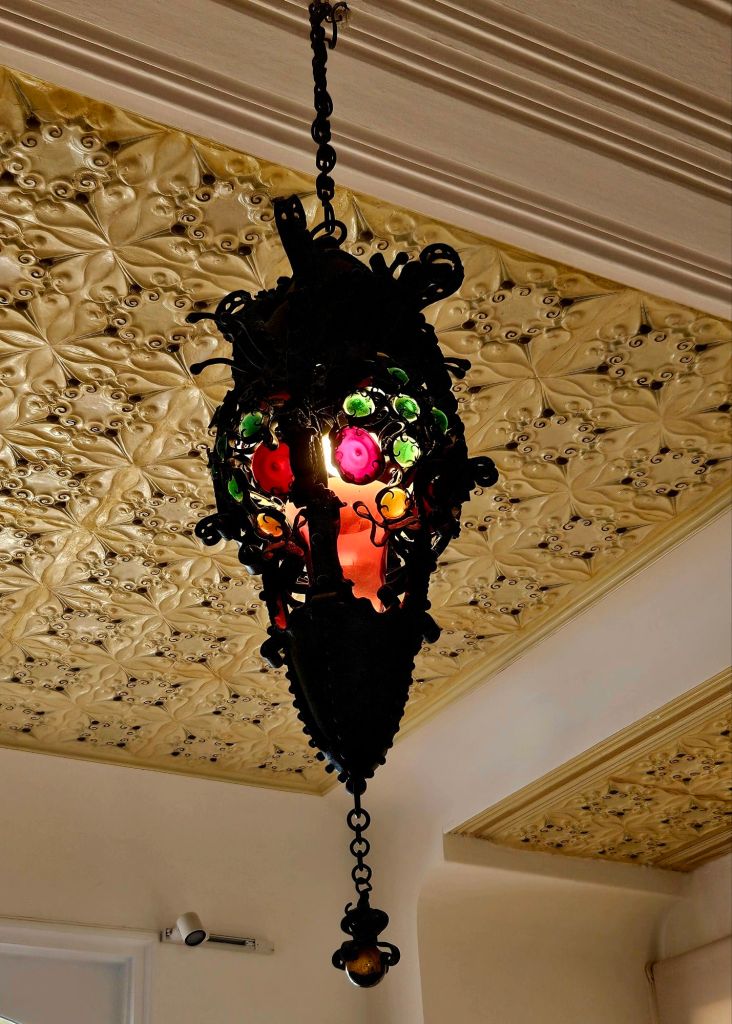
From Gaudi’s house, we walked down a bit more, passing more artwork on the way.
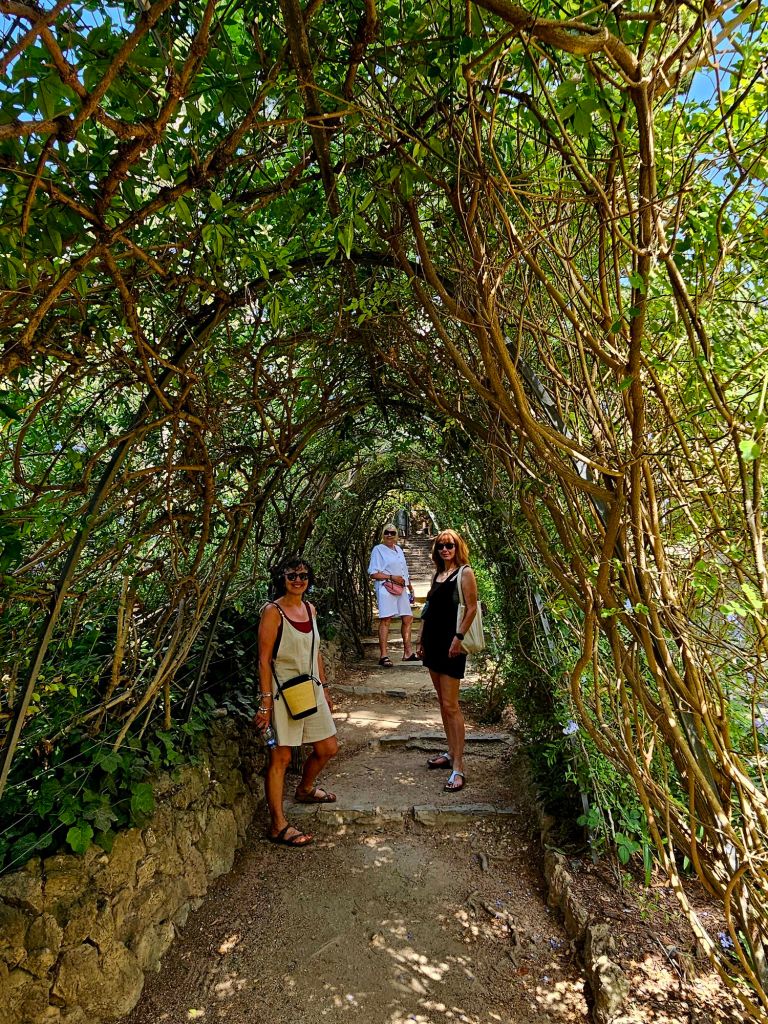
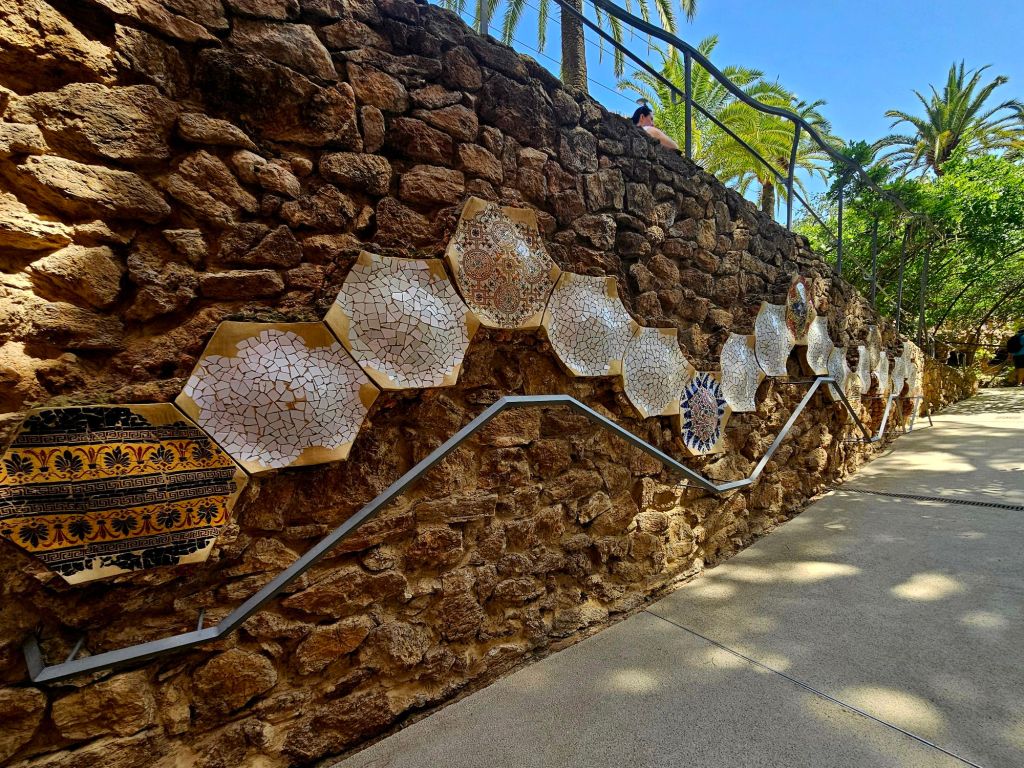
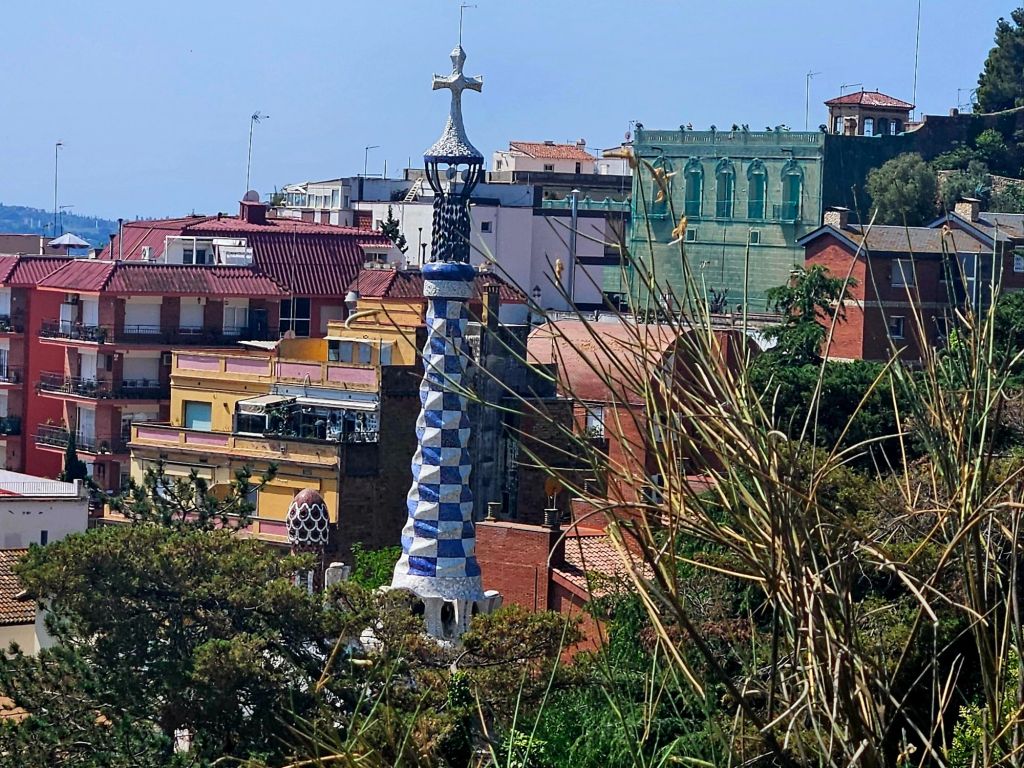
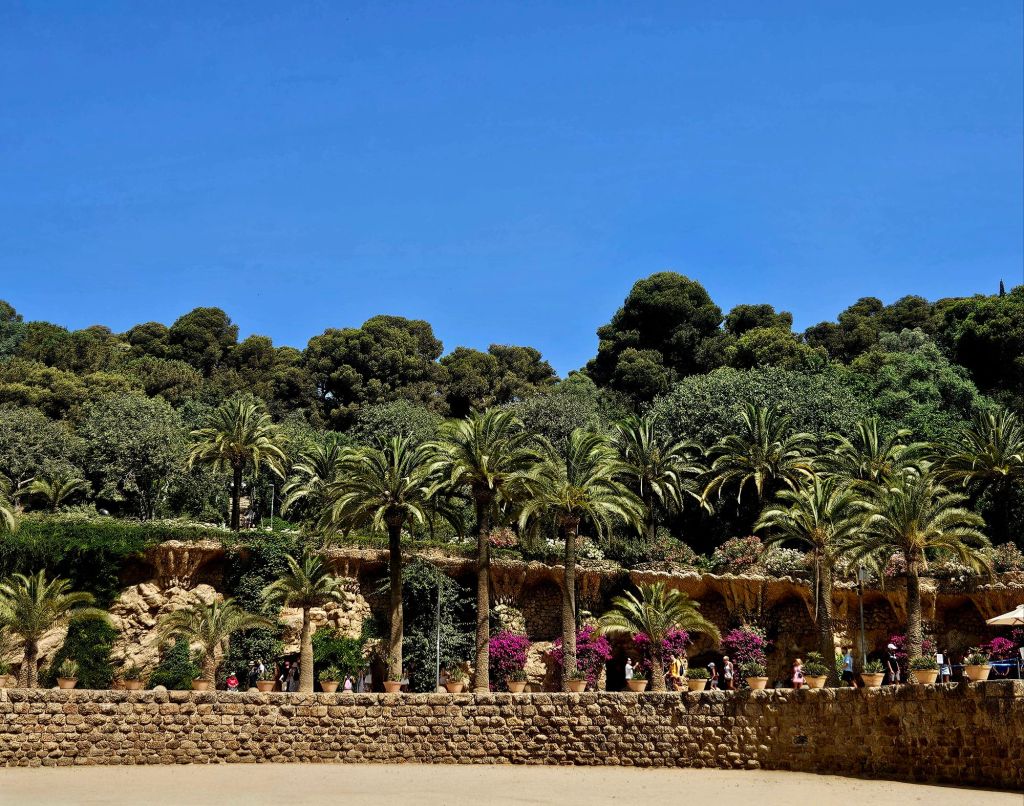
And then we came to the centrepiece of the park – nature square. This is a huge terrace, surrounded on one side by the palm tree path.

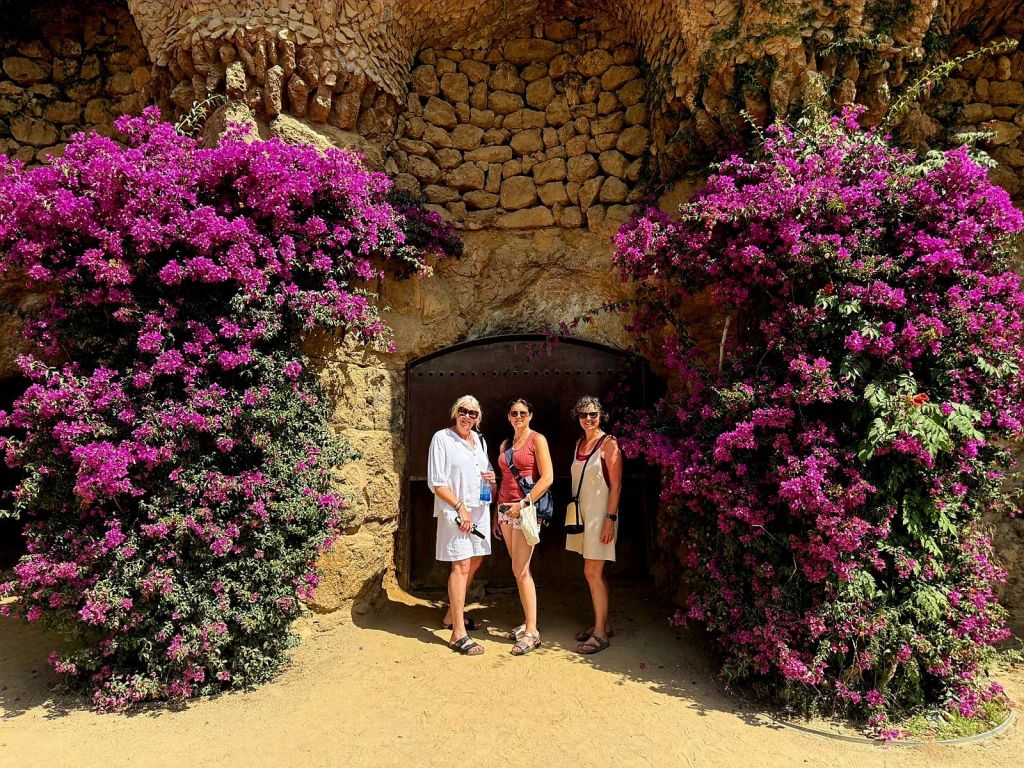
Surrounding the square is an undulating bench decorated with a broken tile mosaic that looks a bit like a sea serpent. The design of the bench is such that it encourages social interaction.
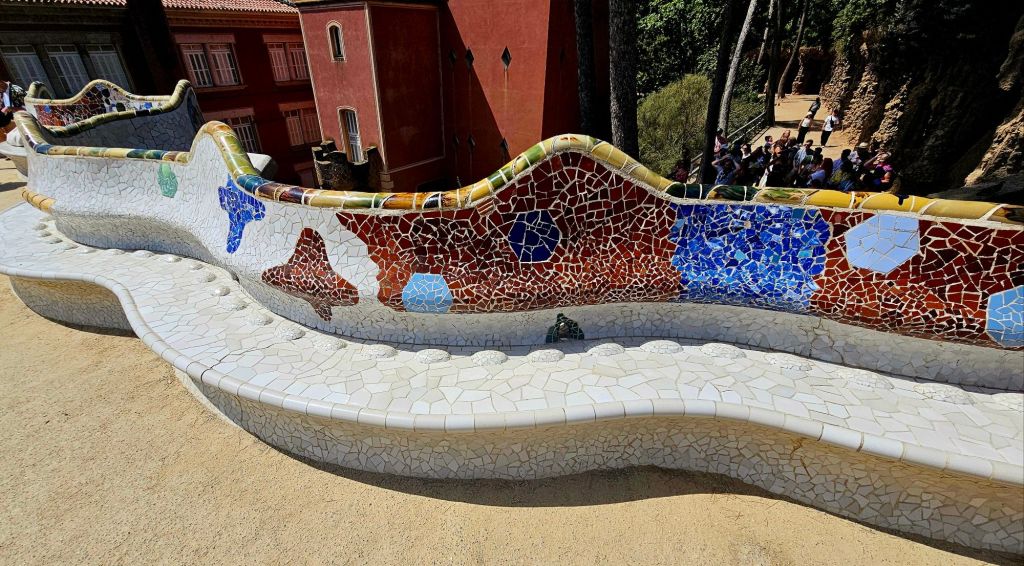
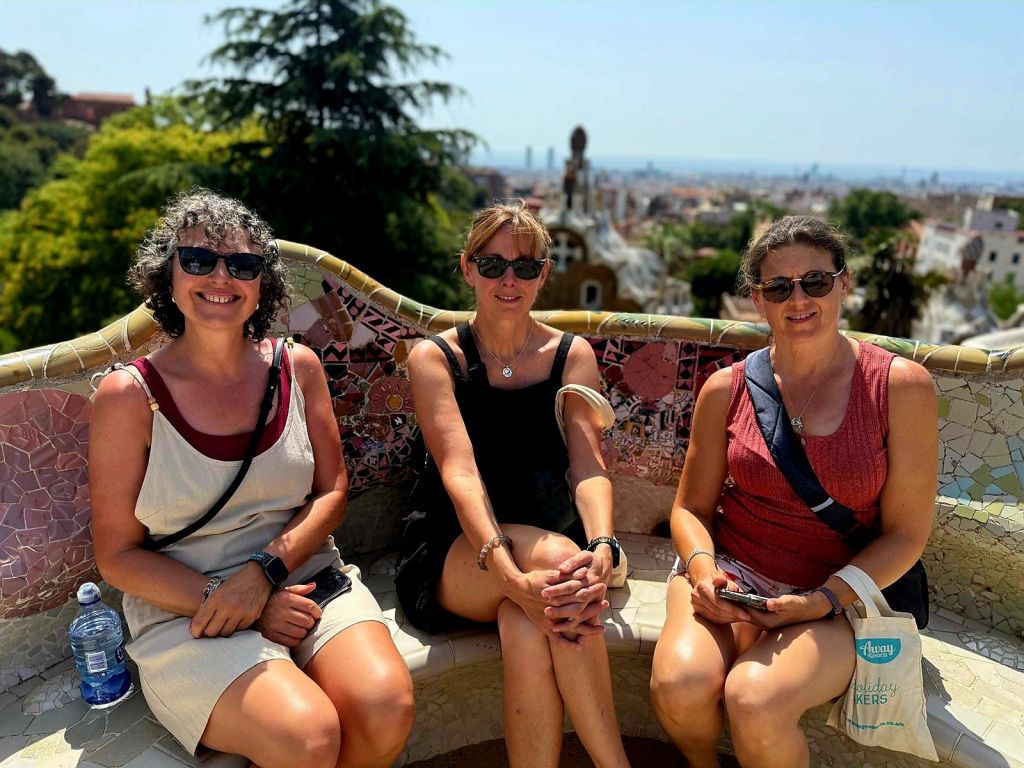
This area was originally planned as an open-air theatre where shows could be watched from the surrounding terraces. Part of this square is dug into the rock, and the other part is supported by the columns in the hypostyle room. This area also doubles as a rainwater catchement area.
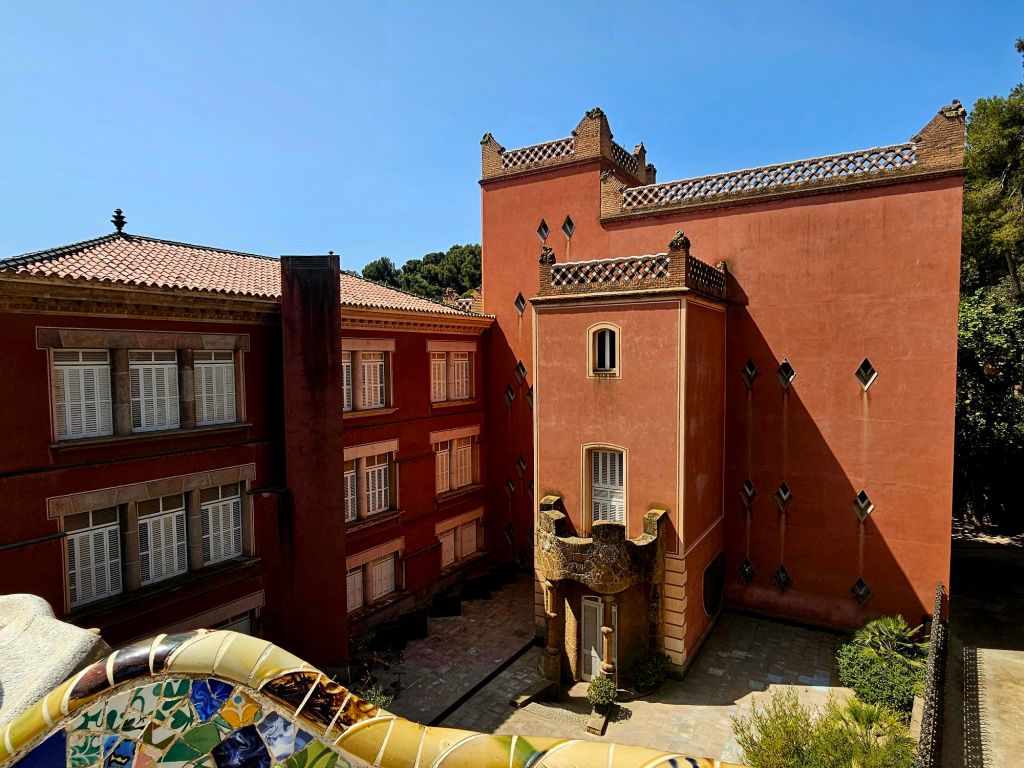
From the square, you could see Casa Larrard, a former mansion which, since 1931, has been a school. This house was already in situ when Guell bought the area, and he lived in it until his death.
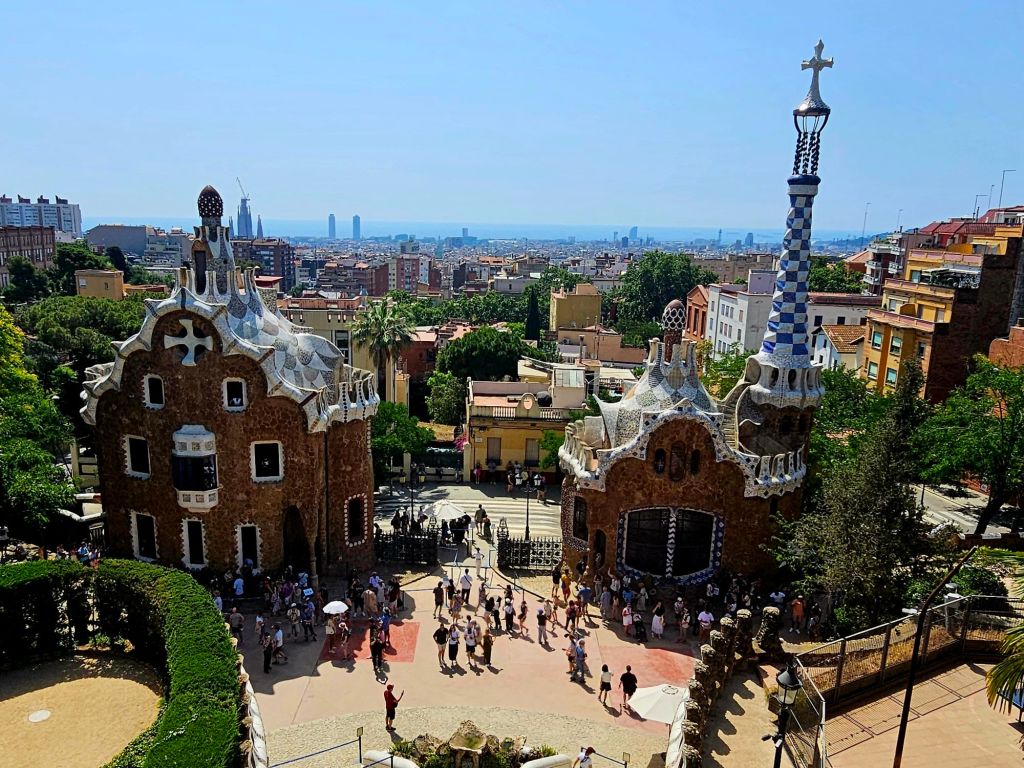
You also got good views out over the main entrance of the park.
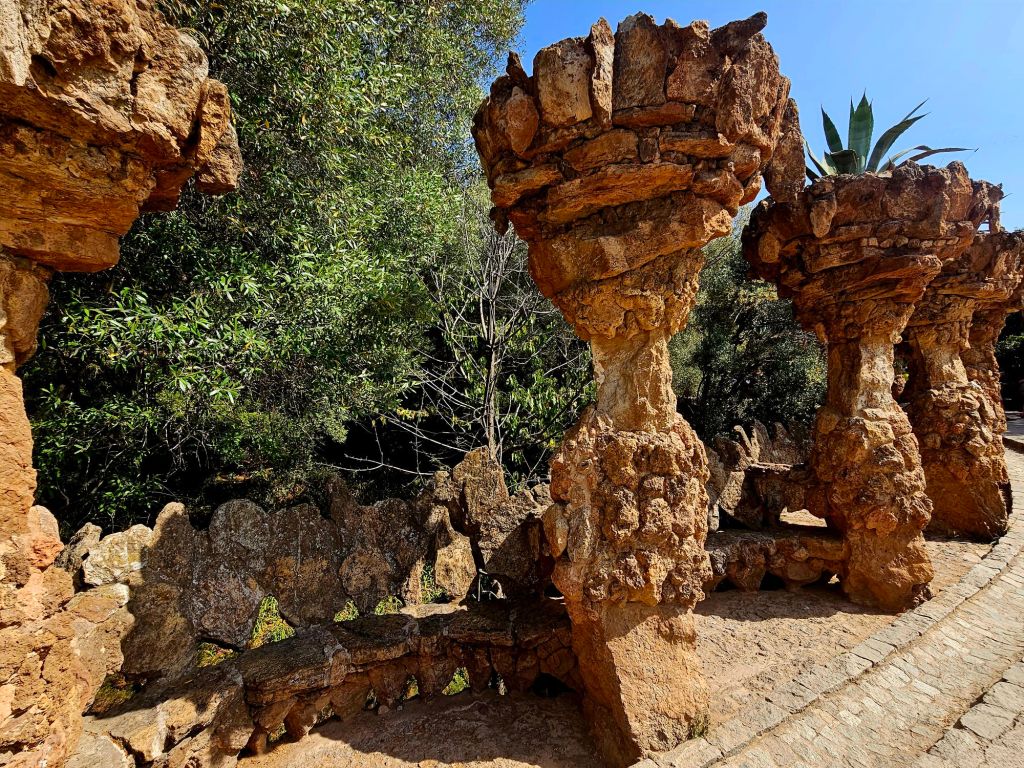
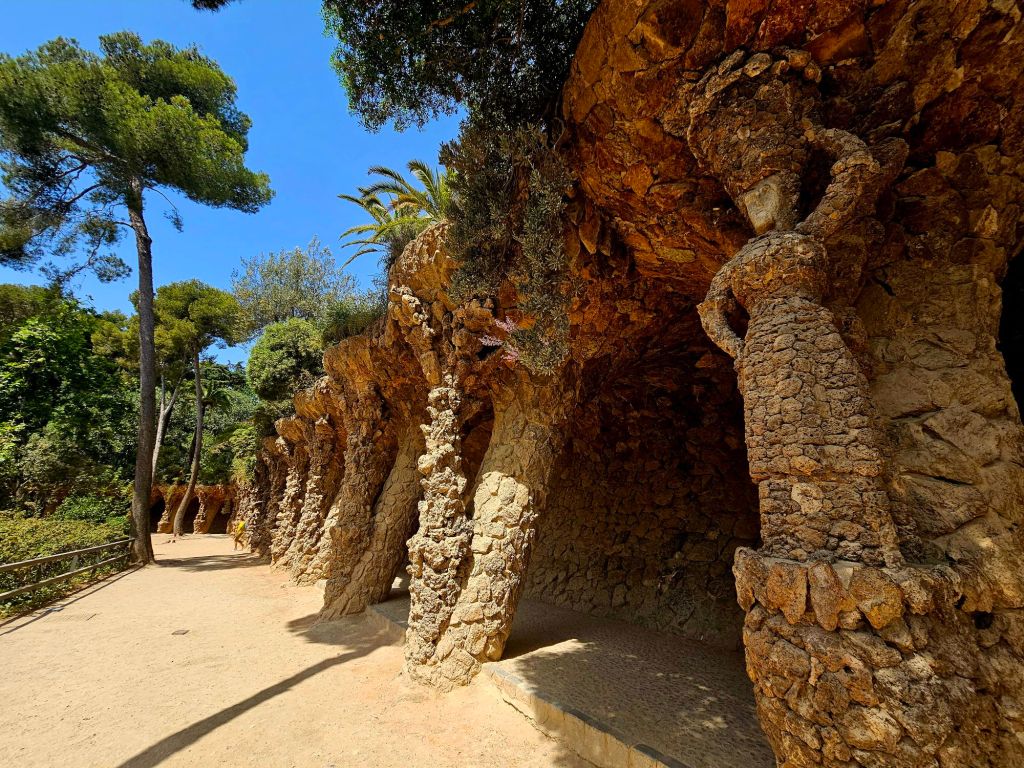
From the square, we walked through a passageway of twisted columns named the Laundrey Room Portico. It takes its name from one of the sculpted figures, as seen in the photo below. It looks like waves on top of slanted columns.
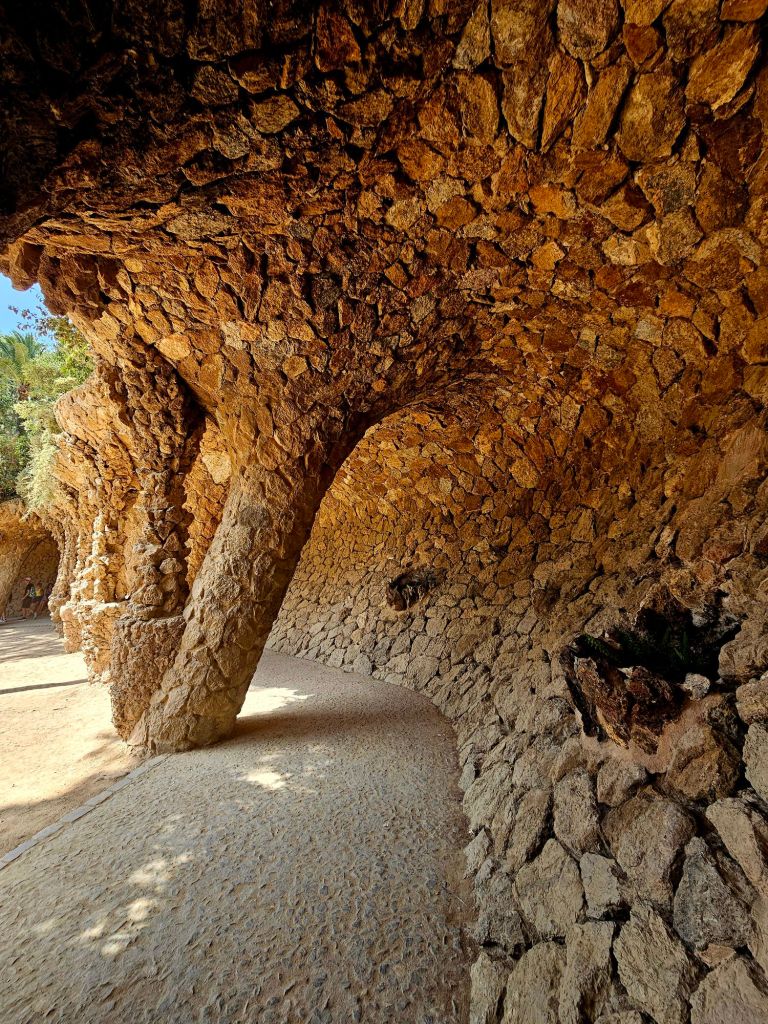
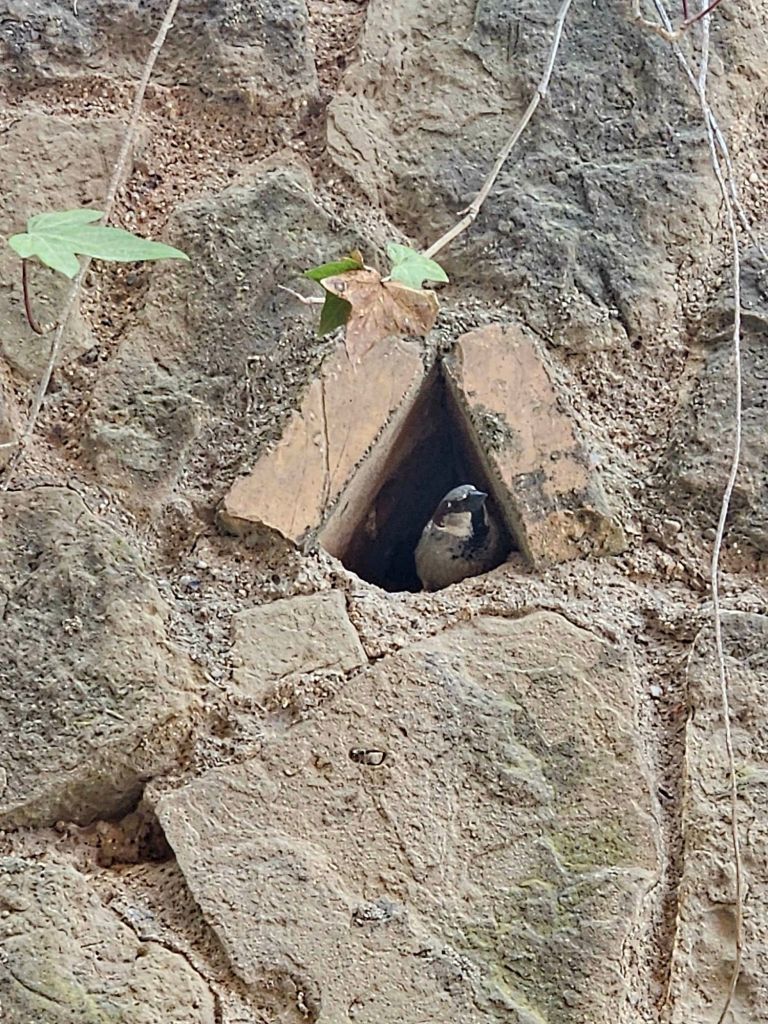
As we walked further, we saw a little bird in one of the holes in the wall.
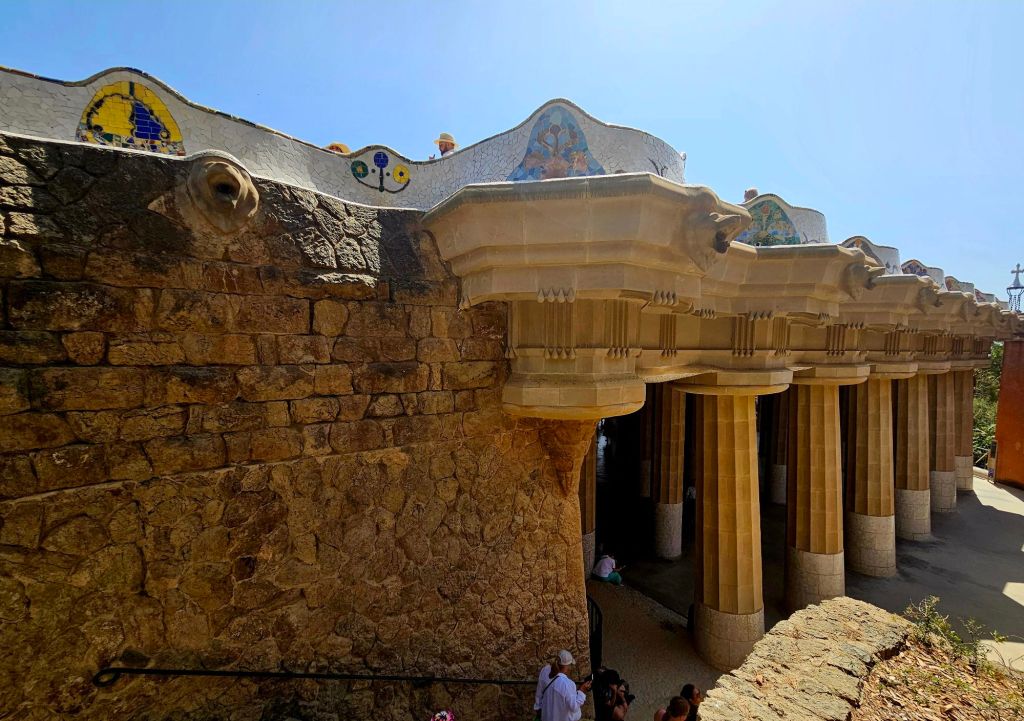
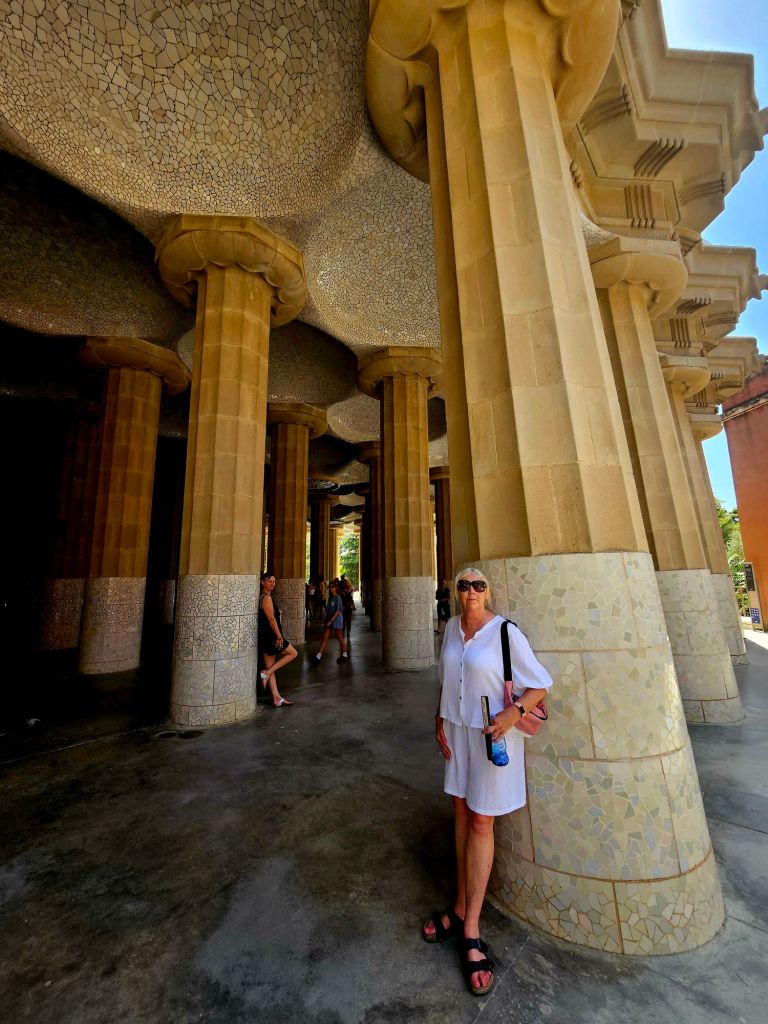
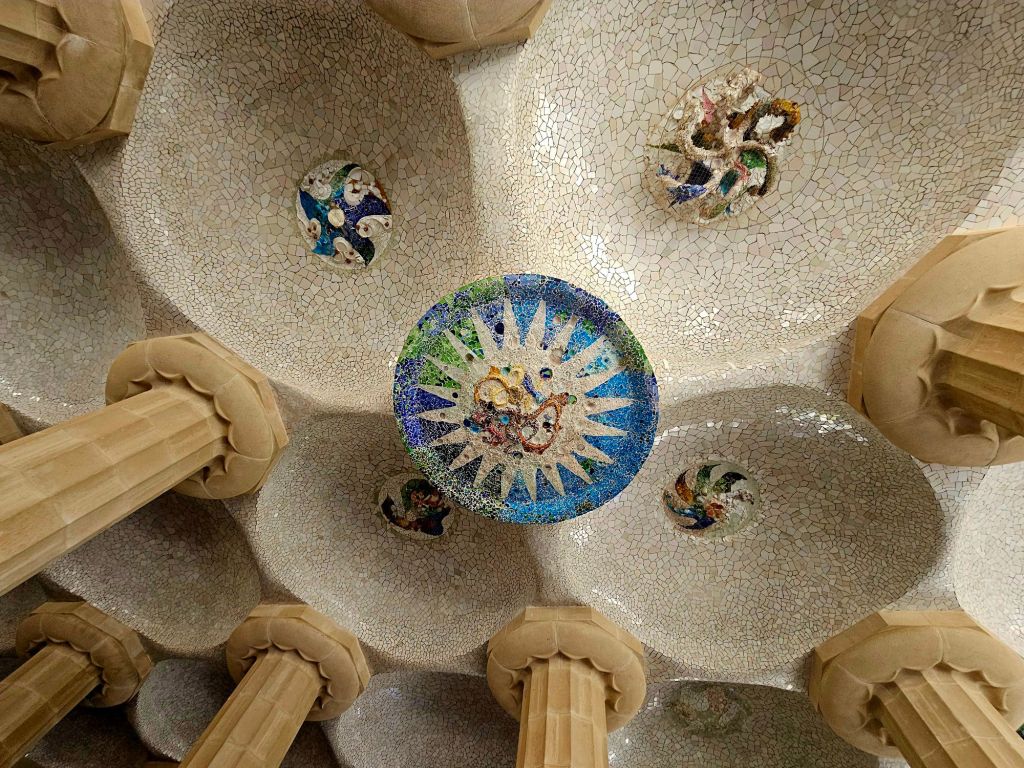
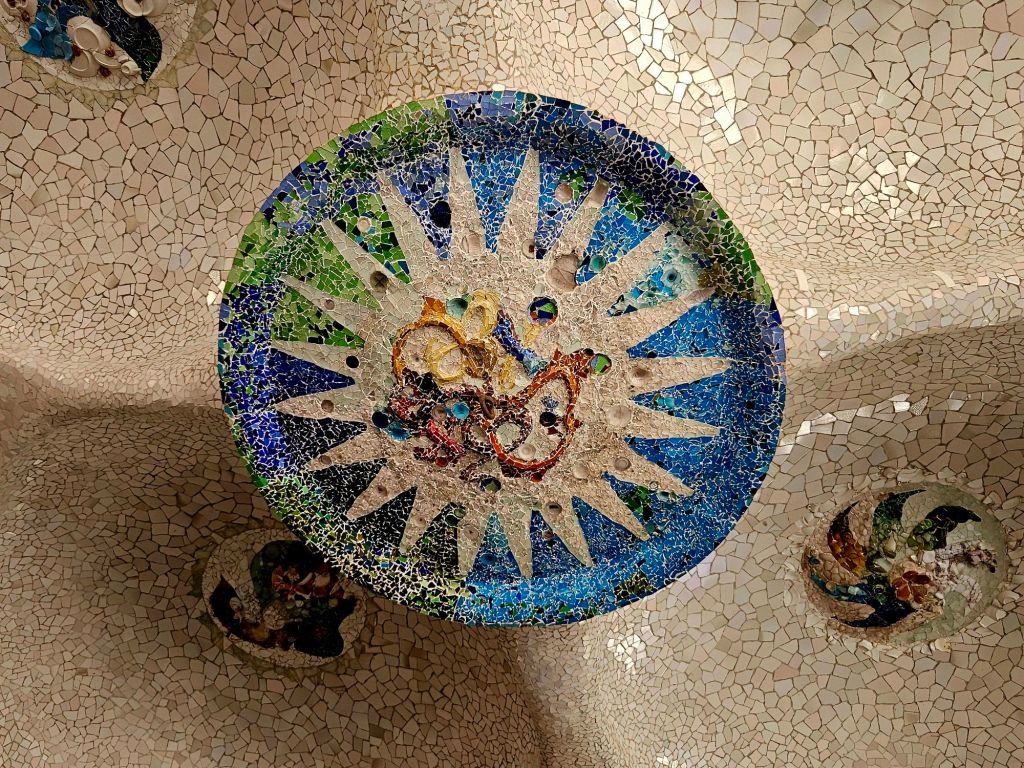
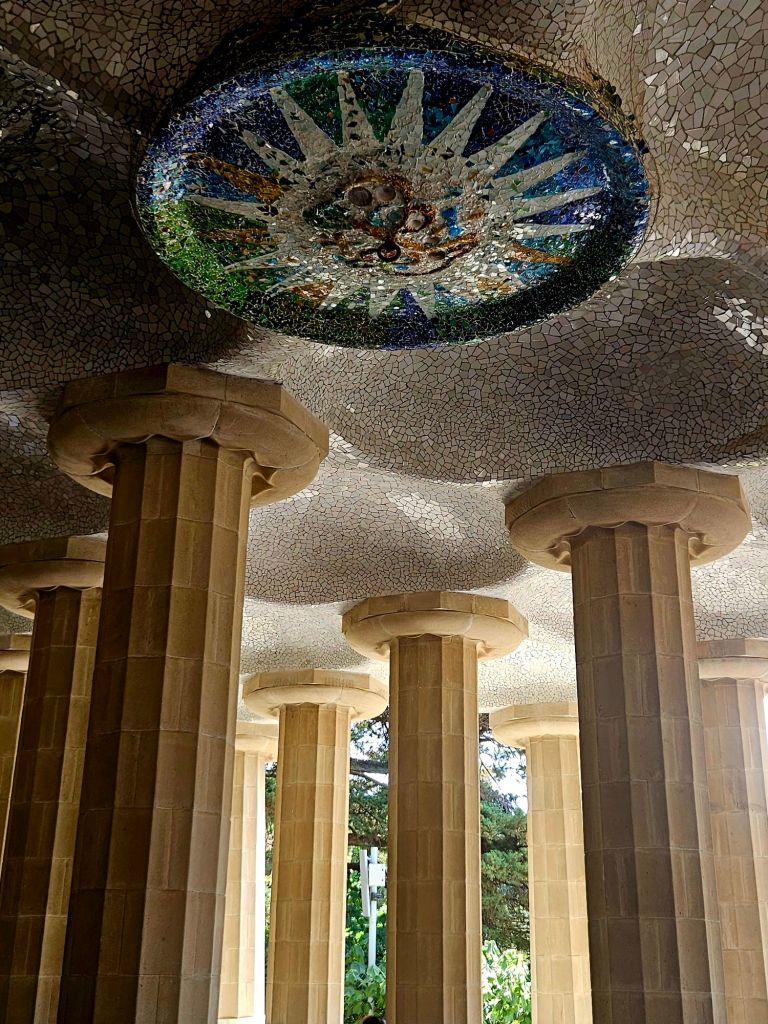
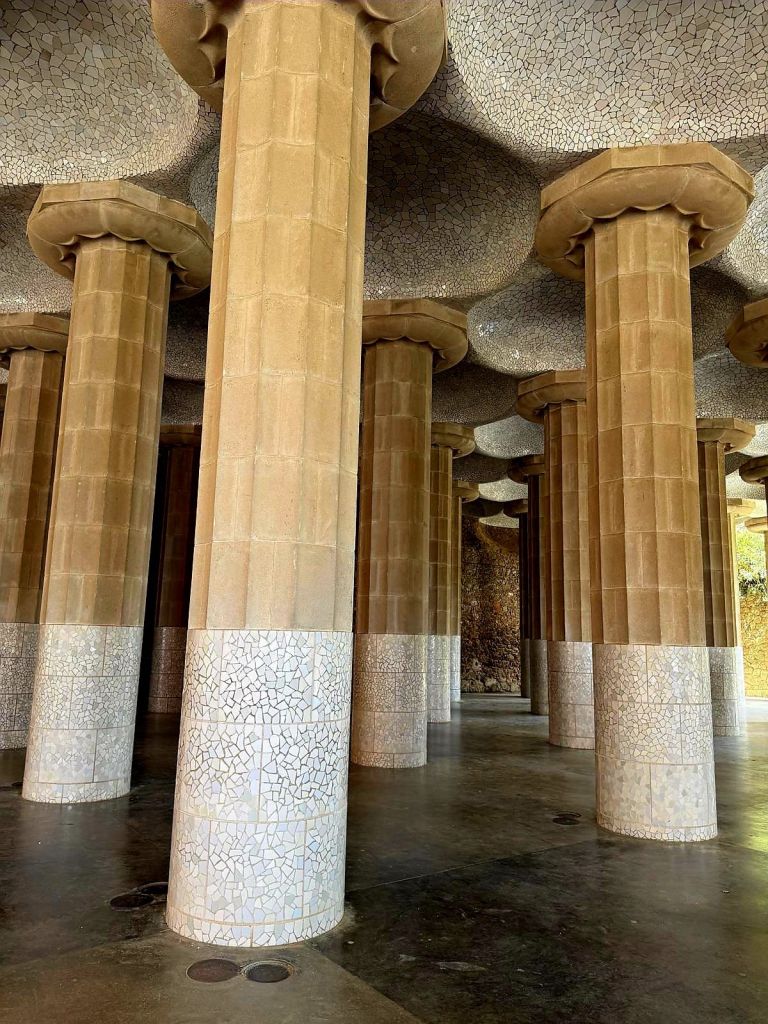
And then we came to the Hypostyle Room. This has 86 columns supporting the square above and a beautiful tiled ceiling. It was originally intended as a market area. Some of the columns are inclined, which, once again, gives an undulating movement.
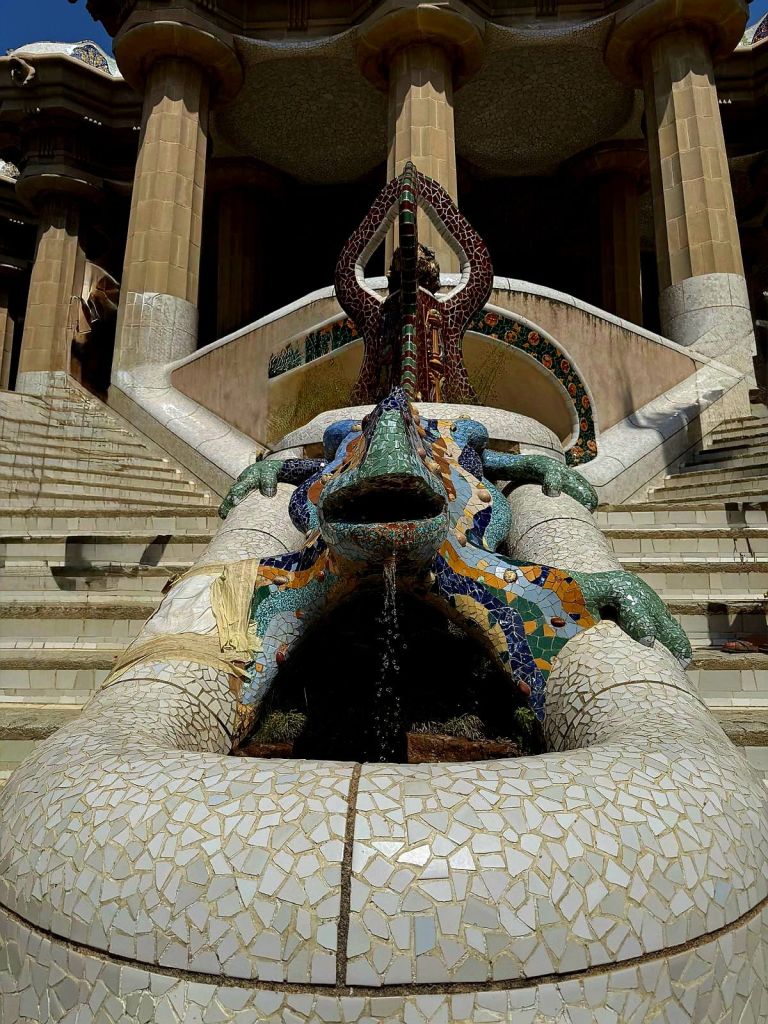
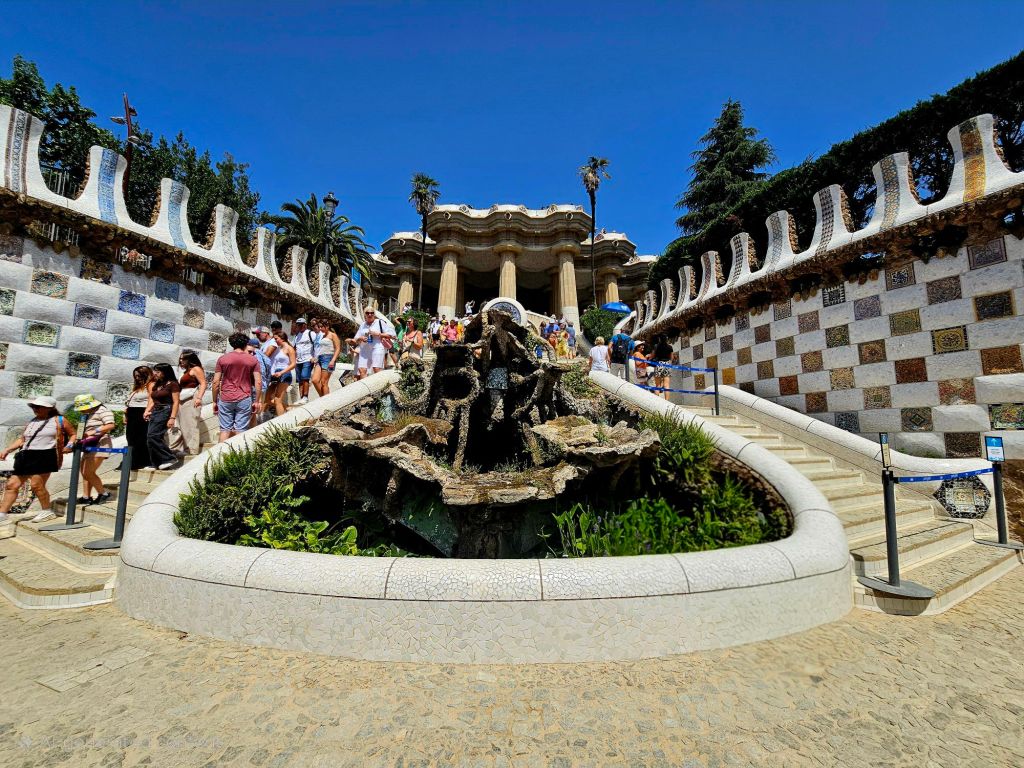
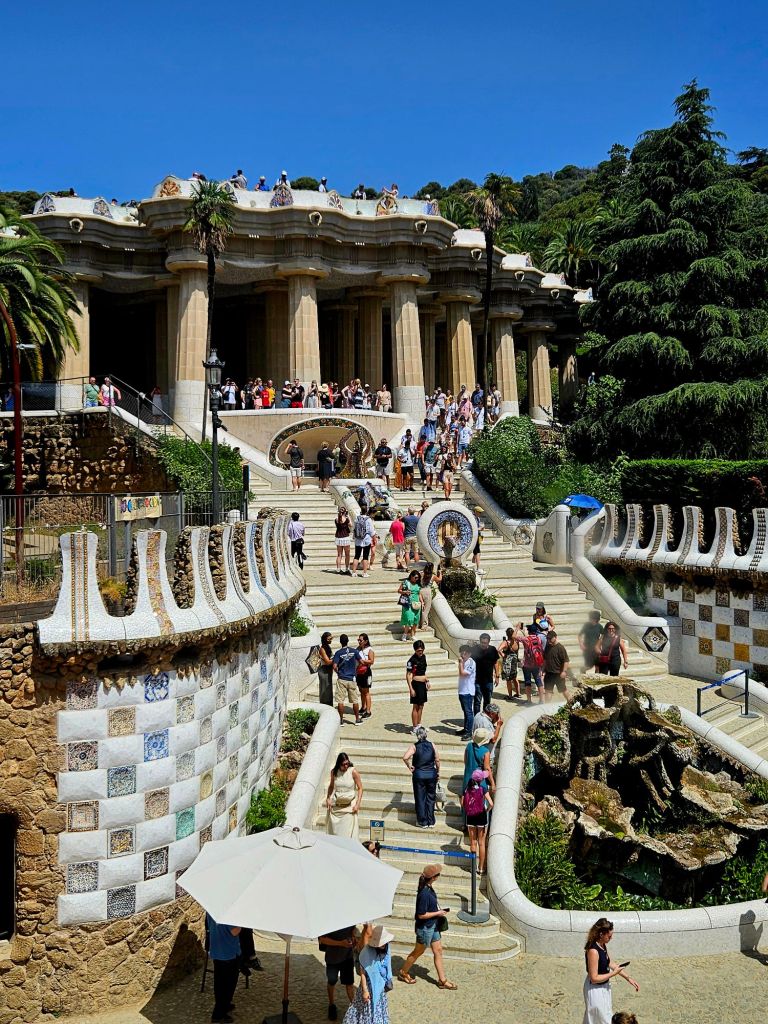
Then, we walked down the famous twin staircase past the 2.4 m long dragon / salamander mosaic sculpture. This is the most photographed image in the park. It was restored in 2007 but had one foot ‘bandaged’ when we saw it.
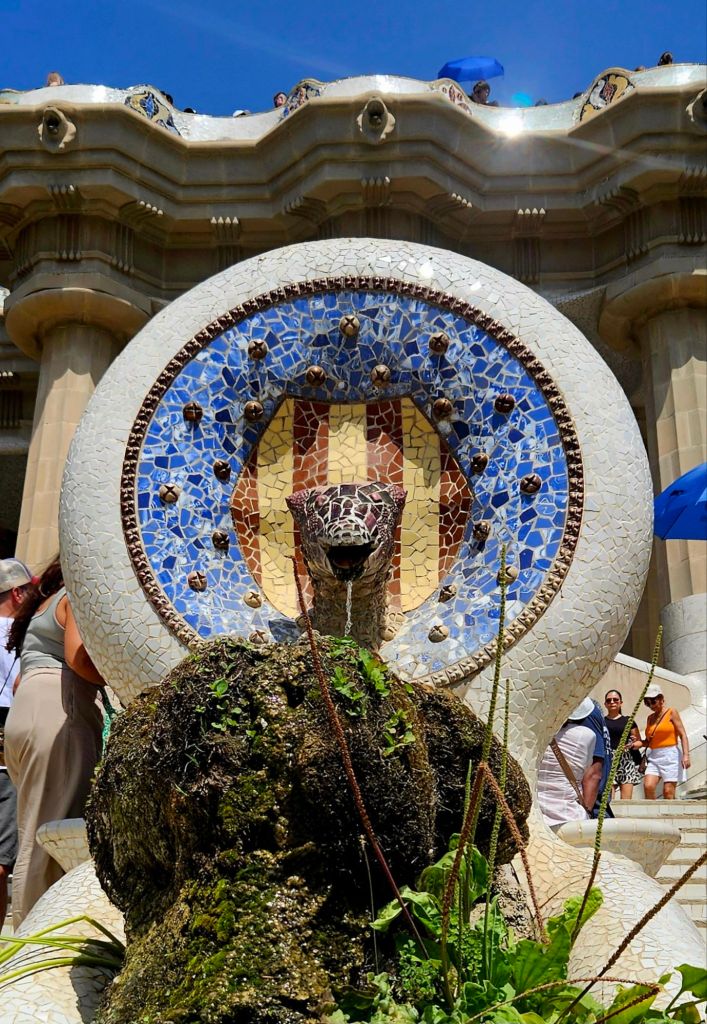
Further down is what looks like a serpents head and the emblem of Catalonia – the Senyera, a flag consisting of four red stripes on a yellow background.
And at the bottom of the staircase are some goblin like shapes.
Either side of the main entrance gates are the Porter’s lodge pavilions, otherwise known as ‘Hansel and Gretel’ houses. One of them was actually used as a porter lodge, with a waiting room and telephone booth, and is now a souvenir shop.
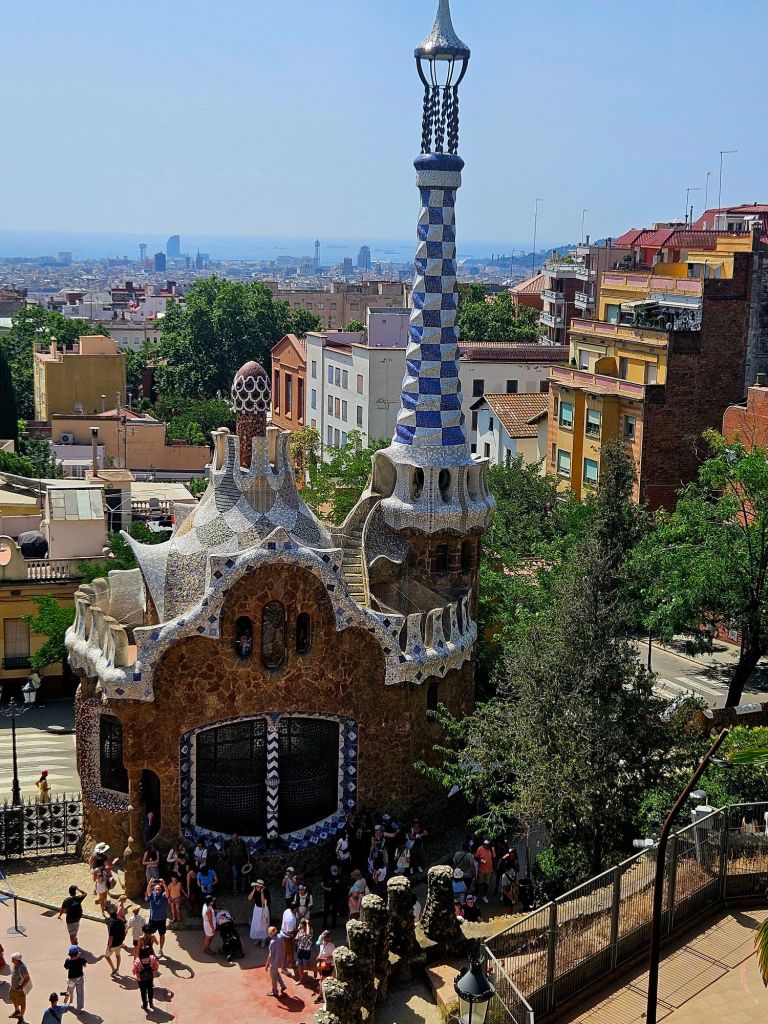
The other one is the porter’s residence, known as Casa del Guarda, and now houses a permanent exhibit of the Barcelona City History Museum.
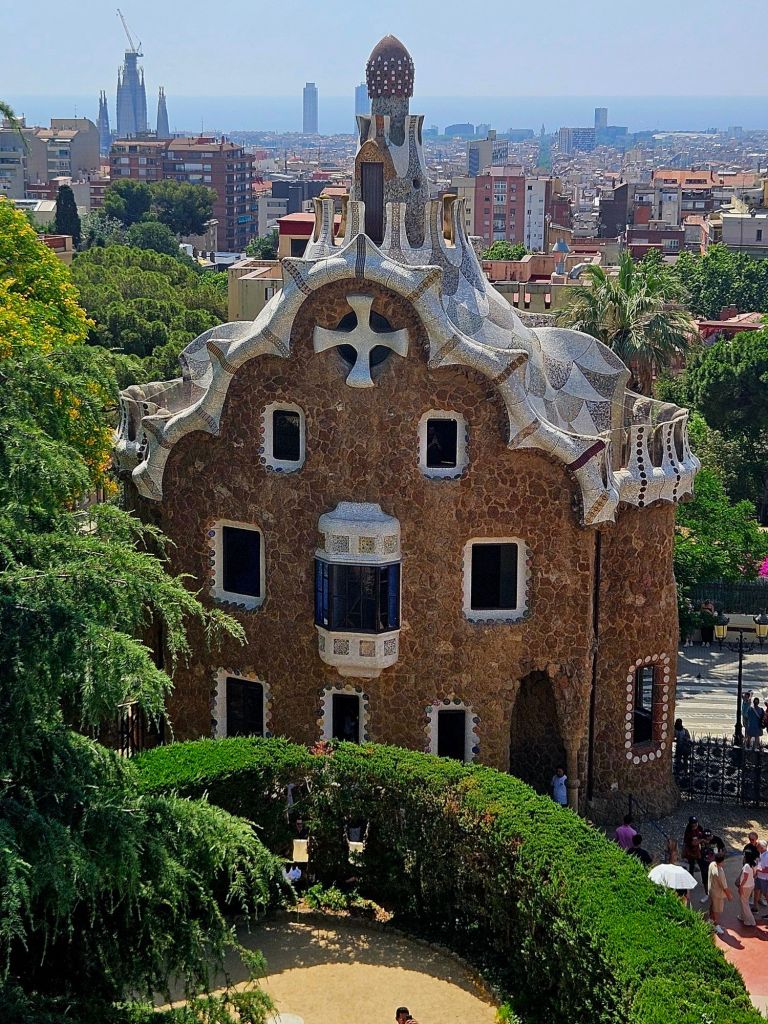
This is a photo looking out on the square from inside the porter’s Lodge.
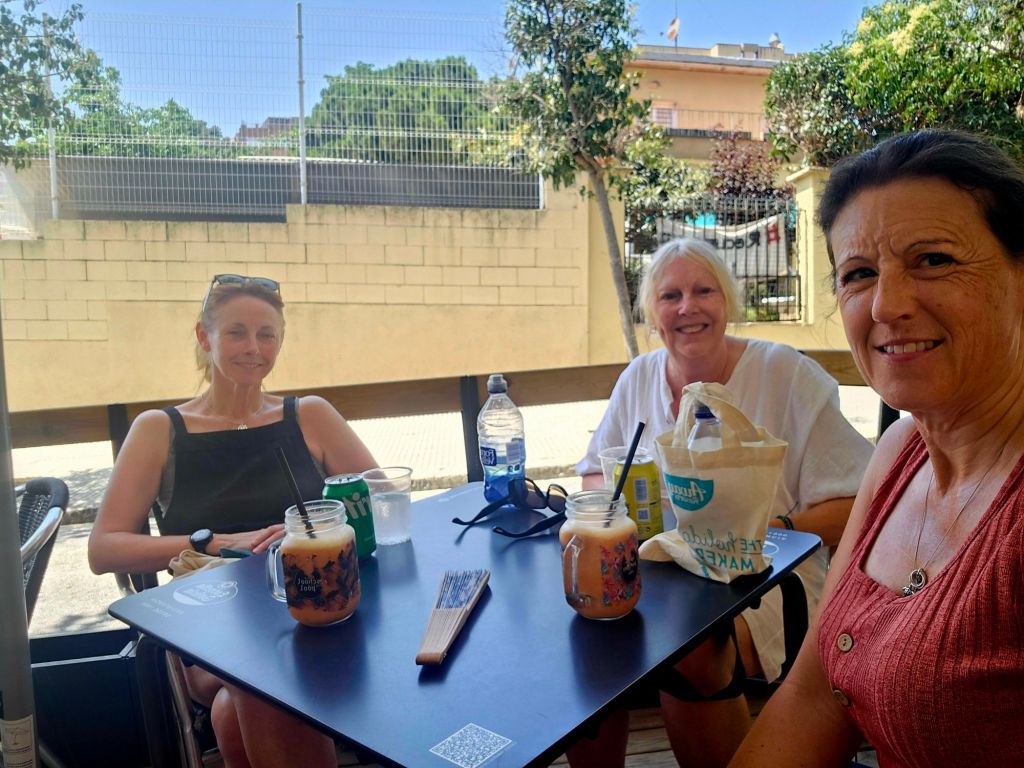
Shortly after leaving the park, we stopped for some cold drinks.
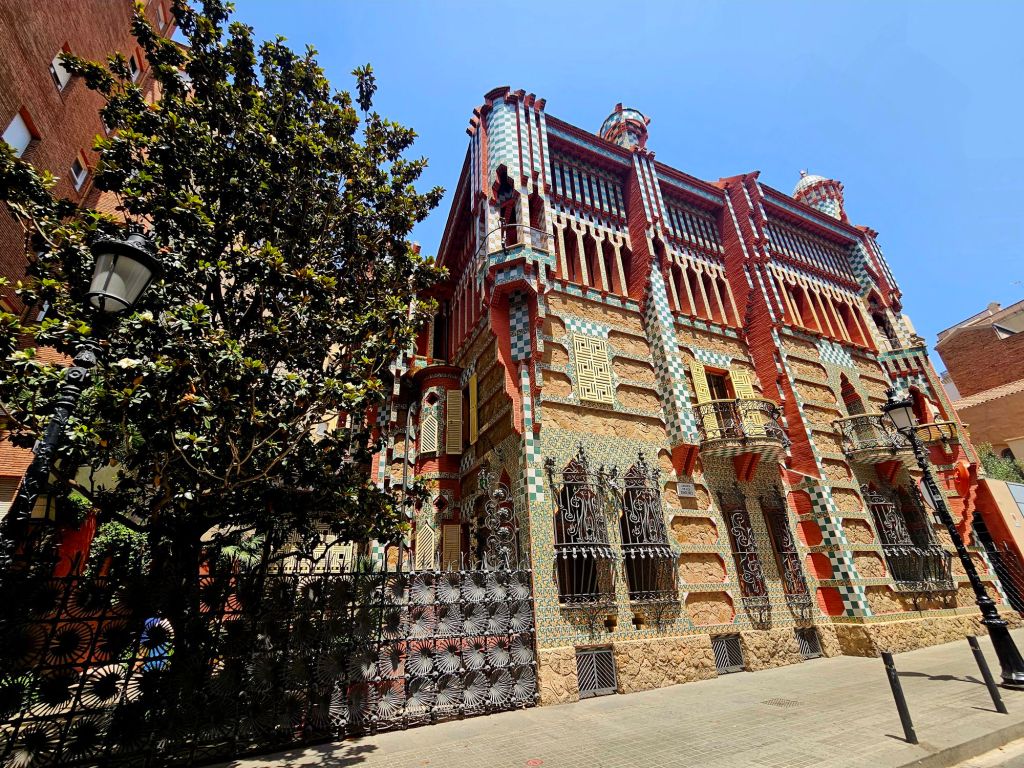
It was then a 20-minute walk to Casa Vicens, another of Gaudi’s buildings. This was the first important commission that Gaudi received, at age 30, and was created as a summer house for a stock market dealer and broker. It was built between 1883 and 1885 and has an oriental moorish influence.It is structured on four levels or floors: a basement to be used as a wine cellar and storage room; two floors with living spaces, the first with a kitchen, dining room and various other rooms, and the second with the bedrooms; and the attic used for the staff quarters.
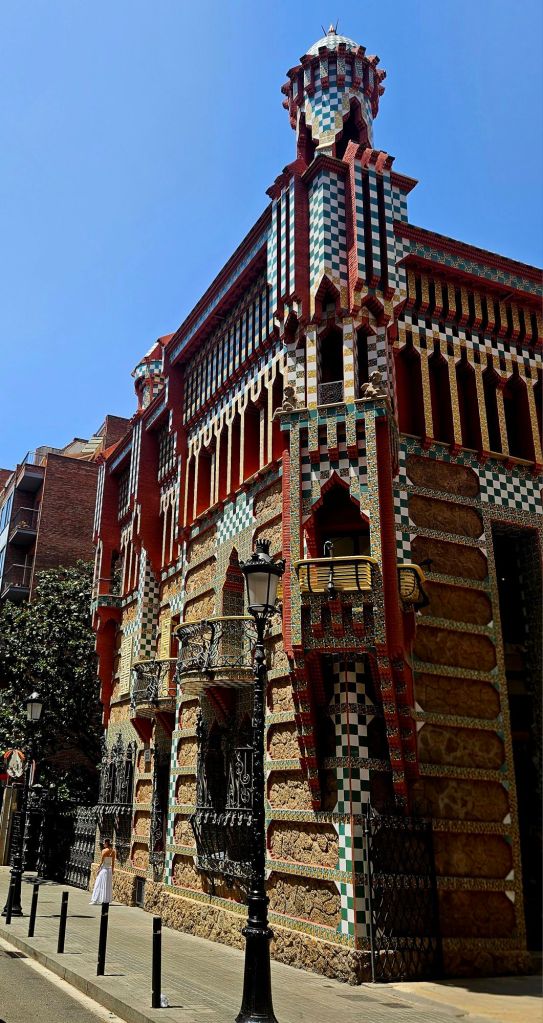
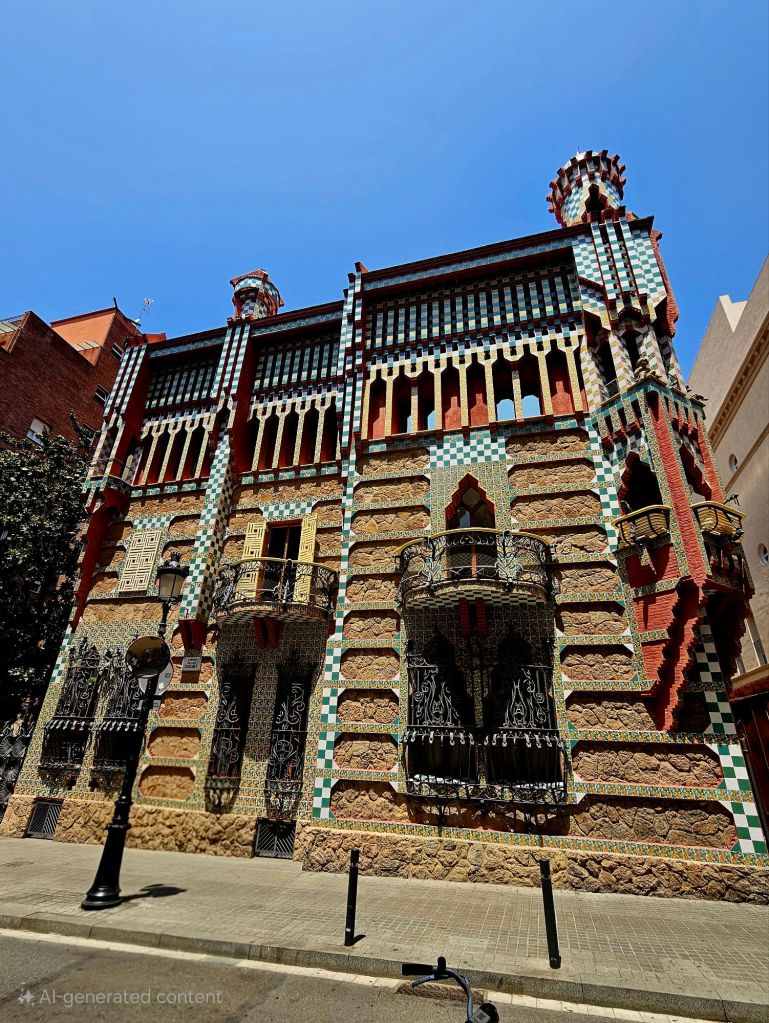
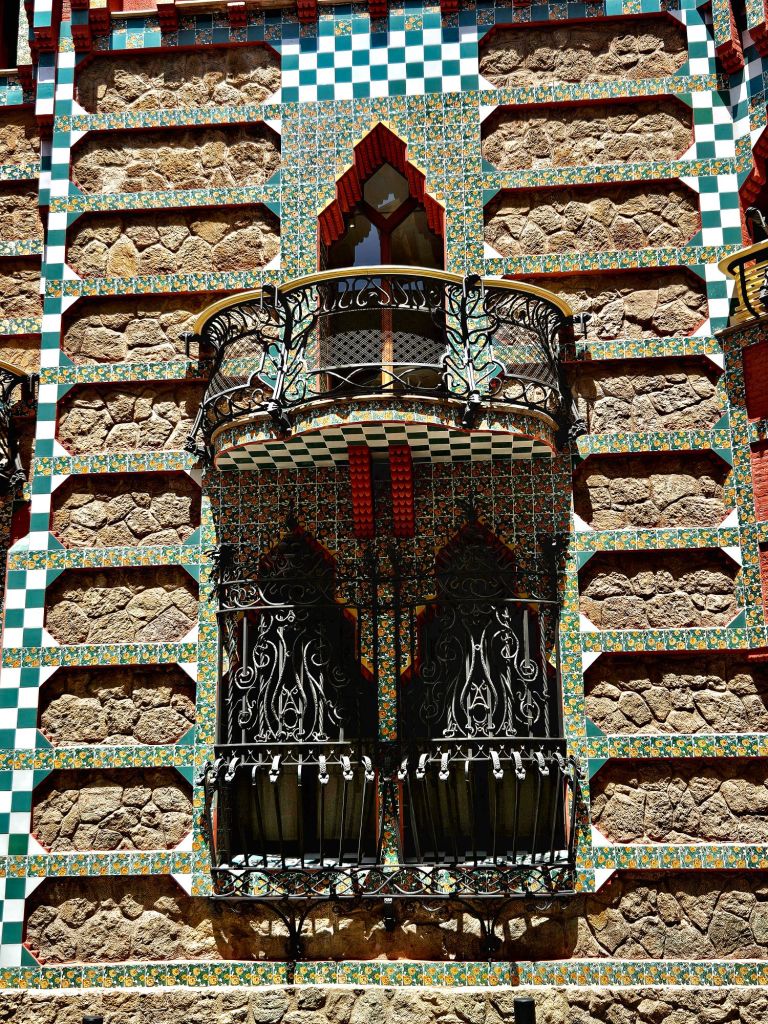
There are a lot of mosaic tiles, more straight lines than curved lines, tiles featuring local yellow flowers (carnations), wrought iron balconies and grilles, and wrought iron gates featuring palmetto palmetto leaves. The tiles have a modular measurement of 15 cm. The house was declared a world heritage UNESCO site in 2005.
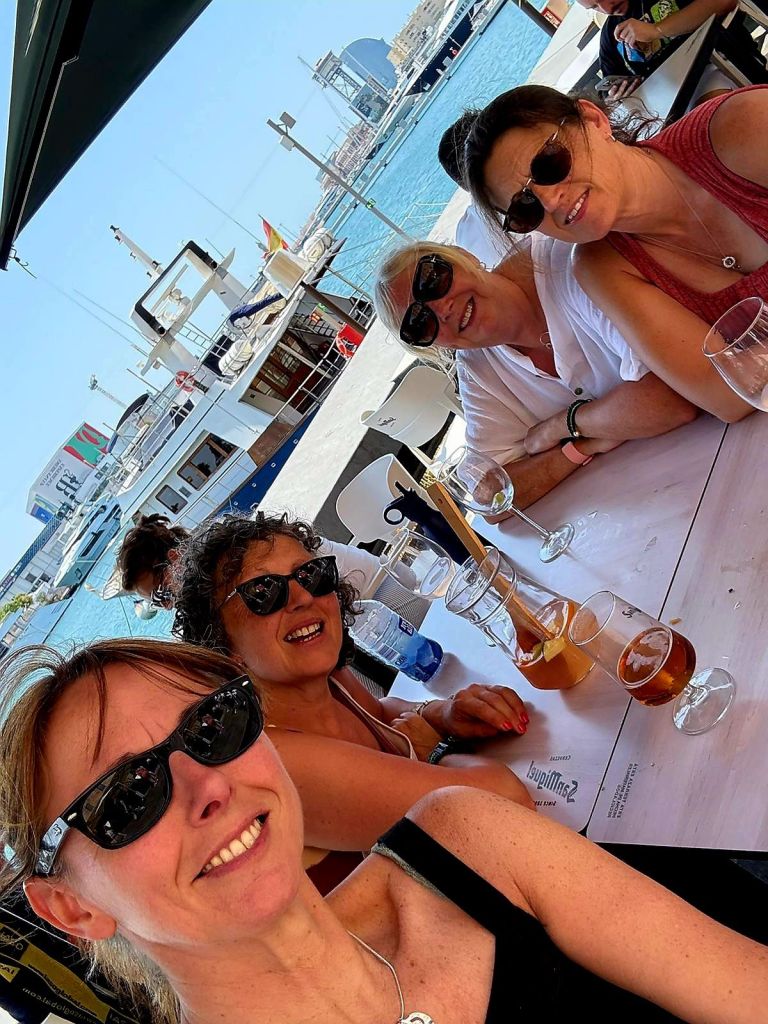
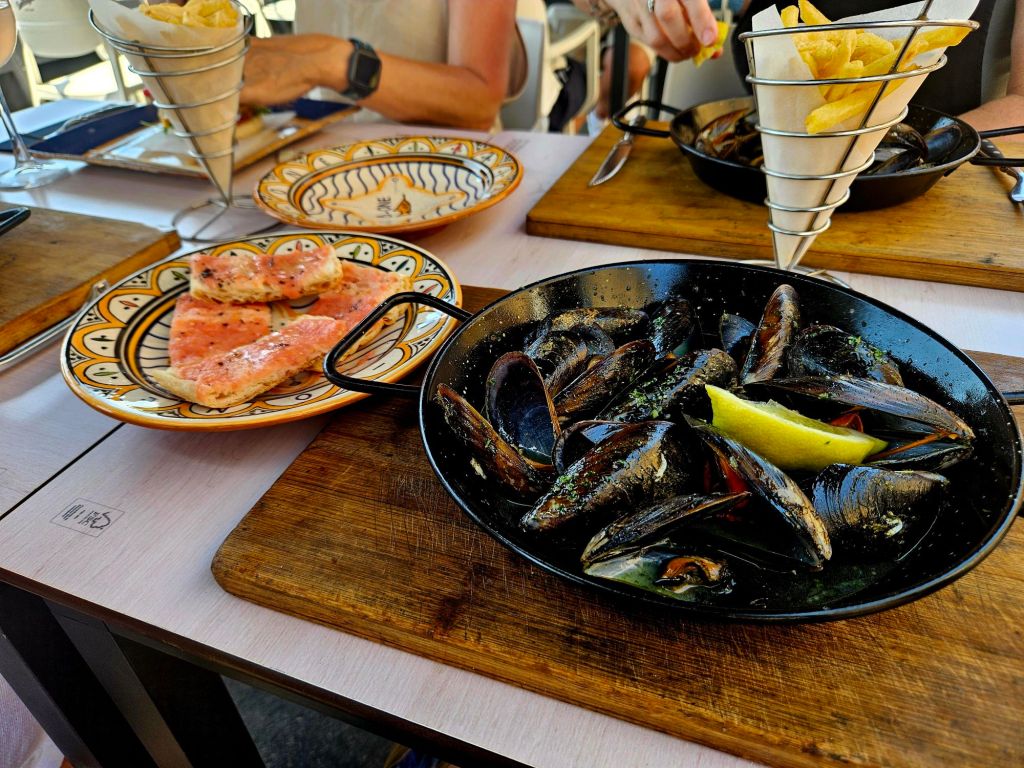
We were all flagging a bit now, so got a taxi back to the marina. As we were all hungry, we stopped at a seafront restaurant for some lunch – mussels and fries and more tomato bread.
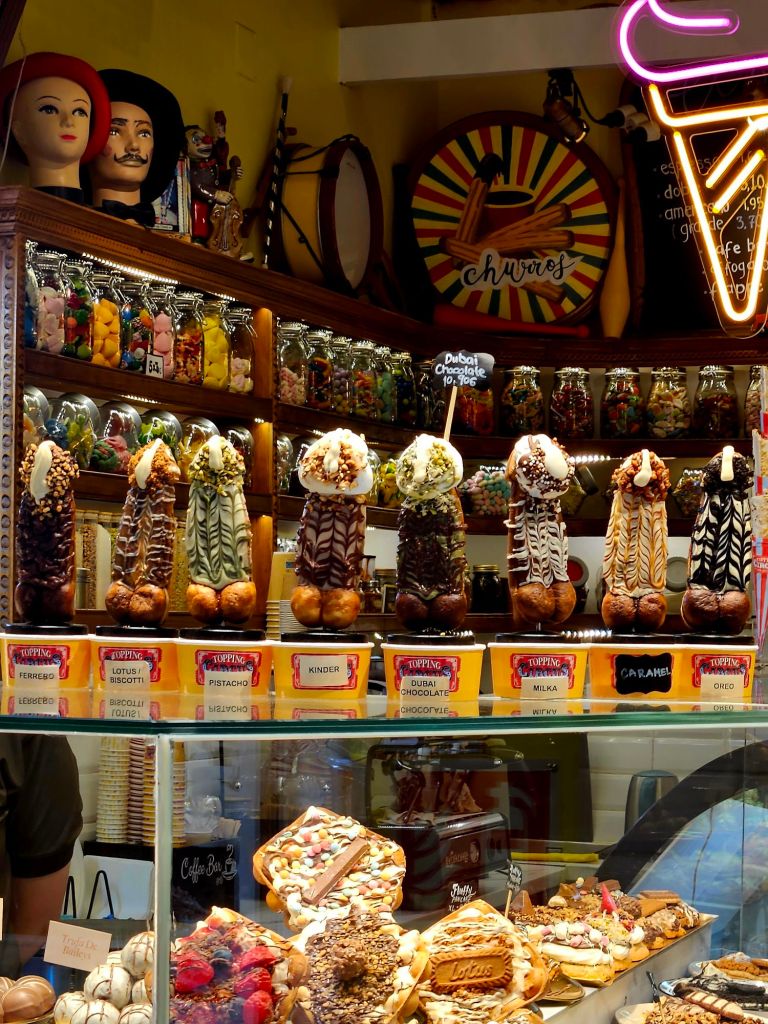
Following lunch, we walked back to the apartment, past a shop selling some interesting pastries.
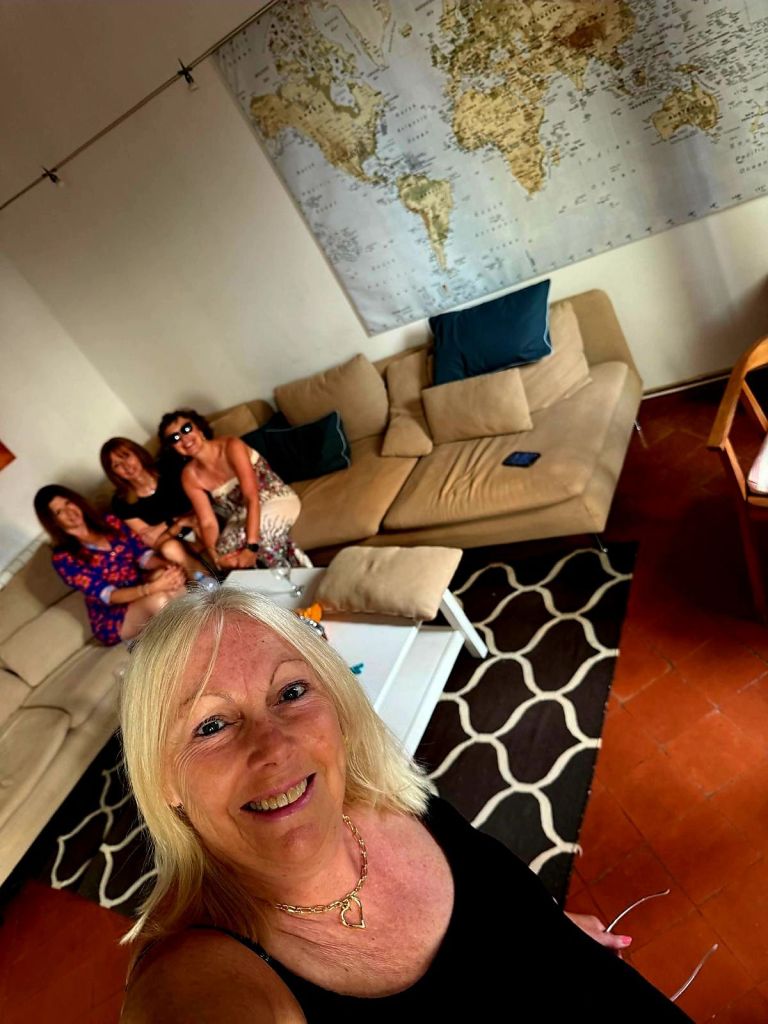
We had a bit of downtime at the apartment before having showers and getting ready to head out.
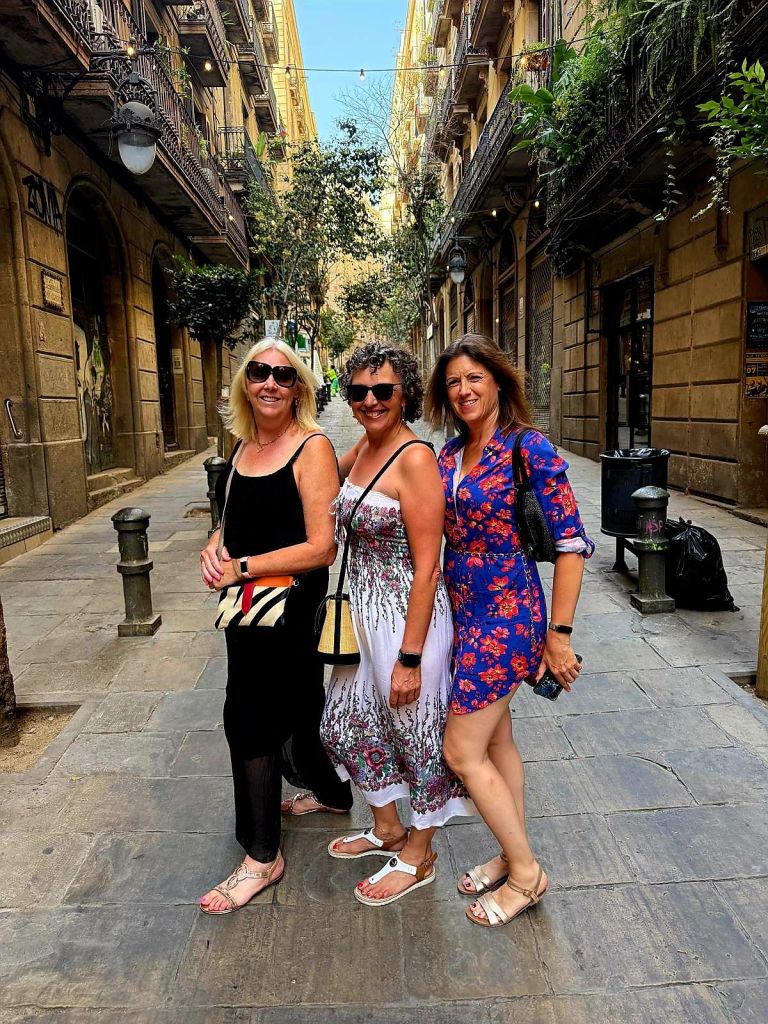
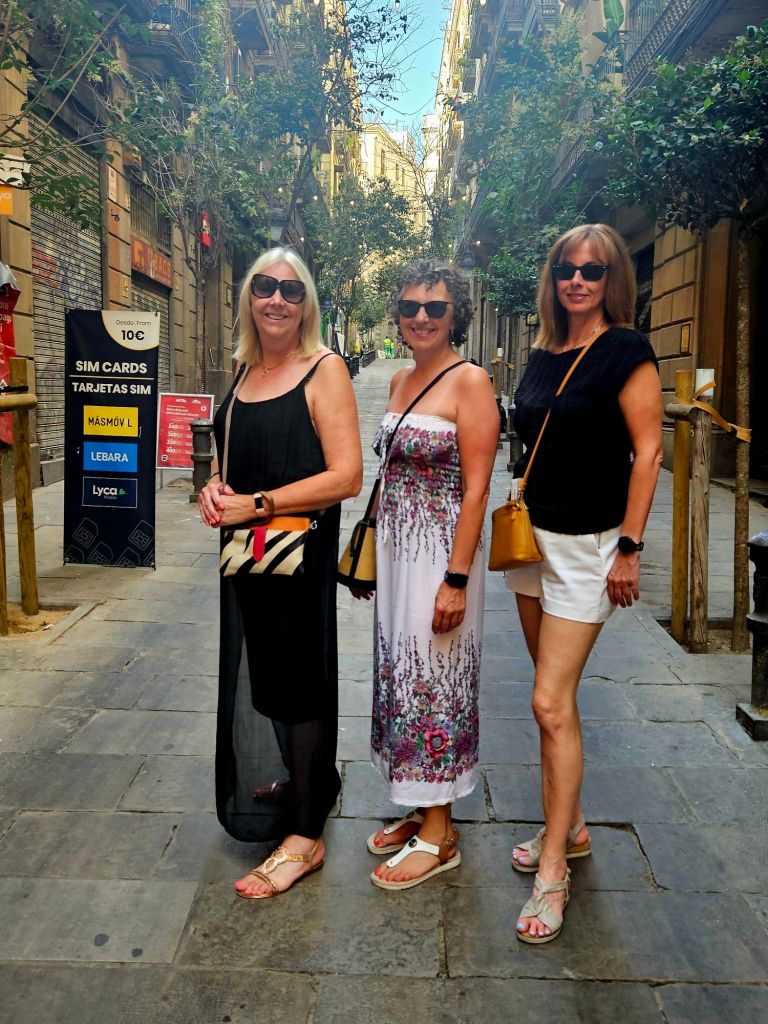
It was a nice walk through the small streets again.

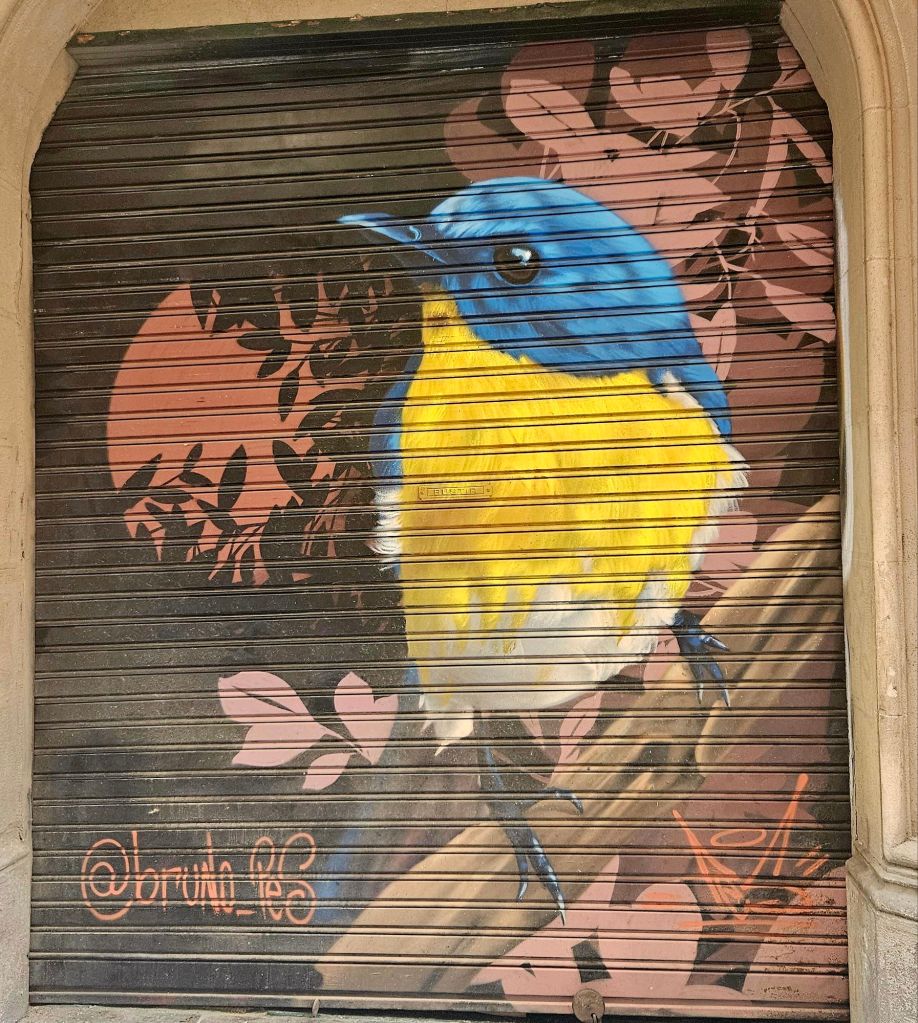
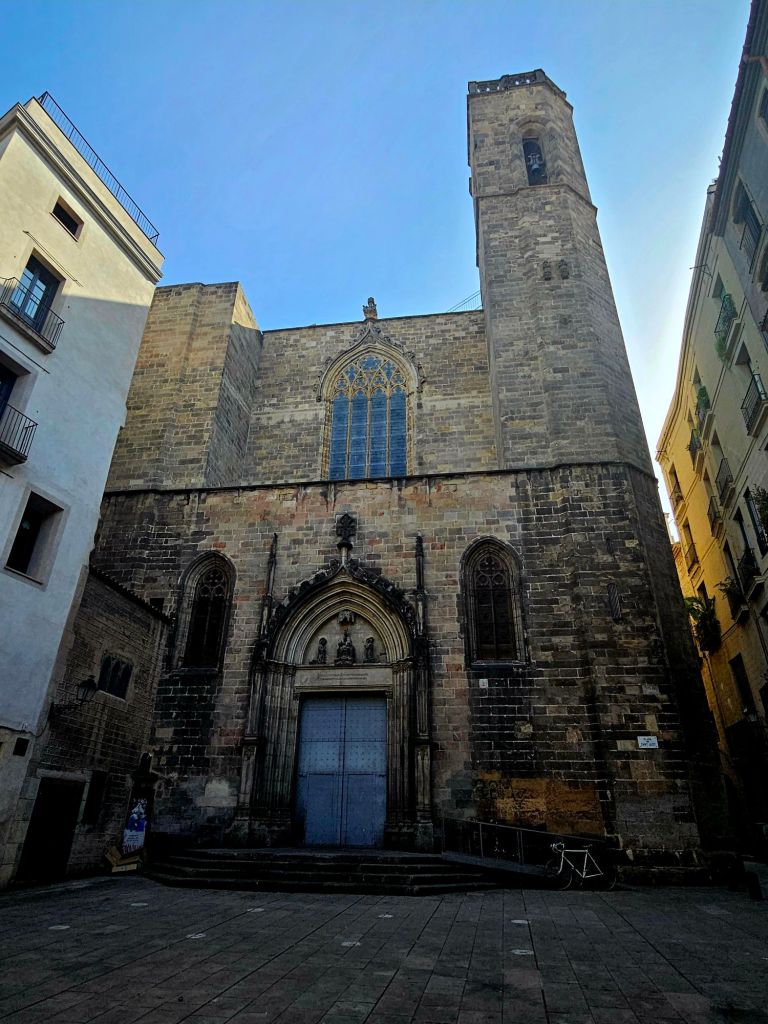
We passed the Basílica dels Sants Màrtirs Just i Pastor. The building of this church began in 1342, and it wasn’t completed until 1574. It was built on the site of what was a small roman temple or sacred site. Tradition has always associated the basilica with the meeting place of the first Christians and is believed to be Barcelona’s oldest church. The square in front of the church was used as a marketplace in the film Perfume.
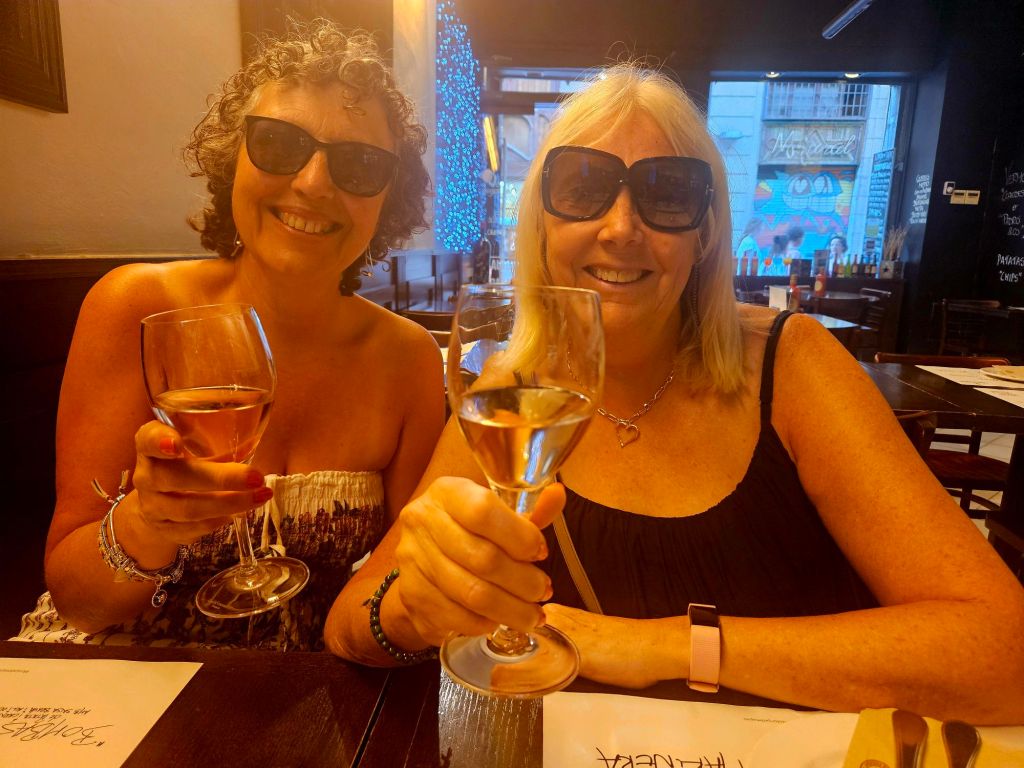
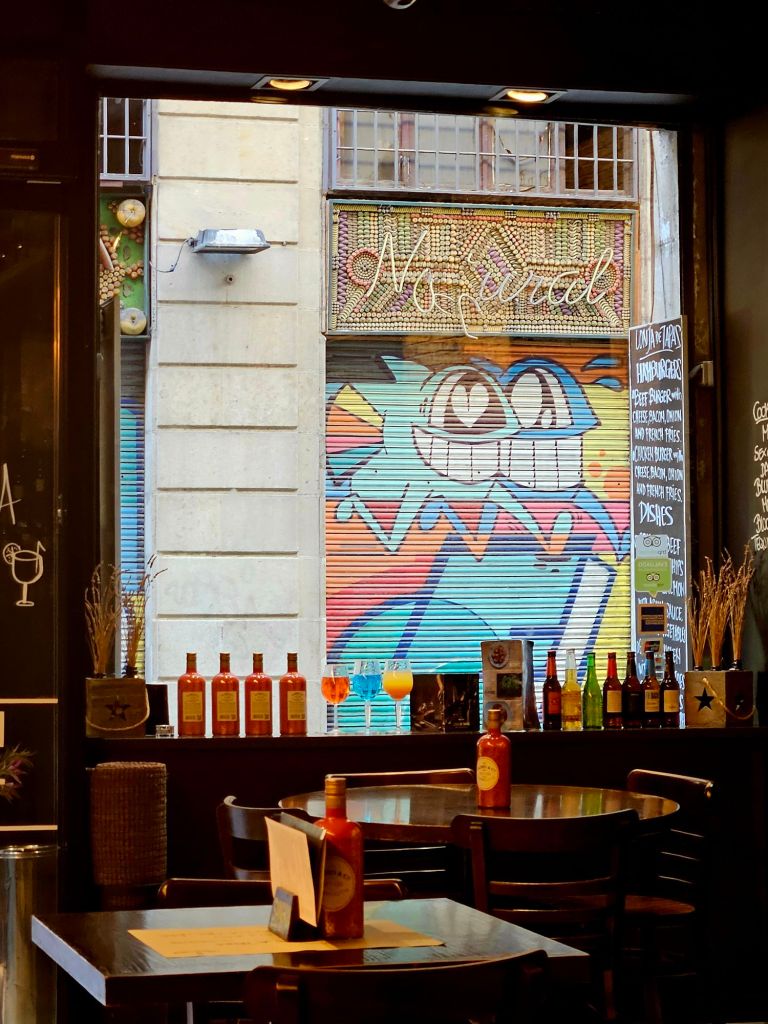
We came across a tapas restaurant that we all liked the look of – Lonja Tapas. It was pretty empty as we were early by Spanish standard, it was only around 730pm.
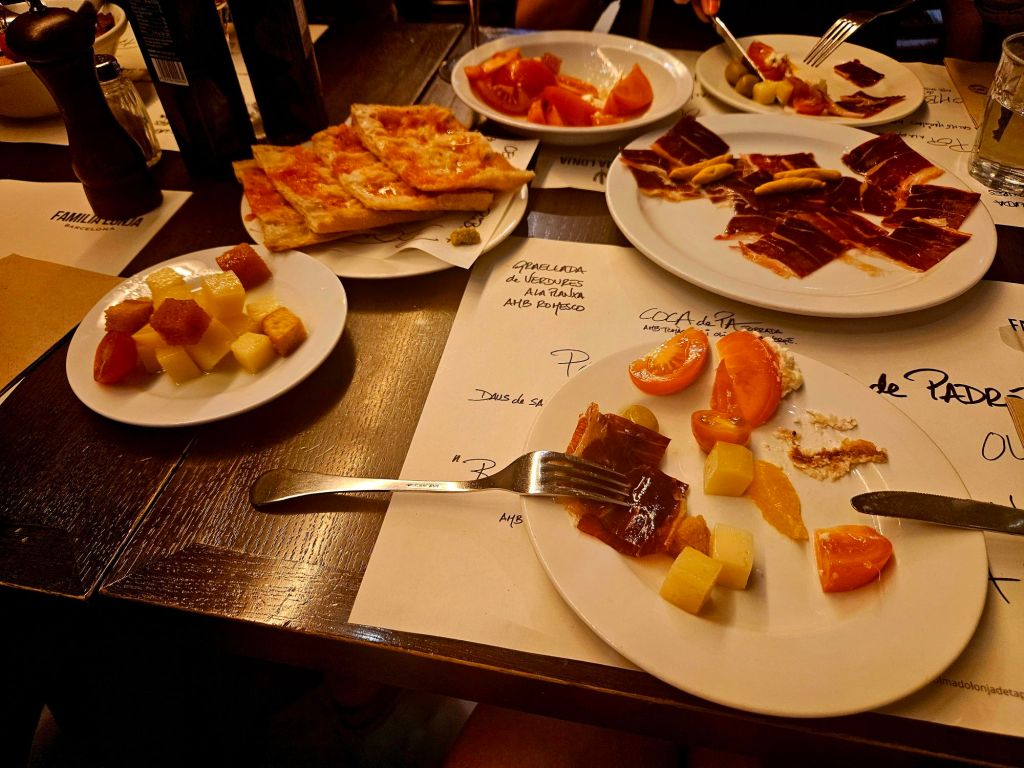
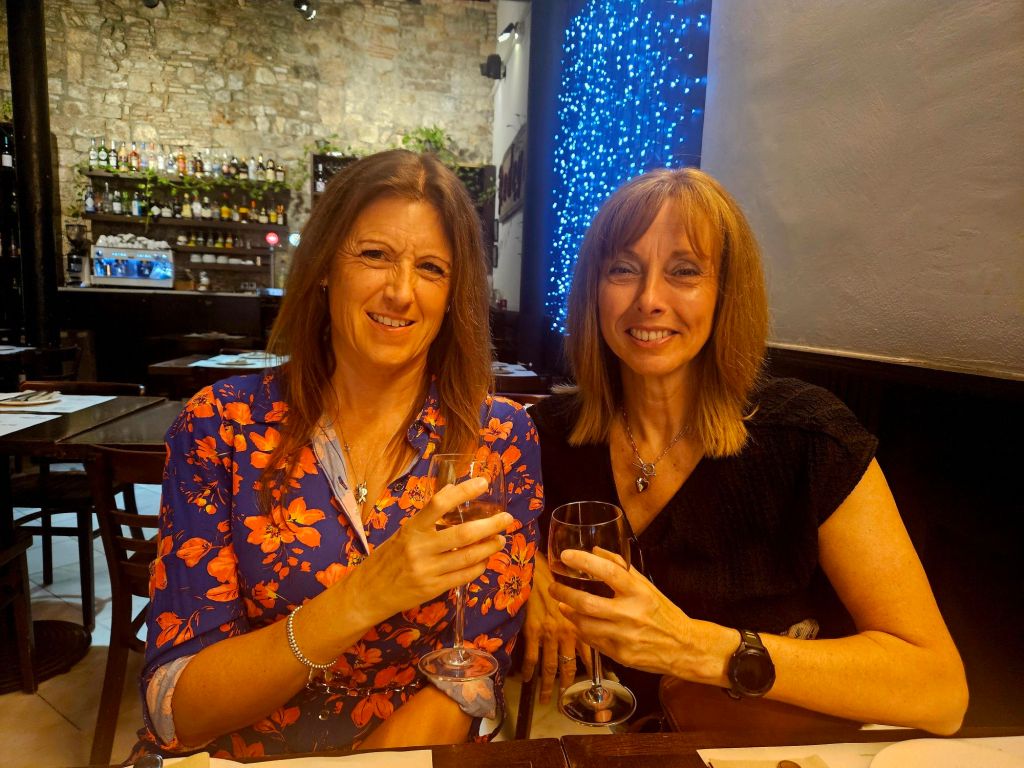
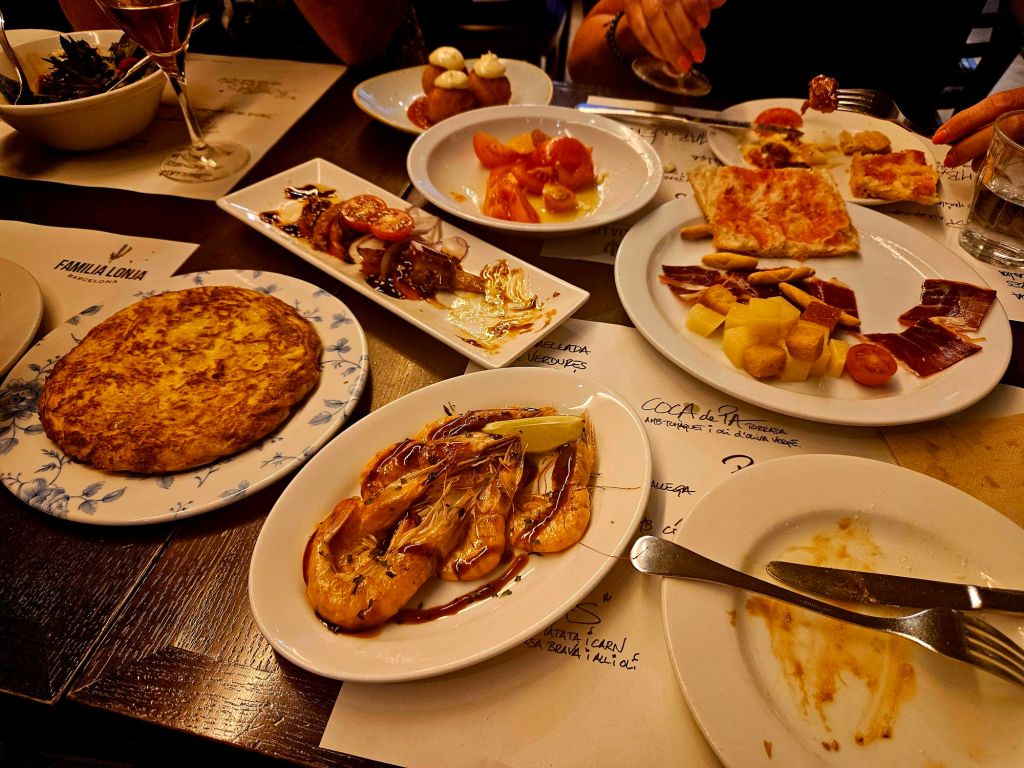
After dinner, we were still a bit early for the Flamenco show, so we stopped in Placa de Jaume Sabarties. The back of the Picasso Museum is on this square. Jaume Sabartés was a lifelong friend and associate of Picasso, and the numerous pieces he contributed from his collection of Picasso’s work formed the kernel of the museum’s collection.
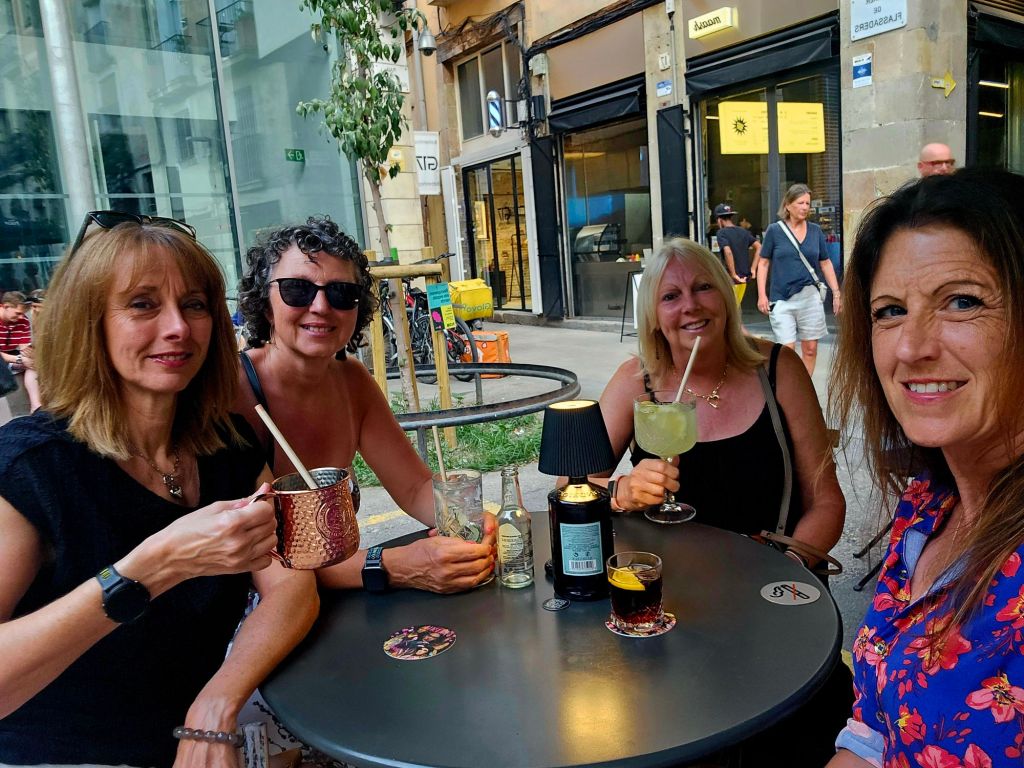
We had a variety of cocktails from Bubita Sangria Bar. I had a vermouth.
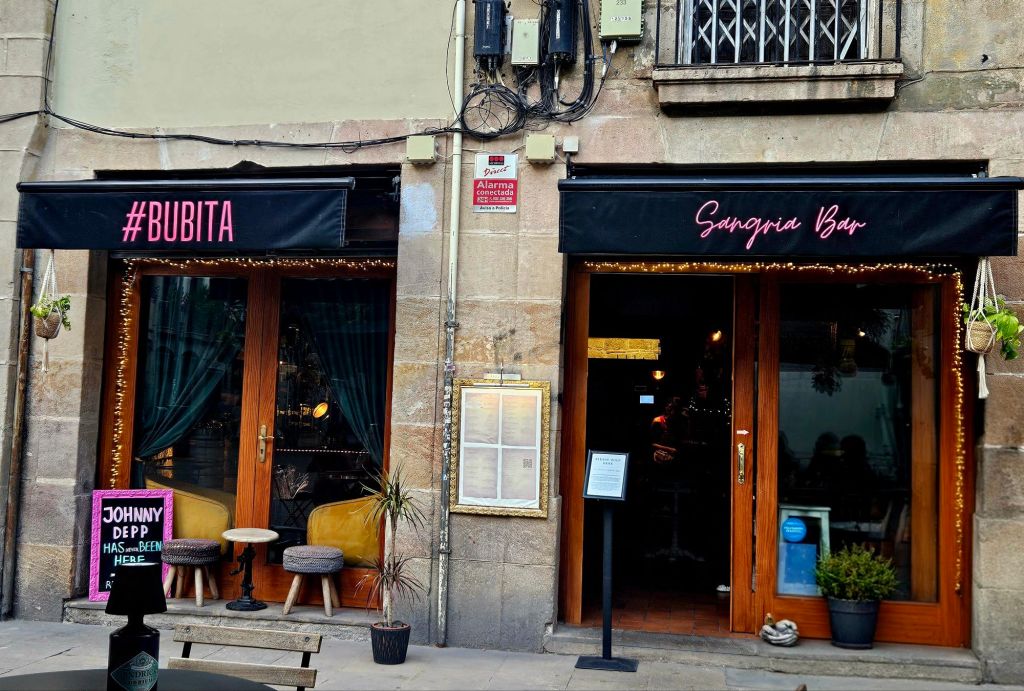
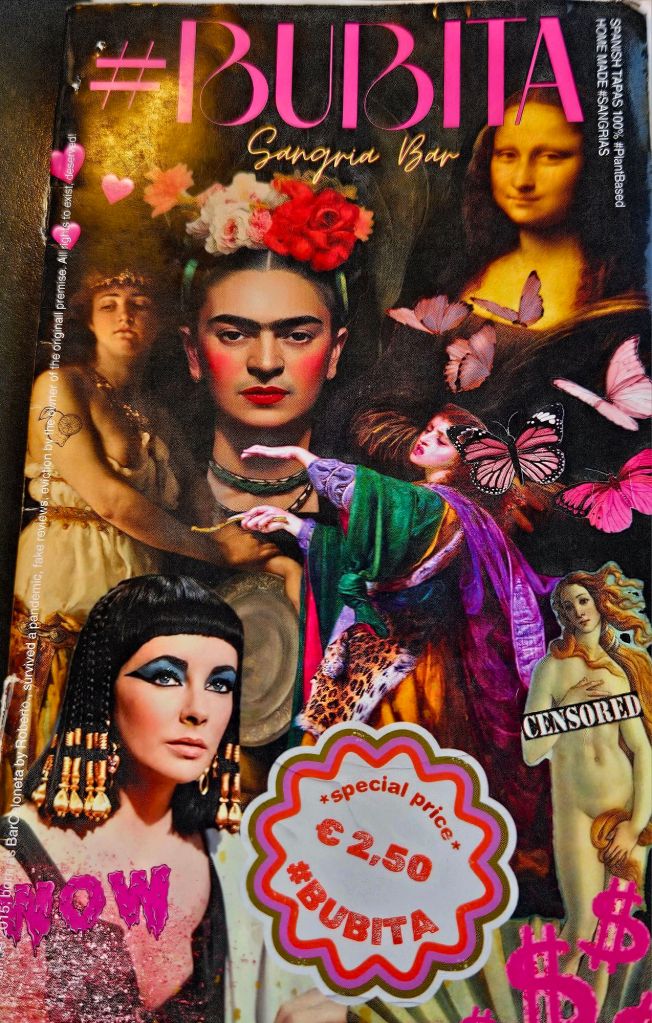
It was now time to head to the Flamenco show, we were only a 10 minute walk away.
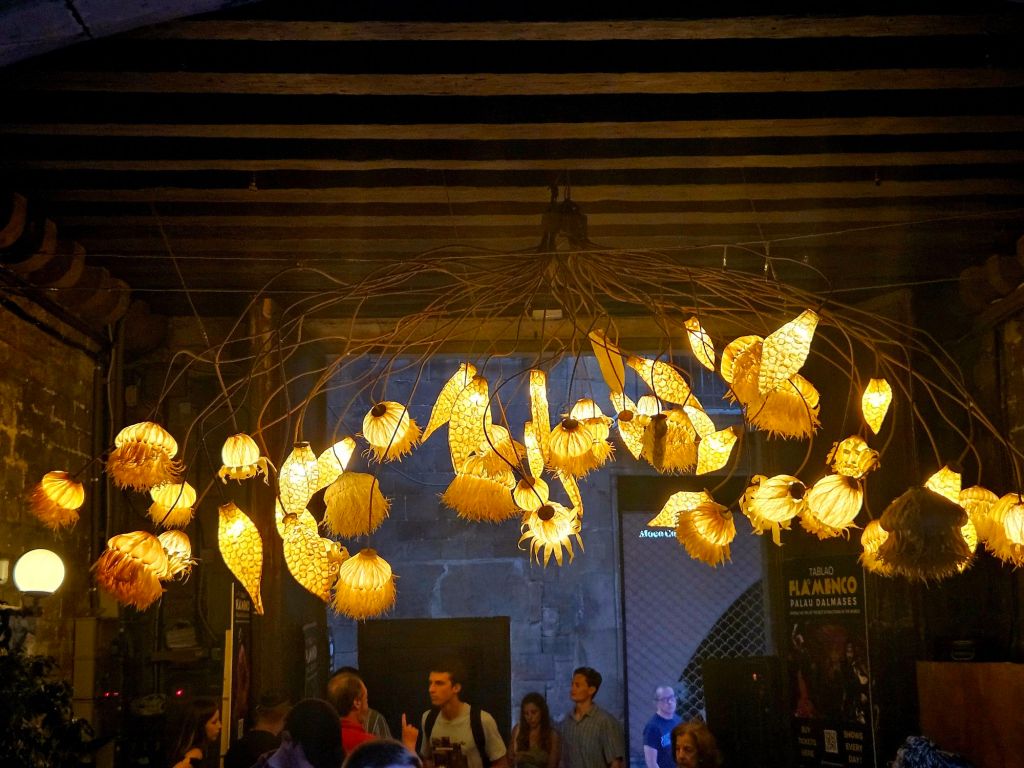

The venue was quite small and felt very authentic. We had front row seats, which was great, as you could really see how their feet moved. It was a brilliant show, and surprisingly, the main dancer was male, which I wasn’t expecting.
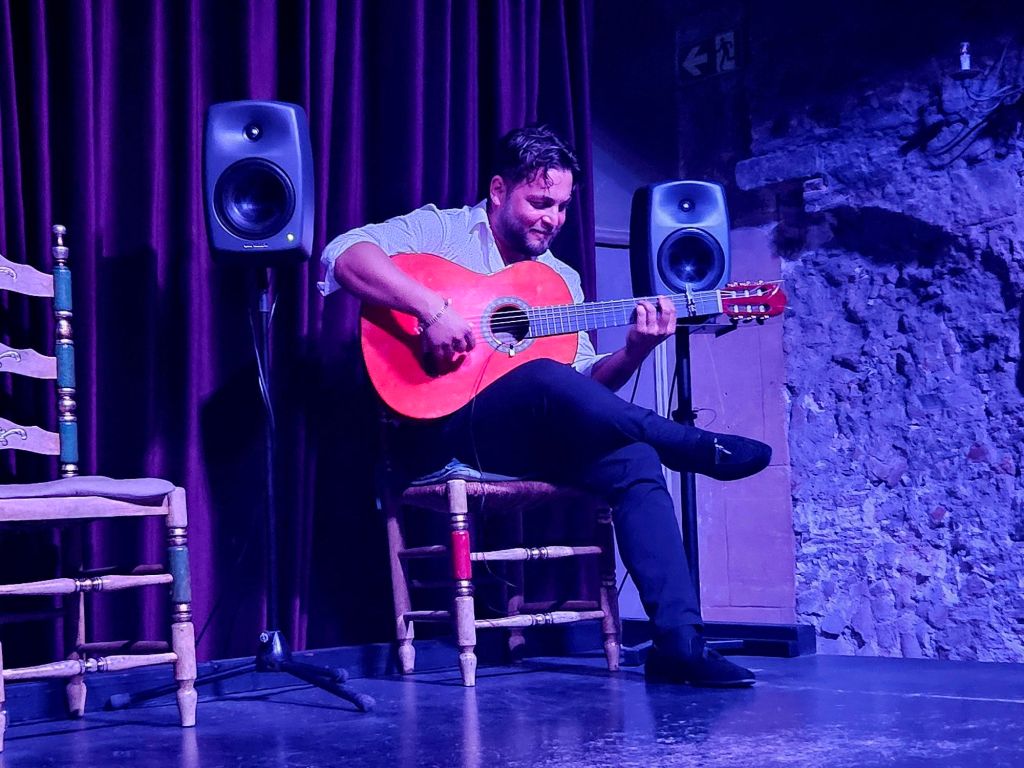
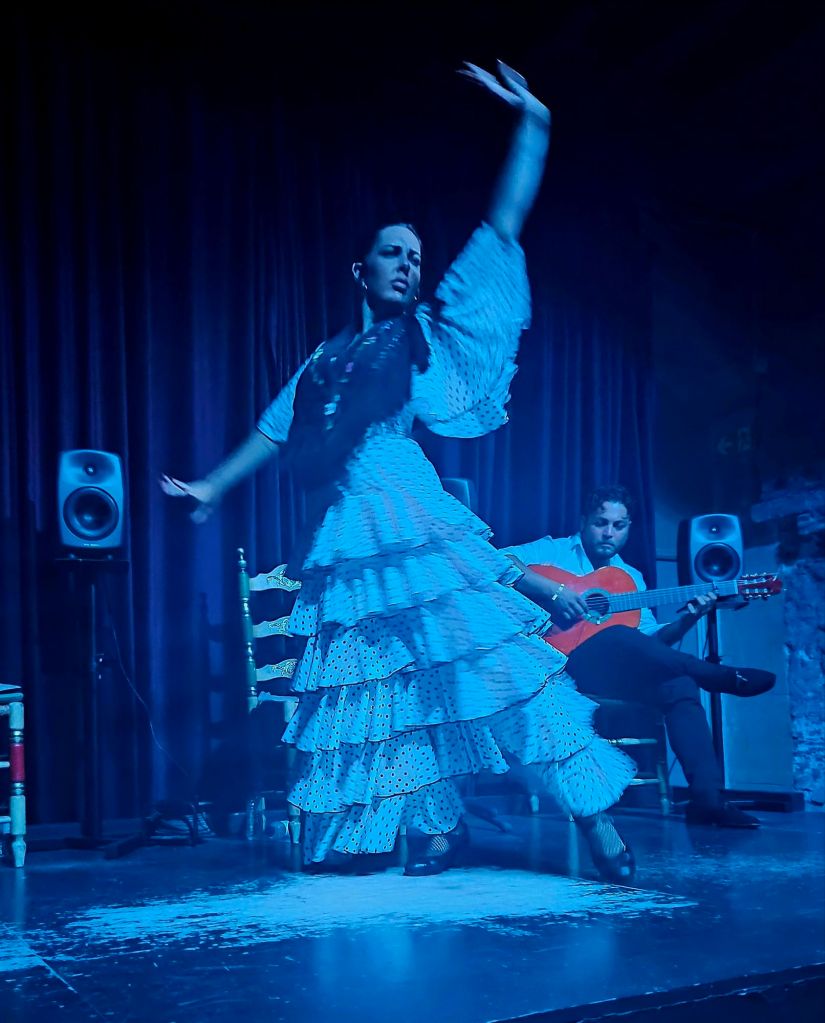
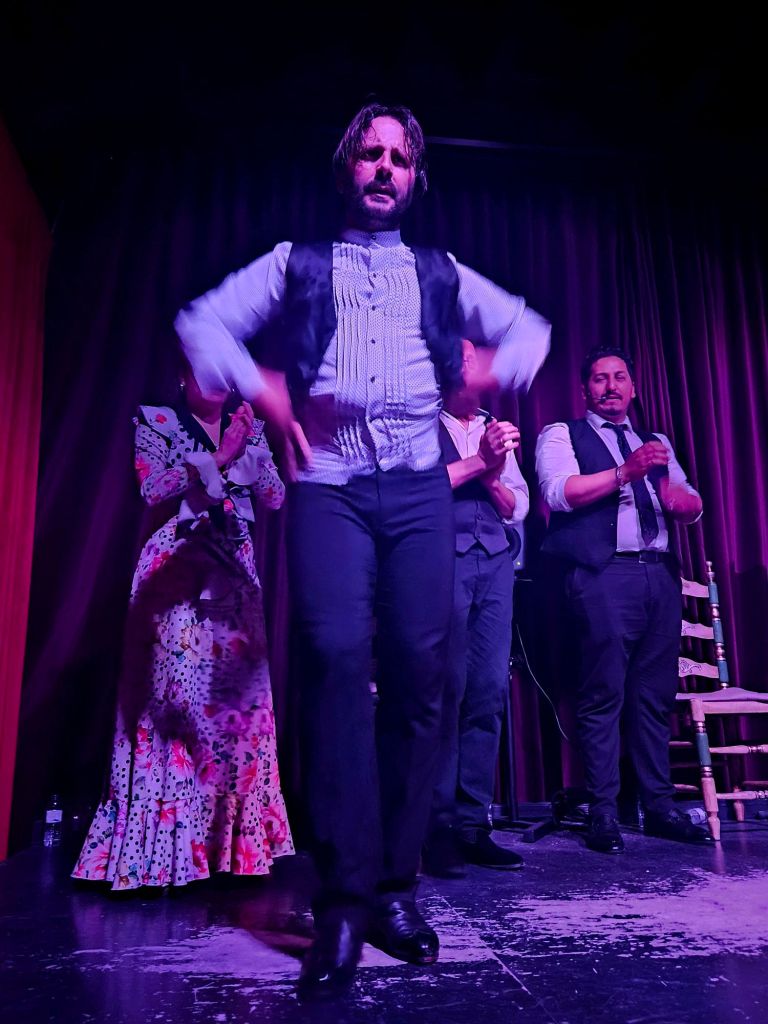
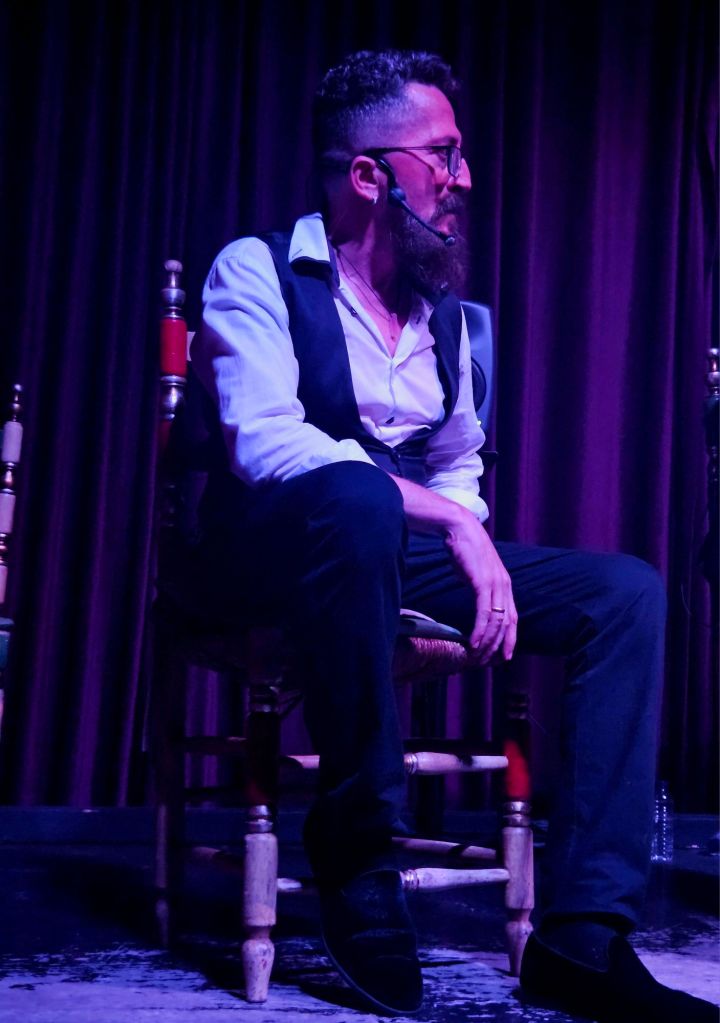
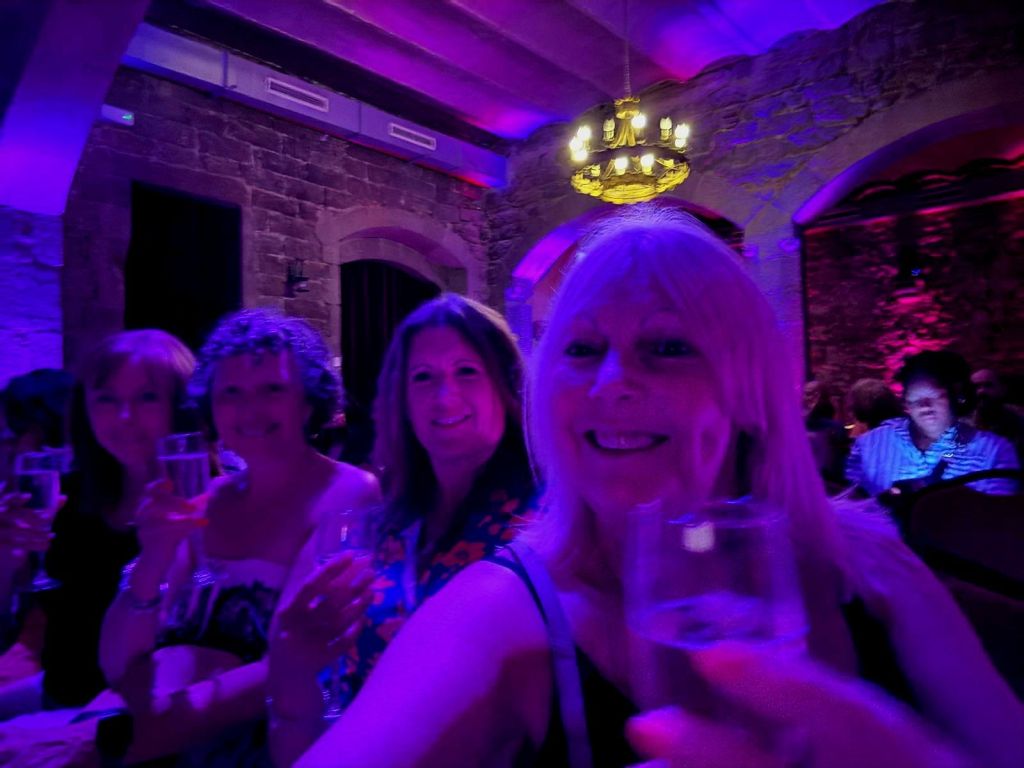
I can’t say I particularly enjoyed the singing, especially as I didn’t really understand what they were singing about, but the dancing was amazing.
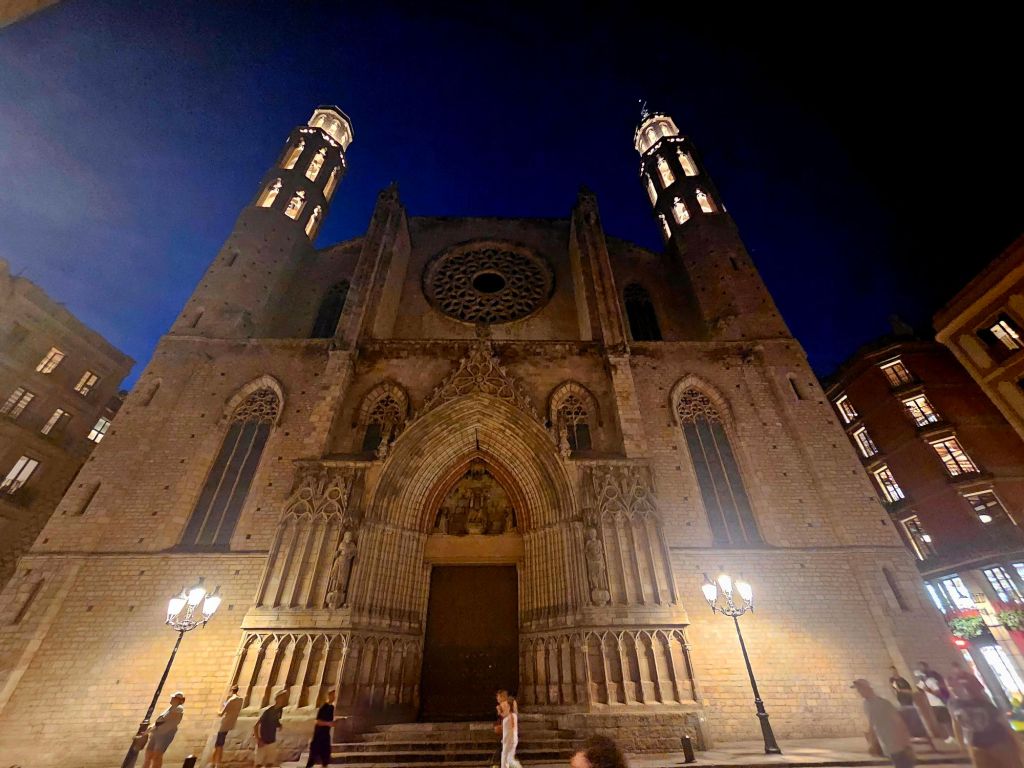
On the way home, we passed Santa Maria del Mar church again, but this time from the front.
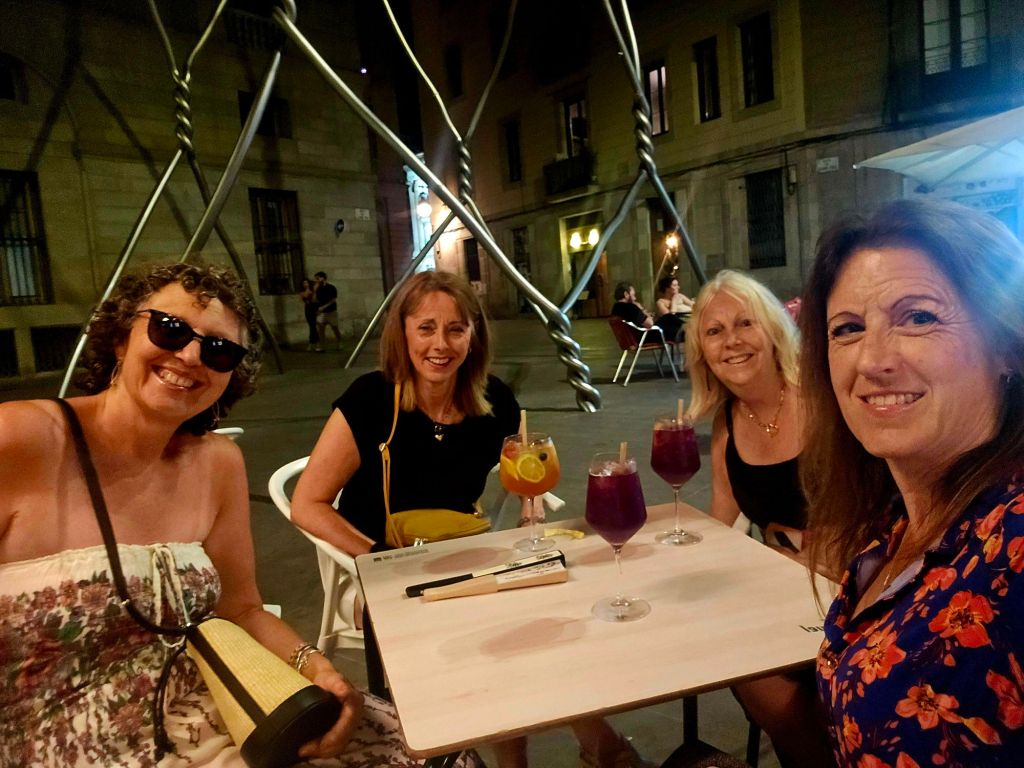
We stopped off in Plaça d’Emili Vilanova for a nightcap. This square is named after the writer Emili Vilanova, who wrote a number of books and plays between 1868 and 1905. Whilst we were sitting there, a group of children were setting off fireworks. It was quite worrying as some of them were very young and the older children were holding the fireworks in their hands – and sometimes the fireworks bounced off the surrounding buildings. Guests at other tables also seemed to be concerned. We later learnt that 24 June is the feast of St John the Baptist, which is why they were celebrating.

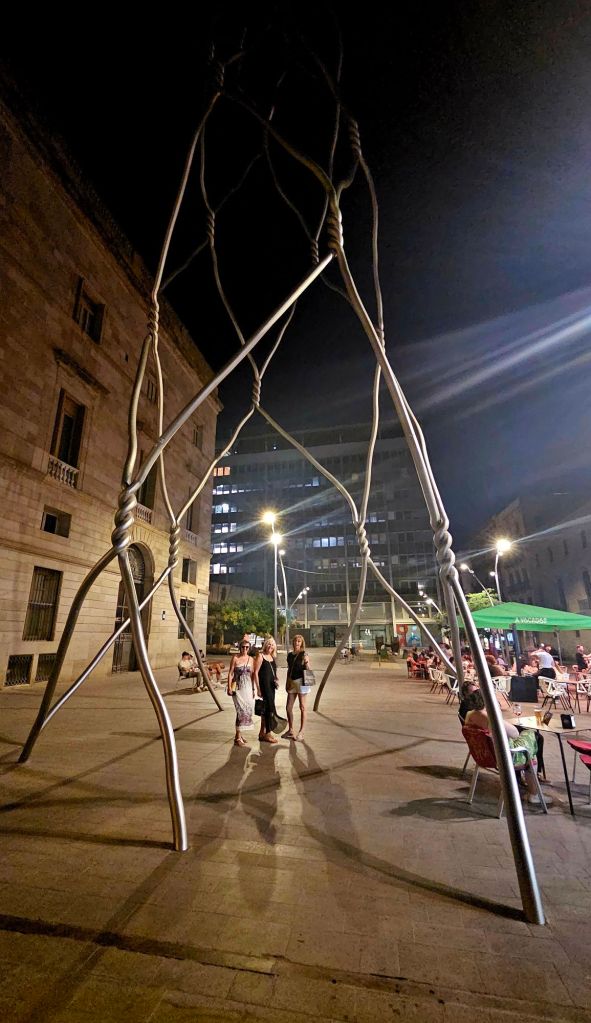
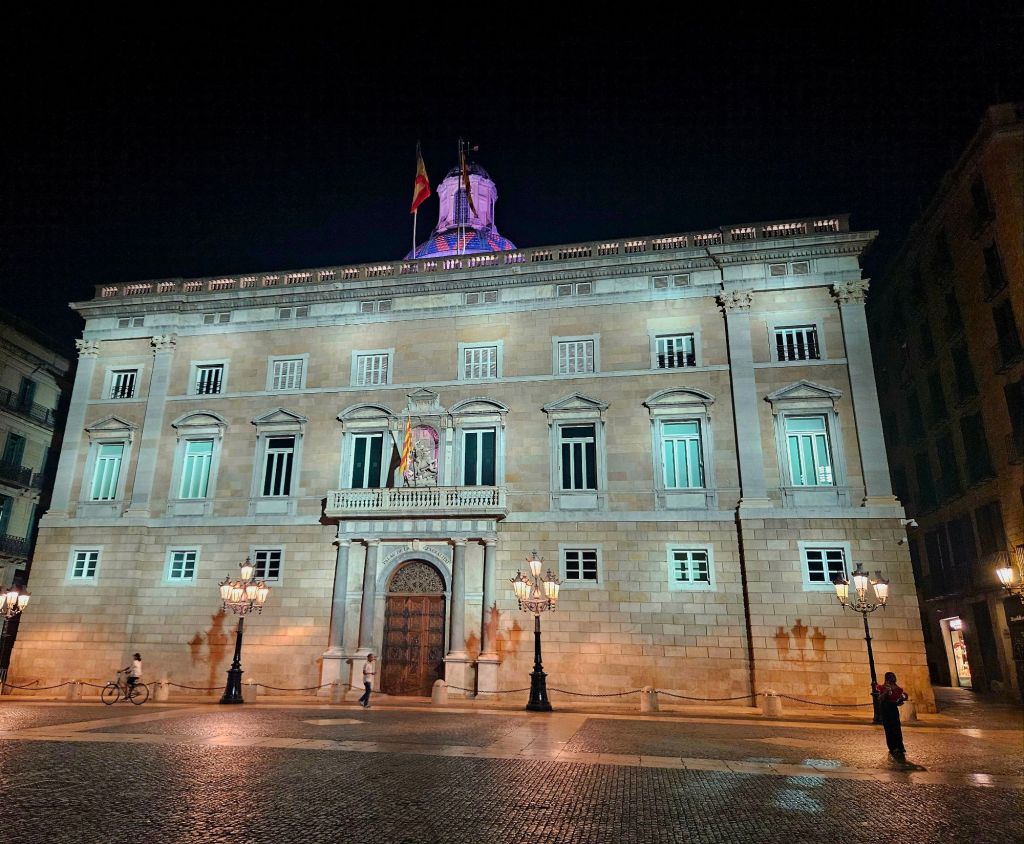
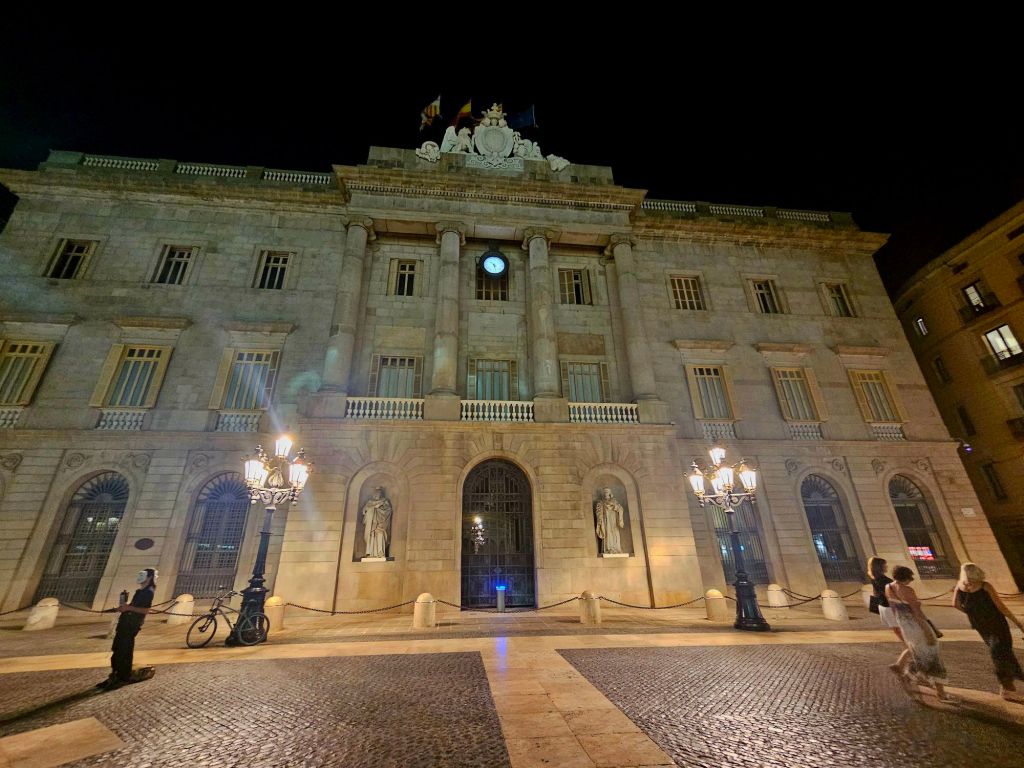
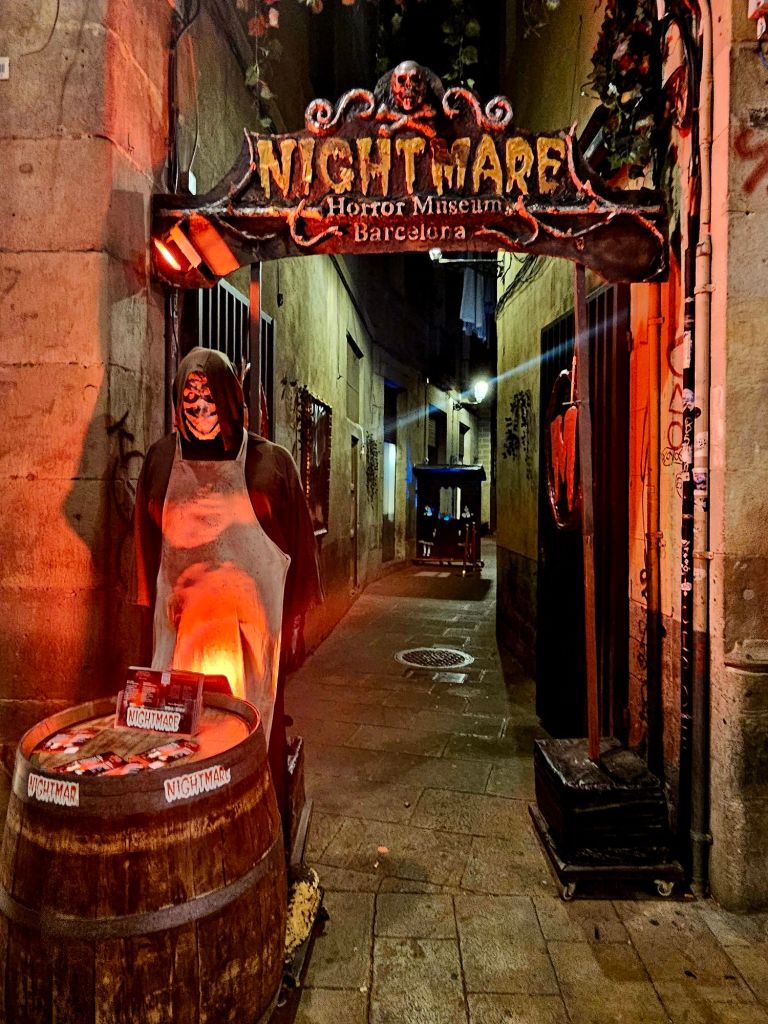
We walked through Sant Jaume Square again and past a horror museum.
And then it was time for a peppermint tea and bed.
 Fun, Fitness and Fabulousness in your Fifties