After a late lunch, we wandered down to the main road, Passeig de Colon, to get a taxi to the Sagrada Familia. On the taxi drive we passed some interesting buildings.
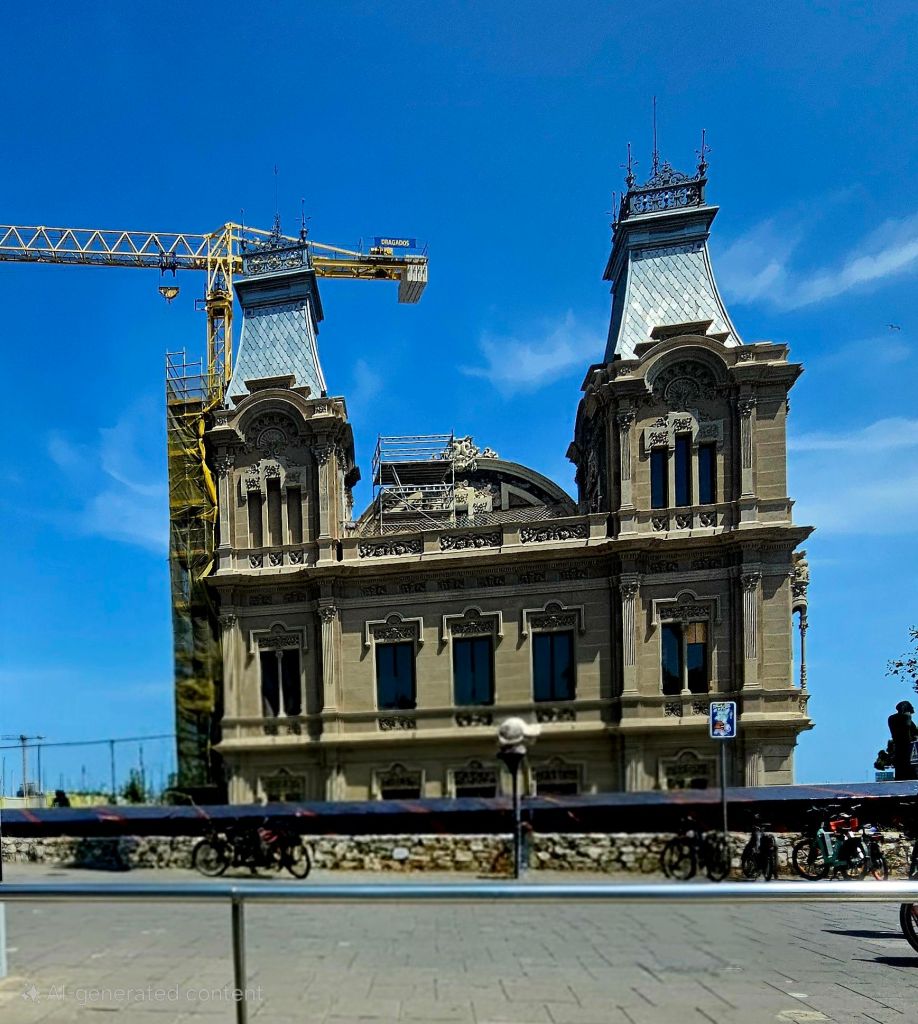

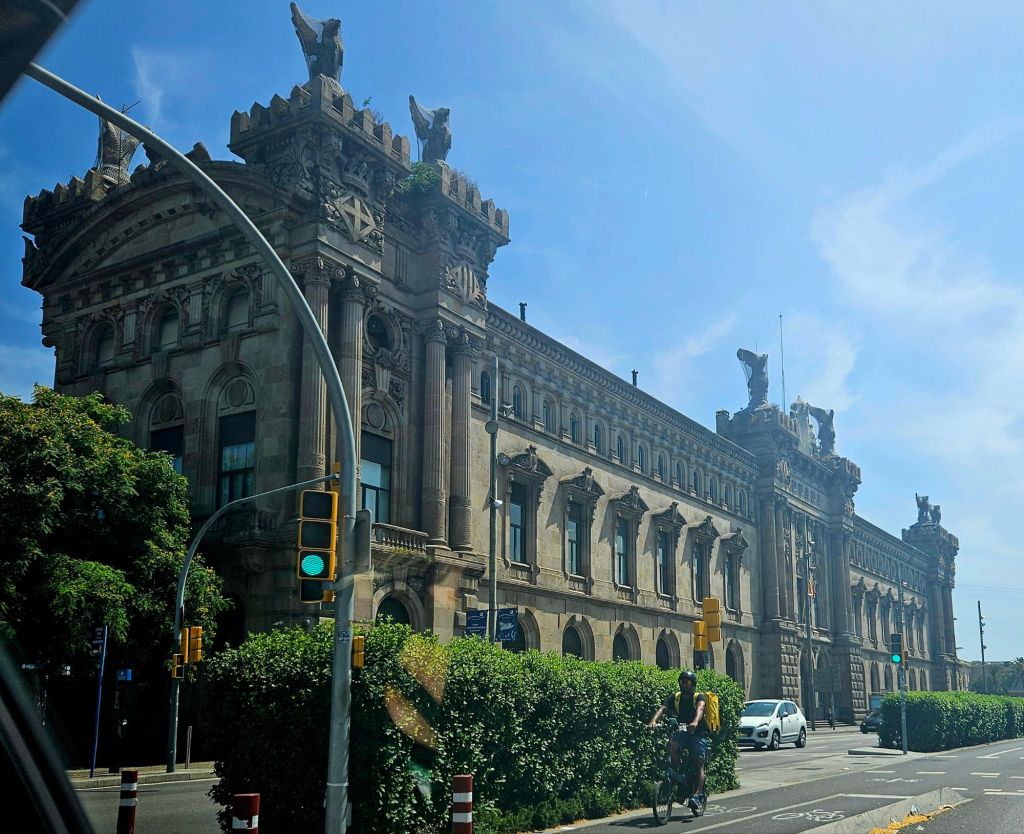
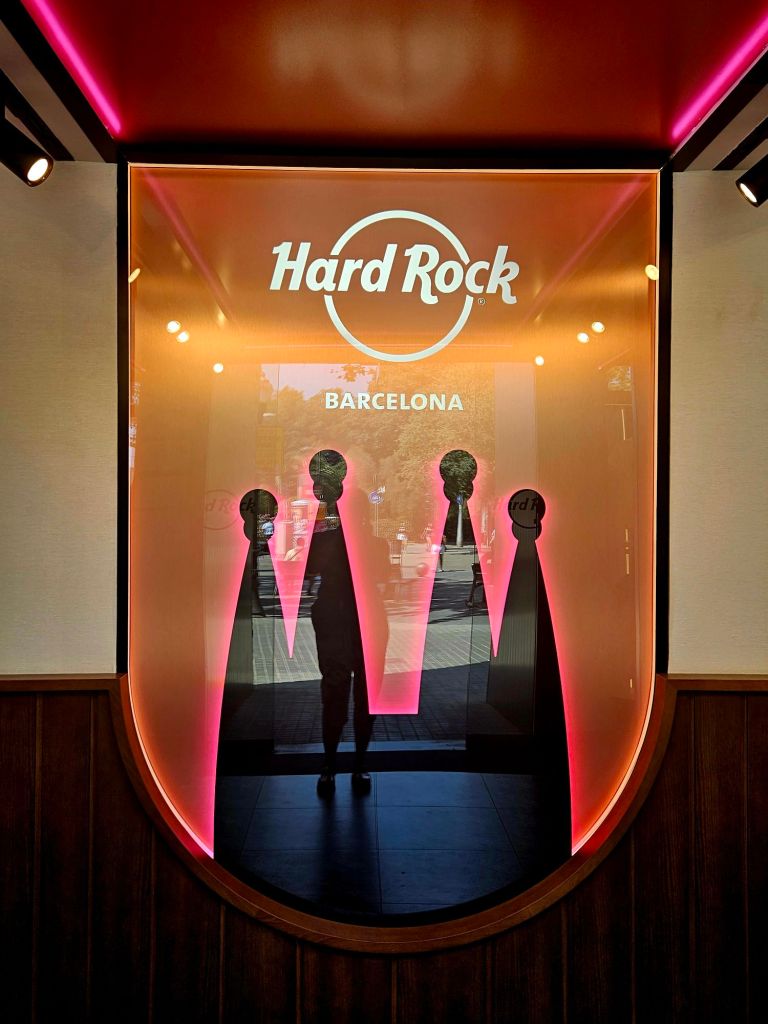
We arrived at the Sagrada Familia a little bit early as we had booked tickets for 5pm. We were just going to sit down for a drink when we noticed that Hard Rock Cafe was right opposite us – so of course I had to go in and buy a t-shirt.
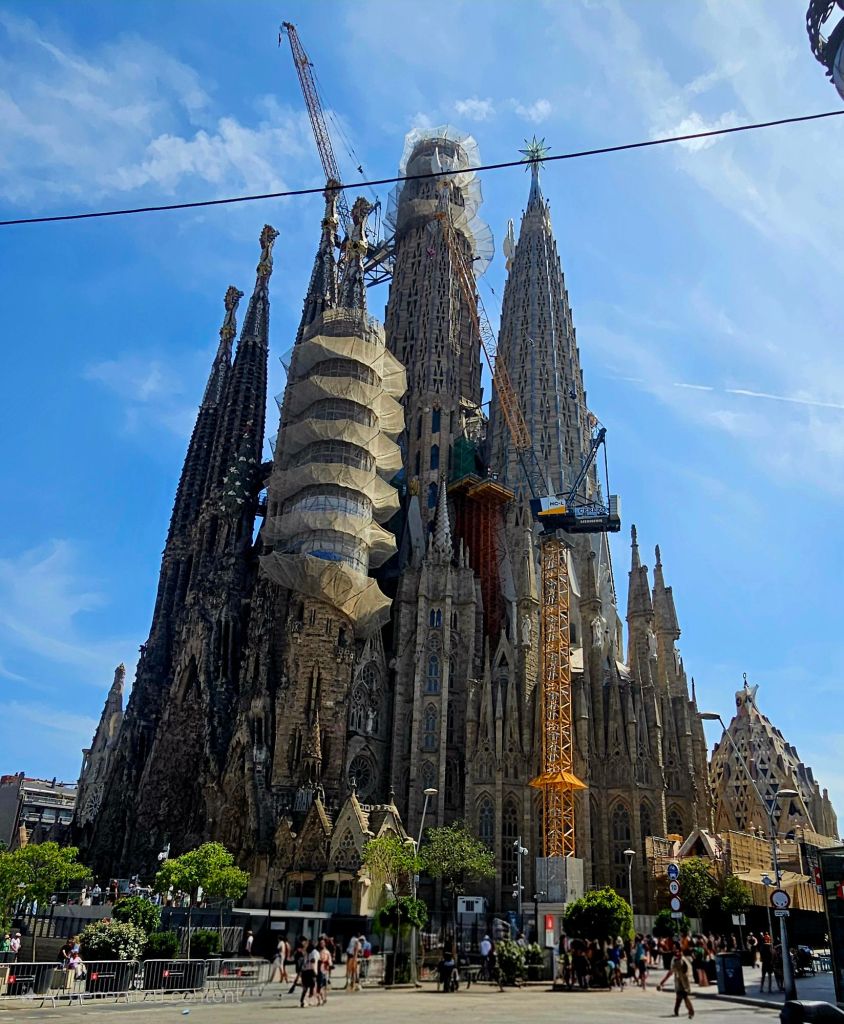
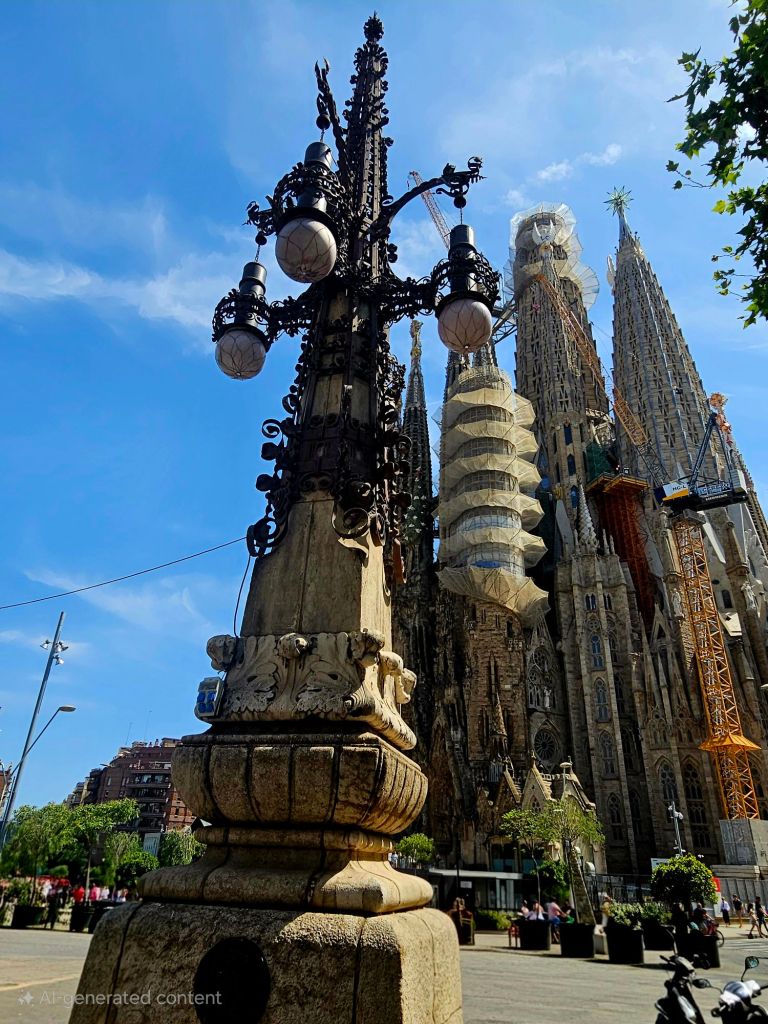
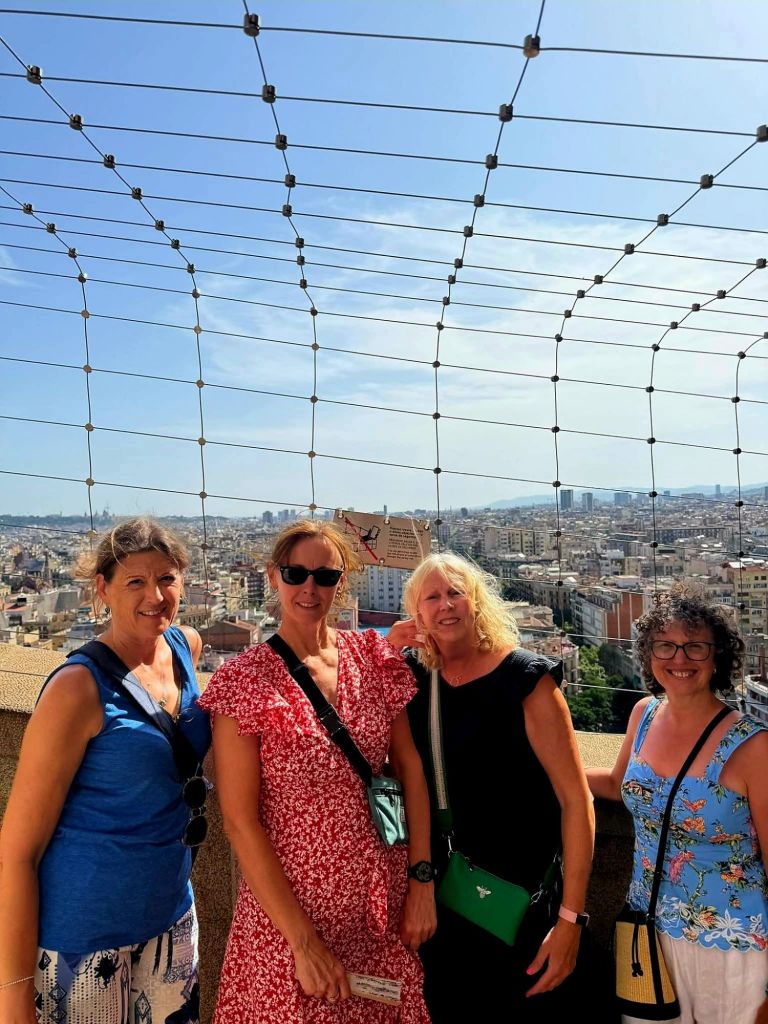
As we sat in the square awaiting our time slot, we took some photos.
We got chatting to the ladies who were sitting behind us, they had already been inside. They took a photo of us, too.
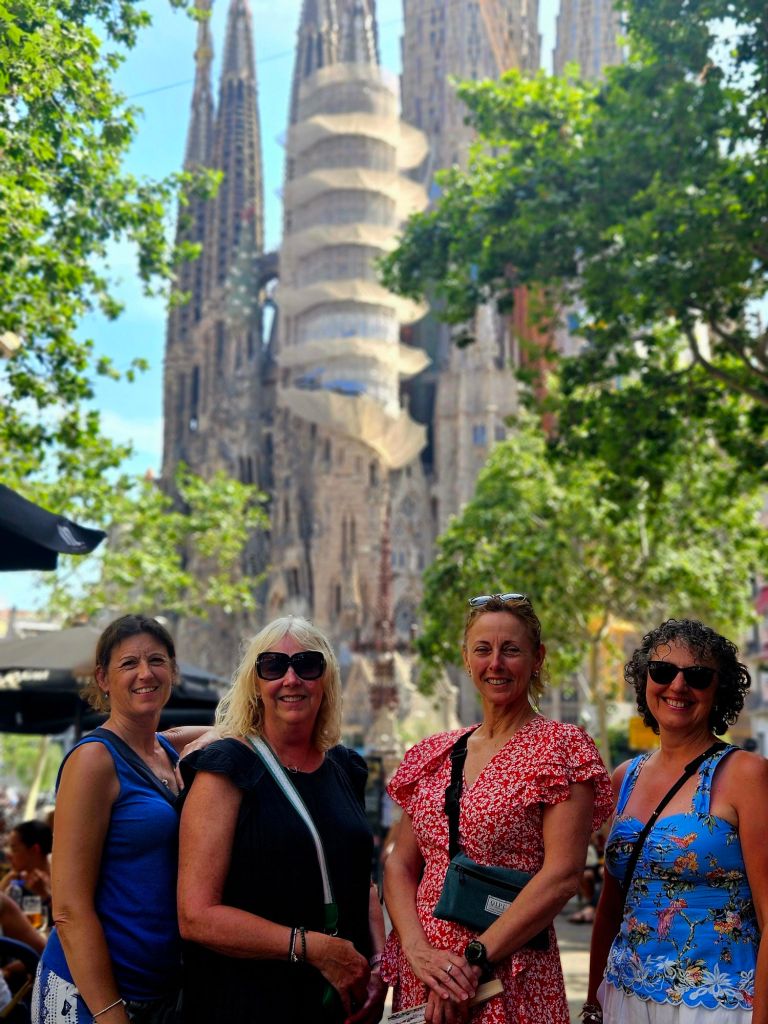
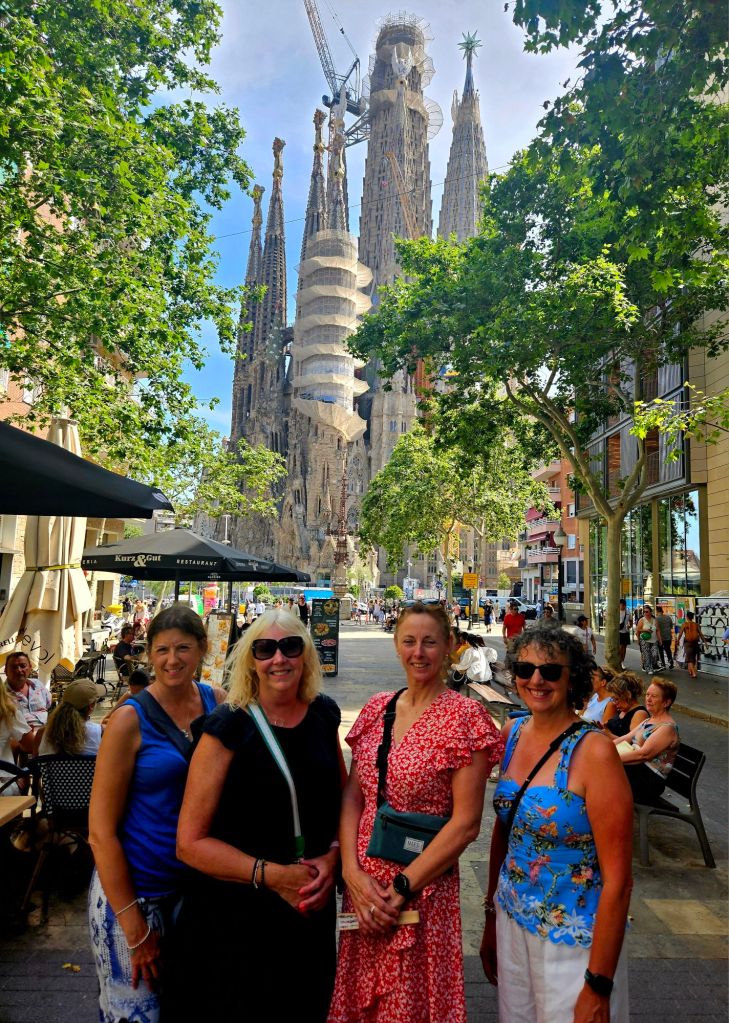
And then it was time to go in. The Temple Expiatori de la Sagrada Familia was Gaudi’s passion, and the details are amazing. The temple was commissioned by a conservative society that wished to build a temple as atonement for the city’s sins of modernity. Gaudí took over from the original architect, Francisco de Paula del Villar y Lorenzo, in 1883 and worked on its construction until his death in 1926. The temple Gaudí created was 95m long and 60m wide and able to seat over 13,000 people, with a central tower 172.5m above the transept. There would also be an additional 17 towers of 100m or more, representing the 12 Apostles, the Virgin Mary, the four Evangelists, and Jesus Christ. At Guadi’s death, only the crypt, the apse walls, one portal, and one tower had been completed.
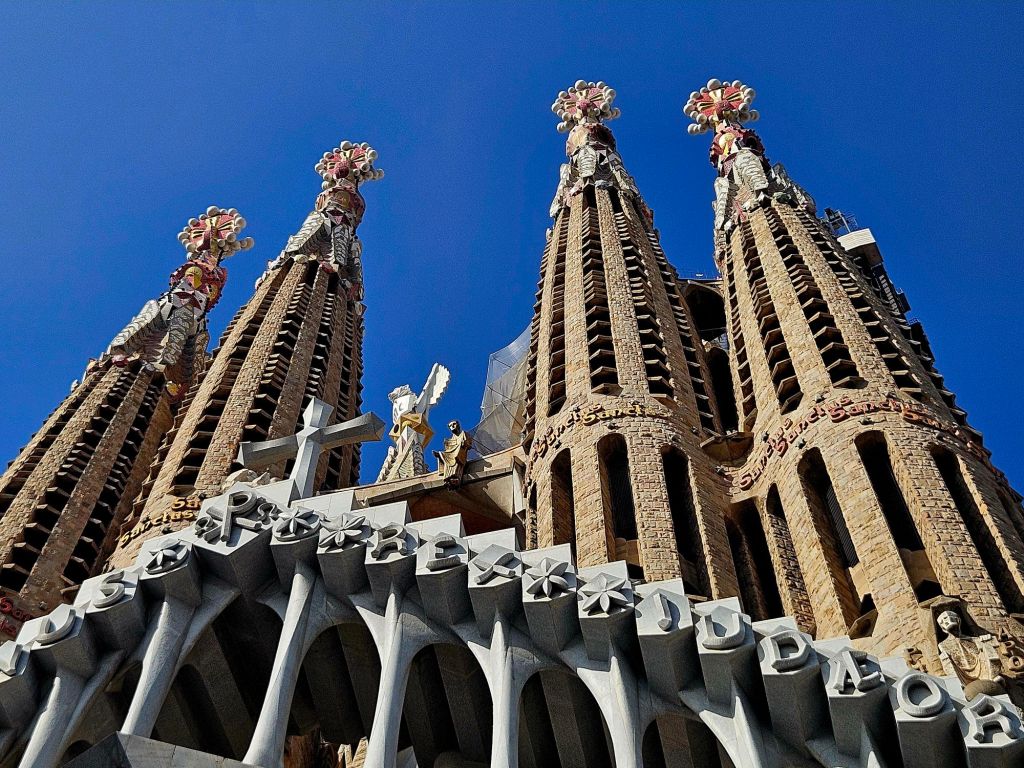
As you walk into the building, you can see the Nativity Facade. This facade was completed before 1935 when work was halted due to the Spanish Civil War. Many of the plans for the temple were destroyed during this war. At the top of this Facade is a green Cyprus tree, providing refuge to white doves of peace.
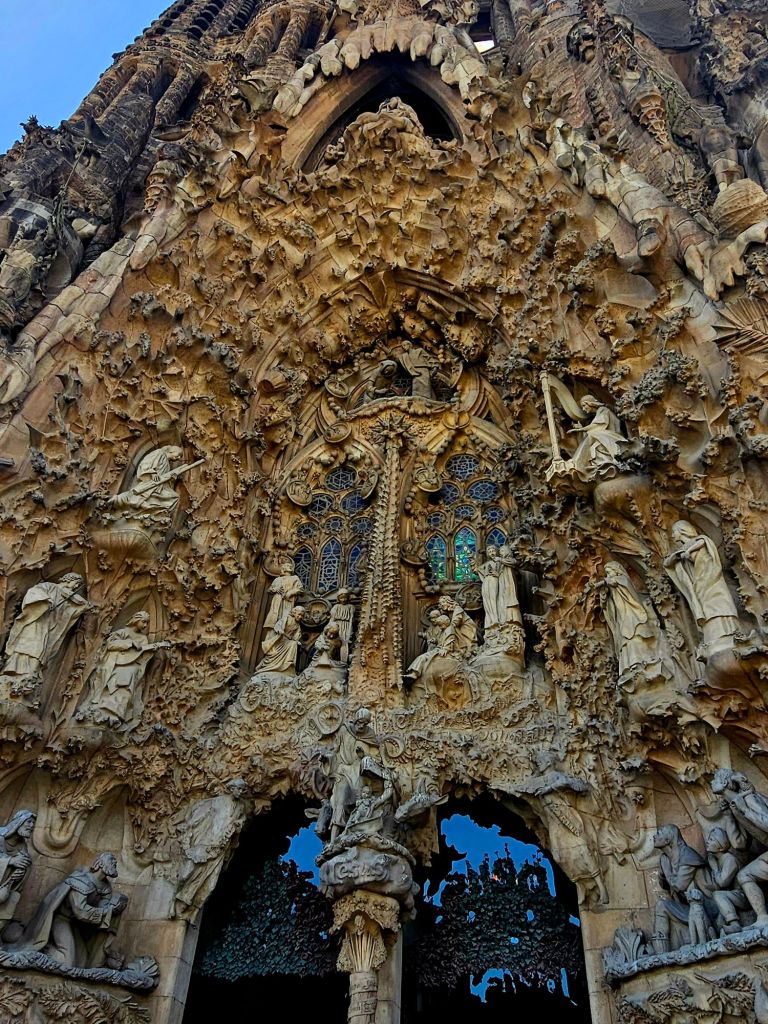
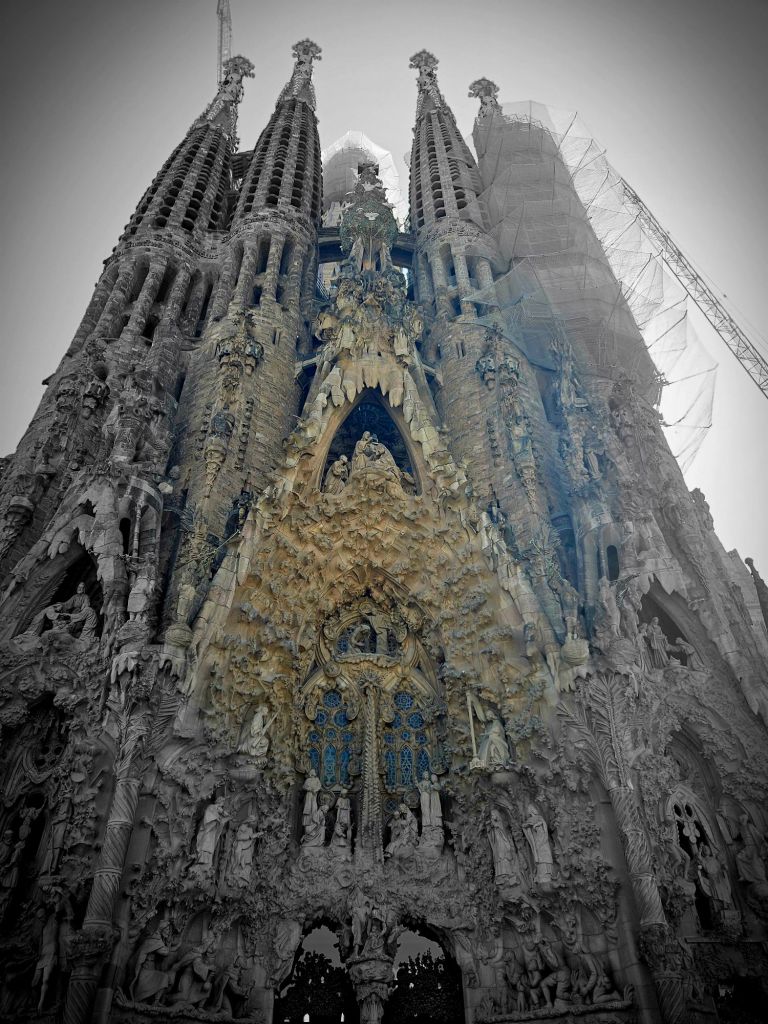
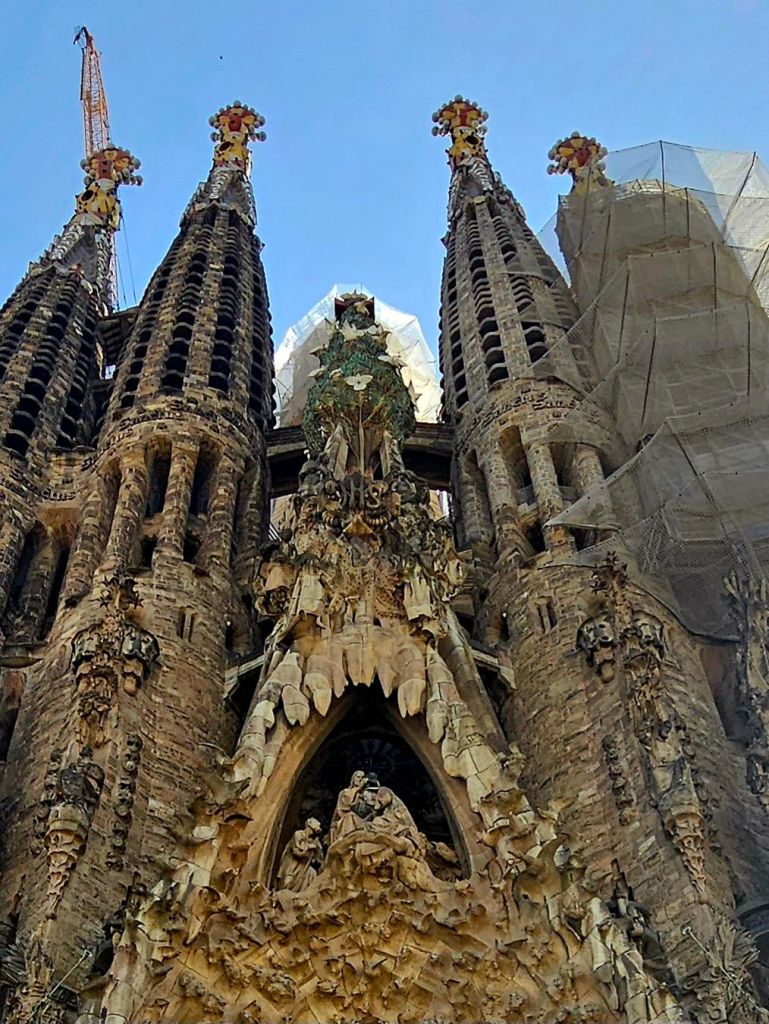
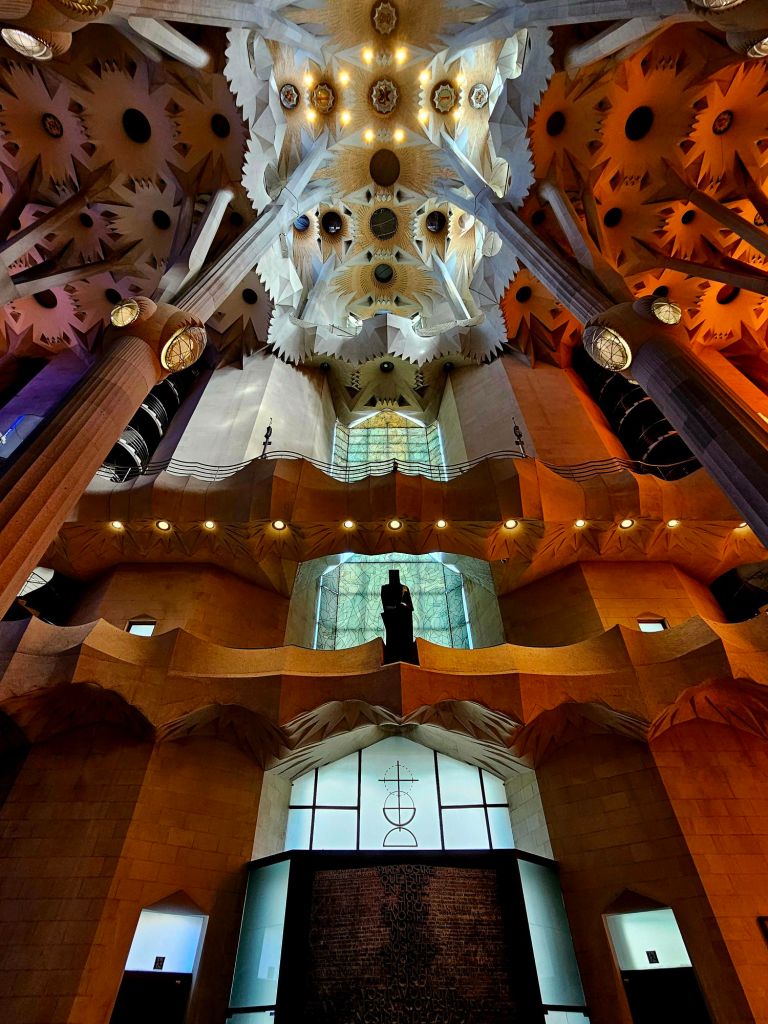
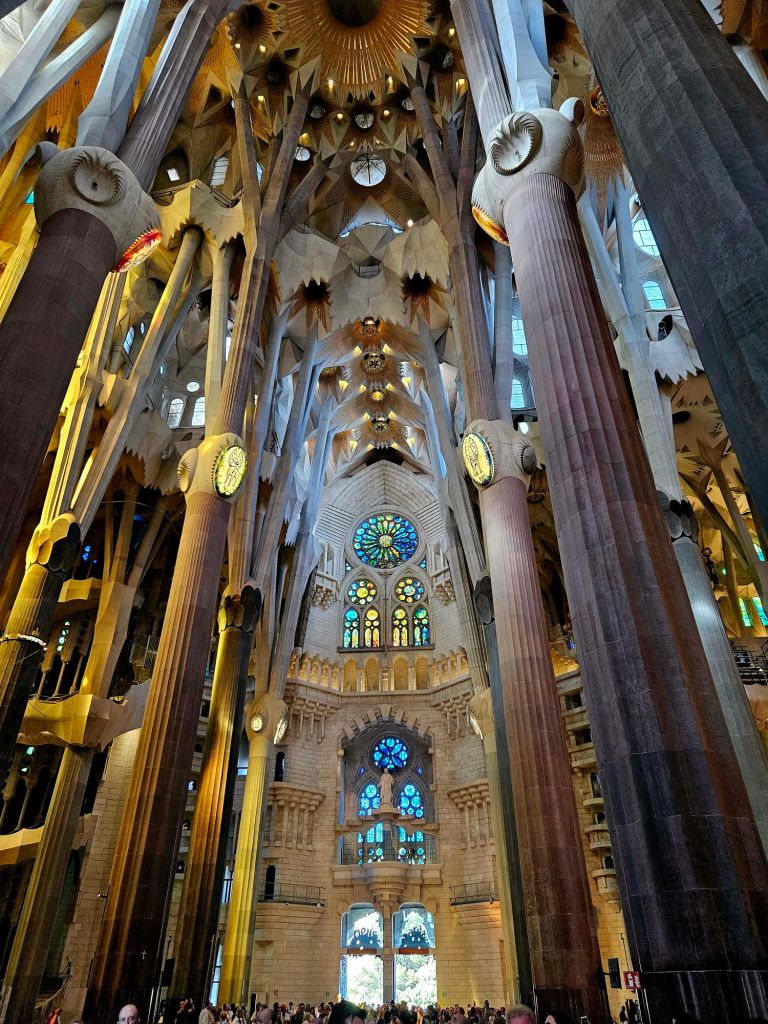
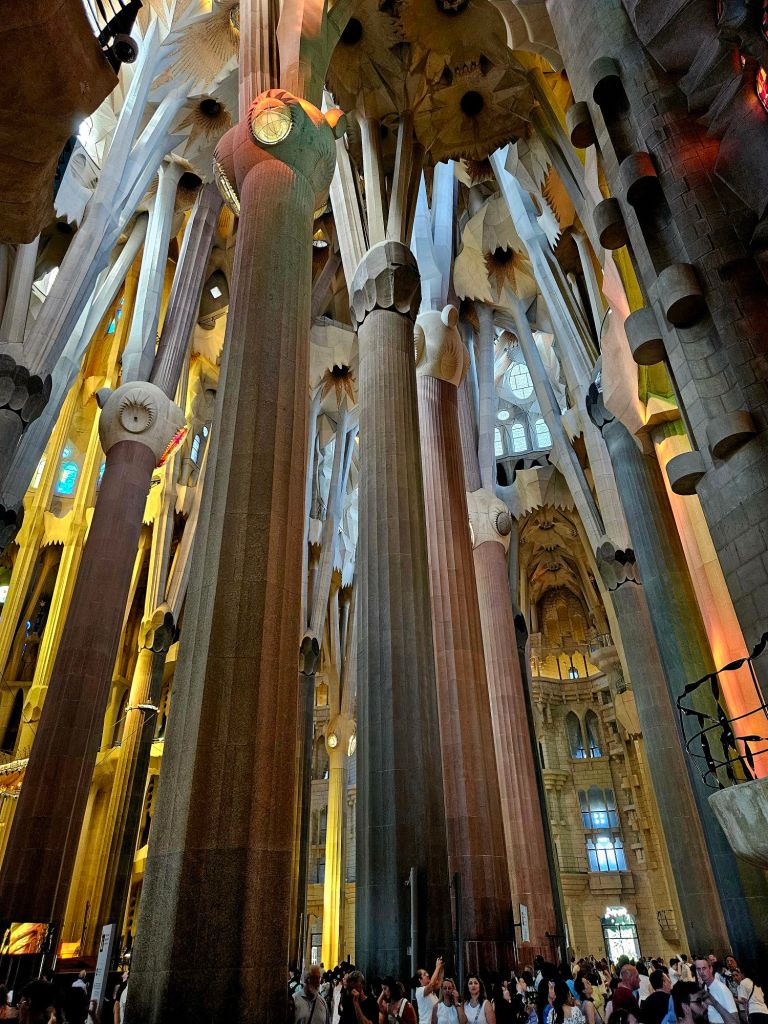
The inside is just as dramatic. The plan is that of a Latin cross with five aisles. The ceiling is stunning and designed to look like trees and branches.
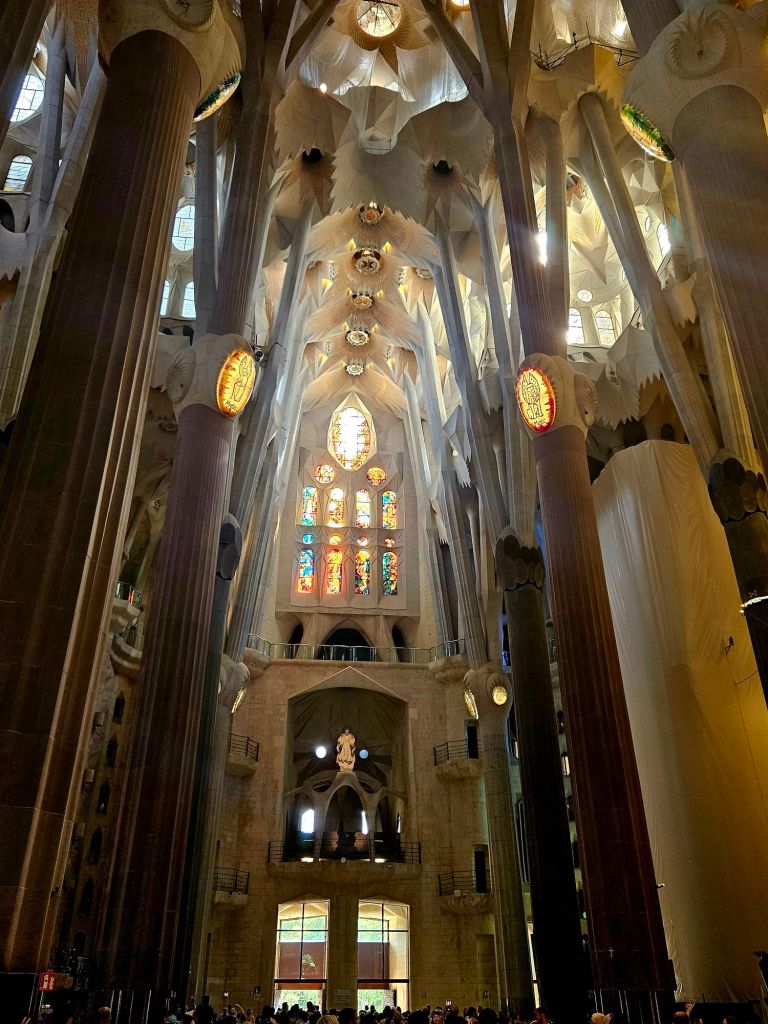

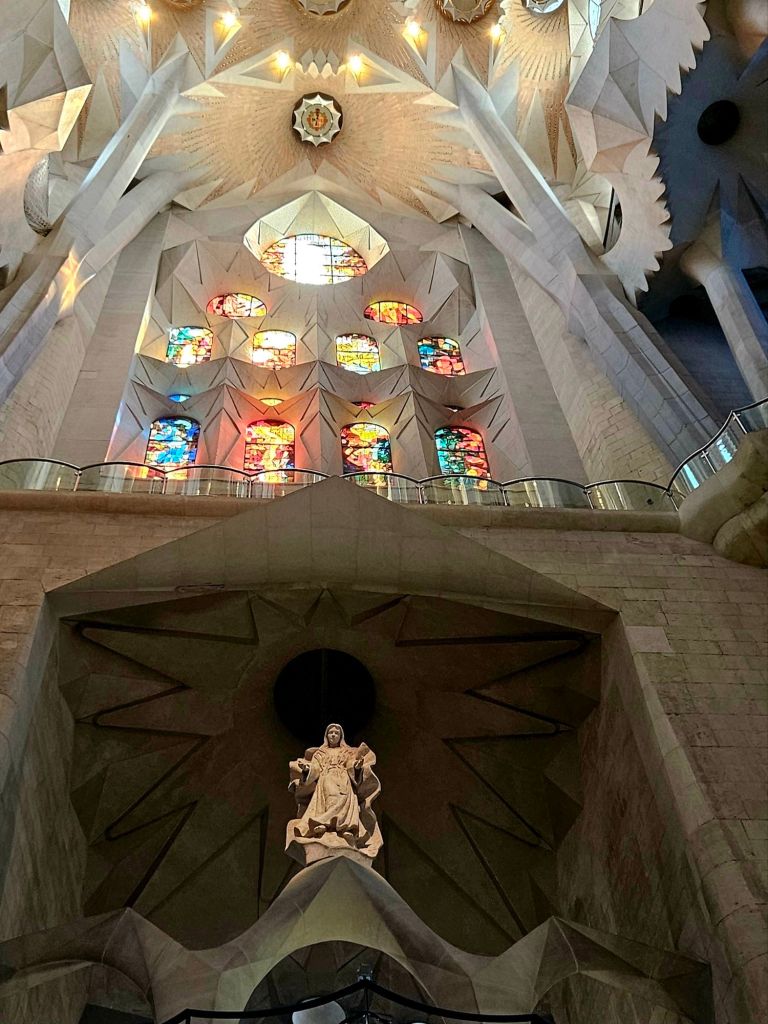
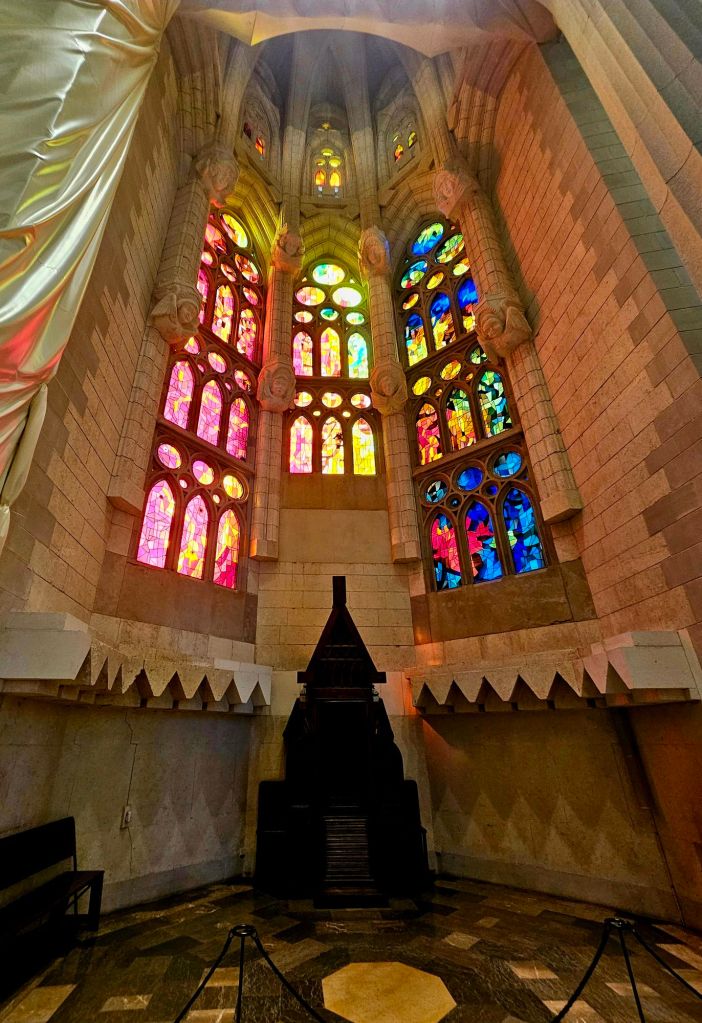
The nave with the stained glass windows was brilliant. As we went late afternoon, the sun was shining in through the orange and yellow windows, rather than the blue and green ones.
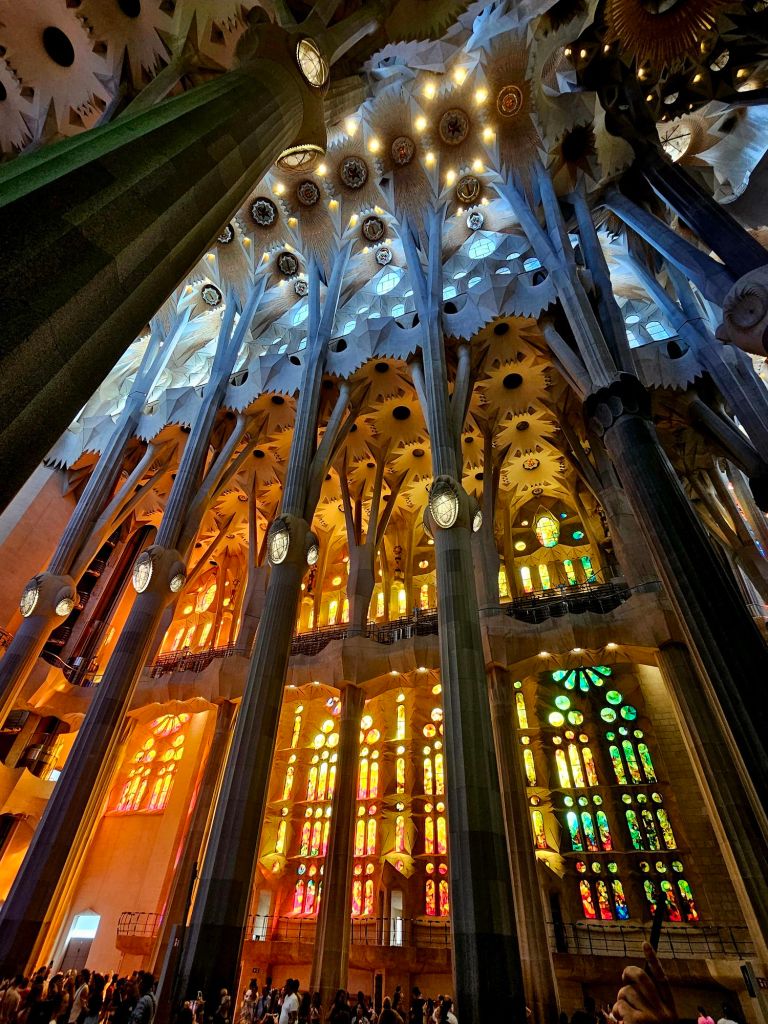
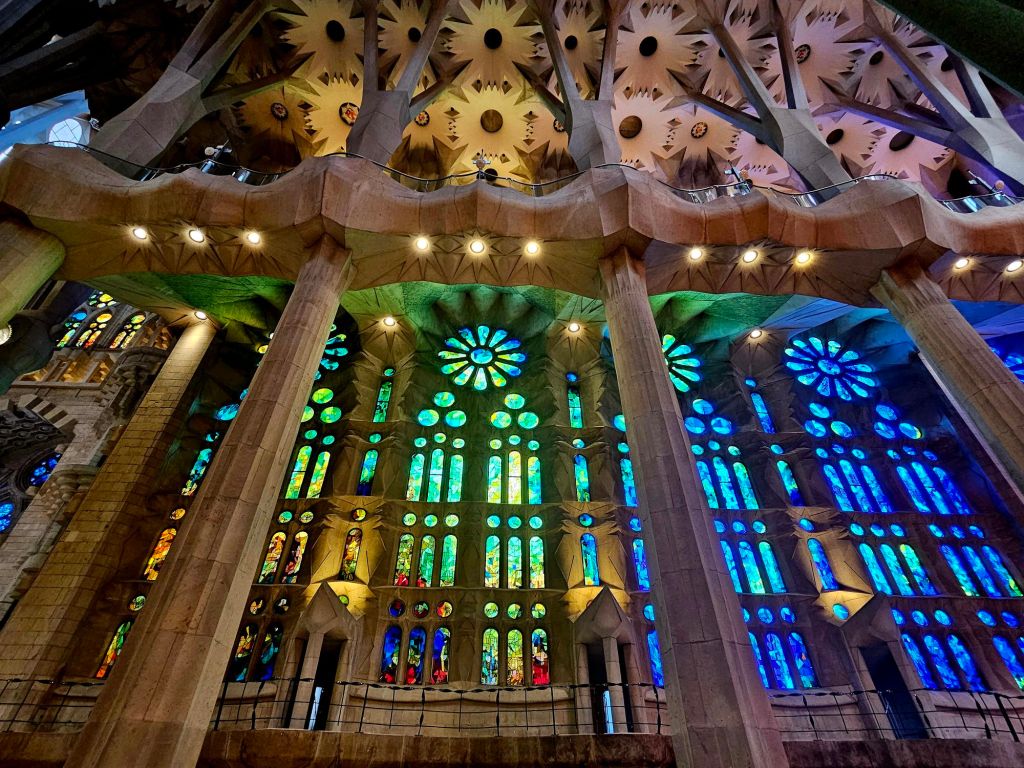
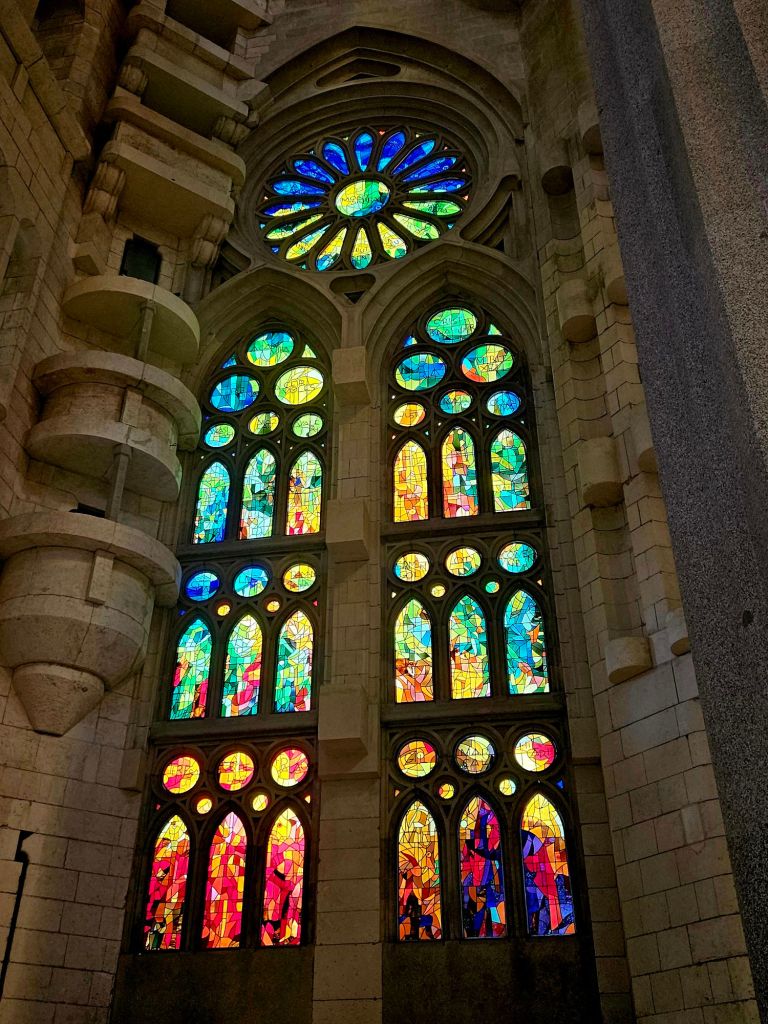

We walked through to the apse, the central vault of which is 60m high. An organ was installed in 2010 and has 1,492 pipes.
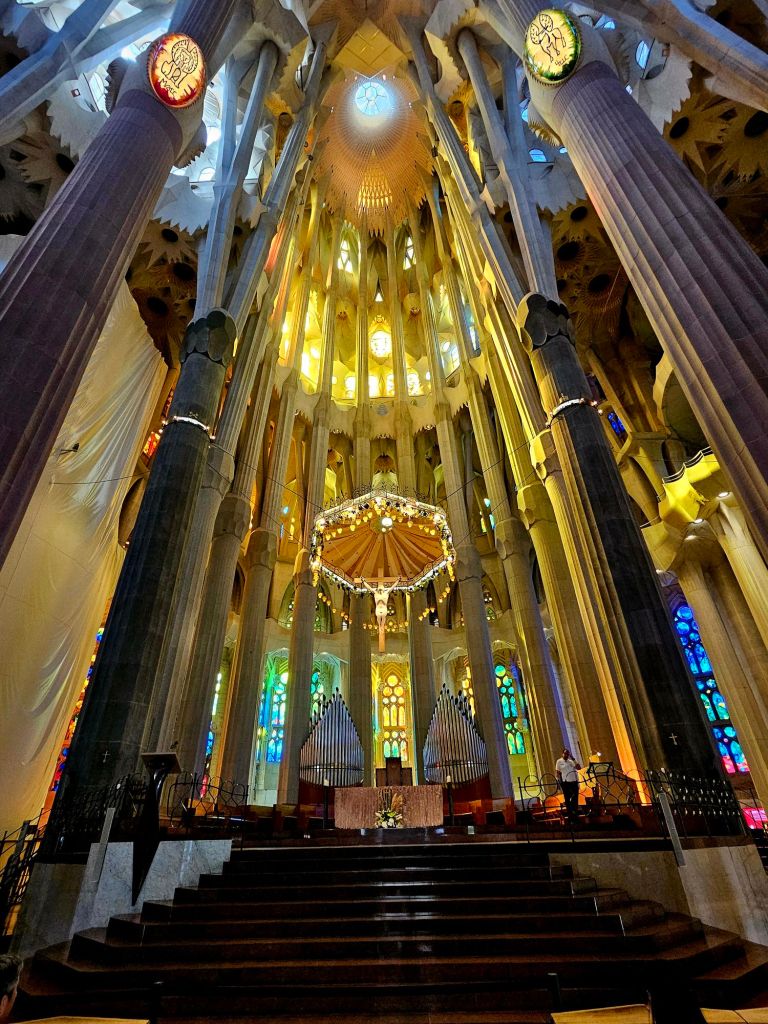
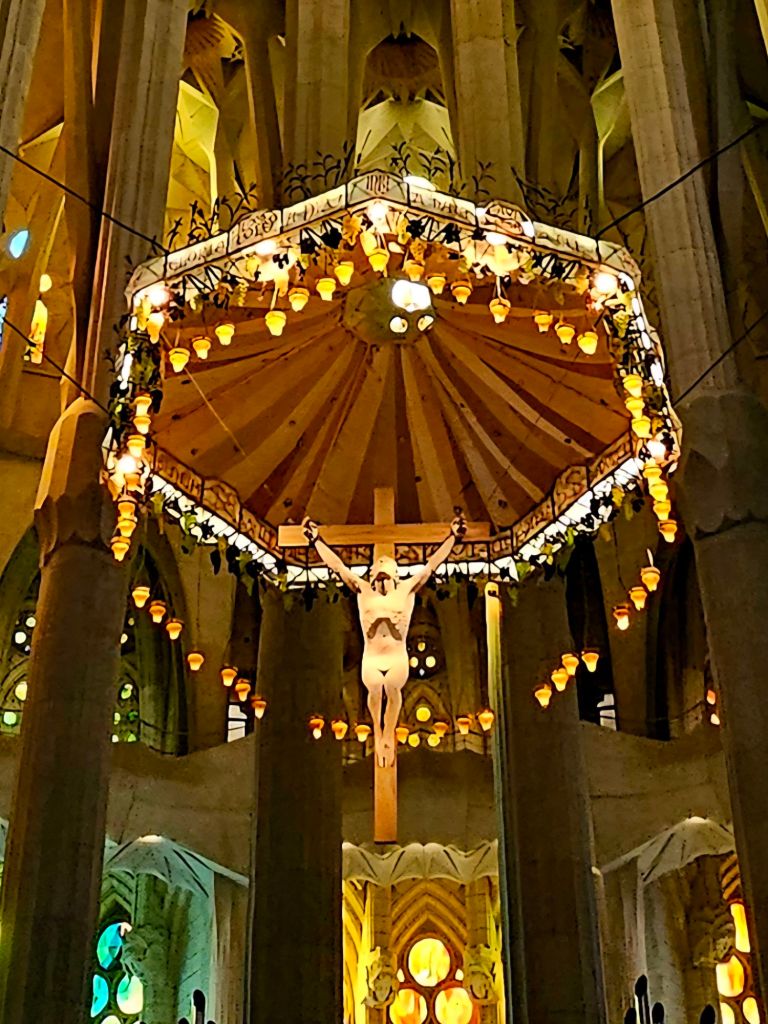
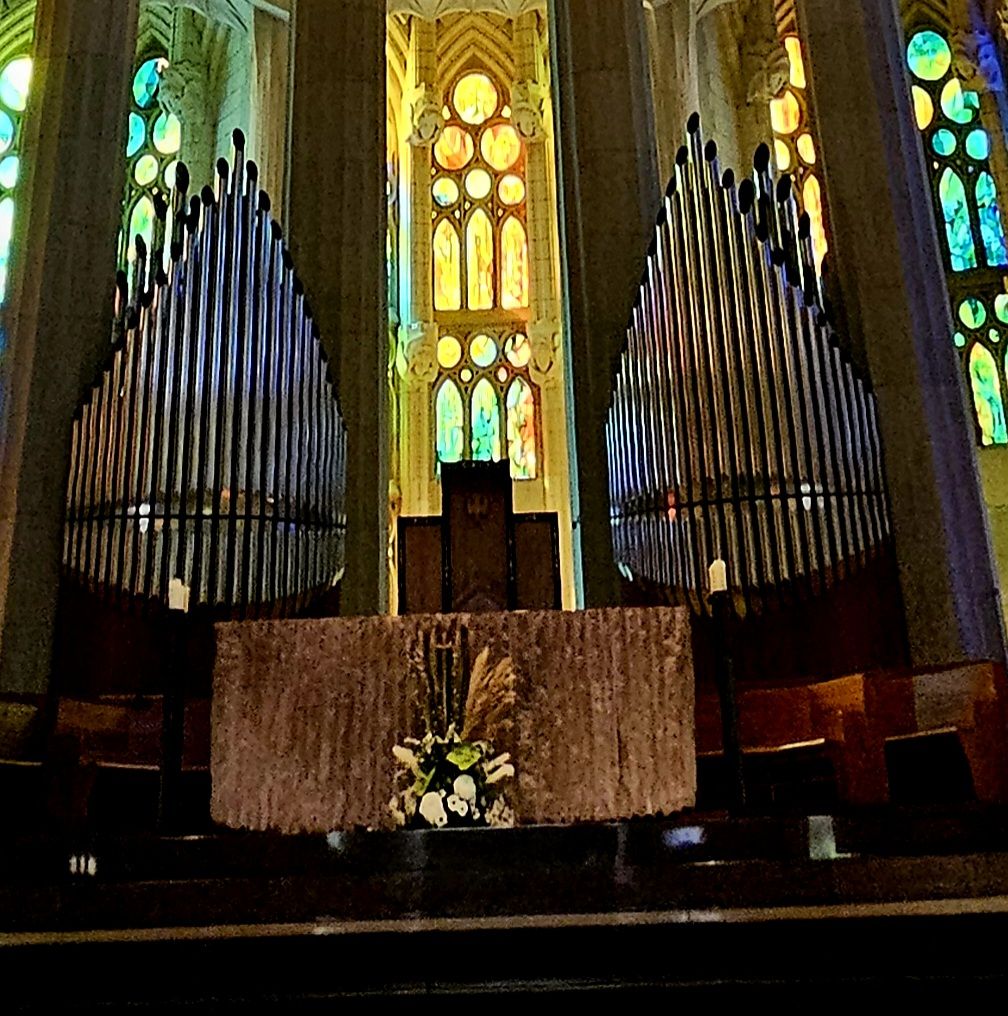
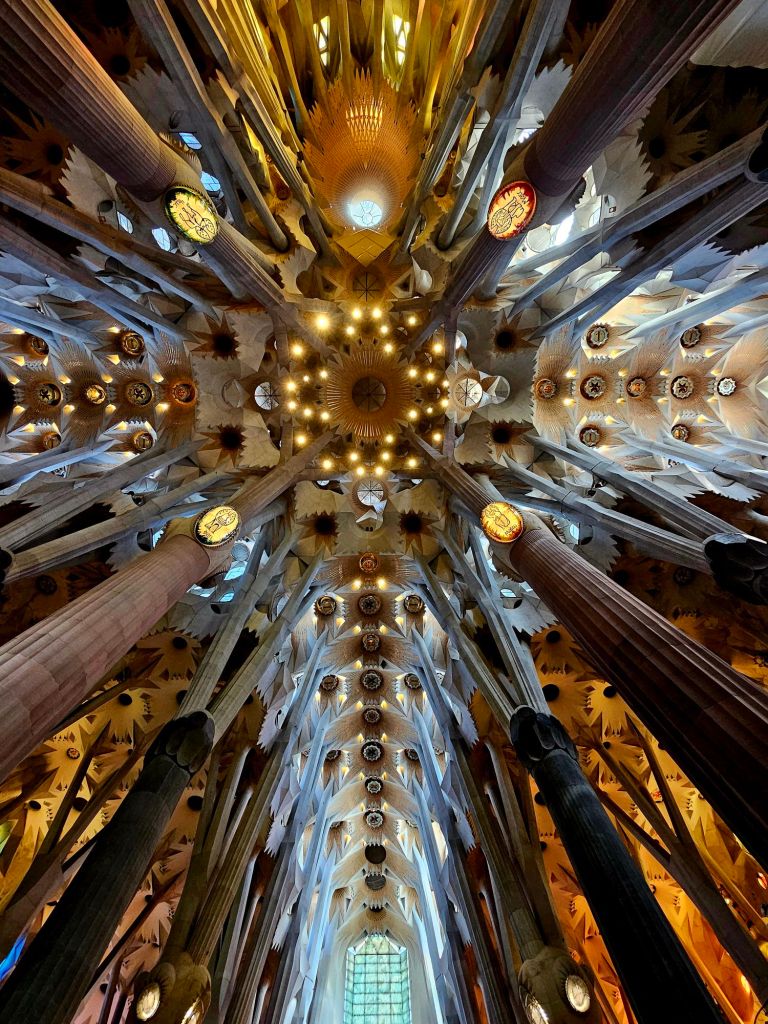
None of the interior surfaces are flat – they are made up of abstract shapes and smooth curves.
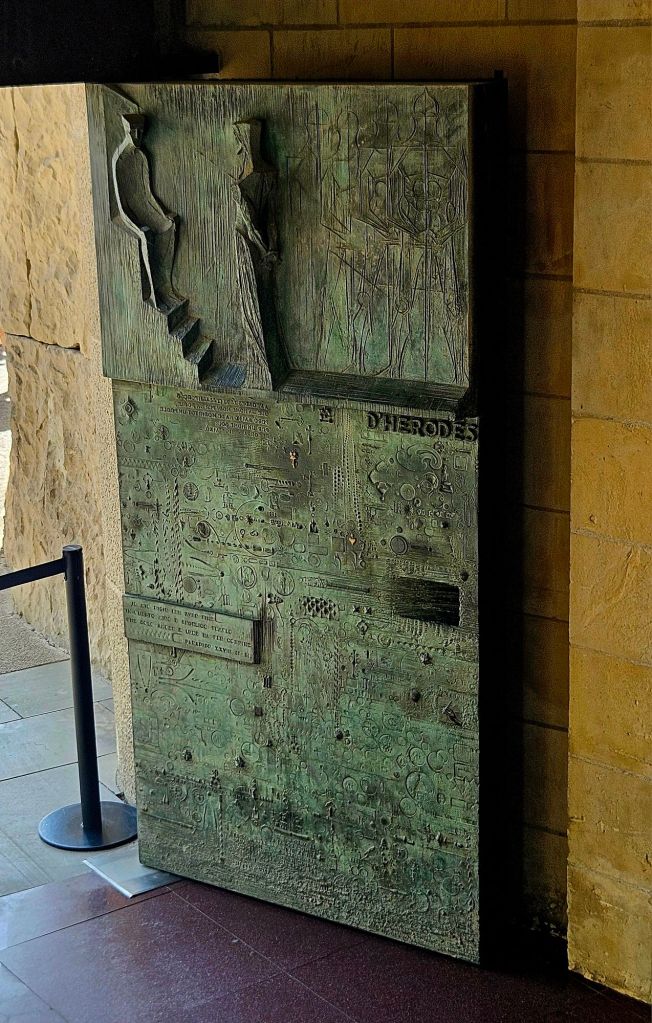
We had booked to go up the Passion tower, which has the towers of the apostles James, Bartholamew, Thomas and Philip surrounding it. We went to queue for the lift. As we went to queue for the lift, there was a very old wooden door.
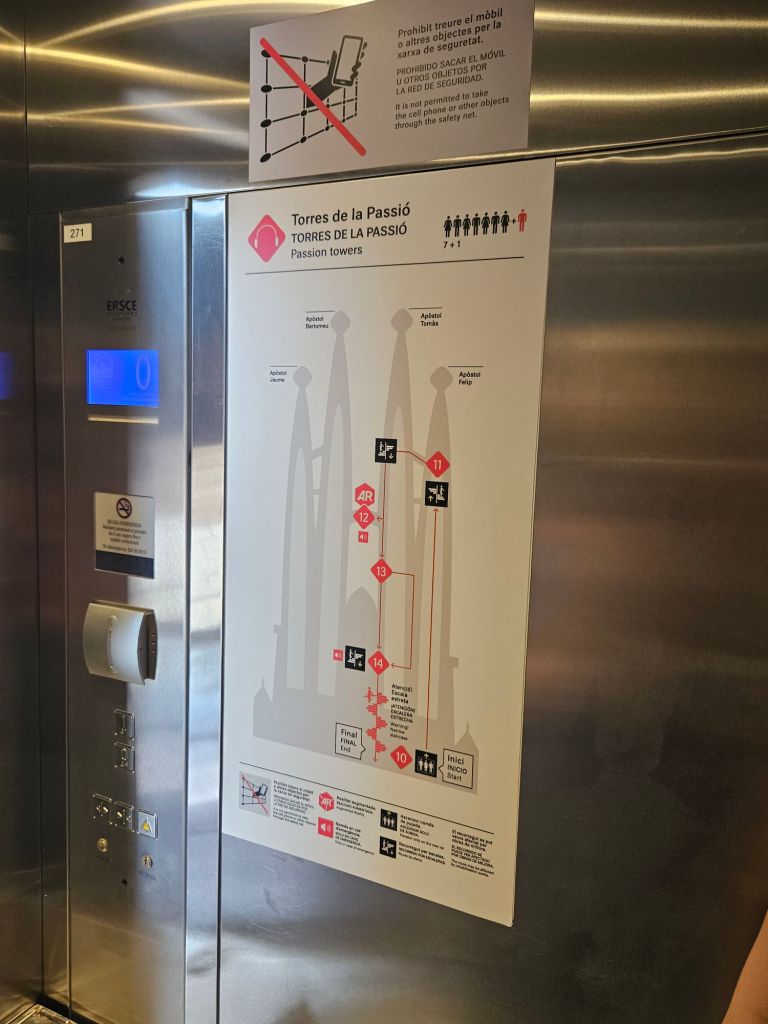
The lift took us up to the top of Philip tower, we then walked across to Thomas tower and took in the views before walking down.
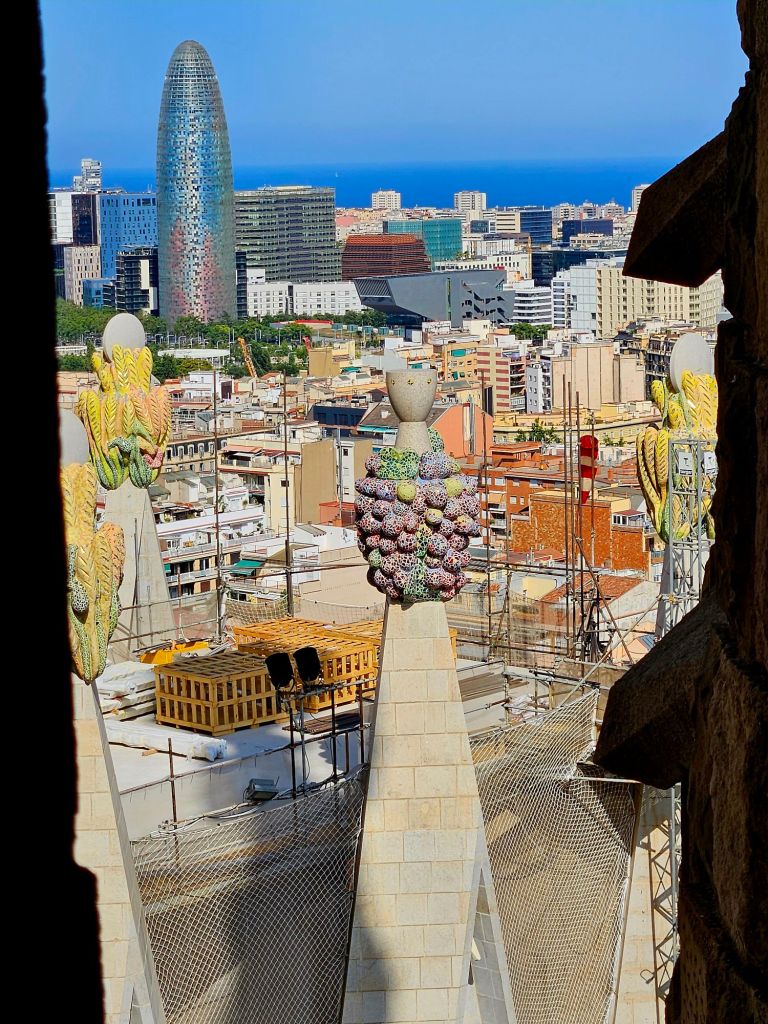
From the Passion Facade, you could look out over some of the lower spires of the temple. These have chalacises with bunches of grapes and sheaves of wheat on top of them.
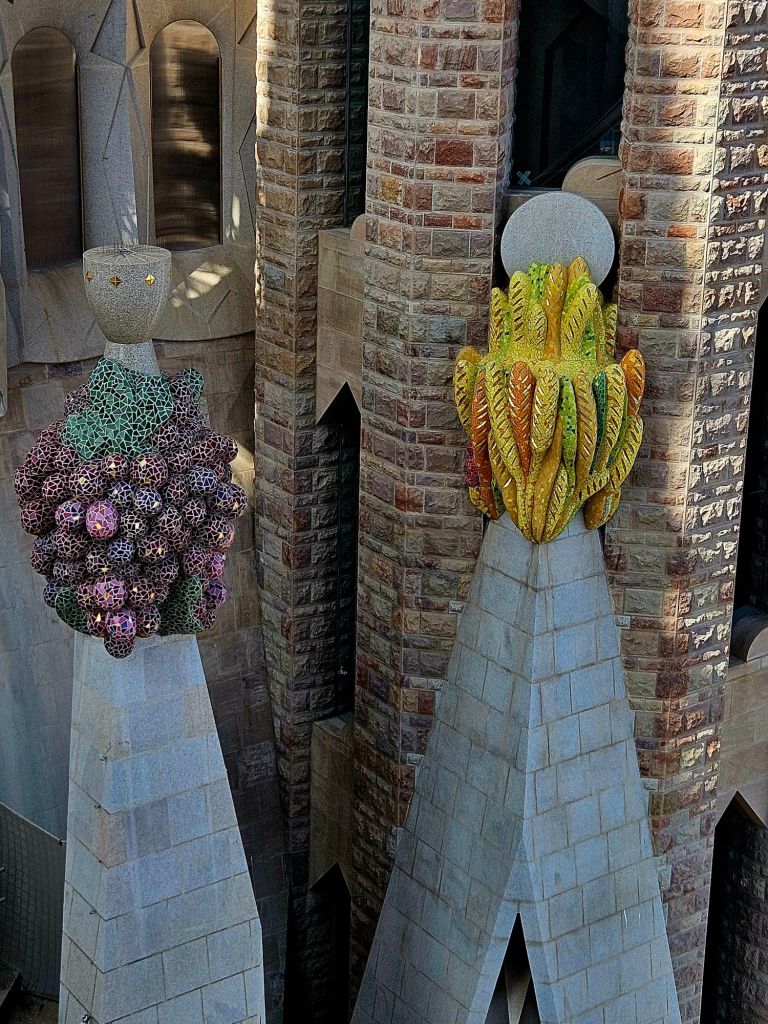
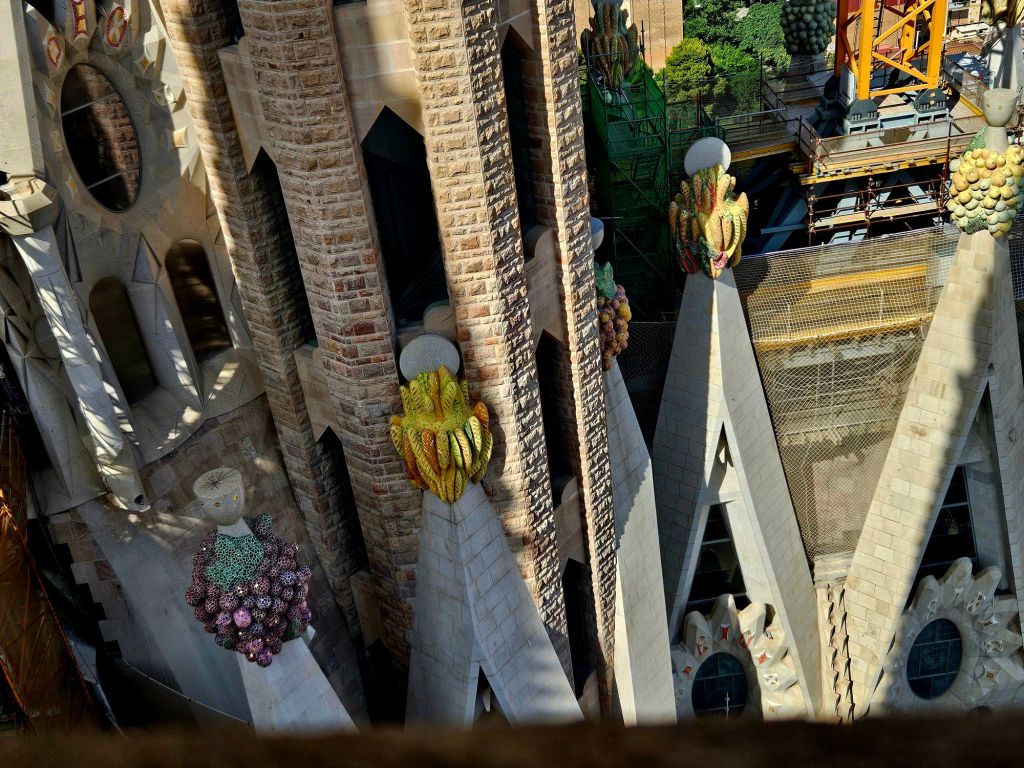
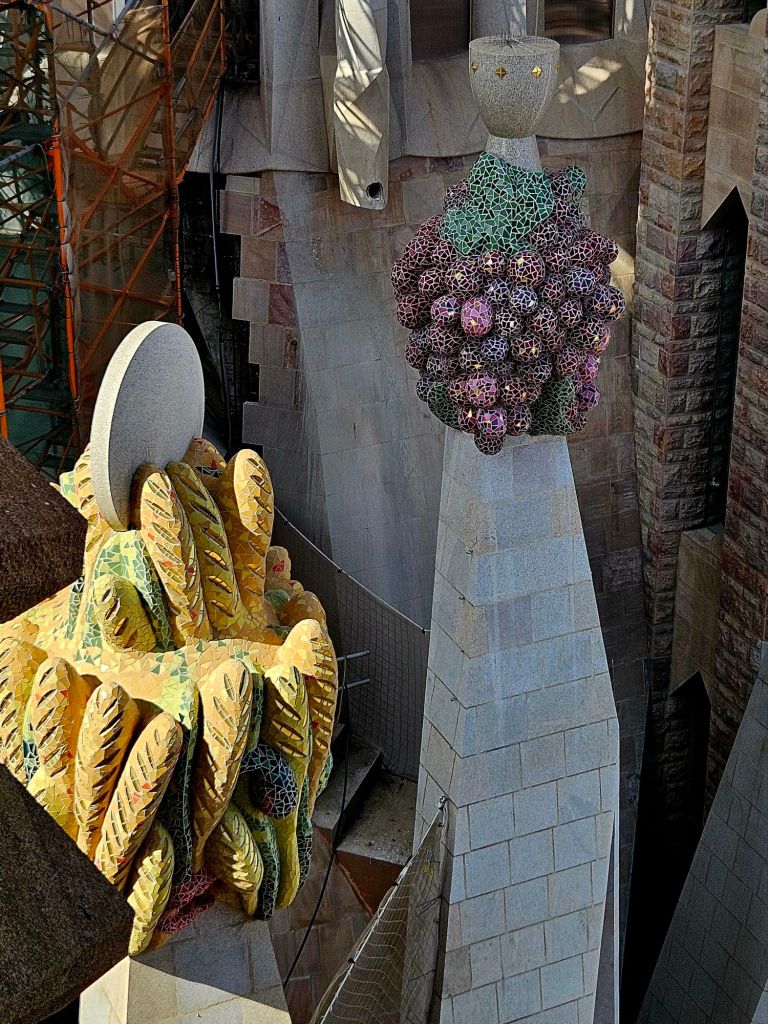
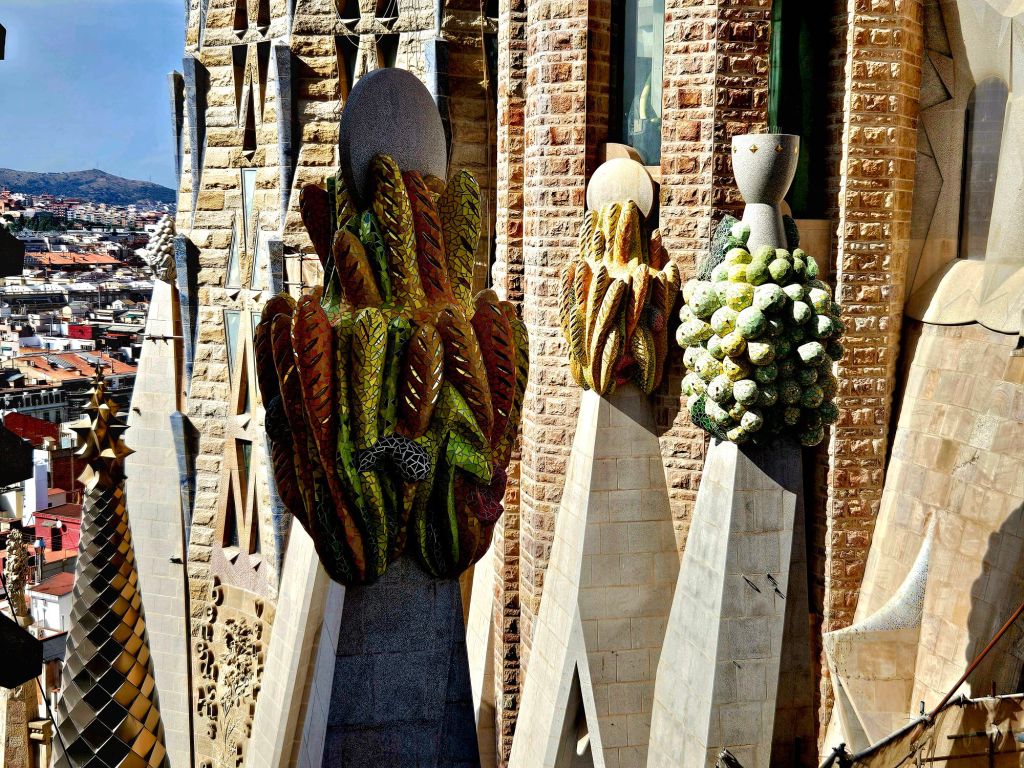
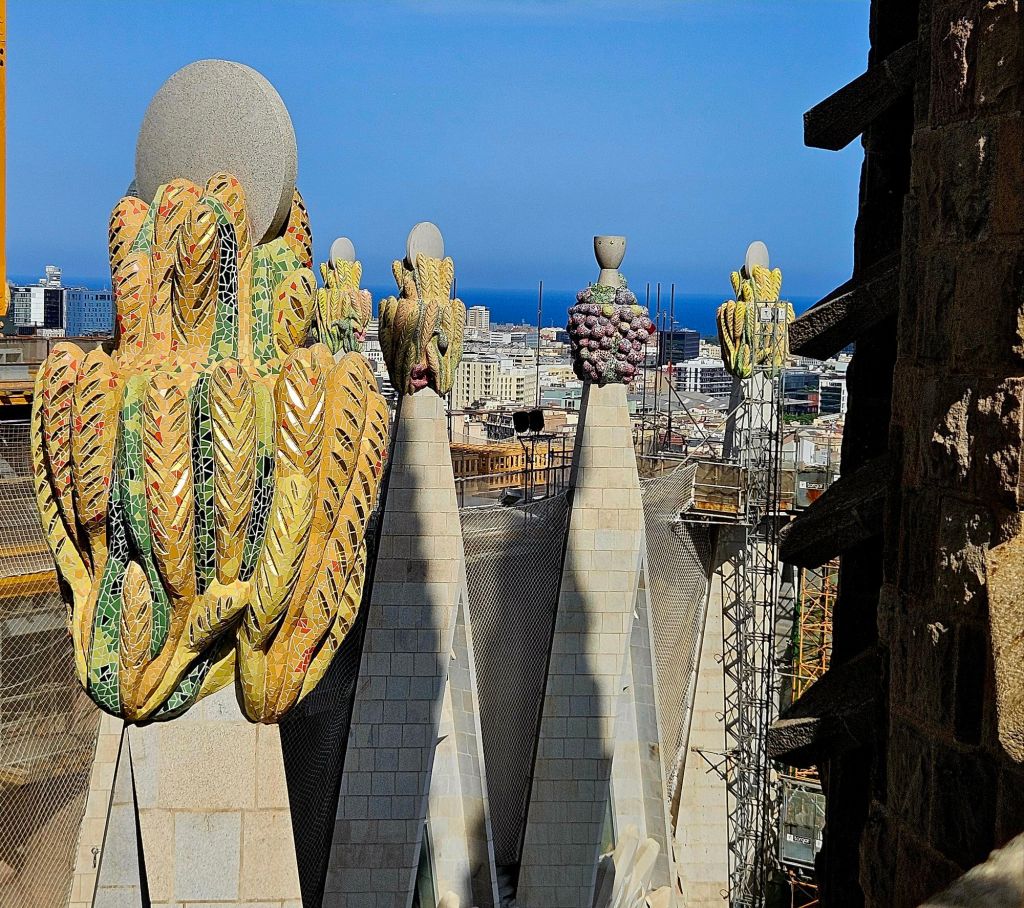
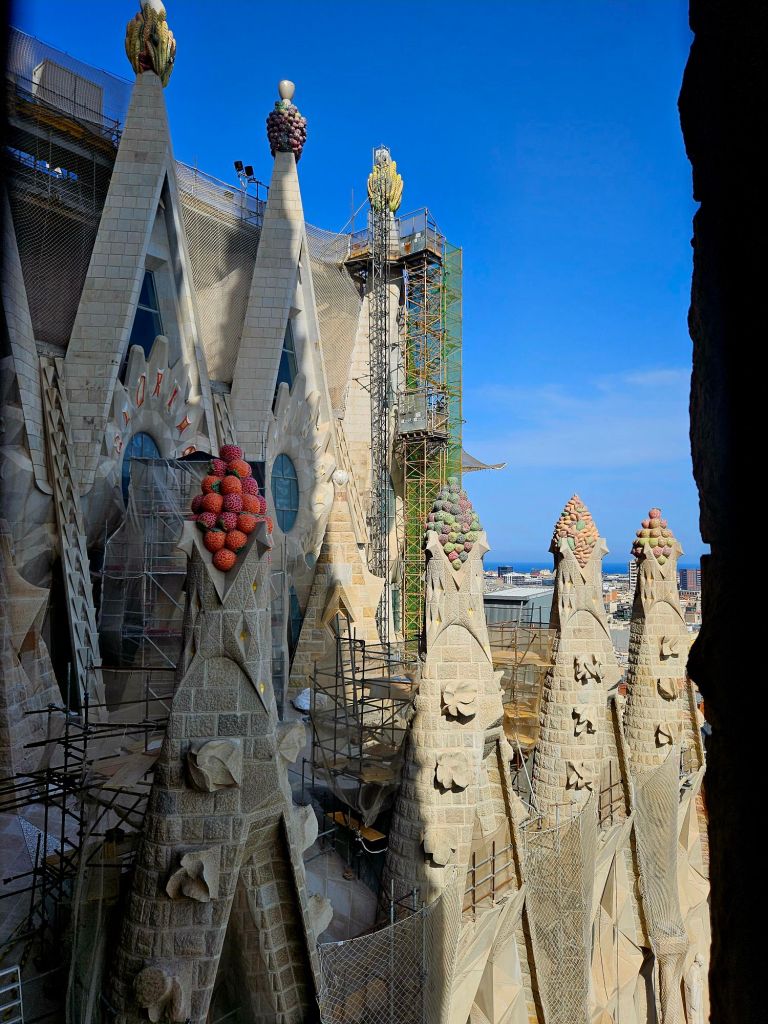
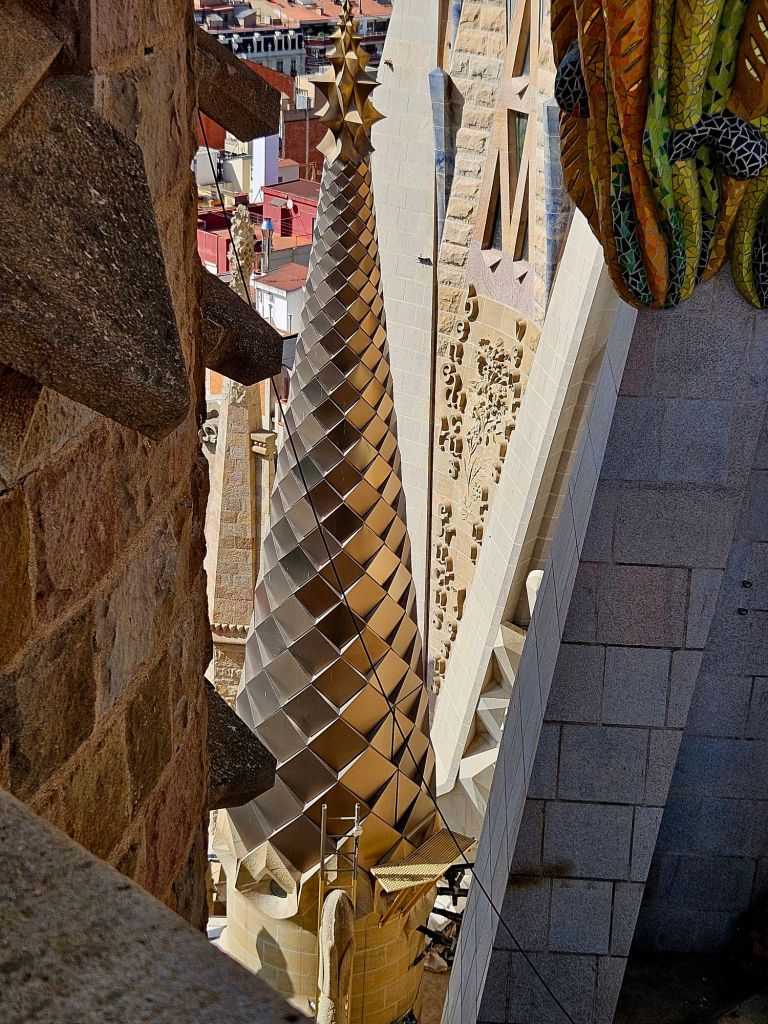
There were also other shapes and mosaics dotted around. And a shiny tower.
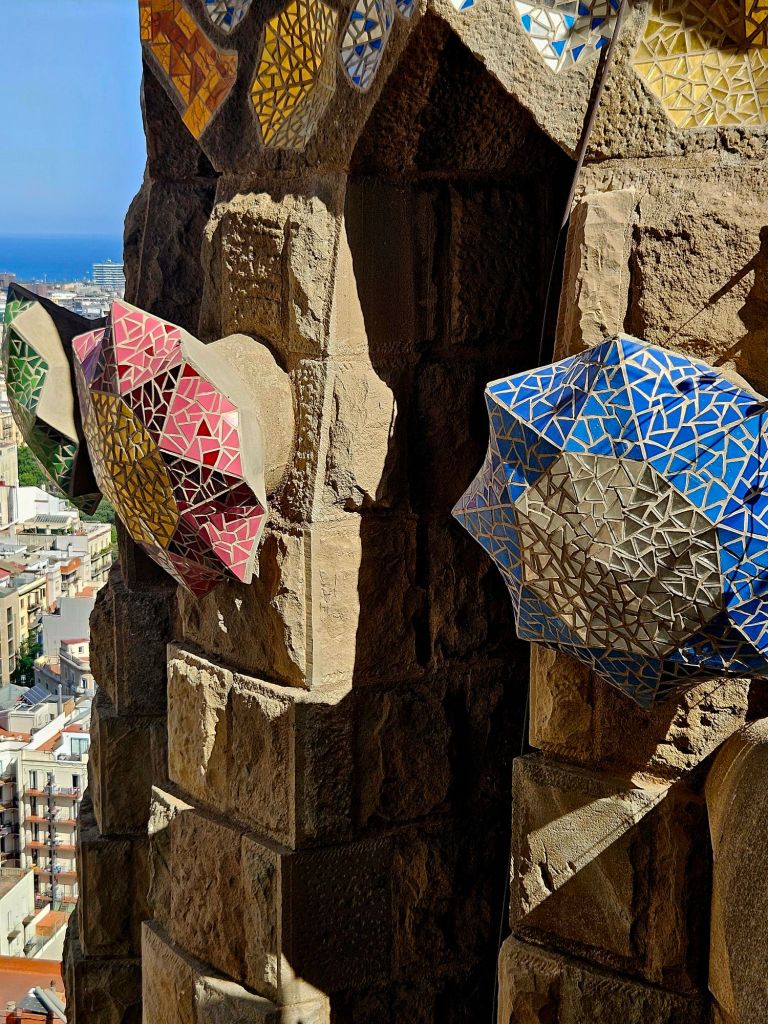
The top of the towers representing the Apostles have communion hosts on top of them.
As we walked down, you could take photos outside of the ‘windows’. The one below has the Torre Glories in the background. This is a 38-story cucumber shaped building, mainly housing offices, but with a viewing platform on the top floors. The lift covers 30 floors in 34 seconds.
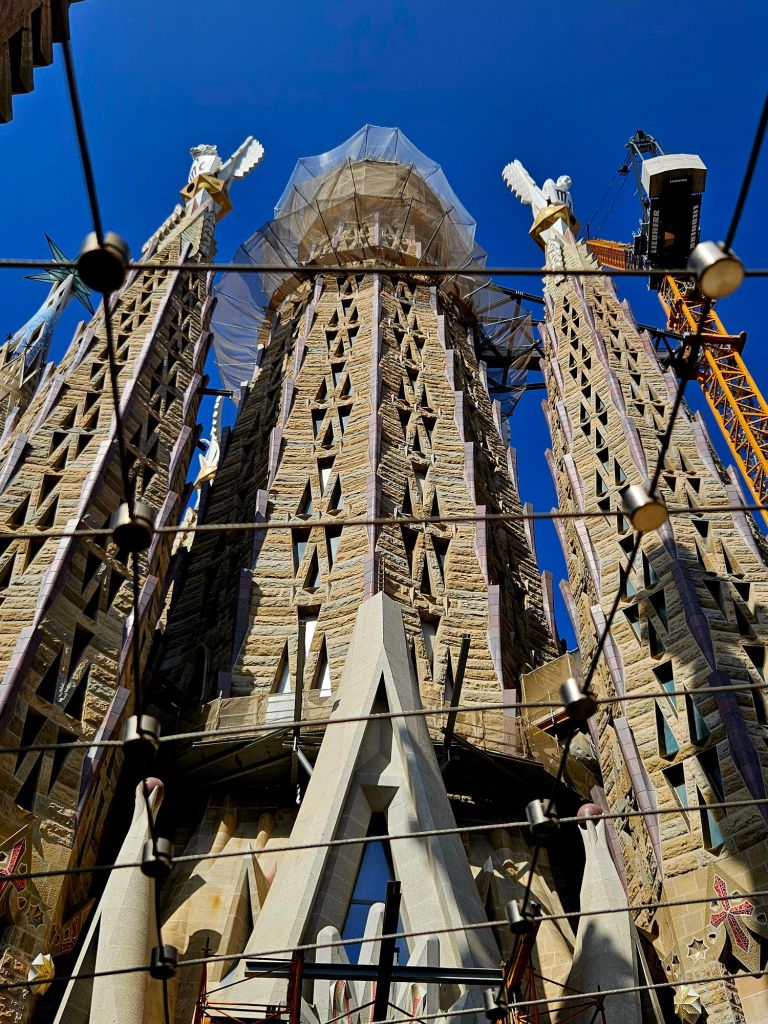
From the viewing bridge between the towers, you could see the unfinished Gloria Facade. The central spire representing Jesus will have a cross at the top and will be 172.5m tall in total. The central spire is surrounded by towers representing the 4 Evangelists, which have their traditional sculptures on the top of the towers – winged bull for St Luke, winged man for St Matthew, winged lion for St Mark and an eagle for St John. The completion of the Jesus Christ spire will make the Sagrada Familia the tallest church in the world.
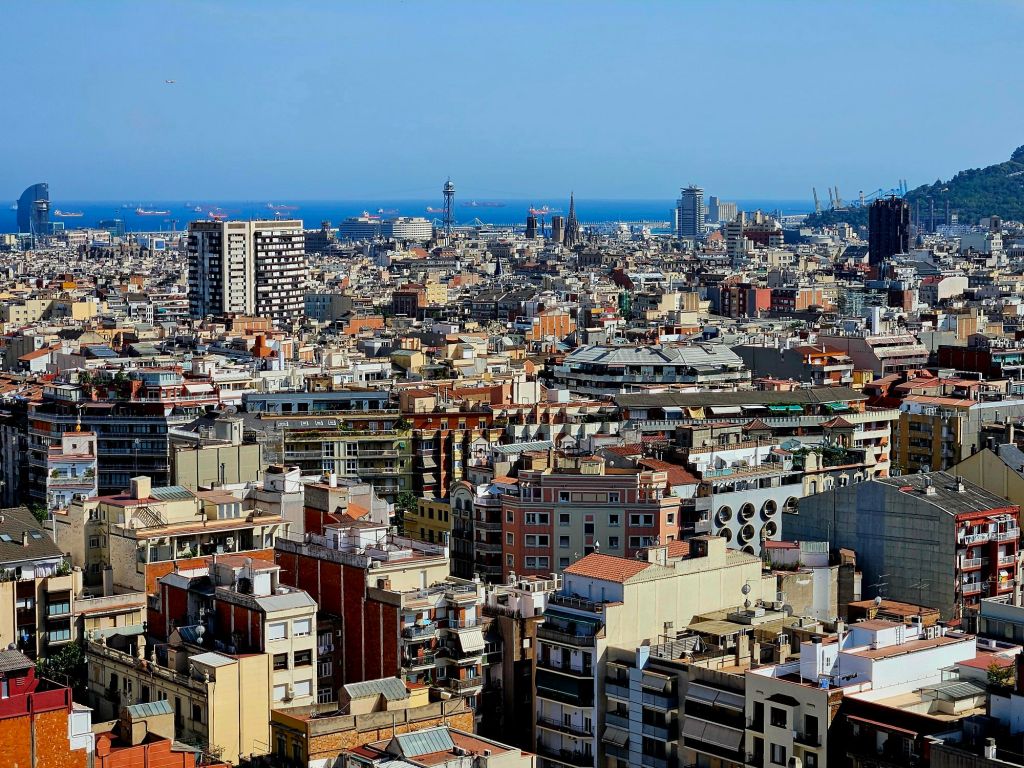
From the viewing bridge, you could get some nice views over the city, one with Montjuic Hill in the background.
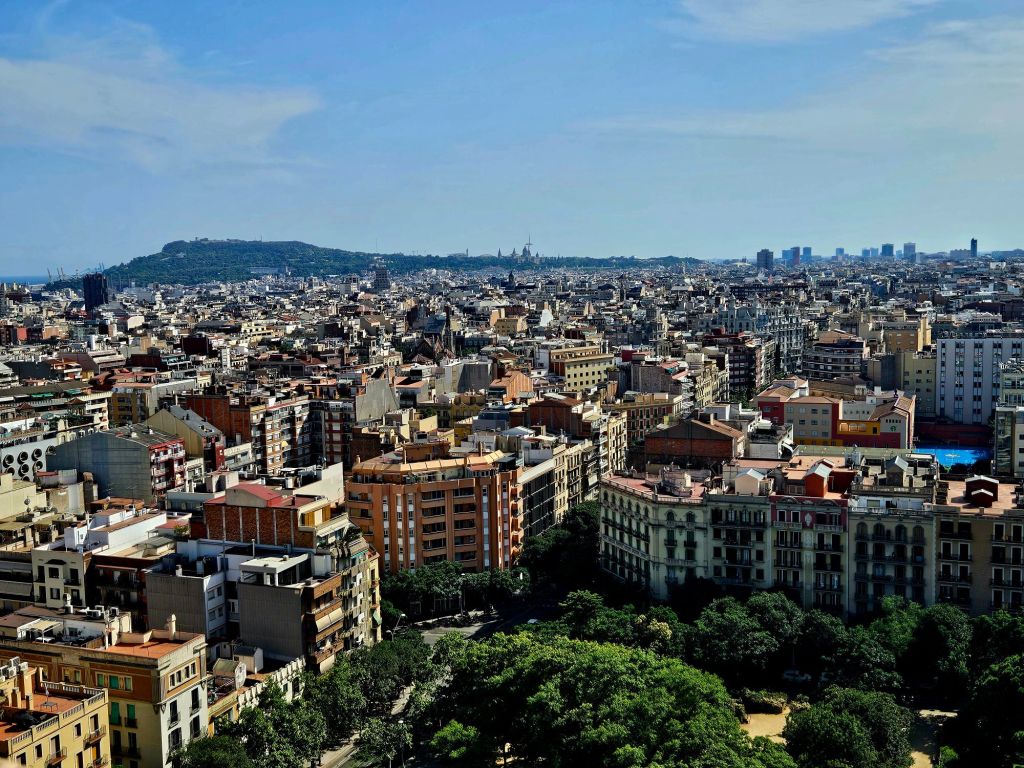
I took some moe photos of the unfinished Gloria Facade as we walked down. This facade will be the largest of the three and will represent ascension to God but will also depict various scenes such as the seven deadly sins and the seven virtues.
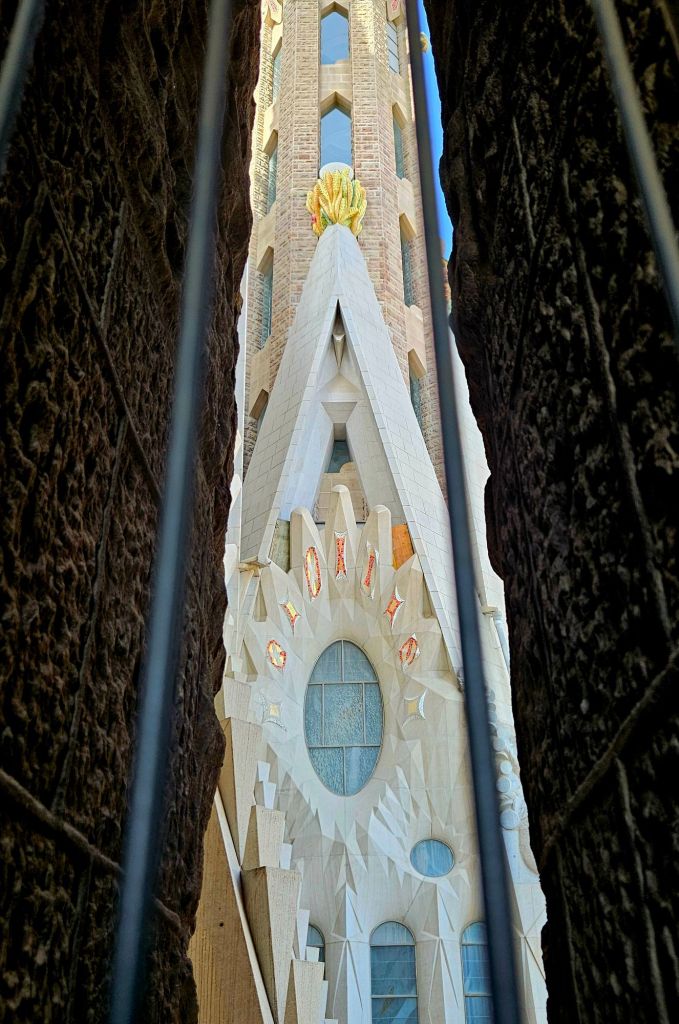
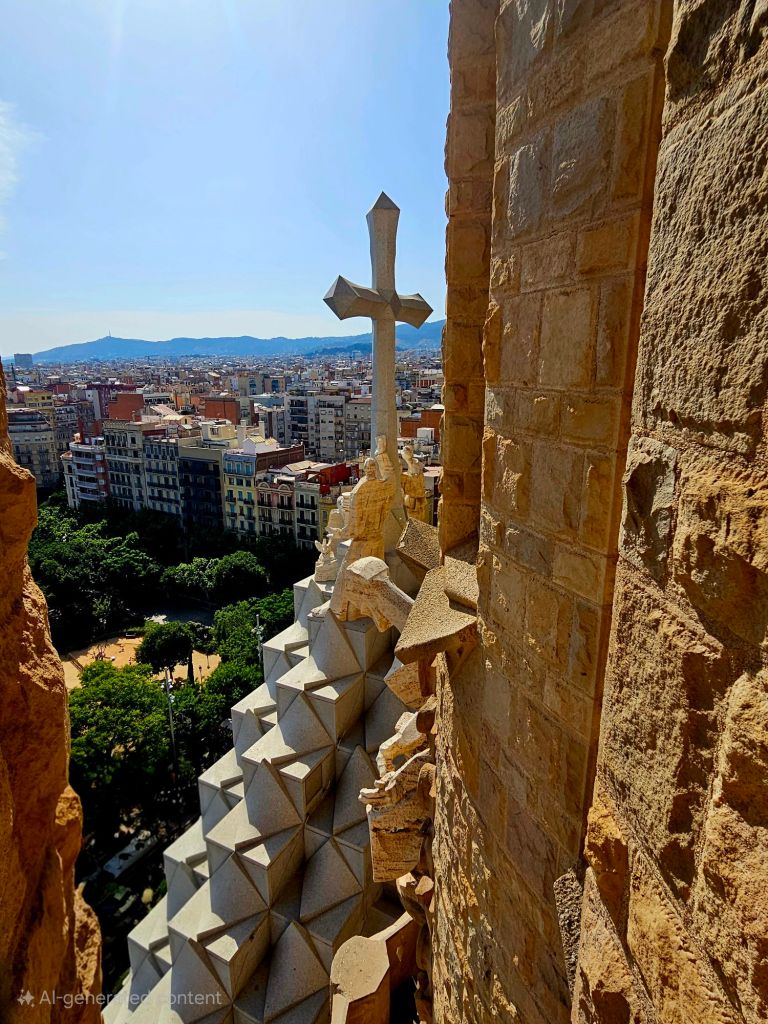
This is the glory facade from the inside. This facade will be the main entrance to the building once it is completed.
Initially, the spiral staircase we walked down felt quite safe. But after a while, it became very narrow, and one side was completely open.
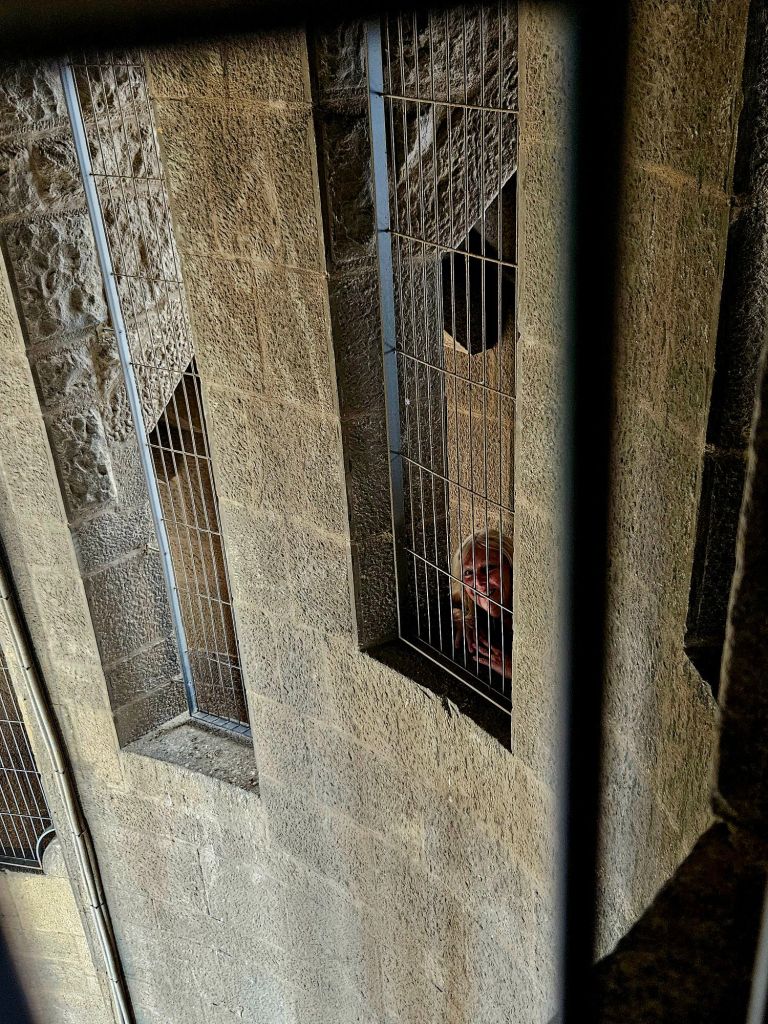
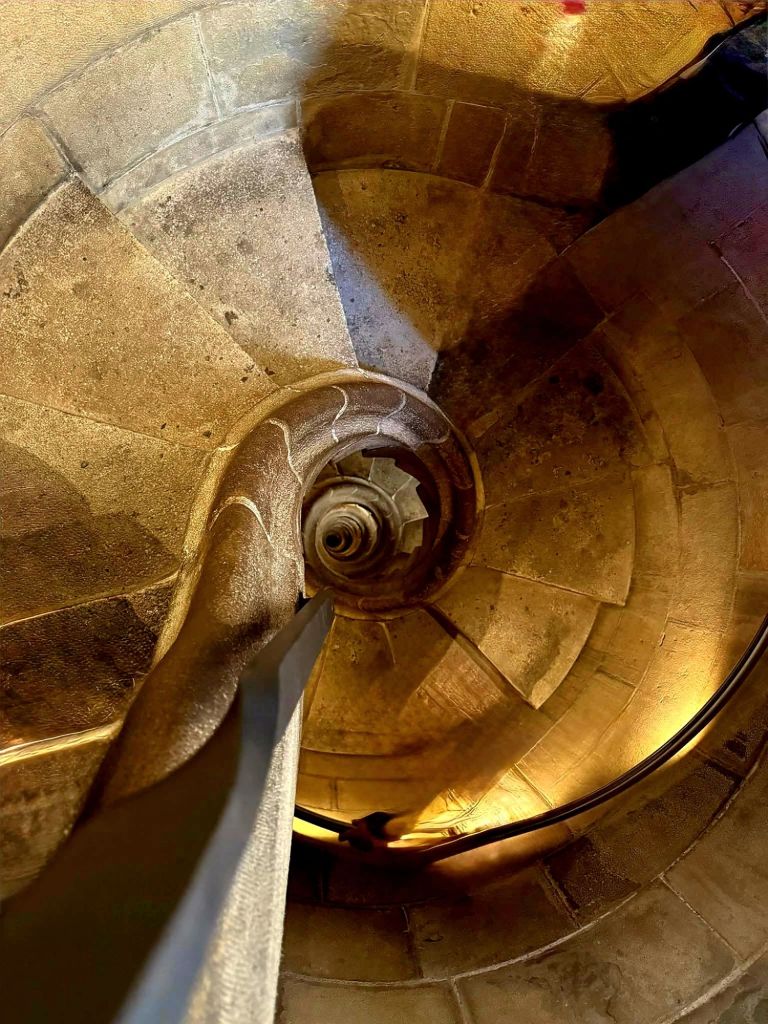
Back on firm footing, I took some more photos of the inside of the building.

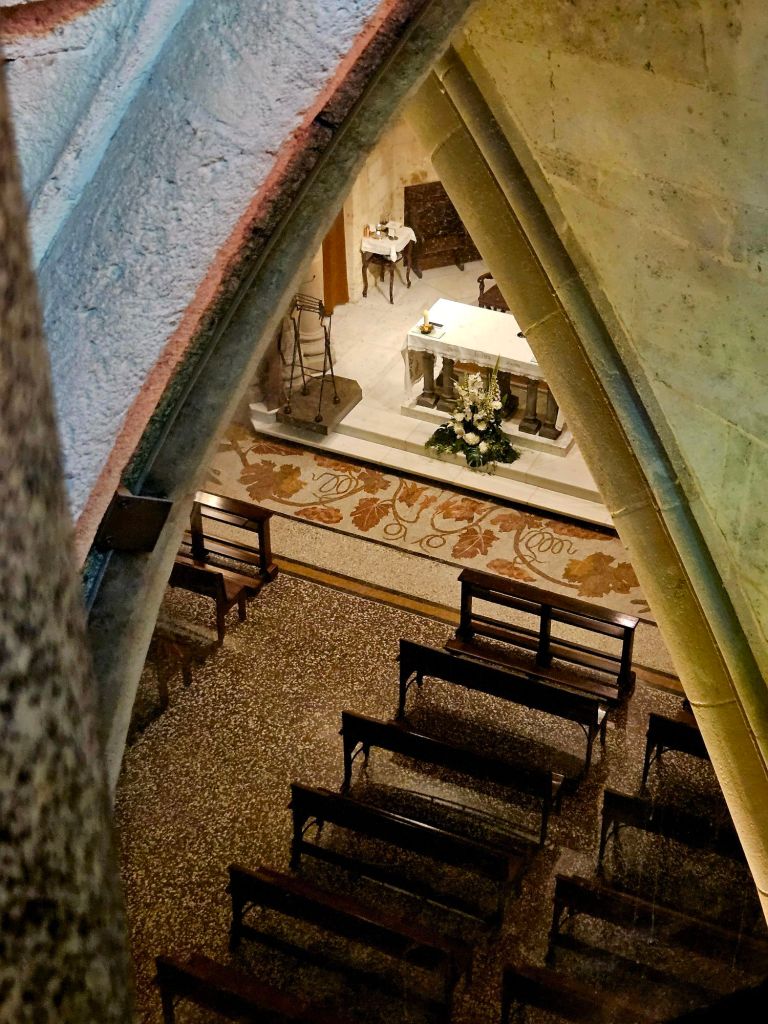
We walked around to the crypt, which is the oldest part of the building and is where Gaudí is buried. Gaudí was hit by a tram on 7 June 1926 and died 3 days later in hospital. He never married or had children and devoted his life to his work. It is also believed that he may have been colourblind.
We walked out via the Passion Facade. Here, the doors bear the inscription of the “Our Father” in Catalan.
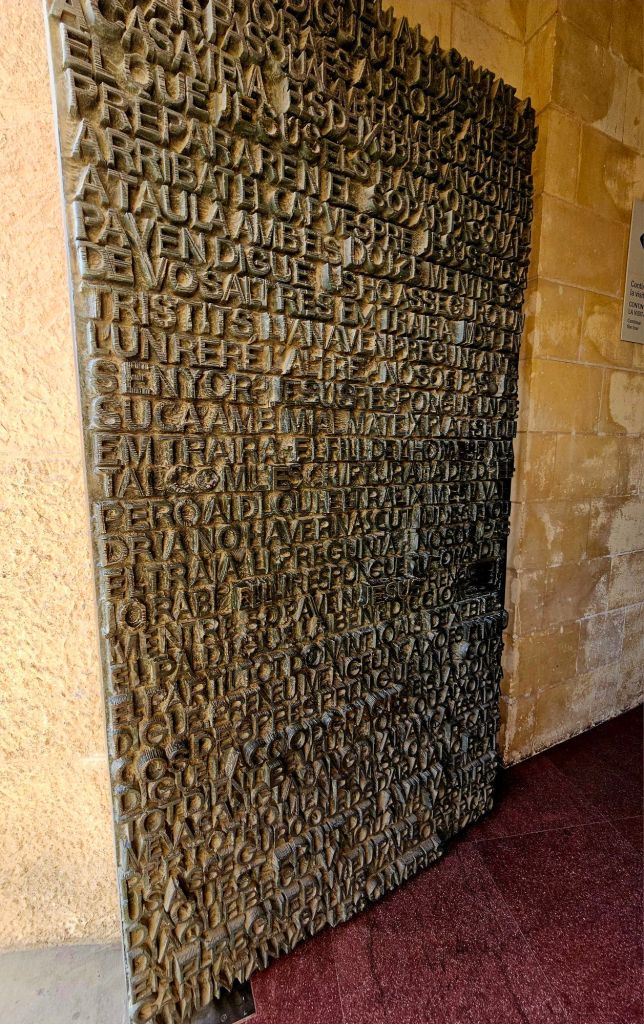
The Passion Facade is based on Christ’s last days and his death and resurrection. It was officially completed in 2018. The main series of sculptures include the Last Supper, the stations of the cross, and Christ’s burial. It is harsh and has lots of straight lines, resembling the bones of a skeleton and is intended to represent the sins of man.
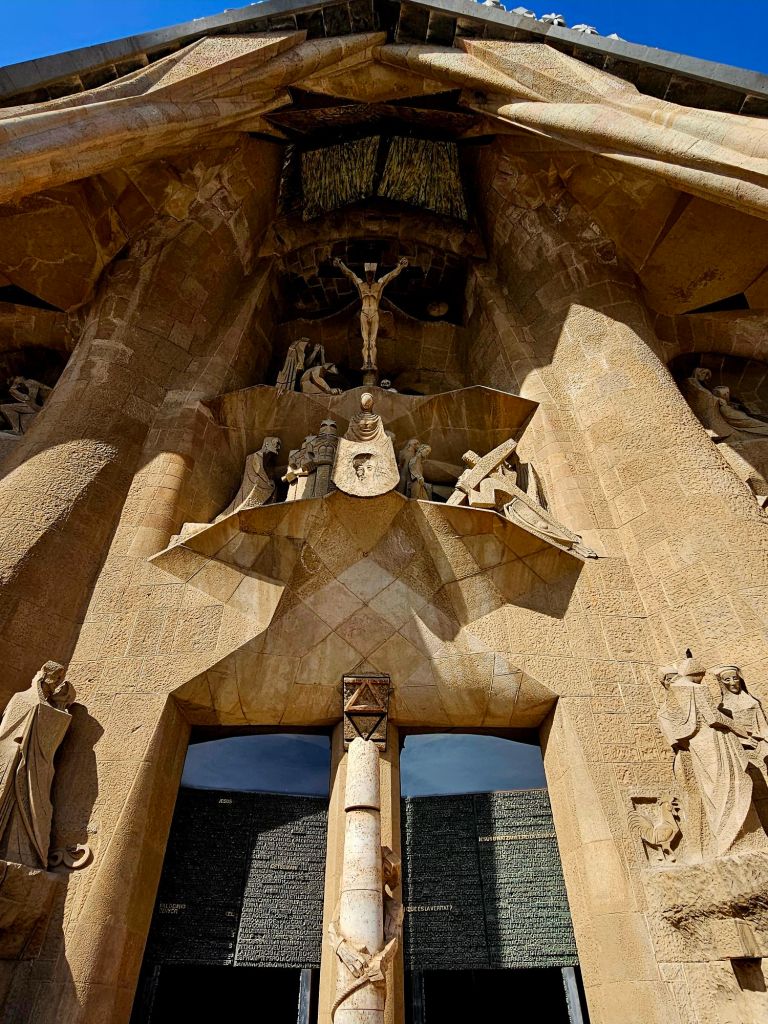
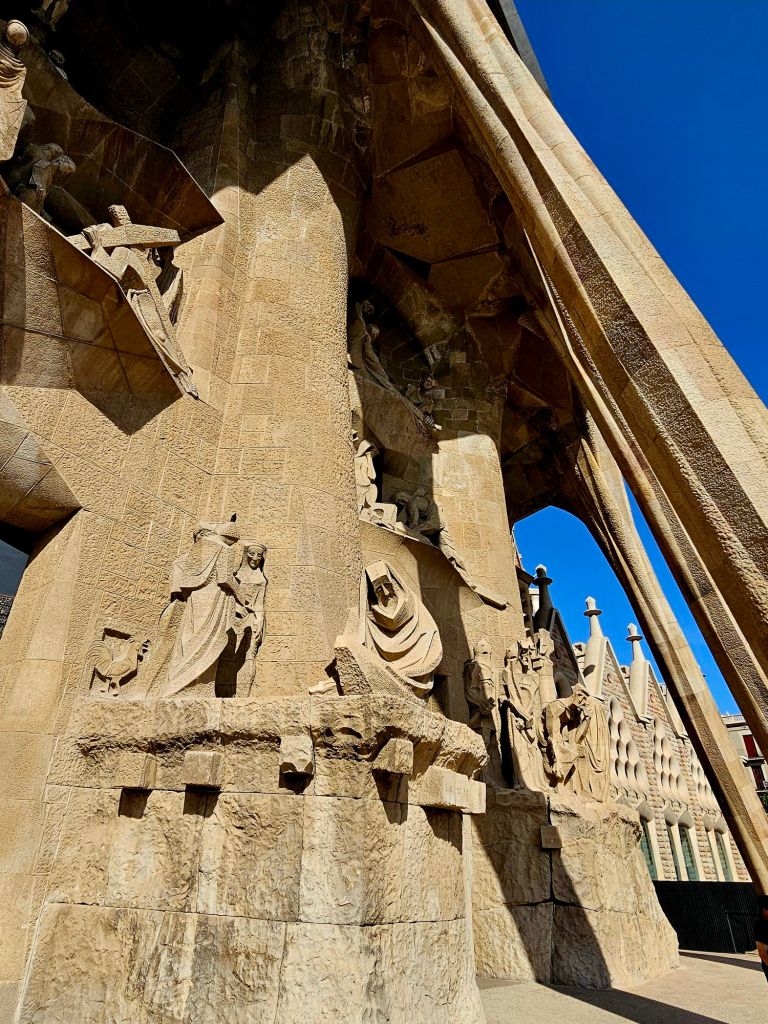
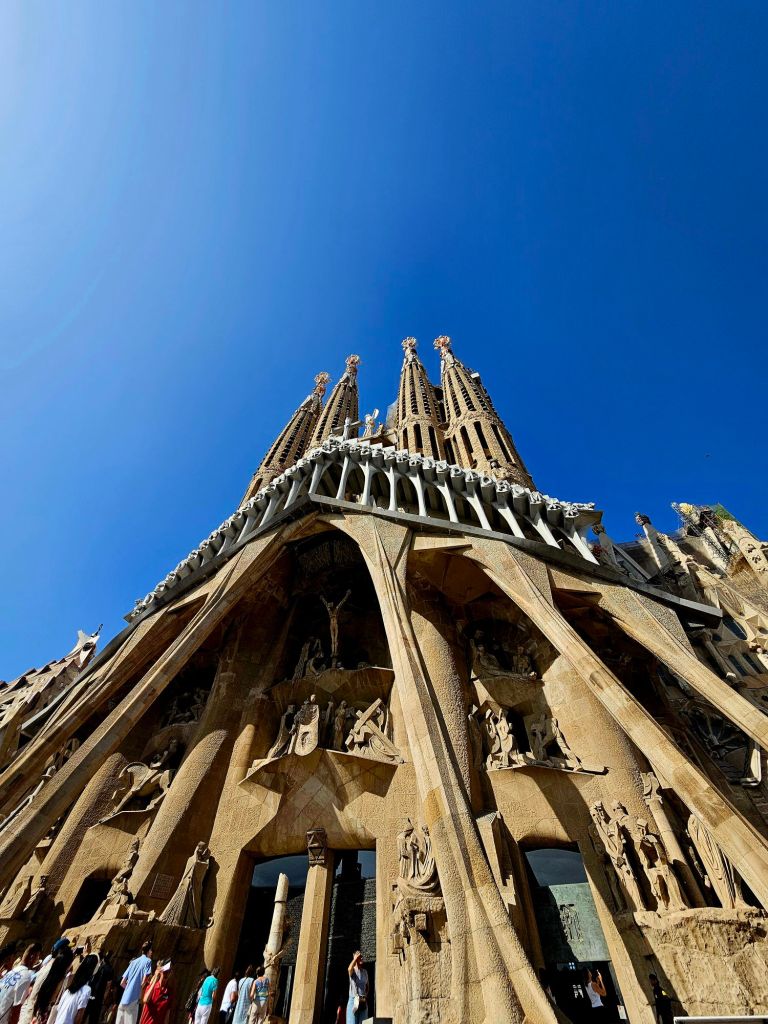
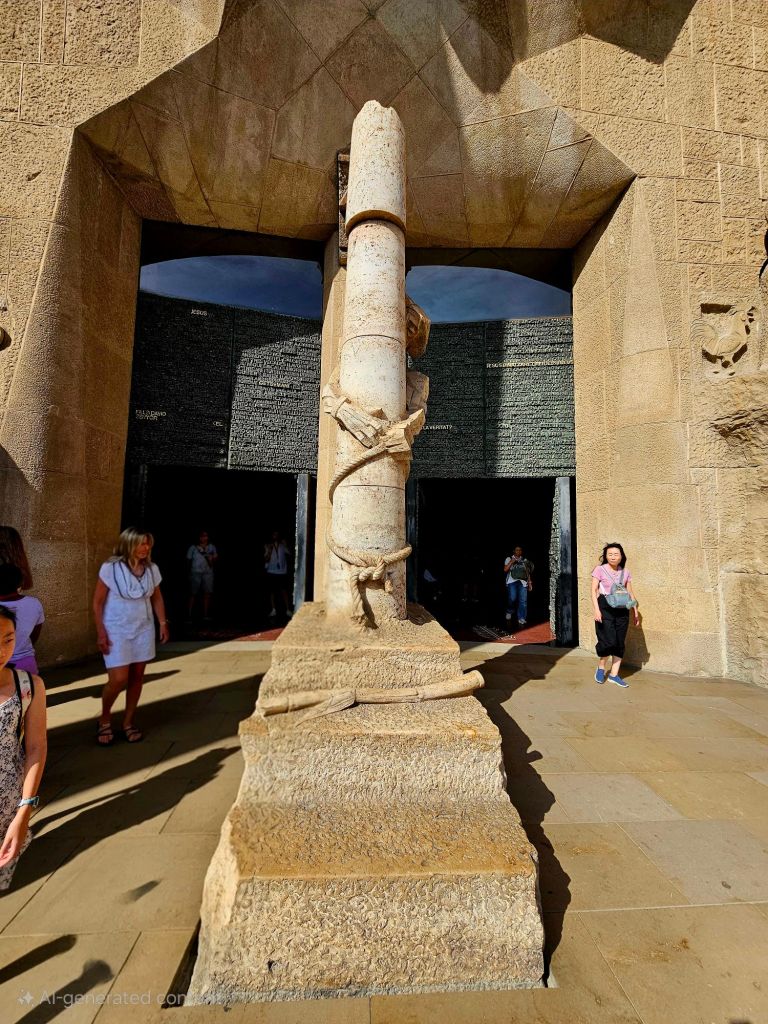
At the front of this facade is a sculpture of Jesus being whipped.
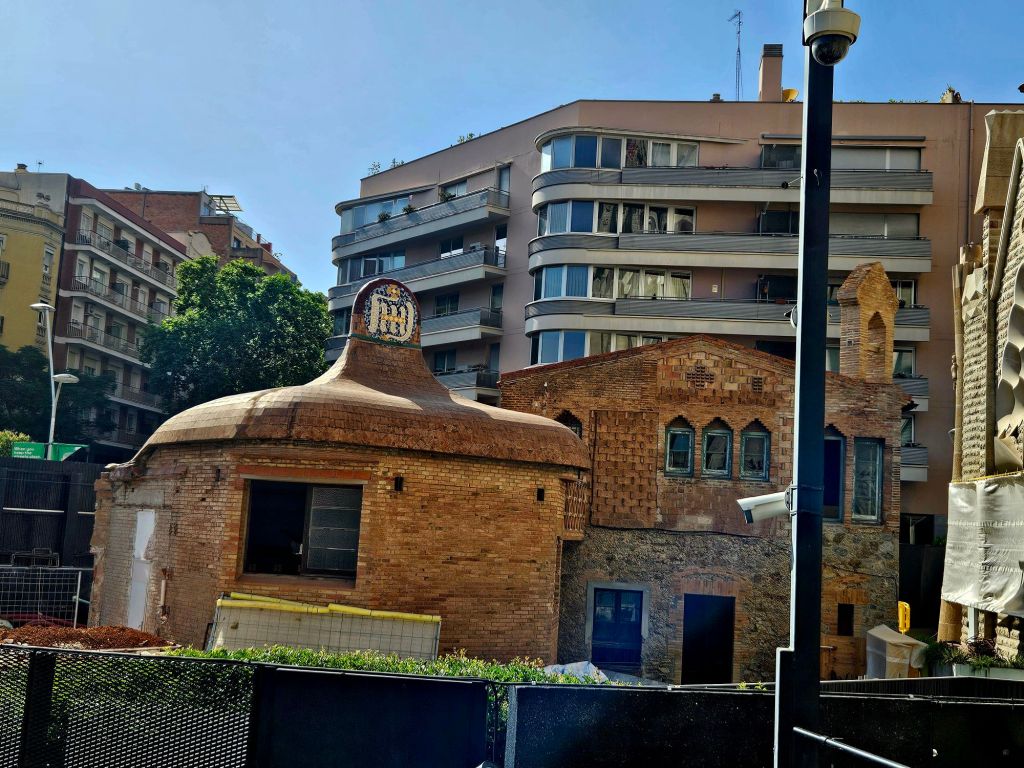
There is a very old building right next to the church, which i think could have been Gaudi’s workshop.
As we walked away from the building, I took a few more photos. From this angle, you could just see the star at the top of the Virgin Mary Tower. This was completed in 2023.
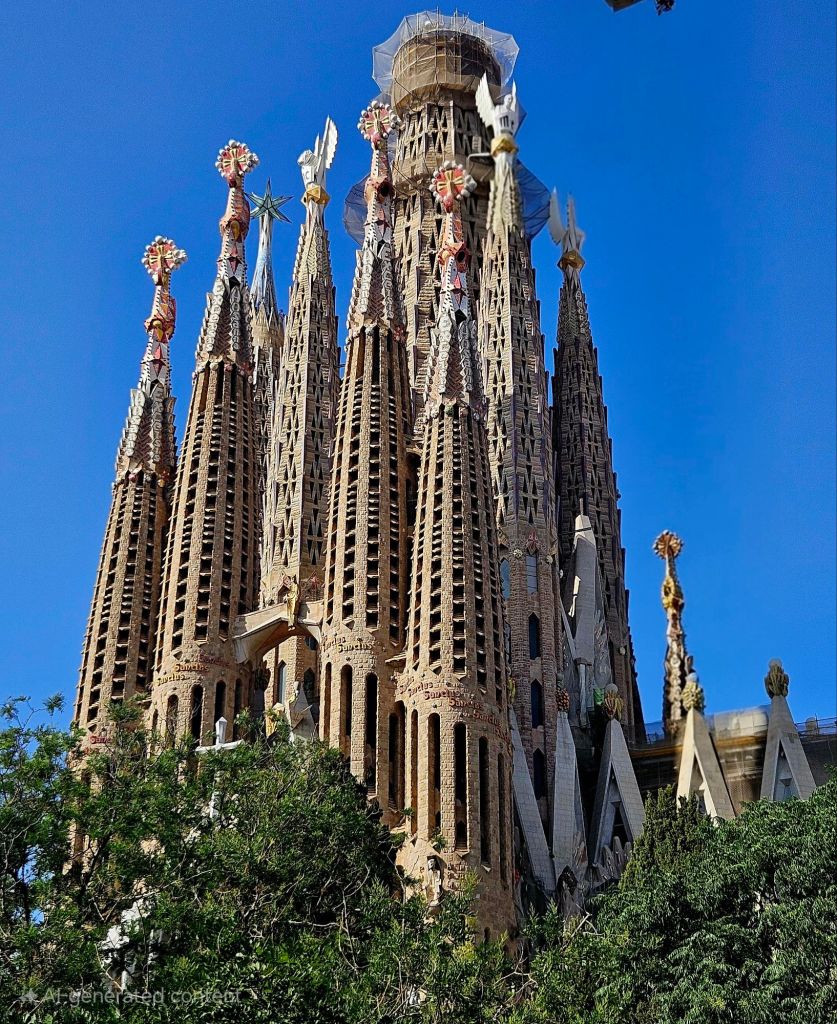
The building of Sagrada Familia initially relied solely on private donations. Even today, it does not receive any funding from government or official church sources, but the ticket sales help to fund the work. It was consecrated as a church in 2010.
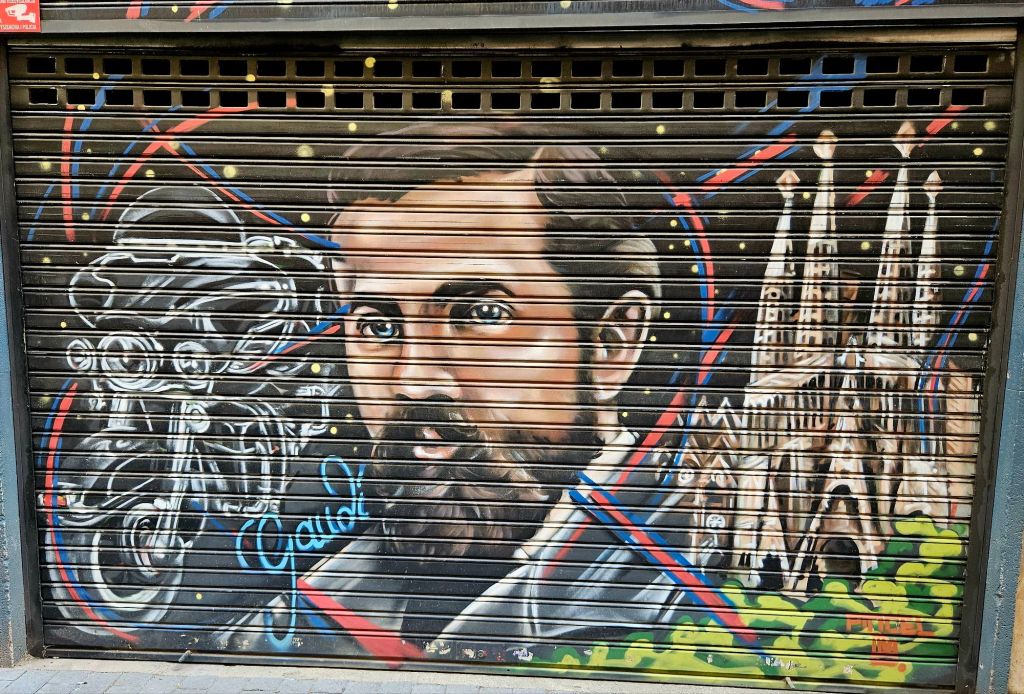
As we walked away from the church, we came across some street art portraying Gaudí himself.
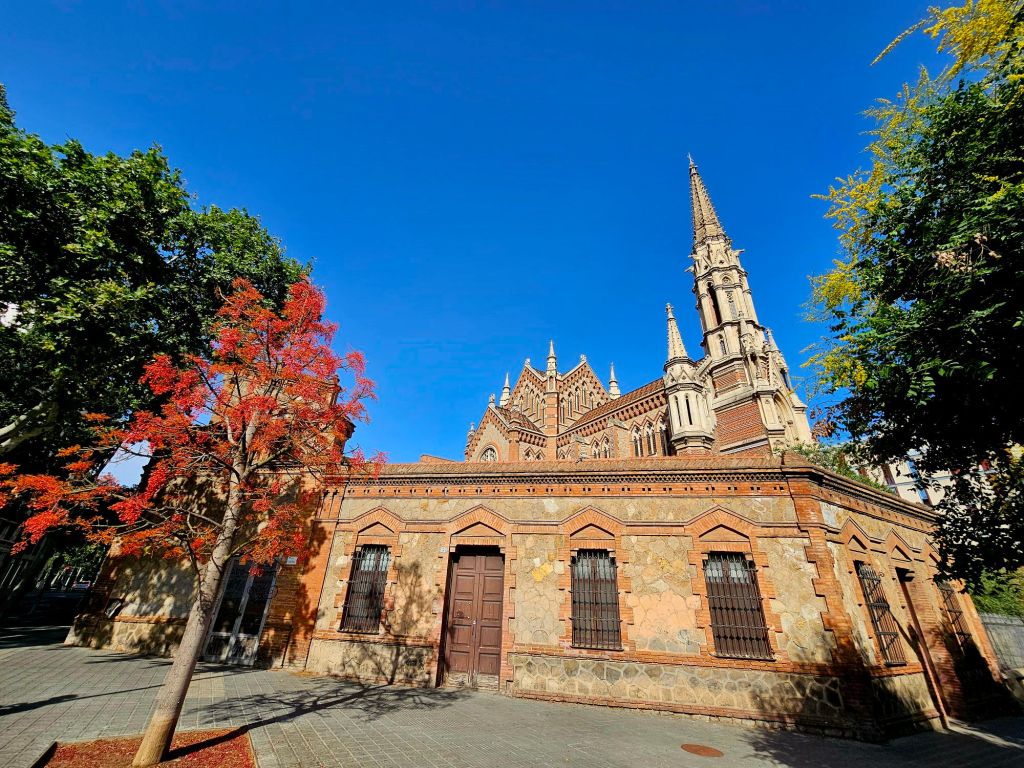
We decided to go and visit Gaudi’s other buildings in the area and on the way we passed a beautiful neogothic church – Sant Francesc de Sales. This building used to be a convent housing Salesian nuns, but they left in 1936. It was originally built between 1877 and 1885 and was later converted into a parish church.
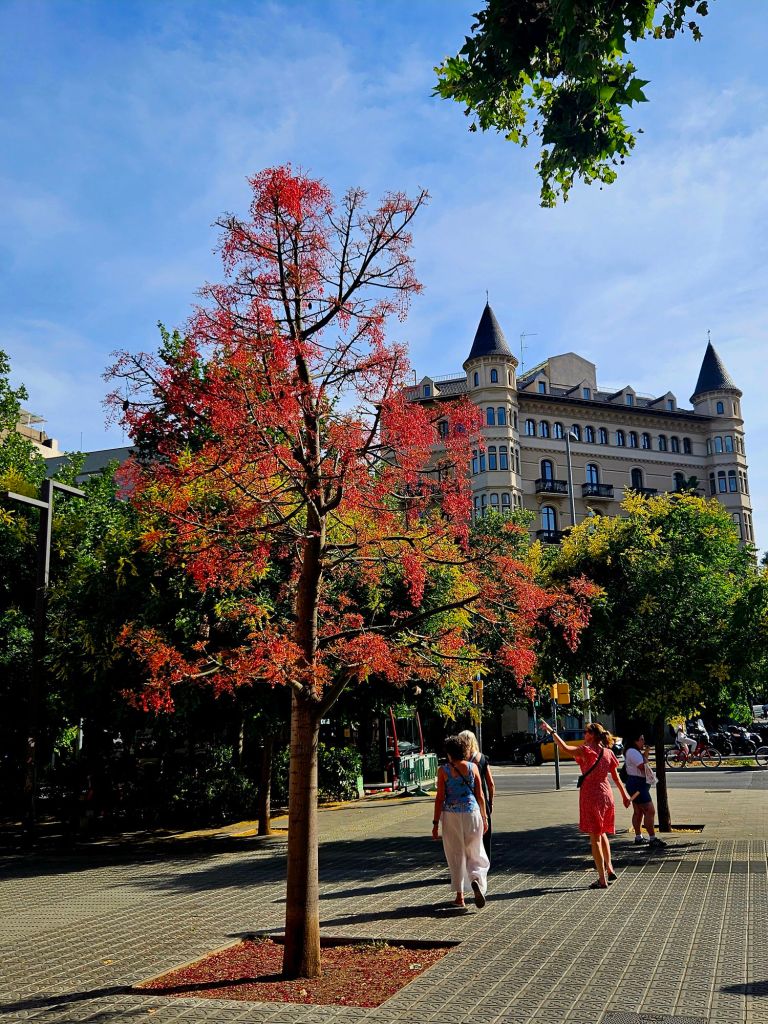
We also walked past the Palau Montaner, which is one of the few remaining mansions in this area. It now houses the central government delegation in Barcelona.
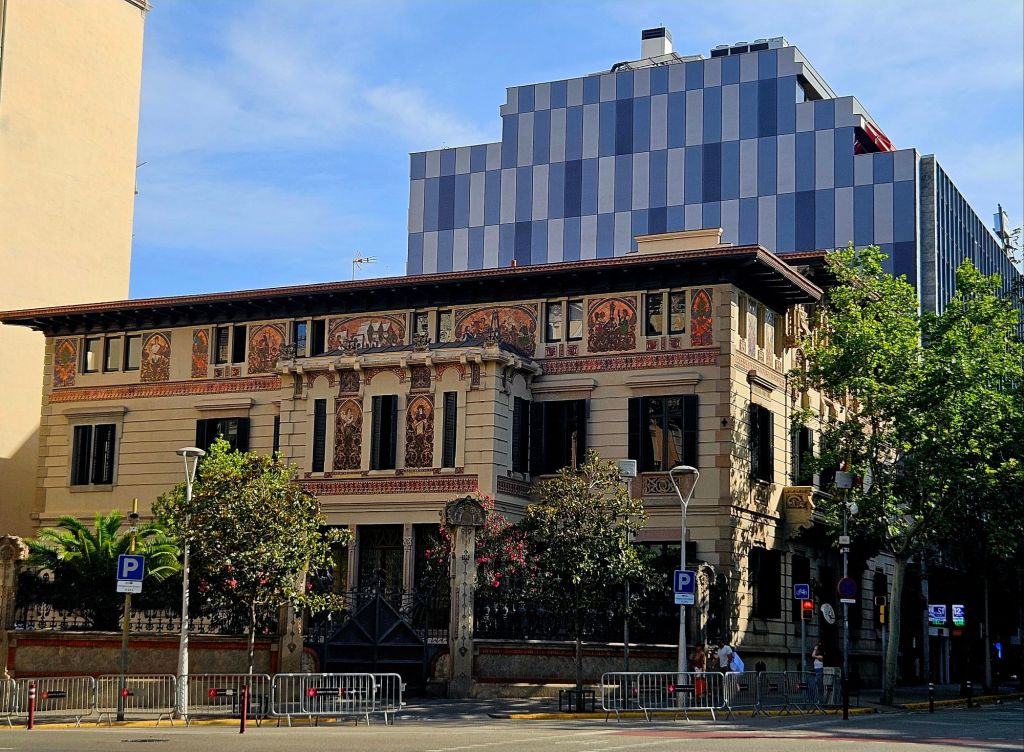
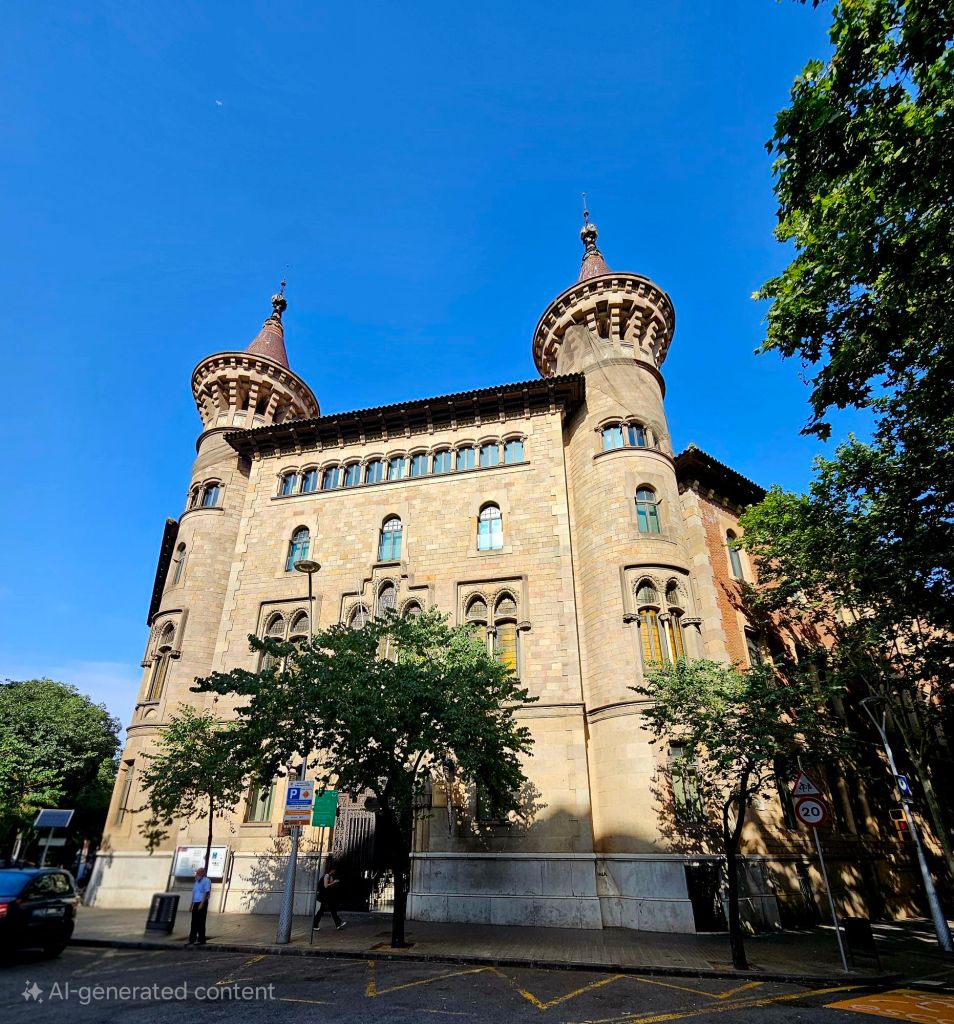
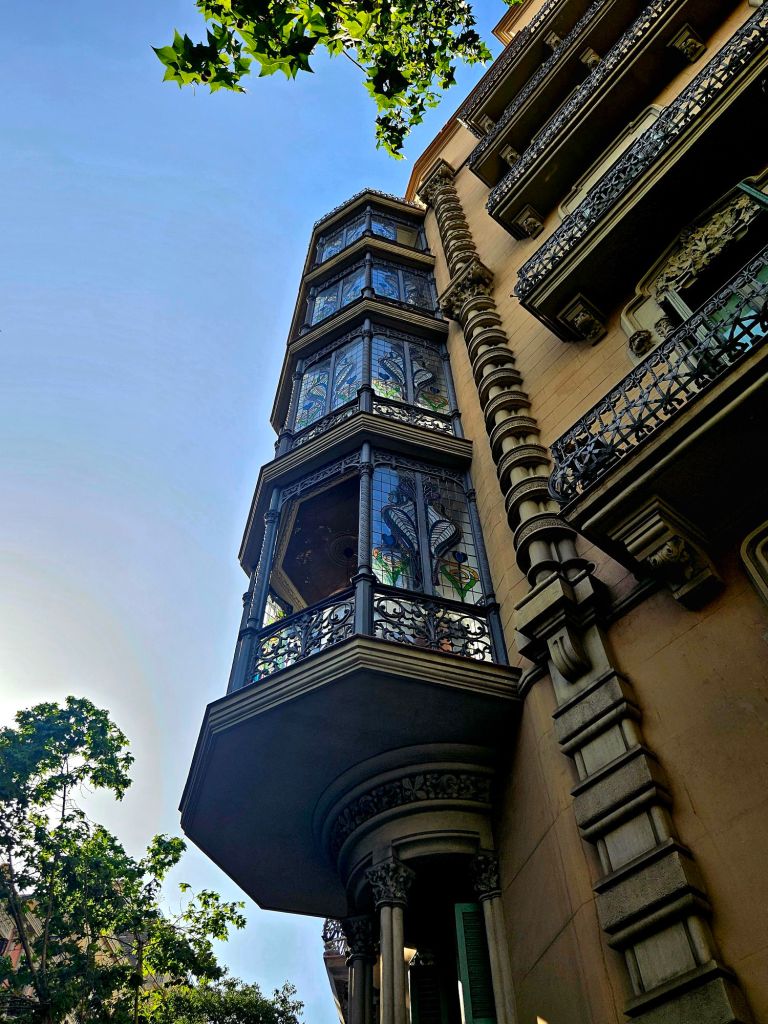
We passed a couple of other nice buildings, but I don’t know what they were.
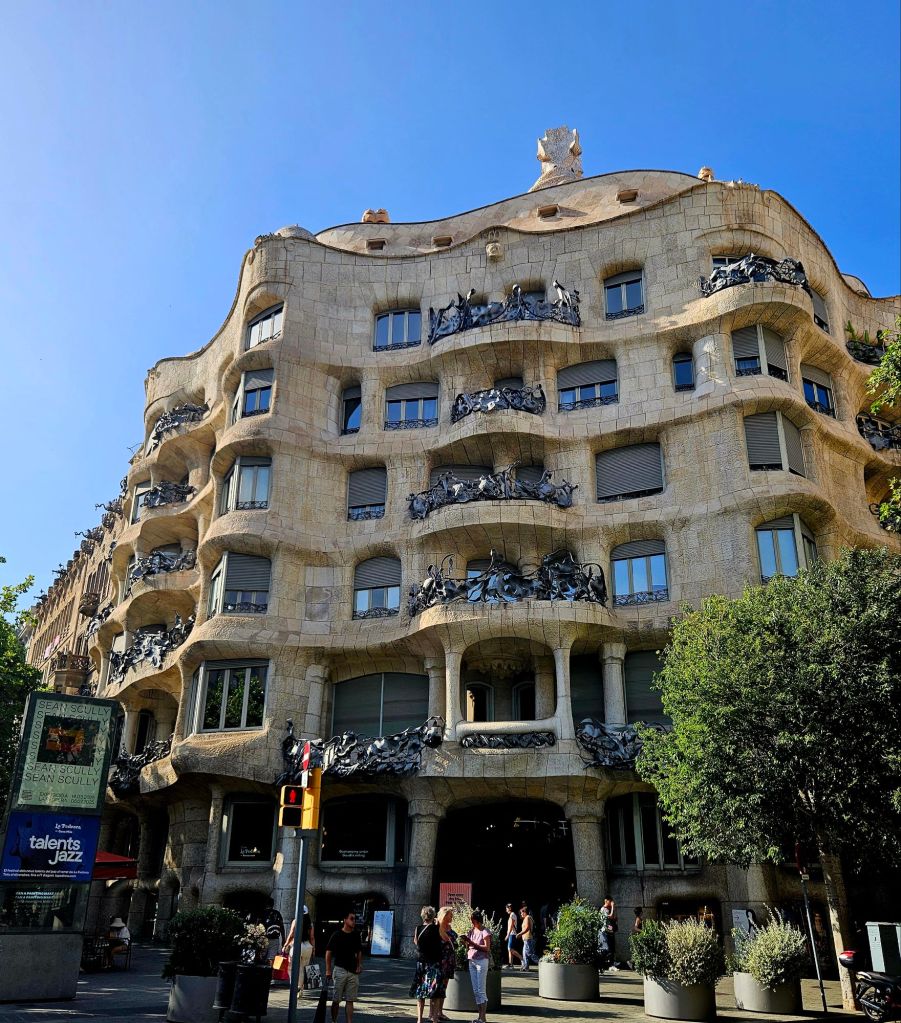
And, at last, we reached Gaudi’s La Pedra, or Casa Mila. This building has 33 balconies and was built between 1906 and 1912 as a combined apartment and office block. The name La Pedra means ‘the quarry’ and reflects the uneven grey stone of the building. Mila is the name of the businessman who commissioned the building.
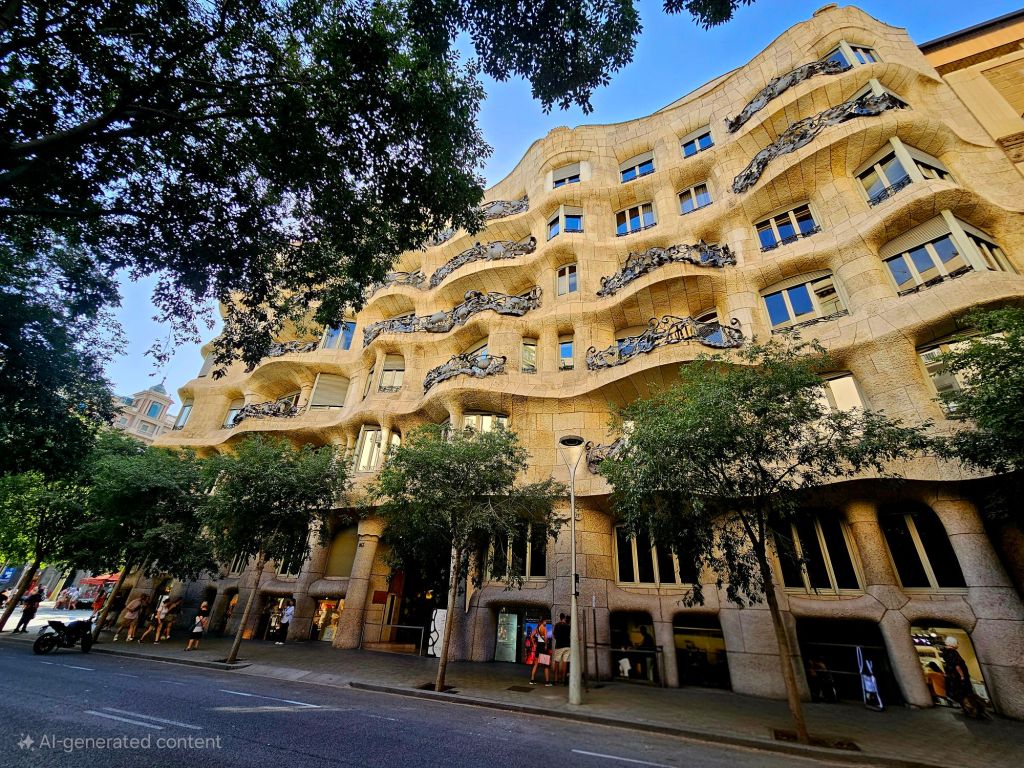
The outside looks like a cliff face sculpted by waves and wind, and the wrought iron balconies look like seaweed washed up on the shore. Gaudí reused waste glass and ceramics in decorating parts of the building.
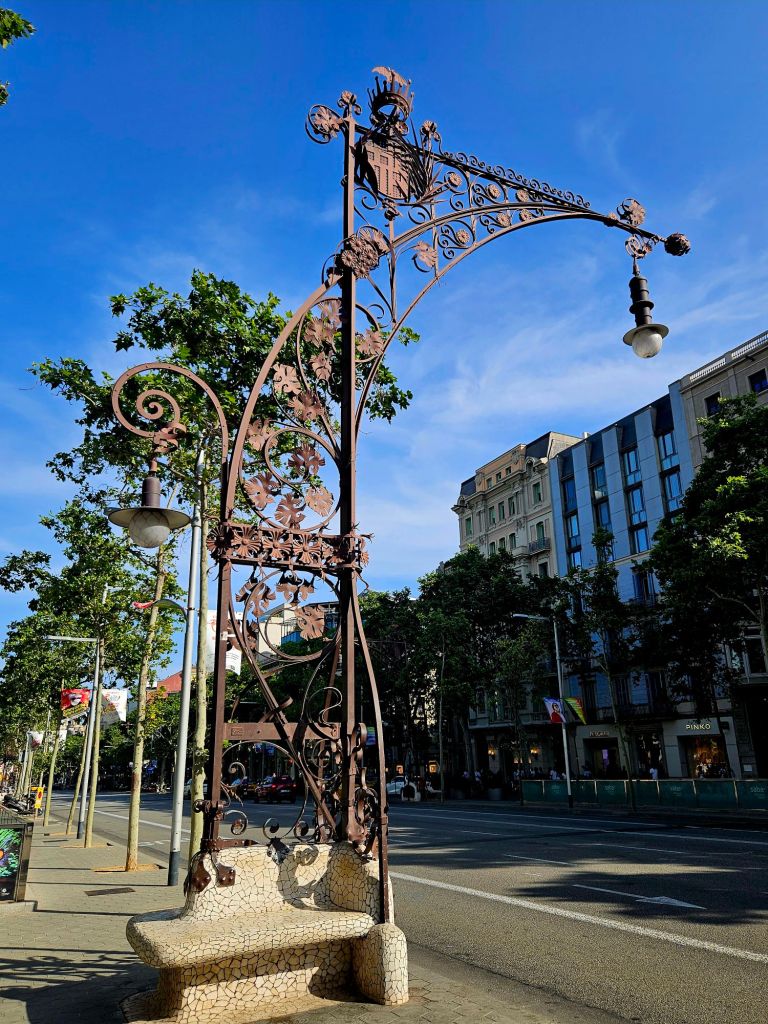
There were some artistic lampposts on the street, too, that looked like they had been inspired by Gaudí.
The next Gaudí building we visited was Casa Batlló, which was built between 1904 and 1906. Again, there are very few straight lines and is inspired by marine life with blue, mauve and green tiles.

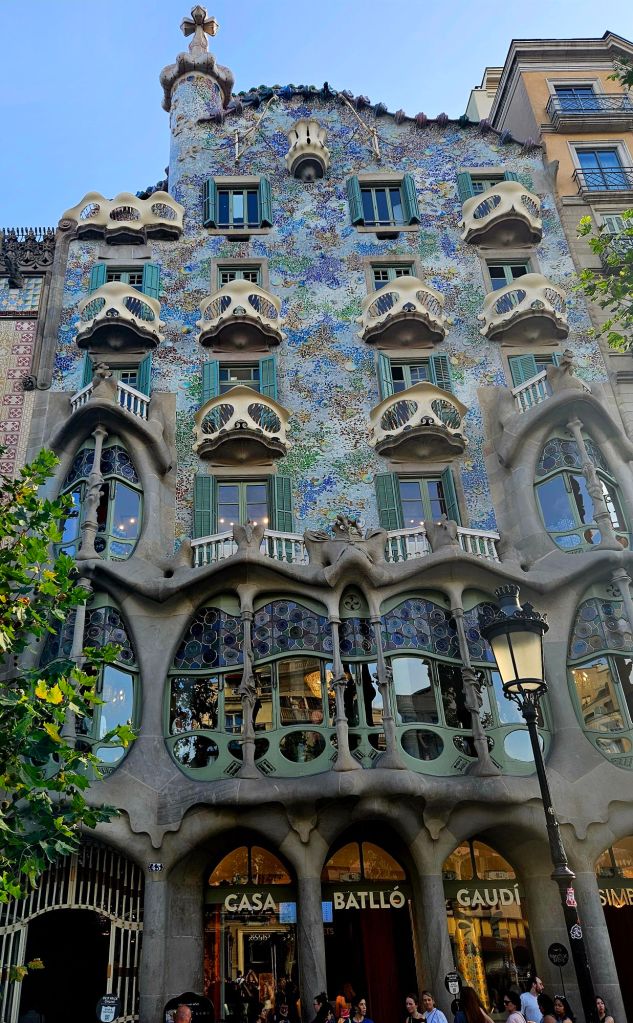
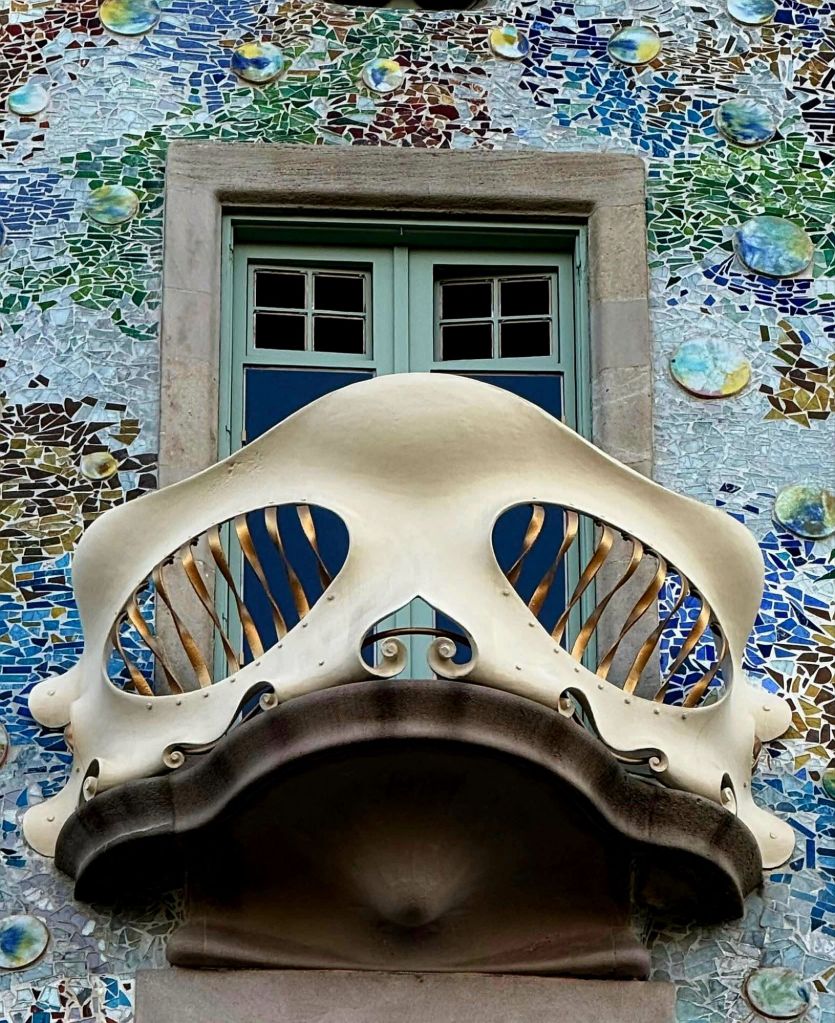
The balconies look like the bony jaws of some strange animal, and the nickname for the building is Casa dels ossos – the house of bones.
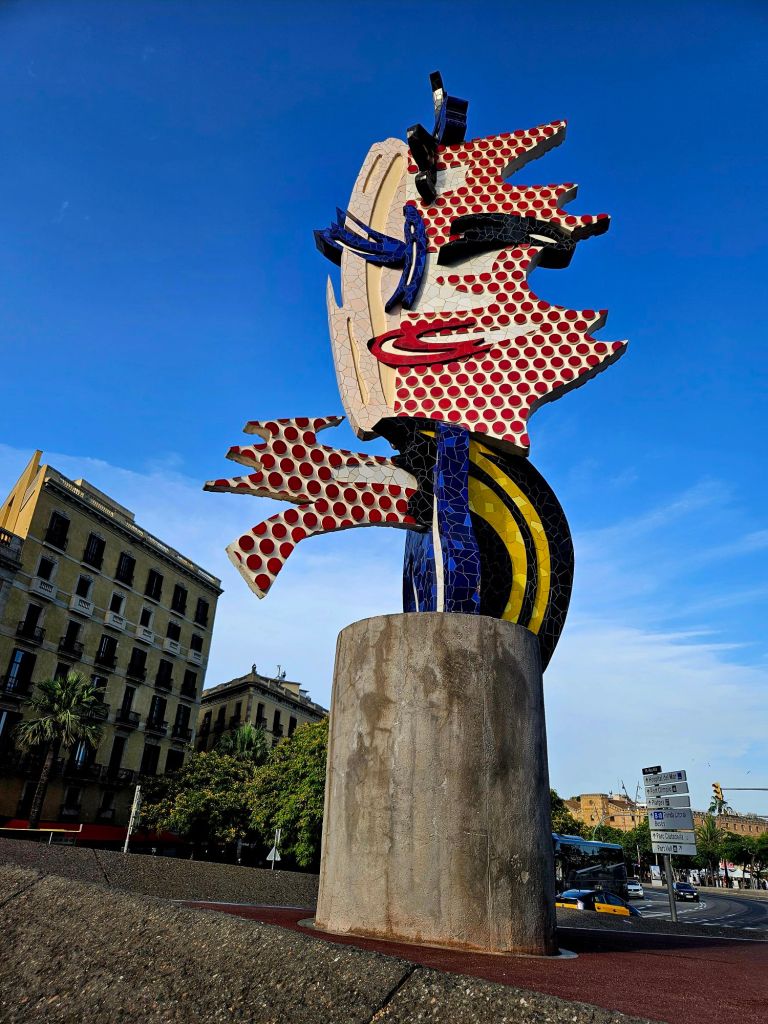
We were quite tired, so headed back to the marina via taxi. We saw the El Cap de Barcelona sculpture again. This was designed by an American artist and was designed for the 1992 Olympic games. It is 15m tall and looks different when viewed from different angles.
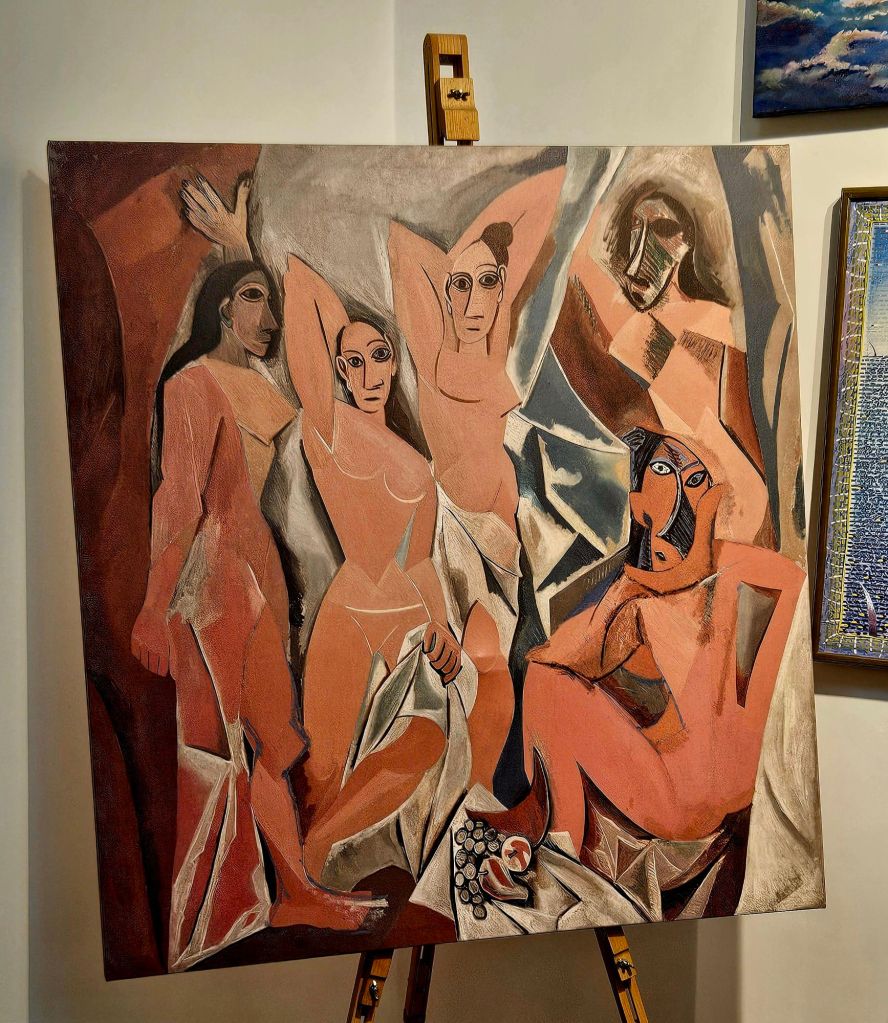
As we headed home, we walked past a shop selling Picasso art on clothes, etc. One of the paintings was a copy of one of his first paintings using cubism – Les Demoiselles d’Avignon,”
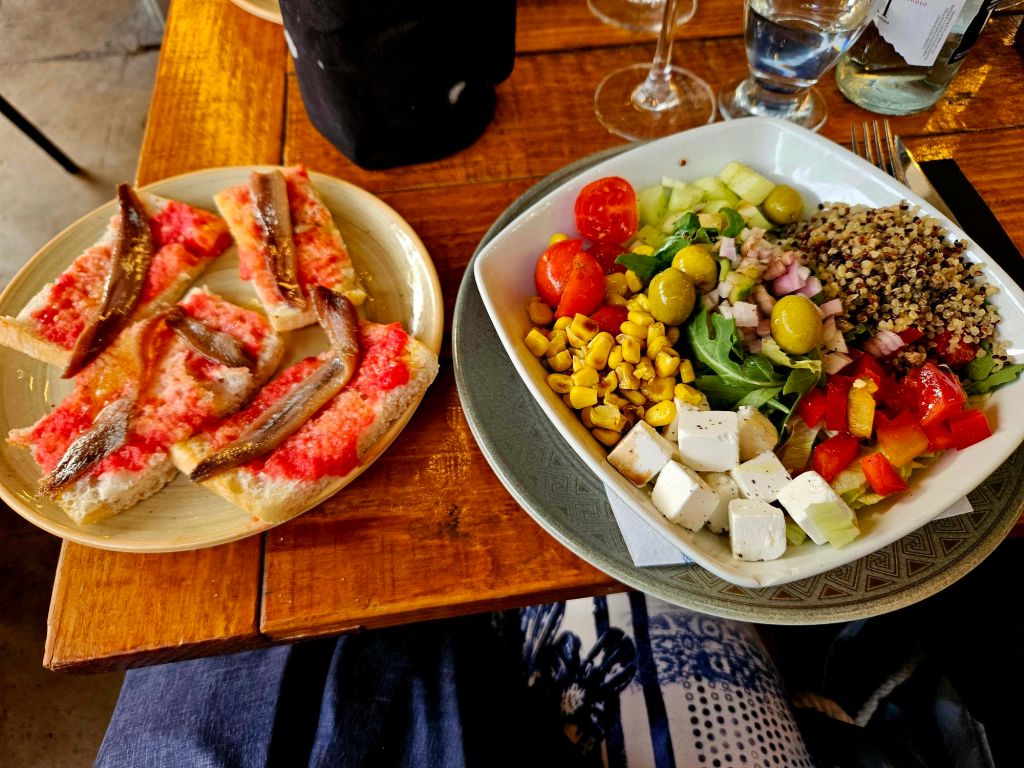
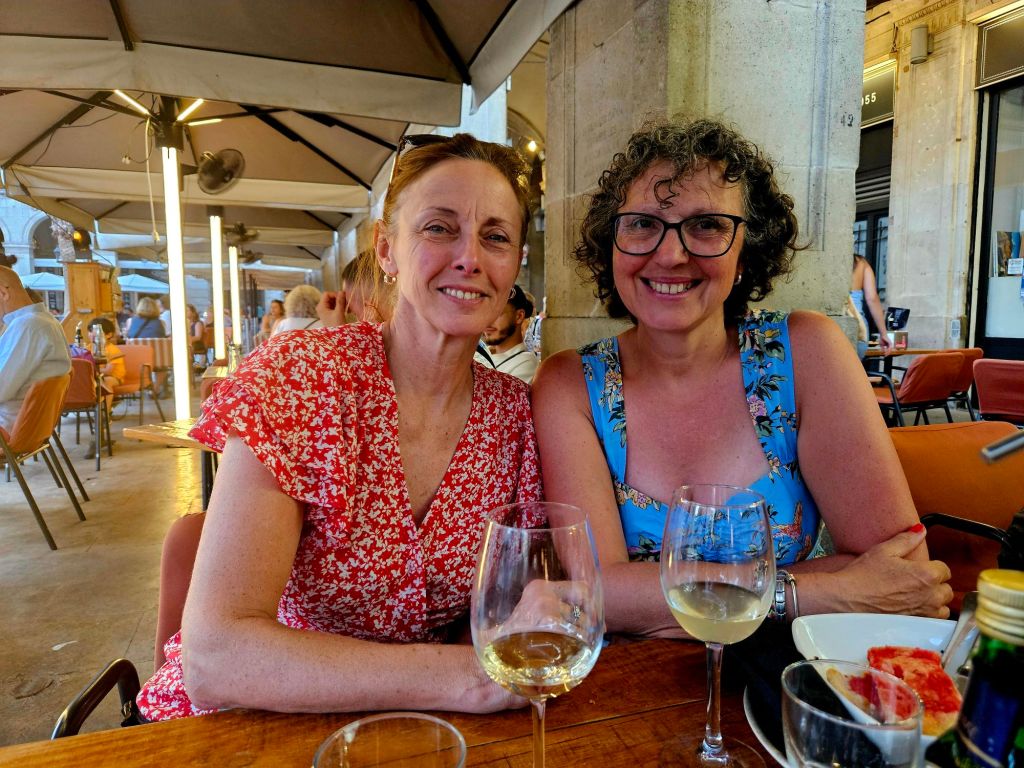
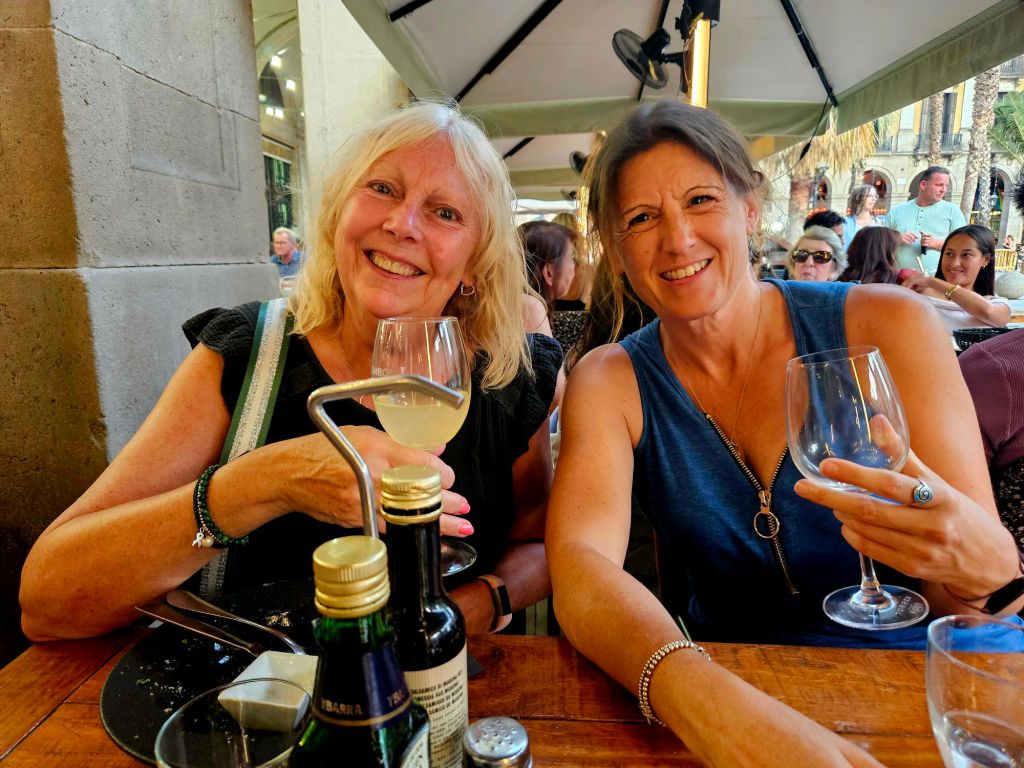
We ended up back at Placa Reial and stopped at L’ambos Mundos for dinner.
And then it was home to bed.
 Fun, Fitness and Fabulousness in your Fifties