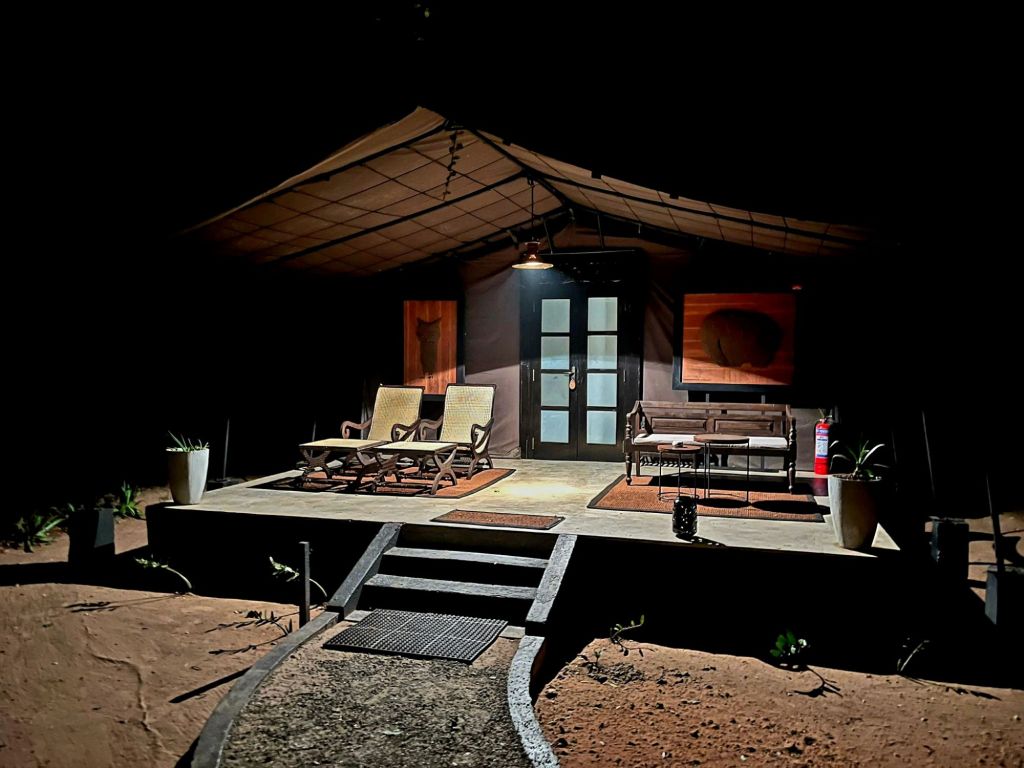
It was a very early start with our alarms going off at 4:45 in the morning. The ‘tent’ we were staying in was air conditioned and the unit was quite close to my bed so in the early hours of the morning, both Zoe and I woke up because we were too cold. I didn’t really get back to sleep after that as I couldn’t get warm.
We had coffee and tea delivered to our tent at 5am to help us wake up.

At 5:30am we were on the jeep and headed towards the park and it was already much lighter.
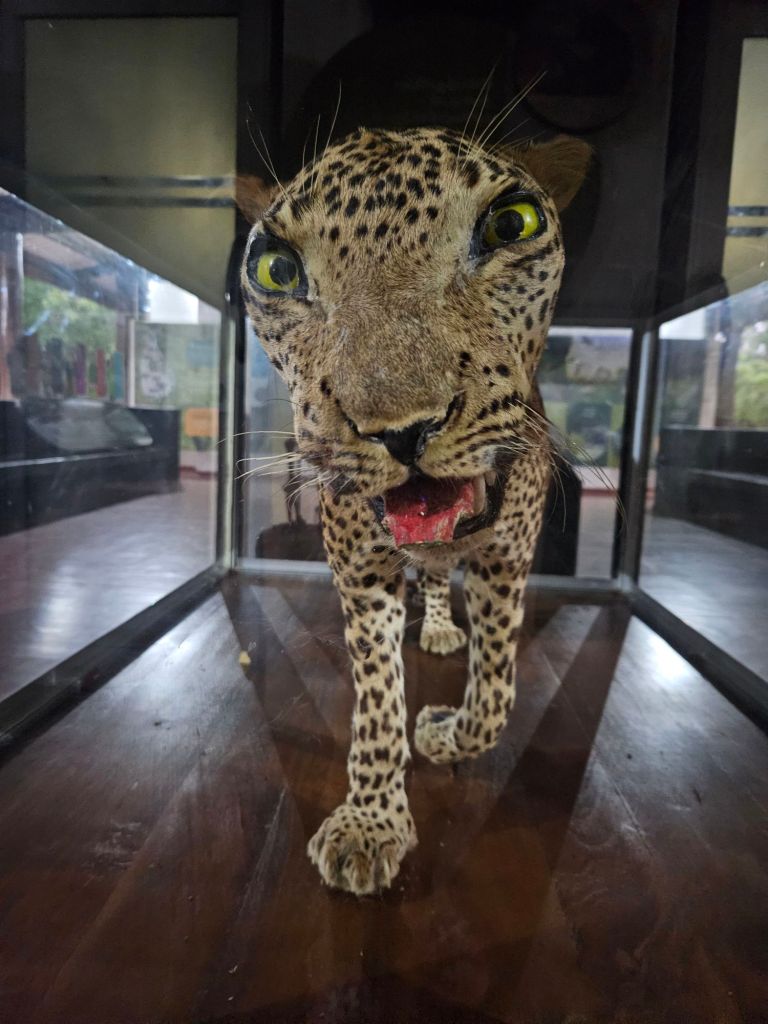
At the entrance, we had a quick look around the small museum, which had quite a bit of information about various animals and birds in the park. It had a stuffed leopard, which was a young male, most likely killed by an adult male for wandering into his territory.
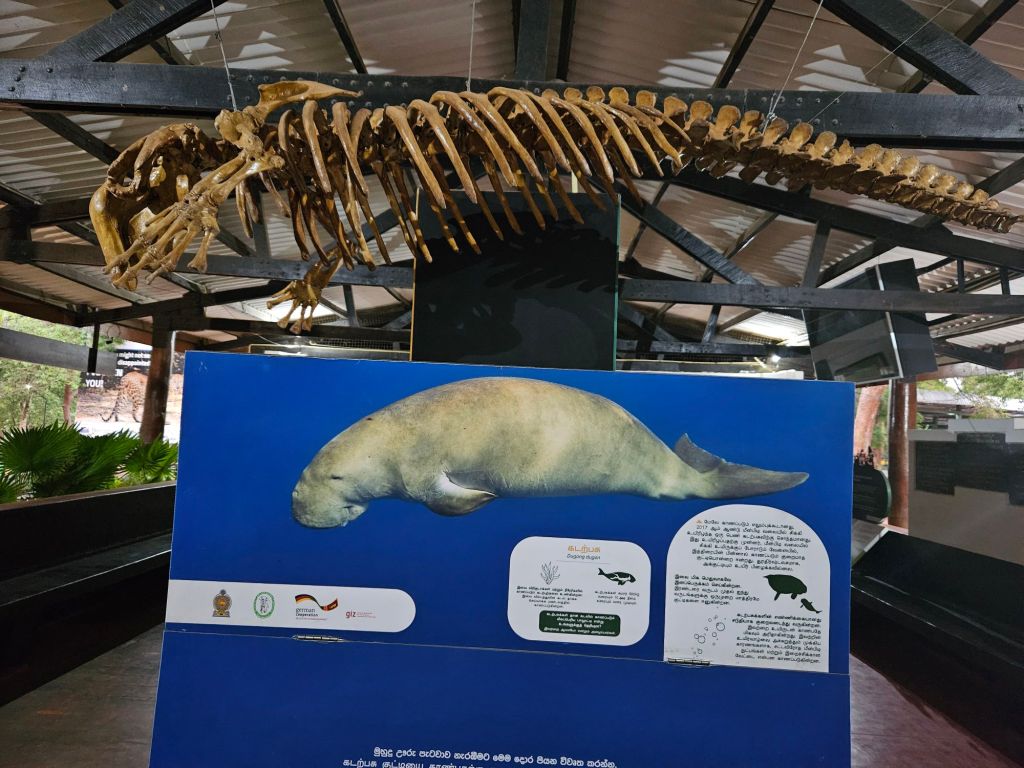
They also had a Dugong, which are the largest herbivorous marine mammals in the world. I had never heard of this mammal before.
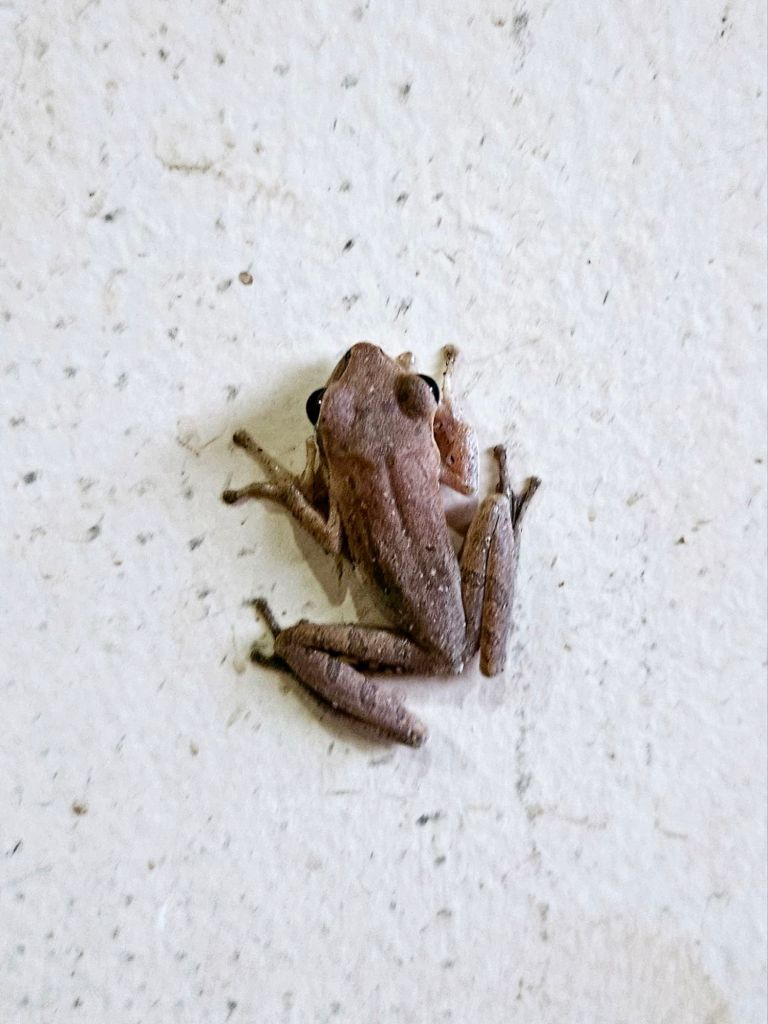
We paid a quick visit to the toilet where we saw a little frog.
And then, at 6am, it was time to go into the park. We were the second Jeep going in.
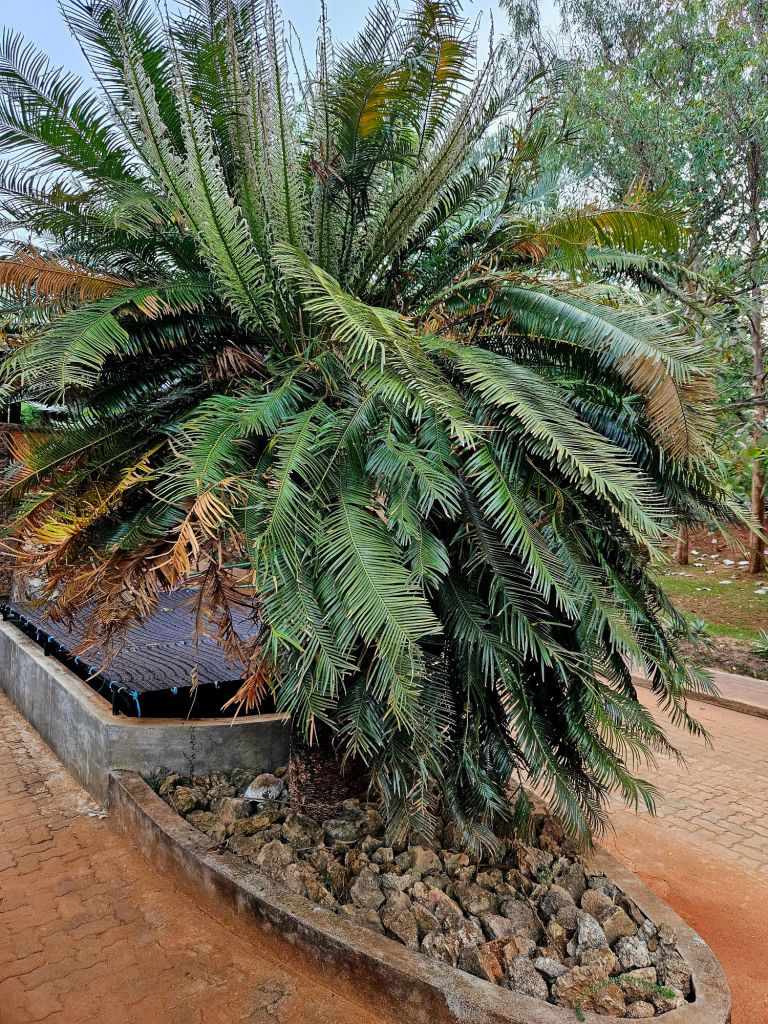
The forest / jungle is actually a secondary forest as earlier on there had been human inhabitants.
As you drive into the park, you can smell something like marujana, which is actually water hyacinth.
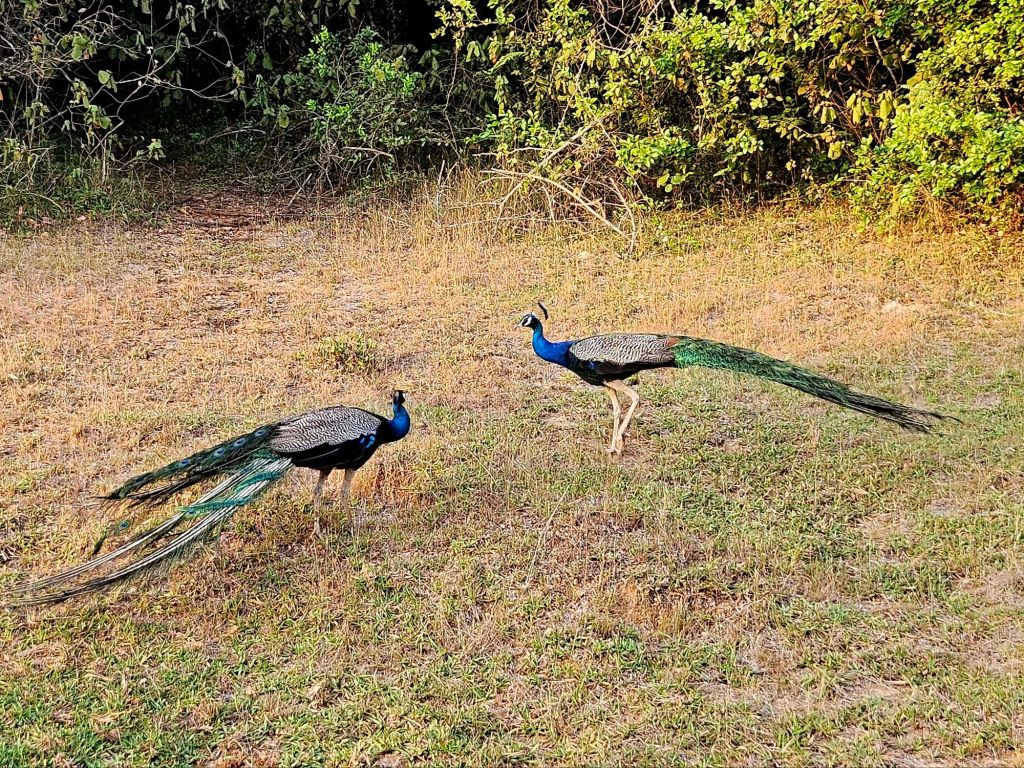
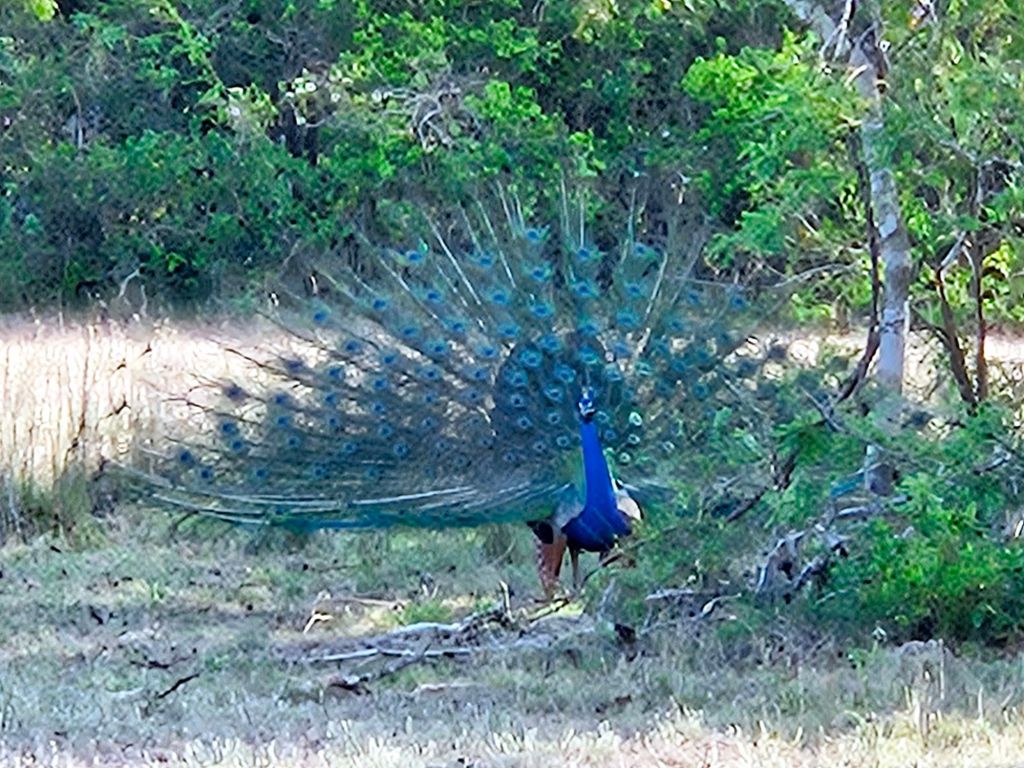
The first thing we saw were the peacocks. The blue colour you see on their bodies is actually light refraction on keratin, which is why it shimmers and changes colour.
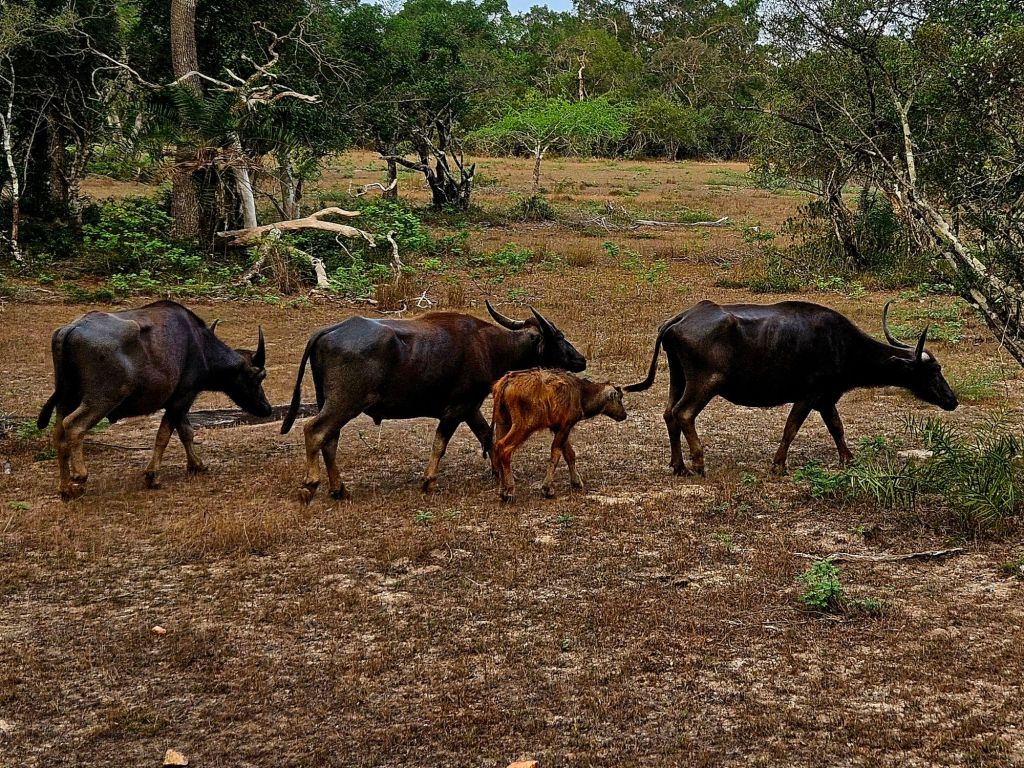
Next was a herd of water buffalo crossing the road in front of our jeep.
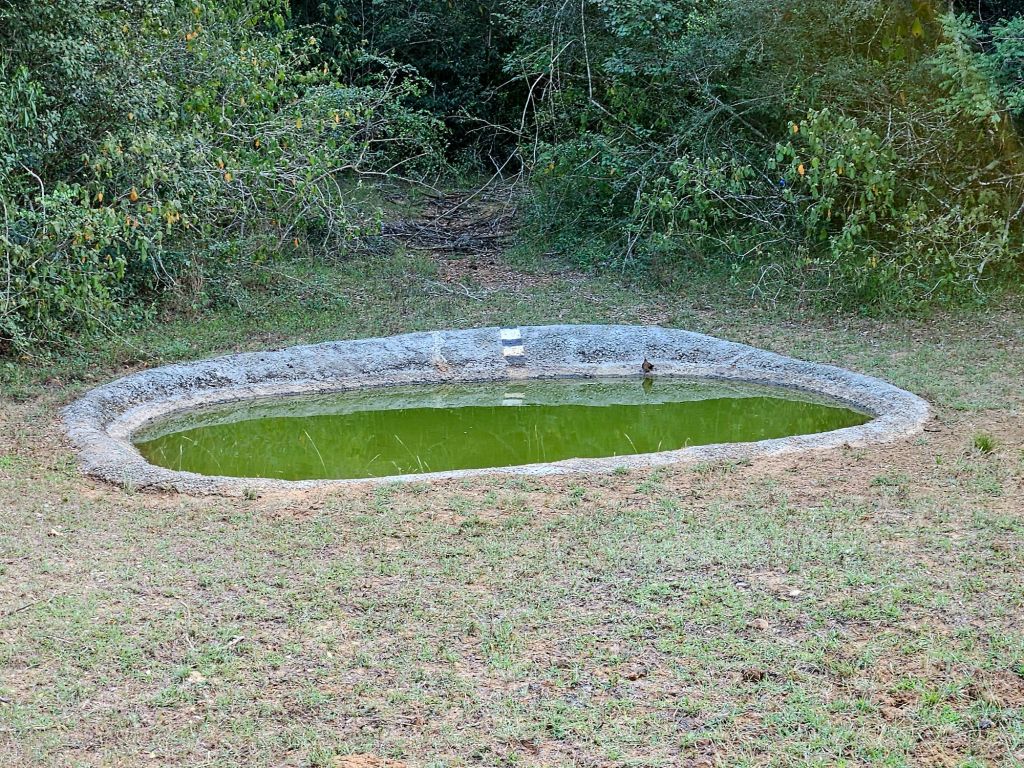
We then got news of a leopard sighting by a watering hole, but unfortunately, when we got there, he had disappeared into the undergrowth. But there was a little emerald dove by the water, and we also saw a black naped monarch dive plunge into the pool.
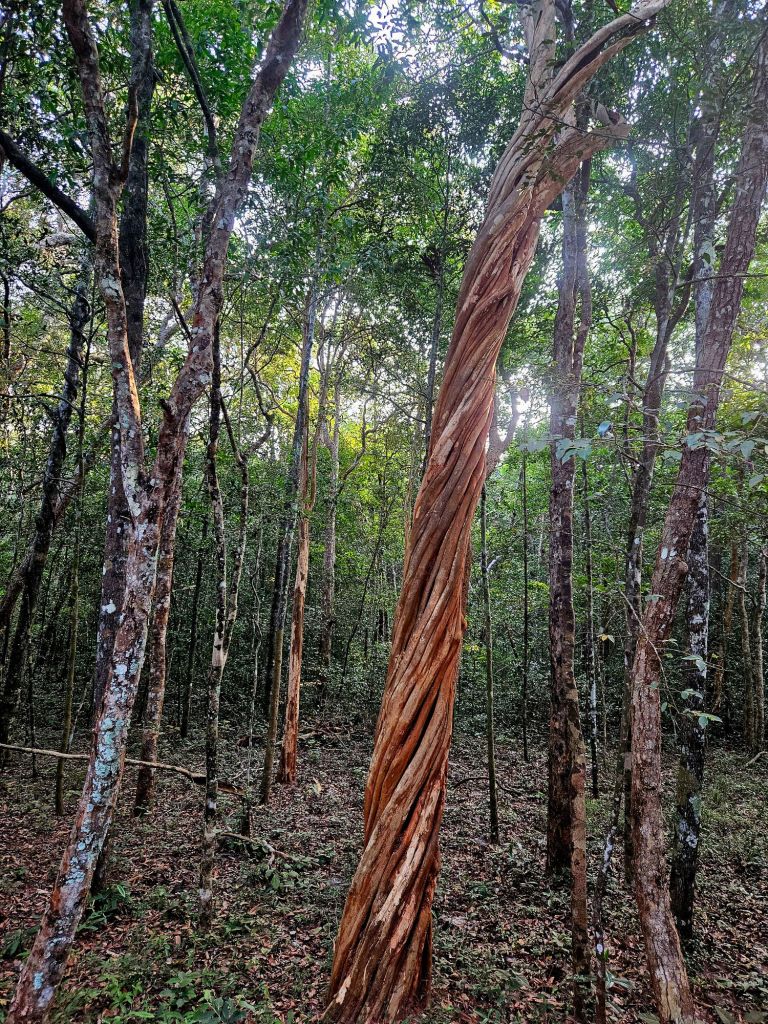
There are a lot of twisted trees in the park, and the phenomenon is known as spiral brain. The sapling trees start to twist around each other to make themselves stronger. When the outer and inner bark separate, this is known as spinal snap. A lot of the trees look very red. This is because the tree produces sap and the red dust from the road sticks to it.
As we were spending the whole day in the park, we made our way into the centre part, which is a good 90 minute drive from the entrance. The jeeps are only allowed to go a maximum of 25km/ hrs in the park – most of the time this isn’t possible anyway, especially as the paths get really narrow.
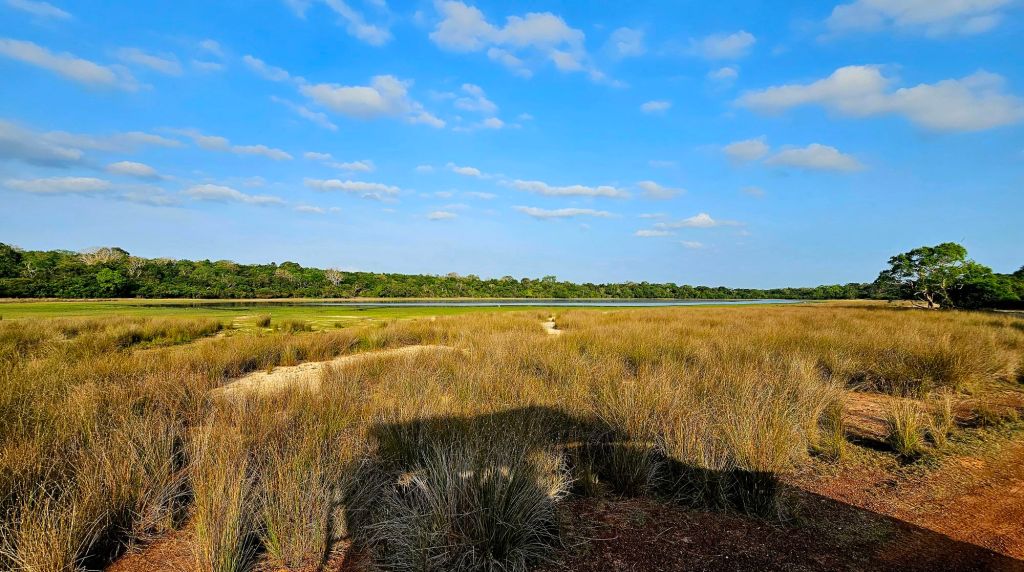
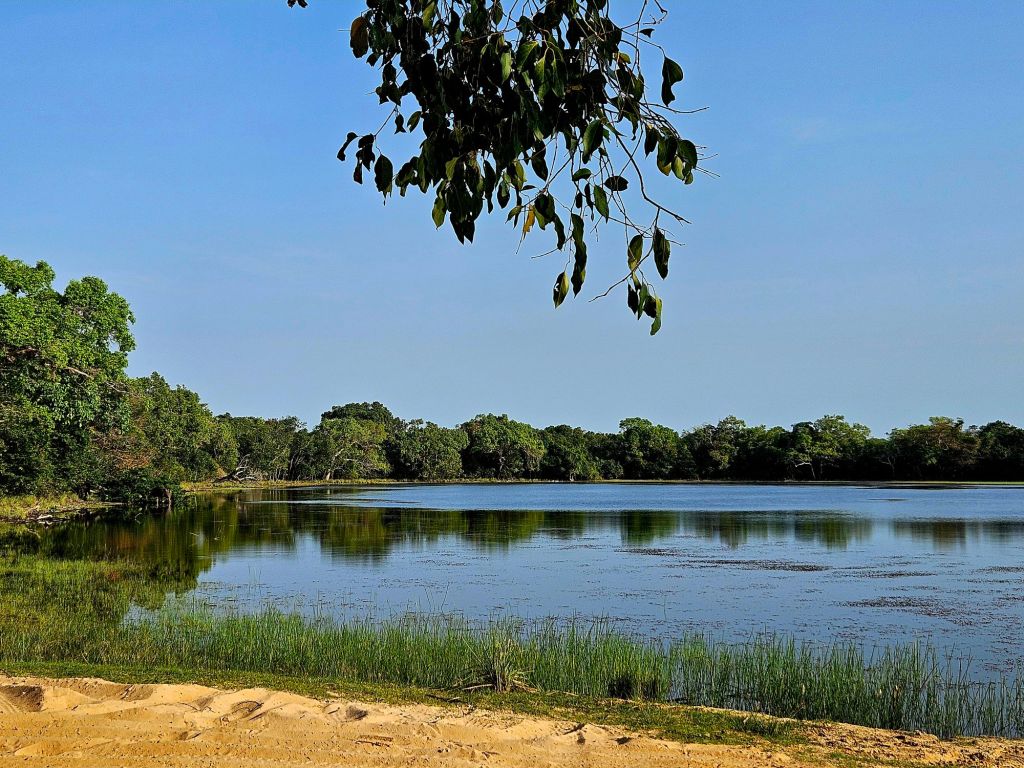
Within the park, there are around 40 -50 villus. These are natural sand rimmed water basins that fill with rain water. Some of them are freshwater, but others are very salty. They range from 300m to 2km in diameter.
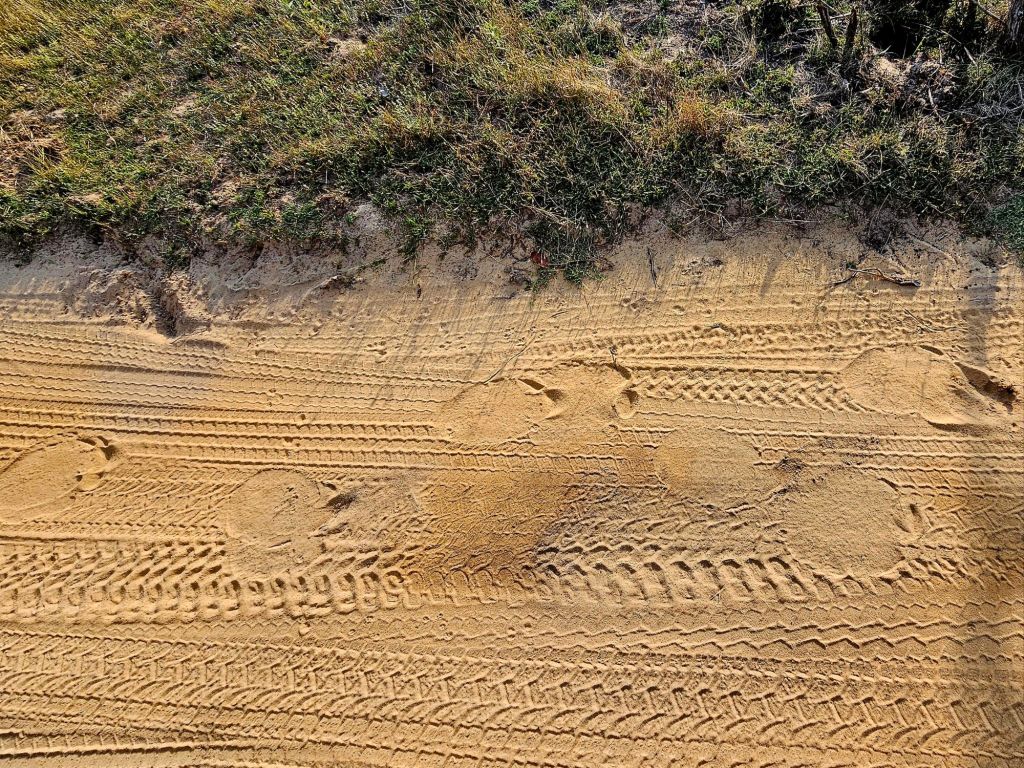
We saw some elephant tracks on the side of the road. If you take the diameter of the front foot and times it by 2.5, this is the height of the elephant from the floor to its shoulder.
And then a peacock decided to show off and give us a colourful display.
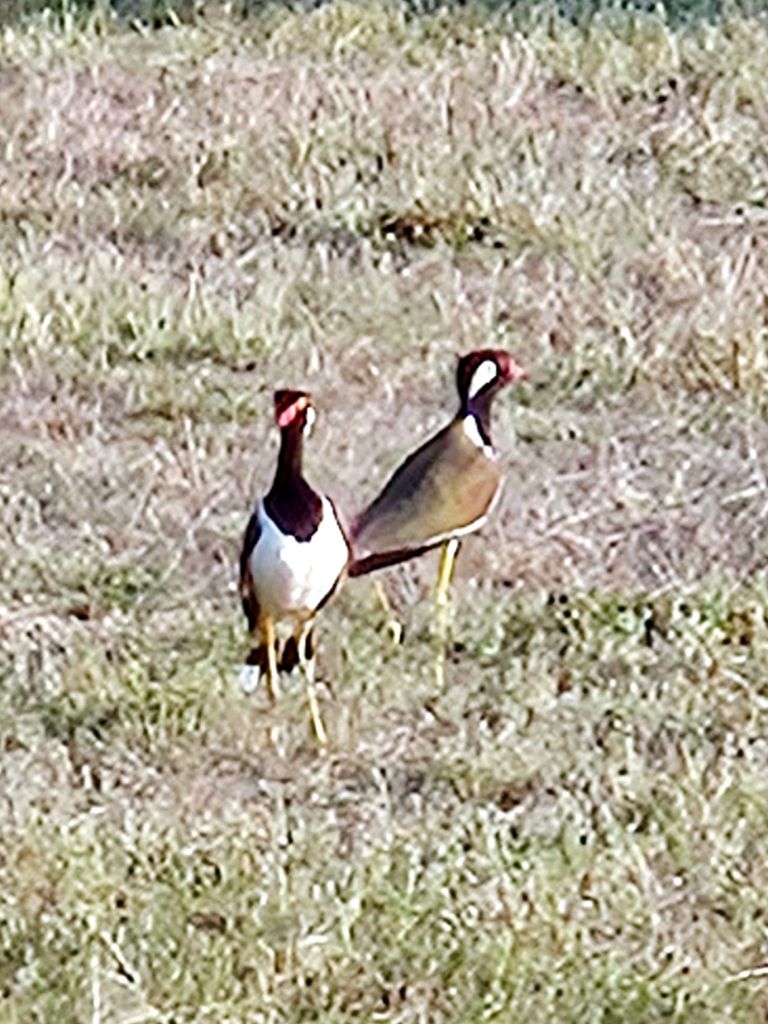
There were a few red rattled lapwing around, but they move quite quickly, so it was hard to get a photo of them. We also saw a little grebe in the water.
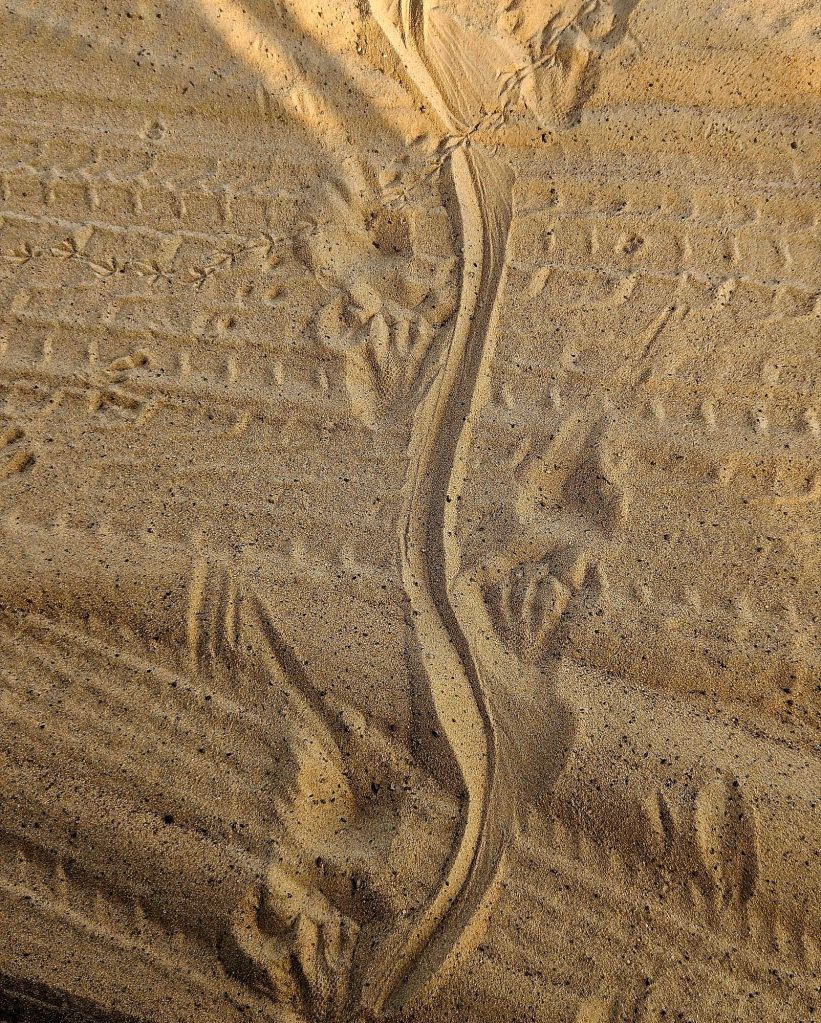
On the ground, we saw a crocodile track. When the crocodiles walk, they tend to walk a few steps and then take a little break, but they can easily walk 2-3km.
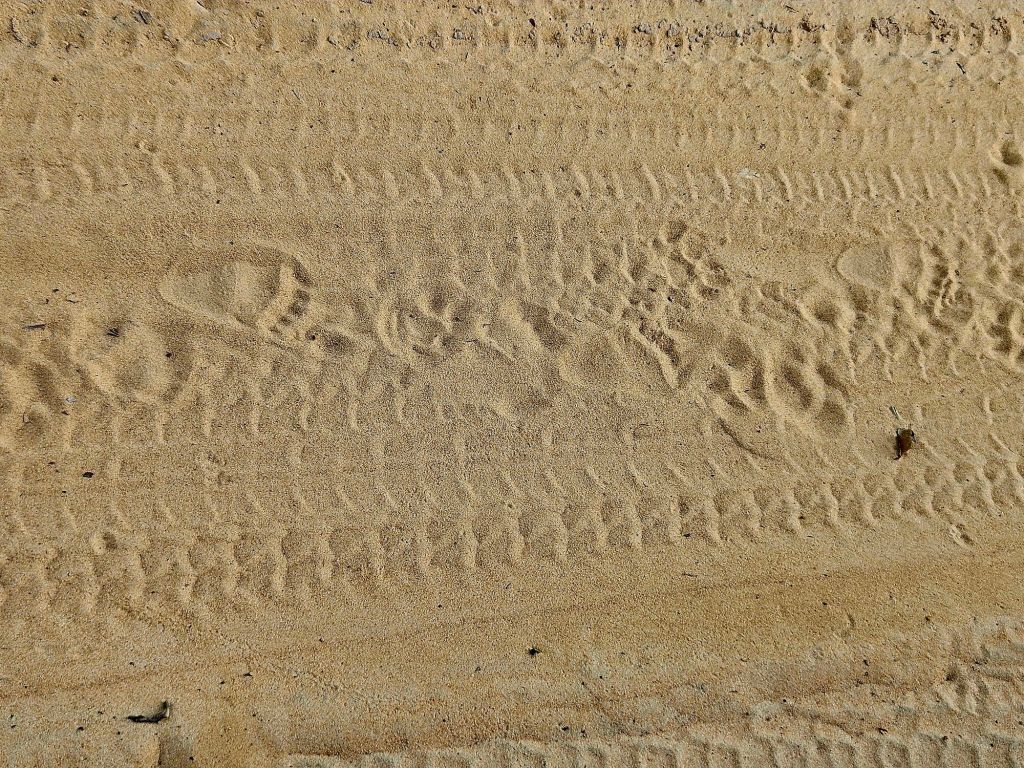
The next tracks we saw were leopard tracks with bear tracks on top, but they were a few hours old.
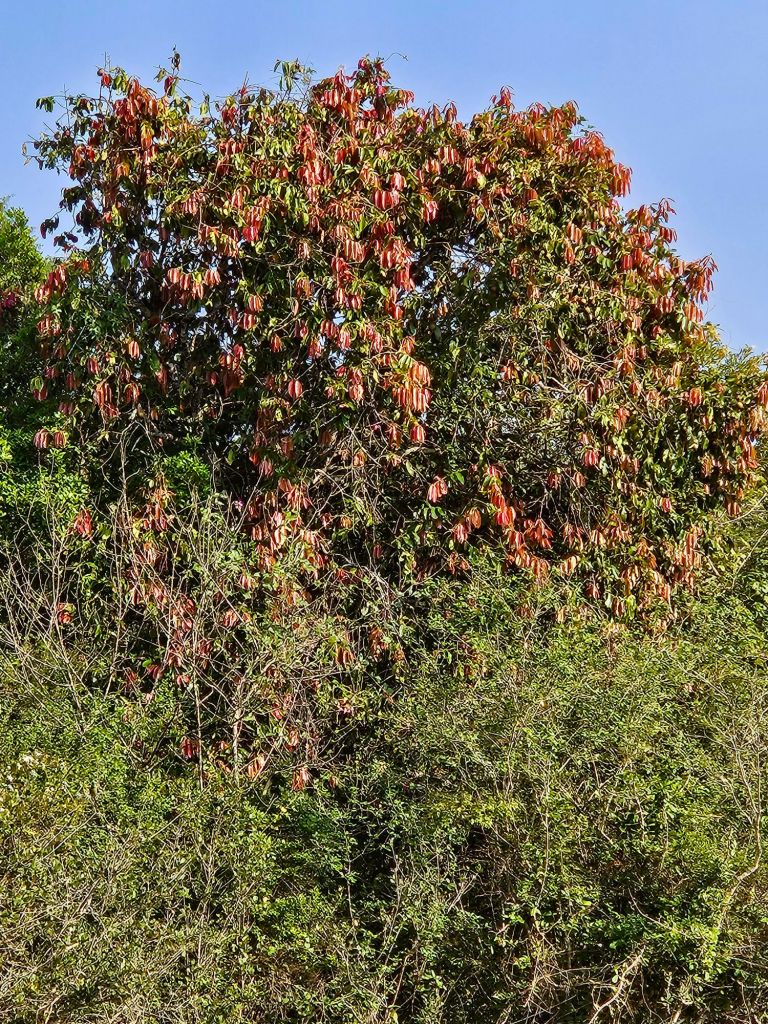
One of the trees that is quite common in the central area of the park is the red beech tree. The red leaves are a result of anticholinergic pigmentation. To a lot of animals, the red leaves look like dead leaves, so they don’t eat them.
We moved on to another area known as the lotus pond to try and pick up a phone signal to get some information from other guides. The water looks salty, but it is actually very high in mineral content. Because of this, the trees can’t survive, and they die.
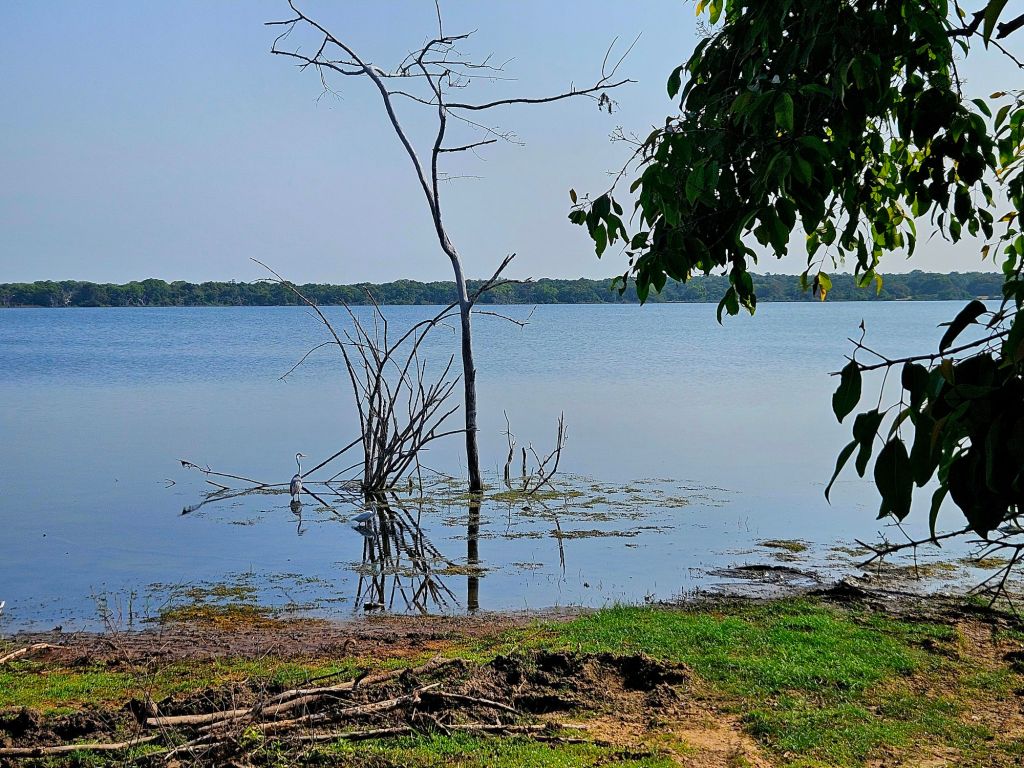
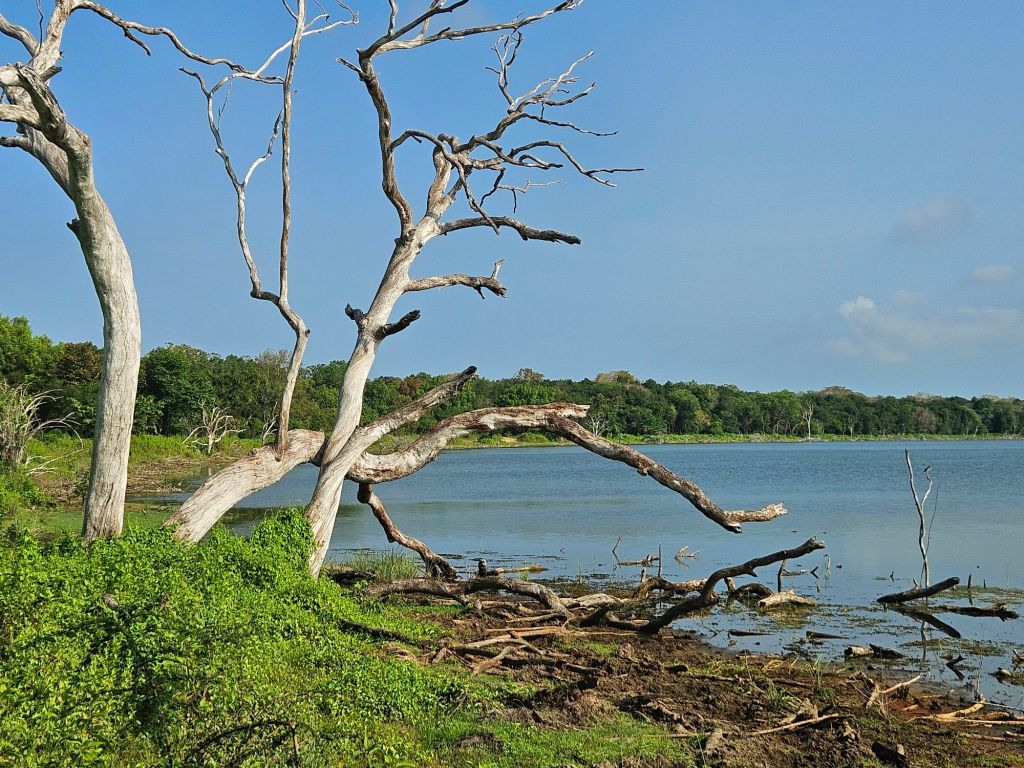
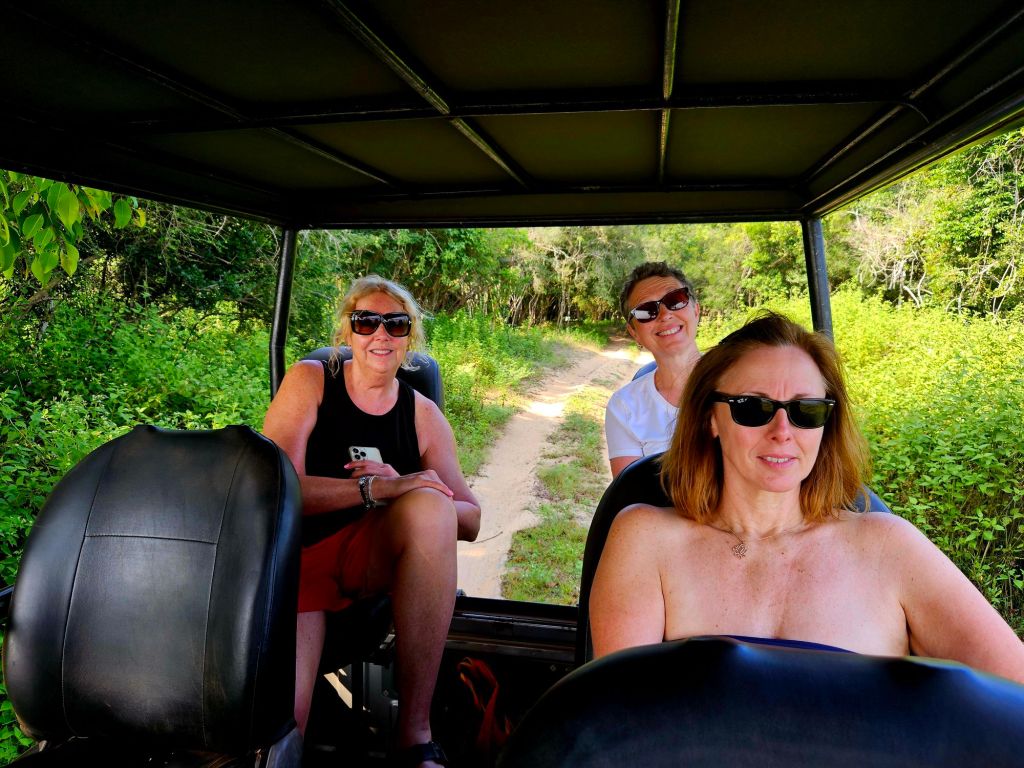
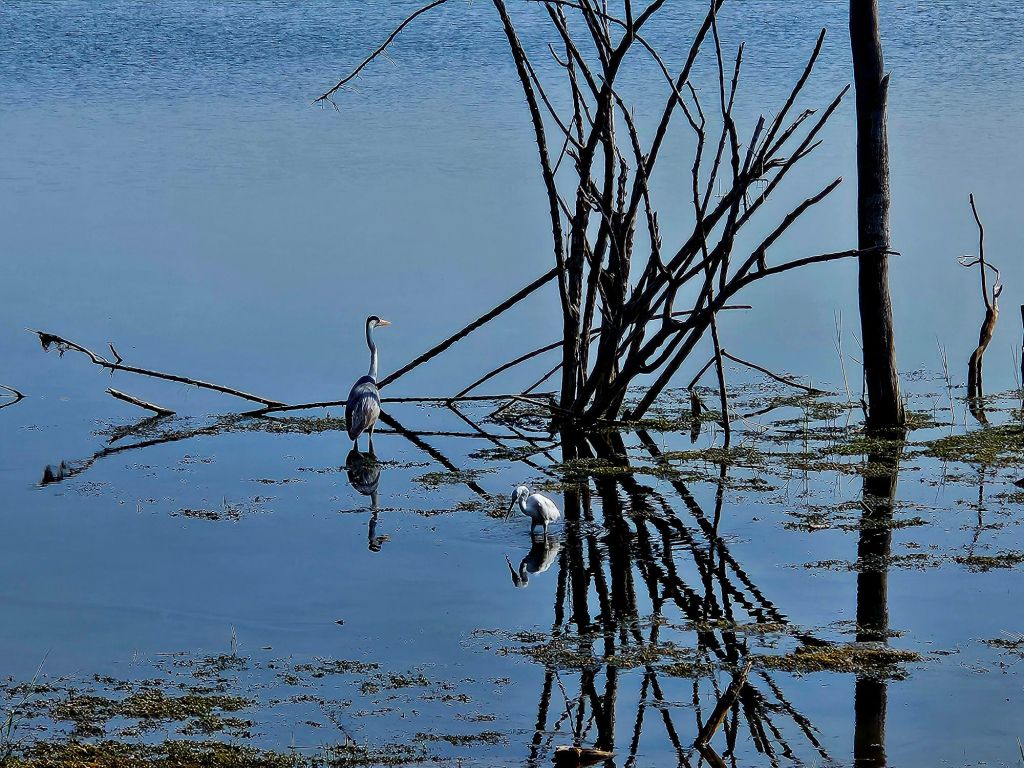
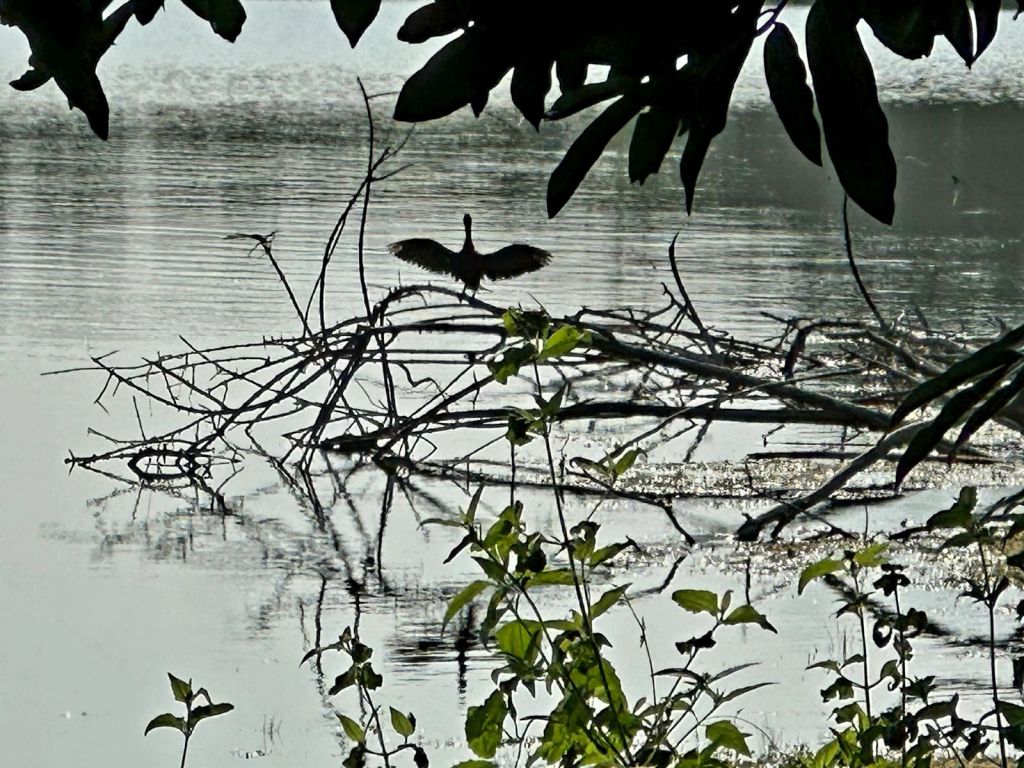
Here, we saw a grey heron and a small egret, as well as a cormorant drying its wings.
We didn’t find out any useful information, so we drove round a few more paths in the search for a leopard.
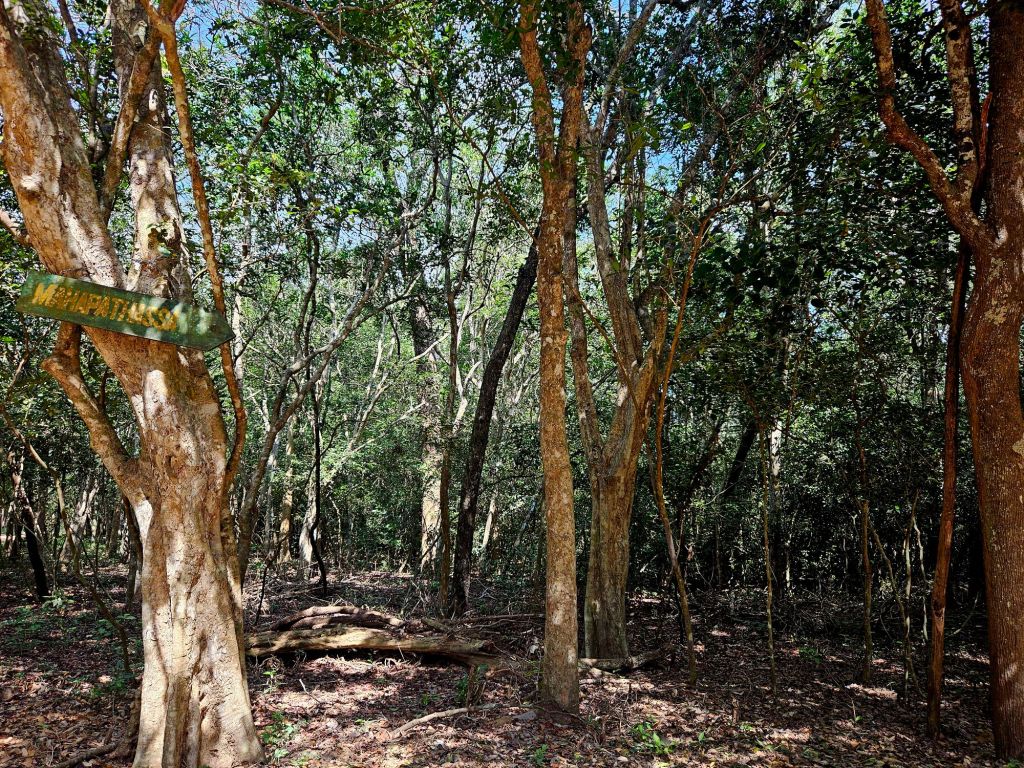
After a while, we reached the rest place, so we decided to get out and stretch our legs.
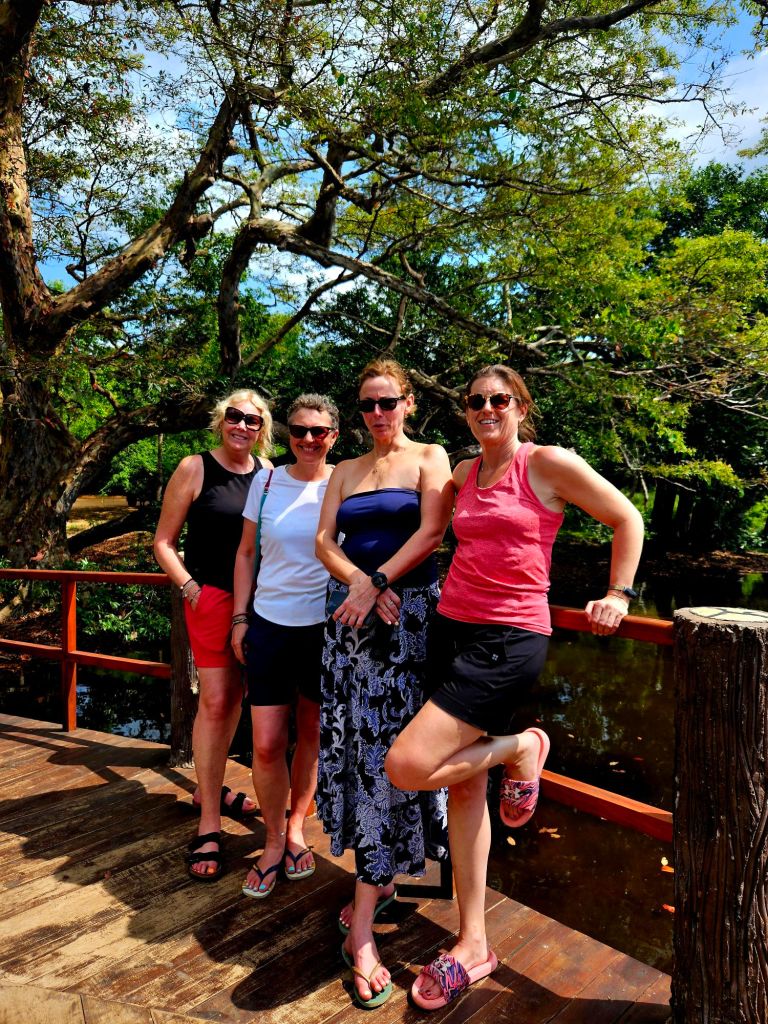
We walked to the viewing point area and looked out over another large villus.
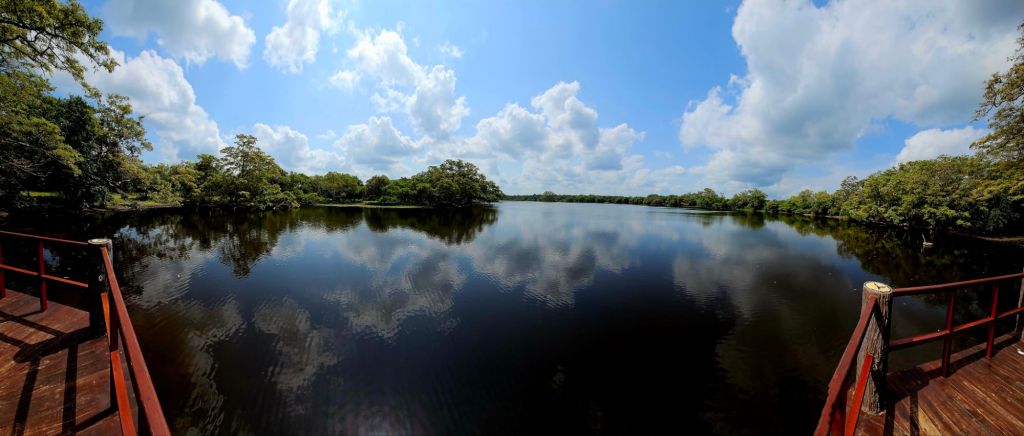
In the water, we could see a couple of crocodiles, and then one came up onto the land. This species of crocodile is 240 million years old. The spines on its back are all hollow bones, and the warm blood comes up theses and cools down.
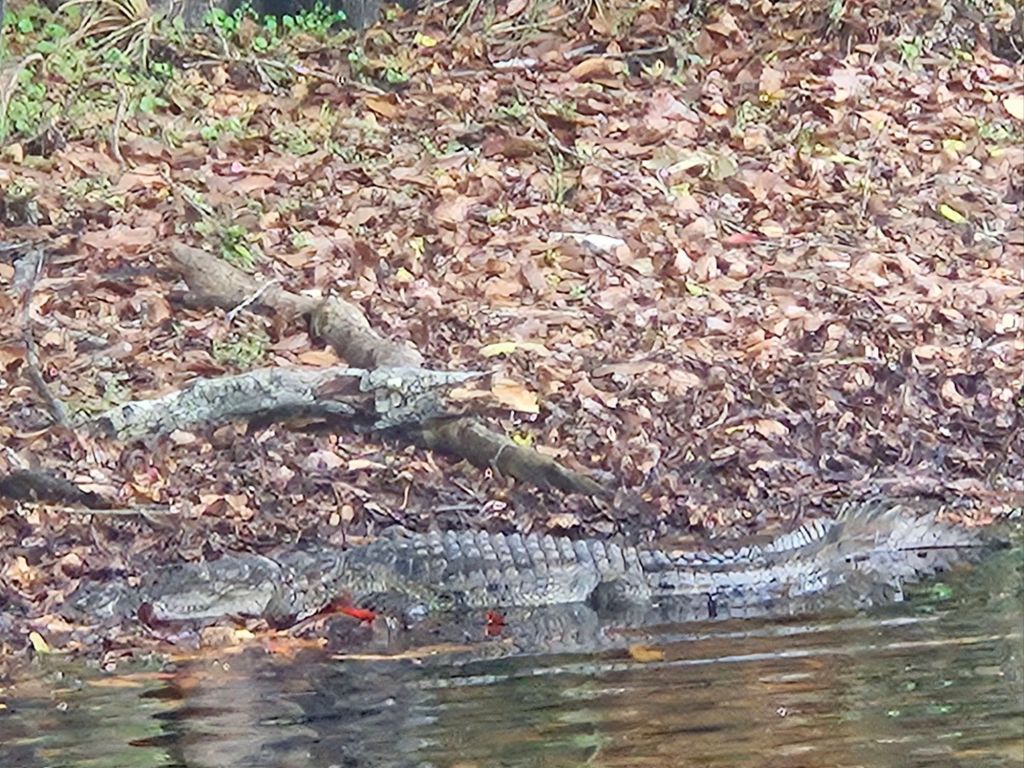
Some of the trees around the villus are kumbuk trees. People believe that this tree can cure heart disease. The roots go down into the water and deionise it. In Theravada Buddhism, kumbuk is said to have been used as the tree for achieved enlightenment,or Bodhi by the tenth Buddha.
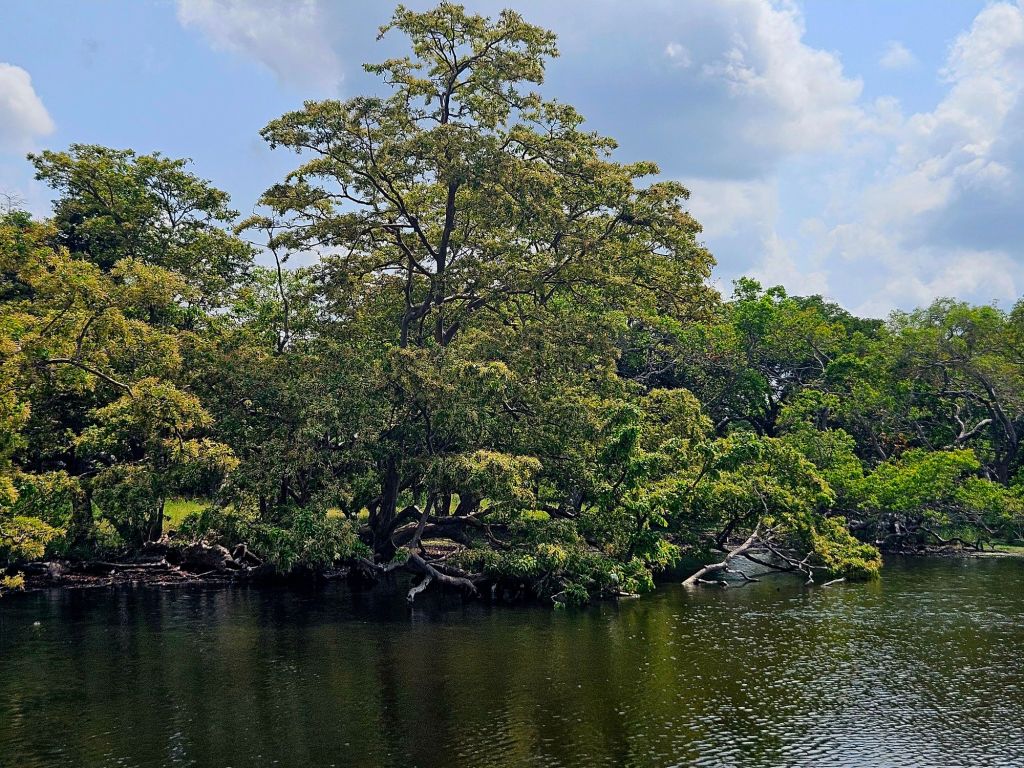
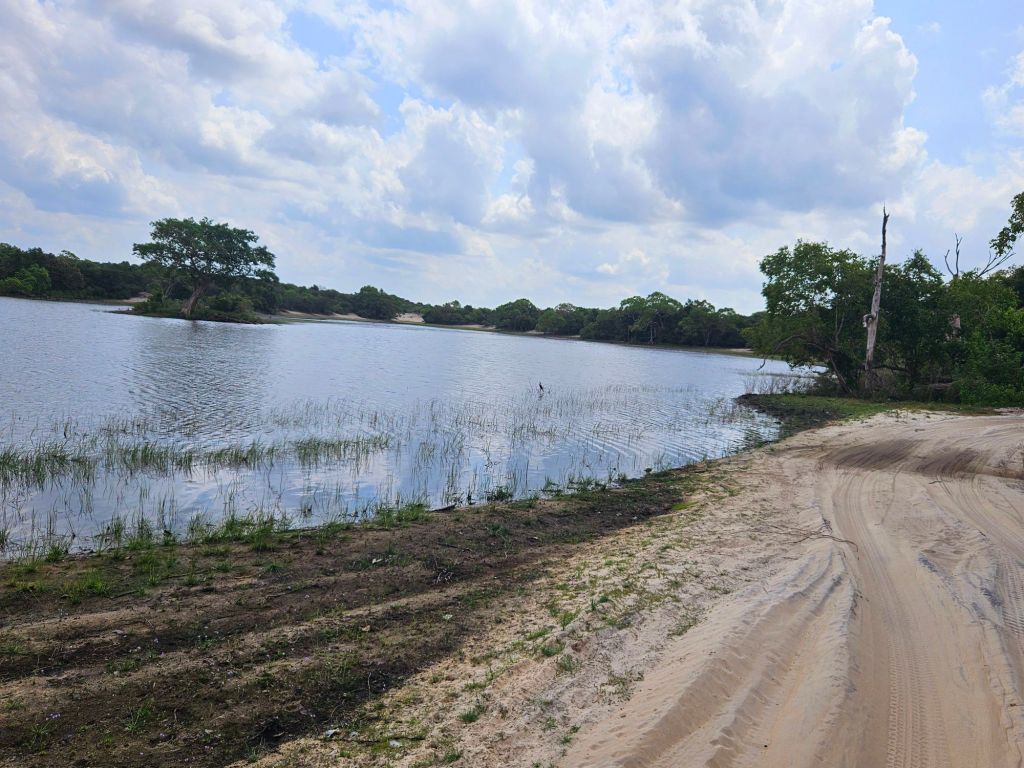
After our break, we headed to another villus. In the dry season, this whole area completely dries up apart from a very small watering hole.
Throughout the jungle, there are loads of termite mounds, and some of them are huge. The termite queen can actually live for 35 years.

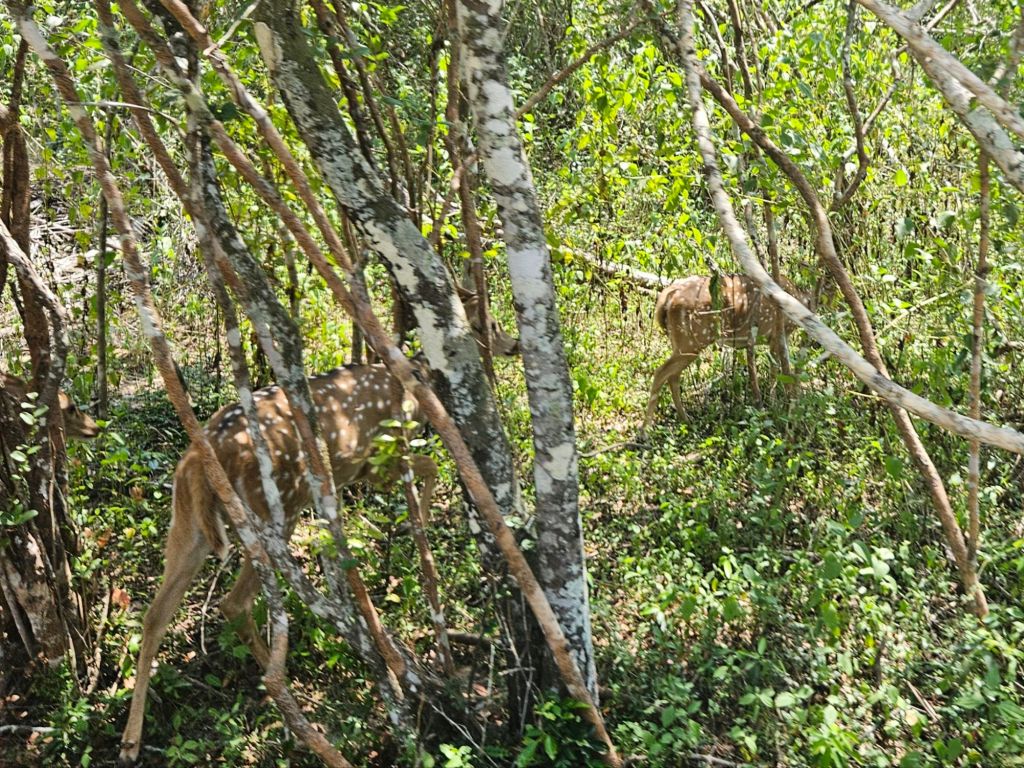
We passed some more spotted deer, and then we saw another medicinal tree known as the ‘birthing tree’. The bark of this tree is stripped off and used to clean the room in which a mother will give birth. The bark is left in the room for around a week, and the essential oils detoxify the environment.

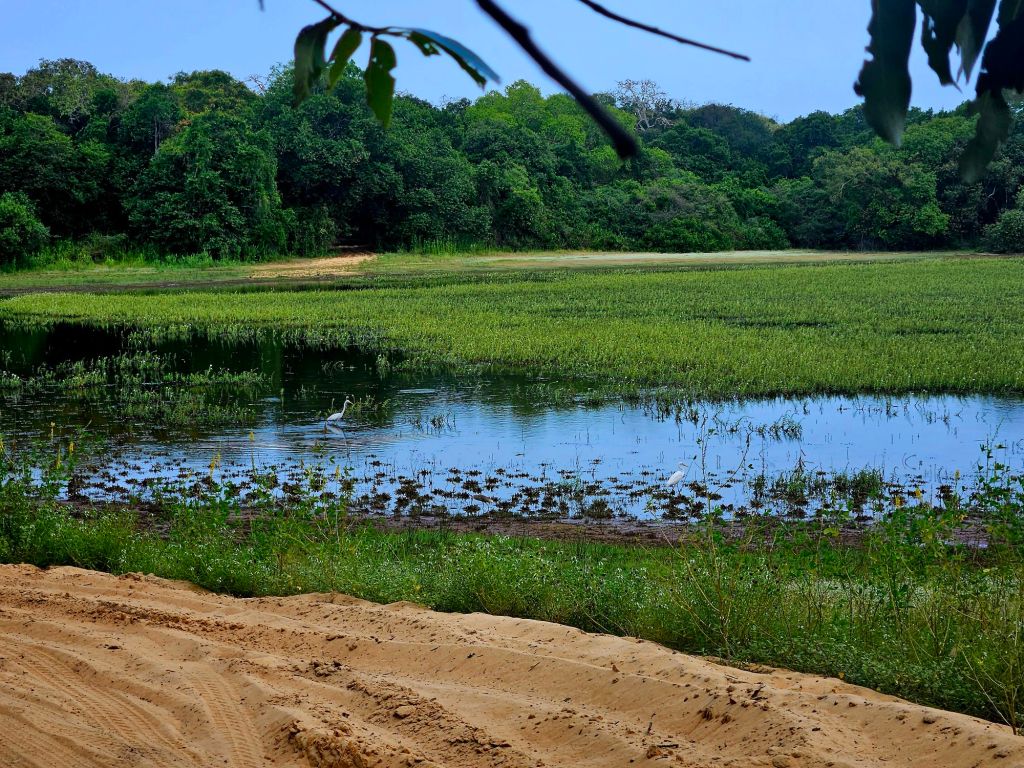
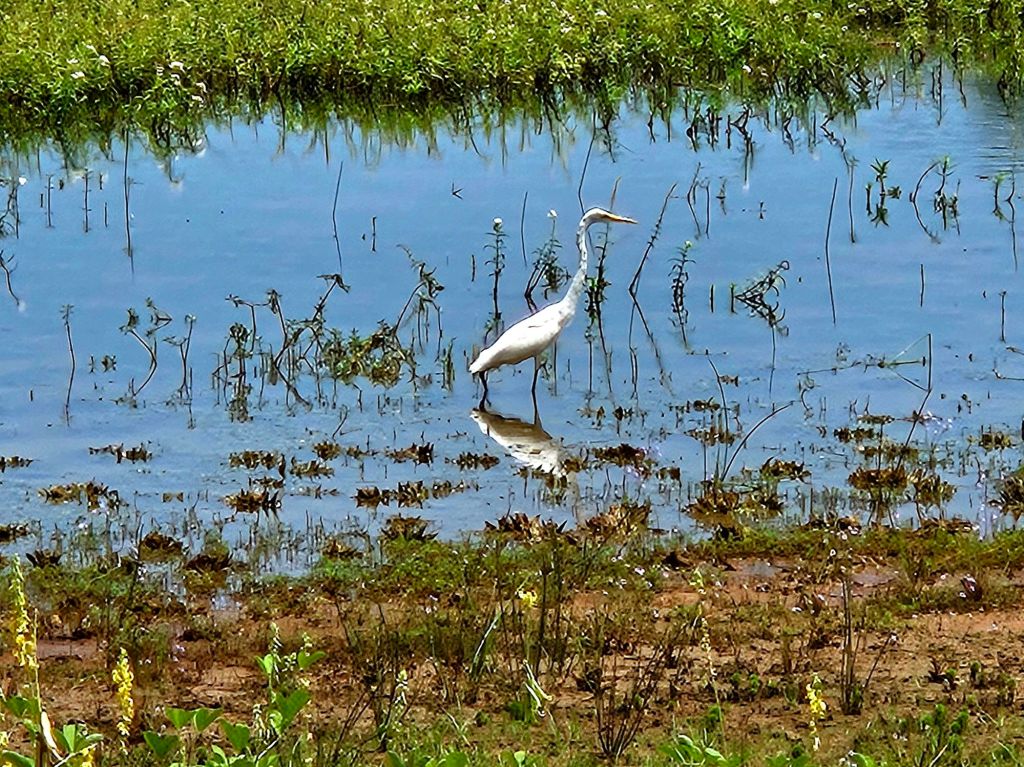
We drove to another villus known as the Kumutu villus, or water-lily lake, and there was a great egret there.
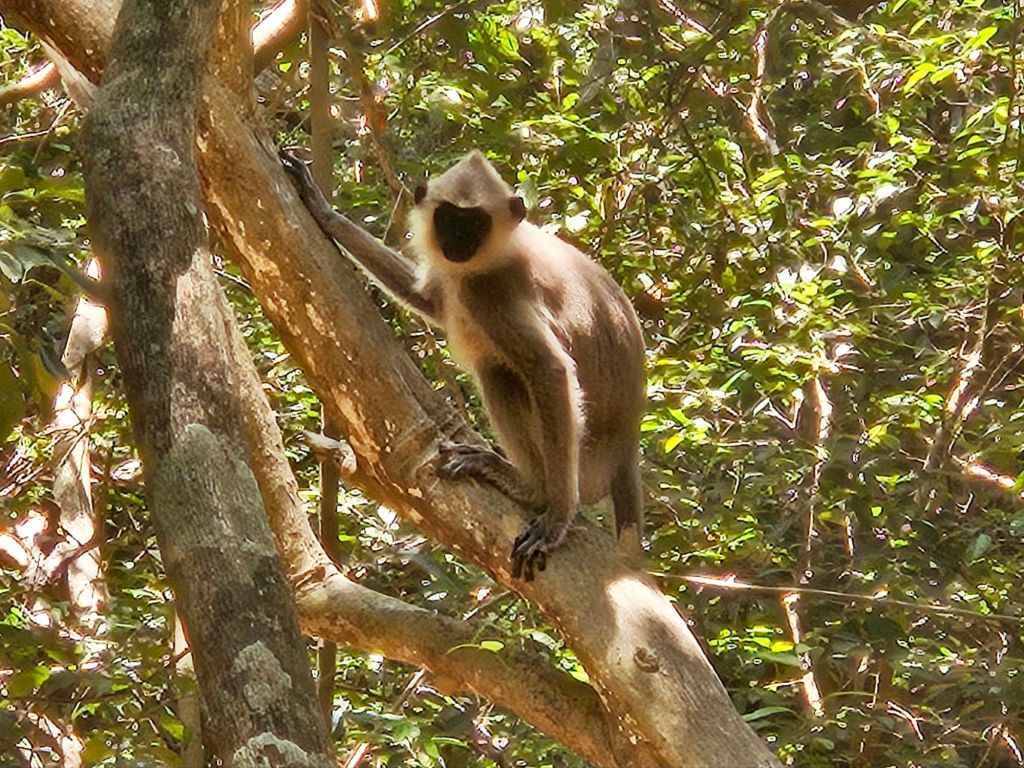
As we drove along, we saw some grey langur monkeys in the trees. They’ve got really black faces and you almost can’t see their eyes.
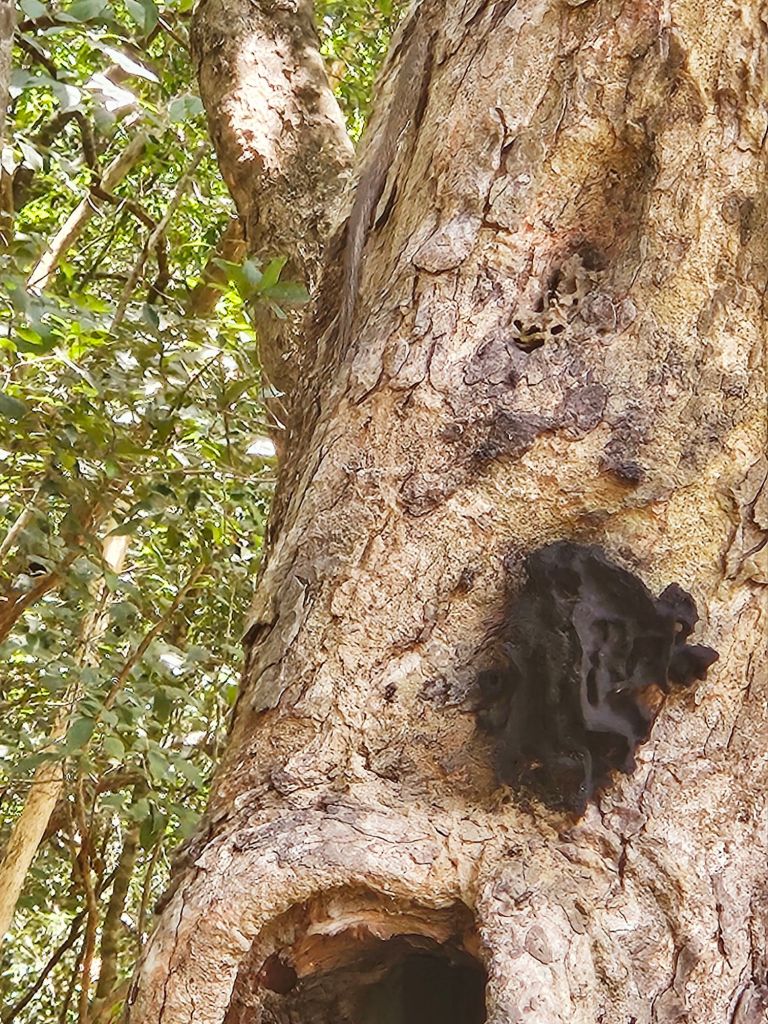
The next thing we spotted was a land monitor climbing up a tree. They either climb the tree to get more sun and warm up or to raid a birds nest.

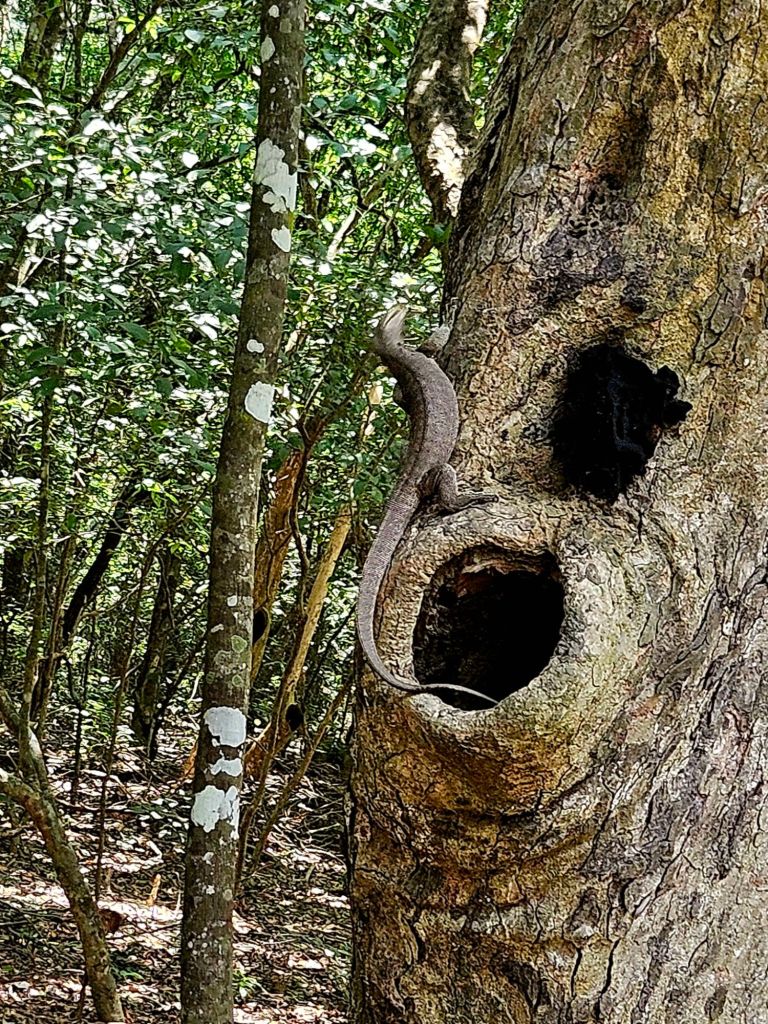
On the tree was a black termite mound. These are the only processional termites found in Sri Lanka, i.e., they walk in a line like ants.
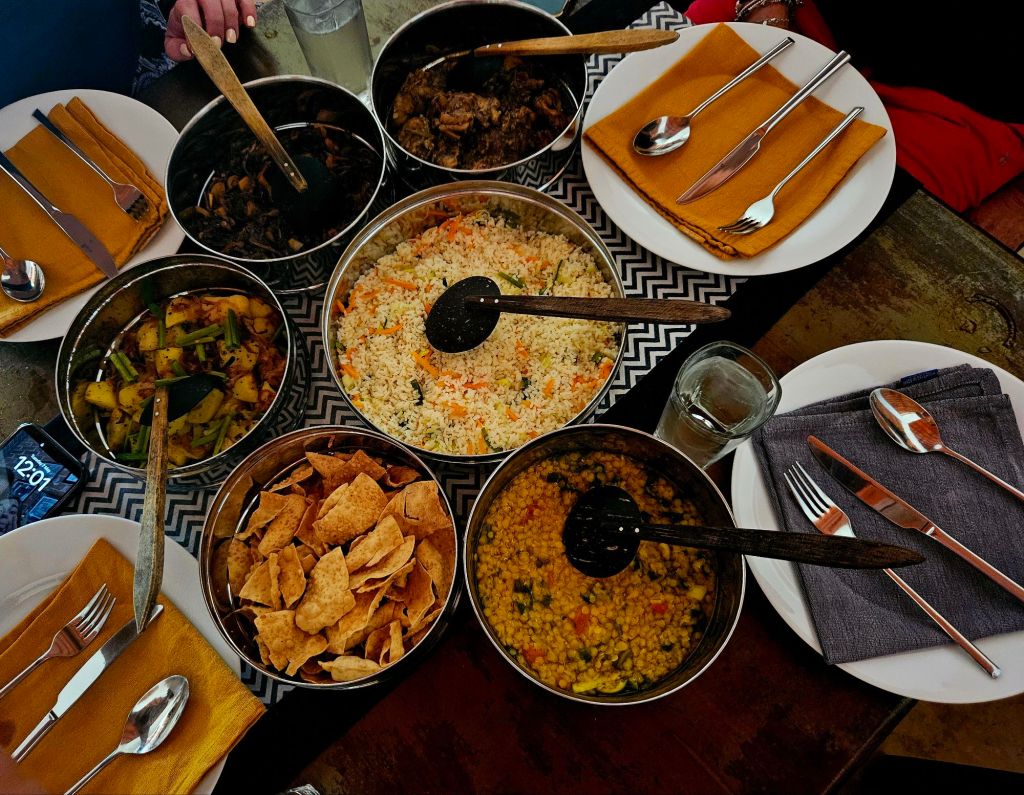
And then it was time for lunch, we had already had breakfast in the Jeep earlier in the day. For lunch, we went back to the rest place so we could get out and stretch our legs. Lunch was another delicious mixture of traditional dishes – dahl, aubergine, potato, chicken, mixed vegetable fried rice and poppdoms.
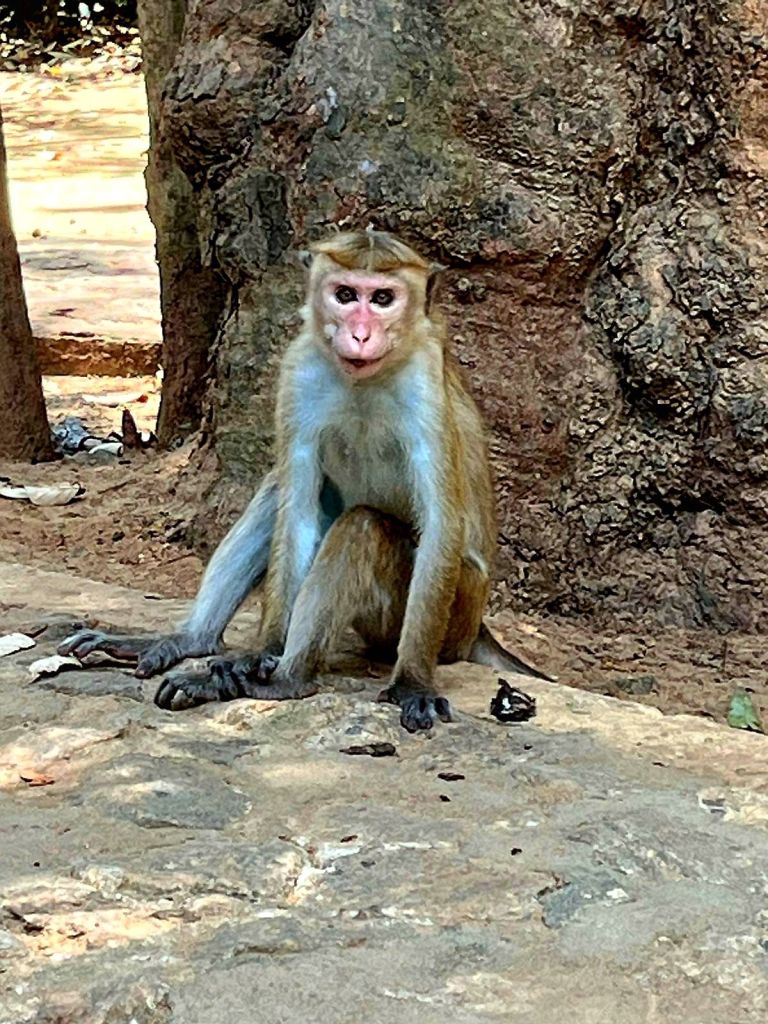
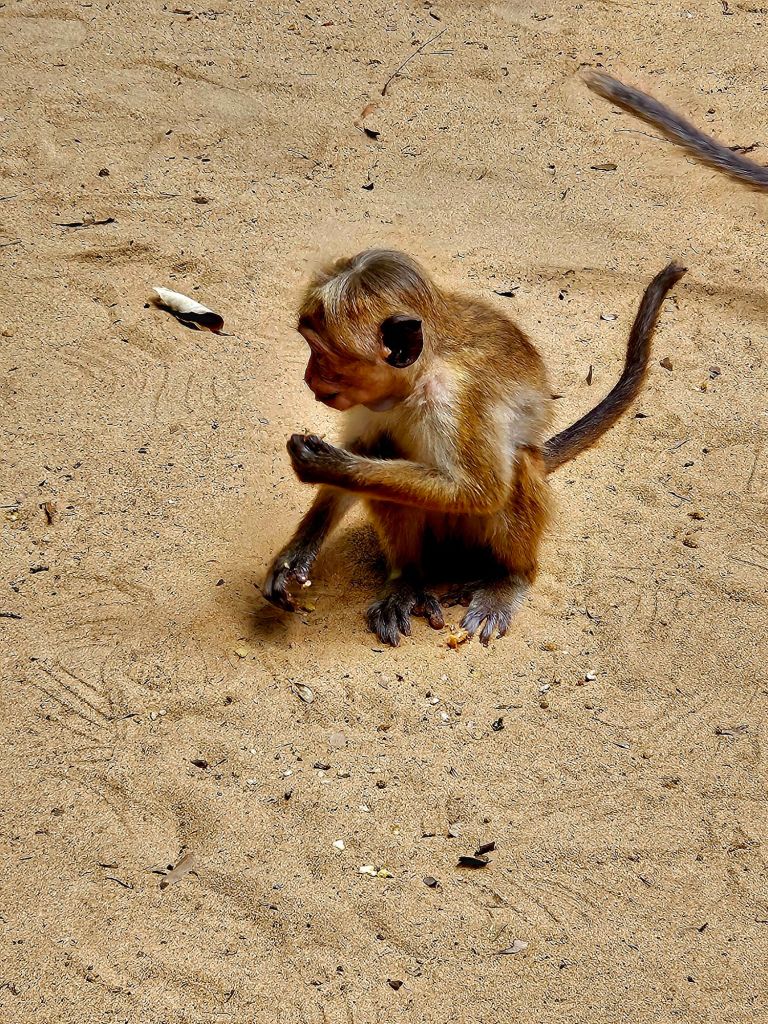
As we were inside having lunch, the macaque monkeys were having fun outside in our jeep.
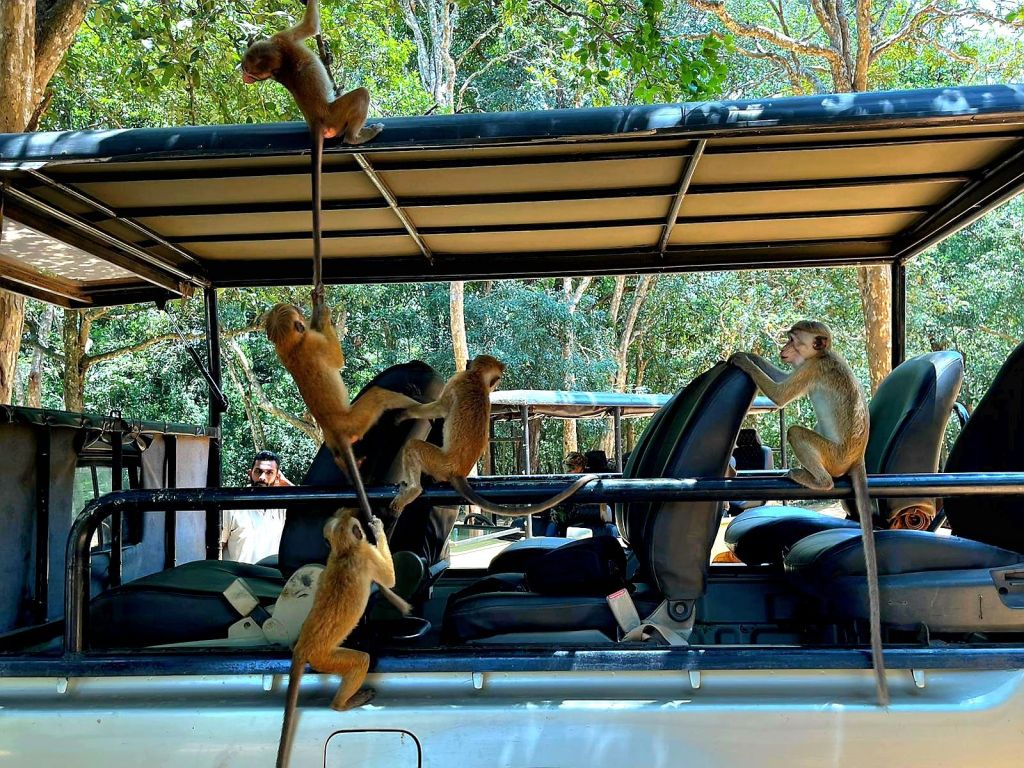
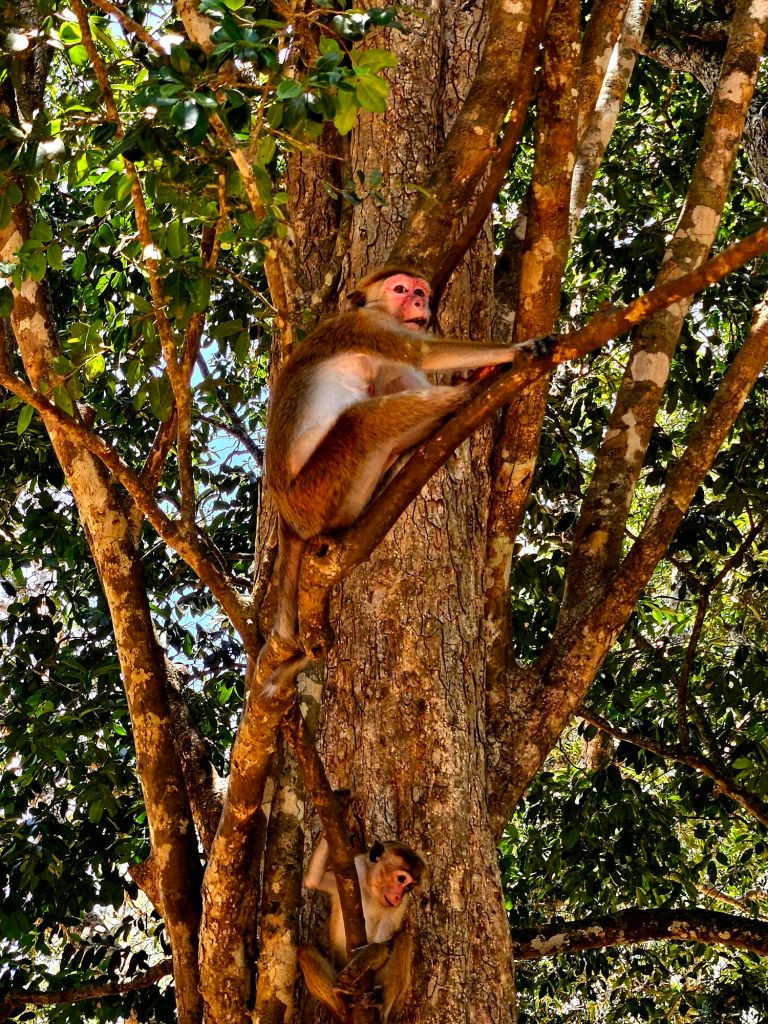
They were very inquisitive, mischievous, and very sweet.
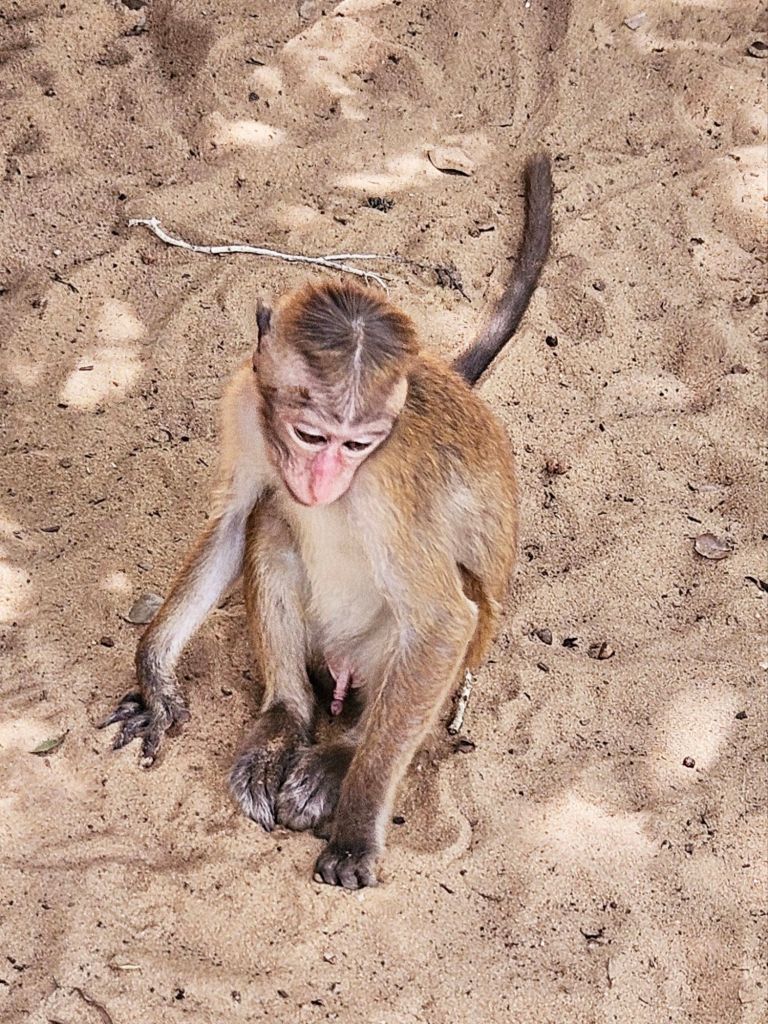
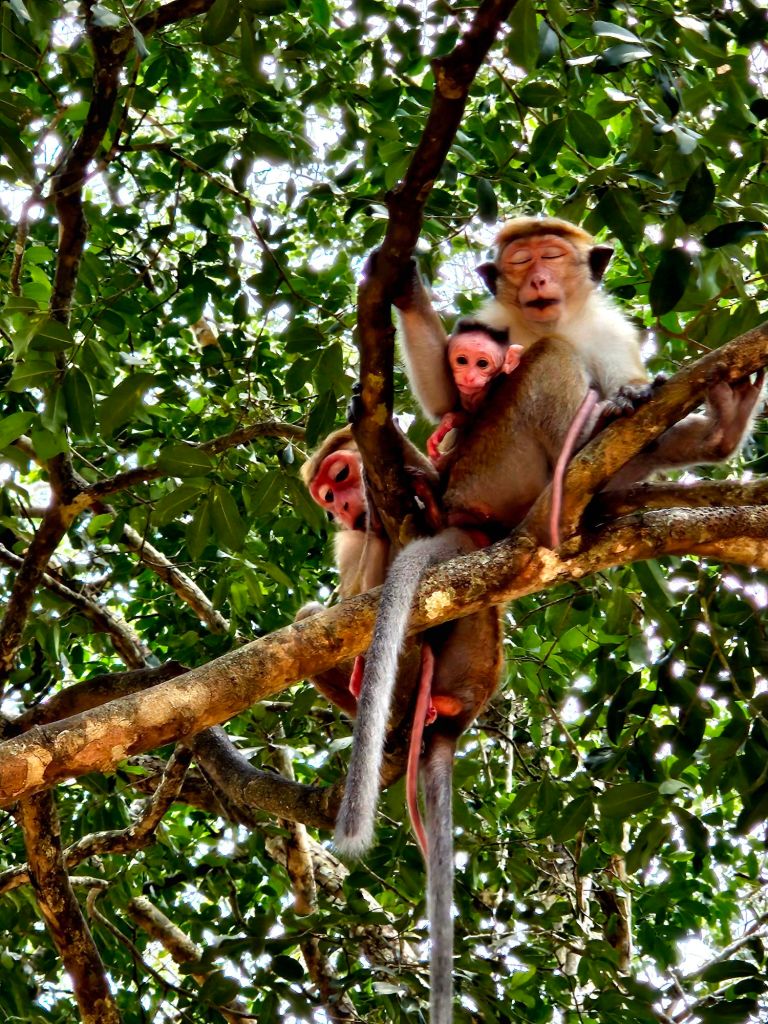
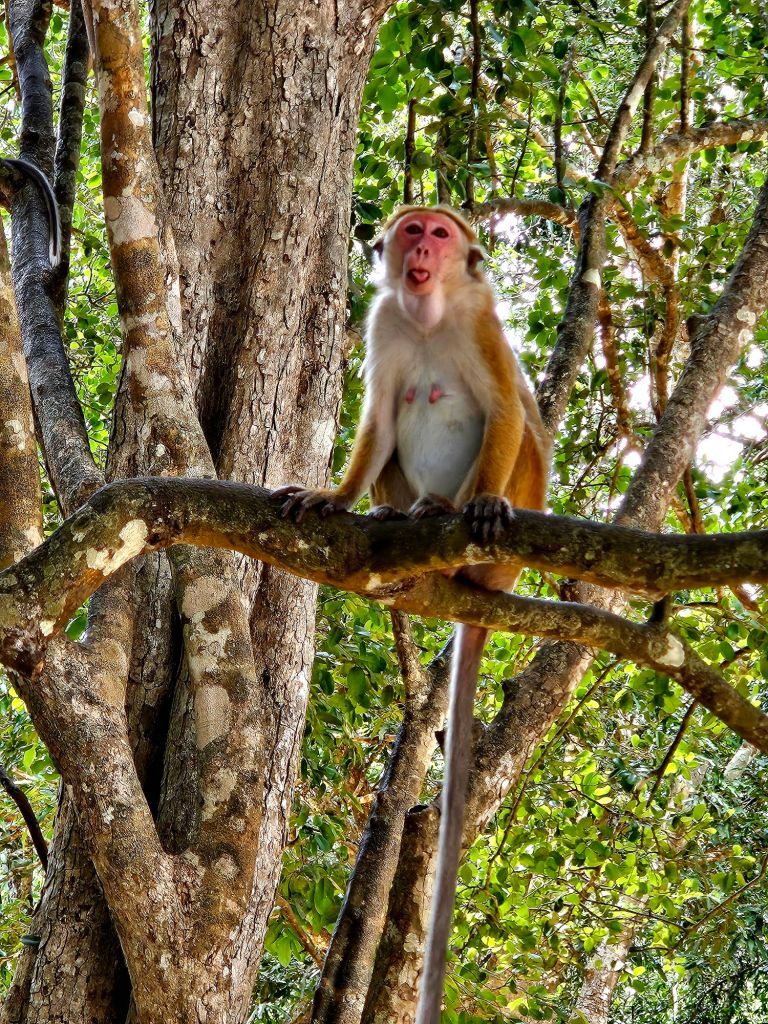

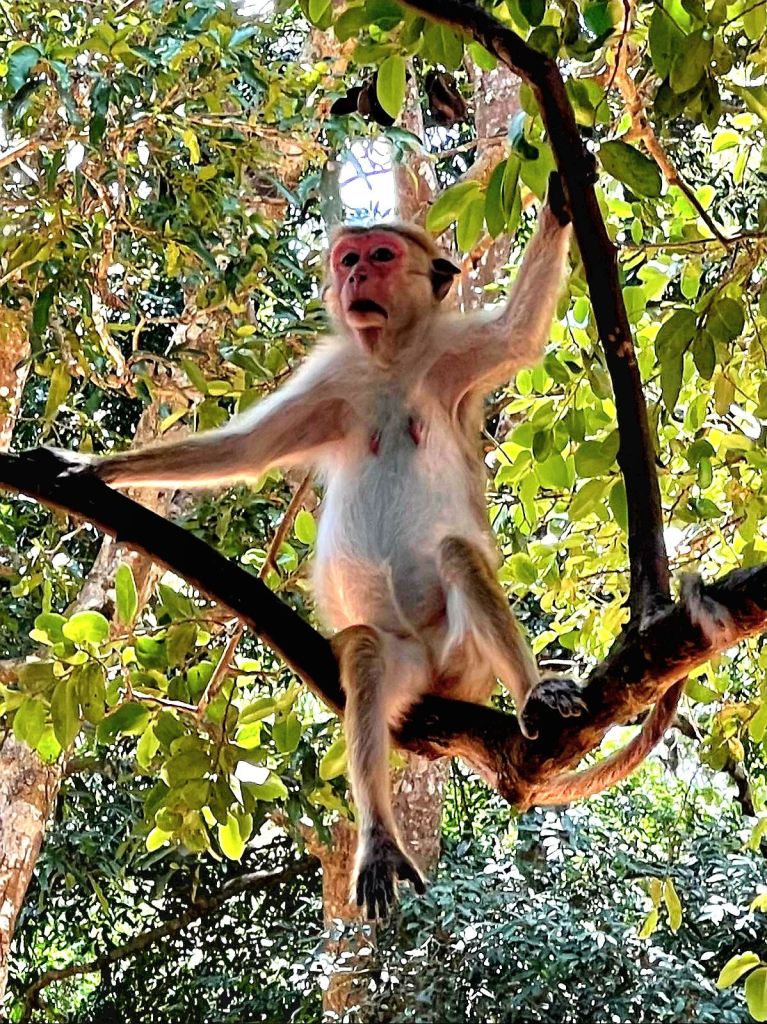
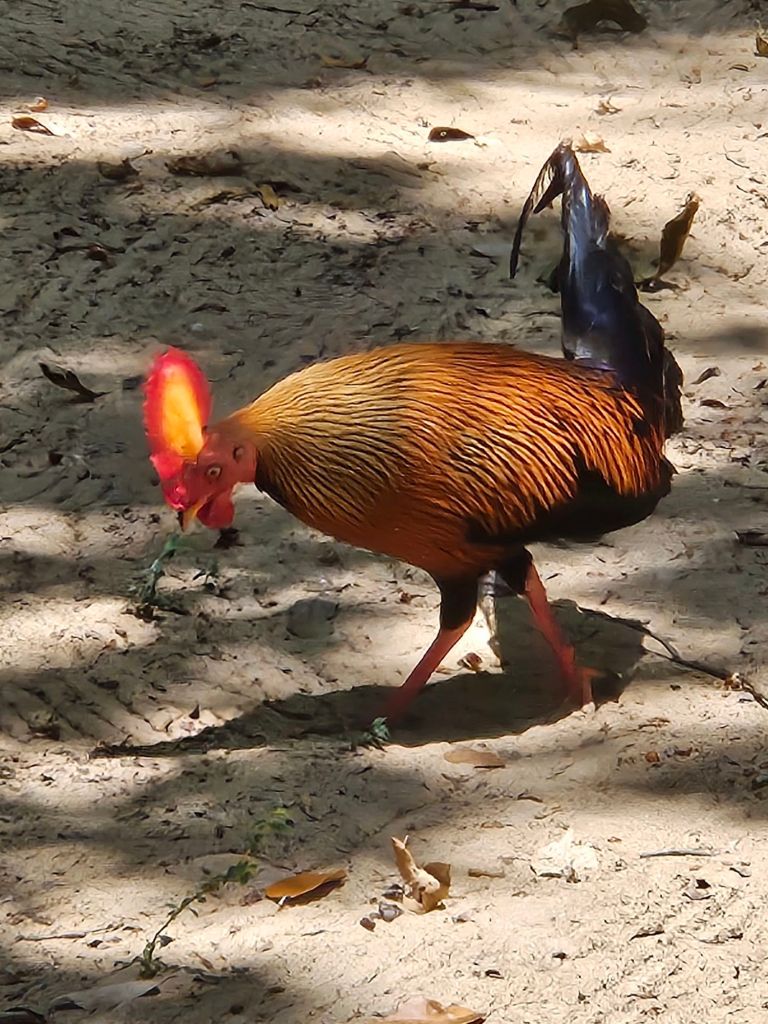
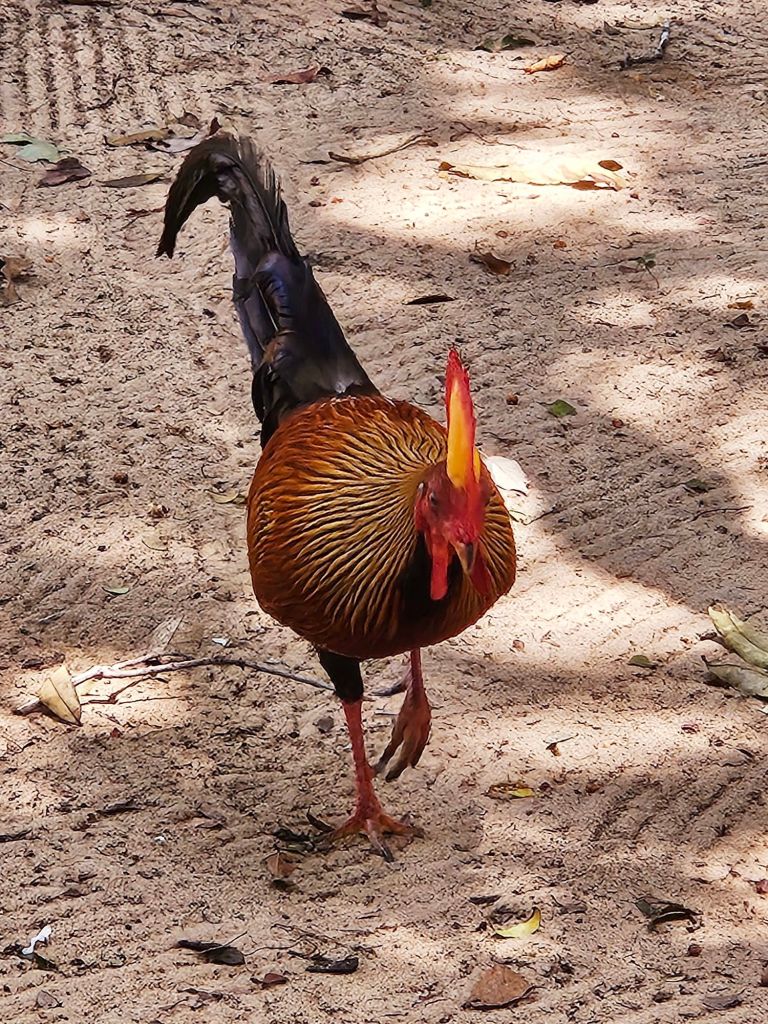
There were a few jungle fowl walking around the rest area, too. This bird is the national bird of Sri Lanka. They are the largest endemic bird of Sri Lanka, and it also captures all the colours of the Srilankan flag.
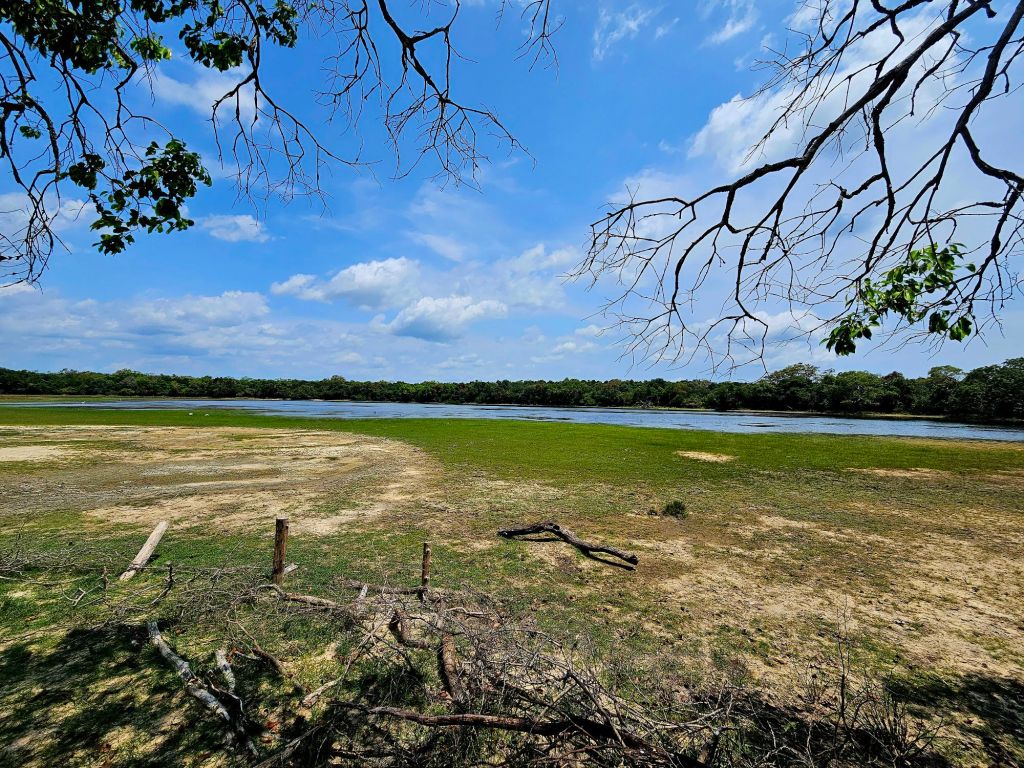
After lunch, we drove back around some of the villus in the hope of seeing leopards by the water. The area is very sandy. It used to be under water, the tectonic plates rose up and bought the sand with them. The plants all have quite shallow roots, they drop leaves which decompose, and basically they recycle themselves.
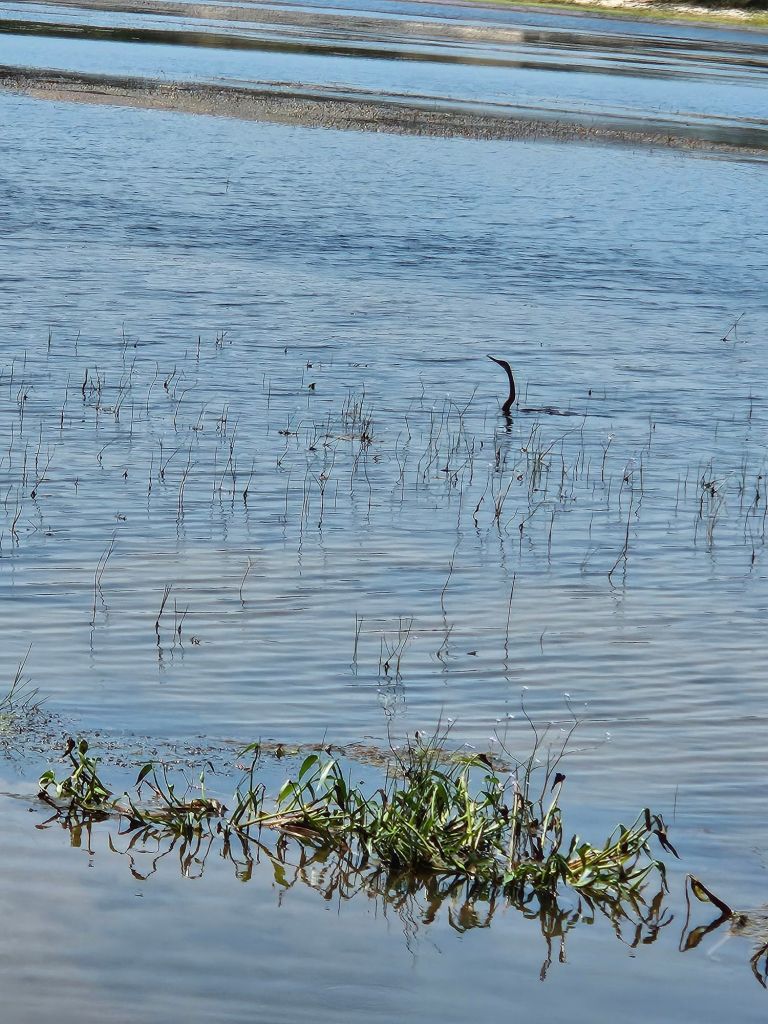
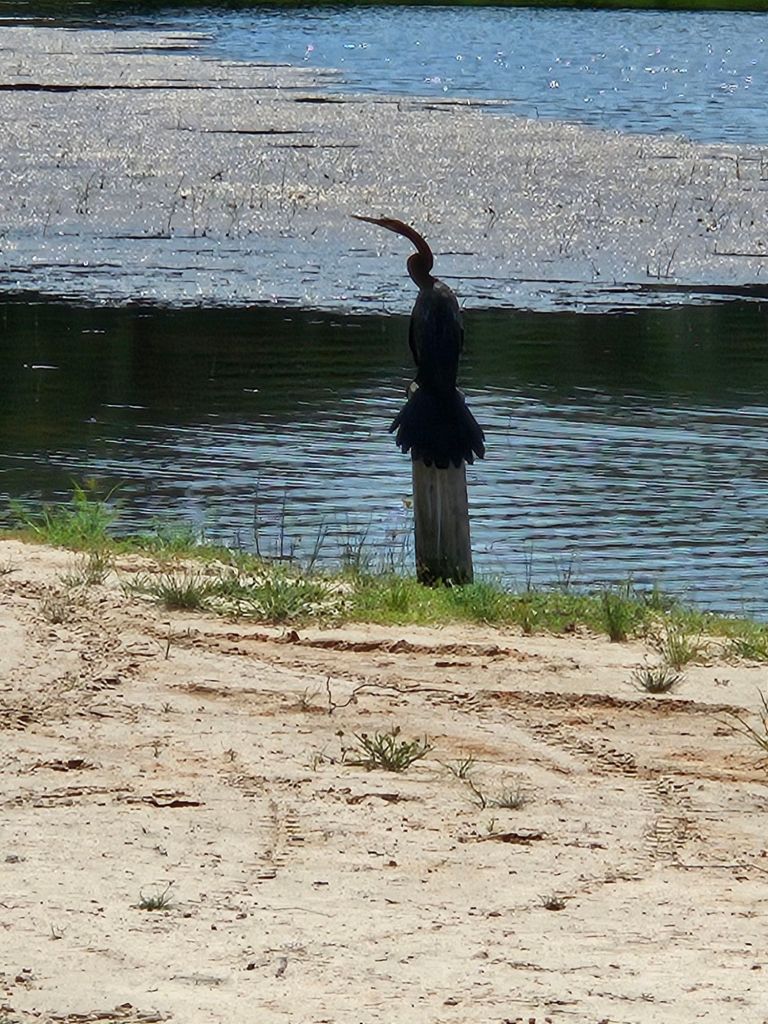
We saw a snake bird in the water and then one also sitting on a pole. It has a really long neck, which looks like a snake gliding through the water. They don’t have waterproof feathers. While that may seem like a disadvantage for their watery lifestyle, their wet feathers and dense bones help them slowly submerge their bodies under the water so they can stalk fish. We also saw an eagle soaring above us, but it was too far away for a photo.
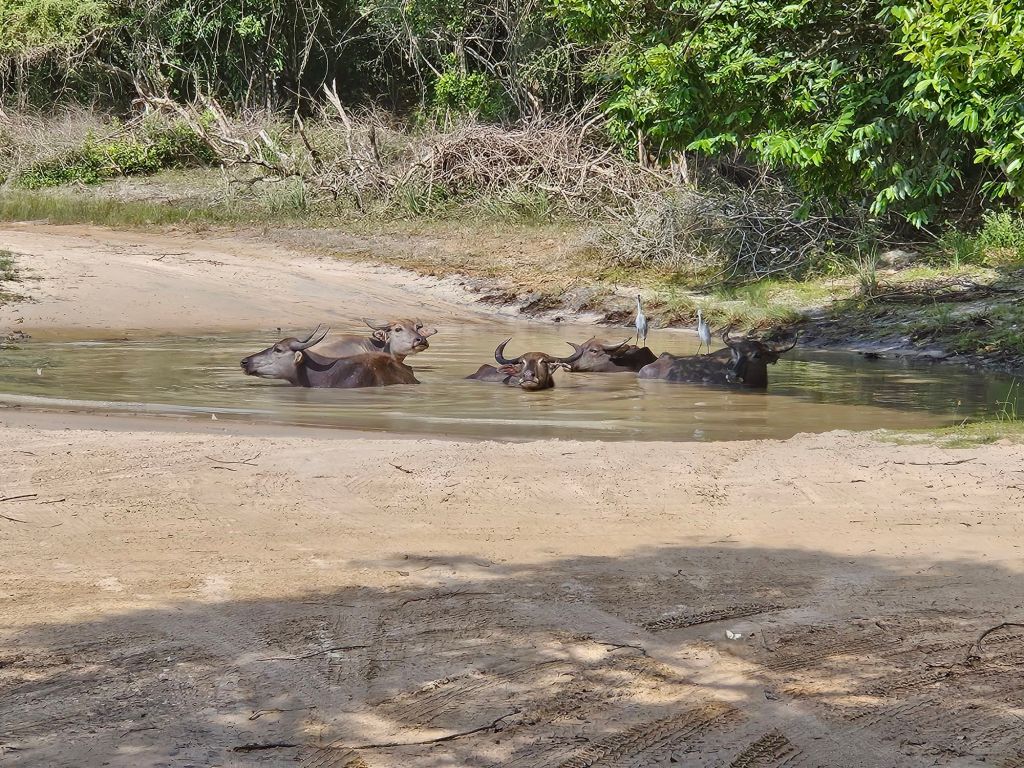
As we drove around, we came across some water buffalo cooling off in the water. They dip their muzzles in the water to get rid of the flies. Once they have cooled down in the water, they then have a mud bath to get rid of parasites and also to create a physical barrier against the sun and insects. As the mud hardens, it also has a cooling effect. There were a few cattle egrets with the water buffalo. They eat the parasites on the buffalo and also the insects that are disturbed by the path of the buffalo.
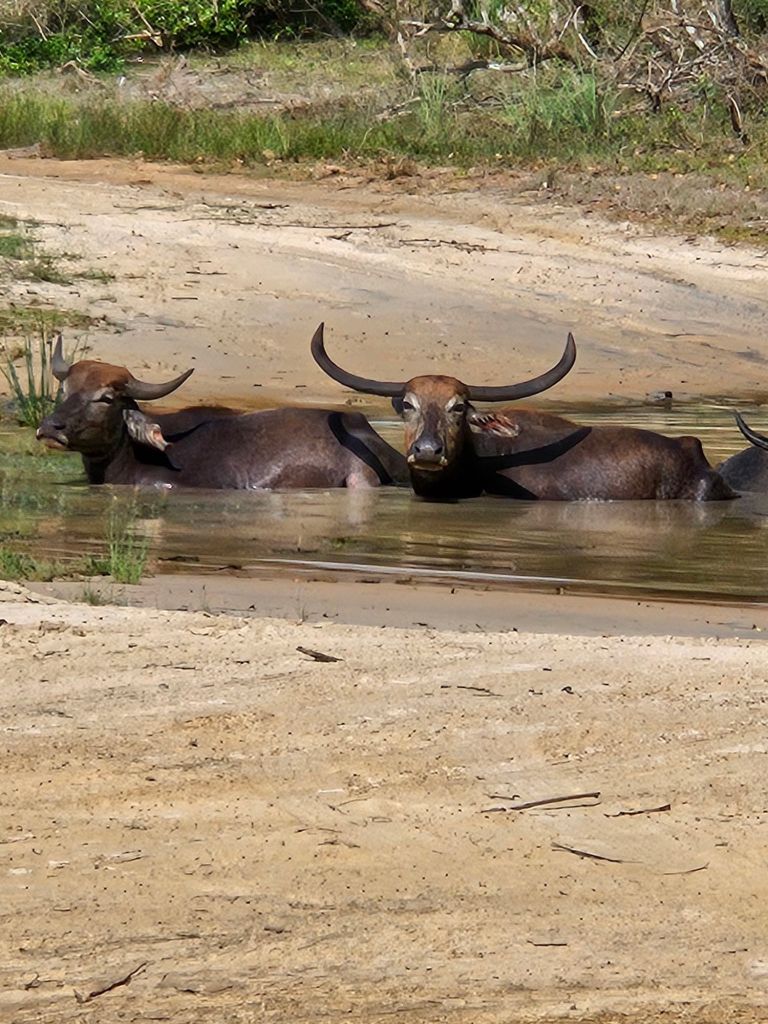
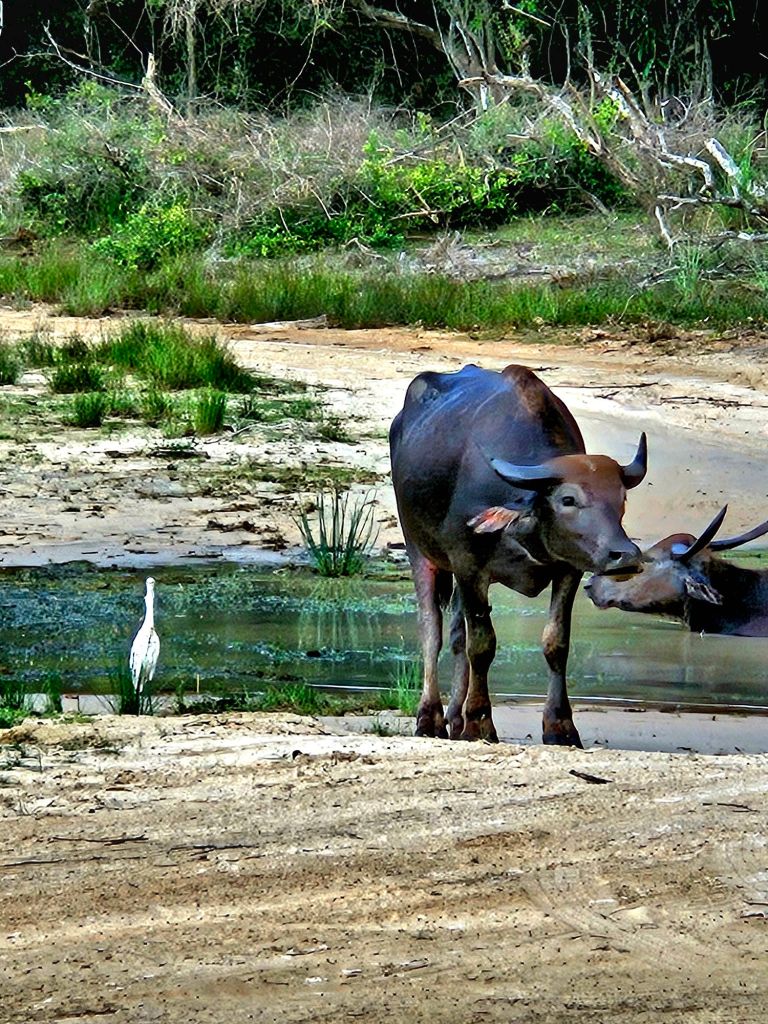
Shortly after, we did hear that there had been a glimpse of a leopard, but when we got to the area, he had gone. We drove down a road behind the undergrowth, which he had gone into, and waited for a while, hoping he would come out. But unfortunately, he didn’t appear.
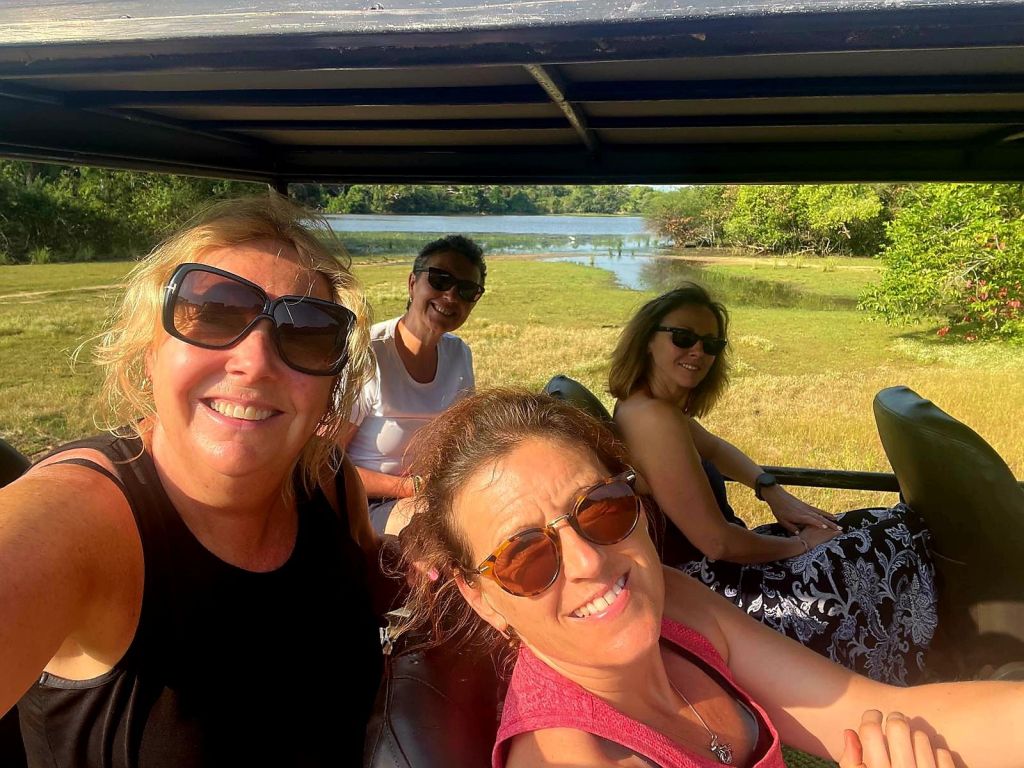
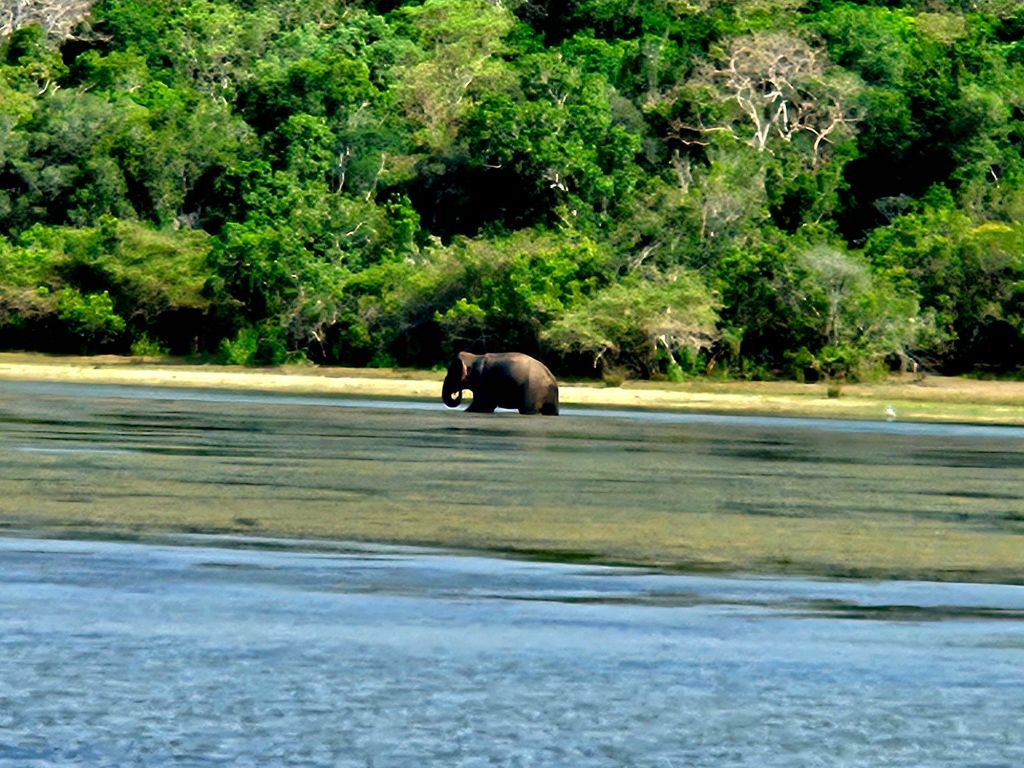
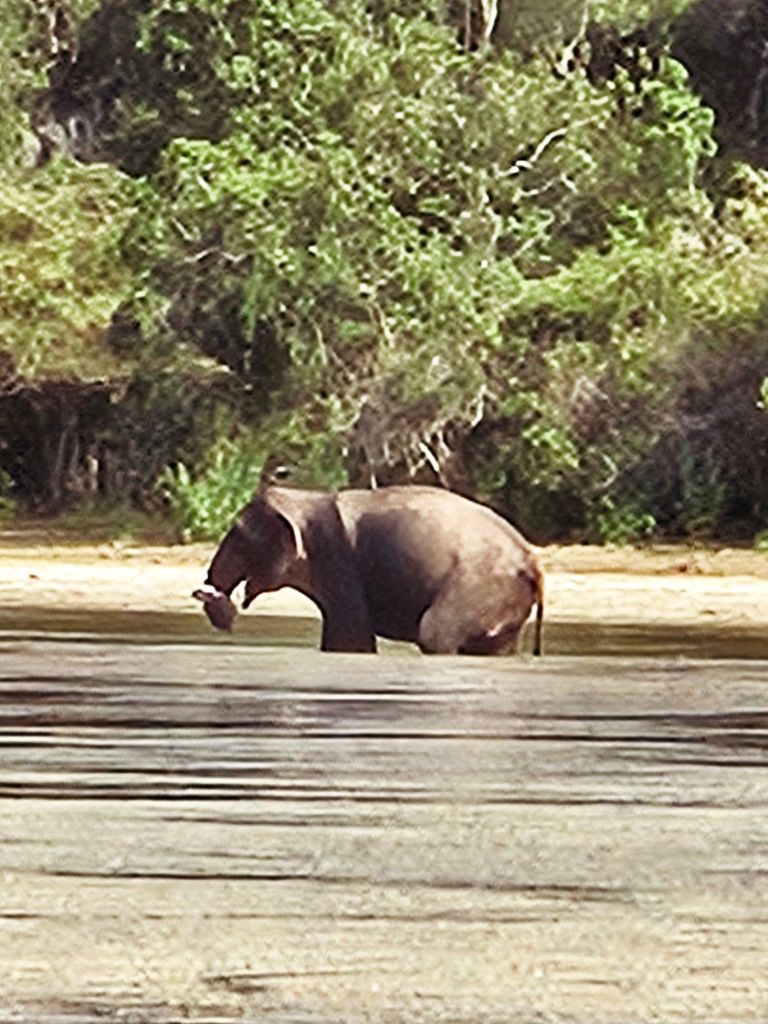
At the next villus, we finally saw an elephant. It was a lone male elephant. He was eating the water grass, pulling it out and shaking it to get rid of the sand and mud before eating it. He does this to protect his teeth. Elephant molars grind down and are replaced only 5 times in a lifetime. As elephants get older, they go to areas where soft grass grows, and eventually, they pass away here – elephant graveyards. The elephants dont really have any predators to be worried about, although water buffalo will protect their territory. Elephants have a 22-month pregnancy, and their calves stay with them until they are 9 years old. They can live until they are around 70 years old. They are only fertile every 4 years.
There was a stork in the water, too.

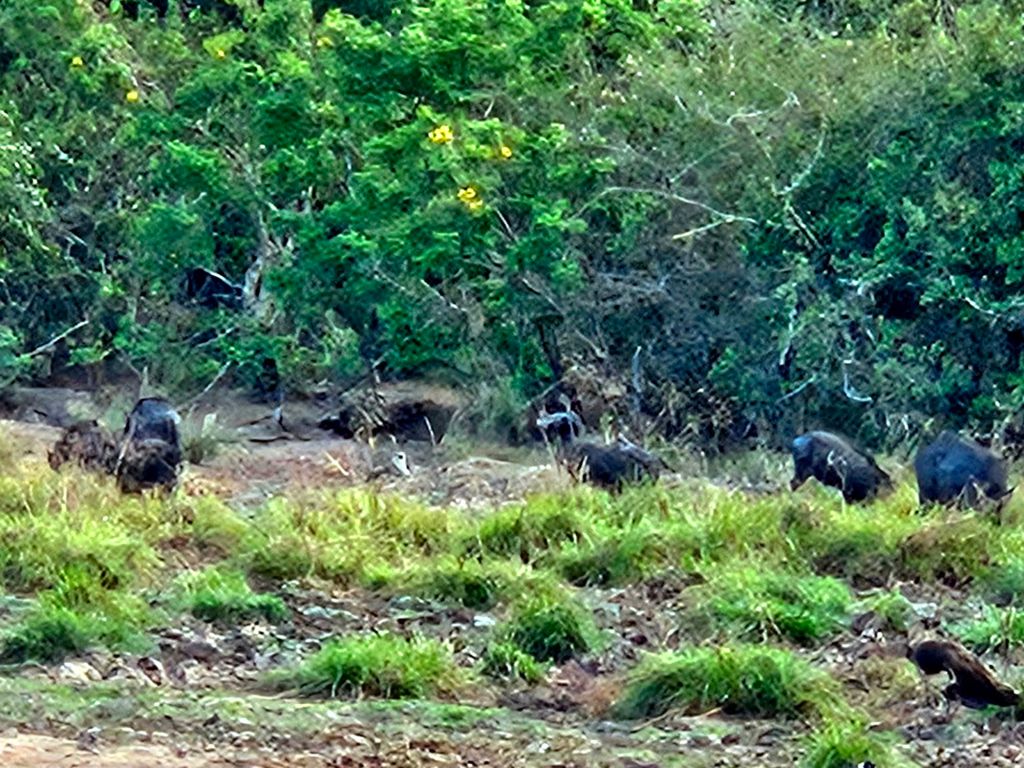
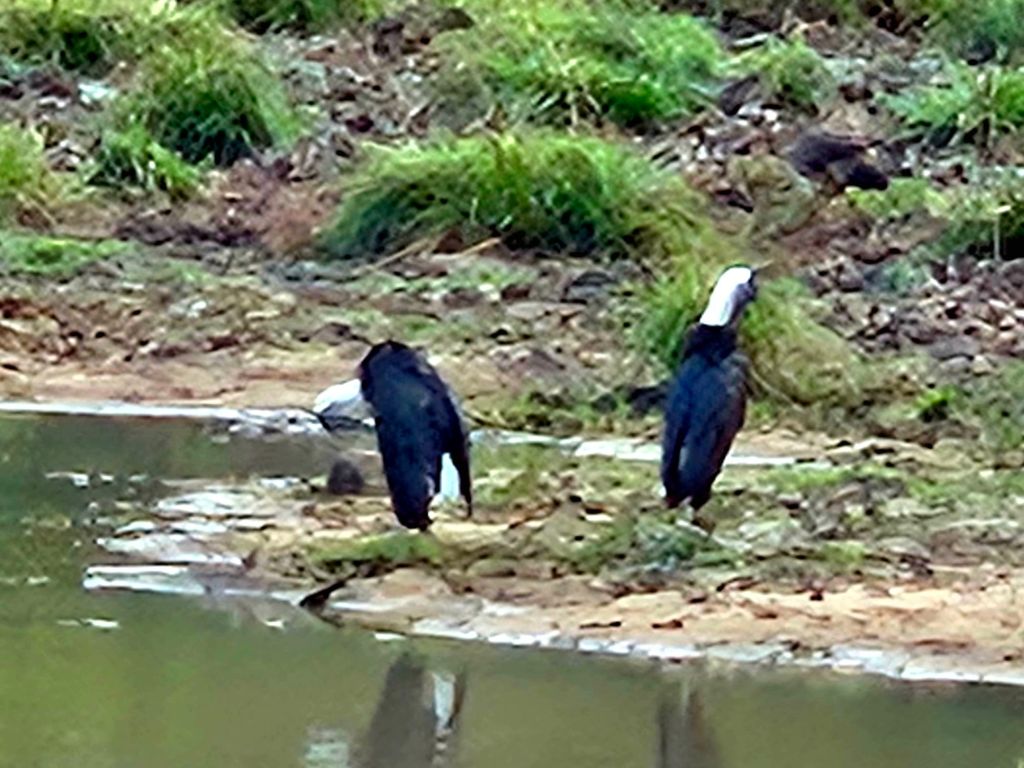
We saw a wild boar family on the other side of one of the villus. These were a couple of woolly necked stork near them, too.
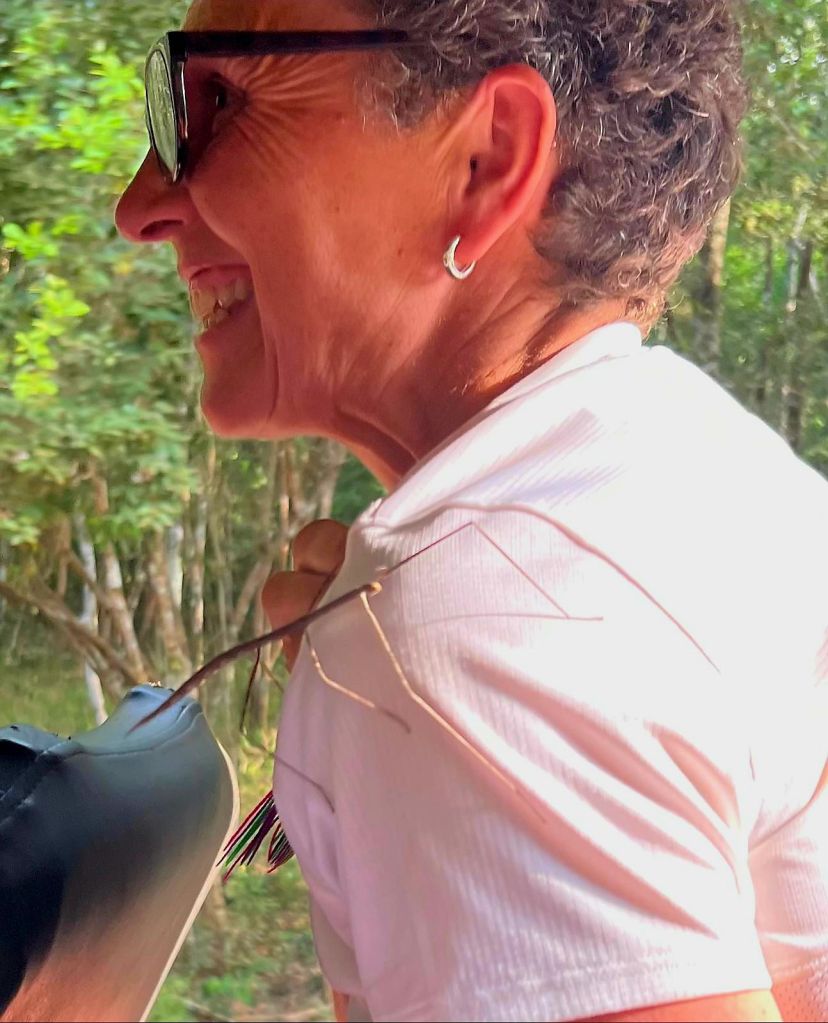
A large stick insect landed on Zoe’s shoulder as we were driving along.
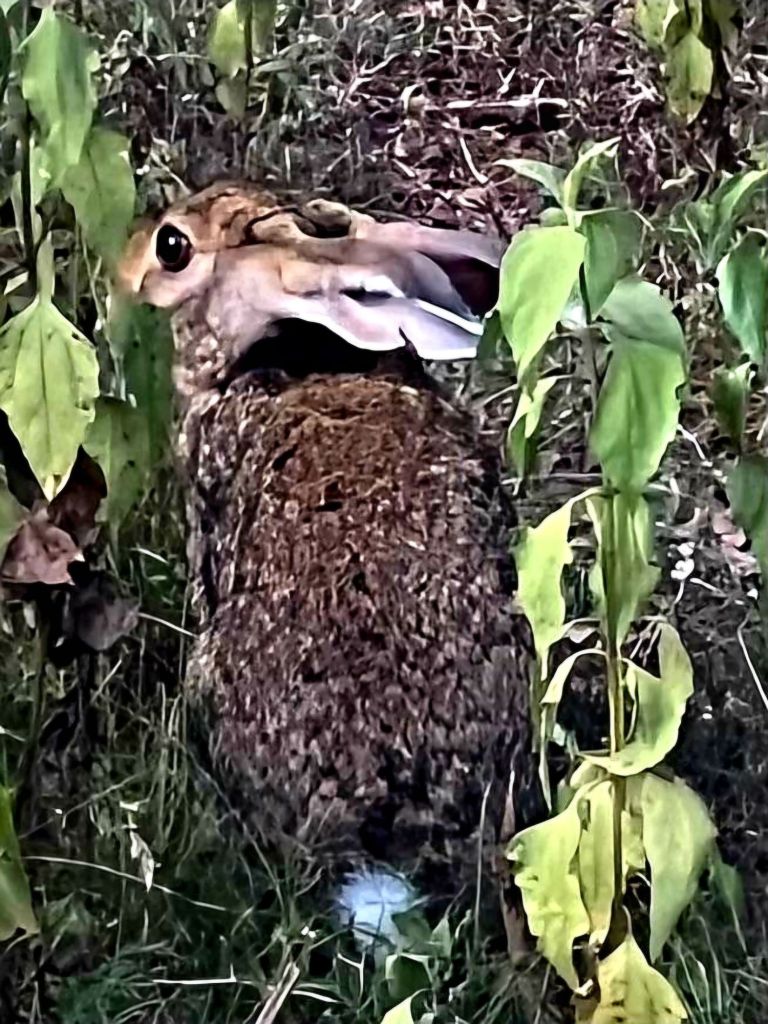
Just as we were leaving the park, we saw a black naped hare.
It had been a long day, and we were all quite tired, and although we hadn’t caught sight of the elusive leopard, we saw a lot of other animals.
Back at the camp, we were welcomed with a refreshing cool towel and a drink.
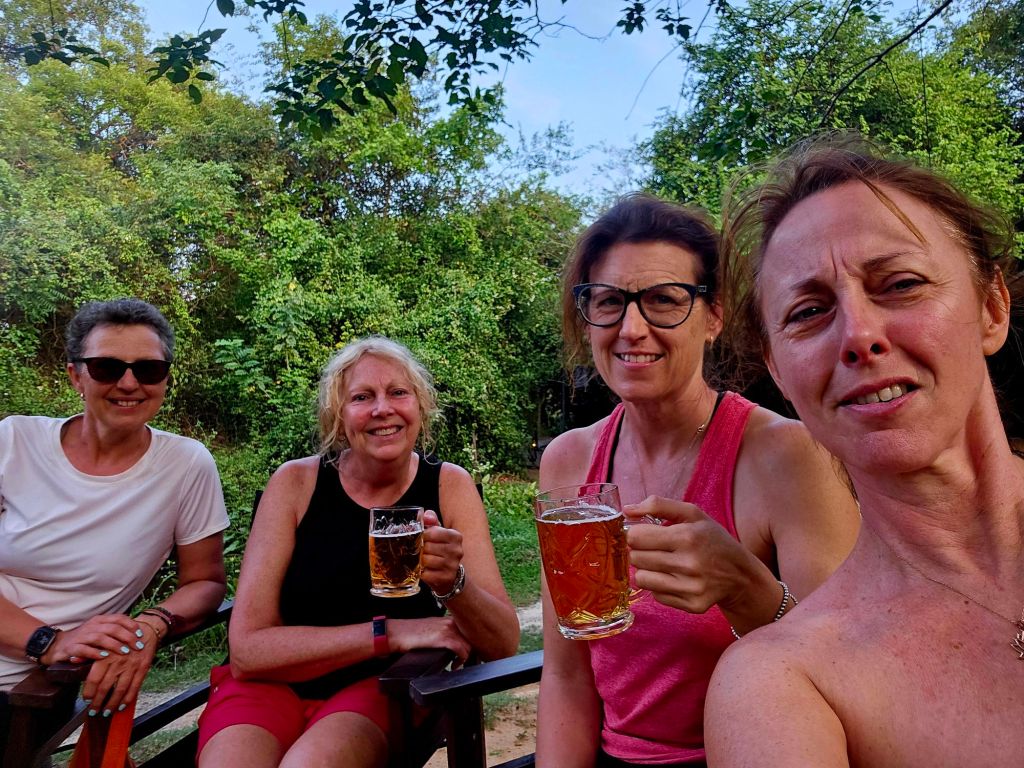
After a lovely shower to wash away all the red grime, we were ready for our pre-dinner drinks.
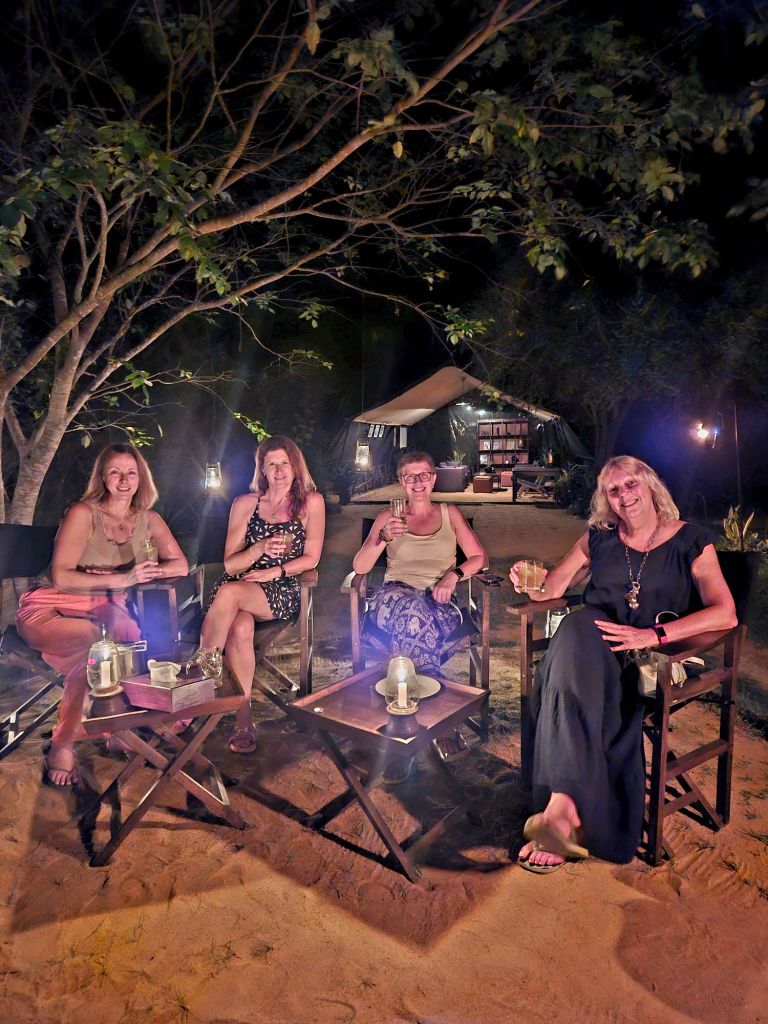
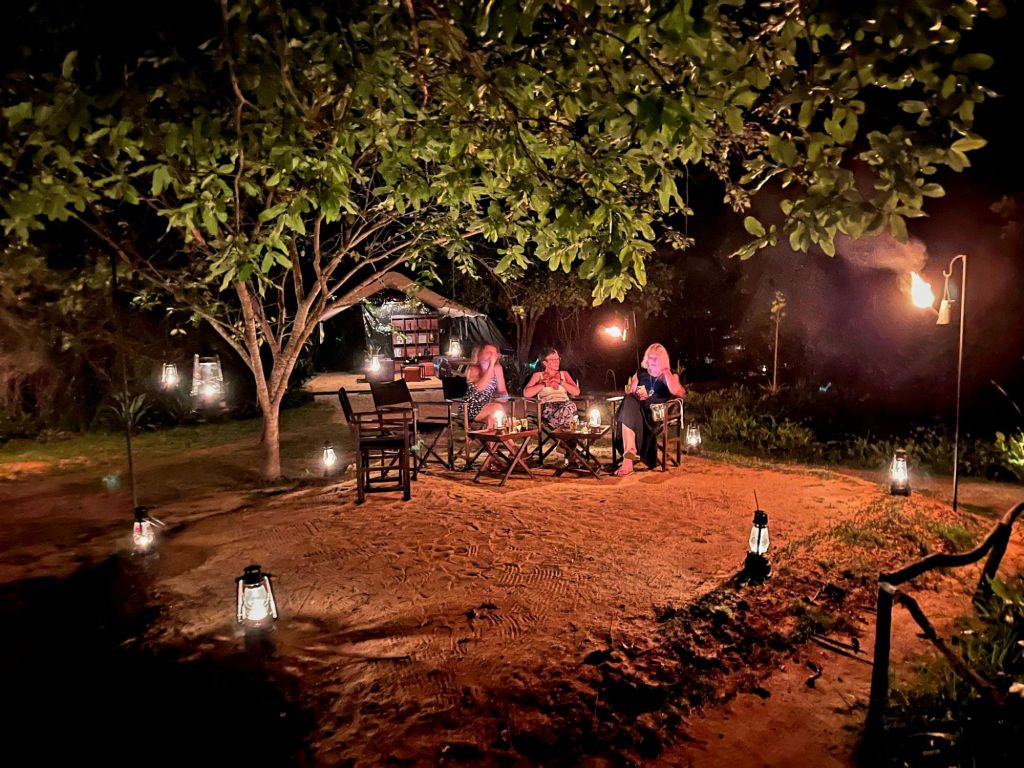
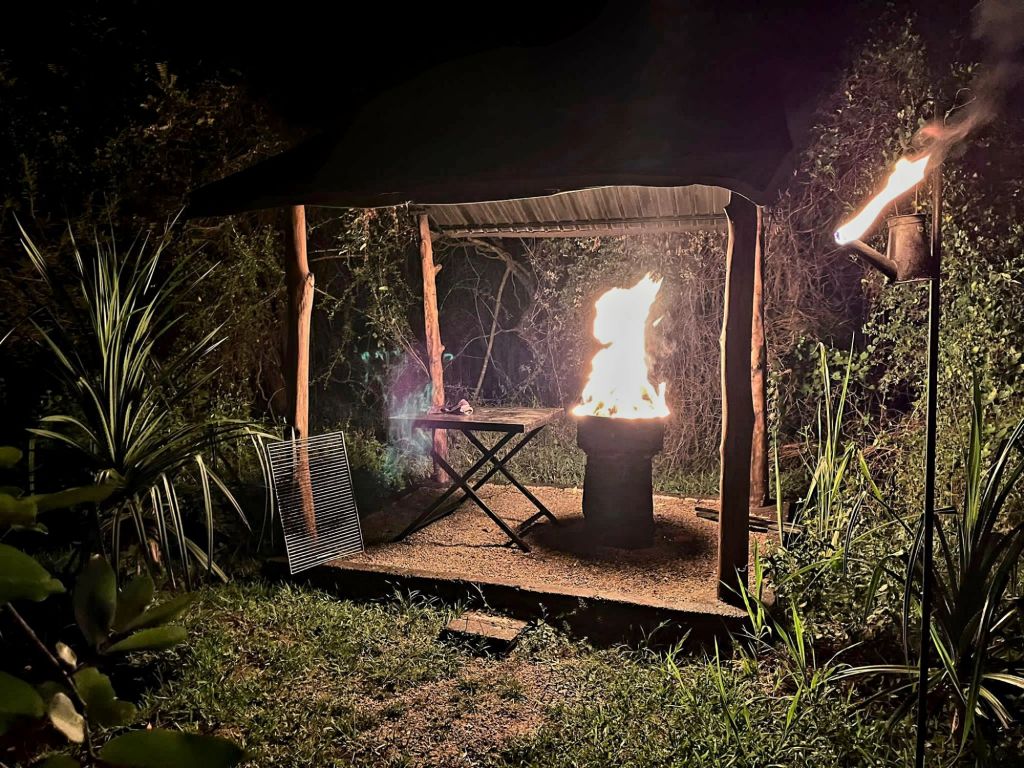

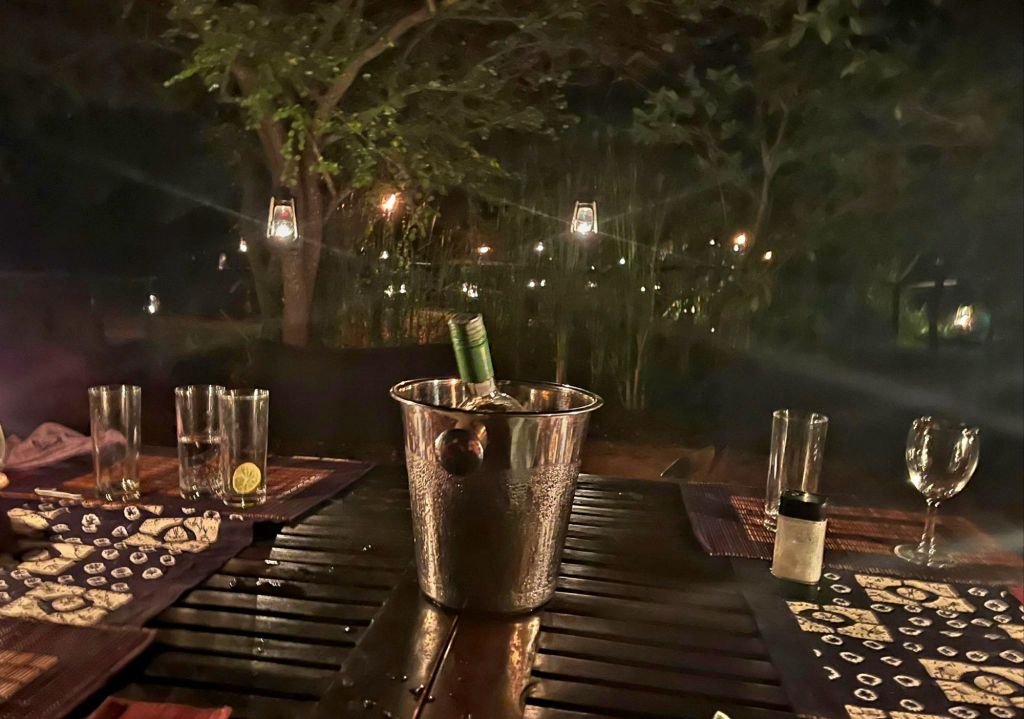
We had pumpkin soup and garlic bread to start and then delicious barbecued chicken, pork, and chicken sausages along with coleslaw and salad.
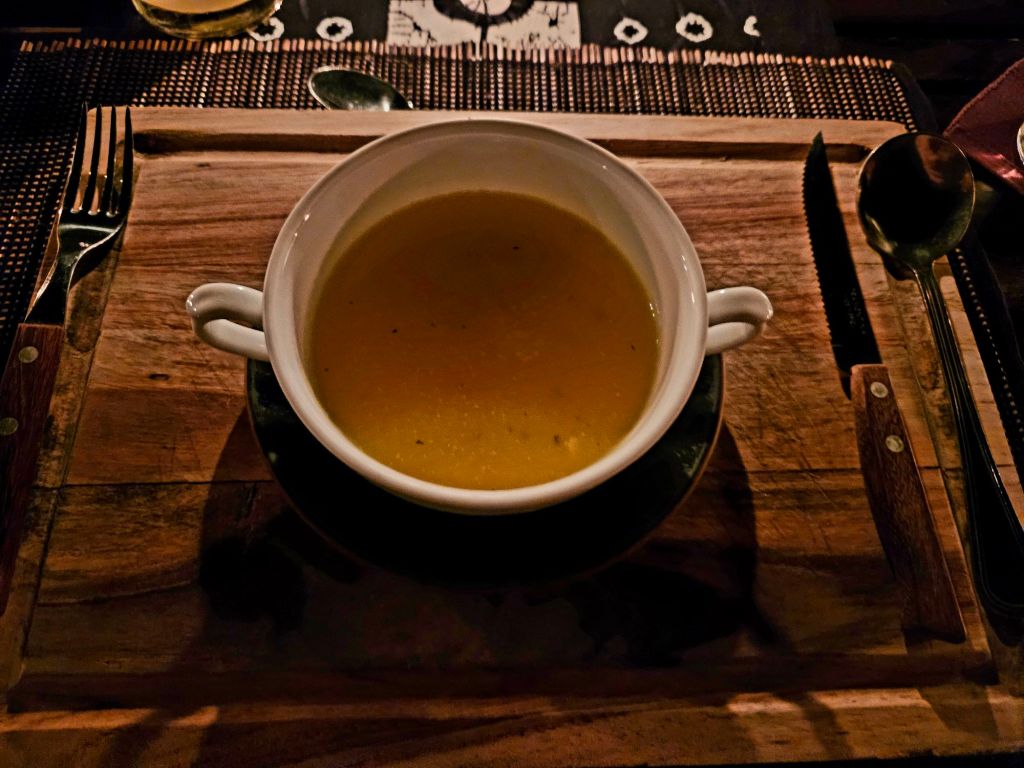
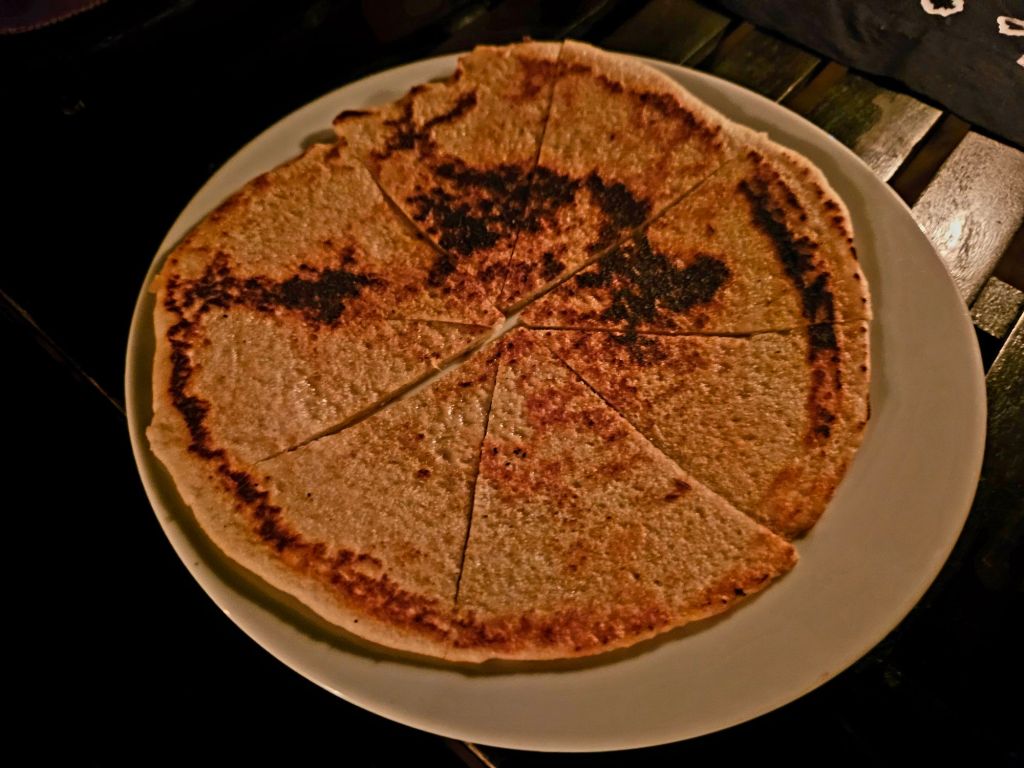

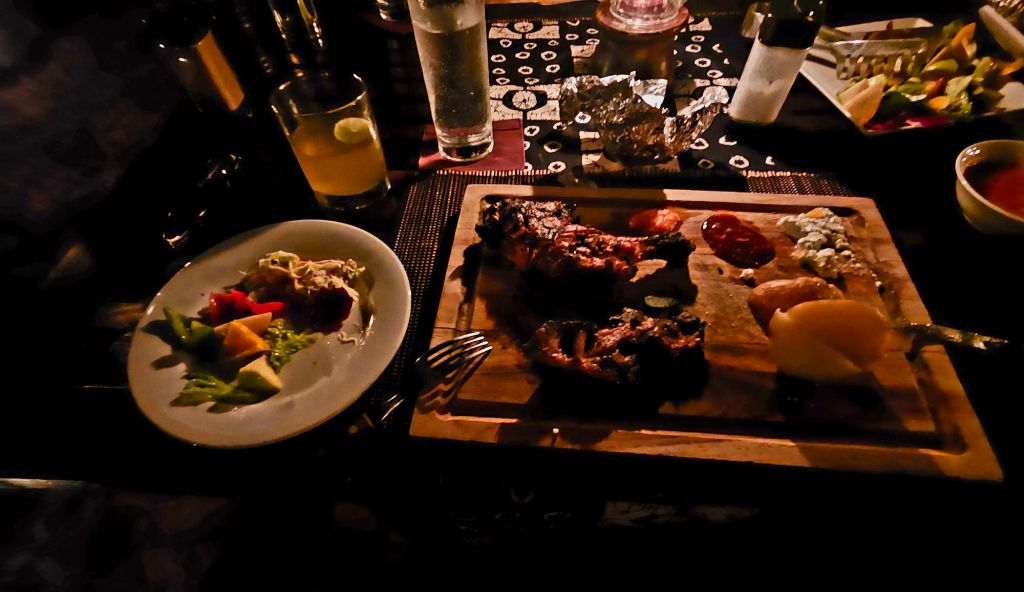
As always, the food was delicious. We had a couple of bottles of wine alongside.
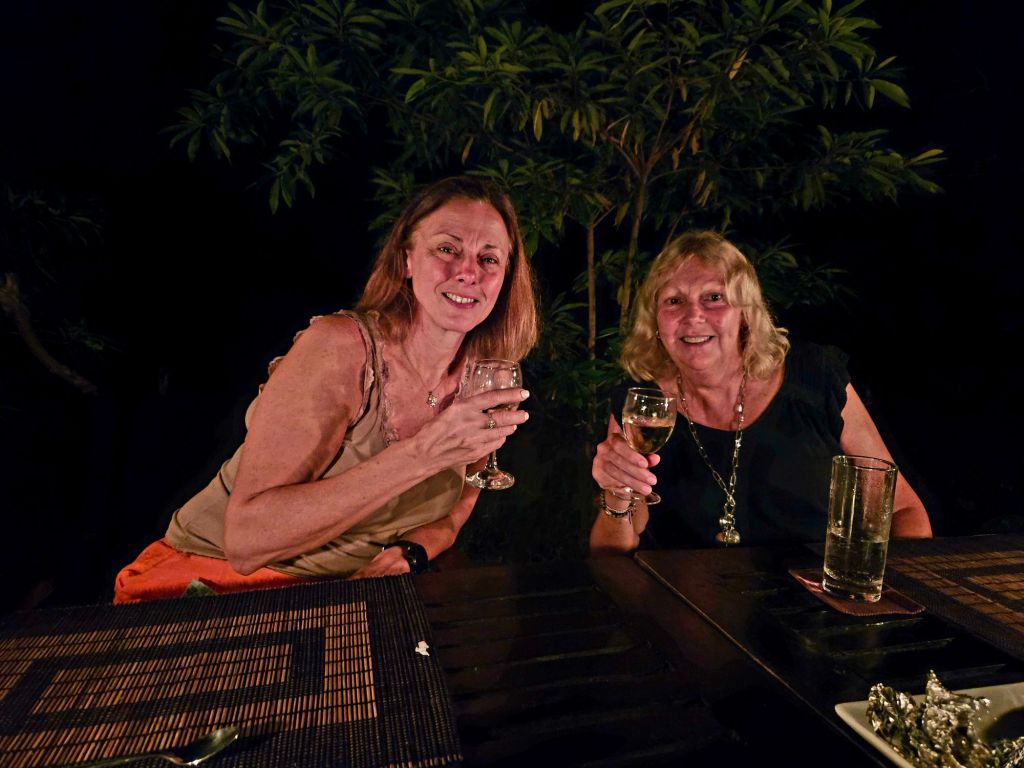
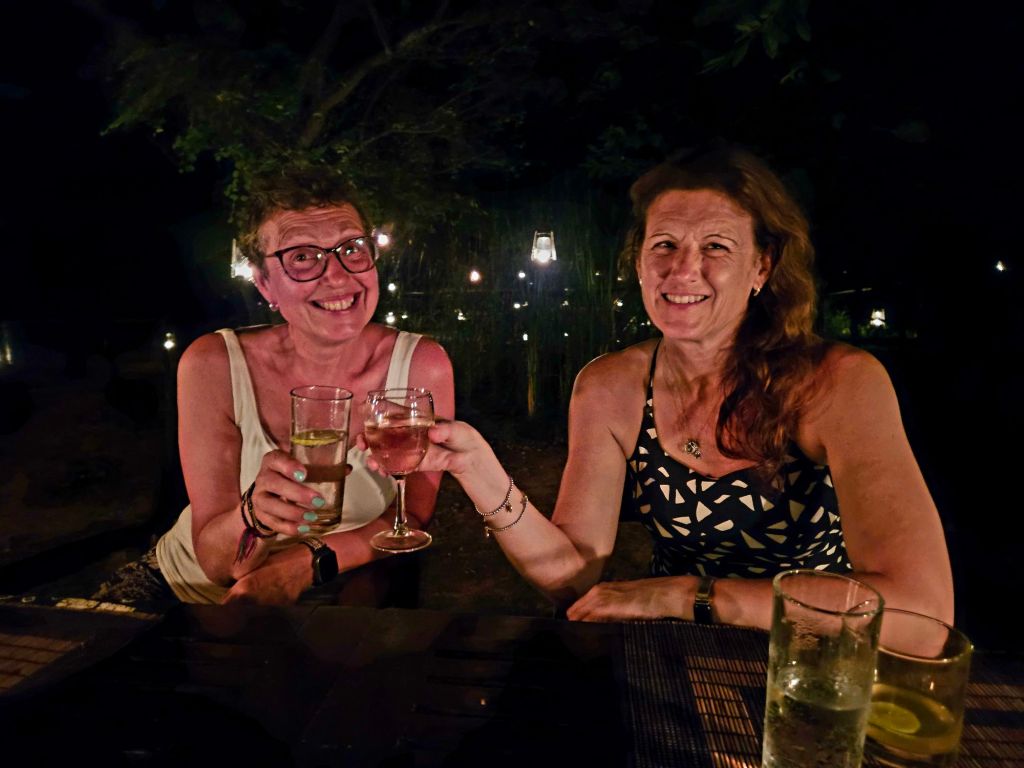
Zoe and I headed to bed and left Karen and Mandy with the wine as they had decided not to do the early morning drive tomorrow.
 Fun, Fitness and Fabulousness in your Fifties