Today, we got up early and skipped breakfast so we could get to Ho Chi Minh Mausoleum by 745am. We took a taxi over to the site as it was about a 30-minute walk. When we got there, it actually wasn’t too busy. We had to dress respectfully so we both put on our dresses to cover our shoulders.
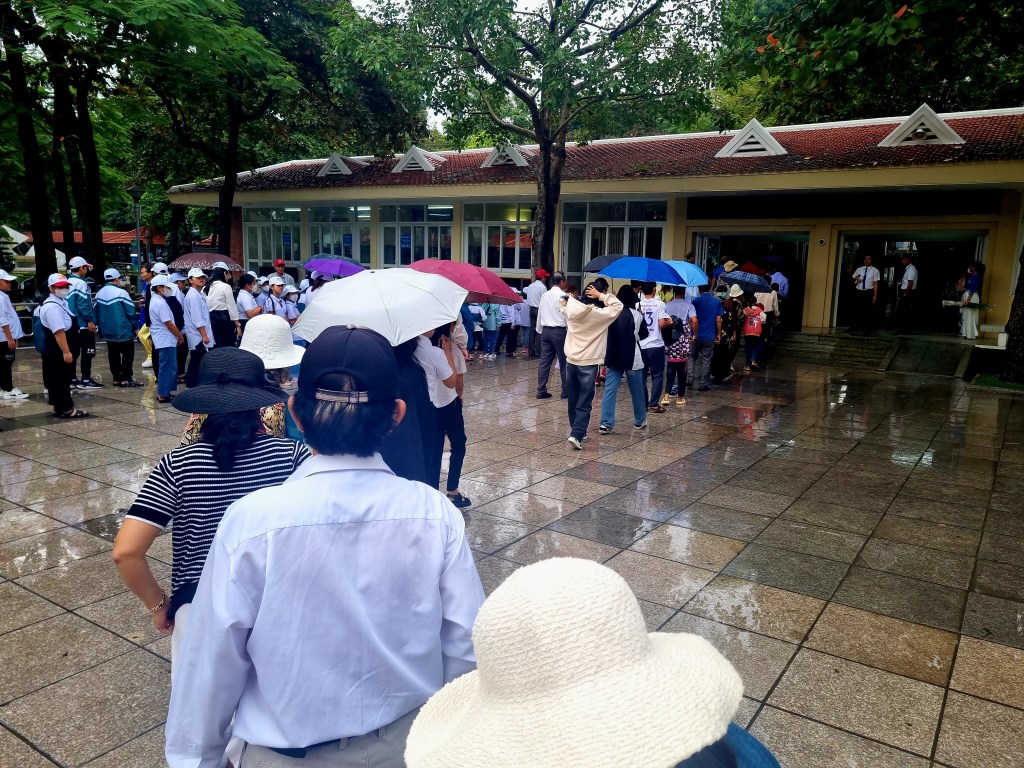
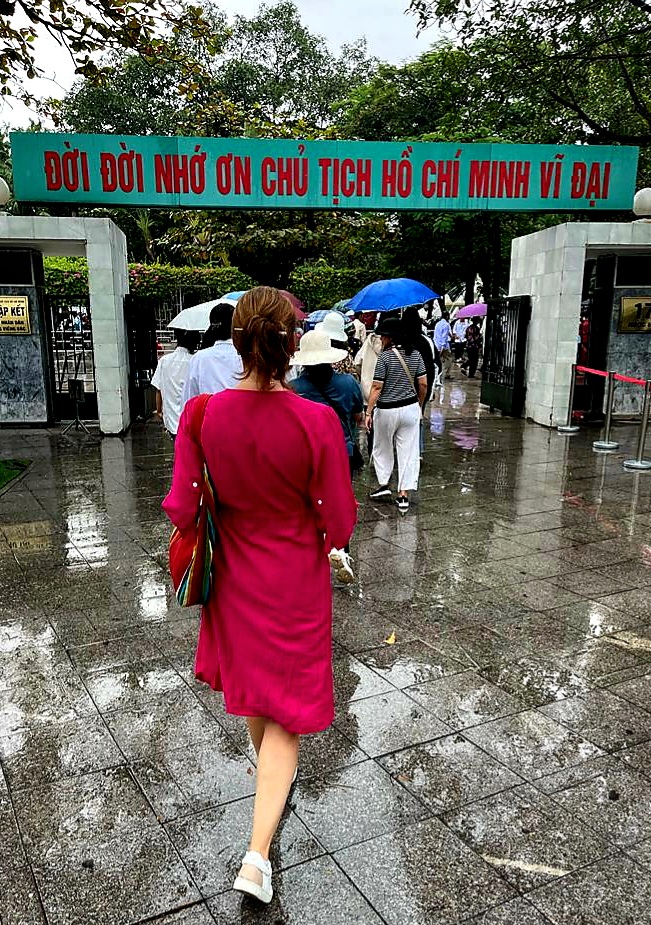
After putting our water in to the locker- for some reason, we weren’t allowed to take it with us – we joined the queue to pay our respects to Ho Chi Minh. There were a complete mixture of ages of people in the queue, there were a lot of school children in their uniforms, a lot of families, and mainly Vietnamese. We didn’t realise at the time, but today was a public holiday for the whole of Vietnam. It felt more like a pilgrimage than a tourist attraction.
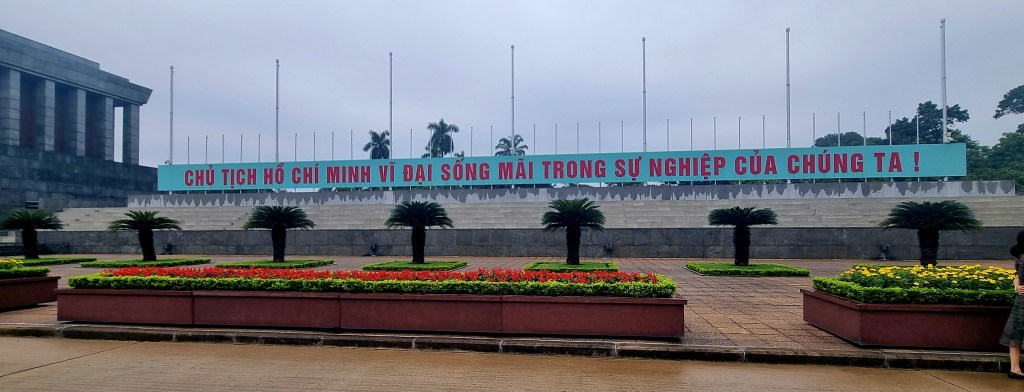
After around 30 minutes, we entered the Mausoleum. It was actually quite sobering and emotional seeing Ho Chi Minh’s body laid out. Obviously, you are not allowed to take photos, but there are some on the Internet.
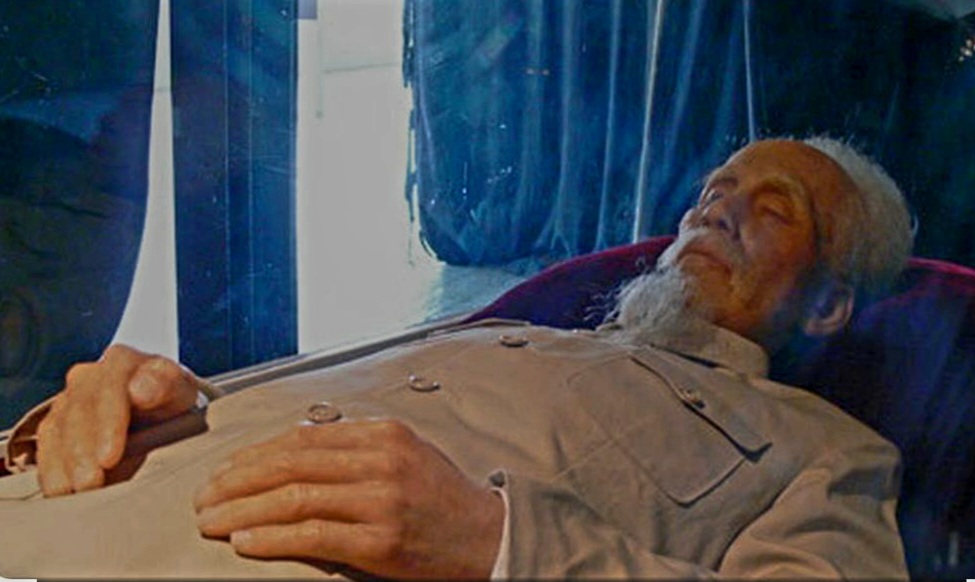
It only takes a short while to walk around him, and then you are back outside in the open.
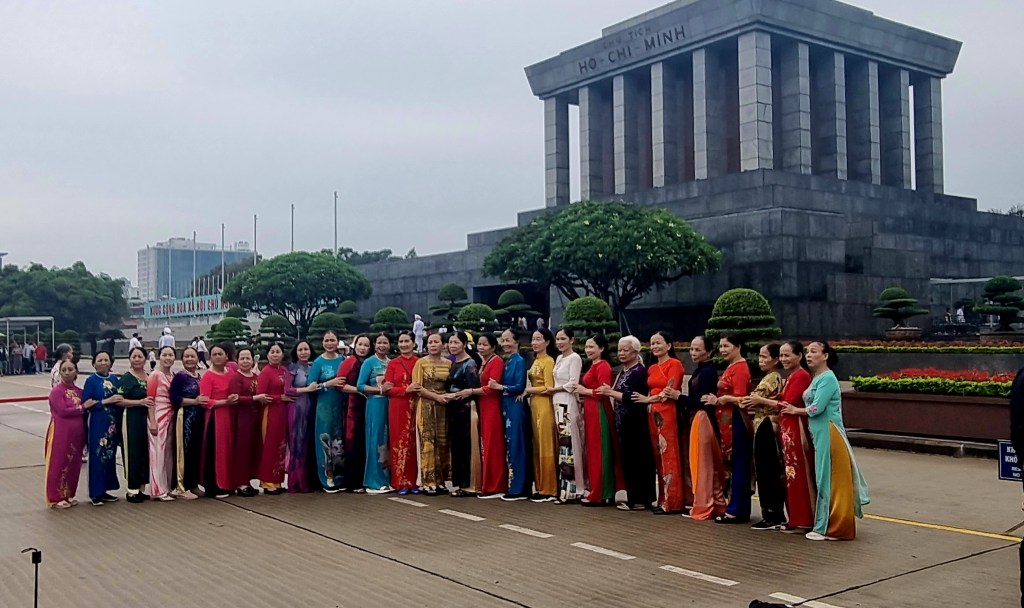
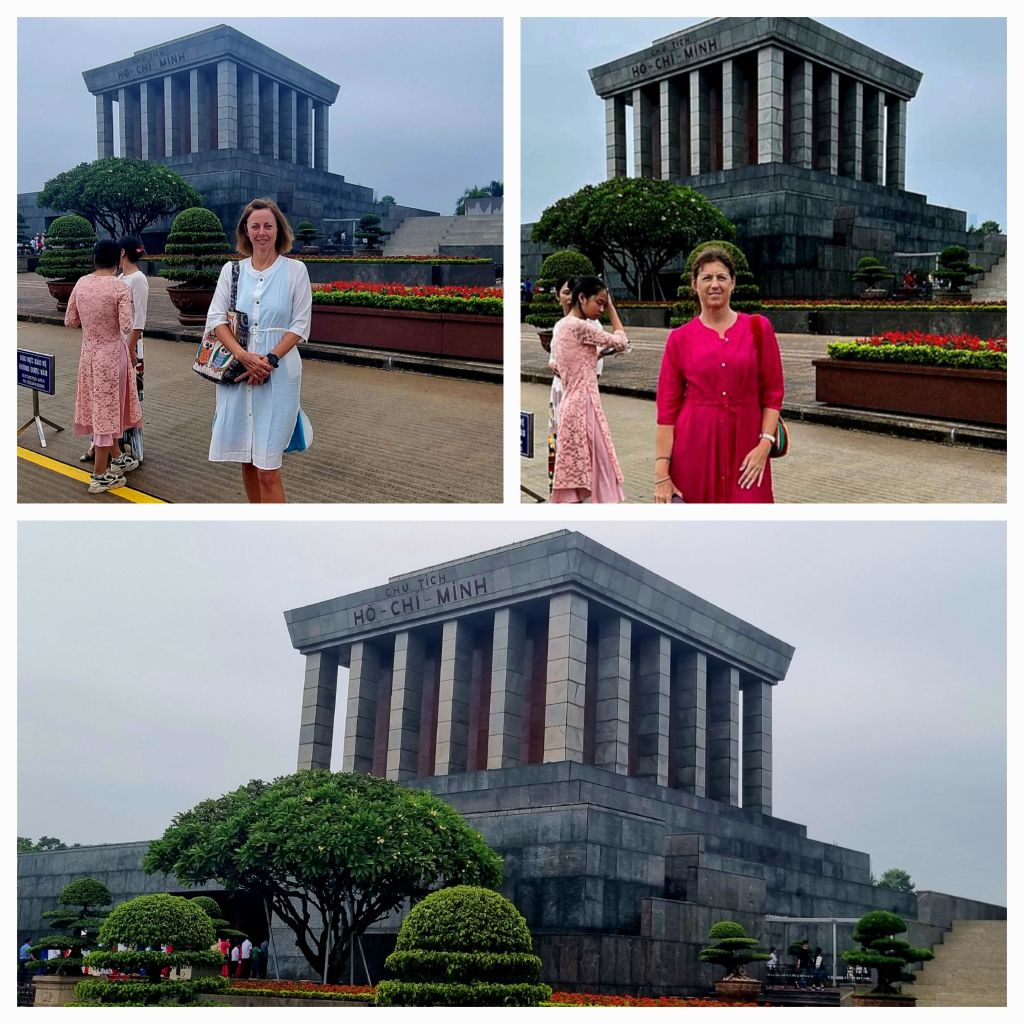
Ho Chi Minh was born in 1890 and died in 1969 before the end of the Vietnam War. He is revered and loved by many Vietnamese people, particularly in the North of Vietnam, as he was the person who gained independence for Vietnam.
Ho Chi Minh was prime minister of the Democratic Republic of Vietnam, basically north Vietnam, from 1945- 1955 and also as president from 1945 until he died. He was the Chairman and First Secretary of the Workers’ Party of Vietnam, the predecessor of the current Communist Party of Vietnam.
Ho Chi Minh travelled a lot during his years, visiting China and Russia and picking up communist ideology. In 1930, he founded the Communist Party of Vietnam and in 1941, he returned to Vietnam and founded the Việt Minh independence movement – fighting for independence of North Vietnam. Before independence, the farmers in Vietnam had to pay 70% of their revenue to the French and chinese dynasty. The communist party promised equality. Ho Chi Minh led the revolution against Japan in 1945, which resulted in independence for the Democratic Republic of Vietnam. However, the French came back in to power the month after, so Ho Chi Minh was forced to retreat, and he began guerilla warfare against the French. The English also came to Vietnam after the end of the Second World War in 1945 for around 3 months, but they handed it back to the French.
During the period 1941 to 1955, the French, Japanese, and the Chinese Winh dynasty controlled the country. The Japanese made a deal with the French and controlled North Vietnam. The japanese stopped rice planting across the area and focused on cotton instead. This meant that 2 million Vietnamese people died of hunger between 1942 to 1945. In 1945, Ho Chi Minh helped the Chinese General in the south of China. The general then supported Ho Chi Minh as the rightful leader of Vietnam.
Ho Chi Minh and his army defeated the French in 1955, and this was the end of the First Indochina War. It resulted in the division of Vietnam with the North being controlled by the communist Viet Minh and the South being anti- communist.
This division led to the Vietnam /American War in an attempt to stop the spread of communism. The war lasted from 1955 to 1975. Ho Chi Minh stepped down from power in 1965 due to health problems and died in 1969. He had no wife or children. North Vietnam were ultimately successful against South Vietnam and its allies. Vietnam was officially unified in 1976. Saigon, the former capital of South Vietnam, was renamed Ho Chi Minh City in his honour.
Between 1942 to 1945 America actually supported Ho Chi Minh in his fight against Japan and France.
During the Vietnam War, around 4 million people died, many of them civilians. Between 1964 and 1972, the Americans dropped many B52 bombs on Vietnam and Hanoi was often the target. It’s rumoured that the Americans did consider a nuclear bomb, but luckily, they decided against it. However, they did use chemical bombs, the main reason being to kill the leaves in the forest and expose the Viet Cong. But the chemicals were also absorbed by the soilders and others, and sometimes it killed them, but it has also been passed on to the younger generation, leading to many birth defects and issues.
In 1968, a truce for 3 days was agreed between North and South Vietnam, but the Viet Cong attacked in the south. Although they lost, their actions angered the Americans, who then retaliated by actively hunting the Viet Cong. They used to cut off the ears of the Viet Cong to show how many they had killed.
At the end of the war, anyone who worked for the American or Southern government were put in jail for three years and brain washed.
Vietnam is still a communist country,with the General Secretary of the Communist Party having ultimately power. But they seem more liberal and the Vietnamese people are very calm and welcoming.
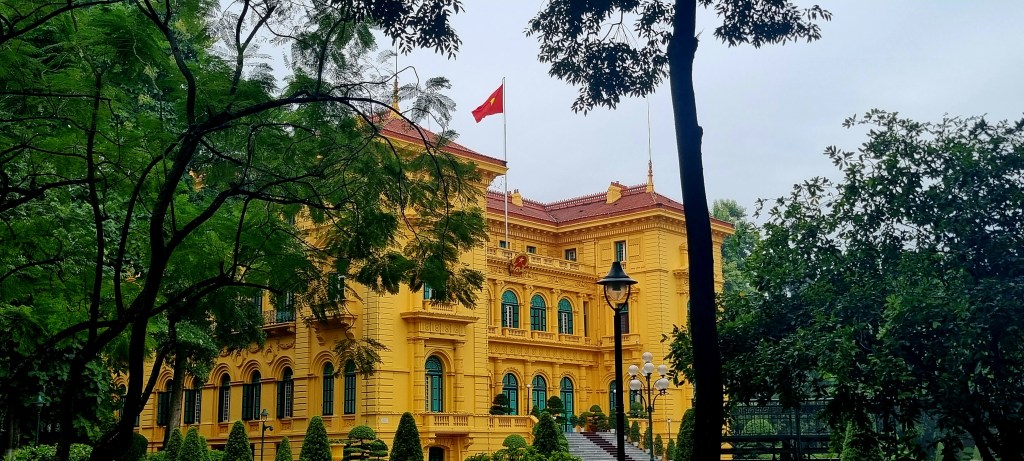
After visiting the mausoleum, we then walked around the presidential grounds. This was where Ho Chi Minh lived and earned from 1954 to 1969. The first building you come across is the presidential palace. Like many government buildings, it is red and yellow in colour, red symbolising happiness and yellow symbolising good luck.
We walked around to the Politburo’s meeting room, where Ho Chi Minh used to chair meetings and receive guests.
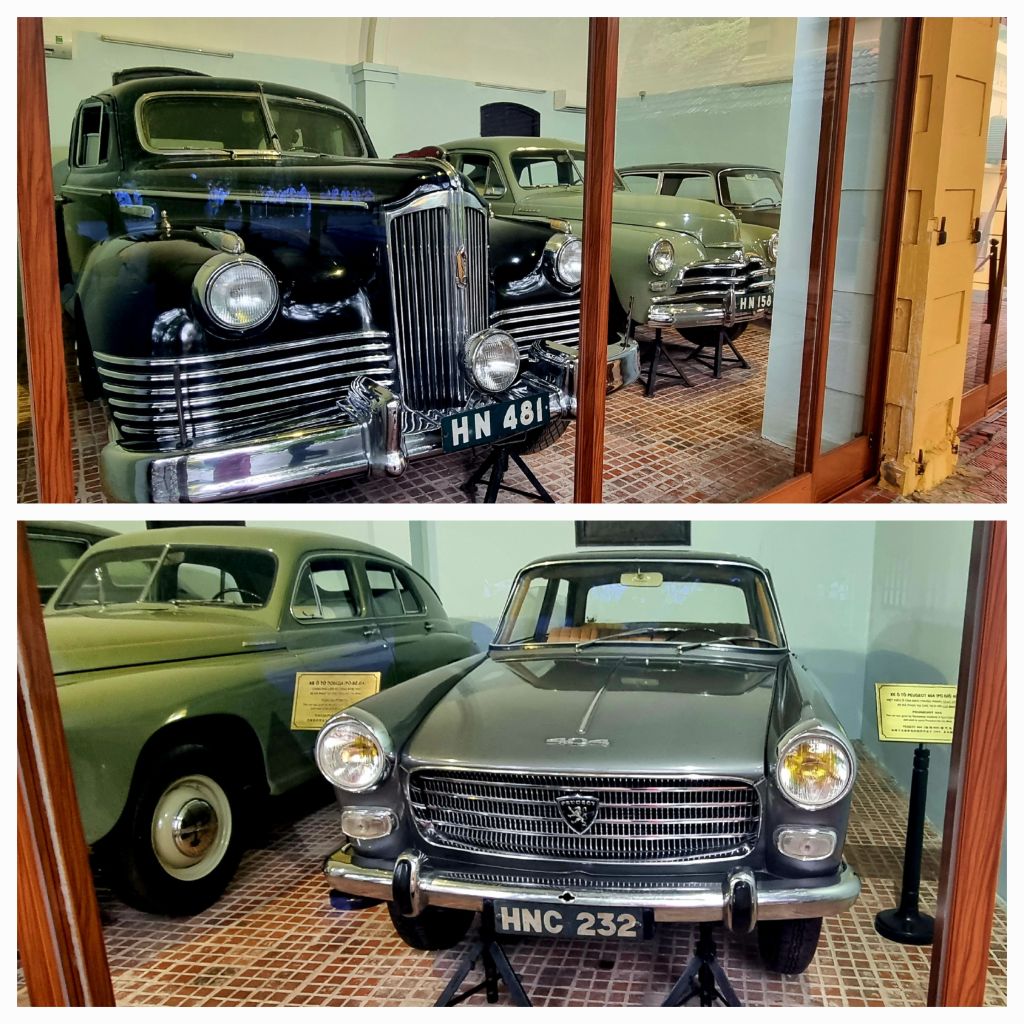
The cars that were used whilst Ho Chi Minh was president were also on display.
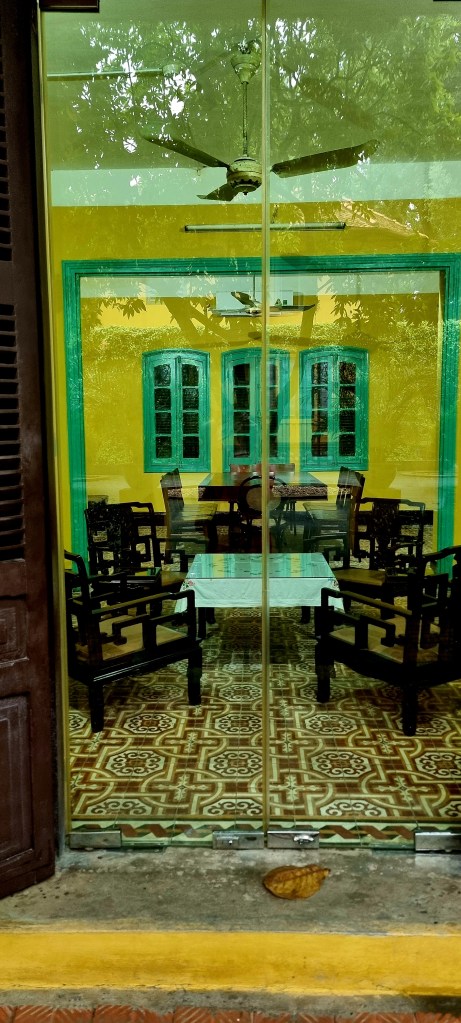
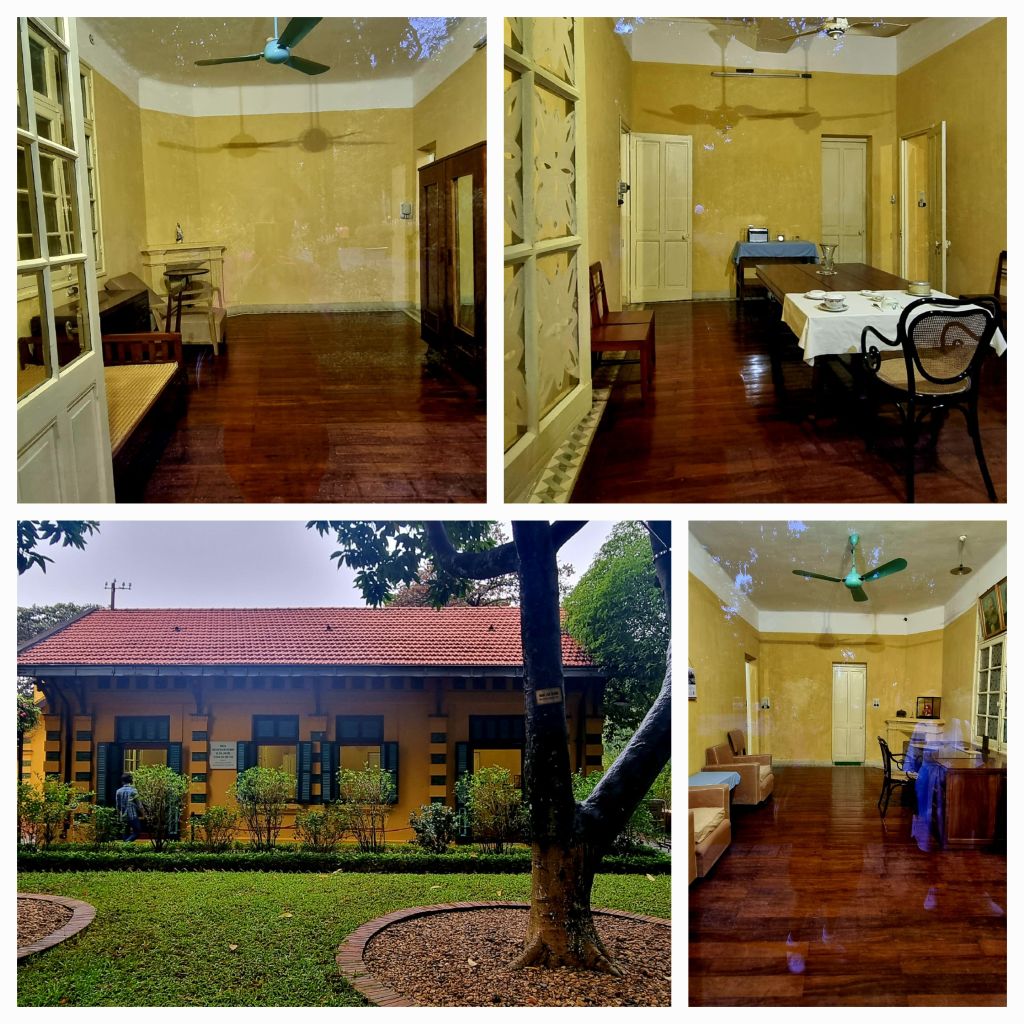
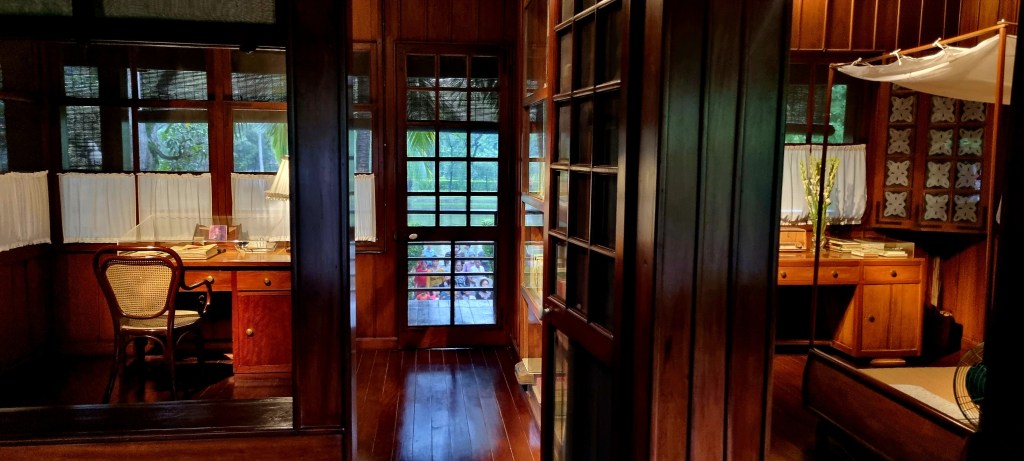
We carried on walking to House No. 54 where Ho Chi Minh lived and worked. You could see various rooms through the glass and they demonstrated that he lived in a very simple fashion.
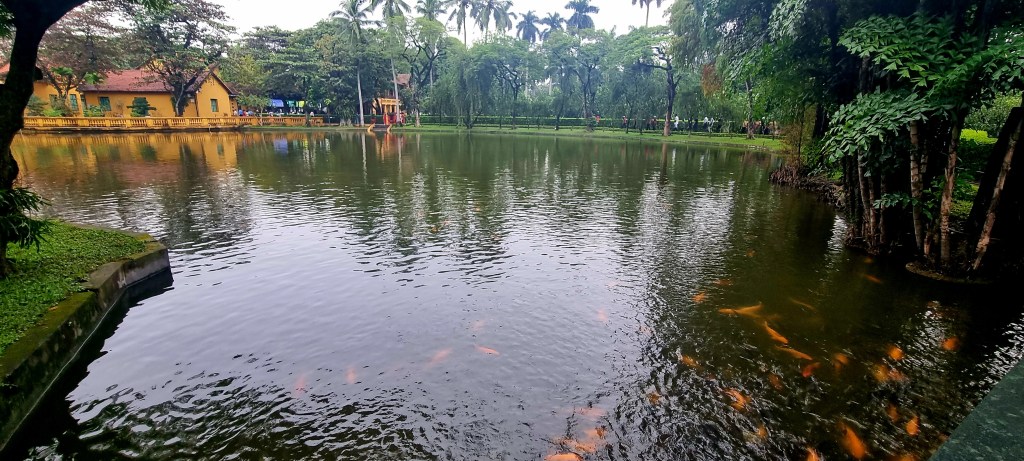
The area surrounding the Palace and House was really beautiful and serene, with a huge fishing lake in the centre.
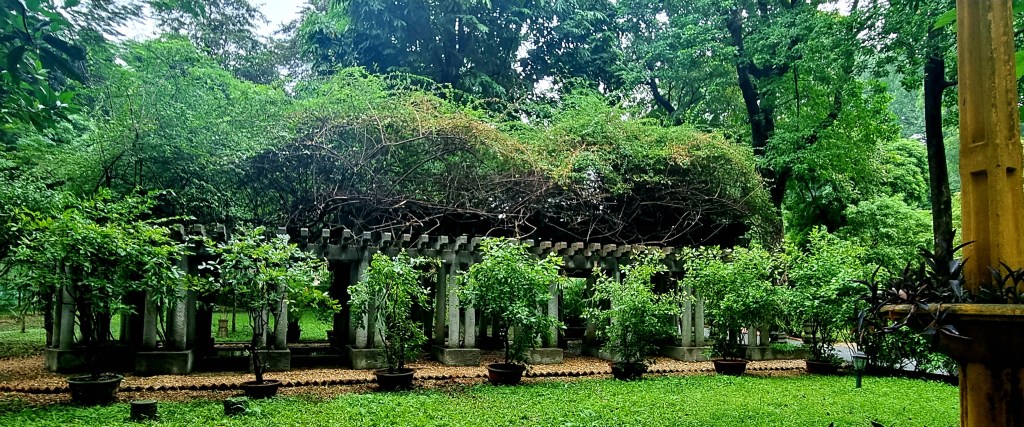
We walked down the Mango Path, this is where Ho Chi Minh used to walk and do his morning exercises. At the end of the path is the flower trellis, where Ho Chi Minh used to receive guests. There is a statue of him here.
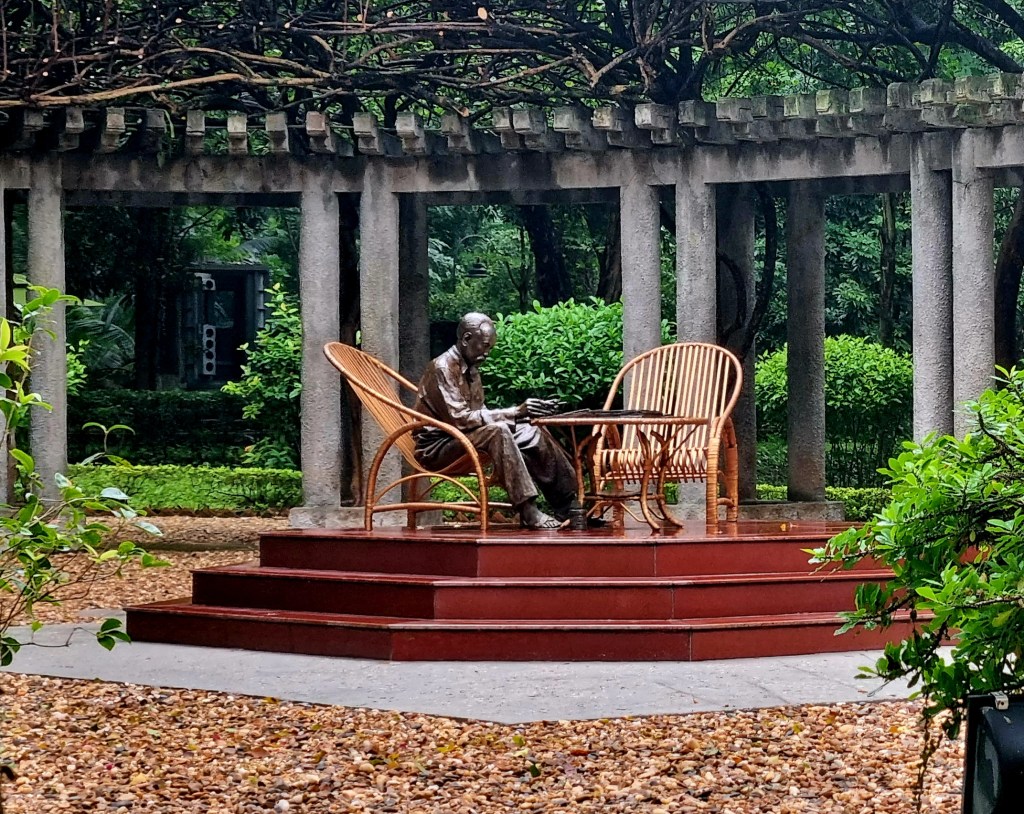
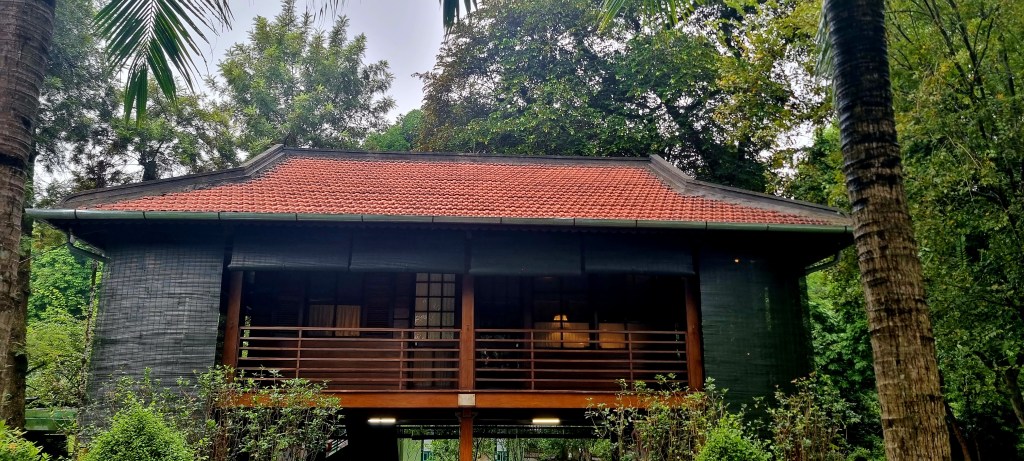
The next stop was the historical house on stilts. This house symbolises simple living and is where Ho Chi Minh spent a significant amount of his time.
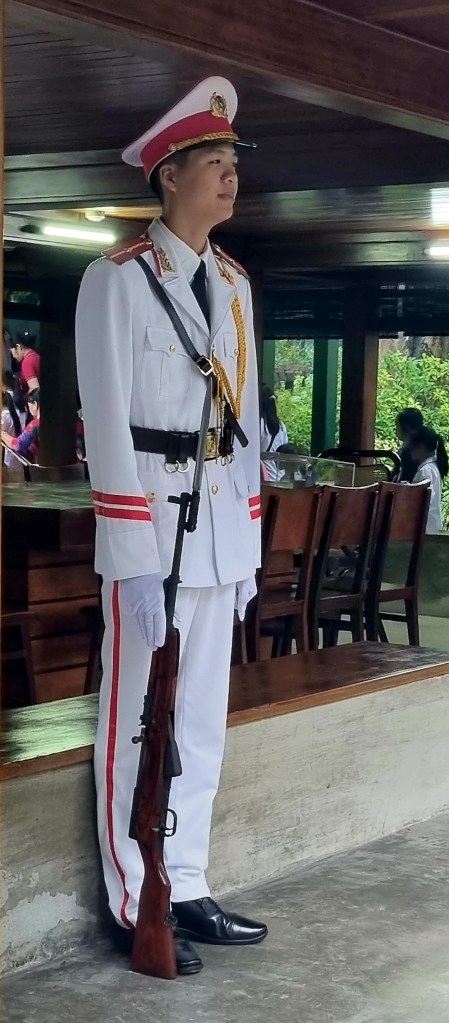
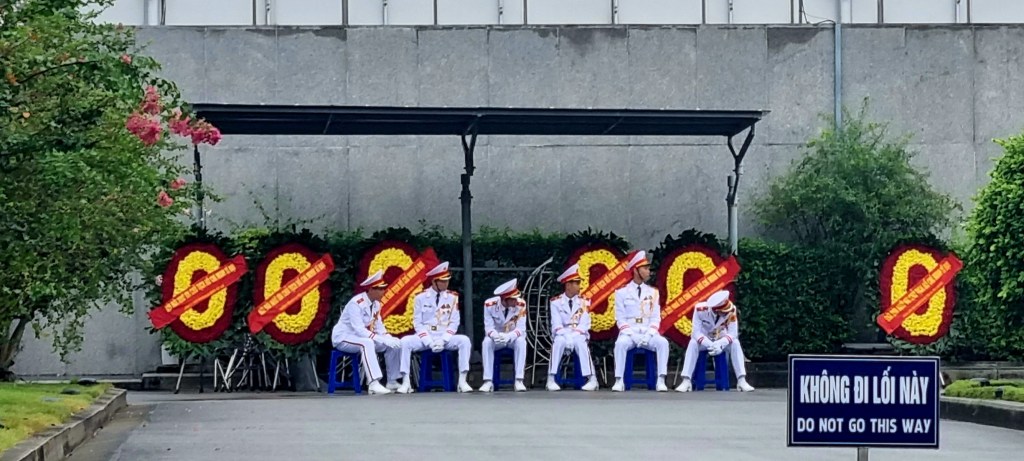
All through the presidential complex are the military honour guard, dressed in white uniforms. These soldiers also guard the body of Ho Chi Minh 24 hours a day on 2 hourly rotas.
The One Pillar Pagoda is part of the presidential complex and is a historical Buddhist temple. It was originally built in 1049, and after some additions, it was completed in 1105. It has been built to represent a lotus flower, a Buddhist symbol of purity.

The temple is built of wood on a single stone pillar, 1.25 meters in diameter, and 4 meters in height. It is erected in a lotus pond as lotuses blossom in a muddy pond.
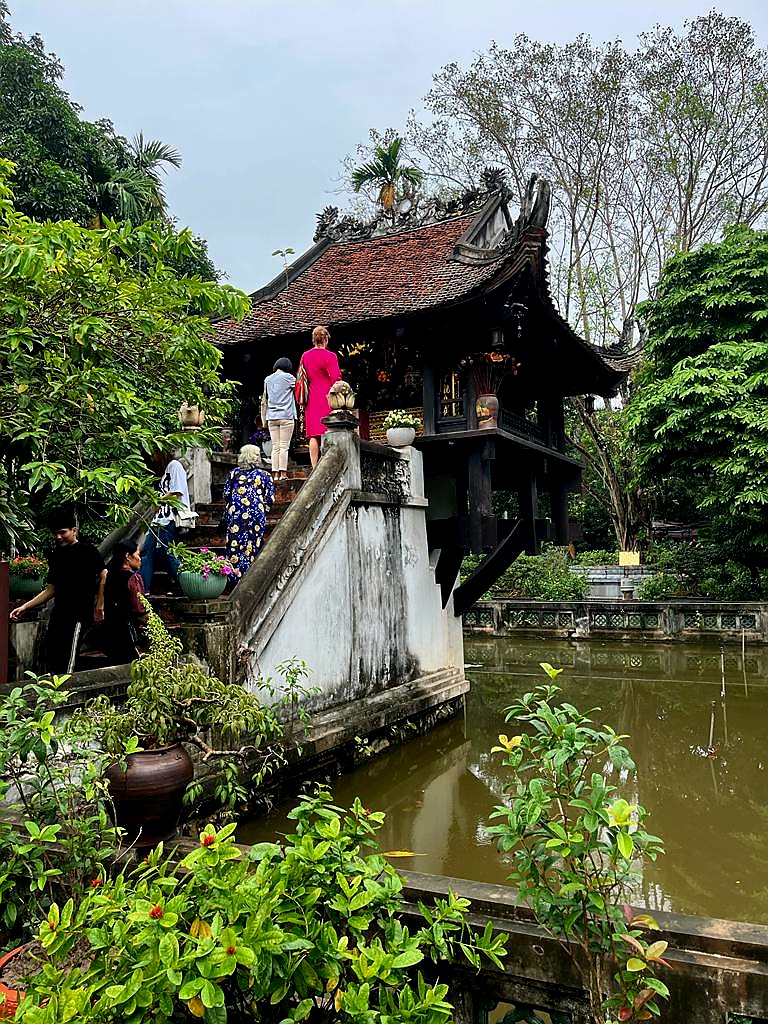
We walked past the museum and decided not to go in. And we also posed by the water feature.


And then we were back at the front of the mausoleum.
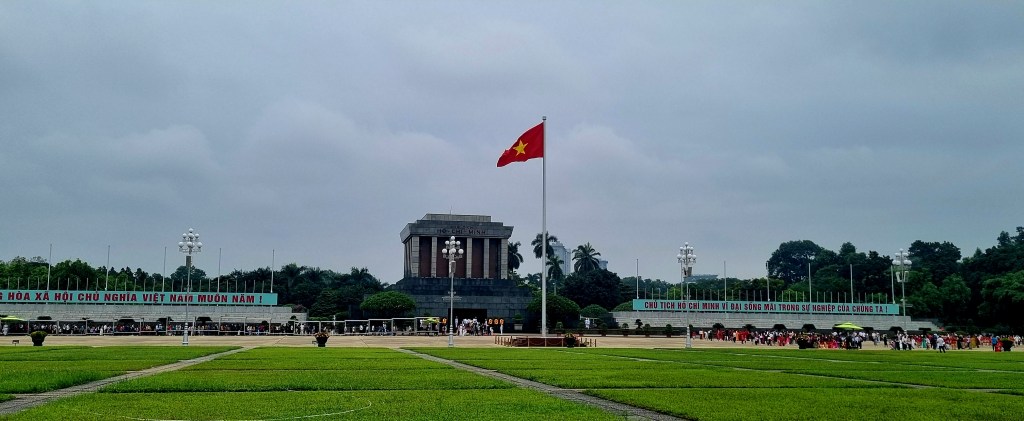
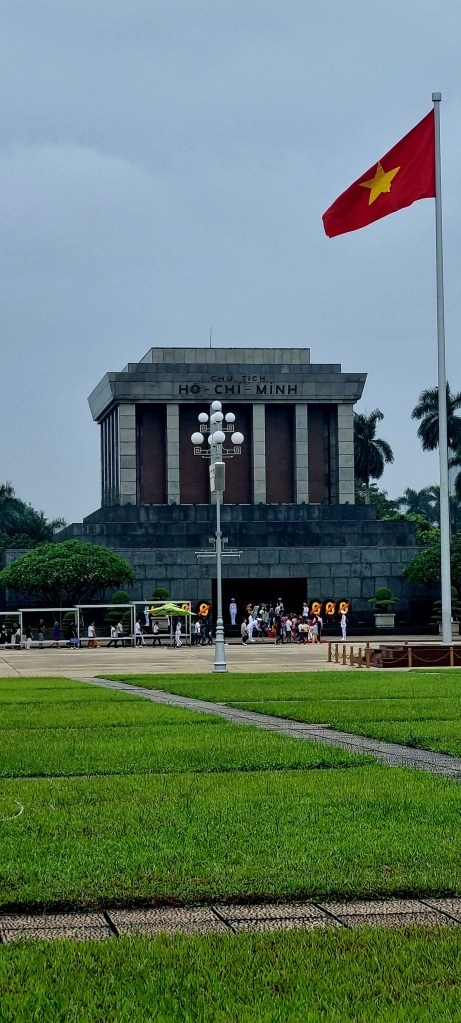
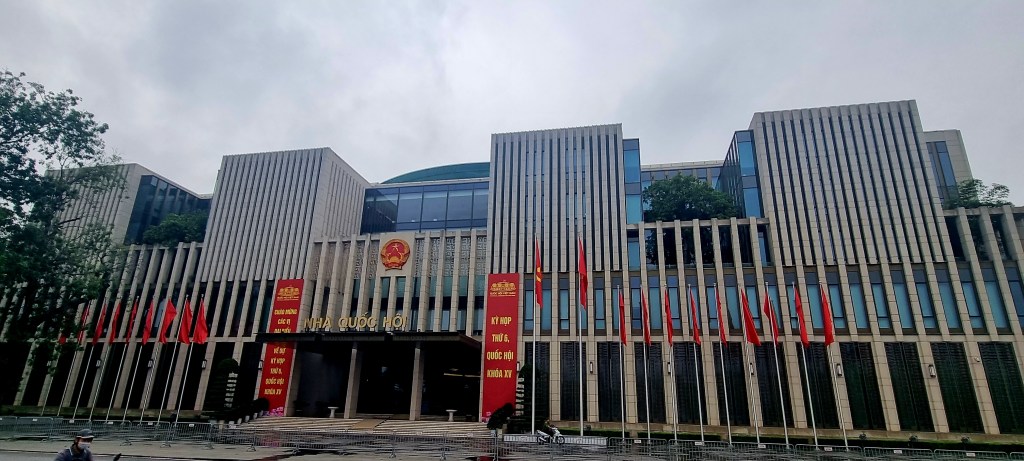
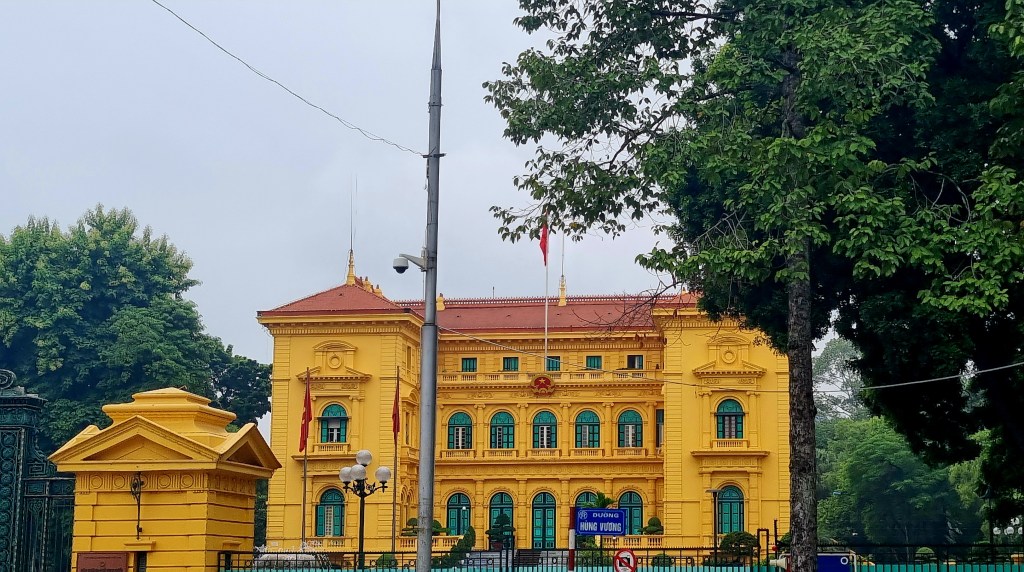
As we walked back into the main city area, we passed the National Assembly building and also the Presidential Palace from the roadside.
Not too far from the mausoleum is West Lake. This is the biggest freshwater lake in Hanoi and has a shoreline of 11 miles (17km). A small part of the lake is separated by a road to form Trúc Bạch Lake. We were quite thirsty by now, so we decided to stop for a coffee – and we tried another Vietnamese egg coffee in a roadside cafe. We had to take shelter under a tree as it started to rain a little bit.


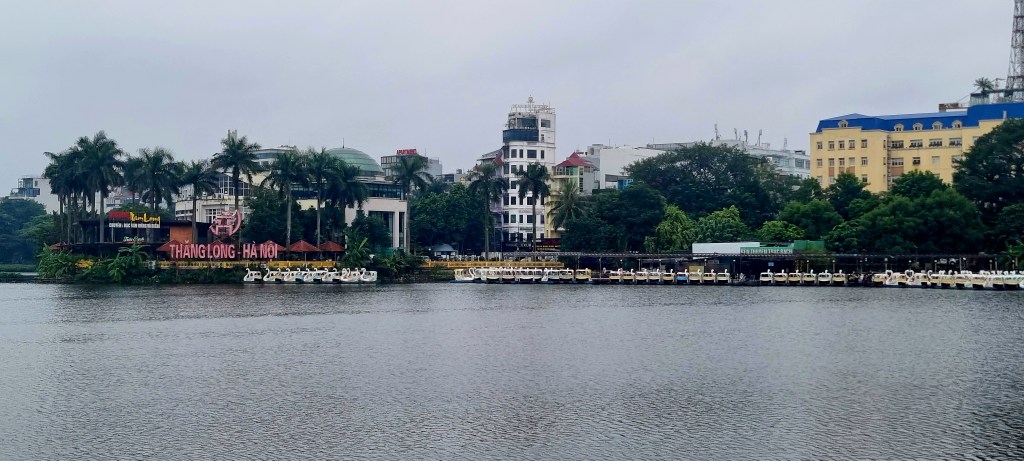
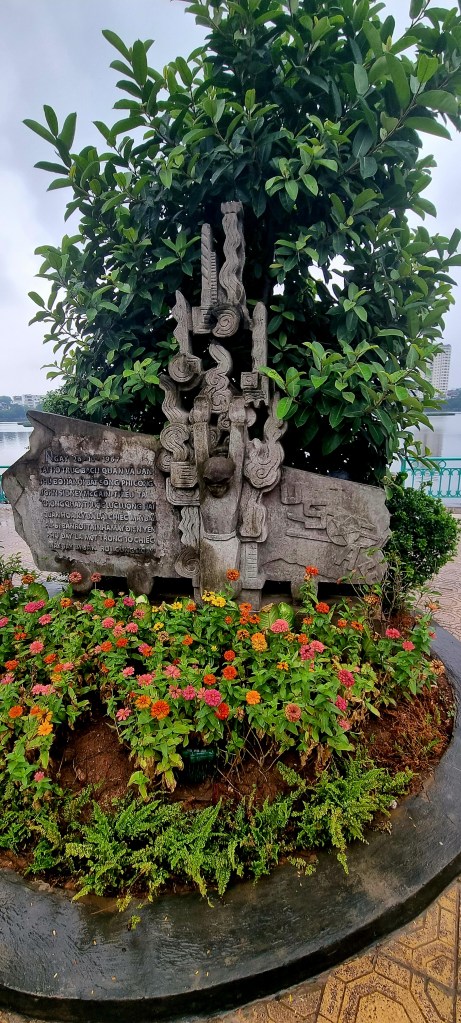
On October 26, 1967, during the Vietnam War, US Navy aviator John McCain was shot down by an anti-aircraft missile on a mission against a Hanoi power plant and parachuted wounded into Trúc Bạch Lake. He was dragged out of the water, confronted by angry North Vietnamese and turned over to the military as a prisoner of war. A monument commemorating the capture is on the western shore of the lake. Its inscription reads: On 26 October 1967 near Trúc Bạch Lake, citizens and military of the capital Hanoi captured US Navy Air Forces pilot Major John Sidney McCain, who was flying an A-4 aircraft that crashed near Yên Phụ power station. This was one of ten aircraft shot down that day.
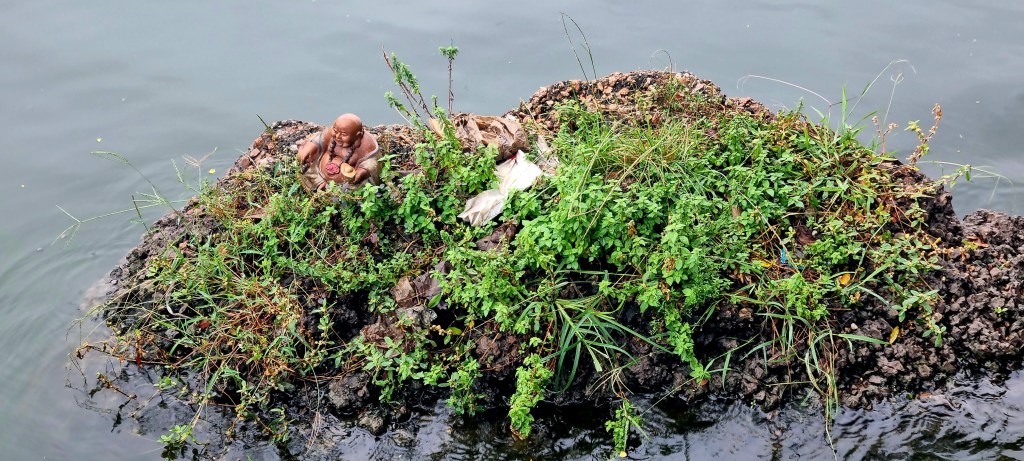
There was slso a very cute Buddha on a tiny island in the lake.
The main attraction at West Lake is the Trấn Quốc Pagoda, meaning protection. This is the oldest Buddhist pagoda in the city as it was originally constructed in 544 until 548.
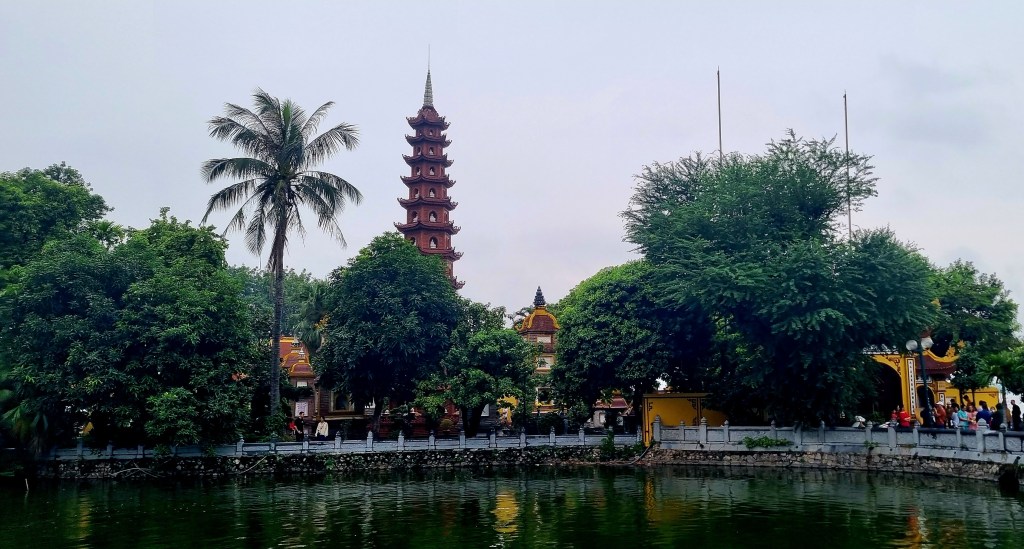
The pagoda is part of the larger Trấn Quốc Temple area, and the ashes of a former monk and Zen Master are buried in the tower. At the Trấn Quốc Pagoda, there are many lotus flower statues. These symbolize purity of the mind, body and speech. The lotus flower also symbolizes enlightenment and achievement. The building has 11 stories and is 15m high.
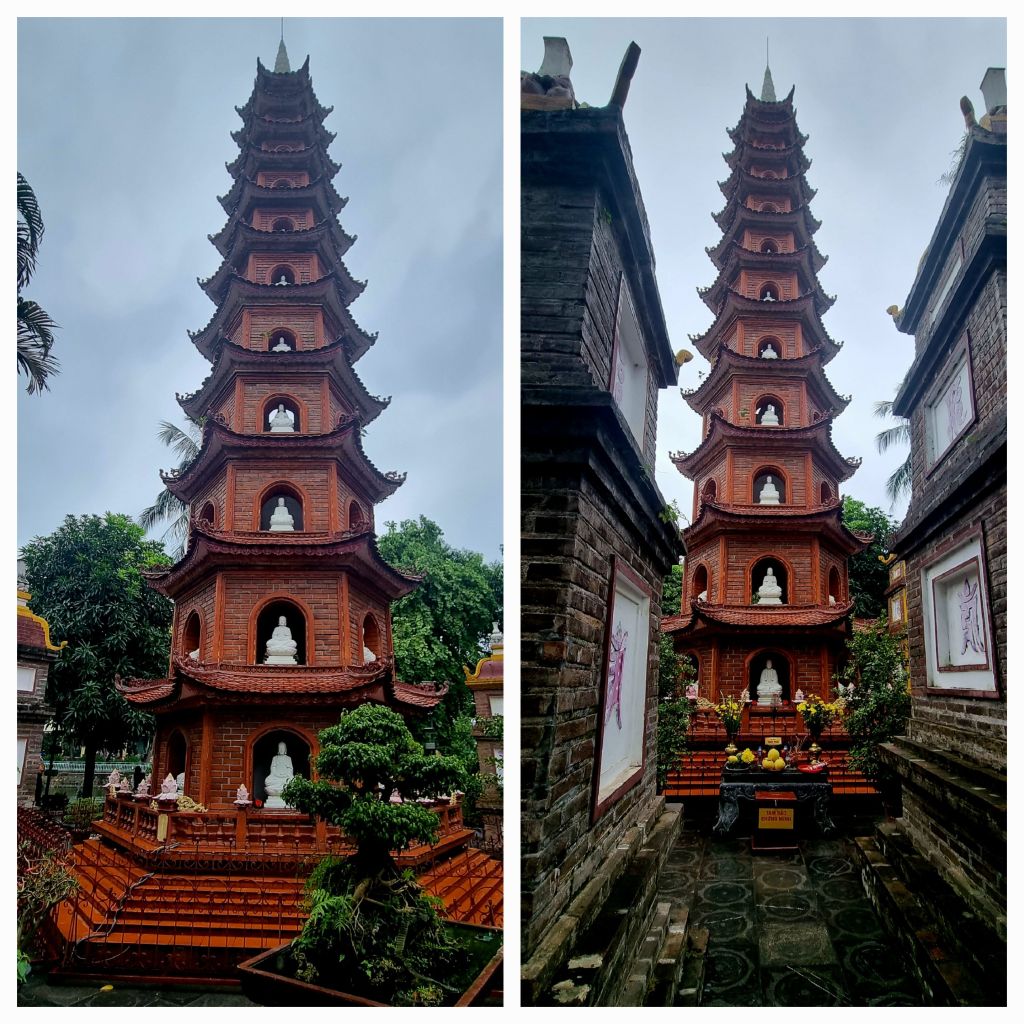
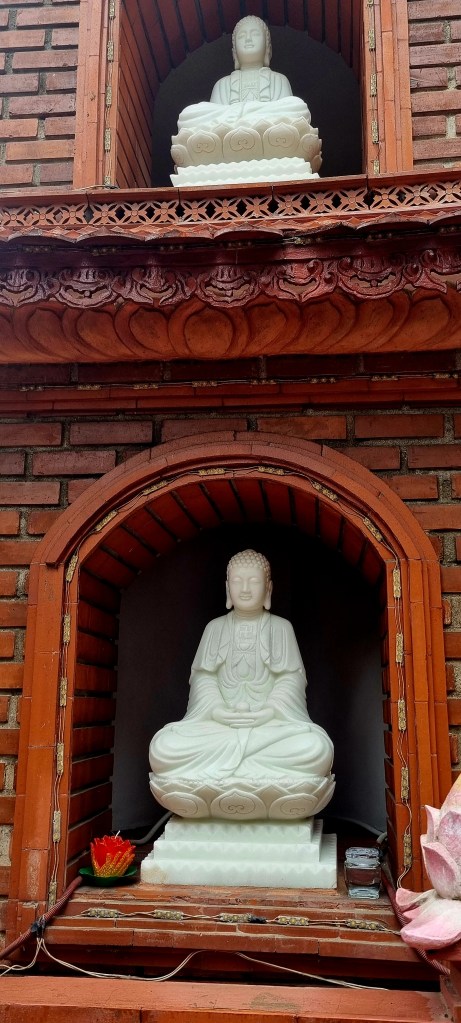
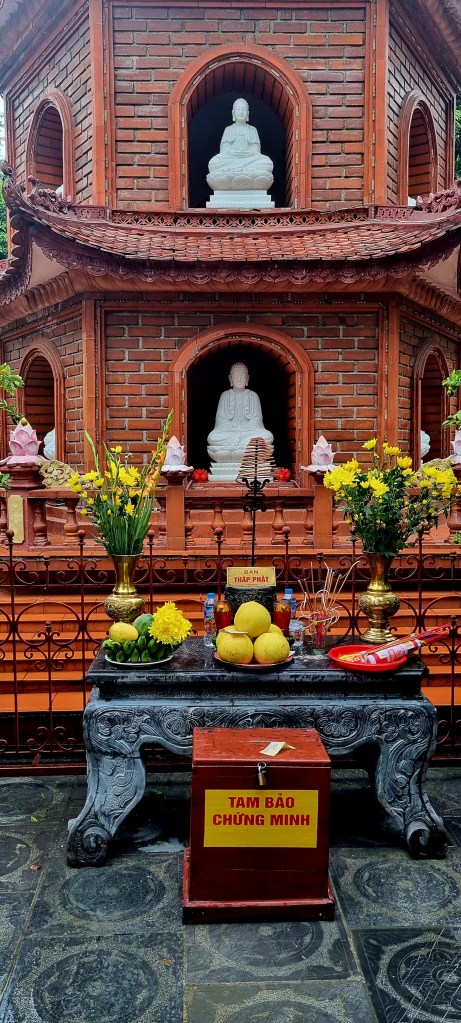
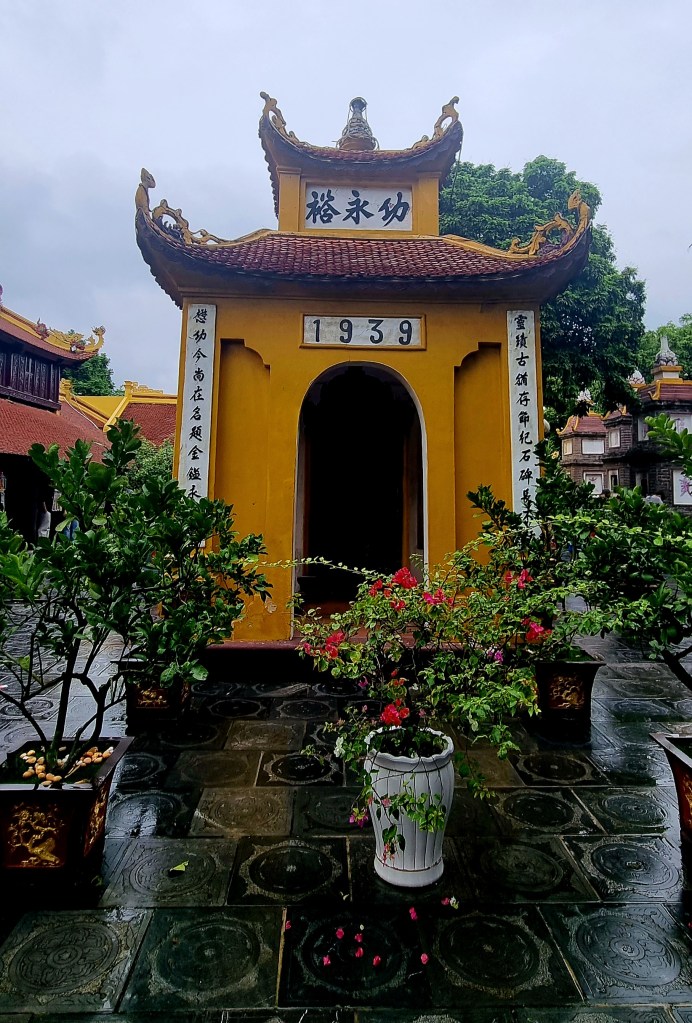
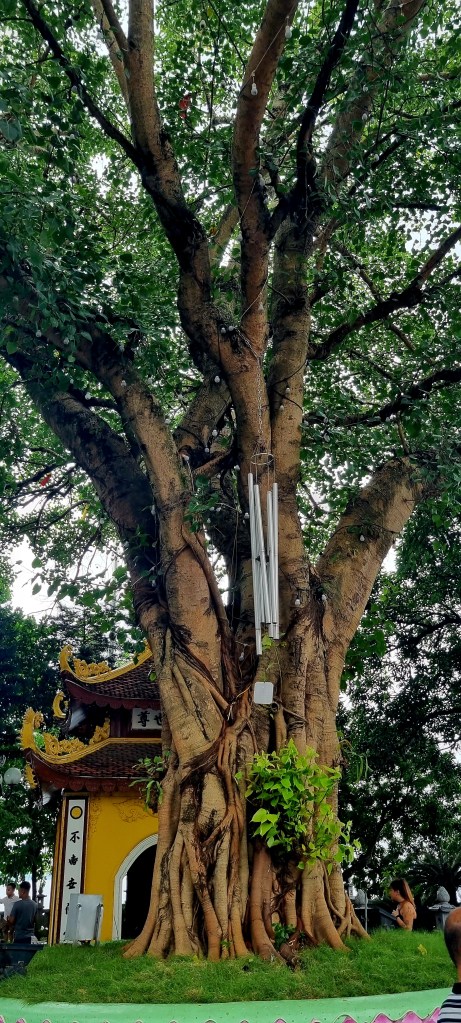
In the grounds of Trấn Quốc is a Bodhi tree, which was taken as cutting of the original tree in Bodh Gaya in India. This is the tree where Gautama Buddha is said to have sat and attained enlightenment. The gift was made in 1959.

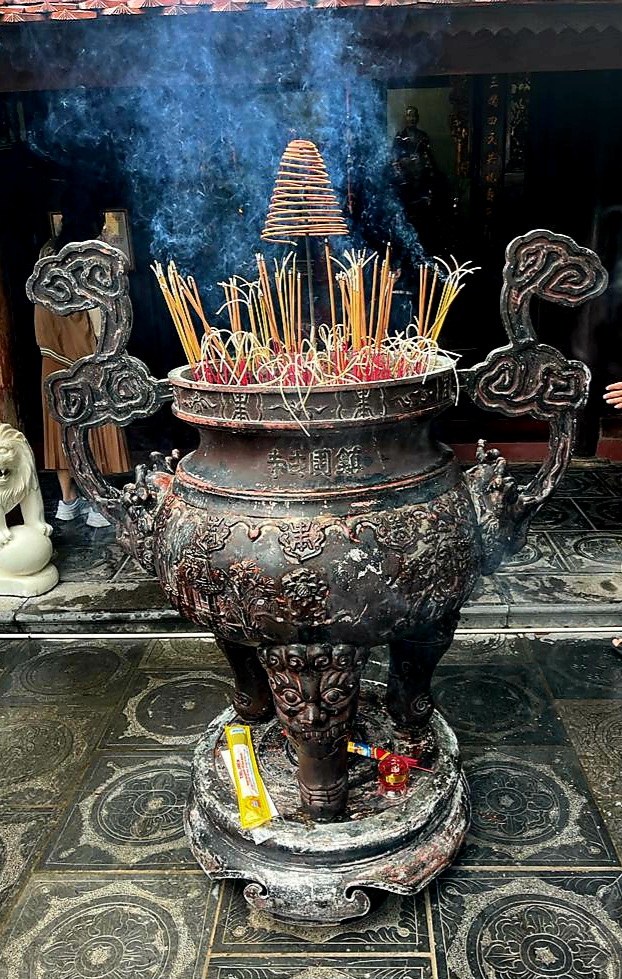
At the main shrine, many people burn incense. Incense is burned to send wishes to the gods and to receive good luck in return. It is presented in odd numbers because odd numbers are considered lucky in Chinese and Vietnamese culture.
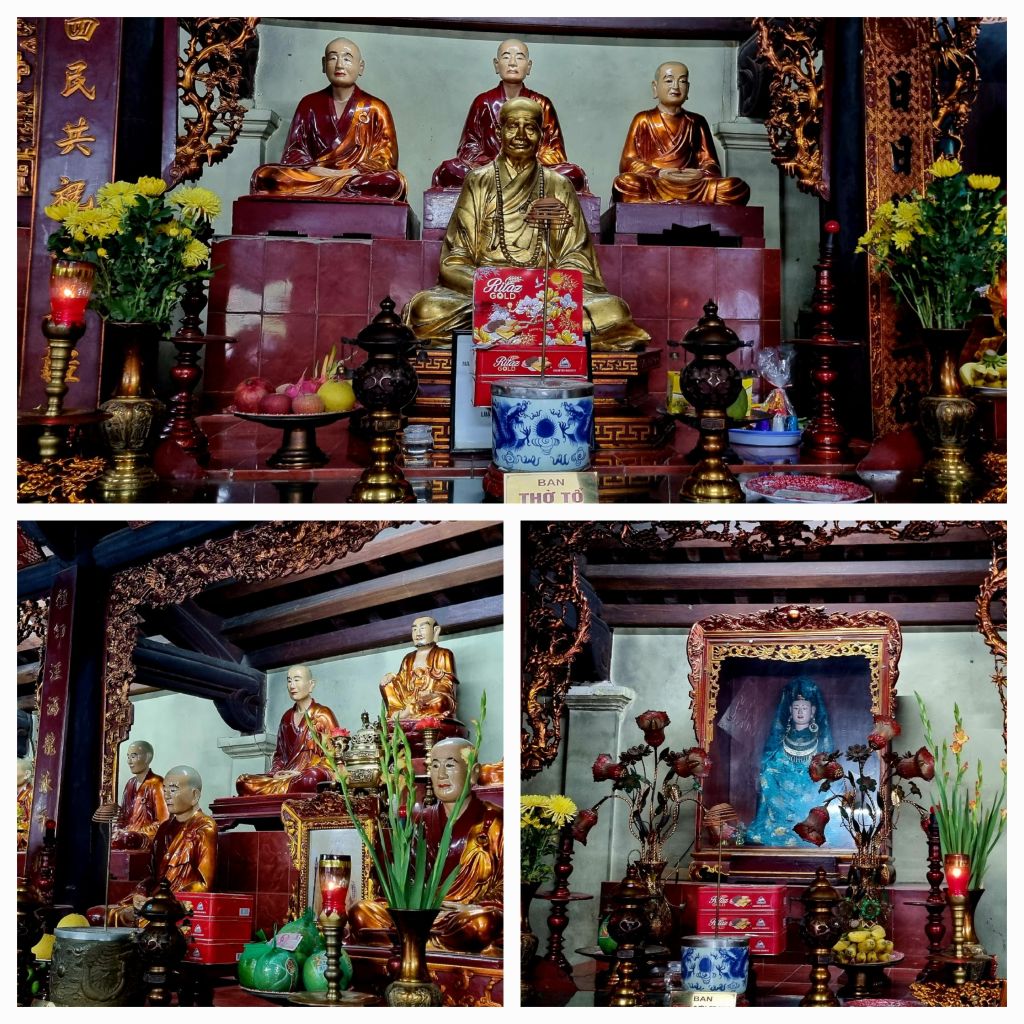
In the Trấn Quốc Temple they also worship goddesses, known as the “Mẫu” (Mothers). Their shrines are in the front of the courtyard. The green mother has domain over the mountains and forests. The white mother has domain over the water. Lastly, the red mother has domain over the sky. These are some of the oldest gods or goddesses who have been worshipped in Vietnam and were around before Buddhism.
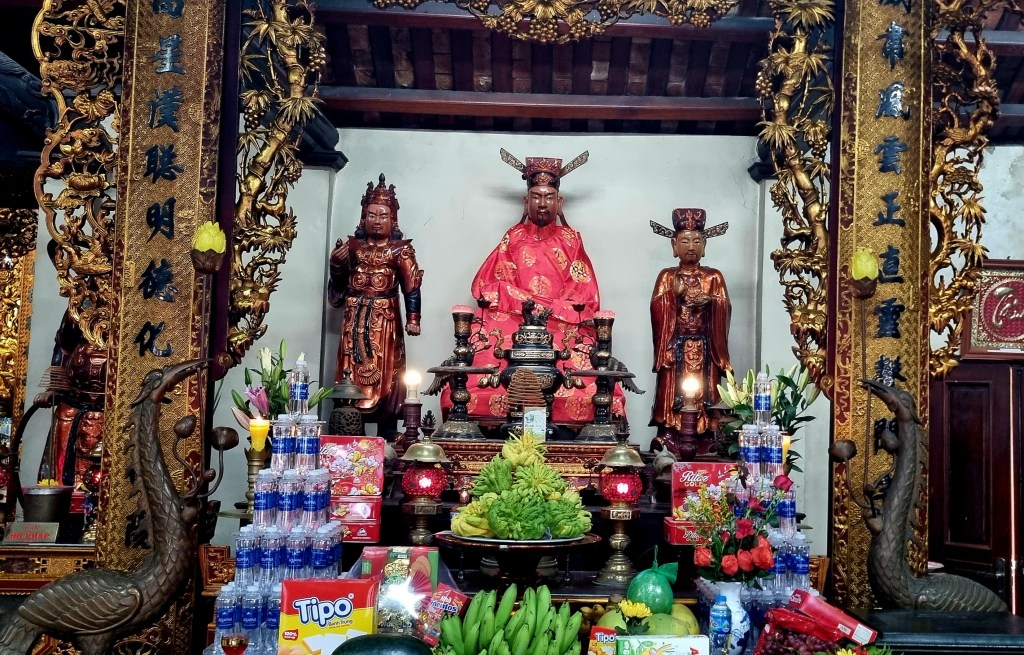
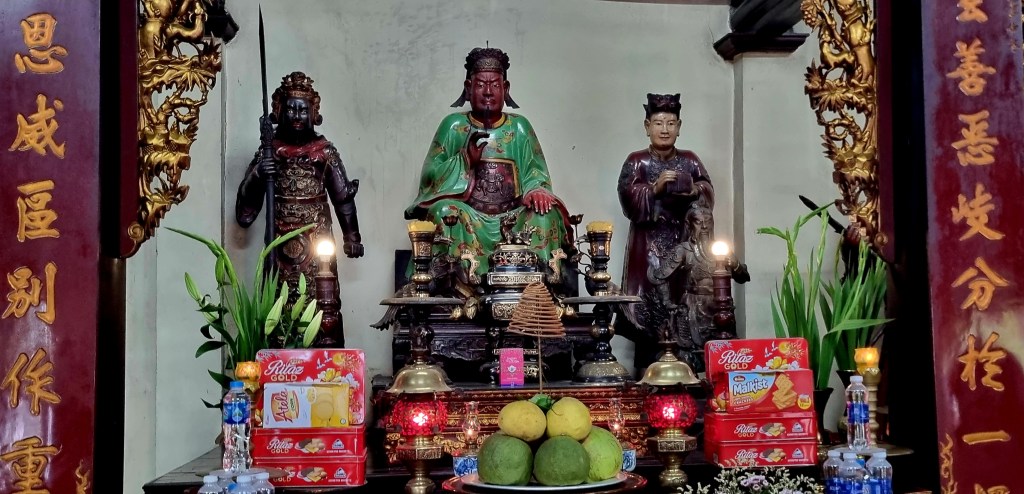

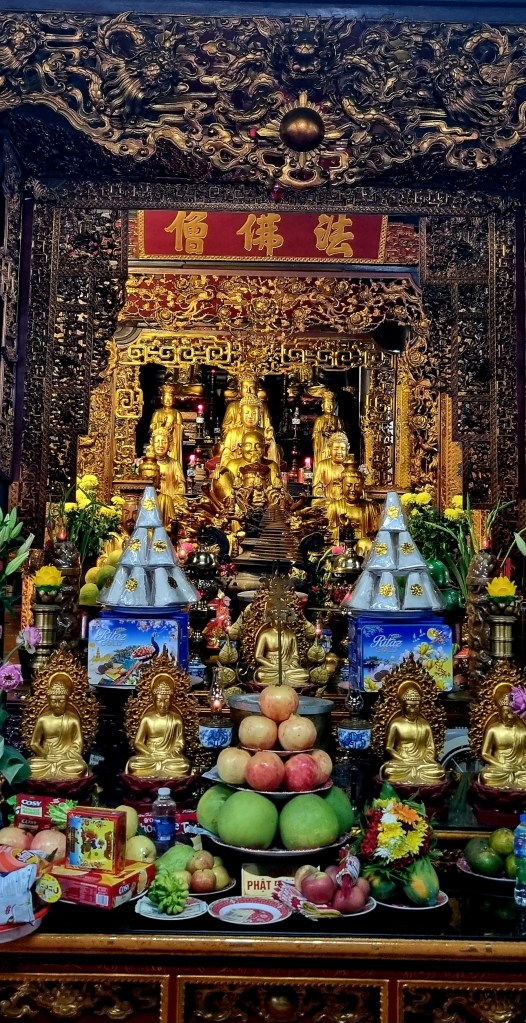
The room at the back of the temple is particularly stunning.
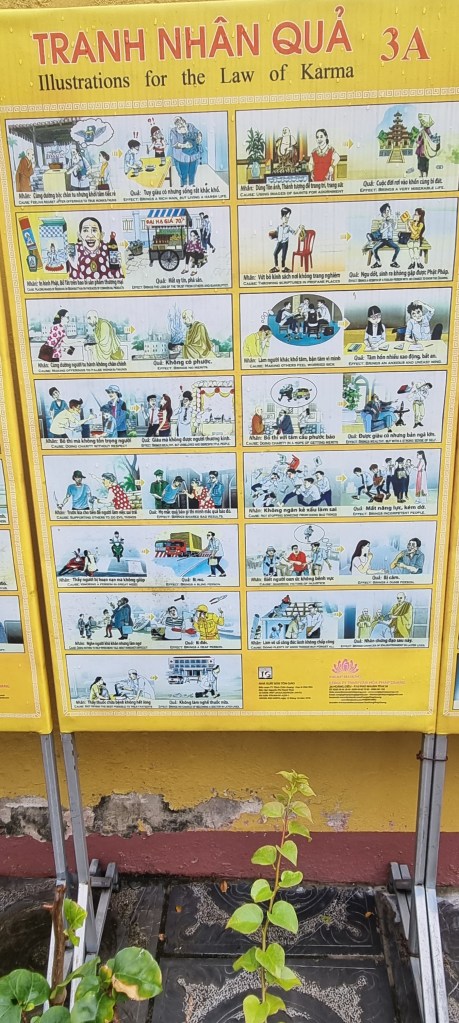
In one area of the courtyard, they had a number of displays illustrating the laws of Karma – some of them were quite amusing.

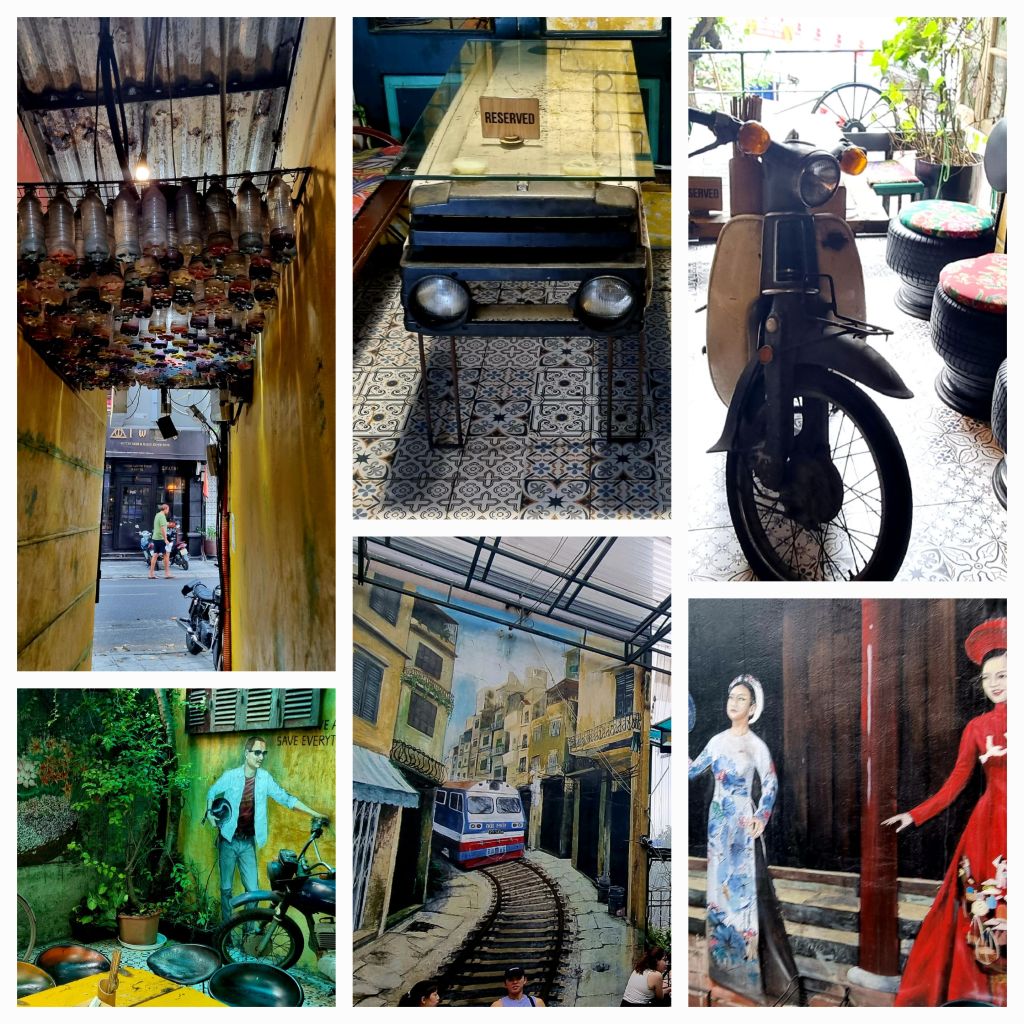
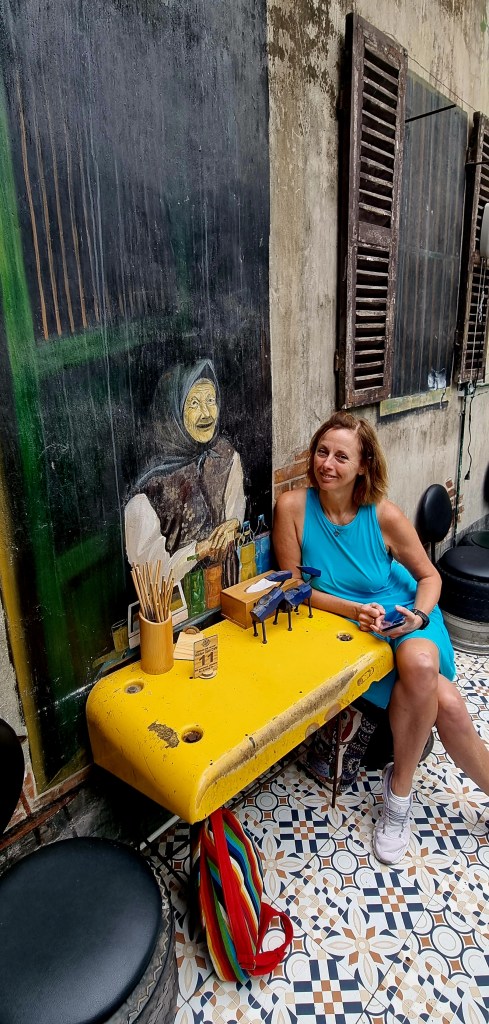
After all that walking around, we were a little bit peckish, so we got a taxi to a place that Tracey had recommended to us from her street food tour. It was a little place called Hidden Gem – and it really was hidden, down a small alleyway behind other bars and restaurants. In fact, the restaurant we went to for our celebration meal was right in front of it. It was definitely worth a visit as it was a very quirky place.

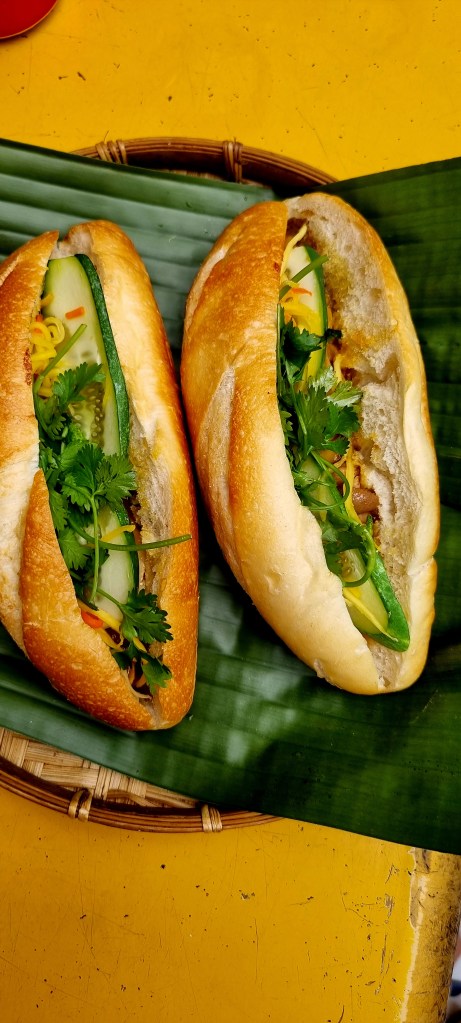
We each had a typical Vietnamese sandwich, known as Banh Mi. These originate from when the French occupied Vietnam and built bakeries to make baguettes. However, the Vietnamese bread is softer on the inside, crispy on the outside, and is only 30-40cm long. Our sandwich had a filling of chicken, pickles, salad, noodles, and sauce. It sounds weird but tasted delicious.
Not far from the Hidden Gem was a traditional Vietnamese house- Ma May House. The house was built at the end of the 19th century and the families of shopkeepers used to live there. In 1945 a family bought it to sell chinese medicine. In 1954, it was requisitioned by the government and five families used it until 1999. The families had various occupations such as grocers, tailors, state employees and martial arts teacher. The house is 5-6m wide and 28m long. Land is expensive in Vietnam, so the width of houses is often small, and they build upwards instead. This house, though, is referred to as a tube house as it has a sucession of building and courtyards all joined together.
At the front of the house was a shop. At the front, there was no wall, so it was open to the street so they could sell their goods. Inside is an open yard to get sunlight and fresh air. Behind that was the back room, the store and the kitchen.
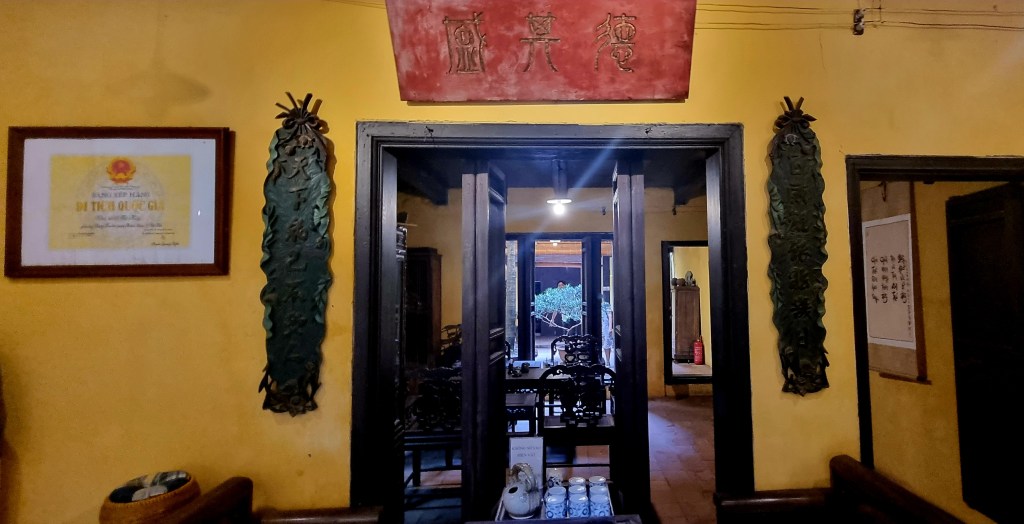
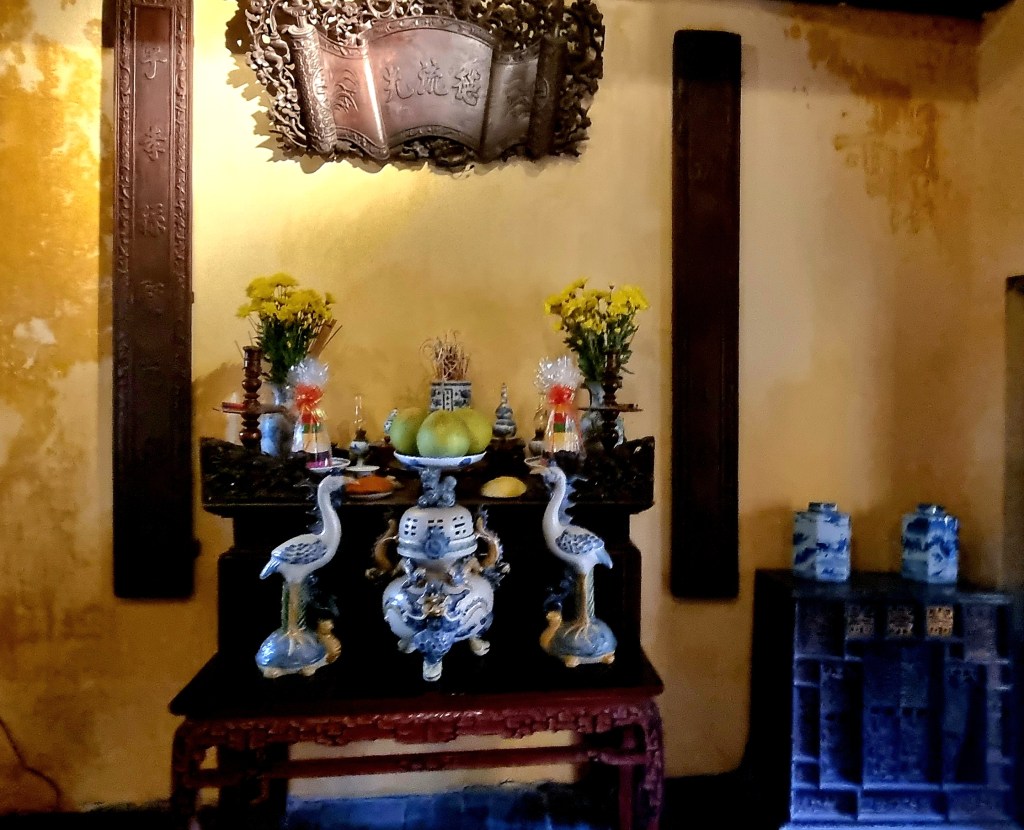
The stairs are at a 70 -75% degree angle, so they’re pretty steep. Upstairs is the altar room and bedroom. Vietnamese people choose the most solemn place to worship their ancestors. The altar is seen as the bridge between living people and the spiritual world and is a token of gratitude to the forefathers. Vietnamese people believe that the body dies but that the soul lives on forever in another world. They believe that souls can intervene in lives in magical ways.
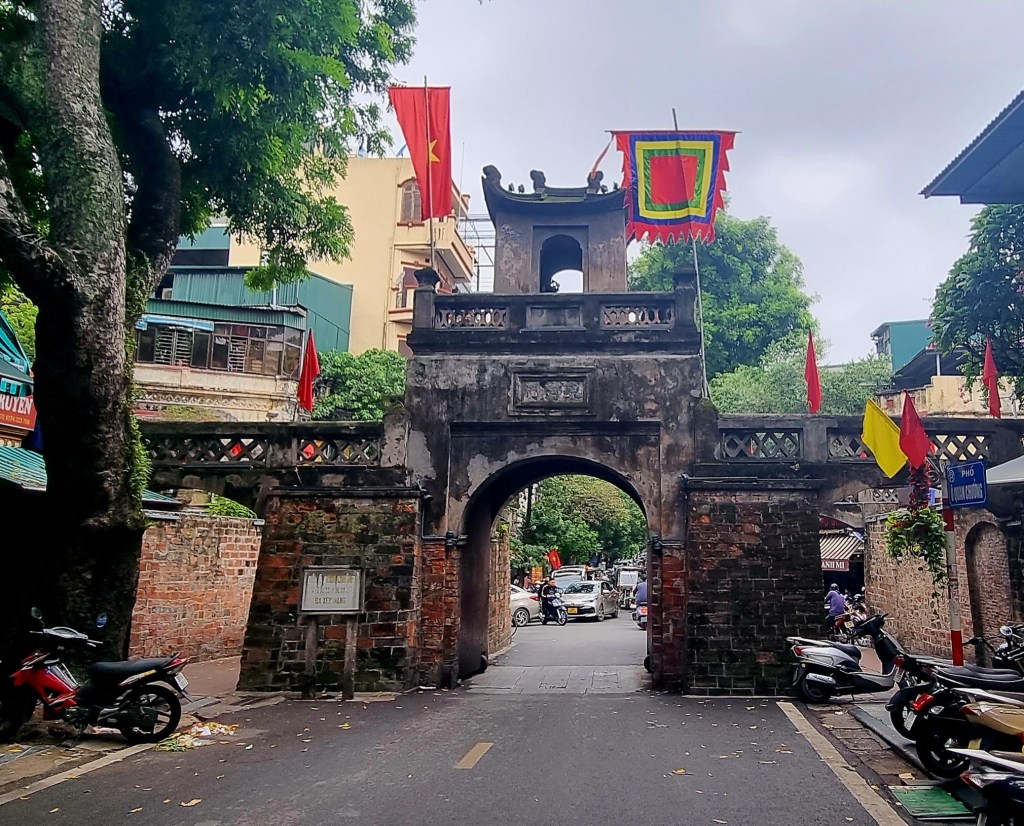
From Ma May House, we walked to the old city gate. O Quan Chuong is the only serving gate from the citadel of Thang Long. Built in the 18th century, it was open during the day and closed and guarded at night to prevent theft and fire. According to historical records, there used to be 21 gates surrounding the city. On the left of the main door is a stone stele inscribing a ban by the Governor Hoang Dieu in 1881, which prohibited the guards from harassing the funeral of the local people.
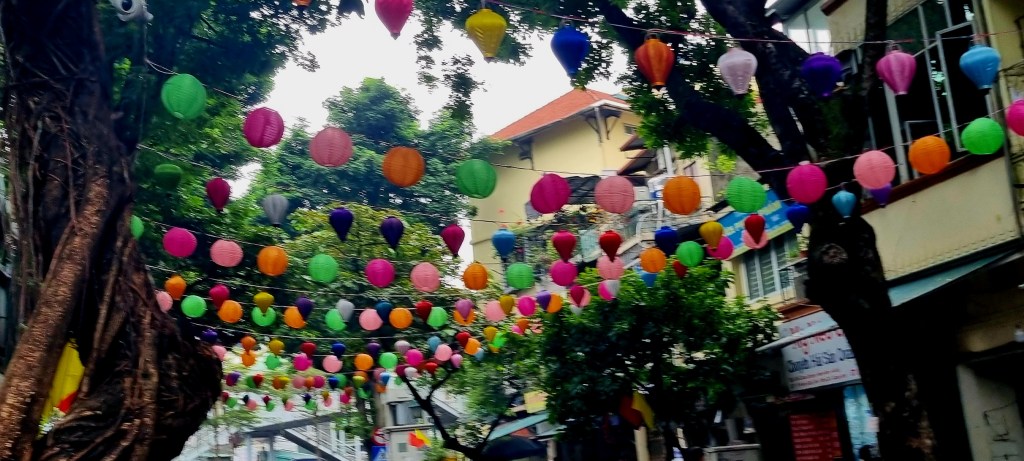
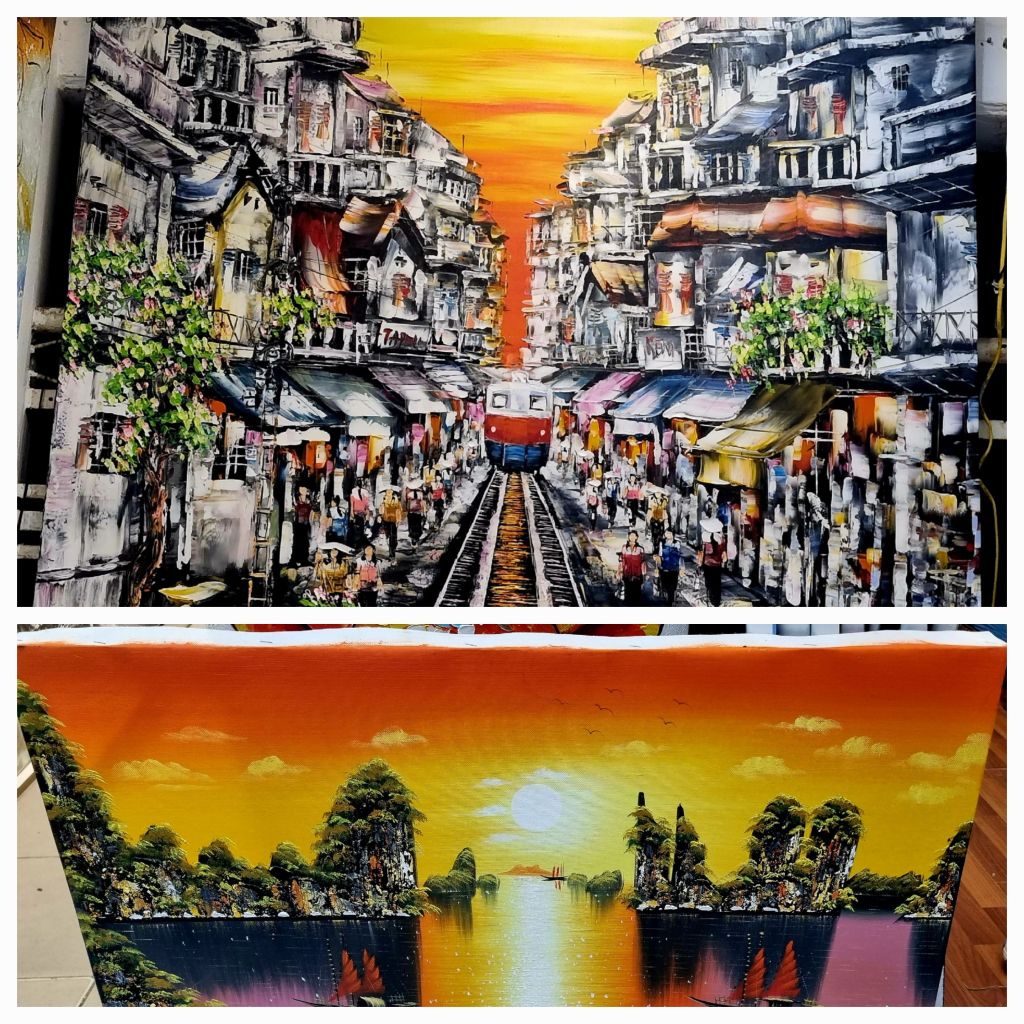
It was then time to go back to the hotel for a bit of relaxation. On the way back, we passed a really good art shop, and we both ended up buying a picture from there.
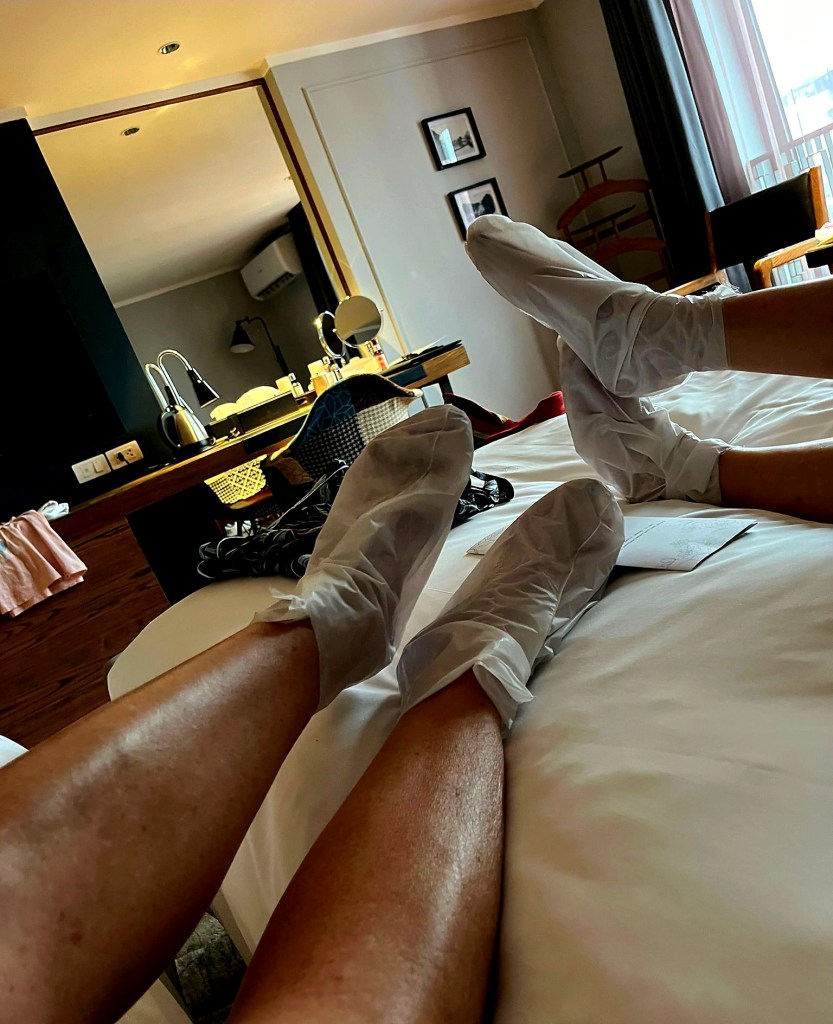
We had both booked a facial and also a free manicure. And in-between times, we had a foot pamper with some packs that Gill had left for us.
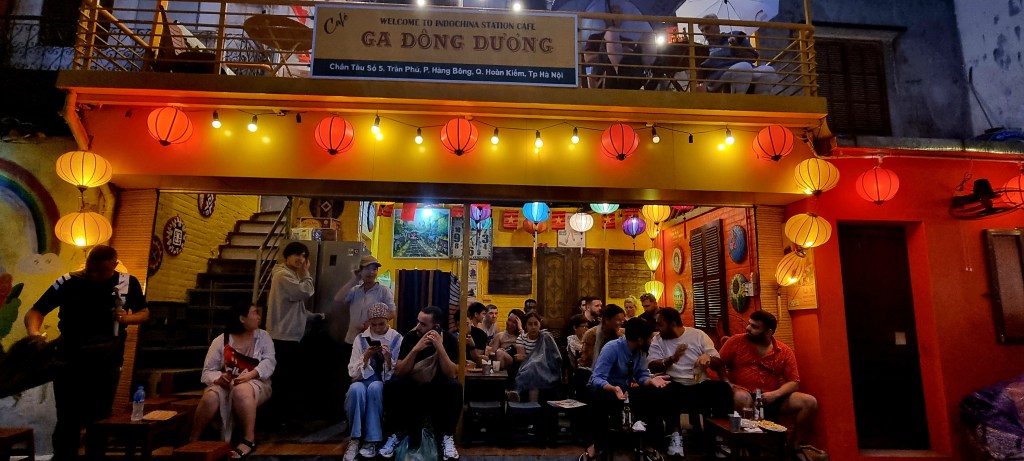
Although it had started raining again, we decided to go and visit train street in the early evening. This is a small street that runs through Hanoi and is lined with small cafes and bars.
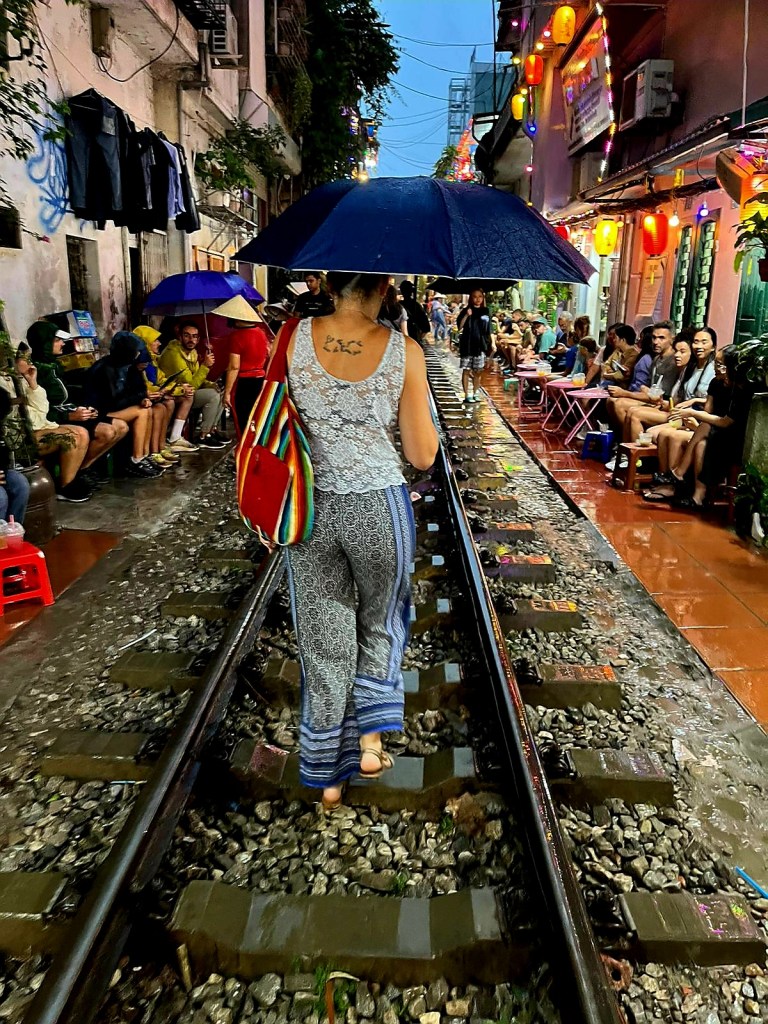
Train Street was built in 1902 by the French and it has become an iconic tourist attraction. Trains pass through the street several times a day. The street was closed to tourists back in 2019, and many businesses along the street have had their licences revoked. I don’t know what the legal situation is today, but it was definitely open and full of people. Originally, we sat on some small stools by the side of the track, but after a few minutes, there were some places available in the cafe opposite, so we moved there. A lot of people were also selling their wares along the street.
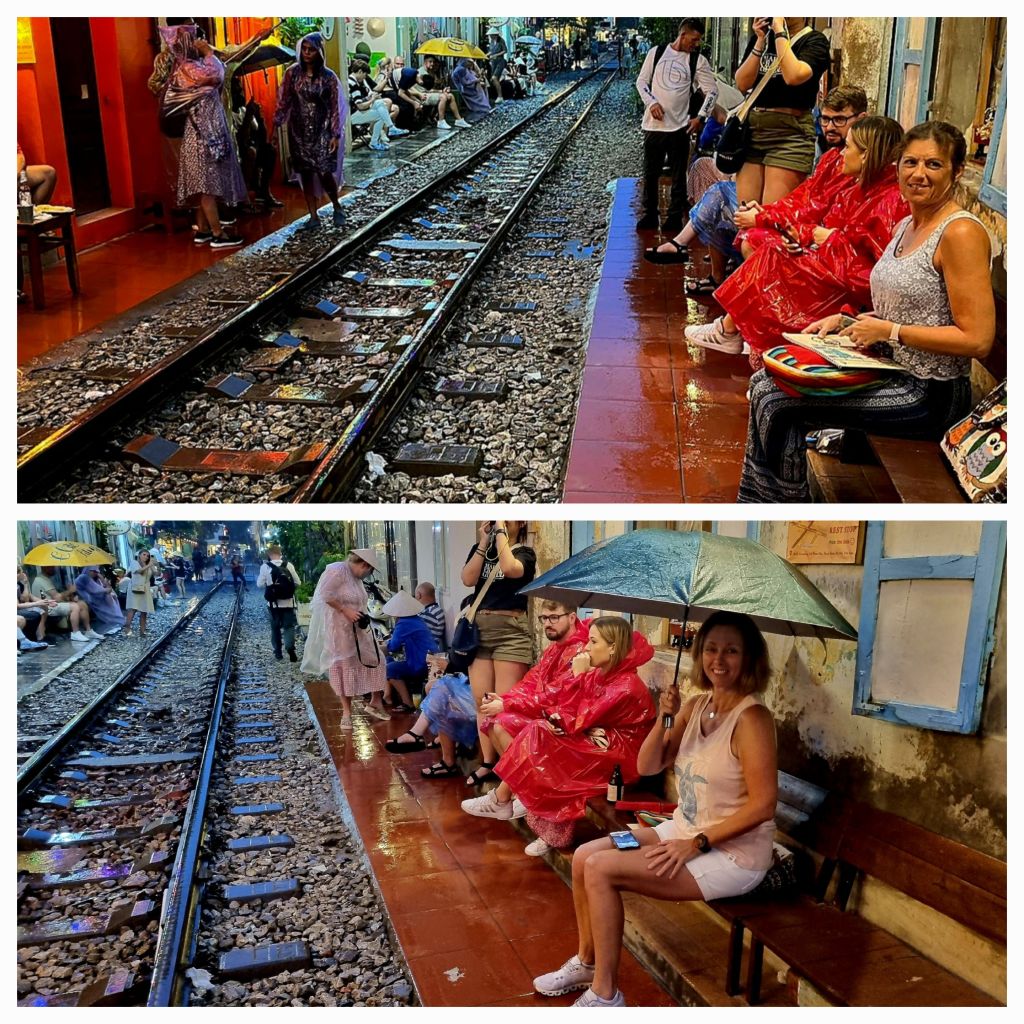
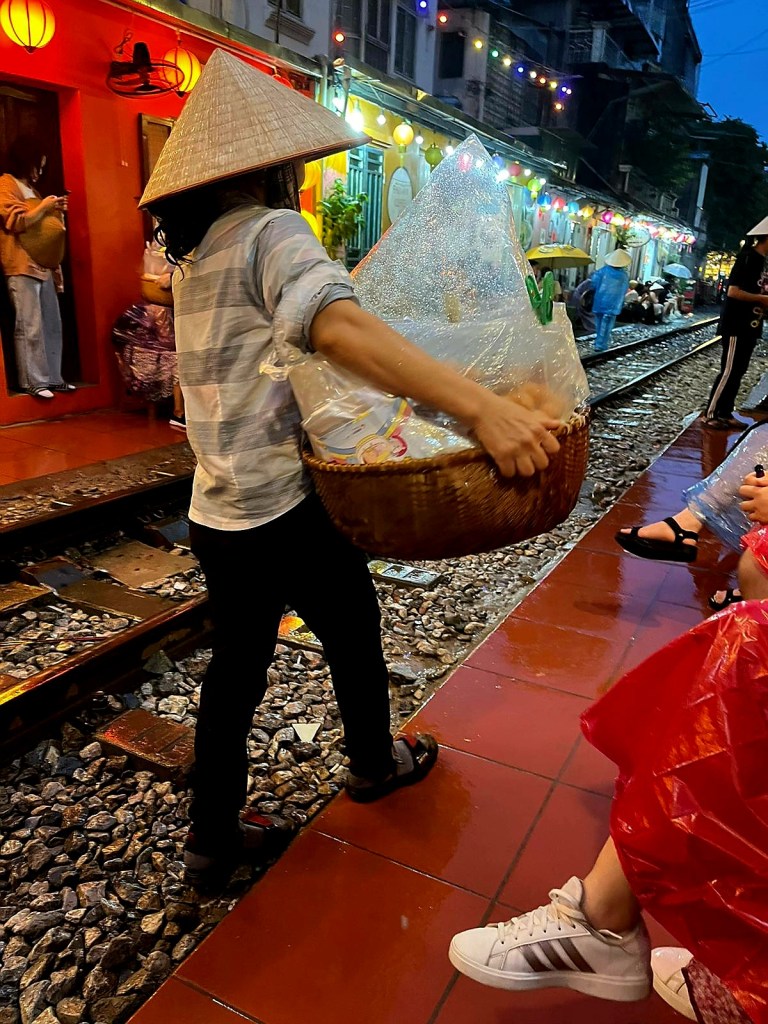
After about 25 minutes, we were given a 5 minute warning that the train was coming. A group of about 20 people who were milling around were quickly ushered to the upstairs of our cafe. And then the train came and it got very close. It did blow its horn a lot, but it didn’t go that slowly.
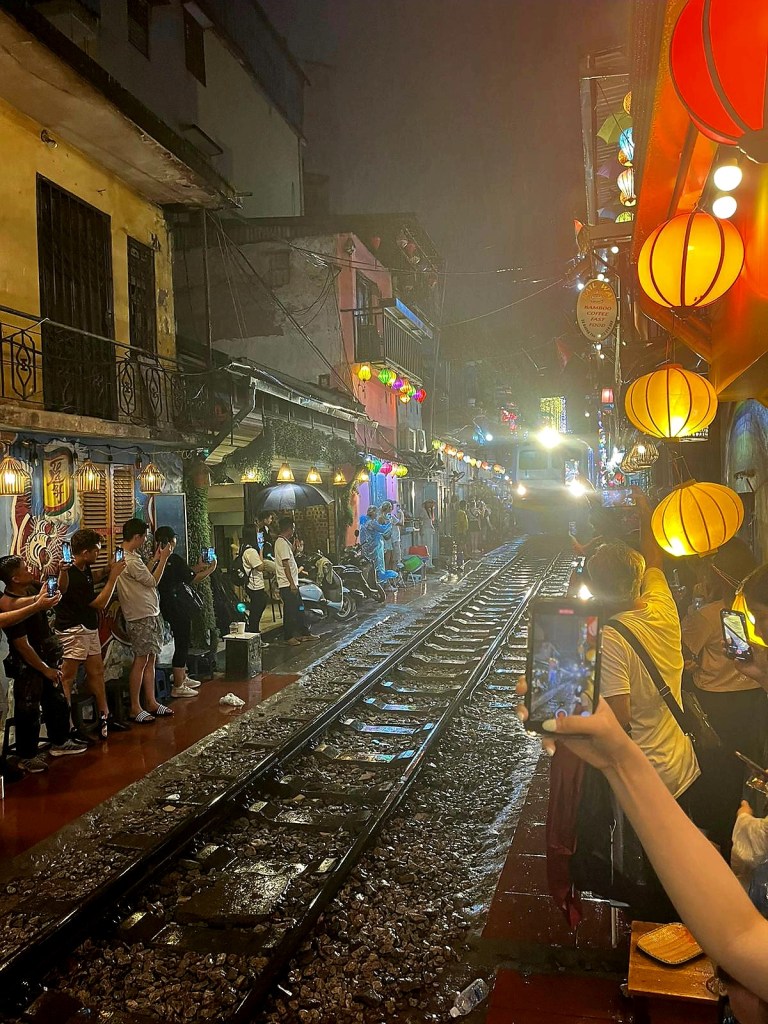
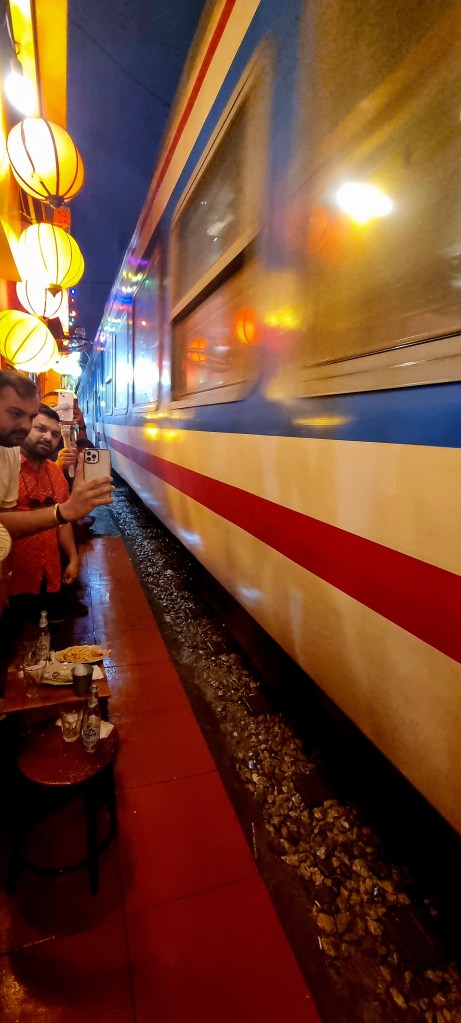

And in a few moments, it was all over. We hung around for a little bit and took some more photos as the rain had stopped.
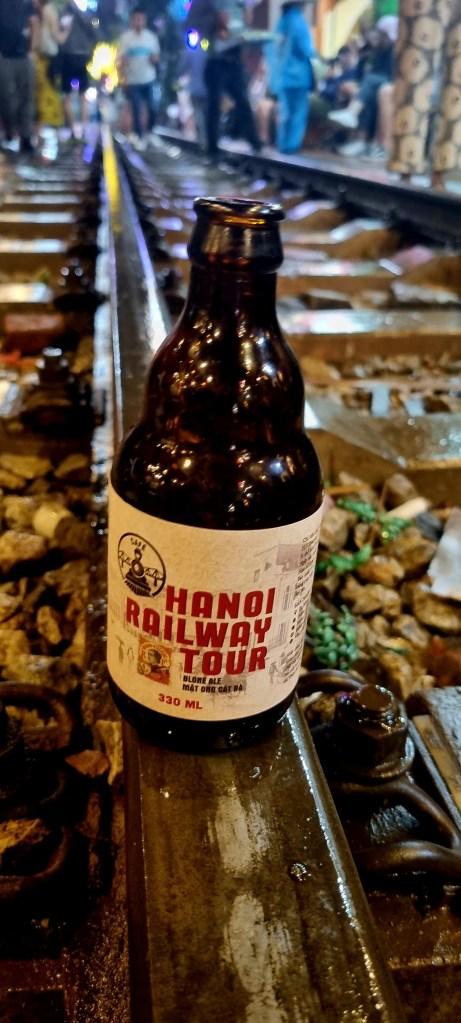
I had left my umbrella under the seat and someone else had picked it up, so I was glad it wasn’t raining at that point.
We decided to go to the Hanoi Social Club for a drink as it was pretty close by.
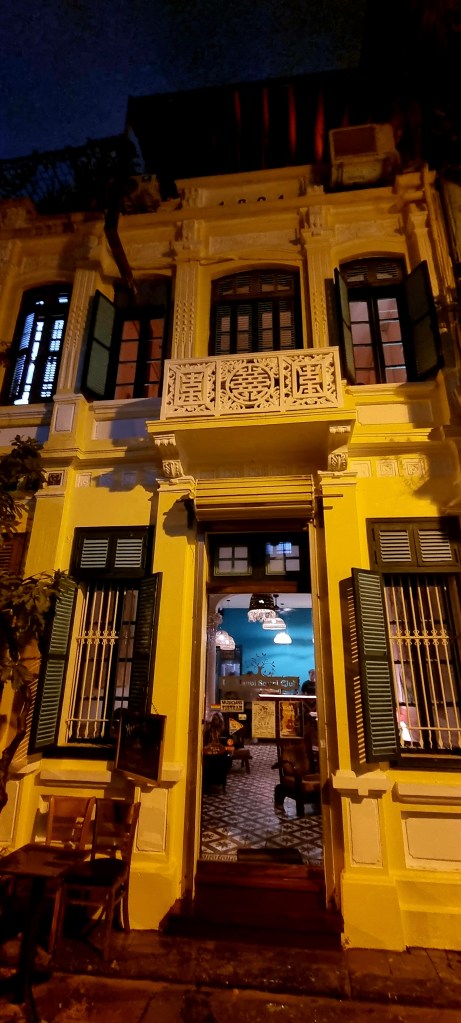
Whilst we were there it started raining again so we decided to eat there as well. One of the girls on the table next to us used to work there, and she recommended the burger, so we ordered that, and it was very tasty. We tried some weird gin cocktail as well.
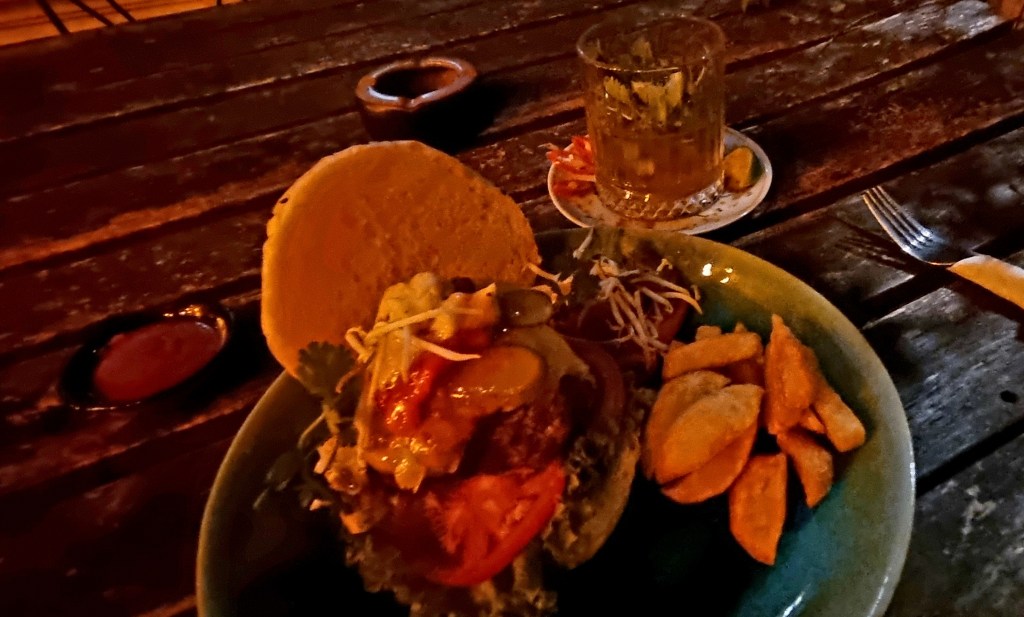
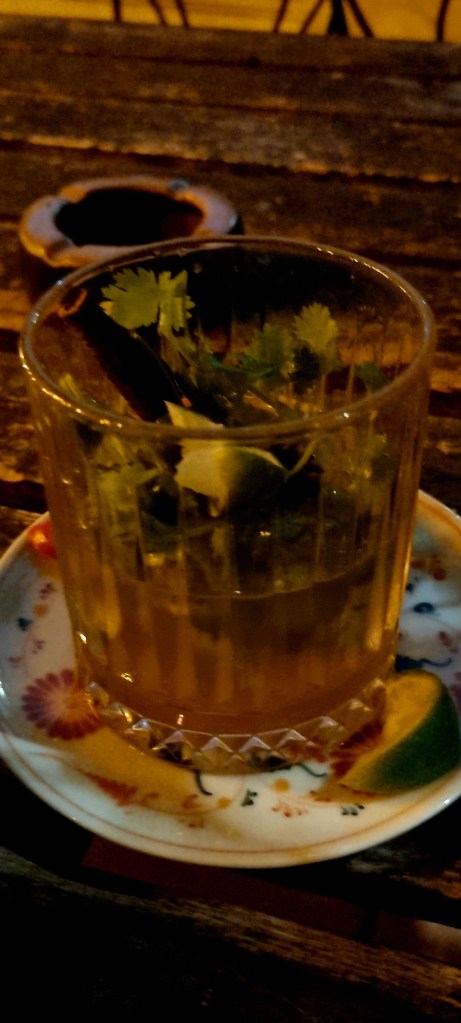
And I made a new friend who got several bits of my burger.

As it was still raining when we finished dinner, we decided to go back to our hotel as it was only a couple of minutes away.
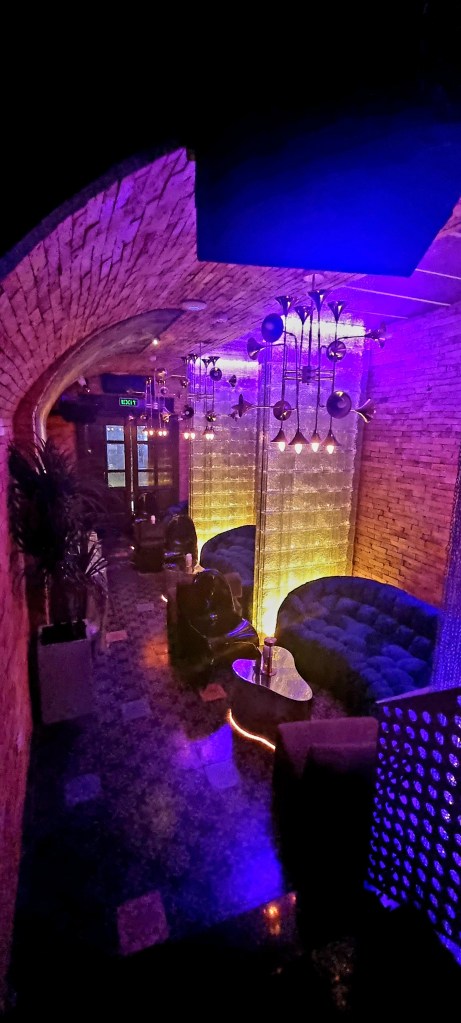
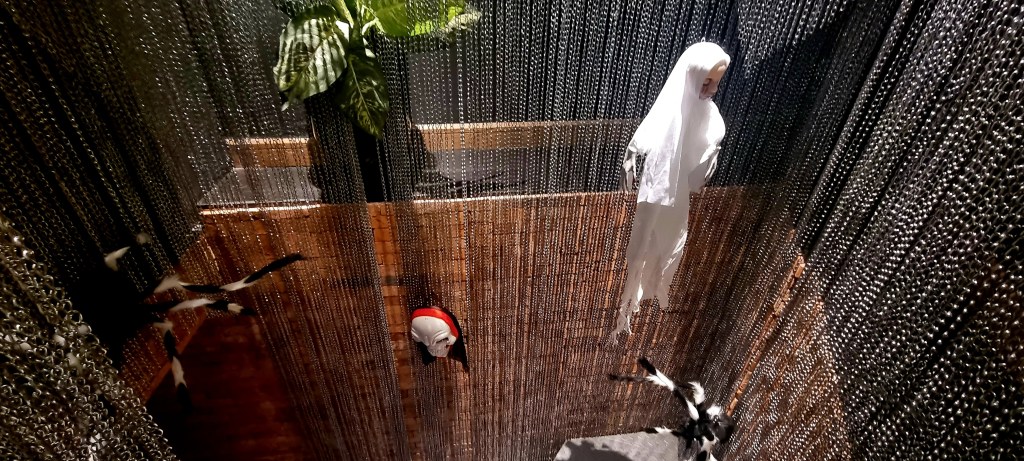
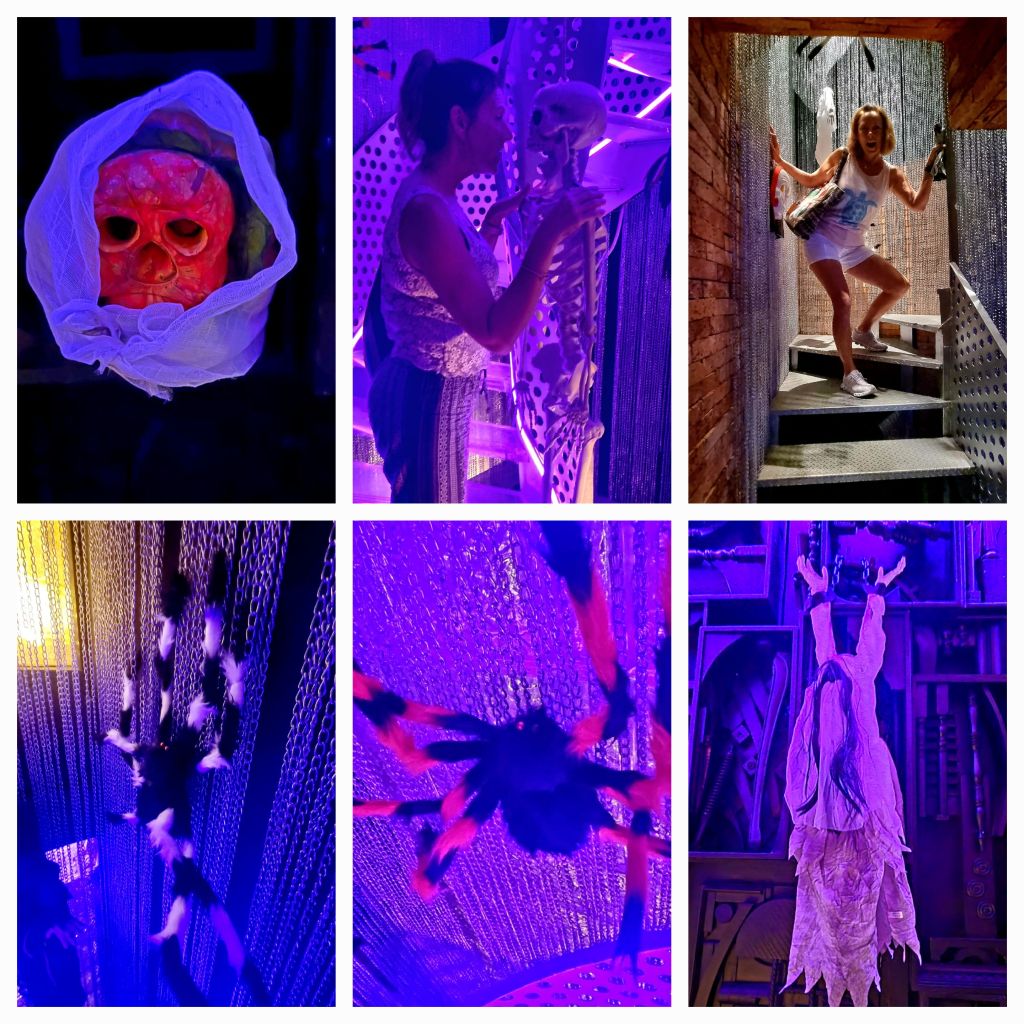
Back at the hotel, it was time for a nightcap. The hotel bar was downstairs and was very dungeonesque. Especially as they had all the Halloween decorations out.
And then it was time for bed.
 Fun, Fitness and Fabulousness in your Fifties