We were all feeling a little worse for wear after drinking quite a bit the night before, but most of us made it down to breakfast. This morning, we were moving from the Hanoi Boutique Hotel to the Bespoke and Trendy Hotel. But before we packed and left, we decided to visit the Bach Ma Temple as it was just around the corner from where we were staying.
Bach Ma Temple translates to ‘White Horse’. It is said to be the oldest temple in the city, though much of the current structure dates from the 18th century and a shrine to Confucius was added in 1839. It was originally built by Emperor Ly Thai To in the 11th century to honour a white horse that guided him to this site, where he chose to construct the city walls.
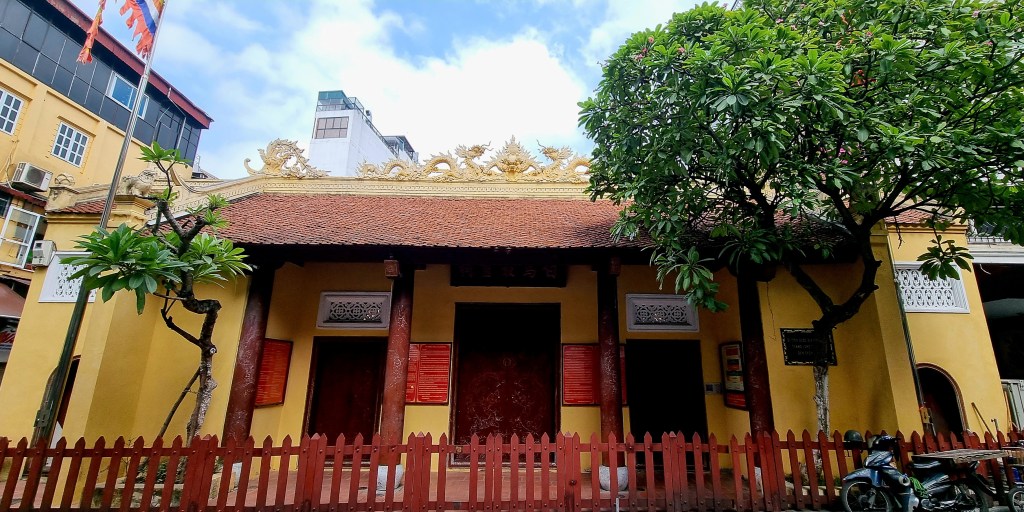
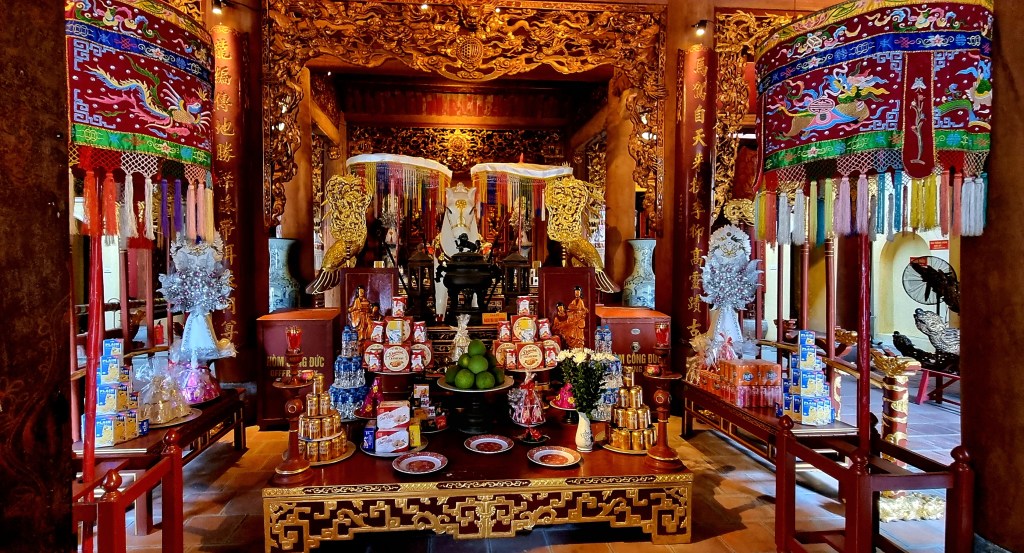

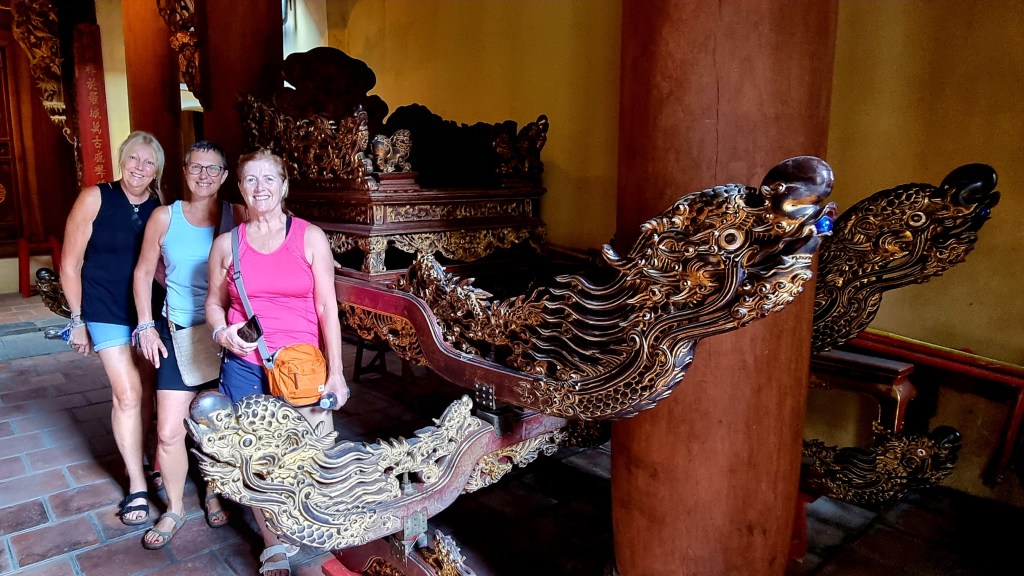
After a few minutes inside, one of the temple guardians spotted us, and we were asked to leave as we were not wearing suitable attire – our shoulders and knees should have been covered.
We went back to the hotel, packed our bags, and jumped into a taxi to the next hotel – we were not going to risk walking through the chaos of Hanoi with our suitcases!
At the new hotel, we tried on the hats in reception whilst they got our rooms ready.
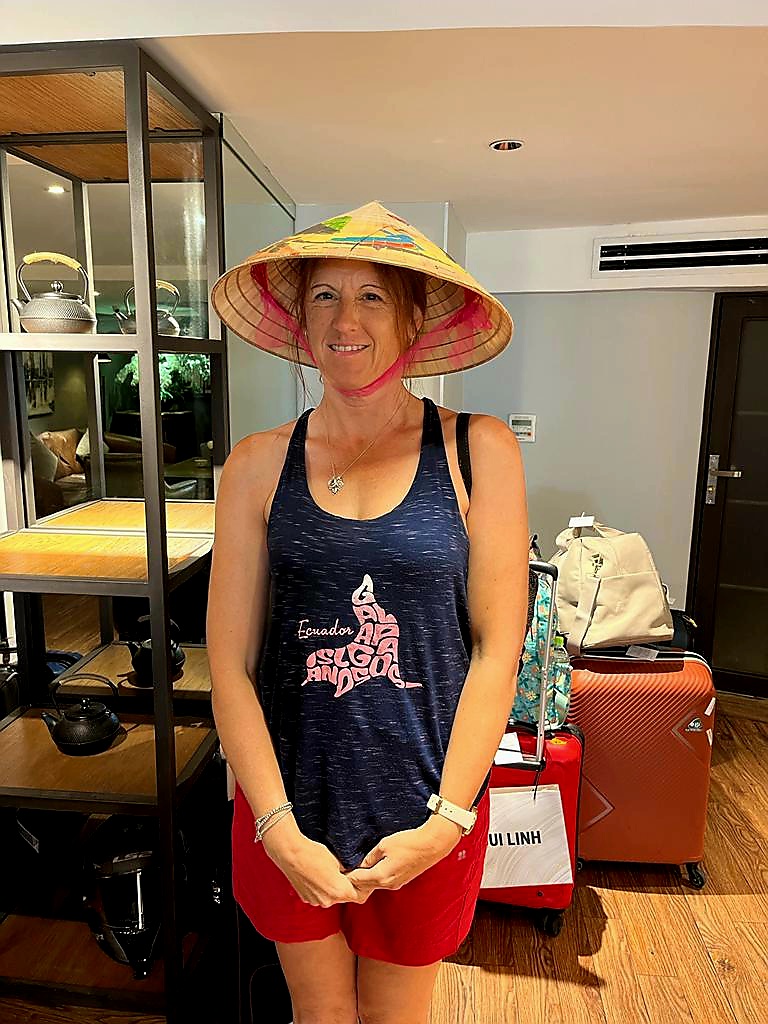
We left Mandy at the hotel to catch up on some sleep, and the rest of us took a taxi to the Temple of Literature.
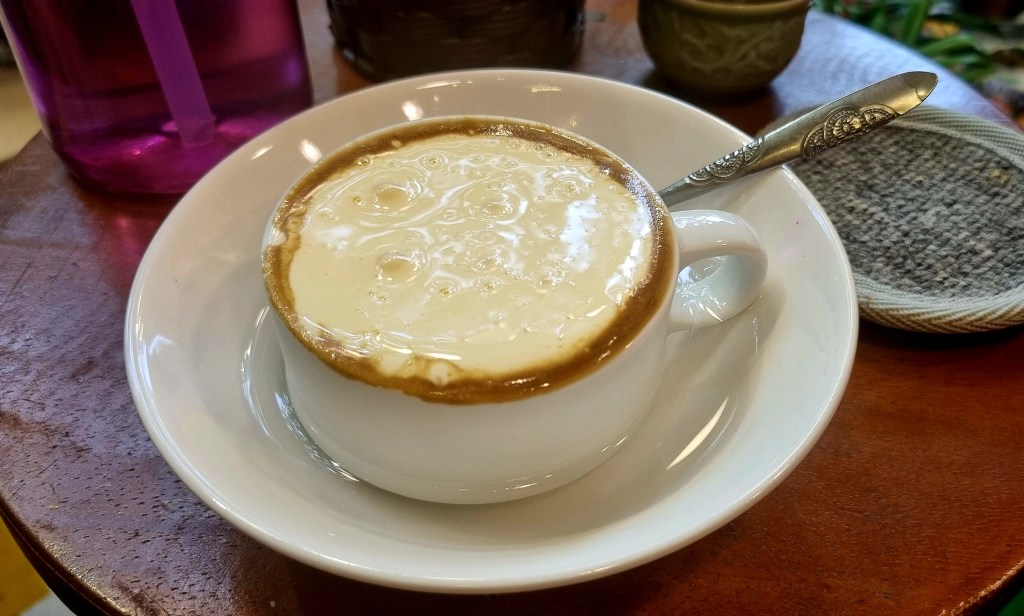
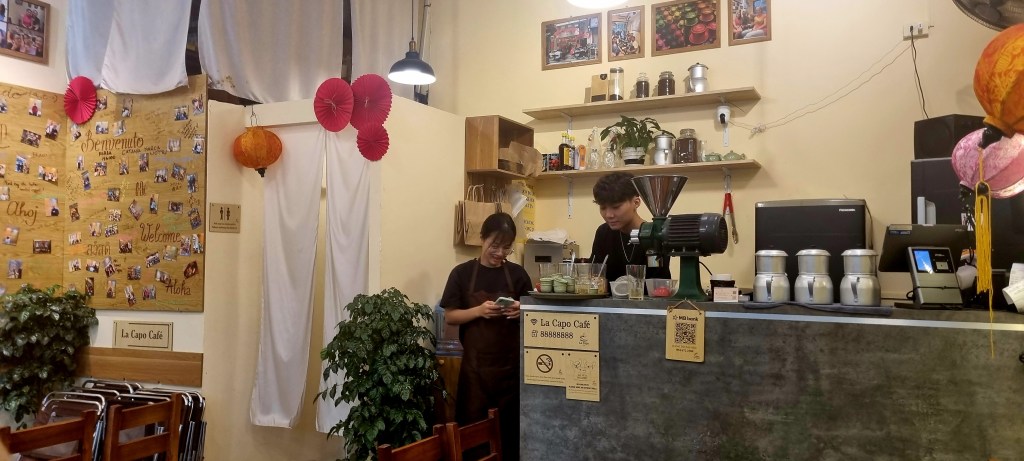
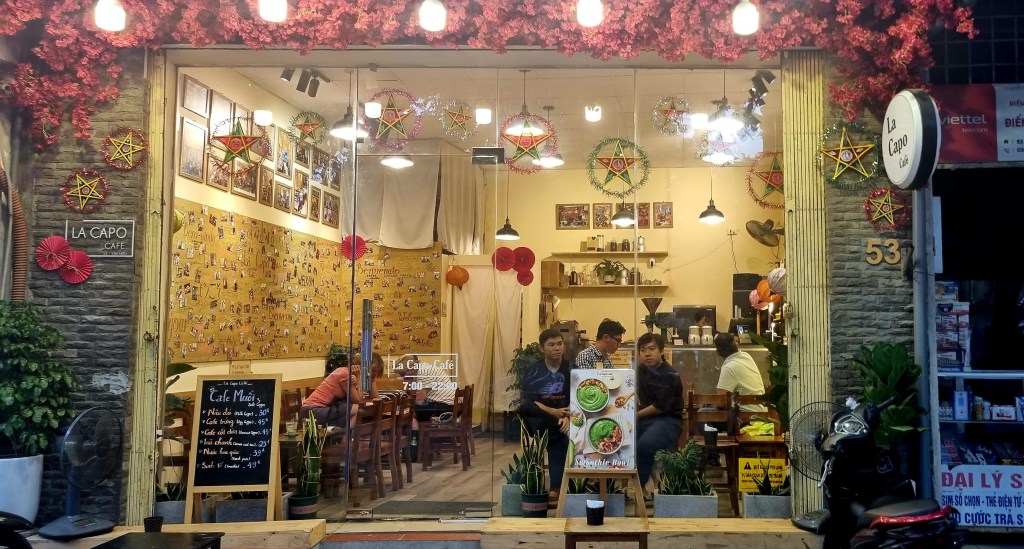
Before we went into the temple itself, we stopped for a coffee. I decided to try the Vietnamese egg coffee – it was delicious. It’s made with egg yolk, very strong coffee, condensed milk and vanilla extract.
The Temple of Literature is dedicated to Confucius. It was built in 1070, and it hosted the Imperial Academy, Vietnam’s first national university, from 1076 to 1779. It covers an area of 54,000m².
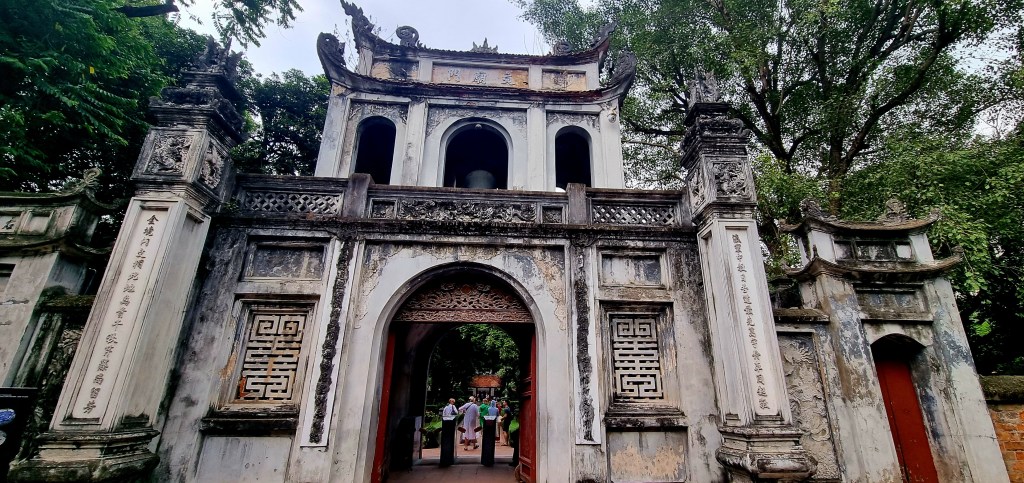
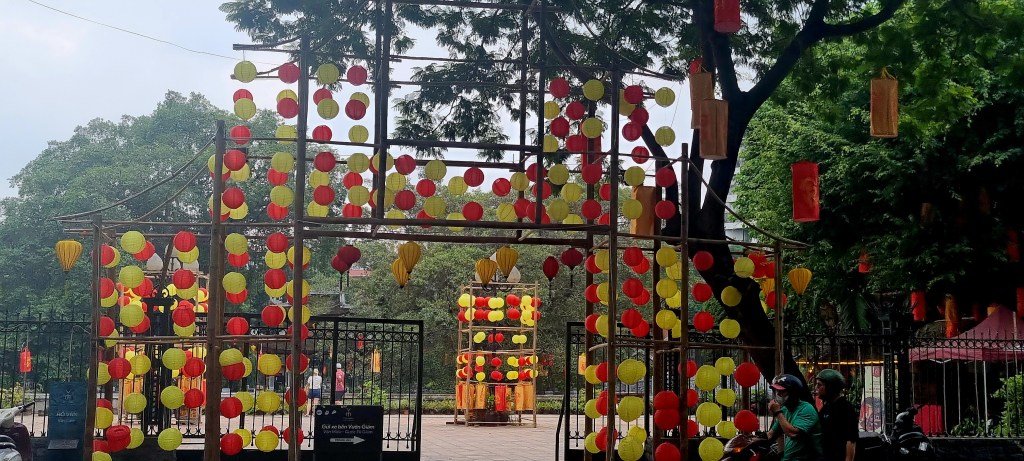
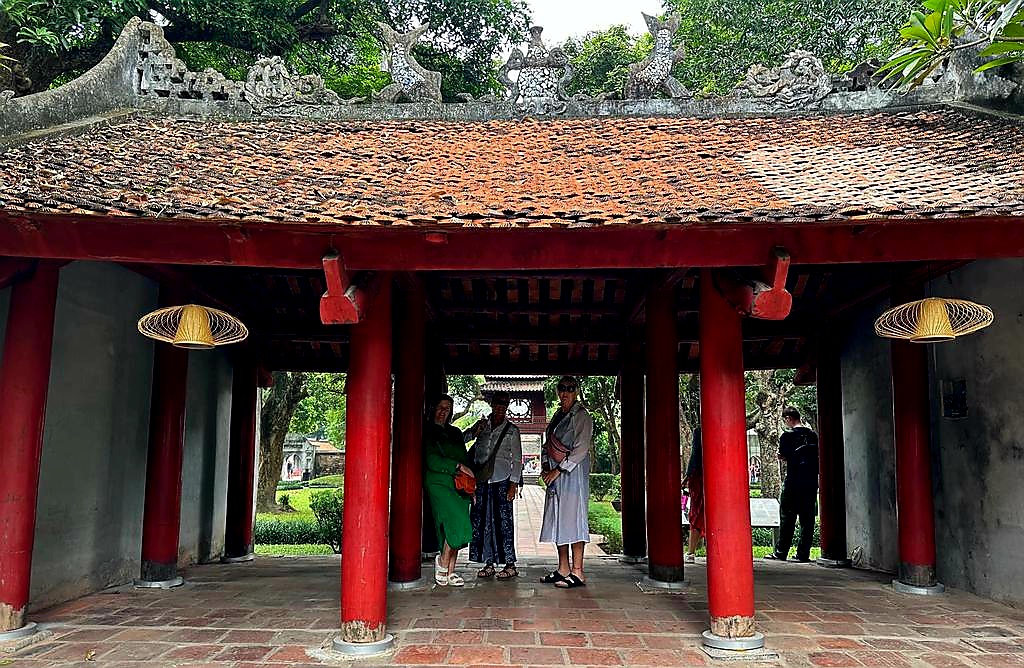
The gate into the first courtyard is called the Great Middle Gate and has the virtue gate on the left and the talent gate on the right. These depicted the expectation of the King towards students attaining high education here.
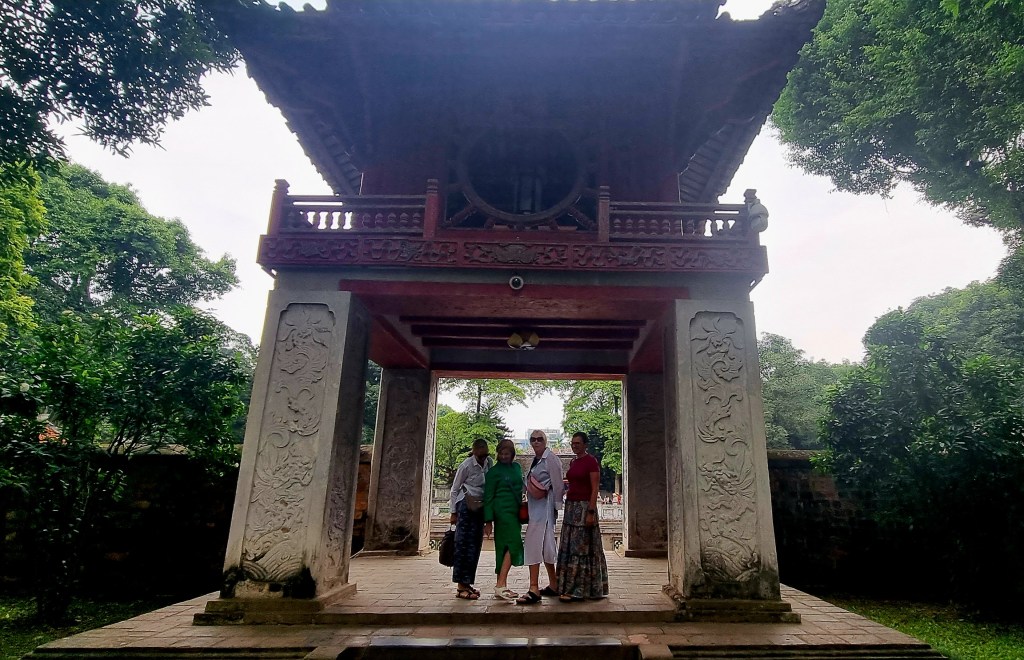
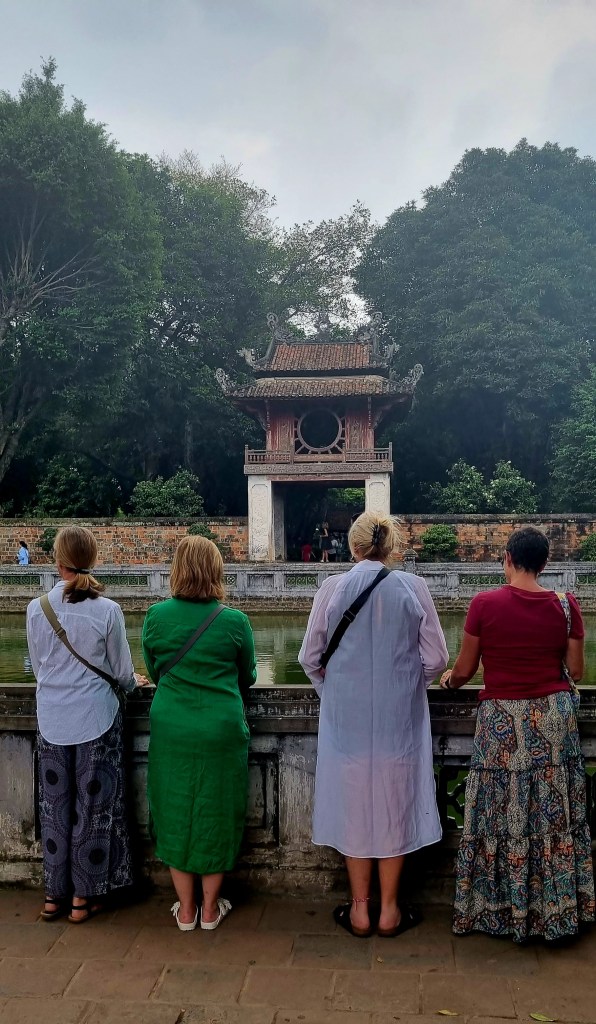
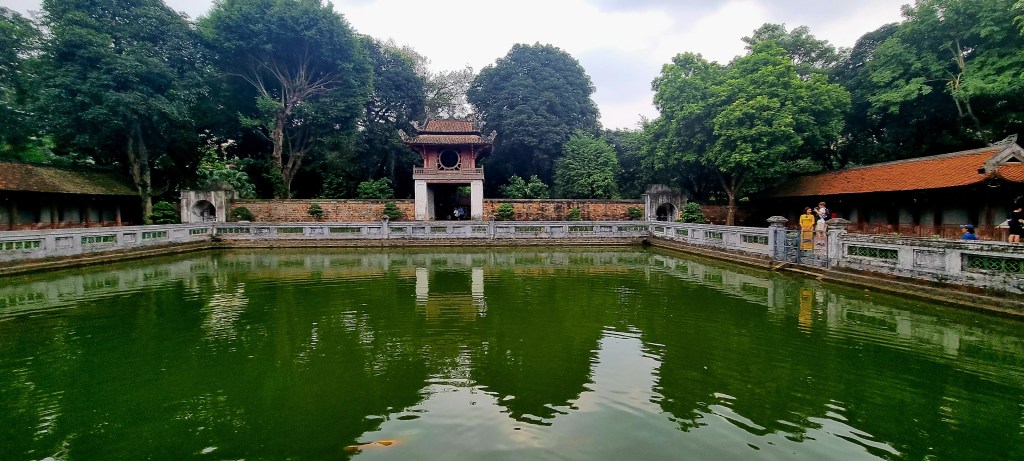
We entered into the second courtyard, which features the Khue Van Cac (Star of Literature / pavilion of constellation) pavilion. The building is said to represent humility, clarity and refinement. It was built in 1805 with its square plinth, symbolising the earth, the tower with its images of the sun, represents the sky and the open breezeway through the pavilion represents the wind. The pool in front of the pavilion symbolises Yin, with the pavilion representing Yang. The absence of a door in the pavilion indicates that the path to enlightenment is a continuous one as you walk from the second to the third courtyard.
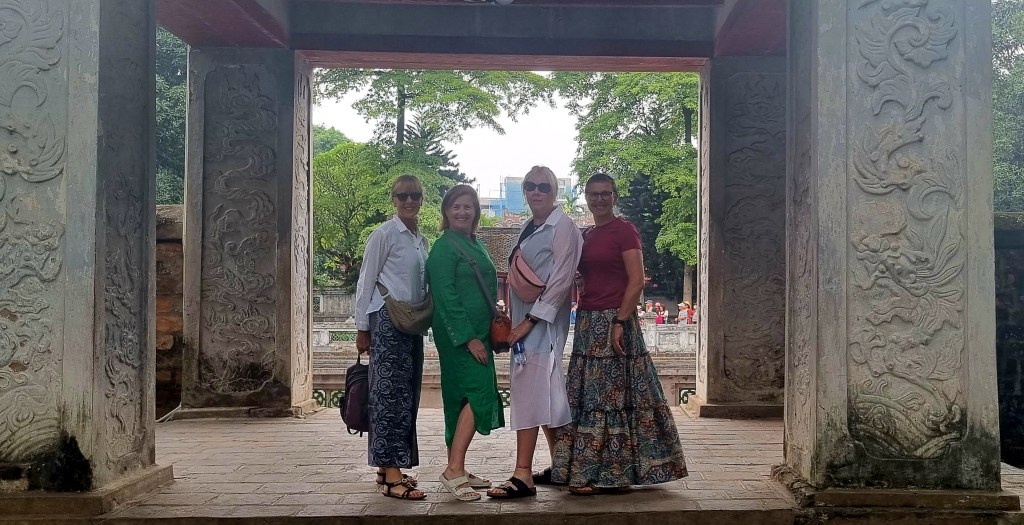

The third courtyard is known as the Well of Heavenly Clarity. The meaning behind the square well is that it represents the earth while the circle at the top of the pavilion represents the sky, all together creating harmony between the sky and earth. This well also functions as a mirror absorbing the best essence of the universe.
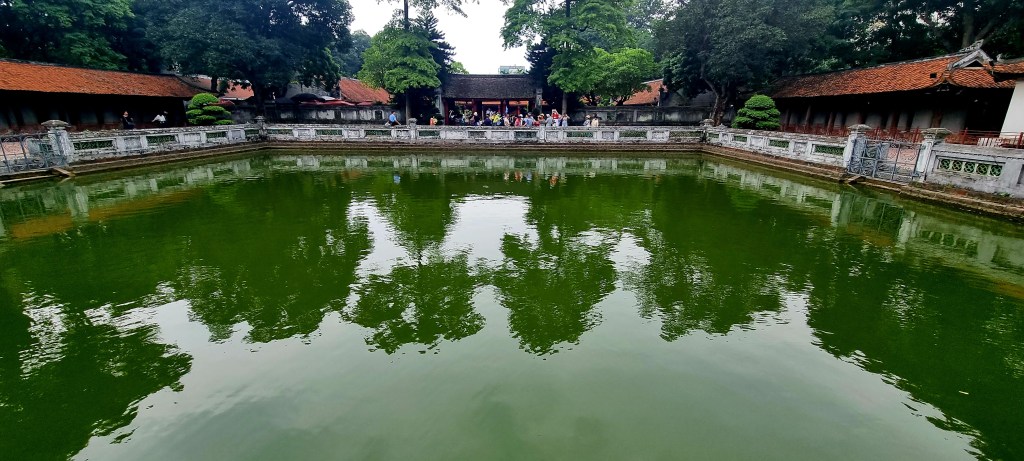
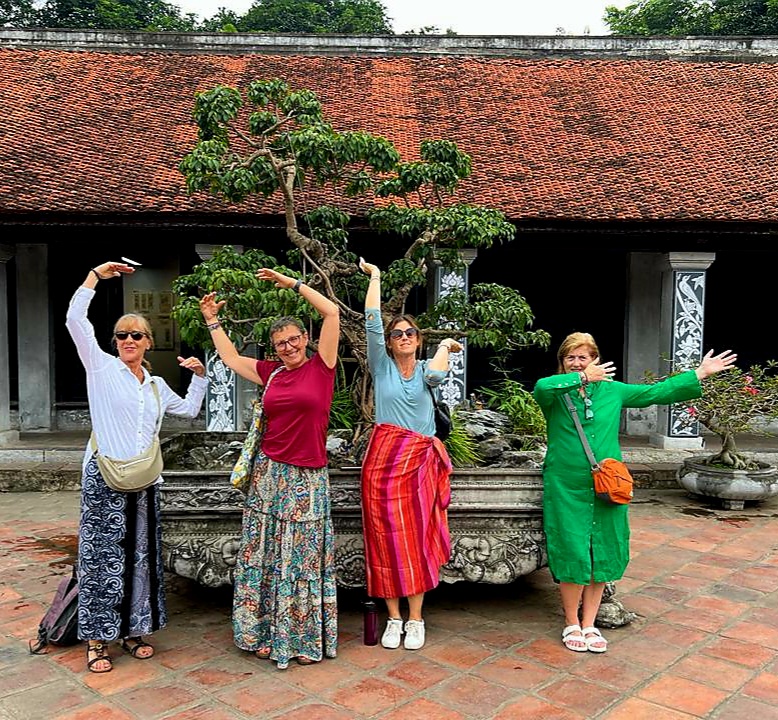
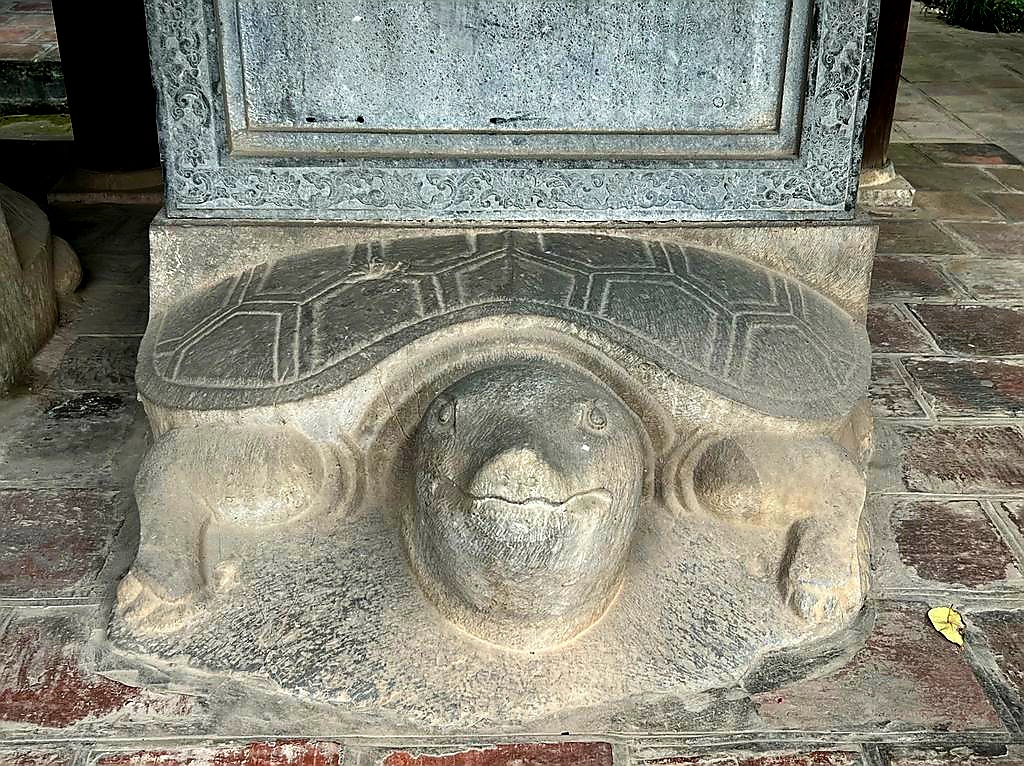
In this courtyard is also the house of stelae. Here, stone turtles carry large stelae on their backs, which depict the names and birthplaces of 1307 graduates of 82 triennial royal exams. Originally, there were 116 stelae, but only 82 remain.
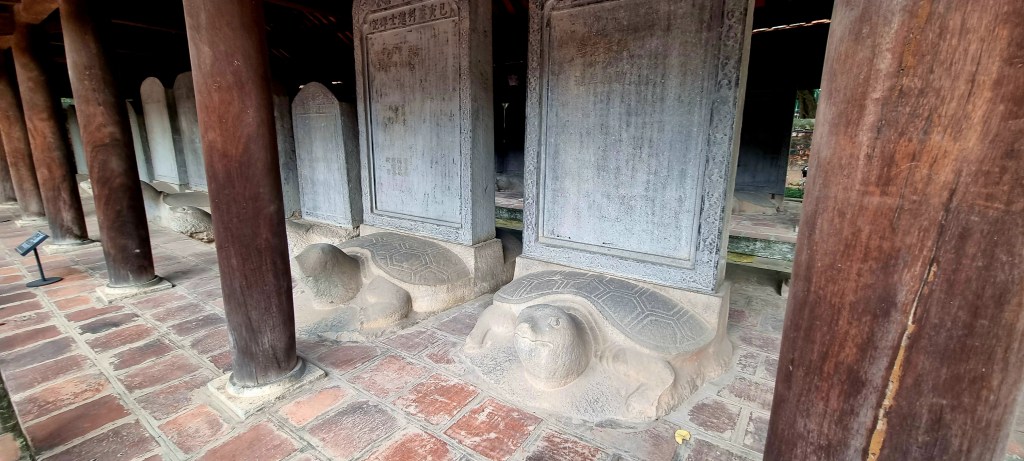
The reason for the turtle is that this is the only real animal out of the 4 holy ones, which include Dragon, Unicorn, Turtle, and Phoenix. Not only is the turtle familiar with the mental life of Vietnamese people, but it also represents longevity and wisdom.
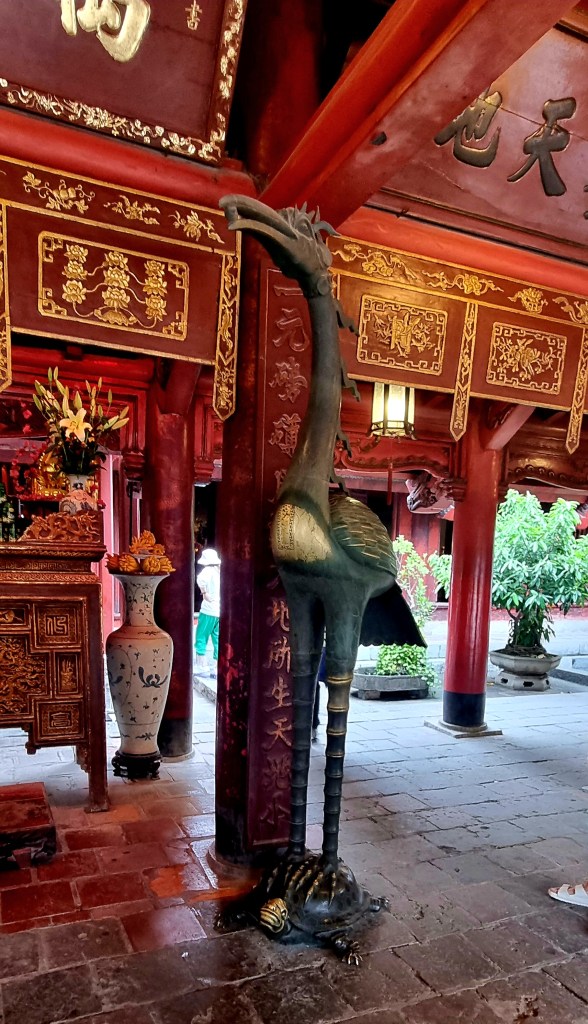
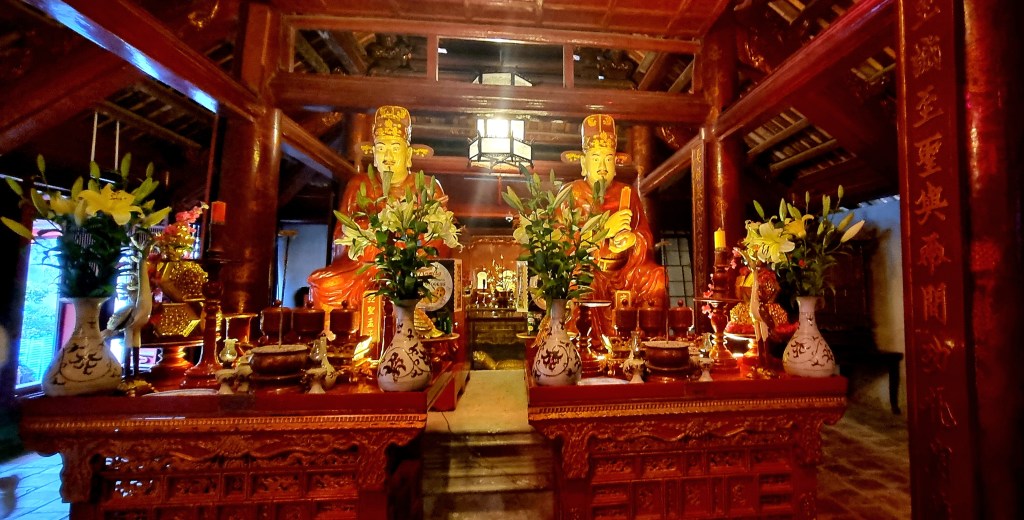
The fourth courtyard is the gate to great success and features the stunning House of Ceremonies and the sanctuary to Confucius. On either side of the alter is a pair of cranes and turtles that represent a desire for harmony and eternity.
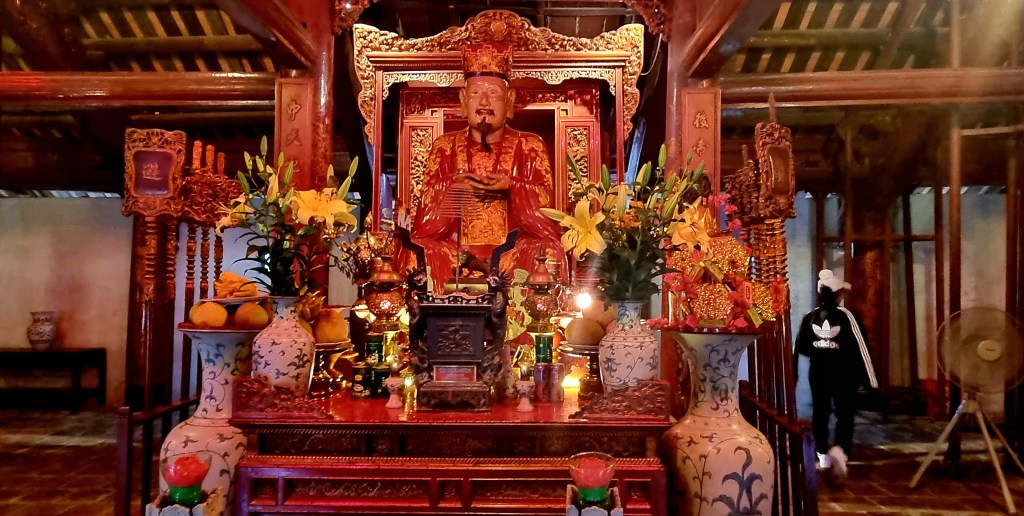
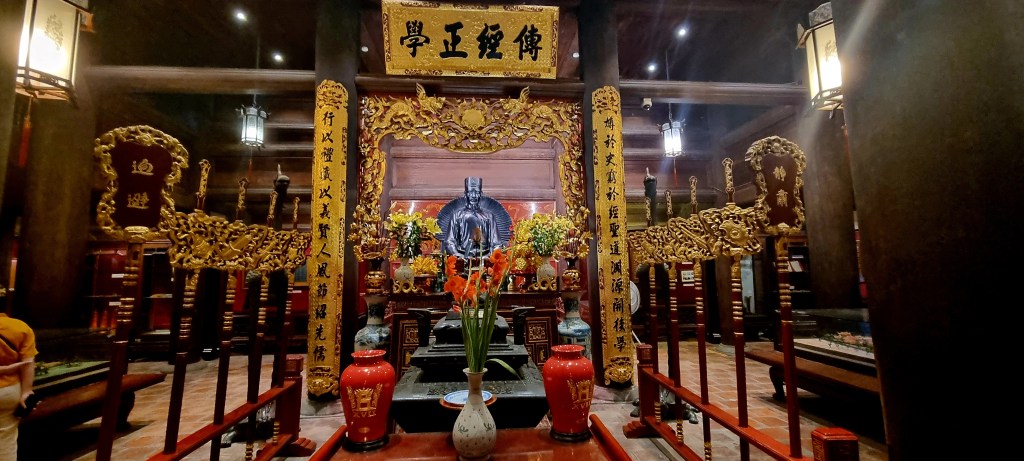
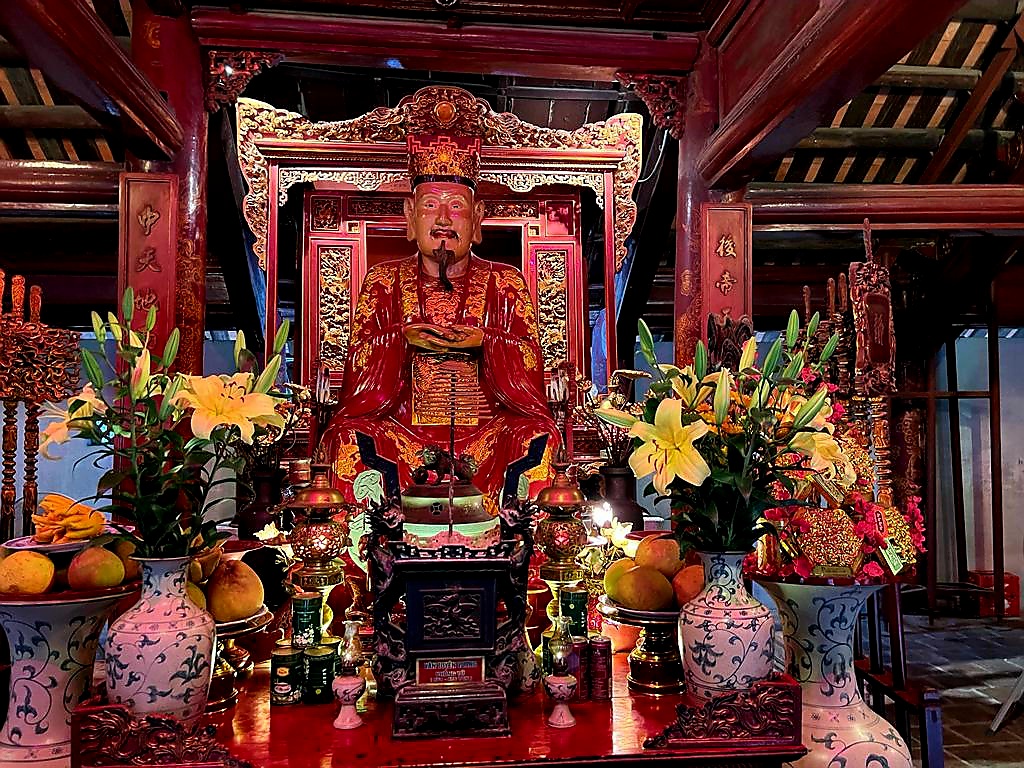
The fifth courtyard is the grounds of the imperial academy and is made up of 2 floors. On the bottom floor is a statue of Chu Văn An, a great teacher and the first rector of the Imperial Academy, who devoted all his life to Vietnamese education.
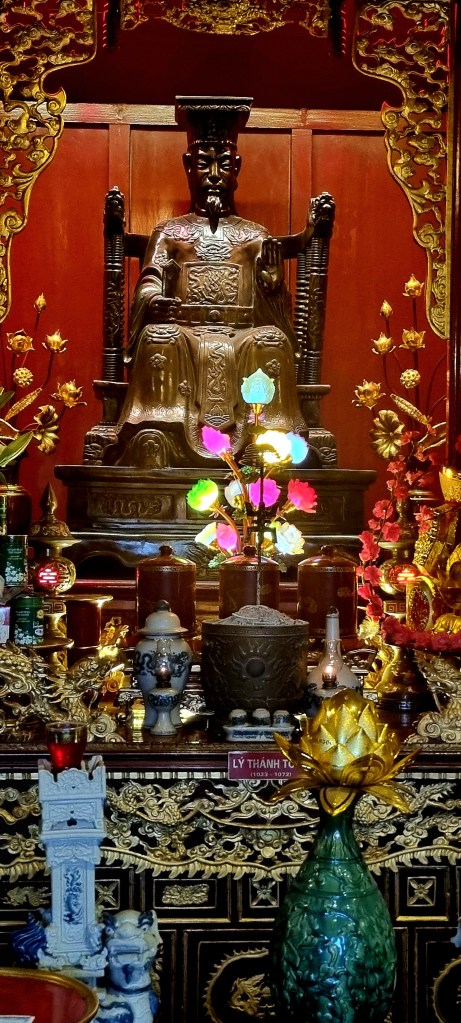
On the upper floor are where the people can worship the three kings who contributed most to the foundation of the temple and the academy.
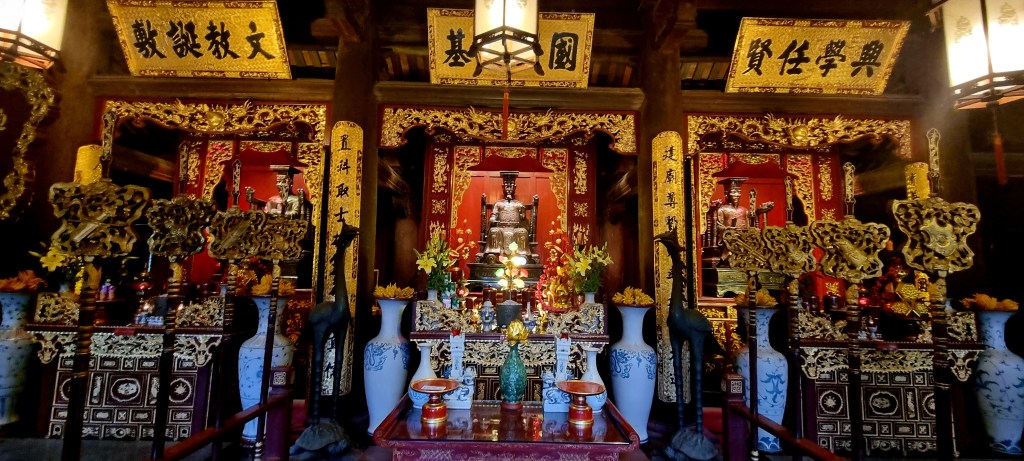
There was also a bit of an art installation going on on the ground floor.

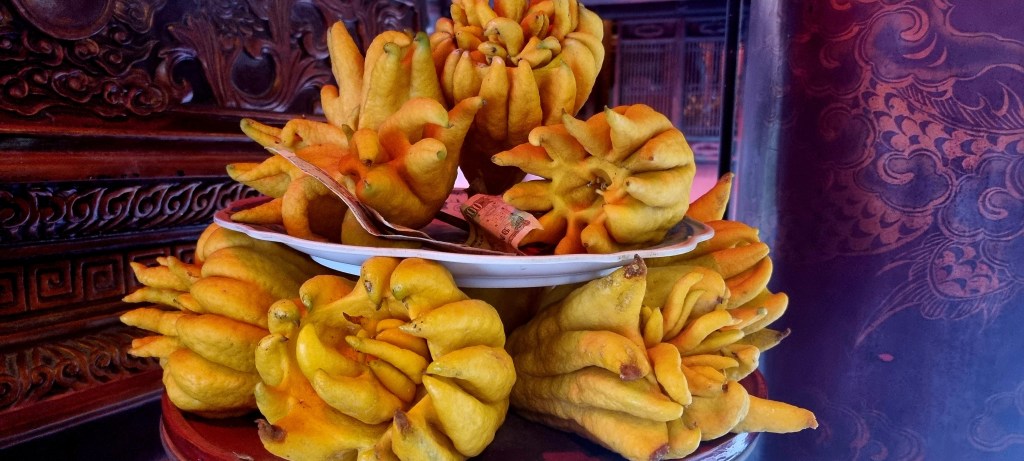
At a lot of the alters, we saw the Bhudda Fingers Fruit. This is a citrus type of fruit, originally from Japan. It It looks like several yellow fingers sticking out from a central base, resembling Buddha’s hands in meditation. It signifies longevity, happiness and good fortune.
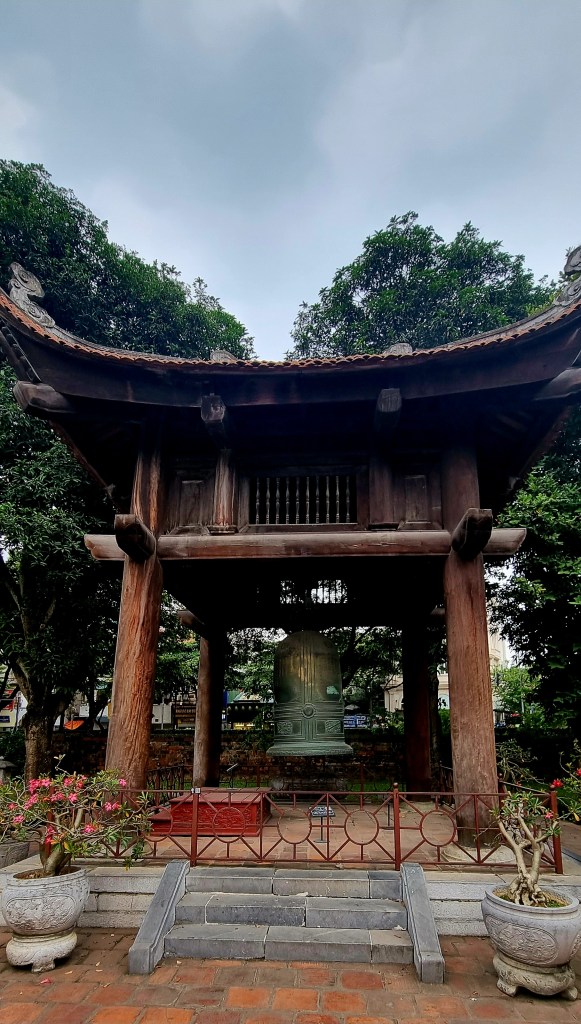
In the courtyard was also a large bell that was over 1,000 years old. The bell used to be located above the main gate and was used to signify that an important person was coming through. The bell was made out of bronze and could only be touched by monks
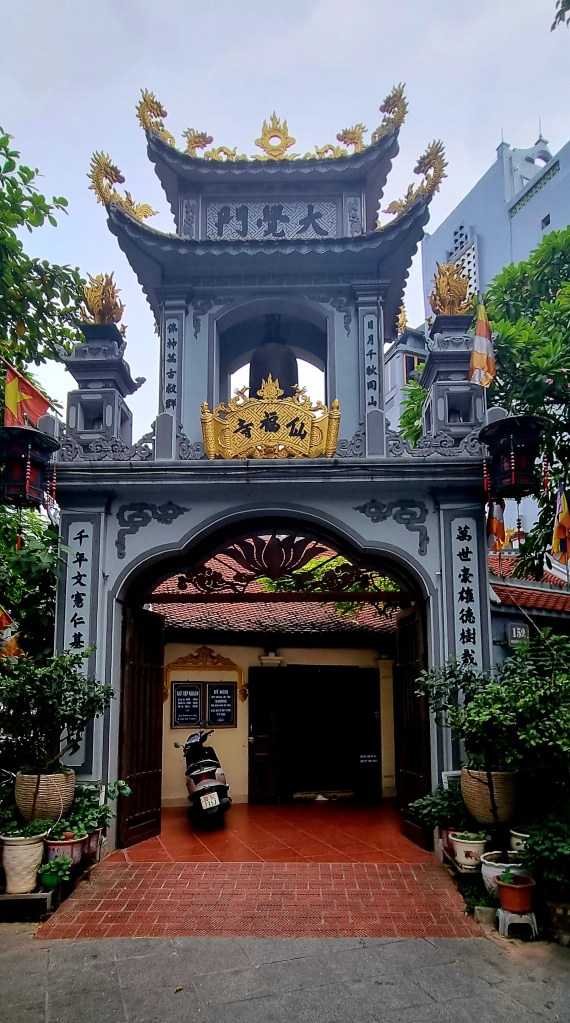
Shortly after leaving the Temple of Literature, we came across the Ba Nanh Pagoda. This is a Buddhist temple. Legend says that this pagoda was built to worship an unknown old woman who often sold tea and soybeans to students of Quoc Tu Giam school next door.
By this time we were all flagging a little bit. We found a nice German restaurant (Goethe) but it wasn’t serving any food when we got there. So we ended up going to KFC. Although the chicken was nice, it was a little spicy and the fries were cold and chewy!
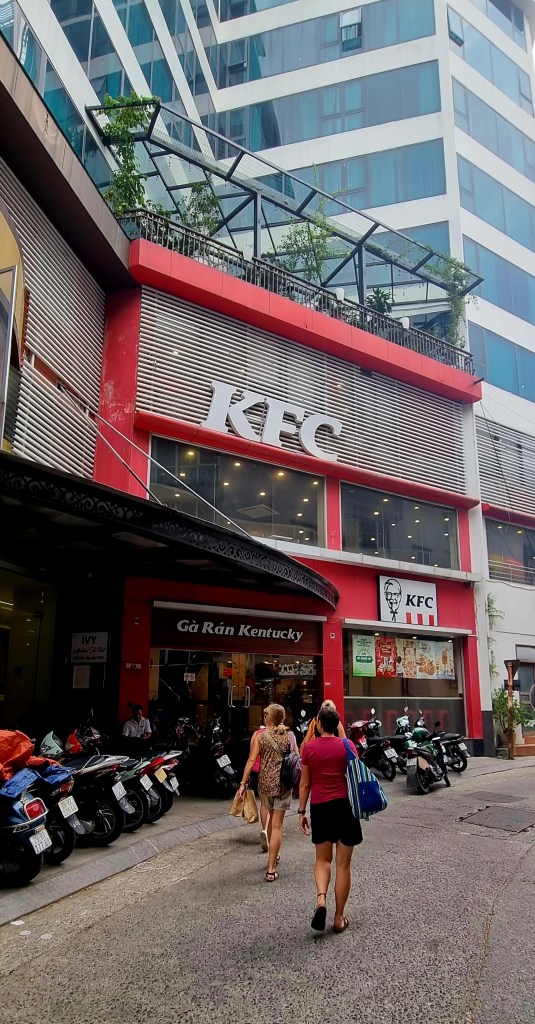
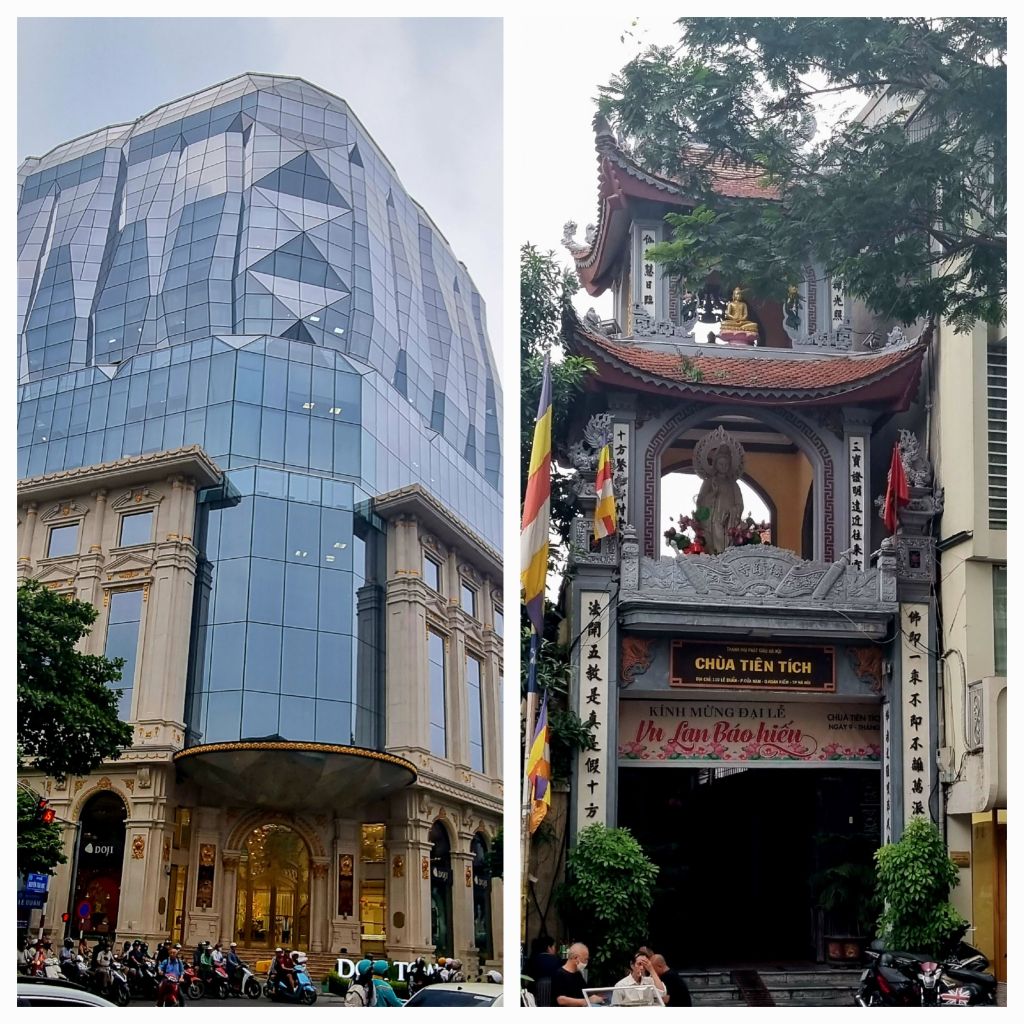
After lunch we carried on our sightseeing tour. Hanoi is a complete mixture of old and new.
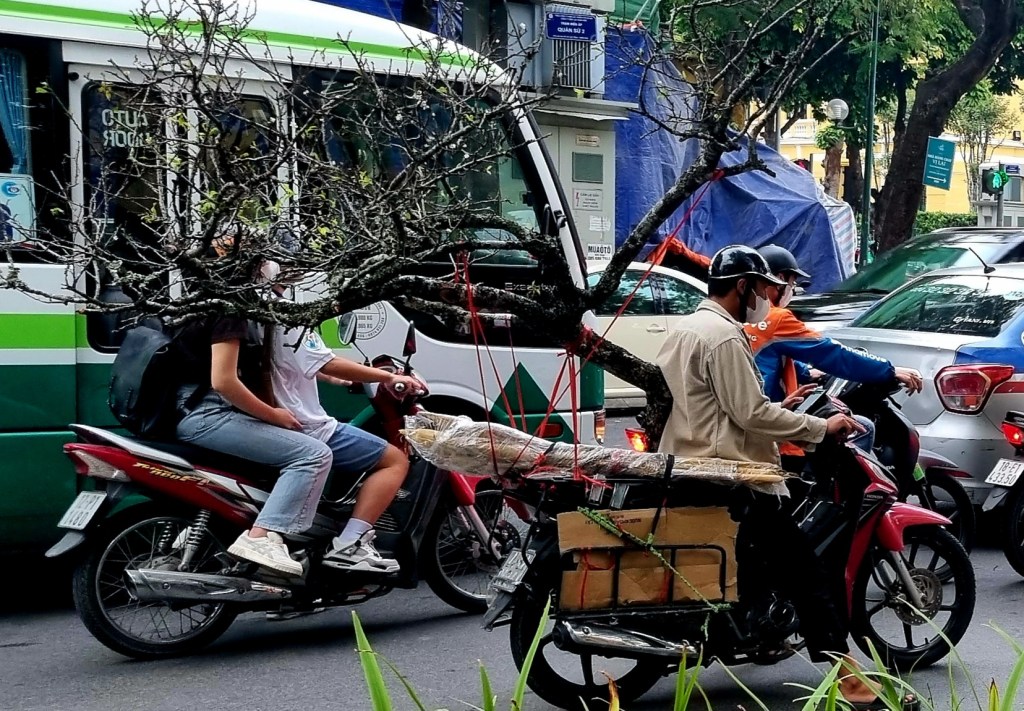
The main traffic is mopeds /scooters, and there don’t seem to be any rules on the road. Also, you can carry almost anything on a moped, including a tree.
Our next stop was Chùa Quán Sứ Temple, one of the oldest Buddhist temples in Hanoi. It is one of the few ancient pagodas in Hanoi that maintains purity and sanctity in practice and religion.
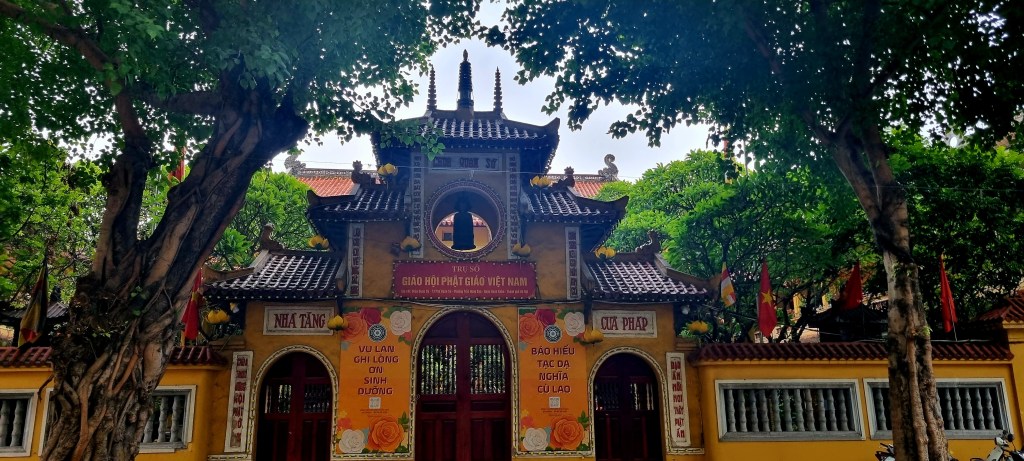

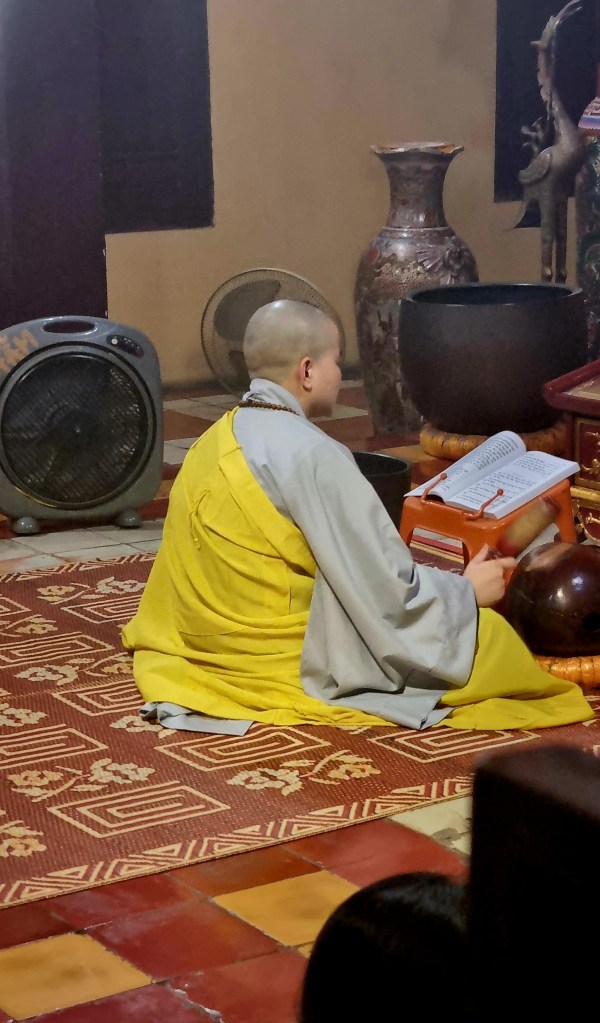
The temple was built under the reign of King Tran Du Tong in the 14th century. Envoys from southern countries who came to Thang Long to pay tribute were all devout Buddhists. The court, therefore, built a pagoda named Quan Su and a building to receive envoys. This is where they could perform ceremonies during their stay here. That order was still preserved until the Le Trung Hung dynasty.
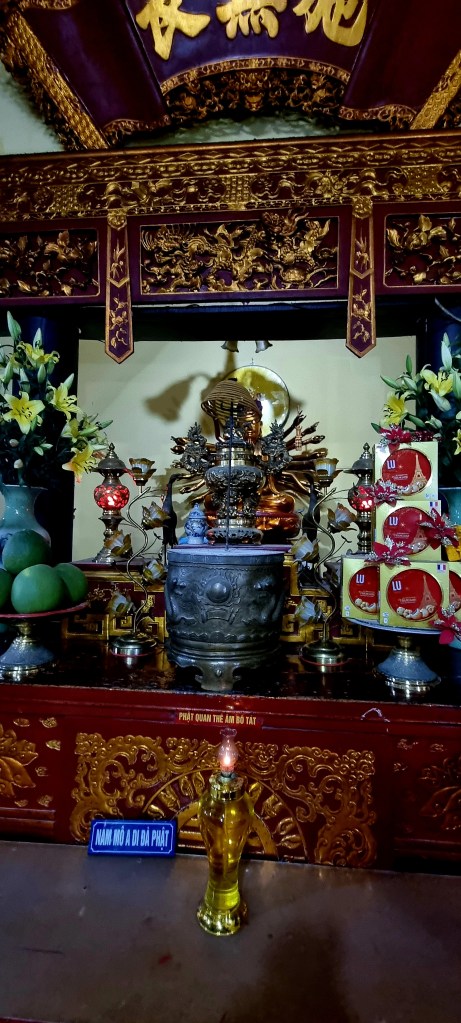


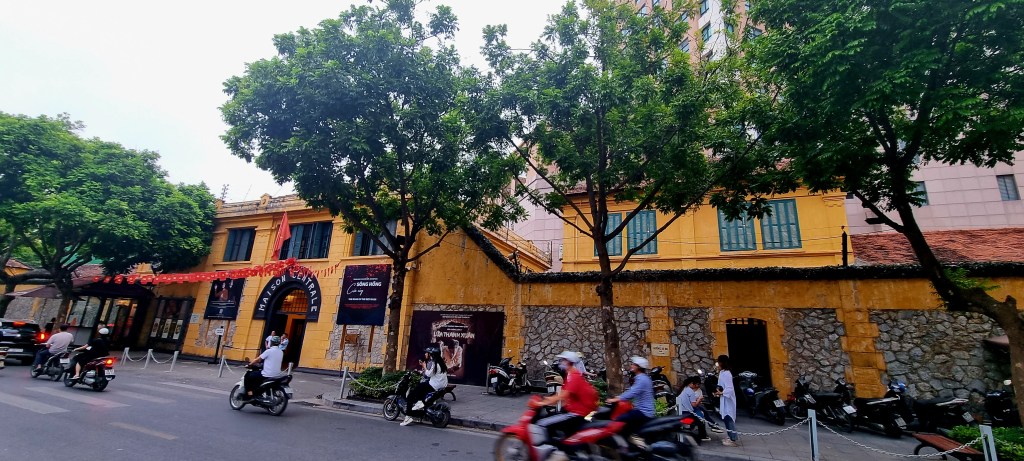
Quite close to the temple was Hanoi prison. This was originally used by the French colonists in Indochina for political prisoners and later by North Vietnam for U.S. prisoners of war during the Vietnam War. During this later period, it was known to American POWs as the “Hanoi Hilton”. This site was used by the North Vietnamese Army to house, torture, and interrogate captured servicemen, mostly American pilots shot down during bombing raids. Severe torture methods were employed, such as rope bindings, irons, beatings, and prolonged solitary confinement. It is now a museum, but we didn’t go in.

We walked past the Supreme Court to a lovely colourful street with lots of bookshops.


On our tour we saw another dog with colourful ears!

We walked down to the Vietnamese Women’s Museum. Unfortunately it was about to close for the evening so we decided not to take a look around.

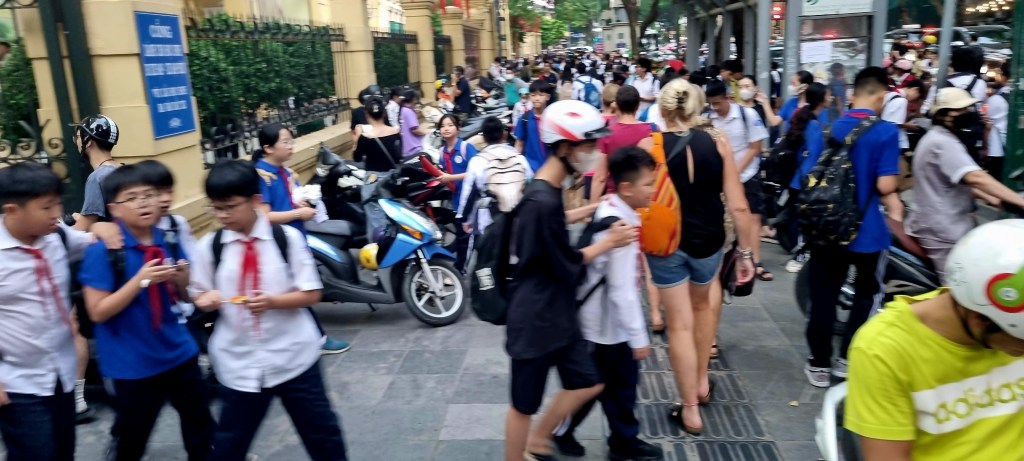
As we carried in walking to the opera house, we walked past a school where it was obviously home time – it was so busy. We decided to stop off for a quick cup of coffee or tea, and Mandy came to join us, too.
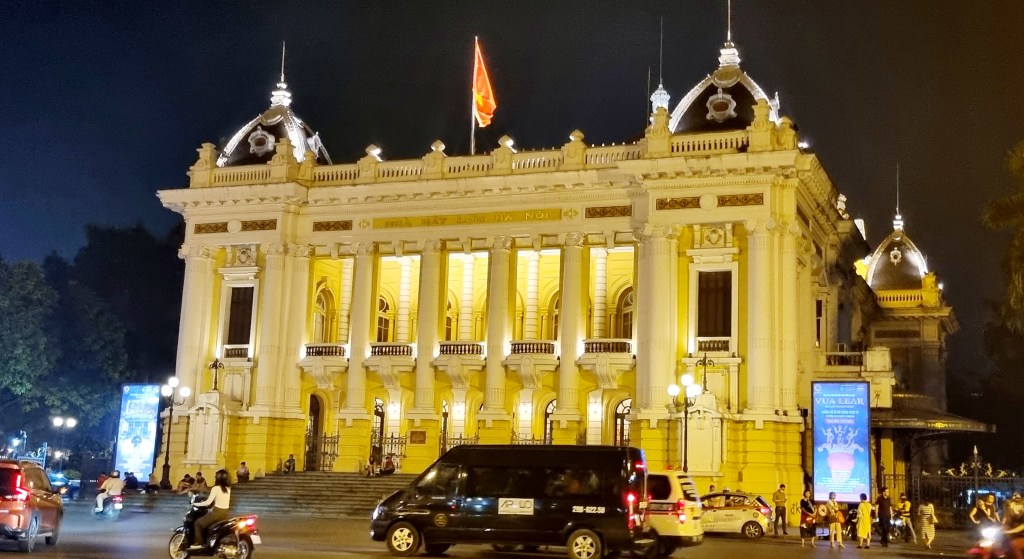
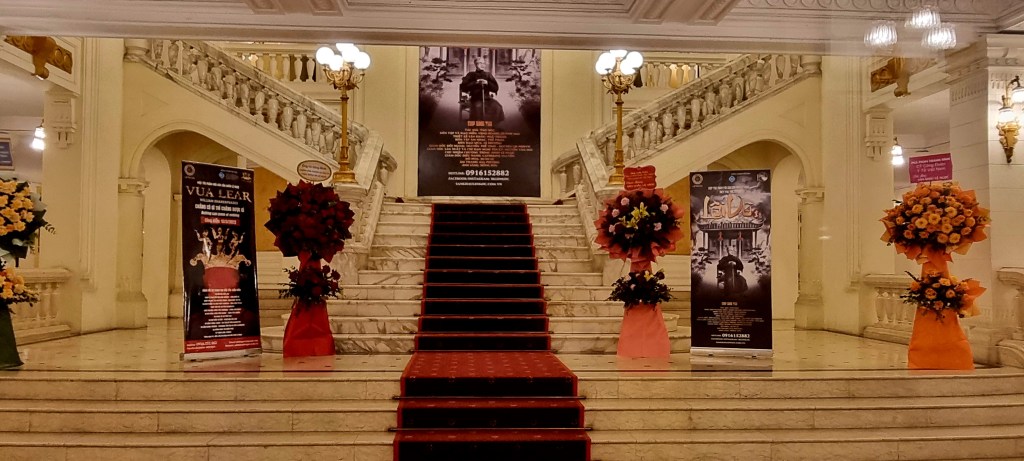
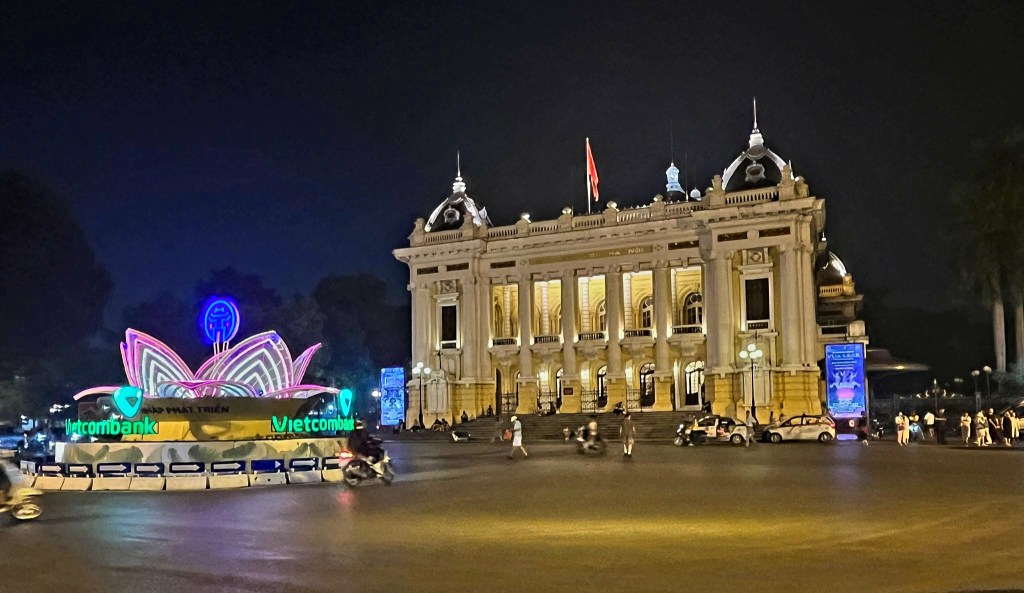
The Opera House was built by the French colonial administration between 1901 and 1911. It was modelled on the Palais Garnier, the older of Paris’ two opera houses, but with a smaller scale and using materials that are more environmentally friendly.
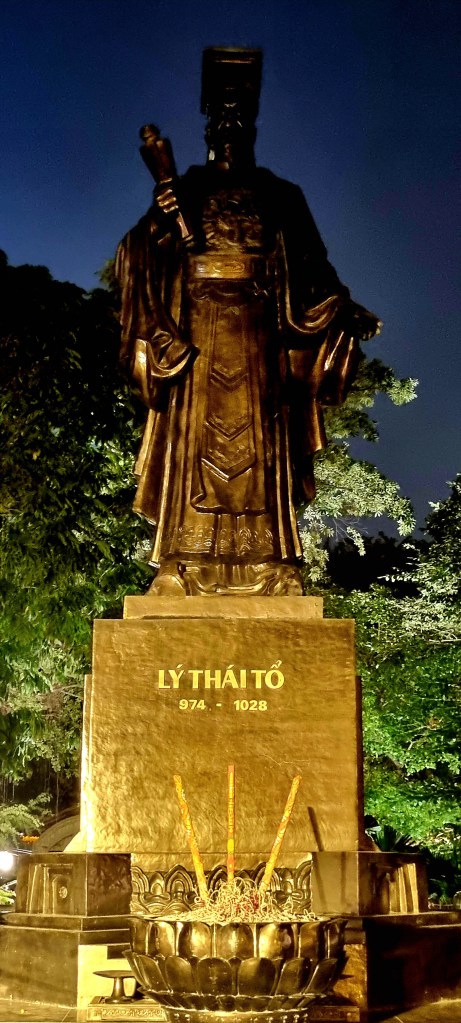
From the opera house, we walked to the smaller lake in Hanoi – Hoan Kiem Lake. On the way, we passed the statue of Ly Thai To. He was the founding emperor of the Ly dynasty and reigned in Vietnam from 1009 to 1028. When Ly Thai To came to Hanoi, he allegedly saw a soaring dragon above the city, and so he called the area Thang Long (ascending dragon). Thang Long remained the main capital of Vietnam until 1802, when the last Vietnamese dynasty, the Nguyen (1802–1945), transferred the capital south to Hue.
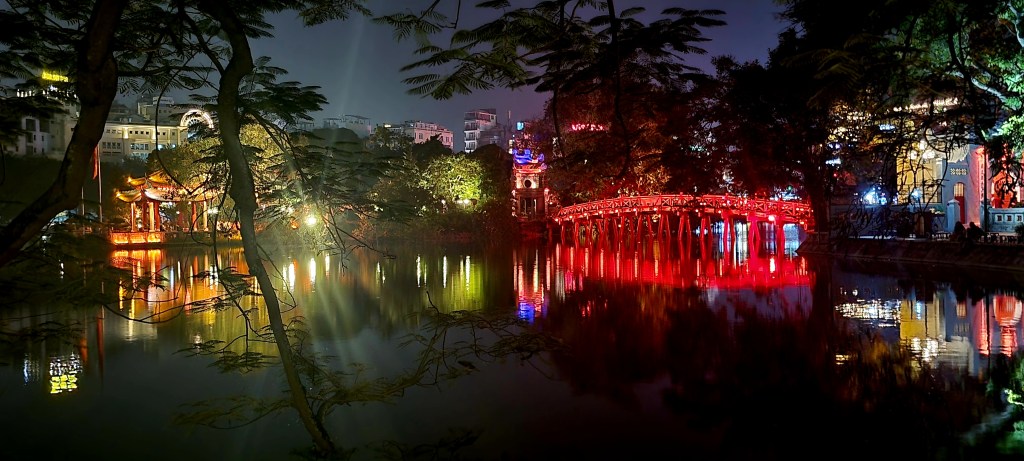
Hoan Kiem Lake was beautiful at night, all lit up and quite a busy area. Legend claims that, in the mid-15th century, heaven sent Emperor Le Loi a magical sword, which he used to drive the Chinese from Vietnam. After the war a giant golden turtle grabbed the sword and disappeared into the depths of this lake to restore the sword to its divine owners, inspiring the name Ho Hoan Kiem (Lake of the Restored Sword).
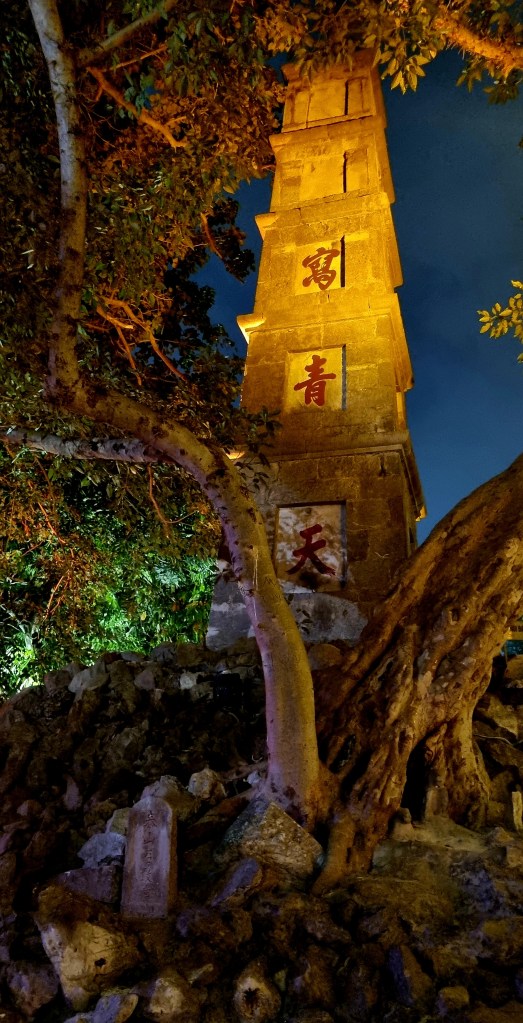
As you walk towards the bridge, you see Pen Tower. This tower is 12m in diameter and 4m high. It has 5 stories and reaches up to the sky, creating harmony between nature and people. Students often visit this site to pray for good luck in their exams.
The Huc Bridge (Sunbeam bridge) is a lovely red coloured arch bridge with 15 spans and 32 pillars. During the day, the bridge reflects the cluster of sunlight, which is believed to bring hope, luck and happiness to the city.
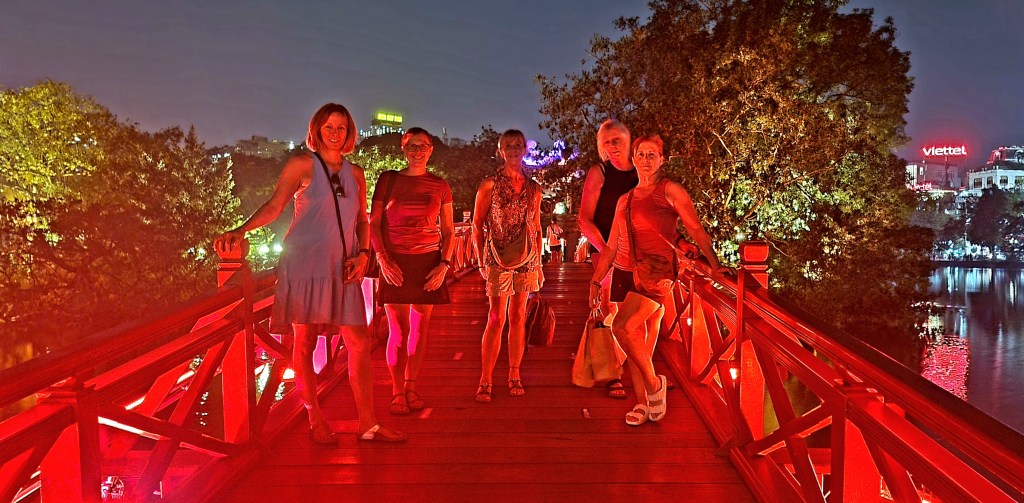
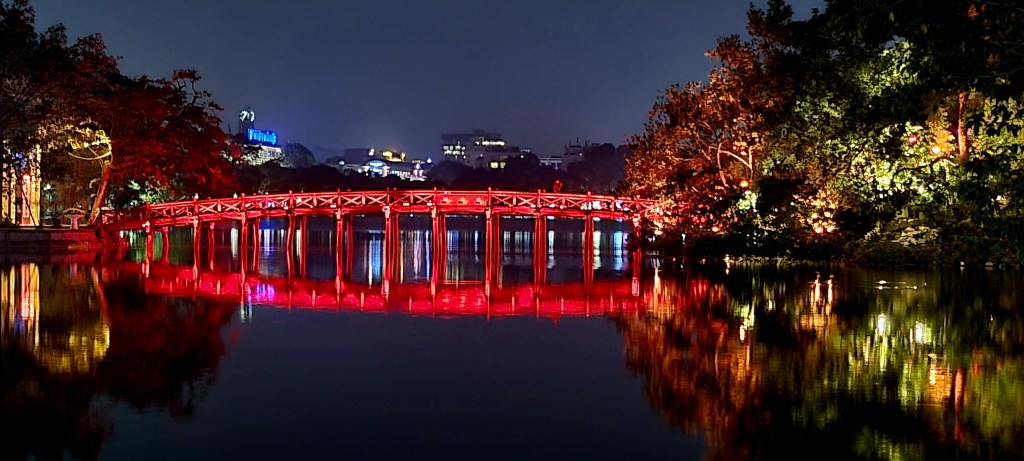
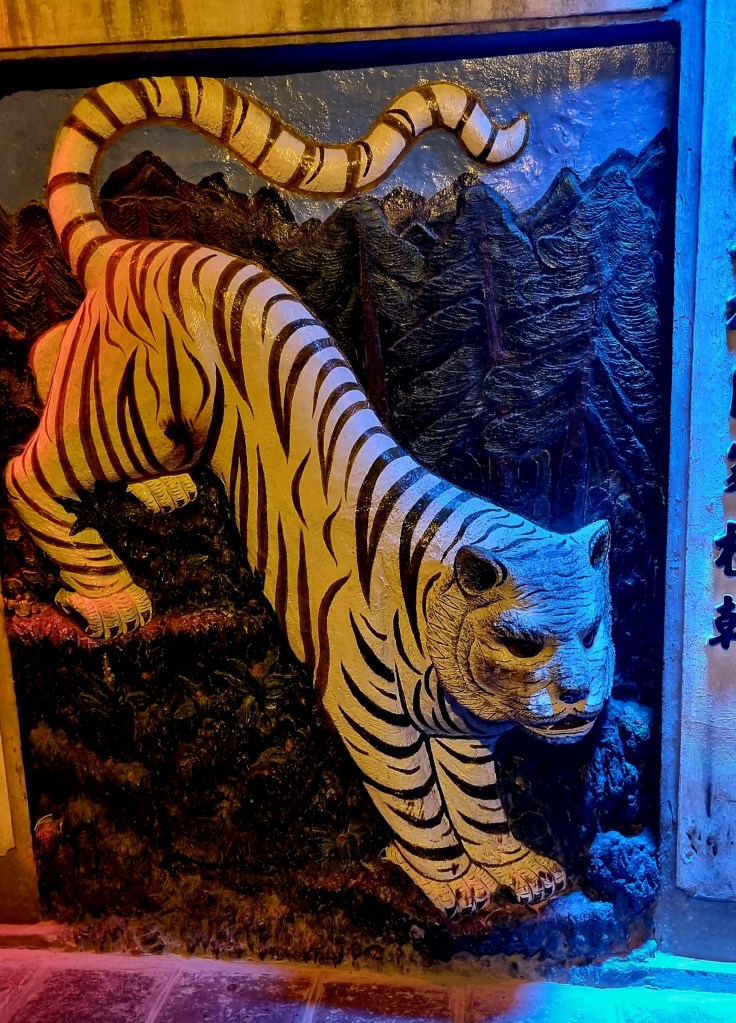
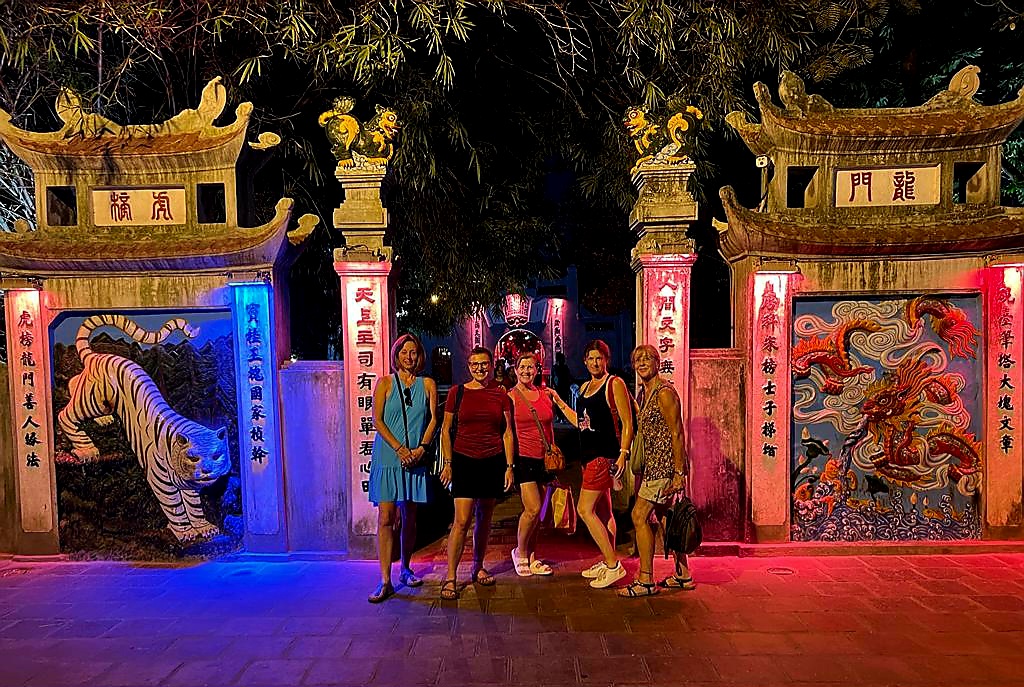
At the other end of the bridge, you come to Ngoc Son Temple (Jade Mountain Temple). The Temple was built in the 19th century in commemoration of Tran Hung Dao, the greatest military commander of the Tran Dynasty. It also pays homage to Van Xuong De Quan, the God of prosperity. You have to pass through several gates to get there, one of them being the Long Mon Ho Bang gate. The walls of the gate are designed with roofs like in many pagodas. The right wall is embossed with the shape of a dragon, with two Chinese letters on top meaning “Dragon Gate” (Long Mon). On the left wall, you can see a white tiger carved with Chinese letters, meaning Tiger Board (Ho Bang). The Dragon Gate and Tiger Board symbolises successful examinations and inspires young people to keep learning.


At the end of the bridge, you come to Dac Nguyet Lau Gate, also known as the “Moon Gazing Pavilion”.
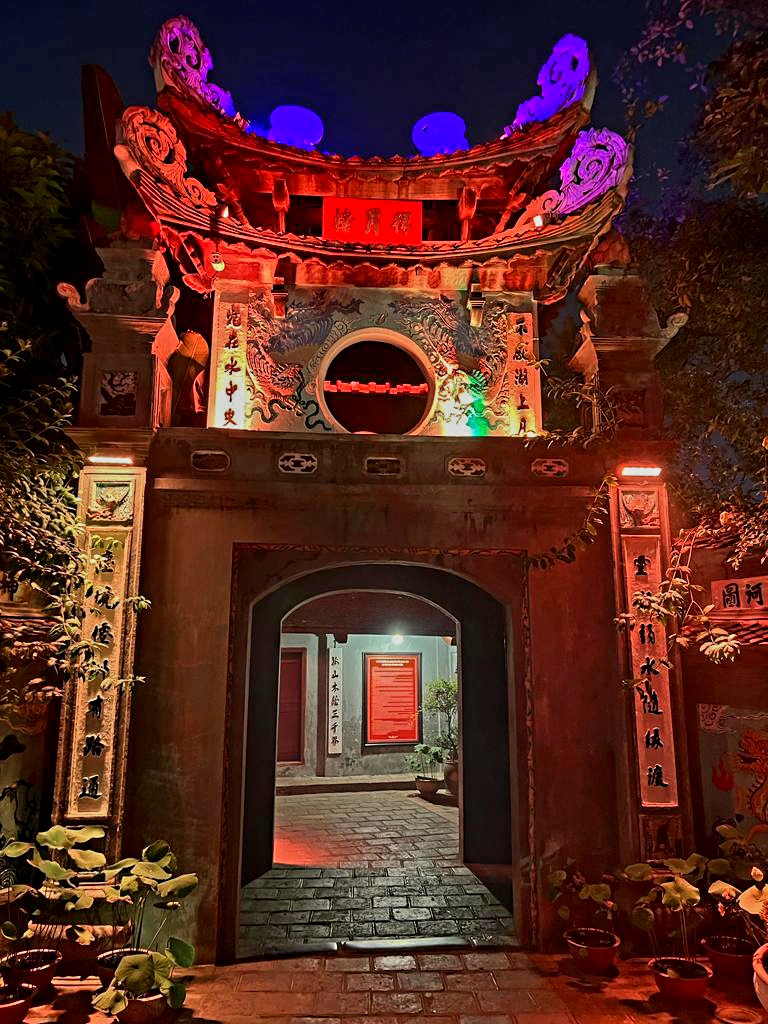
To the south of the temple is a pavilion known as Tran Ba Pavilion. It was built as a sturdy structure to protect against breaking waves and evil influences.
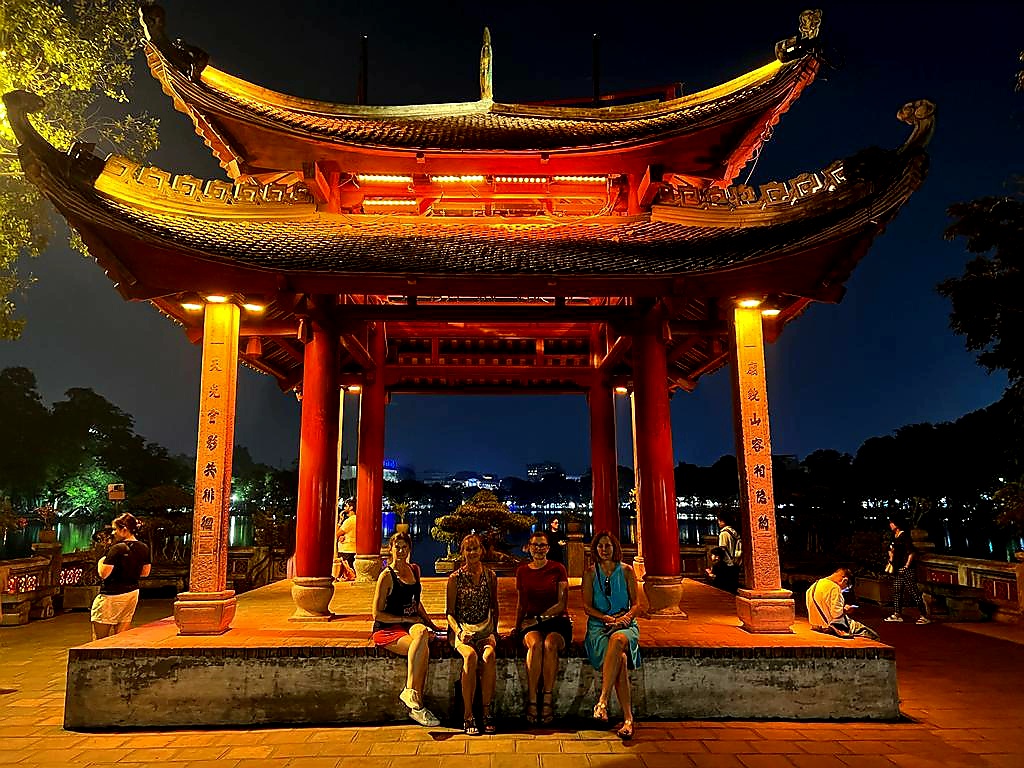
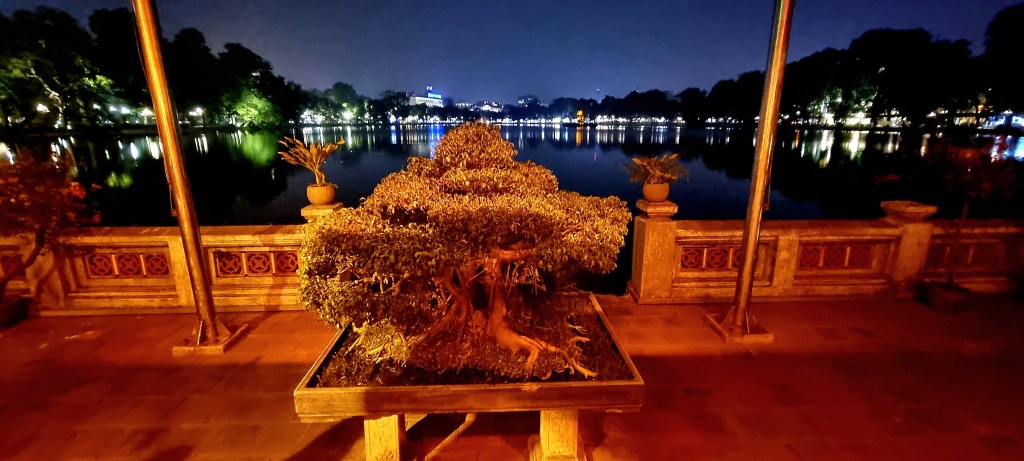
The Temple itself represents the diversity in Vietnam. There is a section devoted to worshipping Tran Hung Dao and Van Xuong De Quan as well as a statue of Amitabha, a holy Buddha.


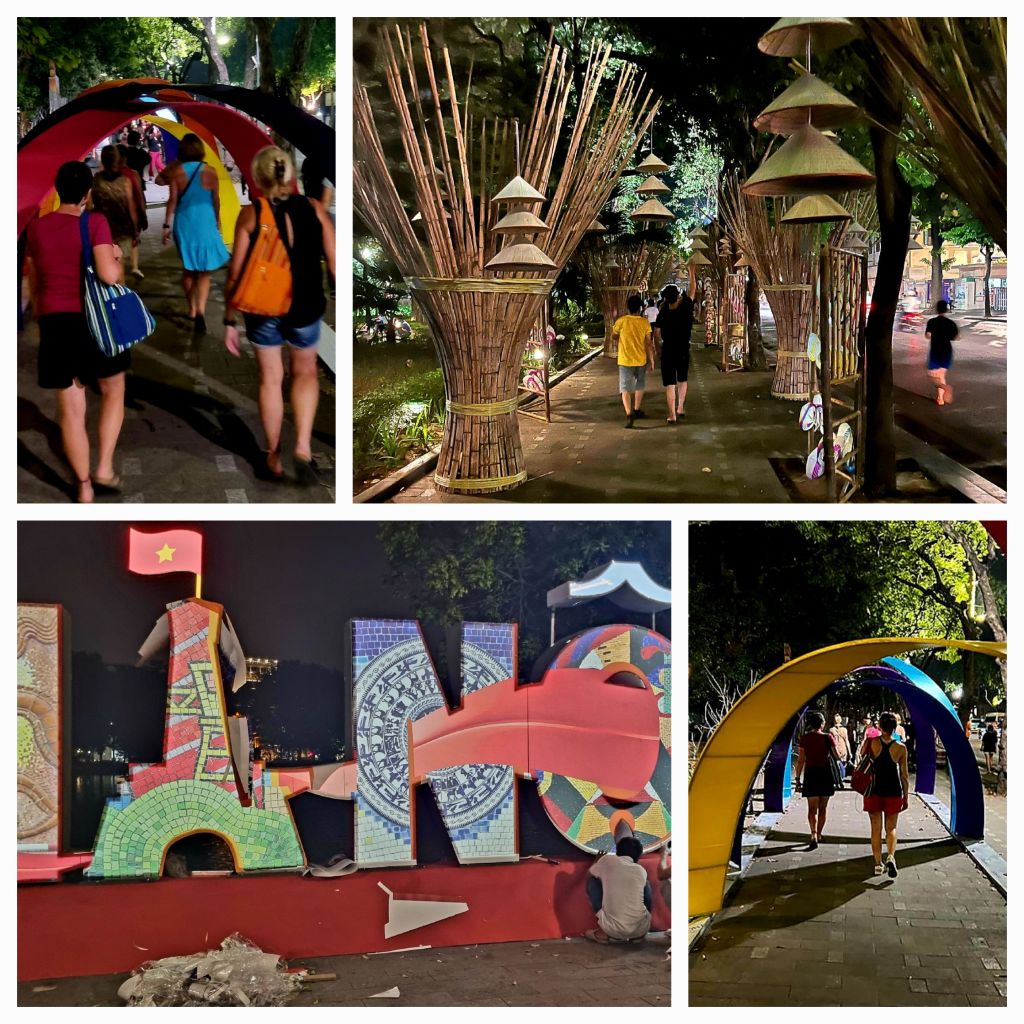
There was lots of activity going on in the streets around the lake, too.
By now, we were a little bit hungry again, so we made our way to the Coffee Club, one of the rooftop bars in Hanoi.
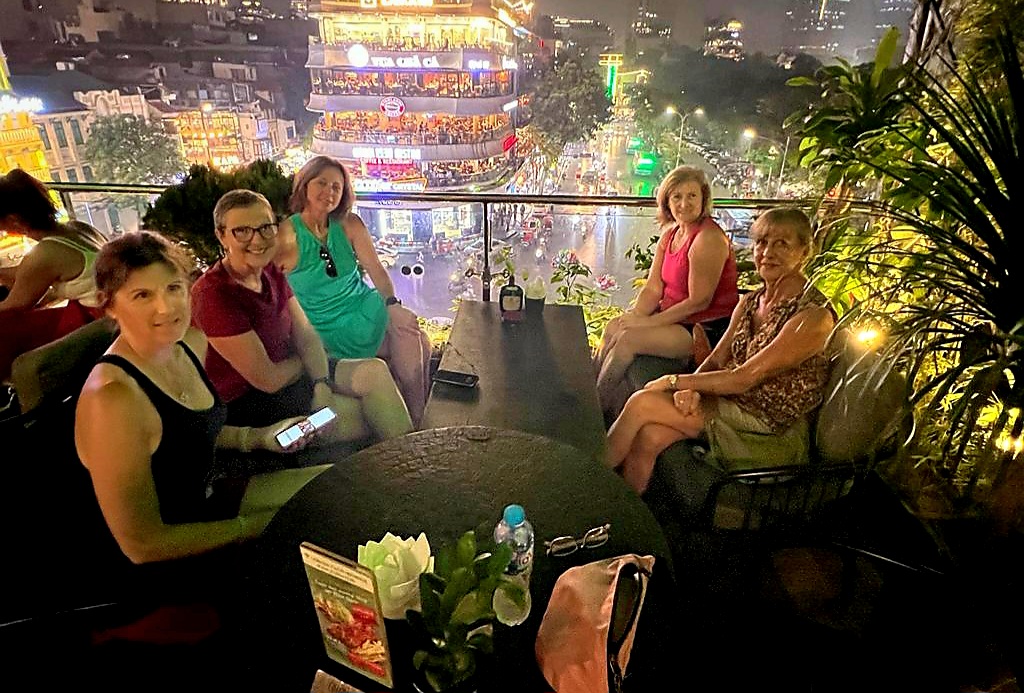

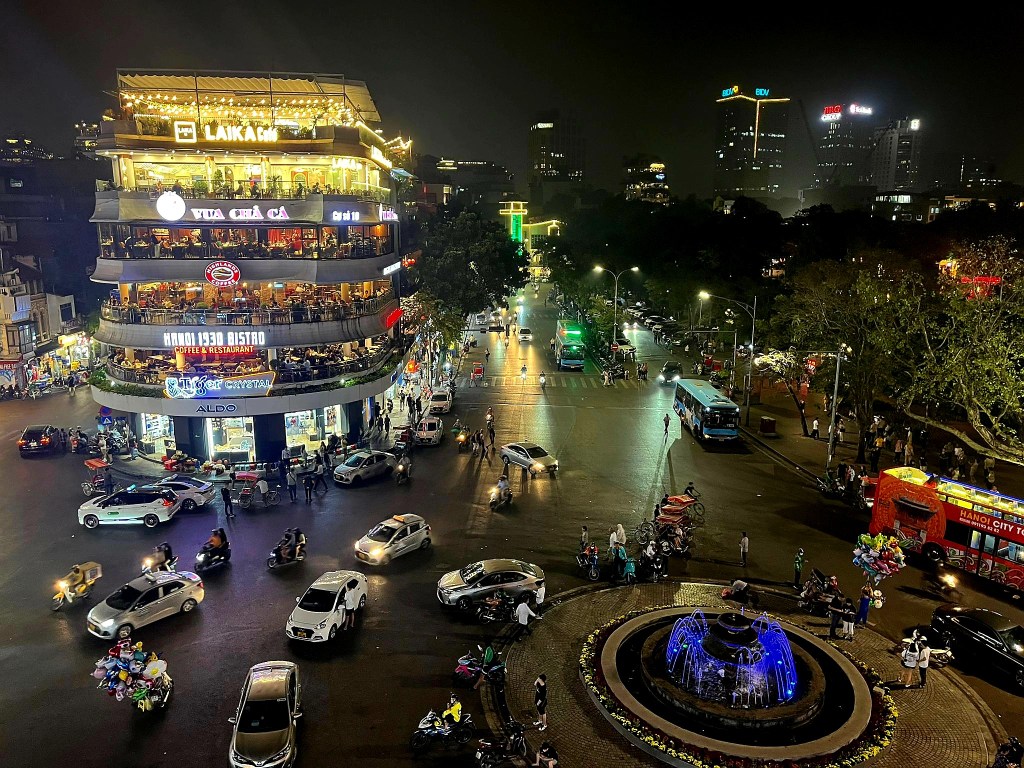
After some wine and food it was back to the hotel and time for bed.
 Fun, Fitness and Fabulousness in your Fifties