This was a very busy day. We had booked a city walking tour in the morning so we could find out about the city but also to help us find our bearings.
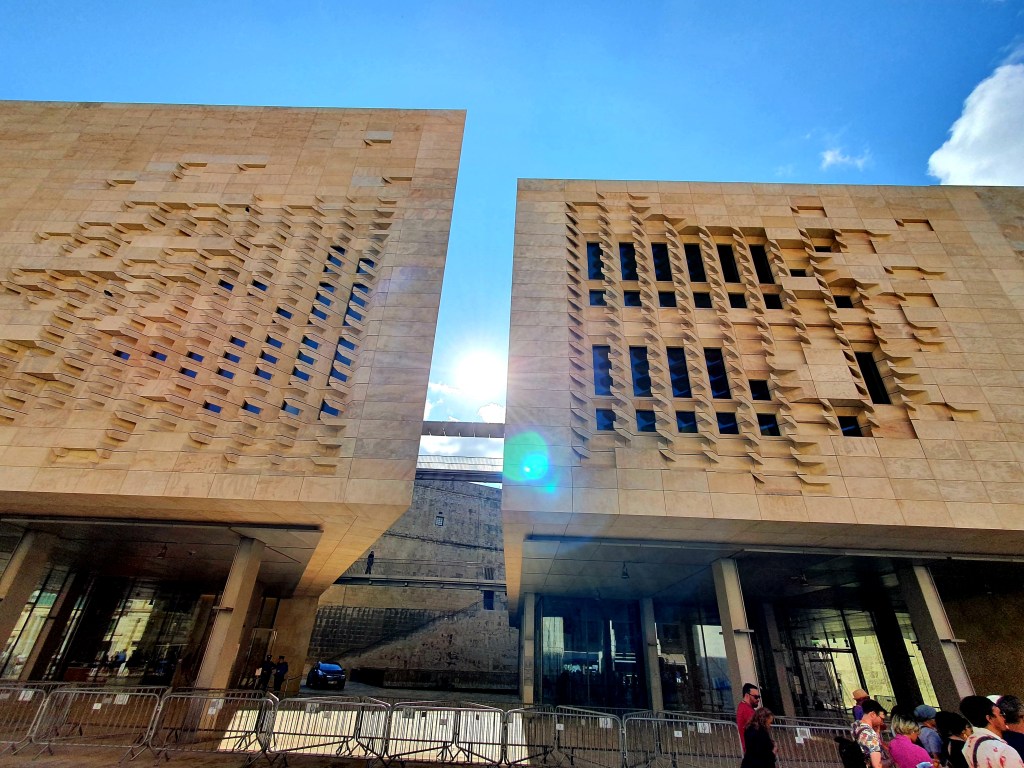
The tour started just outside the new Parliament building. Whilst quite a modern building it has been made to fit in with its surroundings. Parliament met for the first time in the building in 2015. The glass at the bottom of the buildings is supposed to represent the transparency of parliament. This building was designed by the same architect as the Shard in London.
Our tour guide gave us some facts and figures about Malta: It has 365 churches, there are 14 bank holidays per year and despite being a small country they are 5th in the world in terms of owning cars per head of population. The name Malta comes from Mahler which means honey.
Valletta itself is a very small city, only 1km by 600m. It has no garages so it is often difficult for people to park their cars near where they live, and it appears the Maltese drive everywhere.

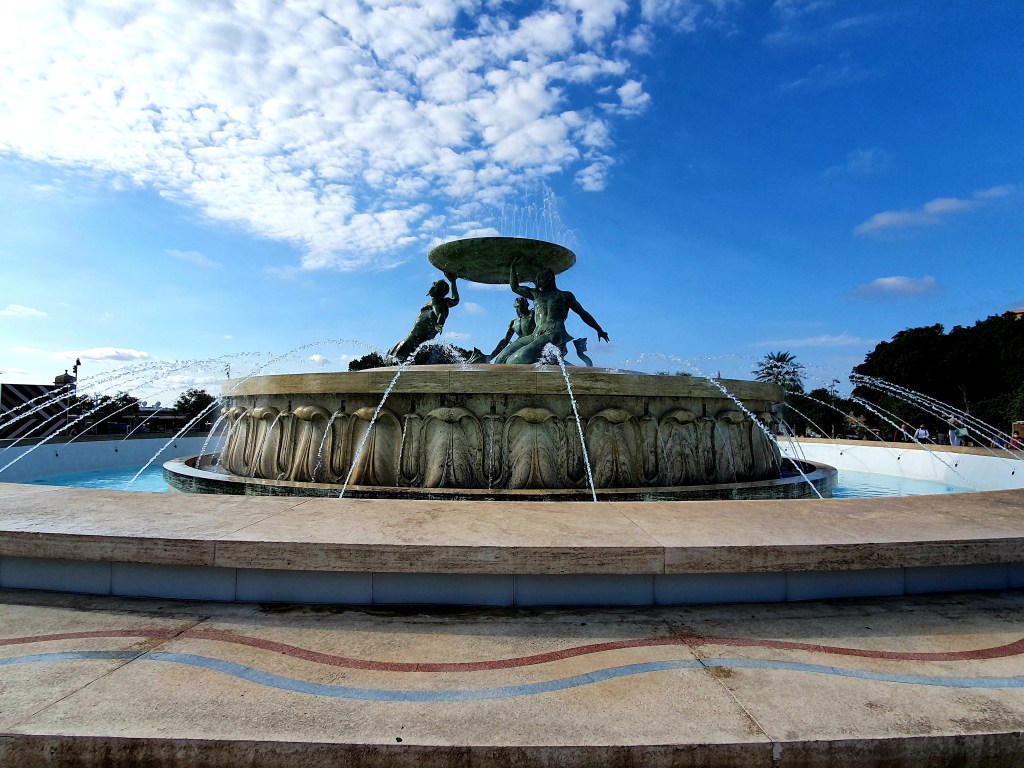
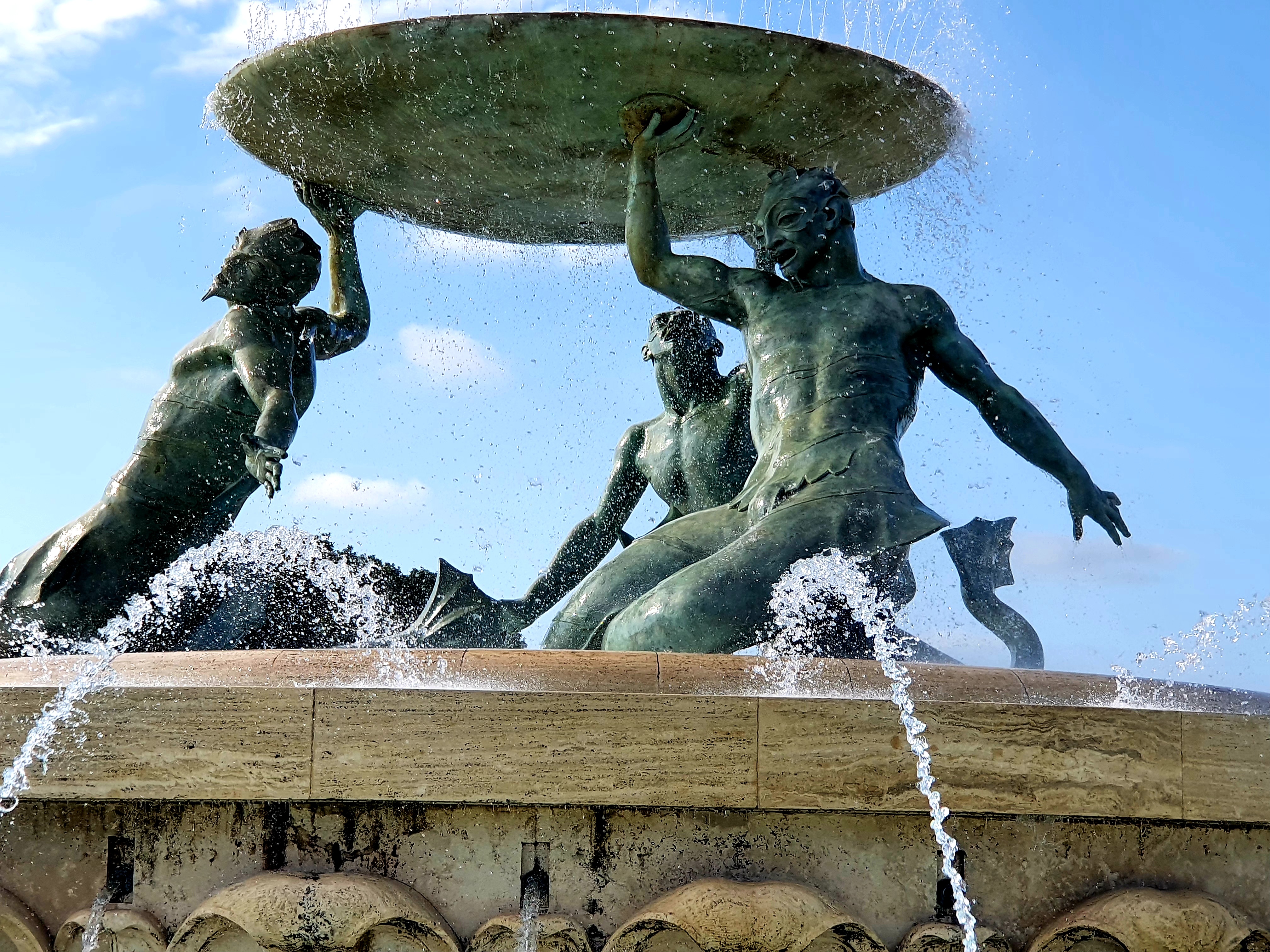
We passed through the city gates,over a little bridge to the Triton fountain. Tritons are half man / half fish figures and there are three of them rising up from the seaweed as part of this fountain.
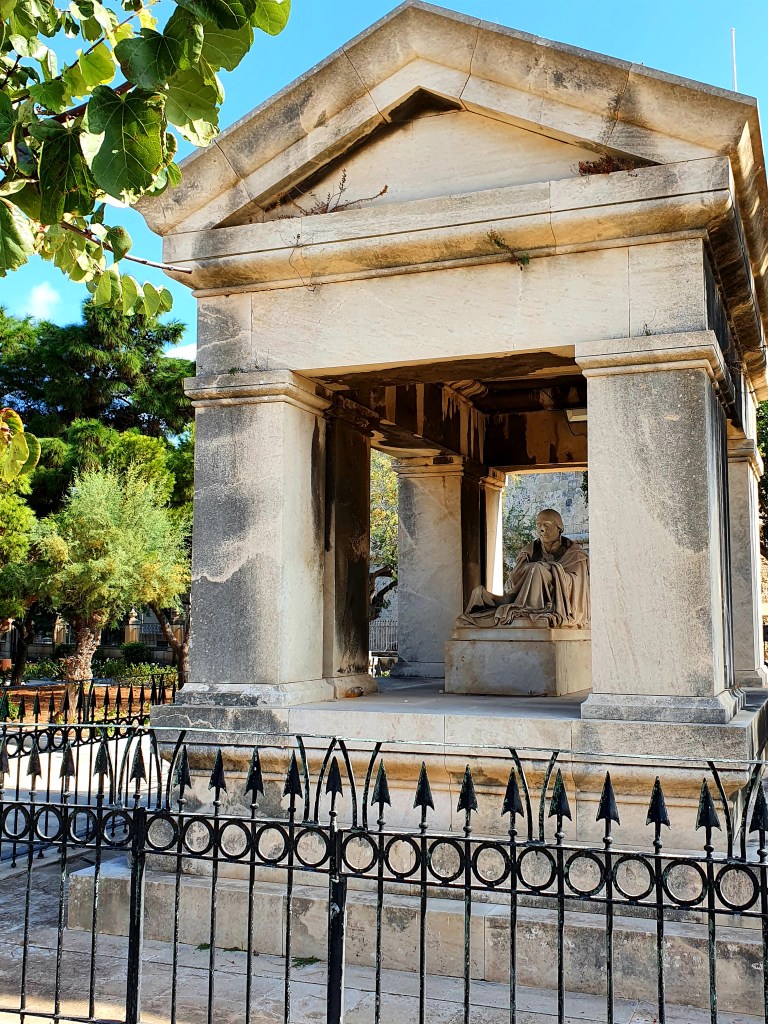
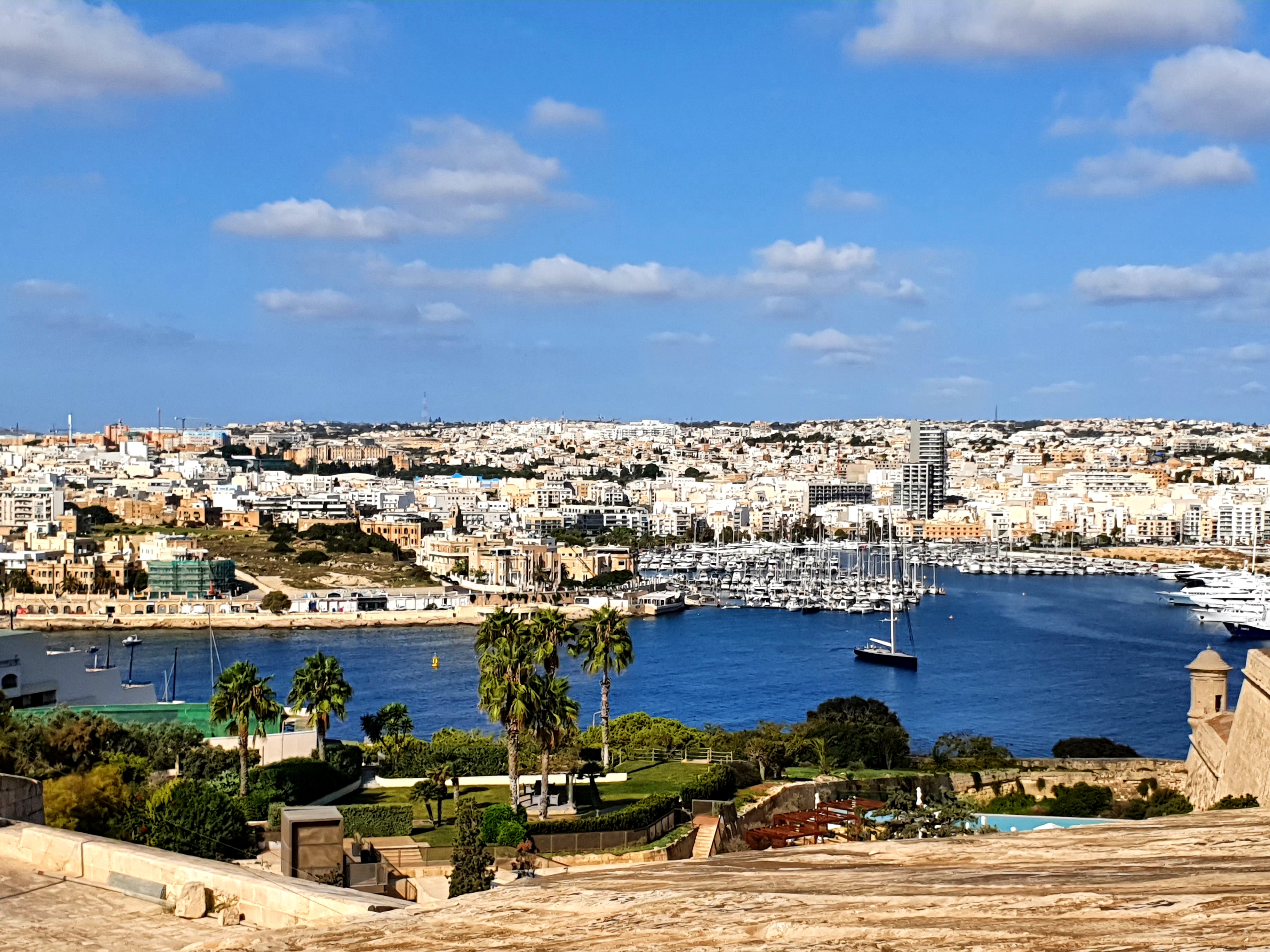
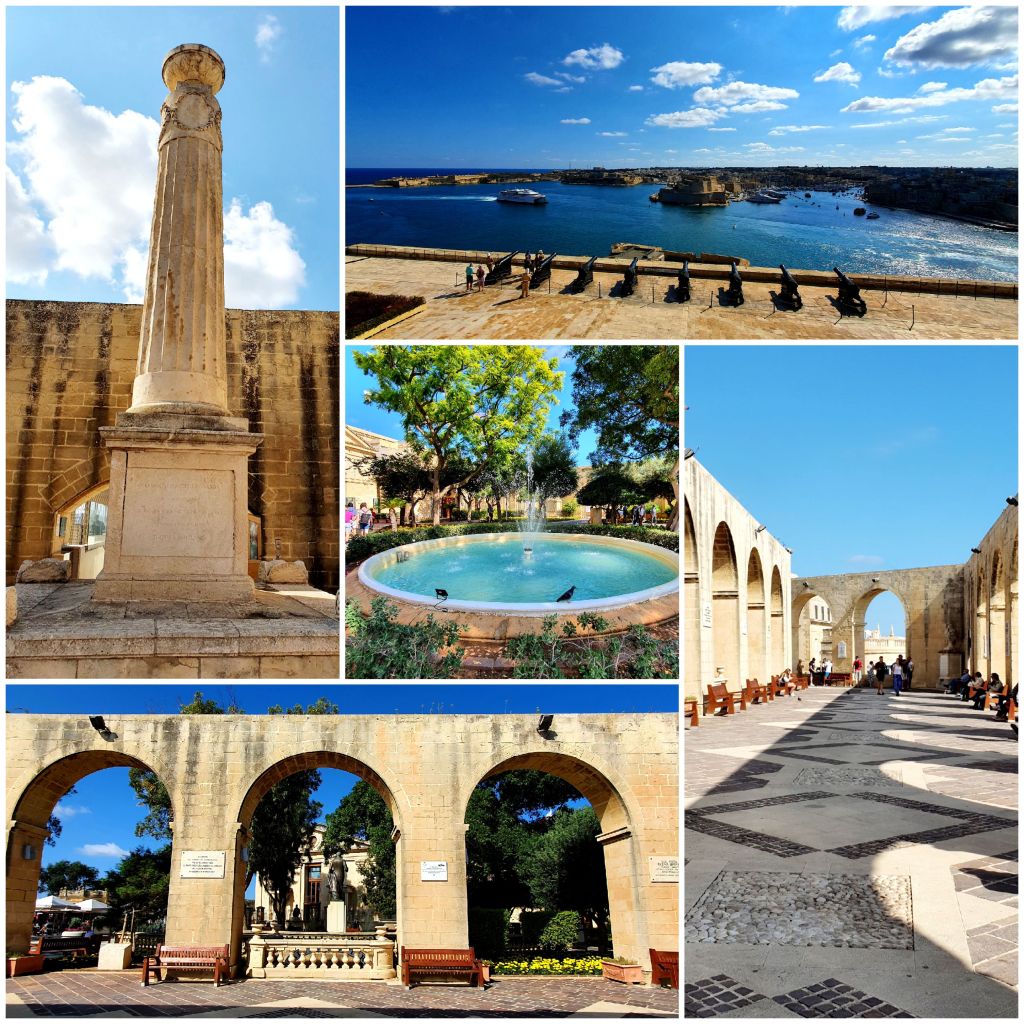
From here we headed up to Hasting Gardens, located on top of St John’s bastion, where you get a good view over the harbour to Sliema. There is a monument in the gardens to Francis, Marquis of Hastings, who was a governor in Malta.
We came across a Carob tree in the gardens where I learnt that because every carob seed weighs exactly the same, the seeds were used to determine the weight of diamonds, and that’s why we now have carats in terms of diamonds.

Malta gained its independence in 1964, became a republic in 1974, joined the EU in 2004 and Valletta was the European capital of culture in 2018.
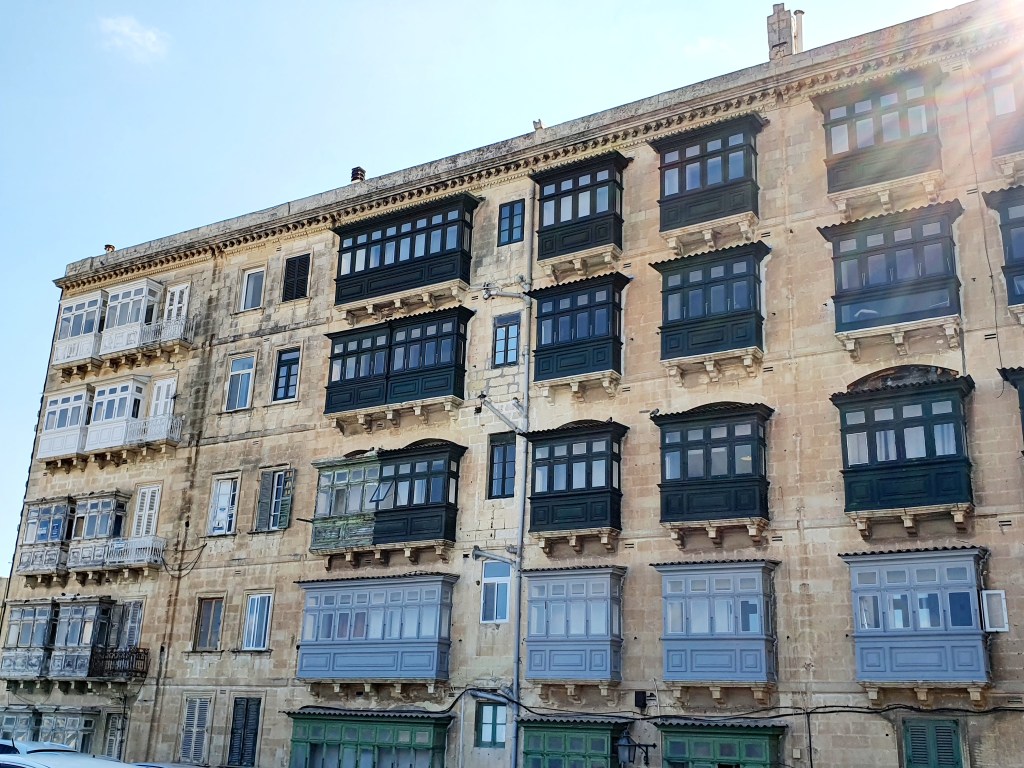
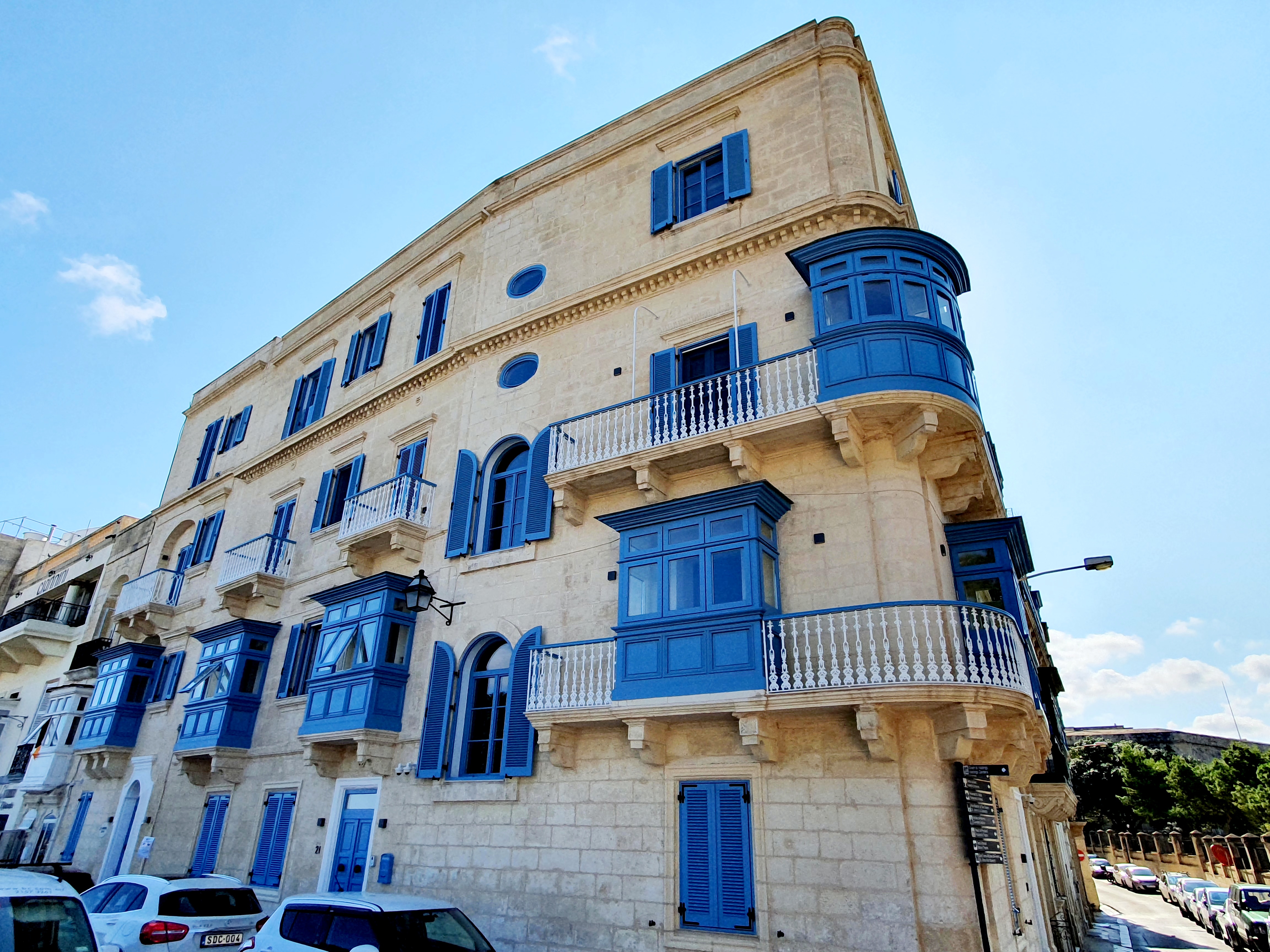
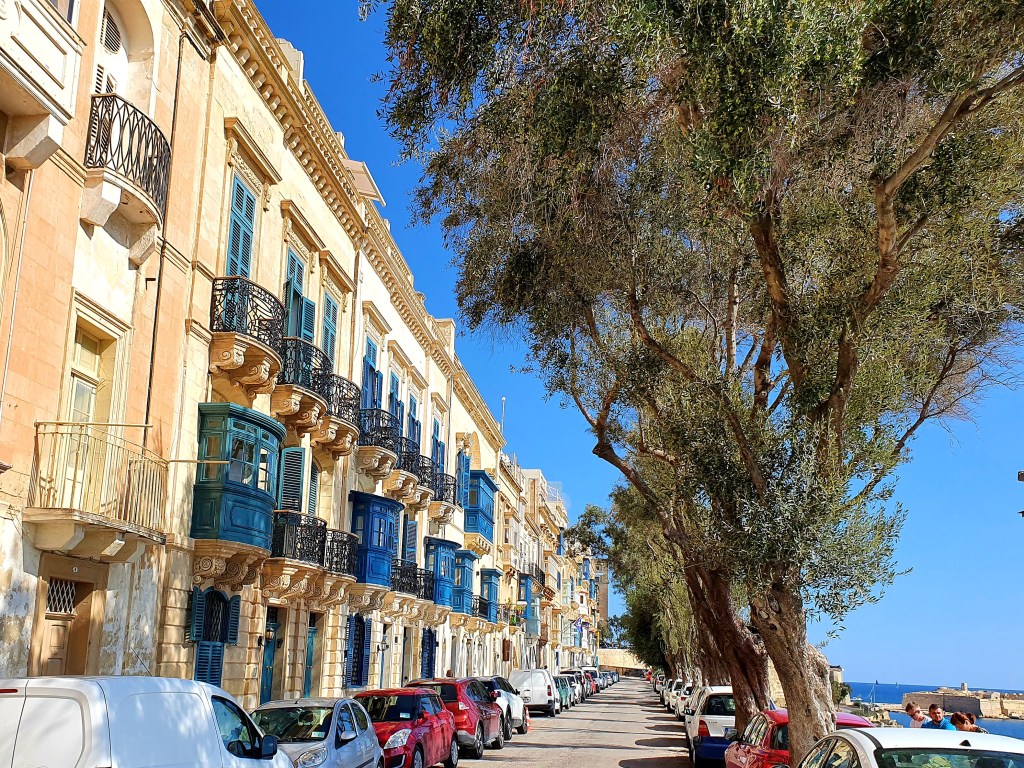
As we walked along we heard about how parts of the city were being restored. You could see quite clearly the buildings that had undergone restoration and those that still needed some work. A lot of the buildings in Valletta, and in other parts of Malta, had blue shutters and doors which looks really nice against the limestone. In Valletta you are only allowed to paint your doors and shutters certain colours.
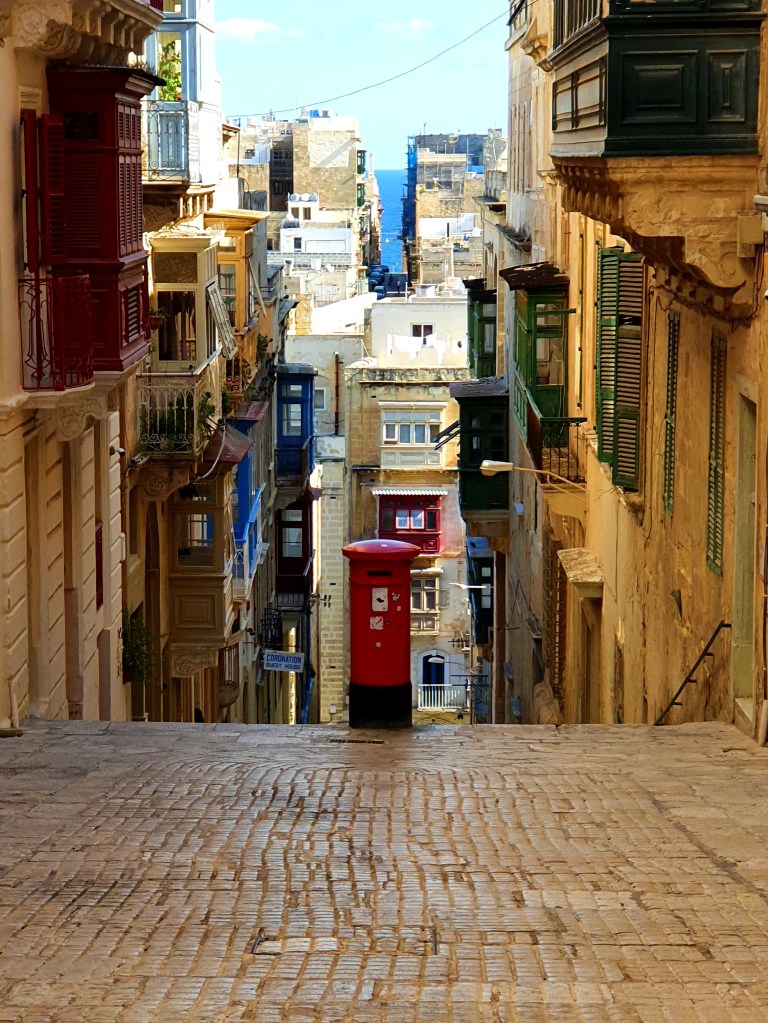
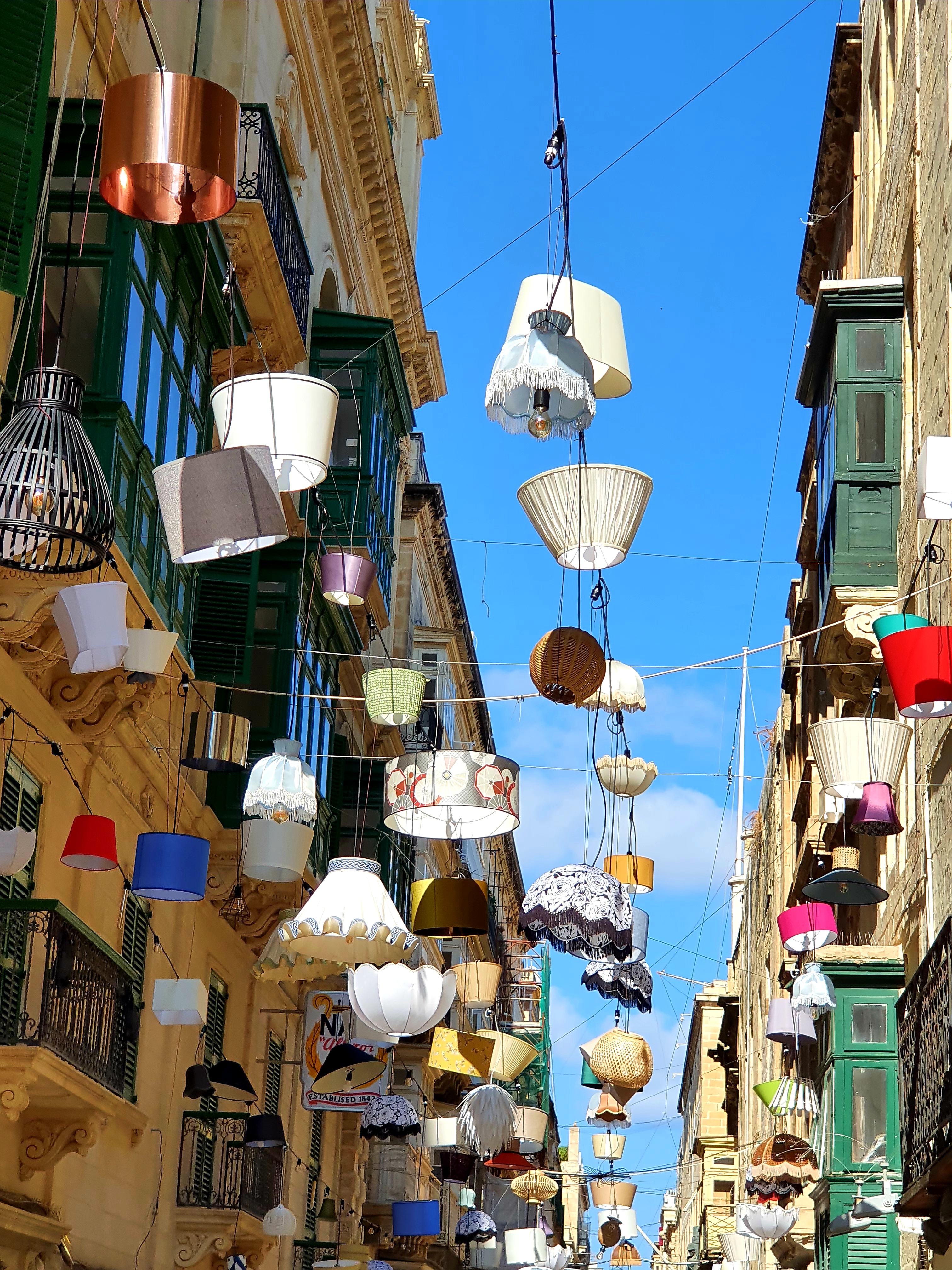
We walked back into the city centre via some little side streets. The post boxes and telephone boxes are in the old british style and one of the streets was decorated with lanterns.
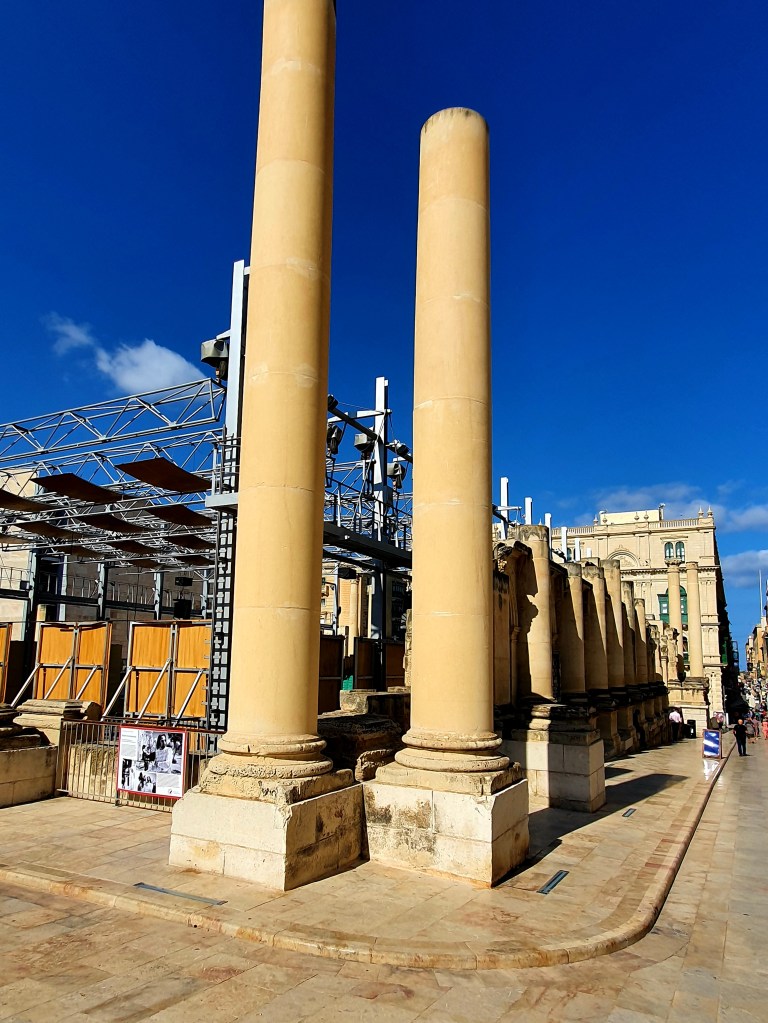
We made our way back to the old royal opera house. This was hit by a bomb in 1942 and never fully restored. It is now used as an outdoor performing venue and called Pjazza Teatru Rjal. The architect of the original opera house was the same person who designed Covent Garden Theatre in London.
We then walked past the statue of Grandmaster Jean de Valetta. He was the head of the Province Auberge, one of the eight orders of the knights of St John, and became Grandmaster in 1557. After the Great Siege of Malta, he ordered the construction of the new city of Valletta in 1566 , laying the first stone with his own hands

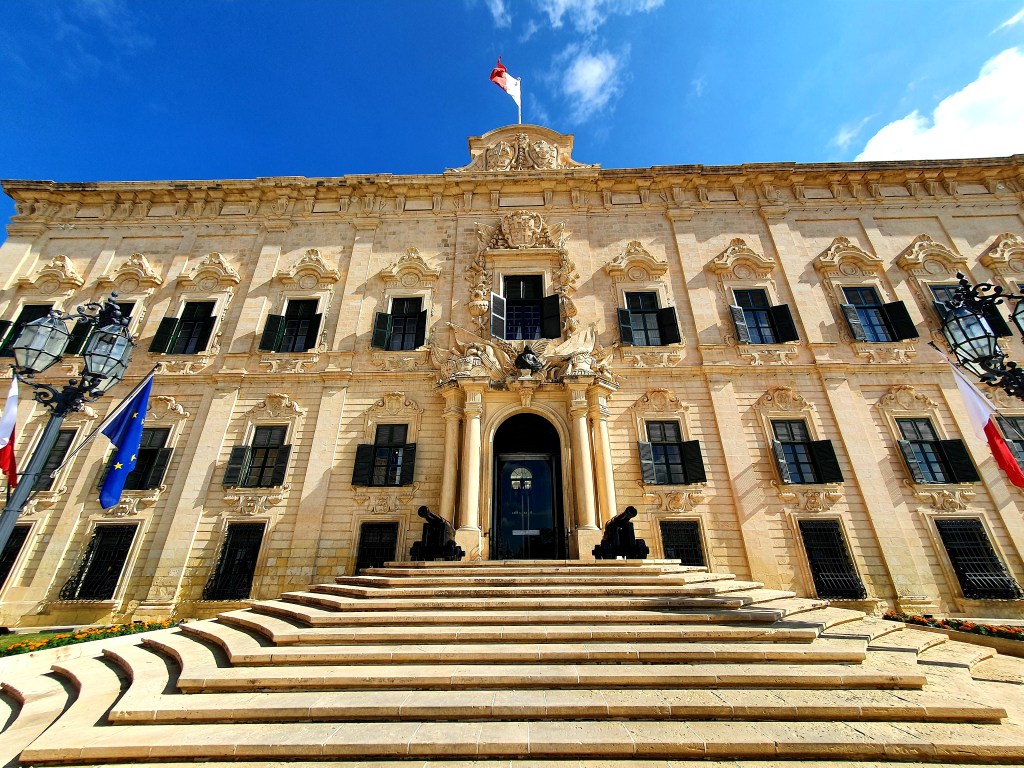
Our next stop was the Auberge de Castille. This used to be one of the knight’s houses but now houses the offices of the prime minister of Malta. There were eight Langues (national branches) of the order of St John and each one had it’s own inn, or auberge, in the 16th century.
It is the building that is at the highest point of Valletta and overlooks Floriana and the Grand Harbour area. Floriana is a town that grew outside of the huge city walks that protect Valletta. It too has city walls but they are not as thick as those of Valletta.
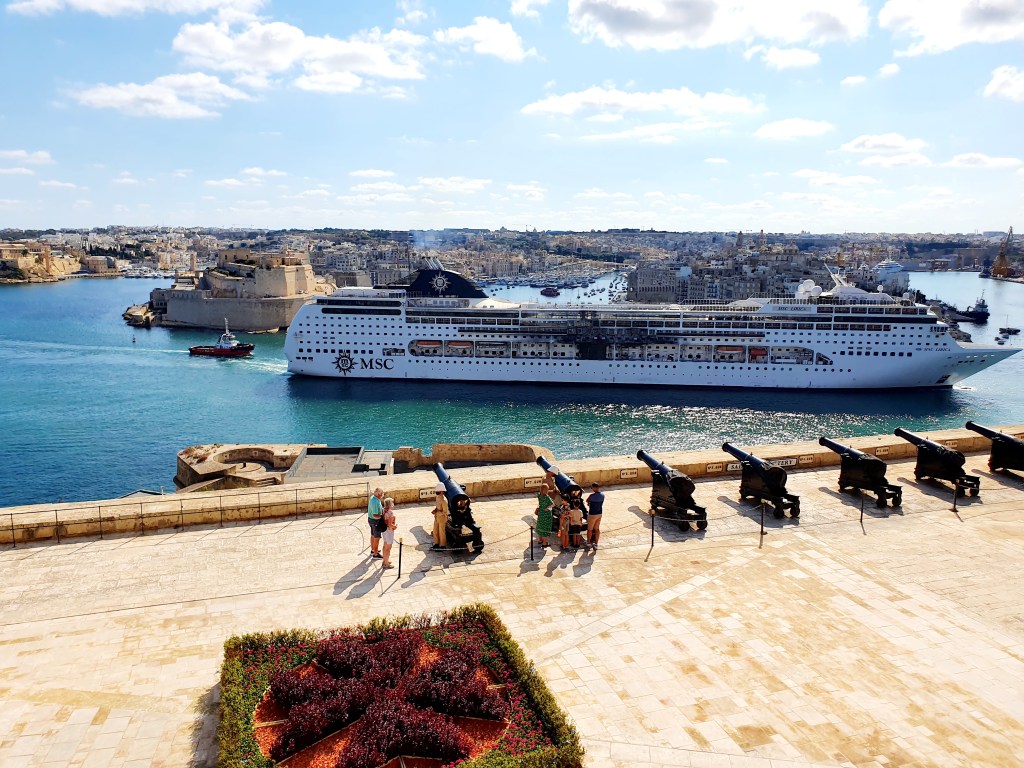
We walked on to the Upper Barrakka Gardens. From here you can look down on the Saluting Battery which was mainly used for firing ceremonial gun salutes and signals. Canons are formed here every day at 12pm and sometimes at 4pm and this is what we heard yesterday when sitting on our roof terrace. You could see our roof terrace from the gardens.

As we looked over the Saluting Battery a huge cruise ship was just passing through the Grand Harbour.
From the gardens you could look out to the three cities and Fort St Angelo. Currently only one knight from the order of St John lives at the Fort. Knights were originally from noble families only and would be the 3rd or 4th son of the family. They had vows of chastity, poverty and obedience.

From the edge of the gardens you could look directly down to the ground where the lift is. It was quite disorienting.

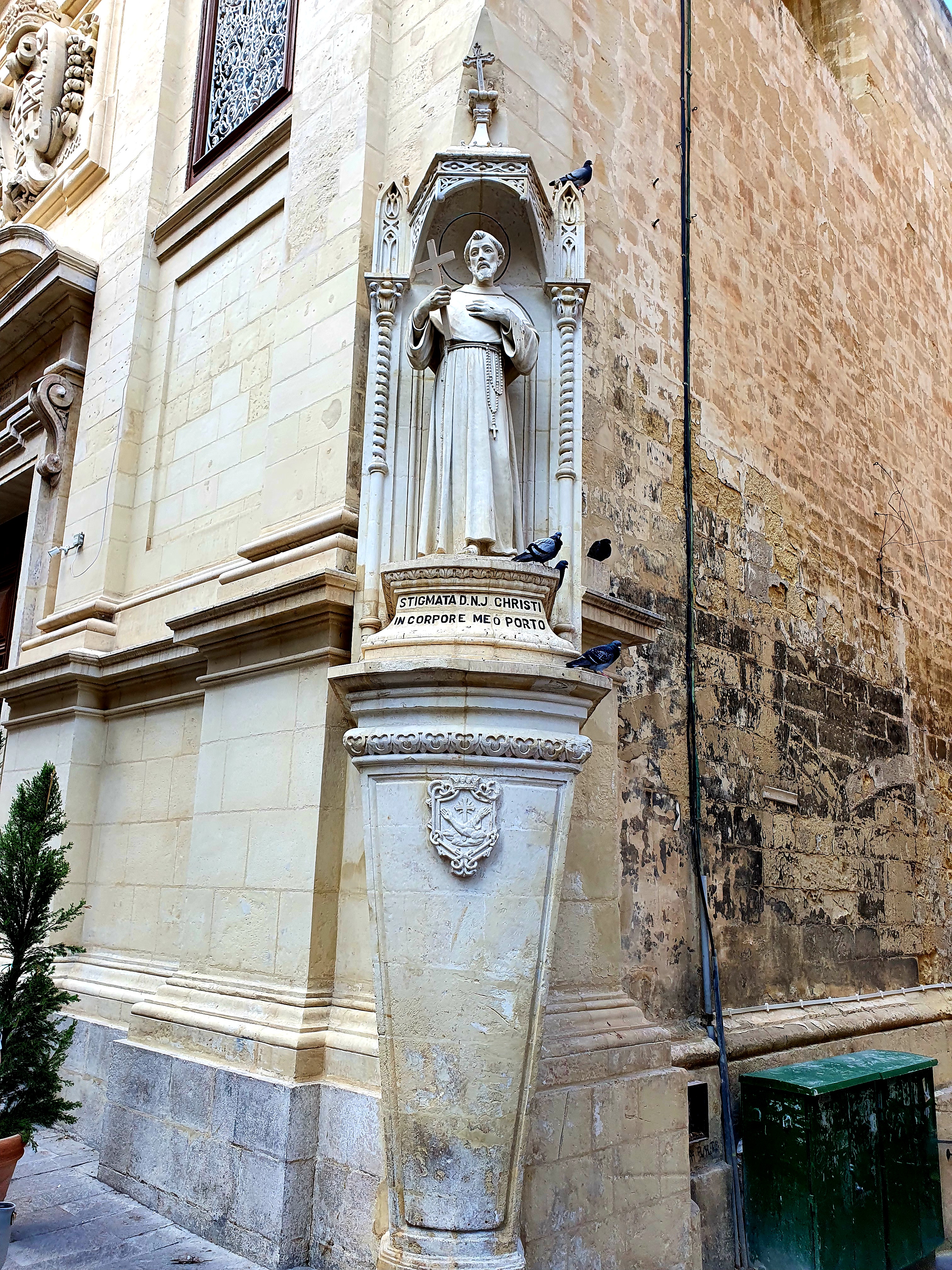
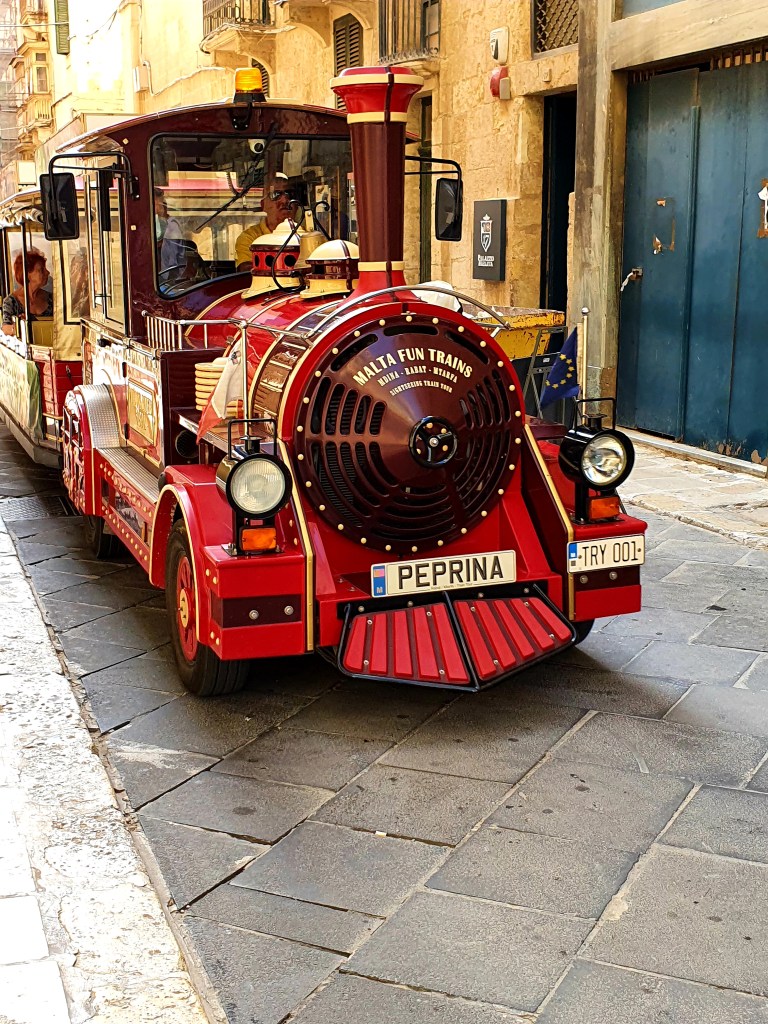
From the upper gardens we headed down to the lower Barrakka gardens, past a trackless train and a number of statues that appear on a lot of the street corners.
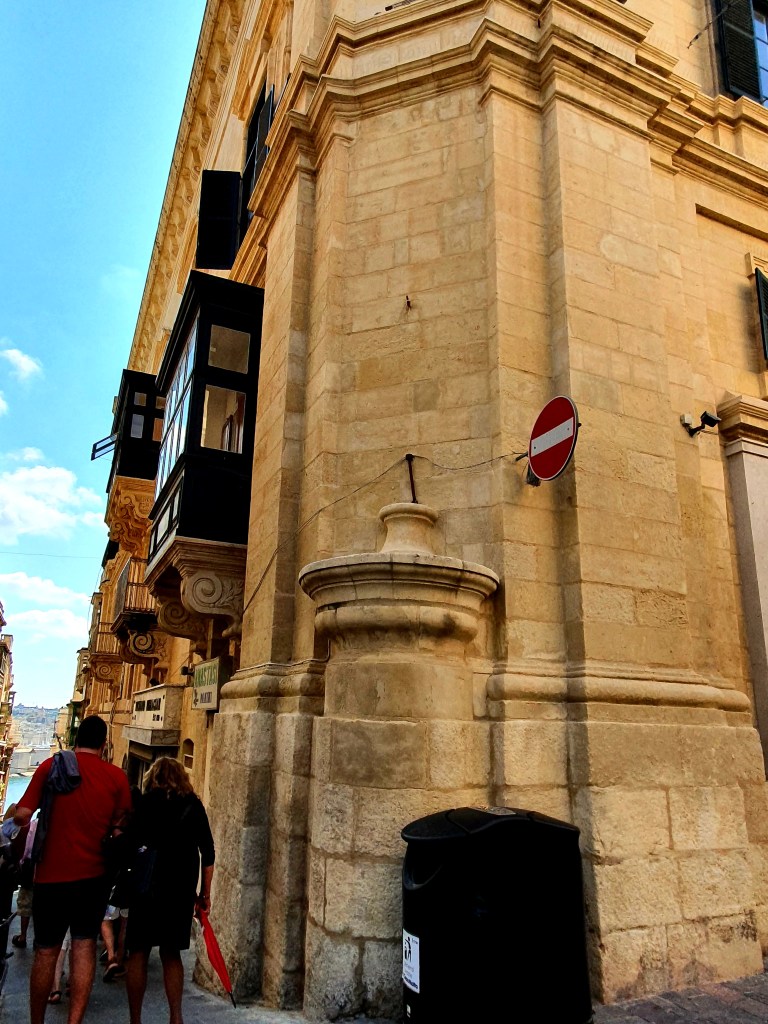
One of the street corners had a large hook on the wall. Apparently they used to tie criminals hands behind their backs and then hang them from the hook. This meant that their shoulders would often dislocate and it would be really painful for them.
Most of the houses and apartments in Valletta have balconies. Apparently up until 1970 married women were not allowed to work so they used to sit on the balconies and chat to each other. Also, to save people who are a little bit older walking up and down the stairs all the time, when the bread van comes round in the morning, they lower baskets down from the balcony and the bread is placed in the basket and hoisted up via the balcony.
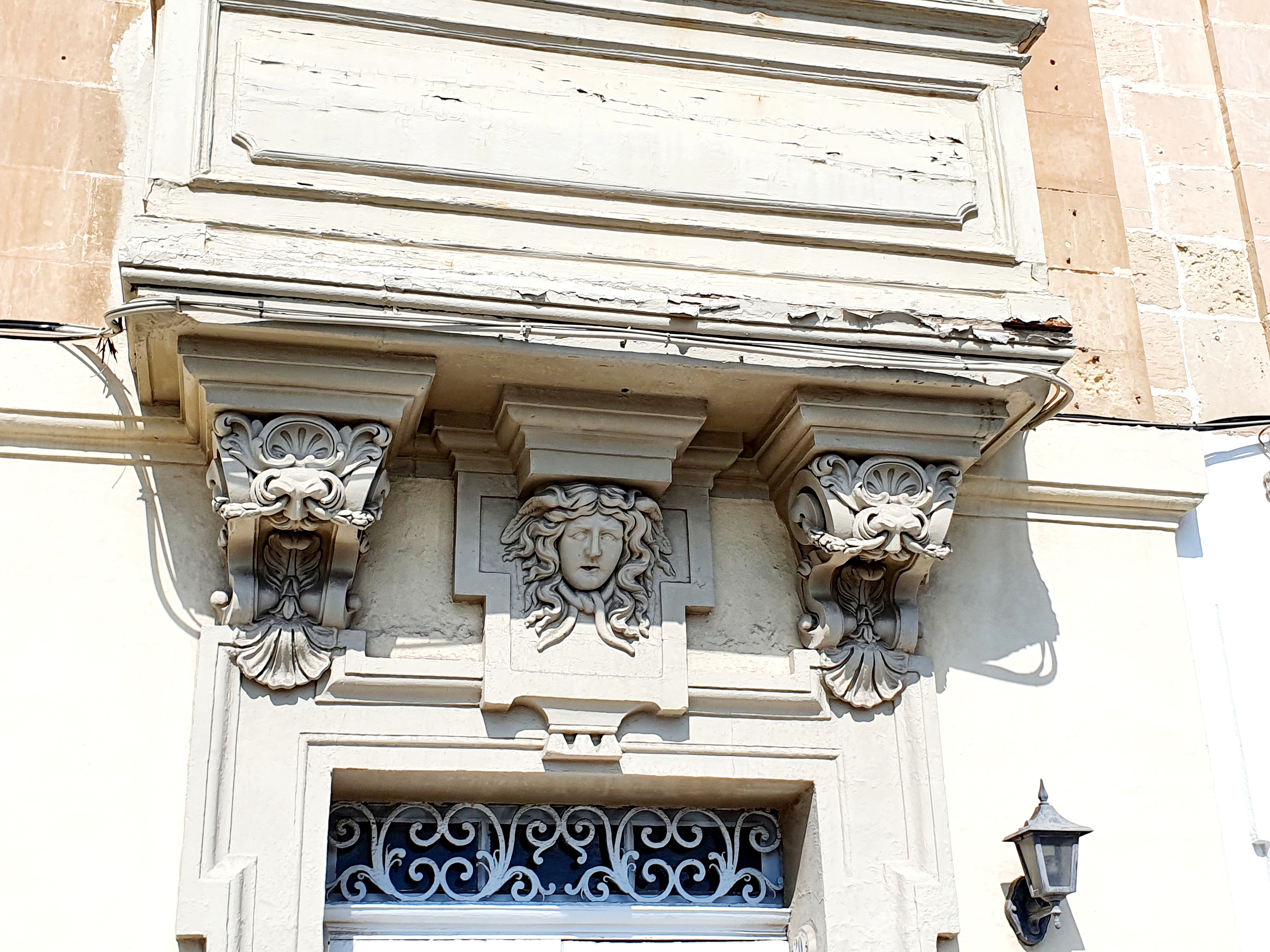
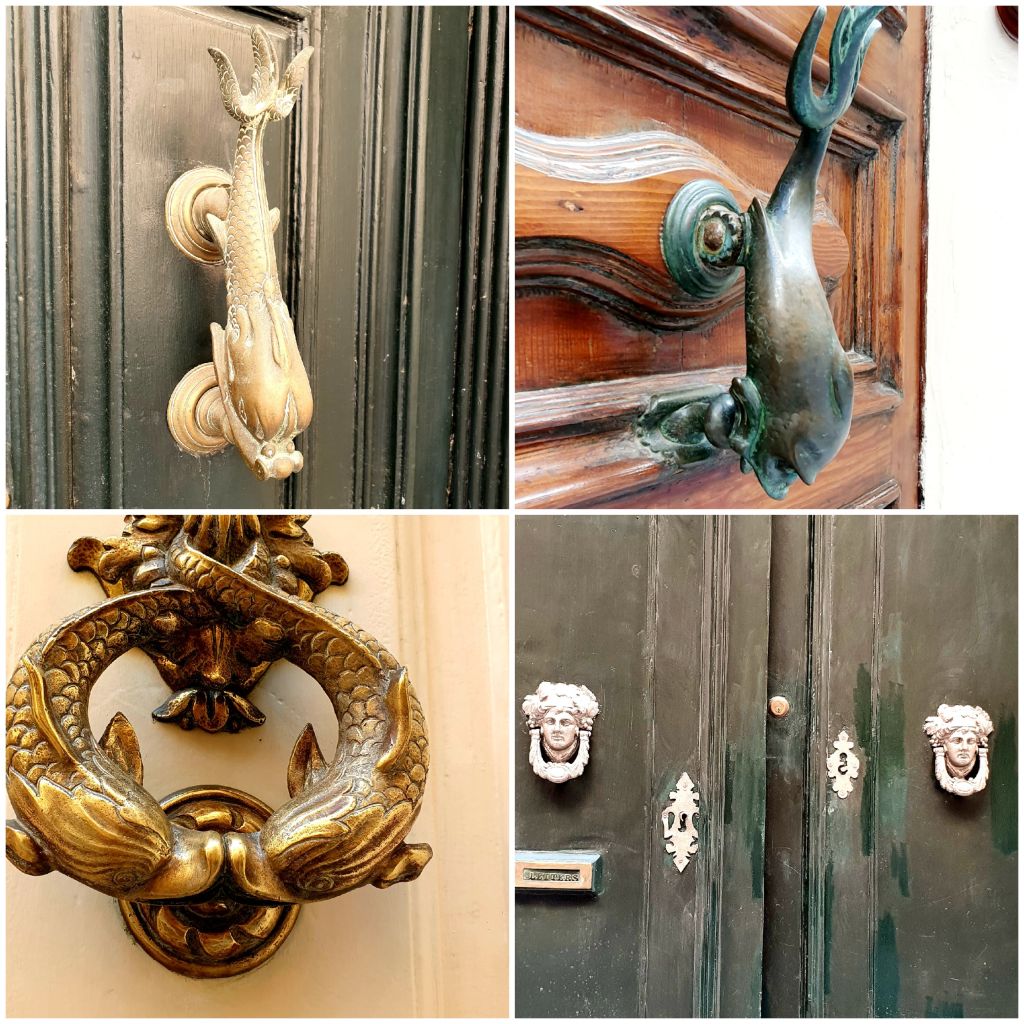
Walking to the lower gardens we walked down a pretty street where all the houses had been restored. A number of the houses had carvings of gargoyles around the doors, or even a medusa. These are around the door to make people look away to maintain the privacy for the people within.
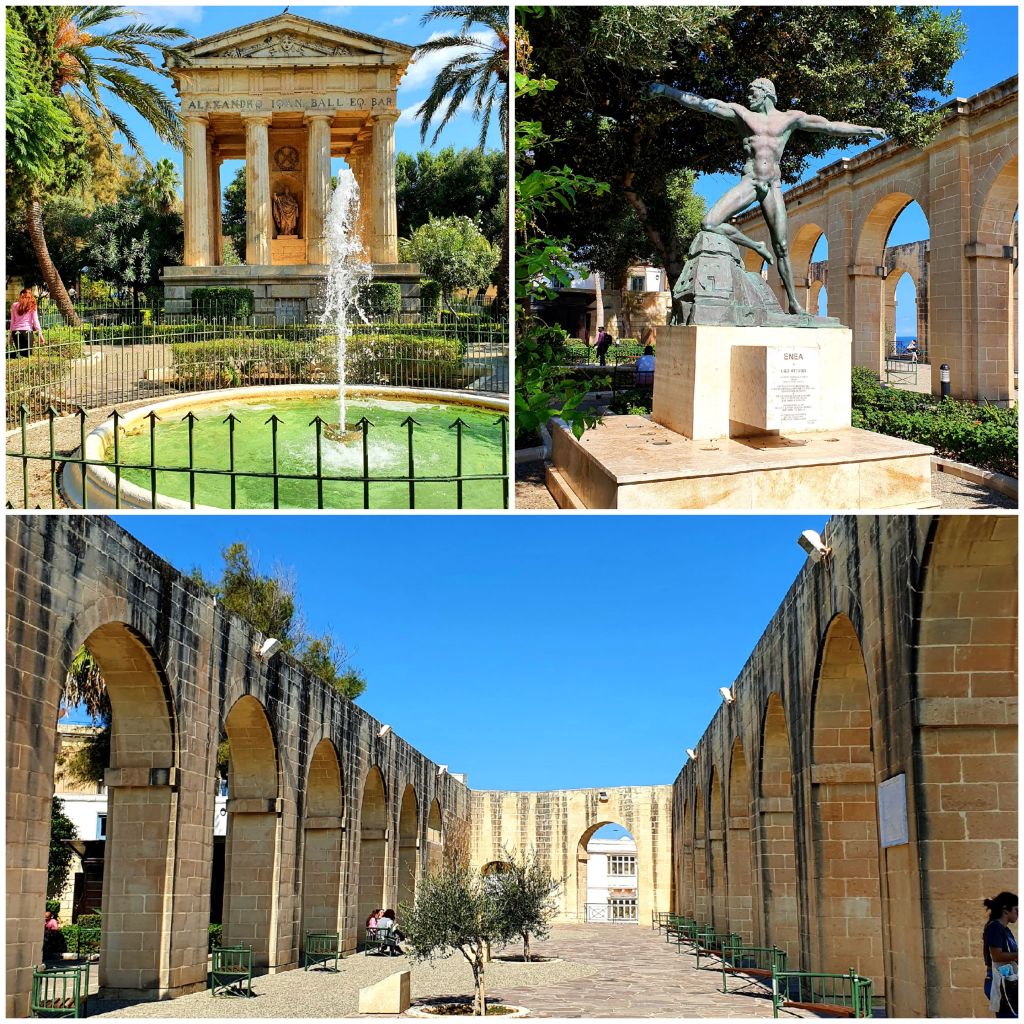
From the lower gardens you can look back to the upper gardens and the saluting battery.

Personally I think the lower gardens are nicer than the upper gardens as they are smaller and prettier.

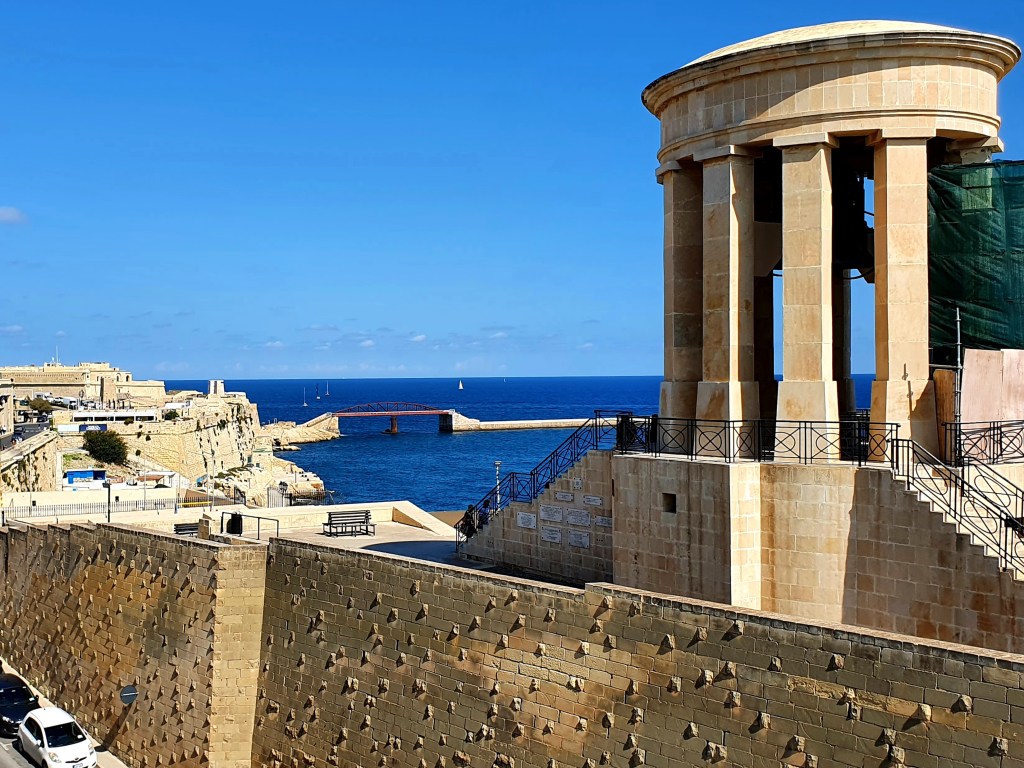
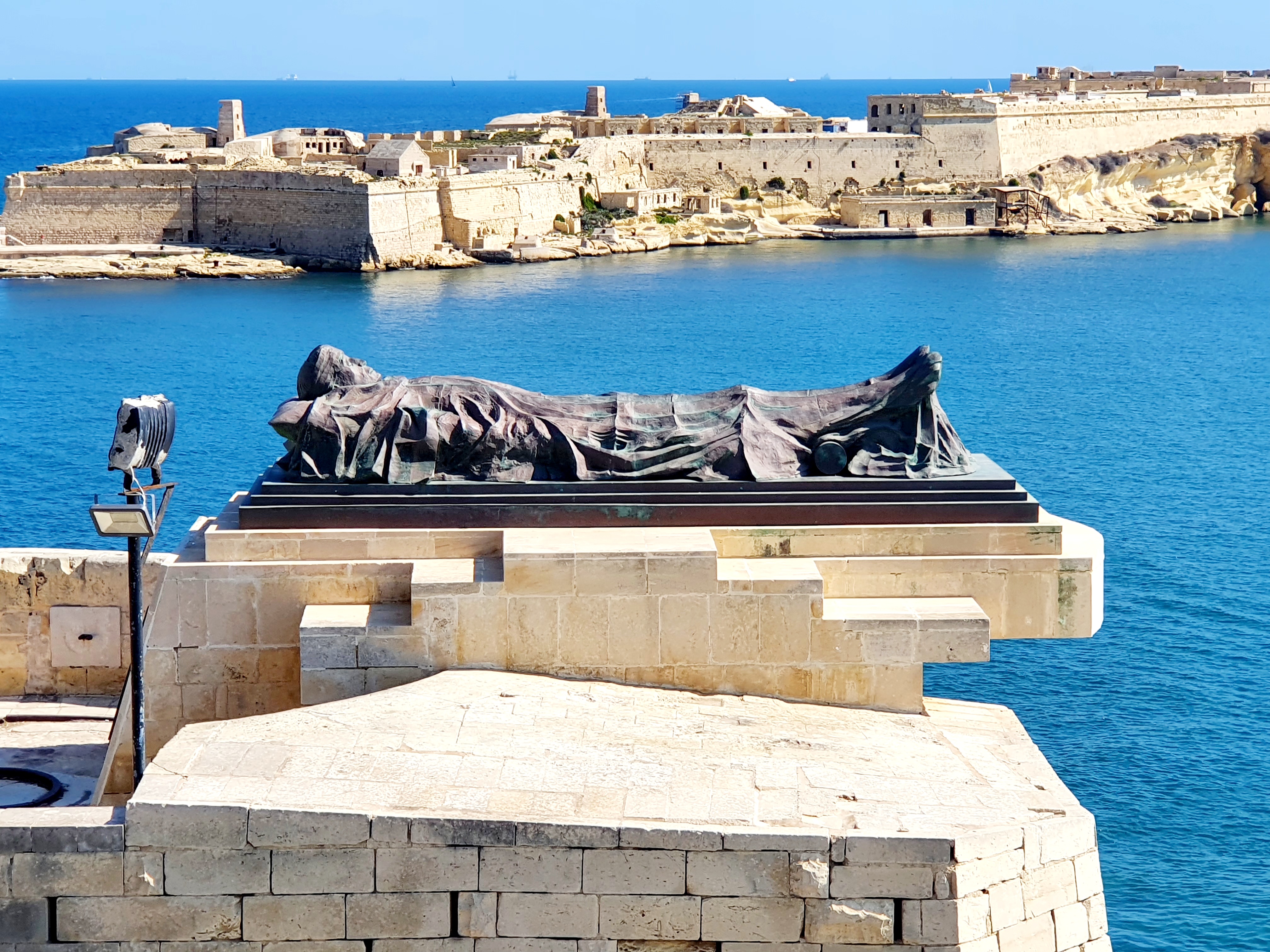
Across from the gardens is a tribute to everyone who fought and died for Malta in the second world war in terms of the Seige Bell and the Unknown Solider monument.
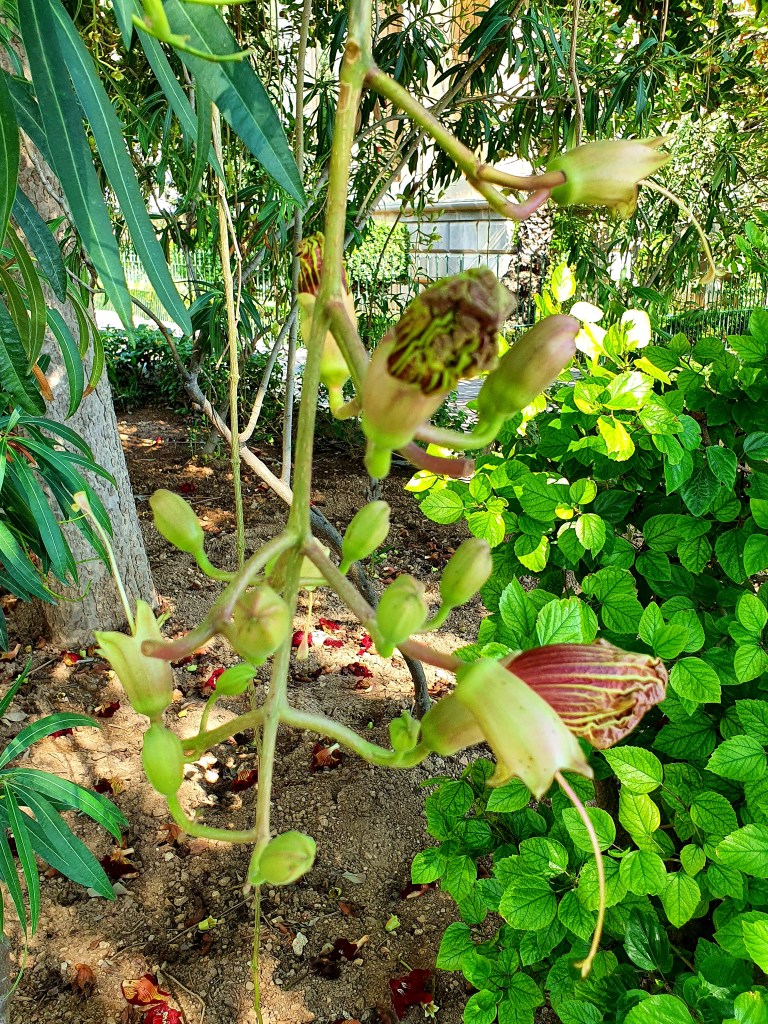
Sausage trees can be found in the lower gardens. You can eat the fruit from the trees and many people use it as a vegetable. The flesh of the fruit is sweet and subtle and tastes a bit like cucumber.
From the lower gardens we walked back through some of the side streets to the Grandmasters Palace. On the way I noticed lots of interesting door knockers.
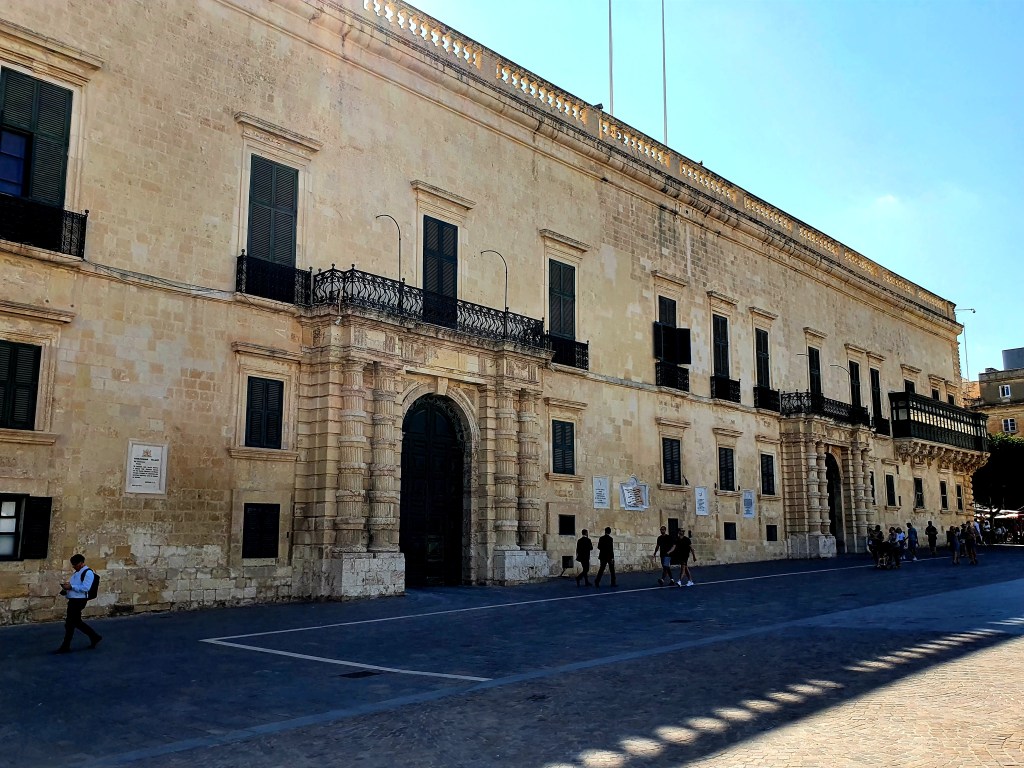
The Grandmasters Palace was originally built for the Grand Master of the Order of St John. The Palace occupies a city block and is the largest palace in Valletta and is supposed to be haunted by a number of ghosts.
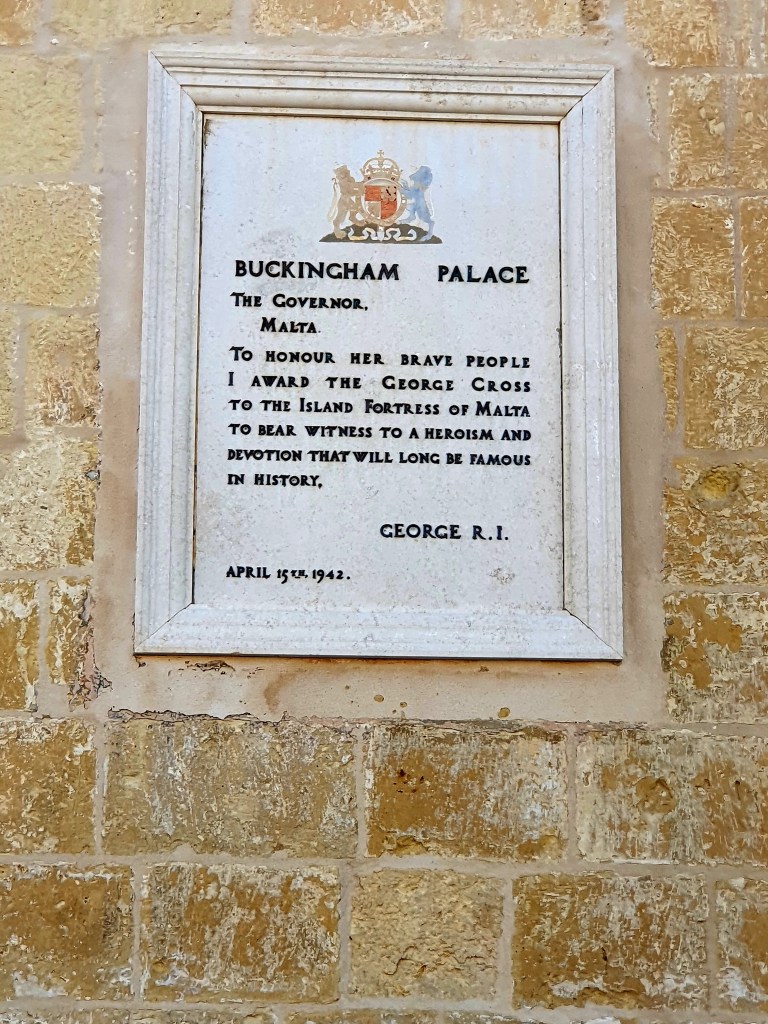
There is a plaque from Buckingham Palace which commemorates the awarding of the George Cross to the Maltese people by King George VI for their courage, bravery and heroism at the start of WWII. The cross was incorporated into the Maltese flag and remains part of the flag today.
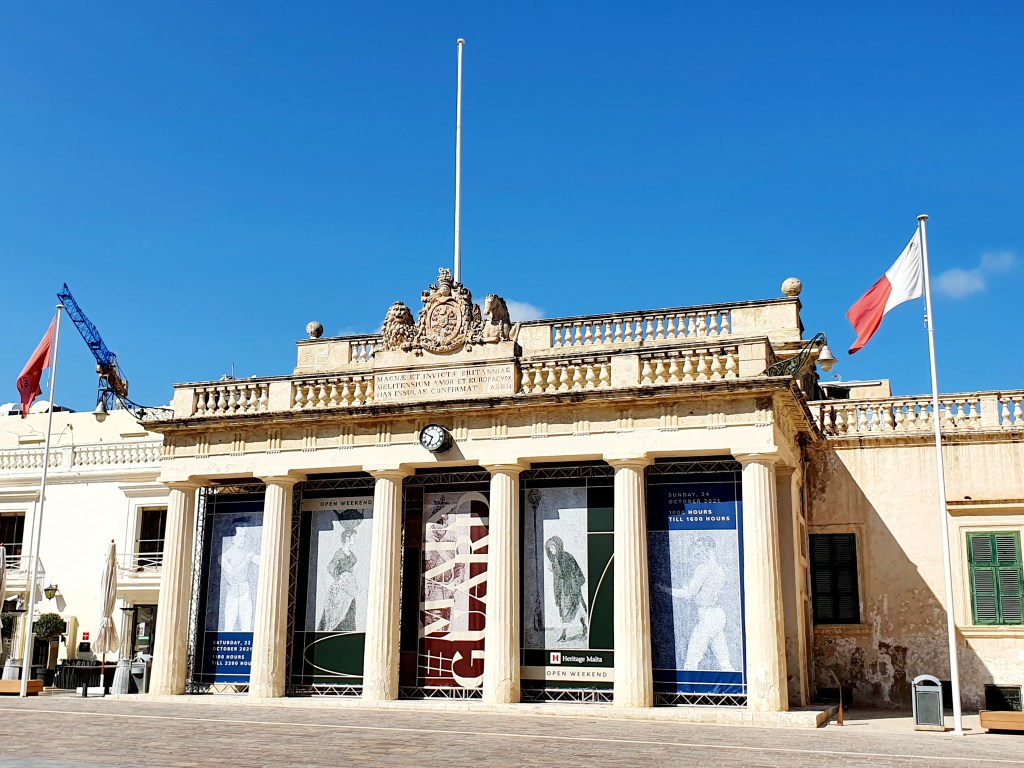
Opposite the Palace is the Main Guard and this was originally built as a guard house by the Order of St John. It is now one of the main symbols of British rule in Malta.
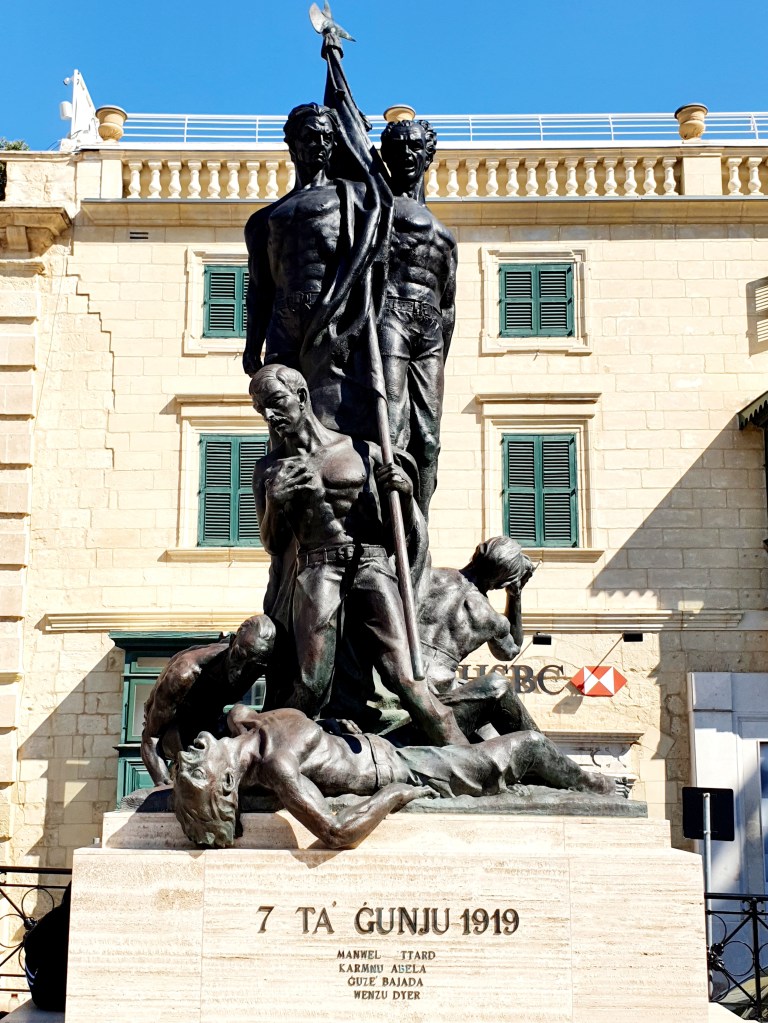
Within St George’s Square where the Palace and Main Guard are is a statue commemorating 7 June 1919 known as Sette Giugno. This commemorates a day when the Maltese people rebeled and rioted against the British rule due to the poverty they were all suffering because of the increased price of wheat and bread. The British fired into the crowds killing 4 people. 2 more people died from their wounds a few days later which is why there are 6 people as part of the statue.
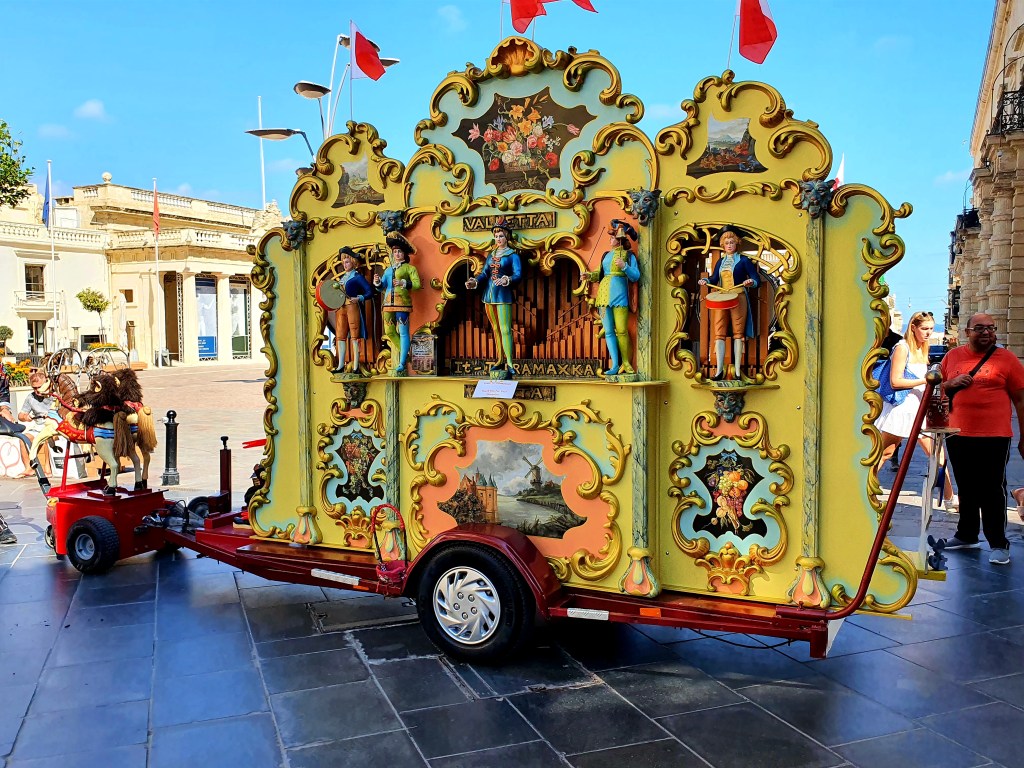
This was the end of the walking tour. As we hung around by St George’s square a very elaborate organ grinder came by. It was really nice at first but the music was so loud that it became annoying after a while.
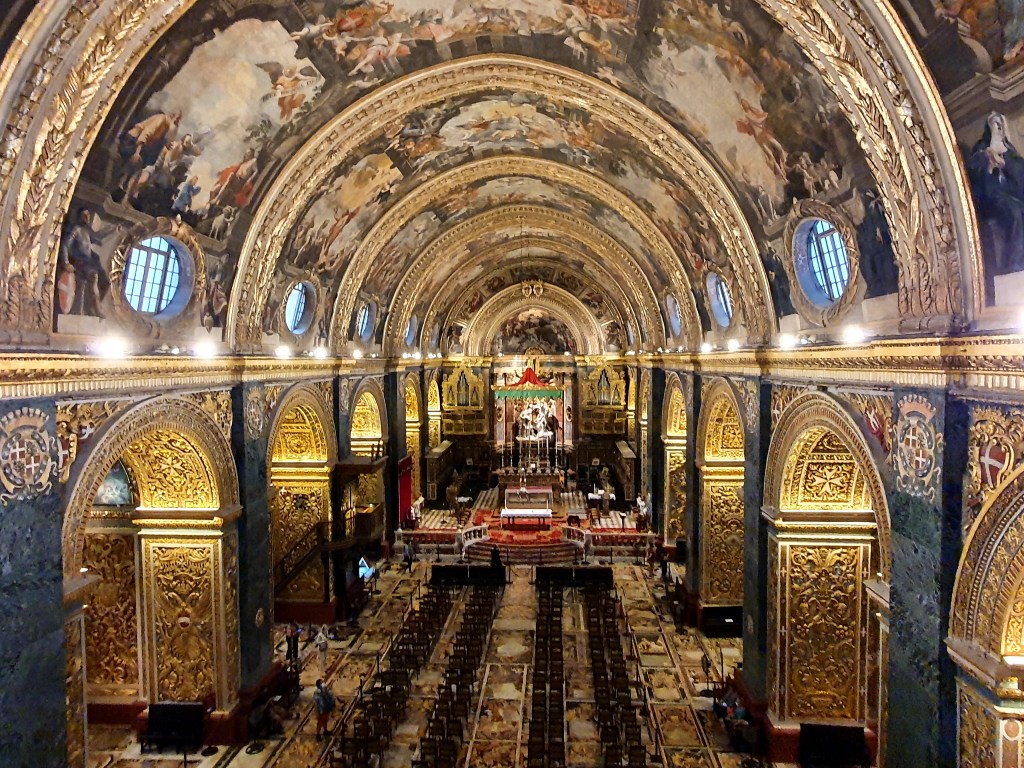
After a spot of lunch in a cafe down one of the side streets we decided to visit St John’s Co-Cathedral. This is the main cathedral in Valletta and looks like a giant fortress from the outside.
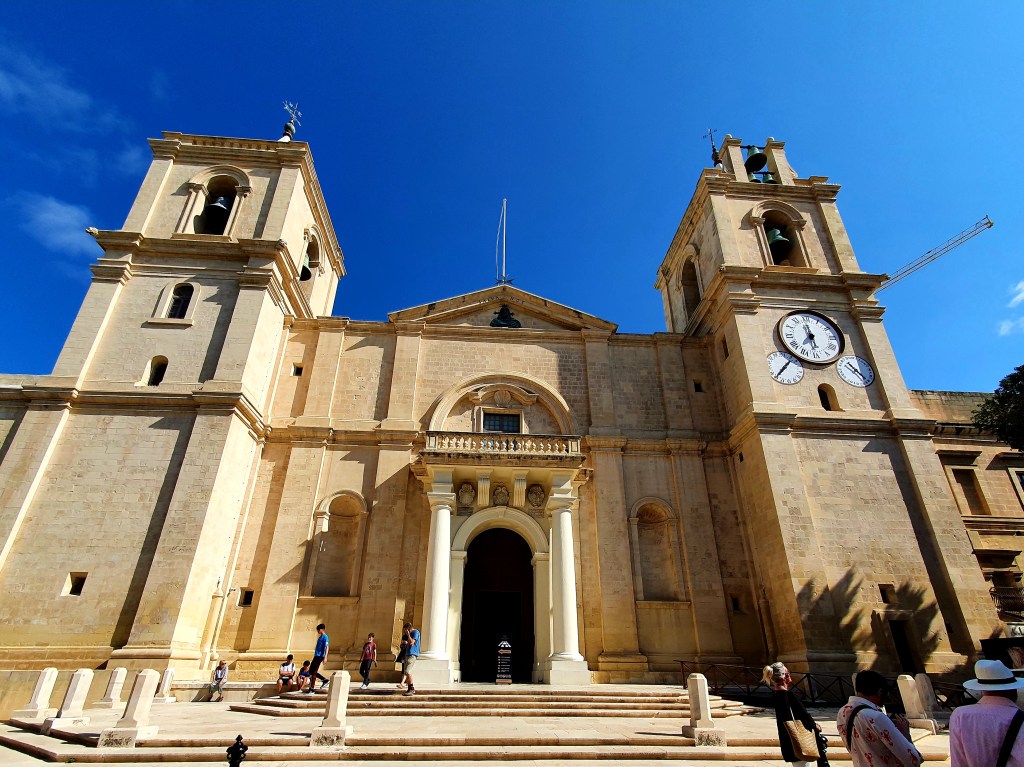
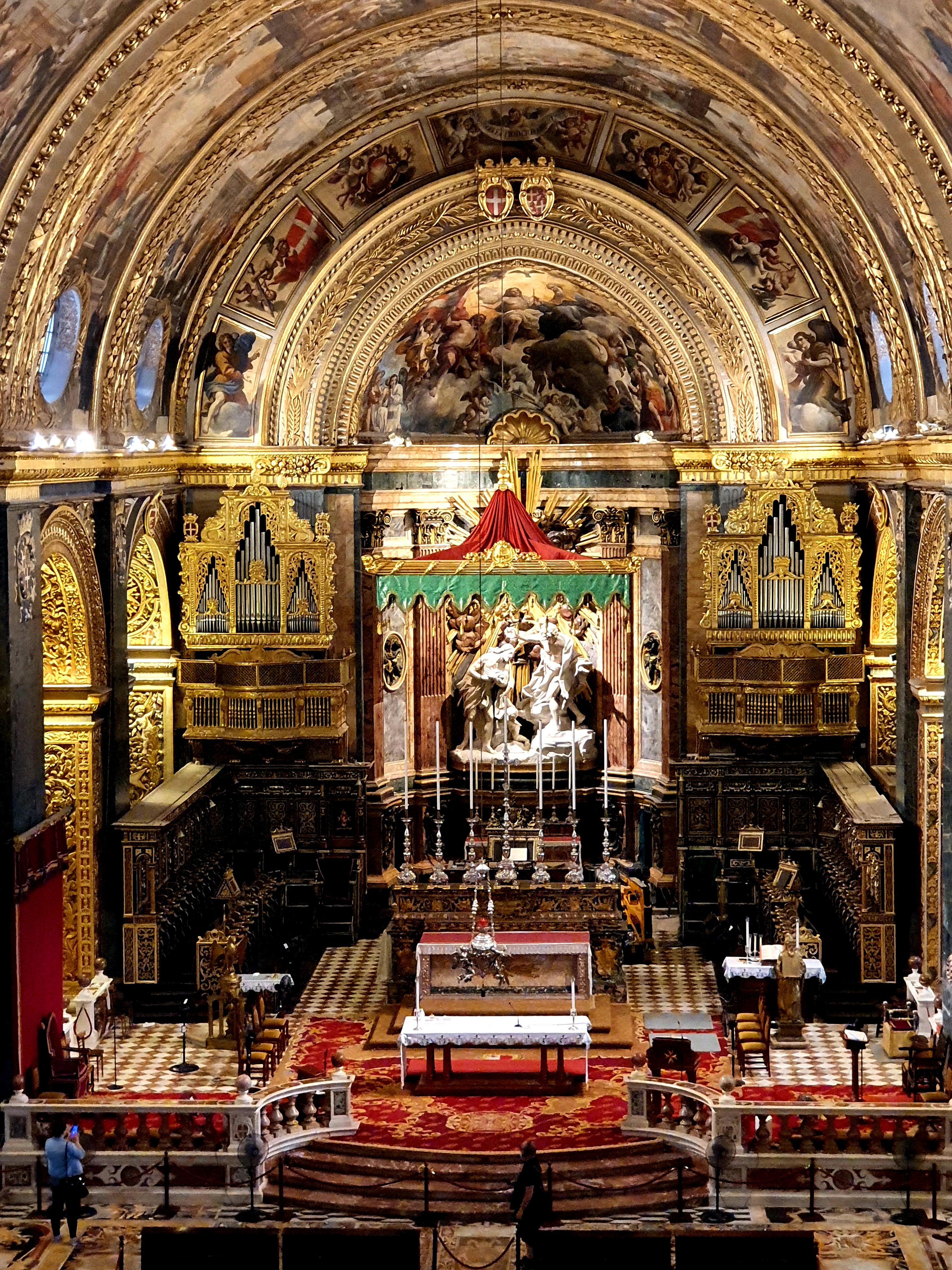
But inside it is amazing with marble floors, lots of gold, intricate carvings and loads of paintings and frescoes.
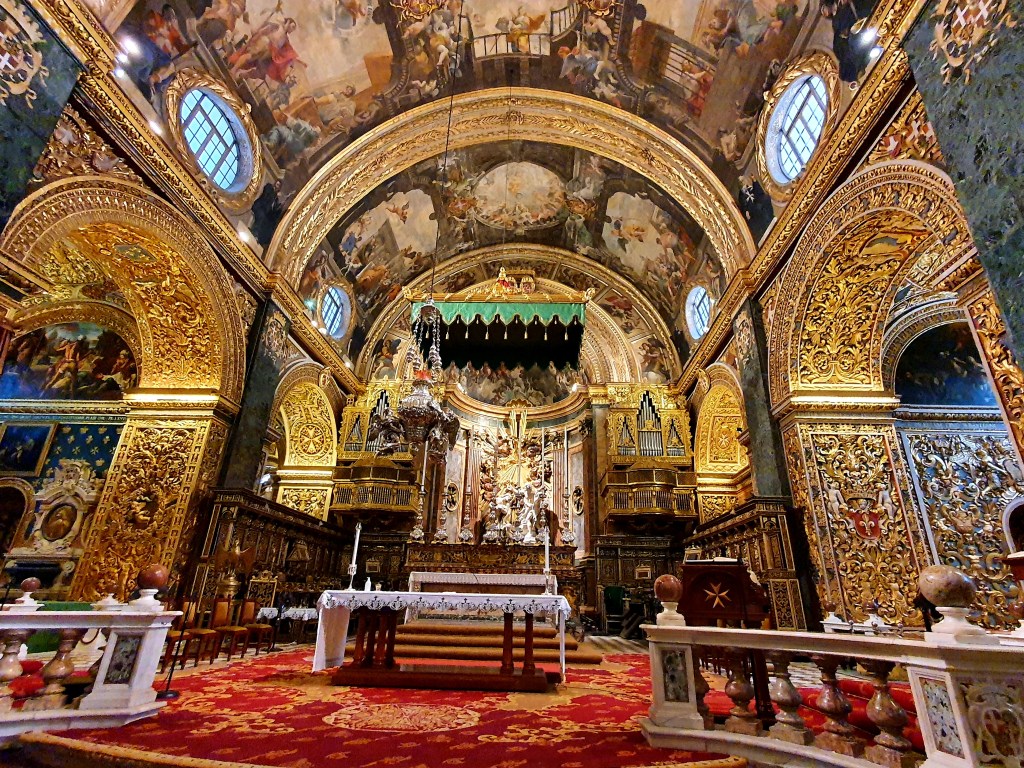
The floor of the cathedral is covered in marble tombstones. 400 knights are buried here and a lot of the symbols on the tombstones remind us of the inevitability of death.

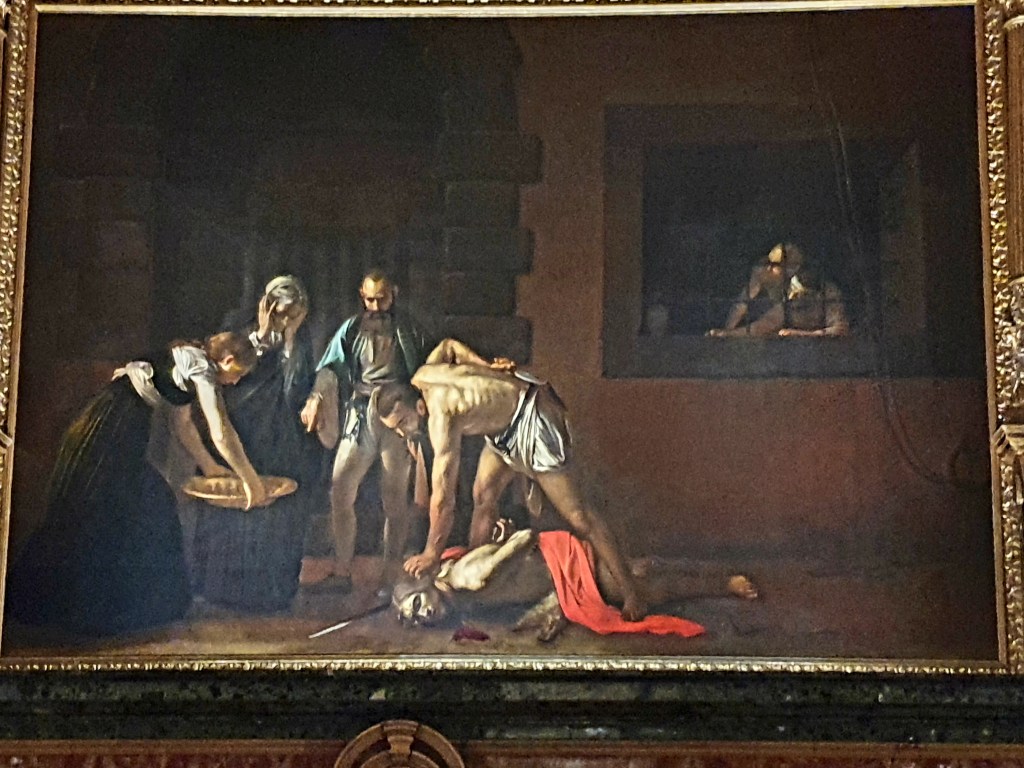
The cathedral also houses the famous painting of The Beheading of St John the Baptist by Caravaggio – it is very rare as it is the only painting he actually signed. Caravaggio was himself a knight but was stripped of his knighthood, apparently in the same room in the cathedral where his painting hung.
Each of the houses, or Langues, has it’s own chapel within the cathedral. These are all extremely lavish and highly decorated as they competed with each other to be the best chapel.

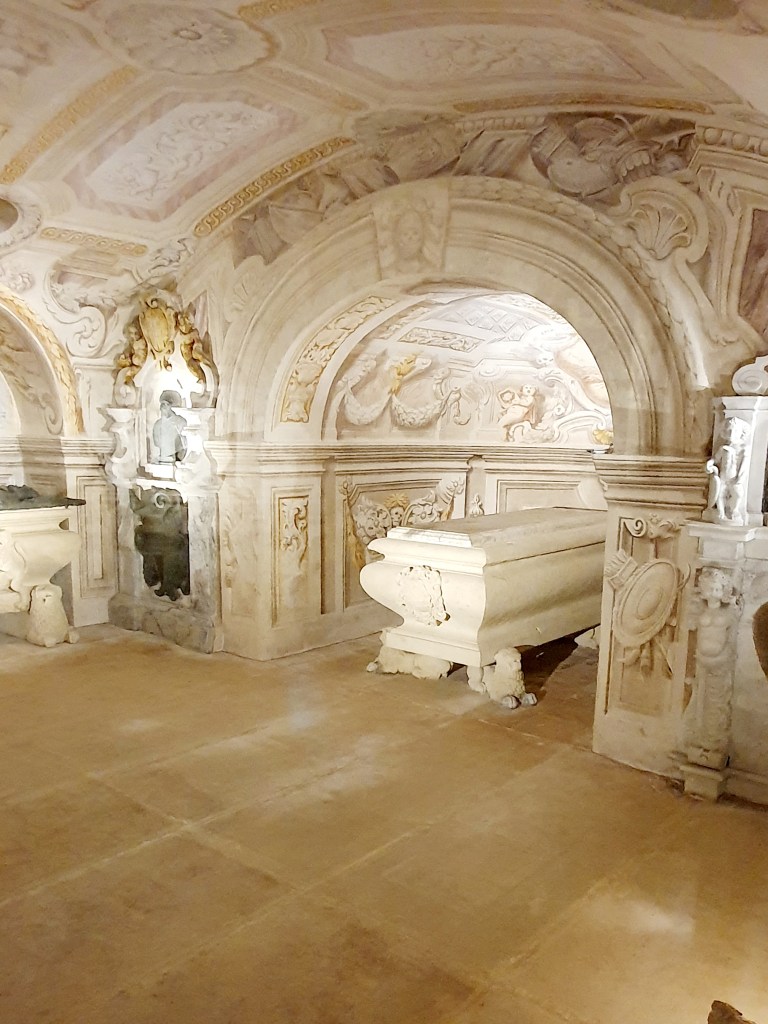
The cathedral also has a crypt where the Grandmasters are buried.
The gate to the Blessed Sacrament was originally silver bit was painted black to foil Napoleon’s troops as they were taking everything that was made of silver.

We climbed up the stairs to get a better view of the cathedral, and particularly the high altar. At the centre of the high altar there is a relief in bronze which shows the Last Supper.
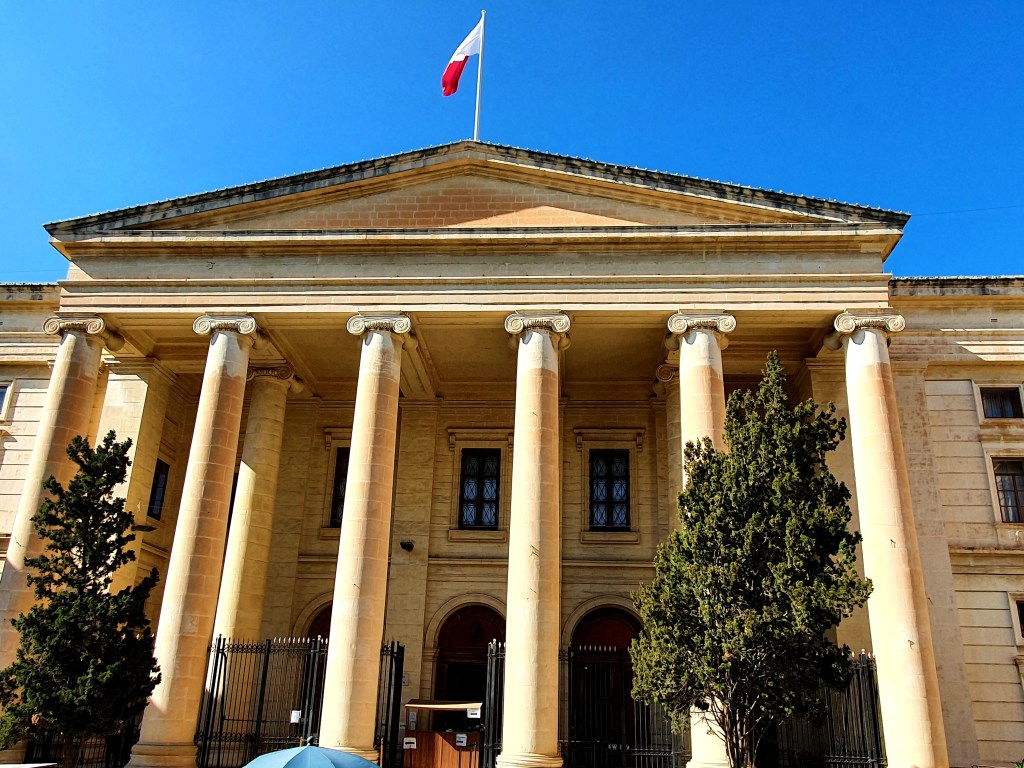
From the cathedral we walked to the courts of justice courthouse. This is built on the original site of the Auberge de Auvergne.
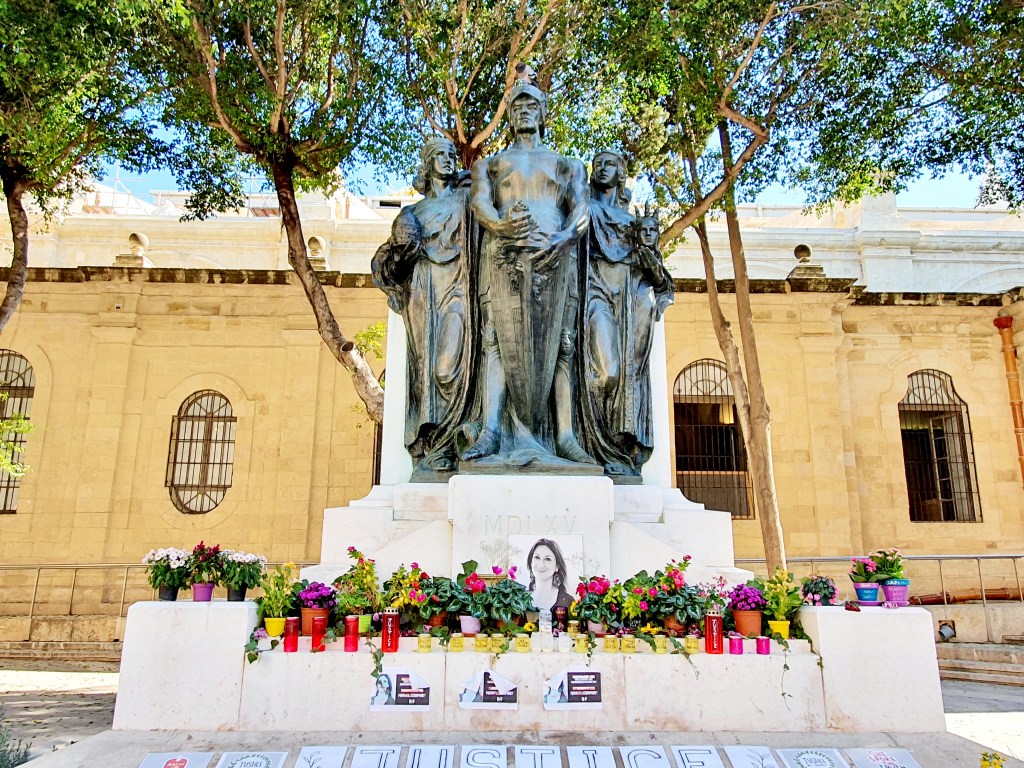
Opposite the courthouse is a shrine to the Maltese journalist Daphne Caruana Galizia. She was assassinated in 2017 and the state has recently been found to be responsible for her death. She died in a car bomb attack and was responsible for exposing corruption in the country and abroad.
We still had some energy left so decided to walk down to the Seige Bell and WWII monument of the Unknown Solider.
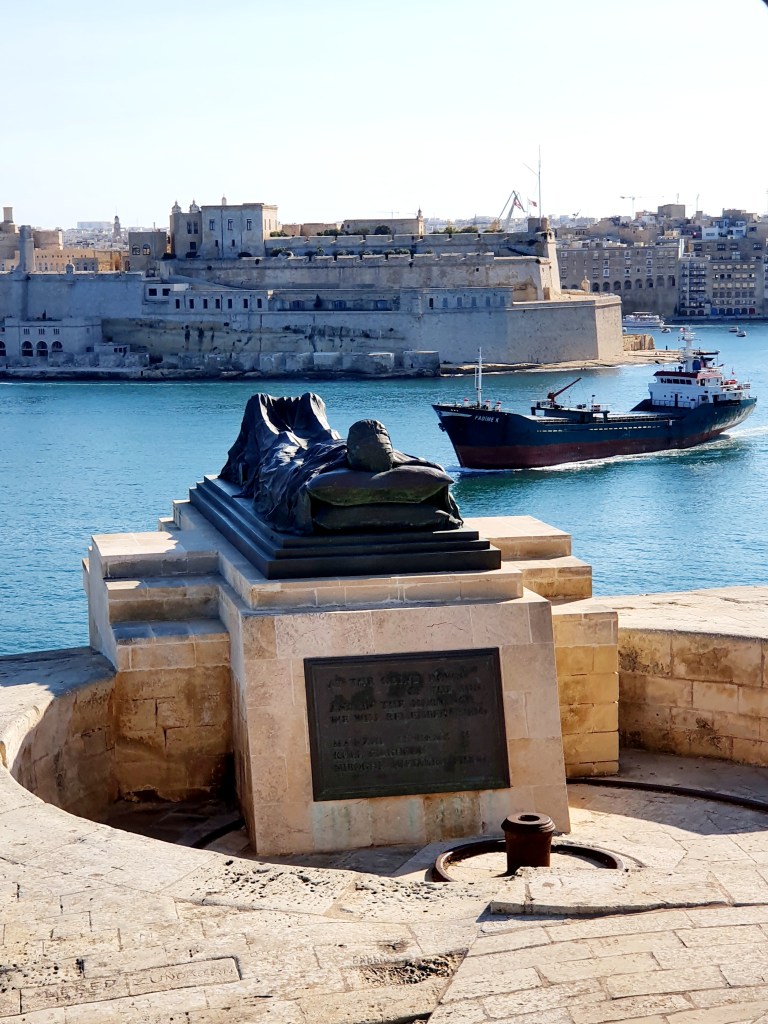
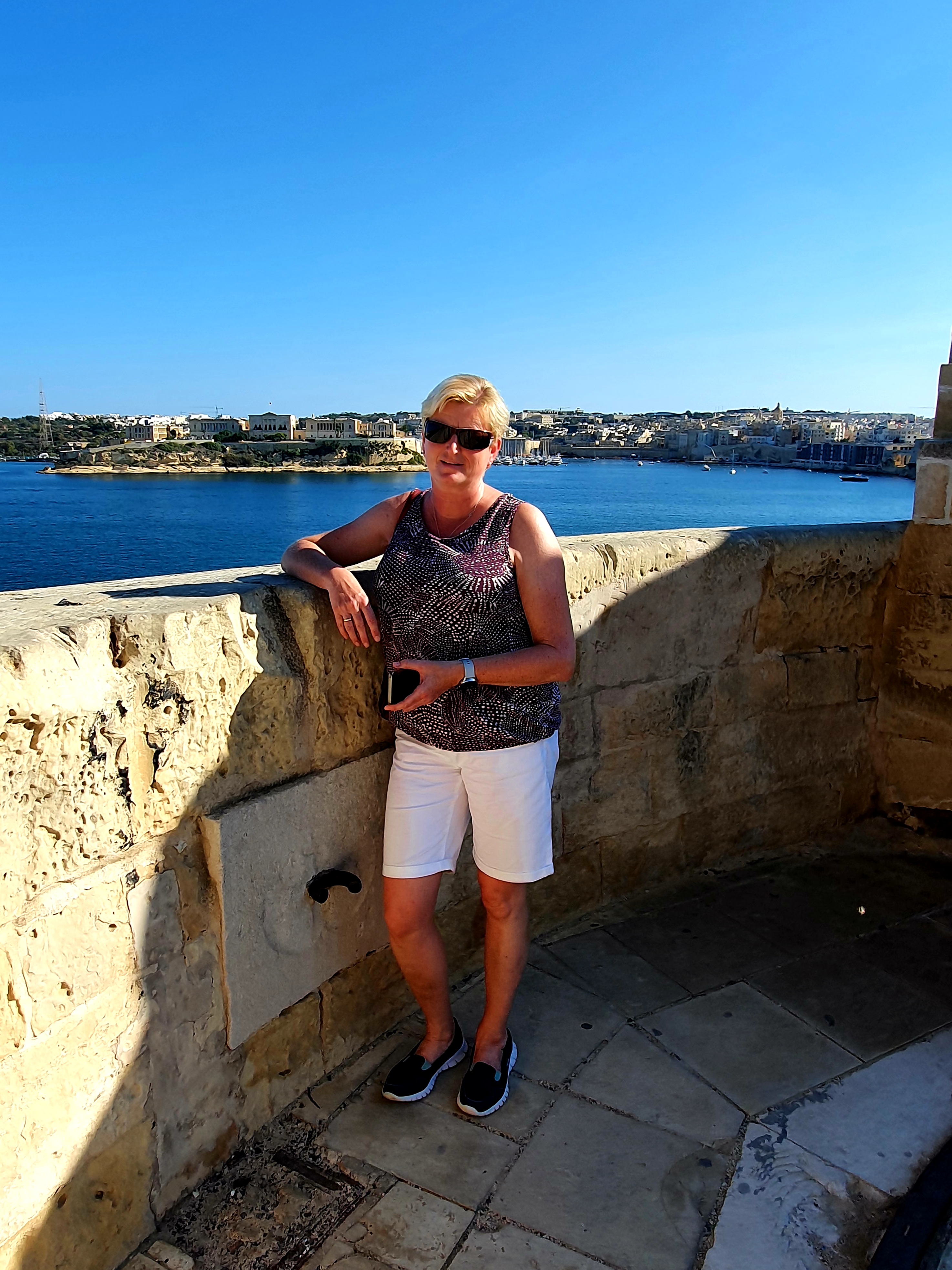
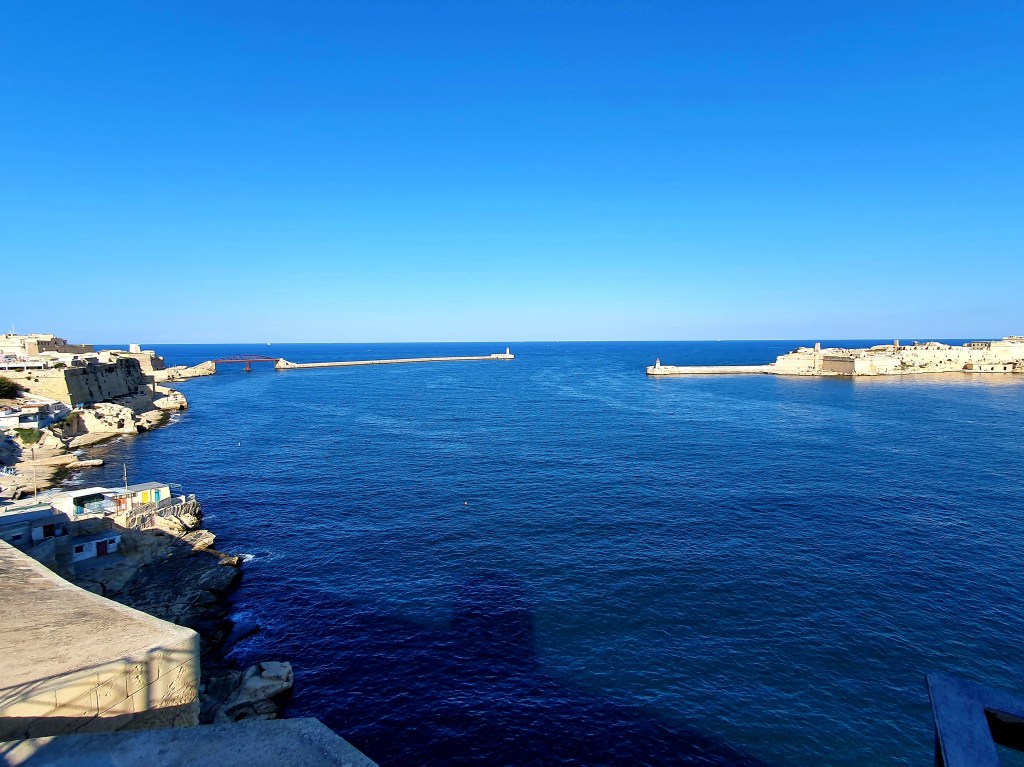
From the memorial you could look out to the opening of the Grand Harbour which is flanked by two lighthouses – St Elmo lighthouse on Valletta side and Ricasoli on the other side.
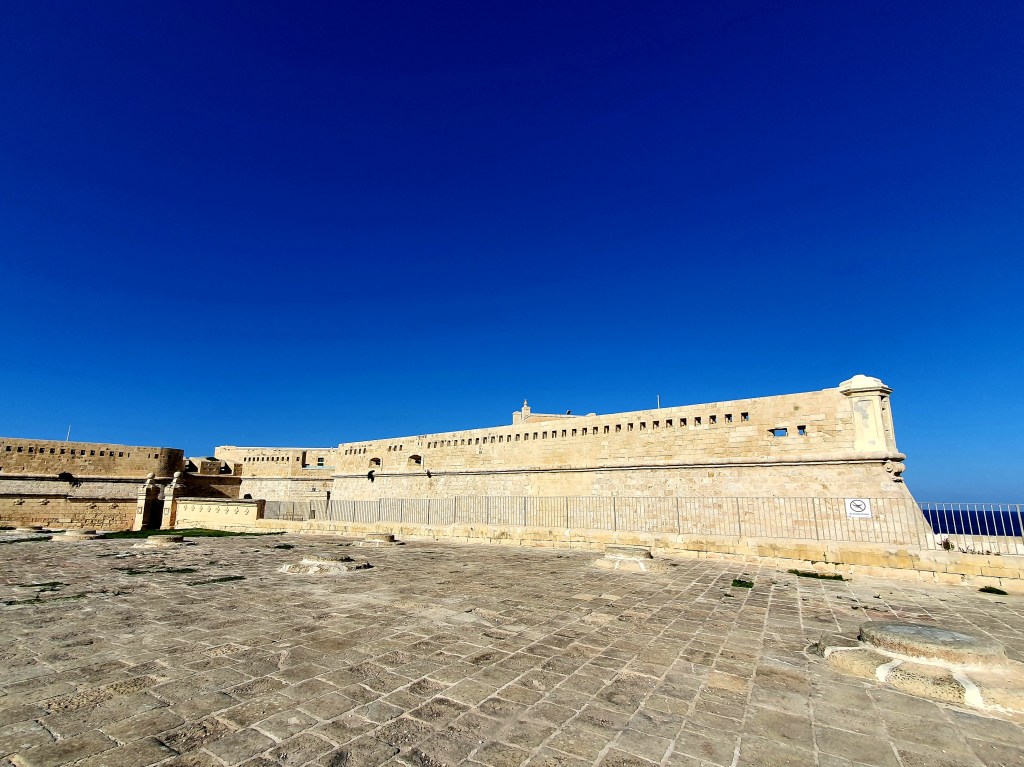
On the way back into town we walked past St Elmo Fort. This is a star fort right at the peninsula of Valletta and now houses the National War Museum.
We stopped for a much deserved rest in the cafe opposite the cathedral and tried one of the local beers – to be honest it was a bit watery.

On the way back to the apartment we visited the Basillica of Our Lady of Mount Carmel. This is a Roman Catholic church and is very close to St Paul’s Co-Cathedral, an Anglican church. The story goes that when St Paul’s was built it had the tallest spire in the city so the Roman Catholic church was built to be slightly taller.
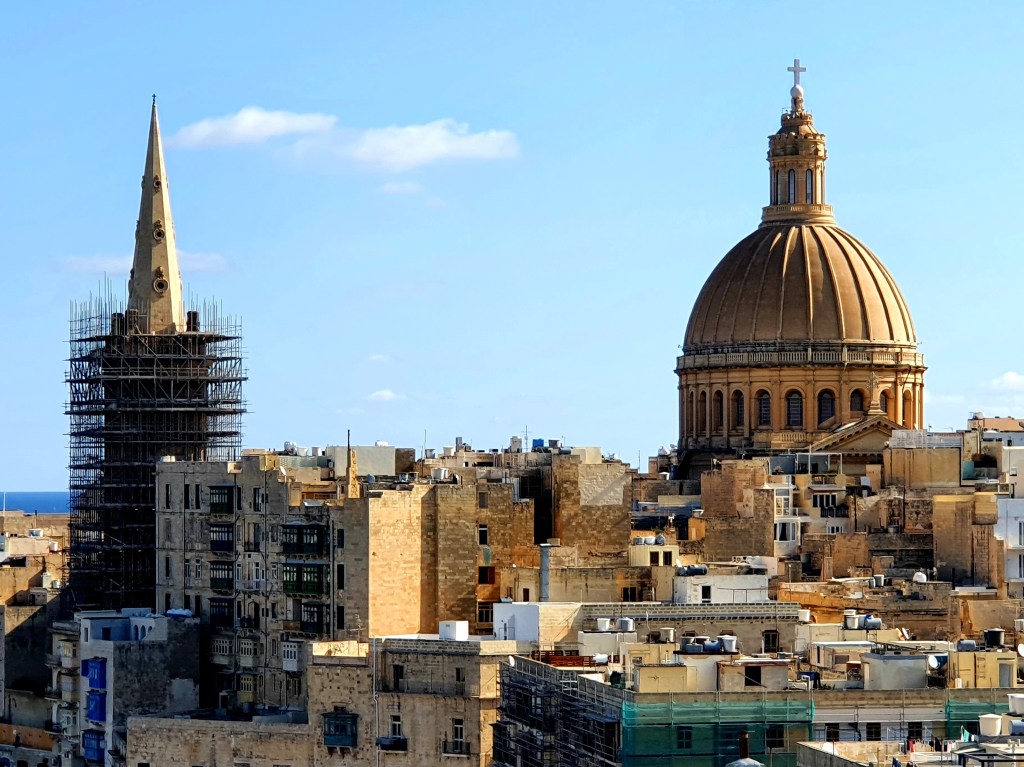
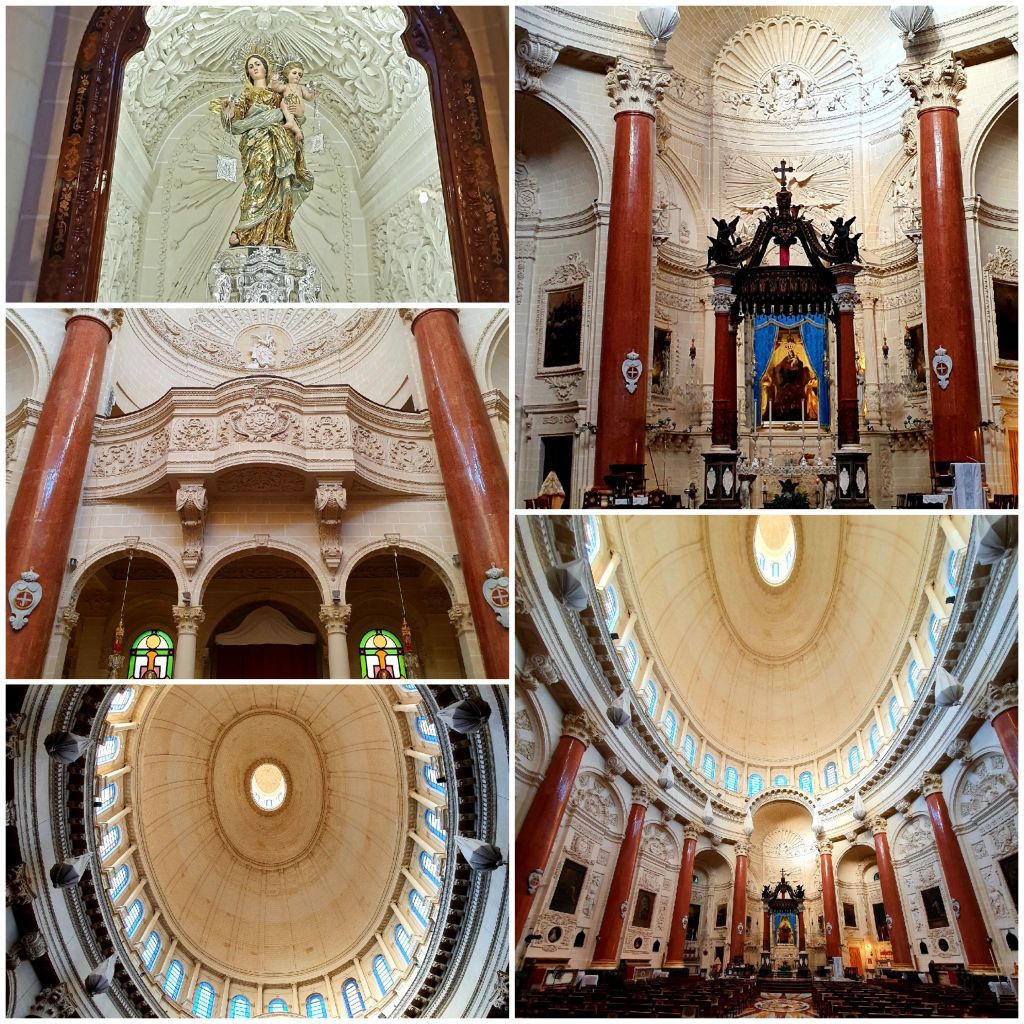
The Carmalite Friars were among the first religious order to build a church and monastery in the new city of Valletta that was dedicated to Our Lady. The inside is amazing with a large dome in the centre.
We did then try to visit St Paul’s Co-Cathedral but it was closed. But the church of St Paul’s Shipwreck was open so we popped in there. This is also a Roman Catholic church and is one of the oldest churches in Valletta. St Paul was shipwrecked on 10 February in 60 AD and started to convert people to Christianity.
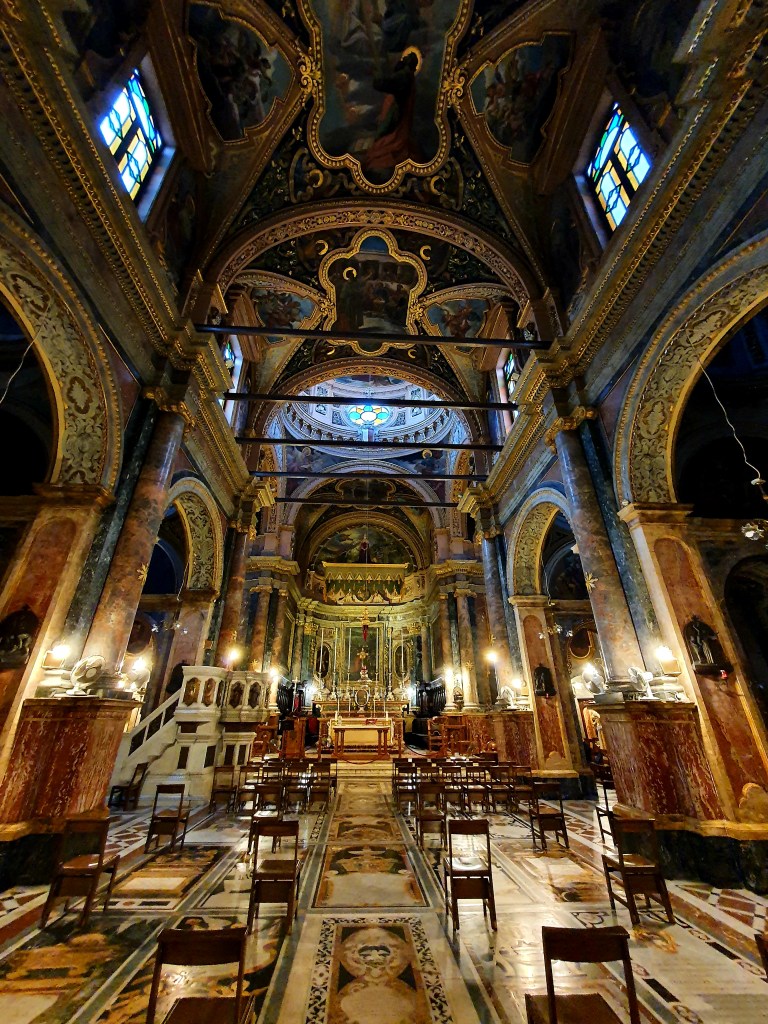
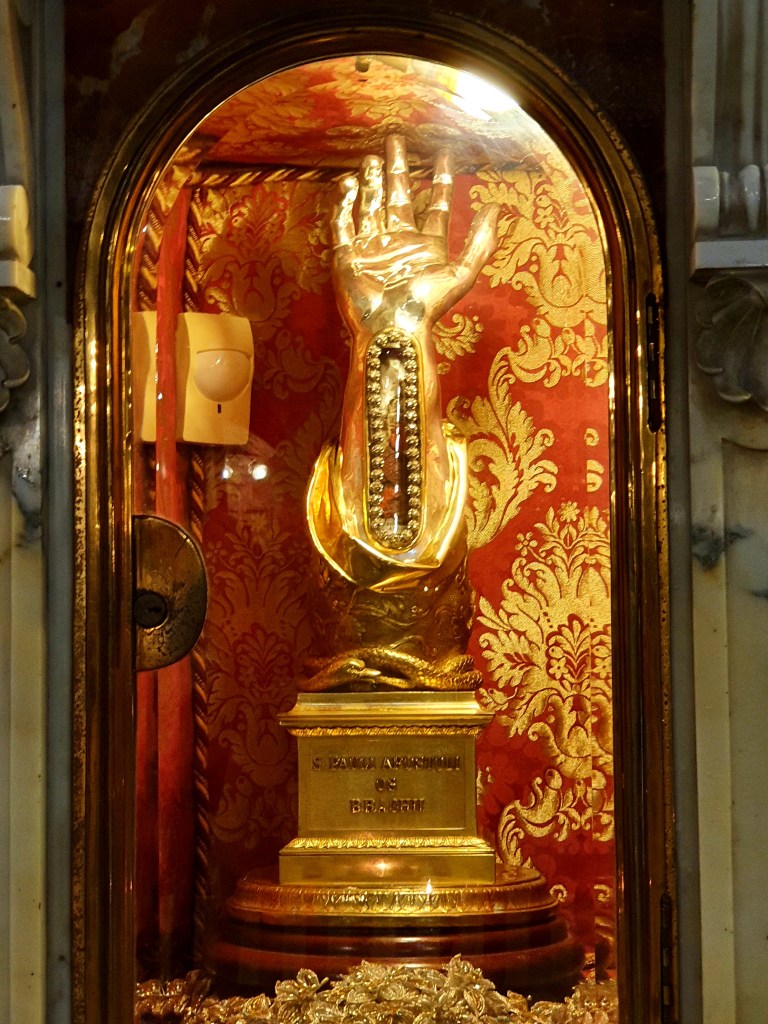
This was another beautiful church and contains a fragment of the pillar on which St Paul is said to have been beheaded and a relic of his right wrist bone.
We then actually walked back to the apartment up and down the many steps in hilly Valletta.
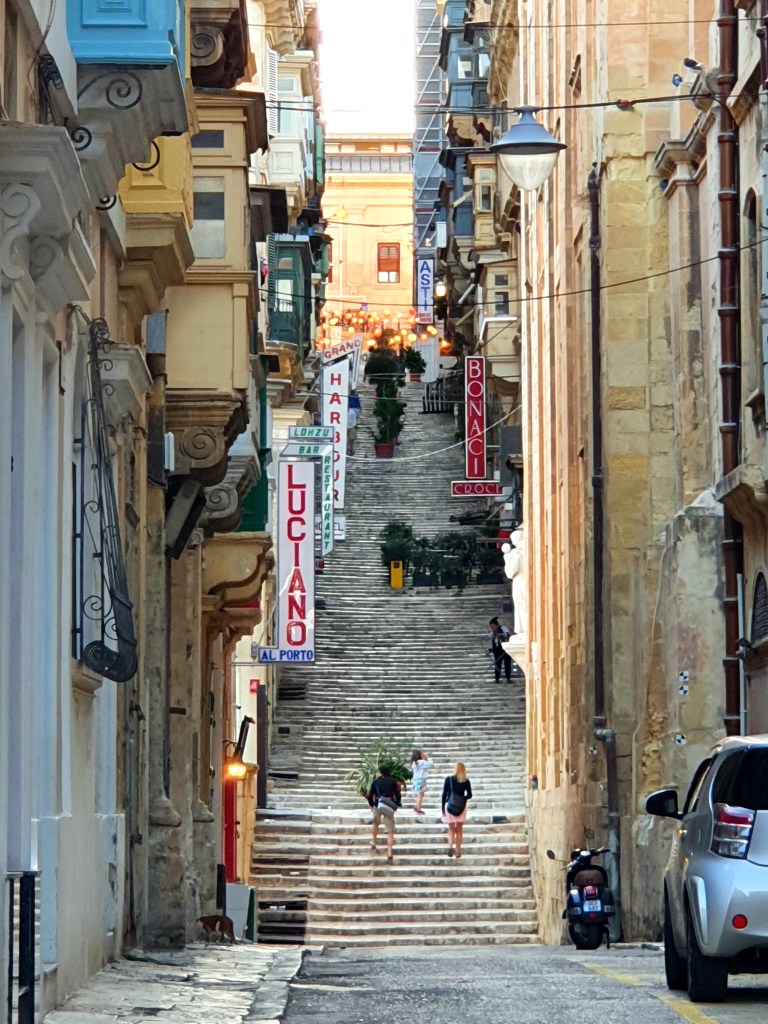
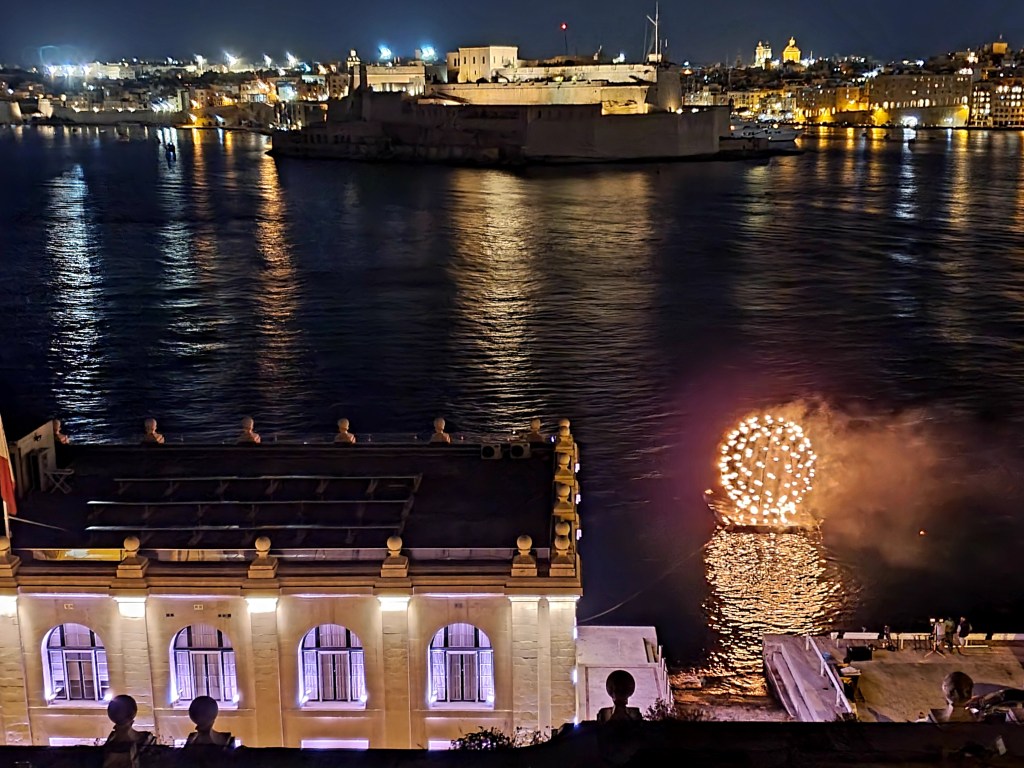
In the evening we decided to go to St Paul’s restaurant as recommended by Jimmy, the taxi driver. On the way there seemed to be an event going on by the waterfront.
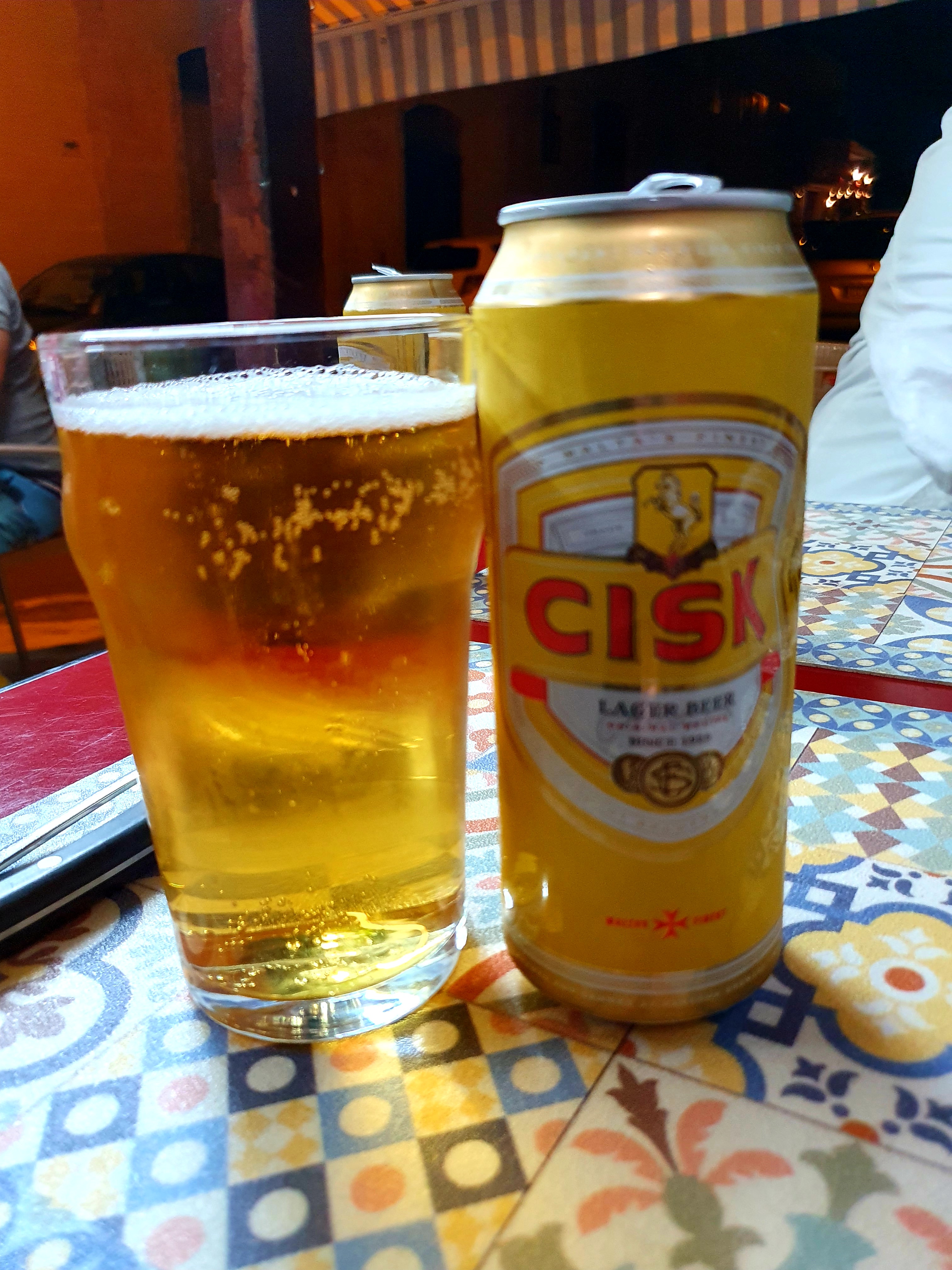
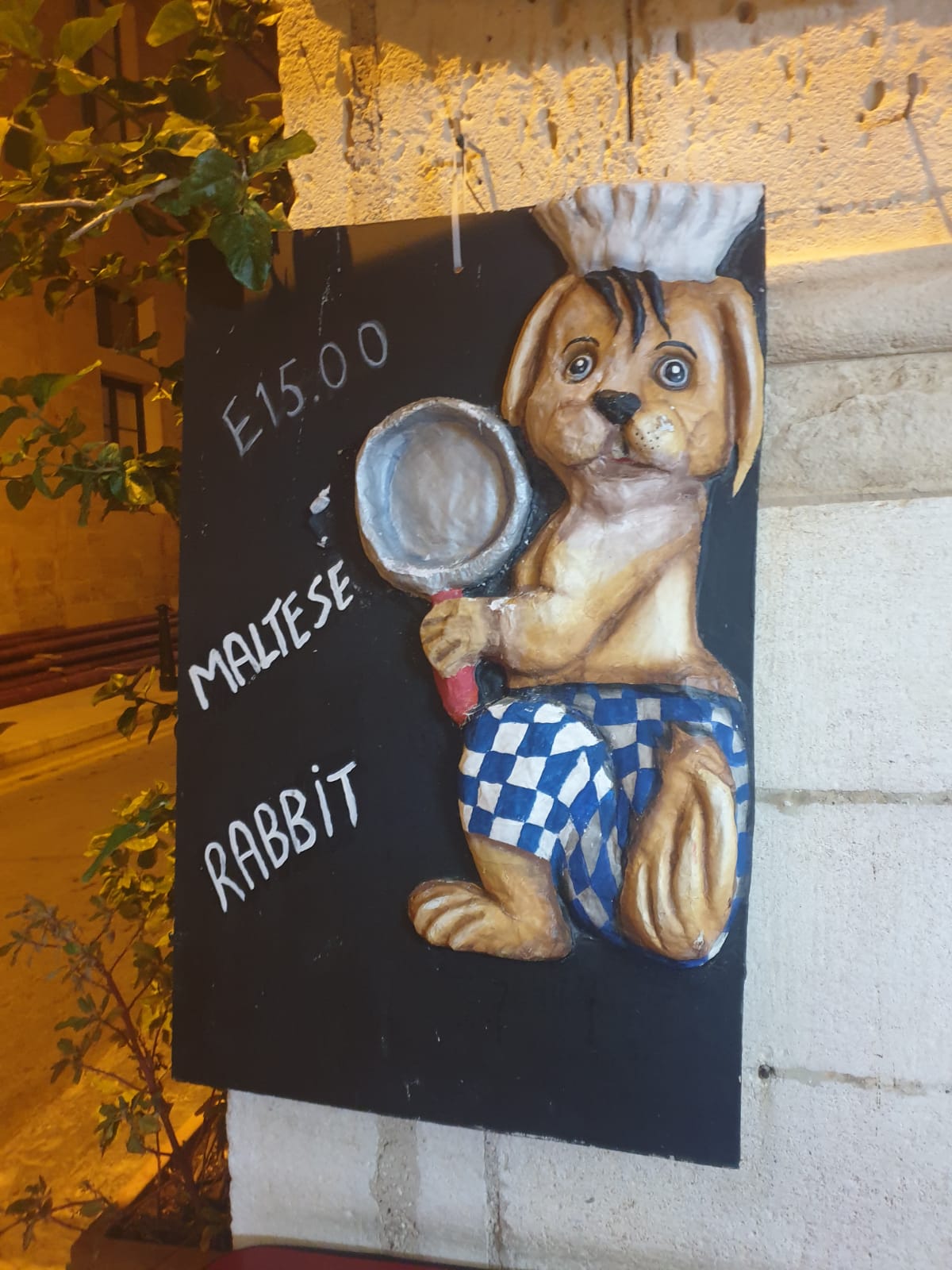
The restaurant served the traditional Maltese dish of rabbit so we both decided to have that with a different local beer.

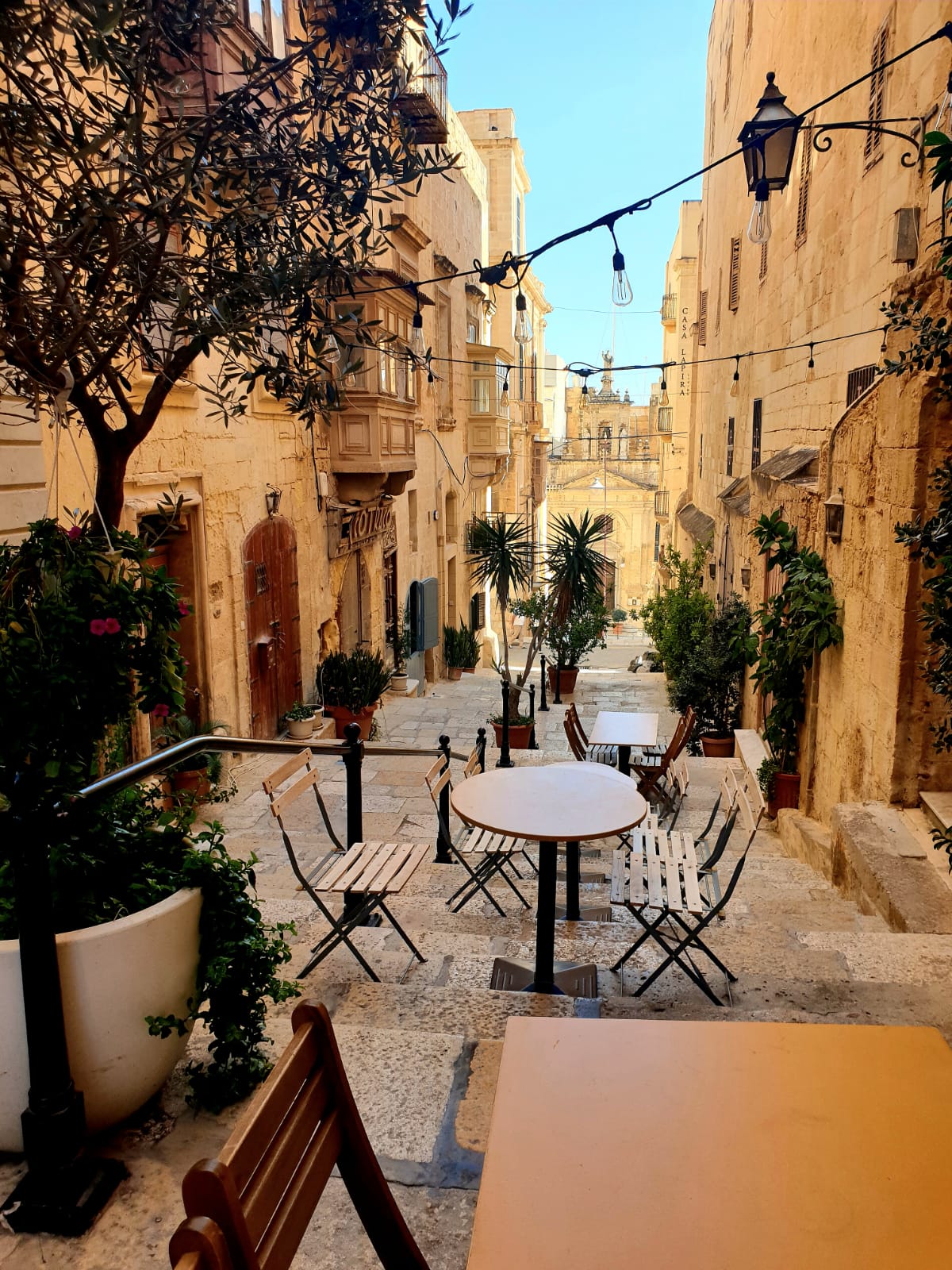
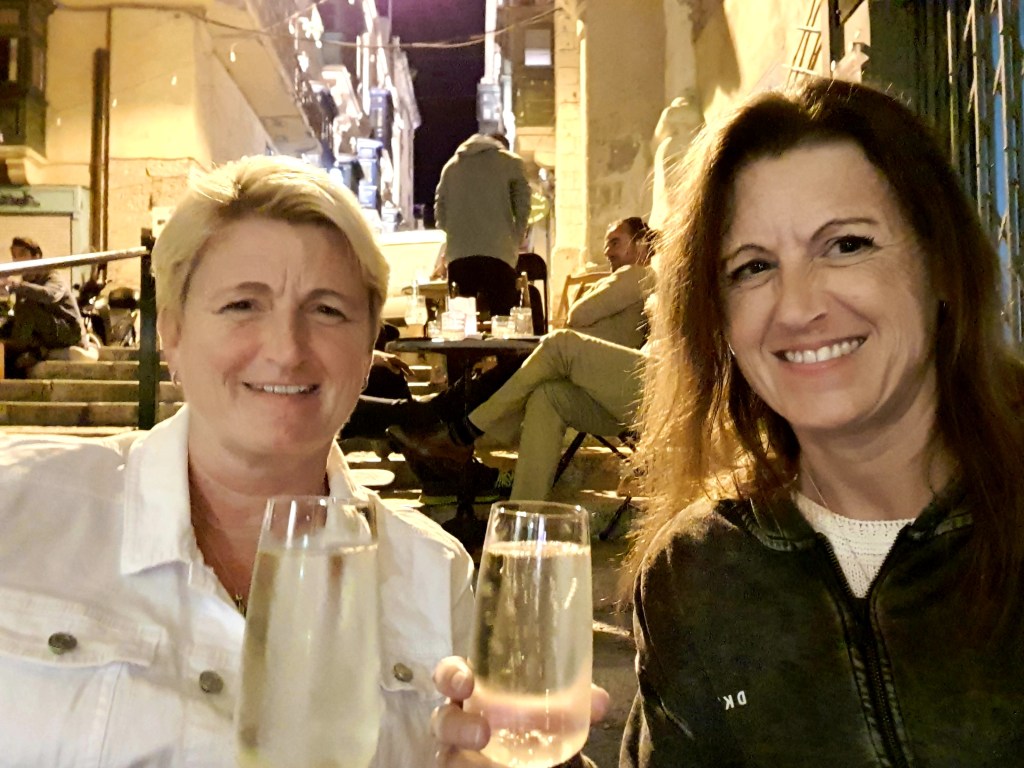
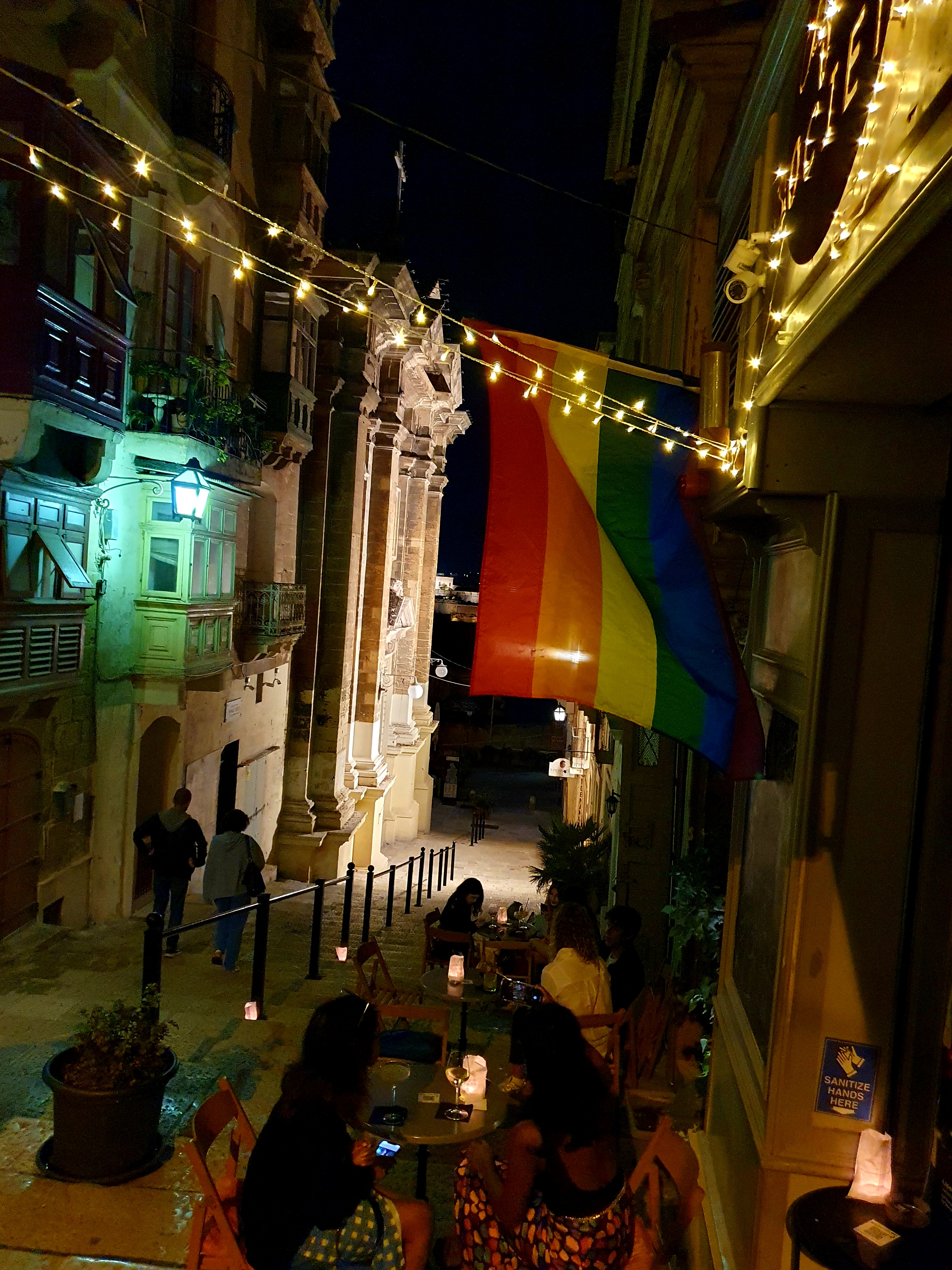
We stopped off at the Cafe Society on the way home to have a glass of prosecco, sitting outside on the steps.
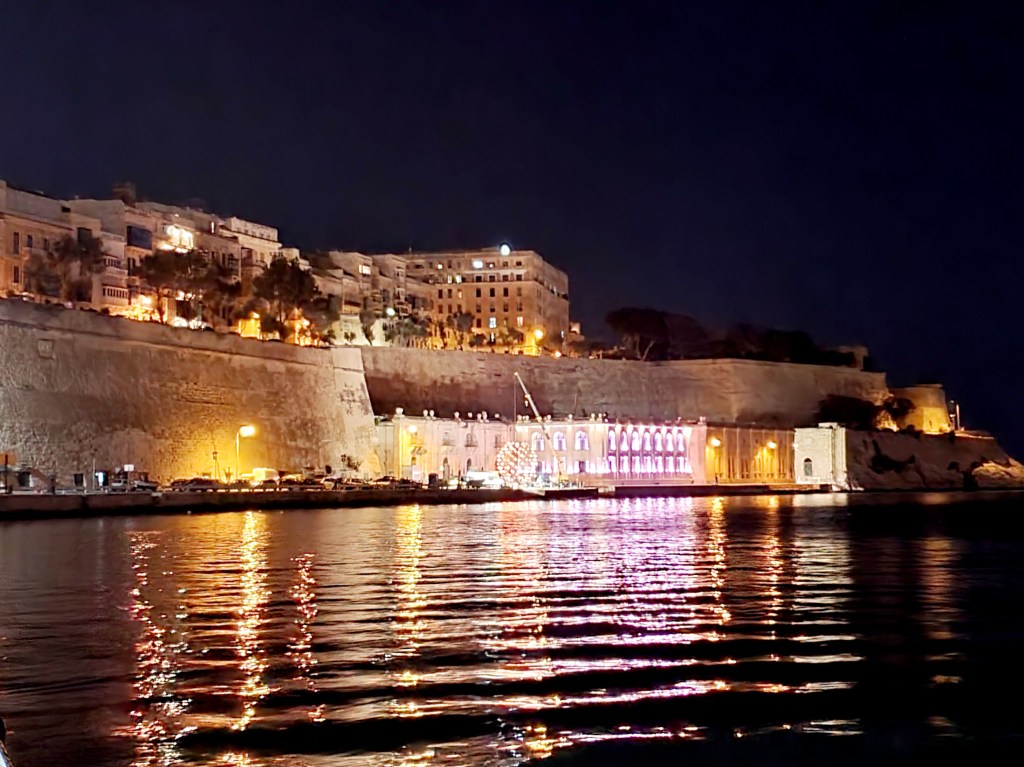
Just before we got home we walked down to the ferry port infront of the apartment and took a photo looking back onto Valletta.
 Fun, Fitness and Fabulousness in your Fifties
Ah, the churches are as beautiful as I remember them – lovely pictures! And those door knockers … we found them so fascinating!
LikeLike