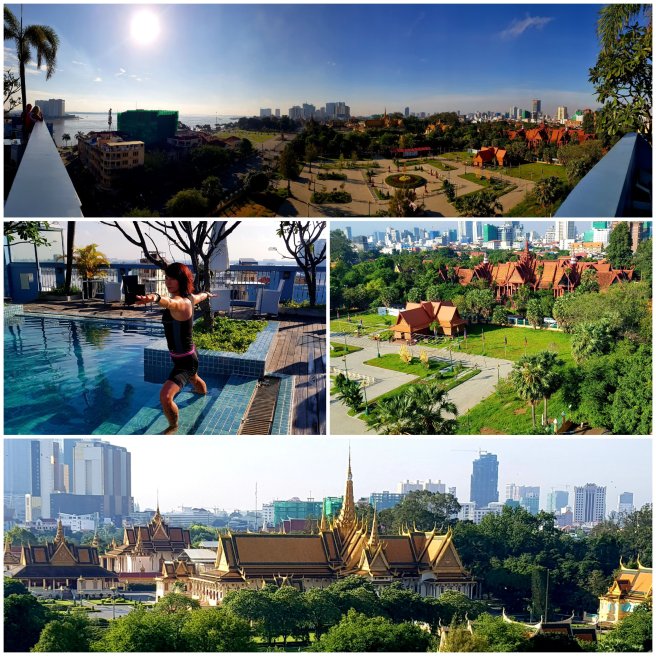
After another early breakfast, served on the rooftop of the hotel, we set off by bus to Tuol Sleung, otherwise known as S21.
This used to be a school but during the Pol Pot regime it became an interrogation camp. Prisoners were bought to the camp, measured and photographed before being put in a cell. As you were being photographed the interrogation would start and there was a drill at the back of the chair that moved towards your head, so as it came closer you would answer the questions.
If you were an important person, a person of power, you would be placed in block A. Prisoners would be chained to the metal bed and interrogated and tortured for around 10 hours every day; 4 hours in the morning, 4 in the afternoon and 2 in the evening. The Khmer Rouge soldiers used various methods of torture. You could be electrocuted, lashed and then salt rubbed into the wounds, have your fingernails pulled out with pliers and alcohol poured over the wounds or waterboarding. If at any point you lost consciousness, water would be poured over you to wake you up. The prisoners would be tortured for 6-7 months before being sent off to be killed at the killing fields
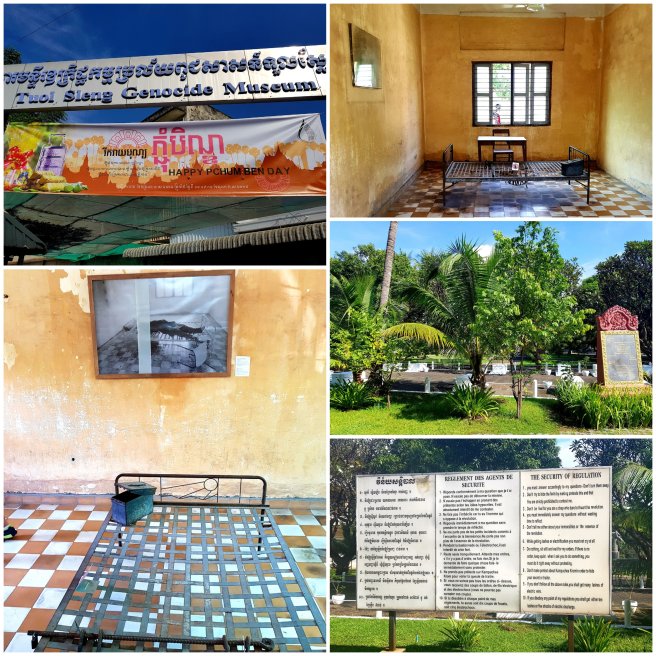
The photos on the walls are pictures of the bodies that were found in the cells when the interrogation camp was liberated in 1979.
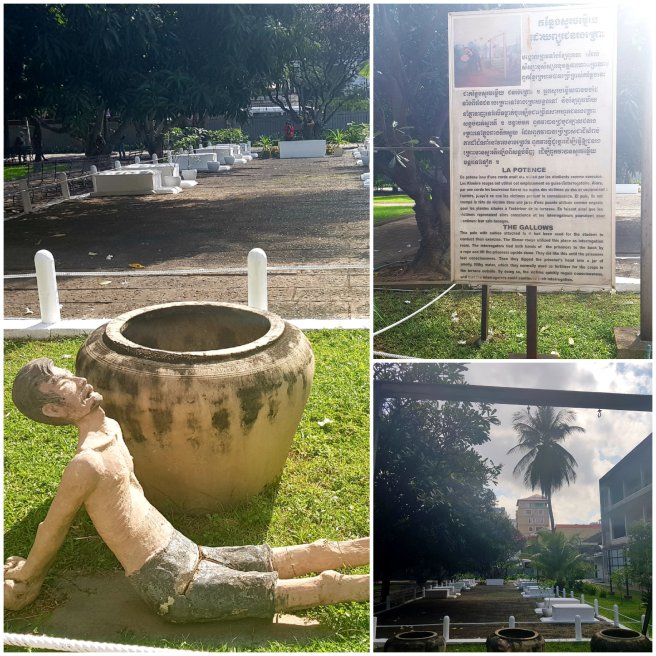
One method of torture was to tie the prisoners hands behind their back, pull them up with a rope over wooden gallows and then dunk them head first in barrels of water and other substances.
We then moved onto block B which had photos of the soilders and the prisoners and some other pictures of the conditions at the time.
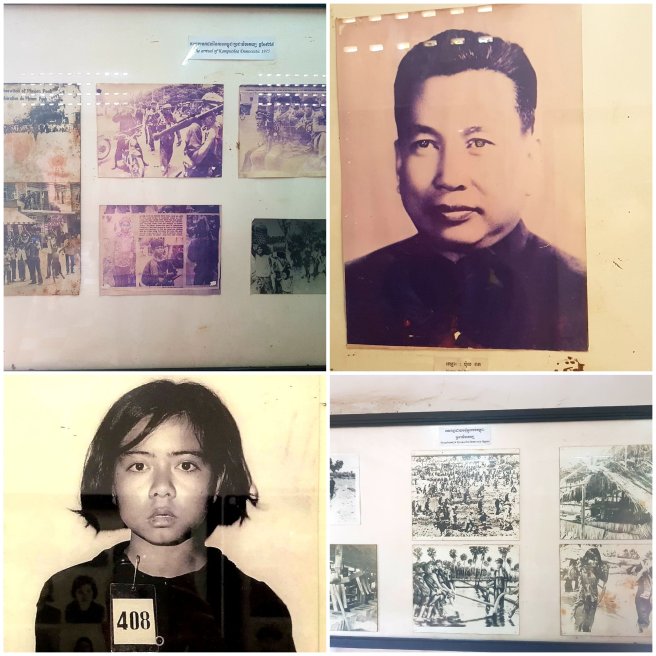
When the Khmer Rouge soldiers (Kampuchea Democratic) first came back into Cambodia from the jungle the people welcomed them as they thought they were the king’s soldiers. But things didn’t turn out the way they expected and Pol Pot started the red revolution, arrested intellectuals and people of power, tortured and killed them. Other people were forced to work in the fields as farmers.
We then moved to block C which was for ordinary people and Dharim told us it was mainly students who were kept here. These single cells had no doors but prisoners were chained by their ankles so couldn’t move and they were not allowed to talk to each other. Like other prisoners they were also tortured daily to get information about other members of their family who would then be captured and killed.
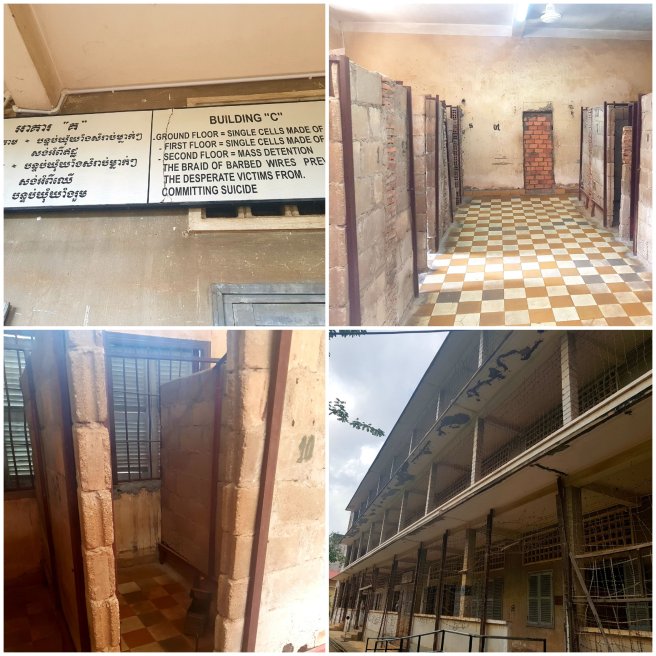
As you walked past the cells you could still see patches of blood on the floor.
We asked what happened to the children. Apparently any babies would be thrown up in the air and soldiers would catch them on their bayonets. Children would be taken to the killing fields and killed. The children were blinfmdfolded and put in a truck and some of the skills on display still have the blindfold on them.
The last section had some stories of survivors. At any one time the prison held 300- 600 prisoners and over the 3 – 4 years around 200,000 people passed through the doors. Of these 7 adults and 4 children survived.

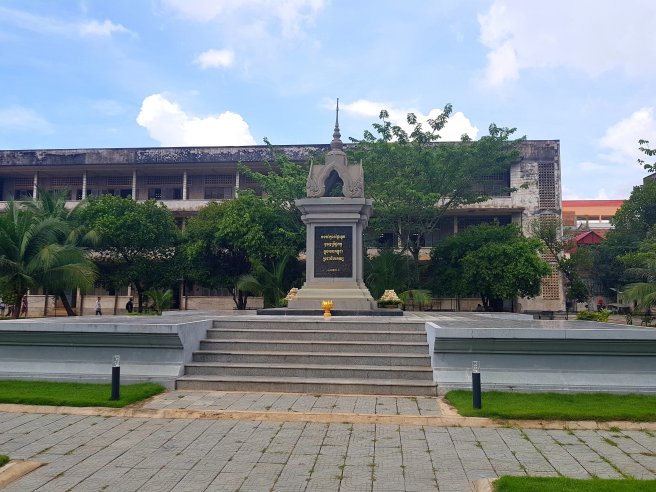
You just can’t imagine this happening, bit it’s still going on in the world today.
Pol Pot was in power until 7 January 1979 when Cambodia was ‘liberated’. Basically the Khmer Rouge split into two factions, one who stayed with Pol Pot and one who went to Vietnam and joined up with the Viet Com. It was the Vietnamese who invaded Cambodia in 1979 and took over control. They continued to occupy Cambodia until 1989. Pol Pot fled to the jungle by the Thai / Cambodia border and set up a guerrilla group that continued fighting until he died in 1988. The current government, the Cambodia People Party are still the Khmer Rouge regime, but the faction that went to Vietnam. However, they don’t want to bring their fellow party colleagues to justice for the war crimes they committed which is why many of them continue to live freely in the country.
It was an emotional morning.
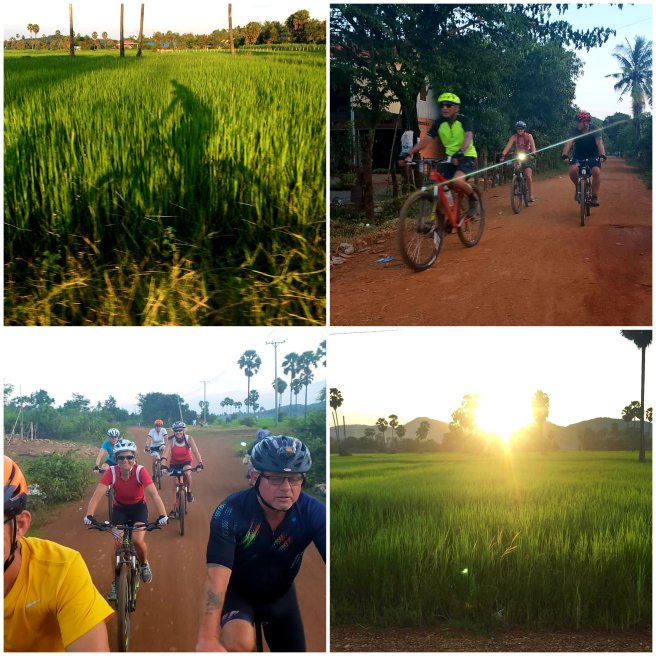
After the prison we got back on the bus for a short distance and then picked up our bikes. The cycle ride was lovely, over gravel, tarmac and clay roads.
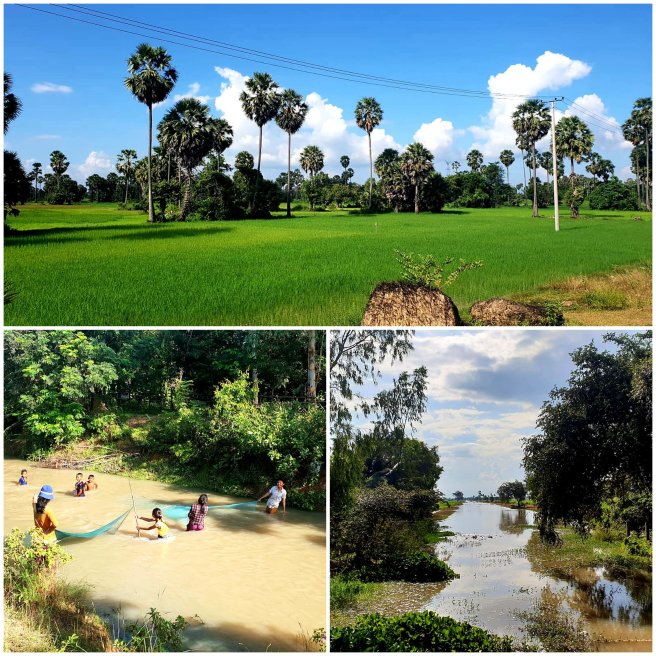
I am really liking Cambodia, it seems somehow nicer than Vietnam.
For lunch we stopped and ate at a temple, it was really calm and peaceful. We had a delicious packed lunch and we chatted to the children as a couple of them could speak quite good English.

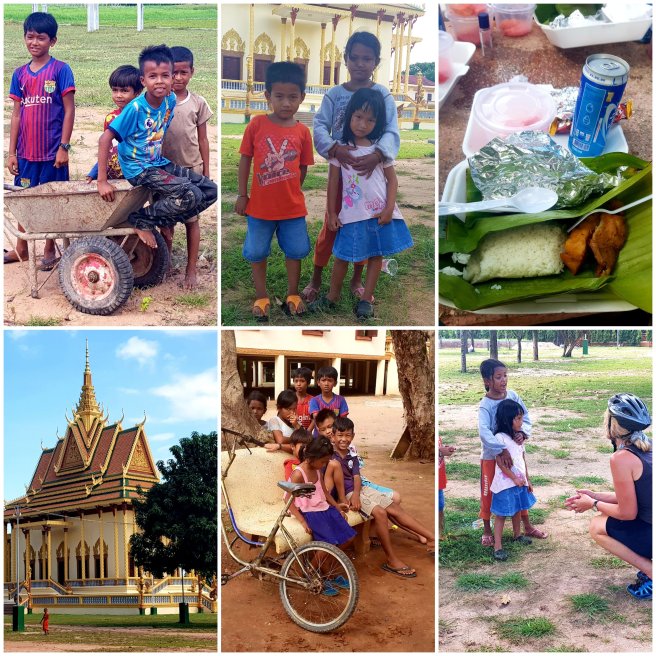
After lunch we continued cycling along similar terrain to Kampong Chhang. It was a really good cycle ride and didn’t seem like 75km.
The last couple of km in the town were a bit hairy, especially as my bike lights had lost their charge.
The hotel was perhaps not as good as the others we stayed in. Ali and I found some bed bugs so we were given a new room.
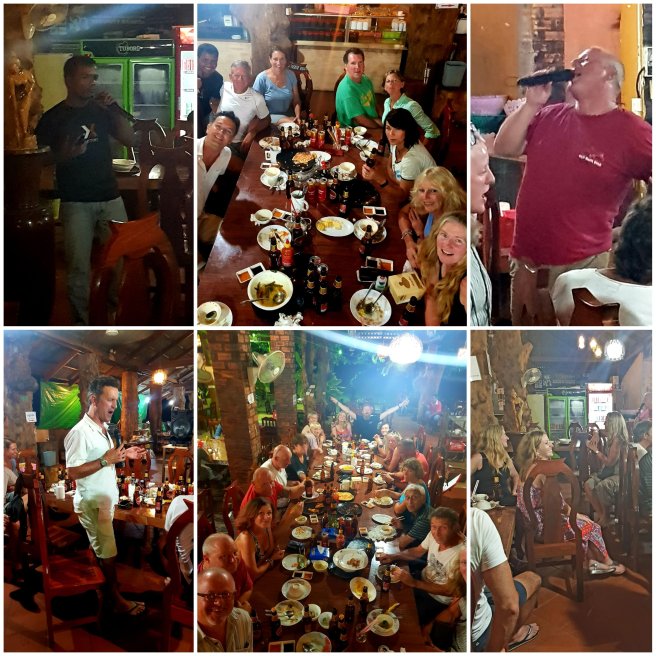
In the evening we went to a local restaurant and ended up singing karaoke and dancing until around 11pm. We then continued the party, initially in the hotel lobby but then outside in front of the hotel. The beer certainly was flowing tonight. We also tried some local wine / spirit type mix which tasted a bit like Jagermeister / cough mixture.
Jeremy we found out is an amazing singer and made up a song about the trip on the spot! Jim and our guide Heng, also sung a song and then we just all sang along to whatever was playing.
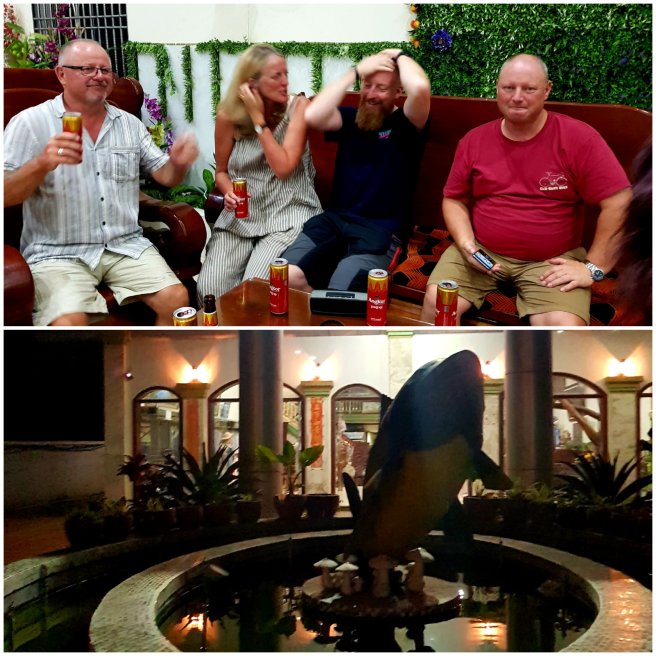
I think we went to bed around 1230am which wasn’t good as we needed to be up by 5:454am.
 Fun, Fitness and Fabulousness in your Fifties