Today I was up and ready for breakfast at 615am! The Peru hop minibus came and picked me up around 7am and took us to the pier in Puno where we met our guide Hugo Saul. As we got into the boat I saw Alice from England too, a girl I met yesterday on the bus from Copacabana, so we sat together and chatted.
After about 20 minutes in the boat, around 5km from Puno port, we came to an area that was full of reeds and then we saw the floating islands of Uros.
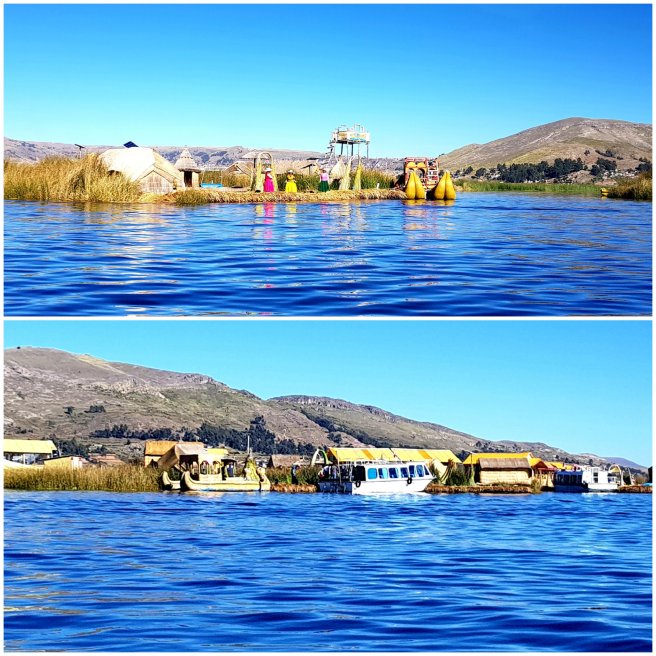
There are around 42 islands in total, some much larger than others and they are at 3810m above sea level.
We stopped and got off at one of the smaller islands which had 25 inhabitants across 5 families. It was really wierd walking on the reeds as your feet sunk in a little bit and you could feel the island move in the water.
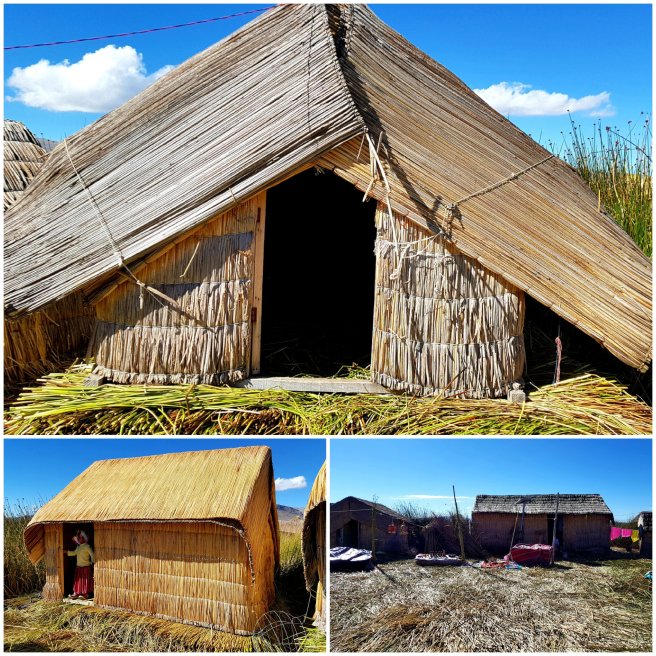
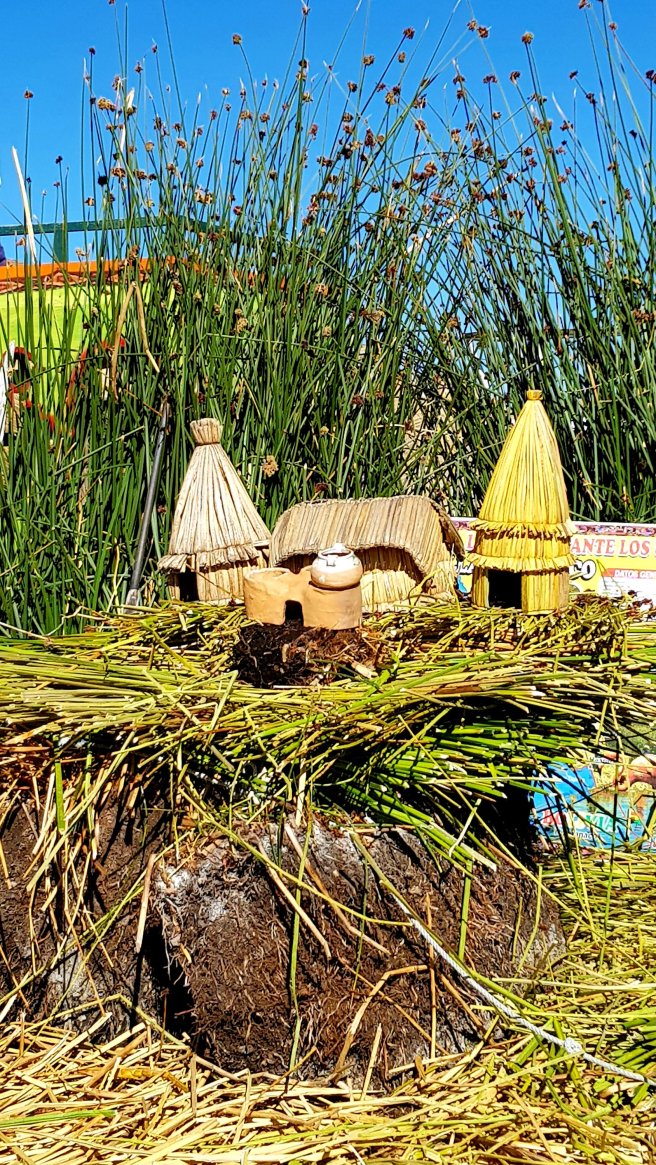
Our guide, with the help of one of the local men, explained to us how the islands are built with a miniature model. Basically the roots from the reeds grow quite deep into the water and interweave to form a solid block. This is around 1-2m deep. Several of these blocks are brought together and anchored using eucalyptus sticks and then tied together with ropes. More reeds are then laid over the island to form a layer to walk on. Obviously over time the reeds dry out and break so every 3-4 months new reeds are placed on top. The reeds right underneath start to rot too as the moisture gets through to them. For this reason, every now and then they place more reeds underneath the houses too to lift them away from the moisture.
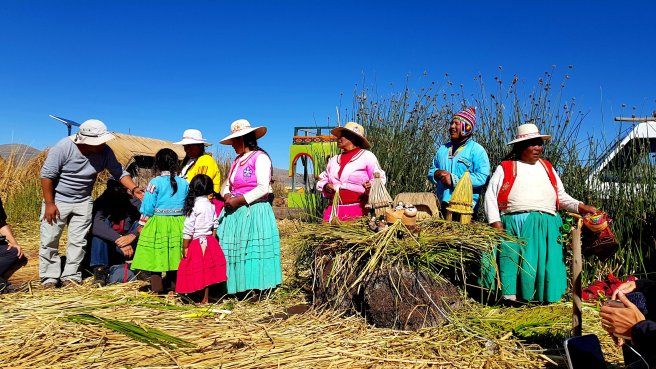
The people on the island were very welcoming and friendly. Obviously they make money from tourists as you pay an entry fee to visit the islands and they also sell textiles to tourists. It did feel a bit staged but it was still really interesting.
We took one of the massive reed boats to a more commercial island where there was a small cafe and more wares to buy. It was a very relaxing 20 minutes boat ride between the islands.
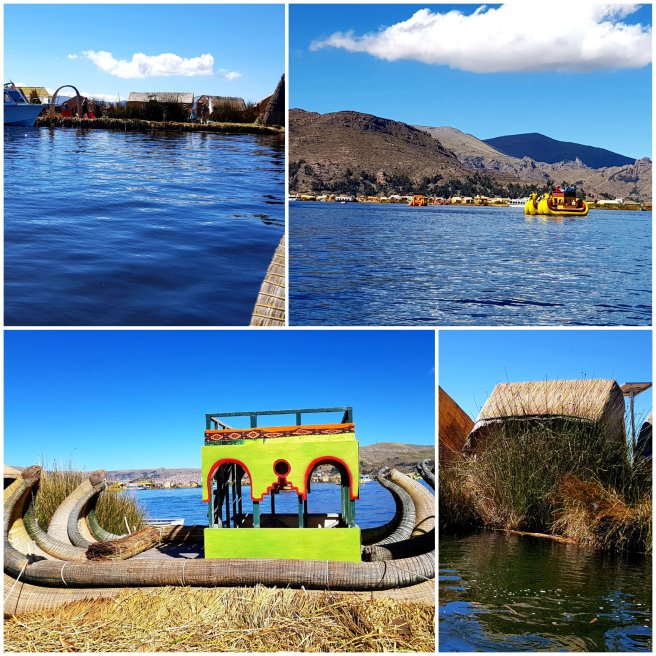
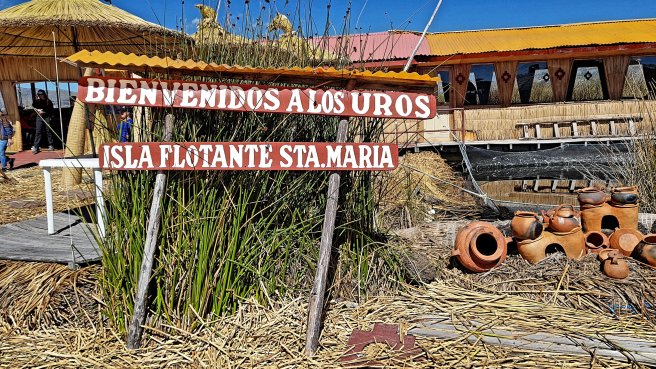
After the visit to these islands we then travelled onto Taquila island which took around 90 minutes. This island has no modern transport but also no mules or llamas so the people have to carry everything themselves. It’s one of the most famous areas for weaving and is around 12 square kms.
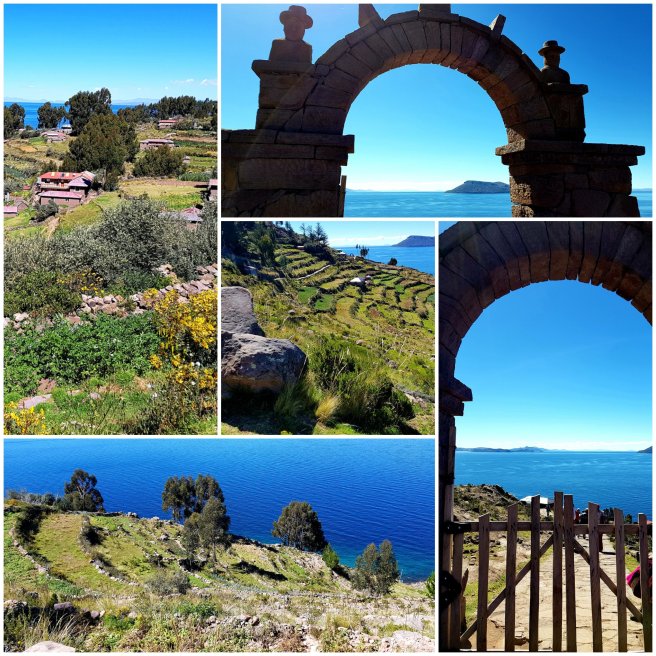
Taquila island is mainly used for agriculture and for that reason has many terraces to help with retaining the water when it rains.
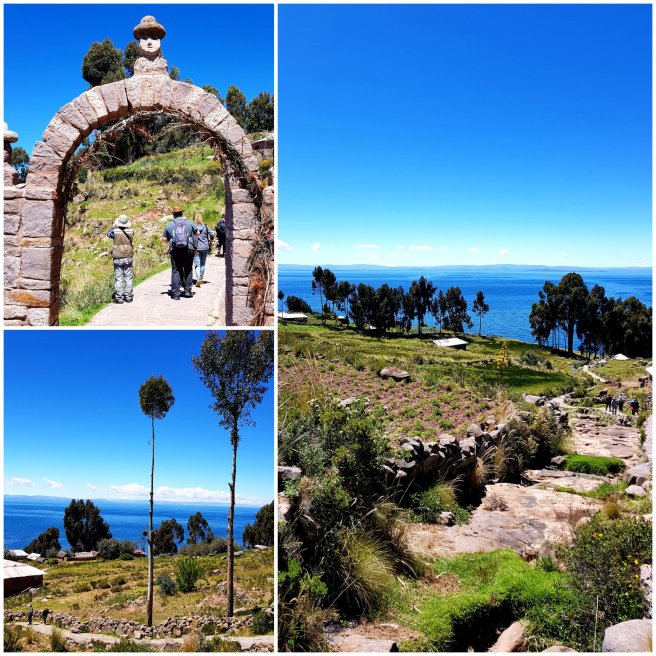
We walked uphill for around 10 minutes to a small family home where we had a delicious lunch of quiona soup and grilled trout. During lunch we learnt about the clothes that the men wore which included their matador type jackets adopted from Europe, their woven belts which are really strong so help support their backs when carrying heavy loads and their hats which differ if they are single or married or if they are a leader in the community.
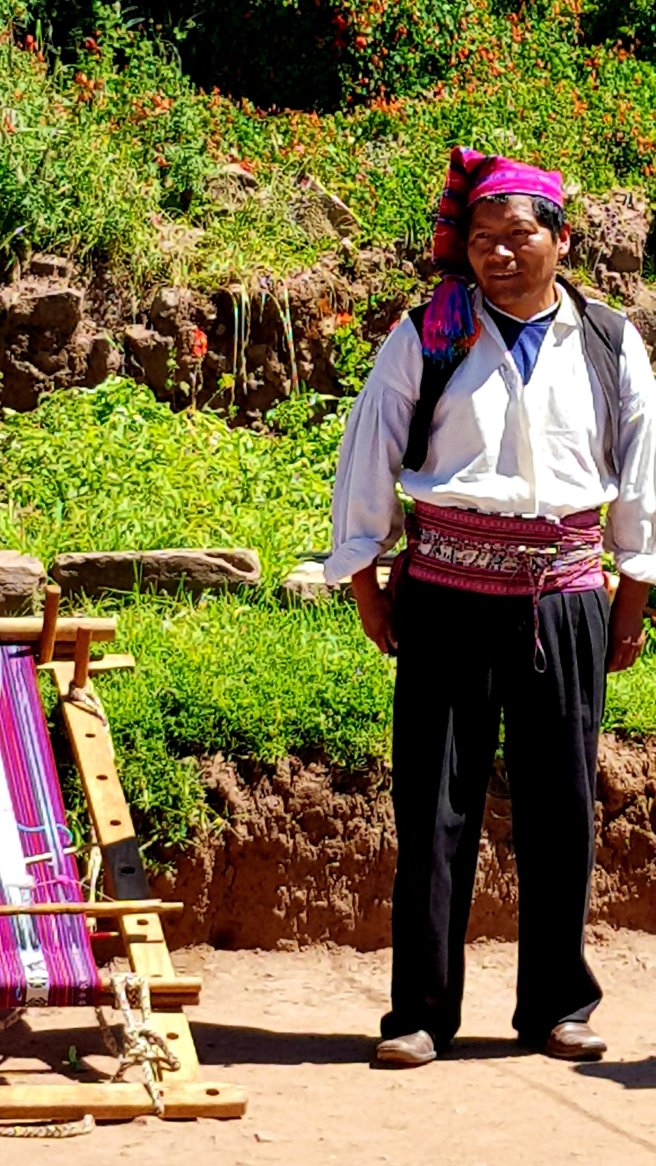
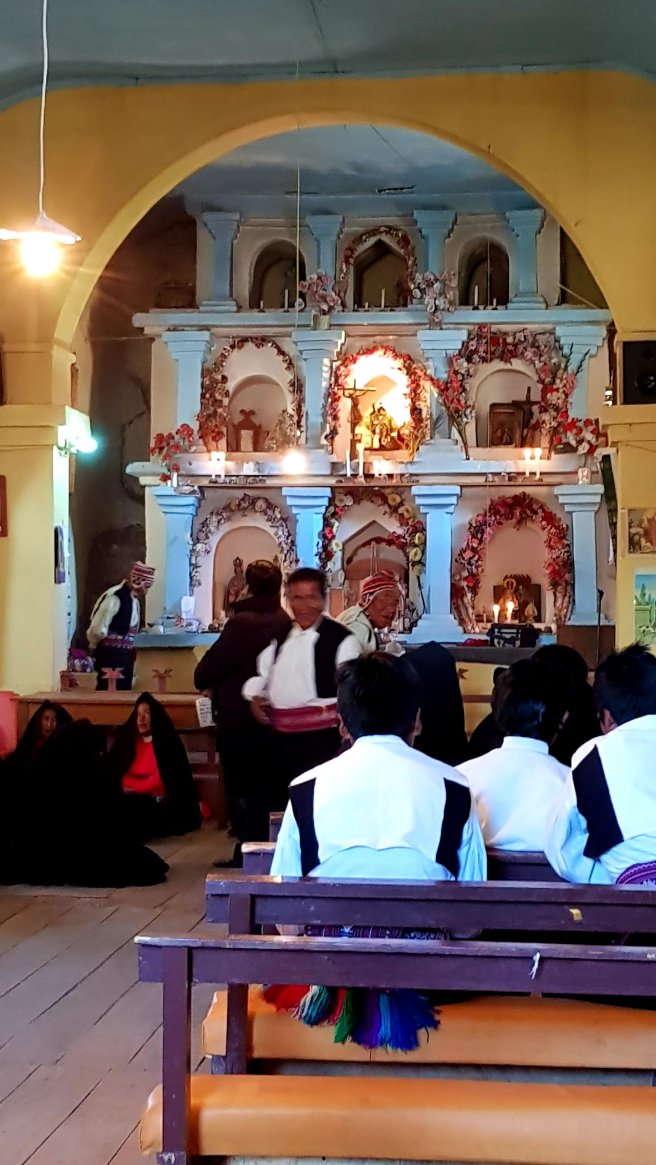
After lunch we then headed to the main plaza and visited the small church where there was a mass going on.
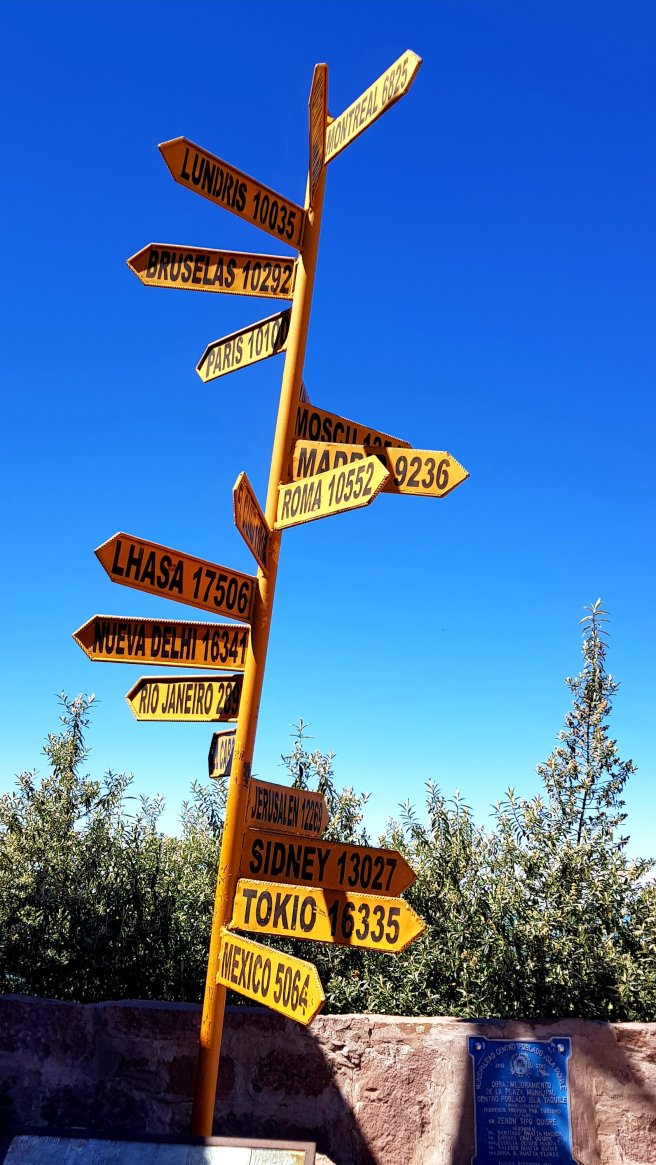
There was also a sign showing distances to some major cities.
After a quick puruse of the main square we headed over to the north side of the island.. It was a nice 30 minute stroll.
We got to the boat in plenty of time but one of our group had wandered off in the wrong direction after the visit to the main square so we all had to wait around an hour until he was found. Eventually he was so we sailed back to Puno.
We were dropped back at our hostel and I’d arranged to meet up with Alice for some dinner. We went to a really lovely restaurant Majosa where I had alpaca and Alice had guinea pig, we also shared a bottle of lovely red wine. We had a really good conversation about loads of things and then I had to leave to catch my bus to Arequipa.
It turned out that Alice was on the same bus! At around 1130pm we had to swap buses which was a bit of a hassle, especially as the seats on the first bus were much more comfortable.
 Fun, Fitness and Fabulousness in your Fifties