So the first thing I did this morning when I got up was go and pick up my laundry so I could then pack my bags and check out. Jackie, the owner of the hostel was worried that my night bus might not be running as it was over Easter so she said she would ring and check. Luckily everything seemed to be in order.
After check out I wandered into the centre and met up with John from Ireland who I’d met a few days ago on the walking tour. We were off to see the dinasours.
The journey to get there was an experience in itself. We hailed down the number four bus and paid 15p to travel around 45mins to the dinasour park. On the way we went through a local market which was really colourful and the fruit looked amazing.
We arrived at the park just after 12pm. The park itself is next to a cement factory which is how the footprints were originally discovered.
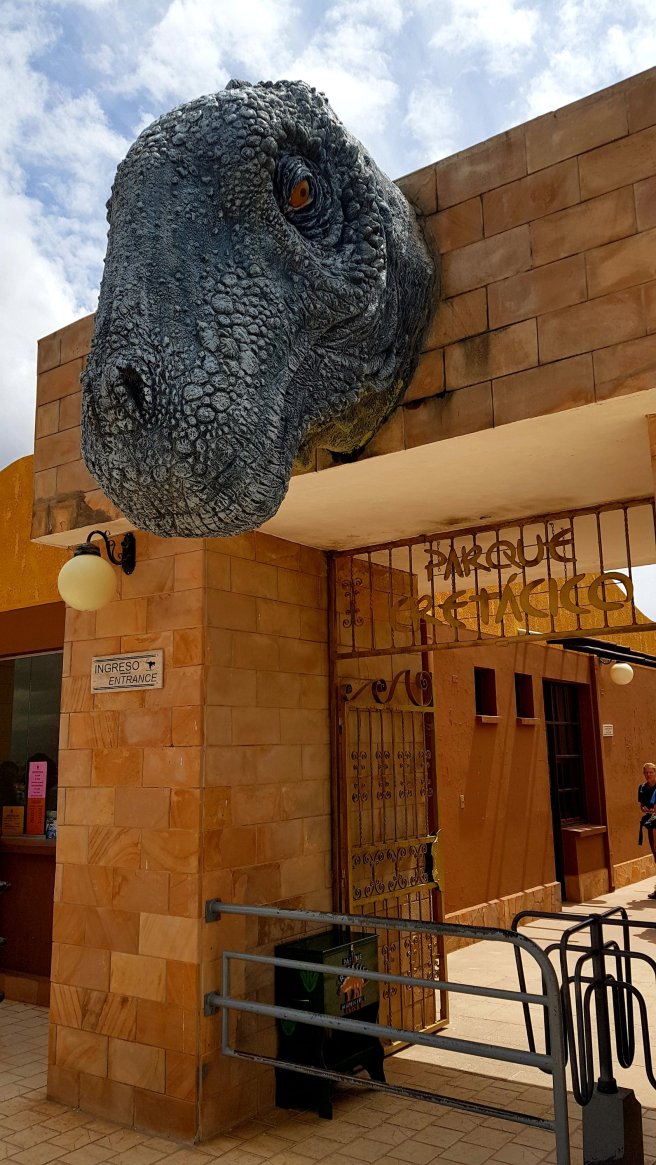
The tour in English was supposed to start at 12pm but luckily for us it didn’t start until 1230pm so we were able to join it.
We learnt that around 68 million years ago there was a diverse population of dinasours living on, and stomping around in, the soft clay shores of a vast ocean inlet which came in as far as Sucre. As the clay dried, the footprints left behind by the dinasours became stone and eventually disappeared under layers of sediment.
Over time shifting tectonic plates formed the Andes mountain range which eventually pushed back the ocean. So what was once a flat clay beach became a near vertical limestone cliff.
As we walked around the park thete were life size replicas of some of the dinasours.
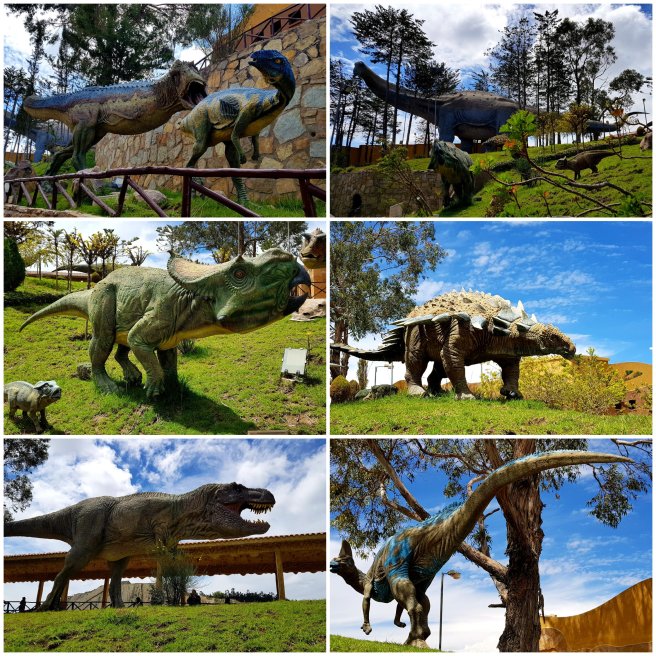
There was also a small museum which housed a t-rex skeleton (not real) and some footprints, the largest one being over 1 metre long.

Then it was off to see the main attraction of the park – the footprints themselves. There are over 5000 footprints set into the Cal Orck’o cliff.

The footprints remained covered until The 1990s when the cement company were mining away the sedimentary layers for production of concrete. The mining stopped just short of the layers which contained the footprints – these layers were unsuitable for making concrete. Erosion then stripped away the remaining layers to reveal the footprints, some up to 80cm long, and from 15 different species of dinasours.
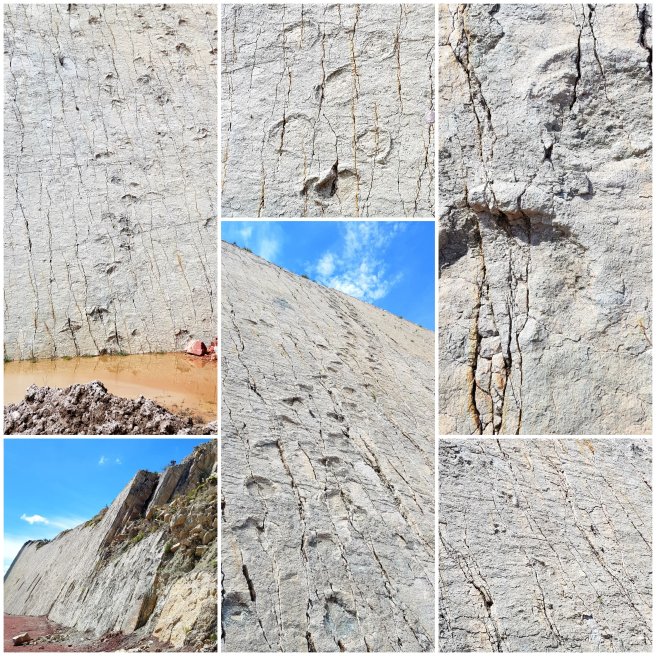
The cliff face has a 347 metre continuous trail of footprints made by a baby t-rex, apparently known as Johnny Walker.
In 2010 a section of the wall broke off revealing yet more tracks underneath. It is believed there are multiple layers of tracks below those that are visible. The park is currently seeking UNESCO world heritage site status which would then help conserve and protect the site.
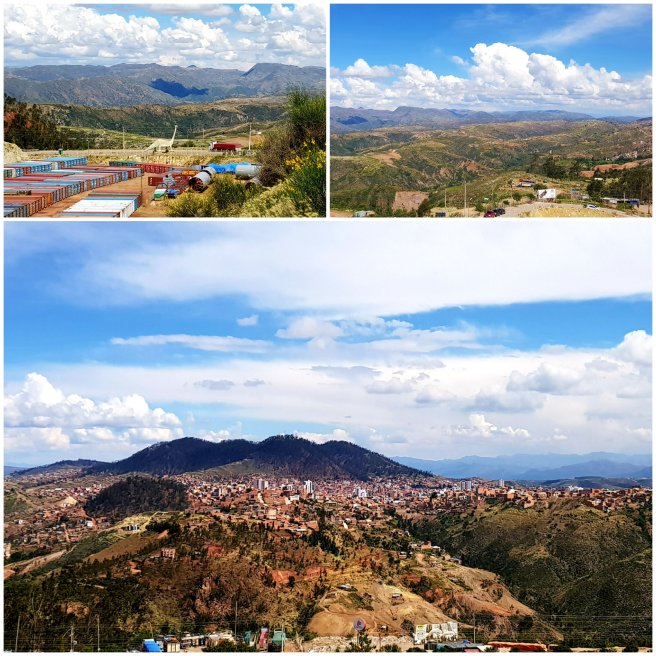
The views from the site were pretty amazing too.
On return from the park I went back to the central market and bought some food for the 12 hour bus journey ahead. I then got a taxi to the bus station. The system here was very confusing. You have to drop your bag at a drop off point where it is weighed and then later lowered down to the buses on the lower levels. I made sure my bag was on the bus before I got on! There were also a number of buses from the same company going to La Paz at roughly the same time so it was hard to tell what bus was your one. I met another couple from the UK, Louisa and Adam, and we were all on the same bus.
I bought a blanket as I had heard the bus got very cold – I was glad I did.
I slept some of the journey, but to be honest not very much.
 Fun, Fitness and Fabulousness in your Fifties