Another early start but when I was picked up from the hotel the sun was shining – although it was very very windy.
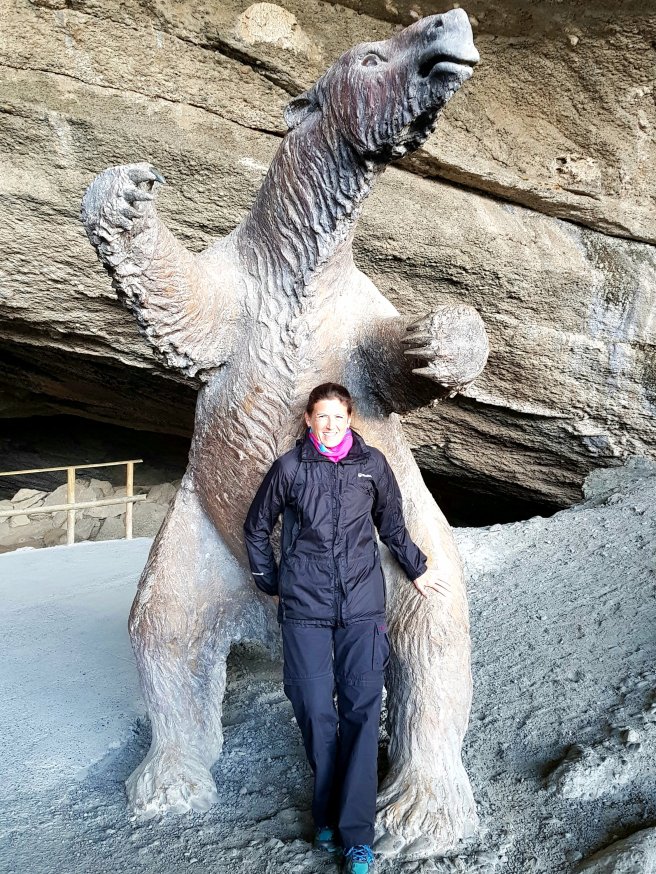
Our first stop of the day was at the Cueva del Milodon at Benitez Hill. Back in 1895 a German explorer – Herman Eberhard- found some animal remains inside the cave. It was the remains of a Milodon which was a giant sloth like animal which is now extinct. They think it was around 2m tall, weighed around a ton, moved on all fours, was a herbivore and was covered in long thick fur. It also had tiny bones embedded in its skin which were the remains of an outer protective shell like an armadillo.
They have a life size replica at the cave and the original remains are at the Natural History Museum.
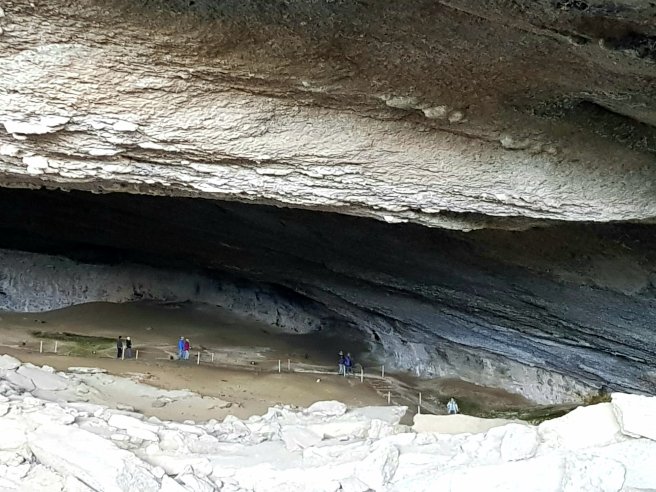
The cave itself is also really interesting as it was originally formed by a glacier and is now really dry and almost like concrete.

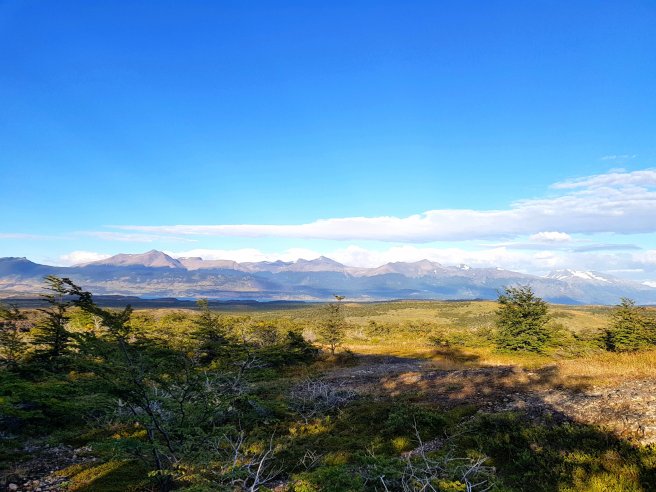
Following the cave stop we headed towards the National park of Torres del Paine. Our first sight of the ‘tower’s’ was at Largo de Toro. This is a huge lake close to the entrance of the park. By the way the National park is immense and covers over 448000 acres of land. It was deemed a protected area in the 1960s. Some of the land is still privately owned and used for sheep and cattle farming.
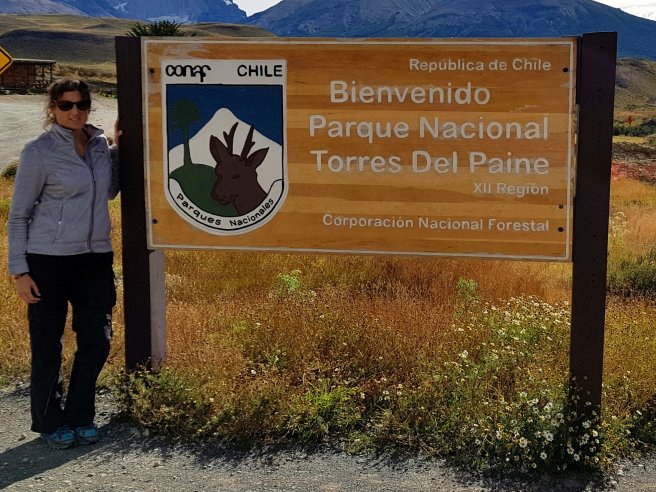
Paine means “blue” in the native Tehuelche and Torres del Paine is named after the three granite towers which rise 2500m above sea level.
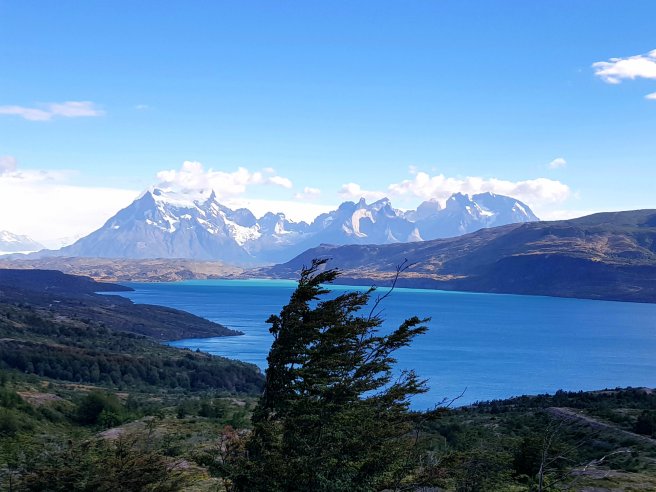
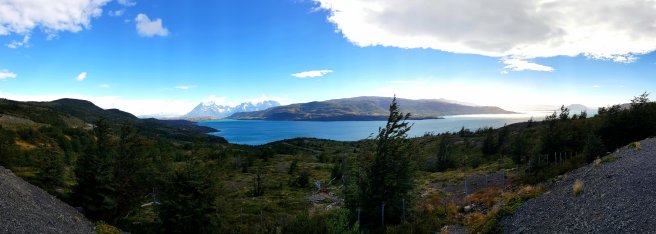
We were going to go to Lago grey to wall around the lake and see the glacier but due to all the rain yesterday the lake was at a dangerously high level and the path was flooded and because of the strong winds too the path had been closed. So we walked around 5km up and down along the River Paine. The route itself wasn’t that challenging but the strong winds made it quite difficult as you almost got blown off your feet.
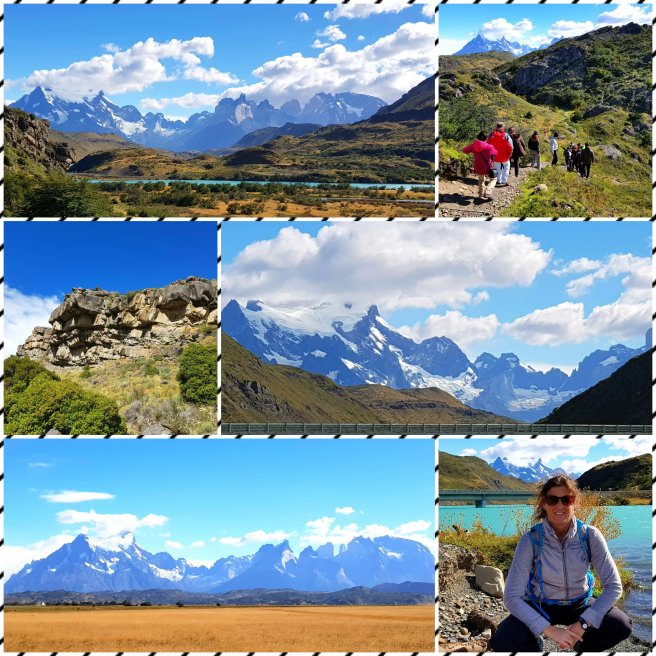
The River Paine is around 23km long and is served by 5 of the glacier lakes.
You can see how windy it was in this video.
After the walking we’d built up quite an appetite so we stopped at Lago Pehoe for some lunch.
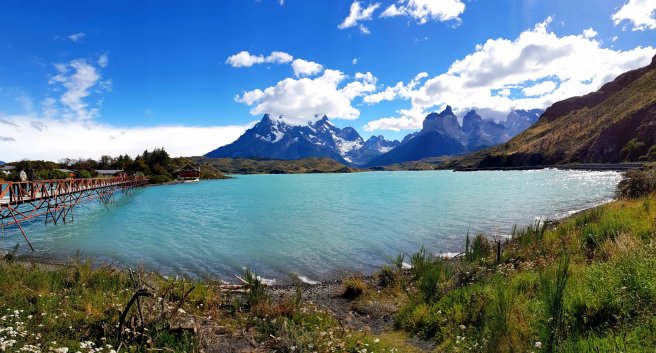
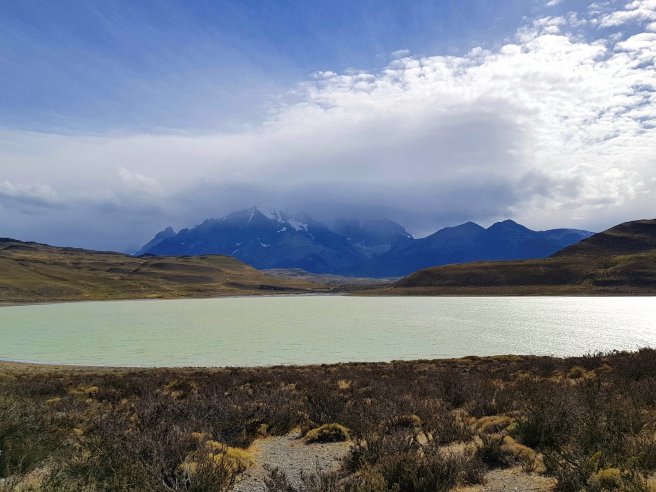
This was a beautiful lake with a really good view of the mountains.
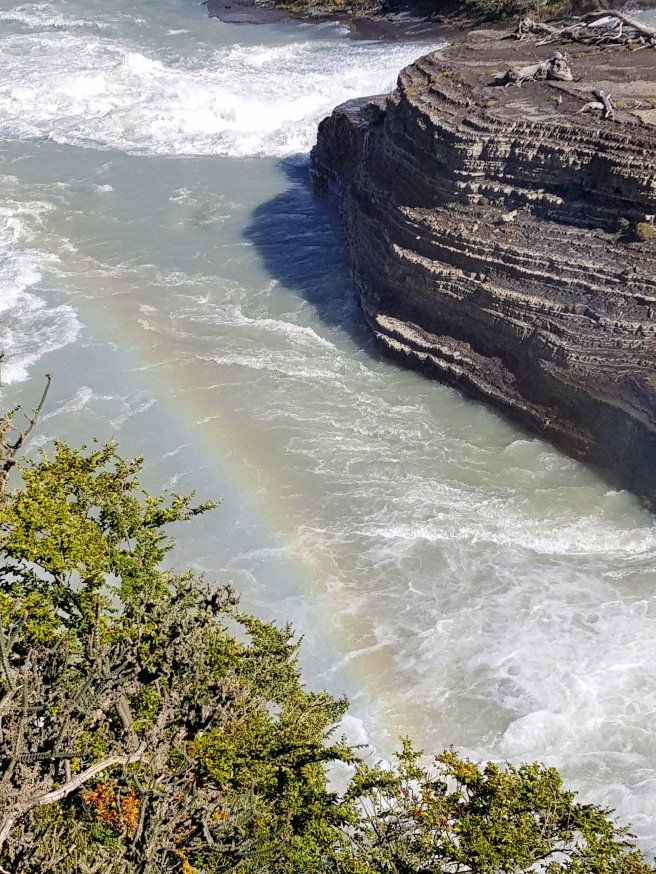
We then moved onto what is called the grand waterfall but it was actually pretty small.
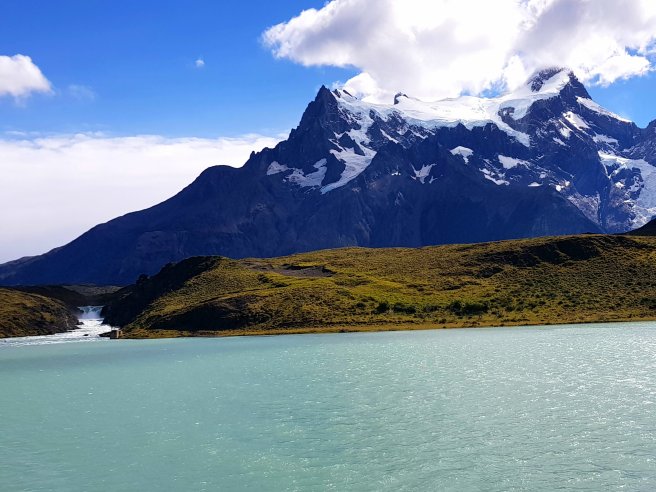
We then visited both Lago Nordernskjold which is known as the winter lake and Lago Samiento which is actually a spring water lake rather than formed from melting glaciers.
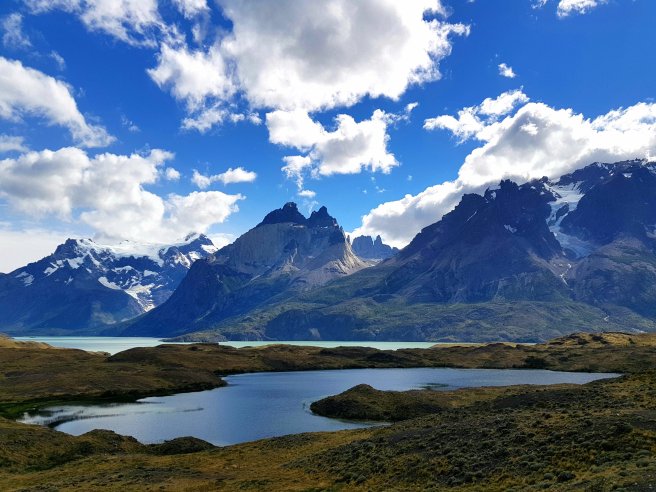
All the time we could see the amazing mountains, some with glaciers at the top. These mountains had been formed by volcanoes that never erupted due to the pressure of the glaciers on top of them. The different colours of the rock are due to granite being uplifted over the sediment and also because certain parts of the rock used to be covered in ice. This can be seen most in the middle tower.
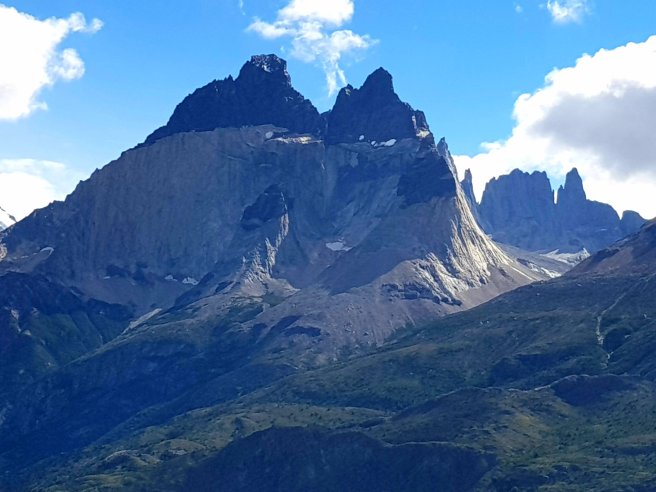
As we neared the end of the tour we stopped at another waterfall to catch a view of the three tower’s again and then at Lago Armaga.
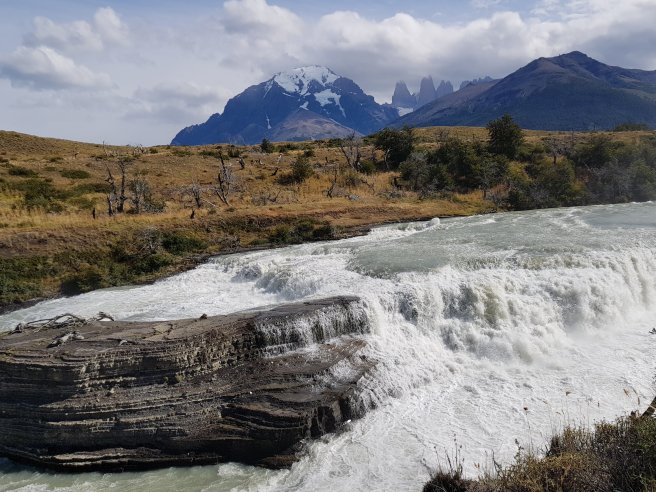
You can see that it was starting to cloud over as we left the park.
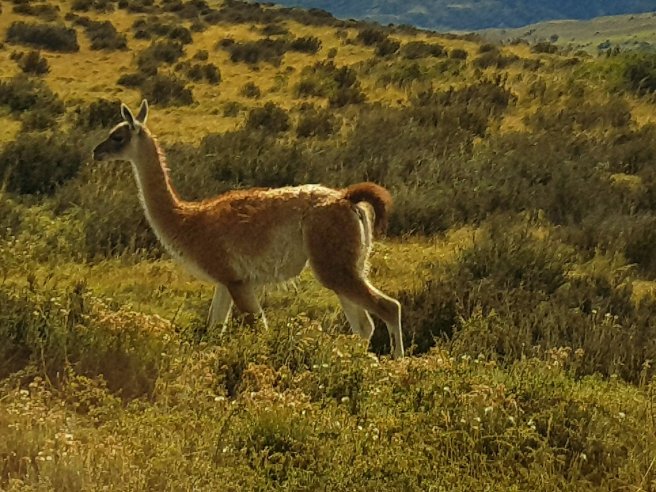
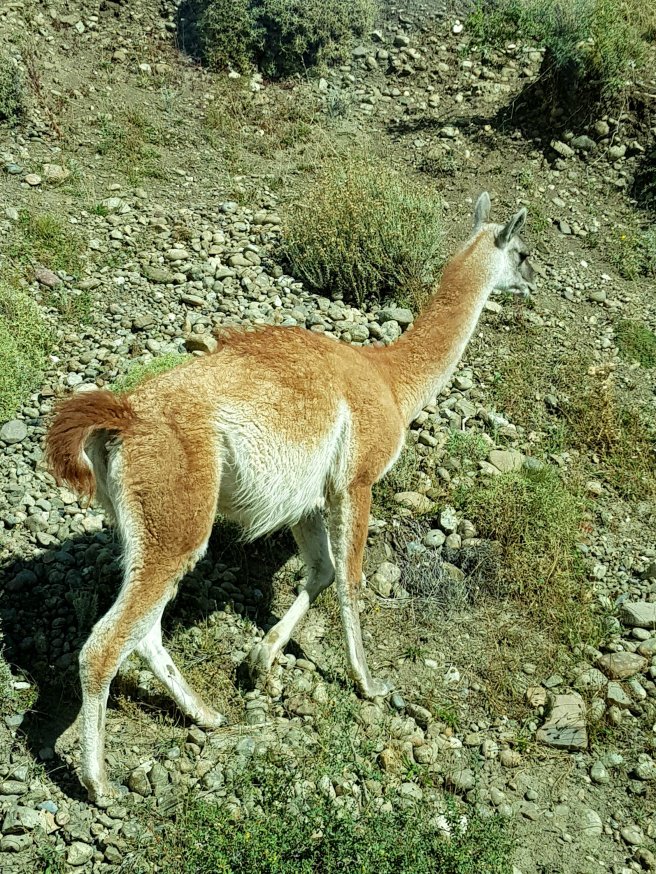
As we travelled around the park we saw some guanacos – these are wild llama and are very cute animals.
We also saw a bird that looks like an ostrich known as a Rhea. You can just about see them in this photo.

We did see a gaucho herding his sheep but I didn’t take a photo of that.
A great day and we saw so much. We were really lucky with the weather too.
 Fun, Fitness and Fabulousness in your Fifties